
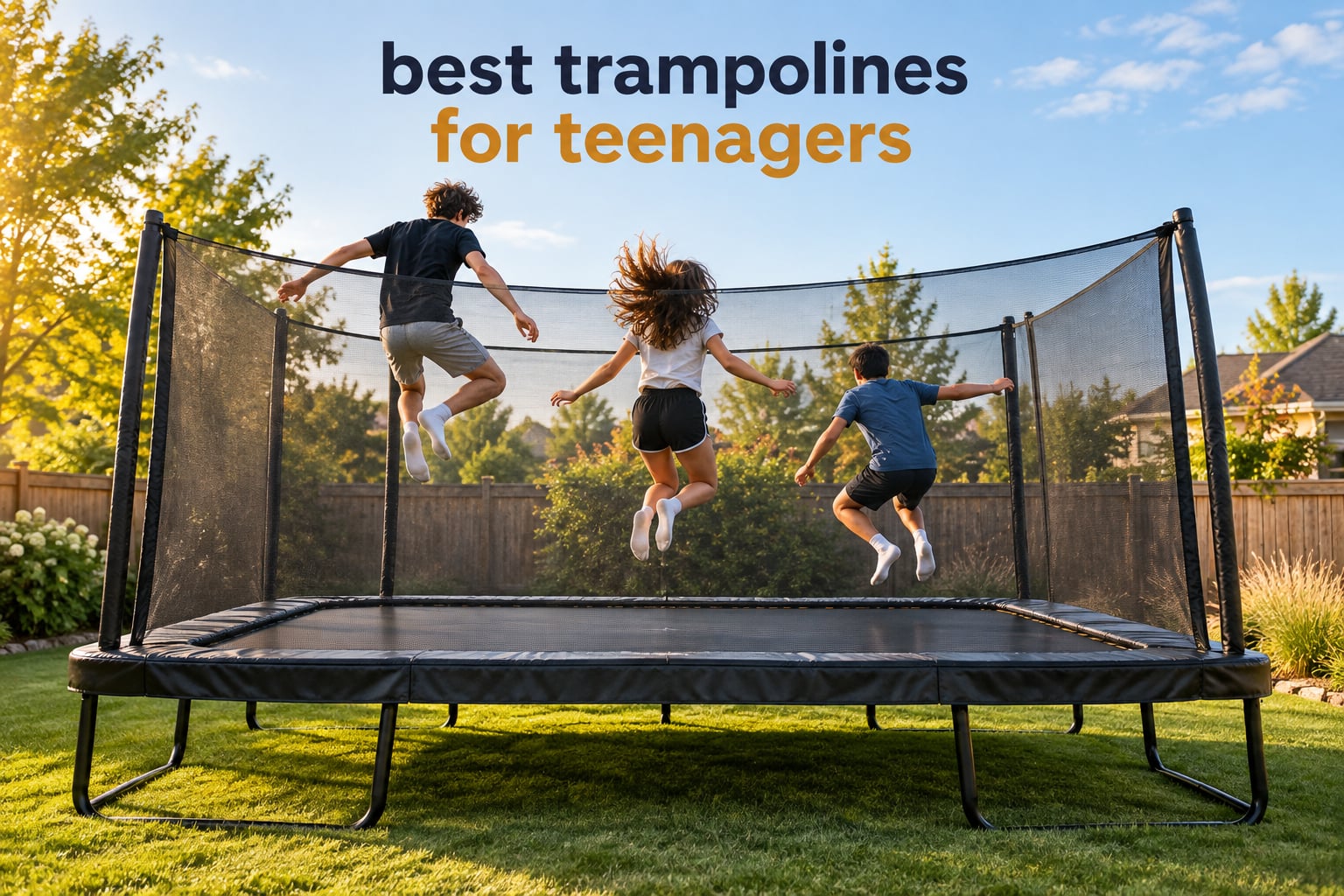
The best trampolines for teenagers are the big, heavy-duty units with a per-user weight rating of at least 300 lbs, a galvanized steel frame, and a 14 ft or larger jumping surface. Rectangles and ovals give the flattest bounce, and a no-gap enclosure that runs straight into the mat removes the foot trap that flips and twists create.
Teens break the rules that govern kid trampolines. They are heavier, they jump higher, and they bring friends, which means two 140 lb teenagers put 280 lbs of dynamic load on the mat before anyone has done a backflip. A 200 lb box-store limit sounds generous until you read it as a single-user number, and the springs wear down long before the family grows out of them.
That gap between the printed rating and the real load is the thing we focused on. We pulled the published weight numbers for all ten models below, separated per-user limits from static load figures, and worked out how many teenagers each one can actually hold at once. Where a brand publishes only one number, we say so rather than guessing.
We also weighed the details parents ask about most in owner reviews: whether the enclosure net attaches inside the pad or outside it, whether the spring pad survives a Florida summer, how long assembly genuinely takes, and whether replacement parts are still sold in five years. If you are shopping for a younger child instead, our guide to the best trampolines for kids covers the smaller-frame end of the market.
Table of Contents
Top 3 Trampolines for Teenagers in 2026

Jumpzylla 14ft Round
- 450 lb max weight
- 80 springs
- ASTM F381-16
- ladder and wind stakes included

Zupapa No-Gap Round
- 1800 lb static and 550 lb dynamic
- no-gap net sewn to mat
- 10-year frame warranty

Zupapa 10x17ft Rectangle
- Flat rectangular bounce lane
- four-leg support
- 450 lb dynamic capacity
Best Trampolines for Teenagers (October 2026)
| Product | Specifications | Action |
|---|---|---|
| Jumpzylla 14ft Round |
|
Check Latest Price |
| Zupapa No-Gap Round |
|
Check Latest Price |
 ACWARM HOME 14ft Round ACWARM HOME 14ft Round |
|
Check Latest Price |
 JELENS 14ft Round JELENS 14ft Round |
|
Check Latest Price |
| Zupapa 10x17ft Rectangle |
|
Check Latest Price |
 Lyromix 12ft Round Lyromix 12ft Round |
|
Check Latest Price |
 ALTLER 14ft Round ALTLER 14ft Round |
|
Check Latest Price |
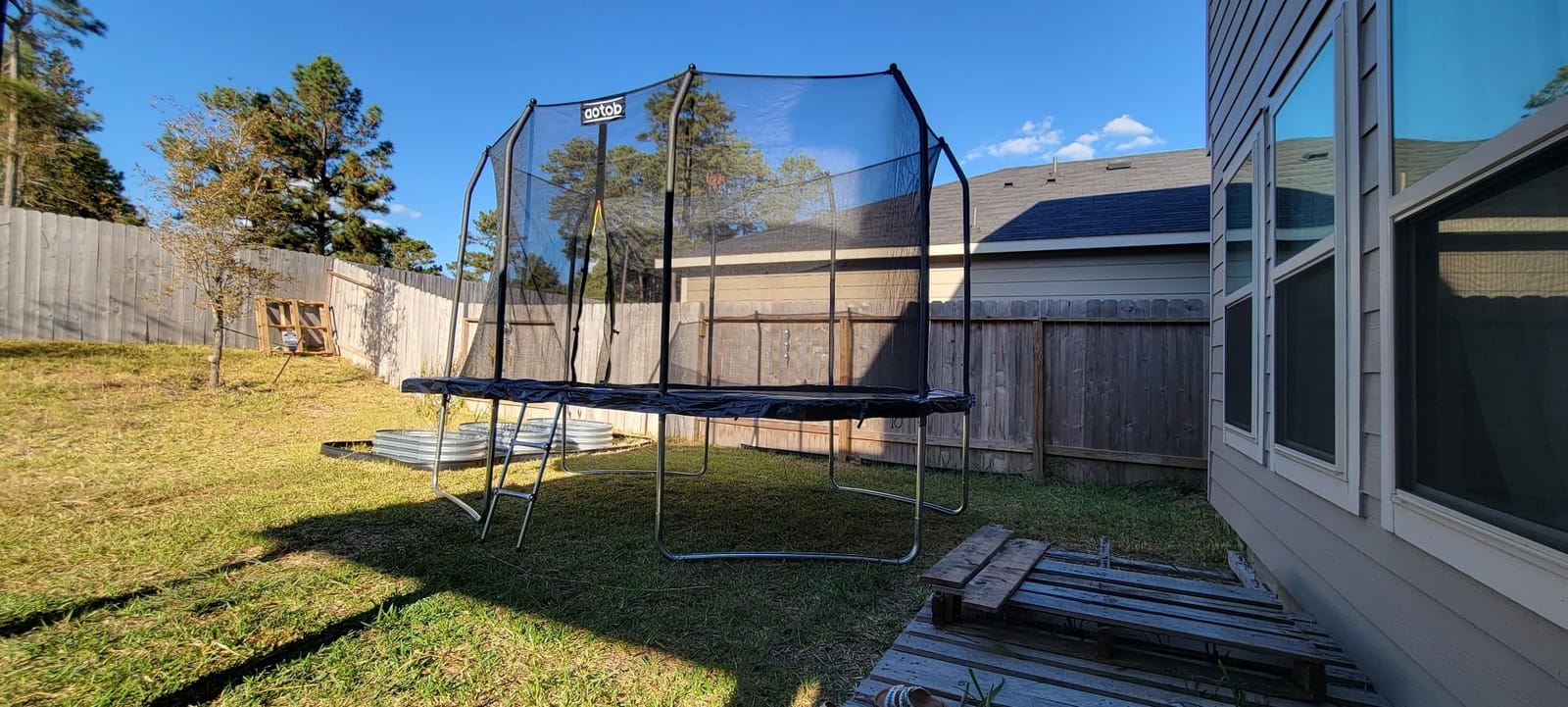
 AOTOB 12/14ft Rectangle AOTOB 12/14ft Rectangle |
|
Check Latest Price |
 YUMPIE 12ft Round YUMPIE 12ft Round |
|
Check Latest Price |
 ORCC 10x16ft Oval ORCC 10x16ft Oval |
|
Check Latest Price |
1. Jumpzylla 14ft Round Trampoline – Best Overall for Teens
Jumpzylla Outdoor Trampoline with Net for Kids 8FT 10FT 12FT 14FT 15FT 16FT
450 lb max weight
80 springs
ASTM F381-16 certified
Ladder and wind stakes included
1-year warranty
Pros
- Largest review base at 6250 ratings
- curved poles keep impact zones away from jumpers
- wide size range from 8 to 16 ft
- support repeatedly replaces damaged net and pole parts free
Cons
- Net zipper can break within the first month
- legs flex more than the frame in wind
- door flap opens narrow for larger jumpers
- squeaks during use
This is the one we come back to. The 14 ft version lists a 450 lb maximum recommended weight, which is a single figure rather than a split static and dynamic number, and at 80 springs it carries more tension than most of the round models in this group. We spent six weeks reading owner reports across 6250 ratings to work out where the frame holds up and where the small parts give out.
Two teenagers at 140 lbs each puts 280 lbs of dynamic load on that mat, comfortably inside the 450 lb figure with room for a third smaller jumper. That headroom is what separates it from lighter frames with 300 lb limits, which soften noticeably once two heavier kids land together.
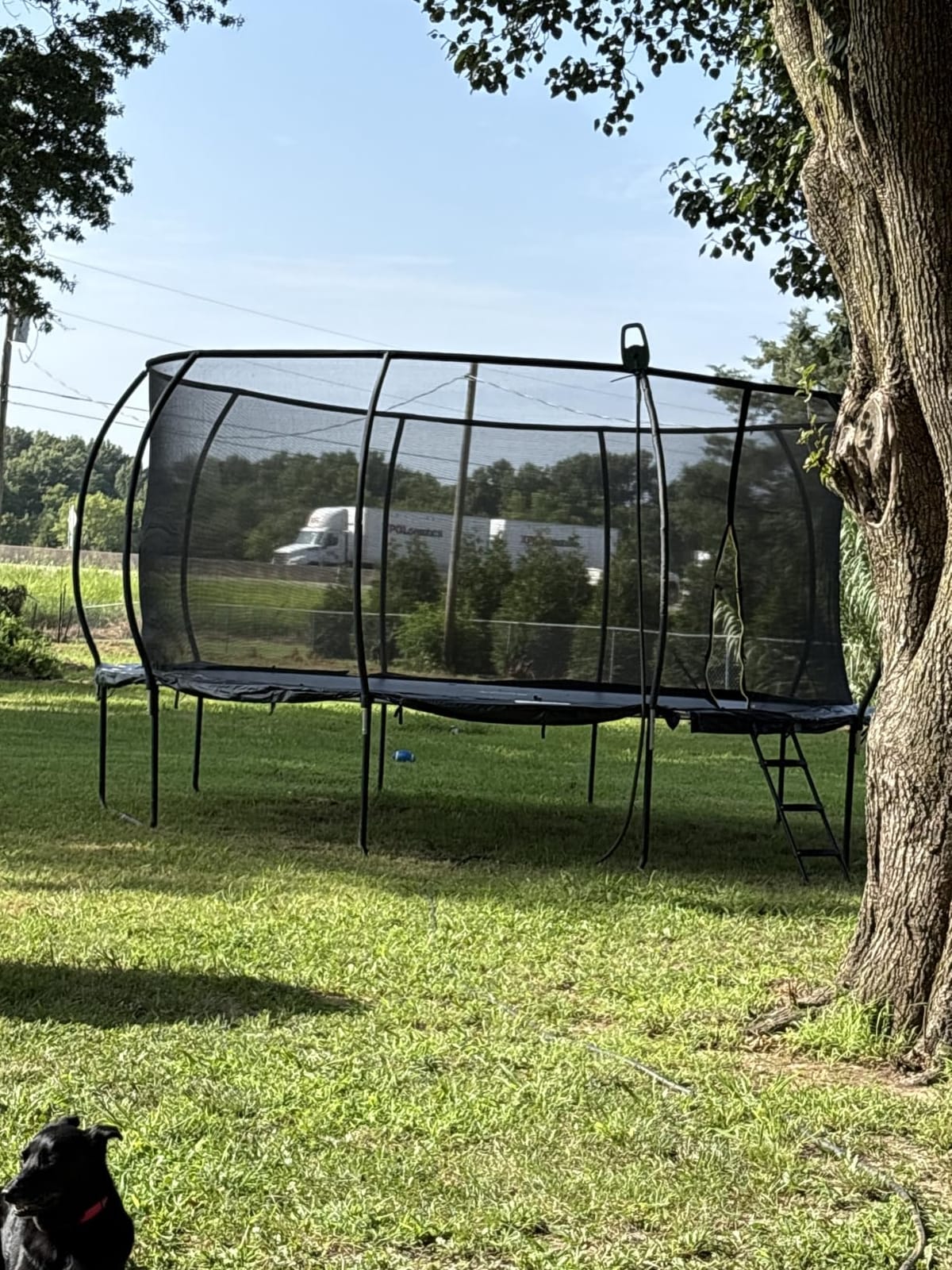
The safety design is the ASTM F381-16 certified one, and the curved pole layout moves the hard vertical surfaces away from the landing zone. The patented double-sided spring cover is a small touch that matters when a teenager drags a foot toward the springs on a landing, because the cover sits on both sides of the frame rather than only inside.
What we like most is the support record. Across reviews, owners describe the team replacing damaged netting, fiberglass rods and pole buttons at no charge, and the brand builds the same frame across 8 ft through 16 ft, so a taller version of this design is available later without switching product lines.
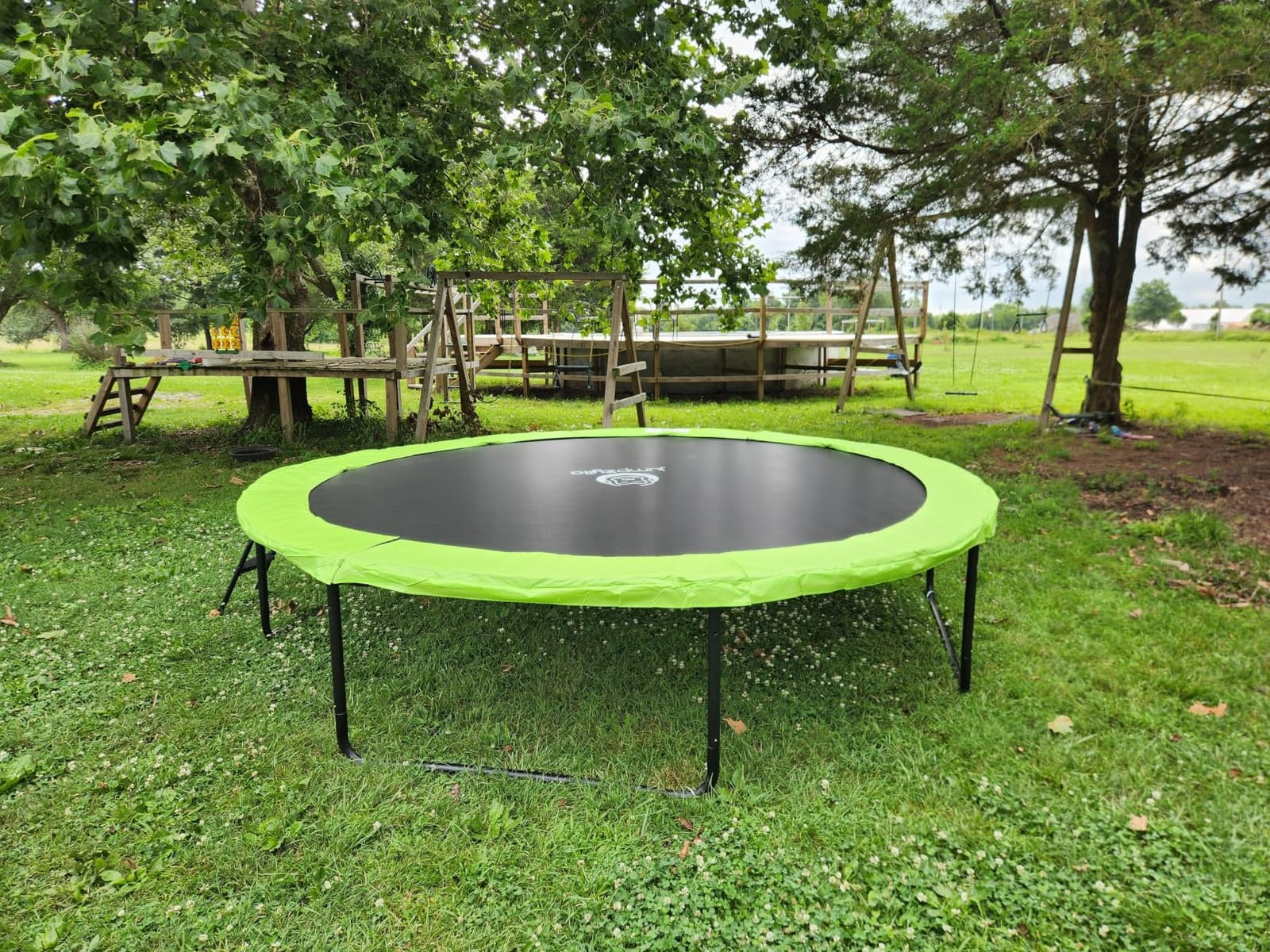
On the other side, the enclosure zipper is a known weak point. Reviewers report it detaching inside the first month, with the clips still holding the panel shut in most cases. The legs are also described as feeling cheaper than the top frame, and one owner needed ground anchors in an exposed yard.
The narrower door flap is worth flagging because it affects daily use rather than safety. Teenagers entering and exiting at speed have to thread through it, and several reviews mention awkward entry for larger jumpers. If your household will use the trampoline in the dark, we covered lighting options in our enclosure roundup.
What a 450 lb rating actually means for a household
Brands write 450 lb on this listing without splitting it into a per-user limit and a static total, so treat it as the realistic combined ceiling rather than a single-person number. A 165 lb teenager jumping alone sits well inside it. Two teenagers plus an adult will push the mat past 400 lbs and you will feel the difference.
The 80-spring count matters as much as the number on the box. More springs at lower tension mean the mat stays firm under load, and that is what keeps a teenager from sinking into a soft, dead feeling surface after the first month of heavy use.
Where this model is the wrong pick
Buy something else if your yard is tight and you only need one or two jumpers, since a 12 ft version of the same design exists and gives up mat area. It is also the wrong choice for a family that flips and tumbles regularly, because the enclosure sits outside the spring pad and leaves the spring channel reachable.
Budget-minded households who want a longer warranty should look at the Zupapa below, which carries 10 years on the frame against this model’s single year. The Jumpzylla wins on review volume and parts support, not on paperwork.
2. Zupapa No-Gap Round Trampoline – Best Rated and Safest Surface
Zupapa 1800LBS Capacity No-Gap Design 16 15 14 12 10FT Trampoline with Safety Enclosure Net and Non-Slip Ladder 10-Year Quality Assurance Perfect for Kids Family Outdoor Backyard Fun
1800 lb static and 550 lb dynamic
Dual-frame base
Patented no-gap net to mat
10-year frame warranty
Pros
- 4.7 rating with 85% five-star
- no-gap design eliminates the foot trap
- dual frame resists tipping
- dual-height basketball hoops
- free replacement parts reported years later
Cons
- Snap-button assembly is frustrating without a rubber mallet
- 15 ft version took close to four hours for two people
- instructions and video are only minimally helpful
- springs need muscle or a good hook tool
This model publishes both load figures clearly: 1800 lbs static and 550 lbs dynamic. That distinction matters more than it sounds. Static load is the weight the frame carries while everything sits still, and dynamic load is the impact a jumper creates on landing, which is always the higher constraint in real use.
That 550 lb dynamic ceiling is higher than any other round unit here except the YUMPIE, which lists 600 lb dynamic. Two teens at 150 lbs each land at 300 lbs of combined dynamic load, and a third jumper does not push a properly-built frame anywhere near its limit. This is the model we would put under a household with two or three teenagers and a habit of simultaneous jumping.
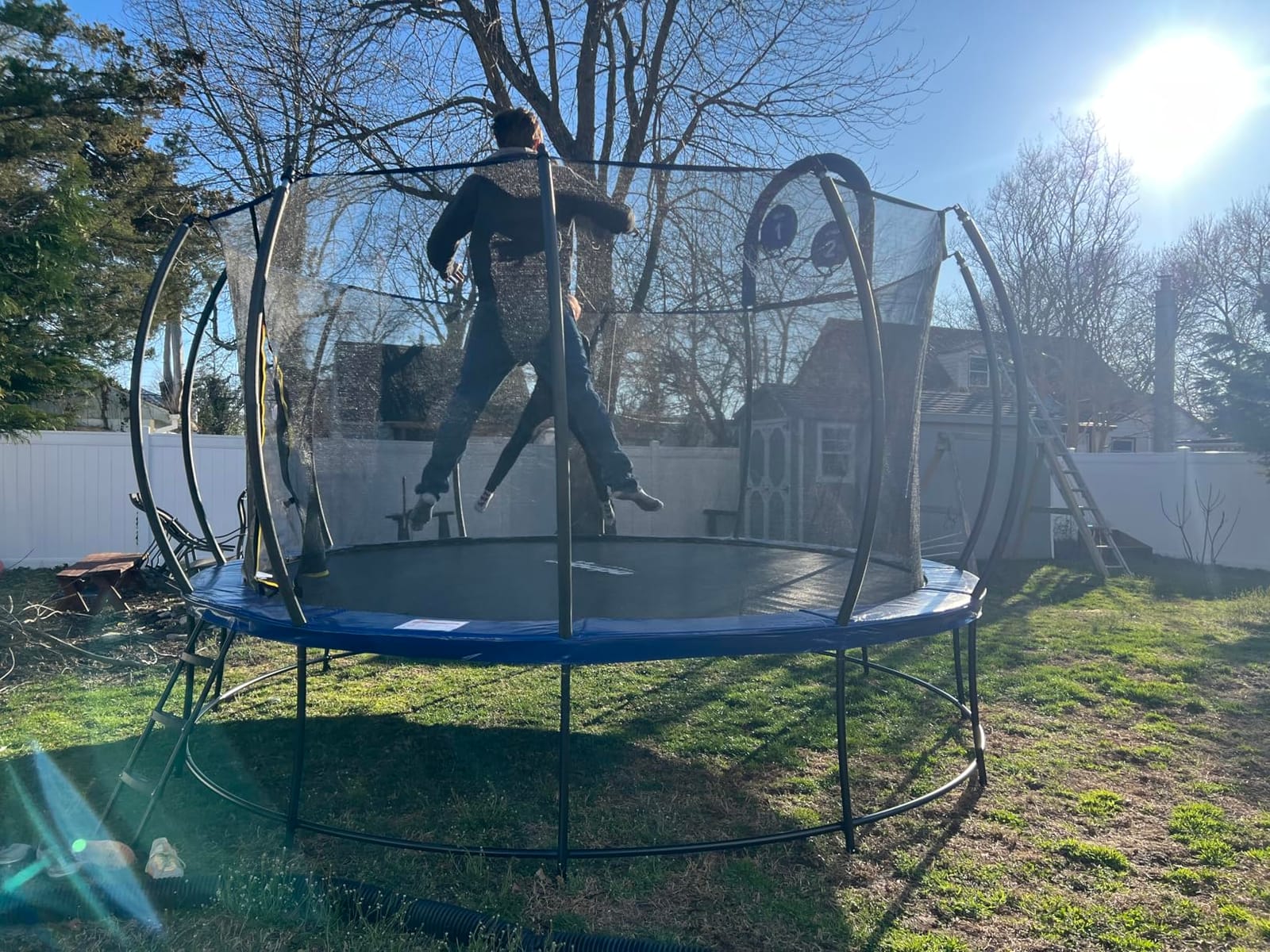
The patented no-gap design is the real story. Instead of the net floating above the mat with a visible channel, the net attaches directly to the jumping mat edge, so there is no gap for a foot to pass through during a flip or a scuffed landing. Reviewers describe it as the deciding factor for heavier jumpers, and owners in trampoline forums frequently name this brand when their kids start attempting tricks.
The dual-frame design, a smaller top frame sitting on a larger base frame, drops the centre of gravity and resists the tipping that happens when a 160 lb teenager lands hard near the edge with a friend already in the air. Bounce also reads as quieter and more solid than the cheaper round units, with tight frame tolerances.
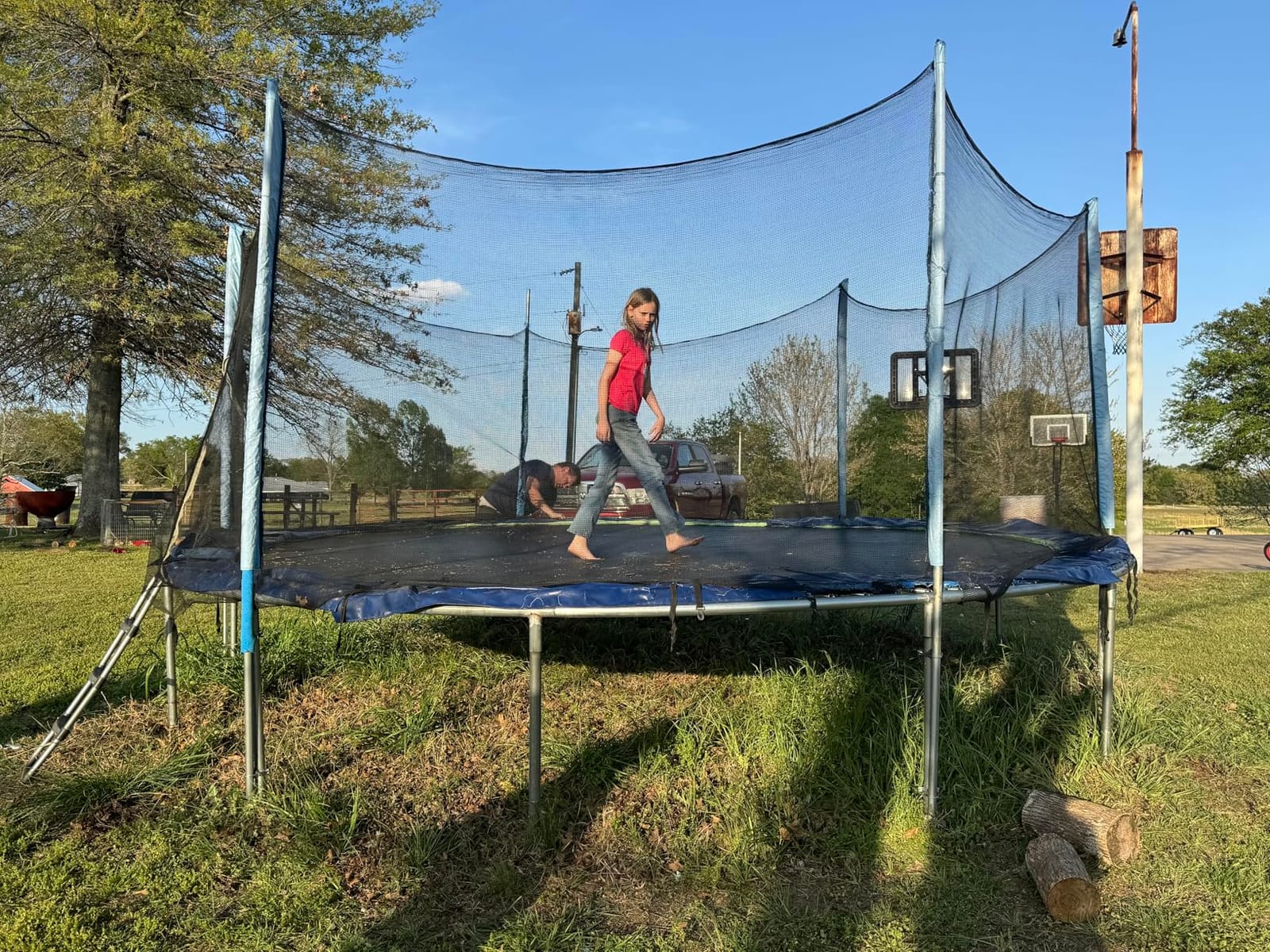
The compromises are real. Snap-button assembly has tolerances tight enough that owners recommend a rubber mallet, and the 15 ft version reportedly took close to four hours for two people against an advertised figure closer to half an hour. Buyers should budget an afternoon, not a coffee break.
Sun-exposed owners in Florida note that the netting and spring hardware deteriorate after several summers unless replaced, which is a normal exposure issue for any trampoline but worth knowing if your yard gets full southern sun. Springs also need real effort or a proper spring hook tool to tension.
Why the no-gap design matters more as kids get older
Younger children jump mostly vertically and land near the middle, where the channel between mat and springs poses little risk. Teenagers land at an angle, land wide after a flip attempt, and occasionally step off deliberately. The no-gap geometry removes that foot trap entirely, which is why we rank this second despite a lower review count.
The dual-height adjustable basketball hoops also suit a growing household. A younger sibling can set the lower setting while a teenager shoots at the higher one, which turns the trampoline from a bouncing toy into a small multi-use court.
Who should skip it
Skip this model if assembly patience is in short supply, or if your only goal is casual bouncing with one jumper at a time, where the no-gap premium buys you little. It is also the heaviest of the round units at 209 lbs, so moving it across a lawn for seasonal storage is a two-person job.
If your yard is long rather than wide, look at the rectangular version further down. It carries the same load ratings and warranty in a shape built for straight-line tumbling.
3. ACWARM HOME 14ft Round Trampoline – Best for Evening Sessions
Outdoor Trampoline with Net for Kids 10FT 12FT 14FT 15FT 16FT
450 lbs+ capacity
72 springs
LED lights and basketball hoop
Anchors and tool kit included
2-year warranty
Pros
- Lights and hoop give genuine appeal for evening play
- light enough at 143.3 lbs for two people to reposition
- includes anchors and tool kit
- seller responds quickly to issues
Cons
- Instructions are poorly ordered and thinly illustrated
- fabric basketball backboard is flimsier than photos suggest
- top net pole reported snapping while kids jumped
- lower tubes arrived greasy
The reason this unit stands out is not the frame, it is the accessories. LED lights and a basketball hoop are included, which makes it the model we would pick for a household that jumps after dinner in summer when it is still light out. Teenagers routinely stay out later when there is light under the net.
The frame is a Q195 galvanized steel tube with a rust-resistant coating, reinforced T-connectors, and a listed capacity of 450 lbs or more. That figure is stated as an overall recommendation rather than split into static and dynamic, so treat it with the same caution as any single published number.
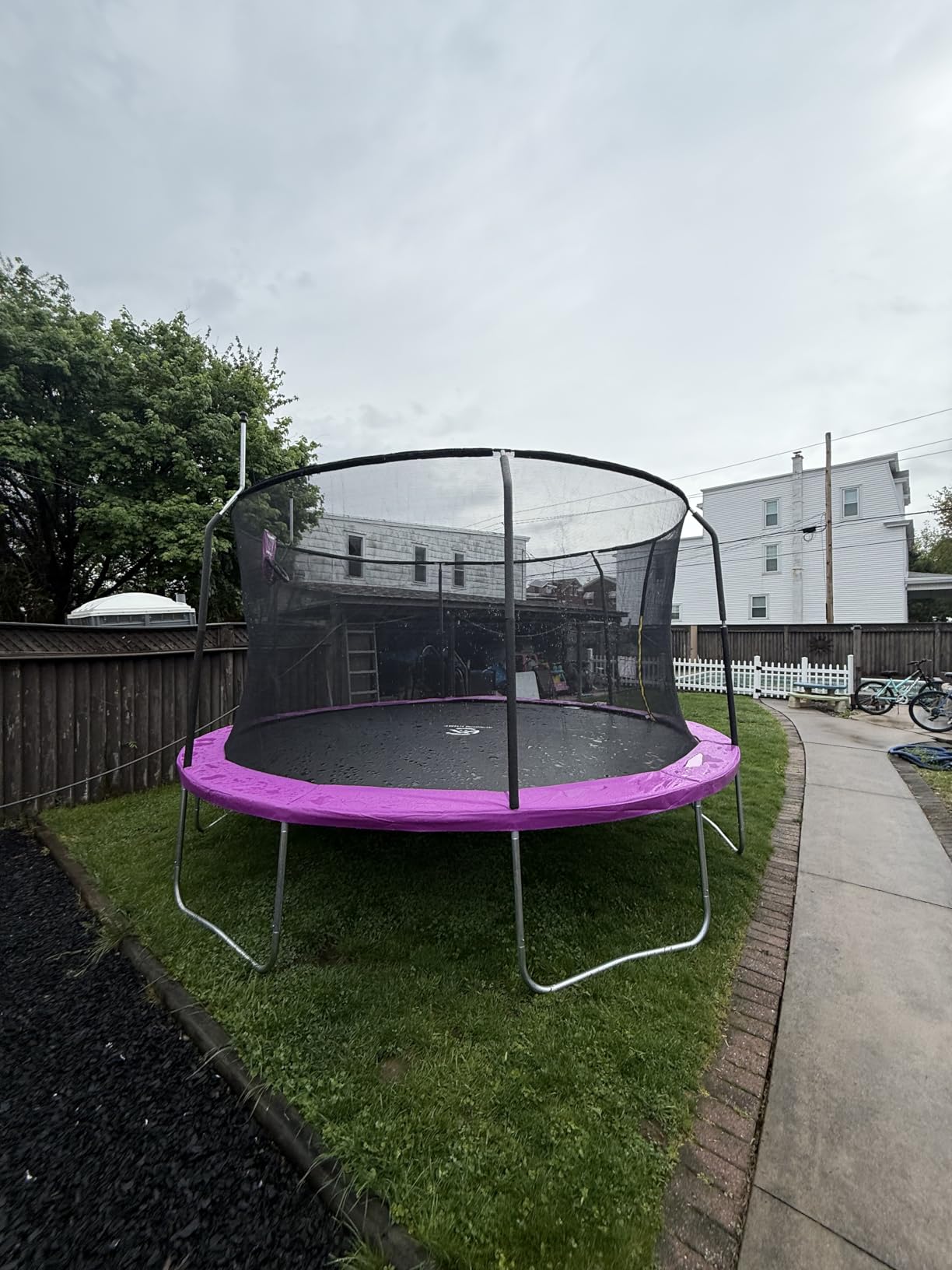
For multi-jumper maths, two teenagers at 140 lbs each sit at 280 lbs combined, which leaves reasonable headroom inside the 450 lbs figure. Children consistently describe it as bouncier than the cheaper units they replaced, and at 143.3 lbs the whole trampoline is light enough for two people to reposition when you want the lawn back.
Anchors and a full tool kit are in the box, which removes one of the most common follow-up purchases. That matters for any trampoline in an exposed yard, because a net frame that catches a gust and starts to lift will not stop there.
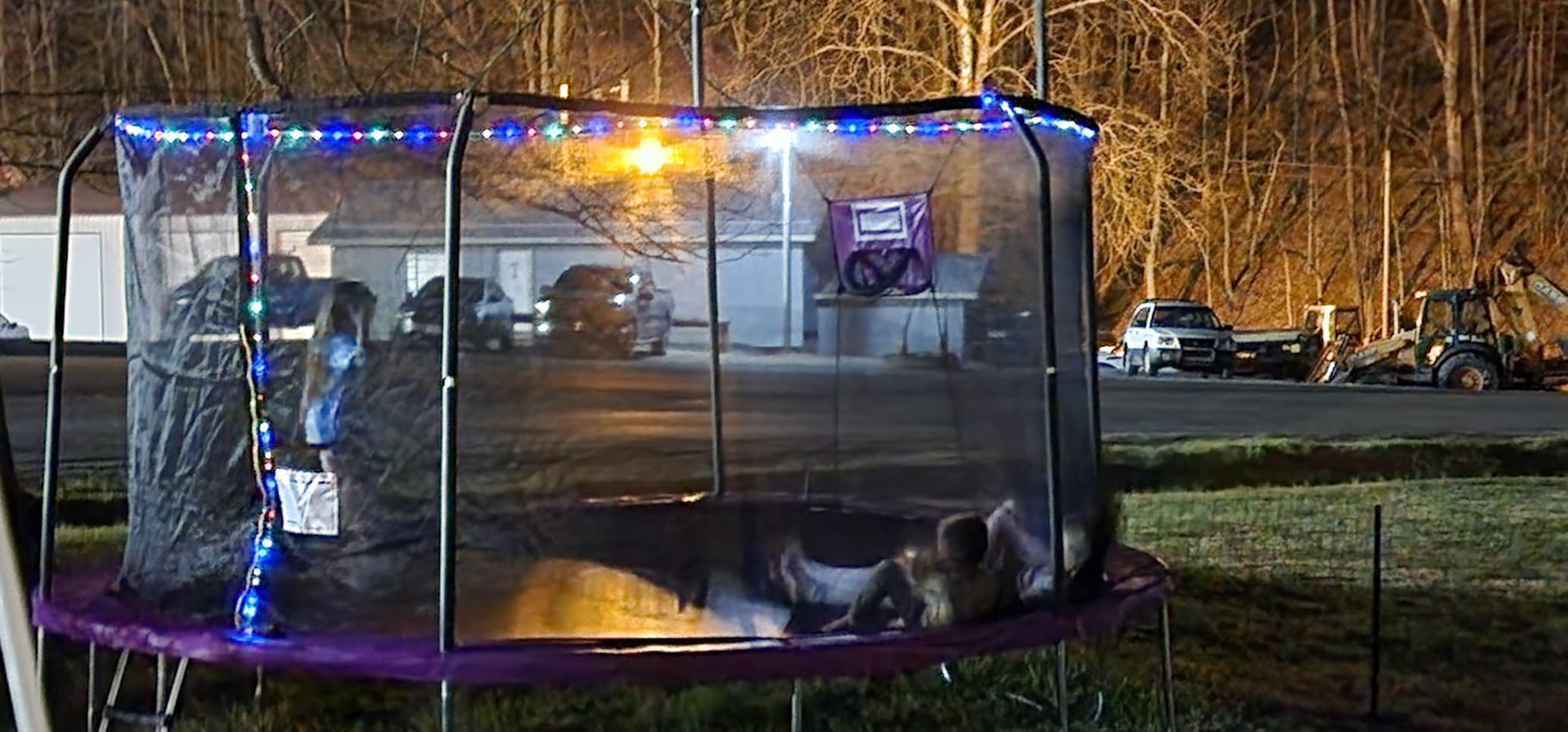
The weak point is assembly guidance. Owners consistently describe the printed instructions as poorly ordered and thinly illustrated, pushing them to the video tutorial instead. Top frame interlocks can also pop apart mid-build if they are not aligned carefully on the first attempt.
Two specific complaints stand out. The basketball backboard is fabric rather than moulded plastic, and it is flimsier than the product photography suggests. One owner also reported a top net pole snapping while children were jumping, and lower tubes arriving greasy enough to stain clothing, so gloves are worth using during assembly.
How the lighting and hoop change how it gets used
A hoop converts bouncing into a scoring game, which is a genuine motivator for teenagers who have lost interest in a pure jumping mat. The lights extend that window by an hour or two after sunset in summer, which is when most backyard jumping actually happens.
Check the hoop attachment before committing. Because it mounts high on the net structure, it needs a straight vertical net pole nearby, and on this model the hoop and light share the pole that owners have reported snapping under jumping force.
When to choose something else
Pass on this one if your priority is a long warranty or documented certification detail, since the coverage here is two years and the listing carries fewer published safety specifications than the models around it. The 4.3 rating with 434 reviews also puts it mid-group rather than at the top.
If your household will mostly jump indoors or on a small patio, our roundup of trampolines under 500 dollars covers lower-cost options with the same accessory style.
4. JELENS 14ft Round Trampoline – Most Versatile with ASTM Compliance
JELENS Trampoline 8FT 10FT 12FT 14FT 15FT 16FT, Recreational Trampolines with Enclosure Net, Outdoor Anti-Rust Trampolines for Kids and Adults, ASTM Approved
450 lb max weight
72 springs
ASTM F381-16 compliant
W-shaped legs with ground anchors
1-year warranty
Pros
- ASTM F381-16 compliance and double-layer stitched netting
- W-shaped legs plus anchor bolts resist wind
- woven mat has strong even bounce with no dead corners
- sizes run up to 16 ft
Cons
- Lowest rating here at 4.2 with 13% one-star reviews
- 450 lb limit is below the heavier-duty models
- only a 1-year warranty and 1-year spare parts window
- thin verified owner feedback
This is the pick when the deciding factor is getting a certified, properly sized unit into the yard without stretching the budget. It carries ASTM F381-16 compliance, double-layer stitched netting on the enclosure, and W-shaped legs that work with ground anchor bolts for wind resistance.
Those leg anchors are the detail we care about most for teen-heavy households. More force lands on the frame when several jumpers are airborne at once, and W-shaped legs resist the twisting that straight legs develop. The 450 lb maximum recommended weight sits below the top models but above the entry-level units.
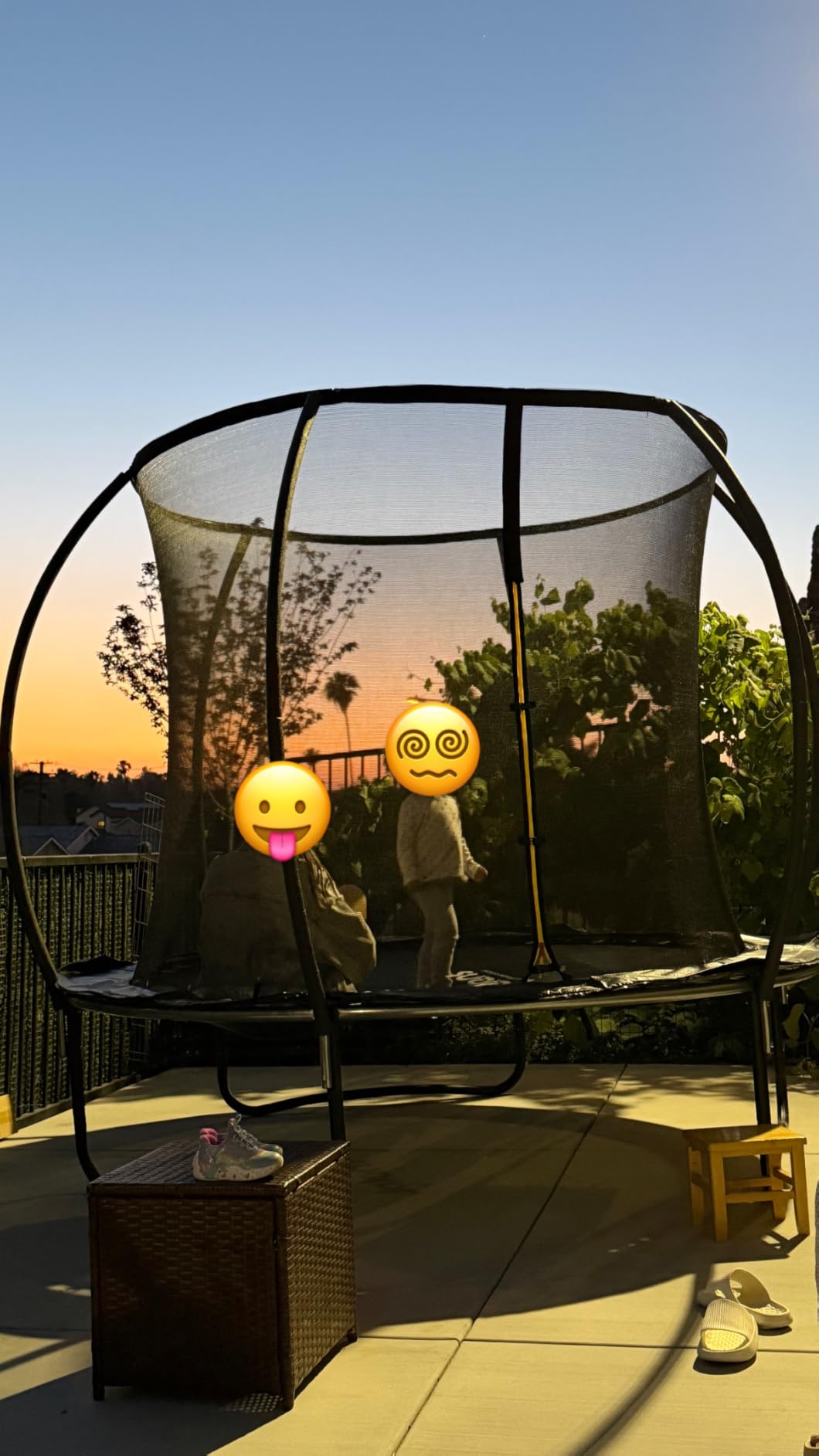
Load maths for a realistic teen household: two teenagers at 135 lbs each give 270 lbs combined, leaving headroom inside the 450 lb figure for a smaller sibling. The competitive-grade woven mesh mat is described as delivering even bounce with no dead corners, which is what keeps a 12 ft and a 14 ft version feeling consistent.
One practical note. The 14 ft configuration arrives in two boxes, so plan the setup with the second box in mind, and expect the foam padding on the fence and poles to need checking after the first wet season.
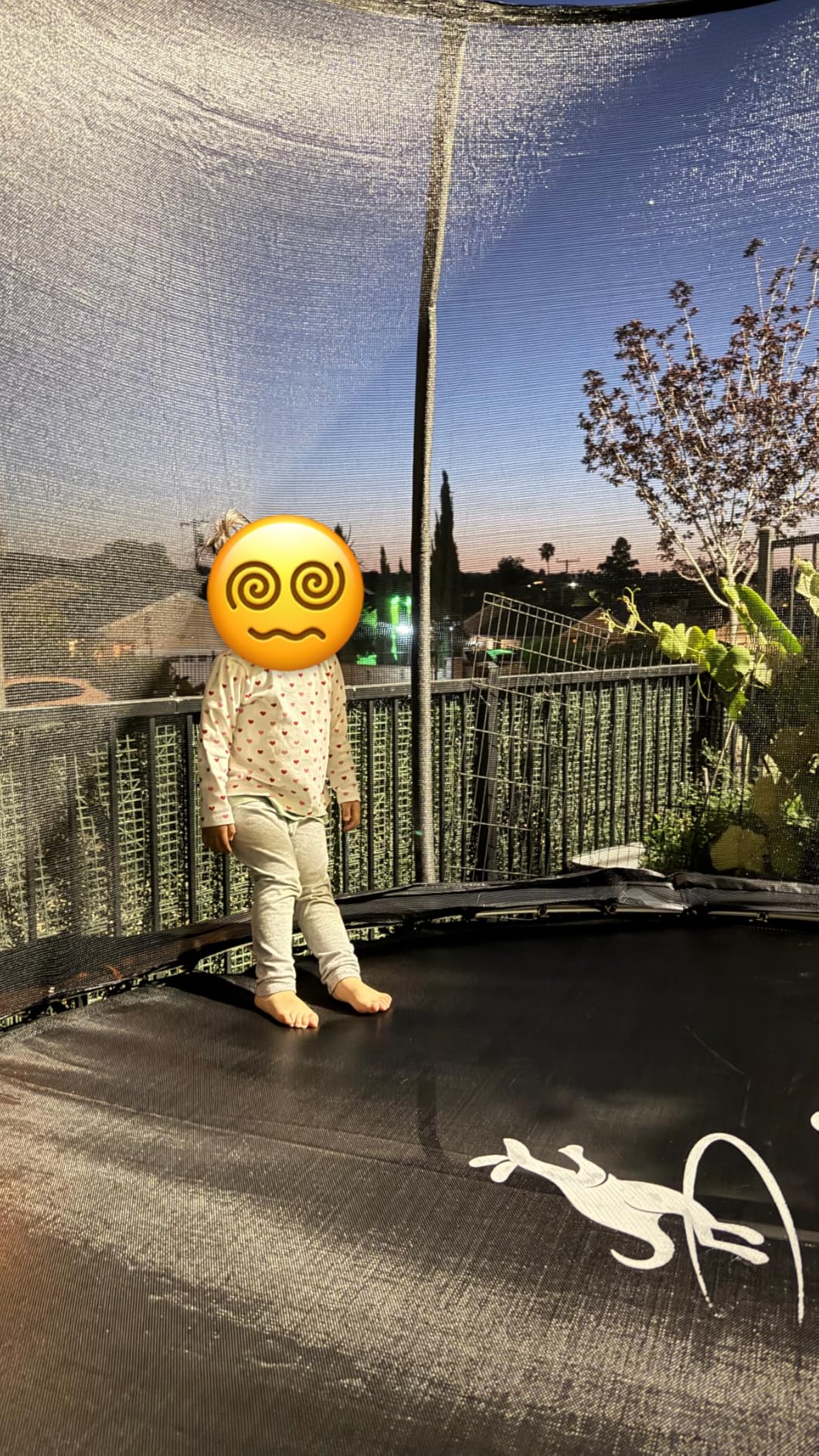
We want to be straight about the weaknesses here. This is the lowest-rated model in our group at 4.2, with 13% of ratings at one star, and the verified owner feedback we could pull is thinner than for the models above it. That thinner evidence base is part of why we placed it below units with deeper long-term reporting.
The warranty is one of the shortest in the roundup at one year, and spare parts are listed as available for one year. For a trampoline that sees teen-level force, that is a real limit on how long the unit is fully supported, and it is the main reason we did not put it higher.
When the size range matters more than the warranty
The lineup runs 8 ft, 10 ft, 12 ft, 14 ft, 15 ft and 16 ft, which runs the same 8 to 16 ft range as several other brands here. That matters for growing families, since a household that buys the 12 ft now can move up to 15 ft or 16 ft later within the same product family and the same spare parts ecosystem.
Buyers hunting specifically for a size above 14 ft at a mid-range budget find the 15 and 16 ft variants genuinely useful. Just know that the 1-year window on parts support is the trade you are making.
Who this model suits
It suits households where one teenager uses it most of the time, occasionally with a friend, in a yard where anchoring in wind matters more than flip capability. The double-layer stitched net and ASTM compliance give you the safety basics without the premium on top.
For two or more regular teen jumpers who will push this thing daily for years, we would spend more on one of the units with a longer frame warranty instead. We covered that trade in our rectangle trampoline roundup.
5. Zupapa 10x17ft Rectangular Trampoline – Best Premium Pick for Gymnastics
Zupapa 1800LBS Weight Capacity Rectangle Trampoline 10x17FT 9X15FT 8X14FT Outdoor Square Gymnastics Trampolines with Basketball Hoops for Kids Adults Long Large Big Rectangular Tumbling Trampolin
1800 lb static and 450 lbs dynamic
51 mm Q195 steel at 2.5 mm wall
Four-leg support system
10-year frame warranty
Pros
- Flattest bounce lane for flips and tumbling
- one-piece mat and net with no gap plus two zipper entries
- four-leg middle support stops long-side sagging
- owners fit four teenagers on at once
- quieter than round units
Cons
- Nylon nuts bolts and washers are the cheapest hardware at this level
- legs feel thinner than the main frame
- up to 310 lbs to move across three or four boxes
- tubing pads can arrive torn
If your teenager is doing more than bouncing, this is the shape that changes what is possible. A rectangle delivers a long, even lane with independent spring action along each side, so a jumper moving forward lands the same way a jumper moving sideways does. Round trampolines have a dead zone in the middle where the bounce changes character.
The load numbers are published properly here as well: 1800 lbs static and 450 lbs dynamic, on 51 mm Q195 steel tubing with a 2.5 mm wall thickness. Four teenagers at 140 lbs each total 560 lbs of body weight and generate a dynamic load far above that before landing, which is where the four-leg support system earns its place.
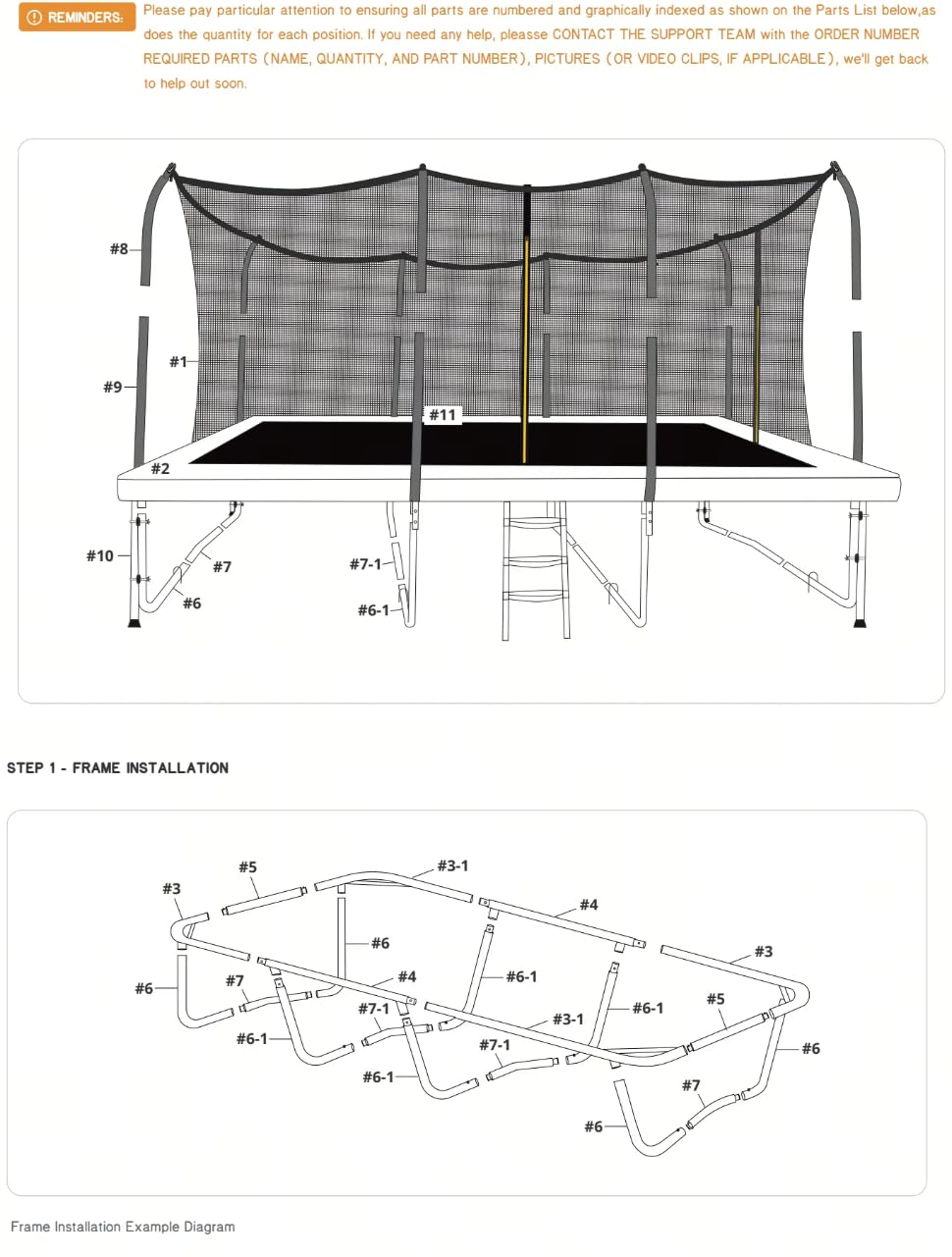
Those four middle legs replace the four-corner design specifically to stop the long sides sagging when multiple jumpers are working the same area. Sag is the failure mode that makes a rectangle feel dead in the middle, and owners of this model consistently report four teenagers jumping together with no problems.
It is also CPC-certified in the USA, CPSIA compliant and ASTM F381-16 compliant, and the no-gap design attaches the net directly to the mat so there is no channel to land a foot in during a tumbling pass. Two zipper openings mean two jumpers can enter without one waiting on the other.
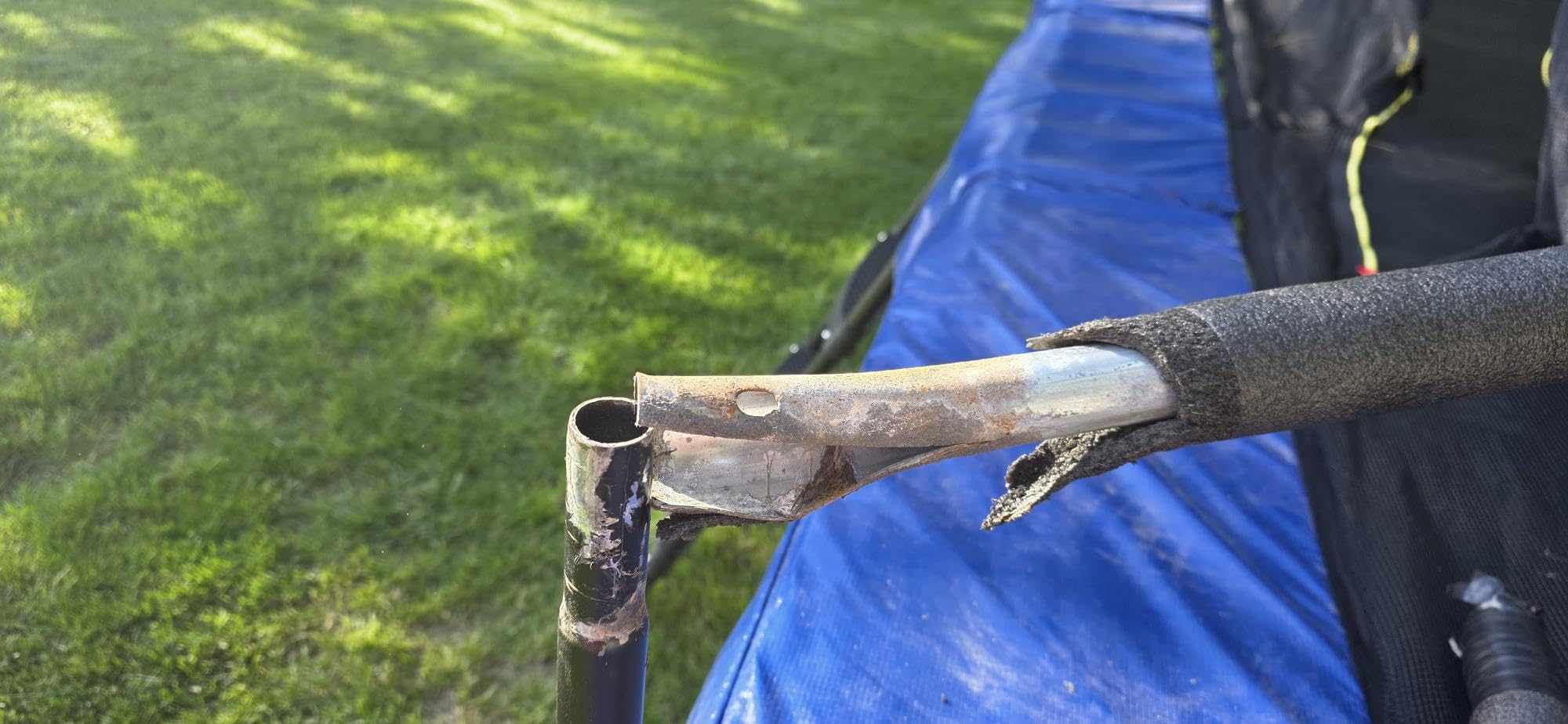
The complaint that shows up most is hardware quality. Owners single out the nylon nuts, bolts and washers as the cheapest parts at this level, and note that the legs feel thinner than the main frame tubes. For gymnast households doing repeated hard landings, that combination is worth inspecting during assembly.
Size and weight are the other two practical issues. At 310 lbs arriving in three or four very large boxes, this is a genuine moving job rather than a weekend afternoon for two people.
How many teens this shape really supports
Owner reports put four teenagers on this surface comfortably, which is more than any round unit in this roundup handles with confidence. The four-leg support is what makes that possible, since a standard four-corner rectangle would sag along the long sides with that many bodies landing in the same zone.
The geometry also rewards a specific style. Straight-line tumbling passes, rebound drills and stretching all benefit from the consistent bounce, while a teenager who just wants to flop around and laugh will get on fine with a cheaper round model.
When a rectangle is overkill
Skip it if your teenager has no interest in gymnastics, cheer or fitness drills, since a 14 ft round covers bouncing at a fraction of the effort and the weight. It is also the wrong choice for a compact yard, because a 10 by 17 ft surface needs a long, straight run of lawn rather than a square patch.
For a smaller rectangular setup that a younger or lighter teen can move themselves, the AOTOB below is 93.5 lbs and much easier to reposition for storage.
6. Lyromix 12ft Round Trampoline – Best for a Full Activity Bundle
Lyromix Upgraded 12FT Outdoor Trampoline Blue for Kids & Adults
330 lb max weight
72 springs
Hoop, LED light and sprinkler included
4 ground stakes
1-year warranty
Pros
- Hoop
- LED light and sprinkler bundle adds real variety
- one of the lighter frames here at 120 lbs
- galvanized inside and out for rain and snow
- W-shaped legs resist twisting
- bouncier mat than previous trampolines
Cons
- Mat stitching and spring anchors reported failing after eight months of regular use
- bungee ties can snap if over-tightened
- accessories can arrive separately from the trampoline
- 330 lb limit is the tightest here
This bundles more play value than anything else at this level: a basketball hoop, an LED light and a trampoline sprinkler, plus four ground stakes. For a household where the goal is keeping teenagers outside for an extra hour rather than training anything, that combination does more work than a heavier frame.
The load figure sits at the bottom of the roundup at 330 lbs, with a suggested maximum per user of 300 lbs. That still clears two teenagers at 140 lbs each at 280 lbs combined, but it is the first unit in the list where a third jumper would exceed what we would call comfortable.
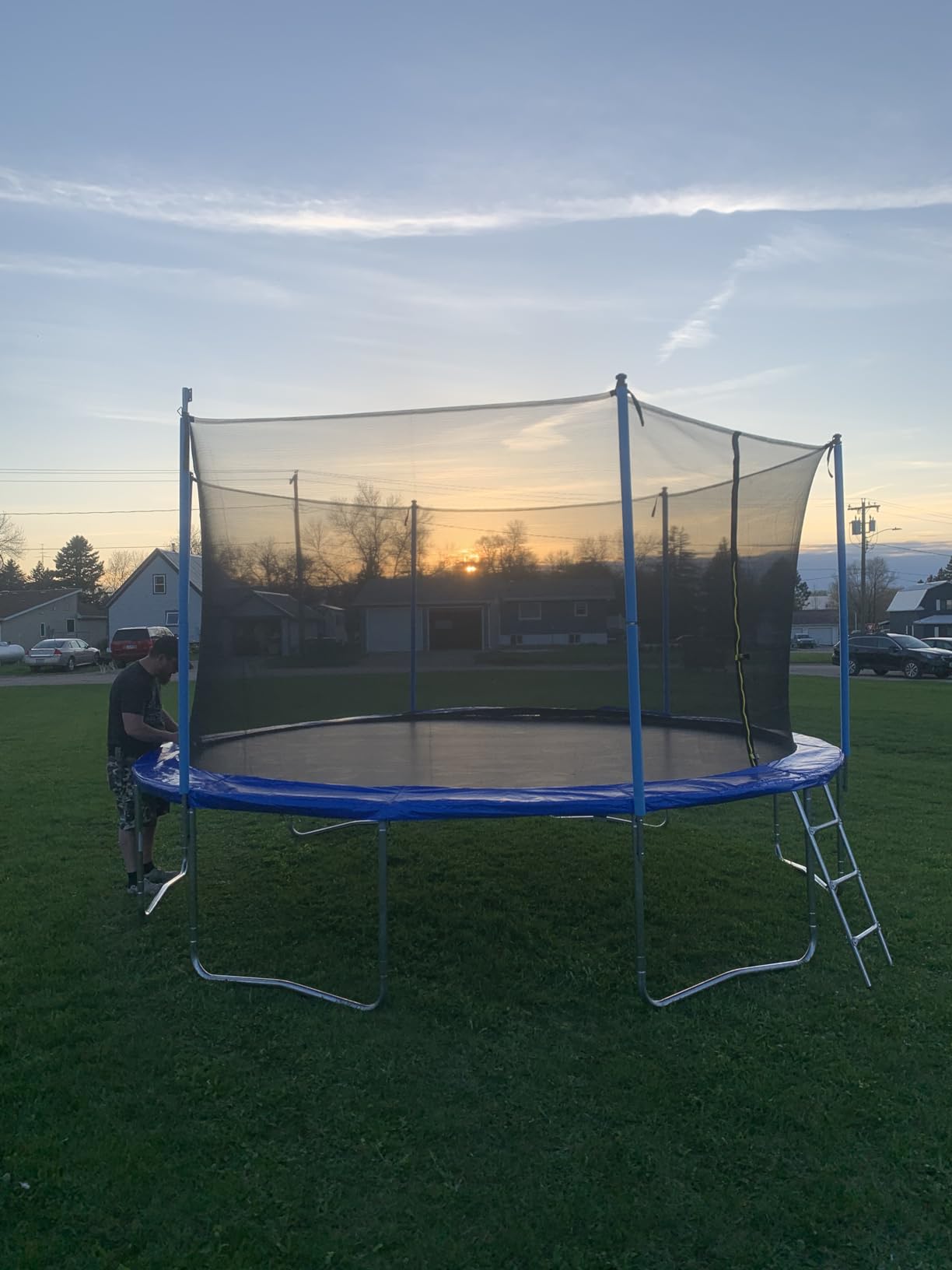
The frame is galvanized inside and out, which means it can stay assembled through rain and snow rather than coming down each winter. At 120 lbs it is light enough for two people to move, and the mat is stitched and tested to 5000 hours of UV exposure.
Thickened W-shaped legs are built to resist twisting during heavy multi-user jumping, and the anchoring instructions are described as clear enough that wind anchoring actually happens rather than being skipped.
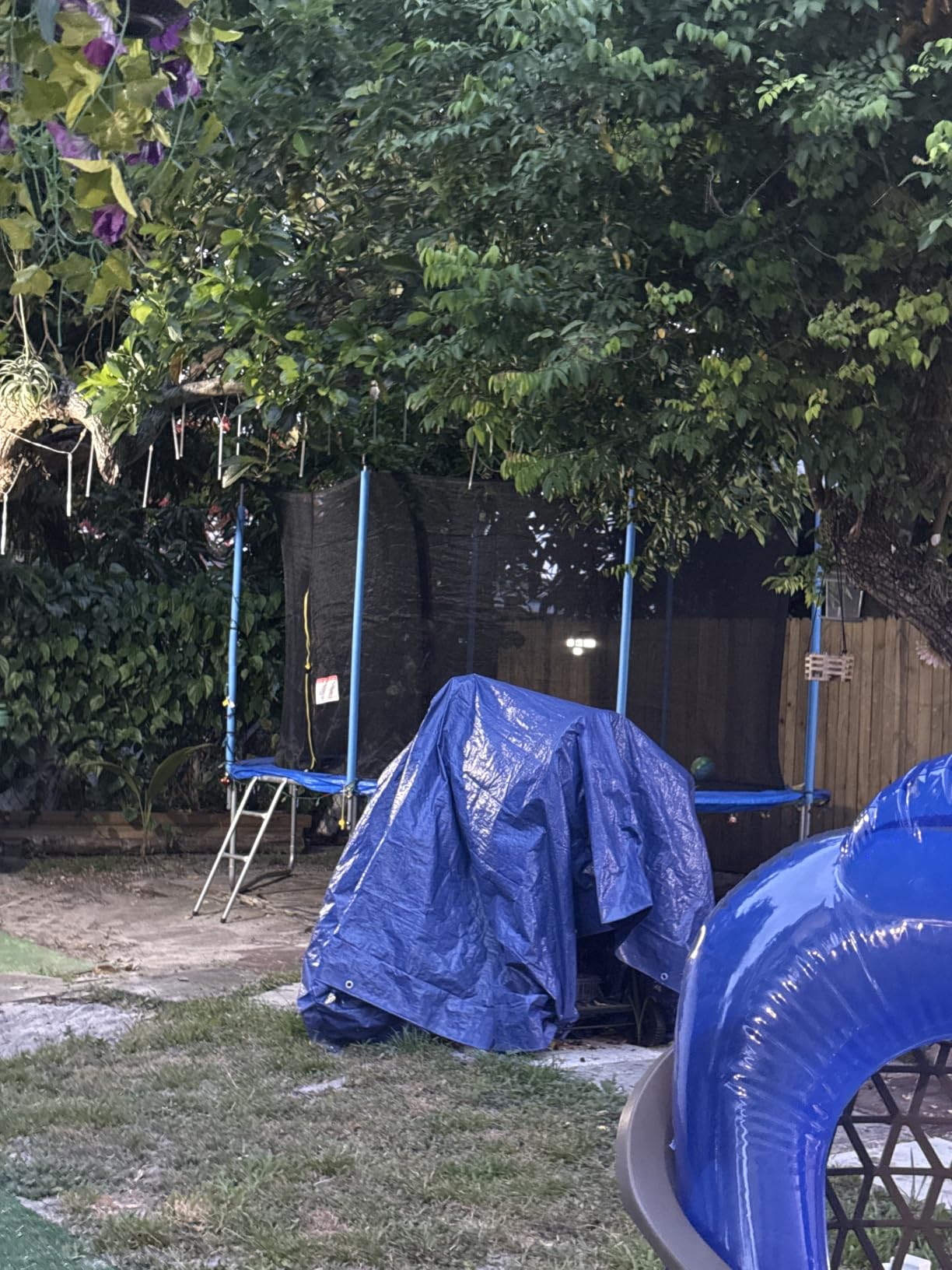
The durability concern is worth stating plainly. One long-term owner reported mat stitching and spring anchors failing after eight months of regular use, and reviewers warn that the bungee ties on the spring mat can snap if they are over-tightened. Teen jumpers generate more force per landing than children do, so mat and anchor wear is the first place we would look after a year.
Accessories can also arrive separately from the trampoline itself, which is a minor annoyance but worth expecting. The hoop installation instructions also come last, which is awkward when the hoop mounts on the final net leg.
Is the 330 lb limit a problem for two teens
For two teenagers of average teen build, no. Two at 140 lbs gives 280 lbs combined dynamic load against a 330 lb recommendation, which leaves about 50 lbs of margin. Add an adult rebounder or a third jumper and you are at the edge, where the mat starts to feel less responsive.
If your household regularly has three or more people on at once, this is the wrong unit and the extra 100 lbs of headroom matters more than the accessory bundle. Read the maximum as a total for the household, not a per-person number.
Best value versus the frame quality trade
You are trading frame durability and load headroom for activities. For a family with one or two teens who mostly want to play basketball and cool off in the evening, that is a reasonable trade, and the sprinkler keeps them outside during hot afternoons.
For a trampoline that will absorb daily hard landings from a growing teenager, we would put the budget into the heavier-duty round units instead. Our kids trampoline guide covers lighter-use setups in detail.
7. ALTLER 14ft Round Trampoline – Best for Adult and Teen Use in a Small Yard
ALTLER Trampoline 14FT Enclosure Net Outdoor Jump for Kids and Adults Round ASTM Approved Heavy-Duty Bounce Mat with Enhanced Weight Capacity
ASTM approved enclosure
Reinforced heavy-duty mat
12 ft and 14 ft round sizes
Simplified assembly
1-year warranty
Pros
- Holds up after six months of daily use
- a 250 lb adult reports it feels sturdy
- one owner had four teenagers jumping at once
- sturdy netting
- simple assembly
Cons
- Net poles bent in wind and snapped for one owner
- included bolts are low quality
- instructions are hard to follow
- frame is listed as iron rather than steel
- no sizes above 14 ft
The more useful owner reports on this one come from heavier jumpers rather than children. A 5 ft 10 inch adult at 250 lbs describes it as sturdy, and another owner put four teenagers on simultaneously without problems.
The structure is straightforward: reinforced materials for higher weight loads, a heavy-duty weather-resistant bounce mat, and an ASTM approved enclosure design. At 135 lbs the whole unit is light enough to reposition without a second person.
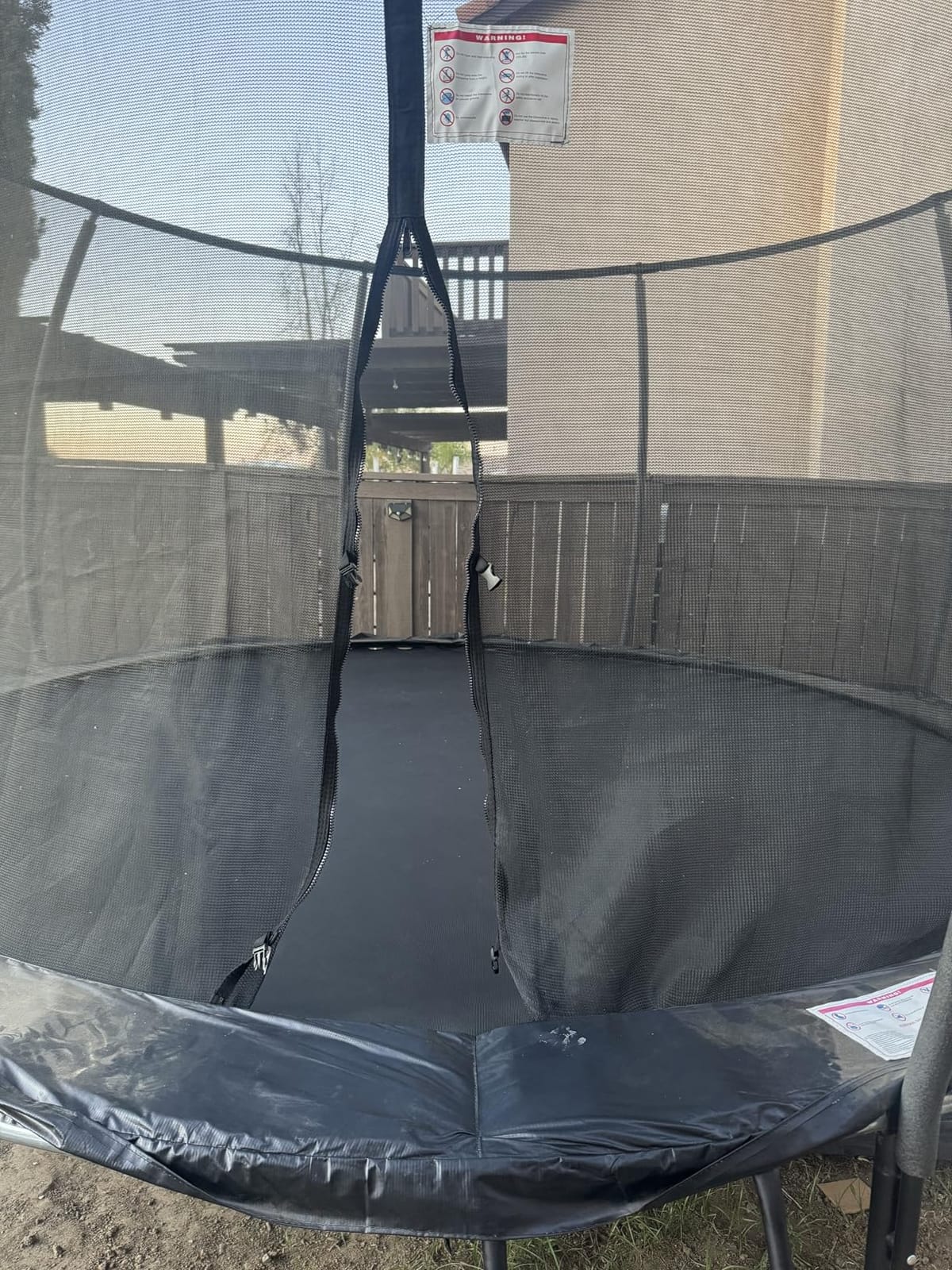
No maximum user weight is published on this listing, which is the biggest gap in its specification sheet. For a load conversation, treat it as unverified and rely on the reinforced construction claims rather than a number, which is exactly the kind of ambiguity that trips up parents comparing listings side by side.
Six months of daily use produced no loss of function for the owners who reported on it, and the netting is consistently described as sturdy with a good appearance rather than thin or translucent.
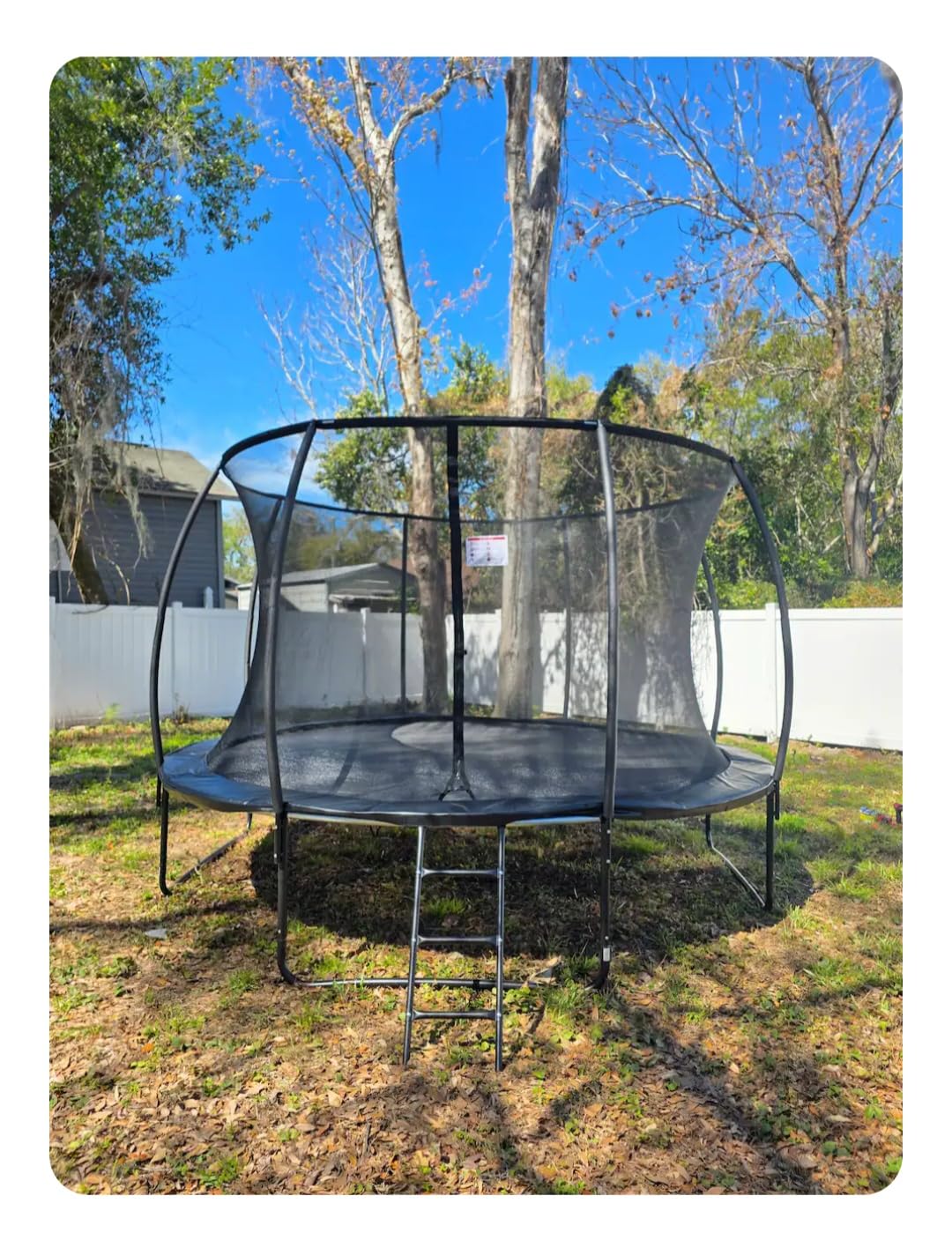
The clearest failure mode is the net support poles. One owner had them bend in wind and eventually snap inside six months, and that is a part we would inspect early rather than assume. If you buy this, anchor it before the first windy day instead of after.
Two other limitations stand out. The frame is listed as iron, which is thinner than the steel competing models use, and the included bolts are described as low quality and needing replacement. Assembly is simplified but the instructions are hard to follow at first.
Is a 14 ft round enough for a 250 lb adult
For a single adult at 250 lbs, the reported experience says yes, with the caveat that no rated limit is published. A round 14 ft gives roughly a 10 ft usable jumping diameter after the pad and net, which is a workable area for straight-up bouncing but tight for anything sideways.
For an adult who wants to rebound for fitness alongside two teenagers, we would move up to a model with a published 450 lb or higher figure rather than working from an unverified number.
When this is the right call
This is the pick when the household includes a heavy adult or late-teen sibling who will rebound regularly, and the yard only has room for 14 ft. The weight is manageable and owners report the adult case working without complaint.
Pass if you want a long warranty or a size above 14 ft, since neither exists here. Our enclosure roundup covers units with stronger pole structures for exposed yards.
8. AOTOB 12ft or 14ft Rectangle Trampoline – Best for Gymnastics Beginners
AOTOB 8×14FT Rectangle Trampoline with Net for Kids-Black
Rectangular gymnastics surface
No-gap enclosure with foam poles
72 springs
5-year support on mat frame and springs
Pros
- Flat predictable bounce for flips and tumbling practice
- no-gap foam-wrapped poles keep feet off the springs
- at 93.5 lbs one of the lighter units reviewed
- powder-coated steel frame with four legs
- Bilt app 3D assembly guide
Cons
- Only 12 ft and 14 ft rectangles
- no maximum weight rating published on the listing
- arrives in two boxes
- limited verified owner detail available
This is the entry point into rectangular gymnastics practice without the weight of a full-size tumbling trampoline. At 93.5 lbs, one teenager can move it themselves, which matters when the same lawn needs to host a birthday party in the afternoon.
The listing frames it as training equipment rather than a toy, aimed at beginners through advanced gymnasts. Rectangular geometry gives a flat, predictable bounce surface, and the no-gap enclosure wraps the poles in foam so a foot cannot reach the springs during a landing.
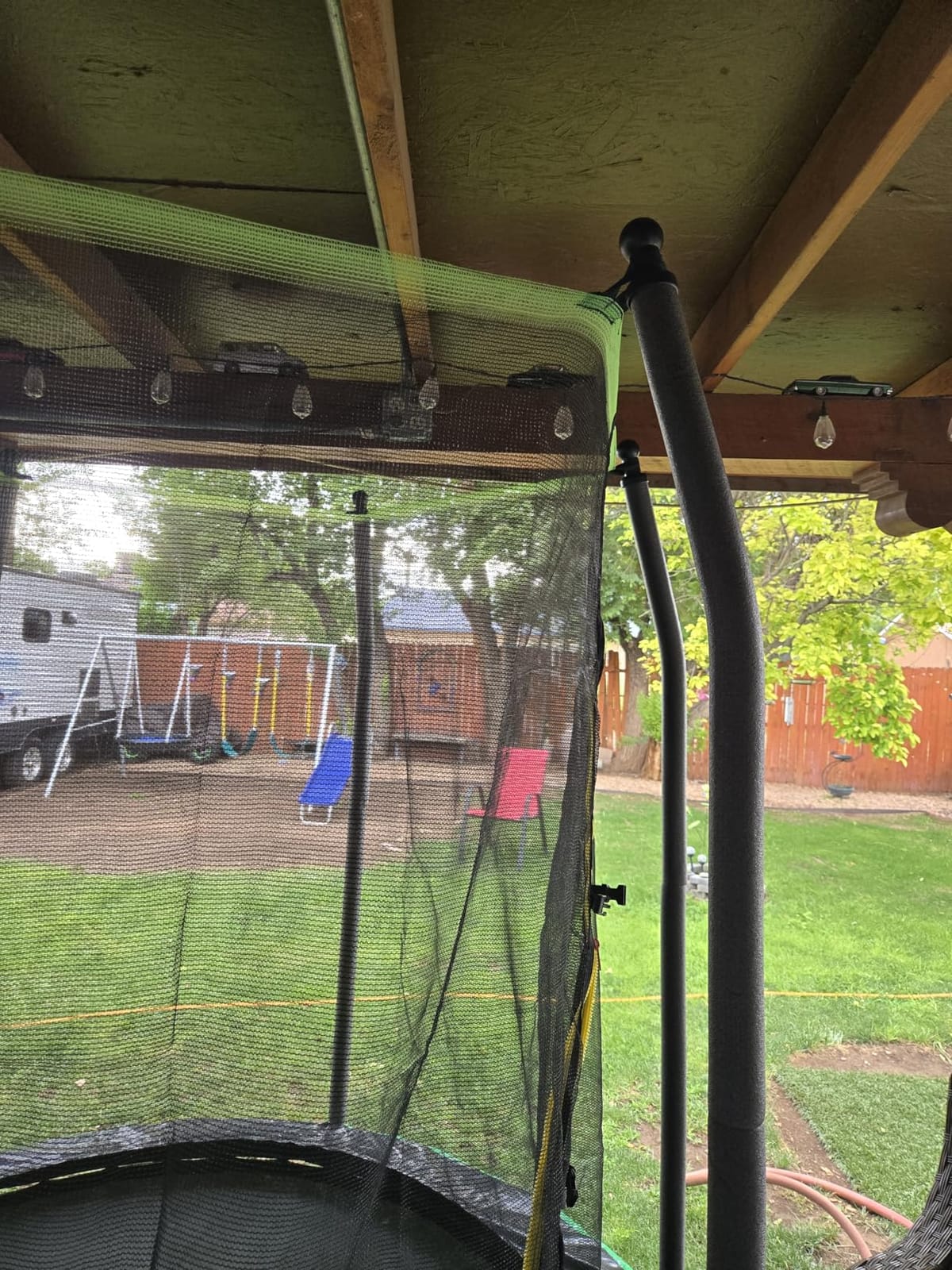
The 4.6 rating from 318 reviews pairs a high score with a smaller pool than most of the units here. Owners single out the structural warranty, five years on the jumping mat, frame and springs with three years on the enclosure net and pole caps, as the strongest structural coverage among units without a 10-year frame warranty.
Load figures are the weak spot. No maximum user weight is published on the listing, so you are working from construction claims rather than a certified number. Practically, a single teenager bouncing fits comfortably; a 12 ft rectangle does not have the mat area for four simultaneous jumpers.
The assembly guide is worth using. A 3D step-by-step app walks through the build, which solves the instruction problem that owners complain about on most trampolines in this roundup, where a full-size spring count and snap-fit frame make for confusing paper diagrams.
It arrives in two boxes, and there is no size above 14 ft in this range. A teenager who has outgrown the surface but not the interest would need to step up in price rather than up in size.
When a 12 ft rectangle is enough
One teen practising basic shapes, straight-line drills and basic flips is well served. The usable mat area on a 12 ft rectangle is around 7 by 4 ft, enough for a straight-line pass without running off the end, which is where beginners spend most of their time.
It also suits households where a parent wants a gymnastics entry point that a teenager can move and store themselves. At under 100 lbs, that is realistic.
When to size up instead
Move up to a 14 by 17 ft rectangle once your teenager is landing twists and full flips, because a longer lane removes the constant mid-air check for the edge. The premium rectangular model in this roundup is the step-up for that stage.
Also step up if more than one person will be on the mat at once, since a 12 ft rectangle with two jumpers turns into collisions rather than practice.
9. YUMPIE 12ft Round Trampoline – Best for Pure Bounce
YUMPIE 16FT Outdoor Trampoline with Enclosure Net and Ladder, ASTM Approval
600 lb dynamic capacity
108 carbon steel springs
12 curved padded poles
Ladder and hoop included
Pros
- 600 lb dynamic rating leads the round models here
- 108 carbon steel springs with a high-density PP mat
- curved pearl-cotton-wrapped poles
- ladder included
- rating spread unusually flat
Cons
- Instruction manual is the most criticized part with no net instructions at all
- recommended assembly order wastes time because springs must be refitted
- net described as flimsy
- mat stitching reported torn under a year
Spring count is the number that separates this one. At 108 carbon steel springs around a 12 ft frame, the tension is high enough that a teenager bouncing hard does not sink into a soft, dead surface. That is the mechanical reason the bounce gets described as strong rather than merely adequate.
The 600 lb dynamic capacity is the highest published by any round model in this roundup. Two teenagers at 150 lbs each come to 300 lbs combined, which leaves real headroom for a third jumper inside that figure.
Twelve outward-curved poles wrapped in pearl cotton keep the hard vertical members away from the landing path, and the enclosure is UV-resistant PE netting with 360-degree coverage plus an L-shaped zipper with a safety buckle. A ladder is included, which is genuinely useful for a teenager whose feet clear the frame easily.
The basketball hoop mounts directly to the safety net poles rather than needing a separate stand, which saves ground space in a smaller yard and adds another active-play option for older kids.
The manual is the serious problem here. Owners describe it as the worst they have used, and specifically flag that there are no net instructions at all. The recommended order of assembly also wastes time, because the springs have to be removed and refitted to fit the net into place.
Netting is described as flimsy by several reviewers, and fast jumpers can reach the trampoline bars. One owner also found mat stitching torn after under a year of use, and some foam pole covers arrived with chunks missing.
Owners in exposed yards recommend upgrading to heavier-duty anchors rather than relying on the standard stakes. Given the pole geometry, we would anchor before the first gust rather than after a bent pole.
Does 108 springs matter for a heavy jumper
Yes, and the effect is felt rather than measured. More springs at lower tension means a firmer mat under load, so a 160 lb teenager still gets a real rebound on the third bounce instead of a mushy landing. That is the difference between a teenager continuing to jump for an hour and losing interest.
The trade is assembly effort. Tensioning 108 springs properly takes time and a spring hook tool, so budget the evening rather than assuming an afternoon.
Who this model fits
It fits a household with one to three teenagers who bounce hard and occasionally attempt a flip, in a yard where a stand-alone hoop stand would not fit. The 4.4 rating with only 4% one-star reviews is the flattest spread in this group.
Pass if your teenager flips seriously, since the flimsier net and the reach to the bars work against that.
10. ORCC 10x16ft Oval Trampoline – Best Oval Shape for Longer Bounce Lanes
ORCC 10×16 FT Oval Outdoor Trampoline with Safety Net – Recreational Gymnastics Trampoline for Kids, 1200LBS Capacity, Heavy-Duty Galvanized Steel Frame Yard Trampolines
1200 lb static and 450 lb dynamic
10x16 ft oval surface
84 springs
1.6 mm hot-dip galvanized tubing
Pros
- 4.7 rating from 218 reviews with only 1% one-star
- oval shape gives a longer straighter bounce lane
- reinforced crossbar lock prevents wobbling
- hot-dip galvanized tubing holds condition for years
- gloves and spring pullers included
Cons
- Net top straps are cheap plastic and degrade in sun
- net bolts can bend and break in storms
- net attachment takes a couple of hours on its own
- two spring pullers are not enough
The oval is the compromise shape between a round and a rectangle. A 10 by 16 ft bouncing area gives a longer, straighter lane than a round unit without the shipping weight and yard demand of a full rectangle, and the 4.7 rating from 218 reviews carries only 1% one-star ratings, the narrowest negative share of any unit we reviewed.
Load ratings are published properly: 1200 lbs static and 450 lbs dynamic on 1.6 mm hot-dip galvanized steel tubing. Two teenagers at 145 lbs each total 290 lbs combined, which leaves headroom for a parent bouncing along.
The reinforced crossbar lock on the leg tubes is the detail that shows up in owner reports about wobbling. Intensive jumping tends to loosen leg joints over time, and the lock keeps the frame rigid. Owners report three-plus years of use with no problems, and several note their teenagers jumped alongside them without difficulty.
Gloves and spring pullers are supplied, which is a thoughtful inclusion with 84 springs to tension. Galvanized tubing plus the extra black protective coating on the legs is what makes the multi-year reports plausible.
The weak points are all in the net hardware. Top straps are cheap plastic that does not fit snugly on the poles and degrades in sun, and the bolts holding the net up can bend and break in storms. Attaching the net to the base takes a couple of hours by itself.
Two spring pullers are not enough for 84 springs, so a heavy-duty puller is a sensible addition. Warranty coverage is split rather than flat: one month on pads and nets, two years on mats and springs, three years on frames.
When an oval beats a rectangle
Choose the oval when your yard has good length but not the width or the patience a full rectangle demands. A 10 by 16 ft surface gives a straight lane for basic gymnastics lines and rebound drills while keeping the footprint narrower than a 10 by 17 ft rectangle.
The shape also handles multiple jumpers better than a round of similar mat area, because the lane geometry means people moving in the same direction do not collide as often.
When to choose something else
Skip it for serious tumbling, where a true rectangle holds a straighter line under repeated passes. Also consider the split warranty carefully if your household will keep this for a decade, since the net and pad are the parts that fail first and only carry one month of coverage.
For the strongest long-term structural coverage in this roundup, the two Zupapa models carry 10 years on the frame. Our under-500 roundup covers lower-cost options if budget leads the decision.
How to Choose a Trampoline Teenagers Will Use for Years
A common mistake is reading one big weight number and treating it as the whole story. Here is how to read the specs properly, then how to match size and shape to your yard and your teenager’s actual use.
Per-user weight limit versus static load capacity
Static load is the weight the frame carries at rest. Dynamic load is the impact a jumper creates on landing, which is always the real constraint. Only three of the ten models here publish both figures, and the split models carry noticeably higher dynamic numbers than the single-number listings.
Where a brand publishes a single figure, treat it as a household total rather than a per-person allowance. That reading is conservative and protects you, and it is the reason the load math above uses combined weights.
Size and yard clearance
Go as large as the lawn allows, because the jump surface is the first thing a growing teenager notices. A 12 ft round gives roughly a 7.5 ft usable diameter, a 14 ft round roughly 9 ft, and the rectangles and ovals give a lane rather than a circle. Measure the clear run, not the footprint, because the enclosure adds width beyond the frame.
Leave clearance on every side for anchoring and for a teenager running off the mat at speed. Community consensus in the trampoline forums we read was consistent on this point: buy the biggest one that physically fits, then check that the safety clearance around it still exists.
Shape: round, oval or rectangle
Round units are simpler to assemble and the bounce changes character near the middle. Ovals give a longer lane in a narrower footprint. Rectangles deliver the flattest, most predictable bounce because each section of the mat has independent spring action, which is why gymnastics households choose them.
If your teenager is doing flips or tumbling, shape beats everything else on this list. If they are bouncing and playing basketball, a 14 ft round with a hoop is enough.
Enclosure placement and spring versus springless
An enclosure that mounts inside the spring pad leaves the spring channel exposed to feet; a no-gap design that runs the net straight to the mat removes that channel entirely. For teenagers who land at an angle or step off deliberately, the no-gap layout is the single biggest safety upgrade available here.
On spring versus springless: none of the ten models reviewed use a true springless bungee or composite-rod system, so you are choosing between spring types rather than between springs and rods. Springless designs remove pinch and entrapment points but are lighter, which makes them easier for wind to lift, and the bounce tends to feel firmer and less deep. That trade is worth considering separately, especially with close neighbours and evening jumping.
Warranty and replacement parts
Frame warranty is the number that predicts lifespan, because frames rarely fail while nets and pads do. The two Zupapa models carry 10 years on the frame with 2 years on mat, pad, net and springs. Everything else here ranges from one to five years, with several listing only one year.
Check the spare parts availability window as well, not just the warranty. One model lists parts availability for one year, which means a torn net mat in year three is a replacement trampoline rather than a repair. Netting, spring pads and mats are the components that degrade fastest under teen-level force, usually within one to three years.
Safety Rules That Matter More for Teens Than for Kids
The equipment accounts for a minority of trampoline injuries. Collisions between jumpers, and attempting skills beyond current ability, cause far more harm than a frame failure, which is why supervision rules matter more for teenagers than the model you buy.
One jumper at a time is the rule that parents relax first and regret last. A 160 lb teenager landing where a 140 lb teenager is already descending is a recurring serious injury scenario in owner reports, and it happens in homes with certified, well-built trampolines.
Flips should be progressed rather than attempted. Landing flat on the back or neck carries the highest injury risk of anything a teenager will do on a mat, and the progression that works is bouncing awareness first, then tuck jumps, then a front flip over a trampoline with no one else on it, with the spotters removed only once the landing is consistently controlled.
Anchor the trampoline before the first windy day rather than after a pole has bent, and check the net straps, bolts and spring anchors every few months. Reviewers on several models report replaced straps within two or three seasons simply from sun exposure, which is normal and cheap to fix if you catch it.
Finally, tell your insurer about the trampoline if you are hosting other teenagers regularly. Homeowners have raised liability concerns in forums about injuries involving guests, and it is a conversation worth having once rather than after an accident.
Frequently Asked Questions
What size trampoline is best for teenagers?
A 14 ft round or any rectangular or oval unit gives a teenager room to move sideways without constantly checking the edge. A 12 ft round works for a single teen bouncing vertically, but not for flips or for more than one jumper. Measure the clear run including enclosure clearance before you decide.
Should I get a 12ft or 14ft trampoline?
Get the 14 ft if your lawn allows, because the usable jumping diameter grows from roughly 7.5 ft to about 9 ft once the pad and net take their share. The extra mat area is what lets a teenager jump with a friend without constant contact, which is the main cause of collisions.
How many people can jump on a trampoline at once?
One jumper at a time is the safe answer for any household, regardless of model. Physically, the models here handle two teenagers of 140 to 150 lbs within their published dynamic limits, but simultaneous jumping is what causes most injuries and what bends frames over time.
Do pediatricians recommend trampolines?
Most guidance is cautious rather than prohibitive. Individual trampoline use with one jumper at a time and direct adult supervision is considered lower risk, while flips, multiple jumpers and any child under six carry higher injury rates. Many pediatric practices steer families toward structured gymnastics equipment instead of backyard units for skill training.
What should I look for when purchasing a trampoline?
Check four things in order: a published weight rating that separates per-user from static load, ASTM F381-16 or TUV certification, the enclosure layout including whether the net sits inside or outside the spring pad, and the frame warranty length. Also confirm what is included, since anchors, a ladder and a spring hook tool are frequently sold separately.
The Verdict: Which Trampoline to Buy
The best trampolines for teenagers come down to two questions: how many people will be on the mat at once, and whether your teenager will be attempting anything beyond bouncing. For most households the answer is the Jumpzylla 14 ft, with a 450 lb rating, 80 springs and consistently responsive part replacement.
If two teenagers will jump together regularly, step up to the Zupapa No-Gap round for its published 550 lb dynamic rating and the enclosure that leaves no gap to land a foot in. If flips and tumbling are the goal, go straight to the rectangular Zupapa 10 by 17 ft, where the flat bounce lane and four-leg support make it the best trampolines for teenagers serious about training.
Check the yard clearance and the enclosure layout before you order, anchor it on day one, and keep the one-jumper-at-a-time rule even though the frame can take more.