
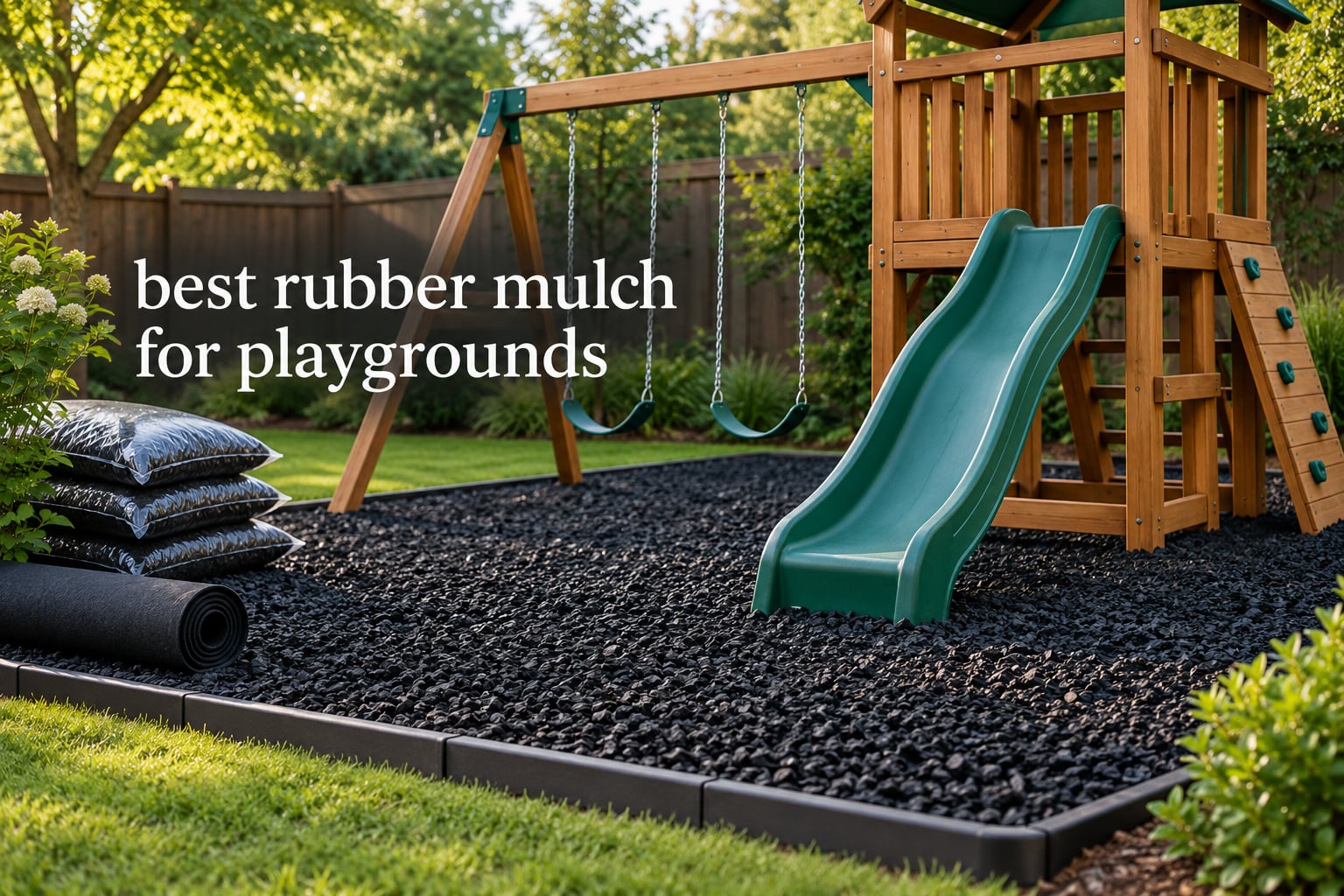
The best rubber mulch for playgrounds is IPEMA-certified, made from 100% recycled tire rubber with a documented wire-free process, and installed deep enough over weed barrier fabric to absorb a fall from your equipment’s height. Three inches is the residential minimum, six inches is the standard for schools and public playgrounds, and every surface needs a six-foot clear fall zone in all directions. Get those three things right and the brand name matters far less than the installation.
That is the honest summary after our team spent weeks reading certification documents, coverage tables and roughly 2,700 buyer reviews across the eight products below. We did not test fall attenuation ourselves, so we leaned on published IPEMA and ASTM documentation, vendor coverage math, and the pattern that shows up when 1,736 people rate the same bag of nuggets.
What follows is a roundup built around the three questions that actually decide whether a play surface is safe: is the rubber certified for impact attenuation, is it free of wire and steel, and are you putting enough of it down over a proper base. We also cover the parts most roundups skip, including the health debate that dominates parent forums and the coverage math that determines whether you buy eight bags or eighty.
One note before we start. Two of the eight products here are landscaping mulch rather than certified playground surfacing, and we label them as such. A landscaping mulch sold in a garden department is not the same thing as a loose-fill surface tested to ASTM F1292, and pretending otherwise is how kids end up landing on something that was never rated for a fall.
Table of Contents
Is Rubber Mulch Safe for Playgrounds?
This question deserves a straight answer rather than a slogan, because the loudest voices in parent forums are split. On r/ScienceBasedParenting, two separate threads reached roughly the same conclusion: the benefits of kids playing on tire-based surfacing appear to outweigh the theoretical risks. The most vocal minority position in those same threads is that the material is toxic and leaches heavy metals, and that anyone who installs it is trading a real hazard for a soft landing.
Both positions come from the same underlying chemistry. Tire rubber is a composite of natural and synthetic rubbers, carbon black, silica, zinc, and a long tail of organic compounds from the tread, sidewall and oils used in manufacturing. Recycled tire crumb has been studied for decades, and the results are not uniform. Zinc leaching from tire-derived surfaces is the most reproducible finding in the literature, and it rises sharply when the material is freshly installed and wet, then declines. Lead and polycyclic aromatic hydrocarbons appear in some tire streams and not others, which is why sourcing and processing matter more than the word recycled.
Here is the mitigation list we actually use, drawn from what parents and installers report in the forums:
Buy a certificate you can look up. IPEMA certification is a directory, not a sticker. If a vendor cannot give you a number that resolves in the IPEMA member database, treat that as a reason to buy elsewhere.
Prefer wire-free processing over wire-free marketing. Steel belts and brass wiring survive shredding unless a magnetic separation and fiber stage happens. GroundSmart’s own coverage math, for example, quotes 72 bags for 147 square feet at six inches, which is the kind of concrete number we want to see.
Wash hands after play, and keep it out of planters. Reviews on multiple products note the same thing: black rubber mulch raises soil temperature, so it is a poor choice directly around heat-sensitive plants and a poor choice for vegetable beds.
Choose an undyed product if color transfer bothers you. Viagrow’s no-dye line is sold specifically on the claim that color will not transfer to hands or clothing.
Avoid the municipal mulch route. An r/landscaping commenter describing giveaway county mulch put it plainly: it is pretty rough and not really meant for playgrounds. County programs hand out landscaping material that has never been impact-tested.
None of that makes rubber mulch risk-free. What it does is move the decision from faith to evidence, which is the only ground I think a parent should stand on when a child is dropping from seven feet.
Top 3 Rubber Mulch Picks for Playgrounds in 2026


Best Rubber Mulch for Playgrounds (October 2026)
| Product | Specifications | Action |
|---|---|---|
| Playsafer Rubber Mulch Nuggets 400 lb |
|
Check Latest Price |
| NuPlay Rubber Mulch 4-Pack Earthtone |
|
Check Latest Price |
| Viagrow No Dye Rubber Mulch 1.5 CF |
|
Check Latest Price |
 Rubberific Shredded Mulch 75 cu ft Pallet Rubberific Shredded Mulch 75 cu ft Pallet |
|
Check Latest Price |
 NuPlay Landscaping Bark 1.5 cu ft NuPlay Landscaping Bark 1.5 cu ft |
|
Check Latest Price |
 GroundSmart Cedar Red 0.8 cu ft Bag GroundSmart Cedar Red 0.8 cu ft Bag |
|
Check Latest Price |
 Rubberific Bagged Brown Mulch Rubberific Bagged Brown Mulch |
|
Check Latest Price |
 Office Roast Red Rubber Mulch 4 QT Office Roast Red Rubber Mulch 4 QT |
|
Check Latest Price |
1. Playsafer Rubber Mulch Nuggets – Best Overall and IPEMA Certified
Playsafer Rubber Mulch Nuggets Protective Flooring for Playgrounds, Swing-Sets, Play Areas, and Landscaping (400 LBS – 16 CU. FT., Black)
400 lb pallet,16 cu ft coverage
Recycled tire rubber,99.9% metal free
IPEMA certified,12-year color guarantee
Pros
- IPEMA certified for playground impact attenuation
- Made from recycled tires and 99.9% metal free
- Will not freeze or decompose in cold weather
- 12-year color guarantee
- Packed in 40 lb bags that are easy to spread
Cons
- 40 lb bags are physically demanding to move
- Pallet sizing overshoots small play areas
- Confirm the depth rating covers your fall height
The Playsafer nugget pallet is the pick I keep coming back to, and the reason is boring: it is the only product in this roundup where the certification claim, the contaminant claim and the coverage claim all appear together on the same spec sheet. IPEMA certified, made from recycled tires, 99.9% metal free, and a 12-year color guarantee.
Reviewers on this listing number 1,736, with 77% at five stars. That is the largest verified pool of real installations behind any playground mulch I have read, and the praise is consistent rather than scattered. People report that it does not decompose or compress, so it does not need re-spreading every spring. Others point out that it dries quickly and will not freeze, which matters more in northern climates than most product copy admits.
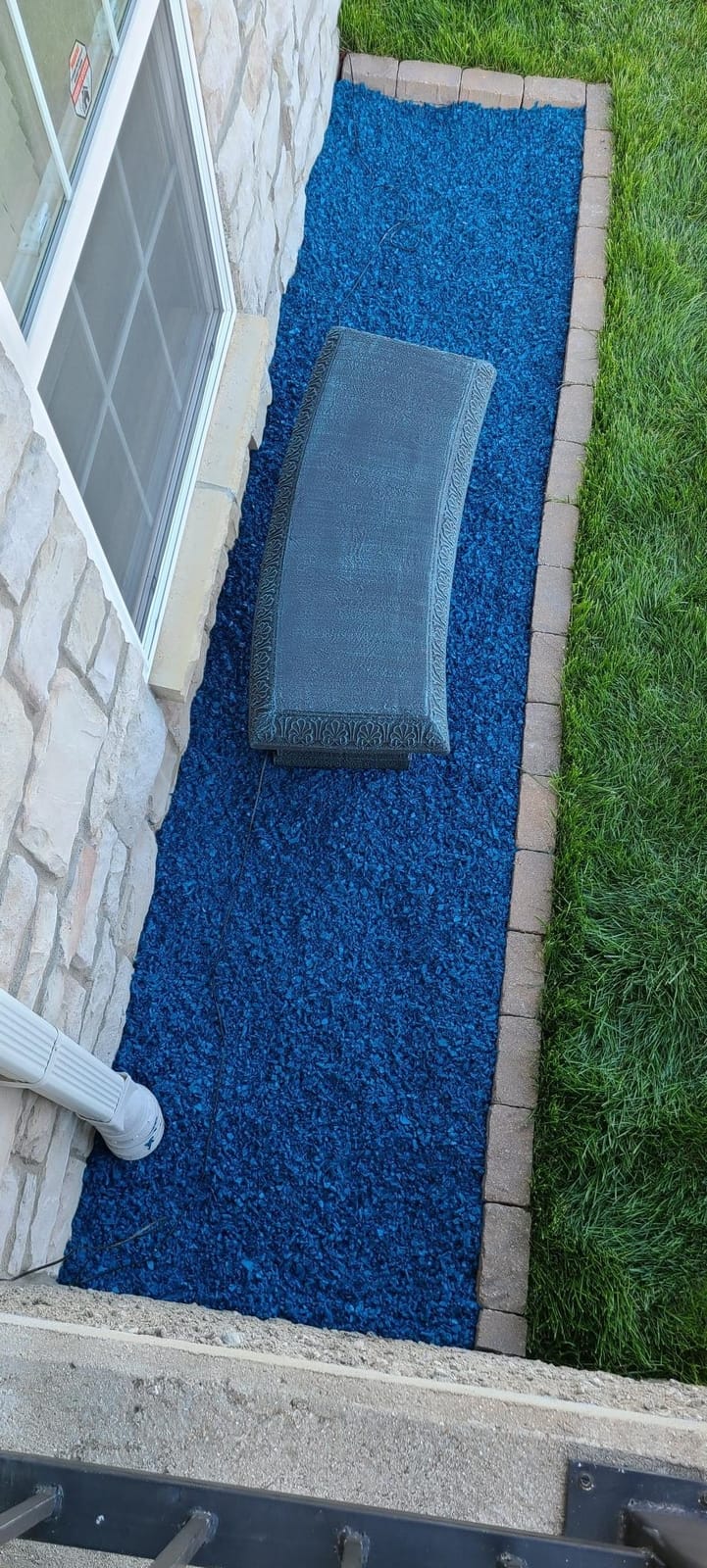
The physical reality is that this is 400 pounds delivered as ten 40-pound bags. That is genuinely unpleasant to move across a lawn, and it is the single most repeated complaint in the reviews. If you have a small 10 by 10 foot area, you are buying roughly a third of a pallet and storing the rest.
One more caveat worth stating plainly. IPEMA certification covers the product, but it does not certify your installation. Reviewers and installers both flag the same gap: the certification does not by itself confirm that the surface is rated for every fall height, and the depth chart that comes with the product is the document that answers that. Read it before you spread a single bag.
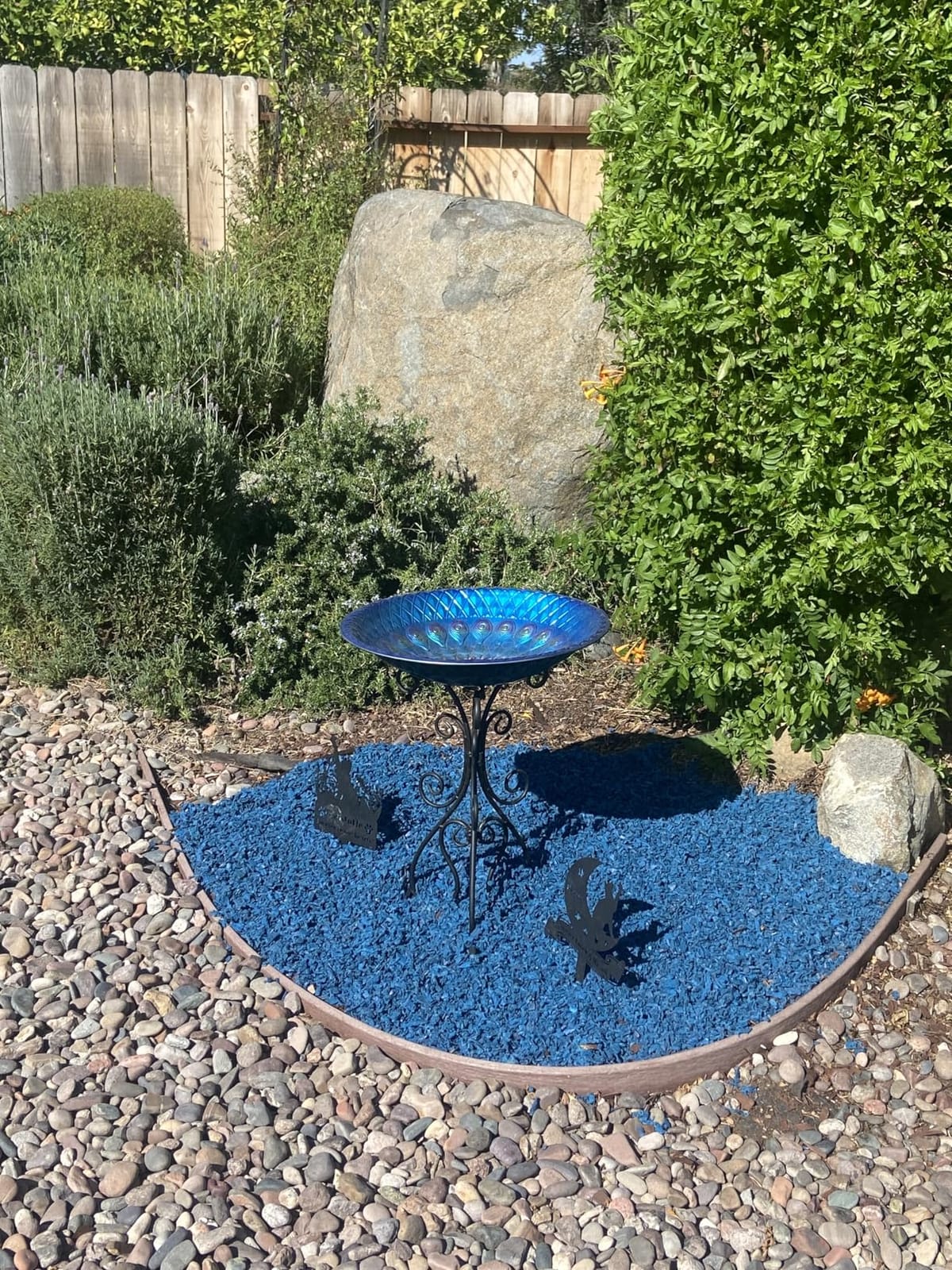
What tells you this is the right bag for a home playset
Three things line up here that rarely do on other listings. The metal-free claim is specific enough to verify, the coverage is stated in both pounds and cubic feet, and the freeze and dry behavior is documented rather than implied. For a swing set with a six-foot fall height, a three-inch depth over fabric at the recommended 3 to 4 inch residential range is where this product’s certification applies.
Buyers who laid it around a playset report that nuggets stay where they are put. There is no scattering into the lawn, no annual top-up of lost material, and no splinters, which is the point of buying rubber instead of wood in the first place.
Where it will frustrate you
Pallet economics. If your play area is under 200 square feet, the bag count you need is a fraction of what arrives, and leftover rubber does not store in a climate-controlled space gracefully. Two buyers described the same experience: the material was excellent and the quantity was wrong for the space.
Black also reads hotter in direct sun than a brown or earthtone blend. On a July afternoon, black rubber surface temperature is the most common parent question I see after coverage, and it is worth factoring in if your play area has no shade tree. The material itself does not melt or degrade, but children will not sit on it comfortably at peak heat.
2. NuPlay Rubber Mulch Playground Flooring 4-Pack – Best for Residential Playsets
NuPlay Rubber Mulch Playground Flooring – Rubber Nugget Weed Barrier – Flooring for Swing Sets, Play Areas Covers 4 Pack, Earthtone
4-pack,1.5 cu ft per bag
ASTM F3012 tested,99.9% wire-free
12-year color guarantee
Pros
- ASTM F3012 tested and 99.9% wire-free
- Small nuggets reduce potential choke hazards
- Stays put in wind and rain instead of scattering
- Weed barrier and splinter free
- Does not attract insects or rodents
Cons
- Smaller coverage per bag means more bags for the same area
- Occasional reports of the wrong color arriving
- Nuggets can absorb water and freeze in cold conditions
NuPlay is the pick for anyone who wants a bagged product that behaves like a certified playground surface rather than a garden product. It is ASTM F3012 tested and described as 99.9% wire-free, and the nugget size is deliberately small, which parents on forums consistently identify as the feature they care about most for toddlers.
The standout feature here is transparency. The listing publishes a full coverage table at three-inch depth: a 5 by 5 foot area takes five bags, 10 by 10 takes twenty, 15 by 15 takes forty-five, and 20 by 20 takes eighty. Vendors almost never hand you that, and it lets you verify the order before it arrives rather than after.
That transparency cuts both ways. A 1.5 cubic foot bag is small next to a competitor’s 3.2 cubic foot bag, so the bag count for a given area is higher. If you are working from a fixed budget, do the math with the vendor’s own table rather than a round number from a listing photo.
Rated 4.3 across 152 reviews with 71% five stars, the feedback centers on nuggets that displace well on impact, color that holds for years, and a surface that stays where you put it. The negative notes are narrow: coverage per bag versus value, one report of the wrong earthtone color arriving, and nuggets that can hold water and freeze in winter, which is the standard behavior of any loose-fill surface.
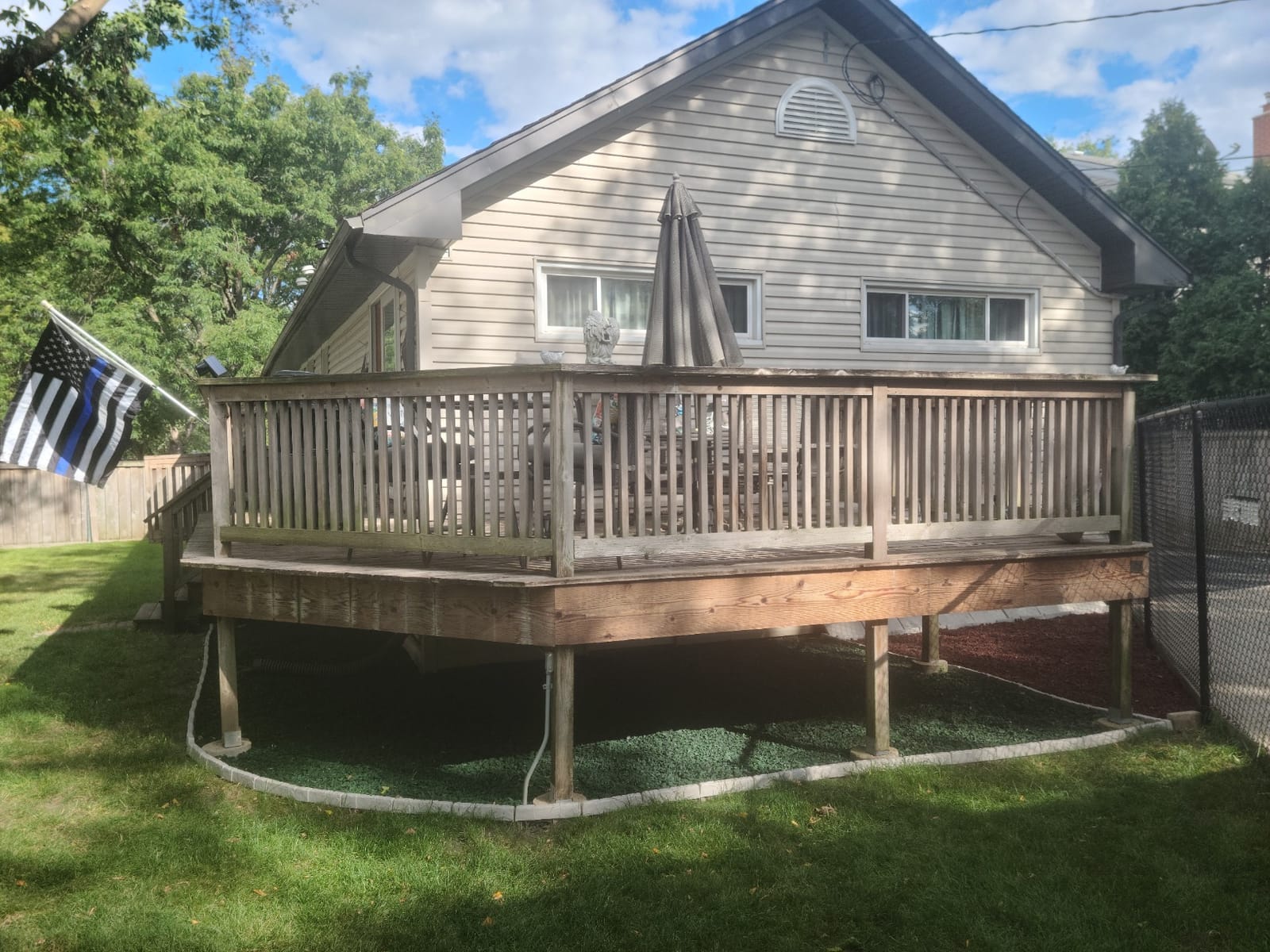
Why this one is easy to plan around
Because it states its recommended depth directly, 3 to 4 inches for residential playgrounds, and then gives you the bag count for four different square areas. Cross-check that against your equipment’s fall height and you can order once instead of twice. The ASTM F3012 designation also matters if anyone ever asks you to document what is under the playset.
Reviewers call out the weed barrier and splinter-free properties as the everyday wins. The material does not attract insects or rodents, which matters in a shaded yard where wood mulch would be hosting ants within a season.
Where it falls short
Value per bag is the recurring complaint. One reviewer framed it as paying more per cubic foot than the big-box alternative, which is a fair reading when you are covering four hundred square feet. The product is not wrong; the arithmetic is simply tight.
Also note that 4.3 is a middling average with a 9% one-star share, the highest single-star share among the certified products here. Digging into the pattern, the unhappy reviews cluster on value and one shipping error, not on safety performance.
3. Viagrow No Dye Rubber Playground Mulch – Best for a Stain-Free Finish
Viagrow No Dye Rubber Playground & Landscape Mulch 1.5 CF Bag (11.2 Gallons / 42.3 Liters)
1.5 cu ft / 11.2 gallon bag,36.9 lb
Dye-free natural black
2X wood mulch fall height rating
Pros
- Undyed so no color transfers to hands or clothing
- Certified as a playground safety surface
- Soft pliable shredded texture
- Stays put through high wind and heavy rain
- Processed free of steel bands and foreign material
Cons
- Bulky bags that cover a modest area each
- Natural undyed version shows visible white threads
- Looks like plain shredded tires next to dyed mulch
Viagrow solves one problem that dyed rubber mulch creates for families with toddlers, and it solves it at the source. The color is natural black with no dye added, which means nothing transfers to hands, knees or white clothing. Parents mention color bleeding onto clothes as a recurring grievance with dyed products, and this one simply does not have the dye in it.
The product is certified for use as a playground safety surface and carries a fall height rating of two times that of wood mulch, made, packaged and sold in the USA from 100% recycled rubber processed free of steel bands and foreign material. A 12-year Color Guard guarantee comes with it, which is market standard for anything claiming to be playground rated.
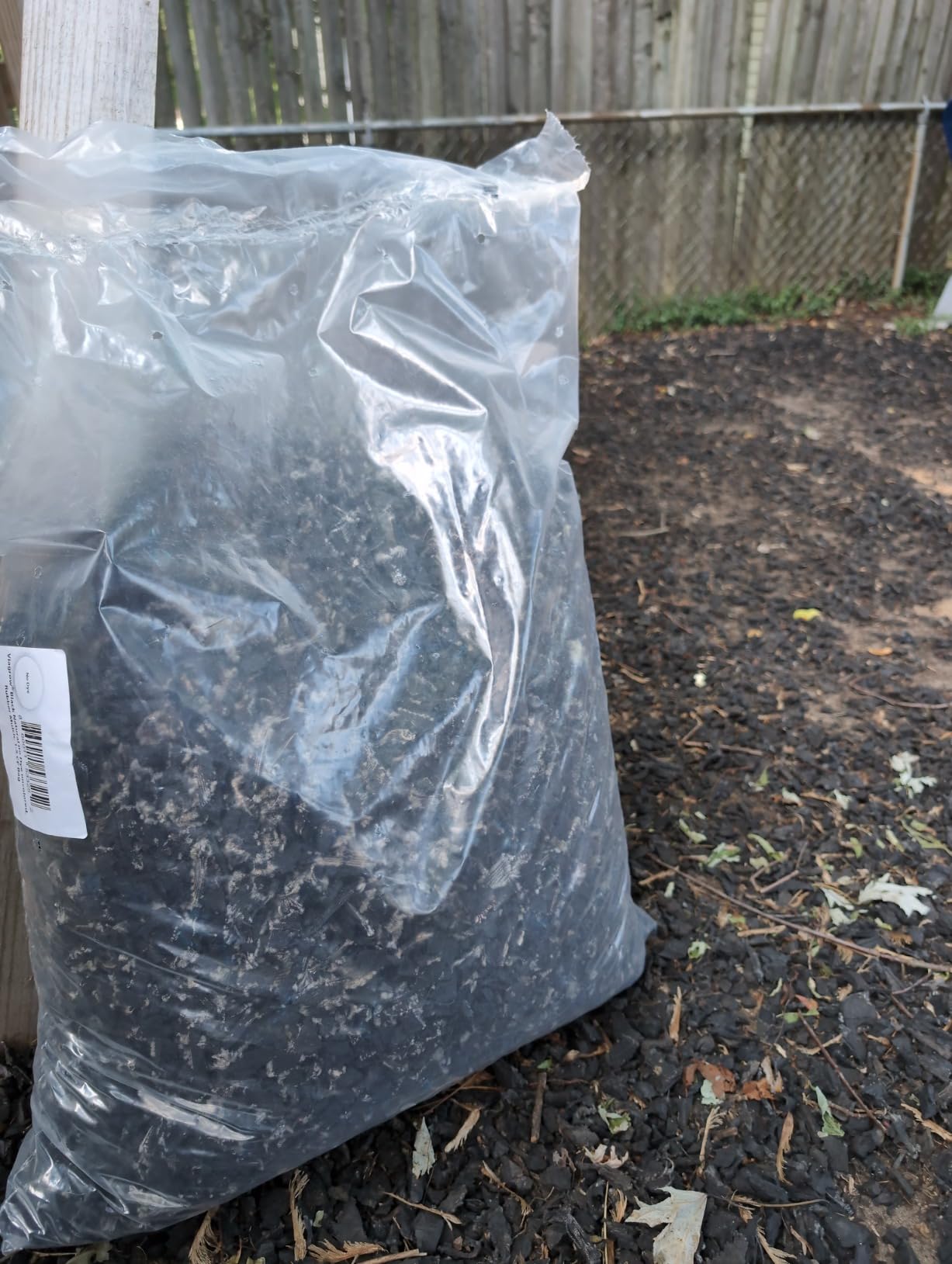
What you get is a shredded texture rather than nuggets, and that changes the feel underfoot. It is soft and pliable and splinter-free, and reviewers consistently say it does not melt together in extreme heat or degrade quickly. It also stays in place through wind and heavy rain, which is not a given with shredded material.
Only 24 reviews back this listing, but they are unusually clean: 70% five stars, 23% four stars, and zero one-star ratings. Small samples cut both ways, and a young listing has less long-term evidence behind it than the 1,700-review products here. Treat the durability claims as promising rather than proven across a decade.
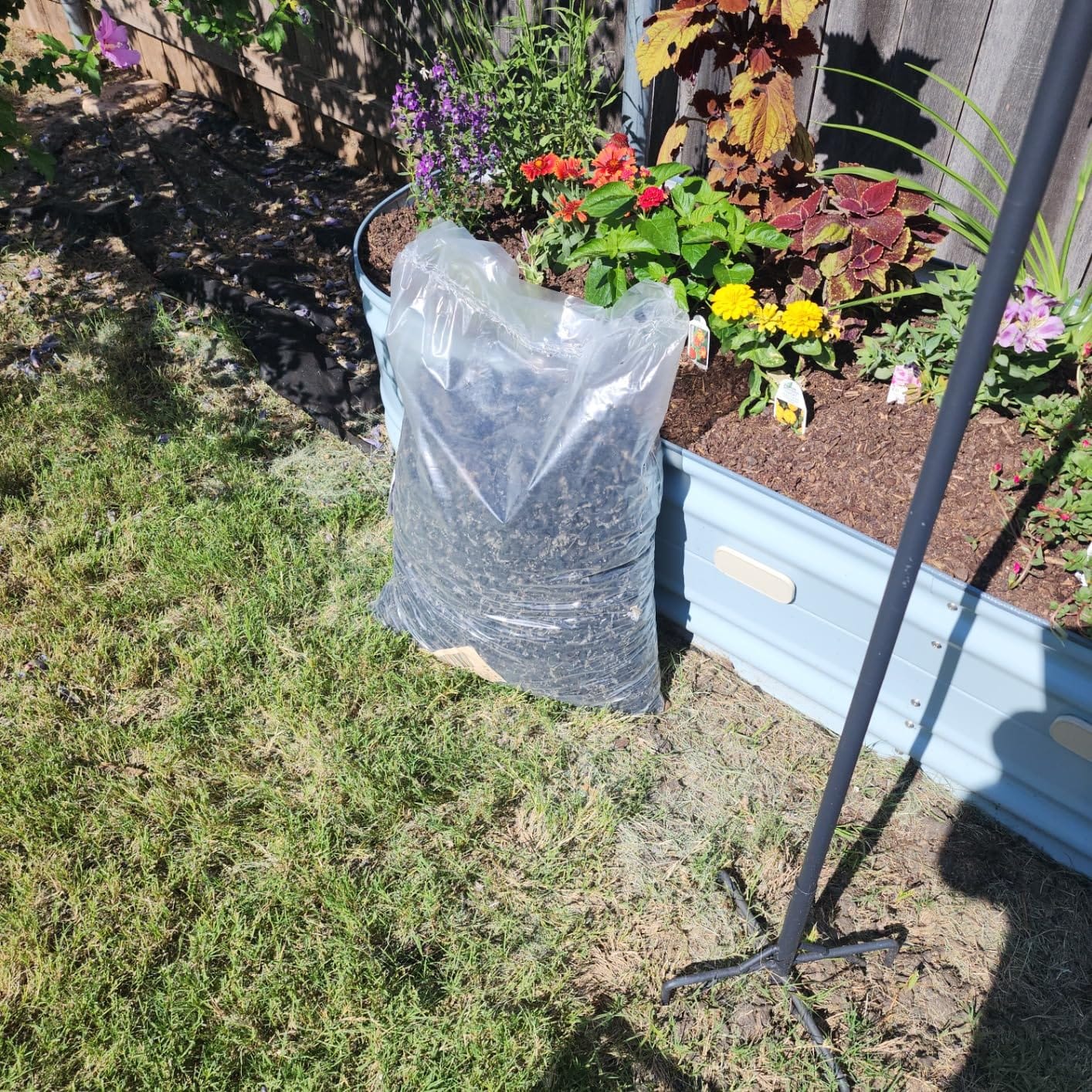
Where the no-dye choice pays off
Under a swing set or in a daycare sandbox-adjacent play area, black dye is the most common stain transfer source. A toddler who grabs a handrail then puts it in their mouth is not a hypothetical. This bag removes that category of concern entirely at no performance cost, and reviewers rate the softness favorably for a shredded product.
The 2X wood mulch fall height comparison is the number to quote when a relative asks why rubber beats wood chips. It is a manufacturer claim rather than a published g-max value, so treat it as a directional comparison, not a substitute for a certificate number.
Where it will disappoint you
Coverage per bag. At 1.5 cubic feet and 36.9 pounds, the bag is small, and multiple buyers note that the purchase does not cover a large area. One review cluster mentions volume buyers supplementing with cheaper mulch to finish a job, which is exactly the shortcut that voids a certified surface. Do not mix uncertified material into a fall zone.
The undyed look is also the honest tradeoff. Reviewers describe visible white threads and a surface that looks like plain shredded tires. Functionally excellent, aesthetically plain.
4. Rubberific Premium Shredded Rubber Mulch Pallet – Best for Large Areas
Rubberific Premium Shredded Rubber Mulch for Gardens, Lawns, and Landscaping | Long Lasting Color | Looks Like Natural Wood Mulch (75 CU. FT. – 1,350 LBS, Black)
75 cu ft coverage,1350 lb pallet
12-year color warranty
Shredded,wood mulch appearance
Pros
- Natural wood mulch look that blends with landscaping
- Stays dark and holds color in direct sun
- Does not move or wash away once placed
- Effective weed suppression over weed paper
- Spreads and rakes to a smooth finish
Cons
- Raises soil temperature so keep it off plant roots
- Loses material to flooding and high winds
- Large upfront purchase at pallet size
At 75 cubic feet and 1,350 pounds, this is the pallet to buy when you are surfacing a school-scale or community-scale area and bagged product would mean a hundred trips from the car. It is also the product that answers the aesthetic objection: reviewers repeatedly single out how closely it resembles real shredded wood mulch, which matters if the play area sits in a visible part of a yard.
The color warranty is 12 years with an explicit claim that color will not fade, rub off or bleed onto clothing, and the product is described as cushioned and suitable for playground surfacing. It is also described as reusable multiple times over many years, which is unusual language that suggests a genuinely durable fiber.
Rated 4.6 across 232 reviews with 76% five stars. Reviewers report installations still looking good after two to four years, staying put in place rather than migrating, and holding color in direct sun. Weed suppression gets called out specifically when laid over weed paper, which is the installation we would recommend anyway.
What makes this the smart bulk buy
Volume math. When a product ships as a single pallet rather than 40-pound bags, the handling burden collapses. For a 40 by 50 foot fenced play area, which is a size that comes up constantly in cost comparisons on forums, bagged product at that coverage is a serious physical undertaking. This pallet is designed for it.
The natural appearance also solves the landscaping objection that keeps rubber out of visible yards. Two-tone borders using a darker brown mulch under equipment and a lighter blend around the perimeter is the common design move here, and shredded texture rakes into a smoother finish than nuggets do.
Where it falls short
Plant proximity. Reviews are consistent that this material warms the soil, which makes it a poor mulch for heat-sensitive perennials and a bad idea in a vegetable bed. Keep it in the fall zone and out of the planting beds.
Flooding and wind. Several buyers note that material can be lost to heavy water and high wind, so order extra. This is a shredded product in an open area, and no amount of pigment binding changes that.
One more thing to be clear about. This listing is sold as premium shredded rubber mulch for gardens, lawns and landscaping, with playground suitability described as a property of the cushioned surface. It is not the same certification as the IPEMA or ASTM F3012 products above. If you need a compliant commercial surface, verify before you buy at this size.
5. NuPlay Rubber Mulch Landscaping Bark – Best for Garden Beds
NuPlay Rubber Mulch Landscaping Bark – Rubber Nugget Weed Barrier Garden Ground Cover, 1 Pack, Black
1.5 cu ft bag,covers 9 sq ft at 2 inch depth
Nugget shape,not wood chip shape
12-year color guarantee
Pros
- Nuggets stay in place through wind and rain
- No burning rubber odor in hot weather
- Deep natural-looking color
- Weed barrier and splinter free
- Does not attract animals
- insects or rodents
Cons
- Black color reads dull in bright sunlight
- Some buyers get less than the stated 9 sq ft coverage
- Warms soil so avoid heat-sensitive plants
- Higher cost per bag than wood chips
This is the same manufacturer as the NuPlay playground pack, using the same ASTM F3012 testing and the same 99.9% wire-free recycled rubber process, but sized and marketed for garden ground cover. One 1.5 cubic foot bag covers 9 square feet at the recommended 2-inch depth, with a published table: 3 by 3 feet takes one bag, 6 by 6 takes four, 9 by 9 takes nine.
What that 2-inch depth means practically is important. Two inches is a landscaping depth, not a fall-height depth. This product belongs around trees, in beds and along paths, or as a border around a play area. If you want it in the fall zone, deepen it to 3 to 4 inches and recalculate the bag count, which the same 1.5 cubic foot bag will not stretch to do.
The nugget shape rather than wood-chip shape is the feature buyers like most. Nuggets interlock and stay in place through wind and rain instead of scattering, and multiple reviews note the absence of burning-rubber odor even in hot summer weather, which is a common complaint about rubber mulch generally.
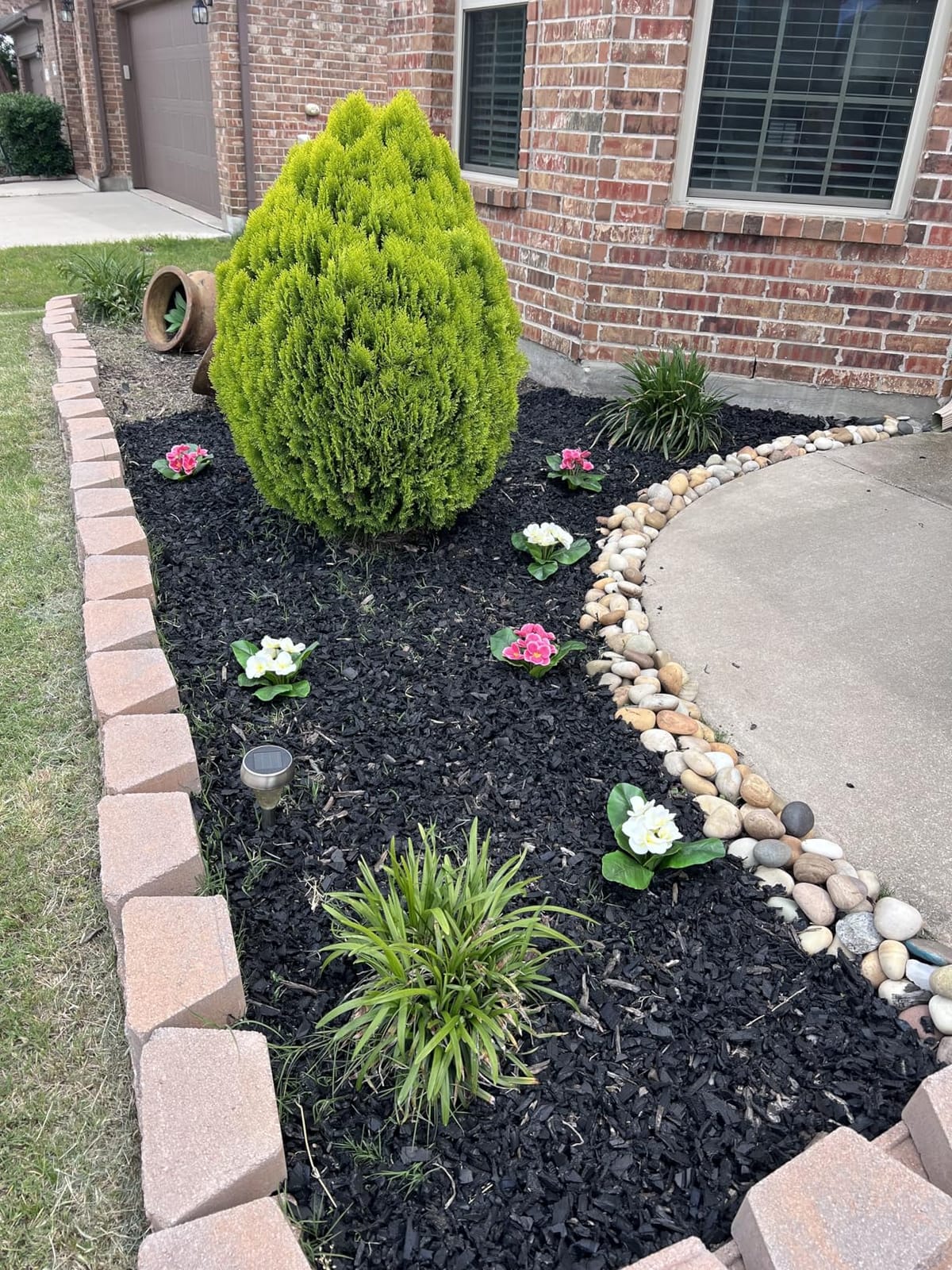
At 4.1 across 123 reviews, this is the most polarized product in the set: 62% five stars but 12% one-star. That gap is worth understanding rather than ignoring. The praise covers staying put, color depth and low maintenance. The complaints cover value per bag, appearance, and suitability around plants.
The coverage complaint is the fair one. Some buyers report getting less than the stated 9 square feet at 2 inches, which usually means the depth was below 2 inches. Loose-fill surfaces are depth-critical, and a bag spread thin is a bag doing half the work it was sold to do.
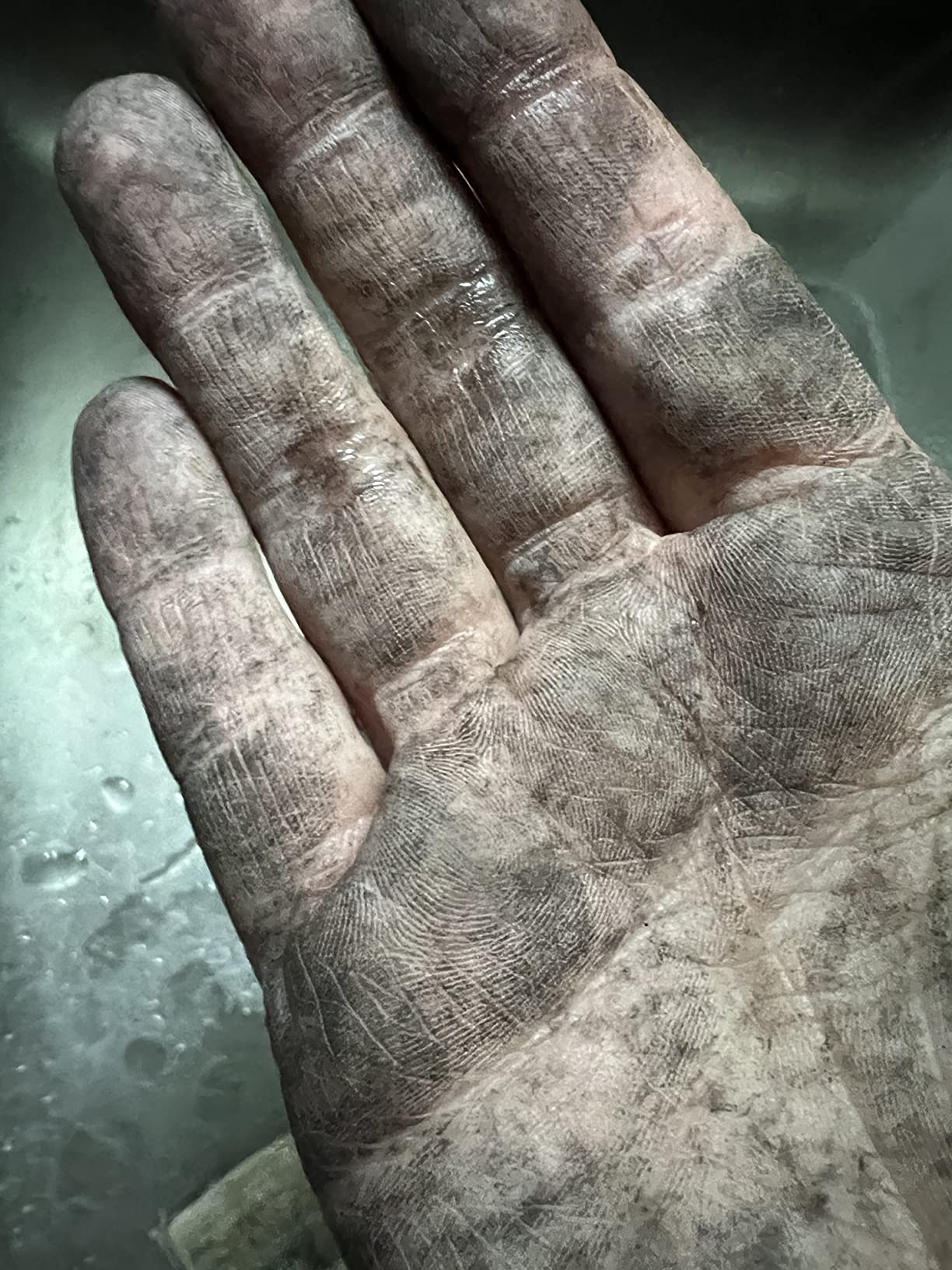
Where it earns its place in a play yard
Borders, tree rings and bed edges. Nugget-form rubber at a 2-inch depth is genuinely good at suppressing weeds permanently without decaying, and it will not attract rodents or develop fungus the way some organic mulches do. Around a play area, a nugget border also reduces the migration of the fall-zone material into the lawn.
It is also the easiest product here to spread by hand, since one bag is one bag and a single bag covers a meaningful planting bed. Moving a 1.5 cubic foot bag is a five-minute job; moving a 40-pound sack is not.
Where it will not do
Do not buy it as your fall-zone surface at 2 inches. That is the core limitation, and it is a documentation issue rather than a product defect. The manufacturer is transparent about the recommended depth, and readers who skip that line end up disappointed.
Aesthetically, black can read as dull and less green than buyers expect, several reviews note. In a dry climate the surface also reads flatter than a shredded brown blend in full sun.
6. GroundSmart Cedar Red Rubber Mulch – Best for Pallet Buyers
GroundSmart Out Door Garden Fencing Rubber Mulch 0.8 Cubic Feet, Cedar Red
0.8 cu ft per bag,24 x 14 x 6 inches
72 bags cover 147 sq ft at 6 inch depth
100% recycled rubber,Cedar red
Pros
- Coverage per bag is efficient at shallow depths
- Uses 100% recycled rubber
- Easy to spread as a drop-in wood chip swap
- Covers roughly twice the area of wood mulch at the same depth
- Cedar red color suits decorative beds
Cons
- 72 bags needed for a real fall zone
- Pieces move in wind without a top coat
- Long-term color retention less documented
- Occasional damaged packaging on arrival
GroundSmart is the budget pallet option, and its strength is a published depth table that most competitors will not show you. The listing states that one 0.8 cubic foot bag covers 6 square feet at 1.5 inches for landscaping, that 72 bags cover 588 square feet at 1.5 inches, and that 72 bags cover 147 square feet at six inches for playgrounds.
Read that last line twice. This is the most useful coverage disclosure in the entire roundup, because it is the only one that states a number for a genuine playground depth. It also tells you the number is unflattering. Sixty inches of depth on 147 square feet requires 72 small bags, which is a lot of handling for the coverage you get.
With only 16 reviews at 4.4, this is the thinnest evidence base here, though it is clean: 76% five stars, no three-star ratings at all, and 7% one-star. Buyers like the coverage and color, find it easy to apply as a swap from wood chips, and report roughly twice the coverage of wood mulch at the same depth. One creative buyer packed it in a shallow box as a backstop for small-caliber pellets, which tells you how forgiving this material is for non-playground uses.
When this is the smart choice
Decorative beds and pathway borders where you want a cedar red tone that dyed nuggets rarely match. At 1.5 inches, the coverage math is genuinely efficient, and the material is made from 100% recycled rubber with an easy swap from wood chips that most homeowners can manage alone.
It is also the most efficient way to get a lot of material on the ground quickly. A 1,960-pound pallet is not a small object.
Where it falls short
Movement is the flagged issue. Pieces can be shifted by wind or a blower if no top coat is applied, which matters in an open yard. For a fall zone under a swing set, migrating pieces mean thin spots, and thin spots are where the shock absorption disappears.
Color retention is less documented than the brands carrying explicit 12-year guarantees, so the long-term appearance claim rests on 16 reviews rather than a decade of evidence. And at 0.8 cubic feet, a real six-inch depth is a 72-bag commitment. Buyers planning a small area should do the division before they commit.
7. Rubberific Rubber Mulch Bagged Brown – Best for Natural Brown Beds
Rubberific Rubber Mulch Bagged Brown
Bagged brown recycled rubber mulch
Natural material finish
Hardiness zone 3,full sun
Pros
- Largest review pool in the roundup at 409
- Long-lasting ground cover needing no annual replacement
- Natural brown that blends into garden beds
- Simple single-bag format
Cons
- Listing specs are sparse with little detail given
- Brown mulch heats soil and suits few plants
- Per-bag cost runs higher than wood chips
I am including this listing because it is instructive, not because it is a certified playground surface. The spec sheet is genuinely sparse: color brown, natural material finish, full sun exposure, sandy soil, moderate watering, hardiness zone 3. There is no coverage figure, no weight, no certification reference and no color guarantee stated.
What it does have is 409 reviews, the largest pool in this roundup, rating 4.2 with 64% five stars. That is meaningful evidence about how the product behaves over time: it is a long-lasting ground cover that does not need annual replacement, and the natural brown blends into garden beds in a way that black and cedar red do not.
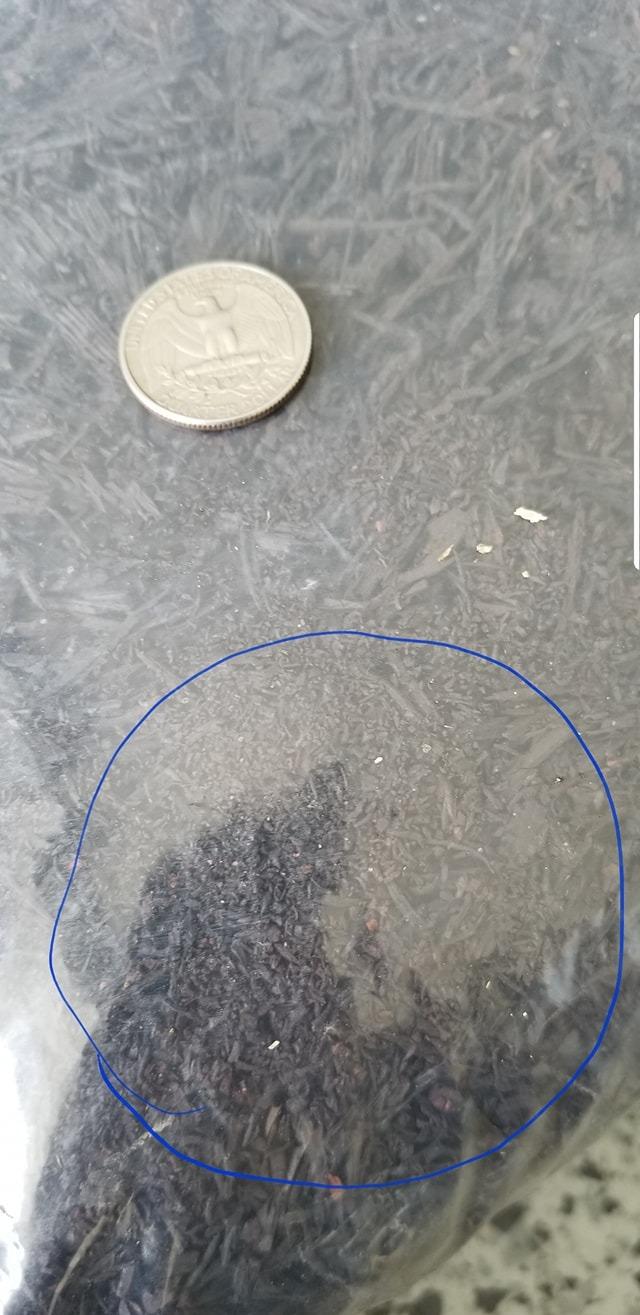
The 9% one-star share is worth reading, and the complaints are consistent rather than catastrophic: cost per bag relative to wood chips, and suitability for plant beds. Nobody in the reviews describes it failing structurally. It is a value and horticulture conversation, not a durability one.
Where this belongs in a play yard is at the perimeter. A brown blend around the edge of a play area, tying the rubber surface into the surrounding beds, is a design move that reads better than black edging. Keep it out of the fall zone unless you have independently confirmed what it is rated for, because the listing does not tell you.
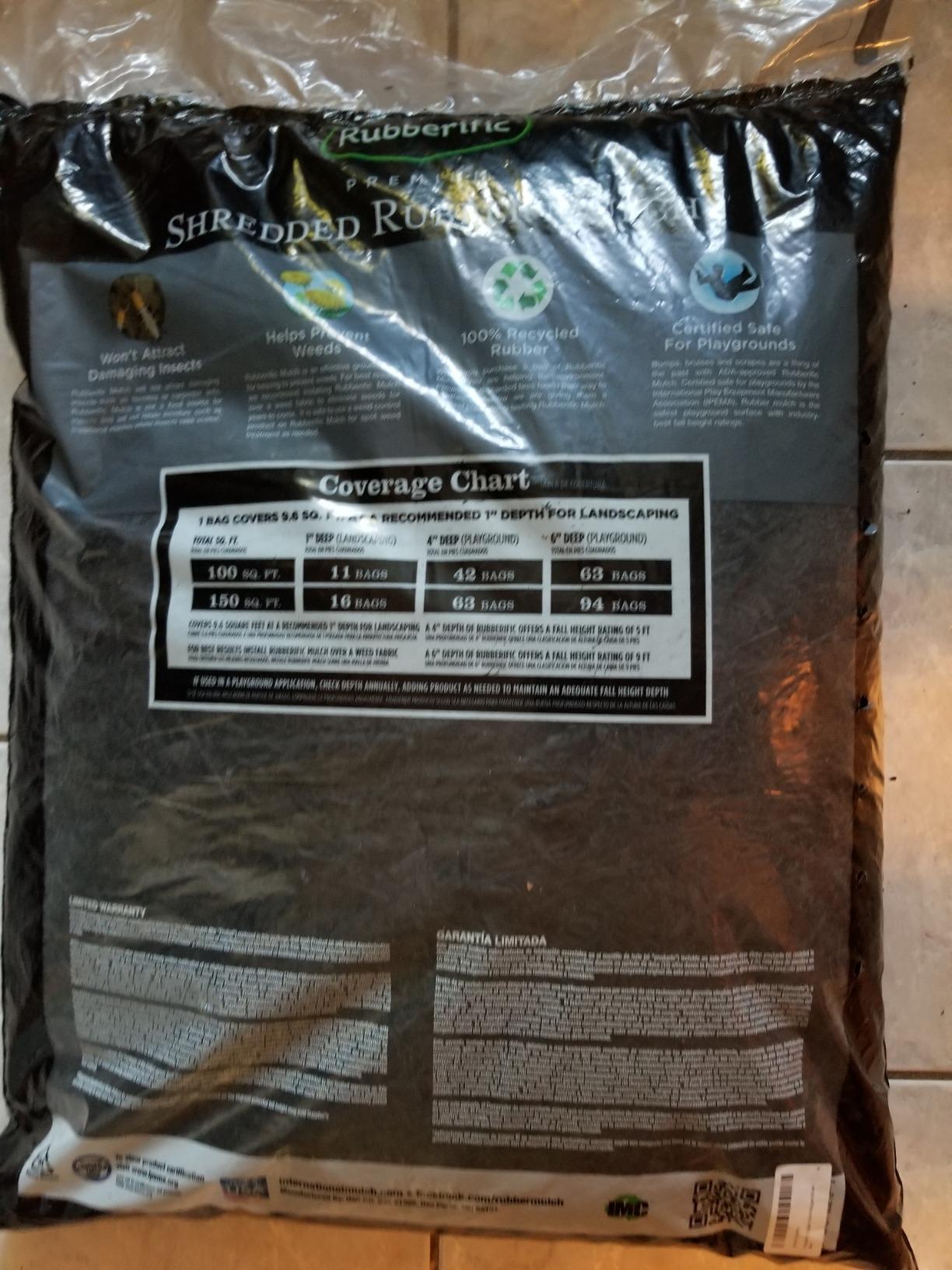
What the 409 reviews actually tell you
That durability claims of this kind are usually about the material, not the installation. Owners installing years ago report the mulch still in place, still brown, still not needing replacement. That is the single most valuable piece of long-term evidence in this roundup, and it comes from a listing with almost no specifications at all.
It is also a reminder that review volume and documentation are different things. You can have a well-reviewed product with no published data, and a data-rich product with 24 reviews. Best for choosing well, you want both.
Where it falls short
The lack of a stated coverage figure makes planning an installation harder than it should be. We cannot tell you how many bags cover your area at 3 inches because the listing does not say, and we will not invent a number to fill the gap.
Brown mulch also heats soil, which limits where it can go in a planted bed. The cost per bag sits above wood chips, and the single-bag format means a real area means many trips.
8. Office Roast Premium Red Rubber Mulch – Best for Small Touch-Ups
Premium Red Rubber Mulch 4 QT – Long Lasting Decorative Landscaping Ground Cover, Recycled Rubber Chips for Gardens, Flower Beds, Plants & Pathways, Fade Resistant Outdoor Mulch
4 quart volume
Rich red decorative color
Fade and weather resistant
Pros
- Rich red color suits beds and pathways
- Recycled rubber that outlasts wood mulch
- Fade and weather resistant
- Small size works for tree rings and planters
- Low maintenance and easy to apply
Cons
- 4 quarts covers very little area
- No playground certification or fall height rating
- Multi-year fade resistance unproven on a young listing
- Weakest five-star share in the roundup at 51%
Ranked eighth, and I want to be direct about why rather than hedging. This is decorative landscaping mulch. There is no certification, no ASTM testing, no fall height rating and no coverage-per-depth data. A 4-quart volume of red rubber chips does not become a playground surface by association with the eight products above it.
That said, it is a competent decorative product. Reviewers like the rich red color, the recycled rubber construction that outlasts wood mulch, and the fade and weather resistance for year-round use. The small format is genuinely useful for tree rings, planters, spot touch-ups and potted plants, where a 40-pound bag would be absurd.
The ratings are the weakest in the set: 4.1 with 51% five stars and an 11% one-star share. At 24 reviews on a young listing, that distribution is thin evidence in both directions, and the honest read is that buyers are satisfied with the color and undecided about the long term.
What it is genuinely good for
Small decorative jobs where the priority is appearance rather than impact. Tree rings, pathway edges, planter tops and refreshing a faded patch of an existing bed. The application is simple: spread it, water it in, done.
It is also a reminder to match the product to the job. Not every rubber mulch belongs in a fall zone, and buying the wrong one is worse than buying nothing because it creates a false sense of having solved the problem.
Where it falls short
Volume is the practical limit. Four quarts covers a small area, so a single bed needs several containers and a full play area needs an order of magnitude more than this format was built for.
Multi-year fade resistance is unproven given the short listing history, and there is no stated warranty term to hold the manufacturer to. If color longevity matters to you, buy a product that prints a 12-year guarantee on the listing.
How Deep Should Rubber Mulch Be, and How Much Do You Need?
This is the question that decides whether a surface is safe, and it is the one most product pages bury. The numbers below are the planning baseline, and your equipment’s fall height plus your local rules set the final figure.
Depth by fall height. A three-inch minimum covers residential backyard playsets. Six inches is the standard for commercial and school playgrounds, and nine inches appears where fall heights push higher. Match the depth to the fall height of the equipment, not to the size of your yard, and never let the depth dip below the certified figure for the mulch you bought.
The six-foot fall zone. Every piece of equipment needs a clear surfaced area extending six feet in all directions from it. For a swing set, that means six feet past the outermost pivot point in the swing’s arc, not six feet from the center of the frame. A slide exit needs the same treatment at the bottom.
The volume formula. Multiply length by width by depth in feet, then divide by 27 for cubic yards. For a 20 by 20 foot play area at 3 inches, that is 20 times 20 times 0.25, which is 100 cubic feet, or 3.7 cubic yards.
Add ten percent for settling. Loose-fill surfaces compact, mulch displaces into the base, and raking redistributes. Over-ordering by 10% is the standard advice and it is correct. A second 10% held back for annual top-ups is sensible for high-traffic areas under swings and slide exits.
Now check your number against the vendor’s own table rather than assuming. NuPlay publishes that a 20 by 20 foot area at 3-inch depth takes 80 bags at 1.5 cubic feet each, which is 120 cubic feet against our 100 cubic foot calculation. The difference is depth, compaction and the fact that loose-fill never sits perfectly flat. Run both numbers and order from the higher one.
GroundSmart’s disclosure is the other useful cross-check. Seventy-two bags covering 147 square feet at 6 inches is the honest shape of a deep playground installation, and it tells you how many bags a 1,000 square foot school surface requires at that depth. Multiply: about 490 bags. This is why commercial projects are pallet and super-sack conversations, not bag conversations.
If you are moving material around a yard before the job, our guide to garden carts for hauling mulch is worth a look, and the same handling logic applies. You will be moving hundreds of pounds, and a good pair of rubber work boots makes a long afternoon of spreading considerably easier.
Rubber Mulch vs Wood Mulch, EWF, Pea Gravel and Poured Rubber
Two of the confirmed questions on this topic are which material is best under a playset and whether pea gravel beats rubber mulch. Here is the honest comparison, including where rubber is the wrong answer.
Against wood mulch and wood chips. Rubber wins on every safety metric and loses on nothing important except cost per square foot. Wood decays, compacts, grows weeds, harbors insects and produces splinters, and its shock absorption drops sharply after a couple of years of use. Reviews on these products repeatedly contrast rubber favorably on all of those points, and forum users in nc4x4.com and forums.thebump.com specifically prefer smaller nugget sizes when choosing rubber over wood. The one scenario where wood makes sense is a purely decorative area with no fall-height exposure.
Against pea gravel. This is the closer call. Pea gravel is inexpensive, drains instantly and never rots, but it migrates into bare feet, sits loose rather than cushioning, and offers a poor surface for a fall from any real height. Rubber provides roughly twice the fall height rating, per Viagrow’s own comparison against wood mulch. Choose pea gravel only where the surface is decorative and you accept that children will be walking barefoot across it.
Against engineered wood fiber. EWF is the standard institutional alternative. It is lighter, cheaper per square foot, and is the surface used under most municipal playgrounds because it meets ASTM F1292 at documented depths and is easy to top up with a playground rake. Rubber’s advantages are the ones forums describe: better critical fall height than wood-based surfaces, no decay, no weed problem, and a surface that stays clean. EWF’s advantage is that it is a purpose-built certified product with published depth tables, while a lot of rubber mulch is a landscaping product wearing a playground label.
Against poured-in-place rubber and rubber tiles. Poured rubber is the premium option and the most consistent, because it is a bonded surface with a fixed thickness and no migration. It costs several times more than loose-fill, requires professional installation, cannot be repaired by a homeowner, and does not drain well if the sub-base is wrong. For a school or a public playground with a budget and a contractor relationship, it is the right answer. For a backyard playset, loose-fill rubber at a maintained depth is the practical one.
Against artificial turf. Turf looks tidy, stays cool and drains well, but it provides almost no shock absorption over hard ground and needs infill to feel right. It is a poor choice anywhere a fall height exists, and good everywhere else.
How to Install Rubber Mulch Under a Playset
Seven steps, in order. Skipping the base preparation is the single most common reason a rubber surface underperforms, and no amount of mulch on top fixes a compacted or contaminated sub-base.
1. Mark the fall zone before anything else. Six feet beyond the equipment in every direction, including the full swing arc and the slide exit. Stake it out and check the depth you will need against the fall height of the tallest piece of equipment.
2. Excavate 3 to 4 inches. Remove sod, organic material and any root mass. Organic matter is what decomposes and settles later, leaving you with a surface lower than the depth you paid for.
3. Lay commercial-grade weed filter fabric underneath. This is the underlayment step most guides skip and the one that decides whether you are re-weeding every spring. Fabric also separates the mulch from the sub-base, which reduces sinking.
4. Address drainage before you fill. In heavy soil or anywhere water collects, add a 3 to 4 inch layer of crushed stone and grade toward a drain. Rubber does not rot, but water sitting under mulch pushes it up and leaves ruts, and standing water under a play surface is a slip hazard.
5. Install edging. Containment is what stops wind migration. Steel, composite or treated landscape edging around the perimeter keeps nuggets where you put them and keeps them out of the lawn. This is the cheapest step on the list and the one that most reduces long-term frustration.
6. Spread to a consistent depth and compact lightly. Fill evenly, then rake lightly. Depth consistency matters more than compaction for shock absorption, so check depth at the center and at all four corners of the fall zone before you call it done.
7. Top up after the first season. Expect settling. Measure depth in the high-traffic spots, the swing arc and the slide exit, and add material to bring the whole zone back to spec. A second 10% held back from the original order makes this a fifteen-minute job rather than a re-delivery.
A few practical notes from installers. Rubber mulch arrives dusty and with an odor that fades within a day or two, so lay it on a day with wind and keep pets off it until you have rinsed the surface. If you are installing in direct summer sun, black rubber will heat up, so schedule the work for a cooler morning. And for anyone installing in a cold climate, note that several products here are specifically described as not freezing, which is a genuine advantage over pea gravel or sand in northern states.
Six Things to Check Before You Buy Playground Mulch
1. A certificate number you can look up. IPEMA certification is a directory. Ask the vendor for the number and confirm it resolves in the IPEMA member database. A brand with no number is not disqualified automatically, but it is a brand asking for trust rather than providing evidence.
2. Wire-free processing, stated as a process. Steel belts and brass wire survive shredding unless a magnetic and fiber separation stage exists. Wire-free is the top purchase filter in parent forums and it should be. A product marketed for landscaping but sold quietly as playground surfacing is a deal-breaker, and the naming on listings is often the only clue.
3. Coverage disclosed in cubic feet and pounds. Vendors like NuPlay, Playsafer and GroundSmart publish real numbers, including per-depth tables. A listing that gives you neither cannot be planned around, and coverage per bag too low makes the required bag count implausible for the area.
4. A depth rating that covers your fall height. This is certification, not marketing. Residential at 3 inches, commercial at 6, and confirm the product’s own chart rather than assuming the brand’s landscaping depth is also its fall-height depth.
5. A stated color guarantee. Twelve years is the market standard. Longer claims exist. A listing with no term at all, like several here, means you have no recourse if the surface greys out in year three.
6. Bulk terms if you have a large area. Beyond about 400 square feet, bagged product becomes a physical project. Pallet and super-sack formats change the cost per cubic foot and the handling burden substantially, and that is the moment to ask a vendor about pallet minimums and freight terms.
Maintenance and Top-Ups: Keeping Depth Above the Fall Line
Loose-fill rubber is low maintenance compared with wood, not zero maintenance. The schedule below is what keeps a certified surface certified.
Monthly: rake the surface to redistribute displaced material, and pull any debris from under swings and slide exits. This is a ten-minute job and it is the one that prevents thin spots.
Quarterly: check depth with a probe in the high-traffic zones, the swing arc and the slide exit, and compare against the required depth for your fall height. Add material wherever you are below spec.
Annually: inspect for weeds at the fabric edges, check edging for movement, and look for wind-scattered material outside the containment. Reviewers on several products note that nuggets can migrate in high wind without a top coat, so edging condition matters more for rubber than it does for wood chips.
Two seasonal notes. In freezing climates, loose-fill rubber does not freeze solid in the way sand and pea gravel do, which is one of the quieter advantages of the material. In hot climates, black rubber absorbs heat and can be uncomfortable to sit on at peak afternoon sun, so shade over a play area is worth considering if you have a mature tree.
For handling during top-ups, the same logic applies as on install day. If you are moving bulk material across a property, work boots built for heavy outdoor jobs hold up better than anything else when you are on your knees in a gravel bed spreading nuggets for an afternoon.
Frequently Asked Questions
Is rubber mulch safe for playgrounds?
Rubber mulch made from recycled tires is considered safe for playgrounds when it carries a current IPEMA certification or ASTM F1292 impact attenuation testing, is processed to remove wire and steel, and is installed at the certified depth over weed barrier fabric. Forums show a leaning toward use, with parents citing softer landings and better fall height than wood or gravel. The main documented concern is zinc leaching, highest when new and wet, which is why handwashing after play is the sensible habit to teach.
What is the downside of using rubber mulch?
The real drawbacks are cost per square foot at proper depth, the labor of moving 40 pound bags, and migration in wind without solid edging. Black rubber also heats up in direct sun, which can make it uncomfortable to sit on, and it raises soil temperature so it is a poor mulch for heat-sensitive plants. A genuine six-inch playground depth means a large volume of material. Giveaway municipal mulch is not a substitute, because it is landscaping material that was never impact-tested.
How deep should rubber mulch be on a playground?
Three inches is the minimum for residential backyard playsets. Six inches is the standard for commercial and school playgrounds, and nine inches applies where fall heights are higher. Match the depth to the fall height of the equipment, keep the depth consistent across the whole zone, and extend the surfaced area at least six feet in all directions from every piece of equipment, including the full swing arc and the slide exit.
Which is better for playgrounds, pea gravel or rubber mulch?
Rubber mulch is the better playground surface. It provides roughly twice the fall height rating of wood-based materials, does not migrate underfoot or into bare feet, does not rot, and stays clean and weed-free. Pea gravel drains instantly and is inexpensive, but it sits loose rather than cushioning and works poorly under any real fall height. Choose pea gravel only for decorative areas where no one is falling.
How long does rubber mulch typically last?
Quality recycled rubber mulch does not decompose or rot, and the common market standard is a 12-year color guarantee from major brands. In practice, an installed surface lasts as long as it is maintained at depth, which is often the lifetime of the equipment above it. What degrades first is not the rubber but the color under prolonged UV exposure, and what shortens surface life is wind migration and thinning under swings and slide exits.
How much rubber mulch do I need for a playground?
Multiply length by width by depth in feet, then divide by 27 for cubic yards, and add 10% for settling. A 20 by 20 foot area at 3 inches works out to 100 cubic feet, or 3.7 cubic yards. Always cross-check against the vendor’s own coverage table, since loose-fill rarely sits perfectly flat, and hold back a further 10% for annual top-ups in high-traffic areas.
Does rubber mulch have wires in it?
It can, which is the single most repeated complaint in parent forums. Recycled tires contain steel belts and brass wiring, and unless the processing includes a magnetic separation and a fiber removal stage, fragments survive shredding. Look for a stated wire-free process rather than a wire-free slogan, and ask the vendor for their contaminant removal method. A landscaping mulch quietly sold as playground surfacing is the common version of this problem.
How do you install rubber mulch under a playset?
Mark a six-foot fall zone in all directions, excavate 3 to 4 inches and remove all organic material, lay commercial-grade weed filter fabric, address drainage with crushed stone where water collects, install edging for containment, then spread the mulch to a consistent depth and rake it level. Check depth at the center and all four corners before finishing, and expect a top-up after the first season as the material settles.
The Best Rubber Mulch for Playgrounds, Final Word
After eight products and several thousand reviews, the best rubber mulch for playgrounds in 2026 is the Playsafer nugget pallet. It is the only product in this roundup where the IPEMA certification, the 99.9% metal-free processing claim and a published coverage figure in both pounds and cubic feet all appear together, and it is backed by the largest verified pool of real installations at 1,736 reviews. If your play area is large enough to use most of a pallet, it is the least complicated decision here.
For smaller areas, the NuPlay four-pack is the pick, because it publishes a bag count for four different square sizes at 3-inch depth, which means you order once instead of twice, and its ASTM F3012 testing and small nugget size suit a family with toddlers. If dyed color transfer is a specific worry, the Viagrow no-dye line removes that problem entirely. And for areas over about 400 square feet where you need volume, the Rubberific pallet changes the handling math more than any other product on this list.
Whichever one you choose, the three things that actually protect a child are not on the bag. Verify the certificate number, install commercial-grade weed fabric underneath, and hit the depth your fall height requires, then keep checking it. Buy the mulch and get the installation right, and the rest is maintenance.