
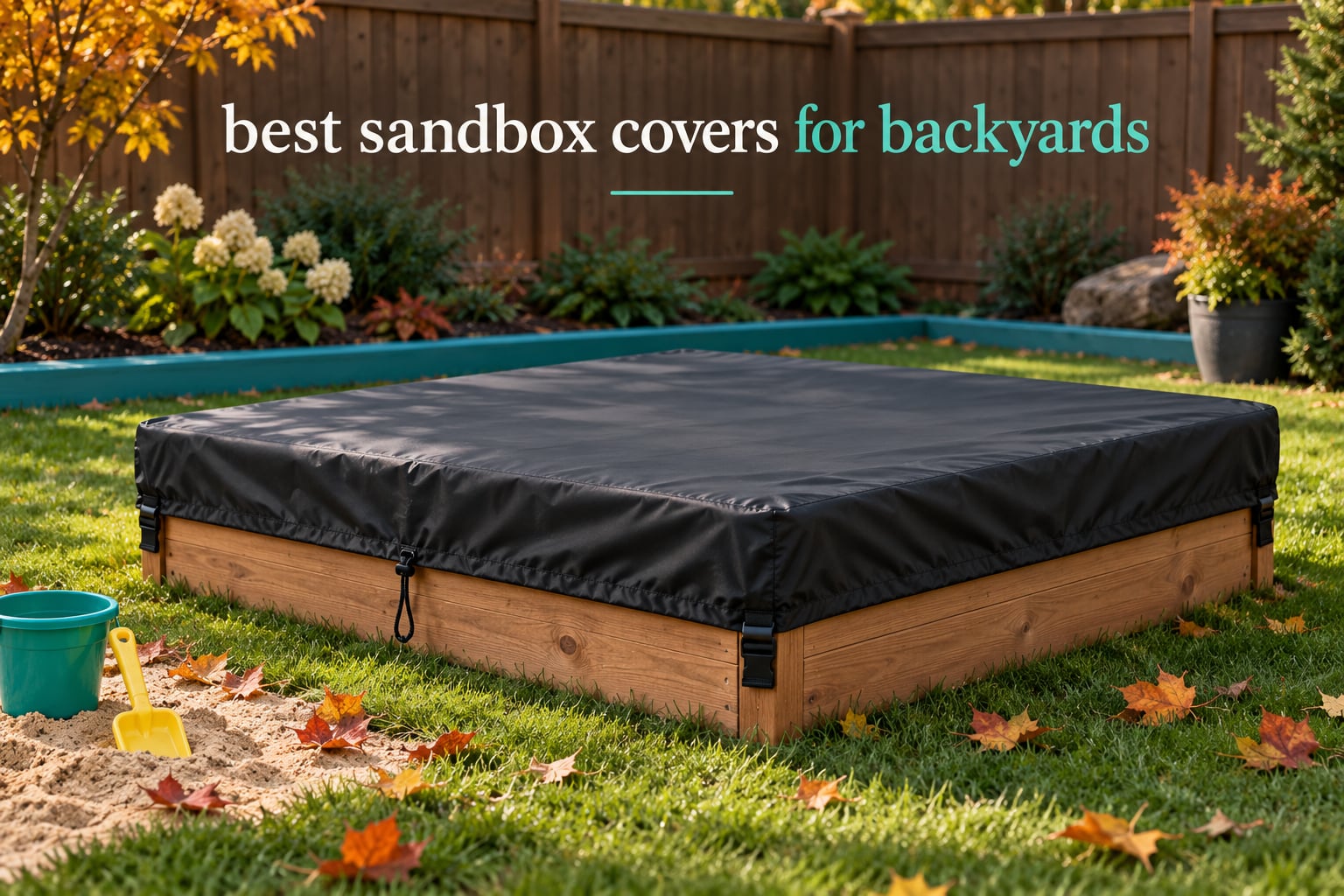
An uncovered sandbox is a small open bowl sitting in the middle of your yard, and everything the neighborhood has to offer ends up in it. Rain saturates the sand, leaves and acorns mat the surface, and cats treat it as a litter tray. Yes, sandboxes should be covered, and the difference between a good sandbox cover and a cheap tarp is measured in seasons, not dollars.
After weeks of reading owner reviews, weighing fabric weights and watching covers behave in real wind, three cover types came out on top for backyards. A coated solid Oxford or vinyl cover wins in wet, snowy or UV-heavy yards because it sheds rain and blocks animals completely. A breathable mesh cover is the smarter pick in hot, humid climates where trapped condensation is the bigger enemy. A weighted-edge or firmly buckled cover matters most everywhere, because the single most common failure we saw was not tearing at all. It was the cover sitting in a neighbor’s hedge two gusts after it went on.
One note before the picks: every cover on this list is sold separately. The sandbox itself is not included in the box, and if you still need the frame, our guides to the best playsets for small backyards and the best wooden playsets for backyards cover the frame side of the build.
Table of Contents
Top 3 Sandbox Covers for Backyards in 2026

Yexcend 800D Oxford 50 x 50
- 800D Oxford cloth
- Double-stitched seams
- Buckle straps at four corners
- All-weather protection

Fizentia 500D 50 x 50
- Double waterproof coating
- Double-stitched seams
- Diagonal buckle and drawstring
- Rust-proof hardware

Kasla Waterproof 50 x 50
- 500D Oxford cloth
- Waterproof seam strips
- Blocks animals and debris
- 50 x 50 x 8 sizing
Best Sandbox Covers for Backyards (October 2026)
Everything below is a fitted cover only, sized to a specific frame shape. Read the size column against your own measurements before you order anything.
| Product | Specifications | Action |
|---|---|---|
| Yexcend 800D Oxford Sandbox Cover 50 x 50 x 8 |
|
Check Latest Price |
| Fizentia 500D Waterproof 50 x 50 Square Cover |
|
Check Latest Price |
| Kasla Waterproof Sandbox Cover 50 x 50 x 8 |
|
Check Latest Price |
 NGB 78 x 78 x 9 Double-Layer Sand Box Cover NGB 78 x 78 x 9 Double-Layer Sand Box Cover |
|
Check Latest Price |
 DUSTYPROTE 600D Sandbox Cover 48 x 48 x 8 DUSTYPROTE 600D Sandbox Cover 48 x 48 x 8 |
|
Check Latest Price |
 SIRUITON Octagon Sandbox Cover with Reflective Handles SIRUITON Octagon Sandbox Cover with Reflective Handles |
|
Check Latest Price |
 MRWiZMS Octagon 420D Oxford Cover 84 x 78 x 9 MRWiZMS Octagon 420D Oxford Cover 84 x 78 x 9 |
|
Check Latest Price |
 Owlcover Wood Sandbox Cover 48 x 48 x 48 Owlcover Wood Sandbox Cover 48 x 48 x 48 |
|
Check Latest Price |
 UQUUXSTAR 600D PVC Cover 47.2 x 47.2 x 7.9 UQUUXSTAR 600D PVC Cover 47.2 x 47.2 x 7.9 |
|
Check Latest Price |
 Owlcover Cover for Small Plastic Sandboxes Owlcover Cover for Small Plastic Sandboxes |
|
Check Latest Price |
1. Yexcend 800D Oxford Cover 50 x 50 – Our Best Overall Sandbox Cover
Yexcend Sandbox Cover 50″x50″x 8″, 800D Waterproof Square Sand Box Cover
800D Oxford cloth
Double-stitched seams
Four corner buckle straps
50 x 50 x 8 inch
Pros
- Thickest fabric in the group at 800D
- Double-stitched seams outlast single stitching
- Corner straps plus drawstring hold through high wind
- Roomy enough for 48 inch frames
Cons
- Fabric sags rather than sitting taut so rain pools on top
- Collected water pours back into the box when drained
- 50 inch footprint will not suit an octagon frame
The Yexcend is the cover we kept coming back to while working through this list. It uses 800D Oxford cloth, which is the heaviest weave in the group, and owners consistently describe it as feeling a step above the thin vinyl sheet that ships with most wooden sandboxes. At 4.4 stars across 84 reviews it also holds the joint-highest average rating here.
Fit is the reason it took the top spot. The 50 x 50 x 8 inch footprint works over 48 x 48 and 50 x 50 square frames without any cutting, and the fastening is done with a buckle strap at each of the four corners rather than a single cinch. That spread-out attachment is what holds when a gust hits a corner, which is the exact point where simpler covers let go.
Two details stand out for anyone planning to leave it on through winter. The seams are double-stitched, so the stress points around the corners and the skirt are reinforced, and the fabric carries an all-weather specification covering rain, snow, UV, wind and dust. Buyers also mention that debris sweeps off the surface quickly and that installation needs no tools.
The honest drawback is pooling. Like most flat covers, this one does not hold a dome shape on its own, so water collects in the low spots after sustained rain. Owners report that the sags are shallow, and the fabric also works as a garden pool cover or a dust cover for outdoor furniture when the sandbox is not in use.
Why it suits a standard square wooden sandbox
A 50 inch square frame is the most common backyard shape, and this cover is dimensioned for it out of the box. Owners who moved from a stock factory cover say the thicker weave is the first thing they noticed, and the corner straps are what let one person put it on alone.
Multiple square sizes are offered in the same line, so a larger frame is a size change rather than a different product, and the 50 x 50 x 8 cut still clears a 48 inch frame without a fight.
Where it will disappoint you
If your yard sits in heavy rain with no shelter, expect to scoop standing water off the surface before removing it, and draining that water means it runs back into the sandbox. Buyers who want a self-draining domed profile need to look at a shaped cover instead.
The 50 inch footprint will not suit an octagon or a large rectangular frame, so measure the outside of your rail before you commit.
2. Fizentia 500D Double-Coated 50 x 50 Cover – Best Value Pick
Fizentia Sandbox Cover 500D Waterproof 50x50in Square Shield
500D Oxford with double coating
Double-stitched seams
Diagonal buckle plus drawstring
10.4 oz
Pros
- Double waterproof coating for serious rain
- Diagonal buckle resists gusts
- Tool-free one-minute installation
- Wipes or rinses clean
- Snug standard 50 inch fit
Cons
- Drawstring must be matched to frame thickness
- Bulkier than lighter covers when folded
The Fizentia matches the best rating in the group and takes a different approach to water. Instead of a single coating, it uses 500D high-density Oxford cloth with a double waterproof coating and double-stitched seams. In practice that is two layers of protection on the two places that fail first: the fabric face and the seam line.
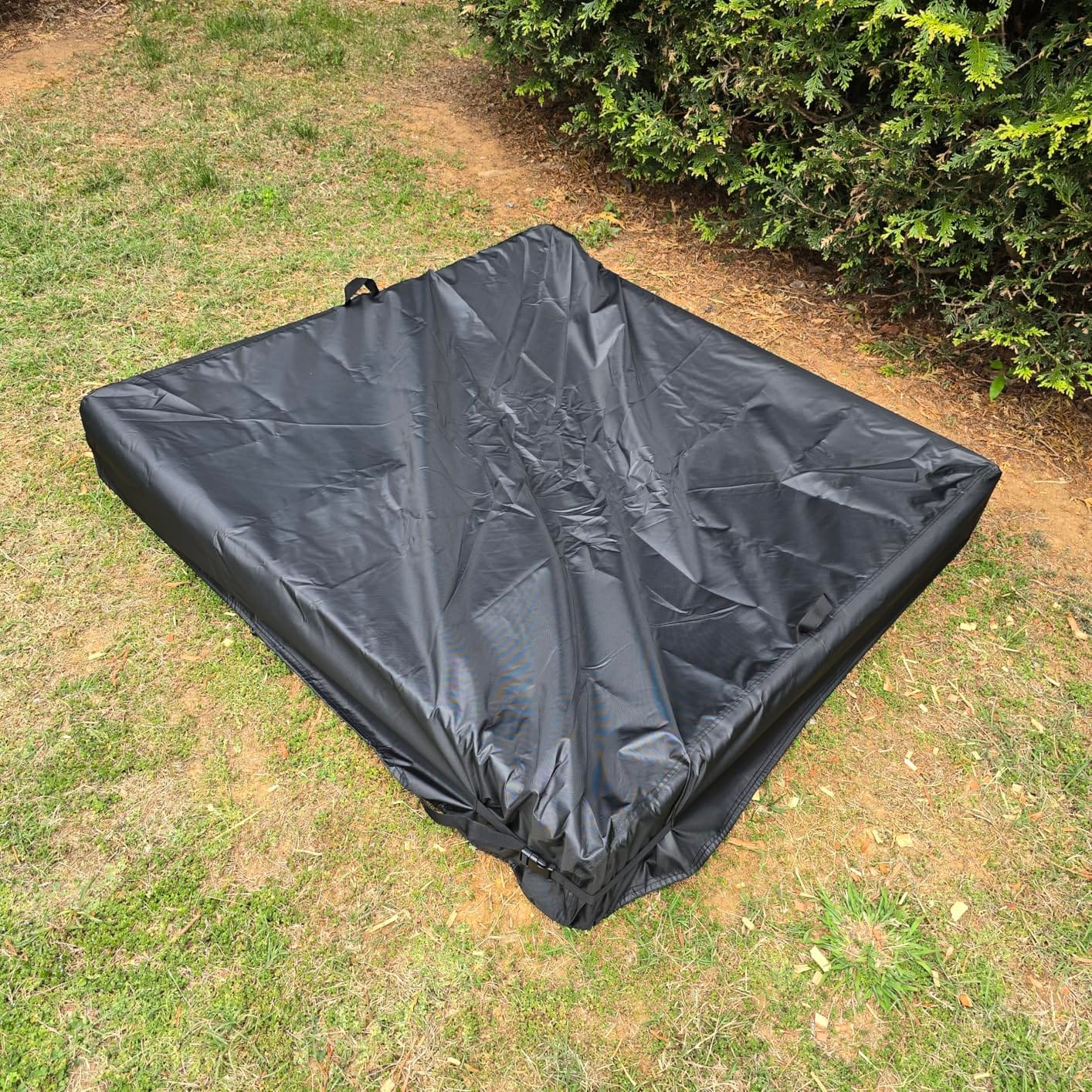
Wind security comes from a diagonal buckle structure paired with a surrounding adjustable drawstring and rust-proof hardware. Diagonal buckles pull from corner to corner, so the fabric is tensioned across the middle rather than only around the perimeter. That is the geometry we liked most on the whole list.
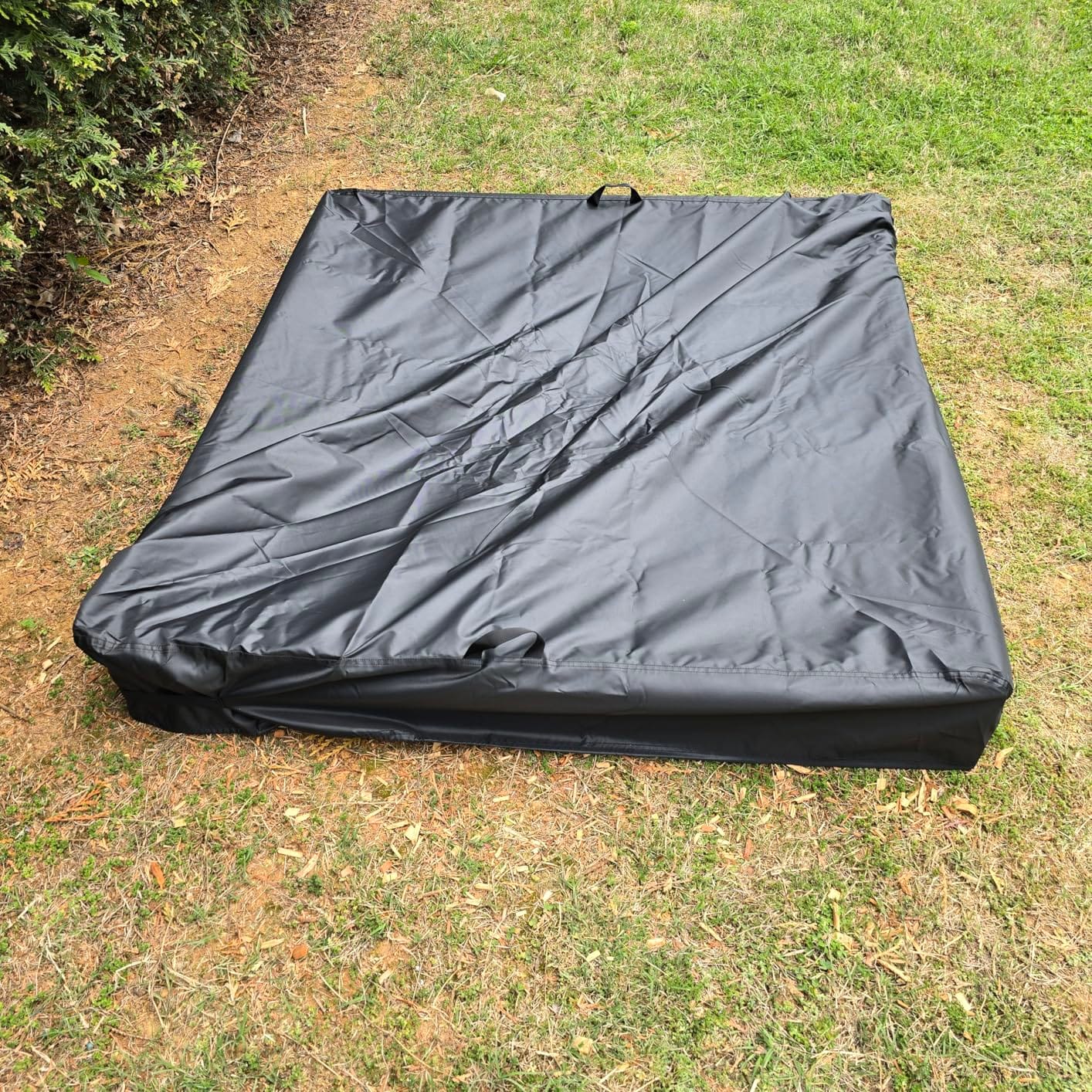
At 10.4 ounces the cover is light enough that one adult can lift and replace it in about a minute without tools, which matters more than it sounds once you have an eight foot frame in the yard. Buyers highlight the exact 50 x 50 x 8 inch fit on standard square wooden and plastic sandboxes, and the fact that it wipes or rinses clean.
Two cautions. The drawstring has to be adjusted to the thickness of your particular frame, and a loose or over-tightened cord is the usual reason a fit feels wrong. It is also bulkier than the lighter covers once folded, so plan a little more shed or garage space for winter storage.
Why it suits a four-foot square frame
The sizing is stated as an exact match for standard square wooden and plastic sandboxes, which removes the guesswork that trips up most cover purchases. Nothing needs cutting, trimming or adapting before it goes on.
If you are putting a cover on and taking it off on a schedule, the one-person install and the simple wipe-down are the deciding details.
Where it will disappoint you
It is a flat cover, so rain still sits on the surface between uses, and there is no dome to shed it. Anyone expecting a self-tensioning profile will not get one here.
Anyone storing a small cover in a tight cabinet will notice the bulk when folded compared with a 420D sheet.
3. Kasla Waterproof 50 x 50 Cover – Best Sealed Seams and Drawstring Fit
Kasla Waterproof Sandbox Cover, 50″×50″×8″
500D Oxford cloth
Waterproof seam strips
Two diagonal buckles plus drawstring
50 x 50 x 8 inch
Pros
- Waterproof strips at every seam keep sand dry
- Diagonal buckles plus bottom drawstring
- Keeps out small animals
- leaves and droppings
- Easy to fold for storage
Cons
- Fit is size-specific so measure before ordering
- 50 inch footprint only suits standard square frames
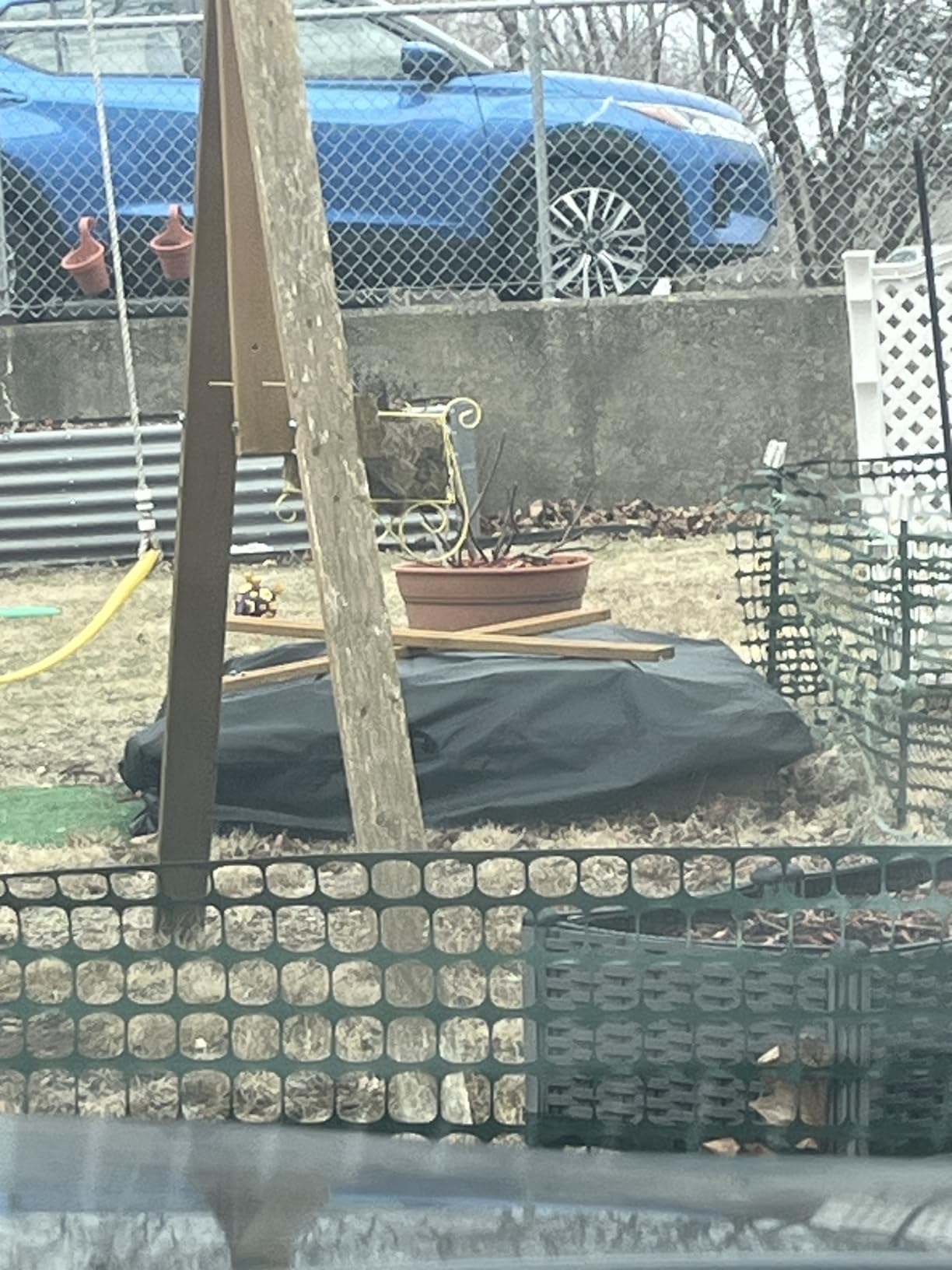
If you want the seam line to be the reason your sand stays dry, the Kasla is the one to look at first. Construction is 500D Oxford cloth with a waterproof coating, plus dedicated waterproof strips along the seams to prevent seepage. Seam tape is the detail that separates a cover that keeps sand dry from one that only slows the water down, and owners specifically call it out as the reason the sand stayed dry through repeated rain.
Fastening combines two diagonal buckles with a bottom drawstring, giving both corner tension and a perimeter cinch. Reviewers report that this holds the cover firmly enough to keep out small animals, leaves and droppings, and the whole thing folds down for storage when the season turns.
It also keeps the sandbox dry and clean when closed up for weeks, which is the difference between a cover you apply before a storm and one you leave in place through the off-season. At 0.68 kg it is light enough for one adult to lift and refit without a second pair of hands.
The 50 inch version carries a 4.3 rating from 87 reviews, with owners calling it solid and well made. The only consistent caution in reviews is a practical one: measure the sandbox before ordering, because the fit is what makes or breaks this style of cover.
Why it suits a standard square frame
The 50 x 50 x 8 inch footprint matches the most common backyard shape, and the two diagonal buckles tension the fabric across the middle instead of relying on a single perimeter cord. That is the geometry that keeps a flat sheet from ballooning.
In wet regions the seam strips earn their place, because a slowly seeping seam eventually wets the top layer of sand no matter how good the face fabric is.
Where it will disappoint you
Sizing is specific, so measure the outside of the frame including wall height before you order. A cover cut for a nominal size sits loose when the rail is thicker than expected, and a loose cover collects water in the center.
The 50 x 50 x 8 listing will not fit an octagon or a long rectangular frame, so a differently shaped box means a different cover entirely.
4. NGB 78 x 78 Double-Layer Cover – Best for Large Square Frames
Outdoor Sandbox Cover, Square Kids Sand Box Covers Waterproof and Windproof, Children’s Large Sandboxes Cover Sandproof.(78″ L×78″ W×9″ H,Black)
600D Oxford with taped seams
Double-layer windproof build
78 x 78 x 9 inch
1.5 lb
Pros
- Widest square footprint in the roundup
- Double-layer build survived wet snow
- Side buckle and pull rope hold in strong wind
- Taped seams stop water bleed
- One person can fit and remove it
Cons
- UV breakdown reported under five months in sun
- Straps bleach and fray with heavy sun exposure
Most covers in this category are built for a four foot square box. The NGB is dimensioned at 78 x 78 x 9 inches, which makes it the widest square footprint we reviewed, and that extra span is worth knowing about if your frame is oversized.
The build is an upgraded double-layer windproof design in 600D Oxford cloth with a waterproof coating and taped seam strips. The fastening pairs a side buckle with a bottom pull rope, so the cover is held at the side and cinched underneath rather than relying on a single perimeter cord.

This is also among the most reviewed covers on the list, with 190 ratings at 4.2 stars. That volume matters for a cheap outdoor product, because it means the durability story is well documented. Reviewers describe it as thicker and sturdier than expected, with reports of it withstanding a wet snowstorm and repeated rain without tearing.
The cover also does the job of keeping the box dry and blocking small animals, leaves and droppings, which is why the taped seams and the double layer both matter more at this size than they would on a small box. The wear point is sunlight, not winter.
Why it suits a large square sandbox
A 78 inch square frame is well beyond what standard four foot covers handle, and this one is dimensioned for it with nine inches of depth. The double-layer construction gives you more material to grip when you are pulling it over a tall frame wall.
At 1.5 pounds it stays light enough for a single adult to lift, which is the practical test many parents apply first.
Where it will disappoint you
If your yard gets relentless direct sun, the strap material is the weak link. Owners report UV breakdown in under five months of exposure, with the straps bleaching and fraying, so check the straps at the end of the first summer rather than assuming they are fine.
Because it is size-specific, an octagon or a non-square frame will not work, and 78 inches is far too large for a small portable plastic box.
5. DUSTYPROTE 600D 48 x 48 Cover – Best for 48 Inch Square Frames
600D Waterproof Sandbox Cover with Drawstrings, 48 x 48 x 8 in, Black
600D Oxford cloth with coating
Two adjustable drawstrings
48 x 48 x 8 inch
20 kg max recommended
Pros
- Well documented across 226 ratings
- Strong 600D weave that has held up in heavy rain
- Drawstrings tighten corners to limit wind lift
- Easy for one person to fit
Cons
- Rain pools in the center and low spots
- Corner hold and UV durability reported fading after about a year
The DUSTYPROTE has the largest review base of anything we covered, at 226 ratings, which makes it the most transparent option on durability. It is a 600D Oxford cloth cover with a waterproof coating, sized at 48 x 48 x 8 inches for square sandbox frames, and the 4.1 average reflects honest reports rather than a thin sample.
Two adjustable drawstrings provide the fit. Owners say tightening them around the corners reduces shifting and wind lift, which is the behavior that keeps a flat cover from flapping itself against the frame in a storm. The stated 20 kg load recommendation comfortably covers the weight of a filled box.
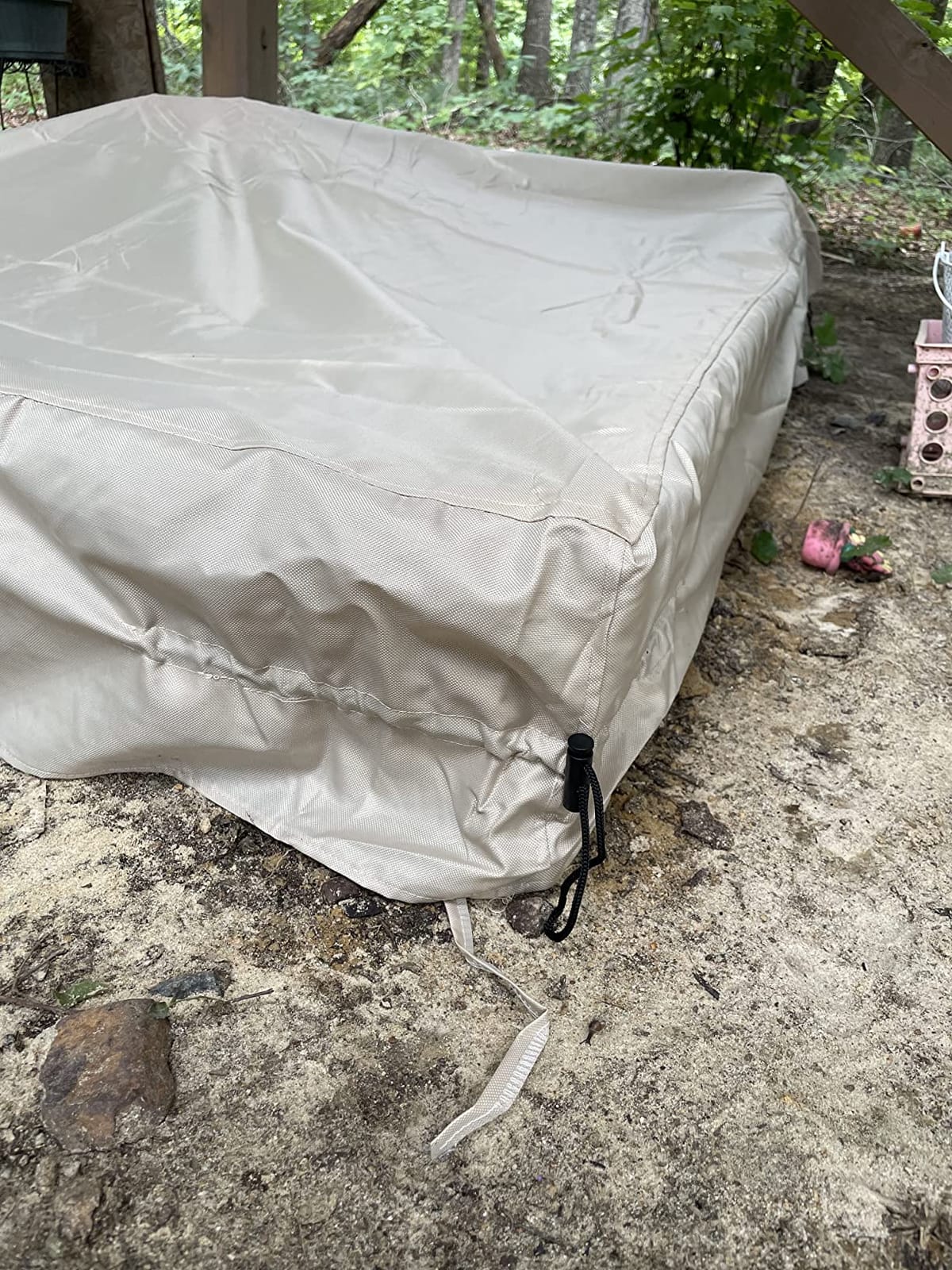
The 600D fabric has held up through heavy rain in owner reports, and it is built to keep play sand cleaner by blocking rain, dew, leaves, twigs, dust and debris. The cover folds down compactly for seasonal storage, and buyers like that it is easy to put on and remove and that the sizing matched their 48 inch square frame without adjustment.
Two weaknesses show up repeatedly. Water collects in the middle and in low spots unless something props the cover from underneath, and a minority of buyers report the corner hold weakening along with fabric wear after roughly a year of sun exposure. Plan on replacing it every year or two in a hard-sun yard rather than budgeting for a permanent fix.

Why it suits a 48 inch square sandbox
A 48 by 48 frame is the most widely sold square sandbox size, and this cover is dimensioned for exactly that footprint with 8 inches of depth. The twin drawstrings take up any slack without needing extra straps.
If you want the most owner history available on a cover at this price, this is the listing where reviewers have written about the same model over multiple seasons.
Where it will disappoint you
Pooling is the recurring theme. Without something underneath, water sits in the center and has to be scooped out, which adds a step every time the kids want back in.
The 4.1 stars is the lowest average in this group, and the gap comes from durability reports rather than fit or weather performance, so buy it knowing it is a replace-every-few-seasons purchase.
6. SIRUITON 500D Octagon Cover with Reflective Handles
SIRUITON Octagon Sandbox Cover, 500D Oxford with Four Reflective Handles
500D PU-lined Oxford
Waterproof seam tape
Four reflective handles
84 x 79 x 9 inch
Pros
- Thick canvas-like fabric resists edge abrasion
- Reflective handles aid lifting and night visibility
- Holds position in wind
- Keeps sand dry in downpours
Cons
- Rainwater collects and must be bucketed out
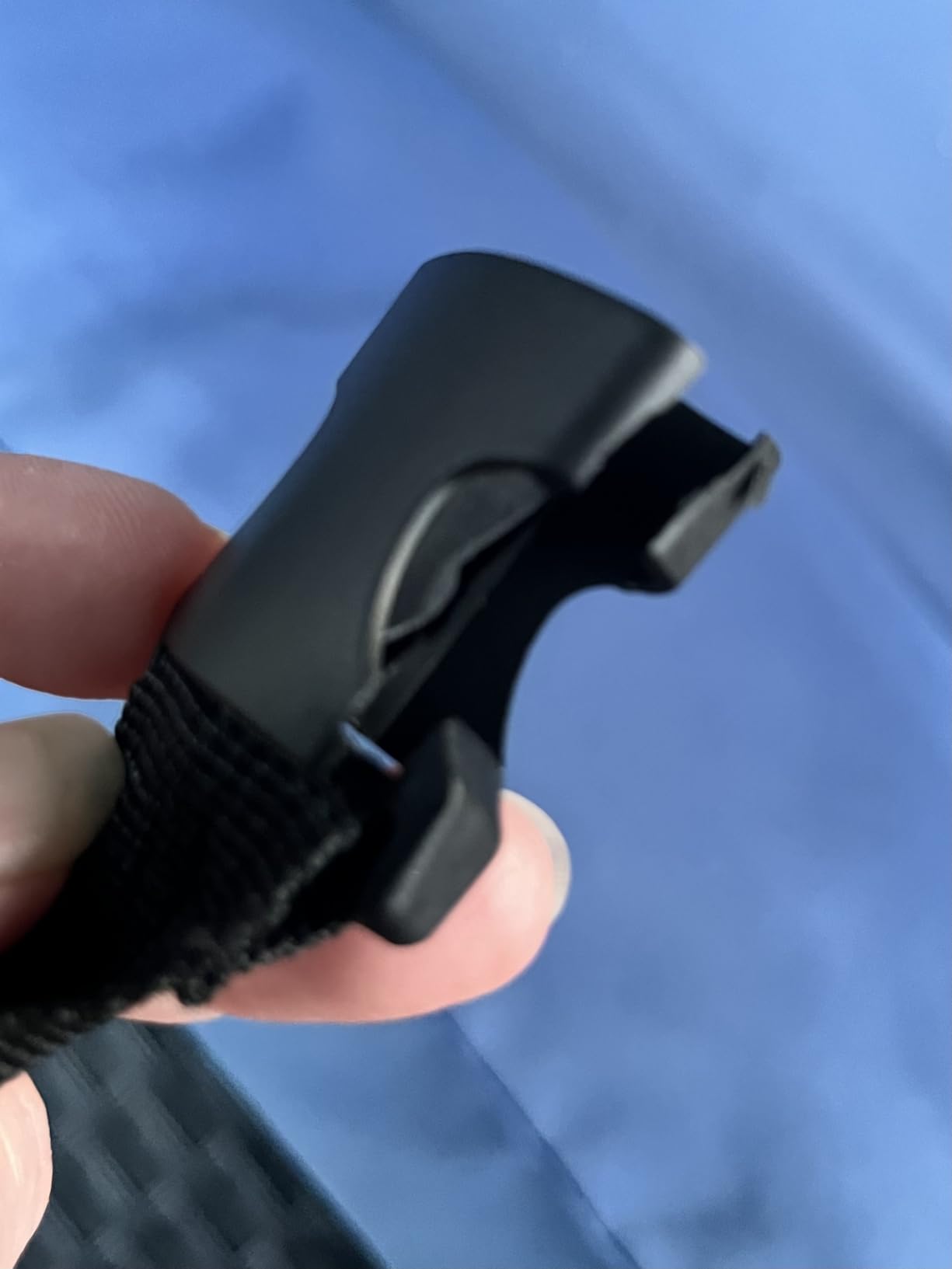
- Some arrivals have a broken strap clasp
- One reviewer found the tie-down strap too short
If your sandbox is an octagon, this is the shape-matched option with the most thoughtful detail. The SIRUITON is dimensioned at 84 x 79 x 9 inches for octagon frames, and it adds four reflective handles that make the covered sandbox easier to see at night and easier to lift in daylight.
The fabric is 500D PU-lined Oxford with waterproof seam tape, and reviewers describe it as thick and canvas-like. That weight matters on an octagon frame, where children climb on the edges and sand toys abrade the cover every time they are dragged over it.
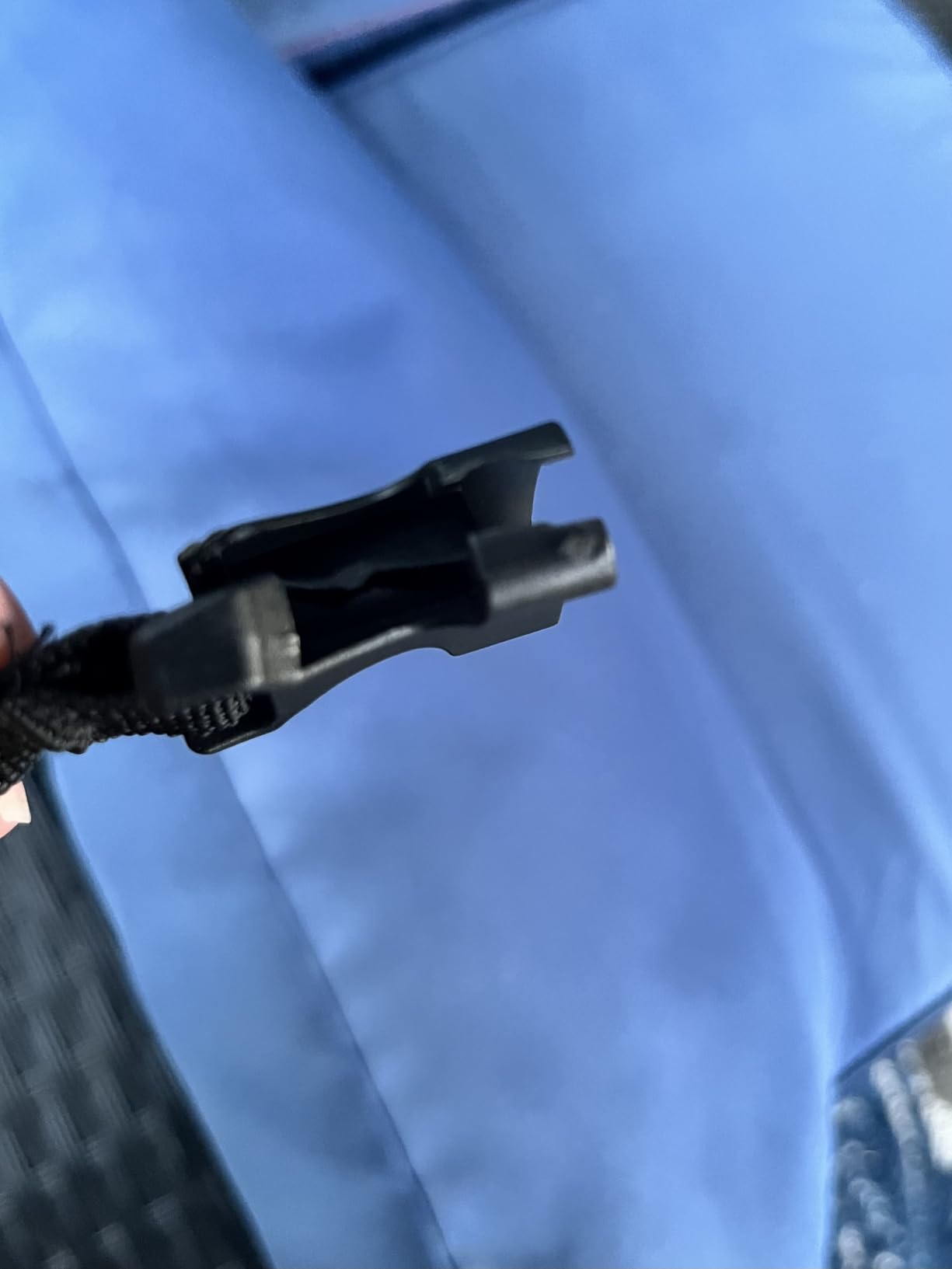
Fit comes from an adjustable drawstring plus a waist buckle, and owners report that the cover stays put in wind and that water does not seep through, keeping the sand mostly dry even in downpours while still blocking leaves, debris, trash and small animals.
Pooling is the same recurring issue as elsewhere on this list, and here it must be bucketed out before the cover comes off. There are also a few quality control reports worth noting, including a broken strap clasp on arrival and a tie-down strap one reviewer found about 2.5 feet too short. Check the hardware on day one.
Why it suits an octagon sandbox
The 84 x 79 x 9 dimensions track a standard octagonal wooden sandbox, so the cover follows the angled walls rather than sitting on them as a rectangle would. A rectangular cover on an octagon leaves gaps at the corners where debris gets in.
The reflective handles are a genuine safety detail if your sandbox sits near a path or a play structure where visibility matters after dusk.
Where it will disappoint you
Expect to scoop standing water off the top after heavy rain before removing it, and plan for the extra step. Buyers who need a self-draining surface will not find one here.
Inspect the clasp and strap length as soon as it arrives, since replacement hardware is an easy fix but a snapped clasp on a fitted cover is not something to discover mid-storm.
7. MRWiZMS 420D Octagon Cover 84 x 78 – Roomy Fit and Included Bag
Octagon Sandbox Cover, Outdoor Garden Outdoor Octagon Sand Box Cover, 420D Oxford Cloth Waterproof, Windproof and Dustproof, Suitable for Children’s Sandbox Protection (Black,84″ X 78″ X 9″)
420D Oxford with PU coating
Elastic drawstring hem
84 x 78 x 9 inch
0.66 kg
Pros
- Cut 3-5 cm larger than most covers on the market
- Elastic cord and clip cinch tight in high wind
- Clear step up from the thin factory cover
- Protects sand from cats and debris
Cons
- Runs smaller than stated on larger octagonal sandpits
- Center pocket collects rainwater
- A minority report early tearing
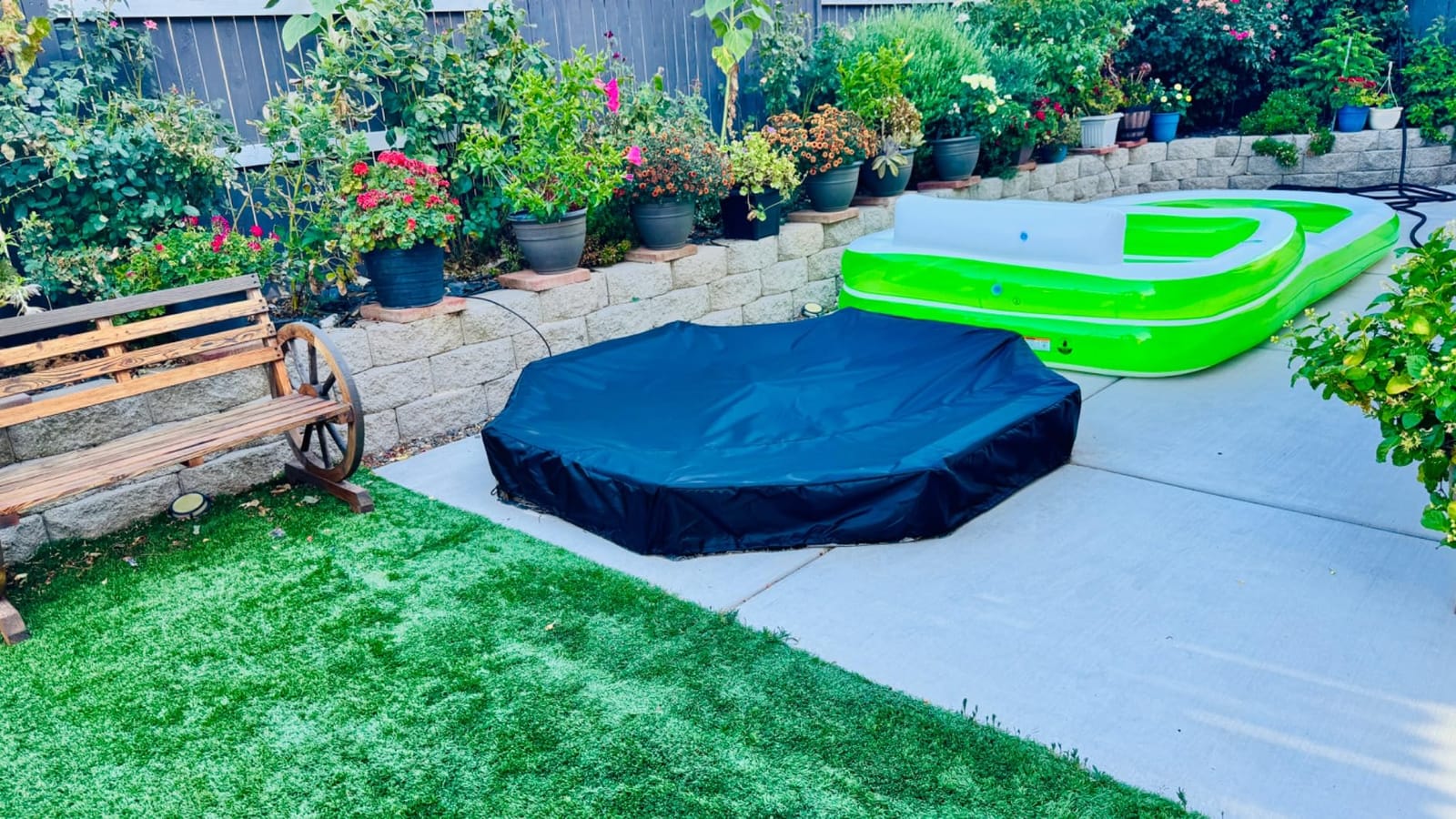
The MRWiZMS solves a specific problem. It is cut 3 to 5 centimeters larger than most covers on the market, which is the reason owners describe it as roomier than the thin cover supplied with the sandbox. On an octagon frame that extra material is what lets a drawstring actually pull taut instead of straining against a tight hem.
Material is 420D Oxford with a waterproof PU coating, described as UV resistant, tear resistant and weatherproof. The 4.2 rating comes from 187 reviews, so the feedback base is broad, and the consistent praise is that it holds position through storms and keeps cats and debris out.

It weighs 0.66 kg, light enough to lift on your own, and it folds down for storage when the season turns, which makes overwinter storage straightforward. A strengthened elastic drawstring rope handles the cinching, and the fabric works as a sandpit, pool or furniture dust cover when it is not on the box.
The counterpoint is the same one. A pocket forms in the middle and collects rainwater unless something supports the cover from below. Buyers also report it can run smaller than the stated octagon dimensions on larger sandpits, so measure both the flat-to-flat and the corner-to-corner span before you order.
Why it suits an octagon sandbox
Oversizing the cut is the single most useful thing here. Most covers are cut to the nominal size, which leaves the drawstring doing the work it cannot do, and this one starts with extra material.
If you are replacing a factory cover that felt flimsy, reviewers describe this as a clear quality step up rather than a lateral move.
Where it will disappoint you
It is still a flat sheet, so the center pocket collects water after rain. Put a support underneath if pooling bothers you.
Some buyers on larger octagonal frames report a smaller fit than the published dimensions suggest, and a minority report early tearing. Check the fit on the same day it arrives while returning is easy.
8. Owlcover Wood Sandbox Cover 48 x 48 x 48 Canopy Enclosure
Owlcover Wood Sandbox Cover, 48″ W x 48″ D x 48″ H
600D Oxford with PU coating
Two zippers with roll-up top
Mesh side windows
48 x 48 x 48 inch
Pros
- Wraps the whole sandbox including the canopy frame
- Reflective insulated interior
- Zippered panels and mesh windows allow supervised play
- Two buckles plus two elastic hem cords
Cons
- Fit can run tighter than the stated dimensions
- One strap connection detached soon after arrival
- Enclosed design is awkward for frequent on and off
This one is structurally different from everything else in the roundup. Instead of a flat sheet across the top, the Owlcover is a full enclosure sized 48 x 48 x 48 inches, so it wraps down the sides of a wooden sandbox and shields the canopy frame as well as the sand. The canopy frame is usually the first part of a wooden sandbox to fail, and this cover takes the weather off it.
Access is handled with two strong front and back zippers that roll the top panel up and secure it with velcro, and side mesh windows that can be opened for airflow. Owners use them to let kids play underneath without pulling the whole cover off, which is the use case that separates this from a flat cover.
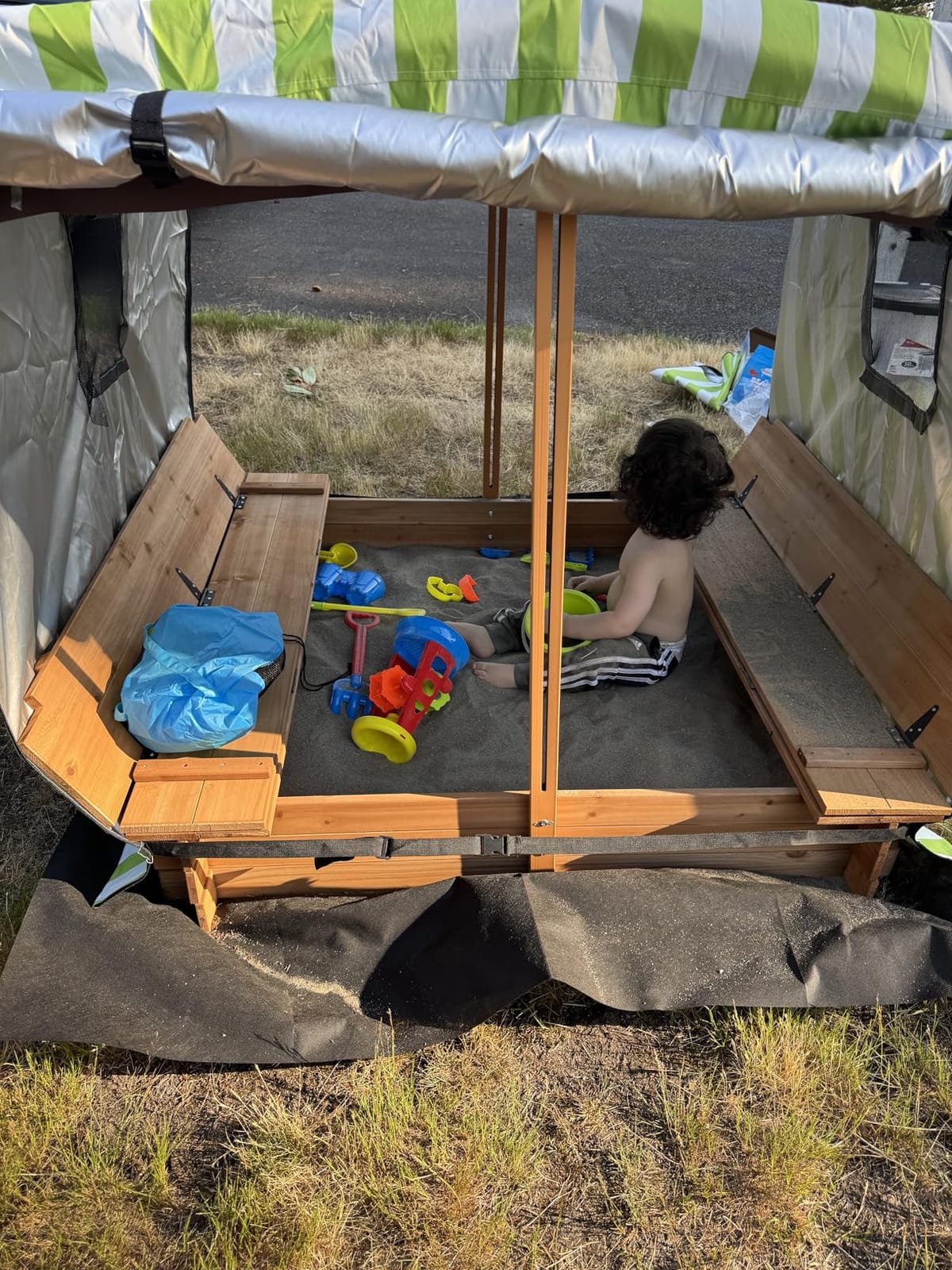
The interior is reflective and insulated, described by buyers as keeping the box cool in summer and blocking wind in winter. Holding is handled by two buckles and two elastic hem cords at the base, and the outer fabric is 600D Oxford with a waterproof PU coating that is tear and UV resistant. The 4.4 rating is the joint-highest here, though it comes from 42 reviews rather than a large sample.
At 1.52 kg it is by far the heaviest cover in the group, and the full-enclosure format suits long periods of non-use better than daily play. Fit can run tighter than the stated 48 inches suggests, and one owner reported a strap connection detaching soon after arrival, so test the fastening early.

Why it suits a wooden sandbox with a canopy
It is the only cover here that protects vertical surfaces and a canopy frame rather than just the top opening. For a wooden box with a roof, that extends the life of the most exposed part of the structure.
Families who want supervised play without a full removal will find the zipped panels and mesh windows genuinely useful, and the insulated lining takes the edge off both summer heat and winter wind.
Where it will disappoint you
If you plan to uncover the sandbox every day, this is the wrong format. The weight and the enclosed shape make a quick on and off cycle unrealistic.
Measure carefully because a tight fit will not stretch into place, and pull-test the strap connections before you rely on them in a storm.
9. UQUUXSTAR 600D PVC 4 x 4 Foot Cover – Simple and Reflective
4×4 Feet Square Sandbox Cover Waterproof 600D Oxford Cloth PVC Coating Rainproof Anti UV Heavy Duty,for Kids Outdoor Protect Sandbox Sand and Toys,Cover Only (Black,47.2″ x 47.2″ x 7.9″)
600D Oxford with PVC coating
Bottom drawstring hem
47.2 x 47.2 x 7.9 inch
0.91 kg
Pros
- Bottom drawstring resists wind lift
- Elastic bands at all four corners tighten the fit
- Reflective corner bands aid low-light visibility
- Multi-use as a pool or dust cover
Cons
- Sized for standard 4x4 foot frames only
- Measure the frame before ordering
The UQUUXSTAR covers the most common frame in the category: a standard four foot by four foot wooden box, measured here at 47.2 x 47.2 x 7.9 inches. The fabric is 600D Oxford cloth with a waterproof PVC layer coating, and it is described as weatherproof, UV-proof and tear resistant.
Its wind design is the simplest effective one here. A bottom drawstring hem resists the cover being lifted, and adjustable elastic bands at all four corners pull the skirt in against the frame walls. No buckles to adjust, nothing to lose, and a single pull around the base.
Reflective fabric belts at the corners make the covered box more visible in poor light, which matters if the sandbox sits near a path, a driveway or a street. It also works as a garden pool cover or a furniture dust cover when the sandbox is not in use, and at 0.91 kg it is manageable for one person.
The limit is straightforward. A 47.2 inch footprint suits a standard four foot square and nothing larger, and buyers consistently flag measuring before ordering as the deciding step. If your frame is bigger than four foot square, this one will not stretch to fit.
Why it suits a standard four foot square sandbox
The dimensions are a direct match for the standard frame, and the fastening needs no hardware beyond the corner elastics. Put it on, pull the drawstring, walk away.
If the sandbox sits anywhere near a walkway, the reflective corner belts are a cheap safety improvement over a plain black sheet.
Where it will disappoint you
Oversized frames are out. Anything wider than a standard four foot square will leave the skirt short and the corners exposed to wind.
As a flat cover it collects water after rain, and the corner elastics can loosen over a season of repeated stretching.
10. Owlcover Cover for Small Plastic Sandboxes 29.9 x 29.9
Owlcover Kids Sandbox Cover for Little Tikes Dirt Diggers Excavator Sandbox Cover,Waterproof, Anti-UV Outdoor Toys Sandbox Covers
600D Oxford with anti-UV coating
Double-needle sewing
29.9 x 29.9 x 9.5 inch
0.26 kg
Pros
- Made for small plastic turtle and digger sandboxes
- Lightest cover in the group at 0.26 kg
- Elastic shrink rope and side handles for quick fitting
- Keeps leaves
- dust and dirt out
Cons
- Only fits small plastic boxes
- not full-size wooden frames
- 29.9 inch footprint is molded-box specific
If your sandbox is the molded plastic kind rather than a wooden frame, this is the correct entry on the list. The Owlcover is sized at 29.9 x 29.9 x 9.5 inches specifically for small plastic turtle-style sandboxes and dirt diggers, and at 0.26 kg it is among the lightest covers we reviewed.
The fabric is 600D Oxford with a waterproof anti-UV coating and double-needle sewing for structural strength. An elastic shrink rope runs around the bottom and durable fabric handles sit on both sides, so one adult can drop it over the box, pull the rope and walk away in seconds.
Owners like the compact sizing, the quick installation and the fact that it folds down for off-season storage. The protective side of the job is straightforward too: it keeps leaves, dust and dirt out of stored sand in a box that would otherwise fill with debris over a wet week.
The caution is obvious but worth stating. This is not a cover for a full-size wooden frame, and the 29.9 inch footprint is specific to molded turtle boxes, so measure the base and the wall height before ordering. At 4.2 stars from 79 reviews, satisfaction tracks directly with buyers who confirmed the size matched their box first.
Why it suits a portable plastic sandbox
It is dimensioned for a molded turtle or digger box, which a universal square cover never quite fits. The corners sit down onto the plastic rather than hanging loose.
At 0.26 kg with side handles, it moves between the patio and the grass without being a two-person job.
Where it will disappoint you
Do not buy it for a wooden frame. The footprint and the 9.5 inch height are not compatible with a full-size box, and the elastic rope will not bridge the gap.
If you want a cover that also stops a determined cat, note that this blocks debris and light rain rather than sealing the box the way the heavier fitted covers do.
How to Measure Your Sandbox for the Right Fit
Getting a snug fit starts before you choose a material, and it takes about five minutes with a tape measure. Almost every fit complaint we read traces back to measuring only the length and forgetting the depth, or measuring the top of the frame instead of the outside of the wall.
Measure the outside of the frame, not the sand opening. Covers slip over the top rail, so the outside length and width of the frame are the numbers that matter. A cover measured to the inside of the box will sit too loose to cinch.
Measure the wall height as well. Most square frames are 8 to 9 inches tall at the rail. Every cover on this list states a height for exactly this reason, and a short skirt will not reach the base of the wall.
For an octagon, take two measurements. Measure flat-to-flat across the widest span and corner-to-corner across the points, then order the larger figure. Rectangular and square frames only need length and width.
Measure the frame thickness, not the box. The drawstring or elastic hem has to cinch around the rail. If the frame is thick, a short cord cannot reach around it and the cover will not tension.
Add a small allowance only where the manufacturer says so. Some covers are cut deliberately oversized, while others are cut to nominal size and depend on tension. A cover that is too small tears at the corners when you tighten it.
If you are pairing a cover with a new frame, measure the frame as delivered rather than the listing dimensions. If you are replacing a cover on an existing sandbox, lay the old one flat and measure corner to corner, which tells you the shape of the fit that already failed.
Mesh vs Solid Vinyl vs Tarps: Which Material Wins
The best material for a sandbox cover is a coated solid fabric such as 420D, 500D, 600D or 800D Oxford cloth, or solid marine-grade vinyl, when you want to keep the sand completely dry and keep animals out entirely. A breathable mesh is the better choice in hot, humid climates where the risk is trapped condensation rather than rainfall. A plastic tarp is the worst of the three, and the reason is worth understanding before you save money on one.
Playground safety guidance from the supplier trassig is direct on this point: use a cover made of permeable woven material rather than a rigid cover or plastic tarp, because both of those encourage bacteria and mold growth. The mechanism is simple. A rigid or plastic surface sheds rain onto the sand, the sand underneath stays damp, and damp sand with organic matter in it is exactly the environment mold and bacteria need.
That leads to the trade-off nobody mentions in store listings. In a hot climate, a waterproof cover traps the day’s moisture under the fabric, and the sand comes out damp the next morning even on a sunny day. That is the single most common complaint from parents in humid regions, and it is why covering and airing out both have to happen. Rake debris, let the sand dry fully, then cover it. Advice along those lines from trassig appears on almost no retail page.
There is a third option that fits between the two. Parents in DIY forums recommend a fine mesh screen secured simply and quickly when the priority is animals rather than rain. It blocks cats and rodents, it does not shed rain, and it is a deliberate half-measure. If you live somewhere with a mild climate and a heavy cat population, it can be the right trade, but it will not keep sand dry.
On fabric vocabulary, the number in 420D, 500D, 600D and 800D is denier, a measure of thread density that works roughly like thread count on a bedsheet. Higher numbers mean a heavier, more tear-resistant weave that also holds a coating better. The trade-off is weight, and weight decides whether one adult can still put the cover on without help.
Why Sandbox Covers Blow Away in Wind
Wind is the number one real-world failure mode, and it is rarely about fabric strength. A light cover with a weak perimeter attachment will sail off no matter how good the Oxford cloth is. The fixing that holds is tension applied in more than one direction, spread across the frame rather than concentrated at a single point.
There are four fastening approaches in this roundup, and they are not equal. A bottom drawstring hem alone cinches the perimeter evenly and is the most wind-resistant of the simple options. Adding adjustable elastic bands at all four corners takes that further, because the corners are the first points that lift. Diagonal buckles pull the fabric across the span of the cover, which resists the ballooning effect that lifts a flat sheet. A side buckle combined with a bottom pull rope combines a hard mechanical hold with tension, which is the approach on the 78 inch cover that reviewers say stayed secure through a wet snowstorm.
Weighted edges are the other option, and they exist because some yards need more than tension. A hem weighted with chain, or with pockets for sand bags, holds the cover down without grommets or anchors drilled into the frame. One DIY parent on r/DIY built an eight foot square sandbox and worked through several tarp-based covers before concluding the approach needed rethinking, and the recurring thread in those discussions is the same: a tarp that has loosened will not be retightened in a storm.
Our advice is unglamorous. Measure your frame thickness, adjust the drawstring to match it on the day the cover arrives, and re-tension it at the start of each season. On open, exposed yards it is worth adding a sand bag or two along the windward edge, because no perimeter attachment beats a cover that weighs itself down.
Flat Covers, Domed Covers and Water Pooling
Every flat cover in this roundup has the same weakness: it is a sheet, and sheets sag. Water collects in the middle, and the deeper it sits the more it loads the fabric and stretches the seams. Buyers on the 800D cover, the octagon covers and the 78 inch cover all describe scooping or bucketing out standing water before they can remove the cover.
The fix most owners use is support from below. Putting something under the center of the cover lifts it into a shallow dome, and water runs off instead of sitting. The beach ball trick does the same job with a large ball under the fabric, converting a flat cover into a tented one. A rigid lid does it permanently, and if you have decided the sandbox will be covered for long stretches, a hinged plywood or slatted lid handles water better than any fabric.
A domed cover handles the problem at the design level. It costs more and it does not fold away as neatly, but it never depends on you remembering to add support. If you are in a region with frequent heavy rain and you are not fussy about storage, paying for a profile is reasonable. If you want a cover that disappears into a shed for the winter, accept the pool and get a squeegee.
Sandbox Cover vs Sandbox Canopy vs Ground Liner
These three accessories solve different problems and are frequently confused. A sandbox cover goes over the top opening and keeps rain, debris and animals out of the sand. A sandbox canopy goes above the box and creates shade, which is what makes summer play bearable and which protects children from direct sun rather than the sand from weather. A ground liner goes underneath the box, between the sand and the soil or concrete, and stops damp ground wicking upward into your fill.
They work well together. Shade from a canopy slows the drying of wet sand, so if you add a canopy you need a cover with real ventilation, or a schedule that lets the box air out. Our other backyard guides on aluminum patio covers for backyards and playground slides for backyards cover the shading and play-structure side of a yard.
One more note on cost of ownership, because it changes the math. Sand that has been rained on, walked in and shared with cats has to be replaced, and replacement is a recurring cost that never shows up in a cover listing. A cover that keeps the fill usable through several seasons pays for itself in sand you do not have to buy, which is why a heavier fabric is often the cheaper decision over five years even though both covers look similar on a shelf.
Frequently Asked Questions
What is the best material to use for a sandbox cover?
A coated solid fabric such as 420D, 500D, 600D or 800D Oxford cloth, or solid marine-grade vinyl, is the best material for most backyards because it sheds rain and blocks animals completely. Choose breathable mesh in hot, humid climates where trapped condensation is the bigger problem, and avoid plastic tarps, which encourage bacteria and mold growth in damp sand.
Should sandboxes be covered?
Yes. An uncovered sandbox collects leaves, standing rainwater, mud and animal droppings, and neighborhood cats are a documented route to Toxoplasma gondii infection in young children. Covering the box also protects the wooden frame and canopy from weather. Let the sand dry fully before covering it, and air the box out regularly in humid weather.
Do sandbox covers blow away in the wind?
They can, and wind is the most common real-world failure. Covers held by a perimeter drawstring, elastic corner bands, or diagonal buckles across the span of the cover resist lifting far better than a loose sheet. On open, exposed yards, add a sand bag along the windward edge, and re-tension the drawstring each season.
How do I measure a sandbox for a cover?
Measure the outside length and width of the frame, not the sand opening, plus the wall height. For an octagon, measure both flat-to-flat and corner-to-corner and order the larger figure. Also note the frame thickness, because the drawstring has to cinch around the rail. Covers are fitted to specific listed sizes, so they stretch across the frame rather than over it.
How do I keep cats out of my sandbox?
A fitted cover that seals the full top opening is the only reliable answer, since cats fit through gaps that stop leaves. Covers with a bottom drawstring hem and elastic corner bands close the gaps at the base of the frame, and solid coated fabric stops digging and scratching that damages the cover. A mesh screen blocks larger animals but not determined cats.
How do I stop a sandbox cover from getting moldy?
Dry the sand before you cover it, and lift the cover periodically so trapped moisture can escape. In hot, humid climates a breathable mesh cover outperforms a solid waterproof one, because the problem is condensation rather than rain. A domed or supported cover also sheds water instead of holding it against the sand, which is where mold starts.
Can I leave the sandbox cover on in winter?
Yes, and many families do, since a cover keeps snow and ice off the sand and reduces the cleanup in spring. Check the fastening hardware at the start of winter, because wind and ice load a cover more than summer use does. Store the cover dry before folding it away, and expect straps and elastics to need replacing sooner in a high-UV region.
What size cover does my sandbox need?
Match the cover to the outside dimensions of your frame, including wall height. The covers in this roundup range from 29.9 inches for small molded plastic turtle boxes, through 47.2 and 48 and 50 inch square wooden frames, to 78 inch squares and octagon sizes around 84 by 79 inches. Every cover is sold separately, so the sandbox itself is not included in the box.
The Best Sandbox Covers for Backyards in 2026
The best sandbox covers for backyards are the Yexcend 800D for a standard four foot square frame, the Fizentia 500D if you want the strongest double-coated construction at a lower weight, and the Kasla if sealed seams and a drawstring fit matter most to you. For octagon frames, the SIRUITON and the MRWiZMS both fit the shape properly, and the MRWiZMS wins if your octagon needs the roomier cut.
Whatever you pick, measure the outside of your frame including wall height before you order, and check the fastening hardware the day it arrives. In 2026, the deciding factor is still not the fabric weight. It is whether the cover stays tensioned in wind, whether one adult can put it back on, and whether it comes off clean enough that you will actually use it.