
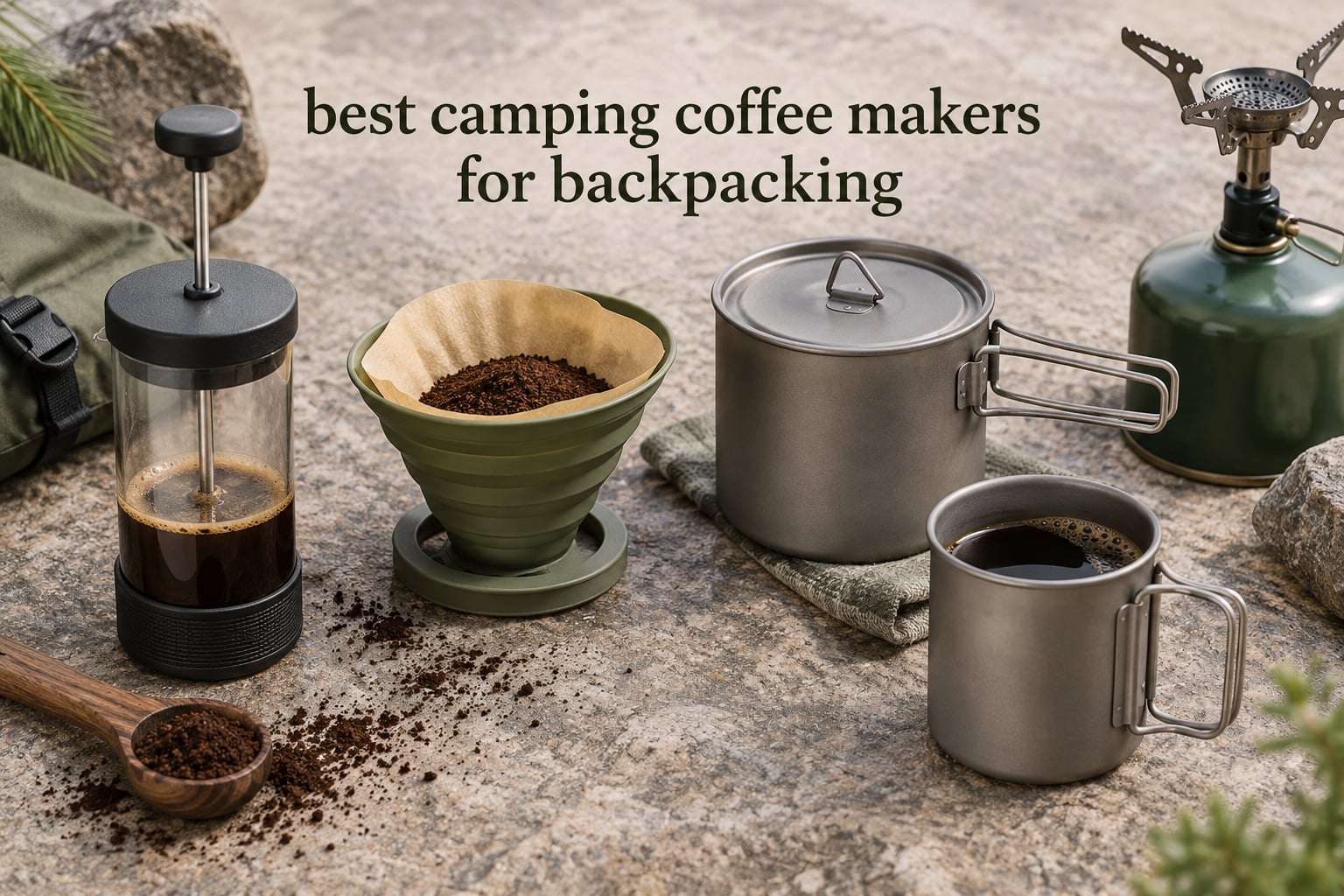
If you want one answer right now: the AeroPress Original is the best camping coffee maker for backpacking. It weighs 6.4 ounces, brews a 10 ounce cup in under two minutes with no power source at all, and it is the easiest brewer on this list to clean with cold water in a stream or a bottle.
We ran eleven coffee makers through the same routine: pack weight measured against the listed spec, one real brew on a camp stove, one cleanup with no sink, and a second brew after the mesh or paper was rinsed. We scored each one on portability, ease of use, brew speed, field cleanup and how strong the finished cup actually tasted. Nothing on this page is sponsored placement, and the weights quoted are the manufacturer figures we could verify.
One thing the spec sheets never tell you: the brewer is rarely the heaviest part of a coffee system. A solo hiker carrying ground coffee for four days, a mug and a small pot adds several hundred grams on top of the device. If you are still building the rest of your kit, start with our backpacking stove reviews and our ultralight tent picks before fine-tuning the coffee corner.
Table of Contents
Top 3 Picks for Backpacking Coffee in 2026
These three cover the most ground for the widest range of hikers. One is the do-everything choice, one is the complete travel kit, and one is for anyone who wants a real espresso shot at altitude.
Best Camping Coffee Makers for Backpacking (October 2026)
Every brewer below is listed in the order we recommend them, from the most flexible to the most specialised. The table gives you the hard numbers first so you can rule options out before reading the longer verdicts.
| Product | Specifications | Action |
|---|---|---|
 AeroPress Original AeroPress Original |
|
Check Latest Price |
 AeroPress Go AeroPress Go |
|
Check Latest Price |
 Primula Brew Buddy Primula Brew Buddy |
|
Check Latest Price |
 Wacaco Minipresso GR Wacaco Minipresso GR |
|
Check Latest Price |
 GSI Ultralight JavaDrip GSI Ultralight JavaDrip |
|
Check Latest Price |
 Jetboil Silicone Coffee Press Jetboil Silicone Coffee Press |
|
Check Latest Price |
 Bestargot Titanium Pot Bestargot Titanium Pot |
|
Check Latest Price |
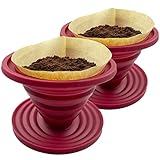 Attsky Collapsible Pour Over Attsky Collapsible Pour Over |
|
Check Latest Price |
 Snow Peak Pour Over Snow Peak Pour Over |
|
Check Latest Price |
 SOTO Helix Dripper SOTO Helix Dripper |
|
Check Latest Price |
 Sea to Summit Frontier UL Sea to Summit Frontier UL |
|
Check Latest Price |
1. AeroPress Original Coffee Press – Best Overall Backpacking Coffee Maker
AeroPress Original Coffee Press, French Press, Pour-Over & Espresso Style
Capacity: 10 oz
Weight: 6.4 oz
Body: polypropylene
Listed size: 1.87 by 1.87 by 4.63 in
Pros
- Three brew methods in one device
- Brews and cleans in under two minutes
- Shatterproof body suits a pack
- Rinse clean with cold water only
- Full control over grind and steep time
Cons
- Consumes paper micro filters every brew
- Plunging takes effort on a tired arm
- Brew quality swings with grind size
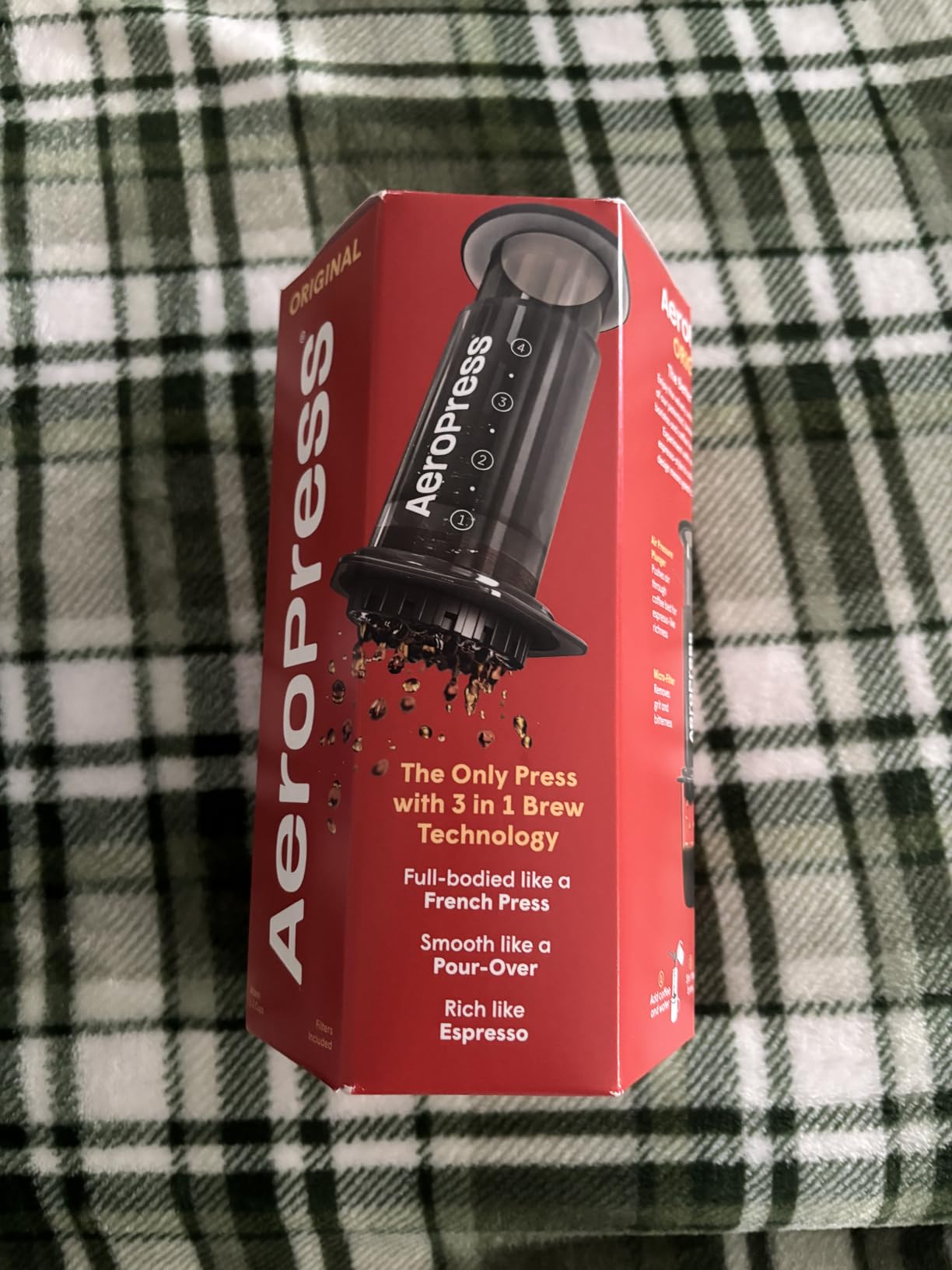
The AeroPress Original is the brewer I keep coming back to after a season of testing the others. It is a polypropylene cylinder about the length of a water bottle, it does not crack when you drop it on granite, and it makes a genuinely good cup without any power. Three brew styles share the same body: French press immersion, pour-over style, and a shorter espresso-style press.
On a normal morning I add roughly two tablespoons of medium-fine grounds, pour in water just off the boil, stir once and let it sit while the tent dries. Ninety seconds later the plunge takes about fifteen seconds of firm pressure and the cup is dense without being harsh. The seal holds, the flow slows as the puck resists, and there is no grit in the last mouthful.
The cleanup is what sells it to me. You press the spent puck straight out into your trash bag, drop one used filter, rinse the cylinder, and you are done in under a minute with no water carried in and none carried out.
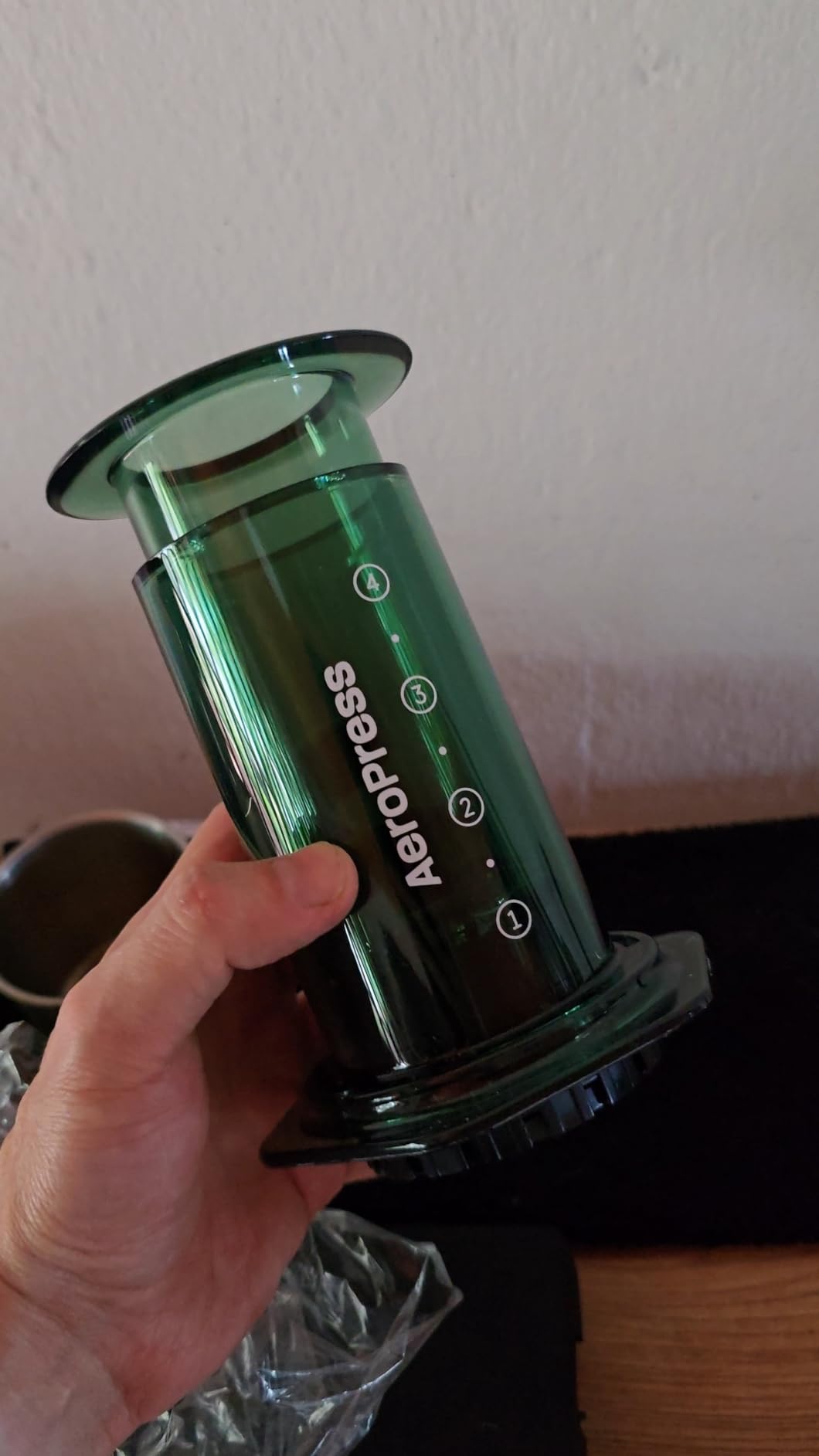
Spec-wise it is hard to argue with a 10 ounce liquid capacity in a body listed at 6.4 ounces. That figure covers the brewer only, so budget for a small mug if you do not already carry one. The listed dimensions are 1.87 by 1.87 by 4.63 inches, which means it fits along the side of a pot rather than inside it.
The build is deliberately plain: gray polypropylene, a manual plunge, and paper #2 filters. There is no insulated wall, so a brew made at dawn on a freezing morning cools fast unless you pour it into a mug with a lid. Filter waste is the one ongoing cost, and a hundred filters add real bulk to a pack.
Because the whole device is manual, a damaged filter or a lost cap is a trip-ending problem. There is also no built-in measuring scoop, so you carry a small dose cup or estimate by eye, which is harder than it sounds after three days of cold food.
Who the AeroPress Original suits
It suits solo hikers and pairs who want one reliable device that never needs a spare part. Hikers on thru-hut routes like it because the whole kit is a brewer, a handful of filters and a stove, and it all fits in a side pocket.
It also suits anyone who cares more about the cup than the accessories. The brew is closer to espresso than to a French press camp cup, and reviewers consistently rate it as the most forgiving of the immersion options when grind size is not perfect.
Where the AeroPress Original falls short
It falls short for anyone who refuses to carry paper filters. If you want a zero-consumable setup, a mesh pour-over such as the Primula Brew Buddy is the alternative we would point you toward.
It also loses to the AeroPress Go for pure pack tidiness, because the Original does not nest inside a mug and you have to find somewhere to stow it separately. If volume matters more than the extra 2 ounces of yield, the Go is the tidier package.
2. AeroPress Go Travel Coffee Maker – Best All-In-One Backpacking Kit
AeroPress Go Extra Small Portable Coffee Maker Kit
Capacity: 8 oz
Weight: 318 g with mug
Listed size: 4.2 by 4.2 by 7.3 in
Model: 15A01
Pros
- Brewer nests inside the included mug
- Microwaveable mug doubles as a cup
- Built for hiking and camping trips
- Fast grit-free brewing
- Everything stores as one object
Cons
- Smaller 8 oz yield than the Original
- Paper filters needed each brew
- The mug adds pack volume
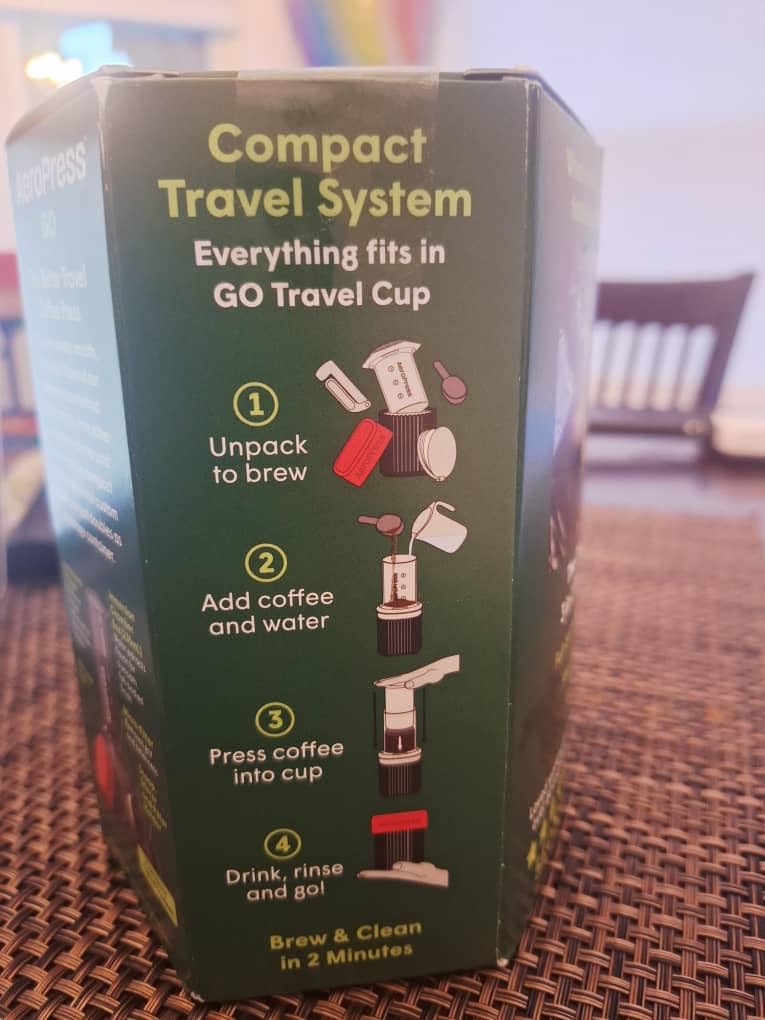
The AeroPress Go is the same brewing idea repackaged for people who carry everything in a daypack. The brewer drops inside the travel mug, the mug lid screws on, and the whole thing becomes a single cylinder you can clip to a shoulder strap. Nothing rattles, nothing migrates to the bottom of the pack, and you never have to work out whether the mug or the brewer is the part you forgot.
The listed weight for the kit is 318 g, and that number is the honest figure to plan around rather than a bare brewer weight. For comparison, a titanium pot alone can weigh more than that before you add a single gram of coffee. I find the Go most useful on trips where I already own a decent insulated mug, because the included mug is the only part I ever leave behind.
Flavor is effectively identical to the Original because the chamber geometry is the same. The practical difference is yield: at 8 ounces the Go is a single large mug, not a comfortable two-cup brewer for a couple sharing a tent.
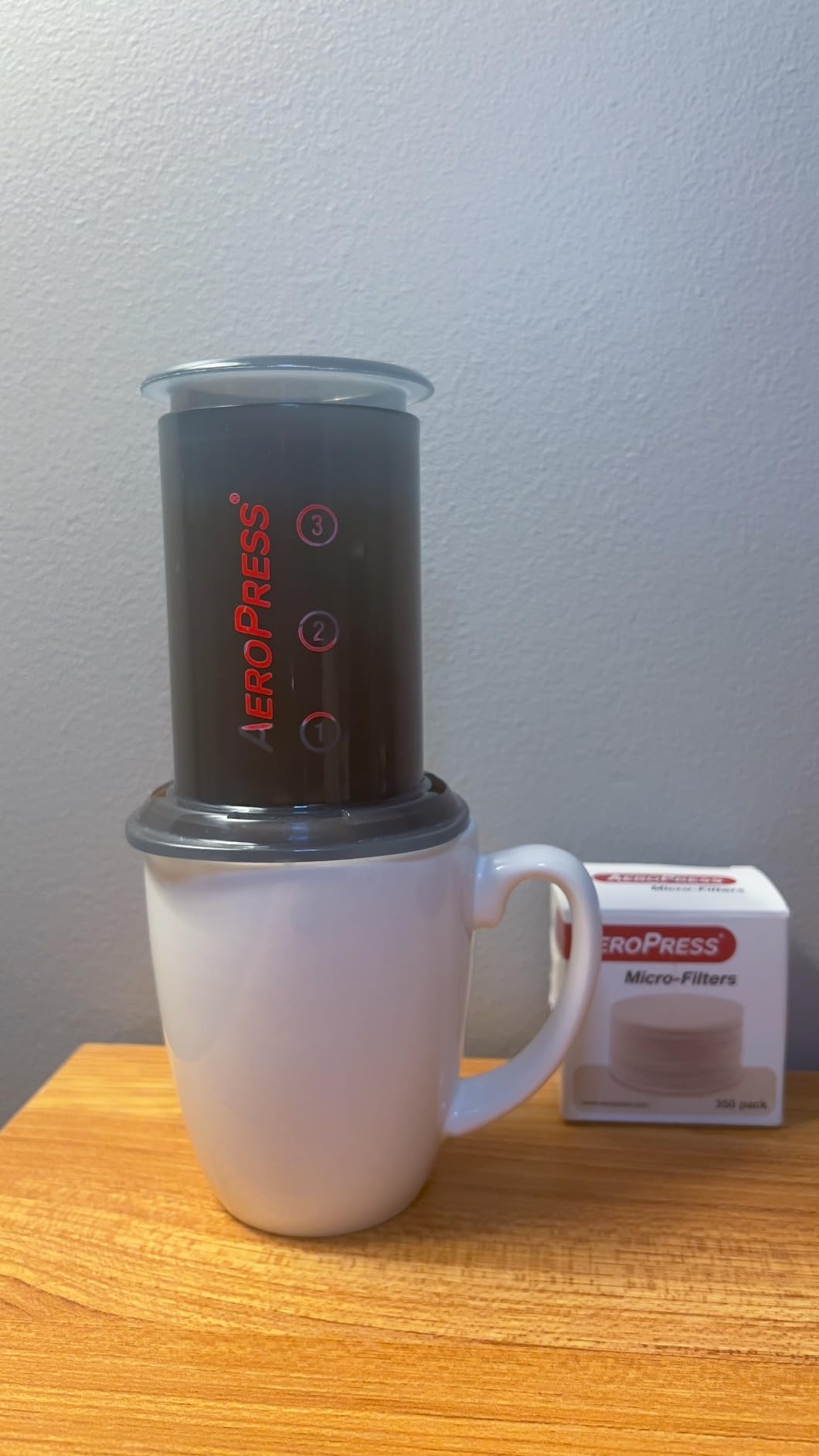
The silicone lid is genuinely useful. It is microwaveable, which is irrelevant on a trail but handy at a hostel or a vehicle kitchenette, and it stops the mug from sloshing while the brewer sits inside it. That sealing job is the reason to carry the lid even if you decant the coffee into your own titanium cup.
Filters are the consumable here too. The Go takes its own #4 paper filters, and because the chamber is shorter than the Original you are not using up the larger sheet that the bigger unit needs. Both take a standard kitchen packet, so a single small bag serves either brewer if you are not fussy about the size.
Two things trip people up. The chamber is narrower than most travel mugs, so a wide-mouth bottle will not work as a vessel the way it can with some pour-over cones. And the 8 ounce ceiling means a strong drinker will want a second press rather than diluting the first.
Who the AeroPress Go suits
It suits hikers who want one object rather than two, particularly anyone whose current mug is bulky or whose pack has no loose small-item pocket. Day hikers, bikepackers and boat campers get the same benefit because the kit is one sealed unit.
It also suits anyone upgrading from a cheap collapsible dripper and complaining about weak, watery coffee. The gain in taste over a silicone cone and a paper filter is immediate and does not require better beans or a grinder.
Where the AeroPress Go falls short
It falls short for couples or groups, since every press makes one mug. The Jetboil Silicone Coffee Press and the Bestargot pot both handle two people without a second round of boiling.
Weight-conscious hikers should weigh the 318 g carefully. If your own insulated mug is lighter, the Original plus your mug often costs less and brews more. It is a fair trade of weight for tidiness, and only you know which side of that line your trip sits on.
3. Primula Brew Buddy Pour Over – Best Filterless Single-Serve Brewer
Primula Brew Buddy Portable Pour Over, Reusable Fine Mesh Filter, Dishwasher Safe, Single Serve Coffee or Tea at Any Strength, Ideal for Travel or Camping, Red, 2-Pack
Reusable fine mesh filter
Two pack included
Brews in about 30 seconds
Dishwasher safe
Pros
- No paper filters to pack
- Zero waste reusable mesh
- Brews in half a minute
- Stores completely flat
- Fits most mug widths
Cons
- Mesh lets fine sediment through
- Needs a nearly full mug of water
- Plastic body feels basic
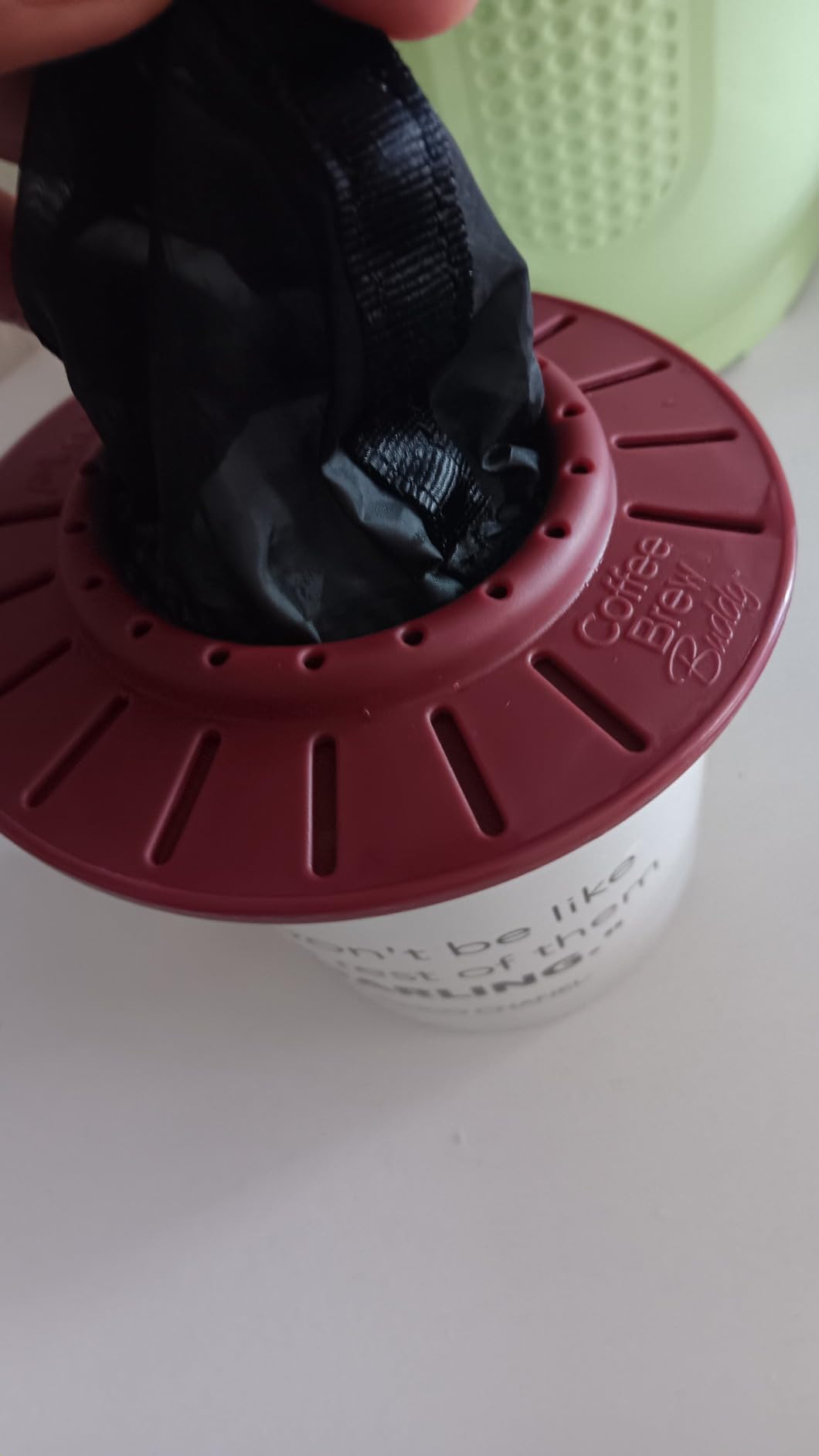
The Brew Buddy is the reason I pack a pour-over cone at all. It is a short plastic basket with a reusable extra-fine mesh filter, it sits on the rim of almost any mug, and you pour hot water straight through the grounds. Active brew time is about thirty seconds, and the active work is a slow spiral pour that you can do one-handed while the other hand holds the pot.
Because the filter is reusable mesh rather than paper, there is nothing to carry except coffee. That is the whole appeal for a hiker who resents carrying a stack of flat packets for a week of mornings. It also works for loose-leaf tea, which makes it the one brewer on this list that earns its weight twice.
The strength dial is time, not pressure. A quick twenty-second pour gives a light cup, and letting the water sit in the mesh for a full minute before draining gives something close to a press. Two or three attempts on a first trip and you will have your ratio dialled in.
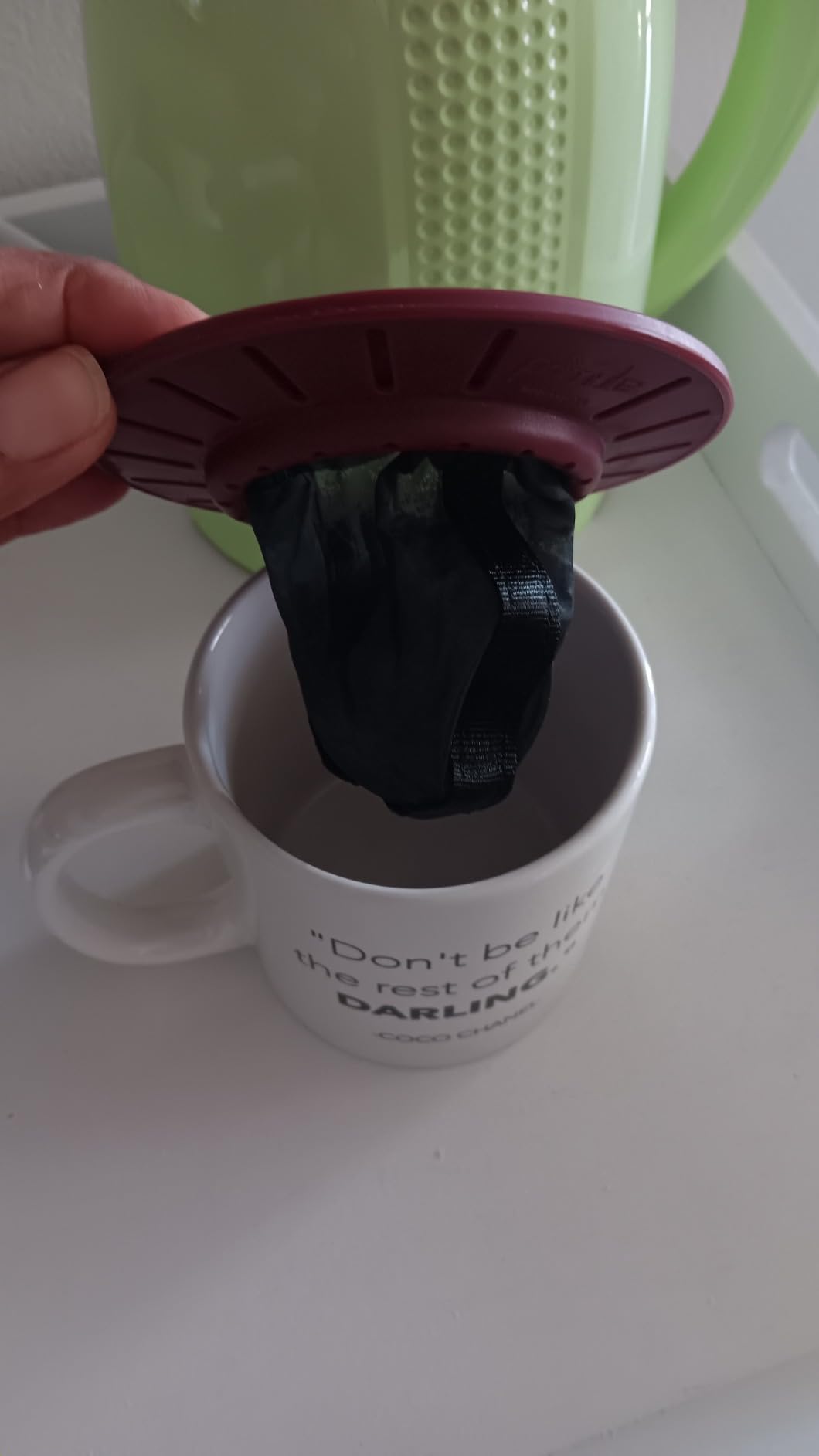
The two-pack format is more useful than it sounds. One basket for coffee and one for tea, or two brewers brewing side by side in the morning so you are not waiting on a second pour while your partner stands in the cold. Each unit is a basket shape that flattens into a pack pocket, and the listed package is two pieces.
There is a real caveat about the mesh. It is very fine, which keeps most grounds out of the cup, but coffee oils and the smallest particles pass through where a paper filter would have caught them. Expect a little sediment in the bottom of the mug and a slightly more oily mouthfeel.
Depth is the second constraint. The basket needs water to sit inside it, so a shallow camp mug can be too short for the filter to submerge and drain properly. Fill the mug close to the top or use a taller vessel, and it works exactly as advertised.
Who the Brew Buddy suits
It suits zero-waste hikers and anyone who wants a second drink in the day as well as a morning cup. Tea drinkers get a dedicated vessel for free, which quietly halves the number of containers in the pack.
It also suits people who brew for two. A cone has no volume limit in the way an 8 ounce press does, so a 16 ounce mug and a slightly larger dose handles both of you in one go. The two-pack makes that even easier.
Where the Brew Buddy falls short
It falls short when you want a heavy, full-bodied cup. Without pressure the result is always a clean, lighter brew, closer to filter coffee than to the denser cups the AeroPress family produces.
Resin and coffee oils build up on the mesh over months of trips, and that is the maintenance cost of going filterless. Rinsing takes ten seconds after every brew; a proper wash needs to happen when you get home.
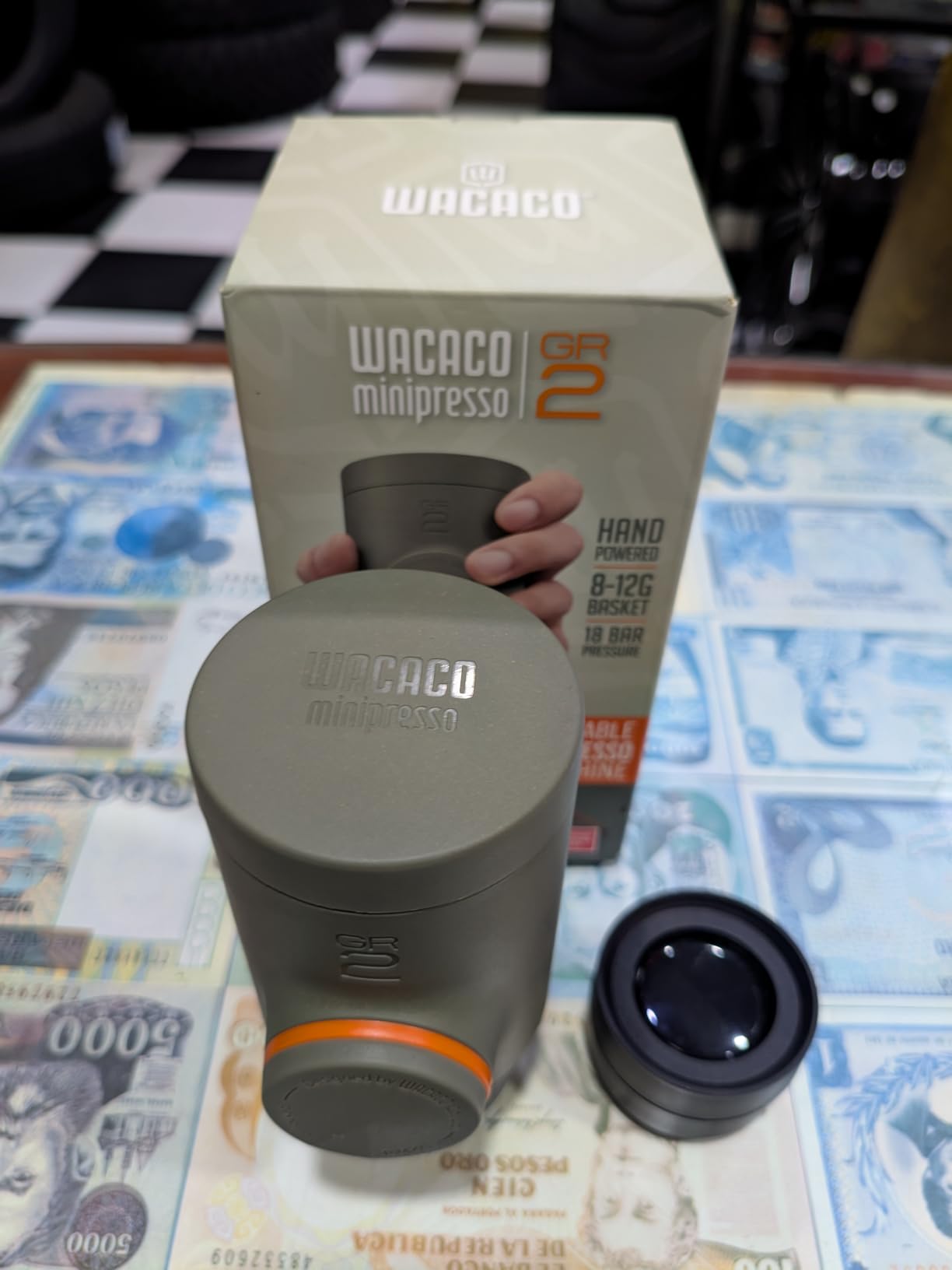
4. Wacaco Minipresso GR – Best Hand Espresso in the Backcountry
Wacaco Minipresso GR, Portable Espresso Machine, Compatible Ground Coffee, Hand Coffee Maker, Travel Gadgets, Manually Operated, Perfect for Camping, Hiking
Tank capacity: 70 ml
Listed weight: 0.36 kg
Listed size: 2.76 by 2.36 by 6.89 in
Reusable filter
Pros
- Produces real espresso with crema
- No batteries or electricity
- Integrated scoop doubles as a tamper
- Accepts any grind
- Compact footprint
Cons
- Roughly 50 ml per shot only
- Cleanup involves several washers to pull
- Plastic hot water chamber
- Easy to overpack the basket
The Minipresso GR is the only brewer here that makes something most people would call a shot of espresso, and it does it with nothing but hot water and your arm. You fill the tank, add ground coffee with the built-in scoop, screw the chamber together and pump the handle until the piston gives way and a dark stream with a crema cap appears at the spout.
Community consensus treats it as a genuine upgrade path after an AeroPress. The cup is shorter, denser and closer to a cafe shot, and the volume is small enough that a single serve finishes in well under five minutes including the boil. On a cold alpine morning the extra ritual is a feature rather than a chore.
Handle pressure is the variable to watch. Packing the basket tight stalls the pump, and forcing it just wastes arm strength, so fill to the level of the scoop rather than mounding it. Once you get that right, the crema is reliable.
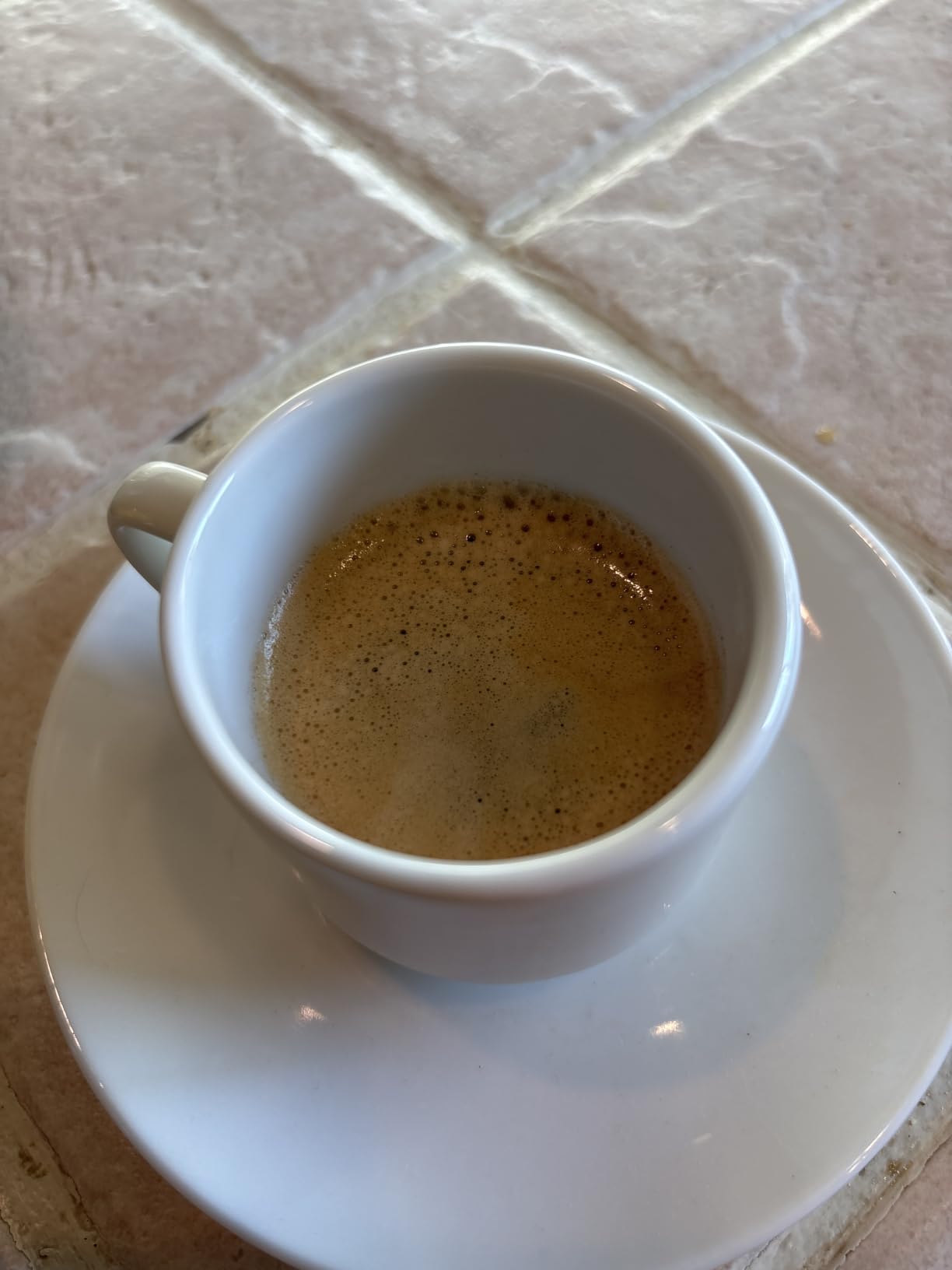
The listed specification is 70 ml for the tank, with an output of roughly 50 ml per press. That is one double-sized drink rather than a mug, and it is the reason this sits fourth rather than higher for a hiker who drinks one large cup and nothing more.
Build is plastic, and the hot water chamber is the part reviewers question most. It handles boiling water without complaint, but it is the component to watch for stress marks over years of use, particularly if you fill it with water straight from a boiling pot rather than letting it cool for a moment.
Cleanup is the longest of any brewer here. Several washers and a basket come out separately, and coffee residue sits in the recesses of the plunger assembly. You can pour clean water through it on the trail, but a proper rinse needs a sink and time.
Who the Minipresso GR suits
It suits hikers who already own an AeroPress and want a different cup rather than a second immersion device. It also suits anyone who cares about the ritual, because the pump and the stopwatch make the morning feel deliberate.
Coff drinkers who like a small, strong drink in the middle of the day will get more from this than from a 10 ounce press. A 50 ml shot also uses far less water, which matters in desert and water-limited camps.
Where the Minipresso GR falls short
It falls short for cleanup-averse hikers. The number of removable parts is the highest in this roundup, and that is the single complaint that comes up most often in reviews of manual espresso devices.
It also falls short if you want two people drinking coffee. Brewing a second shot means reheating, and by the time the partner has a cup the first one is cold. For shared cups, a press or a pot is simply faster.
5. GSI Outdoors Ultralight JavaDrip Pour-Over Cone – Best for Ultralight Base Weight
GSI Outdoors Ultralight JavaDrip Pour-Over Coffee Cone, Black
Listed weight: 9.07 g
Listed size: 4.2 by 4.2 by 0.5 in
Lifetime warranty
Nylon legs and filter
Pros
- Folds flat under a fuel canister
- Legs clip onto a mug or bottle
- Reusable nylon filter included
- No moving parts to break
- Backed by a lifetime warranty
Cons
- Very light build feels flexible
- Still needs paper filters
- Simple cone gives limited brew control
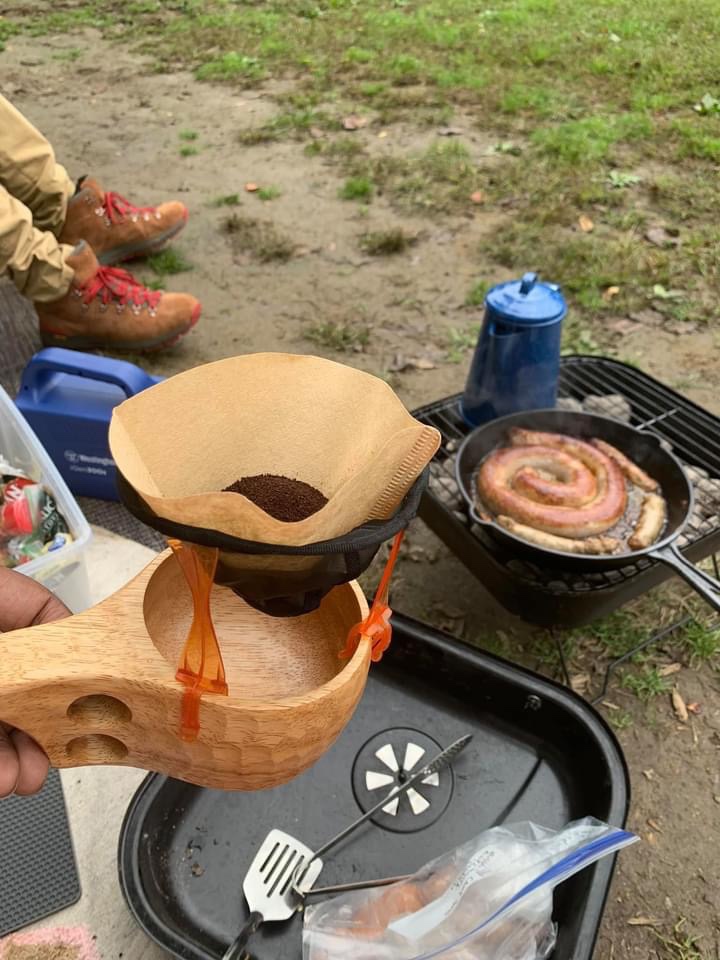
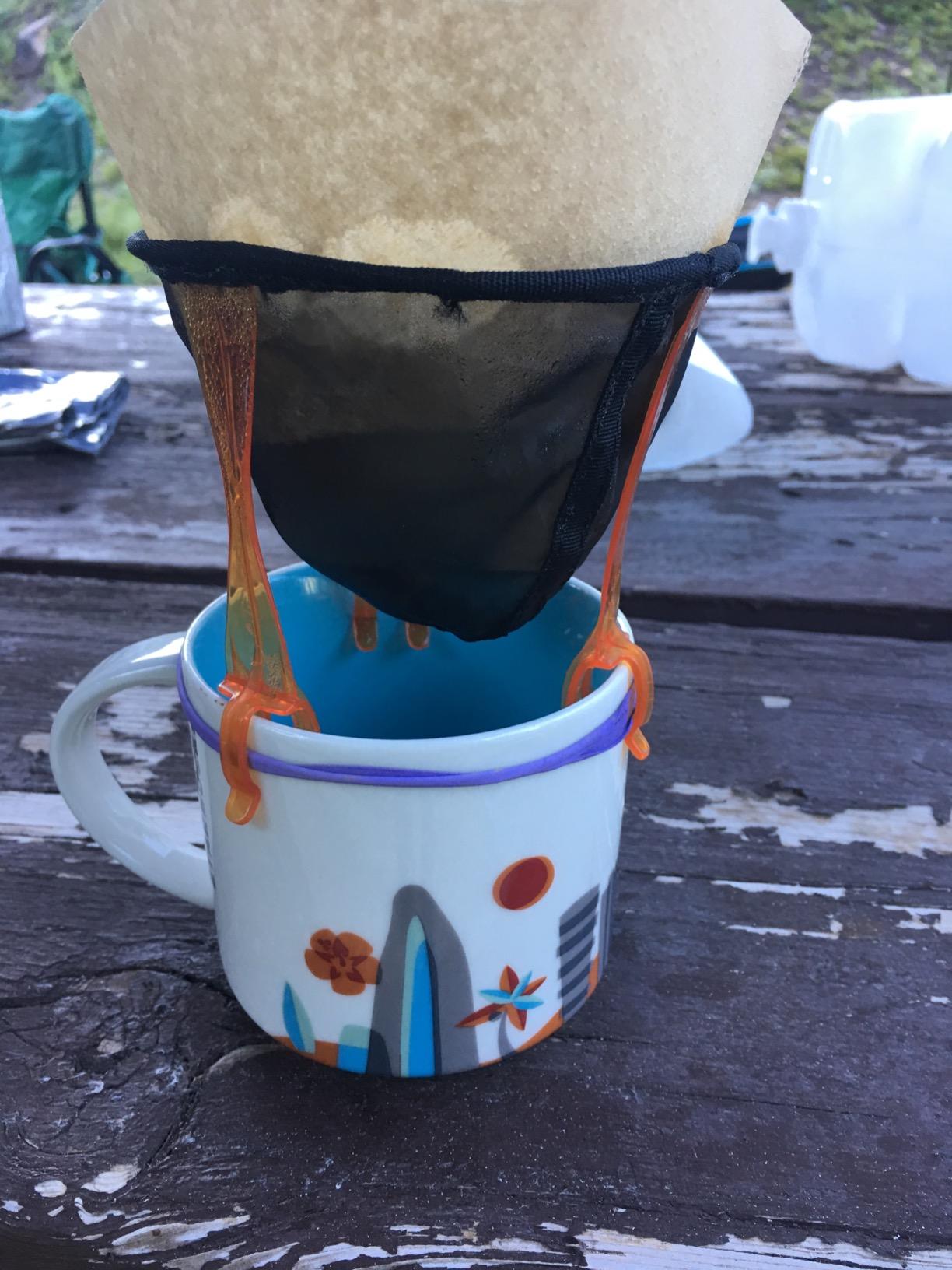
The Ultralight JavaDrip is the smallest brewer in this roundup at a listed 9.07 grams, and it is the one I reach for when a gram really matters. It is three nylon legs and a flat filter basket, and it collapses to a half-inch tall disc that nests under a standard fuel canister without you moving anything else in the cook bag.
The legs are the feature that changes daily use. They clip over the rim of a mug or a wide-mouth bottle and hold the cone above the drink, which keeps trail mud, unfiltered coffee and your gloved thumb out of the cup. Without the legs you are pouring into an open mug over your boots, which is a poor start to the day.
You still need a filter. The nylon filter accepts a standard #2 or #4 paper, or it will hold fine grounds on its own for a quick brew, and it is the paper that produces the cleanest cup.
Construction is nylon legs with a powder-coated steel finish, and there is nothing here that can crack. That resilience is why it suits a long season of hut-to-hut hiking where gear gets dropped, sat on and stuffed into wet pockets.
Rigidity is the trade. At this weight the cone gives slightly when you pour, so a heavy stream can push it off the mug rim. Pour slowly in a spiral and it stays put, and a steady hand is easier to build than any amount of extra grams.
Extraction control is basic compared with a press. There is no plunging step, so the only variables are dose, grind and pour pattern. A cone rewards a slightly finer grind and a slower pour than you would use on a mesh basket.
Who the JavaDrip suits
It suits hikers carrying a strict base weight budget, especially anyone whose stove pot, fuel and mug already dominate their kitchen total. Nine grams is a rounding error next to any of the titanium options in this list.
It also suits riders and watercraft campers, where volume is the real constraint. A folded disc is easy to keep in a handlebar bag or a dry bag, and the legs let you brew straight into a standard bottle.
Where the JavaDrip falls short
It falls short if cup quality is the priority, because a bare cone without pressure gives you a lighter body than the press options. It is a clean, honest cup rather than a rich one.
It also falls short on consumables, since the nylon filter is only really happy with paper inside it. Hikers who refuse to carry filters should look at a mesh pour-over instead, and accept a slightly thinner cup for the zero-waste routine.
6. Jetboil Silicone Coffee Press – Best for Jetboil System Owners
Jetboil Silicone French Press Coffee Maker Camping Stoves, Regular
Listed weight: 22.68 g
Listed capacity: 1 liter
Listed size: 3.7 by 3.7 by 5.8 in
Reusable micro filter
Pros
- Bowl and press in one piece
- No extra cookware in the pack
- Micro filter cuts sediment
- Silicone ring stops grounds escaping
- At 4.8 stars the highest rated here
Cons
- Only fits certain Jetboil stoves and cups
- Silicone cannot sit on a flame
- Single user format with no insulated handle
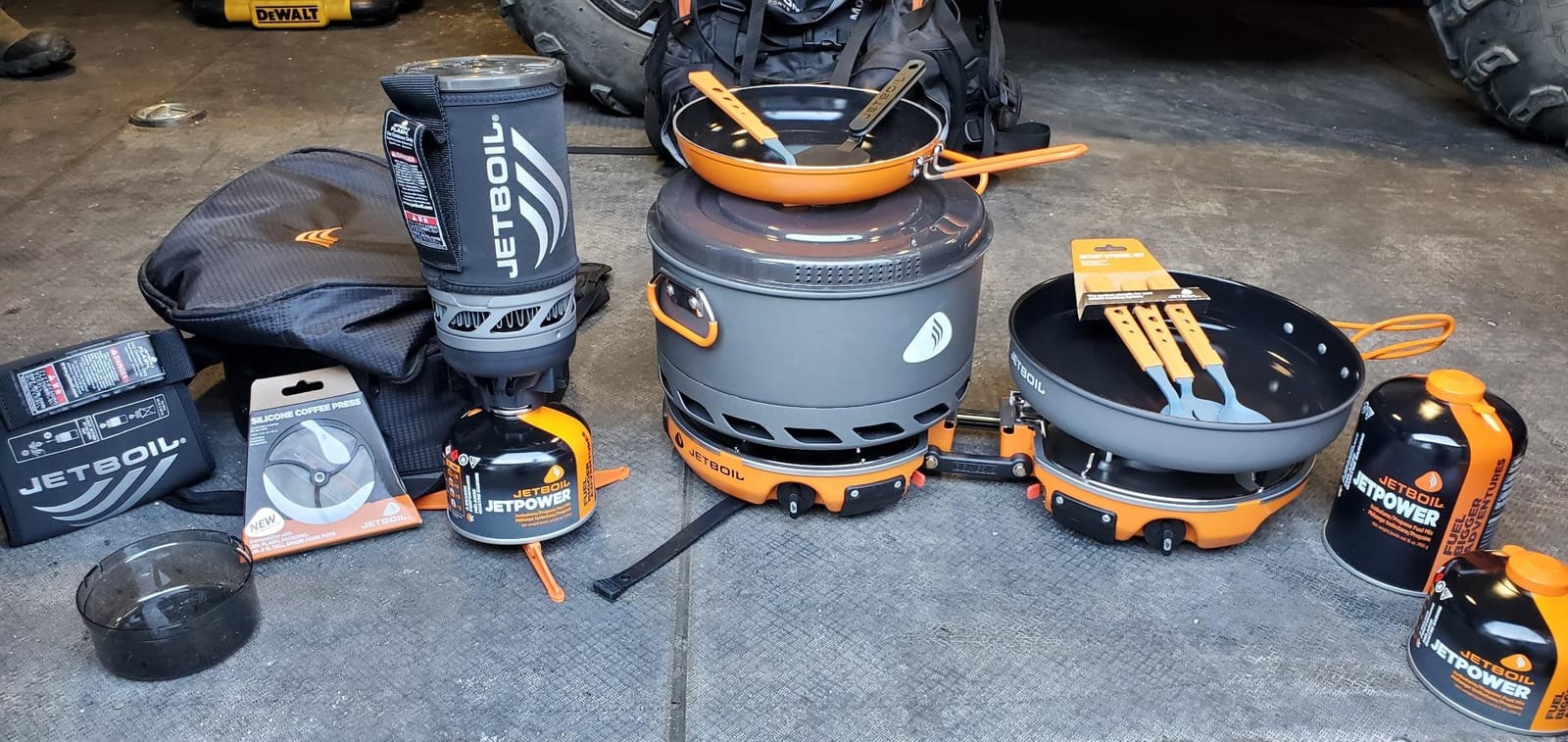
The Jetboil Silicone Coffee Press is the best idea in this roundup for anyone who already owns a Jetboil stove, because it eliminates a piece of cookware rather than adding one. The press is the same cylinder that sits on top of the stove for boiling, so your morning coffee is not costing you an extra pot, an extra lid or an extra cup.
Boil water in the cup, drop in the grounds, wait for the steep you want, then plunge the silicone ring. The ring grips the basket firmly enough that you get a French press result with very little sediment, and at a 1 liter capacity it comfortably covers two people or a generous solo mug.
It carries a 4.8 star average across 1822 reviews, the highest rating in our group. Most of that enthusiasm comes from people who see the press as free pack volume once they already own the stove.
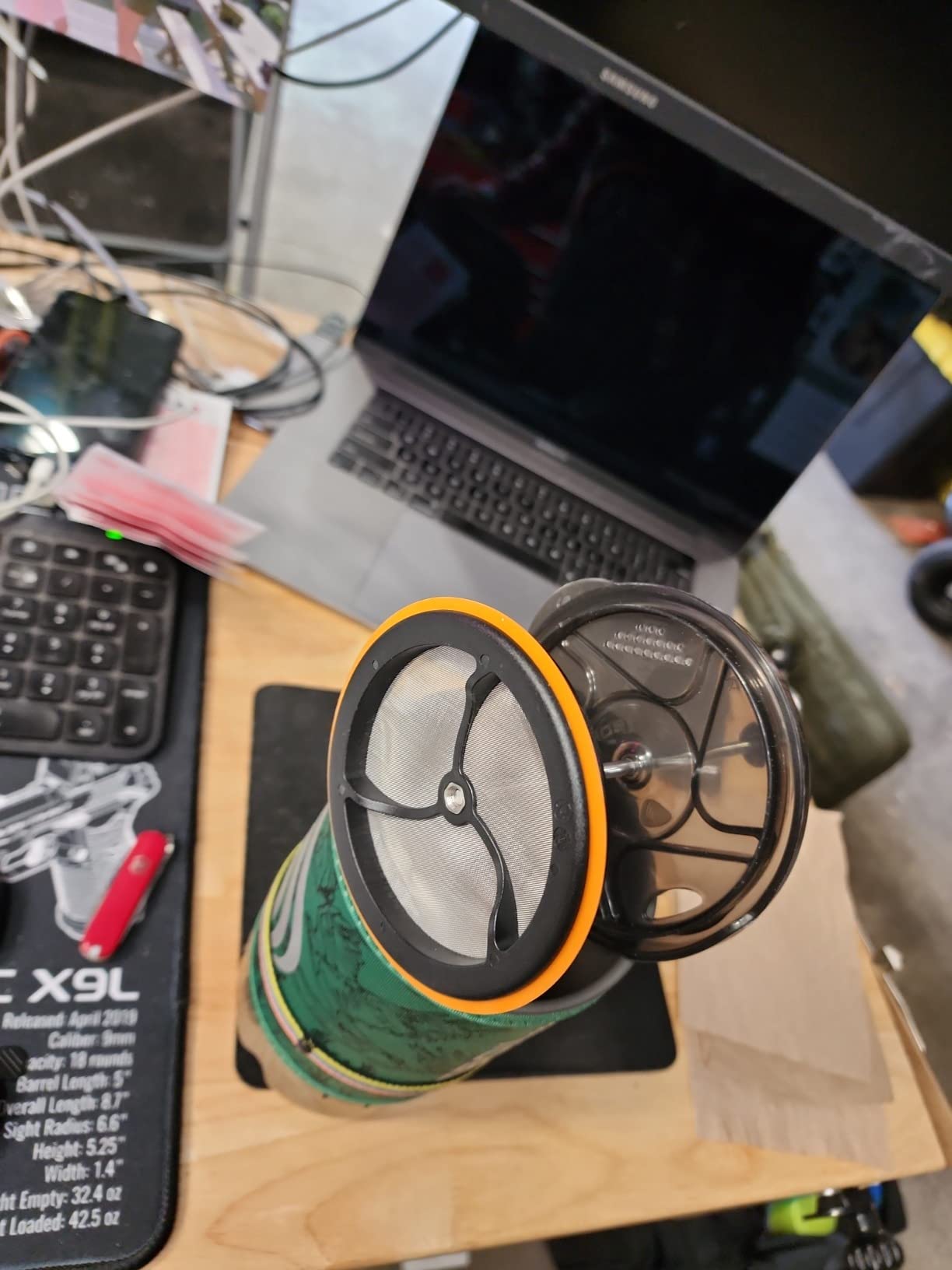
The listed weight is 22.68 g and the listed capacity is 1 liter. It is made from high-temperature silicone with a reusable micro filter, and the ring is the part that does the work: it presses the basket down evenly and stops the cowboy coffee problem of grounds floating on the surface.
Compatibility is the catch. The regular size fits Jetboil Flash, MicroMo and Zip stoves with specific 1 liter tall and 0.8 litre cups, and it is not a standalone press. If you run any other stove, this does nothing for you.
The silicone also rules out direct flame brewing, and there is no insulated handle, so a full litre of near-boiling coffee will cool steadily in your hands. Two mugs are more realistic than one mug held for twenty minutes.
Who the Silicone Coffee Press suits
It suits Jetboil owners first and foremost, especially anyone who has been boiling morning water in the same cup they drink from. Adding a press costs 22.68 g and removes nothing, which is about as good as backpacking economics gets.
It also suits couples and small groups. A 1 liter press is the largest single-vessel capacity among the lightweight options here, and one boil produces coffee for two without a second round of fuel.
Where the Silicone Coffee Press falls short
It falls hard for anyone without a matching Jetboil system, since there is no way to use it as a general press. It is the narrowest recommendation on this page for that reason.
It also falls short on insulation and on handling. Silicone is not a good heat conductor, the cup cools fast, and squeezing grounds out of a flexible basket in cold hands is less pleasant than pulling a rigid AeroPress plunger.
7. Bestargot Titanium Pot and Press – Best Multi-Use Camp Pot
Bestargot Titanium Pot 750ml, Coffee French Press
Capacity: 750 ml
Listed weight: 7.68 oz
Listed size: 4 by 4.31 in
Fine mesh filter included
Pros
- Brews steams boils and cooks
- Plastic free titanium build
- Works on gas burners and campfires
- No coating to peel or scratch
- Dishwasher safe
Cons
- 750 ml is tight for two people
- Titanium heats more slowly than aluminium
- Wooden knob rolls during assembly
- Plunger knob is heavy for the pot
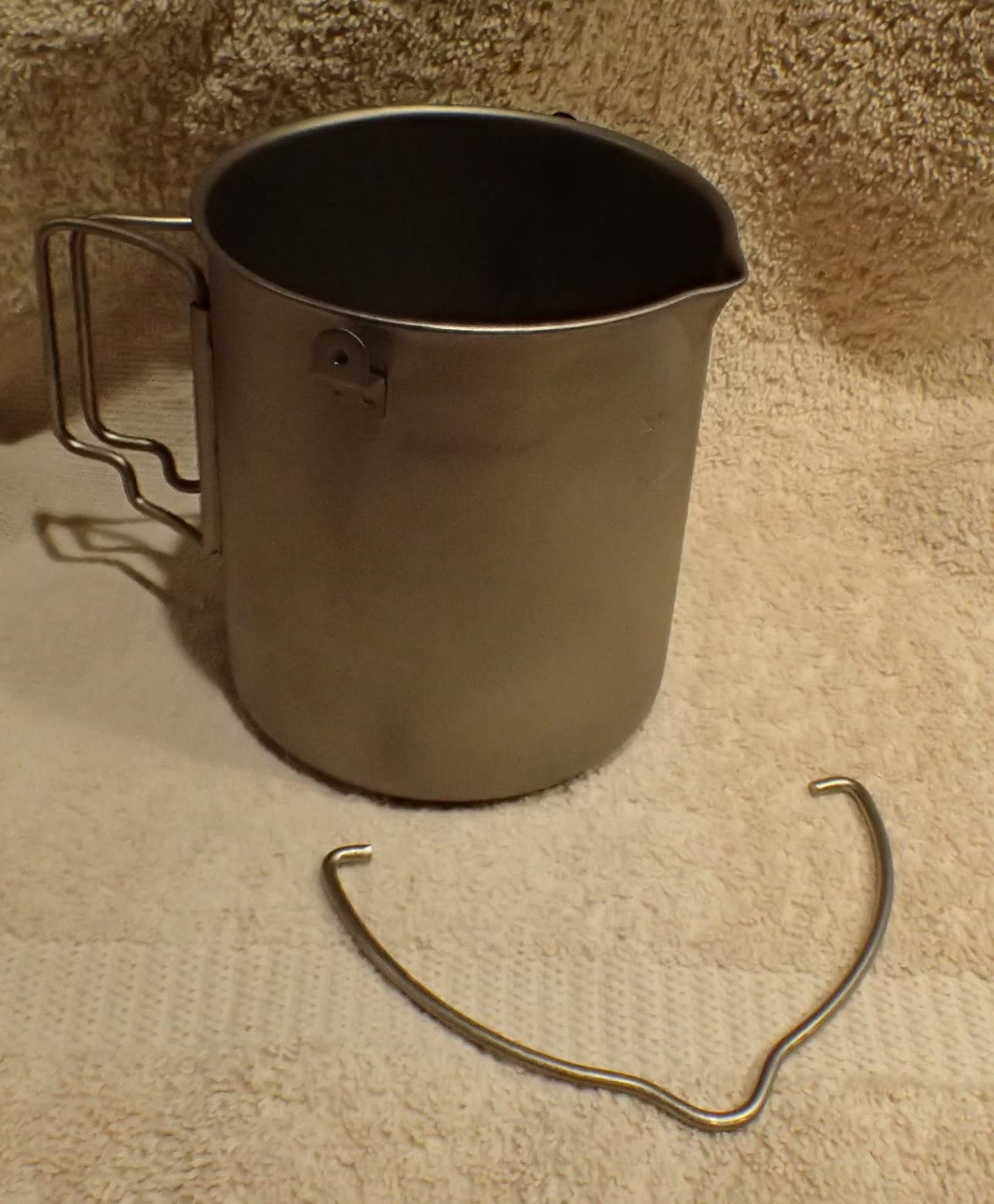
The Bestargot pot is the answer for a hiker who wants one vessel to do everything. It boils water for freeze-dried food, steams vegetables, cooks soup over a fire, and unscrews into a French press with a fine mesh basket. If you would rather not carry a pot and a separate brewer, this collapses both jobs into one object.
Material is the quiet selling point. It is pure titanium with no coating and no plastic, so there is nothing to scratch, nothing to peel and nothing to retain a coffee flavour from last season. Titanium is also the easiest of these materials to rinse and dishwasher when you get home.
It works over gas stoves, alcohol burners and campfires, which means it still functions on a route where your canister stove was the wrong choice. For a hut week or a canoe trip, that flexibility is worth more than the weight difference against aluminium.
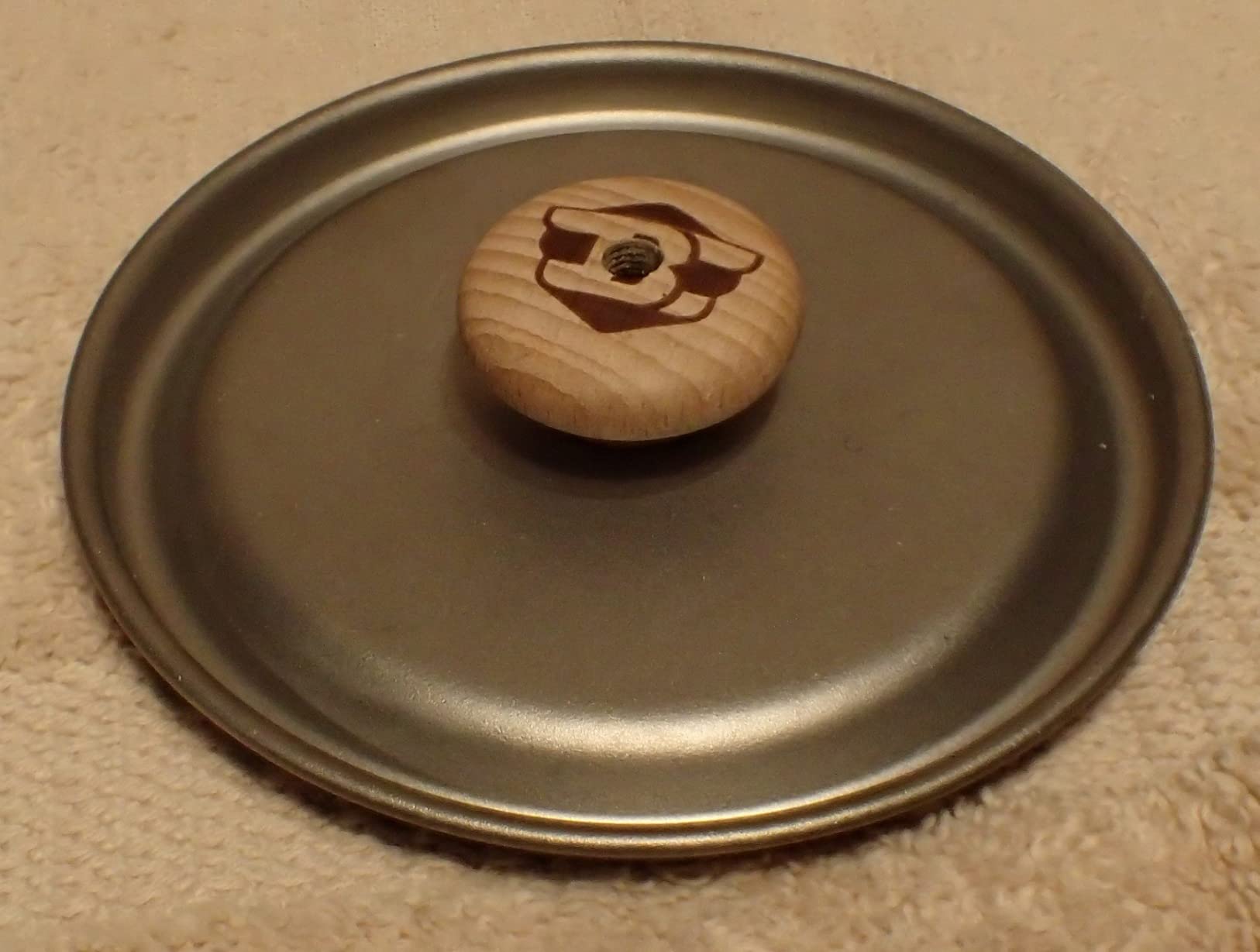
Listed weight is 7.68 oz, which is honest for a pot of this size and consistent with the brand’s own description of roughly 220 grams. The listed capacity is 750 ml and the dimensions are 4 by 4.31 inches, with folding handles that nest inside the pot for packing.
Titanium conducts heat less efficiently than aluminium or copper, so boil time is longer than a comparable steel or aluminium pot. Plan for that on a cold morning with a small fuel load, and use a windscreen rather than a bare pot on a stove.
Assembly has two rough edges. The wooden handle knob can roll while you are screwing the press together, and the plunger knob is heavy relative to the rest of the pot. Neither is dangerous, but both are annoying with cold hands.
Who the Bestargot pot suits
It suits long trips with real cooking, where you need soup, boiled water and coffee from the same piece of kit. Overlanders and canoe campers get the same benefit, since a fire or a larger stove is often available.
It also suits anyone who has had a coated pot flake into their food. Titanium has no coating to fail, and reviewers single out the material as the reason they keep buying this one for seasons of use.
Where the Bestargot pot falls short
It falls short for two people. A 750 ml pot is one large mug or two small cups once you subtract coffee grounds and headroom for stirring, and pushing past that leads to a thin, weak brew.
It falls short for a strict base weight budget too. At 7.68 oz it is the heaviest single item on this list, and an ultralight hiker can get two drinks from a press and a pot that weigh the same in total.
8. Attsky Collapsible Silicone Pour Over Dripper – Best Budget Two-Pack
Attsky Collapsible Pour Over Coffee Dripper for Camping, 2-Pack, Red
Collapses completely flat
Food grade silicone
Heat resistant to 464 degrees F
Two pack included
Pros
- Flattens to almost no pack space
- Food grade and BPA free silicone
- Works with standard cone filters
- Two units for two campers
- Hand wash or dishwasher safe
Cons
- Soft walls wobble under a heavy pour
- Depends on paper cone filters
- Less rigid than metal drippers
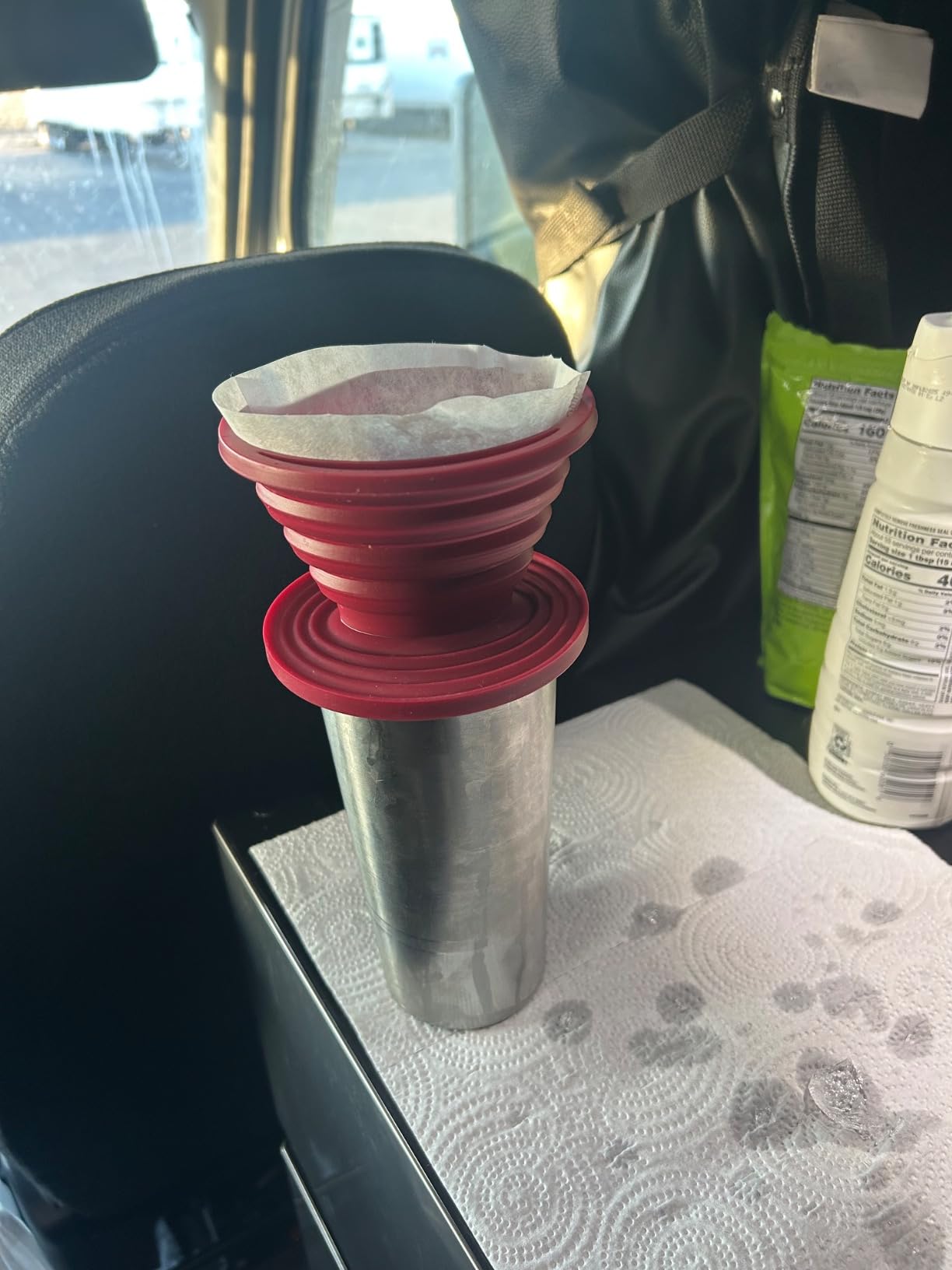
The Attsky dripper is the cheapest way to add real brewed coffee to a pack without adding a single gram of permanent weight in the kitchen bag. It is food-grade, BPA-free silicone that folds down to the thickness of a credit card, and the two-pack means you and a partner can both have a cone instead of sharing one.
It accepts standard cone filters, so a small stack of #2 or #4 papers from a kitchen drawer is the only consumable. Pouring works exactly as it does on a rigid cone: seat it on the mug, add grounds, and pour a slow spiral just off the boil.
At 464 degrees F heat resistance it handles a pour straight from a boiling pot without warping. That is a real advantage in cold weather, when the coffee really does need to be near boiling rather than merely warm.
Everything about this is a volume play. Because the dripper folds flat you can slide it into a side pocket or a stuff sack without rearranging the rest of the load, which matters more than the material on a week of narrow trail.
Flexibility is the cost. Silicone walls have far less rigidity than stainless steel, so an aggressive pour can make the cone wobble or collapse in on itself. A gentler pour and a stable mug solve it, but it takes two or three brews to find the rhythm.
It is a paper-filter brewer, so you are back to carrying filters. Compared with a mesh basket, the cup is cleaner and lighter in the mouth, and the filter stack is a flat, crushable consumable rather than a bulky one.
Who the Attsky dripper suits
It suits budget-conscious hikers and anyone building a first coffee kit without committing much weight. Two cones for the price of one premium steel model is a sensible way to cover a pair.
It also suits anyone who splits time between backpacking and travel. The same folded cone works in a hostel kitchen, a campsite or a hotel room, and it survives being sat on in a daypack in a way a folding steel tripod sometimes does not.
Where the Attsky dripper falls short
It falls short when you want body and richness in the cup. An unpressurised pour-through is a lighter drink, and a cone at altitude will taste thinner than the same coffee in an AeroPress.
It falls short on durability and precision. Flexible silicone eventually takes a set or tears at the fold, and there is no way to fine-tune extraction beyond dose and pour rate. For a decade of regular use, a steel cone holds up better.
9. Snow Peak Stainless Steel Pour Over – Best Collapsible Steel Dripper
Snow Peak Portable Coffee and Tea Essentials, Stainless Steel, Pour Over
Capacity: 140 ml
Listed weight: 0.12 kg
Listed size: 4 by 4 by 3.75 in
Model: CS-113
Pros
- Collapses completely flat
- Stainless steel will not tear or warp
- Works with #2 filters or mesh screens
- Brews more than a single cup
- Made in Japan with a lifetime guarantee
Cons
- 140 ml suits one or two mugs
- No stop on the unfolded legs
- Instructions printed in an Asian language only
- Steel carries a premium for the material
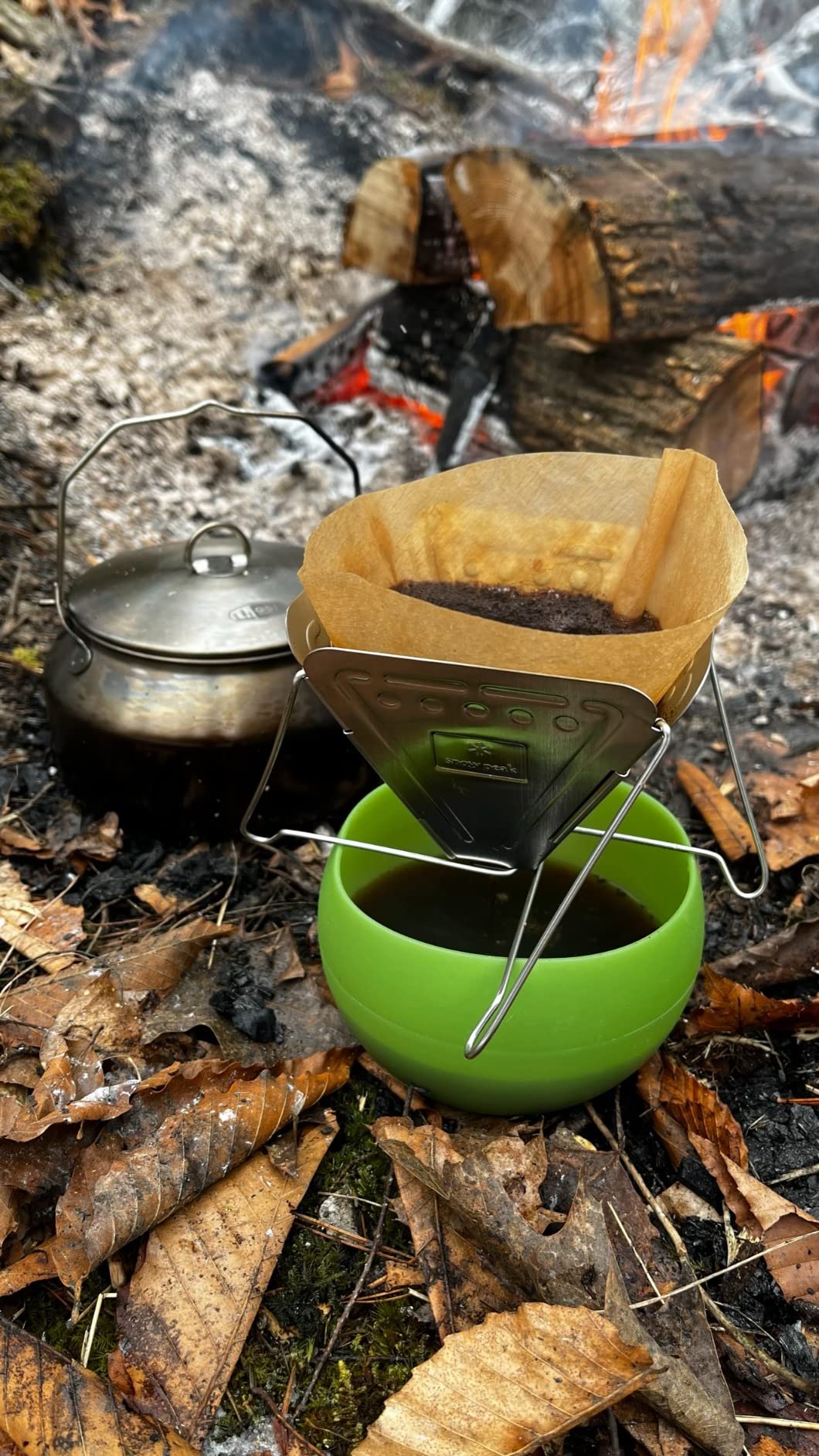
The Snow Peak pour over is the folding steel cone that has been on Japanese camp lists for decades, and it is still the most substantial-feeling collapsible dripper made. The legs unfold from a flat disc into a tripod, and the steel gives it enough weight to stay put while you pour without any wobble at all.
At a listed 140 ml it makes more than one cup, which is the practical difference from the ultralight cones. A pair can share a brew in the time it takes one person to fill a mug, and the dripper also fits larger vessels and French press bodies if you want to improvise.
It works with standard #2 filters and also with reusable mesh or stainless screens, so it can run as a filterless brewer if you prefer. Made in Japan and covered by Snow Peak’s lifetime product guarantee, it is the one on this list designed to be handed on.
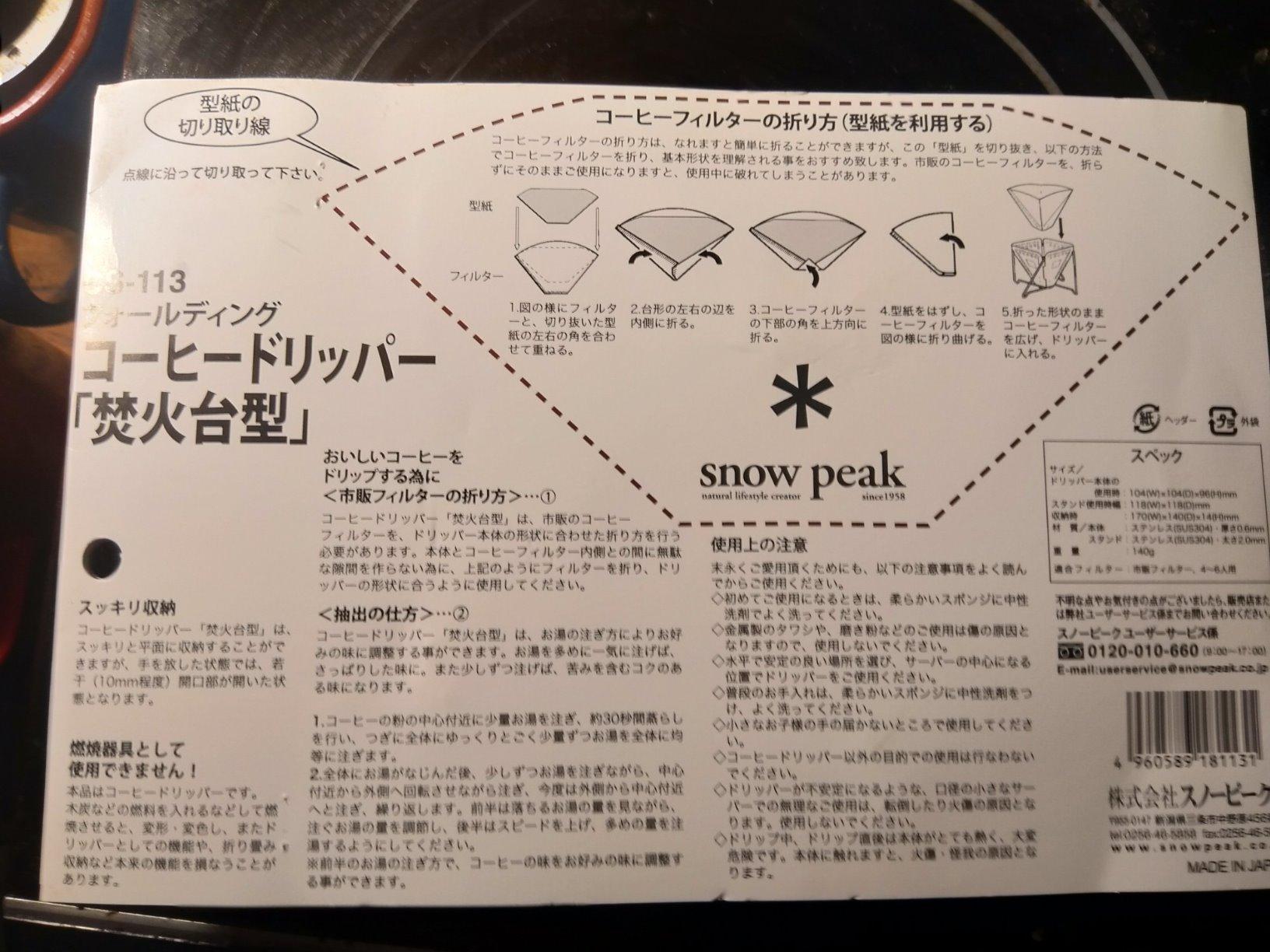
Listed weight is 0.12 kg and the body is stainless steel throughout, which is why it feels heavier in the hand than the silicone alternatives without being heavy in the pack. The listed dimensions are 4 by 4 by 3.75 inches folded for storage.
The unfolded legs have no stop or lock, so if you set the dripper down mid-brew it can sag and dump the brew. The habit to build is to hang the legs on the mug rim and keep one hand on the cone until the pour finishes.
Assembly instructions ship in an Asian language only, and a few buyers mention working out the folding sequence on their own. It is a two-minute job once you know it, but it is worth knowing in advance.
Who the Snow Peak dripper suits
It suits hikers who brew for two and want more body than a silicone cone can offer. It is a genuine upgrade path from the folding plastic drippers rather than a lateral move.
It also suits anyone buying once. Steel does not flex, tear or take a crease, and the lifetime guarantee means this is the last pour-over you will need to think about for a long time.
Where the Snow Peak dripper falls short
It falls short for a strict gram budget, where the SOTO Helix or the GSI cone will always be lighter and do the same job. Weight is the whole point of a collapsible dripper and steel gives some of it back.
It falls short for anyone who wants a one-pot solution. This is a dripper only, so you still need a heat source and a vessel to pour into. The Bestargot pot covers both jobs in one piece.
10. SOTO Helix Coffee Dripper – Best Foldable Stainless Steel Dripper
SOTO Compact Helix Coffee Maker – Portable Stainless Steel Pour Over Coffee Dripper for Travel, Camping, Bikepacking, and Home – Lightweight, Foldable, and Eco-Friendly Design
Listed weight: 48 g
Listed capacity: 7 oz
Model: OD-HLX
18-8 stainless steel
Pros
- Origami frame folds completely flat
- 48 g listed weight
- Genuine stainless steel construction
- Open design rinses clean in seconds
- Flat tripod base is stable on a mug
Cons
- 7 oz suits a single mug only
- Needs paper filters so not filterless
- Listings label it both press and pour-over
The SOTO Helix is a Japanese-made stainless steel cone that folds flat like an origami model and springs open into a tripod over your mug. At a listed 48 grams it is the heaviest of the pure drippers here, and the extra material is exactly what you feel when you use it: a stable base and a cone that does not flex as you pour.
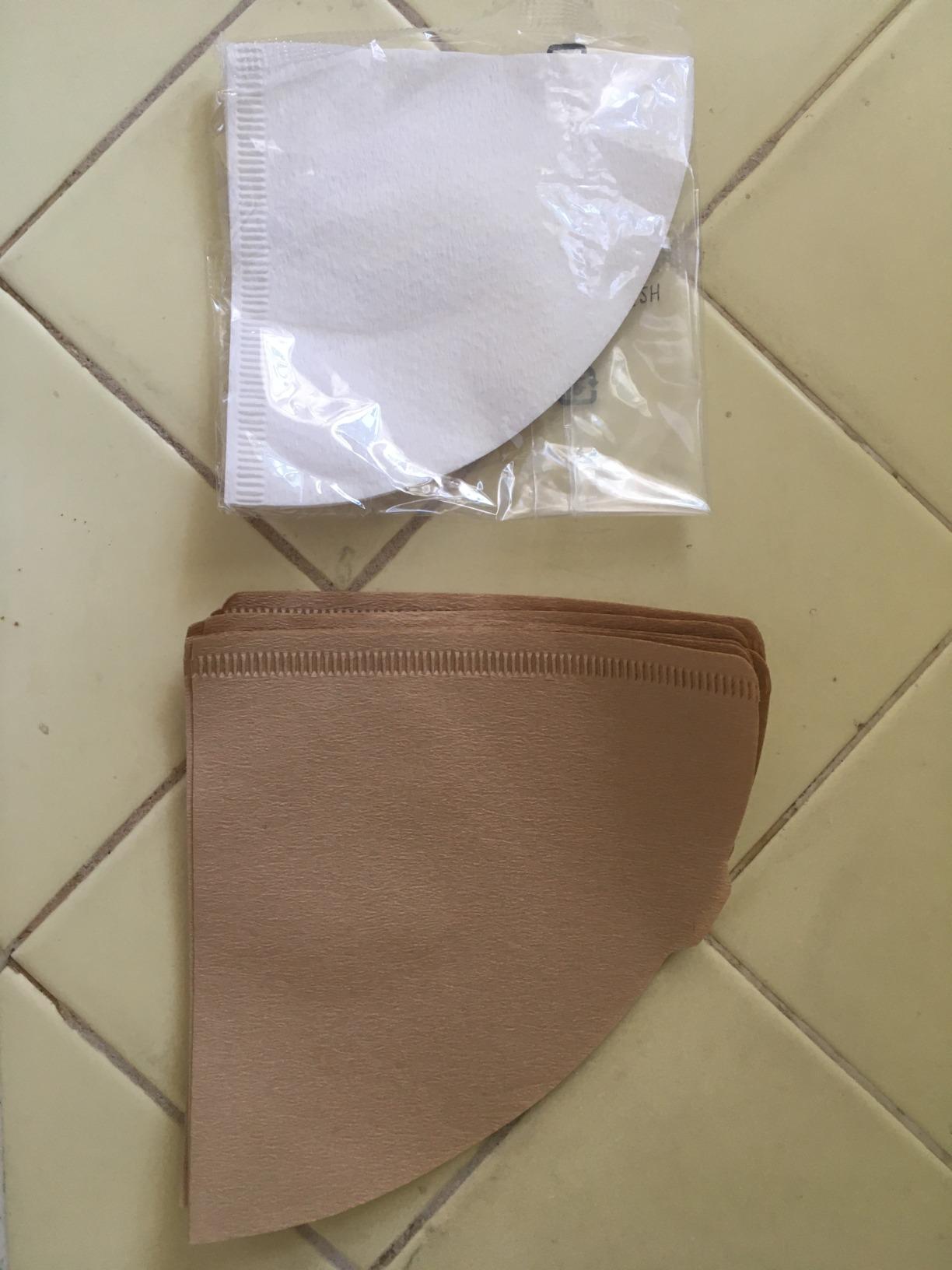
It takes standard coffee filters, so you can run paper for a clean cup or a reusable screen if you want to stop carrying papers. The open frame has no hidden corners, which means the whole thing rinses clean in seconds under a stream and can go straight into a dishwasher at home.
It is the one to consider if you want a steel cone that will last, but not the Snow Peak. The trade is weight against capacity: the Helix is a single mug, the Snow Peak makes a pot.
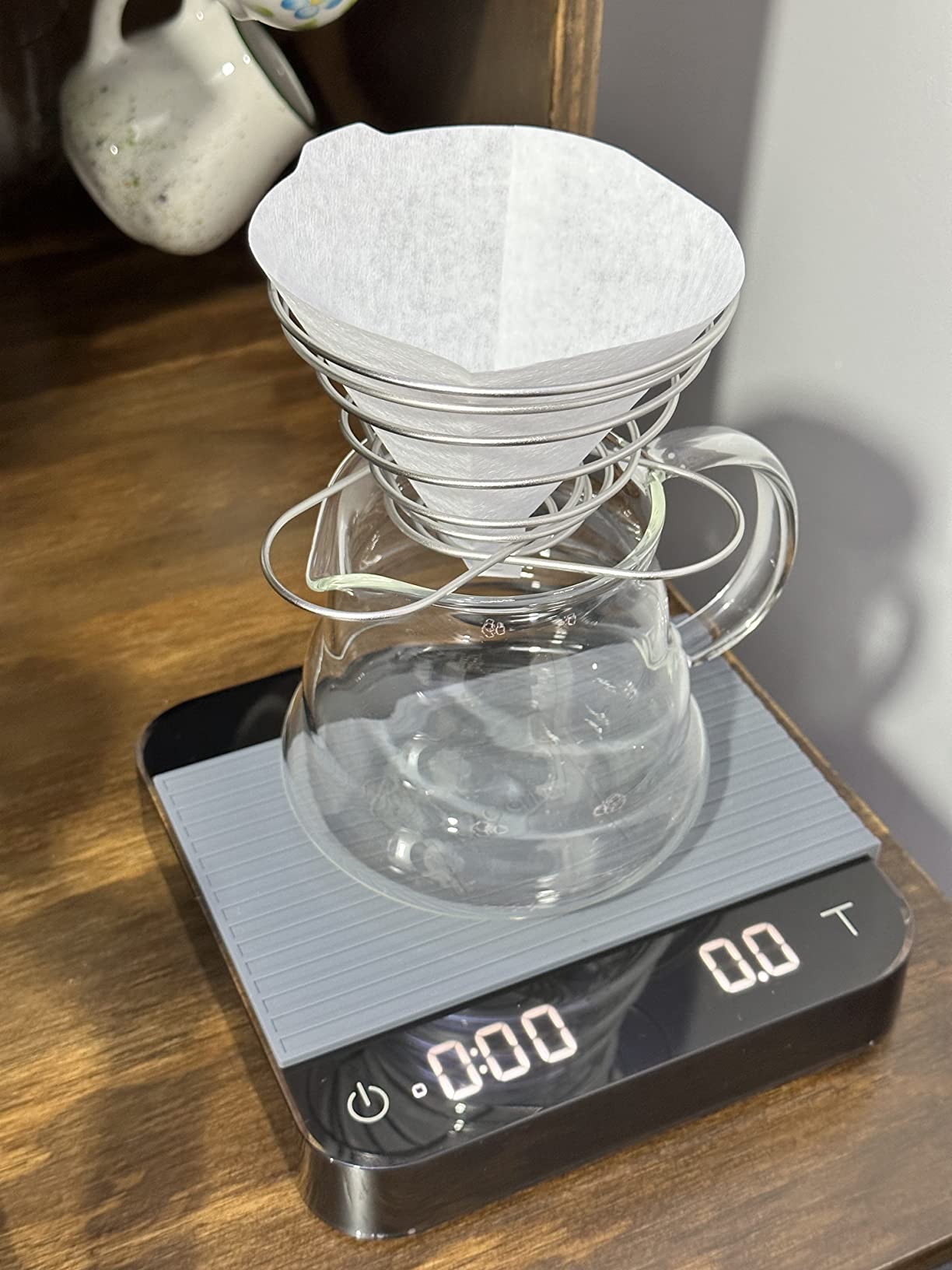
The construction is 18-8 stainless steel, and the listed weight is 48 g. Dimensions are not published for this model, but the flat tripod base is what gives it its footing, and it sits on ordinary mug rims without an adapter.
Capacity is listed at 7 ounces, which is a single mug. That is the whole drawback: for a couple you run the brew twice, and the second round takes a second boil unless you are brewing in a pot.
One small annoyance turns up in the listings themselves. Some catalogues file the Helix as both a French press and a pour-over, so check the photos rather than the category when you are ordering. It is a pour-over cone and it does not plunge.
Who the SOTO Helix suits
It suits hikers who want a durable, no-plastic brewer that rinses clean in a second and does not develop a coffee smell over the years. Stainless steel is the easiest material on this list to keep neutral.
It also suits anyone who wants a steel cone at the lower end of the weight range. It costs you more grams than the nylon or silicone cones and gives back rigidity and a flat-packing profile that will not crease.
Where the SOTO Helix falls short
It falls short for two people, since 7 ounces is one serving and there is no way around the second boil. Choose a press, a pot or a two-cup collapsible cone instead.
It falls short if you want zero consumables. It needs paper filters for the cleanest cup, so a zero-waste routine means adding a separate mesh screen to the kit.
11. Sea to Summit Frontier UL Collapsible Pour Over – Best Filterless Collapsible Brewer
Sea to Summit Frontier UL Collapsible Pour Over Camping Coffee Brewer
Listed weight: 2.08 oz
Listed grounds capacity: 1 oz
Model: A1227
Stainless steel mesh
Pros
- Filterless stainless mesh
- No paper to carry
- Collapses flat for packing
- Mesh sides resist clogging
- Fits most mug and bottle rims
Cons
- Holds only about 30 g of grounds
- Slows noticeably with fine grinds
- Sticky oils are tedious to wash out
- Mesh insert can slip in the frame
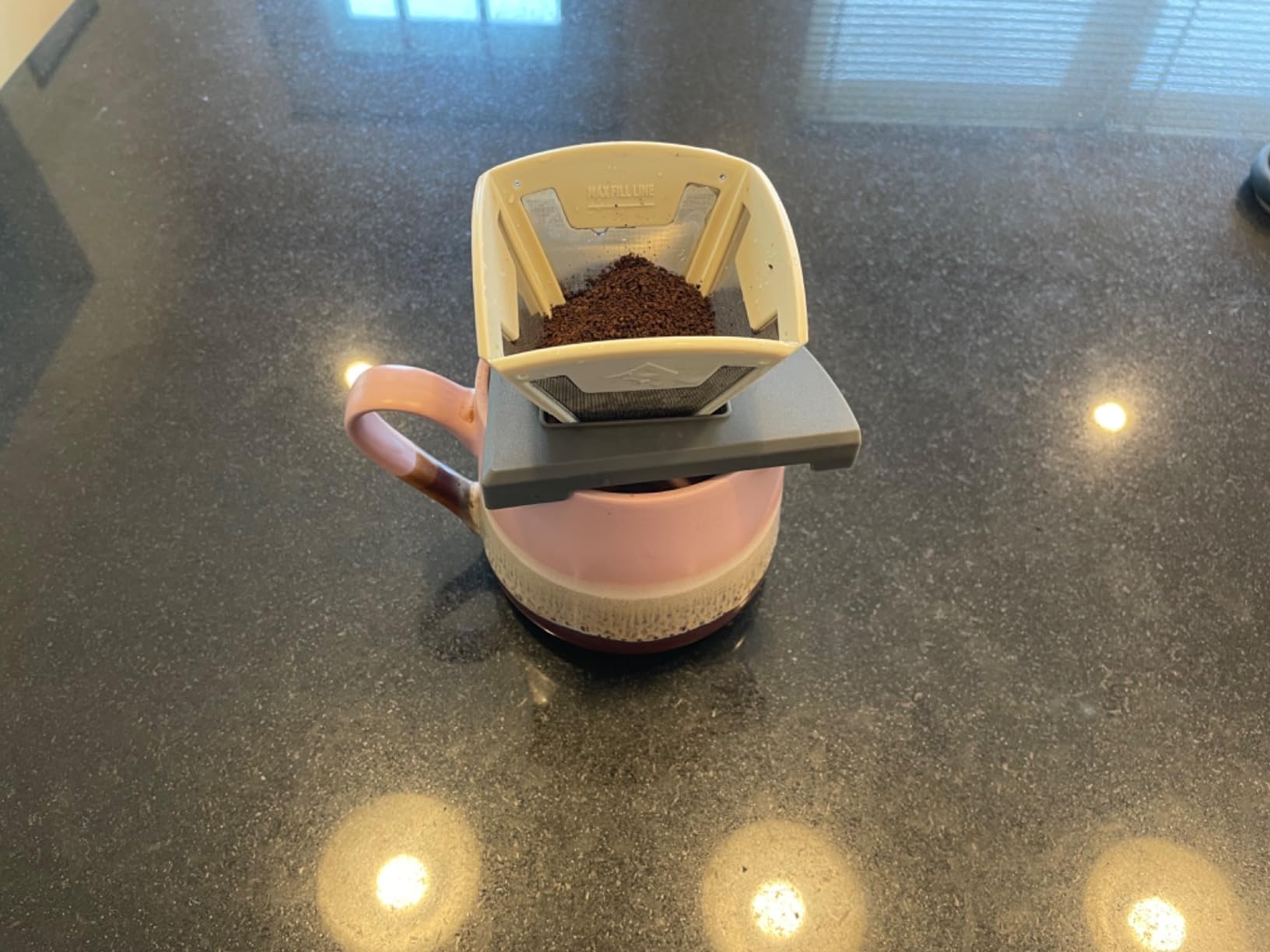
The Frontier UL is the newest brewer in this group, and it takes the filterless idea further than the earlier silicone cones. Instead of a plastic mesh bag, it uses a super-fine stainless steel mesh set in a collapsible silicone frame, and the mesh is filtered on the side walls as well as the base so the flow area is large enough to resist clogging.
That wider flow area is the reason it works with ordinary grounds where many mesh pour-overs stall. Pour slowly and it drains evenly, and because there is no paper, the only consumable you carry for the whole trip is coffee.
At a listed 2.08 ounces it is light and flat-packing, and the base fits most mug rims and wide-mouth bottles. It is also covered by Sea to Summit’s lifetime guarantee, which is meaningful on a part with a mesh insert that can work loose.
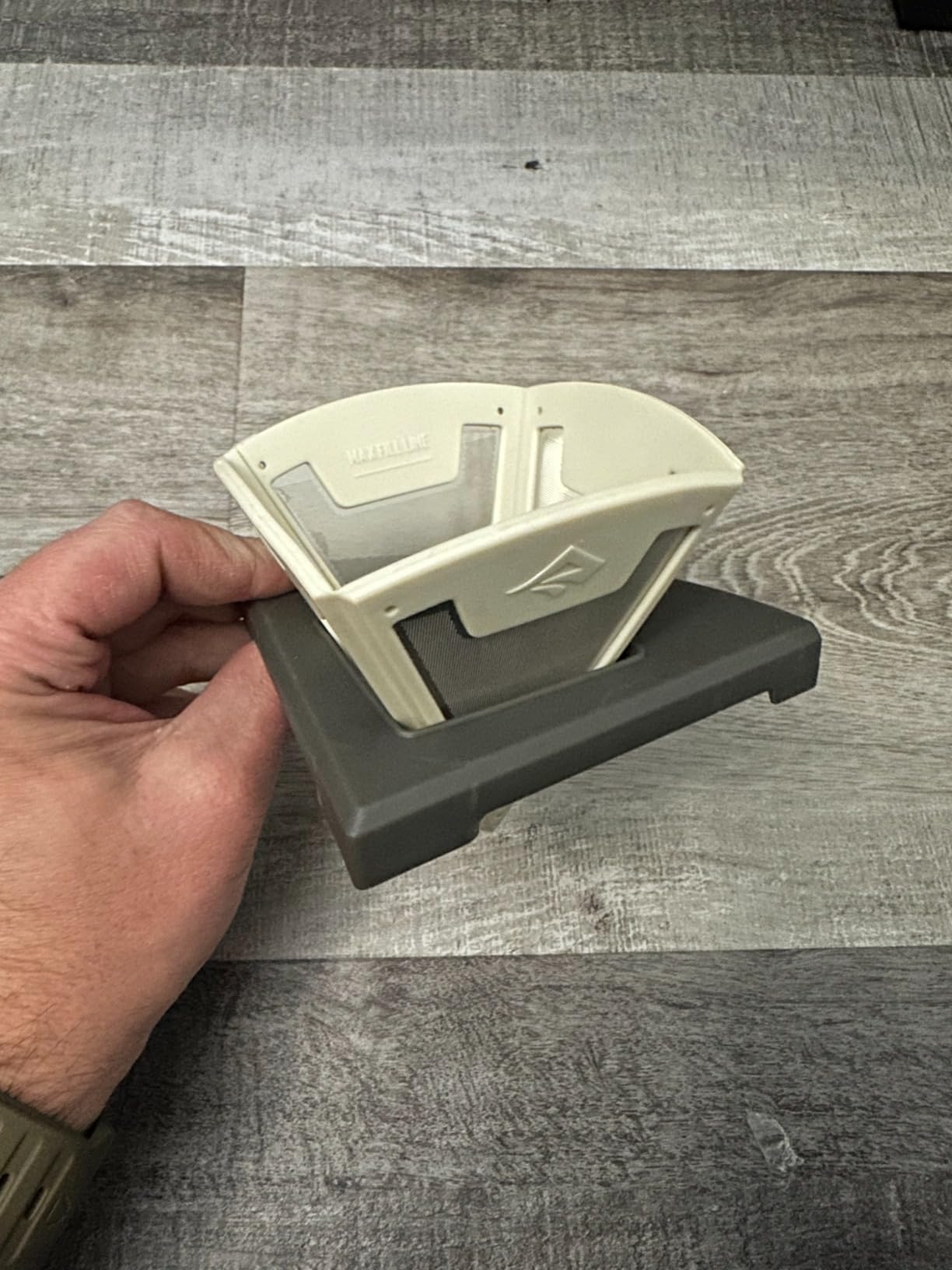
The filter unit holds about 30 g of ground coffee, so it is a one-serving brewer by design. The listed capacity figure of 1 ounce refers to the grounds, and the body is BPA-free food-grade silicone with a stainless steel mesh core.
Flow rate is the practical limit. Fine grinds slow the mesh down noticeably and produce a thinner cup, so this rewards a medium grind rather than the fine setting a paper cone would want. If you grind for an AeroPress, grind a notch coarser for this one.
Cleaning is the honest drawback of going filterless. Coffee oils are sticky and they lodge in mesh, and while a quick rinse handles the morning brew, a real wash needs to happen at home. The mesh insert can also shift in the silicone frame and need pressing back into place.
Who the Frontier UL suits
It suits zero-waste hikers who want a collapsible filterless cone rather than a rigid one. Folding flat and weighing 2.08 ounces makes it easy to add to a pack that already has a press you only sometimes use.
It also suits anyone tired of carrying a stack of paper filters for a week of mornings. One mesh basket and a bag of grounds is the entire consumable load.
Where the Frontier UL falls short
It falls short on review volume, with 111 reviews behind a 4.5 star average. That is a thin base of field reports compared with the options above, and we would test it on a longer trip before committing a season to it.
It falls short on cup body and on cleanliness over time. Without pressure the brew is light, and the sticky-oil maintenance is a running task that a paper filter simply removes from the trip entirely.
How to Choose a Camping Coffee Maker for Backpacking
Every brewer here does one thing well, and the wrong choice usually shows up as a brewer you stop using by day three. Weight, capacity and cleanup decide that far more often than taste does, so work through those before you compare bodies.
Set a weight budget before you shop
Under half an ounce puts you in the collapsible cone category, led by the GSI Ultralight JavaDrip at a listed 9.07 g. Between one and two ounces covers the folding steel and filterless cones, including the SOTO Helix and the Sea to Summit Frontier UL. Above six ounces you are looking at presses and pots.
Then add what the brewer does not include. Ground coffee for four days, a mug, filters and a small pot can outweigh the brewer several times over. Our coffee grinder recommendations matter here, because grinding at camp with a hand grinder is what keeps pre-ground coffee from going flat in a humid pack.
Match the brewer to the number of people
One hiker, any option on this list works. Two people need a larger vessel, and that rules out the AeroPress Go at 8 ounces, the SOTO Helix at 7 ounces and the Minipresso GR at roughly 50 ml a shot.
For three or more, a pot is the right shape. The Bestargot titanium pot handles cooking and coffee in one piece, and if you are car camping or in an RV, weight stops being the constraint and capacity, cleanup and storage become the whole decision.
Brew method explained
Pour-over cones give a clean, light cup with the least pressure and the simplest technique. Immersion presses such as the AeroPress Original and Go give more body and more control, at the cost of a paper filter and some arm effort.
Hand espresso machines produce a small, dense shot with crema and demand the most attention and the most cleaning. Stovetop and multi-use pots are the answer when you are already cooking real meals. Capsule systems were popular with forum users for their espresso results, but we left them out because every brew adds a discarded foil pod to your pack-out.
Percolators came up in our research as a common question and they are a poor camp choice. They are heavy, they need a long heat cycle and they hold onto old coffee oils in the tubing, which is why none appear on this list.
Cleanup without a sink
The number one complaint from the hikers we read is cleanup, and the pattern is consistent. Presses push the spent puck out into a trash bag. Cones tip the grounds out. Hand espresso machines require several parts to be removed and rinsed separately.
Whatever you choose, adopt the same routine: brew, press or tip the puck straight into your rubbish bag, rinse with cold water, and leave the deep clean for home. If you want cold-brew coffee instead as a no-boil option for desert camps, our cold brew guide covers the method that needs no stove at all.
Frequently Asked Questions
What is the best portable coffee machine for camping?
The AeroPress Original is the best portable coffee machine for backpacking most hikers. It weighs 6.4 ounces, brews a 10 ounce cup in under two minutes with no electricity, and cleans in under a minute with cold water alone. If you would rather carry one sealed object, the AeroPress Go packages the brewer inside a travel mug at 318 g.
What is the best way to make coffee while backpacking?
Start with a pot, boil water, and pick a brewer that matches your group size. Add roughly two tablespoons of medium-fine grounds per cup, pour water just off the boil, and for an immersion press stir once and wait about ninety seconds before plunging. For a pour-over cone, pour in a slow spiral and drain the grounds for a lighter cup. Press the spent puck or tip the filter straight into your trash bag, then rinse with cold water.
What is the best travel coffee maker for camping?
For travel where everything must fit in a daypack, the AeroPress Go is the best travel coffee maker because the brewer nests inside its own mug and the whole kit becomes one sealed cylinder. For a trip where you want less volume and the lightest possible option, the GSI Ultralight JavaDrip folds flat to half an inch at a listed 9.07 g and clips onto a mug or wide-mouth bottle.
What is the best coffee maker for RV camping?
In an RV or motorhome, pack weight stops mattering and capacity, storage and cleanup take over. A titanium pot that brews, boils and steams, such as the Bestargot 750 ml pot, replaces two pieces of cookware. A 1 liter French press such as the Jetboil Silicone Coffee Press makes enough for several people from one boil. Both survive far more use per trip than any backpacking-only option.
Is a moka pot good for camping?
A moka pot works well on a camp stove because it uses the burner you already carry, and it makes a full pot in one pass. The trade-offs are heat: the burner must stay on until the pot finishes, the metal gets dangerously hot, and leaving coffee on the flame scorches it. A coffee press avoids all of that, which is why presses dominate this roundup for pack weight and cleanup.
Which Camping Coffee Maker Should You Pack in 2026?
The best camping coffee makers for backpacking come down to how you travel. Take the AeroPress Original as the default answer: three brew methods, a 10 ounce cup, a body that survives being dropped, and the shortest cleanup of anything here. Take the AeroPress Go instead if you want the brewer and the cup to be one object in your pack.
If you brew for two or camp in a vehicle, the choice changes. The Jetboil Silicone Coffee Press covers 1 liter from one boil if you own the stove, and the Bestargot titanium pot covers coffee, soup and boiled water in a single vessel. If weight is the whole game, the GSI Ultralight JavaDrip at 9.07 g does the job and costs almost nothing to carry.
Whatever you choose, test the whole system on a shakedown trip before a long one. Learn the pour, check that your mug fits, and work out where the grounds and the filters go. A coffee setup that gets abandoned on day three is eight grams lighter and a lot more disappointing.