
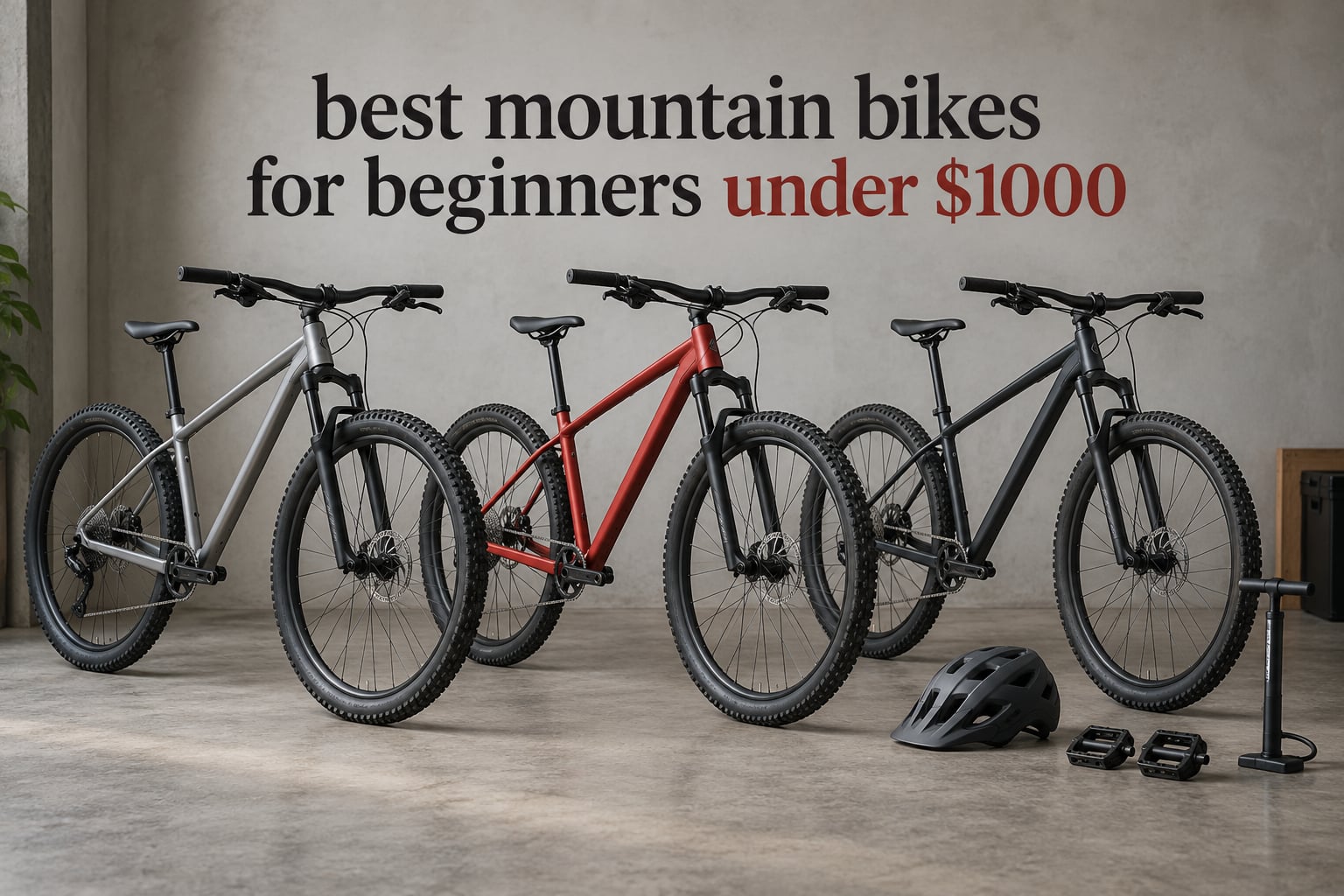
The short answer for anyone hunting the best mountain bikes for beginners under 1000 dollars: buy a hardtail with a front suspension fork, a derailleur drivetrain with 21 speeds or more and real disc brakes. Our top pick is the Schwinn High Timber, the Gravity FSX 1.0 is the value pick for dual suspension, and the Tommaso Gran Sasso wins on braking hardware alone.
That advice runs against most of what you will see in the search results. Those lists lean hard on full-suspension bikes and 3x drivetrains, and the fastest-selling listings at this price are department-store machines built around steel frames, twist shifters and 26-inch wheels. The bikes in this guide are all within the sub-1000 bracket, and I picked them on the parts that actually change how a bike rides.
Every bike here shares a few basics. They all have suspension at the front, disc brakes or V-brakes of some kind, a derailleur drivetrain and a published height range. What separates them is frame material, wheel size, gear count, brake type, fork feel and how much of the work lands on you after delivery. That last point matters more than most shoppers expect, and I cover it in detail further down.
This guide was refreshed for 2026, and the model range changes every year. I read the spec sheets, the owner review patterns and the warranty terms for all ten bikes, then filtered out anything whose hardware is genuinely obsolete. If you want the wider picture of what to buy when you have more to spend, our guide to the best mountain bikes for trail riding covers the mid-range market, and the best dirt bikes for beginners guide covers motorbikes if that is the direction you are heading.
Table of Contents
Top 3 mountain bike picks for beginners right now in 2026
Three bikes stand out from the field, and each one wins for a different reason. One is the most proven, one is the most capable per unit of spend, and one has the hardware that matters most for new riders who will ride wet trails.

Schwinn High Timber
- Aluminum frame with 26 inch wheels
- 21 speed twist shifter drivetrain
- Front suspension fork
- Wide knobby tires on alloy wheels
Gravity FSX 1.0
- Dual suspension with adjustable shocks
- 24-speed drivetrain
- Front and rear disc brakes
- Four frame sizes

Tommaso Gran Sasso
- Shimano M315 hydraulic disc brakes
- 24-speed Shimano drivetrain
- Suntour fork with 100mm travel
- Lifetime frame warranty
Best Mountain Bikes for Beginners under $1000 October 2026)
This is the short version of the whole guide. Read the table, then jump to the review for whichever bike fits your height and terrain. The final column tells you the one thing each bike is genuinely best at.
| Product | Specifications | Action |
|---|---|---|
| Schwinn High Timber |
|
Check Latest Price |
 WEIZE Dual Suspension MTB WEIZE Dual Suspension MTB |
|
Check Latest Price |
 Schwinn Traxion Schwinn Traxion |
|
Check Latest Price |
 Mongoose Flatrock Mongoose Flatrock |
|
Check Latest Price |
| Gravity FSX 1.0 |
|
Check Latest Price |
 Ktaxon Mountain Bike Ktaxon Mountain Bike |
|
Check Latest Price |
 WEIZE Hardtail 29 WEIZE Hardtail 29 |
|
Check Latest Price |
 HILAND Mountain Bike HILAND Mountain Bike |
|
Check Latest Price |
| Tommaso Gran Sasso |
|
Check Latest Price |
 EUROBIKE 29 Aluminum MTB EUROBIKE 29 Aluminum MTB |
|
Check Latest Price |
1. Schwinn High Timber – the most proven beginner hardtail
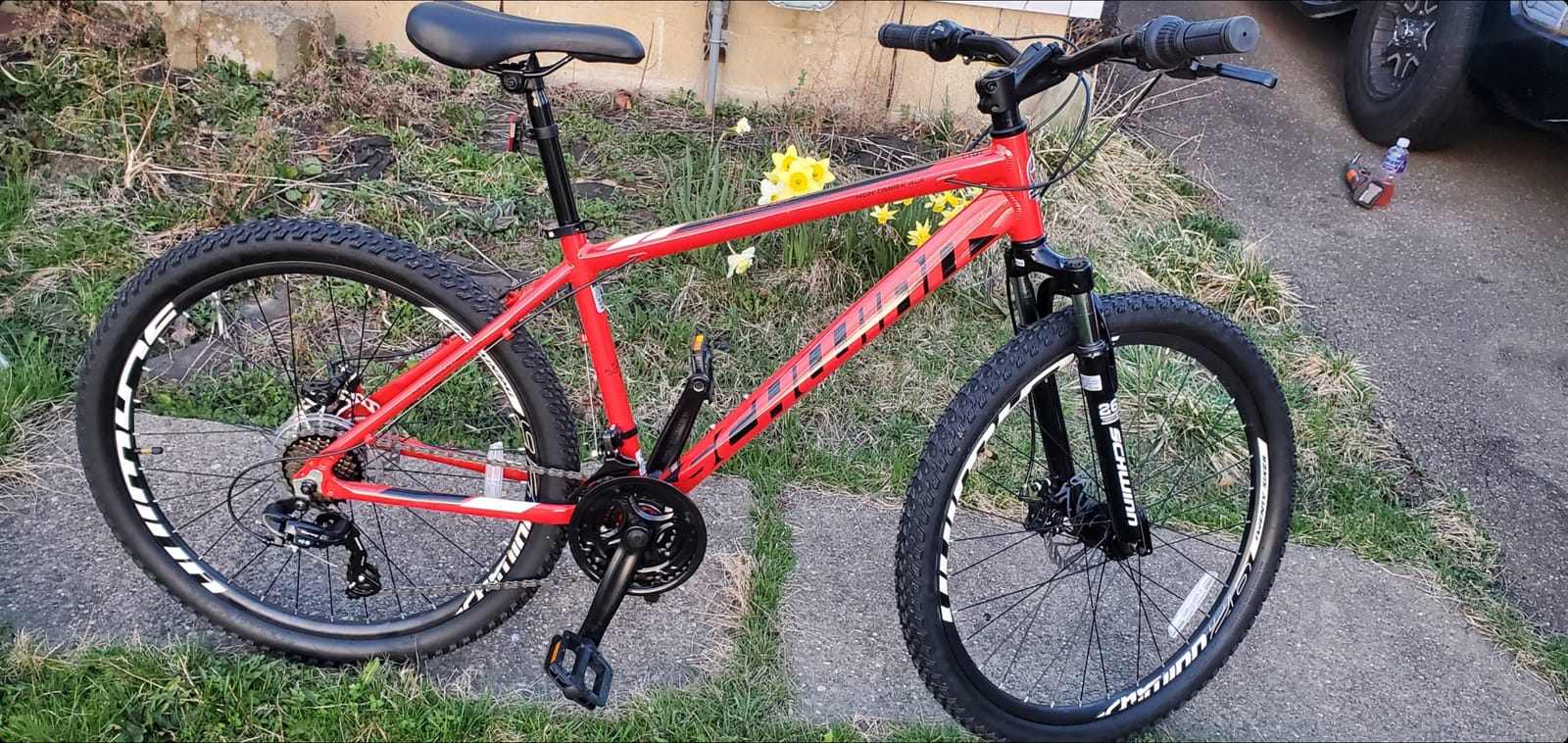
Schwinn High Timber ALX Mountain Bike for Adult Men Women, 26-Inch Wheels, 21-Speeds, Front Suspension, Aluminum Frame, Mechanical Disc Brakes, Red
Frame: aluminum
Wheels: 26 inch
Gears: 21 speed twist
Suspension: front fork
Brakes: disc
Pros
- Aluminum frame keeps weight low for a first bike
- Knobby tires give grip on loose ground
- Simple twist shifters are easy to learn
- Quick-release seat post makes height changes instant
- Rated beginner skill level
Cons
- Arrives 80% assembled so tools are needed
- Twist shifters are imprecise on steep climbs
The High Timber is the bike I keep coming back to for a first purchase, and the reason is volume. With well over 1500 recorded reviews it is the most thoroughly reported bike in this guide, which means the good and the bad are both well documented rather than anecdotal.
Owner feedback repeats the same three things: the aluminum frame is lighter than the steel bikes at this level, the wide knobby tires feel stable on loose ground, and the derailleur drivetrain with twist shifters needs almost no maintenance. Sixty-one percent of reviewers gave it five stars. The listed minimum rider height is 64 inches, and the frame is offered in several sizes up to 29-inch wheels.
The honest criticism is the shifters. Twist grips are simple to operate but far less precise than trigger shifters, and on a steep climb you will feel the difference while pedalling hard. If your local riding involves real gradients, the Ktaxon or the Tommaso give you finer gear control.
Assembly is the other real caveat. The bike arrives about 80% built, so you need basic tools and about half an hour to finish it, or a local shop will do it. That is normal for this category, but it is not free, so budget for it before you order.
What height and terrain does the High Timber suit?
Because the frame is offered from 26 up to 29 inch wheels, you can find a match for most adult heights, with 64 inches listed as the floor. Standover height on the smaller frame is comfortable for a first bike, and the quick-release seat post lets you fine-tune saddle height in seconds rather than minutes.
It suits greenways, towpaths, fire roads, park paths and easy woodland singletrack. It will not take you down black-rated trails or long descents, and the 26-inch wheels feel slower on loose ground than the 29-inch options here.
When should you skip the High Timber?
Skip it if you ride in wet conditions often and want predictable braking, because the brake spec here is a generic disc setup rather than named hydraulics. If you are a confident rider who values climbing efficiency, 21 twist-shifted speeds will feel vague compared with a 24-speed trigger setup.
Skip it too if you want a dropper post or tubeless tyres out of the box, since neither is part of the package. Everything else about it is honest, well reviewed and easy to live with.
2. WEIZE Dual Suspension MTB – budget full suspension with a coil shock
WEIZE Mountain Bike 24 26 27.5 inch MTB Bicycle for Men Women Adult Cycling (White, 26 inch)
Frame: high carbon steel
Wheels: 26 inch
Gears: 18 speed twist
Suspension: front and rear
Brakes: linear pull
Pros
- Rear coil shock smooths bumps on rough ground
- 18-speed range covers climbs and descents
- Tools included and assembly takes about 20 minutes
- Alloy wheels with 26 inch all-terrain tires
- Fits riders from 62 inches tall
Cons
- Steel frame is heavier than aluminum designs
- Linear pull brakes are weaker than discs on steep ground
This is the bike to look at if your heart is set on full suspension. The front fork is joined by a rear coil shock, and for a first bike that means the back end absorbs chatter rather than passing every root straight into your seat.
With more than 1150 reviews and a 4.0 average, the pattern is consistent. Buyers credit the dual suspension, the 18-speed front-and-rear derailleur range and the roughly 20-minute assembly job with the included tools. Sixty-one percent rated it five stars, and it sits at number one in the mountain bike category on Amazon.
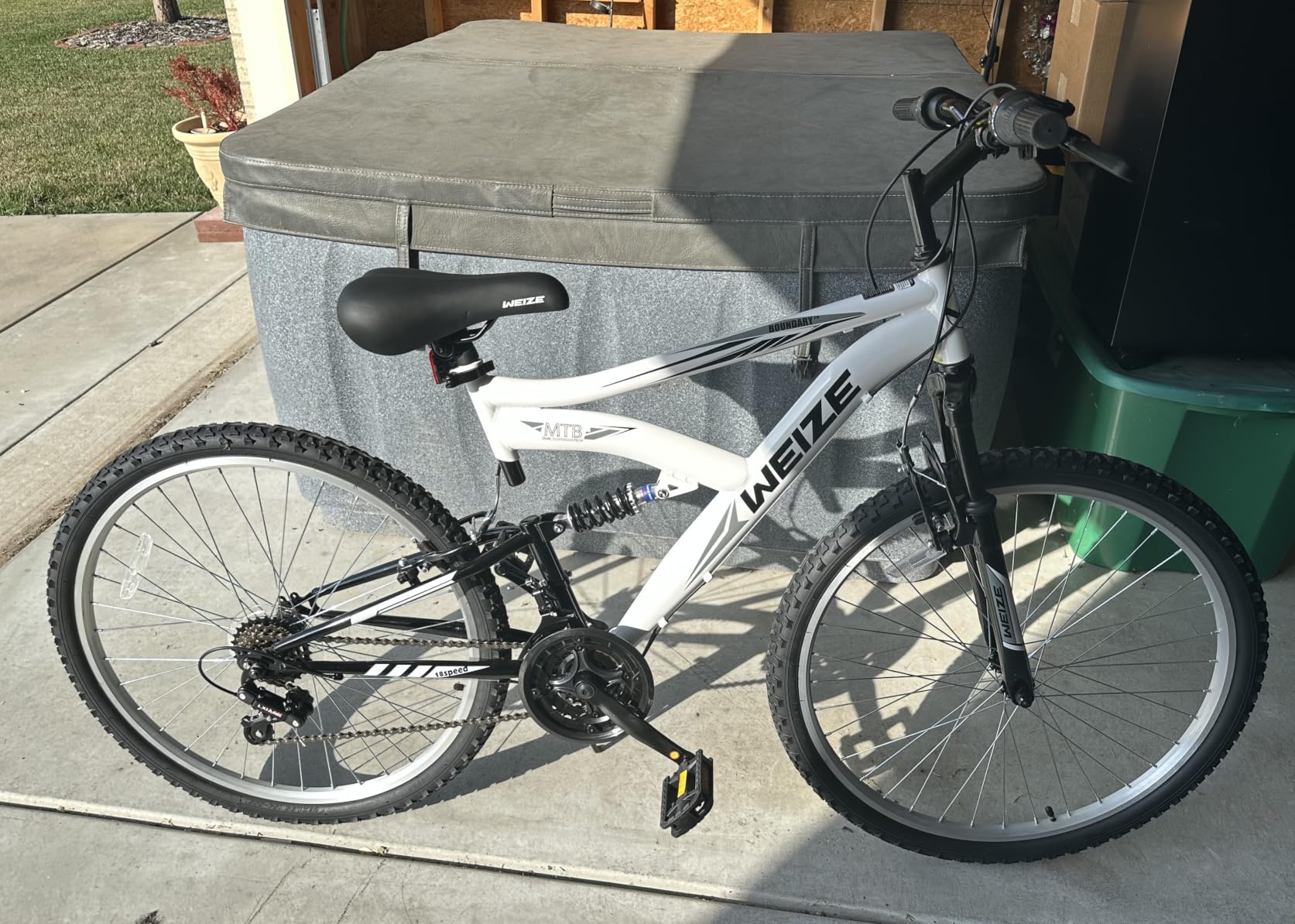
What you give up is weight and braking. The high carbon steel frame is heavier than the aluminum builds in this guide, and the linear pull brakes need more lever effort than a disc setup when you are pointing downhill in the wet. The minimum listed rider height is 62 inches.
Riders aged 13 and up are within the stated range, so it also works as a youth bike in a pinch. Just set expectations honestly: this is suspension for comfort on gravel and fire roads, not for absorbing a rocky descent at speed.
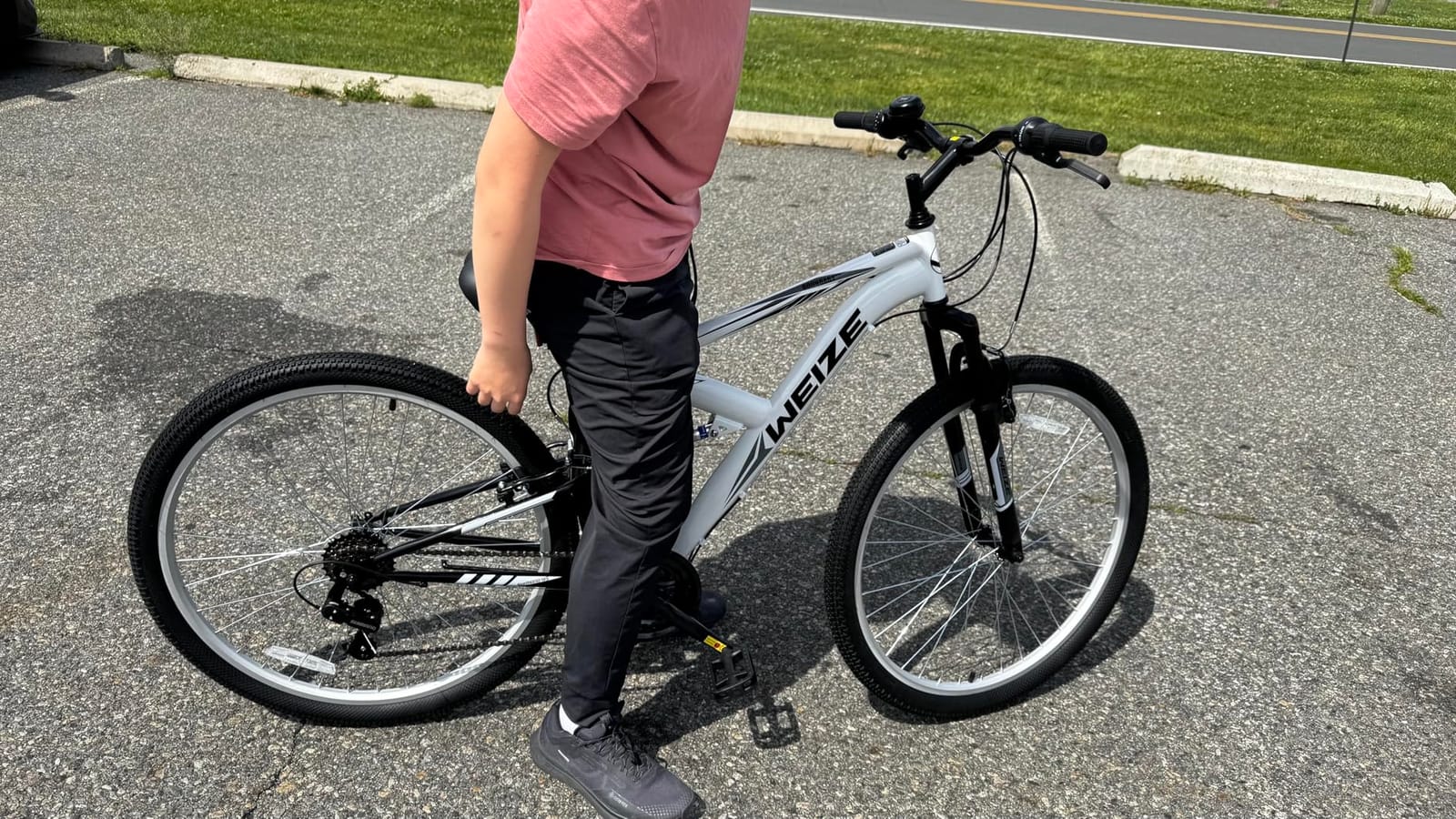
Who is the WEIZE dual suspension bike for?
It fits a rider who mostly cruises but hits the occasional rooty track and does not want the shock in their wrists and lower back. The rear coil takes the edge off chatter, and the 26-inch tires with alloy wheels roll predictably on loose ground.
It also suits anyone on a tight budget who wants the full-suspension experience before deciding whether it is worth it. If you try it and find you do not use the rear travel, the same money goes much further on a hardtail.
Where the WEIZE falls short
The weight is the deal breaker for anyone carrying this bike up a flight of stairs or onto a rack regularly. Steel frames are noticeably heavier than the aluminum options, and you feel that difference when the trail turns upward.
Braking is the second limit. Linear pull brakes are simple to adjust and cheap to service, but they trail and they weaken in rain, which is exactly when a new rider most wants confidence.
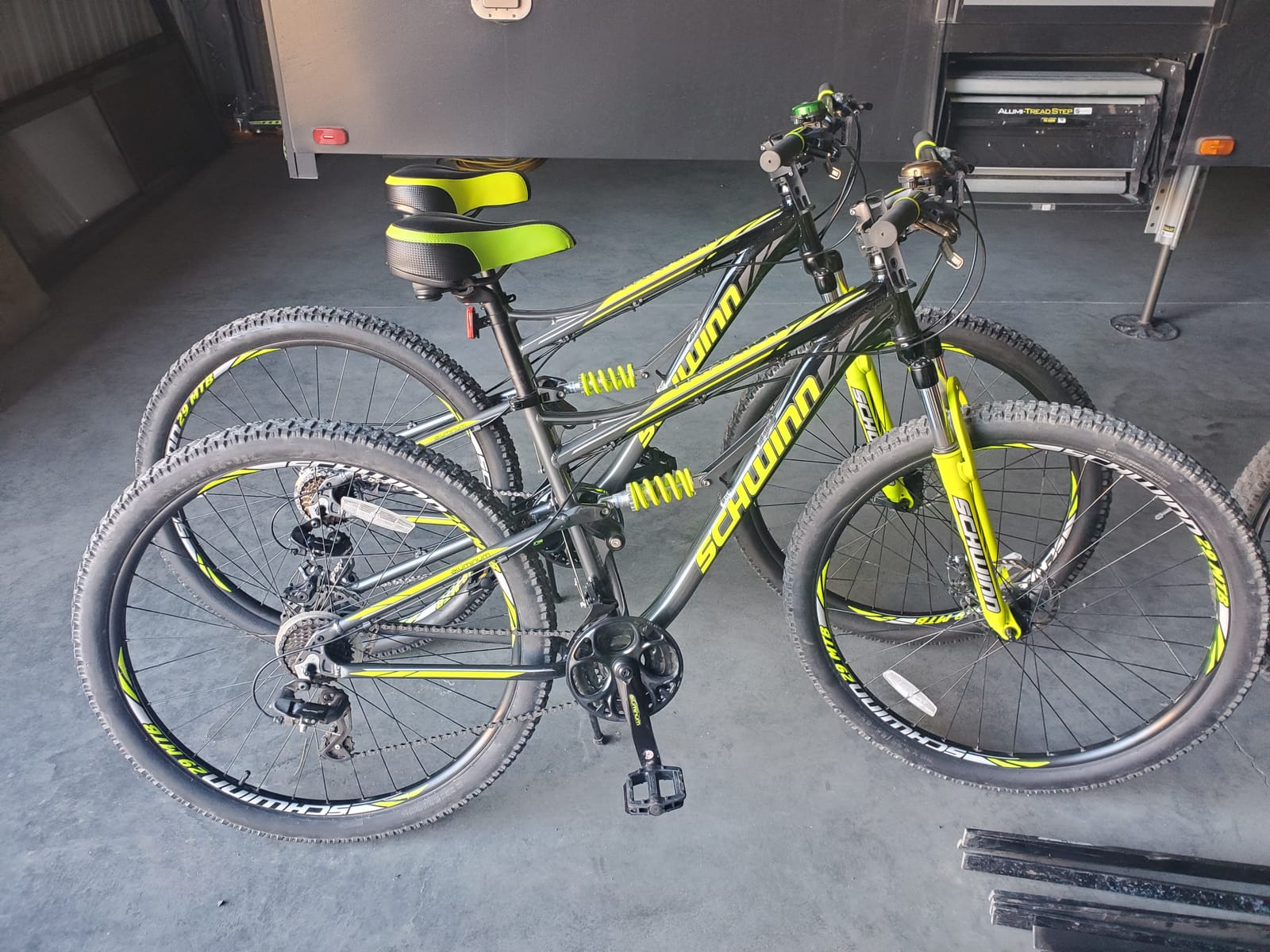
3. Schwinn Traxion – full suspension on 29-inch wheels
Schwinn Traxion Mountain Bike for Adult Men Women, 29-Inch Wheels, Full Suspension, 24-Speed Shimano Drivetrain, Trigger Shifter, 18-Inch Aluminum Frame, Mechanical Disc Brake, Matte Grey/Neon Green
Frame: aluminum
Wheels: 29 inch
Gears: 24 speed Shimano
Suspension: front and rear
Brakes: mechanical disc
Pros
- Dual suspension smooths rough trail surfaces
- 24-speed Shimano drivetrain climbs well
- Mechanical disc brakes stop consistently in any condition
- Double wall alloy rims with 2.25 inch knobby tires
Cons
- Shocks have no damping or rebound control
- Stock vinyl saddle is uncomfortable
The Traxion runs 29-inch rims with 2.25-inch knobby tires on extra-wide double wall alloy. Bigger wheels roll over roots and ruts with less effort, which is exactly what a new rider notices on a trail that is not perfectly smooth.
It also carries a 24-speed Shimano drivetrain with trigger shifters, and that is a real step up from the twist-grip bikes. Owners rate it 4.4 out of 5 across 524 reviews, with 67 percent at five stars, and several report putting thousands of miles on it with no component failures. The warranty is limited lifetime, and the maximum listed rider weight is 300 pounds.
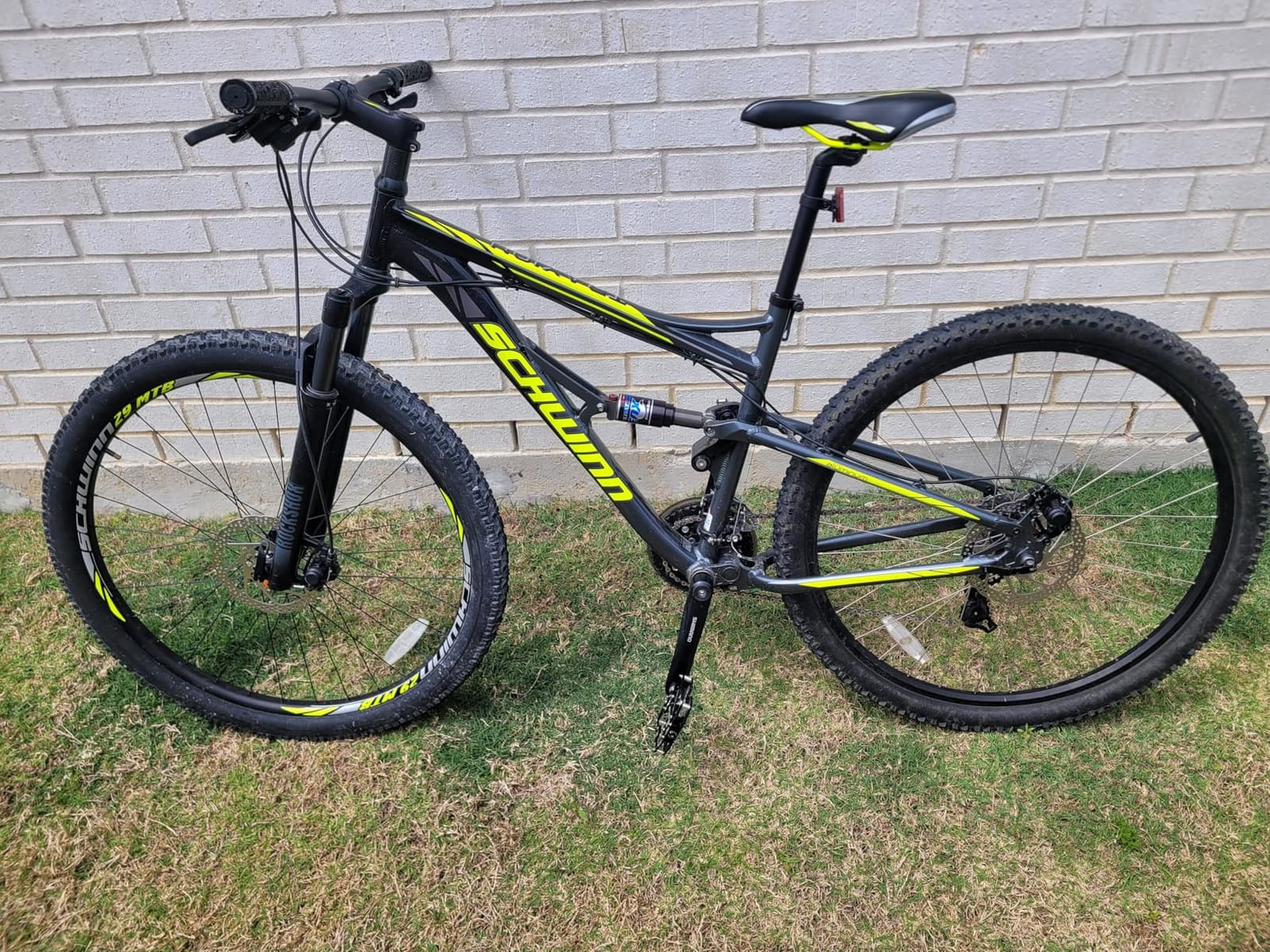
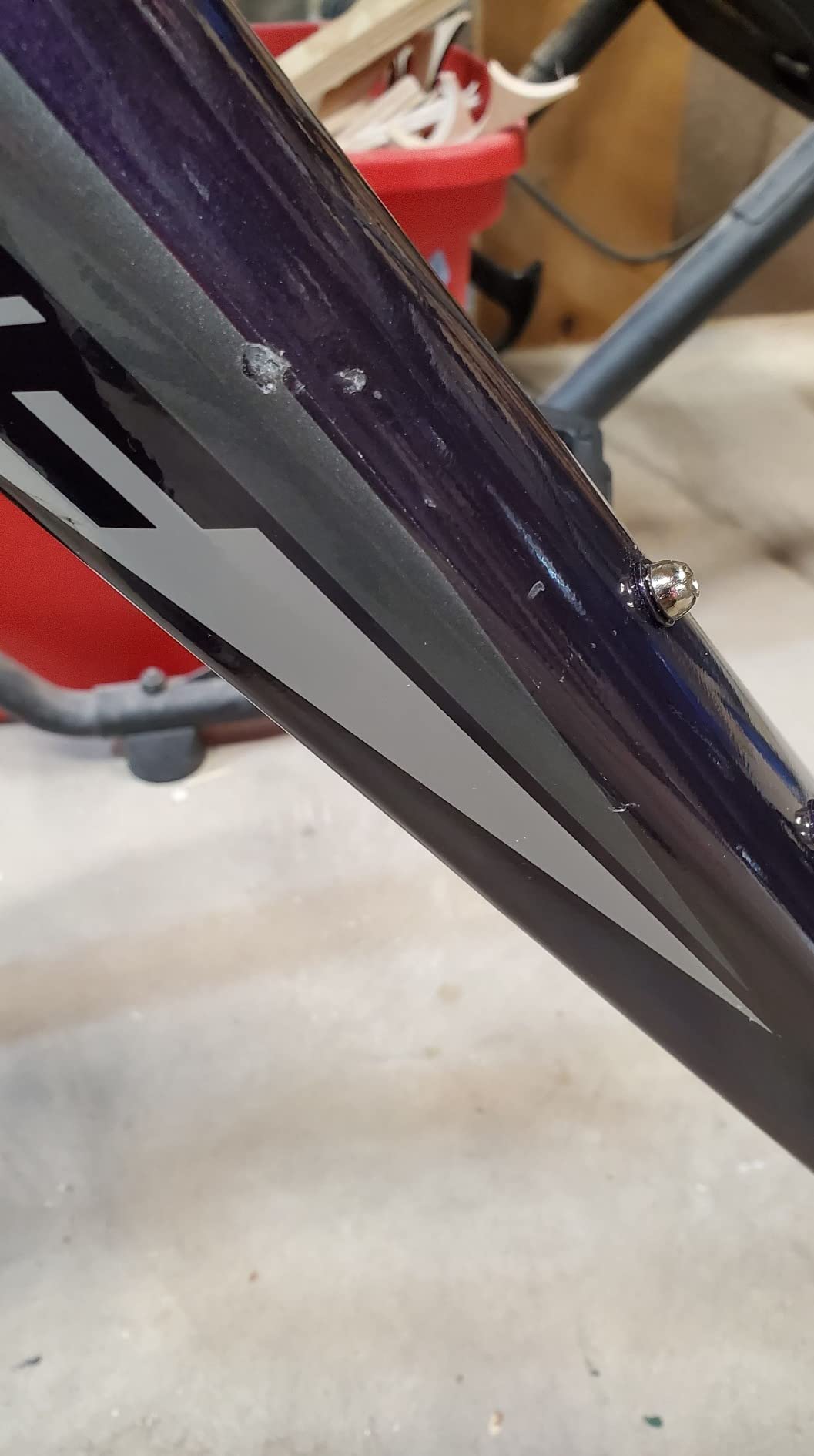
There is one spec problem worth flagging. The front and rear shocks have no damping or rebound control, which means they move when you hit something but they do not settle the way a properly damped shock does. Some riders also report a crank or derailleur that needed replacing early, and the vinyl saddle is the first thing most owners replace.
Assembly also needs finishing work before you ride, and the brakes and derailleurs typically want a tune afterward. Bring a hex key set, or pay a shop to do the initial setup properly.
Is the Traxion sized for you?
It is an 18-inch frame with 29-inch wheels, and the listed minimum rider height is 67 inches, so it suits taller riders. The 2.25-inch tire width gives it a planted feel on loose descents that narrower tires on smaller wheels cannot match.
Maximum recommended weight is 300 pounds, and the frame material is aluminum throughout, which keeps it lighter than the steel builds in this guide despite the dual suspension.
When the Traxion is the wrong buy
Choose a hardtail if you ride mostly on pavement, towpaths and fire roads. Full suspension adds weight and maintenance you would never use, and the undamped shocks here are the reason it does not excel on the technical trails where suspension earns its keep.
At 67 inches minimum height it also excludes shorter riders, and the missing rebound control is a real limitation rather than a preference. Riders under that height should look at a 27.5-inch frame instead.
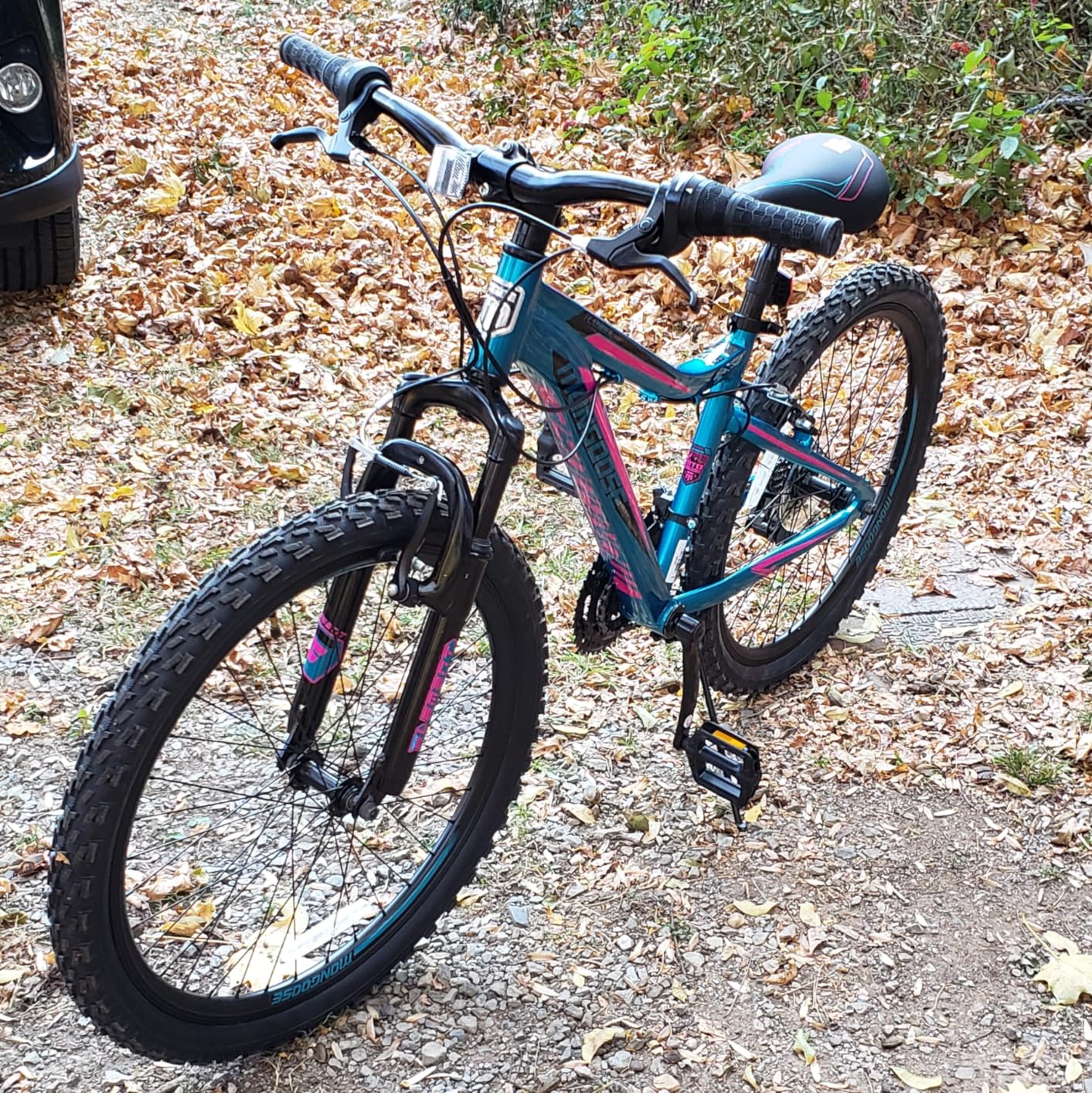
4. Mongoose Flatrock – simple aluminum hardtail for youth and adults
Mongoose Flatrock Mountain Bike, 26 Inch Bike for Men and Women, 7 Speed, Aluminum Frame, Front Suspension Fork for a Smooth Ride, Twist Shifters, Linear Pull Brakes, Adult and Teen Bicycle
Frame: aluminum
Wheels: 26 inch
Gears: 7 speed twist
Suspension: front fork
Brakes: V-brake
Pros
- Aluminum frame keeps the bike light for its size
- Suspension fork takes the edge off bumps
- Twist shifters keep 7 speeds simple for new riders
- Five year limited frame warranty for peace of mind
Cons
- Only 7 speeds limits climbing range
- V-brakes are weak in wet conditions
The Flatrock is listed as a youth bike, and the 17-inch frame with 26-inch wheels fits riders from 64 inches up to 74 inches. The frame is aluminum, which keeps it lighter than the steel bikes at this level, and the polyurethane saddle is more comfortable than the vinyl saddles that ship on several others here.
Reviewers rate it 4.0 out of 5 across 446 reviews, with 58 percent at five stars. The most common praise is for how simple it is: seven speeds, twist shifters and linear pull brakes mean there is very little to learn and very little to maintain. The warranty covers five years on the frame and one year on parts, which is longer than most of the frames in this guide.
The trade-off is the drivetrain. Seven speeds sounds like plenty until you meet a steep climb, where you will want a lower gear that does not exist. The listing also names the skill level as intermediate rather than beginner, which is a fair signal that it is aimed at older teens and light adult riders.
Linear pull brakes are the second limit. They are easy to learn and adjust yourself, but they fade in the wet and give you less room to adjust on a steep trail.
Who does the Flatrock fit best?
A parent buying for a teenager who is new to mountain biking, or an adult who wants a light bike for flat towpaths and park trails, gets a lot here. The warranty length is the standout for a family purchase, and the aluminum frame means it is easier to move around.
Knobby tires give durable traction on loose ground and unpaved trails, and the suspension fork handles uneven paths. If your riding is mostly flat and easy, the limited gearing never becomes a problem.
When to choose another bike
Ride anything with real hills and you will want more gears than seven. The 21 and 24-speed drivetrains elsewhere in this guide give you a much lower climbing ratio and finer steps between them.
Rainy riding is the other reason to look elsewhere. V-brakes offer the least braking power of the options in this roundup, and a new rider is exactly the person who benefits most from predictable stopping.
5. Gravity FSX 1.0 – dual suspension and disc brakes together
Gravity FSX 1.0 Dual Full Suspension Mountain Bike with Disc Brakes (Yellow, 19in) Product Name
Frame: aluminum
Wheels: 26 inch
Gears: 24 speed
Suspension: front and rear
Brakes: disc
Pros
- Dual suspension with adjustable front and rear shocks
- 24-speed drivetrain with easy shifters
- Disc brakes front and rear on an aluminum frame
- Four frame sizes and a lifetime frame warranty
Cons
- Needs assembly and tuning before riding
- Entry-level suspension is basic next to trail bikes
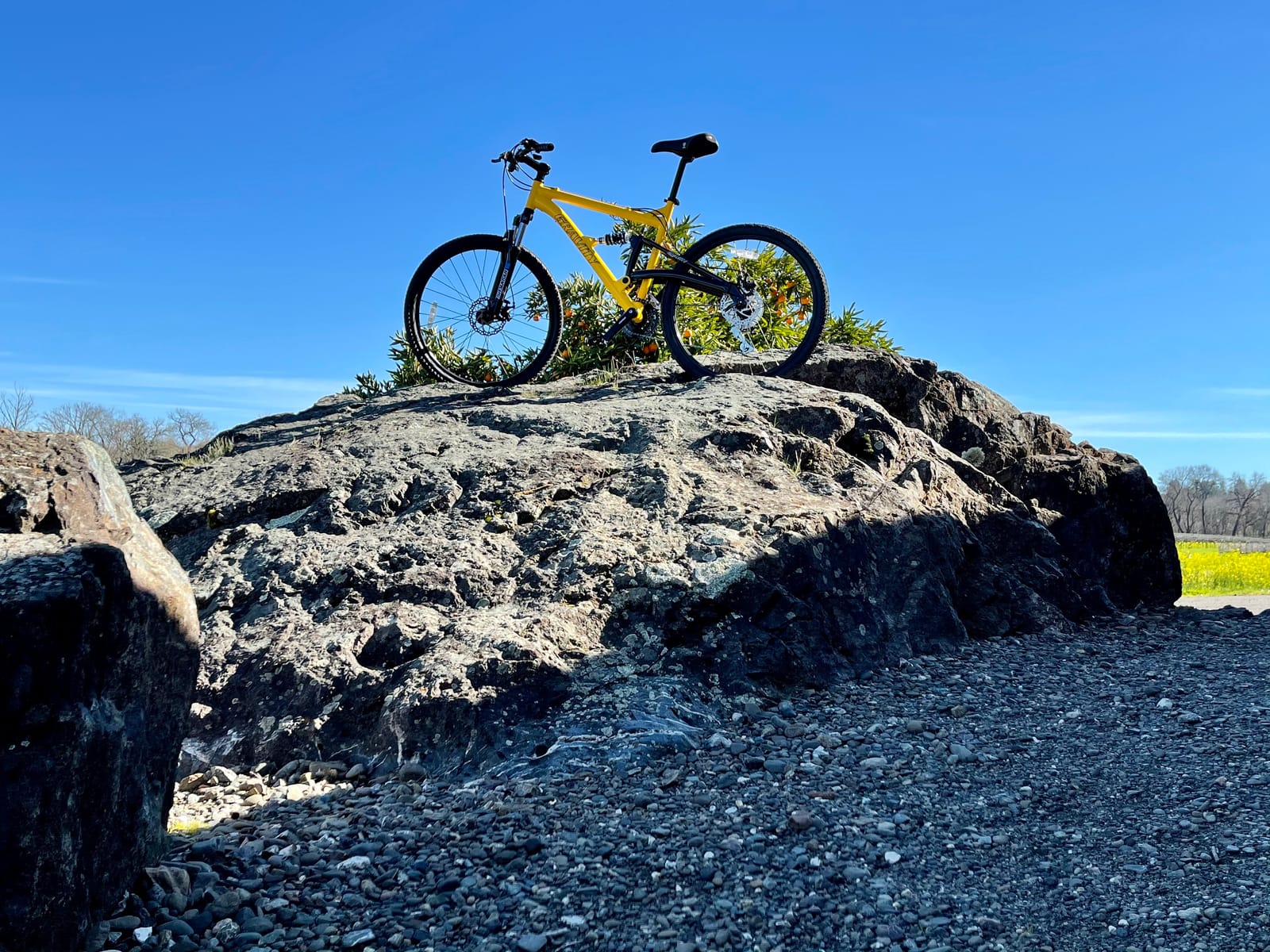
The FSX 1.0 packs a lot of hardware into a mid-range budget. You get dual suspension with adjustable front and rear shocks, disc brakes at both ends, a 24-speed drivetrain and an aluminum frame. That combination is unusual at this level.
Owners rate it 4.4 out of 5 across 410 reviews, with 68 percent at five stars, and the recurring praise is exactly what you would hope: strong stopping power, easy shifting and a frame warranty that runs for life. Double wall rims and quick release wheels balance strength and weight, and a pump is included in the box.
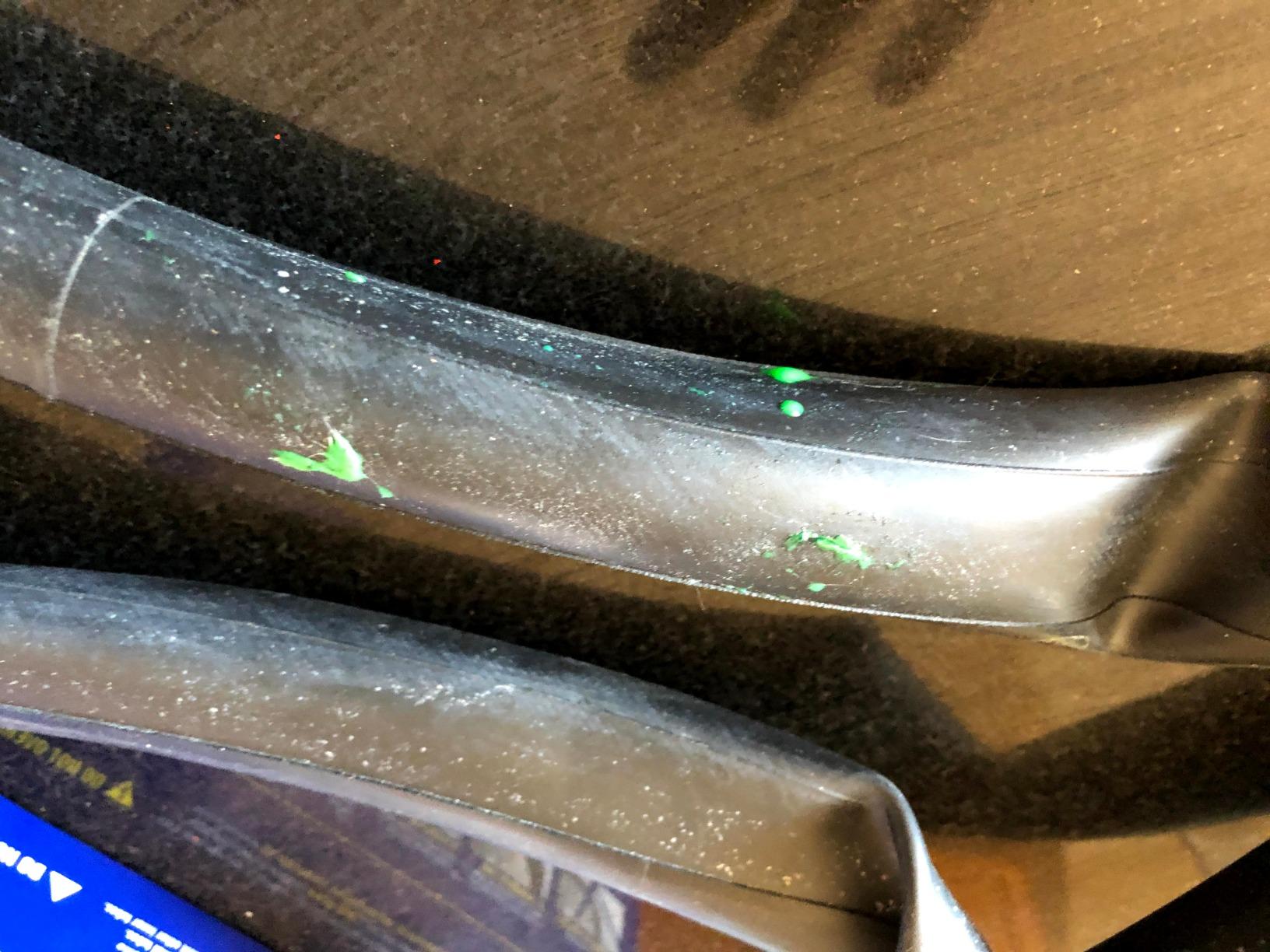
It does need assembly and tuning before it is ride-ready, which is the most common complaint in the reviews. The suspension parts are also entry-level, meaning they move but they do not have the damping control of a dedicated trail bike. Quick release wheels rather than thru-axles is another sign of the price bracket.
Frame sizing is the best news: 17, 19 and 21 inch frames are available, so more riders fit than on most bikes here. The trade-off is weight, because carrying two shock systems around costs you kilograms.
Who is the FSX 1.0 right for?
It suits a rider who wants to try full suspension without stretching the budget, or who plans long days on rough doubletrack where comfort matters more than weight. Twenty-four speeds with front and rear derailleurs make climbing noticeably easier than the 18 and 21-speed bikes here.
It is also a good first bike for a taller rider, since three frame sizes spread across more of the height range than a single-size listing would. Disc brakes at both ends give consistent stopping in rain.
Where the FSX falls short
Maintenance is the ongoing cost people underestimate. Rear shocks need servicing, and there are two of them. A hardtail has one shock and far fewer seals to keep clean, which is why experienced riders still lean hardtail-first at this budget.
Quick release wheels are also the thing forums single out as an old standard. Thru-axles are now the norm on modern frames, and their absence here tells you this platform predates the current generation.
6. Ktaxon Mountain Bike – the widest wheel size choice on the list
Ktaxon Mountain Bike 27.5 Inch Men & Women Mountain Bike 21Speed Adult Bike
Frame: high carbon steel
Wheels: 24 26 27.5 or 29 inch
Gears: 21 speed trigger
Suspension: front fork
Brakes: mechanical disc
Pros
- 21-speed transmission gives precise changes across terrain
- Mechanical dual disc brakes stop well in any condition
- Thickened fork with lock-out for smooth road riding
- Four wheel sizes to find a fit for your height
Cons
- Some bikes arrive with a wobbling front wheel
- Stock PVC saddle is uncomfortable
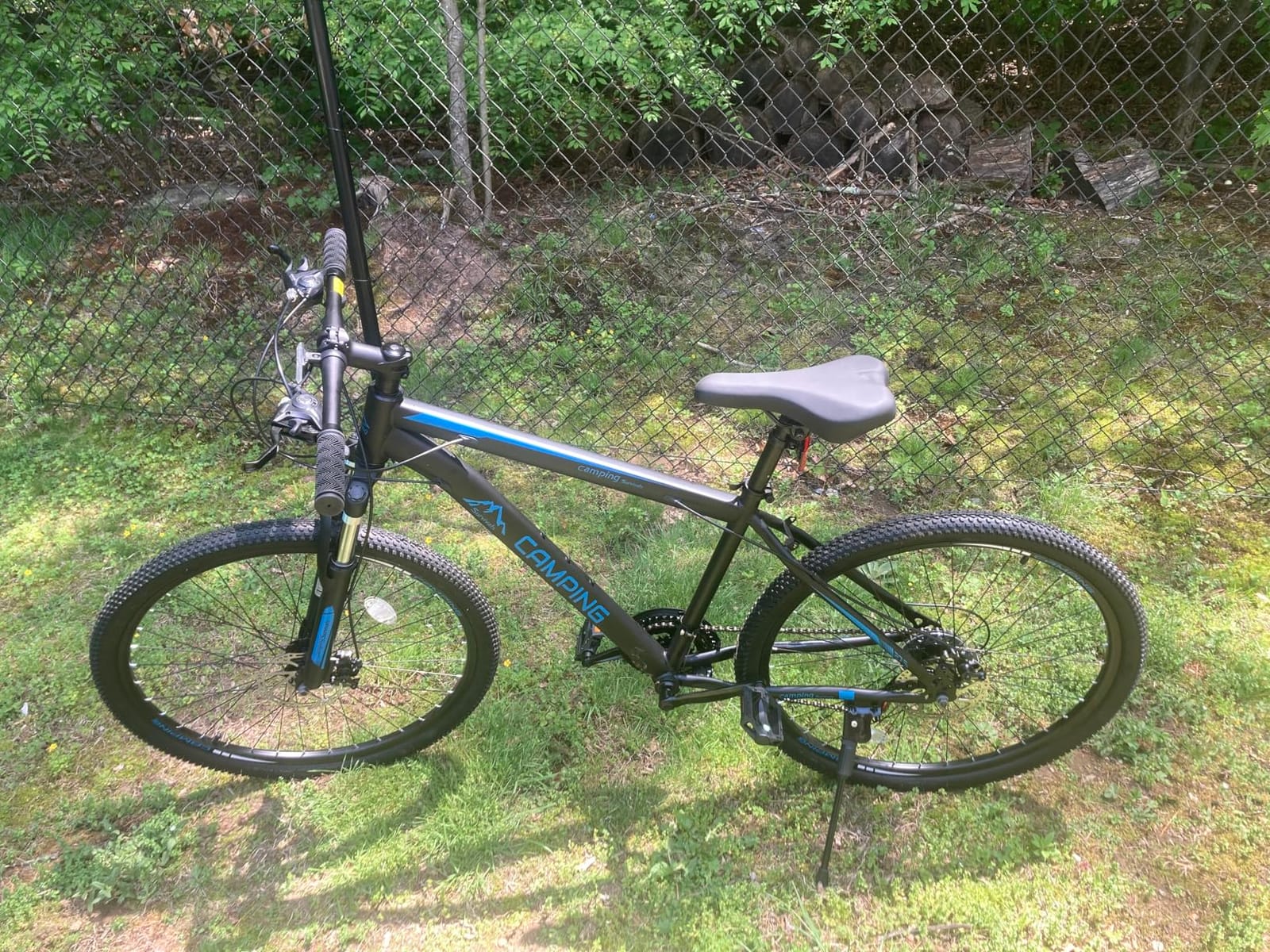
The Ktaxon is the most flexible bike on this list for fit, offered in 24, 26, 27.5 and 29 inch wheels. For a first bike that is a genuine advantage, because you can pick the wheel size that matches your height rather than being stuck with whatever the brand built.
It also stands out for pairing a lock-out front fork with mechanical dual disc brakes and trigger shifting across 21 speeds. Buyers rate it 4.1 out of 5 across 398 reviews, with 64 percent at five stars. Reviewers single out the easy 20-minute assembly with video guides and the light aluminum alloy wheels.
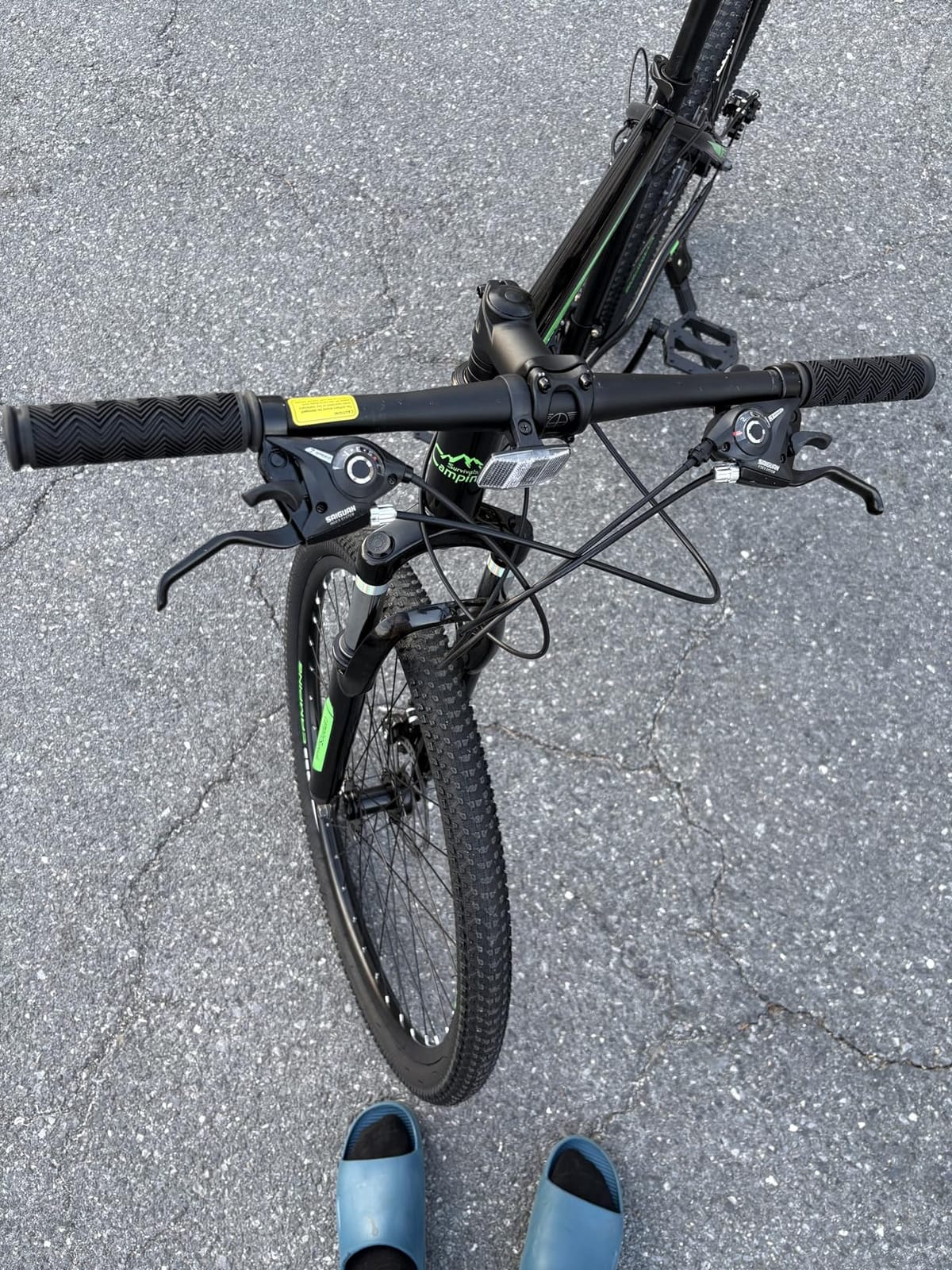
The most reported problem is a front wheel that arrives slightly out of true, which makes the disc rotor rub until it is trued. Shifting can also feel hesitant between the two lowest gears, and most owners replace the stock PVC saddle within the first few rides.
The warranty is the shortest in this guide at 30 days, and support is largely video guides. If you are not comfortable doing basic setup yourself, a local shop will charge for the privilege.
Why the four wheel sizes matter for a beginner
Wheel size changes how a bike feels far more than the spec sheet suggests. Smaller wheels are easier to get moving and easier to handle at low speed, which helps when you are learning to balance, while larger wheels roll over rough ground with less effort.
The lock-out on the fork lets you firm it up for pavement and towpaths, so the same bike works for commuting and trail days. The thickened fork takes the edge off gravel and dirt roads.
When the Ktaxon is not the right call
A wobbling wheel on arrival is a quality control issue you cannot predict, and a 30-day warranty leaves no room if you want to return it. Riders who want longer warranty cover should look at the Mongoose or the Tommaso.
There is no dropper post and no rear suspension, so this is a trail-flavoured hardtail. If you plan to ride steep technical trails where you need to move the saddle out of the way on descents, look at a full-suspension bike instead.
7. WEIZE Hardtail 29 – light aluminum bike for taller riders
WEIZE Hardtail Mountain Bike 29 Inch MTB Outdoor Cycling Bicycle Men Women
Frame: 6061 aluminum
Wheels: 29 inch
Gears: 21 speed trigger
Suspension: front fork
Brakes: V-brake
Pros
- Light 6061 aluminum frame for an all-terrain bike
- 29 inch wheels suit taller riders
- 21-speed trigger shifting has a good climbing range
- Tool kit included and assembly takes about 30 minutes
Cons
- V-brakes are weak on steep trails
- Front suspension is stiff rather than plush
This is the simplest answer for a tall rider. The 29-inch wheels suit adults up to about 6 foot 3, and the 6061 aluminum frame keeps the weight down for a bike with big wheels and a suspension fork. It is a hardtail, and the front fork handles trail chatter.
Reviewers rate it 4.0 out of 5 across 262 reviews, with 61 percent at five stars, and the most common mentions are the light frame, the size of the wheels and how quick the assembly is. It is a popular choice for teens and college commuters, and the tool kit is included in the box.
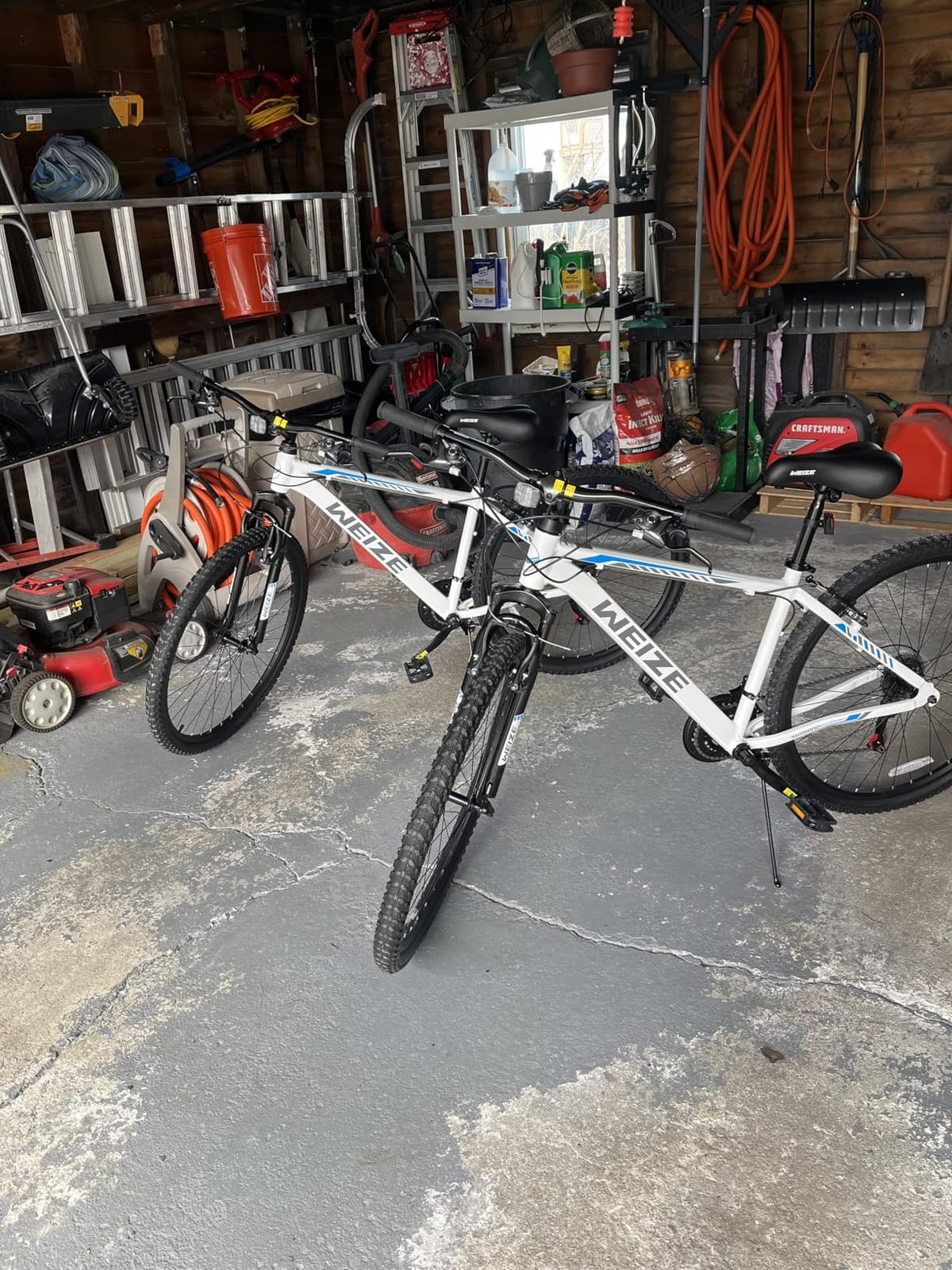
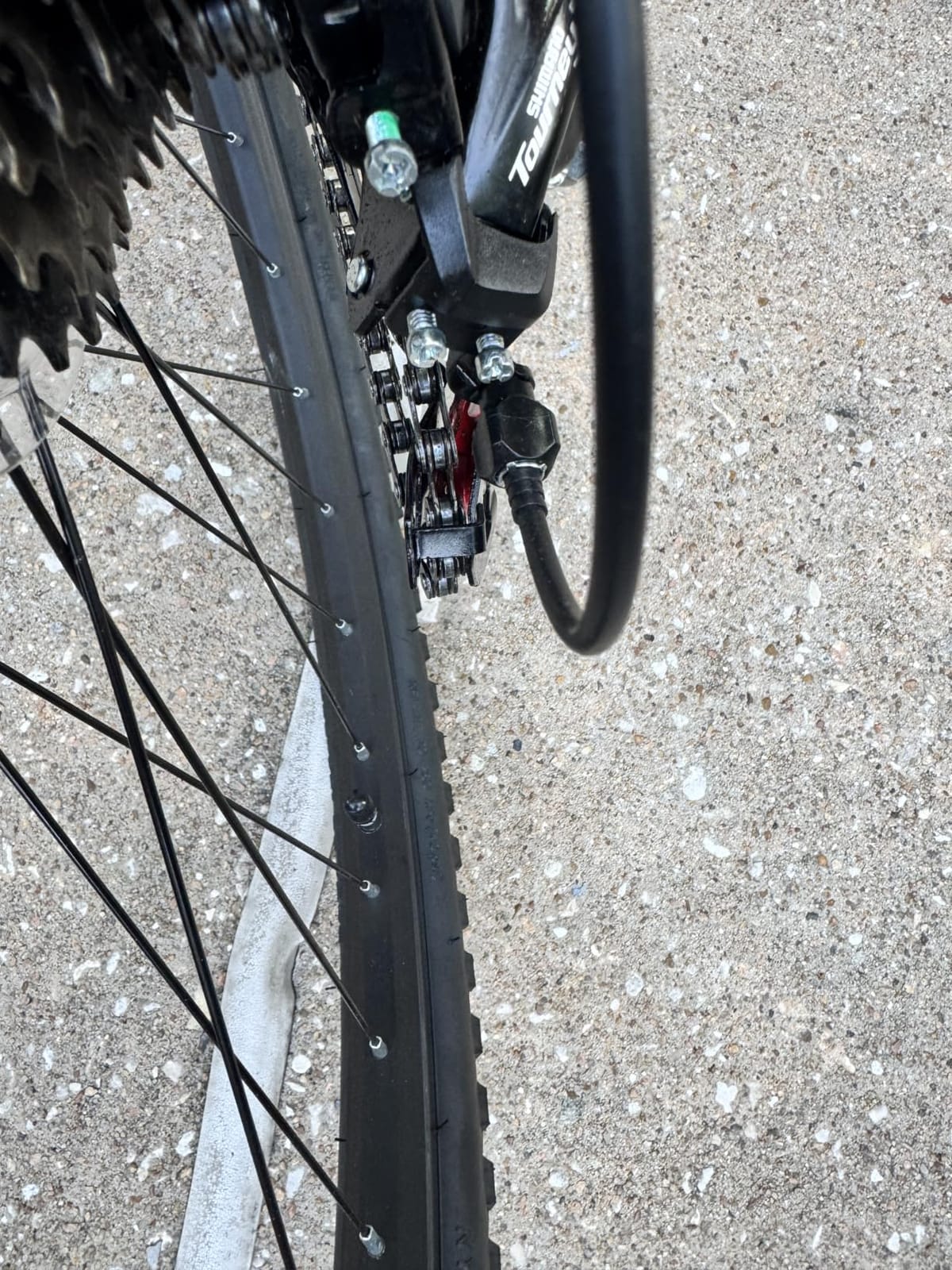
The weaknesses are consistent across reviews. The front suspension is stiff rather than plush, so it takes the sharp edges but not the soft chatter. V-brakes need more effort than discs on a steep descent, and some bikes arrive with the wheel, brake or derailleur alignment needing shop tuning. A 1-year warranty is on offer.
If your riding is campus commuting, towpaths and easy forest trail, none of that matters much. If you plan to ride downhill technical trails, it matters a great deal.
How does the 29-inch hardtail ride?
Big wheels float over loose gravel and roots, which makes long rides on dirt roads noticeably less tiring. The 21-speed trigger drivetrain gives a wide enough range for hills and a close enough spread for cruising, and it shifts with more precision than twist shifters.
The listed fit runs from 64 inches upward, with 29 inch wheels as standard. It comes in white and black.
Reasons to pass on the WEIZE 29
The stiff fork is the honest drawback. Plush suspension costs money, and at this level you get a fork that damps the big hits and passes the chatter straight through to your hands and arms.
V-brakes are the second one. They work, they are cheap to service and they are easy to adjust yourself, but they need a lot more hand pressure than a disc brake when you are descending in the wet.
8. HILAND Mountain Bike – steel hardtail for commuting and easy trails
HH HILAND 27.5 Inch Mountain Bike, Mens and Womens MTB with 21 Speeds, High-Tensile Steel Frame, V Brake, Hardtail Bicycle for Adults Blue
Frame: carbon steel
Wheels: 26 27.5 or 29 inch
Gears: 21 speed trigger
Suspension: front fork
Brakes: V-brake
Pros
- Steel frame is durable for adult riders
- 21-speed drivetrain flexes across terrain
- V-brakes are simple to learn and adjust
- 90 percent pre-assembled with tools provided
Cons
- Steel frame is heavier than aluminum models
- Less braking power than disc brake bikes
The HILAND is built for someone whose idea of mountain biking includes a ride to work or a loop around a park. The carbon steel frame is reinforced for adult riders, and the 21-speed trigger drivetrain gives flexible gearing for both city streets and easy trails.
It scores 4.0 out of 5 across 267 reviews, with 58 percent at five stars, and the warranty is listed as lifetime, which is a strong signal on a steel frame. The bike arrives about 90 percent assembled with a tool kit, so you are fitting the front wheel, bars, saddle and pedals rather than building it from nothing.
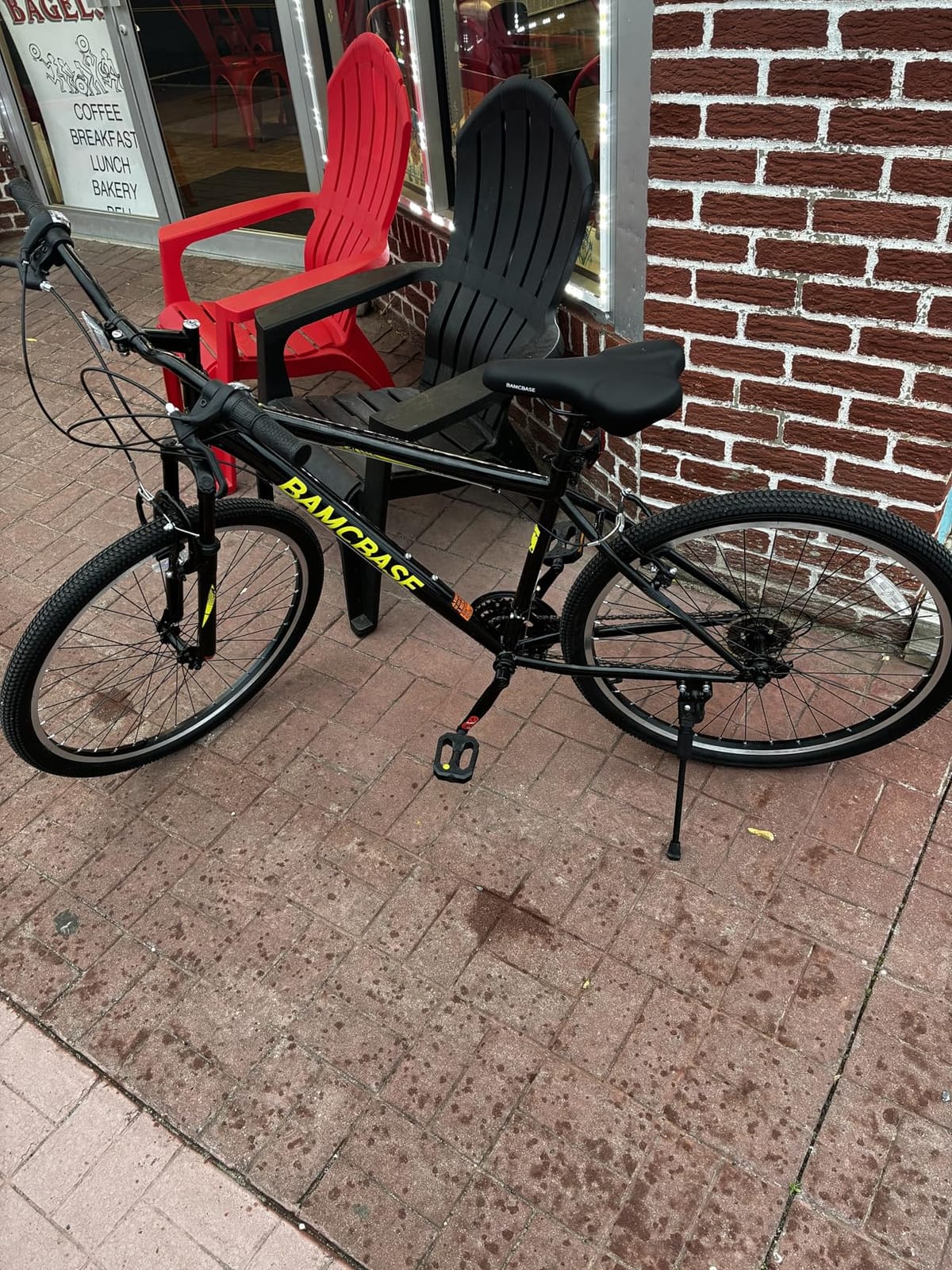
Steel is the defining drawback. It is durable and it is affordable, but it is heavy, and you feel that on any ride with a climb. V-brakes are the second limitation, and they give noticeably less braking power than the disc-brake options in this guide on steep or wet ground.
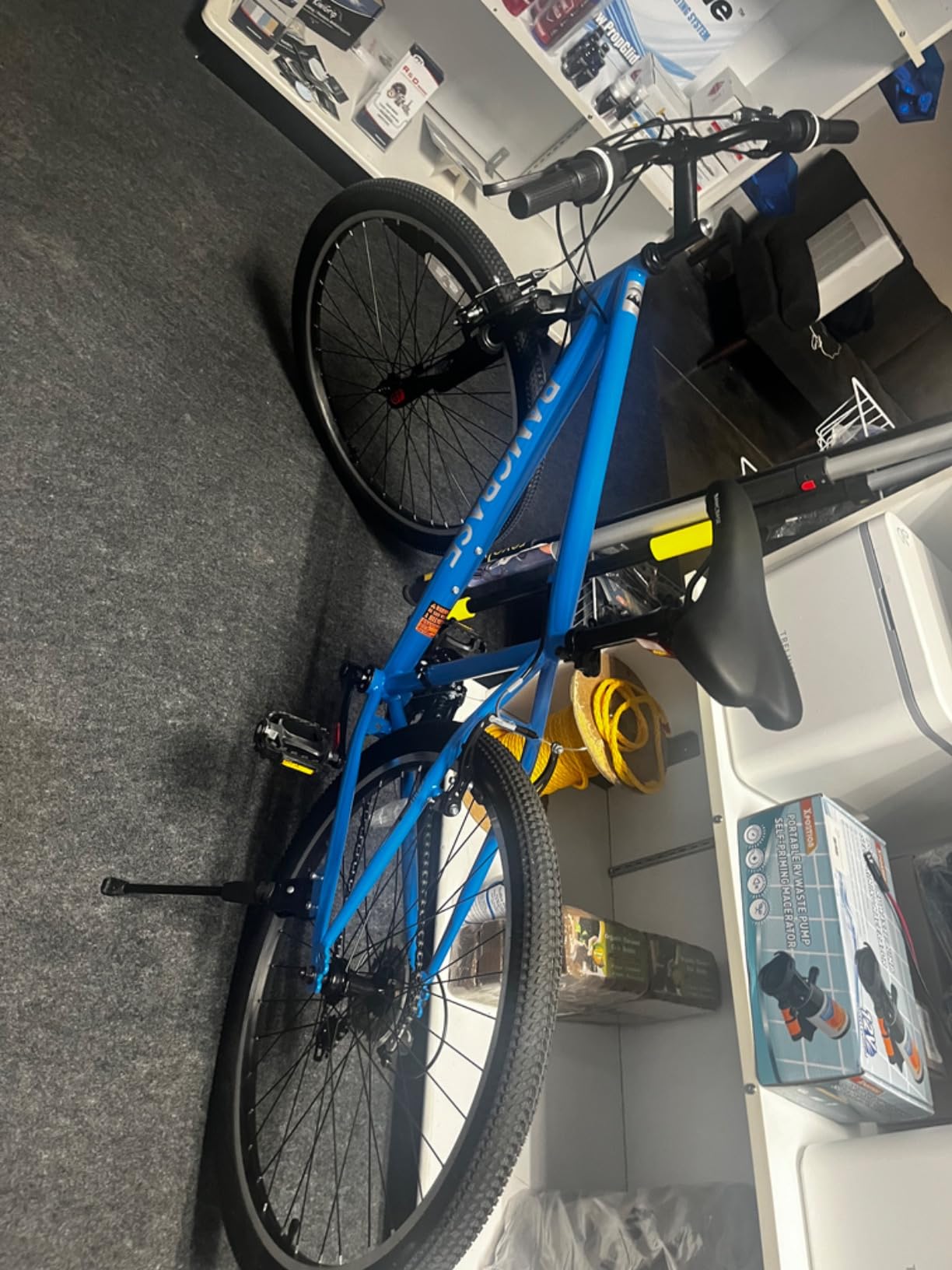
The fit is broad: 26, 27.5 and 29 inch wheels are offered, covering riders from about 5 foot 4 upward. Wheel choice lets you match the bike to your height rather than the other way around.
Is the HILAND a mountain bike or a commuter?
It sits between the two. The knobby tires and front suspension fork handle gravel, woodland paths and easy unpaved trails, while the simple V-brakes and upright geometry suit the road portion of a commute.
If you want one bike for a greenway on Sunday and a towpath ride on Tuesday, that versatility is exactly the point. Trigger shifting also means you are not wrestling with a twist grip in traffic.
When to look at a different bike
Anything longer than an hour with real climbing will make the steel frame work hard. The aluminum hardtails in this guide save weight where it counts most, and you notice the difference on a hill.
Rain or steep descents rule this one out. Several of the disc brake options here give you consistent stopping in bad weather, and for a first bike that consistency is worth more than a simpler drivetrain.
9. Tommaso Gran Sasso – hydraulic brakes and a lifetime frame warranty
Tommaso Gran Sasso 29er Mounain Bike Hydraulic Disc Hardtail Best Looking MTB Matte Black 100mm Travel Suspension
Frame: alloy
Wheels: 29 inch
Gears: 24 speed Shimano
Fork: Suntour 100mm
Brakes: hydraulic disc
Pros
- Shimano M315 hydraulic discs deliver roughly double the stopping power of mechanical discs
- 24-speed Shimano drivetrain handles hills easily
- Suntour fork with 100mm of travel
- Lifetime frame warranty and four frame sizes
Cons
- Arrives un-tuned and needs professional assembly
- Stock saddle is uncomfortable
The Gran Sasso is the only bike in this guide with hydraulic disc brakes, and that single spec changes how the bike feels. The Shimano M315 calipers deliver roughly double the stopping power of mechanical discs, which means less hand pressure and more control when it is wet or when you are pointing downhill.
Underneath that sits a full 24-speed Shimano drivetrain and a Suntour SF15-XCM fork with 100mm of travel, which is real suspension travel rather than a token amount. The alloy frame carries an industry leading lifetime frame warranty, and the wide 680mm handlebar helps you control the bike through corners. It is available in four sizes from 5 foot 4 up to 6 foot 5.
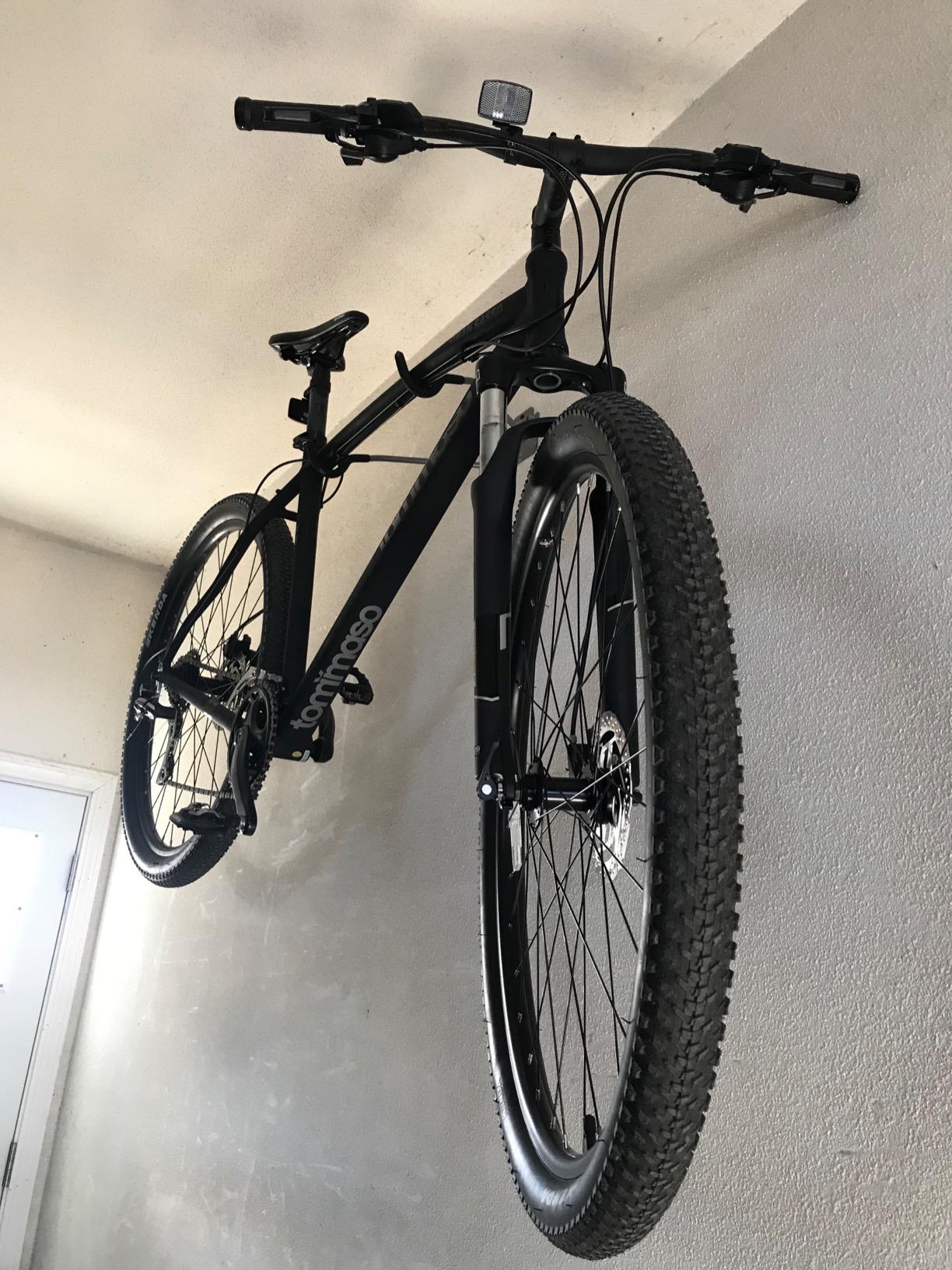
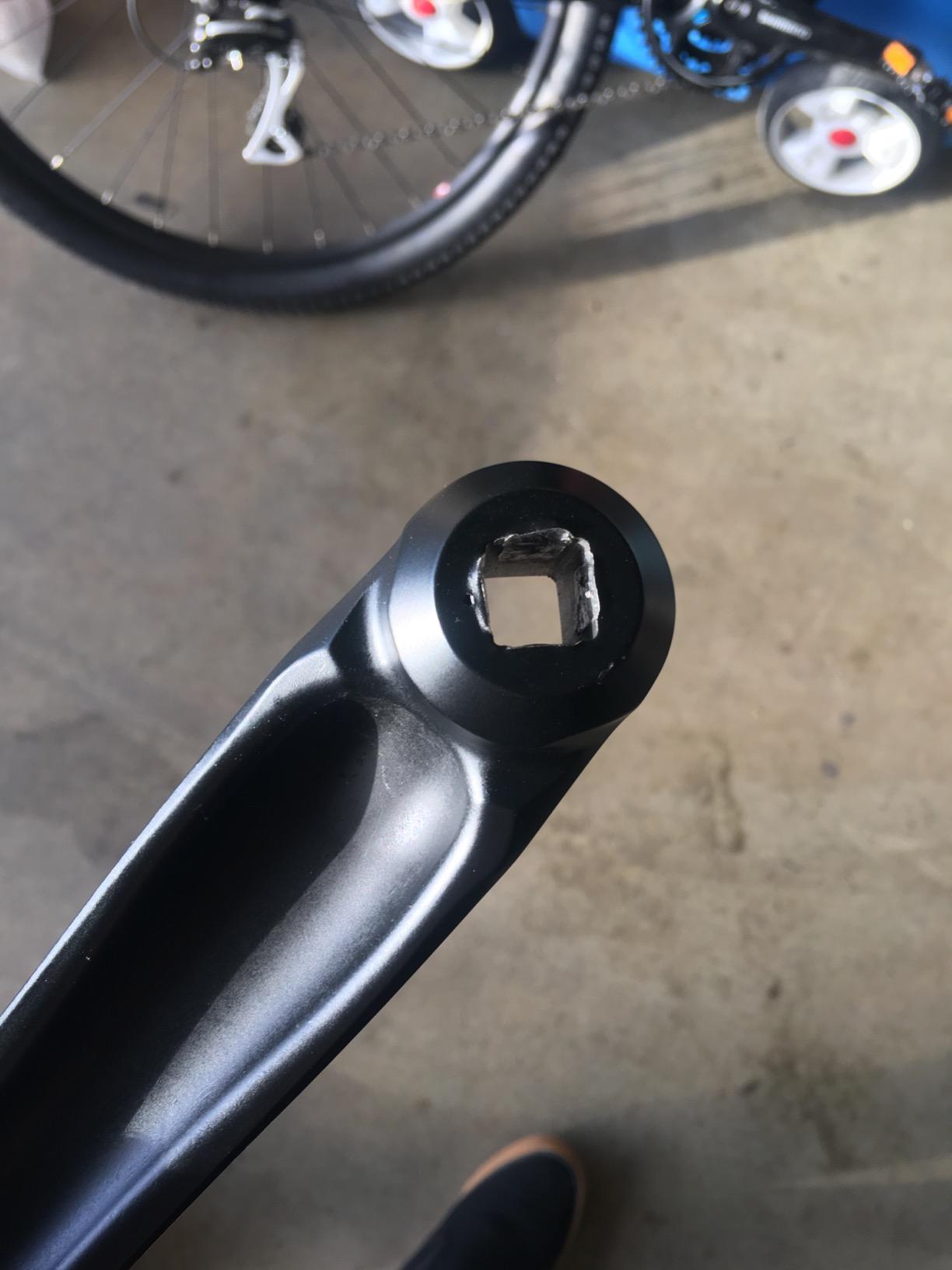
There is one significant catch. The bike arrives un-tuned, and the manufacturer requires professional assembly before the warranty applies, so that setup cost is effectively part of the purchase. Owner reviews also flag the stock saddle, basic pedals and reflectors, and a stock rear derailleur that is the weakest part of the groupset.
It is also heavier than some competing hardtails, and the stock tires struggle in mud. The tyre is the cheapest upgrade you can make on this bike.
Why hydraulic brakes matter more than gear count
Most new riders are not short of gears, they are short of braking confidence. Hydraulic discs give you one-finger stopping without squeezing a lever hard, and they do not fade the way mechanical discs and V-brakes do in wet conditions.
For a rider who will learn on greenways and fire roads and then start exploring trails, that confidence compounds. Riders report putting thousands of miles on this bike with the original shifters, derailleurs and discs still working.
What to check before you buy the Gran Sasso
Confirm that a shop near you will do the assembly, and get that cost in your budget before you commit. The warranty depends on it, and arriving with a bike that was never set up is a bad start to a first bike.
Plan to replace the saddle early, and treat the tyres as a first-season purchase rather than a lifetime component. Both are cheap fixes that transform the bike.
10. EUROBIKE 29 Aluminum MTB – rack mounts and a tall fit
EUROBIKE Mountain Bike,29″ Men Mountain Bike, Lightweight Aluminum,Disc Brakes 21 Speed Bicycles Bikes (Silvery)
Frame: aluminum alloy
Wheels: 27.5 or 29 inch
Gears: 21 speed Shimano
Suspension: front fork
Brakes: mechanical disc
Pros
- Aluminum alloy frame with clean welding
- Disc brakes at both ends in all conditions
- Shimano 3x7 shifting and rear derailleurs
- Rack and kickstand mounts for cargo use
Cons
- Wheel size on the listing is disputed by some buyers
- Rear gears can skip after short use
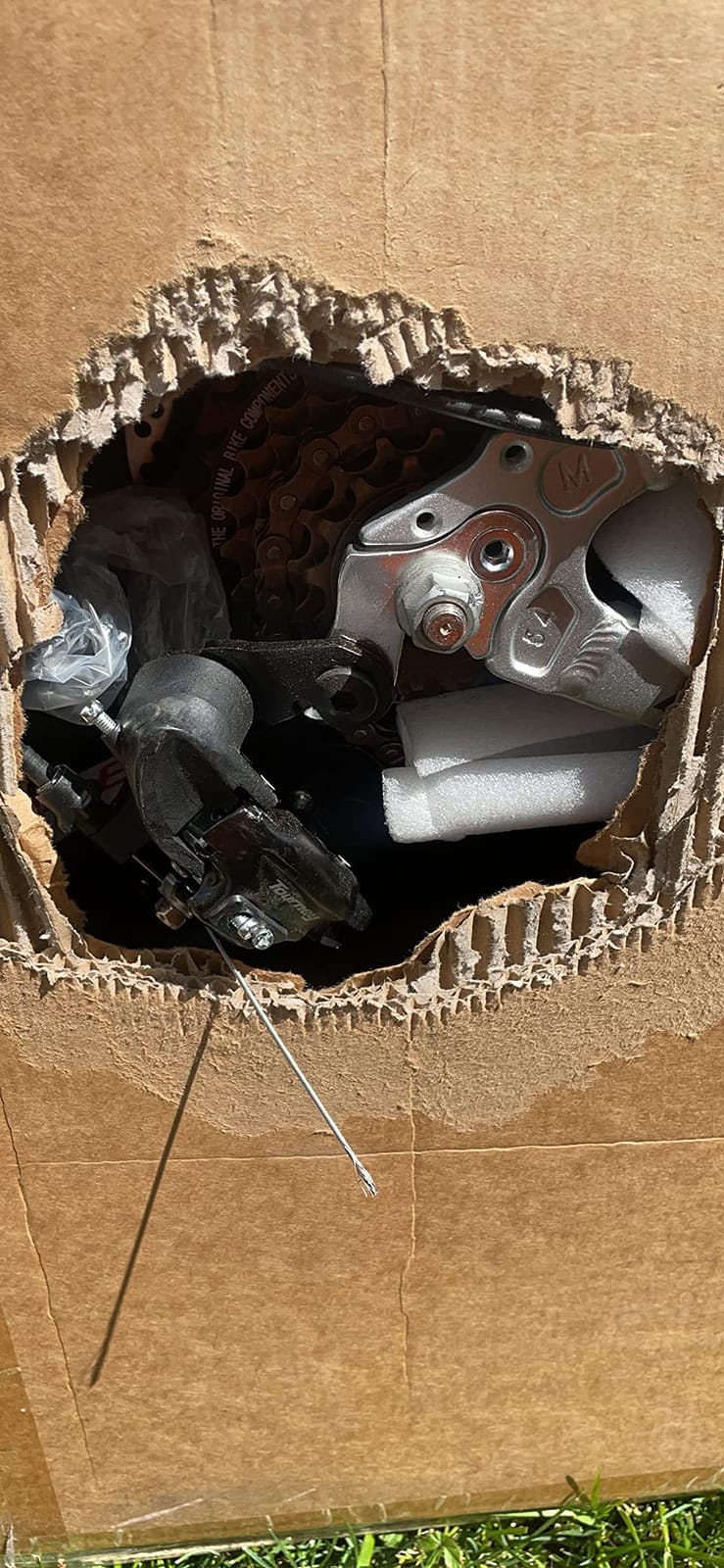
The EUROBIKE is the one to consider if you plan to fit racks, panniers or a kickstand for commuting. The rack mounts are fitted, which is rare on the cheap bikes in this category, and the magnesium alloy wheels with a colour-matched finish look better than most of their price peers.
Owners rate it 4.2 out of 5 across 70 reviews. The frame welding, the front and rear mechanical disc brakes and the shifting out of the box are the most common positives, along with a 19-inch frame that fits taller riders without needing a maximum seat height extension. The listed minimum rider height is 68 inches, and maximum recommended weight is 300 pounds.
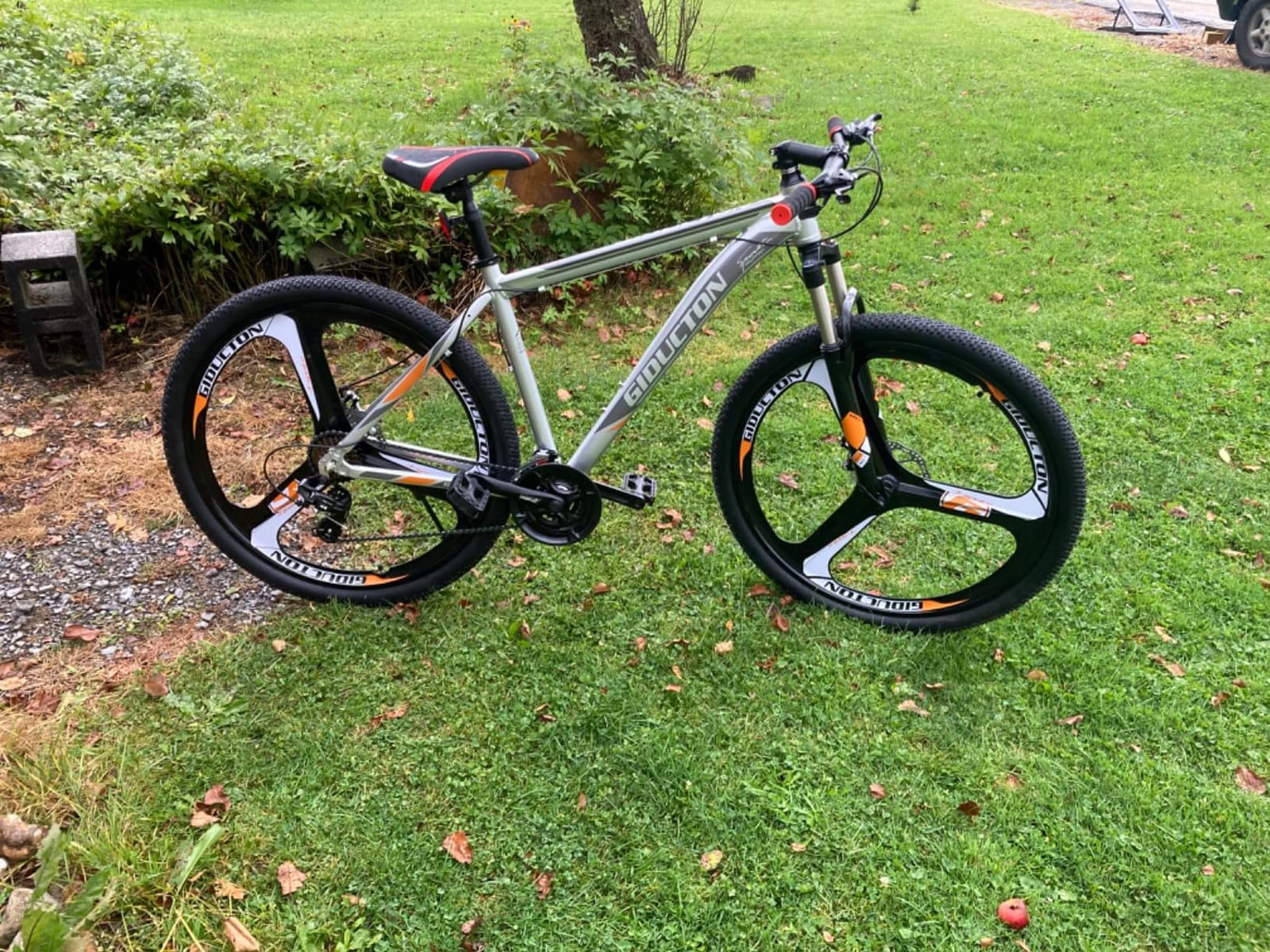
Two problems come up repeatedly. Buyers dispute the advertised wheel size, since the 19-inch frame is paired with 29 inch wheels in one configuration and 27.5 inch in another, so check the variant you actually receive. Rear gears are also reported to start skipping and making noise after only a short period of use.
It is heavier than the listing implies, at around 35 pounds, and the grips are basic. It arrives about 85% assembled, so the front fork, front wheel, saddle and pedals still need fitting.
Who benefits from the rack mounts?
With rack mounts already in place, adding a rear rack for panniers or a front platform takes minutes, and a kickstand is included in the box.
The intended use is listed as gravel, so it doubles as a gravel bike for towpaths and forest roads. The front suspension fork handles the bumps that come with that.
Reasons to choose a different bike
Reliability under load is the concern. Rear drivetrain parts that skip after short use mean more shop visits, and that adds up quickly if you planned to use this bike for cargo work.
The listed weight of around 35 pounds plus a disputed spec means less certainty than you would like for a first purchase. The Tommaso and the WEIZE hardtail are both more clearly documented by their owners.
What to look for in a beginner mountain bike
Frame material is the first filter. Aluminum is lighter and stiffer than steel, and the weight difference becomes obvious on a climb. Steel frames are durable and suit riders who will leave the bike out, which is why they appear on several bikes here, but you carry the extra kilograms every ride.
Brake type is the second filter, and the difference is bigger than most spec sheets suggest. Hydraulic discs give the strongest and most consistent stopping. Mechanical discs are a reasonable middle ground. V-brakes are cheap and easy to adjust, but they weaken in the wet and need more hand pressure on a descent.
Drivetrain count matters less than people assume. A 21-speed drivetrain with a front and rear chainring gives you more options, but a simpler setup is easier to learn and less to go wrong. What you should avoid is old or heavy components, and twin-ring setups are no longer the modern standard even when they are available.
Fork type is the fourth filter. An air-sprung fork can be adjusted to your body weight and often has a lock-out, while a coil fork works but is heavier. Travel of roughly 100mm is typical for this budget and suits a beginner on a bike park loop or blue-rated trail.
Frame fit outranks every component. A bike in the wrong size is uncomfortable and unsafe no matter what is bolted to it, and that is the subject of the next section. If you want a second opinion on the wider parts question, our guide to the best electric mountain bikes for off-road riding covers what changes when a motor goes in.
Hardtail or full suspension: which one should a beginner buy?
Buy a hardtail unless your local trails are rooty, wet and technical enough that you ride off the marked lines. Below this budget a hardtail is simply the better ride, because the money goes into one well-specified fork and a good frame rather than being split between two basic shock systems.
Decide by terrain. A greenway, towpath, fire road, park loop or blue-rated trail center trail is hardtail country, and you will climb faster and maintain the bike for less. Steep, rocky descents where you regularly get airborne call for full suspension, and that is where the extra weight earns its keep.
Two bikes here make that trade-off concrete. The Gravity FSX 1.0 gives you dual suspension with 24 speeds and disc brakes on a limited budget, and the Schwinn Traxion pairs dual suspension with 29-inch wheels for taller riders. Neither is a dedicated trail bike, so treat both as comfortable trail machines rather than descent tools.
How to size your first mountain bike by height
Measure your inseam first, because manufacturer charts are built around that number and rider height is only a rough guide. Stand against a wall in socks, place a book between your legs with its spine up, and measure from the floor to the top edge. Then match that figure against the brand size chart for the bike.
Roughly 4 foot 8 to 5 foot 2 points to a small frame with 26 or 27.5 inch wheels. Between 5 foot 3 and 5 foot 8 suits a small or medium frame with 27.5 inch wheels, and 5 foot 9 to 6 foot 1 usually means a medium or large frame with 29 inch wheels. Above 6 foot 2, look at large frames with 29 inch wheels, and the Tommaso runs up to X-Large for riders at 6 foot 5.
Do not size up for extra reach, which is a common older habit. Modern geometry is already long in the front, and a frame that is too tall will leave you reaching for the bars and pushing your weight behind the saddle. Check standover height too, and make sure you can put both feet flat on the ground when stopped.
Online or a local bike shop: where to buy
Buying direct online gives you a wider selection of frame sizes, but the bike arrives part assembled and you handle the setup. A local shop builds the bike for you, adjusts it to your height and normally includes a free tune-up shortly after you start riding.
Factor in what setup actually costs. Most of the bikes in this guide arrive 80 to 90 percent assembled, and the remainder includes handlebar, saddle, front wheel, pedals and brake adjustment. The Tommaso Gran Sasso explicitly requires professional assembly before its warranty applies, which makes the shop the obvious route there.
Use the shop if you are unsure about sizing, if you want to try a frame before committing, or if nobody nearby can turn a wrench. Buy online if you know your exact size, you have tools and a stand, and you want access to sizes the local shop does not carry. Where a brand has no dealer presence, the direct route is often the only route.
What to buy alongside your mountain bike in year one
A helmet is the one item with no substitute. Buy one that fits properly and replace it after any impact, regardless of how it looks.
Flat pedals are the right choice while you learn, because you can put a foot down at any moment. Move to clipless pedals once your cornering and descending are consistent, and expect to fall at low speeds while you adjust to them.
A floor pump with a gauge, a spare tube, a tire lever set, a multi-tool and a compact lock cover the rest. Many owners keep a spare tube and a second set of tyres on hand early on, which is a cheap way to avoid walking home.
Budget for a first service as well. New cables stretch, brake pads bed in, and a shop tune-up a month or two in saves you from vague shifting and rubbing brakes for a whole season.
Bikes to walk away from under a thousand dollars
Walk away from 26-inch wheels if you can find a modern alternative at 27.5 or 29 inch. 26-inch rims roll slower over rough ground and are increasingly rare on new frames, so parts and resale both suffer.
Walk away from mechanical disc brakes and V-brakes if your riding involves steep, wet or technical terrain. Neither technology is obsolete, but both demand more hand pressure than hydraulics, and a new rider is the rider who least wants to be squeezing a lever in the rain.
Walk away from unclear wheel sizing, unclear warranty terms and support that only exists as a video guide. The Ktaxon covers 24, 26, 27.5 and 29 inch wheels and carries a 30-day warranty, and the EUROBIKE listing is disputed by some buyers over wheel size. Fit and warranty are the two things you cannot fix later with a hex key.
Also walk away from the trap of buying more bike than you need. If you plan to ride towpaths and gravel roads, a flat-bar hybrid or a gravel bike will be lighter, simpler to maintain and more comfortable than any mountain bike in this guide.
What to upgrade first on a budget mountain bike
Tyres come first, and it is not close. A better tread pattern changes traction more than any other single upgrade, and it is the cheapest change you can make. Do it before anything else.
Saddle second, because a stock vinyl or PVC saddle is the most common complaint across these reviews. A saddle fitted to your sit bones ends back pain immediately and costs little.
Brakes third, if the bike did not come with hydraulics. Converting from mechanical discs or V-brakes to a hydraulic kit is a straightforward job and the single biggest safety improvement you can make.
A dropper post is the fourth upgrade, and it only applies to hardtails. Being able to drop the saddle on descents changes the bike completely, and the installation is usually a ten-minute job if the frame allows it.
Leave suspension components until last. A replacement fork or shock sets you back a long way, and it makes more sense to buy a better bike later than to keep bolting expensive parts onto an entry frame.
Where to ride as a beginner in 2026
Start with a greenway, a towpath, a park loop or a wide gravel road. Flat, predictable terrain lets you learn the gears, the brakes and the body position without consequences, and most beginners underestimate how much they need those first.
Move to a trail center and stay on blue-rated loops. Marked loops have consistent surface, limited exposure and riders around who can help, which makes them the safest place to learn descending and climbing technique.
Pump tracks are worth trying early too, because the rollers teach you to unweight the bike, which is the single most useful skill for singletrack. Bike parks and skills areas suit the same purpose, and they are forgiving of mistakes.
Hold off on local woodland singletrack and anything with black markings until you have a season of riding behind you. Trail ratings are honest, and a green trail will still catch you out if your cornering is not ready.
Frequently Asked Questions
What is the best mountain bike for a beginner on a tight budget?
The Schwinn High Timber is our top pick because it has the most owner feedback of any bike we reviewed, an aluminum frame, front suspension and 21 speeds. It suits towpaths, greenways, fire roads and easy singletrack. Riders who want rear suspension can look at the Gravity FSX 1.0, and anyone who values braking should consider the Tommaso Gran Sasso for its hydraulic discs.
Should I get a hardtail or full suspension as a beginner?
Buy a hardtail unless you ride off the marked lines on steep, rooty trails. At this budget the money is better spent on one well-specified fork and a good frame than split across two basic shock systems. A hardtail is lighter, climbs faster and costs far less to maintain. Full suspension only makes more sense once you are riding terrain that genuinely needs it.
What are some good budget full suspension mountain bikes?
The Gravity FSX 1.0 gives you dual suspension, disc brakes at both ends and a 24-speed drivetrain in the same budget as many hardtails, with a limited lifetime frame warranty. The Schwinn Traxion pairs dual suspension with 29-inch wheels and a 24-speed Shimano drivetrain for taller riders. Both arrive part assembled, and both use entry-level shocks without rebound control.
What size mountain bike should I buy as a beginner?
Measure your inseam in socks against a wall, then match it to the brand size chart rather than trusting height alone. Small frames with 26 or 27.5 inch wheels suit riders around 4 foot 8 to 5 foot 2, medium frames suit 5 foot 3 to 5 foot 8, and large frames with 29 inch wheels suit 5 foot 9 upward. Avoid sizing up for reach, because modern geometry is already long.
Should I buy my first mountain bike online or at a bike shop?
Buy online if you know your exact frame size, have tools and a work stand, and want sizes a local shop does not carry. Buy from a shop if you are unsure about fit, want to try a frame, or need the assembly done for you. The Tommaso Gran Sasso explicitly requires professional assembly before its warranty applies, so that bike belongs in a shop.
The bottom line on beginner mountain bikes in 2026
The best mountain bikes for beginners under 1000 dollars are hardtails with a front suspension fork, disc brakes and enough gears to climb a hill, and the Schwinn High Timber is the pick we would put in front of a first-time rider. It has an aluminum frame, a huge base of owner feedback and a maintenance-free drivetrain, and the size range covers most adult heights.
Buy the Gravity FSX 1.0 if you want to try rear suspension first, and buy the Tommaso Gran Sasso if you ride in the wet and want hydraulic braking that works with one finger. Whatever you choose, measure your inseam before you order, budget for a helmet, flat pedals and a first tune-up, and start on a greenway or a blue trail loop.