
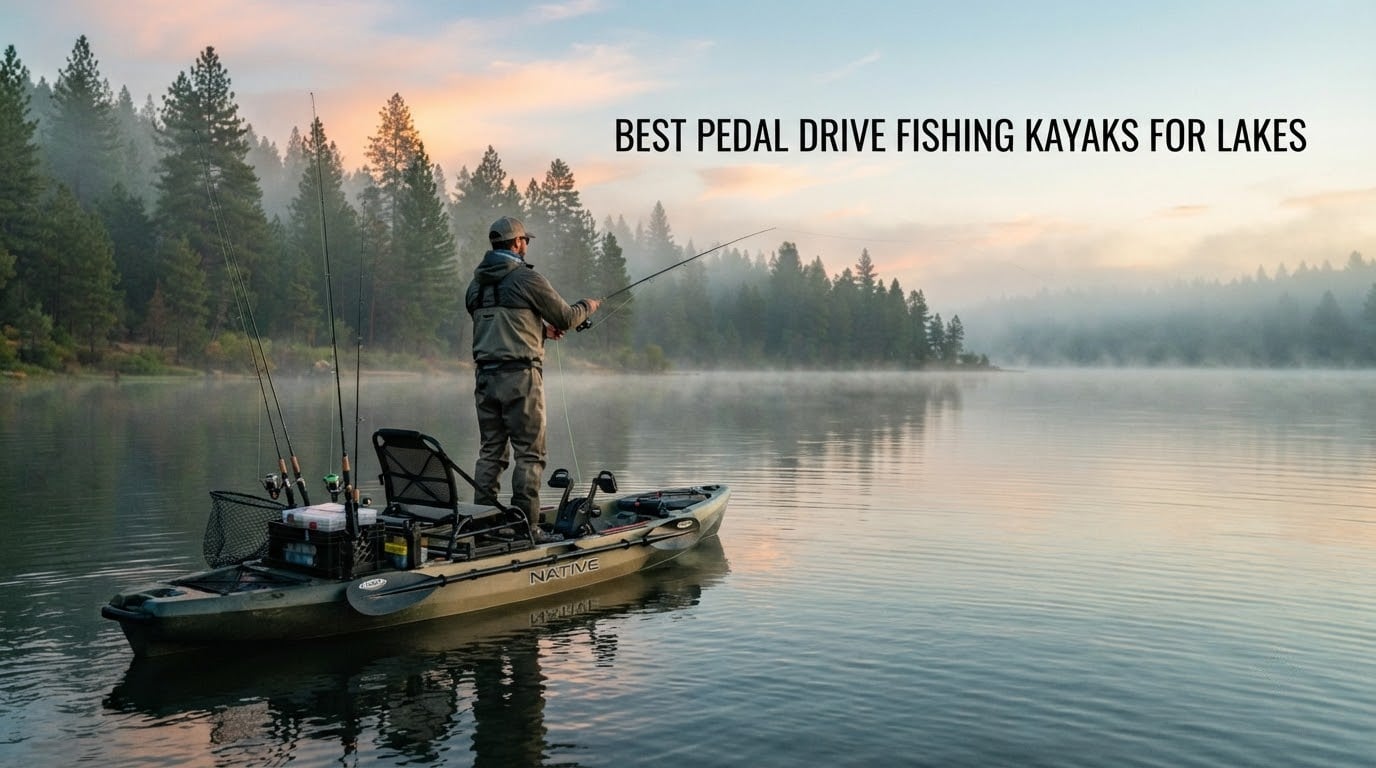
A pedal drive fishing kayak for lakes earns its extra weight when you want to cover long distances with your hands on the rod. The foot-powered drive lets you troll, hold position over a weed edge and steer with a handle instead of a paddle, which means more of the day with a line in the water. The cost is 60 to 110 pounds of hull, a mechanical drive to maintain, and a different launch routine than a sit-on-top you can shoulder and carry.
We spent 2026 season comparing the best pedal drive fishing kayaks for lakes that you can actually order right now, from modular boats that break into two car-friendly sections to wide pontoon-style hulls built for open reservoirs. We weighed rigged weight, beam width, drive type, capacity, rudder behaviour and the honest complaints owners post about, because those are the numbers that decide whether a boat suits your lake or fights you all day.
If you are still narrowing the field of hulls, our broader picks on the best fishing kayaks for anglers cover the paddle-versus-pedal decision, and best fishing kayaks for big guys covers hulls rated for heavier anglers. This guide is strictly about pedal propulsion on inland water.
Safety before hull size. Wear a USCG-approved personal flotation device every trip, and treat cold water as a full immersion risk rather than a mild inconvenience. In spring and late autumn on an inland lake, a dry suit or immersion layer is the difference between an inconvenience and an emergency. If your fully rigged boat comes in above 100 pounds, budget a kayak cart with balloon tires, and take an American Canoe Association paddling course before you hit open water alone.
Table of Contents
Top 3 Picks for Best Pedal Drive Fishing Kayaks for Lakes in 2026
If you want the short version, the Old Town Sportsman PDL 106 wins our overall test for lake work, the BKC Brooklyn 12.5 Pro is the speed and capacity pick for anglers covering long distances, and the BKC Brooklyn 10.0 is the entry point that still pedals. Those three cover most of the lake scenarios we tested.
Old Town Sportsman PDL 106
- Pontoon-style hull
- 10 ft 6 in
- 450 lb capacity
- Instant reverse PDL drive

BKC Brooklyn 10.0
- 10 ft rotomolded hull
- 350 lb capacity
- 75 lb listed weight
- Flipper pedal drive
Best Pedal Drive Fishing Kayaks for Lakes Compared in (October 2026)
Every boat below pedals for a reason, and the difference between them shows up in weight, beam and drive type. Use this table to shortlist two or three, then read the full review on each.
| Product | Specifications | Action |
|---|---|---|
| Old Town Sportsman PDL 106 |
|
Check Latest Price |
 Albott Modular Fishing Kayak Albott Modular Fishing Kayak |
|
Check Latest Price |
 Reel Yaks Raider 9.5 Reel Yaks Raider 9.5 |
|
Check Latest Price |
 Reel Yaks Radar 10 Reel Yaks Radar 10 |
|
Check Latest Price |
| BKC Brooklyn 12.5 Pro |
|
Check Latest Price |
 Pelican Catch Kicker 110 HDII Pelican Catch Kicker 110 HDII |
|
Check Latest Price |
 Old Town Malibu 12 Old Town Malibu 12 |
|
Check Latest Price |
 LIFETIME Renegade 116 LIFETIME Renegade 116 |
|
Check Latest Price |
 BKC Brooklyn 13.0 Tandem BKC Brooklyn 13.0 Tandem |
|
Check Latest Price |
 Spatium Inflatable Pedal Kayak Spatium Inflatable Pedal Kayak |
|
Check Latest Price |
| BKC Brooklyn 10.0 |
|
Check Latest Price |
 Rotocraft RC 10 Rotocraft RC 10 |
|
Check Latest Price |
1. Old Town Sportsman PDL 106: Best Overall Pedal Drive Fishing Kayak for Lakes
Old Town Sportsman PDL 106 Sit-on-Top Fishing Kayak, Steel Camo
126in L x 36in W
Pontoon-style hull
107 lb hull plus 18 lb drive console
450 lb capacity
Pros
- Pontoon-style hull stays level in waves and lily pads
- Instant reverse holds position in wind
- 10 ft 6 in length reaches skinny water
- Factory accessory tracks and tackle box
Cons
- 107 lb needs a cart or a second person
- Pedal package sold without a paddle
The Sportsman PDL 106 is the boat we kept returning to on open water. Its pontoon-style hull is the reason: owners report it will not flip when you bounce off a wake or stand to cast, and that kind of predictability matters more on a reservoir crossing than raw speed. The 36-inch beam gives you a wide platform without turning the kayak into a barge that fights every input.
The drive is Old Town’s PDL system with true forward and reverse, which is the feature we look for above all on a lake. Reverse lets you back off a ledge you just drifted into instead of spinning a paddle and reversing. Owners also praise how quietly it accelerates, which keeps you closer to wary fish during the early-season spawn window.
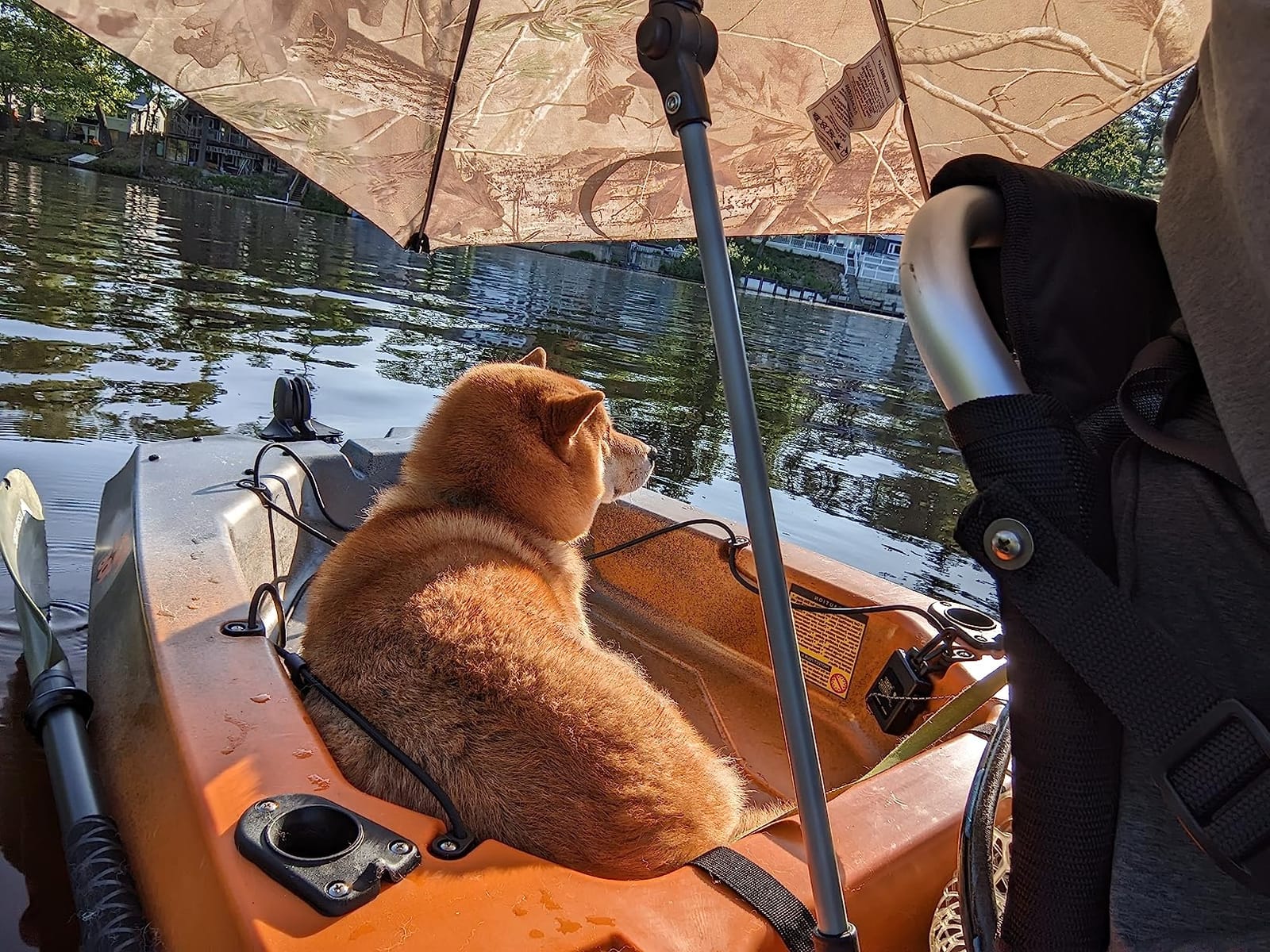
Rigging is the strongest part of the package. You get accessory tracks, multiple rod holders, cushioned floor pads, a custom tackle box and a universal transducer mounting system, so a fish finder is a bolt-on rather than a project. The removable mesh seat adjusts for leg length and lumbar support, and one 87 percent of five-star reviewers rated this the strongest build in our test group.
The honest limitation is weight. At 107 pounds for the hull plus an 18-pound removable pedal console, this is not a shoulder-carry boat, and multiple reviewers advise budgeting for a kayak cart and wheels. Plan your launch around that rather than being surprised at the ramp. The paddle is also sold separately, so add it to your total ownership calculation.
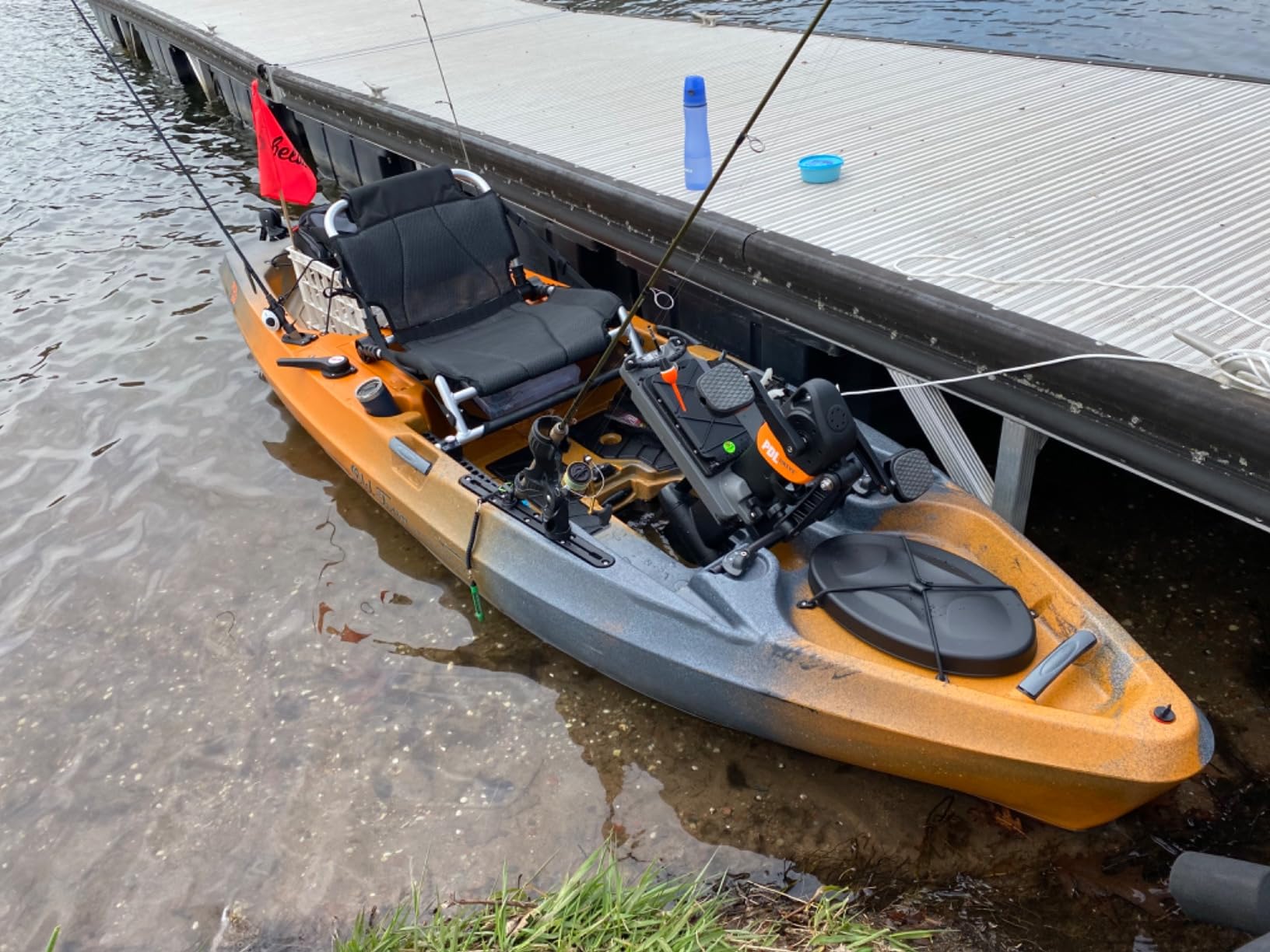
How it handles on an open reservoir
Rudder response on this hull is close to instant, and reverse engages without a shift. That combination is what lets you hold a trolling speed over a weed edge while both hands stay on the rod, then back down off the grass when a fish works the edge.
Track is straight enough to cover open water between points without constant corrections, which is the difference between reaching a far shoreline and fighting wind for an hour to get there.
Who should skip this boat
Skip it if you fish entirely from a small pond, a sheltered creek or a car you cannot fit a roof rack on. The 10 ft 6 in length does reach skinny water, but the load is real, and a 350-pound modular boat serves the same lakesite far more easily.
Also skip it if your lake is thick with submerged weed from bank to bank. The PDL drive handles vegetation well, but a dedicated fin drive and a narrower, lighter hull are a better match for that water.
2. Albott Modular Fishing Kayak: Best Customisable Pedal Drive Fishing Kayak for Lakes
Albott Modular Fishing Kayak with Propeller Drive System & Durable HDPE
114.96in L x 34.68in W
109.7 lb assembled
400 lb maximum capacity
HDPE hull
Pros
- Three-step modular assembly with built-in handles
- Quiet propeller drive with instant reverse
- Customisable seat and accessory points
- 304 stainless hardware
Cons
- Only 34 reviews for this listing
- Seating listed as 2 but hull is a single-rider layout
The Albott modular kayak is the pick for anyone who wants to reconfigure their boat over time. The hull assembles in three steps and comes apart just as fast, and the sections have integrated handles built for carrying rather than a rope loop. That matters when your launch is a muddy bank instead of a formal ramp.
Power comes from a propeller drive with reverse, and owners describe smooth, quiet acceleration with enough response to turn inside a tight dock. That docking agility is genuinely useful on small lakes where the ramp, the boat and the fishing spot are all within a hundred yards of each other.
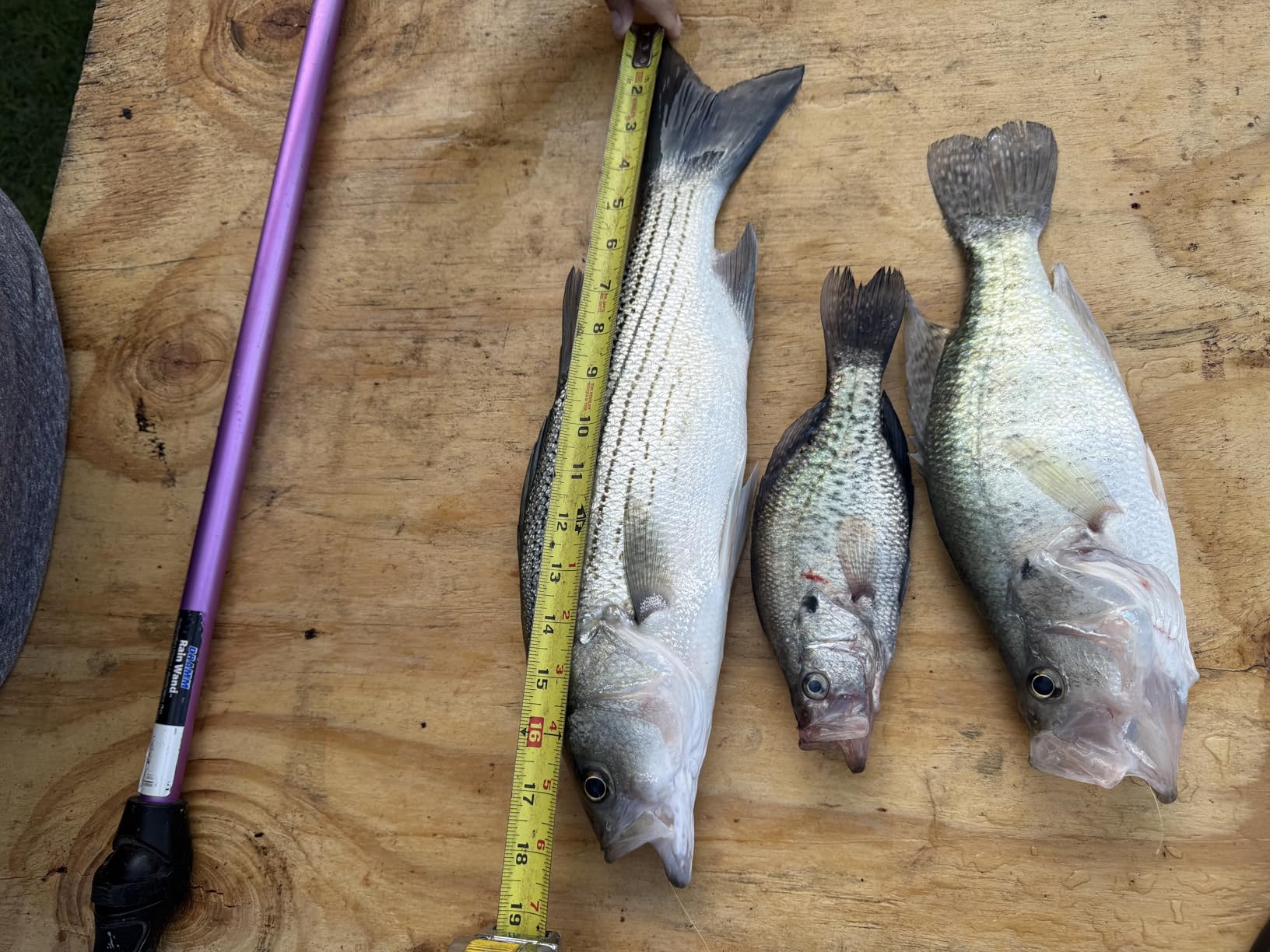
The build is a reinforced HDPE hull with 304 stainless steel hardware, which is a sensible recipe for rental fleets and family use where the boat takes more abuse than a personal one. Three quarters of buyers rate it five stars, and owners consistently call it stable, customisable and dependable on sheltered water.
Be aware of the two gaps. The review base is thin at 34 ratings, so long-term durability evidence is limited, and while the listing says two-person seating, the hull geometry is fundamentally a single-rider sit-on-top. A few buyers also dock points for fit-and-finish and for value around the drive itself.
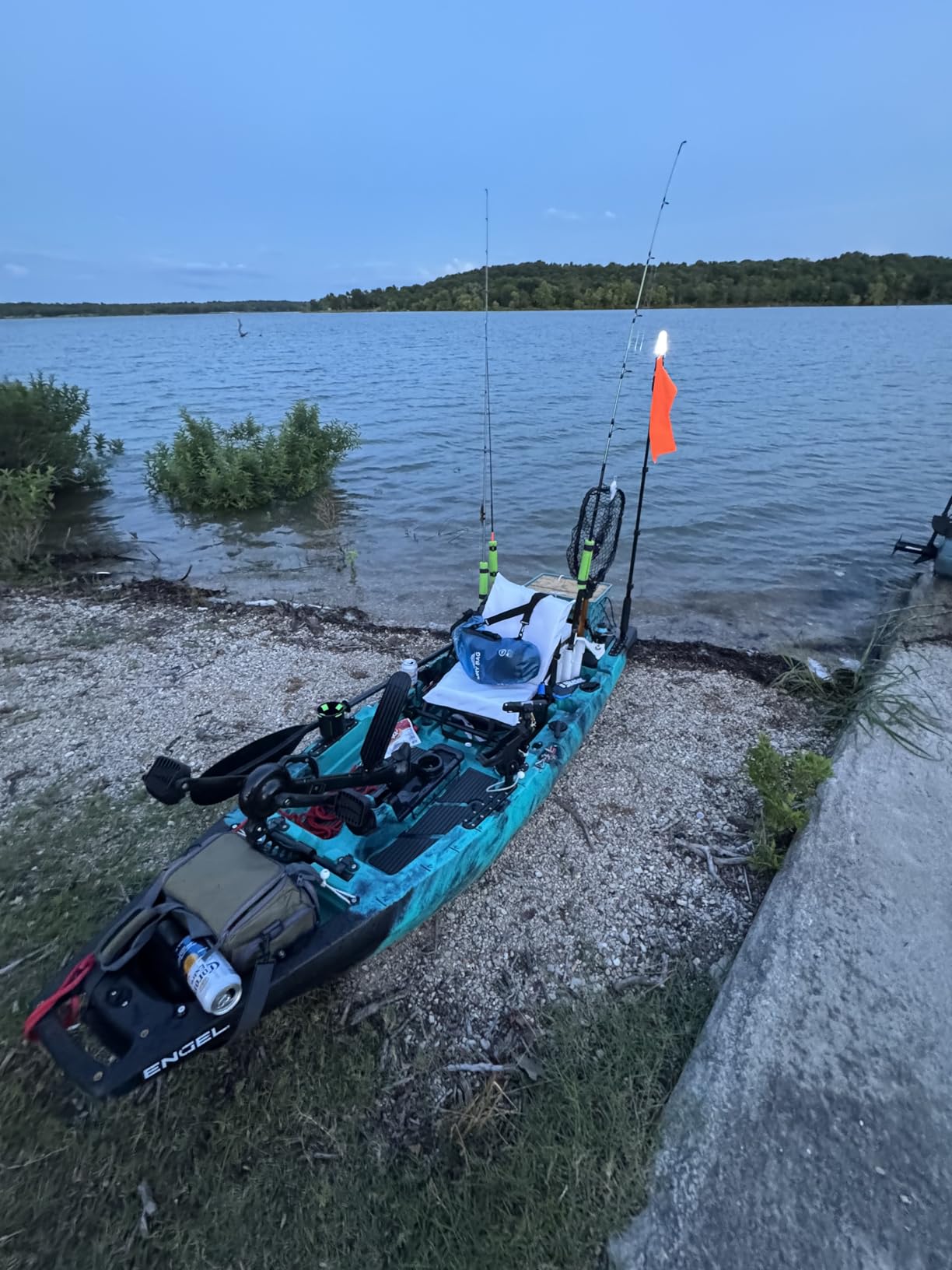
What the modular layout actually saves you
Because the pieces separate, this boat can live in a closet or a garage shelf between trips instead of hanging on a wall. For someone with a sedan and no roof rack, that is the difference between fishing twice a month and not fishing at all.
The trade-off is that each launch has an assembly step, and the sections are heavier than a single-piece 10-footer when you add the drive across both.
Who should skip this boat
Skip it if you fish open, wind-exposed water where pontoon-style width or a longer waterline matters more than packability. A 9.6-foot hull is nimble, not fast, and it will move noticeably more water than a 12.5-foot boat in a headwind.
Skip it too if you want a proven long-term record. The drive works, but 34 reviews will not tell you what happens to the drive seals after five hundred hours.
3. Reel Yaks Raider 9.5: Best Pedal Drive Fishing Kayak for Lakes and Solo Launches
Reel Yaks Raider Modular Fishing Kayak – 9.5ft, 380 lbs Capacity, Red White Black – Pedal Fishing Kayaks for Adults & Youth, Sit on Top, Compact Storage, Lightweight, Easy Transport
114in L x 35.4in W
66 lb assembled at 31 lb per section
380 lb capacity
W-hull sit-on-top
Pros
- Breaks into two 31 lb sections that fit a normal car
- Quiet knee-friendly propeller drive
- Stable W-hull rated to 380 lb
- Adjustable stadium seat
Cons
- Rudder needs tension adjustment from the box
- Propeller picks up weeds in weedy bays
- One owner reported stripped drive gears
Few boats solve the solo launch problem as cleanly as the Reel Yaks Raider. It separates into two sections at roughly 31 pounds each, so one person can carry a piece to the water and drag the other on a cart. It assembles in four steps and stores in a trunk or a closet, which is why this is our pick for anglers without a pickup.
Despite the small footprint, the W-hull sit-on-top design is genuinely stable. One owner over 200 pounds reports it comfortably holds two adults, and 74 percent of buyers rate it five stars with no one-star reviews at all. The propeller drive is quiet and knee-friendly, and moves the boat well both on open water and in current.
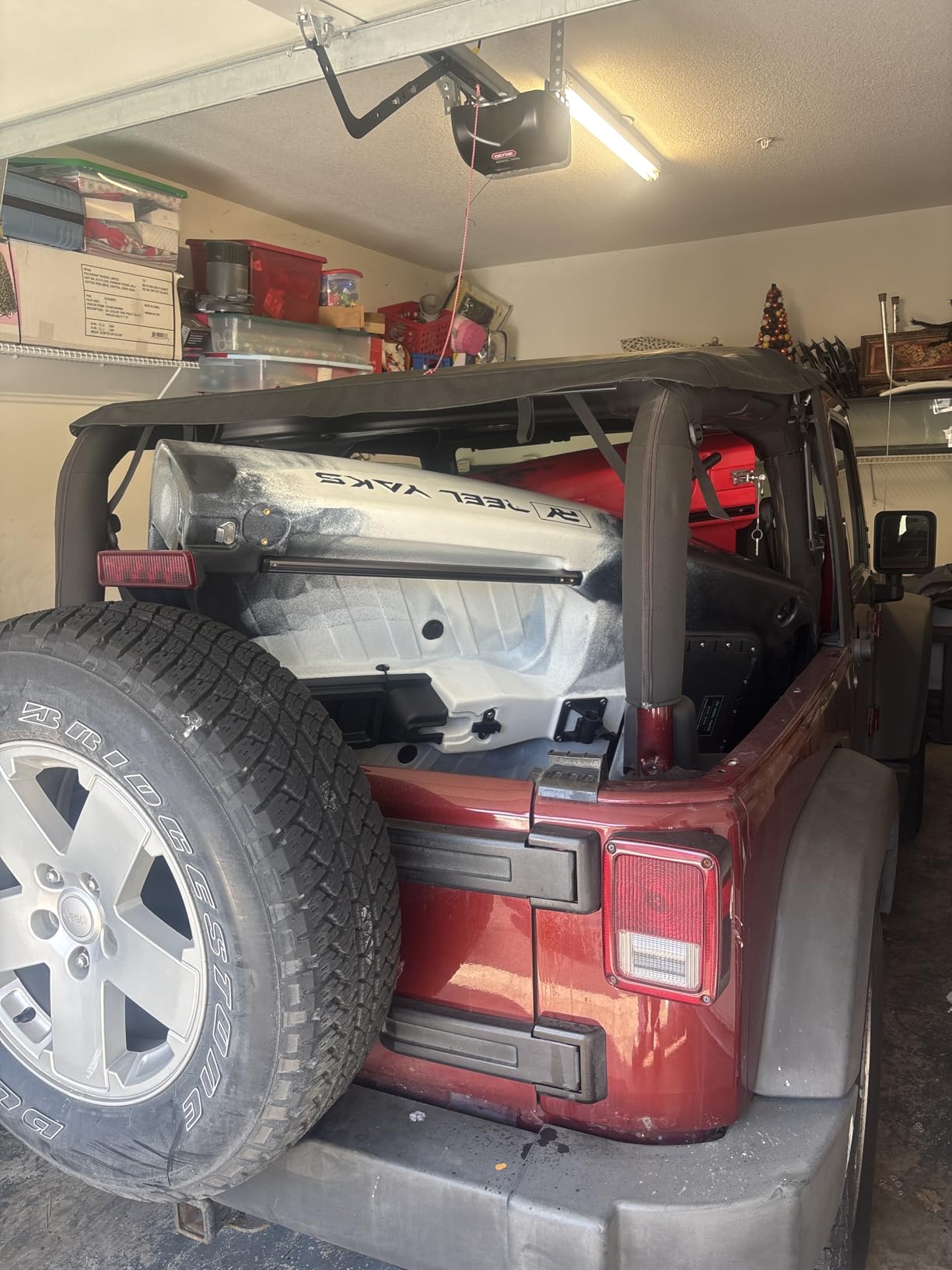
The stadium seat adjusts fore and aft and is comfortable enough for long sits, which is the feature that decides whether you stay out until dark. The manufacturer is US Coast Guard-registered, and a 360-degree rod holder comes in the box rather than as an add-on.
Now the complaints, because they are real. The rudder needs tension adjustment out of the box and can be fiddly to dial in. The drive is heavy and awkward to install once you are already on the water, the propeller collects weeds, and one detailed report describes stripped gears after about two months of regular use. Sections can also fit loosely from the factory.
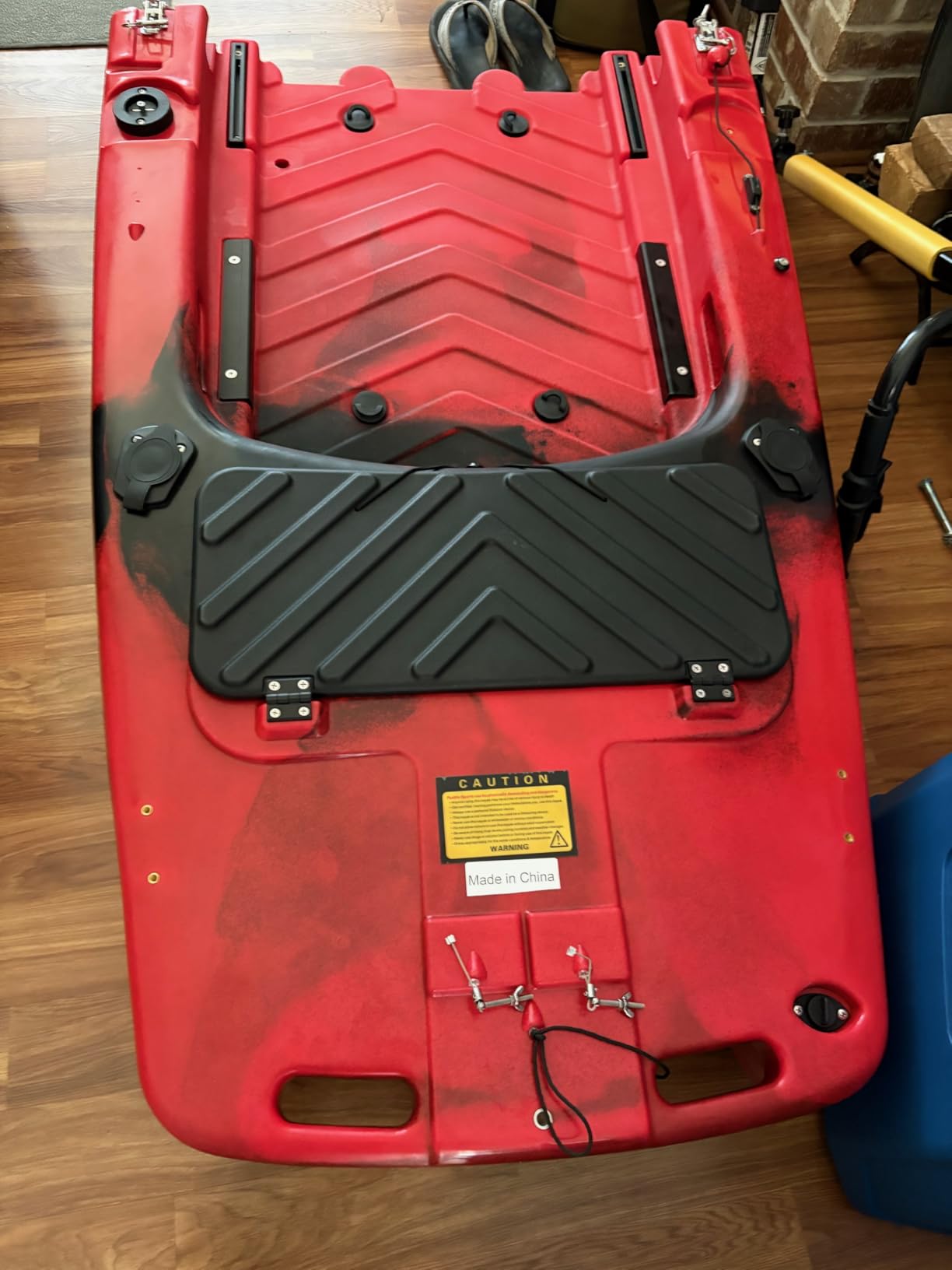
How it behaves on weedy lake bays
This is the weakest part of the package on shallow, vegetated water. The low-profile prop helps, but propeller drive still fouls when you work the grass line, and clearing it means pulling the drive and clearing the shaft by hand.
If your lake is mostly open water with structure in the middle, that rarely comes up. If you fish the margins, read our fin drive section before you commit.
Who should skip this boat
Skip it if you plan to solo-load the boat regularly from a truck bed with no cart, because the drive is the awkward part to lift, not the hull sections. Also skip it if you want to run a larger trolling motor, since the pedal drive cannot be fully removed to make room.
Buyers who need parts support should check drive serviceability in your area before buying, given the stripped gear report in the reviews.
4. Reel Yaks Radar 10: Best Pedal Drive Fishing Kayak for Lakes with a Wide Casting Deck
Reel Yaks Radar Modular Fishing Kayak, 10ft, 430 lbs Capacity
118in L x 33in W
88 lb assembled
430 lb capacity
Two-piece HDPE hull
Pros
- Wide W-hull supports standing casts
- Instant forward and reverse
- Flush-mount rod holders and track rails included
- #10 rank in the Fishing Kayaks category
Cons
- Heaviest of the modular Reel Yaks hulls at 88 lb
- Modest review volume at 35 ratings
The Radar is the version of the Reel Yaks idea built for an angler who wants to stand up. Its W-hull is wide enough to give solid footing while casting, and the 430-pound rating means a full day of gear plus a large frame in the seat does not overwhelm it. That combination of width and capacity is what lets you work topwater without feeling the boat roll underneath you.
It shares the modular two-piece hull design, so it stores in a trunk and avoids a trailer or roof rack. The propeller drive gives instant forward and reverse, which is genuinely useful when you are positioning over structure and need to back off a snag without shifting weight around.
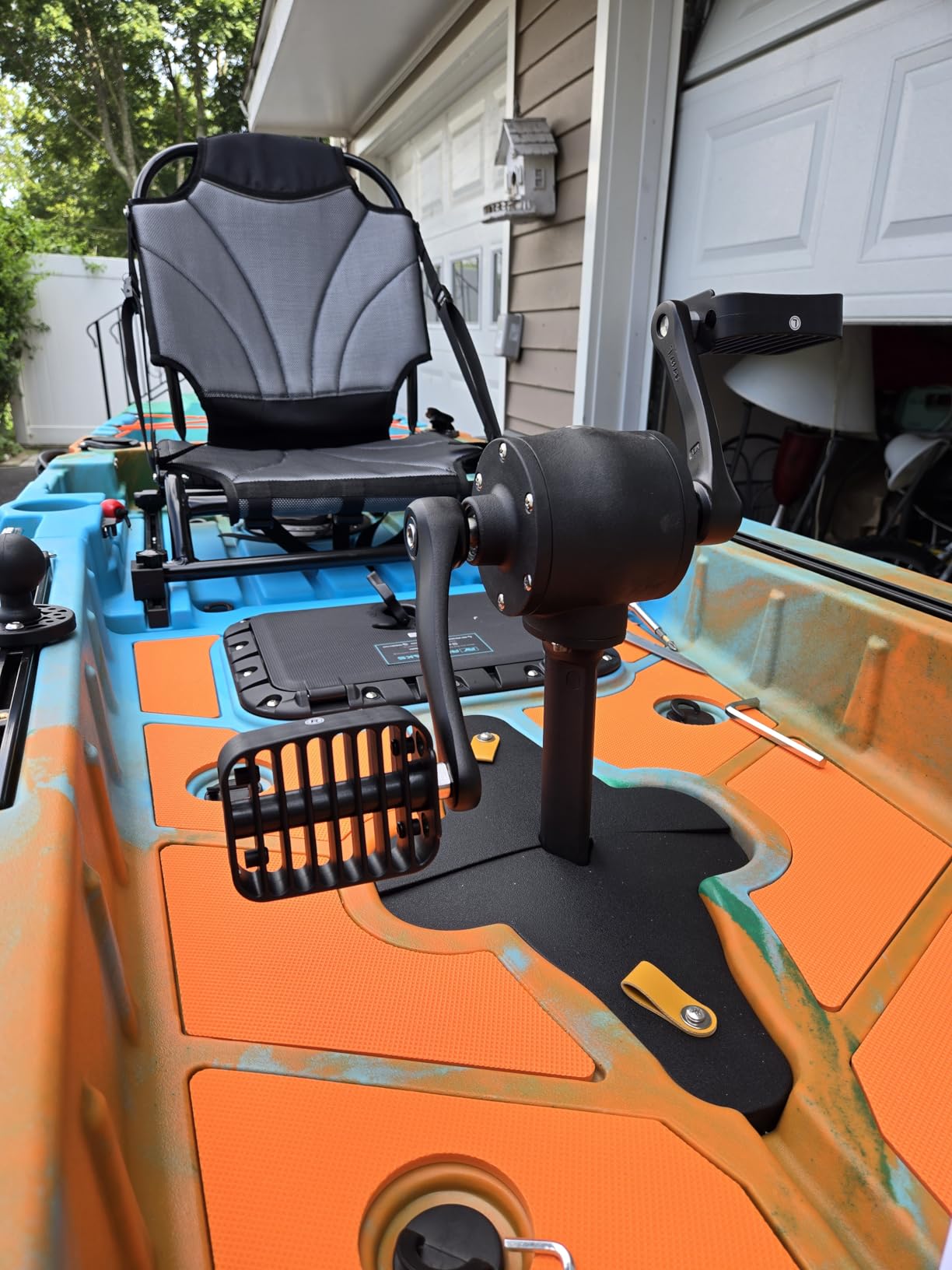
Factory rigging is better than most at this level: flush-mount rod holders, track rails and storage hatches are all installed, and a Fin Drive version is available as an alternative if your lake has heavy vegetation. The category ranking reflects that owners take this boat seriously.
Two caveats. At 88 pounds it is the heaviest of the modular hulls here, so the cart is not optional. And 5 percent of buyers give it one star with a 14 percent three-star cluster, which usually signals a fit or drive issue rather than a bad hull. One buyer has run a trolling motor in the pedal drive bay, a configuration some anglers see as a risk to the drive.
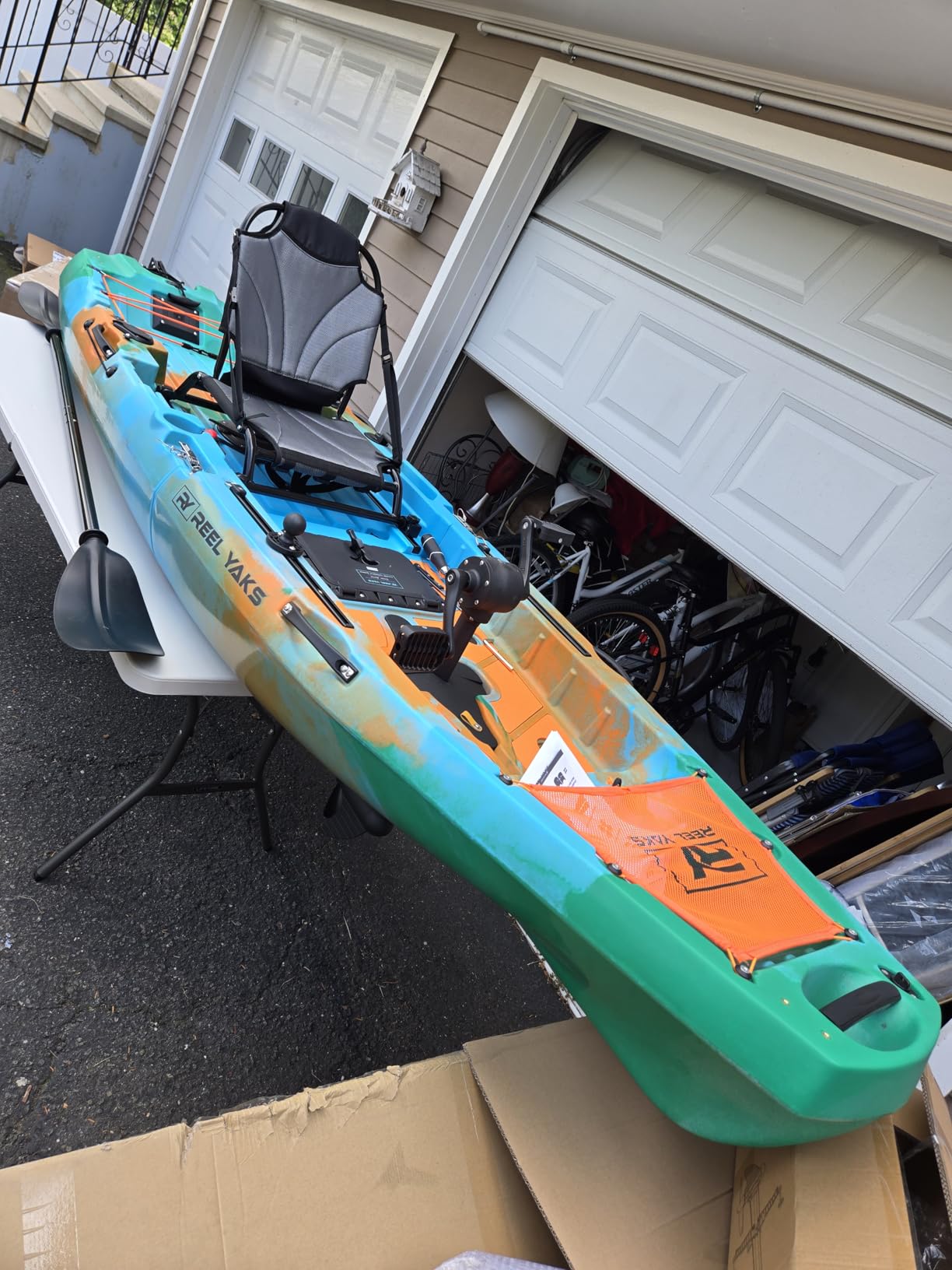
When standing actually matters
Standing helps when sight-fishing clear water, casting to lily-pad edges and working a shallow bay where your view of the bottom matters more than your casting range. On those trips the wide deck pays for itself within a season.
On open water where you mostly sit and troll, the extra beam just makes the boat track a little more lazily. Decide which of those days you actually fish before you pay for width.
Who should skip this boat
Skip it if you need to carry the boat to the water by yourself over distance, or if your launch is a soft bank where a two-piece hull plus an 88-pound total is a hard slog. It also carries the same propeller weed-fouling profile as its sibling model.
If vegetation is the main event on your lake, order the Fin Drive configuration instead of the propeller version.
5. BKC Brooklyn 12.5 Pro: Best Premium Pedal Drive Fishing Kayak for Big Lakes
BKC Brooklyn 12.5 Pro Pedal Fishing Kayak, Propeller Drive
150in L x 35in W
80 lb rigged weight
550 lb capacity
Hand-controlled rudder
Pros
- Owners report 3-4 mph pedaling and over 5 mph with a paddle
- Lightest premium hull here at 80 lb
- Excellent factory rigging with five rod holders
- 550 lb capacity is the largest in this group
Cons
- Pedal drive can arrive late
- damaged or missing
- Rudder needs constant attention and will not hold course
- Seat straps stretch out
- Some buyers report BKC is cheaper direct
On speed this is the winner of our test group, and the number comes from owners rather than the spec sheet. An experienced angler logs roughly 3 to 4 mph pedaling and over 5 mph with paddling added, and long-distance users report logging 75-plus miles of pedaling in a season. On a big lake that pace is the difference between covering a bay and covering a map.
It is also unusually light for a 12.5-foot boat at 80 pounds rigged, which means it goes on a car roof without a trailer. The 550-pound capacity rating is the highest in this lineup, so a larger angler with a heavy tackle load is not fighting the hull rating all day.
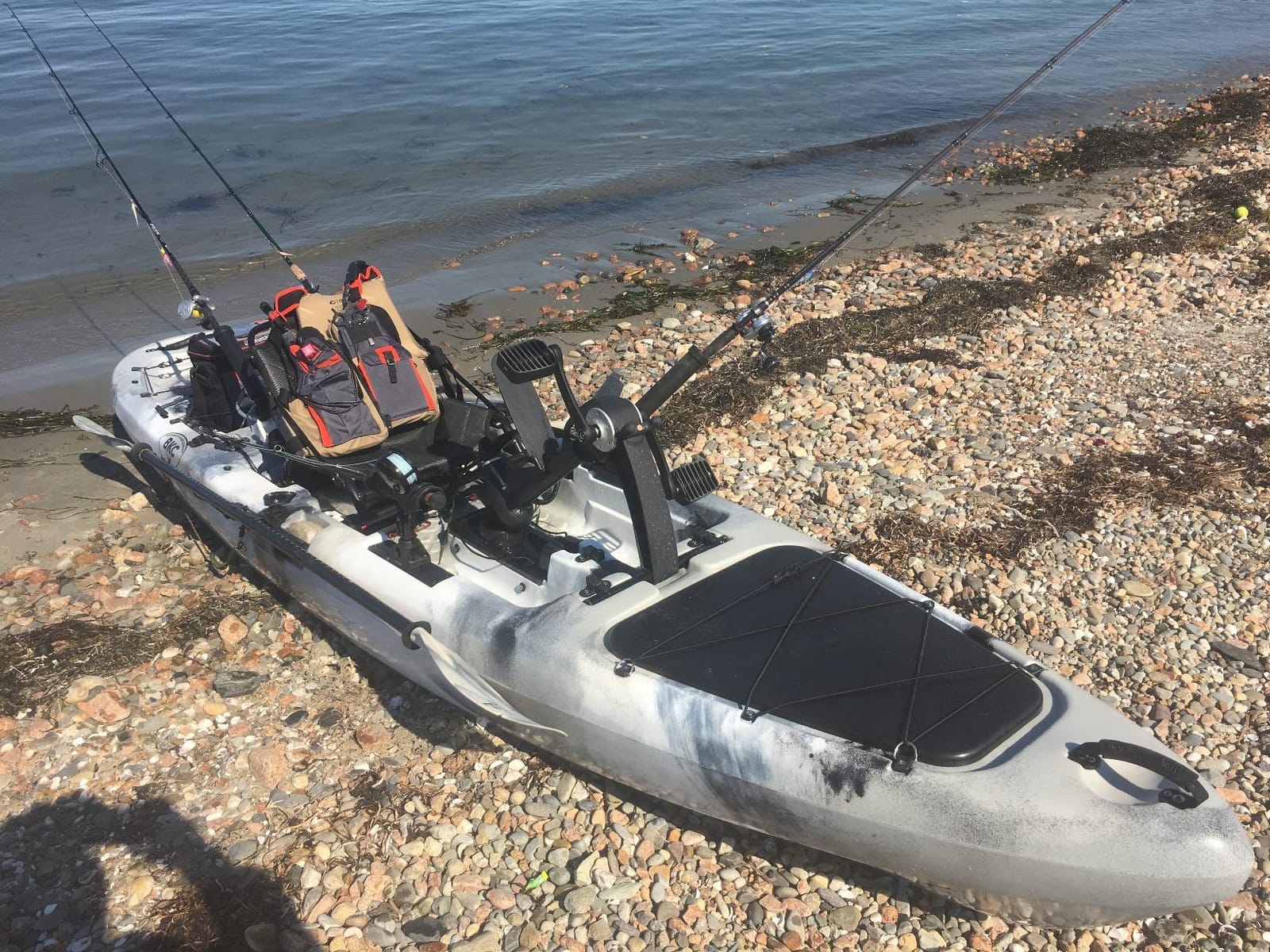
Stability is a clear strength. Owners call it stable seated, it tracks well, and one saltwater angler confirms it handles open ocean conditions. It also paddles surprisingly well as a backup, which matters because you can lift the drive in shallow water and still get moving.
The drive and fulfillment are where the friction sits. Pedal drives have arrived late, damaged or missing, one unit was reportedly built backwards so forward pedaling moved the kayak in reverse, and replacement service has been slow for some buyers. The hand-controlled rudder needs constant attention and will not hold a straight line, seat straps stretch out, and stiff pedaling takes time to break in.
Speed versus steering precision
This boat is quick and it wants to go straight, which is excellent for covering water and frustrating when you are trying to hold a precise line along a weed edge. The hand-controlled rudder is the trade: you steer with a handle, and you have to keep correcting.
If your lake days are long transits followed by one or two fishing spots, that trade is worth it. If you are repositioning constantly between close spots, look at a boat with a foot-controlled rudder.
Who should skip this boat
Skip it if you fish a small pond where speed is irrelevant, or if you cannot tolerate a boat that needs a rudder correction every few minutes. Also skip it if you are buying well ahead of a season and want the drive in hand on day one, since fulfillment has been inconsistent.
Rigging aftermarket rod holders is difficult on this hull because the inner surface is inaccessible, so plan your holder layout before the first trip.
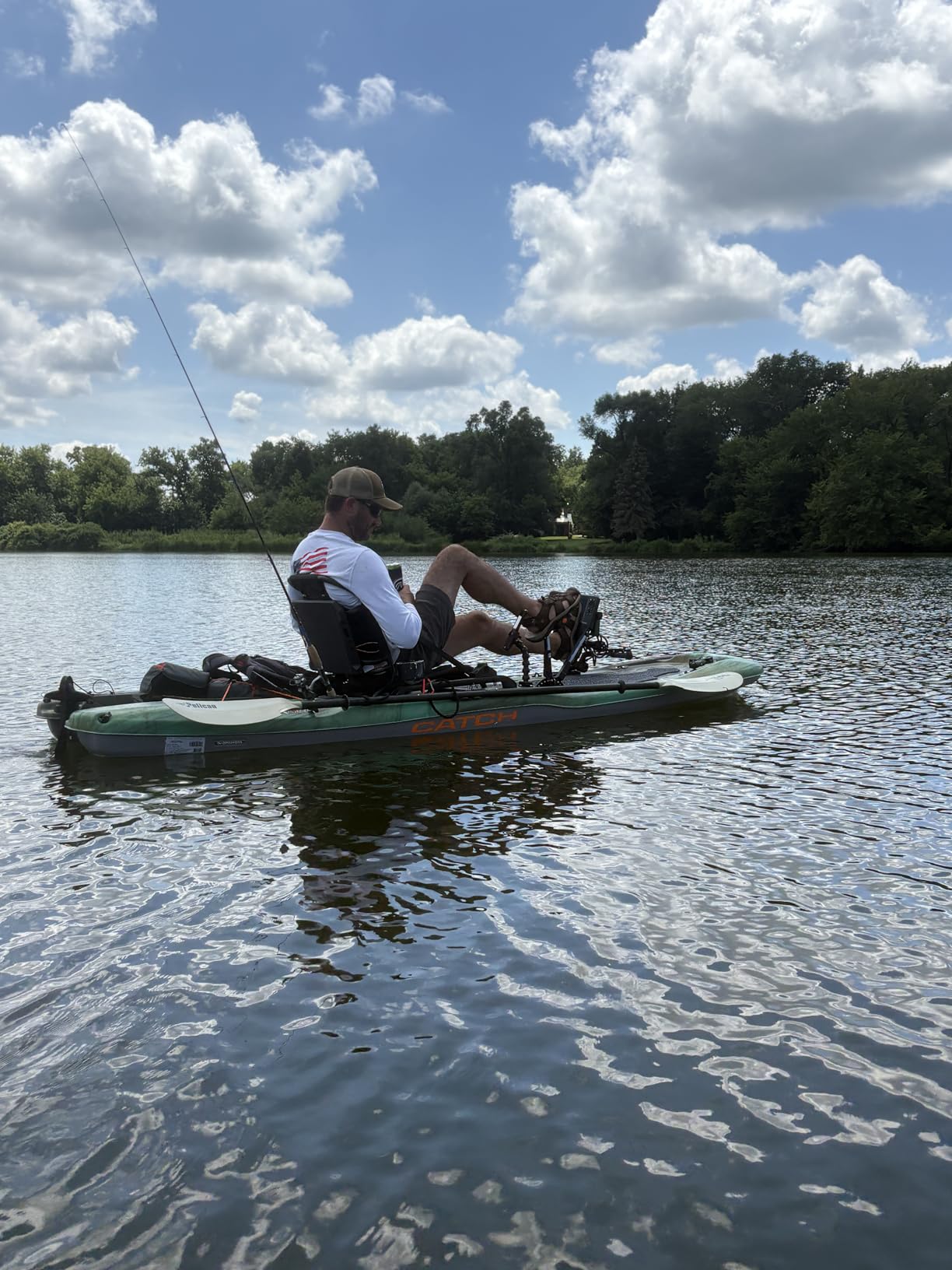
6. Pelican Catch Kicker 110 HDII: Best Fin Drive Pedal Kayak for Weed-Choked Lakes
Pelican Catch Kicker 110 HDII – Sit on top Fishing Angler Pedal Kayak – Amazonia – HyDryve II Pedal System – Stable – 11 ft
125.5in L x 33in W
59 lb hull
300 lb capacity
HyDryve II fin drive
Pros
- Lightest hull here at 59 lb so it is easy to carry and car top
- HyDryve II fin drive handles vegetation well
- Adjustable pedal position fits different riders
- Lifetime limited hull warranty
Cons
- Lowest rating in the group at 3.7 stars
- Drive rudder and seat may need separate purchase
- Lowest capacity here at 300 lb
This is the only boat in our lineup built around a fin drive, and that single fact decides it for weedy water. The HyDryve II fin pedal system sweeps wide flexible fins rather than spinning a propeller, so it pushes through aquatic vegetation without the fouling and constant clearing that propeller drives suffer in the same bays.
Weight is the other headline. At 59 pounds this is the easiest boat here to lift into a car and carry down a shoreline, by a wide margin. If your launch is a walk rather than a ramp, that difference matters more than any feature list.
The Ergoboost seat raises you into a higher seating position for a better sight line over the water, the pedal position adjusts to fit different riders, and the handled rudder can be worked from either side of the seat. The two metal in-handle rigging tracks have built-in accessory grooves for adding gear without drilling.
We will not oversell this one. It carries the lowest rating in our group at 3.7 stars, with 16 percent one-star and 13 percent two-star responses that point to assembly and build dissatisfaction rather than random noise. The pedal drive, rudder and seat are not all listed among included components, so expect add-on cost, and the parts warranty is one year against a lifetime limited hull warranty.
Fin drive on a lake full of grass
On a lake where you work the grass flats for pike or bass, a fin drive changes your day. You can idle into a weed edge without stopping to strip line off a propeller shaft, which means more casts in less time.
The trade-off is efficiency in truly open water. Propeller drives generally push harder and hold speed better on a long crossing, so if your lake is mostly open with structure only at a few points, the fin drive is not automatically the better answer.
Who should skip this boat
Skip it if your lake is open and wind-exposed. At 33 inches of beam and 300 pounds of capacity, this is a stable, nimble boat, not one built to soak up chop.
Skip it if you want turnkey rigging with nothing to buy. Check exactly what is included with your configuration before you commit, because the drive, rudder and seat are not uniformly included.
7. Old Town Malibu 12: Best Pedal Drive Fishing Kayak for Lakes and Taller Anglers
Old Town Ocean Kayak Malibu Pedal Sit-on-Top, Horizon
12 ft solo sit-on-top hull
Old Town PDL drive
Limited hull warranty,5-year PDL warranty
Rigged with tankwell and rod holders
Pros
- Stable and fast
- with one owner reporting good handling in chop
- A 6 ft 5 in buyer calls out the roomy seat
- Large stern tankwell and generous accessory tracks
- Five-year PDL drive warranty
Cons
- Only 10 ratings
- all five stars
- Shares a hull platform with the older Salty PDL
- No universal transducer bracket
The Malibu 12 solves a specific problem that shorter cockpits create for tall anglers. A 6 ft 5 in owner specifically calls out the roomy seat, and that matters more than any spec sheet when you spend six hours in the boat. The 12-foot hull also runs faster and tracks better than a 10-footer simply because it moves more water.
Every one of the ten recorded ratings is five stars, with stability, speed and seat comfort as the consistent themes. One reviewer notes it takes choppy water well rather than only flat water, which is a decent sign for an angler who fishes when the wind is up.
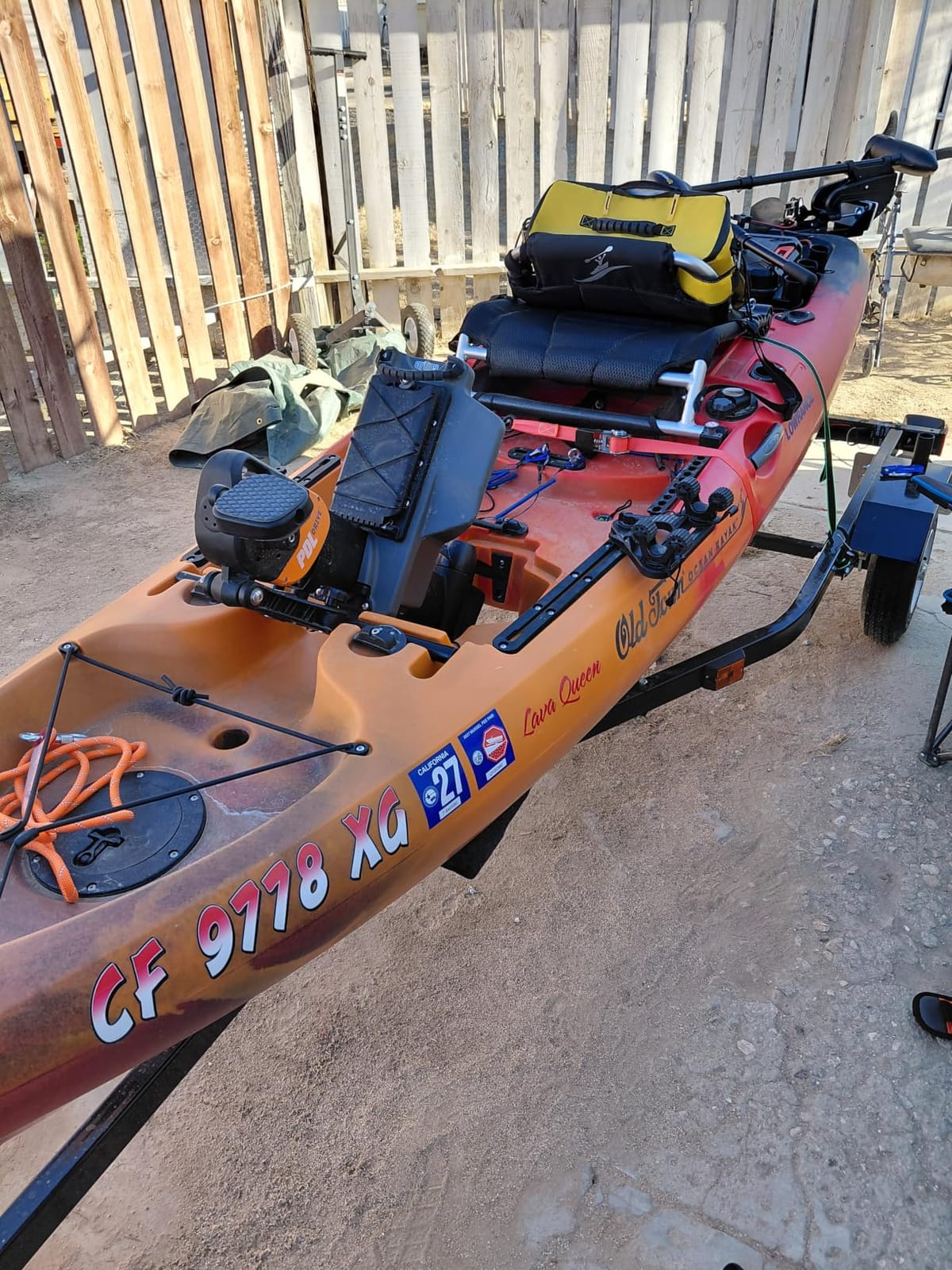
Rigging is generous: a redesigned large stern tankwell for coolers and gear, three flush-mount rod holders with two behind the seat and one forward-facing, and two 18-inch accessory tracks on either side of the cockpit. Several owners add a Minn Kota stern trolling motor with an extended tiller for push-pull steering from the seat, which extends the boat’s range considerably.
Be clear-eyed about the sample size. Ten ratings is a thin base, and one owner notes it shares the same hull as the older Salty PDL with only minor changes. Accessory and fish-finder mounting is centred on the side tracks rather than a universal transducer bracket, so plan your electronics layout in advance.
Why seat height changes a whole day
Elevated seating raises your sight line over the water, which helps you see weed edges, submerged timber and the tops of rocks that a low seat hides. On a clear lake with scattered structure, that is a real fishing advantage rather than a comfort feature.
Owners consistently call it good value for an Old Town pedal kayak, and the five-year PDL drive warranty is the longest drive coverage we found here.
Who should skip this boat
Skip it if you are under about five foot six, since the cockpit is sized for a taller frame and a shorter angler will sit too far forward. Also skip it if you need a plug-and-play transducer mount, because the side tracks are the primary mounting system.
Owner feedback is thin enough that we would want a demo before buying sight unseen.
8. LIFETIME Renegade 116: Best Long Pedal Drive Fishing Kayak for Fast Lake Runs
Lifetime Renegade 116 Pedal Drive Fishing Kayak
138.5in L x 32in W
102.5 lb
350 lb capacity
Deployable propeller pedal drive
Pros
- Pedal drive frees both hands for casting and handling gear
- Rudder steering feels natural within minutes
- Sliding framed seat with back support
- Flush-mount rod holders and accessory tracks
- Five-year limited warranty
Cons
- Only a single rating on record
- 102.5 lb is a substantial hull to move solo
- 350 lb capacity is the lowest in this group
The Renegade 116 is a long, narrow boat with a deployable pedal drive, and that shape is built for covering distance. At 138.5 inches it is the second-longest hull we tested, which means more waterline length and less hull drag per mile travelled. If your lake has a far bank that takes an hour of paddling, this is the boat built to make that trip routine.
The single detailed owner review we found is worth taking seriously. That buyer praises hands-free pedaling that leaves both hands available, rudder steering that becomes intuitive within a few minutes, and a framed seat with back support that raises the sight line. Multiple storage areas plus rod holders and accessory mounts organise a genuinely heavy load of gear.
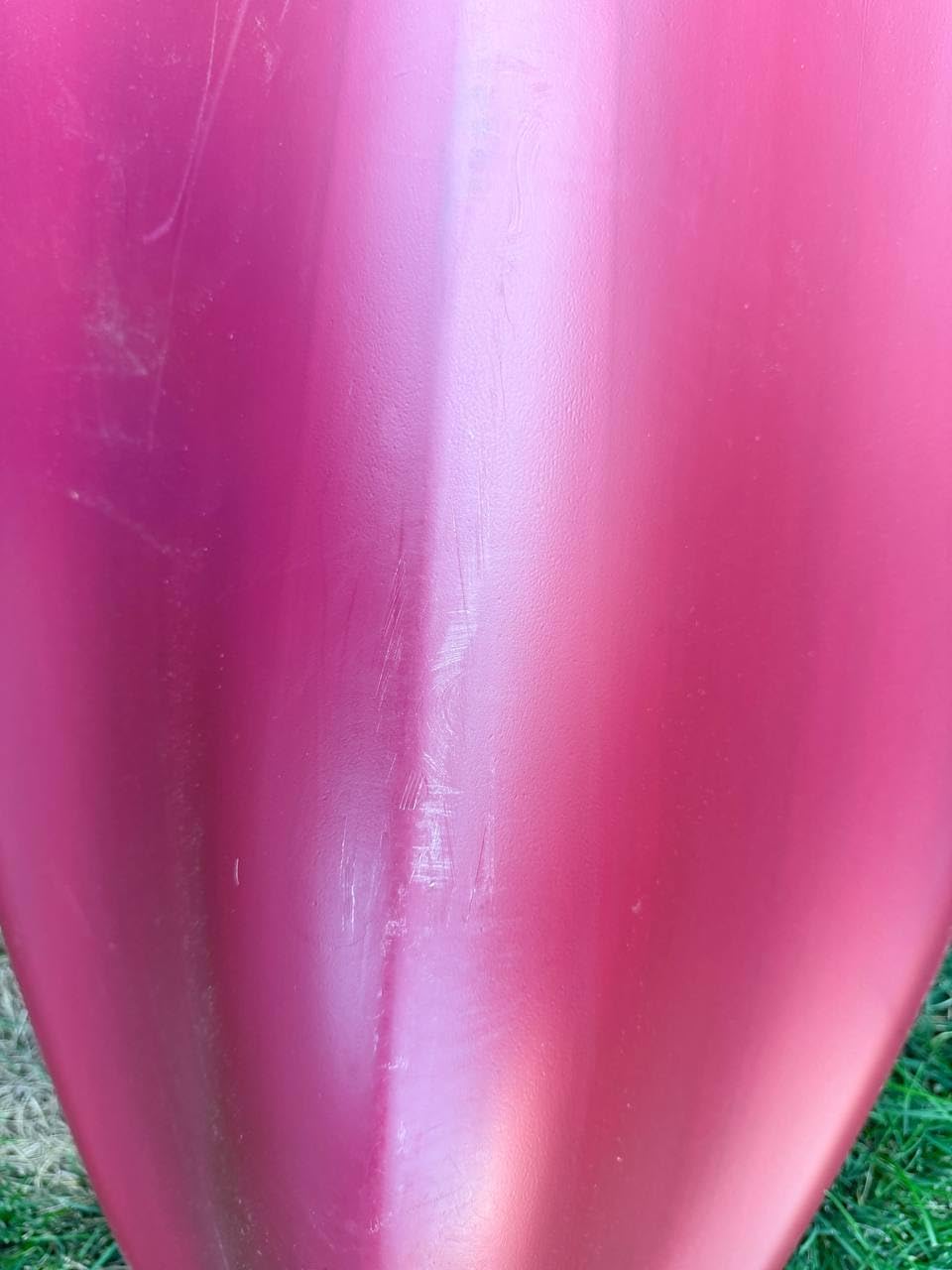
Construction is UV- and impact-resistant HDPE with self-draining scupper holes, so rainwater leaves the cockpit on its own. Rudder steering is built in rather than retrofitted, and a paddle is included and stores on the kayak for short repositioning moves.
The reason this sits eighth in our ranking is evidence, not quality. It has exactly one rating on record, so the 5.0 average is encouraging rather than conclusive. At 102.5 pounds it is a substantial hull to move solo, and the 350-pound capacity is the lowest in the group after the Pelican.
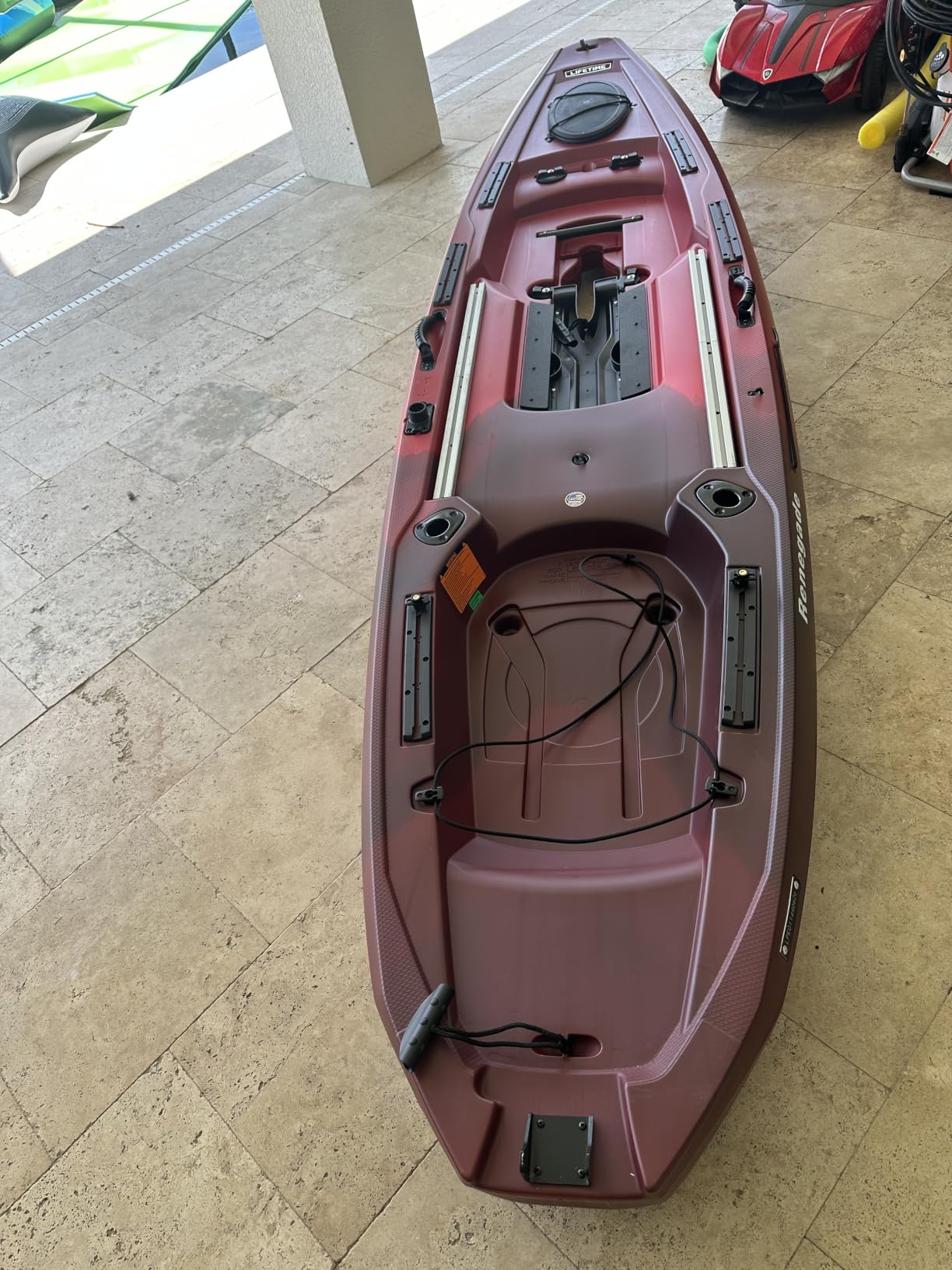
Length versus beam trade-off
At 32 inches of beam this is the narrowest hull in our lineup, and that is deliberate. Narrow hulls are fast and track well in a line, but they feel less stable standing up than a wide W-hull.
That makes it a sit-and-cast boat with speed advantages, not a stand-and-cast platform. Decide whether your lake days are about covering distance or about working the water around you.
Who should skip this boat
Skip it if you buy based on ratings alone with no way to see the boat, because one review cannot tell you how the drive holds up or how the seat wears. Also skip it if you need to solo-handle the boat from a vehicle, since 102.5 pounds is well past a comfortable solo lift.
Buyers who carry a lot of gear should note the 350-pound ceiling before loading up.
9. BKC Brooklyn 13.0 Tandem: Best Tandem Pedal Drive Fishing Kayak for Two Anglers
BKC Brooklyn 13.0 Tandem Modular Pedal Kayak, 2 Person
156in L x 31in W
92 lb
440 lb capacity
Dual flipper-style pedal drives
Pros
- Only tandem pedal kayak in the group with two independent drives
- Three-piece hull converts to a solo layout
- Hand-controlled rudder and generous cargo
- Two paddles and two seats included
Cons
- Only two five-star ratings recorded
- 92 lb tandem configuration is heavy to load solo
- Five-year warranty with ten-year spare part availability
This is the only tandem pedal kayak in our group, and the differentiator is the dual flipper-style drives, one at each seat. Both anglers pedal independently, so you are not trading stroke rate for conversation. On a lake where you fish with a partner and want to cover water together, that is the feature that justifies the boat.
The hull is modular in a genuinely useful way. It separates into two or three pieces, so you can run all three sections tandem or connect the front and rear as a single-rider kayak. That means one boat covers a solo trip and a two-person trip instead of forcing a second purchase.
Both recorded ratings are five stars, which is promising but essentially anecdotal. The specification sheet is the real evidence here: two flipper pedal drives, a 13-foot hull rated to 440 pounds, a hand-controlled rudder and watertight hatches with bungeed cargo.
What solo mode feels like
Connecting the front and rear sections gives you a shorter, lighter boat for solo fishing, and the accessory rails and flush-mounted rod holders give both seats a proper fishing position in tandem mode. Watertight hatches keep gear dry through a squall crossing.
The catch is logistics. Three pieces in a solo configuration is more to move, and the full tandem build at 92 pounds is not a one-person lift. Budget a cart that handles the whole assembly.
Who should skip this boat
Skip it if you always fish alone. You would be paying for a second drive and a second seat you never use, and handling a longer hull than you need.
Skip it if you are buying based on ratings, since two reviews tell you almost nothing about long-term drive durability or how the section joints wear after repeated assembly.
10. Spatium Inflatable Pedal Kayak: Best Packable Pedal Drive Fishing Kayak for Lakes
Spatium Pedal Fishing Inflatable Kayak Pedal Sit on Top Pedal Drive Fishing Kayak with 360° Rotatable Seat Pedal Kayak for Adults One Person Suitable for Rivers,Oceans,Lakes-Fish Bone Model
Packs to 48in x 5.9in
330 lb capacity
Double-layer PVC hull
360 degree swivel seat
Pros
- Packs into a backpack
- unlike any hard shell here
- 360 degree swivel seat with 80 cm fore-aft rail
- Build quality praised above average
- Backpack pump and pedal board included
Cons
- Transducer mount points are poorly placed
- Only one air connector so no electric inflator
- Assembly takes roughly an hour
- One-year warranty is the shortest here
The Spatium is the only inflatable pedal fishing kayak in this roundup, and that changes the transport question entirely. It deflates to 48 inches by 5.9 inches and fits in the backpack in the box. If your lake is reached by a trail, a bike or a roof rack you do not have, every hard-shell boat in this guide becomes a non-starter.
The 360-degree rotatable seat on an 80 centimetre fore-aft rail is the standout feature. You can cast in any direction without shifting your body weight around the boat, which suits shallow bay work and weed-edge fishing where position matters.
The pedal unit itself impresses reviewers. A German buyer who has taken delivery calls the build quality above average with clean seams and an impressively massive pedal unit. Top speed is listed at 6 to 8 km/h with forward, backward and rudder steering.
Now the trade-offs. Transducer mount points are too far apart, so a fish finder needs a custom bracket. There is only one air connector, which rules out using an electric inflator. Assembly takes about an hour. And the one-year warranty is the shortest in this lineup.
Inflatable versus hard shell on a lake
The hull is double-layer PVC brushed material with 0.9 PVC pipes at 7 to 8 PSI and hull pressure of 11 to 12 PSI, plus stabilizing bottom fins. In practice that gives a stable platform, but it will not match the primary stability of a wide polyethylene hull in a beam wave.
What it wins is flexibility. It converts from a pedal kayak to a standard pedal board with an acrylic deck, or to a motorized fin board, depending on which configuration you order. That is three boats in one hull.
Who should skip this boat
Skip it if you fish open, choppy water where hard-shell primary stability matters, or if you plan a heavy electronics package, since the transducer mounting will need solving first.
Skip it if you want long-term warranty backing. A one-year warranty on a boat with a mechanical drive and an inflatable hull is a thinner safety net than the five to seven years the hard shells here carry.
11. BKC Brooklyn 10.0: Best Value Pedal Drive Fishing Kayak for Lakes
BKC Brooklyn 10.0 Single Pedal Fishing Kayak, Sit-on-Top
10 ft rotomolded hull
75 lb listed item weight
350 lb capacity
Flipper-style pedal drive
Pros
- Lightest and least costly pedal kayak here
- Quick-accelerating flipper drive
- 10 ft hull is nimble and easy to transport
- Rotomolded hull resists UV and dents
Cons
- 350 lb capacity is at the bottom of this group
- Paddle not included with the pedal package
- 11 percent one-star share of ratings
The Brooklyn 10.0 is the boat we recommend if you are buying your first pedal kayak and you want the least commitment. At a 10-foot hull and a listed 75 pounds, it is the easiest of the hard shells here to transport solo, and the rotomolded polyethylene body shrugs off UV and dents in a way an extruded hull cannot.
The flipper pedal system accelerates quickly and is simple to operate, with no gear linkage to learn. A hand-operated rudder handles sharp turns and keeps a straight line well enough for lake work. Accessories are sensible for the price: rod holders, a watertight front hatch, bungee-secured rear cargo, an accessory rail and scupper holes.
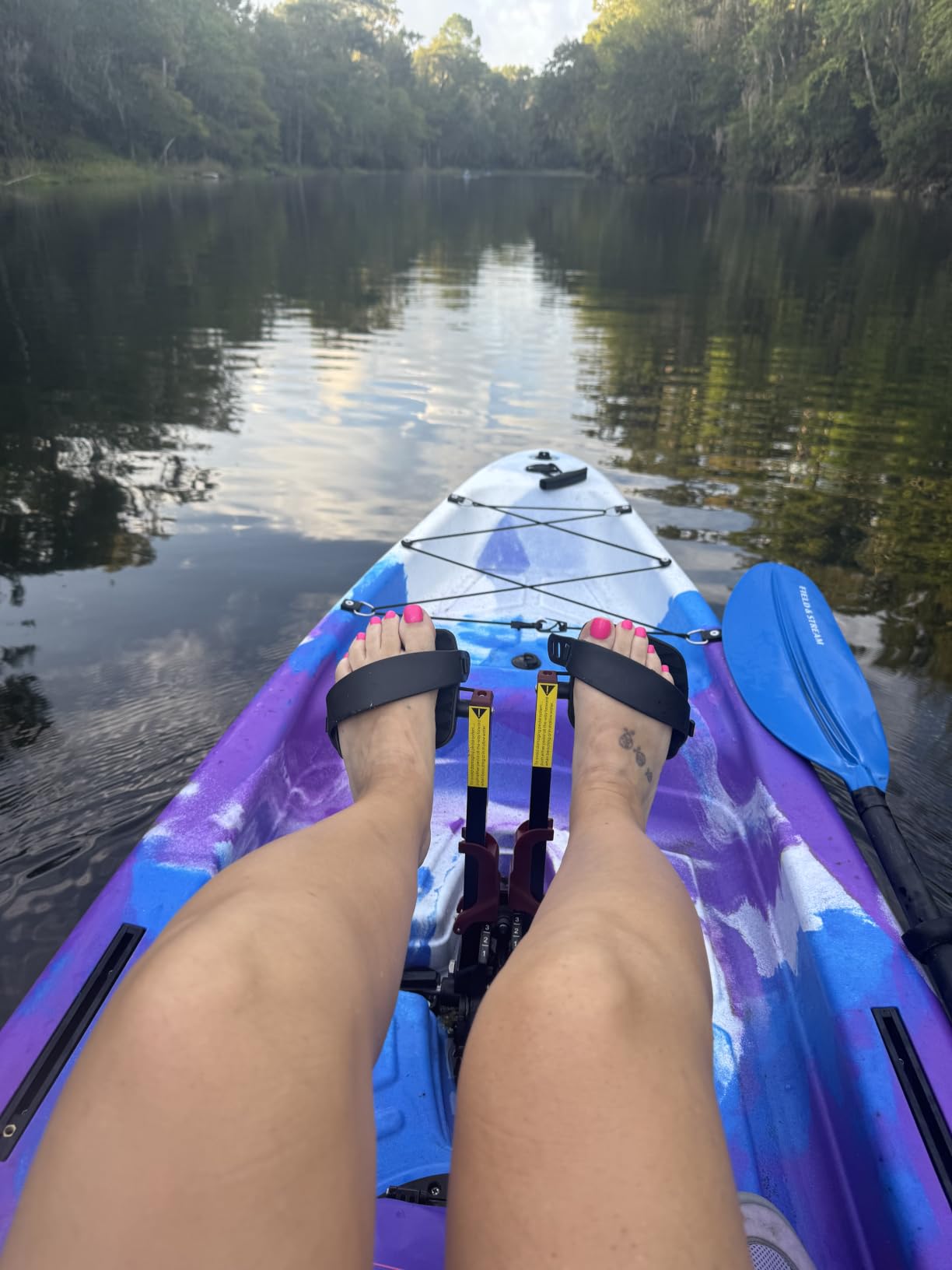
Twelve ratings at 4.2 put it slightly behind BKC’s larger hulls but comfortably ahead on value. Two thirds of buyers give five stars, pointing at the quick drive, the nimble 10-foot hull that suits both lakes and rivers, and a body that holds up in sun and rough handling.
The limits are clear. The 350-pound rating is at the bottom of this group, which constrains how much gear you can add. The paddle is not included with the pedal configuration. And an 11 percent one-star share is the highest alongside the 12.5 Pro, so expect some early builds with fit or finish problems.
Why 10 feet works on small lakes
A shorter hull turns tighter, tracks less reluctantly in shallow bays and pushes through narrow channels between lily pads that a 12.5-foot boat will not enter. On an inland lake with a lot of shoreline structure, that agility is worth more than speed.
You give up waterline length, so long open-water crossings take longer. Match the hull to the water you actually fish rather than the water you wish you fished.
Who should skip this boat
Skip it if you are a larger angler or carry heavy electronics, because the 350-pound ceiling leaves little headroom once you add gear, a battery and a cooler.
Skip it if open-water speed is your priority. At 10 feet this boat is nimble rather than fast, and it will feel slow on a big reservoir crossing.
12. Rotocraft RC 10: Best Warranty Pedal Drive Fishing Kayak for Lakes
RC 10′ Single Pedal Kayak – Propeller Drive (Blue Camo)
124in L x 34in W
67 lb hull
310 lb capacity
Seven-year warranty
Pros
- Very stable for a 67 lb hull
- Three separate storage hatches
- Accessory rails for gear mounting
- Seven-year warranty is the longest here
Cons
- Only two ratings on record
- Lowest weight capacity here at 310 lb
- Limited review evidence for long-term ownership
The Rotocraft RC 10 is a 67-pound 10-foot hull with a propeller pedal drive, and the specification sheet is what carries it. Three separate storage hatches, distributed at the bow, behind the seat and under the seat, give unusually well-spread storage for a boat this size. That layout is what keeps a heavy day of gear from piling into the cockpit and onto your knees.
The adjustable aluminium frame seat raises your sight line, the rudder gives you control in rough water, and accessory rails let you mount the gear you actually use rather than the gear that came with it.
Seven years of warranty coverage is the longest in this roundup, which is meaningful when you are investing in a mechanical drive that lives underwater. Seller support is also described as responsive, including questions asked a month after the sale.
We want to be honest about the evidence. Two five-star ratings is the thinnest sample here, and the 310-pound capacity is the lowest in the group, which limits how much you can load. The written feedback is limited to stability, rails and seller responsiveness.
Why storage layout beats capacity on small boats
On a 10-foot hull, the question is not whether you can carry the gear but whether you can keep the cockpit clear enough to cast from. Three separated hatches mean the tackle, the layers and the lunch each have a home instead of competing for one compartment.
That keeps your centre of gravity lower and your casting lane open, both of which matter more day to day than a headline rating.
Who should skip this boat
Skip it if you are a heavy angler or plan to bring a second person, because 310 pounds is a tight ceiling for a full day of fishing gear. Skip it if you need a deep body of owner feedback before committing.
Those who want proven durability and a deeper rating pool should look at a boat with a longer review history rather than a longer warranty.
How to Choose a Pedal Drive Fishing Kayak for Lakes
Start with the lake, not the brand. A boat that is perfect on a sheltered inland pond can be the wrong tool on a wind-exposed reservoir, and the drive type you need changes completely depending on whether you fish open water or grass flats. Work through these six decisions in order and the right hull narrows fast.
Propeller Drive vs Fin Drive: What Works on Lakes
Propeller drives spin a shaft-linked prop, which is efficient in open water, holds speed better on a long crossing and is the simpler, cheaper mechanism. Fin drives, like the Old Town PDL system and the Pelican HyDryve II, sweep wide flexible fins that push water efficiently and shed vegetation rather than catching it.
On a lake full of submerged weed, shallow bays and grass flats, the fin drive wins because it does not need clearing every few casts. On open water with long distances between structure, the propeller drive holds speed better and costs less. If your lake has both, look for a modular hull that lets you choose, as the Reel Yaks Radar does.
Choosing by Lake Type: Calm Lakes, Wind-Exposed Reservoirs and Weedy Bays
Calm inland lakes reward width and capacity. Sit-on-top platforms of 34 inches or more give you a stable place to stand and cast, and you can work the whole shoreline without worrying about chop. The Old Town Sportsman PDL 106 and the Reel Yaks Radar 10 both fit that profile.
Wind-exposed reservoirs demand length and tracking. Waterline length beats beam when the problem is wind pushing you off course, so a 12.5-foot or longer hull with a rudder that responds quickly is the right call. The BKC Brooklyn 12.5 Pro and the LIFETIME Renegade 116 suit that water.
Weedy shallow bays and small lakes are a different question again. Short, narrow, agile hulls like the BKC Brooklyn 10.0 get into pockets that longer boats cannot, and a fin drive keeps you fishing instead of clearing a propeller. Small lakes also favour boats you can carry alone, such as the Reel Yaks Raider or the Pelican Catch Kicker.
Weight, Transport and Launching
Fully rigged weight is the number most buyers ignore and most owners regret. Hull weight is one thing; add the drive, the seat, the pedal console and your gear, and a nominal 80-pound boat can be a 100-pound problem at the ramp.
Any boat above 100 pounds rigged should ship with a kayak cart on your shopping list. If your launch is a formal ramp, a cart is convenient. If it is a bank or a carry, a cart is the difference between fishing and not fishing.
Vehicle fit matters as much as weight. Boats that break into two sections, such as the Reel Yaks models, or deflate, such as the Spatium, remove the roof-rack requirement entirely. For long trips between lakes, that portability is often worth more than any hull feature.
Beam Width and Stand-Up Casting Stability
Beam is the simplest stability rule of thumb. A hull of 34 inches or more gives you a genuine standing platform for sight fishing and topwater casts. Between 30 and 33 inches, standing is possible but you should keep your weight low and your movements deliberate. Under 30 inches, treat the boat as a sit-down platform.
Primary stability is how still the boat feels when you move around. Secondary stability is how it responds once it starts to tip. You want both, and you only discover the difference when you are already standing, so pick a boat you can demo seated as well as standing.
Capacity Ratings and the Load Rule
Capacity ratings in this group run from 310 pounds to 550 pounds, and the number includes the angler, the gear and the battery. A sensible rule is to run the boat at 70 to 75 percent of its rating, which keeps it responsive and tracking well rather than sluggish and slow.
Work backwards from your own load. Add your body weight, then your cooler, tackle, electronics, battery and safety kit, then divide by the rating. If the result exceeds 75 percent, move up a size. Anglers approaching 250 pounds should look at the 430-pound and 550-pound hulls rather than the 300-pound models.
Why Premium Pedal Kayaks Cost More
Premium pricing in this category comes from the drive, the hull geometry and the rigging, not from brand alone. Hobie in particular carries a reputation for high pricing, and owners ask why constantly. The honest answer is that the premium covers a well-integrated drive system, hull platforms with more rocker and stability, and factory-installed angler rigging that you would otherwise bolt on yourself.
Whether that premium is worth it depends on how often you fish. If you fish a dozen times a year on a small lake, a modular mid-size boat serves you better. If you fish most weekends and cover real distance, a premium hull earns its keep in hull life and in the gear you can fit without a workaround.
Frequently Asked Questions
How fast do pedal drive kayaks go?
Pedal drive kayaks generally move at 3 to 4 mph under pedaling alone, according to owners of the BKC Brooklyn 12.5 Pro. Adding a paddle on long runs pushes the same boat past 5 mph. Inflatable pedal platforms list top speeds of 6 to 8 km/h. Treat those as sustained cruise numbers on calm water, not sprint figures, and expect wind on an open lake to cut them significantly.
What is the best fishing kayak?
For pedal drive fishing on lakes, the Old Town Sportsman PDL 106 is our pick. Its pontoon-style hull stays level in waves and lily pads, the 36-inch beam gives a wide casting platform, and the instant reverse drive lets you hold position in wind. The main compromise is weight at 107 pounds for the hull, so budget a kayak cart.
Can I add pedals to my kayak?
Most pedal fishing kayaks are built around the drive, so retrofitting pedals is rarely practical. The pedal unit needs a reinforced hull, a rudder linkage, a foot brace and specific mounting points that a standard sit-on-top does not have. Two paths work instead: buy a boat designed for pedals, or run a small trolling motor on a boat with a motor mount plate and accept the lower efficiency.
Are pedal kayaks worth the extra cost over paddle kayaks?
Pedal drive earns its place when you cover long distances, fish alone, troll often, stand to cast or need to hold position over structure with both hands on the rod. On a small pond where you never move far, a paddle kayak serves you fine and costs far less to store and transport. The drive also adds a maintenance variable and 20 to 40 extra pounds of weight.
What is the best budget fishing kayak with pedals?
The BKC Brooklyn 10.0 is the value pick in this group. It pairs a 10-foot rotomolded hull rated to 350 lb with a quick flipper pedal drive, a hand-operated rudder and a listed weight near 75 lb, making it the easiest hard shell here to transport solo. Note that the paddle is not included with the pedal package, and the 350 lb rating limits total gear load.
Can you use a pedal kayak in weeds and shallow water?
Yes, but the drive type decides how painful it is. Propeller drives foul on weeds and submerged grass and need clearing by hand. Fin drives such as the Pelican HyDryve II and the Old Town PDL system sweep flexible fins that shed vegetation, making them the better choice for weed-choked bays and grass flats. Short, agile hulls also help you work the margins in shallower water.
Which Hobie kayak is most stable?
Among Hobie models, the widest beam in the range gives the most stable platform, and Hobie publishes beam width for each boat. In this roundup no Hobie model appears, because we ranked only kayaks we could verify with current specification and owner data. The same rule applies generally: look for a beam of 34 inches or more if you plan to stand and cast regularly.
The Best Pedal Drive Fishing Kayaks for Lakes: Our Verdict
After a full season of comparing these twelve, the Old Town Sportsman PDL 106 remains the best pedal drive fishing kayak for lakes. It is the only boat in the group that combines a genuinely wide 36-inch pontoon-style hull, instant reverse, a five-year drive warranty and factory transducer mounting, which is exactly the set of features lake fishing asks for.
Buy the Reel Yaks Raider if you launch alone from a car, the BKC Brooklyn 12.5 Pro if you cover open water at speed, and the Pelican Catch Kicker if your lake is thick with grass. Whichever you choose, get a cart, wear a PFD every trip, and treat cold water as serious in 2026.