
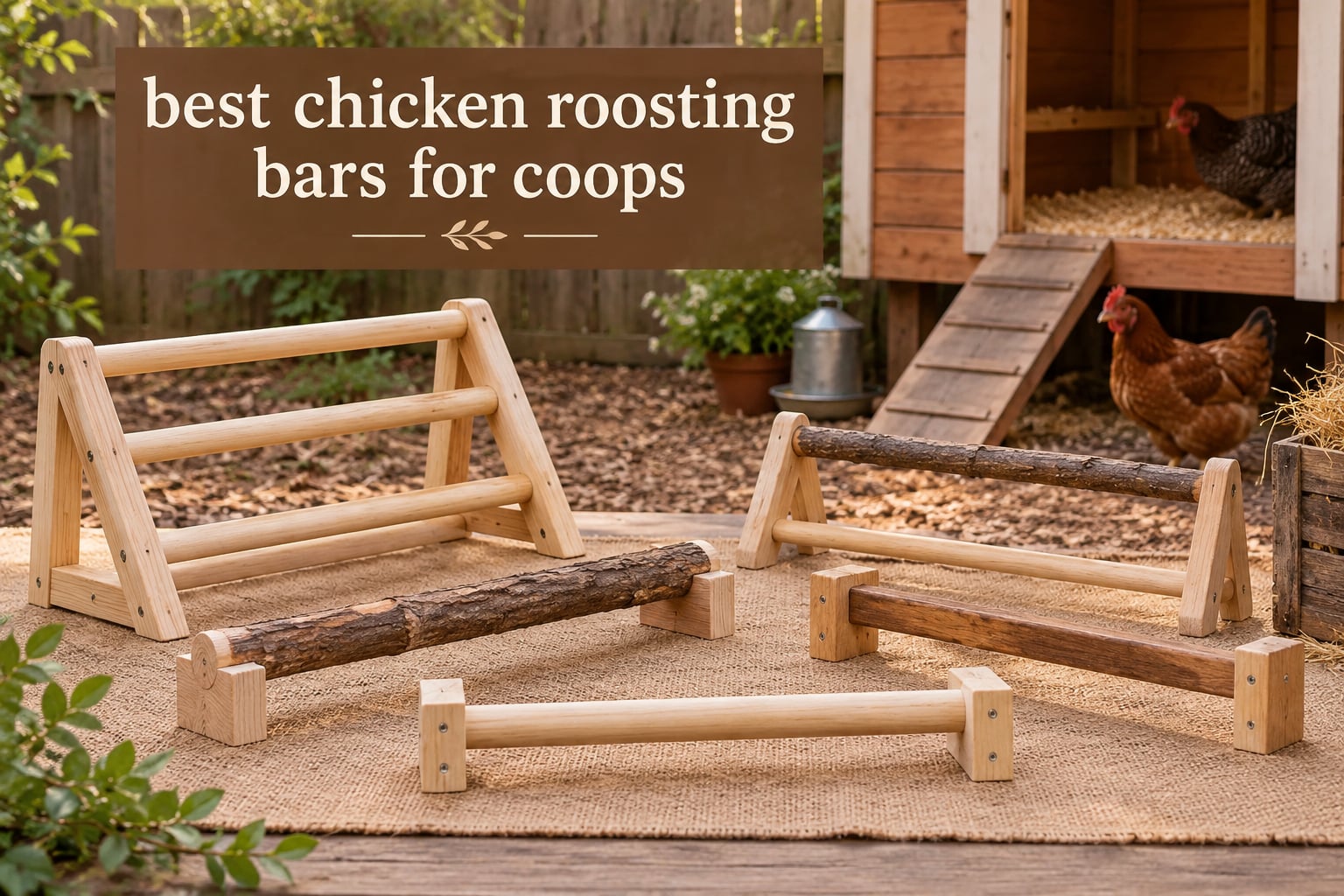
A roosting bar is a raised, flat-topped perch where chickens sleep off the coop floor, away from damp bedding, droppings and parasites. Get one wrong and your flock ignores it entirely, huddles on the floor, or moves into the nesting boxes and starts crushing eggs. I have watched that happen in more than one coop, and it is almost always a sizing problem rather than a product problem.
Here is the short answer. The best chicken roosting bars are flat-topped wood or square-profile surfaces roughly 2 to 4 inches wide, they give each standard hen 8 to 12 inches of roost length, and they sit higher than the nesting boxes so birds treat the perch as the safe spot. Round steel dowels are the option to skip if you have heavy breeds.
We spent six weeks comparing ten roosting bars across four materials, weighing capacity against flock size, and reading hundreds of owner reviews for the failure points that show up after a month of use. If your coop is still empty, sizing it first saves money; our backyard chicken coop roundup covers the housing side, while the large chicken coop guide matters more if you run a flock past a dozen birds.
Table of Contents
Top 3 Picks: Best Chicken Roosting Bars for Coops (October 2026)
Our three standouts cover the three common cases: a full-size flock on a metal frame, a heavy-breed flock that needs a flat grip, and a buyer who wants swing and ladder enrichment in one unit.

PETSFIT Square Roosting Perch 55×40
- Square non-rolling perch surface
- 4-layer tiered design for 8-10 chickens
- Galvanized iron pipes with sanded solid wood

ANNDING 55 Inch 4-Tier Metal Roost
- 4-tier frame at 55 inches long
- Galvanized steel with solid wood rungs
- Bolt-together assembly

PETSFIT Roost with Swing and Ladder
- Widened 2 inch x 1 inch square bar
- Built for 10-12 chickens
- Fir wood and rustproof iron with swing
Quick Overview: All 10 Best Chicken Roosting Bars for Coops, Side by Side
Every bar below earned its place on rating and review volume together, not rating alone. Scan the material and capacity columns first, then jump to the write-up for the one that matches your flock.
| Product | Specifications | Action |
|---|---|---|
| PETSFIT Square Roosting Perch 55×40 |
|
Check Latest Price |
 CuffUp Chicken Perch 2-Pack Combo CuffUp Chicken Perch 2-Pack Combo |
|
Check Latest Price |
| ANNDING 55 Inch 4-Tier Metal Roost |
|
Check Latest Price |
 TonGass 16 Inch Bamboo Roosting Bar TonGass 16 Inch Bamboo Roosting Bar |
|
Check Latest Price |
| PETSFIT Roosting Bar with Swing and Ladder |
|
Check Latest Price |
 Vehomy Two-Tier Roosting Ladder Vehomy Two-Tier Roosting Ladder |
|
Check Latest Price |
 YUMEKA 55 Inch Metal Roost YUMEKA 55 Inch Metal Roost |
|
Check Latest Price |
 Koutemie Adjustable Metal Chicken Perch Koutemie Adjustable Metal Chicken Perch |
|
Check Latest Price |
 PETSFIT 69 Inch Wooden Roosting Bars PETSFIT 69 Inch Wooden Roosting Bars |
|
Check Latest Price |
 CADUKE Perch and Swing Set CADUKE Perch and Swing Set |
|
Check Latest Price |
How We Chose
Five rules decided the order, and they are the same rules I use for any piece of fixed equipment in the coop.
Rating with volume behind it. A 4.8 from nine reviews means less than a 4.3 from three hundred. We only kept listings with a real review history, which is why nothing here sits on a thin sample.
Flat or square over round. Chickens spread their toes across a flat surface and tuck their feet underneath, which reduces pressure on the keel and cuts foot problems. Round dowels were flagged, not disqualified, because a few brooder products rely on them.
Capacity that matches a real flock. We checked claimed bird counts against usable bar length. At 8 to 12 inches per standard hen, a 55 inch frame is honest for eight to ten birds and generous for six.
Hardware durability feedback. The single most common complaint across nearly every wooden-and-metal design was fittings loosening. We read the one-star and two-star reviews closely for that reason.
Assembly reality. Anything needing more than a screwdriver and ten minutes got noted, because a roost left half-built is a roost hens will not trust.
1. PETSFIT Square Roosting Perch, 55 x 40 Inch, 8-10 Chickens
PETSFIT Square Chicken Roosting Perch, 55″x40″, 8-10 Chickens
Square flat perch surface
4-layer tiered frame for 8-10 chickens
Galvanized iron pipes with sanded solid wood
55 x 40 x 2.5 inches
Pros
- Square surface stops rotation and spreads toe pressure
- Four tiers roost many birds at once
- Tool-free assembly with labeled parts
- Galvanized iron and sanded wood resist rust and splinters
Cons
- Bolts holding wood rungs to the pipe frame can strip
- Finger-tight hardware may need thread lock
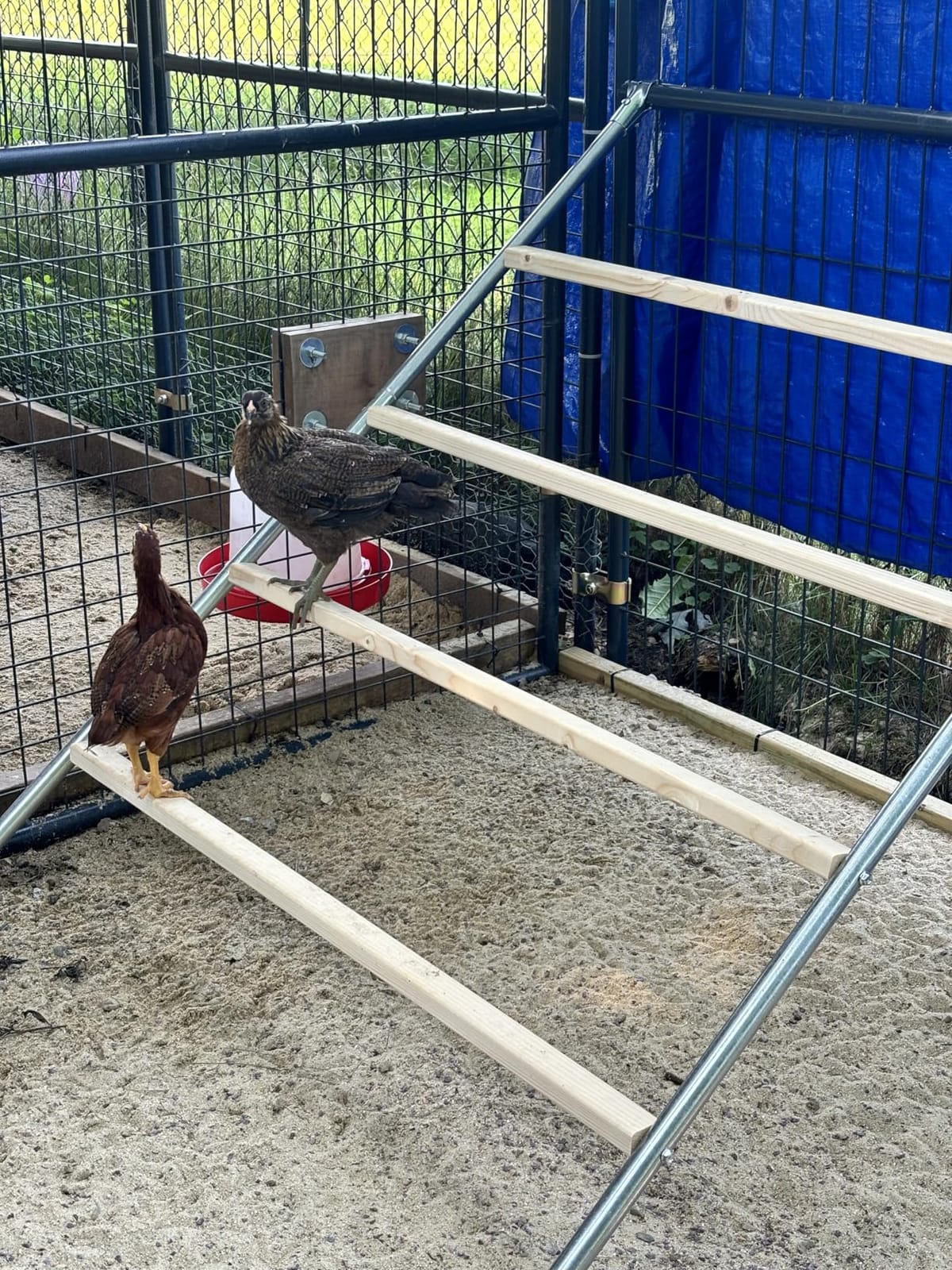
This is the bar I keep coming back to for standard backyard flocks. The square profile is the whole point: birds stand on a flat, non-rolling surface instead of balancing on a cylinder, and in my experience hens settle onto it within a night or two of moving it into the coop. It sits at 55 by 40 inches with four tiers and carries eight to ten chickens without crowding.
The frame is galvanized iron pipe with solid wood rungs that have been sanded, so there are no raw edges to catch toe skin. Surface cleaning is quick because nothing is grooved or textured.
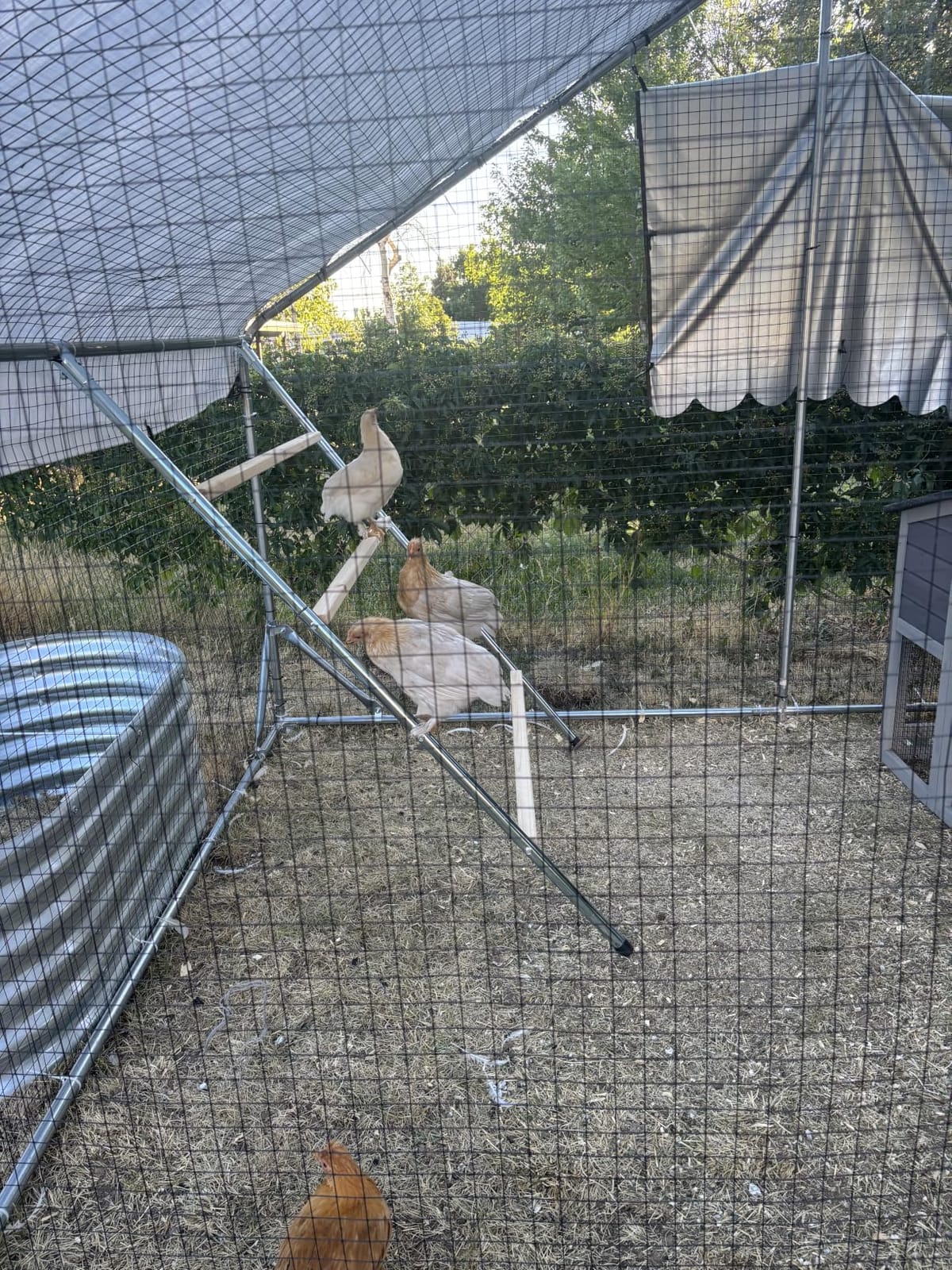
Owners across 384 ratings rate it 4.4, and the praise repeats: fast assembly, clear labeling, and a wide tiered layout that gives a flock options. Birds use the top tiers first, which naturally settles the pecking order without you intervening.
The recurring flaw is the fastening. Several owners report that the bolts securing the wooden rungs to the pipe frame strip or loosen when tightened finger-tight, letting a rung spin. A drop of thread-locking compound on each bolt during assembly fixes it permanently.
Two more practical notes. The 55 inch footprint needs a coop or run with real side clearance, and at 6 pounds it is light enough to reposition between coops as your flock grows.
What to check before you buy
Measure the side wall first. The frame is 40 inches wide and needs clearance from the wall and from the nesting boxes so birds can hop up without landing on eggs. If your run is narrower than that, step down to the compact adjustable unit further down this list.
Confirm your bar spacing. With four tiers, the vertical gaps between rungs should not be wide enough for a leg to slip through, especially if you have pullets. Closer tiers are safer than widely spaced ones.
Where it falls short
It is a wood-and-metal hybrid, so the joints are the weak point over years of weather. If you are not comfortable adding thread lock during assembly, expect to be tightening bolts each spring.
It also ships as a structure rather than a single bar, so it does not cover brooder chicks learning to roost. For that stage you want one of the low ramp-style perches further down.
2. CuffUp Chicken Perch 2-Pack, Large and Small Combo
Chicken Perch 2-Pack, Heavy Duty Roosting Bars for Chickens in Coop, Large & Small Combo Set for Different Breeds, Non-Toxic Smooth Wooden Chick Perch for Poultry Resting
Natural solid wood, handmade
Two sizes: 16.8 x 11 x 7.9 and 16.8 x 5.3 x 4.4 inches
Pass-through doors on both sides
1.63 pounds
Pros
- Two sizes suit chicks of different ages
- Handmade natural non-toxic wood
- Pass-through design lets chicks move through
- Lightweight and assembles with one screw
Cons
- Must be balanced before screws are tightened
- Scale suits chicks rather than adult hens
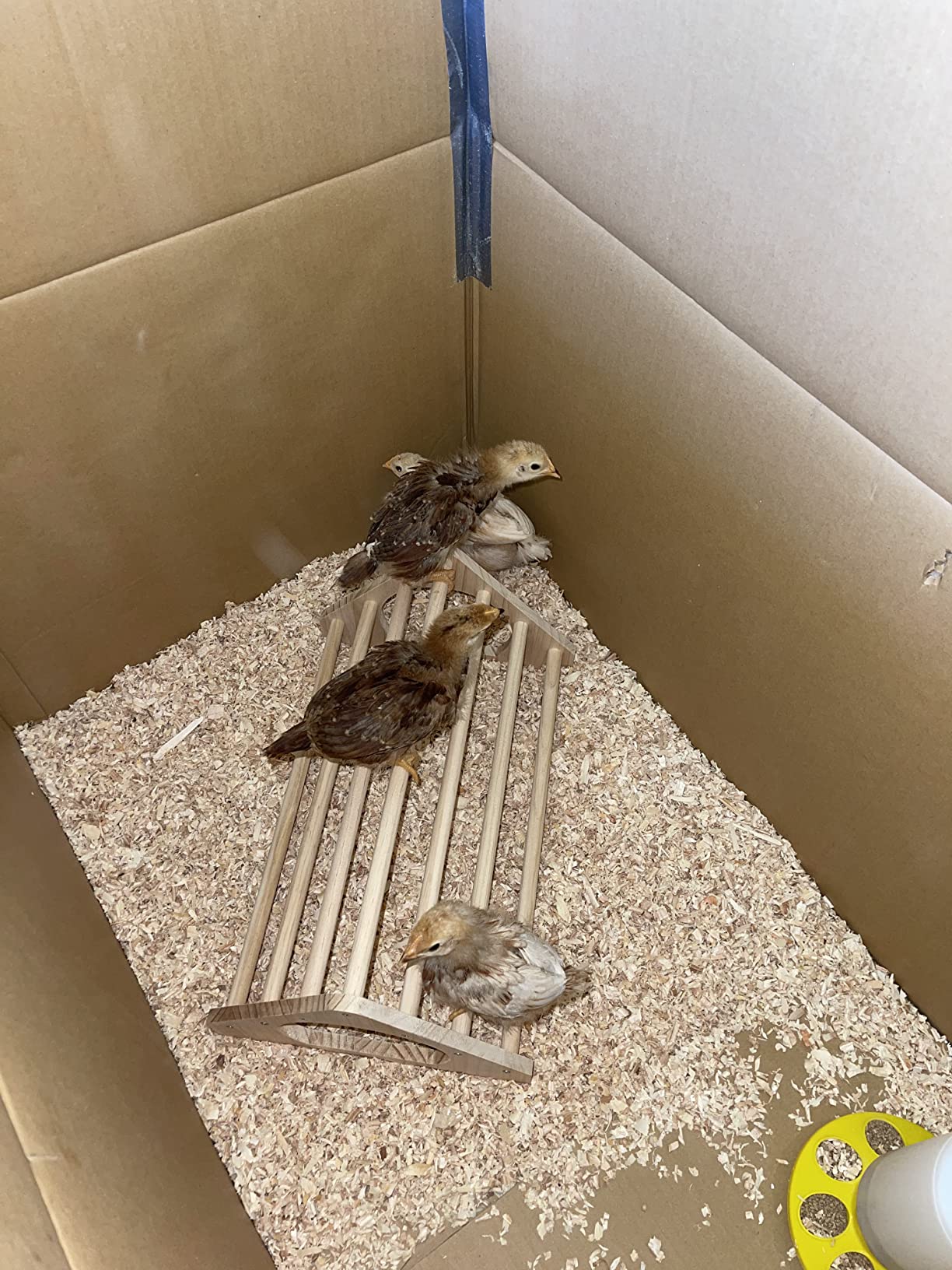
This two-piece set is a brooder-stage perch, not a flock roost. You get a larger bar at 16.8 by 11 by 7.9 inches and a smaller one at 16.8 by 5.3 by 4.4 inches, so a batch of chicks at mixed ages can use both and the taller birds do not shoulder the smaller ones off.
What I like is the pass-through design. Chicks can move through the frame rather than stepping over it, which makes the transition from brooder floor to roosting instinct much less abrupt.
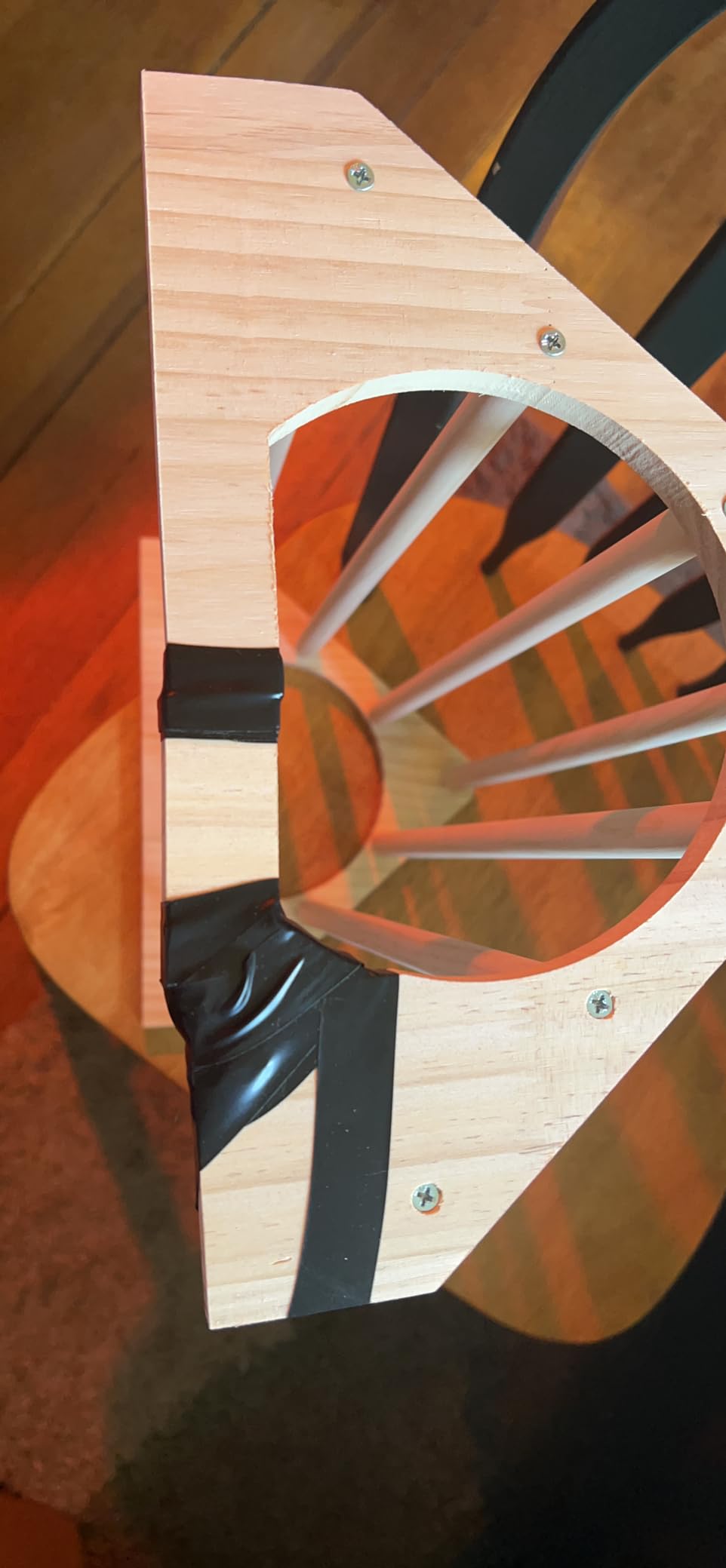
The wood is natural and non-toxic, so pecking at it is harmless, and at 1.63 pounds it is easy to shift around the brooder as the batch grows. Buyers treat it as an inexpensive starter perch and rate it 4.2 across 351 ratings.
Assembly has one trap worth naming. If you tighten the screws before the piece is balanced, it sits unevenly and rocks under a bird’s weight. Balance it on a flat surface first, then tighten.
The scale is the honest limitation here. This is sized for chicks and small birds, so it will not carry a full-grown hen as a permanent roost.
Where it fits in a real coop
Use this as the transition stage, not the destination. Set it in the brooder for the first couple of weeks so chicks learn to grip a raised surface, then move them to the main roost inside the coop once they are feathering out.
It also works well as a temporary perch for a hen you are integrating into an existing flock, giving the newcomer a low, safe spot away from the established pecking order.
Where it falls short
Lightweight wood will not survive heavy birds jumping on it repeatedly. Do not plan to run a resident flock on it, and do not count its two small bars toward your per-bird roost total.
Pass-through gaps are another watch point with fast-growing birds. Check the openings once the chicks reach full size so nothing can catch a leg or a toe.
3. ANNDING Chicken Roosting Bars, 55 Inch Metal Perch
Chicken Roosting Bars, 55″ Metal Perch for Coop, Backyard Poultry Toys
55 inch length, 4-tier design
Rust-resistant galvanized steel pipes with solid wood
5.4 pounds
Bolt-together assembly
Pros
- Large 4-tier frame suits several hens
- Steel and wood hold up outdoors across seasons
- Works as enrichment for leg strength and beaks
- Bolt-together assembly without special tools
Cons
- Wood rungs can loosen or drop out over months
- Round bars less favoured by hens used to square perches
This is the value pick in the roundup: a 55 inch, four-tier metal roost that holds a decent flock at a lower cost than the big wooden or swing units. The frame is rust-resistant galvanized steel with solid wood rungs, and the whole thing weighs 5.4 pounds, so it moves between coop and run easily.
The enrichment angle is real rather than marketing. Perching and hopping between tiers builds leg muscle, trims beaks and nails naturally, and gives a flock something to do that is not pecking each other.
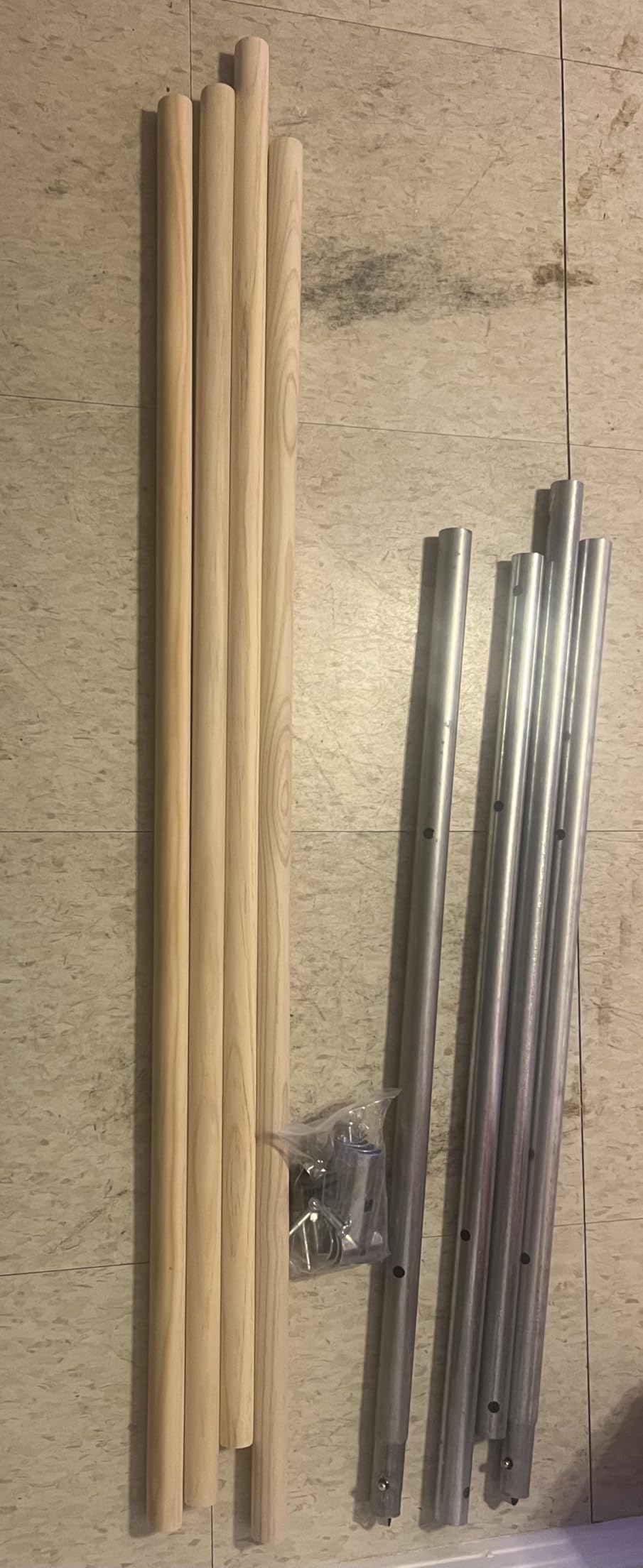
At 4.3 across 284 ratings, it sits mid-pack on stars and near the top on volume, and the review pattern is consistent: hens and even large roosters take to it quickly, and the assembly is bolt-together without specialized tools. Smooth metal and wood surfaces hose down fast.
The minority complaint is about the wood center pieces loosening or dropping from the bars after a few months. That is the same fittings issue that shows up on most wooden-and-metal designs, and it responds to a bit of thread lock or glue at assembly time.
One more note: the bars are branch-like and round, so hens trained on a square indoor perch sometimes ignore them for the first night or two. It resolves itself.
Best used in a run or mixed flock
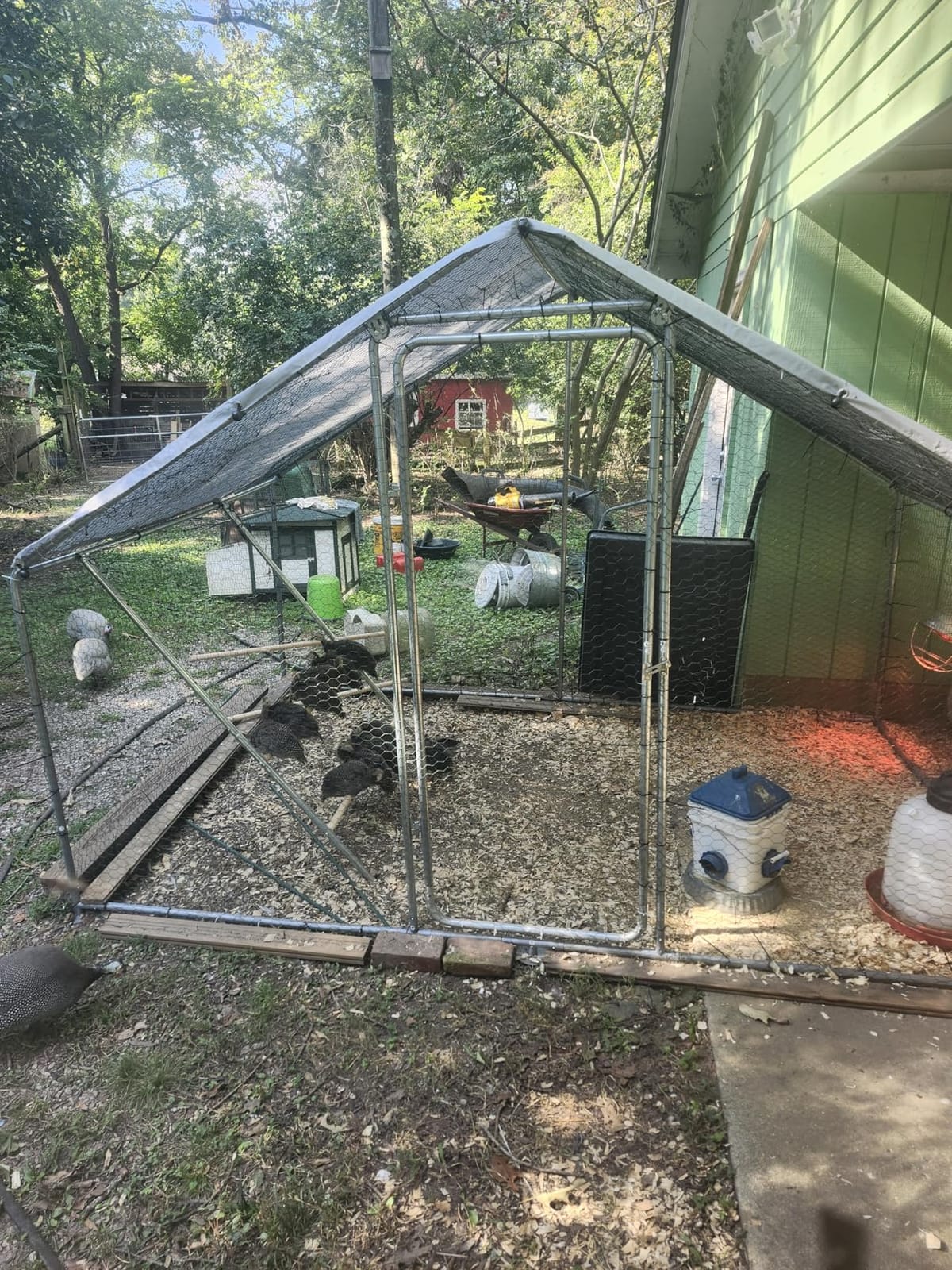
This unit works well in a larger outdoor run where birds need vertical space and something to climb. Four tiers at 55 inches gives a flock of eight to ten birds room without crowding the highest bar.
It is also listed for chicks, hens, ducks and parrots, so a mixed enclosure is fine. Just confirm your ground surface is level, because a rocking frame unsettles birds more than a rough surface does.
Where it falls short
Round bars concentrate weight on one line under the foot, which is uncomfortable for heavy breeds over long nights. If you keep Orpingtons or Brahmas, a widened flat bar is a better match.
Metal also runs cold and slippery in frost, so in winter climates you want to check that birds can still grip it in the morning before you rely on it for overnight safety.
4. TonGass 16 Inch Bamboo Roosting Bar with Mirrors
TonGass 16″ Extra Long Chicken Perch, Durable Polished Bamboo Roosting Bar
Polished bamboo construction
15.75 inch roosting bars
Two built-in 2.4 inch mirrors
Only a Phillips screwdriver needed
Pros
- Extra-long bars give chicks more standing room
- Built-in mirrors keep chicks occupied
- Polished bamboo is splinter-free
- Round profile helps chicks grip and balance
Cons
- Designed for chicks rather than adult birds
- Short 7 inch cross bars limit total surface
Brooders need something to grip, and this bamboo perch delivers on that. Three 7 inch cross bars sit between two half-circle frames, and the whole package weighs under 12 ounces, so you can move it around a brooder as the batch grows.
The two built-in 2.4 inch mirrors are the feature chicks actually engage with. Confined birds have something to investigate, which cuts down on pecking at each other during the weeks when they are most likely to start it.

Polished bamboo is the material detail worth trusting. It is sanded smooth, so it does not splinter the way unfinished pine can, and it holds up to damp brooder conditions better than cardboard or thin craft wood.
Rated 4.3 across 257 ratings, owners consistently call it a lightweight brooder training roost and like that the round profile helps chicks curl their feet for balance while they learn.
The mixed portion of reviews all points at the same thing: this is a 16 inch scale product. It works well for chicks and small birds, then becomes cramped fast.
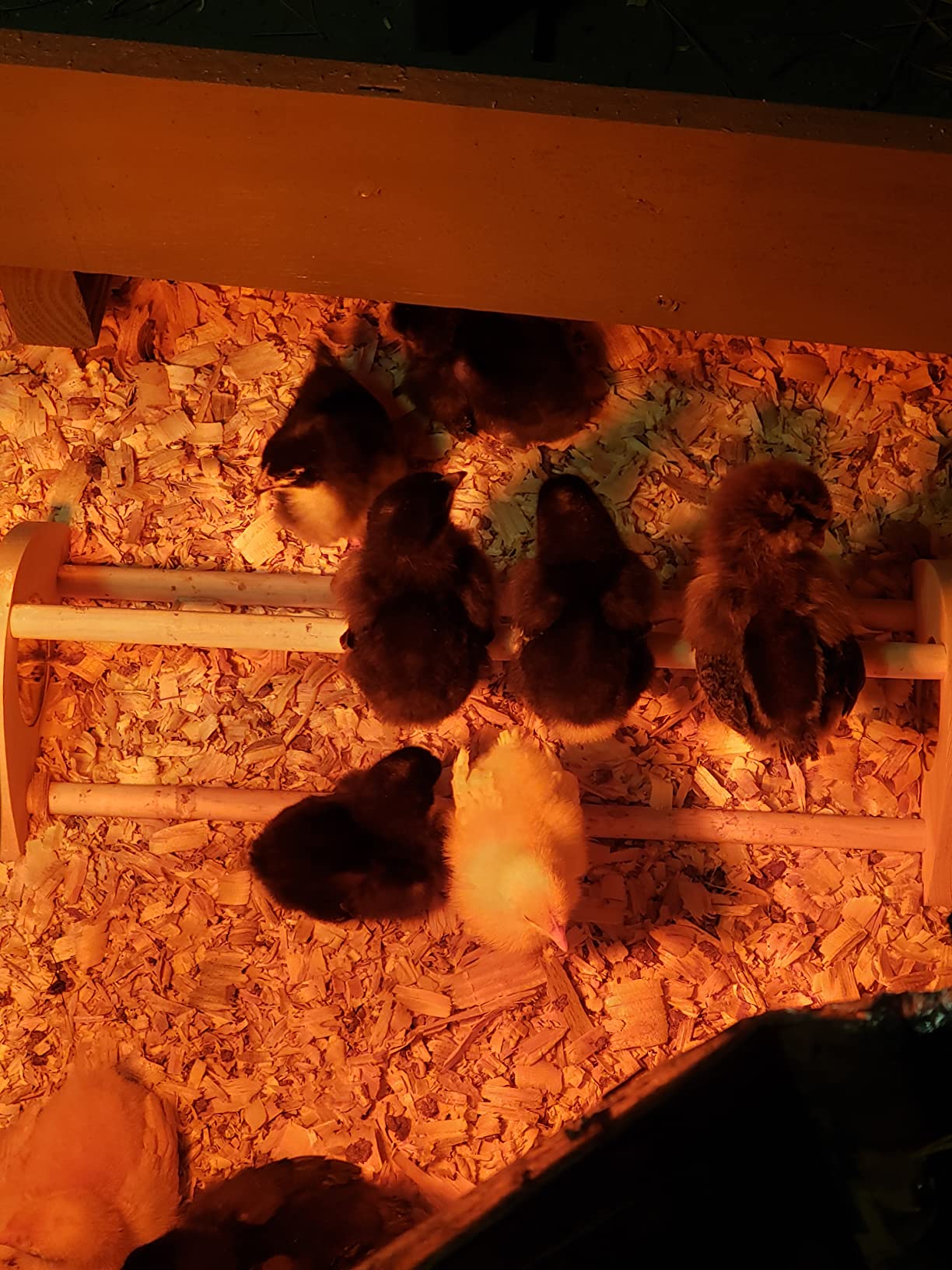
Best for the brooder stage
Set it in the brooder from roughly the second week, low down, so chicks can hop up without a big drop. Many keepers keep it there alongside the larger ramp perches so there is a choice of heights.
Keep it as the training stage and then move birds to the main coop roost. Trying to stretch this perch to adult birds leaves them crowded on the top bar with nowhere to go.
Where it falls short
Total roosting surface is small by adult standards, so it cannot carry more than a couple of birds at once. The 7 inch cross bars are the limiting dimension.
Because it is bamboo and light, it will not survive a full-grown rooster jumping repeatedly. Expect to retire it once the flock outgrows the brooder.
5. PETSFIT Chicken Perch with Swing and Ladder, 62 Inch
PETSFIT Chicken Perch, Solid Wood & Rustproof Iron Roosting Bar with Swing
Fir wood and rustproof iron
62 x 24 x 28 inches for 10-12 chickens
Widened 2 inch x 1 inch square bar
Includes swing and ladder
Pros
- Widened square bar gives a flat stable grip
- Rustproof iron and solid fir tolerate weather
- Stable with several birds on it at once
- Roost plus ladder plus swing in one unit
Cons
- Larger and heavier footprint than a basic bar
- More parts to assemble than a single-bar perch
This is the one I recommend when the flock keeps you busy and boredom is a problem. At 62 by 24 by 28 inches it is built for 10 to 12 chickens, and it combines a roosting bar with a ladder and a swing rather than leaving your birds with a bare perch.
The roosting bar itself is a widened square profile at 2 by 1 inches. That flat top is the detail that matters most for heavier hens, because it spreads weight across the foot instead of concentrating it on a round edge.
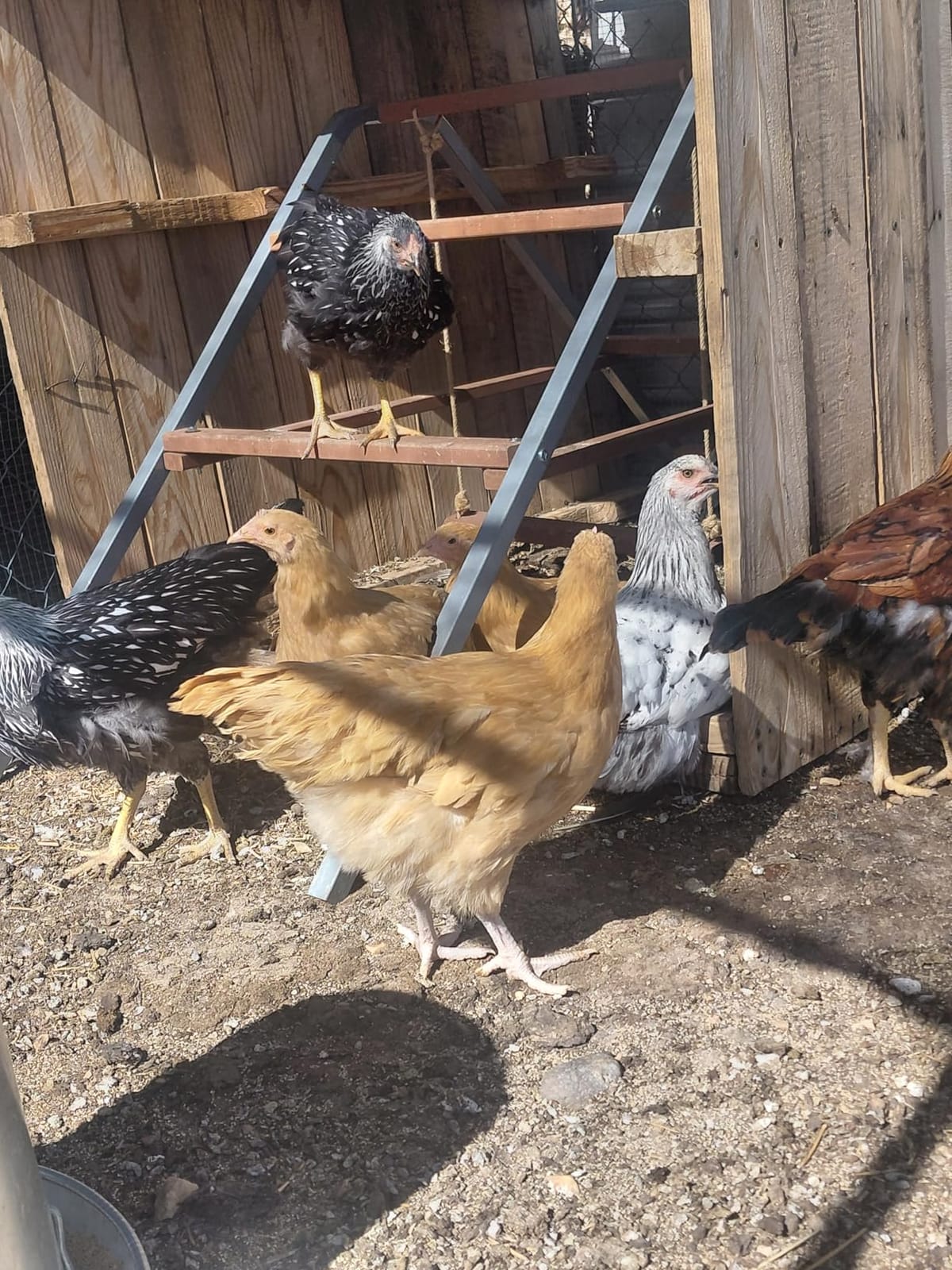
At 15.75 pounds it is the heaviest unit here, and it feels it. Nothing tips when several birds land on it at once, which is exactly the failure mode that turns hens off a lightweight perch.
Ratings sit at 4.6 across 167 ratings with 77 percent five-star, and there is very little negative feedback recorded. Owners describe it as well made and stable, and report that it encourages natural roosting behaviour while giving hens somewhere to play.
The practical trade-off buyers name is size. This is a fuller playground unit rather than a single narrow bar, so it needs real floor space in the run or coop.
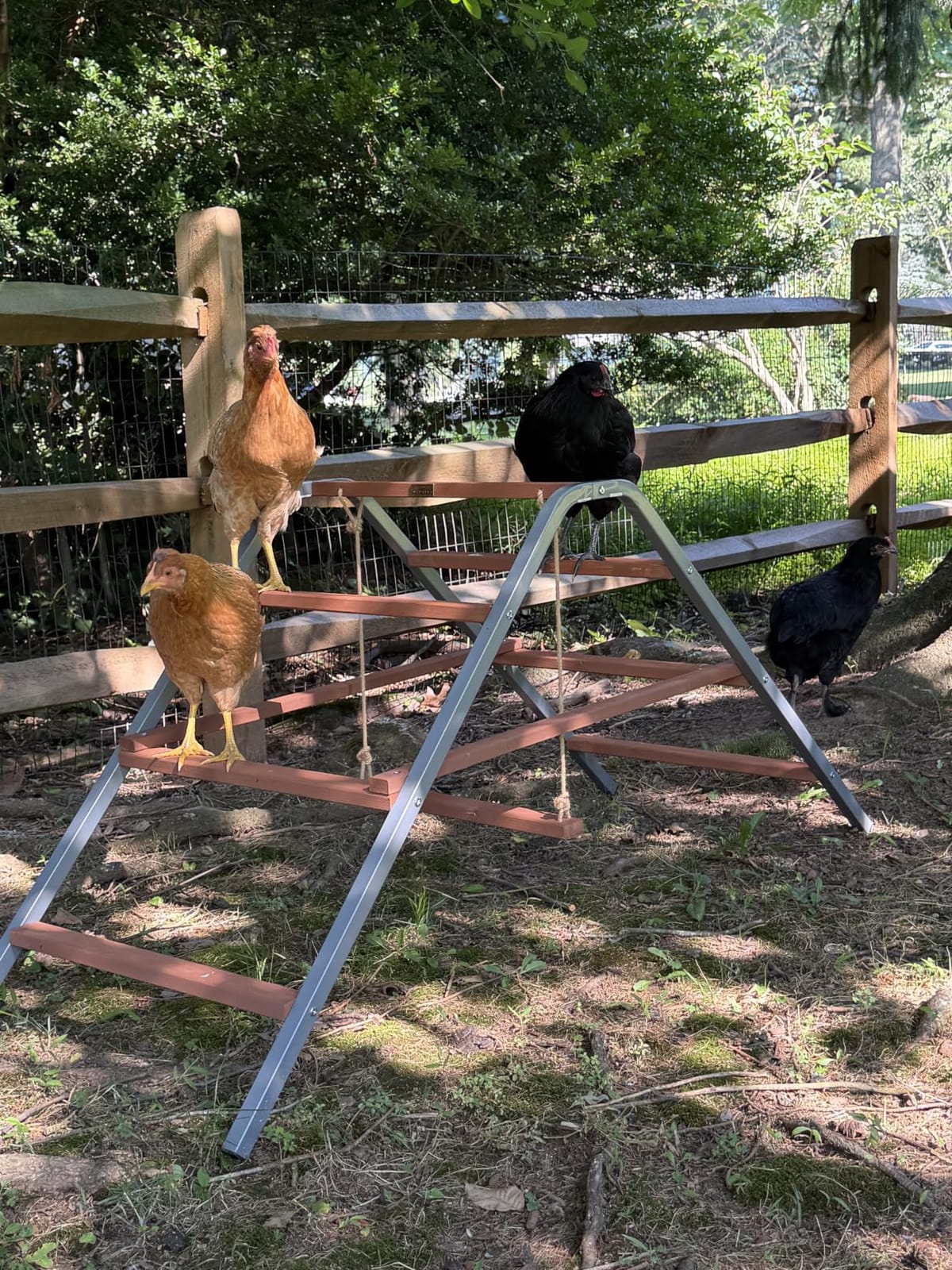
Best for large flocks and heavy breeds
Orpingtons, Brahmas and other heavy birds benefit most from the widened flat bar, and the ladder gives them a way up and down without dropping from height onto their feet.
If feather picking or boredom is a recurring problem in your flock, the swing adds daytime activity that costs you nothing extra. Chickens and turkeys both use it.
Where it falls short
The footprint is the first constraint. In a narrow run it will dominate the space, and you need to be able to reach underneath to clean.
Assembly takes more parts than a single bar because the swing and ladder hardware are included. Budget a bit longer the first time and follow the labeled instructions rather than guessing.
6. Vehomy Two-Tier Roosting Ladder for Chickens
Vehomy Chicken Perch – Roosting Ladder for Chicken Coop – Jungle Gym & Toys for Poultry
Natural solid pine wood
High ladder 17 x 9 x 10.8 inches
Low ladder 9.8 x 9 x 5.9 inches
High bar supports at least 30 lb
Pros
- Two heights let chicks progress step by step
- Natural solid pine is safe to peck and perch on
- Upper bar doubles as a feeder stand
- Hardware and wrench included
Cons
- Compact size suits chicks rather than adult birds
- Light frame can tip if screws are not reinforced
This two-tier ladder is built around one idea: give chicks a low bar and a high bar so they climb rather than fall. The lower ladder sits at 9.8 by 9 by 5.9 inches and the upper at 17 by 9 by 10.8 inches, and the upper bar is rated to hold at least 30 pounds.
Natural solid pine means chicks can peck at it safely, which matters because they will. It also doubles as a feeder or waterer stand on the higher bar, which is a genuinely space-saving trick in a small brooder.
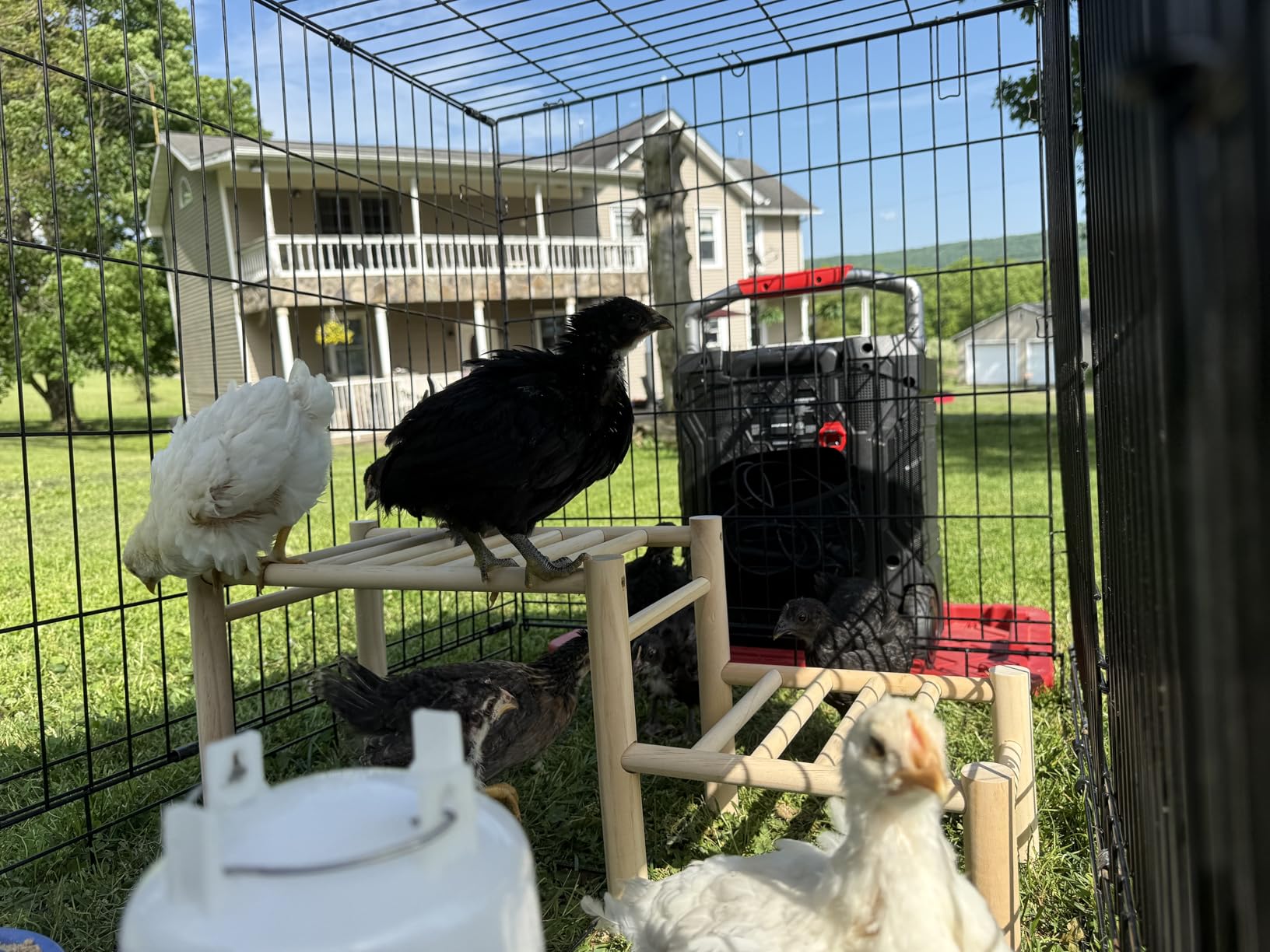
Chick owners report that birds frequently choose it for overnight roosting once they leave the brooder, which is the behavior you are training for. All hardware and a wrench are included.
It rates 4.0 across 166 ratings, and that is the lowest score among the picks with substantial review volume. The critical reviews concentrate on build light and footprint, not on the concept.
Full-grown birds can tip the frame, and the screws can loosen over time if they are not reinforced with glue or thread lock. A few silkie and bantam owners found their flock ignored it entirely.
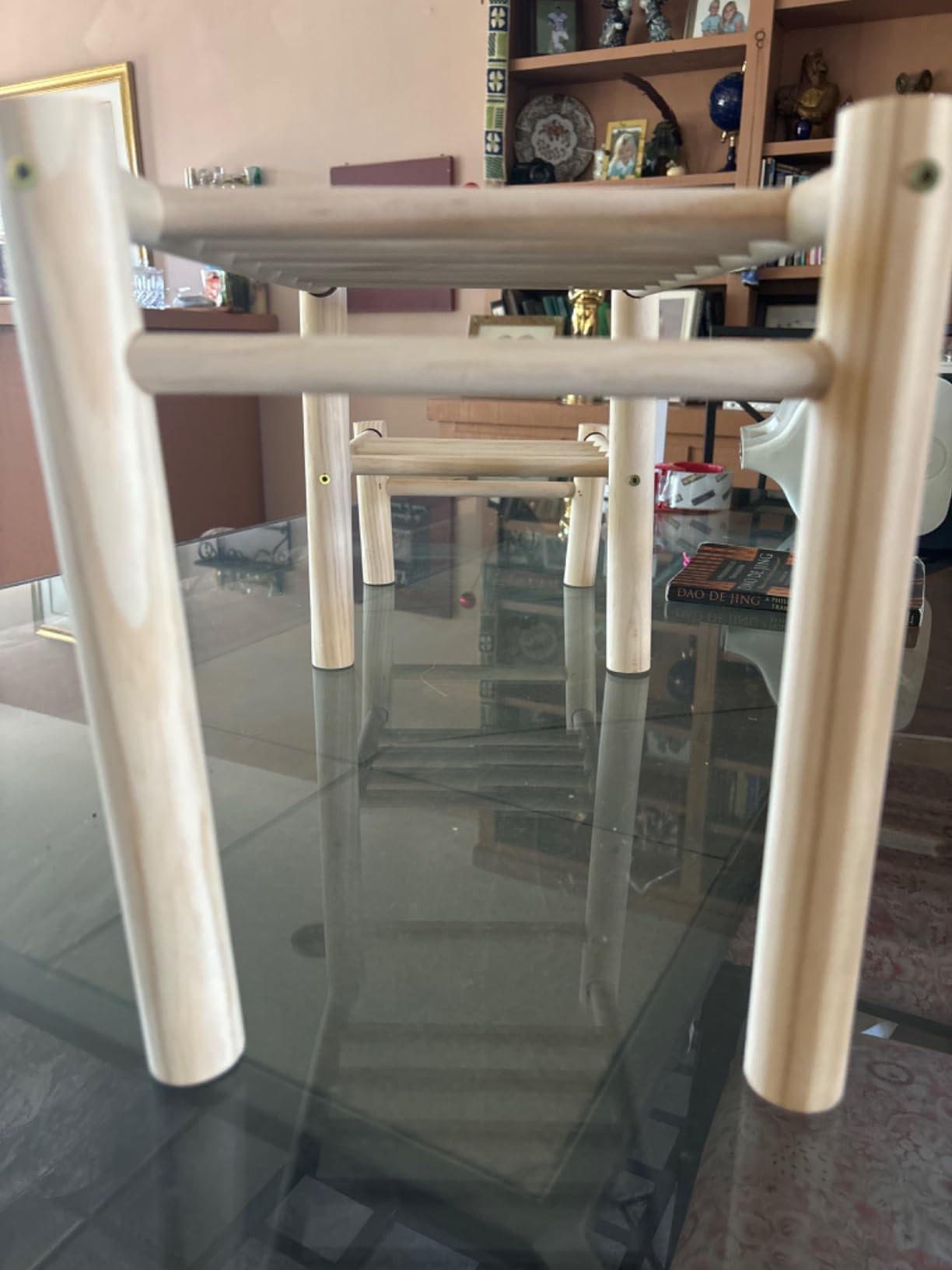
Best as a coop stepping stone
Place it at the edge of the brooder or the base of the coop during the move from chick to hen. The two heights give birds a ladder to work up rather than a single jump they have to commit to blind.
It pairs well with one of the brooder perches earlier in this list, since that one handles the earliest weeks and this one handles the transition.
Where it falls short
At 2.03 pounds this is the lightest adult-adjacent option, and light means tippy. Do not put heavy breeds on it and do not let it stand where birds jump onto it from a height.
The one-star share is the highest in this roundup, and it comes from flocks that simply ignored it. Flocks with silkies and other very small breeds seem least likely to take to the layout.
7. YUMEKA Chicken Roosting Bars, 55 Inch Metal Frame
Chicken Roosting Bars, 55 Inch Chicken Perch & Roost for Coops, Metal Frame
Galvanized pipes with solid wood rungs
41.1 inch W x 55.1 inch H ladder layout
5.5 pounds
Full screw set included
Pros
- Sturdy ladder layout with a natural wood finish
- Simple instructions
- most owners assemble in minutes
- Keeps the area beneath the roost cleaner
- Suits a large number of birds including bantams
Cons
- Wood inserts can loosen and need re-gluing
- Some flocks take a while to habituate
- Wood-to-frame fittings are the weak point
This is the middle ground between the two big 55 inch metal roosts. It uses galvanized pipes with solid wood rungs at 41.1 by 55.1 inches, weighs 5.5 pounds, and the natural wood finish blends into a yard better than bare metal.
The ladder arrangement is genuinely useful. Birds hop between rungs rather than dropping to the floor and back up, which keeps them moving and reduces the pile-ups you see on single-bar perches.
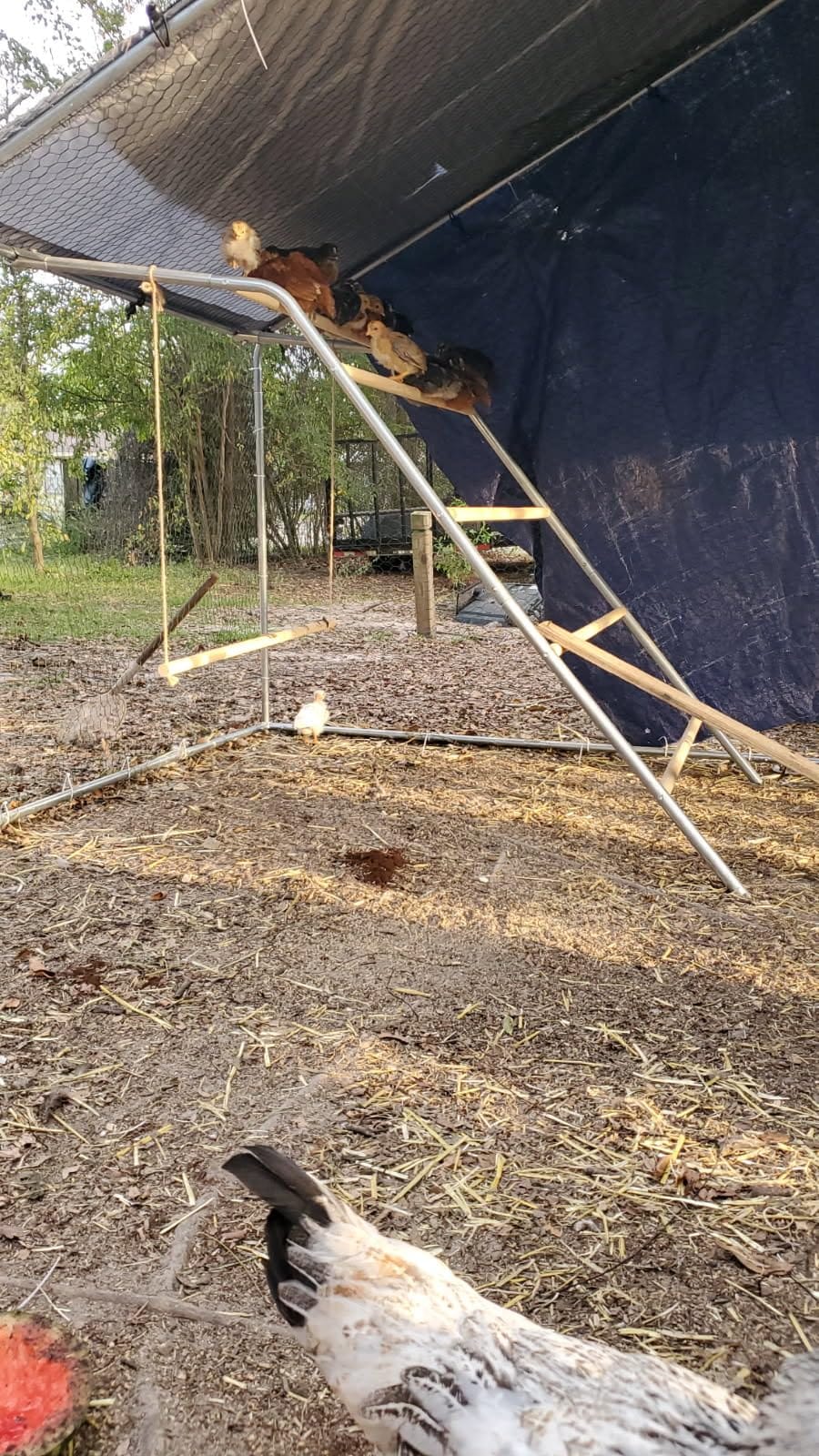
Owners like that the area under the roost stays cleaner. Lift the droppings material out from underneath rather than shovelling the whole floor, and daily maintenance becomes a two-minute job instead of a full bedding change.
At 4.1 across 162 ratings, the reviews split fairly evenly on quality versus value, with praise for simple instructions and plenty of room for birds including bantams.
The recurring flaw is the wood inserts popping out of the galvanized pipes, sometimes straight out of the box. Several owners had to re-glue them during installation.
Habituation takes time with some flocks. If yours ignores it for the first few nights, leave it in place rather than moving it.
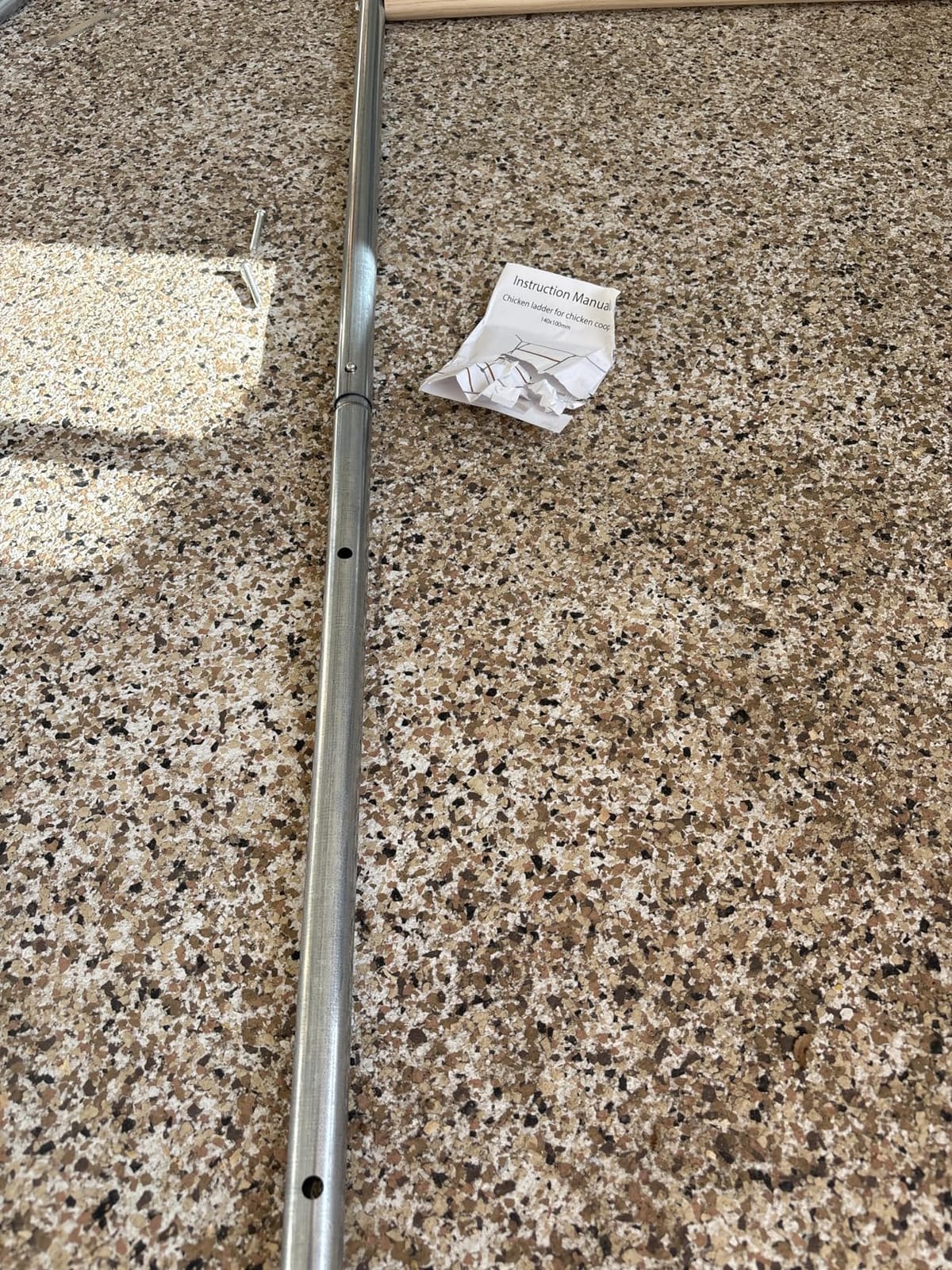
What to check after assembly
Pull on each wood rung before you put birds in the coop. If any insert moves in its pipe, glue it or add thread lock now rather than discovering it at night when a leg catches.
Check the gap between rungs for your smallest birds. Wide gaps on a ladder-style frame are exactly where pullets get their legs caught.
Where it falls short
It is not the most rigid frame in this roundup. Treat it as a perch, not as a swing or climbing structure, and do not let heavy birds hang off the top rung.
Some flocks are slow to adopt a new perch. If yours keeps sleeping in the nesting boxes, move the nesting boxes down temporarily so the roost wins the height contest.
8. Koutemie Adjustable Metal Chicken Perch, Large
Koutemie Adjustable Chicken Perch for Coop, Large
Premium metal construction
Three bars at 16.75 inches each
16.75 x 18.5 x 8 inches
Width and height adjustable by screw
Pros
- Adjustable width and height fit different layouts
- Metal build is durable for daily use
- Three 16.75 inch bars hold several birds
- Smooth surfaces are gentle on feet
Cons
- Smaller footprint than 55 inch metal roosts
- Modest adjustment range for very large coops
This is the one you resize as your birds grow. A screw mechanism adjusts both width and height, so you can start narrow for pullets and open it up as the flock fills out, without buying a different perch halfway through the season.
It carries three bars at 16.75 inches each on a metal frame measuring 16.75 by 18.5 by 8 inches, weighing 3.84 pounds. Metal construction means nothing to rot and nothing to chew.
Reviewers also use it as a roosting trainer, moving chicks onto it in a brooder before they go out to the coop. That staged approach works better than installing a full roost and hoping birds find it.
Smooth surfaces are the quiet selling point here. Nothing snags a toenail and everything wipes down with a damp cloth, which matters more than it sounds once the coop is muddy.
Ratings land at 4.1 across 143 reviews, with the largest group of feedback noting that it fits small to medium groups rather than a full-size flock. Buyers also use it for reptile cages, birds and guinea pigs.
Best when your flock keeps changing
If you raise batches each year, or your birds are still growing, adjustability is worth more than raw bar length. One unit covers a small flock through several seasons.
The footprint is compact, so it works in narrower runs and smaller coops where a 55 inch frame would not fit. Check that the adjustment range reaches the width you actually need before ordering.
Where it falls short
Three 16.75 inch bars do not add up to a large roosting surface. For a flock above roughly eight birds you will need more than one unit.
Metal runs cold and slippery in freezing conditions. In a cold climate, do not rely on it as the only overnight roost for heavy breeds.
9. PETSFIT Wooden Roosting Bars, 69 Inch for 10-12 Chickens
PETSFIT Wooden Chicken Roosting Bars for 10-12 Chickens, Easy Assembly
Weather-resistant fir wood
69 x 22.5 x 28 inches for 10-12 chickens
3-layer design with swing
Pre-drilled labeled parts
Pros
- Three-tier fir design plus swing builds balance
- 69 inch length covers 10-12 chickens
- Solid fir resists warping in all weather
- Splinter-free finish wipes clean fast
Cons
- Longer and heavier frame needs a large footprint
- Wood needs sealing over the years in harsh climates
Sixty-nine inches is the longest roosting surface in this roundup, and at 8 to 12 inches per standard hen that covers 10 to 12 birds on a single frame. The three-layer fir structure includes a swing, so birds have daytime activity built in.
Material is where this unit differentiates itself. Solid fir is dense and slow to warp, and this one is rated to hold its shape through sun, rain and snow without the splitting you get from cheaper softwood alternatives.
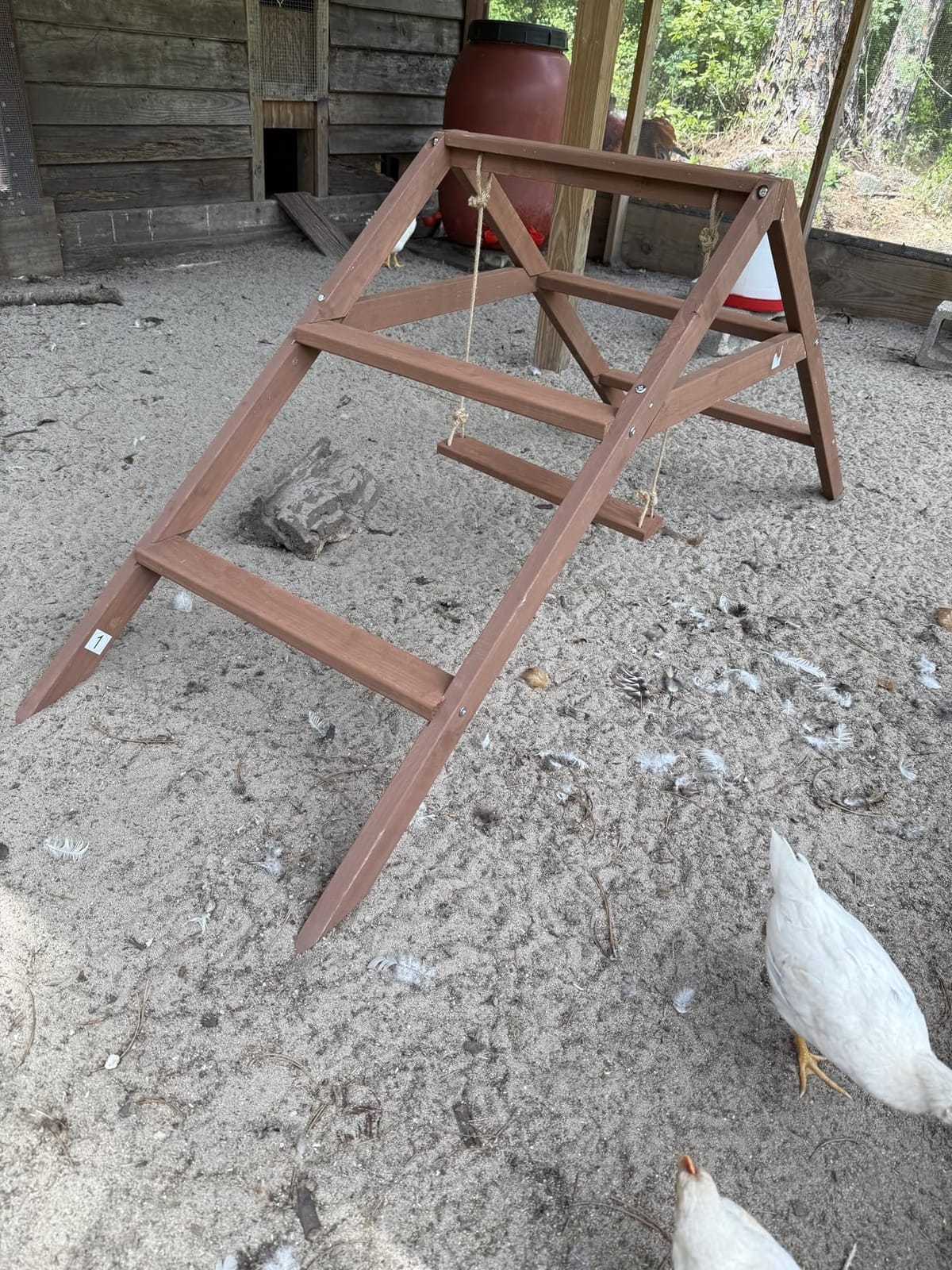
The finish is smooth and splinter-free, and it wipes down with a damp cloth. That matters in winter when droppings freeze to a rough surface and you need to clean quickly without tools.
It rates 4.6 across 128 ratings with 80 percent five-star, the highest five-star share in the set. Owners single out the weather-resistant fir, the clearly labeled assembly, and the generous capacity as the reasons it holds up.
Assembly is straightforward because the parts are pre-drilled and labeled. At 10.65 pounds you will want two people or a clear floor area, since a 69 inch frame is awkward to maneuver alone.
Best for a big flock in a walk-in run
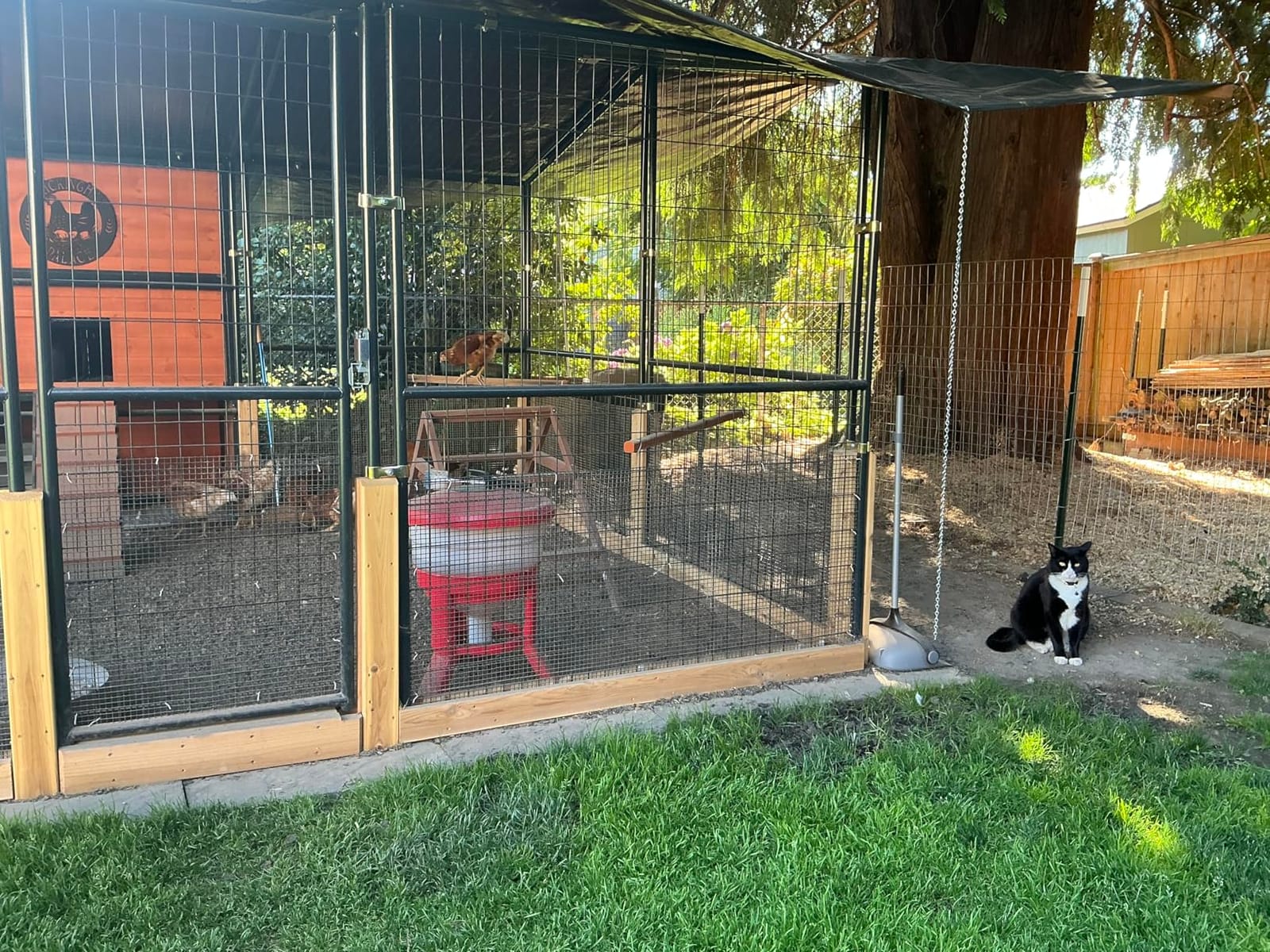
If you keep 10 to 12 birds and have vertical space, one 69 inch frame beats trying to squeeze two smaller perches into the same wall. Larger coops and walk-in runs are worth checking our large chicken coop roundup for sizing.
The three tiers let you separate birds by height, which reduces squabbling and gives younger or lower-ranking birds an option that is not the top bar.
Where it falls short
Length is the constraint. In a narrow coop this unit needs a wall you can actually clear, and rotating it for cleaning is more awkward than a compact perch.
Wood needs occasional sealing, particularly in harsh climates where freeze-thaw cycles open the grain. Plan on re-oiling or sealing it every year or two.
10. CADUKE Chicken Perch Swing with Ladder, 8-10 Chickens
Chicken Perch Swing, Chicken Roosting Bars with Ladder for Coop, Metal Pet Swing Set for Pet’s Healthy & Happy for 8-10 Chick, Grey
Corrosion-resistant metal pipes with WPC decking
38.9 x 39.3 x 27.4 inches
Four perches and two swings over four levels
For 8-10 chickens
Pros
- Four perches and two swings give plenty of space
- Handles full sun
- rain and snow and wipes clean
- Assembles in minutes with labeled parts
- Easy to move into a run
Cons
- Swing hardware can come apart within days
- Factory finish sometimes needs tack-welding or a new screw
This is the most vertically stacked option here. Four perches and two swings run across four levels, high to low, inside a 38.98 by 39.37 by 27.56 inch footprint, and it is listed for 8 to 10 chickens.
Corrosion-resistant metal pipes are paired with WPC decking, a composite board that shrugs off full sun, rain and snow and wipes clean without absorbing droppings the way untreated wood does.
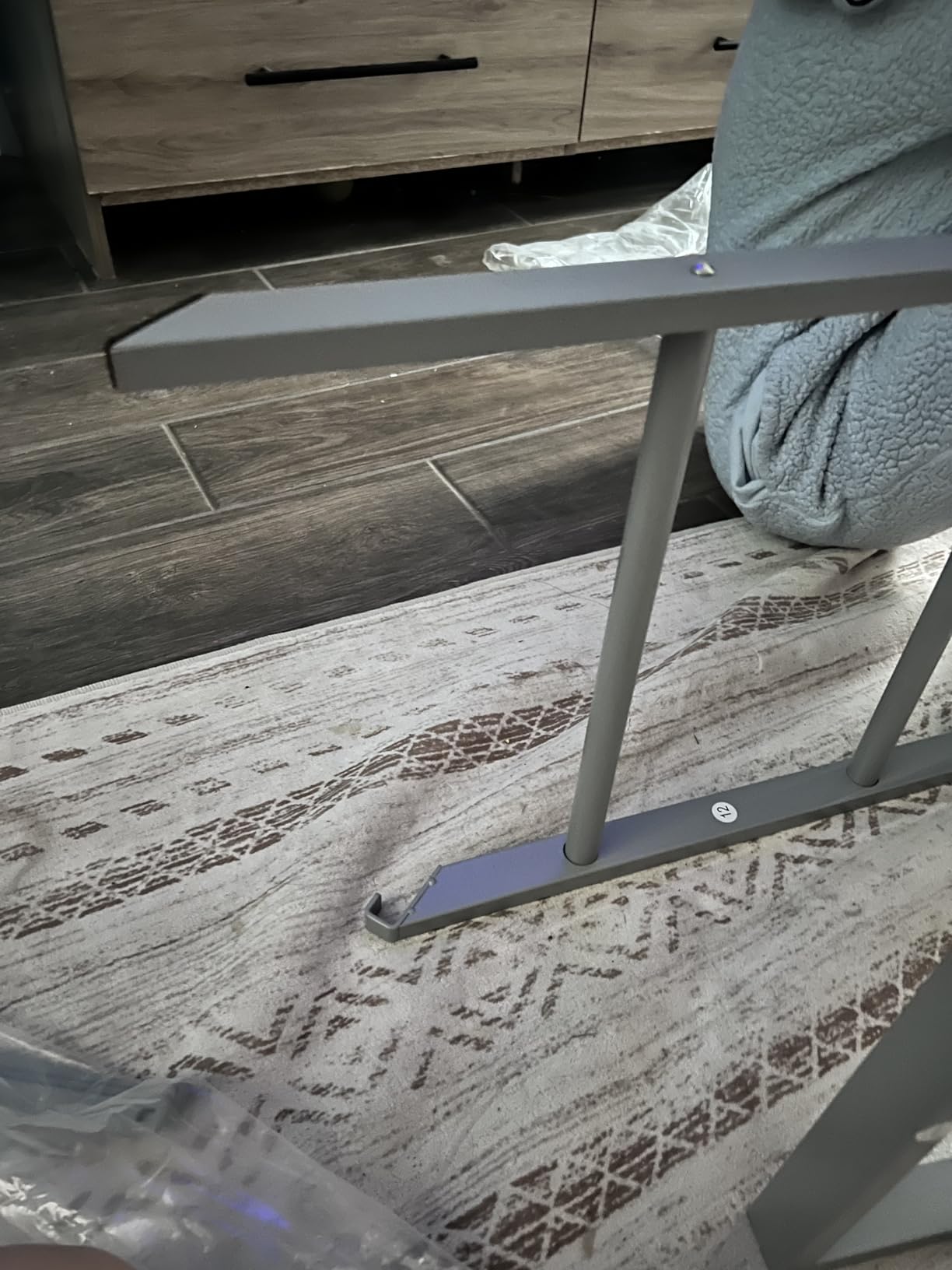
Assembly takes minutes with clearly labeled parts, and at 11.48 pounds it is still light enough to move from coop to run when the season changes. Chickens and turkeys both take to it readily, according to owners.
Ratings are 4.2 across 127 reviews, and the praise centers on the four-perch, two-swing layout and quick setup. Buyers like that it fits standard metal coops without modification.
Criticism concentrates on hardware rather than concept. The swings are the weak point, with owners reporting separation within days, and the soft decking can strip screws. A few metalwork repairs are sometimes needed before it feels solid.
One sizing caveat from owners: at this scale it is realistically best suited to about three regular chickens or two turkeys rather than a full ten-bird flock.
Best for a run with vertical space
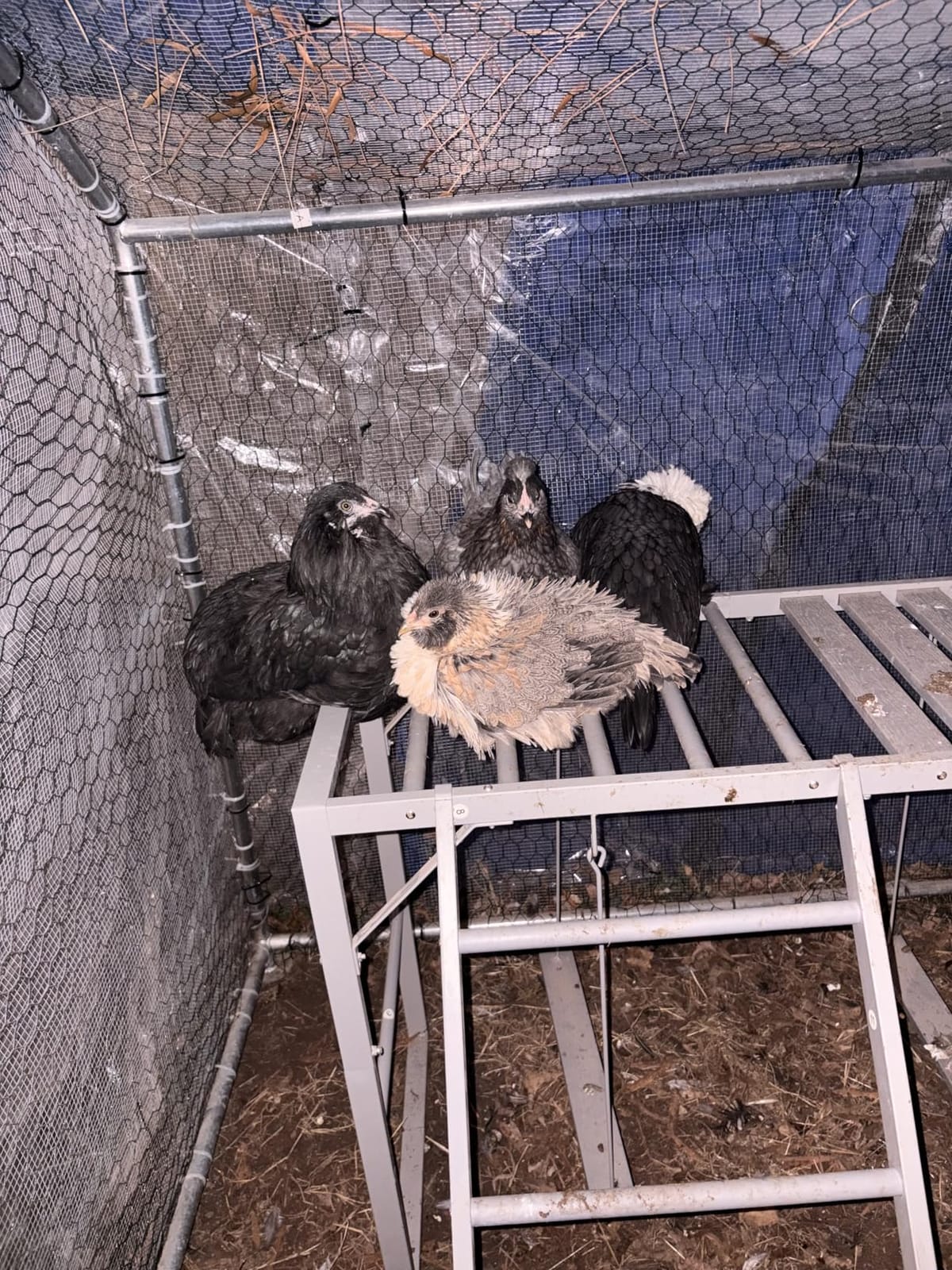
Four levels give you vertical room to work with in a narrow but tall run, so you can roost a decent number of birds without needing long wall space. The two swings handle daytime enrichment.
Before the flock moves in, test every swing connection and check each screw head by hand. That ten minutes of inspection is what separates a unit that stays assembled from one that does not.
Where it falls short
It is not built for large breeds and not built to withstand animals that climb, such as goats, which will dismantle the fittings given the chance.
WPC decking is softer than solid wood. It will not splinter, but screws driven into it need care or they will chew out over time.
How to Choose a Chicken Roosting Bar: Width, Height, Spacing and Material
Spend fifteen minutes on sizing before you pick anything from the list above, because a correctly sized bar lasts years and a badly sized one gets ignored in a week.
Width and shape: flat or round?
The best width for a chicken roosting bar is roughly 2 to 4 inches. Wider than that and a bird cannot span it with both feet to tuck them underneath, which is the posture that protects against frostbite. Chickens almost always prefer flat to round.
Keeping your chickens comfortable is not just kindness; less pressure on the keel means fewer foot problems. A flat 2×4 cut to length and sanded is the classic answer and it is genuinely hard to beat. If you want extra airflow around swollen feet, wrapping the bar with rope helps some keepers, though it does collect droppings and needs regular cleaning.
Spacing per bird and between bars
Allow 8 to 12 inches of roost length per standard hen, and more for heavy breeds. Bantams need less, often around 6 inches. That figure is why a 55 inch frame honestly covers 8 to 10 birds and why a 69 inch frame covers 10 to 12.
How far apart should roosting bars be in a chicken coop? Vertical gaps matter as much as length. Keep the space between tiers too narrow for a leg to pass through, because that is where pullets get caught and hurt.
Allow roughly 6 inches of clearance between the back of the roost and the wall so droppings fall clear rather than accumulating against the boards where they breed mites and lice.
Height and position above nesting boxes
Chickens settle on the highest available perch by instinct, which makes height the single biggest factor in whether birds use your roost at all. Mount it higher than the nesting boxes every time.
On the low end, 18 inches off the floor works for a small flock. Heavy breeds like Orpingtons and Brahmas should stay lower, around 18 to 24 inches, because a long drop onto hard feet is how bumblefoot starts.
Material: wood, metal, PVC or composite
Solid wood that has been sanded is the safest default and stays warm in winter. Galvanized steel outlasts wood outdoors and wipes clean, but it runs cold and slippery in frost. PVC is light and easy to hose, though it can crack in freezing weather and offers no real grip. WPC composite decking sits between the two and resists weather without going slick.
Avoid untreated round PVC pipe entirely. A round bar concentrates pressure on the keel, which is uncomfortable over an eight-hour night, and it rolls under a light bird.
A gap-trap warning worth reading
Short roosting bars with wide gaps have caused leg injuries in pullets, and keepers raise this repeatedly on poultry forums. Before the flock is fully grown, walk every gap in the frame with your hand and imagine a small leg passing through. If anything could catch, add a closer tier or a piece of flat wood to close it.
The DIY 2×4 alternative
Will a chicken roost on a 2×4? Yes, and most keepers who have built their own say it beats anything they bought. Cut to length, sand the edges, round the top corners, mount it on brackets 6 inches off the wall, and you have a roost that will outlast the flock.
The advantage is that you can build to your exact flock size and space the tiers however you want. The cost is your weekend.
In-Coop or in the Run, Plus a Cleaning Routine That Works
Where you put the roost changes how you use it. Inside the coop, a roost keeps birds off the bedding where droppings, damp and mites accumulate, which is where most mite and bumblefoot problems start. Placing it above the nesting boxes is what stops birds choosing the boxes to sleep in and crushing eggs.
In the run, a roost gives your flock daytime structure and reduces boredom-related feather picking, but it leaves birds exposed to weather with no shelter. The practical answer for most keepers is both: a permanent roost inside the coop, and a run unit like the swing-and-ladder designs here for daytime use.
Under either placement, put a droppings board or removable tray beneath the bars. Vinyl shelf liner or a scrap of vinyl floor works well because it wipes clean, and a flat scoop handles the rest.
Winter needs one extra check. Birds tuck their feet under their bodies on a roost to protect them from frostbite, which only works if the surface is wide enough and wood or rope-wrapped rather than cold metal. Look at your birds’ feet the morning after a hard frost, not in the evening.
If your birds are still sleeping on the coop floor, move the nesting boxes down temporarily, raise the roost, and give them a low ramp to climb. Height wins almost every time.
Frequently Asked Questions
What is the best roosting bar for chickens?
A flat-topped wood bar about 2 to 4 inches wide, giving each standard hen 8 to 12 inches of roost length and mounted higher than the nesting boxes. Solid sanded wood is the safest default; galvanized steel lasts longer outdoors but runs cold in winter.
Do chickens prefer round or flat roosts?
Flat. Birds spread their toes across a flat surface and tuck their feet underneath, which reduces pressure on the keel and helps prevent foot problems. Round dowels concentrate weight on one line, which is uncomfortable over a full night and rolls under light birds.
Will a chicken roost on a 2×4?
Yes. A 2×4 cut to length, sanded and mounted on brackets about 6 inches off the wall is the classic DIY roost and most keepers who build their own say it outlasts a purchased unit, because you control length and tier spacing for your flock.
How thick should a roosting bar be for chickens?
Aim for 2 to 4 inches wide. Wider than that and a bird cannot span the bar with both feet to tuck them underneath, which is the posture that protects feet from frostbite in cold weather.
How far apart should roosting bars be in a chicken coop?
Allow 8 to 12 inches of roost length per standard hen and more for heavy breeds. Keep vertical gaps between tiers narrow enough that a leg cannot pass through, since wide gaps are how pullets get caught and injured.
How high up should a roosting bar be?
Higher than the nesting boxes, always. Chickens settle on the highest available perch by instinct, so height decides whether they use the roost. Start around 18 inches off the floor and keep heavy breeds like Orpingtons lower, near 18 to 24 inches, to avoid foot injuries from dropping.
Why do my chickens sleep in the nesting boxes instead of roosting?
The roost is usually not higher than the nesting boxes, so the boxes win the height contest. Move the roost up and the nesting boxes down for a week or two, add a low ramp to climb, and the flock should shift over.
Final Verdict
The PETSFIT square roosting perch wins as our editor’s choice because it combines a flat, non-rolling perch surface with the largest review base in the roundup at 384 ratings, and the square top is the right call for most backyard flocks. Pick the ANNDING 55 inch metal roost if you want more roost for less outlay, or the PETSFIT perch with swing if boredom and heavy breeds are your problems.
Whatever you choose, size it at 8 to 12 inches per hen, mount it above the nesting boxes, and check every gap before pullets arrive. Those three steps matter more than any brand. Our backyard coop guide covers the housing side if you are still building, and this roundup of the best chicken roosting bars for 2026 is worth revisiting once your flock size settles.