
Choosing the right feeder is not a spec-sheet exercise on a lease. Drive time, refill trips, herd pressure, hogs and the landowner’s rules decide more than the hopper size ever does. If you are shopping for the best deer feeders for hunting leases, capacity alone will not separate a good month from a bad one.
On my side of the property, the variables are simple and unforgiving. A feeder that holds 200 pounds is worthless if it lives 90 minutes away and you only make it out on Saturdays. A feeder that holds 50 pounds is excellent if you live at the gate and want to check it every third day. That single question, how often can you actually be there, drives everything else on this list.
A gravity feeder lets feed flow down through adjustable ports as deer eat it, with no battery, timer or motor to fail in the field. An automatic spin-cast feeder throws broadcast corn at set times from a 6V or 12V timer, which wastes less feed but needs power and maintenance. Most lease members end up running one of each at different points of the year.
We compare manufacturer specifications with attributed owner reports from hunting forums, because the failure modes that end a lease feeder are rarely the ones in the brochure. The recurring ones are hogs, water at the hopper seam, and legs that swing. Our picks below come with the refill math you need to size them to your drive time, and we note the focus keyword again in the quick picks and the buying guide so you can jump straight there.
None of this is hands-on lab testing. Every spec comes from the manufacturer listing and every owner account is attributed to the forum it was posted on.
Table of Contents
Top 3 Picks: Best Deer Feeders for Hunting Leases (October 2026)
Three feeders cover most lease situations. The Banks Outdoors Feedbank 300 is the best overall pick for a fixed post-mounted station. The Boss Buck 350 handles the longest interval between fills. The Wildgame Innovations Quick-Set Pro 270 lb is the pick when you need the herd on a clock rather than on free choice.

Banks Outdoors Feedbank 300
- 300 lb capacity
- Single 4x4 post mount
- 42 inch feed port height
- Adjustable feed ports with drain hole

Boss Buck 350 lb
- 350 lb capacity
- Freestanding tripod legs
- Three angled feed tubes with drain holes
- All galvanized hardware included

Wildgame Quick-Set Pro 270 lb
- 270 lb capacity
- Digital timer with 6 feed times
- 50 foot broadcast radius
- Built-in varmint guard
Every other feeder we cover earns its place by solving a narrower problem, and each review section below names the lease profile it fits. For feeders that sit at the edge of a food plot rather than in open timber, our food plot feeder guide covers the placement differences that matter at a plot edge.
Best Deer Feeders for Hunting Leases in 2026: All 10 Compared
Ten feeders, one table, every lease-relevant spec. Capacity is the maker’s upper bound with corn, not a real refill interval, and the mount column tells you what else you have to buy before the first fill.
| Product | Specifications | Action |
|---|---|---|
| Banks Outdoors Feedbank 300 lb |
|
Check Latest Price |
| Boss Buck 350 lb |
|
Check Latest Price |
| Wildgame Quick-Set Pro 270 lb |
|
Check Latest Price |
 On Time Buckeye 200 lb On Time Buckeye 200 lb |
|
Check Latest Price |
 Redneck Outdoors T-Post 80 lb Redneck Outdoors T-Post 80 lb |
|
Check Latest Price |
 Moultrie Gravity Tripod 250 lb Moultrie Gravity Tripod 250 lb |
|
Check Latest Price |
 American Hunter 30-Gallon Nesting Hopper American Hunter 30-Gallon Nesting Hopper |
|
Check Latest Price |
 On Time T-Post 80 lb On Time T-Post 80 lb |
|
Check Latest Price |
 Wildgame Treehugger 100 lb Wildgame Treehugger 100 lb |
|
Check Latest Price |
 Wildgame Quick-Set 50 lb Bucket Wildgame Quick-Set 50 lb Bucket |
|
Check Latest Price |
1. Banks Outdoors Feedbank 300 lb – Best Overall for a Lease Post
Banks Outdoors Feedbank 300 lb. Capacity Deer and Wildlife Feeder
300 lb polyethylene hopper
Single 4x4 post mount, post not included
Feed ports at 42 inch height
No power required
Pros
- 300 lb capacity cuts refill trips
- Single post does not damage antler growth
- Adjustable ports with drain hole keep feed dry in rain
- Owners report the body still looks new after five seasons
Cons
- Base joint can admit water after years of UV exposure
- Varmints climb the post and gnaw upper corners
- Post and varmint sleeve sold separately
The Feedbank 300 is the best overall pick for a hunting lease because it solves the exact problem a lease creates, distance from the fill. At 300 pounds of corn it holds roughly seven and a half 40-pound bags, which on a moderate 9-pound-a-day draw gives you more than a month between fills. That is the difference between checking the feeder on your Saturday round and making a dedicated trip.
The mount is the part most listings bury. It goes on a single 8-foot 4×4 driven 3 feet into the ground, and that post is not included in the box. One benefit of the single-post design that most hunters care about: it will not interfere with or damage antler growth the way a multi-leg frame can. For a lease where members share cost, one post is also one line item instead of three.
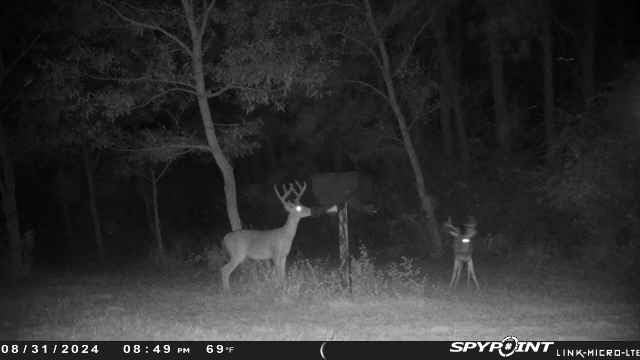
The build is UV-stabilized polyethylene in green, 24 by 24 by 34 inches at 48 pounds, with a watertight cover that makes filling easy and keeps feed fresh. Feed ports sit at 42 inches, which is a working height for adult whitetails and high enough to discourage a good share of raccoon pressure without going so high that you need a ladder every time.
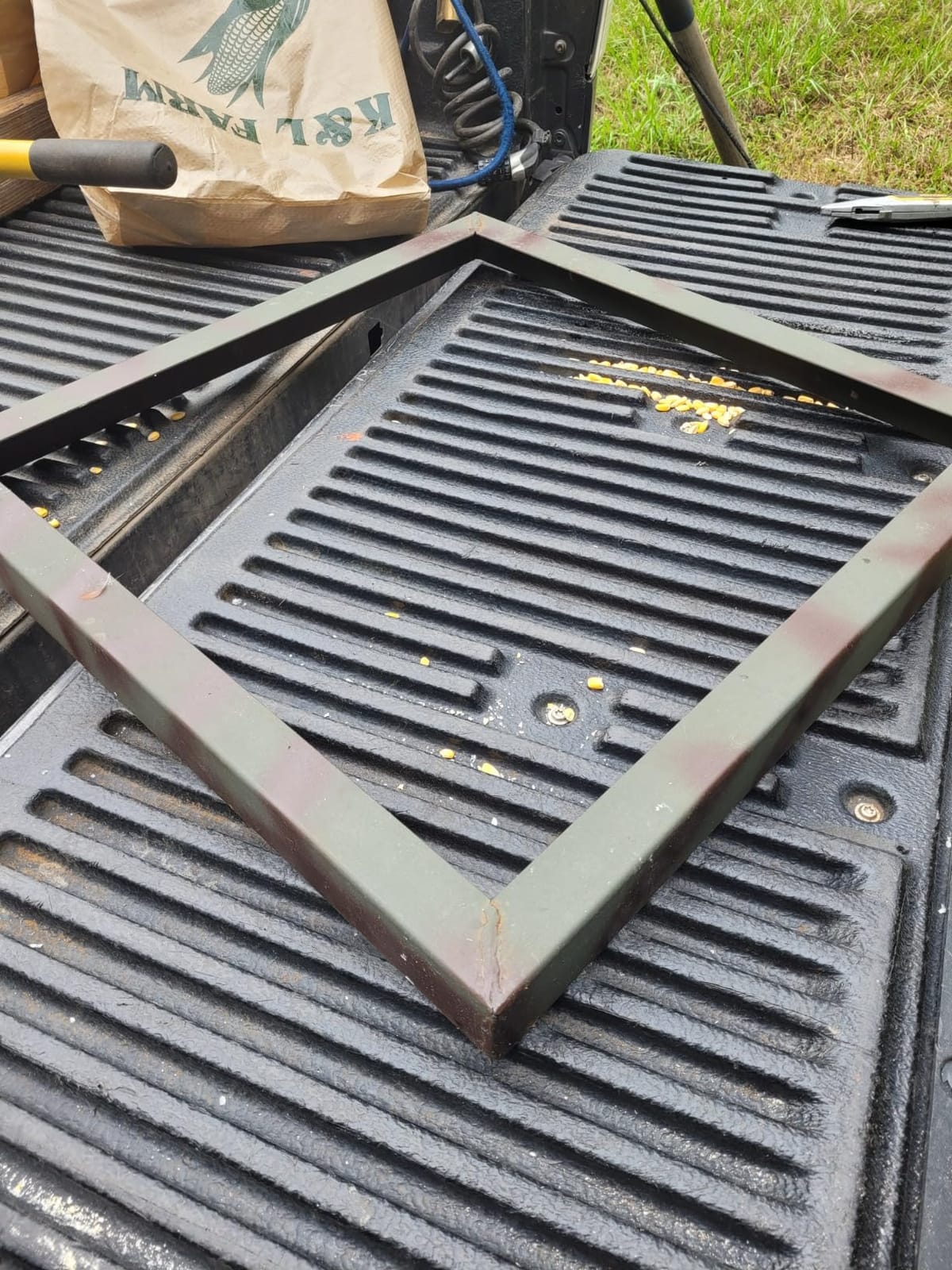
Owner reports on this feeder run long and positive. The most common advice is to add a varmint sleeve and run sealant at the base joint, because a few long-term users saw minor water intrusion at that seam after several seasons of sun. Forum users on the GON board also flag hogs nuzzling Banks feed tubes loose, and their fix was to run four 4-inch screws through each feed port down into the feeder bottom.
How it holds up on a lease with hog pressure
It holds up well against weather and reasonably against varmints, with hogs being the one animal that needs your help. GON members running multiple Banks units report far fewer hog and turkey photos after switching over. That is a real, attributed owner report rather than a marketing line.
The recurring weakness is the base seam, not the hopper. Add a varmint sleeve, run sealant where the hopper meets the base, and check that joint each fall before the first cold-weather fill.
Where it will frustrate you
The post is not included, and neither is the varmint sleeve, so your installed cost is higher than the sticker figure suggests. Upper corners can be gnawed by animals that climb the post, and at 300 pounds the load is heavy enough that the post must be genuinely set 3 feet deep in soft ground.
Lid and latch security is described as average for the price. If your lease is in a place where bears or heavy hog traffic are constant, this is a fixed station to anchor properly rather than a portable tool.
2. Boss Buck 350 lb – Longest Intervals Between Fills
BOSS BUCK 350 LB Deer Feeder/Hunting Durable Lightweight Plastic UV Protected Windproof Waterproof Gravity Feed with Protein 3 Feed Tubes Head, Multi-Piece Round Legs
350 lb thick-wall HDPE hopper
Freestanding multi-piece round legs
Three angled feed tubes with drain holes
One year limited warranty
Pros
- Largest capacity here at 350 lb
- Thick-wall HDPE will not rot rust or leak
- Patented internal cone with 3-way flow sleeve
- Double-walled lid reduces condensation
Cons
- Bulky to move and install than smaller tripod feeders
- Highest review count means most mixed feedback
- Free-standing legs need anchoring in hog country
The Boss Buck 350 is the pick when refill trips, not deer behavior, are the binding constraint. At 350 pounds it is the largest hopper in this roundup, and it runs with zero power, which matters when your feeding site is a 90-minute drive with no cell service and no room for a battery box.
The gravity head is the reason to pay up here. A patented internal cone plus a 3-way inner sleeve meters flow across feed shapes, so switching from whole corn to a protein pellet or a mixed grain does not mean the hopper bridges and stalls. The three feed tubes are angled at 10 degrees with drain holes, which is what keeps wet corn from sitting in the tube and molding.
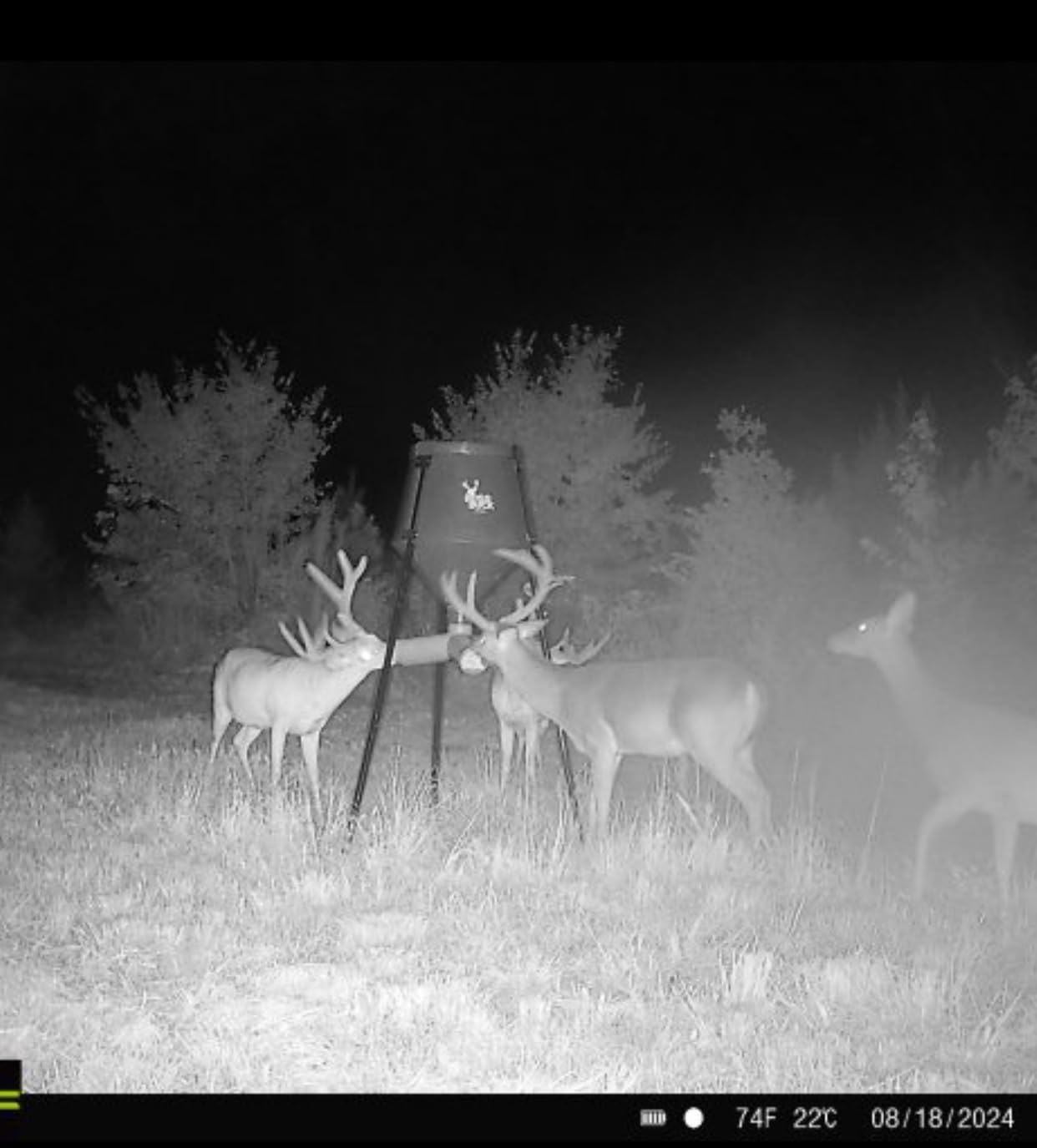
Owner tenure on this feeder is the strongest in the set. A Georgia lease member on the GON forum reports running Boss Buck feeders full time for 10 years and still going strong, and another user runs five of them. Ratings sit in the low fours, which reflects the premium cost and the bulk of relocating it rather than any structural complaint.
Two cautions from the forums are worth repeating. Hogs chew the ends off Boss Buck funnels, which lets corn slide out onto the ground, and they rub the legs to shake the feeder. Members running these in hog country pair them with hog panels and T-post fencing, which is the fix that finally stopped the problem at one Boss Buck setup.
Whether the bulk is worth it on a distant lease
For a lease where you already drive 90 minutes to get there, the bulk is worth it because you are trading one very heavy object for one very long fill. At 350 pounds, most members report the hopper outlasting a month of moderate draw with feed to spare.
The head design earns its keep in the spring pellet switch. Because the internal cone meters flow regardless of feed shape, you can move to protein without rebuilding anything, and you will not find pellets bridging in the cone the way they do in simpler gravity heads.
What to watch before you buy
It is bulkier to move and install than smaller tripod feeders, so plan the install with two people or a come-along. The multi-leg free-standing frame also needs anchoring in ground where hogs or bears work, since forum members report hogs rubbing legs to shake the feeder loose.
Funnel-end chewing is the single most cited damage on this feeder. If you are in hog country, plan the reinforcement before the first fill rather than after you find corn on the ground.
3. Wildgame Innovations Quick-Set Pro 270 lb – Best Scheduled Feeder
Wildgame Innovations Quick-Set Pro 270lb Game Feeder
270 lb tripod hopper
Digital timer with up to 6 feed times
50 foot broadcast radius
Battery powered with varmint guard
Pros
- Six programmable windows of 1 to 30 seconds
- Built-in rigid varmint guard covers feed and controls
- 50 foot throw holds game in one spot
- Light enough to relocate between scouting spots
Cons
- Lowest rating here at 4.0 with an 11 percent one-star share
- Timer needs batteries and periodic upkeep
- Barrel form takes more effort to move into timber
The Quick-Set Pro 270 is the pick when you want deer on a schedule instead of on free choice. Members on hunting forums make a specific point about this: deer will eat far more than you expect under free-choice gravity feeding, and timed feeds cut the feed bill. If your lease is shared by six people, feed conservation is a budget argument, not just a wildlife argument.
Six programmable windows of 1 to 30 seconds each gives you room to be deliberate. Most members land on one to three feeds a day and vary the times by 5 to 10 minutes every few weeks, which keeps the pattern from becoming something a poacher can read off your schedule.
The throw is the other half of the case. A 50-foot broadcast radius lets you place the feeder well off the stand and still hold deer in one workable area, which matters on a lease where a feeder parked 30 yards from your blind puts every deer in the world on top of you at first light.
How the timer changes the hunt around
Timed feeding pulls deer into daylight hours that a gravity feeder never will, because a gravity feeder is quiet and available at 3am. Program one feed in the morning window and one in the evening and you get two predictable movement periods instead of an all-night buffet.
It also lets you cut capacity without cutting range. If you are losing more feed than the lease budget supports, dropping from six windows to two is the first adjustment most members make.
Where it falls short
This is the lowest-rated feeder in the roundup at 4.0, with an 11 percent one-star share, and the complaints cluster on battery maintenance rather than on the feed mechanism. On a lease where the feeder sits 90 minutes away, a dead timer means a wasted drive and no feed dispensed.
The barrel form factor is also genuinely heavier to carry into wooded terrain than a post-mounted hopper, so your install day goes longer. Plan a solar panel or a spare battery if you run this through a wet fall.
4. On Time Buckeye 200 lb – Deep Hopper on Buried Metal Legs
On Time 71540 Buckeye Gravity Feeder
30 gallon hopper rated 200 lb
Buryable metal legs
No batteries or moving parts
27.5 lb unit weight
Pros
- Sturdy metal legs can be buried for stability
- Holds about 200 lb on one fill
- Gravity operation with nothing to service
- Owners report comparable feeders in use for 25 years
Cons
- Leg assembly typically takes two people
- Some owners added drain holes and sealed the leg joint
- New deer may ignore it until the lid comes off
The Buckeye is the pick for a lease member who wants a permanently buried station and never wants to touch it again. The metal legs are the differentiator. Bury them partway into the ground and you have a feeder that shrugs off the hog rubbing that shakes plastic-leg frames loose.
At 200 pounds rated in a 30-gallon hopper, it sits in the middle of this list on capacity and at the top on longevity. Owners report a comparable feeder design in use for 25 years, which is the kind of field tenure that matters when you are deciding what to leave on land you may not own.
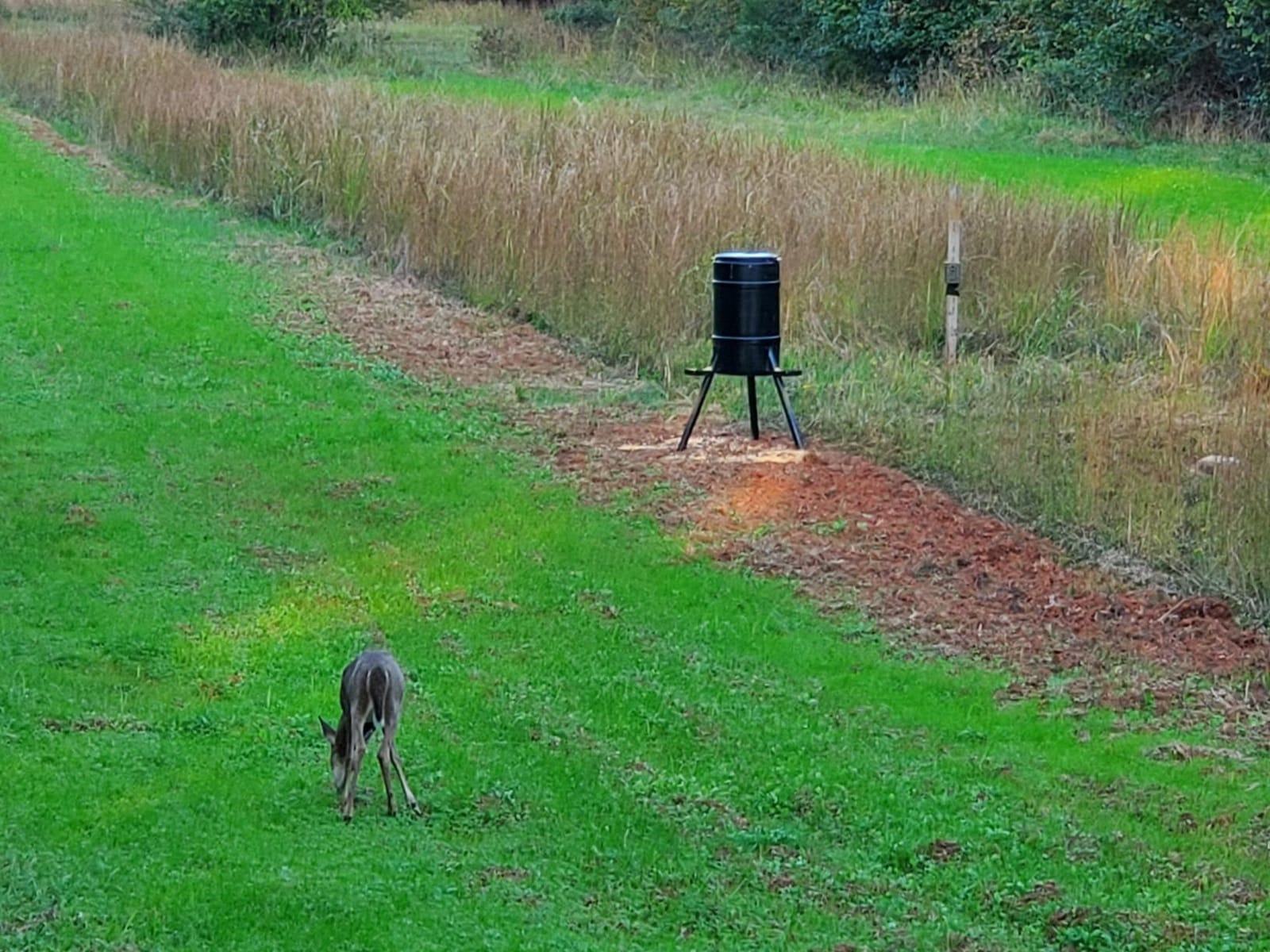
Deer did take to it quickly according to multiple hunters, but there is a real onboarding detail: some new arrivals ignore a closed-lid gravity feeder for the first few weeks. Leaving the lid off for a while is the fix owners use to speed that up.
At 27.5 pounds empty, this is one of the lighter units to carry in, and that matters more than it sounds when you are walking it 200 yards from the truck down a ravine.
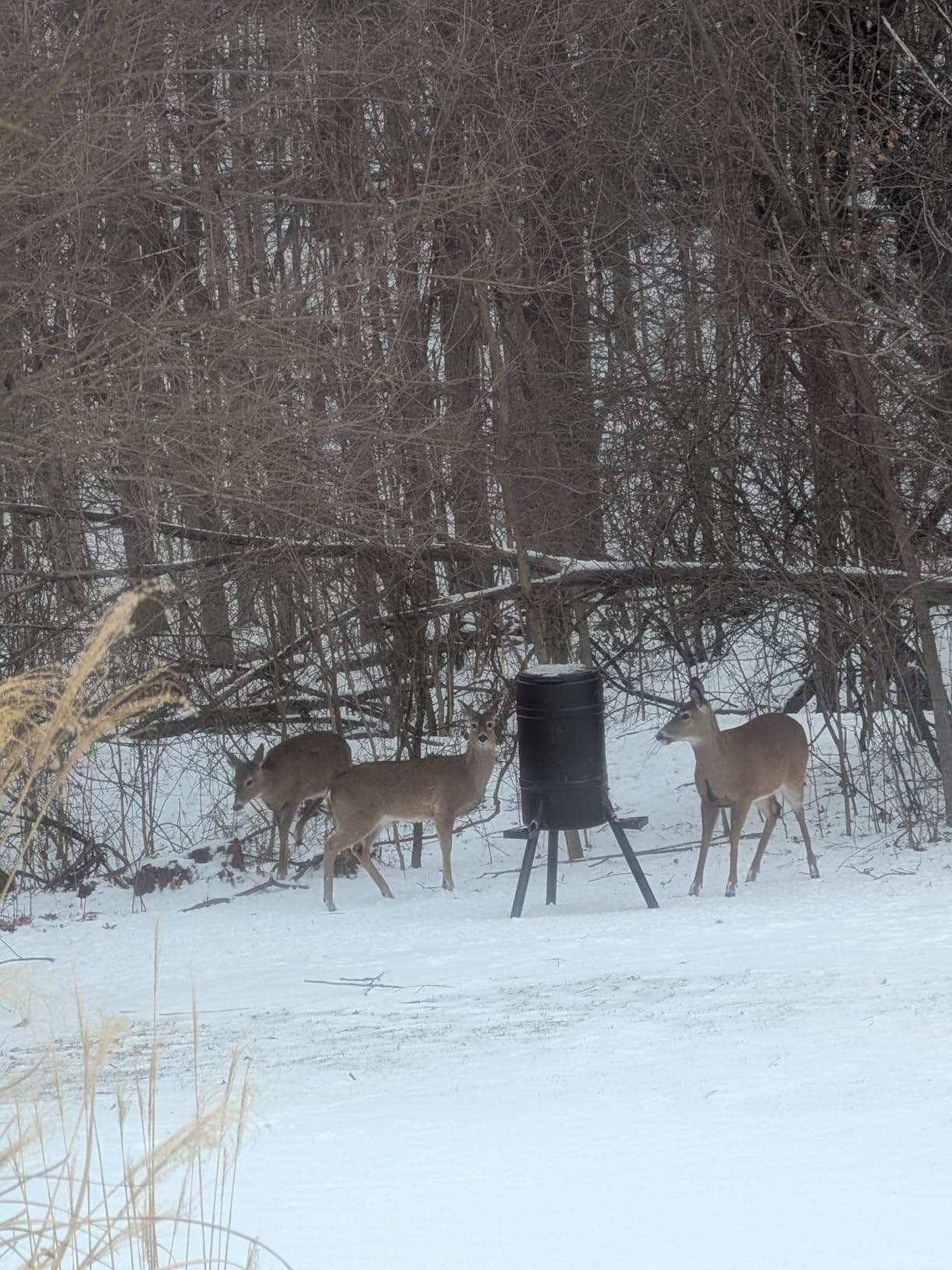
Why the buried legs matter more than the capacity
Stability is the whole point on a lease where nobody is there between your visits. Buried metal legs do not swing, and a feeder that does not swing is not feeding corn onto the ground from a shaking frame.
For a lease that stays fed year-round with one visit a month, that low-maintenance profile is worth more than extra capacity you have to drive out of your way to use.
What you will be doing on day one
Assembly is a two-person job because the legs have to be aligned before they are buried. Plan for an hour with a second pair of hands.
Some owners added extra drainage holes and sealed the leg-to-hopper joint to keep rain out, which is a cheap afternoon of work that protects a full season of feed. Do it before the first fill.
5. Redneck Outdoors T-Post 80 lb – Adjustable Tree Mount
REDNEK Redneck Outdoors T-Post Gravity Feeder
80 lb polyethylene hopper
Tree or T-post mount
Feed tube height 34 to 60 inch
Adjustable feed mouth
Pros
- Heavy-duty all-weather polyethylene resists rust and rot
- Height adjusts from 34 to 60 inch for different game
- Concave back with ratchet grooves simplifies tree mounting
- Wide 4 by 5 inch feed mouth is easy for deer to work
Cons
- 80 lb capacity is small for lease-scale feeding
- Ratchet straps for tree mounting not included
- Listed under wild bird feeders rather than game feeders
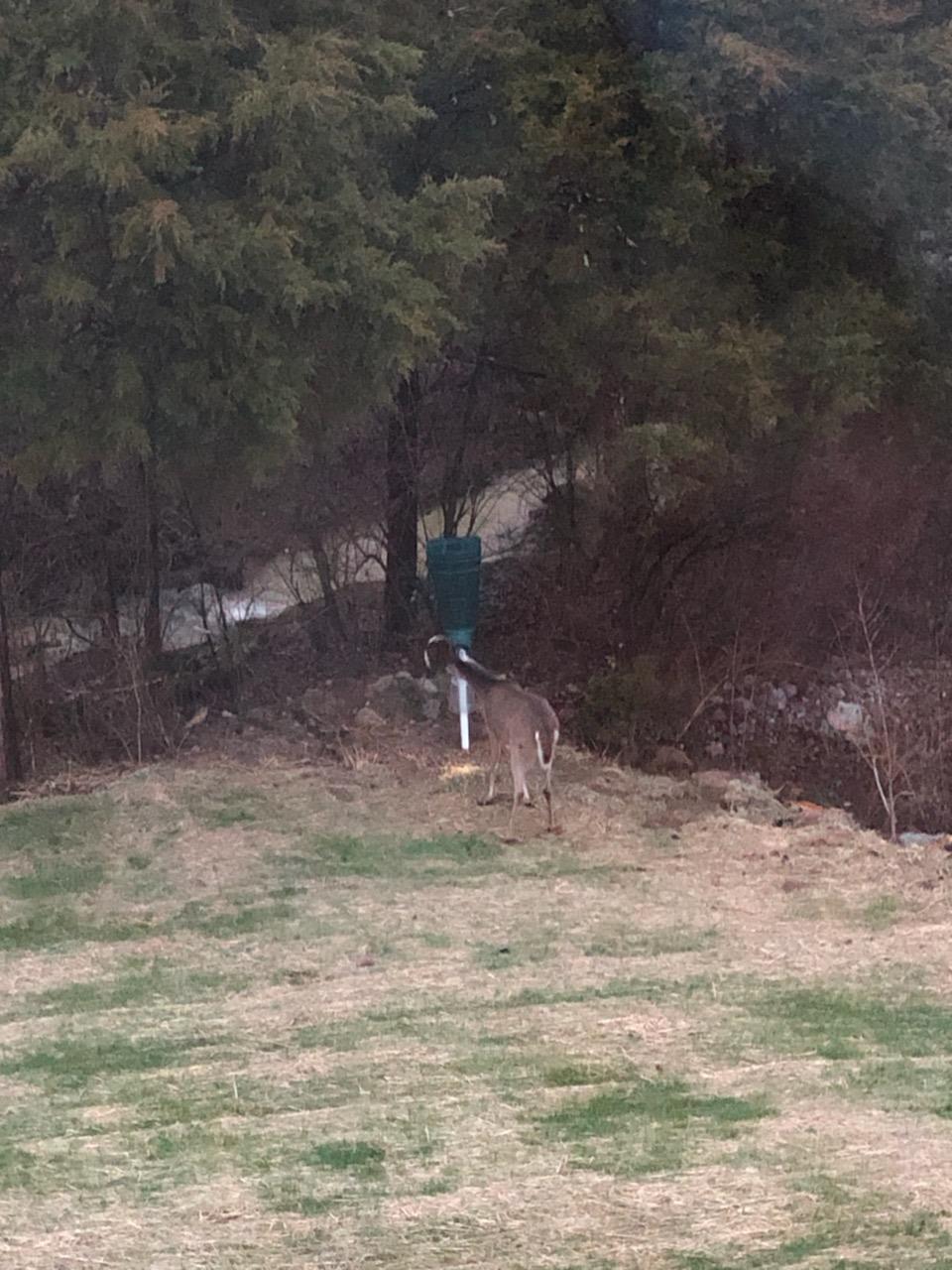
The Redneck Outdoors T-Post is the pick when you do not want to dig anything. A concave back with ratchet-strap grooves and a 34 to 60 inch height adjustment means you can strap it to a tree on a lease where driving a post means permission you may not have.
At 80 pounds it is a short-interval feeder by design. Think of it as one of several stations rather than the station, and use it in places you pass on the way to the big hopper. Two or three of these along a travel corridor can hold deer moving while your main feeder gets attention.
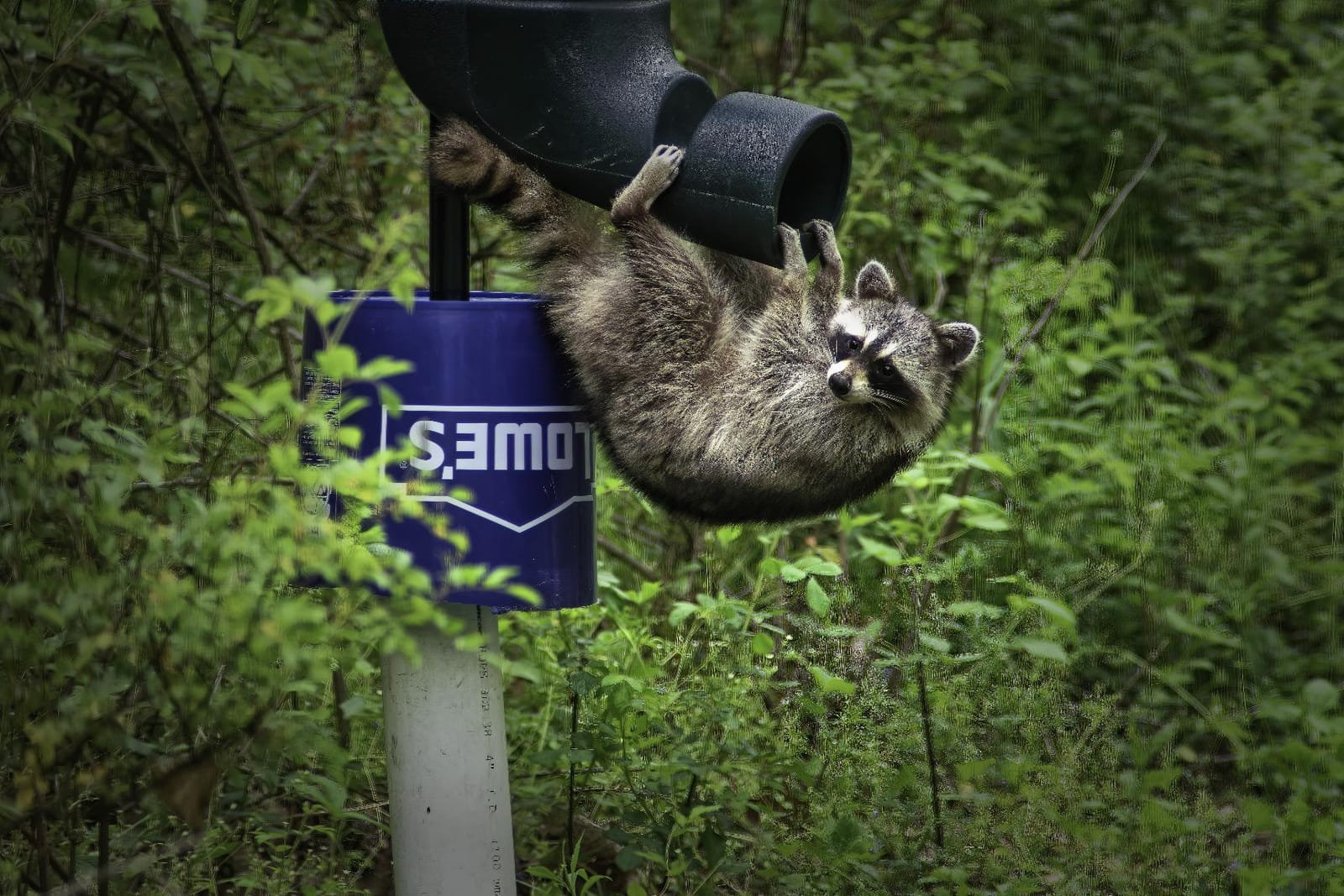
The height adjustment is more useful than it sounds. Low settings work for smaller deer and for keeping feed above a wet ground layer; the 60 inch setting puts it well out of reach for a good number of coons.
One honest note on its category listing: this unit appears under wild bird feeders rather than hunting game feeders, which hints at a broader-use design. That has not stopped deer from working it, and buyers rate the 4 by 5 inch feed mouth as easy for deer to use.
Where it fits in a lease feed program
Use it where you cannot dig and where you pass anyway. On a lease with a gate you walk through twice a week, this is the feeder you top off on the way past, and the height adjustment lets you match the mount to whatever tree is available.
It is also the right tool for testing a location before you commit money to a post and a 300-pound hopper.
What to bring with you
Ratchet straps are not included, so bring your own and check the tree before you leave the truck. Eighty pounds refills fast on a pressured site, which means this is a feeder that punishes you for missing a week.
Capacity is the honest limit here. On hog-heavy ground this unit will not survive a season without reinforcement, because there is no deep hopper for hogs to lean on.
6. Moultrie Gravity Tripod 250 lb – Built for Protein Pellets
Moultrie 250 Lb Gravity Deer Feeder Tripod
250 lb hopper for corn or pellets
Battery-free gravity feed
Three adjustable funnels
Quick-Lock conversion adapter
Pros
- 250 lb hopper cuts refill trips on a lease
- Battery-free design with no electronics to fail
- Three adjustable funnels handle corn pellets or mixed grain
- Stainless fasteners and reinforced tripod legs with four years reported
Cons
- One reviewer found 12 screws lockwashers and nuts missing
- Fill lid stands about 6 feet so needs clearance
- Some assembly hardware may need to be sourced separately
The Moultrie 250 is the pick for spring and summer when you are feeding protein pellets instead of corn. Pellet capacity runs well below the corn headline across this whole category, so a 250-pound hopper that carries 300 pounds of corn is closer to 250 pounds of actual pellets. Budget the refill interval on the pellet number.
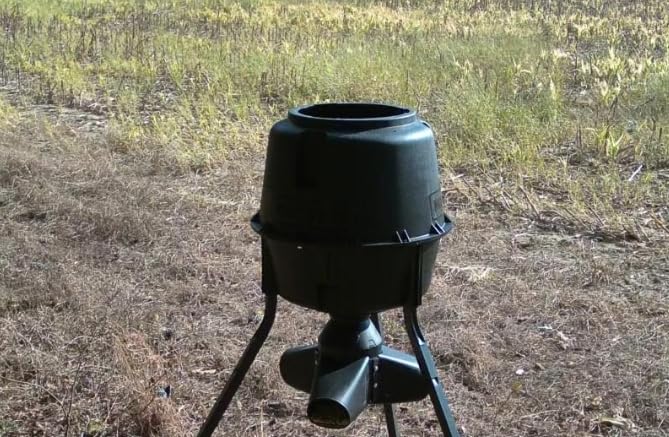
The three adjustable funnels are the feature that makes the switch painless. Corn, pellets or a mixed grain can all run through the same head, which means your spring pellet station and your fall corn station can be the same feeder with a different setting.
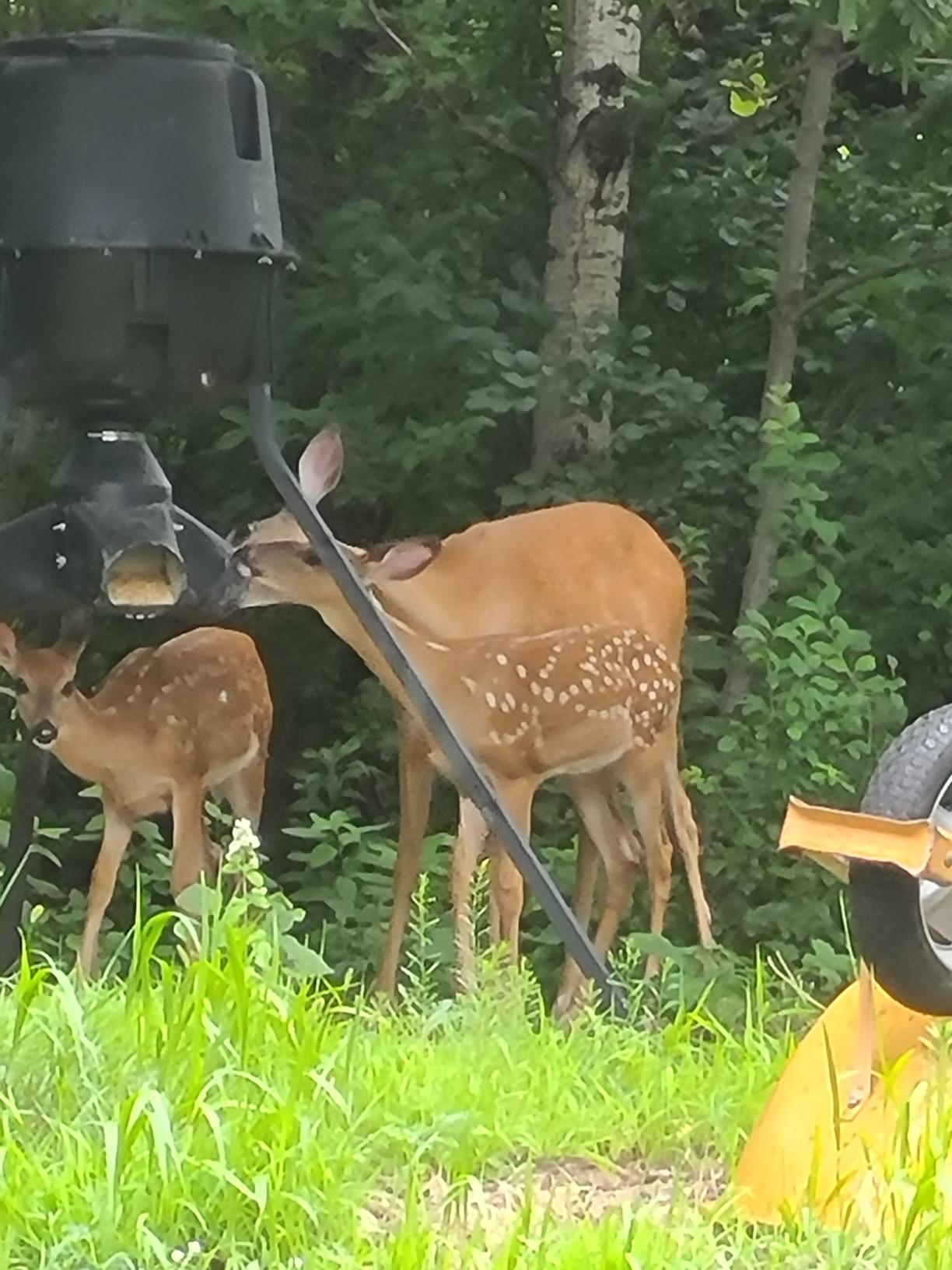
Build quality is the story here. Owners credit stainless fasteners and reinforced tripod legs, and one reports four years of service with the unit in place. The Quick-Lock adapter is a genuine lease advantage because it means the hopper can convert to other Moultrie kits later instead of being scrapped when your feed program changes.
The standout complaint is the hardware kit. One reviewer found 12 screws, lockwashers and nuts missing from the package, which is exactly the failure mode forum members describe when they show up at a remote lease and have nothing to assemble with.
How it handles the pellet-to-corn seasonal switch
The adjustable funnels are what make this a two-season feeder rather than a one-season one. Move the funnels, change the feed, and the hopper does the rest without any power or motor to reset.
Deer do strip this hopper fast. Owners report 200 pounds of corn going quickly on a pressured site, so on a lease with heavy deer numbers this is a feeder you check on a fixed rhythm, not one you fill once and forget.
What to check before you drive out
Count the hardware. If anything is missing, source it before you leave rather than at the feeder.
The fill lid stands at about 6 feet, which needs clearance when you position the tripod. On a lease with low limbs and tight timber, that is a real constraint and the reason a lower hopper exists.
7. American Hunter 30-Gallon Nesting Hopper – Best Value Hopper
American Hunter 30-Gallon Nesting Hopper Gravity Deer Feeder – Maintenance-Free Tripod Game Feeder
30 gallon polymer hopper at about 225 lb
Twist-lock gravity system
Three 8 inch feed tubes
No power required
Pros
- Holds about 225 lb or roughly 4.5 forty-pound bags
- No batteries timers or motors and better raccoon resistance than older feeders
- Removable leg sections let you lower the height
- Survives storms and holds up year-round
Cons
- Feed tubes can be pulled off by raccoons climbing the legs
- Some feed spills on the ground beneath the tubes
- Lid fit could be tighter
The American Hunter 30-Gallon is the best value pick, and the number that sells it is capacity per unit of complexity. It holds roughly 225 pounds, about four and a half 40-pound bags, with no batteries, timers or motors anywhere in the design.
Owners consistently report it keeps raccoons off the feed better than older feeders they owned, which is not a small claim in lease country. Crossbow Nation members running several All Seasons units specifically call out having no coon or squirrel problems with that design, and this is the same category of simple, no-power, ground-mounted feeder.
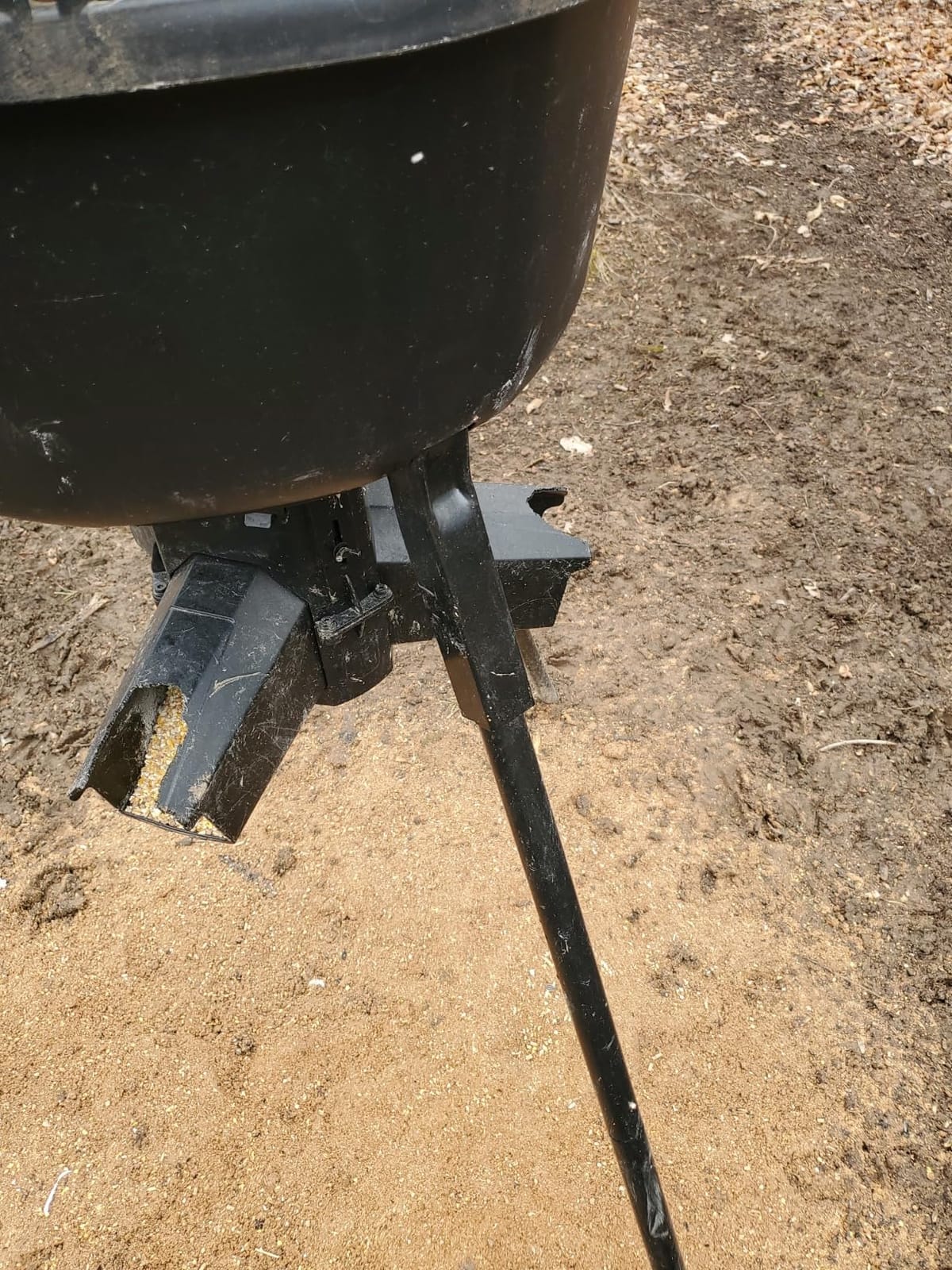
The 3/4-inch integrated feed lip and hooded overhang reduce waste and keep rain off the ports, which matters in a wet fall when corn that sits in water molds overnight. Three 8-inch feed tubes give smooth, clog-free flow for both corn and pellets.
At 24 pounds empty this is the easiest large hopper in the set to move, and the removable leg sections let you drop the height for smaller deer or for ground that is softer than you expected.
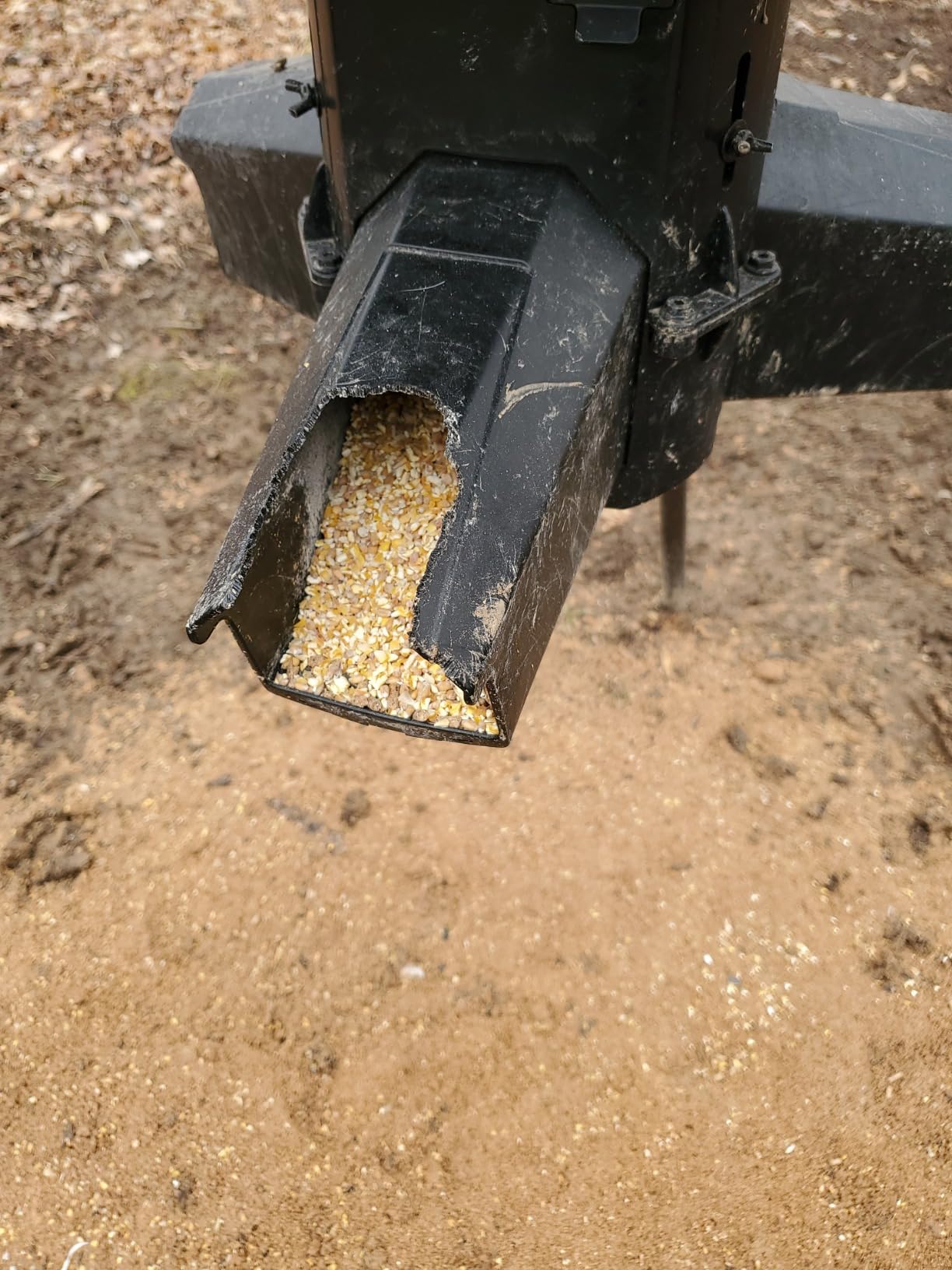
Whether the raccoon resistance holds up
It holds up well overall, with the specific failure being varmints that climb the legs and pull the feed tubes off, which dumps the hopper. That is a different problem from raccoons eating the feed, and it is a mechanical fix rather than a feed-access one.
For most leases this is a fair trade for a feeder with nothing electrical to fail. Check the tubes each visit and you will not lose a fill to it.
Where it costs you
Some owners report noticeable spill on the ground beneath the tubes, which attracts hogs and can put a food-sickness conversation on land you do not own. The lid fit is described as loose enough to be worth checking after wind.
Lowering the height takes two people, same as most hopper feeders. Plan the install accordingly.
8. On Time T-Post 80 lb – Covering a Whole Lease on a Budget
On Time T-Post Gravity Feeder, 80 lb. Capacity
80 lb polyethylene feeder
Steel mounting bracket
Ready out of the box
No moving parts or batteries
Pros
- Low cost way to add feeders across a lease
- No moving parts and no batteries to replace
- UV-resistant polyethylene for outdoor service
- Covered downspout keeps feed out of bad weather
Cons
- 80 lb capacity means frequent refills
- Listed weight of 3.2 ounces looks inconsistent with a full-size feeder
- Limited long-term feedback at 141 reviews
The On Time T-Post is the budget pick for a lease whose real problem is coverage rather than capacity. When you need four or five feeders scattered across stands instead of one deep hopper, the unit cost is the entire decision.
A steel bracket lets it mount to a T-post, a tree or similar structure, and it is ready to use out of the box with no assembly and no batteries. That zero-friction setup is why it works for members who drop feed on the way to the gate rather than making a dedicated trip.
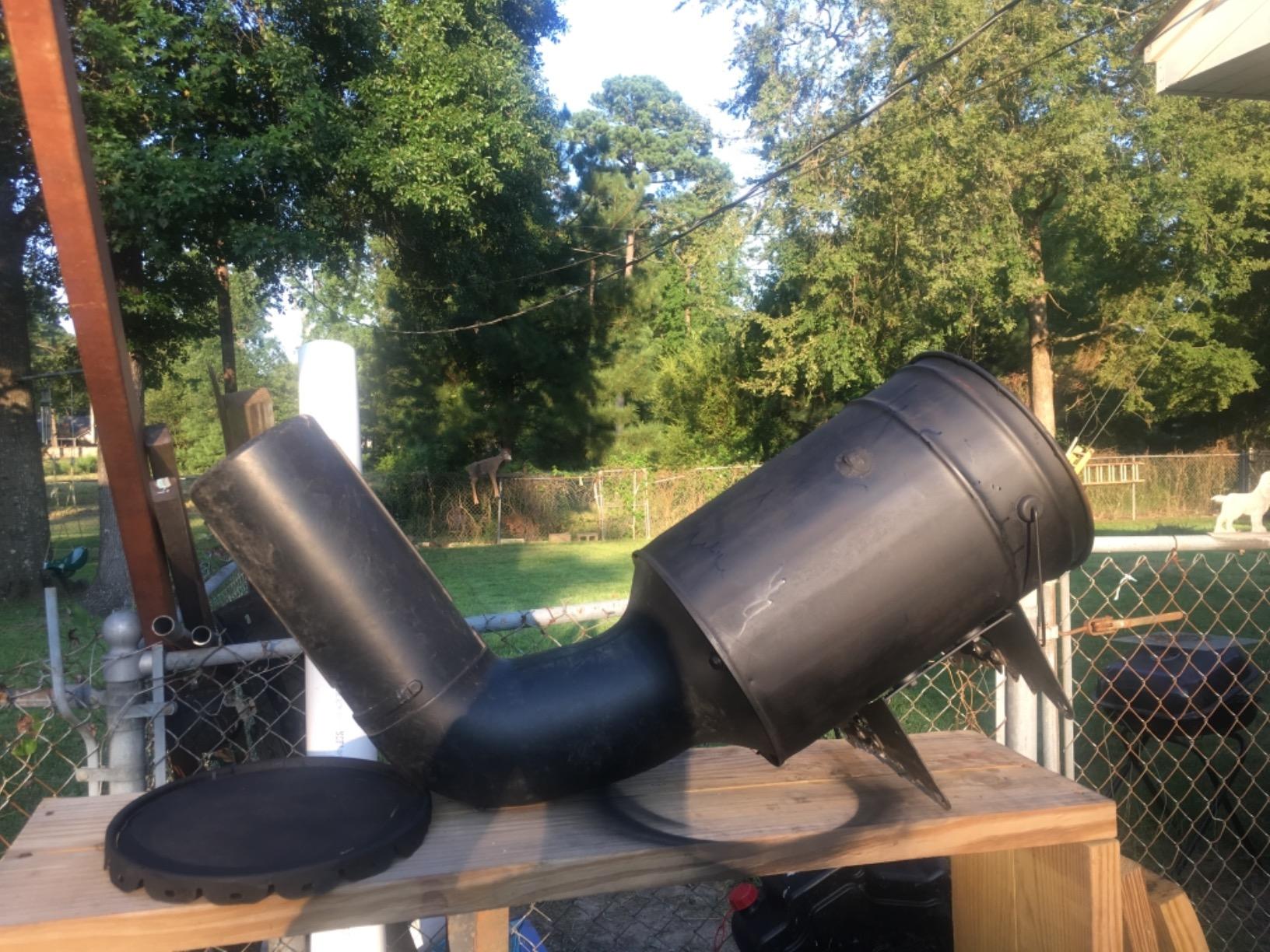
Be honest about the review base. At 141 reviews, the long-term field feedback here is thinner than anywhere else in this roundup, so you are buying on design rather than on a decade of owner history.
The listed weight of 3.2 ounces also looks inconsistent with a full-size feeder, which is a listing artifact rather than a product problem, but it is a fair reason to read the reviews closely before ordering.
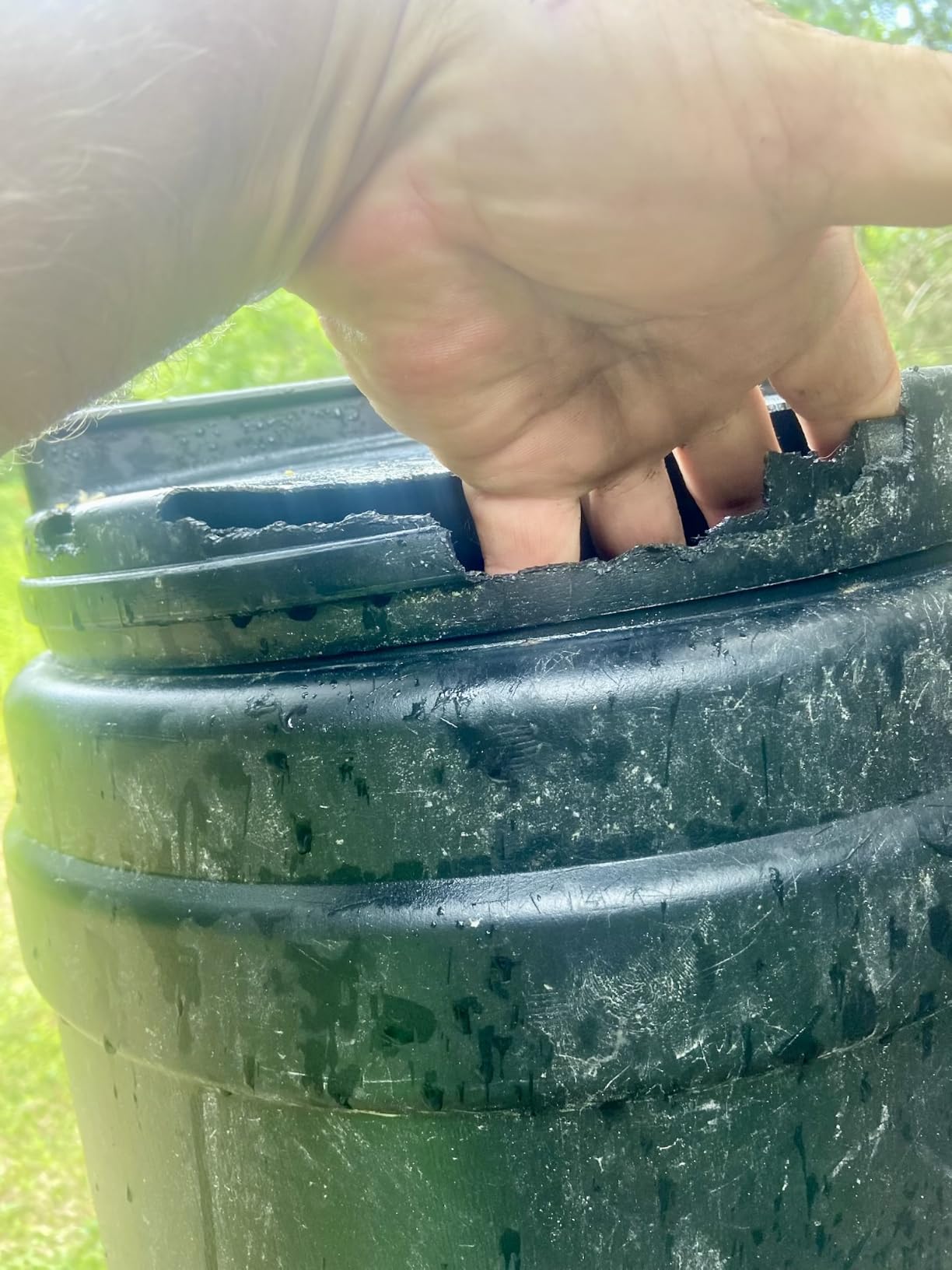
How to use small feeders without drowning in drive time
Small feeders work when they are placed where you already are. Put this one at a stand you walk past on the way to the big hopper and it becomes a free top-off rather than another errand.
The covered downspout protects feed from weather, which is the main durability concern at this size. There is nothing else to maintain.
Where the trade-off bites
Eighty pounds goes fast on a pressured site, and with no battery and no motor there is no way to ration the flow beyond the port setting. On high-traffic timber you will be refilling more often than the plan assumed.
Plan on this being a supplementary station, not your primary hopper.
9. Wildgame Innovations Treehugger 100 lb – Best Trial Feeder
WILDGAME INNOVATIONS Treehugger 100 lb Trubark HD Camo Gravity Bag Feeder Durable Lightweight Weatherproof Game Feeder for Hunting
100 lb PVC gravity bag
Tree strap mount
Weighs 2.2 lb
Sets up in under 5 minutes
Pros
- Most proven feeder here at over 1100 reviews
- Weighs 2.2 lb and straps to any tree fast
- Quiet power-free operation replenishes feed as it is eaten
- Roll-top closure keeps feed fresh and weather out
- Handles corn attractants protein or mineral without clogging
Cons
- Not a true enclosed hopper so some feed reaches the ground
- Bag body is easier for varmints to defeat than a tripod or post feeder
- Straps pulled from the seams within half a season at under rated capacity
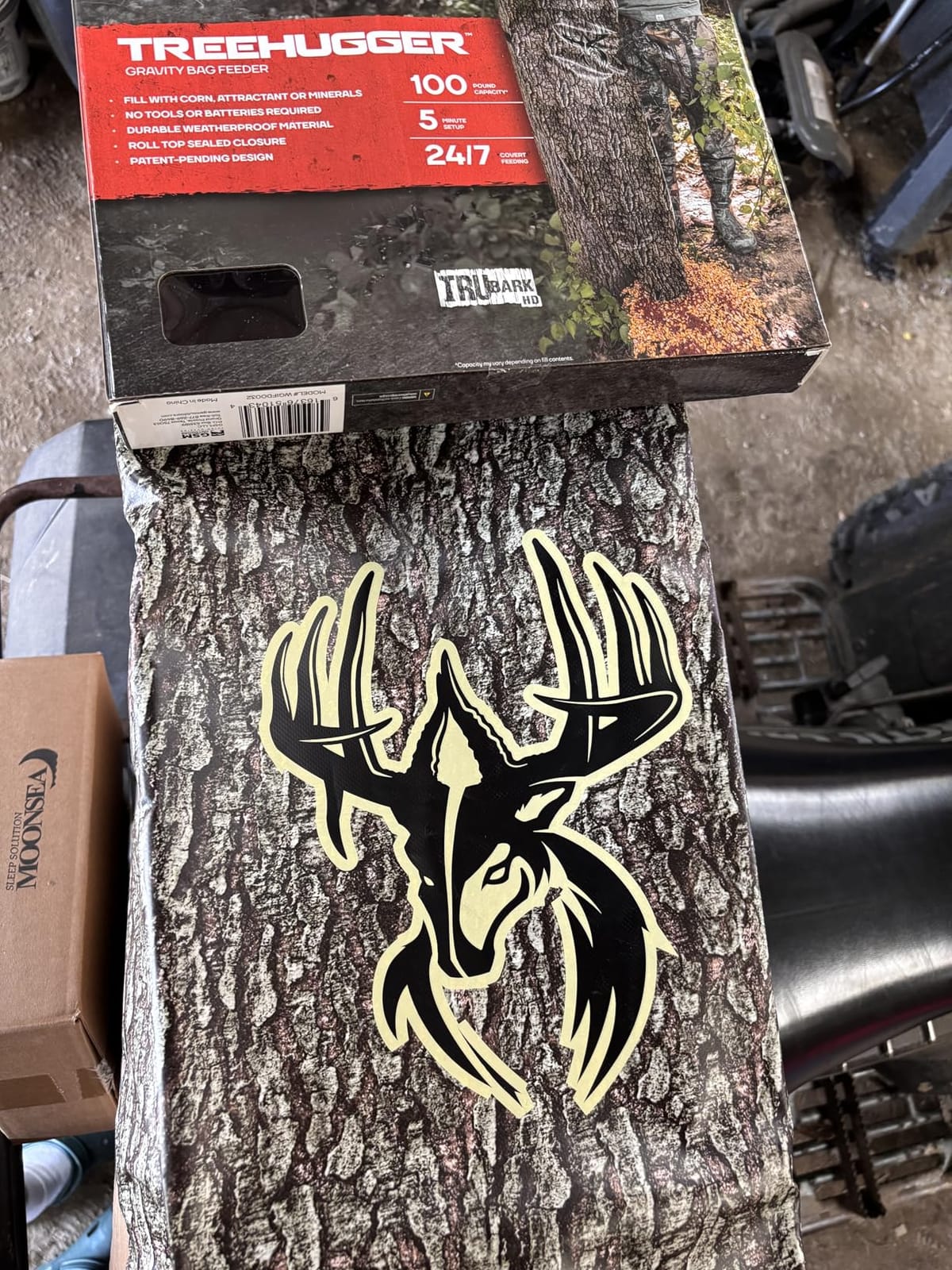
The Treehugger is the pick for testing a location before you commit to it, and with over 1100 reviews it is the most field-proven feeder in this roundup. At 2.2 pounds it goes up in under five minutes, which is the only way to run a real scouting comparison across several spots on a lease.
It is quiet and power-free, and it replenishes feed as game eats it. That silence has independent support on hunting forums, where members repeatedly describe gravity feeders as the quiet option and note that broadcast feeding spreads corn and attracts more deer but keeps it far less concentrated.
The flexible feed acceptance is useful in practice. It runs corn, attractants, protein, mineral or a combination without clogging, so you can run a side-by-side feed-type comparison at two trees and see which one your herd actually uses.
One owner report is worth weighing: straps pulled from the seams within half a season at under rated capacity. Treat the bag as a light-duty unit and inspect the straps each visit.
Why a trial feeder saves money
Because you are spending one season learning where the deer actually are, before you spend a season discovering your 300-pound hopper is 200 yards off their travel corridor. A trail camera on the same trees tells you the rest, and our trail camera picks cover the placement.
Multiple location scouting with a lightweight feeder is the cheapest research you will ever do on a lease.
What it is not good for
This is not an enclosed hopper, so some feed still lands on the ground. That spilled feed brings hogs and varmints to the tree and creates a ground-cleanup problem on land you do not own.
The bag body is easier for a determined raccoon to defeat than a tripod or post feeder. Use it to learn, not to feed a lease through winter.
10. Wildgame Innovations Quick-Set 50 lb Bucket – Best Hanging Feeder
WILDGAME INNOVATIONS Quick-Set 50 lb Bucket Feeder with PCell Timer Hanging Wildlife Feeder for Corn & Pellet Feed with 1-2 Available Feed Times & 30 ft Radius
50 lb 6.5 gallon hanging pail
PCell dawn and dusk timer
30 foot feed radius
Galvanized steel spinner plate
Pros
- Dawn and dusk windows suit bow and rifle season
- Galvanized spinner plate and motor keep working after years in a tree
- Hangs in about 5 minutes and relocates easily
- Metal pail resists the raccoon losses that plague gravity feeders
Cons
- Pail top cap rusted through for one long-term owner
- Plastic hanging handle can pull out under a full pail
- Throws corn 15 to 20 feet so placement matters
- Timer is analog and medium settings empty it in about two days
The Quick-Set 50 lb bucket is the pick when your problem is raccoons or bears at ground level. Hanging high in a tree takes the feed out of reach of both, and the metal pail resists the raccoon losses that plague ground gravity feeders.
The PCell timer supports dawn and dusk windows, which is the timing that works best for bow and rifle season because those two movement periods overlap with shooting hours. Long-term feedback on the galvanized spinner plate and motor is positive; they keep working after years in a tree.
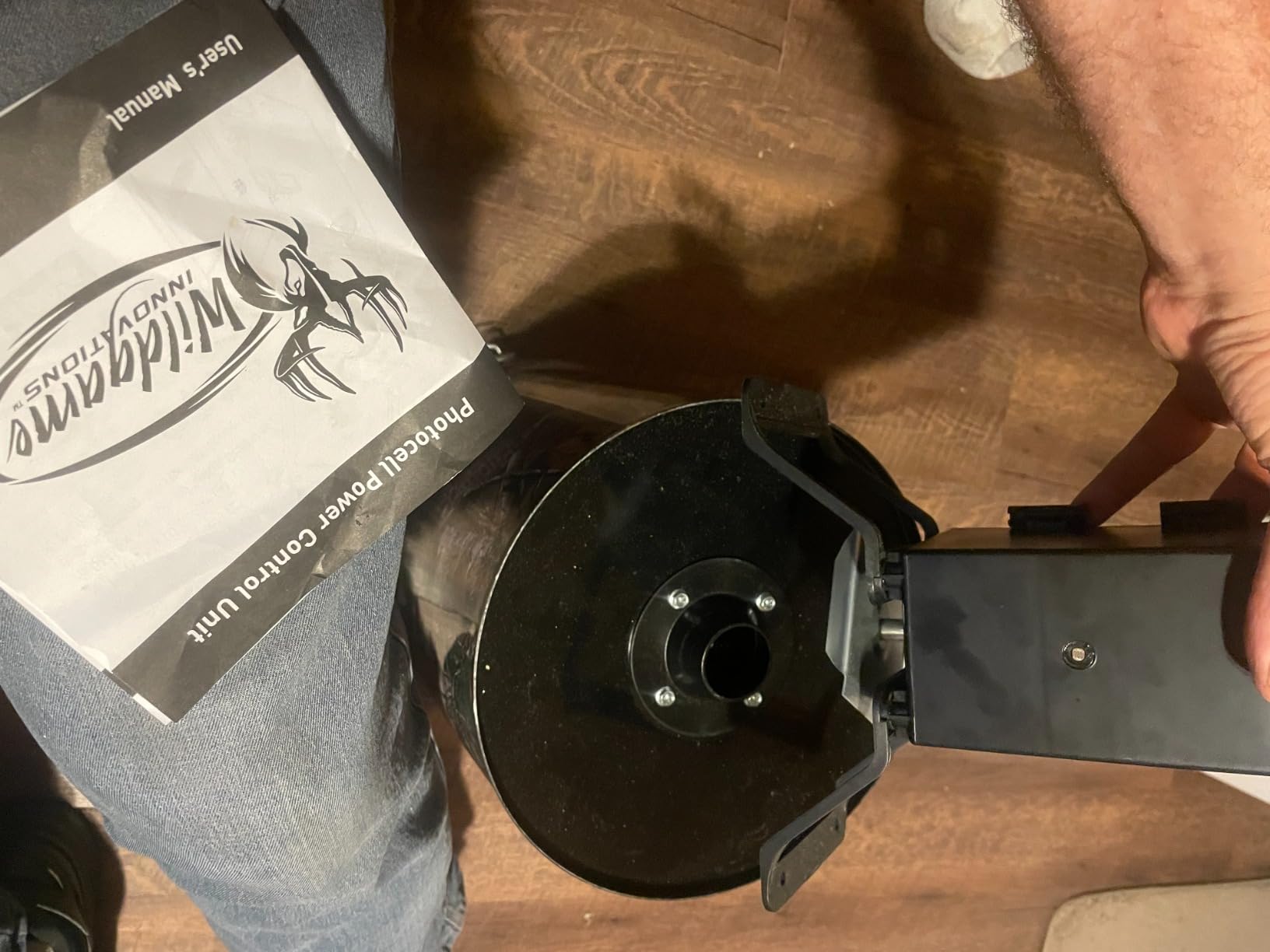
At 2.4 ounces listed and compact for a 6.5-gallon pail, it hangs in about five minutes and is simple to relocate as deer patterns shift through the season. That portability is what makes it useful on a lease with multiple stands.
Placement is the whole trick here. It throws corn 15 to 20 feet in practice, so hang it far enough from your blind or treestand that the deer settle where you can see them. Our ground blind guide covers how far to offset a feeder from a blind.
When hanging high is the right answer
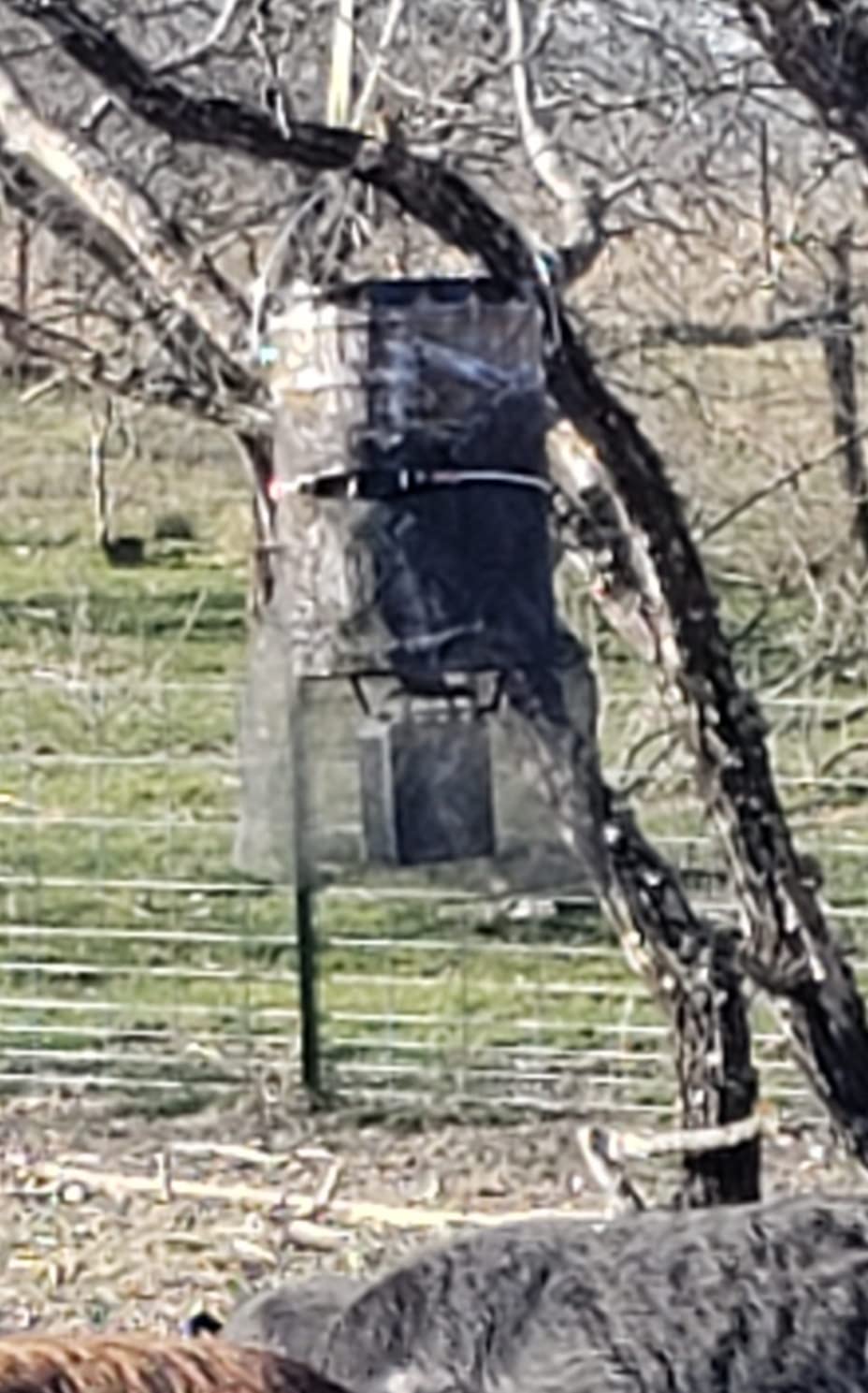
Hanging high is the right answer when ground feeders are being emptied by raccoons overnight, or when bears work ground-level stations. Forum members report bears pushing over 200-pound tripods, while units hung in a tree stayed in place and kept working.
It is also the cleanest feeder to move between stands at the end of a season, with no post to pull and no concrete to worry about.
The failure points to plan around
One long-term owner had the pail top cap rust through and spoil the feed, so inspect the cap each visit in wet country. The plastic hanging handle can pull out under a full pail, so check that first if it drops.
The timer is analog rather than digital, and medium settings empty it in about two days. Set it low, and expect to refill more often than the timer suggests.
How to Choose the Best Deer Feeders for Hunting Leases
Start with your lease profile, not the hopper. A near lease checked weekly and a 90-minute lease demand almost opposite feeders, and the wrong choice costs you either feed waste or drive time all season.
Match the feeder to your drive time
Near lease, checked weekly: anything with a shallow hopper works, and the budget T-post units let you cover several stands instead of one. Mid lease, checked monthly: 200 to 250 pound hoppers on buried legs or a tripod are the sweet spot. Distant lease, checked monthly or less: 300 pounds and up, gravity only, because a battery that dies in October costs you a two-hour round trip.
The planning rule that experienced lease members actually use is 300 pounds per 1.5 months per feeder. Post that thread member is using it as a capacity planning baseline rather than a refill guarantee, and it lines up with what the refill math below shows.
Get the refill interval math right
Divide usable pounds by your herd’s actual daily draw, then divide by 30 for months. At 200 pounds usable and a 9-pound daily draw, that is about 22 days. At the same 200 pounds with an 18-pound draw on high-traffic timber, it is 11 days.
That is the entire argument for measuring your own disappearance before you buy capacity. A lease that burned 9 pounds a day last season and one that burned 18 need different feeders, and you cannot tell them apart from a spec sheet.
Gravity, spin-cast, hanging or T-post
Gravity feeders need no power and dispense as deer eat, which means feed consumption is set by deer numbers rather than by your settings. Spin-cast feeders waste less because they dispense in scheduled throws, at the cost of batteries, timers and a broadcast pattern you have to place well. Hanging feeders solve varmint pressure and lose to bears only in the sense that bears cannot reach them. T-post and tree feeders are the answer when you cannot dig.
If you run both, the common lease pattern is a gravity hopper for the main station and a timed feeder at a food plot edge in the fall. Our ladder stand guide covers matching the feeder to the elevation you will shoot from.
Post sizing is a budget line, not a detail
A 300-pound feeder goes on a 4×4 set 3 feet in the ground. A 600-pound class feeder needs a 6×6. Buying the hopper without the post is the most common surprise on a lease, because most post-mounted units ship without one. Budget the post, the digging and the labor before the first fill, not after.
Fixing hogs, raccoons, squirrels and bears
For hogs, the community fixes are concrete: drive four 4-inch screws through each feed port into the feeder bottom so a hog cannot nuzzle the tube off, guard or brace the funnel bottoms where hogs chew the ends, and corral the feeder with hog panels and T-post fencing. Fencing alone is not always enough, since members report cattle and hogs working their way in and knocking feeders over even when fenced.
For raccoons and squirrels, height is the fix. Raising ports, tightening the lid, and moving to a metal hanging pail all reduce losses. One member switched feeder brands specifically after squirrels chewed through two thin plastic units. For bears, anchor the legs and, if bears are the pressure, hang the feeder high instead.
Check landowner rules and CWD restrictions first
Nothing in this roundup matters if your feed program is illegal in your county. Verify with your state wildlife agency and check the chronic wasting disease status for your specific CWD zone, because feeding rules are set at the state and sometimes the county level. Some units restrict baiting and some restrict feeding outright near a positive area.
Get the landowner’s written permission before you install anything, including posts. A tipped full feeder or a hog-dumped feed pile on someone else’s ground is the fastest way to lose a lease, and it is worth five minutes of conversation to prevent it.
Frequently Asked Questions
What is the best deer feeder for the money?
The American Hunter 30-Gallon Nesting Hopper holds roughly 225 pounds with no batteries, timers or motors, and buyers rate it at 4.4 across 273 reviews. It is the pick when you want large capacity without any electronics to fail in the field. Owners also report better raccoon resistance than older gravity feeders.
Why not feed corn to deer?
Corn is not illegal in most states, but it is high in carbohydrates and low in the protein and minerals deer need in spring and summer. It also attracts hogs, raccoons and bears faster than any other feed. Many states restrict baiting or feeding near chronic wasting disease positive areas, so check your state wildlife agency rules before filling a hopper.
How many times a day should your deer feeder go off?
Most lease members land on one to three feeds a day on a timed feeder. Vary the times by 5 to 10 minutes every few weeks so the pattern cannot be read off a schedule. The Wildgame Innovations Quick-Set Pro 270 lb supports up to six windows of 1 to 30 seconds each, and deer will eat far more than expected under free-choice gravity feeding.
What feed attracts deer the most?
Whole corn is the strongest starting attractant for most leases, followed by sweet feed and rice bran as getters. Rice bran pulls deer in hard but molds quickly once it hits the ground, which forum members note is its main drawback. In spring and summer, protein pellets hold deer better and produce fewer hog problems.
What are the best deer feeders for the price?
The On Time T-Post 80 lb is the lowest-cost way to add feeders across a lease, with no moving parts and no batteries to replace. The Wildgame Innovations Treehugger 100 lb is the proven portable option at over 1100 reviews, weighing 2.2 lb and strapping to any tree in under five minutes. Both are best used as supplementary stations rather than a primary hopper.
What protein is best for deer?
A high-protein deer pellet formulated for the season is the standard choice for spring and summer, when does need more protein than grain provides. Choose a pellet dense enough to flow through gravity ports without bridging. Note that pellet capacity runs well below the corn headline on every hopper in this roundup, so size on the pellet number.
How many deer feeders per 100 acres?
One feeder per 100 acres is a common starting point for a lease that spreads its stations, though terrain matters more than acreage. Put stations on travel corridors between bedding areas and feed rather than at the bedding areas themselves. Experienced lease members plan around 300 pounds of feed per 1.5 months per feeder as a capacity baseline.
Is feeding deer legal in my state?
Rules are set at the state level and sometimes by county, and chronic wasting disease is the main driver. Some states restrict or ban baiting and feeding outright, and many restrict it within a CWD positive zone. Verify with your state wildlife agency and check your specific county before installing anything, and get written landowner permission on top of that.
Best Deer Feeders for Hunting Leases: The Final Call for Lease Members
After working through ten feeders against the only variables that matter on leased ground, the Banks Outdoors Feedbank 300 is the best overall choice for the best deer feeders for hunting leases, because 300 pounds on a single post is what turns feeding into a monthly errand instead of a weekly one. The Boss Buck 350 wins on interval length and feed-shape flexibility. The Wildgame Quick-Set Pro 270 wins when you need the herd on a clock.
Before you order, answer three questions in order. How many days can you actually be there, because that sets capacity. Which non-target animal is the real threat, hogs, coons or bears, because that sets mount height and anchoring. And is feeding legal in your county and permitted by your landowner in writing.
Then pick the feeder that fits those answers rather than the one with the biggest number on the box. In 2026, the feeders that survive a lease are the ones matched to the drive.