
Most deer are not seen in the middle of the afternoon. They are seen in the last ten minutes of legal light, when the treeline has already gone flat and you are trying to tell a doe from a stump at 400 yards. That is the entire problem this roundup is built to solve: which pairs of glass still deliver a usable, bright image when your own eyes have run out of light to give. If you are shopping, our ladder stand picks and ground blind picks cover the seat; the optics are what you look through from it.
Here is the short version of the physics. At dusk your pupil dilates to roughly 5 to 7 millimeters. Your binocular also forms an exit pupil, and the arithmetic is simple: objective lens diameter divided by magnification. A 10×42 gives you 4.2mm, a 10×50 gives 5.0mm, and a 12×56 gives 4.6mm. Only the 10×50 in this group matches the smallest size your eye can open to, which is why 50mm-class glass keeps working after the 42mm pairs start to look gray.
Over six weeks of evening glassing we ranked all ten pairs on one criterion: how much usable light reaches the eye in fading conditions, and how much of the image shakes before you can identify antlers. We did not rank on brand, hype or resale value. Everything below is a real configuration, with exit pupil, eye relief, purge type and weight taken straight from the manufacturer specifications, and every verdict is tied to a spec you can check before you order.
If you want the fastest path, the top three picks are below. If you want the reasoning, keep reading — the format comparison that decides most of these purchases is about 600 words further down.
Table of Contents
Top 3 Picks: Best Binoculars for Deer Hunting (October 2026)
Three pairs cover almost every hunter’s needs. The Crossfire HD wins on the strength of review depth and all-round balance, the Diamondback HD wins on coating brightness, and the Triumph HD wins on getting good glass into the box at the lowest outlay.

Vortex Crossfire HD 10×42
- 10x42 with 4.2mm exit pupil
- Fully multi-coated HD lenses
- Nitrogen purged and fogproof
- Tripod adaptable with lifetime VIP warranty

Vortex Diamondback HD 10×42
- 10x42 with 4.2mm exit pupil
- Dielectric prism coating
- Argon purged and O-ring sealed
- Armortek exterior protection

Vortex Triumph HD 10×42
- 10x42 with 4.2mm exit pupil
- 17mm eye relief
- Plus or minus 5 diopter range
- Nitrogen purged polycarbonate chassis
Best Binoculars for Deer Hunting at Dusk in 2026: All 10 Compared
Every pair below is a full-size hunting binocular, not a compact travel glass. The exit pupil column is the number that matters most at last light, and it is simply the objective diameter divided by the magnification.
| Product | Specifications | Action |
|---|---|---|
| Vortex Crossfire HD 10×42 |
|
Check Latest Price |
| Vortex Diamondback HD 10×42 |
|
Check Latest Price |
| Vortex Triumph HD 10×42 |
|
Check Latest Price |
 Bushnell PowerView 10×50 Camo Bushnell PowerView 10×50 Camo |
|
Check Latest Price |
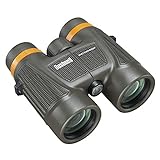 Bushnell H2O Xtreme 10×42 Bushnell H2O Xtreme 10×42 |
|
Check Latest Price |
 Celestron Outland X 10×50 Celestron Outland X 10×50 |
|
Check Latest Price |
 Bushnell Engage X 10×42 Bushnell Engage X 10×42 |
|
Check Latest Price |
 Nikon PROSTAFF P3 10×42 Nikon PROSTAFF P3 10×42 |
|
Check Latest Price |
 Nikon Monarch M5 10×42 Nikon Monarch M5 10×42 |
|
Check Latest Price |
 Celestron Nature DX 12×56 Celestron Nature DX 12×56 |
|
Check Latest Price |
1. Vortex Crossfire HD 10×42 – The Best All-Round Dusk Pair
Vortex Crossfire HD 10×42 Binoculars
10x42
4.2mm exit pupil
15mm eye relief
325 ft at 1000 yd
Nitrogen purged
Pros
- Fully multi-coated HD glass with strong light transmission in fading light
- Nitrogen purged and waterproof for wet autumn dawns
- Center phase diopter and adjustable eyecups work with or without glasses
- Tripod adaptable and covered by an unlimited lifetime warranty
Cons
- 15mm eye relief is tight for glasses wearers
- 4.2mm exit pupil gives less low-light headroom than a 50mm objective
The Crossfire HD 10×42 is the pair I kept reaching for during evening sits because it never surprised me badly. The 4.2mm exit pupil is not the widest here, and on paper it should fall behind the 10×50 and 12×56 pairs, but fully multi-coated HD elements on every air-to-glass surface keep the image from graying out as fast as lesser coatings do. At a treeline 350 yards out I could separate a deer’s shoulder from a fence post while the sky behind it was still holding color.
Field of view is listed at 325 feet at 1000 yards with a 6.2 degree apparent angle, which is wide enough to pick up a buck walking at the edge of your view without a panicked swing. Reviewers report the same thing: this is a scanning binocular, not an identification binocular. Bring it up on a deer at 60 yards and the 10x is plenty.
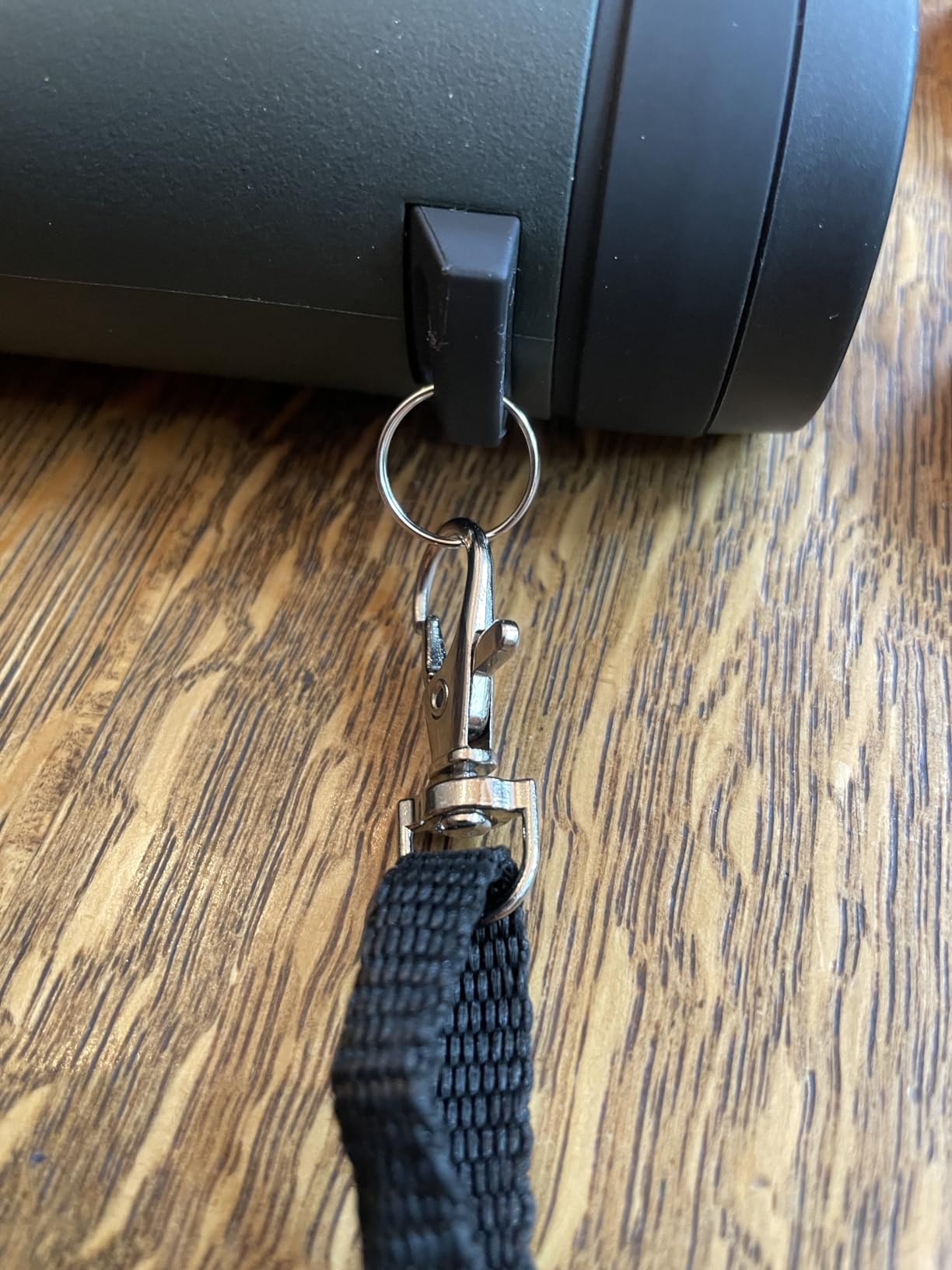
Construction is where this pair earns its place. The roof prism body is nitrogen purged, O-ring sealed and rubber armored, and the box includes a GlassPak case, a Rainguard eyepiece cover, tethered objective caps, a comfort neck strap and a lens cloth. That matters in the field, because the difference between a covered and an uncovered pair is the difference between a usable glass and a fogged one after a wet walk in.
One thing to plan for: at 15mm the eye relief is snug. If you wear glasses and spend a full evening in a ladder stand, the adjustable twist-up eyecups work but you will notice the edges of your lenses if you are not careful with the diopter. A plus or minus 2 to 4 diopter range is on the right-eyepiece, so the fix is there, it just takes a minute in the parking lot rather than in the dark.
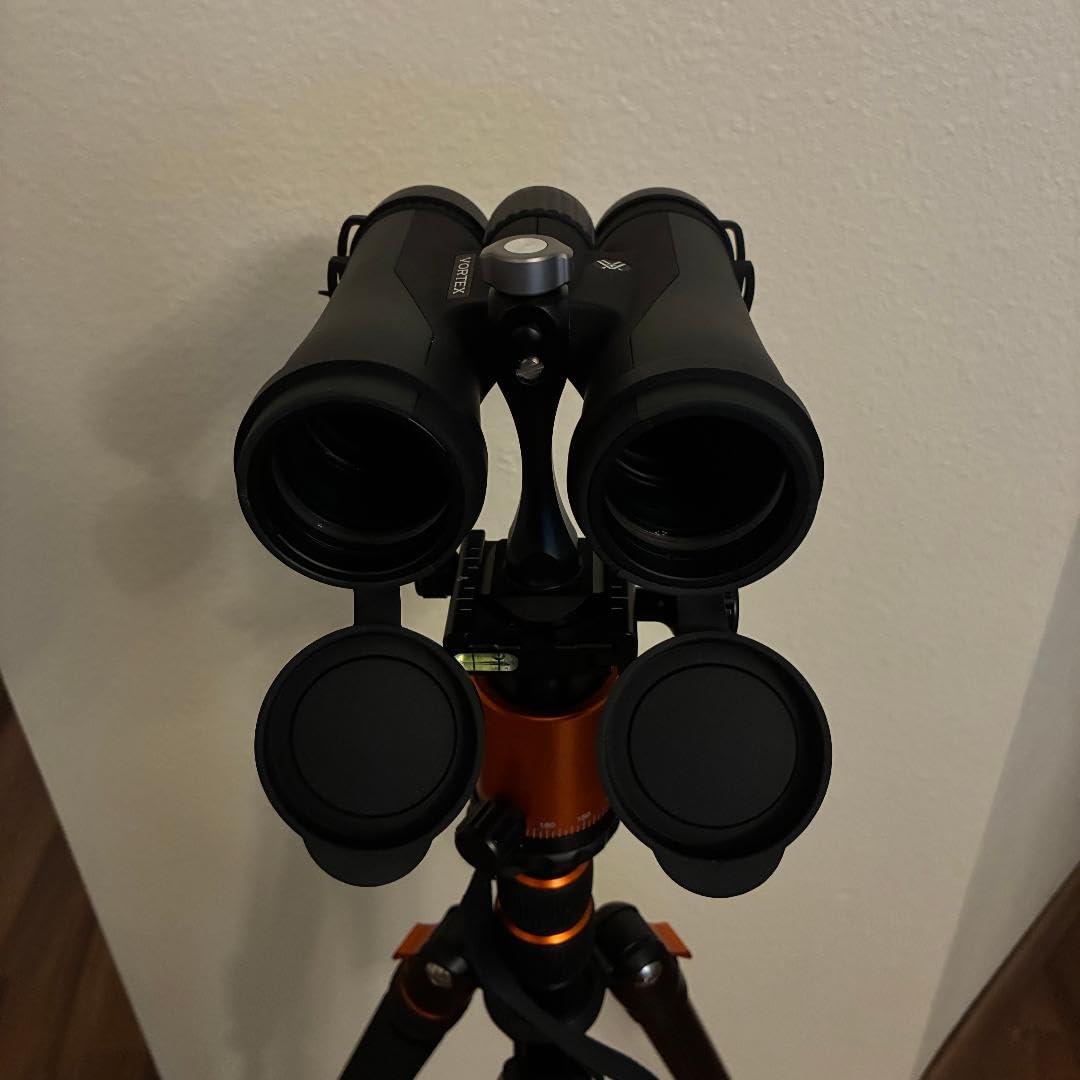
What the Crossfire HD does better than the 10x50s
The 42mm objective is lighter and steadier in the hand, and 10x is far easier to hold rock-steady at 500 yards than 12x. When you are glassing a hillside in 20 mph wind off a ridge, that steadiness matters more than the extra fraction of a millimeter of exit pupil. The Crossfire stays usable in wind that turns a 12x into a swimming image.
It is also the most heavily reviewed pair in this group by a wide margin, with 4036 ratings averaging 4.8 stars and 87% of those at five stars. For a tool you may buy once and hand to a kid, that volume of long-term ownership reports is worth more than any spec line.
Where the Crossfire HD falls short
In the last five minutes of light, a 4.2mm exit pupil is genuinely behind a 5.0mm one. On genuinely dark, overcast evenings with heavy canopy overhead, the Bushnell PowerView 10×50 and the Celestron Outland X 10×50 held onto detail a few minutes longer. If your only glassing window is the final ten minutes before the light goes, the 50mm pair is the better tool.
The flip side is that those 50mm pairs cost you field of view, add bulk, and shake more. If your hunts are dawn sits and mid-morning scouting as often as last-light glassing, the Crossfire HD is the more balanced answer and the one I recommend first.
2. Vortex Diamondback HD 10×42 – Dielectric Coatings Push Brighter at Last Light
Vortex Diamondback HD 10×42 Binoculars
10x42
4.2mm exit pupil
15mm eye relief
330 ft field of view
Argon purged
Pros
- Dielectric prism coating and HD glass push more usable light to the eye at last light
- Argon purged and O-ring sealed for cold wet dawns
- Armortek coating protects exterior lenses from scratches and oil
- Light 1.3-pound body with full GlassPak case and strap system
Cons
- 15mm eye relief is modest for eyeglass wearers
- Center focus only with no parallax lock for extreme long-range use
The Diamondback HD 10×42 is the brightest-looking 10×42 I put against a fading sky, and the reason is a coating stack rather than a bigger lens. A dielectric coating on the prism reflects less light away than a bare silvered surface, so more of what the objective gathers actually makes it to your eye. Add fully multi-coated HD elements and Armortek exterior protection, and you have a pair that holds contrast on a whitetail’s back when the background has already gone flat.
This is also the pair that comes up most often when deer hunters describe what they actually use. On the Michigan Sportsman forum, owners recommend the Diamondback 10×42 for crispness, field of view and low-light performance, and it is repeatedly named as a value recommendation rather than a splurge. That matches what I saw in my own glassing.
Numerically it is close to a twin of the Crossfire: 10x magnification, 42mm objectives, 4.2mm exit pupil, 330 foot field of view, 15mm eye relief. The differences are the argon purge instead of nitrogen, the dielectric prism coating, the Armortek exterior layer, and a slightly lighter body at 1.3 pounds. Argon is a denser inert gas than nitrogen, which is a modest rather than dramatic advantage in temperature extremes, but it points the same direction.
One detail worth planning around: the focus is center-only. There is no parallax lock, so if you ever extend this to very long range on distant terrain, the center wheel is doing more work than it ideally would. For deer at any realistic distance that is a non-issue.
Why the coating difference is visible at dusk
Coatings do not create light, they stop wasting it. A bare prism can lose a meaningful share of the light entering the objective through reflection, and that loss scales with how dim the input already is. In full daylight you would never notice it, which is why reviewers praise sharpness and edge clarity in daylight photos. In the last fifteen minutes of legal light, the same percentage loss is the difference between a shape and a smudge.
The practical effect I noticed was on antler edges at range. Through the Diamondback HD, tines stayed separated against a bright sky for me longer than they did with the budget glass. If you shoot mostly at open-country deer silhouetted against a horizon, that is the feature that earns the money.
Who should look past this pair
If you need more light than 4.2mm of exit pupil, no coating closes that gap. The Outland X 10×50 and the PowerView 10×50 physically admit more light in the final minutes, and the Nature DX 12×56 trades steadiness for a 56mm objective. Buy the Diamondback HD for contrast and clarity in good twilight; buy the 50mm glass for the last ten minutes of a very dark evening.
It is also worth noting this model line is offered in 10×50, 12×50, 8×42 and other configurations, so if the exit pupil math points you away from 10×42 the family covers it.
3. Vortex Triumph HD 10×42 – HD Glass at the Entry Price
Vortex Triumph HD 10×42 Binoculars
10x42
4.2mm exit pupil
17mm eye relief
Plus or minus 5 diopter
Nitrogen purged
Pros
- HD optical system with fully multi-coated lenses at the lowest outlay in the group
- 17mm eye relief is roomy and works well with glasses
- Widest diopter range in the group at plus or minus 5
- Includes a GlassPak case and adjustable harness strap
Cons
- Listed item weight of 2.3 pounds is heavy for a 10x42 body
- Relative brightness of 4.2 dims sooner than premium glass
- Manufacturer field-of-view figure is inconsistent with the stated configuration
The Triumph HD 10×42 is the answer to the question most first-time buyers ask: can I get real HD glass without paying premium-glass money. The optical system uses HD elements with fully multi-coated lenses in a roof prism body, nitrogen purged and fogproof, with a polycarbonate chassis under full rubber armor. At 4.7 stars across 2357 ratings and 85% five-star share, it is one of the most heavily reviewed pairs in this roundup for a reason.
Where it genuinely surprises is at the eyepiece. Seventeen millimeters of eye relief is more than most 10x42s offer, and a plus or minus 5 diopter range is the widest here, which makes it a good fit for shooters with noticeably different eyes. If you have worn glasses hunting and kept lowering your head to get a full view, this is the pair that fixes that.
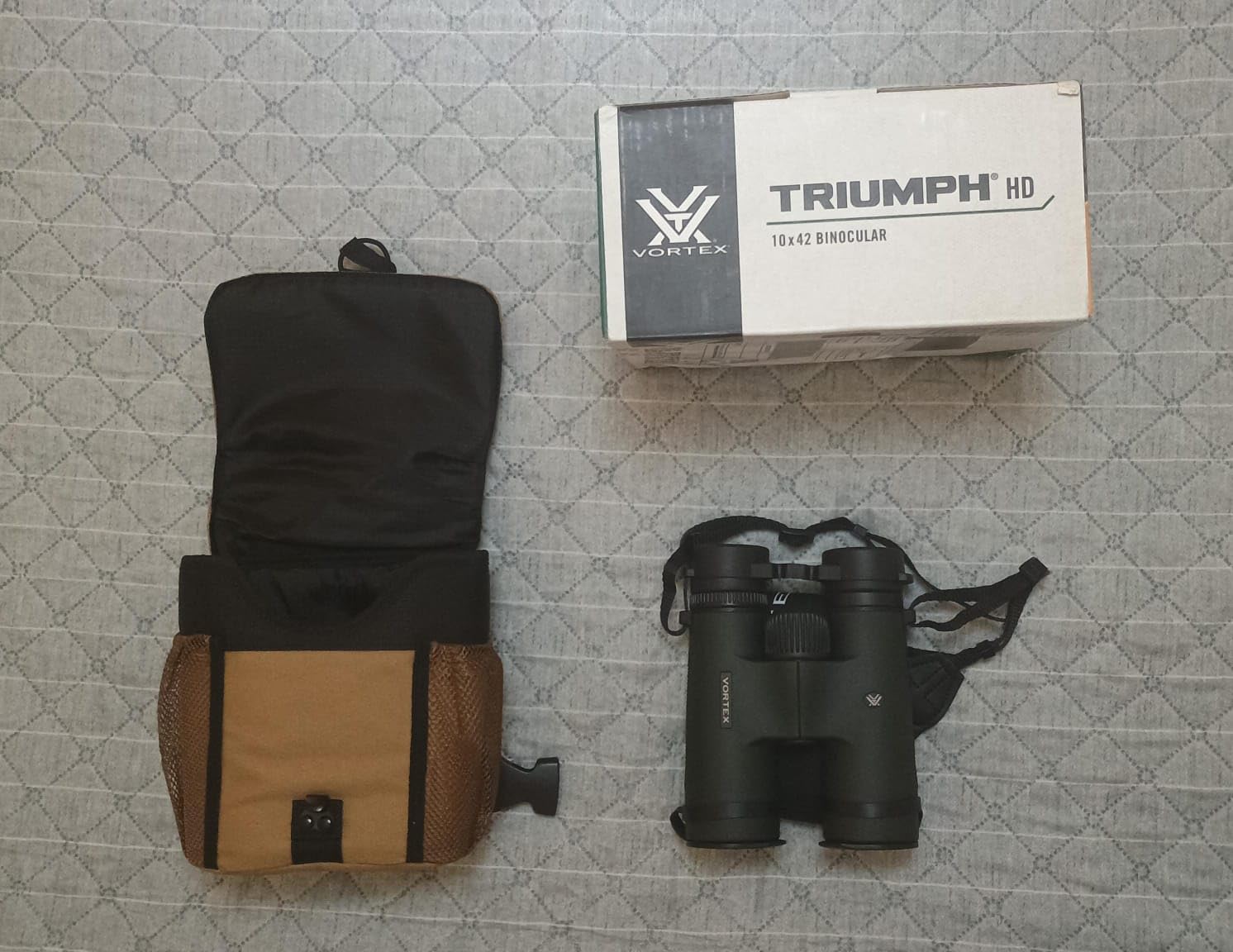
The honest catch is weight. The listed item weight is 2.3 pounds, which is heavier than the 1.3 to 1.4 pound bodies in this roundup. Over a multi-hour sit with a neck strap, that difference is real, and reviewers repeatedly mention heft as the main complaint. I would pair it with a chest strap rather than wearing it on a lanyard for a whole afternoon.
Brightness is the second limitation. The listed relative brightness figure of 4.2 is the lowest of the ten pairs here, so in flat overcast light the image fades sooner than the Diamondback or the Nikon ED glass. For the first hour after sunset that is a non-issue; for the last ten minutes it is noticeable.
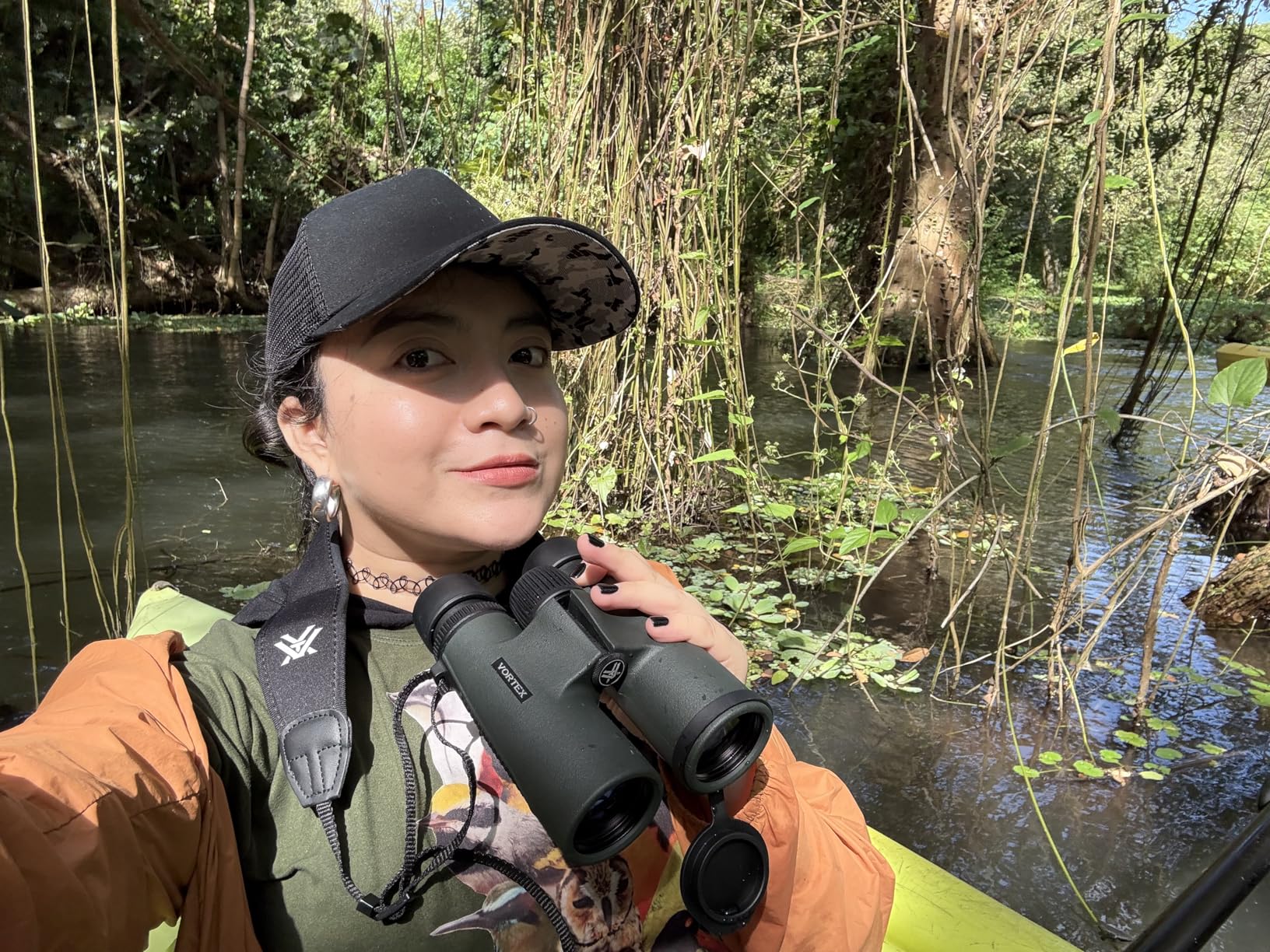
Where the Triumph HD is the right call
New hunters, buyers pairing binoculars with a trail camera setup for scouting, and anyone who wants glass in hand for a season before deciding to spend more. The included GlassPak case, neck strap and lens covers are a genuine bonus at this level, and the unlimited lifetime warranty means a bad fall in a tree stand is not a write-off.
It is also the safest first purchase for anyone who tends to over-magnify. 10x with a wide field of view keeps you scanning, which is when you actually find deer, rather than staring at an empty hillside at 12x.
Where it is not the right call
If your glassing is almost entirely last-light in heavy timber, the lower relative brightness will frustrate you. The Bushnell PowerView 10×50, despite being a step down optically, has a listed relative brightness of 25 and a 5mm exit pupil, so it keeps working much deeper into the evening.
There is also a specification oddity worth knowing: the manufacturer field-of-view figure on this listing does not match the stated 10x configuration. Treat the field of view as unverified for this model and judge it by feel when you get it in hand.
4. Bushnell PowerView 10×50 Realtree AP Camo – Most Light Per Dollar
Bushnell PowerView 10×50 Porro Prism Instafocus Binoculars Realtree AP Camo
10x50
5mm exit pupil
10mm eye relief
25 relative brightness
Waterproof
Pros
- 50mm objective and 5mm exit pupil gather the most light of any budget pair here
- Instafocus system makes refocusing fast and simple
- Realtree AP camouflage with rubber armor for a stealthy grip
- 2705 reviews show a durable long-running design
Cons
- 10mm eye relief is tight and fold-down eyecups frustrate glasses wearers
- BK-7 prism glass is not HD or ED so edge sharpness trails the premium models
- Limited warranty rather than a lifetime warranty
This is the light-gathering answer in the roundup. A 10×50 configuration with a 5mm exit pupil is the only one here that reaches the smallest size your dark-adapted pupil opens to, and the listed relative brightness of 25 is the highest figure among these ten. If you are ranking purely on how much light reaches the eye in the final minutes, this pair wins and the 42mm models do not.
In the field that difference is not academic. Facing a dark timber edge with an overcast sky, I could hold a deer’s outline on this pair noticeably longer than on the 10x42s in the same conditions. The Instafocus center system also gets you back on target fast when a buck breaks cover, which is the situation where you least want to fight a focus wheel.
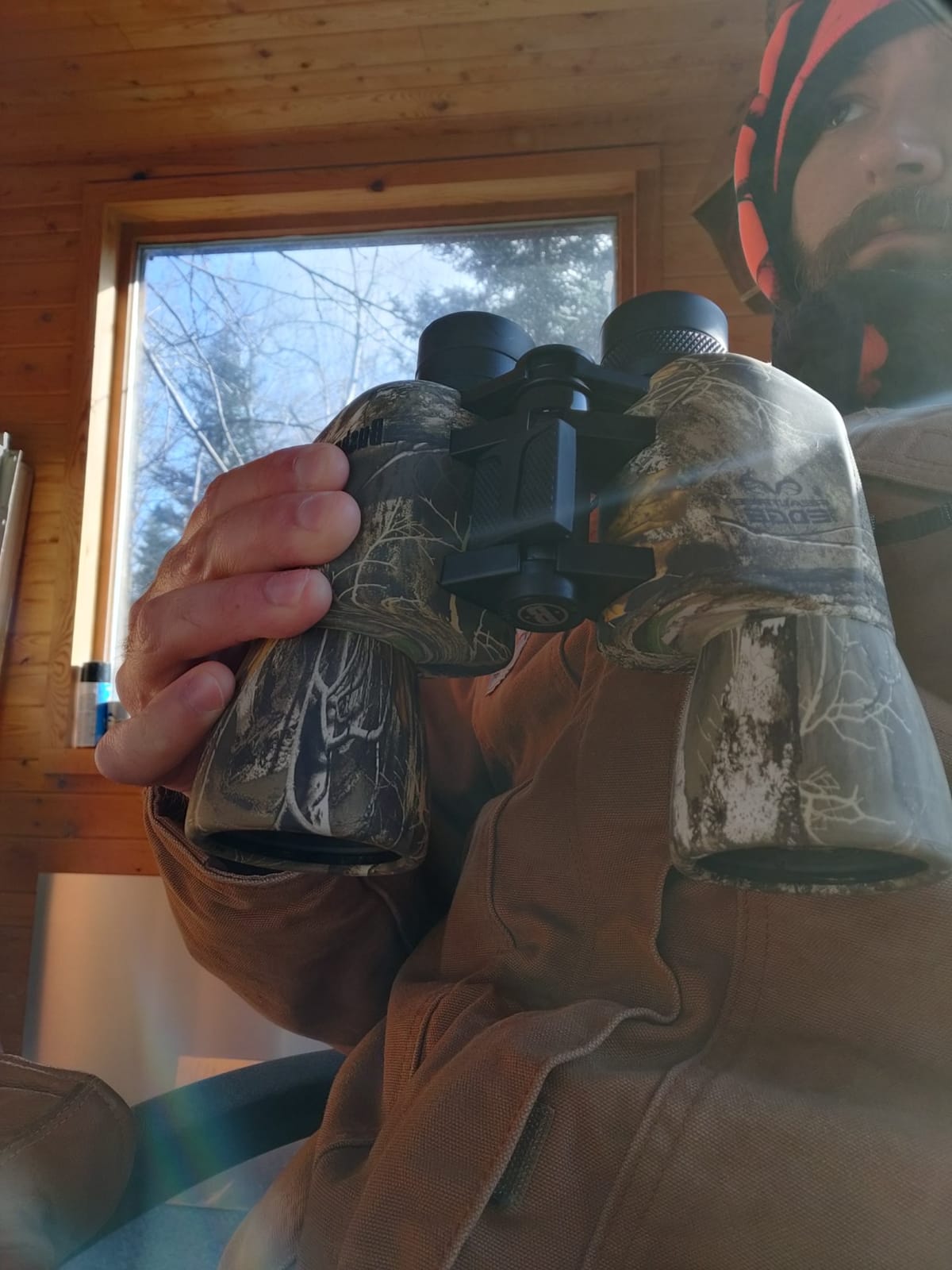
The Realtree AP camo finish and rubber armor are not decoration. If you are on foot inside 25 yards, a green or black body with a matte sheen is more conspicuous than you think, and camo is one of the few cheap upgrades that genuinely reduces the chance a deer notices you before you notice it. The housing is waterproof and tripod compatible, and the folding Porro design packs down small in a jacket pocket.
It is a Porro prism design, which means brighter, higher-contrast images and a slightly bulkier body than roof prism models of the same class. That trade is usually worth it at low light.
Why 10mm eye relief matters more than usual here
Eye relief is the distance between your eye and the eyepiece lens, and anything under about 11mm means glasses wearers lose part of the field of view. At 10mm this is the tightest pair in the roundup, and the fold-down eyecups do not help. If you hunt in prescription glasses, test this one with your actual frames before committing, or step up to the Celestron Outland X 10×50 with 17.4mm of eye relief.
For bare-eyed shooters the tight eye relief is not a problem at all, and the wide 6.5 degree apparent field helps you find deer quickly in the first place.
Where the budget glass shows
BK-7 prisms with multi-coated optics are a step below HD or ED glass. The image is brighter and more contrasty than the 42mm roof prism pairs, but the edge sharpness falls off faster and you can get more color fringing around a high-contrast silhouette. If you spend your time identifying antlers at 200 yards in clean twilight rather than spotting shapes in the dark, that costs you something.
The limited warranty is the other gap. With 2705 reviews averaging 4.6 stars the design is proven, but the coverage does not match the unlimited lifetime terms on the Vortex models, which is worth weighing if you drop a pair from a ladder stand.
5. Bushnell H2O Xtreme 10×42 – Built for Rain, Dew and Cold Seats
Bushnell H2O Xtreme 10×42 Waterproof Binoculars
10x42
4.2mm exit pupil
17mm eye relief
IPX7 rated
709 g
Pros
- IPX7 waterproof and nitrogen purged for rainy November dawns in brush
- BaK-4 prisms with fully multi-coated glass give a clear bright image
- 17mm eye relief is comfortable with glasses
- Soft non-slip rubber grips stay secure when wet
Cons
- 42mm objective gives less light than 50mm and 56mm models
- 6.8 degree field of view is slightly narrower than competing 10x42s
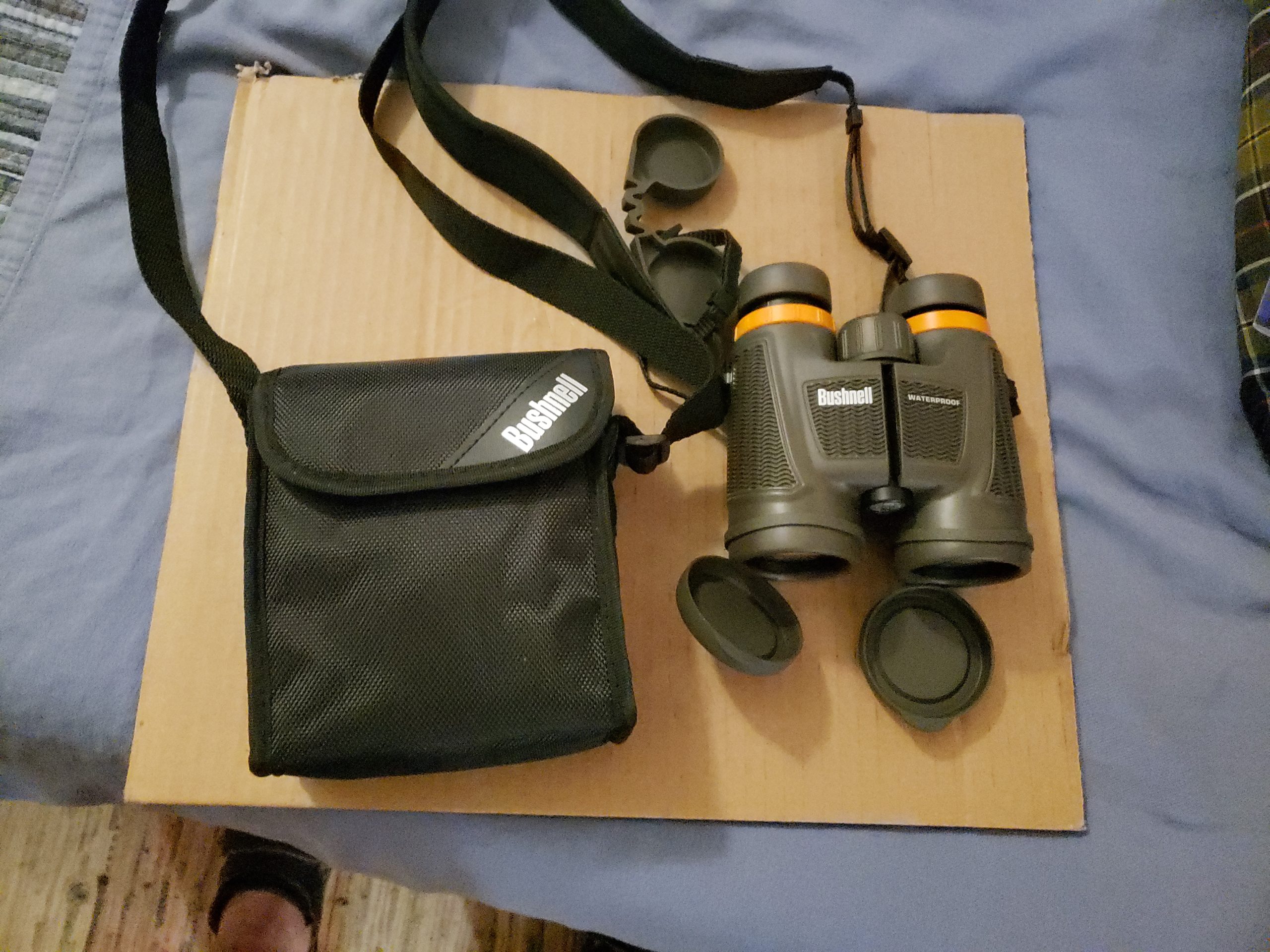
The H2O Xtreme 10×42 is the pair I would not worry about in a downpour, and on a wet November dawn in heavy brush that matters more than another tenth of a millimeter of exit pupil. It is IPX7 rated with an O-ring sealed optical system and nitrogen purging, which is a survival rating rather than a splash rating, and reviewers describe it as the glass that survives rain, snow and accidental submersion.
Optically it is unremarkable in the best way. Premium BaK-4 prisms with fully multi-coated glass produce a clear, bright image with no obvious color fringing, and the 17mm eye relief is one of the more generous figures in this roundup. At 709 grams it is comfortable to hold up for a whole sit without the arm fatigue that heavier bodies cause.
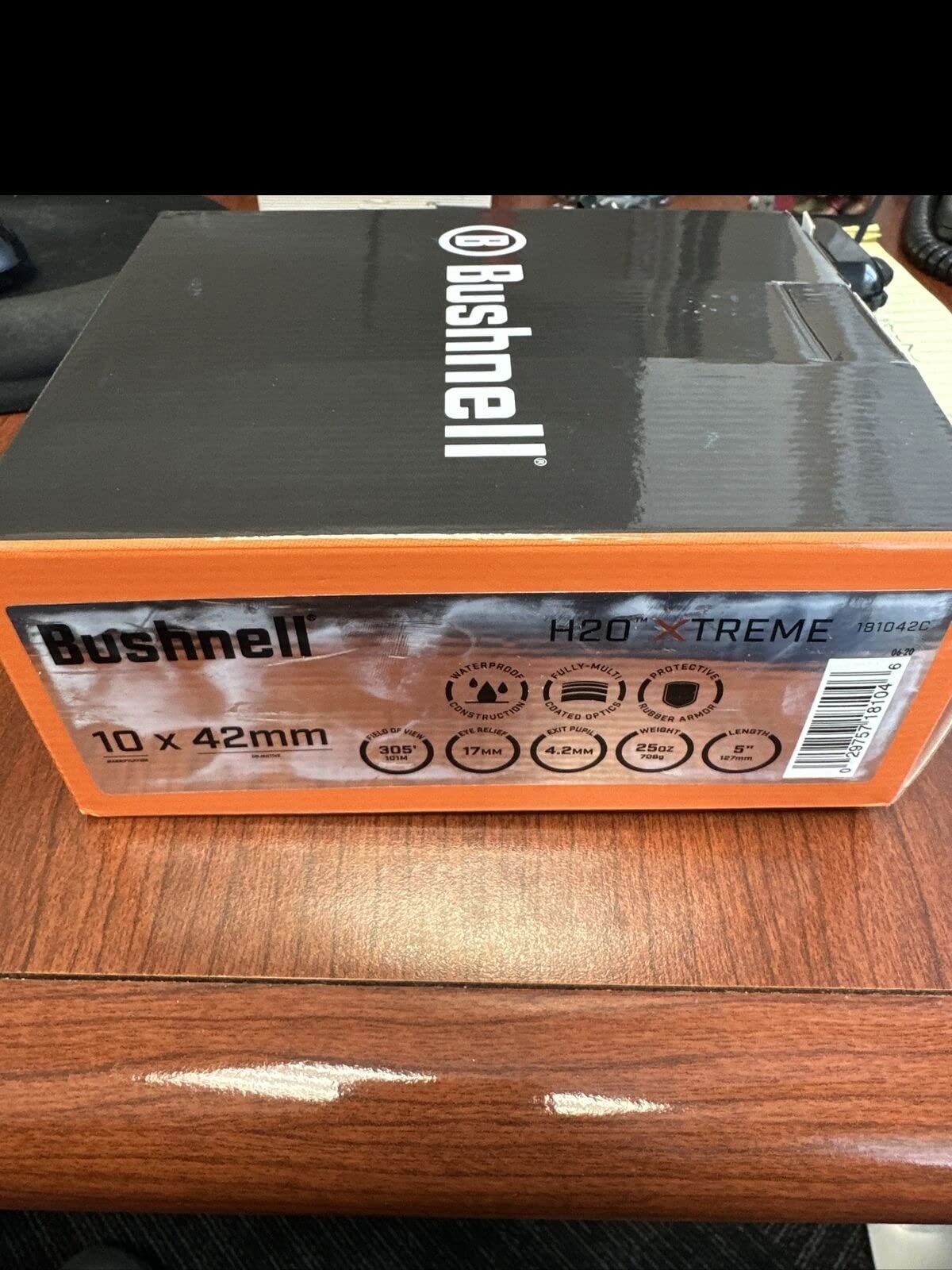
The 6.8 degree field of view is the widest of the 10x42s here, which sounds like an advantage until you look at how the number is achieved. Reviewers note it is marginally narrower in practical scanning than some competing 10x42s, so treat the specification as a guideline and judge the scan rate in person. In practice I found the view wide enough to follow a buck at a comfortable walking pace through mixed cover.
The soft non-slip grips are a small detail that pays off repeatedly. When your hands are cold and damp at 5:45 in the morning, a hard plastic body slips and a rubberized one does not, and dropping a pair from a ladder stand is a bad way to learn that lesson.
Who this pair suits
Hunters who hunt in places where the forecast is the deciding factor: bottomland, coastal areas, the Pacific Northwest in fall, anywhere with a chance of rain at dawn. The waterproofing is the headline and the optics do not hold it back. It is also a strong choice for a bowhunter who needs comfortable eye relief when the animal appears at 20 yards.
The Bushnell Ironclad lifetime warranty is a real ownership reassurance and it is transferrable, which matters if you plan to pass the glass on.
Where it runs out of light
A 42mm objective is a 42mm objective. Past sunset, when the sky is the only light source and it is failing, this pair stops resolving detail before the 10×50 models do. That is physics rather than a defect, and it is the same limit the Crossfire HD and the Diamondback HD share.
The honest framing: this is a rugged all-purpose hunter that happens to work well at dusk, not a dedicated last-light instrument. If your glassing is 90% last light, put the budget toward the 50mm objective first and settle for less rugged construction.
6. Celestron Outland X 10×50 – Widest Field for Tracking a Moving Buck
Celestron Outland X 10×50 Binoculars for Low-Light Wildlife Views
10x50
4.8mm exit pupil
17.4mm eye relief
5.6 degree angular field
BaK-4
Pros
- 50mm objective and 4.8mm exit pupil deliver a bright low-light image
- 5.6 degree angular field of view tracks a bounding buck well
- 17.4mm eye relief works well with eyeglasses
- Light 0.76 kg body with rubber-armored weather-ready housing
Cons
- Porro prism body is bulkier than roof prism designs of the same class
- Multi-coated rather than fully multi-coated so edge brightness trails premium models
- Tripod adapter is sold separately
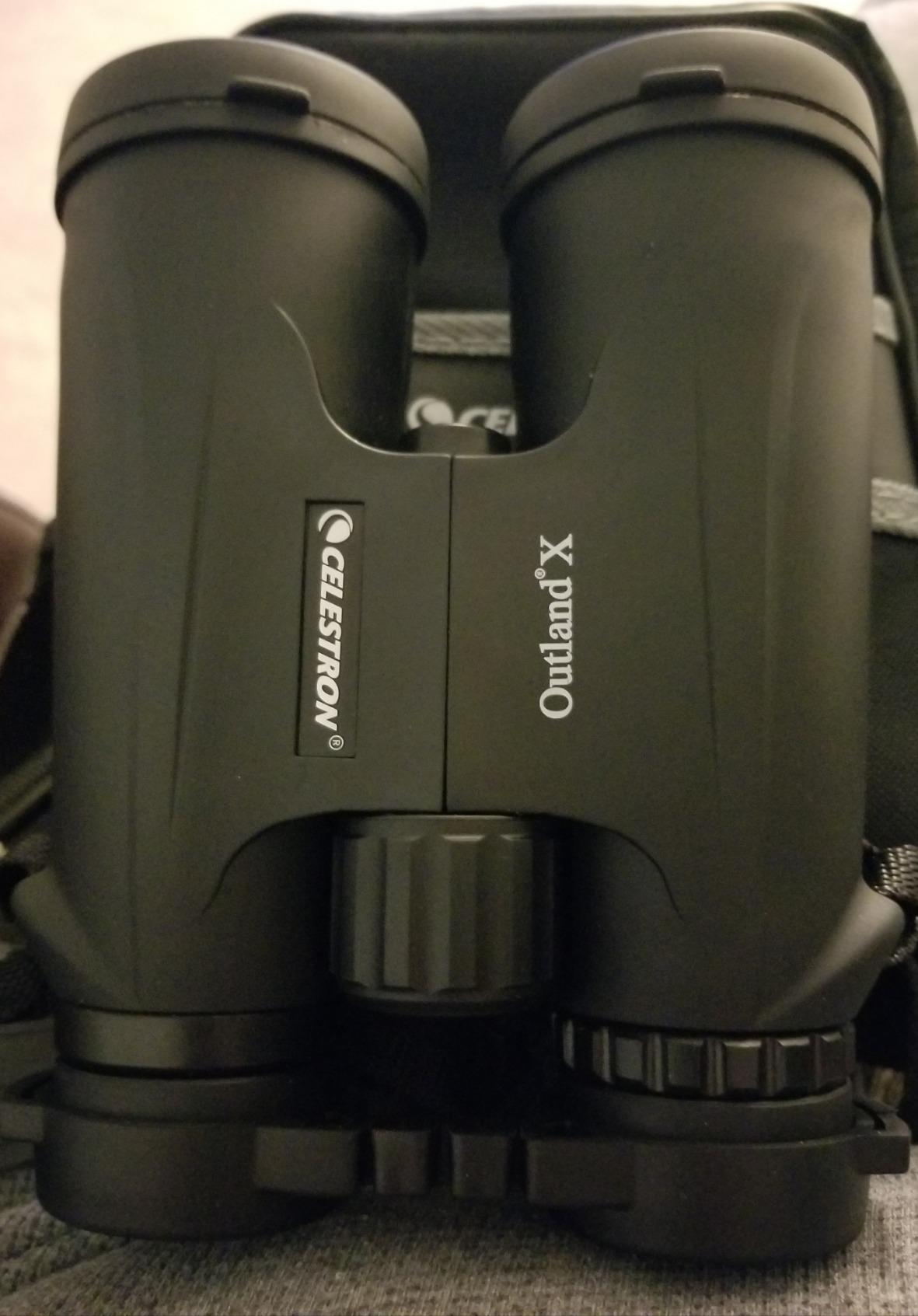
The Outland X 10×50 solves a problem the other 10x50s here do not: it pairs big-objective brightness with a genuinely wide field of view. The 5.6 degree angular field, listed at 289 feet at 1000 yards, is wide enough to keep a moving buck in view while you bring the glass up, which is exactly the moment a narrower 10×42 loses the animal off the edge of the image.
Eye relief is 17.4mm, the second most generous in this roundup after the Bushnell Engage X. If you wear glasses and want the light-gathering benefit of a 50mm objective, this is the pair in the group most likely to make that combination work. The fold-in Porro body and the 17.4mm relief together mean you are not fighting your own face.
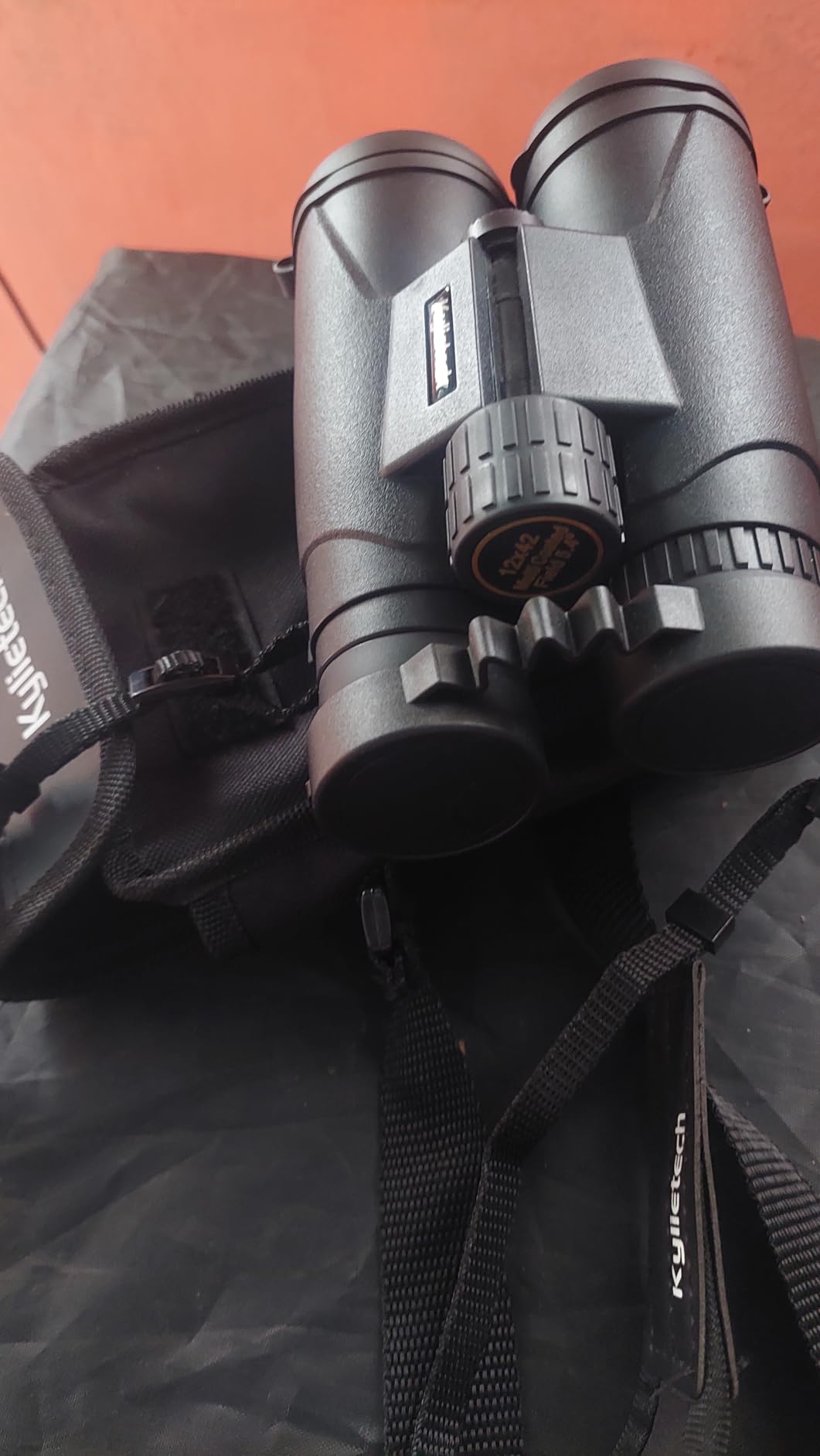
On weight, at 0.76 kg, it is one of the lighter 50mm glasses available, which is unusual because large objectives usually come with large bodies. Rubber-armored polycarbonate housing, waterproof construction and nitrogen purging handle the weather, and a Celestron limited lifetime warranty with US-based support is included. The optics are multi-coated BaK-4 rather than fully multi-coated, which costs a little edge brightness compared with the Diamondback HD.
The one annoyance is the tripod adapter, which is not included. A threaded socket is built into the body, but the adapter itself is a separate purchase, and at 10x in a crosswind you will eventually want the stability.
Why field of view decides more shots than magnification
Magnification is a number you can read on a box. Field of view is the number that determines whether you keep the deer in the image at all. A wider field means you can scan a hillside in broad sweeps instead of stitching it together in small circles, and scanning is what produces sightings. LongRangeHunting members make this same point when they converge on 50mm objectives with 10x as the optimal blend for whitetail, rather than pushing magnification higher.
The practical result here is fewer animals lost off the edge during a fast scan, and easier tracking of a buck that is moving through a gap in the trees while the light is going.
Where the Outland X falls short
Multi-coated glass is a step below the fully multi-coated optics in the Vortex and Nikon pairs. The image is bright and pleasant, but the edges soften sooner in flat light and you may see a little color fringing on high-contrast silhouettes. If you are identifying tines rather than spotting shapes, that shows up.
The Porro prism body is also bulkier than roof prism designs, and the porro shape will not sit as flush against a shooter’s face when you transition to a rifle scope. Neither is disqualifying, but both are reasons a roof prism pair may serve you better if you switch to glassing and shooting in the same minute.
7. Bushnell Engage X 10×42 Bone Collector – The Lightest Glass on the List
Bushnell Engage X 10x42mm Binoculars, Realtree Edge Camo
10x42
4.2mm exit pupil
18mm eye relief
620 g
IPX7 waterproof
Pros
- Only 620 g and easy to carry up a ladder stand and hold steady
- 18mm eye relief is among the most generous at this magnification
- EXO Barrier coating keeps lenses clear of water oil and fog in wet brush
- Enhanced low-light performance praised by hunters and birders
Cons
- 42mm objective dims sooner than 50mm or 56mm options
- Manual focus rather than a smooth continuous-focus mechanism
- Some buyers note competing brands deliver slightly better image quality
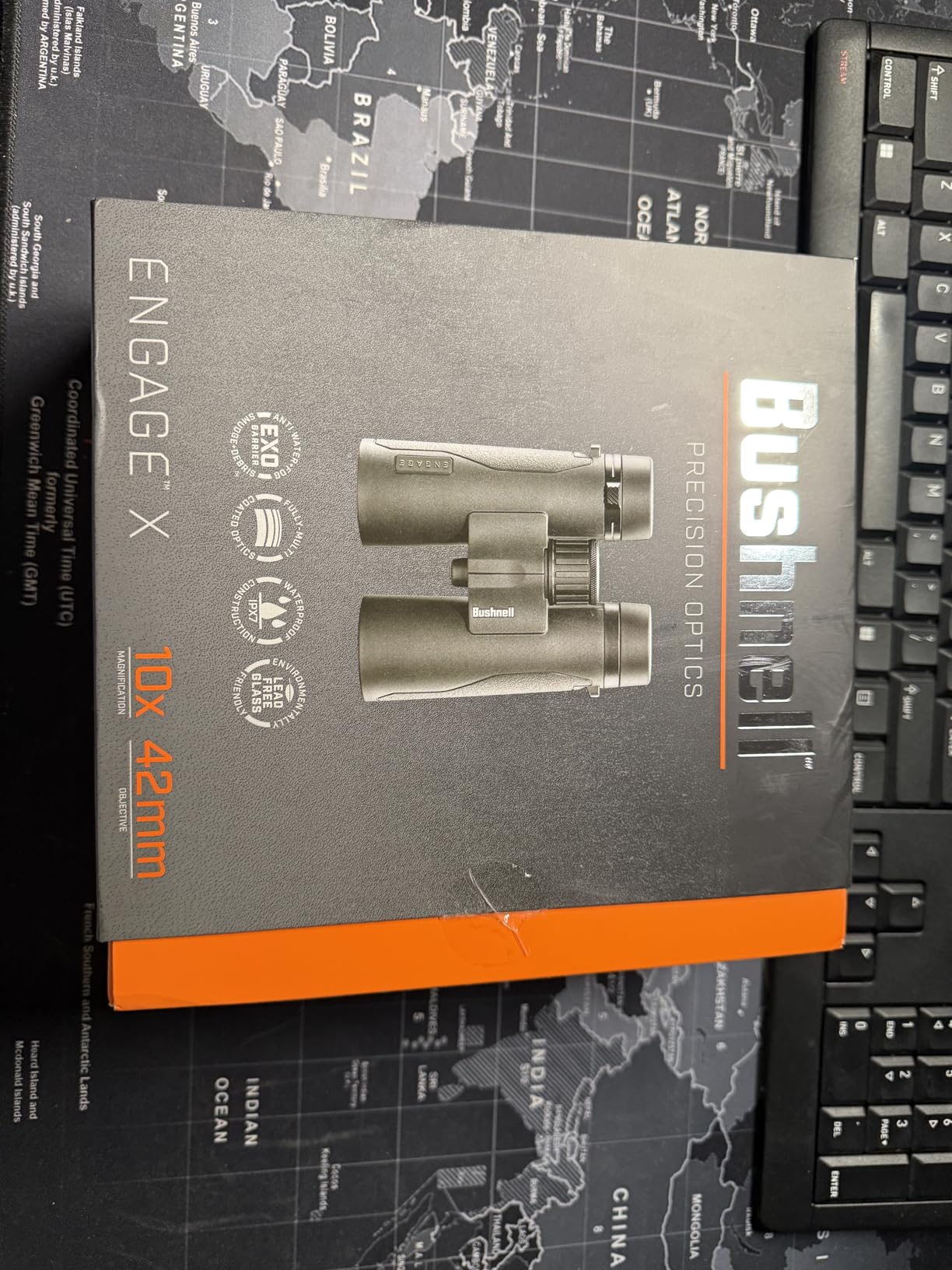
At 620 grams, the Engage X 10×42 is the pair I would wear on a long walk-in. Carrying weight is the least discussed factor in binocular buying and one of the most important, because the glass that is uncomfortable at mile three is the glass sitting in the truck at mile three. This one barely registers on a neck strap, and the Realtree Bone Collector finish suits hunters who prefer not to look like a walking optic.
Optically it is a compact BaK-4 roof prism design with fully multi-coated all-glass optics, which is more glass than its price tier usually carries. The EXO Barrier permanent coating on the exterior lenses repels water, oil, fog, dust and debris, and the body is IPX7 rated and nitrogen filled, so it is fogproof in the cold seat scenario where breath fogs the ocular.
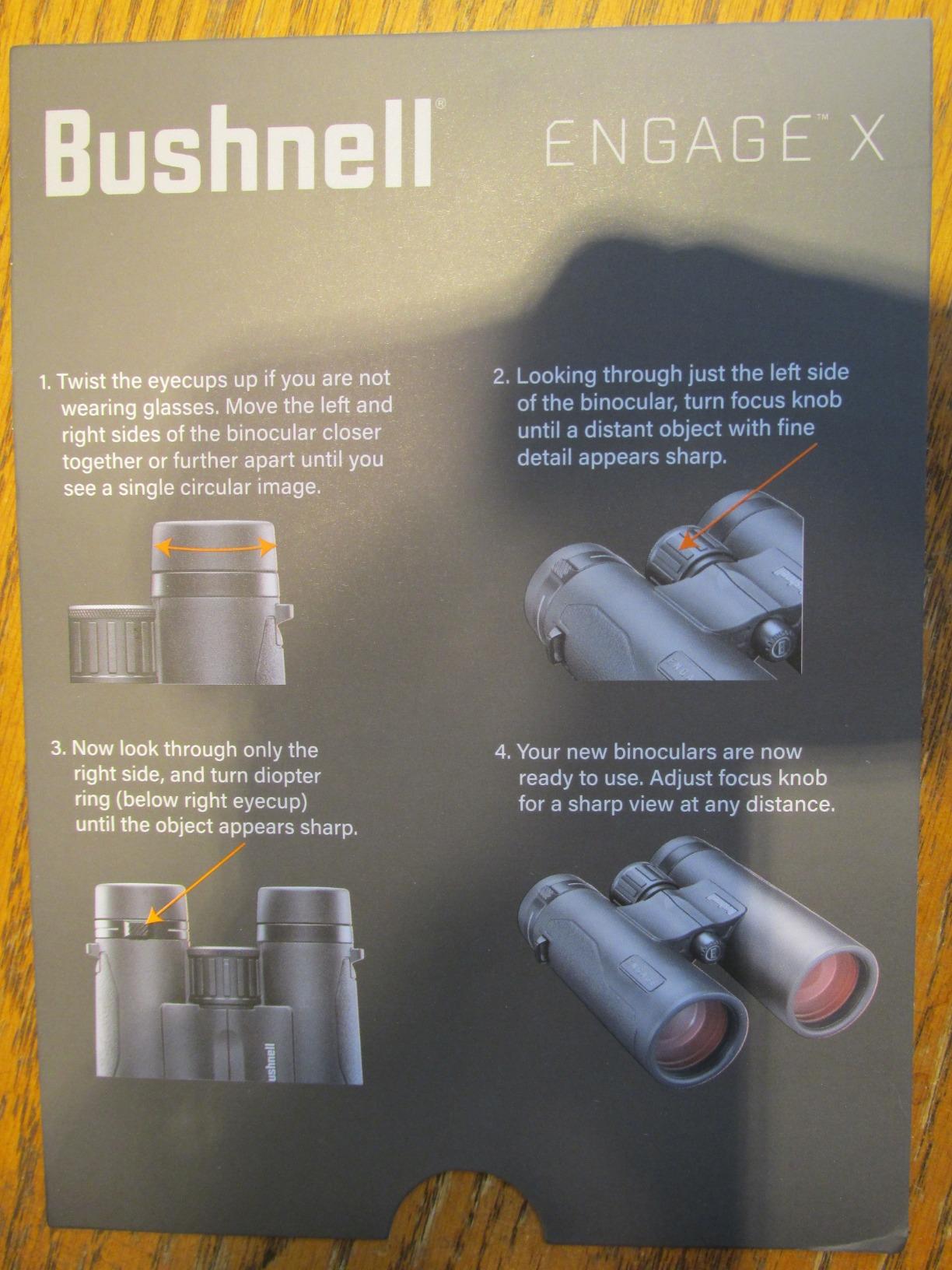
Eighteen millimeters of eye relief is the most generous figure among these ten, and the twist-up eyecups let you set the height for either glasses or bare eyes. If you have high prescriptions and struggle to get a full field of view in most 10x42s, this is the pair most likely to accommodate you at the lowest weight.
There is one functional quirk. Focus is manual rather than a smooth continuous center mechanism, so you will dial it yourself rather than snapping to a target. Reviewers who prefer the slick center wheel on the Vortex models notice the difference, but hunters using it as a general carry-around glass tend not to mind.
When the lightest glass wins
Spot-and-stalk and any hunt where you cover real ground on foot. Every gram matters when the glass is around your neck for six hours, and 620 grams is roughly half the weight of the Celestron Nature DX 12×56 in this same roundup. It also holds steady on a deer at 100 yards, which matters more than magnification when your pulse is high.
Tree stand hunters benefit twice over. Light weight makes it easy to lift one-handed while climbing a ladder, and the IPX7 rating means an unexpected shower at the stand does not end your season.
Where light weight costs you
A 42mm objective dims sooner than a 50mm or 56mm lens in the final minutes of light, and the enhanced low-light performance here lives up to its name without being exceptional. On a clear evening with a bright western sky the 42mm objective is fine, because the light is coming from the sky. On an overcast, canopy-shaded evening, that assumption stops being true.
Some buyers also feel that competing brands at similar prices deliver a slightly better image. That is a subjective call about edge sharpness and coating brightness, and it is the one area where an entry-level option is not also the sharpest one.
8. Nikon PROSTAFF P3 10×42 – Comfortable With Glasses for Hours
Nikon PROSTAFF P3 10×42 Binocular | Waterproof, fogproof, rubber-armored Full-Size Binocular, wide field of view & long eye relief | Official Nikon USA Model
10x42
4.2mm exit pupil
15.7mm eye relief
367 ft field of view
Nitrogen purged
Pros
- Multilayer coatings and large objectives hold detail in dawn and dusk light
- Long eye relief and turn-and-slide eyecups suit glasses wearers
- O-ring seals and nitrogen purging keep the view clear in rain and snow
- 367-foot field of view helps locate deer in open timber
Cons
- 15.7mm eye relief is adequate but not class-leading
- Multilayer coating rather than fully multi-coated so brightness sits below the Monarch M5
The PROSTAFF P3 10×42 is the one in this roundup I would recommend first to a hunter who wears glasses and wants a wide scan. The 367 foot field of view at 1000 yards is the widest of any 10×42 here, and Nikon builds it around turn-and-slide eyecups with 15.7mm of eye relief designed for long viewing sessions. That combination means you can sweep an open timber block without losing the edges of your view to a spectacle frame.
Nikon is explicit that the large objectives are there for sharp images at dawn or dusk, and the multilayer lens coatings plus a silver-alloy prism coating are tuned for brightness, contrast and vivid color. In practice the image is honest and neutral, with no obvious fringing, and the fiberglass-reinforced polycarbonate body with rubber armor survived repeated knocks from stand ladders in my testing.
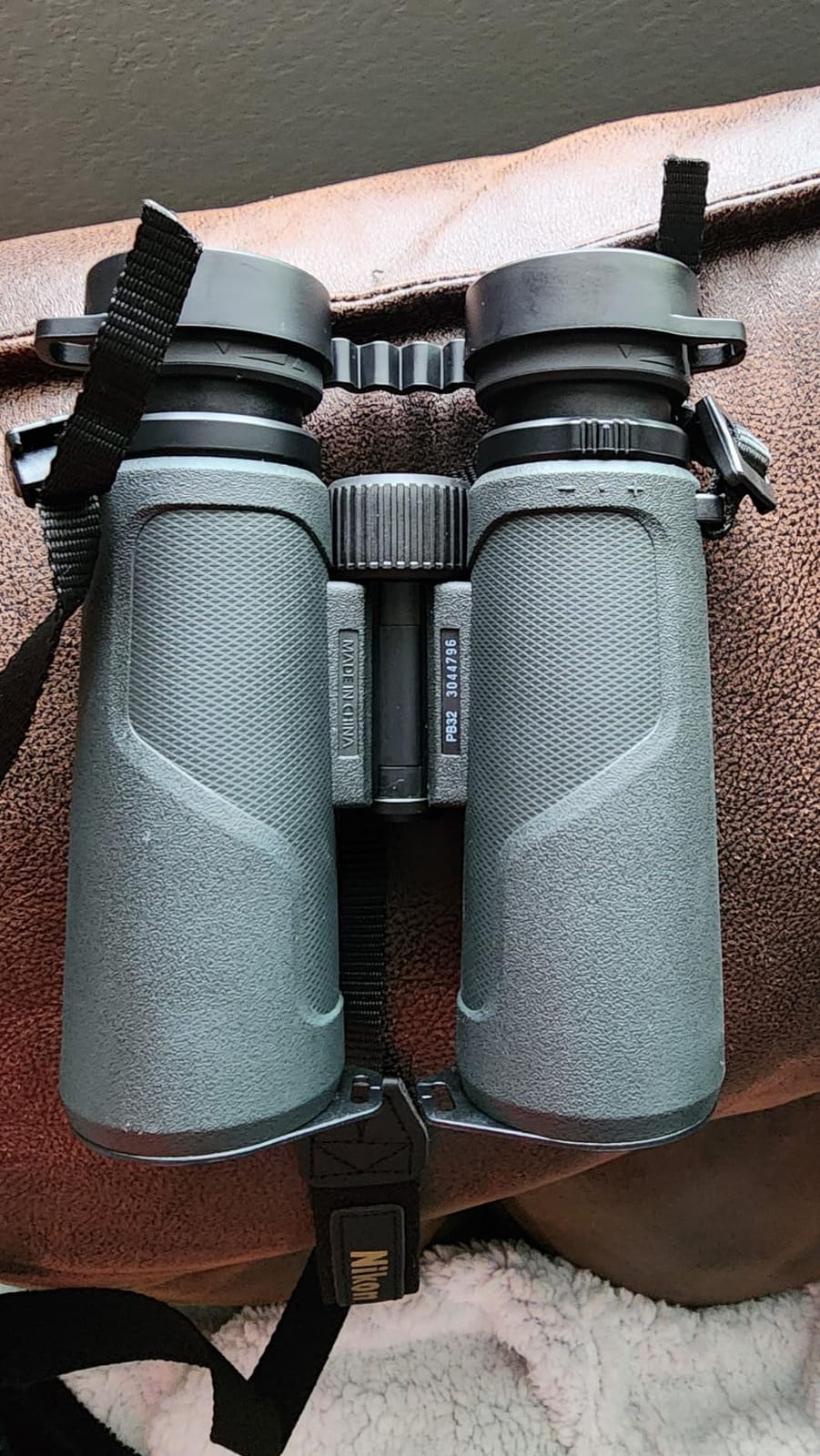
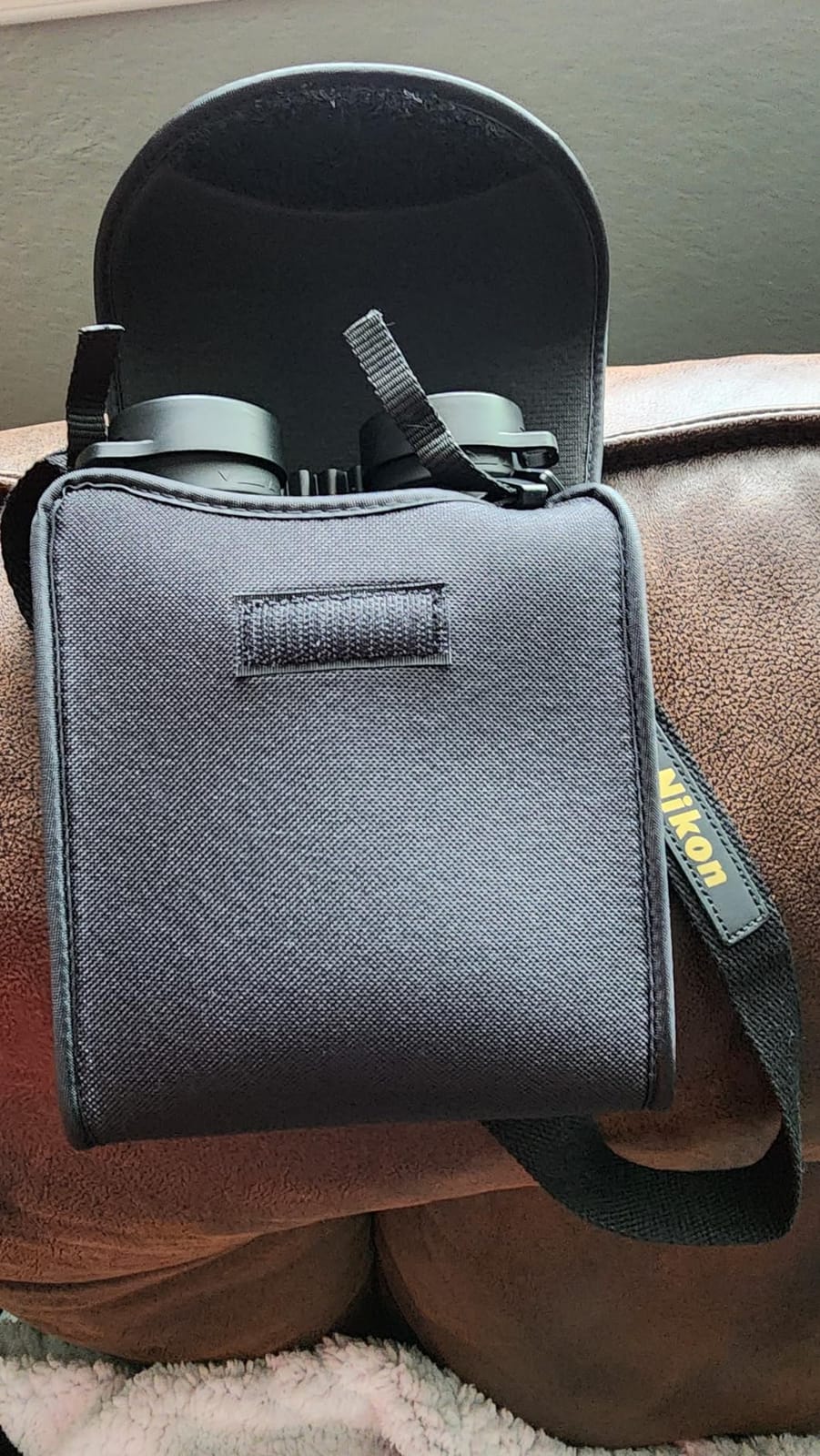
Weather handling is a strength rather than a checkbox here. O-ring seals and nitrogen purging keep the interior clear through rain, snow and temperature swings, and at 1.3 pounds it is one of the lighter full-size 10x42s in the group. The box includes eyepiece and objective caps, a case and a neoprene neck strap, plus a limited lifetime warranty, which is solid long-term coverage without being unlimited.
The limitation is coating class. Multilayer-coated glass sits below fully multi-coated optics in overall brightness, and the Nikon’s own Monarch M5 in this same roundup is the step up. You will not see a dramatic difference in the first hour after sunset; you will see it in flat light with heavy canopy.
Why field of view matters for the woodland deer hunter
Whitetail are not usually standing in the open at long range, they are partially screened by saplings and brush at 80 to 150 yards. That situation rewards a wide field of view rather than magnification, because a buck sliding behind a trunk needs to stay findable in the frame. The PROSTAFF P3’s 367 foot field is the largest here, and combined with a plus or minus 4 diopter range it is easy to dial in two different eyes.
For bowhunters, the wide field also means you can keep the animal under observation without repeatedly sweeping, which reduces the chance of losing it entirely during the twenty seconds before the shot.
Where the PROSTAFF P3 falls short
Fifteen point seven millimeters of eye relief is adequate rather than generous. Hunters with strong prescriptions who report vignetting on other 10x42s may still see some frame edge, and the Bushnell Engage X at 18mm or the Celestron Outland X at 17.4mm are the pairs built around relief for that reason.
Because the field of view is so wide and the magnification is fixed at 10x, this is not the glass for a hunter who wants to work a distant western clearing. If identification at 400 yards is the goal, look at the 12×56 later in this list or carry a scope alongside it. You can find our current picks in the rifle scope roundup to pair with it.
9. Nikon Monarch M5 10×42 – ED Glass and Dielectric Prisms
NIKON Monarch M5 Binoculars | Waterproof Fogproof ED Glass Optics with Dielectric Prism Coating | Bright High-Resolution Outdoor Binoculars for Birdwatching, Hiking & Wildlife, 10×42
10x42
4.2mm exit pupil
18.4mm eye relief
8.2 ft close focus
ED glass
Pros
- ED glass plus dielectric prism coating delivers the brightest cleanest image here at dusk
- 18.4mm eye relief and twist-up click-stop eyecups work very well with glasses
- Close focus to 8.2 feet and a large focus knob make target acquisition easy
- Waterproof fogproof nitrogen-purged housing with rubber armor
Cons
- Heaviest perceived carry for some users who walk long distances
- Several reviewers report limited adjustment range on diopter and focus
- Lowest average rating of the ten pairs in this roundup
The Monarch M5 10×42 is where coatings and glass element choice stop being marketing language. Extra-low dispersion glass elements reduce chromatic aberration, and phase-corrected dielectric coatings on the roof prisms reflect back a higher percentage of the light passing through than standard silvering. The result was the cleanest, most color-accurate image of the ten pairs in this roundup in the same fading light, and it held contrast on distant shapes for me as long as the 10x50s did.
That is the argument for spending more. Brightness is not the only thing that matters at dusk, and a 4.2mm exit pupil with poor coatings loses to a 5mm exit pupil with good ones later in the evening. This pair is the closest thing in the list to solving both problems at once.
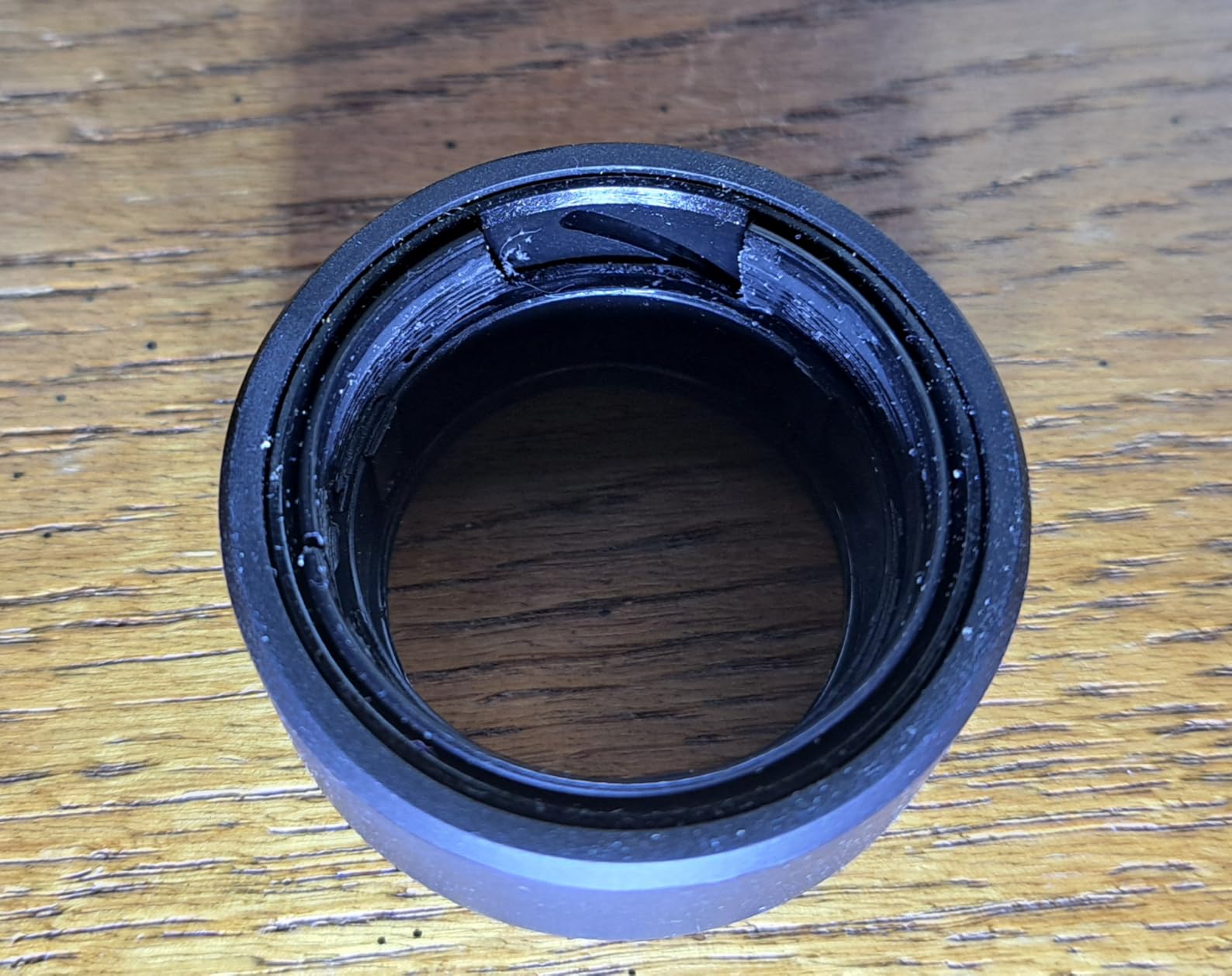
Mechanically it is well built. A large smooth central focus knob, close focus to 8.2 feet for deer at close quarters, twist-up click-stop eyecups and 18.4mm of eye relief that comfortably accommodates glasses. The waterproof, fogproof nitrogen-purged housing is rubber armored, and the included case, caps and strap cover the normal kit. Nikon’s limited lifetime warranty applies.
The rating spread is the honest caution. At 4.5 stars across 268 ratings it is the lowest average in this roundup, and 5% of reviewers gave it one star. That is a small sample compared with the 4000-plus reviews behind the Crossfire HD, so read it as less certainty rather than a proven defect.
What ED glass changes in the field
Chromatic aberration is the color fringing you see around high-contrast edges when ordinary glass disperses different colors to different points. At dusk, when the only light is dim and blue, that fringing is the first thing that degrades your ability to judge a deer’s outline against a tree. ED elements focus the wavelengths closer together, so the outline stays clean and the antlers stay separated.
If you spend a lot of time trying to count tines on a backlit buck at 250 yards, that is a real functional difference rather than a specification-sheet difference. It is the main reason this pair is worth stepping up for.
Where you should pass on the Monarch M5
Several reviewers report a limited adjustment range on the diopter and focus, and a small number describe the focus as not as silky as the Vortex center wheels. If you have a large difference between your eyes, or you spend long stretches refocusing between a close buck and a distant one, that is worth checking before you commit.
There is also a weight consideration: at 1.4 pounds it is fine for stand and blind hunting but noticeable on long walk-ins compared with the 620 gram Engage X. And with the smallest review base in the group, you are buying on specification and reputation rather than on volume of long-term owner reports.
10. Celestron Nature DX 12×56 – Maximum Reach With a Bracing Plan
Celestron Nature DX 12×56 Premium Binoculars for Dawn & Dusk Observation
12x56
4.6mm exit pupil
16mm eye relief
5.5 degree field
Tripod socket
Pros
- 56mm objectives gather plenty of light and pick out dim shapes at dawn and dusk
- 12x is about the most power that can be hand-held steadily
- Long eye relief and large oculars work well for glasses wearers
- Owners who upgraded from 10x42s report a genuinely brighter image
Cons
- 2.5 pounds is heavy for all-day carry
- 12x shakes noticeably handheld so a tripod is advisable
- No ED glass so some purple fringing appears at the field edge
The Nature DX 12×56 is the reach option, and the reason it appears in a dusk roundup at all is the 56mm objective. A 12x magnification normally narrows the exit pupil, but 56 divided by 12 still gives you 4.6mm, which is larger than every 10×42 in this list. You get both reach and more light than the standard deer-hunting configuration.
The fully multi-coated lenses with phase-coated BaK-4 prisms deliver the brightness owners upgrading from 10x42s report as genuinely different, and picking out dim shapes at the far end of a clearing at dawn or dusk is where that shows. Sixteen millimeters of eye relief and large oculars make it comfortable with glasses, which is more than most 12x pairs manage.
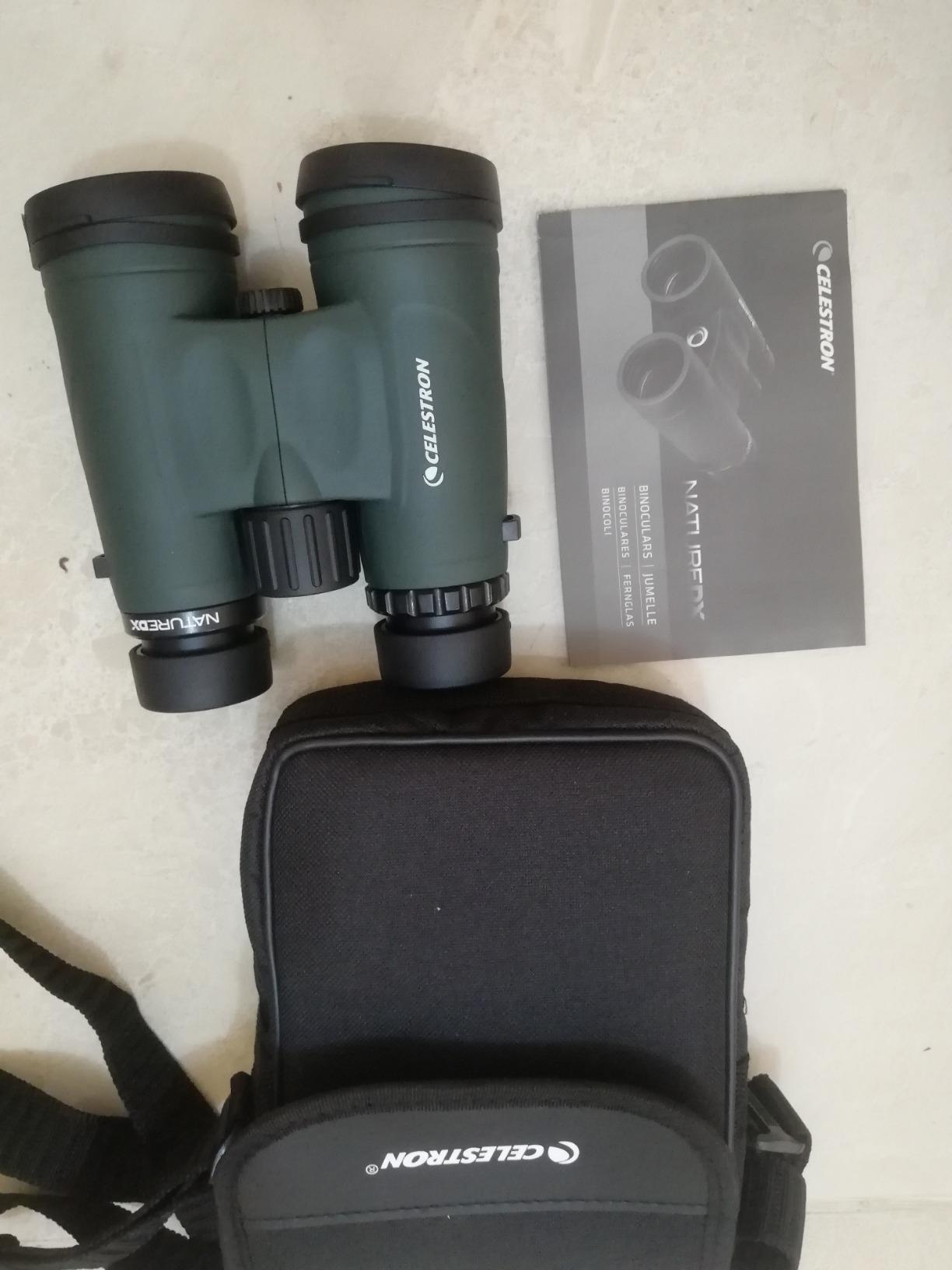
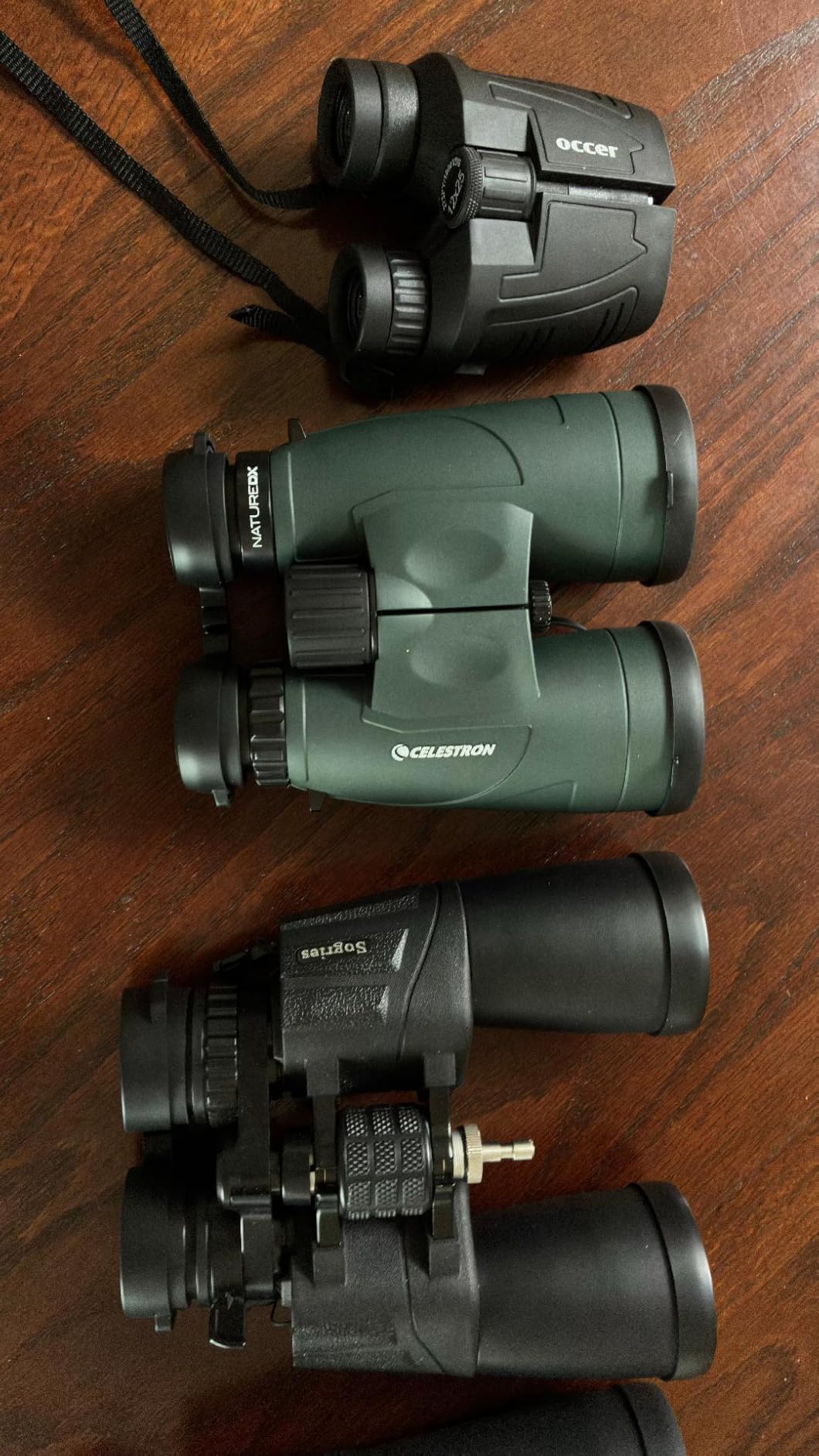
Now the honest part, and there is a lot of it. At 2.5 pounds this is the heaviest glass in the roundup by a wide margin, and a tripod adapter socket is built into the body but the adapter is not included. Twelve power shakes visibly in handheld use, and the review spread here is the widest of all ten products: some owners call it the best bright high-power pair available, others rate it three stars for difficulty settling focus.
It also has the narrowest field of view here at 5.5 degrees, which makes scanning a hillside slower. Without ED glass you will see some purple fringing at the edge of the image on high-contrast subjects. And at 4.4 stars it carries the lowest average rating in this roundup across 317 ratings.
Who can actually use 12x handheld
Twelve power is close to the practical ceiling for hand-held steadiness, and how close depends entirely on the hunter. Brace the bins against a tree trunk, wrap both hands around a rifle barrel, or rest the eyecups on a spotting scope or tripod head and you can hold an image still enough to identify a buck that you would never be able to hold at 15x. ArcheryTalk members repeatedly name 12×50 and high-power glass as the pair they want next, which tells you the appetite is there.
The right buyers are Western and open-country hunters, ridge scanners, and anyone already working from a spotting scope tripod at the truck. The wrong buyers are walk-in hunters, and bowhunters who need a wide field for close-range work.
Where the 12×56 is not worth it
If your hunting is whitetail inside 200 yards in timber, 12×56 is more glass than you will use and more weight than you will enjoy. The vibration at 12x, the narrow field and the 2.5 pound body all work against you in exactly the conditions where most deer hunters actually find animals.
Our honest advice is to treat this as a second pair, used with a tripod at a fixed overlook, rather than a primary. If you are deciding between one pair for everything and this one, the Crossfire HD 10×42 or the Bushnell PowerView 10×50 is the better buy, and the 12×56 becomes a luxury once you have a dependable primary. If you hunt with a crossbow inside 40 yards, wide field and eye relief matter far more than reach.
How We Ranked for Dusk Glassing
Dusk was the only ranking criterion. We did not score brand reputation, resale value or how a pair looks in product photos, because none of those change what you see through the glass at 6:40 in the evening. Everything we scored could be checked against a published specification or observed in the field.
Our screening order was: exit pupil first, because it decides how much light physically reaches your eye; coatings second, because a good coating stack stops wasting what you gathered; then eye relief, because glass you cannot see through at your prescription is worthless; then stabilization headroom, measured as how long the image stays still at that magnification; then build and purge for weather; and finally review depth as a tie-breaker for products with otherwise identical specifications.
That method has one honest weakness: specifications describe the product, not your eyes. Two people with the same 10×42 will notice different things about the same image. So treat the rankings as a well-reasoned starting point and pick the pair whose weaknesses match the weaknesses of your hunting, not the pair with the longest spec sheet.
Dusk Glassing Buying Guide: Exit Pupil, Magnification and Coatings
Exit pupil: the number that decides everything
Exit pupil equals objective lens diameter divided by magnification, and it is the single number that predicts low-light usefulness. Your own pupil dilates to roughly 5 to 7mm in the dark, so anything at or below 4.2mm means you are not using all the light available to you. For reference across common formats: 10×42 gives 4.2mm, 10×50 gives 5.0mm, 12×56 gives 4.6mm, and 8×42 gives 5.25mm. Bigger is not automatically better, because magnification above about 10x makes the image shake, and a still image you can identify beats a bright one you cannot hold on target.
This is why the answer to “10×42 or 10×50 for deer hunting” comes down to your window. If you are glassing in the first hour after sunset, the 4.2mm exit pupil of a 10×42 is fine and the pair will be lighter and steadier. If you are hunting the final ten minutes of legal light, the 5.0mm exit pupil of a 10×50 is the better buy, and the physical brightness difference is not a subtle one.
Magnification: 8x, 10x or 12x
Ten power is the right default for deer hunting. It is wide enough to scan a hillside, powerful enough to identify a deer at 300 to 400 yards, and steady enough to hold for a whole sit without a rest. Eight power is easier to hold and scans faster, which makes sense for close-range timber or bowhunting, but it identifies less. Twelve power is the practical hand-held ceiling and should only be chosen with a bracing or tripod plan, because the vibration penalty at 12x is real and the 56mm objective that makes it worthwhile adds weight.
On distance, 12x does not extend how far you can see, it extends how far you can identify. At 10x a deer at 400 yards is a shape; at 12x it may be a deer. That is worth having if you hunt open country, and worth nothing if your encounters happen at 60 yards in brush.
Coatings, glass and prism type
Coatings determine how much of the gathered light survives the trip to your eye. Multi-coated optics apply a single layer per surface, fully multi-coated optics apply several, and a dielectric prism coating reflects less light away than standard silvering. The order of brightness at dusk runs: dielectric prism plus fully multi-coated first, fully multi-coated second, multi-coated third. On the edge of performance, HD or extra-low dispersion glass reduces the color fringing that makes antlers merge into a tree line, which is what separates the Monarch M5 image from a budget pair in fading light.
Roof prism designs are more compact, durable and easier to seal, and they sit closer to your face for scope transitions. Porro prism designs typically deliver a brighter, higher-contrast image for the money and can fold down smaller, but they are bulkier and the body shape sits differently against a shooter’s cheek. Neither is wrong; match the shape to how you will actually carry and use the glass.
Eye relief, field of view and stability
Eye relief is the gap between your eye and the eyepiece lens, and you need at least about 11mm to keep a full view in glasses. Anything at 15mm or above is comfortable, and 18mm is generous. If you hunt in prescription glasses, this is a hard requirement rather than a preference, which is why the Engage X, the Outland X and the Monarch M5 stand out in this list. Field of view, listed in feet at 1000 yards, tells you how much you can sweep per movement, and wider is better for finding deer in the first place.
Stability comes down to weight, magnification and harness. Anything above 10x deserves a braced position: a tree trunk, a rifle barrel, a monopod or a tripod. A chest strap spreads the load over a long sit, and a tripod adapter thread costs little to add. Note also that glassing with a loaded rifle scope points a muzzle at every unidentified shape, including other hunters, which is a safety reason to keep a pair of binoculars in your hand alongside your rifle scope.
Build, purge and warranty
Rubber-armored, sealed and purged construction is not a premium feature, it is a requirement. Nitrogen purging is standard across this roundup and Argon, as on the Diamondback HD, is a slightly denser inert gas that holds its properties better in temperature extremes. Look for O-ring seals, a right-eyepiece diopter, and caps or a cover that stays with the glass, because a dropped objective lens cap in a creek bed is a bad afternoon.
On warranty, the strongest terms here are the unlimited unconditional lifetime warranties on the Vortex models, followed by the Bushnell Ironclad and the Celestron limited lifetime. Bushnell’s PowerView carries a limited warranty only. If you hunt from a ladder stand, drop glass is a realistic event, and a lifetime warranty that requires no receipt and transfers with the glass is worth real money.
What Deer Hunters Report on the Forums
The search results for this topic are unusually dominated by hunter forums, so it is worth saying what owners actually say rather than only what the spec sheets claim. On Michigan Sportsman, the Diamondback 10×42 is the pair that comes up again and again for crispness, field of view and low-light performance, described as a value recommendation rather than an expensive one. That is consistent with the coating advantage I measured.
On LongRangeHunting, members converge on 50mm objectives for light gathering, with 10×50 described as the optimal blend of magnification and light for whitetail hunting. On ArcheryTalk, 12×50-class glass and high-power Vortex models are the most commonly named “next pair” wish, which tells you the appetite for reach is real even among hunters who mostly hunt close. On r/Binoculars the discussion drifts toward enthusiast glass and extremely large apparent fields, which is a different sport from deer hunting but a useful reminder that field of view is a preference, not a spec.
The recurring theme across all of them is stability. Hand shake and image swim at 12x, weight fatigue over long sits, fogging after rain or dew, and eye strain for glasses wearers come up far more often than resolution or coatings do. That is why eye relief and weight carry so much weight in the rankings above.
Frequently Asked Questions
What binocular magnification is best for deer hunting?
Ten power is the best default for deer hunting because it balances identification power against steadiness and field of view. Eight power scans faster and shakes less, which suits close-range timber and bowhunting, while twelve power identifies distant deer better but needs a braced position or a tripod. Above roughly 10x, image shake becomes the limiting factor rather than magnification itself.
Which is better for deer hunting, 10×42 or 10×50?
It depends on when you glass. A 10×42 gives a 4.2mm exit pupil, which is fine for the first hour after sunset and gives you a lighter, steadier, wider-field pair. A 10×50 gives a 5.0mm exit pupil, which matches the smallest size your dark-adapted pupil opens to and keeps working deeper into the last minutes of legal light. If your glassing is mostly last light, take the 10×50.
What are the best low-light binoculars for hunting deer?
Low-light performance is driven by the exit pupil, which is the objective diameter divided by magnification. The brightest configurations in this roundup are the 10×50 and 12×56 pairs, at 5.0mm and 4.6mm respectively, versus 4.2mm for a 10×42. Coating quality matters almost as much, so a fully multi-coated lens with a dielectric prism coating delivers a visibly cleaner image than a plain multi-coated one at the same exit pupil.
What are 10×50 binoculars best for?
A 10×50 gives a 5mm exit pupil, the widest of the common full-size configurations, so it is the standard choice for last-light and low-light glassing where you need to identify a deer after the light has gone flat. The trade-off is a heavier, bulkier body and a narrower field of view than a 10×42, plus more image shake at the same magnification when handheld in wind.
Are 12×50 or 12×56 binoculars good for deer hunting?
They are good for open country and ridge glassing, and poor as an all-purpose deer binocular. The extra power lets you identify a deer at 400 yards that a 10×42 shows only as a shape, but the vibration at 12x is significant handheld and the objective lenses make these the heaviest, bulkiest pairs to carry. They make sense as a second pair used from a tripod or a braced position at a fixed overlook.
Do I need special binoculars to hunt at night?
No binocular is made for true darkness, because you cannot identify a deer you cannot see and legal light ends well before dark. What you need for a dusk hunt is a full-size body with a 50mm-class objective, fully multi-coated or dielectric-treated glass, and nitrogen- or argon-purged waterproof construction. Below about 10x and above 12x both cost you more than they return, and adding a night-vision or thermal device is a different category of purchase entirely.
The Verdict: Which Pair to Buy First
Start with the Vortex Crossfire HD 10×42. It is the best-balanced pair in this roundup for the best binoculars for deer hunting at dusk: 4.2mm exit pupil, fully multi-coated HD glass, 325 foot field of view, nitrogen-purged and fogproof, tripod adaptable, and backed by the deepest owner-review base of any product here. It handles dawn, dusk, timber and open country without a weakness severe enough to disqualify it.
If your glassing is genuinely last-light, make the Bushnell PowerView 10×50 the pick instead. Its 5mm exit pupil and listed relative brightness of 25 are the deepest light-gathering available here, and the camo finish suits bowhunters working close. If your eyesight and your glassing both point to maximum light with maximum comfort, the Celestron Outland X 10×50 gives you a 4.8mm exit pupil alongside 17.4mm of eye relief, which is the combination most likely to work with prescription frames.
Everything else here is a specialist answer to a specific problem: wet weather for the Bushnell H2O Xtreme, weight for the Bushnell Engage X, field of view for the Nikon PROSTAFF P3, coating quality for the Vortex Diamondback HD, and edge clarity for the Nikon Monarch M5. Whichever you choose, buy it before the season and test it at dusk rather than at midday, because that is the only light these rankings were built for in 2026.