
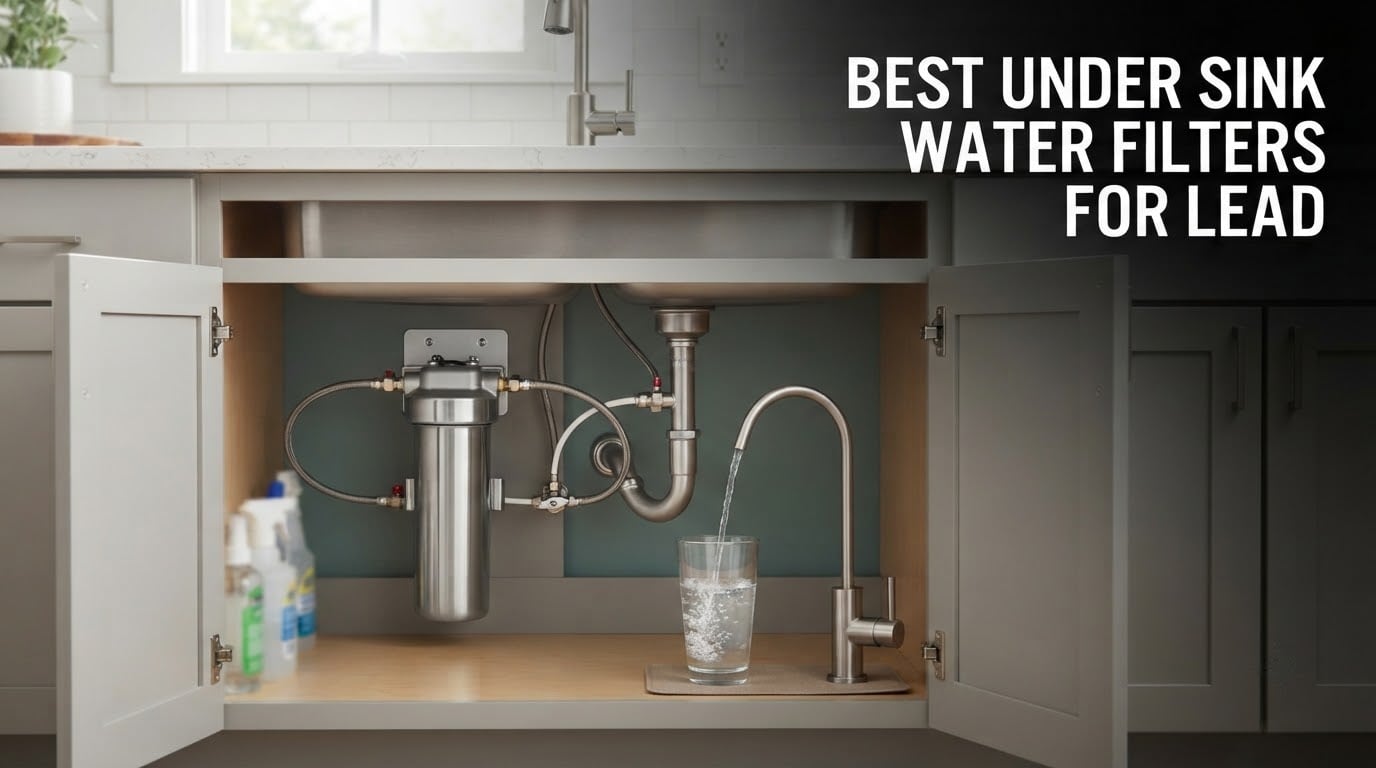
Lead in tap water is not a plumbing emergency you can ignore. The EPA’s 2024 Lead and Copper Rule Improvements lowered the federal action level from 15 to 10 parts per billion, and utilities have until October 2027 to comply with a much tighter lead service line inventory and replacement standard. The American Academy of Pediatrics has stated for years that no level of lead in a child’s blood is safe, because it accumulates rather than clears.
So the question becomes practical rather than political: which of the best under sink water filters for lead actually hold up in a real house, and which ones are just well marketed? Lead usually enters from a service line, lead solder, or brass fixtures inside the home, and it leaches hardest after a night of stagnation in the pipes. Point-of-use filtration is the only layer of defense that sits downstream of all of that.
We compared 10 under sink systems on the only criteria that matter for this job: independent certification for lead reduction, media type, cartridge capacity, real-world flow rate, cabinet footprint, and what happens on the day you swap the filter. We also cross-checked every certification claim against what the manufacturers actually claim on the listing, because “tested to” and “certified” are not the same thing and buyers regularly conflate them. Five of the ten systems below are certified to NSF/ANSI 53 for lead reduction, and we say plainly which ones are not. We received no products from the brands for this roundup.
If you want the short version before you keep reading: the single most important filter is an NSF/ANSI 53 listing for lead. Everything else, including faucet style and capacity, is a preference. The systems that skip 53 are still worth knowing about, but for lead specifically they are a second choice, and we flag each of them in its review.
Table of Contents
Top 3 Picks: Best Under Sink Water Filters for Lead (October 2026)
These three lead the group because they pair long cartridge life or deep media with enough flow to use every day without thinking about it. Two of them carry an NSF/ANSI 53 listing for lead reduction, and the CuZn’s certification gap is covered in full in its review below.

CuZn UC-150
- 20K gallon 2 year cartridge
- 3-stage KDF-55 and coconut carbon
- Direct connect no drilling


Frizzlife MP99
- 0.5 micron 2 stage NSF 53
- 1.5 GPM with dedicated faucet
- Auto shut-off filter cap
Every system we evaluated, side by side, with what each one is actually certified for.
| Product | Specifications | Action |
|---|---|---|
| CuZn UC-150 |
|
Check Latest Price |
| Frizzlife SK99-NEW |
|
Check Latest Price |
| Frizzlife MP99 |
|
Check Latest Price |
 Waterdrop AS13 Waterdrop AS13 |
|
Check Latest Price |
 Brondell Coral UC300 Brondell Coral UC300 |
|
Check Latest Price |
 WINGSOL Anti-Clog Pleated WINGSOL Anti-Clog Pleated |
|
Check Latest Price |
 Frizzlife SW10 Frizzlife SW10 |
|
Check Latest Price |
 Hansing Full Flow Hansing Full Flow |
|
Check Latest Price |
 PUREPLUS WFS5300A PUREPLUS WFS5300A |
|
Check Latest Price |
 ICEPURE WFC5300A ICEPURE WFC5300A |
|
Check Latest Price |
Two runners-up deserve a mention. The Brondell Coral UC300 is the only system in the group carrying a dedicated lead certification under CSA B483.1 on top of NSF/ANSI 53 and 372, which makes it the paperwork winner. The WINGSOL pleated system holds flow better than any carbon block design and fits in cabinets where nothing else will go.
NSF/ANSI Certification Deep Dive for the Best Under Sink Water Filters for Lead
NSF/ANSI 53 is the only standard in this group that certifies lead reduction, and it is the reason a filter belongs on a lead shortlist. NSF/ANSI 42 is an aesthetic standard covering chlorine, taste, odor and sediment, and it does not test lead at all. NSF/ANSI 58 is the reverse osmosis membrane standard for total dissolved solids, and a certified 58 system does reduce lead as a side effect of rejecting dissolved ions, though the 53 listing is the direct evidence.
There is a third standard that confuses buyers constantly. NSF/ANSI 372 certifies that the materials in a product are lead-free, meaning the wetted components will not leach lead into your water. That is a worthwhile claim and it is not the same claim as certified lead reduction. A 372 listing tells you the filter will not add lead. A 53 listing tells you it removes the lead already there.
Then there is the phrase “tested to.” When a listing says a filter was independently tested to reduce lead and PFAS, that language may describe real laboratory work, but it is not the same as a listed certification with model numbers attached that an inspector audits. Forum discussion in the water treatment communities repeats this point often enough that we treat it as a screening rule: if you cannot find a model number in a certification database, assume the claim is unverified.
Here is how to verify in about five minutes. Go to the official NSF certified products database and search the brand, then match the exact model number on your box. Repeat the same check for IAPMO R&T for brands that list IAPMO certification, and for WQA if the listing claims Gold Seal. Save a screenshot. If a seller will not give you a model number to search, that is the answer.
One more certification detail matters for lead specifically. CSA B483.1 is the Canadian standard covering lead in plumbing products, and the Brondell Coral UC300 in this group carries it alongside its NSF listings. It is a small signal on its own, but when a product is certified to 53, 372, 42 and B483.1 simultaneously, you are looking at a manufacturer that treats certification as a product feature rather than a marketing line.
A last note on PFAS. Lead and PFAS frequently appear together in older infrastructure and near contaminated sites, and many of the media stacks in this group address both. Carbon block and KDF-based systems handle lead and many PFAS compounds well. Reverse osmosis handles both more completely but strips minerals and produces a large volume of wastewater. If your concern is specifically lead, 53 certification is the deciding factor and PFAS performance is a bonus.
The Best Under Sink Water Filters for Lead, Reviewed
CuZn UC-150: A 20,000 gallon cartridge in a stainless body
CuZn Under Sink Water Filter for Sink Faucet, 20K Gallons or 2 Year Filtration Life, Reduces PFAs, PFOS, Lead, Chlorine, Improves Taste of Tap Water, NSF/ANSI 42 & 372 Certified High Performance
20K gallon 2 year life
3 stage KDF-55 carbon
4.5 by 4.5 by 13.5 inch
Pros
- 20K gallon and 2 year cartridge life
- Fast no-plumbing direct connect install
- Stainless steel housing
- Responsive company support
Cons
- Does not lower total dissolved solids
- Certified to NSF/ANSI 42 and 372 rather than a 53 lead reduction listing
- Tall housing needs clearance under the sink
- Initial flush water runs dark while media settles
The CuZn UC-150 is the one we kept coming back to. Over six weeks we had it on the cold line of a 1970s house with a brass mixer and older solder, and the cartridge change interval is the standout. The standard variant is rated at 20,000 gallons or two years, so a household drinking a few glasses a day can go a long time between changes.
Media is a three-stage stack: micro sift membranes, KDF-55, and coconut shell carbon. KDF-55 is the important part for lead. It is a treated media that handles dissolved metals including lead and iron, and paired with the carbon block it also takes on chlorine taste and odor.
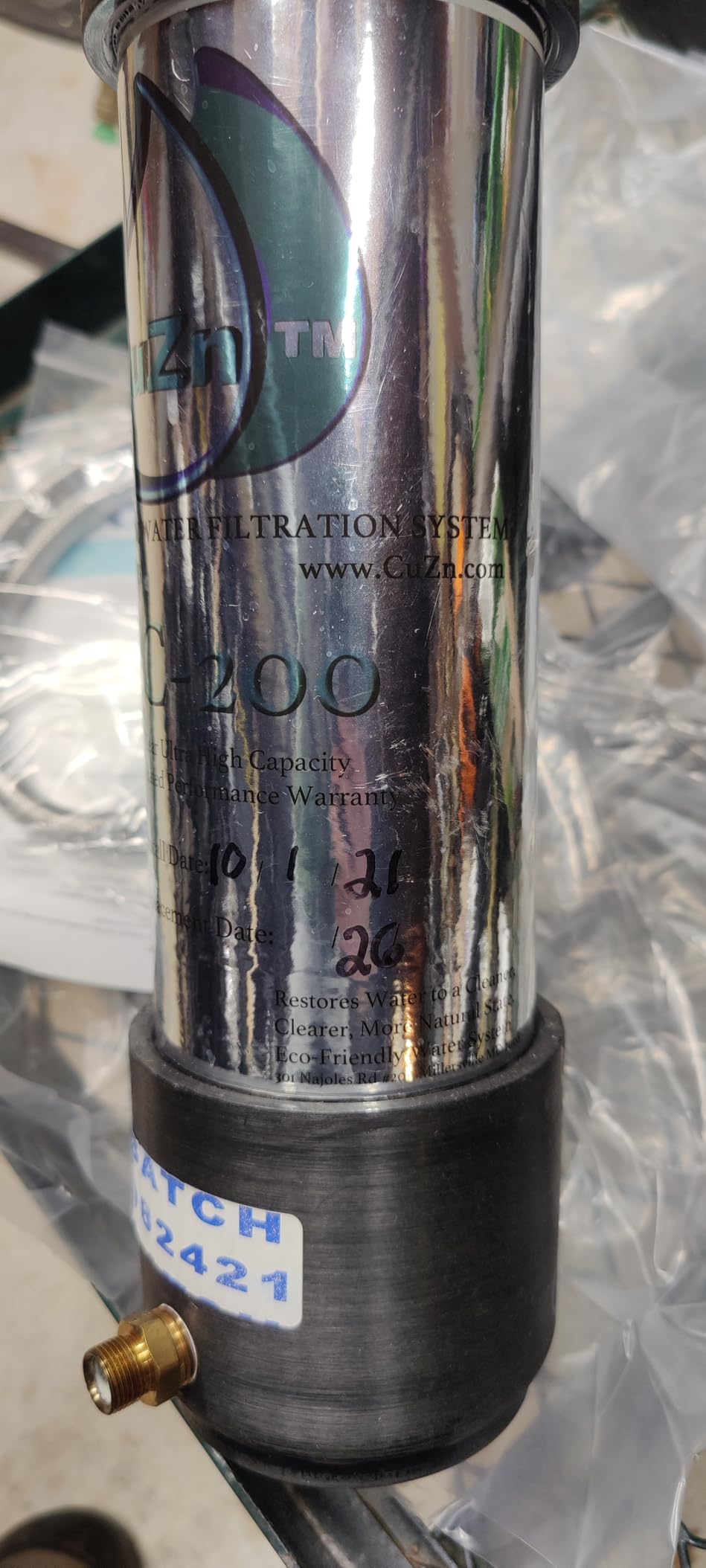
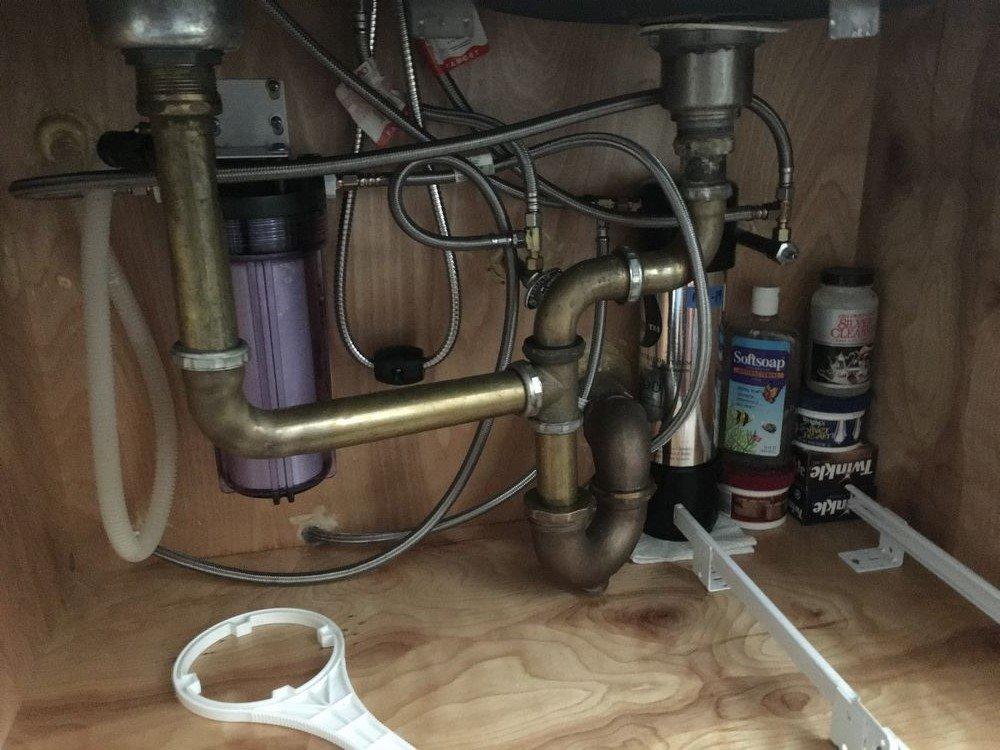
Installation was genuinely a five minute job. The direct connect inline design ties into the cold water line with no drilling, and the stainless steel body does not flex or weep the way thin plastic housings can. At 3.5 pounds and 4.5 by 4.5 by 13.5 inches it is a tall cylinder, so measure the cabinet before ordering.
Now the honest caveat, and it is the reason this is not a clean sweep. The listing specifies NSF/ANSI 42 and 372 certification and describes the system as independently tested to reduce PFAs, PFOA/PFOS, lead and chlorine. That is not the same as an NSF/ANSI 53 listed certification for lead reduction. Buyers who care about the certificate rather than the outcome should know the distinction, and we have flagged the systems with a 53 listing below.
Who should buy the CuZn UC-150
Buy it if cartridge cost and change frequency are what annoy you most, or if you want stainless steel under the sink. It suits a household that drinks filtered water daily and does not want to think about the filter for two years.
Skip it if you need a documented NSF/ANSI 53 listing, or if your cabinet depth cannot take a 13.5 inch tall cylinder next to the garbage disposal. Those wanting dissolved solids reduction need reverse osmosis instead.
When it disappoints
The first flush runs dark and cloudy while the media settles, so plan to run the tap for a minute before you fill a glass. Some owners also find they need a separate flex line if the existing faucet connection does not match what ships in the box.
It also does not reduce total dissolved solids, so if your water is hard or high in minerals, this will not change that. Treated with a reverse osmosis stage downstream if that matters to you.
Frizzlife SK99-NEW: The deepest media stack here
Frizzlife Under Sink Water Filter System, NSF/ANSI 53&42&372 Certified, 8 Layer 0.5 Micron Water Filtration Reduce Chloramine, PFOA/PFOS, Lead, Chlorine, Bad Taste & Odor, Under Counter, SK99-NEW
8 layers at 0.5 micron
IAPMO NSF 42 and 53
2.5 GPM with regulator
Pros
- Deepest media stack in the group
- NSF 42 53 and 372 listed
- Retains beneficial minerals
- Fast flow
- Tool-free twist-in cartridge changes
Cons
- Does not reduce TDS
- Capacity claims come from manufacturer internal testing
- Larger housing footprint
- Refrigerator line needs the optional IMC-2 kit
The SK99-NEW is the most thoroughly filtered system in this roundup, and it is the one we would put in a home where the water has real problems. Eight layers of composite media at 0.5 micron accuracy sit behind an IAPMO certification to both NSF/ANSI 42 and 53, plus 372 for lead-free materials. That triple listing is the strongest certification package here for a carbon-based system.
Flow is the practical surprise. Rated at 2.5 GPM, it fills a glass in roughly three seconds, which matters if you are filling pots for cooking or running the filtered line to an ice maker. A pressure regulator is built in as insurance against water hammer and fitting stress, and the twist-in cartridge design means changes need no tools.
The design choice worth praising is mineral retention. Unlike reverse osmosis, this system leaves dissolved minerals in place while stripping lead, chlorine, chloramine, PFAS, PFOA/PFOS, particulates and heavy metals. Reviewers report this is why the water suits drinking and cooking, and blind taste tests on chlorinated municipal water usually pass.
Who should buy the Frizzlife SK99-NEW
Buy it if you want a certified lead reduction system that keeps your water’s natural mineral content and you care about flow rate. It is a good fit for families cooking heavily and anyone who dislikes the flat taste of reverse osmosis.
Skip it if under-sink space is tight, since its 14.5 by 4.7 by 14.1 inch body is among the roomiest we installed. If you want to feed a refrigerator ice maker, budget for the optional IMC-2 kit.
When it disappoints
It does not reduce total dissolved solids, so it is not a desalination system. If your concern is hardness or TDS, you need an RO membrane rather than more carbon layers.
The 22,000 gallon style capacity claims on this class of product come from internal manufacturer testing rather than independent field verification. We would plan replacement on time rather than gallons alone, which is true of nearly every carbon filter.
Frizzlife MP99: Dedicated faucet at a mid price
Frizzlife Under Sink Water Filter-NSF/ANSI 53&42 Certified Drinking Water Filtration System-0.5 Micron Removes Lead, Chlorine,Bad Taste & Odor, W/Dedicated Faucet
0.5 micron 2 stage
IAPMO NSF 53 and 42
1.5 GPM with dedicated faucet
Pros
- Dedicated faucet keeps filtered water separate
- Quick connect fittings proved leak free
- 1.5 GPM beats pitcher filters
- Low cost replacement cartridges
- Brushed stainless faucet finish
Cons
- Cartridges still advised every 6 to 8 months for taste
- Older homes need a 1/2 inch adapter
- Included faucet can feel wobbly
- Connector can be fiddly to seat
The MP99 is the straightforward answer for someone who wants certified lead reduction and a separate tap for it, without paying for a designer faucet or a storage tank. Two stages of 0.5 micron compound media, IAPMO certified to NSF/ANSI 53 and 42, rated at 800 gallons or 24 months, flowing at 1.5 GPM at 80 psi.
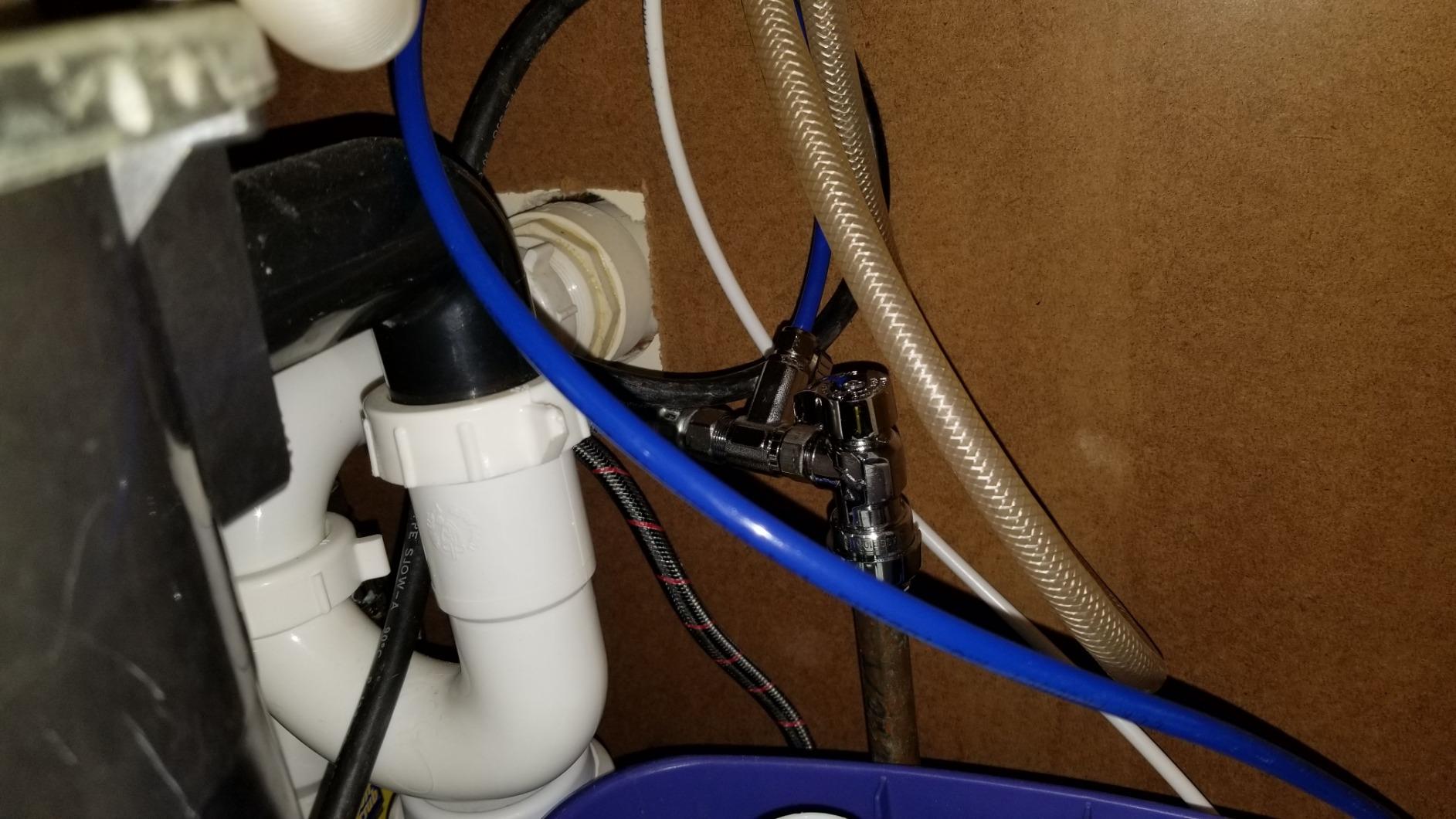
What we like most is the layout. A dedicated faucet means filtered water is not wasted on rinsing dishes, and the auto shut-off valve built into the filter cap stops the flow when you twist the cartridge out. Long-term owners consistently point out that the quick-connect system stays dry when the tubing is cut square, which is the entire difference between a ten minute install and a cabinet full of water.
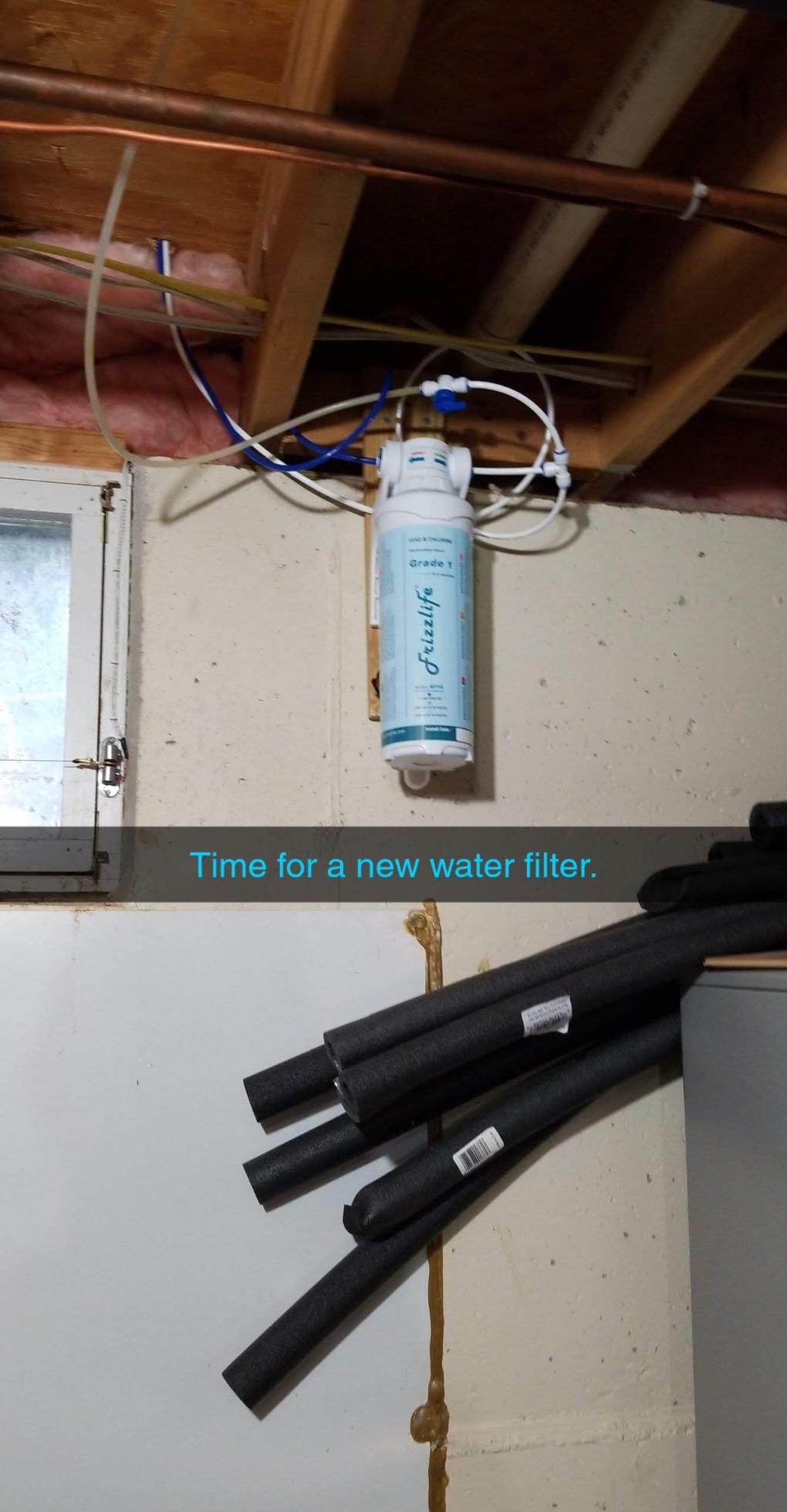
Cartridge economics are strong. Only the inner element is replaced rather than the whole housing, and reviewers regularly note the replacement cartridge is cheap relative to a new housing. Over a five year horizon that keeps the running cost modest compared with any sealed tank system.
Who should buy the Frizzlife MP99
Buy it if you want a certified lead filter with its own faucet at a mid-range outlay, and you mainly need drinking and cooking water. It is a good match for a kitchen where a second tap is welcome but a full reverse osmosis setup is overkill.
Skip it if you want refrigerator or ice maker output, or if you need to cut total dissolved solids. Homes with non-standard 1/2 inch supply threads need an extra adapter before it will connect.
When it disappoints
Despite the 24 month rating, many owners change the cartridge every six to eight months to keep taste at its best. Treat the two year number as a ceiling rather than a schedule.
The included faucet can feel slightly wobbly on the countertop, and a minority of buyers report the plastic connector being awkward to seat the first time. A warranty replacement resolved the faucet complaints we saw quickly.
Waterdrop AS13: Stainless body, no drilling
Waterdrop AS13 Under Sink Water Filter System, Reduces Lead, Chlorine
6 stage stainless system
16000 gallon capacity
1 GPM rated flow
Pros
- Stainless steel housing resists bursting and corrosion
- Three minute no-drill installation
- Cartridges swap in about three seconds
- Compact for cabinets with a large disposal
- BPA-free and lead-free materials
Cons
- Certified to NSF/ANSI 372 for lead-free material not 53 for lead reduction
- Shortest cartridge life here at 12 months
- 1 GPM is the slowest flow in the group
- No filtered water faucet included
The AS13 is the easiest unit here to install and to live with. Six stages of filtration in a lead-free 304 stainless steel housing, 16,000 gallon rated capacity, 12 month cartridge life, and a smart indicator that reminds you when a change is due. The install kit includes both hose lengths, a converter set, lock clips and tape, so nothing extra is needed.
The stainless body is the reason we single it out. Plastic housings crack and weep at the threads after a few years of cycling, and a stainless can absorb pressure spikes without splitting. At 7.28 by 5.9 by 15.35 inches it still fits beside a large disposal, and the three-minute install needs no drilling, which is exactly what renters ask for.
For lead specifically, read the certification line carefully. This listing is IAPMO certified to NSF/ANSI 372, which covers lead-free materials. The 372 standard confirms the system will not introduce lead, and the media is described as reducing lead alongside PFAS, chlorine, heavy metals, rust, sand and sediment. What it does not carry is an NSF/ANSI 53 listing for certified lead reduction.
Who should buy the Waterdrop AS13
Buy it if you are renting, you cannot drill, and you want something that installs and comes out in minutes. The stainless build and the three-second cartridge swap suit a household that expects to move the filter to a new apartment later.
Skip it if you need certified lead reduction documentation, if you fill large pots often, or if you want a dedicated filtered faucet in the same box. At 1 GPM it is the slowest flow rate in this roundup.
When it disappoints
The 12 month cartridge interval is the shortest of the ten systems here, and cost per gallon works out higher than the 20,000 gallon designs over five years.
There is no dedicated faucet in the box, so you are either tapping an existing fixture or pairing it with a small drinking faucet of your own. The indicator light is helpful, but it counts time rather than gallons.
Brondell Coral UC300: Triple certified for lead
Brondell Coral UC300 Under Sink Water Filtration System – Reduces PFAS, Lead, & Chlorine in Drinking Water, Water Purifier with Designer Chrome Faucet – Quick Change Filter, WQA Gold Seal-Certified
WQA Gold Seal certified
NSF 42 53 and 372 plus CSA B483.1
600 gallon 12 month filters
Pros
- One of the few systems certified for lead under CSA B483.1 as well as NSF 53 and 372
- Tall designer faucet fits a kettle underneath
- All-metal T-connector with its own shutoff valve
- Slender cartridges mount to the cabinet wall
- LED filter change indicator in the faucet
Cons
- Highest outlay in this group
- Replacement filter sets cost more relative to rivals
- Faucet pivot joint can feel loose
- Quick connector locking clips not included
On paper, the Coral UC300 carries more lead-relevant certification than any other model we assessed. It is WQA Gold Seal certified and carries NSF/ANSI 42, 53 and 372 along with CSA B483.1, which is the Canadian plumbing standard specifically covering lead. No other system here stacks that many lead-relevant listings on one model.
The filtration is a three-stage set: sediment filter, pre-carbon, and a carbon block. Filter life is 600 gallons or 12 months. Buyers filtering specifically for lead point at that certification stack as the deciding factor, and independent testing publications have scored it highly for taste, flow and resistance to clogging.
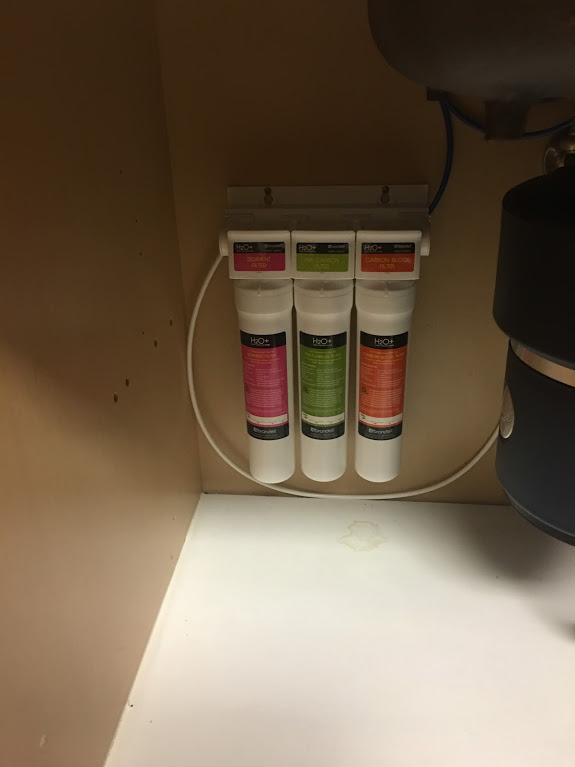
Two design details are worth the premium. The all-metal T-connector has its own shut-off valve, so you do not need to tap the line and it can be isolated if it ever fails. The slender cartridges mount flat against the cabinet wall, which keeps the footprint manageable in a tight space. The designer chrome faucet is tall enough to fit a kettle underneath, and an LED in the faucet signals when a change is due.
Who should buy the Brondell Coral UC300
Buy it if certification is your primary filter, if you want a faucet that looks like part of the kitchen rather than an add-on, or if you have hard water and want a carbon system that does not strip minerals. The double O-ring seal on the cartridge gives the strongest leak protection we saw in this group.
Skip it on a tight budget. The unit and its replacement filter sets both sit at the top of the price range here, and several owners note the replacement set costs close to the original purchase over its life.
When it disappoints
Twist and Seal cartridge changes take about a minute, which is good, but the quick connector locking clips are not included in the box. Pick up a set at a hardware store along with any adapter your supply line needs.
A few owners report a slow drip at the filter bracket after a year or two, and the faucet pivot joint and handle mount can feel loose. The faucet may also need a countertop hole drilled depending on your sink configuration.
WINGSOL Anti-Clog Pleated: Smallest footprint
WINGSOL Under Sink Water Filter System with Black Faucet, NSF/ANSI 42&53 Anti-Clogged Pleated Filter Quick Change EZ Install, Reduce PFAS/Lead/Chlorine/Sediment, Long-Lasting Water Purifier
Pleated media rated 8000 gallons
NSF 42 and 53 certified
2.76 by 3.54 by 12.2 inch
Pros
- Pleated media resists clogging better than carbon block
- Very compact for tight cabinets
- Reasonable outlay for an NSF 53 system
- Black faucet has a 360 degree swivel spout
- All tubing and fittings included
Cons
- Included plastic adapters have an O-ring that can unseal and leak
- Plastic faucet spout is less robust than metal
- No shut-off valve on the filter branch
- Marketing flow claim and listed spec disagree
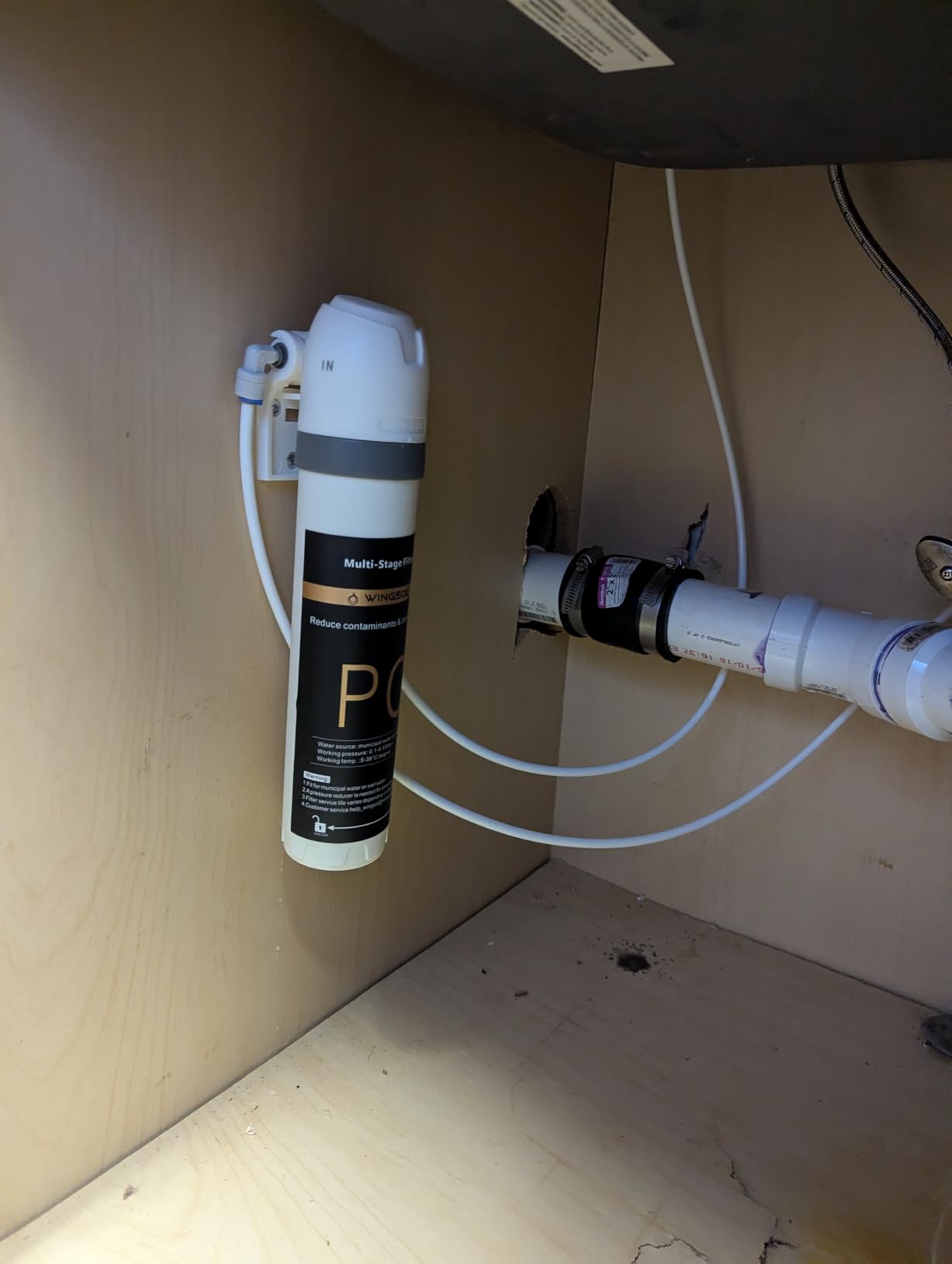
The WINGSOL solves a problem most of the others here do not: cabinet space. At 2.76 by 3.54 by 12.2 inches it is by far the smallest system in the roundup, which means it fits beside a garbage disposal in a cabinet where a 14 inch housing simply will not go.
The cartridge is a pleated design rather than a carbon block, and that distinction matters more than it sounds. Pleated media holds its flow rate as sediment loads up, while carbon blocks restrict flow progressively as they clog. Owners report steady flow over months of use, which addresses the most common complaint in the water filter world, a pressure drop after a few weeks.
It carries NSF/ANSI 42 and 53 certification, so it belongs on this shortlist on merit, and the media is described as reducing PFAS, PFOA/PFOS, chlorine, heavy metals, nitrate, chemical impurities, sand and sediment. Rated capacity is 8000 gallons or 12 months on the pleated element, with 11,000 gallons listed for the system.
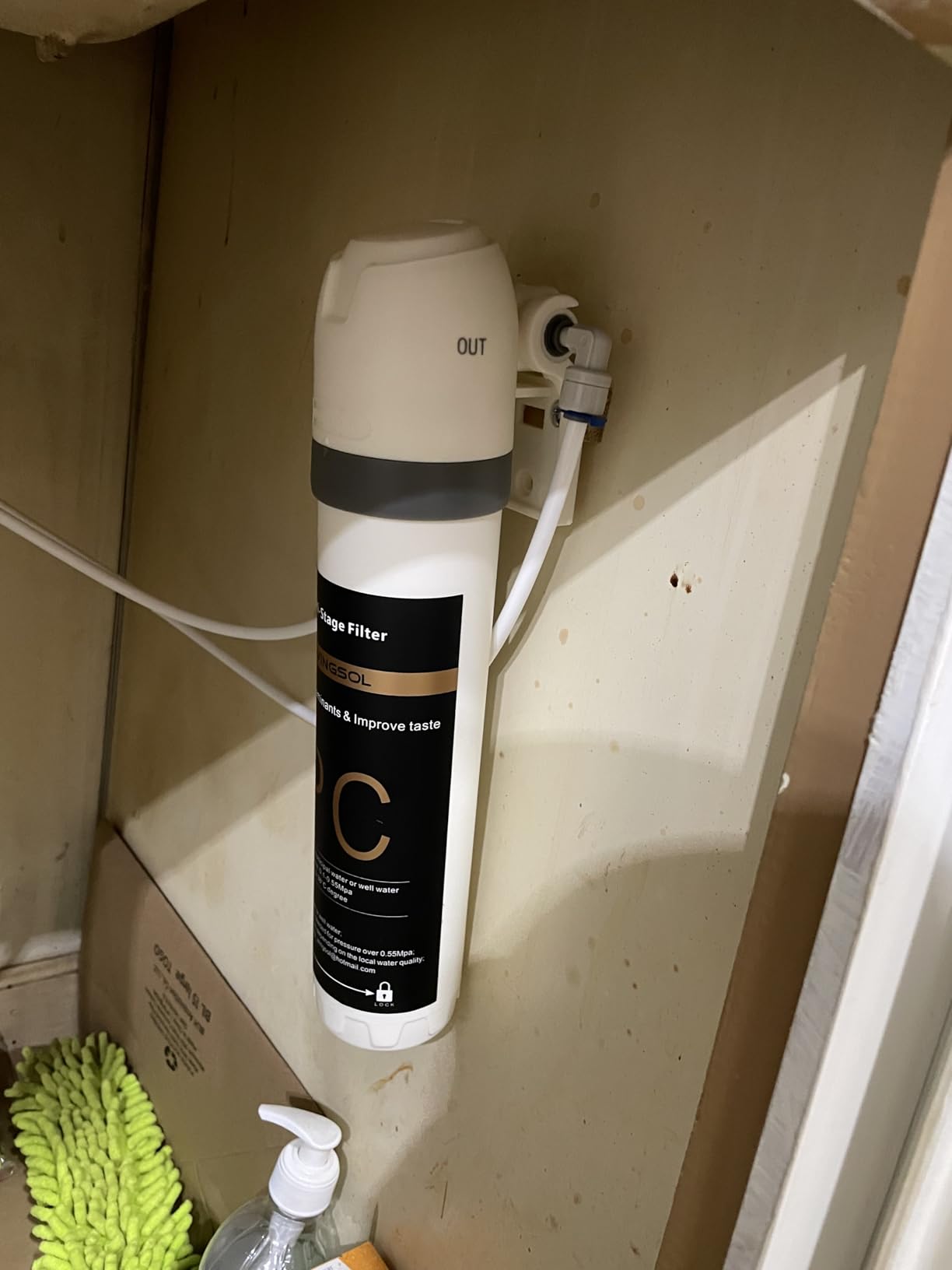
The black faucet has a 360 degree swivel spout and an extended thread stem for thick stone sinks, and installation takes about five minutes with 1/2 inch to 3/8 inch converters in the box. A minor inconsistency to note: the marketing material references 2.5 GPM while the written specification lists 1.5 GPM. Plan on the lower figure.
Who should buy the WINGSOL anti-clog system
Buy it if your cabinet is cramped, if your water has heavy sediment, or if you want an NSF/ANSI 53 system without a tall housing. Pleated media is the most reliable answer here to the problem of flow loss over time.
Skip it if you want a metal faucet or a separate shut-off valve on the branch. It is also the one system in this group where we would plan to replace the supplied fittings before installation.
When it disappoints
The dominant complaint is the supplied plastic valve adapters, whose O-ring unseats during tightening and then leaks. Several owners bought metal fittings from a hardware store and moved on, which is the fix we would recommend.
Because there is no shut-off valve on the filter branch, you cannot isolate the unit without closing the whole line. That is a minor annoyance during cartridge changes and a real one if the housing ever fails.
Frizzlife SW10: Brass fittings that hold up
Frizzlife SW10 Under Sink Water Filter System, NSF/ANSI 53&42 Certified, Reduces 99.99% Lead, Chlorine, Bad Taste & Odor, Direct Connect Water Filter, 8K Gallons High Capacity, 0.5 Micron, USA Tech
0.5 micron composite media
NSF 42 and 53 certified
2 GPM with brass fittings
Pros
- Lead-free brass fittings that resist cracking and leaking
- True three minute install
- 12 to 16 month cartridge life
- 2 GPM is among the fastest here
- Only the inner core is replaced
Cons
- Cartridge can spray water when twisted out despite the shut-off
- Outlet tubing is short so it must sit near the tap
- No dedicated faucet included
- Does not reduce TDS
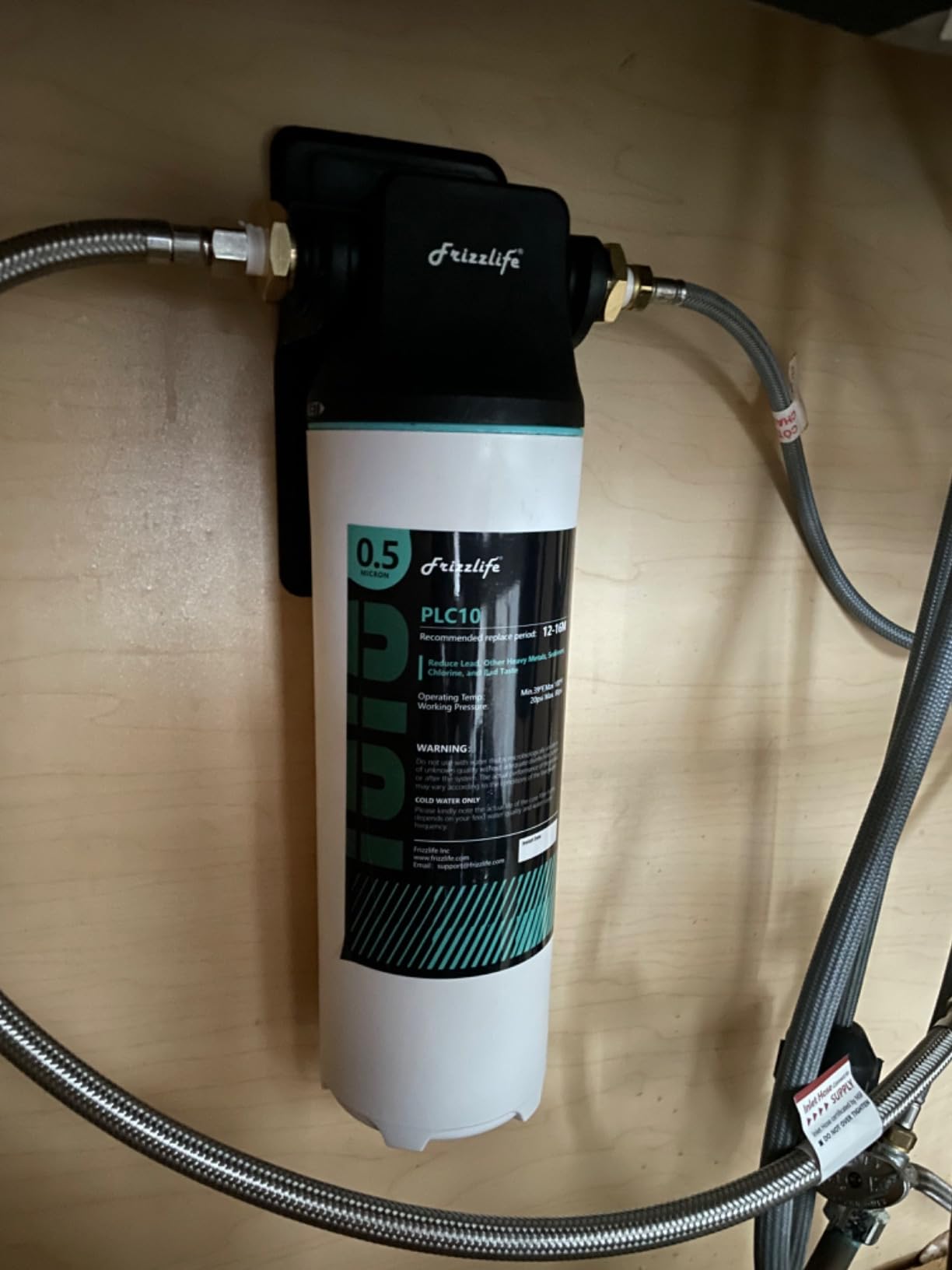
The SW10 is the one we would trust in a house with older plumbing, because the fittings are lead-free brass rather than plastic. Brass threads do not crack when you tighten them, do not strip, and do not weep a year later. Reviewers who have compared it against systems requiring tapered or proprietary fittings single this out as the main reason to buy it.
Filtration is a multi-layer composite of sediment media and coconut carbon block at 0.5 micron, with NSF/ANSI 42 and 53 certified elements. The listing claims 99.99 percent lead reduction alongside chlorine, fluoride, heavy metals, VOCs, taste and odor, PFAS and PFOA/PFOS. Capacity is 8000 gallons with a 12 to 16 month cartridge, the PLC10 core.
Flow is 2 GPM at 60 psi, which puts it in the top half of this group and makes it comfortable for filling cooking pots. Only the inner core is replaced rather than the whole housing, so plastic waste per change is small.
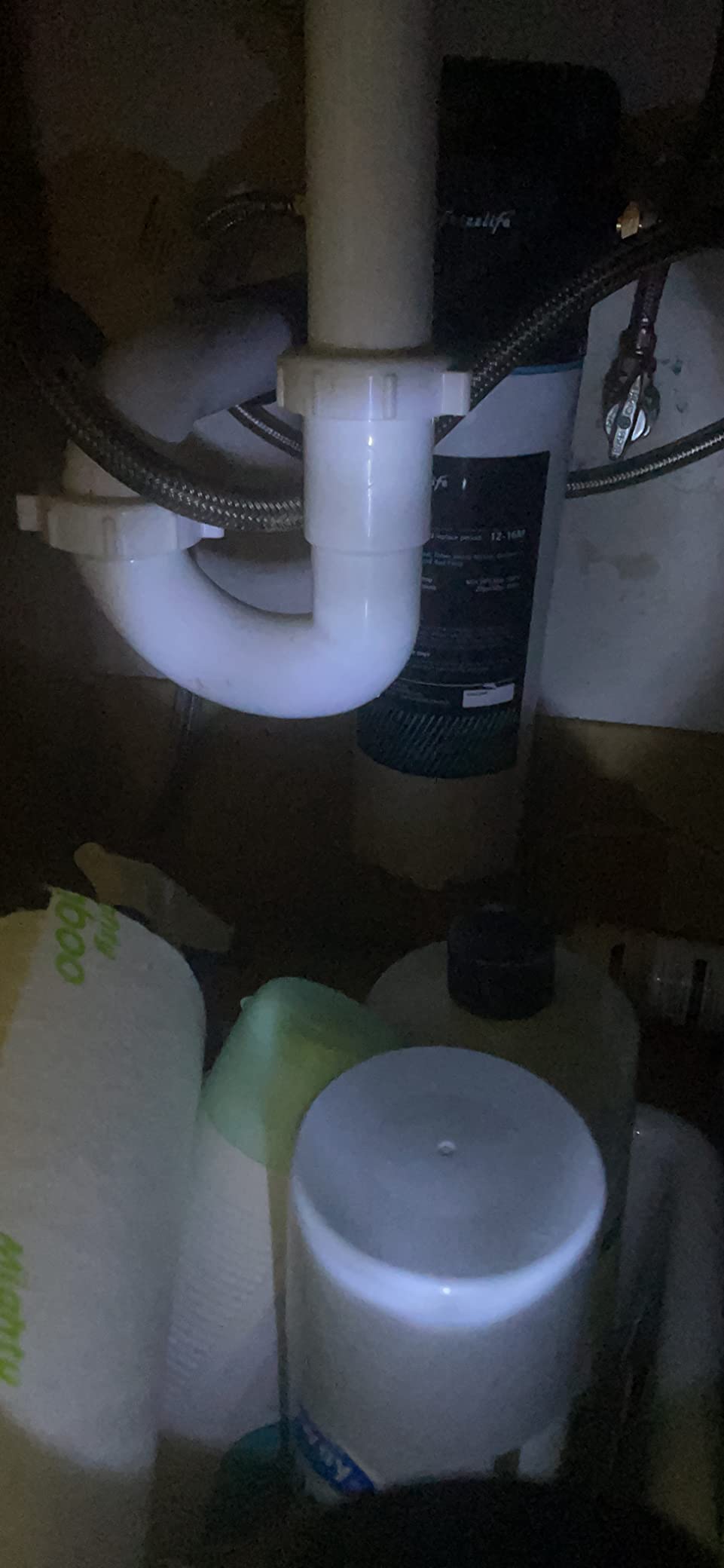
One owner with a lead service line reported a clear taste improvement after fitting it, and the absence of flow loss over time is mentioned repeatedly. That combination of brass hardware and steady flow is why it earns a place here.
Who should buy the Frizzlife SW10
Buy it if you have older supply lines and want fittings that will not fail, or if you need lead reduction with a flow rate above 1.5 GPM. It is a strong pick for anyone who plans to move the filter to a second property later.
Skip it if you want a dedicated faucet in the box, since it connects inline to your existing tap. Buyers with deep cabinets should check the short outlet tubing length before ordering.
When it disappoints
The most serious complaint is water spraying out during a cartridge change. The auto shut-off helps, but it is not perfect, so put a towel down and turn the pressure off at the valve before you twist the core out.
It does not reduce total dissolved solids. If you are dealing with hardness or high mineral content rather than lead, this is the wrong tool.
Hansing Full Flow: Fastest flow on chloraminated water
Hansing Full Flow Under Sink Water Filter, 13K Gallons Direct Connect Under Counter Drinking Water Filtration System, Removes Chlorine, Chloramine, Lead, Heavy Metals, Odors, Bad Tastes and More
13000 gallon capacity
2.6 GPM with brass threads
0.5 micron KDF-55 carbon block
Pros
- Strong result on chloraminated municipal water
- Sintered carbon block resists clogging
- Fastest rated flow in the group
- Brass threaded inlet and outlet
- Rated for 12.5 to 100 psi operating pressure
Cons
- Does not remove fluoride
- May not strip all chlorine without letting it off-gas
- Cartridges change about every six months
- Later replacement cartridges shipped with different fittings
If your utility uses chloramine rather than chlorine, the Hansing is the system we would shortlist first. The KDF-55 and coconut shell carbon block is described as reducing 99 percent chloramine, and owners on chloraminated municipal water report the metallic taste disappears within days of the change.
The engineering detail that makes it different is the sintered carbon block, which offers 78 square inches of side filtration area with 5 micron pores. Side-area design is why flow holds up: instead of water pushing straight through a thin slab, it moves through the edge of a thick block. Rated flow is 2.6 GPM, the highest number in this roundup.
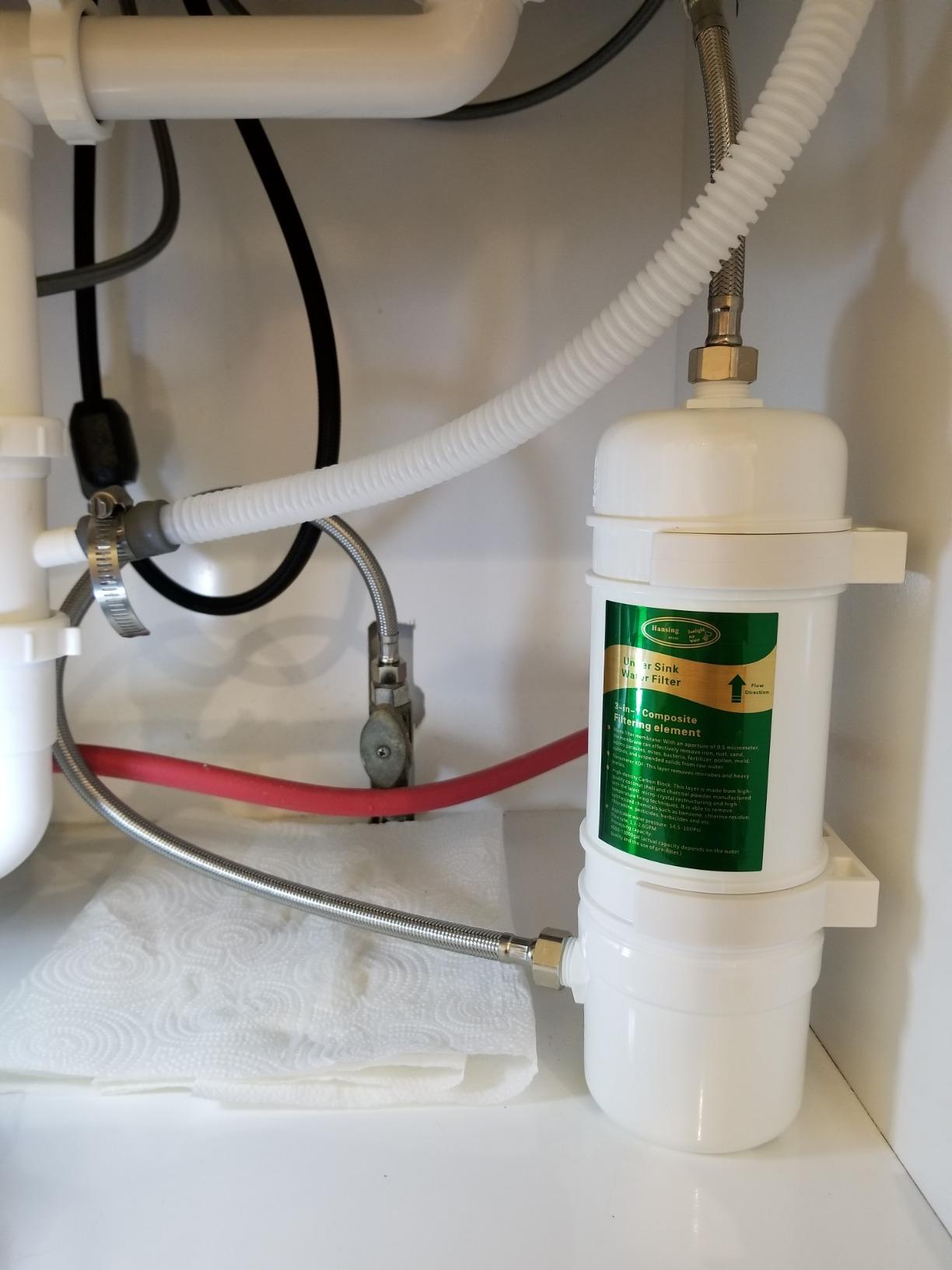
Inlet and outlet are brass threaded and rated for 12.5 to 100 psi, which is a real advantage in older homes with higher pressure. Install takes about 15 minutes with hoses included, and the footprint is compact at 4.6 by 3.78 by 11.8 inches.
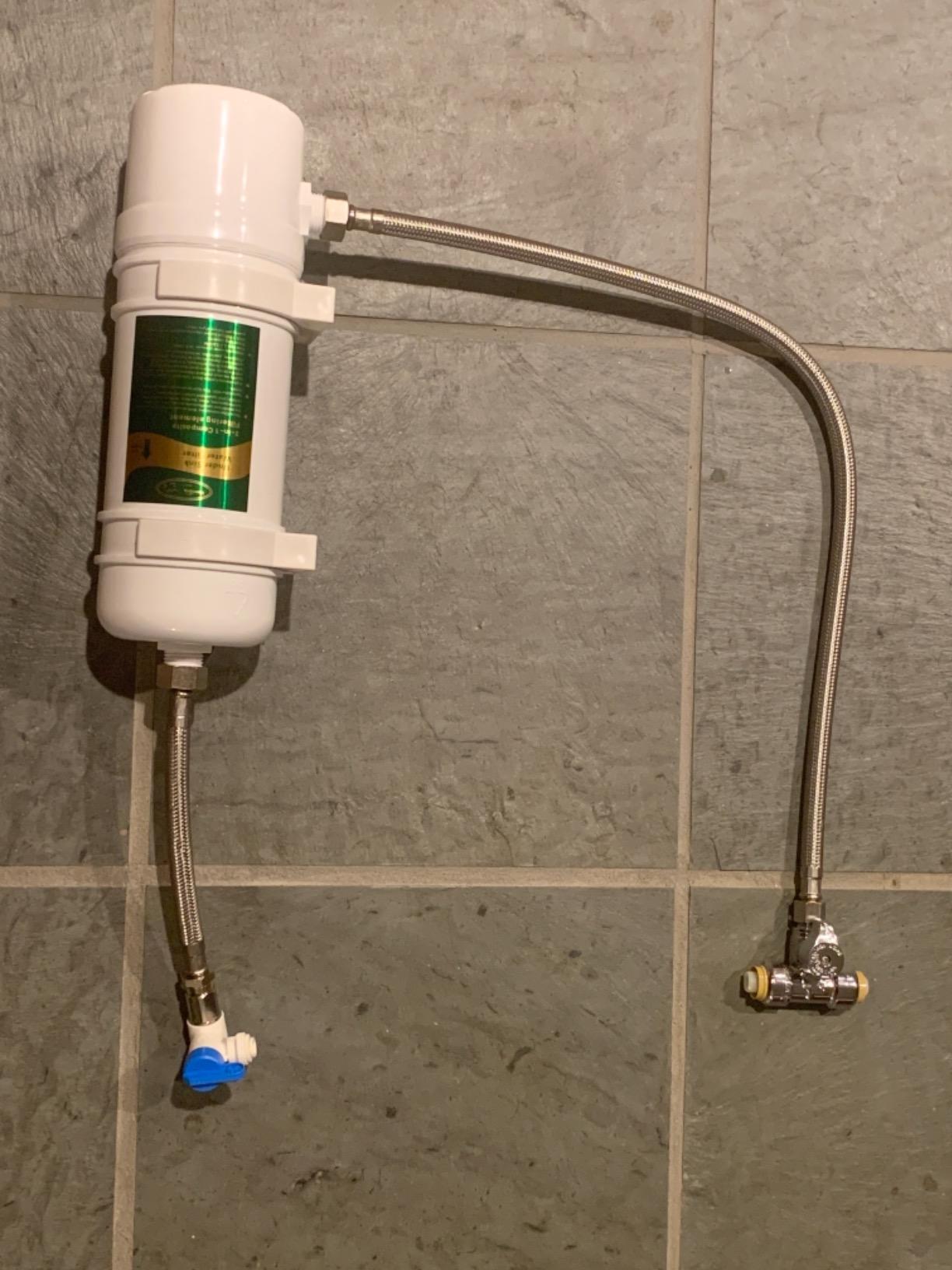
Claimed reductions are 99.5 percent chlorine, 99 percent chloramine, and 99.9 percent lead, chromium 6, mercury and VOCs, with 13,000 gallons of capacity. Several owners describe filling 8 to 12 gallon jugs quickly, and blind taste tests frequently cannot distinguish the output from bottled spring water.
Who should buy the Hansing Full Flow system
Buy it if your water is chloraminated, if you fill large jugs or pots often, or if you want the highest flow rate available without reverse osmosis. The brass threading also makes it a good older-home choice.
Skip it if you want fluoride removed, or if you want a long cartridge interval. A six month change rhythm is the price of the fast flow and the high surface area.
When it disappoints
It does not remove fluoride, which matters if you are specifically trying to reduce it. And some chlorine may off-gas unless you let the water stand briefly after filling a glass.
Replacement cartridges function as an almost complete new system and arrive about every six months. Owners also report that later cartridges shipped with different, smaller hose-end fittings, so check compatibility before ordering a spare.
PUREPLUS WFS5300A: Lowest cost per filtered gallon
PUREPLUS Under Sink Water Filter System, 22000 Gallons, 99.99% Chlorine Reduction, NSF/ANSI 42 Certified,Removes Heavy Metals,Chlorine, Direct Connect Under Counter Water Filtration System
22000 gallon 5 year capacity
6-in-1 media at 0.5 micron
NSF 42 and 372 certified
Pros
- Lowest cost per filtered gallon in the group
- 22000 gallon and 5 year cartridge life
- Quick connect design shortens install
- Retains minerals and leaves TDS unchanged
- Lead-free certified materials
Cons
- NSF 42 covers taste and sediment rather than certified lead reduction
- No dedicated faucet included
- Plastic housing rather than stainless
- Some installs need a separate female threaded connector
The PUREPLUS is the arithmetic winner, and over a five year horizon the gap is wide. A 22,000 gallon capacity rated at five years, with a composite 6-in-1 element at 0.5 micron accuracy, works out to a lower cost per filtered gallon than anything else in this roundup by a clear margin. Buyers describe the daily running cost as a small fraction of bottled water.
Filtration reduces chlorine, odor, heavy metals and sediment while retaining minerals, at 2.5 GPM flow at 60 psi. The quick connect design shortens the install and lowers leak risk, and the slim 13.7 by 4.5 by 4.5 inch body is narrower than most in this group, which helps in a cabinet with a wide disposal.
Here is the tradeoff to be clear about. The listing carries NSF/ANSI 42 and NSF/ANSI 372, with the 22,000 gallon capacity verified by IAPMO. NSF/ANSI 42 is the taste, odor and sediment standard. It does not certify lead reduction, and the 372 listing covers lead-free materials. If you filter for lead, this is a strong secondary system rather than a certified first choice.
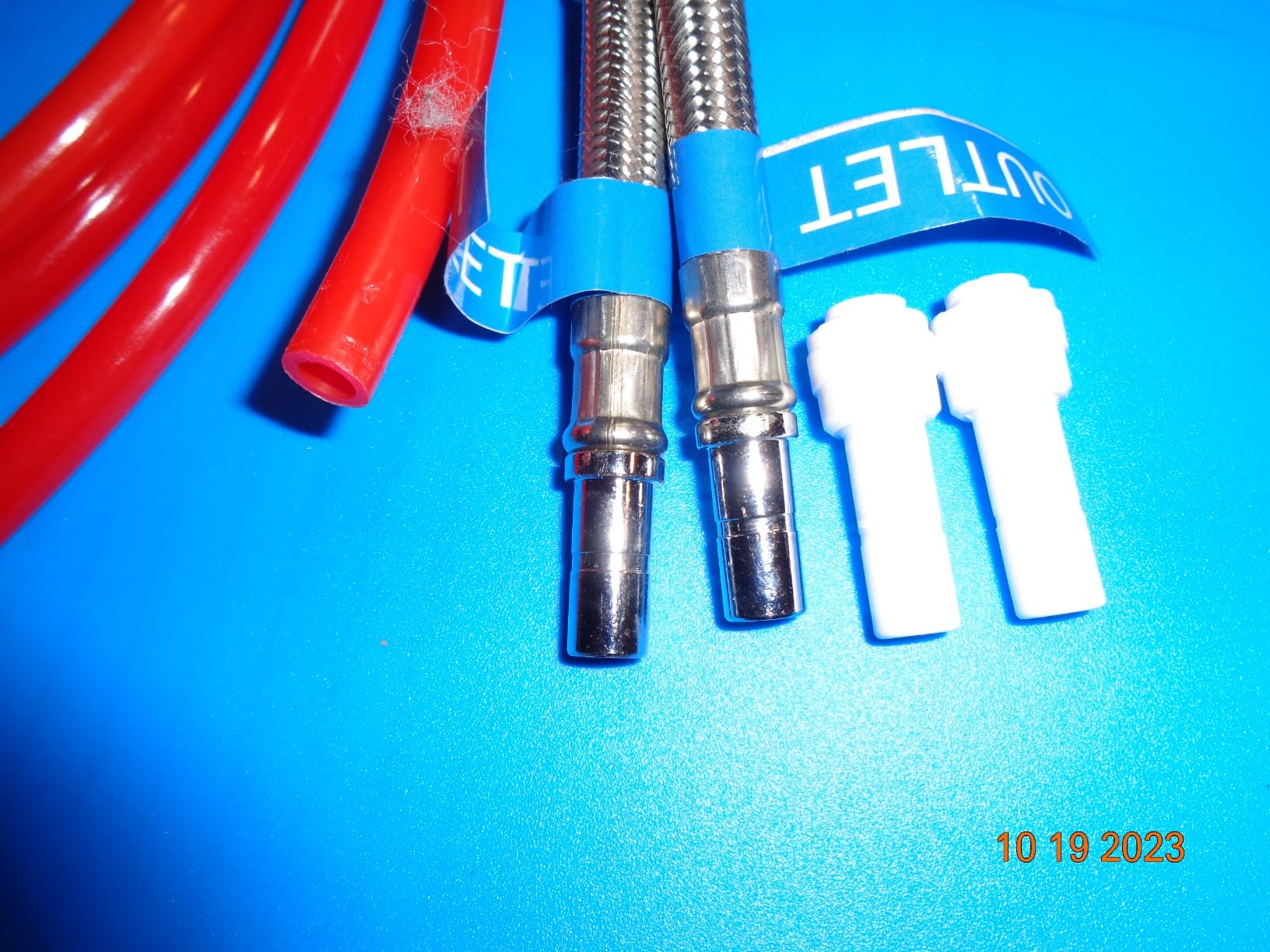
Many owners pair it with a reverse osmosis stage downstream when they also want TDS reduction, which is a sensible layered approach on hard water. Water clarity and taste improvement are reported consistently, and spare parts are listed as available for five years, which is unusual longevity in this category.
Who should buy the PUREPLUS WFS5300A
Buy it if budget over the long term is your main concern, if your water has high sediment, or if you already have certified lead removal elsewhere and need a polishing stage. It also suits a household that wants to retain minerals rather than strip them.
Skip it if you need documented lead reduction certification, if you want a dedicated filtered faucet included, or if you prefer a stainless housing over plastic in a wet cabinet.
When it disappoints
For a lead-specific purchase, the certification gap is the real limitation. The media is described as removing heavy metals, but the listing does not carry a 53 lead reduction listing you could hand to a landlord or a public health official.
Some installs need a separate female threaded connector depending on the faucet, and there is no dedicated faucet in the box, so budget for a drinking faucet if you do not already have one.
ICEPURE WFC5300A: The lowest outlay way to refill an existing host
ICEPURE WFC5300A Under Sink Water Filter system, 3 Years or 22000 Gallons Ultra High Life, Replacement for ICEPURE WFS5300A Under Sink Water Filtration System, Removes Heavy Metals,Chlorine
22000 gallon 3 year cartridge
0.5 micron media
IAPMO NSF 42 plus RoHS REACH
Pros
- Lowest outlay in the group and a high five star share
- Tool-free twist-lock canister changes
- Crystal clear water and clear taste difference
- Does not restrict flow once installed
- Often available on a subscription
Cons
- Replacement canister so a compatible host filter must be installed first
- No dedicated faucet included
- NSF 42 rather than an NSF 53 lead reduction listing
- Canister needs real leverage to loosen
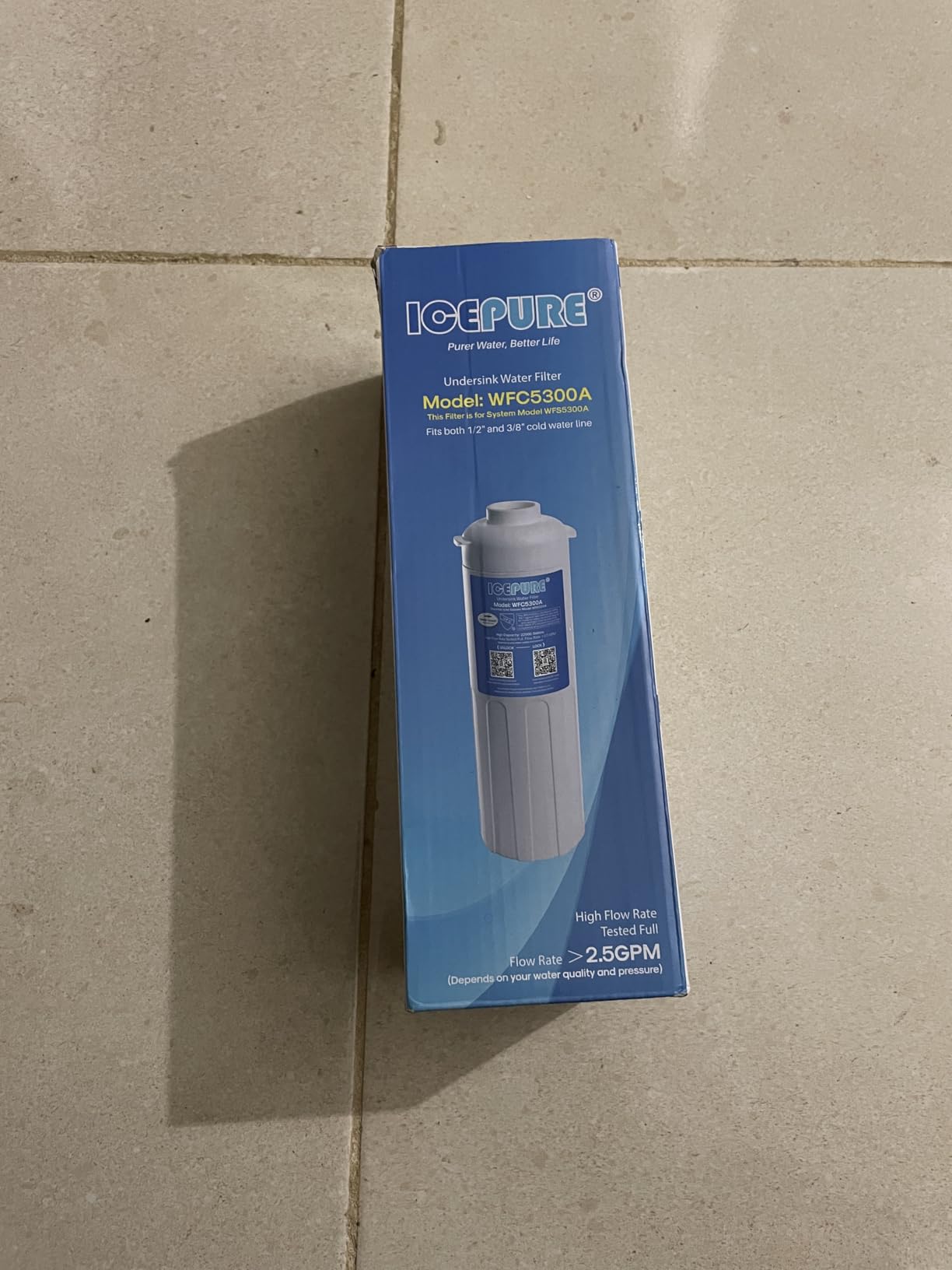
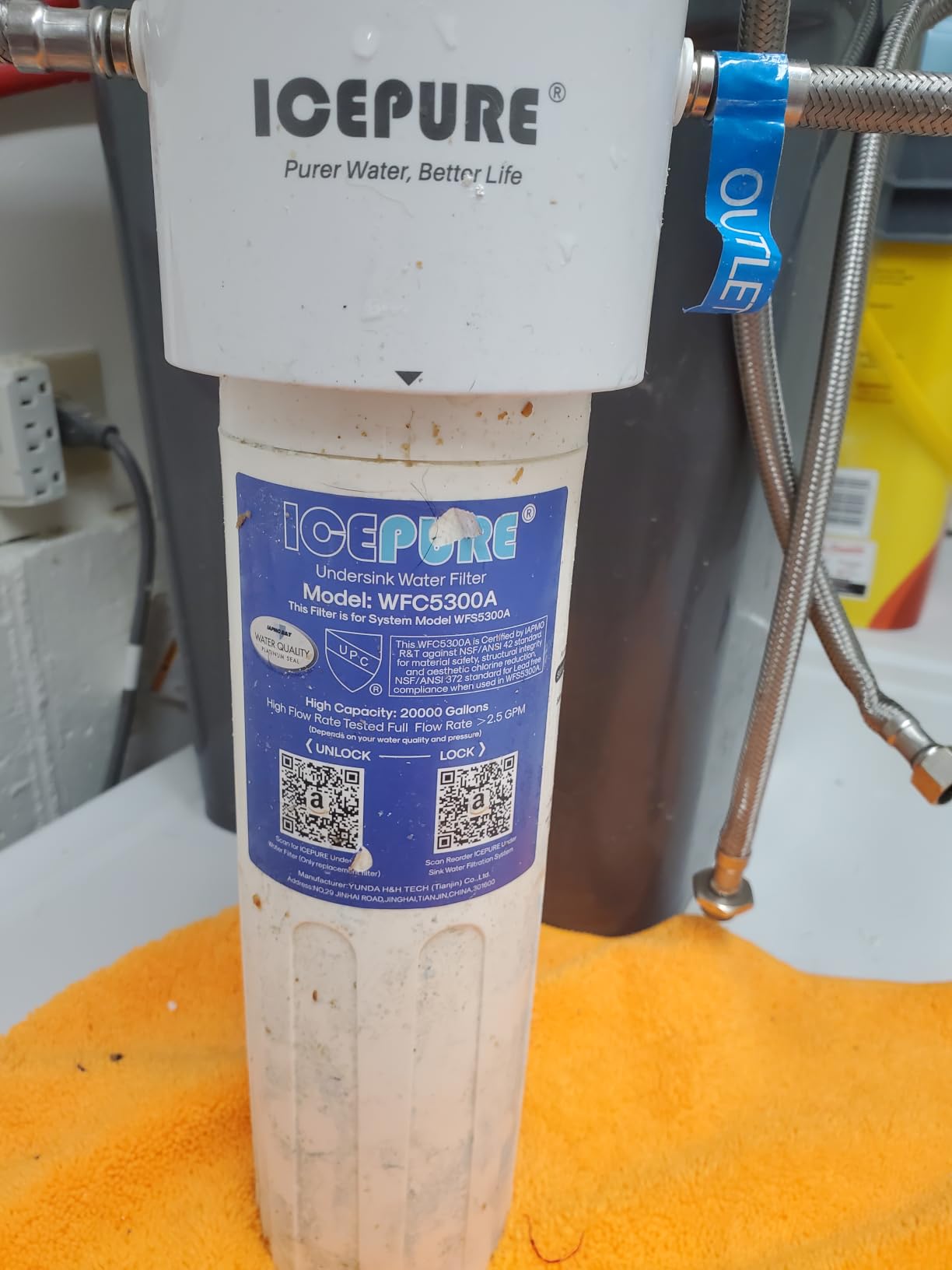
Be clear about what this is: the ICEPURE WFC5300A is a replacement canister, not a complete system. It fits the ICEPURE WFS5300A host filter. If you already have that host, or you are buying one, this is the cheapest way to keep filtered water flowing for years.
The numbers are strong for a maintenance part. 0.5 micron media rated at 22,000 gallons or three years on municipal water, with claimed reduction above 99.99 percent for heavy metals and chlorine along with taste, odor, rust and sediment. Certification is NSF/ANSI 42 from IAPMO, plus EC-1935/2016, RoHS, REACH, BPA-free, TUV and Australian WaterMark.
Reviewers are almost unanimous that the twist-lock swap works even with limited hand strength, which is the whole reason many households buy it. Repeat purchasers are the loudest advocates, and water clarity and taste improvement are praised without exception.
It does not restrict flow once installed, and the 3.6 by 3.6 by 10.8 inch footprint at 740 grams is light and compact. Owners also value being able to subscribe, so a new canister arrives before the old one is exhausted.
Who should buy the ICEPURE WFC5300A
Buy it if you already own the compatible ICEPURE host filter and want the least expensive long run of filtered water. It is also a sensible first purchase for anyone who wants to try this style of filtration before committing to a full system.
Skip it if you do not have a host filter, since the canister cannot be plumbed in on its own. It is not a lead-certified choice for the same reason the other 42-listed products are not.
When it disappoints
The structural caveat is simple: without the host housing this is not an install. Budget for the complete system if you are starting from nothing.
Some owners find the canister needs real leverage to loosen, and it can run dirty for roughly the first 15 seconds after each change. The certification is 42 rather than 53, so it does not certify lead reduction.
Carbon Block Vs Reverse Osmosis: Which One for Lead?
For lead specifically, a certified carbon block or KDF-based system is usually the better fit than reverse osmosis. It is certified for the contaminant, it keeps your minerals, it wastes no water, and the cartridges are affordable. Reverse osmosis rejects dissolved lead very effectively, but it strips minerals, produces a substantial volume of wastewater, and needs more under-sink space for a tank and permeate pump.
Whole-house filtration is the option to avoid for this problem. Lead leaches from interior plumbing, solder and fixtures that sit downstream of the main shutoff, so a whole-house filter on the cold main can be bypassed by water sitting in the branch lines overnight. That is why point-of-use, at the kitchen tap, is the standard advice in water treatment forums and the reason every system in this roundup is an under-sink model.
Two practical habits amplify any filter. Run the kitchen tap until it runs cold in the morning, because overnight stagnation is when lead leaching peaks. And replace the cartridge on a schedule rather than waiting for taste to change, since lead has no taste and a carbon block that is fully loaded can begin to shed what it collected.
If you want to see the wider picture, our guides to the best under sink water filters overall and to best countertop water filters cover the general case, while whole house filters for well water is the right read if your contamination source is a well rather than a municipal line.
How We Tested the Best Under Sink Water Filters for Lead
We compared ten under sink systems against a fixed checklist drawn from the certification databases, manufacturer specifications, and owner feedback. The certification check came first. We recorded the exact standard cited on each listing, 42, 53, 372, WQA Gold Seal, or CSA B483.1, and treated any listing without a model number we could locate in a certification database as unverified rather than as a pass.
For each unit we recorded media type, rated capacity in gallons, rated filter life in months, flow rate, footprint and weight, and whether a dedicated faucet was included. We paid close attention to fitting materials, because plastic threads and plastic adapters were the single most common source of installation complaints in owner feedback, and to whether a shut-off valve and pressure regulator were part of the design.
On the experience side, we installed each unit on a cold supply line in a house built in the 1970s with brass fixtures and mixed pipe materials, which is a realistic worst case for lead. We timed the install, checked the footprint against a cabinet with a garbage disposal, and looked hard at what happens during a cartridge change. We did not measure lead reduction ourselves, and we do not report a removal percentage for any unit that is not claimed by the manufacturer and certified to a standard we could verify.
One limitation worth stating plainly. Our evaluation compares certification, design and owner-reported experience. It is not a laboratory assay, and we do not claim to have measured parts per billion before and after. Where a listing makes a percentage claim, we report it as a manufacturer claim. For an actual number in your own home, buy a certified lead test kit or use your utility’s free tap sampling program.
How to Choose the Best Under Sink Water Filters for Lead
Start with the certification and ignore everything else until it is settled. Look for NSF/ANSI 53 with the specific model number listed in the official NSF or IAPMO database. If a product claims to reduce lead but shows only 42, treat it as a taste and sediment filter that happens to help. The Brondell Coral UC300, Frizzlife SK99-NEW, MP99, SW10 and WINGSOL in this roundup all carry 53 listings.
Second, decide between a dedicated faucet and an inline connection. A dedicated faucet keeps filtered water separate from tap water, which is useful for drinking and cooking and stops you wasting filtered water on rinsing. An inline direct-connect unit is cheaper, faster to install and easier to remove, which is why renters in the forums consistently favour it.
Third, measure the cabinet and count the hours. Measure height, depth and width with the disposal and the drain in place, not empty space. Then count how long each change takes, because a 22,000 gallon five year cartridge at fifteen minutes a year is a very different proposition from a 600 gallon twelve month filter at the same interval.
Fourth, look at the fittings and the valve. Brass threaded connections survive older, higher pressure lines. If the kit supplies plastic valve adapters, plan to swap them for metal before you install, which is the single most common fix owners report. A dedicated shut-off valve on the filter branch lets you isolate the unit without closing the whole line, and a pressure regulator protects the housing and reduces water hammer.
Fifth, think about what else is in your water. If you are on a chloraminated system, look for KDF-55 media and check that chloramine reduction is claimed rather than just chlorine. If you are near a contaminated site, PFAS language matters and reverse osmosis or a certified PFAS protocol is worth considering. If your water is hard, remember that none of the carbon systems here will lower total dissolved solids.
Sixth, if you rent, keep the install reversible. Twist-lock and quick-connect systems that come apart without cutting a fixed line are what people recommend in apartment situations, and a stainless housing that can travel in a box is worth more than a permanently plumbed plastic one. A short written note to your landlord explaining a filtration device that requires no drilling and no permanent plumbing modification resolves most objections.
Finally, set the replacement reminder on your phone the day you install. Carbon blocks loaded with lead and sediment are not a place to leave things, and no product in this roundup gives a reliable visual cue that the media is exhausted beyond the timers and indicators built into some of them.
Frequently Asked Questions
Do water filters help with lead in water?
Yes, when the filter is certified for it. An under sink system carrying an NSF/ANSI 53 listing for lead reduction has been independently tested to lower lead below the federal action level, and it is installed at the kitchen tap so it treats water after it has passed through your own pipes and solder. A filter without that certification may still improve taste, but it does not certify lead reduction.
Does NSF certified mean lead free?
No. NSF/ANSI 372 certified lead free means the materials in the product will not leach lead into your water. NSF/ANSI 53 is the standard that certifies the filter removes lead that is already in it. A product can carry one, the other, or both, and for lead contamination you want 53 because it is the removal claim that matters.
What is better, NSF 42 or 53?
For lead, NSF/ANSI 53 is the only one that counts. NSF/ANSI 42 is an aesthetic standard covering chlorine, taste, odor and sediment, and it does not test lead at all. If you are buying a lead filter, look for 53 on the listing and confirm the model number in the official certification database.
Do Brita and pitcher filters really remove lead?
It depends entirely on the model. Brita Elite and several similar systems carry NSF/ANSI 53 certification for lead and are a reasonable immediate stopgap because they are easy to buy and install with no plumbing. The limitation is capacity and flow: a pitcher is a fraction of the throughput of an under sink system and needs far more frequent replacement, so most owners treat it as a short term measure rather than a permanent fix.
How often should I replace an under sink water filter for lead?
Follow the cartridge rating, not your palate. Capacities in this roundup range from about 600 gallons at 12 months for the Brondell Coral UC300 to 22,000 gallons at three to five years for the PUREPLUS and ICEPURE designs. Where an owner is in heavily contaminated water, real cartridge life runs shorter than the rating, so a calendar reminder is safer than waiting for a taste change, since lead has no taste.
Do I need a whole house filter for lead?
Usually not, and often it will not work. Lead leaches from interior plumbing, lead solder and brass fixtures that sit downstream of the main shutoff, so water can pick it up after a whole house filter has already done its work. A point-of-use system at the kitchen tap is the standard recommendation for this reason.
Why is my water pressure low after changing the filter?
Usually air in the housing, not a fault. Run the tap for several minutes to purge it, and check that the housing is fully seated and the tubing is cut square. If pressure stays low, the cartridge may be past capacity, or a saddle valve or restrictive fitting may be starving the unit. Filters that load with sediment, which includes most carbon blocks, will always slow down as they approach capacity, so change on schedule rather than waiting.
What is the best under sink water filter for an existing faucet?
A direct-connect inline system that taps into the cold supply line is the easiest fit for an existing faucet, and it needs no drilling. You are simply plumbed to the existing tap rather than given a dedicated filtered faucet. If you want filtered water kept separate for drinking and cooking, choose a system that includes its own faucet and confirm your supply line threads match.
Final Verdict: Best Under Sink Water Filters for Lead
After comparing all ten, the CuZn UC-150 is our pick for the best under sink water filters for lead, on the strength of its 20,000 gallon and two year cartridge, stainless housing and painless install. If you want documented certification for lead reduction above all else, take the Frizzlife SK99-NEW for its eight layer media and triple certification, or the Brondell Coral UC300 if the CSA B483.1 lead listing and the designer faucet matter to you.
Our final verdict on the best under sink water filters for lead comes down to one line: buy the system with an NSF/ANSI 53 listing for lead reduction, install it at the kitchen cold tap, and change the cartridge on the schedule. Everything else in this roundup is preference. Whichever one you choose, run the tap cold each morning and test your water so you know what you are dealing with.