
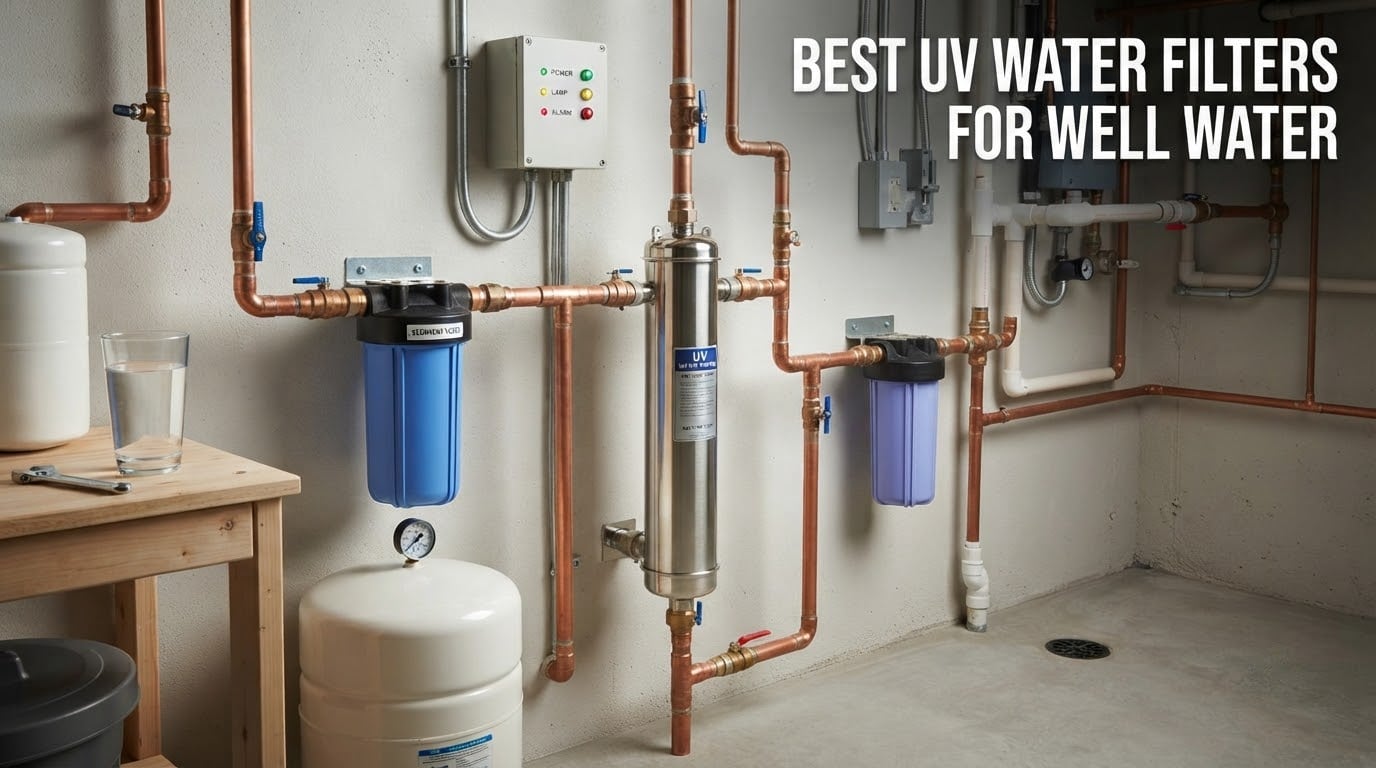
Ultraviolet water filters are the most effective way to kill coliform bacteria, E. coli and Cryptosporidium on a private well without adding a single chemical to your water. A UV chamber runs electricity through a germicidal lamp, and as water passes through the quartz sleeve the light scrambles the DNA of anything living in it, so it can no longer reproduce.
That only works if the water is clear enough for the light to pass through, and if the flow stays inside the chamber’s rating. Get either of those wrong and the disinfection quietly drops off, which is where most disappointed well owners end up. So the best UV water filters for well water are not the ones with the biggest wattage number – they are the ones paired with the correct pretreatment and sized to real household demand.
We compared 10 whole-house UV systems across flow rating, chamber material, lamp life, monitoring features and the pretreatment limits each manufacturer publishes. Ten of these products carry more than 1000 combined owner reviews between them, and every one of them ships as a bare UV stage that expects a sediment filter in front of it. Our picks below reflect that reality rather than the marketing copy.
If you want the wider picture on whole-home filtration before you commit, read our guide to whole house water filters for well water first.
Table of Contents
Top 3 Picks: Best UV Water Filters for Well Water (October 2026)
Every UV unit below inactivates bacteria, viruses and cysts. They differ in flow capacity, how they tell you the lamp is working, and how much pretreatment they demand. Here is the short version of the entire field.
| Product | Specifications | Action |
|---|---|---|
 HQUA-OWS-12 40W Whole House UV Water Purifier HQUA-OWS-12 40W Whole House UV Water Purifier |
|
Check Latest Price |
 iSpring UVF55FS Whole House UV Water Filter iSpring UVF55FS Whole House UV Water Filter |
|
Check Latest Price |
 Aquasana Well Water Filter with NSF 55 UV Stage Aquasana Well Water Filter with NSF 55 UV Stage |
|
Check Latest Price |
 HQUA-OWS-6 Compact 6 GPM UV Water Purifier HQUA-OWS-6 Compact 6 GPM UV Water Purifier |
|
Check Latest Price |
 Bluonics 55W 12 GPM Whole House UV System Bluonics 55W 12 GPM Whole House UV System |
|
Check Latest Price |
 Geekpure 12 GPM 55W Whole House UV Water Filter Geekpure 12 GPM 55W Whole House UV Water Filter |
|
Check Latest Price |
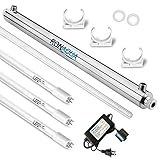 Ronaqua 55W 12 GPM UV Water Purifier Ronaqua 55W 12 GPM UV Water Purifier |
|
Check Latest Price |
 Aquaboon 55W 12 GPM UV Water Purification System Aquaboon 55W 12 GPM UV Water Purification System |
|
Check Latest Price |
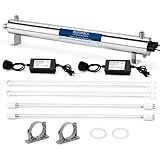 Bluonics 110W 24 GPM Whole House UV System Bluonics 110W 24 GPM Whole House UV System |
|
Check Latest Price |
 Viqua VH410 18 GPM Compact UV Water System Viqua VH410 18 GPM Compact UV Water System |
|
Check Latest Price |
Two numbers matter more than anything else on that list. Flow rating tells you whether the unit can keep up with your household, and the chamber material plus port size tell you whether it physically fits in your mechanical room. Wattage matters far less than most listings suggest.
Quick Picks: The Top 3 UV Water Filters for Well Water
If you want a decision in the next five minutes, these three cover the realistic range of homes on private wells.
HQUA-OWS-12 40W UV Purifier
- 12 GPM rated flow
- 40W lamp
- 304 stainless steel
- 1060 owner reviews
The HQUA-OWS-12 takes the top spot because it holds the largest owner base in this field and its 4.4 rating reflects a decade of real installs rather than a launch-quarter spike. The iSpring UVF55FS edges ahead on monitoring, since a ballast that reports actual water flow removes most of the guesswork. The HQUA-OWS-6 is the sensible choice when a 6 GPM rating genuinely covers the household.
How UV Water Filters Work on Well Water (and What They Do Not Fix)
Inside a UV purifier, a low-pressure mercury lamp emits germicidal UV-C light at roughly 254 nanometres. Water flows through a quartz sleeve that keeps the lamp separated from the water while letting the light pass, and the dose the organisms receive depends on lamp intensity, exposure time and how much the water itself absorbs the light.
Exposure time is the variable you control. Double the flow and you halve the dose, which is exactly why every manufacturer publishes a maximum gallons-per-minute rating and why you should size well below that ceiling. UV transmittance, or UVT, measures how much light gets through; clearer water means a higher number.
UV leaves the chemistry of your water alone. It does not strip hardness, iron, sediment, nitrates, arsenic or lead, and it does not improve taste or odour on its own. That is the honest headline of this whole category, and the biggest reason pretreatment matters.
Because UV does not add anything to the water, it also does nothing to bacteria already living inside your pipes. Owners on r/WaterTreatment point out regularly that sanitised water entering contaminated distribution lines simply recontaminates, so a UV stage is the last step in the treatment train, not the first.
The 10 Best UV Water Filters for Well Water – Reviewed
1. HQUA-OWS-12 40W 12 GPM Whole House UV Water Purifier – Best Overall
HQUA-OWS-12 120V 40W 3/4″ MNPT Inlet/Outlet Whole House Ultraviolet Water Purifier Filter, + 1 Extra UV Bulb
12 GPM rated flow
40W lamp
304 stainless steel chamber
3/4 inch MNPT ports
7.9 pounds
Pros
- Largest owner review base in this category at 1060 reviews
- Holds a 4.4 average across years of installed use
- Straightforward DIY install with no plumber needed
- Green and red status lights on the electronic ballast
- Extra UV bulb included in the box
Cons
- Ballast failures reported by several owners
- Quartz sleeve O-rings can twist and leak if mis-seated
- Replacement lamps and O-rings not offered in a dedicated listing
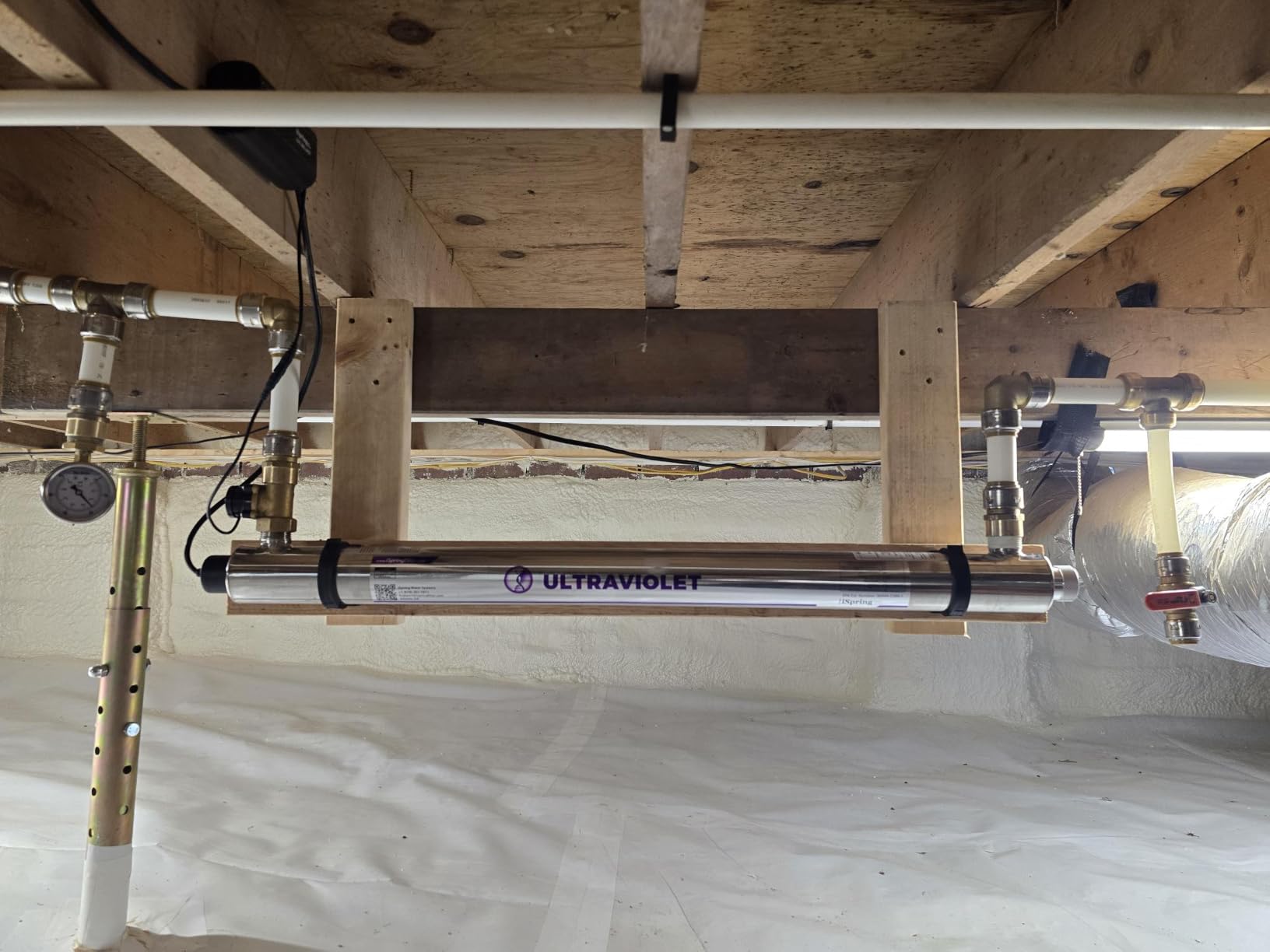
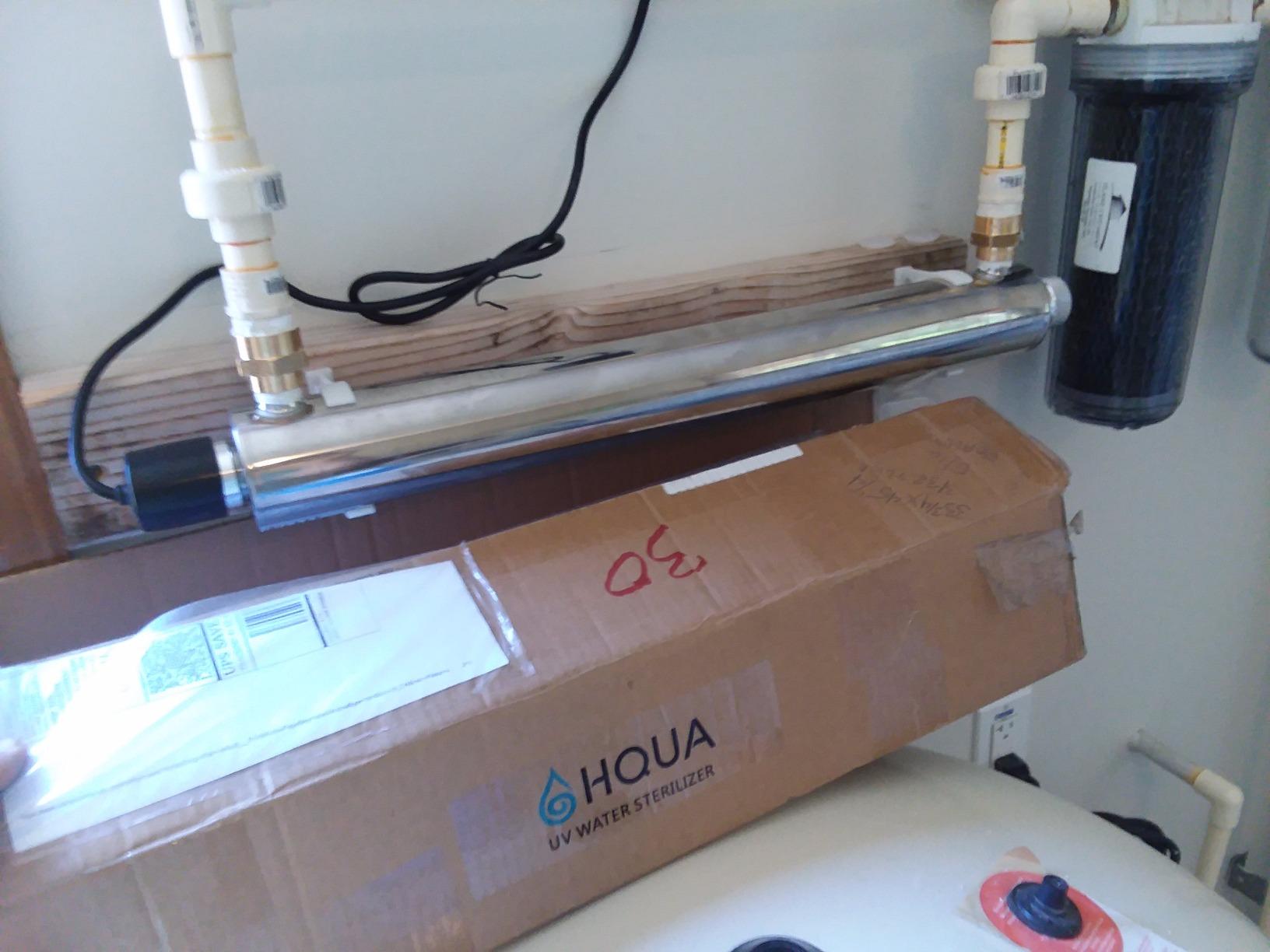
This is the unit we keep coming back to. The chamber is a 37.2 inch long 304 stainless steel tube with 3/4 inch MNPT inlet and outlet, rated for 12 GPM, and it weighs 7.9 pounds, so two people can lift it into a crawl space without a crane. Installation is genuinely tool-light: mount it horizontally, plumb it in, seat the sleeve and tighten the end caps.
That sleeve step is where most first-time owners get tripped up. The silicone O-rings have to sit flat in their grooves, and if they roll as you slide them onto the quartz tube you will get a weeping seal. Owners who take two extra minutes to check the rings before final tightening report leak-free installs years later.
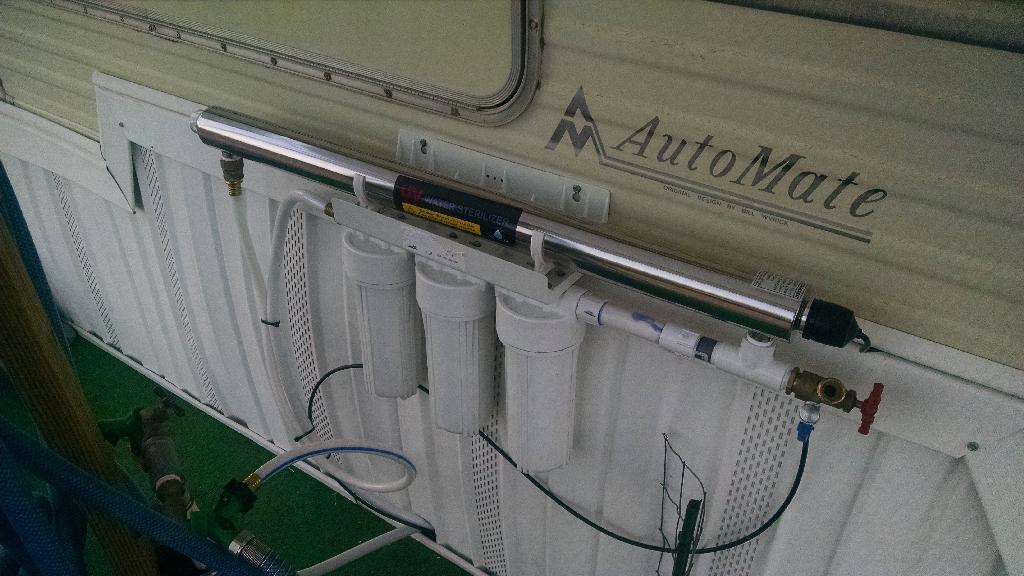
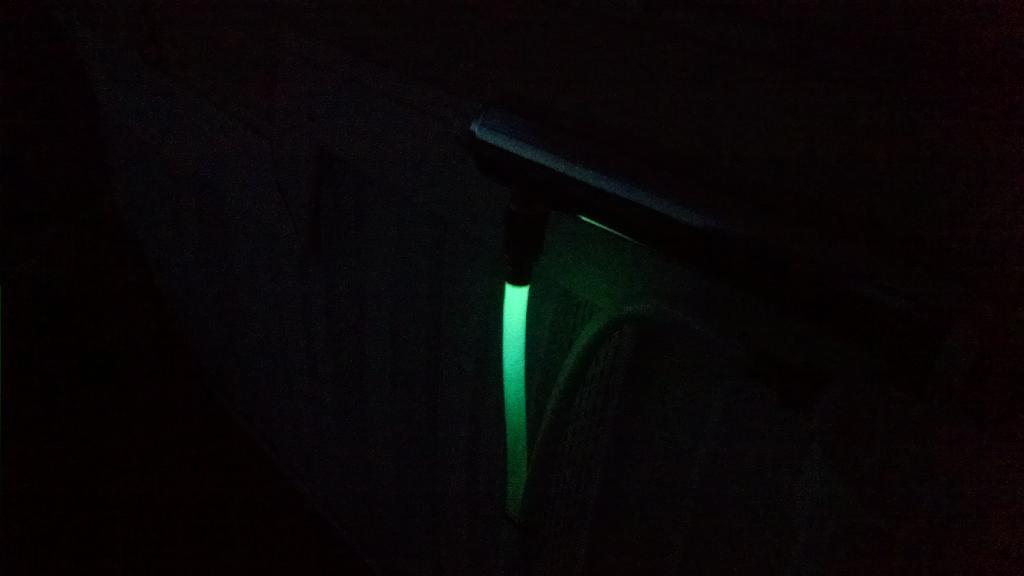
The ballast carries visible green and red status indicators, so you can tell at a glance whether the lamp is energised. That is not a feature you should have to ask for in 2026, and it is one of the reasons this chamber has accumulated more owner feedback than any other unit we examined. One owner reported more than five years of continuous service before the ballast gave out, which is a realistic lifespan for the electronics.
The caveat worth knowing is that the ballast is the weak link, not the chamber. Several owners report ballast failure, some inside six months, and replacement lamps and O-rings are not offered through a dedicated listing, so plan to source those parts yourself. Water sitting in an unused line also heats up inside the chamber, which is normal for a stainless UV reactor but surprising the first time you feel it.
What 12 GPM actually covers in a real home
A 12 GPM rating comfortably handles a four-person household running two showers, a dishwasher, a washing machine and an irrigation zone on the same cycle. We would still install a 10 GPM capable unit on that same house so the dose stays high during peak demand, which is when a rating that sits exactly at the ceiling leaves no margin.
Where the weaknesses show up over five years
Ballast longevity is the main long-term concern, and pinhole leaks or corrosion at the ports have been reported after about five years of service. Neither is a reason to pass on the unit, but both are reasons to keep the model number written inside your mechanical room panel so replacements are quick to identify.
2. iSpring UVF55FS 12 GPM Whole House UV Water Filter – Best Flow Monitoring
iSpring UVF55FS Whole House UV Water Filter, 1″ MNPT Inlet/Outlet, 12 GPM
12 GPM rated flow
55W lamp
Smart flow sensor ballast
1 inch MNPT ports
9000 hour lamp life
Pros
- Flow sensor ballast offers Auto
- Move and Stop modes
- 55W lamp rated up to 9000 hours of service
- Mounting clips included for DIY installation
- Minimal pressure loss at 1 inch ports
- Chemical-free with no change to taste or odor
Cons
- Final polishing stage only
- cannot handle sediment or chemicals
- Annual lamp change and sleeve cleaning required
- 1 inch MNPT ports need compatible fittings
The smart flow sensor ballast is the reason this unit edges ahead of similar 55W chambers. It triggers at 0.66 gallons per minute and gives you three control modes, so you can confirm water is genuinely moving through the chamber instead of assuming it is. On a well where usage is seasonal, that is genuinely useful information.
The reactor is a 37.5 inch 304 stainless steel chamber with 1 inch MNPT inlet and outlet, rated to 12 GPM. iSpring recommends an annual lamp replacement and quartz sleeve cleaning every 6 to 12 months, and the 9000 hour lamp rating means most households hit that mark in roughly the second year of continuous operation.
Owners consistently treat this as a polishing stage rather than a treatment system of its own, and that framing is correct. It does not remove sediment, hardness or dissolved solids, so it belongs after whatever handles those. Flowing through 1 inch ports keeps pressure loss to a minimum on a long whole-house run.
The 1 inch MNPT threads are the one practical snag. If your treatment train is built around 3/4 inch tubing, you will need adapters or a short transition run. Our other picks below include two units with 3/4 inch ports for tighter plumbing.
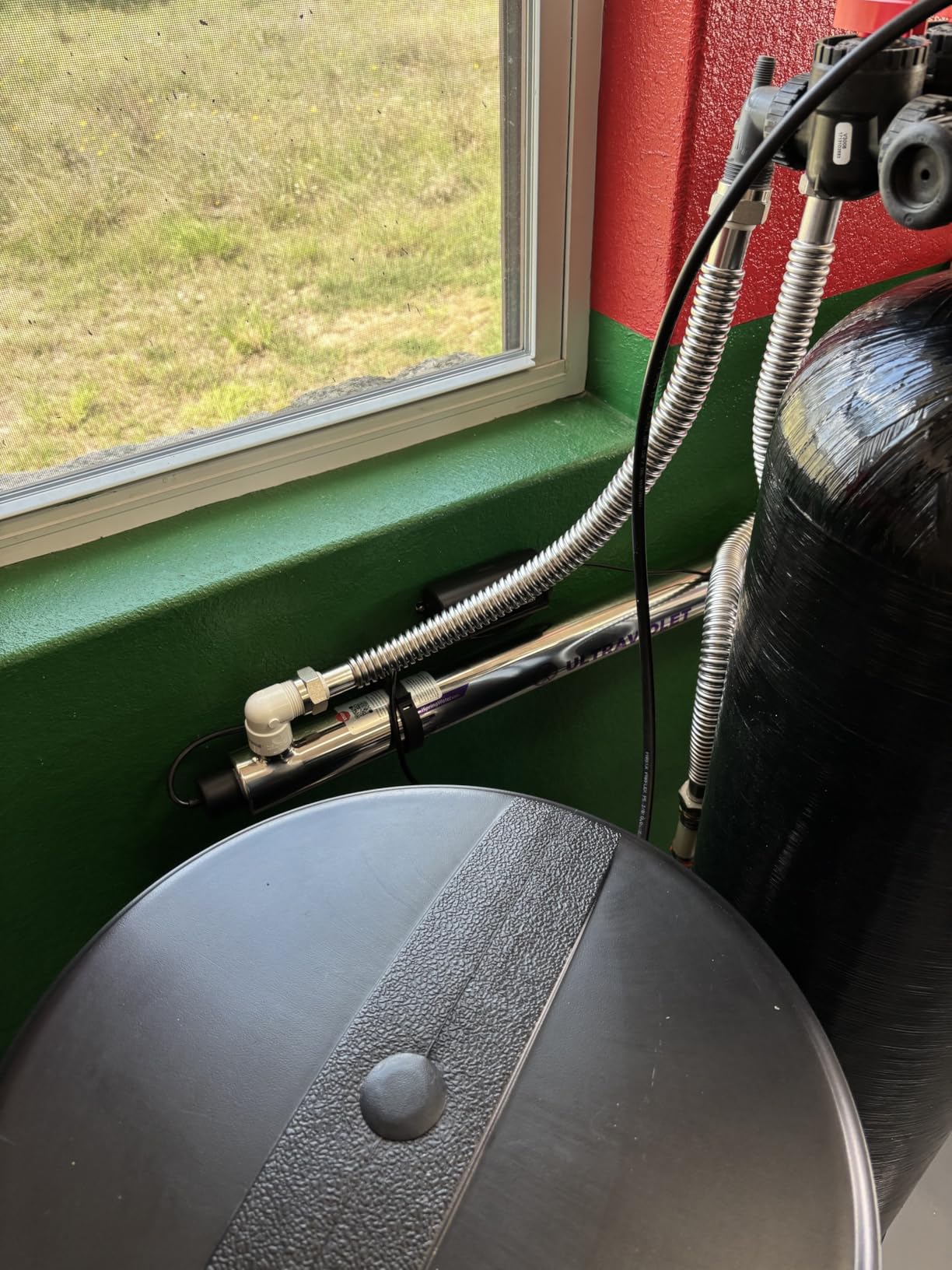
Whether the flow sensor is worth the extra attention
If you have a cabin, a seasonal property or a household with wildly variable water use, yes. Knowing the lamp is on and water is passing removes the single most common service question we see about UV systems. If your usage is steady and you already check the lamp annually, the benefit is smaller but still real.
What it will not fix about your well water
Nothing about sediment, iron staining or hardness. iSpring is clear that this is a final stage, and the same pretreatment limits published by every other manufacturer in this roundup apply here without exception. Buy it for disinfection, and buy your sediment filtration separately.
3. Aquasana Well Water Whole House Filter with NSF 55 Certified UV Stage – Best All-in-One System
Aquasana Whole House Well Water Filter | 500K-Gallon | UV | WH-Well-CT-UVS
14.7 GPM max flow
NSF/ANSI 55 Class B UV stage
500000 gallon media life
20-100 psi range
Pros
- UV stage NSF tested and certified to NSF/ANSI 55 Class B
- Handles sediment
- chlorine
- scale and microbes in one train
- 500000 gallon or 5 year media life with 5 year limited warranty
- Salt-free scale control needs no salt or backwashing
- Operating limits published clearly for hardness
- alkalinity
- pH and iron
Cons
- Self-installation reportedly voids the warranty
- Plastic threaded connections leaked repeatedly for some owners
- Black carbon fines continue appearing in post-filter for weeks
- Conditioner does not soften water like a salt softener
This is the only unit in the roundup that is independently certified to NSF/ANSI 55 Class B for microbial inactivation. That matters if you want documented performance rather than a percentage claim on a listing, and it is the single biggest reason this system stands apart from the bare stainless chambers.
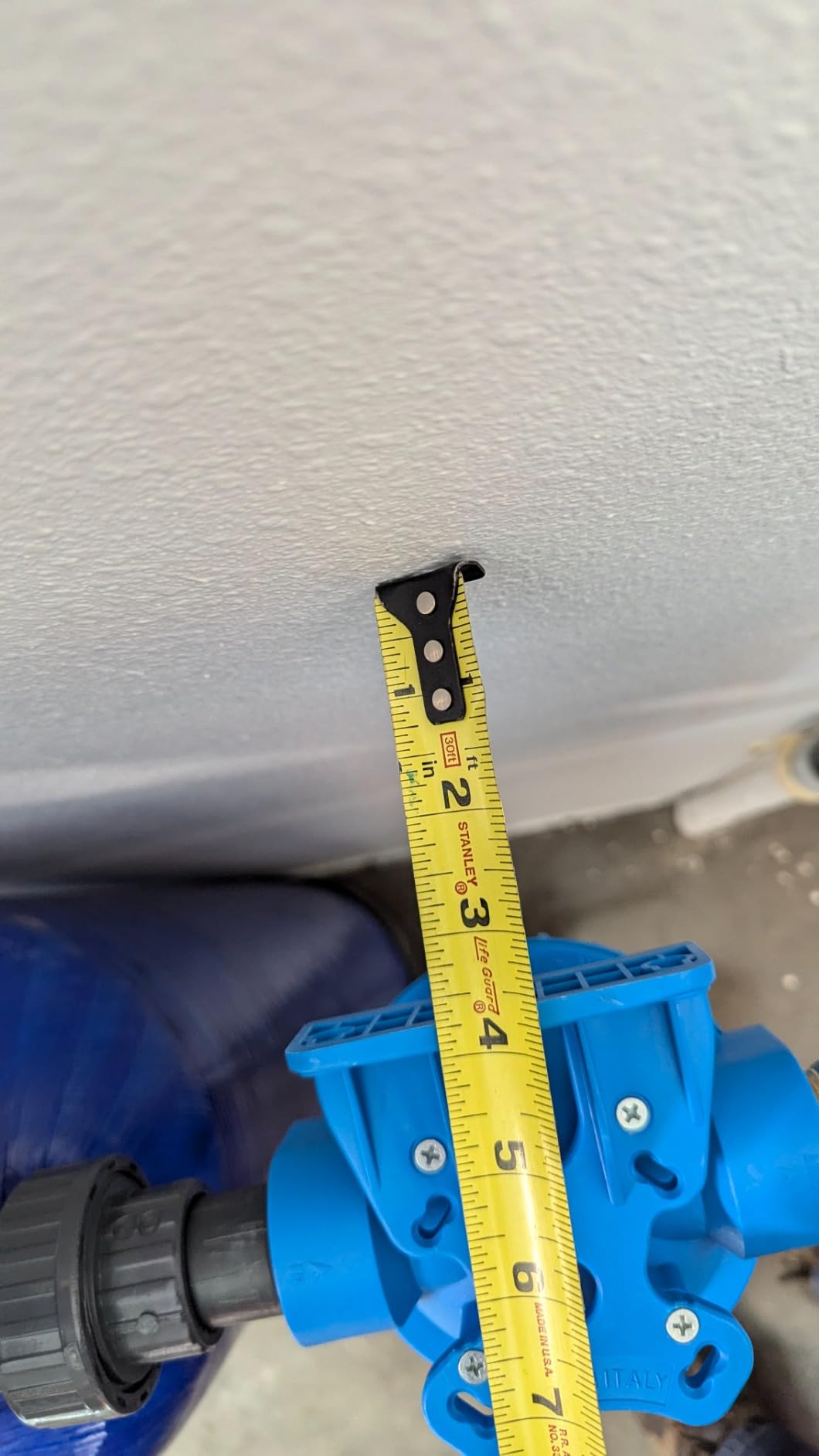
It is also genuinely all-in-one. The train combines a 20 inch pre-filter, a filter tank, a salt-free conditioner, a 10 inch post-filter and the UV stage, rated to 14.7 GPM and operating between 20 and 100 psi. For a homeowner who does not want to design a treatment train, that is a large amount of engineering already resolved.
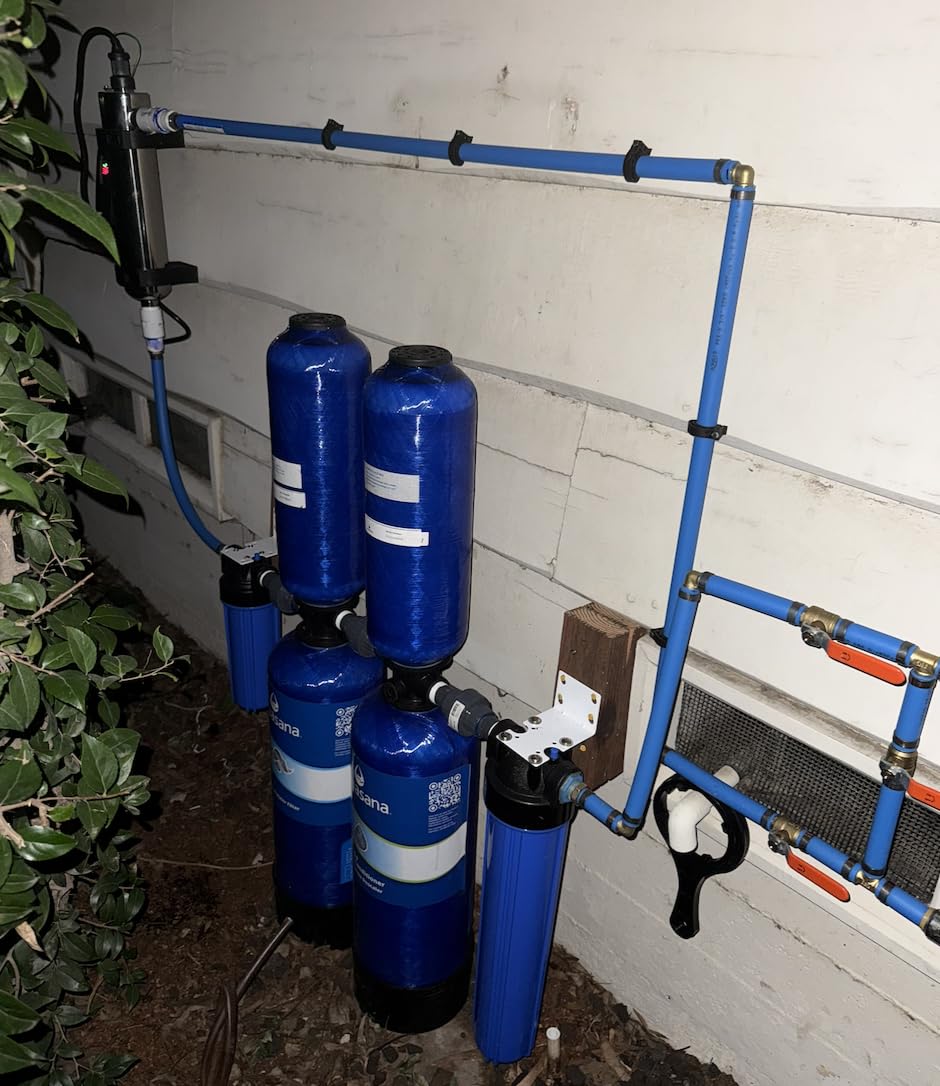
The manufacturer publishes unusually honest limits: water under 15 gpg hardness, alkalinity of 250 mg/L, pH below 8.3 and iron under 0.3 ppm. Operating temperature runs 40 to 90 degrees F with a maximum TDS of 1000 ppm. Compare those numbers to your own lab report before you buy, because this system is clearly not built for very hard or very iron-heavy water.
The learning curve is flushing. Black carbon fines can keep appearing in the post-sediment filter for weeks after startup, and the conditioner does not soften water the way a salt-based softener does, so hard water marks may persist. Self-installation reportedly voids the warranty, which pushes the labour cost higher than any other pick here.
When a certified all-in-one train makes more sense than a UV chamber alone
If your water is relatively clean and you want documented NSF 55 performance plus taste improvement in one purchase, this fits. It handles sediment, chlorine, scale and microbes together, which means fewer components and fewer places for a leak to start.
When it is the wrong choice
Very hard water, iron above 0.3 ppm, or a well that produces heavy sediment will exceed the published limits before the UV stage ever sees the water. Professional installation is effectively required to keep the warranty valid, so factor that into your budget if you are comfortable doing your own plumbing.
4. HQUA-OWS-6 25W 6 GPM Compact UV Water Purifier – Best for Small Homes
HQUA-OWS-6 120V 25W 1/2″ MNPT Inlet/Outlet Small House,Kitchen Ultraviolet Water Purifier Filter, + 1 Extra UV Lamp
6 GPM rated flow
25W lamp
22.5 inch stainless steel chamber
1/2 inch MNPT ports
4.9 pounds
Pros
- Compact chamber fits small houses
- kitchens and aquariums
- 1/2 inch MNPT ports suit tighter plumbing runs
- No plumber needed and horizontal mounting works
- Seller guarantees double replacement of damaged parts
- Chemical-free with no change to taste or pH
Cons
- Beveled O-rings roll onto the sleeve if mis-seated
- Plastic end caps cracked on some units within a couple of months
- Replacement bulb and O-ring availability has been inconsistent
- One owner reported a metallic smell right after install
At 22.5 inches long, 2.5 inches wide and 4.9 pounds, this is the smallest useful disinfection unit in the field. It runs a 25W lamp through a 1/2 inch MNPT chamber rated to 6 GPM, and it operates between 32 and 122 degrees F with a maximum TDS of 500 ppm.
That 6 GPM rating is genuinely sufficient for a couple, a small cottage, or a point-of-use install feeding a single drinking tap. It is not the right number for a family that runs two showers and a washer simultaneously, and treating a whole house at 6 GPM with a simultaneous shower running would cut the dose badly.
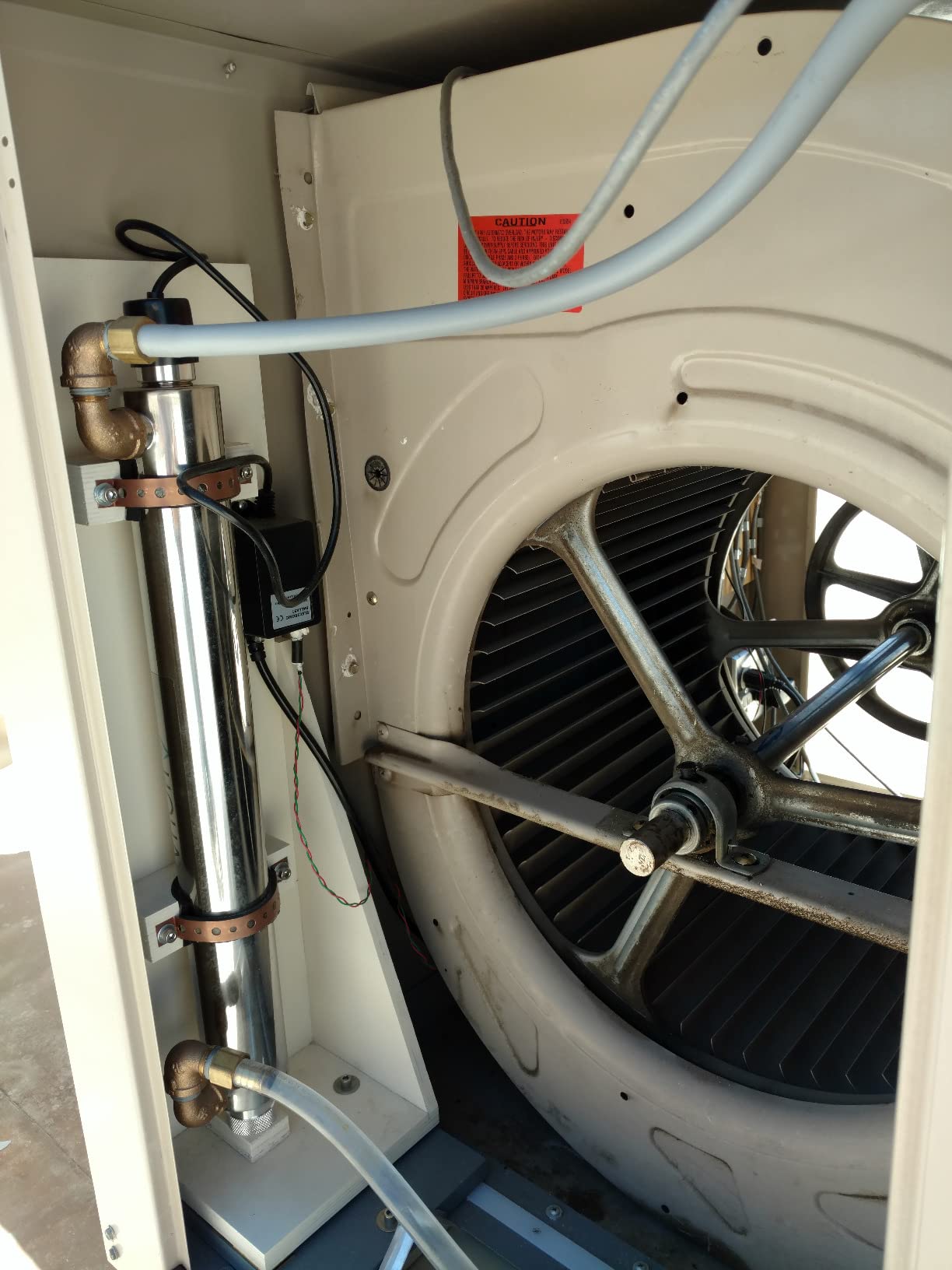
Silicone O-rings compress between the threaded end caps and the quartz tube to form the seal, and those beveled rings are the recurring complaint across the reviews. Slide them on square rather than rolled, and the install goes smoothly. Support is repeatedly praised, with owners reporting quick replacement of cracked end caps and defective bulbs.
A metallic smell and taste was reported by one owner immediately after installation, and ballast hum or failure shows up in a small number of reviews. Plastic end caps on some units cracked and leaked within a couple of months, so if you buy this, keep a spare end cap on hand.
How to size a 6 GPM unit honestly
Measure your actual peak demand rather than guessing. A single shower, a toilet flush and a dishwasher together can approach 6 GPM, so a household that showers while running laundry is already at the ceiling. For those homes, step up to a 12 GPM chamber instead.
Best uses for the compact model
Secondary bonus rooms, cabins, aquariums, evaporative coolers and drinking-only taps are where this unit shines. One owner reported years of continuous operation in an evaporative cooler application, which is a demanding duty cycle for a lamp.
5. Bluonics 55W 12 GPM Whole House UV Light System – Best Status Alarms
Whole House UV Water Filter System 12 GPM – 55W Stainless Steel UV Light System – LED Indicator & Audible Alarm – for Well & City Water – Includes 2 Extra Bulbs – Bluonics
12 GPM rated flow
55W lamp
LED indicator with audible alarm
3/4 inch NPT ports
2000 ppm max TDS
Pros
- LED indicator and audible alarm make status obvious from another room
- Complete kit includes chamber
- ballast
- lamp
- sleeve
- gloves and hardware
- Two extra bulbs included for immediate spare coverage
- Clear recently updated step-by-step instructions
- 2000 ppm max TDS rating is the highest in this group
Cons
- Quartz sleeve can be too short to seat against the O-ring
- Some ballast failures within 1-2 years
- Glass sleeve can crack during bulb changes
- Warranty service has been slow in some cases
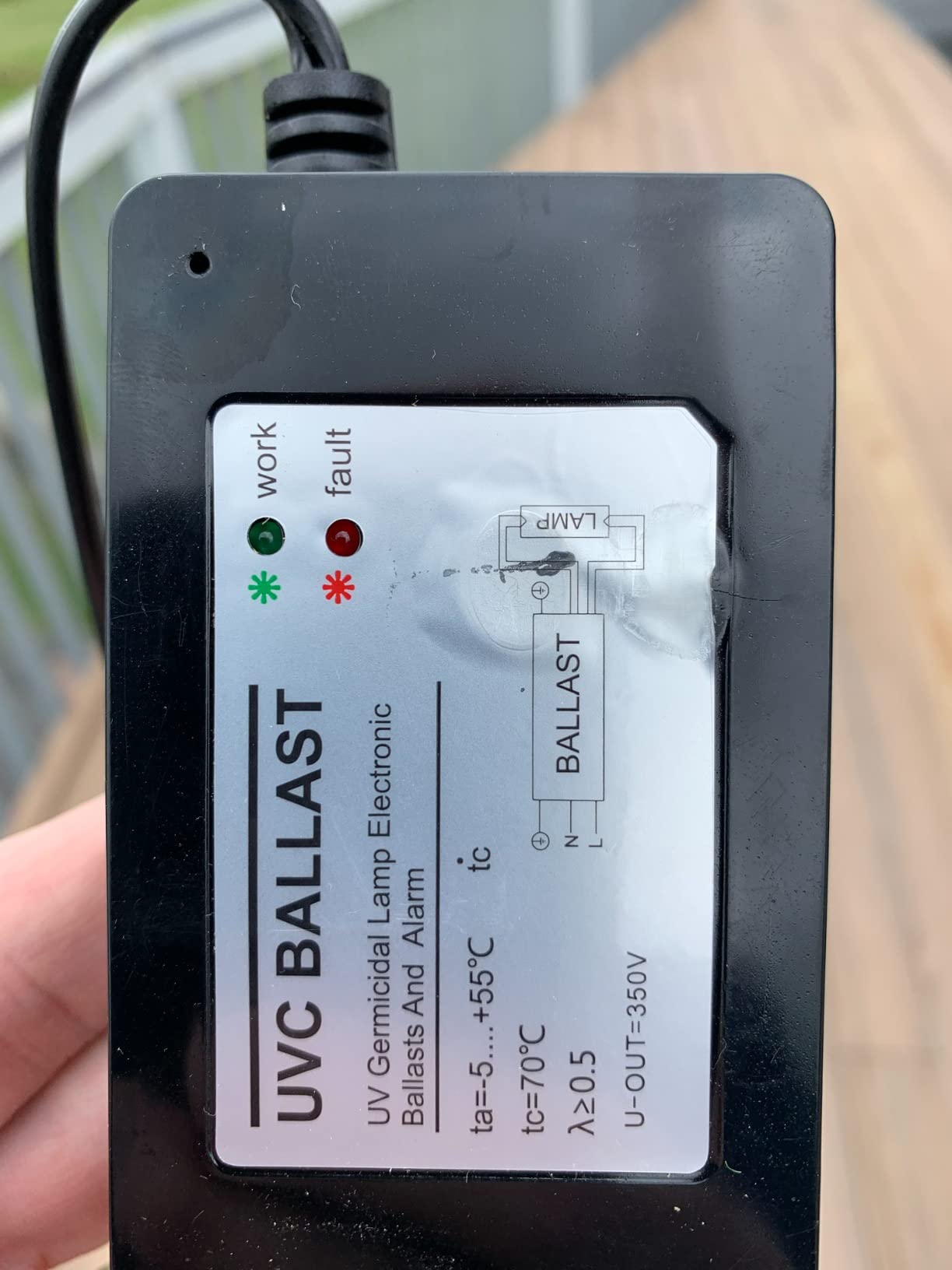
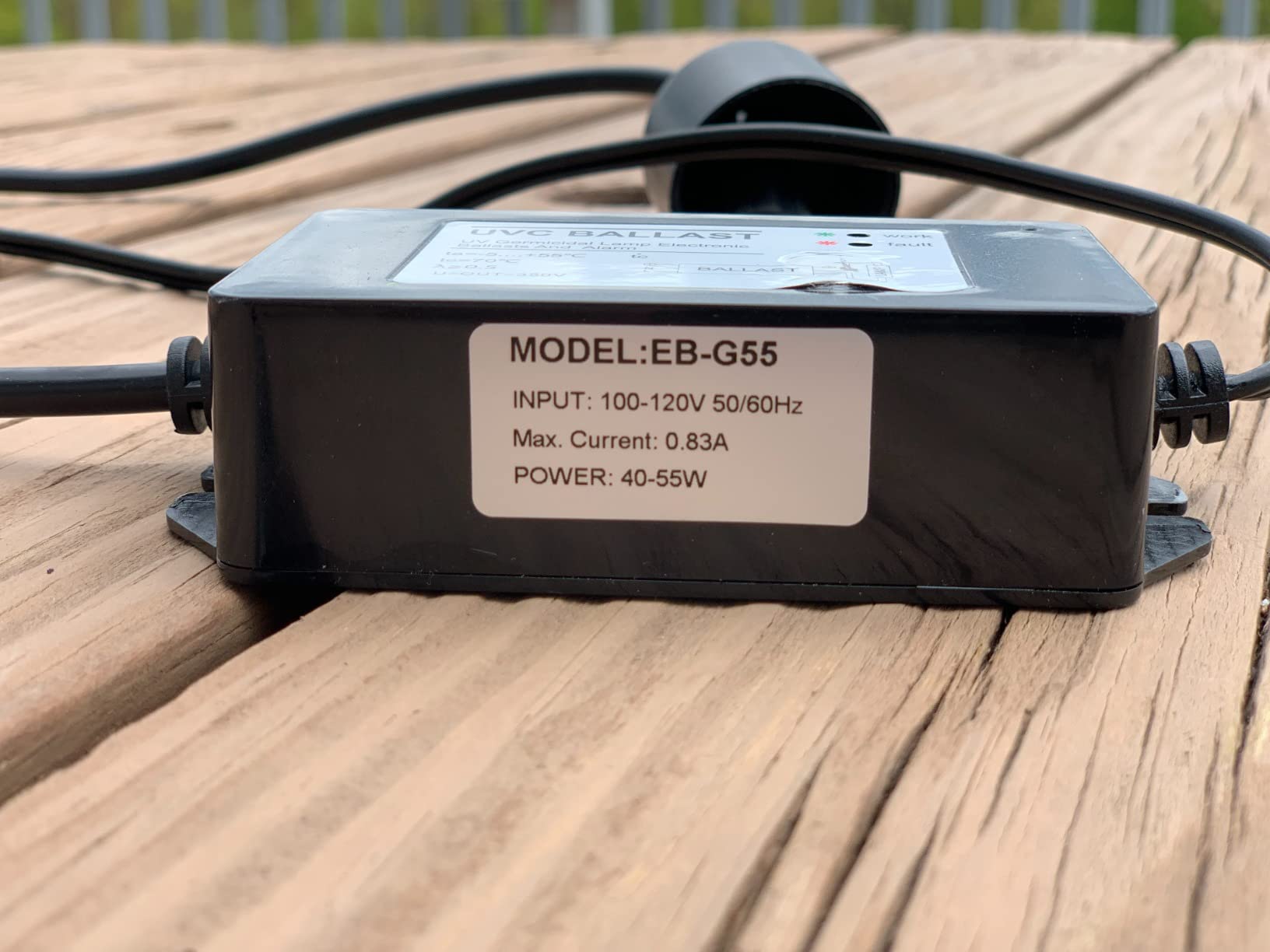
The alarm is what separates this chamber. Most competitors give you a status LED; this one adds an audible alert that you can hear from another room, so a failed ballast or a switched-off lamp does not go unnoticed for a season.
The chamber itself is 44 inches long in stainless steel, rated to 12 GPM with standard 3/4 inch NPT connections, operating from 35 to 104 degrees F. At 2000 ppm maximum TDS it tolerates the most dissolved solids of any unit we reviewed, which matters on wells that run harder than most pretreatment limits assume.
Owners with basic plumbing skills report successful coliform and E. coli elimination after installation, including one owner whose well tested positive for E. coli before the install and clear afterwards. Support has been responsive for owners who needed replacement parts provided quickly.
The recurring negative theme is sleeve length. On some units the quartz sleeve does not seat far enough against the O-ring, which leaks at the end cap. Treat that as a fit-check during installation rather than a defect, and confirm the sleeve reaches its stop before tightening.
Whether an audible alarm is worth paying for
For a system in a basement, a crawl space or an outbuilding, an alarm you can hear without walking over to the unit is a real operational advantage. In a conditioned mechanical room where you will see the LED daily, it matters much less.
Where owners run into trouble
Ballast failure within one to two years appears in several reviews, and warranty service has been slow, with support initially declining coverage in at least one case. Handle the glass sleeve gently during bulb changes, because it cracks more often than owners expect.
6. Geekpure 12 GPM 55W Whole House UV Water Filter – Best Spare Parts Bundle
Geekpure 12 GPM Whole House UV Water Filter-1“NPT-55 Watt
12 GPM at point of entry
55W lamp rated 9000 hours
304 stainless chamber
1 inch NPT ports
10-60 psi range
Pros
- Bundle includes 3 lamps
- 3 quartz sleeves and 3 clamps
- Coliform-positive well tests turning negative after install
- Simple design makes lamp changes easier than the unit it replaced
- ISO9001:2015 certified manufacturer and WQA member
- Feed water conditions published clearly
Cons
- Quartz sleeves and lamps arrive cracked from shipping more than once
- Provided mounting clips are weak and the unit can slip
- Chamber runs very hot when the line sits unused
- Must be installed after sediment filtration
Three lamps, three quartz sleeves and three fixed clamps arrive in the box. Nobody else in this roundup includes that depth of spares in the box, and for a household on a private well it means a lamp change does not require ordering anything.
The chamber is 44 inches of 304 stainless steel with 1 inch NPT inlet and outlet, rated to 12 GPM and operating between 10 and 60 psi. The 55W lamp is rated for at least 9000 hours, roughly a year of continuous operation, and the electronic ballast has both audible and visual alarms.
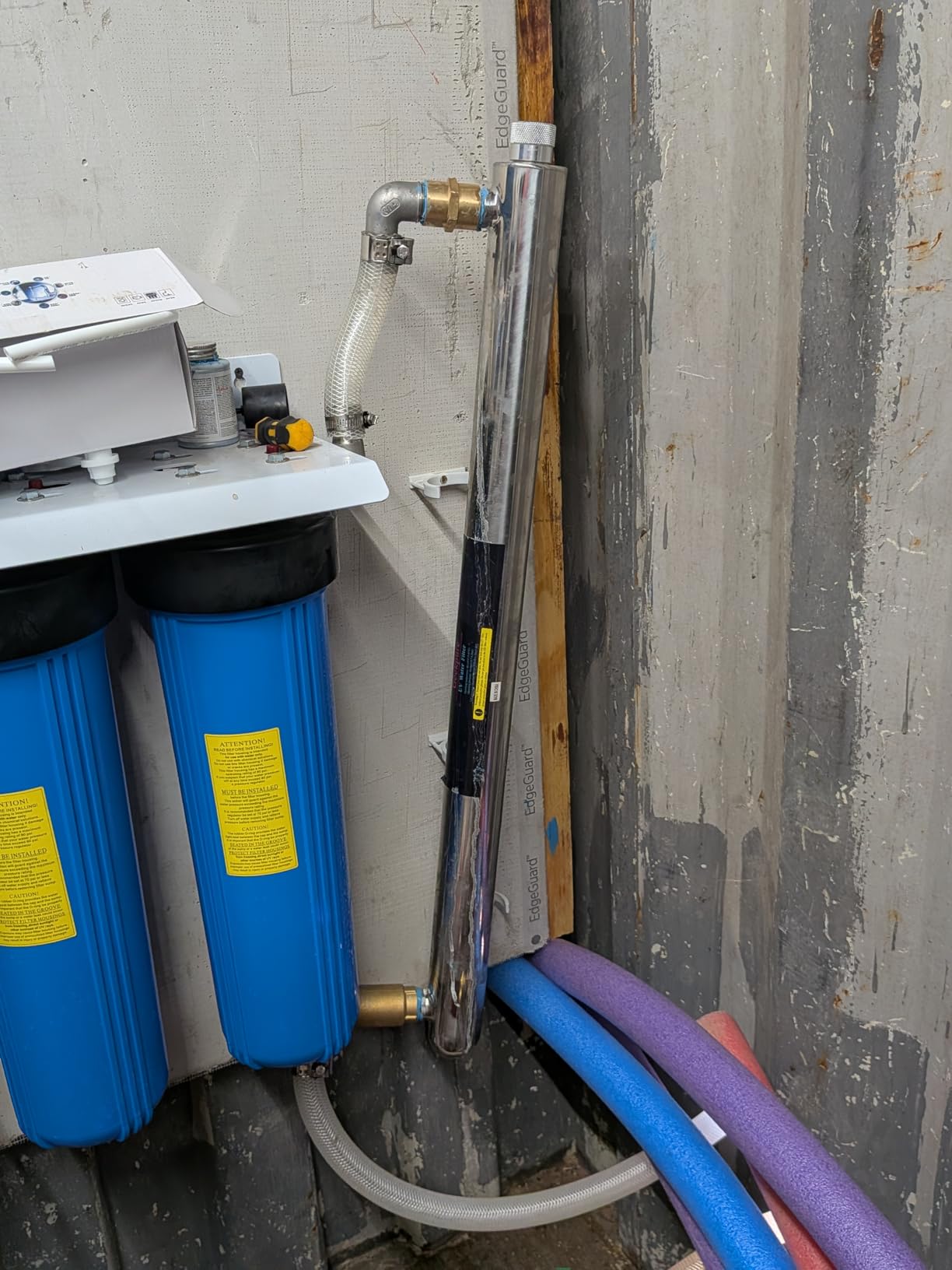
Several owners report well water tests moving from coliform-positive to negative after installation, and reviewers compare performance favourably to higher-priced brands. The manufacturer publishes specific feed water conditions: 50 to 60 psi, 40 to 110 degrees F, and free chlorine tolerance under 0.1 ppm.
The weak points are physical rather than electrical. Glass components have arrived cracked from shipping more than once, and the supplied mounting clips are strong enough that the unit can slip out of them once plumbed. The chamber also runs hot when the line sits unused, so plan ventilation if your well sits idle through the winter.
Why the spare parts bundle matters more than it looks
Lamp and sleeve availability is the practical weak spot of the whole category. If your unit arrives with three lamps and three sleeves, a first-year failure costs you nothing and a broken sleeve does not end your season. That alone justifies choosing this chamber over a cheaper bare unit.
When to skip it
Reviewers are explicit that it must be installed as a final stage after sediment filtration and cannot treat raw well water directly. If your pre-filter plan is still undecided, sort that out first, or our sediment filter guide for well water will help you choose.
7. Ronaqua 55W 12 GPM Compact UV Water Purifier – Best for Tight Plumbing
Ronaqua 55W Whole House UV Light Water Purifier, 12 GPM, 3/4” MNPT Ports – Includes 2 Free Replacement Bulbs, Long-Lasting Performance, Ideal for Well & City Water
12 GPM rated flow
55W lamp
36 inch slim stainless chamber
3/4 inch MNPT ports
7 pounds
Pros
- Slim 3 inch wide chamber fits tight mechanical rooms
- Hand-tight assembly produced leak-free installs for owners
- 3/4 inch MNPT ports fit standard plumbing without adapters
- Three UV lamps included in the set
- One owner reported 14 months of trouble-free operation
Cons
- Ballast or transformer failure reported as early as 9 months
- Vendor warranty is thin and returns need buyer-paid shipping
- Bulbs have arrived broken and missing components
- Bulb prong and socket orientation poorly explained
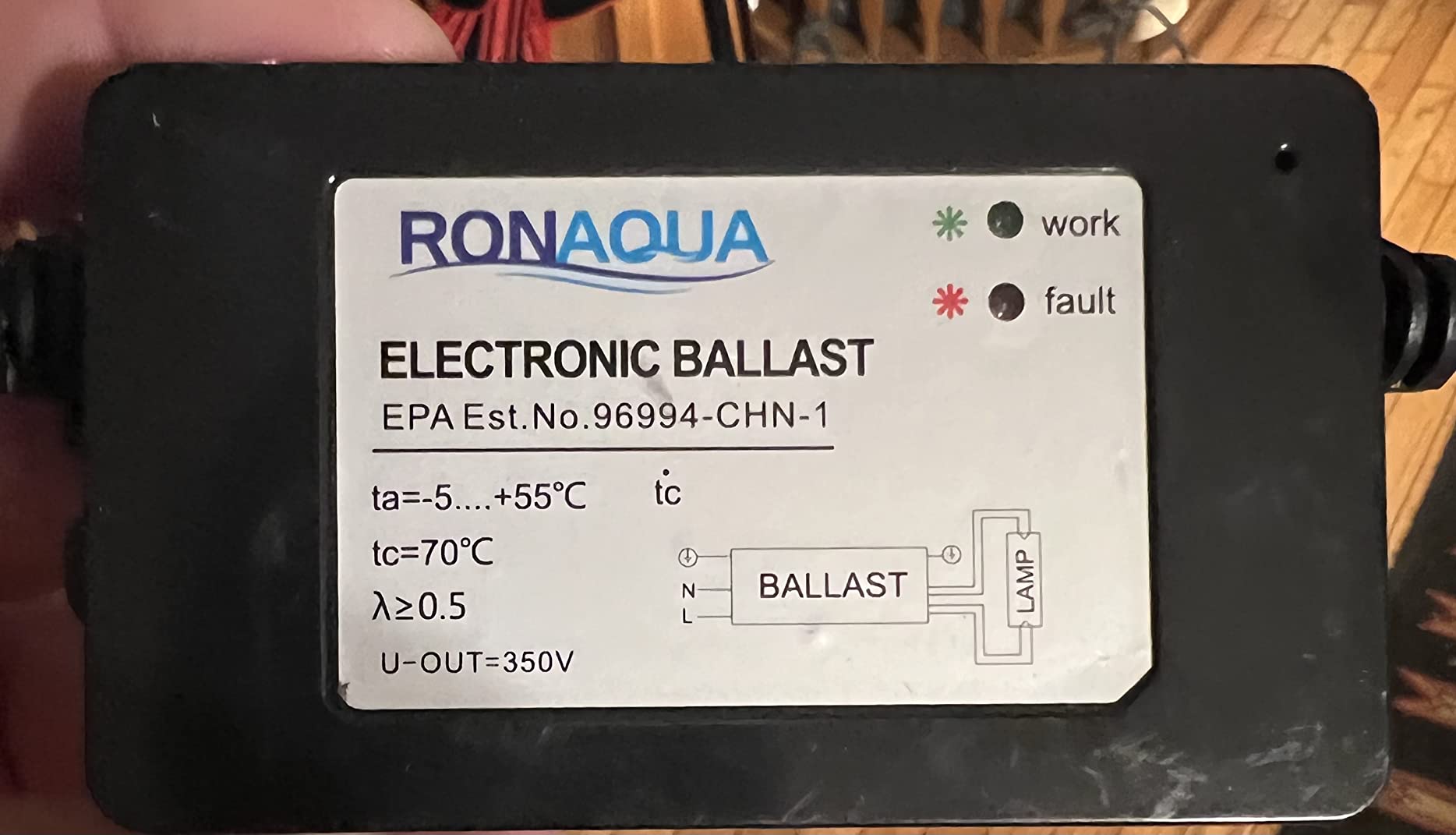
Where most 12 GPM chambers are 7 to 8 inches across, this one is 36 inches long, 3 inches wide and 5 inches high, weighing 7 pounds. That footprint is the reason it earns its place, especially in a crowded utility space where a 44 inch chamber will not fit.
It runs a 55W lamp through a stainless steel chamber rated to 12 GPM with 3/4 inch MNPT ports, which means it will usually splice into an existing run without adapters. Three mounting clips, a ballast and three UV lamps are included.
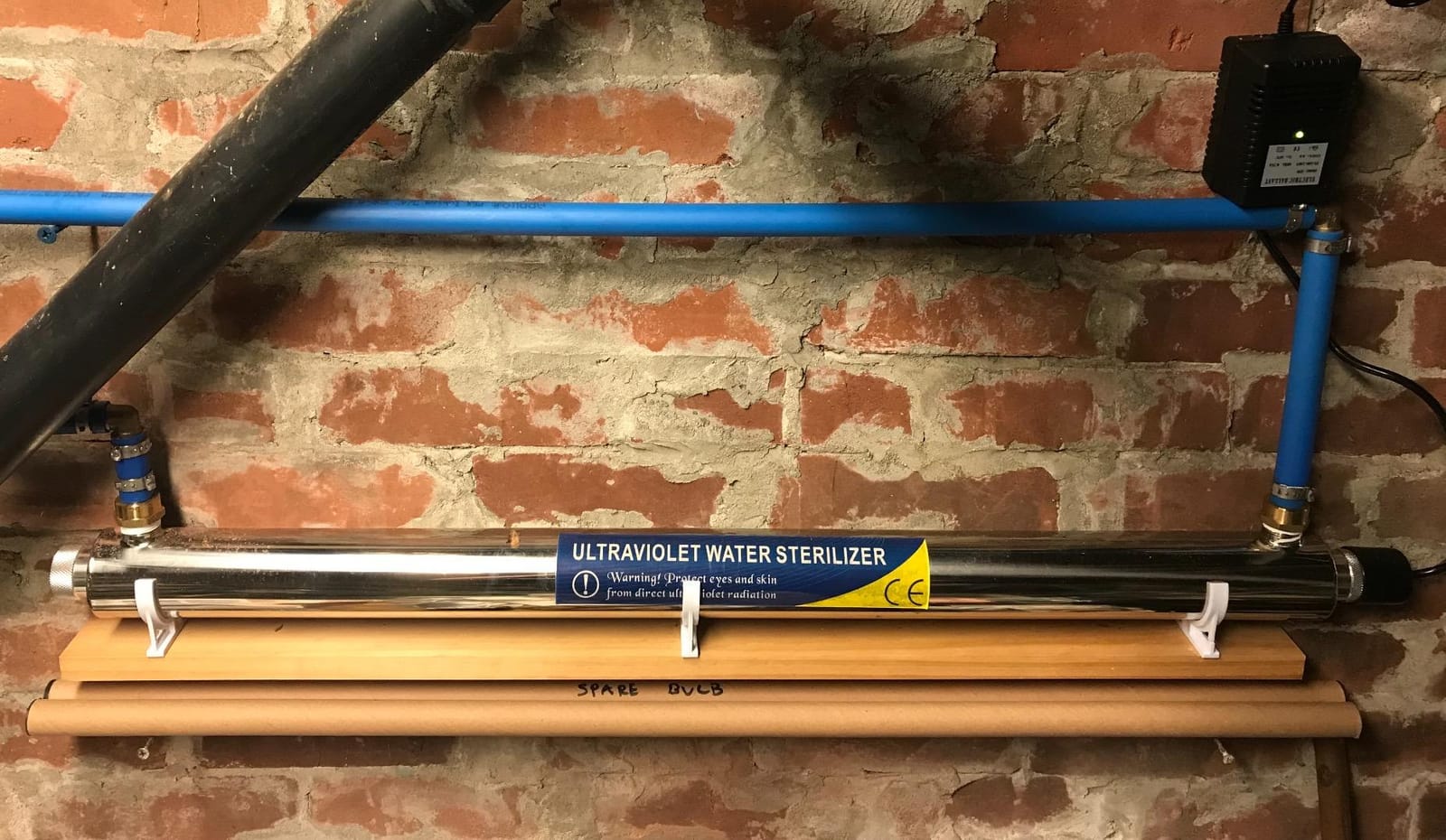
Owners who follow the assembly steps carefully report leak-free installs, and one reports a coliform-free test result after installing it on spring water. Another logged 14 months of trouble-free operation across multiple bulb changes, which is a reasonable expectation for this class.
Maximum TDS is 300 ppm here, the lowest limit in the roundup, so this is a unit for genuinely clean well water. Ballast failures appear as early as nine months in some reviews, and the vendor warranty is limited with buyer-paid shipping on defective part returns.
When a narrow chamber solves a real problem
If your UV has to go between a pressure tank and a water heater in a space barely wider than the pipes, physical fit is not a detail, it is the whole constraint. At 3 inches wide this is the easiest 12 GPM unit in the field to find space for.
What the low TDS ceiling means for you
Check your lab report before buying. At 300 ppm maximum TDS, this chamber is appropriate for shallow, clean wells and inappropriate for anything with meaningful dissolved solids. Where the Bluonics unit handles 2000 ppm, this one handles one seventh of that.
8. Aquaboon 55W 12 GPM UV Water Purification System – Best for Flexible Plumbing
UV Water Purification System 55W, 12 GPM – UV Water Filter with Smart Flow Sensor Switch – Whole House UV Water Purifier Ensuring Water Purity – UV Light for Well & City Water + 1 Extra Lamp
12 GPM rated flow
55W lamp
SAE 304 stainless chamber
Adapters for 3/4 and 1 inch
500 ppm max TDS
Pros
- Adapters included for both 3/4 inch and 1 inch plumbing
- Stainless interior reflections improve light contact
- Seller shipped a replacement ballast and a full refund on failure
- Works well with spin-down and carbon pre-filters
- Smart flow sensor switch with audible alerts
Cons
- Flow sensor switch broke off shortly after install on some units
- Leaks at the flow control valve after a plumber over-tightened it
- Ballast stopped working after about three months for one owner
- Technical support contact information is difficult to find
Two stainless steel NPT pipe adapters are included, one for 3/4 inch and one for 1 inch plumbing. That single detail removes the most common installation friction, since you can match whatever pipe size your treatment train already uses instead of hunting for adapters.
The chamber is a 37 inch SAE 304 stainless steel unit rated to 12 GPM with a 55W lamp and a maximum TDS of 500 ppm. Owners running it at reduced flow report confirming the bright output, and stainless interior reflections improve effectiveness compared with plastic-bodied chambers.
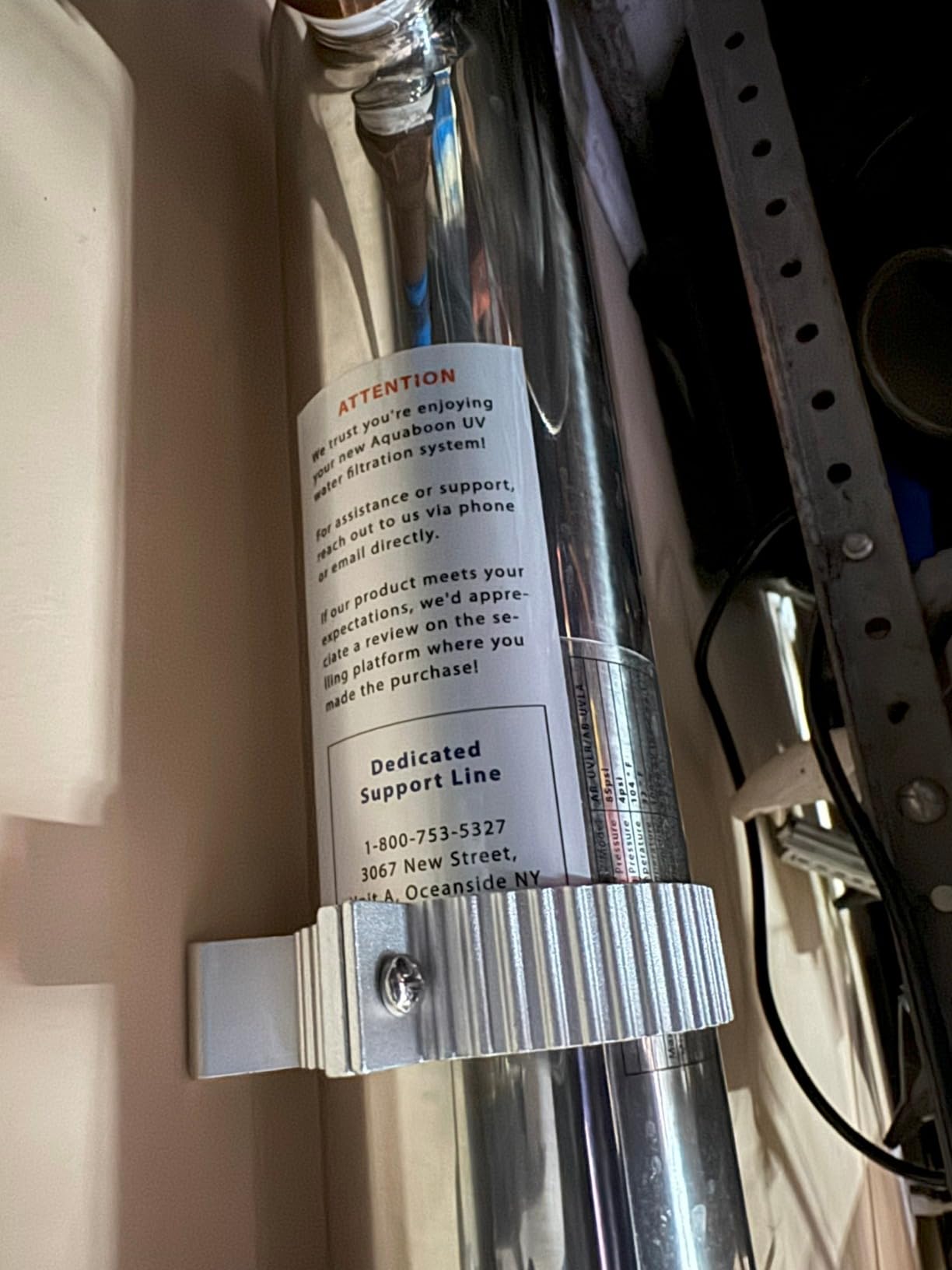
This unit pairs well with spin-down and CTO or MPP filters on sediment-laden well water, and reviewers running that combination report effective bacteria and algae control. The ballast gives clear status indicators plus audible alerts.
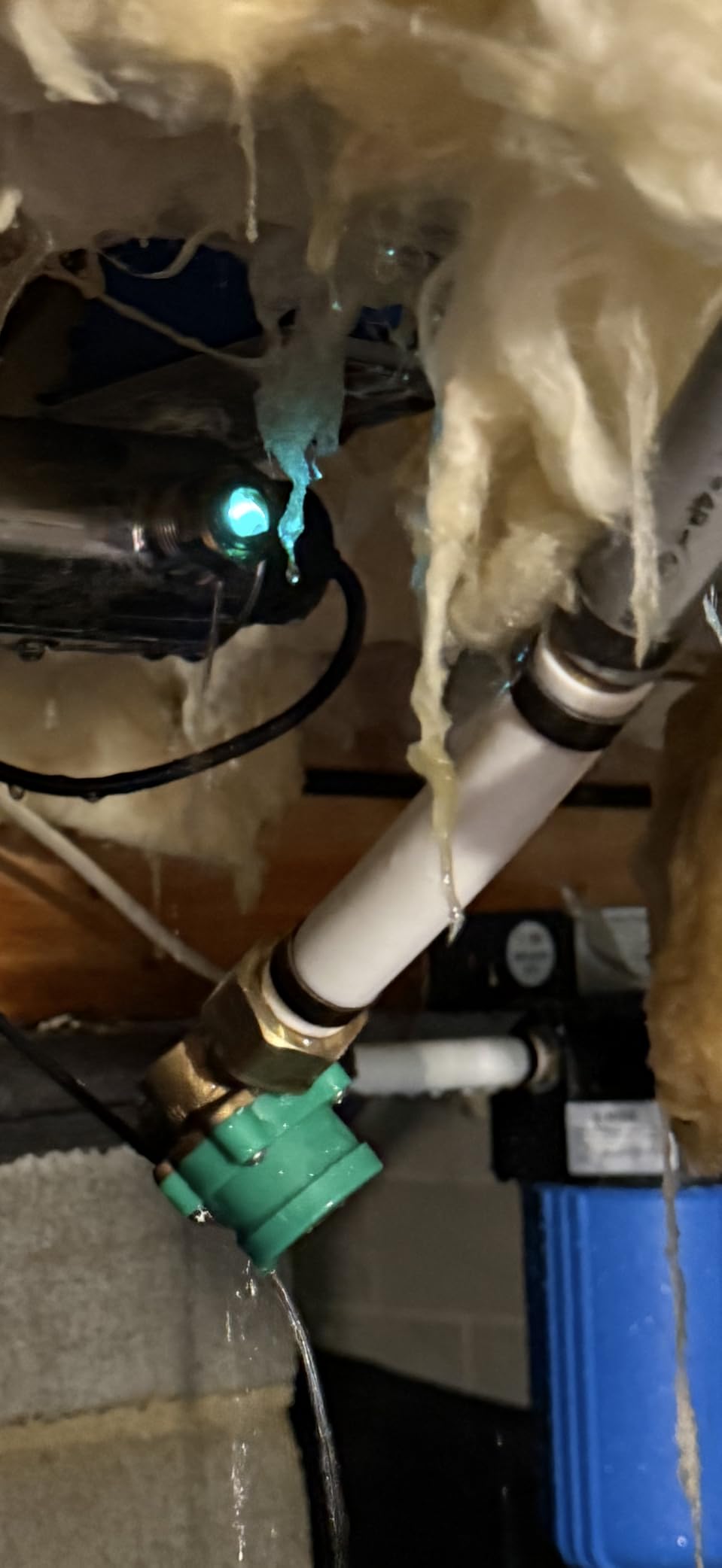
Durability is the weak spot. The flow sensor switch broke off shortly after installation on some units, and one owner reports the ballast stopping after about three months. Leaks at the flow control valve show up most often after a plumber has over-tightened the fitting.
How the included adapters save an install
Most UV failures that look like product faults are actually fitting faults. Shipping both adapters means the connection matches your existing pipe, which reduces the number of joints in the run and therefore the number of places a seal can fail during a first attempt.
Which pre-filter pairing owners report working
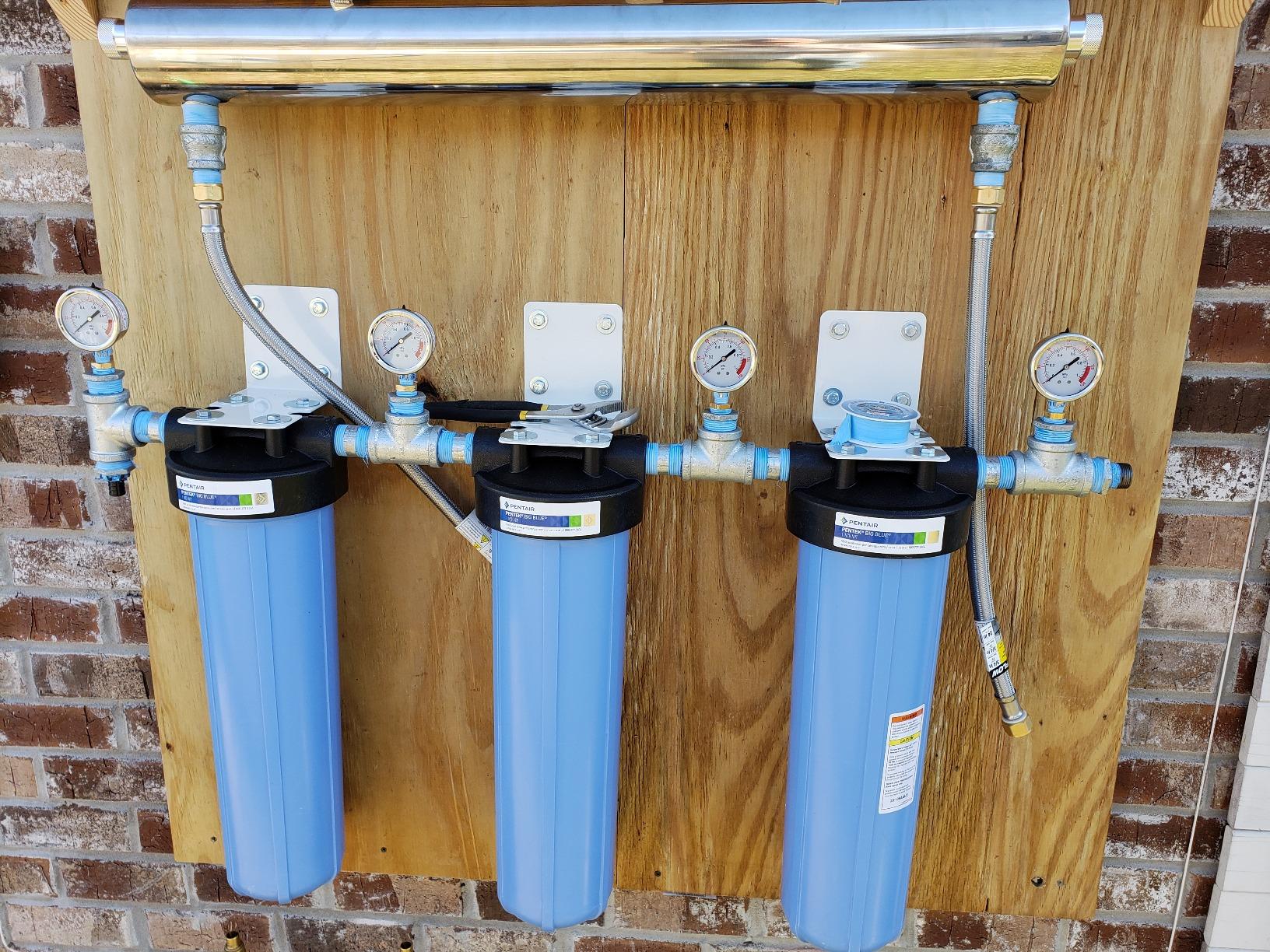
Reviewers consistently pair this chamber with a spin-down filter and a CTO or MPP cartridge ahead of it. That combination handles sediment and carbon before the UV stage, which is the arrangement the manufacturer assumes and the one that keeps the quartz sleeve clear.
9. Bluonics 110W 24 GPM Whole House UV Water Filter – Best for 24 GPM Homes
Whole House UV Water Filter System 24 GPM – 110W Stainless Steel UV Light – 1″ NPT – LED Indicator & Audible Alarm – for Well & City Water – Includes 2 Ballasts – Bluonics
24 GPM rated flow
110W UV system
Dual ballasts included
1 inch NPT ports
16 pounds
Pros
- 24 GPM handles large homes and light commercial use
- Two ballasts included as a backup for maintenance
- LED indicators and audible alarm on each ballast
- Complete kit with lamps
- sleeves
- O-rings
- gloves and manual
- 1 inch NPT connections match common whole-house plumbing
Cons
- Chamber can run hot during periods of no flow
- Bulb and ballast replacement adds ongoing cost at this tier
- Requires proper sediment pre-filtration to keep the sleeve clear
- Quartz sleeve and ballast durability mirror other models in this class
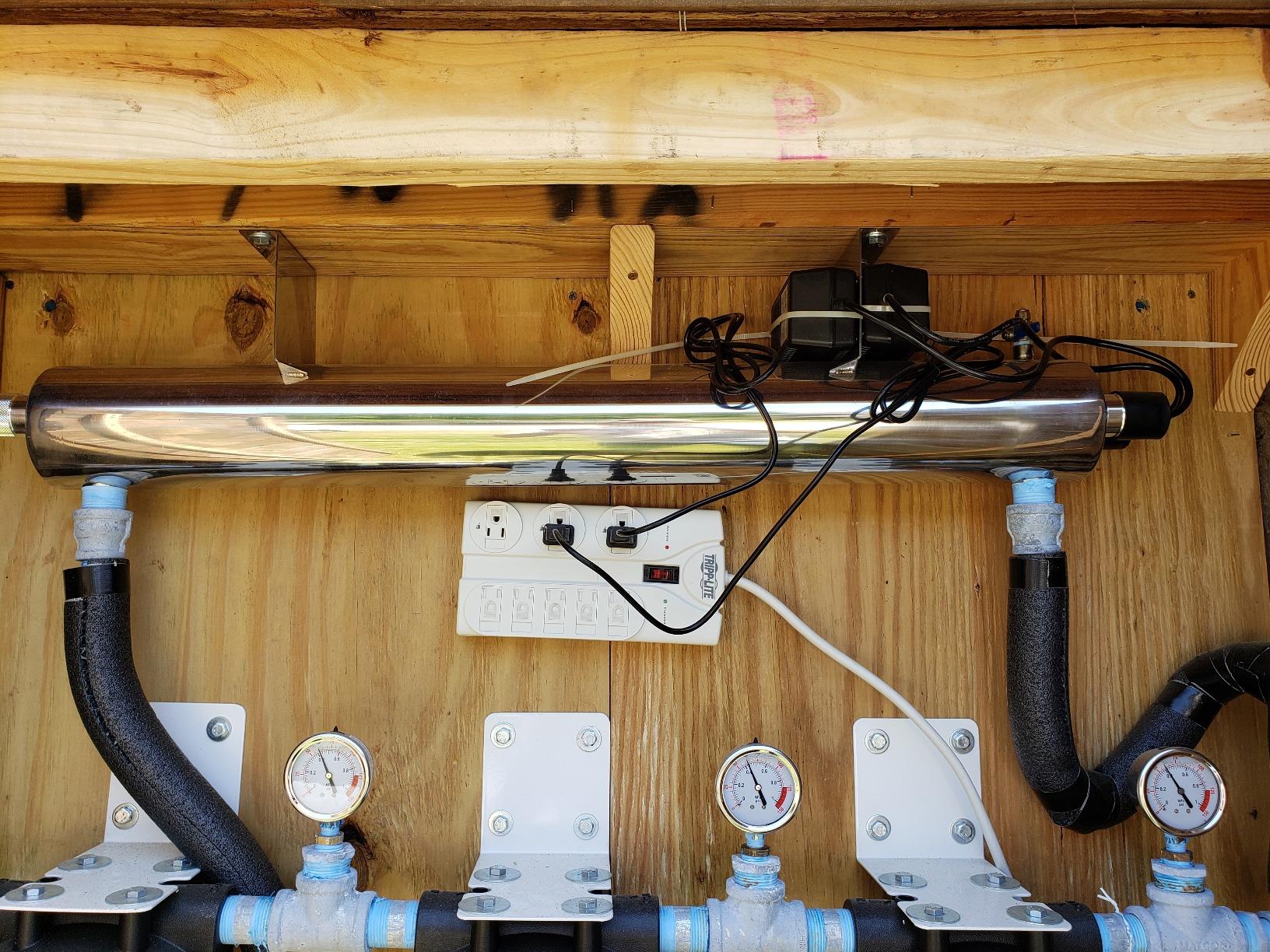
Doubled flow means doubled everything else, which is why we only recommend this chamber when a smaller unit would genuinely be undersized. At 24 GPM rated capacity, 110W and a 16 pound stainless steel body, it is built for large households, secondary buildings and light commercial applications.
The kit is unusually complete: two UV lamps, two quartz sleeves, two electronic ballasts, four O-rings, gloves and a manual, with 1 inch NPT inlet and outlet and an operating range of 40 to 125 psi. Each ballast has LED status indication and an audible alert.
Having a second ballast in the box is the standout feature. When the primary ballast fails, you are not waiting on a shipment, which is the difference between a day without disinfection and a week.
The routine expectations are the same ones owners report across every stainless UV chamber: the reactor runs hot during periods of no flow, and you will replace bulbs and possibly ballasts over the life of the unit. At this tier those replacements add meaningfully to your running cost, so include them in your planning.
When 24 GPM is genuinely the right call
Measure your peak demand honestly before jumping here. A 24 GPM rating is appropriate for homes with multiple bathrooms running at once, an irrigation zone sharing the line, or a barn or greenhouse on the same pump. For a normal three or four bedroom house, a 12 GPM chamber gives a better dose for the money.
What the dual ballast setup really buys you
Ballast failure is the most common complaint across this entire category, so redundancy has real value. Two ballasts mean a failure is a swap rather than an outage, and the audible alarm on each unit tells you which side is down.
10. Viqua VH410 18 GPM Compact Whole-Home UV Water System – Best for Tight Spaces
VIQUA VH410 Whole-Home UV Water System, 18 GPM, 3/4-1 Inch NPT, 100-240V
18 GPM rated flow
Compact 11.8 inch body
365 day lamp timer
100-240V power
Pros
- Compact high-intensity design fits cabinets where long chambers will not
- Connectors threaded inside and outside for two hose sizes
- 365-day countdown timer on the ballast controller
- Year-plus reliability reported by owners
- Visible blue glow confirms the lamp is lit
Cons
- Water runs hot after extended periods of non-use
- Inlet and outlet on the same side complicates tight installs
- Annual lamp replacement is required
- One unit stopped powering on after about 12 hours
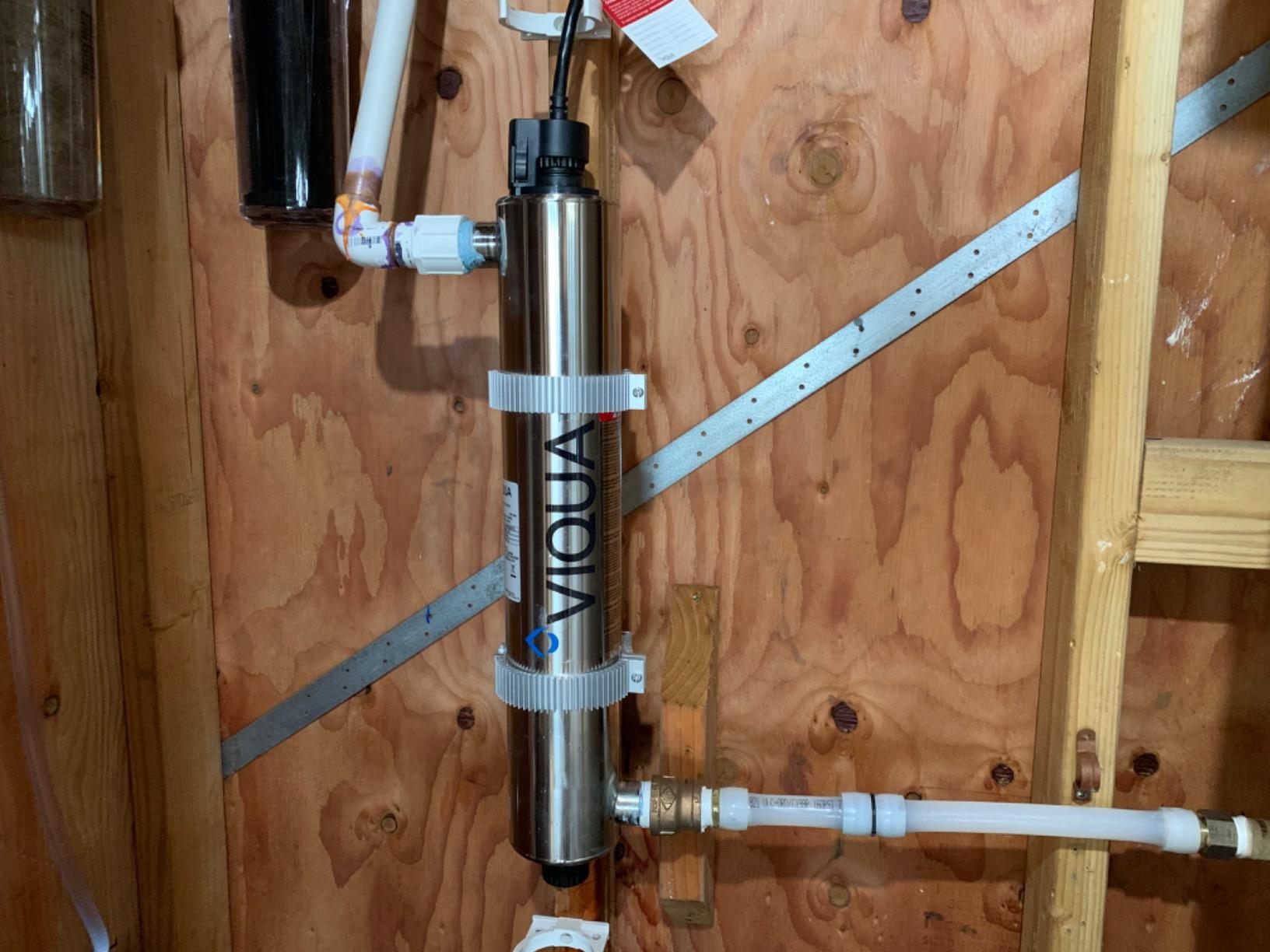
This is the shortest unit in the roundup at 4.5 inches long, 11.8 inches wide and 14.3 inches high, yet it is rated to 18 GPM. Viqua achieves that with high UV output lamp technology in a compact chamber, which is the answer when every inch of mechanical space is already spoken for.
It inactivates Cryptosporidium, Giardia, E. coli and fecal coliform, and the stainless steel chamber is rated for varying temperature, pressure and pH. The connectors thread on both the inside and the outside, so they accept two different hose connection sizes, and the ballast controller includes a 365-day countdown timer for lamp replacement.
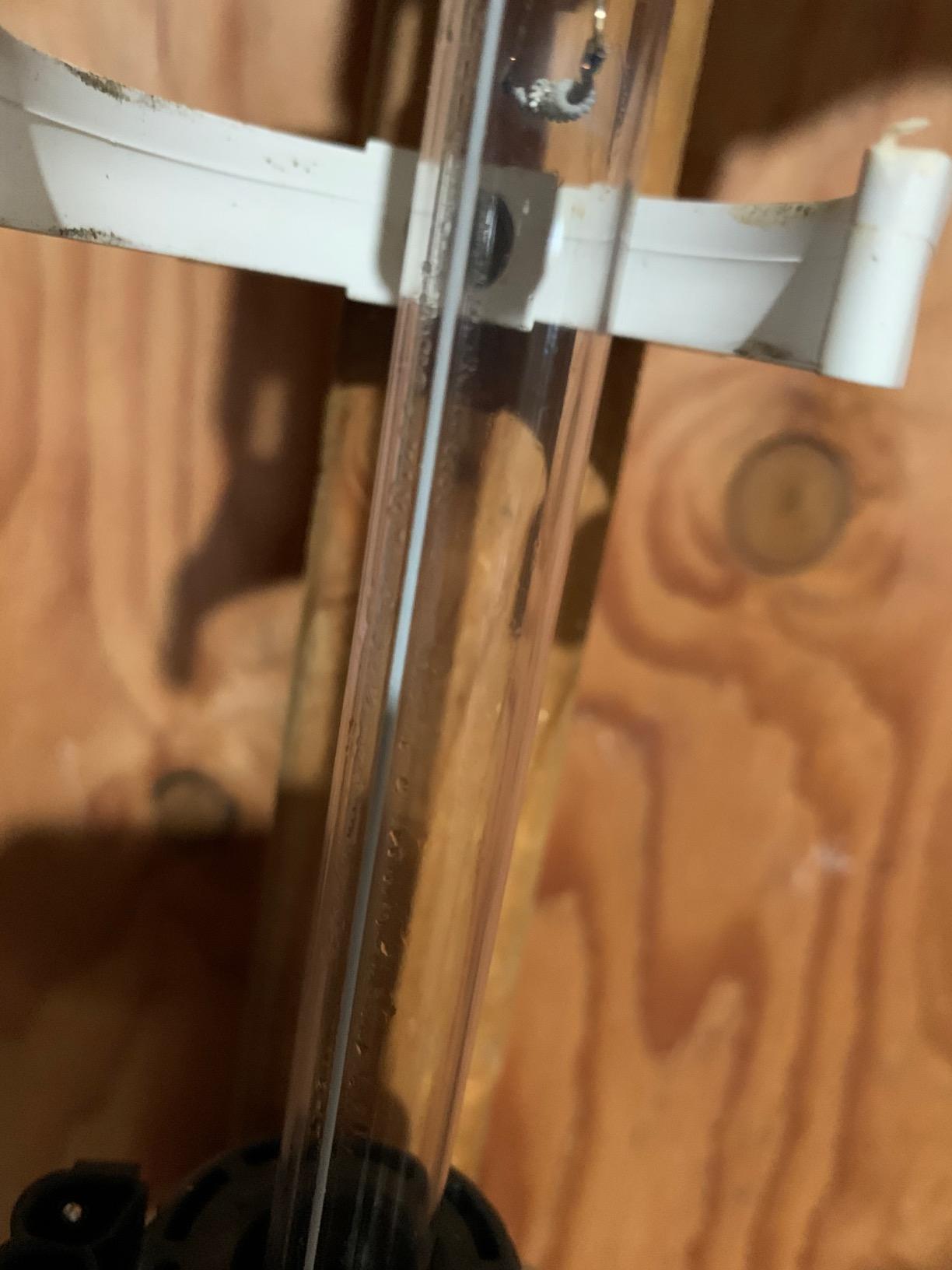
Part numbers are published for every replaceable component: controller BA-ICE-CL, lamp S410RL-HO, lamp and sleeve QL-410, and sleeve QSO-410. In a category where spare part listings are often thin, having documented part numbers removes most of the guesswork from maintenance.
A safety cap and lamp plug prevent unsafe access to the lamp, and owners report year-plus reliability plus a visible blue glow that confirms the lamp is lit. The drawbacks are layout and heat: inlet and outlet are on the same side, and the water runs hot after extended periods of non-use.
Why compactness changes the whole install
Long inline chambers need roughly 40 inches of straight pipe plus clearance for lamp changes. At 4.5 inches long, this unit mounts in a filtration cabinet or a shallow utility bay where a conventional chamber simply cannot go, without redesigning the surrounding plumbing.
What the 365-day timer does for you
Lamp life is the most commonly neglected maintenance item in this category, and an underperforming lamp means disinfection you are paying for but not receiving. A countdown timer on the controller removes the guesswork and makes annual replacement a scheduled event rather than an oversight.
How to Choose a UV Water Filter for Well Water (Buying Guide)
The most effective filter for a well is usually not a single device. It is a treatment train where sediment, iron and hardness are handled first, and UV handles the microorganisms last. Get that order right and disinfection works; get it wrong and you have an expensive lamp shining through muddy water.
Start with a lab report, not a product page. Iron, hardness, alkalinity, pH, TDS and turbidity all constrain what a UV chamber can do. A unit that exceeds its published limits will still switch on, still glow, and still disinfect less than you paid for.
Next, decide between point-of-use and point-of-entry. A point-of-use unit treats one tap and is inexpensive, but it does nothing for your shower, washer or ice maker. A point-of-entry unit protects every fixture in the house, which is what most well owners end up wanting once the first tap is fixed.
If you are still working out the sediment side of the equation, our combined sediment and UV filter picks cover that pairing directly, and our budget UV filter roundup covers the low-cost end.
What a UV filter does not remove
This is the list that closes out the most common misconception in the category. A UV chamber does not remove iron, manganese or sediment. It does not soften water or reduce hardness, so scale and spotting remain. It does not remove nitrates, arsenic, lead or any chemical contaminant, and it does not fix an iron or sulfur odour on its own.
It also does not treat plumbing. Once sanitised water enters an untreated distribution line, it can pick up new organisms, which is the caveat that experienced owners on r/WaterTreatment repeat most often. For disinfection to hold, the pipes downstream matter too.
It does not fix Cryptosporidium exposure from a flood event without adequate UV transmittance, because suspended particles shield organisms from the light. Clear water is not a nice-to-have; it is the precondition for the whole category working.
UV Sizing Guide: Match Your Flow Rate to Your Household
Size by peak demand, not by average. A shower, a toilet flush, a dishwasher and a laundry cycle running together can use more water than most household sizing guides assume, and every one of those spikes cuts your contact time.
The practical rule is to size the chamber so your measured peak demand lands at or below the published rating, and ideally well below it. A household that peaks at 8 GPM is better served by a 12 GPM unit than a 6 GPM unit, because the 6 GPM chamber would be operating at 133 percent of its rating at peak.
For large homes, irrigation sharing the same line, or secondary buildings on the same pump, look at the 18 and 24 GPM chambers instead. Those ratings exist for genuinely high-demand situations, and using them on an ordinary home wastes money on capacity you never reach.
Finally, if you cannot measure your peak demand, an electrician or plumber can clamp a flow meter on the main line while you run every fixture. It takes minutes and removes the single biggest source of UV sizing regret.
Pretreatment: What Your Water Must Be Cleared of Before UV
Every manufacturer in this roundup publishes pretreatment limits, and they cluster closely. Aquasana specifies water under 15 gpg hardness, alkalinity of 250 mg/L, pH below 8.3 and iron under 0.3 ppm. The Bluonics unit tolerates up to 2000 ppm TDS. The Ronaqua chamber caps out at 300 ppm.
Turbidity is the limit most often omitted from a buying decision, and it is the one that matters most, because suspended solids scatter UV light directly. Fine sediment that a spin-down filter catches will quietly cut disinfection without any visible sign other than a slower flow rate.
Iron is the second gate. A well reading above 0.3 ppm iron needs iron treatment ahead of the UV stage, and iron bacteria are a separate problem again. Owners on r/WaterTreatment describe iron bacteria slime in toilet tanks and spin-down filters, and the common advice is that UV alone will not clear it. One well owner runs peroxide injection ahead of UV so iron bacteria swell and die before the filter stage.
A concrete example worth studying belongs to a well owner running a four-stage train: 5-micron spin-down, a softener, another 5-micron spin-down, then a Viqua VH200. They did it because their iron at 0.32 ppm, hardness of 366 ppm (21 gpg) and TDS of 494 ppm all exceeded typical UV pretreatment limits. That sequence is the practical answer to a dirty well.
If you also need to address hardness, our well water softener guide covers the units that pair with UV in a train like this. Just remember a softener does not remove iron, so those are two separate decisions.
Shock treatment and UV are complementary rather than substitutes. Chlorine shock clears biofilm and bacteria out of the well casing and distribution lines; UV then provides continuous protection against new organisms entering between shocks. Owners report UV is extremely effective at killing bacteria and passing inspection after installation, which is the core reason to run both.
Installation Position and Ongoing Maintenance
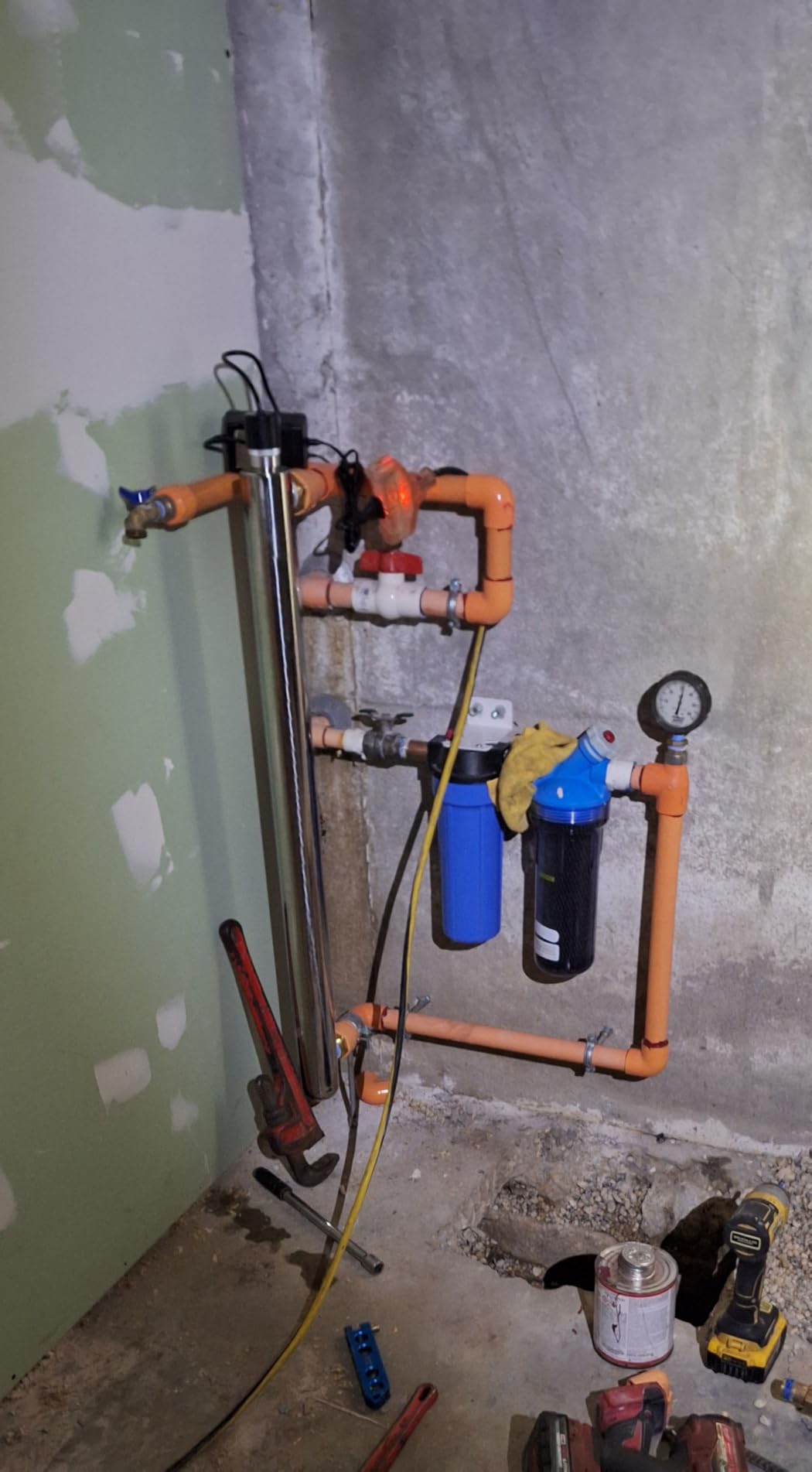
UV belongs near the end of the train. The typical order is well and pressure tank, then sediment or spin-down filtration, then iron or manganese treatment if needed, then a softener for hardness, then a final 5-micron polish, then the UV chamber, then the rest of the house. Each stage protects the one after it.
Mount the chamber horizontally, on a wall bracket or with the supplied clips, in a position where you can reach the end caps without cutting pipe. Leave access for lamp and sleeve changes, because the most common service mistake we see is a unit installed flush against a wall where nobody wants to do the annual change.
Plan on replacing the lamp annually. Most lamps in this class are rated around 9000 hours, which is roughly a year of continuous operation, and a lamp past its rated life quietly reduces disinfection without any visible change. Units with a lamp timer, like the Viqua VH410, make this a calendar event rather than an assumption.
Clean or inspect the quartz sleeve every 6 to 12 months. Scale and biofilm on the sleeve are the leading cause of reduced UV output, and they accumulate fastest on hard water. If your pre-filter cartridge is clogging every month, that is a pretreatment problem, not a lamp problem. Owners report cartridges lasting as little as two weeks after heavy rain on sediment-heavy wells, which is a signal to fix filtration upstream rather than swap lamps.
Run an annual coliform test before and after any major change, and after flooding or heavy rain. Owners repeatedly report well tests flipping from positive to negative after a UV install, and that is the cleanest evidence any homeowner can get that the money was well spent.
Frequently Asked Questions
What is the downside of UV disinfection water?
The main downside is what UV does not do. It inactivates bacteria, viruses and cysts but removes nothing else, so iron, sediment, hardness, nitrates, arsenic and lead all pass through untouched and require separate treatment. It also needs electrical power, a clear water supply and annual lamp changes, and sanitised water can recontaminate in untreated downstream pipework.
What is the best brand of UV filters?
Viqua is the most established name here, and its VH410 stands out for a compact 18 GPM chamber, a 365-day lamp timer and published replacement part numbers. Aquasana is the only pick in our roundup with an NSF/ANSI 55 Class B certified UV stage. For budget units with the largest owner base, HQUA and iSpring both hold 4.4 ratings across hundreds of reviews.
What is the most effective water filter for a well?
No single device is most effective on its own. A treatment train is: sediment filtration first, then iron removal if the water requires it, then a softener for hardness, then a final polish filter, then a UV chamber sized below its rated flow. UV placed last in that sequence is what makes the rest of the system work as designed.
What is the best UV water filter for home use?
For most homes on a private well, the HQUA-OWS-12 at 12 GPM rated flow is the strongest all-round choice, holding a 4.4 rating across more than 1000 owner reviews. If you want confirmation that water is actually flowing through the chamber, the iSpring UVF55FS adds a smart flow sensor ballast. For small homes, the 6 GPM HQUA-OWS-6 covers the demand.
What is the best whole house UV water filter for well water?
The best whole house UV water filter for well water is one whose rated flow exceeds your measured peak demand and whose pretreatment limits match your lab results. Our top pick, the HQUA-OWS-12, rates 12 GPM with a 40W lamp in a 304 stainless steel chamber, while the Bluonics 110W covers 24 GPM demand and the Aquasana train adds NSF/ANSI 55 Class B certified UV.
What type of whole house water filter is best for well water?
Well water needs a multi-stage train rather than one filter type. Start with a 5-micron sediment or spin-down filter, add iron treatment if iron exceeds 0.3 ppm, add a softener if hardness runs high, add a final carbon polish if taste or chlorine is an issue, and finish with a UV chamber. UV is the disinfection step and should always be last.
What is the highest rated whole house water filter?
Among the whole house UV filters we compared, HQUA-OWS-12, iSpring UVF55FS, Geekpure GP-UV55W and Viqua VH410 each hold a 4.4 rating, the highest in the group. Rating alone does not settle the choice, though, because flow demand and your water quality determine whether a highly rated unit is actually appropriate for your well.
Bottom Line
After comparing ten of the best UV water filters for well water, the HQUA-OWS-12 remains our pick for most households at 12 GPM rated flow, a 40W lamp and a 304 stainless steel chamber backed by more than a thousand owner reviews. Pick the iSpring UVF55FS instead if knowing the lamp is actually treating water matters to you, and the HQUA-OWS-6 if a 6 GPM rating genuinely covers your home.
Whatever you choose, the chamber is the last step, not the first. Get your sediment and iron sorted, size the unit against your measured peak demand rather than the marketing number, and budget for an annual lamp. Owners who do all three report coliform-positive well tests turning negative, which is the outcome that matters. Check the current price on your shortlisted unit before you order, and treat 2026 as the year your installation target sits in.