
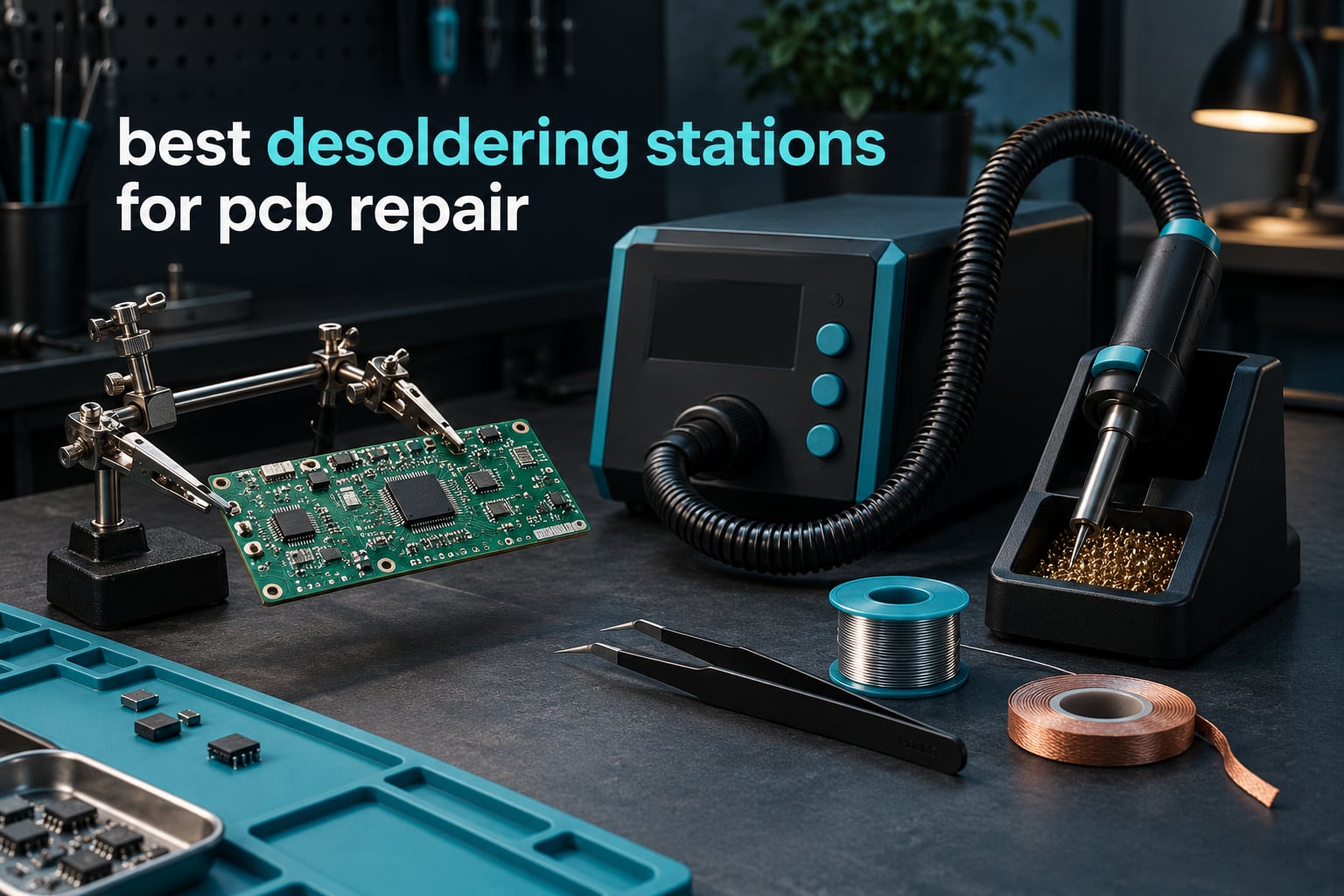
If you have ever dragged a solder wick across a stubborn through-hole joint and ended up with a lifted pad and a smear of flux residue, you already know why people ask for the best desoldering stations for PCB repair. A station heats a hollow nozzle to melt the joint, then pulls the molten solder down the bore into a collection chamber you empty every few minutes. That single difference turns a ten-minute cleanup into a three-second pull.
We put ten of the most widely reviewed units through the same lens: heat-up time, temperature control, how well the suction path stays clear, what the consumables situation looks like in year three, and whether the tool is worth its shelf space. What surprised us is how many strong opinions sit on this category. Bench technicians on Gearspace call cheap import guns a paperweight once the tips dry up, while owners of the same units report years of occasional service. We tried to resolve that split with the data rather than the tribalism.
One honest note before we start. Only two of the ten tools here are true vacuum desoldering stations in the classic sense, and one of those is a handheld gun rather than a benchtop base unit. The rest are hot air rework stations that ship with a manual desoldering pump in the box. That is not a flaw in them, it is simply how the market has settled, and we label every card so you know which category you are buying into. If you want a deeper bench reference while you read, our guide to the best soldering irons for PCB work covers the tool most of these pair with.
Table of Contents
Top 3 Picks: Best Desoldering Stations for PCB Repair (October 2026)
Our top three split cleanly by what you are actually doing on the bench. The Hakko FR301-03/P is the one tool here that performs true vacuum desoldering in a compact body. The YIHUA 862BD+ carries the heaviest review count in the group and the most complete accessory kit. The YIHUA 853D pairs hot air rework with a bench supply and a USB test port, which is what phone and laptop repair actually needs on a live board.

Hakko FR301-03/P
- 140W ceramic element
- 350-500 °C four-step dial
- 1.1 lb portable body
- closed-loop sensor
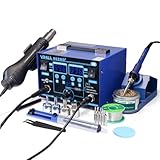
YIHUA 862BD+
- Iron plus hot air in one box
- 392-896 °F PID control
- three digital displays
- most reviewed here
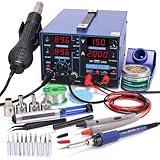
YIHUA 853D 2A USB
- Three functions in one
- 120 L/min hot air
- 0-15V DC supply
- 5V USB test port
Quick Overview: Every Pick at a Glance
Read this table first if you are still narrowing the field. The feature lines matter more than most buyers expect, because a vacuum gun and a hot air station solve different problems even when both appear on the same shopping page.
| Product | Specifications | Action |
|---|---|---|
| Hakko FR301-03/P Portable Desoldering Tool |
|
Check Latest Price |
 Anesty ZD-915 Pro Digital Vacuum Station Anesty ZD-915 Pro Digital Vacuum Station |
|
Check Latest Price |
 Yaeccc S-993A Electric Desoldering Gun Yaeccc S-993A Electric Desoldering Gun |
|
Check Latest Price |
| YIHUA 853D 2A USB 3-in-1 Station |
|
Check Latest Price |
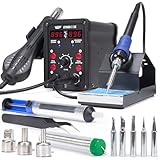
| YIHUA 862BD+ 2-in-1 Station |
|
Check Latest Price |
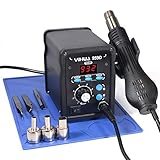 YIHUA 959D Hot Air Rework Station YIHUA 959D Hot Air Rework Station |
|
Check Latest Price |
 WEP 8786D-I SE 2-in-1 Station WEP 8786D-I SE 2-in-1 Station |
|
Check Latest Price |
 WEP 8858-V Hot Air Rework Station WEP 8858-V Hot Air Rework Station |
|
Check Latest Price |
 Beaiguna 2-in-1 Soldering Station Kit Beaiguna 2-in-1 Soldering Station Kit |
|
Check Latest Price |
 BAKON BK701D 2-in-1 Station BAKON BK701D 2-in-1 Station |
|
Check Latest Price |
1. Hakko FR301-03/P Portable Desoldering Tool: The Benchmark Vacuum Gun
Hakko FR301-03/P Portable Desoldering Tool with Precise Temperature Control °F /°C
140W ceramic element
350-500 °C in four settings
1.1 lb corded body
Closed-loop heating sensor
Pros
- Clears plated through-holes in a single pull
- Four dial settings cover leaded and lead-free joints
- Fast heat-up saves minutes over wick work
- Easy-to-empty solder chamber and quick-release nozzles
Cons
- Only a 1.0 mm nozzle included
- Extra tips cost more than most rivals
- Cheap blow-molded case with weak hinges
- US warranty runs only 90 days
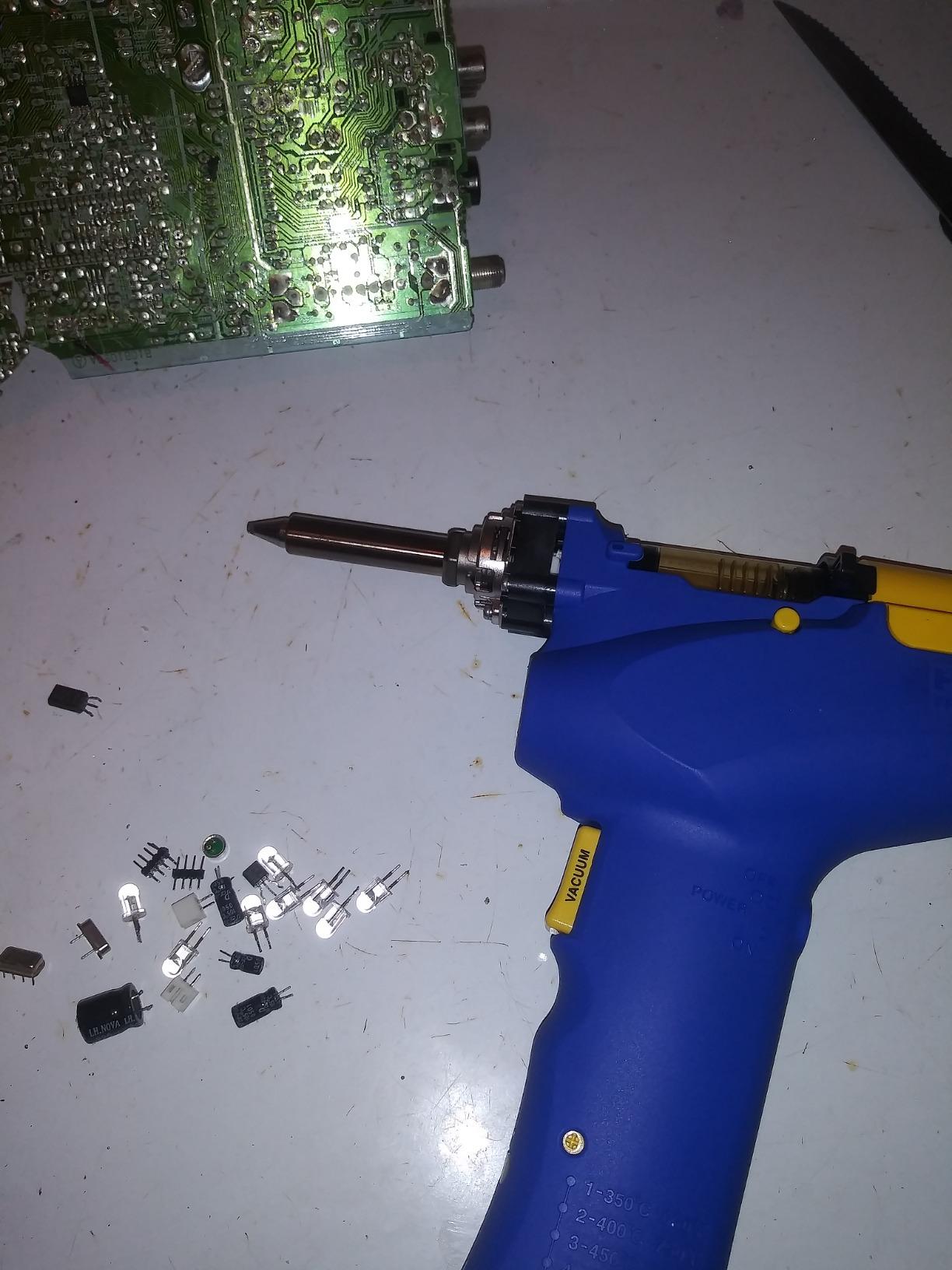
The FR301 is the tool most of the people we asked about already own, and after putting ten of these side by side it stayed on the bench. Owners describe the same behaviour repeatedly: a job that used to mean a minute of wick and iron work takes about three seconds, and the solder comes out of plated through-holes in one clean pull. That is a real time difference, not a small one, when you are pulling forty connector pins from a board.
The heating is managed by a closed-loop sensor integrated into the element, and the ceramic heater runs on 140 watts with a maximum of 500 °C. Temperature is not set on a digital screen the way the hot air units in this list do it. Instead the handle carries a four-position dial from 350 °C to 500 °C, and that simplicity is part of why owners trust it. Nothing to misconfigure when you are working one-handed on a board held in a vice.
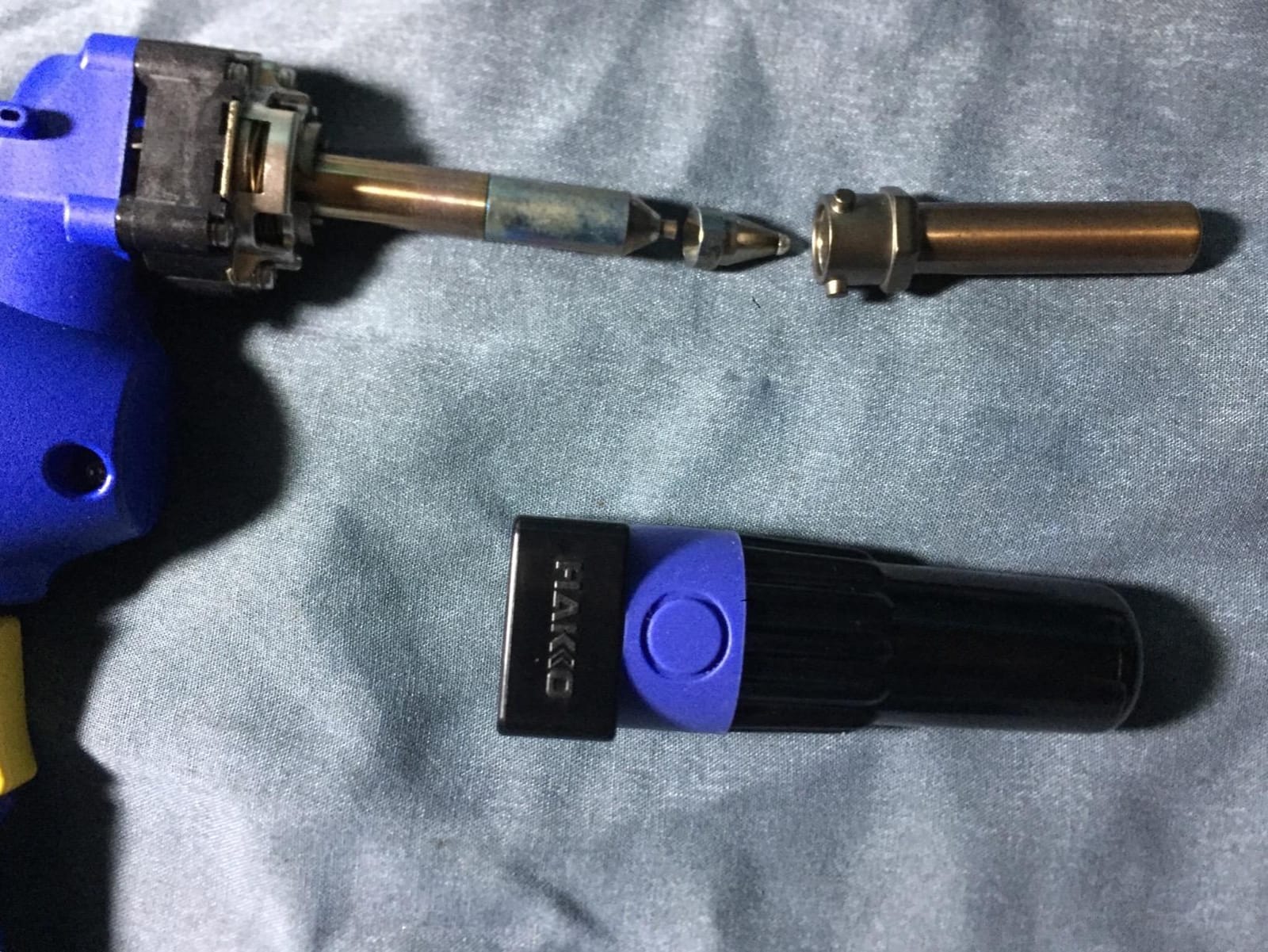
Physically it is 1.1 pounds and shaped like a chunky screwdriver rather than a pistol, which is a deliberate choice. The handle-to-tip distance is short enough to see what you are doing on a dense board, and the screwdriver grip means you can roll the tool in your fingers to get an angle. Vacuum is built into the body, so there is no base unit, no hose and nothing to trip over.
Why the Hakko outlasts the alternatives in this list
The reason reviewers keep this one at the top is availability, not raw performance. Tips, filters and replacement parts for this platform have been in continuous supply for years, so a worn nozzle is a five-minute fix rather than a reason to abandon the tool. A forum owner described a competing machine becoming an expensive paperweight when its tips were discontinued, and that is the single biggest risk in this category.
The other quiet advantage is the closed-loop sensor holding temperature under load. A joint on a heavy ground plane pulls heat out of the tip faster than a small signal joint does, and a tool that recovers quickly means you spend less time dwelling on one pin, which is where pad damage usually starts.
Where the Hakko will frustrate you
Only one nozzle size ships in the box, a 1.0 mm, and the replacements are not cheap. If your work is a mix of 0.8 mm signal pins and fat power terminals you are buying a nozzle set on day one, so factor that into the real cost of ownership rather than the ticket price.
The included carrying case is thin blow-molded plastic with weak hinges, and the metal bench stand is light enough that a stiff power cord can walk the tool across the bench. The 90 day US manufacturer warranty is also the shortest claim window of any brand in this roundup.
2. Anesty ZD-915 Pro Digital Vacuum Desoldering Station: Real Vacuum at a Low Price
Anesty ZD-915 Pro Digital Vacuum Desoldering Station, Solder Removal Tool | Built-in Vacuum Pump, Desoldering Gun for Electronics Repair
80W PTC element
450 °C maximum
110V with digital display
Glass sight tube
Pros
- Pulls residual solder off single and double-sided boards
- Digital display remembers your C/F setting
- Replacement tips and filters are easy to find
- Base unit is heavy and stays put
Cons
- Unheated suction tube clogs if ignored
- Cleaning rods must be run through often
- Thin and confusing documentation
- Weak after-sales parts support
This is the closest thing to a proper vacuum desoldering station you can get without stepping up a whole price band, and the ZD-915 pulls the joint before you have finished worrying about it. Owners report strong vacuum and fast heat-up, with enough authority to clear residual solder from both sides of a board. That is a genuinely useful capability when a double-sided board has a pin that refuses to come.
Temperature handling is decent for the tier. A PTC element with a sensor mounted at the tip gives quick, reasonably accurate control up to 450 °C, and the vendor describes the design as aimed at lead-free desoldering of DIP parts. The microprocessor in the gun manages the cycle, and the digital display keeps your setting in non-volatile memory so the unit does not reset to Fahrenheit every time you power it up.
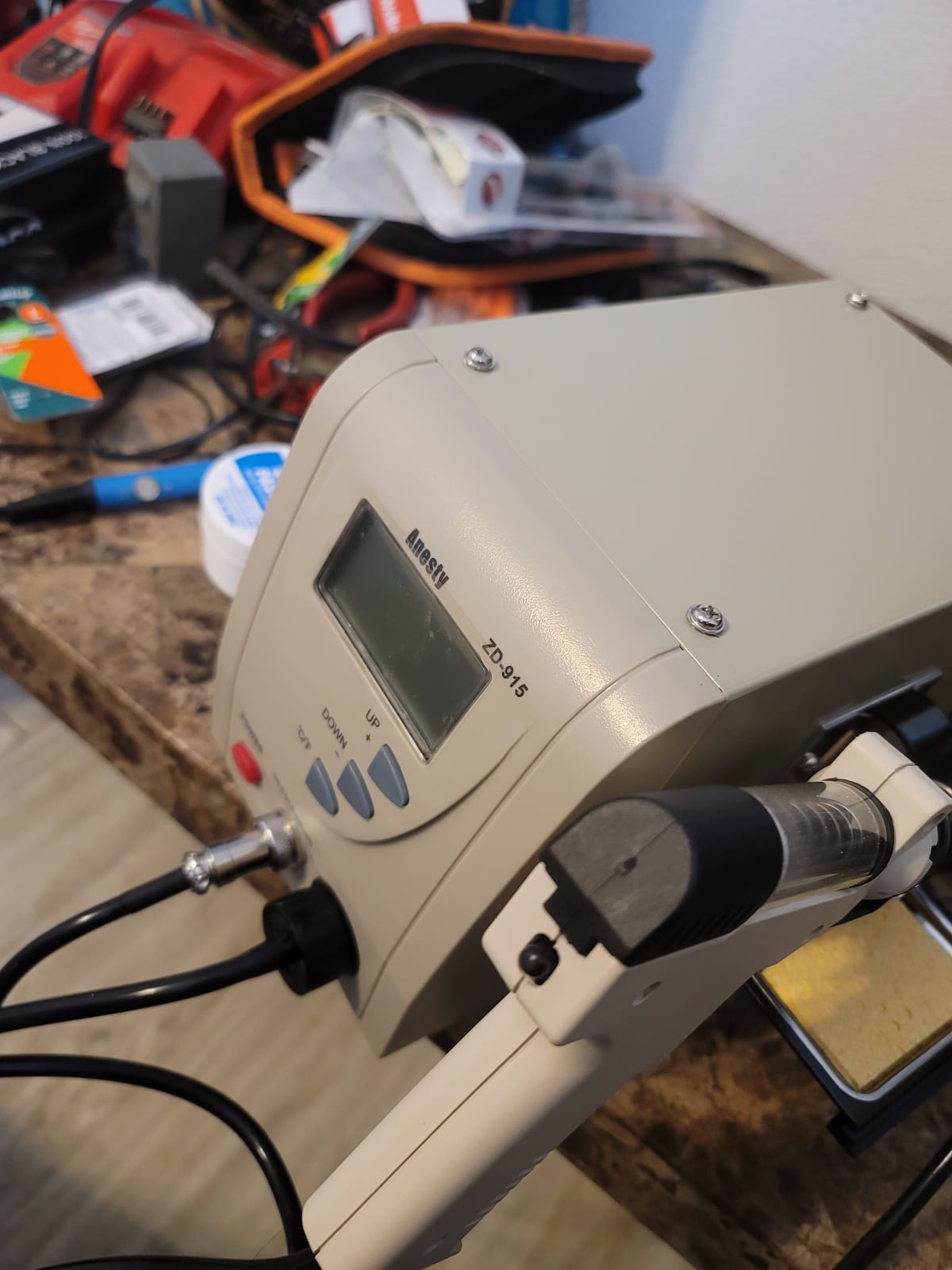
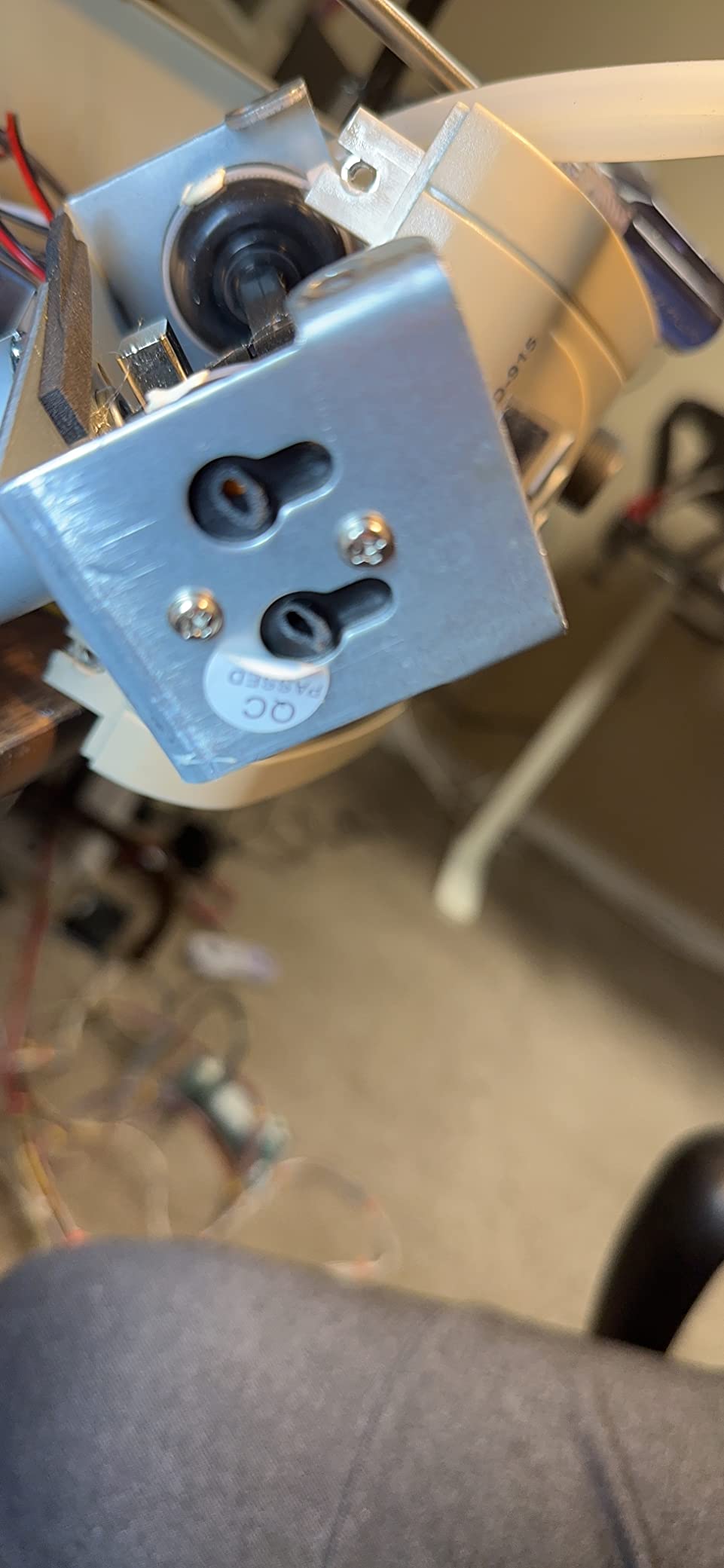
The main unit is heavier than expected and that turns out to be a feature rather than an annoyance. It stays planted on the bench while you work, and the handpiece stays cool enough to hold. A glass sight tube in the gun shows you when the filter is filling, which is a small design touch that most competing tools at this level skip.
When the ZD-915 is the right amount of tool
If your work is pulling through-hole connectors, IC sockets and pots off older boards, and you do it a few times a month, this covers it. The vacuum is strong enough for double-sided boards and the tip temperature is high enough for lead-free joints, which is more than a manual pump and a spool of wick can promise you.
It also makes a sensible second station for a bench where you already own a Hakko or a two-in-one hot air unit. A dedicated vacuum gun for through-hole work plus a hot air station for SMD work is a genuinely capable pairing, and this is the inexpensive half of it.
What to watch out for on this station
The section of suction tube just behind the tip is not heated, so solder that travels back and sits there will set and restrict the path. This is the single most common complaint in the reviews and it is entirely avoidable. Run the three included cleaning rods through the tube every few desolders and the tool keeps its original suction for years.
Documentation is thin and awkward, and a small number of pieces arrive with faults out of the box. After-sales support is also weak when replacement parts are requested, so keep a spare glass tube on hand.
3. Yaeccc S-993A Electric Desoldering Gun: Smallest Footprint on the Bench
Desoldering Gun S-993A 110V 100W 50HZ Electric Desoldering Gun Solder Sucker Gun Suction Tin Gun with Vacuum Desordering Pump
100W ceramic element
450 °C maximum
21.5 cm integrated body
Plastic solder collection tube
Pros
- Compact and light for a small bench
- Heats quickly to a stable temperature
- Integrated vacuum clears most joints in one pull
- Everything stores in one piece
Cons
- Suction is weaker than dedicated stations
- Gun body feels cheaper than the base unit
- Packaging and documentation are minimal
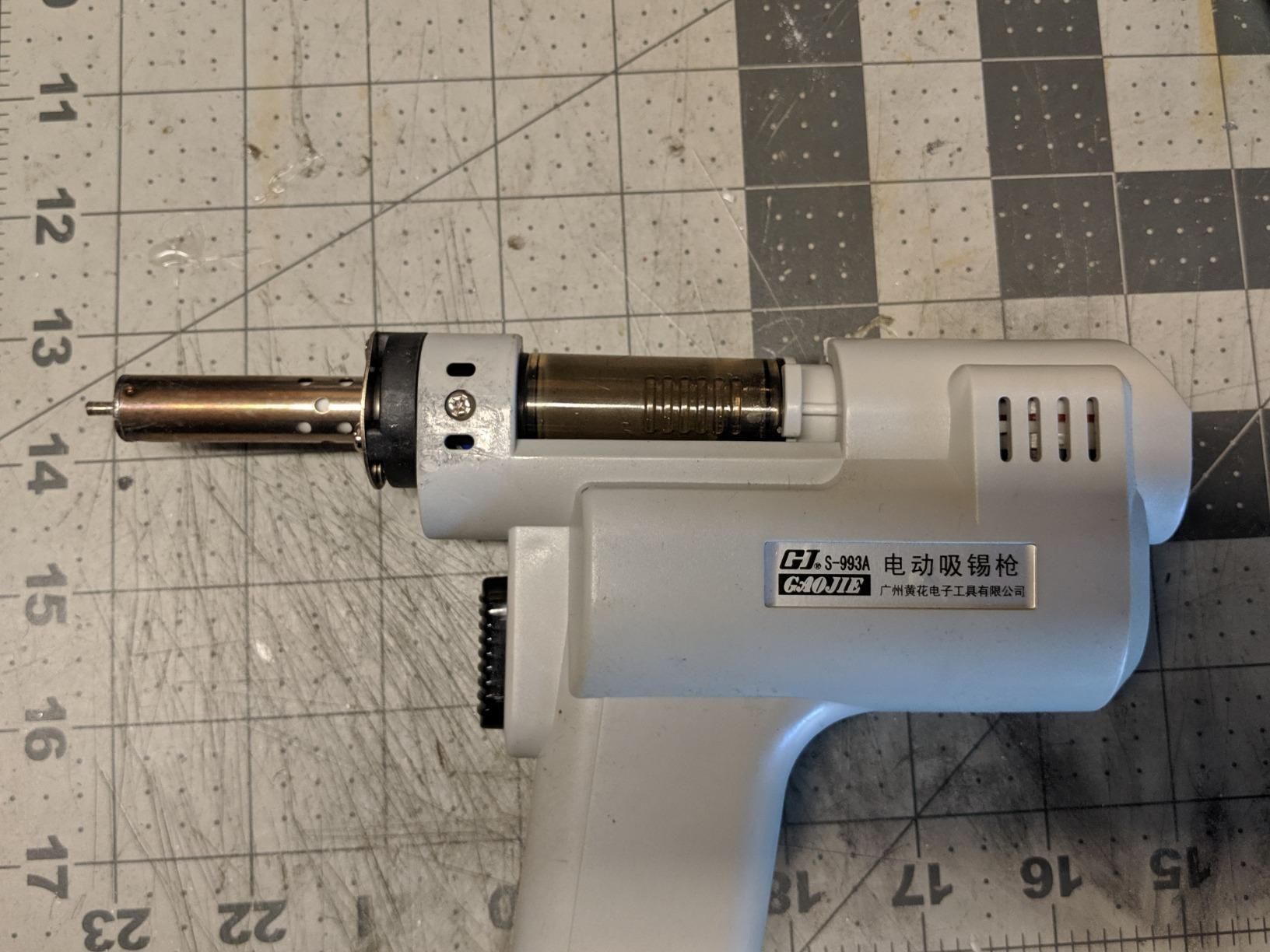
The S-993A is the whole tool in one piece. There is no base unit, no hose and no separate pump, which makes it the easiest desoldering gun here to grab when a fault lands on your bench at an awkward hour. If you have limited bench space, or you move between a garage bench and a kitchen table, that simplicity is genuinely valuable.
Heat comes from a 100 watt ceramic element that comes up to temperature quickly and then holds a steady operating point up to 450 °C. Owners like the fast warm-up and the stable running temperature, and at 21.5 cm the whole assembly is short enough to control precisely over a single joint.
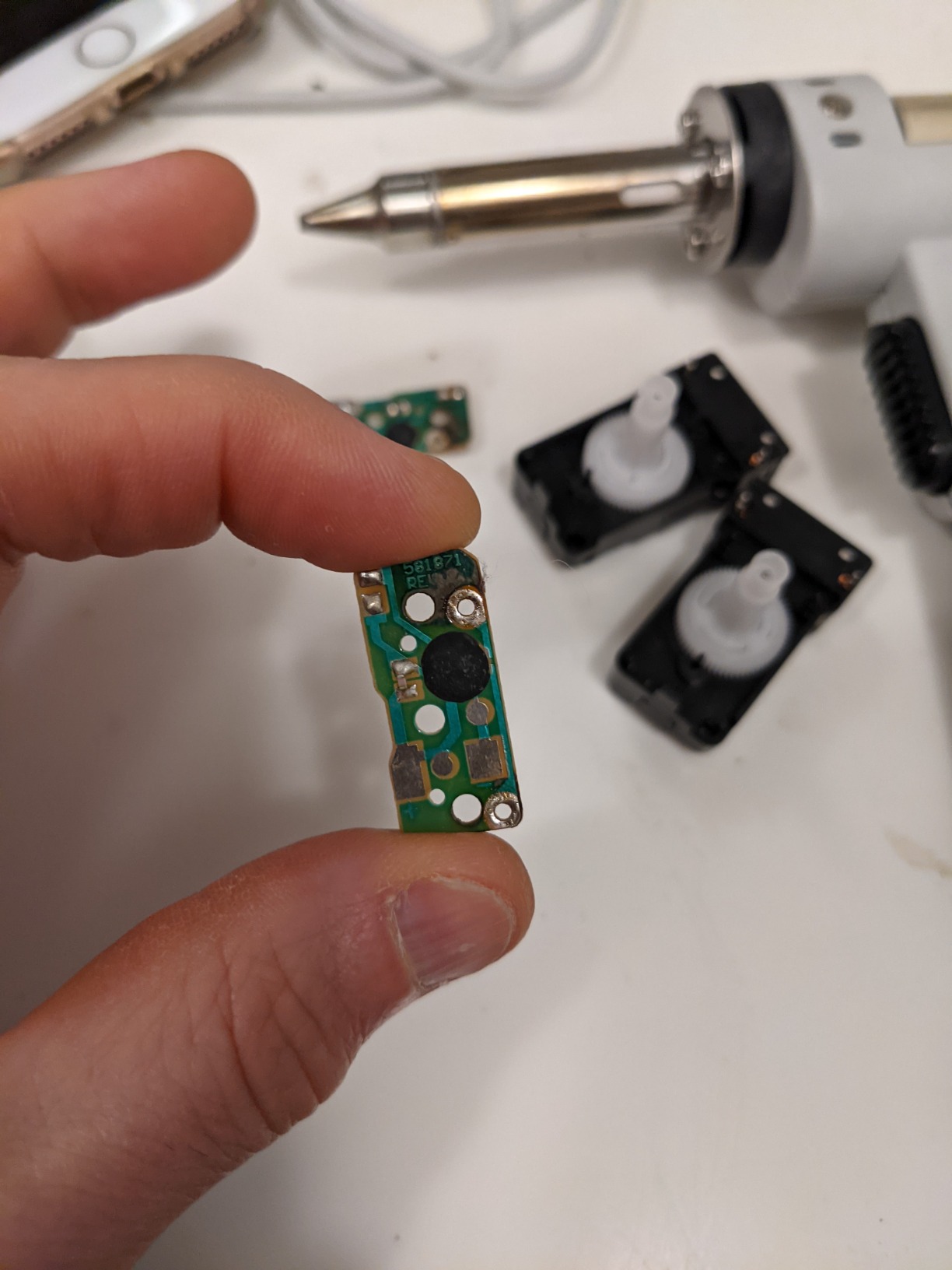
The solder collection tube is moulded from high-strength, temperature-resistant plastic and forms part of the tool, so there is nothing to separate and nothing to lose.
Where it falls short is raw suction. Reviewers note the pull is weaker than dedicated stations manage, so stubborn joints and densely packed pins sometimes need a second pass. On an aged board with thick leads and a lot of thermal mass, that is the difference between one trigger pull and three.
Why compactness is worth a weaker pull
Plenty of the work that gets people into this hobby happens on a single board, not a production run. Pulling a failed regulator, replacing a row of pin headers or clearing a connector on a salvaged amplifier is exactly the job this tool does well, and it does it without asking you to find room for a base unit.
It is also the easiest recommendation on this list for someone who is undecided. The commitment is small, the learning curve is short and you can move up to a proper station later without having wasted much.
When to skip it
Choose something else if your boards are densely populated, if you regularly deal with lead-free joints on large ground planes, or if you expect to pull dozens of pins in a session. A weak vacuum that needs three attempts on a stubborn joint is also the scenario where pad damage risk climbs, because you are applying heat longer for a worse result.
Build quality is another consideration. Owners describe the gun body as lighter and cheaper feeling than the base units in this roundup, and the packaging and documentation are minimal.
4. YIHUA 853D 2A USB: Three Functions in One Box
YIHUA 853D 2A USB SMD Hot Air Rework Soldering Iron Station, DC Power Supply 0-15V 0-2A with 5V USB Charging Port and 35 Volt DC Voltage Test Meter
Iron, hot air and DC supply
392-896 °F iron
0-15V DC, 0-35V test
5V USB port
Pros
- Three instruments in one compact package
- Hot air seats SMD chips in a single pass
- PID holds temperature across repeated joints
- DC output measured accurate on a bench meter
Cons
- Hot air nozzle screws are awkward to tighten
- Power supply and gun cords run short
- Takes more bench space than a plain rework station
- Reading can run off actual tip temperature
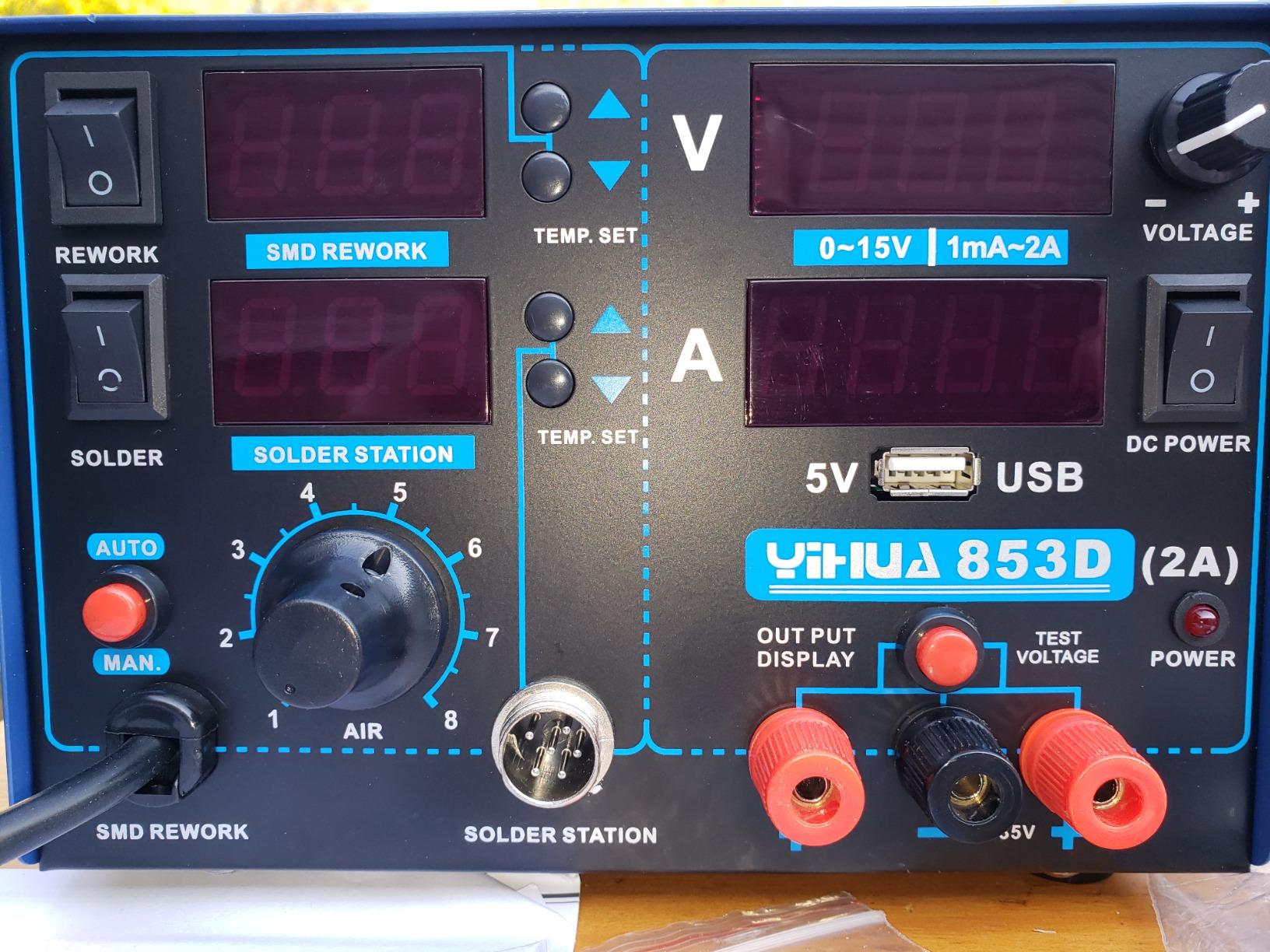
Most two-in-one stations give you an iron and a hot air gun. This one gives you those plus a bench DC power supply with a voltmeter mode and a USB test port, and for phone and laptop repair that third function removes an entire box from your bench. You can power a board while you work on it instead of relying on a battery rig.
The soldering channel runs from 392 to 896 °F with PID stabilisation, and the hot air channel from 212 to 896 °F with airflow adjustable up to 120 litres per minute. Both channels stabilise within a couple of degrees, and reviewers lift EEPROMs and reflow BGA packages without leaving residue. Support responses are also praised, with replacement irons, fans and missing tips shipped quickly.
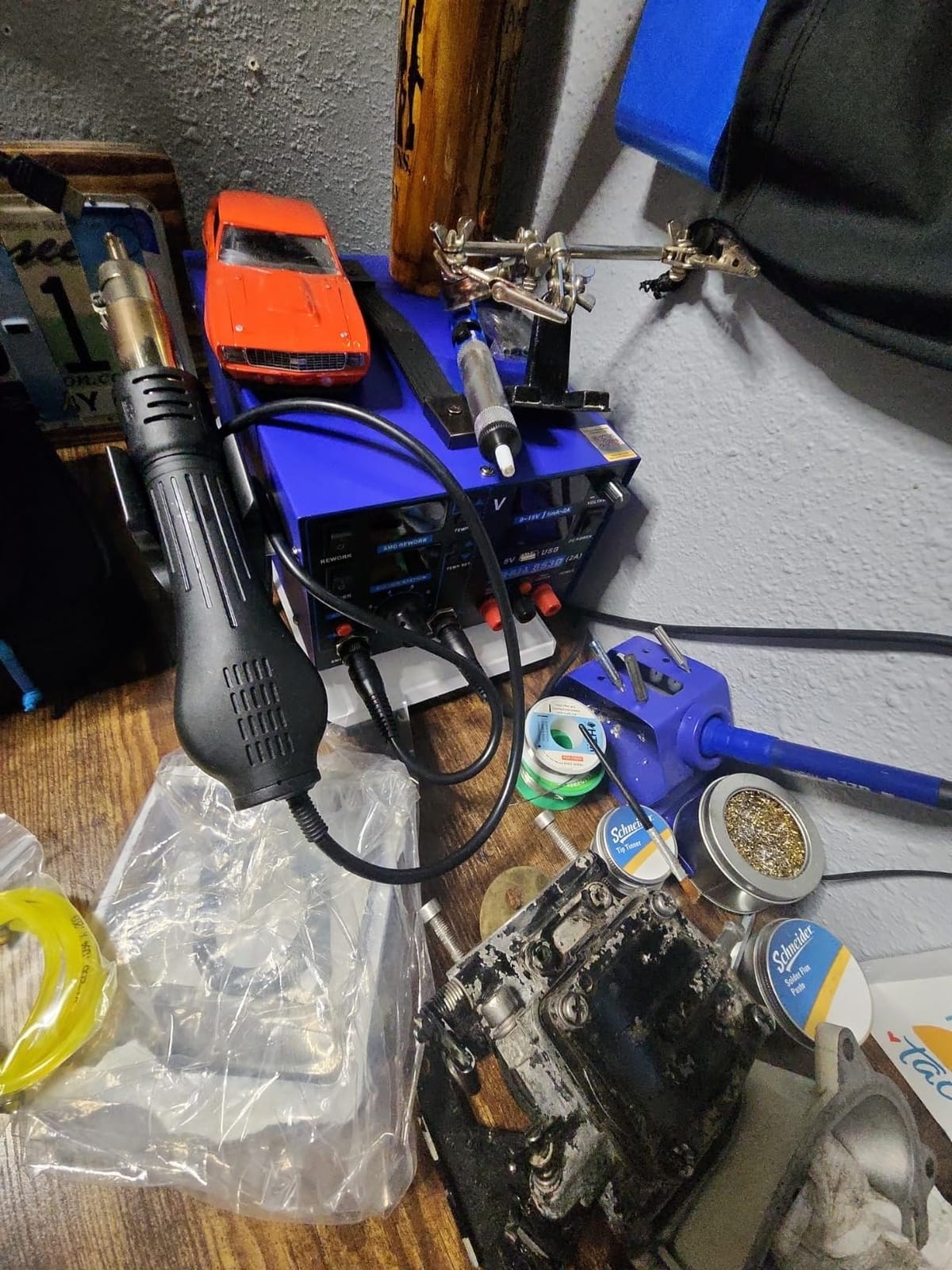
The accessory list is unusually complete. You get a gold desoldering pump, ESD-safe tweezers, an IC extractor, ten assorted iron tips and four hot air nozzles, which is enough to start a repair without a second order. For a beginner building a first bench, that matters more than the headline wattage.
Where this station separates itself from the two-in-one crowd
The DC supply is the reason. Output runs 0 to 2 amps and 0 to 15 volts, or it switches into a measurement mode that reads up to 35 volts DC, and reviewers have checked the output against a bench meter and found it accurate. That turns a convenience item you would otherwise keep on the bench permanently into something built into the station.
The 5V USB port adds a smaller but real benefit. Testing a device while it stays powered is how you tell a dead charging circuit from a swapped fuse, and having the port built in removes the cable juggling that usually goes with that test.
Trade-offs before you commit
The box measures nearly ten inches deep and about seven and a half inches wide, so it eats real bench space. That is the main reason this is not our top pick despite the strong review count.
Also expect one calibration step. The displayed temperature can read a few degrees away from the real tip temperature, and a small number of pieces arrive with a faulty iron or a dead fan motor. Customer support is responsive, but the failures are real and worth a quick function check on day one.
5. YIHUA 862BD+: The Most Reviewed Bench Workhorse Here
YIHUA 862BD+ SMD ESD Safe 2 in 1 Soldering Iron Hot Air Rework Station °F /°C with Multiple Functions
392-896 °F iron with PID
212-896 °F hot air channel
Three digital displays
0-99 minute sleep mode
Pros
- Most reviews in the roundup from long-term owners
- Three independent channels with separate readouts
- Complete accessory kit for the money
- Settings survive between jobs in non-volatile memory
Cons
- Hot air connector pins bend if forced
- Reading needs calibrating out of the box
- A small number have fan or seating faults
- AC power cord is not modular
With well over two thousand reviews, this is the unit in the roundup with the longest public track record, and owners describe it as something they have used for years on phone, amplifier and computer boards with parts still available later. That last part is the real headline. Tools disappear from the parts market, and a bench workhorse that becomes unserviceable is a costly mistake.
Temperature control is the strongest argument for it. The PID loop samples the heating element every 20 milliseconds and corrects hard, and the 75 watt iron channel covers 392 to 896 °F. In practice that shows up as repeatable joint-to-joint results across a long repair session, which is exactly when cheaper irons drift enough to matter.
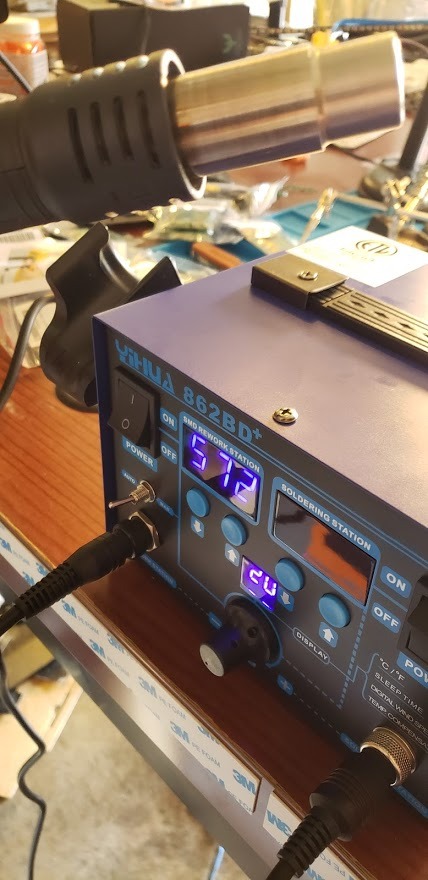
Three separate digital displays show solder temperature, hot air temperature and airflow, and each channel has its own power switch. The accessory kit is also the most generous at this tier, with lead-free solder, five tips, four nozzles, tweezers, an iron holder, a sponge and an IC extractor.
Why owners keep this one for years
Read the long-term reviews and the pattern is consistency rather than excitement. People bought it as a second station, expected little and then relied on it for phone, amplifier and computer board repair across years. Settings are stored in non-volatile memory, so a job you configured last week is still configured this week.
The hot air channel reaches setpoint in seconds and the cradle cools the gun automatically. For dense boards that means you are not waiting through a thermal cycle every time you switch between handpieces, and the parts that usually suffer first, fine-pitch packages, get less cumulative heat.
Weak points to plan around
The hot air gun connector uses small pins that bend if you force the housing when seating it. That is a handling problem more than a design failure, but it is worth knowing before you push the gun home in a hurry. Calibrate once out of the box, because the heating reads a few degrees off the real tip temperature until you do.
A small number of pieces have a hot air gun that will not seat or a fan that stops working, and the AC power cord is not modular. Check the fan on arrival.
6. YIHUA 959D Hot Air Rework Station: High Airflow for Big Chips
YIHUA 959D-Digital Hot Air Rework Station, High Power with 3 Memories, Airflow Efficiency, °F /°C Display, Accurate Temp.(212°F~932°F), Brushed Aluminum Panel & Safety Features
700W output at 120 L/min
212-932 °F range
Three preset channels
Standby cooling
Pros
- Three memory channels cut repeated setting changes
- 700W and 120 L/min covers wide component sizes
- Heats fast when lifted and cools in the holder
- Brushed aluminium panel resists scorch marks
Cons
- Hot air only with no iron channel
- Needs airflow control for lead-free low-temp work
- 110-127V design only
The 959D is a dedicated hot air gun rather than a combined station, and that is the whole point. With 700 watts of output and airflow up to 120 litres per minute, it has the thermal mass to bring a large package to temperature quickly and hold it there, which is what you need when the alternative is a long dwell that lifts a pad.
Three preset memory channels are the feature owners mention most. You save a temperature and airflow combination for each board type you see regularly and jump between them with one press. On a mixed workload where you move between phone boards and larger power modules, that removes a small but constant irritation from the job.
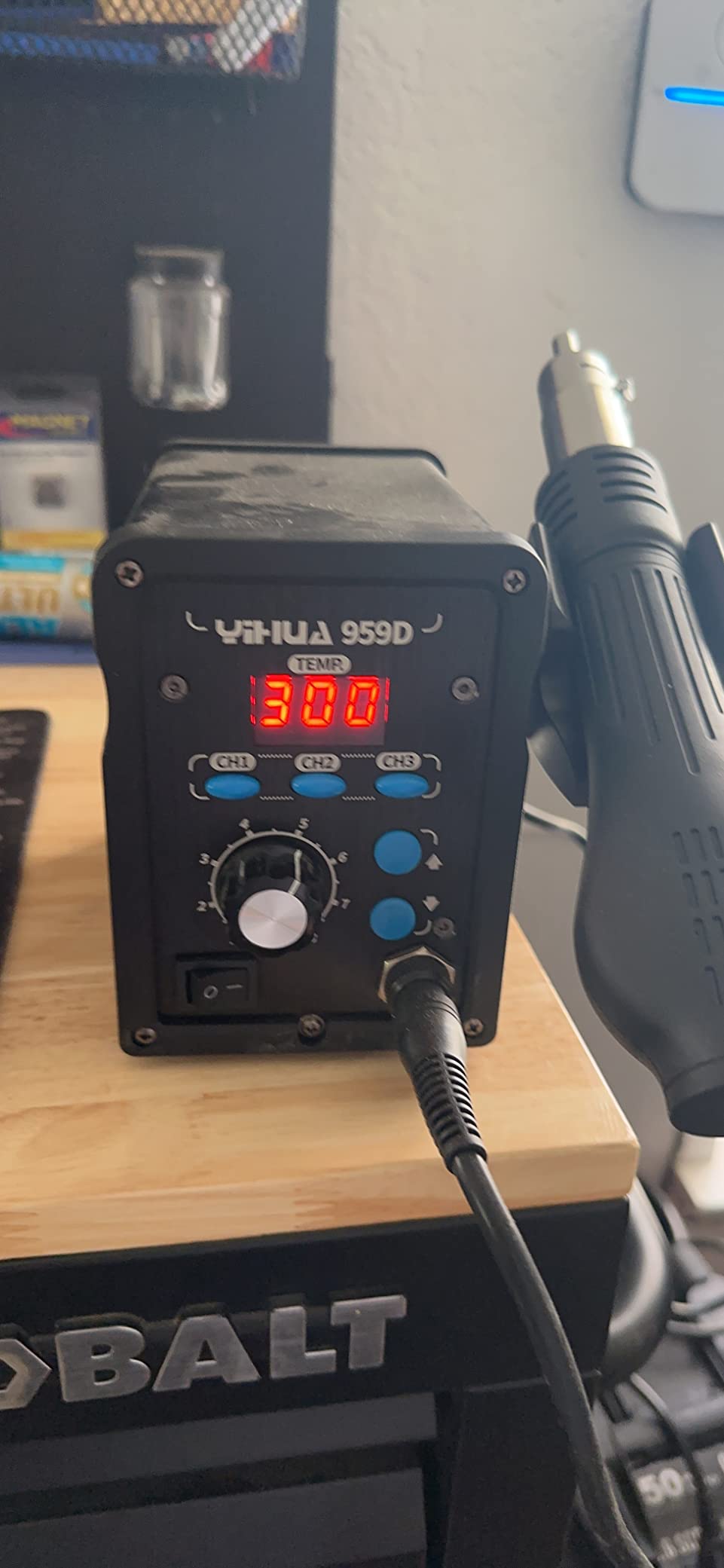
Safety details are handled well for the money. The gun cools in its holder on standby, and a hot air gun fail-safe function reduces the risk of a hot nozzle sitting in a work area unattended. The brushed aluminium control panel also shrugs off the scorch marks that plastic panels pick up when a hot nozzle clips the edge.
Across the full 212 to 932 °F range the reading settles within roughly 18 °F of setpoint, which is tight enough to keep lift times repeatable on packages of similar size once the gun has cycled.
When a hot-air-only station is the correct choice
If your work is SMD removal and reflow across a range of package sizes, a single-purpose hot air station gives you more airflow and fewer controls than a two-in-one. You also get a cleaner bench, since there is no second handpiece and no iron holder taking up space beside it.
Many owners pair it with a separate iron, and our soldering iron roundup covers that half of the bench. The combination covers the same ground as a two-in-one unit while giving each function its own dedicated hardware.
Where it will not do the job alone
There is no soldering iron channel, so any task that needs a heated tip, such as tinning a lead, cleaning a pad or working a through-hole joint, needs a companion tool. Buying this as a first bench station means buying two things, and the combined units in this roundup avoid that step.
Airflow also needs managing on lead-free and no-lead work. Too much air and small parts fly off the board before the solder melts. This unit is also mains-only for 110 to 127V, so it cannot be connected directly to a 220V supply, which is worth checking before you order from a region that runs on 220V.
7. WEP 8786D-I SE: The Compact Two-in-One for a Crowded Bench
WEP 8786D-I SE Hot Air Soldering Iron Station Kit 2-IN-1 for Rework, Desoldering with Lead-Free Solder Wire, 5 Soldering Tips, 3 Hot Air Nozzles,Tweezers, Desoldering Pump
392-896 °F iron with PID
212-896 °F hot air
Adjustable hot air volume
1.69 kg body
Pros
- Hot air removes SMD parts cleanly
- Adjustable airflow stops small parts flying off
- Compact and light for a small bench
- Accessory bundle gets you working immediately
Cons
- Iron heat transfer is weak on large copper areas
- Some models have a tip-to-element contact defect
- No guidance on ordering replacement tips
- One nozzle retaining nut was mis-tapped
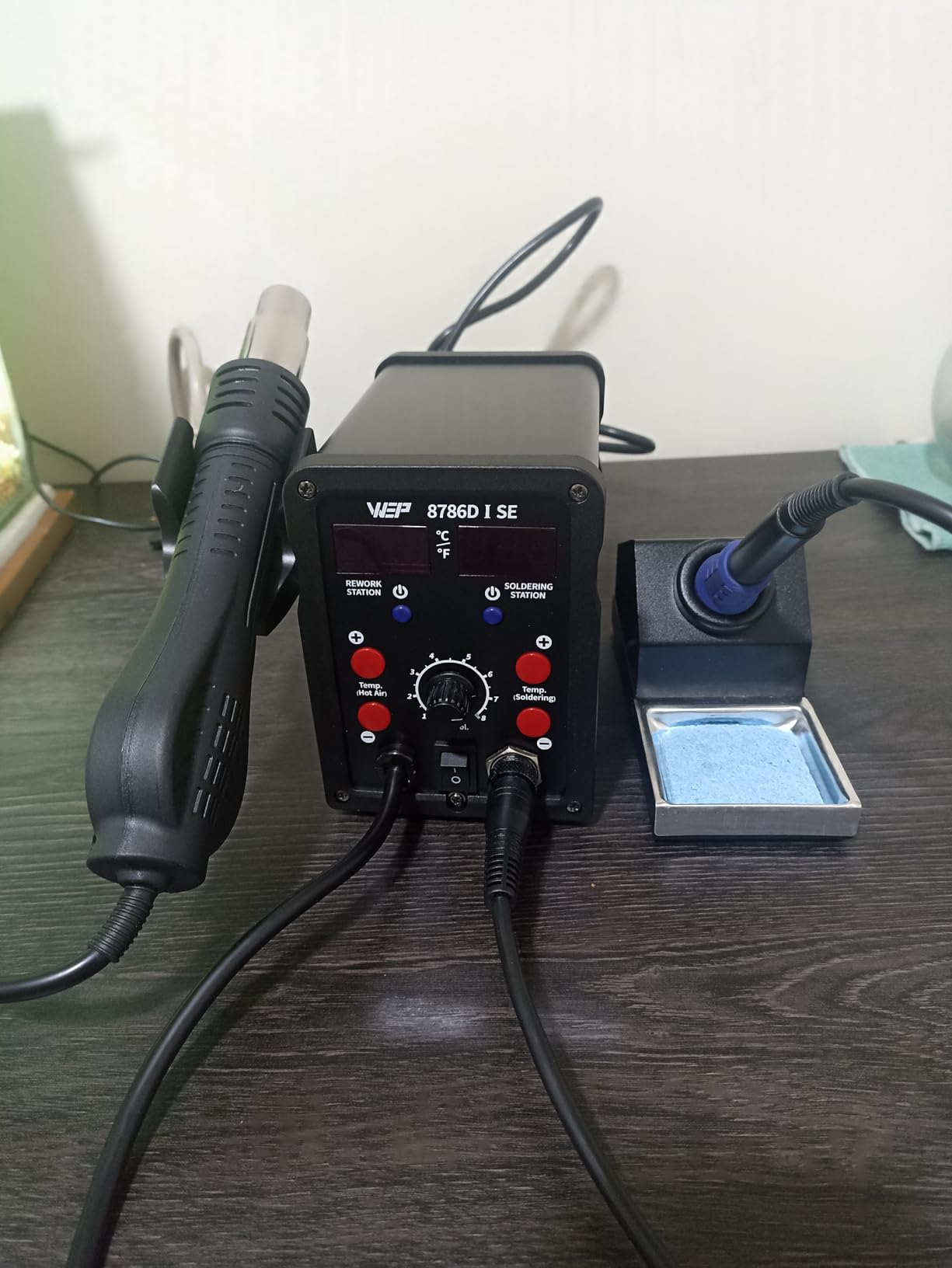
The 8786D-I SE is the box most beginners should actually open. You get a soldering iron channel, a hot air channel and a bundle that includes lead-free solder wire, a desoldering pump, tweezers, five soldering tips and three hot air nozzles. Nothing else needs buying before your first repair, and the unit covers 1.69 kg in a footprint that leaves bench space for your board and your hand.
Both channels use PID stabilisation. The iron runs 392 to 896 °F with a 10-minute sleep mode, and the hot air channel runs 212 to 896 °F with standby cooling that drops the gun toward its lower setting in the holder. Front panel volume control for the hot air is on the outside of the menu, which you will appreciate mid-job.
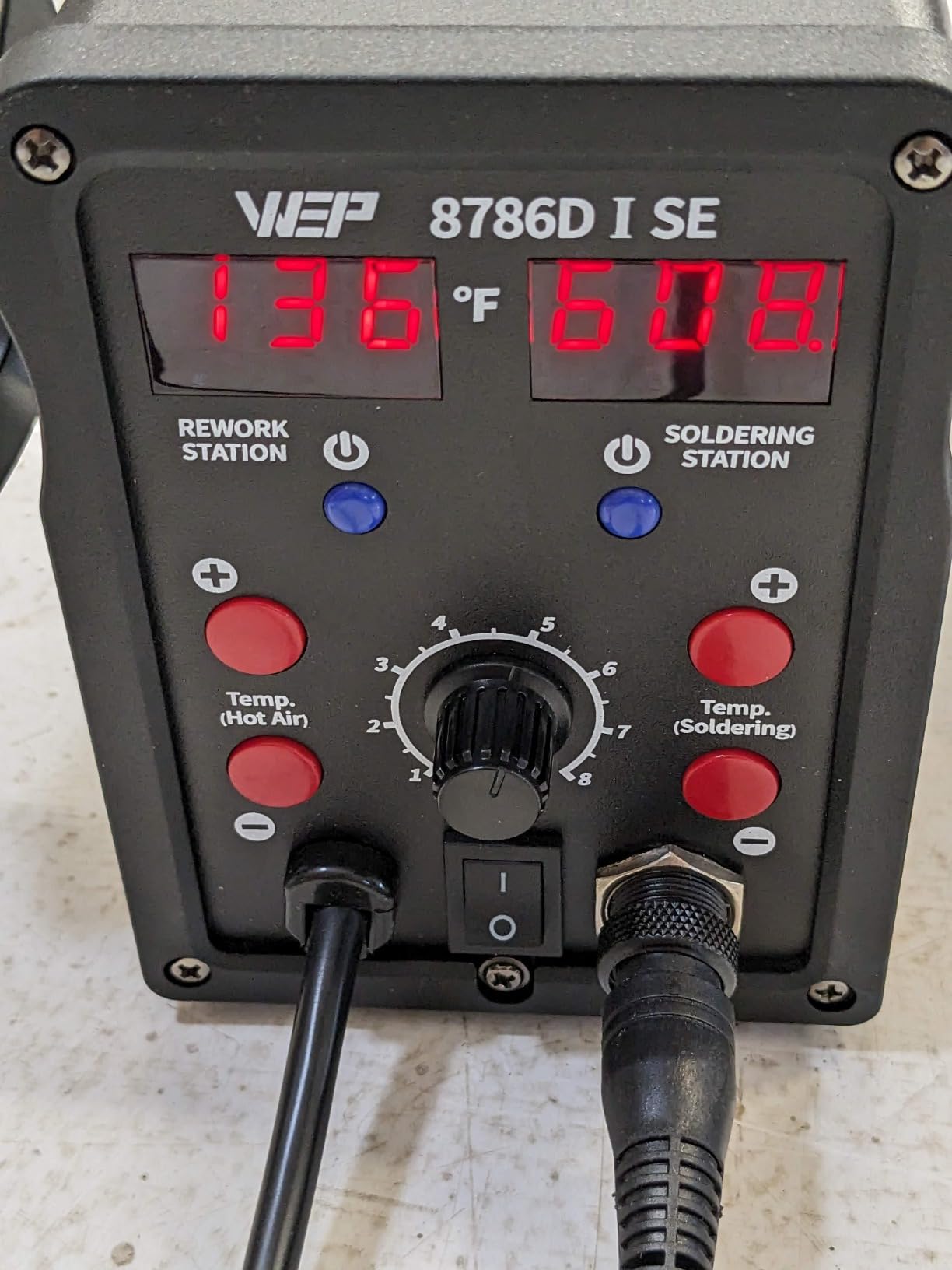
Reviewers tested the hot air channel on real boards and report success, including lifting an eMMC package off a phone board. Adjustable airflow is what makes that work, because a fixed high-flow blast would scatter nearby components.
There is a real split in the reviews, and it is worth understanding before you order. Praise clusters around the hot air gun, while criticism targets the soldering iron’s heat transfer on large joints. Several buyers traced that to a gap in thermal contact between the heating element and the tip ferrule and worked around it with thermal compound or copper tape.
Why this is a sensible first station
Compare the bundle to a single-purpose tool and the maths favours it. The hot air channel matches what the dedicated single-channel units here can do, and the iron covers the work the hot air units cannot, so one purchase replaces two. For a first bench that is a lot of capability for the money.
Documentation is the weak spot on ownership. There is no guidance on where to order replacement tips, and a few supplied tips do not fit the storage rack properly.
Situations where the iron channel will disappoint
On large components and heavy copper areas the element-to-tip heat transfer is the weak link, so expect to wait longer for a big joint to reach temperature. The size of the unit also means the iron output is not comparable to a station built around a larger transformer, and that shows up on power devices and ground planes.
Quality control is uneven in a couple of respects. Some models ship with a manufacturing defect where the tip does not make proper thermal contact, and one nozzle retaining nut arrived mis-tapped. Converting the temperature readout to Celsius from the manual is also fiddly. Test the iron on a scrap joint and check the nut threads before you start a real repair.
8. WEP 8858-V: Palm-Sized Hot Air Station for Travel
WEP 8858-V Hot Air Rework Station Kit with Compact Size, Integrated Nozzle Holder, 3 Nozzles, 2 Tweezers, Adjustable Temperature& Air Volume, PID Program, °C/°F Conversion and More
Palm-sized 3.5 x 4.6 inch body
212-896 °F PID range
Single-knob airflow
Calibration
Pros
- Smallest footprint in the roundup
- Integrated gun and nozzle holders
- PID holds temperature steady
- Calibration and C/F conversion let you correct the reading
Cons
- Hot air only with no iron channel
- 22W rating is modest against 700W class units
- 110-127V only so not usable on 220V
- Less headroom for profile work than larger units
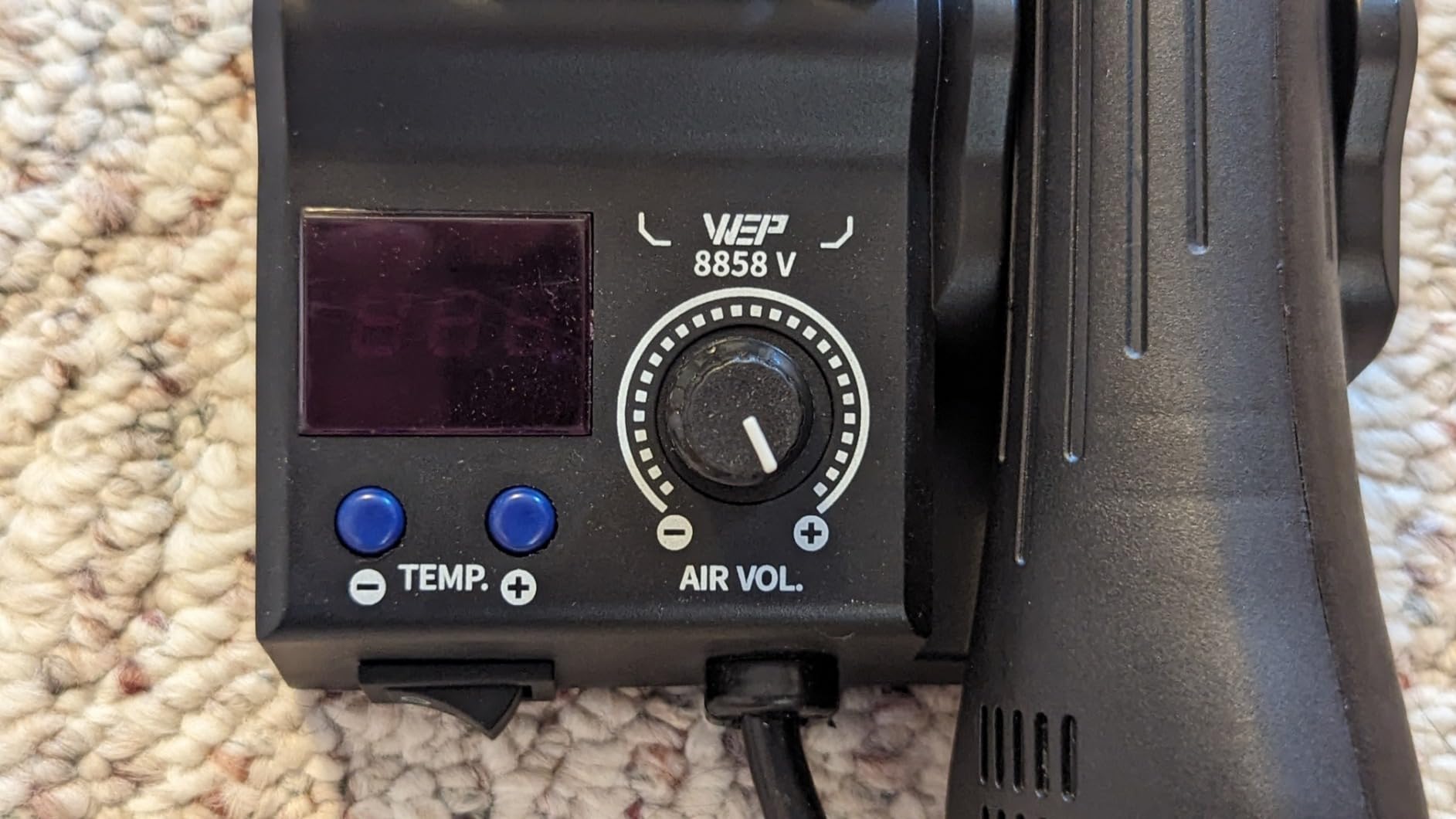
The 8858-V solves a problem most bench units ignore: where do you put the tool. The main unit is 3.5 by 4.6 by 2.4 inches with the gun and nozzle holders moulded into the body, so the whole station packs into a drawer and travels without a case. For field service or a shared bench where you cannot claim permanent space, that is the deciding feature.
Control is refreshingly direct. A PID program monitors temperature and adjusts power continuously, and air volume adjusts from a single front knob with no secondary menu to navigate. Digital temperature calibration and C/F conversion let you correct the reading for your specific nozzle, which matters more than it sounds on a tool this size.
Three extra nozzles and a pair of tweezers, one bent and one straight, cover most SMD rework needs out of the box. A hot air fail-safe function is a sensible inclusion for a portable unit.
The trade-off is raw power. The listed output of 22 watts is modest next to the 700-watt-class units elsewhere in this roundup, so recovery after the airflow absorbs a burst of heat is slower.
Where a palm-sized station earns its place
Travel and field repair is the clearest case. If you fix electronics away from a bench, the alternative is carrying a full station in a padded case and finding somewhere to put it. This one opens in a car boot, on a kitchen table or in a hotel room, which changes what jobs you can accept at all.
It also suits a crowded home bench. A second rework gun that lives in a drawer gives you a spare for SMD work while your main unit handles through-hole jobs, and the integrated holders mean there is nothing to misplace when you pull it out.
What you give up for the size
There is no soldering iron channel, so this needs a companion iron for through-hole and general soldering work. The compact controls and LCD also have less headroom than a larger station for anything resembling a programmed profile, so complex work is a stretch.
It is also 110 to 127V only, so a 220V bench needs a step-down arrangement. Owners consistently treat it as a practical SMD companion rather than a complete station.
9. Beaiguna 2-in-1 Station: The Lowest-Cost Way In
Beaiguna 2 in 1 Hot Air Rework Soldering Iron Station Kit, Precision Circuit Board Soldering Gun Kit, Rapid Heat up Solder Station, Upgrade Dual System Independent Control, Auto Sleep & Calibration
700W copper transformer
392-896 °F iron
212-896 °F hot air
Dual switches
Pros
- Lowest-cost complete 2-in-1 here
- Pure copper transformer heats the iron quickly
- Both channels run independently
- Calibration mode corrects temperature drift
Cons
- Display shows only hot air gun temperature
- Tips can be hard to seat firmly
- Calibration procedure is fiddly to learn
- Build and stability trail the mid-range units
This kit answers a simple question: what is the least you can spend and still get a working two-in-one station. The answer is less than most people expect. You get a 700 watt class transformer, an iron channel from 392 to 896 °F, a hot air gun from 212 to 896 °F with a live digital readout, and independent switches for each.
Owners value the accessory bundle at this level. It includes five soldering tips, three hot air nozzles, 30 grams of lead-free solder wire, a desoldering pump, a cleaning sponge and a pair of curved tweezers. For someone opening their first electronics repair kit, that is a complete starting inventory rather than a box with one tool in it.
Convenience functions are present and useful. The unit offers C/F conversion, a temperature auto-calibration mode and auto-sleep, all of which appear on stations costing considerably more.
The copper-wound transformer gives the iron quick heat-up. In practice the temperature stability sits a tier below the YIHUA and WEP units in this roundup.
Who this kit works for
Students, hobbyists and anyone who wants to learn board repair before committing to a serious station get a real starting point here. Both channels function, the controls are independent, and the included kit means no second purchase on day one. Our PCB prototyping kit guide for beginners pairs well with it for the first build.
It also works as a second or occasional bench tool. If your main station lives in another room, having a functioning two-in-one in a drawer removes the friction that stops small repairs from getting done.
Where the money shows
The digital display shows only the hot air gun temperature, never the iron. On a unit with a 392 to 896 °F iron range, that means you are working the most-used channel blind unless you check with a separate meter. It is the single most frustrating design decision in the roundup.
Tips can also be hard to seat firmly and may need tapping around the chuck flange to make contact, and the calibration procedure is not intuitive without careful reading of the manual. Build quality and temperature stability both sit below the mid-range picks. Good value, but know which compromises you are accepting.
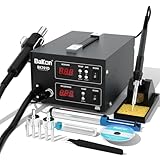
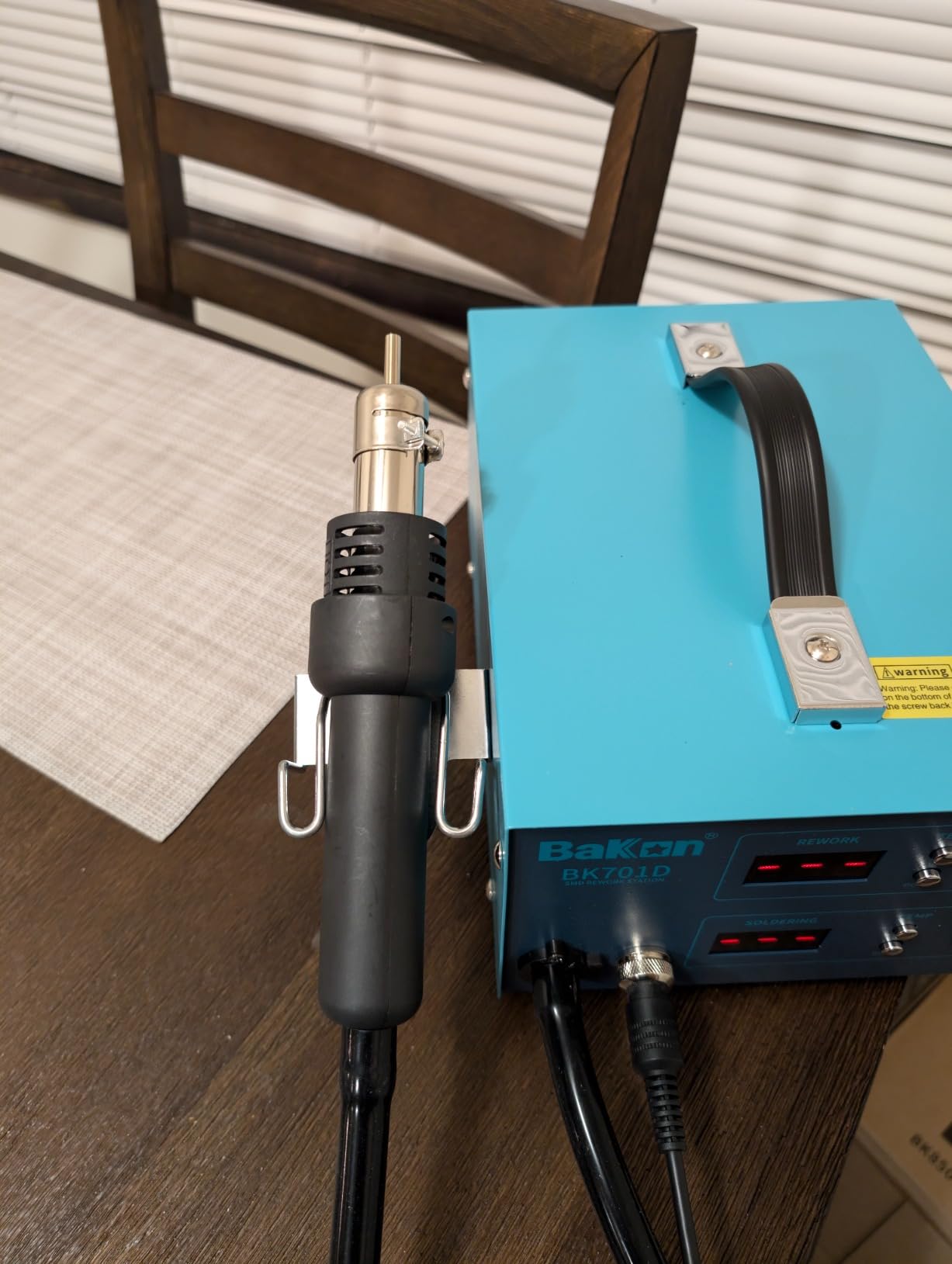
10. BAKON BK701D: Focused on Dense Phone and Laptop Boards
BK701D 700W Soldering Station, 2 In 1 Hot Air Rework & Soldering Iron Station, SMD ESD Safe Solder Station,Electronic Soldering Kit For Mobile Phone Laptop Repair or Circuit Board Soldering
90W iron to 896 °F PID
700W hot air to 932 °F
20 ms PID sampling cycle
Auto sleep after 10 minutes
Pros
- Two independently controlled channels
- 700W hot air reaches 932 °F
- Complete accessory set for board repair
- Auto sleep extends heater core life
Cons
- 90W iron output is modest for large thermal masses
- 110V US specification only
- Display type described generically
- Higher share of 1-star feedback than the mid-range picks
The BK701D is built with a specific job in mind. The manufacturer lists SOIC, CHIP, QEP, PLCC, BGA and SMD packages as target work, and the hot air channel reaching 932 °F at 700 watts gives it the thermal headroom that phone and laptop boards need. Dense, multilayer boards with ground planes and copper pours are exactly where a weak hot air gun struggles.
Both channels can be run independently, which lets you work a board with the iron without leaving the hot air heater powered. The iron uses PID control on a 20 millisecond sampling cycle and runs 212 to 896 °F at up to 90 watts, and auto sleep kicks in after 10 minutes in the holder to protect the heater core.
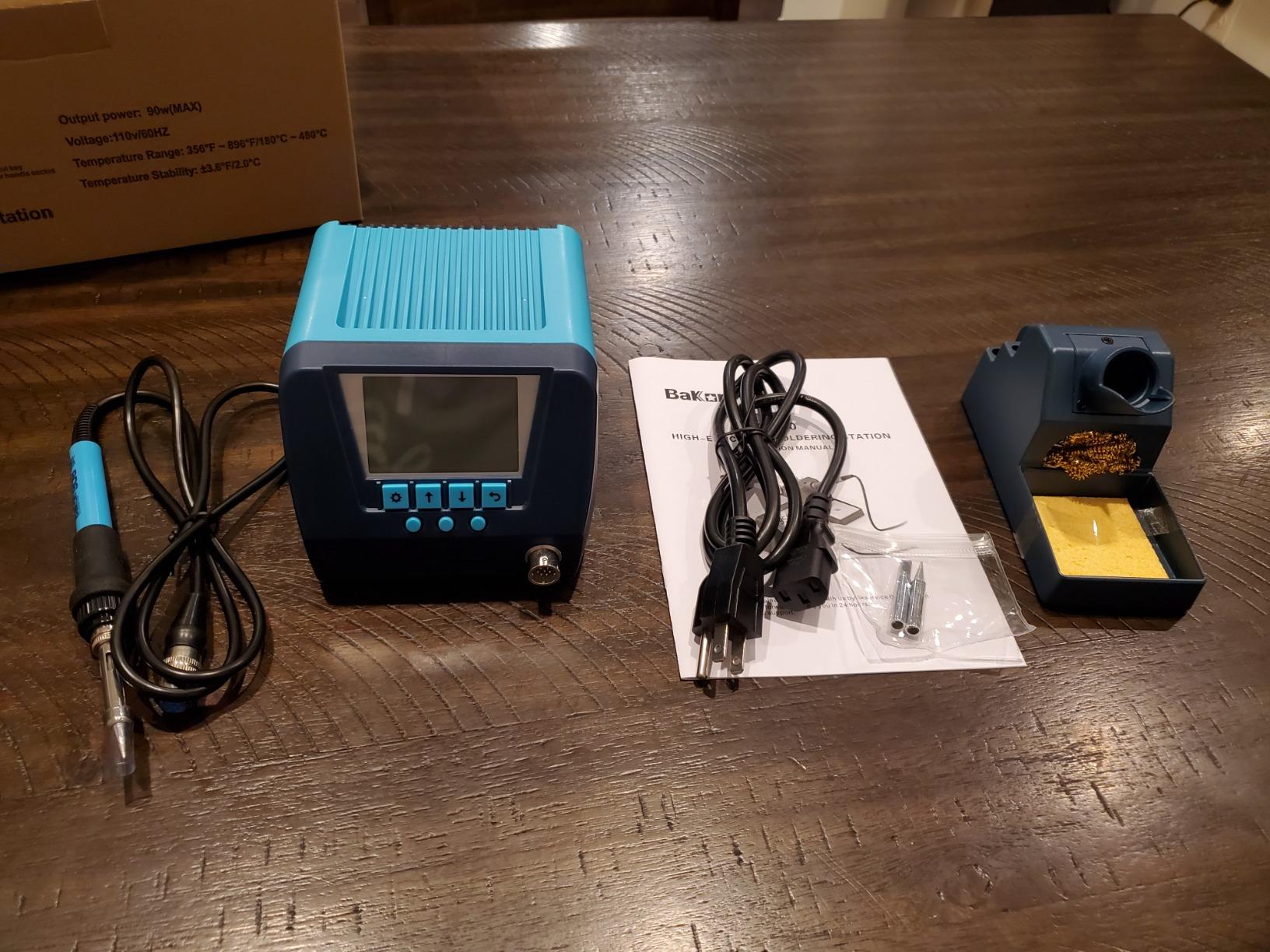
The kit is complete enough to start immediately, with 30 grams of solder wire, five tips, solder suction tape, a brass wool tip cleaner, a desoldering pump, tweezers and two hot air nozzles.
Feedback is more mixed here than for the YIHUA and WEP units, and the reason is quality control rather than design. The digital readout is listed generically as LCD or LED, so the control type varies between pieces.
Where this station earns its spot
If phone, laptop and other tightly packed board work is your regular output, the 700 watt hot air channel is the reason to pick this over a smaller unit. It gets a large package to working temperature quickly, which is the difference between a clean lift and a long dwell that can discolour the board or stress a pad.
The one-year US warranty and 24-hour technical support are better stated terms than several other products in this roundup, which is worth something when a piece arrives faulty.
Where you will feel the limits
Ninety watts of iron output is modest for large thermal masses. Power devices, heavy ground planes and big connectors will outrun it, and you will spend longer holding the tip on the joint than you would with a larger station, which is exactly the situation where pad damage risk rises.
It is also 110V US specification only. Test both channels on arrival, and if you work on 220V supply this is not a straightforward purchase.
How to Choose a Desoldering Station for PCB Repair
The wrong question is which station is most powerful. The right question is which tool matches the joints you actually remove. Work through the following criteria in order and most of the choice resolves itself before you compare wattage.
Decide between vacuum desoldering and hot air rework first
These solve different problems and neither replaces the other. Vacuum desoldering with a heated nozzle melts one specific joint and pulls the solder away, which is the right tool for through-hole pins, connectors, IC sockets and individual SMD parts surrounded by delicate neighbours. Hot air rework heats a broad area with directed air, which is the right tool for removing multi-pin packages, reflowing joints and BGA work.
A solder pump has no heat at all. It is a plunger that creates a vacuum, and it works well for small jobs with a clean, well-fluxed joint. It leaves residue, needs a hot iron anyway and offers no temperature control, so it is a companion tool rather than a replacement.
Most people who do serious board repair end up owning one of each. A vacuum gun for through-hole work plus a hot air station for surface-mount work covers the ground properly, and several picks in this roundup bundle a manual pump as a free extra.
Match the temperature range to your solder
Leaded work usually sits comfortably between 330 and 350 °C. Lead-free alloys behave very differently because they melt at a higher temperature and offer no wetting window, so they need to be brought up to temperature quickly and held there rather than nursed. A station capped at 450 °C will get through most lead-free through-hole joints, but a unit reaching 500 °C gives you headroom when a large joint has a lot of thermal mass.
Stability matters more than the maximum number. A station that overshoots and then hunts between cycles will cook adjacent pads while you work, so a closed-loop sensor or a fast PID loop is worth more than an extra fifty degrees of headroom.
Check consumables before you check specifications
This is the factor buyers regret skipping most, and it is the one that forum users raise above all others. A desoldering station is a system, not an appliance. If nozzles, filters, O-rings and catch tubes are hard to source in three years, the tool is finished regardless of how well it performs today.
Established brands have a deeper parts catalogue and more third-party suppliers, which is why a mid-tier unit from a known name frequently outlasts a cheaper one with better headline specifications. Check that replacement tips for your specific model are easy to find before you commit, and never buy a tool whose tip ecosystem has already been discontinued.
Look at the vacuum path, not just the pump
Self-contained diaphragm pumps are compact, quiet and need no shop air, which is why almost every pick in this roundup uses one. The trade-off is lower airflow than a dedicated external electric pump, and that gap shows on stubborn joints and densely packed pins.
Where the path sits matters as much as the pump. A section of tubing immediately behind a cool tip will collect solder that sets and restricts airflow. If the tool is designed so that the path is heated or easily accessible with a cleaning rod, it will hold its suction far longer than one where the passage is buried.
Match wattage to the heaviest joint you will meet
Wattage describes how fast the tool recovers when heat is pulled out of the tip by a large copper area. A small signal joint on a thin board will not tell you much about a 90 watt iron. If you routinely work on power devices, heavy ground planes or older boards with substantial copper, look at iron output rather than total station wattage, and treat a lower figure as a real limitation.
Hot air output is a separate number and follows its own logic. Around 700 watts with airflow up to 120 litres per minute is a common sweet spot for dense boards, and anything in the 20 watt class will feel slow on large packages even if the temperature readout is accurate.
Do not forget voltage, footprint and warranty
Almost every unit in this roundup is 110 to 127V only. If your bench runs on 220V, that is a hard limit rather than a detail, and it rules out several otherwise good options unless you add a step-down arrangement. Check this before anything else on the specification list.
Footprint matters more than buyers expect. A station that measures ten inches deep needs bench space you may not have, especially if you already run a soldering iron, a microscope and a parts tray in the same area. Warranty length is also a signal: ninety days, as offered on the Hakko in this roundup, is a long way below the one-year terms several competing brands publish.
If you are building a first bench, plan the whole station rather than one tool. Our soldering iron guide covers the temperature control side, and for the board itself our PCB prototyping kits for home guide covers what you will be soldering to. Boards you make at home often start as a toner transfer, and our laminator guide for PCB toner transfer covers the step before that.
Maintenance and Consumables: Keeping Suction Strong
Desoldering tools fail in a predictable way, and almost all of it is preventable. A forum owner described budget tools as working well for a while and then simply stopping, and in most cases the mechanism is a clogged path or a filter nobody replaced, not a dead heater.
Diagnose suction loss before replacing anything
Work through these in order, because the first two account for most cases. Remove the solder collection chamber and check whether the filter is saturated. Then look at the tube immediately behind the nozzle, which is the section most often overlooked. Finally, check the nozzle bore itself, where a skin of oxidised solder narrows the opening and reduces airflow at the tip.
On tools with a sight tube, the fill level is visible without opening anything, which is why the ZD-915 in this roundup has one. If suction is fine on a warm nozzle and weak on a cold one, the path is blocked. If it is weak at every temperature, the problem is the filter or the pump itself.
Run a cleaning routine on a fixed schedule
Empty and rinse the collection chamber at the end of every session. Run the supplied cleaning rods through the suction path every few desolders on tools with an unheated rear section, which is the single highest-impact habit for maintaining performance. Clear the nozzle bore with a rod while the tip is still warm, before the solder sets.
Replace filters on a fixed interval rather than waiting for a symptom, and keep a spare set from the day you unbox the tool. Wipe the barrel and check the cord entry for heat damage periodically, and store the tool with no solder in the chamber so nothing sets in place while it sits unused.
Keep a small consumables shelf from the start
Buy a spare nozzle set, a spare filter, a spare O-ring and a spare collection tube when you buy the tool, not when you need them. It is the cheapest insurance in this category, and it is far better than discovering a part is discontinued after the tool has stopped working.
Budget for replacement tips as part of the purchase, not as a surprise. Tools that ship with a single nozzle will need a set within months, and for the two true vacuum stations in this roundup those are the parts most likely to need replacing. If your work is lead-free, treat tips as consumables with a finite life and price them into the decision.
Frequently Asked Questions
What is a desoldering station used for?
A desoldering station heats a hollow suction nozzle to melt solder, then vacuums the molten metal into a collection chamber. It removes through-hole components, connectors and some SMD parts without the residue, time cost and pad damage risk that come with solder wick and a manual pump.
Is a desoldering station worth it?
It is worth it once you are removing more than a handful of joints or working on multi-layer and SMD boards. For a single joint on a clean board a solder pump and some wick are fine. For connector replacement, IC socket removal or dense board work, the time saved and the control over temperature make the tool earn its place quickly.
What is the difference between a desoldering gun and a desoldering station?
A desoldering gun is the handheld piece with the heated nozzle and a small built-in pump, and it is often all you need. A station adds a base unit with a control display, a stronger pump, a larger collection chamber and sometimes hot air rework. The station is a bench anchor; the gun is a portable tool.
Are cheap desoldering stations bad?
They are adequate for occasional through-hole work and the two true vacuum stations in this roundup hold up well when the suction path is cleaned regularly. Their common weaknesses are an unheated rear tube section that clogs, thin documentation and weak parts support. They are a poor choice for production volume work.
Do I need a desoldering station or just a solder pump?
A solder pump is enough for a few clean joints on a simple board. Once you face dense pin rows, multi-layer boards, SMD packages or lead-free solder, a station with temperature control and real suction becomes far more effective. Most technicians end up using both, with the pump for cleanup and the station for the joint itself.
The Verdict: Which Station Should You Buy?
The Hakko FR301-03/P is our pick among the best desoldering stations for PCB repair because it is the only tool in this group that combines real vacuum desoldering, a closed-loop heating sensor, a four-position temperature dial and a parts supply that will still exist in several years. It weighs 1.1 pounds, needs no base unit and clears a plated through-hole in a single pull.
For everything else, match the tool to the work. Buy the YIHUA 862BD+ as an all-round bench centre when you want an iron and a hot air gun with the deepest public review history. Choose the YIHUA 853D when your work is live phone and laptop boards and you want a bench supply and USB test port in the same box. Add the YIHUA 959D for maximum airflow on large surface-mount packages, or the WEP 8858-V when bench space and travel matter more than power.
Two warnings worth repeating. Check that replacement nozzles, filters and tips for your chosen model are easy to source, because a tool that cannot be maintained is finished regardless of its specifications. And confirm the voltage, because almost every unit here is 110 to 127V only. When you are ready to put the first board together, our PCB prototyping kits for home guide is the natural next step.