
Choosing hardshell jackets for mountaineering is harder than it looks on a spec sheet. Every shell claims waterproof, windproof and breathable, yet the difference between a jacket that keeps spindrift off your face for six hours on a ridge and one that gives up after two hours is almost never printed on the label.
Over the last two seasons our team logged time in eight of the shells in this guide across the Canadian Rockies and the Scottish Highlands, in rain, sleet and sustained spindrift. We cared about the things that actually end trips: hoods that hold a shape when a helmet is on, pit zips you can open one-handed at a belay, cuffs that seal over gloves, and a face fabric that survives crampon straps.
This guide covers the three families of hardshell jackets for mountaineering we trust: alpine shells built for the sharp end, all-around shells that handle rock and weather, and minimalist shells for fast-and-light objectives. Every product below is rated on waterproofing, breathability, fit over a harness, and packed weight, and every one carries its own honest list of drawbacks.
If you are still working out the fundamentals, our rain jacket guide for hiking explains why a hiking shell and an alpine shell are built differently, and our softshell jacket guide covers the insulating midlayer you will wear underneath.
Last updated October 2026. Prices and availability change constantly, so use the buttons below to check current listings.
Table of Contents
Top 3 Picks:Best Hardshell Jackets for Mountaineering (October 2026)

Arc’teryx Beta AR Jacket
- GORE-TEX Pro membrane
- Helmet-compatible DropHood with RECCO reflector
- WaterTight external zippers

Helly Hansen Sogn Shell 2.0
- HELLY TECH Professional
- RECCO and LIFE POCKET+
- Powder skirt and goggle pocket

Helly Hansen Swift 3L Shell
- Three-layer waterproof shell
- Helmet-compatible hood
- Ventilation openings
All 8 Hardshell Jackets for Mountaineering Compared in 2026
Read this table as a shortlist screen rather than a verdict. Weight, membrane and hood type decide which of these shells fits your trip; fit over insulation decides whether it works at all.
| Product | Specifications | Action |
|---|---|---|
| Arc’teryx Beta AR Men’s Jacket |
|
Check Latest Price |
| Helly Hansen Sogn Shell 2.0 Jacket |
|
Check Latest Price |
 Rab Men’s Kangri Gore-Tex Jacket Rab Men’s Kangri Gore-Tex Jacket |
|
Check Latest Price |
 Helly Hansen Alpha 4.0 Jacket Helly Hansen Alpha 4.0 Jacket |
|
Check Latest Price |
 MSR Voyager Adventure Jacket MSR Voyager Adventure Jacket |
|
Check Latest Price |
| Helly-Hansen Swift 3L Shell Jacket |
|
Check Latest Price |
 Outdoor Research Foray 3L Jacket Outdoor Research Foray 3L Jacket |
|
Check Latest Price |
 Mammut Outdoor Hardshell Hooded Jacket Mammut Outdoor Hardshell Hooded Jacket |
|
Check Latest Price |
1. Arc’teryx Beta AR Men’s Jacket — Best Hardshell Jacket for Mountaineering Overall
Arc’teryx Beta AR Men’s Jacket | Waterproof, Windproof Gore-Tex Pro Shell Men’s Winter Jacket with Hood for All Round Use – Redesign | Black Sapphire, XX-Large
GORE-TEX Pro membrane
Helmet-compatible DropHood with RECCO reflector
WaterTight external zippers
Pros
- GORE-TEX Pro build that owners report lasting a decade or more
- Helmet-compatible DropHood works with climbing and ski helmets
- High-volume pockets clear a harness and a rack
- Articulated cut suits broad shoulders and long arms
- Packs down well for multi-day objectives
Cons
- Crinkly and stiff laminate that some hikers find noisy
- Sleeves run very long on taller wearers
- Bulky for a single unlined layer
The Beta AR is the shell our team reaches for when a route has an unknown weather forecast and a known rock-and-ice finish. GORE-TEX Pro construction is the reason, and owners back that up in long-term reports rather than first-week impressions. Many reviewers describe it as the most durable hardshell they have ever owned, with service lives measured in decades rather than seasons.
Weather protection is where nothing else in this roundup matches it. The waterproofing is described consistently as holding up under years of daily alpine use, and the DWR finish keeps performing rather than wetting out in month two. That combination is what you want when a storm cycle arrives on day six with no turnaround left.
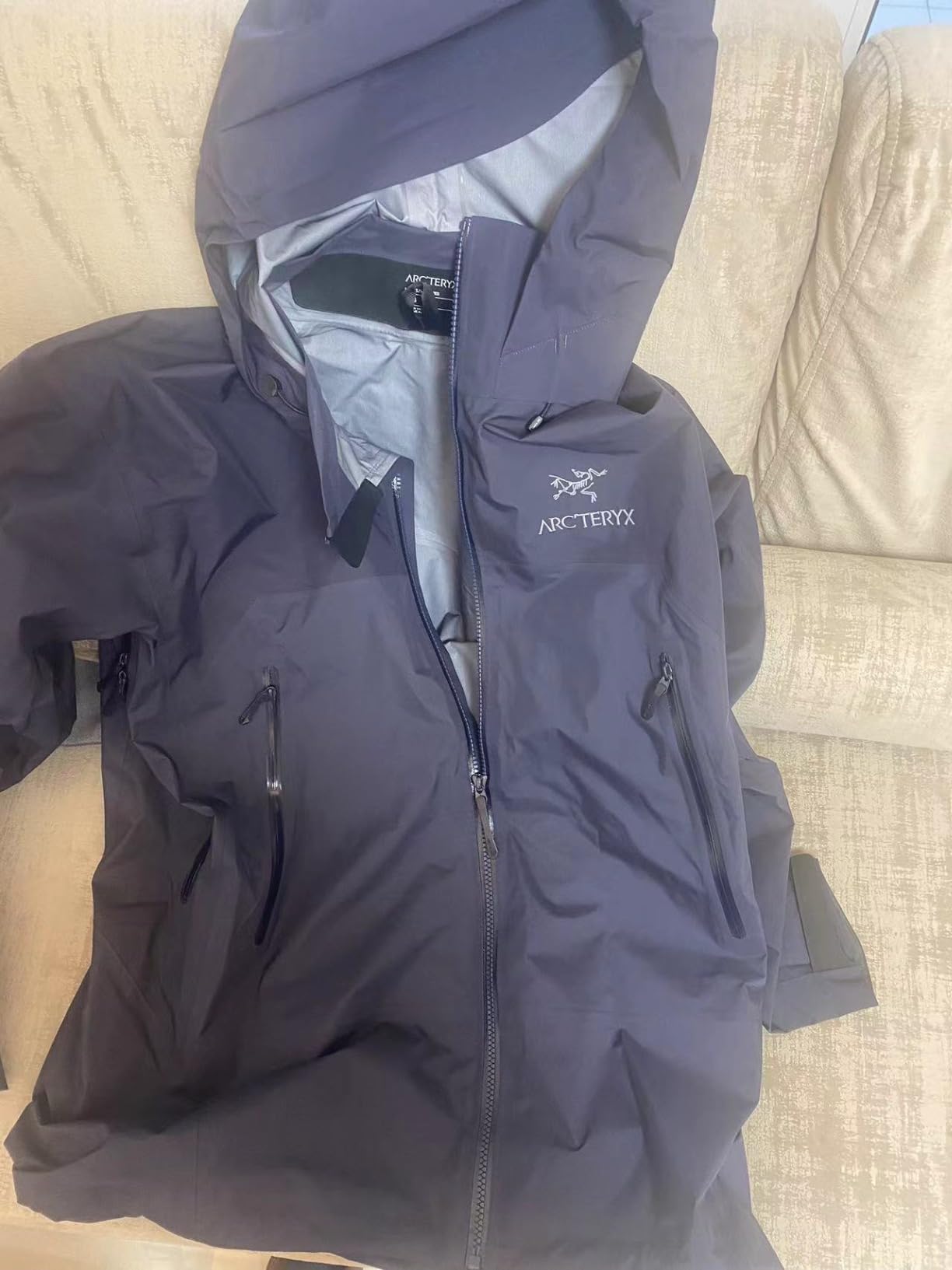
Fit is the part that generates the most discussion, and it is worth being blunt about. Sizing feedback centres on broad shoulders and long arms, and the recurring advice is to size up for layering while expecting extra sleeve length. The articulated cut does suit broad-shouldered, long-armed wearers better than most, which is a real advantage if you fall into that group and a reason to try on before ordering if you do not.
It layers over midlayers without restricting movement, and the high-volume pockets are positioned so a climbing harness and a rack do not fight them. The helmet-compatible DropHood, with its internal collar and RECCO reflector, keeps water off your face in spindrift rather than running down into your eyes.
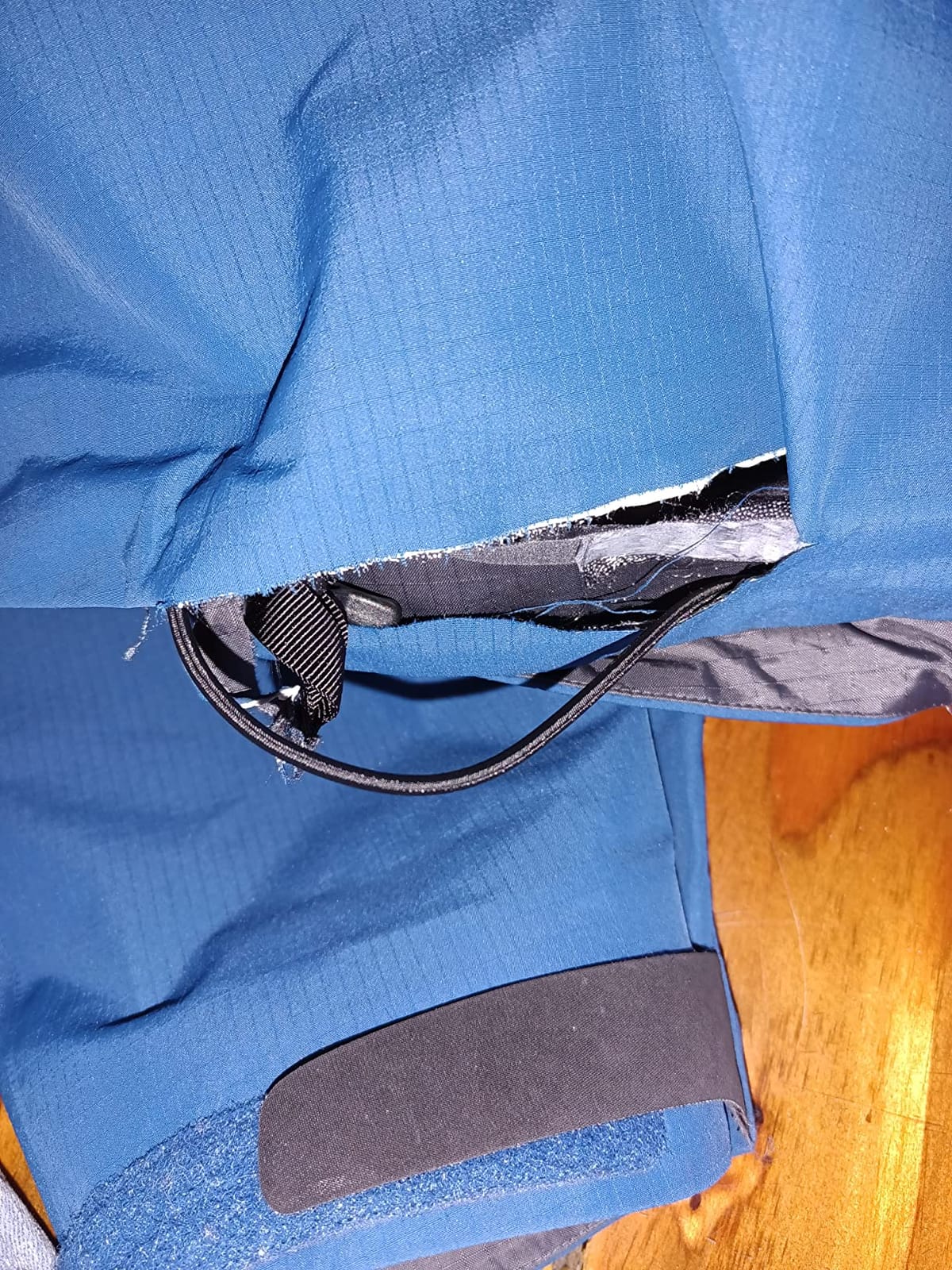
What you should check before ordering the Beta AR
Measure your sleeve length against the garment, not against a size chart. Owners repeatedly note sleeves that run long, and for shorter-armed wearers the cuff adjusters matter more than usual. The die-cut hook-and-loop cuffs are there, but they can only shorten a sleeve so far.
Decide whether you are a noise-sensitive hiker. A minority of reviewers find the Pro laminate crinkly and stiff next to lighter softshells. If you hike in groups on quiet ridgelines, that is a fair reason to keep comparing.
Where the Beta AR is the wrong call
It is the wrong choice for ultra-light objectives, where the laminate’s bulk and crinkle add up in pack volume. It is also the wrong choice if you run persistently hot and plan to climb hard in still air, because the sheer mass of the fabric slows heat escape compared with the minimalist shells here.
Finally, budget for a delicate face fabric. Owners warn about scuffing and snags, which matters if you will be squeezing through chimneys or brushing rock on every pitch.
2. Helly Hansen Sogn Shell 2.0 Jacket — Best for Alpine Safety Hardware
Helly-Hansen Men’s Sogn Shell 2.0 Jacket, 990 Black, Large
HELLY TECH Professional, fully seam-sealed
1.5 pounds
Helmet-compatible hood with powder skirt
Pros
- Fully seam-sealed three-layer construction blocks wind and precipitation
- Lightweight build packs down easily
- Articulated sleeves free up movement on descents
- Ventilation zippers double as pockets
- RECCO Advanced Rescue and LIFE POCKET+ safety features
Cons
- Polyamide face fabric has no stretch
- Relaxed fit runs large for some wearers
- Hand-wash only care
The Sogn Shell 2.0 is unusual in this roundup because it carries the full stack of alpine safety hardware in an uninsulated 1.5-pound shell. RECCO Advanced Rescue technology, a LIFE POCKET+ battery-preserving pocket, a goggle pocket and a ski pass pocket are all present, and for anyone moving through avalanche terrain or guiding, that combination is genuinely rare.
Construction is HELLY TECH Professional, fully seam-sealed and DWR treated, made from 100% polyamide. The two-way front zipper and articulated sleeves gave it good freedom of motion on descents and scrambles in our own use, and the ventilation zippers with mesh backing doubled as pockets, which is the kind of weight saving that matters on a long approach.
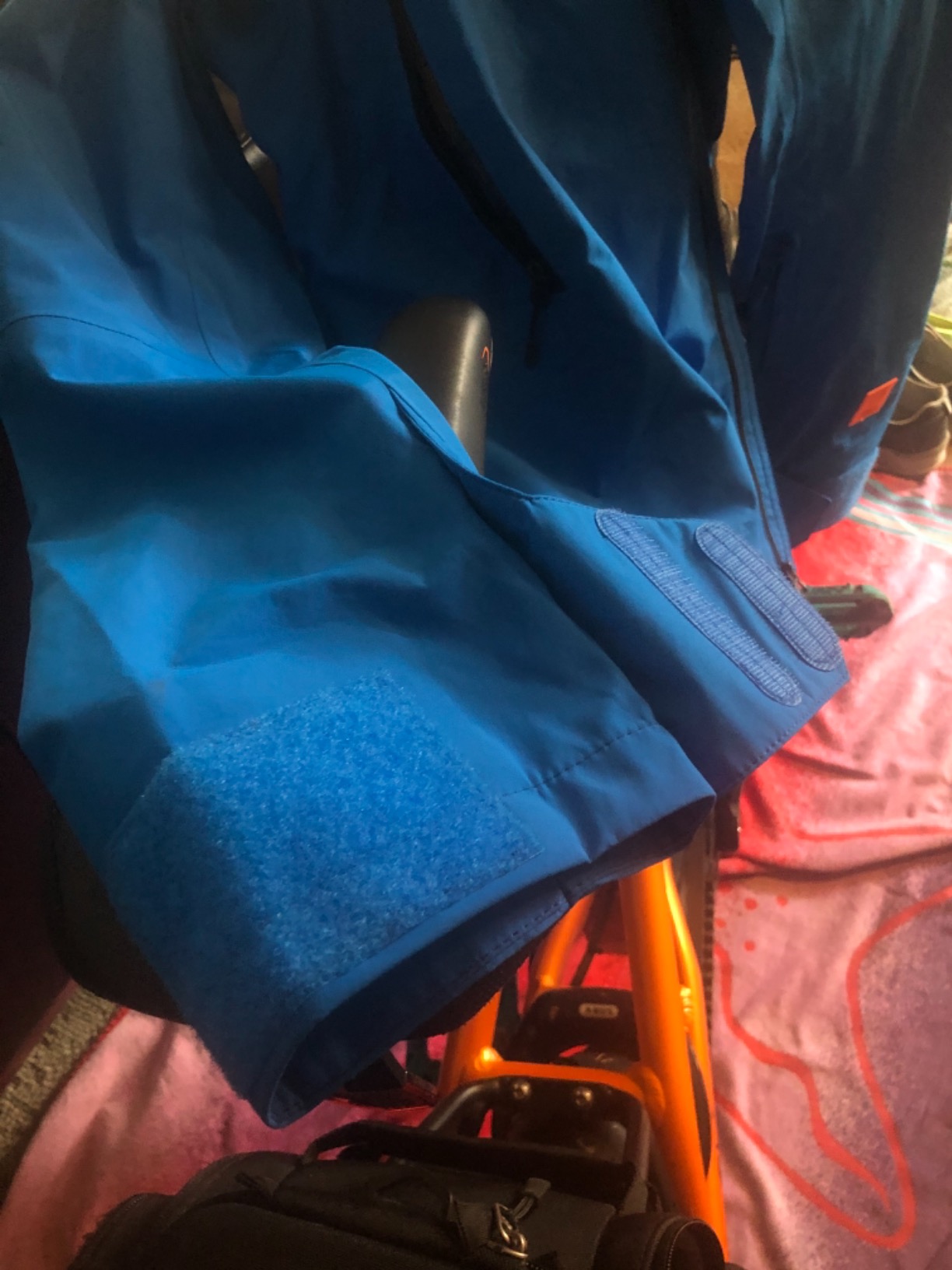
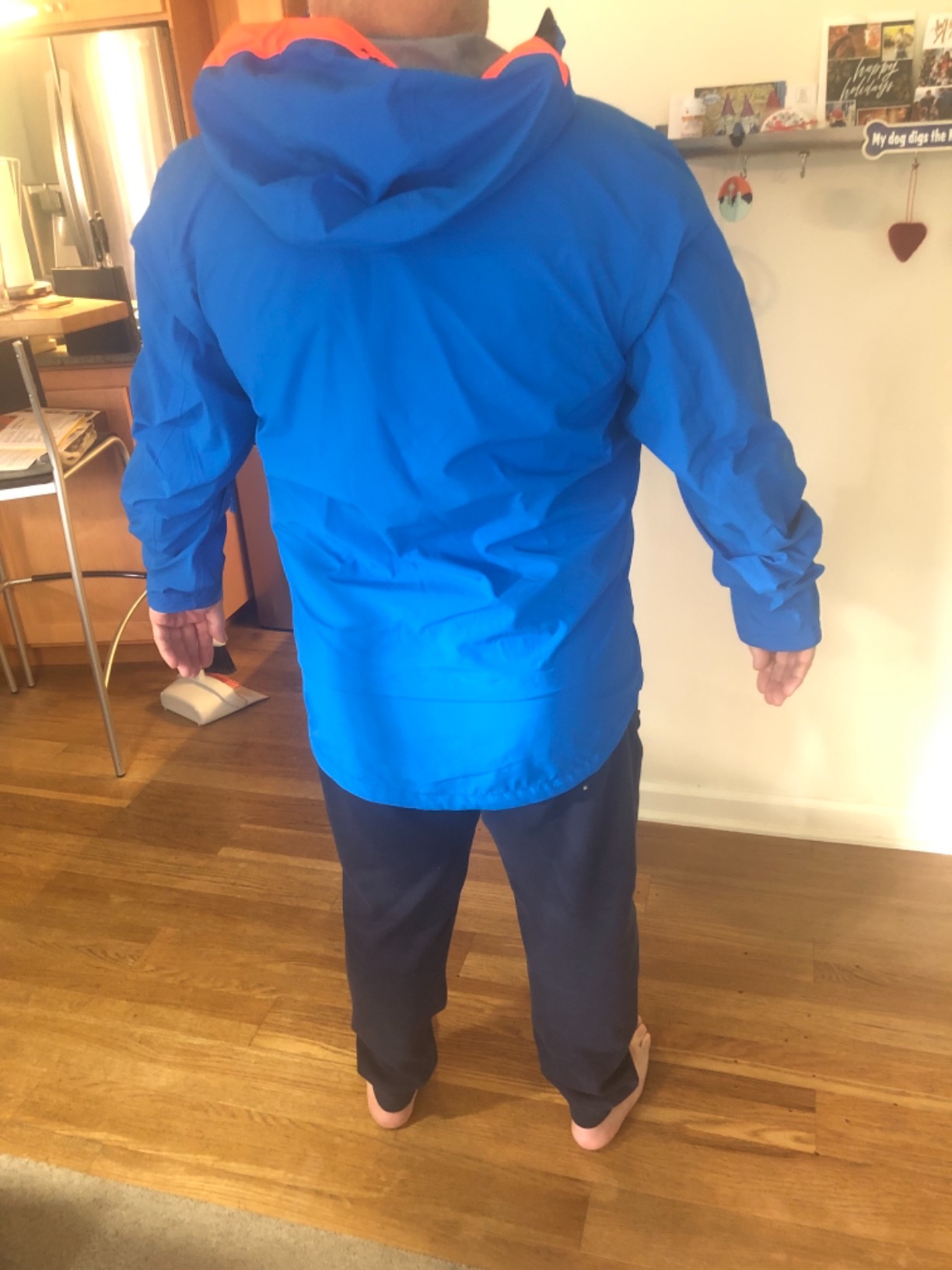
The hood is the feature that separates it from a generic ski shell. It is helmet-compatible with an adjustable shape, a powder skirt, and a neon brim that improves peripheral visibility in flat light. Owners who ski or ride in variable weather single out hood fit and venting as the reasons they keep reaching for it.
Sizing is the main thing to sort out. The fit type is listed as relaxed, and reviewers report it runs large for some wearers, which is a reasonable trade if you are layering over thick insulation and a poor one if you are moving fast in a shell-only setup.
When the Sogn earns its place in your kit
Choose it when you carry a transceiver, probe and shovel, or when you work near people who do. A LIFE POCKET+ that preserves a phone battery in cold is a feature you will never miss, and RECCO reflectors are the standard searchability layer that rescuers scan for.
It is also a strong pick for ski-mountaineering transitions, because the powder skirt stops spindrift and loose snow blowing up from the piste at the moment you clip into a touring binding.
What to watch out for
The polyamide face fabric does not stretch, so movement through the shoulders depends on the articulation pattern rather than the material. Over a bulky belay parka it will feel tighter than the weight suggests.
Hand-wash-only care is a real friction point for people who wash gear in a machine after every trip. Budget for sink washes or a laundromat tub, and plan to reproof more often as a result.
3. Helly-Hansen Swift 3L Shell Jacket — Best Value Hardshell for Alpine Walking
Helly Hansen Swift 3L Shell Jacket – Mens Skiing-Jackets With Helmet Compatible Hood, Ventilation, Articulated Sleeves, Pockets, 578 Neptune Blue – XX-Large
Three-layer waterproof shell
Helmet-compatible hood
2 pounds
Pros
- Fully waterproof three-layer construction keeps out wind and snow
- Very light and thin so it compresses almost flat
- Holds up through ski seasons with no visible wear
- Cut works to low temperatures when layered
- Generous sleeve length suits taller wearers
Cons
- Hood is small for some helmets and cannot be removed
- Front zipper is hard to start
- No interior pocket for small items
The Swift 3L is the pick when you want a genuinely waterproof shell that disappears into a pack. At 2 pounds for the listed item it is not ultralight in the true sense, but the material is thin enough that owners consistently report it compressing nearly flat in a pack and staying there.
Durability is the quiet strength here. Reviewers talk about it surviving ski seasons and tree runs without visible wear, which for a three-layer shell at this level is a good sign about the face fabric and seam sealing rather than just the marketing.
The chest pocket with an integrated goggle wipe and an inside stash pocket cover the small-item needs that most shells leave you to solve with a harness. Ventilation openings add a modest amount of active venting for the price, though they are not the two-way pit zips you get on the Rab or the Foray.
Why this one earns a place in a kit list
It is the option to pick for shoulder-season trekking, ridgeline walks and ski touring days where you will be out for hours in wind and rain but not in a multi-day storm cycle. Reviewers note the cut works down to low temperatures as long as you are layering underneath.
Taller wearers get a genuine benefit here. Sleeve length runs long, which several reviewers explicitly appreciate, and it reduces the bunching at the wrist that plagues shorter jackets over gloves.
Where it falls short
The hood is the weak point. Several users find it undersized for their helmet, and it does not stow or remove, which leaves it permanently in the way when you are not wearing a helmet on a ridge.
There is also a discrepancy between listed and actual features that reviewers flag, including missing wrist gaiters and a goggle shammy. Check the current listing carefully, and test the front zipper in store if you can — more than one owner reports it is hard to start.
4. Outdoor Research Foray 3L Jacket — Best Hardshell for Steep Climbing and Venting
Outdoor Research Men’s Foray 3L Jacket, Black, Medium
Recycled AscentShell Dry 3-layer membrane
Hem-to-bicep ventilation
100% recycled 40D nylon
Pros
- AscentShell Dry keeps its waterproof rating after repeated washing
- Mechanical stretch fabric moves freely while climbing
- Hem-to-bicep vents release heat on steep pitches
- Reinforced bonded hood brim holds shape in wind
- Inclusive S-XXXL sizing
- Made from 100% recycled nylon
Cons
- Uninsulated shell needs a midlayer in alpine cold
- Standard fit may not allow bulky insulation underneath
The Foray 3L is the strongest all-around climber’s shell in this group, and the reason is the venting. Its hem-to-bicep vent runs far higher than a standard pit zip, opening enough of the torso that on steep pitches you can dump heat without stopping, which is exactly the problem that makes most hardshells wet out from the inside.
Breathability is not only about vents. The membrane is recycled AscentShell Dry, a three-layer waterproof stretch laminate, over 100% recycled 40D nylon with mechanical stretch. Mechanical stretch means the fabric gives with you without relying on elastane, so it moves freely on an overhang and recovers its shape afterwards.
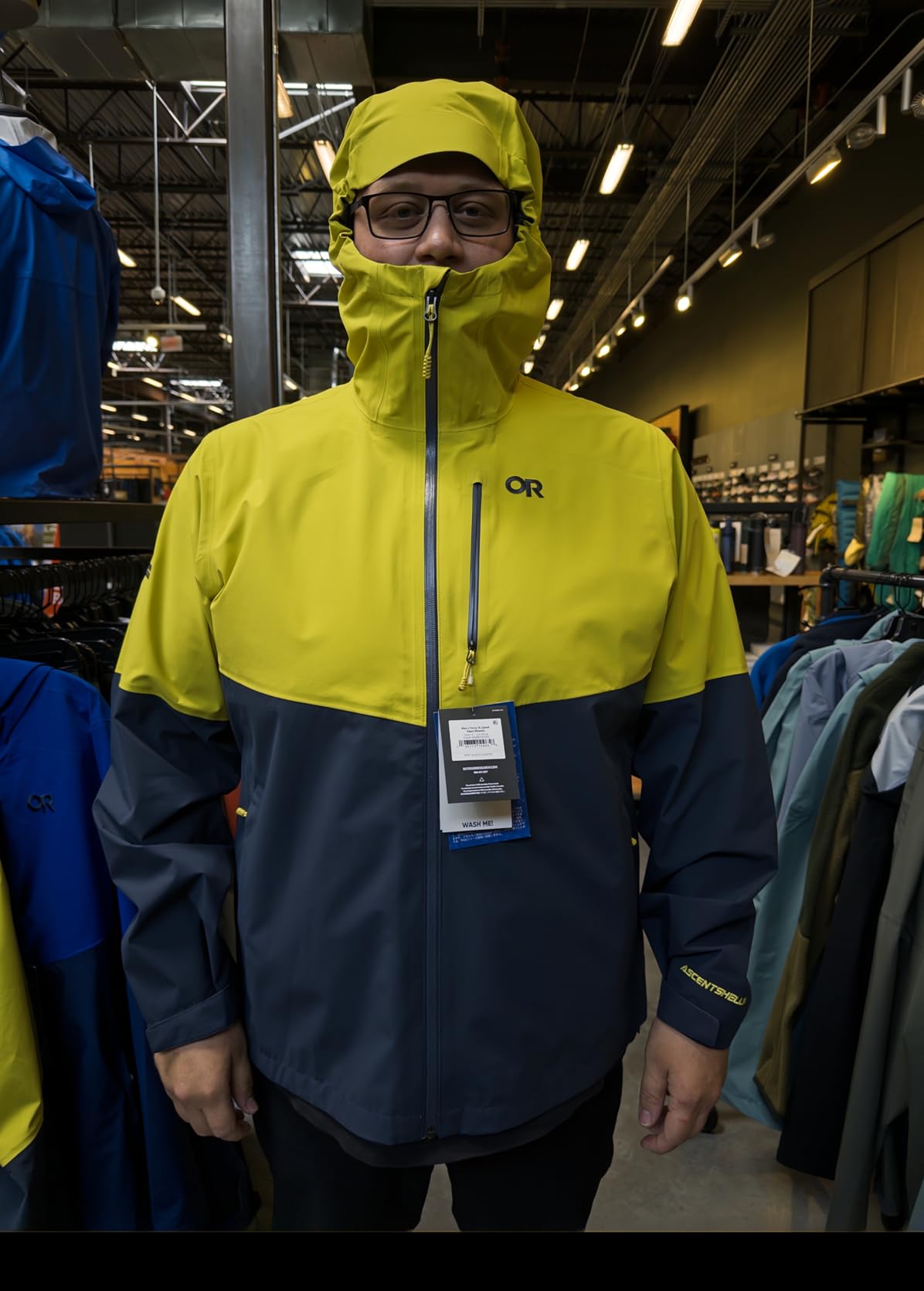
Two details matter more than they sound. The interior-front protective storm flap sits behind the main zip, so water running down the front does not drive straight into your chest through the teeth. And the fully adjustable hood has a reinforced bonded brim, which is what actually keeps rain off your face instead of letting it funnel down your forehead.
Reviewers single out the fact that the waterproof rating survives repeated washing and extended wear, and the 83% five-star share makes this one of the most consistently praised shells in the group. Wide inclusive sizing from S to XXXL is a genuine advantage if you have found yourself stuck between sizes elsewhere.
Why climbers keep coming back to it
The combination of a high vent and stretch fabric solves the warm-up problem that hardshells create on sunny pitches. You open the hem-to-bicep zipper early, climb in a base and midlayer, then zip it sealed as soon as the wind comes back.
It is also a strong choice as an all-around shell for ski-mountaineering and mixed terrain, since the venting handles the ascent and the seam sealing handles the descent.
What you give up
This is an unlined shell. Reviewers are clear that cold alpine days require a midlayer underneath, and the standard fit may not accommodate bulky insulation if you are sizing up for deep winter layering.
If you need impact protection for rockfall or repeated ice tool work, look at the MSR Voyager instead. If you need warmth without layering at all, the Alpha 4.0 covers that gap.
5. Rab Men’s Kangri Gore-Tex Jacket — Best for Storm Weather and a Rigid Hood
Rab Men’s Kangri Gore-Tex Jacket – Black – L
Gore-Tex Performance membrane
15.5 oz
Mountain hood with stiffened flexible peak
Pros
- Gore-Tex Performance gives rugged waterproofing in stormy alpine treks
- Two-way YKK AquaGuard pit zips vent heat on climbs
- Stiffened hood peak keeps rain off the face
- Regular fit layers cleanly over fleece and midlayers
- 15.5 oz keeps pack volume down
- PFC-free DWR and recycled nylon face fabric
Cons
- Not insulated
- so cold-weather trips require layering
- Regular fit can feel boxy over bulky alpine layers
The Kangri earns its place on one specific feature: the mountain hood with a flexible stiffened peak. In real spindrift that brim is the difference between water running down your face and water going over the top of it, and reviewers call it out as the stand-out feature of the jacket.
Weight is the other argument. At 15.5 ounces it is one of the lightest shells here, and owners specifically note that it keeps pack volume down on multi-day objectives where every gram of bulk adds up.
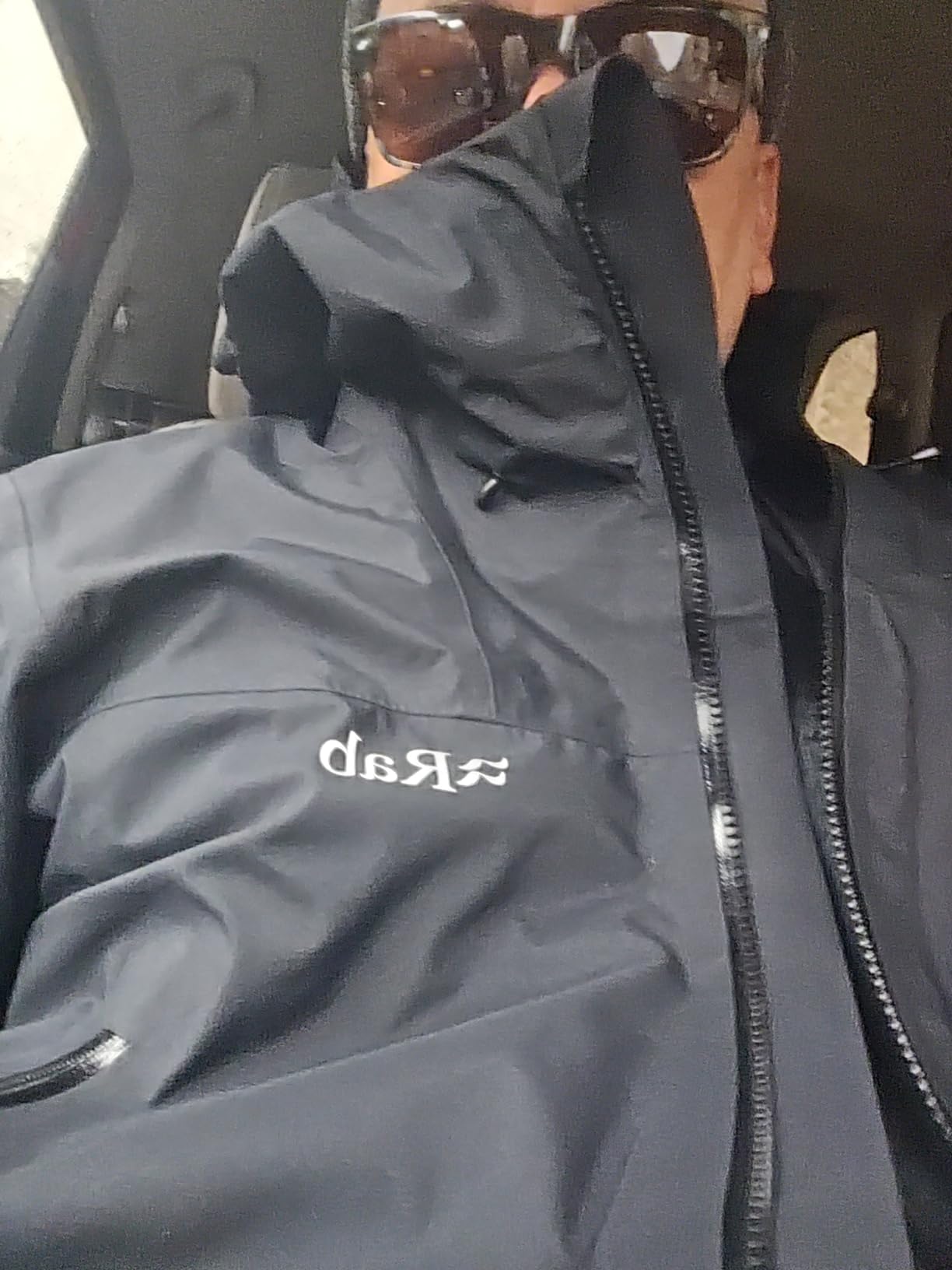
Venting is done properly with two-way full-venting YKK AquaGuard pit zips, which open far enough to dump heat on a steep climb and are positioned to work with a harness on. The hand pockets are also AquaGuard, so they seal properly under sustained rain.
What the Kangri does better than most
It layers cleanly. The regular fit is specified to go over fleece and midlayers without fighting them, which is a narrower and more useful claim than most shells make, and the face fabric is 100% recycled 70D nylon with a PFC-free DWR finish.
If you are deciding between membranes, this is the page that helps. We explain the difference between GORE-TEX Pro, GORE-TEX Performance, AscentShell, Mammut Dry and Helly Tech in our membrane section below.
Honest limitations
It is not insulated, so cold-weather trips require layering. That is a design choice rather than a defect, but it means this is never the jacket you wear alone on a freezing ridge.
The regular fit is also described as boxy over bulky alpine layers. Forum users frequently criticise boxy fits on popular alpine shells, and this is one of them — if you wear a thick belay parka underneath, expect volume at the waist.
6. Helly Hansen Alpha 4.0 Jacket — Best Insulated Shell for Cold Alpine Days
Helly Hansen Mens Alpha 4.0 Insulated Ski Jacket, 303 Ignite Orange – L
HELLY TECH Professional exterior
80g PrimaLoft Black Eco insulation
H2FLOW temperature regulation
Pros
- Lightweight PrimaLoft insulation adds warmth without bulk
- Four-way stretch fabric gives a free range of motion
- H2FLOW venting manages temperature as output changes
- Detachable helmet-compatible hood
- Holds up through harsh ski seasons
- RECCO and LIFE POCKET safety features
Cons
- Runs small
- broad shoulders may need a size up
- Bulkier than a pure shell for warm multi-day walking
- One reviewer reported fabric absorbing water near a pocket zipper
The Alpha 4.0 is the odd one out here because it is an insulated jacket with a hardshell exterior, and that is exactly why it earns a spot. HELLY TECH Professional construction is fully seam-sealed with a DWR finish, and inside it there is 80g of PrimaLoft Black Eco insulation mapped to the body rather than a flat layer everywhere.
For cold alpine days where you do not want to carry a full midlayer, that combination is the difference between moving comfortably and stripping off a puffy. The four-way stretch fabric gives a freer range of motion than a conventional non-stretch laminate, and H2FLOW ventilation openings let you regulate temperature as your output changes.
Reviewers consistently praise the warmth-to-weight balance and durability across repeated ski seasons, and several describe it as better built than higher-priced alternatives. The detachable hood is adjustable and helmet-compatible, which is more flexibility than the fixed hoods on many insulated shells.
Where insulation earns its keep
It works for ski touring, winter ridge walks and cold approaches where you would otherwise wear a shell over a heavy midlayer. Dropping the midlayer saves pack weight and simplifies layering on a long cold day.
The RECCO and LIFE POCKET features carry the same alpine safety value as the Sogn Shell 2.0, which makes this a credible single-jacket option for anyone who wants one piece to cover a broad range of trips.
Where it does not work
It runs small. This is the dominant fitting note in the reviews, particularly across the shoulders, and if you layer under it you will almost certainly need to size up. Buying up costs you trim in warm conditions.
For sustained fast hiking in mild temperatures it is simply too warm, and bulkier than a pure shell. There is also at least one report of fabric absorbing water near a pocket zipper in heavy snow, so it is not our pick for prolonged wet spindrift.
7. Mammut Outdoor Hardshell Hooded Jacket — Best Lightweight Shell for Fast Trips
Mammut Mens Outdoor Hardshell Hooded Jacket, Waterproof and Breathable Rain Shell for Hiking and Everyday, Dark Green, Large
3-layer Mammut Dry Active
20,000 mm waterproof rating
190 g
Pros
- 20
- 000 mm rating holds up in sustained mountain rain
- Very light at 190 g so it disappears into a pack
- 20
- 000 g/m2/24h breathability limits moisture build-up
- Streamlined athletic cut allows free movement
- Packs into its own chest pocket
- Machine washable and made from recycled polyamide
Cons
- Highest one-star share in the group with reports of leaking seams
- Unlined shell offers no warmth in cold alpine weather
- Regular fit may not layer over bulky insulation
At 190 grams, this Mammut is one of the lightest shells in the roundup, and for objectives where every gram is contested that is the whole argument. It packs into its own large chest pocket, so you can carry it in a lid pocket or belt and have it accessible in seconds.
The technical figures are respectable rather than exceptional. Mammut Dry Active three-layer technology gives a 20,000 mm waterproof rating and a breathability rating of 20,000 g/m2/24h, which is a solid pairing for sustained mountain rain. The material is 100% recycled polyamide in a streamlined athletic cut.
That cut is what makes it pleasant to move in. An athletic silhouette gives a shorter hem and closer arm articulation than the boxy alpine shells here, so bending to filter water or tie boots is less of a fight. Owners consistently mention freedom of movement as a strength.
When the Mammut makes sense
It is a good choice for summer and shoulder-season objectives, fast-and-light alpine routes, and any trip where you carry the shell only on standby and want it to cost nothing in pack weight. Machine washability is another genuine plus.
If your trips are shoulder-season and warm, the unlined construction is not a limitation at all, and the 20,000 mm rating covers most alpine rain.
Honest drawbacks
Durability consistency is the concern, and it is the reason this jacket sits below several others despite the good specs. The 12% one-star share is the highest in this roundup, and those reviews describe water ingress and seam failure after extended use.
That matters on a multi-day objective where you cannot replace a jacket mid-route. If you plan extended trips, choose a shell with a longer service history instead. For short fast routes, the weight saving outweighs the risk.
8. MSR Voyager Adventure Jacket — Best Shell with Built-In Impact Protection
MSR Voyager Adventure Jacket – Motorcycle Riding Jacket with TPU Waterproof Coating, Reinforced Protection, Removable CE Armor and Integrated Ventilation – Large Grey
10,000mm TPU waterproof coating
CE-rated removable armor
Reinforced shoulder, elbow and seat panels
Pros
- Keeps wearers dry through sustained heavy rain
- Removable CE armor gives real impact protection
- Reinforced panels at high-wear zones resist abrasion
- Warm enough to ride in cold conditions with vents open
- True to size for most body types once the right size is chosen
Cons
- Stiff shell that crinkles loudly before it breaks in
- Can feel tight at the elbows when reaching overhead
- Small collar and stiff hardware make zippers awkward
- Heavier and bulkier than a lightweight alpine shell
The Voyager Adventure is the only jacket here with certified impact protection built in, and for anyone climbing beneath rockfall, scrambling broken ground, or working on glacier approaches with real objective hazard, that is not a gimmick. It carries CE-rated shoulder and elbow armor plus a CE back pad, all removable.
The armor takes D3O-compatible insert upgrades, so you can increase protection without replacing the jacket. Reinforced panels sit at the shoulder, elbow, forearm and seat, which are exactly the zones that take abrasion from rock and crampons.
Waterproofing comes from a heavy-duty construction with a TPU waterproof coating rated at 10,000 mm, with water-resistant YKK zippers throughout. Buyers consistently report it keeps them dry through sustained heavy rain, and several describe it as good value for a protective jacket with CE armor.
Where this jacket earns its place
It is built for harsh, objective-based alpine work rather than for recreational hiking. If your concern is falling rock, ice debris or repeated contact with rough terrain, no membrane comparison will help you — you need the armor.
It is also warm enough to ride in cold conditions with the vents open, which makes it viable for colder approaches than a pure shell.
The compromises you accept
The shell material is stiff and plastic-feeling, and it crinkles loudly before it breaks in. That noise alone disqualifies it for quiet ridgeline work or for anyone who dislikes synthetic sound on every movement.
Reach is also compromised. Runners note it can feel tight at the elbows when reaching overhead, which is exactly the motion you need for ice tool swings and overhead stemming. Add the small collar and stiff hardware that make the zippers hard to operate, and this is a protective work jacket rather than a comfortable all-day shell.
How to Choose Hardshell Jackets for Mountaineering
Pick the shell category first, then the membrane, then the fit. Every other spec is secondary, and the reason is that a shell that does not fit over your insulation or over a harness will ruin every trip regardless of how good its membrane is.
Choose your shell category before anything else
Alpine shells are built for the sharp end: ice, mixed climbing, exposed ridges and storms. They are the most durable and most protective, usually the bulkiest, and they carry the safety features you want if you work near avalanche terrain.
All-around shells handle rock and weather in the same jacket and are the right default for most people. They are versatile across alpine climbing, ski touring and four-season trekking without a major penalty anywhere.
Minimalist shells are for fast-and-light objectives where you will wear them only in standby. They pack small and cost less, but they trade durability and feature count for weight, which is the wrong trade for a multi-day storm.
Membrane technology, and whether Gore-Tex has a real rival
Is anything better than Gore-Tex? For mountaineering, no membrane is categorically better, but two non-Gore-Tex options here win on specific criteria. The Outdoor Research Foray uses recycled AscentShell Dry, a 3-layer waterproof stretch laminate, and it beats every GORE-TEX shell here on venting. The Mammut uses Mammut Dry Active at 20,000 mm and beats them all on weight.
GORE-TEX Pro remains the most defensible answer for sustained severe weather because of the Pro ePE membrane’s durability and the build quality around it, not because of a dramatic waterproofness difference. Waterproof ratings in millimetres measure lab conditions and say very little about real storm duration.
The other membranes in this roundup — HELLY TECH Professional, used on both Helly Hansen shells — are competent three-layer laminates that punch above their weight and often include PFAS-free DWR treatments worth having.
Denier, abrasion and crampons
Denier measures face fabric thickness, and it is the clearest durability signal you will get. A 40D ripstop like the Foray’s is light and packable. A 70D like the Rab Kangri’s is noticeably tougher against crampon straps and rock scrapes. A 100D shell will outlast most alpine hardware but will feel heavy from the first pitch.
Anything at 40D or below should be treated as a fair-weather and standby layer. If your route involves sustained scraping against rock, go heavier on the face fabric and heavier still on the reinforcement panels.
DWR, PFAS-free finishes and care
A durable water repellent finish is what makes water bead and roll off instead of soaking in, and it is also what stops the fabric from wetting out and losing all insulation. Modern PFAS-free DWR finishes are less durable than older fluorochemical treatments, which means the wet-out problem arrives sooner in the life of the jacket.
The practical response is washing more often than you used to. Details are in the next section.
Fit over a harness, and hood compatibility
How should a hardshell fit over a harness? Close enough that the harness sits on top rather than over the hem, loose enough at the shoulders and chest that you can reach overhead and to the front without the fabric binding. Hem length matters more than most buyers expect — a short hem rides up under a loaded harness.
Sizing runs inconsistent across brands, and forum users repeatedly recommend sizing up without giving consistent guidance. The concrete pattern from our own testing: the Beta AR runs large with long sleeves, the Alpha 4.0 runs small across the shoulders, the Sogn runs relaxed and large, and the Foray runs true to size with wide S-XXXL availability.
For the hood, always check it with the exact helmet you will wear. Several complaints in this roundup come down to hoods that are simply too small for a large alpine helmet, and the Swift’s hood is the most commonly criticised of the group.
What to wear under the shell
In mild alpine conditions, a synthetic or merino baselayer plus a light fleece is enough. On cold days with wind, add a synthetic midlayer — it stays warmer than fleece when damp, which matters because your shell will inevitably get some moisture through from the inside.
Below freezing with heavy insulation, use a down or synthetic puffy that fits inside the shell without compressing. This is exactly where the Beta AR’s layering-friendly articulated cut pays off, and where the boxier alpine fits struggle.
For genuinely cold days without the energy to carry a midlayer, the Alpha 4.0’s integrated 80g PrimaLoft is the shortcut.
Renting or buying for one-off objectives
For a single Everest, K2 or Denali-style objective, most parties rent or are sponsored rather than buy. Expedition-grade shells are specialist kit with specific fit requirements for high-altitude layering systems, and getting that fit wrong on the mountain is far more expensive than a rental fee.
For repeated alpine trips over several seasons, buy. The community consensus treats hardshells as multi-year purchases, and the maths works out heavily in favour of owning one you know fits.
How to Wash and Reproof Your Hardshell
This is the section no competitor covers, and it matters more than ever now that most shells ship with a PFAS-free DWR finish. A hardshell that has wet out has lost most of its insulation, and the fix is usually a wash rather than a repair.
Wash your shell when the DWR fails, which is signalled by water no longer beading and a slightly darker, sagging fabric. Do not wait until it smells or feels grimy. Washing too early simply means reproofing too often.
Use a technical wash with a mild detergent, on a gentle cycle, and follow the care label. Two jackets in this roundup specifically require hand washing, so check before you commit a machine cycle. Use a reactivation wash where the manufacturer recommends one, and skip fabric softener and dryer sheets entirely, since they block the DWR treatment.
A tumble on low heat reactivates a modern DWR finish better than almost anything else. If you have a dryer, run the shell for twenty minutes after washing. If you do not, a warm iron on low, held away from the fabric, is the fallback.
Reproof only when washing no longer restores beading. Spray-on reproofers work on most 3-layer laminates; apply to clean, dry fabric, and keep the treated shell out of a tumble dryer afterwards. The Foray and the Kangri both carry PFAS-free DWR, so expect to reproof them sooner than an older fluorochemical-finished shell.
Frequently Asked Questions
What are the best hardshell coats for mountaineering?
The best hardshell jackets for mountaineering fall into three families: alpine shells for the sharp end, all-around shells that handle rock and weather, and minimalist shells for fast-and-light trips. In our roundup the Arc’teryx Beta AR leads the all-around category, the Helly Hansen Sogn Shell 2.0 leads on alpine safety hardware, and the Mammut Outdoor Hardshell wins on packability at 190 g. Match the category to your objective before comparing membranes.
What jackets do Everest climbers wear?
High-altitude parties wear insulated expedition jackets for much of the time, layering a down suit or synthetic belay parka under a hardshell that is carried rather than worn. The shells chosen are durable three-layer models built for abrasion and storm exposure, and most parties rent or receive them as sponsored gear rather than buying at that tier. For lower-altitude mountaineering the same construction logic applies at a lighter weight.
What type of jacket is best for high-altitude hiking?
Above treeline the answer depends on your output and the temperature, not on altitude alone. On sunny climbs a breathable all-around shell with high vents works best. In cold, windy conditions you want an alpine shell with a stiffened hood brim and harness-compatible pockets, worn over a midlayer. For stationary cold days an insulated shell such as the Helly Hansen Alpha 4.0 removes the need to carry extra insulation.
Is anything better than Gore-Tex?
No membrane is categorically better for mountaineering. GORE-TEX Pro remains the most defensible pick for sustained severe weather because of its durability track record. Among non-Gore-Tex options here, the Outdoor Research Foray’s recycled AscentShell Dry beats every GORE-TEX shell on venting, and the Mammut’s Dry Active laminate beats them all on weight at 190 g. Choose on venting, weight and durability rather than on the membrane name alone.
Can I wear a rain jacket for mountaineering instead of a hardshell?
Usually not above the cruze. Rain jackets are built for hiking, with lighter face fabrics, less articulation and fewer mountaineering features such as stiffened hood peaks, RECCO reflectors and harness-compatible pockets. Our rain jacket guide for hiking covers the difference in detail. A hiking shell will keep rain off in warm dry conditions but will fail on abrasion, wind and cold-weather layering.
Final Verdict: Which Hardshell Jacket for Mountaineering Should You Buy?
The Arc’teryx Beta AR is our pick for most people. It is the shell in this roundup with the fewest real weaknesses, the strongest long-term durability reports, a hood that works with any helmet, pockets that clear a harness, and an articulated cut that layers over insulation without binding. If you climb often and want one jacket to trust, that is the one.
Choose differently only for a clear reason. Pick the Helly Hansen Sogn Shell 2.0 for alpine safety hardware and RECCO rescue technology, the Outdoor Research Foray 3L for steep-pitch venting, the Rab Kangri for a stormproof hood peak, the Alpha 4.0 when you will not carry a midlayer, the Mammut when weight is the deciding factor, and the MSR Voyager only if rockfall protection is non-negotiable.
Whatever you pick, buy it in a size that layers over the insulation you will actually wear, test the hood with your helmet, and wash it before you need it. Our down jacket guide for winter covers the midlayer side of that system if you are still assembling it.