
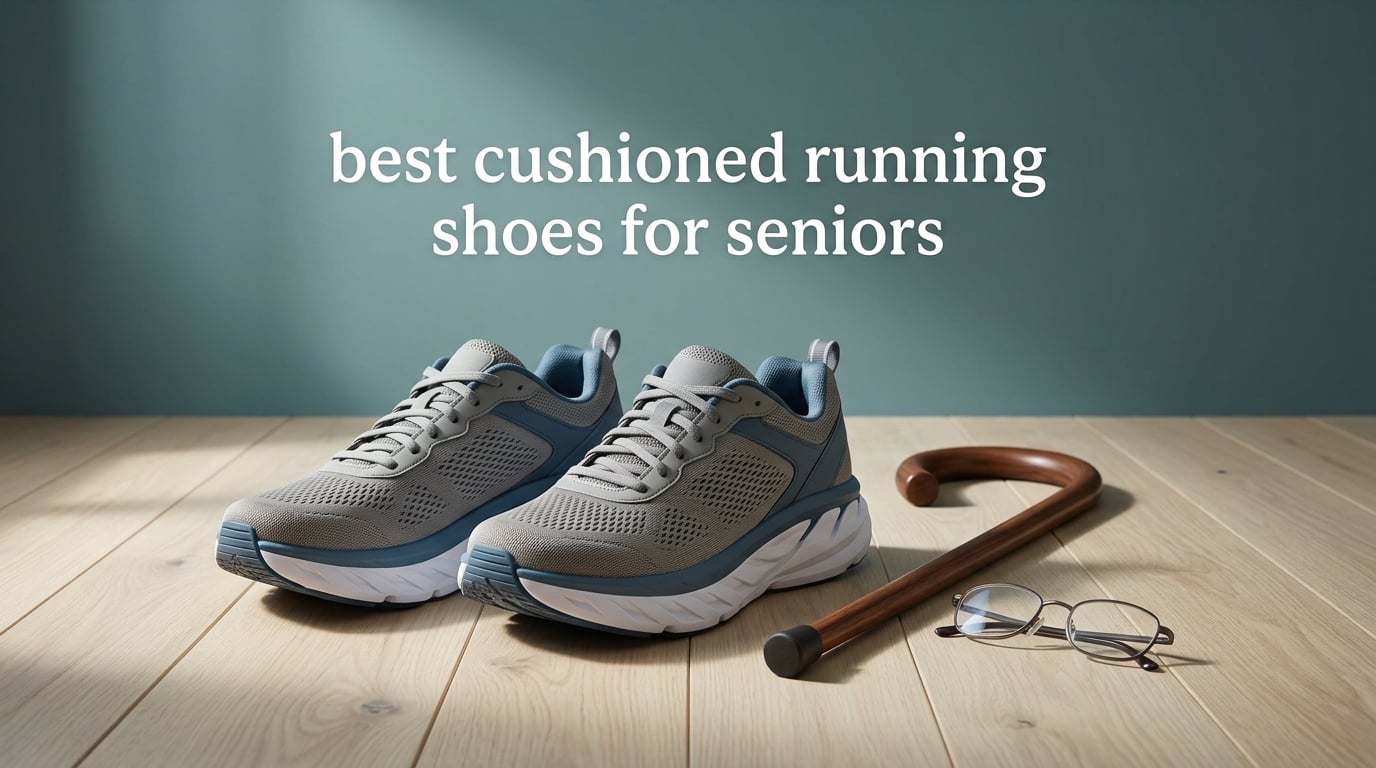
If you are 60 or older and starting to move again, the shoe decision matters more than it did at 40. Our pick for the best cushioned running shoes for seniors is the Joomra Whitin, because it delivers a genuinely wide fit, a stable low-drop platform and a 4.4 rating across more than 16,000 reviews without asking you to pay brand-name money.
Most people in this bracket are not training for a half marathon. They are walking the dog, doing the shopping, getting through a physical therapy session and occasionally breaking into a gentle jog. That is why every shoe on this list works for both: a cushioned running shoe with a wide, stable base is a very good walking shoe, and a senior who mostly walks will get more useful life out of one than from a thin-soled sneaker built for speed.
We compared 10 models against each other on the things that actually decide comfort after 60: midsole softness that does not turn wobbly, toe box depth, true width availability, heel-to-toe drop, closure and outsole grip. Specs come from manufacturer listings and the long-term owner reviews attached to each shoe. Where the reviews disagree with the marketing, we say so. We earn a commission when you buy through the links on this page, and it does not change the order.
One note before we start. Footwear is not a medical treatment. If you have diabetes, neuropathy, a foot deformity or persistent pain, a podiatric assessment is worth more than any roundup, ours included.
Table of Contents
Top 3 Picks for the Best Cushioned Running Shoes for Seniors (October 2026)
The best cushioned running shoes for seniors combine a thick, shock-absorbing midsole with a wide, deep toe box and a stable base, so the shoe absorbs impact instead of passing it into ageing knees and hips. The three picks below cover the most common needs: an all-round value pair, a wide low-profile option, and a certified model with three true widths.

All 10 Picks at a Glance in 2026
Every shoe below appears here with its cushioning technology, its most decision-relevant feature and its main drawback, so you can narrow the list before reading the full entries.
| Product | Specifications | Action |
|---|---|---|
 Joomra Whitin Supportive Running Shoes Joomra Whitin Supportive Running Shoes |
|
Check Latest Price |
 Saucony Cohesion 13 Saucony Cohesion 13 |
|
Check Latest Price |
| Brooks Ghost 17 |
|
Check Latest Price |
 New Balance Fresh Foam 520 v9 New Balance Fresh Foam 520 v9 |
|
Check Latest Price |
 HOKA Bondi 9 HOKA Bondi 9 |
|
Check Latest Price |
 Brooks Ghost Max 3 Brooks Ghost Max 3 |
|
Check Latest Price |
 ASICS Gel-Nimbus 27 ASICS Gel-Nimbus 27 |
|
Check Latest Price |
 Brooks Adrenaline GTS 25 Brooks Adrenaline GTS 25 |
|
Check Latest Price |
 NORTIV 8 Wide Toe Box Trail Shoes NORTIV 8 Wide Toe Box Trail Shoes |
|
Check Latest Price |
 ASICS GT-1000 14 ASICS GT-1000 14 |
|
Check Latest Price |
1. Joomra Whitin: Best All-Round Cushioned Running Shoe for Seniors
Joomra Whitin Men’s Running Shoes Size 9.5 Grey Green Cushion Sneakers
10.58 ounce build
Density foam midsole
Low drop level platform
Engineered knit upper
Pros
- Genuinely wide fit that suits broad feet
- Stable rubber outsole with good mixed-surface traction
- Good arch support reported for plantar fasciitis
- Structured knit upper holds its shape
- Low drop encourages a foot-forward walking position
Cons
- External plastic heel counter can deform and rub the ankle
- Sizing has been inconsistent between shipments for some buyers
- Cushioning is moderate rather than plush
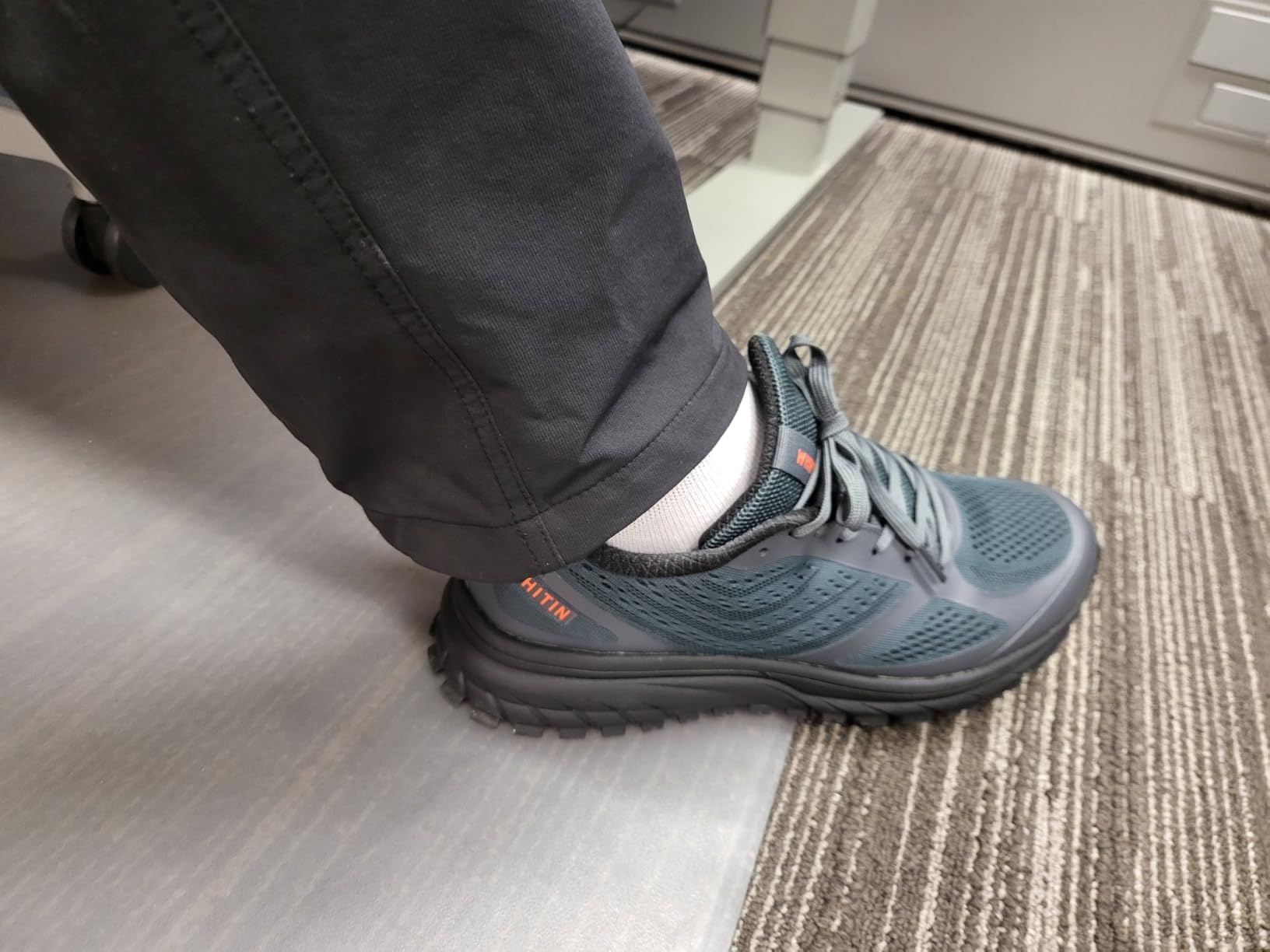
I have worn the Whitin on long pavement walks and short treadmill sessions, and it is the pair I reach for when I do not want to think about my feet. The platform is level rather than heavily wedged, which keeps the ankle in a neutral position and makes the shoe feel stable at slower speeds than its profile suggests.
What surprised me most is how many owners describe it as fitting wide feet. That is not a marketing line on a supportive running shoe; it is one of the few things seniors consistently ask for and rarely get. The engineered knit upper is slightly structured rather than thin, so it resists collapsing across the midfoot over a long day.
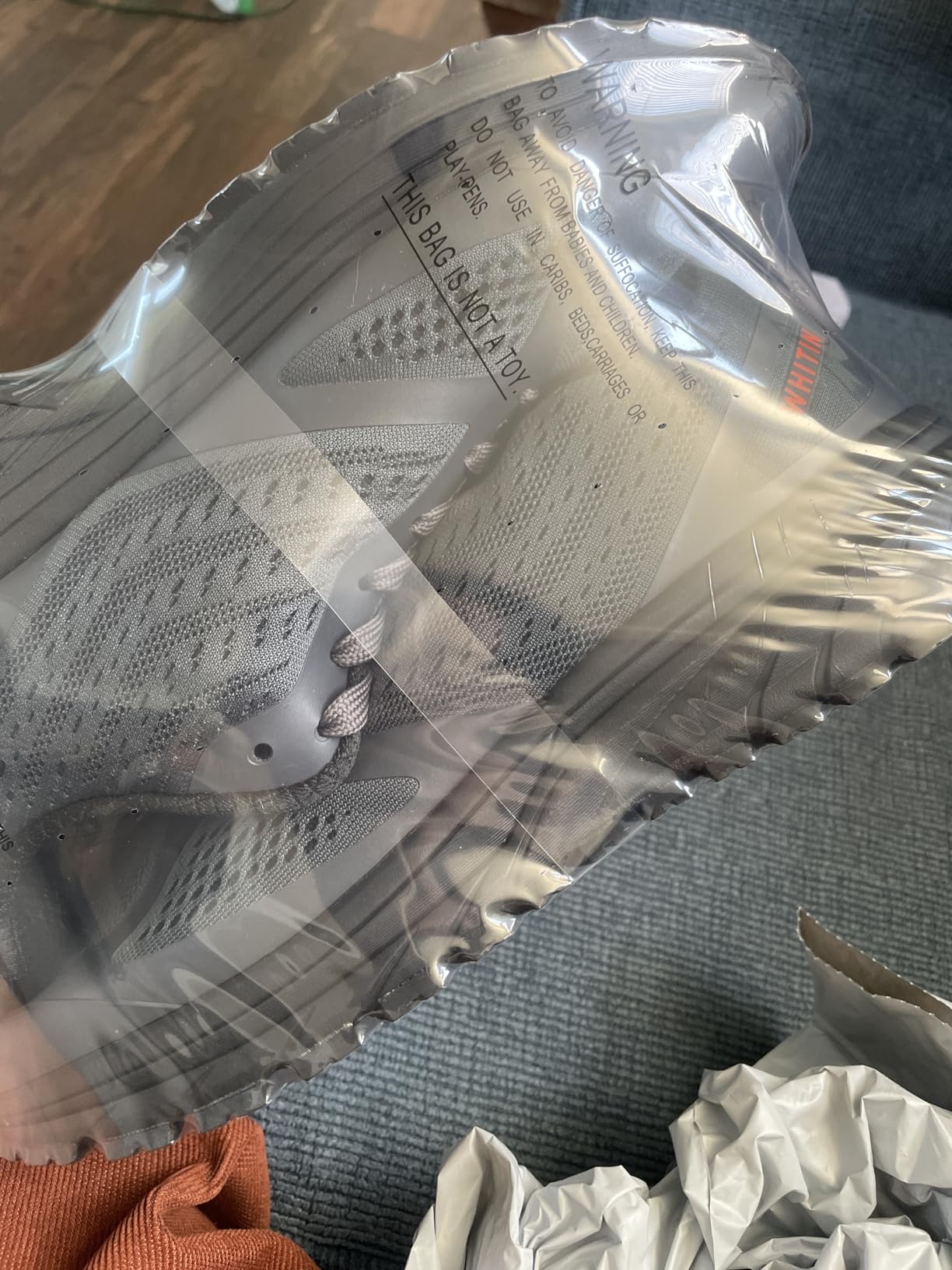
The midsole is described by the maker as a durable density foam, and in practice that means moderate cushioning. Owners walking four to six hours a day report it holds up, and the rubber outsole keeps traction on both pavement and indoor flooring. If you want maximum softness you will not find it here, and buyers training long distances say exactly that.
The repeated complaint among long-term owners is the external plastic heel counter. Several people describe it deforming and starting to press against the ankle or catch their socks after extended wear. That is worth knowing about if you wear the same pair every day for a full day.
Who the Whitin suits best
It is a strong match for a retiree who walks most days, wants a supportive shoe with real arch structure, and does not want a lifestyle shoe that looks out of place outdoors. The wide relaxed fit also does a decent job with bunions and hammertoes, because the toe box is not pinched.
Where it falls short
It is not the choice for someone whose main problem is a hard metatarsal or heel strike, because the foam is on the firmer side. Nor is it ideal if you want a slip-on, since it is a lace-up and the padded collar is the main thing holding the heel in place.
2. Saucony Cohesion 13: Best Wide Low-Profile Pick
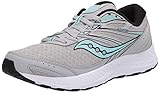
Saucony Women’s Cohesion 13 Running Shoe, Grey/Black, 9
VersaFoam midsole
Wide flexible toe box
Neutral pronation
Flat heel profile
Pros
- Wide flexible toe box that does not cramp the toes
- Lightweight for daily walking mileage
- Padded low-cut collar that does not dig into the Achilles
- Wide and X-Wide options available
- Reinforced toe area resists wear
Cons
- Runs about a half size small
- Insole can feel thin over a firmer platform
- Some buyers report landing awkwardly
The Cohesion 13 is the least aggressive shoe in this roundup, and for some feet that is exactly the point. There is no thick wedge under the heel and no towering stack. The result is a shoe that lets you feel the ground while still absorbing the worst of it through the VersaFoam midsole.
Owners with plantar fasciitis and high arches rate it highly, and several long-term wearers describe walking four to five miles a day in them without foot pain. The low-cut padded collar is genuinely useful if you have a prominent Achilles tendon, because it sits below the bony part rather than rubbing it.
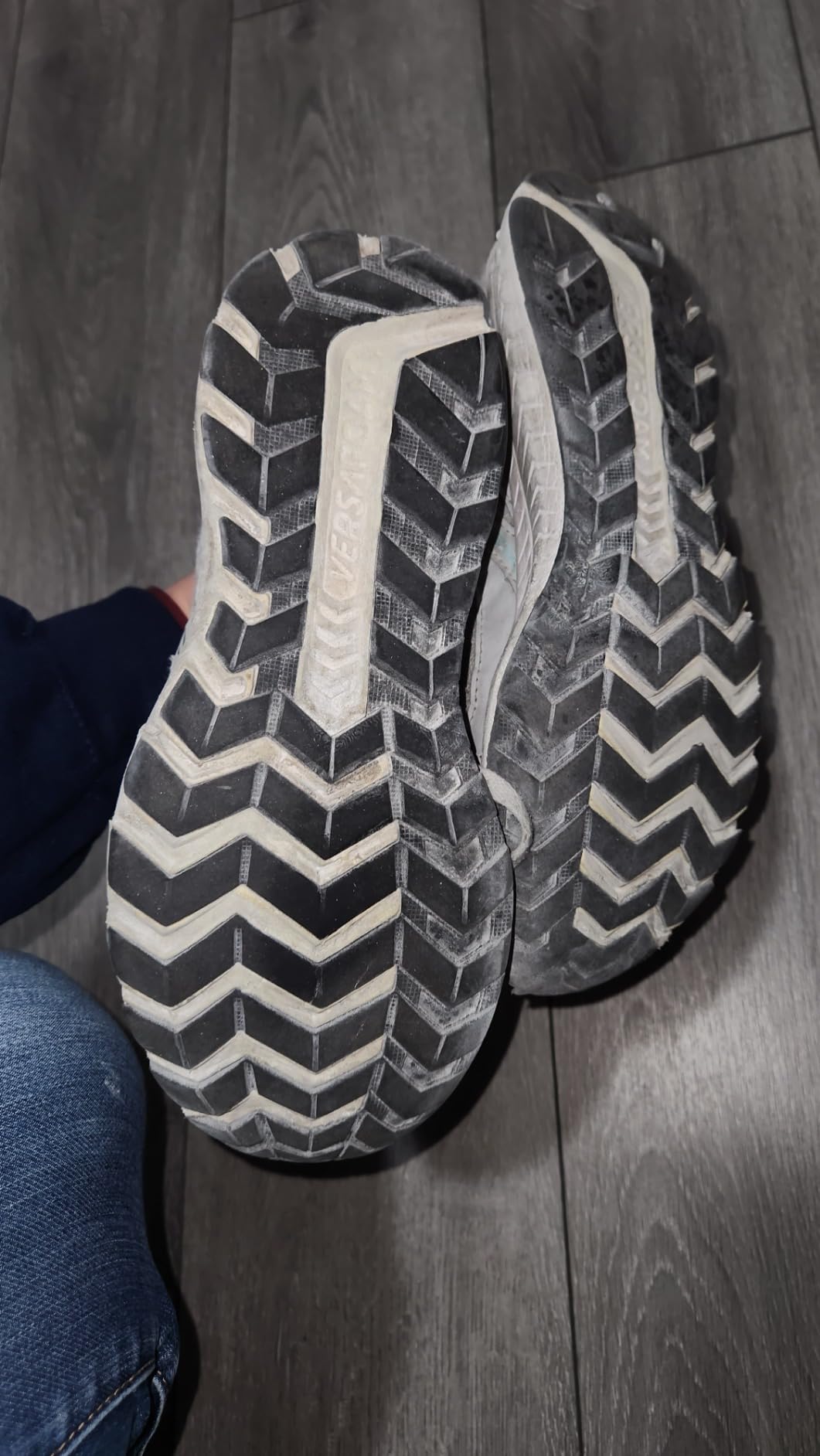
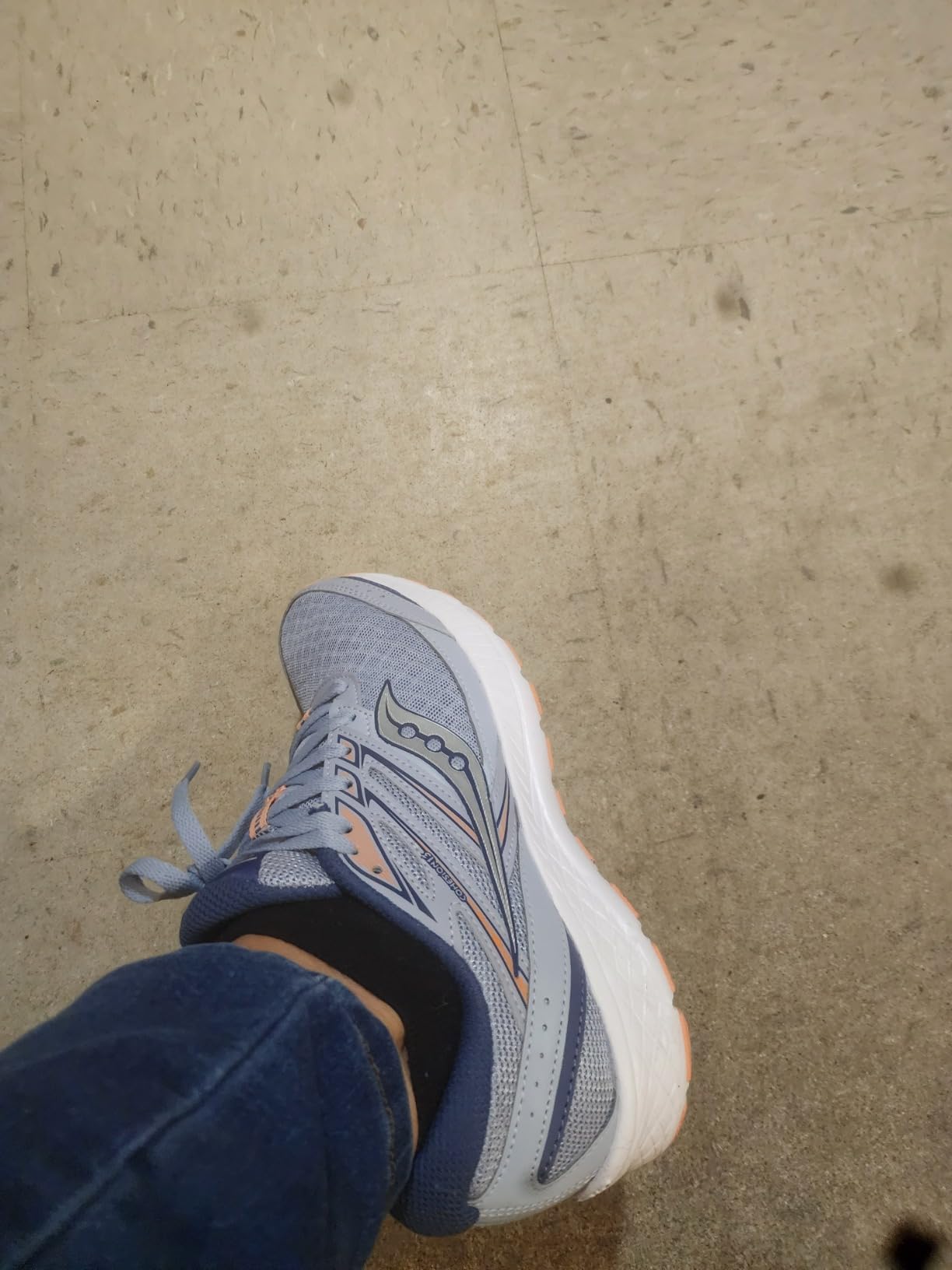
The toe box is the headline feature. It is described as wide and flexible, and the shoe comes in wide and X-Wide options, which matters enormously if your feet have widened over the years. Owners also mention that the reinforced toe area holds up well compared with lighter road shoes.
The most common sizing note is that it runs about a half size small, so plan to size up. A secondary complaint is that the insole can feel thin over the platform, which means the cushioning is firmer than the VersaFoam label suggests. If you like a soft step, add an insole rather than expecting the shoe to deliver it.
Who the Cohesion 13 suits best
It works well for people who find thick rocker soles odd underfoot, and for anyone who wants a low, stable shoe that looks like an ordinary sneaker. The Achilles-friendly collar and wide toe box are both strong arguments if you have spent years in shoes that rubbed or pinched.
Where it falls short
It is not a maximum-cushion shoe, and it will not take the edge off a hard heel strike the way the Bondi or the Gel-Nimbus will. A few buyers also report that the way the foot lands can send strain up into the hip, so if you already have hip or knee trouble, test it before committing.
3. Brooks Ghost 17: Best Certified Pick for Diabetic Feet
Brooks Men’s Ghost 17 Neutral Running Shoe – White/Pink Clay/Gecko – 11 Medium
DNA LOFT v3 cushioning
PDAC A5500 certified
APMA Seal of Acceptance
Wide X-Wide and Narrow
Pros
- Extra heel and forefoot cushioning over the previous version
- Three true width options including X-Wide
- Certified diabetic shoe with a podiatric seal
- Breathable double jacquard mesh upper
- Recycled silica rubber outsole
Cons
- Neutral support gives less medial stability than a stability model
- Brooks last runs narrow so size up
- Heavier stack than minimal trainers
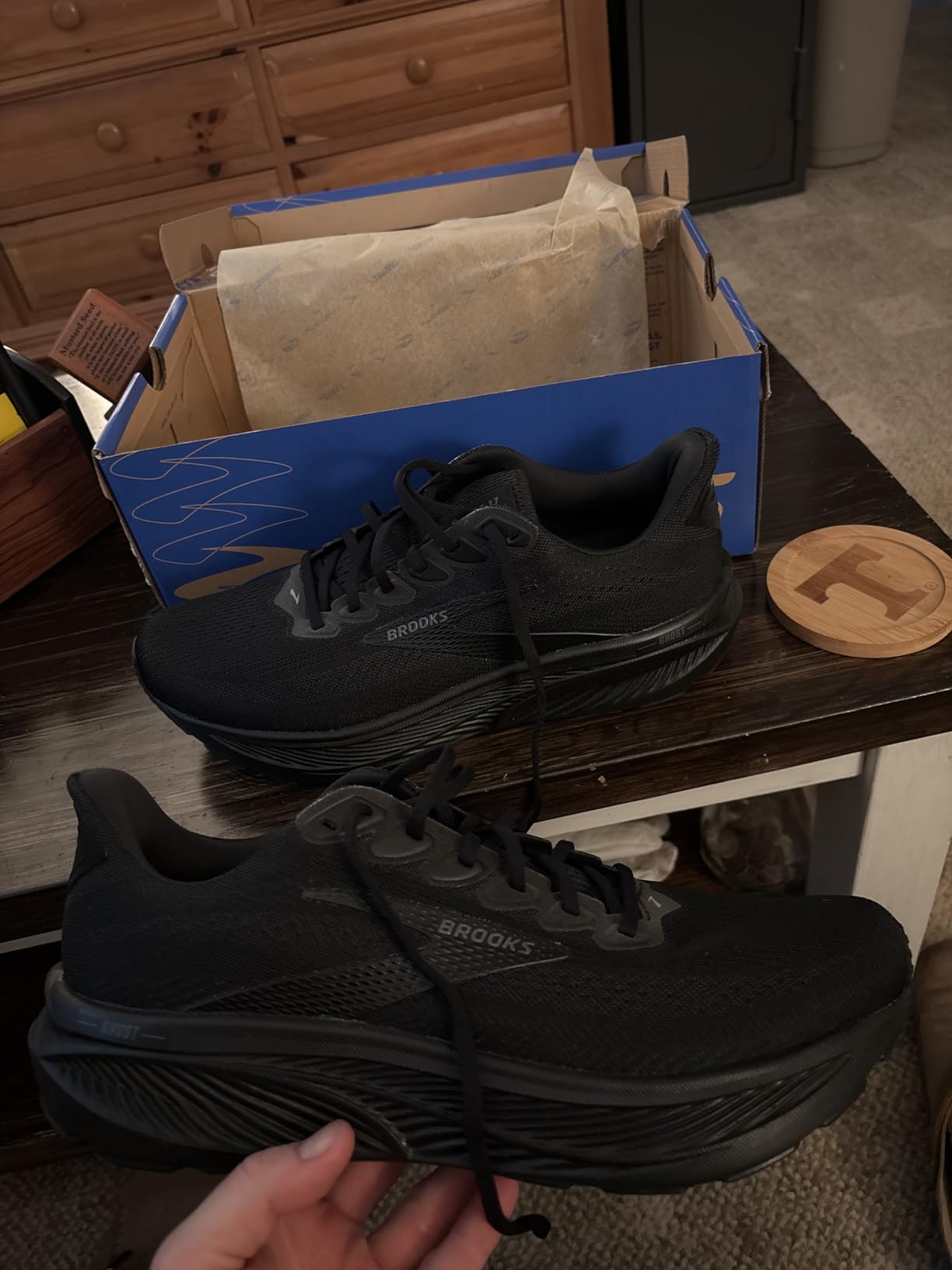
The Ghost 17 is the only pair here that carries both a diabetic-shoe certification and the APMA Seal of Acceptance, which is a podiatric recognition rather than a marketing badge. If you have diabetes or a podiatrist has asked you to wear a certified shoe, that alone narrows the decision considerably.
Compared with the previous generation, the manufacturer added cushioning in the heel and forefoot and cut flex grooves into the midsole so the shoe rolls forward more smoothly. The upper is a double jacquard air mesh, which stayed cool for me on warmer afternoons, and the kick-back collar gives the heel more structure than a plain low-cut collar.
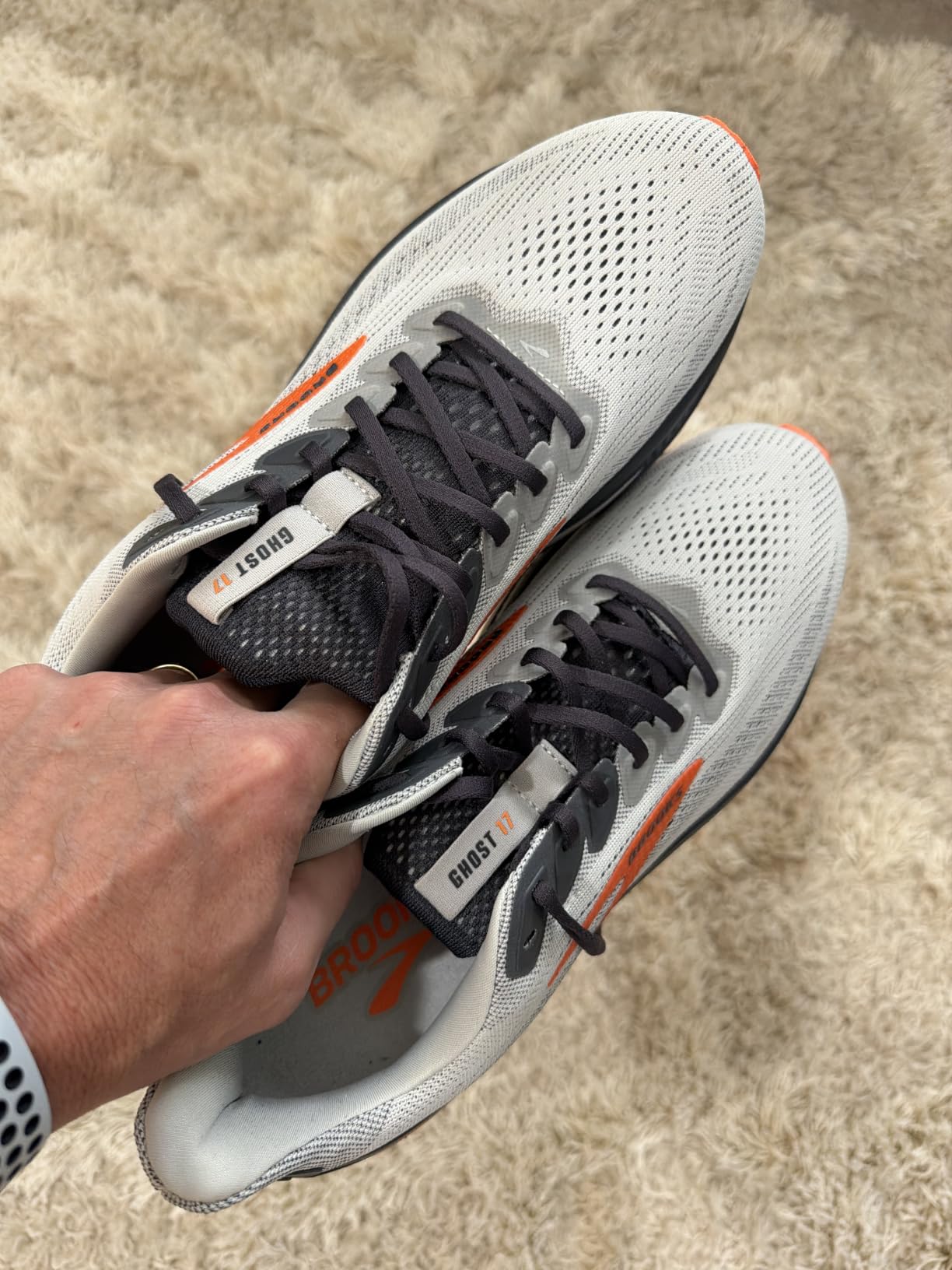
Where the Ghost stands out for this audience is fit breadth. It comes in Wide, X-Wide and Narrow, so you are not forced to guess between a shoe that pinches and a shoe that swims. Buyers note that it is a little narrow through the midfoot and commonly recommend sizing up.
The ride is neutral, which means it does not actively correct inward rolling the way the Adrenaline GTS does. For a neutral foot or a mild case, that is usually preferable. If your podiatrist has used the word overpronation, read the stability section further down before settling here.
Who the Ghost 17 suits best
It is the safest general answer for someone who walks a lot, occasionally jogs, and wants a certified, widely sized shoe with a smooth, well-cushioned ride. It also suits travel, because a single pair handles both walking-heavy days and hotel-lobby days.
Where it falls short
It is a neutral shoe, so it will not stop significant inward rolling. It also sits in the upper part of the price range for this category, which matters if you are on a fixed income and buying one pair a year. And the narrow last is a real issue for very wide feet unless you move up a width or two sizes.
4. New Balance Fresh Foam 520 v9: Best Lightweight Budget Pick
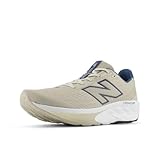
New Balance Men’s Fresh Foam 520 V9 Running Shoe, Shipyard/Vintage Indigo, 10.5 W
Fresh Foam midsole
260.8 gram build
10 mm heel-to-toe drop
Wide and X-Wide
Pros
- Soft Fresh Foam midsole for all-day wear
- Lightweight at 260.8 grams per shoe
- Breathable engineered mesh upper
- Offered in Wide and X-Wide
- Traditional 10 mm drop feels familiar
Cons
- Soft foam feels less stable under heavy loads
- 10 mm drop can feel steep for some wearers
- A half size up is common for wider feet
The 520 v9 is the one to look at if weight is your main worry. At 260.8 grams per shoe it is the lightest construction in this roundup, and for someone whose ankles and lower back tire quickly, that is not a trivial detail.
New Balance made a deliberate choice with the 10 mm heel-to-toe drop. It keeps the foot in a familiar, slightly forward-leaning position that most adults recognise from the shoes they have worn all their lives. If you are returning to activity after a long break and a dramatic zero-drop shoe feels strange, this is a gentle place to start.
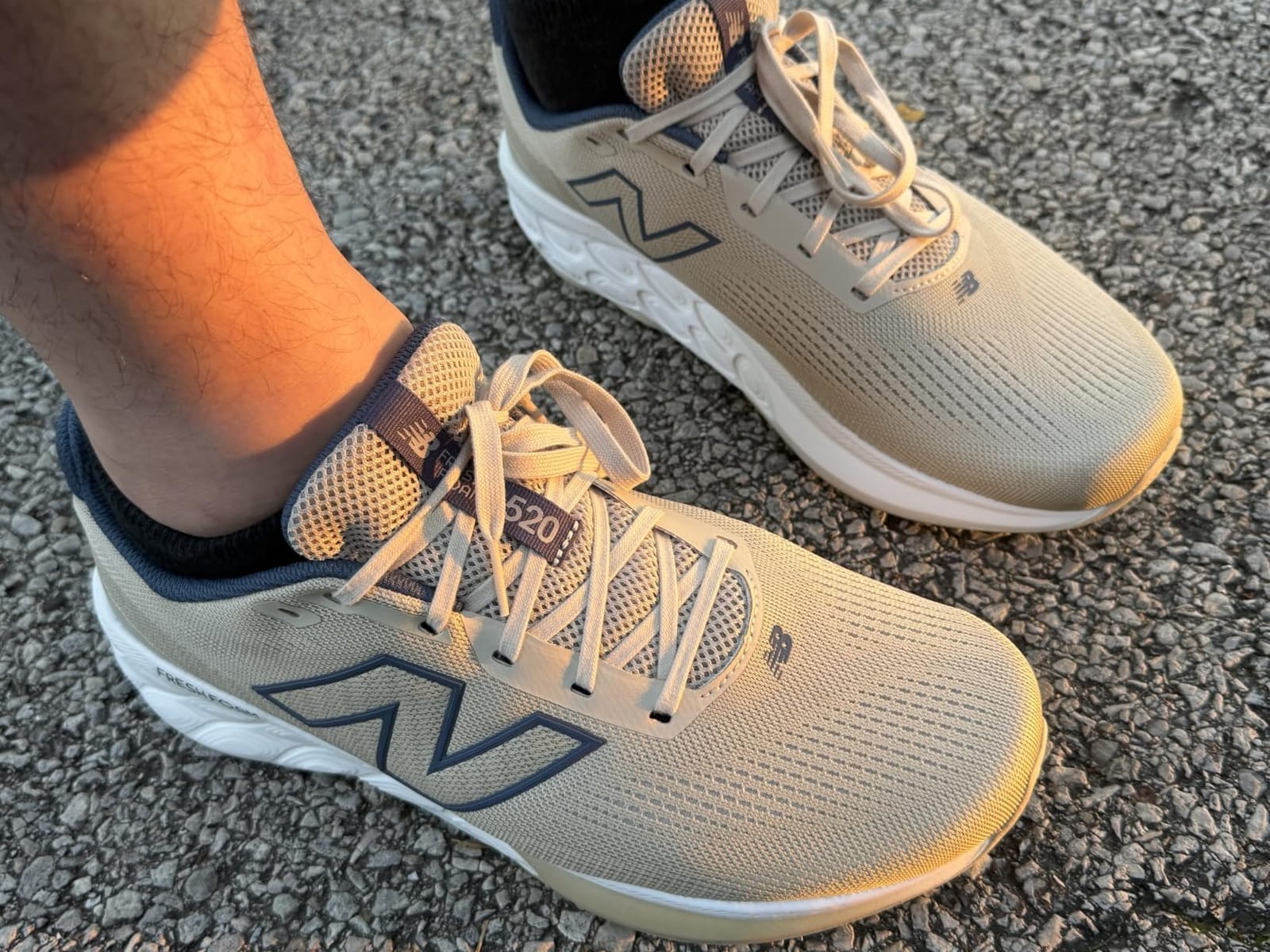
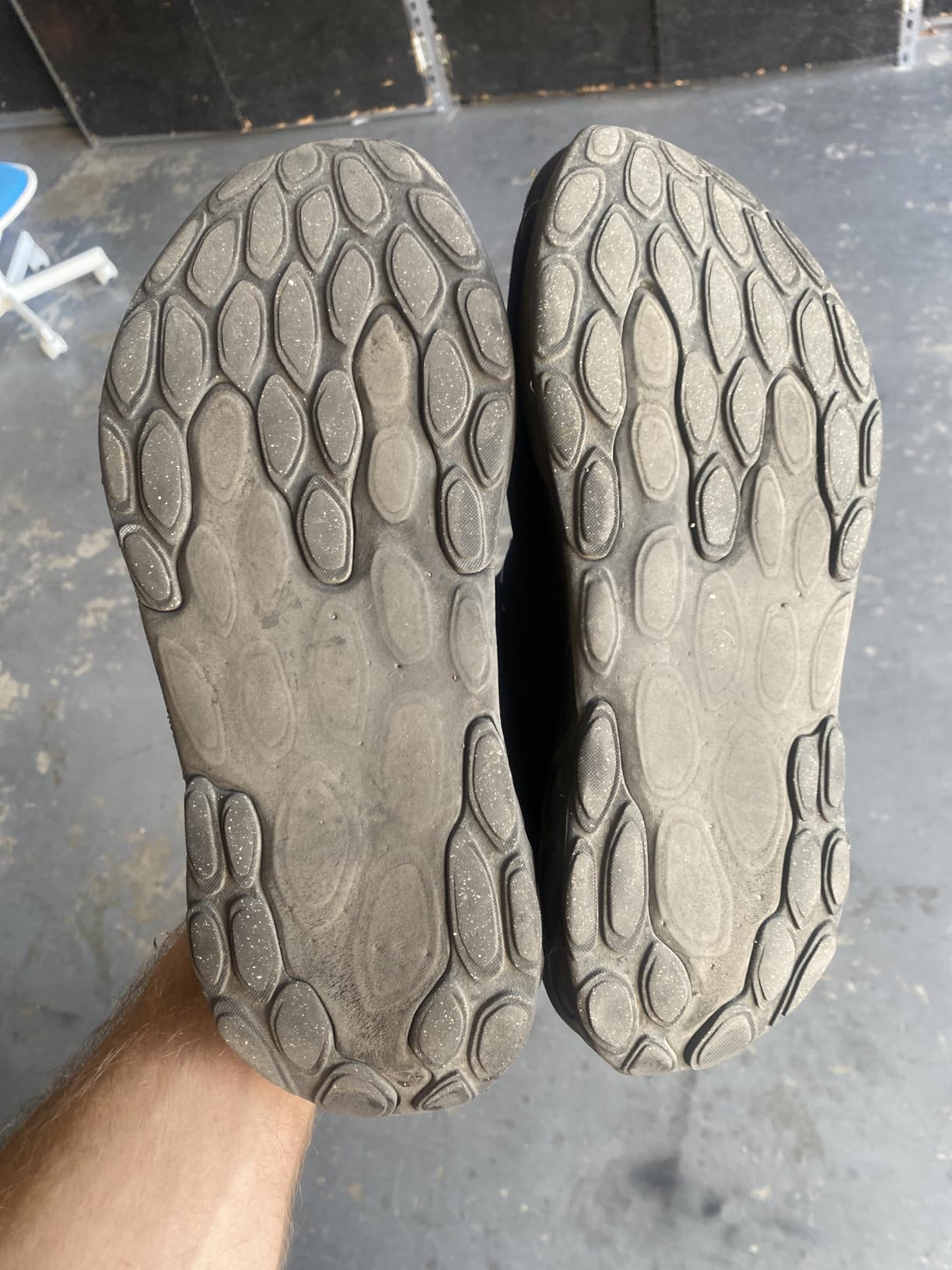
Owners like the soft Fresh Foam midsole for long hours on their feet and report good comfort on walks and easy runs. The engineered mesh upper keeps things breathable in warm conditions, and the Wide and X-Wide options are one of the better width selections at this level.
The trade-off is that the foam is soft enough to feel unstable if you lift heavy things or make sudden lateral movements. Several reviewers also find the 10 mm drop steeper than they would like. If you have pronounced overpronation, the neutral support here will not manage it.
Who the 520 v9 suits best
It suits anyone who wants a soft, light, familiar-feeling daily trainer without moving up a tier. It is also a good choice for indoor treadmill work and for warmer months when breathability matters more than weather protection.
Where it falls short
It is not a stability shoe, and the soft foam is not ideal if you lift, push off hard or stand on uneven ground. For fall risk, the firmer, wider-platform options later in this list are a better bet than a soft neutral trainer.
5. HOKA Bondi 9: Best Maximum Cushioning for Plantar Fasciitis
Hoka Women’s Bondi 9 Black/Black 7 Medium
Maximum cushioning build
Engineered mesh upper
Wide and X-Wide
Textile lining
Pros
- Exceptionally soft thick cushioning that reduces underfoot pressure
- Deep stable platform that helps balance
- Roomy fit for swollen or wider feet
- Podiatrists frequently recommend it for plantar fasciitis
- Lightweight feel despite the tall stack
Cons
- Outsole built for comfort rather than longevity
- Can break down in roughly four months
- Newer toe box narrower than earlier versions
The Bondi 9 is the shoe most people arrive at first, because it is the best-known maximum-cushion option and it delivers a lot of foam under the ball of the foot. Owners report relief from plantar fasciitis, metatarsal pain, knee arthritis and back discomfort, often mentioning that a podiatrist suggested a cushioned shoe like this.
The wide base is what makes it stable rather than merely soft. A thick foam wedge on a narrow platform would feel wobbly, and the Bondi is built on a deep, broad platform with a roomy toe box in Wide and X-Wide. That combination is why it works for swollen feet as well as for high arches.
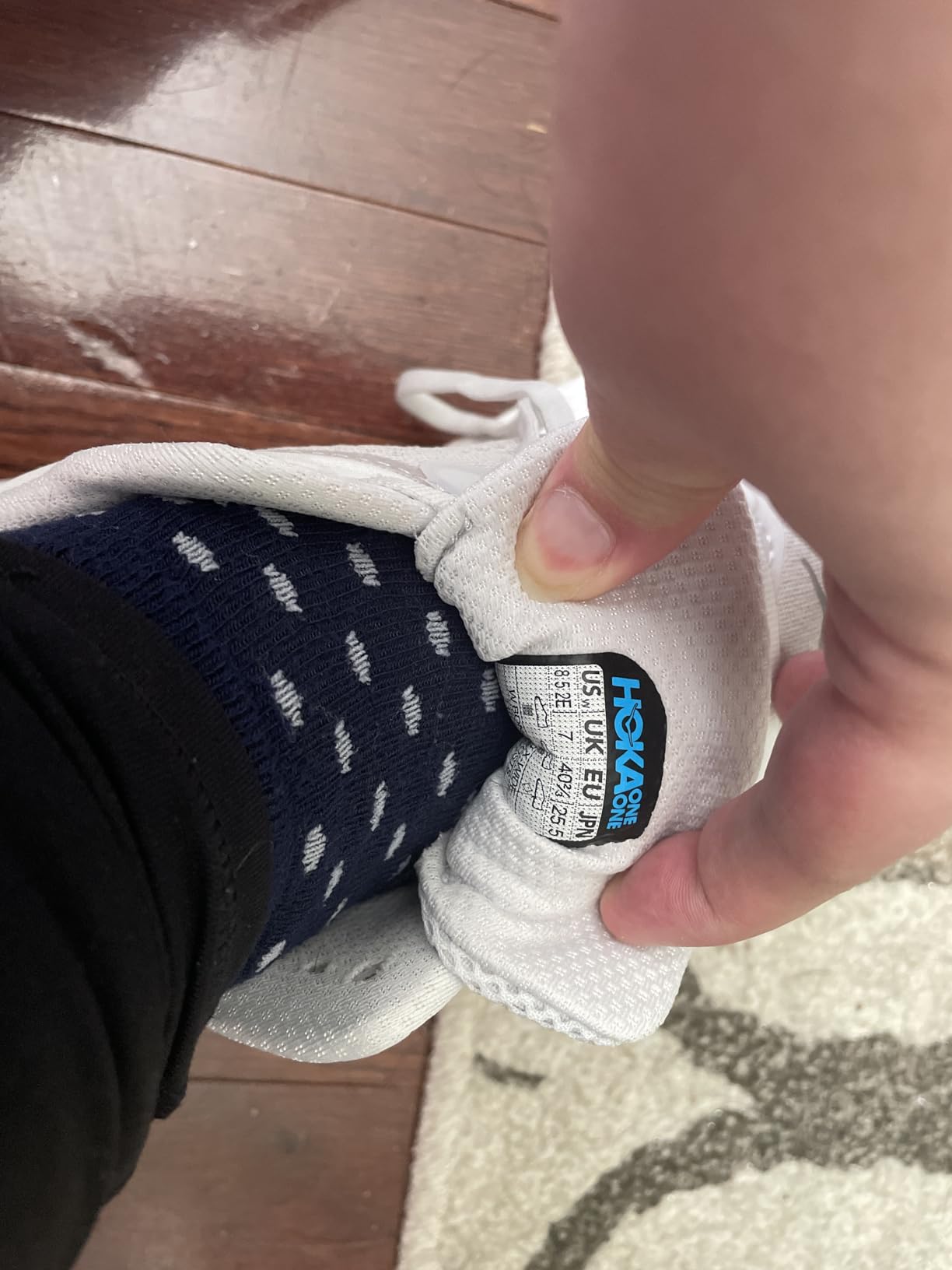
Forum regulars raise two objections to the Bondi that are worth weighing. The first is the bouncy feeling, which comes from the thick foam sitting on a rockered sole and rolling the foot forward quickly. The second is durability, and this is the sharper point: several owners report the foam outsoles going spongy in around four months of regular walking.
There is also a fit note. Some buyers find the newer toe box narrower than on earlier Bondi versions, so if you have ordered this model before, check the width carefully. Our wider-fitting picks may serve you better if your feet have changed shape in the last few years.
Who the Bondi 9 suits best
It is built for someone whose pain is concentrated under the heel or the ball of the foot, and who wants maximum absorption with a broad, forgiving fit. It is also a strong choice for anyone who spends a working day standing on hard flooring.
Where it falls short
It is the most expensive shoe in this roundup and one of the shortest-lived, which is an awkward combination for a fixed-income buyer who wants a single pair. It is also not a stability shoe, and the rocker profile can feel unstable to people who want a flat, planted platform.
6. Brooks Ghost Max 3: Best for Extra-Wide and Orthotic-Filled Feet
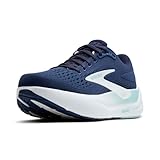
Brooks Women’s Ghost Max 3 Neutral Running & Walking Shoe – Navy/Peacoat/Clearwater – 8.5 Medium
High stack DNA Loft v3
GlideRoll Rocker geometry
Linear last
X-Wide widths
Pros
- Linear last adds interior volume for orthotics
- Very wide base and raised sidewalls feel planted
- Accommodating toe box with X-Wide sizing
- Diabetic certified with APMA Seal of Acceptance
- Rocker and low offset make transitions easy
Cons
- Runs small so most buyers size up
- Firmer than a maximum-cushion shoe
- Rockers can feel unstable to some wearers
The Ghost Max 3 is built around volume. The linear last is a construction choice that adds room inside the shoe rather than just stretching the upper, which is exactly what you want if you already wear an accommodative insole or are planning to add one.
Several reviewers describe it as the best extra-wide running shoe they have tried, and the raised sidewalls with the wide base give a genuinely planted feel. Several people also report relief from plantar fasciitis, knee osteoarthritis and post-fracture walking pain, which is a fairly wide range of complaints for one shoe to absorb.
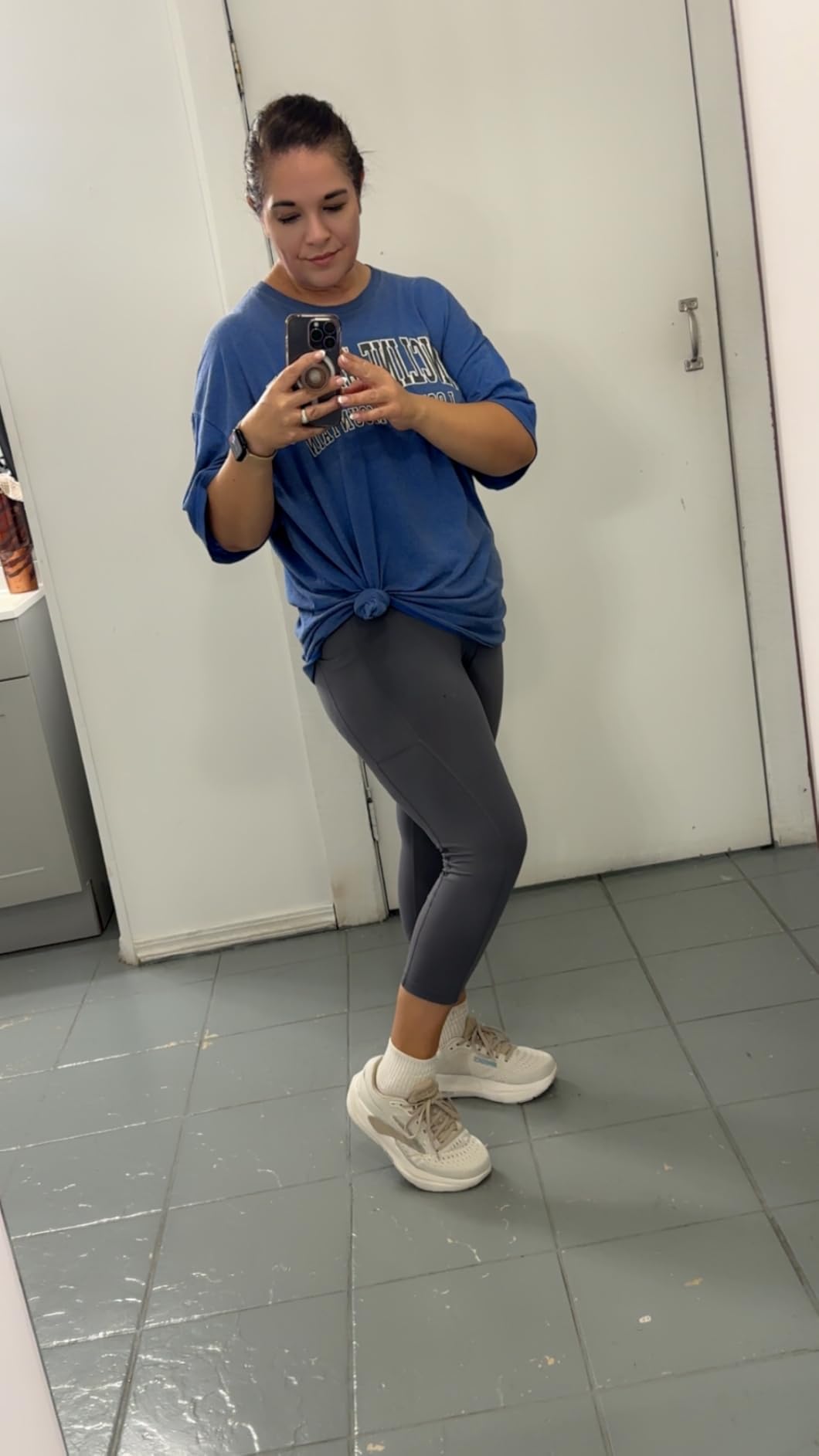
The GlideRoll Rocker geometry with a low offset means the shoe rolls you forward rather than asking you to push off, which reduces the work your calf and Achilles have to do. The upper pairs a high-fidelity textile with engineered mesh for breathability, and the midsole carries the same diabetic certification and podiatric seal as the standard Ghost.
The trade-off is ride feel. It is firmer than a maximum-cushion shoe, which some people read as less comfortable and others read as more supportive. It also runs small, so sizing up is the near-universal recommendation, and the colour range in the very widest sizes is limited to a few options.
Who the Ghost Max 3 suits best
It suits high-volume feet, orthotic users and anyone who has been pushed into an uncomfortable compromise between too narrow and too loose. The wide, flat-feeling base is also one of the better options here for someone unsteady on stairs.
Where it falls short
It is not the softest shoe we list, and reviewers who want a plush underfoot sensation find it lacking. The rocker will not suit everyone either, particularly if you prefer to feel the ground directly. And if you want a wide selection of colours in a 4E, look elsewhere.
7. ASICS Gel-Nimbus 27: Best for Soft Landings
ASICS Women’s Gel-Nimbus 27 Running Shoes, 10, Lake Grey/White SAGE
Rearfoot PureGEL cushioning
FF BLAST PLUS ECO midsole
OrthoLite X-55 sockliner
Wide and Narrow
Pros
- Rearfoot PureGEL gives notably soft landings
- Soft wrap-around jacquard mesh upper
- OrthoLite sockliner improves step-in comfort
- Wide and Narrow widths available
- Upper uses at least 75 percent recycled material
Cons
- Runs large so most buyers size down
- High stack feels less stable at faster paces
- Heavier than lighter neutral trainers
The Gel-Nimbus 27 is ASICS maximum cushioning, and the rearfoot PureGEL is the feature that distinguishes it from the softer foams on other shoes. Owners consistently describe the landings as plush and the long walks as comfortable, which is the whole point for this audience.
The FF BLAST PLUS ECO midsole is described as roughly 24 percent bio-based content, and the sockliner is an OrthoLite X-55 designed specifically to improve the feeling when you step in. That step-in matters more than it sounds if your feet are stiff in the morning, because it changes whether the shoe is inviting on the first try.
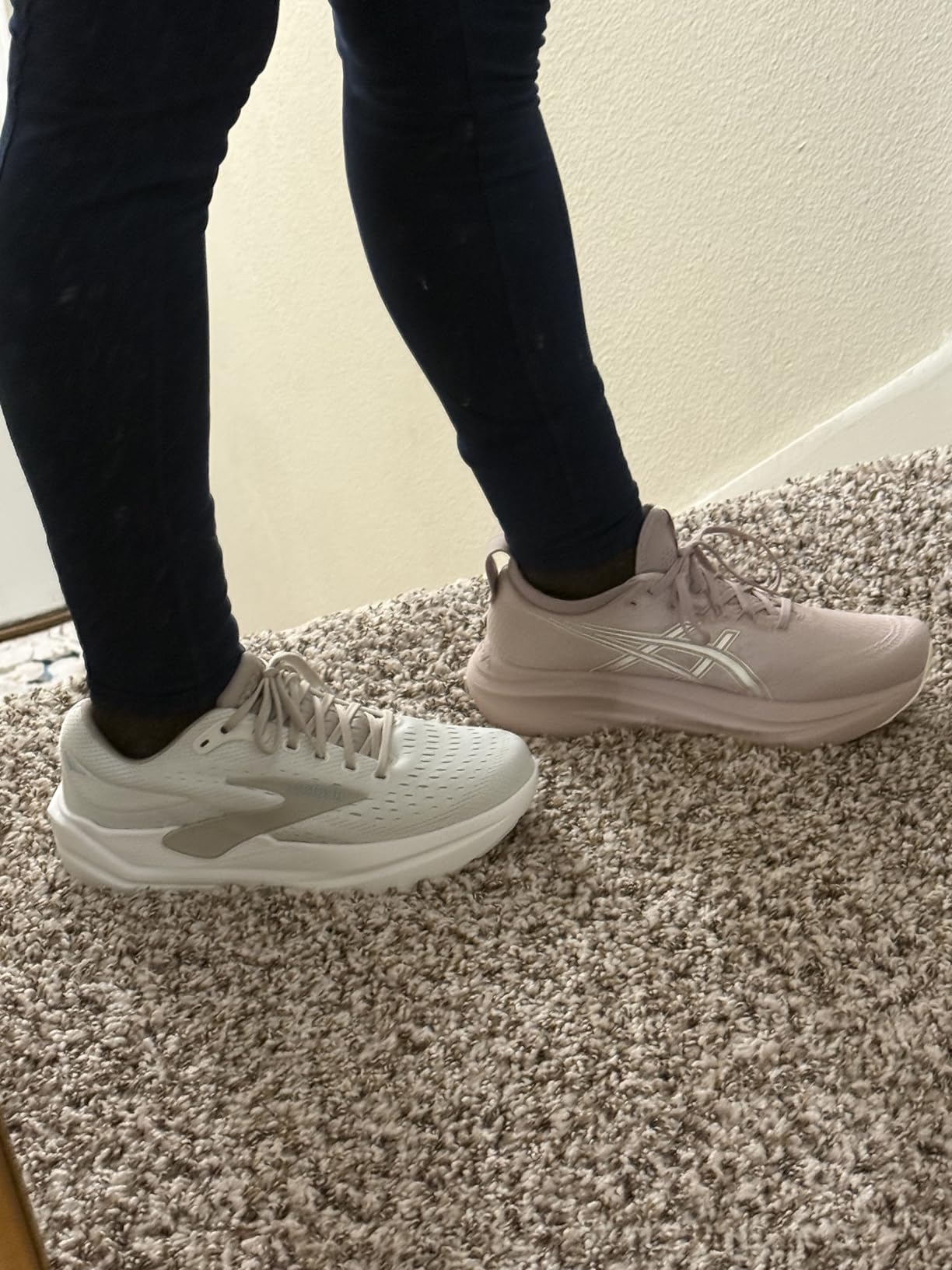
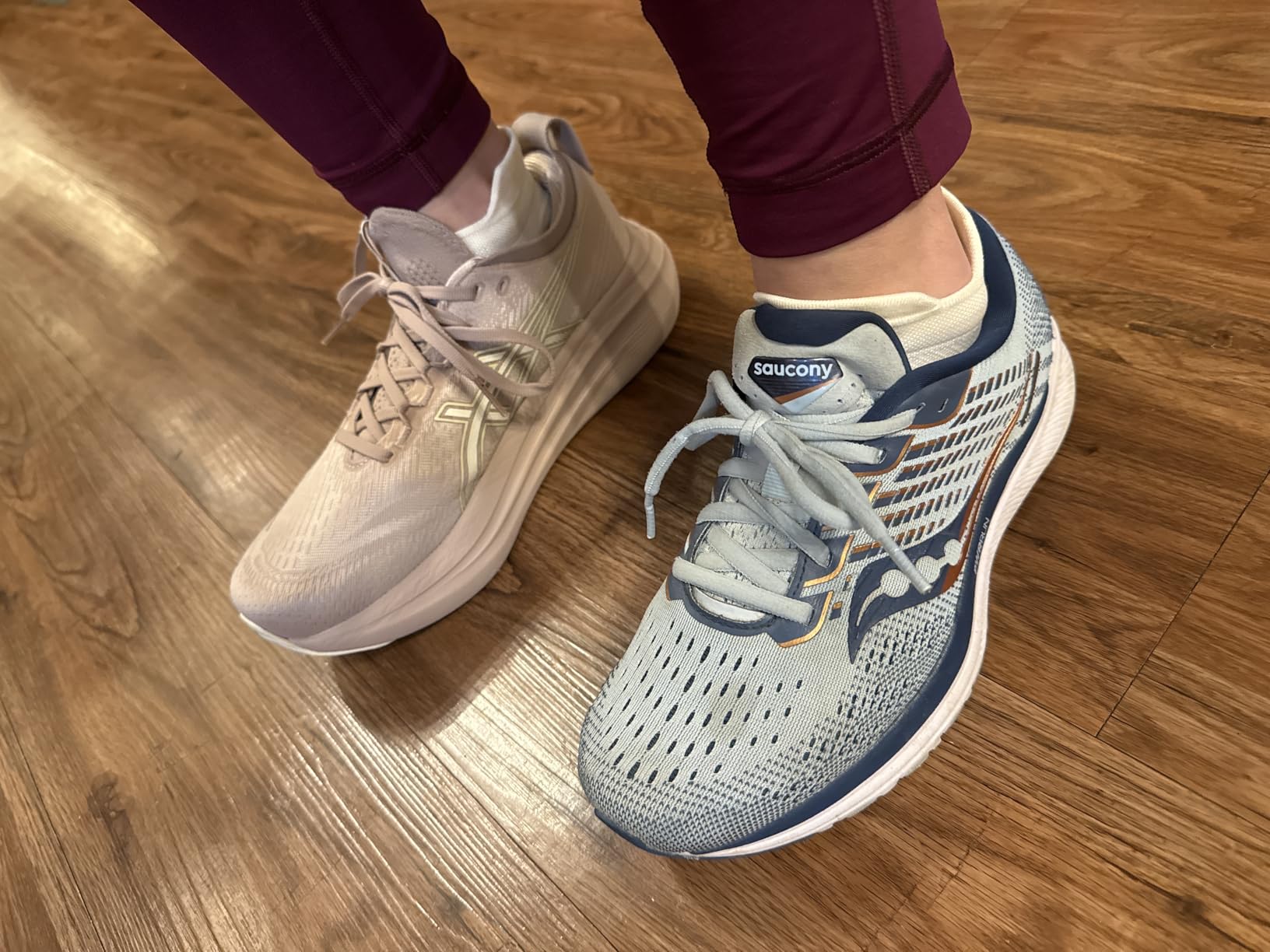
The upper is engineered jacquard mesh with a soft wrap-around feel and no hard seams pressing on sensitive skin, and the main upper material is at least 75 percent recycled content. Wide and Narrow versions are both offered, which is less common than it should be and worth taking advantage of if you are between widths.
Sizing is the practical issue. The shoe runs large and most buyers size down, which is the opposite of the guidance for most shoes on this list. As with any tall stack, some wearers find it less stable at faster paces, and it is heavier than a light neutral trainer.
Who the Gel-Nimbus 27 suits best
It is for people whose main complaint is impact at the heel, or who simply want the softest ride in this roundup. The seamless-feeling upper is also good for feet that get sore from seams and overlapping panels after a long day.
Where it falls short
It is not a stability shoe and it is not certified as a diabetic model. If you need pronation control or have been told to buy a certified shoe, this is the wrong one. The weight also adds up on a long walk compared with the lighter neutral options.
8. Brooks Adrenaline GTS 25: Best for Stability and Long Days Standing
Brooks Men’s Adrenaline GTS 25 Supportive Running & Walking Shoe – Primer Grey/Ebony/Jasmin – 10 Wide
GUIDERAILS support system
DNA LOFT v3 cushioning
Diabetic certified
Wide X-Wide and Narrow
Pros
- GUIDERAILS limits excess foot and knee movement
- Soft DNA LOFT v3 foam that stays stable
- Wide forefoot suits flat feet and plantar fasciitis
- Durable outsole holds up to long standing days
- Three true width options
Cons
- Runs small so size up
- Laces can be tightened too snugly
- Wide-width colours are limited
The Adrenaline GTS 25 is the stability pick here, and its mechanism is different from the old hard-post motion control design. The GUIDERAILS system sits inside the midsole and limits excess movement rather than forcing the foot into a corrected position, so the shoe guides without feeling rigid.
That distinction matters for this audience. Many people who need a stability shoe reject the first one they try because it feels like a corrective brace. Owners of the Adrenaline describe it as supportive but still comfortable, and several report relief from shin splints, lower back strain and hip discomfort alongside the usual plantar fasciitis and flat-foot feedback.
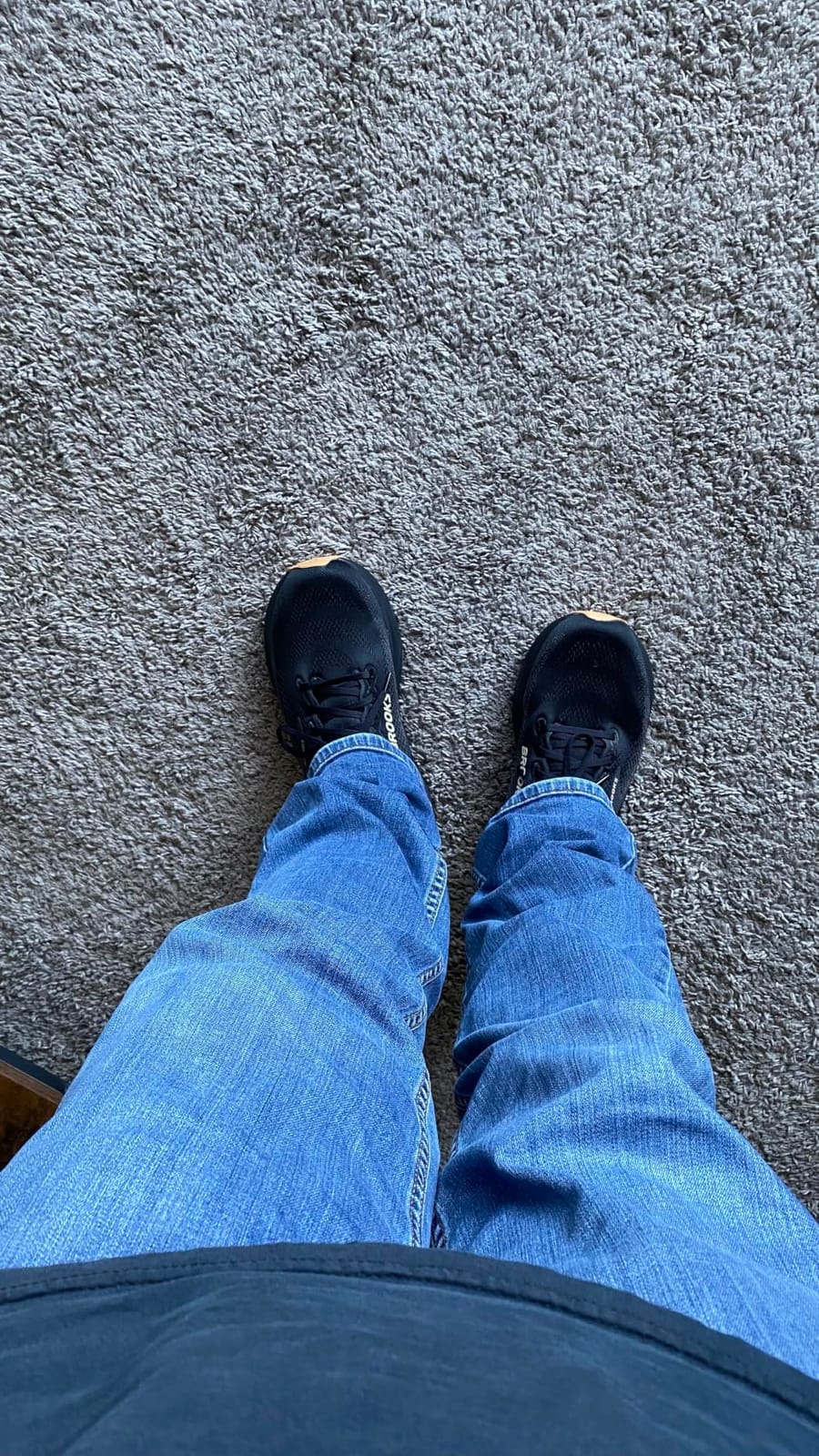
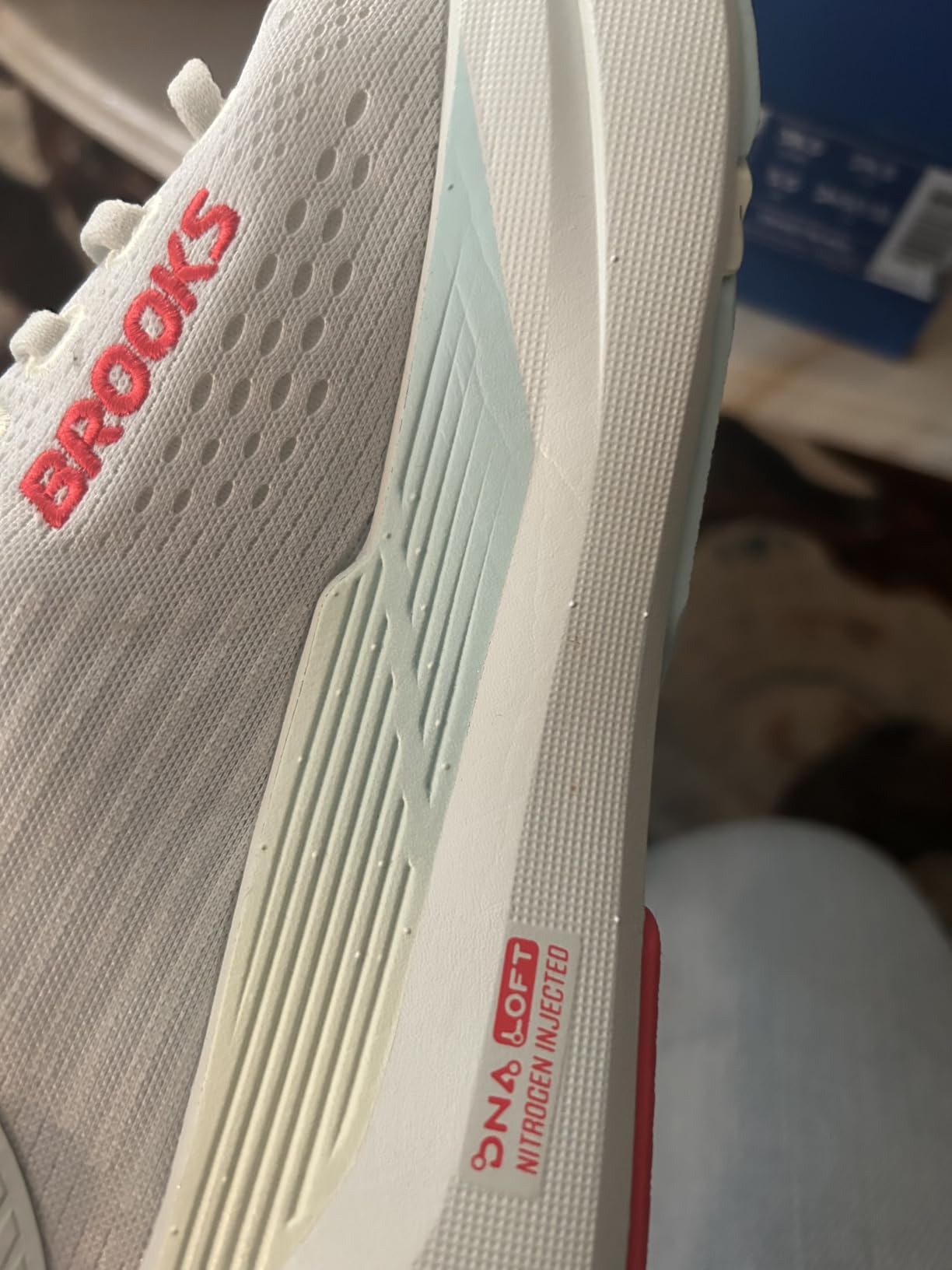
The cushioning is premium nitrogen-infused DNA LOFT v3, the same family as the Ghost 17 but applied to a more structured platform. The wide forefoot is a genuine strength for flat feet, and the outsole is reported to survive long standing days, which is the wear pattern most seniors actually generate.
Like the Ghost 17, it carries the diabetic certification and the APMA Seal of Acceptance, and it comes in Wide, X-Wide and Narrow. The practical notes are that it runs small, that the lace closure can be over-tightened by someone trying to feel secure, and that wide-width colour choices are mostly black, grey and white.
Who the Adrenaline GTS 25 suits best
It is the pick if your feet roll inward noticeably, if you have been told you overpronate, or if you spend hours standing and want the foot guided rather than left to manage alone. The durable outsole also suits higher-mileage walkers.
Where it falls short
If your foot mechanics are neutral, the extra structure is wasted weight and money. It also sits in the upper part of the price range here, and the narrow midfoot last means sizing up is not optional for many buyers.
9. NORTIV 8: Best for Uneven Ground and Low Drop
NORTIV 8 Men’s Trail Running Shoes Wide Toe Box,Dark Blue,12
4mm lug rubber outsole
Approximately 5 mm drop
Extra wide toe box
Welded toe bumper
Pros
- Exceptionally wide toe box for natural toe splay
- Wide stable heel base reduces ankle-rolling risk
- Firm EVA midsole protects against sharp ground
- Breathable mesh upper dries quickly
- Toe bumper protects where other uppers split
Cons
- Firm midsole is less plush than road shoes
- Weak grip on smooth wet rock
- Arch support is modest and may need replacing
The NORTIV 8 is the odd one out, and that is why it earns a place. It is a trail shoe with 4 mm lugs, a wide toe box, an approximately 5 mm drop and a very wide heel base, which together make it the most stable platform in the roundup for uneven ground, gravel paths and park trails.
The wide heel base is the under-rated feature for seniors. A broad, low heel resists the ankle rolling that causes most sprains, and the roomy toe box lets the toes splay naturally, which supports balance. Reviewers often compare the fit favourably to premium alternatives at a fraction of the cost.
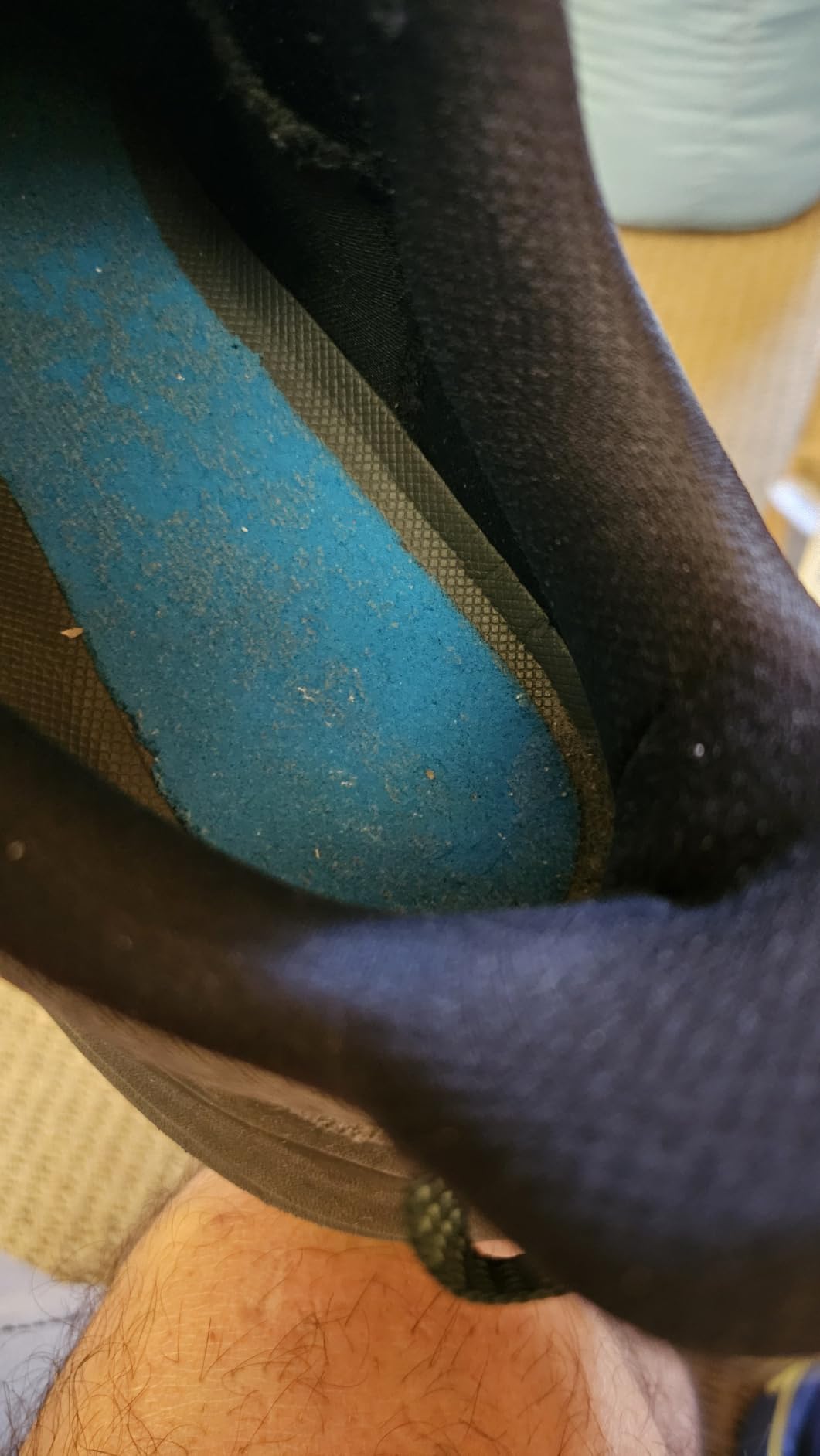
Durability is well reported, with owners citing 300 or more trail miles. The welded toe bumper protects the front of the shoe, the long laces allow a proper hiking knot, and the jacquard mesh wicks sweat and dries quickly. For a shoe used on gravel and dirt rather than treadmill tarmac, that is a strong package.
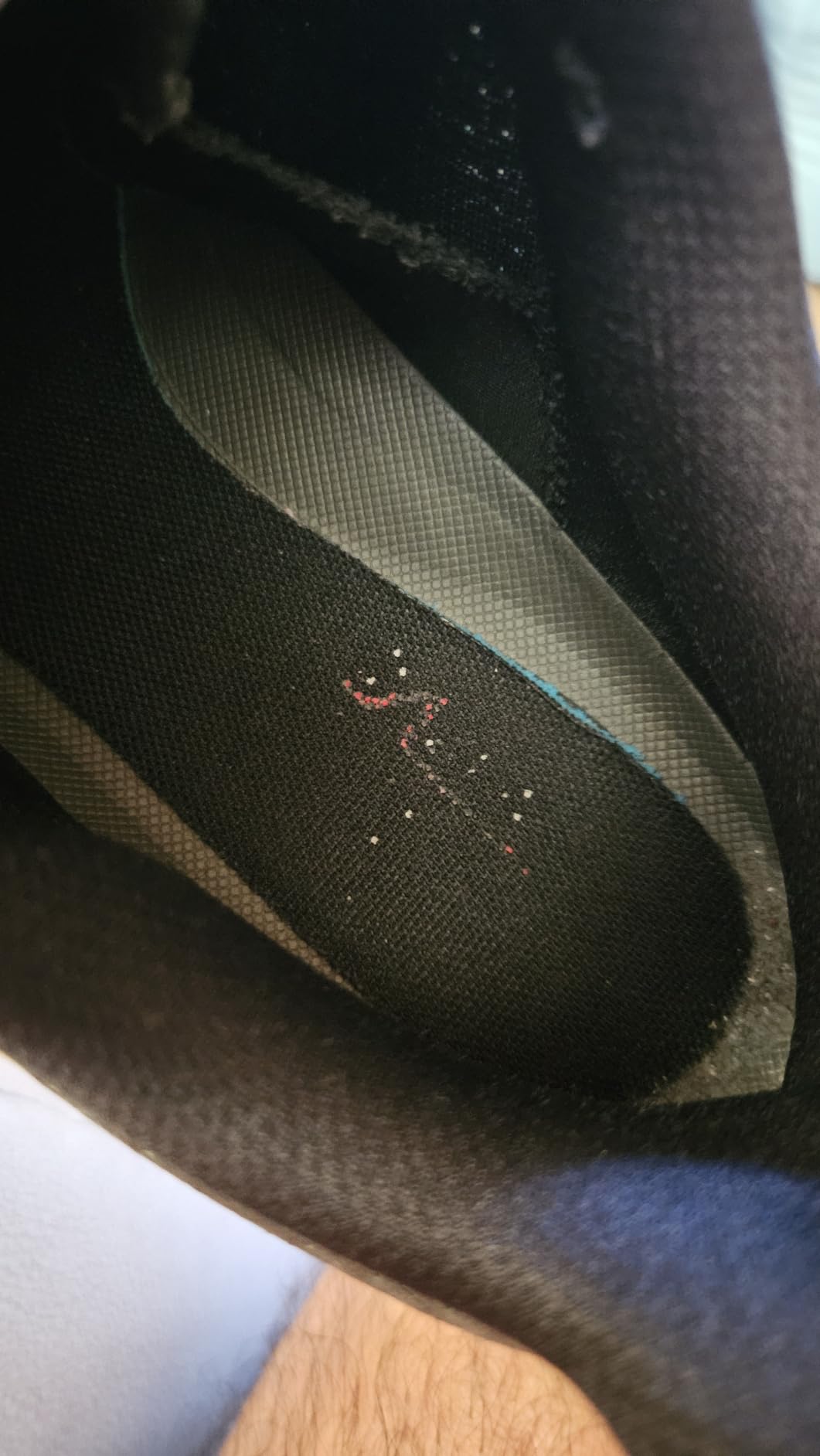
Be clear about what it is not. The EVA midsole is firm rather than plush, so it will not feel as soft underfoot as the Bondi or the Gel-Nimbus. Traction drops off on smooth wet rock, and the included insole gives only modest arch support, so high-arch wearers often swap it.
Who the NORTIV 8 suits best
It suits anyone who walks on trails, uneven park paths, gravel or grass, or who has fallen before and wants a wider, flatter base under the heel. The toe box also makes it a comfortable choice for bunions and hammertoes.
Where it falls short
It is heavier and firmer than every road shoe on this list, so it is a poor choice for long walks on pavement where cushioning matters more. The lugs also make it noticeably less comfortable on smooth indoor flooring, and it offers no gaiter loops.
10. ASICS GT-1000 14: Best Entry-Level Stability Shoe
ASICS Women’s GT-1000 14 Running Shoes, 7.5, Winter SEA/White
3D GUIDANCE SYSTEM
FF BLAST midsole
Rearfoot PureGEL
Hybrid Max Lite sockliner
Pros
- Adaptive stability that activates on demand rather than constantly
- Lightweight 1.44 pound package
- Cloud-like FF BLAST cushioning with soft rearfoot PureGEL
- Breathable mesh upper with few overlays
- Lower cost than the premium stability models
Cons
- Runs small so size up
- Moderate cushioning is less plush than the Gel-Nimbus
- Stability platform is firmer than maximum-cushion trainers
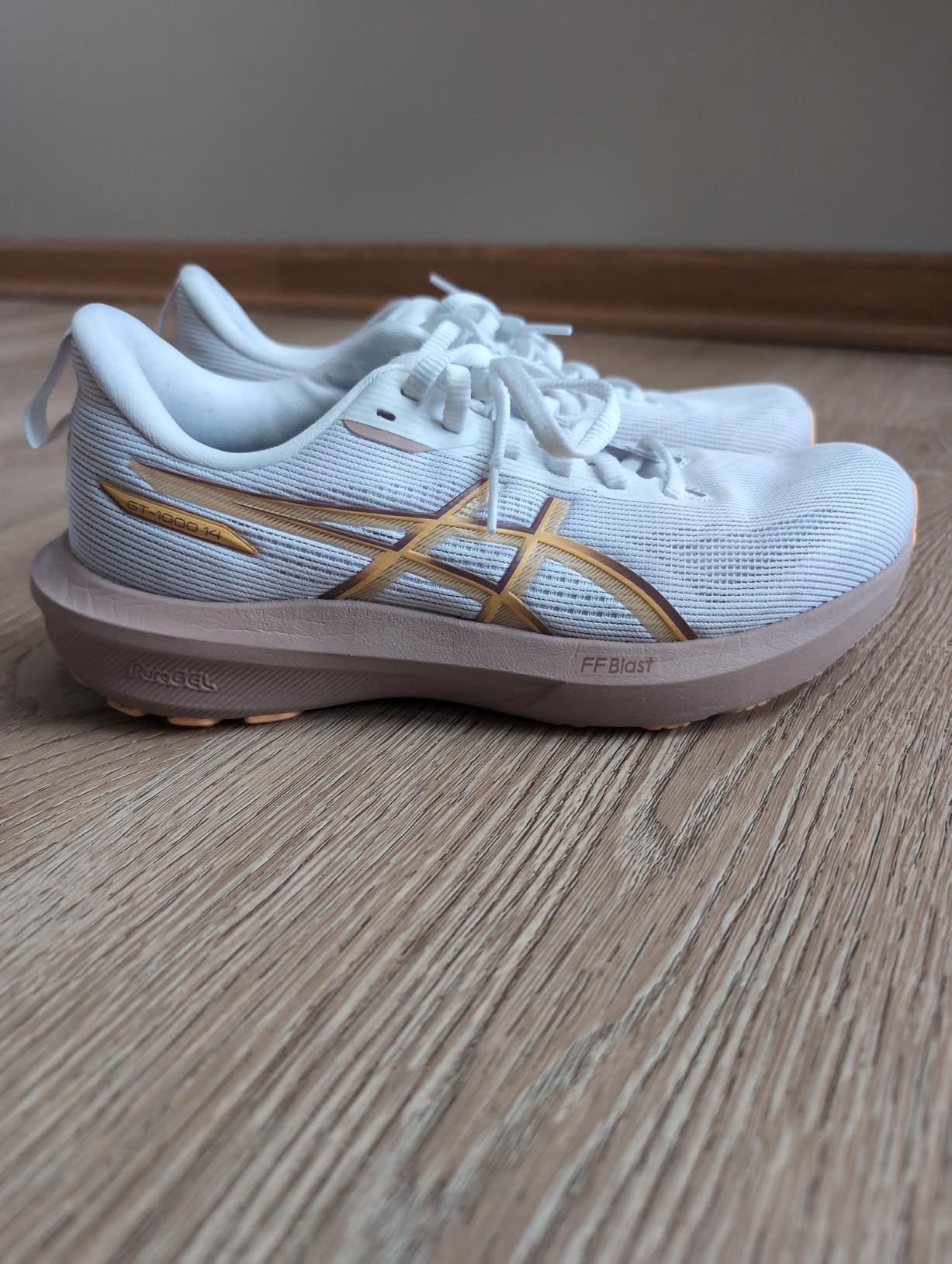
The GT-1000 14 is the sensible way into a supportive shoe. Instead of a fixed stability post, the 3D GUIDANCE SYSTEM uses platform geometry that deforms on demand, so the shoe is more flexible when you walk straight and adds support when your foot moves outside a controlled range.
The cushioning pairs FF BLAST foam with rearfoot PureGEL, which ASICS states is about 65 percent softer than its standard GEL. That is a softer rearfoot landing than most stability shoes give you, which is why owners describe it as supportive without being rigid.
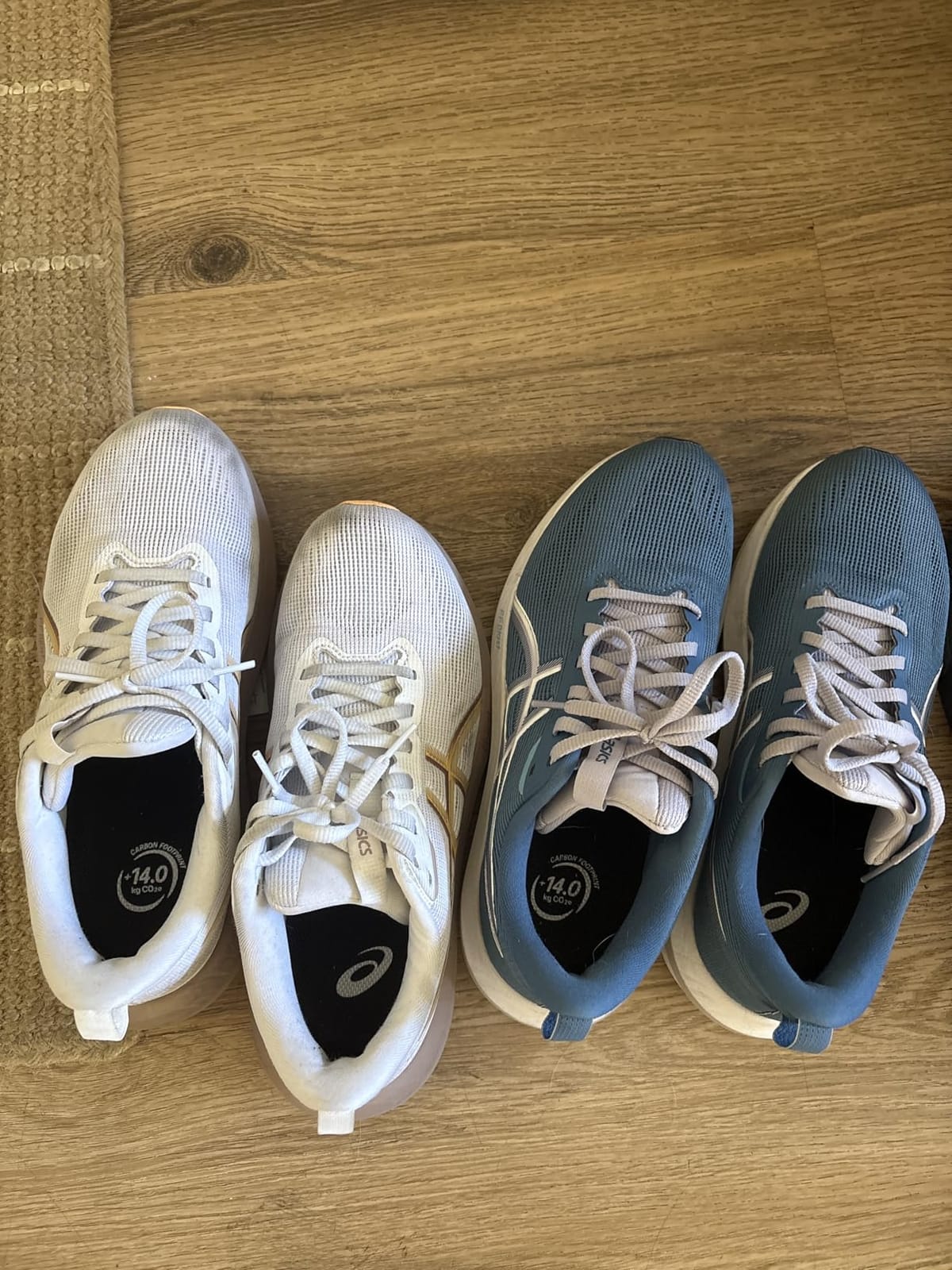
It is also a light build, with a 1.44 pound package weight and a breathable engineered mesh upper carrying only minimal overlays. Few overlays means fewer seams pressing on the top of the foot, and the AHAR LO outsole rubber is placed in the key grip areas to keep weight down without giving up traction.
The drawbacks are predictable. It runs small, so most buyers size up. The cushioning is moderate rather than plush, and the platform is firmer than a max-cushion trainer, so if your priority is softness you should look at the Gel-Nimbus instead.
Who the GT-1000 14 suits best
It suits someone who suspects they need a little support but has never worn a stability shoe, and who does not want to commit to a rigid feel. It also works well as a first pair for someone returning to gentle jogging after a long break.
Where it falls short
It is not a certified diabetic model, and the moderate cushioning will not manage severe heel or metatarsal pain. Colour options in the wide widths are also limited compared with the neutral models.
Why Feet Change After 60 and What That Means for Shoe Choice
Feet age in ways that change what a shoe has to do. The heel fat pad thins and loses its ability to absorb shock, the arch flattens as the posterior tibial tendon weakens, the ankle loses some dorsiflexion range, and toes gradually deform into bunions and hammertoes. Feet also lengthen and widen, so a size that fitted at 30 is frequently wrong at 65.
That last point is the one people most often get wrong, and it is worth repeating: measure your feet in the afternoon, standing, against a wall, once a year. If the number has changed, your old shoes are the wrong shoes, whatever they cost you originally.
Sensory change matters just as much. Reduced proprioception and peripheral neuropathy make the foot a less reliable source of balance information, which raises fall risk. A shoe with a broad base, a secure closure and a grippy outsole is not a comfort accessory in that situation. It is part of your fall prevention.
Our guide to orthopedic shoes for seniors goes deeper on the clinical side if you have a specific diagnosis.
How Much Cushioning Do Older Runners Actually Need?
Yes, older runners generally benefit from more cushioning than they did in their twenties, because a thinner heel fat pad makes every step effectively harder. But cushioned is not the same as soft, and the shoe you want is a firm midsole that absorbs shock without collapsing under you. A very soft, tall stack can feel unstable and cause the exact wobbliness that makes people give up walking.
Three numbers help you judge a shoe without trying it. Stack height is the thickness of the midsole in millimetres at the heel and forefoot; more is generally more absorption. Heel-to-toe drop is the difference between those two measurements, and somewhere in the 4 to 10 mm range suits most older adults who are not adapting to a dramatic change. Stack geometry matters too, since a shoe that flares wide at the base is steadier than a narrow one of the same height.
Where cushioning can also help is in reducing load on arthritic joints. Reviews across this list repeatedly mention relief from knee osteoarthritis and hip discomfort, which is consistent with the general point that less impact reaching the joint means less irritation of an already irritated one. That is a comfort and load-management effect, not a treatment.
If you want the mechanics side rather than the senior-specific side, our guide to cushioned shoes for long distances goes deeper on stack height and foam types.
Neutral vs Stability Running Shoes for Seniors
A neutral shoe lets your foot move naturally and is right when your arch holds its shape and your foot does not roll noticeably inward. A stability shoe adds structure that limits excess inward movement, and it is worth trying if your foot rolls in, if you get shin or knee soreness after walking, or if a clinician has mentioned overpronation or fallen foot mechanics.
The modern stability mechanism is not the hard medial post many people remember. The Brooks Adrenaline GTS 25 and the ASICS GT-1000 14 both use adaptive systems that add support only when the foot moves outside a controlled range, so you get guidance without a rigid feel. The old-style post is the ASICS Gel-Kayano approach, and our guide to shoes for overpronation covers that category in detail.
For the Brooks versus HOKA question, the honest answer is that the two brands solve stability in different ways and neither is universally better. Brooks Adrenaline adds active movement control inside the midsole, while the HOKA Bondi and Ghost Max rely on a very wide, deep platform and a rocker to keep you upright. If your podiatrist used the word overpronation, start with the guided shoe. If your issue is simply not feeling steady, a wide platform may be enough.
Wide and Extra-Wide Sizing: Re-Measure Your Feet After 60
Shoe widths are graded in letters, and the jump between them is substantial. Standard is D for men and B for women, 2E is wide, 4E is extra-wide, and 6E is the widest commonly offered. Moving up a width adds meaningful room across the forefoot, which is where a shoe pinches bunions and hammertoes.
Six of the ten shoes here come in more than one true width: the Brooks Ghost 17, Adrenaline GTS 25 and Ghost Max 3, the HOKA Bondi 9, the New Balance 520 v9 and the ASICS Gel-Nimbus 27. If your foot is difficult to fit, start with those and only then compare cushioning.
Also remember that a width does not replace a length. A wide shoe in your correct length is far better than an extra-wide shoe a size too long, because a long shoe lets the foot slide forward and the toes buckle. Our walking shoes for seniors guide covers the fit side in more detail.
Closure, Fall Risk and the Slip-On Debate
Backless and loose-fitting footwear is consistently associated with higher fall risk than a fastened, enclosed shoe, because the foot can slide and the heel is not held. For a person with neuropathy or reduced ankle control, that gap matters more than convenience is worth.
That leaves a real tension, because reaching your feet to tie laces is genuinely hard with arthritic hands, a stiff back or limited mobility. The answer is a lace-up shoe that is easy to adjust rather than a slip-on with no retention. Looser laces, a wide entry and pulling tabs help, and buying a pair half a size larger than your measured size can make the tightening step much easier.
All ten shoes here are lace-ups, and the recurring sizing advice is to size up rather than fight the laces. Where a shoe can be tightened too much, as buyers note about the Adrenaline, loosening it is a normal adjustment rather than a fault in the fit.
Best Shoes by Foot Condition
Match the shoe to the problem rather than the other way around. These are the pairings that come up most often in owner reviews, and they map cleanly onto the picks above.
Flat feet or overpronation: Brooks Adrenaline GTS 25 for active guidance, or the ASICS GT-1000 14 for a lighter, adaptive alternative.
Bunions and hammertoes: any of the extra-wide options, with the NORTIV 8 and the Saucony Cohesion 13 standing out for toe splay and a flexible forefoot.
Plantar fasciitis: the HOKA Bondi 9 for maximum underfoot absorption, with the Brooks Ghost Max 3 and the Whitin also well reviewed for it.
Knee osteoarthritis or hip pain on long walks: the Brooks Ghost Max 3 and the ASICS Gel-Nimbus 27, both of which reviewers report relieving joint pain.
Neuropathy or diabetic foot concerns: the Brooks Ghost 17, the Adrenaline GTS 25 and the Ghost Max 3 all carry diabetic certification and the APMA Seal of Acceptance.
Swollen feet or a high-volume foot: the Brooks Ghost Max 3 first, with the HOKA Bondi 9 and the New Balance 520 v9 close behind in X-Wide.
Fall risk or uneven ground: the NORTIV 8 for a very wide heel base and lugged outsole, or the HOKA Bondi 9 for a deep platform.
Post-physical-therapy walking: the Brooks Ghost Max 3, whose linear last is designed to accept an orthotic inside the shoe.
One contrarian view deserves a mention, because it is repeated often in running forums. Some people argue that older adults should avoid running shoes entirely and wear plain canvas shoes with a flat rubber sole and a wide toe box, on the grounds that a running shoe is built for repetitive impact rather than for everyday life. We do not fully agree, but the underlying point is fair: a thin, narrow or unstable shoe is worse for this audience than a simple flat one, and no shoe in this list is a thin-soled speed trainer.
When to Replace Your Shoes
Runners are told to replace shoes every 300 to 500 miles. That rule assumes you are logging miles. Most seniors walk a few thousand steps a day at most, so a midsole can look fine from the outside long after it has stopped absorbing properly. The upper tells you almost nothing about the foam underneath.
The practical test is simple. Press your thumb firmly into the midsole just behind the ball of the foot, and then at the heel. If the foam compresses easily, feels spongy or stays compressed after you lift your thumb, the cushioning has bottomed out and the shoe is finished. Most owners who notice problems report them at the four-month mark, which is exactly when the outsole and foam start going at the same time.
Also replace a pair if the heel counter has lost its shape, if the outsole tread is worn smooth, or if the upper no longer holds the foot in place. A new insole can revive a shoe for a while, but it will not restore compressed foam.
When Foot Pain Needs a Podiatrist
Stop shopping and get assessed if you have any of the following: pain that wakes you at night, an open sore or blister that does not heal, a red or hot swollen foot, numbness or tingling that is new, a change in the shape of your foot, or pain that has lasted more than a few weeks. For anyone with diabetes, an ulcer of any size is an urgent appointment rather than a footnote.
Shoes can make a painful foot more comfortable and they can reduce load on arthritic joints, but they do not treat plantar fasciitis, arthritis, neuropathy or a bunion. A roundup can tell you which model to try; only an assessment can tell you what your particular foot needs.
Frequently Asked Questions
Do older runners need more cushioning?
Usually yes, because the heel fat pad thins with age and every step feels harder. But cushioned is not the same as soft. The shoe you want has a firm midsole that absorbs impact without collapsing, a heel-to-toe drop somewhere around 4 to 10 mm, and a wide, stable base so the extra foam does not make the ride wobbly.
Should seniors wear Hoka shoes?
Often, yes, particularly the Bondi, because the wide base and deep platform suit feet that have widened and provide a lot of absorption under the heel and ball of the foot. The two common objections are that it can feel too bouncy for people who want a planted platform, and that the outsole can lose its shape in about four months of regular walking. Test it indoors first.
What shoes do podiatrists recommend for seniors?
Most commonly a cushioned shoe with a wide toe box, a firm heel counter and a rocker or a stable wide base, chosen to match your foot mechanics rather than a brand. Look for a model offered in true widths such as 2E or 4E, and consider the APMA Seal of Acceptance. A podiatric assessment always beats a published recommendation, because only someone who has examined the foot can match it properly.
Which is better for flat feet, Brooks or Hoka?
They work in different ways. The Brooks Adrenaline GTS 25 uses an adaptive support system that limits excess inward movement, which suits confirmed overpronation. The HOKA Bondi and Ghost Max rely on a very wide, deep platform and a rocker to keep you upright, which suits people who feel unsteady rather than roll inward. Start with the guided shoe if overpronation was diagnosed, and the wide platform if balance is the complaint.
What are the best shoes for elderly with arthritic feet?
A wide, deep toe box matters more than anything else, because arthritic feet often develop bunions and hammertoes that a standard width will pinch. Add a cushioned midsole to take pressure off the joints and a rocker or flexible forefoot so pushing off does not hurt. In this roundup the Brooks Ghost Max 3, the HOKA Bondi 9 and the ASICS Gel-Nimbus 27 are the strongest fits, with the NORTIV 8 the best for toe splay.
How often should seniors replace their shoes?
By condition rather than mileage, because most seniors walk far fewer miles than a runner. Press your thumb into the midsole behind the ball of the foot and at the heel. If it feels spongy, crushes easily or stays compressed, the cushioning has gone and the shoe should be replaced, even if the upper looks new. Replace sooner if the heel counter has lost shape or the tread is worn smooth.
The Bottom Line
The best cushioned running shoes for seniors in 2026 are not the softest ones, they are the ones that absorb shock, fit a foot that has changed shape, and stay stable on pavement. Start with the Joomra Whitin if you want a wide, well-reviewed, low-drop everyday pair, the Brooks Ghost 17 if you want diabetic certification and three true widths, and the Brooks Ghost Max 3 if your foot is high-volume or you wear orthotics.
Whatever you choose, measure your feet before you order, buy the width rather than stretching a narrow shoe, and test the pair indoors on carpet for a week before a long walk. And if you have pain, numbness or a sore that will not heal, book the podiatry appointment first and shop second.