
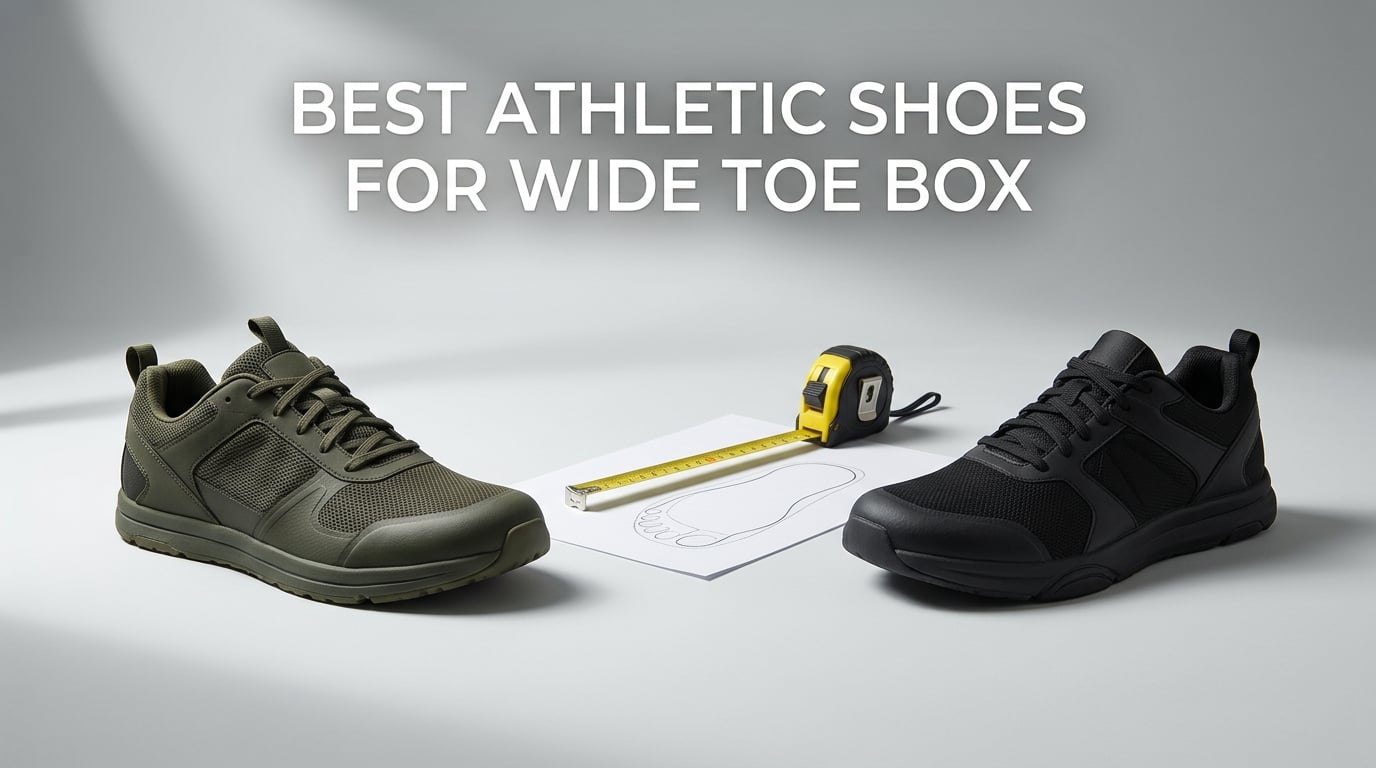
Buy a pair of running shoes in a narrow last and you will feel it in the first mile. The ball of your foot gets pinched, your big toe rides up against the front of the shoe, and by the end of a long session you are walking home with a hot spot on your big-toe joint that will blister again tomorrow.
That is why the best athletic shoes for wide toe box matter more than a comfort preference. A toe box that lets all five toes sit side by side and spread keeps compression off the toe joints, reduces blisters and black toenails, and gives you a more stable base for whatever you are doing in the shoe. I have wide-ish feet myself, and after years of cycling through narrow lasts I now judge every shoe on one thing first: can my toes move?
Here is the thing though. New Balance, Brooks, ASICS, Saucony and Hoka will happily sell you a graded width, while Altra and Topo build their whole identity around a foot-shaped forefoot. Those are two different purchases, and most guides blur them together. In 2026 I went through 12 pairs covering running, walking, gym work, casual wear and barefoot-style training, and I am going to tell you which one you should buy and, just as importantly, which width grade you should be asking for.
What is a wide toe box? It is a shoe whose forefoot is shaped to let your toes sit side by side and spread naturally instead of tapering to a narrow point above the big toe. A wide toe box is not the same as a wide shoe. The toe box is the roomy part at the front, and a shoe can have a roomy toe box with a snug midfoot, or a graded 2E width across the entire foot. I will come back to that difference in the buying guide.
One honest disclosure before we start. I did not pour gel molds or measure toeboxes in millimetres with calipers the way a lab does. What I did was read the fit notes and size-by-size feedback buyers leave on each pair, put the 12 side by side, and sort them by the question that actually decides a purchase: how much room is there in the front of the shoe, and what does that room cost you in cushioning, stability and durability? Where the product data gives a number, I use it. Where it does not, I say so.
Table of Contents
Top 3 Picks for the Best Athletic Shoes for Wide Toe Box (October 2026)

Barezoey Barefoot Wide Toe Box
- Wide toe box for natural toe splay
- Zero drop construction
- Suede patchwork upper
- Ergonomic insole

FitVille Stepease V2 Slip-On
- Extra wide toe and high instep
- One-piece slip-on upper
- ArchCore insole with heel cup

All 12 Wide Toe Box Picks at a Glance in 2026
| Product | Specifications | Action |
|---|---|---|
| Barezoey Barefoot Wide Toe Box |
|
Check Latest Price |
 WHITIN S81 Zero Drop Road Runner WHITIN S81 Zero Drop Road Runner |
|
Check Latest Price |
 ZYEN Wide Toe Box Running Shoes ZYEN Wide Toe Box Running Shoes |
|
Check Latest Price |
| FitVille Stepease V2 Slip-On |
|
Check Latest Price |
 WHITIN W87 Barefoot Canvas Shoe WHITIN W87 Barefoot Canvas Shoe |
|
Check Latest Price |
 FitVille FlowCore FitVille FlowCore |
|
Check Latest Price |
 Jmzb Barefoot Water Shoes Jmzb Barefoot Water Shoes |
|
Check Latest Price |
 FitVille Extra Wide Trail Runner FitVille Extra Wide Trail Runner |
|
Check Latest Price |
 JACKSHIBO Wide Toe Box Zero Drop JACKSHIBO Wide Toe Box Zero Drop |
|
Check Latest Price |
 NORTIV 8 Wide Toe Box Trail Shoe NORTIV 8 Wide Toe Box Trail Shoe |
|
Check Latest Price |
 STQ Wide Toe Box Sneakers STQ Wide Toe Box Sneakers |
|
Check Latest Price |
| Altra Lone Peak 9 |
|
Check Latest Price |
1. Barezoey Barefoot Shoes Women – Best All-Rounder With a Genuinely Roomy Toe Box
Barefoot Shoes Women Casual Sneakers,Wide Toe Box Shoe Women Zero Drop Shoe
Wide toe box for toe splay
Zero drop rubber sole
Suede patchwork upper
Ergonomic insole
Pros
- Roomy toe box that stays uncrowded through long days
- Lightweight breathable upper
- Zero drop feels natural after a break-in
- Solid grip on pavement and light trail
- Works for casual outfits and activity
Cons
- Runs small for some buyers so size up
- Minimal padding at the ball of the foot
- Toe box not much wider than a standard canvas sneaker
The Barezoey is my top pick because it does the one thing this whole article is about without charging you for a brand name. The toe box is cut wide enough that your toes stop touching each other, and the whole shoe is built around a zero-drop platform so your foot sits flat rather than angled downward.
It is also the most useful shoe in this list in terms of what you can do in it. Reviewers put it through running, walking, hiking, tennis and gym sessions, and the suede patchwork upper is quiet enough to wear with jeans on a day off.
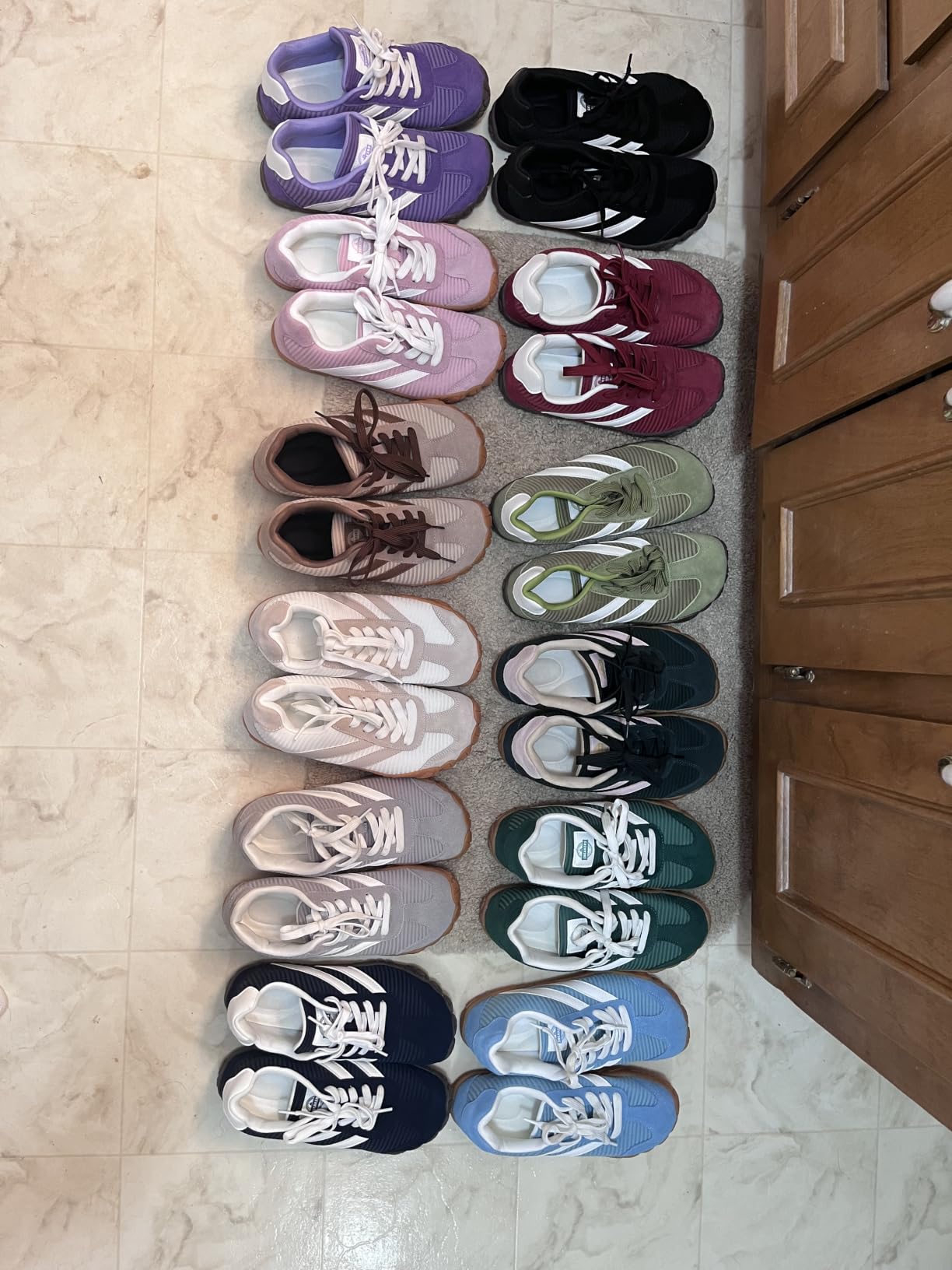
Where it earns its rating is the everyday case. Buyers mention toes staying uncrowded through long days, a breathable upper that does not trap heat, and a sole with enough grip for pavement and light trail. The ergonomic insole adds a touch of arch support, which a pure minimalist shoe usually skips.
The trade-off is real, though. Roughly a third of the feedback mentions the fit running small, so you may need to size up even in a wide shoe. Padding under the ball of the foot is minimal by design, and a few buyers say the toe box is not dramatically wider than a standard canvas sneaker.
Who the Barezoey works for
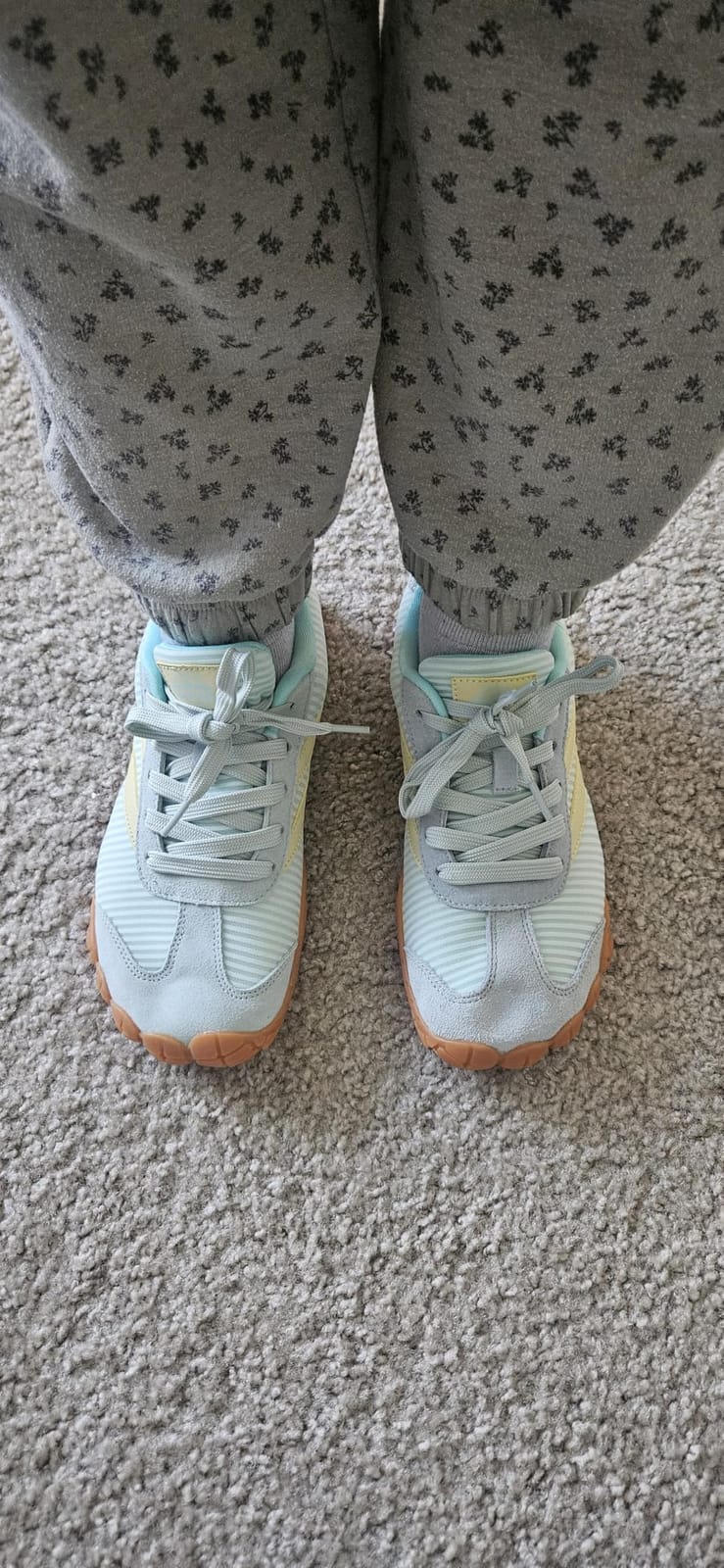
It suits anyone who wants a roomy toe box without buying into the barefoot look, which is the most common objection people raise about wide-fit shoes. If you spend the day walking, run a few miles, and then stand in a kitchen for three hours, this is a reasonable single-shoe answer.
It is also a good first zero-drop shoe for a lot of people, because the suede upper is fairly forgiving and the insole gives a little support rather than none at all.
Who the Barezoey is not for
It is a poor choice if you run serious road mileage and want thick foam under your heel, because the zero drop and thin midsole will feel hard after the first hour. It is also a poor choice if you need a graded width across the whole foot rather than just a roomy front section.
And if you buy it, buy it a size larger than usual. The most common regret in the reviews is not the toe box, it is the length.
2. WHITIN S81 Zero Drop Road Runner – Best for Toe Splay on a Budget
WHITIN Men’s Wide Toe Box Zero Drop Breathable Road Running Shoes Grey 11
Wide toe box for toe splay
Zero drop sole
Breathable soft mesh
EVA midsole
Pros
- Toe box wide enough for very wide feet
- Very light for long sessions
- Breathable mesh keeps feet cool
- Sizing runs true for many buyers
- Good grip on dry and sloped surfaces
Cons
- Insole that comes with it is thin
- Thin sole transmits every pebble
- Zero drop causes shin discomfort at first
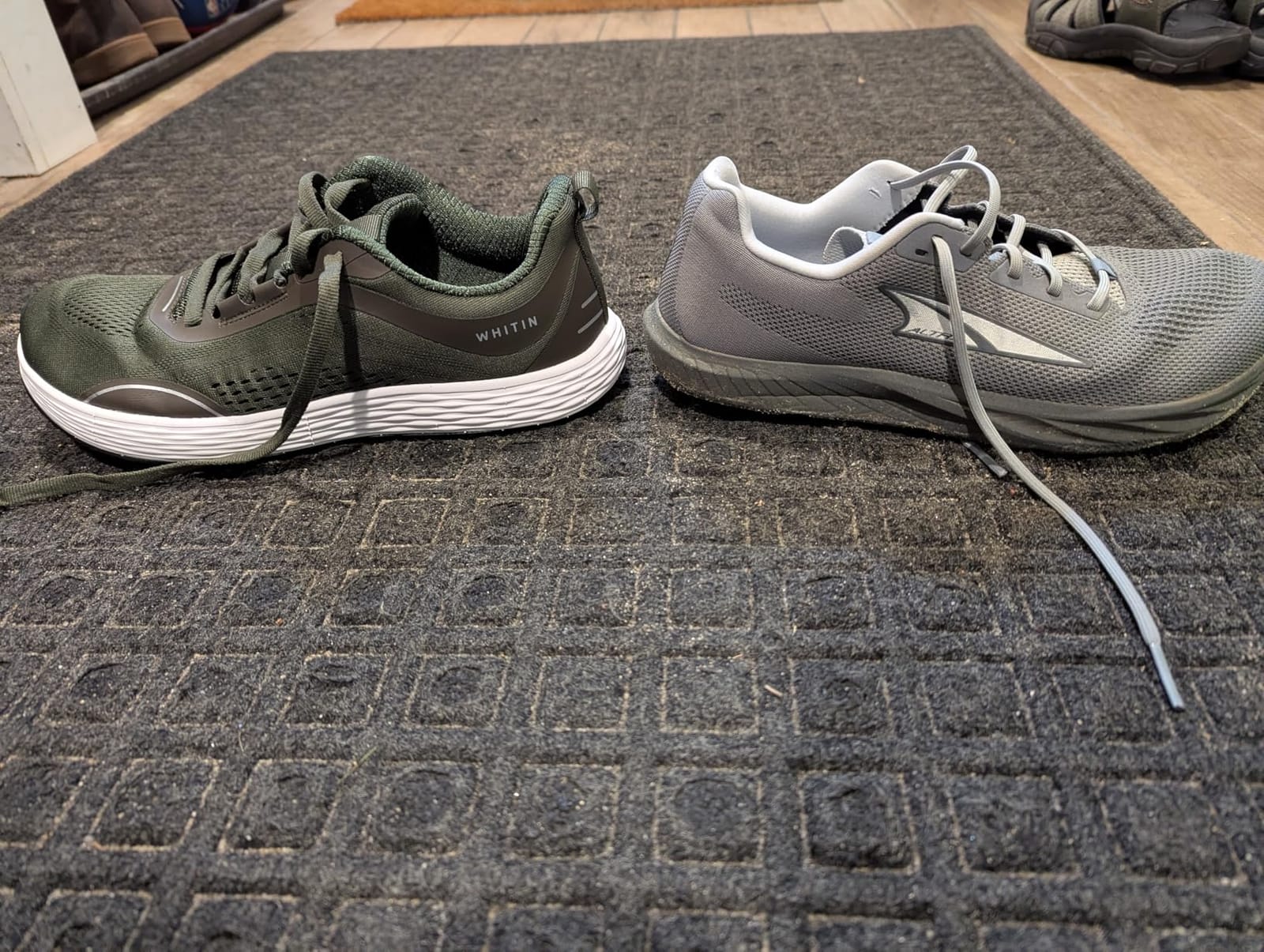
Of the 12, the WHITIN S81 gets the most consistent fit praise in the written reviews, and the message repeats: very wide forefoot and midfoot, toes can spread, feet stop hurting. Several owners with bunions and wide feet describe it as the pair that finally stopped the compression.
At 8.82 ounces it is also one of the lightest shoes here, and the soft mesh upper and lining are genuinely breathable. If your main worry is toe room and nothing else, this is the pick I would send a friend to.
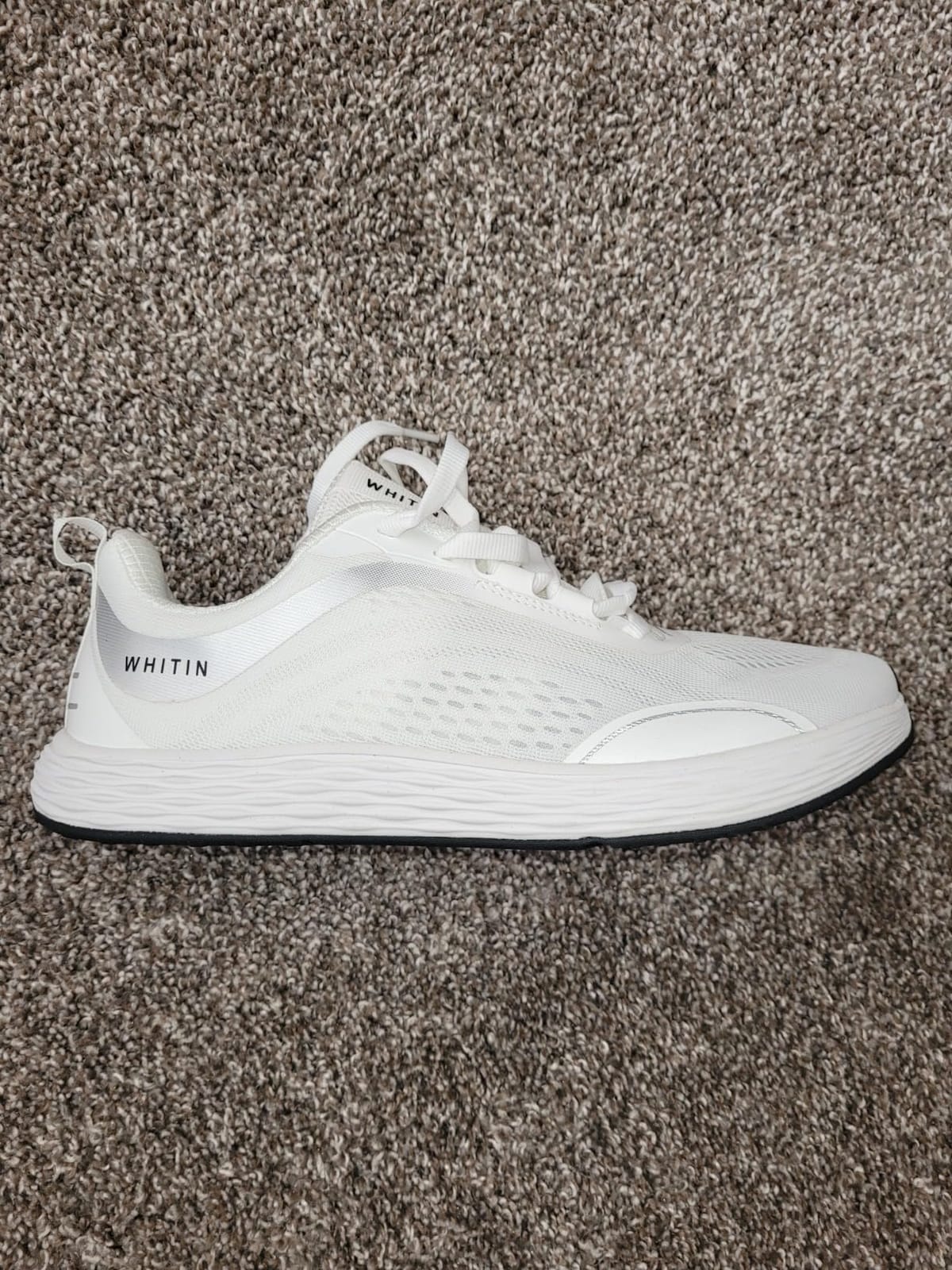
Technically it is a straightforward zero-drop road runner. The sole sits flat, the midsole is EVA with light cushioning, and the rubber outsole has a multi-terrain grip pattern. Nothing about it is designed to be a hiking shoe or a lifting shoe.
What you give up for that width is cushioning and durability. The insole it comes with is thin, and reviewers frequently replace it. The sole is thin enough that cobblestones and pebbles come through clearly, and outsole tread plus glue seams are reported wearing sooner than expected.
What to check before you order
Mesh is not waterproof and it lets grit in, so this is a fair-weather road and trail shoe rather than an all-weather one. If you run in wet conditions, look for a shoe with a denser upper and a lug pattern deeper than this one.
It is also the wrong pick if you dislike thin soles. The lack of shock absorption is not a defect, it is the design, but it is only comfortable if you already run barefoot-style or close to it.
Handling the zero drop adjustment
This is the warning I would give anyone buying the S81 fresh. Zero drop shoes load the calf and Achilles differently, and shin discomfort in the first week is the single most common complaint about this model and about the whole category.
Ramp it in. Two or three short easy runs a week at low volume, then build. Do not take your first long run in it on the first day.
3. ZYEN Wide Toe Box Running Shoes – Best for Swollen Feet on Long Days
ZYEN Wide Toe Box Shoes Women Air Cushion Road Running Shoes Extra Wide Width Sneakers Arch Support Gym Athletic Tennis Sneakers Lightweight Breathable Walking Shoes 8811 Blue 40
Roomy forefoot for E-width feet
Air cushion sole
Stretch knit mesh
Wide sizes 6 to 12
Pros
- Genuinely wide forefoot for swelling
- Lightweight knit upper stays cool
- Machine washable
- Styling works with casual outfits
- Good for sightseeing and long walking days
Cons
- Sole is hard and plastic-like with little give
- Little arch support for standing hours
- No lateral structure for pronation
The ZYEN is the pair I would suggest to someone whose feet get bigger as the day goes on. The forefoot is wide enough to sit around E-width feet and swelling, and reviewers repeatedly single out that room for accommodation as the reason the shoe works for them.
It is machine washable, which sounds minor until you have tried to clean a knit upper in a hotel sink. Sizes run from 6 to 12 in wide widths, and the styling passes as an ordinary sneaker in a way most barefoot-style shoes do not.
Most buyers use it for walking and travel. The stretch knit upper stays cool, and long sightseeing days on concrete are described as comfortable because the toe box never fights back.
Be clear-eyed about what it is not. The sole is described as hard and plastic-like with little give, there is very little arch support, and the open mesh offers no protection across the top of your foot. There is also no lateral structure, so it does nothing for a foot that overpronates or underpronates.
Why the width matters more than the foam here
This shoe makes a useful case for prioritising toe room over cushioning. If your problem is a toe box that compresses, a softer shoe with a narrow front section will not fix it. The ZYEN solves the actual complaint, and the reviews say that is exactly what people needed.
It is worth comparing against my steel toe sneaker guide if you spend your day on hard floors, because that is the same comfort-versus-protection trade at a different price point.
Where it falls down
The hard sole is the dealbreaker for a lot of runners. If you land hard and want foam to absorb it, this will feel flat and tiring over distance.
The tight opening is the other recurring complaint, and it is a bad combination with swollen feet, since the shoe that fits at 9am can fight you at 6pm. If swelling is your main issue, a lace-up shoe you can adjust is a safer bet.
4. FitVille Stepease V2 Slip-On – Best for Arch Support and Hands-Free Wear
FitVille Men’s Extra Wide Slip on Walking Shoes with Arch Support Men Slip on Sneakers for Foot Pain Relief-Stepease V2 (10.5 Wide, Jet Black)
Extra wide toe and high instep
Slip-on stretch upper
Wide platform sole
ArchCore insole
Pros
- Extra wide toe area that does not compress toes
- Hands-free slip-on holds without laces
- Thick cushioned sole eases end-of-day pain
- Roomy high instep suits swollen feet
- Lightweight for work and errands
Cons
- Tongue and heel collar tight on swollen feet
- Bulky plain styling
- Build quality may not last many years
The Stepease V2 carries a 4.4 rating, among the highest in the group, and the reason is not the toe box, which is excellent, but the combination of that toe box with a real insole. The ArchCore insole with a heel cup gives these more arch support than any other shoe in this roundup.
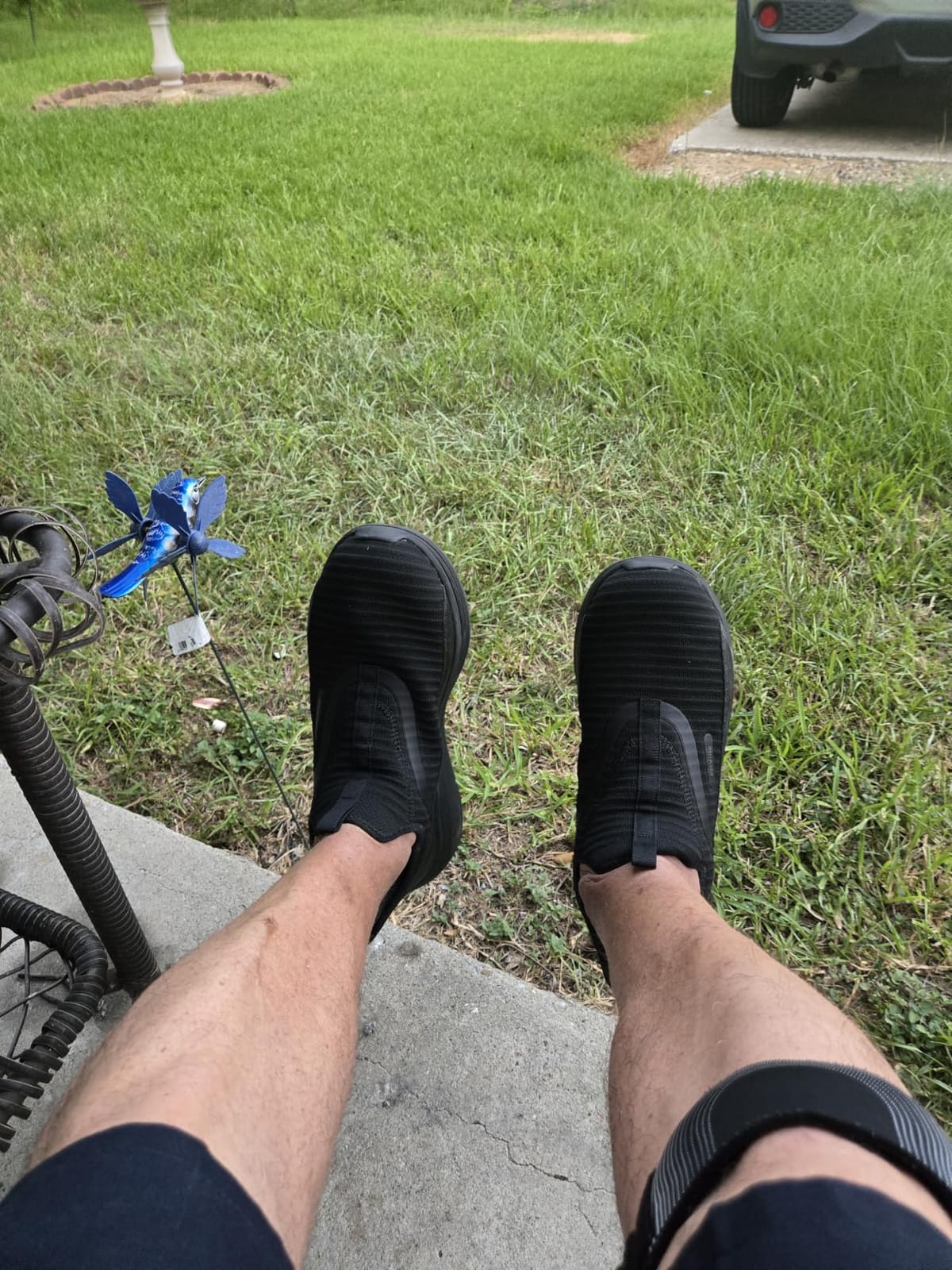
It is also a slip-on. The one-piece stretch upper goes on without laces and, according to buyers, holds the foot securely anyway. That matters if your hands are full, your feet are arthritic, or bending to your laces is the reason you stopped walking in the first place.
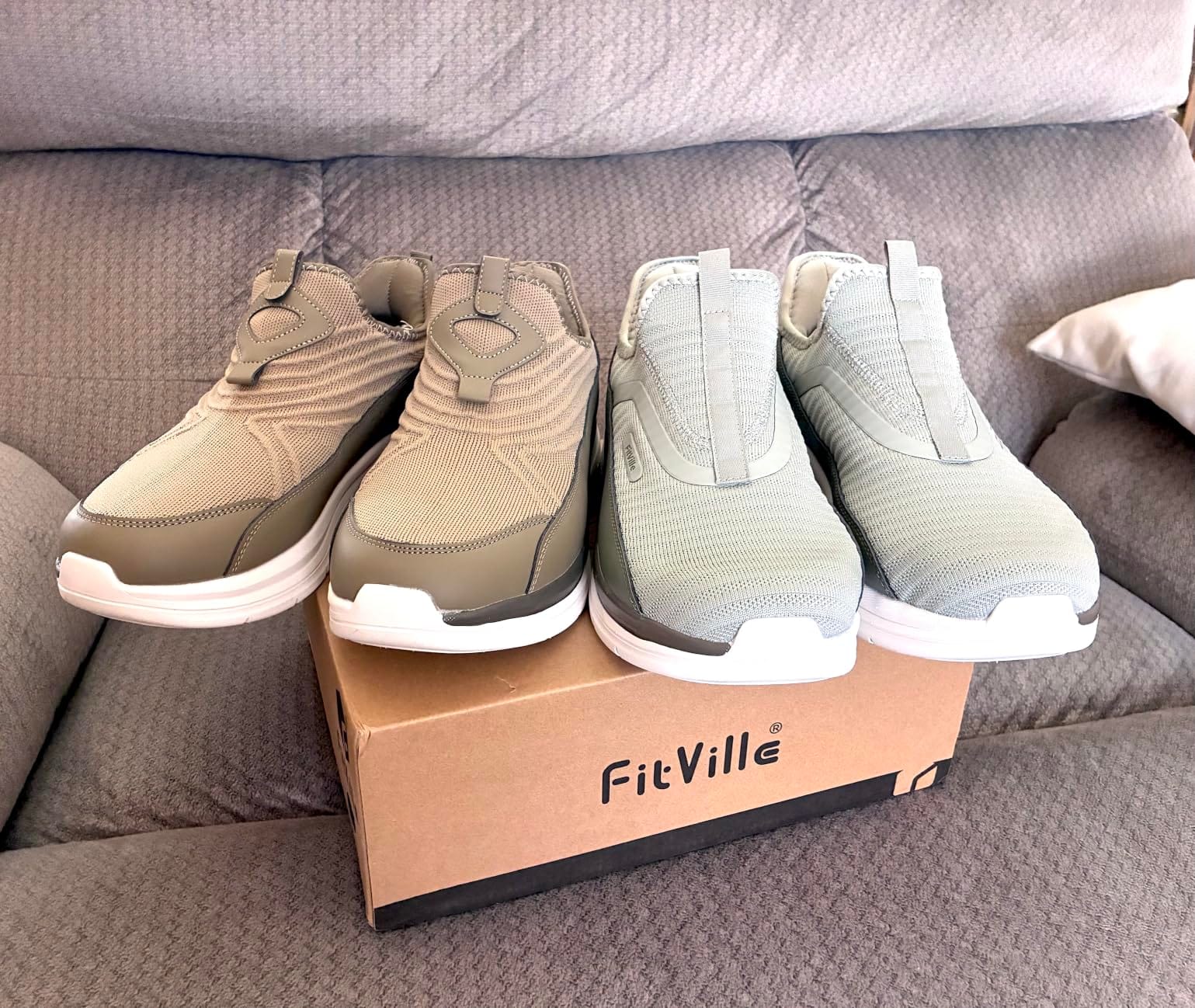
The width story is the important part. This is an extra wide toe and high-instep construction on a cushioned wide platform sole, and buyers with neuropathy, diabetes-related sensitivity, arthritis and bunions report real relief. The heel cup also makes it more stable than a typical slip-on, which usually feels like a sock.
Two things to know before you commit. The tongue and heel collar are stiff, and a number of reviewers report difficulty getting the shoe onto feet that are badly swollen. That is a strange flaw in a shoe marketed at swollen feet, so order carefully and try both sizes if you can.
Who this is built for
If you work a service job, stand on concrete, or spend your day walking between rooms, the cushioned wide platform is the feature that will matter. Long-shift owners describe the thick sole as reducing end-of-day foot pain in a way lighter shoes did not.
It is also the pick for anyone who needs a real heel cup and arch support alongside the width, because most wide-fit shoes on the market drop support to keep the last sleek.
Who should pass
Anyone who cares about how a shoe looks. The styling is bulky and plain, and a canvas or knit upper would not have suited this construction.
Also skip it for running. The construction is heavy and stiff, and durability is questioned, with owners reporting build quality that may not hold for many years. Use it for walking and standing, replace it when the platform flattens, and keep the running miles in something lighter.
5. WHITIN W87 Barefoot Canvas Shoe – Best Lightweight Casual Wide Fit
WHITIN Men’s Barefoot Shoes Wide Toe Box Zero Drop Sneaker Grey Gum 9.5
Wider toe box for toe splay
Removable insole
Zero drop heel
Non-marking outsole
Pros
- Roomy toe box that suits wide feet
- Lightweight canvas for daily wear
- Removable insole changes the feel
- Non-marking outsole grips without scuffing
- Clean minimalist styling in many colorways
Cons
- Minimal cushioning and arch support by design
- Canvas upper has little water resistance
- Wide styling is hard to pair with formal clothing
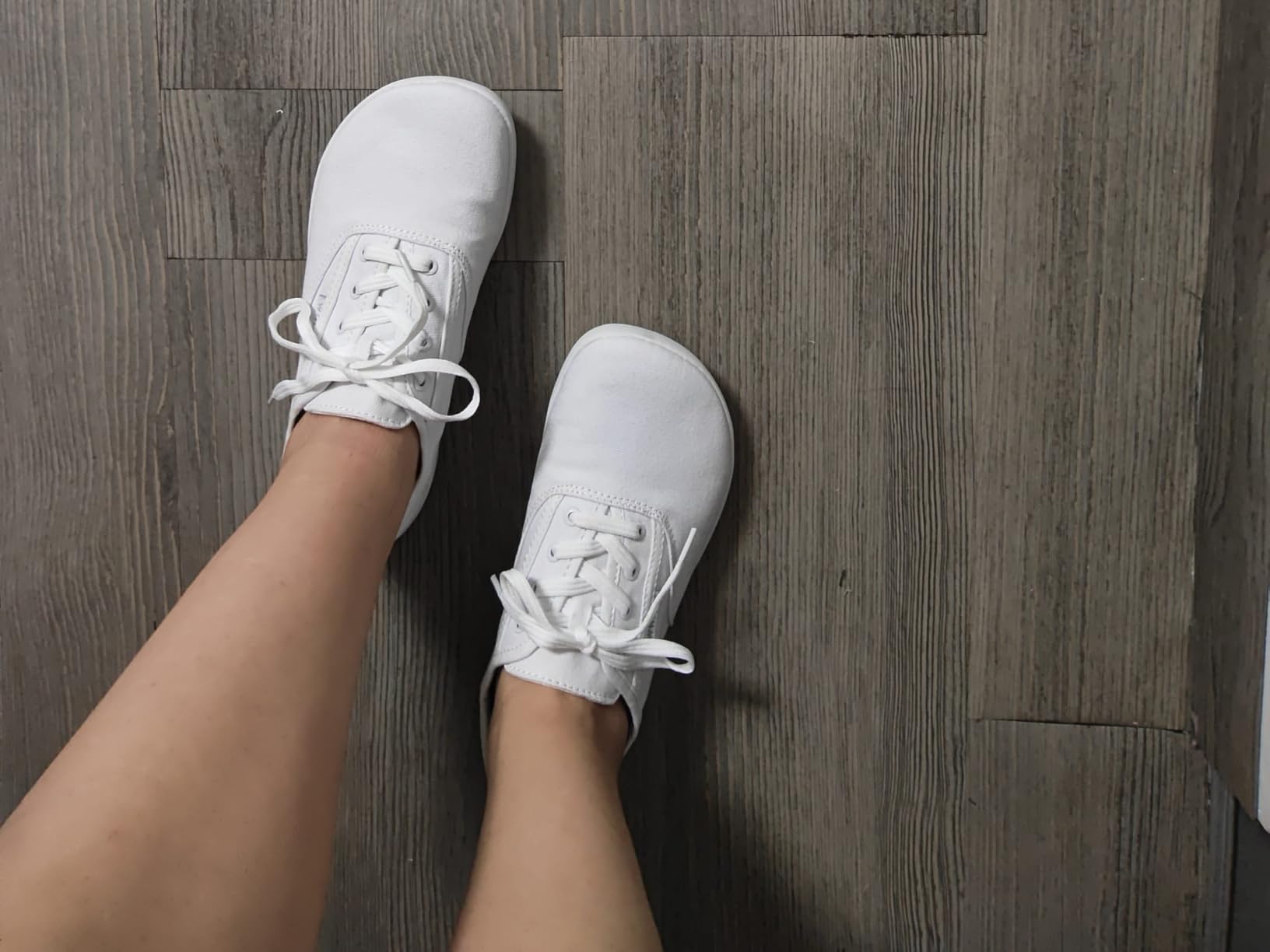
The W87 is the simplest wide-fit shoe here and the easiest to justify. It is a canvas shoe, it weighs 1.63 pounds in the package, and it has a wider toe box that lets your toes splay without the shoe looking like footwear designed in a laboratory.
That makes it the one I would wear to a cafe. Reviewers like the clean minimalist styling across multiple colorways, and the non-marking rubber outsole grips without scuffing a floor, which matters if you wear them indoors a lot.
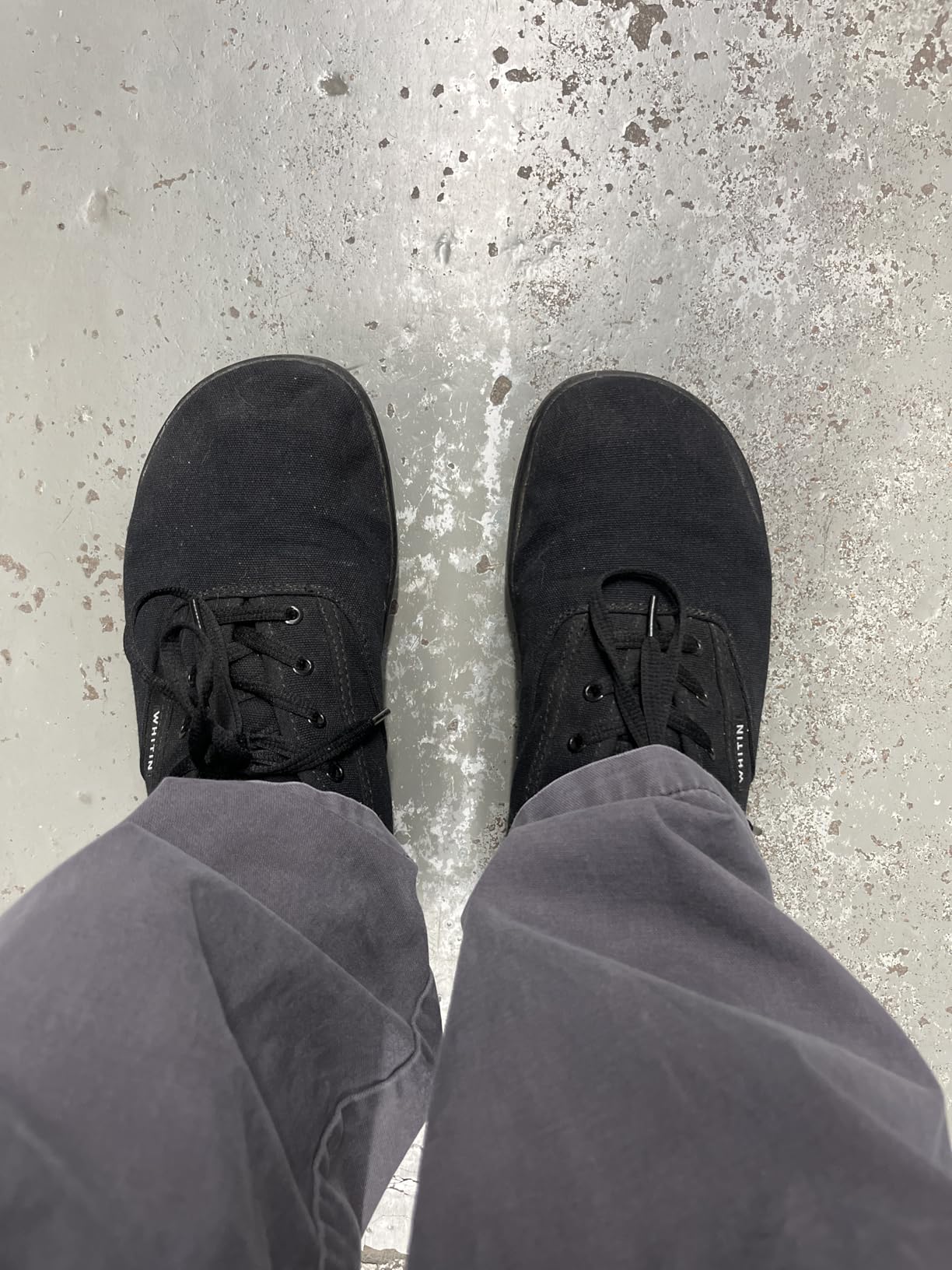
The removable insole is the quietly useful part. Pull it out and you get a closer barefoot feel, which lets you change the character of the shoe with a single accessory. It also means you can drop in your own orthotic without destroying the fit.
The zero drop, non-elevated heel is consistent across the shoe, so it trains the same way it walks. If you are moving toward barefoot-style training, a removable insole is a cheap way to test how much drop you actually tolerate.
Why the removable insole matters
Most minimalist shoes here ship with a thin fixed insole, and buyers end up buying replacement insoles. This one solves that problem for free, and it is the single feature that makes me prefer the W87 to several shoes with better spec sheets.
For a wide-footed person it also removes a frustration: you can add volume to the midfoot without making the toe box longer.
Limitations to plan around
Minimal cushioning and minimal arch support are accepted as part of the design, not defects. On hard indoor floors for a full shift, that combination gets tiring, and for that you want the FitVille Stepease V2 instead.
Canvas has very little water resistance, so this is a dry-weather shoe. And the wide silhouette is genuinely hard to pair with formal clothing, so if you wear it to work you are committing to a casual register.
6. FitVille FlowCore – Best Graded Extra Wide Fit Up to 4E
FitVille Extra Wide Toe Box Walking Running Shoes for Men – FlowCore
Extra width up to 4E
Breathable mesh upper
Cushioned EVA and rubber sole
Removable insoles
Pros
- Extra wide fit up to 4E leaves toes uncompressed
- Cushioned midsole absorbs impact on long walks
- Anti-slip outsole grips indoors and out
- Removable insoles can be swapped
- Supportive without feeling clunky
Cons
- Bulky wide silhouette
- Mesh upper can run warm
- Sizing runs large for some buyers
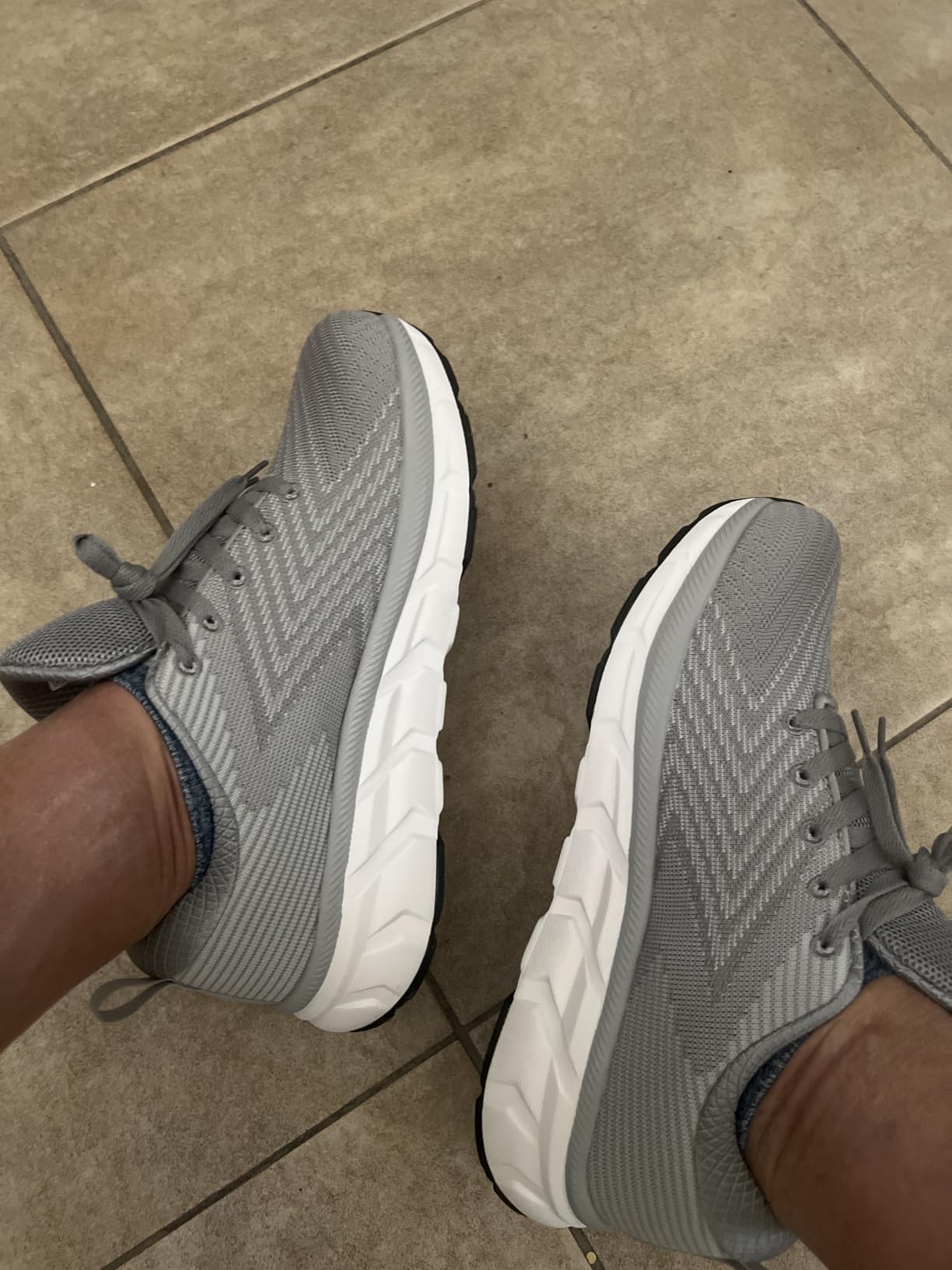
This is the pick for the person who has tried wide toe box shoes and still feels compressed. The FlowCore is built with extra width up to 4E across the forefoot, which is a graded width rather than a roomy toe box, so the room runs through the whole front half of the shoe rather than just the last two centimetres.
Buyers with bunions, wide feet or swelling describe it as genuinely uncompressed, and the cushioned EVA and rubber sole absorbs impact well enough for long walks. The anti-slip outsole works indoors on gym floors and outdoors, which broadens its use.
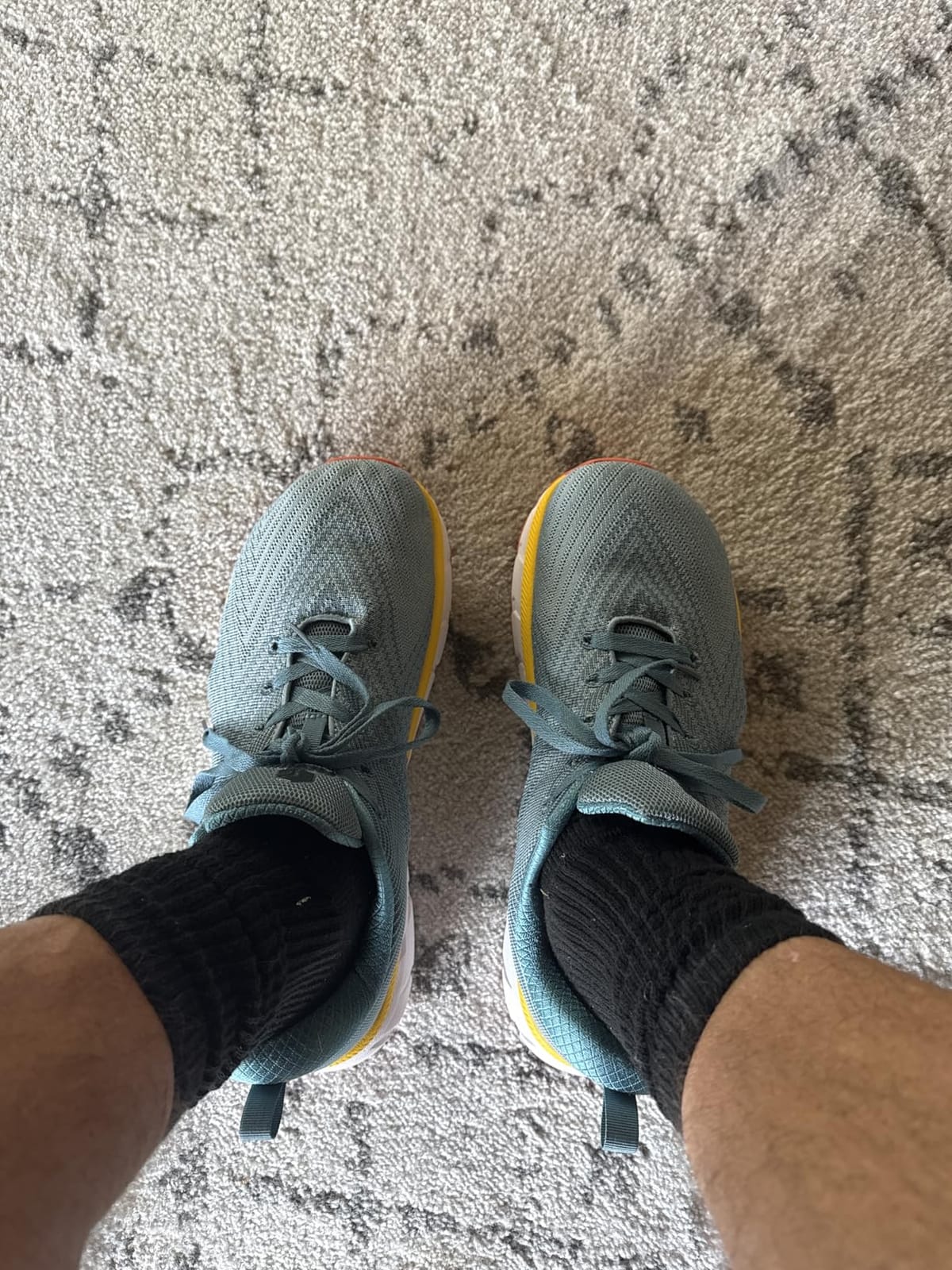
Construction-wise it is a straightforward breathable thin mesh upper on a cushioned sole with removable cushioned insoles. The appealing detail is that owners call it supportive without feeling clunky, which is unusual for a shoe this wide.
That is the whole appeal. There is very little clever geometry here, no rocker, no zero-drop argument, no anatomical last. It is a roomy, cushioned, grippy shoe, and for many feet that is exactly enough.
When you want 4E rather than a wide toe box
Here is the decision point. If your toes are pinched but the rest of your foot fits, you want a wide toe box, not a 4E. If your whole forefoot feels tight, if the ball of your foot spreads against the sides of the shoe, or if a wide toe box shoe still leaves the rest of the foot squeezed, this is the category you are shopping in.
The removable insoles also let you fine-tune volume, which is how you resolve a high instep without giving up width.
What you give up
The silhouette is bulky. Several reviewers mention it directly, and if you want a shoe that disappears under tapered trousers, this is not it.
The mesh upper can run warm in heat, and sizing runs large for a portion of buyers, so check whether you need to step down rather than up. A 4E foot in a size that is too long will heel-slip, and you will blame the width for it.
7. Jmzb Barefoot Water Shoes – Best Budget Entry Into Wide Toe Box Training
Barefoot Shoes for Women & Men, Grounded Walking Hiking Wide Toe Box Shoes
Wide toe box with elastic band
Water-friendly mesh
Deep lug rubber outsole
Unisex wide sizing
Pros
- Affordable first step into barefoot-style footwear
- Real toe room in women's and men's sizes
- Water-friendly quick-drying mesh
- Deep lug outsole grips gravel and wet ground
- Lightweight and easy to slip on
Cons
- Ultra-thin sole gives little impact protection
- Minimal cushioning and no real arch support
- Mesh upper leaves the top of the foot exposed
The Jmzb is the cheapest way to find out whether a barefoot-style wide toe box suits you. The toe box is genuinely wide in both women’s and men’s sizing, and the elastic closed band means you can get it on and off without fuss, which is a bigger deal than it sounds when your toes are the problem.
It is also water-friendly. The quick-drying mesh and non-slip rubber outsole with a deep lug pattern are built for beach, pool and wet trail, and it ranks high in men’s hiking shoes for a reason.
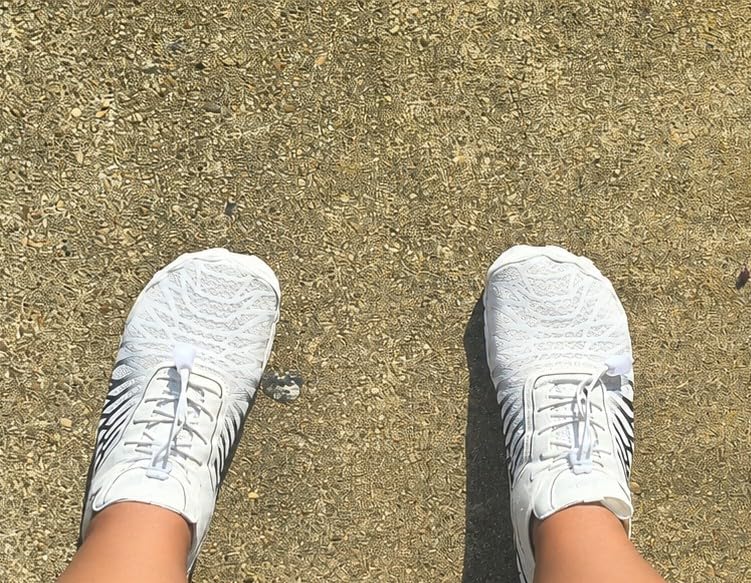
The construction is deliberately thin. An ultra-thin breathable sole, a mesh upper and a deep lug outsole add up to a shoe that puts almost nothing between you and the ground, which is exactly what toe splay training is supposed to feel like.
Buyers treat it as a budget-friendly barefoot or water shoe option that delivers real toe room, with strong unisex sizing. The construction is designed to promote a natural gait rather than to correct anything.
Best used for short, casual and wet sessions
Beach days, pool decks, showers, light trail walks and easy errands, this is the shoe. The deep lug pattern grips gravel and wet ground better than a flat canvas sole would, and you can rinse it off after a sandy day.
It is also a smart shoe to test toe splay in, because the thin sole gives you unmistakable ground feel while you work out whether your foot likes being barefoot-style.
Not for long runs on hard ground
The ultra-thin sole offers very little impact protection, and there is no substantial arch support. On long road runs that combination will leave your feet and joints tired, so keep your serious mileage in a cushioned shoe.
The exposed mesh also leaves nothing between your toes and rocks. If you will be on technical ground, the Altra Lone Peak 9 further down this list is built for that job.
8. FitVille Extra Wide Trail Runner – Best for Wide Flat Feet
FitVille Mens Extra Wide Trail Running Shoes Lightweight Cushioned Sneakers
Roomy toe box and high instep
Traction outsole
ArchCore insole with heel cup
Pros
- Genuinely extra wide fit for very wide and flat feet
- Supportive arch design eases flat-foot discomfort
- Lightweight for walking and outdoor work
- Good availability in large sizes like 14 and 15
- Steady traction outsole
Cons
- Tread can wear through within a few months
- No seasonal warmth or weather protection
- Mesh-only upper lacks premium materials
Flat feet plus wide feet is the combination most wide-fit shoes ignore, and this one is built for it. The roomy toe box pairs with a high instep, and the ArchCore insoles with a heel cup add the arch support that a roomy forefoot alone would not give you.
It is also one of the few shoes in this roundup that buyers report fitting reliably in very large sizes, with several mentioning sizes 14 and 15. If you have spent years failing to find anything in your size, that matters more than any spec line.
For trail use it does the basics well. The outsole is built for uneven terrain, and the build is light and breathable enough for long walks and outdoor work rather than only running.
The weak point is durability. Several reviewers report the tread wearing through within about three months, which is a real cost if you are running technical ground regularly. There is also no weather protection and no warmth, so it is a fair-weather shoe.
Why the arch support changes the recommendation
Most wide toe box shoes are neutral and soft, which is fine until you are flat-footed and need something under the arch. That is the gap this fills, and owners with flat feet describe it as easing discomfort that other wide shoes did not touch.
It is a good pairing with a wide-fit routine, and the heel cup keeps the foot from sliding forward on uneven ground.
Plan for the replacement cycle
Budget for roughly a season of moderate use. If you are putting serious trail mileage through these, expect to replace the tread before the upper gives up, and check the outsole periodically rather than waiting for the grip to go.
The mesh-only upper also means this is not the shoe for cold, wet or rocky ground. Those conditions want protection over the top of the foot, and that is a different brief.
9. JACKSHIBO Wide Toe Box Zero Drop – Best Cushioned Zero Drop Option
JACKSHIBO Wide Toe Box Shoes for Men Arch Support Zero Drop Wide Sneakers
20 percent wider forefoot
1.57 inch foam midsole
Toe rocker
3D arch support
Pros
- Roomy forefoot reduces toe compression over long wear
- Thick cushioned midsole absorbs joint stress
- 3D arch support suits flat feet and high arches
- Zero drop encourages a natural stride
- Heel frame reduces slipping on inclines
Cons
- Zero drop needs an adjustment period
- Bulkier profile than a standard sneaker
- Wide toe box can look oversized
Most zero drop wide-toe-box shoes are thin, flat and unforgiving. The JACKSHIBO is the exception. The forefoot is 20 percent wider, the drop is 0mm, and there is still a 1.57 inch foam midsole under your foot with a toe rocker at the front.
That combination is rare. You get a flat, natural platform for toe splay and barbell work without the ground-feel punishment, and the midsole absorbs joint stress over a long session. Reviewers with wide feet call out the roomy forefoot as the reason their toes stopped compressing.
The 3D arch support structure is a genuine addition rather than a token. It is described as helping both flat feet and high arches, which is unusual phrasing that matches how most feet actually are.
An embedded EVA frame in the heel reduces slipping on inclines, which matters more than it sounds if you walk hills or do incline work. Sizes run 8 to 13.
Who this suits best
Anyone who wants a wide toe box and a zero drop platform but has found the pure minimalist options too hard underfoot. The toe rocker also smooths the transition through the forefoot, which pure flat shoes often lack.
It is a reasonable gym and trail crossover, and the reviews list running, gym, golf and casual wear as live use cases.
The trade-offs are real
Zero drop still requires an adjustment period, and this is the most common complaint alongside the bulk. Build it in gradually rather than switching your whole training week at once.
The profile is bulkier than a standard sneaker and the wide toe box can look oversized, especially in smaller sizes. At a 4.0 rating it is the least universally loved shoe here, but the complaints are about looks and transition, not about the width failing to deliver.
10. NORTIV 8 Wide Toe Box Trail Shoe – Best for Mixed Trail and Pavement
NORTIV 8 Men’s Trail Running Shoes Wide Toe Box,Black/Light Grey,10.5
Roomy toe box for toe spread
Jacquard mesh upper
Arch support EVA midsole
4mm lug rubber outsole
Pros
- Roomy toe box that suits different foot shapes
- Breathable mesh keeps feet dry on hard efforts
- EVA midsole gives good shock absorption
- 4mm lug outsole grips well and sheds mud
- Works on both trail and pavement
Cons
- Arch support insole is fixed rather than removable
- Wide fit may feel roomy for standard-width feet
The NORTIV 8 is the one I would pick if you do not cleanly separate your running from your walking. It has a 4mm lug outsole that handles trail, a cushioned EVA midsole that survives pavement, and a wide toe box that suits more than one foot shape.
It shares a 4.4 rating with the FitVille Stepease V2, and the volume of reviews behind that number reflects how well established it is. Buyers highlight the roomy toe box, a breathable jacquard mesh that keeps feet dry on hard efforts, and shock absorption that works for heavier runners.
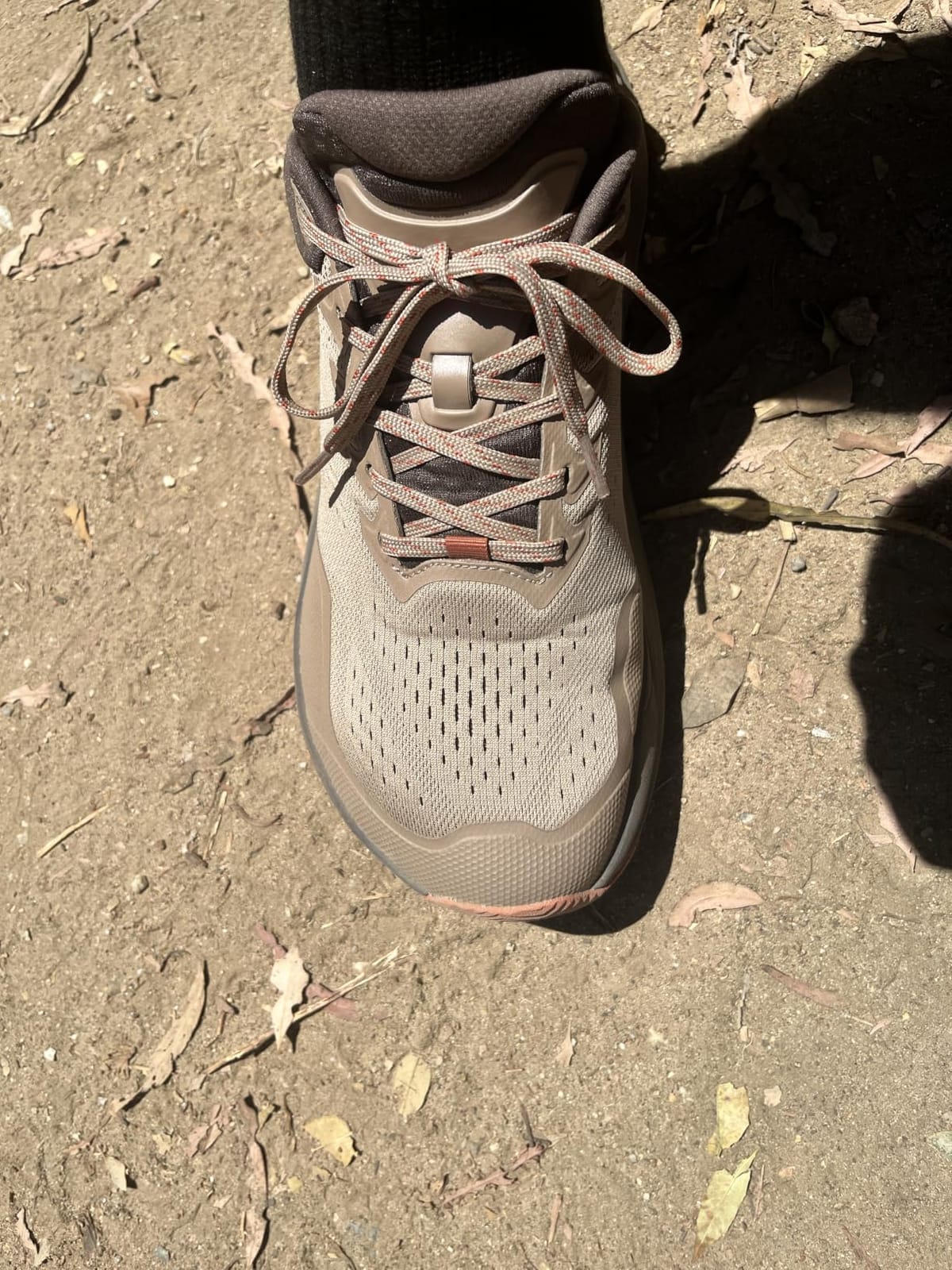
The outsole is the technical story. Four millimetre lugs give traction on dirt and shed mud well, and wear-resistant rubber holds up. It is a genuinely usable trail outsole rather than a road shoe with a decorative pattern.
It also ranks near the top of men’s trail running shoes, which tells you something about how it is being used. Streamlined styling inspired by the Rocky mountains means it does not look out of place on a street.
What to check before ordering
The arch support insole is fixed rather than removable. That is a real limitation, because if you rely on custom orthotics this shoe will not take them, and the removable-insole feature on the WHITIN W87 or FitVille FlowCore is genuinely more useful.
It also warns that the wide fit may feel roomy if your feet are standard width. Buy your true length, not a size up, and let the toe box do its job.
Best for the mixed-surface runner
If you run a trail loop on Saturday and pavement all week, you can use one shoe instead of two. The shock absorption is real rather than minimal, which sets it apart from the thinner minimalist picks in this list.
For technical rock, wet conditions or serious elevation change, look further down the list at the Altra Lone Peak 9, which has actual underfoot stone protection.
11. STQ Wide Toe Box Sneakers – Best for Sensitive Feet
STQ Wide Toe Box Shoes Women Breathable Mesh Walking Sneakers Grey Size 8
Spacious toe area for toe splay
Padded tongue
Reinforced heel
Breathable mesh upper
Pros
- Wide toe box reduces forefoot pressure and crowding
- Breathable mesh gives excellent airflow
- Lightweight cushioned sole with flexible feel
- Reinforced heel adds real stability
- Comfort cited for neuropathy bunions and arthritis
Cons
- Tongue tends to slip out of place
- Runs about a half size large for some buyers
- Limited color options
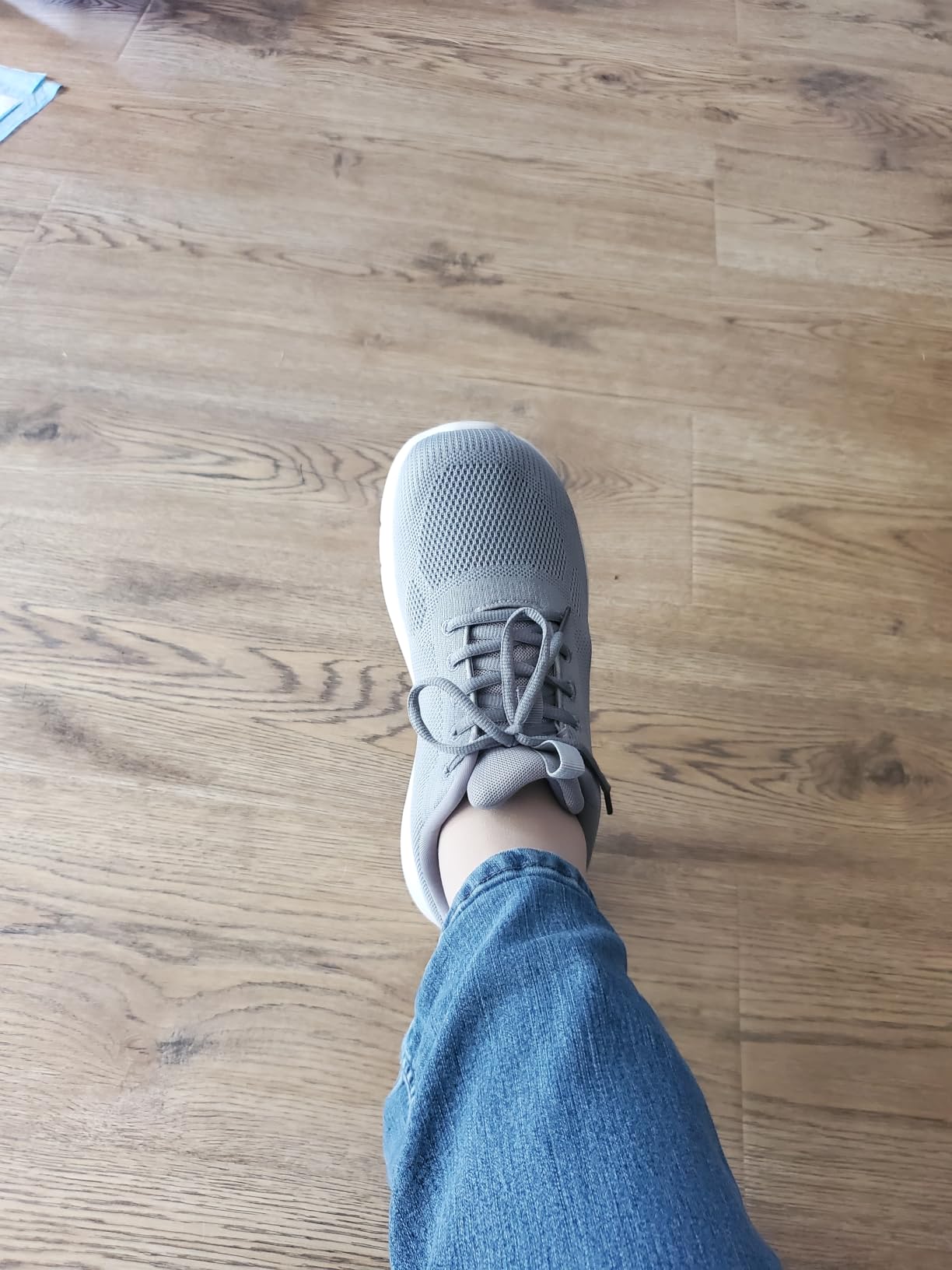
The STQ is aimed squarely at feet that hurt, and the reviews say it lands. Buyers mention comfort with neuropathy, bunions, arthritis and Morton’s neuroma, and the wide toe box is specifically credited with reducing forefoot pressure and toe crowding.
What separates it from most wide-fit shoes is the padded tongue. On a shoe this wide the tongue often ends up pressing on the top of the forefoot, and padding that surface is a thoughtful detail for anyone with swelling or nerve pain.
The reinforced heel structure is the other quiet strength here. Wide shoes are often soft and floppy, and a reinforced heel gives you the stability to walk in one without your foot sliding around inside it, which is the usual trade people accept when they go wide.
The sole is a lightweight moulded MD sole with a textured tread, flexible rather than rigid, and the breathable woven upper gives the airflow that matters for feet that overheat easily.
Who should pick this one
Anyone whose feet are medically sensitive rather than simply wide. The combination of a wide toe box, a padded tongue and a reinforced heel is closer to what a comfort shoe should look like than most athletic picks on this list.
It is also a good commuter and travel shoe, and it pairs with casual outfits without looking like gym kit.
What to watch for
Two consistent complaints. The tongue tends to slip out of place, which is annoying rather than serious, and a portion of buyers find it runs about a half size large, so consider stepping down if you are between sizes.
Color options are also limited. If you care about having more than one pair of shoes in a different colour, that is not going to happen here.
12. Altra Lone Peak 9 – Best Technical Trail Toe Box
ALTRA Men’s Lone Peak 9 Trail Running Shoe, Black, 11
FootShape toe box
Zero drop 0mm design
MaxTrac outsole
StoneGuard rock protection
Pros
- FootShape toe box gives real toe splay and stability
- MaxTrac outsole grips and lasts on mixed terrain
- StoneGuard protects against rocks and debris
- Lightweight and agile underfoot
- APMA Seal of Acceptance for foot health
Cons
- Limited cushioning for road running
- Zero drop adjustment period required
- Upper stiffer than the previous model
The Altra Lone Peak 9 is the only established performance brand in this roundup, and the toe box is the reason it is here. The FootShape design is the most widely cited wide toe box in running, and the shoe carries the highest rating in this group at 4.6.
It is built for actual trail work. The MaxTrac outsole is rated for grip, traction and durability across terrain types, and StoneGuard adds underfoot protection over rocks and debris, which is the failure mode that sends people off a technical trail.
Zero drop at 0mm keeps the foot in a natural position, and the APMA Seal of Acceptance is a recognition worth noting for anyone buying on foot-health grounds rather than performance alone.
Reviewers with wide feet and bunions specifically call out toe splay and stability, and there is a long tail of comments about all-day standing comfort as well as trail running, which is unusual for a shoe in this category. Tread life holds up after months of daily use.
The honest list of cons is longer than for most shoes here. Cushioning is limited for road preferences, traction on wet rock could be better, the upper is stiffer and less flexible at the toe box than the previous version, and the zero drop still demands an adjustment period.

Who should buy the Lone Peak 9
If you run technical trail, or you spend a lot of time on rough ground, this is the pick. Underfoot rock protection is not something any of the cheaper shoes in this list offer, and the outsole is built to survive that environment.
It is also a strong choice for a wide-footed person who wants one reputable performance brand in the rotation, particularly if you will be standing all day on uneven surfaces.
Where it is the wrong buy
Do not buy it for road running. Limited cushioning at 0mm drop is a real limitation on pavement over distance, and the stiffness in the upper means it does not feel as natural on a smooth road as a dedicated road shoe.
It also carries the highest price in this group, and if you are simply looking for toe room at a lower cost, several of the picks above match it for width without the brand premium. Treat it as the technical-trail specialist rather than the default answer.
Do You Actually Need a Wide Toe Box? A Symptom Checklist
You need a wide toe box if any of the following shows up in your normal training. If none of them do, you may be chasing a fit problem that lives somewhere else, and buying wider will not fix it.
Cramped toes that overlap or press against each other at the end of a session. If you take the shoes off and can see the imprint of the upper across your toes, the toe box is too small.
Hot spots and blisters that form at the toe box rather than at the heel or ball of the foot. A toe box that compresses creates friction with every step, and the blister returns every single run.
Black or ingrown toenails, or toenails that rub the front of the shoe. Long-term compression of the big-toe joint is a leading cause of both, and a roomier toe box removes the pressure.
Bunions, bunionettes, or hammer and claw toes forming over months or years. A narrow toe box forces the big toe toward the second toe, and the joint adapts to that position permanently.
Toes that swell on long days, or a foot shape where your second toe is as long as or longer than your big toe. That foot shape needs more volume in the forefoot than the length of the shoe can provide.
Now the reverse case, and this is where a lot of money gets wasted. If you have a high instep and the pain is across the top of your foot at the midfoot, a wide toe box will not help, because the problem is instep height rather than width. A shoe with adjustable lacing or a stretch upper is the fix.
Similarly, if the pain is under the arch rather than at the toes, you have an arch support and gait question, not a toe box question. Overpronation in particular needs a supportive shoe, and most wide-fit shoes are neutral and soft. The FitVille Stepease V2 and the JACKSHIBO are the two picks here with real arch structure.
Finally, if you have a job that keeps you on hard floors all day, check our composite toe work shoe guide before you buy a training shoe for the job, because cushioning under a standing foot is a different requirement from cushioning under a running foot.
How to Measure Your Foot Width at Home in Four Steps
You can get a usable measurement without a Brannock device, and it takes about five minutes. The important part is doing it at the right time of day and on both feet.
Step 1: Measure at the end of the day. Feet swell during the day, so measure in the evening after you have been standing and walking. Measuring in the morning will give you a number smaller than the shoe has to fit.
Step 2: Trace both feet. Stand on a sheet of paper with your weight fully on one foot, mark the heel and the longest toe, then draw the outline. Do the other foot. Almost everyone has a mismatch, and the larger foot is the one that decides your size.
Step 3: Measure length and width. Measure heel to longest toe for length, then measure across the widest point of the forefoot for width. In centimetres, add roughly 0.7cm of space in front of your longest toe for a training shoe, and more if you run long distances.
Step 4: Compare against a width chart and take the larger foot. Most brands publish a width chart per model, and the chart is the only way to know whether you need a wide toe box or a graded 2E or 4E shoe. If your two feet differ by more than half a size, size to the larger one.
One rule that saves real money: do not size up a full size to solve a width problem. A longer shoe does not add room across the forefoot, and it introduces heel slip that can cause its own blisters. Take the width instead.
Wide Toe Box vs Wide Shoe: What D, 2E and 4E Actually Mean
A wide toe box and a wide shoe are two different purchases, and confusing them is the most common reason people stay cramped after buying a shoe that was marketed as wide.
A wide toe box is a shape decision. The last, which is the mould the upper is built around, is cut so the forefoot flares outward and the front does not taper to a point. You can have a wide toe box in a shoe that is snug through the midfoot and narrow at the heel, which is a specific and useful profile for many feet.
A wide shoe is a width grade. The whole shoe is manufactured wider, so the ball of the foot, the midfoot and the heel all get more room. D is the standard width, 2E is wide, and 4E is extra wide. Graded widths are graded in real millimetres, which is why two brands can label different shoes the same way.
That last point is the most cited source of buyer frustration, and it is worth internalising. A 4E in one brand is not the same physical shoe as a 4E in another, because each maker applies its own increment on top of the standard. Never carry a width grade between brands as if it were an exact measurement.
So which do you need? If your toes are pinched and the rest of your foot fits fine, you want a wide toe box. If the whole forefoot feels tight, if the ball of your foot presses against the sides, or if you have wide feet and a high instep together, you want a graded width, and no toe box will fix it.
On this list, the FlowCore is the graded width option at up to 4E. The rest are wide toe box shoes, with varying degrees of midfoot room, and several of them note a high instep specifically so you can judge them on the whole foot rather than the front of it alone.
Toe Box Height Is the Dimension Most Guides Skip
Width is horizontal room. Toe box height is vertical room, and it is the one dimension most buying guides ignore, which is a problem if you have bunions, hammer toes, thick socks or toenails that darken from pressure.
Consider what happens in a low toe box. Your toes are compressed side to side, so they press downward, and the vertical space above them is what determines whether the shoe fights the swelling or accommodates it. Thick socks make the same problem worse by adding height you did not budget for.
The symptom pattern is different from a width problem. Width issues show as horizontal pressure, blisters on the sides of toes and a visible imprint when you remove the shoe. Height issues show as black toenails, sore toe tips and a feeling that your toes are being pushed down into the sole.
Practical advice: try shoes on late in the day, wearing the socks you would actually train in, and stand rather than sit when you do. A toe box that is adequate while seated can be inadequate while standing, and that standing test is the one that reveals it.
None of the 12 products in this roundup publish a toe box height measurement, and I am not going to invent one. What the product data does tell you is which ones are built with a roomier front, and the shoes with foot-shaped lasts and rocker profiles here generally give more vertical space than a flat canvas trainer.
Sizing Wide Feet: Stay True to Size and Take the Width
The short answer: do not size up for width. Stay at your true length and choose the wider option, whether that is a wide toe box model or a 2E or 4E grade.
Sizing up makes the shoe longer, and length does not add room across the forefoot. What it does add is heel slip, because your foot moves around in a shoe that is too long, and heel slip causes its own friction problems at the back of the foot.
Where sizing up is justified is length of foot. If you are between sizes on length, or you have a genuinely long foot with a roomy toe box model, stepping up half a size is reasonable. Do it for length, never as a workaround for squeeze.
Two practical checks. Buy from somewhere you can return, because a shoe that is right in length and wrong in width is a different purchase, and width errors are hard to spot from photos. And if a shoe has a removable insole, buy it and fine-tune the volume, because an insole you can swap beats guessing at the width label.
Finally, be suspicious of the word wide on its own. The most common complaint from wide-footed buyers is a shoe that is roomy at the ball of the foot and tapers to a narrow point above the big toe, which is the exact problem this article exists to solve. Look for the room where your big toe actually is.
Frequently Asked Questions
Which sneaker brand has the widest toe box?
Altra is the brand most often named for the widest toe box, because its FootShape design is built from a foot-shaped last and does not taper above the big toe. Among the shoes in this roundup, the Altra Lone Peak 9 and the Barezoey barefoot shoe are the two whose toe boxes reviewers describe as genuinely uncrowded, while the FitVille FlowCore is the widest overall because it is graded up to 4E across the forefoot.
What are some good sports shoes with a wide toe box?
The Barezoey barefoot shoe is the all-round pick, the WHITIN S81 is the road running option, the FitVille Stepease V2 covers arch support and standing all day, the NORTIV 8 handles mixed trail and pavement, and the Altra Lone Peak 9 covers technical trail. Each of the twelve in this guide suits a different activity, so the right one depends on where the shoe is going.
Is it better to size up for wide feet?
No. Stay at your true length and take the wider option instead, whether that is a wide toe box model or a 2E or 4E grade. A longer shoe does not add room across the forefoot, it only adds heel slip, which causes friction at the back of the foot instead of the front.
How do I measure my foot width to find my shoe size?
Trace both feet on paper in the evening, when your feet are at their largest, and mark the heel and longest toe. Measure heel to longest toe for length and across the widest part of the forefoot for width, add about 0.7cm in front of your longest toe for a training shoe, then compare against the brand’s width chart and take the larger of your two feet.
Is my foot width D or EE?
D is the standard width, 2E is wide and 4E is extra wide. You can work it out by tracing your foot and comparing the widest point against the brand’s published width chart for that model, since each maker applies its own increment. A useful shortcut is whether a standard D shoe compresses your toes; if it does, you are looking at 2E or wider.
What should I look for in shoes for wide feet?
Look for four things: a toe box that stays wide at the big toe rather than only at the ball of the foot, enough toe box height above the toes for swelling and thick socks, a midfoot that is not pinched if you have a high instep, and a removable insole so you can fine-tune the volume. Try shoes on late in the day while standing, not seated in the afternoon.
The Best Athletic Shoes for Wide Toe Box in 2026
My pick is the Barezoey barefoot shoe. It gives you the roomiest forefoot in a silhouette that works for running, walking and everyday wear, and it is the pair I would put on my foot if I could only buy one from this list. It is a zero drop design, so give it a week.
Buy a different one if your job is more specific. Take the WHITIN S81 for road running on a budget, the FitVille Stepease V2 if you stand all day and need real arch support, the FitVille FlowCore if you need a graded 4E width rather than just a roomy front, the NORTIV 8 if you run trail and road in the same week, and the Altra Lone Peak 9 if you are on rock and roots and want underfoot stone protection.
Whatever you choose, measure your feet in the evening first, stay true to length, and take the width. Getting the width right matters more than the logo on the side, and it is the difference between a shoe you can work in all day and one you tolerate for an hour.
If you play racquet sports as well as train, our pickleball shoes for wide feet guide covers the lateral stability question, which is the one place where the widest shoe in this roundup is not automatically the right one.