
A carbon-plated running shoe is a racing shoe built from three parts: a thin carbon-fibre plate sandwiched inside the midsole, a nitrogen-infused superfoam, and a curved rocker sole that rolls your foot from landing to toe-off. Testing on advanced racing shoes puts the running-economy gain at roughly 2-4%, which means you hold race pace for less oxygen and less muscle work over the distance.
That 2-4% is the whole reason the category exists, and it is also the reason this list matters. If you are picking the best carbon plate running shoes for race day, the wrong shoe does nothing for you, and the right one is worth real seconds. Below I have covered twelve plated and plated-adjacent shoes and sorted them by the thing that actually decides the purchase: the distance and pace you race at.
I also split the picks into true racing super shoes and the plated supertrainers that can handle more of your week. If you are still building a base or you mostly run easy, start with the best cushioned running shoes for long distances and work up. If you want a wider range of everyday options for comparison, the 12 best running shoes for men roundup covers what most runners actually wear on most days.
Table of Contents
Top 3 Picks for the Best Carbon Plate Running Shoes

Saucony Endorphin Speed 4
- Full-length carbon plate with SPEEDROLL geometry
- PWRRUN HG and PWRRUN PB dual foam
- Breathable engineered mesh upper
- High-grip rubber outsole

New Balance Supercomp Trainer V3
- FuelCell foam with about 3% bio-based content
- Energy Arc carbon fibre plate with midsole voids
- Angular midsole built to cut weight
- 4 mm drop

Saucony Endorphin PRO 4
- PWRRUN PB ultra-light midsole foam
- SPEEDROLL plated propulsion technology
- Engineered breathable mesh upper
- Durable rubber race outsole
These three carry the roundup. The Saucony Endorphin Speed 4 has the largest review base in the group and the fewest complaints about durability. The New Balance Supercomp Trainer V3 is the widest, most stable platform here if your foot shape or your stride makes the aggressive shoes a problem. The Saucony Endorphin PRO 4 is the lighter, more stripped-back build of the three, and the one to pick if your race is short and your pace is quick.
All 12 Picks Compared in 2026
| Product | Specifications | Action |
|---|---|---|
| Saucony Men’s Endorphin Speed 4 |
|
Check Latest Price |
| Saucony Women’s Endorphin PRO 4 |
|
Check Latest Price |
| New Balance FuelCell Supercomp Trainer V3 |
|
Check Latest Price |
 adidas Adizero Boston 12 adidas Adizero Boston 12 |
|
Check Latest Price |
 New Balance FuelCell Supercomp Elite V4 New Balance FuelCell Supercomp Elite V4 |
|
Check Latest Price |
 ASICS Metaspeed Sky 3 ASICS Metaspeed Sky 3 |
|
Check Latest Price |
 adidas Adizero Evo SL adidas Adizero Evo SL |
|
Check Latest Price |
 ASICS Metaspeed Edge ASICS Metaspeed Edge |
|
Check Latest Price |
 Nike ZoomX Vaporfly Next% 4 Nike ZoomX Vaporfly Next% 4 |
|
Check Latest Price |
 Brooks Hyperion Elite 5 Brooks Hyperion Elite 5 |
|
Check Latest Price |
 Saucony Endorphin Azura Saucony Endorphin Azura |
|
Check Latest Price |
 LI-NING Feidian 6 LI-NING Feidian 6 |
|
Check Latest Price |
1. Saucony Men’s Endorphin Speed 4 – Best Overall Carbon Plate Shoe for Race Day
Saucony Men’s Endorphin Pro 4 Sneaker, Dusk/White, 7.5
Full-length carbon plate
SPEEDROLL geometry
PWRRUN HG and PB dual foam
Mesh upper
Pros
- Light
- propulsive plated ride with strong energy return
- Breathable mesh upper stays cool on hot runs
- Stable and cushioned ride that holds up over long mileage
- Owners report 400-plus mile pairs in rotation
Cons
- Runs narrow so wide feet may need to size up
- Firm forefoot with a harsh landing for easy running
- Needs a 30-40 mile break-in before it softens
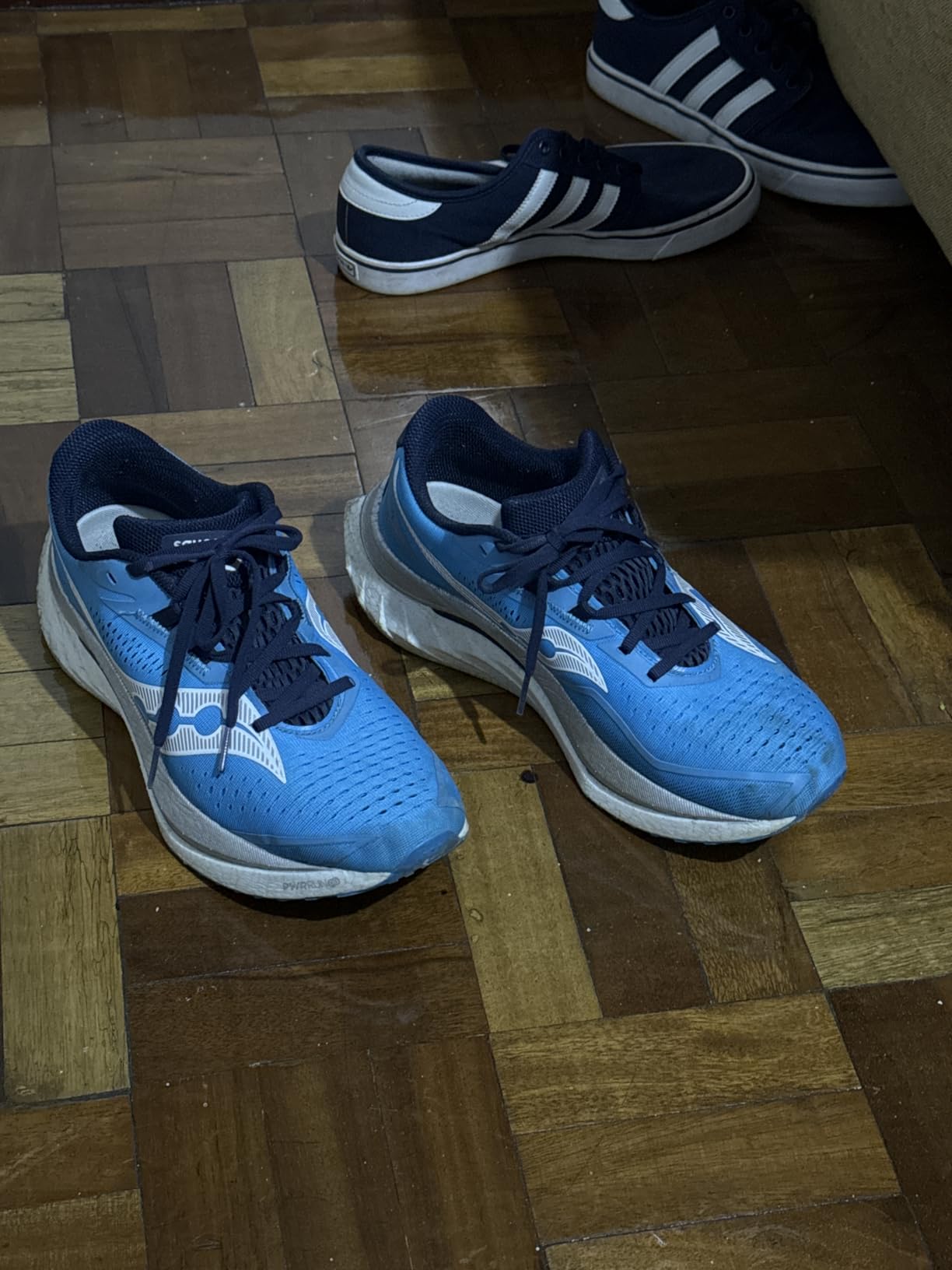
This is the shoe I put first in the best carbon plate running shoes for race day roundup, and the reason is the review base rather than the spec sheet. 596 reviews is far more feedback than any other model here, and at a 4.4 average with 72% five-star responses it has the least room for a hidden flaw. The technical build is a full-length carbon fibre plate with SPEEDROLL geometry over a dual-foam midsole that combines PWRRUN HG and PWRRUN PB.
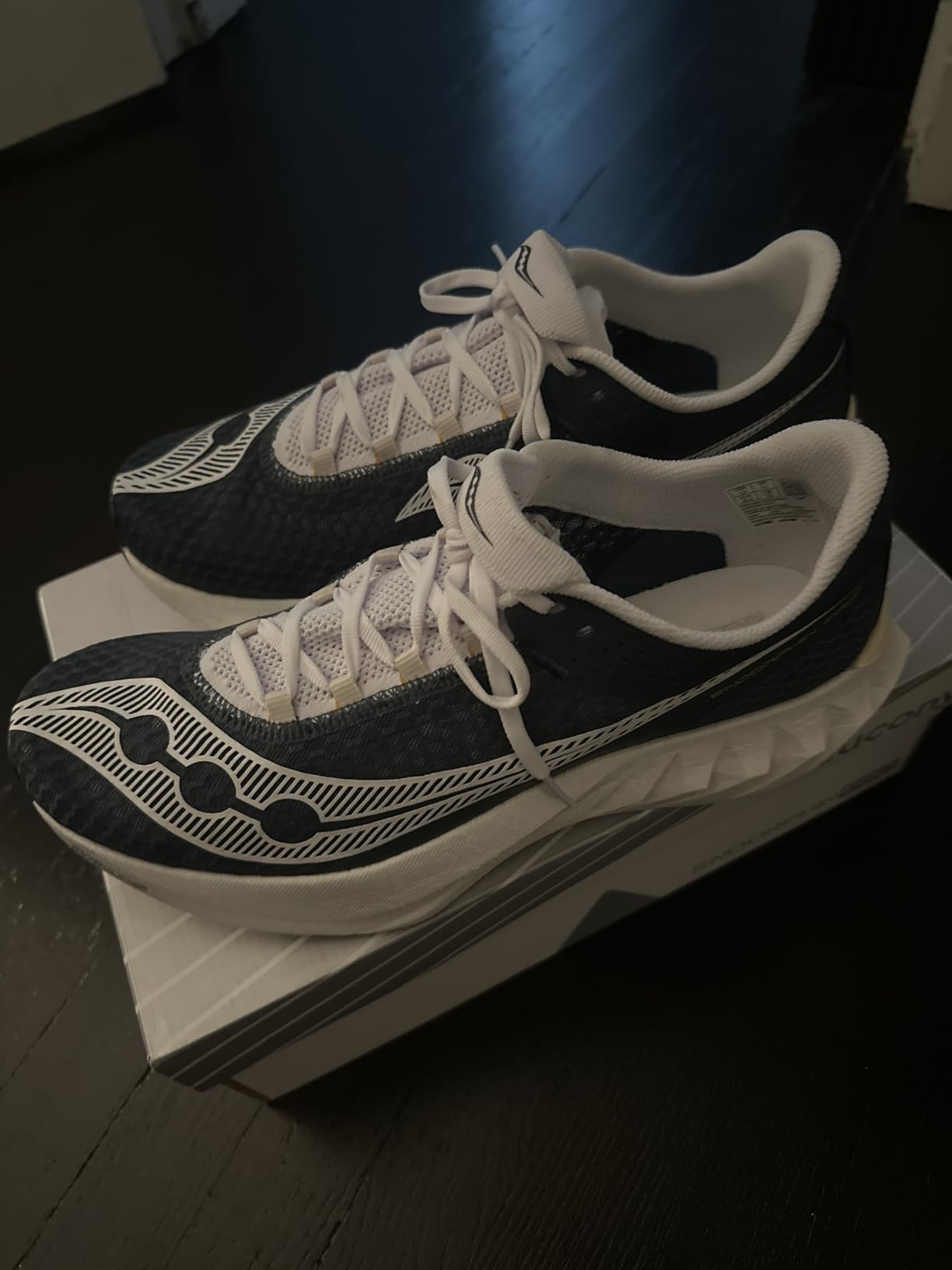
Dual foam is the detail most people miss. The softer HG layer handles landings while the springier PB layer returns energy at toe-off, and the practical effect is a shoe that stays comfortable deep into a marathon instead of feeling like a spike. The engineered mesh upper is genuinely breathable, which matters on a warm race start when you are standing in a corral for twenty minutes before the gun.
Durability is where this model separates itself from the race-only shoes. Owners with a normal rotation report pairs lasting past 400 miles, which is well above the reported lifespan of the race-only plated shoes in this list. My only niggle is the heel wing-tip overlays, which reviewers say erode once the shoe is well used.
How it feels on a marathon pace effort
The ride is stable in a way the thinner race-only shoes are not, and it carries contact through the midfoot rather than dumping you onto the ball of the foot. I would pair it with two race-pace sessions inside a three-week taper and treat the geometry as free speed rather than something to fight.
What you give up is a little of the snap. Compared with the lightest options in this list, the Speed 4 trades outright speed for the ability to hold a pace across 42 kilometres without the shoe turning against you in the final ten.
When another shoe is the better call
If you are a heel striker, buy the New Balance Supercomp Trainer V3 instead, because this last runs narrow and the forefoot is firm enough that a hard heel landing feels abrupt. If your only goal is a fast 5K, this is more shoe than the race needs.
Wide feet should also note that the same narrow last that makes the shoe secure through the midfoot pushes the toe box tight over long distances. Sizing up a half size is the common fix, and it changes the fit more than you would expect.
2. Saucony Women’s Endorphin PRO 4 – Best Lightweight Plated Racer for Half Marathons
Saucony Women’s Endorphin Pro 4 Sneaker, Fog/Peel, 7
PWRRUN PB ultra-light midsole
SPEEDROLL plated propulsion
Mesh upper
Rubber race outsole
Pros
- Lightweight plated build designed for fast efforts
- Responsive PWRRUN PB foam with high energy return
- Breathable mesh upper with a secure lockdown
- Rubber outsole built for traction and longevity
Cons
- Firm foam feel that some runners find harsh on easy miles
- Runs narrow in the toe box for wide feet
- Stability is lower than traditional stability shoes
The PRO 4 is the stripped-down sibling of the Speed 4, and it is listed in the women’s sizing here. Everything that is not essential to racing has been removed, leaving a PWRRUN PB midsole that is described as ultra-light and a SPEEDROLL plate system that does the propulsion work. At 4.4 stars across 411 reviews with 77% five-star feedback, the five-star share is the highest of the plated shoes in this roundup.
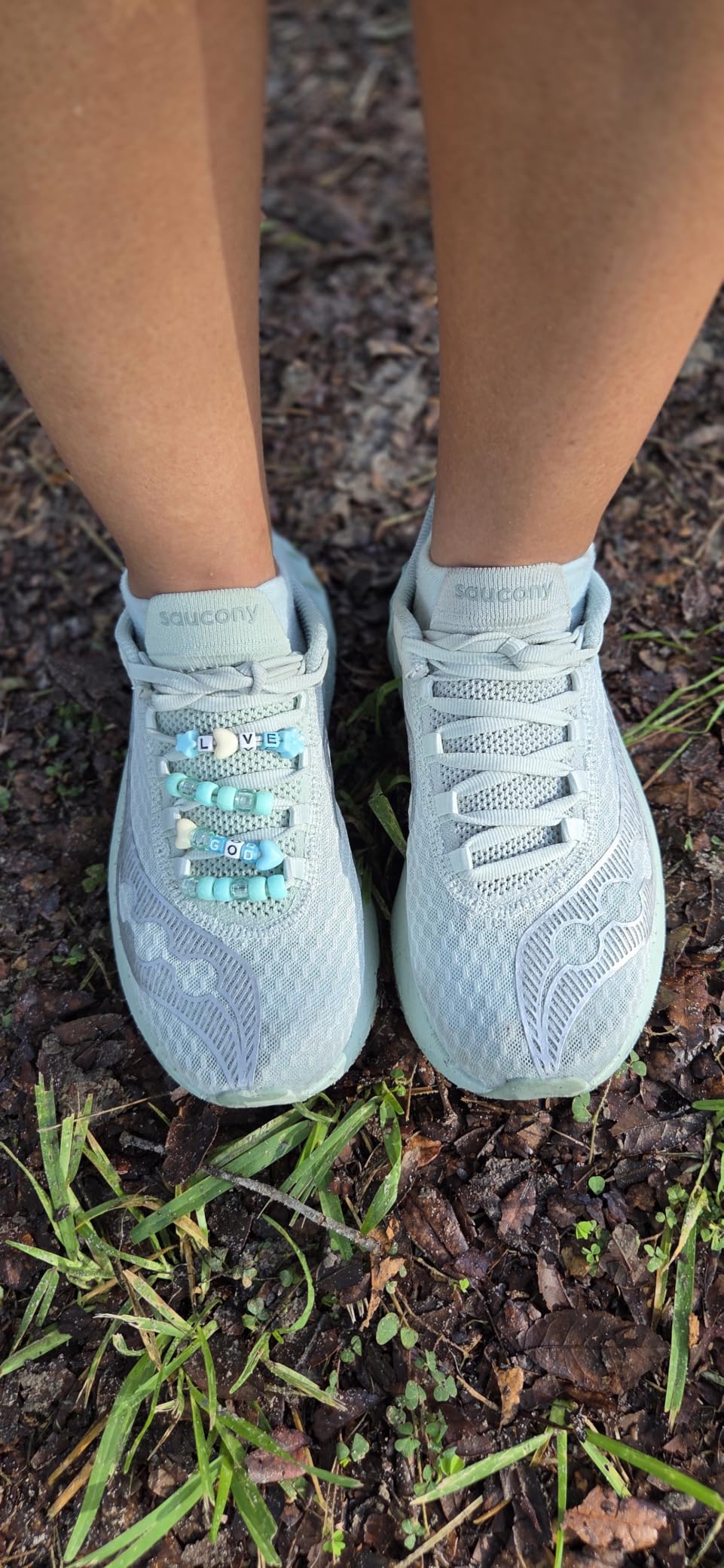
That five-star number is the signal. Buyers consistently describe it as the shoe they reach for when they want a session done quickly and cleanly, whether that is a marathon or a set of threshold repetitions. The mesh upper locks down well at speed without compressing the midfoot once you are fatigued.
The catch is that the same lightness shows up as firmness. PWRRUN PB is a racing foam, not a comfort foam, and owners note that it feels harsh if you take it easy. Stability is also lower than you would find in a traditional stability shoe, which is a fair trade for a race-only build but a poor match for a runner who pronates.

Best race distance and target pace
This is a shoe for half marathons and faster, and it also works as a full marathon racer for a runner with a light frame who does not need extra protection. The foam is too thin to be kind over 42 kilometres for most people, and the reviews reflect that split.
If you want the same speed for longer, the New Balance Supercomp Elite V4 in this list adds cushioning under the same plate-and-rocker idea and holds up better late in a race.
Who should pass on it
Skip it if you plan to log more than two or three runs in it. At 411 reviews the durability picture is not as settled as the Speed 4, and a firm foam over a high weekly volume is how people end up with a shoe they resent.
Wide feet should size carefully. The narrow toe box is the most repeated complaint in the reviews, and there is no wide option in this listing to fall back on.
3. New Balance FuelCell Supercomp Trainer V3 – Best Plated Shoe for Wide Feet and Heel Strikers
New Balance Men’s FuelCell SuperComp Trainer V3 Running Shoe, Urgent Red/Sea Salt/Black, 9 M
FuelCell midsole with about 3% bio-based content
Energy Arc carbon plate
4 mm drop
Angular midsole
Pros
- Plush protective cushioning that still returns energy
- Wide stable platform for higher-mileage runners
- Propulsive smooth forward-rolling feel
- Sizable size range including wide options
Cons
- Heavier than a pure racing super shoe
- Some heel movement that needs extra lacing tension
- Not as lively as lighter race-only plated shoes
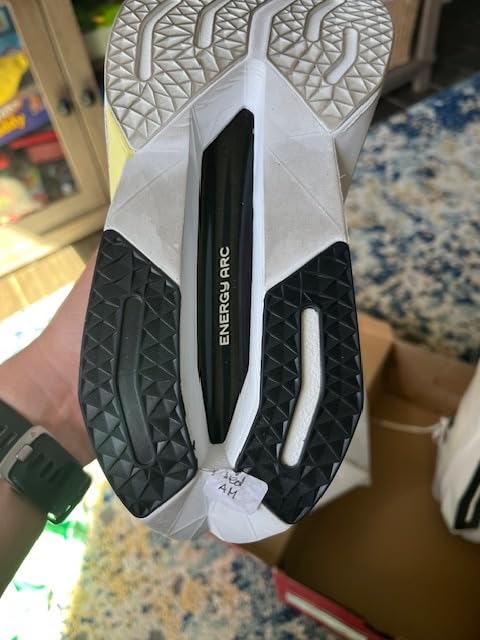
This is the anti-Alphafly answer to the question, and it is the shoe I recommend to anyone whose foot shape or landing pattern rules out the thin race-only builds. It pairs a FuelCell midsole containing roughly 3% bio-based content with an Energy Arc carbon fibre plate that has strategic voids cut into the midsole around it, which is how New Balance keeps the weight down while making the foam deeper.
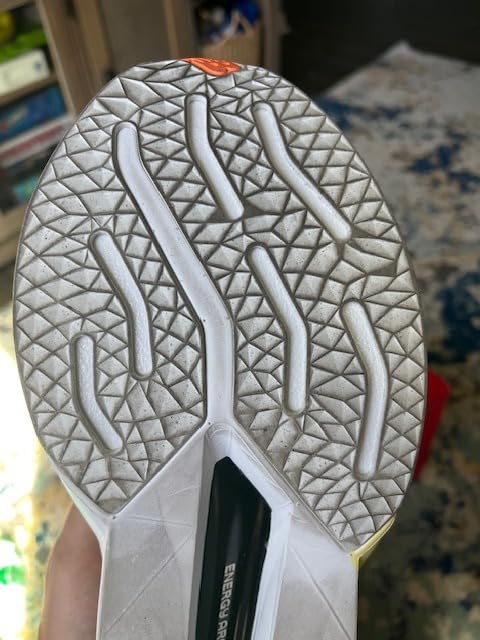
Two details make it the most forgiving plated shoe here. The platform is wide and stable enough that a heel landing still works, and the sizing range includes wide options that most of the super shoes in this roundup simply do not offer. The 4 mm drop also lands more comfortably than the 8 mm offset on the Saucony Azura for a runner who is used to a traditional trainer.
At 4.5 stars across 345 reviews with 76% five-star feedback, it also has the best rating distribution of the fully plated shoes in this list. Reviewers call it plush and protective while still noting the forward roll, which is the combination that makes a shoe usable for more than one session.
Where it wins and where it gives ground
It wins everywhere that cushioning matters: a first marathon, a runner carrying extra bodyweight, or anyone who wants to practise in the shoe they will race in. The angular midsole construction is designed to trim weight, but it is still heavier than a pure racing super shoe and you will feel that on the shortest distances.
The give-up is liveliness. If you are chasing a personal best over 5K, the super shoes in this list have more snap. This is a marathon and half marathon shoe that happens to be plated.
Fit notes before you commit
Two fit issues come up repeatedly. The shoe runs about a half size large for some wearers, and there is enough heel movement that a runner’s loop or tighter lacing changes the ride considerably. If you are between sizes, this is a case where trying both is worth the trip.
For pronation-specific alternatives, our guide to the best stability running shoes for overpronation covers the cases where a plate is not the right tool.
4. adidas Adizero Boston 12 – Best Plated-Adjacent Shoe for Tempo Work
Adidas Unisex-Adult Adizero Boston 12 Black/White/Carbon 6.5
Lightweight responsive Boost midsole
Energy rods not a full plate
Continental rubber outsole
Mesh upper
Pros
- Excellent energy return for a non-plated build
- Stable cushioned ride that suits easy and fast running
- Continental rubber outsole with outstanding grip
- No hot-shoe or blistering issues over long runs
Cons
- Energy rods rather than a full carbon plate
- Sizing runs small so many size up a half size
- Weak heel lockdown without a runner's loop
Being straight about this one matters: the Boston 12 uses energy rods, not a full-length carbon plate, so it is not a super shoe in the technical sense. It is here because it is the shoe most runners should be doing their threshold work in, and because it delivers an energy return that most people assume requires a plate.
The Boost midsole is described as lightweight and responsive, and the Continental rubber outsole is the grip surface we trust most in this roundup. That grip is not a small detail on wet city streets or on a track after rain, where most race-only outsoles give up. The upper is a breathable mesh and reviewers report no hot spots even over long runs.
At 4.5 stars across 288 reviews, it holds the highest review volume among the value-oriented picks in this roundup. The ride is stable enough for easy running and lively enough for tempo, and the absence of a plate is precisely why it works for both. The model is listed as unisex adult and weighs 1 pound in the listing, with package dimensions of 14 by 9 by 5 inches.
Why it beats a super shoe for most weeks
A super shoe gives you a benefit that is specific to fast running, and costs you durability. The Boston 12 gives you a usable platform at every pace, which means it can carry the volume that keeps you healthy between races. For most recreational runners that is the better trade.
Only pick it for a race day if your goal is a comfortable finish rather than a time. The energy rods cannot give you the propulsion of a full plate.
Fit problems to know about
Sizing runs small and several buyers had to go up a half size. The heel lockdown is weak without a runner’s loop, so plan on adding one before a long run. The listing also creates confusion between the men’s and women’s sizing charts, which is an ordering annoyance rather than a shoe problem.
If you want a firmer feel, lighter runners sometimes find the midsole too firm, and the adidas Adizero Evo SL further down is the lighter-feeling alternative.
5. New Balance FuelCell Supercomp Elite V4 – Best Carbon Plate Shoe for a First Full Marathon
New Balance Men’s FuelCell SuperComp Elite V4 Running Shoe, White/Angora/Hot Mango, 10.5 M
FuelCell propulsive foam
Energy Arc carbon plate with midsole voids
FantomFit bonded upper
4 mm drop
Pros
- Comfortable and responsive over full marathon distance
- Plush yet stable with protection kept intact
- No break-in period required
- Improved fit over the previous version for wide feet
Cons
- Thin tongue digs in when laced tightly
- Some outsole and lace eyelet durability complaints
- Digs at the back of the ankle during early sessions
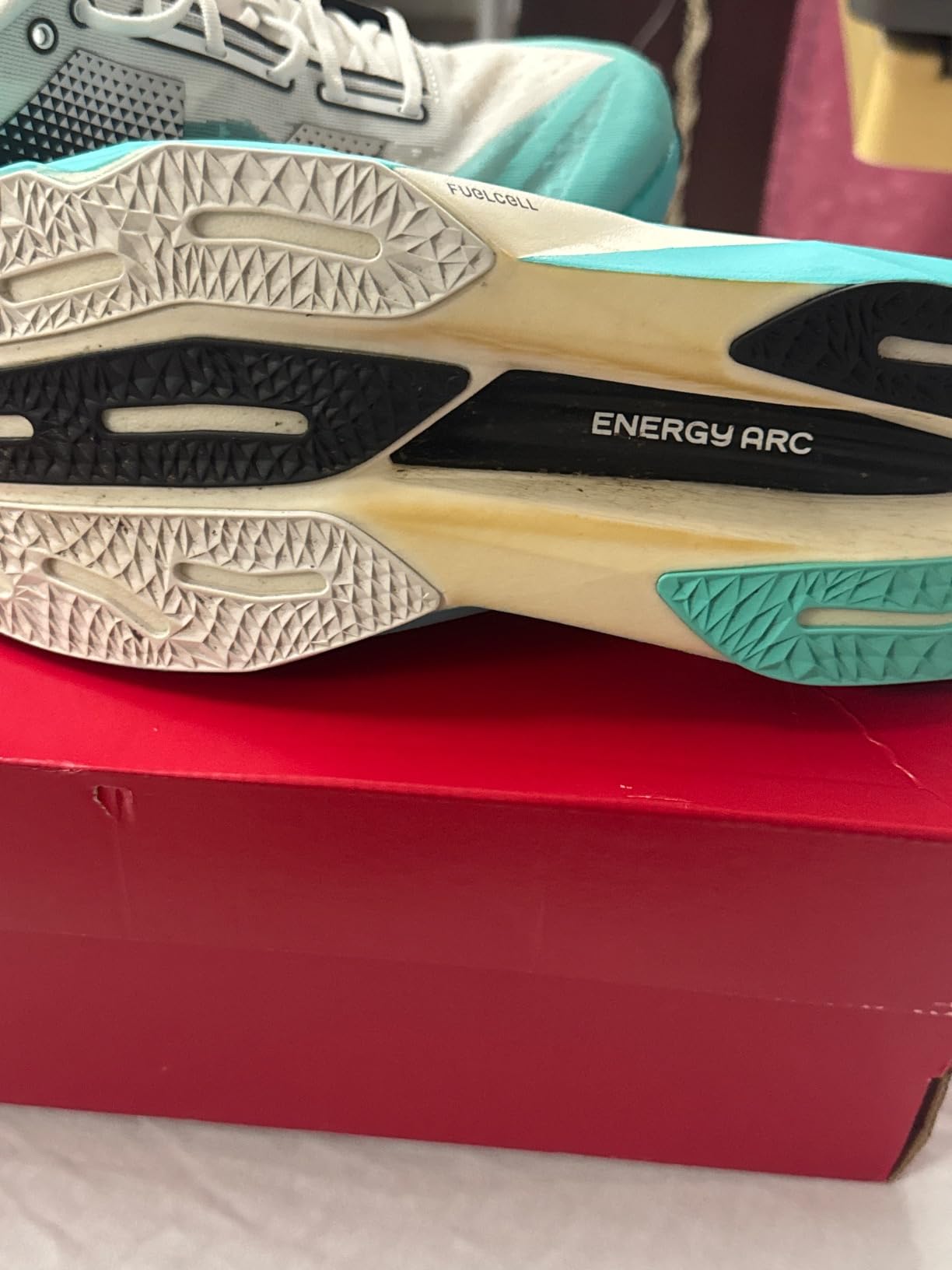
The Elite V4 is the race-only version of the Supercomp Trainer, and it is the pick I would hand to a first-marathon runner who wants a full-length carbon plate without the thinness. The FuelCell midsole is propulsive, the Energy Arc carbon plate is shaped with strategic midsole voids to raise the stored energy, and the upper is a FantomFit bonded construction with a lightweight airy mesh.
Reviewers repeatedly call it comfortable and responsive over the full distance, and specifically describe it as plush but stable, which is a hard balance to strike. At 4.4 stars across 150 reviews with 73% five-star feedback, the reception is solid but the review base is thinner than the top three, which is worth keeping in mind.
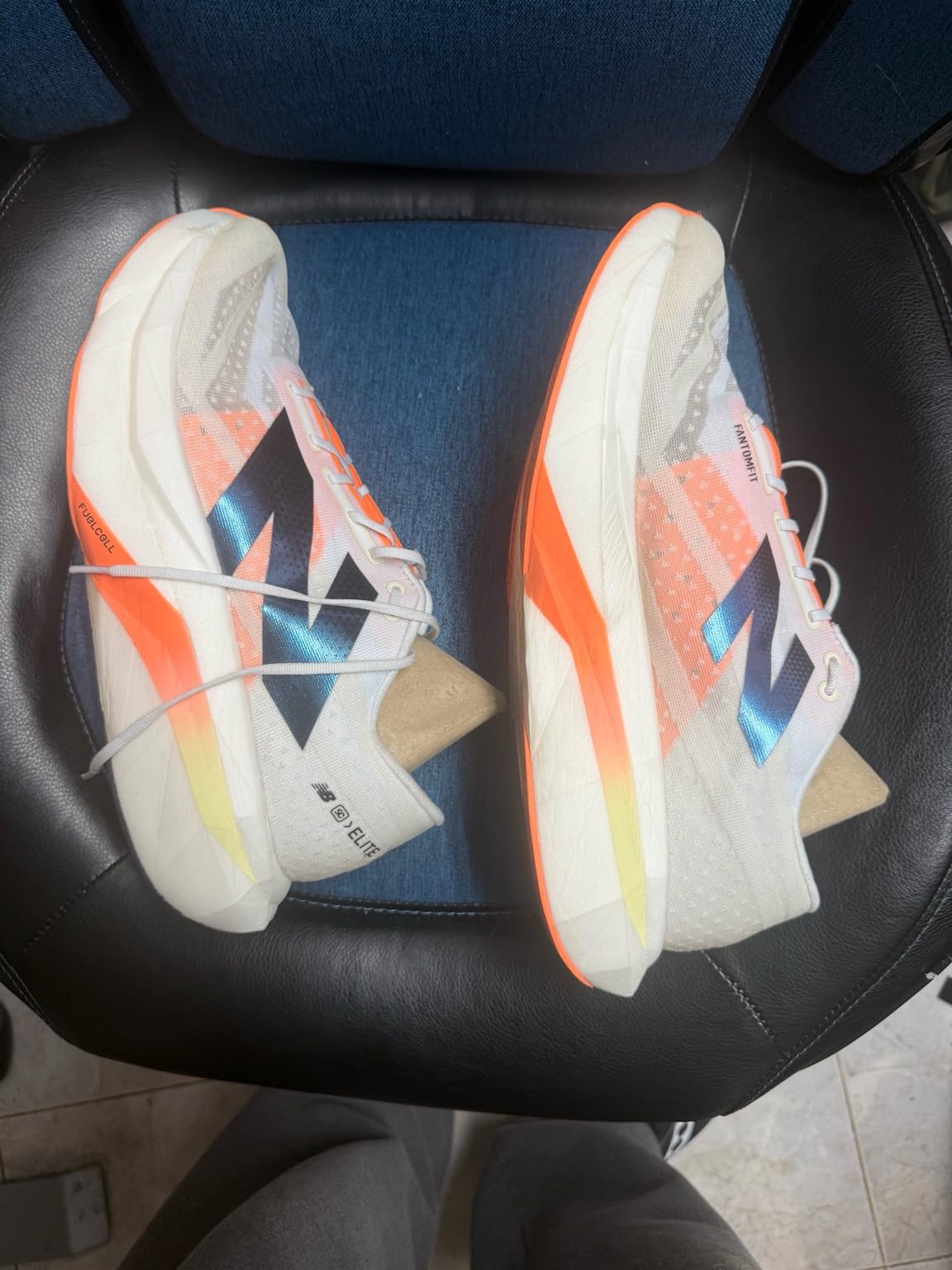
The fit improvement over the previous version is the headline for anyone who bounced off an earlier FuelCell. The upper is bonded rather than sewn, and the listed 4 mm drop keeps the geometry approachable. The outsole and lace eyelet feedback is mixed, so if you are hard on your kit, expect that to be the first thing to go.
What works about the ride
Reviewers report no break-in period, which is unusual for a plated shoe and removes one of the biggest risks for a first marathon. It is comfortable enough to double for a long run, and stable enough to hold a line when you are fatigued at 35 kilometres.
The protection is the real argument here. Where the Metaspeed Sky and Brooks Hyperion Elite 5 ask you to accept thinness for speed, this one keeps a cushioning layer that most first-time marathoners need.
What to watch before race day
The thin tongue is the most repeated complaint. When you lace the shoe tight for a fast effort, the tongue digs into the top of the foot, and the laces are narrow relative to the tongue width, which makes it worse.
There is also a reported dig at the back of the ankle during early sessions. Both are fit issues rather than structural ones, but on race day you do not want any of them.
6. ASICS Metaspeed Sky 3 – Fastest-Feeling Full-Length Carbon Plate Shoe in the Roundup
ASICS Unisex METASPEED Sky Running Shoes, 5M / 6.5W, Illuminate Mint/Black
Full-length carbon plate
FF TURBO PLUS cushioning
MOTION WRAP 2.0 upper
ASICSGRIP outsole
Pros
- Exceptionally lightweight with high energy return
- Cushioning that limits post-race soreness
- Curved sole conserves energy per step
- Works well for runners with wider feet
Cons
- Outsole and foam reported near-dead at 50-80 miles
- Low stability and not built for walking
- Heel can feel loose with internal foot movement
The Sky 3 is the shoe in this roundup that most rewards an efficient stride, and the least forgiving of a sloppy one. The build is a full-length carbon plate, FF TURBO PLUS cushioning designed to improve compression and energy savings, a curved sole that conserves energy, and a MOTION WRAP 2.0 upper. The main upper material contains at least 50% recycled content.
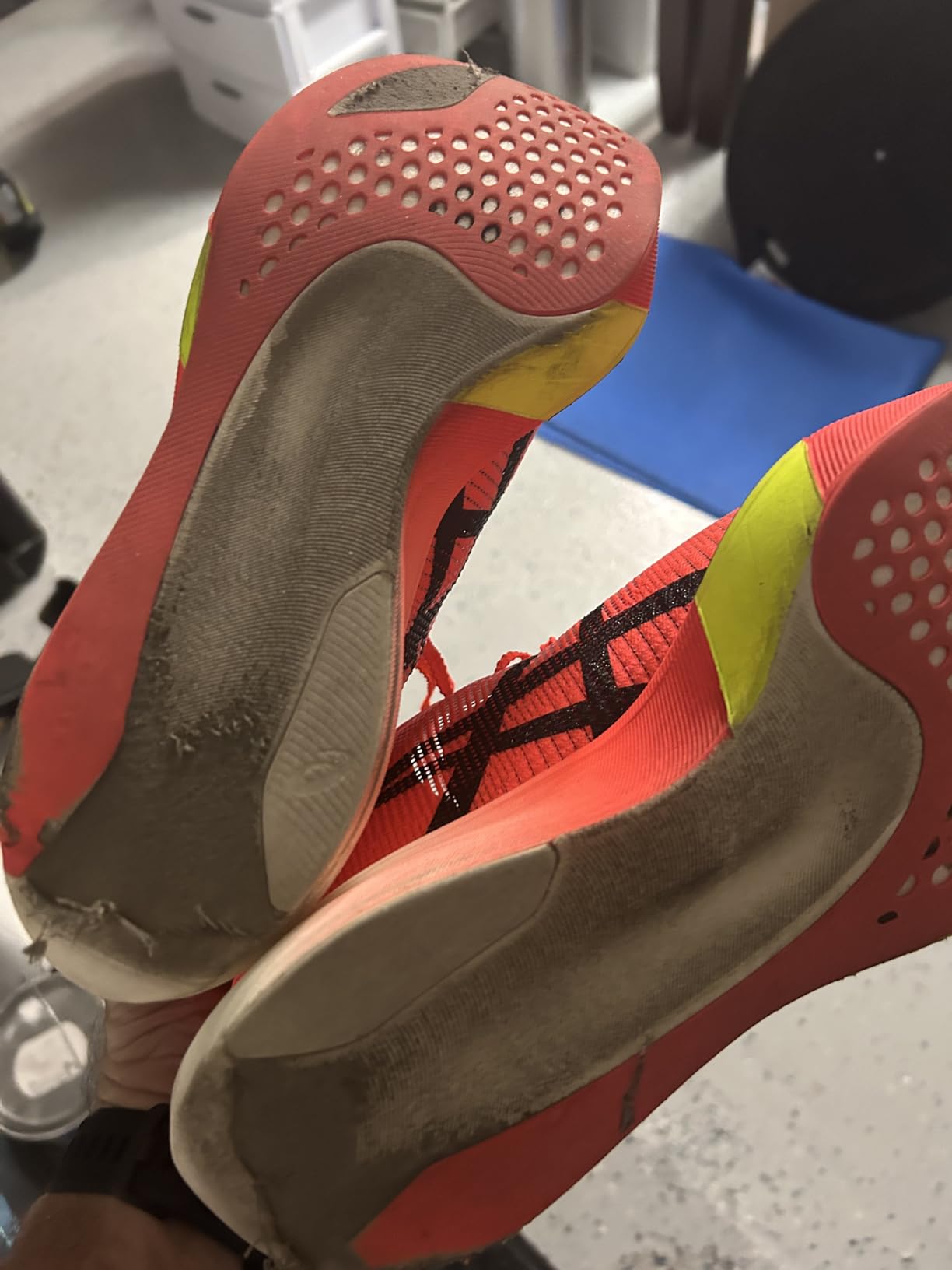
It is also the lowest-rated plated shoe here at 4.1 across 144 reviews, with 65% five-star feedback, and the reason is durability. Reviewers report the outsole and foam being near-dead at 50-80 miles, which is a fraction of what the Saucony Speed 4 or the LI-NING Feidian 6 will cover.
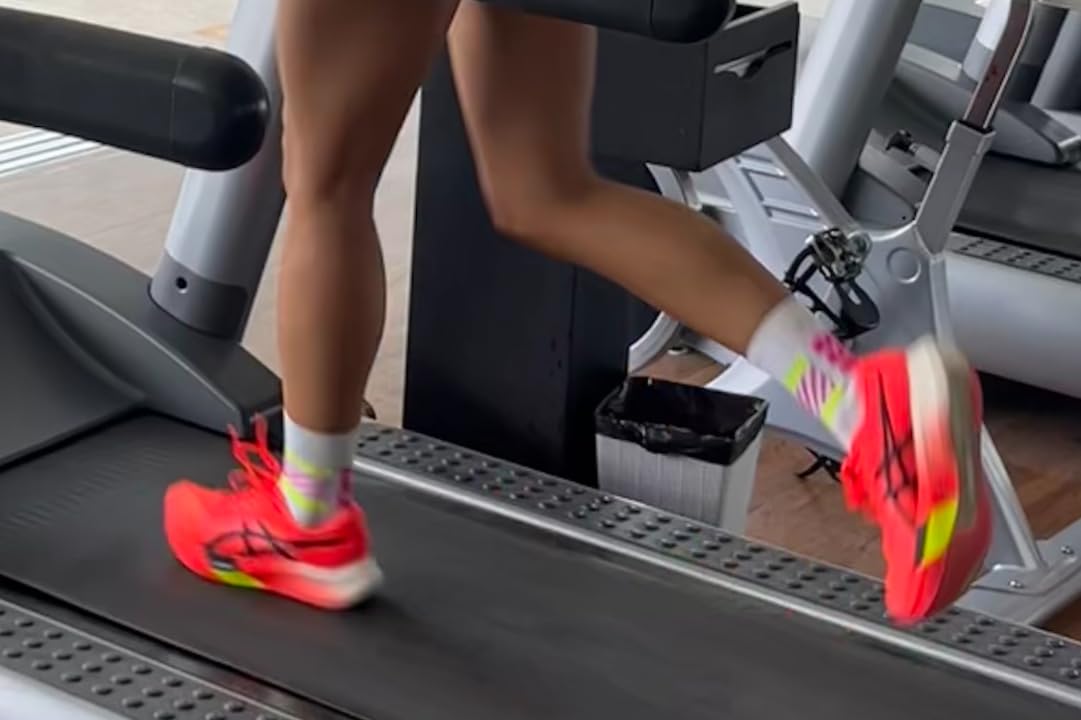
What the shoe does very well is speed. The curved sole is a genuine energy-conservation device rather than a styling choice, and the FF TURBO PLUS foam softens the landing enough that runners report minimal soreness afterwards. Several reviewers also single out the fit as friendly to wider feet, which is unusual for a super shoe.
The stability caveat is serious. This is not built for walking to the start line or standing in a corral, and the heel can feel loose with internal foot movement. A runner with a low calf and foot strength, or anyone who lands hard on the heel, will find this shoe fights them.
Who gets the most out of it
Midfoot and forefoot strikers running 5K to half marathon distance get the full benefit. The shoe encourages a forefoot strike, which reviewers sometimes find awkward at first and then welcome once the cadence settles.
If you race marathons and want protection, the Metaspeed Edge below is the better-matched sibling because it carries more landing cushion.
Who should skip it
Skip it if you plan to run many races in one pair, because the reported lifespan makes the cost per kilometre among the worst in this roundup. Also skip it if you spend any race day walking, or if a loose heel would bother you at speed.
The listed dimensions are 12.44 by 6.3 by 4.75 inches at 1.44 pounds, and it is a unisex road racing model available in men’s and women’s sizing.
7. adidas Adizero Evo SL – Lightweight Adizero Race-Only Build
adidas Men’s Adizero EVO SL Woven M FTWR whiteCore Black/Dash Grey 9 US
Adizero EVO SL road racing silhouette
Lightweight construction
Broad size and colorway range
Pros
- Lightweight Adizero road-racing build
- Wide size availability across many colorways
- Aerodynamic road-racing profile
Cons
- Listing gives minimal specification detail
- Highest 1-star feedback rate among the adidas models here
I want to be careful with this one because the listing is thin on detail. What is confirmed is the silhouette: a road racing build in the Adizero race line, described as lightweight, offered across a broad range of sizes and colorways in standard and wide sizing. The foam compound, stack height and plate construction are not spelled out in the specification data, and I am not going to invent them.
The feedback is more positive than the sparse listing suggests. At 4.3 stars across 118 reviews, 76% of buyers gave it five stars, and the recurring theme is a lightweight Adizero race-day build that performs as intended. The model number is NRW94 and it arrived in 2026, so it is a current-generation silhouette.
Where this fits in the roundup
If you already know the Adizero line and you race at a fast pace over a short distance, the light construction and aerodynamic profile are the reason to consider it. The wide sizing availability is a genuine advantage over several of the plated shoes here that only come in standard widths.
If you are buying without an Adizero track record, the sparse specification data makes this a harder shoe to commit to blind than the New Balance or Saucony options, where the foam and plate are clearly documented.
What gives us pause
Among the two adidas models in this roundup, the EVO SL carries the highest one-star feedback rate, with 13% of reviews at one star against 5% for the Boston 12. That is a small sample and not a verdict, but it is the one data point to weigh before you commit.
The listing also gives almost nothing to compare against rivals, so if you want to check the geometry, the ASICS Metaspeed Edge and the Brooks Hyperion Elite 5 both publish full platform and plate detail.
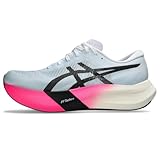
8. ASICS Metaspeed Edge – Best Carbon Plate Shoe for Half and Full Marathons
ASICS Unisex METASPEED Edge Running Shoes, 9.5M / 11W, Light Blue/Black
Full-length carbon plate
FF TURBO PLUS cushioning
Curved sole design
ASICSGRIP outsole
Pros
- Featherlight with strong carbon-plate energy return
- More landing cushion than the Metaspeed Sky
- Fast enough for halves and full marathons
- Good value against shoes at this tier
Cons
- Very little stability at the ankle and heel
- Wears quickly at roughly 4-5 races for some runners
- Not ideal for shorter 5K and 10K distances
Where the Sky chases speed, the Edge chases longevity within a single race. It shares the full-length carbon plate, the FF TURBO PLUS cushioning, the MOTION WRAP 2.0 upper and the ASICSGRIP outsole with its sibling, but reviewers consistently say it lands softer, which reduces foot fatigue over a second half.
At 4.3 stars across 104 reviews with 75% five-star feedback, the praise is about the combination of cushioning and speed rather than either alone. Several reviewers explicitly call it good value against other super shoes at this tier, which is a line of defence that matters when you are choosing one pair to cover multiple goals.
The curved sole design conserves energy the same way it does on the Sky, so the propulsion is still there. What you give up is the extreme lightness, and with it some of the raw snap on short efforts. For a 5K, this is the wrong shoe, and the reviews say so plainly.
Stability is the weak point. Reviewers describe very little stability at the ankle and heel, and the tongue is short with no rear pull tab, which makes getting the shoe on quickly at a start line harder than it should be.
How many races you actually get
Some runners report four to five races before the shoe is finished, which is a genuinely useful figure for budgeting. At that rate the cost per race is workable, but it is not the same as the 400-plus mile durability the Saucony Speed 4 delivers in a normal rotation.
If you race more than two or three times a year, multiply that number and you will see why a durable plated trainer often beats a lighter race-only shoe on cost alone.
Where it beats the Sky
Choose the Edge if your race is a half marathon or longer, if you land hard, or if you want a plated shoe that will still feel good on the return drive. The extra landing cushion is the single biggest reason to pick it over the Sky.
Choose the Sky if you race 5K and 10K, run a fast cadence already, and want the lightest option available.
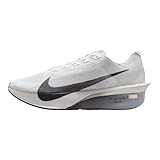
9. Nike ZoomX Vaporfly Next% 4 – Most Comfortable Plated Shoe for Long Distance
Men’s Vaporfly 4 (100 – White/Gridiron-Obsidian Mist)
ZoomX super foam midsole
Full-length carbon fibre plate
Nike road racing construction
Narrow sizing note
Pros
- Comfortable and true to size
- Lightweight and highly reactive ZoomX foam
- Preferred for long distance runs and marathons
Cons
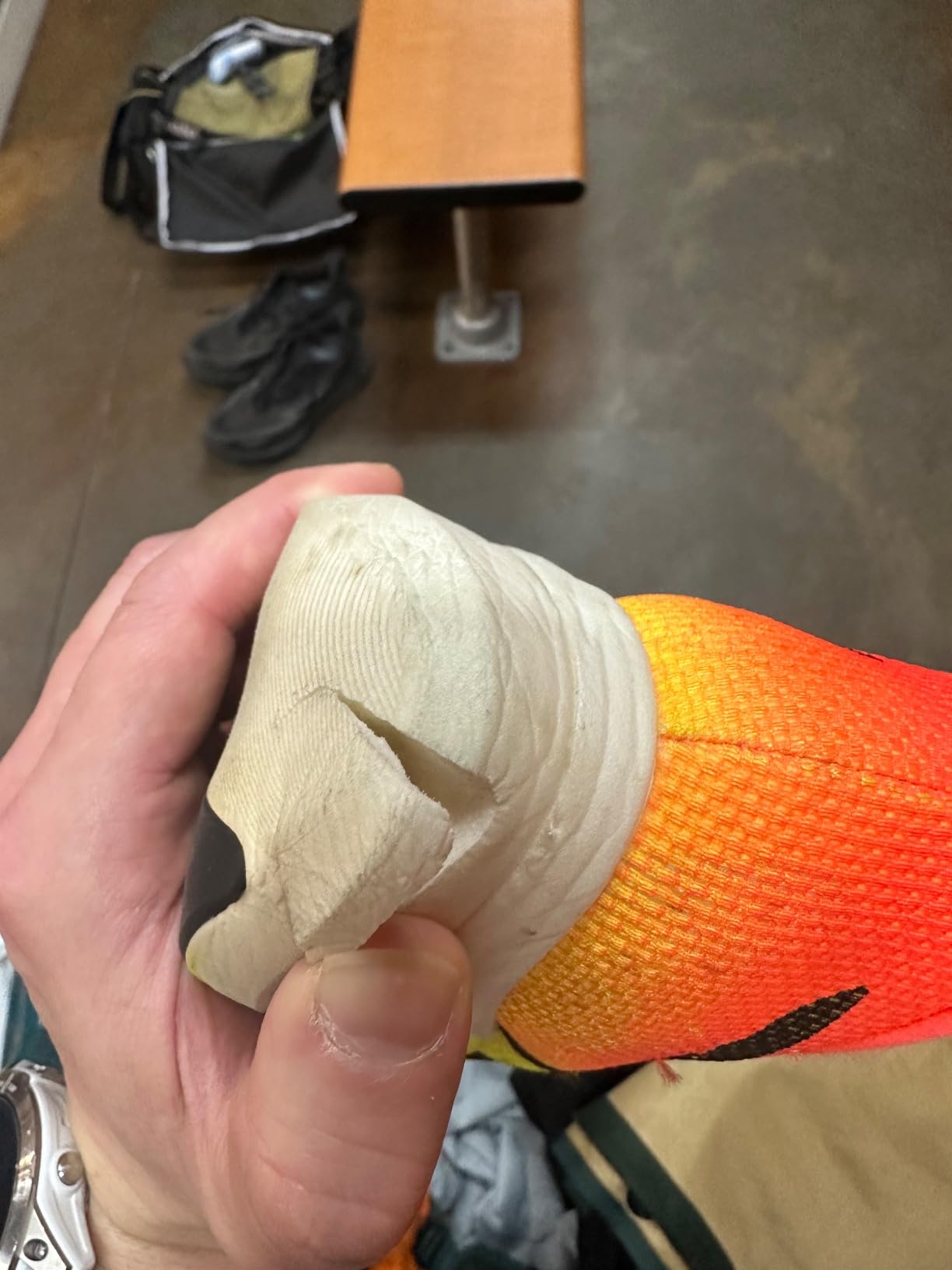
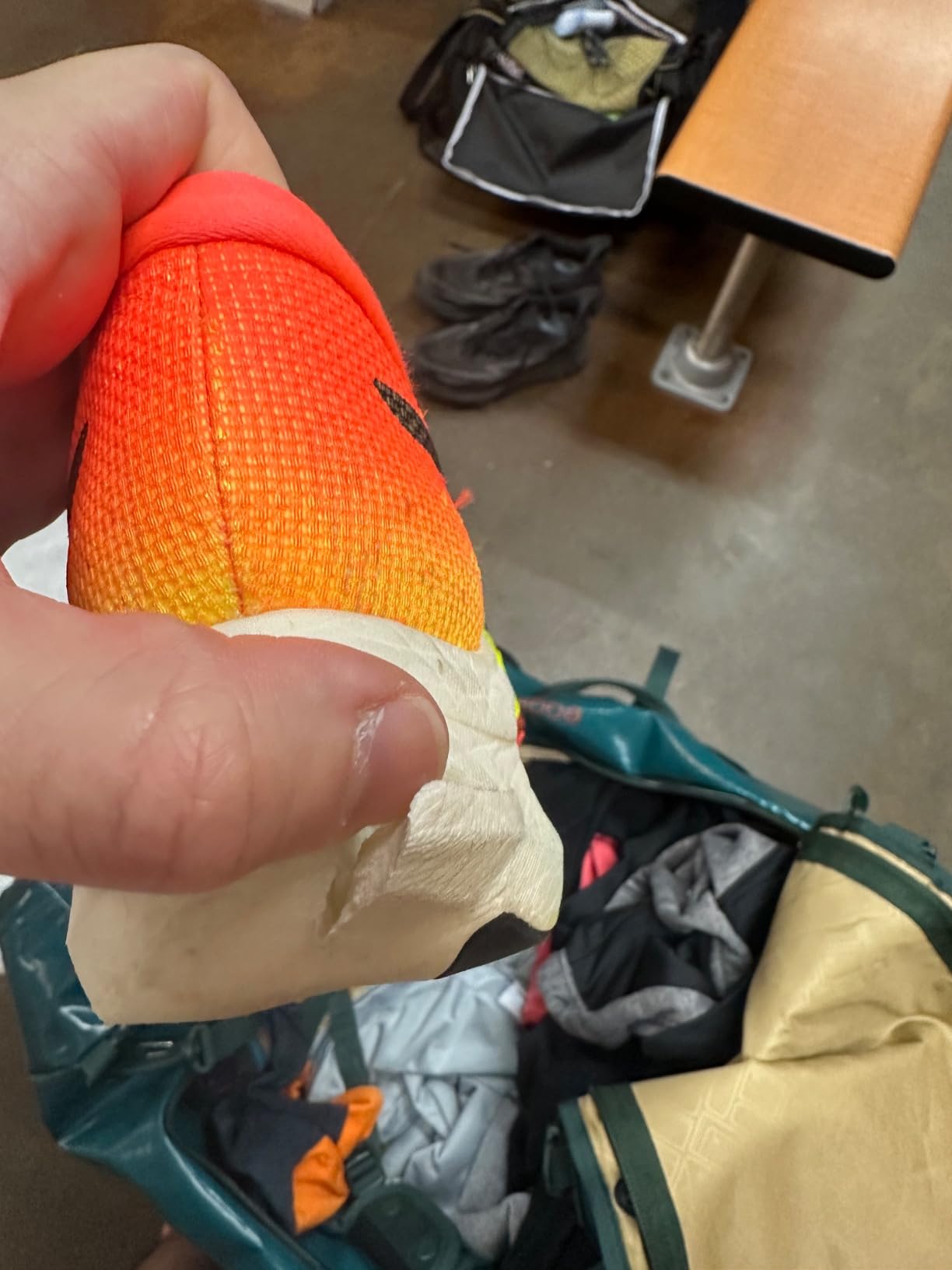
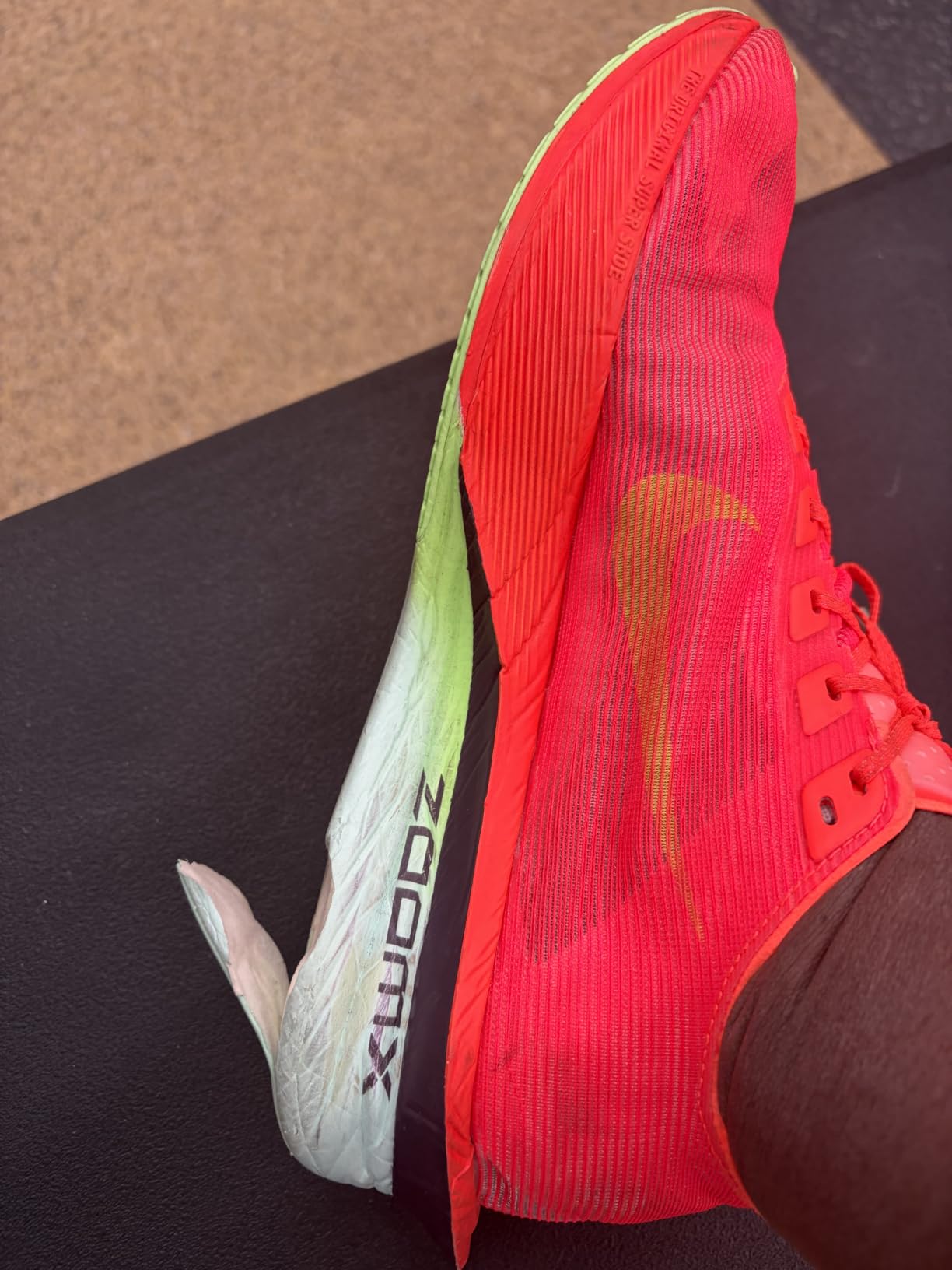
- Some reports of the heel separating near the base
- Upper lacing could be a little tighter
Vaporfly is a familiar name in this category, and this fourth version keeps the two things the ZoomX foam is known for: a light, highly reactive ride and a comfort level that nothing else in this roundup matches. The build is a full-length carbon fibre plate inside a ZoomX super foam midsole, in standard Nike road racing construction.
Comfort is the repeated word across the 89 reviews here, and long-distance preference is the repeated use. That combination makes it the shoe in this list I would suggest to a runner whose Achilles and calves feel every aggressive rocker they put on the foot.
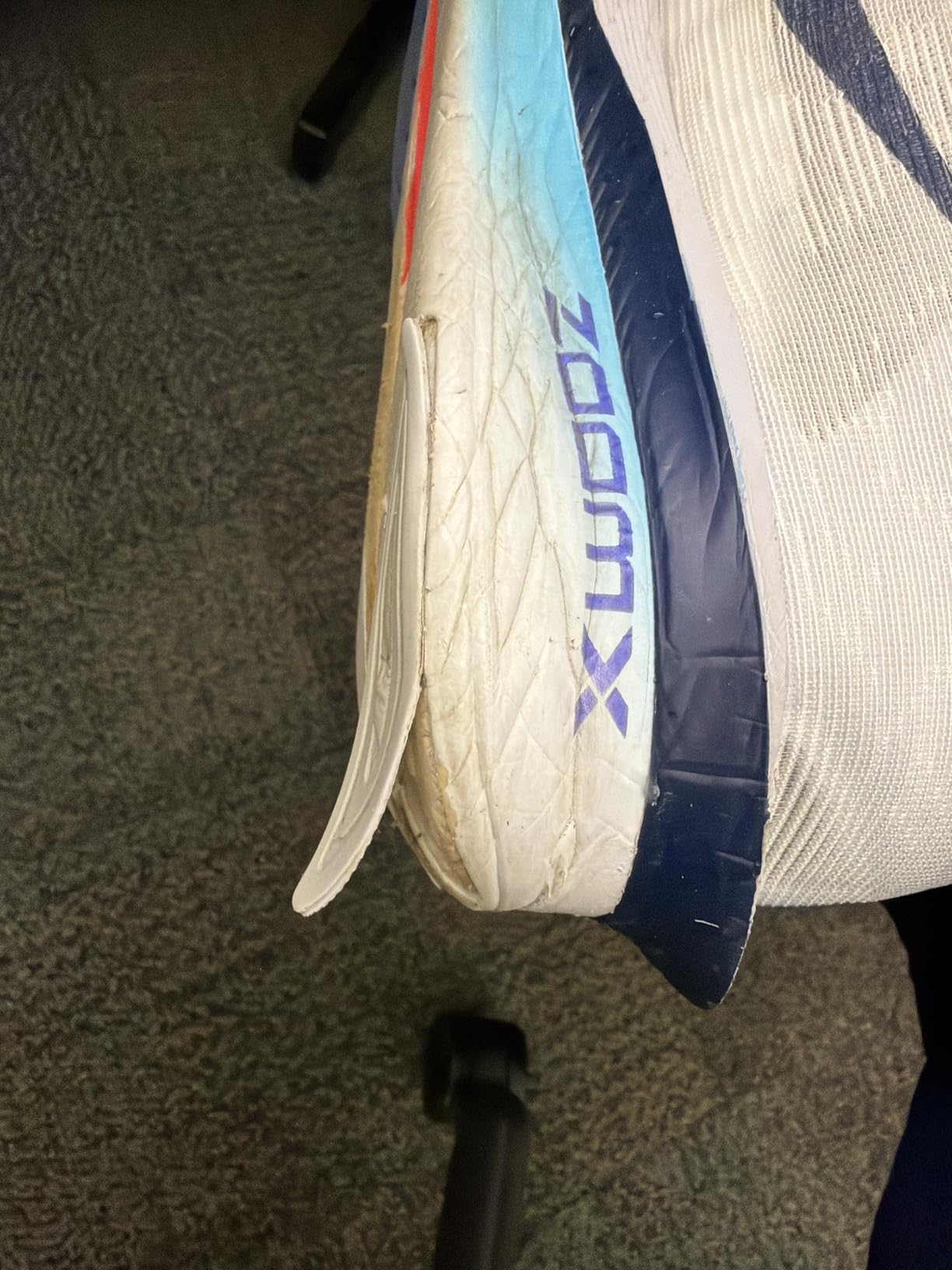
Two things to plan for. The upper lacing could be tighter, and a small but notable group report early heel separation near the base of the shoe. At 4.2 stars with 73% five-star feedback, the durability feedback is the one place where this model lags the Saucony Speed 4.
The sizing note is unusual and worth reading twice. The listing states that men’s sizing runs 6 Men equals 7.5 Women, so if you are ordering across the gender boundary, check the conversion rather than assuming your usual size carries over.
How it behaves over 42 kilometres
Because the foam is soft and the plate is doing less aggressive work than on the Metaspeed Sky, the Vaporfly holds a marathon pace without the harshness. The cushioning is not max-stack, but it is the most forgiving midsole in this roundup for a runner with a history of lower-leg problems.
It is also the shoe most likely to be comfortable enough to double in training, which changes the cost per kilometre maths entirely.
Where the alternatives win
If you want maximum light weight and forward snap, the Saucony Endorphin PRO 4 is the pick. If you want a wide platform and a midsole that will not punish a heel strike, the New Balance Supercomp Trainer V3 wins on both counts.
The heel separation reports are worth watching if you keep a single pair for multiple seasons, since structural failures of that kind rarely repair themselves.
10. Brooks Hyperion Elite 5 – Best Protective Full-Length Carbon Plate Racer
Brooks Unisex Hyperion Elite 5 Neutral Race Running Shoe for Men & Women – Luminary/Yellow/Gray – 8 Medium
SpeedVault Race+ carbon plate per size
100% PEBA DNA Gold cushioning
SpeedTack rubber outsole
Unisex race-day fit
Pros
- Lightweight responsive and efficient at higher speeds
- Protective cushioning that still feels connected
- Premium-feeling materials and well-integrated upper
- Works across a wide range of paces
Cons
- Narrow heel and forefoot so wide feet struggle
- Unisex sizing is based on men's lasts
- Little heel lockdown without a runner's loop
- Mushy and unstable for heel strikers
The Hyperion Elite 5 is a genuine race-only shoe, not a trainer, and the spec sheet backs that up. You get a SpeedVault Race+ carbon fibre plate that is size-customized, 100% PEBA DNA Gold cushioning that Brooks describes as their lightest foam, and a lightweight SpeedTack rubber outsole. The upper is a TPU-pressed construction with silicone lace sheaths.
Reviewers like the protective cushioning, which still feels connected to the ground rather than floating. That is a rare balance in a full-length plated build, and it is why the shoe works across a wide range of paces rather than only at a race intensity.
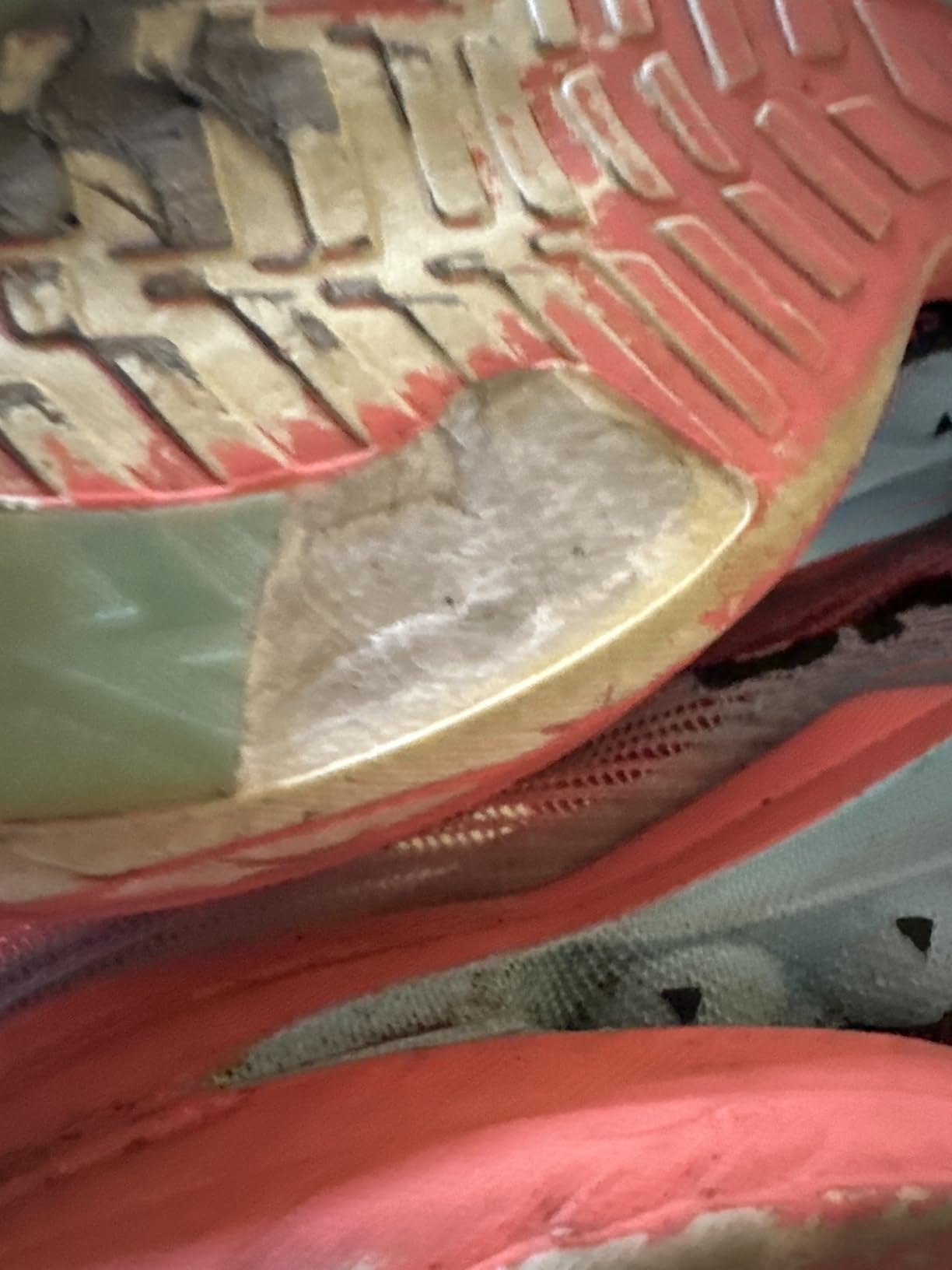
The fit is the problem. The heel and forefoot are both narrow, which makes it a poor option for wide feet, and there is little heel lockdown without adding a runner’s loop. Several reviewers also describe the ride as mushy and unstable for heel strikers or supinators, and those are the runners who lose the most from the aggressive geometry.
The unisex sizing here is based on men’s lasts, which regularly confuses ordering. The listing is under the women’s department, so check carefully before you order.

When the extra cushioning pays off
The PEBA cushioning earns its place over half marathon and marathon distance, and in warm conditions where a firmer racing foam starts to feel punishing late. It also gives you a better option for a training block if you want to practise in the shoe.
It is a smaller step in protection than the New Balance Supercomp Elite V4, which is the pick if cushioning is your main concern.
Why the narrow fit matters most here
Everything good about this shoe depends on the foot sitting still in it. A narrow heel and forefoot in a shoe with this much plate stiffness creates internal movement that you feel most when you are already tiring in the final kilometres.
If your feet are on the wider side, do not fight this last. Take the New Balance Supercomp Trainer V3, which is built on a wider platform and comes in wide widths.
11. Saucony Endorphin Azura – Best Saucony Plated Option for Daily Fast Miles
Saucony, Men, Endorphin Azura, Silver/Black, 10, Medium
PWRRUN PB super foam midsole
SPEEDROLL transition geometry
XT-900 rubber outsole
8 mm offset
Pros
- Soft PWRRUN PB foam for daily miles with pace when needed
- SPEEDROLL geometry for smoother faster transitions
- XT-900 rubber outsole placed in high-wear zones
Cons
- Firmness suits faster running more than easy mileage
- Less protective than max-cushion trainers on long runs
The Azura sits in the awkward middle of the Saucony range, and that is exactly why it is worth a place here. It uses a PWRRUN PB super foam midsole with SPEEDROLL transition geometry and an XT-900 rubber outsole laid into the high-wear zones, which is a durability-first outsole choice you rarely see on a Saucony speed shoe.
The 8 mm offset is the detail most runners should read twice. If you have trained in a higher-drop trainer, this is the shoe in the roundup that will feel closest to your normal geometry while still adding SPEEDROLL transitions, and that matters more for comfort than any foam name.
At 4.4 stars across 79 reviews with 76% five-star feedback, the feedback is positive and specific. Owners describe soft cushioning that still gives you something when the pace picks up, and they single out the durable outsole coverage as the standout feature.
The limitation is that the shoe leans toward quicker running. Reviewers say the firmness suits faster running more than easy mileage, and that it offers less protection than a max-cushion trainer on long runs. For a runner who wants one plated shoe to do everything, this is not it.
How it compares to the Speed 4
The Speed 4 has the full-length carbon plate, the dual-foam midsole and roughly six times the review base. The Azura is the simpler, softer, higher-drop option for daily fast miles rather than a race-day super shoe.
If your goal is a race, choose one of the two and save this for the work that supports it.
Who should choose it instead
Pick the Azura if you are moving down from an 8 to 10 mm drop, if you want a Saucony without the stiffness of a plated build, and if your week includes a lot of miles at a moderate pace.
Skip it if your target is a personal best over any distance. The XT-900 outsole and the softer foam are built for repeated use, and the race-day benefit you would pay for is limited.
12. LI-NING Feidian 6 Challenger and Elite – Budget Pick Carbon Plate Race Shoe
LI-NING FEIDIAN 6 Challenger Men’s Racing Shoes Reflective Lightweight Breathable Running Sneakers Black/Purple/Neon Lime US 10.5
Carbon fibre plate for force transmission
SUPER BOOM lightweight midsole
BOOM FIBER mesh upper
GCR rubber outsole
Pros
- Exceptional bounce and energy return for the money
- Featherweight build with reviewers reporting about 7 oz per shoe
- Outsole showed no degradation over 50 miles
- True to size with a generous toe box length
Cons
- Very soft and unstable midsole for rearfoot strikers on camber
- Needs a firm form to avoid ankle pressure
- Squeaky sole grid on hard indoor surfaces
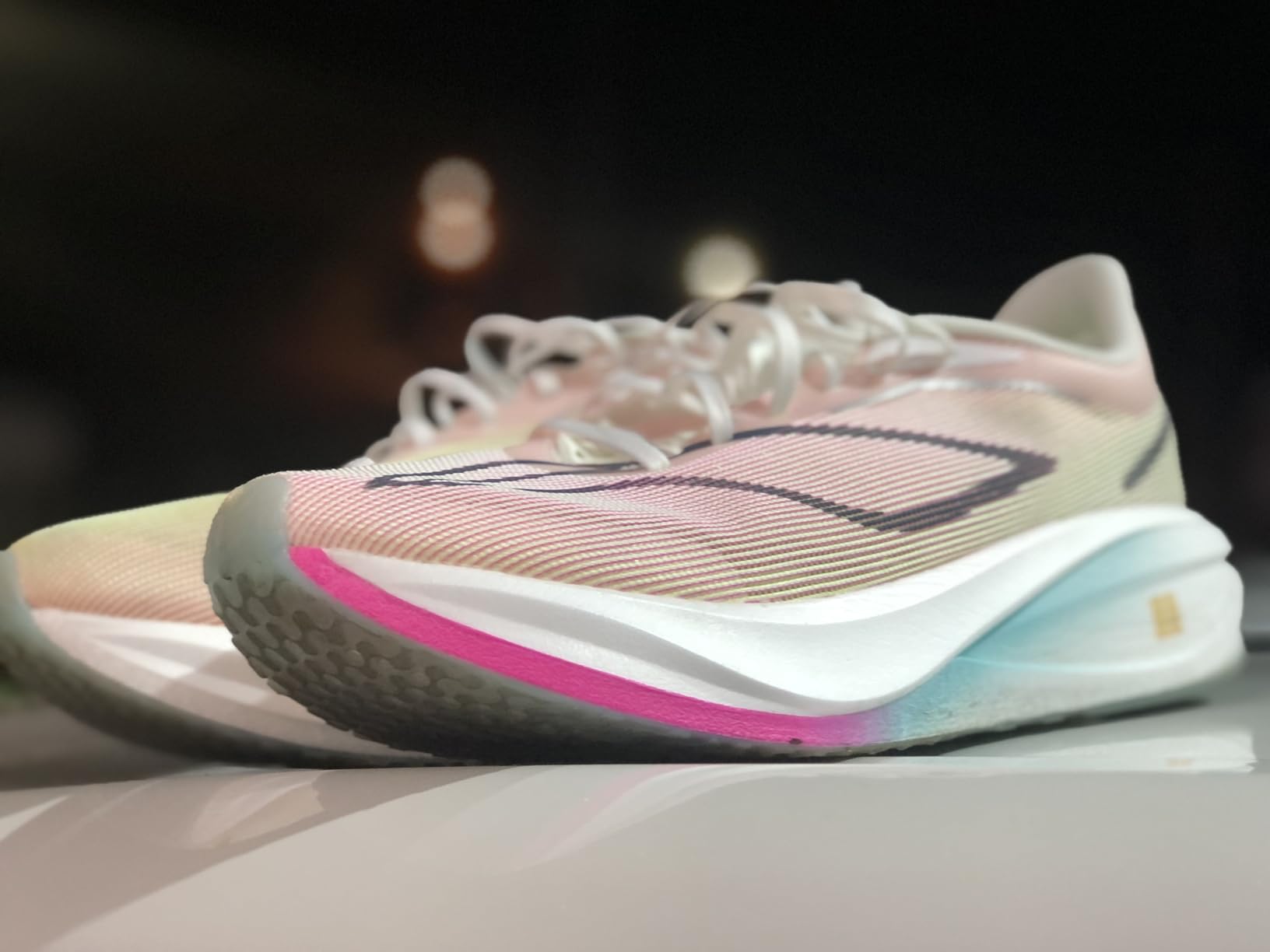
The Feidian 6 is the sleeper in this roundup and the reason I keep coming back to cost per kilometre. It has a carbon fibre plate described as supporting and transmitting force with reduced energy loss, a SUPER BOOM midsole tuned for racing scenarios, a BOOM FIBER engineered mesh upper that resists deformation, and a GCR ground control rubber outsole with enhanced slip resistance.
At 4.5 stars across 150 reviews with 72% five-star feedback, reviewers call the rebound and value unmatched at this level. The outsole showing no degradation over 50 miles is the durability claim that matters most, and it is well above the Metaspeed Sky figure in the same roundup.
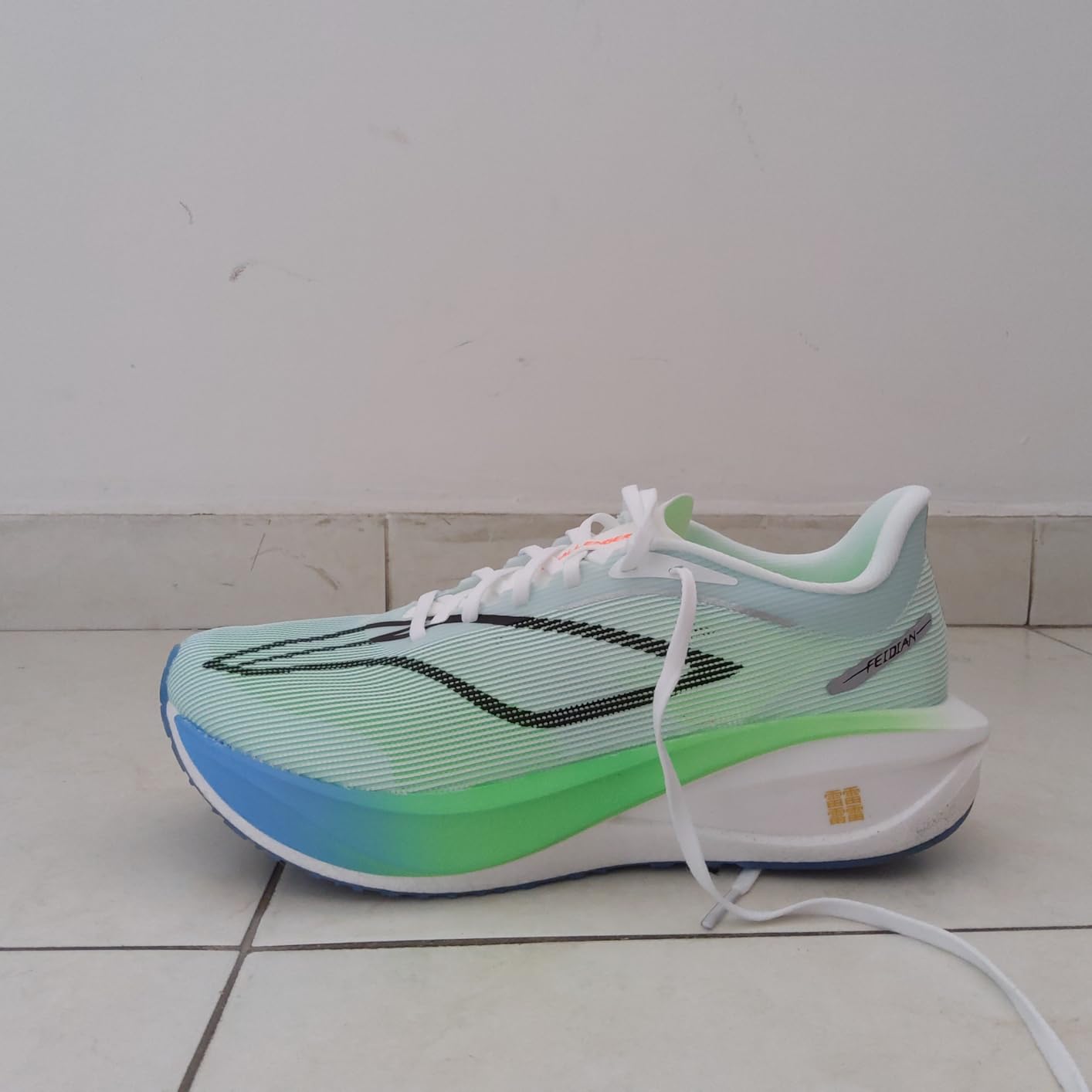
Reflective detailing is included, which matters more than it sounds for a 6am start, and the fit is true to size with a generous toe box length. Reviewers also note a lightweight build that still feels stable on flat, fast running, which is not a low bar on a shoe this soft.
The soft midsole is the whole trade. It is very unstable for rearfoot strikers, especially downhill or on cambered terrain, and it requires a firm form to avoid putting pressure on the ankle. The sole grid can also squeak on hard indoor surfaces, which is harmless but noticeable on a treadmill.
Who this shoe suits best
This is a shoe for a midfoot or forefoot striker running on flat road or track who wants maximum rebound per step. If you are a rearfoot striker, the New Balance Supercomp Trainer V3 is the safer pick and the New Balance Energy Arc plate is more forgiving of a heavy landing.
It is also the natural choice for anyone who wants a genuine full-length plated race shoe without committing the race-day budget to one of the better-known super shoes.
When to choose something else
Skip it if you race on technical surfaces, run a lot of downhill, or want something to walk around a start line in. The outsole is built for road and track grip, and the platform is not designed for casual wear.
The unstructured tongue and midfoot may also run narrow through the middle of the foot even though the toe box length is generous, so try both sizes if you are between them.
How Carbon Plate Running Shoes Actually Work
The mechanism is three separate things working together, and understanding them tells you which part of a shoe will suit your stride. The carbon plate is a thin, stiff composite sandwiched inside the midsole rather than sitting under it, and it adds longitudinal stiffness so the foam underfoot compresses and rebounds more fully. The superfoam is a nitrogen-infused midsole engineered for high energy return and very low weight. The rocker geometry is the curved sole shape that shortens the ground-contact transition from landing to toe-off.
Together they cut the energetic cost of running by roughly 2-4%. That figure is the anchor metric for the whole category, and it is why elite marathoners race in these shoes: a saving of that size compounds with distance, and holding a pace for less oxygen is the difference between fading at 35 kilometres and finishing.
The important caveat is that the benefit is pace-specific. A plate only returns energy when it loads, and it loads when you land midfoot or on the ball of the foot at a quick cadence. A heel striker largely bypasses the plate, which is the single biggest reason so many runners feel disappointed the first time they try one.
How We Picked These 12 Shoes
Every pick in this roundup has a carbon plate, Energy Arc or comparable plate system, or is included deliberately as a plated-adjacent alternative and labelled as such. We weighted three things. First, review volume and consistency, because a 596-review sample tells you far more than a 78-review one and the two models with the lowest ratings here both have identifiable causes rather than vague dissatisfaction.
Second, specificity of the build. A documented foam compound, plate type and geometry is worth more than a marketing line, which is why the LI-NING Feidian 6 and the adidas Boston 12 outrank models with stronger brand recognition but vaguer descriptions.
Third, fit range. We kept shoes that come in wide sizes and shoes that work on a narrower last, because the most common complaint in this category is a toe box that fights wide feet. For more everyday comparisons, our guide to the best running shoes for overpronation covers the fit and stability questions from a different angle.
Buying Guide: Choose by Race Distance
Most roundups organise by brand, which is the least useful axis for a runner with a race on the calendar. Organise by distance and target pace instead, and the choice becomes obvious.
For 5K and 10K races
You want lightness and maximum pop, and you want a shoe that will be destroyed by 10 races rather than one that survives them. The ASICS Metaspeed Sky 3, the Saucony Endorphin PRO 4 and the LI-NING Feidian 6 are the three picks here built for this. The Metaspeed Edge is explicitly the wrong tool, as reviewers note it is not ideal for shorter distances.
For half marathons
This is the sweet spot for plated shoes, where the racing distance is long enough to bank the economy gain but short enough that durability is not yet a concern. The ASICS Metaspeed Edge, the Saucony Endorphin PRO 4, the New Balance Supercomp Elite V4 and the Nike ZoomX Vaporfly Next% 4 all belong here.
For marathons
Protection and stability start to outweigh snap. The New Balance Supercomp Elite V4 is the choice for a first marathon because reviewers report no break-in period needed, and the New Balance Supercomp Trainer V3 is the choice for anyone who needs width and a stable platform. The Nike Vaporfly is the comfort pick for a runner with lower-leg sensitivity.
Who should skip carbon-plated shoes
Be honest with yourself on this list. Skip the category entirely if you are a heel striker, because you will carry the weight and the geometry without loading the plate. Skip it if you have active Achilles tendinopathy, plantar fasciitis, navicular stress issues or second and third metatarsal pain, because the aggressive rocker loads exactly those structures.
Skip it if you run only for fitness with no time goal, because the 2-4% economy gain buys you nothing you can measure. In that case the adidas Adizero Boston 12 or the Saucony Endorphin Azura give you most of the responsiveness for a fraction of the commitment.
And skip it if your target pace is slow enough that the plate rarely loads. A super shoe cannot create speed you are not training for. If your races are more effort than performance, spend the money on cushioned running shoes for long distances and train properly instead.
Breaking In Your Race Shoe Before Race Day
Yes, you can wear carbon-plated shoes in a race. That is exactly what they are for. But wearing a brand new pair for the first time on race day is the most common way runners end up with blisters, a tight calf, or a ruined Sunday.
Runners report consistently that one shakeout run plus one or two race-pace sessions is enough for most people to adapt. Ten days out from the race, do three repetitions of one mile at goal pace in the shoe, ideally in race kit, and pay attention to where your foot lands. If you are landing on your heel in these shoes, that is a selection problem, not a training one.
Expect your cadence to rise without you trying. Runners describe turnover climbing as a consistent side effect, and it usually feels like better form rather than strain. Stop escalating if the shoe makes your calves sore two days later, because that is your tissues adapting to the load rather than your fitness improving.
Do not run a long run in the race shoe the week before. The community view is consistent on this, and racing a marathon in a shoe you have never taken past 10K is how people end up needing medical tape at 30 kilometres.
How Many Races One Pair Actually Covers
This is the question runners actually compare on, and it is the one that decides whether a plated shoe is worth it. Reported lifespans in this category run from about 240 kilometres at the pessimistic end to 480 kilometres at the optimistic one, and the shoes in this roundup sit at very different points on that range.
At the short end, the ASICS Metaspeed Sky 3 is reported near-dead at 50-80 miles, which is roughly one to two half marathons. The Metaspeed Edge gets roughly four to five races for some runners. At the other end, owners of the Saucony Endorphin Speed 4 report pairs past 400 miles in a normal rotation, and the LI-NING Feidian 6 outsole showed no degradation over 50 miles in reported use.
Here is the worked example. If you plan one half marathon and one marathon a year, that is roughly 60 kilometres of racing plus 30 kilometres of shakeouts, so a pair covering 240 to 480 kilometres gives you three to eight years. If you race short distances often, the same maths collapses and a durable plated trainer like the Speed 4 or the Supercomp Trainer V3 wins by a wide margin.
This is also why limiting plated shoes to racing and targeted sessions is the dominant piece of advice in running communities. You get the benefit where it applies and keep the shoe alive for the next start line.
Frequently Asked Questions
Can you wear carbon plated shoes in a race?
Yes, that is exactly what they are built for, and race day is the only context where the 2-4% running-economy gain turns into a finish time. The risk is wearing a brand new pair for the first time in a start corral. Run one shakeout plus one or two race-pace sessions in the ten days before, and check where your foot lands when you speed up.
What are the best shoes for race days?
For most runners the best carbon plate running shoes for race day are the Saucony Endorphin Speed 4 for the strongest all-round balance of speed, comfort and durability, the New Balance FuelCell Supercomp Trainer V3 for a wide, stable platform that suits heel strikers and wide feet, and the ASICS Metaspeed Edge for a half or full marathon where extra landing cushion matters more than minimum weight.
Are carbon plated shoes good for daily running?
Generally no, because durability and cost per kilometre make daily use uneconomic and the benefit is specific to fast running. Reported lifespans in this category run from about 240 to 480 kilometres, and a plated shoe is at its best when the plate actually loads. For daily miles use a plated supertrainer such as the adidas Adizero Boston 12 or the Saucony Endorphin Azura instead.
What are the top 5 carbon plate running shoes?
Our top five for race day are the Saucony Endorphin Speed 4 as the best overall option, the New Balance FuelCell Supercomp Trainer V3 for wide feet and heel strikers, the Saucony Endorphin PRO 4 as the lightest fast racer, the ASICS Metaspeed Edge for half and full marathons, and the LI-NING Feidian 6 as the best value pick with a carbon plate and a durable outsole.
Do carbon plate shoes cause injuries?
They do not cause injury in runners who use them correctly, but the aggressive rocker geometry loads the Achilles, plantar fascia, navicular and the second and third metatarsals harder than a neutral trainer. If you have active tendinopathy in any of those structures, or if you are a rearfoot striker with weak calf and foot strength, a plated supertrainer is the safer choice.
Final Verdict: The Best Carbon Plate Running Shoes for Race Day
The Saucony Endorphin Speed 4 is the shoe I would buy first, because the largest review base in this roundup backs a build that is fast, stable and durable enough to keep. The New Balance FuelCell Supercomp Trainer V3 is the answer for wide feet, heel strikers and anyone whose body has said no to thin race-only uppers before. The Saucony Endorphin PRO 4 and the LI-NING Feidian 6 cover the fast and the value ends of the range.
Before you order, do the honest check. If you land on your heel, have any lower-leg injury history, or run for fitness with no time goal, buy one of the plated supertrainers instead and save the super shoe for the day it earns its place. If none of that applies, pick by distance, break the shoe in over ten days, and go for the best carbon plate running shoes for race day that match the pace you actually race at.