

A headset is the one piece of cockpit equipment every single pilot buys. Everything else can wait, but the moment you climb into the left seat you need to hear the engine, the radio, and yourself. Get it wrong and you carry two problems: an engine roar that exhausts you by hour three, and pressure points that make a five-hour lesson feel like ten.
That is why the best aviation headsets get more attention than any other purchase in training. We went through twelve of them, read the review patterns, and sorted out which ones earn their place in a bag and which ones are just expensive cable management. Our best overall pick is the Rugged. Air RA200, and the reasons surprised us.
This roundup covers passive and active noise reduction headsets from entry student trainers to airline-grade wired units, updated for 2026. We also cover the connector types that trip up first-time buyers, the fitting problem that quietly ruins all-day comfort, and what happens to your hearing protection when the batteries die.
Before the picks, if you are still building out a nav kit, our picks for the best aviation handheld GPS devices for pilots are worth a look. A quiet headset and a good GPS solve two completely different problems, and you need both.
Table of Contents
Top 3 Aviation Headset Picks in 2026
The RA200 wins our top slot because of what its user base looks like. At 4.6 stars across 2730 reviews it is the most proven passive headset in this list by a wide margin, and pilots describe it in a specific and consistent way: light, tough, and clear on the radio.
The KA-1 earns the value badge by adding silicone gel ear seals, a mono/stereo switch and a 3.5mm AUX input at a mid-range price point. The H10-13.4 takes the top-rated slot with the highest average score here, and reviewers repeatedly single out its comfort gel undercut seals as the reference standard for passive headsets.
All 12 Aviation Headsets at a Glance in 2026
| Product | Specifications | Action |
|---|---|---|
 Rugged. Air RA200 Rugged. Air RA200 |
|
Check Latest Price |
 KORE KA-1 KORE KA-1 |
|
Check Latest Price |
 David Clark H10-13.4 David Clark H10-13.4 |
|
Check Latest Price |
 Bose A30 Bose A30 |
|
Check Latest Price |
 LIGHTSPEED Zulu 3 LIGHTSPEED Zulu 3 |
|
Check Latest Price |
 KORE P1 KORE P1 |
|
Check Latest Price |
 LIGHTSPEED Sierra LIGHTSPEED Sierra |
|
Check Latest Price |
 Bose ProFlight Series 2 Bose ProFlight Series 2 |
|
Check Latest Price |
 David Clark DC ONE-X David Clark DC ONE-X |
|
Check Latest Price |
 Faro G2 ANR Faro G2 ANR |
|
Check Latest Price |
 Rugged. Air RA900 Rugged. Air RA900 |
|
Check Latest Price |
 AIRVOICE Pilot Headset AIRVOICE Pilot Headset |
|
Check Latest Price |
Six of these twelve are passive designs. That ratio surprises people who assume a headset needs electronics, and it reflects how most real flying actually works: a forty-five minute lesson in a Cessna 172 does not need a battery.
1. Rugged. Air RA200 – the proven passive workhorse
Rugged. Air RA200 Aviation Headset for Student Pilots & Flight Schools
Passive 24 dB NRR
16 oz weight
Electret noise-cancelling mic
7 year aviation warranty
Pros
- Lightweight 16 oz design comfortable over extended flights
- Clear audio with effective electret noise-cancelling mic
- Individual volume control on each ear works better than pricier headsets
- Sturdy construction that holds up to regular cockpit use
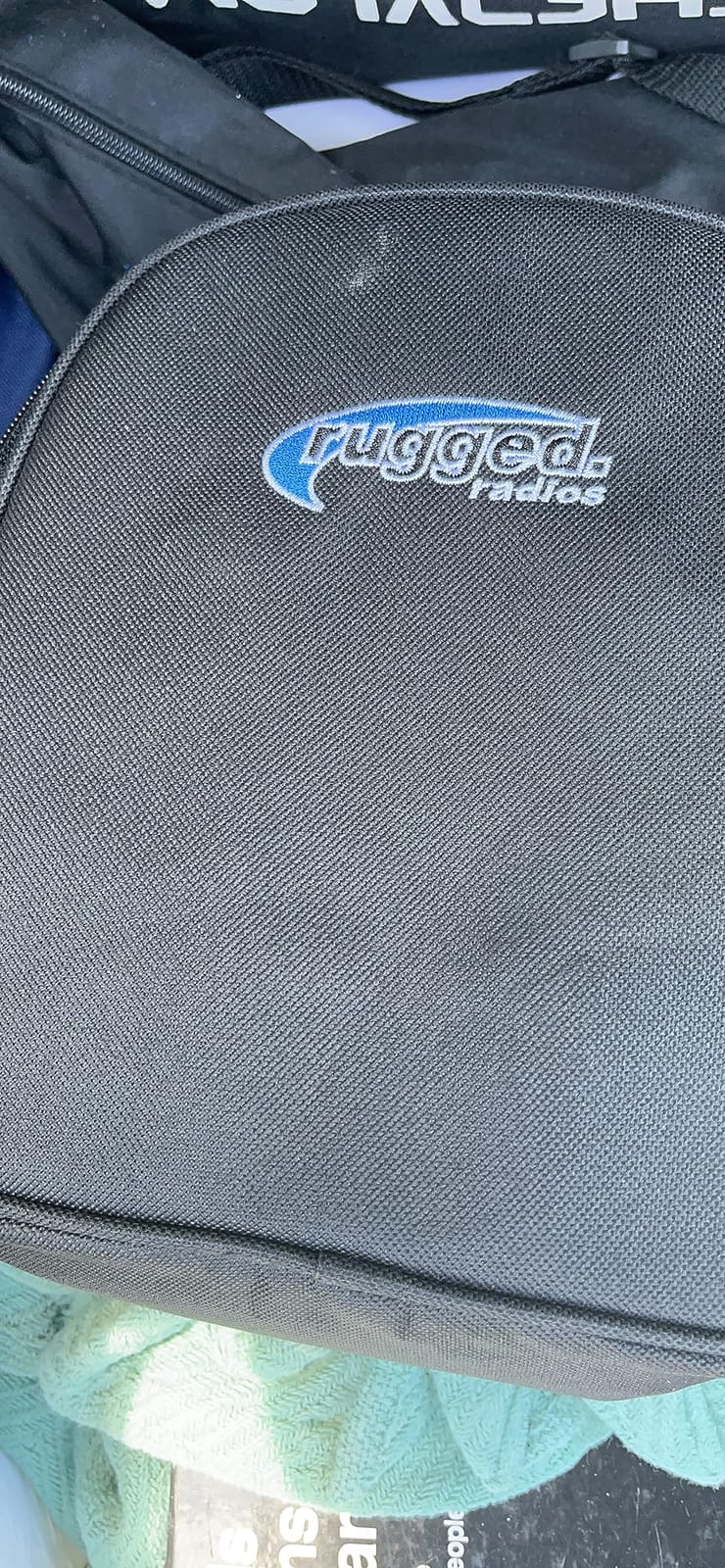
- Padded headset bag included
Cons
- Passive reduction is acceptable rather than strong with the stock foam seals
- No Bluetooth for music or phone integration
- Stock foam seals can get sweaty on long flights
The RA200 is the first headset I would hand to a student who wants to stop renting. Sixteen ounces is genuinely light, and that number matters more than it sounds like it should once you are wearing it through a full ground school day.
The single most useful detail in the review data is the individual volume control on each ear. A volume knob on one side only means your instructor or a co-pilot with different hearing still has to twist the same control. Per-ear control removes that friction for the cost of a few dollars.
What the RA200 does not do is cancel engine noise. It is a passive design rated at 24 dB NRR, so the protection comes entirely from the physical seal of the foam ear cushions. That is fine for a training pattern or a local flight, and it is genuinely marginal on a long cross-country in a noisy piston single.
Reviewers across the 2730-review base point to one refinement and only one: upgrading the seals. The stock foam cushions are the weak link acoustically and thermally, and swapping in a gel seal kit changes both the noise floor and how the headset feels in summer. If you buy the RA200, plan to buy the seals with it.
It also carries a 7 year aviation warranty, which is the longest coverage commitment in this list, and the build is described as indestructible in long-running student fleet use.

Who the RA200 suits
It suits students, flight schools buying in volume, and anyone whose flying is mostly short local hops. At 16 ounces it is the least fatiguing passive option here, which matters if you are wearing it for five hours of instruction a day.
The 7 year warranty and the included padded bag also make it a good shared or club purchase, where the headset will change hands repeatedly.
Where the RA200 falls short
There is no active electronics, so no Bluetooth and no way to layer music or a chart briefing app over the intercom. The 3.5mm jack carries audio only, not phone calls, which catches people out.
Passive-only protection is the real limit. If your long-term goal is four-hour cross-country flights, this headset will not cut the engine noise the way an ANR unit does, and the foam seals will need replacing sooner rather than later.
2. KORE KA-1 – gel seals and mono/stereo switching for the money
KA-1 General Aviation Headset for Pilots – Mono and Stereo Compatibility, Passive Noise Reduction, Noise Canceling Microphone, Gel Ear Seals, Adjustable Headband & Headset Bag
Passive 24 dB NRR
50 mm clear hear drivers
Replaceable silicone gel ear seals
5 year warranty
Pros
- Clear audio from 24 dB NRR and 50 mm drivers
- Replaceable ultra-plush silicone gel ear seals
- 360 degree flex boom holds the mic in position
- Mono/stereo switch plus 3.5mm AUX input
- 5 year manufacturer warranty and headset bag included
Cons
- Heavier than comparable headsets at 2.1 pounds
- Passive-only reduction trails ANR sets in loud cockpits
- Wired design with no Bluetooth
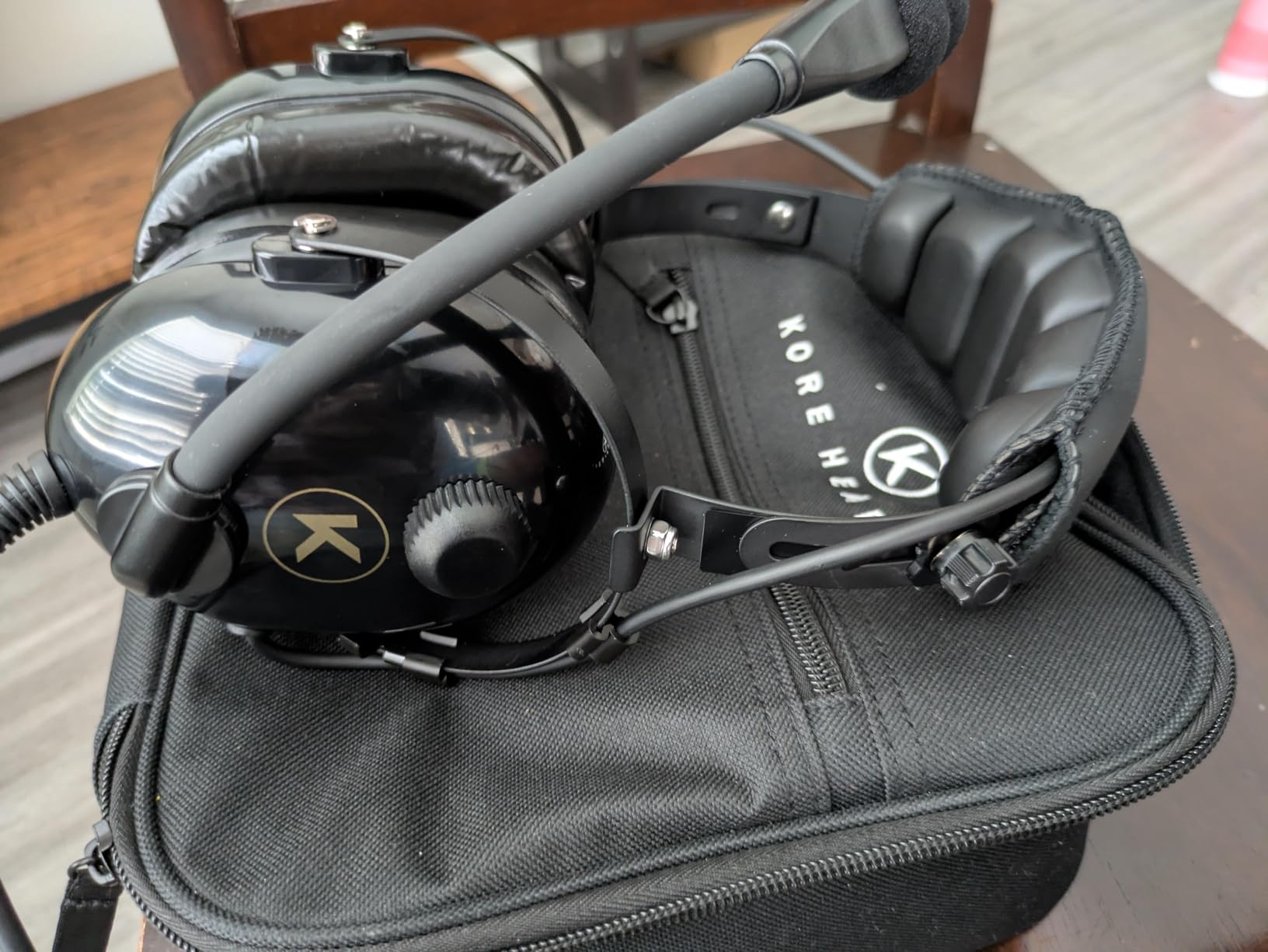
The KA-1 is the model we would pick if gel ear seals matter to you but ANR is not in the budget. The replaceable ultra-plush silicone gel seals are the headline feature, and owners describe them as a genuine step up in both comfort and passive blocking over foam.
The 360 degree flex boom is an underrated quality-of-life item. It holds its position without fighting you every time you adjust the headband, which on cheaper wired headsets is an irritation that never fully goes away.
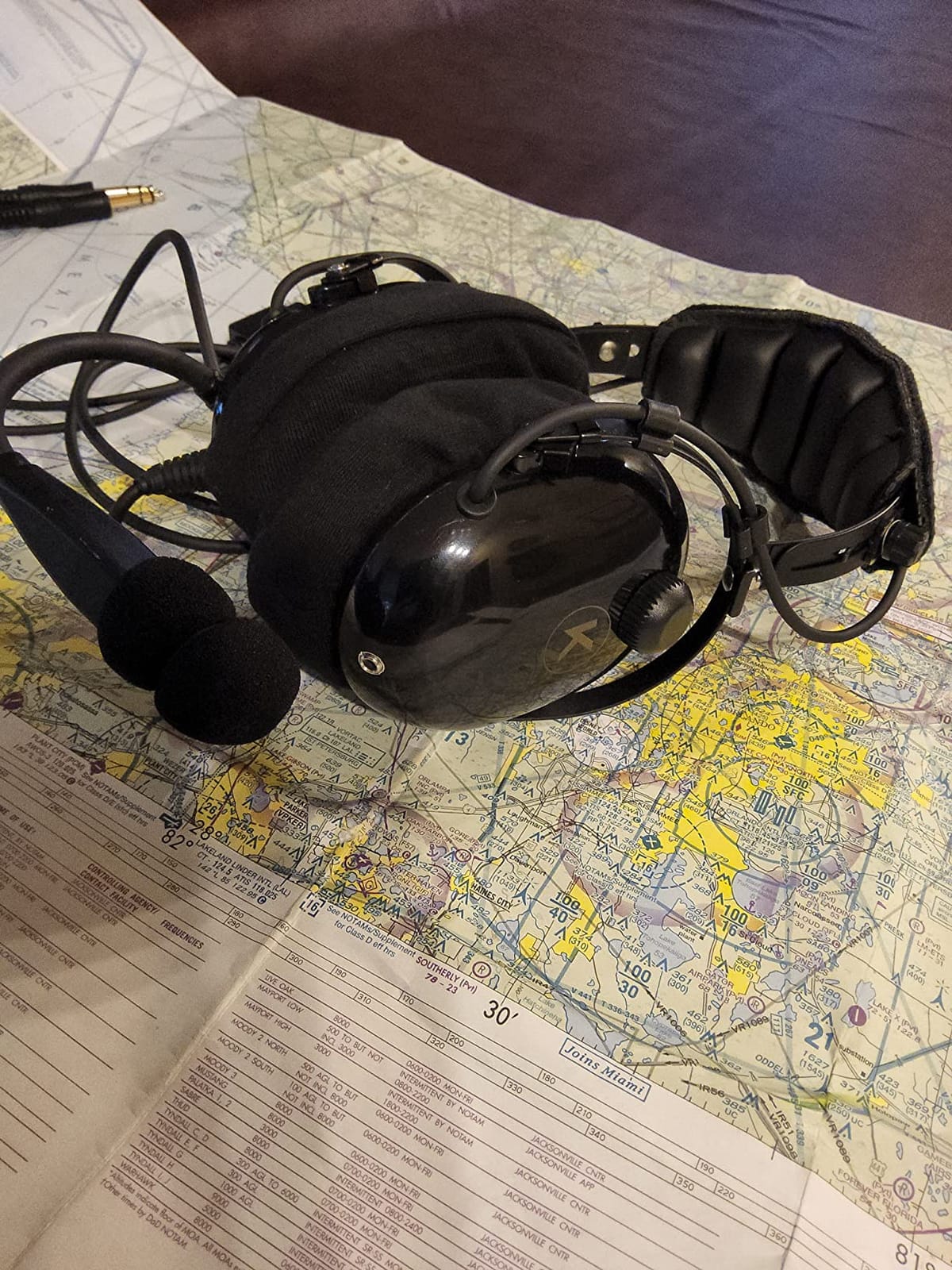
The mono/stereo switch is what separates this from other passive sets at the same level. Intercom systems vary between aircraft, and being able to flip between mono and stereo without rewiring means one headset works across a whole flight school fleet. The 3.5mm AUX input also lets you feed ForeFlight or a phone app into the earcups.
At 2.1 pounds, the KA-1 is the second-heaviest headset in this roundup. It is a well-built weight rather than a cheap one, but on a very long day the difference against a 16 ounce set is noticeable.
Who the KA-1 suits
It suits pilots who fly a mixed fleet of aircraft with different intercom configurations, because the mono/stereo switch removes the most common compatibility headache. It also suits anyone who wants gel seals and clear hear drivers without moving up to an active headset.
Those doing IFR training will like the AUX input, since it means chart audio can run through the same earcups as the radio.
Where the KA-1 falls short
Two pounds is the trade-off. It is comfortable, but it is not the headset you forget you are wearing at hour five.
Like all passive designs, it does nothing about low-frequency engine rumble. In a loud cockpit with the panel up you will be turning the intercom up further than you would with an ANR headset, which is exactly the scenario where hearing exposure accumulates.
3. David Clark H10-13.4 – the comfort benchmark for passive headsets
David Clark H10-13.4 Aviation Headset
Passive comfort gel undercut ear seals
450 g weight
M-7A noise-cancelling microphone
5 year guarantee
Pros
- Exceptionally comfortable with no clamping pressure on long flights
- Build quality reviewers expect to outlast the warranty
- Clear audio that improves sharply on rental headsets
- M-7A mic transmits without shouting on the intercom
- Industry-recognised brand with 5 year guarantee
Cons
- No Bluetooth connectivity
- No active noise cancellation
- No AUX input for auxiliary devices
- A separate carrying case is not included
The H10-13.4 carries the highest average rating of anything in this roundup at 4.7 stars, and the reason shows up in the same sentence again and again: comfort. The Comfort Gel undercut ear seals are the reference point other passive headsets get compared against.
Undercut seals are a subtle design choice with a real effect. The cut-out around the ear canal reduces direct pressure on the most sensitive part of the ear, which is precisely the spot that generates the headaches pilots report from poorly fitting headsets.
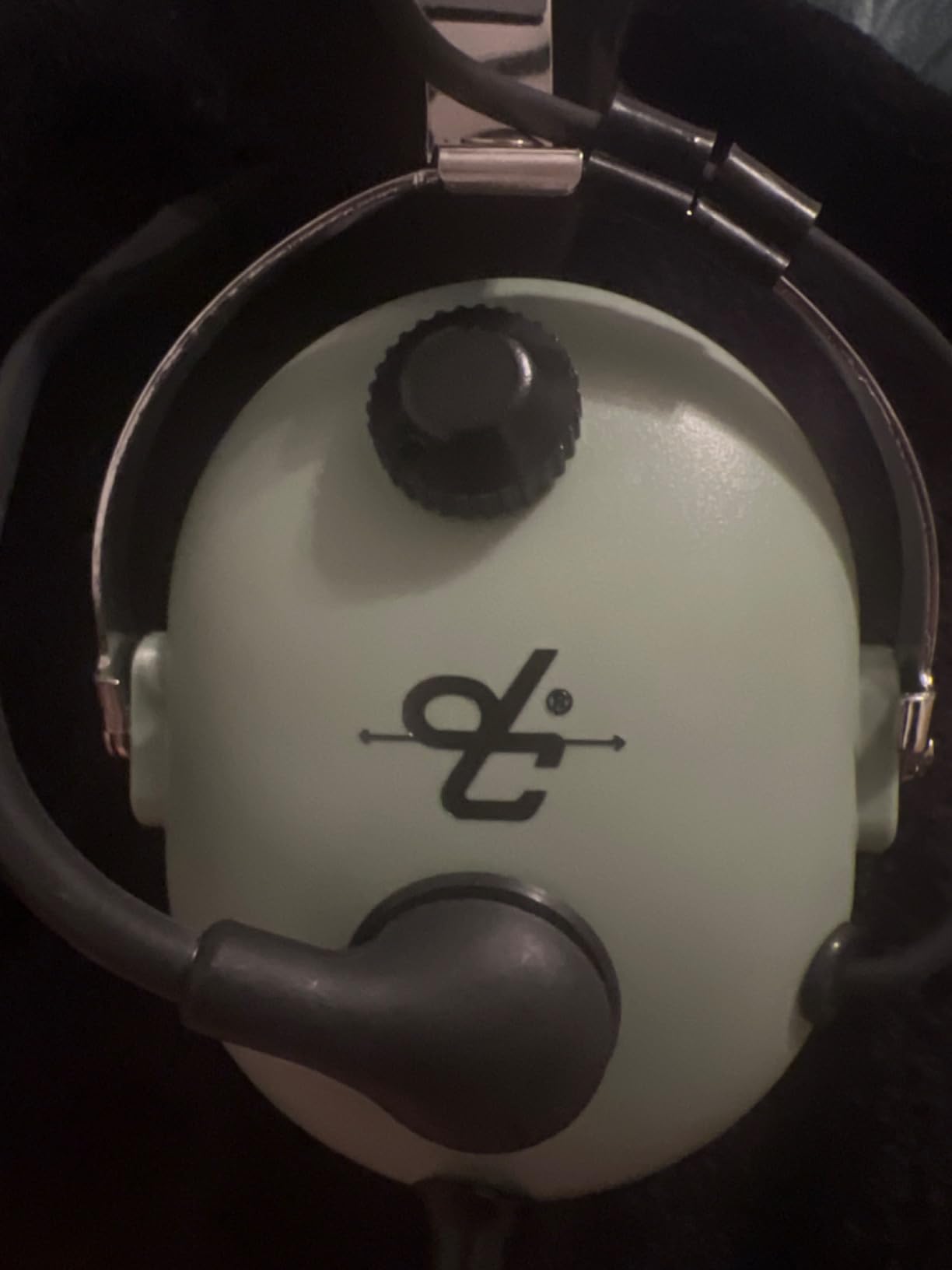
The M-7A microphone is the other reason instructors like this unit. Reviewers report transmitting clearly without needing to push their voice on the interphone, which matters on a checkride where the examiner is listening for clarity, not volume.
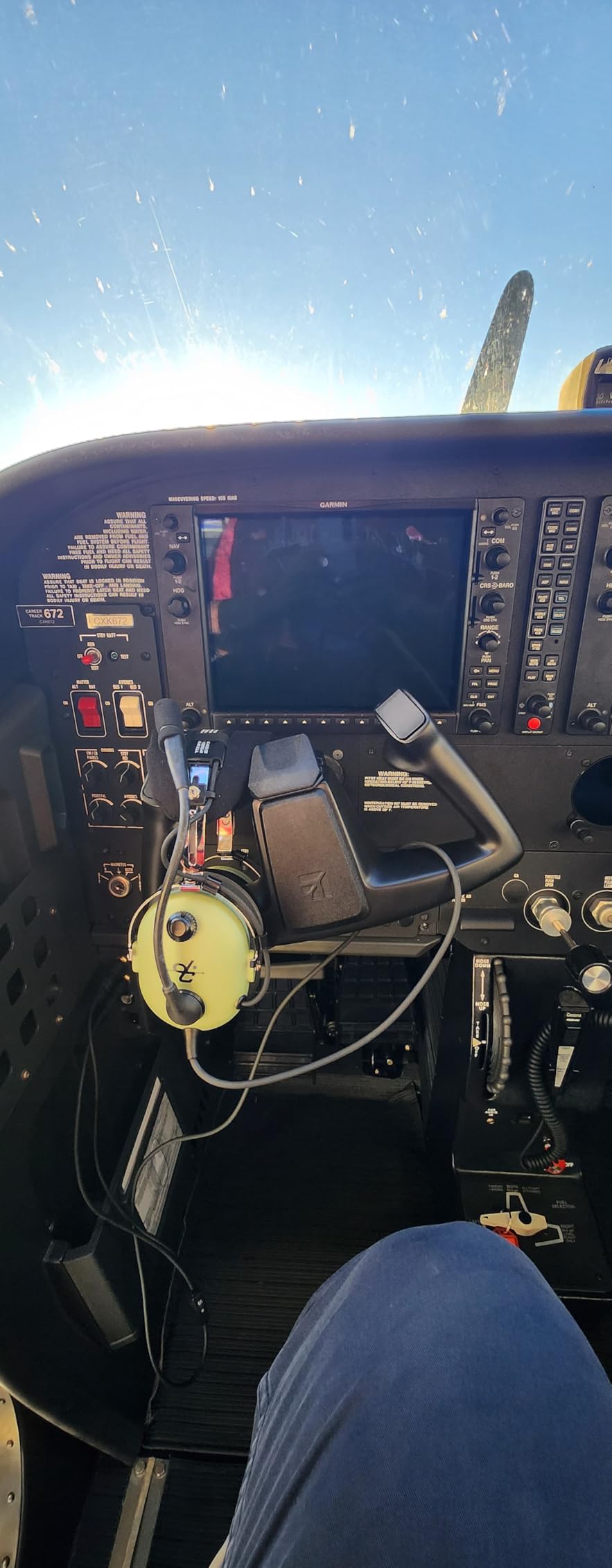
This is the headset the pilot community keeps describing as indestructible, and at 4.7 stars across 917 reviews it has held that reputation. The 5 year guarantee is shorter than the RA200’s 7 year aviation warranty, but the build quality is not the question here.
Who the H10-13.4 suits
It suits anyone who is going to be wearing a headset for hours and cares more about not hurting than about extra features. Comfort gel seals plus a super soft double foam head pad make it the safest all-day choice in this list.
It is also the strongest single recommendation for a pilot moving up from a rental headset. Reviewers consistently describe the audio step as immediate, with no learning curve.
Where the H10-13.4 falls short
It is a wired, passive, feature-free headset by design. No Bluetooth, no ANR, no AUX input, and no carrying case in the box, so budget for a bag.
At 450 grams the weight does become noticeable on the longest flights, though far less than the KA-1. And for anyone flying pressurised turbine aircraft for a living, the lack of active cancellation is the gap you will eventually feel.
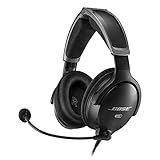
4. Bose A30 – the Premium Pick cabin for money
Bose A30 Bluetooth Aviation Headset – Lightweight Comfortable Design, Adjustable ANR and Noise Cancelling Microphone, [Dual Plug] – Black
Three selectable ANR modes
14.2 oz with 20 percent lower clamp than A20
Side-swappable cable and mic
FAA TSO and EASA E/TSO-C139a certified
Pros
- Three adjustable ANR modes let you tune quieting per phase of flight
- Lightweight circumaural design with lower clamping force than the A20
- Tool-free side-swappable cable and microphone speeds cockpit changes
- Active equalisation shaped for radio intelligibility
- Bluetooth audio with priority mixing over the intercom
Cons
- Battery-powered ANR electronics need AA cells
- Bluetooth 4.2 is an older wireless standard
- Premium price tier versus passive general aviation headsets
The A30 is the best aviation headset in this roundup if your flying includes long, high-cabin-noise legs and you want the quietest possible environment. It is also, without question, the one that requires the most justification on price.
Three selectable modes of active noise cancellation is the feature that separates it from every other ANR headset here. Most competitors give you on or off. Being able to dial the cancellation for a takeoff roll versus a cruise is a small thing that becomes a habit within a few flights.
![Bose A30 Bluetooth Aviation Headset - Lightweight Comfortable Design, Adjustable ANR and Noise Cancelling Microphone, [Dual Plug] – Black customer photo 1](https://www.spencerlocke.net/wp-content/uploads/2026/09/B0BVBVPSX6_customer_1.jpg)
The comfort story is the 20 percent lower clamping force compared with the A20, on a full-sized circumaural design weighing 14.2 ounces. That combination is why the A30 keeps displacing the A20 in pilot recommendations, and it directly addresses the small-head complaint that dominates headset forums.
The tool-free side-swappable down cable and microphone is a genuine cockpit improvement. Swapping sides takes seconds with no tools, which matters when you are moving a headset between a left seat and a right seat configuration on the same trip.
It is FAA TSO and EASA E/TSO-C139a certified and passed 145 Bose tests. For buyers who care about paperwork, that certification is the baseline legitimacy check on any aviation headset.
![Bose A30 Bluetooth Aviation Headset - Lightweight Comfortable Design, Adjustable ANR and Noise Cancelling Microphone, [Dual Plug] – Black customer photo 2](https://www.spencerlocke.net/wp-content/uploads/2026/09/B0BVBVPSX6_customer_2.jpg)
Who the A30 suits
It suits pilots with a small or narrow head who have been turned away by headsets that clamp. The reduced clamping force on a circumaural cup is the specific fix for the pressure-below-the-ear problem that shows up constantly in pilot discussions.
It also suits anyone who wants Bluetooth that plays nicely with a cockpit. Audio prioritisation mixes or mutes your connected device during intercom transmissions, so music never masks a radio call.
Where the A30 falls short
It runs on AA batteries for the active electronics, and that is a real operational consideration on long legs. Bring spares, because the passive seal still works when they die but the cancellation does not.
Bluetooth 4.2 is an older standard, so pairing speed and range are behind what newer consumer devices expect. And the price sits at the top of this list, which is the objection pilots raise most often before they buy it.
5. LIGHTSPEED Zulu 3 – the feature-per-dollar champion
LIGHTSPEED Zulu 3 Premium ANR Aviation Headset with Noise Cancelling and Bluetooth (GA Dual Plugs)
ANR plus magnesium ear cups
14.6 oz stainless steel headband
Kevlar-core cables
7 year warranty
Pros
- Strong quieting across low-frequency engine and high-frequency cockpit noise
- Low-profile stainless steel headband spreads weight and side pressure evenly
- ComPriority drops auxiliary audio during transmissions
- Stainless steel and magnesium built for years of service
- FlightLink app captures incoming and outgoing comms
Cons
- Bluetooth 2.1 is a dated standard
- Needs AA batteries for the active electronics
- Premium pricing for the ANR tier
The Zulu 3 is the answer to the most common question in headset buying, which is whether you need to spend Bose money to get good active noise reduction. At 4.7 stars across 692 reviews, this headset says no.
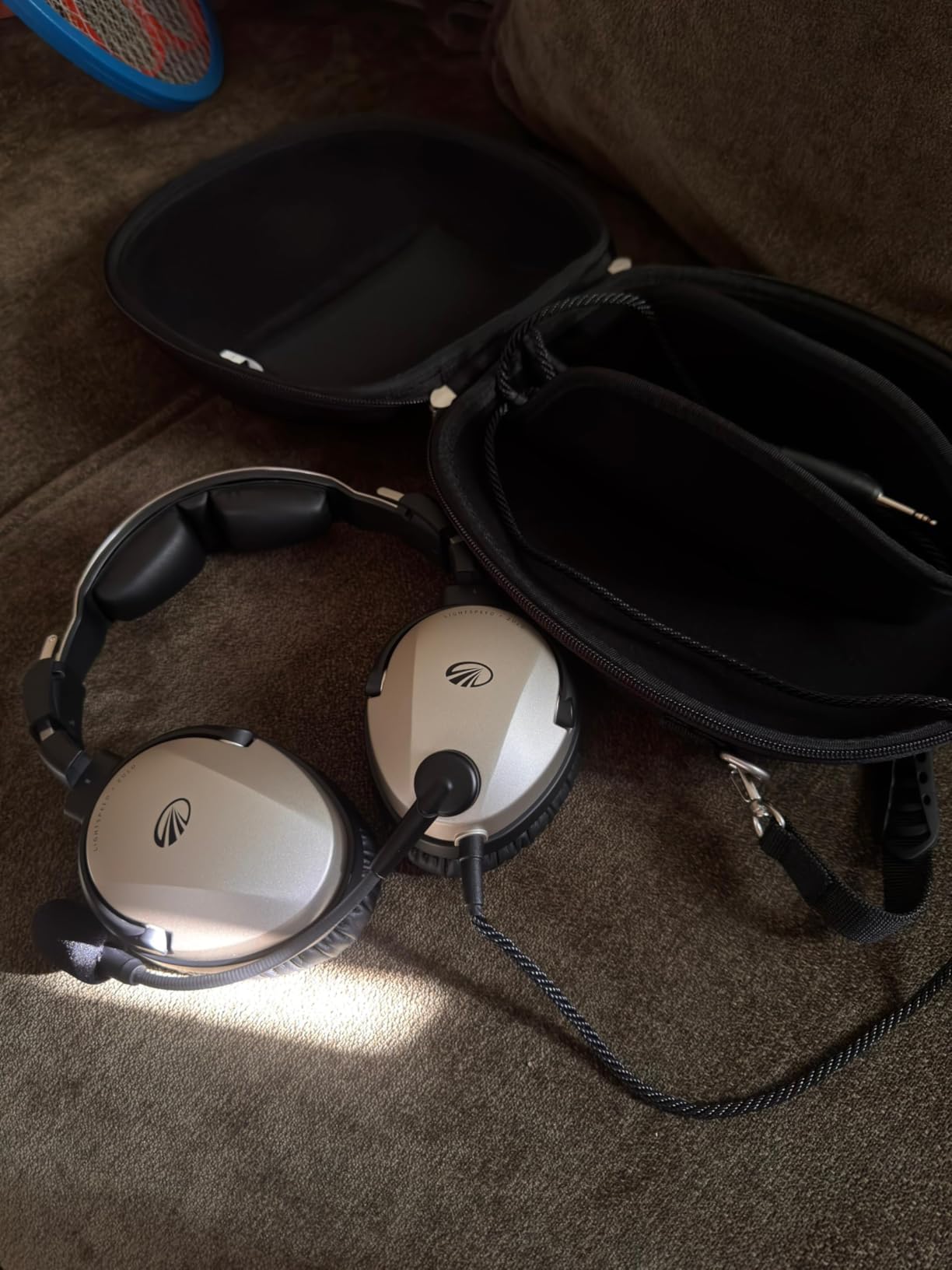
It is a two-layer quieting system. Active noise reduction handles the deep low-frequency engine rumble, and magnesium ear cups block the high-frequency cockpit noise that electronics do not touch. Pilots consistently rank it among the quietest headsets available, and they mention both mechanisms by name in reviews, which suggests they have actually compared them side by side.
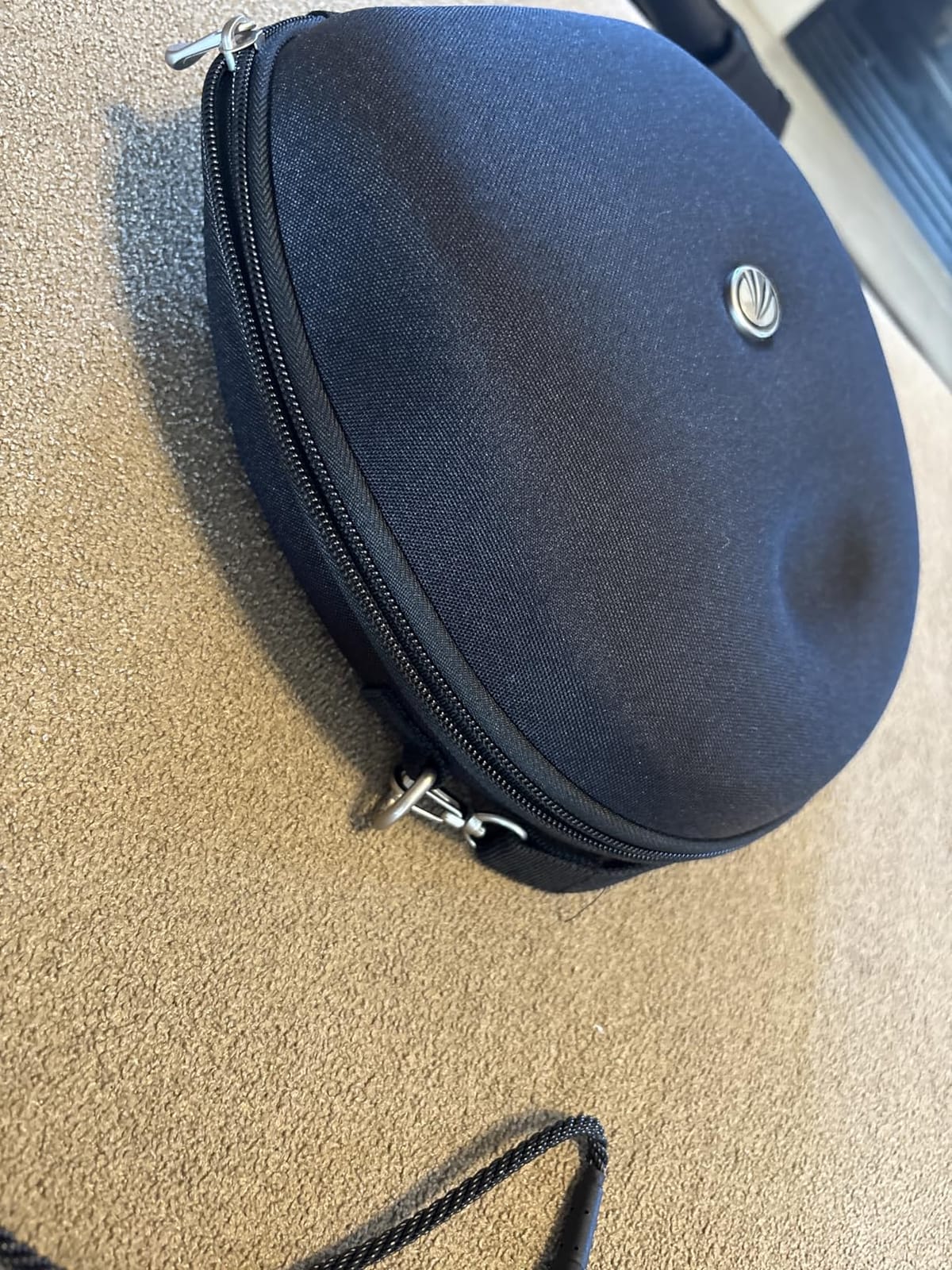
ComPriority is the feature instructors and students notice most. It automatically lowers your connected device volume during a radio or intercom transmission, then a soft mute brings the music back afterward. You stop thinking about it, which is the point.
The stainless steel low-profile headband at 14.6 ounces is what keeps the weight off the top of your head and the side pressure off your ears, and the Kevlar-core cables have a reputation for surviving being yanked around in a cramped cockpit.
Who the Zulu 3 suits
It suits long cross-country and overnight flights, where the combination of low-frequency cancellation and high-frequency cup isolation does the most work. It also suits anyone who wants app support, since FlightLink captures both incoming and outgoing communications on a phone or tablet.
With a 7 year warranty, it is tied with the RA200 for the longest coverage here, which matters for pilots who keep a headset for a decade.
Where the Zulu 3 falls short
Bluetooth 2.1 is genuinely old, and it shows on pairing speed and stability with current phones. If your main reason for buying is wireless audio quality, look at a newer standard instead.
Like the A30 it depends on AA batteries for the active electronics, and it sits in the premium price tier. The Zulu Alpha is the variant that plugs into panel power rather than batteries, which is worth knowing if your aircraft supports it.
6. KORE P1 – trainer-grade passive headset
P1 Aviation Pilot Headset for Student Pilots Flight Schools Flight Instructors Features 24 db PNR Rating, Noise Canceling Microphone, Acoustic Foam Ear Cups, AUX Port Input with GA Dual Plugs
Passive 24 dB NRR
Mono output
Acoustic foam ear cups
1.2 pound weight
Pros
- Reliable 24 dB passive reduction at a student-friendly price
- Acoustic foam ear cups with a thick foam head pad
- Electret noise-cancelling mic keeps comms clear in the cockpit
- 3.5mm AUX jack for music and phone audio
- Replaceable head pad and extra mic muff extend service life
Cons
- Mono-only audio output rather than stereo
- Passive reduction cannot match ANR in loud aircraft
- Only a 12 month warranty
- shorter than competitors
The P1 is built explicitly for student pilots, flight schools and CFIs, and the product page says so outright. That framing matches how reviewers use it, treating it as a dependable trainer rather than a long-range touring headset.
Twenty-four dB of passive NRR is the same headline number as the far more expensive headsets in this list, and for routine training flying that figure is genuinely adequate. The acoustic foam ear cups and thick foam head pad are what make it bearable through a full lesson block.
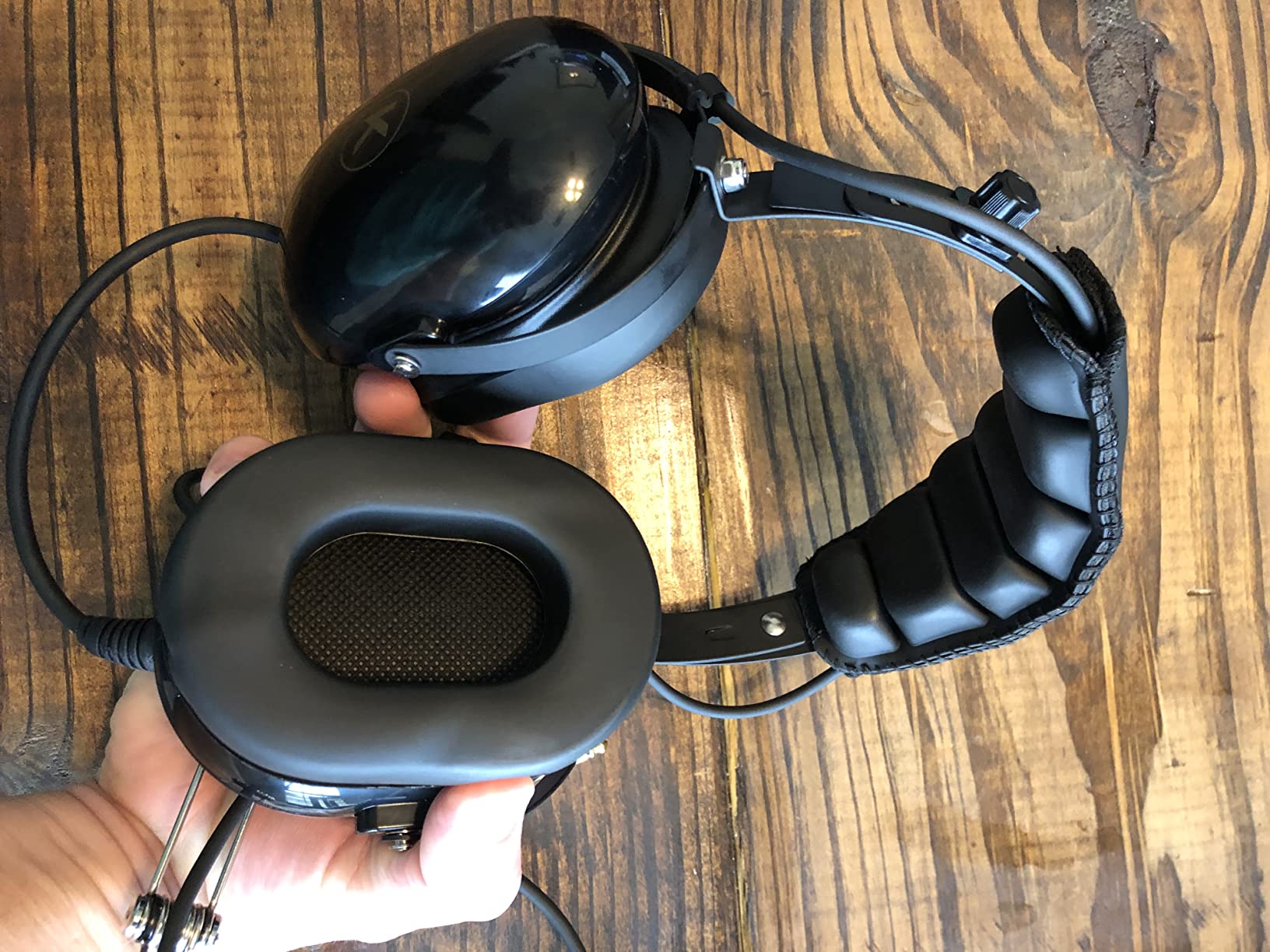
The replaceable head pad is a quietly important detail. Ear pads and head pads are the first thing to fail on any aviation headset, and on a cheaper unit the replacement parts are harder to find. Being able to swap this one yourself extends the useful life of the whole headset.
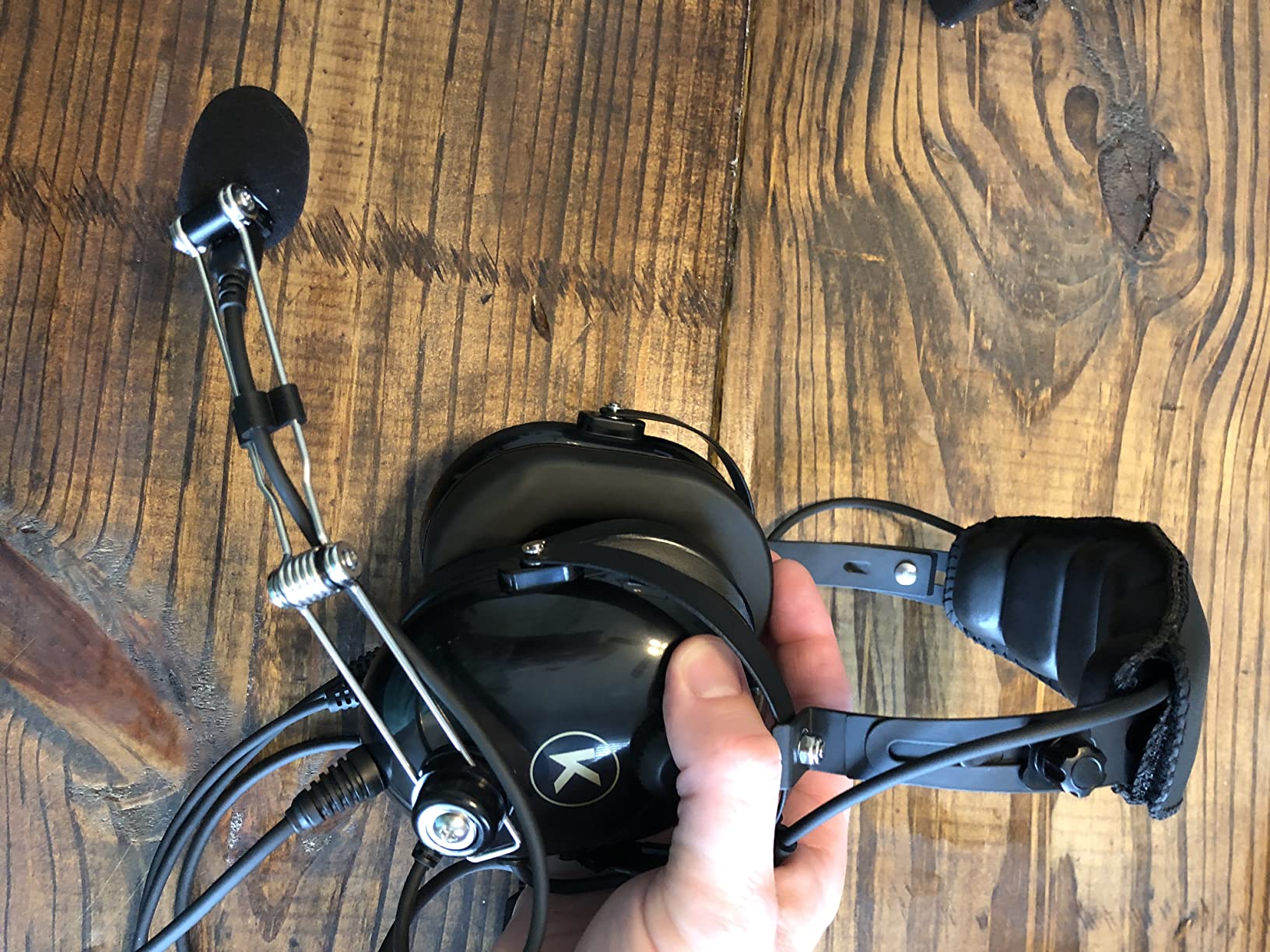
There is a 3.5mm AUX input for music and phone audio, which is a nice touch for solo practice flights, plus a protective case in the box and an extra microphone muff.
Who the P1 suits
It suits a first-time student who wants to own a headset rather than rent one, and flight schools equipping a rack of training units on a tight budget. The mono output works with essentially every light aircraft intercom.
It also works as a spare or a passenger headset, which is a common second purchase for instructors carrying two people.
Where the P1 falls short
Mono-only output is a real limitation if you want stereo from a modern audio source, and the 12 month warranty is by far the shortest in this roundup, against five and seven year terms elsewhere.
The passive-only attenuation is the meaningful ceiling. In a loud aircraft you will be listening harder than you would with an active headset, and the missing Bluetooth means no wireless audio at all.
7. LIGHTSPEED Sierra – Bluetooth with a physical control box
Lightspeed Aviation Sierra ANR Aviation Headset – Premium ANR Pilot Headset – Maximum Noise Canceling & Bluetooth Technology for Exceptional Communication
Active noise reduction
Integrated control box with aux input
1 pound weight
5 year warranty
Pros
- Advanced ANR delivers strong reduction for the price bracket
- Integrated control box with aux input simplifies Bluetooth pairing
- Automatic aux ducking and soft mute keep radio calls clear
- Lightweight build with reversible headband and microphone
- Made in America with protective case included
Cons
- On-ear form factor gives up passive isolation versus circumaural sets
- Older Bluetooth generation than newer aviation headsets
- Bulkier than the Zulu 3 for travel
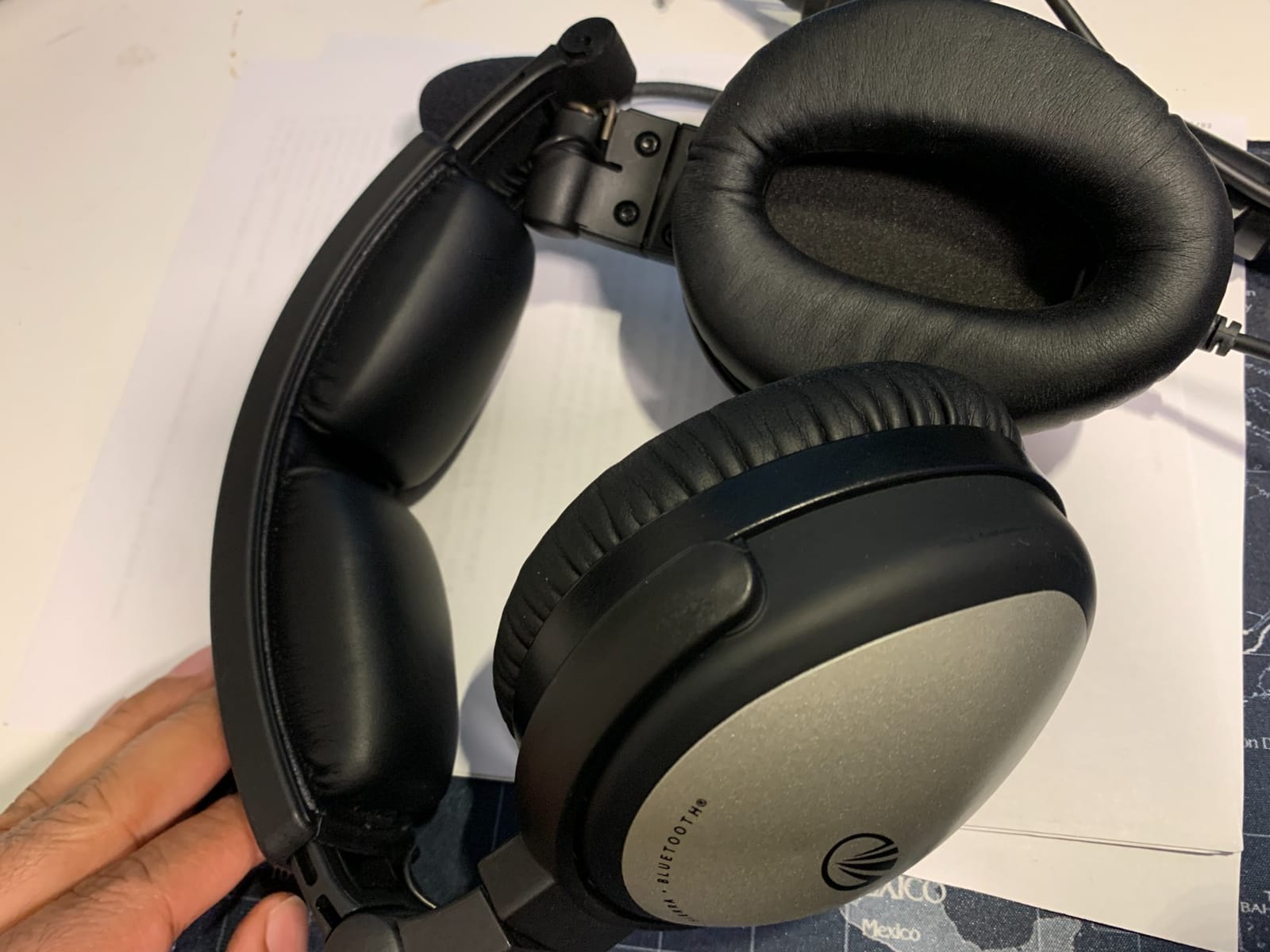
The Sierra has been in service since 2010 and pilots describe it as the headset that has held up over many years, which is the most durable compliment a product in this category can earn.
Its distinguishing feature is the integrated control box. Rather than hiding Bluetooth controls on a cable, the Sierra puts a physical module with an auxiliary input where you can find it. For pilots who have fumbled with tiny inline buttons on a yoke-mounted cord, that is a genuine usability win.
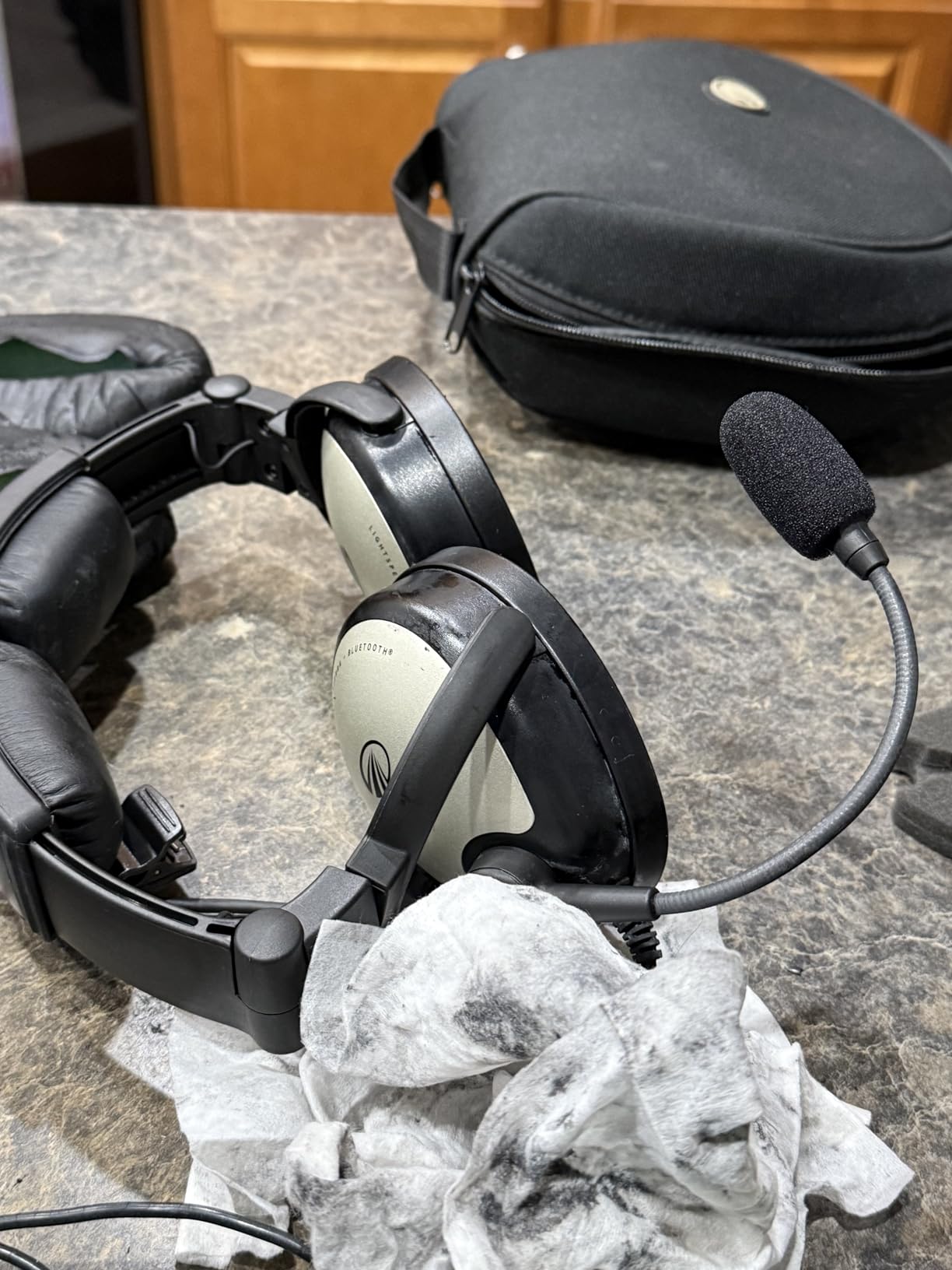
Automatic auxiliary volume ducking during transmissions plus a soft mute on the way back does the same job as ComPriority on the Zulu 3. The reversible headband and microphone let you wear it on either side without rewiring.
At one pound it is not heavy, and the on-ear form factor means less bulk in a small cockpit than a full circumaural cup.
Who the Sierra suits
It suits pilots who want Bluetooth and app support at a step below the Zulu 3, and anyone who prefers physical controls to inline cable buttons. Reversibility also makes it easy to share between left and right seat flying.
It works as a tactical or military-style headset too, which is the same physical platform many non-aviation users buy it for. If you also fly sims at home, our picks for the best gaming headsets for competitive play cover the microphone and comfort trade-offs from a different angle.
Where the Sierra falls short
The on-ear design is the main one. You give up the passive isolation that a circumaural cup provides, so in a loud piston cockpit the difference versus the Zulu 3 is audible.
It is bulkier than the Zulu 3 for travel, and its Bluetooth generation is older. If you fly a lot and pack light, the newer circumaural model is the better long-term buy.
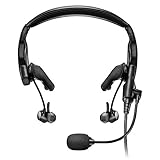
8. Bose ProFlight Series 2 – the airline in-ear option
Bose Proflight Series 2 Aviation Headset with Bluetooth Connectivity, Dual Plug Cable, Black
In-ear digital active noise cancellation
9.6 oz on-head weight
45 hour battery life
Bluetooth 5
Pros
- Exceptionally light in-ear design with no head clamping pressure
- Digital active noise cancellation lets pilots lower radio volume
- Tap control talk-through hears cabin crew without removing the earbud
- Bluetooth 5 with smooth mixing behaviour
- Tool-free one-handed boom mic swap for left or right ear
Cons
- In-ear tips may not fit every ear canal over long duty periods
- Batteries drain relatively quickly and need frequent swapping
- Takes time to adjust to the in-ear format
- Less passive attenuation than circumaural sets in piston aircraft
The ProFlight Series 2 is the headset family most airline pilots are handed, and the reason is simple: 9.6 ounces with nothing clamping your head. On a fourteen hour duty day the difference between an in-ear design and a full circumaural cup is not subtle.
It is engineered specifically for moderately noisy, pressurised turbine-powered aircraft, and pilots flying those report that the digital active noise cancellation lets them turn the intercom down. Lower intercom volume is a direct hearing conservation measure, which makes this a safety purchase rather than a comfort one.
The tap control talk-through function is the sleeper feature. You tap the earbud and hear the cabin without removing anything, which airline pilots use constantly for communication with cabin crew.
Battery life is listed at an average of 45 hours, and Bluetooth 5 is the newest wireless standard in this roundup by a wide margin, giving the best pairing behaviour of any product here.

Who the ProFlight Series 2 suits
It suits airline pilots and anyone on long pressurised turbine duty cycles who will wear the headset for many hours. Zero clamping pressure also makes it a strong candidate for pilots with small heads who cannot tolerate headband pressure.
Those who prioritise weight over passive isolation, and who can find ear tips that fit their canals, tend to become converts to this format permanently.
Where the ProFlight Series 2 falls short
The 4.3 rating is the lowest average in this roundup, and the reason is fit variability. In-ear tips in three sizes do not accommodate every ear canal, and pilots who cannot get a seal report discomfort over long duty periods.
Battery drain is the second issue. Forty-five hours sounds generous until you are swapping cells between sectors, and less passive attenuation than a circumaural headset makes it a poorer fit for piston aircraft.
9. David Clark DC ONE-X – cordless flying with hybrid quieting
David Clark DC ONE-X ENC Headset
Cordless Bluetooth operation
Hybrid environmental and active cancellation
Aluminium construction
No headset jack
Pros
- Cordless design eliminates cable snag and connection issues
- Hybrid cancellation combines environmental sealing with active reduction
- Aluminium construction feels premium and durable
- David Clark brand carries a strong aviation reputation
Cons
- Battery dependent with a long stated charge time
- Higher price than comparable wired hybrid and ANR sets
- Cordless operation needs compatible aircraft panel support for full function
The DC ONE-X is the only truly cordless option in this roundup. There is no headset jack and no cable at all, which is a categorical difference from everything else here and removes a whole category of cockpit problems.
Cable snag is more than an annoyance. A cord across a yoke catches on controls, limits head movement in a tight cockpit, and wears out at the strain relief. Pilots who switch to a cordless headset rarely go back, and that is the honest summary of the reviews.
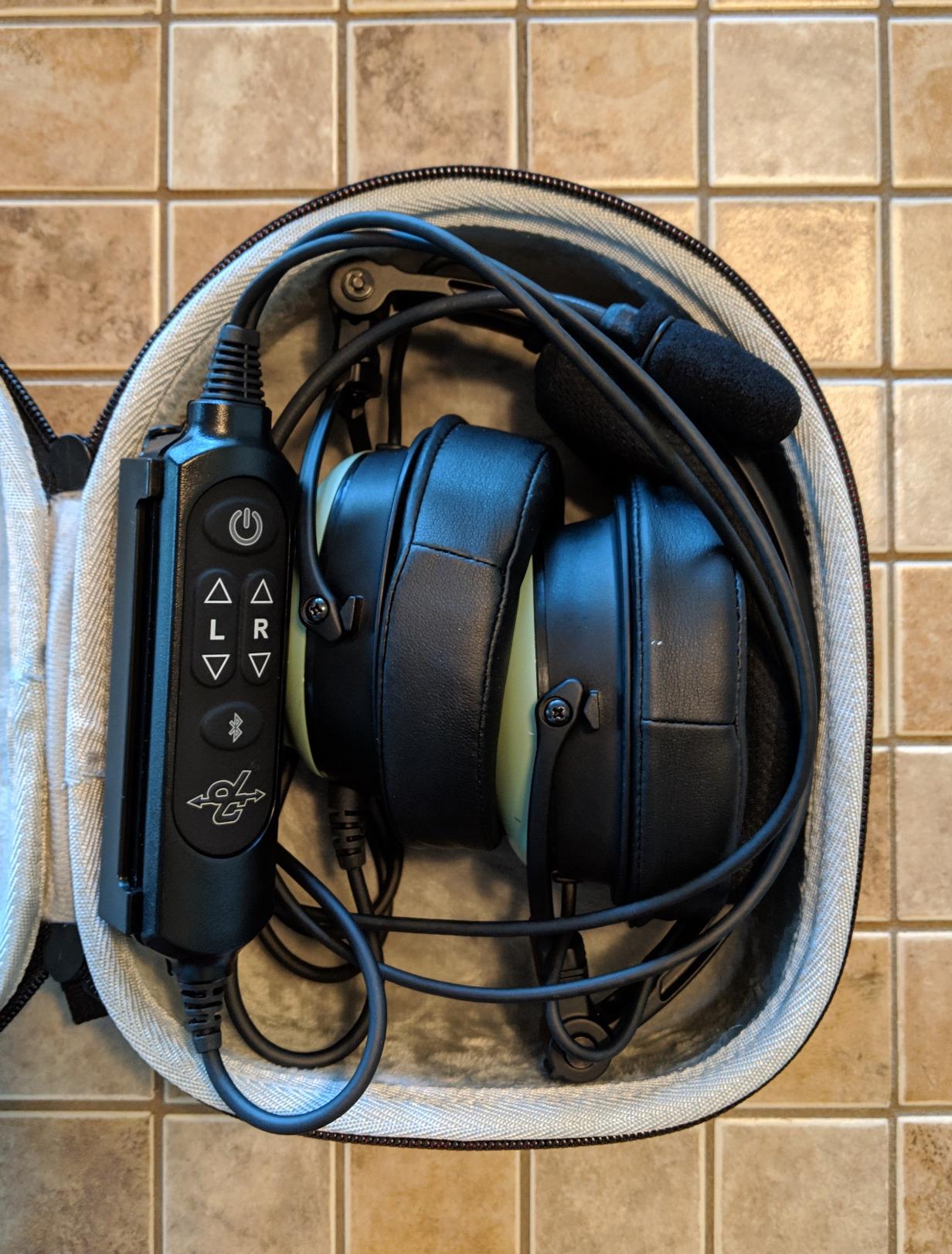
Hybrid noise cancellation is the term David Clark uses, and it means the environmental seal of the earcup working together with active reduction. Over-ear cushions with an adjustable aluminium headband give it more passive capability than an in-ear design and comparable capability to a wired ANR unit.
Aluminium construction is a real quality difference. At 4.6 stars across 359 reviews, reviewers repeatedly credit the build feel alongside the David Clark name.

Who the DC ONE-X suits
It suits pilots flying newer panels with Bluetooth panel support, and anyone who has a history of cable problems in small aircraft. The 10 metre Bluetooth range is enough for most GA cockpits.
It is also attractive for pilots who want the freedom to move around the aircraft without a cord limiting them.
Where the DC ONE-X falls short
The stated battery charge time is 50 hours, and battery dependence is the recurring reservation in reviews. A cordless headset with a flat battery is a headset you cannot use, which is the opposite of the passive fallback every wired model offers.
It also sits above wired alternatives with similar quieting, and the cordless function depends entirely on your aircraft panel supporting it.
10. Faro G2 ANR – the affordable active noise reduction pick
Faro G2 ANR (Active Noise Reduction) Premium Pilot Aviation Headset with Mp3 Input – Black
Up to 52 dB with active compression
1.3 pound weight
MP3 and aux input
3 year warranty
Pros
- Passive over-ear sealing plus ANR performs well in loud piston aircraft
- Independent volume control for each ear
- MP3 aux input is useful on long solo flights
- Three year replacement warranty with responsive service
- Clear electret microphone for radio communication
Cons
- Sound quality described as tinny with limited high-frequency response
- Microphone sensitivity is low and needs a loud voice or intercom squelch adjustment
- Low in-ear volume forces the intercom up for the whole panel
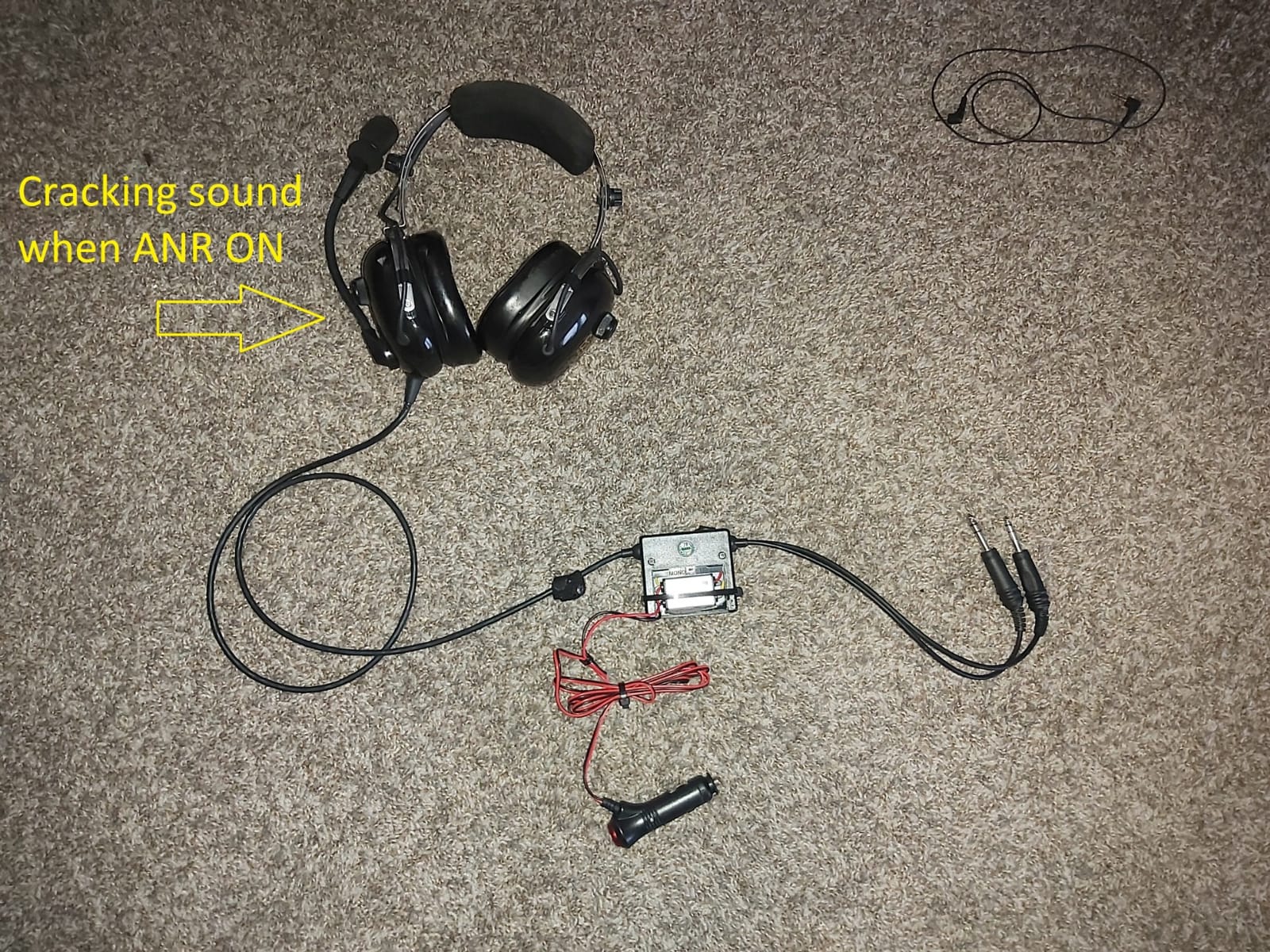
- ANR can pop when the cups are not fully sealed
The Faro G2 ANR is the reason so many instructors recommend Faro. It puts active noise cancellation in a price bracket that a student or a part-time instructor can justify, and pilot forum recommendations single it out as meeting a mid-range budget with comfort the reviewer did not expect at that level.
Active noise compression combined with the Pleather over-ear seal is what makes it work in loud piston aircraft. That combination is exactly the case where a purely passive headset leaves you turning the intercom up, and the over-ear seal is what gives the active electronics something to work against.
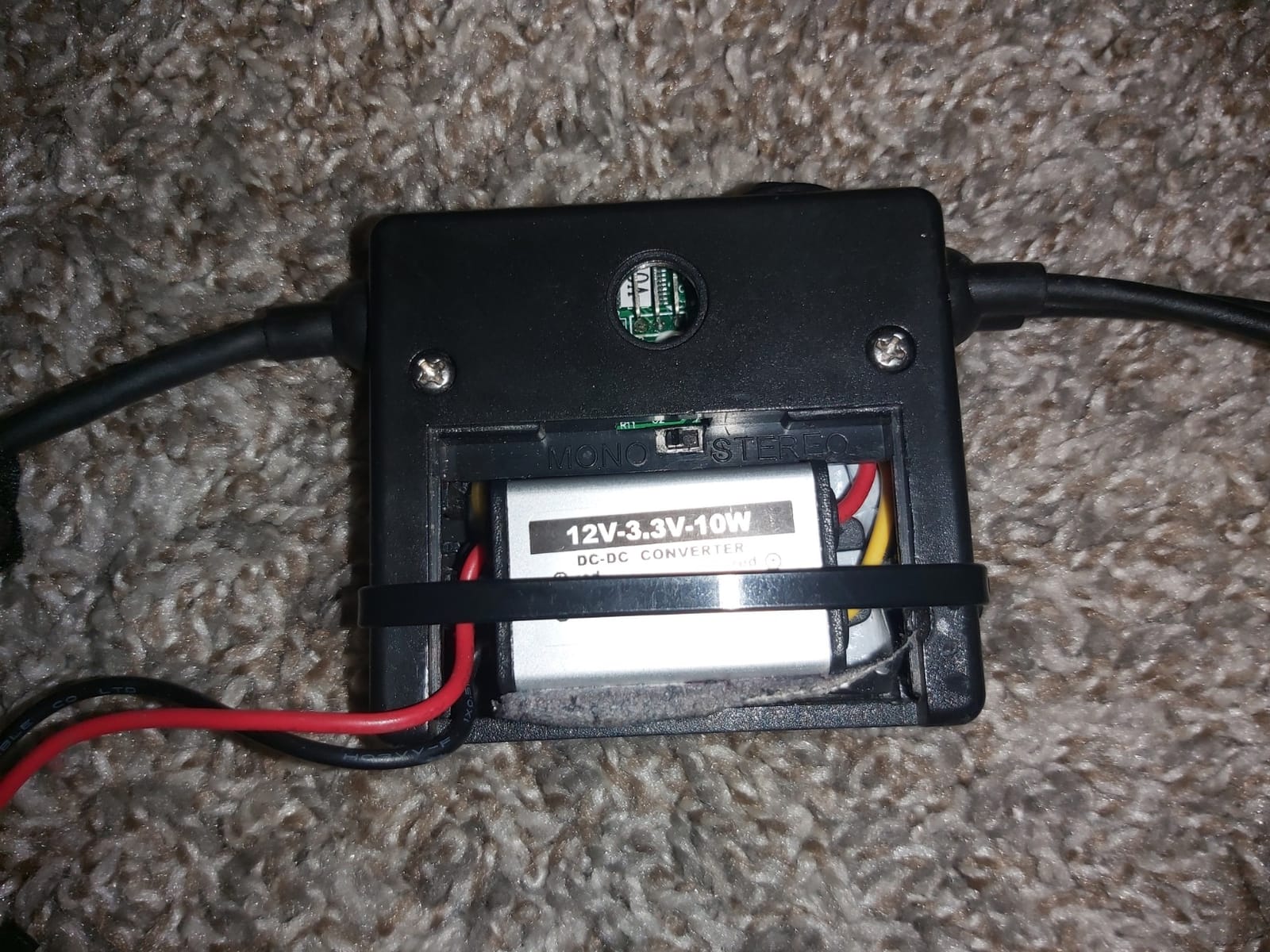
The three year commercial-grade replacement warranty with a Pilot Care network is unusual at this level, and reviewers specifically mention Faro service as responsive. For a headset you will keep for years, that is worth more than an extra feature.
Independent volume control on each ear and the MP3 aux input round out a feature set that would be generous on a far more expensive unit.
Who the Faro G2 ANR suits
It suits instructors and students who want active quieting without moving into the premium tier, and pilots flying older, noisier piston aircraft where the over-ear seal plus ANR combination earns its keep.
The 3 year replacement warranty also makes it a low-risk purchase for a flight school outfitting several units.
Where the Faro G2 ANR falls short
Audio quality is the honest weakness. Reviewers describe the sound as tinny with limited high-frequency response, which is a real cost of the price bracket and most noticeable on music and on high-frequency radio traffic.
Low microphone sensitivity and low in-ear volume are the two complaints that come up most. If your intercom is set conservatively, you may need to push your own voice or ask for a squelch adjustment, and turning the panel intercom up affects everyone else in the aircraft.
11. Rugged. Air RA900 – low clamping force for all-day instruction
Rugged. Air RA900 Aviation Headset for Flight Instructors & Private Pilots
Passive 24 dB NRR
21.2 oz with low clamping force
Detachable cable
Mono and stereo switch on the cable
Pros
- Low clamping force fit some reviewers rate on par with David Clark
- Detachable cable and mono/stereo switch adapt across aircraft
- Auxiliary 3.5mm jack for music and phone audio
- Gel ear seals and thick head pad suit all-day wear
- Custom-fit headset bag included
Cons
- Passive reduction is modest and lets through significant engine noise
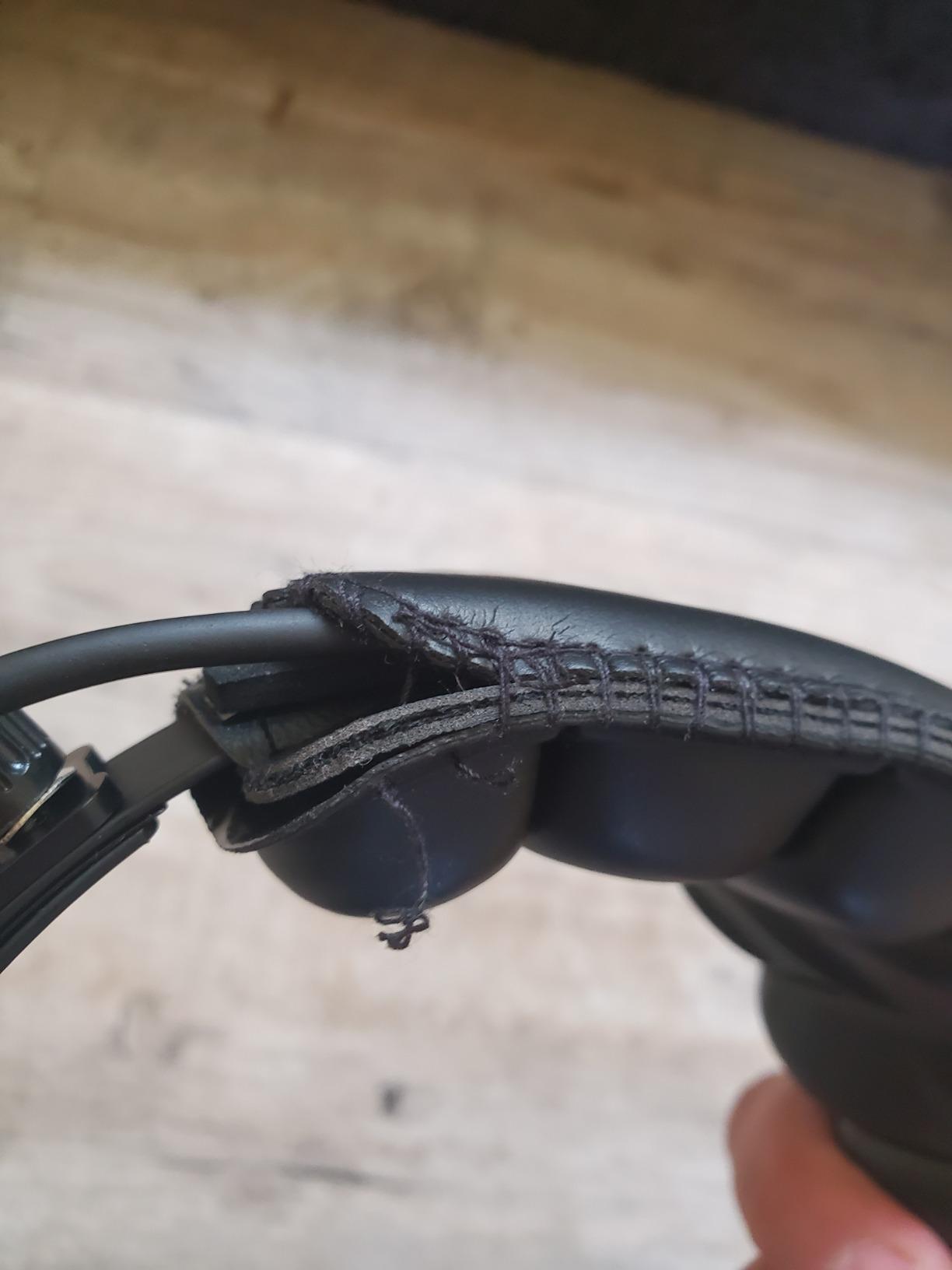
- Ear cushions reported to pop off during normal use
- Heavier than the RA200 at 21.2 oz
- Fit can be snug out of the box before the headband is flexed
The RA900 is the headset we would put on an instructor who wears it five hours a day. The design brief is written into the weight: 21.2 ounces with explicitly low clamping force, spread across a deluxe extra thick head pad and ultra plush silicone gel ear seals.
Reviewers who compare it directly put its sealing and comfort on a par with more expensive David Clark units, and the custom-fit adjustable headband is the piece that makes the low clamp achievable across a wide range of head sizes.
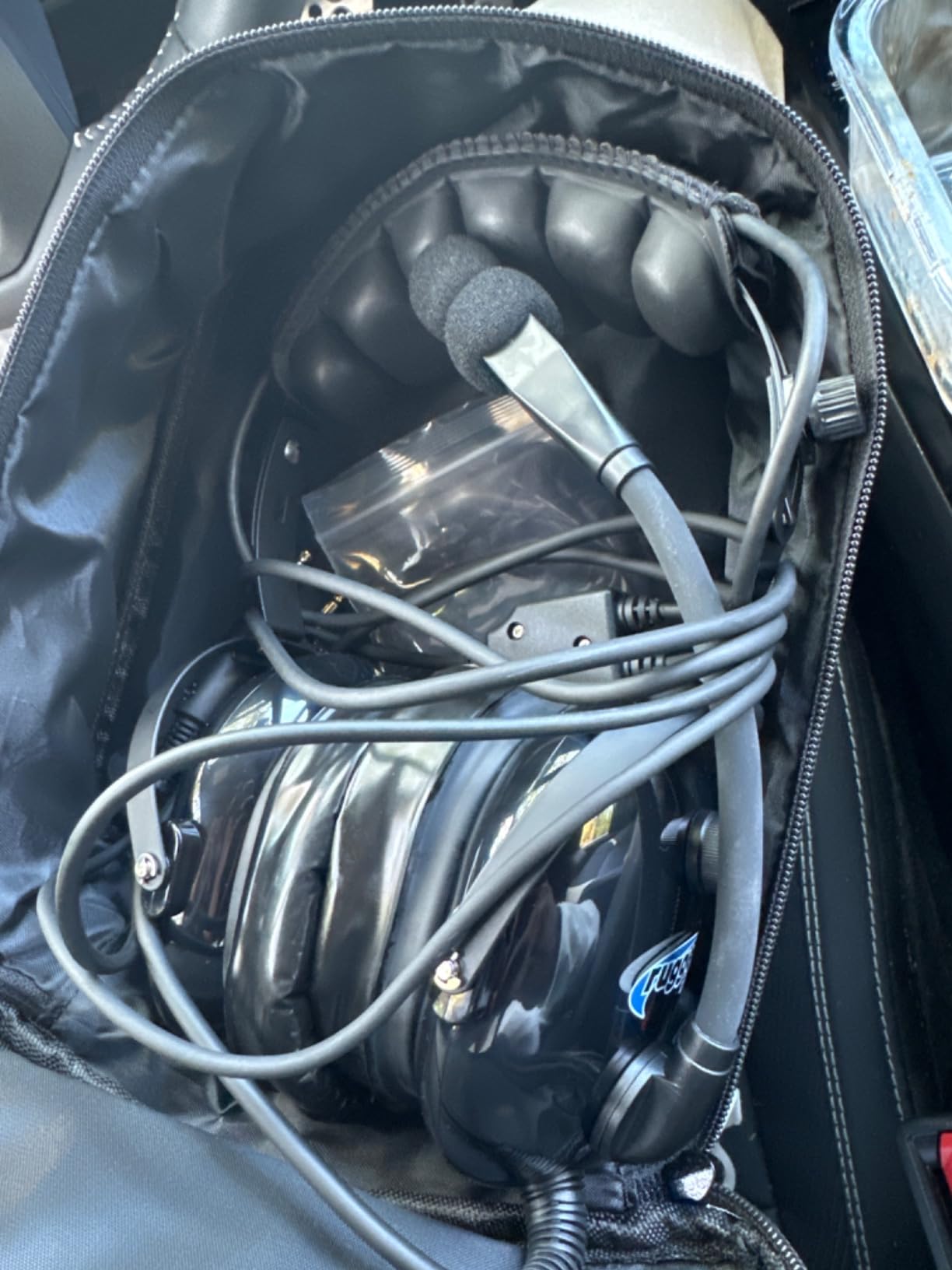
The detachable cable is the feature that gets overlooked and then relied on. A cable that unscrews from the headset can be replaced in seconds when it chafes, which on wired aviation headsets is the single most common failure after the ear seals.
The mono and stereo switch sits on the cable, so you can move one headset between aircraft with different intercom outputs without any adapter, and the 3.5mm jack handles music and phone audio.
Who the RA900 suits
It suits flight instructors, charter pilots and anyone with a full day of headset time. Low clamping force plus gel seals is the combination that survives that schedule, and several reviewers rate the comfort above headsets costing considerably more.
Small-headed pilots should notice this one. A headband designed around low clamping force is the specific answer to the pressure-below-the-ear complaint that dominates pilot forums.
Where the RA900 falls short
Passive reduction at 24 dB is modest against a real engine, and this is the headset where that limitation is most obvious. It is a comfort-first design, not a quieting-first design.
Some users report the ear cushions popping off during normal use, and it is heavier than the RA200 at 21.2 ounces. The fit also runs snug out of the box until you flex the headband.
12. AIRVOICE Pilot Headset – spare headset and first lesson value
AIRVOICE Pilot Headset, PNR Aviation Headset for Flight School Student
Passive up to 25 dB
GA dual plugs
Artificial leather and silicone gel earpads
0.98 kg weight
Pros
- Capable passive noise reduction for a budget price
- Clear electret microphone that instructors report sounds clean
- Artificial leather and silicone gel earpads are comfortable
- Carrying case
- adjustment wrench and windproof mic cover included
- Lightweight neodymium speaker delivers good call clarity
Cons
- ATC audio can be hard to hear at times
- Not the lightest headset available
- Auxiliary 3.5mm jack carries audio only
- Only a one year manufacturer warranty
The AIRVOICE is the most straightforward entry headset here, and at 4.5 stars across 124 reviews it punches above what a first purchase usually does. Reviewers include pilots with decades of experience who say it is more capable than its price suggests.
Its highest passive figure in this roundup, up to 25 dB, comes from a combination of gel earpads and rubber-plastic cushioning designed to disperse clamping force across a wider area of the head rather than concentrating it.
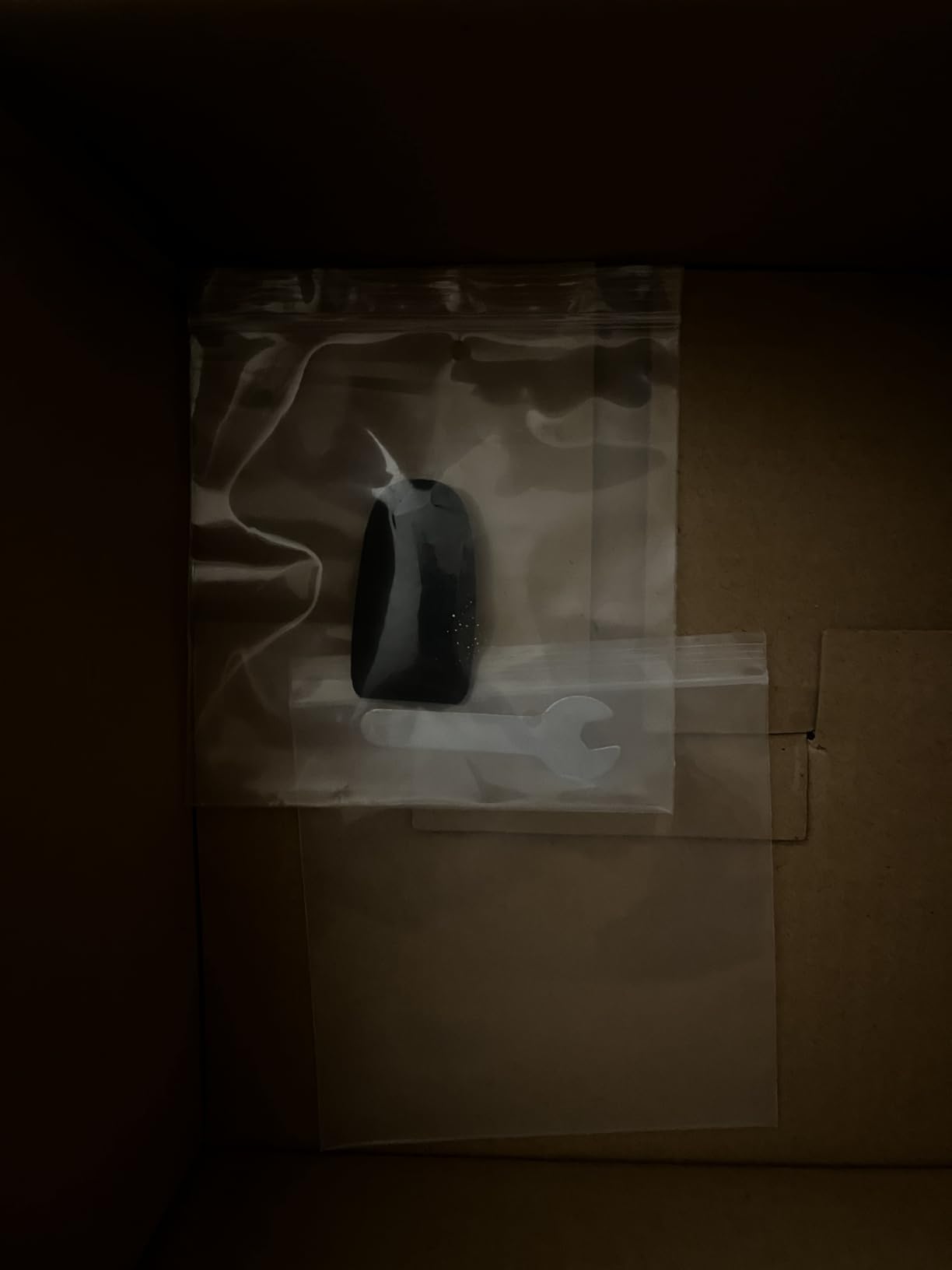
The included accessories are unusual at this level. A carrying case, an adjustment wrench and a windproof microphone cover come in the box, and the 300 degree adjustable electret boom is what instructors comment on as clean to hear.
GA dual plugs as the standard connector mean it works in essentially any light aircraft without an adapter.

Who the AIRVOICE suits
It suits a student on their first few lessons, a pilot who wants a dedicated passenger headset, and anyone who wants a second unit in the bag as a backup. Owners with long careers use it as a trainer and spare rather than a long-range headset.
It is also a reasonable dedicated unit for an instructor who wants something that can take being handed around without risk.
Where the AIRVOICE falls short
ATC audio being hard to hear is the most consistent complaint, and that is a safety-relevant weakness rather than a minor one. If you fly in busy airspace, test it in a busy pattern before committing to longer flights.
It is not the lightest option, the auxiliary jack carries audio only rather than phone calls, and the one year warranty is the second shortest in this roundup.
What Headset Do Most Airline Pilots Use?
Most airline pilots use whatever their operator issues, and the two families you will see in the left seat are the Bose ProFlight Series 2 and the Lightspeed XLR. Both are panel-connected or wireless units built for pressurised turbine aircraft rather than general aviation.
The ProFlight Series 2 wins on weight, with no clamping force at all and digital active noise cancellation. The XLR is the wireless alternative that many carriers standardised on instead, and it covers a similar weight class with a circumaural format.
One caution for general aviation pilots reading this: an airline-issue headset is not automatically the best choice for your aircraft. They are tuned for turbine cabin noise, and in a piston single the in-ear format in particular gives up passive attenuation that a David Clark or Rugged. Air seat would give you.
ANR vs PNR: Which One Do You Actually Need?
Passive noise reduction is entirely mechanical. The ear cup forms a physical seal around your ear and blocks sound. Active noise reduction adds microphones inside the cup that sample low-frequency noise and generate an inverted anti-noise signal to cancel it.
The distinction that matters is frequency. Engine rumble and propeller noise sit at the low end, where active cancellation does the heavy lifting. Higher-frequency cockpit noise, wind and airflow are handled by the physical cup, which is why good ANR headsets use both.
Now the part no competitor covers: hearing conservation. Pilot hearing loss is a cumulative occupational exposure problem, not a single-event one, and the mechanism that drives it is turning the intercom volume up to compete with engine noise. Every dB of quieting you remove lets you run the intercom lower, which is the actual protective mechanism. That is the honest argument for ANR on long flights.
Which brings us to the question instructors get asked constantly, and it is a good one: what happens when the batteries die? The answer is that the passive seal is still there. Every headset in this roundup protects your hearing with the electronics off, and the active layer only improves on that floor.
So the practical buying rule is simple. Treat the passive attenuation rating as your floor, because that is what you have when power fails, and treat ANR as the improvement layer on top. A headset with 24 dB of passive NRR and working batteries is a safer choice than a headset with good electronics and a poor seal.
Duration is the deciding variable in practice. A forty-five minute lesson in a quiet aircraft does not need ANR. A six-hour cross-country or a night flight does. If your flying is mostly local and short, a passive headset is not a compromise, it is the correct answer.
Aviation Headset Buying Guide: Connectors, Ear Seals, Fit and Batteries
Match the connector to your aircraft before anything else
Get this wrong and the headset is useless regardless of how good it is. Most light aircraft use dual GA plugs, which are two 3.5mm plugs, one for the microphone and one for the headphones. Confirm that with your aircraft first because the products in this roundup are listed with their connector types.
Helicopter operations generally use the military U-174 connector, which is physically incompatible with a dual GA plug and needs purpose-built units. Panel-powered systems use a 6-pin LEMO connector, and those are what draw power from the aircraft instead of batteries.
Wireless and cordless models add a second layer. A cordless headset needs panel Bluetooth support to work at all, and a Bluetooth phone connection is unrelated to the aircraft intercom. Those are separate things that pilots frequently conflate.
Understand the three ear seal types
Gel seals are the most comfortable for long wear and the best-performing passive option, and they are replaceable on good headsets. Foam seals are the cheapest and the least comfortable over hours, and they are the main reason passive noise performance disappoints out of the box.
Foam ear covers sit over the outside of a headset and are a personal comfort item rather than a performance upgrade. Undercut seals, which you see on the David Clark H10-13.4, reduce pressure on the ear canal specifically, which is where headaches originate.
Fit for a small head is a real purchasing criterion
Clamping force is the pressure the headband applies, and most headsets are designed around a medium-to-large head. Pilots with smaller heads report the band pressing below the ear, which is painful and, in one forum account, physically nauseating. This is the most cited comfort failure in the category.
Prioritise low clamping force and a wide adjustment range over brand name. In this roundup, the RA900 is designed around low clamping force, the A30 uses 20 percent less clamping force than the previous generation, and the ProFlight Series 2 has no clamping force at all because it is in-ear.
Try before you commit where you can, and flex a new headband before a long flight. Fit is genuinely individual, and the same model that solves one pilot’s problem causes another’s ear pain.
Bluetooth and audio prioritisation
Bluetooth in a cockpit is only useful with prioritisation, which means the headset automatically mutes or mixes your connected audio during intercom transmissions. The Zulu 3, Sierra, A30 and Faro G2 ANR all implement this. Without it, a music track can mask a radio call, which is unacceptable.
The Zulu 3 and Sierra also support app-based communication capture, which instructors use to review transmissions later. That is a genuine professional benefit rather than a novelty.
Warranty, serviceability and owning it long term
Look at the warranty length as a proxy for how long the manufacturer expects the headset to last. The RA200 and Zulu 3 carry 7 year terms, the KA-1 and H10-13.4 carry 5 years, the Faro G2 ANR carries 3, and the P1 and AIRVOICE carry only 1.
More important is serviceability. Can the ear seals, cushions, cord and microphone be replaced separately? On the headsets here the answer is mostly yes, and a replaceable head pad on the P1 or a detachable cable on the RA900 extends the life of an otherwise fine headset considerably.
If you are buying used, check the ear seals for compression and cracking first, since they are consumable and the hardest to judge from a photo. Then look at the cable at the strain relief, the microphone capsule, and whether the volume controls on each ear still move smoothly. Countersunk screws and stripped hinge tension are signs of a headset that has been dropped or opened, and ear seals alone are a reasonable thing to replace.
On renting versus buying, a rental headset costs a small daily amount but fits nobody in particular, and the first impression most students get of the whole category comes from one. If you are taking lessons seriously, owning something that fits you is worth the difference, and the entry-level options in this roundup are inexpensive enough that there is no reason to keep renting.
Frequently Asked Questions
What headset do most airline pilots use?
Most airline pilots use the headset their operator issues, and the two common families are the Bose ProFlight Series 2 and the Lightspeed XLR. Both are built for pressurised turbine aircraft, with the ProFlight winning on weight and the XLR offering a wireless circumaural alternative. These airline-issue units are tuned for turbine cabin noise and give up some passive attenuation, so they are not automatically the right choice in a piston single.
What is the best headset for pilots?
The best overall aviation headset in this roundup is the Rugged. Air RA200, a passive headset rated at 24 dB NRR that weighs 16 ounces and carries a 7 year aviation warranty. It is the most proven option here, with 4.6 stars across 2730 reviews. Pilots who fly long legs and want active noise cancellation should step up to the Bose A30 or LIGHTSPEED Zulu 3 instead.
What is the difference between ANR and PNR aviation headsets?
PNR, or passive noise reduction, works purely mechanically: the ear cup forms a physical seal that blocks sound, and it needs no power. ANR, or active noise reduction, adds microphones inside the cup that generate an inverted signal to cancel low-frequency noise such as engine rumble. Every headset still protects your hearing passively when batteries die, so treat the passive rating as your floor and ANR as an improvement layer.
What plug does my aircraft need for a headset?
Most light aircraft use dual GA plugs, which are two 3.5mm connectors for the microphone and headphones. Helicopters typically use a military U-174 connector, which requires a purpose-built headset. Panel-powered aircraft use a 6-pin LEMO connector that draws power from the aircraft instead of batteries. Cordless and wireless headsets additionally need panel Bluetooth support to function at all.
How long do aviation headset batteries last?
It depends on the model. The Bose ProFlight Series 2 is rated at an average of 45 hours of battery life, and the Faro G2 ANR at approximately 30 hours. Headsets such as the Rugged. Air RA200, LIGHTSPEED Zulu 3 and Bose A30 run on AA cells for their active electronics. Whatever the rating, carry spares, because the passive seal keeps working when the batteries die but the active cancellation does not.
The Bottom Line on the Best Aviation Headsets
Buy the Rugged. Air RA200 if you are a student or fly short local trips. It is the most proven passive headset in this roundup, the lightest of the full-size options, and the least expensive place to stop renting.
Step up to the Bose A30 or LIGHTSPEED Zulu 3 when your flying gets long enough that engine noise starts driving your intercom volume, and choose the Zulu 3 if you want the features and the app support per dollar spent. The David Clark H10-13.4 remains the comfort benchmark if comfort is the thing you refuse to compromise on.
For our wider cockpit kit, the survey side of the best aviation handheld GPS devices for surveying covers a different flying niche. For everything else, the fastest path to a good decision is confirming your connector, then trying the headset on and paying attention to hour five rather than hour one.