
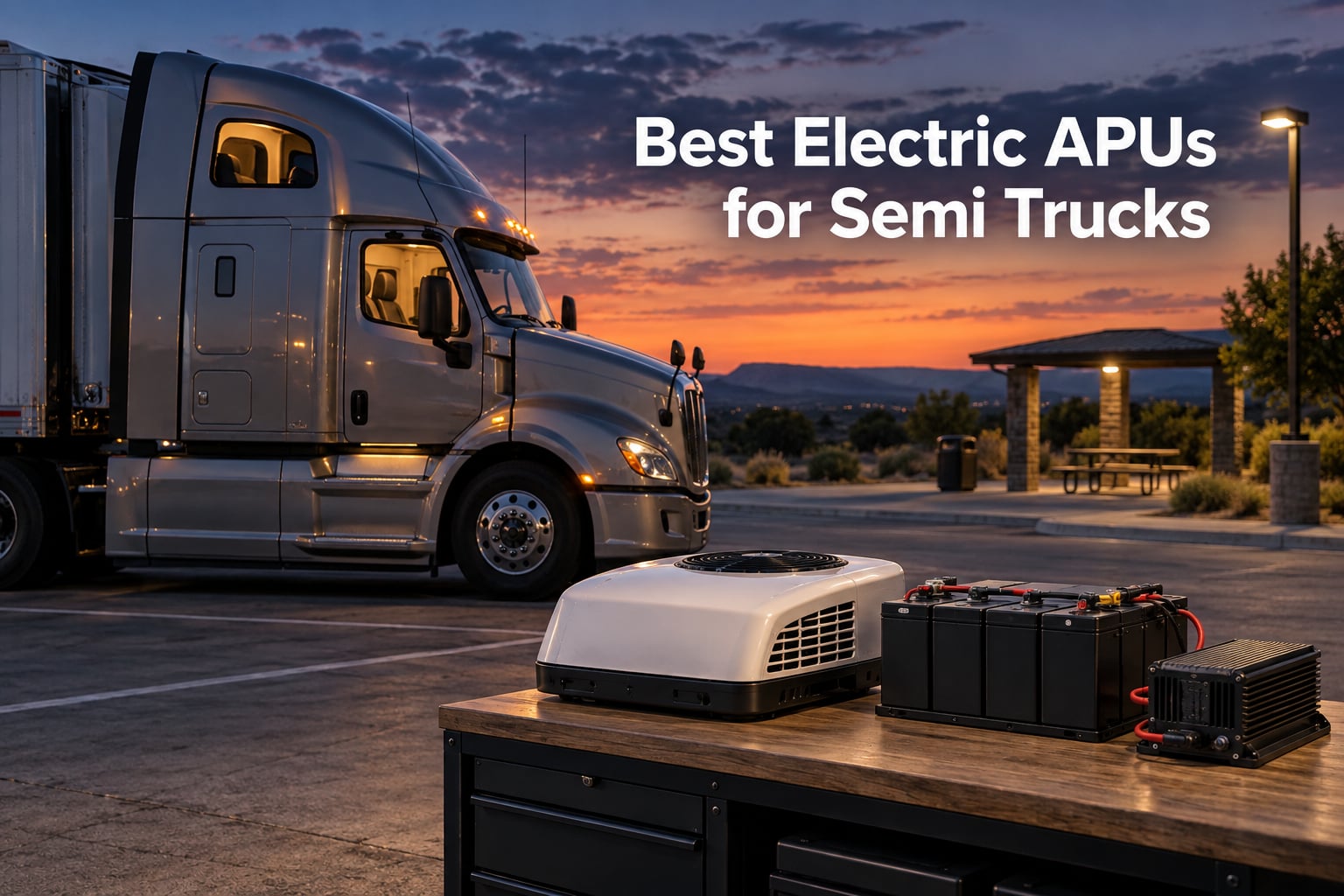
The search for the best electric APU for semi trucks usually starts with a question that is easier to ask than to answer: where does the money actually go? A complete electric APU is four things working together, and most of what gets sold under that name is only one of them. The parked cooling unit is the part you can buy off the shelf, spec out and compare, so that is where most of our attention went.
We spent weeks working through the full range of 12V and 24V DC rooftop and split air conditioning units built for trucks, campers and heavy equipment. Ten of them made the cut, ordered by how well the published specifications hold up against what owners report after living with the hardware. The short version: a rooftop unit on a 12V lithium bank is the sweet spot for most owner-operators, and everything else depends on whether your sleeper is a true sleeper and how long you park with the engine off.
What no unit in this roundup does by itself is heat a cab in January or jump-start a dead tractor. Those come from the same diesel APU systems the electric build is meant to replace, and pretending otherwise is the fastest way to buy the wrong hardware. We will get into the honest version of that argument after the picks.
While you are reading, it is worth noting that the rest of our truck coverage lives in the same practical gear category. We have tested TPMS sensors for semi trucks and truck shocks with the same owner-operator-first approach, because anything that keeps a rig rolling earns its place.
Table of Contents
Top 3 Picks for the Best Electric APUs for Semi Trucks in 2026
These three earned the top slots because they combine the lowest measured power draw with the most usable field feedback. Our number one pick is the countrymod 10000 BTU rooftop inverter unit, and the two runners-up cover almost as much ground with slightly different strengths.

countrymod 10000 BTU 12V Rooftop Inverter
- 0.3 kWh per hour
- 45-55 dB
- App and remote control
- 2 year warranty

Gidrox RX55 10000 BTU 12V Rooftop Unit
- About 350W average night draw
- 40 dB sleep mode
- Three cooling modes

Aspligo 10000 BTU 12V Dual-Fan Rooftop Unit
- Dual fans add about 70% airflow
- Three brushless motors
- Remote control
Electric APUs for Semi Trucks in 2026: Quick Overview
All ten units below are DC-powered parked cooling systems. Every one of them needs a battery bank, a charger and wiring to become an electric APU, and only one has a factory heating element, so read the table as the cooling half of the build.
| Product | Specifications | Action |
|---|---|---|
| countrymod 10000 BTU 12V Rooftop Inverter |
|
Check Latest Price |
| Gidrox RX55 10000 BTU 12V Rooftop Unit |
|
Check Latest Price |
| Aspligo 10000 BTU 12V Dual-Fan Rooftop Unit |
|
Check Latest Price |
 VEVOR DB23 10000 BTU 12V Truck Mini Split VEVOR DB23 10000 BTU 12V Truck Mini Split |
|
Check Latest Price |
 UAHKPA 13000 BTU 24V Split Unit UAHKPA 13000 BTU 24V Split Unit |
|
Check Latest Price |
 Treeligo 12000 BTU 24V Tower Split Treeligo 12000 BTU 24V Tower Split |
|
Check Latest Price |
 outequip Summit 2 10000 BTU Rooftop Unit outequip Summit 2 10000 BTU Rooftop Unit |
|
Check Latest Price |
 Aspligo 10000 BTU 12V Metal Shell Mini Split Aspligo 10000 BTU 12V Metal Shell Mini Split |
|
Check Latest Price |
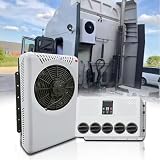 Mieligo 8000 BTU 24V Mini Split Mieligo 8000 BTU 24V Mini Split |
|
Check Latest Price |
 Sunster 12000 BTU 12V Variable Frequency Split Sunster 12000 BTU 12V Variable Frequency Split |
|
Check Latest Price |
1. countrymod 10000 BTU 12V Rooftop Inverter Unit – Best Overall
Countrymod 12V DC RV Air Conditioner 10000 BTU RV AC Unit Low Power Consumption Rooftop RV Air Conditioners with APP Remote for RVs, Camper, Van, Battery Powered
10000 BTU
12V DC
300-900W inverter
0.3 kWh per hour
45-55 dB
2 year warranty
Pros
- Owners report running under 50 amps
- About 60 percent more efficient than the 120V unit it replaced
- Very quiet at roughly 44-55 dB
- Steady temperature control with no short cycling
- Three control paths including an app
Cons
- Install instructions are thin
- Supplied rods are short on arched or thick roofs
- Not ducted so it will not tie into existing ductwork
This is the unit we kept coming back to while working through the list. The inverter compressor ramps between 300 and 900W instead of kicking on and off, and at 0.3 kWh per hour it is the kind of number that decides whether your battery bank survives the night. Owners running it on lithium report pulling under 50 amps, which is the figure that matters when a single bank has to start the truck in the morning too.
It is also among the quietest options here. Owners describe 44 to 55 dB in practice, and a sleeper cab at highway-adjacent rest areas is not a quiet environment to begin with. The horizontal compressor layout lowers the center of gravity, which is a small thing until you are bolting 87 pounds to a roof at a truck stop.
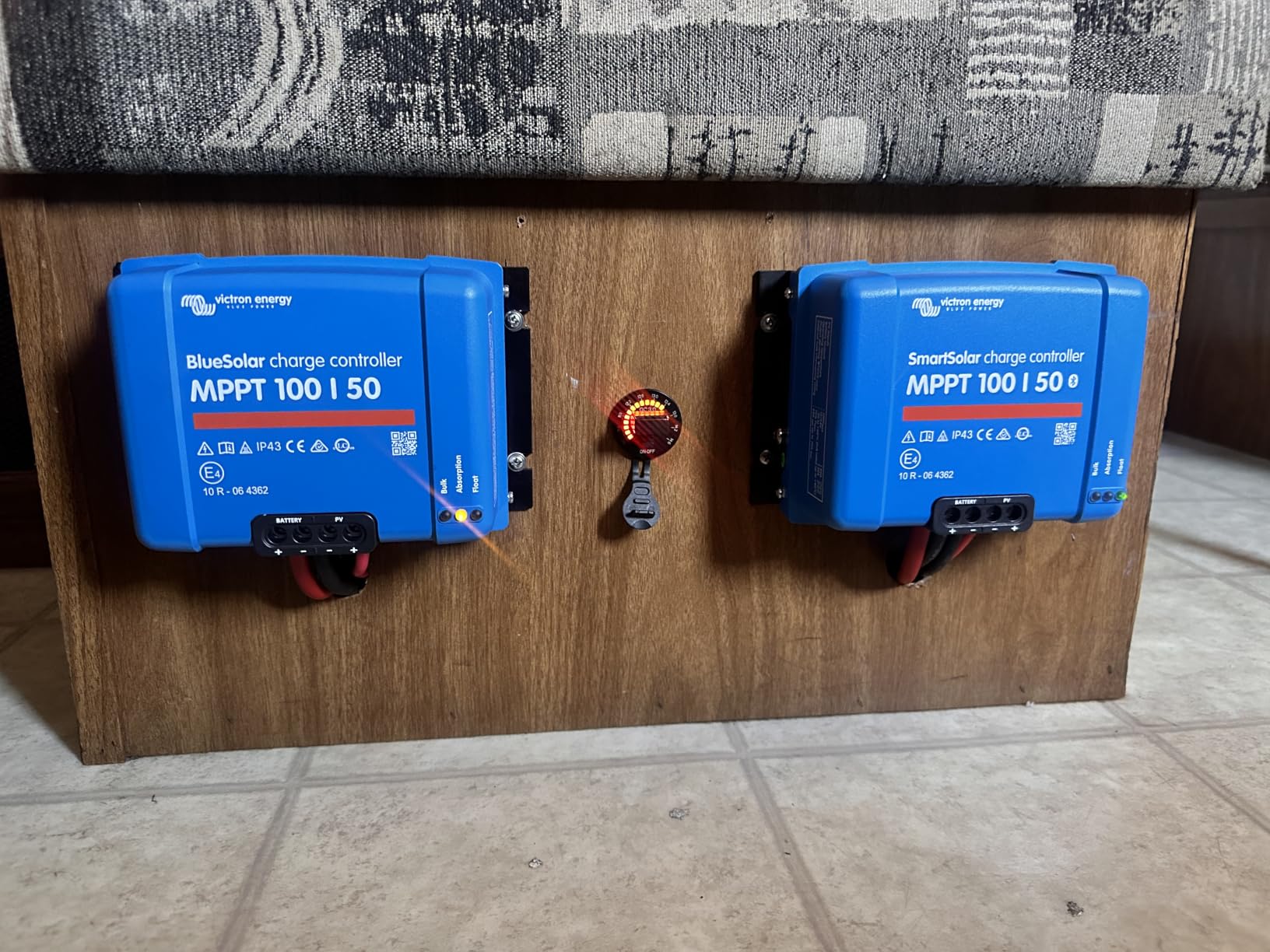
The ductless rooftop format is the reason it installs so cleanly into a standard 14 by 14 inch roof vent. It drops into an opening most sleepers already have, which is a genuine advantage over split systems that need new line sets run through the cab. Control comes from an onboard keypad, an infrared remote and a phone app, so you can set the temperature before you climb in from the catwalk.
Two details decide it for us. First, the reported efficiency gain over a conventional 120V unit, with buyers measuring roughly 60 percent less energy for comparable cooling, means a smaller bank does the same job. Second, the SEER figure and the 1-star BEE rating are different scales from the residential numbers and are not comparable to anything you would see in an RV brochure.
What you gain running this on a 12V lithium bank
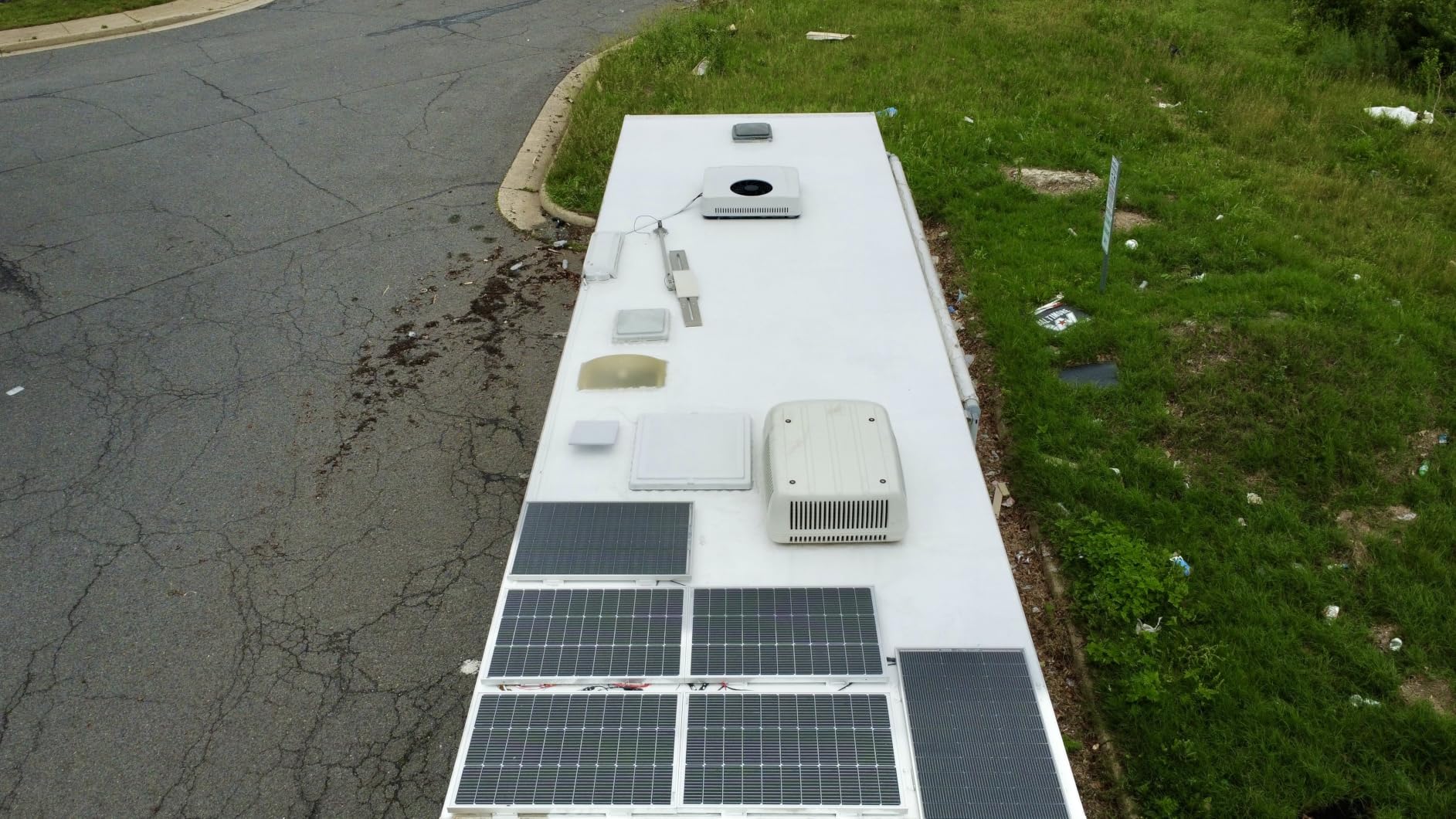
Because it draws under 50 amps, a single 300Ah LiFePO4 bank sized for overnight cooling leaves headroom for the starting reserve. That matters more than the headline runtime figure, because the complaint you will hear most often from electric APU owners on forums is waking up to a truck that will not crank.
The 0.3 kWh per hour consumption is the number to design around. Multiply it by your idle hours and you have a realistic picture of what your bank has to hold, rather than the best-case number on the box.
Where the installation will slow you down
The documentation is the weak point. Owners lean on wiring experience and a QR code video rather than a printed manual, and the included threaded rods are too short for arched roofs or anything over 4 inches thick, so plan on sourcing a longer fastener before the roof is opened.
Because it is ductless, it will not feed an RV with existing ductwork. On a semi sleeper that is rarely an issue, since you are cooling the space rather than distributing air through a duct network.
2. Gidrox RX55 10000 BTU 12V Rooftop Unit – Best Low-Draw Performer
Gidrox 10000 BTU 12V DC RV Air Conditioner – Battery Powered, Low Power Consumption, Ultra Quiet & Fast Cooling Upgraded Rooftop AC Unit with APP Remote for Camper Van and Truck (Cooling Only)
10000 BTU
12V DC
About 350W night draw
40 dB sleep mode
54 lb
2 year warranty
Pros
- Mode-by-mode wattage reported by owners
- Quiet enough for 100 degree afternoons
- Light enough for a one-person install
- Stiff harness routes through ceiling cavities
- App plus remote plus panel control
Cons
- ECO setpoint is locked and changing temperature exits ECO
- No user-adjustable low-voltage cutoff
- One mounting insert can pull out of the housing
The RX55 is the only unit in this roundup where owners have published wattage for each mode rather than a single headline number. Roughly 250W in dehumidify, about 350W in eco, 420W in cooling, 650 to 700W on turbo and 25 to 50W on fan only. That transparency is exactly what you need when you are sizing a bank.
At about 350W average overnight, a 400Ah bank handles a full night, which is the sizing most owner-operators land on anyway. The 40 dB sleep mode with a brushless fan is the quietest claim in the group alongside the outequip unit, and owners report running it through Texas afternoons continuously.
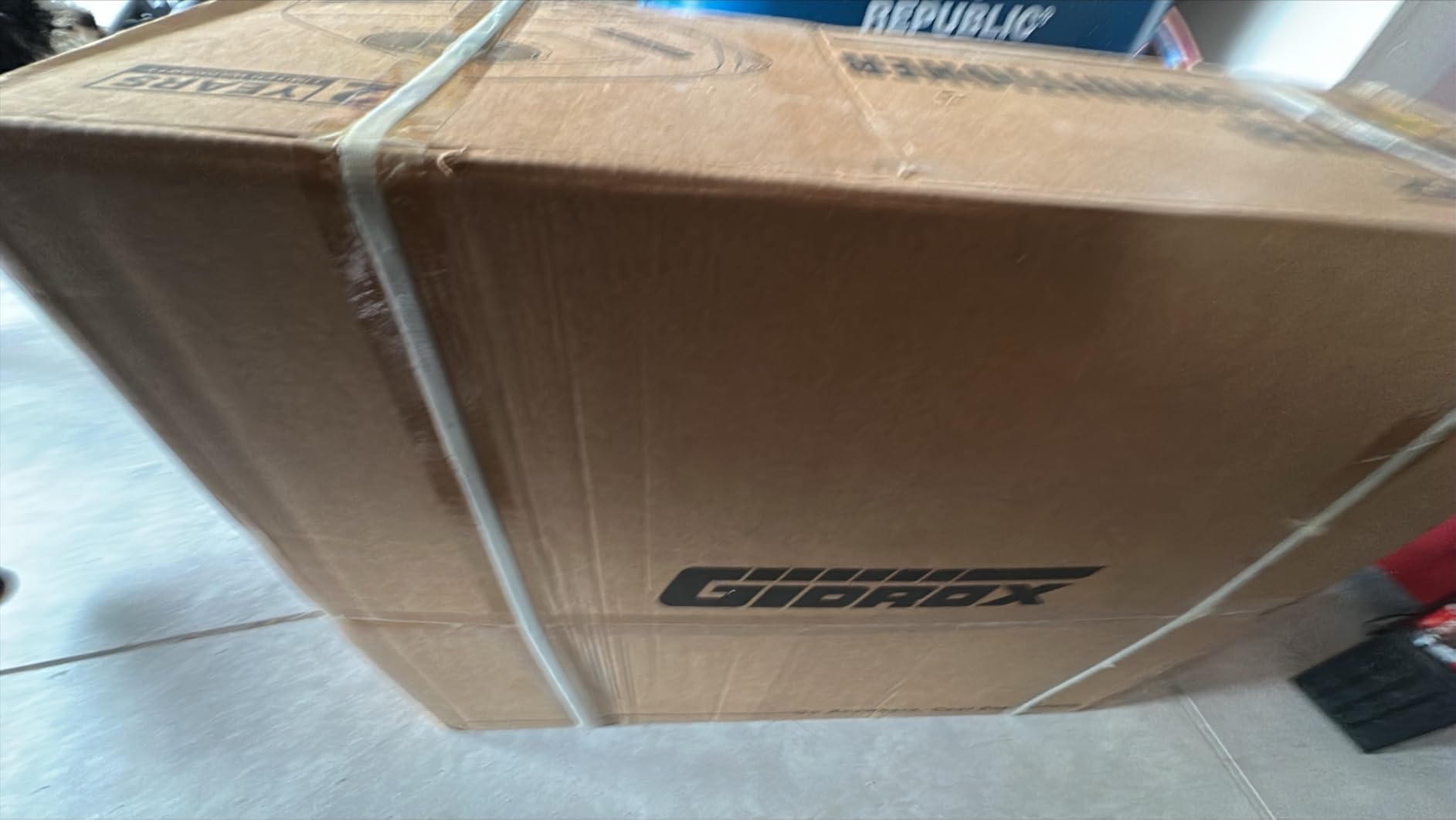
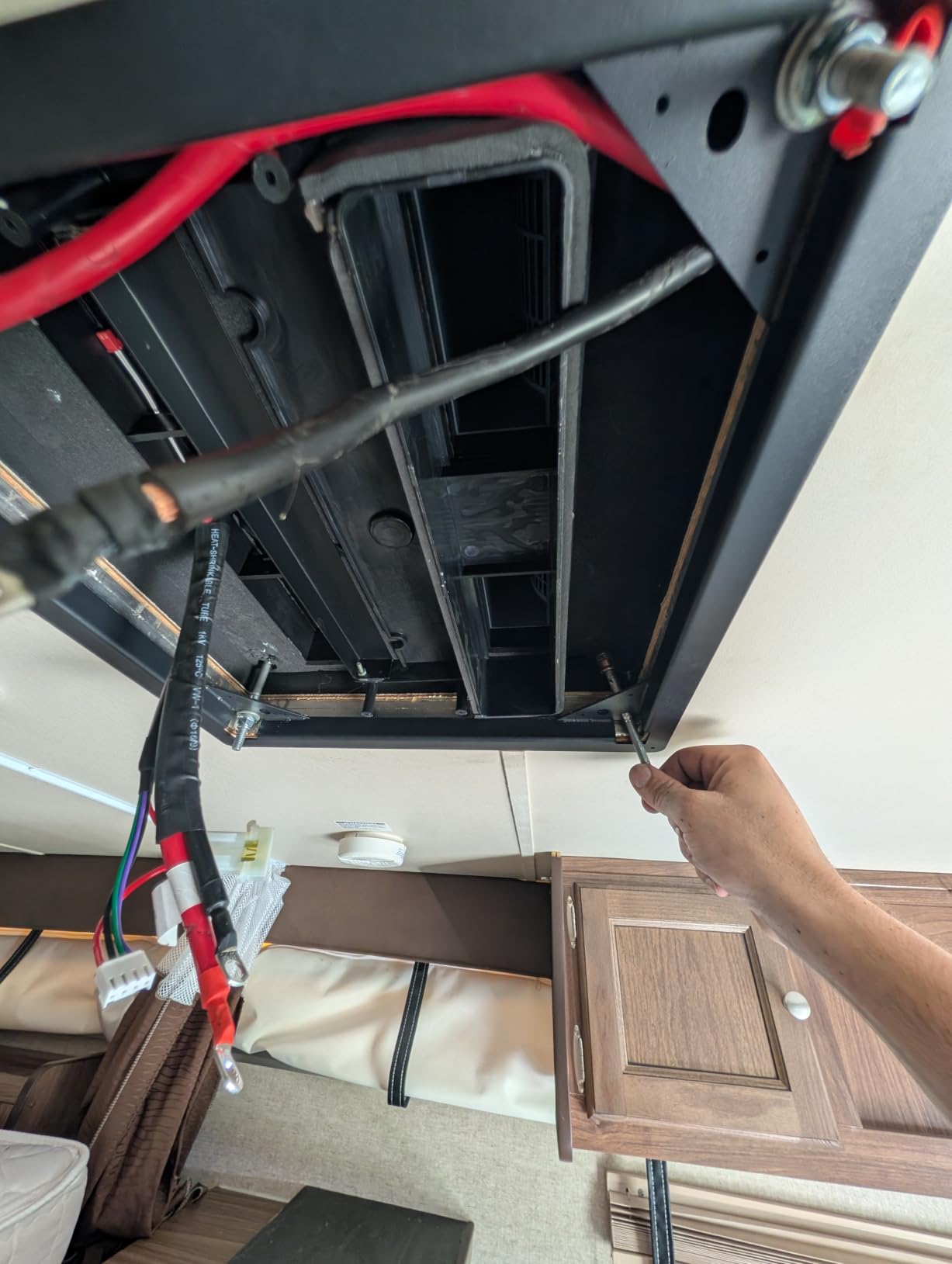
Mounting is a flush rooftop install in the standard 14 by 14 inch cutout with roof thickness between 1.5 and 3.5 inches, and most installers report only minor trimming of the plenum. At a listed 54 pounds it is light enough for a single-person install, and the 19.7 foot power cable means you rarely have to extend the run.
Where the control logic frustrates people is ECO mode. The setpoint is locked, and touching the temperature knocks the unit out of ECO entirely, so you set it once and leave it. There is also no user-adjustable low-voltage cutoff, which means the protection threshold is whatever the manufacturer decided rather than something you can match to your bank.
Why this is the value pick for a first build
The combination of a documented low draw and a two-year warranty is what makes this the sensible first electric APU cooling unit. You are not paying for capacity you cannot use at a rest stop, and the measured numbers let you size the battery confidently instead of guessing from a marketing figure.
It also suits a builder who wants app control and timers without stepping up to a larger, heavier unit. Three control paths and a C/F toggle are more than most cabin-only systems offer.
What to check before you commit
The stripped mounting insert on the roof-side bolt for one unit is a real report, so check the fastener threads after installation and before you trust it on a highway. The manual is also vague on wiring and all-thread mounting, which puts the burden on the installer.
For a large Class A motorhome or a big trailer, 10,000 BTU is marginal. Some owners in that segment plan to run two of these rather than one, which doubles both the bank size and the roof penetrations.
3. Aspligo 10000 BTU 12V Dual-Fan Rooftop Unit – Best for Airflow
Aspligo 12V rv rooftop air conditioner 10000BTU Dual Fan Electric Parking dc air conditioning Fit for Motorhome Camper Van Truck Excavator off-road vehicle SUV Bus New energy
10000 BTU
12V DC
Dual fan airflow boost about 70 percent
50 dB
Three brushless motors
Pros
- Strong blower output for the money
- No headlight dimming when switched on
- Two-wire install in a bed or cab
- Good results in 90 degree heat
- Cooling works against premium units
Cons
- Instructions are close to unusable with no setup videos
- Single side-to-side bracket fights roll bars
- A few buyers saw no visible condensation draining
Airflow is the differentiator here. The dual-fan design adds roughly 70 percent more air movement and about 20 percent more cooling efficiency compared with single-fan rooftop units, and in a sun-heated sleeper that difference shows up as the difference between a cab you can sleep in and one you cannot. The 81 percent five-star share in the reviews reflects that.
Three brushless motors handle the cooling, evaporator fan and condenser fan, and owners report no headlight dimming on switch-on, which tells you the startup current is polite enough not to upset the truck electrical system. At 50 dB it is not the quietest unit here, but it is not the loudest either.
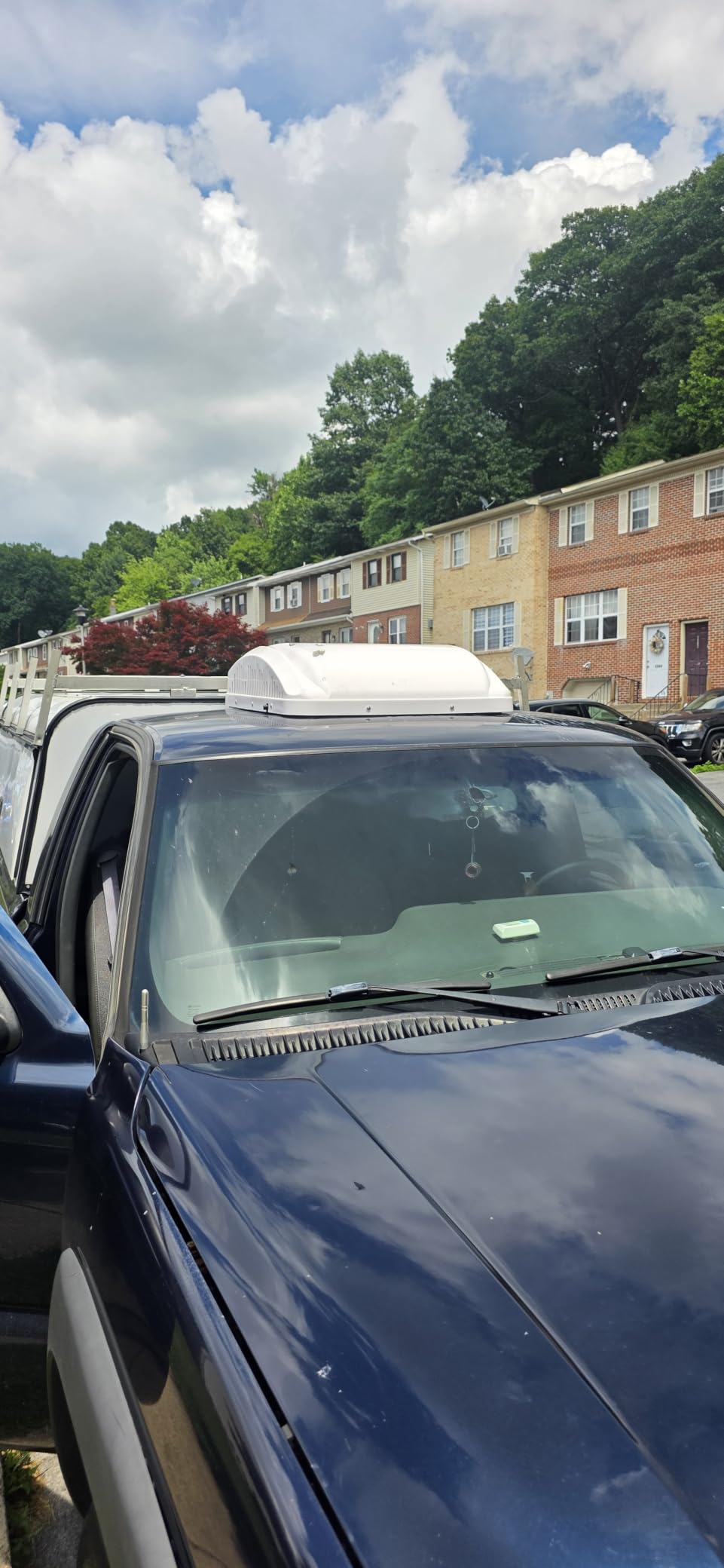
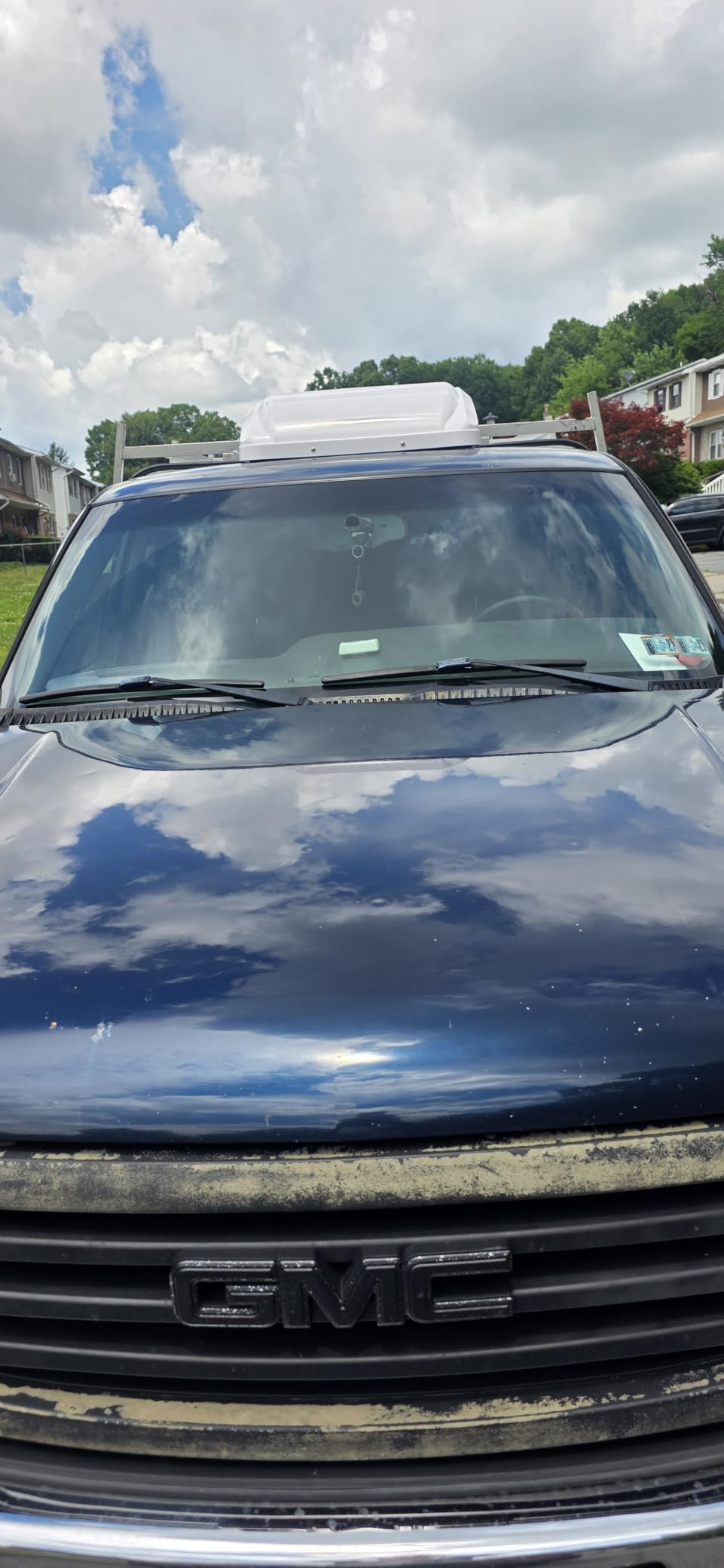
It runs 30 to 66 amps at 360 to 800W, so it is a heavier draw than the two inverter rooftop units ahead of it. If your bank is sized around a low average, this one needs more headroom, and the non-inverter scroll compressor cycles rather than modulating.
The install is where most of the work sits. Owners replacing premium 12V rooftop units report pushing out notably cooler air for a fraction of the hardware cost, but almost all of them mention the same problem: the instructions are among the worst they have worked from, and there are no brand-specific setup videos to fall back on.
When the extra airflow is worth it
Pick this one for hot desert routes, older sleepers with poor insulation, or a tractor that spends its life parked in direct sun with a dark interior. The dual-fan airflow boost and the three-way swing outlet move air through a space that other units struggle to bring down to a sleepable temperature.
It also suits equipment work. The listing covers excavators, cranes, tractors and box trucks, and the same airflow argument applies to a cab with no insulation at all.
Where owners run into friction
The single side-to-side mounting bracket sits awkwardly against roll bars, which is a common fixture on a semi or a flatbed work truck. The metal shell can also be hard to seal against an irregular roof opening, and a few buyers reported no visible condensation draining, which raises questions about the drain path on a unit you plan to run overnight.
Budget extra time for this install. Without usable instructions, you are relying on the experience of whoever is doing the drilling.
4. VEVOR DB23 10000 BTU 12V Truck Mini Split – Best for Semi Truck Cabs
VEVOR Truck Air Conditioner, 12V 10000 BTU Mini Split AC Unit, 400 m³/h Airflow Cab Air Conditioner, Fast Cooling Low Noise for Semi Truck, Camper, Construction Vehicle, Crane, Tractor, Excavator
10000 BTU
12V DC
400 cubic meters per hour airflow
Inverter scroll compressor
65 dB
Pros
- Arrives pre-charged so no vacuum and charge step
- Airflow designed for a semi truck cab
- ABS housing rated for rough road vibration
- Variable frequency compressor trims steady-state draw
- Split format keeps the cab interior clear
Cons
- About 65 dB is louder than the other units in this roundup
- Only 11 ratings so durability is largely unverified
- Some early failures appear in the rating distribution
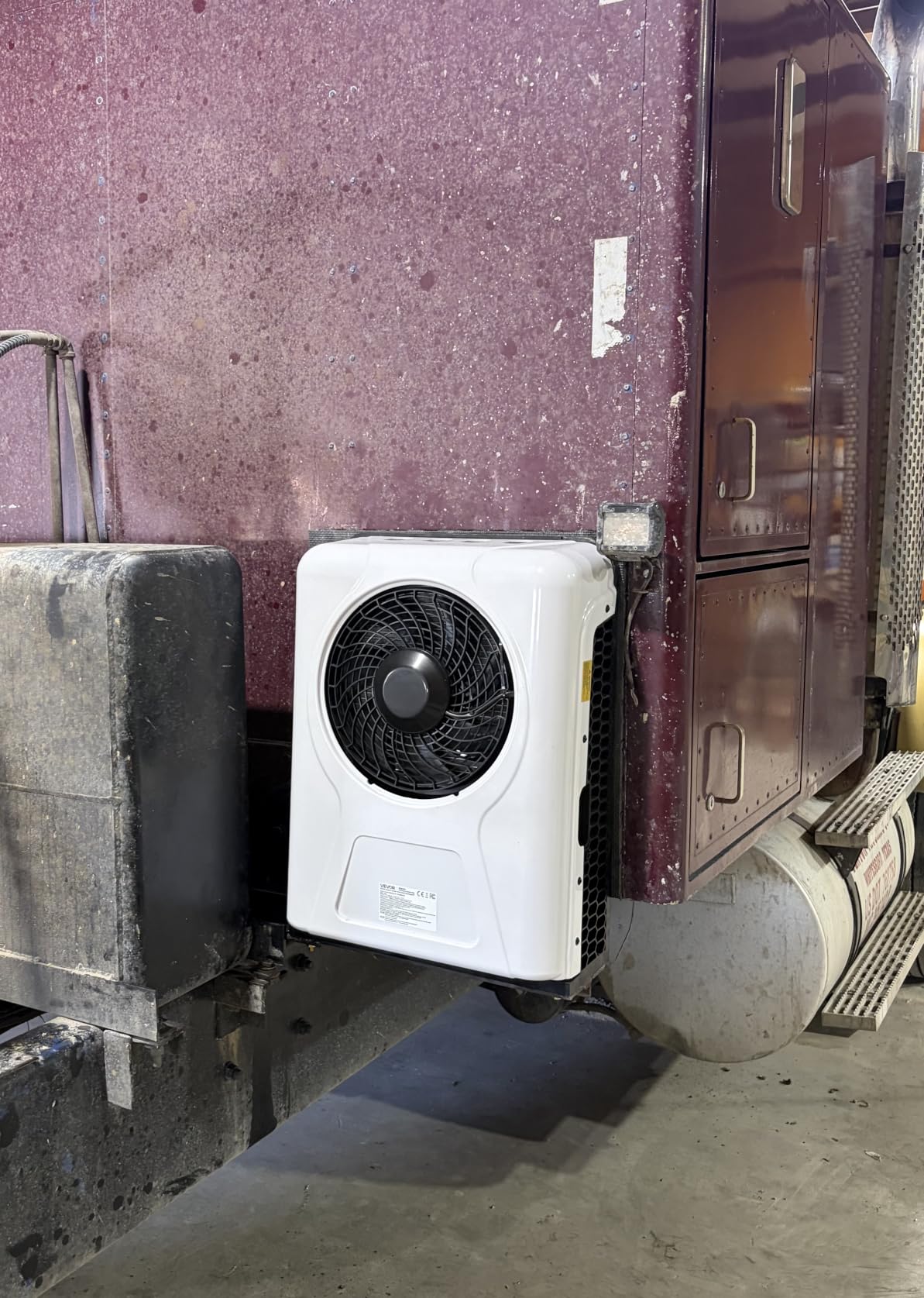
The design target here is a semi cab rather than an RV living space, and that shows up in the airflow. The 400 cubic meters per hour figure is the number to compare against everything else on this list, and owners report it pulling a cab heated to 50 degrees Celsius down into a comfortable range quickly. A variable-frequency scroll compressor trims the draw once the temperature settles.
The other thing that separates it is the refrigerant. It arrives pre-charged, which removes the vacuum-and-charge step that trips up a surprising share of owners installing cheaper split systems. For anyone who is not chasing a manifold gauge and vacuum pump across the country, that removes a real source of install-day frustration.
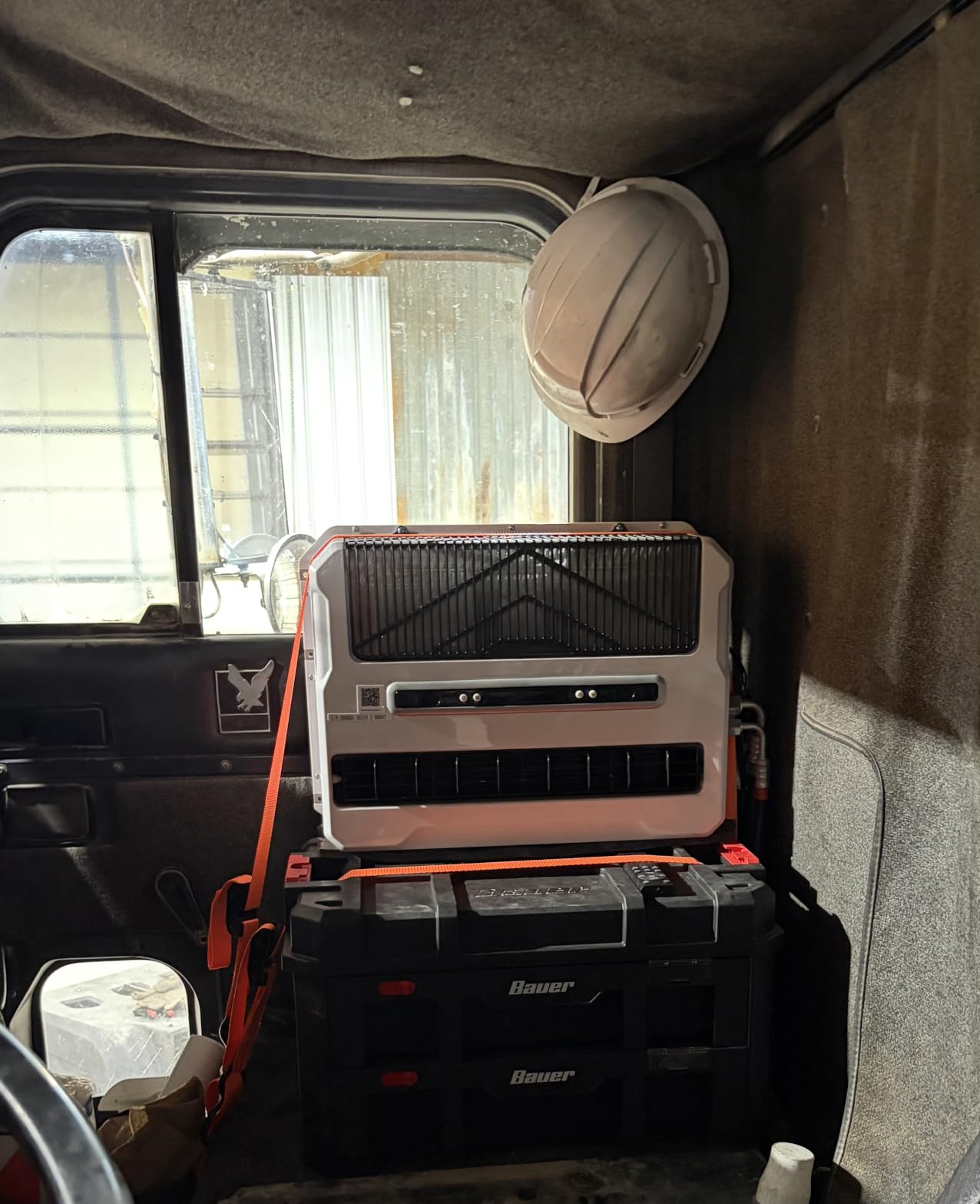
The 6 to 8 hour runtime claim on a 12V bank is more conservative than most listings in this category, and we would rather see a conservative figure than a best-case number. The high-strength ABS housing is meant to survive vibration and changing weather on rough road work, which is a fair expectation for equipment that spends its life bolted to a truck.
At 56 pounds with a split format, the indoor unit keeps the sleeper interior clear, which matters more in a Class 8 than in a camper. Remote control handles the rest, and the dimensions fit in most sleeper corner cabinets.
What you give up for the truck-specific design
Noise. At roughly 65 dB measured, this is the loudest verified figure of the units we covered, and for overnight sleeper use that is not a small detail. It sits well above the 40 to 50 dB band the quietest units in this group manage, and inside a sleeper cab with the windows closed the difference is obvious.
If you mostly park in daylight heat and run it while you eat or walk, the noise matters much less. If you are sleeping with it running, look at the countrymod or Gidrox units instead.
How much confidence to place in it
Eleven ratings is a thin base for a truck component, so treat durability as manufacturer-stated rather than demonstrated. The distribution also shows a 12 percent one-star share, which on a small sample often means a handful of early failures rather than a systemic problem, but it is worth asking the seller about the compressor warranty before you commit.
Counter that against the pre-charged system and the truck-specific airflow, and it remains a strong pick for equipment and construction work where vibration and a simple install matter more than decibels.
5. UAHKPA 13000 BTU 24V Split Unit – Best for Maximum Cooling
UAHKPA 24V RV air conditioner,split type 13000btu truck air conditioner, suitable for camping vehicles, trucks, RVs, trailers, excavators, vans and other 24V DC air conditioner (24, Volts (DC))
13000 BTU
24V DC
900W draw
45A startup
450 cubic meters per hour
50 dB
Pros
- Highest capacity in this roundup at 13000 BTU
- 24V architecture keeps draw under 50 amps
- One owner logged two months of daily 10 hour use
- Solid heavy outdoor shell
- Five fan speeds with eco mode
Cons
- Control panel and remote menus are in Chinese
- Supplied 100A main fuse is oversized for the circuit
- 60 day warranty is shorter than most in the group
Nothing else in this roundup is rated higher. At 13,000 BTU and 2800W of cooling capacity with 450 cubic meters per hour of airflow, this is the unit to choose when the sleeper is large, the insulation is poor and the route runs through the desert. Owners describe the output as genuinely cold rather than merely adequate, and one verified buyer tracked about 10 hours a day at 88 degrees ambient across two months on dual 230Ah LiFePO4 banks.
The 24V architecture is the quiet advantage. Running 900W on 24V keeps current under 50 amps with a 45A startup surge, and several owners specifically sought out a 24V system for that reason. If your existing battery bank is already 24V, this is the least disruptive way to add serious cooling.
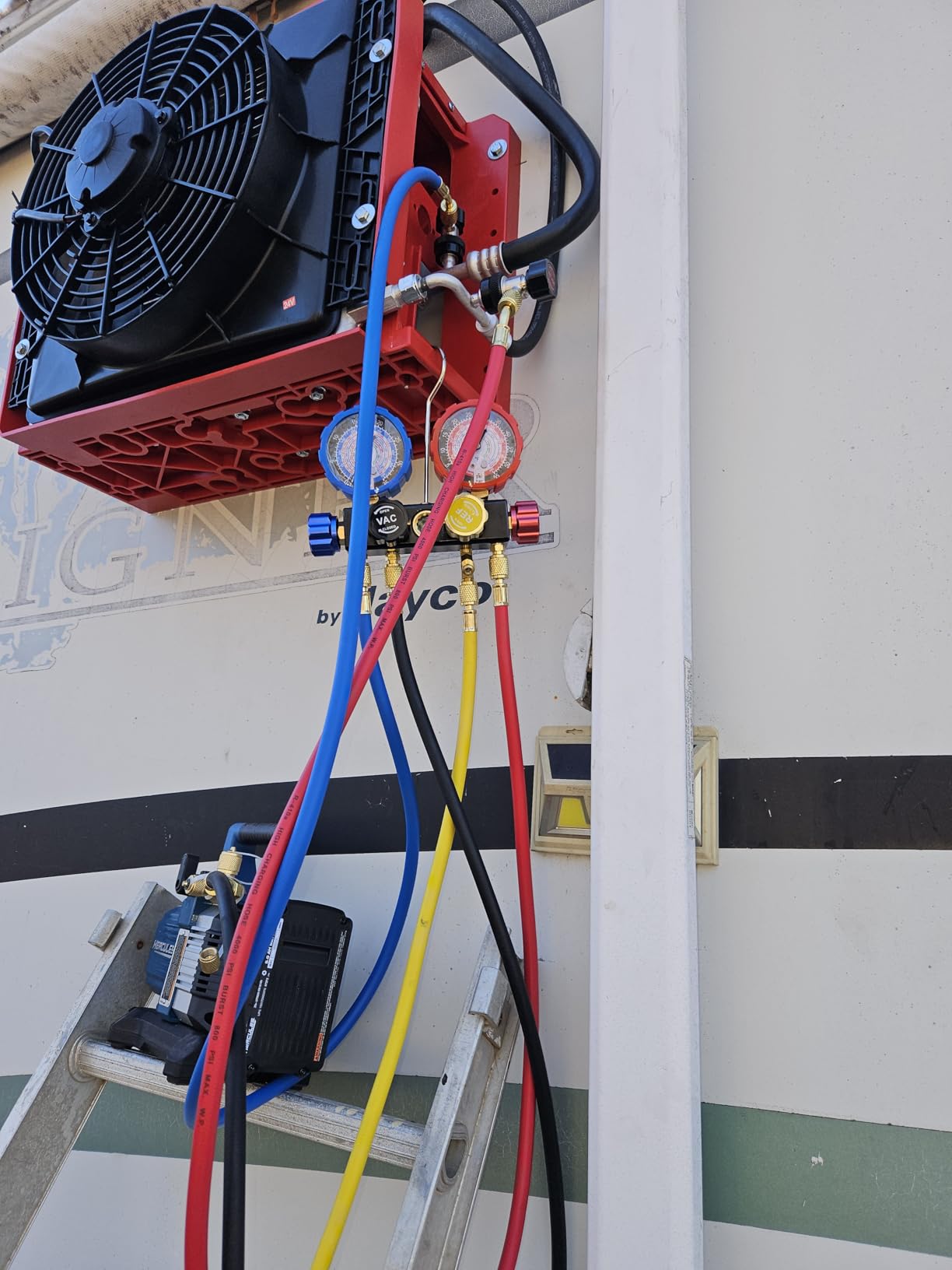
It comes with five fan speeds and an eco mode that owners say holds a comfortable 70 to 75 degree interior, and the outdoor shell is genuinely heavy, which is what you want from a unit that lives on a roof. The system is sealed with oil already added, so installation is largely a vacuum and a 600g R134a charge.
That last point is the catch. Both halves have to sit within about 5 feet for the lines to reach, so this is a compact sleeper install, not a spread-out rooftop arrangement. You also need a shop with the right equipment, which is the same serviceability limitation that shows up on most of the imports in this category.
Why the 24V argument matters for a serious build
Cable losses are where a lot of parked cooling budgets quietly disappear. Halving the current for the same wattage halves the cable gauge requirement and cuts the voltage drop over a long sleeper run, which is exactly the argument an owner making a real battery investment should be weighing.
Owners running large LiFePO4 banks report the system pulling a full working day of cooling without drama, which is the durability evidence most of the 12V split units in this roundup simply do not have.
What to sort out before buying
The control menus and the remote are in Chinese with no English labels, and there is no printed manual in the package. If you share the truck with someone who does not read Chinese, that is a daily friction point you will live with.
More seriously, the supplied 100A main fuse is oversized for a 24V system drawing 45A, and owners flag it as a safety issue. Replace it with the correct rating before the first overnight run, and note that the 60 day warranty is the shortest of any unit here. The indoor blower housing is also flimsier than the outdoor unit and squeals at startup.
6. Treeligo 12000 BTU 24V Tower Split – Best for 24V Sleeper Setups
Treeligo 24V Truck Air Conditioner, 12000 BTU Fast Cooling Air Conditioner, 24 Volt Mini Split AC Unit for Camper, RVs, Harvesters, Construction Vehicles, Cranes, Tractors, Pickups
12000 BTU
24V DC
350 CFM airflow
Inverter compressor
Under 45 dB
1 year warranty
Pros
- Strong cold output reported at the 12000 BTU setting
- Inverter with Energy Saving plus Sleep plus Powerful modes
- Runs engine-off straight from the vehicle battery
- Quiet evaporator below 45 dB
- ABS housing resists corrosion
Cons
- Only a single customer review so reliability is unverified
- Very low sales rank versus the rest of the group
- Line set and refrigerant charge are not documented
On paper this is a strong sleeper unit. 12,000 BTU with 350 CFM of airflow, an inverter compressor with three modes, and an evaporator that stays below 45 dB, which would make it the quietest unit in the roundup. The one verified buyer reports immediate strong cooling at the 12,000 BTU setting and easy adjustment from the driver’s seat, and is already considering a second unit.
The 24V operation with engine-off capability is the part that makes it interesting for a semi. Running straight from the vehicle battery or an external supply is exactly what a parked cooling system needs to do, and the 480Ah runtime claim of up to 12 hours is in the right territory for an overnight stop.
Here is the honest part: a five-star rating from one review is not evidence. There is a single customer review behind it, and the Automotive sales rank sits at roughly 1.35 million, which is a very small installed base compared with the units around it. We include it because the specification sheet is competitive and the one owner report is positive, not because the field history is there.
What the spec sheet suggests it is good at
The 350 CFM airflow with a copper core and a corrosion-resistant ABS housing is a sensible package for a sleeper, and the three inverter modes let you match output to how long you intend to park. A tower format at 17.95 by 12.6 by 6.22 inches fits the corner space most sleeper layouts leave free.
Engine-off operation is the headline for a truck application, since it is the whole point of building an electric APU in the first place.
Why we would not build a sleeper around it yet
The documentation gap is the concrete problem. There is no stated line set length and no documented refrigerant charge amount, and both are things the installation depends on. You will be finding those numbers out from the seller rather than from a manual, which is exactly the kind of thing that turns a weekend install into a weekend argument.
At 56 pounds with a one-year warranty and a single field report, we would treat this as a monitored experiment rather than a primary sleeper system, and we would keep a backup plan for hot nights.
7. outequip Summit 2 10000 BTU Rooftop Unit – Best-Supported Pick with the Most Owner Feedback
RV Air Conditioner, 12V 10000 BTU Rooftop Air Conditioner for RVs, Trucks, Vans, Campers, Tractor, Low Profile Quiet AC Unit(w/heater)
10000 BTU cooling
4500 BTU PTC heat
6.3 inch profile
40 dB
12V DC
Pros
- Largest review base at 152 ratings and the highest average score
- Only 6.3 inches tall which helps roof clearance
- Light enough for one person to lift onto the roof
- Quiet operation at about 40 dB inside and out
- Support sends replacement control boards at no cost
Cons
- The control board revision on some units overshoots the setpoint by as much as 18 degrees
- Button beep is intrusive unless you tape over the speaker
- The PTC heater is supplementary and will not heat a van in real cold
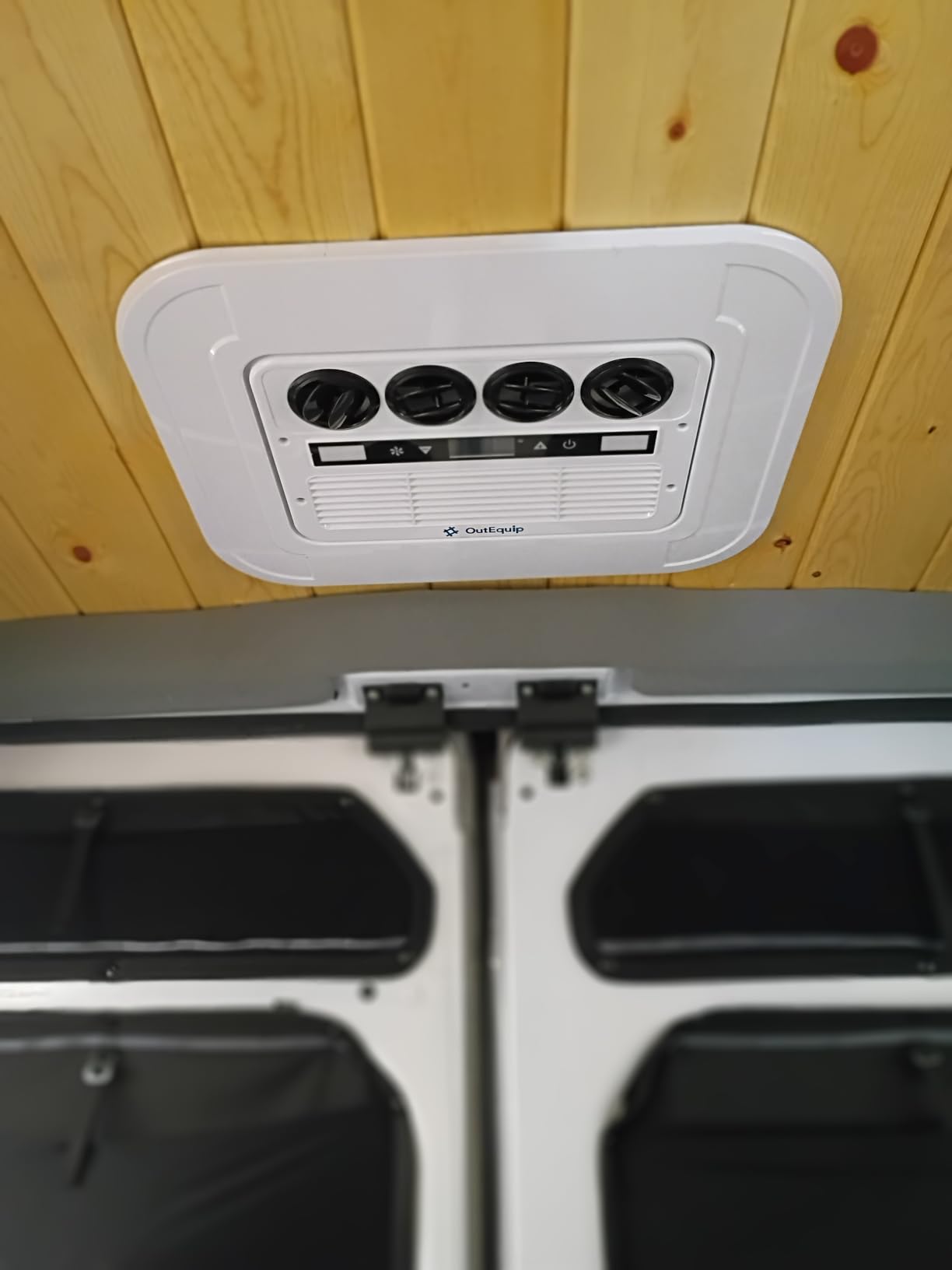
This is the best-documented unit in the roundup, with 152 ratings averaging 4.6, the largest body of owner feedback of anything we covered. It is also the only one that includes a heating element, a 4,500 BTU PTC heater, which does not make it a real winter heating solution but does take the edge off a cool spring night. The 80 percent five-star share and a one percent two-star share tell you most buyers get what they paid for.
At 6.3 inches tall it is roughly 2 to 3 inches shorter than the Dometic and RTX rooftop units it replaces, and that height is the entire reason many sleeper and van owners choose it. The 40 dB operation inside and outside the vehicle, the 12V DC efficiency that needs no inverter, and a fit into existing 14 by 14 inch roof vents make a retrofit fast.
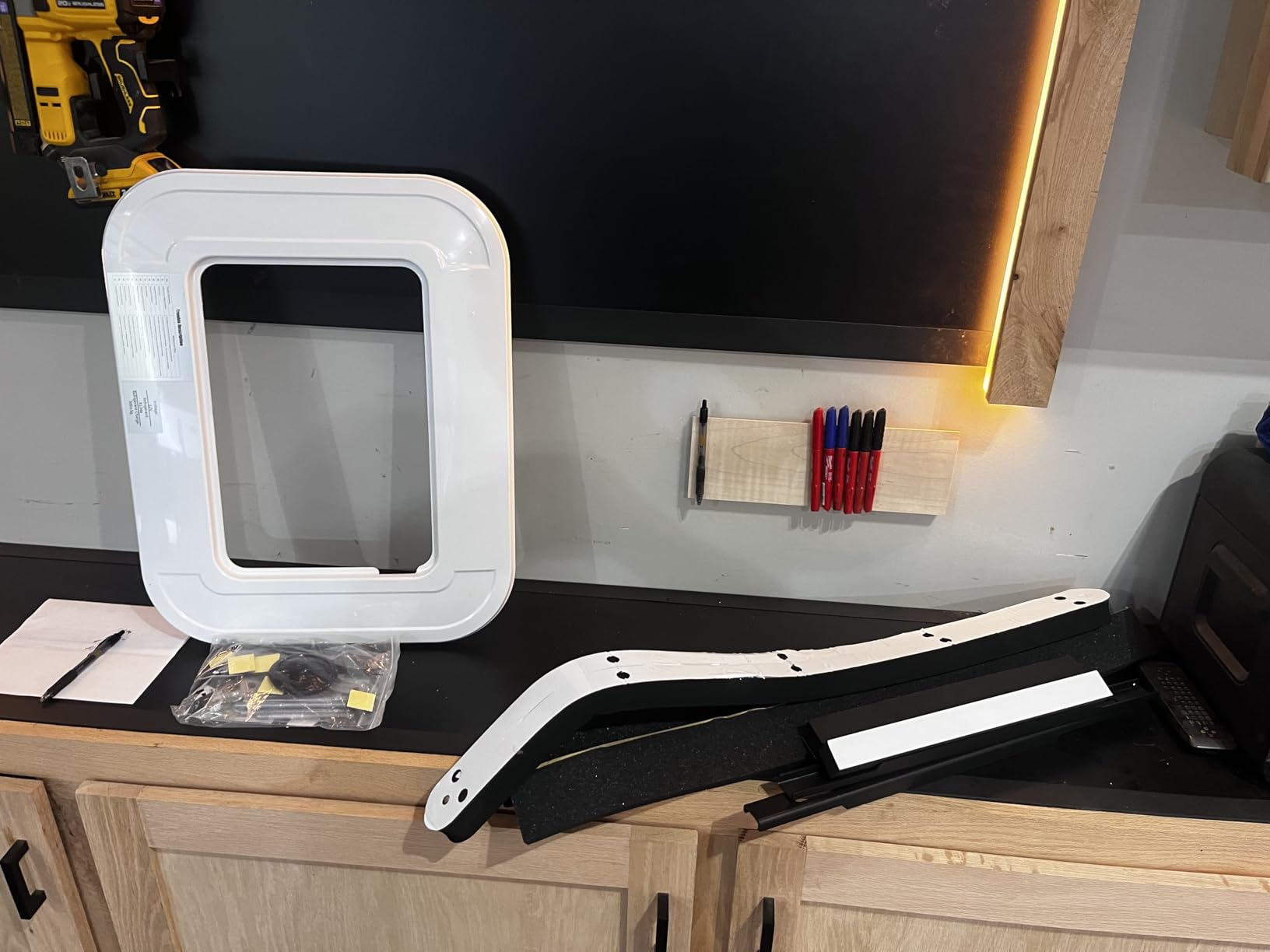
Owners put the weight at roughly 43 to 45 pounds in practice, which is light enough for one person to lift onto a roof on its own. The housing uses UV-stabilized ABS with an EPDM foam gasket and a zinc-coated condenser, and the manufacturer ships 6 AWG power wire in protective loom with stainless steel bolts, all of which reads as an attempt to make the roof penetration last.
Service is where this brand genuinely stands out. Buyers report support sending replacement control boards at no cost and answering quickly, sometimes late at night. On a component that lives in a truck, that responsiveness is worth more than another 1,000 BTU on the label.
Why we rate it top of the list for confidence
Review volume is the reason. When a problem does show up, the pattern is visible and the fix is public, which is the difference between a supported product and an unsupported one. A control board revision that overshoots the setpoint by as much as 18 degrees is exactly the kind of defect that only surfaces with a large installed base, and the manufacturer resolves it by shipping a replacement board free.
Confirm which board revision you received before you rely on it for an overnight run, and keep the setpoint a little conservative until you know what yours does.
Where the heating claim needs an asterisk
4,500 BTU of PTC is a comfort add-on, not a heat source. It will take the chill off a mild evening and it will not heat a van in genuine cold. If your route runs through northern winters, you still need a diesel coolant heater, and we will explain why further down.
Also note the button-press beep is intrusive in a small camper unless you cover the speaker with tape, and the wires are routed externally as supplied unless you remove the top shell. There is a 12V and a 24V version, so confirm your platform before cutting a roof hole.
8. Aspligo 10000 BTU 12V Metal Shell Mini Split – Best for Rugged Installs
12V Truck Camper Van Air Conditioner 10000BTU,12v Mini Electric Split Air Conditioning 12 volt AC Unit for Semi Trucks RV Motorhome Crane Tractor Automotive Boat Camper Van
10000 BTU
12V DC
About 400W measured draw
Metal shell
50 dB
R134A 500-550g needed
Pros
- Truck drivers report real fuel savings from avoiding idle time
- About 400W measured draw on 12V at full output
- Metal shell improves heat dissipation and impact resistance
- Conductor wire upsized to 12 mm squared
- Compact outdoor unit mounts vertically or under the truck
Cons
- Arrives empty of refrigerant so a shop must vacuum and charge it
- Manual is in Chinese and the two halves can arrive on different days
- Metal shell cannot be removed for service without recharging both lines
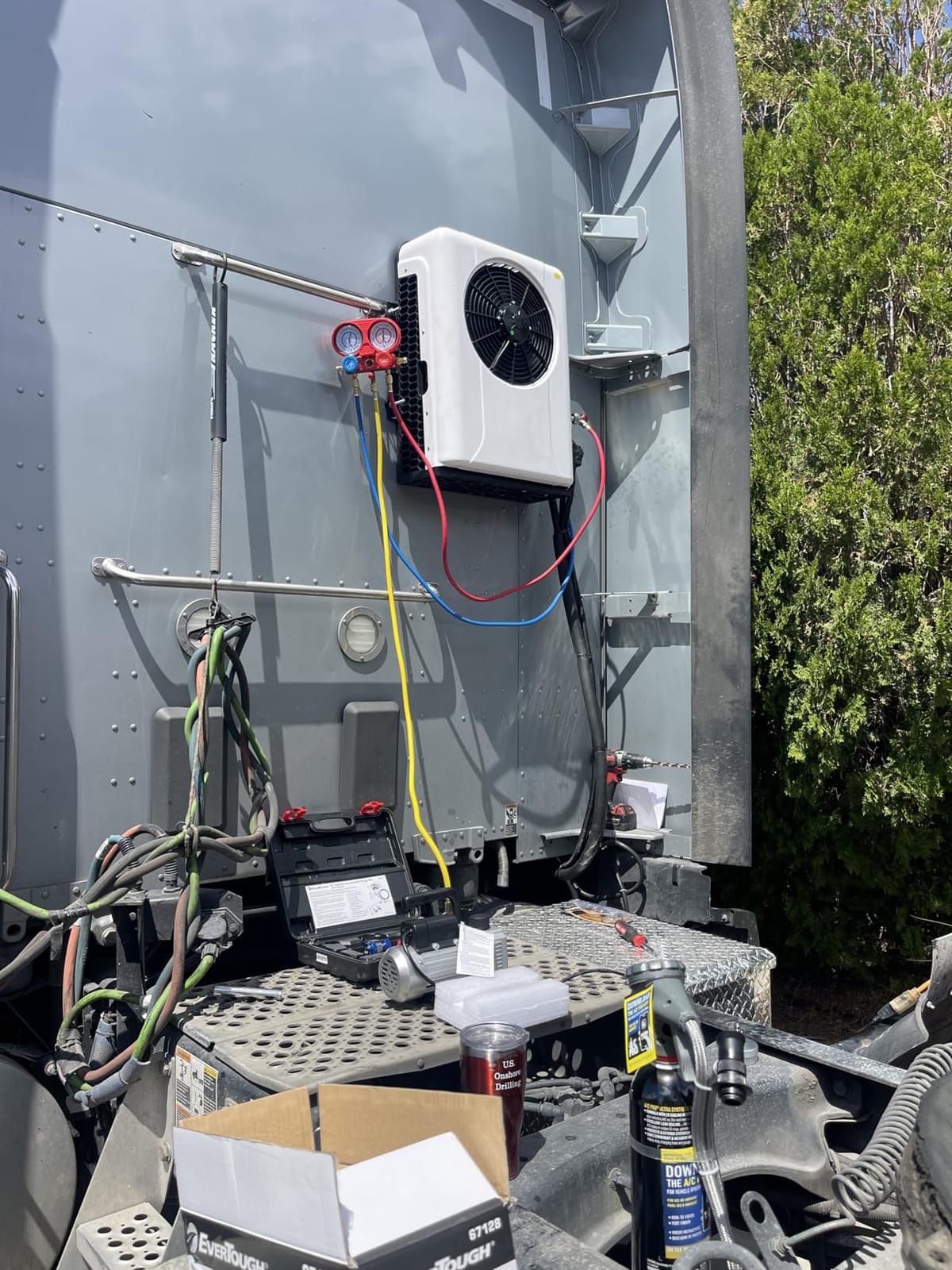
Of everything in this roundup, this is the one with the most direct evidence from the buyers it is aimed at. Truck drivers fitting it to avoid idling at rest stops report measurable fuel savings, and one documented a 34 hour rest stop in 100 degree heat on two 300Ah LiFePO4 batteries. That is the use case the whole category exists for.
The metal shell variant is the reason to choose it over the plastic-bodied units. Metal dissipates heat better and resists impact, and the conductors are upsized to 12 mm squared specifically to handle over-temperature and overload conditions. Measured draw lands around 400W on 12V at maximum output, which is a real figure rather than a marketing estimate.
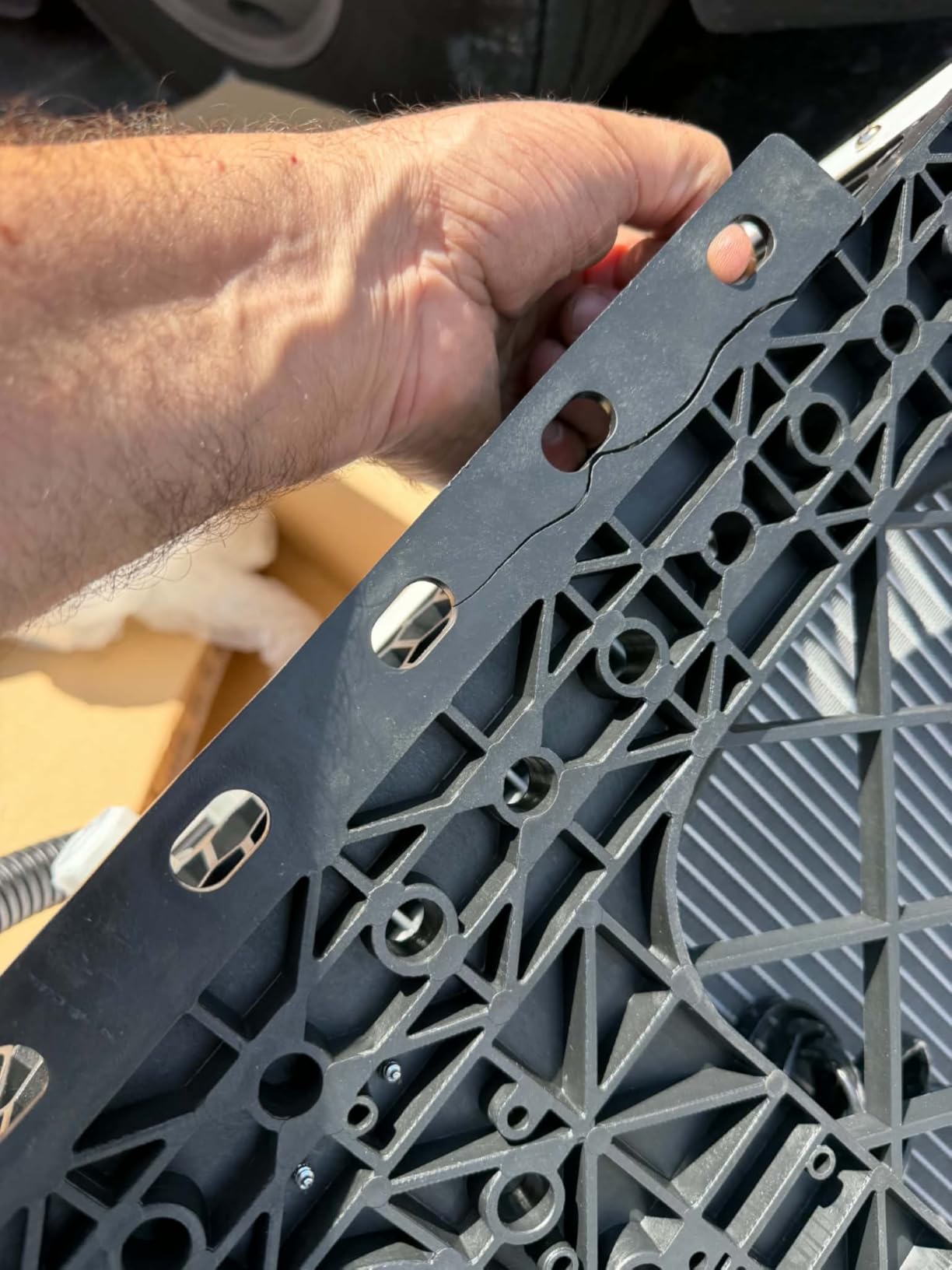
One long-term owner logged two months of daily 10 hour runs on dual LiFePO4 banks with the related 24V unit, and the units are pre-vacuum tested, sealed and oiled, so a straight charge works. The compact outdoor unit can be wall-mounted vertically or tucked under the vehicle, which is useful on a truck where roof space is spoken for.
The 4.1 average is lower than the rest of the field, and the 13 percent one-star share comes from fulfillment and assembly rather than from the cooling itself. A 70 percent five-star share alongside that one-star share tells you the product works and the quality control is inconsistent.
What makes it the right pick for a working truck
The upsized conductors and the metal shell are the honest answers to vibration and heat, which are the two things that kill electronics mounted on a Class 8. Road vibration and case expansion over a hard summer are exactly the failure modes owners on enthusiast forums describe in cheaper battery boxes, and a metal-cased unit with heavier wiring is a sensible defense.
The documented long rest-stop run on lithium banks is the kind of field evidence this category badly needs, and it is why this unit earns its place despite the middle-of-the-road rating.
What to expect on delivery and install day
It arrives empty of refrigerant, so an AC shop has to evacuate and charge it with 500 to 550g of R134a plus EMKARATE RL68H oil. The manual is in Chinese, the indoor and outdoor units arrive in separate boxes that can be days apart, and the temperature display is Celsius-only with no unit option.
Also plan for the fact that the metal shell cannot be removed for service without disconnecting and recharging both refrigerant lines, and that the open electrical terminals on the condenser are exposed to weather through the vent slots with no cover provided. Route and protect the wiring accordingly.
9. Mieligo 8000 BTU 24V Mini Split – Best for the Lowest Amp Draw
Mieligo 24V Air Conditioner 8000BTU, Mini Split 24 Volt Air Conditioner, Semi Truck DC AC, Cooling Low Noise for Big Rig Sleeper, Semi Trucks, Pickup, Car, RV, Vans, Buses
8000 BTU
24V DC
800W
Variable frequency inverter
45 dB
Low-voltage cutoff
Pros
- Documented install in a 1998 International 9400i sleeper
- Automatic low-voltage cutoff protects starting batteries
- Compact indoor unit is easy to mount and trim
- Seller replaced a failed control panel outright
- Outdoor unit mounts on a wall or a roof
Cons
- Only two customer reviews so durability evidence is thin
- 8000 BTU is the smallest capacity in the roundup
- Very low sales rank indicates a small installed base
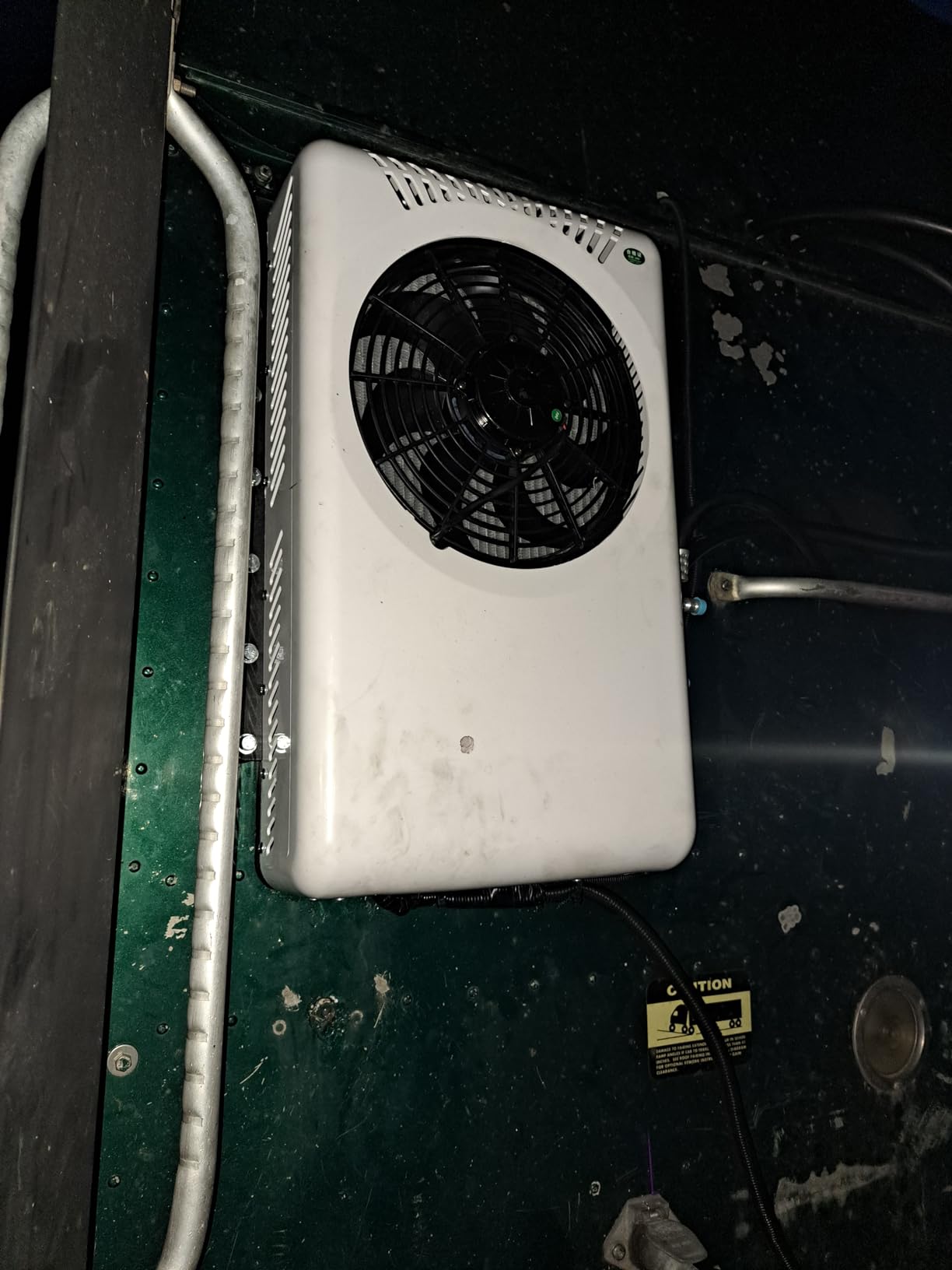
This is the smallest-capacity unit here, and that is a deliberate trade rather than a shortfall. At 8,000 BTU and 800W on 24V, it puts less load on a bank than most of the other units here, and it carries automatic low-voltage cutoff alongside over-voltage and over-current protection. That cutoff is the feature that decides whether you wake up to a truck that starts.
The owner report behind it is unusually specific, which is why we include it at all. Someone installed it in a 1998 International 9400i sleeper powered by two 921 series deep cycle batteries in series, with an isolator and a 12V to 24V transformer. That is an older truck with an older electrical system, and the system worked.
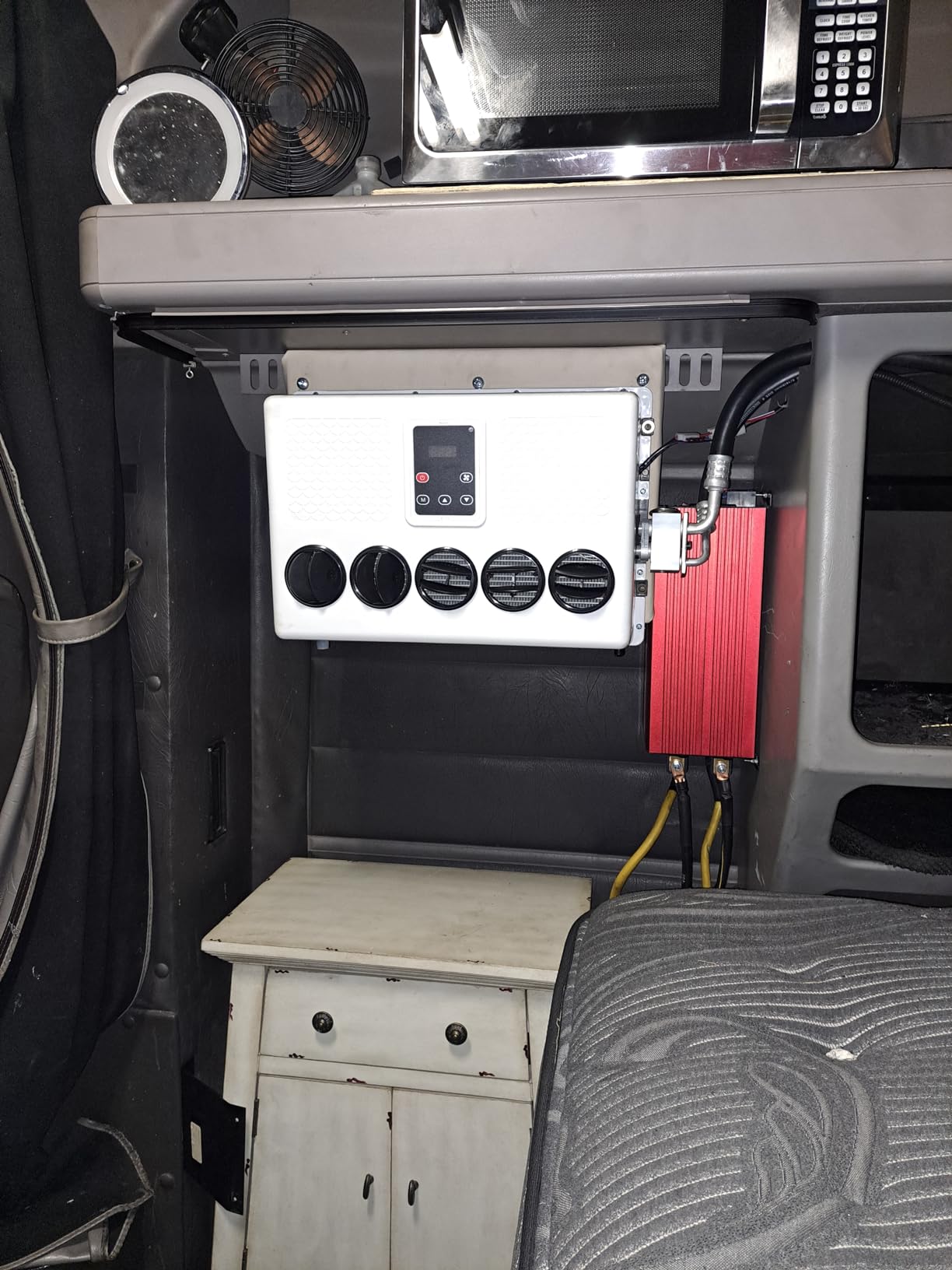
A reciprocating compressor spinning to 2,500 rpm with variable-frequency inverter operation adjusts output to ambient temperature, and the mini evaporator runs below 60 dB. The indoor unit measures 18 by 12 by 6 inches and is easy to trim to fit, while the outdoor unit at 18 by 6 by 27 inches mounts either on a wall or on the roof.
Seller support is the quiet strength. The listing states a 12 hour reply window for fitment and installation questions, and one buyer received a full replacement unit after a faulty compressor control panel rather than a runaround.
Where 8,000 BTU is genuinely the right number
A well-insulated sleeper in a moderate climate, or a day cab you want cool while you eat and sleep for a few hours between loads. At that scale the 8,000 BTU is adequate, and the lower draw means a smaller bank, less wiring work and a longer stop without a recharge cycle.
The automatic low-voltage cutoff is what makes it safe for a truck with a single battery bank doing double duty as the starting reserve, which is the single most common complaint owners report about parked cooling systems.
Why it is not our sleeper recommendation
Two reviews is not a reliability record, and the Automotive sales rank is around 4 million, which is a very small installed base. The supplied plywood mounting plate for the indoor unit was also considered thin, so replace it before you hang anything off it.
We would pair this one with a small bank on a day cab or a fair-weather sleeper, and we would not build a summer desert strategy around it.
10. Sunster 12000 BTU 12V Variable Frequency Split – Best for Battery-Safe Overnight Runs
Sunster 12V RV Air Conditioner 12000 BTU, 12 Volt AC Unit with Variable-Frequency Compressor & Low-Voltage Protection, Split-System Truck Air Conditioner for RV, Camper, and Van
12000 BTU
12V DC
Variable frequency compressor
Four modes
30 dB claimed
Low-voltage protection
Pros
- Low-voltage protection is singled out repeatedly by owners
- Strong cold output from a variable frequency compressor
- About three hours to install with two people
- Durable enough for work trucks and farm equipment
- Four modes with remote and button control
Cons
- Lowest average rating here at 3.8 with several one-star reports
- Arrives without refrigerant so a shop must vacuum and charge it
- Needs a two-person lift to hold the condenser while mounting
We are including this one because its low-voltage protection is the correct idea executed on paper, and because the owners who have it working say exactly the right things. One owner woke up to a truck that still started after running it overnight, which is the single most important outcome in this entire category. The variable-frequency compressor ramps up and down on demand, and one builder reports running it on a 600Ah bank with a 5,000W inverter and a DC-DC charger without trouble.
It is also durable in a way that matters. One owner runs it on a fertilizer spreader truck in cattle pasture, which is about as unforgiving an environment as a condenser fan will meet.
But the 3.8 average is the lowest in the roundup, with 15 percent one-star and at least one stated return. A 44 percent five-star share against that is a genuinely split rating, and we would rather tell you that than round it up.
The 12,000 BTU inverter capacity and the 216 kWh annual energy consumption figure describe a unit designed to work hard. The split layout keeps the interior clear, the ABS interior and steel exterior housing with an aluminum condenser take road abuse, and the four modes cover fan, eco, sleep and turbo.
It needs 450g of R134a after a 10 minute vacuum, with POE68 oil pre-filled, and the outdoor unit has to be installed vertically. That refrigerant step is where most of the negative reviews come from, not from the cooling.
The feature worth paying extra attention to
Integrated low-voltage protection that prevents deep discharge and handles power spikes at startup is what separates this listing from the rest. Most units in this roundup either have a fixed cutoff you cannot adjust or, in the case of the Gidrox, none that the user can set. Protection that keeps your starting battery intact is the difference between a system you use and one you worry about.
If you are running a single bank for both parking loads and engine starting, this is the unit we would prototype the build around.
Where the rating holds it back
Multiple one-star reports and a stated intent to return, plus owners who took a day or two of troubleshooting to get the first proper operation. Some buyers struggled to get the refrigerant charging right attempting a DIY fill, which is a predictable consequence of a unit that arrives empty.
It also takes two people to hold the condenser while mounting the indoor unit, so plan the install around a helper rather than a solo afternoon. Given the split reviews, we would test it over a full season before making it your only overnight cooling.
How to Choose an Electric APU for Semi Trucks in 2026
None of the ten units above is an electric APU on its own. Each one is the cooling component, and turning it into a system means adding three more pieces plus deciding what you do about heat. Get this wrong and you will spend more than a diesel APU would have cost while getting less of what you wanted, so the buying order matters more than the brand.
Buy the cooling unit to fit the bank, not the other way around
Work out your average draw first, then size the bank around it. The countrymod unit at 0.3 kWh per hour and the Gidrox at roughly 350W average are the two easiest builds to size because the numbers are published. The dual-fan Aspligo at 360 to 800W and the non-inverter units in the 900W class need a bigger bank for the same night, and a big bank is where the cost and weight hide.
Multiply your average watts by your realistic park hours, divide by 12 for a 12V system, and add a starting reserve. That reserve is not optional. Owners reporting a truck that will not crank overnight are describing the most common complaint in this category.
Match the voltage to the truck you already have
A 24V system halves the current for the same wattage, which reduces cable gauge requirements and voltage drop over a long sleeper run. The UAHKPA and Mieligo units are 24V, and the Treeligo is 24V as well. Everything else here is 12V, which is what most owner-operator banks are already built around.
Do not mix platforms casually. Converting a 12V starter setup to 24V for a single cooling unit is a much larger project than adding a 12V unit to an existing bank.
Decide how you will handle heat, because the cooling unit will not
This is where the battery-in-a-box argument lands, and it is a fair one. Heating a sleeper through a northern winter draws far more energy than cooling it through a desert summer, and the reverse-cycle heat pump claims in this category are thinner than the cooling specifications by a wide margin. The one heating element in our roundup, the outequip unit’s 4,500 BTU PTC, is a comfort add-on and nothing more.
If your route runs cold, plan on keeping a diesel coolant heater for cold-weather use and running the electric system for the shoulder seasons and the summer. That combination is what most working owner-operators converge on, and it is a legitimate way to run an electric APU rather than a compromise.
Check whether the unit needs a shop before you buy it
The VEVOR arrives pre-charged and needs nothing beyond mounting. The Aspligo rooftop, Gidrox, countrymod, Mieligo, Sunster and metal-shell Aspligo split units arrive empty and require a vacuum and an R134a charge, which means an AC shop with the right equipment. The UAHKPA needs 600g and the Sunster 450g, both with the oil already in place.
That matters more than it sounds. Forum discussion in the enthusiast community keeps circling the same point: a trucker will not hunt across the country for someone who can service an oddball heat pump, and refrigerant tooling is a genuine barrier. Check that a shop near your usual route can charge R134a, and if it cannot, the pre-charged route is the safer purchase. We covered truck shock upgrades for the same reason, in that reliability beats specification on a working rig.
Budget for the alternator and the wiring
A DC-DC charger is the piece most first builds forget, and it is the piece that decides whether the bank is actually full when you park. Vendor claims vary on whether an alternator upgrade is needed, and the honest answer is that it depends on your existing output and how much you are asking the bank to do. Plan for a quality DC-DC charger and properly sized cable in your budget from the start, and check the truck electrical system before the cooling unit is chosen.
Look for a unit with automatic low-voltage cutoff and, ideally, a cutoff you can set. That is the difference between a system that protects your starting battery and one that quietly flattens it.
Match the unit to a sleeper or a day cab
Day cab owners are usually better served by a smaller draw than a larger BTU number, because the parked hours are short and frequent rather than overnight. A unit in the 8,000 to 10,000 BTU range with a low average draw covers a rest break and a meal stop without a large bank. Sleeper owners running eight to ten hours parked need the capacity and the battery to back it up.
Weight matters more than most roundups admit. These rooftop units run 45 to 88 pounds, and on a weight-sensitive load that is real payload. If you are replacing a diesel APU, you are already ahead on weight, and the whole category is lighter than the diesel hardware it displaces. The same logic applies to rolling stock, where our guide to aftermarket wheels for trucks covers the parts that carry that payload.
Read the review count before the star rating
A 4.6 average across 152 ratings and a 5.0 average across one rating are very different statements, and this roundup contains both. The three units with real field volume are the countrymod at 89 ratings, the outequip at 152 and the metal-shell Aspligo at 50. Treat the rest as components worth testing rather than systems to depend on, and buy from a seller who will replace a failed board.
Support responsiveness is worth as much as any spec on this list. The brand that ships a replacement control board at no cost, late at night, has told you something about what happens when something fails 400 miles from anywhere.
Frequently Asked Questions
How long does an electric APU run on a single charge?
It depends almost entirely on the cooling unit and the size of the bank, and the honest answer is closer to six to ten hours of comfortable cooling than to a headline number. The most efficient units in our roundup average around 0.3 to 0.35 kWh per hour, while heavier non-inverter systems draw 360 to 800W. Divide your average draw by 12 for a 12V system, multiply by your parked hours, and keep a starting reserve in the bank.
Do I need to upgrade my alternator for an electric APU?
Sometimes, and you cannot skip the check. A dedicated DC-DC charger is the piece most first builds forget, and whether the existing alternator can keep up depends on its output rating and how much you ask the bank to deliver. Budget for a quality DC-DC charger and properly sized cable from the start, and have the truck electrical system assessed before the cooling unit is chosen.
Do electric APUs work in cold weather?
Cooling performance is not the problem, heating is. These units cool a parked cab extremely well in any temperature, but almost none of them heat one. Heating a sleeper through a northern winter draws far more energy than cooling it, and the only heating element in our roundup is a 4,500 BTU PTC that is a comfort add-on rather than a heat source. For cold routes, keep a diesel coolant heater and use the electric system in milder conditions.
Is a battery-only unit still an APU?
That depends on what the box does, and the debate on enthusiast forums is worth having honestly. A true APU delivers an independent power source, cooling, heating, jump-start capability and appliance power. A battery with no cooling attached covers one quarter of that, and a cooling unit with no heating and no jump-start covers about half. Buy the blocks you need and know which ones you are skipping.
Can a parked air conditioner replace a diesel APU?
For summer cooling and general parked power, yes, and the fuel savings are real. For heating a sleeper in deep winter, preheating the engine block, or jump-starting a dead tractor, no. The most practical setup for many owner-operators is an electric system for cooling plus a retained diesel coolant heater for cold weather, which cuts idle time without pretending the battery does everything.
How much fuel does an APU use in 10 hours?
A diesel auxiliary power unit burns roughly a gallon an hour at idle, so ten hours is about ten gallons of diesel, and that is the number the electric build is trying to erase. Truckers running this math at around 1,800 idle hours a year and a diesel price in the range of five dollars a gallon get into the high thousands annually, before counting DPF cleaning and the wear that comes with a cooled and restarted engine.
What size battery do I need for a 10,000 BTU truck APU?
For an efficient inverter unit averaging around 0.3 to 0.35 kWh per hour, a 300Ah to 400Ah LiFePO4 bank handles a full night with headroom. For a heavier non-inverter system drawing 600 to 900W, you are looking at 400Ah or more on 12V, or a 24V bank at the same wattage to halve the current. Owners running large banks report sustained daily use, and always keep a starting reserve.
Best Electric APU for Semi Trucks: Our Final Word
The countrymod 10000 BTU 12V rooftop inverter unit is the best electric APU for semi trucks in 2026 for the simple reason that it publishes the number you need and then delivers it. Sub-50 amp draw, a 0.3 kWh per hour figure, 45 to 55 dB in practice, 89 ratings behind it, and a two-year warranty. Pair it with a 300Ah to 400Ah LiFePO4 bank, a proper DC-DC charger and a retained coolant heater for cold months, and you have a system that eliminates most idle time without gambling on a single spec.
The Gidrox RX55 is the value pick, and the outequip Summit 2 is the one to buy if support matters more to you than raw capacity, since it is the best-documented unit in the group at 152 ratings and it is the only one with any heating element at all.
Two cautions before you buy. Heating is still a diesel job, and any seller who tells you otherwise is selling you a PTC space heater. And most of the units in this category arrive without refrigerant, so confirm that a shop near your route can vacuum and charge R134a before you order anything, because that one check will decide whether your build goes together in a weekend or over several.
Whichever block you start with, keep the rest of the truck current while you are at it. A rig that is safe and legal when it is moving pays for a lot of the equipment you add while it is parked, and the front-end hardware in our guide to bull bars for trucks is the other half of that same job.