
The short answer: the Garmin eLog is the best ELD device for owner-operators overall, the Pacific Track PT30 is the best hardware you can pair with any app you like, and the Konexial My20 is the best budget pick if a pre-paid subscription does not scare you. Every other option on this list is a narrower fit for a specific truck or a specific budget.
I have been running trucks and picking gear for a long time, and the ELD decision gets boiled down to a false choice almost immediately. Everyone argues about the monthly fee, as if a subscription is either a scam or a fair trade. The truth is that the deciding factor is not the sticker, it is whether you need IFTA fuel tax reporting and whether you can live with logging on your phone.
That is why this roundup is broken the way it is. Each device below gets its own write-up, its own honest drawback, and a clear answer on who should skip it. No price appears in this article, because prices move daily and the buttons below each device are the only accurate reference.
One more thing before we start. The FMCSA ELD Mandate means an electronic logging device must record your duty status, hours of service, and miles driven straight from the truck’s diagnostic port, then store certified records you can hand to an inspector. The device is a small dongle. The compliance is the paperwork it creates for you.
If you want the wider category covered, our guide to field storage devices covers a different kind of equipment entirely, but the buying logic we use here, weight versus capacity versus price per unit, is the same one.
Table of Contents
Top 3 Picks for ELD Devices for Owner-Operators in 2026

Garmin eLog
- No subscription fees
- FMCSA compliant
- 9-pin J1939 and 6-pin J1708
- Bluetooth to FMCSA Web Services
PT30 ELD
- Works with any ELD/HOS app
- Large offline storage
- J1939 J1708 and OBD-II
- US-based support
My20 ELD
- Lightest dongle here
- GPS plus DVIR and fuel data
- 9-pin connector
- Pre-paid annual subscription
Quick Comparison of All Six ELD Devices in 2026
| Product | Specifications | Action |
|---|---|---|
| Garmin eLog |
|
Check Latest Price |
| Konexial My20 ELD |
|
Check Latest Price |
| Pacific Track PT30 |
|
Check Latest Price |
 IOSix IO-1020 IOSix IO-1020 |
|
Check Latest Price |
 TFM ELD TFM ELD |
|
Check Latest Price |
 MasTrack HD ELD Y-Cable Kit MasTrack HD ELD Y-Cable Kit |
|
Check Latest Price |
1. Garmin eLog – The One-Time Buy With No Monthly Fee
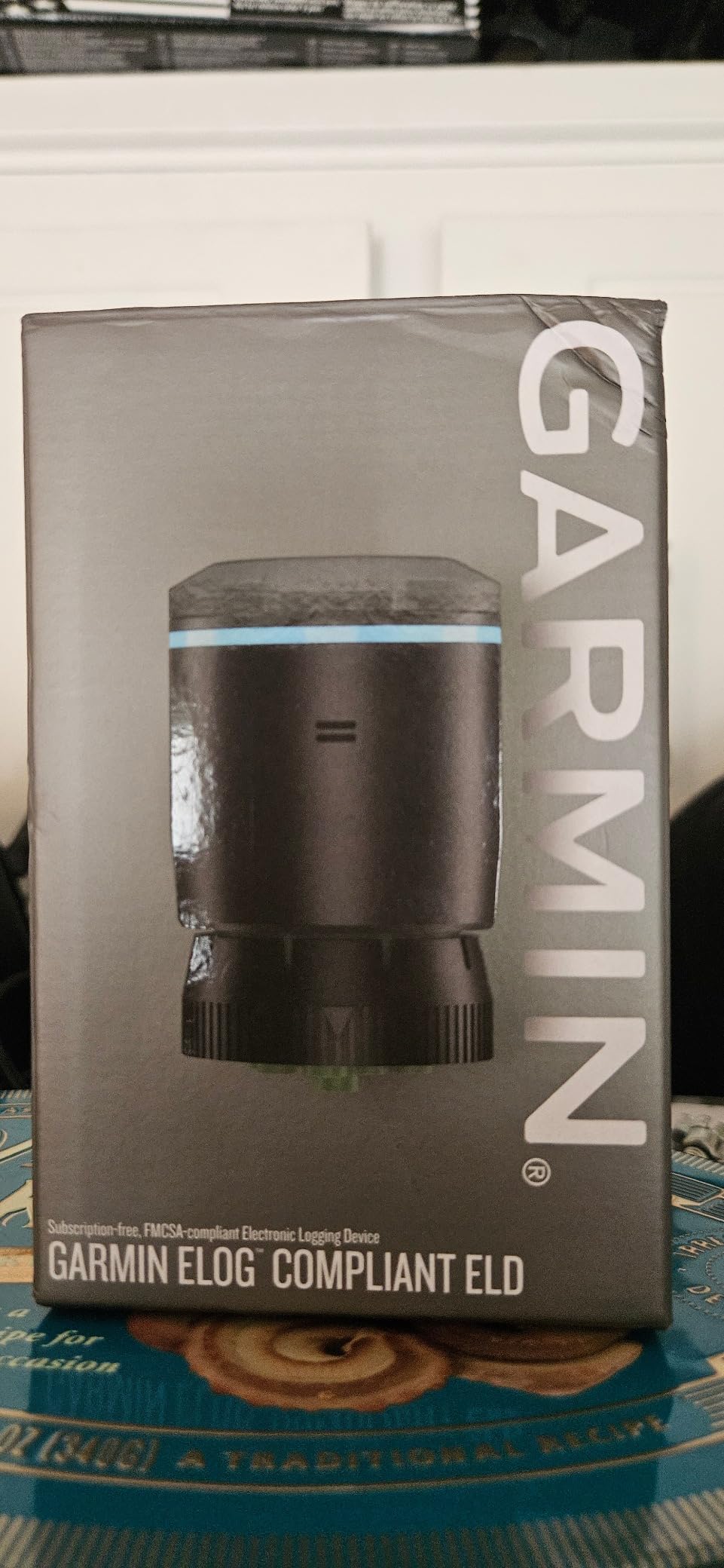
Garmin eLog, Compliant Electronic Logging Device (ELD), No-Subscription Fees, FMCSA Compliant, Supports 9-pin J1939 and 6-pin J1708 Diagnostic Ports (010-01876-00)
No subscription fees
FMCSA compliant HOS recording
9-pin J1939 and 6-pin J1708
2.8 inch screen, 3.2 oz
Pros
- No recurring subscription fee
- Over 1300 owner-operator reviews to learn from
- Supports both 9-pin and 6-pin diagnostic ports
- Bluetooth transfer straight to FMCSA Web Services
Cons
- Not compatible with OBD-II protocol vehicles
- Volvo engines with 16-pin J1962 need a separate cable
- Requires a compatible smartphone to function
The Garmin eLog is the only device in this roundup with enough real-world history to be worth calling a default choice. It carries a 3.9 star average across more than 1,300 reviews, and that kind of sample size tells you something a five-star rating on nine reviews cannot.
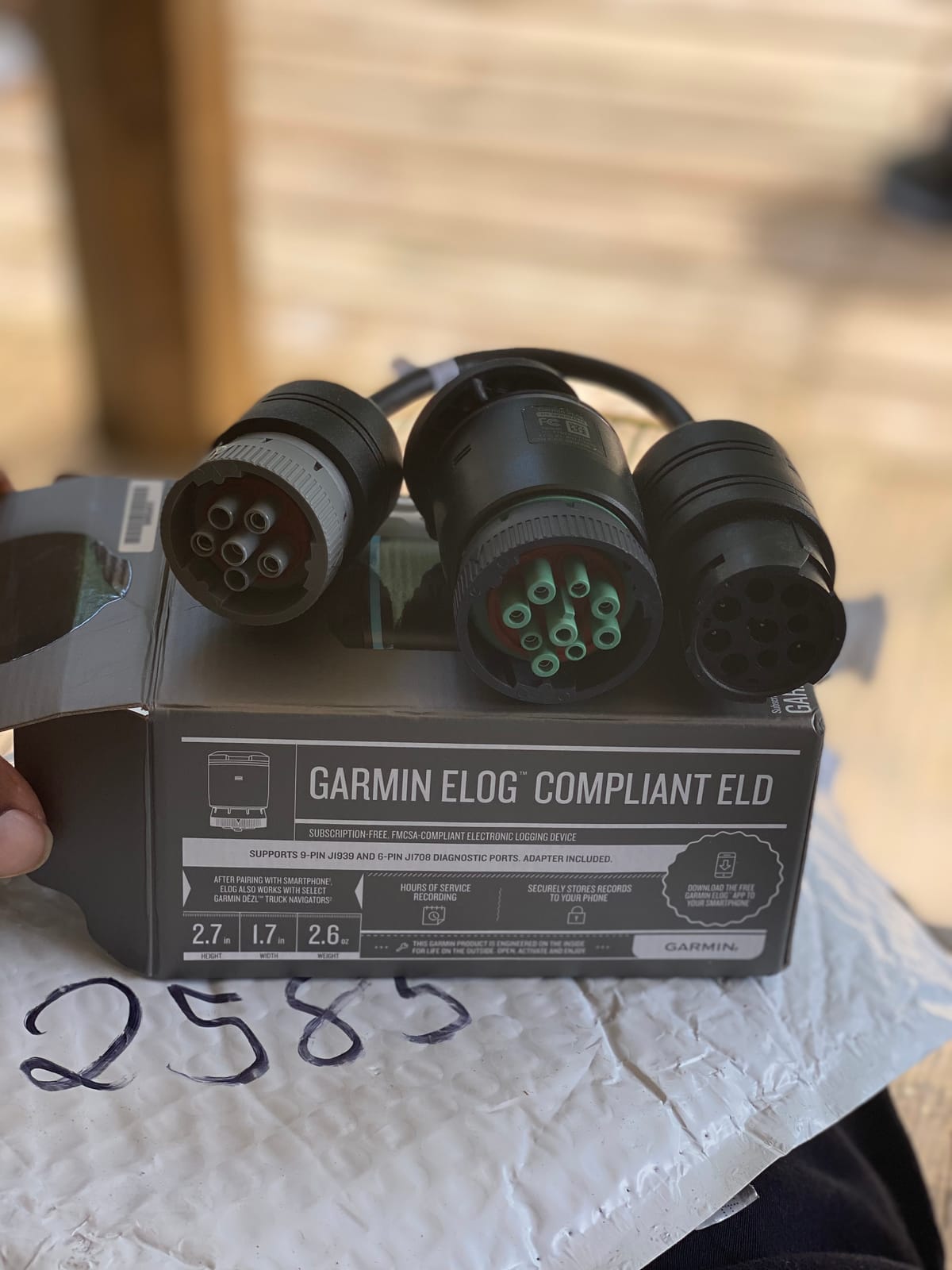
What you are buying is a tiny screen-and-cable unit that does one job. It plugs into the diagnostic port, reads engine and motion data, and pushes certified records to the free Garmin eLog app on your phone. There is no monthly charge attached to keeping that function running, which is the entire pitch, and for a lot of owner-operators it is the whole decision.
About 70 percent of the reviews that carry a rating sit at four or five stars, and the praise repeats the same two things: it stays out of the way, and it does not cost anything every month. Drivers who came from a subscription platform tend to describe the switch as relief, because the log is just there and no billing screen ever appears.
The technical footprint is small on purpose. It weighs 3.2 ounces, has a 2.8 inch screen, ships with a 6-pin J1708 adaptor in the box, and carries a one-year limited manufacturer warranty. The included components list is short: the unit, the adaptor, and the quick start manual.
Power is worth checking too, because an ELD that dies mid-haul is a compliance problem before it is an inconvenience. The unit runs off the truck’s diagnostic port itself, so there is no battery to charge and no extra cable to keep alive in the sleeper. Bluetooth transfer happens in the background while the truck is rolling, which is why the review base rarely mentions missed transfers.
What to check before you buy the eLog
Check your port type first, because this is where the compatibility complaints come from. The eLog supports the 9-pin J1939 port and the 6-pin J1708 port, but it will not work on a truck using the OBD-II protocol, which is SAE J1979. If your truck is older or a light-duty unit, verify before ordering.
Second, check your engine brand. Volvo engines with the 16-pin J1962 connection need a separate cable that is not included in the box. That is not a dealbreaker, it is just an extra step and an extra part, and it is the second most common support question in the reviews.
Third, accept that the phone is mandatory. The unit stores records on a compatible smartphone running Android 4.1.x or higher, or an Apple 9-plus device, and you inspect logs either through the unit’s USB port or over Bluetooth through FMCSA Web Services. A dead phone means no log, so keep the phone charged and mounted.
Who should skip it
Skip the eLog if you run fuel tax reporting across several states and want the device itself to produce the IFTA report for you. This unit logs hours and miles, and the app handles the driver side, but fuel tax calculations are a separate job you will want to confirm your current app actually does before the first quarterly filing.
Also skip it if you dislike small screens or dislike depending on a phone. At 2.8 inches with a phone-based workflow, this is a deliberate minimalism, and drivers who prefer a dedicated tablet display find it cramped after a full day of edits.
2. Konexial My20 ELD – The Smallest Dongle With a Full Feature Set
My20 ELD (Electronic Logging Device), Truck GPS Tracking, FMCSA Compliant, 9-pin J1939, 6-pin J1708, OBD-II Diagnostic Ports, Subscription Required
22.68 g plastic dongle
Bluetooth to phone or tablet
9-pin J1939 with optional adapters
Pre-paid annual subscription required
Pros
- Lightest hardware in this roundup by a wide margin
- Bluetooth pairing works with iPhone
- iPad and Android devices
- Feature set covers GPS
- DVIR
- fuel data
- reports and maps
- No separate screen or power cable to fail
Cons
- Subscription is prepaid annually rather than month to month
- Adapter cable needed for OBD-II or 6-pin ports
- Relies entirely on your phone for the interface
The My20 is the one I would look at first if your only two requirements are, be tiny, and do a lot once it is paired. At 22.68 grams in a plastic housing with no screen and no internal display, it is the smallest piece of ELD hardware on this list by a wide margin, and it disappears into the port the same way a phone charger does.
The feature list is longer than the hardware justifies. The product details list Bluetooth connectivity, compatible with iPhone, iPad, Android phone and Android tablet, and the additional features field names FMCSA compliance, DOT certification, GPS tracking, log auditing, DVIR, digital documentation, fuel information, messaging, reports and maps. All of that arrives through the free My20 app on your own device.
What you do not get is a monthly option. The subscription service is required and it is prepaid annually, which is the single biggest reason drivers end up frustrated with this unit. Its 3.4 star average across 245 reviews is the second lowest here, and the review breakdown explains it, with roughly 28 percent of reviewers at one star citing subscription costs and connectivity issues.
What to check before you buy the My20
Understand the prepaid structure before you commit. Because the service is paid up front for the year, there is no month-to-month exit, and a driver who decides the app is not working for them in week three has already bought the year. That is the core of the low-rating complaints and it is a real risk, not a misunderstanding.
Check your port. The unit comes with a standard 9-pin J1939 ECM connector, and an adapter cable is required for OBD-II or 6-pin ECM ports, sold separately. It also runs Android and iOS through Bluetooth pairing rather than WiFi, so a phone with a weak Bluetooth radio is worth thinking about.
Plan for the app to be the logbook, not the dongle. With no display on the device itself, every duty status change and every edit happens on the phone screen. Drivers who like a physical confirmation of a change should know that before day one.
Who should skip it
Skip the My20 if you want the freedom to try a platform before committing to it. The prepaid annual structure removes the trial period entirely, and for a first-time owner-operator still learning which log style they actually prefer, that flexibility is worth more than the small size.
Skip it if you drive in genuinely remote areas with thin cellular coverage and expect the app to hold everything locally. Reviewers who rated it one star most often cite connectivity rather than hardware, and the dongle itself has no independent storage to fall back on.
3. Pacific Track PT30 – App-Agnostic Hardware That Locks You Into Nothing
TEMEDA- PT 30 ELD – Electronic Logging Device + Cable – HOS & FMCSA Compliant – Easy to Install – New (PT30+Green 9 Pin Round Cable)
Works with any compatible ELD or HOS app
Bluetooth Low Energy interface
Large offline storage
One-year warranty
Pros
- Highest rated device in this roundup with broad protocol support
- Not locked to a single app
- Large capacity storage for offline operation
- US-based company with local inventory and support
Cons
- Small review sample of 54 ratings
- Generic white-label branding leaves the support question open
- One-year warranty is short
The PT30 is the most interesting unit here, and the reason is not the hardware. It is that the technical details say it works with any and all compatible ELD and HOS apps. In a category where buying a dongle often means buying into one company’s ecosystem for the life of the truck, that single line changes the math.
It carries the highest rating in this group at 4.5 stars, with 88 percent of reviewers at four or five. The sample is 54 reviews, which is small next to the eLog’s 1,300-plus, but the sentiment is unusually consistent rather than split.
Physically, this is a Bluetooth Low Energy dongle with a large capacity storage for offline operations, an integrated engine diagnostics antenna, and connections for J1939, J1708/J1587 and OBD-II. That three-protocol list is broader than anything else in this roundup, and it means one unit covers a mixed truck fleet or a truck you swap between ports.
What to check before you buy the PT30
Figure out who stands behind the hardware. The listing is sold under generic branding, and the PT30 design is a widely resold platform that appears under many storefront names. The manufacturer of record is Pacific Track, a US-based operation that lists a Miami, Florida location and keeps inventory there, which is a better answer than most, but confirm that the same company handles your warranty claim before you buy.
Confirm the app pairing works with the phone you already own. The unit works with any cell phone or tablet with Bluetooth, and because it is app-agnostic you have to pick the HOS app separately. Make sure the app you choose is on the FMCSA accepted list, because the dongle being compliant is only half the requirement.
Note the warranty length. It is one year, and the review summary flags it alongside the small sample and generic branding as the main reservations. For a device you plan to keep in service for the life of a truck, that is worth weighing.
Who should skip it
Skip the PT30 if support availability during a roadside breakdown is your top concern. The device is capable and the company is US-based, but the review base is thin enough that you are relying on a small operation’s responsiveness rather than a large proven support organization.
Skip it if you want a single vendor accountable for the whole stack, hardware and software. This is a blank canvas by design, and some drivers find that freedom to be one more thing to manage rather than one less.
4. IOSix IO-1020 – Built-In 9-Pin Connector, No Cable to Lose
IOSix HOS Logbook Device for HOS App for ELD (DOT+FMCSA Certified) Built-in 9-Pin Green Connector (No Cable Needed)
Built-in J1939 Type II 9-pin connector
9 reviews only
1 year warranty
No cable to misplace
Pros
- No separate cable to buy
- lose
- or leave in a hotel nightstand
- Multi-constellation GNSS receiver with a built-in high-gain antenna
- Bluetooth 4.2 and 802.11b/g/n WiFi
- Automotive-grade voltage and ESD protection
Cons
- Only 9 reviews
- too small a sample to lean on
- Generic branding
- Single 9-pin connector with no 6-pin or OBD-II path out of the box
The IOSix IO-1020 solves one small problem better than anything else here: there is no cable. The built-in J1939 Type II 9-pin connector plugs straight into the port, and if you have ever unplugged a round connector in a dark truck stop and then had to find it, you already understand why that matters more than it sounds.
The rest of the spec sheet is the most technical in this roundup. There is a multi-constellation GNSS receiver with a built-in high-gain antenna, Bluetooth 4.2 Class 1 with both BR/EDR and LE modes, and 802.11b/g/n WiFi up to 150Mbps with simultaneous access point and station modes. A dual-core 32-bit Tensilica processor runs at 240MHz, and physical layer and protocol auto-detection with auto-bauding handles the truck side.
On paper, that is a well-built device. The problem is the evidence. There are 9 reviews at a 4.1 average, and the review summary says plainly that there is insufficient real-world validation to recommend it confidently. Three five-star reviews praise reliability and ease of use, and that is the entire sample.
What to check before you buy the IO-1020
Check your port type, because this unit is the narrowest on port support in the list. The built-in connector is a J1939 Type II 9-pin covering both new and legacy vehicles, and the box contains the unit only. If you run anything with a 6-pin J1708 port, this is not a drop-in.
Also weigh the protection claims against real conditions. The listing specifies over, under, and reverse-voltage protection exceeding automotive standards, ESD protection exceeding automotive standards, and high-efficiency switching power supplies for low temperature operation. Those are the right things to build for a truck, and they are also spec-sheet claims rather than field reports.
Plan around the sample size. With 9 reviews, you are buying on engineering rather than on evidence. The unit carries a one-year warranty, which is the common floor across this list, and there is a full-colour RGB LED for status indication so you can see at a glance whether the device is logging.
Who should skip it
Skip the IO-1020 if you run a 6-pin or OBD-II truck. A built-in connector is a genuine convenience only when it matches your port, and this is the one device here where a mismatch is not solvable with an inexpensive adapter.
Skip it if you want the comfort of a large review base. Nine ratings cannot tell you how a device behaves after two winters of hardwired charging and vibration, and compliance gear is exactly the category where you want field history before you commit.
5. TFM ELD – The Subscription Plan That Bakes In IFTA
TFM ELD Electronic Logging Device (ELD) for Trucks, FMCSA Compliant
Monthly subscription with no contract
IFTA included with the plan
Connects directly to 9-pin port
Setup in under five minutes
Pros
- IFTA fuel tax reporting is included with the subscription
- No contract
- so you can leave month to month
- Installation and setup stated at under five minutes
- Claimed to fit fleets of any size
Cons
- Only 4 reviews
- effectively no evidence base
- Monthly cost continues even in a slow month
- Adapter cables for other ports sold separately
Here is the one device on this list where IFTA fuel tax reporting is named directly in the plan. The technical details state that tracking, telematics, ELD service and IFTA are included with the monthly subscription, and for an owner-operator running fuel tax across several states, that single line is more valuable than a hardware spec ever is.
The commercial structure is also the most flexible here. It is a monthly subscription with no contract, which means you are not locked into an annual prepayment, and you can stop it in a month when the truck is in the shop. For a startup carrier with uneven revenue that flexibility matters.
Installation is described as under five minutes. The unit connects directly to the 9-pin port, adapter cables can be purchased separately if you need them, and the product claims to fit fleets of any size while running on Android.
Where the evidence runs out is reviews. There are 4 ratings averaging 3.9, and the review summary says outright that it is impossible to assess real-world reliability from that. The listing also names IOSIX as the manufacturer while carrying TFM ELD branding, which is a white-label signal rather than a reassurance.
What to check before you buy the TFM ELD
Ask the seller directly what monthly tier you are actually being signed up for, and confirm in writing that IFTA and the fuel tax report are on that tier rather than on a higher one. Bundled subscription listings are common on this hardware and the tier you land on determines whether the IFTA promise holds.
Confirm the no-contract exit is real. Month to month is stated clearly, and that flexibility only matters if you can actually cancel without a phone call and a retention offer, so find out what cancelling looks like before you are mid-haul and dependent on it.
Then weigh the evidence problem honestly. Four reviews is not a reliability record. You are choosing this plan for its included features and its structure, which is a legitimate reason, but you should choose it knowing you are an early adopter rather than joining a proven install base.
Who should skip it
Skip the TFM if your current logging setup already produces the fuel tax report you need. Paying monthly for a feature you can get from a tool you already run is the fastest way to make a subscription feel like a tax, and that is the most common regret drivers report.
Skip it if a branded, accountable vendor matters to you. The manufacturer and brand names on this listing do not match, the best sellers rank in Electronics is deep at 260,062, and there is no meaningful review base to fall back on. The convenience is real, the thinness is real too.
6. MasTrack HD ELD Y-Cable Kit – Permanent Mounting With Thin Proof
MasTrack HD ELD eLog & Live GPS Tracker | Heavy-Duty ELD Y Cable | J1708 | J1939 Cables | Mount Anywhere…
Y-cable keeps the device plugged in
Compatible with J1939 and J1708 ports
No tools or wiring required
Real-time GPS tracking
Pros
- Y-cable design replaces the port so the device never sits unplugged
- No tools and no wiring for installation
- Auto-starts transmitting when the vehicle is switched on
- Logs accessible from a computer
- phone or tablet
Cons
- Single review at a 1-star rating
- Deep best sellers rank at 618521 in Electronics
- Placeholder model number listed as ABCD
The idea behind this kit is the one I like most in the whole roundup, and it is purely mechanical. The Y ELD cable has three ends and replaces your existing round port with a working port, so the ELD device can stay plugged in at all times. No unplugging for a DOT inspection, no cable to drop in a parking lot, no hunting for a connector in the dark.
Installation needs no tools and no wiring. You plug in the Basic ELD unit and that is the whole job, and the unit automatically starts transmitting to your Android device each time the vehicle is switched on. Compatibility covers all J1939 or J1708 ports, and the eLOG view is reachable from a computer, smartphone, tablet, or any other web-enabled device.
The problem is not the concept, it is the proof. There is a single review and it is a one-star rating. The best sellers rank sits at 618,521 in Electronics, the model number is listed as the placeholder string ABCD, and the product sits in a deeply generic brand slot. There is nothing here to help you troubleshoot at mile 400 with a compliance question pending.
What to check before you buy the MasTrack kit
Confirm what is actually in the box. The built-in media field lists the Y ELD cable, and the available variant is the eLog and GPS tracking package, so verify whether the ELD unit itself is included or whether you are buying the cable harness as an add-on to a device you already own.
Confirm the port replacement is what you want. A Y-cable takes over the physical port, which is excellent for one truck that runs constant hours, and a real decision for a multi-truck fleet where each port change is shop time across several vehicles.
Then weigh the ratings honestly. A single one-star review is not proof the product is bad, and it is also not proof it is good. With a placeholder model number and a deep sales rank, you have no reliable fallback other than the seller’s own support.
Who should skip it
Skip it if you are just starting out. As a first ELD, a permanent-mounting harness with a one-review track record adds a hardware dependency to a setup you have not yet learned, and the cost of that mistake is a compliance problem on a truck you are still financing.
Skip it unless the Y-cable design is the specific feature you cannot get anywhere else. It genuinely is the best permanent-mounting option here, and for a truck that never leaves the seat that is worth a lot, but on features alone there is more evidence behind the PT30.
How to Choose an ELD Device in 2026
Six devices is a short list, and drivers say so themselves, one forum commenter put it plainly that for owner-operators there is not much to choose from. The big platforms, Samsara, Motive, TruckX, Blue Ink Tech, and Omnitracs, are not sold in the marketplace most owner-operators shop on, so the practical shortlist is dongles and app bundles. Here is how to narrow it.
What the FMCSA ELD Mandate actually requires
The device must be on the FMCSA’s accepted list, which means it records duty status, hours of service, miles driven, and engine and vehicle data from the truck’s datalink, stores it locally, and produces records an officer can inspect. Six core terms to keep straight:
ELD: electronic logging device, the federally certified hardware that replaces the paper logbook.
HOS: hours of service, the rules that limit how long you can drive and how long you must rest.
IFTA: the International Fuel Tax Agreement, which apportions fuel tax across the states you run in, and IRP is its registration counterpart. A device that does not cover IFTA still records your hours, it just does not help you file the fuel tax quarter.
6-pin versus 9-pin: the two physical diagnostic ports on a truck. 9-pin J1939 is the modern standard. 6-pin J1708 is older. A few trucks use OBD-II, which is a third standard entirely and which the eLog specifically does not support.
J1939 datalink: the network inside the truck that the ELD reads to know whether the engine is on, the vehicle is moving, and the transmission state has changed.
DOT audit: the inspection that determines whether your records are complete. An ELD that silently drops a log segment is a bigger problem than one you had to troubleshoot.
Subscription versus one-time purchase: the break-even question
Nobody in this roundup publishes a first-year total, so let’s do the arithmetic honestly. Take the two structural models and compare them over time without arguing about any single number.
One-time model, the Garmin eLog: you buy the hardware once. Year one is the hardware cost. Year two is zero for the ELD itself, because there is no subscription. Year three is the same. Over three years you have paid the purchase amount once.
Subscription model, the My20 or the TFM: you pay the hardware cost, then a service charge on top, every year, with the My20 requiring that service be prepaid annually. Over three years you have paid the purchase amount plus three years of service. Over five years, plus five.
The break-even point is straightforward math. Divide the one-time hardware cost by twelve. If your monthly service charge is higher than that number, the one-time device wins on a three-year view. If it is lower, and the included features are ones you would otherwise buy separately, the subscription can still come out ahead. The feature set matters more than the fee, and IFTA reporting is the one that reliably changes the answer.
One nuance on fleet sizing. Per-driver pricing means your cost scales with people, per-vehicle pricing means it scales with trucks. For a one-truck operation they are the same line item. At five trucks, a per-driver plan gets expensive if you run multiple drivers per truck in shifts, and a per-vehicle plan gets expensive if you rotate several drivers through one truck. Model the total, not the per-unit headline, before you commit to a tier.
Do you need IFTA fuel tax reporting?
Apply one test. If you run in more than one state and buy fuel in most of them, you have fuel tax exposure and you want IFTA reporting in the tool you already run. If you run local or regional and buy all your fuel at home, you can skip it and the monthly fee looks far better without it.
This is the number one regret drivers report, and the pattern is always the same. They bought a cheap no-subscription unit because the monthly fee annoyed them, then hit a quarterly filing where the device could not produce a fuel tax report and had to rebuild the numbers by hand from receipts. A device that records hours perfectly is still not an IFTA tool unless it says it is.
Hardwired, plug-in, or phone-only: installation realities
Every device in this roundup is plug-in rather than hardwired, which is the friendlier path. The eLog ships with a 6-pin J1708 adaptor and supports the 9-pin J1939 port natively. The My20 and the TFM connect directly to the 9-pin port with adapters sold separately for older ports. The PT30 covers J1939, J1708 and J1587, plus OBD-II, which makes it the broadest fit for a mixed fleet.
The IOSix is the exception that proves the rule, because its connector is built in, so a port mismatch is not solvable with a cheap adapter. Before anything else, physically look at the port on your truck and confirm it matches.
Then ask the practical question. Do you mind leaving the device plugged in? If not, the MasTrack Y-cable is the answer, because it replaces the port with a pass-through so the unit never has to come out. If you would rather remove the device at the end of each shift, a plain plug-in dongle is simpler and there is nothing to lose.
Support hours and offline behaviour
Support is the quiet differentiator nobody publishes. Drivers raise it constantly, and the recurring complaint is not rudeness, it is hours. A device whose support line closes at five in the afternoon Central is a real problem when the truck quits logging at two in the morning somewhere in western Nebraska, and that is exactly why subscription tiers with free tiers are worth scrutinising, since a no-cost tier is often also the one with business-hours-only support.
Offline behaviour matters as much. The PT30 lists large capacity storage for offline operations, which is the single most reassuring line on any spec sheet in this roundup, because it means the log survives a dead zone. Several of the app-based units here, including the My20 and the eLog, keep their records on the phone instead, so your offline resilience is really a question about the phone.
Ask yourself one honest question before buying: when coverage drops mid-haul in a canyon or a dead zone, do I need the device to hold the log by itself, or is the phone carrying it? Either answer is fine, as long as you know which one you have chosen.
Switching providers without losing your HOS history
Drivers fear switching more than they should, and the fear is specifically about losing history during a transition. The mechanics are straightforward. Your certified records belong to you and they live in the account, not on the hardware, so the sequence that protects you is: export your current logs before you cancel anything, confirm the export actually downloaded, install and set up the new device, run a short shakedown period while the old records are still accessible, and only then close the old account.
Never cancel first and set up second. The old account is where the certified records live during the gap, and if your phone dies on the second day of a new unit, the old one is your proof. Keep both live for a week if the schedule allows.
One more thing to check during a switch, whether your new provider’s app is on the accepted list for the device you picked. A hardware dongle being FMCSA-compliant is not enough on its own, the software has to be listed too.
What to do when an ELD malfunctions mid-trip
You are allowed to run without a working ELD for a limited period, but the paperwork requirements are strict, so know them before you need them. In order: note the exact time and mileage of the failure, keep the paper log current from that point, and contact the device provider or your compliance person for instructions. If the device is repaired, get the repaired unit certified and file the corrected records promptly.
Never simply coast on a partially working device. A log that looks complete but is missing a segment is worse than a documented outage, because an inspector treats a silent gap as a fabrication issue. Documented failure is an outage, undocumented failure is a violation.
On a related note, keep a spare cable and a known-good phone mount in the truck. Most ELD problems at mile 400 are a loose connector or a phone that ran out of charge, and neither one should cost you a compliance event.
Two other roundups on the site cover different hardware entirely, our picks for cold laser therapy devices and our picks for lancing devices for diabetic testing. Different categories and different buyers, but the rule we apply is identical: check the connector, the power draw, and the recurring fee before you commit to anything that has to keep working.
Frequently Asked Questions
What is the best ELD for owner operators?
The Garmin eLog is the best ELD for most owner-operators in 2026, because it is the only widely reviewed no-subscription unit here, with more than 1,300 ratings and support for both 9-pin J1939 and 6-pin J1708 ports. Choose the Pacific Track PT30 instead if you want hardware that pairs with any ELD or HOS app rather than locking you to one ecosystem.
What is the easiest ELD to use?
Easiest to use here is the Pacific Track PT30, since it offers physical layer and protocol auto-detection and pairs over Bluetooth Low Energy with any compatible phone or tablet. The TFM ELD also advertises setup in under five minutes. Both are simpler than any unit that requires a phone app to be the logbook itself.
Can I use my cell phone as an ELD?
Partly. Every device in this roundup relies on a phone or tablet for the log interface, including the Garmin eLog, which stores records on a compatible smartphone and transmits over Bluetooth to FMCSA Web Services. A phone alone cannot record engine and duty data, so you still need a certified device plugged into the diagnostic port.
What is the most affordable ELD device?
Affordability depends on the cost structure rather than one number. The Garmin eLog is a one-time purchase with no monthly fee, so year-two cost is zero. The Konexial My20 and TFM ELD add a recurring service charge, and the My20 requires that subscription prepaid annually. Over three years the one-time device usually costs less.
Which ELD devices are available without a monthly fee?
The Garmin eLog is the no-monthly-fee option in this roundup, with no subscription fees after the one-time purchase and a free companion app. The Pacific Track PT30 is also free of a required subscription because it is app-agnostic hardware, so you bring your own HOS app. The My20, TFM and MasTrack all carry an ongoing service component.
What is the most affordable ELD device for trucks?
For a single truck, the Garmin eLog is the cheapest route because you pay for hardware once and never again. The Pacific Track PT30 is a strong second if you want broader port support, since it covers J1939, J1708 and J1587 plus OBD-II. Watch for separately sold adapter cables on 6-pin trucks, which add cost on either.
Is TruckerPath better than Garmin?
These solve different problems. Garmin eLog here is a certified ELD for hours-of-service compliance, and Garmin also makes standalone GPS navigators. TruckerPath is a trucking navigation and load-finding app, not a certified logging device. You need a compliant ELD regardless of which navigation app you run, and some drivers run both.
What is the best trucking software for owner operators?
Start with the ELD, since it is the one piece of software with a legal requirement behind it, and pick something that produces an IFTA report if you run interstate. Add load-finding and navigation separately, then factoring and fuel cards. Keep the stack small, because every extra login on a phone in a dark cab is a chance to miss something.
The Verdict for 2026
Buy the Garmin eLog if you run one truck, want no monthly line item, and can confirm your port is 9-pin J1939 or 6-pin J1708. It has by far the deepest review base on this list, and that matters more for compliance gear than any spec on the box.
Buy the Pacific Track PT30 if you want freedom from a single app, run a mixed-port fleet, or care most about offline storage. It is the highest-rated device here, and the app-agnostic design is the reason it may outlast whatever platform you are using it with today.
Buy the Konexial My20 only if the feature list, GPS plus DVIR plus fuel data plus reports on a 22.68 gram dongle, outweighs paying the subscription up front for a year. Buy the TFM if IFTA reporting inside the paid plan is the specific thing you have been missing, and you are comfortable being an early adopter on a plan with four reviews behind it.
The IOSix IO-1020 is a good idea on paper with a built-in connector, and the MasTrack Y-cable is the best permanent-mounting solution available, but neither has the field history to carry a truck you depend on. Check the port, download the current log, and then pick. Any of the first four will keep you compliant; only one will keep you from paying a subscription forever.