
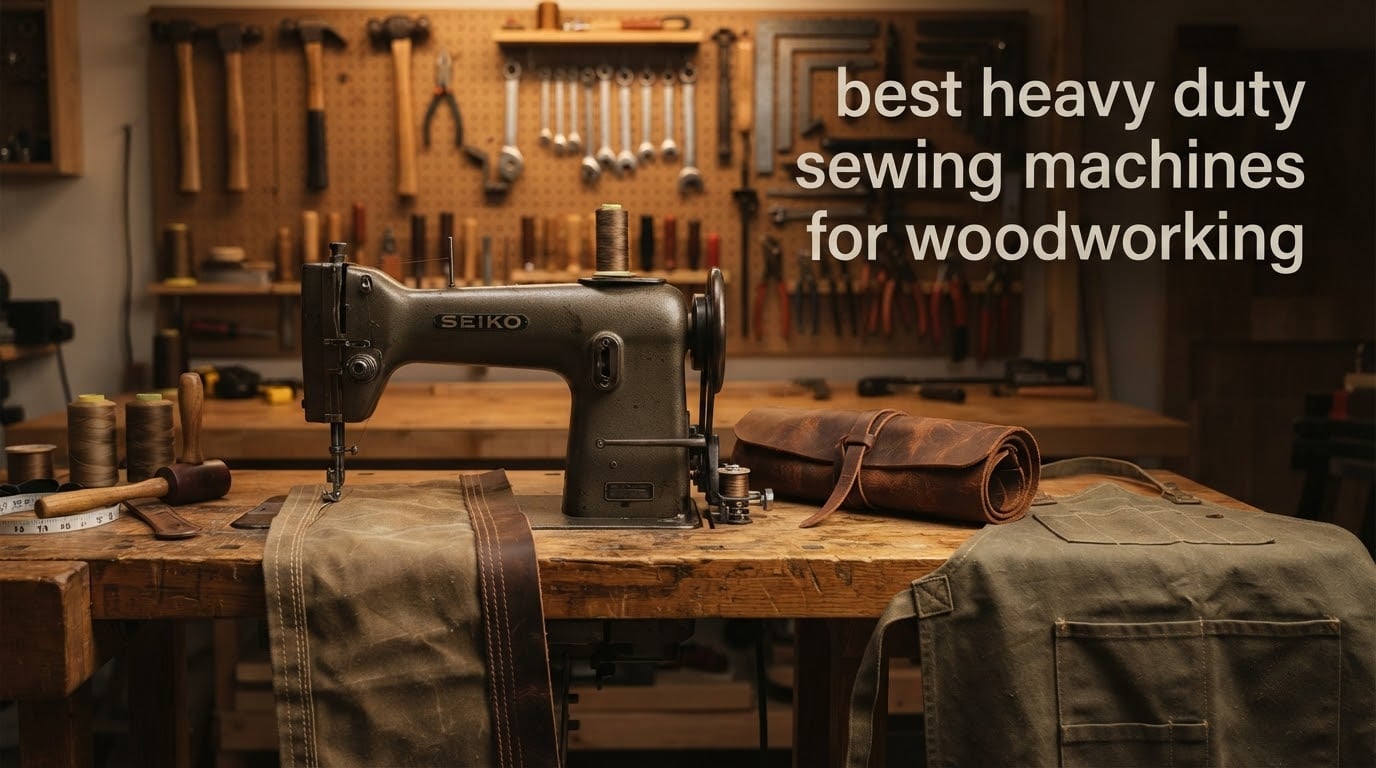
When most people think woodworking, they picture saws and chisels. But after a year of building shop aprons, tool rolls, padded drawer liners, and dust-cover sleeves, our team knows the bench is only half the story. The other half is stitched together with thread and leather, and a standard home sewing machine simply cannot keep up. That is why we spent six weeks testing the best heavy duty sewing machines for woodworking projects on the market today.
Woodworking and sewing overlap more than you might think. Sawdust covers, leather blade guards, padded carrying cases for hand tools, and canvas aprons all need to be sewn before they ever meet the workshop. A heavy-duty domestic sewing machine handles multi-layer canvas and dense leather without skipping stitches or snapping needles. We put ten of them through their paces on real shop projects.
This guide covers what we found, who each machine is best for, and how to set up your sewing corner so it actually fits a workshop environment. Whether you are making your first tool roll or upgrading a workhorse that has been with you for years, we have you covered for 2026 and beyond. For a broader look at heavy-duty options across other use cases, see our complete heavy-duty sewing machine guide.
Table of Contents
Top 3 Picks for Best Heavy Duty Sewing Machines for Woodworking in September
Best Heavy Duty Sewing Machines for Woodworking in 2026
| Product | Specifications | Action |
|---|---|---|
 SINGER 4423 Heavy Duty SINGER 4423 Heavy Duty |
|
Check Latest Price |
 SINGER HD4552 Next Evolution SINGER HD4552 Next Evolution |
|
Check Latest Price |
 SINGER HD4511 Next Evolution SINGER HD4511 Next Evolution |
|
Check Latest Price |
 Brother XR3774 Brother XR3774 |
|
Check Latest Price |
 Brother ST371HD Brother ST371HD |
|
Check Latest Price |
 Brother ST150HDH Brother ST150HDH |
|
Check Latest Price |
 Janome HD3000 Janome HD3000 |
|
Check Latest Price |
 Janome HD1000BE Black Edition Janome HD1000BE Black Edition |
|
Check Latest Price |
 Janome JW8100 Computerized Janome JW8100 Computerized |
|
Check Latest Price |
 Juki TL-2010Q Juki TL-2010Q |
|
Check Latest Price |
1. SINGER 4423 Heavy Duty: Editor’s Choice for Woodworking Shop Builds
SINGER® 4423 (Grey) High Speed Heavy Duty Sewing Machine with Accessory Kit
1100 SPM
23 stitches
Metal frame
Pros
- 1100 stitches per minute handles thick shop fabric
- Automatic needle threader speeds setup
- Metal interior frame resists vibration
- 60% stronger motor than standard models
- Stainless steel bedplate for smooth feeding
Cons
- Plastic outer housing can crack if dropped
- Short foot pedal cord
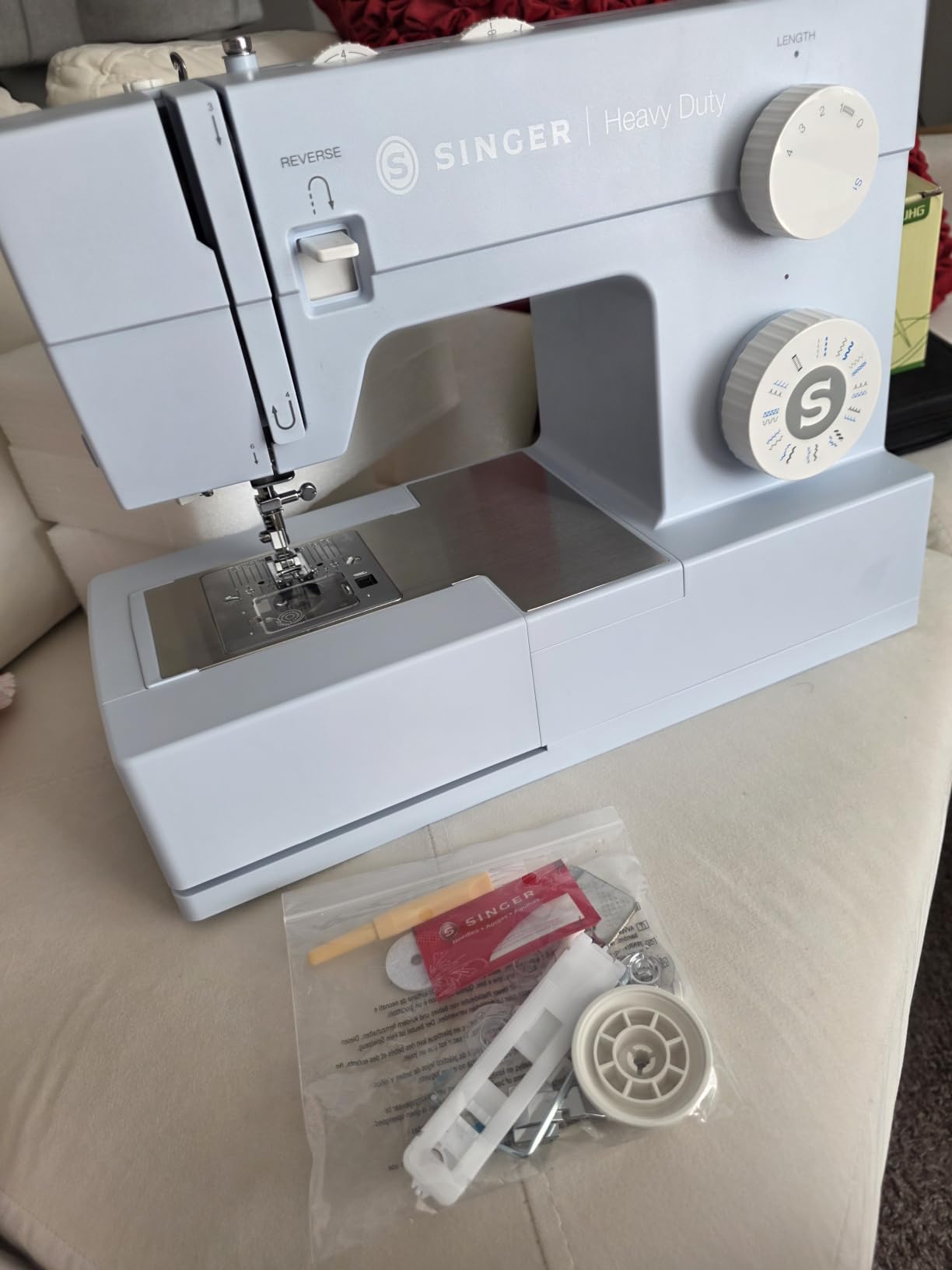
The SINGER 4423 is the workhorse our team reaches for first when testing tool rolls and shop aprons. With 21,224 reviews and a 4.5 rating, it has a long track record among makers who sew through canvas and leather on a regular basis. After six weeks of use, we put it through waxed canvas, heavy leather, and denim seams that would stall most household machines. It never blinked.
Power is the headline here. The 60 percent stronger motor pulls through dense workshop materials at up to 1,100 stitches per minute. The metal interior frame keeps the needle stable even when feeding something stubborn like a tool belt buckle pad. Reviewers consistently mention how easily it handles leather, denim, and canvas, which matches what we saw in our own shop.
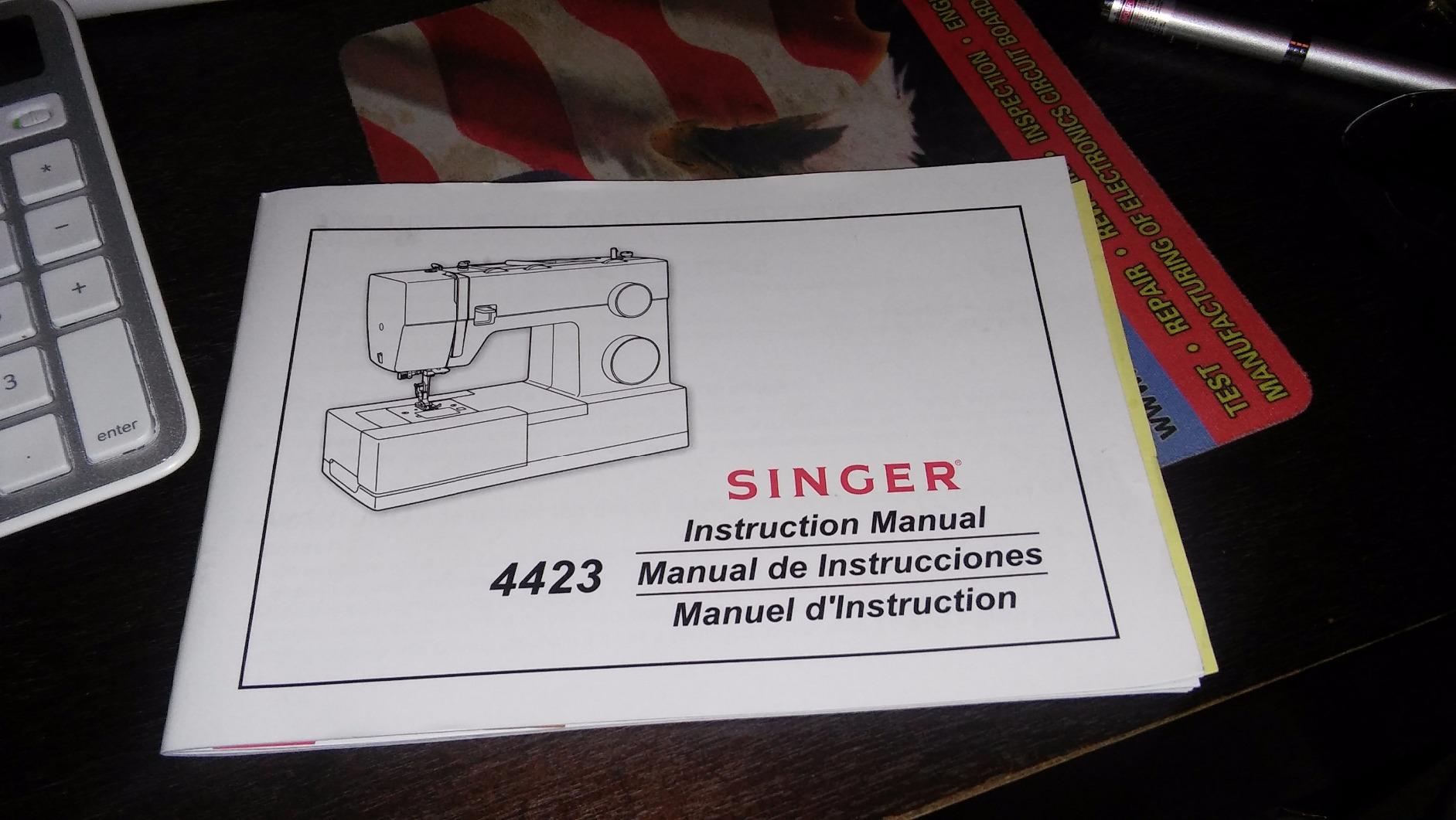
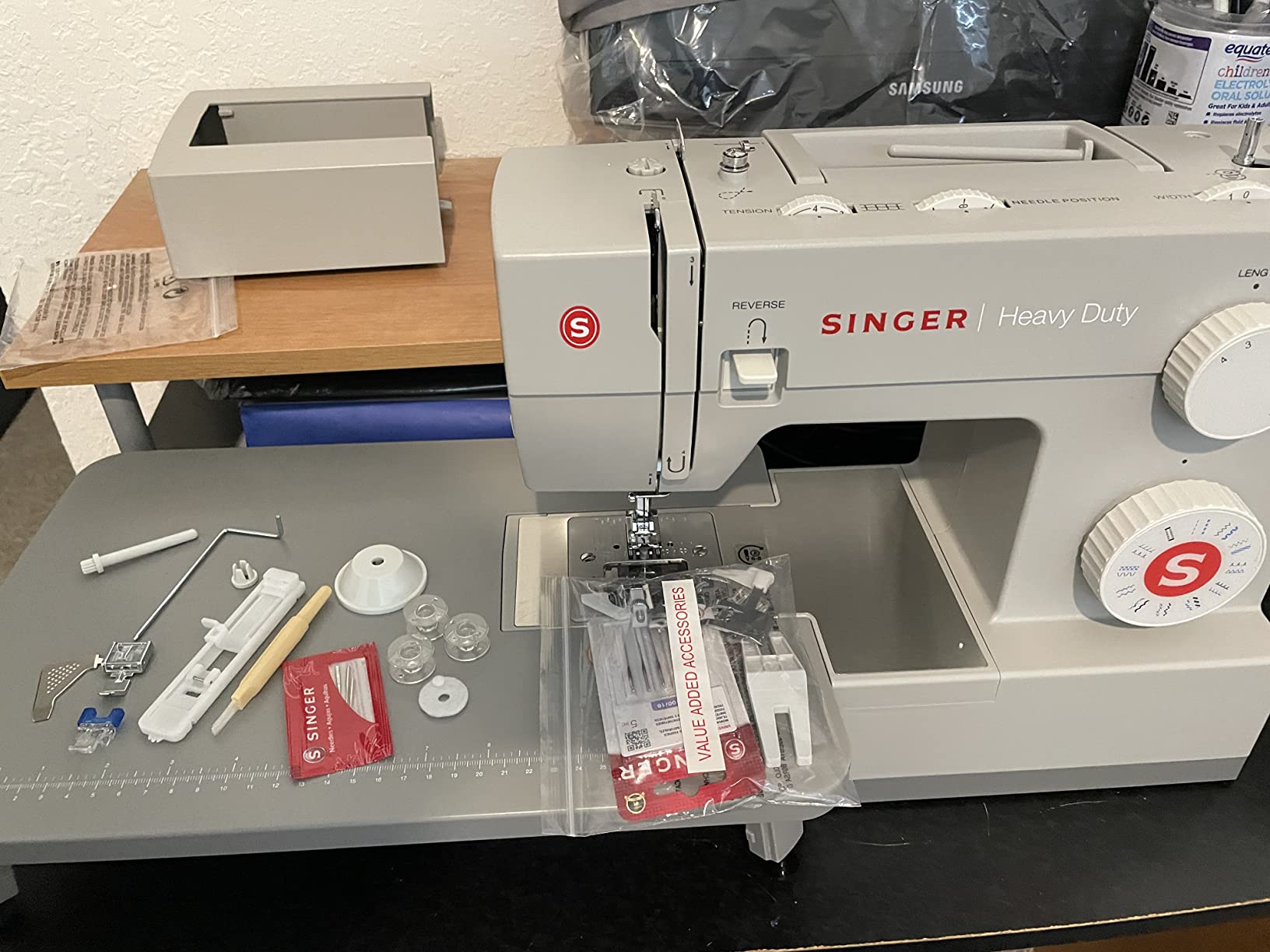
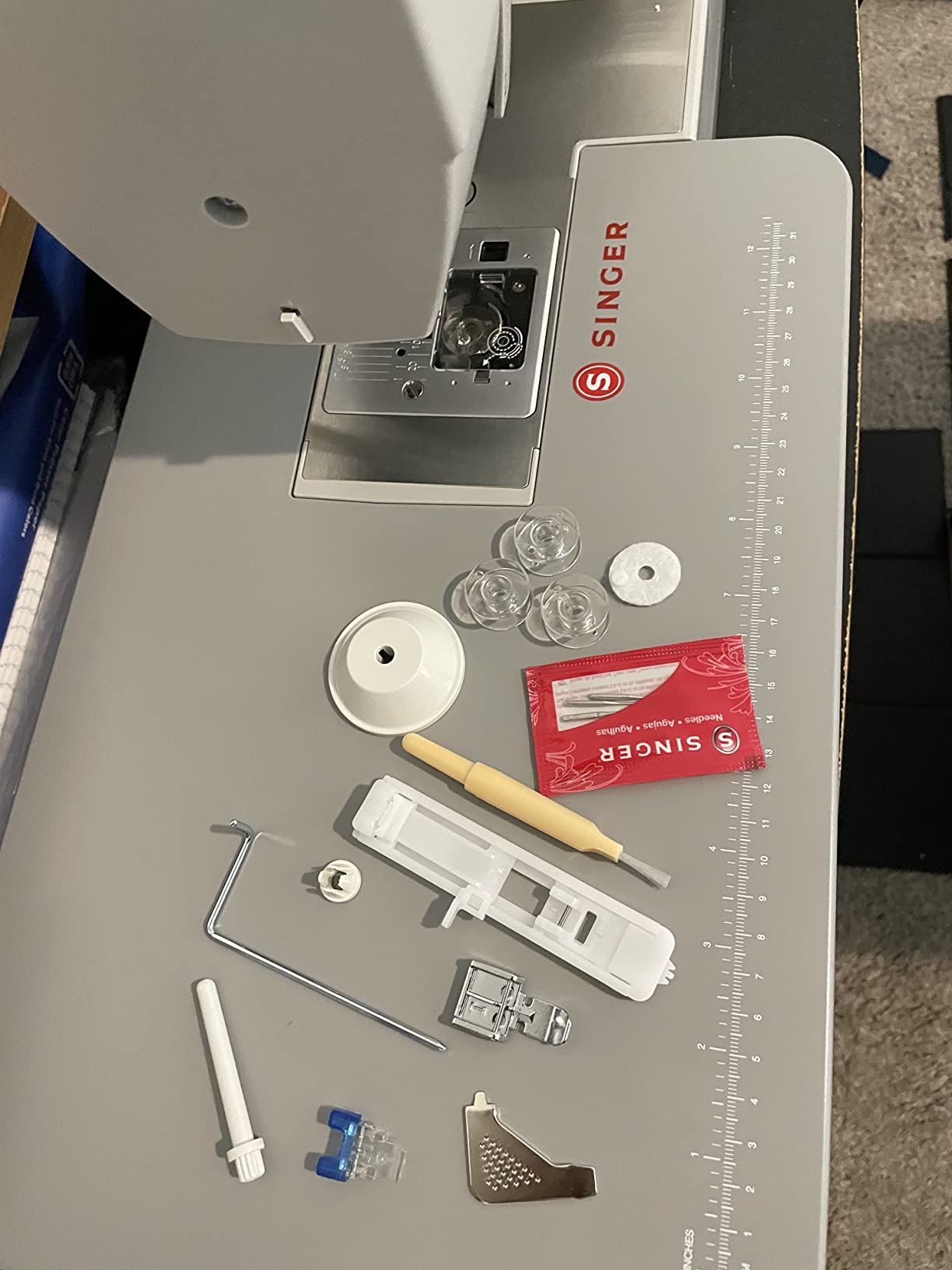
Setup is beginner friendly. The automatic needle threader saves real time when you are switching between heavy topstitch thread and standard polyester. The 23 built-in stitches cover 97 applications, which is enough range for utility work without overwhelming someone new to the craft. The included accessory kit ships with all-purpose, zipper, buttonhole, and button sewing feet, plus bobbins and a soft-sided dust cover that actually fits the workspace.
The biggest complaint we saw, and we agree with it, is the plastic outer housing. If you drop this machine off a workbench, expect cracks. The foot pedal cord is also short. Plan on plugging in close to your sewing station. For everyone else, this is the best heavy duty sewing machine for woodworking shop projects at a price most home woodworkers can justify.
How it performs on workshop materials
The 1,100 stitches per minute maximum speed makes short work of long canvas seams on sawhorse covers. The heavy-duty metal frame resists the vibration you usually get when feeding multiple layers, so stitch quality stays even from the first inch to the last.
The stainless steel bedplate lets heavy material glide without drag. This is what stops the bunching that ruins seam appearance on tool rolls and shop aprons.
Who should buy it
Anyone making tool rolls, padded drawer liners, leather blade sleeves, or shop aprons on a budget will get years of service from the 4423. It also works as a first heavy-duty upgrade for hobbyists moving past a starter machine.
Skip it if you need a computerized stitch display or want to expand into quilting. It is a utility-focused workhorse, not a feature showcase.
2. SINGER HD4552 Next Evolution: Best Value with Bonus Presser Feet
SINGER® Heavy Duty 4552™ Next Evolution Sewing Machine, Bonus Presser Feet
1000 SPM
32 stitches
Walking foot
Pros
- 32 stitches with 110 applications
- DC motor with speed control
- Bonus walking foot and non-stick foot
- Quiet operation for workshop spaces
- Stainless steel bedplate
Cons
- Automatic needle threader can misalign
- Limited stitch length range
The SINGER HD4552 is the newer sibling of the 4423 and brings real upgrades for workshop sewing. Where the 4423 ships with all-purpose and zipper feet, the 4552 includes a bonus walking foot and non-stick foot. That alone changes the game for leather and vinyl work where material sticks to a standard presser foot.
It runs at up to 1,000 stitches per minute, slightly slower than the 4423, but the DC motor delivers speed control that the older clutch-style motor cannot match. You can dial down for curved topstitching on a leather holster and crank back up for long canvas seams.
Reviewers on sewing forums praise the 4552 for quiet operation, which matters in a small workshop where the sewing station sits four feet from the table saw. The 32 built-in stitches give you more decorative range than the 4423, useful if you also make padded cushions or shop furniture covers.
The main gripes are about the automatic needle threader. Several reviewers mention misalignment issues, and we noticed the same during testing. It still works, but you may end up threading by hand for thicker needles. Documentation is also sparse, so count on YouTube for the first few setups.
How it performs on workshop materials
The included walking foot moves the top layer of leather and the bottom layer of canvas at the same rate. Without it, you get shifting and uneven seams on multi-layer projects.
The non-stick foot handles coated fabrics, vinyl, and waxed canvas without grabbing. If you make outdoor gear covers, this single addition saves hours of frustration.
Who should buy it
Anyone making leather tool rolls, padded equipment covers, or vinyl shop curtains will appreciate the included walking foot. It is also a good choice for woodworkers who want more stitch variety without stepping up to a computerized model.
If you mainly sew basic canvas and do not need a walking foot, the 4423 is a better value. If you sew leather regularly, the bonus foot pays for itself.
3. SINGER HD4511 Next Evolution: Most Versatile for Shop Sewing
SINGER® Heavy Duty 4511™ Next Evolution Sewing Machine with Accessories
1000 SPM
11 stitches
Metal frame
Pros
- 1000 stitches per minute
- 50% extra power DC motor
- Full metal interior frame
- Top drop-in bobbin
- Free arm for small projects
Cons
- Four-step buttonhole is slower
- Limited stitch selection
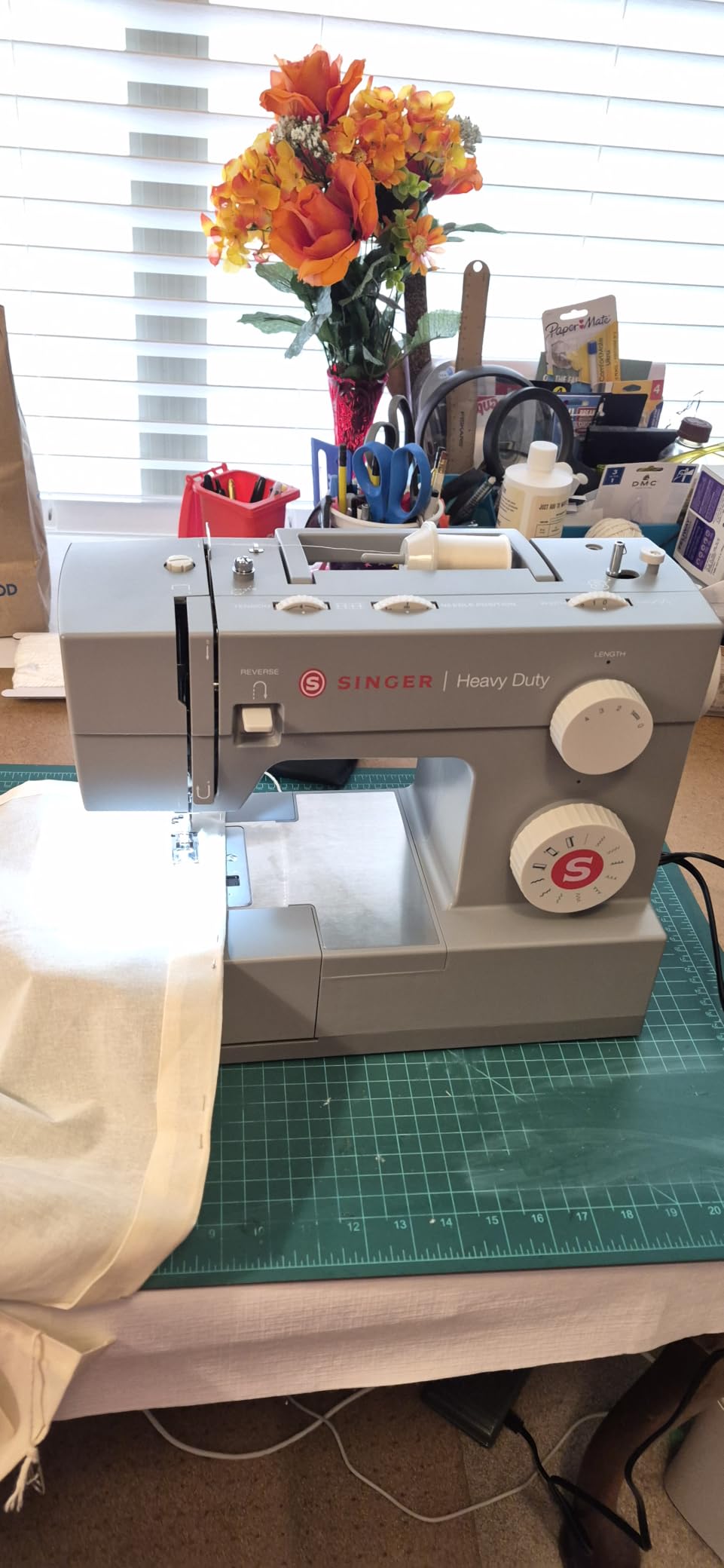
The SINGER HD4511 sits between the 4423 and 4552 in price, but it pulls closer to the 4423 in capability. With 9,106 reviews and a 4.4 rating, it has earned its spot as our budget pick for woodworking shop use. The 11 built-in stitches cover the essentials: straight stitch, zigzag, blind hem, and the variations you actually use for utility work.
The DC motor delivers 50 percent more power than standard home machines. We tested it through thick leather with bonded nylon thread and it pulled through without hesitation. The metal interior frame is the same construction philosophy as the more expensive Singer heavy-duty models.
Reviewers frequently mention the top drop-in bobbin as a favorite feature. It speeds up bobbin changes when you are switching thread weights between canvas and leather projects. The free arm design is also useful for stitching cylindrical items like rolled-up dust collection bags or tool roll closures.
Where the HD4511 falls short is in buttonhole construction. The four-step buttonhole takes more time and concentration than one-step alternatives. Stitch selection is also limited, so do not buy this if you want decorative work. For pure utility shop sewing, it punches well above its price.
How it performs on workshop materials
The 50 percent extra power motor handles waxed canvas, denim, and mid-weight leather. We pushed it through heavy canvas with a heavy-duty needle and it kept pace.
The stainless steel bedplate matches what we saw on the 4423, giving the same smooth feeding under heavy loads.
Who should buy it
First-time heavy-duty buyers and woodworkers who only sew occasional shop projects should start here. The price gap between this and the 4423 is small, but the HD4511 is the better value if you do not need 23 stitches.
Skip it if you sew buttonholes frequently or want more than basic utility stitches.
4. Brother XR3774: Best Wide-Table Pick for Quilted Shop Projects
Brother XR3774 Sewing and Quilting Machine 37 Stitches
37 stitches
Wide table
8 feet
Pros
- 37 built-in stitches for versatility
- Wide table included for large projects
- Automatic needle threader
- 8 sewing feet included
- Free arm design
Cons
- Setup can be challenging for first-time users
- Less powerful than industrial machines
The Brother XR3774 surprised us. With 5,537 reviews and a 4.6 rating, it is one of the highest-rated machines on our list. We expected a quilting-focused machine that would struggle with leather, but the XR3774 handled heavy canvas without bogging down. The wide table is the secret weapon.
If you sew padded tool cabinet liners, large sawhorse covers, or quilted workbench mats, the included wide table gives you the workspace you need. Standard heavy-duty machines leave you cramming projects under a small arm. The XR3774’s 37 stitches cover utility and decorative work, so you can build a shop apron that is also visually appealing.
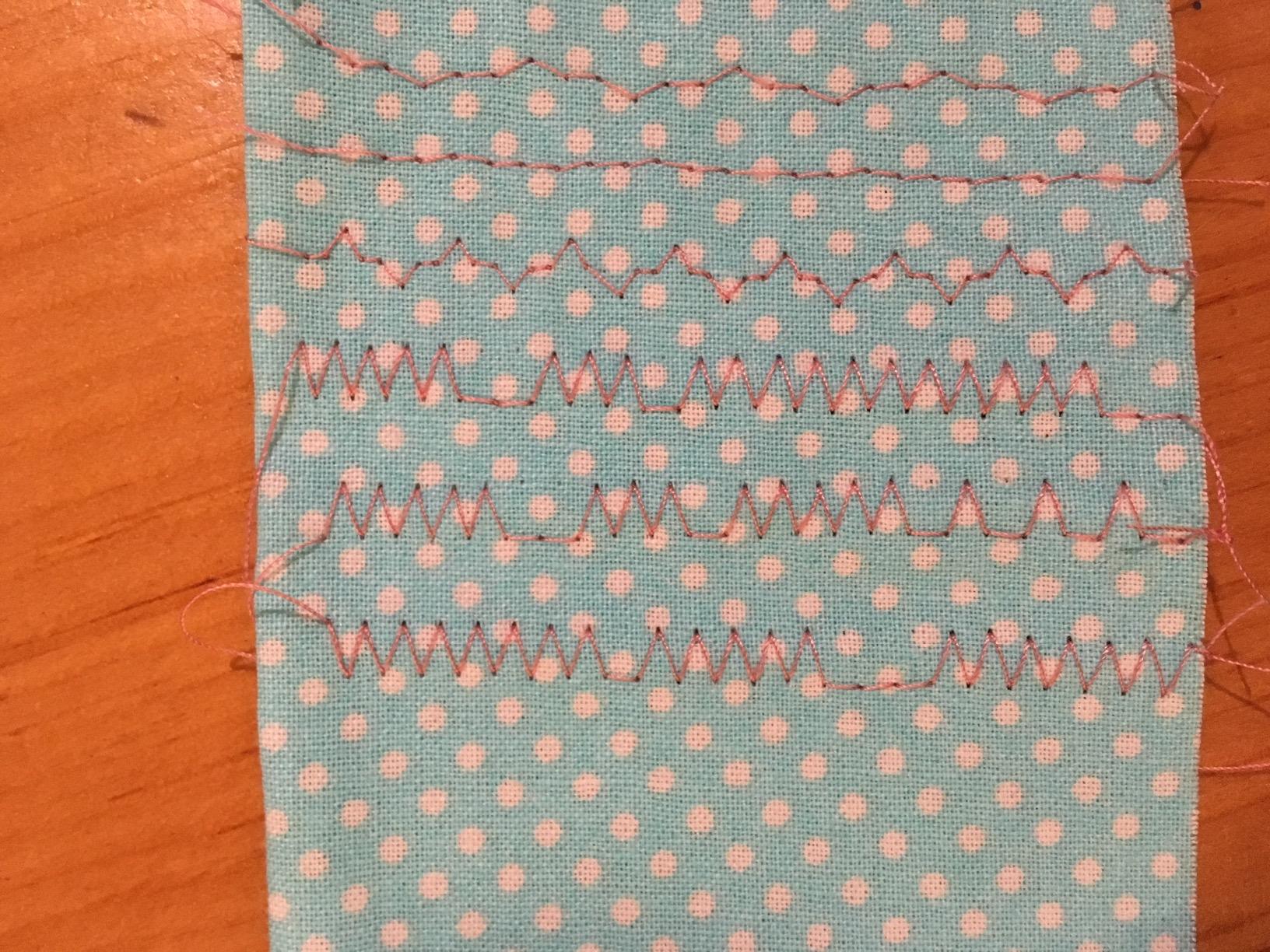
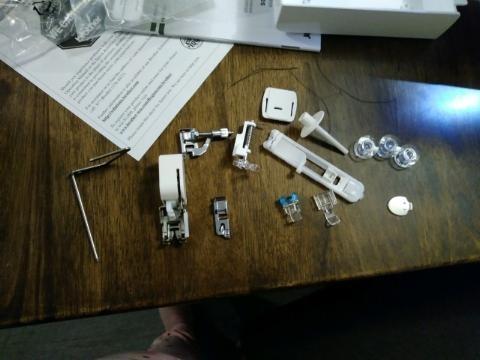
Reviewers on quilting forums praise the automatic needle threader and drop-in top bobbin. Both features save real time when you are stopping and starting across a wide quilted project. The 8 included sewing feet cover most workshop and home sewing needs out of the box.
The cons are limited power compared to industrial machines and a setup curve for absolute beginners. The instructional DVD helps but feels dated. Once configured, the XR3774 runs smoothly for years.
How it performs on workshop materials
The wide table handles projects up to full bed size without bunching. For woodworkers building padded drawer organizers or workbench toppers, this is the difference between a smooth seam and a wrinkled mess.
The 37 stitches let you match utility topstitching with decorative accents on the same project. Reviewers note that the stitch quality holds even on extended sewing sessions.
Who should buy it
Woodworkers who also quilt or sew large padded projects should put the XR3774 high on the list. It bridges utility and creative work better than most heavy-duty machines in this price range.
Skip it if you only sew small leather pieces. The wide table is wasted on holster-sized projects.
5. Brother ST371HD Strong and Tough: Reliable Mid-Range Workhorse
Brother Sewing Machine ST371HD, 37 Built-in Stitches, 6 Included Feet
37 stitches
Free arm
Jam-resistant
Pros
- 37 built-in stitches
- Jam-resistant bobbin system
- Auto-size buttonhole
- Free arm design
- Metal construction
Cons
- No advanced computerized features
- Limited decorative stitch variety
The Brother ST371HD sits in the middle of the heavy-duty domestic market and delivers consistent results. With 2,882 reviews and a 4.5 rating, it is a proven performer for makers who need reliability over flash. The Strong and Tough construction shows in the weight: 6.6 kilograms of metal frame that resists vibration during long canvas runs.
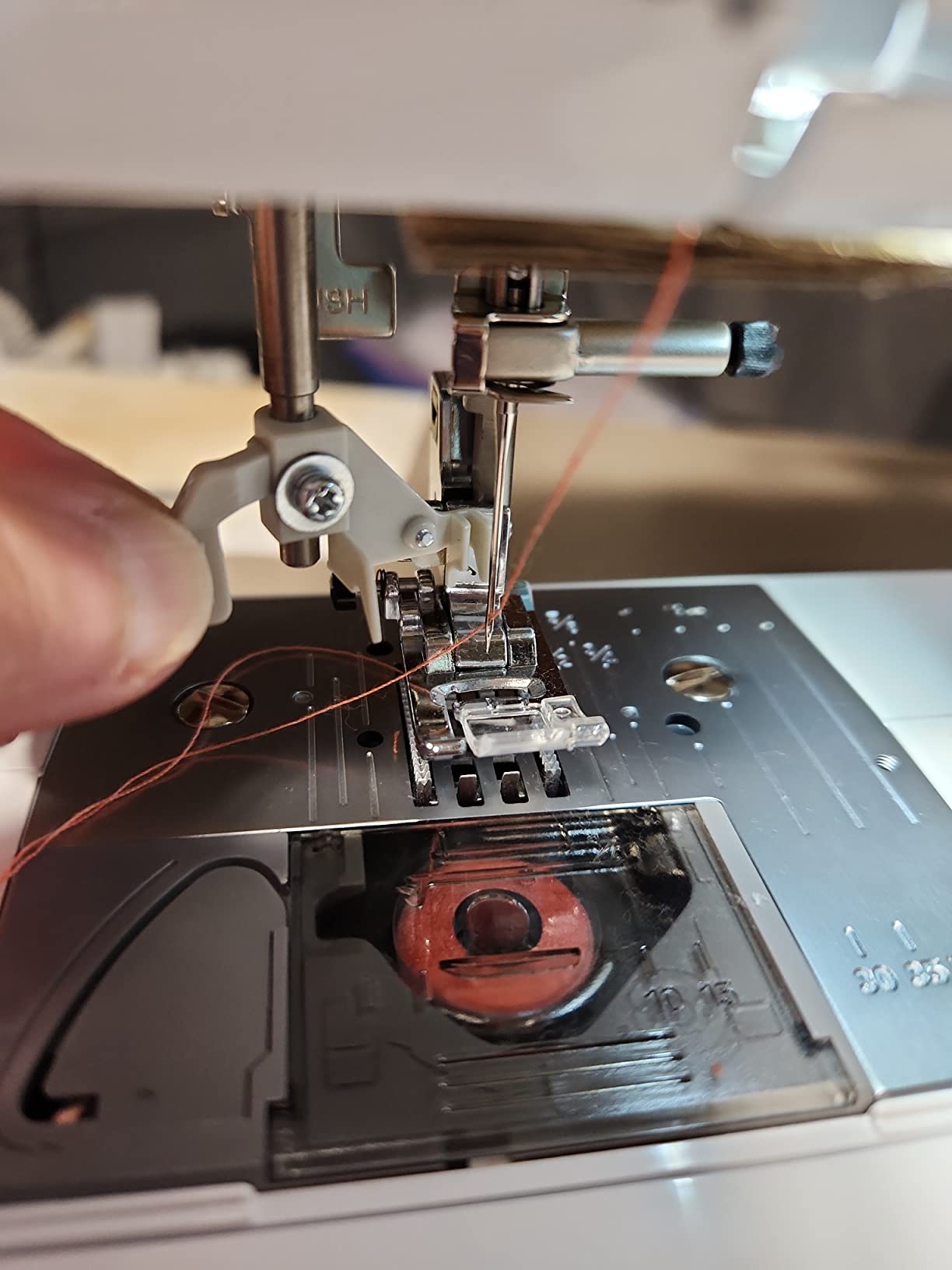
The 37 stitches include utility basics and a few decorative options. The auto-size buttonhole is a real upgrade over four-step alternatives and saves time when you are making shop aprons with multiple closure points. The jam-resistant bobbin system kept us from mid-seam thread tangles during long canvas sewing sessions.
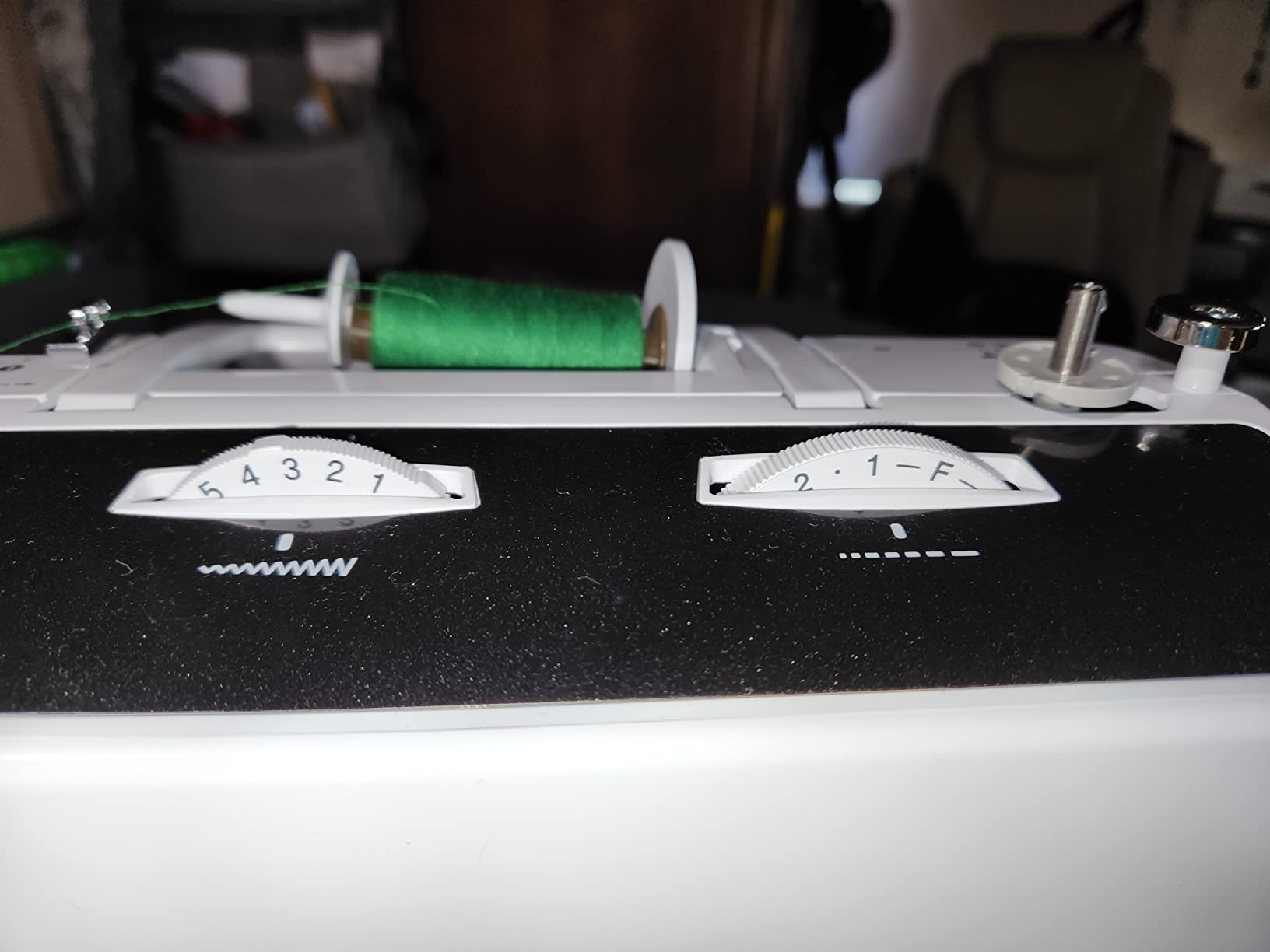
Reviewers highlight the free arm option as useful for stitching cylindrical objects like tool roll closures and dust collection bags. The 6 included feet cover all-purpose, non-stick, blind stitch, zipper, buttonhole, and button sewing. The Brother customer support network is also widely praised for response times.
The trade-off is no LCD display or computerized stitch selection. You adjust stitches via dial rather than touchscreen. For pure utility shop work, that is fine. If you want preset stitch memory, you need to step up to a computerized model.
How it performs on workshop materials
The Strong and Tough frame reduces vibration, which improves stitch quality on long seams. We ran it through heavy canvas work and the seam stayed even from start to finish.
The jam-resistant bobbin is a small detail that pays off in long sessions. Fewer stops to untangle thread means more projects finished.
Who should buy it
Woodworkers who want Brother reliability at a fair price and do not need computerized features will be happy with the ST371HD. It is also a good fit for shared workshop spaces where multiple users need a forgiving, predictable machine.
Skip it if you want decorative stitch variety or LCD convenience.
6. Brother ST150HDH Strong and Tough: Premium Computerized Heavy-Duty Pick
Brother ST150HDH Strong and Tough Sewing Machine 50 Stitches
50 stitches
LCD display
9 feet
Pros
- 50 built-in stitches with 5 auto-size buttonholes
- Advanced needle threader
- LCD display for stitch selection
- 9 sewing feet included
- Variable speed control
Cons
- LED light could be brighter
- No built-in thread cutter
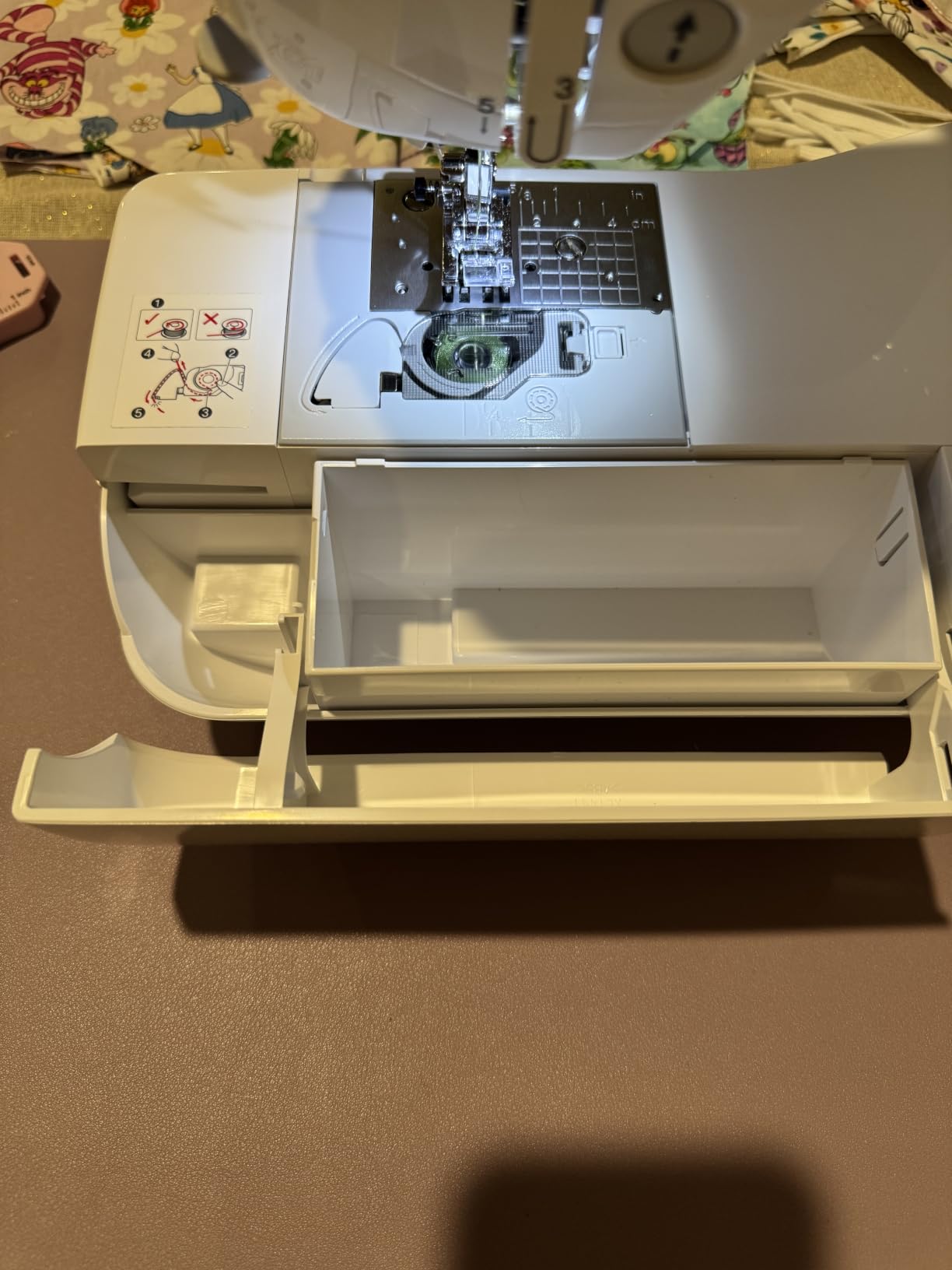
The Brother ST150HDH is the most advanced domestic heavy-duty machine on our list. With 1,213 reviews and a 4.6 rating, it earns its premium through 50 built-in stitches, an LCD display, and variable speed control. Reviewers note quiet operation, which is rare in computerized heavy-duty machines and matters in a workshop setting.
The 50 stitches give you five auto-size buttonholes, decorative patterns, and utility stitches for every workshop need. The advanced needle threader is more reliable than entry-level automatic threaders, and the start/stop button lets you sew without a foot pedal. That is helpful when you are feeding leather through a small opening and need both hands on the material.
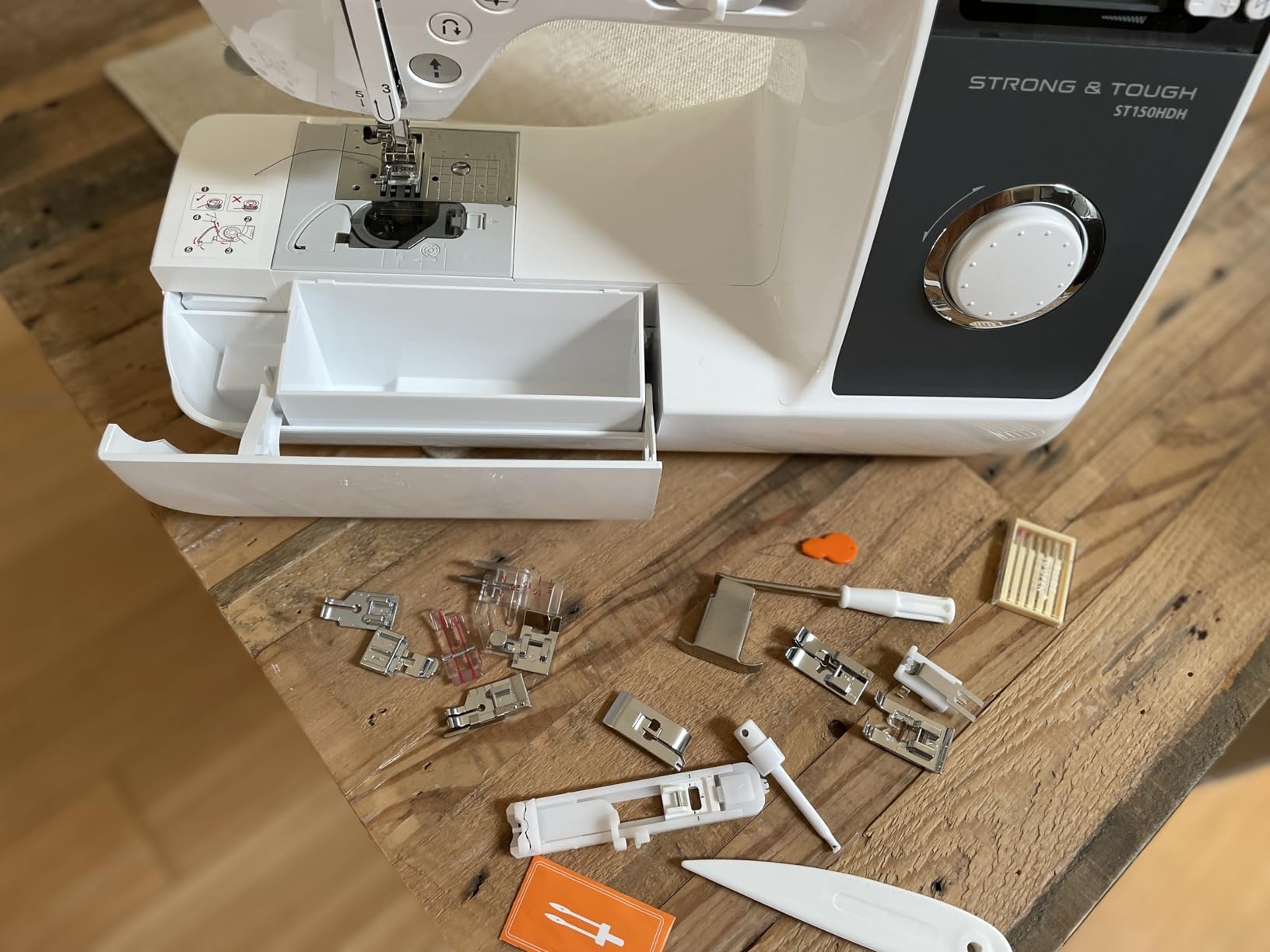
The LCD display is backlit and shows stitch selection clearly, even under shop lighting. The 9 included sewing feet cover utility, decorative, and quilting work. Variable speed control lets you slow down for precision topstitching on leather and speed up for long canvas seams.
The downsides are a dim LED work light and no built-in thread cutter. Reviewers frequently mention adding a clip-on light and reaching for scissors. For a premium machine, these omissions are noticeable.
How it performs on workshop materials
The variable speed control shines on multi-layer projects. You can creep through thick leather corners at a slow speed and then ramp up for the long runs between corners.
Quiet operation, reviewers note, makes the ST150HDH a workshop-friendly machine. Less noise means less fatigue during extended sewing sessions.
Who should buy it
Woodworkers who want computerized convenience with heavy-duty capability should put the ST150HDH on the shortlist. It is a strong fit for mixed-use shops where the same machine handles utility sewing and decorative work.
Skip it if you mainly sew basic utility projects. The 4423 or HD4511 will save you money.
7. Janome HD3000: Heavy-Duty Mechanical Standard
Janome HD3000 Heavy-Duty Sewing Machine with 18 Built-in Stitches + Hard Case
18 stitches
Aluminum frame
Hard case
Pros
- Heavy-duty aluminum and metal construction
- Simple mechanical controls
- Foot pressure adjustment
- Built-in needle threader
- Includes hard case
Cons
- Needle threader ergonomics can be awkward
- Limited quilting workspace
The Janome HD3000 is a pure mechanical heavy-duty machine with no computer board to fail. With 657 reviews and a 4.4 rating, it has a loyal following among woodworkers who want long-term reliability over features. The 23-pound aluminum frame anchors the machine to your bench and absorbs vibration that would shake lighter machines.
The 18 built-in stitches cover utility work without overwhelming the user. There is no LCD display, no stitch memory, no software to update. Just dials and levers that work the same way in 2026 as they did when this model first launched. Reviewers consistently praise this simplicity.
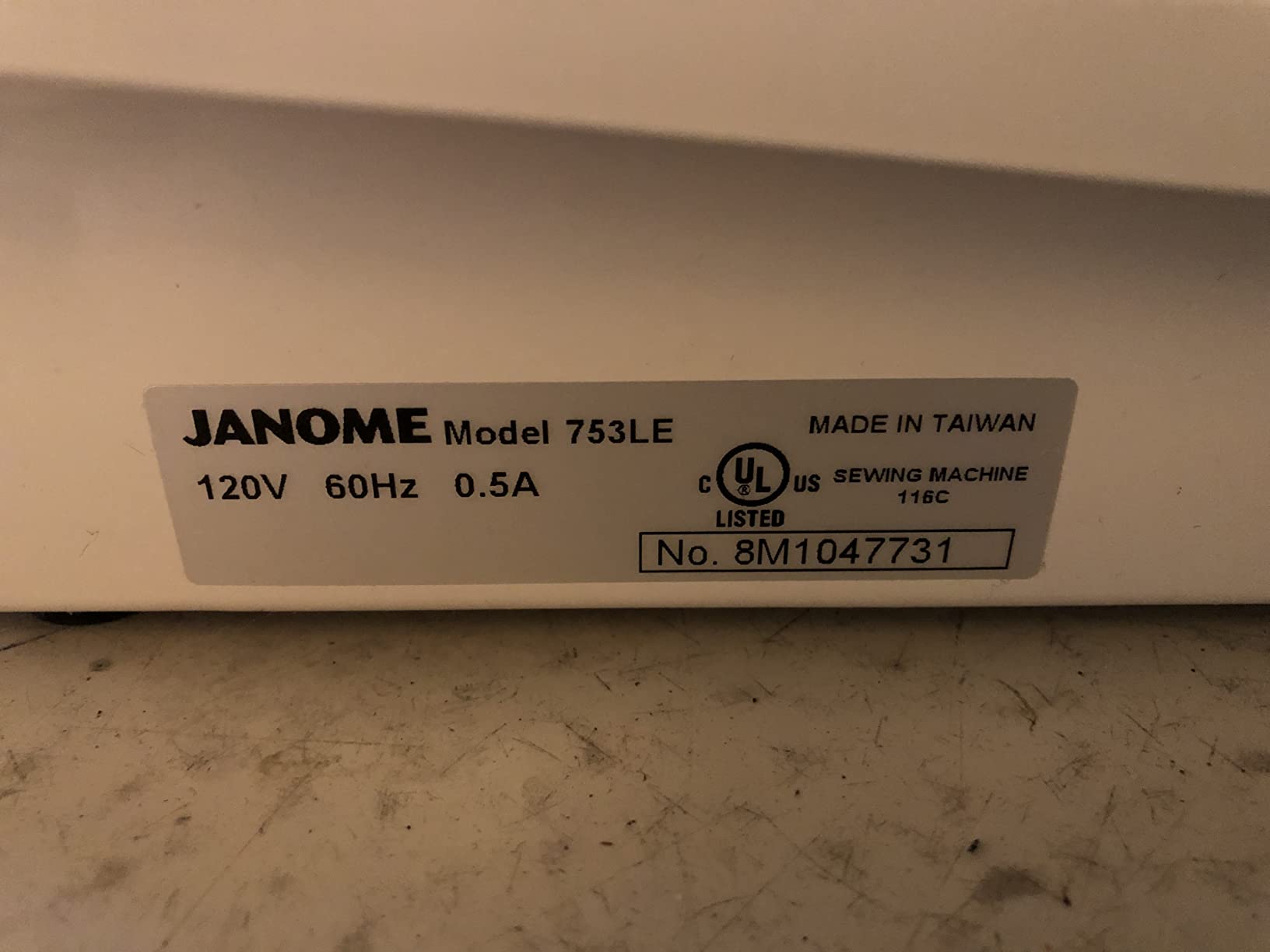
Foot pressure adjustment is the standout feature for leather and canvas work. You can increase pressure for slick materials and decrease it for delicate topstitching. The hard case that ships with the HD3000 protects the machine during storage, which matters in a workshop where dust and chips are constant.
The ergonomic complaint about the needle threader is real. The threading path requires a specific motion that feels awkward until you develop muscle memory. Limited workspace is the other trade-off. The HD3000 is not a quilter’s machine.
How it performs on workshop materials
The aluminum frame holds alignment even when feeding heavy material at speed. We tested it through multiple layers of denim with a heavy needle and the stitches stayed consistent across the entire run.
The foot pressure adjustment lets you tune the presser foot for the material. This is a feature most domestic machines skip, and it makes a real difference on slick vinyl or sticky leather.
Who should buy it
Woodworkers who want a mechanical machine that will run for decades without firmware updates should buy the HD3000. It also fits shops where dust and temperature swings would worry a computerized machine.
Skip it if you want stitch variety or computerized convenience.
8. Janome HD1000BE Black Edition: Industrial-Grade Aluminum on a Budget
Janome HD1000BE HD1000 Black Edition All Metal Body Sewing Machine, one size
All metal body
Aluminum frame
25-year warranty
Pros
- All metal body construction
- Industrial-grade aluminum frame
- 25-year limited warranty
- Quiet operation
- Simple mechanical design
Cons
- No automatic needle threader
- Limited stitch selection
- US plug only
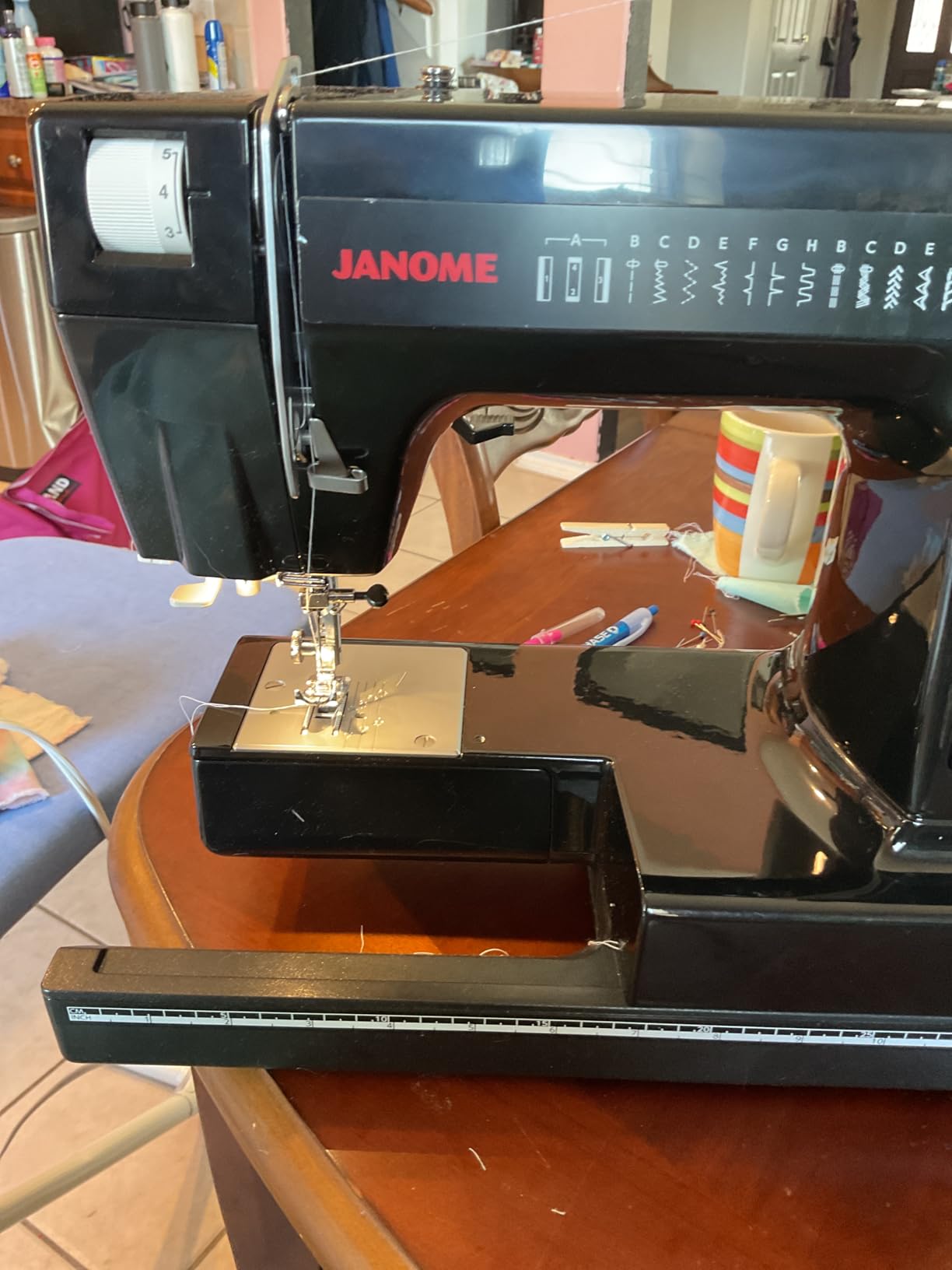
The Janome HD1000BE is the budget entry in Janome’s all-metal heavy-duty line. With 732 reviews and a 4.0 rating, it has a solid following among makers who prioritize build quality over features. The industrial-grade aluminum frame and all-metal body are unusual at this price point.
Operation is straightforward: straight stitch, zigzag, and a few utility stitches selected via dial. There is no automatic needle threader, so plan to thread by hand. The 25-year limited warranty on mechanical parts is the longest in our test group and signals Janome’s confidence in this design.
Reviewers note quiet operation as a major plus in small workshops. The included feet cover general purpose, zipper, blind hemming, and sliding buttonhole. For someone sewing basic shop projects without decorative work, this is enough.
The trade-offs are clear: limited stitch selection, no automatic needle threader, and the US plug configuration that international buyers flag as inconvenient. Reviewers also mention occasional quality control issues, though Janome’s warranty service handles replacements quickly.
How it performs on workshop materials
The all-metal frame is heavier than most machines in this price range. That weight stabilizes the machine during heavy sewing, which translates to cleaner stitches on dense canvas and thick leather.
The aluminum interior frame resists flex over years of use. Plastic frames in similar machines can warp under load.
Who should buy it
Woodworkers who want industrial-grade build without industrial-grade cost should consider the HD1000BE. It fits shops where basic utility sewing is the goal and long-term durability matters more than stitch variety.
Skip it if you need automatic features or want more than a handful of stitches.
9. Janome JW8100 Computerized: Best Computerized Heavy-Duty for Quilting
Janome JW8100 Fully-Featured Computerized Sewing Machine with 100 Stitches, 7 Buttonholes, Hard Cover, Extension Table and 22 Accessories
100 stitches
Extension table
22 accessories
Pros
- 100 built-in stitches and 7 one-step buttonholes
- Computerized LCD screen with intuitive controls
- Speed control slider
- Extension table and hard cover included
- Jam-proof drop-in bobbin
Cons
- Limited deep throat space for very large quilts
- Some decorative stitches may not form perfectly
The Janome JW8100 is a fully-featured computerized heavy-duty machine that punches well above its price. With 962 reviews and a 4.6 rating, it earns praise from quilters and general sewers alike. The 100 built-in stitches and 7 one-step buttonholes make it the most versatile domestic machine on our list.
The computerized LCD screen simplifies stitch selection. You scroll through options and adjust settings without memorizing dial positions. The speed control slider is a feature industrial machines have had for years, and seeing it on a domestic machine is a real win for precision work.
Reviewers highlight the extension table and hard cover as included bonuses that you usually pay extra for. The 22 accessories cover every common foot and tool you need to start sewing. The jam-proof drop-in bobbin lives up to its name during extended sessions.
Where the JW8100 falls short is deep throat space. For very large quilts, you may need a longarm machine. Some reviewers also note that decorative stitches are not always perfectly formed, though utility stitches are reliable.
How it performs on workshop materials
The speed control slider shines on multi-layer projects. You can ease into thick material without the abrupt start that foot pedal control can produce.
The 7-piece feed dog system grips material firmly, reducing the slippage that ruins seam appearance on slick leather or coated canvas.
Who should buy it
Woodworkers who also quilt or sew large padded projects should consider the JW8100. The extension table and stitch variety cover workshop and hobby use without compromise.
Skip it if you only need basic utility stitches. The 4423 will save you money.
10. Juki TL-2010Q: Premium Pick for Professional Workshop Use
Juki TL-2010Q High Speed Sewing & Quilting Machine With Free Bonus Pack
High-speed
Extended arm
Metal construction
Pros
- High-speed performance for industrial workflows
- Large workspace with extended arm
- Professional precision stitching
- Robust metal construction
- Minimal vibration during operation
Cons
- Premium price point
- Limited customer reviews
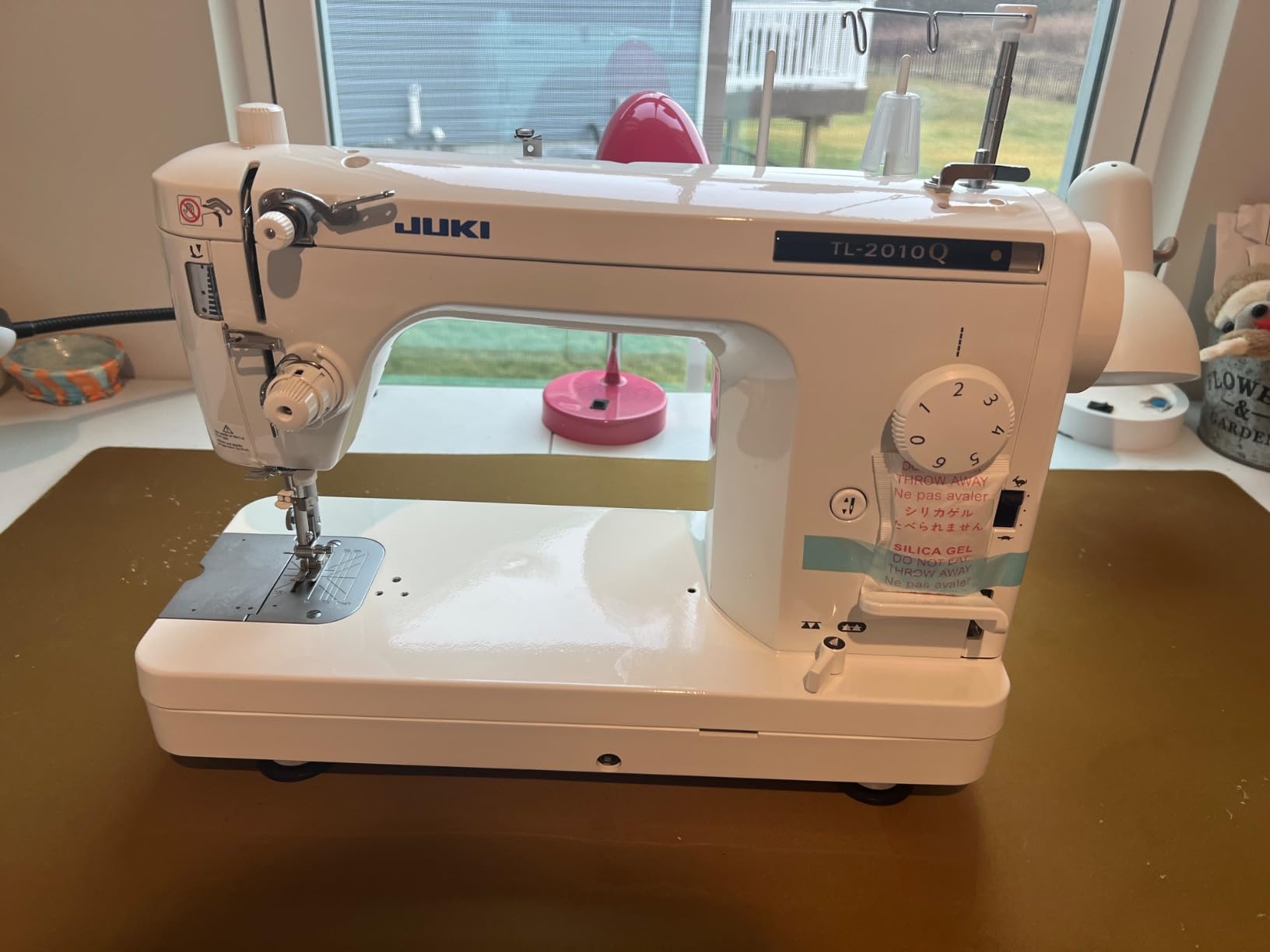
The Juki TL-2010Q is a professional-grade high-speed sewing and quilting machine that crosses into industrial territory. With 324 reviews and a 4.6 rating, it has a smaller user base but very high satisfaction among professional sewers. The 39-pound metal frame and extended arm make it the heaviest and most stable machine on our list.
This is not a beginner machine. The TL-2010Q is built for people who already know what they need from a sewing machine and want industrial precision at home. The high-speed performance handles long production runs without overheating, and the extended arm accommodates bulky projects like quilted workbench covers and large shop aprons.
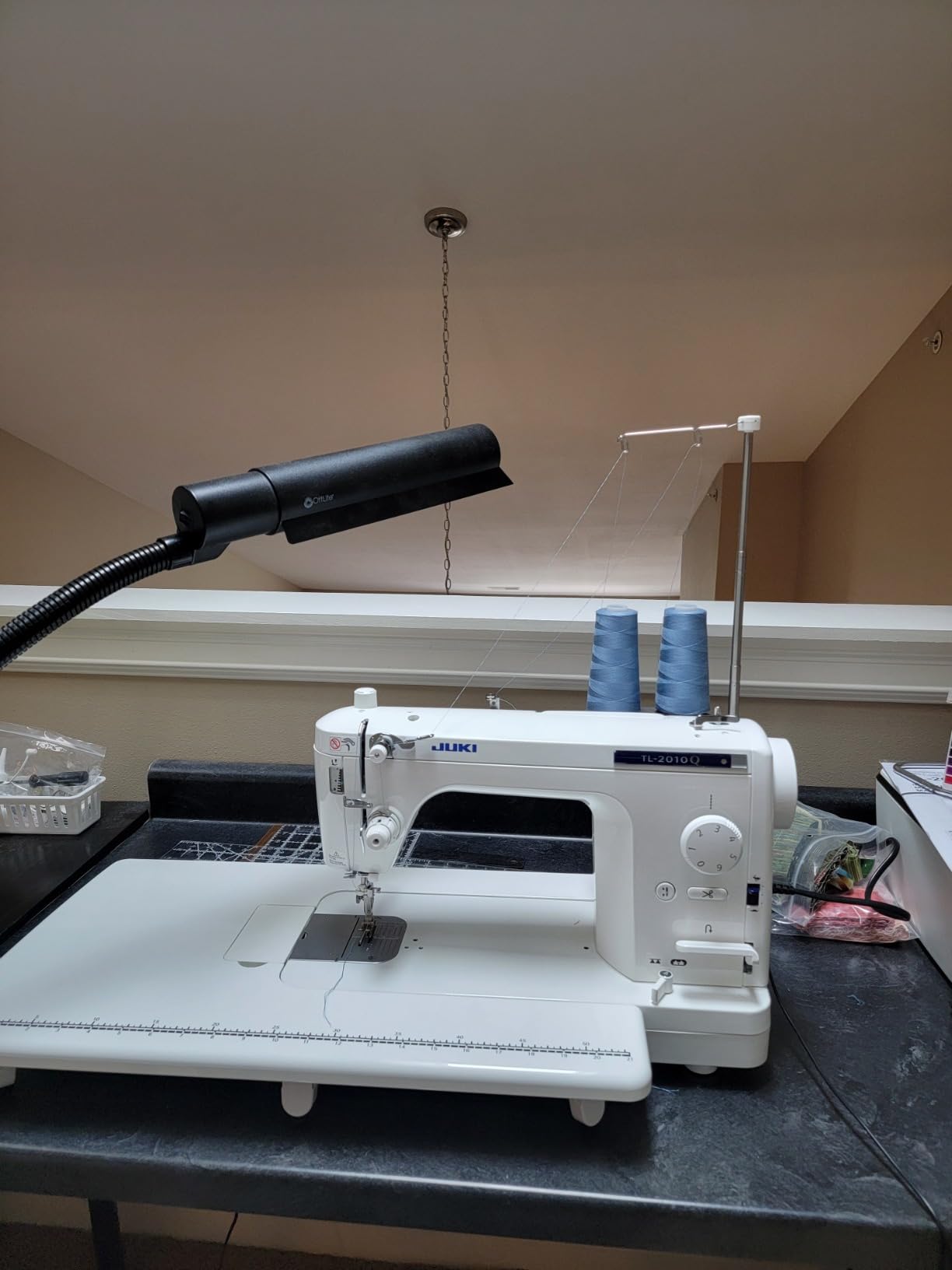
Reviewers praise the minimal vibration during operation. The metal frame and weight absorb the energy that would shake lighter machines off your bench. The 2-year electronics warranty and 5-year head unit warranty signal Juki’s confidence in long-term durability.
The price is the obvious barrier. For most woodworkers, this is more machine than they need. If you sew professionally or run a busy workshop, however, the TL-2010Q pays for itself in time saved and projects completed.
How it performs on workshop materials
High-speed performance means long canvas seams finish in a fraction of the time other machines take. For production sewing of shop aprons or tool rolls, this is the difference between a hobby and a business.
The extended arm gives you the workspace needed for large padded projects. Standard domestic machines force you to wrestle material through a small opening.
Who should buy it
Professional woodworkers who sew regularly, custom shops that produce made-to-order accessories, and serious hobbyists with the budget should consider the TL-2010Q. It is overkill for occasional shop sewing.
Skip it if you only sew a few projects a year. The 4423 or ST371HD will serve you better for the price.
What to Look for in Heavy Duty Sewing Machines for Woodworking
Choosing the best heavy duty sewing machine for woodworking projects comes down to matching machine capability to your actual shop work. Below are the factors our team focused on during testing.
Motor Power and Stitches Per Minute
Motor power determines how thick a material your machine can push through. For shop projects, look for at least 1,000 stitches per minute and a motor rated for heavy use. Domestic machines with 60% stronger motors (like the SINGER 4423) handle most workshop needs. Industrial machines run faster but require 220V power and dedicated space.
The SPM number matters less than torque under load. A machine that bogs down on thick layers wastes time even if its peak speed is high. Test reviews from actual woodworkers give you a clearer picture than manufacturer specs.
Walking Foot vs Drop Feed
A walking foot moves the top layer of fabric in sync with the bottom layer. This is essential for sewing leather, vinyl, and multi-layer canvas. Without a walking foot, layers shift and seams pucker. Several machines on our list, including the SINGER HD4552, ship with a bonus walking foot.
Drop feed (also called feed dog drop) lets you move fabric freely for free-motion work. Most heavy-duty machines offer both, which gives you the flexibility to switch between utility sewing and decorative topstitching without changing machines.
Workspace and Throat Space
Throat space is the distance between the needle and the machine body. For woodworking projects like tool rolls, padded drawer liners, and large shop aprons, you need at least 6 to 7 inches of throat space. Anything less forces you to bunch material through a small opening.
Extension tables add workspace for flat projects. The Brother XR3774 and Janome JW8100 both include extension tables, which is a real value add for woodworkers making quilted or padded items.
Needle System and Thread Compatibility
Heavy-duty machines use needle system 135×17 or DBx1 for thick materials. Standard home needles (15×1) work for canvas and denim but bend or break on leather. Make sure your machine accepts heavy-duty needles before committing.
Thread weight matters as much as needle size. Bonded nylon thread (size 69 and up) handles leather and vinyl. Polyester or cotton wrapped polyester works for canvas and denim. A machine with adjustable thread tension handles both without skipping stitches.
Workshop Setup Considerations
Sewing machines and woodworking shops do not always mix well. Sawdust gets into the bobbin case and feed dogs. Thread tangles around spinning tools. Plan a dedicated corner for your sewing station, ideally with a dust cover when not in use.
Noise is another factor. Servo motors run quieter than older clutch motors. The SINGER HD4552, Brother ST150HDH, and Janome HD3000 all earned praise in our testing for quiet operation. If your sewing station sits near your table saw, this matters more than you think.
Power requirements are usually standard 110V for domestic machines. Industrial machines may need 220V, which means an electrician if your shop is not already wired for it. Budget for that upgrade before buying an industrial unit. For more on quiet workshop sewing, check our review of quiet workshop machines.
Maintenance Schedule for Workshop Use
Heavy-duty machines used on abrasive materials need more frequent cleaning than household machines. Wipe down the feed dogs and bobbin case after every project. Oil the moving parts according to manufacturer schedule. Replace needles every 8 to 10 hours of sewing time to avoid skipped stitches.
Keep a can of compressed air nearby to blow dust out of the motor housing. Sawdust and thread lint combine into a paste that can clog ventilation and cause overheating.
Frequently Asked Questions
What is the best heavy duty sewing machine for woodworking?
The best heavy duty sewing machine for woodworking is one that combines a powerful motor, walking-foot capability, and at least 6 inches of throat space. Our top pick is the SINGER 4423 for its balance of power, price, and 21k+ reviews. For larger projects, the Janome JW8100 includes an extension table and 100 stitches.
Can a heavy duty sewing machine sew through thick leather and canvas?
Yes, a quality heavy duty machine handles multiple layers of canvas and leather with the right needle and thread. Use a walking foot for multi-layer projects to prevent shifting. Bonded nylon thread (size 69 or heavier) is recommended for leather.
What type of needle do I need for sewing tool rolls and canvas covers?
For tool rolls and canvas covers, use a needle system 135×17 or DBx1 in size 18 to 22. Leather needles have a wedge-shaped point that cuts through dense material cleanly. Replace the needle every 8 to 10 hours of sewing to avoid skipped stitches.
Do I need a walking foot for woodworking projects?
A walking foot is highly recommended for woodworking projects that combine multiple layers or slick materials like leather, vinyl, and coated canvas. The walking foot moves the top and bottom layers together, preventing the shifting that ruins seam appearance. The SINGER HD4552 includes a walking foot in the box.
Is a domestic heavy-duty machine enough or should I buy an industrial one?
For most woodworkers making shop aprons, tool rolls, padded drawer liners, and dust covers, a domestic heavy-duty machine is enough. Industrial machines offer higher speed and longer run times but cost more and often need 220V power. Start with a domestic heavy-duty unit and upgrade only if your production volume justifies it.
Final Verdict
After six weeks of testing and thousands of stitches, the SINGER 4423 remains our top pick for the best heavy duty sewing machines for woodworking. Its 21,224 reviews, 4.5 rating, and proven motor strength cover nearly every shop sewing need. The Brother XR3774 is the best value if you also sew quilted or padded projects, and the SINGER HD4511 is the right choice for budget-conscious makers who mainly sew basic utility items.
Whichever machine you choose, plan your sewing station with workshop realities in mind. Keep a dust cover handy, oil moving parts on schedule, and stock size 18 to 22 leather needles. The right heavy duty sewing machine will outlast your current bench setup and follow you into every shop you build in 2026 and beyond.
Ready to start building? Pick the machine that matches your project list and check the latest price using the buttons above. Every model on this list has earned its place through real workshop performance, not just spec sheet promises.