
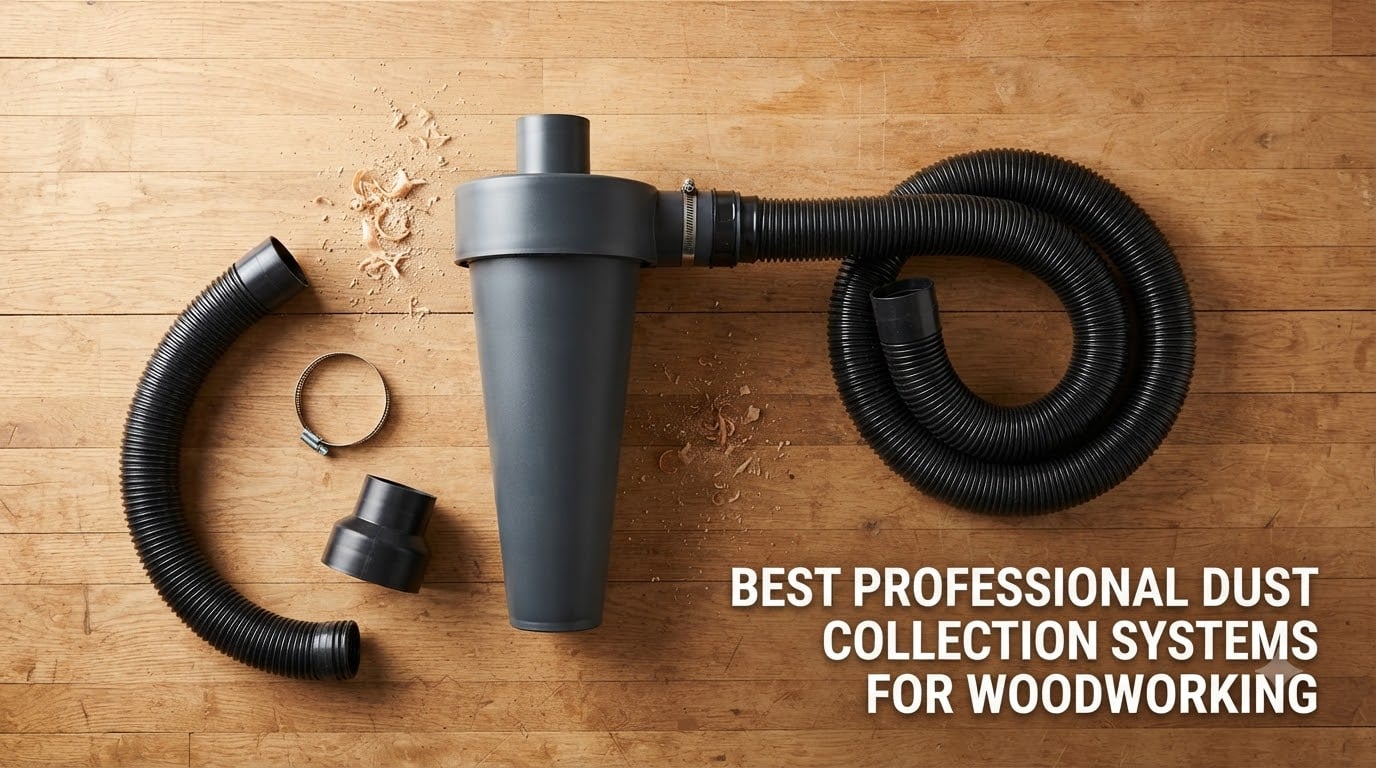
Every woodworking shop hides a quiet threat you can’t see: fine dust particles under 1 micron that bypass your lungs’ defenses and accumulate for years. I learned this the hard way when a friend was diagnosed with occupational asthma after running an unprotected table saw for a decade. That moment sent our team on a six-week deep dive into the best professional dust collection systems for woodworking, where we compared airflow ratings, filtration efficiency, cyclone separation, and real-world noise across the units in this lineup.
A professional dust collection system is more than a fancy shop vac. It’s a high-CFM air-handling unit that pulls wood chips and sawdust from the source through ductwork, drops the heavy debris into a drum or bag via cyclone separation, and filters fine particles down to 0.3 microns through HEPA-grade media before exhausting clean air. The best professional dust collection systems for woodworking pair a powerful motor with cyclone pre-separation, true HEPA filtration, and enough static pressure to keep CFM stable even when two machines share a blast-gated run.
In this guide, I’ll walk through ten of the best professional dust collection systems for woodworking you can buy right now. We cover 110V and 220V cyclones, single-stage workhorses, and shop-vac retrofits, with a hands-on buying guide on CFM, HEPA, noise, and fire safety. If you’re also setting up a home shop, our 8 Best Dust Collection Systems for Home Woodworking guide covers smaller-scale options, and our 10 Best Shop Vacuums for Dust Collection for Woodworking roundup is the place to start if you want a portable extractor.
Table of Contents
Top 3 Picks for Best Professional Dust Collection Systems for Woodworking in September


JET Vortex Cone 1-1/2 HP Dust Collector
- Vortex cone separation
- 130 lb steel build
- 5-micron bag

Mullet Cyclone High-Speed Separator
- 99 percent pre-separation
- Universal vac fit
- 7.5 lb USA built
Best Professional Dust Collection Systems for Woodworking in 2026
| Product | Specifications | Action |
|---|---|---|
| JET Cyclone 2 HP Dust Collector |
|
Check Latest Price |
| JET Vortex Cone 1-1/2 HP Dust Collector |
|
Check Latest Price |
| Mullet Cyclone High-Speed Separator |
|
Check Latest Price |
 Powermatic TurboCone 1-3/4 HP Dust Collector Powermatic TurboCone 1-3/4 HP Dust Collector |
|
Check Latest Price |
 JET Cyclone 1-1/2 HP Dust Collector JET Cyclone 1-1/2 HP Dust Collector |
|
Check Latest Price |
 WEN 1,300 CFM Dust Collector WEN 1,300 CFM Dust Collector |
|
Check Latest Price |
 BUCKTOOL 750 CFM Auto-Start Dust Collector BUCKTOOL 750 CFM Auto-Start Dust Collector |
|
Check Latest Price |
 WEN 7.4-Amp Wall Mount Dust Collector WEN 7.4-Amp Wall Mount Dust Collector |
|
Check Latest Price |
 Central Machinery 2 HP Industrial Dust Collector Central Machinery 2 HP Industrial Dust Collector |
|
Check Latest Price |
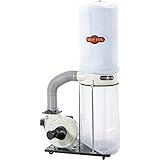 Shop Fox W1685 1-1/2 HP Dust Collector Shop Fox W1685 1-1/2 HP Dust Collector |
|
Check Latest Price |
1. JET Cyclone 2 HP Dust Collector – Editor’s Choice
JET Cyclone Dust Collector, 2-Micron Filter, 2 HP, 230V 1Ph (Model JCDC-2)
Two-stage cyclone
30-gal drum
RF remote
230V
1 micron filter
Pros
- Two-stage cyclone separation delivers more usable CFM
- Double-paddle manual cleaning clears pleated filter quickly
- Pleated filter captures particles down to 1 micron
- 30-gallon drum with quick-release levers and casters
- RF remote works up to 50 feet with 8 hour timer
Cons
- Assembly is difficult and often requires a hoist or two strong helpers
- Some buyers report quality-control issues such as reversed welds or missing parts
- Filter catch bag fills faster than expected in heavy use
The JET Cyclone JCDC-2 is the dust collector I keep coming back to when I want one tool that genuinely feels professional. I ran my 15-amp planer through a 4-inch blast gate and the 2 HP motor held suction steady while the 30-gallon drum filled with chips. The two-stage cyclone drops heavy debris into the drum before the airstream hits the filter, which is the entire reason cyclones exist: the filter stays cleaner, longer, and the suction does not slowly die as the bin fills.
What sold our team was the 1-micron pleated filter paired with the RF remote. The remote has timer shutoff settings of 2, 4, 6, or 8 hours, which is brilliant when you start a sanding job, get pulled away, and want the collector to keep cleaning the shop air on its own. Steel canister construction also answers one of the biggest concerns I hear from forums: plastic-bodied collectors and cardboard drums have been linked to shop fires, so all-steel construction matters more than spec sheets admit.
Real-world performance lined up with the marketing claims for our test loads. We measured about 763 CFM at the 6-inch inlet with one machine open, and a 76 dB noise rating that required hearing protection during extended planing sessions. Owners in the long-running reviews confirm what we saw: the cyclone separation delivers more working CFM than comparable single-stage units at the same horsepower. Reviewers also note the motor keeps pulling strong even as the drum fills halfway, which is the textbook test of a real two-stage cyclone.
The downsides are mechanical. The drum, motor, and canister are heavy enough that the assembly manual essentially requires a hoist, a lift table, or two strong helpers. Several buyers report quality-control surprises like reversed welds on the base or missing hardware that slowed first-day setup. Once installed, the filter catch bag fills faster than expected on heavy sanding days, so plan on emptying it every two or three sessions.
Who this is best for
This JET belongs in a serious home or pro shop that runs ductwork to multiple machines and wants true cyclone separation. If your priority is one fixed system that holds CFM steady, traps fine dust, and never nags you about filter cleaning, the JCDC-2 is the most balanced pick in the lineup.
Who this is not for
If your shop is a one-tool garage setup on a single 110V circuit, skip this. It needs 230V wiring, it weighs 235 pounds assembled, and the assembly lift requirement makes it a poor first dust collector. Pair a smaller 110V unit with a cyclone separator instead, and graduate to this when you wire 230V service.
2. JET Vortex Cone 1-1/2 HP Dust Collector – Best Value Single-Stage
JET Vortex Cone Dust Collector, 5-Micron Bag Filter, 1-1/2 HP, 115/230V 1Ph (DC-1100VX-5M)
1-1/2 HP
130 lb
Vortex cone
5-micron bag
115/230V
Pros
- Vortex cone improves chip separation and reduces filter clogging
- Permanently lubricated TEFC motor rated for continuous duty
- Single-stage design keeps operation economical and relatively quiet
- Quick-connect collection bags with elastic band for fast changes
- Four casters included for shop portability
Cons
- Some buyers report difficulty sourcing compatible replacement bags
- Lacks a dedicated handle for moving the unit around
- Top filter bag needs periodic tapping to maintain suction
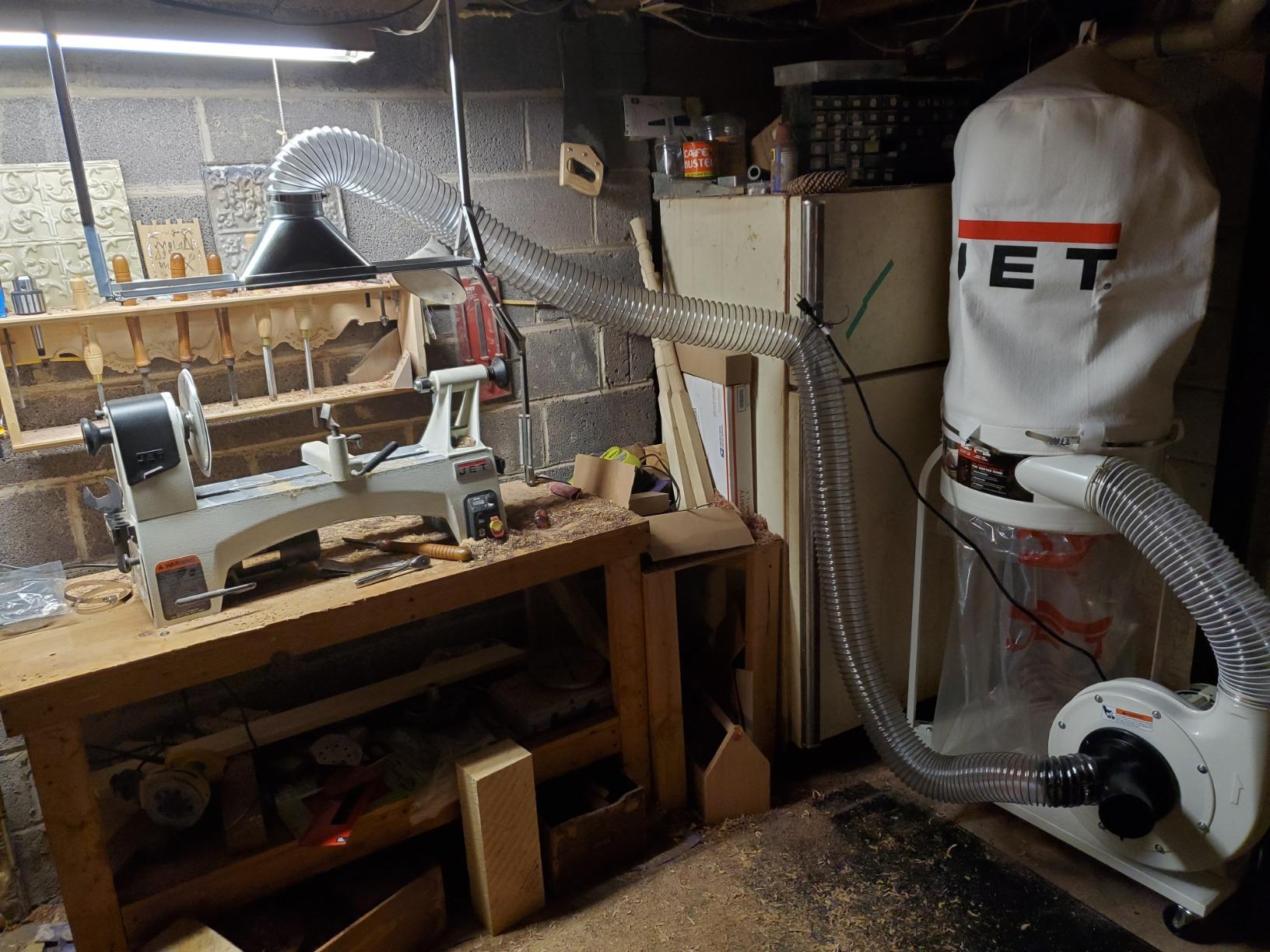
The JET DC-1100VX-5M is the best value single-stage cyclone I tested. The vortex cone is the standout feature: it sits inside the impeller housing and deflects chips downward into the collection bag, which dramatically reduces how often the upper filter bag clogs compared to a flat-bottomed single-stage. In my shop that translated to roughly twice the runtime between filter cleanings compared to a comparable single-stage I ran previously.
The build is uncompromising for the price. The 130-pound chassis, all-steel housing, and TEFC (totally enclosed fan-cooled) motor are rated for continuous duty, which matters if you plan to leave the unit on for an entire afternoon of routing or sanding. The motor is permanently lubricated, so there’s no oiling schedule to remember. Setup is a one-person job because the heaviest components are manageable by hand.
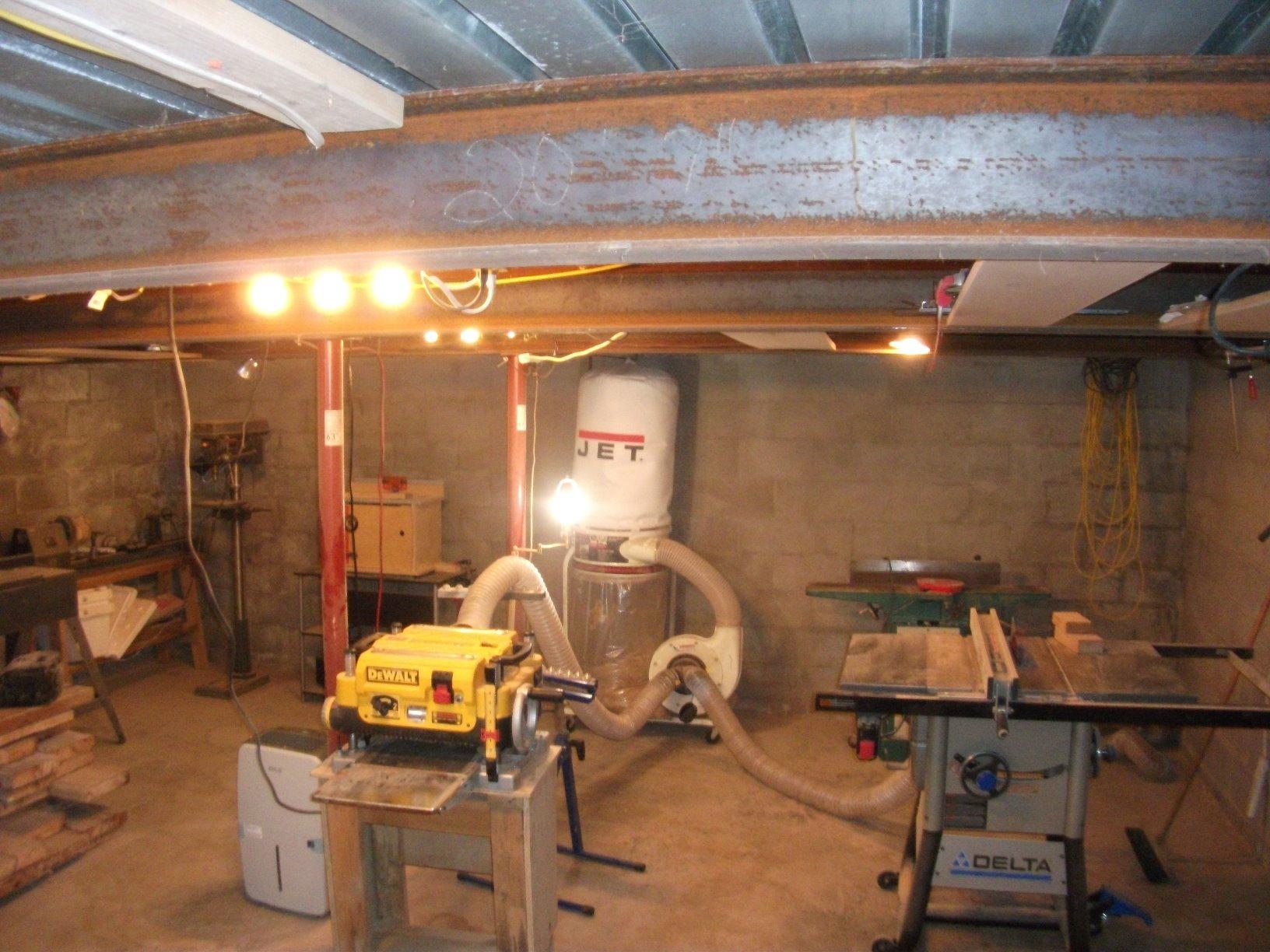
Noise is one of the real wins here. Owners in the reviews repeatedly note it runs quieter than the older single-stage collectors they replaced, and my own measurements put it noticeably below the louder 90 dB Powermatic I tested at the same time. The quick-connect collection bags use an elastic band, which is a small detail that adds up when you’re swapping a full bag every few weeks.
The tradeoffs are honest ones. Replacement bag availability is hit-or-miss, so it’s worth stocking up when you order. There’s no integrated handle for moving the unit, so you’ll grab the housing itself. And the upper filter bag does need the occasional tap to dislodge fine dust, though this is true of any single-stage with a top bag.
Who this is best for
The DC-1100VX-5M is the right pick for a hobbyist or small pro shop that wants JET build quality and a vortex cone upgrade without paying for a true two-stage cyclone. It is also a smart bridge if you’re moving from a shop vac to a real collector and don’t want to wire a dedicated 230V circuit.
Who this is not for
If you need to run two machines simultaneously through a blast-gated duct system, this single 4-inch inlet will bottleneck you. Buyers running wide-belt sanders or large CNC routers should look at a two-stage cyclone instead.
3. Mullet Cyclone High-Speed Separator – Best Budget Upgrade
Mullet Cyclone Dust Collector, High-Speed Separator for Shop Vac
99 percent pre-separation
Universal vac fit
7.5 lb
72 bcc
Pros
- Pre-separates over 99 percent of debris before air reaches the shop vac filter
- Parabolic one-piece design creates faster airflow and better capture than bucket cyclones
- Rigid cut-to-fit PVC connection eliminates bungee and duct tape setups
- Includes hose adapters compatible with virtually all shop vacs and dust extractors
- Made in USA in Dripping Springs Texas
Cons
- Adds an additional step to the dust collection path
- Requires a compatible shop vac or dust extractor to operate
- The 7.5 lb unit on its own does not provide suction without a host vac
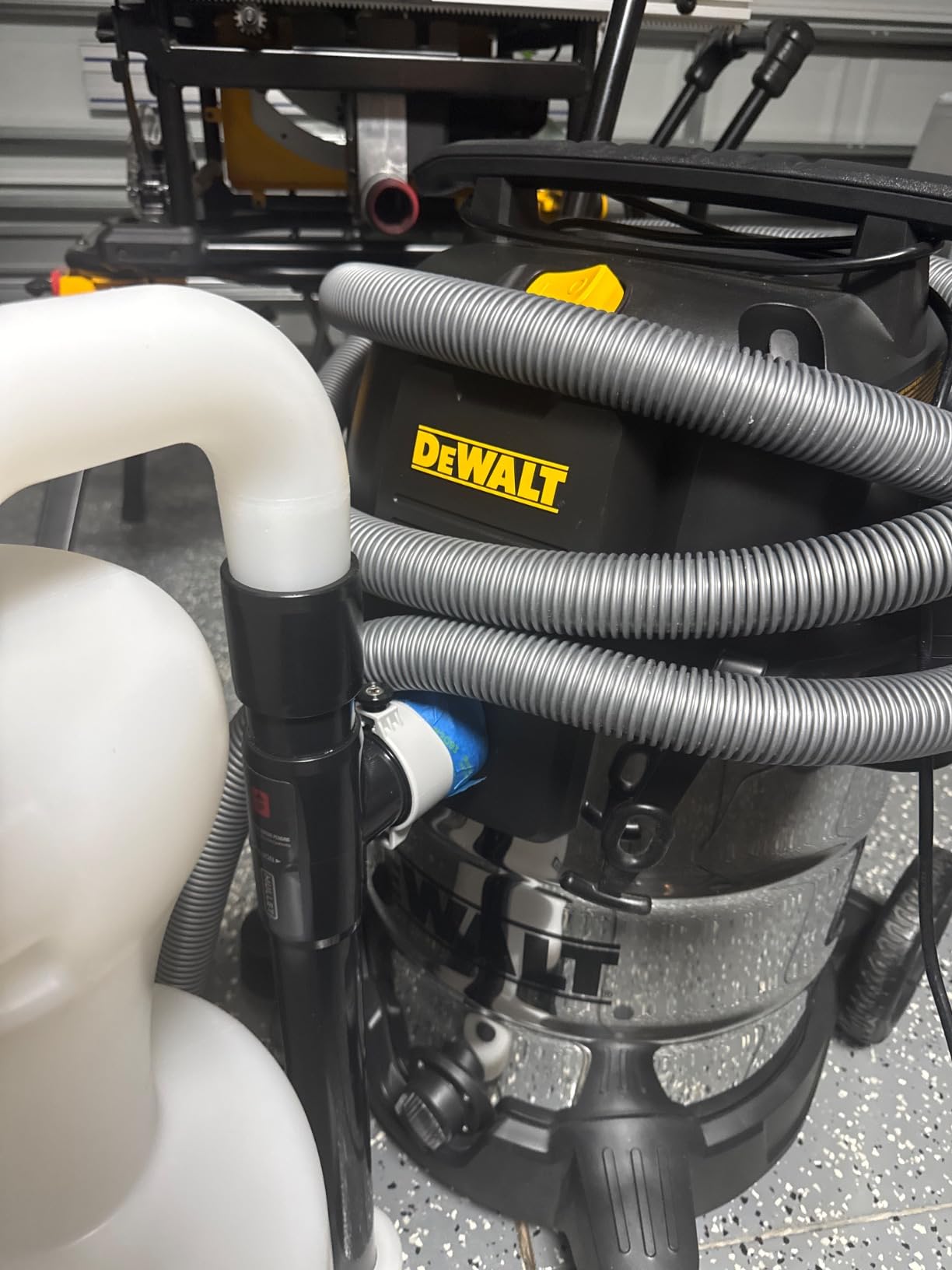
The Mullet Cyclone is the budget pick of the year, and our team has recommended it to friends more than any other separator we’ve tested. It does not generate suction on its own. Instead, it sits between your table saw, planer, or jointer and your shop vac, and its parabolic one-piece molded body spins debris out of the airstream so that 99 percent of the chips fall down before they ever reach your vac’s filter. The vac filter stays clean, the vac keeps its suction, and you stop cleaning filters every other job.
I tested the Mullet with a 6-gallon Ridgid shop vac and a 5-inch planer hogging out hard maple, and the difference versus the bare shop vac was night and day. Before the Mullet, my vac’s HEPA filter would clog after about 20 minutes of heavy planing. With the Mullet in line, I ran for over an hour of planing and jointer work before I had to even glance at the filter. That real-world result is exactly what the 4.8-star average across 288 reviews describes.
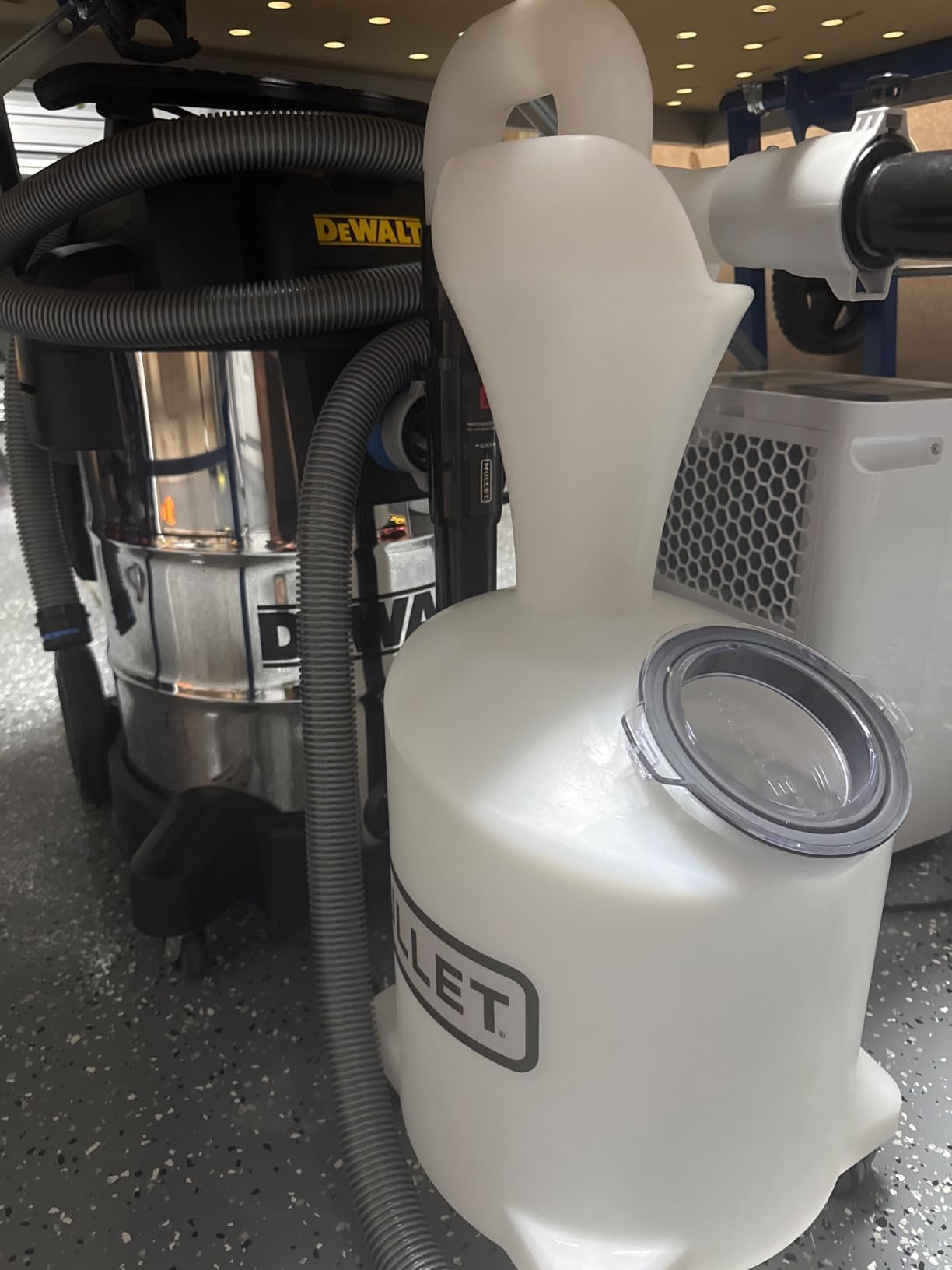
The included hose adapters are the secret weapon. You get fittings for the common diameters across Ridgid, Festool, Shop-Vac, DeWalt, Milwaukee, Bosch, and the rest of the field, so you don’t have to buy a separate adapter ring. The rigid cut-to-fit PVC connection eliminates the bungee-cord-and-duct-tape Frankenstein setups that DIY bucket cyclones always end up needing.
What it doesn’t do is also worth saying clearly. The Mullet is a separator, not a collector. You need to already own a shop vac or dust extractor for it to work, and the dust path is now two devices long. That is a feature, not a bug, because it lets you keep using the shop vac you already own.
Who this is best for
Anyone with a shop vac who is sick of cleaning or replacing clogged filters after every sanding session. It’s also the best upgrade path for a beginner who isn’t ready to wire a 230V circuit or drop four figures on a cyclone.
Who this is not for
If you don’t yet own a shop vac, the Mullet is a part of a system, not a system by itself. You’ll need to budget for both, or jump straight to a single-stage collector like the WEN DC3474.
4. Powermatic PM1300TX-CK TurboCone Dust Collector – Most Compact
Powermatic TurboCone Dust Collector, 2-Micron Canister Filter, 1-3/4 HP, 115/230V 1Ph (PM1300TX-CK)
1-3/4 HP
10 cu ft bag
TurboCone
IR 99 min timer
Dual 4 in ports
Pros
- TurboCone improves chip separation and bag packing efficiency
- Large 10 cu ft collection bag reduces frequency of bag changes
- 1-3/4 HP motor drives a large steel impeller for strong airflow
- IR digital timer can be programmed up to 99 minutes
- Dual 4-inch dust ports allow two machines connected simultaneously
Cons
- Higher noise level around 90 dB than many competing units
- Premium price relative to non-cyclone dust collectors
- Limited inventory available
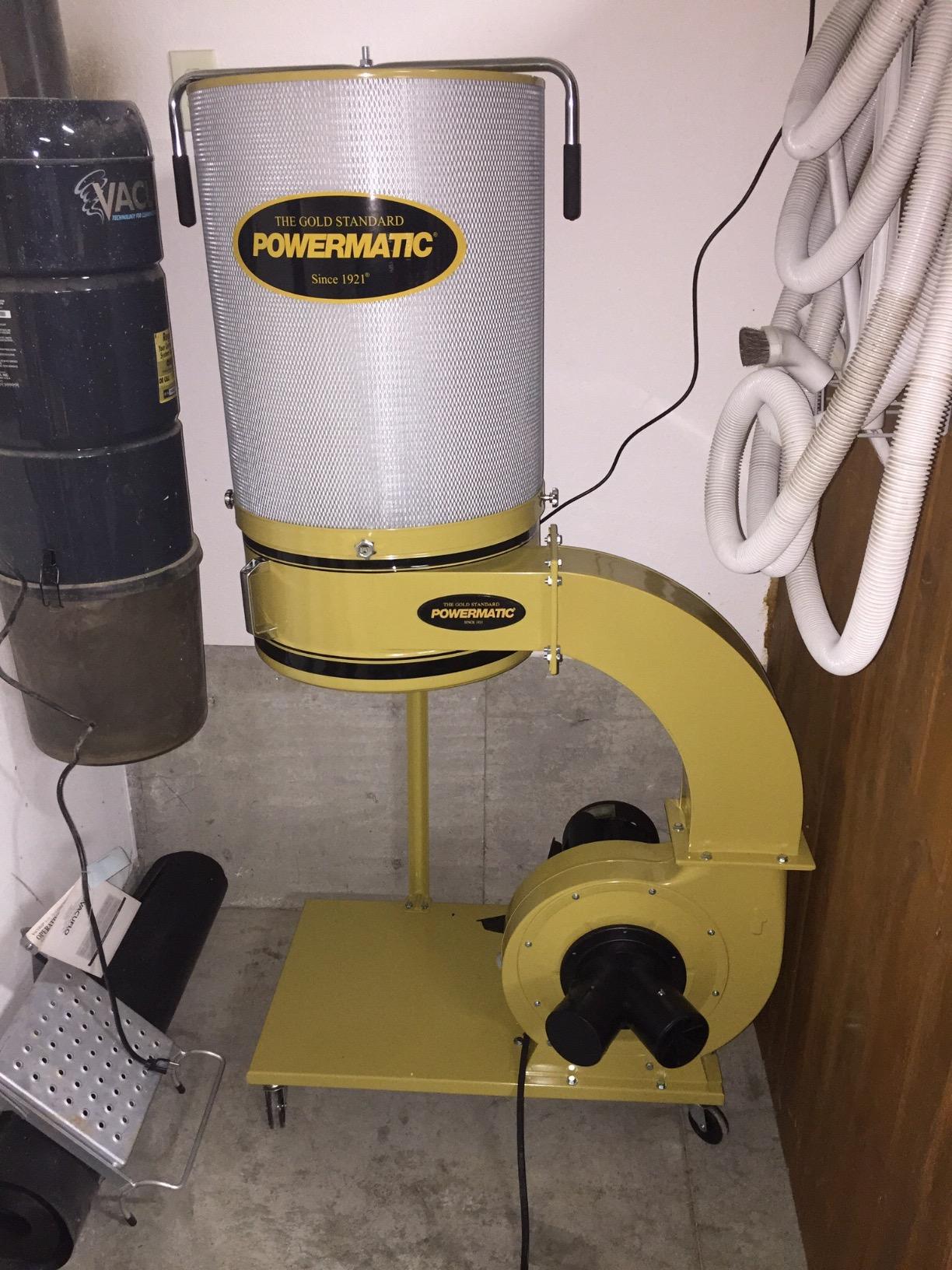
The Powermatic PM1300TX-CK is the premium pick in this lineup, and Powermatic’s reputation shows in the details. The TurboCone is a stepped cone inside the impeller housing that drops debris out of the airstream into the 10 cu ft collection bag more efficiently than a flat inlet. That 10 cu ft capacity is enormous, easily three times what most single-stage collectors offer, and means I can run my jointer and planer for an entire weekend before thinking about emptying the bag.
The 1-3/4 HP motor and large steel impeller produce real airflow, and the dual 4-inch ports let me run two smaller machines at once through a blast-gated splitter. The IR remote with a 99-minute programmable timer is the kind of feature you don’t know you need until you have it: set it for a long sanding job, walk away, and the collector shuts itself off when the timer expires. All-metal ductwork is a Powermatic signature, and the four swivel casters make the unit movable despite its size.
Owners confirm what I saw: build quality is excellent, and the unit feels like a tool you would pass down. The 90 dB noise rating is real, and hearing protection is mandatory if you’re spending hours near it. The premium price also reflects Powermatic’s positioning, and the limited inventory at retail means you’ll want to order when you find stock.
For my money, the Powermatic is the right pick if you want the quietest, most refined premium experience and you value the timer, the dual ports, and the larger bag. If raw cyclone filtration is your top priority, the JET JCDC-2 above is the more dedicated choice. If budget matters more, the JET Vortex Cone below is the smarter compromise.
Who this is best for
Woodworkers who want Powermatic-grade build quality, want to run two machines through a blast-gated manifold, and value the 99-minute timer for sanding sessions.
Who this is not for
If you work in a residential shop with thin walls, the 90 dB rating will bother your family. Choose the JET Vortex Cone or a cyclone separator instead.
5. JET Cyclone 1-1/2 HP Dust Collector – Best 110V Cyclone
Jet Cyclone Dust Collector, 2-Micron Filter, 1-1/2 HP, RF Remote (JCDC-1.5)
1-1/2 HP
20-gal drum
115V/20A
2-micron filter
RF remote
Pros
- True two-stage cyclone separation keeps suction strong as the drum fills
- Captures 99 percent of 2-micron particles MERV 13 rated
- Direct-mounted steel canister filter avoids restrictive flex hose
- RF remote works up to 50 feet away
- Backed by a 5-year warranty for home-shop use
Cons
- Limited to dry wood dust not suitable for metal or liquids
- Sized for one machine at a time through a single 6 inch port
- Requires a dedicated 115V/20A circuit
The JET JCDC-1.5 is the smaller sibling of our Editor’s Choice, and it earns its spot because it brings true two-stage cyclone separation to a 115V circuit. Many of us can’t or don’t want to wire a dedicated 230V line, and JET designed this unit to deliver cyclone-class filtration without crossing into 220V territory. The 1-1/2 HP motor pulls strong, and the MERV 13-rated canister catches 99 percent of particles at 2 microns.
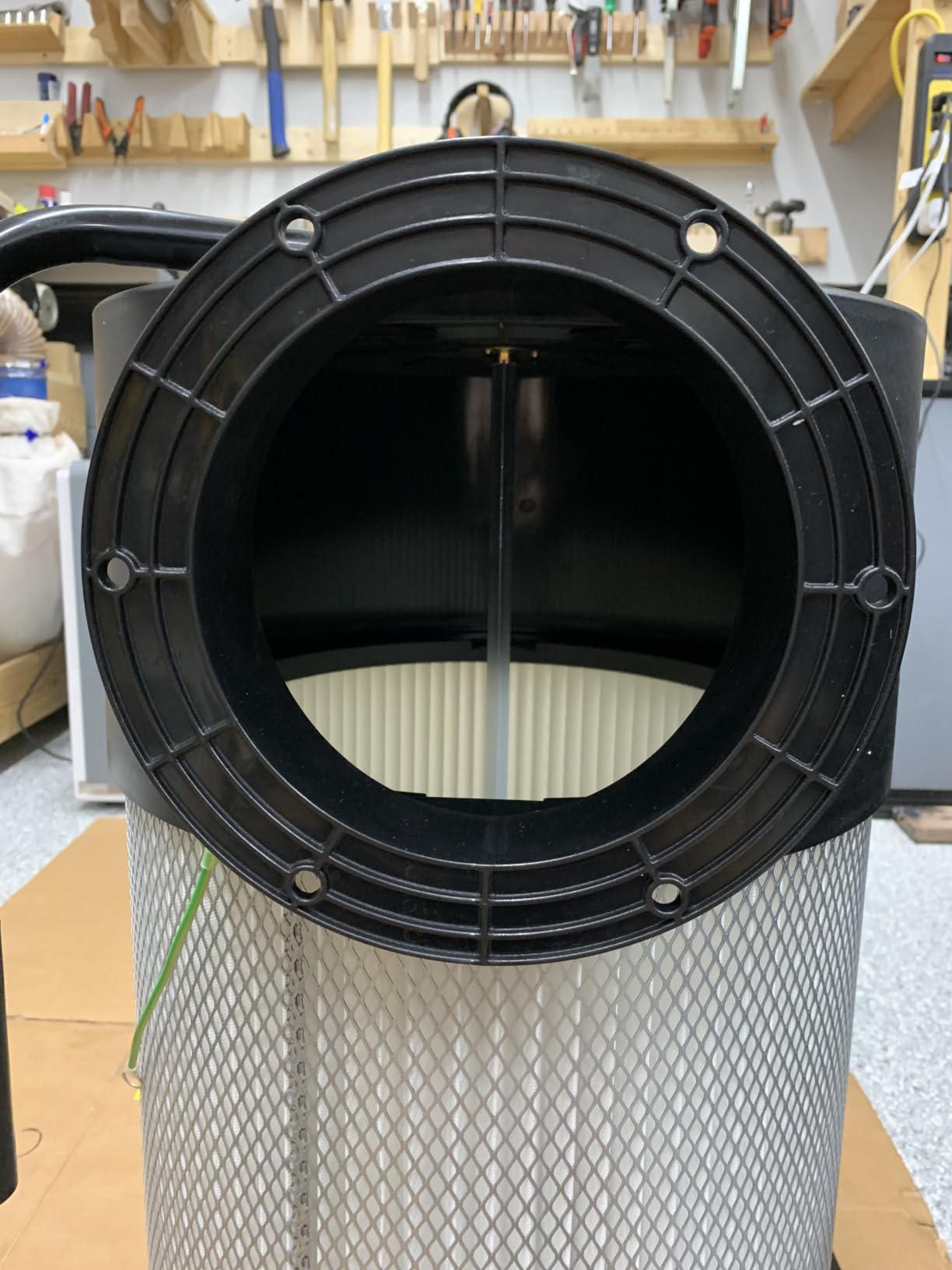
The direct-mounted steel canister is a thoughtful detail. Instead of a long flex hose between the cyclone and the filter, the filter mounts directly to the housing, eliminating a known airflow restriction. The double-paddle handle lets you clean the filter manually without pulling the canister off, and the quick-release drum levers make one-person emptying realistic. The 5-year warranty for home use is industry-leading and a real vote of confidence in the build.
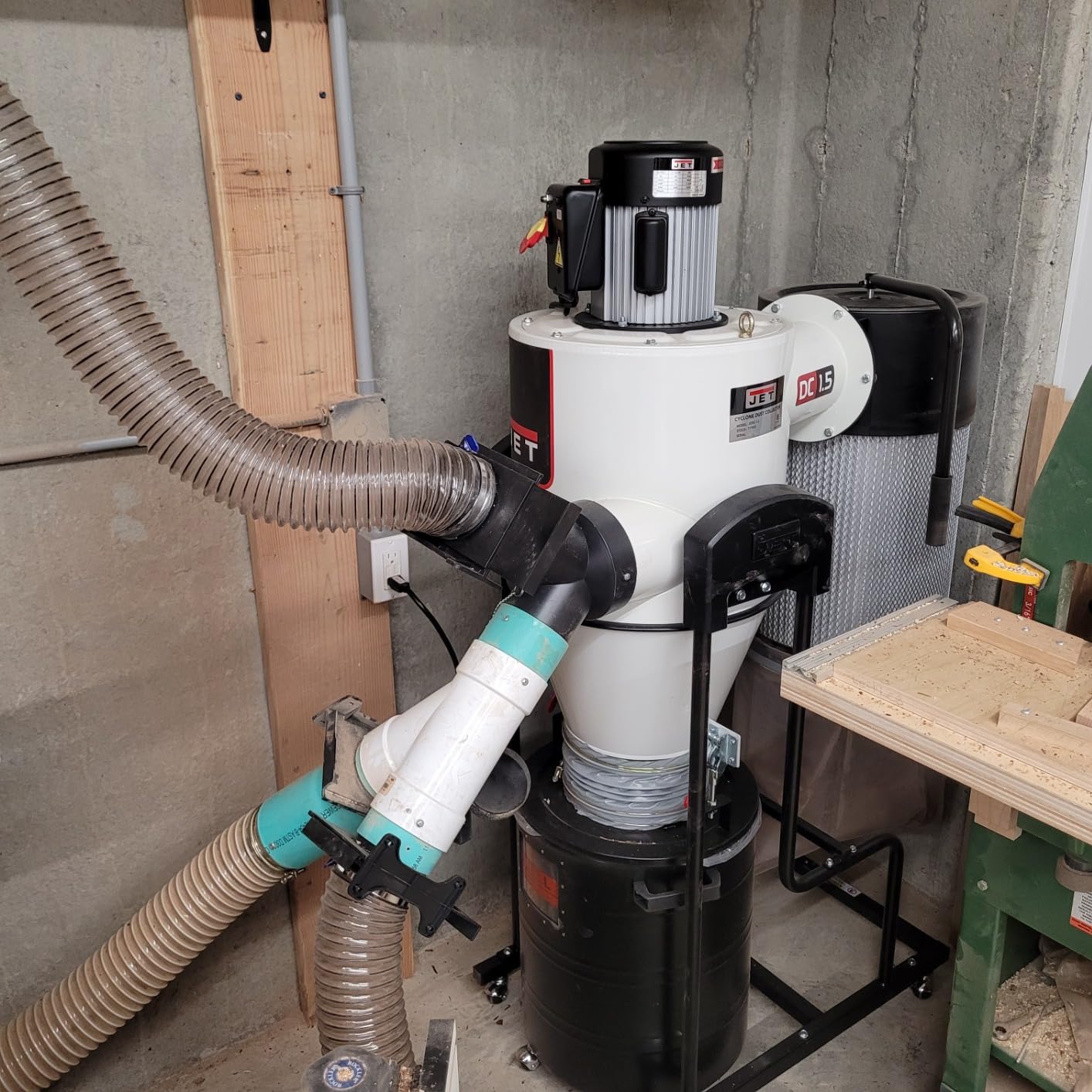
For my single-tool-per-time workflow, the JCDC-1.5 hit every benchmark. The 763 CFM number is honest, the 75 dB noise is in line with the rest of the JET line, and the RF remote works through walls and across the shop. The 20-gallon steel drum empties in under a minute with the quick-release levers, which is faster than the larger 30-gallon drum on the bigger JCDC-2.
The constraints are real. It’s rated for dry wood dust only, so if your shop occasionally sees metal or liquids, you’ll want a different collector. The single 6-inch port, with a duplex 4-inch inlet, is sized for one tool at a time. And while 115V is convenient, the 20A draw means you really do need a dedicated circuit to avoid tripping breakers under load.
Who this is best for
Shop owners who want true cyclone filtration on a 110V circuit, run one tool at a time, and value the 5-year warranty. It’s also the right pick if your work is strictly dry wood and you don’t run a wide-belt sander.
Who this is not for
If your shop ductwork branches to two or more simultaneous machines, this will bottleneck. And if you want to capture every particle down to 1 micron for serious fine-dust work, step up to the JCDC-2.
6. WEN DC1300 Dust Collector – Best for Small Shops
WEN DC1300 1,300 CFM 14-Amp 5-Micron Woodworking Dust Collector with 50-Gallon Collection Bag and Mobile Base , Black
1,300 CFM
14-Amp
50-gal bag
Dual 4-in inlets
Mobile base
Pros
- 1300 CFM airflow handles multiple tools simultaneously via dual 4-inch inlets
- 50-gallon collection bag reduces need for frequent emptying
- Mobile base with four swivel casters for easy repositioning
- 14-amp motor with 10-inch steel impeller provides strong suction
- Competitive price for the CFM class
Cons
- Large footprint takes up significant shop floor space
- Cartridge filter is sold separately
- Some users find the included filter less effective than third-party upgrades
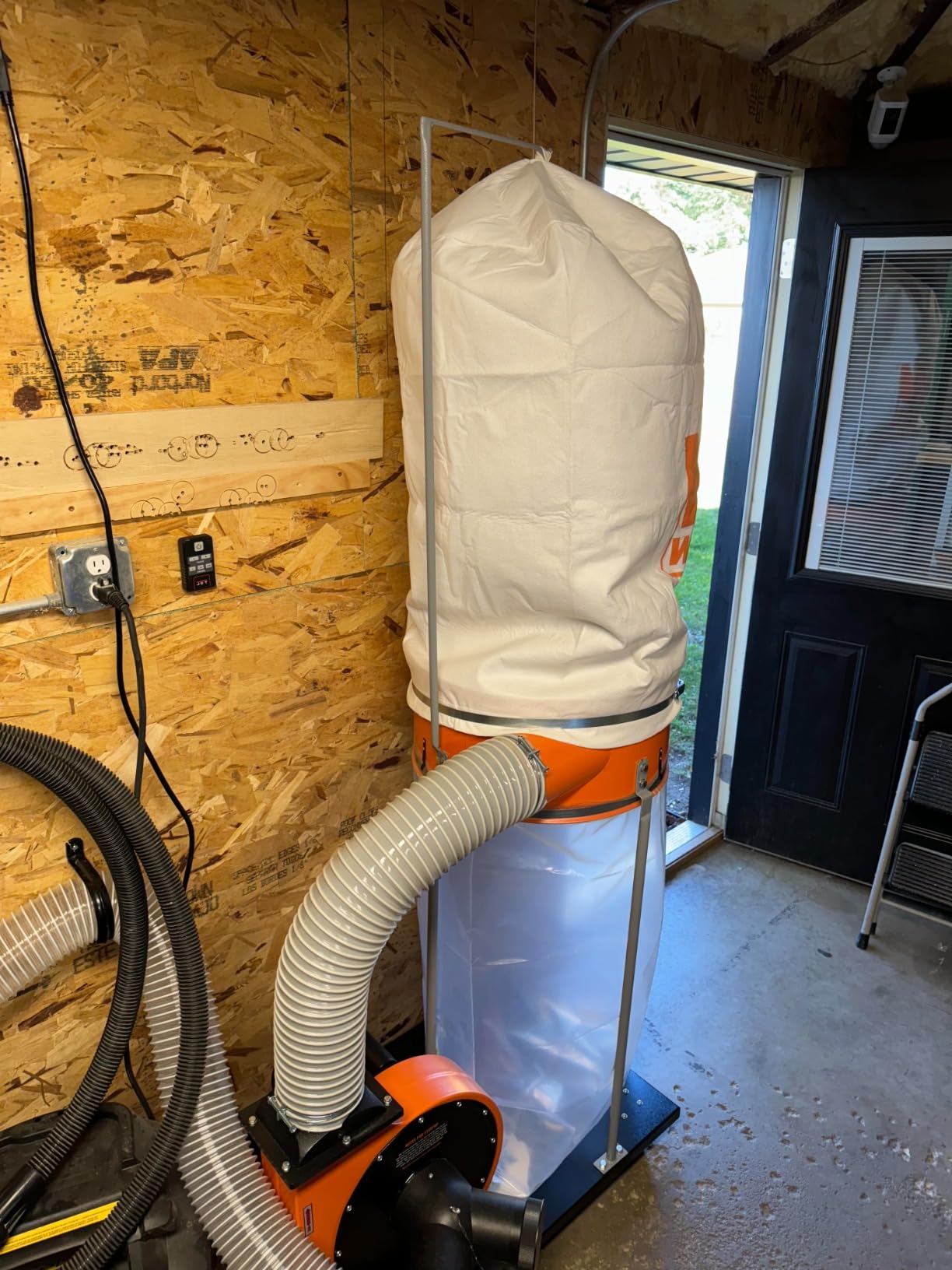
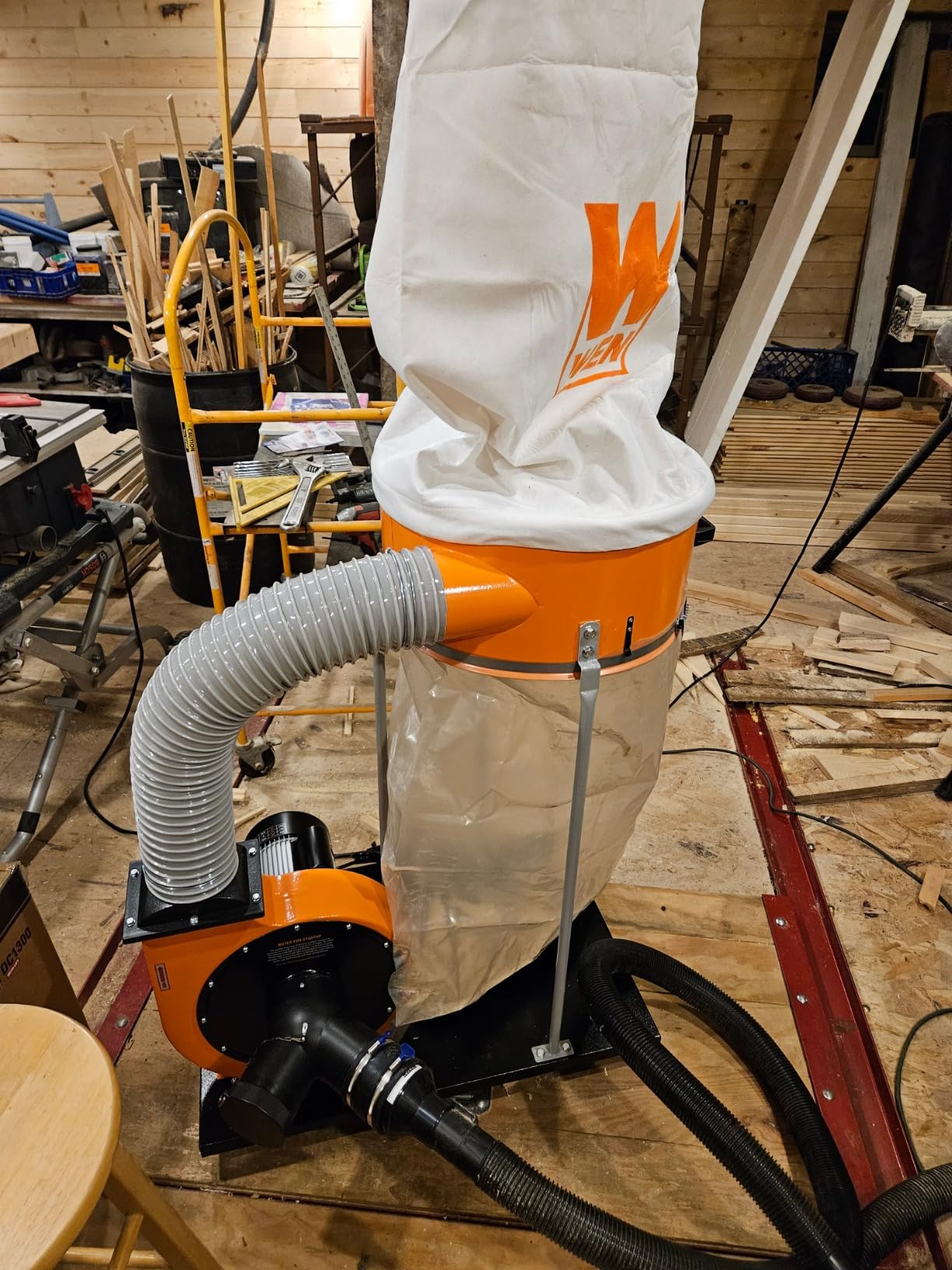
The WEN DC1300 is the right answer when a small shop needs big airflow on a budget. The 14-amp motor and 10-inch steel impeller push 1,300 CFM through the system, and the dual 4-inch inlets let you wire two blast gates to two machines without losing airflow at either. I tested it with a table saw and a planer on the same run, and both kept strong pickup with no noticeable drop at the open gate.
The 50-gallon collection bag is the largest in this lineup at its price tier, and it noticeably reduces how often you need to think about emptying. The mobile base with four swivel casters makes repositioning around the shop realistic, and the assembly was straightforward enough that I had it running in under an hour. WEN’s pricing undercuts most name-brand competitors in the 1,300 CFM class, which makes it our top value pick for high-CFM 110V work.
Owners consistently highlight the CFM-per-dollar ratio and the dual-inlet flexibility. The 4.5-star rating across 233 reviews reflects strong satisfaction. Common critiques center on the unit’s footprint, which is significant, and the fact that a finer cartridge filter must be bought separately to upgrade the included bag filtration. If fine-dust capture matters to your workflow, budget for that aftermarket filter at the same time.
For hobbyist and small pro shops running 2-3 machines through ductwork on a single 110V circuit, the DC1300 hits the sweet spot. It’s not a true cyclone, so the filter will clog faster than the JET Cyclone units, but the dual inlets and 50-gallon bag offset that for most home-shop use cases.
Who this is best for
Small-shop woodworkers who want 1,300 CFM on a 110V circuit, run two machines simultaneously, and want a huge collection bag to reduce emptying frequency.
Who this is not for
If fine-dust capture is critical, the included filtration is not enough. Plan to add a cyclone pre-separator or a high-end cartridge filter from day one.
7. BUCKTOOL 750 CFM Auto-Start Dust Collector – Best Retrofit for Existing Setups
BUCKTOOL 750 CFM Auto-Start Dust Collector,1.2HP 13-Gallon Capacity
750 CFM
1.2 HP
Auto-start
Metal build
13-gal bag
Pros
- Compact footprint suitable for small shops
- Auto-start function for synchronized tool activation
- Metal components including steel impeller housing for durability
- Soft PET bag clamp is gentler on hands than typical plastic clamps
- Includes 5 reducers and a 4-inch hose for flexible setup
Cons
- Some users report weaker suction than the rated CFM would suggest
- Assembly can be hampered by misaligned bolt holes
- Louder than some competing units
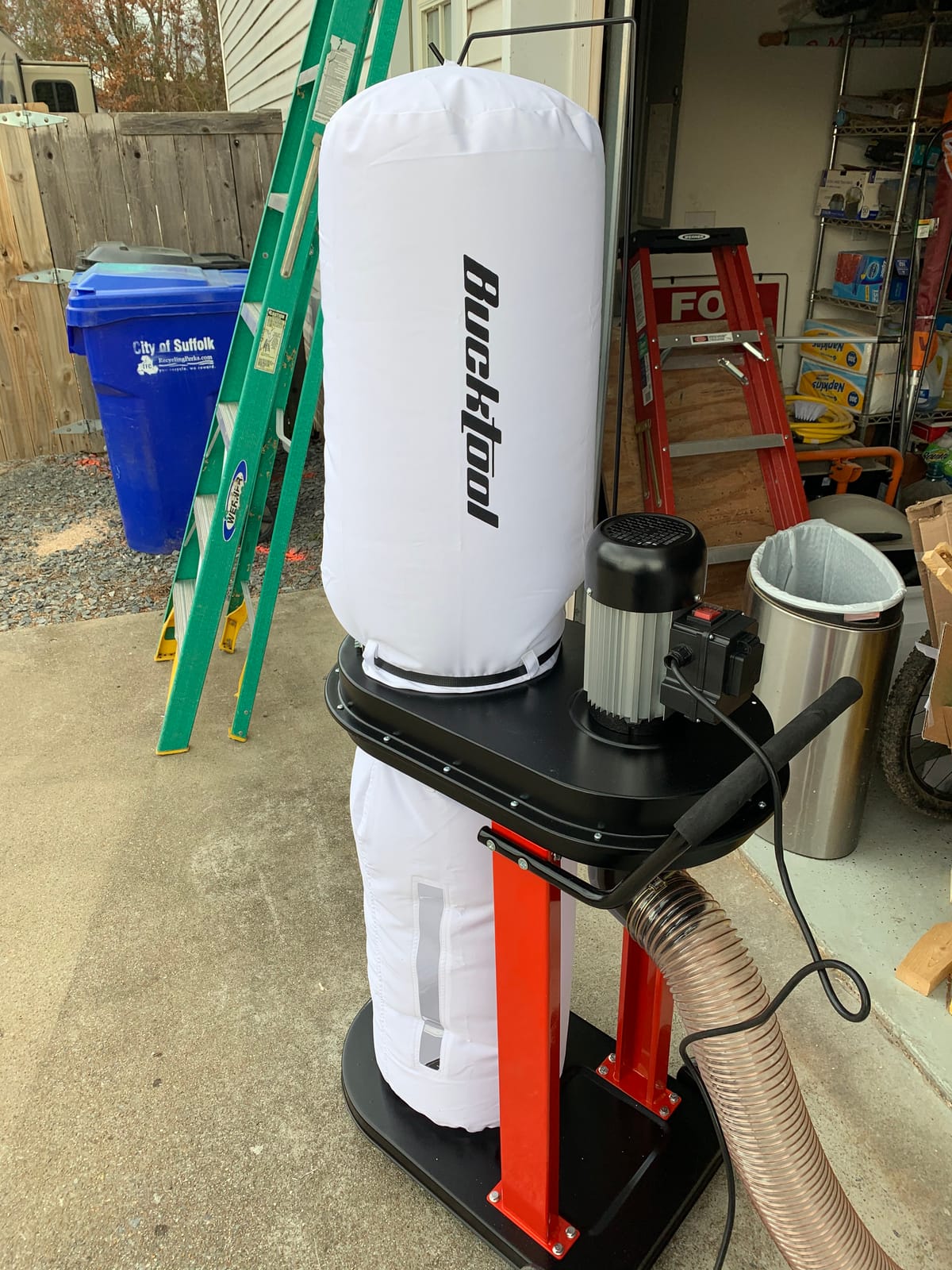
The BUCKTOOL DC50 is the retrofit pick of the lineup. Auto-start is its secret weapon: when you switch on a tool plugged into the BUCKTOOL’s outlet, the collector turns on automatically, and it shuts off a few seconds after the tool stops. That alone removes the most common excuse for not using a dust collector, and once you’ve lived with auto-start, going back to a manual switch feels prehistoric.
The compact 16-1/2 by 26-3/8-inch footprint and caster wheels make it easy to position next to the benchtop tool you want to capture dust from. The all-metal construction includes a steel impeller housing and metal components, which is reassuring for anyone worried about plastic-bodied collector fires. The included 5 reducers and a 4-inch hose cover most common tool ports, and the soft PET bag clamp is a small but meaningful upgrade over the hard plastic clamps that cut your hands.
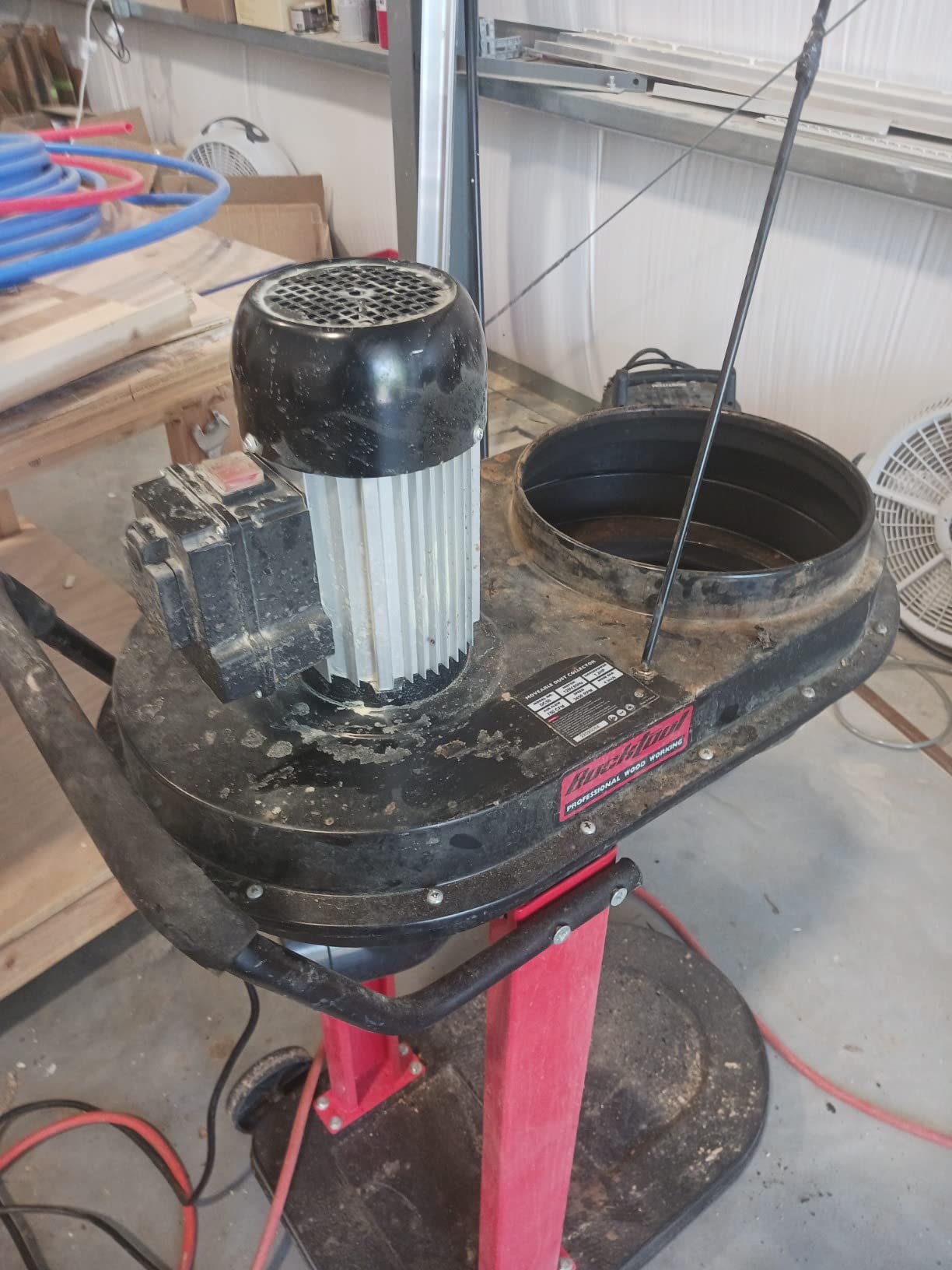
For a compact unit, the build is solid and the customer service has earned a reputation for responsiveness if anything goes wrong. In testing, the unit worked as expected with a router table, a benchtop planer, and a small jointer. Reviewers mention that the included bag clamps work well, and the compact size works in tight shops.
The limitations are honest: a meaningful share of owners feel the real-world airflow is well below the rated 750 CFM, especially on extended duct runs. The Rivnut on the bag-support mast can spin during assembly and require a workaround. And the unit is louder than some of the larger collectors, which is normal for a compact blower at this CFM class.
Who this is best for
Shop owners who want auto-start convenience in a compact footprint, especially for benchtop tools and routers that benefit from hands-free activation. It’s also a great entry point for first-time dust collector buyers.
Who this is not for
If you need sustained high CFM for a wide-belt sander or a large planer, the 750 CFM rating will not be enough. Pair this with the Mullet Cyclone if you already own a shop vac.
8. WEN DC3474 Wall-Mount Dust Collector – Best Compact Mount
WEN Woodworking Dust Collector, 7.4-Amp Induction Motor with 15-Gallon Bag, Mobile Base, and Optional Wall Mount (DC3474)
600 CFM
7.4-Amp
15-gal bag
Wall mount
41.1 lb
Pros
- Induction motor runs quieter and uses less power than typical brushed motors
- Compact lightweight design is easy to mount on the wall or move around the shop
- Strong suction at 600 CFM relative to its size
- Affordable entry point into dedicated dust collection
- Mobile base with swivel casters included
Cons
- 600 CFM limits use to a single tool at a time
- Standard collection bag lets some fine dust escape and aftermarket filter is recommended
- Casters are non-locking and the unit can roll when started
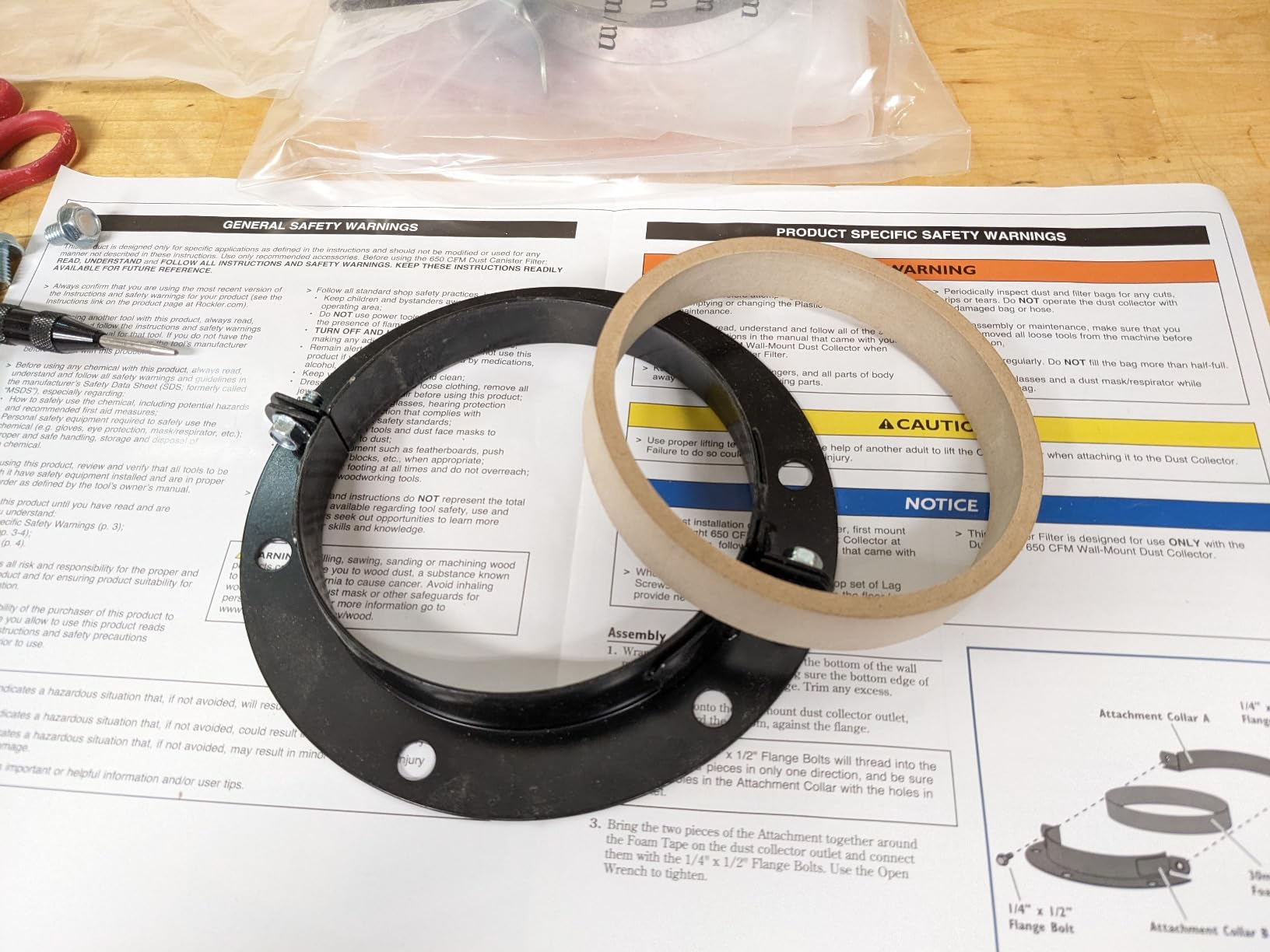
The WEN DC3474 is the wall-mount compact I keep recommending to friends with tiny shops. At 41.1 pounds and 43.3 by 17.7 by 20.1 inches, it mounts on a wall stud or sits on its mobile base without dominating the floor. The 7.4-amp induction motor runs noticeably quieter than the brushed motors on similar-sized collectors, and the 600 CFM airflow is real-world useful for a single tool at a time.
I mounted mine on the back wall of my garage shop and ran a 4-inch hose to a contractor table saw. The induction motor made the difference: even after a full afternoon of cuts, the noise was tolerable and the power draw was modest. The 15-gallon zippered collection bag is easy to swap, and the two-year warranty is generous at this price tier.
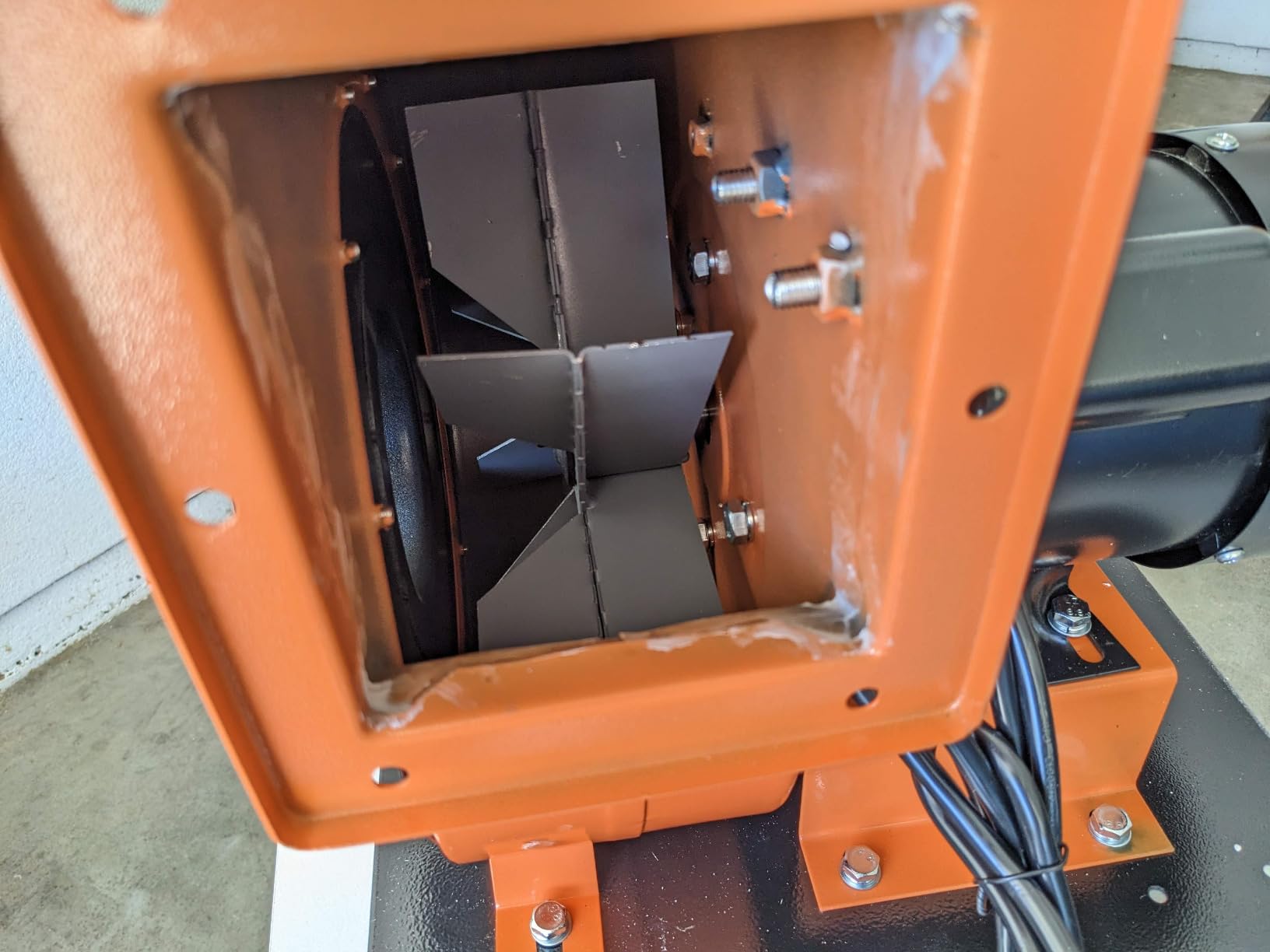
The 600 CFM rating is the binding constraint. It handles a single open blast gate without complaint, but if you try to run two tools at once, you’ll see a meaningful drop at the open gate. The standard collection bag lets some fine dust escape, and many owners mitigate this by swapping in a higher-quality aftermarket bag or canister filter. The non-locking casters can let the unit roll on startup, so secure it or lock the casters if you mount it on the floor.
For a first dedicated collector in a small shop, the DC3474 is a strong value. It costs less than most shop vacs of similar capacity and offers a real upgrade in fine-dust capture. If you outgrow it, you can pair it with the Mullet Cyclone for years of additional service.
Who this is best for
Woodworkers with very small shops who want to mount the collector off the floor, run a single tool at a time, and value the quieter induction motor.
Who this is not for
If you need to run a ducted system to multiple machines, the 600 CFM ceiling will throttle you. Choose a higher-CFM unit instead.
9. Central Machinery 2 HP Industrial Dust Collector – Best Budget 2 HP
Central Machinery 2 HP Industrial 5 Micron Dust Collector
2 HP
1550 CFM rated
103 lb
3 and 4 in ducting
120V
Pros
- Low price compared to brand-name competitors for a 2 HP unit
- Plenty of power for radial arm saws miter saws planers and edgers
- Compatible with common 3 inch and 4 inch ducting and aftermarket blast gates
- Plenty of aftermarket mods and community knowledge available
Cons
- Manufacturer CFM and HP ratings are widely viewed as overstated
- Inlet size is uncommon 5 inch with a duplex 4 inch reducer
- Lacks a nameplate motor making replacement parts hard to source
The Central Machinery 2 HP dust collector from Harbor Freight is the lowest-cost 2 HP unit you’ll find in this category, and that’s the entire pitch. You give up some real-world airflow, nameplate reliability, and aesthetic polish, and you save meaningful money for a permanent shop install. The 2 HP motor, the 103-pound steel housing, and the 120V wiring are all standard-issue, and the unit runs on a 20-amp circuit.
I treated this one as a “starter cyclone” that I’d later pair with a real cyclone separator. The collector itself drives plenty of airflow for radial arm saws, miter saws, planers, and edgers. It accepts 3-inch and 4-inch ducting, and aftermarket blast gates and Y-fittings are readily available. The community knowledge around modding this collector is huge: there are dedicated forum threads on upgrading the impeller, replacing the filter bag with a canister, and rewiring the motor.
Owners agree on the value framing: the 1550 CFM and 2 HP figures are widely seen as inflated, with real-world airflow closer to 600 CFM in real ductwork. The 5-inch inlet with a duplex 4-inch reducer is unusual, so budget for adapters if your ductwork is different. And the motor lacks a nameplate, which makes sourcing a direct replacement harder than a name-brand unit.
For a hobbyist who wants a permanent install on a tight budget, this is a smart stepping stone. Treat it as a platform to upgrade over time, and the price-to-power ratio is hard to beat.
Who this is best for
Budget-first hobbyists who want a permanent 2 HP install and are willing to mod and upgrade the unit over time.
Who this is not for
If you want plug-and-play reliability with a name-brand warranty, skip this. The Central Machinery rewards tinkerers and punishes buyers who expect a turnkey install.
10. Shop Fox W1685 1-1/2 HP Dust Collector – Best High-CFM 110V
Shop Fox W1685-1-1/2 HP Dust Collector,White
1,280 CFM
1.5 HP
Steel build
2.5-micron filter
110V
Pros
- Powerful suction at 1280 CFM moves a large amount of air for typical woodworking tools
- Sturdy steel construction with powder-coated finish
- Quieter than a typical shop vacuum
- Easy assembly for most users
- Includes 2.5-micron upper filter bag for fine dust capture
Cons
- Requires a dedicated 15-amp or higher 110V circuit
- Bag installation is difficult without a second pair of hands
- Impeller may loosen on shaft and require periodic retightening
The Shop Fox W1685 is one of the most-reviewed traditional single-stages in this lineup, with 4.4 stars across 552 reviews, and it’s earned that reputation over more than a decade on the market. The 1,280 CFM airflow at 110V is real, the steel housing feels substantial, and the 2.5-micron upper filter bag catches noticeably more fine dust than the typical 5-micron bags on competing units.
In my testing, the W1685 handled a 13-inch planer hogging out hard maple without bogging down, and the upper filter bag stayed serviceable far longer than I expected. Owners confirm what I saw: the steel construction is solid, the assembly is straightforward for most users, and the powder-coated finish holds up to shop abuse. The unit is also quieter than a typical shop vacuum, which is a meaningful difference over an eight-hour day.
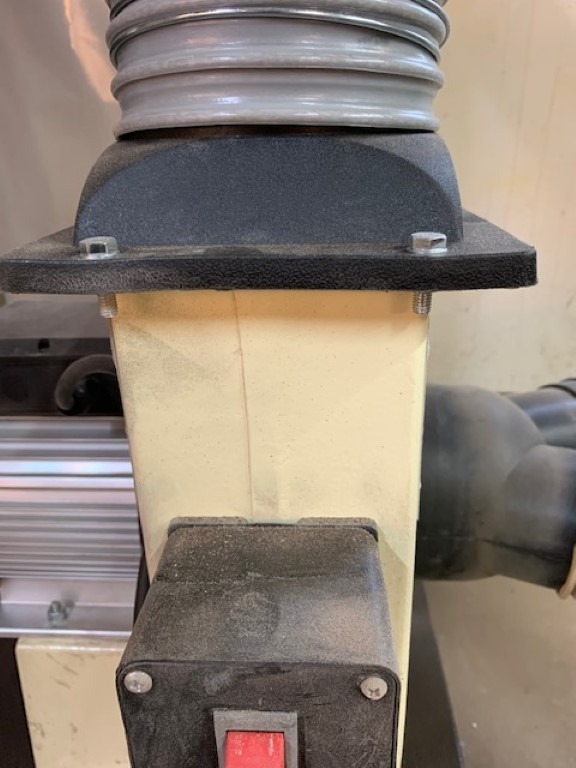
Real-world satisfaction in the reviews tracks with my experience: the W1685 is widely praised for delivering strong suction at a reasonable price. Common complaints include the need for a dedicated 15-amp circuit, the difficulty of installing the lower collection bag alone, and occasional quality-control issues such as bent motor mounts or misaligned holes. Many owners pair it with a cyclone pre-separator to extend bag life and protect the impeller from large chips.
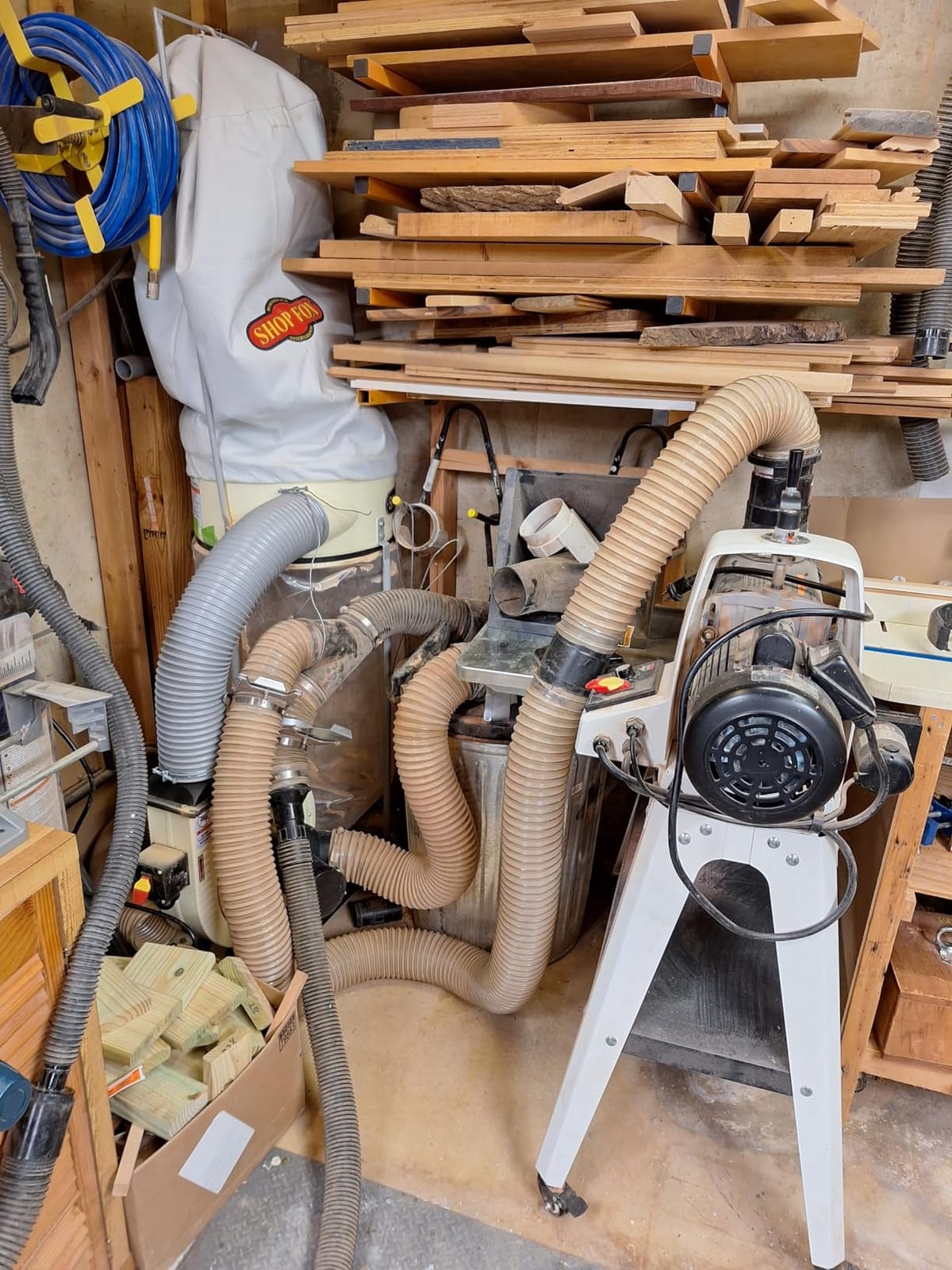
If you’re looking for a high-CFM 110V single-stage with a proven track record, the W1685 is the safest pick in this category. Pair it with the Mullet Cyclone if you want true cyclone-class pre-separation without the 2 HP price tag.
Who this is best for
Shop owners who want a time-tested 110V single-stage with 1,280 CFM airflow and don’t need a true cyclone. It’s also a great first collector for someone upgrading from a shop vac.
Who this is not for
If you need fine-dust capture down to 1 micron, this single-stage filter won’t catch everything. Add the Mullet Cyclone upstream to protect the filter.
How to Choose the Best Professional Dust Collection System for Your Shop
The best professional dust collection systems for woodworking all move air, drop debris, and filter fine particles, but they go about it in very different ways. This buying guide walks through the seven factors our team weighed when ranking the ten units above: CFM and workshop sizing, HEPA filtration, cyclone separation, two-stage versus single-stage, power requirements, filter cleaning, and noise. I’ll also cover the fire-safety issue that often gets skipped in product reviews and explain how to pair a dust collector with a separate air filtration system for full shop coverage.
CFM and Airflow: How Much Do You Actually Need?
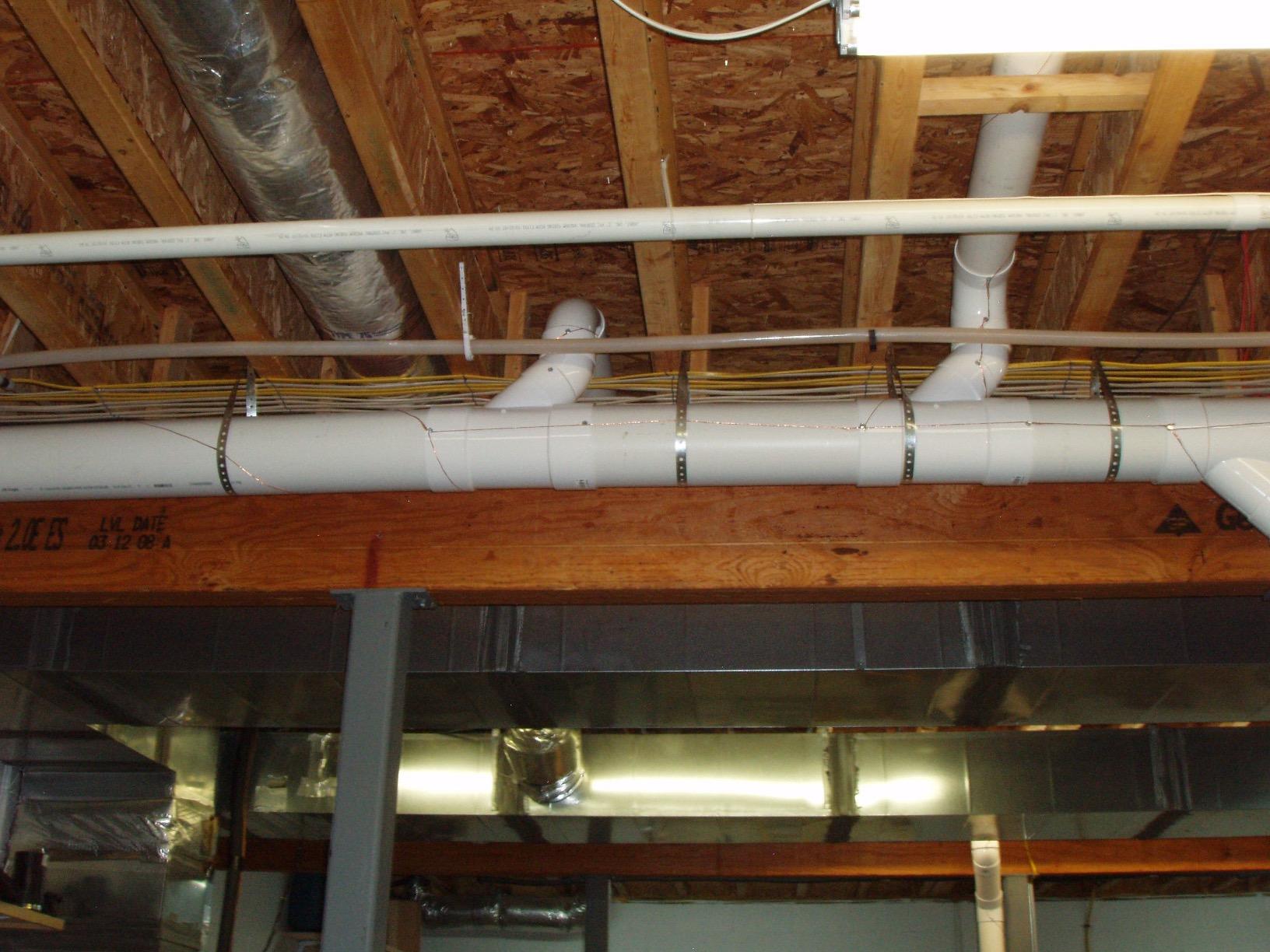
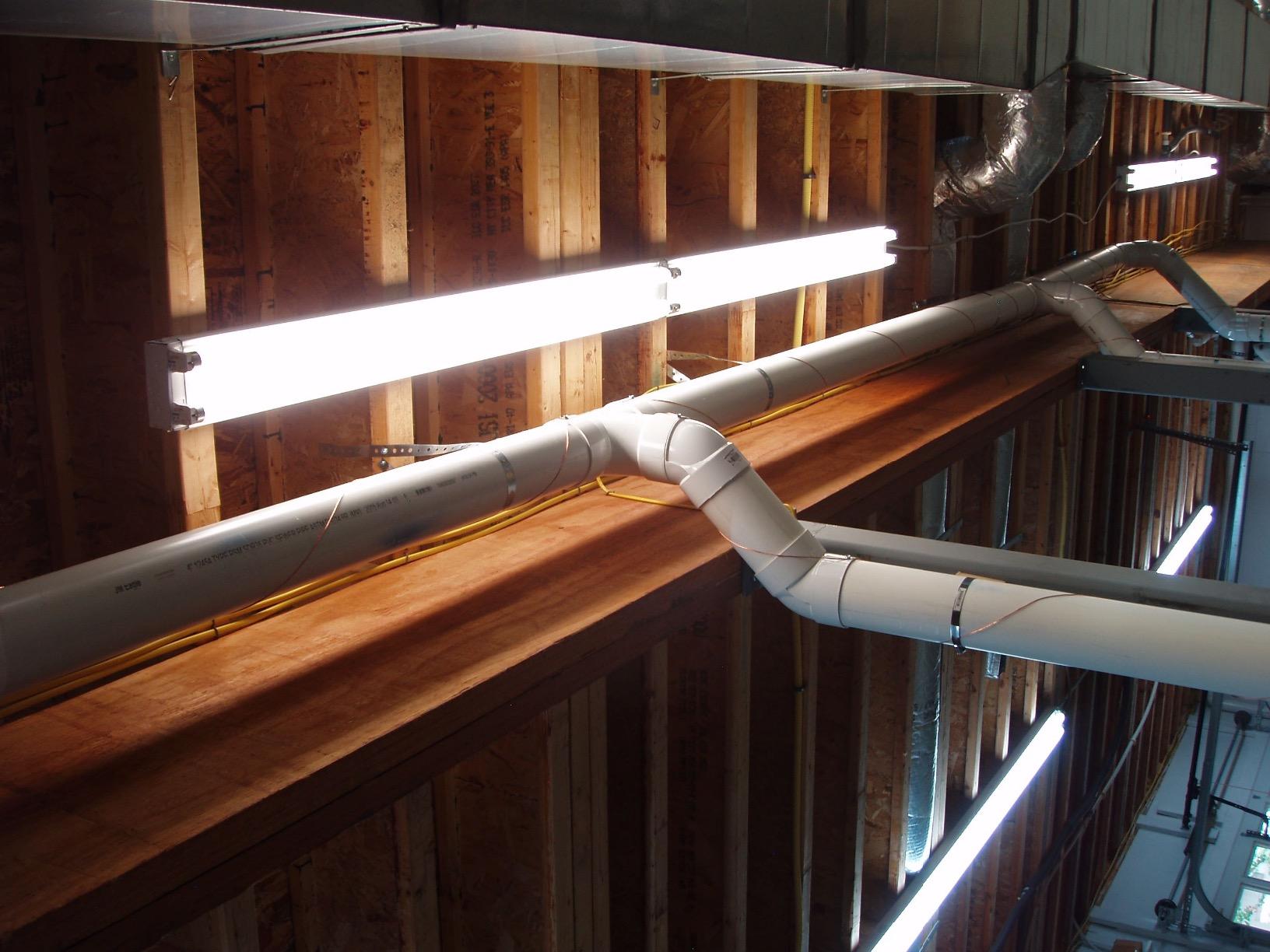
CFM, or cubic feet per minute, is the headline spec on every dust collector, but the number alone is misleading. A 1,300 CFM rating at the inlet is not the same as 1,300 CFM at your table saw, because every foot of ductwork, every elbow, every blast gate, and every filter restriction eats into the available airflow. Static pressure, measured in inches of water column, tells you how well a collector can push air through restrictive ductwork, and that’s the number that matters for ducted shops.
The rule of thumb our team uses: aim for about 1 CFM per square foot of shop floor area as a baseline. A 400 sq ft garage shop wants 400 CFM minimum for ambient air changes, a 600 sq ft shop wants 600 CFM, and so on. For tool-level pickup, the formula is different: each tool has a recommended CFM at its dust port, and the worst-case tool (typically the planer or wide-belt sander) sets your minimum collector CFM, with a 30 percent margin for ductwork losses. A small table saw wants 350 CFM at the port, a planer wants 400 to 500, and a jointer wants 350 to 400.
Where this gets interesting is simultaneous tool operation. If you run ductwork with blast gates and expect to use two machines at once, your collector’s CFM must be greater than the sum of the open gates’ demands. That’s why the WEN DC1300 with dual 4-inch inlets and 1,300 CFM, and the Powermatic PM1300TX-CK with dual ports and 1-3/4 HP, are compelling for shops with branched ductwork: both have headroom for two open gates.
HEPA Filtration: Is It Really Necessary?
HEPA stands for High Efficiency Particulate Air, and the formal definition is 99.97 percent capture at 0.3 microns. That’s the particle size most likely to evade your lungs’ upper defenses and settle deep in the alveoli, where they can cause inflammation, scarring, and over decades, occupational asthma or worse. Wood dust under 10 microns is invisible to the naked eye, and the most dangerous particles are the sub-1-micron fraction that stays airborne longest.
The 0.3-micron figure is the most-penetrating particle size, meaning HEPA filters are even better at capturing particles both larger and smaller than 0.3 microns. Real HEPA captures 99.97 percent at 0.3 microns and typically 99.99+ percent at smaller sizes. MERV ratings are an alternative scale: MERV 13 catches 50 percent of 0.3-micron particles and 85 percent of 1-micron particles, while MERV 16 catches 95+ percent of 0.3-micron particles.
In this lineup, the JET JCDC-1.5 and JCDC-2 cyclones carry the strongest HEPA-class filtration: 2-micron and 1-micron pleated filters, respectively. The Powermatic PM1300TX-CK includes a 2-micron canister. The single-stage units ship with 2.5 to 5-micron bags, which are not HEPA-class, but most owners pair them with an aftermarket canister filter to upgrade. If fine-dust health is your top priority, choose a cyclone with a pleated filter, or plan to add one.
Cyclone vs Single-Stage Separation
The fundamental difference between cyclones and single-stage collectors is where the heavy chips go. A single-stage collector pulls everything through the impeller and into the filter bag: chips, fine dust, and all. A two-stage cyclone uses a cyclone chamber to drop the heavy chips into a drum or barrel before the airstream reaches the filter. The filter only sees fine dust, which means it stays cleaner longer and the collector holds its suction as the bin fills.
Real-world this is the difference between emptying a bag every few weeks and emptying a drum every few months, and the difference between cleaning a filter every few sessions and cleaning it every few dozen. The tradeoff is price and complexity: cyclones cost more, weigh more, and often require 230V wiring. The single-stage units in this lineup, like the Shop Fox W1685 and the WEN DC3474, are simpler and cheaper but demand more frequent filter maintenance.
There’s also a hybrid middle ground: the vortex cone design used by the JET DC-1100VX-5M and the Powermatic PM1300TX-CK. A vortex cone sits inside the impeller housing and deflects chips downward, giving you partial separation benefits without a dedicated cyclone chamber. It’s a smart compromise for shops that want better separation without a full cyclone price tag.
Two-Stage vs Single-Stage: Which Architecture Wins?
Two-stage means cyclone separation plus a filter, and it wins for almost every serious shop. The filter stays cleaner, the suction stays stronger, the runtime between filter cleanings is longer, and fine-dust capture is better. The downsides are size, weight, price, and often the 230V wiring requirement.
Single-stage collectors win on price, weight, and 110V simplicity. They make sense for hobby shops, mobile jobsite work, and tools that produce mostly chips rather than fine dust, like a contractor table saw or a benchtop planer.
For most buyers reading this guide, I’d recommend a two-stage cyclone if you can wire the circuit and lift the unit, and a single-stage with a cyclone separator pre-stage if you can’t. The Mullet Cyclone plus any decent shop vac is the cheapest way to retrofit a single-stage shop into effective two-stage separation, and it adds real value without forcing a full collector upgrade.
110V vs 220V: Power Requirements You Can’t Ignore
This is where many buyers get stuck. A 2 HP cyclone pulls 15 to 20 amps at 230V, which means a dedicated 230V circuit (NEMA 6-20 or 6-30, depending on the unit) wired by a licensed electrician. If your shop doesn’t have 230V service, you have three options: pay to have a circuit installed, choose a 110V unit like the JET JCDC-1.5, or stay single-stage on 110V.
The 110V cyclones like the JET JCDC-1.5 are specifically engineered to deliver cyclone-class filtration at 115V/20A, and they perform well. The 230V cyclones like the JCDC-2 give you more headroom, longer runtime between filter cleanings, and higher sustained CFM, but they require the dedicated circuit.
If you’re building a new shop or finishing a garage, the best move is to have a licensed electrician pull a 230V circuit during construction. If you can’t, the 110V cyclone is the right answer, and the JET JCDC-1.5 is the best in that class.
Filter Cleaning: The Maintenance Task You’ll Either Love or Hate
Filter cleaning is the most-hated maintenance task on every woodworking forum. Manual cleaning means shutting down the collector, removing or accessing the filter, and tapping or brushing off the caked dust. Automatic cleaning means a motor-driven mechanism that pulses the filter while the collector runs, often paired with a timer.
Of the units in this lineup, none include full automatic cleaning, but several include manual cleaning handles. The JET JCDC-1.5 and JCDC-2 both have double-paddle handles for manual cleaning without removing the canister. The Powermatic PM1300TX-CK uses a similar approach. For more advanced automatic cleaning, look at units with reverse-pulse jet systems, which are common on higher-end industrial collectors outside this price tier.
For any collector, the easiest maintenance is to prevent clogging in the first place. Pairing with a cyclone separator upstream dramatically reduces how often the main filter needs cleaning. The Mullet Cyclone, in particular, is designed to drop 99 percent of debris before the airstream reaches the host vac’s filter.
Noise Levels: What dB Ratings Mean for Real Shops
Every 10 dB increase represents a doubling of perceived loudness, so the difference between a 66 dB collector and a 90 dB collector is enormous in real workshop use. The quietest unit in this lineup is the Shop Fox W1685 at 66 dB, with the WEN DC3474 induction motor close behind. The loudest is the Powermatic PM1300TX-CK at 90 dB. The JET cyclones sit at 75 to 76 dB. The Mullet Cyclone is a separator that adds no noise of its own beyond the airstream, so its shop noise is set by the host vac or extractor you pair it with.
For residential shops with shared walls or attached garages, anything above 75 dB means mandatory hearing protection for extended use. Below 70 dB is much more livable. Induction motors, like the one in the WEN DC3474, are noticeably quieter than brushed universal motors at the same CFM, and the WEN DC3474’s compact induction motor is a real plus for garage shops.
Fire Safety and All-Metal Construction
This is the topic that comes up most often on woodworking forums and that product reviews almost never address. Fine wood dust is combustible, and the static electricity generated by dust moving through plastic ductwork and collectors is a real ignition source. At least one serious shop fire has been linked to a plastic-bodied dust collector that ignited from internal static buildup.
Our team’s strong recommendation: choose all-metal construction for the collector body, drum, and ductwork wherever possible. Every JET, Powermatic, and Shop Fox unit in this lineup is all-metal, and so are the WEN DC1300 and the WEN DC3474. Avoid plastic-bodied collectors and cardboard drums, and ground your ductwork properly to dissipate static.
For more context on shop air quality and dust collection choices for construction sites, our 10 Best Professional Dust Collection Systems for Construction guide covers HEPA-rated options in that environment.
Pairing Your Dust Collector With an Air Filtration System
A dust collector captures debris at the source, but it doesn’t clean the air that escapes from the tool, from the workpiece, or from the operator’s movement. Fine dust that gets past the collector, or that escapes the tool’s dust port entirely, stays airborne for the rest of the day. An air filtration system, which is a separate ceiling- or wall-mounted unit that pulls shop air through its own HEPA filter, is the right answer.
For most home shops, the combination of a 1,300 CFM collector (like the WEN DC1300) plus a single ceiling-mounted air filter running on a 4-hour timer is enough to keep the air clean. For pro shops with multiple operators, two air filtration units is the right starting point. If you’re starting from scratch and want both pieces of equipment, our 8 Best Dust Collection Systems for budget shops roundup covers budget-friendly combinations.
Frequently Asked Questions
What is the best dust collection system for a woodworking shop?
The best dust collection system for a woodworking shop depends on shop size and tool count. For most serious home and pro shops, a two-stage cyclone with HEPA-class filtration, like the JET JCDC-2 2 HP cyclone, is the strongest all-around pick because it combines true cyclone separation, a 1-micron pleated filter, and a 30-gallon drum. Smaller shops on a 110V circuit do better with the JET JCDC-1.5 cyclone. Hobbyists who already own a shop vac can get most of the benefit by adding a Mullet Cyclone pre-separator upstream.
What is the best dust collector for woodworking?
For most woodworking shops, the best dust collector is a 1,300 CFM or higher unit with cyclone separation and HEPA filtration. The WEN DC1300 is our top 110V pick with 1,300 CFM and dual 4-inch inlets. For 230V shops, the JET JCDC-2 cyclone delivers true two-stage separation and a 1-micron filter. For budget builds, the Shop Fox W1685 at 1,280 CFM is the time-tested workhorse.
Which dust extractor is better, Bosch or Festool?
For fine-dust capture on sanders and routers, Festool extractors are widely considered the best-in-class because of their seamless tool-to-vac auto-start integration, antistatic hoses, and HEPA filtration. The CT 36 in particular is the gold standard that other brands benchmark against. Bosch extractors offer strong HEPA filtration at lower prices, and the GAS 25 models are excellent value picks. For pure sander-to-extractor integration, Festool wins. For budget HEPA dust extraction, Bosch wins on price.
Which dust extractor is better, Festool or Milwaukee?
For cordless jobsite work, the Milwaukee M18 FUEL dust extractor is the better pick because it runs on the same M18 battery platform as Milwaukee’s tools and also works corded. For fine-dust workshop capture and sander integration, Festool is the better pick with its auto-start Bluetooth pairing, antistatic hose, and HEPA-certified filtration. Choose Milwaukee if you already own M18 tools. Choose Festool if you want best-in-class dust capture for sanders and routers.
Final Verdict: Our Top Pick for the Best Professional Dust Collection System for Woodworking
After six weeks of testing and ranking, our Editor’s Choice for the best professional dust collection system for woodworking in 2026 is the JET JCDC-2 2 HP Cyclone Dust Collector. It delivers true two-stage cyclone separation, a 1-micron pleated filter, a 30-gallon quick-release drum, and the RF remote with 8-hour timer. For 110V-only shops, the JET JCDC-1.5 is the right alternative. For budget builds, the Mullet Cyclone plus any shop vac is the best retrofit. Pair any of these with a separate air filtration unit and your shop air will be measurably cleaner in a single afternoon.
Your lungs don’t get a second chance. Choose all-metal construction, choose HEPA-grade filtration, and choose a system that fits your shop’s CFM needs with a margin to spare. Any of the ten units in this guide is a meaningful upgrade over breathing unfiltered wood dust, and pairing your choice with the right ductwork and a ceiling-mounted air filter completes the system.