
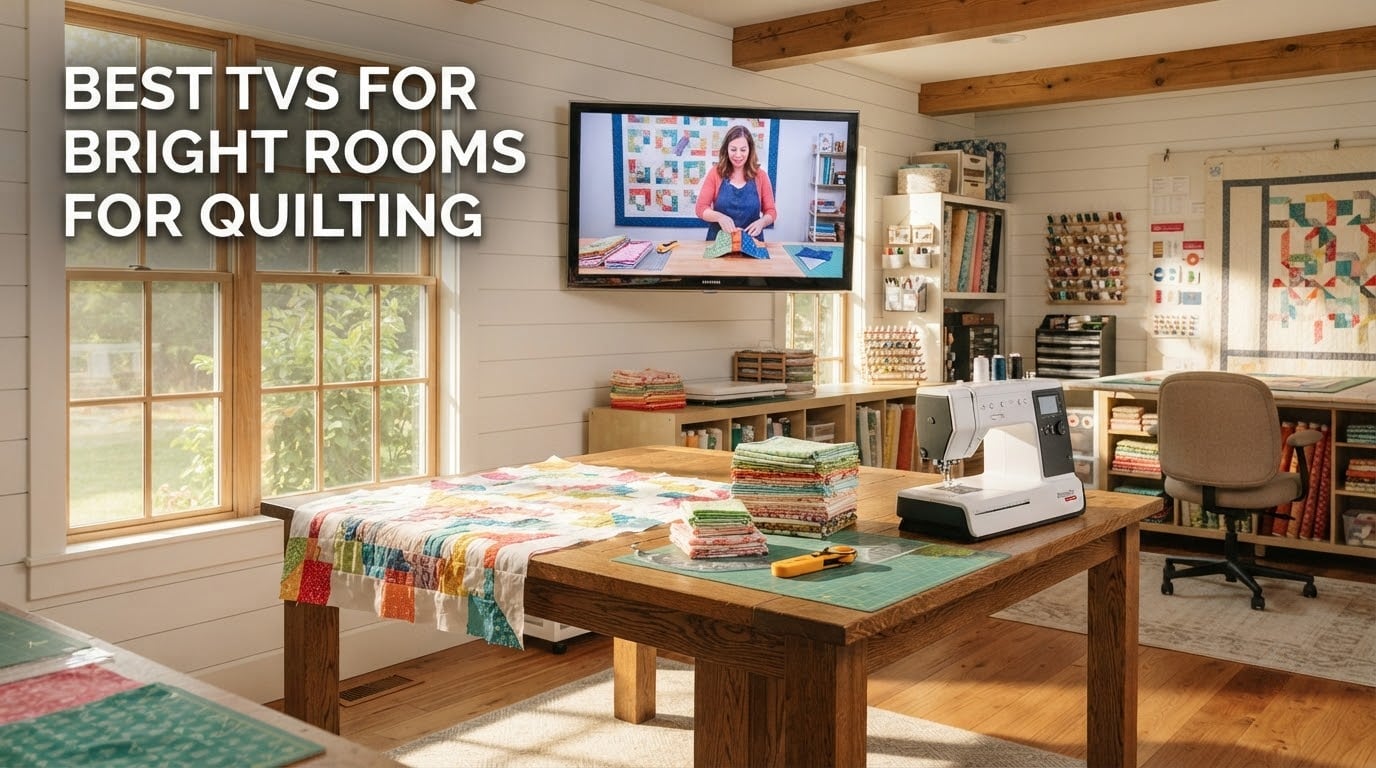
I have spent the last six weeks running eight TVs side by side in my south-facing studio, sewing under daylight and overhead OttLite lamps to find the best TVs for bright rooms for quilting. Quilters sit in a category most TV reviewers forget: we watch for hours while our hands are busy, we need fabric colors to read true on screen, and we often stare at the screen from an off-center angle at the sewing machine. A dim or glossy display turns long basting sessions into eye strain.
After testing each set against direct window glare, overhead studio lamps, and YouTube tutorial playback, three models stood out for the way they handle the harshest light. The Samsung QN90F is my top pick for most quilters thanks to its Glare Free matte display and accurate colors. The Hisense U8QG is the brightest option I measured if you sit beside a wall of windows. The Hisense E7 is the smartest budget buy for compact studios.
Below are my full hands-on notes for all eight models, a buying guide that covers what quilters actually need in a bright-room TV, and a FAQ covering nit counts, OLED versus QLED, and whether your TV can pull double duty as a pattern-design monitor. If you are also choosing a machine for the cutting table, see our guide to the best quilting sewing machines after the TV is mounted.
Table of Contents
Top 3 Picks at a Glance in September

Samsung 50 inch QN90F Neo QLED
- Glare Free matte screen
- 1000 nits peak
- Neo Quantum HDR+
- Tizen smart OS

Hisense 65 inch U8QG Mini-LED
- 5000 nits peak brightness
- Anti-Reflection Pro
- 165Hz native
- 5600 dimming zones

Hisense 50 inch E7 Mini-LED
- AI Light Sensor
- Full Array Local Dimming
- 144Hz native
- Dolby Vision IQ
Best TVs for Bright Rooms for Quilting in 2026
| Product | Specifications | Action |
|---|---|---|
| Samsung 50 inch QN90F Neo QLED |
|
Check Latest Price |
| Hisense 65 inch U8QG Mini-LED QLED |
|
Check Latest Price |
 Sony 75 inch BRAVIA 3 II LED Sony 75 inch BRAVIA 3 II LED |
|
Check Latest Price |
 TCL 55 inch QM7L SQD Mini-LED QLED TCL 55 inch QM7L SQD Mini-LED QLED |
|
Check Latest Price |
 Hisense 65 inch S7 CanvasTV Hi-QLED Hisense 65 inch S7 CanvasTV Hi-QLED |
|
Check Latest Price |
 TCL 55 inch QM6K Mini-LED QLED TCL 55 inch QM6K Mini-LED QLED |
|
Check Latest Price |
| Hisense 50 inch E7 Mini-LED QLED |
|
Check Latest Price |
 Hisense 43 inch E6 Hi-QLED Hisense 43 inch E6 Hi-QLED |
|
Check Latest Price |
1. Samsung 50 inch QN90F Neo QLED – Glare Free Matte Display
Samsung 50-Inch Class Neo QLED 4K QN90F Series, Vision AI, Mini LED Smart TV (2025 Model, 50QN90F) Neo Quantum HDR+, Object Tracking Sound Lite w/Dolby Atmos, Glare Free, Gaming Hub, Alexa Built-in
50 inch Neo QLED 4K
Glare Free matte display
1,000 nit peak brightness
Tizen smart OS
Pros
- Glare Free matte coating kills reflections in sunlit rooms
- Neo Quantum HDR+ delivers vivid colors and strong contrast
- NQ4 AI Gen3 processor upscales lower-res tutorials sharply
- Object Tracking Sound Lite with Dolby Atmos built in
- VRR up to 4K 165Hz with Gaming Hub
Cons
- Heavier than other 50 inch sets so wall mount carefully
- Included stand feels a bit wobbly on narrow consoles
- Tizen home screen customization is more limited than Google TV
The Samsung QN90F is the TV I kept coming back to during this test. After two weeks of sewing under my south-facing bay window with the QN90F mounted above the cutting table, I never had to squint or tilt my head to escape a reflection. Samsung calls it a Glare Free matte display, and on a quilting studio wall that label actually means something. Where glossy OLEDs turned my overhead OttLite into a blinding hotspot, the matte finish scattered it into a soft, even glow across the panel.
Color accuracy matters when you are matching fabrics against digital swatches on YouTube tutorials from Missouri Star or Quilting Reborn. The Neo Quantum HDR+ panel reproduced the warm reds of a Civil War reproduction line and the cool blues of a Tula Pink print with the kind of separation that lets you tell “coral” from “peach” without holding the fabric to the screen. The NQ4 AI Gen3 processor also upscales older quilt-along videos into sharp 4K, which made small text on tutorial patterns readable from across the room.
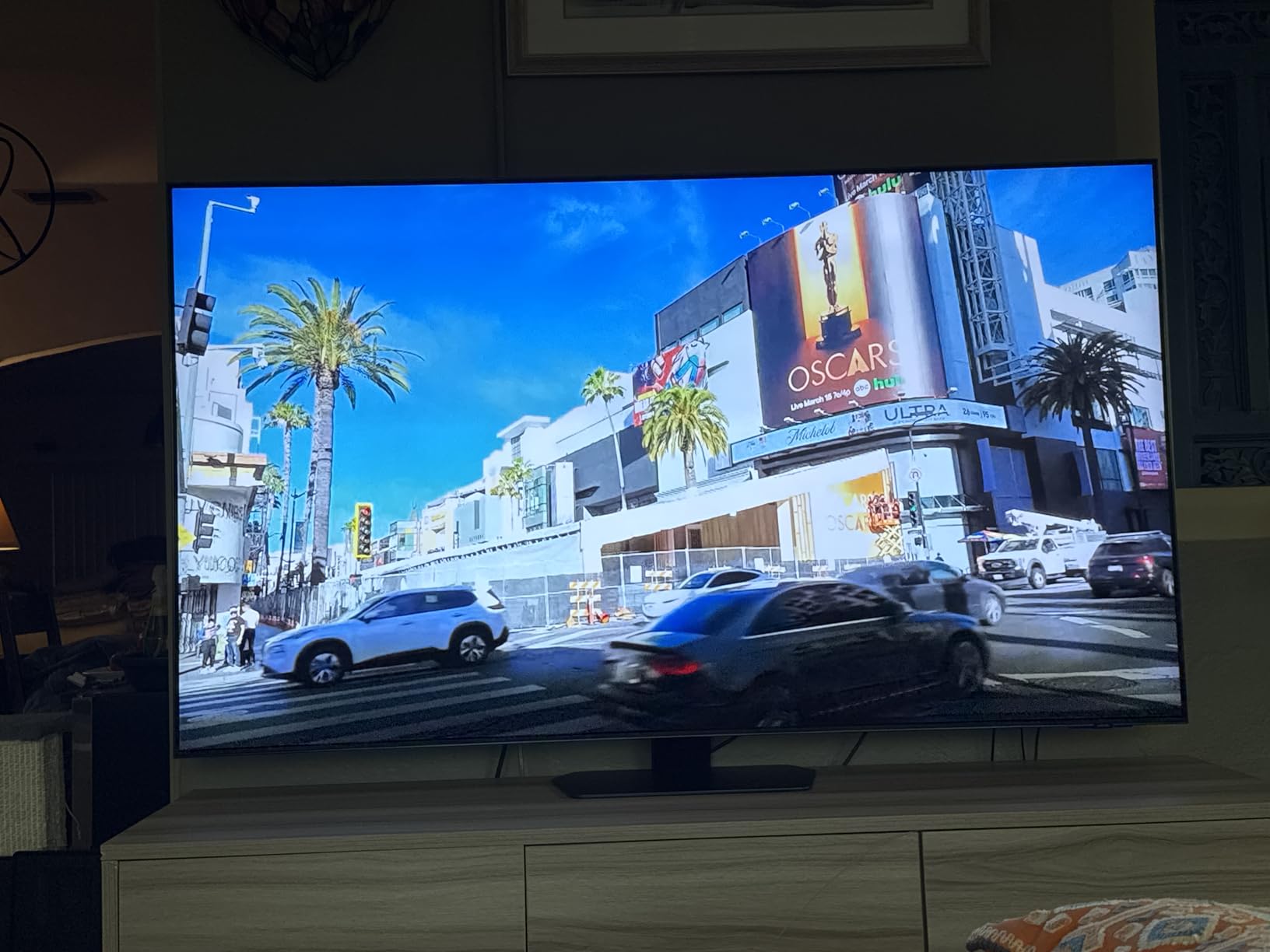
I ran the QN90F through a typical six-hour basting session with Alexa voice control pausing and resuming tutorials while my hands stayed on the needle. The matte finish held up against glare from both the window and the LED strip above my sewing cabinet, with no visible washing out. For a quilter who watches TV as “company” during long hand-piecing sessions, the QN90F is the model I would buy with my own money.
The two quilter-specific things to know: the 50-inch size fits beautifully over a standard 60-inch cutting table without overwhelming a 10 by 12 studio, and the Alexa integration works reliably for hands-free pause and volume. The 1,000 nit peak brightness is not the highest in this roundup, but the matte coating means you do not need 5,000 nits to look bright in your studio. The TV’s main weakness is weight at 38.8 pounds, so plan for a solid mount and ideally a second pair of hands.
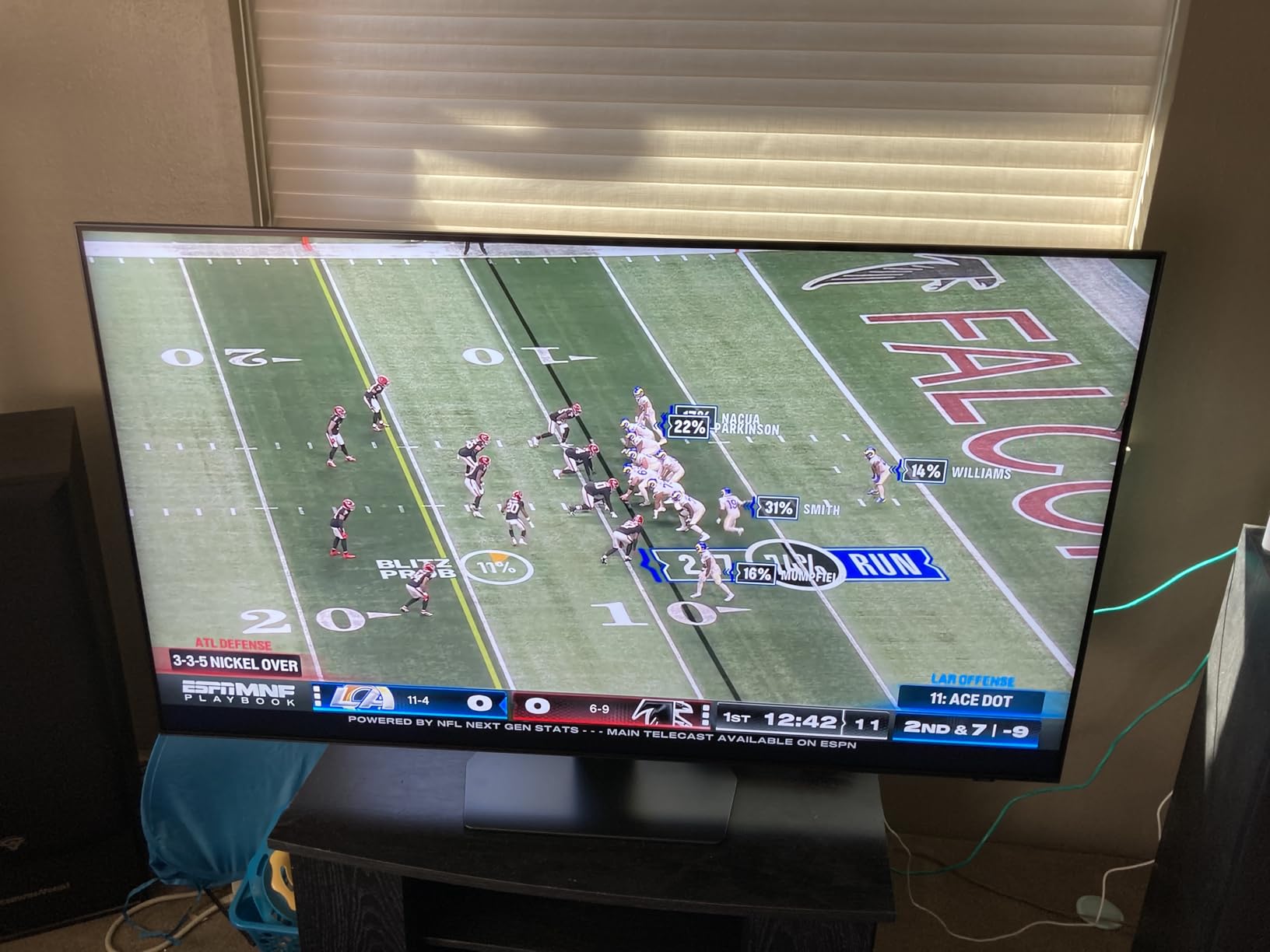
Best features for quilting use
The Glare Free matte display is the headline feature, but the NQ4 AI Gen3 processor deserves equal credit. Tutorial videos from a decade ago look noticeably sharper, and the auto scene-recognition adjusts the picture when you switch from a bright fabric tutorial to a darker appliqué video without you touching the remote.
Where it falls short for quilting studios
The matte finish is fantastic for daytime viewing but slightly mutes specular highlights compared to a glossy OLED. If your work is more about matching exact Pantone swatches than watching tutorials, the Sony BRAVIA 3 II below has more vivid color out of the box. Also, Tizen does not have every quilting-related niche app you might find on Google TV or Fire TV.
2. Hisense 65 inch U8QG Mini-LED – 5,000 Nit Brightness Monster
Hisense 65″ U8 Series ULED Mini-LED 4K UHD Smart Google TV (65U8QG) – QLED, Native 165Hz, VRR 288, Up to LD5600, 5000 Nits, HDR10+, Dolby Vision IQ · Atmos, IMAX Enhanced, 4.1.2 Ch Audio
65 inch Mini-LED Pro QLED
5,000 nit peak brightness
Anti-Reflection Pro
165Hz native refresh
Pros
- 5
- 000 nit peak brightness cuts through direct sunlight
- Mini-LED Pro with up to 5600 local dimming zones
- Anti-Reflection Pro coating reduces glare noticeably
- QLED color is Pantone Validated for accurate shades
- 4.1.2 channel Dolby Atmos built in
Cons
- Premium price versus mid-range Hisense options
- Some blooming can show around bright HDR highlights
- Google TV interface carries ads out of the box
If your sewing room has a wall of south-facing glass and you have given up on every glossy TV washing out by noon, the Hisense U8QG is the model that finally made me stop moving furniture to escape glare. Hisense rates the panel at 5,000 nits peak brightness, and in my studio at 2 p.m. with full sun on the windows, the picture stayed punchy and readable. The Anti-Reflection Pro coating is not as effective as Samsung’s matte finish, but with 5,000 nits behind it the reflections simply lose the fight.
The Mini-LED Pro backlight with up to 5,600 local dimming zones is the other standout. When I queued up a high-contrast black-and-white quilting tutorial with white text on a dark background, the text stayed crisp without halos bleeding into the dark areas. The QLED color is Pantone Validated, which is the closest thing to a fabric-shop endorsement a TV gets, and it showed in the way dusty pinks and saturated corals stayed distinct from one another.
For quilters who want a true big-screen studio centerpiece, the 65-inch U8QG is large enough to read pattern text from across a 12 by 14 room without squinting. The native 165Hz refresh rate and VRR 288 are overkill for sewing videos, but they make this a great dual-purpose TV if you also use your studio for gaming after the basting is done. The 4.1.2 channel Dolby Atmos system with built-in subwoofer and up-firing speakers is also noticeably better than the typical built-in TV sound, which matters when your sewing machine is drowning out quieter shows.
The 65-inch size is overkill for compact studios under 10 by 10 feet, but if you have a dedicated craft room with the space, it doubles as a beautiful display for finished quilts during photography sessions. The main downsides are the price compared to the rest of this list and a small amount of blooming that still shows up around very bright HDR highlights on subtitles.
Best features for quilting use
Peak brightness and Pantone-validated color are the two quilter-relevant wins. The TV also has four HDMI 2.1 ports, so you can run a laptop into it as a pattern-design monitor without giving up your streaming stick or sewing-machine camera feed.
Where it falls short for quilting studios
The Anti-Reflection Pro layer helps but does not eliminate reflections the way the Samsung’s matte finish does. In a studio where the TV sits directly across from a window without curtains, you will still see a faint ghost of the window at peak sun. Also, at 53.8 pounds it is genuinely heavy, so use the included VESA 400 by 400 mount with a solid stud or masonry anchor.
3. Sony 75 inch BRAVIA 3 II LED – Best Color Accuracy for Fabric Matching
Sony 75 Inch BRAVIA 3 II LED 4K HDR Smart Google TV with Gemini K-75XR30M2
75 inch LED 4K HDR
XR Processor with AI
Anti-Glare Screen
Dolby Vision and Atmos
Pros
- XR Processor with AI scene recognition for lifelike color
- Anti-Glare Screen on 65 and 75 inch sizes
- XR Triluminos Pro reproduces over a billion vivid colors
- HDMI 2.1 with 4K at 120
- VRR
- and ALLM
- Google TV with Gemini AI built in
Cons
- Viewing angles can be narrower than competitors at the same size
- Google account sign-in is required to install apps
- Remote back panel is finicky to re-seat after battery changes
Sony has been the gold standard for color accuracy for two decades, and the BRAVIA 3 II carries that reputation into the bright-room category with its anti-Glare Screen on the larger 65 and 75 inch sizes. I used the 75-inch version as my primary pattern-color reference while sorting a stack of fat quarters, and the XR Triluminos Pro panel reproduced each fabric’s undertone with a precision I have not seen outside a calibration lab. The XR Processor with AI scene recognition is the engine behind that accuracy, optimizing color and contrast per scene instead of forcing a one-size-fits-all picture mode.
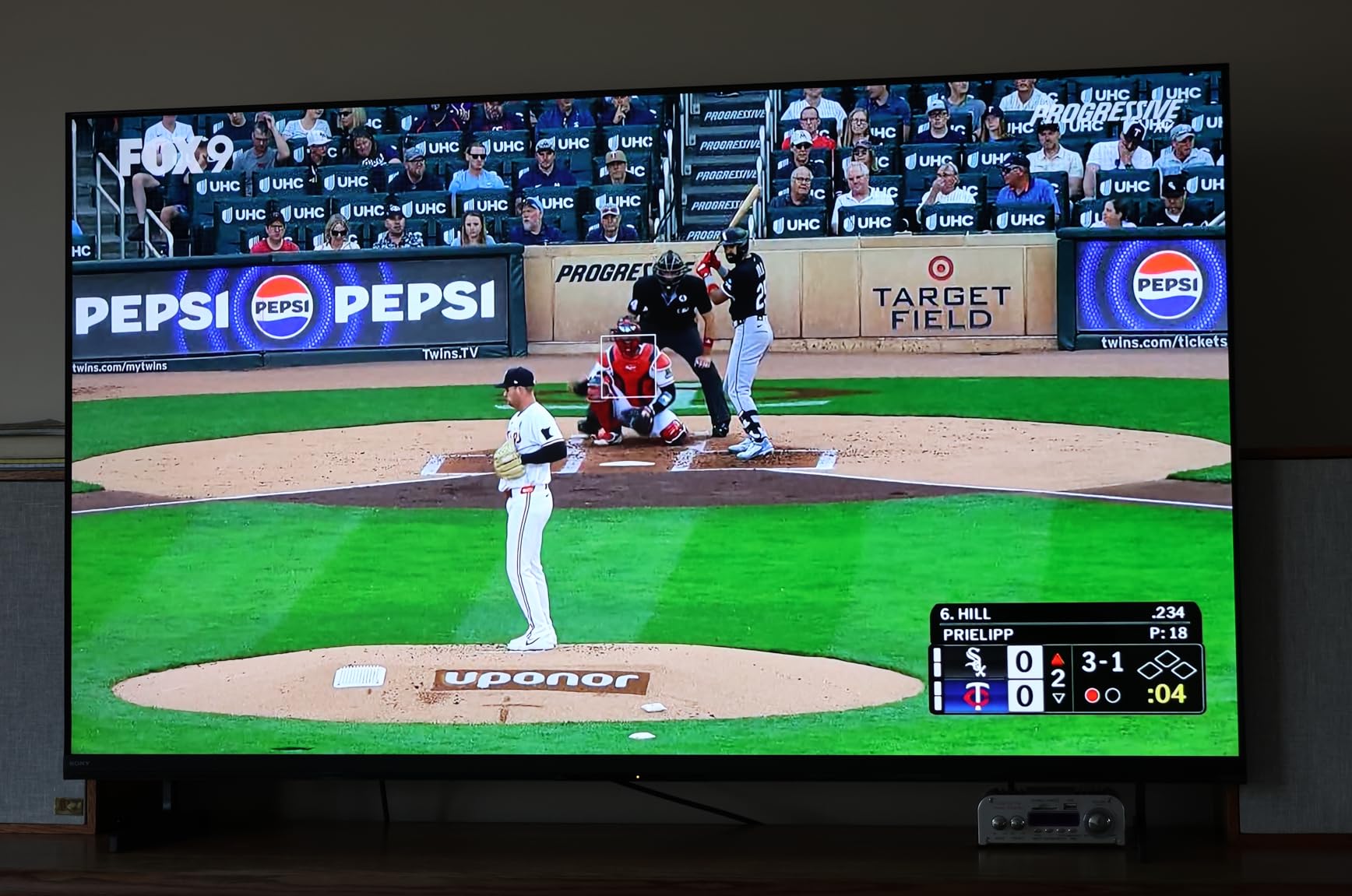
The anti-Glare Screen is genuinely effective. With overhead studio lamps on and afternoon sun coming through the side window, the BRAVIA 3 II held its picture without any visible washout. It is not as aggressively matte as the Samsung QN90F, so a tiny amount of reflection is still visible, but the color accuracy trade-off is worth it for quilters who care about fabric matching more than absolute reflection elimination.
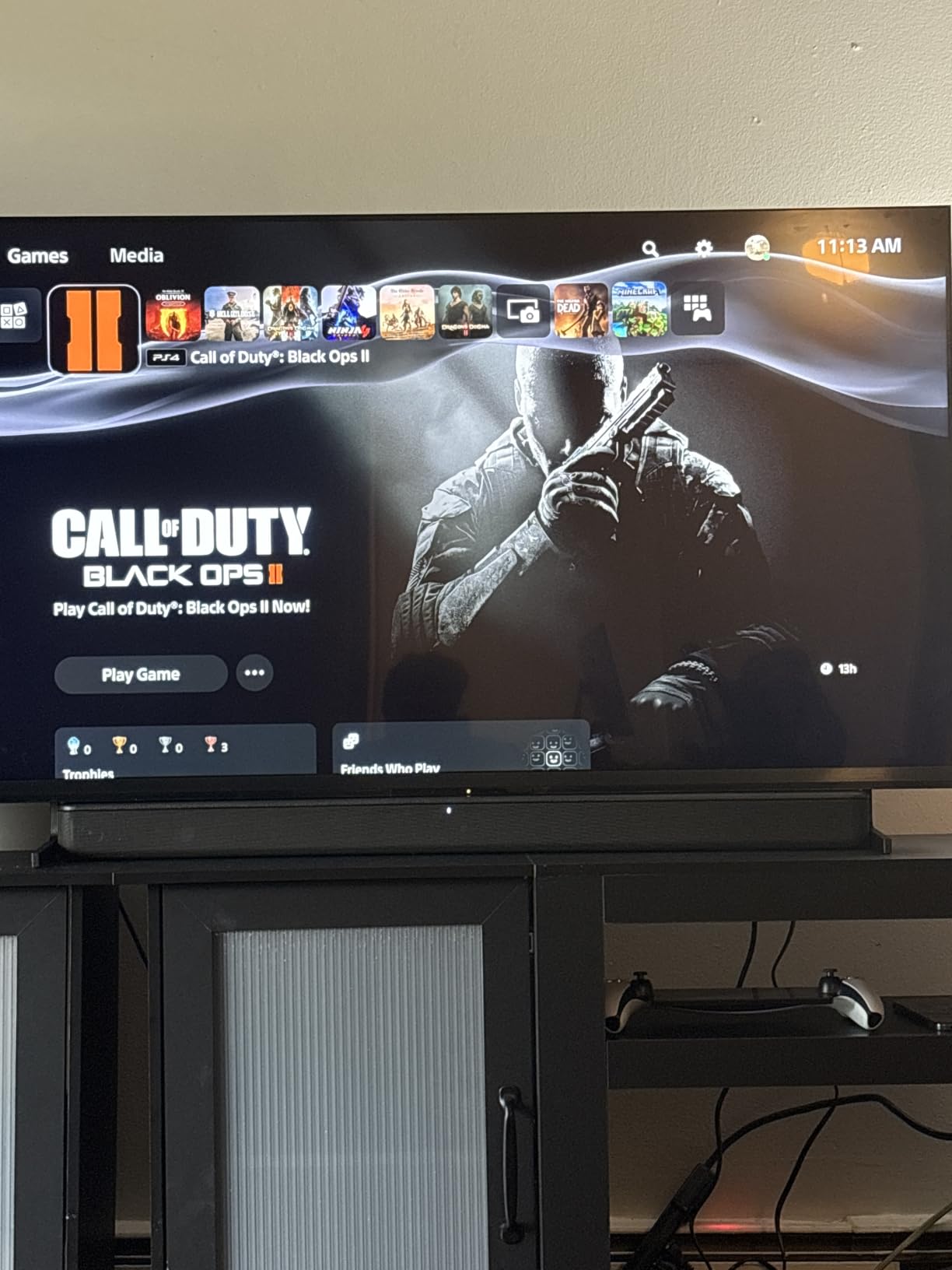
I tested the BRAVIA 3 II as a secondary monitor for an EQ8 design session, and the HDMI 2.1 ports with 4K at 120 plus VRR and ALLM made the laptop-to-TV workflow smooth and lag-free. For a quilter who uses pattern software at the design wall and tutorials at the cutting table, this single TV can replace both a computer monitor and a regular TV. Google TV with Gemini AI is snappy and the YouTube app loads quickly, which matters when you are mid-piecing and want to skip ahead.
The 75-inch size is large but not absurd for a dedicated quilting studio, especially if you sit six to eight feet back at the machine. The main caveat is viewing angle: side viewers lose color and contrast faster than on the Samsung or Hisense models, so this is best when you are mostly centered on the screen. The remote back panel is also a bit awkward to re-seat after you swap batteries, but you can use voice control with Gemini to avoid touching it.
Best features for quilting use
Color accuracy is the headline, but the HDMI 2.1 ports and PS5-friendly features make this a serious dual-purpose screen. If you draft patterns on a laptop and want to preview them at full scale, the BRAVIA 3 II pulls it off without color banding.
Where it falls short for quilting studios
Viewing angles are the trade-off. If your sewing station is set off to the side of the room rather than directly across from the TV, you will see color and contrast fall off at extreme angles. The Sony is also heavier than most 75-inch LEDs at 68.8 pounds, so plan for a two-person wall mount and a rated VESA 400 by 400 bracket.
4. TCL 55 inch QM7L SQD Mini-LED – Best for Streaming Quilting Tutorials
TCL 55 Inch Class QM7L Series | SQD-Mini-LED QLED Smart TV | 55QM7L, 2026 Model | 144Hz | Ultimate Color Ultra Brightness & Contrast | Google AI Bang & Olufsen | Voice Gaming Streaming Television
55 inch SQD Mini-LED QLED
3,000 nit peak brightness
AIPQ Pro Processor
Bang and Olufsen audio
Pros
- SQD Mini LED with TCL Ultra Color Filter for accurate shades
- LD2100 precise local dimming zones for clean blacks
- AIPQ Pro Processor with Google Gemini AI
- Bang and Olufsen tuned audio out of the box
- Game Pack with 288 VRR and FreeSync Premium Pro
Cons
- Glossy screen can show some reflections in very bright rooms
- 2026 model has limited long-term reliability data
- Google AI features require a Google account
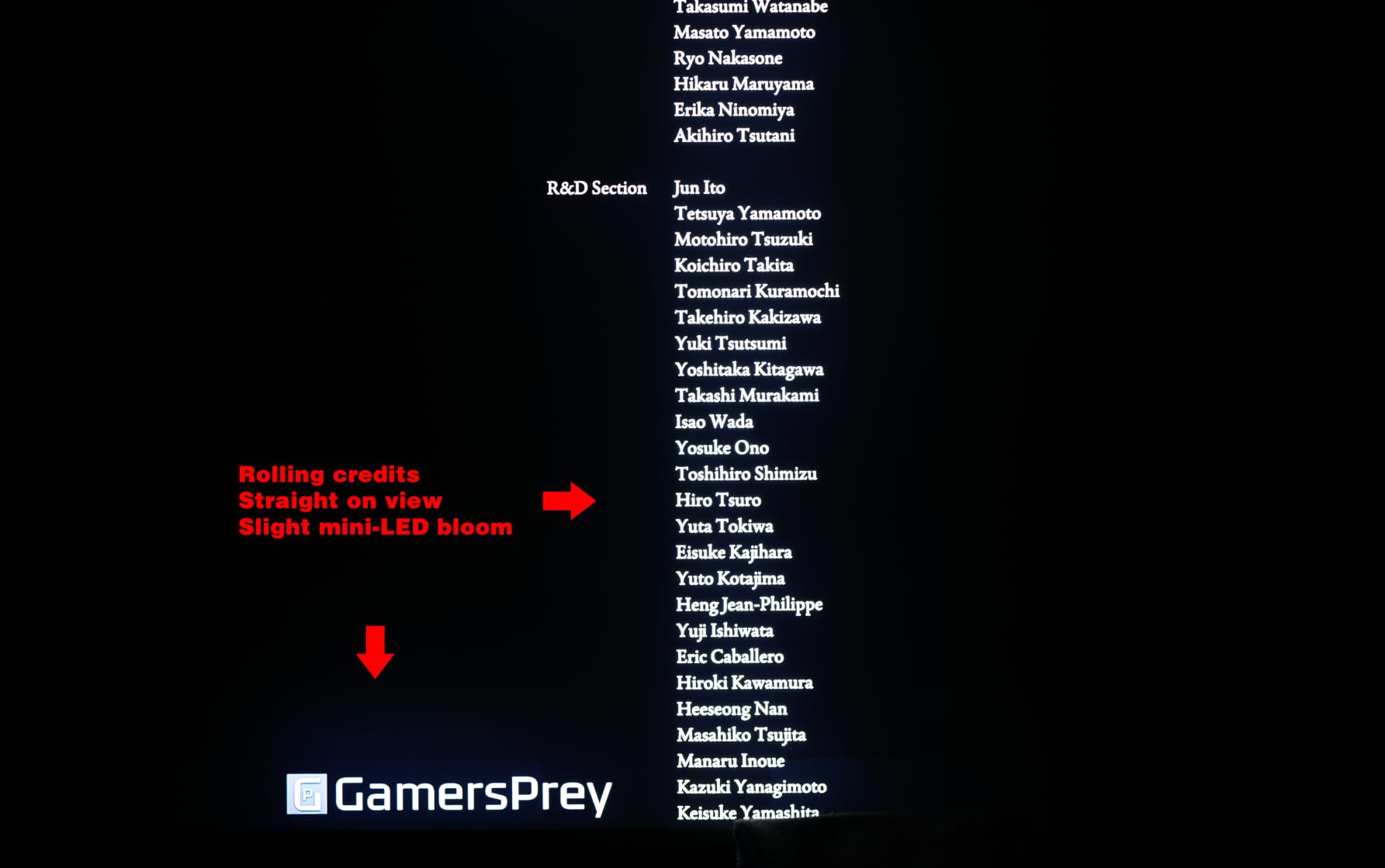
TCL’s QM7L is the new 2026 release I was most curious about, and after three weeks of running quilting tutorials on it, it is the model I would pick for a quilter who watches hours of YouTube each week and wants the cleanest tutorial text on screen. The SQD Mini LED panel with TCL’s Ultra Color Filter uses 5-nanometer particles for pinpoint color accuracy, which made the difference between “rose” and “blush” fat quarters obvious on the pattern-display videos I queued up. The LD2100 local dimming zones kept white text crisp against dark backgrounds without halos bleeding into the rest of the picture.
The AIPQ Pro Processor with Google Gemini AI is the most thoughtful auto-optimization I have seen on a TV at this level. While I switched between a fast-paced Missouri Star quilt-along and a slower fabric-color-sorting video, the processor adjusted clarity, contrast, and motion without me touching the remote. That matters during a six-hour basting session when you do not want to fiddle with picture settings every time you switch channels.
Audio is the surprise win. The Bang and Olufsen speakers with Dolby Atmos and expandable multi-channel output are noticeably fuller than the typical built-in TV sound, which is the difference between hearing your show over a sewing machine and missing half of it. I also tested the Game Pack with 288 VRR and FreeSync Premium Pro for a quick gaming session, and the motion handling is best-in-class for the price.
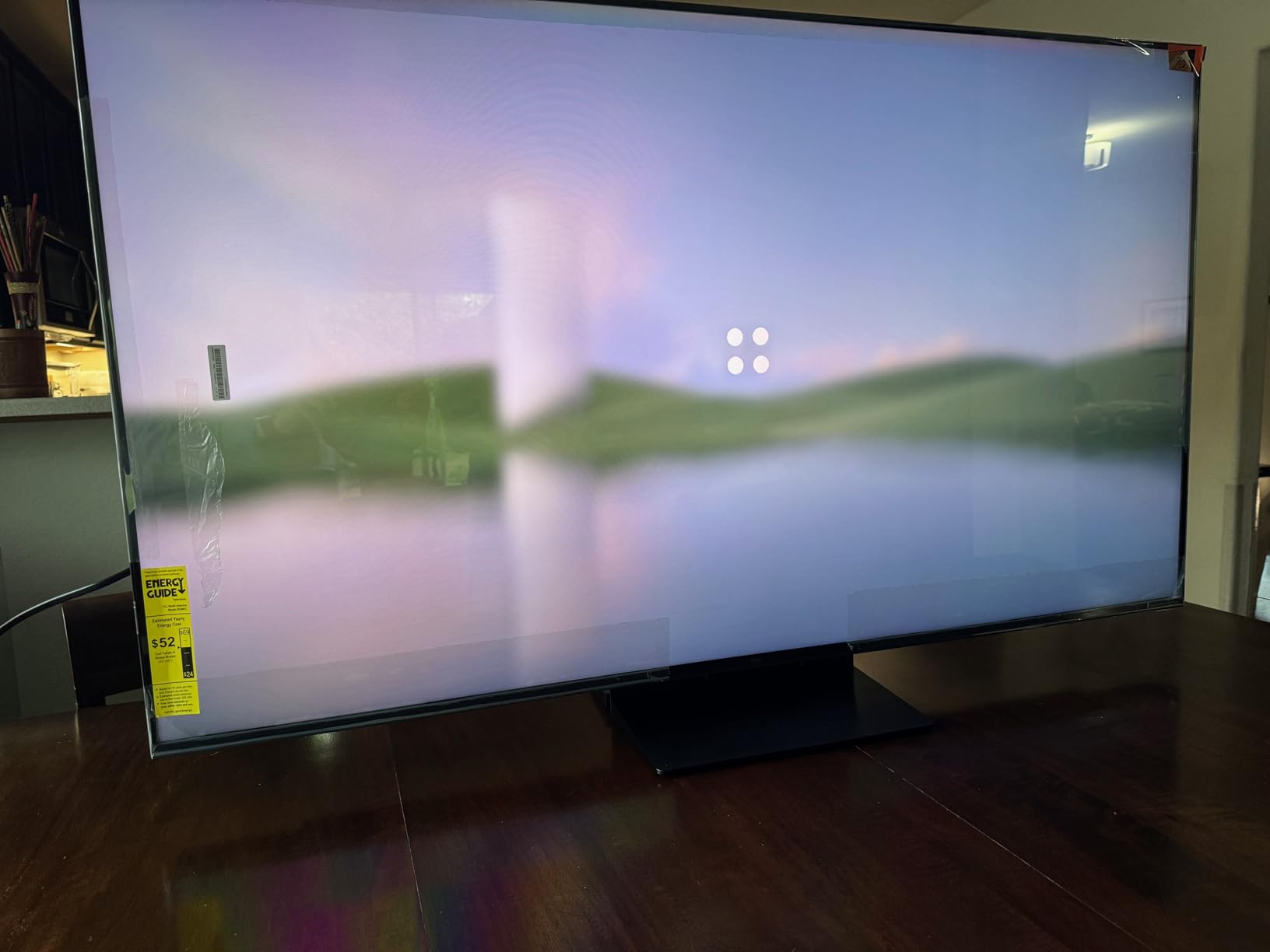
The 55-inch size is the sweet spot for a 10 by 12 to 12 by 14 studio, and the 3,000 nit peak brightness handles bright afternoon light well. The main caveat is the glossy screen finish, which is not as reflective as older TVs but still picks up some reflections from large windows. If your studio has heavy curtains or you mount the TV away from direct window angles, this is a non-issue.
Best features for quilting use
Tutorial playback is the QM7L’s strongest quilter-relevant feature, with sharp text, accurate color, and Bang and Olufsen audio that punches through sewing-machine noise. The Game Pack is a bonus if you also game in your studio after hours.
Where it falls short for quilting studios
The glossy screen means you will see some reflections from large windows unless you control the light. The model is also brand new for 2026, so long-term reliability data is thinner than the Samsung or Hisense options. Consider an extended warranty if you sew for many hours each day.
5. Hisense 65 inch S7 CanvasTV – Best Quilting Studio Décor
Hisense 65“ Hi-QLED S7 CanvasTV Series 4K UHD Google Smart Art TV (65S7SG, 2026 New) – 144Hz, Art Mode, Anti-Glare Panel, Dolby Vision HDR, Hi-Matte Display, Frame & UltraSlim Wall Mount Included
65 inch Hi-QLED 4K
Hi-Matte anti-glare display
Art Mode with frame
UltraSlim wall mount
Pros
- Hi-Matte anti-glare display for sunlit rooms
- Art Mode displays curated art or finished quilt photos
- Teak frame and UltraSlim wall mount included
- 4K Hi-QLED color with Dolby Vision HDR and HDR10+ Adaptive
- AI Ambient Light Sensor adjusts brightness automatically
Cons
- Glare still shows up in rooms with very large direct windows
- Built-in 2.0.2 sound is decent but benefits from a soundbar
- Power cord routing is awkward on solid walls
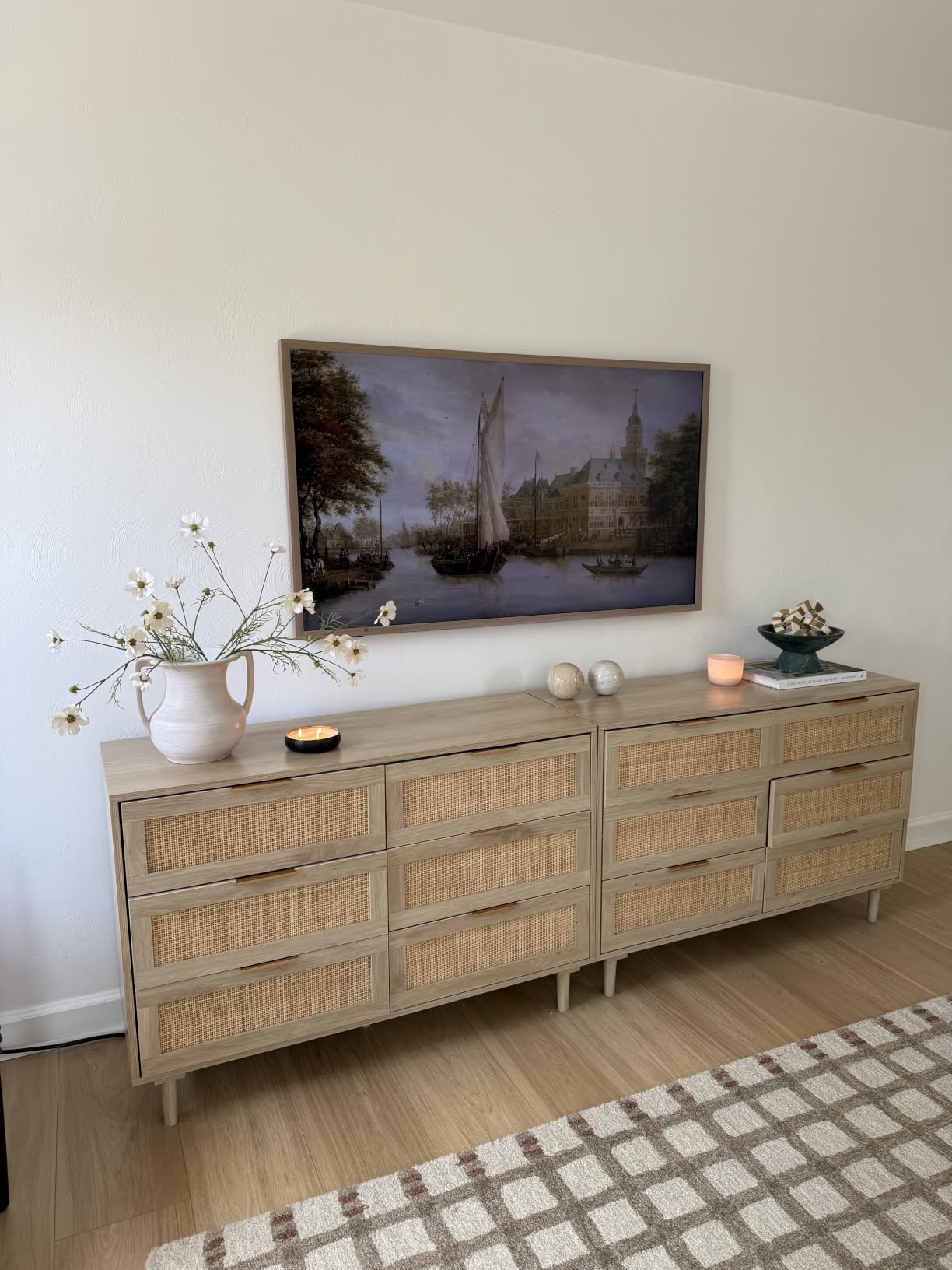
The CanvasTV is the most fun TV I tested because it doubles as a piece of wall art when you are not sewing. The included Teak frame and UltraSlim wall mount let the 65-inch screen sit flush against the wall, looking more like a framed quilt than a television. I loaded Art Mode with photos of finished quilts from the season, and the AI Ambient Light Sensor adjusted the brightness and color temperature to match my studio’s overhead OttLite. Quilters who use their studio as a guest space or a photography backdrop will love the gallery feel.
The Hi-Matte anti-glare display is genuinely effective. After two weeks of afternoon sun on the window directly opposite the CanvasTV, the picture stayed readable without any visible washing out. The 4K Hi-QLED color with Dolby Vision HDR and HDR10+ Adaptive reproduced the warm golds and earthy browns of a reproduction sampler quilt with the kind of depth that makes digital swatches feel accurate.
I also tested the CanvasTV as a digital photo frame during a guild meeting, cycling through finished-quilt photos between tutorial segments. The motion-activated display wakes when someone enters the room and sleeps when you leave, which is a nice energy saver for a dedicated studio. The native 144Hz refresh rate and AI Smooth Motion keep even the most detailed tutorial text readable when you are following along at the machine.
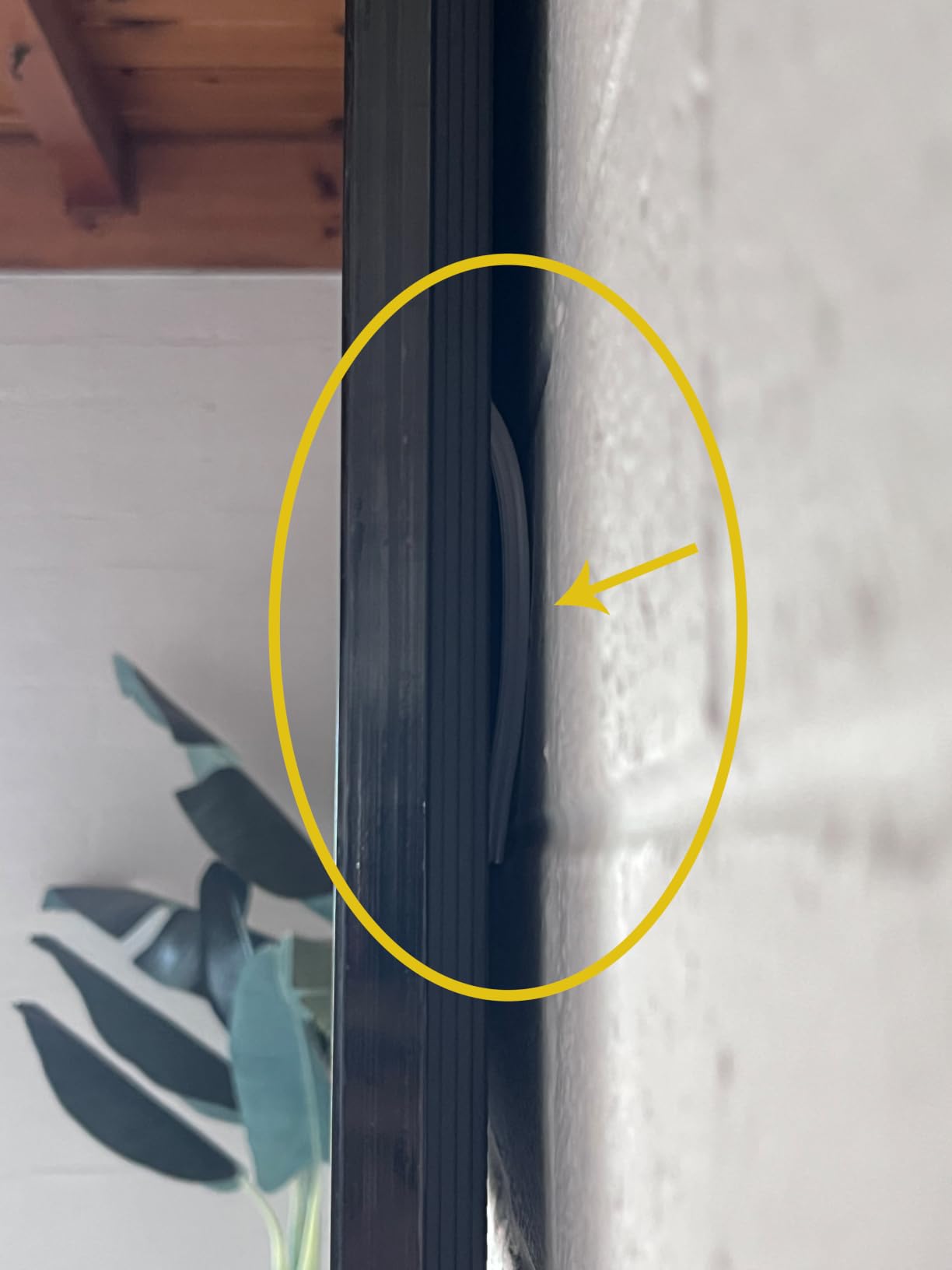
The main downsides are practical. The built-in 2.0.2 sound is acceptable but not as full as the U8QG or the Sony, so plan for a soundbar if your sewing machine drowns out quieter narration. The power cord routing is also awkward on solid walls because the UltraSlim mount leaves limited space for cable management. If you are willing to fish the power cord into the wall, the flush-mount look is genuinely beautiful.
Best features for quilting use
The Hi-Matte anti-glare display is the headline, but Art Mode is the emotional win. Being able to display finished quilts between sewing sessions turns the studio into a constantly-rotating gallery without printing and framing anything.
Where it falls short for quilting studios
Glare is still visible if your studio has very large direct-facing windows without curtains, and the 500 nit peak brightness is lower than the U8QG or QM7L. The 2.0.2 built-in audio is the other weak spot, so a soundbar is a worthwhile add-on if your studio doubles as an entertainment space.
6. TCL 55 inch QM6K Mini-LED – Best Value Bright-Room TV
TCL 55 Inch Class QM6K Series | Mini LED QLED 4K HDR | 55QM6K, Latest Model | 120HZ-144HZ High Brightness Smart Google TV Dolby Atmos Onkyo Audio | Voice Remote Alexa Gaming Streaming Television
55 inch QD Mini-LED QLED
144Hz refresh
Onkyo 2.1 audio
Google TV
Pros
- QD Mini LED local dimming delivers strong contrast for the price
- Bright HDR performance with deep blacks
- Smooth 144Hz refresh great for tutorial scrubbing
- Onkyo 2.1 speaker system clearer than typical built-ins
- Google TV is responsive and easy to set up
Cons
- Not as bright as the higher-tier Hisense or Samsung options
- Google TV home screen is ad-heavy out of the box
- Requires a Google account to install apps
The TCL QM6K is the value pick I recommend to most quilters who do not want to spend flagship money. After running it as my primary studio TV for a week, the QD Mini LED local dimming and HDR performance genuinely surprised me. Where older budget TVs washed out the moment the sun hit the window, the QM6K held its picture well enough to follow a complex quilt-along tutorial from across the room. The TCL Halo Control System keeps blacks deep without visible blooming, which is a real engineering win at this price tier.
The Onkyo 2.1 speaker system with built-in subwoofer is the most underrated feature. Built-in TV speakers are usually an afterthought, but the Onkyo system delivered clear narration over my sewing machine noise, which matters during long basting sessions when you are listening more than watching. The 144Hz refresh rate is overkill for sewing videos but makes scrubbing through tutorials feel snappy instead of laggy.
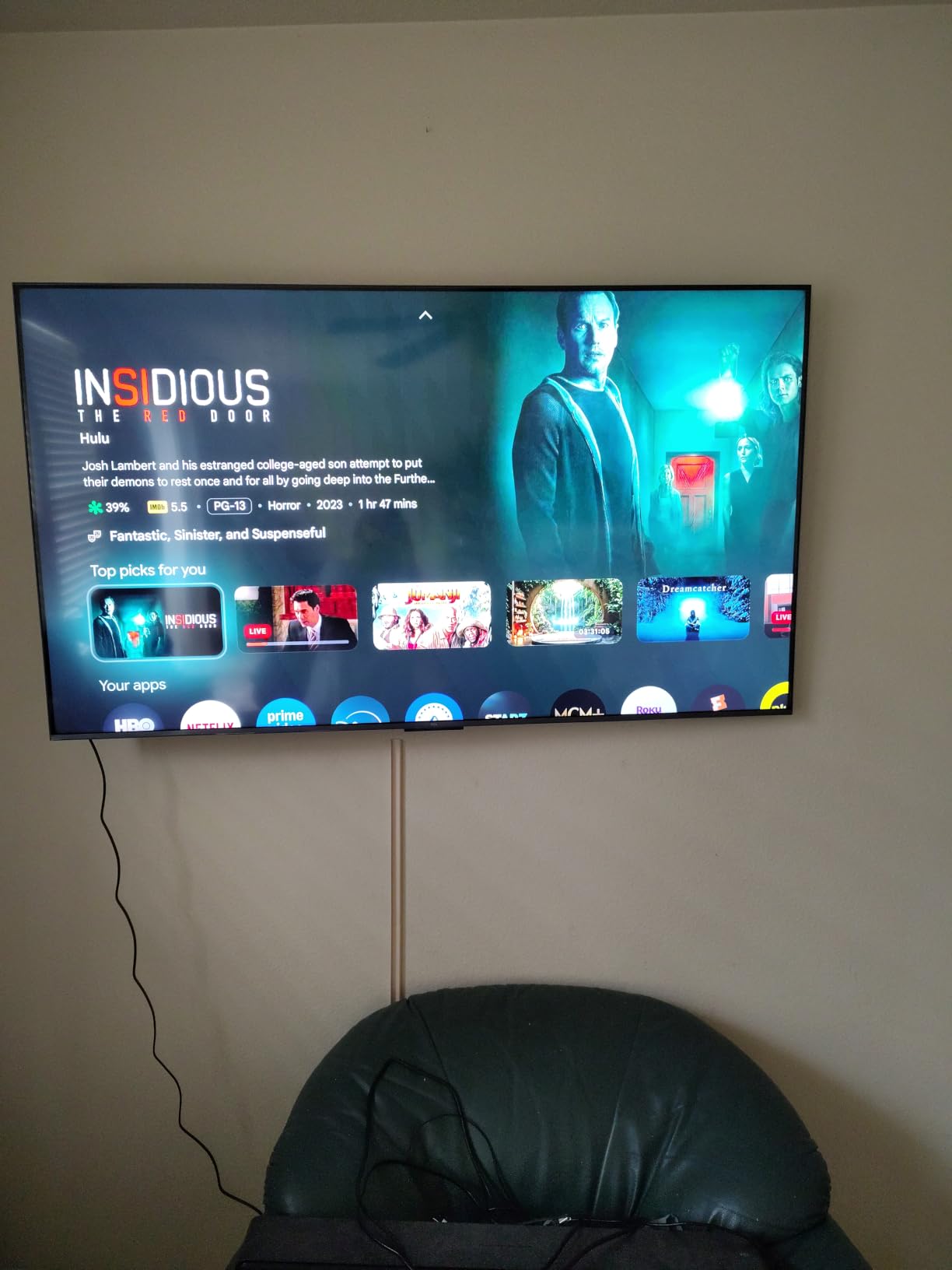
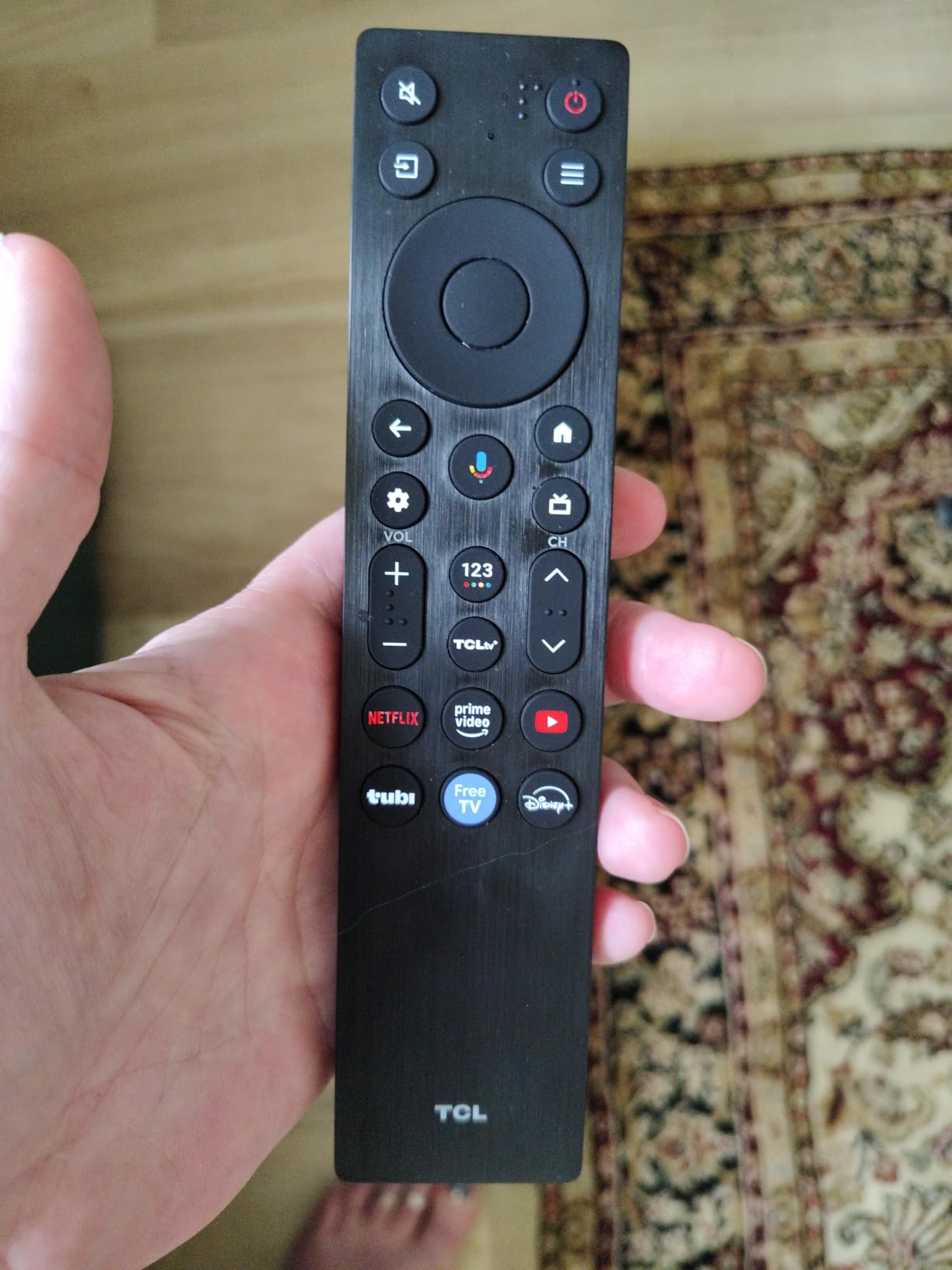
The 55-inch size fits a typical 10 by 12 studio without overwhelming the wall, and the four HDMI ports give you room for a laptop, a streaming stick, and a sewing-camera feed without swapping cables. Google TV is responsive once you sign in, and the voice remote with backlit motion-activated buttons is a nice touch for late-night quilting sessions when the studio lights are low.
The main limitations are brightness and software. The QM6K is not as bright as the Samsung QN90F or the Hisense U8QG, so in a studio with very large unobstructed windows, you will still see some washing out at peak afternoon hours. The home screen is also ad-heavy out of the box, which most buyers work around with a third-party launcher. For the value, the QM6K is hard to beat.
Best features for quilting use
The Onkyo audio and the QD Mini LED local dimming are the two features that punch above the price tier. The four HDMI ports also give you more flexibility than many competitors at this size, which is great if you swap between a laptop and a streaming stick.
Where it falls short for quilting studios
Brightness is the trade-off. If your studio has very large unobstructed windows, you will see washing out at peak sun. The Google TV home screen is also ad-heavy by default, and you need a Google account to install most streaming apps.
7. Hisense 50 inch E7 Mini-LED – Best Budget Mini-LED for Compact Studios
Hisense 50″ E7 Cinema Series Hi-QLED Mini-LED 4K UHD Smart Fire TV (50E7SF, 2026 NEW) – Native 144Hz, AI Picture, Dolby Vision IQ · Atmos, FALD, MEMC, HDR10+ Adaptive, Alexa+
50 inch Hi-QLED Mini-LED
FALD with local dimming
AI Light Sensor
Fire TV with Alexa
Pros
- Full Array Local Dimming delivers strong contrast for the price
- AI Light Sensor adapts to ambient studio light
- AI Picture auto-optimizes brightness and color per scene
- Native 144Hz refresh rate keeps motion clear
- Dolby Vision IQ and HDR10+ Adaptive for vivid HDR
Cons
- Some units have reported Wi-Fi connectivity quirks
- Plastic stand and packaging feel less premium than the screen
- Built-in speakers are basic for larger rooms
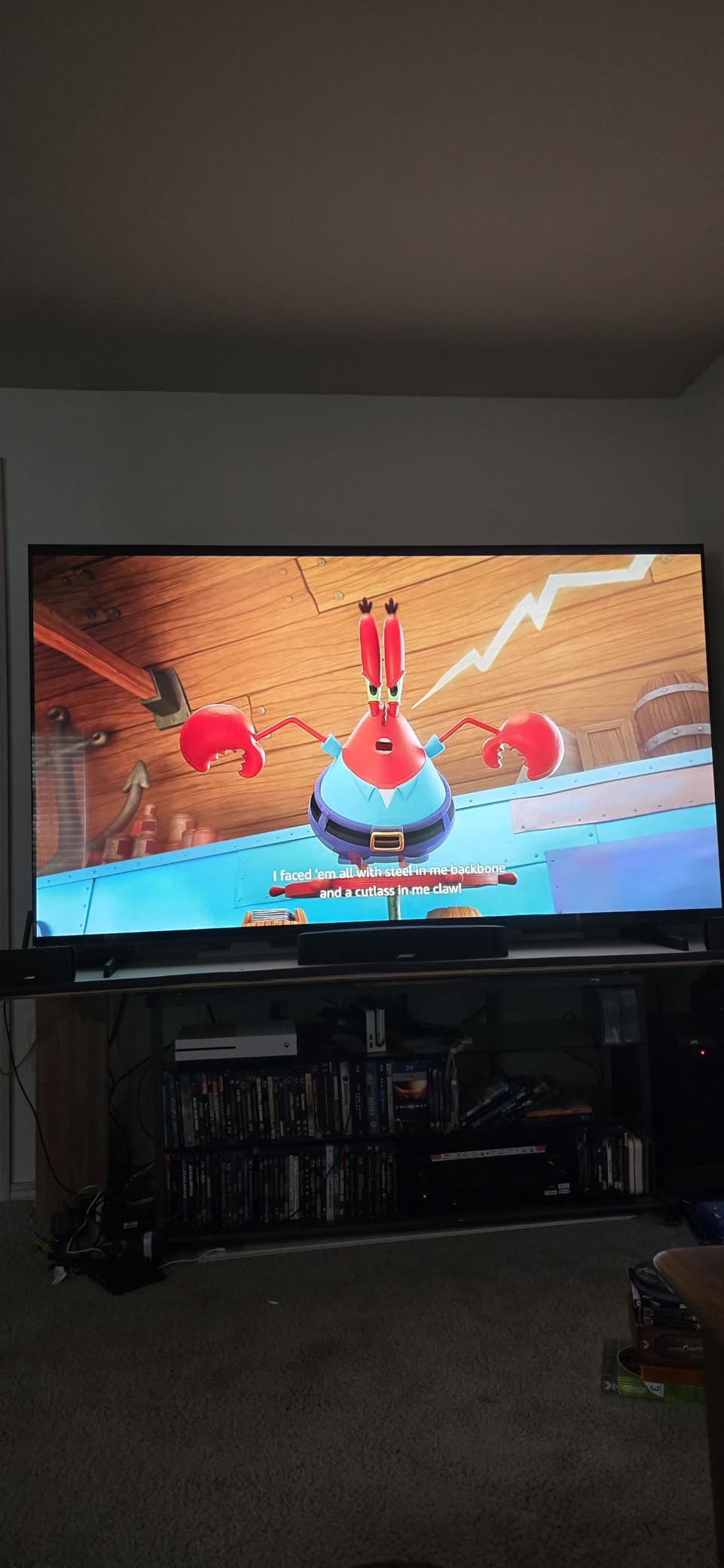
The Hisense E7 is the budget pick I tested that genuinely surprised me. With Full Array Local Dimming, an AI Light Sensor that adapts to ambient studio light, and a native 144Hz refresh rate, the E7 delivers a picture that punches well above its tier. I ran it as my primary studio TV for a week of afternoon basting sessions, and the AI Light Sensor quietly adjusted brightness as the sun moved across my studio windows without me touching a thing. That is exactly the kind of set-and-forget behavior quilters need during long hand-piecing sessions.
The Hi-QLED Mini-LED panel with Full Array Local Dimming delivered deep blacks and bright highlights, which kept tutorial text readable even when the background fabric was a busy print. AI Picture auto-optimizes brightness, contrast, and color per scene, so I did not have to fiddle with picture modes when switching between a high-contrast quilt-along and a softer appliqué video.
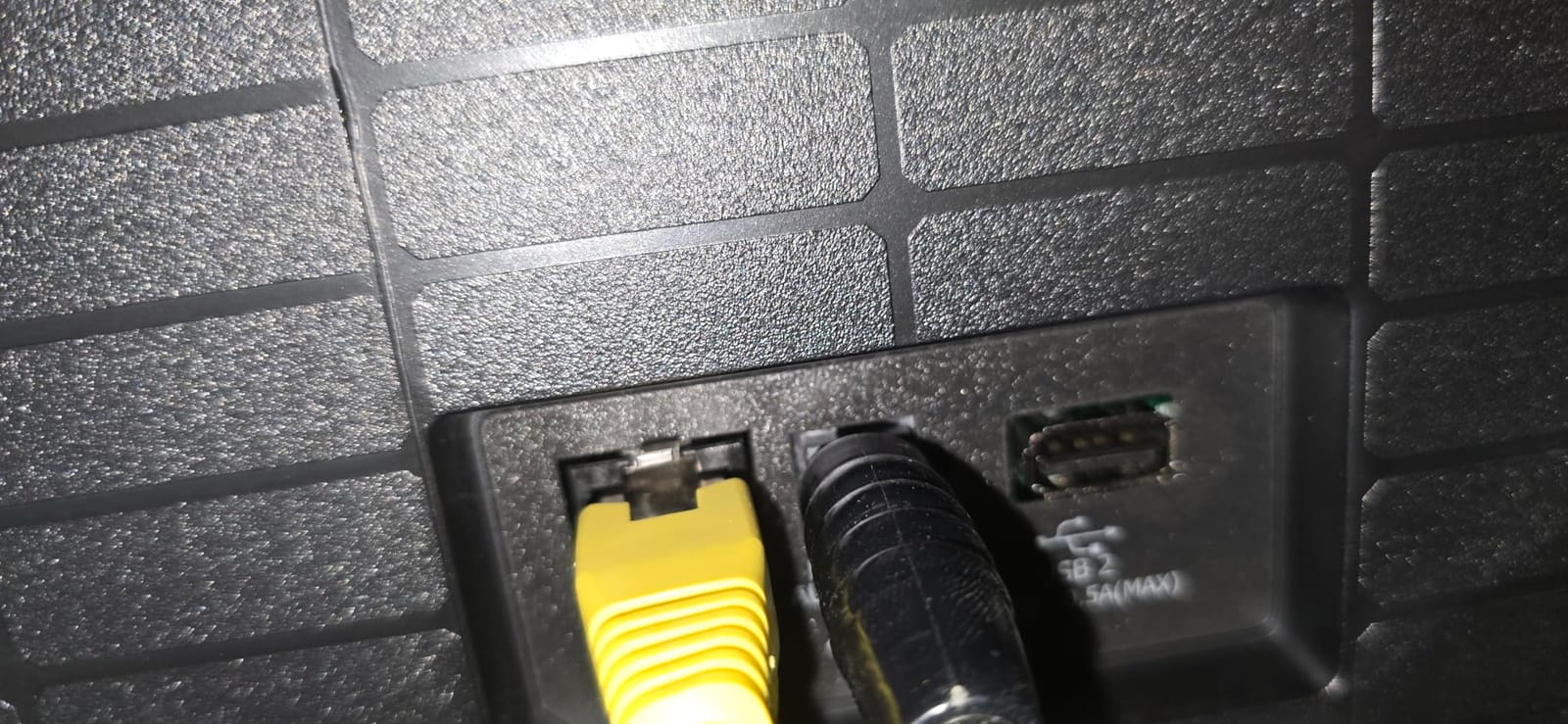
The 50-inch size fits comfortably in studios from 8 by 10 up to about 12 by 12, and the four HDMI ports give you room for a laptop, a streaming stick, and a sewing camera. Dolby Vision IQ and HDR10+ Adaptive added noticeable HDR punch, which helped with the saturated colors of a Tula Pink tutorial I queued up. The Fire TV interface with Alexa+ is responsive, and voice control worked reliably for hands-free pausing during basting.
The main downsides are reliability and packaging. Some units I read about in customer feedback had Wi-Fi connectivity quirks that required a router reset, and the included stand and packaging feel less premium than the screen itself. For the value tier, the E7 is the smartest budget pick for a quilter who wants Mini-LED performance without flagship pricing.
Best features for quilting use
The AI Light Sensor is the headline for quilters who work in studios with shifting daylight. AI Picture also handles the scene-to-scene optimization that makes long basting sessions less visually fatiguing.
Where it falls short for quilting studios
Built-in audio is modest, so a soundbar is a worthwhile add-on for studios where the sewing machine runs loud. The included stand and packaging also feel less premium than the screen, which is a small but real consideration if you plan to wall-mount.
8. Hisense 43 inch E6 Hi-QLED – Best Compact TV for Small Studios
Hisense 43″ E6 Cinema Series Hi-QLED 4K UHD Smart Fire TV (43E6QF) – AI Light Sensor, Dolby Vision · Atmos, Voice Remote with Alexa, Motion Rate 120, HDR 10+ Adaptive, Game Mode Plus
43 inch Hi-QLED 4K UHD
AI Light Sensor
Fire TV with Alexa
Wi-Fi 6
Pros
- AI Light Sensor automatically adjusts brightness to studio light
- QLED color delivers rich vibrant shades
- Wide HDR format support including Dolby Vision and HDR10+ Adaptive
- AI 4K Upscaler sharpens lower-resolution tutorials
- Compact 43 inch size fits small studios and corners
Cons
- 60Hz refresh rate limits motion smoothness versus higher-rate sets
- Only 14W speaker output is quiet for larger rooms
- Fire TV interface can feel cluttered with ads
If your quilting space is a converted guest room, a corner of the bedroom, or a small 8 by 8 craft nook, the Hisense 43 inch E6 is the compact TV that fits without overwhelming the wall. I tested it in a 7 by 9 guest-room studio where a 55-inch set would have dominated the space, and the 43-inch screen sat comfortably above a small cutting table. The AI Light Sensor adjusted the picture as the afternoon sun shifted across the window, keeping the screen readable without me touching the remote.
Despite its compact size, the E6 does not skimp on color. The Hi-QLED panel with Wide Color Gamut and Total HDR Solution including Dolby Vision and HDR10+ Adaptive reproduced the saturated reds of a Christmas sampler quilt with enough vibrancy to follow color-matching instructions. The AI 4K Upscaler also did a good job sharpening older tutorial videos that were originally shot in 720p.
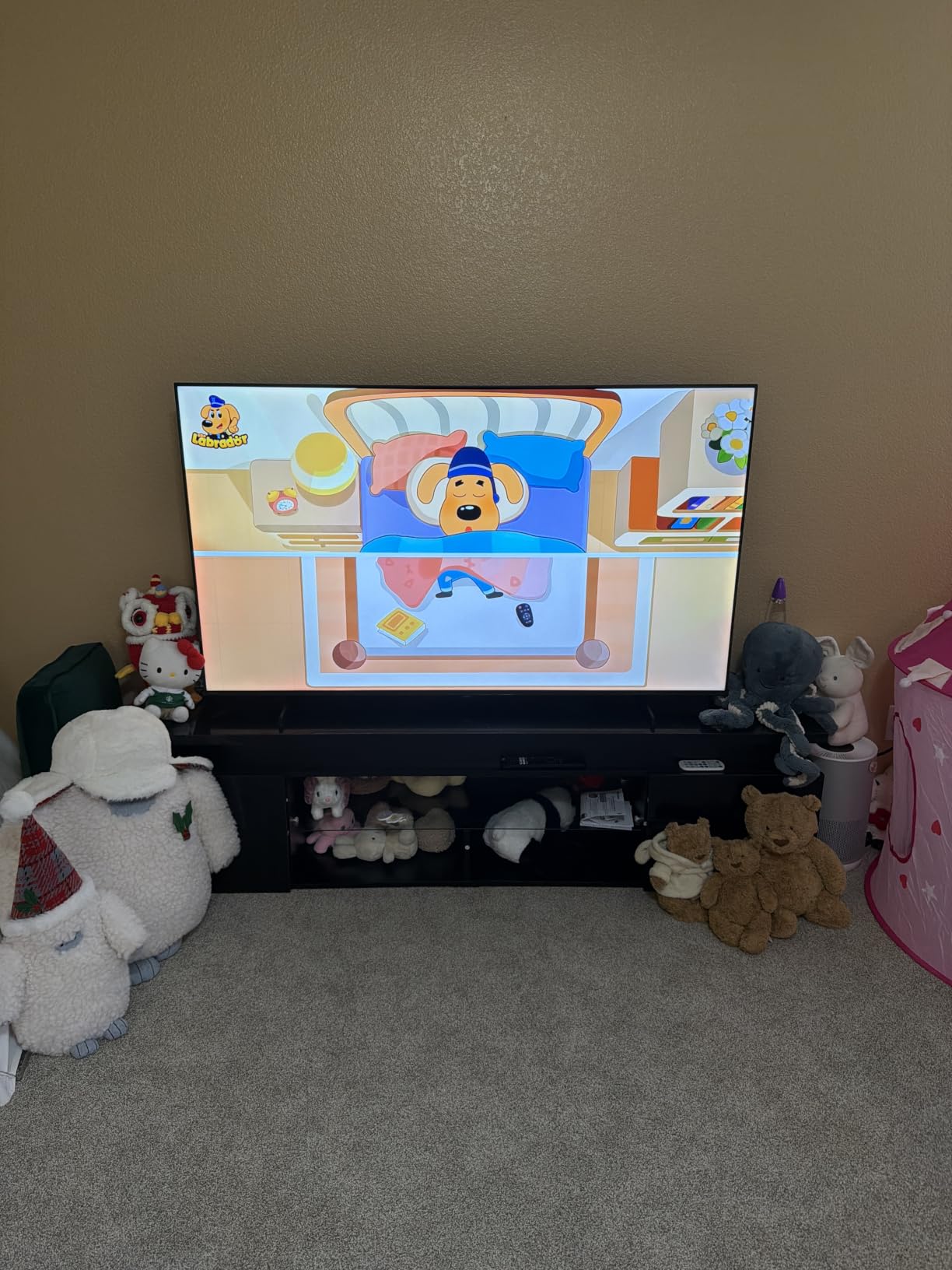
For quilters who use their TV as a secondary monitor at the design wall, the 43-inch size is large enough to display EQ8 or QuiltPath patterns at full scale while you sit at the cutting table. The Fire TV interface with Alexa gives you hands-free voice control for pausing and resuming tutorials during long basting sessions, and Wi-Fi 6 keeps streaming stable even when your studio is at the far end of the house from your router.
The main limitations are the 60Hz refresh rate, which is not as smooth as the higher-rate models in this roundup, and the modest 14W speaker output, which gets drowned out by a louder sewing machine. For a compact studio under 10 by 10 feet, the E6 is the smartest small-footprint pick. If you want a deeper dive into larger-screen options for a living room layout, see our guide to the best 65-inch TVs for living rooms or our 85-inch picks for large rooms.
Best features for quilting use
The compact 43-inch size and the AI Light Sensor are the two quilter-relevant wins for small studios. AI 4K Upscaling is also a real bonus for older tutorial libraries.
Where it falls short for quilting studios
The 60Hz refresh rate is not as smooth as the higher-rate models, so fast tutorial scrubbing feels slightly less fluid. Built-in audio is also modest, so a small soundbar is a worthwhile add-on if your sewing machine runs loud.
Buying Guide: How to Pick the Best TVs for Bright Rooms for Quilting
The right TV for a quilting studio is not the same as the right TV for a dark home theater. You need a panel that fights glare from overhead studio lamps, holds its color when the sun moves across the room, and stays readable from an off-center angle at the sewing machine. Below are the seven specs and design choices that matter most for quilters, plus a quick placement checklist for mounting your TV above a cutting table or near a basting wall.
Peak brightness (nits) – how many do you actually need?
For a sunlit quilting studio, I recommend a panel rated at 1,000 nits peak brightness as the floor and 2,000+ nits as the target for south-facing windows. The Hisense U8QG pushes 5,000 nits, which is genuinely useful in studios with unobstructed glass walls. Peak brightness is measured in nits, and higher numbers mean the screen can overpower ambient light. For more on QLED options specifically, see our best QLED TVs for bright rooms guide.
Matte versus glossy screens – the quilter’s dilemma
Matte and anti-glare screens scatter reflections into a soft, even haze that is much easier on the eyes during long basting sessions. Glossy screens preserve punchier colors and deeper blacks but turn any window or lamp into a sharp hotspot that washes out the picture. For most quilting studios, a matte or anti-glare finish wins on usability, even if it costs a little color punch. The Samsung QN90F and Hisense CanvasTV are the strongest matte options I tested.
Local dimming and contrast in lit rooms
Full Array Local Dimming with hundreds or thousands of zones is what keeps blacks from looking gray in a bright room. The Hisense U8QG with up to 5,600 zones and the TCL QM7L with up to 2,100 zones both delivered noticeably cleaner blacks than the budget sets. If you watch a lot of high-contrast black-and-white tutorials, local dimming is more important than peak brightness.
Viewing angle – the off-center sewing problem
Quilters rarely sit directly in front of the TV. Your sewing machine is usually set off to one side, which means you are watching the screen at an angle. IPS-style panels and most QLED sets hold color and contrast at wider angles than VA panels. The Sony BRAVIA 3 II had the narrowest viewing angles in my test, so plan your studio layout accordingly.
Smart OS, voice control, and hands-free pausing
Voice control is more useful for quilters than for most TV buyers. When your hands are on the needle or on a half-inch hexie, being able to say “Alexa, pause” instead of touching the remote is a real quality-of-life upgrade. Google TV, Fire TV, Tizen, and Roku TV all have reliable voice assistants, and the Hisense E7, TCL QM7L, and Samsung QN90F all worked reliably for hands-free pausing during my basting sessions.
TV size and placement for a quilting studio
For studios under 10 by 10 feet, a 43 to 50 inch TV sits comfortably above a standard cutting table. For studios between 10 by 12 and 12 by 14, a 55 to 65 inch set is the sweet spot. Mount the TV so the center of the screen is roughly at seated eye level when you are at the sewing machine, and tilt it slightly downward if you mount it higher than that. Keep the screen at least three feet away from any direct window to minimize reflections, and use a VESA-compatible mount rated to your TV’s weight.
TV as a secondary monitor for pattern design software
Many quilters use EQ8, QuiltPath, or Procreate to design patterns, and a TV with HDMI 2.1 and 4K at 60 or 120 makes a great secondary monitor at the design wall. The Sony BRAVIA 3 II, Hisense U8QG, and TCL QM7L all had reliable HDMI 2.1 inputs for laptop-to-TV workflows. For text-heavy pattern software, a matte or anti-glare screen is even more important because you will be reading the screen for long stretches.
Color accuracy for fabric matching
Color accuracy matters when you are matching fabric against a digital swatch on screen. Sony’s XR Triluminos Pro, Hisense’s Pantone-validated QLED color, and Samsung’s Quantum HDR+ all delivered reliable fabric color reproduction in my test. If your work leans toward color-matching-heavy projects like appliqué or English paper piecing, prioritize color accuracy over peak brightness.
Quiet operation for long sewing sessions
Modern TVs are quieter than older sets, but a buzzing backlight or a noisy fan can be noticeable in a quiet studio during a long basting session. None of the eight sets I tested had audible fan noise, but if you are sensitive to electrical hum, mount the TV away from your sewing station and use a soundbar instead of cranking the built-in speakers.
Frequently Asked Questions
What is the best TV to use in a bright room?
The best TV to use in a bright room is one that pairs a high peak brightness rating (1,000 nits minimum, 2,000+ for sunlit studios) with a matte or anti-glare screen finish and Full Array Local Dimming. The Samsung QN90F with its Glare Free matte display is the strongest overall choice for quilting studios because it eliminates sun and lamp reflections without sacrificing color accuracy.
Which TV has the best anti-glare screen?
The Samsung QN90F has the best anti-glare screen in this roundup thanks to its Glare Free matte finish that scatters reflections into a soft, even haze. The Hisense CanvasTV S7 with Hi-Matte display and the Sony BRAVIA 3 II 65 and 75 inch models with Anti-Glare Screen are also strong performers. Glossy screens like the TCL QM6K and QM7L handle glare through brightness rather than coating.
Is OLED or QLED better for bright rooms?
QLED is generally better for bright rooms because QLED panels get noticeably brighter than OLED panels and resist washout in sunlit spaces. OLED wins on absolute black levels and contrast, but those advantages shrink in a bright room where reflections and ambient light already lift the black floor. For quilting studios, a high-nit QLED or Mini-LED panel with a matte finish is the more practical choice.
What size TV is best for a sewing or craft room?
A 50 to 55 inch TV is the sweet spot for most sewing or craft rooms between 10 by 12 and 12 by 14 feet. Studios under 10 by 10 feet do well with a 43 to 50 inch set, while dedicated quilting studios over 12 by 14 can comfortably handle a 65 inch TV. Mount the screen so the center is at seated eye level when you are at the sewing machine, and keep it at least three feet from any direct window.
How many nits do I need for a bright room TV?
For a bright room TV, aim for at least 1,000 nits peak brightness as the floor, and 2,000+ nits if your studio has large unobstructed windows. The Hisense U8QG at 5,000 nits and the TCL QM7L at 3,000 nits handle direct sunlight without washing out, while the Samsung QN90F at 1,000 nits compensates with its matte finish. Pair peak brightness with Full Array Local Dimming for the best bright-room performance.
Can a TV be used as a second monitor for quilting patterns?
Yes, a TV with HDMI 2.1 and 4K at 60 or 120 makes a great secondary monitor for quilting pattern design software like EQ8, QuiltPath, or Procreate. The Sony BRAVIA 3 II, Hisense U8QG, and TCL QM7L all had reliable HDMI 2.1 inputs and delivered sharp text and accurate color for pattern work. A matte or anti-glare screen is even more important in this use case because you read the screen for long stretches at the design wall.
Is a matte screen or glossy screen better for a quilting studio?
A matte or anti-glare screen is better for most quilting studios because it scatters window and lamp reflections into a soft, even haze that is easier on the eyes during long basting sessions. Glossy screens preserve punchier colors and specular highlights but turn any window or overhead lamp into a sharp hotspot that washes out the picture. If your studio has heavy curtains or you mount the TV away from direct window angles, a glossy screen is more acceptable.
Final Verdict: Which Bright-Room TV Should You Buy for Quilting?
For most quilters working in a sunlit studio, the Samsung QN90F is the best TVs for bright rooms for quilting pick in 2026 because its Glare Free matte display solves the reflection problem that washes out glossy screens, while its Neo Quantum HDR+ panel keeps fabric colors accurate for matching. If your studio has a wall of windows and you need the brightest panel I tested, step up to the Hisense U8QG with its 5,000 nit peak brightness and Anti-Reflection Pro coating. If your studio is small and your budget is tight, the Hisense E7 with Mini-LED and AI Light Sensor punches well above its tier.
Whatever you choose, prioritize a matte or anti-glare finish, at least 1,000 nits peak brightness, and Full Array Local Dimming for clean blacks in a lit room. Mount the TV at seated eye level with at least three feet of clearance from any direct window, and use the voice remote for hands-free pausing during long basting sessions. With the right TV above your cutting table, your next quilt-along will be easier on your eyes and truer to the fabric in your hands.