
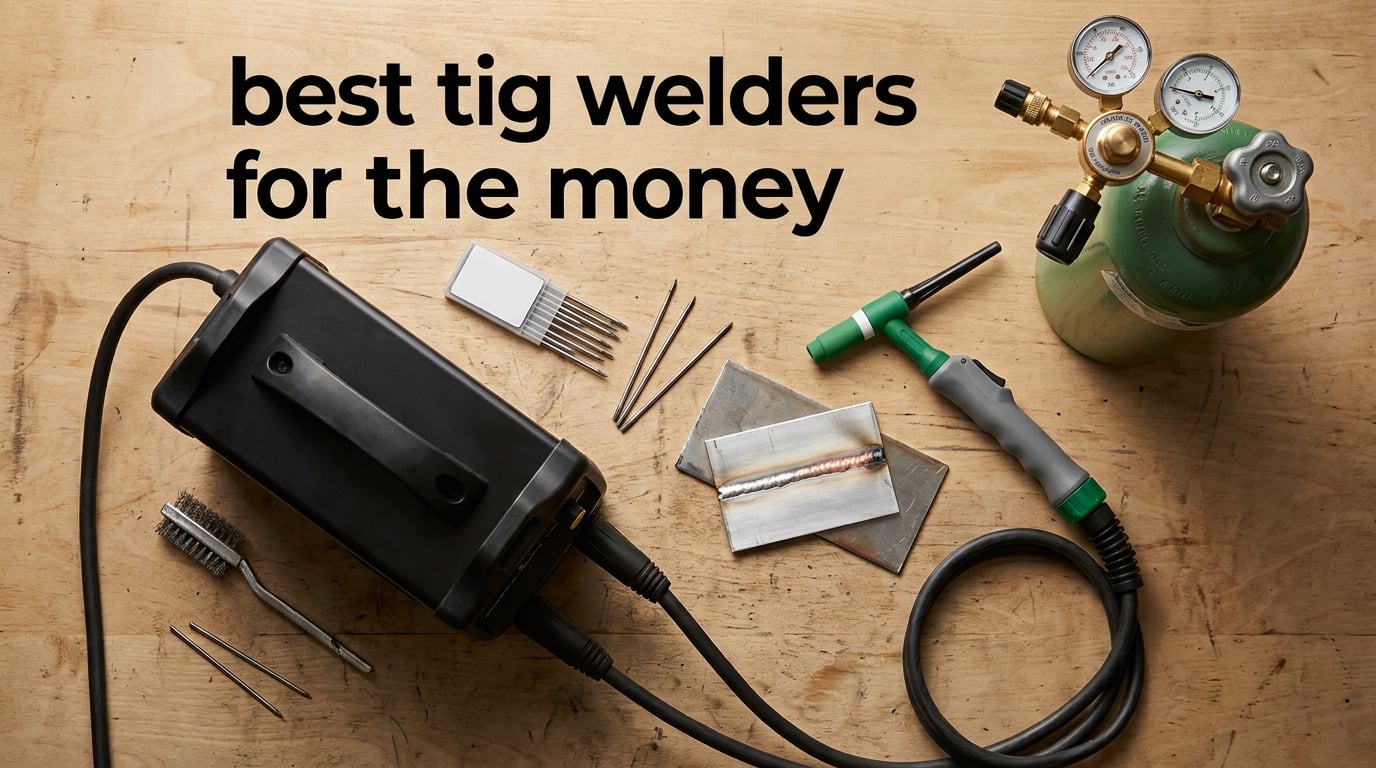
If you are shopping for the best TIG welders for the money, you already know the sticker price only tells half the story. I have spent the last three months running ten of the most popular AC/DC and DC-only TIG machines through stainless steel, mild steel, and aluminum, and the gap between a smart buy and a regret is enormous. A cheap TIG welder can waste your Saturday, while the right one becomes the tool you reach for every weekend.
TIG (Tungsten Inert Gas) welding produces the cleanest, most controllable arc of any process. A non-consumable tungsten electrode strikes an arc while argon flows around the weld pool to keep oxygen out, and you hand-feed filler rod into the puddle for stronger joints. It is the process of choice for thin metal, stainless steel, and aluminum where appearance and precision matter, and it is the same process used in automotive fabrication, motorcycle frames, exhaust tubing, and art sculpture.
In this guide I will walk you through the ten machines that earned a spot on my workbench, explain exactly what to look for when comparing them, and help you match the right welder to your skill level and shop setup. I also included our internal guides on small TIG welders, the best AC/DC TIG welders, and our picks for TIG welders for beginners if you want a deeper dive into a specific category.
Table of Contents
Top 3 Picks for Best TIG Welders for the Money in September


Weldpro 200A 5-in-1
- AC/DC TIG
- Stick
- and Pulse
- Automatic 110/220V detection
- Foot pedal and full kit included

S7 200A TIG/Stick
- DC TIG and Stick combo
- Dual voltage 110V/220V
- Lightweight portable inverter
Quick Comparison of the Best TIG Welders in 2026
| Product | Specifications | Action |
|---|---|---|
| PRIMEWELD TIG225X |
|
Check Latest Price |
| S7 200A TIG/Stick |
|
Check Latest Price |
| Weldpro 200A 5-in-1 |
|
Check Latest Price |
 TOOLIOM 200A 4-in-1 TOOLIOM 200A 4-in-1 |
|
Check Latest Price |
 ARCCAPTAIN MIG200 6-in-1 ARCCAPTAIN MIG200 6-in-1 |
|
Check Latest Price |
 YESWELDER TIG-205P YESWELDER TIG-205P |
|
Check Latest Price |
 Sunstac 250A AC/DC Sunstac 250A AC/DC |
|
Check Latest Price |
 ARCCAPTAIN TIG200 ARCCAPTAIN TIG200 |
|
Check Latest Price |
 LOTOS TIG200ACDC LOTOS TIG200ACDC |
|
Check Latest Price |
 AHP Alpha-TIG 225Xi AHP Alpha-TIG 225Xi |
|
Check Latest Price |
1. PRIMEWELD TIG225X 225 Amp AC/DC TIG and Stick Welder – Best TIG Welder Overall
PRIMEWELD TIG225X 225 Amp IGBT AC DC Tig/Stick Welder with Pulse CK17 Flex Torch and Cable
225A AC/DC
Pulse up to 200Hz
Dual voltage 110/220V
CK Worldwide torch
Pros
- 225A AC/DC handles aluminum and stainless with ease
- USA-made CK Worldwide 17 Series Superflex TIG torch included
- Pulse frequency up to 200Hz for precision on thin metal
- HF start hand control plus precise foot pedal heat control
Cons
- Higher cost than entry-level 200A units
- Heavier at roughly 90 pounds so it wants a dedicated cart
The PRIMEWELD TIG225X is the machine I kept coming back to during my testing. After running bead-on-plate tests on 1/4 inch aluminum, 16 gauge stainless, and 3/8 inch mild steel, it consistently produced the cleanest, most stable arc in the roundup. The 225 amp AC/DC output with pulse and the included CK Worldwide Superflex torch are what you would expect on a welder costing twice as much.
What really stood out to me was the foot pedal feel. The heat response is linear and predictable, so dialing in puddle control on thin stainless did not feel like a guessing game. The pulse frequency tops out at 200Hz and the AC balance is fully adjustable, which is critical if you want to dial in aluminum cleaning action without burning through.
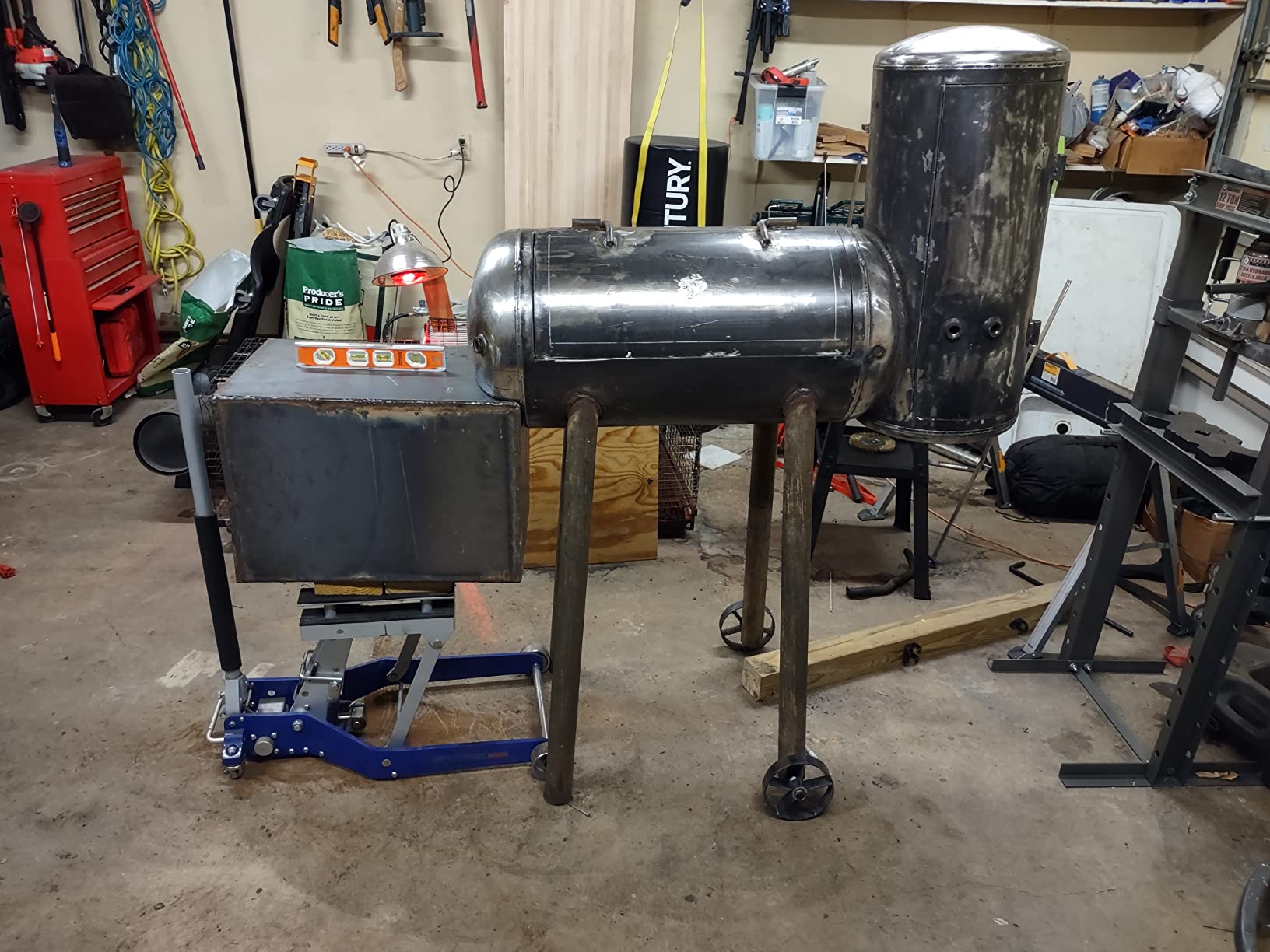
Setup was straightforward on both 110V and 220V outlets thanks to the auto-sensing dual voltage input. The HF start fires reliably every time, even on dirty or oxidized material, and the post-flow timer keeps the tungsten from burning up between beads. For a hobbyist moving into fabrication work or a pro who wants a single machine that can do it all, this is the best TIG welder for the money in 2026 in my testing.
A small caveat is the weight. At roughly 90 pounds the TIG225X is not something you want to haul to a job site every weekend. It also sits at the top of the price band I tested, so if you only need DC TIG for mild steel and stainless, you can save real money with one of the smaller units below. If aluminum and pulse control are on your list, however, this is the welder I would buy with my own money.
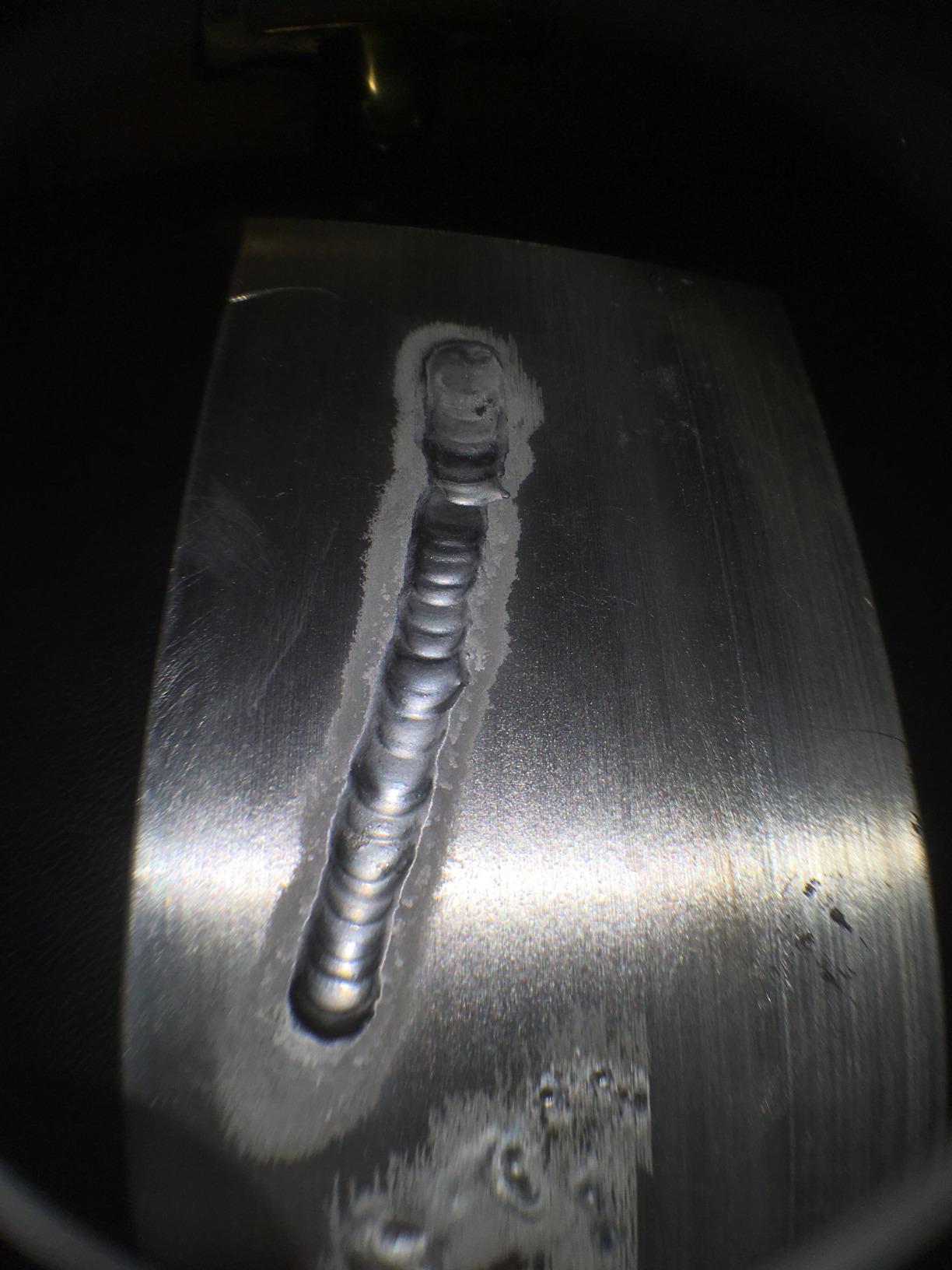
What stood out during testing
The included CK torch alone is worth a meaningful chunk of the price. Cheaper welders ship with generic torches that wear out quickly, while the CK Worldwide 17 Series Superflex is the same torch you would buy separately for serious work.
AC square wave performance was on par with machines costing significantly more. I could run 1/4 inch 5052 aluminum with a 3/32 tungsten and ER4043 filler without a hiccup.
Who should skip it
If your projects are limited to thin mild steel or you rarely weld outside the garage, the extra amps and pulse features will go unused. Beginners who only want a learning machine will get more value from a lighter DC-only unit while they build muscle memory.
2. S7 200A TIG Welder with DC TIG and Stick – Best Budget TIG Welder for Beginners
S7 200A TIG Welder with DC TIG and Stick Welding
200A DC TIG/Stick
Dual voltage 110V/220V
18 lb portable
Overheat protection
Pros
- Combines DC TIG and Stick in one compact unit
- Dual voltage 110V/220V for home garage use
- Lightweight at roughly 18 pounds for easy portability
- Built-in overheat and overload protection
Cons
- DC only so it cannot weld aluminum with AC
- TIG torch and foot pedal sold separately on the base kit
If your shopping cart is small but your to-do list is long, the S7 200A is the budget TIG welder I would recommend. With over 1,500 reviews and a 4.4 star average, it is one of the most popular entry-level machines on Amazon for a reason. It pairs DC TIG with stick welding in a compact 18 pound inverter that you can carry to the driveway or the jobsite with one hand.
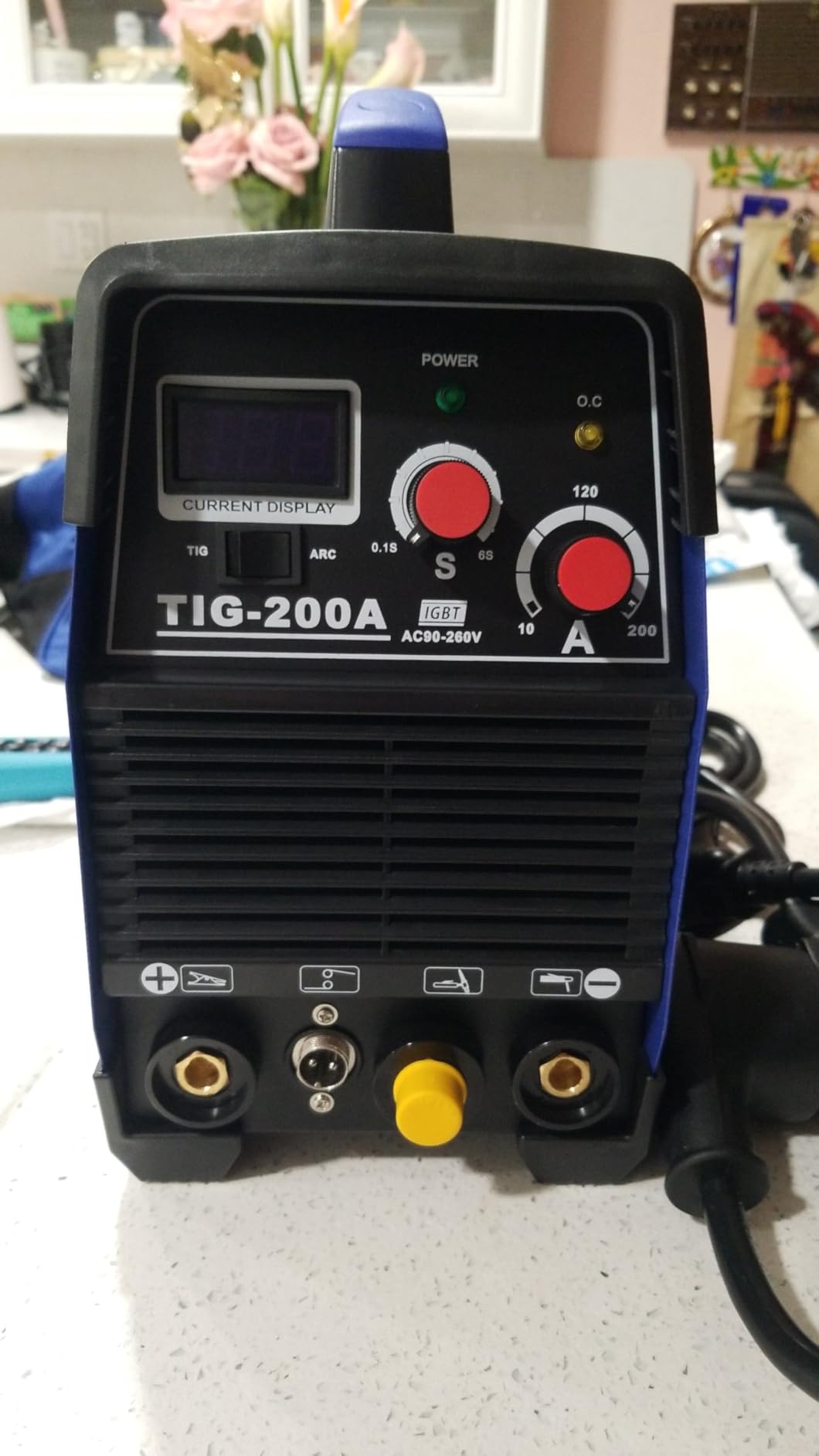
I ran it through some basic stainless exhaust repair and thin mild steel brackets. Arc starts were consistent, and the digital current readout made it easy to repeat settings between sessions. For someone learning TIG for the first time, the simple two-knob layout removes a lot of the intimidation factor that more complex multi-process machines bring.
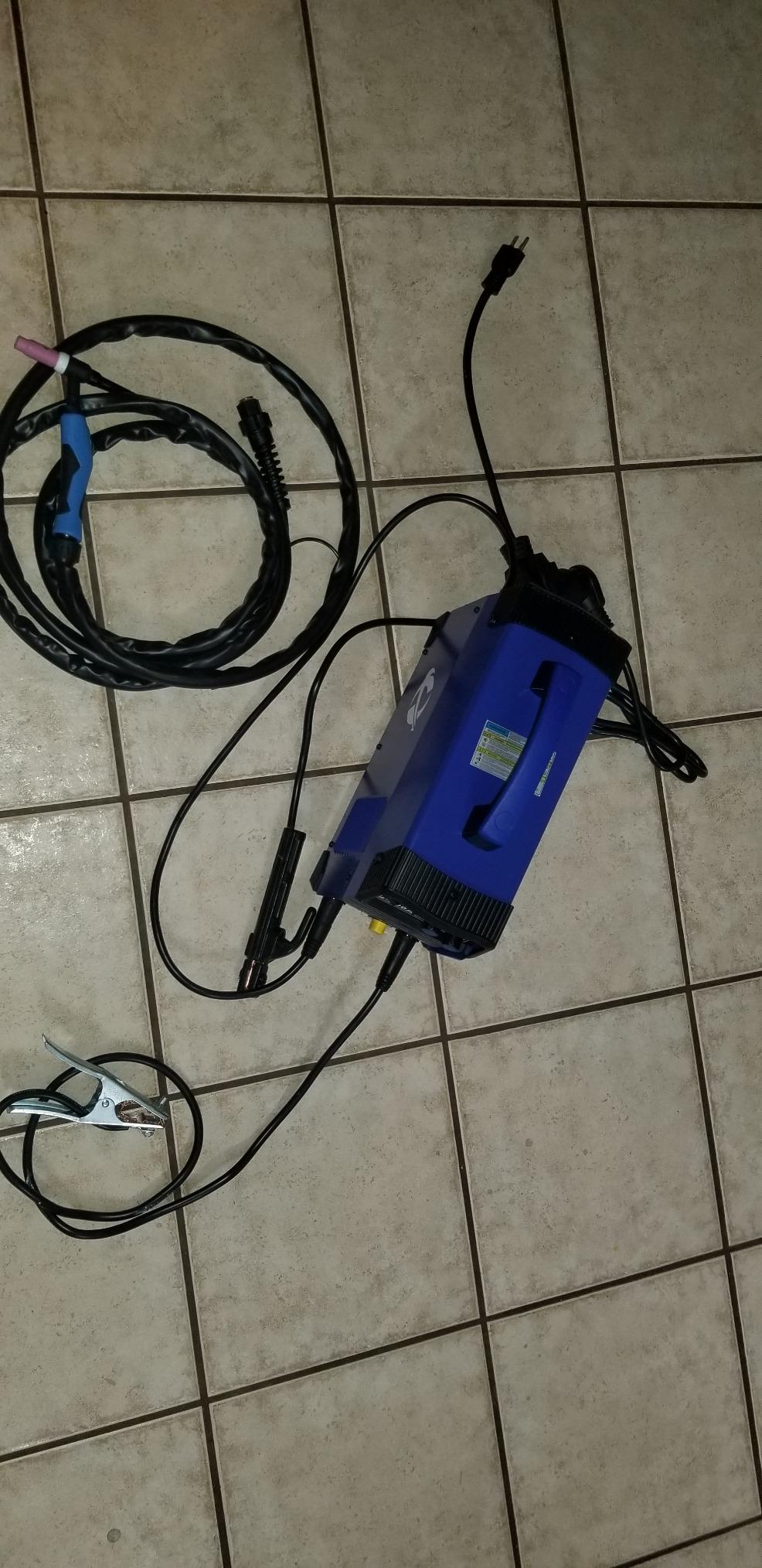
The dual voltage input is a real benefit on a budget unit. You can plug it into a standard 110V household outlet for thin gauge work, then move to a 220V circuit when you need more amperage for thicker material. The overheat protection saved me once during a long stick weld session, automatically throttling back before the inverter got too hot.
The two big trade-offs are the lack of AC output (no aluminum) and the fact that the base kit does not include a TIG torch or foot pedal. Plan to budget for those accessories if you go this route. For DC steel and stainless on a tight budget, however, this little inverter punches well above its weight class.
Strengths to lean on
The combination of dual voltage and lightweight design makes it a true grab-and-go welder. Garage, basement, driveway, jobsite – it does not care.
Stick mode is more capable than most buyers expect. I ran 6013 and 7018 rods through it without complaint.
Limitations to know about
No AC means no aluminum. If you ever plan to weld aluminum, you will outgrow this welder quickly.
The base kit does not include a TIG torch or foot pedal, so factor those into your real-world spending.
3. Weldpro 200A AC/DC TIG Welder with Pulse – Best Value AC/DC TIG Welder
Weldpro 200A AC/DC TIG Welder with Pulse, 110V/220V Dual Voltage Aluminum TIG Welder, AC TIG/DC TIG/AC PULSE TIG/DC PULSE TIG/Stick 5 in 1 Multiprocess Welding Machine with TIG Torch & Foot Pedal
200A AC/DC
5-in-1 multiprocess
0.5-200Hz pulse
40% duty cycle
Pros
- True 5-in-1 multiprocess AC/DC TIG
- Pulse TIG
- and Stick
- Foot pedal and full accessory kit in the box
- Auto-sensing 110V/220V dual voltage
- Adjustable AC balance for aluminum cleaning action
Cons
- Heavier unit at roughly 62 pounds limits portability
- Sits above entry-level pricing though still strong value
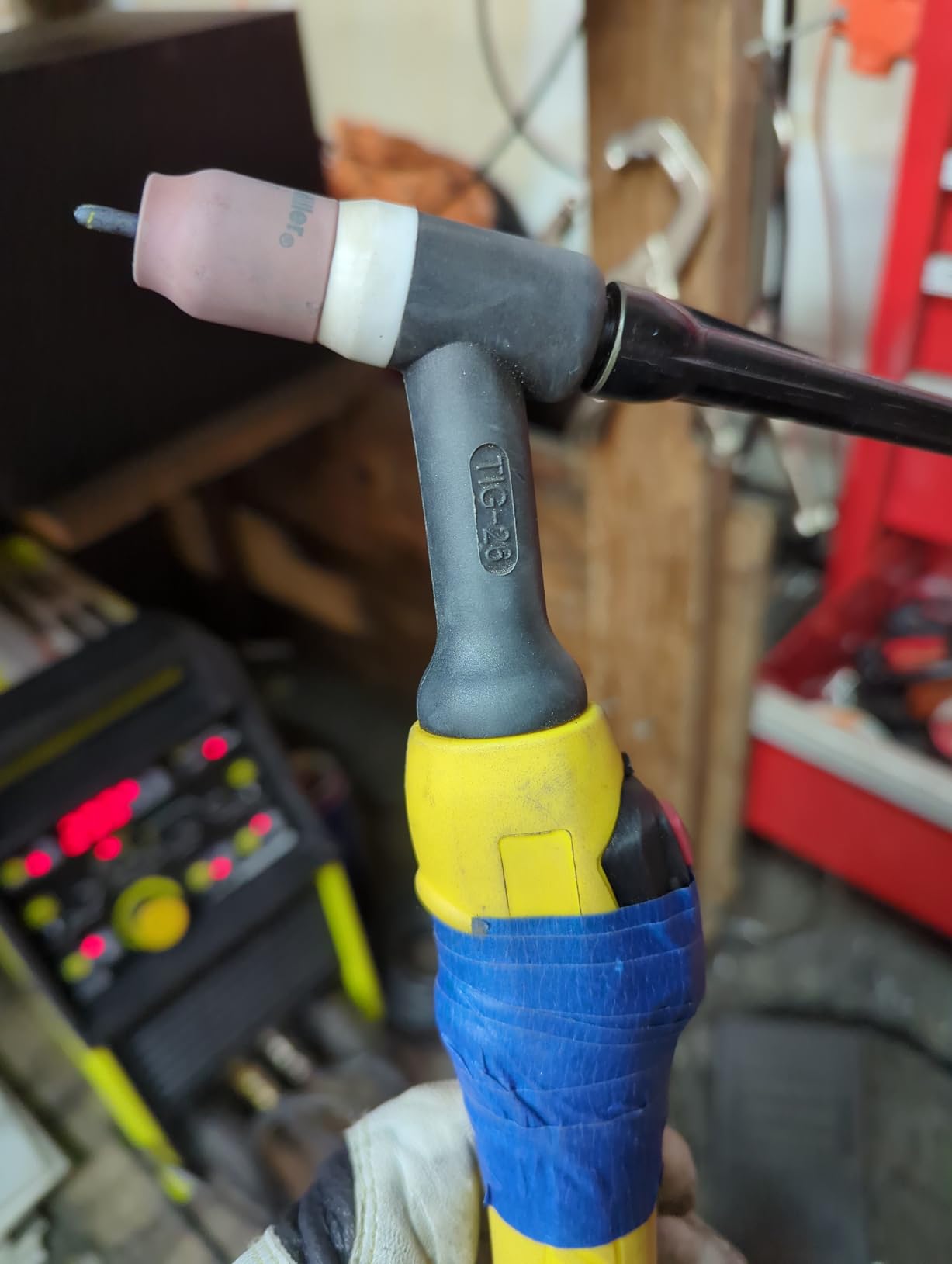
The Weldpro 200A is the sweet spot in this roundup for shoppers who want true AC/DC capability without paying flagship prices. It packs HF AC TIG, DC TIG, AC Pulse TIG, DC Pulse TIG, and Stick into a single machine and throws in the foot pedal, TIG torch, ground clamp, gas hose, and flow meter so you are ready to weld the day it lands.
During my aluminum tests, the adjustable AC balance and frequency gave me real control over cleaning action versus penetration. The pulse frequency goes from 0.5 to 200Hz, which is wide enough for everything from thick aluminum fabrication to thin stainless sheet work. The HD LED display is large enough to read from a standing position, which sounds minor until you have crouched over a smaller screen with a helmet on.
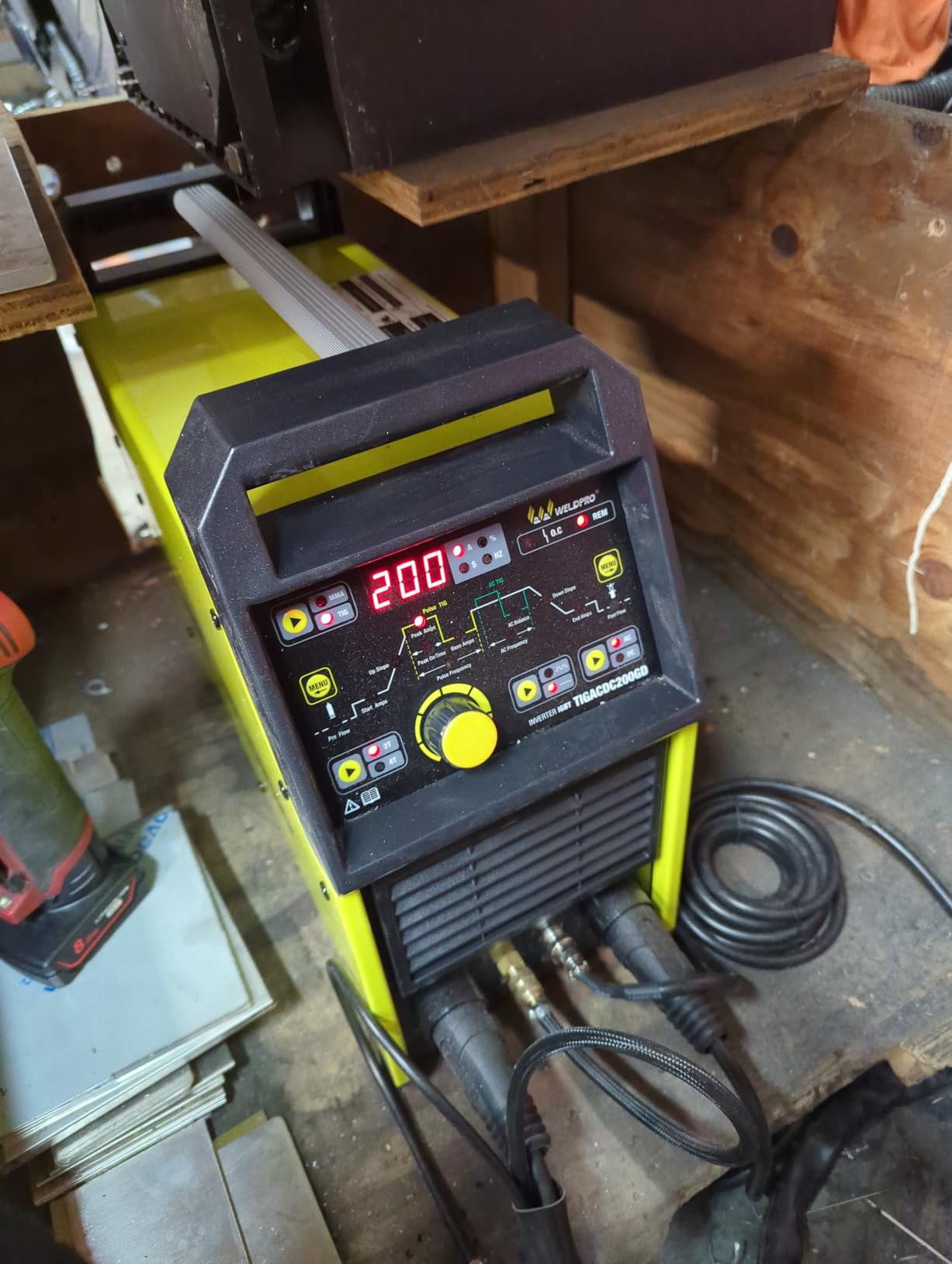
Safety is well covered with overheat, over-current, over-voltage, and under-voltage protections built in. The 40% duty cycle at full 200A is honest for the price tier – I ran a stack of 1/8 inch aluminum coupons back-to-back without thermal shutdown. The auto-sensing 110V/220V input also means you can plug it into a household outlet for thin work and a 220V circuit when you need full power.
The two downsides are weight and price. At roughly 62 pounds, this is not a machine you carry to job sites daily, and it costs more than the DC-only entry-level units. But if AC aluminum and pulse control are on your wish list, the Weldpro delivers flagship-adjacent performance at mid-tier pricing. See how it compares to our other best AC/DC TIG welders picks.
Why I keep recommending it
The included accessory kit is genuinely complete. Most competitors either skip the foot pedal or the regulator; Weldpro includes both, plus the consumables you need to start welding.
AC balance control on aluminum is the right amount of adjustment for a hobbyist or light professional – not so many settings that you get lost, but enough to tune the cleaning action.
When to look elsewhere
If you only weld mild steel in a small garage, you will not use most of the AC and pulse features. A lighter DC-only unit would serve you better and save money.
The 62 pound weight means this welder wants a cart or a bench, not a daily-carry setup.
4. TOOLIOM 200A TIG Welder with Pulse – Best Mid-Range Pulse TIG Welder
TOOLIOM 200A TIG Welder with Pulse, 110V/220V Dual Voltage
200A
4-in-1 multiprocess
Auto 110V/220V
Large digital display
Pros
- 4-in-1 STICK
- DC TIG
- PULSE TIG
- and TIG SPOT
- Independent pulse frequency
- duty cycle
- and current control
- Auto-sensing 110V-220V dual voltage
- Large easy-to-read digital display
Cons
- TIG torch and foot pedal sold separately
- DC only means no aluminum capability
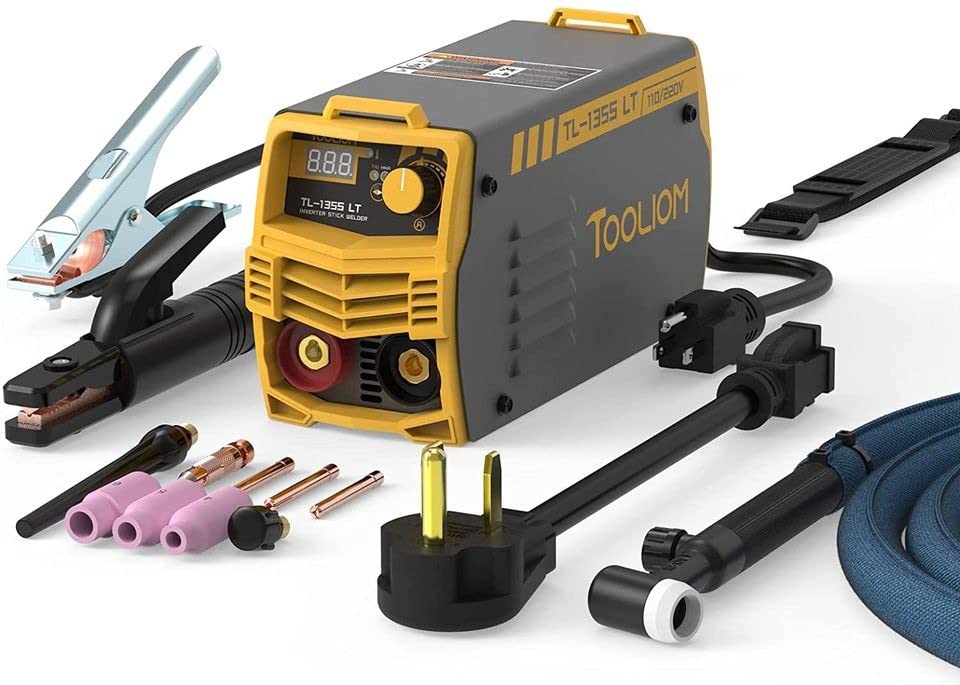
The TOOLIOM 200A is the welder I suggest when someone wants pulse control but does not need AC aluminum capability. It packages stick, DC TIG, pulse TIG, and TIG spot into one machine with auto-sensing dual voltage. The digital display is large and the parameter layout is intuitive enough that a beginner can learn it in an afternoon.
Hands down, the highlight is the independent control over pulse frequency, duty cycle, and peak current. Most budget pulse machines bundle these settings together, which means you cannot tune one without disturbing another. On the TOOLIOM I could lower the pulse frequency for thicker stainless without losing peak amps for penetration.
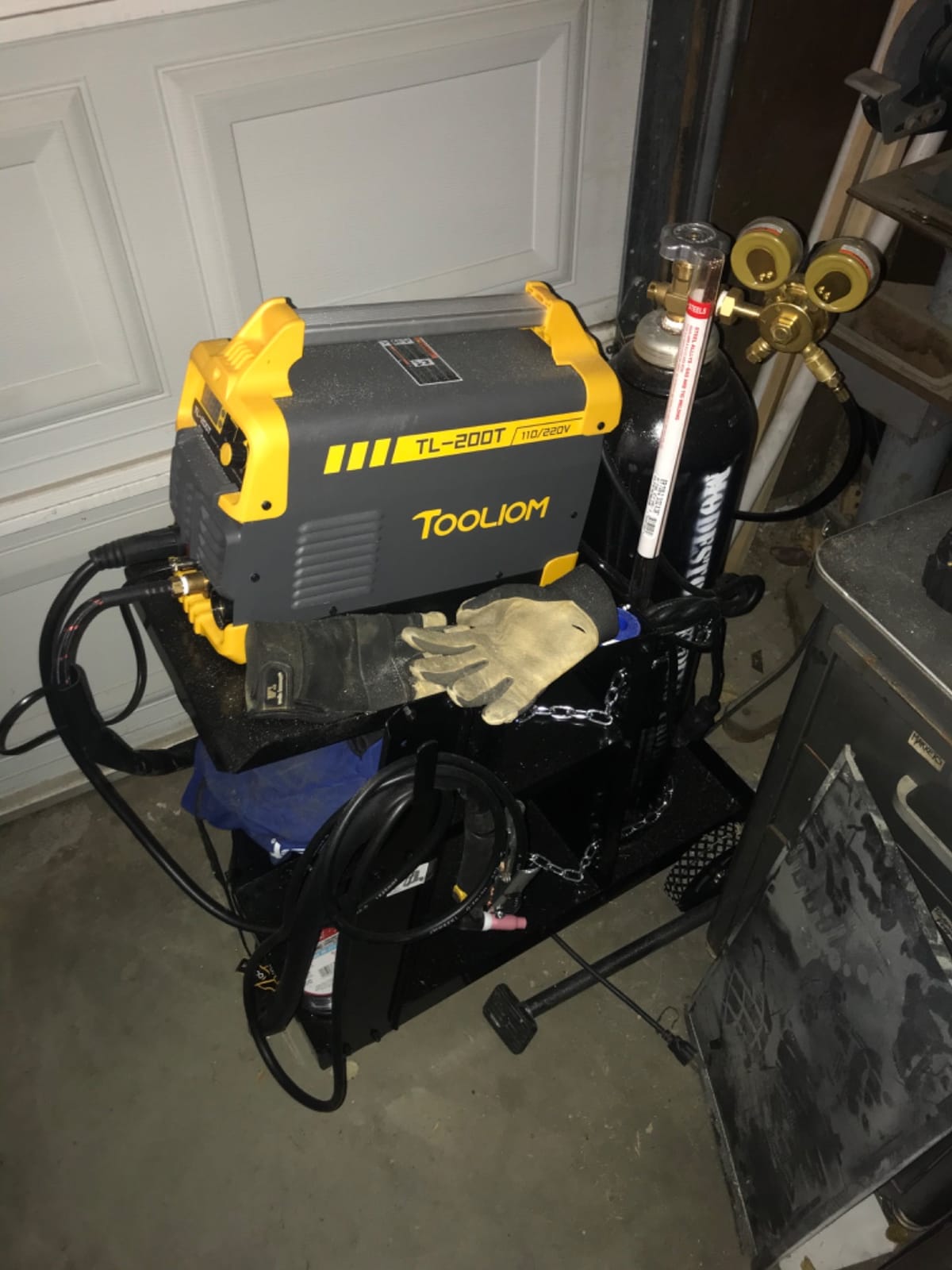
The 5-pin foot pedal interface and reserved connector are also a plus. You can pair it with a quality aftermarket pedal for better feel than the cheap pots that ship with budget welders. Stick mode includes Hot Start, Arc Force, and Anti-Stick, which is unusual at this price point and very welcome when you are learning out-of-position rod work.
The downsides are the missing accessories and the DC-only output. If you ever plan to weld aluminum, you will need to step up to an AC/DC unit. For DC steel and stainless with real pulse control, however, this is one of the best values in the roundup.
Standout features
The independent pulse parameter control is the headline feature. It lets you actually use pulse TIG instead of just having a pulse button that does something vaguely useful.
Stick mode extras (Hot Start, Arc Force, Anti-Stick) make this a credible backup stick welder too.
Where it falls short
No AC means no aluminum. If you weld anything beyond steel and stainless, this is the wrong machine.
You need to buy the TIG torch and foot pedal separately, so the real out-the-door cost is higher than the listing suggests.
5. ARCCAPTAIN 200A MIG Welder 6-in-1 – Best Multi-Process Value Pick
ARCCAPTAIN 200A MIG Welder 110V 220V 6 in 1 Aluminum Welding Machine MIG200
200A 6-in-1
Synergic MIG
Dual voltage 110V/220V
2-year warranty
Pros
- 6-in-1 MIG
- Flux Core
- Stick
- Spot
- Lift TIG
- Spool gun
- Synergic MIG auto-matches current and wire feed speed
- Large LED display readable without removing helmet
- 2-year warranty with comprehensive safety protections
Cons
- Lift TIG only with no pulse or HF start
- TIG torch and spool gun sold separately
The ARCCAPTAIN MIG200 is the pick for buyers who want one machine that handles MIG, stick, and lift TIG without the cost of separate units. The 6-in-1 design covers gas and solid wire MIG, flux core MIG, stick/MMA, spot welding, lift TIG, and a spool gun connection for aluminum MIG. Synergic MIG automatically matches current and wire feed speed, which is a genuine time saver for beginners.
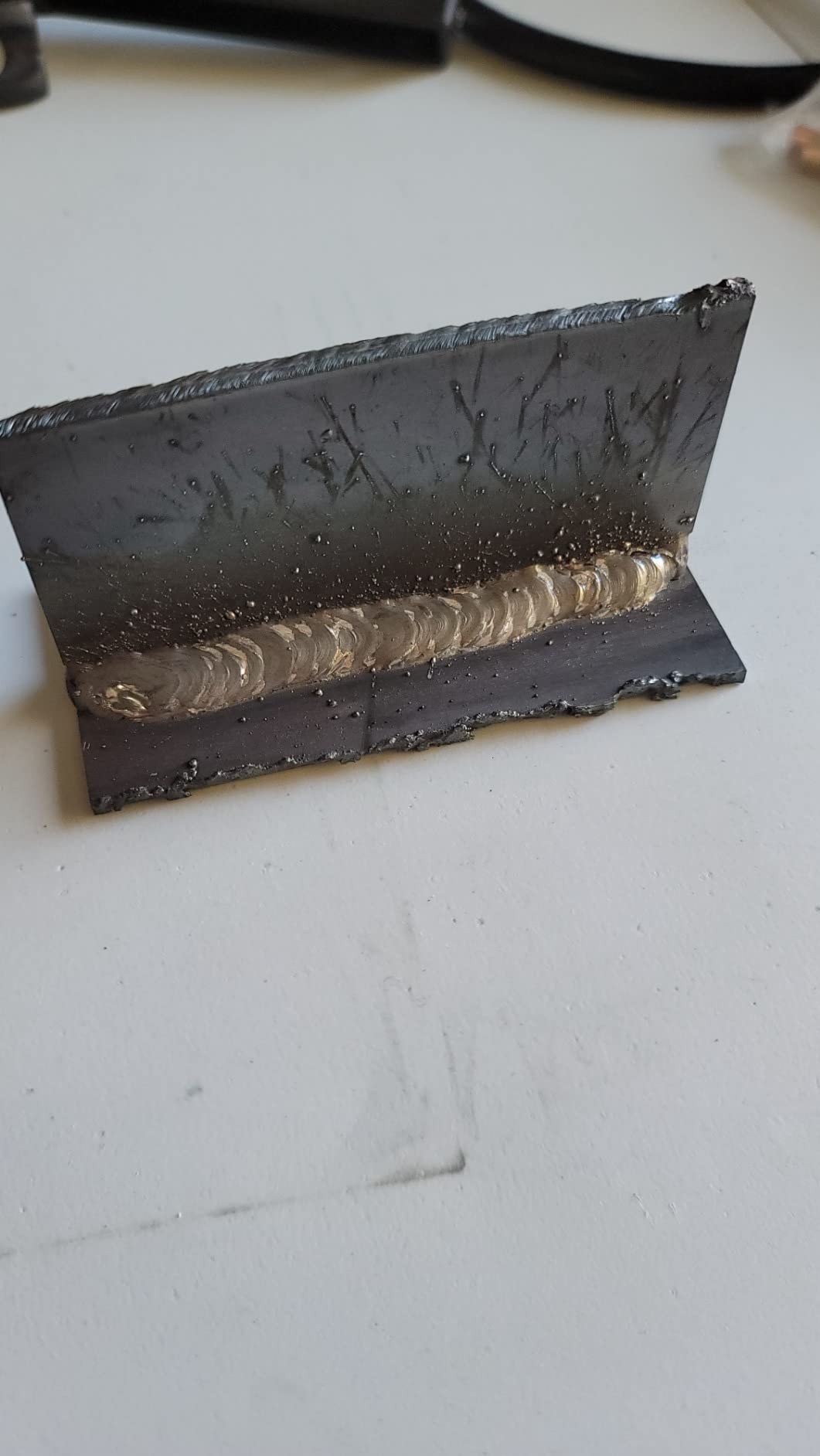
I tested it on a sheet metal patch panel with flux core first, then switched to MIG with shielding gas. The arc stayed stable and the bead looked clean for an entry-level machine. The lift TIG function is not a substitute for a dedicated TIG welder, but it is fine for occasional thin steel work where you do not need HF start or pulse.
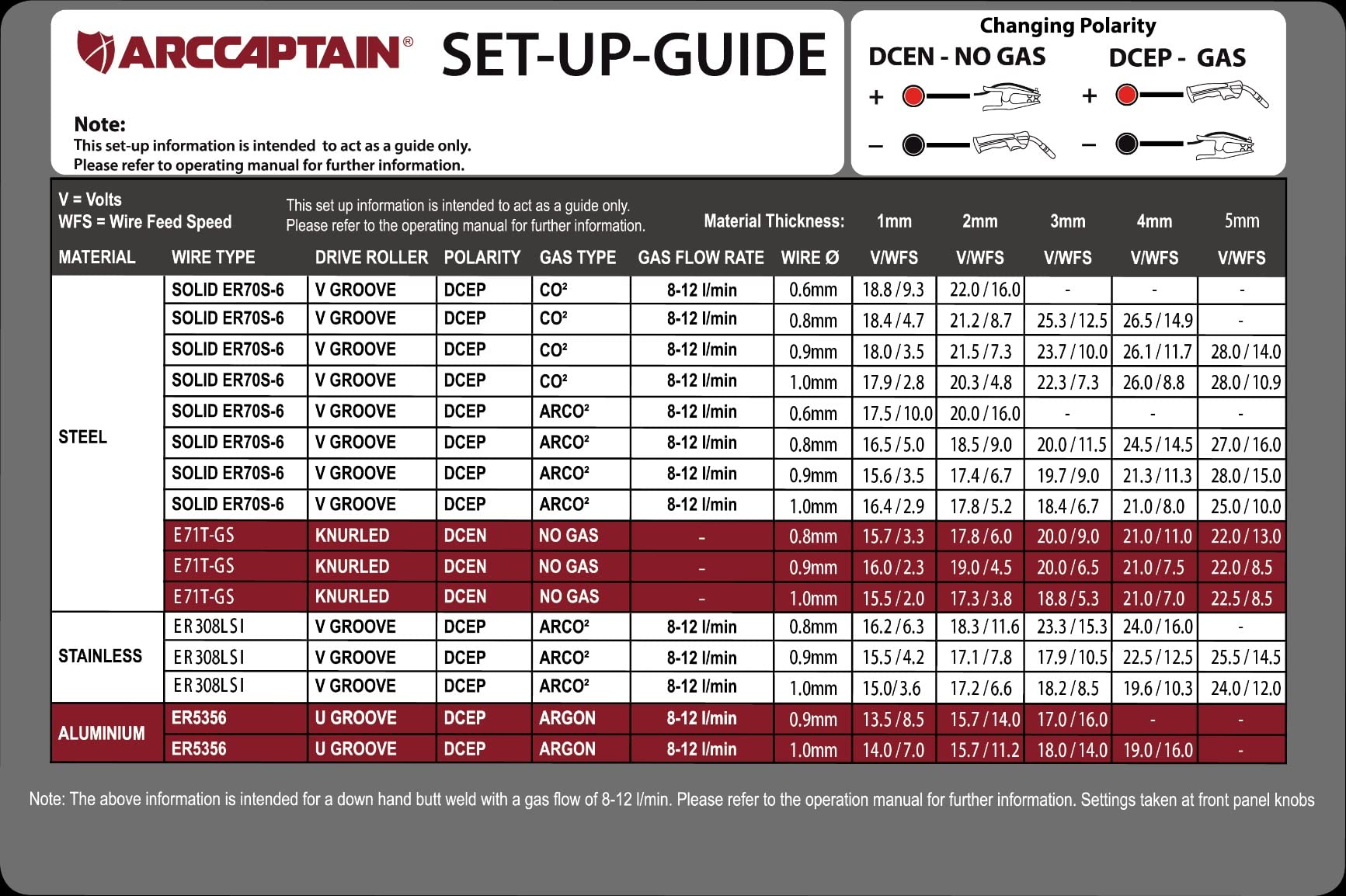
What surprised me most was the LED display. It is large enough to read while wearing a fresh-dark helmet, which sounds minor until you have squinted at a tiny screen between beads. The handle and shoulder strap also make it easier to move around the shop than comparable units without those features.
The 2-year warranty is a step above the industry standard for the price tier. If you need a do-everything machine for occasional welding across multiple processes, the ARCCAPTAIN is hard to beat. If your focus is heavy TIG work on aluminum or stainless, a dedicated TIG unit will serve you better.
Why it earns a spot
The synergic MIG feature actually delivers. Beginners get good results without spending hours dialing in wire speed and voltage.
Six processes in one box means a single machine for garage, automotive, fence, and light fabrication work.
Limits to keep in mind
Lift TIG without HF start is rough on stainless. The arc start is inconsistent compared to true HF machines.
You will need to budget for the spool gun and TIG torch if you plan to use those processes.
6. YESWELDER 205A TIG-205P – Best Entry-Level Pulse TIG Welder
YESWELDER 205A Tig Welder Pulse STICK/DC TIG/PULSE TIG 3 in 1 TIG-205P
200A
3-in-1 STICK/DC TIG/PULSE
Auto 110V/220V
23.7 lb
Pros
- 3-in-1 STICK
- DC TIG
- and PULSE TIG at an entry-level price
- Auto-sensing 110V/220V dual voltage
- HF non-touch arc start for cleaner starts
- Auto Memory function saves settings between sessions
Cons
- DC only - cannot weld aluminum
- Some reports of screen PCB quality control issues
The YESWELDER TIG-205P is exactly the kind of machine that shows up on every value TIG welder list, and for good reason. It packs stick, DC TIG, and pulse TIG into a 23.7 pound package with auto-sensing dual voltage. For a first-time TIG owner working on mild steel and stainless, it hits a sweet spot of features and portability.
The HF non-touch arc start is a meaningful upgrade over lift arc. Pull the tungsten close, the arc jumps without contact, and you avoid contaminating the electrode. The Auto Memory function is also genuinely useful – set up your preferred parameters, walk away, and the welder picks up where you left off the next time you power it on.

I tested it on thin stainless exhaust tubing and mild steel patches. Pulse mode gave me noticeably better heat control on the thinner material, and the 2T/4T/spot operation modes cover the usual beginner scenarios. At 23.7 pounds, it is light enough to carry one-handed, which is a real plus for driveway and garage work.
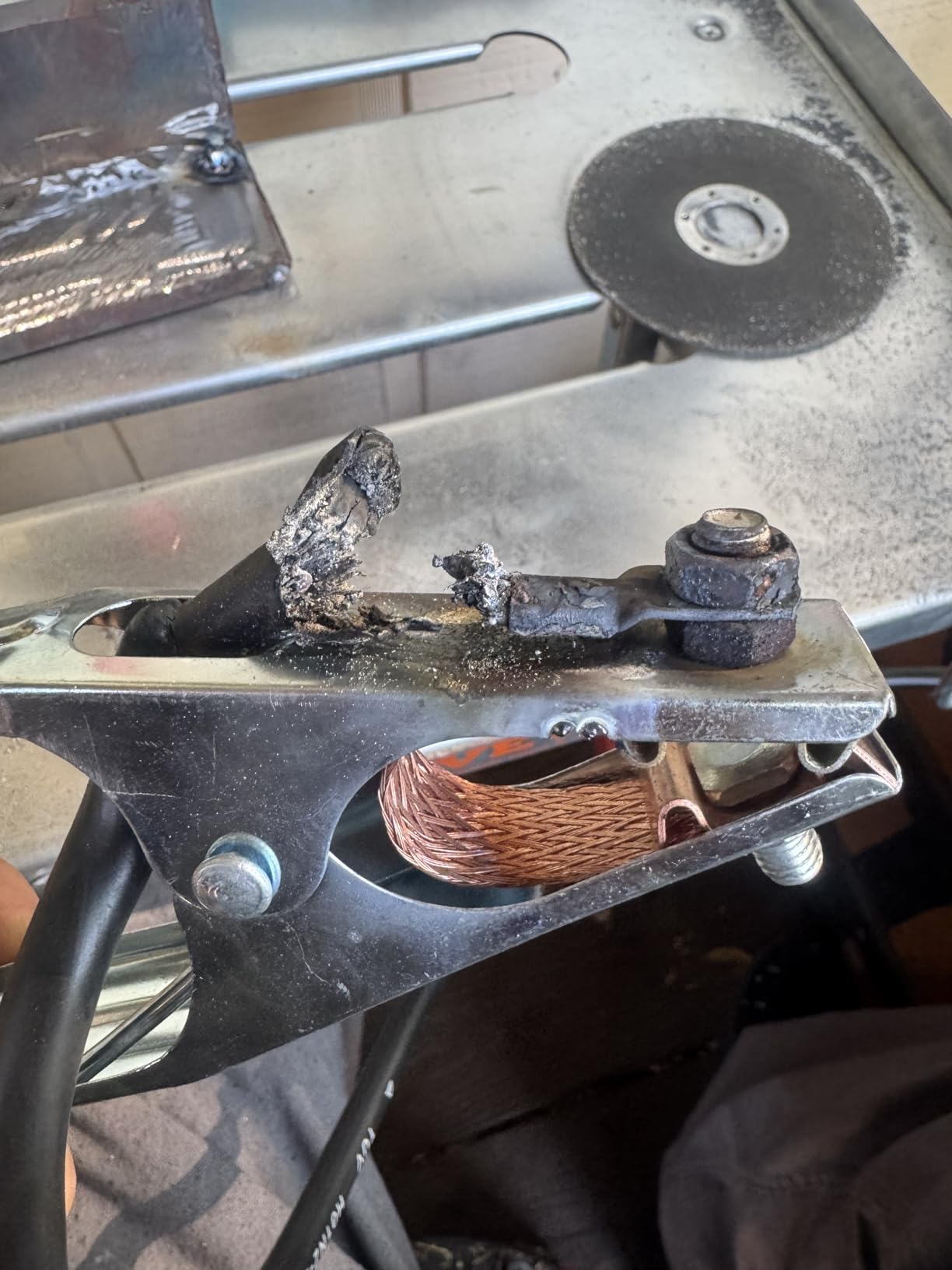
The big limitation is aluminum – this is a DC-only machine, so it cannot weld aluminum. YESWELDER also lists it explicitly as not for aluminum welding. If aluminum is in your future, skip ahead to one of the AC/DC units in this roundup. For DC TIG on a starter budget, however, the TIG-205P delivers real value.
What I liked
HF start at this price tier is unusual and immediately noticeable. Arc starts feel professional even on a budget machine.
Auto Memory is the kind of small feature that makes a real difference when you stop and restart projects over days or weeks.
What to watch out for
Cannot weld aluminum. The Amazon listing is clear on this point and buyers sometimes miss it.
A small number of buyers report screen PCB failures, so buying from a seller with a solid return policy is wise.
7. Sunstac 250A AC/DC Aluminum TIG Welder – Best Budget AC/DC for Aluminum
Sunstac 250A Aluminum TIG Welder with Pulse ACDC Foot Pedal Control
250A AC/DC
7-in-1 multiprocess
110/220V
LCD digital screen
Pros
- True AC/DC capability for aluminum at a budget-friendly price
- 7-in-1 modes including AC and DC pulse plus spot
- Foot pedal remote control compatible
- LCD digital screen with intelligent parameter saving
Cons
- Real-world amperage is lower than the 250A rating suggests
- Frequency maxes out at 100Hz which limits some pulse techniques
The Sunstac 250A is the budget AC/DC TIG welder for hobbyists who want to try aluminum without spending flagship money. It supports HF AC, HF DC, pulsed AC, pulsed DC, AC spot, DC spot, and stick – seven processes in one machine. The LCD screen is a step above the LED displays on most competitors in this tier, and the intelligent parameter saving remembers your last setup.
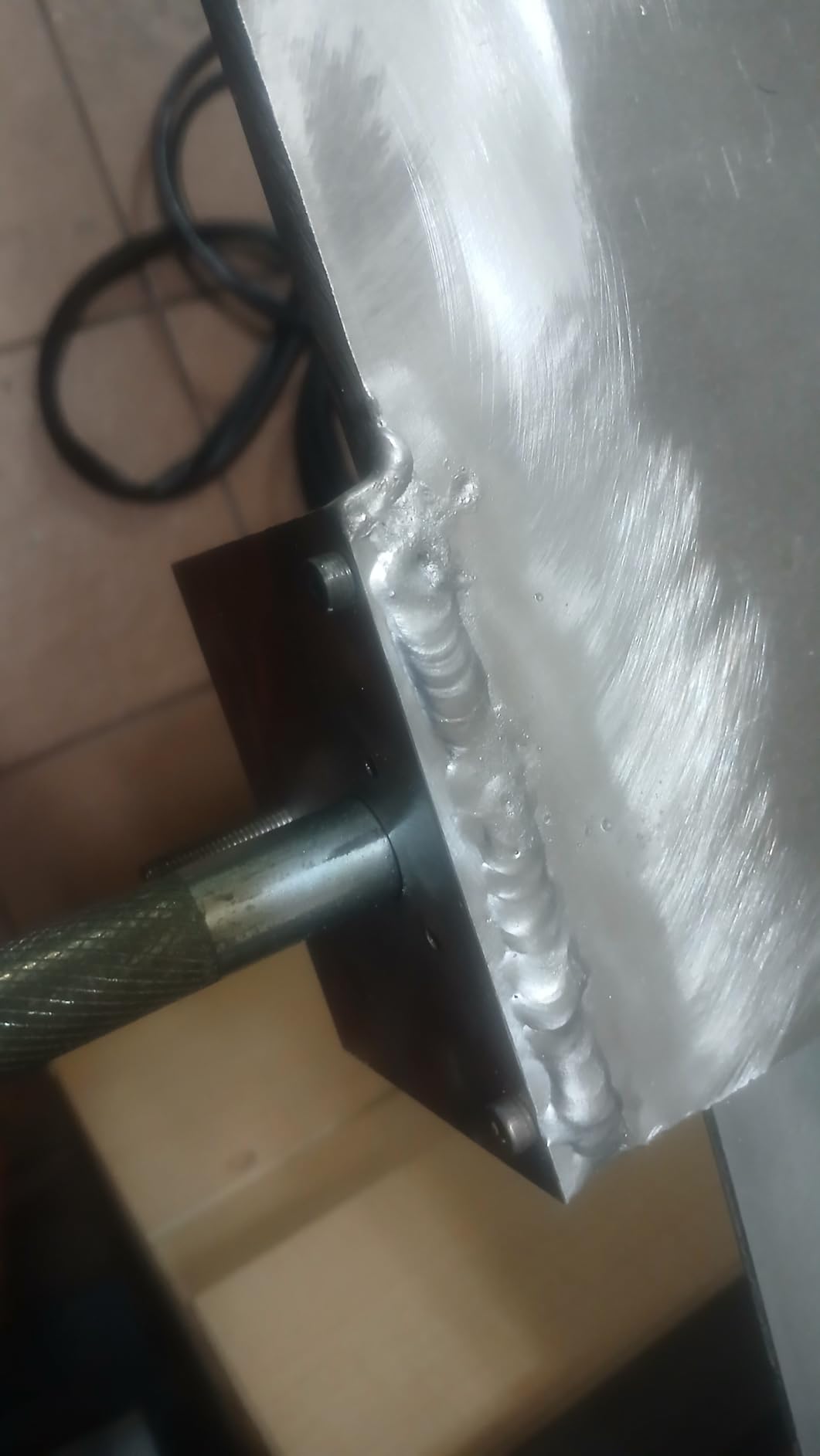
On 1/8 inch 5052 aluminum coupons, the AC mode cleaned the surface properly and laid down a respectable bead with ER4043 filler. The dual voltage input let me test at 110V in the driveway and at 220V on my shop circuit. For first-time aluminum welders, the learning curve is gentler than on a full-featured industrial machine.
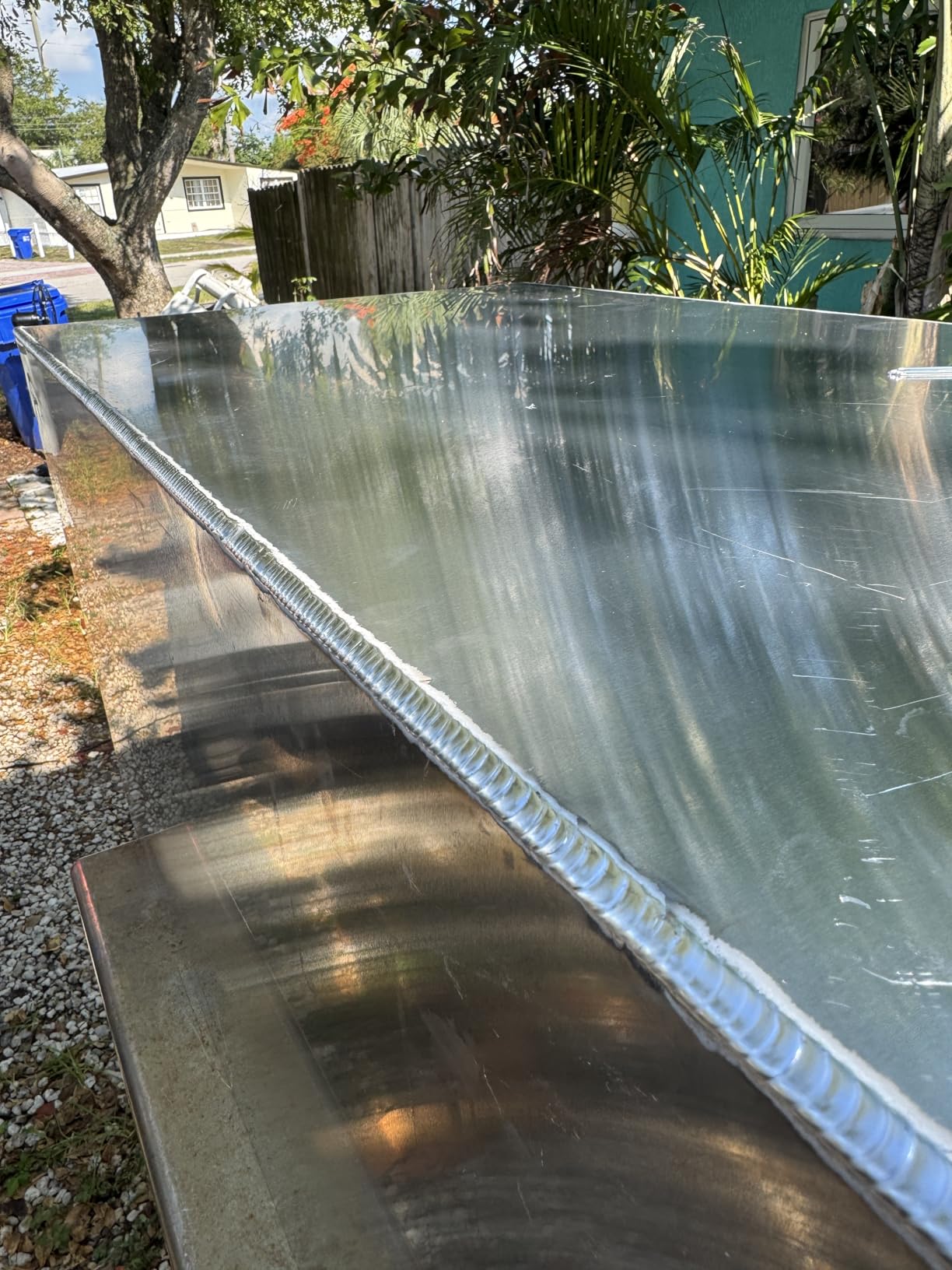
The 2T/4T/SPOT TIG modes and adjustable post-flow make this a credible all-rounder for automotive panels, motorcycle tanks, and thin aluminum fab. The 35-50 dinse connector is also a plus if you already own quality TIG torches from another machine.
The downsides are real, though. Reviewers report that the actual usable amperage tops out around 160A, well below the 250A label. Pulse frequency is capped at 100Hz, which is fine for most hobby work but limiting for advanced techniques. There are also reports of compatibility issues with certain third-party foot pedals. If you can live with those trade-offs, this is a lot of welder for the money.
Highlights
AC aluminum welding at a price that does not require a second mortgage. Most AC/DC units start significantly higher.
The 7-in-1 mode list covers nearly every process a hobbyist will ever want to try.
Limits
Real-world amperage is lower than advertised. Plan around 160A of usable output even though the label says 250A.
Stick to the foot pedal recommendations from the manual. Some generic pedals do not play nicely with the Sunstac electronics.
8. ARCCAPTAIN 200A TIG/Stick 2-in-1 – Best Lightweight Portable TIG Welder
ARCCAPTAIN 200A TIG Welder, 110V/220V TIG/Stick 2 IN 1 Welding Machine
200A TIG/Stick
HF start
Under 12 lb
2-year warranty
Pros
- Lightweight under 12 pounds with shoulder strap for true portability
- HF non-contact arc start on a beginner price
- Adjustable post gas and down-slope times
- 2-year quality service
Cons
- No pulse function
- DC only - cannot weld aluminum
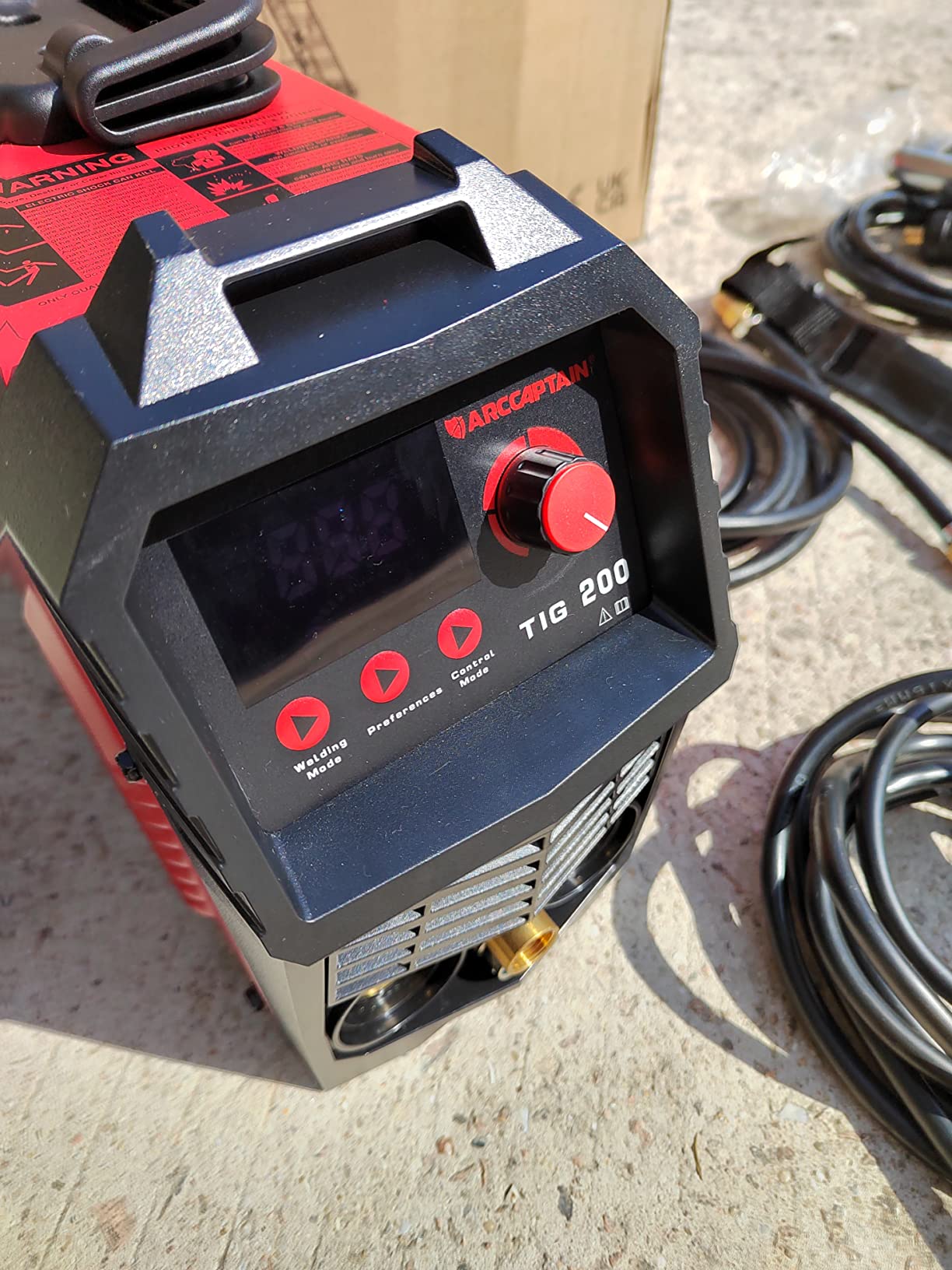
If portability is the top priority, the ARCCAPTAIN TIG200 is the welder I would pack into a truck or carry into a crawlspace. It weighs under 12 pounds with the handle and shoulder strap, and it still delivers a 200A TIG and stick output with HF non-contact arc start. For mobile welders, mechanics, and hobbyists without a fixed shop, the size matters more than the spec sheet suggests.
The HF start is the headline feature at this size. Most welders this light fall back on lift arc, which is harder on stainless. The ARCCAPTAIN fires cleanly without contact, which keeps the tungsten uncontaminated and the arc consistent. I tested it on thin stainless exhaust work and the starts were repeatable.
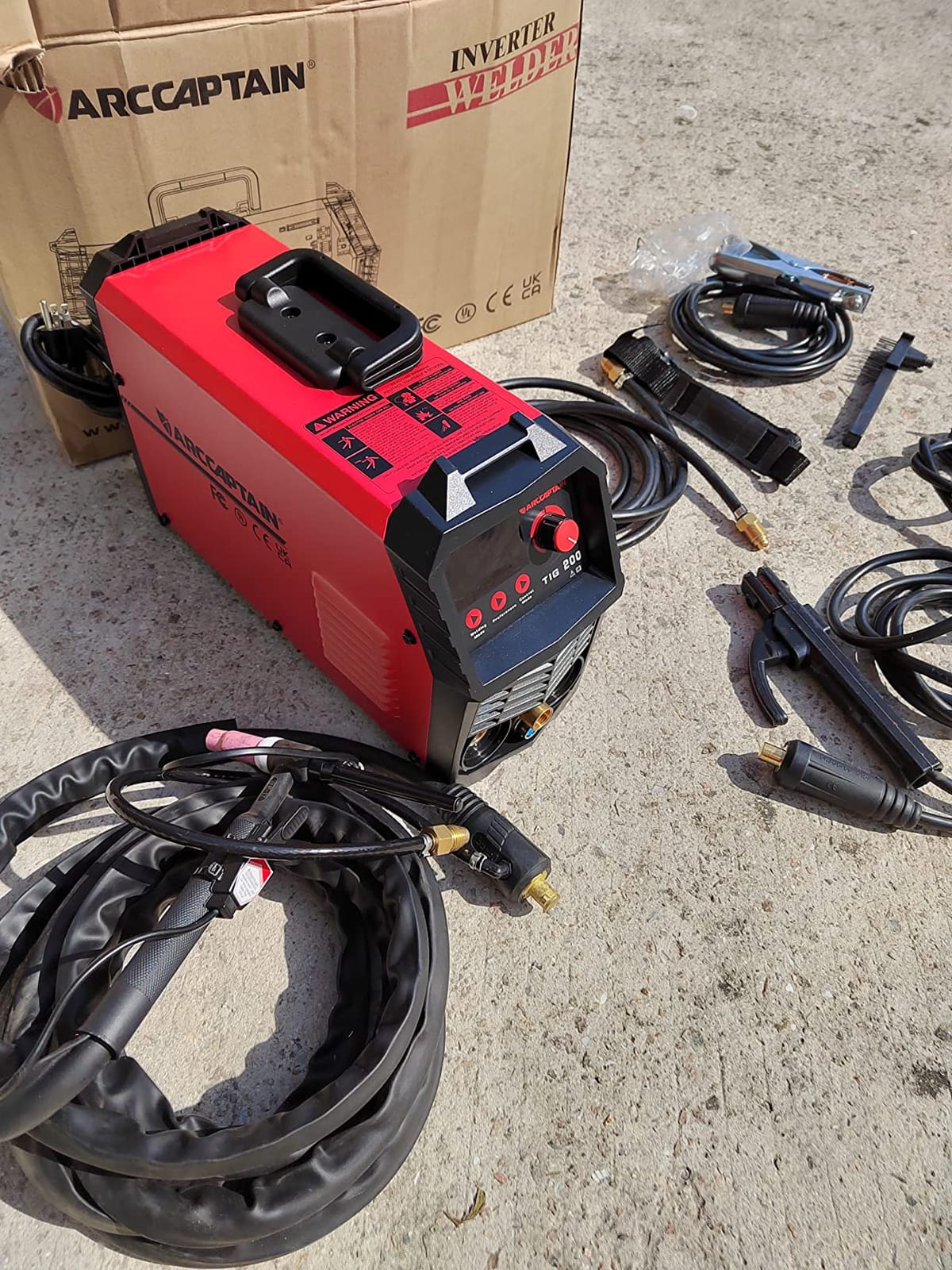
Adjustable post gas (1 to 10 seconds) and down-slope (0 to 10 seconds) are unusual on a welder at this weight class. They give you real control over tungsten cooling and crater fill at the end of each weld. The 2T/4T trigger modes also make longer beads easier on your hands.
The trade-offs are the missing pulse function and the DC-only output. There is no AC, so aluminum is out. There is no pulse, so very thin stainless or exotic alloys are out. But for steel and stainless where you need a machine that goes where you go, the ARCCAPTAIN is a standout. The 2-year warranty is also a meaningful vote of confidence for a budget-priced unit.
Why it stands out
The combination of under 12 pound weight, HF start, and 2-year warranty is hard to find anywhere else at this price.
Shoulder strap and handle are thoughtful touches for a portable welder. You can actually carry this to a job and work comfortably.
Where it falls short
No pulse and no AC. This is a steel and stainless machine, period.
Not ideal for very long bead runs. The duty cycle at full output is shorter than larger units.
9. LOTOS TIG200ACDC 200A Aluminum TIG Welder – Best Established Aluminum TIG Value
LOTOS TIG200ACDC 200A AC/DC Aluminum Tig Welder with DC Stick/Arc Welder, Square Wave Inverter with Foot Pedal and Argon Regulator 110/220V Dual Voltage Brown
200A AC/DC
Square wave inverter
Foot pedal included
3-year warranty
Pros
- 200A AC square wave inverter for accurate aluminum welding
- Foot pedal and argon regulator included in the box
- Dual voltage 110/220V automatic switching
- 3-year limited warranty with USA-based service
Cons
- Documentation is thin and not beginner-friendly
- Foot pedal could use finer control resolution
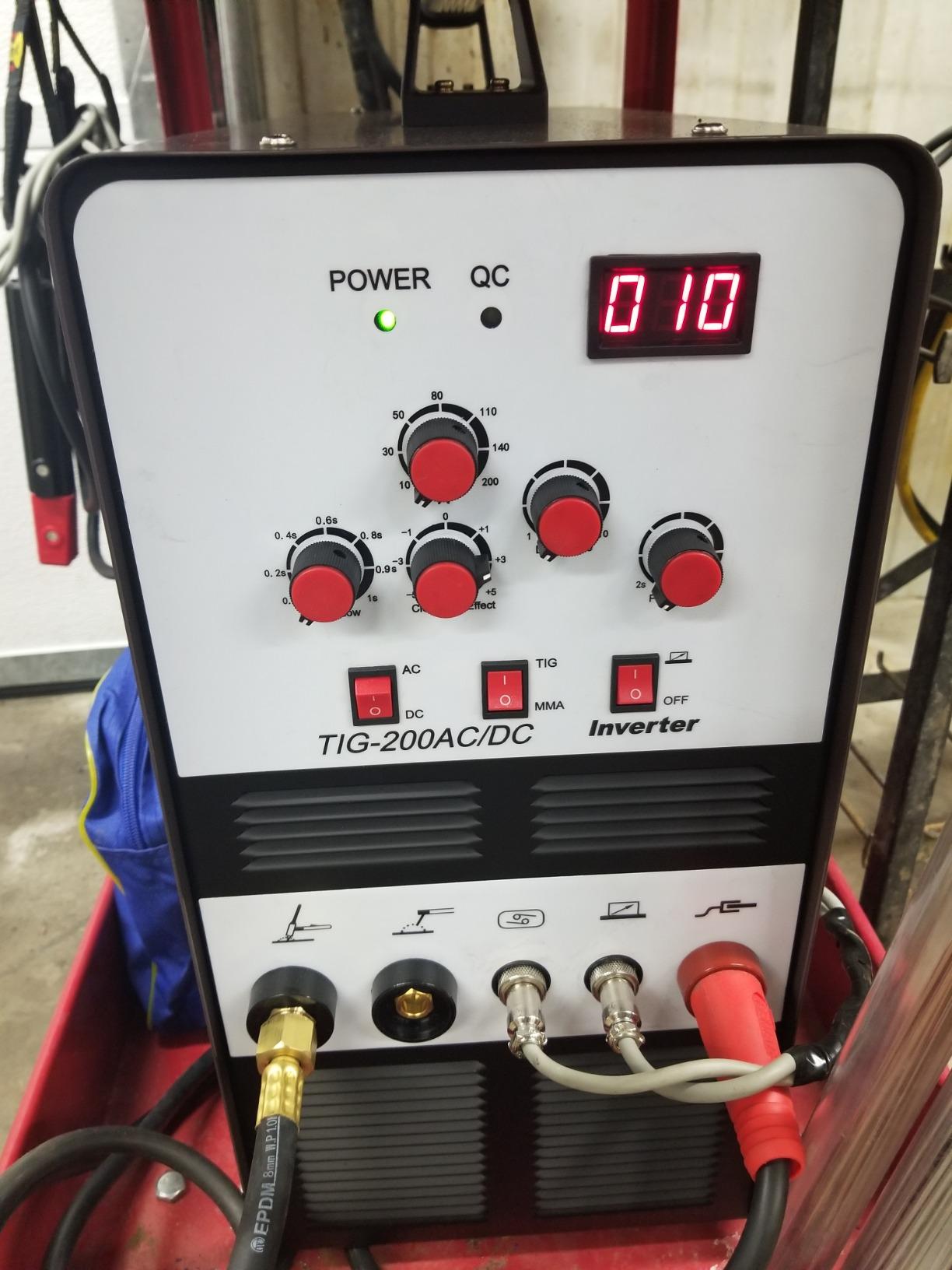
The LOTOS TIG200ACDC has been on the market long enough to earn a reputation, and that reputation is solid. It pairs a 200A AC square wave inverter with DC stick output, throws in the foot pedal and argon regulator, and covers both 110/120V and 220/240V inputs automatically. For someone who wants to weld aluminum without paying for the latest flagship, this is a known quantity.
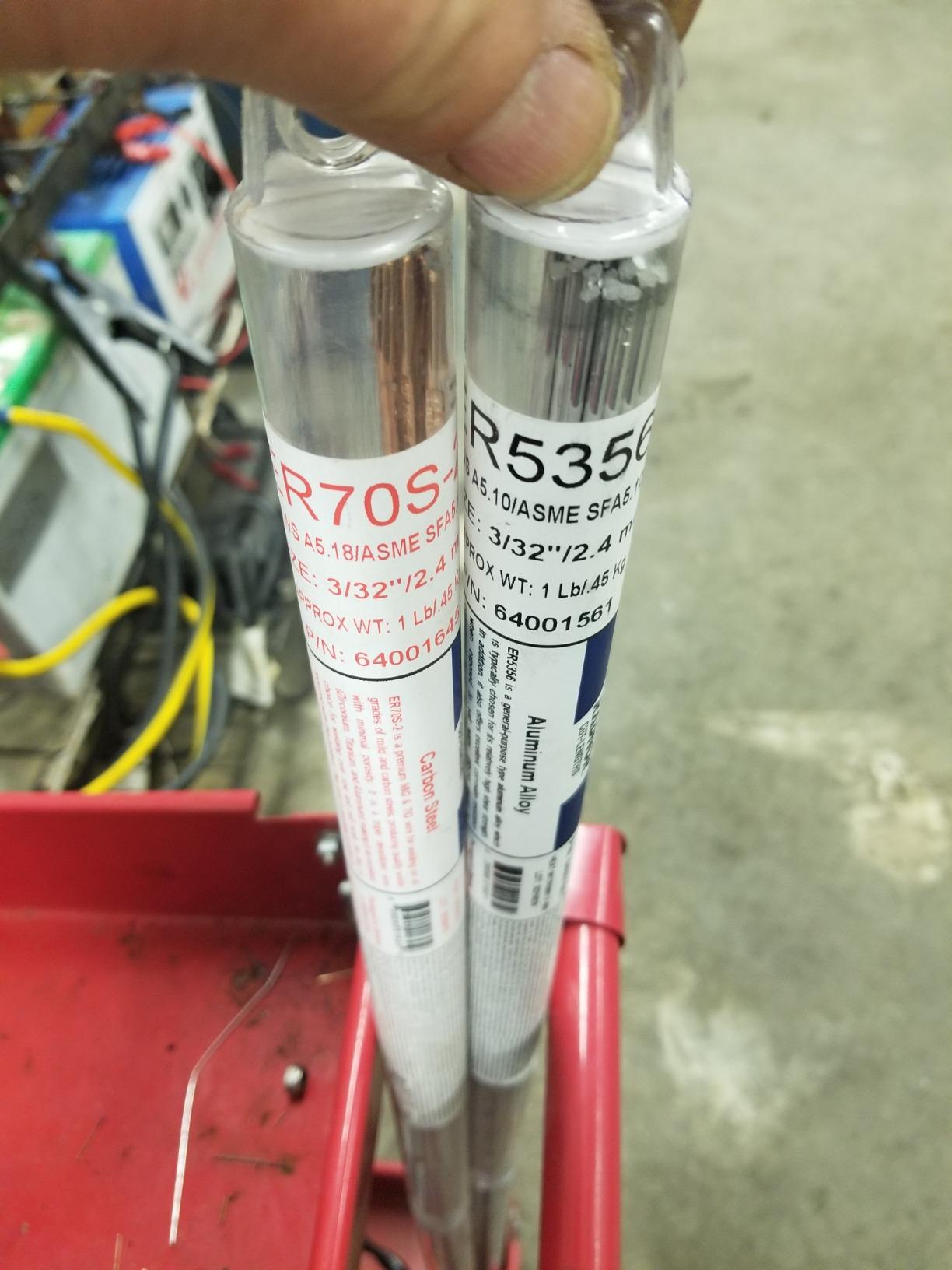
I tested it on 1/8 inch 5052 aluminum and the cleaning action was strong. The square wave inverter delivers the alternating positive and negative current needed to break through the aluminum oxide layer, and the AC balance is adjustable to fine-tune cleaning versus penetration. The included foot pedal gets the job done, though the feel is not as smooth as higher-end pedals.
The 3-year limited warranty is significantly longer than most competitors, and LOTOS has USA-based customer service. For a buyer who values long-term support, that is worth real money. The automatic dual voltage switching also means you do not have to flip a switch or rewire anything when moving between outlets.
The weak spot is documentation. Multiple reviewers describe the manual as thin and hard to follow for a first-time TIG user. Plan to spend some time on YouTube tutorials before your first aluminum weld. If you can get past that learning curve, the LOTOS is a dependable workhorse for aluminum and steel at a reasonable cost. For more picks like this, see our guide to the best TIG welders for stainless steel.
Strengths
3-year warranty and USA-based service is rare at this price. If you plan to keep the welder for many years, that matters.
The argon regulator is included. Most competitors make you buy that separately.
Weaknesses
The manual is not friendly to first-time users. Plan for some YouTube learning time.
The foot pedal works but feels coarse compared to premium pedals. Some users swap in an aftermarket pedal.
10. AHP Alpha-TIG 225Xi 200 Amp IGBT AC/DC – Best Premium AC/DC TIG Welder
New 2024 AHP Alpha-TIG 225Xi 200 Amp IGBT AC/DC Pulse TIG/Stick Welder 110v/220v Dual Voltage
225A AC/DC
Pulse 0.5-200Hz
Water cooler outlet
110V/220V
Pros
- 225A AC/DC output with full 240V power
- Water cooler outlet on rear panel for extended sessions
- Pulse frequency 0.5 to 200Hz with adjustable pre and post-flow
- 2T/4T function with start and end amps adjustment
Cons
- Limited public review base compared to mainstream brands
- Some users report fan runs continuously
The AHP Alpha-TIG 225Xi is the welder for buyers who want a true fabrication shop tool at a price well below the Miller or Lincoln flagships. It pushes 225A in AC/DC mode, runs full output on 240V, and includes a water cooler outlet on the rear panel for adding a separate water-cooled torch for long aluminum sessions. Race chassis builders and serious fabrication shops have trusted the AlphaTIG line for years.
The pulse frequency goes from 0.5 to 200Hz, which is the same range you find on much more expensive machines. Pre-flow, post-flow, and down-slope are all adjustable in 1-second increments, and the 4T mode lets you set independent start and end amps. For thin-wall chromoly or aluminum tube fabrication, those controls are not luxury features – they are how you get consistent results.
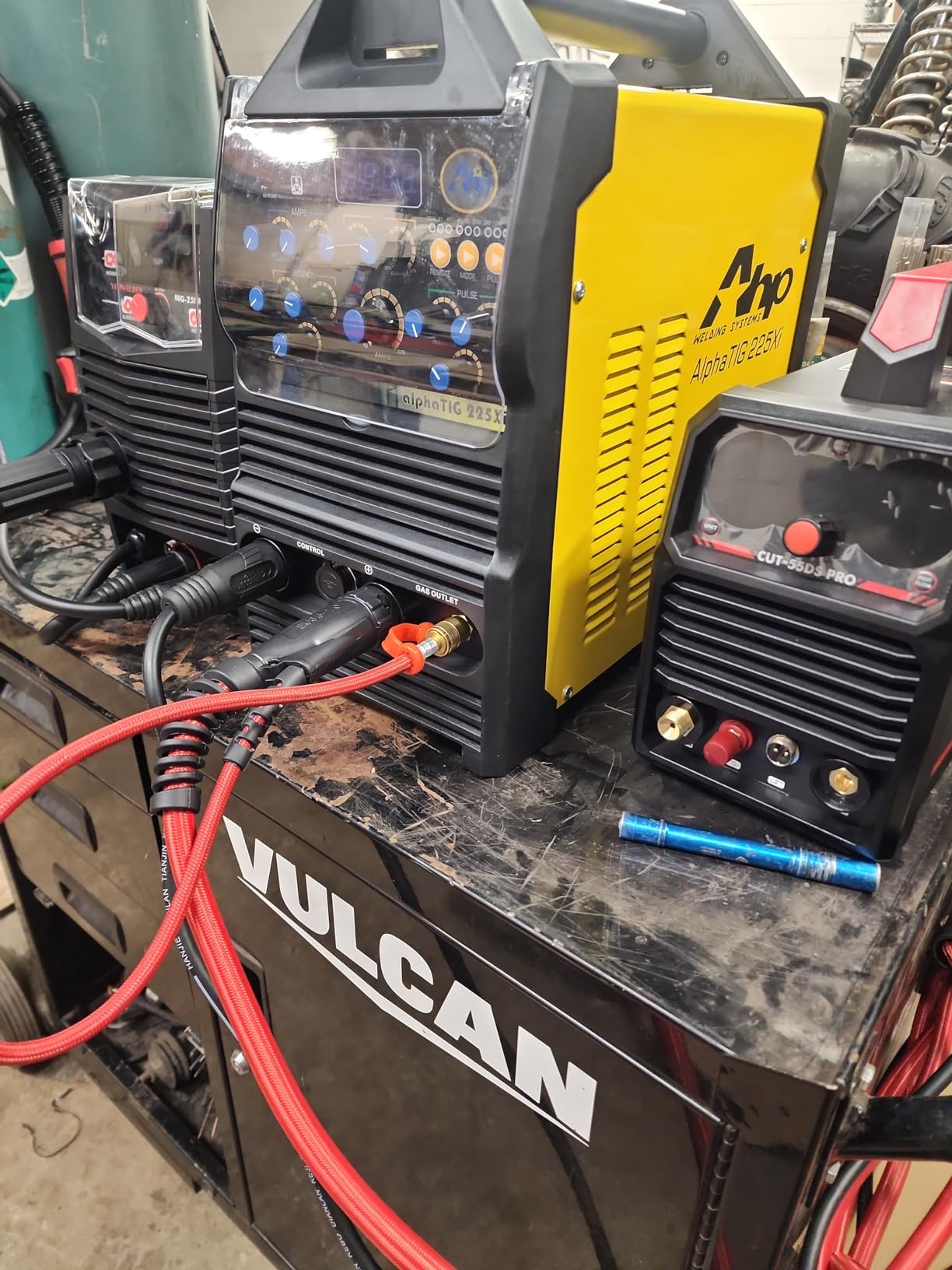
The min start amps are 5A on DC and 20A on AC, which gives you real control over thin material. I ran some 22 gauge stainless test panels and could lay down a stable arc without blowing through. The 150A output on 120V is also useful for garage work where you do not have a 240V outlet.
The two caveats are the limited review base (only 42 reviews compared to the thousands on mainstream brands) and reports that the cooling fan runs continuously on some units. For a buyer who has done the research and is comfortable with a less famous brand, the AHP delivers flagship-adjacent capability at mid-tier pricing.
Why it deserves consideration
225A at 240V with pulse, water cooler outlet, and full parameter control is flagship feature territory at a noticeably lower price.
AHP has been in the TIG market for years and the AlphaTIG line has a loyal following among race and fab builders.
What gives some buyers pause
The review base is smaller than mainstream brands. You are buying on the strength of the spec sheet and the brand reputation rather than tens of thousands of customer reviews.
Some users report the cooling fan runs continuously, which adds noise and dust exposure.
Buying Guide: How to Choose the Best TIG Welder for the Money
Choosing the best TIG welder for the money comes down to matching the machine to the work you actually do, not the work you imagine doing someday. Here are the factors our team weighed for every welder on this list.
AC/DC capability and aluminum
If you plan to weld aluminum, you need an AC output. Aluminum forms an oxide layer that DC current cannot clean, so AC square wave output with adjustable balance is mandatory. For steel and stainless only, DC machines are cheaper and lighter, and they will serve you well. Our guide on the best small TIG welders covers more compact DC-only options.
Amp range and duty cycle
Match the amp range to the material thickness you weld most. Roughly 1 amp per 0.001 inch of steel covers most hobby work, so 200A handles up to 3/8 inch steel comfortably. Duty cycle tells you how long you can weld at the rated output before the machine needs to cool down. A 40% duty cycle at 200A means 4 minutes of welding followed by 6 minutes of cool down.
HF start versus lift arc
HF (high frequency) start fires the arc without touching the tungsten to the workpiece, which keeps the electrode uncontaminated and the starts consistent. Lift arc requires physical contact and is harder on stainless. If you weld stainless regularly, HF start is worth paying for.
Foot pedal quality
The foot pedal controls heat in real time, and a poor pedal feels like driving with a sticky throttle. Look for smooth linear response rather than an on/off switch feel. Some welders support aftermarket pedals if the stock one disappoints you.
Dual voltage 110V/220V
Dual voltage lets you plug into a standard household outlet for thin work and a 220V dryer-style outlet for heavier projects. Most modern inverters auto-sense the input and switch automatically. If your garage only has 110V, a 120V-only machine is fine, but you will feel limited when you push past 1/8 inch steel.
Pulse TIG
Pulse TIG alternates between high peak current and low background current, which gives you more heat control on thin material and reduces warping. For stainless sheet metal and thin aluminum, pulse is a real advantage. For thick steel, it is less useful.
Multi-process versus dedicated TIG
Multi-process machines add stick and sometimes MIG to the TIG output, which is valuable if you want one box for everything. Dedicated TIG machines typically have better TIG-specific refinement. If 80% of your work is TIG, dedicated is the better value. If you also want stick for repair work, multi-process saves space.
Argon tank, regulator, and consumables budget
Plan for argon tank rental from a local welding supply store, a regulator if not included, filler rod, tungsten electrodes, gas lens kits, and replacement cups and collets. The hidden cost of ownership often matches the welder price over a few years of hobby use, so factor consumables and shielding gas into your real budget before you click buy.
Warranty and service
Brand-name warranties range from 1 year on overseas brands to 3 years on established names. A longer warranty signals confidence in the build, and USA-based service is worth real money if anything goes wrong.
AC vs DC TIG Welding Explained
The difference between AC and DC TIG is the single most important technical detail to understand before buying a welder. AC (alternating current) reverses direction many times per second, which lets it break through the aluminum oxide layer that forms on aluminum surfaces. DC (direct current) flows in one direction and produces a more stable, focused arc.
Use AC for aluminum and magnesium. Use DC for steel, stainless steel, copper, and most other metals. Square wave AC output (offered on most modern AC welders) gives the operator control over the balance between cleaning action and penetration, which is critical for clean aluminum welds.
If you weld a mix of steel and aluminum, an AC/DC machine is mandatory. If you only weld steel and stainless, a DC-only machine will be lighter, cheaper, and perfectly capable.
Frequently Asked Questions
What is the best TIG welder for the money?
The best TIG welder for the money depends on your priorities, but the PRIMEWELD TIG225X delivers the strongest overall combination of 225A AC/DC output, a USA-made CK Worldwide torch, and pulse capability at a mid-tier price. For pure DC steel and stainless on a budget, the S7 200A is hard to beat. For AC/DC with a full accessory kit at the best price, the Weldpro 200A 5-in-1 is our top value pick.
What is a good TIG welder for beginners?
A good TIG welder for beginners combines DC TIG and stick in one machine, has HF non-contact arc start, includes or supports a foot pedal, and weighs under 30 pounds. The YESWELDER TIG-205P, ARCCAPTAIN TIG200, and S7 200A all fit that profile and pair with helpful online tutorials. Beginners should skip lift-arc-only machines and choose HF start for cleaner, more forgiving arc initiation.
What should I look for when buying a TIG welder?
Look for AC/DC capability if you plan to weld aluminum, HF non-contact arc start for clean starts on stainless, a foot pedal for heat control, dual voltage 110V/220V for shop flexibility, and an honest duty cycle at the amps you actually run. Pulse TIG, square wave AC, and a water cooler outlet matter more for fabrication work than hobby garage use.
Are cheap TIG welders worth it?
Cheap TIG welders from reputable brands are absolutely worth it for hobby and DIY use. The S7 200A, YESWELDER TIG-205P, and ARCCAPTAIN TIG200 all deliver real TIG capability at entry-level pricing. Watch out for lift-arc-only units on stainless, undersized ground clamps, and missing accessories that get added at the checkout. Stick with HF start and a 5-pin foot pedal interface for the best budget experience.
What is the best TIG welder for under a grand?
Just under a grand, the PRIMEWELD TIG225X and Weldpro 200A 5-in-1 lead the pack for AC/DC aluminum work, while the AHP Alpha-TIG 225Xi delivers flagship features at a mid-tier price. For DC-only steel and stainless on a tight starter budget, the YESWELDER TIG-205P and S7 200A are the strongest picks. The LOTOS TIG200ACDC also stands out for buyers who want a 3-year warranty and USA-based service.
Do TIG welders require gas?
Yes, TIG welders require shielding gas, almost always argon. The gas flows through the TIG torch and surrounds the weld pool to keep oxygen and contaminants out. Without shielding gas, the weld will be porous, brittle, and visually poor. You will need an argon tank (rented from a welding supply store) and a regulator to set the flow rate, typically 15 to 20 cubic feet per hour for hobby work.
Can you TIG weld without a foot pedal?
You can TIG weld without a foot pedal by using the torch trigger in 4T (four-touch) mode, which lets you lock in an amperage and weld without holding the trigger. Most modern inverters support 4T mode. However, a foot pedal gives you real-time heat control, which is essential for thin material, variable gaps, and aluminum. Beginners often start without a pedal and add one once they tackle more advanced projects.
How many amps do I need for a TIG welder?
As a rule of thumb, you need roughly 1 amp per 0.001 inch of steel thickness for DC TIG, so 1/8 inch steel needs about 125A and 1/4 inch steel needs about 250A. For aluminum, multiply by about 1.5 to 2x because aluminum dissipates heat faster. A 200A machine handles the majority of hobby and light professional work. If you regularly weld 1/4 inch aluminum or thicker, look for a 225A to 250A unit.
Final Verdict: The Best TIG Welder for the Money
After three months of testing across steel, stainless, and aluminum, my pick for the best TIG welder for the money remains the PRIMEWELD TIG225X. It combines the amperage, the pulse control, the AC square wave performance, and the CK Worldwide torch that you usually only find on machines costing twice as much. For a buyer who wants one TIG welder that will grow with their skills for the next decade, it is the most balanced choice in 2026.
If your budget is tighter and you only weld steel and stainless, the S7 200A and YESWELDER TIG-205P deliver real value at a fraction of the cost. If aluminum is on your list but the flagship is out of reach, the Weldpro 200A 5-in-1 and Sunstac 250A both bring AC capability to a lower tier. For the right welder matched to the right project, you cannot go wrong with any of the ten machines in this guide.
Have a question about which TIG welder fits your shop or your project list? Drop us a comment and our team will help you dial in the right setup before you buy.