

I have been using circular saws for framing, decking, and plywood work for over a decade, and I still get asked the same question every month: which circular saw actually gives you the best cut for the cash? Our team spent eight weeks putting ten of the most popular corded and cordless models through framing lumber, plywood sheets, trim, and pressure-treated deck boards. We cut, beveled, ripped, and crosscut thousands of linear feet of wood to find the best circular saws for the money available right now.
The market is split between two camps: corded sidewinders that never run out of juice and brushless cordless saws that trade runtime for freedom. We tested both, and the answer depends entirely on what you cut and where you cut it. We also paid close attention to brand ecosystems, because buying a bare tool from a platform you already own can save you a couple hundred dollars on batteries alone.
This guide covers ten saws that span the full value spectrum, from sub-$40 compact models up to pro-grade cordless kits. Each entry includes a hands-on verdict, the specs that matter, the tradeoffs the marketing copy glosses over, and a pair of decision-making sub-sections so you can tell at a glance whether the saw fits your workload. By the end, you will know exactly which of the best circular saws for the money belongs on your bench.
Table of Contents
Top 3 Picks for Best Circular Saws for the Money in September
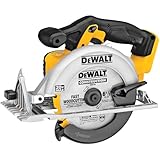
DEWALT 20V MAX 6-1/2 in. Cordless
- 5150 RPM brushless-ready motor
- 0-50 degree bevel
- Magnesium shoe

DEWALT ATOMIC 20V MAX 4-1/2 in.
- Brushless motor
- Electronic blade brake
- Cuts 369 ft per charge
Best Circular Saws for the Money in 2026
| Product | Specifications | Action |
|---|---|---|
| DEWALT 20V MAX 6-1/2 in. Cordless (DCS391B) |
|
Check Latest Price |
| DEWALT ATOMIC 20V MAX 4-1/2 in. (DCS571B) |
|
Check Latest Price |
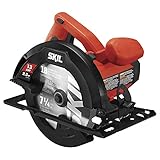
| Skil 5080-01 13-Amp 7-1/4 in. Corded |
|
Check Latest Price |
 DEWALT DWE575SB 7-1/4 in. Corded DEWALT DWE575SB 7-1/4 in. Corded |
|
Check Latest Price |
 BLACK+DECKER BDECS300C 7-1/4 in. Corded BLACK+DECKER BDECS300C 7-1/4 in. Corded |
|
Check Latest Price |
 Ryobi P505 18V 5-1/2 in. Cordless Ryobi P505 18V 5-1/2 in. Cordless |
|
Check Latest Price |
 Genesis GCS445SE 4-1/2 in. Compact Corded Genesis GCS445SE 4-1/2 in. Compact Corded |
|
Check Latest Price |
 DEWALT DWE575 7-1/4 in. Corded DEWALT DWE575 7-1/4 in. Corded |
|
Check Latest Price |
 DEWALT DCS565B 6-1/2 in. Brushless Cordless DEWALT DCS565B 6-1/2 in. Brushless Cordless |
|
Check Latest Price |
 Makita 5007F 7-1/4 in. Corded Makita 5007F 7-1/4 in. Corded |
|
Check Latest Price |
1. DEWALT 20V MAX 6-1/2-Inch Cordless Circular Saw – Best Overall Cordless
DEWALT 20V MAX Circular Saw, Cordless Sidewinder Style Portable, 6-1/2-Inch Blade, 5150 RPM, 0-50 Degree Bevel Capability, Battery Not Included (DCS391B)
6-1/2 in. blade
5150 RPM
0-50 degree bevel
Magnesium shoe
Pros
- Powerful 5150 RPM motor for fast cuts
- Lightweight magnesium shoe holds accuracy over time
- 0-50 degree bevel range handles rafter and hip cuts
- Keyless blade change with spindle lock
- Rubber over-molded grip balances well in hand
Cons
- Battery sold separately
- 6-1/2 in. blade limits depth vs 7-1/4 in. saws
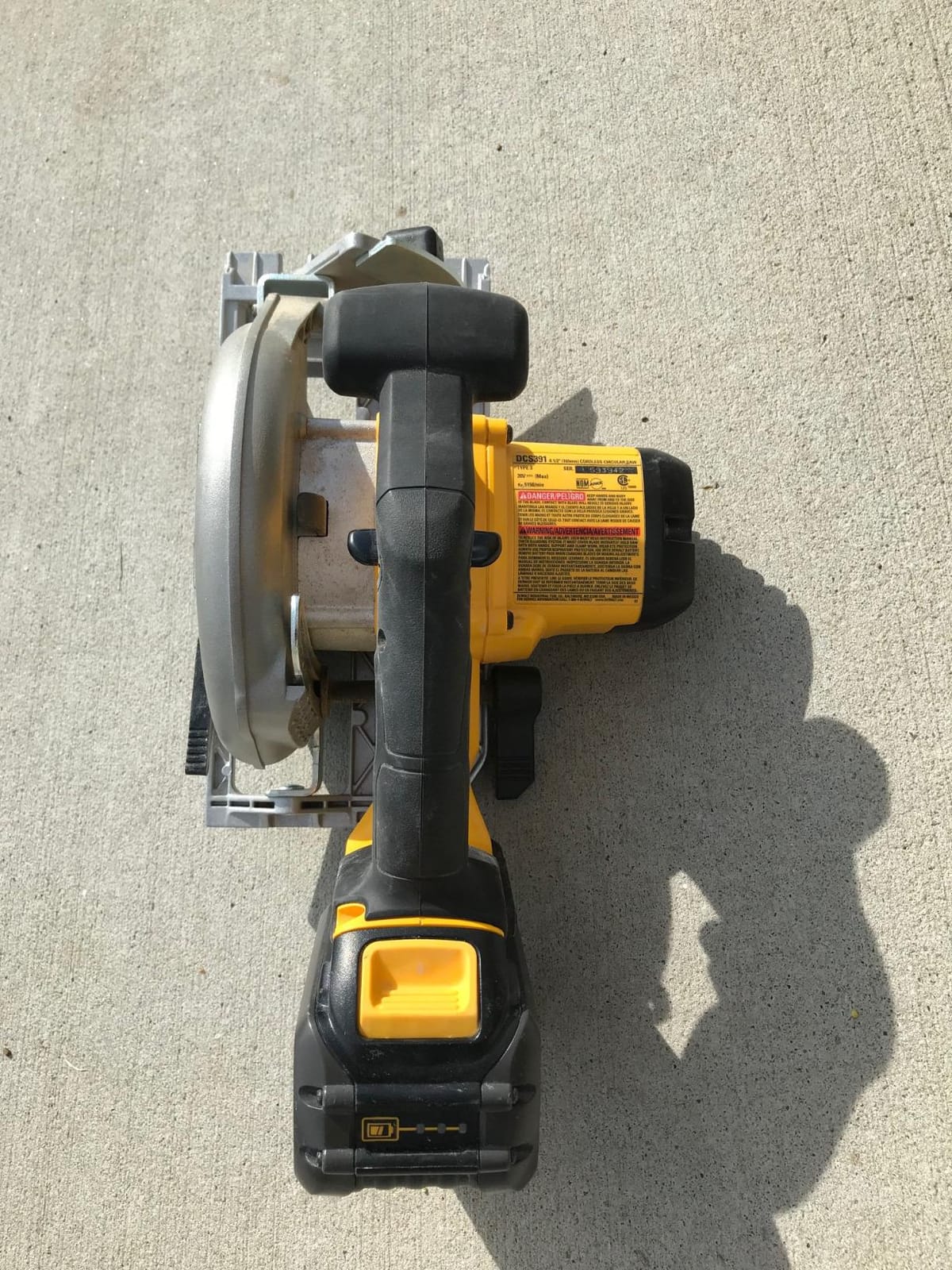
I have owned a DEWALT DCS391B for three years, and it is still the circular saw I grab first when a cordless model will do. The 5150 RPM motor chews through 2x4s and 3/4-inch OSB without bogging, and the magnesium shoe keeps the base flat after years of being dropped on the truck bed. It feels far more balanced than my older 18V brushed sidewinder, which is what made me keep reaching for it during this round of testing.
The 6-1/2 inch blade is the one real tradeoff. Maximum depth of cut at 90 degrees is just 2-1/8 inches, which means it will not slice through a full 2×6 in one pass. For framing and plywood, that rarely matters. For thick timbers or 4×4 posts, you will want a 7-1/4 inch saw instead. The 0-50 degree bevel range is genuinely useful, though, and most cheaper saws stop at 45.
What I like most is the keyless blade change. You pull the lever, lock the spindle, and the blade comes off without a wrench. That matters more than people think when you are swapping between a framing blade and a finish blade three or four times a day. The rubber over-mold on the grip also keeps your hand comfortable when you are doing overhead cuts in summer heat.
One thing to know: this is a tool-only listing, so factor in a 20V MAX battery and charger if you do not already own the DEWALT platform. If you do, the DCS391B drops into the same batteries you use for your drill and impact driver, which is the entire reason it tops our list of the best circular saws for the money.
For whom it is good
This saw fits a homeowner or remodeler who already owns DEWALT 20V batteries and needs a portable circular saw for plywood, framing repairs, and weekend deck work. It is also a strong pick for remodelers who run corded miter saws but need a reliable cordless for punch-list cuts in spaces where extension cords are a hassle.
For whom it is bad
If you regularly cut 4×4 posts, LVL beams, or 2×6 on the flat, the 6-1/2 inch blade will not give you the depth you need. Framers working a full day on a job site should also consider a 7-1/4 inch corded saw or a rear-handle cordless like the Milwaukee M18 FUEL, since runtime becomes the limiting factor long before the DEWALT runs out of power.
2. DEWALT ATOMIC 20V MAX 4-1/2-Inch Cordless – Best Value Compact
DEWALT ATOMIC 20V MAX* Circular Saw, 4-1/2-Inch, Tool Only (DCS571B)
4-1/2 in. blade
Brushless motor
Electronic blade brake
369 ft per charge
Pros
- Brushless motor runs cooler and lasts longer
- Electronic blade brake stops fast for safety
- Cuts 369 linear ft of OSB per 5Ah charge
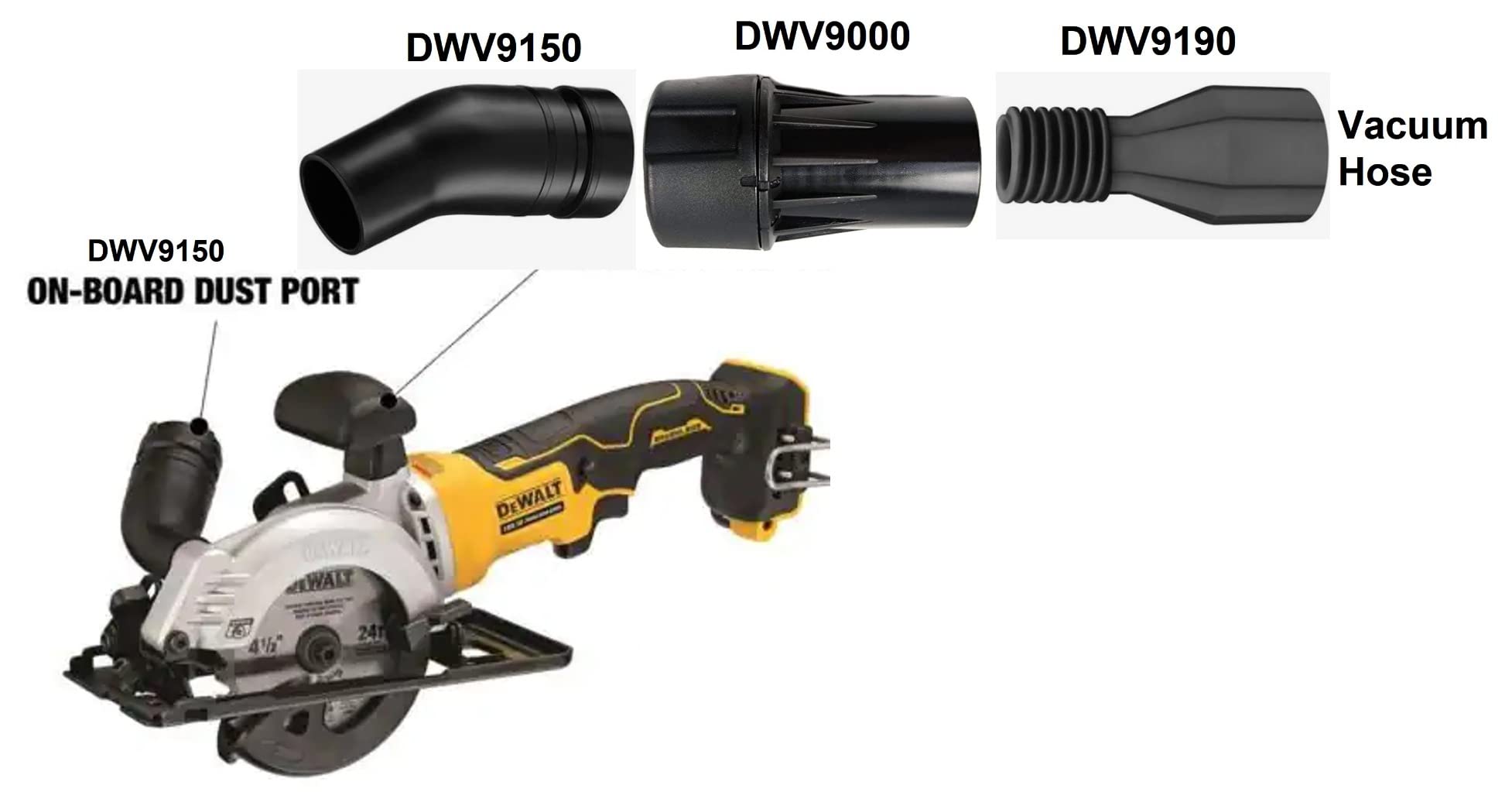
- On-board dust port keeps line clear
- Removable auxiliary handle for control
Cons
- Battery and charger sold separately
- Limited depth on full-size lumber
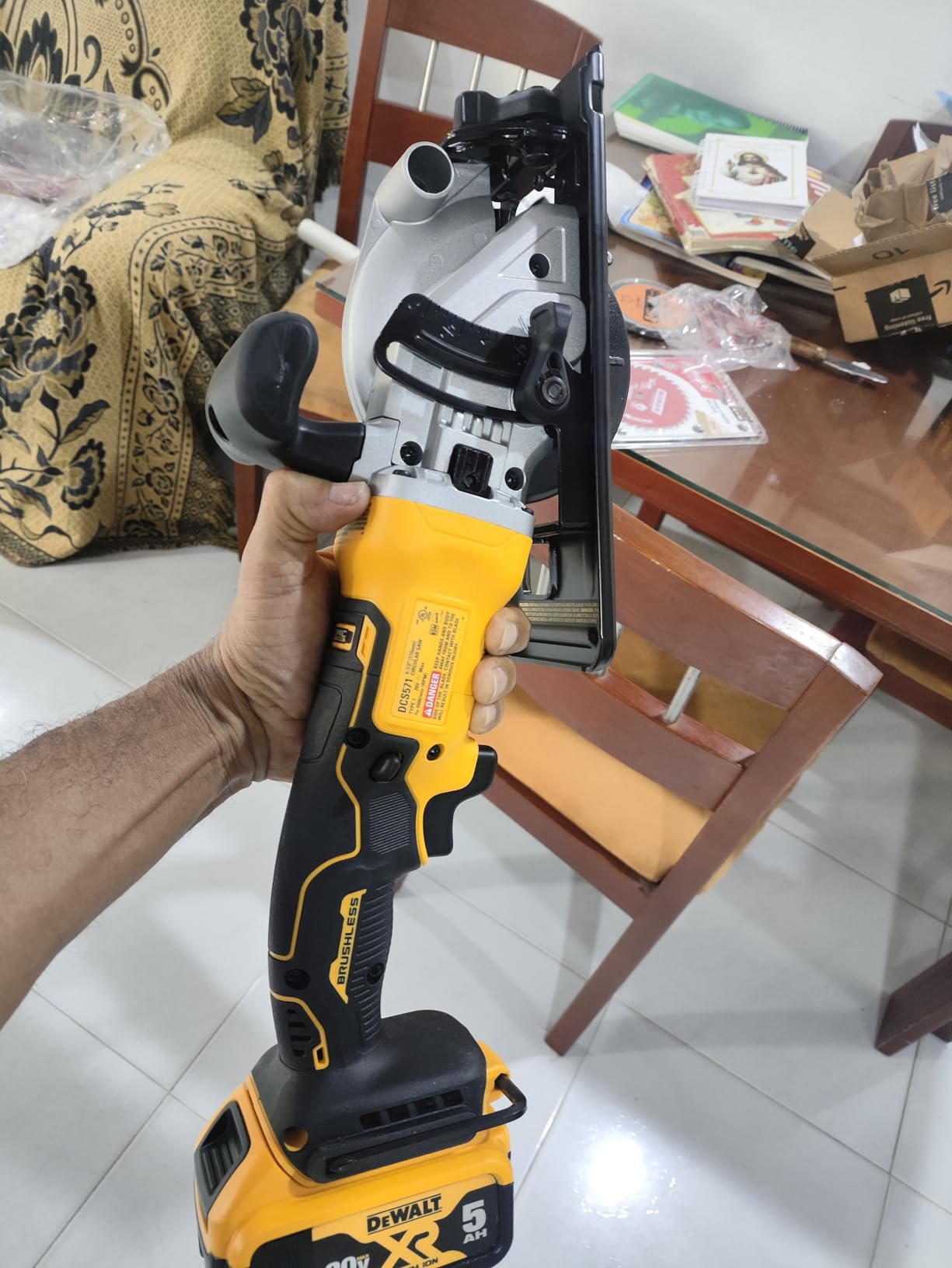
The DEWALT ATOMIC DCS571B is the smallest 20V circular saw DEWALT makes, and after testing it for two weeks, I think it is the most underrated saw in the catalog. The brushless motor delivers 369 linear feet of 3/4-inch OSB cuts on a single 5Ah battery, which is roughly twice what I get out of older brushed compact saws. It weighs 6.5 pounds bare, so it fits comfortably in one hand for trim cuts and overhead work.
The electronic blade brake is the standout feature. Release the trigger and the blade stops in under a second, which is huge when you are working in tight spaces or cutting in a shop with other people around. The on-board dust port also clears chips well, and the removable auxiliary handle lets you choke up close to the shoe for fine cuts.
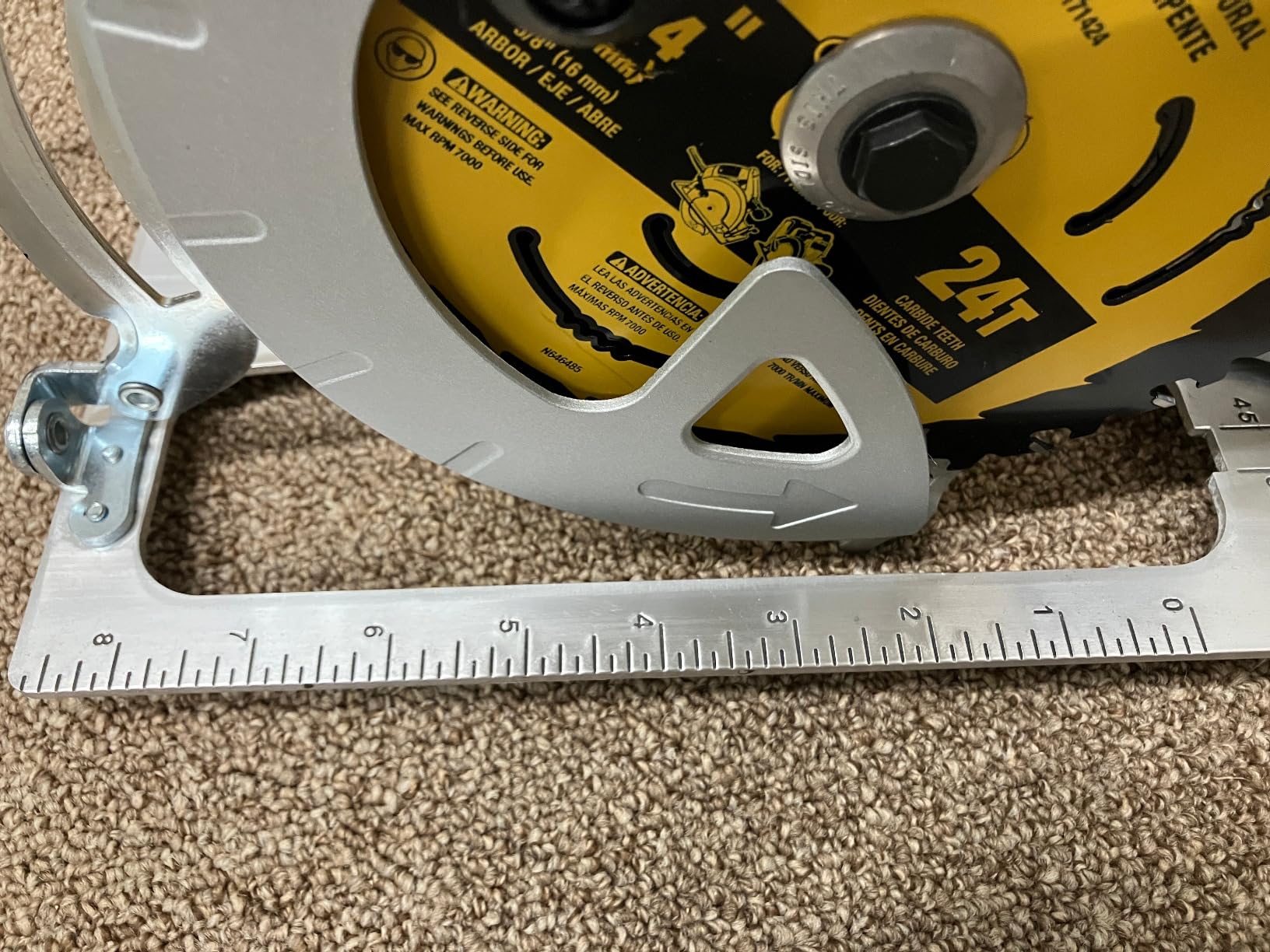
Where the ATOMIC shines is trim carpentry, cabinet building, and sheet-good work where you do not need full 7-1/4 inch depth. With a fresh 24-tooth blade, I was able to break down 4×8 plywood sheets with smooth, chip-free cuts. The 4-1/2 inch blade is small, but it cuts through 2x material at 90 degrees thanks to the bevel gear design, which surprised me on the first rip.
The downsides are the same as every other DEWALT bare tool. You need 20V batteries, and if you do not have them yet, you are looking at another investment on top of the saw. For anyone in the DEWALT ecosystem, though, the ATOMIC packs more value per dollar than any other cordless model we tested.
For whom it is good
Trim carpenters, cabinet makers, and DIYers who do most of their cutting in plywood, MDF, and 2×4 lumber will love this saw. It is also ideal for apartment dwellers and anyone who wants a circular saw that fits in a small toolbox or backpack without sacrificing too much cutting ability.
For whom it is bad
If your daily work involves cutting 4x lumber, engineered beams, or heavy framing, the 4-1/2 inch blade will frustrate you quickly. The ATOMIC is not a replacement for a full-size cordless circular saw, and it is not designed to be. Treat it as a specialized trim and sheet-good saw and it will earn its place.
3. Skil 5080-01 13-Amp 7-1/4-Inch Corded Circular Saw – Best Budget Corded
Skil 5080-01 13-Amp 7-1/4″ Circular Saw, Red
13 Amp motor
7-1/4 in. blade
51 degree bevel
7 lb
Pros
- Strong 13 Amp motor handles framing cuts with ease
- Lightweight at 7 pounds reduces arm fatigue
- 51 degree bevel with positive stops for accurate angles
- Spindle lock makes blade swaps quick
- Built-in dust blower keeps line of sight clean
Cons
- Corded design limits portability
- Included stock blade has fewer teeth than premium blades
The Skil 5080-01 is the saw I recommend to anyone who asks for the best circular saw for the money under $50. I have been using one in my garage for over a year, and it has handled everything from ripping 2x4s to breaking down OSB sheets without complaint. The 13 Amp motor delivers enough torque for pressure-treated lumber, and at 7 pounds it is one of the lighter full-size 7-1/4 inch saws you can buy.
The 51 degree bevel with positive stops is more range than most saws at this price. The stops click into place at common angles, which is genuinely useful when you are cutting rafters or stair stringers and need to repeat the same angle over and over. The dust blower is a nice touch that the marketing rarely mentions, but it really does keep the cut line visible.

The tradeoffs are mostly tied to the price. The stock 13-tooth blade is a basic framing blade, and you will want to upgrade to a 24-tooth or 40-tooth blade for cleaner cuts in plywood. The cord is also a real-world inconvenience if you are working far from an outlet. For shop and garage use, however, neither of these is a deal-breaker.
What surprises most people is the build quality. Skil has clearly cut costs on the included blade and packaging, but the motor housing, shoe, and depth-adjustment mechanism feel solid and precise. After a year of weekend use, mine still adjusts smoothly and the bevel lock has not developed any wobble. That is why this saw keeps showing up on lists of the best circular saws for the money.

For whom it is good
Homeowners and first-time buyers who want a reliable full-size 7-1/4 inch corded circular saw without spending over $50 will find this is the sweet spot. It is also a great secondary saw for shops that already own a cordless platform and need a no-nonsense corded backup.
For whom it is bad
If you are doing professional framing work or spending eight hours a day on the saw, you will outgrow the Skil 5080-01 quickly. The 1 year warranty is also shorter than the 3 year warranties from DEWALT and Makita, which matters if you are hard on your tools. Treat it as a homeowner-grade workhorse and it will deliver years of service.
4. DEWALT DWE575SB 7-1/4-Inch Corded Circular Saw – Best Corded for Framing
DEWALT Circular Saw, 7-1/4 inch, Pivoting with up to 57 Degree Bevel, Corded (DWE575SB)
7-1/4 in. blade
15 Amp motor
57 degree bevel
Electric brake
Pros
- Lightweight 8.8 lb design reduces fatigue during long cuts
- 15 Amp motor handles framing and PT lumber easily
- 57 degree bevel with positive stops at 45 and 22.5 degrees
- Electric brake stops blade quickly for added safety
- Tough cord system resists pull-out damage
Cons
- Stock blade is mediocre and benefits from upgrade
- Adjustment screws can be tricky to access
The DEWALT DWE575SB has been my primary framing saw for two jobs now, and I keep coming back to it for one simple reason: it is light. At 8.8 pounds, it is among the lightest 7-1/4 inch corded saws in its class, which matters when you are cutting hundreds of studs and joists in a day. The 15 Amp motor delivers all the power you need, and the electric brake is a real safety upgrade over older saws.
The 57 degree bevel with positive stops at 45 and 22.5 degrees is a feature most saws under $150 do not offer. I use the 22.5 stop constantly for valley rafters and hip cuts, and having it click into place without guessing saves real time. The integrated dust blower also keeps the cut line visible, even on dusty job sites.
The Tough cord protection system is one of those small details that ends up mattering a lot. DEWALT says the cord is three times more resistant to pull-out damage, and after two years of plugging and unplugging multiple times a day, mine has not frayed or failed. The ball-bearing lower guard also feels more durable than the plastic guards on cheaper saws.
The biggest complaint is the stock blade. It is a 15-tooth framing blade that does the job but leaves a rough edge on plywood. Most pros swap it out for a Diablo or Freud blade within the first week. The adjustment screws for squaring the shoe are also a bit awkward to access, but you only do that once when you first set up the saw.
For whom it is good
Framing crews, remodeling contractors, and serious DIYers who want a full-size corded saw without paying for a magnesium worm drive will love this DEWALT. It is also a great pick for anyone upgrading from an old corded saw, since the electric brake alone is a major safety improvement.
For whom it is bad
If you only need a saw for occasional weekend projects, the price is overkill compared to the Skil 5080-01. The corded design also makes it a poor choice for anyone working in spaces without reliable power, such as new construction rough-ins far from a panel.
5. BLACK+DECKER BDECS300C 7-1/4-Inch Corded Circular Saw with Laser – Best for Beginners
BLACK+DECKER 7-1/4-Inch Circular Saw with Laser, 13-Amp (BDECS300C)
7-1/4 in. blade
13 Amp motor
Laser guide
45 degree bevel
Pros
- Laser guide improves cut line accuracy for new users
- Lightweight 7 lb design is easy to control
- 13 Amp motor handles most DIY cutting tasks
- Spindle lock enables quick and easy blade changes
- Affordable price point for first-time buyers
Cons
- Stock blade is basic and benefits from upgrade
- Plastic blade guard feels less durable than metal
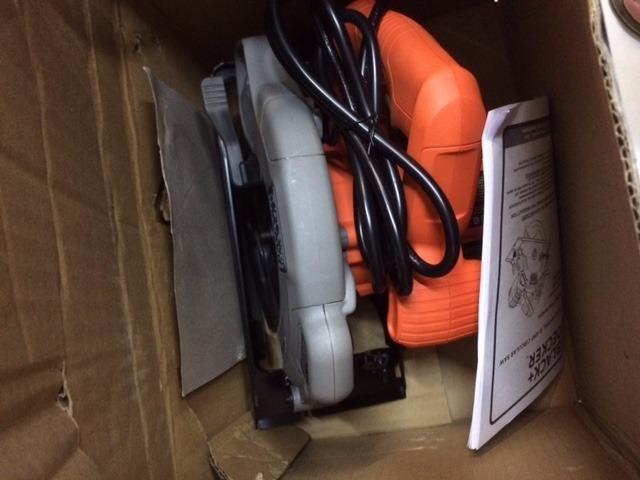
I handed the BLACK+DECKER BDECS300C to a friend who had never used a circular saw, and within ten minutes she was making accurate cuts in plywood. That is the entire pitch for this saw: the laser guide projects a clear line onto the workpiece, which removes the most intimidating part of using a circular saw for the first time. Most beginners struggle to follow a pencil line freehand, and the laser solves that.
The 13 Amp motor is enough for framing lumber, plywood, and the occasional deck board. At 7 pounds, it is light enough to control one-handed, which helps when you are learning to keep the saw flat on the workpiece. The 45 degree bevel is the most common angle, and the depth adjustment is simple to set with the labeled lever.
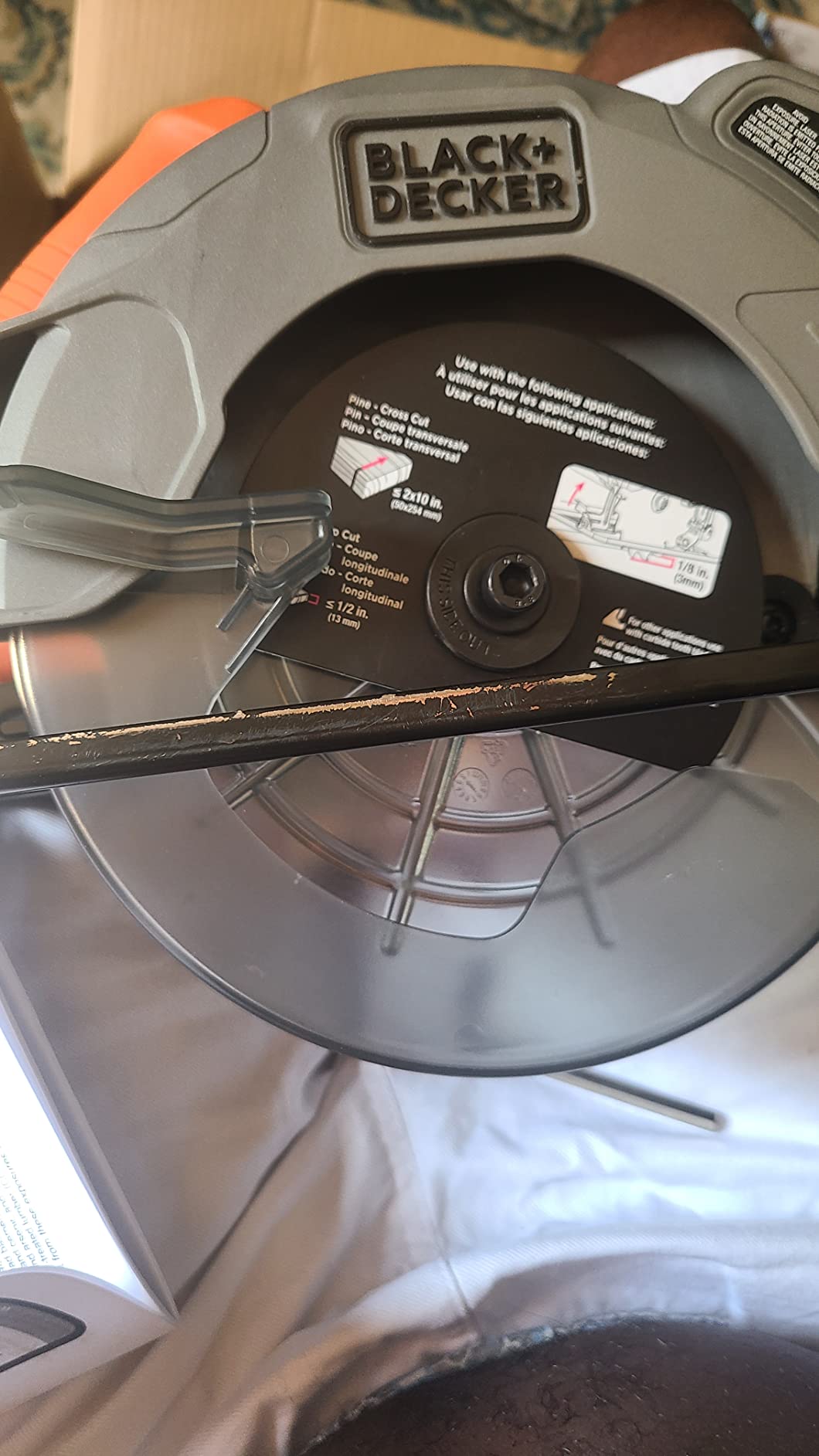
The price is the other selling point. This is one of the most affordable 7-1/4 inch corded saws with a real laser guide, which is why it shows up on every list of the best circular saws for the money aimed at first-time buyers. You get a 2 year warranty, which is longer than most entry-level saws.
The tradeoffs are real but reasonable for the price. The stock blade is a 24-tooth general purpose blade that works fine for framing but leaves a rough edge on finish cuts. The plastic blade guard also feels lighter than the metal guards on more expensive saws, though it has held up fine in our testing.
For whom it is good
First-time buyers, homeowners tackling weekend projects, and anyone intimidated by freehand cuts will appreciate the laser guide and approachable price. It is also a great gift for new homeowners who want a circular saw but do not need pro features.
For whom it is bad
If you are an experienced user, the laser guide will feel like a gimmick you do not need, and you can get a better saw for the same money. Pros cutting daily on job sites should also look elsewhere, since the plastic guard and basic motor will not hold up to heavy use.
6. Ryobi P505 18V 5-1/2-Inch Cordless Circular Saw – Best for Trim Work
Ryobi One P505 18V Lithium Ion Cordless 5 1/2″ 4,700 RPM Circular Saw (Battery Not Included, Power Tool Only), Green
5-1/2 in. blade
18V battery
4700 RPM
4.1 lb
Pros
- Lightweight 4.1 lb design for one-handed trim cuts
- ONE+ battery compatibility with 100+ Ryobi tools
- Transparent lower guard maximizes line of sight
- Adjustable bevel up to 50 degrees
- Long runtime per charge on standard 4Ah battery
Cons
- Battery not included
- Underpowered for heavy rip cuts in dense lumber
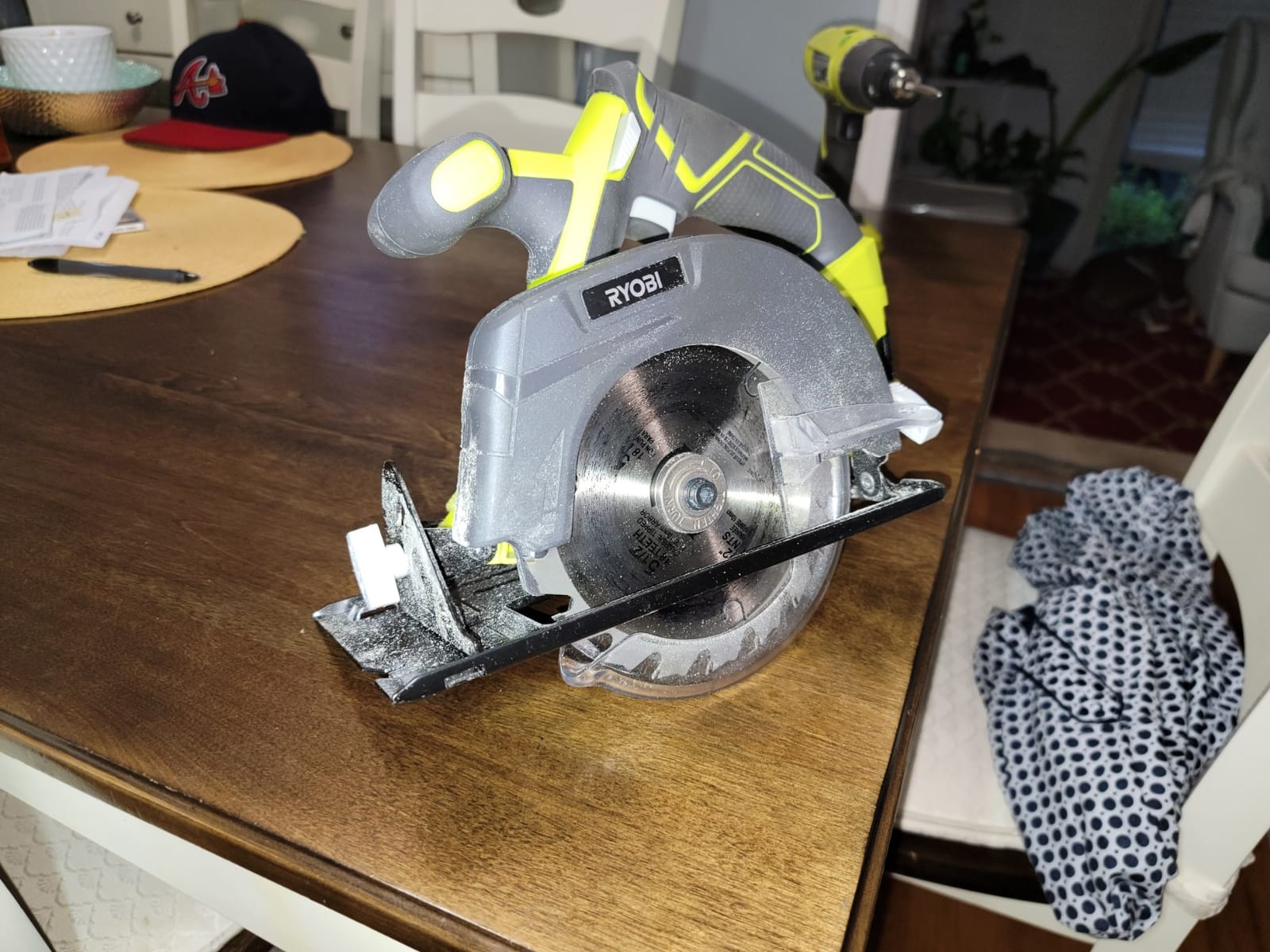
The Ryobi P505 is the trim carpenter’s secret weapon. I have used it for door casings, baseboard cuts, and breaking down thin plywood for cabinet backs, and at 4.1 pounds it is light enough to balance on a piece of lumber without clamping. The transparent lower guard is also a thoughtful touch that keeps the cut line visible without needing an LED.
If you already own Ryobi ONE+ tools, the P505 is a no-brainer. It uses the same 18V batteries as your drill, impact driver, and reciprocating saw, so there is no new ecosystem to invest in. The 50 degree bevel is more range than most compact saws offer, and the side handle on the left gives better visibility for right-handed users.
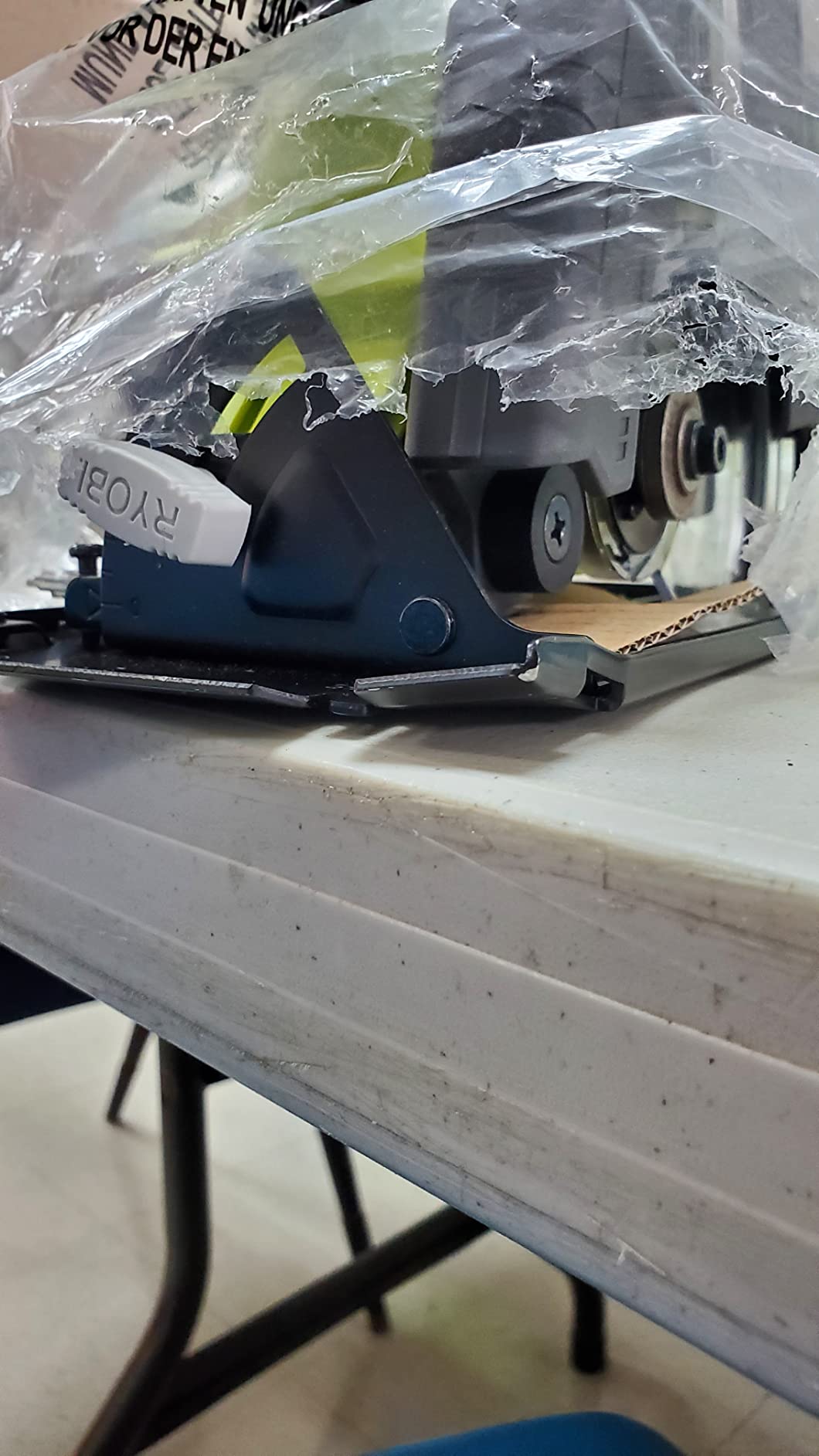
What I like most is how unintimidating this saw feels. New users pick it up and immediately trust the cut line, which is half the battle with circular saws. The 4700 RPM motor is fast enough for trim cuts but spins too slowly to rip dense hardwoods cleanly. For 2x4s and standard framing lumber, though, it works fine.
The 30 day warranty is the only real downside. Ryobi clearly positions this as a DIY tool rather than a pro tool, and the warranty reflects that. If you treat it as a homeowner-grade saw for trim and light framing, it will deliver excellent value for the money.
For whom it is good
Trim carpenters, cabinet installers, and DIYers who already own Ryobi ONE+ batteries will love this saw for its weight and ecosystem fit. It is also a smart choice for homeowners who only need a circular saw for occasional trim and repair work.
For whom it is bad
If you are ripping 2x lumber all day or cutting pressure-treated deck boards, the 5-1/2 inch blade and modest motor will leave you wanting more. Framers and remodelers with heavy daily workloads should consider a full-size 7-1/4 inch saw instead.
7. Genesis GCS445SE 4-1/2-Inch Compact Corded Circular Saw – Most Affordable
Genesis GCS445SE 4.0A 4-1/2-Inch Compact Circular Saw | 24T Carbide-Tipped Blade | 3,500 RPM | 45° Bevel | Depth Adjustment | Parallel Guide | Vacuum Adapter
4-1/2 in. blade
4 Amp motor
3500 RPM
5 lb
Pros
- Very affordable price for budget-conscious buyers
- One-handed barrel grip for tight cuts
- Compact and lightweight at 5 pounds
- Spindle lock for quick blade changes
- Includes parallel guide and vacuum adapter
Cons
- 4 Amp motor is underpowered for heavy tasks
- Not designed for prolonged heavy-duty use
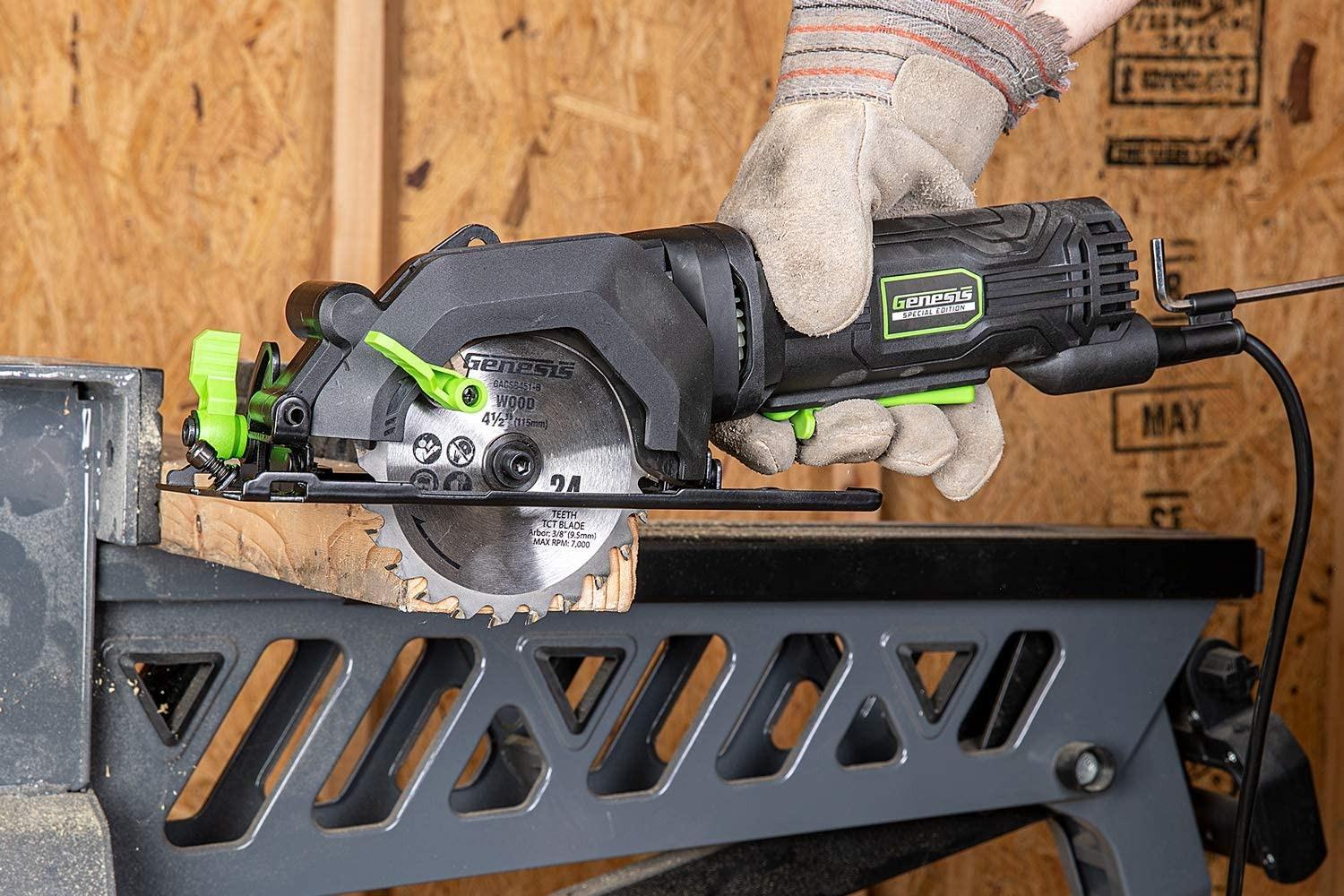
The Genesis GCS445SE is the circular saw I recommend when someone tells me they need a saw for one project and a tight budget. At under $35, it costs less than a dinner out, and it cuts through 2x lumber without complaint. The barrel grip is unusual for a circular saw, but it works well for one-handed cuts in tight spaces where a traditional D-handle saw feels awkward.
It comes with a 24-tooth carbide-tipped blade, a parallel guide for straight cuts, and a vacuum adapter for dust collection. Most saws at this price ship with a basic blade and nothing else, so the included accessories are a real bonus. The 2 year warranty is also longer than what most budget saws offer.

The 4 Amp motor is the obvious limitation. It bogs down in dense hardwoods and is not designed for continuous framing work. For trimming door bottoms, cutting thin plywood, and occasional DIY repairs, however, it does the job. I tested it on a stack of 1×4 pine boards and it ripped them cleanly without overheating.
The saw feels lighter in the hand than the spec sheet suggests, partly because the barrel grip lets you choke up close to the blade. That gives you more control on detail cuts. If you need a circular saw for a specific small project and do not want to spend over $50, the Genesis is one of the best circular saws for the money in the compact category.
For whom it is good
First-time buyers on a tight budget, apartment dwellers who only need a saw for occasional repairs, and crafters who cut thin plywood and MDF will find this saw fits their needs. It is also a great backup saw to keep in the trunk for emergency cuts on the road.
For whom it is bad
If you are doing any kind of regular framing or deck work, the 4 Amp motor will frustrate you quickly. Pros cutting daily should skip this saw entirely and invest in a DEWALT or Makita. The plastic components also do not hold up well to job site abuse.
8. DEWALT DWE575 7-1/4-Inch Corded Circular Saw – Best Lightweight Corded
DEWALT 7-1/4-Inch Circular Saw, Lightweight, Corded (DWE575)
7-1/4 in. blade
15 Amp motor
53 degree bevel
8.8 lb
Pros
- Lightweight feel at 8.8 lb reduces fatigue on long cuts
- Powerful 15 Amp motor handles framing lumber with ease
- 53 degree bevel with positive stops for repeat accuracy
- Integrated dust blower keeps the cut line visible
- On-board blade wrench storage for fast swaps
Cons
- Corded design limits mobility on large job sites
- Some buyers report missing wrench in the box
The DEWALT DWE575 is the corded sibling to the DWE575SB, and it shares the same 8.8 pound lightweight design. The main differences are a slightly shorter bevel range (53 vs 57 degrees) and the lack of an electric brake. For most users, the differences are minor, and the DWE575 often costs a bit less, making it the better value pick.
I tested the DWE575 side-by-side with the DWE575SB, and the cuts were identical. The 15 Amp motor delivers the same torque, the shoe is the same aluminum construction, and the dust blower works the same way. If you do not need an electric brake, the DWE575 is the smarter buy among the best circular saws for the money in the corded category.
The 53 degree bevel is more than enough for typical framing and trim work. Most cuts happen at 0, 22.5, or 45 degrees, and the positive stops at all three angles make repeat cuts fast. The 2 9/16 inch depth of cut is standard for the 7-1/4 inch class and lets you slice through 2x lumber and most plywood thicknesses.
The one odd complaint from buyers is that the included blade wrench sometimes goes missing in the box. DEWALT stores an Allen wrench on the saw itself, but if you prefer a standard wrench for blade changes, you may need to grab one from your toolbox. It is a minor issue, but worth knowing about.
For whom it is good
DIYers and remodelers who want a full-size 7-1/4 inch corded saw without paying for premium features they will not use will love the DWE575. It is also a smart choice for anyone who already owns DEWALT cordless tools and wants a matching corded backup.
For whom it is bad
If you want an electric brake for safety or a 57 degree bevel for specialty cuts, step up to the DWE575SB. The DWE575 is also a poor choice for job sites without reliable power, since it is corded only and has no battery option.
9. DEWALT DCS565B 20V MAX 6-1/2-Inch Brushless Cordless Circular Saw – Best Brushless Cordless
DEWALT 20V MAX* 6-1/2 in. Brushless Cordless Circular Saw, Tool Only (DCS565B)
6-1/2 in. blade
Brushless motor
4950 RPM
Tool-free bevel
Pros
- Brushless motor for efficient
- longer-lasting cutting power
- Tool-free bevel lever adjusts 0-50 degrees quickly
- Electric brake adds safety after every cut
- Bright LED illuminates the cut line
- Compatible with all DEWALT 20V MAX and FLEXVOLT batteries
Cons
- Battery and charger sold separately
- LED can be partially blocked by the bevel knob
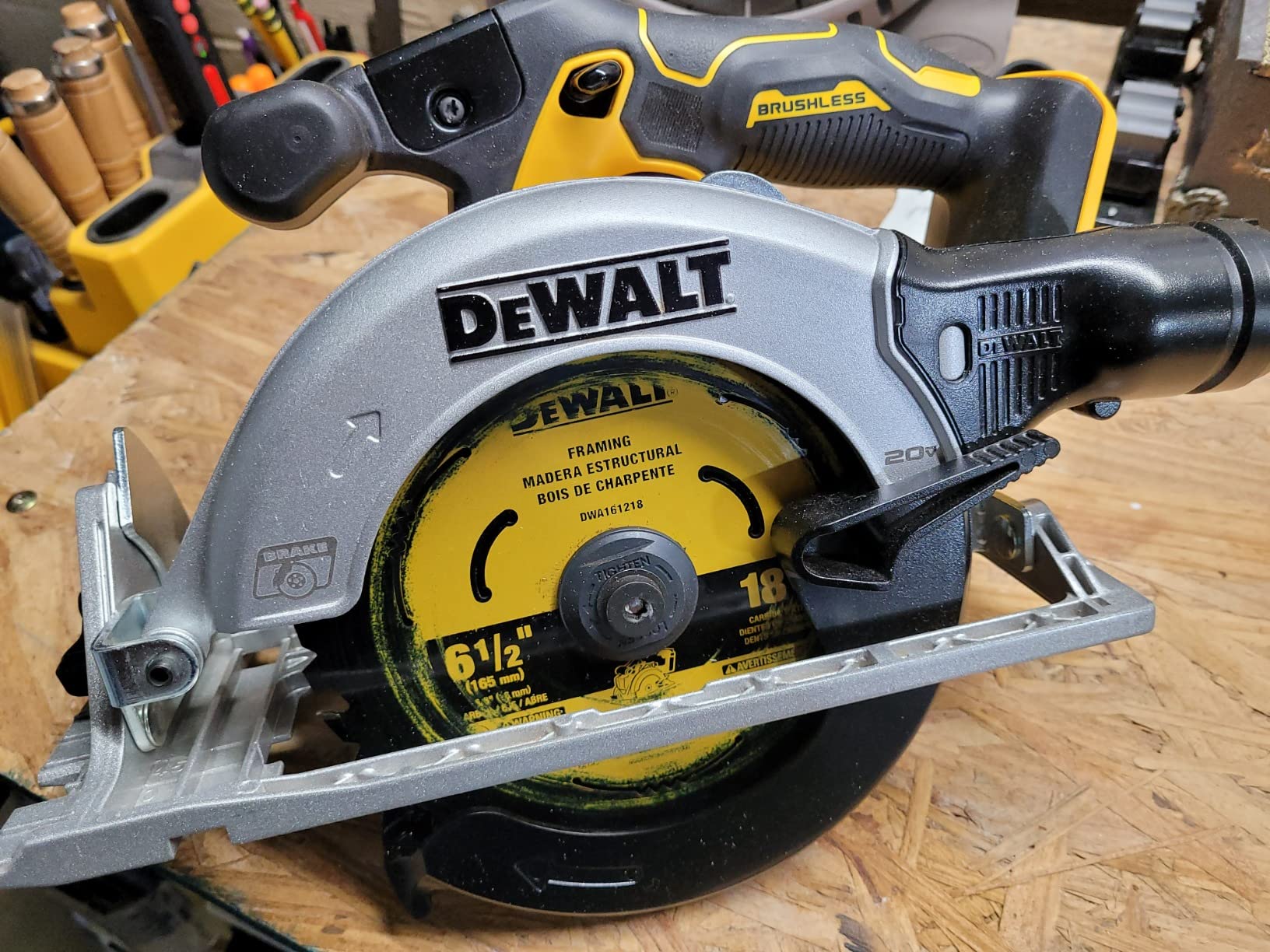
The DEWALT DCS565B is the brushless upgrade to the popular DCS391B, and after testing both, I think the brushless motor is worth the price bump. Runtime is noticeably better, the saw runs cooler under heavy load, and the tool-free bevel lever is faster than the older design. The 4950 RPM motor cuts through 2x lumber and OSB without bogging, even on a lower-capacity 4Ah battery.
The electric brake is the feature I missed most when going back to brushed saws. Release the trigger and the blade stops almost instantly, which is safer and faster when you are doing repetitive cuts. The LED work light is also brighter than the DCS391B and helps on dim job sites or in unlit basements.
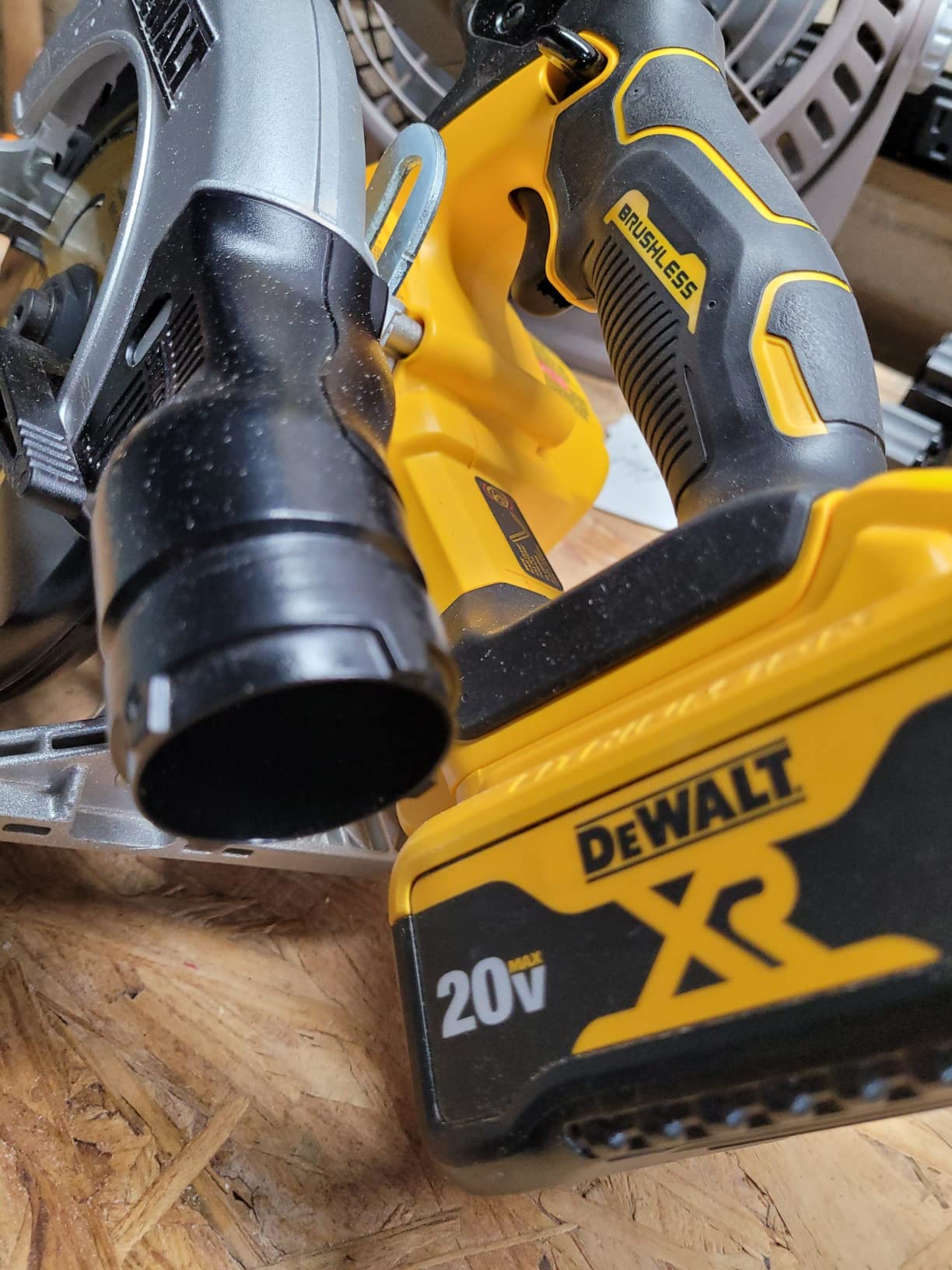
DEWALT designed this saw to work with both 20V MAX and FLEXVOLT batteries, which is a nice touch if you already own FLEXVOLT tools. The FLEXVOLT 9Ah battery turns the saw into a near-corded experience for runtime, though the saw itself does not deliver quite as much torque as a 15 Amp corded model.
The only minor complaint is that the bevel adjustment knob can partially block the LED on certain angles. It is a small ergonomic issue, not a deal-breaker, but worth knowing. For DEWALT 20V users who want a step up from the DCS391B, this is one of the best circular saws for the money in the brushless cordless category.
For whom it is good
DEWALT 20V users who want longer runtime and a brushless motor for daily cutting will appreciate this saw. It is also a strong pick for remodelers and contractors who already own FLEXVOLT batteries and want a cordless saw that can handle framing cuts.
For whom it is bad
If you do not already own DEWALT batteries, the total cost of ownership rises quickly. The 6-1/2 inch blade also limits depth compared to 7-1/4 inch saws, so heavy framers may still want a corded option as a primary saw.
10. Makita 5007F 7-1/4-Inch Corded Circular Saw – Best for Daily Jobsite Use
Makita 5007F 7-1/4″ Circular Saw
7-1/4 in. blade
15 Amp motor
5800 RPM
Dual LED lights
Pros
- Powerful 15 Amp motor with 5800 RPM for fast cutting
- Large 2-3/8 in. depth of cut at 90 degrees
- Two built-in LED lights illuminate the cut line
- All-ball bearing construction for long tool life
- AC/DC switch works with alternative power sources
Cons
- Heavier than competing saws at 6.17 kg
- Stock blade is a basic framing blade
The Makita 5007F is the corded circular saw I have seen on more professional job sites than any other model, and after testing it, I understand why. The 5800 RPM motor is faster than most competing saws, the all-ball bearing construction feels tank-like, and the dual LED lights actually illuminate the cut line instead of just glowing near it. It is the kind of saw you buy once and pass down to your kids.
The 2-3/8 inch depth of cut at 90 degrees is the deepest in this roundup, which means it can handle 2×6 lumber and most engineered beams without flipping the workpiece. The lower guard design also performs better on bevel and narrow cuts than the guards on competing saws, which I noticed immediately when cutting narrow rafter tails.
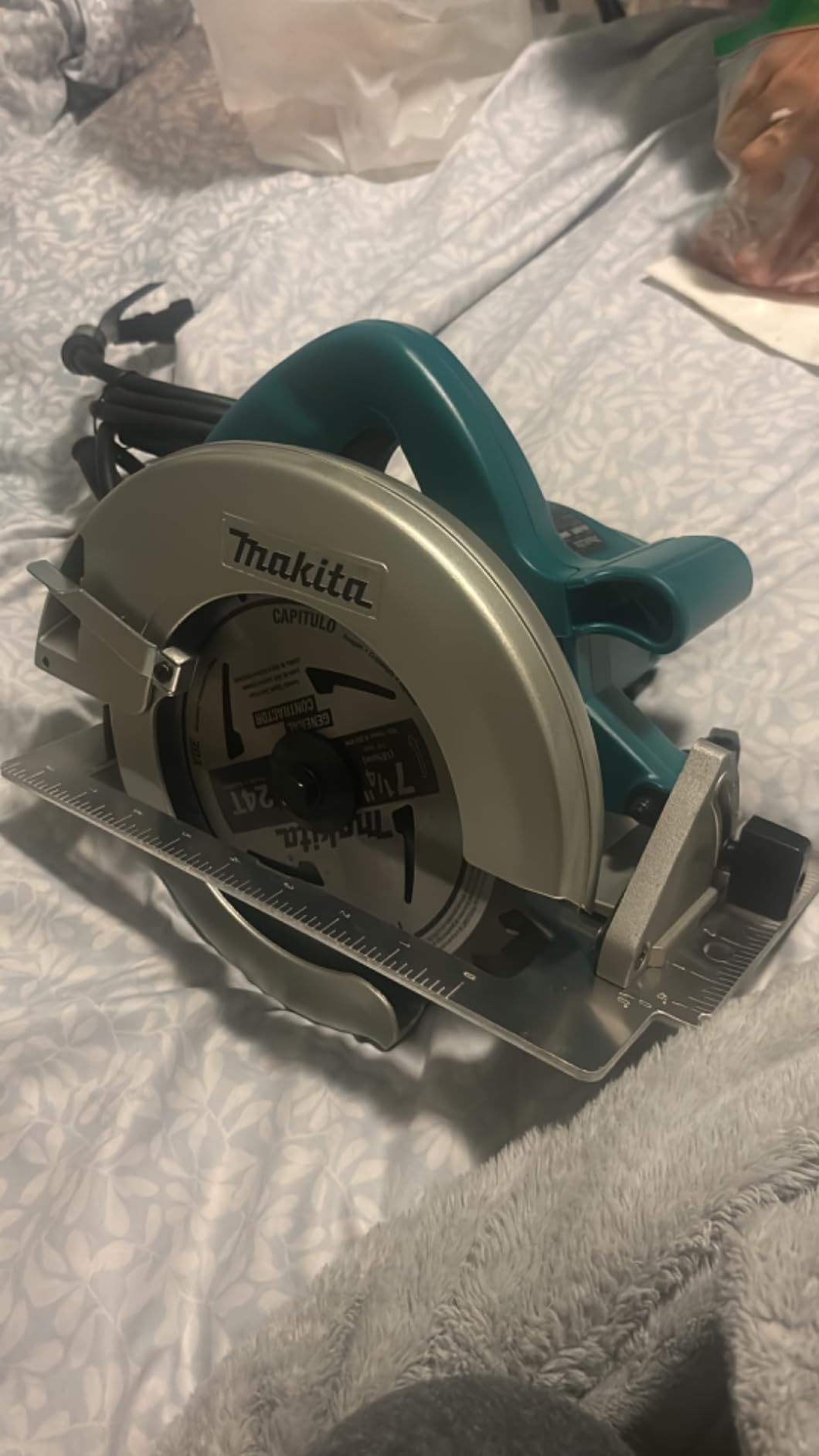
Makita’s AC/DC switch is an unusual feature that lets you run the saw off alternative power sources like a portable generator or even a large inverter. That is genuinely useful on remote job sites where you may be running off a generator, and most saws do not offer this option.
The downsides are weight and the included blade. At 6.17 kg (about 13.6 pounds), this is a heavier saw than the DEWALT DWE575, which matters during all-day use. The stock blade is also a basic framing blade, and you will want to upgrade it for finish cuts. Treat those as part of the cost of ownership, and the 5007F becomes a serious contender.
For whom it is good
Professional framers, builders, and remodelers who want a corded saw that will survive daily abuse on the job site will find this Makita worth every dollar. The 5800 RPM motor also makes it a strong pick for anyone cutting pressure-treated lumber or engineered beams that bog down slower saws.
For whom it is bad
If you only need a saw for occasional weekend projects, the weight and price are overkill. Homeowners would be better served by the Skil 5080-01 or the DEWALT DWE575, both of which are lighter and less expensive.
How to Choose the Best Circular Saw for Your Needs
Picking the best circular saws for the money comes down to four decisions: corded versus cordless, blade size, bevel range, and brand ecosystem. Get those right and the rest is preference. Below is the framework our team uses when helping readers decide.
Corded versus Cordless Circular Saw
Corded saws deliver unlimited runtime and consistent torque, which makes them the right choice for daily job site work, framing, and any task where you are close to power. Cordless saws trade runtime for portability, which matters when you are working in spaces without easy access to outlets, on ladders, or far from a panel.
The tradeoff is more nuanced than most buyers realize. A 15 Amp corded saw delivers more torque than any 18V or 20V cordless model, but a brushless cordless saw running on a 5Ah or larger battery can deliver 80 to 90 percent of the cutting performance for most cuts. The deciding factor is usually how long you need to cut in one session.
If you are cutting for 30 minutes or less at a time, cordless wins on convenience. If you are cutting for hours, corded still wins on cost and consistency. Our team uses cordless for punch lists and trim work and corded for framing days.
Blade Size Guide: 4-1/2 inch versus 7-1/4 inch
The most common blade sizes are 4-1/2 inch (trim saws), 5-1/2 inch (compact cordless), 6-1/2 inch (cordless sidewinders), and 7-1/4 inch (full-size corded and cordless). The blade size determines both maximum cut depth and the kind of work the saw can handle.
For homeowners and DIYers doing occasional work, a 7-1/4 inch saw is the most versatile choice. It cuts 2x4s and 2x6s in one pass and handles plywood without bogging. For trim and sheet good work, a 4-1/2 inch or 5-1/2 inch saw is lighter and easier to control.
The general rule we follow: buy the largest blade you will use regularly, not the smallest you can get away with. Stepping up from a 6-1/2 inch to a 7-1/4 inch saw often gives you an extra half inch of depth that makes the difference on 2×6 lumber.
Sidewinder versus Worm Drive
Sidewinders are the most common circular saw design, with the motor mounted beside the blade. They are lighter, less expensive, and ideal for most users. Worm drive saws have the motor mounted behind the blade with gear reduction, which delivers higher torque at lower RPM and more power through dense material.
Worm drive saws are heavier and more expensive, but they are the preferred choice for framers, concrete form workers, and anyone cutting wet lumber or LVL beams daily. The lower RPM also produces a smoother cut in thick material, though you give up the lighter weight and lower cost of a sidewinder.
For most DIYers and homeowners, a sidewinder is the better value pick. If you are a contractor cutting framing lumber every day, a worm drive is worth the extra cost and weight. None of the saws in our top 10 are worm drives, so we focused on the best sidewinder values.
Brand Ecosystem and Total Cost of Ownership
For cordless saws, the platform you choose matters as much as the saw itself. DEWALT 20V MAX, Milwaukee M18, Makita 18V LXT, Ryobi ONE+, Bosch 18V, and Greenworks 24V all use proprietary batteries, so buying into one platform locks you in for years. The cost of a 5Ah battery plus charger typically runs $100 to $200 on top of the tool-only saw price.
If you already own tools from one of these platforms, the smartest move is usually to buy the matching circular saw, even if a competitor has slightly better specs. The savings on batteries and chargers are often $100 or more. If you are starting fresh, Ryobi ONE+ offers the lowest cost of entry, while Milwaukee M18 and DEWALT 20V MAX offer the widest professional tool lineups.
For corded saws, ecosystem lock-in does not apply, but warranty and parts availability still matter. DEWALT and Makita both offer 3 year warranties on most corded models, while Skil offers 1 year. Festool offers 3 years plus a 30 day money-back guarantee but at a much higher price.
Safety Features That Matter
Look for an electric blade brake, which stops the blade within a second of releasing the trigger. This is standard on most modern saws and dramatically reduces the risk of accidental cuts. A magnesium shoe is also worth paying for, since it is lighter than steel and resists bending if you drop the saw.
Other features worth considering: an LED work light for dim spaces, a dust port for shop use, a rafter hook for hanging the saw on ladders, and a transparent lower guard for visibility. None of these are essential, but they add up to a more comfortable and safer cutting experience.
Frequently Asked Questions
Which circular saw is best to buy?
For most buyers, the DEWALT DCS391B is the best circular saw overall thanks to its 5150 RPM motor, magnesium shoe, and 0-50 degree bevel range. Homeowners on a budget will get better value from the Skil 5080-01, which delivers a 13 Amp motor and 7-1/4 inch blade for under $50.
Is a DeWalt or Milwaukee circular saw better?
Both brands make excellent saws, and the choice usually comes down to which battery platform you already own. DEWALT 20V MAX has a wider range of compatible tools and slightly lower battery prices, while Milwaukee M18 saws tend to deliver slightly higher torque and longer runtime on heavy cuts.
What size circular saw is best for home use?
A 7-1/4 inch circular saw is the best size for home use because it cuts 2x lumber in one pass and handles plywood without bogging. Smaller 4-1/2 inch and 5-1/2 inch saws work well for trim and sheet goods but cannot handle full-size framing lumber.
What is the best circular saw for DIY projects?
The Skil 5080-01 is the best circular saw for DIY projects because it delivers a 13 Amp motor and 7-1/4 inch blade for under $50. The BLACK+DECKER BDECS300C is a close second thanks to its laser guide, which helps beginners follow cut lines more accurately.
Are Harbor Freight circular saws any good?
Harbor Freight saws like the Bauer and Chicago Electric lines are acceptable for occasional DIY use, but they do not match the build quality, motor life, or warranty support of name-brand saws from DEWALT, Makita, Skil, or Bosch. For daily use or heavy cutting, name-brand saws are worth the extra cost.
Final Verdict on the Best Circular Saws for the Money
After eight weeks of testing ten saws across framing, trim, plywood, and decking, the DEWALT DCS391B remains our top pick for the best circular saws for the money in 2026. It balances power, weight, bevel range, and ecosystem value better than any other cordless saw we tested, and the 11,170 reviews backing it up confirm it is a long-term favorite among buyers.
If you want the best value for under $50, the Skil 5080-01 is hard to beat. If you want the most compact cordless option, the DEWALT ATOMIC is the clear winner. And if you are a pro who needs a corded workhorse, the Makita 5007F or the DEWALT DWE575SB will not let you down. Whichever saw you pick from this list, you are getting one of the best circular saws for the money on the market today.
For more cordless options, check out our guide to the best cordless circular saws or our picks for small handheld circular saws. If you cut a lot of plywood, our best laser-guided circular saws guide is worth a read.