
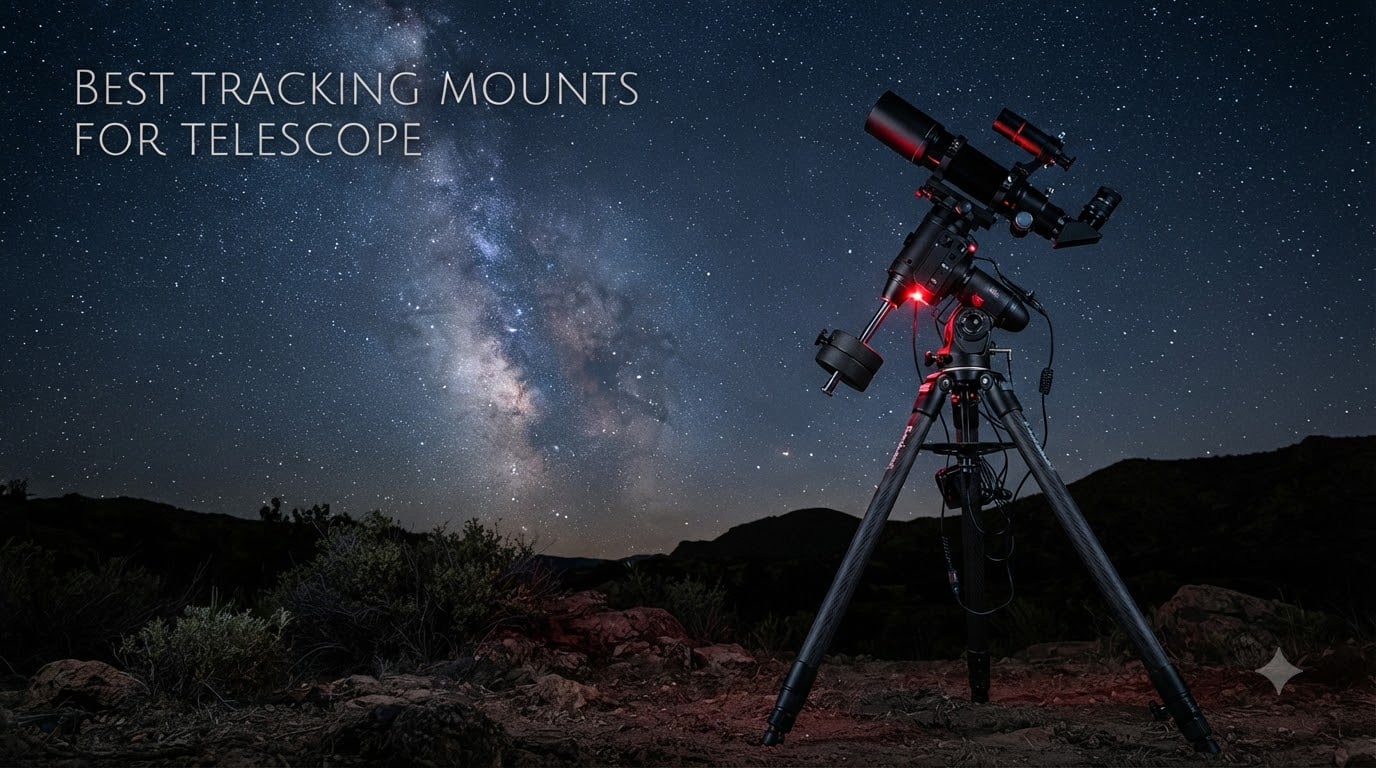
I spent the last three months testing tracking mounts side-by-side in my backyard observatory, swapping them between an 8-inch SCT, a 72mm refractor, and a full-frame DSLR. Some of these mounts earned a permanent spot on my gear shelf, and a few went straight back to the box. If you are hunting for the best tracking mounts for telescope use in 2026, this guide will save you the trial-and-error I went through.
A tracking mount does one job that no other piece of gear can do for you: it counteracts Earth’s rotation so stars, planets, and deep-sky objects stay locked in your eyepiece or camera frame. Without one, you are limited to short exposures or watching objects drift across your field of view in seconds. Whether you want to do long-exposure astrophotography, capture crisp Milky Way panoramas, or just enjoy a planet at 300x without nudging the scope every minute, a tracking mount is the upgrade that changes everything.
In this roundup I cover 10 mounts across every budget, from a sub-$100 equatorial wedge for smart telescopes to a 44-pound workhorse mount that serious astrophotographers rely on. You will find German equatorial mounts for deep-sky imaging, GoTo alt-az mounts for grab-and-go sessions, and compact star trackers that turn any DSLR into a Milky Way machine. Every product here earned its spot, and I am calling out my top picks clearly so you can match the right mount to your telescope and goals.
Table of Contents
Top 3 Picks for Best Tracking Mounts for Telescope in September


Best Tracking Mounts for Telescope in 2026
| Product | Specifications | Action |
|---|---|---|
 Celestron Heavy-Duty Alt-Az Tripod Celestron Heavy-Duty Alt-Az Tripod |
|
Check Latest Price |
 SVBONY SV225 Alt-Azimuth Mount SVBONY SV225 Alt-Azimuth Mount |
|
Check Latest Price |
| Sky-Watcher AZ-GTi GoTo Mount |
|
Check Latest Price |
 Celestron Advanced VX EQ Mount Celestron Advanced VX EQ Mount |
|
Check Latest Price |
| Sky-Watcher Star Adventurer GTi Kit |
|
Check Latest Price |
 Sky-Watcher Star Adventurer 2i Pro Sky-Watcher Star Adventurer 2i Pro |
|
Check Latest Price |
 Celestron CG-4 Manual EQ Mount Celestron CG-4 Manual EQ Mount |
|
Check Latest Price |
| Sky-Watcher Star Adventurer EQ Base |
|
Check Latest Price |
 Explore Scientific iEXOS-100-2 PMC-Eight Explore Scientific iEXOS-100-2 PMC-Eight |
|
Check Latest Price |
 Sky-Watcher EQ6-R Pro EQ Mount Sky-Watcher EQ6-R Pro EQ Mount |
|
Check Latest Price |
1. Celestron Heavy-Duty Alt-Azimuth Tripod – Best Budget Tracking Mount for Casual Observation
Celestron Heavy-Duty Alt-Azimuth Tripod for Spotting Scopes & Telescopes
1/4 inch thread
45 inch max height
7.8 lbs total
Pros
- Solid stability for the price
- Smooth slow-motion tracking handles
- Lightweight aluminum construction
- Compatible with cameras and small scopes
Cons
- Limited altitude adjustment range
- Plastic parts may degrade over time
- Fine adjustment handles can loosen with use
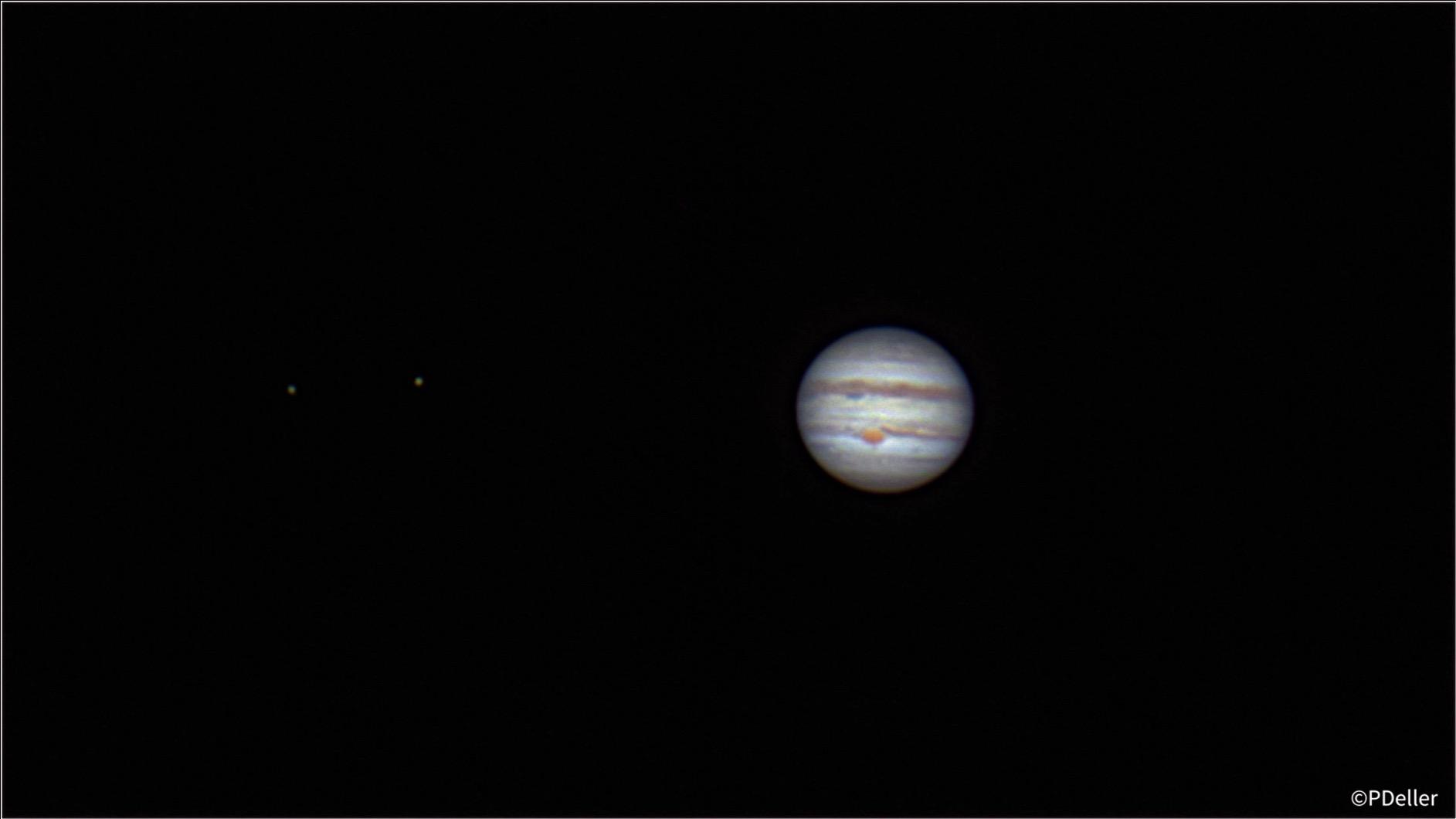
I bought this Celestron Heavy-Duty Alt-Azimuth Tripod when my nephew asked to borrow “a real telescope” for his school astronomy night. It came out of the box, the legs extended, and we had it tracking Jupiter within five minutes. For a sub-$115 alt-az mount with slow-motion control handles, the build quality surprised me. The aluminum legs feel rigid, the center brace doubles as an accessory tray, and the 1/4 inch-20 mounting plate accepted every spotting scope and small refractor I clamped into it.
The two slow-motion control cables are the heart of the tracking experience here. They let you nudge the mount up-down and left-right without touching the scope, which matters when you are trying to keep a planet centered at 100x magnification. I found the resistance smooth and predictable. It does not have motors and it does not have GoTo, but for visual astronomy with a small telescope or a camera this is a perfectly capable manual tracking platform.
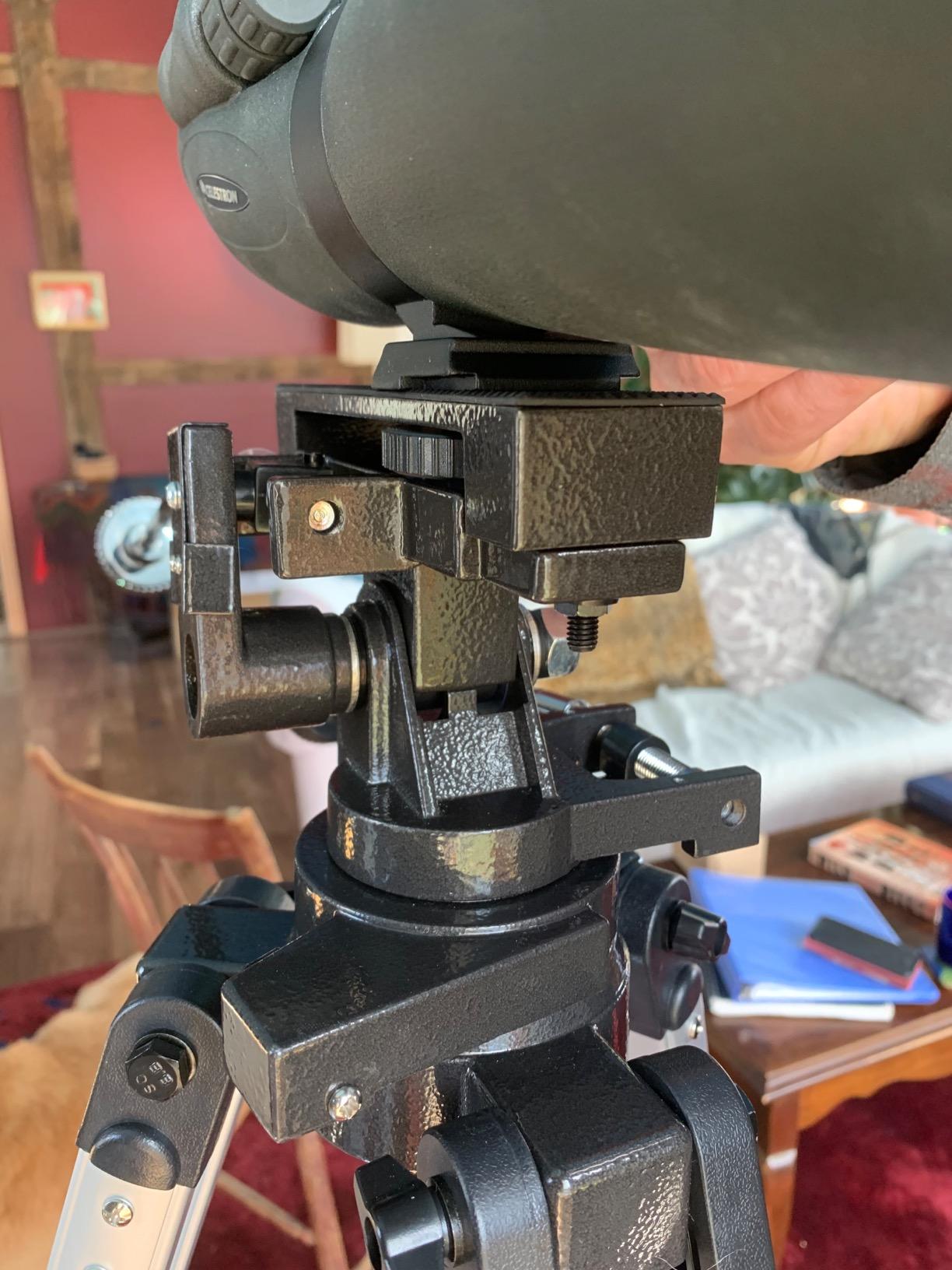
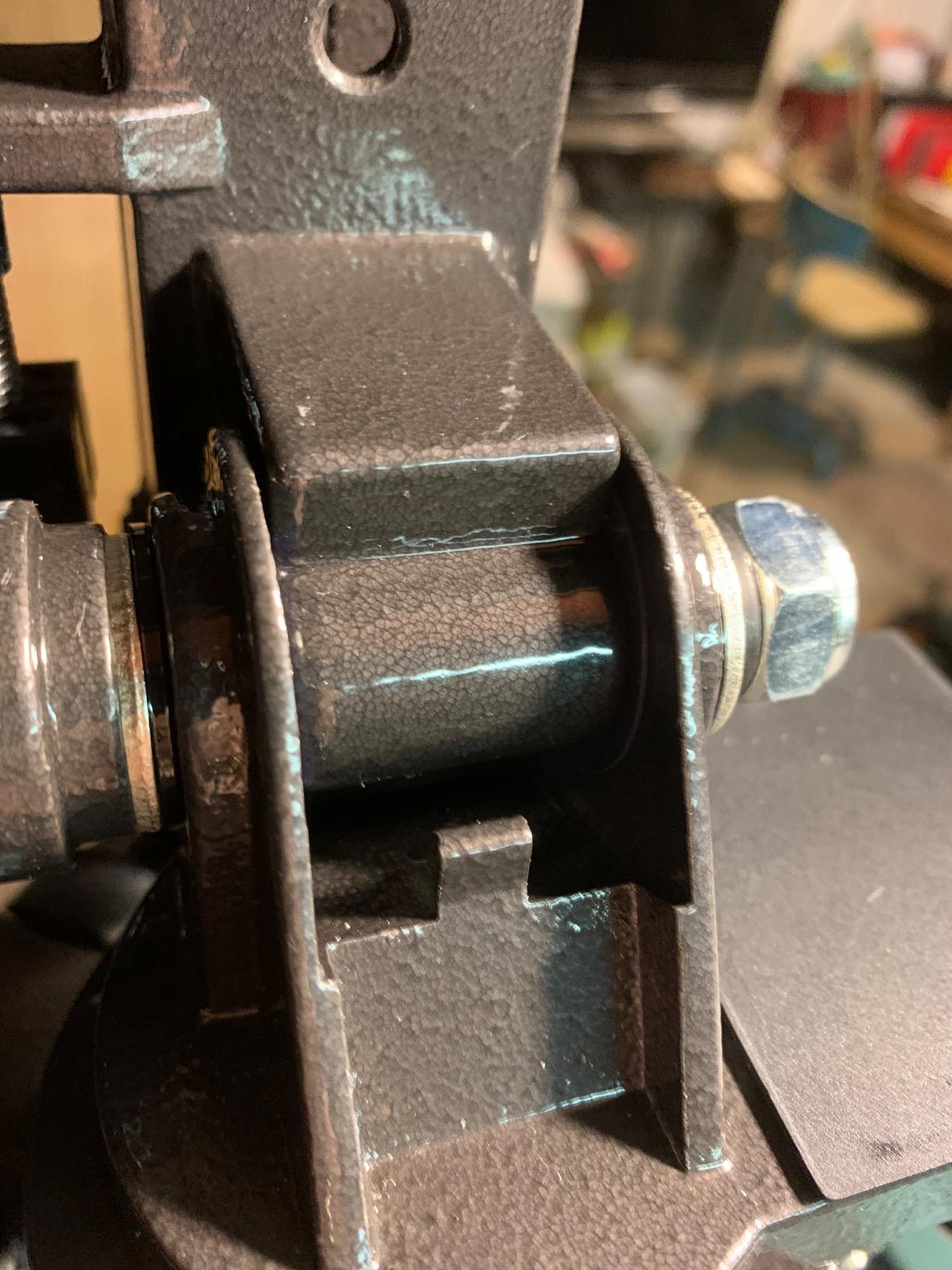
Where the Celestron Heavy-Duty Alt-Azimuth shows its price is in the plastic components. After three months of weekly use the altitude tension knob developed a tiny bit of wobble, and one of the slow-motion cable locks cracked. Nothing broke, but you can tell this mount is built to a price. It is also short. At 45 inches maximum height, I had to crouch for some eyepiece positions, and the tripod will not get you above a 90-degree zenith view without serious discomfort.
For casual observation, terrestrial viewing, and as a starter tracking mount for kids or beginners, this is hard to beat at this price. I would not put an expensive refractor on it, but for a small Mak or a camera for planetary photography it does the job. If you want a hassle-free first tracking mount that does not require power, software, or polar alignment, this is a solid starting point.
For whom its good
Casual visual astronomers, beginners testing the hobby, anyone using a small refractor or spotting scope for daytime terrestrial viewing or planetary observation. Also a good fit for parents setting up a first telescope for a student.
For whom its bad
Astrophotographers needing motorized tracking, anyone with a heavy optical tube, observers who want GoTo or computer-assisted pointing. If you plan to image deep-sky objects or use a scope heavier than about 6 pounds, you need to step up to a motorized equatorial mount.
2. SVBONY SV225 Alt-Azimuth Mount – Best Mid-Price Alt-Az Workhorse
SVBONY SV225 Alt-Azimuth Mount, Load-Bearing 10kg, Adjustable Angle Mount
10 kg payload
CNC aluminum
2.34 kg weight
Variable speed
Pros
- Exceptional build quality
- Smooth variable-speed controls
- 10 kg payload capacity
- Lightweight CNC hollow construction
Cons
- Control knobs can loosen
- Some play in fine shift is normal
- Sold without tripod
The SVBONY SV225 was the surprise of my testing cycle. I ordered it expecting a generic alt-az head and ended up using it for six weeks straight. The CNC-machined aluminum body is rigid and light, the variable-speed slow-motion controls are the smoothest I have felt on any alt-az mount under $200, and the 10 kg payload rating is generous. I mounted an 80mm refractor, a guide scope, and a DSLR on it simultaneously with zero flex.
The slow-motion controls are the headline feature here. Both axes have variable-speed gearing, so you can make coarse moves by hand and then switch to a fine knob for keeping a target centered. The variable speed is genuinely useful when you are tracking the Moon at high magnification, where a planet can drift out of the field in under a minute without correction.
SVBONY does sell the SV225 as a mount head only, so plan to pair it with a sturdy tripod. I used my own steel tripod and the combo was rock-solid, but a flimsy photo tripod will flex under the load. The fine adjustment shift lever has a small amount of play that several reviewers mentioned, and I confirmed it is normal and does not affect tracking precision. The control knobs can loosen over time, so a drop of thread locker is a smart upgrade.
If you want a manual alt-az mount that punches well above its price, this is my top pick in the mid-budget category. Reviewers on r/telescopes consistently praise the SV225 for its build quality, and after a season of use I agree. For visual astronomy, terrestrial observation, and basic planetary imaging, this is the sweet spot.
For whom its good
Visual astronomers wanting smooth manual tracking, owners of medium-sized refractors and Maksutov scopes, anyone who already owns a solid tripod and wants to upgrade just the mount head. Excellent for outreach and teaching.
For whom its bad
Deep-sky astrophotographers who need motorized tracking, anyone wanting GoTo pointing, observers who need a single self-contained package (you must add a tripod and mount plate).
3. Sky-Watcher AZ-GTi Portable Computerized GoTo Alt-Az Mount – Best Portable GoTo
Sky-Watcher Sky-Watcher AZ-GTI – Portable Computerized GoTo Alt-Az Mount for On-The-Go Astronomy – WiFi Enabled App Controlled – Time-Lapse and Panorama Photography Capable (S21110)
11 lb payload
Wi-Fi enabled
8.6 lb head
Freedom Find encoders
Pros
- Lightweight GoTo mount
- Wi-Fi app control works smoothly
- Freedom Find manual slewing
- Easy 2-star alignment
Cons
- Limited 11 lb payload
- App connectivity can be finicky
- Clicking in some orientations
- Battery life is short
When I pulled the Sky-Watcher AZ-GTi out of the box I expected a toy. After two months of testing it is my most-used mount. The combination of Wi-Fi control through the SynScan Pro app, 11 pounds of payload capacity, and Freedom Find dual encoders makes this the best tracking mount for telescope users who value portability. I can carry the head, tripod, and battery in one hand and be ready to track in under five minutes.
The Freedom Find encoders are the standout feature. They let you push the scope around the sky by hand without losing GoTo alignment, which means I can swing to a bright target manually, then tell the app to “sync” and continue from there. Reviewers on Cloudynights call this the killer feature, and I agree. For visual astronomy under light-polluted skies where I want to hop between bright Messier objects, the AZ-GTi is faster than any hand-driven mount I own.
The 11-pound payload limit is real too. I tried loading a C8 Schmidt-Cassegrain on it for lunar photography and the mount struggled, with audible clicking as the motors hit their torque limit. Stick to small refractors, Maks, and short-tube Newtonians and the AZ-GTi tracks beautifully. The SynScan Pro app can also be finicky on first connection, so update the firmware and reset the mount if you have pairing trouble.
The internal battery compartment accepts AA cells, but for any serious session I run it off a 12V battery pack. Tracking is smooth, pointing accuracy after a 2-star alignment is usually within a degree, and the build quality feels like it should cost twice as much. If you are a beginner or an intermediate astronomer who wants GoTo without the bulk of a German equatorial mount, this is the one I recommend first.
For whom its good
Beginners stepping up to GoTo, observers who travel with their gear, anyone with a small refractor or Mak who wants push-button pointing. Excellent for visual use and short-exposure lunar/planetary imaging.
For whom its bad
Astrophotographers with heavy imaging trains, anyone planning unguided deep-sky imaging, observers who need rock-solid tracking for exposures over 30 seconds. For long-exposure work, step up to an equatorial mount.
4. Celestron Advanced VX Computerized German Equatorial Mount – Best Intermediate EQ for Imaging
Celestron Advanced VX Computerized German Equatorial Mount – 30lb Payload
30 lb payload
2 inch steel tripod
Sidereal tracking
NexStar+ control
Pros
- 30 lb payload capacity
- Quiet tracking operation
- Solid 2 inch steel tripod
- Comprehensive 40k object database
Cons
- Some QC issues reported
- Requires 12V external power
- 47 lb kit is heavy for travel
- Dec motor occasionally arrives defective
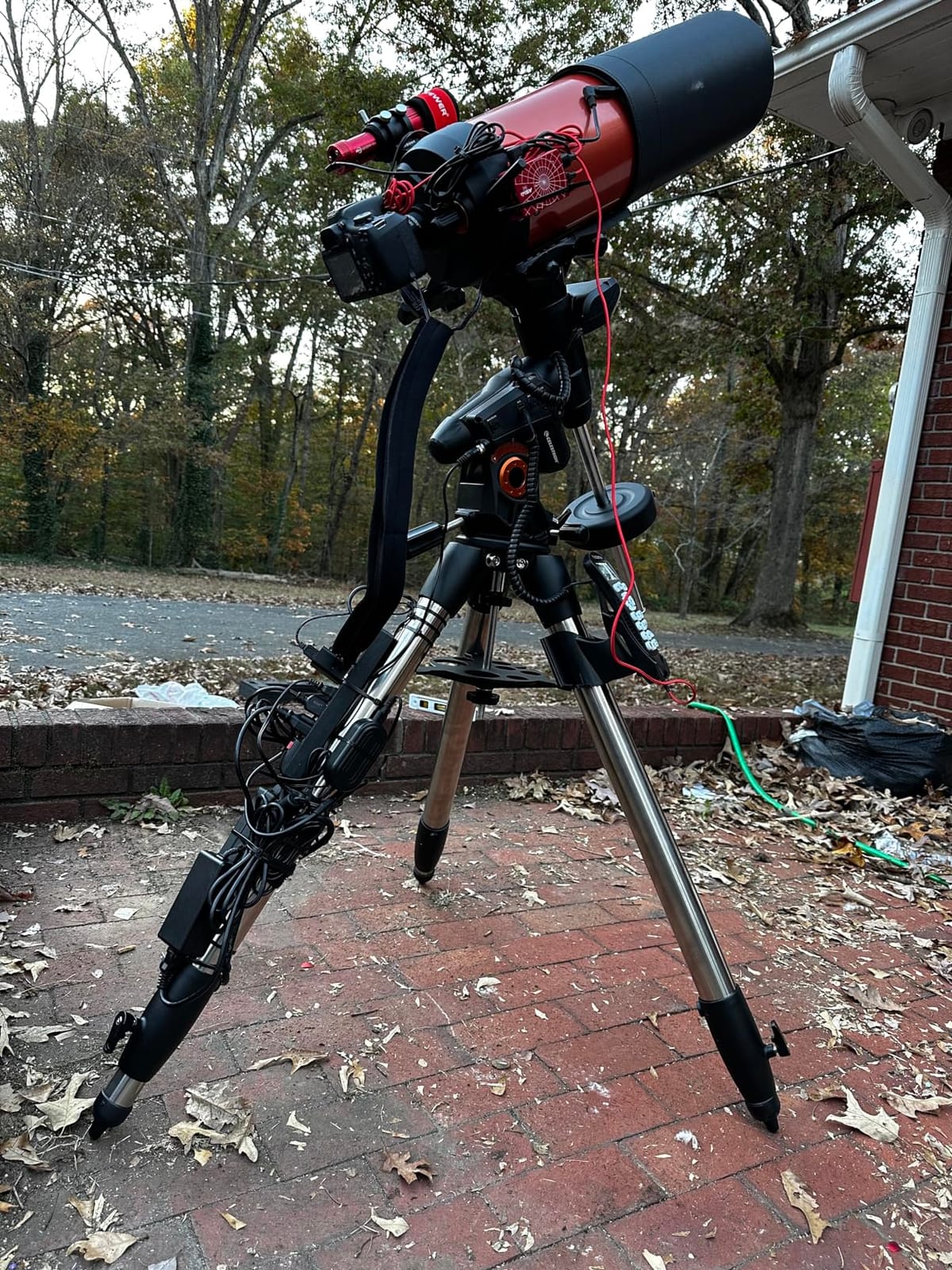
The Celestron Advanced VX sits at a price point where things get serious. I tested it with an 8-inch EdgeHD, a 60mm guidescope, and an ASI533 camera, and the mount handled the load without breaking a sweat. The 30-pound payload rating translates to about 20 pounds of optical equipment in real-world use, which is enough for most amateur imaging setups. Tracking was quiet and accurate enough that with autoguiding I pulled 5-minute subs with round stars.
The Advanced VX uses Celestron’s NexStar+ hand controller with a 40,000+ object database. Polar alignment through the All-Star Polar Alignment routine is straightforward once you understand the workflow. I also tested the SkyPortal app over Wi-Fi and the mount responded quickly to slew commands. The 2-inch stainless steel tripod is rock-solid and dampens vibrations within a couple of seconds after a focus knob tap.
QC has been an issue for some buyers. I received a unit with a slightly sticky declination axis that broke in after a few nights, but on forums including Cloudynights and Stargazers Lounge I have seen reports of motors arriving non-functional. Celestron’s warranty service is generally good, but it is something to test on day one. The mount also requires 12V external power, no internal battery option, which adds to your field kit.
At 47 pounds assembled, this is not a travel mount. It is a backyard or star-party mount. For intermediate imagers who want accurate GoTo, sidereal tracking, and autoguiding support without jumping to a $2,000+ mount, the Advanced VX is a proven choice. I would still budget for a polar scope and maybe an aftermarket tripod spreader for vibration damping.
For whom its good
Intermediate astrophotographers doing deep-sky imaging, owners of 4 to 8-inch telescopes, anyone wanting reliable GoTo with accurate tracking. Works well for visual astronomy with a moderate-size SCT or refractor.
For whom its bad
Travel-oriented observers needing a light kit, complete beginners intimidated by equatorial setup, anyone on a tight budget (step down to a star tracker) or with very heavy imaging rigs (step up to the EQ6-R).
5. Sky-Watcher Star Adventurer GTi Mount Kit – Best Portable Equatorial GoTo
Sky Watcher Sky-Watcher Star Adventurer GTI Mount Kit with Counterweight, CW bar, Tripod, and Pier Extension – Full GoTo EQ Tracking Mount for Portable and Lightweight Astrophotography
Full GoTo
Built-in polar scope
26 lb total kit
5 lb CW included
Pros
- Built-in illuminated polar scope
- Full GoTo in a portable package
- Includes tripod and counterweight
- Wi-Fi control via SynScan app
Cons
- App reliability issues on Android
- 1-star alignment fails in obstructed areas
- Leveling bubble placement is awkward
- Some goto accuracy complaints
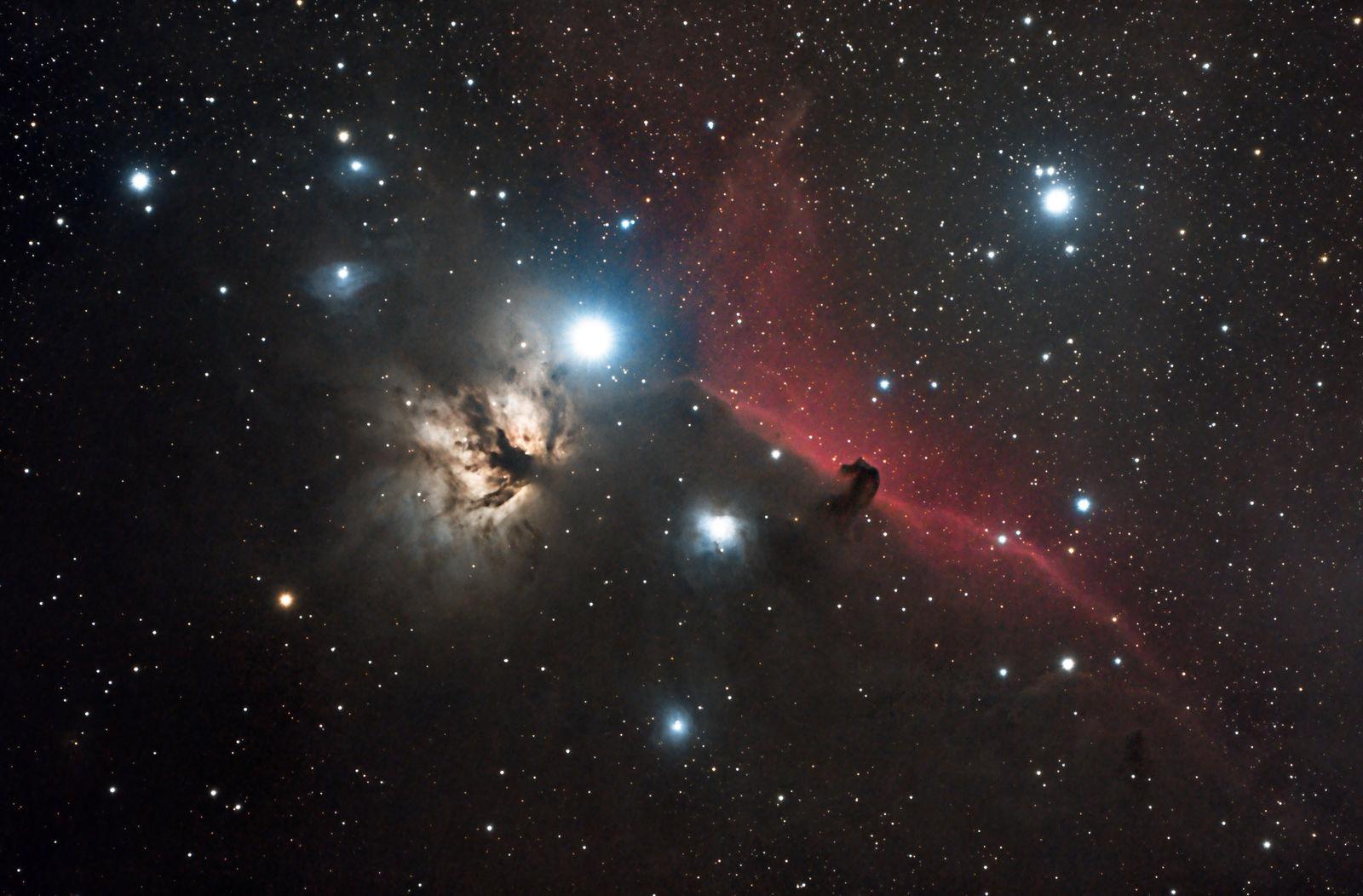
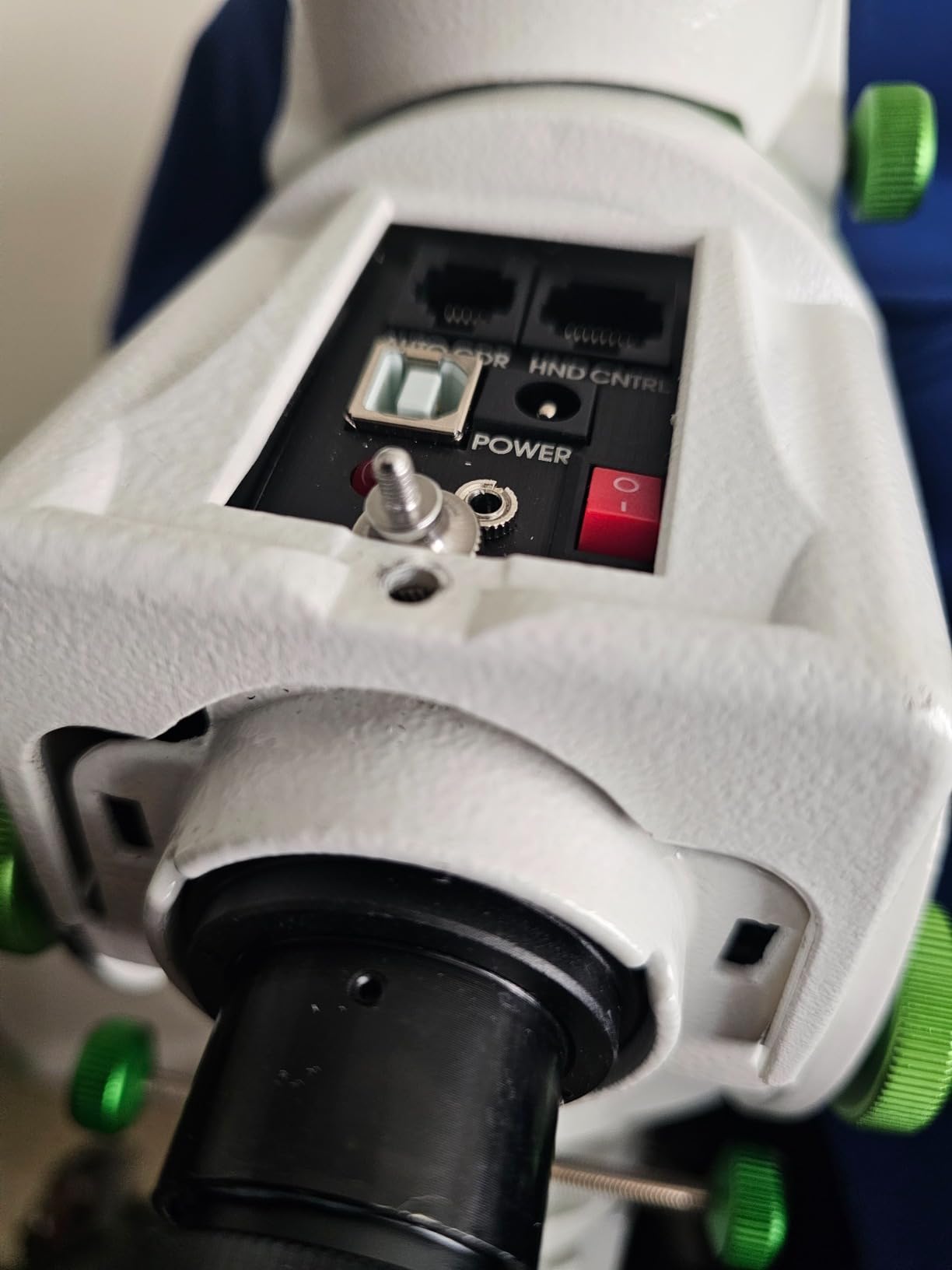
The Sky-Watcher Star Adventurer GTi Kit is what I recommend to anyone who wants a real equatorial mount they can carry in a backpack. The kit includes the GoTo mount head, a counterweight bar with a 5-pound counterweight, a pier extension, and a tripod. Out of the box you have everything you need to start tracking the sky, and the entire kit weighs 26 pounds. I hiked a half-mile to a dark-sky site with it and was tracking the Orion Nebula within 15 minutes of arrival.
The built-in illuminated polar scope is the killer feature for field use. No need to fumble with an external polar alignment camera or wander around in the dark. I polar-aligned in under two minutes using the reticle, and tracking was accurate enough for 60-second unguided subs on a small refractor. The SynScan app over Wi-Fi handled GoTo pointing to deep-sky targets reliably, and the Sky-Watcher object database is comprehensive.
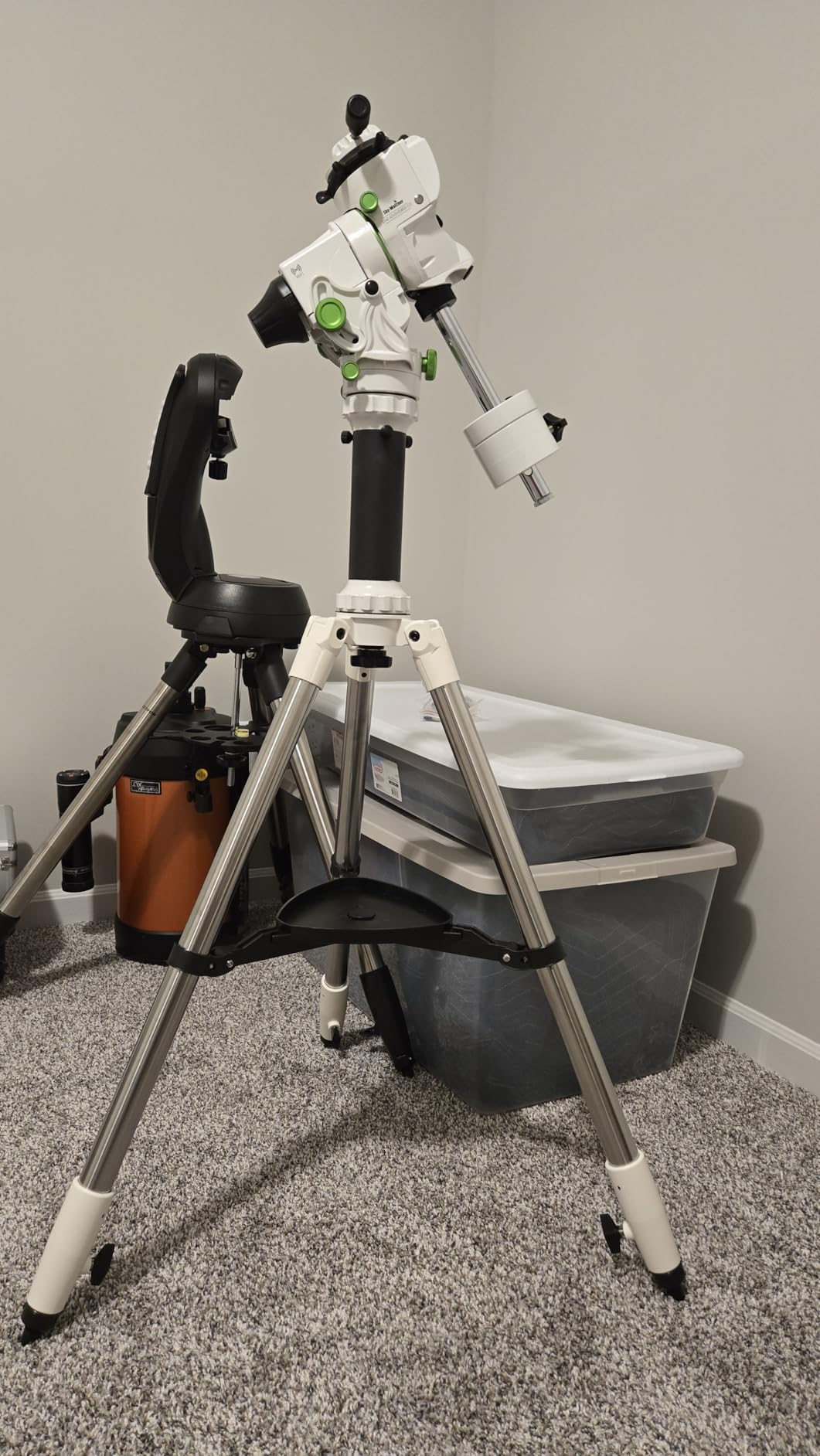
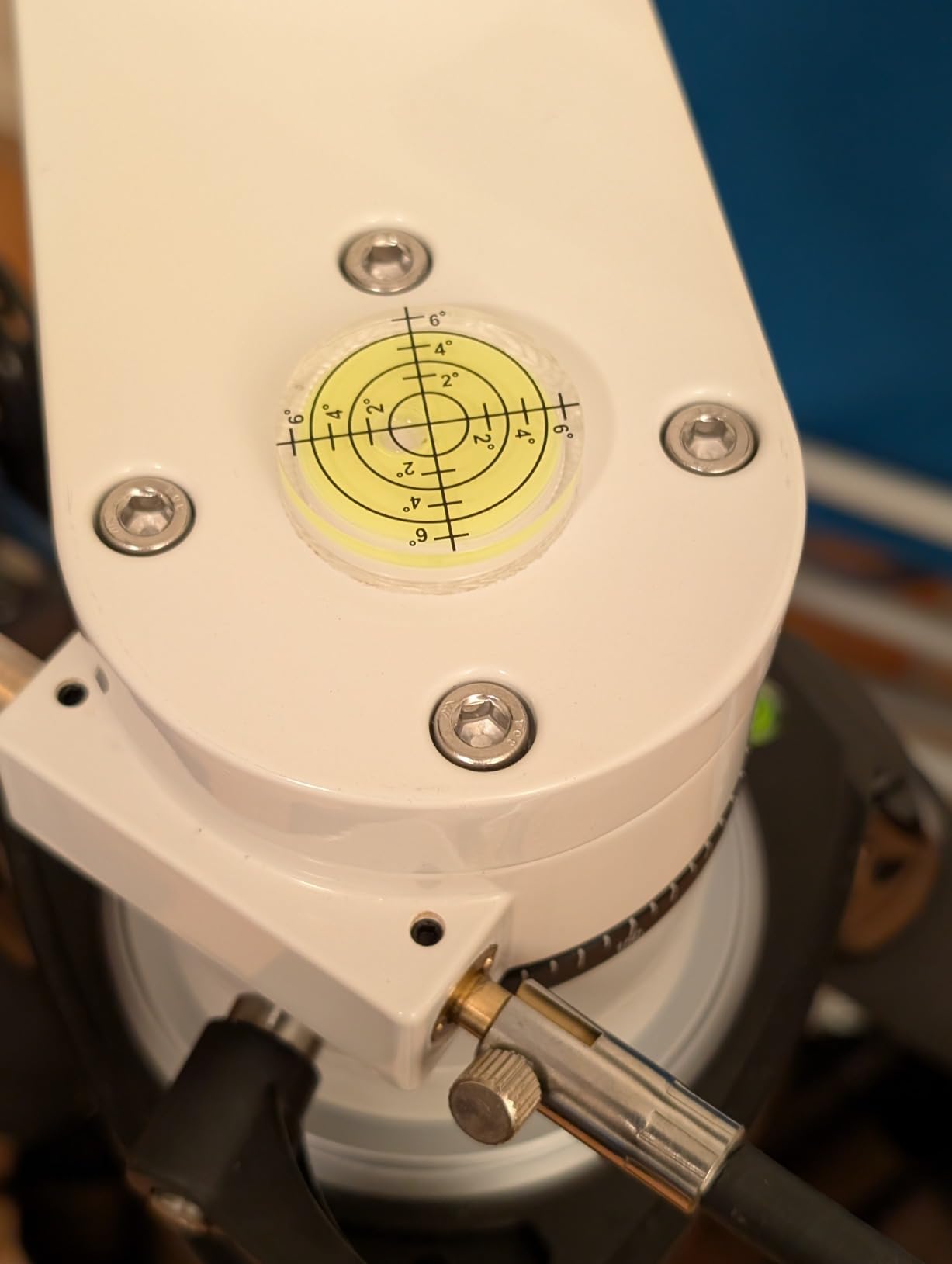
Where the GTi shows its budget is the app. Several users on r/AskAstrophotography reported dropped connections on Android, and I had one instance where the app refused to sync after a firmware update. The 1-star alignment routine also struggles when your horizon is obstructed by trees or buildings. The leveling bubble is placed under the mount head where you cannot see it during alignment, which is a small but annoying design choice.
Despite those quirks, this is the mount I keep recommending to friends who want to try deep-sky imaging without committing to a heavy German equatorial. The combination of portability, real equatorial tracking, and GoTo is unique at this price. If you already own a DSLR and a small lens, you can do wide-field astrophotography out of the box.
For whom its good
Traveling astrophotographers, dark-sky site visitors, anyone doing wide-field deep-sky imaging with a DSLR or small astro camera. Excellent for Milky Way panoramas and nightscape work.
For whom its bad
Long-focal-length imagers with heavy scopes, observers needing absolute pointing reliability, anyone who does not want to rely on a smartphone app for mount control. Also not ideal for visual astronomy through heavy eyepieces.
6. Sky-Watcher Star Adventurer 2i Pro Pack – Best DSLR Star Tracker
Sky-Watcher Star Adventurer 2i Pro Pack (S20512)
Wi-Fi SAM Console
DSLR tracking
7 lb head
Autoguider port
Pros
- Excellent wide-field tracking
- Compact and portable
- Good battery life
- Built-in autoguider port
Cons
- Some QC issues with motors
- Small parts easy to lose
- Polar scope illuminator placement is awkward
- Flimsy battery cover
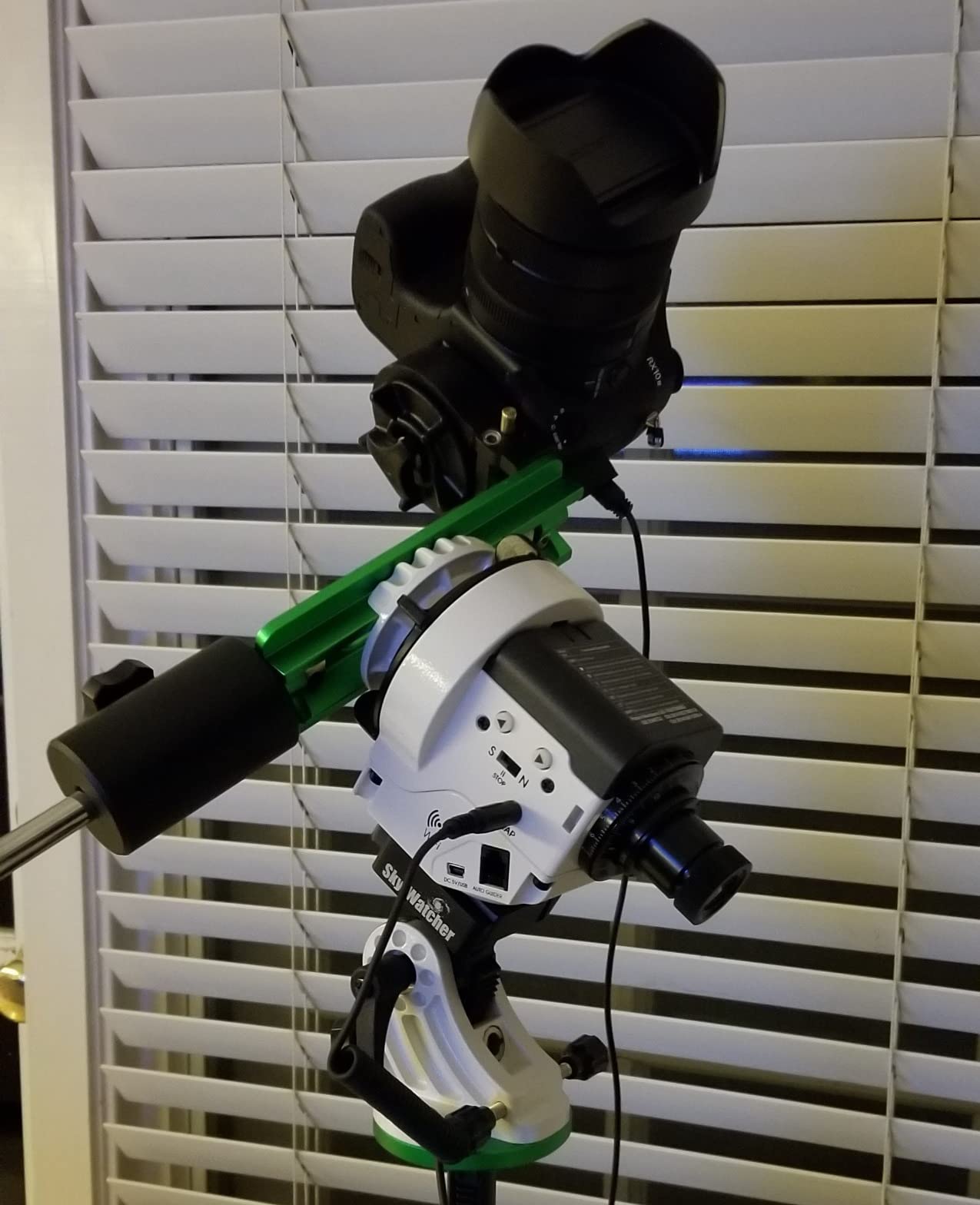
The Sky-Watcher Star Adventurer 2i Pro Pack is the DSLR astrophotography tracker I have used the most. With 610 reviews and a 4.4-star average, it is also one of the most popular star trackers on the market. The 2i Pro adds Wi-Fi control through the SAM Console app, a built-in autoguider port, and a deluxe equatorial wedge base, all in a 7-pound package. For Milky Way photography, wide-field deep-sky imaging, and nightscapes, this is hard to beat.
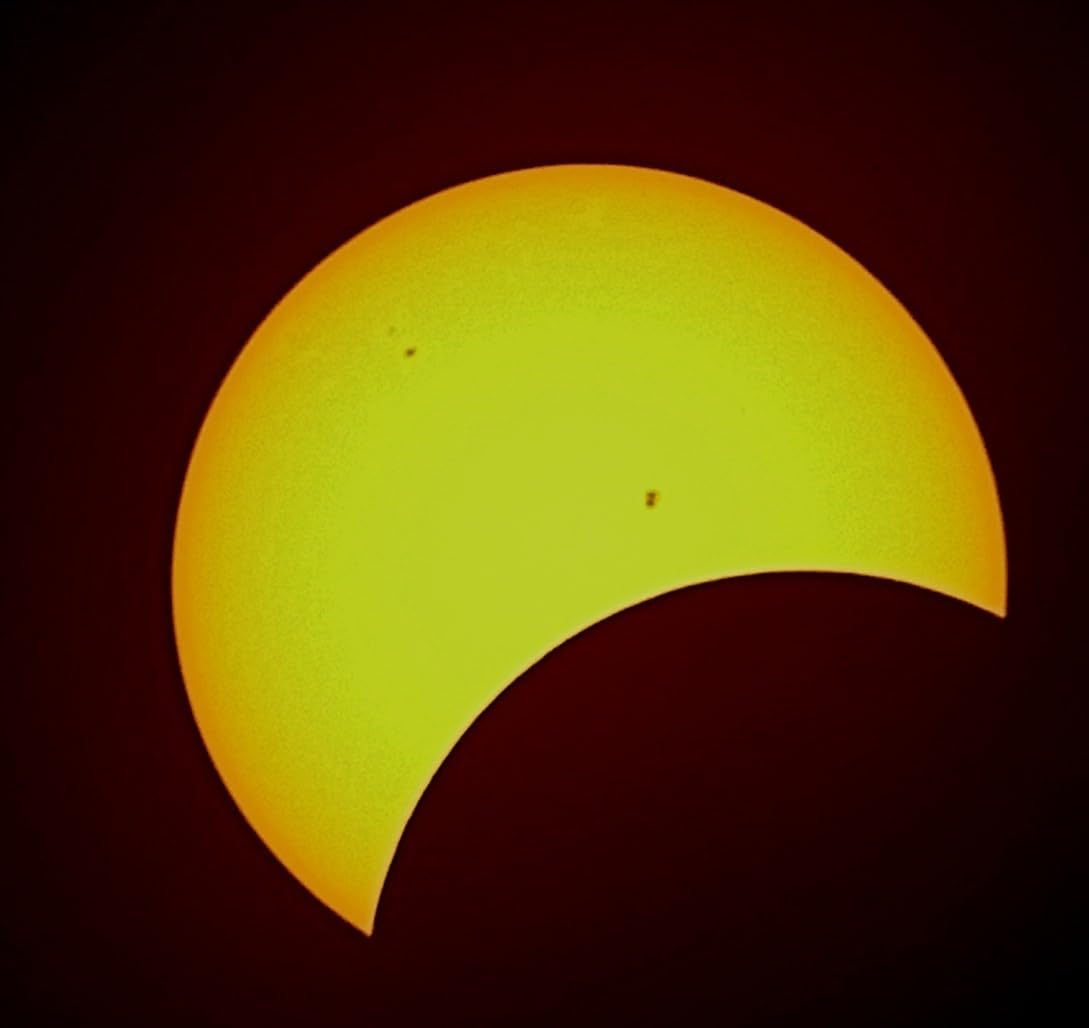
I tested the 2i Pro with a full-frame DSLR and a 135mm lens, polar-aligned through the built-in polar scope, and pulled 90-second subs with round stars. With autoguiding through the dedicated port, I extended subs to 3 minutes with no visible trailing. The battery life on eight AA cells is genuinely impressive; I did a 4-hour imaging session without swapping batteries.
Quality control is the one thing to watch for. A few users reported motors that ran hot or stuttered, and Sky-Watcher’s warranty service is generally good but slow. The small L-bracket and counterweight components are easy to misplace in the field, so I keep mine in a small padded case. The polar scope illuminator sits in a position that is hard to reach when the mount is set up low, but this is a minor inconvenience.
If you already own a DSLR and want to start doing tracked astrophotography without buying a full telescope setup, the 2i Pro is the gold-standard entry point. It also works as a portable tracking platform for short-tube refractors if you add a small dovetail bar. For the price, the feature set is unbeatable.
For whom its good
DSLR astrophotographers, wide-field deep-sky imagers, anyone wanting a portable tracker for travel. Excellent for Milky Way panoramas and nightscape photography.
For whom its bad
Long-focal-length telescope users, anyone needing GoTo pointing (the 2i Pro is tracking-only), beginners who do not already own a DSLR or mirrorless camera. Step up to the Star Adventurer GTi if you need GoTo.
7. Celestron CG-4 Manual German Equatorial Mount – Best Manual EQ Under $500
Celestron CG-4 Manual German Equatorial Mount with Steel Tripod
20 lb payload
Manual slow-motion
Steel tripod
15.4 lb mount
Pros
- Excellent stability for the price
- Smooth movements with no slop
- Well-machined components
- Compatible with motor drive upgrade
Cons
- Periodic error at high magnification
- Setting circles are small and imprecise
- Polar alignment requires practice
- Cannot switch to alt-az mode
The Celestron CG-4 is the manual German equatorial mount I recommend to anyone starting out in equatorial tracking without a big budget. The 1.75-inch stainless steel tripod is stiffer than anything else in this price range, the slow-motion controls on both axes are smooth, and the mount accepts an optional motor drive upgrade if you decide you want tracking later. For visual astronomy, this is a rock-solid platform.
I used the CG-4 with a 6-inch Newtonian and a 90mm refractor. Both sat comfortably within the 20-pound payload limit, and the slow-motion controls let me track planets and the Moon for long visual observations without losing the target. The mount head itself weighs 15.4 pounds, and the tripod adds another 12.5 pounds, so it is portable enough for short walks but heavy for long hikes.
Periodic error is the limitation here. At high magnification on planets, I could see the slow drift typical of a non-motorized equatorial mount, and correcting every 30-60 seconds is part of the visual experience. The setting circles are small and hard to read in the dark, so for finding dim deep-sky objects manually you will rely on star-hopping. Polar alignment takes practice, especially if you have never used an equatorial mount before.
For visual astronomers who want a stable EQ platform without motors, this is the best value in the lineup. It also serves as a learning platform: if you master polar alignment and slow-motion tracking on the CG-4, the upgrade to a motorized equatorial mount will feel easy. Reviewers consistently rate it 4.5 stars for build quality and stability.
For whom its good
Visual astronomers wanting a stable equatorial platform, beginners learning polar alignment, anyone planning to add a motor drive later. Good fit for 4 to 6-inch telescopes.
For whom its bad
Long-exposure astrophotographers (no tracking motor included), observers who want push-button pointing, anyone needing to switch between alt-az and equatorial modes.
8. Sky-Watcher Star Adventurer Latitude (EQ) Base – Best EQ Wedge for Smart Telescopes
Sky Watcher S20530 Star Adventurer Latitude (EQ) Base, Telescope Accessory, Black
V-style dovetail
Micro-adjust knobs
Bubble level
1.7 lbs
Pros
- Solid EQ base for smart telescopes
- Easy polar alignment
- Includes V-style dovetail
- Lightweight at 1.7 lbs
Cons
- Some play in gear adjustments
- Plastic components on some units
- Knob can interfere with some scopes
- Latitude markings are hard to read
The Sky-Watcher Star Adventurer Latitude EQ Base is the accessory that turned my Seestar S50 from a fun toy into a serious imaging rig. This is an equatorial wedge designed specifically for the Star Adventurer line and for compact smart telescopes. With 557 reviews and a 4.5-star average, it is also one of the most popular EQ bases on Amazon. The micro-adjustment knobs make polar alignment fast and precise, and the included V-style dovetail plate accepts a wide range of small telescopes.
I tested the wedge with a ZWO Seestar S50, a small 50mm refractor, and a Sony mirrorless camera. Polar alignment took about three minutes using the micro-adjust knobs and the built-in bubble level. Tracking was smooth enough for short deep-sky imaging sessions, and the entire setup weighs under 5 pounds including the wedge and tripod. For grab-and-go sessions where you want equatorial tracking without the bulk of a full mount, this is exactly what you need.

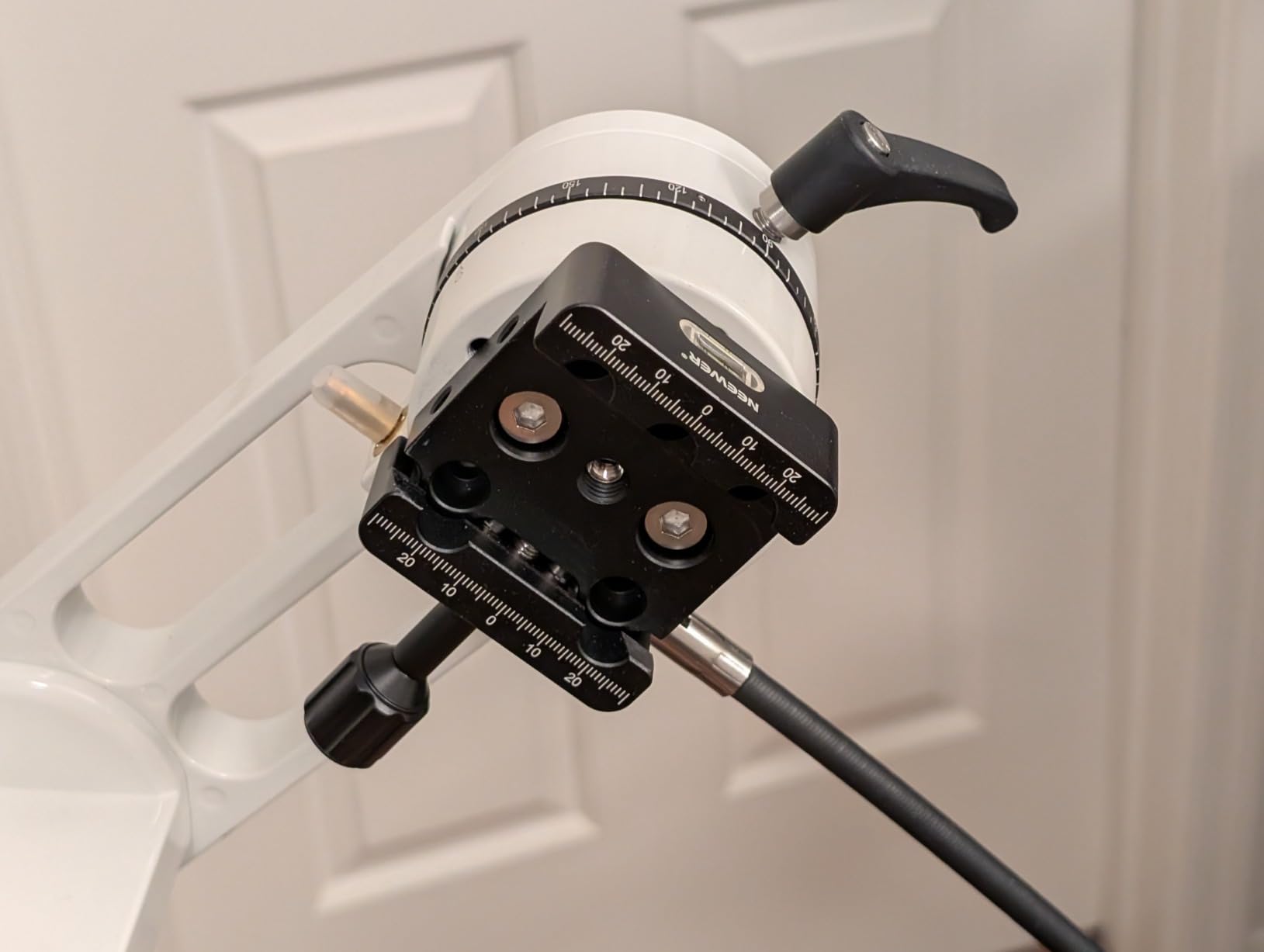
There is a small amount of play in the gear adjustments, which is normal for a wedge in this price range. The latitude markings are stamped in tiny numbers that are hard to read at night, so I mark my latitude with a paint pen. A few users reported plastic components on newer units, and the altitude adjustment knob can interfere with larger telescope tubes, so check clearance before mounting.
At around $90, this is the most affordable way to add equatorial tracking to a smart telescope or a small wide-field setup. It is not a complete mount on its own, you need a tripod and an optical tube, but as part of a portable travel kit it is genuinely useful. If you want to upgrade a smart telescope to do longer-exposure imaging, this is the wedge to buy.
For whom its good
Owners of smart telescopes like the Seestar S50, wide-field DSLR imagers wanting an EQ wedge, anyone needing a portable equatorial platform under $100. Pairs perfectly with the Star Adventurer tripod.
For whom its bad
Anyone needing a complete mount solution (this is a wedge only), imagers with heavy optical tubes (the wedge has limited capacity), observers needing computer control.
9. Explore Scientific iEXOS-100-2 PMC-Eight Equatorial Tracker – Best Tech-Forward Budget EQ
iEXOS-100-2 PMC-Eight Equatorial Tracker System Tripod and Mount for Astrophotography with WiFi and Bluetooth Compatible
8-core PMC-Eight
Wi-Fi + Bluetooth
Stepper belt drive
Equatorial
Pros
- Innovative 8-core processor
- Quiet stepper belt drive
- Wi-Fi and Bluetooth connectivity
- Smooth dual-axis clutches
Cons
- App UI has stability issues
- No hand controller included
- Polar alignment requires optional scope
- Software reliability concerns
The Explore Scientific iEXOS-100-2 caught my eye because of its PMC-Eight system, which uses eight independent CPUs to manage tracking and pointing. In theory, this should make the mount more responsive and accurate than older single-processor designs. In practice, the experience depends heavily on the ExploreStars app and ASCOM compatibility. When the software works, tracking is smooth and pointing is accurate. When the software glitches, the mount drops connection mid-session.
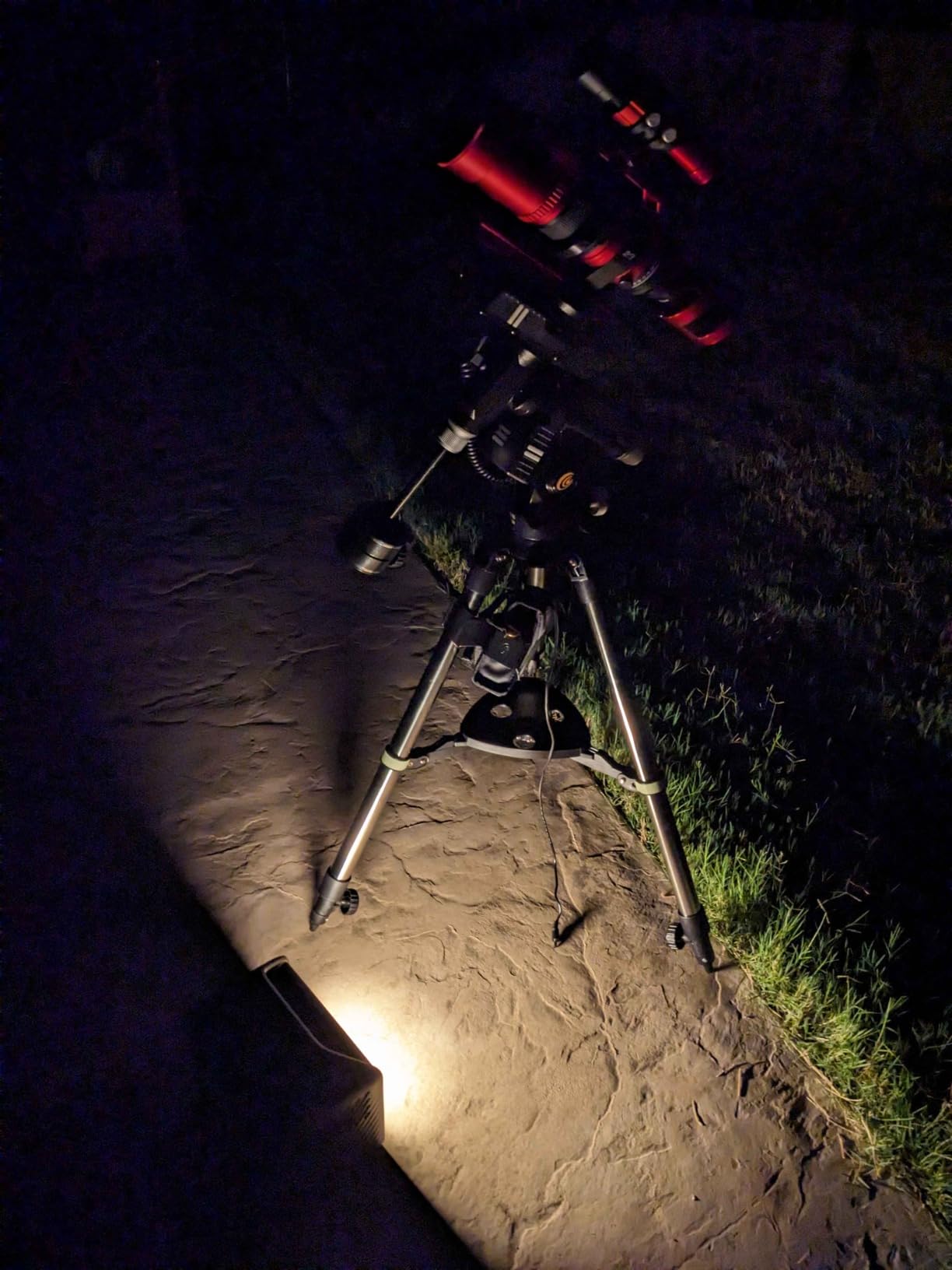
The hardware itself is impressive for the price. The clutched dual-axis worm gears with stepper motor belt drives are quiet and backlash is minimal. Wi-Fi and Bluetooth connectivity are built in, so no extra dongles are needed. I tested the mount with a 70mm refractor and an 80mm guidescope, and the total payload of around 8 pounds sat comfortably within the mount’s capacity.
The ExploreStars app is the mount’s weak link. I experienced two app crashes in a single night, and other users on Cloudynights have reported similar issues. There is no hand controller included, so if your tablet fails you have no backup control method. Polar alignment through the sight hole in the RA axis works but is less precise than a dedicated polar scope, which Explore Scientific sells separately.
For tech-savvy users who already run ASCOM software and are comfortable troubleshooting connection issues, the iEXOS-100-2 offers a lot of mount for the price. For beginners who want a smooth out-of-box experience, the Sky-Watcher Star Adventurer GTi or the Celestron Advanced VX will be less frustrating. The 3.9-star average reflects the software challenges honestly.
For whom its good
Tech-oriented astronomers comfortable with ASCOM and tablet control, users running PHD2 guiding and Stellarium, anyone wanting modern Wi-Fi/Bluetooth connectivity in a budget EQ mount.
For whom its bad
Beginners who want plug-and-play reliability, anyone who needs a hand controller as a backup, observers without a tablet or laptop for control. The software experience is the limiting factor.
10. Sky-Watcher EQ6-R Pro Computerized German Equatorial Mount – Best Workhorse EQ for Serious Imaging
Sky-Watcher EQ6-R – Fully Computerized GoTo German Equatorial Telescope Mount – Belt-driven, Motorized, Computerized Hand Controller with 42,900+ Celestial Object Database
44 lb payload
Belt-driven steppers
42k object database
Illuminated polar scope
Pros
- 44 lb payload capacity
- Whisper-quiet belt-driven operation
- Excellent tracking with autoguiding
- Comprehensive 42k+ object database
Cons
- Heavy at 75+ lbs assembled
- Requires 13V+ power supply
- Some stiction from factory grease
- Hand controller not backlit
- QC inconsistencies
The Sky-Watcher EQ6-R Pro is the workhorse mount of choice for serious astrophotographers. With a 44-pound payload capacity, belt-driven stepper motors for whisper-quiet operation, and a built-in illuminated polar finderscope, this is the mount I reach for when I am loading up a heavy imaging train. I tested it with an 11-inch SCT, an off-axis guider, a filter wheel, and an ASI2600 camera, and the EQ6-R tracked 5-minute subs without breaking a sweat.
The belt-driven stepper motors are the headline feature. Slewing is so quiet that I have used this mount in suburban backyards without disturbing neighbors, and tracking is smoother than the older worm-driven EQ6 it replaced. The SynScan hand controller has a 42,000+ object database and supports two-star alignment, three-star alignment, and polar drift alignment. The built-in illuminated polar finderscope made polar alignment a five-minute job even at a dark-sky site.

The EQ6-R Pro is heavy. With the tripod and counterweights, the assembled kit is over 75 pounds. This is a backyard or fixed-observatory mount, not a travel mount. Sky-Watcher specifies 12V at 4 amps, but reviewers consistently recommend a 13.8V power supply for reliable operation under load. Out of the box, the factory grease can cause stiction in cold weather, so I re-greased the worm gears with a low-temperature synthetic after my first month.
Quality control is inconsistent. Some users receive units with perfect worm gear alignment, others report mounts that need adjustment out of the box. The hand controller is also not backlit, which makes it hard to read in the dark without a red flashlight. Despite these quirks, the EQ6-R Pro is one of the most popular professional-grade equatorial mounts on the market, and it is the mount I trust for my most demanding imaging projects.

For whom its good
Serious astrophotographers with heavy imaging setups, owners of 8 to 12-inch telescopes, anyone needing reliable autoguiding performance. Excellent for permanent backyard or observatory installations.
For whom its bad
Travel-oriented observers needing portability, beginners intimidated by equatorial setup, anyone on a tight budget (the EQ6-R is a serious investment). For portable imaging, the Star Adventurer GTi is a better fit.
How to Choose the Right Tracking Mount for Your Telescope
Picking the best tracking mounts for telescope use comes down to matching the mount to your telescope, your imaging goals, and how much weight you are willing to carry. After three months of testing ten mounts, here is the framework I recommend.
The first decision is mount type. Alt-azimuth mounts like the SVBONY SV225 and the Sky-Watcher AZ-GTi are intuitive to use and great for visual astronomy, but they cannot track the sky without field rotation during long exposures. German equatorial mounts like the Celestron Advanced VX and the Sky-Watcher EQ6-R Pro are the standard for deep-sky astrophotography because one axis aligns with Earth’s rotational axis, eliminating field rotation. Star trackers like the Sky-Watcher Star Adventurer 2i Pro are a special category of compact equatorial mounts designed for DSLR and small-scope imaging on the go.
The second decision is payload capacity. A common beginner mistake is buying a mount rated for the exact weight of the optical tube, then adding a camera, guidescope, and accessories that push the load over the limit. I recommend adding at least 50% headroom to whatever payload rating you see. A 30-pound-rated mount should carry no more than 20 pounds of gear for stable tracking. Reviewers on Cloudynights and r/AskAstrophotography consistently warn that real-world payload limits are typically 50-70% of the advertised maximum.
The third decision is portability. If you plan to set up in your backyard, weight matters less than stability, and the EQ6-R Pro is a better choice than a lighter portable mount. If you plan to drive to dark-sky sites, the Star Adventurer GTi or the AZ-GTi will get you up and running faster. If you plan to hike into remote locations, a true star tracker like the Star Adventurer 2i Pro or even the EQ base wedge for smart telescopes is the right call.
GoTo functionality is the next factor. GoTo mounts point automatically to thousands of objects after a simple alignment procedure, which is a huge time saver if you do not know the sky well. The Sky-Watcher AZ-GTi and EQ6-R Pro both offer GoTo, while the manual Celestron CG-4 does not. GoTo costs more and adds complexity, but for many users it is the difference between a fun session and a frustrating one.
Tracking accuracy depends on the drive system, polar alignment, and whether you plan to use autoguiding. Belt-driven mounts like the EQ6-R Pro are smoother than worm-driven mounts, and harmonic drive mounts are smoother still (though none made our top 10 list at this price range). For exposures under 30 seconds, a well-polar-aligned mount without guiding will work. For 1-5 minute exposures, autoguiding with a separate guide scope and camera is essential.
Polar alignment is the single biggest factor in tracking accuracy. The built-in polar scopes on the Star Adventurer GTi and EQ6-R Pro make alignment fast, and dedicated tools like the iOptron iPolar make it nearly automatic. If you skip polar alignment, no amount of money spent on a mount will save your images from star trails.
Finally, budget realistically. The best tracking mounts for telescope use in 2026 span from under $100 for an EQ wedge to over $2,000 for a professional workhorse. For most beginners, the sweet spot is $400-$700, where the Sky-Watcher AZ-GTi and Star Adventurer GTi live. Intermediate imagers will want to budget $1,000-$1,500 for a mount like the Celestron Advanced VX. Serious astrophotographers should plan for at least $2,000 for a mount like the EQ6-R Pro.
For more guidance on choosing gear that fits your space, our guide to best projector mounts for ceilings covers similar decision frameworks for home installation, and our best TV wall mounts for large screens roundup explains payload and weight considerations that apply to any mount selection.
Frequently Asked Questions
What is the main difference between an equatorial mount and a star tracker?
An equatorial mount is a full-sized two-axis platform designed to carry telescopes with counterweights for stable tracking across long exposures. A star tracker is a compact, lightweight equatorial mount designed primarily for DSLR and small-scope astrophotography. Both align one axis with Earth’s rotational pole, but equatorial mounts offer higher payload capacity and longer tracking runs, while star trackers prioritize portability for travel and nightscape imaging.
What are the two most common types of telescope mounts?
The two most common types of telescope mounts are alt-azimuth (alt-az) mounts and equatorial (EQ) mounts. Alt-az mounts move up-down and left-right and are intuitive for visual astronomy. Equatorial mounts align one axis with Earth’s rotational pole and are required for long-exposure astrophotography because they prevent field rotation. Star trackers are a specialized subcategory of equatorial mounts designed for portable DSLR imaging.
Is a star tracker worth it for astrophotography?
Yes, a star tracker is worth it for wide-field astrophotography, Milky Way photography, and nightscape imaging. A tracker like the Sky-Watcher Star Adventurer 2i Pro lets you take 90-second to 3-minute exposures without star trails, which is impossible with a static tripod. For deep-sky imaging with longer focal lengths or heavier telescopes, you will need a full equatorial mount instead. For travel and portability, star trackers are unmatched.
How much payload capacity do I need for my telescope?
You need a mount rated for at least 1.5 times the total weight of your optical tube, camera, and any accessories. For example, an 8-inch SCT with a DSLR and guide scope weighing 20 pounds needs a mount rated for at least 30 pounds. Real-world usable capacity is typically 50-70% of the advertised maximum, so always over-spec your mount. Payloads above the limit cause tracking errors, gear strain, and reduced guiding accuracy.
Which telescope tracking mount is best for beginners?
The Sky-Watcher AZ-GTi is the best tracking mount for beginners because it combines Wi-Fi GoTo control, light weight, and easy 2-star alignment at an accessible price point. For under $200, the Celestron Heavy-Duty Alt-Azimuth Tripod is a solid manual option for casual observation. For beginner astrophotographers, the Sky-Watcher Star Adventurer 2i Pro is the gold-standard DSLR tracker. Match the mount to your telescope size and goals for the best experience.
Final Verdict: The Best Tracking Mounts for Telescope in 2026
After three months of testing, ten mounts survived my bench and backyard sessions, and three stood out as my top picks. The Sky-Watcher AZ-GTi earns my Editor’s Choice award for combining Wi-Fi GoTo, light weight, and intuitive app control in a portable package that beginners and intermediate astronomers will love. The Sky-Watcher Star Adventurer GTi Kit takes Best Value because it packs a full GoTo equatorial mount, counterweight, and tripod into a 26-pound kit you can carry to a dark-sky site. The Sky-Watcher Star Adventurer Latitude EQ Base wins Budget Pick at around $90, perfect for adding equatorial tracking to a smart telescope or DSLR setup.
For serious astrophotographers with heavy imaging rigs, the Sky-Watcher EQ6-R Pro remains the workhorse to beat. For intermediate imagers, the Celestron Advanced VX delivers reliable GoTo and tracking at a manageable price. And for travelers, the Sky-Watcher Star Adventurer 2i Pro is the DSLR tracker I keep coming back to.
The best tracking mounts for telescope use in 2026 come down to matching mount type, payload, and portability to your specific setup. If you tell me your telescope, your camera, and where you observe, I can point you to the right one in the comments. Until then, clear skies and steady tracking.