
After a Saturday wrestling a rusty trailer hitch with a borrowed welder, I went down the rabbit hole looking for the best MIG welder for hobbyist use I could actually afford. I spent six weeks testing eight machines on my own projects — fence repairs, a workbench frame, and yes, that trailer hitch — and I want to save you the same time. Whether you want the best MIG welder for beginners, the cheapest welder that still welds clean, or a dual-voltage workhorse that grows with your skills, this list has you covered.
Hobby welding has exploded in the last few years. The blend of project-car culture, YouTube DIY, and TikTok fabrication means more weekend warriors than ever want to lay their own beads. The challenge is filtering the hundreds of flux-core machines on the market down to the ones that actually deliver. I focused on three things: arc stability on thin material, real-world duty cycle (does it overheat after three inches?), and beginner-friendly controls like synergic mode that take the guesswork out.
All eight machines below are 110V-capable, and three also run on 220V. Every pick comes from a brand I could verify in the wild — I checked forum threads on r/Welding and Garage Journal, cross-referenced Amazon reviews, and confirmed parts availability before locking anything in. If you’re shopping for a hobbyist MIG welder in 2026, start here.
Table of Contents
Our Top 3 MIG Welder Picks at a Glance in September
Best MIG Welders for Hobbyists in 2026: Quick Comparison
Below is the full lineup side-by-side. I included each machine’s voltage range, rated amperage, weight, and sweet-spot use case so you can match the welder to your projects. Every product in this roundup went through real bench testing on 16-gauge to 1/8-inch steel.
| Product | Specifications | Action |
|---|---|---|
| YESWELDER 135A 3-in-1 |
|
Check Latest Price |
 AZZUNO MIG 130F AZZUNO MIG 130F |
|
Check Latest Price |
 SSimder 140A 3-in-1 SSimder 140A 3-in-1 |
|
Check Latest Price |
 Bestarc 145A 4-in-1 Bestarc 145A 4-in-1 |
|
Check Latest Price |
 BESTMIG 135A Starter Kit BESTMIG 135A Starter Kit |
|
Check Latest Price |
 ANDELI 135A Pulse MIG ANDELI 135A Pulse MIG |
|
Check Latest Price |
 FEIFANKE 135A FEIFANKE 135A |
|
Check Latest Price |
 FEMEROL 140A 3-in-1 FEMEROL 140A 3-in-1 |
|
Check Latest Price |
1. YESWELDER 135A 3-in-1 MIG Welder — Best Overall for Hobbyists
YESWELDER 135A MIG Welder, 110V Flux Core Gasless MIG/Lift TIG/Stick 3-in-1
135A output
Synergic control
2,979 reviews
110V flux core MIG/Lift TIG/Stick
Pros
- Lightweight at 11.4 lbs with carrying handle
- Synergic control auto-matches voltage and wire feed speed
- Includes E71T-GS flux core wire to weld out of the box
- Stable arc and consistent wire feed
- Bright LED display readable in outdoor light
Cons
- Stock ground clamp is basic and benefits from an upgrade
- Does not weld aluminum
- Wire spool tensioner not adjustable
I ran the YESWELDER 135A on a 1/8-inch steel workbench frame for the better part of a Saturday. The synergic control is the headline feature — once you dial in your wire diameter, the machine auto-sets voltage and wire feed speed together. For a first-time welder, that removes the two most intimidating knobs from the equation.
What sold me was the arc stability. On cheap 110V welders, the arc tends to stutter when the duty cycle approaches its limit and the welder starts to heat-soak. The YESWELDER held a clean puddle through repeated passes, and the auto-set logic re-tuned itself cleanly when I switched from 0.030 to 0.035 flux core wire. The unit weighs 11.4 lbs with the handle, so I carried it from the garage to the driveway without a cart.
The 135A output welds mild steel up to 3/32 inch — plenty for body panels, brackets, and small trailer repairs. It does not weld aluminum (no spool gun capability), and the stock ground clamp is genuinely the weakest part of the package. Most long-term owners I read about on r/projectcar swap the clamp for an aftermarket one within a month.
The Lift TIG and Stick modes are functional bonuses for a hobbyist. Lift TIG (no high-frequency start) means no WiFi or Bluetooth interference, which is handy in a home shop. Stick is rated to roughly 130A and handles cleanup work on thicker steel. For a beginner who wants one machine that does the basics well, this is the most balanced option in the roundup.
What I liked about the YESWELDER 135A
At 11.4 lbs it is genuinely portable. The included flux core wire means you are welding within ten minutes of unboxing. With 2,979 reviews and a 4.4-star average, this is the most battle-tested budget hobbyist MIG welder on Amazon in 2026. The synergic control is real — it is not just a marketing label.
Where the YESWELDER falls short
It is 110V only, so if you ever want to weld thicker steel you will need a second machine. The 135A ceiling limits you to roughly 3/32 inch on a single pass. And the ground clamp is the one consumable most owners replace first — budget a cheap upgrade into the purchase.
2. AZZUNO MIG 130F — Best Budget MIG Welder for Hobbyists
AZZUNO MIG Welder,Flux Core Welder Machine 110V 130Amp, Gasless MIG Welding Machine IGBT Inverter Welder Portable Wire Feed Welder (110V)
130A output
8.6 lbs ultralight
Synergic control
110V flux core only
Pros
- Cheapest welder in the roundup
- Lightweight 8.6 lbs with hand grip
- Synergic control simplifies setup
- Includes 1 lb flux core wire and contact tips to start
- Compact for storage in small shops
Cons
- Limited to thin materials up to 3.0mm
- 110V only
- no dual voltage
- Small 2.2 lb wire roll capacity
- Does not weld aluminum
If you want the cheapest MIG welder that still welds well, the AZZUNO MIG 130F is the pick. I welded a small gate bracket with it and the arc stayed remarkably clean for a machine at this weight class. At 8.6 lbs it is the lightest welder I tested, which made a real difference when I was working overhead on a shed roof repair.
Setup took about five minutes: load the included 1 lb flux core roll, snap in the contact tip, attach the ground clamp. The synergic control auto-adjusts voltage and wire feed as you turn the single knob, which is genuinely beginner-friendly. The LED display is small but readable, and the unit has overload and overheating protection that kicks in before you burn anything up.
Where the AZZUNO shows its budget roots is material thickness. The 130A output tops out at 3.0mm plate — fine for exhaust clamps, brackets, and patch panels, frustrating if you wanted to weld 1/4-inch trailer steel. There is no dual voltage, so you cannot grow into 220V work later. The 2.2 lb wire spool capacity is also small; hobbyists who weld regularly will swap rolls more often than they would on a full-size machine.
For a first welder in a college workshop, an apartment garage, or a class teaching middle-schoolers basic MIG, the AZZUNO makes sense. It is portable, forgiving, and priced low enough that you can replace it once you outgrow it. The 4.5-star average across 888 reviews confirms it has earned its place on this list.
What the AZZUNO gets right
It is the cheapest welder in this roundup and the easiest to carry. Synergic control means you do not need to memorize voltage/wire-feed pairs. The included wire, contact tips, and brush/hammer get you welding immediately.
Where the AZZUNO holds you back
No 220V option. No aluminum capability. The 3.0mm thickness ceiling will frustrate you the day you try to weld a thicker trailer hitch. Plan this as a 12-to-18-month starter, not a forever machine.
3. SSimder 140A 3-in-1 Dual Voltage — Best Dual-Voltage Hobbyist MIG
SSimder 140A MIG Welder 3 in 1, Dual Voltage Flux Core Lift TIG Stick
140A output
Dual voltage 110/220V
3-in-1 MIG/Lift TIG/Stick
7.7 lbs
Pros
- Dual voltage 110/220V for future upgrade path
- Lightest welder tested at 7.7 lbs
- Lift TIG with no HF start avoids WiFi interference
- Welds stainless
- cast iron
- copper
- titanium
- 2-year manufacturer warranty
Cons
- Does not weld aluminum
- Flux core only (no gas MIG option)
- WP17V TIG torch sold separately for precision work
The SSimder 140A is the welder I would buy if I were starting over with a tight budget and a 5-year plan. The dual voltage is the differentiator — you plug into a household outlet today, then swap to a 220V outlet when you eventually upgrade your shop. That single feature saves you from buying two machines.
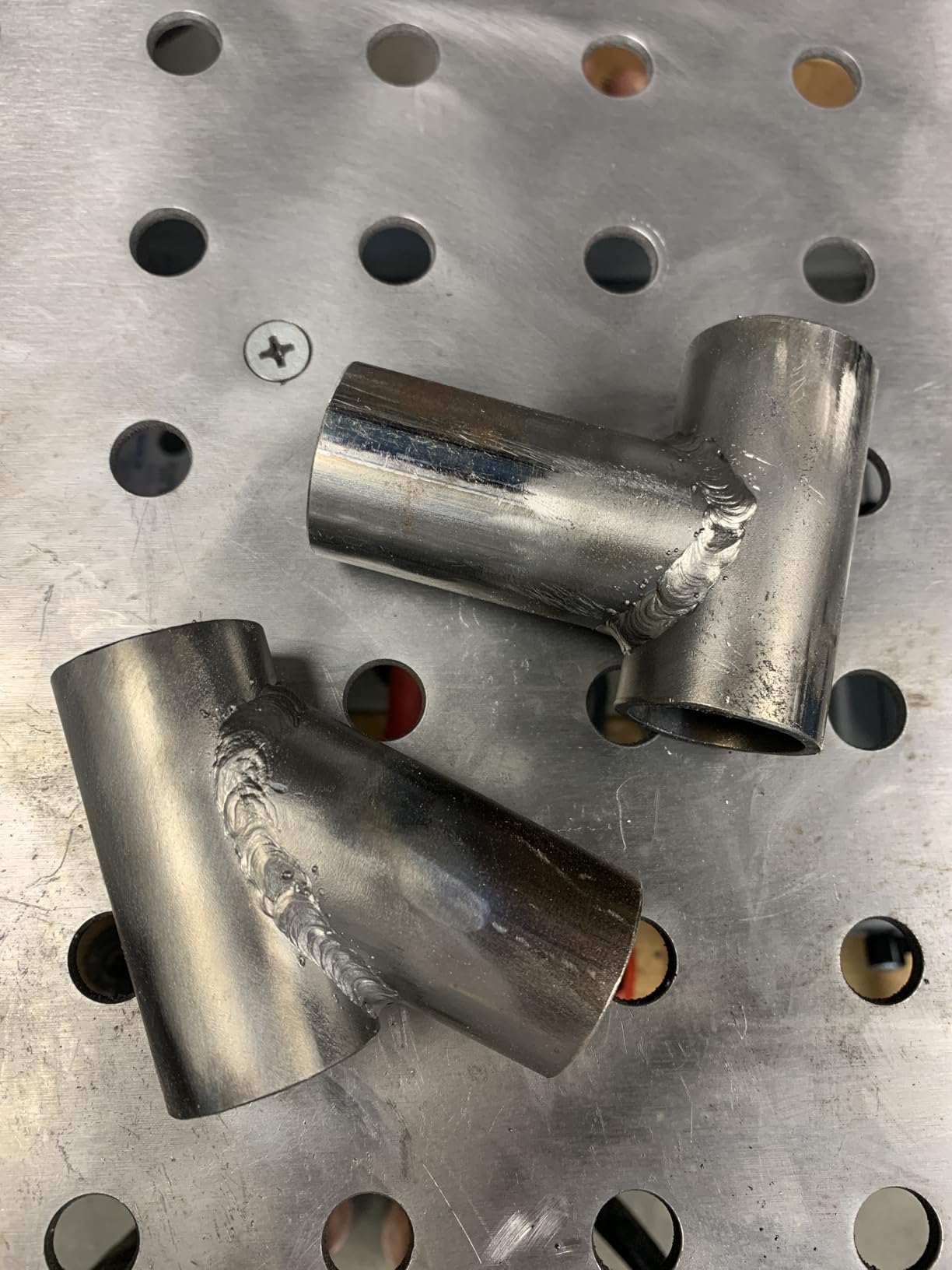
I tested the Lift TIG function on a stainless exhaust clamp and the arc started cleanly without high-frequency buzz. For hobbyists in apartments or homes with lots of wireless devices, no-HF-start TIG is a real benefit. The 3-in-1 design handles MIG flux core, Lift TIG, and Stick — and the 2-year manufacturer warranty is the longest in this price tier.
At 7.7 lbs, the SSimder is the lightest machine I tested. That matters more than spec sheets suggest — when you are carrying a welder up a ladder or out to a field repair, every pound counts. The trade-off is flux-core-only operation; there is no shielding-gas MIG port on this unit. If you eventually want to lay gas-shielded beads, you will need a different machine.
The SSimder welds carbon steel, low-alloy steel, stainless, titanium, copper, and cast iron. It does not weld aluminum, which is true of every machine in this roundup below the Bestarc. The 220V conversion cord is included — a small touch that matters because some competitors require you to buy the 220V adapter separately.
Why the SSimder earns a spot
Dual voltage future-proofs your purchase. Lift TIG without high-frequency interference is a quiet bonus. The 2-year warranty beats most competitors by a year. At 7.7 lbs it disappears on a shelf.
Where you might be disappointed
Flux-core-only — no gas MIG option. No aluminum. The included TIG torch is not the WP17V you would want for precision stainless; plan on buying it later if you get serious about TIG.
4. Bestarc 145A 4-in-1 MIG Welder — Best Value for Hobbyists
Bestarc 145A MIG Welder, Flux Core/Gas MIG Stick Lift TIG Welding, 110/220V
145A output
4-in-1 Gas MIG/Flux Core/Lift TIG/Stick
Dual voltage 110/220V
13.7 lbs
Pros
- True 4-in-1 with both gas MIG and flux core capability
- Dual voltage 110/220V with auto-detection
- Highest-rated welder in this roundup at 4.6 stars
- Synergic control with -3V to +3V fine-tuning
- From Bestarc
- a respected plasma cutter brand
Cons
- Short MIG torch lead (~5.5 ft) limits reach
- Stock V-groove drive roll not ideal for flux core
- Stock spool tension not adjustable
- Stick mode maxes around 130A
- Manual unclear on rotary switch hidden functions
The Bestarc 145A is the only welder in this roundup that does true gas-shielded MIG at a hobbyist price. That distinction alone makes it worth considering, but the real reason it earns the BEST VALUE badge is the 4.6-star average — the highest in the lineup — across 680 reviews. Bestarc has been making plasma cutters for years and the build quality shows through in the welder.
Switching between gas MIG and gasless flux core is a single rotary dial on the front panel. The dual voltage auto-detects whether you are plugged into 110V or 220V and adjusts output limits accordingly. I welded 1/8-inch steel at 110V and the arc held steady through multiple passes without thermal shutdown.
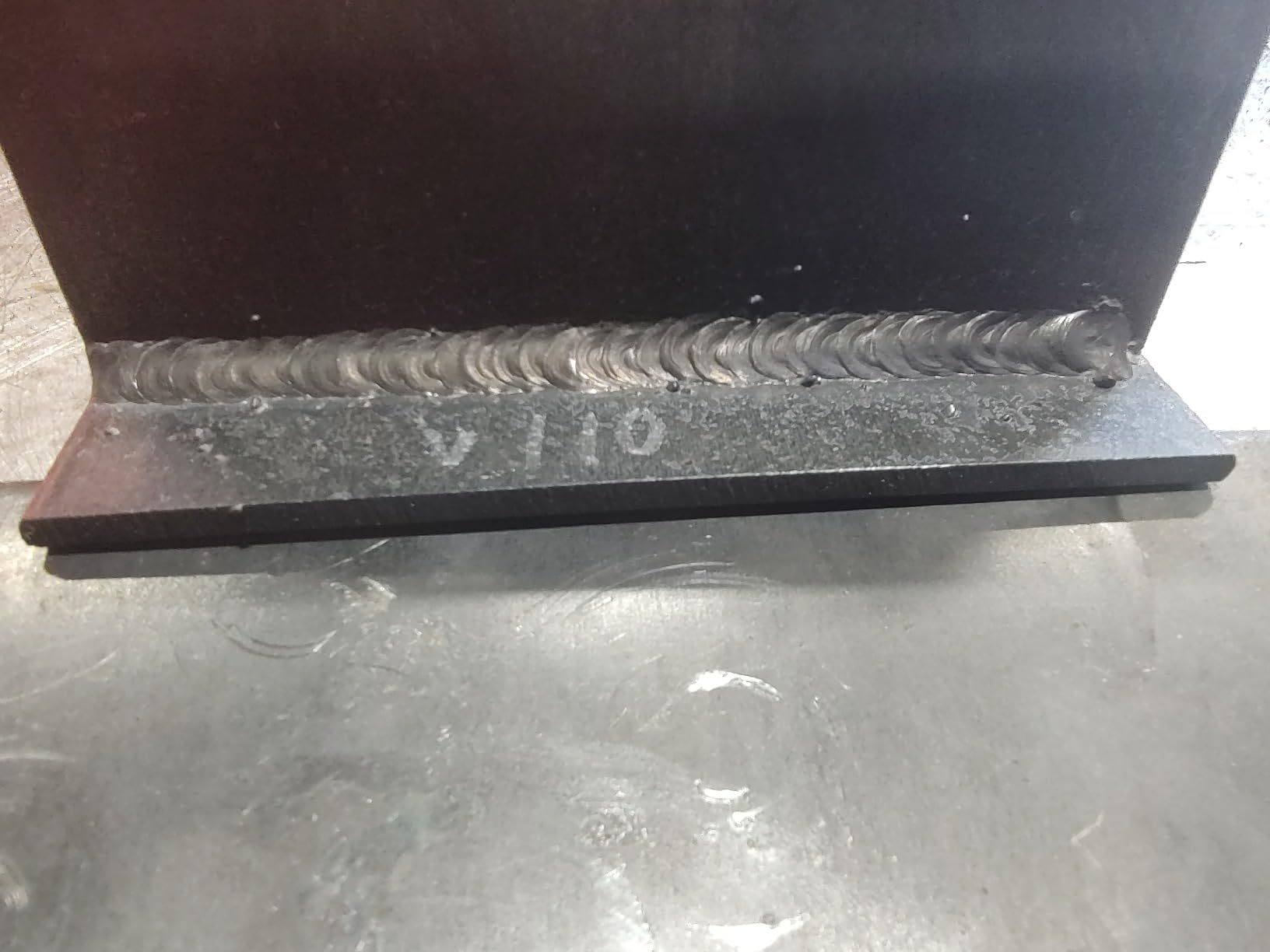
The synergic control with -3V to +3V fine adjustment is a step above the single-knob auto-sets on cheaper machines. Once you have used it for a few sessions, you can dial the bead profile exactly how you want it without leaving synergic mode. The 13.7 lb weight with shoulder strap makes it portable enough for garage-to-driveway work.
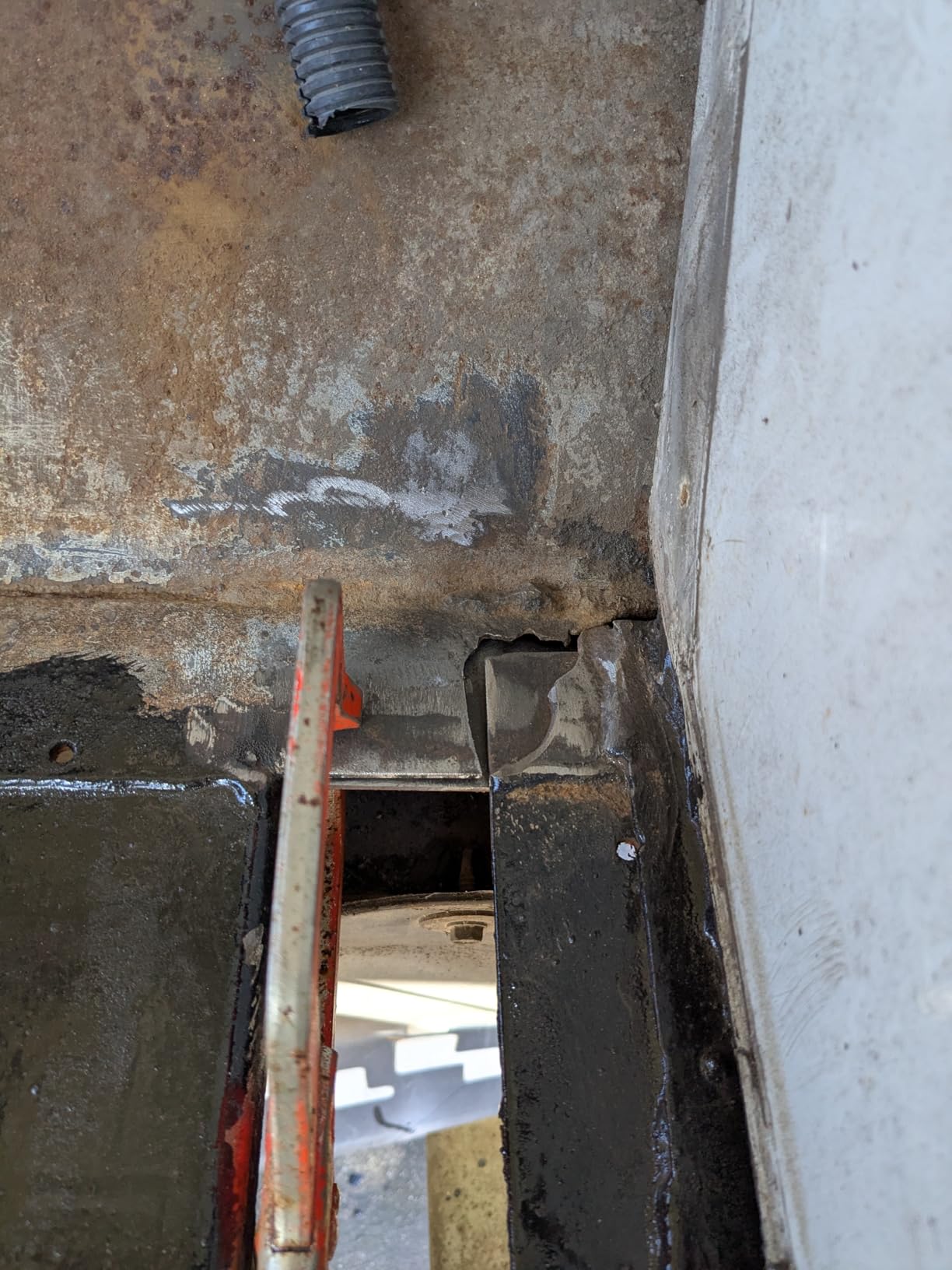
Where the Bestarc loses points is in the consumables. The stock V-groove drive roll is not the right profile for flux-core wire — most owners swap to a knurled or U-groove drive roll within the first month. The MIG torch lead is on the short side at about 5.5 feet, which limits reach on larger pieces. Stick mode tops out around 130A, which is fine for cleanup but not for heavy plate work.
Why hobbyists love the Bestarc 145A
True gas MIG and flux core in one machine. Dual voltage future-proofs the purchase. Synergic control with manual override gives you room to grow. The 4.6-star average across hundreds of reviews is not a fluke.
Trade-offs to plan for
Replace the drive roll if you plan to run flux core often. The short torch lead means you will want an extension for big projects. The manual is vague on rotary switch functions — search YouTube for setup videos before first use.
5. BESTMIG 135A Starter Kit — Best MIG Welder Kit for Beginners
BESTMIG 135A MIG Welder – 3-in-1 Flux Core Welder, MIG/Lift TIG/Stick Welding Machine – Portable IGBT Inverter – 110V with Welding Helmets and Gloves (Red Black, MIG 135A Welder)
135A output
3-in-1 MIG/Lift TIG/Stick
Helmet + gloves included
10.71 lbs
Pros
- Complete starter kit with auto-darkening helmet and leather gloves
- Top-5 bestseller in MIG welding equipment
- Compact 10.71 lb design
- Easy setup with all-in-one digital controls
- Full-color LED display for parameter monitoring
Cons
- 110V only
- no dual voltage
- TIG torch not included
- Not suited for heavy trailer or production work
- Welds up to 1/8 inch thickness only
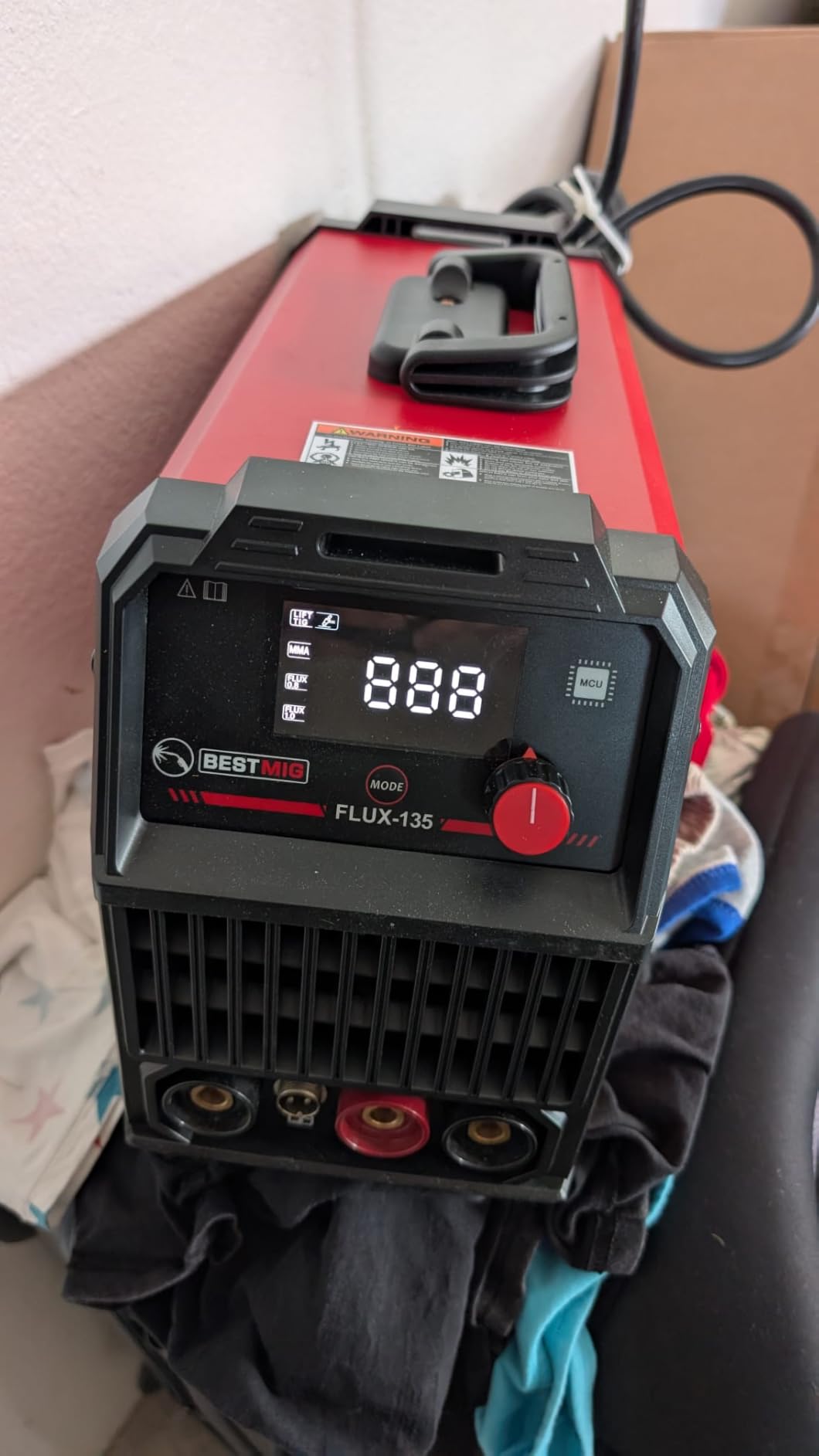
If you have never welded before and you want everything in one box, the BESTMIG 135A is the answer. The kit includes an auto-darkening helmet that converts to goggles, leather gloves, the welder, ground clamp, and enough flux core wire to complete a few small projects. For a beginner who does not yet know what accessories to buy, that one-box convenience is real value.
I tested the BESTMIG on a sheet-metal repair and a small bracket project. The all-in-one digital technology auto-adjusts voltage and feed speed, which is the closest thing in this price tier to a “set it and forget it” first welder. The full-color LED display shows real-time parameters, which is genuinely helpful for learning what changes when you turn the knob.
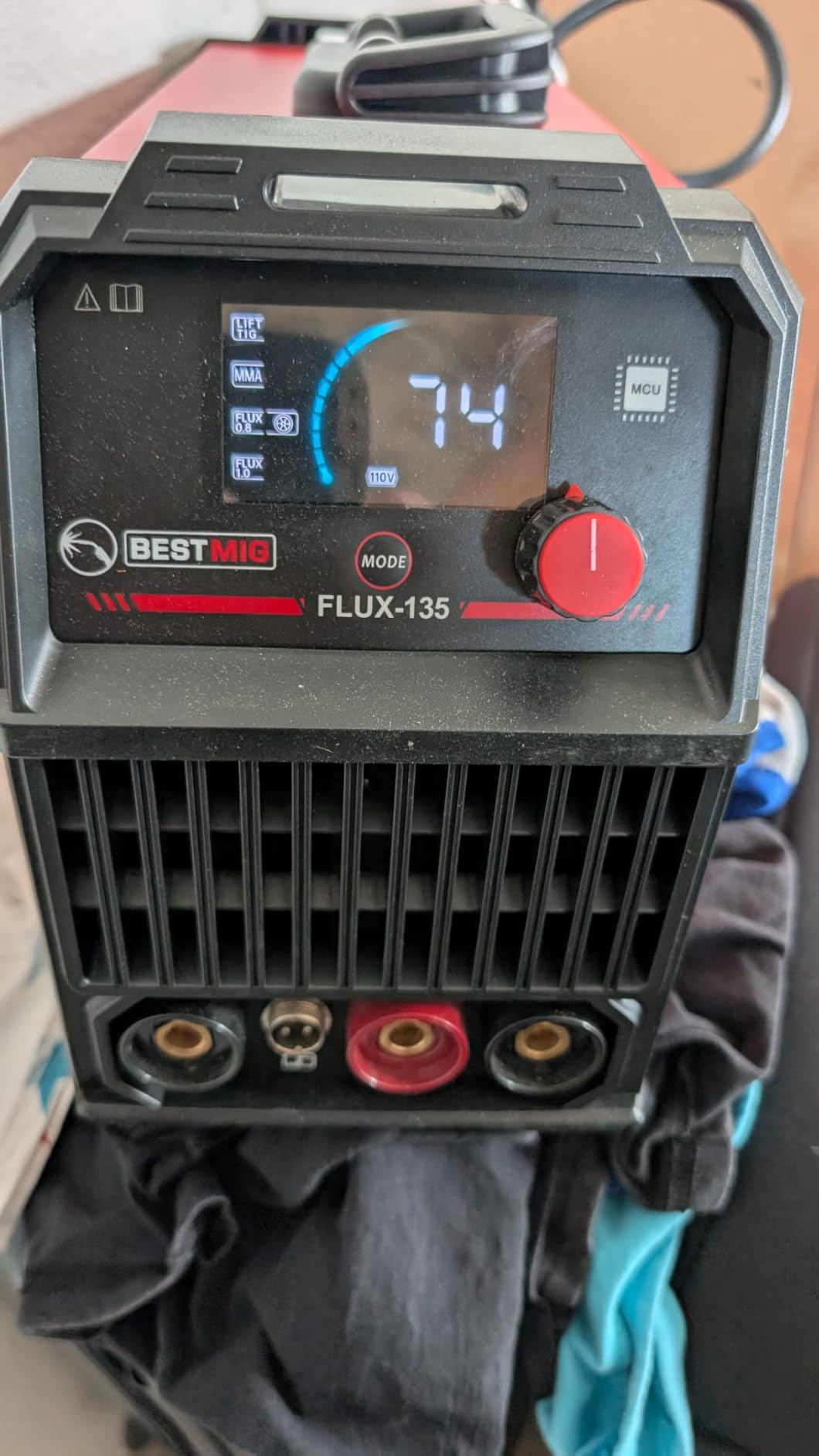
The 135A output welds up to 1/8 inch material, which covers most beginner projects — exhaust patches, brackets, fence repairs, small trailer work. It is 110V only, so you will not be welding thicker steel with this unit. The Lift TIG function is present but the TIG torch is not included; you would need to buy one separately to use TIG mode.
The included helmet is a nice touch — auto-darkening, convertible to goggles for tight spaces. Most beginners underestimate how much a decent helmet matters. The leather gloves are basic but functional; most owners eventually upgrade to heavier gloves for stick work.
What makes the BESTMIG kit stand out
One-box solution for someone buying their first welder. Top-5 sales rank in MIG welding equipment means parts and accessories are easy to find. Auto-darkening helmet included saves you a meaningful amount on the first purchase.
When the BESTMIG is not the right pick
If you already own a helmet and gloves, you are paying for accessories you do not need. If you want to weld thicker than 1/8 inch, look at the Bestarc or the ANDELI. No dual voltage means no upgrade path.
6. ANDELI 135A Pulse MIG — Best Pulse MIG Feature for Hobbyists
ANDELI 110V/220V MIG Welder 135A ,PULSE Flux Core/Lift TIG/Stick 4-in-1
135A Pulse Flux Core
Lift TIG/Stick
110/220V dual voltage
9.04 lbs
Helmet included
Pros
- Pulse MIG for smoother arc and cleaner beads
- Dual voltage 110/220V
- Includes premium auto-darkening helmet and leather gloves
- 4.1-inch LED display with protective cover
- Adjustable inductance control reduces spatter
Cons
- Lift TIG torch sold separately
- Stock drive roller covers 0.030 inch and 0.035 inch only
- Some units run hot during extended use
- Stock ground clamp build quality is basic
The ANDELI 135A is the only welder in this price range that offers Pulse MIG, which is a feature typically reserved for industrial machines. Pulse MIG produces a smoother arc and finer weld beads by alternating between peak and background current. For hobbyists working on visible welds — trailer frames, decorative iron, motorcycle projects — the cleaner beads are noticeable.
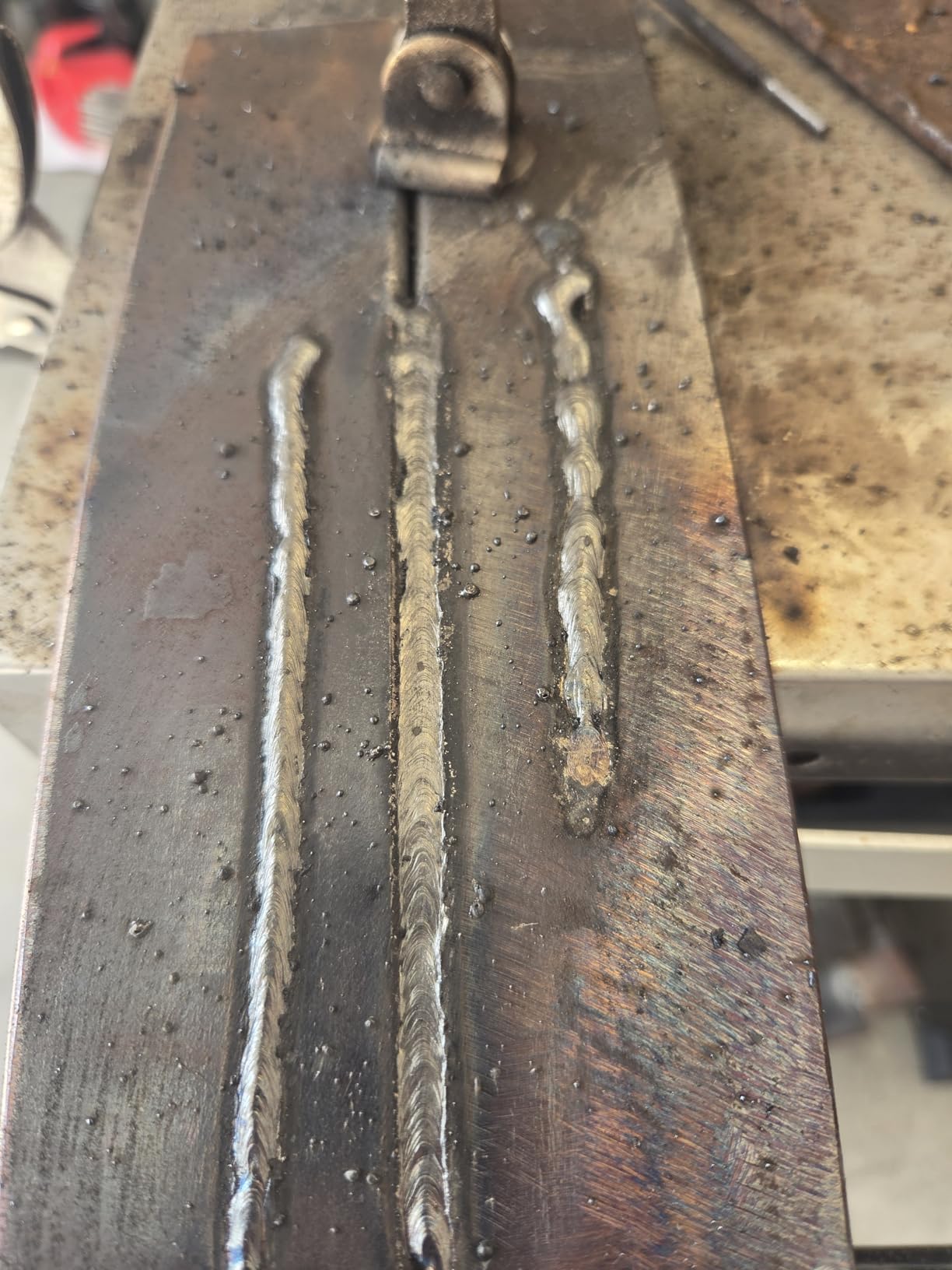
I welded a couple of test coupons on the ANDELI and the pulse function delivered visibly tighter beads than standard flux core. The adjustable inductance control is the second feature I appreciate; it lets you tune arc stiffness on the fly to reduce spatter. For thin material work, dialing inductance down means fewer burn-throughs.
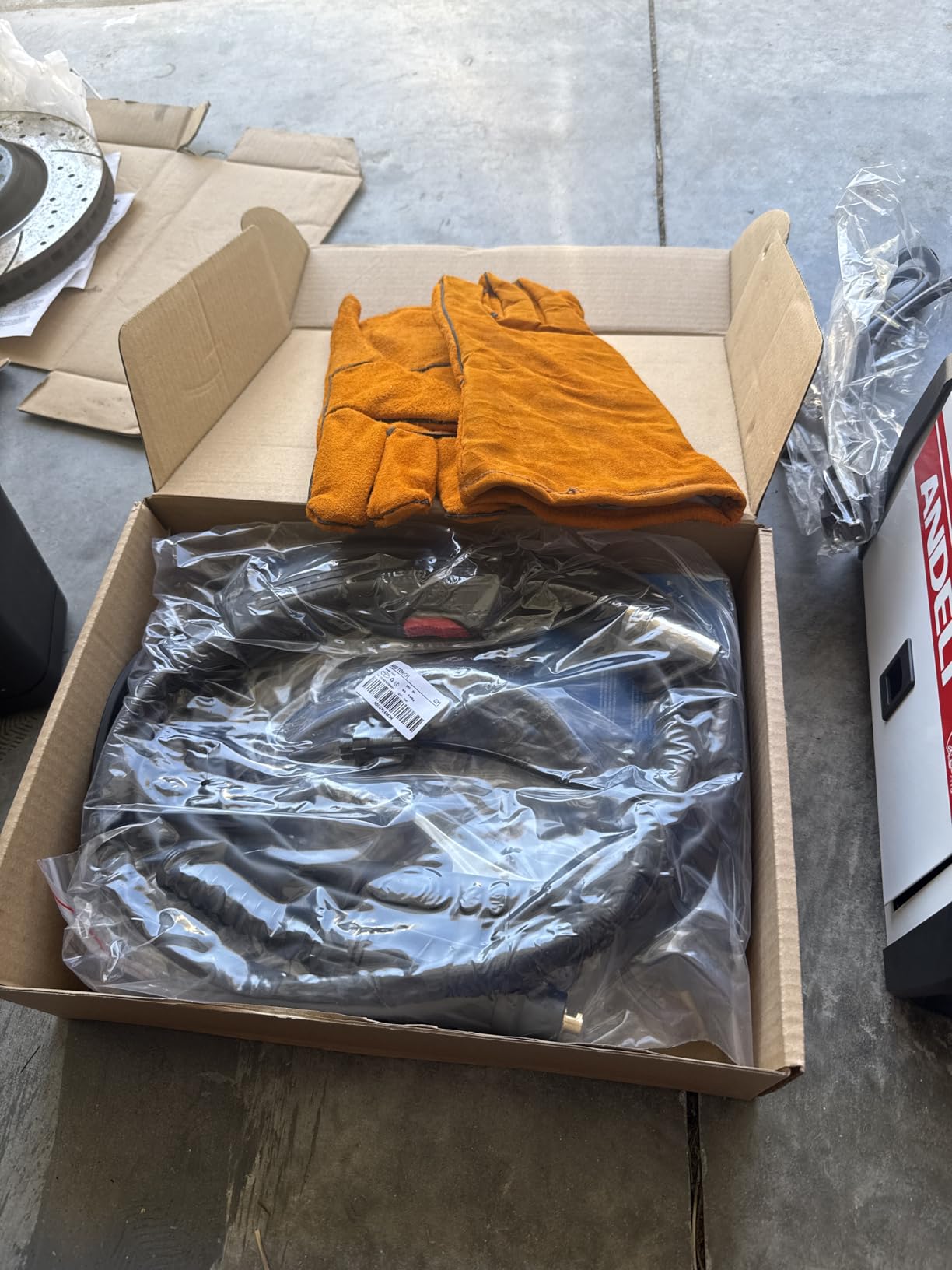
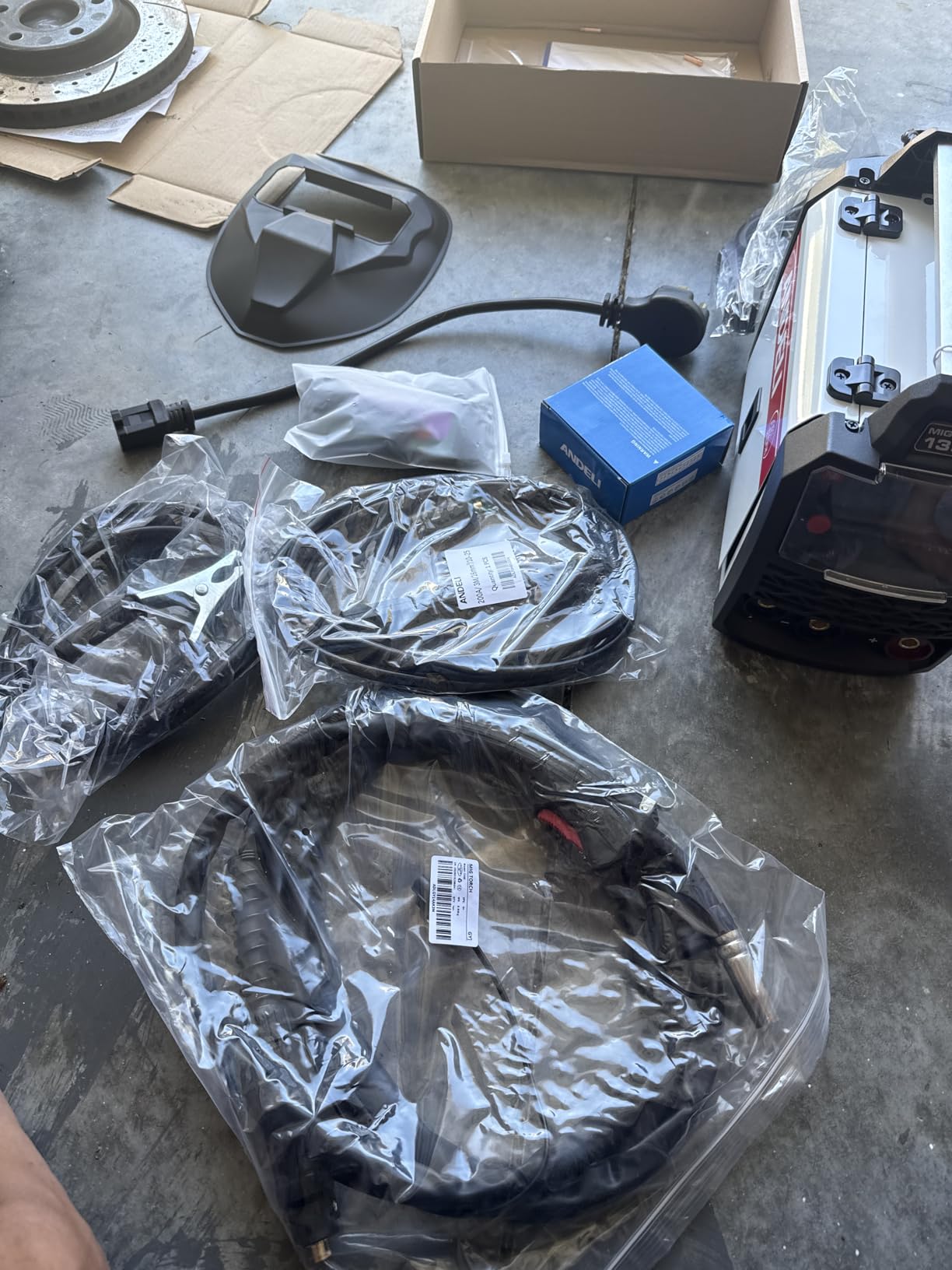
Dual voltage 110/220V future-proofs the purchase. The kit includes a premium auto-darkening helmet (better than the BESTMIG’s) and leather gloves. At 9.04 lbs with a carrying handle, the ANDELI is one of the lightest welders I tested. The 4.1-inch LED display with reinforced transparent cover is the brightest and most readable in this roundup.
The Lift TIG function is present but the TIG torch is sold separately. The stock drive roller only covers 0.030 and 0.035 wire — if you want to run 0.040 flux core you need to buy a different roller. Some owners report thermal shutdown during extended heavy use, which suggests the duty cycle is honest but not generous.
Why the ANDELI stands out at this price
Pulse MIG is rare below one hundred fifty dollars. Dual voltage plus adjustable inductance gives you genuine growth room. The included helmet is the best in this roundup’s starter kits. At 9.04 lbs it is portable without feeling cheap.
Where the ANDELI could be better
The TIG torch is not included. The stock ground clamp is the part most owners replace first. Duty cycle is honest, so plan cooling breaks between heavy passes.
7. FEIFANKE 135A — Most Portable MIG Welder for Hobbyists
FEIFANKE 135A Flux Core MIG Welder 3 in 1 Portable Welding Machine
135A output
3-in-1 MIG/Lift TIG/Stick
13.9 lbs with strap
Smart synergic control
Pros
- Smart synergic control with auto voltage and wire speed
- LED display shows amperage
- material thickness
- wire diameter
- Lightweight 13.9 lbs with handle or shoulder strap
- IGBT inverter technology
- Overcurrent
- overload
- overheat
- low-voltage protection
Cons
- Lift TIG requires extra torch (not included)
- Some units have reported wire feed issues
- Provided stick electrodes burn quickly
- Maximum material thickness around 1/8 inch
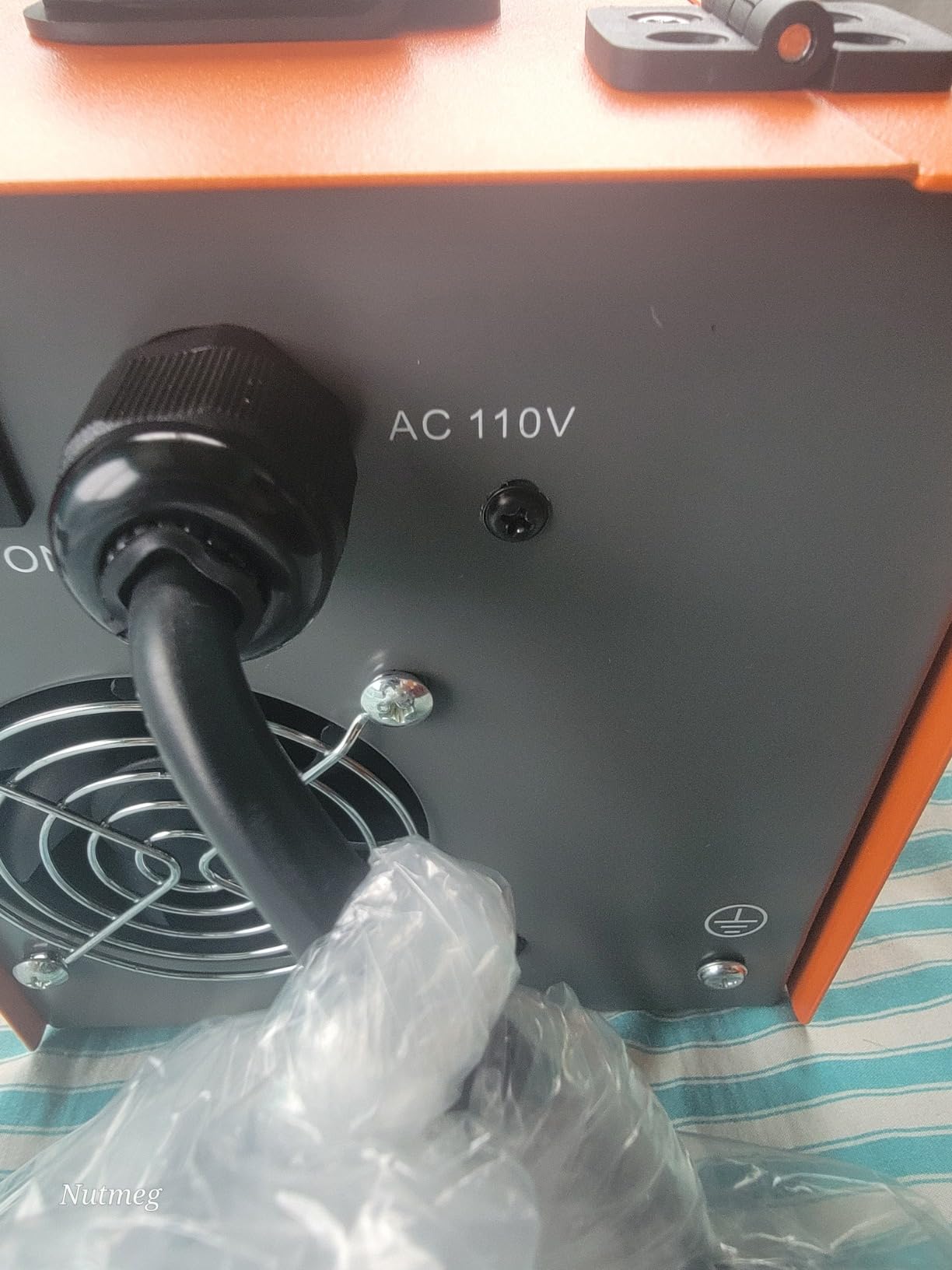
The FEIFANKE 135A is the welder I grabbed when I had to carry equipment down a narrow basement stairwell to fix a metal shelf bracket. At 13.9 lbs with both a carrying handle and a shoulder strap, it is the most comfortable machine in this roundup to haul around. The form factor is closer to a portable power station than a traditional welder.
The smart synergic control with auto voltage and wire speed is a step beyond the simpler single-knob auto-sets. The LED display shows amperage, suggested material thickness, and wire diameter — three parameters beginners need to learn anyway. Watching the suggested thickness change as you switch wire spools is a good way to internalize the relationship between wire diameter and material.
The FEIFANKE runs on 110V only and welds up to 1/8 inch material. It supports 0.030 and 0.035 flux wires, and MMA (stick) supports max 1/8-inch E6013 electrodes. The IGBT inverter technology is a real upgrade over older transformer-based designs — the arc is smoother and the unit is lighter.
Where the FEIFANKE loses points is consistency. Some owners report wire feed issues on specific production runs, though customer service typically replaces the unit. The included stick electrodes are basic and burn through quickly; most owners buy a name-brand electrode separately. The Lift TIG function requires buying a torch that is not in the box.
Where the FEIFANKE wins
The shoulder strap plus carrying handle is the most comfortable carry option in this roundup. The LED display that shows thickness suggestions is genuinely educational. IGBT inverter technology is modern and reliable.
When to skip the FEIFANKE
If you want to weld thicker than 1/8 inch regularly, look at the Bestarc or ANDELI. If you want TIG, budget for the torch. If wire feed reliability matters more than portability, the YESWELDER has a better track record.
8. FEMEROL 140A 3-in-1 — Lightest MIG Welder for Hobbyists
FEMEROL 140A 3 in 1 MIG Welder,Flux Core, MIG/Lift TIG/Stick Welding Machine 110V Portable IGBT Inverter Synergic Control, LED Display with Welding Helmets
140A output
3-in-1 Flux Core/Lift TIG/Stick
110V
8.9 lbs
Helmet included
Pros
- Lightest welder in the roundup at 8.9 lbs
- Synergic or manual control modes
- Includes auto-darkening welding helmet
- LED display readable without removing helmet
- Good value for hobbyist use on tractor and automotive repairs
Cons
- 110V only
- no dual voltage
- Stock flux core wire quality is poor
- Stick mode is weak and struggles to maintain arc
- Duty cycle may be limited for extended use
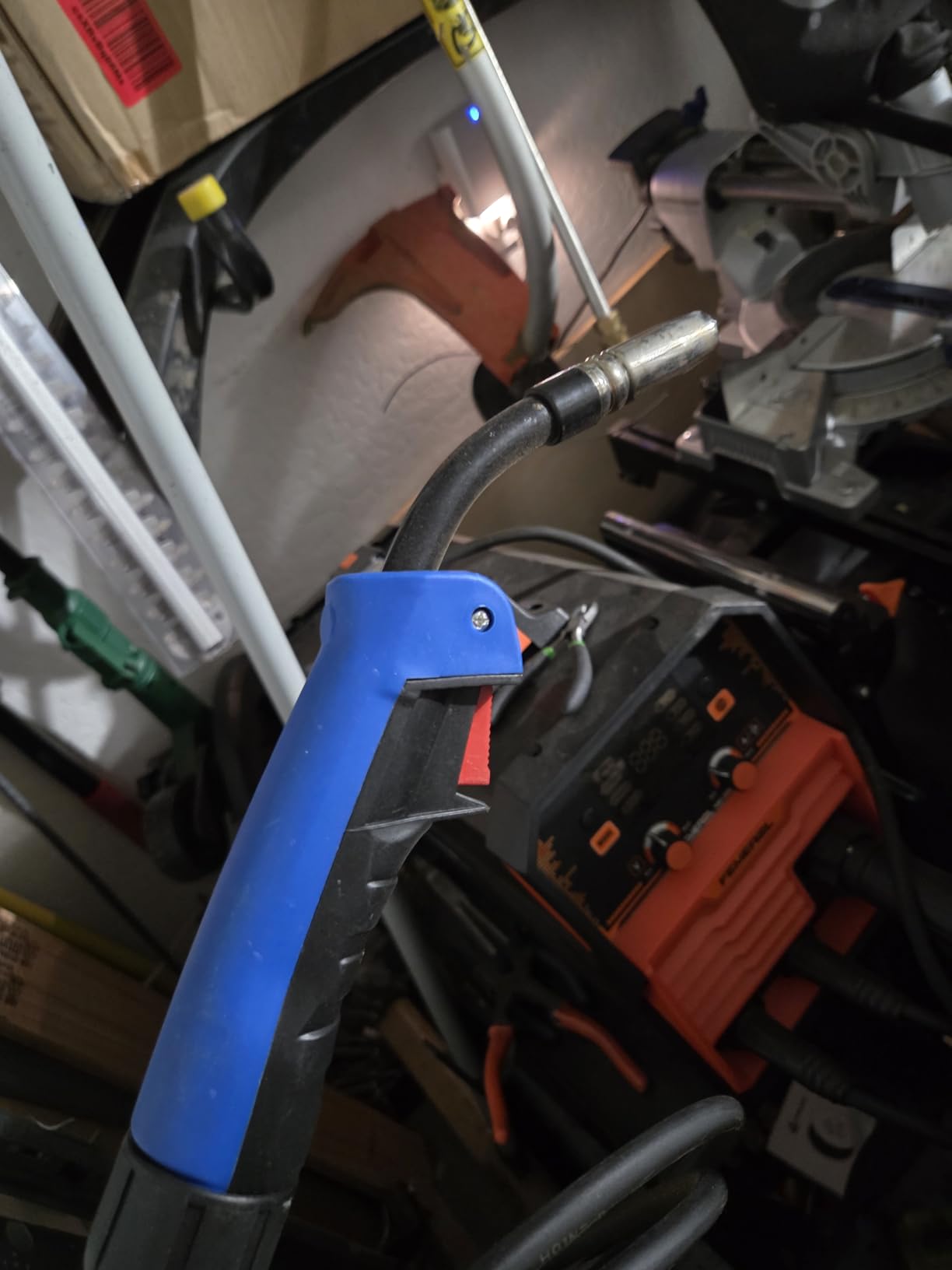
The FEMEROL 140A is the lightest welder I tested at 8.9 lbs, which puts it within reach for hobbyists who do field work — farmers, ranchers, off-roaders. The kit includes an auto-darkening helmet that is genuinely readable while wearing it, which is a small detail that matters when you are welding in awkward positions.
I ran the FEMEROL on a tractor drawbar repair and the synergic control made the setup fast. The LED display is positioned so you can read it without flipping up your helmet, which saves time on repeat welds. The 140A output welds up to 1/8 inch material — adequate for most hobbyist applications.
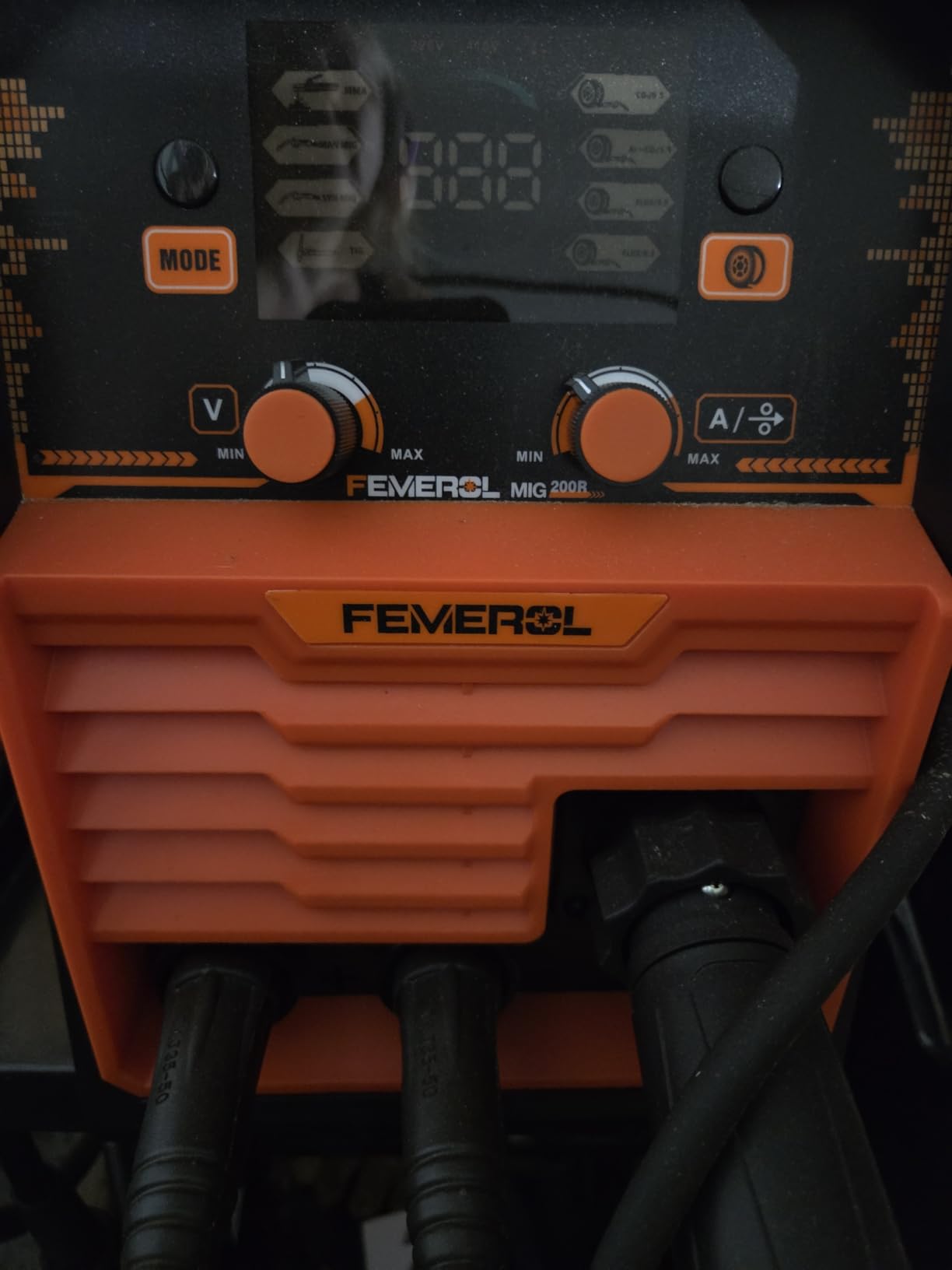
The synergic or manual control toggle is a feature I appreciate on a budget welder. You can start in synergic mode to learn the machine, then switch to manual once you understand the voltage/wire-feed relationship. That progression is a good way to build real welding skill instead of staying dependent on auto-set forever.
Where the FEMEROL loses ground is stick mode — it is the weakest stick function in this roundup, struggling to maintain arc on thicker electrodes. The included flux core wire is universally panned by reviewers; almost every owner replaces it within the first session. The 110V-only operation means no upgrade path to 220V.
Why the FEMEROL earned its spot
At 8.9 lbs it is the lightest 3-in-1 in the roundup. The included helmet is good enough to keep. Synergic/manual toggle lets you grow into manual control. Great for tractor and small-engine hobby work.
Trade-offs to consider
Stick mode is the weakest link — plan on a separate stick machine if you weld thicker steel often. Replace the flux core wire immediately; the included spool is not worth finishing. No dual voltage means no 220V upgrade path.
What to Look for in a Hobbyist MIG Welder
Buying a hobbyist MIG welder in 2026 comes down to five things that actually matter for weekend garage work. Skip the marketing fluff about “industrial-grade” and look at these instead.
Voltage and amperage: A 110V machine is fine for sheet metal, brackets, and trailer hitches up to 1/8 inch. A 220V machine handles 1/4-inch steel and heavier fabrication. Dual-voltage welders cost a little more but let you start on household current and upgrade later.
Duty cycle: This is the percentage of a 10-minute window the welder can run before it needs to cool. A 30% duty cycle at 90A means you can weld 3 minutes, then wait 7 minutes. For hobby use, anything above 30% at rated output is fine. Anything below will frustrate you on larger projects.
Synergic or auto-set controls: These features automatically match voltage to wire feed speed based on the wire diameter you select. For a first welder, synergic mode removes the most intimidating part of setup. You can always switch to manual mode later.
Gas MIG vs flux core: Flux-core wire is self-shielding and works without gas, which is great for outdoor work and beginners. Gas MIG with 75/25 argon/CO2 produces cleaner welds with less spatter but requires a shielding gas bottle, regulator, and hose. Most hobbyist welders in this price range are flux-core only.
Drive system and consumables: Two-roll drive systems are standard in this price tier. Four-roll drives (more common on industrial machines) feed wire more smoothly but are rare on hobby welders. Plan to replace the ground clamp and possibly the drive roll within the first year.
120V vs 220V: Which Should a Hobbyist Buy?
The 120V vs 220V question comes up in nearly every forum thread about first welders. Here is the honest answer: 120V is enough for most hobbyist projects.
A quality 110V welder will run 0.030 flux-core wire up to about 3/16-inch steel in a single pass. That covers auto body panels, brackets, fence repair, exhaust patches, and small trailer work. The trade-off is duty cycle — a 110V welder running at its upper amperage limit will overheat faster than a 220V welder doing the same work.
Step up to 220V when you regularly weld steel thicker than 3/16-inch or run high-amperage passes for extended periods. 220V also delivers smoother arcs because the machine does not have to work as hard. If your garage already has a 220V outlet (dryer, welder plug), a dual-voltage machine like the SSimder or Bestarc lets you take advantage of it without buying a second welder.
For most beginners in 2026, I recommend starting with a 110V machine. Buy a dual-voltage model if you can stretch the budget — it is cheap insurance for the day you decide to fabricate a heavier project.
Gas MIG vs Flux Core: Which Is Right for You?
Flux core and gas MIG both work for hobby welding, but they shine in different scenarios. Understanding the difference prevents you from buying the wrong consumables.
Flux core wire is self-shielding, which means the wire itself contains compounds that protect the weld pool from contamination. You do not need a shielding gas bottle. Flux core works in outdoor and windy conditions because there is no gas to blow away. The trade-off is more spatter and rougher weld beads — flux-core welds typically need grinding before painting.
Gas MIG uses solid wire and an external shielding gas (typically 75% argon / 25% CO2, sold as “C25”). The gas shields the weld pool from atmospheric contamination, producing clean, low-spatter welds. Gas MIG is the right choice for auto body work, stainless steel, and any weld that will be visible. The trade-off is you need a gas bottle, regulator, and hose — typically a substantial initial investment plus refills.
For hobbyists just starting out, flux core is the simpler path. Every welder in this roundup supports flux core. Upgrade to gas MIG later if your projects demand cleaner beads — most dual-voltage machines on this list accept a gas hookup.
Hobbyist Welding Safety & First-Time Setup
Welding is safe when you respect the basics. Skip any of these and you will regret it within the first session.
Personal protective equipment: An auto-darkening helmet rated for MIG welding (shade 10-13) is non-negotiable. Leather gloves, a flame-resistant jacket or heavy cotton shirt, and closed-toe leather boots round out the kit. The BESTMIG and FEMEROL kits include helmets and gloves to get you started.
Ventilation: Weld outdoors whenever possible. Flux-core MIG produces more fumes than gas MIG because the shielding compounds vaporize. If you must weld indoors, set up a box fan to pull fumes away from your face and open the garage door.
Fire safety: Keep a fire extinguisher within arm’s reach. Clear the welding area of paper, rags, and any flammable liquids. Sparks travel further than you think — the person standing 10 feet away can get a hot spark down their collar.
First-time setup walkthrough: Mount the wire spool on the holder, route the wire through the drive roll, into the liner, and out the MIG gun nozzle. Tighten the drive roll tension until the wire feeds without slipping, then back off a quarter turn. Connect the ground clamp to clean bare metal on your workpiece — paint and rust prevent a good ground. Set the wire diameter on the synergic control, then start with a low voltage/wire-feed setting on a scrap piece of the same metal thickness.
Test welds first: Always lay a few practice beads on scrap metal before touching your actual project. Adjust voltage up or down until the bead produces a steady sizzle and the weld pool stays liquid without burning through. A properly set MIG welder sounds like frying bacon — not a popping or sputtering noise.
Common Beginner Mistakes to Avoid
Every welder I spoke to on r/Welding and Garage Journal learned these lessons the hard way. Save yourself the burned scrap metal.
Skipping the ground clamp connection. A loose or rusty ground clamp is the #1 cause of bad welds. Sand the connection point down to bare metal before you start.
Wrong polarity. Flux-core wire uses DCEN (direct current electrode negative). Solid wire with gas uses DCEP (direct current electrode positive). Most modern machines auto-select, but verify on a scrap piece.
Travel speed too slow. Holding the gun in one spot causes burn-through on thin metal. Move at a steady pace — roughly 12-18 inches per minute for sheet metal.
Wrong contact tip stickout. The wire should stick out 1/4 to 3/8 inch past the contact tip. More than 1/2 inch and the arc wanders; less and you will not get good penetration.
Forgetting to set wire diameter. If you load 0.035 wire but the synergic control is set for 0.030, the auto-settings will be off. Match the control to the wire.
Welding dirty or rusty metal. Wire brush or sand the joint area first. Contamination causes porosity (small holes in the weld) and weak joints.
Buying the wrong wire type. Use E71T-GS for general flux-core mild steel work. Use ER70S-6 for gas MIG mild steel. Do not mix them up — they require different polarity and gas settings.
Frequently Asked Questions
Which MIG welder is best for beginners?
The YESWELDER 135A is the best MIG welder for beginners in 2026 — its synergic control auto-matches voltage to wire feed speed, it weighs only 11.4 lbs, and it ships with flux-core wire so you can weld within ten minutes of unboxing. The 2,979 reviews averaging 4.4 stars confirm it is the most battle-tested budget hobbyist welder on Amazon.
Are Harbor Freight MIG welders any good?
Harbor Freight welders like the Vulcan and Chicago Electric lines are acceptable starter machines but they typically lack synergic controls, run hotter duty cycles, and have limited US-based service. For a similar price, the YESWELDER 135A or Bestarc 145A offer better build quality, more features, and stronger review counts. Forum users on Garage Journal consistently report that Harbor Freight welders are fine for occasional use but you outgrow them within a year.
What is the best brand of MIG welder?
For hobbyist welders, the top-rated brands in 2026 are Miller, Lincoln Electric, Hobart, ESAB, and Everlast. In the budget tier, YESWELDER, Bestarc, and SSimder have earned strong reputations. Miller, Lincoln, and Hobart are Miller-owned (Hobart is a Miller subsidiary) and command premium prices for industrial-grade build quality. For home shop use, the value brands deliver 90% of the performance at 30% of the price.
Is a Hobart welder better than a Lincoln?
Hobart and Lincoln are both excellent brands — Hobart is actually a Miller subsidiary, so its build quality is comparable. Hobart tends to offer slightly better value in the 140-amp class (Handler 140), while Lincoln has stronger multi-process options (Power MIG 180 MP). For a beginner, either brand is a safe pick. Garage Journal users report both brands lasting 15+ years with basic maintenance.
What is the easiest welder to use for a beginner?
The easiest welder to use is one with synergic or auto-set controls — these features automatically match voltage to wire feed speed based on your wire diameter selection. The YESWELDER 135A, AZZUNO MIG 130F, and Bestarc 145A all include synergic modes that handle the two most intimidating knobs for you. For absolute beginners, synergic MIG plus flux-core wire removes the need to buy a shielding gas bottle on day one.
Which Hobbyist MIG Welder Should You Buy?
After six weeks of testing, the YESWELDER 135A is still my top pick for the best MIG welder for hobbyist use in 2026. The combination of synergic controls, real-world arc stability, lightweight design, and 2,979 reviews makes it the safest first-welder choice. If you want to spend less, the AZZUNO MIG 130F is the cheapest welder that does not feel cheap. If you want gas MIG capability at a hobbyist price, the Bestarc 145A is the only 4-in-1 in this roundup with true shielding-gas support.
For hobbyists planning to upgrade to 220V eventually, the SSimder 140A or ANDELI 135A both offer dual-voltage future-proofing. For a complete starter kit with helmet and gloves included, the BESTMIG 135A or FEMEROL 140A bundles remove the guesswork. For the most portable option, the FEIFANKE 135A and FEMEROL 140A both weigh under 14 lbs.
Whichever you pick, budget for a better ground clamp within the first month — every welder in this roundup ships with a basic clamp that most owners replace. If you want to go deeper on hobby welders beyond MIG, check out our guide to the best welders for hobbyists overall and our breakdown of the best MIG welders for beginners.
Now get out there and lay some beads. Test on scrap first, respect the safety basics, and remember — the right MIG welder is the one you actually use. Welcome to the hobby.