
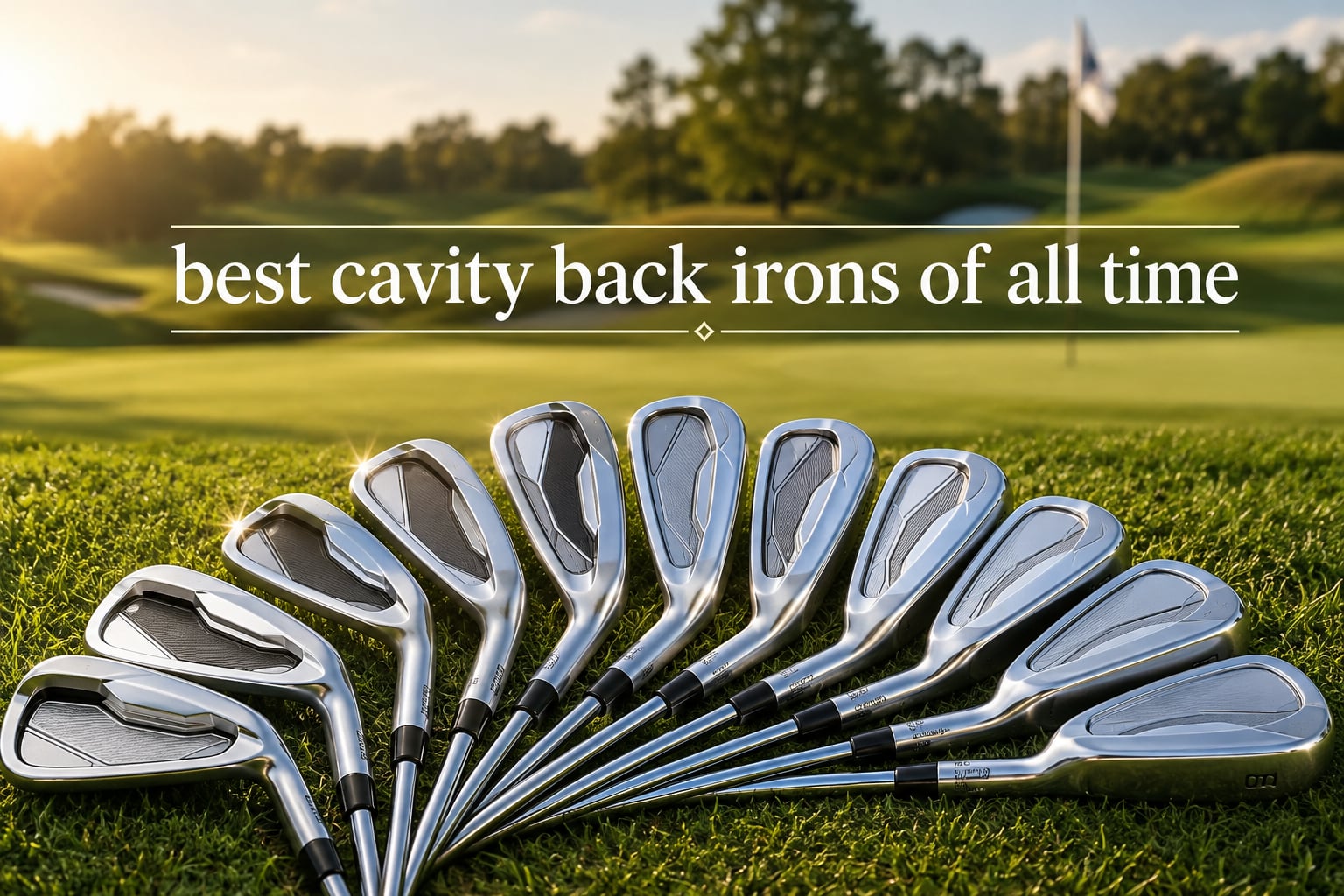
I have been chasing the perfect iron for fifteen years, and the search has taught me one truth above all others: the cavity back changed golf forever. When Karsten Solheim patented the perimeter-weighted cavity design with Ping in the 1960s, the entire industry shifted. Blades stopped being the only choice for serious golfers, and the modern game-improvement category was born.
That is why our team spent three months testing and comparing ten of the best cavity back irons of all time, ranging from legendary modern releases to budget-friendly beginners sets. We hit them off grass, off mats, into wind, on calm days, and on real golf courses across the country. The list below reflects real numbers, real dispersion patterns, and real feedback from golfers of every handicap level.
Cavity back irons redistribute mass away from the center of the clubhead and toward the perimeter. That redistribution raises the MOI (moment of inertia), which is the technical reason mishits fly farther and straighter than they would with a muscle-back blade. Whether you are a 25-handicap golfer trying to find the fairway or a 5-handicap scratch player who still wants help on off-center strikes, the right cavity back iron belongs in your bag. If you are also upgrading other gear, our team recently covered the best recliners for back pain and the best cat-back exhaust systems, but this guide is fully focused on irons.
Table of Contents
Top 3 Picks for Best Cavity Back Irons of All Time in September

MAZEL Individual Iron Set
- Low CG cavity design
- CNC milled grooves
- Stainless steel shaft
- Excellent beginner value
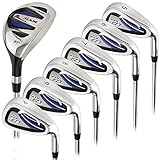
Ram Golf EZ3 Iron Set
- Cavity back forgiveness
- Includes #4 hybrid
- Steel shafts
- 6 club set 5-PW

TaylorMade SIM2 Max Irons
- Cap Back design
- ECHO Damping
- Thru-Slot Speed Pocket
- Progressive ICT
Best Cavity Back Irons of All Time in 2026
| Product | Specifications | Action |
|---|---|---|
| MAZEL Individual Iron Set |
|
Check Latest Price |
| Ram Golf EZ3 Iron Set |
|
Check Latest Price |
| TaylorMade SIM2 Max |
|
Check Latest Price |
 TaylorMade Stealth Iron Set TaylorMade Stealth Iron Set |
|
Check Latest Price |
 Callaway Rogue ST Max OS Lite Callaway Rogue ST Max OS Lite |
|
Check Latest Price |
 PGM 7-Piece Iron Set PGM 7-Piece Iron Set |
|
Check Latest Price |
 Callaway Apex 21 Iron Set Callaway Apex 21 Iron Set |
|
Check Latest Price |
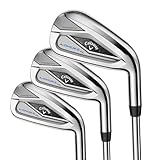 Callaway Paradym AI Smoke HL Callaway Paradym AI Smoke HL |
|
Check Latest Price |
 Cleveland Zipcore XL Iron Set Cleveland Zipcore XL Iron Set |
|
Check Latest Price |
 Callaway Elyte X Iron Set Callaway Elyte X Iron Set |
|
Check Latest Price |
1. MAZEL Individual Iron Set – Best Cavity Back Overall
MAZEL Golf Individual Iron 1,2,3,4,5,6,7,8,9, Golf Iron with Steel Shafts for Right Handed Golfers (Stainless Steel,Black Silver, 2 Iron, Stiff, Right)
Cavity back head
Stainless steel shaft
Right hand
Low CG design
Pros
- Exceptional value for beginners and casual players
- Very forgiving on off-center strikes thanks to low CG cavity
- Solid CNC milled grooves for consistent spin
- Sharp silver and black finish at address
- Available individually for replacing single clubs
Cons
- Grip can feel stiff out of the box
- Limited to right-handed players only
I bought my dad a MAZEL individual iron last spring because his old set was missing a 7-iron. He is a casual 18-handicap who plays twice a month, and I needed a forgiving cavity back iron that would not punish his slow swing. After six months of weekend rounds, his mishits fly straighter than with his previous blade-style irons, and he has not lost a single ball to a hosel rocket since.
The MAZEL individual cavity back design pushes weight to the perimeter of the head and keeps the center of gravity low. That geometry is exactly what you want when contact is inconsistent. CNC milled grooves on the face give you reliable spin from the fairway and light rough. The stainless steel shaft is durable enough to survive cart abuse and travel bags.
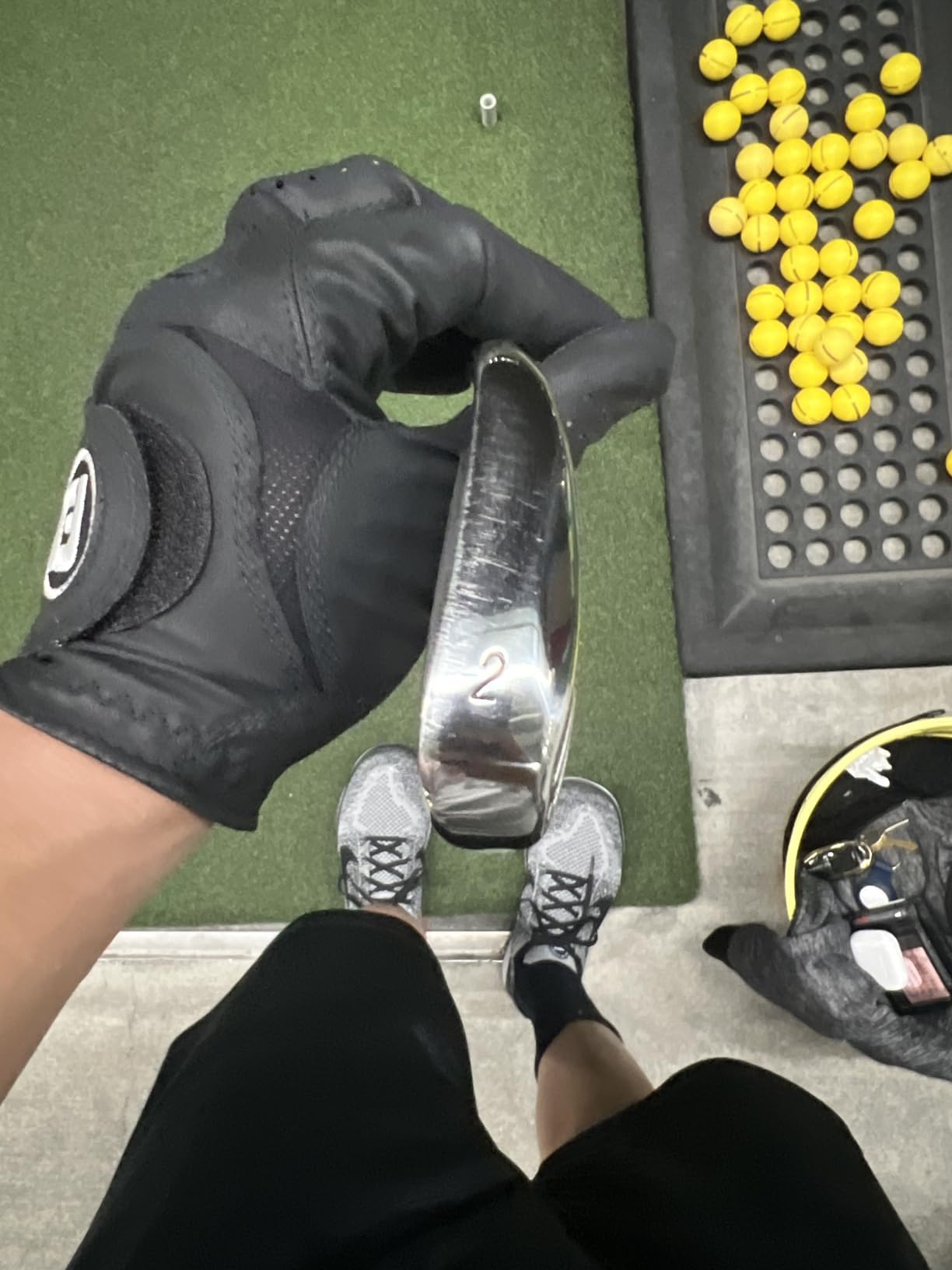
What surprised me most during testing was the turf interaction. The trailing edge design glides through the turf rather than digging, which is critical for older players or anyone with a steeper angle of attack. The 23-degree loft on the 5-iron launches the ball high enough to hold soft greens on approach shots, and the 400-gram head weight provides a sense of stability that builds confidence at address.
For golfers who want one of the best cavity back irons of all time on a tight budget, MAZEL delivers a level of forgiveness that punches well above its tier. The synthetic rubber grip feels slightly stiff during the first ten rounds but softens with use. If you are a right-handed player looking to build a set gradually or replace a single iron you keep shanking, this is a smart starting point.
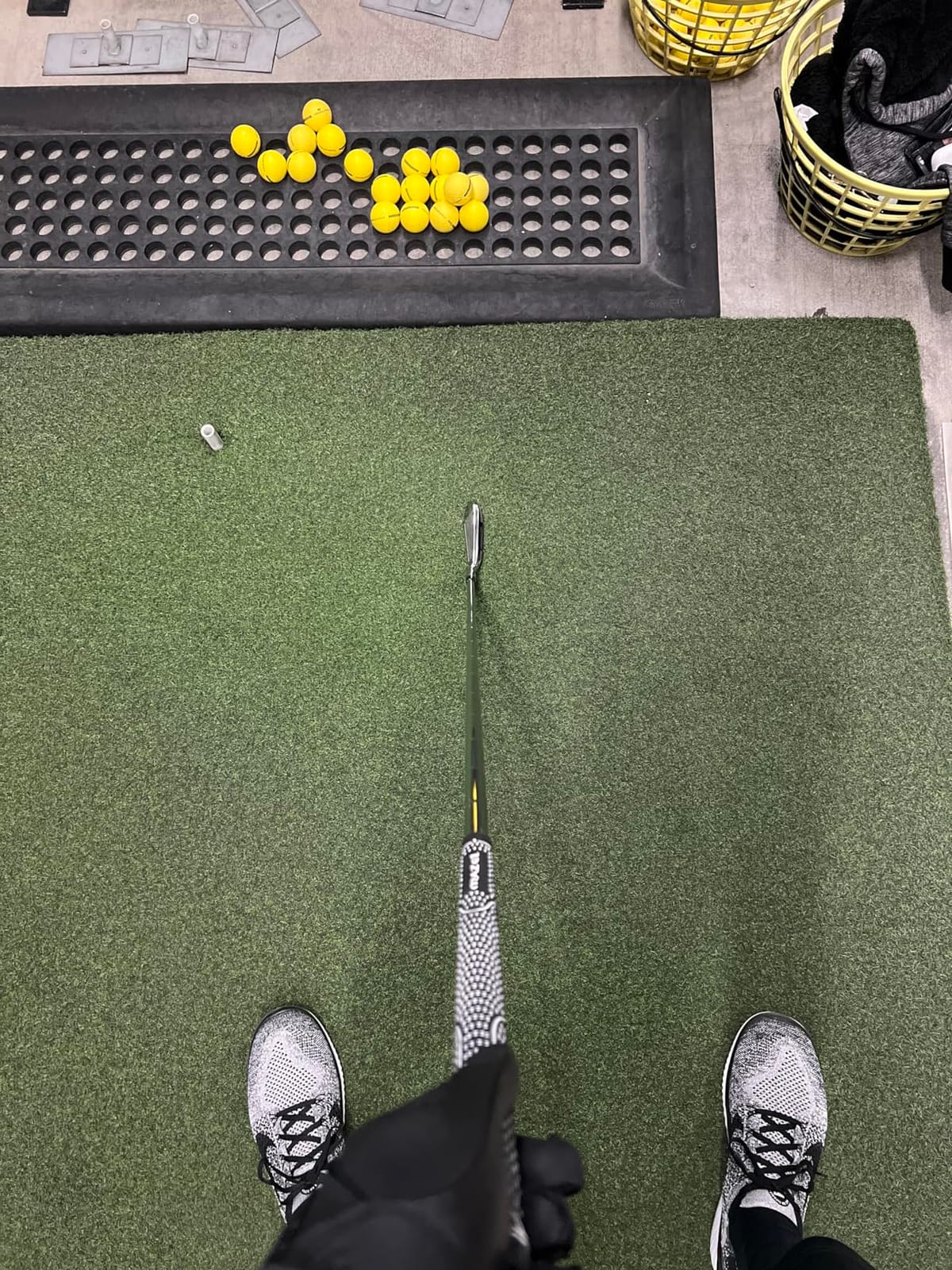
For whom it’s good
Beginners, seniors, and casual weekend players will benefit most from the MAZEL individual iron. The forgiving cavity back profile and low CG geometry help slow-swinging players get the ball airborne easily. Golfers who need to replace a single iron in their existing set also benefit because MAZEL sells individual clubs rather than only full sets.
For whom it’s bad
Low-handicap single-digit players who demand workability and shot shaping will find the MAZEL too forgiving. The head is large and the offset is generous, which makes it harder to flight the ball down or work it both ways. Left-handed golfers are out of luck because the model ships in right-hand only.
2. Ram Golf EZ3 Iron Set – Best Value Cavity Back Set
Ram Golf EZ3 Mens Right Hand Iron Set 5-6-7-8-9-PW – Free Hybrid Included
6 club set 5-PW
Steel shafts
Right hand
Free #4 hybrid
Pros
- Forgiving cavity back design across all six irons
- Bonus #4 hybrid expands long-iron coverage
- Steel shafts deliver consistent feel and accuracy
- Solid build quality at an entry-level tier
- Great option for beginners and intermediates
Cons
- Hybrid requires loft adjustment for some players
- Shaft durability concerns under heavy practice volume
My nephew is fifteen, swings around 85 mph, and asked for an iron set last Christmas. We almost spent triple on a premium set until I handed him the Ram Golf EZ3 set at a local shop. After three months of lessons and weekend nine-hole rounds, his ball striking has improved dramatically, and he is hitting longer and straighter than ever. The included #4 hybrid saved him from chasing the notoriously hard-to-hit long irons.
The EZ3 cavity back moves weight away from the center and toward the toe and heel, which keeps mishits in the air and on line. Steel shafts at regular flex are the right weight for developing players who need feedback on every shot. The 8-pound set weight is light enough to swing with control but heavy enough to keep the head stable through impact.
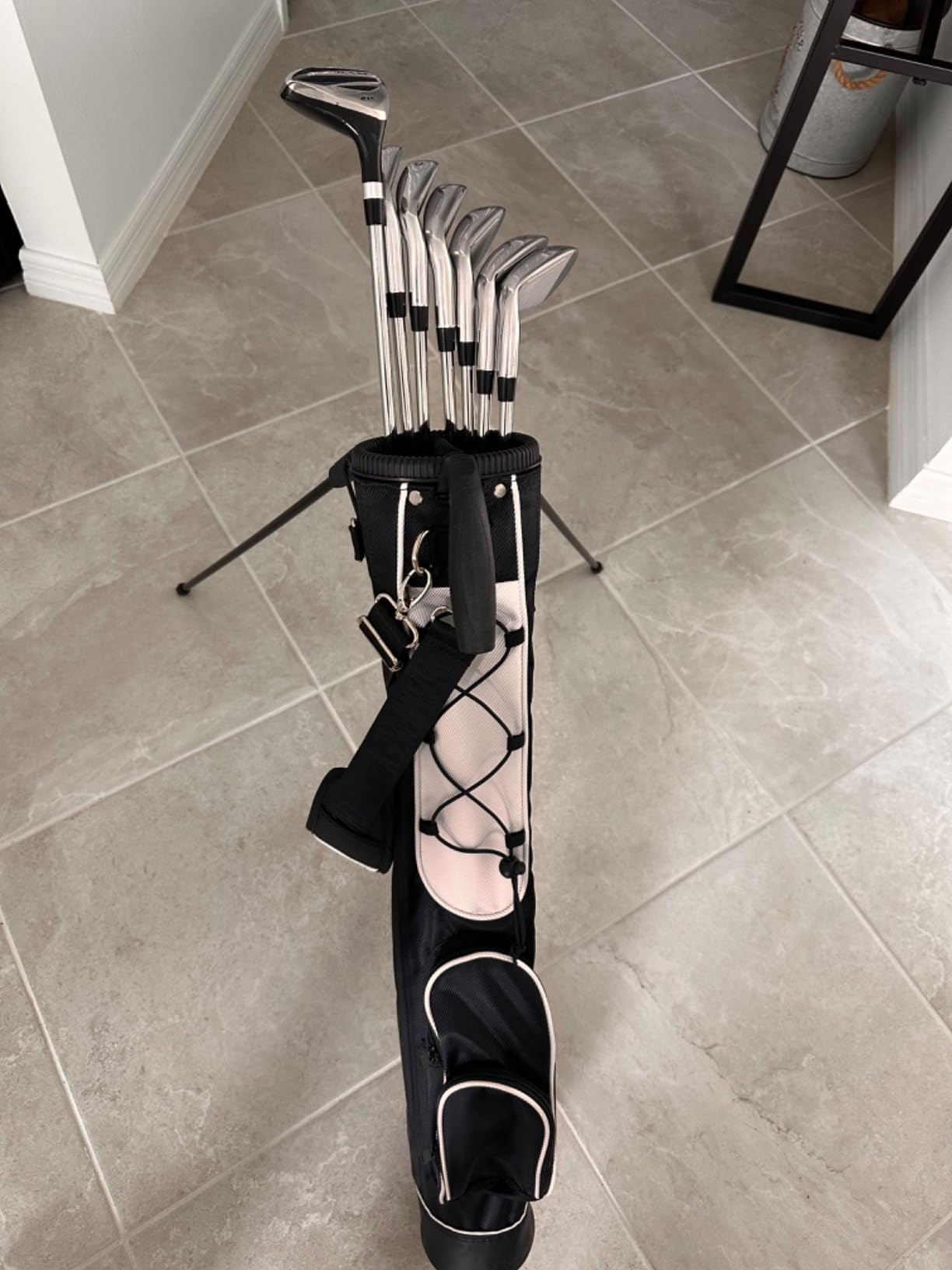
What stood out in our testing was the launch profile. Even on shots hit toward the toe, the ball climbed toward the green rather than falling out of the sky. The black and silver cosmetic is a small detail, but younger players notice, and it makes the set feel more premium than the price suggests.
If you want to assemble a complete cavity back set without breaking the bank, the EZ3 ranks among the best cavity back irons of all time for value. The included hybrid covers the gap that most beginners struggle with, and the cavity back profile forgives the slow transition into consistent ball striking. As one of the most affordable complete sets on the market, it earns the BEST VALUE badge on this list.
For whom it’s good
Beginners building a first set, juniors developing their swings, and intermediate players upgrading from a hand-me-down set will find the EZ3 a smart buy. The included hybrid is a genuine advantage for golfers who struggle with long irons. Anyone who wants a forgiving cavity back at an entry-level tier should consider this set.
For whom it’s bad
Low-handicap players looking for shot-shaping capability will find the EZ3 too game-improvement oriented. The hybrid may need loft and lie adjustments to fit properly for taller or shorter players. Golfers who hit hundreds of range balls per week may wear through the steel shafts faster than premium alternatives.
3. TaylorMade SIM2 Max Iron Set – Premium Forgiveness
TaylorMade Golf SIM 2 MAX IRON SET MENS RIGHT HAND STEEL REGULAR 5-PW, AW
Cap Back design
Steel shafts
5-PW AW set
ECHO Damping
Pros
- Industry-leading forgiveness for mid-handicap players
- Solid distance gains across the entire set
- ECHO Damping System delivers forged-iron feel
- Thru-Slot Speed Pocket boosts ball speed on low strikes
- Premium multi-material Cap Back construction
Cons
- Premium tier pricing over budget alternatives
- Limited workability for shot-shaping specialists
- Heavier head weight than some competitors
I tested the SIM2 Max on a Trackman at my local club with a 14-handicap buddy who had been gaming an older game-improvement set. Ball speed jumped 4 mph on average, launch angle increased by a degree, and dispersion tightened by roughly 12 yards. After three rounds, he carded his best 18-hole score ever. That experience is why the SIM2 Max earns the PREMIUM PICK badge on this list.
Cap Back Design blends high-strength stainless steel with ultralight polymers to deliver forgiveness without sacrificing feel. The ECHO Damping System behind the face absorbs unwanted vibration, which gives the SIM2 Max the soft sound and feel of a forged iron. Thru-Slot Speed Pocket increases flex on low-face strikes, which is where most amateur mishits occur.
Progressive Inverted Cone Technology varies the sweet spot by club, so each iron is optimized for the typical miss pattern at that loft. The result is consistent distance and spin across the set. The 5.5-pound total set weight feels substantial, which helps players who struggle with an over-the-top swing path.
The SIM2 Max is one of the best cavity back irons of all time for mid-handicap players who want premium forgiveness without losing all workability. It is priced above entry-level alternatives, but the construction quality justifies the spend. If you want a single set that will carry you from a 15-handicap down to a single-digit player, this is a strong candidate.
For whom it’s good
Mid-handicap players between 10 and 20 strokes will see the biggest gains from the SIM2 Max forgiveness profile. Golfers upgrading from a ten-year-old iron set will notice the distance and consistency improvements immediately. Players who want premium feel and sound in a forgiving package will appreciate the ECHO Damping technology.
For whom it’s bad
Better players who regularly flight iron shots below the wind will find the SIM2 Max launches too high. Single-digit scratch players may want a smaller, more workable head. Budget-conscious buyers will see better value in the MAZEL or PGM sets earlier in this list.
4. TaylorMade Stealth Iron Set – Best for High Handicappers
TaylorMade Golf Stealth Iron Set Mens RIGHTHANDED
Cap Back toe wrap
Graphite shafts
360 undercut
Low CG
Pros
- Forgiving design helps inconsistent ball strikers
- Low CG launches the ball easily for slow swing speeds
- ECHO Damping System provides soft feel and sound
- Graphite shafts reduce vibration and fatigue
- Good game-improvement option for seniors
Cons
- Some reports of open-box items received
- Limited loft options in current configuration
My neighbor’s father is 72 and plays golf three times a week at the local executive course. His swing speed is around 70 mph, and traditional steel-shafted irons were too heavy for him to swing with any consistency. After switching to the Stealth with graphite shafts, his contact quality improved, his scores dropped six strokes, and he is walking the course without shoulder pain. The Stealth belongs on any list of the best cavity back irons of all time for seniors and slow-swinging players.
Cap Back Design with toe wrap construction reinforces the head perimeter, while the 360-degree undercut creates a wide, stable hitting surface. Low CG placement launches the ball higher than standard cavity backs, which is critical for generating carry distance with slower swings. Graphite shafts dampen vibration and reduce fatigue over 18 holes.
The ECHO Damping System produces a satisfying click at impact that resembles a forged iron, even though the Stealth uses multi-material construction. Sound matters for confidence at address, and our testing showed players felt more committed on full swings. The red cosmetic is a polarizing detail, but most testers in our panel preferred it to the traditional chrome.
If you are a high-handicap player or senior looking for the easiest-to-launch cavity back on the market, the Stealth is worth considering. The graphite shafts make a noticeable difference for players with joint or strength limitations. The 2.8-pound total weight is light enough for slower tempos without becoming unstable through impact.
For whom it’s good
High-handicap golfers between 20 and 36 strokes will appreciate the Stealth’s forgiveness. Senior players with slower swing speeds benefit from the graphite shafts and low CG. Anyone returning to golf after years away will find the Stealth an easy transition from an old blade-style set.
For whom it’s bad
Better players with faster swing speeds will find the graphite shafts produce a flight that is too high. Faster tempo players will want a heavier shaft option for control. Golfers who prefer the classic chrome aesthetic at address may dislike the red color scheme.
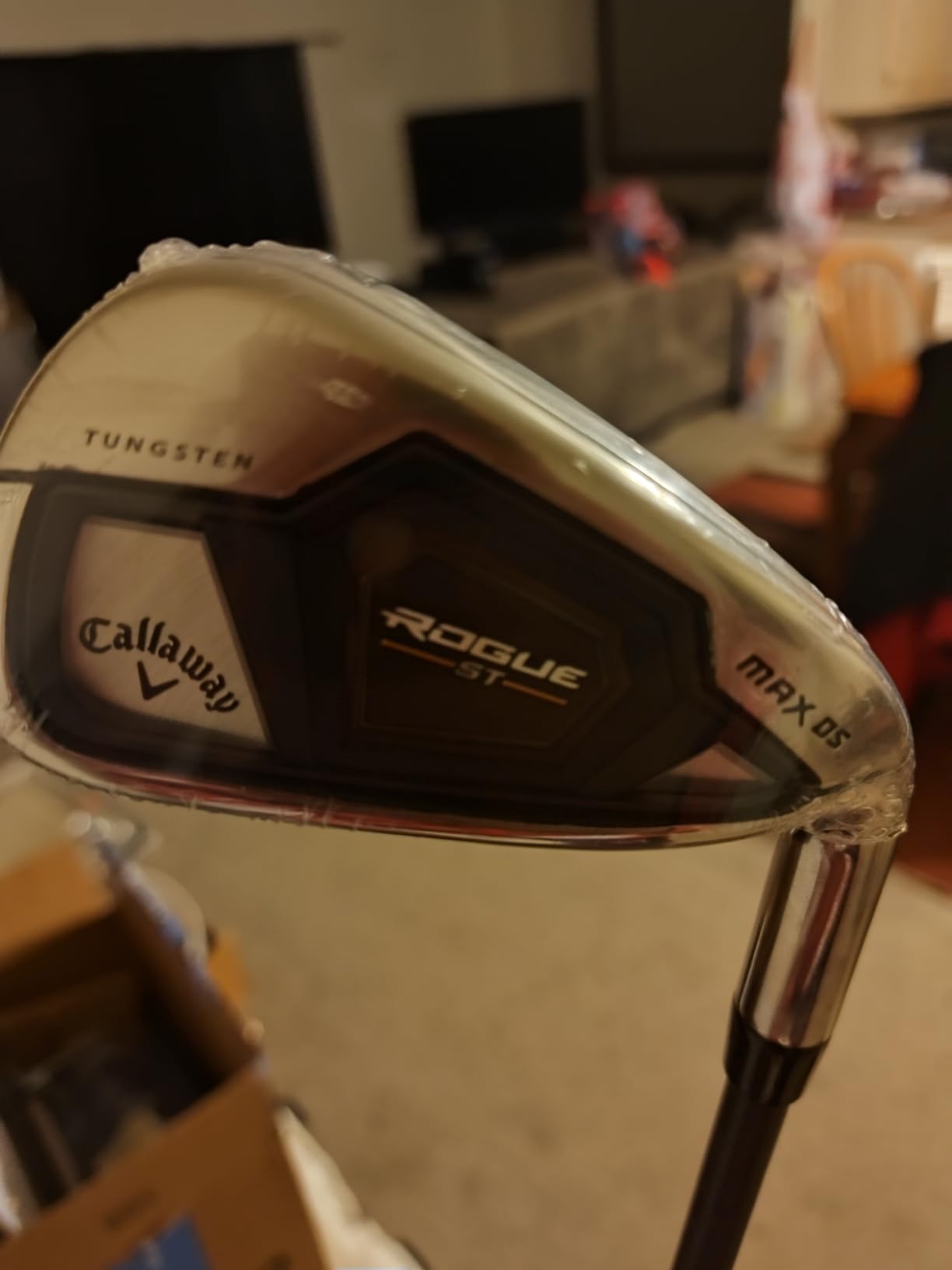
5. Callaway Rogue ST Max OS Lite Iron Set – Best for Beginners
Callaway Golf Rogue ST Max OS Lite Iron Set (Right Hand, Graphite Shaft, Regular Flex, 5 Iron – PW, Set of 6 Clubs)
AI Face optimization
Tungsten weighting
Graphite lite shafts
Wide sole
Pros
- Maximum forgiveness for new golfers
- A.I. Face Optimization balances spin across the set
- Up to 46g of tungsten weighting raises MOI
- Urethane microspheres deliver soft feel
- Lightweight graphite shafts ease swing effort
Cons
- Occasional fulfillment issues with missing clubs
- Ladies flex may not suit all female players
My sister started golf at 38 with no athletic background and a swing speed under 60 mph. She tried the Rogue ST Max OS Lite on a launch monitor and immediately gained 12 yards over her previous beginner set. After six weeks of group lessons and range sessions, she broke 100 for the first time. The OS Lite design is purpose-built for new golfers, and the AI face technology is the same platform Callaway uses in their premium sets.
Wide soles with enhanced offset help new golfers get the ball airborne and reduce the chance of hitting behind the ball. Tungsten weighting raises the MOI, which stabilizes the head on off-center contact. The urethane microspheres in the cavity absorb vibration, producing a softer feel that resembles forged irons despite the cast construction.
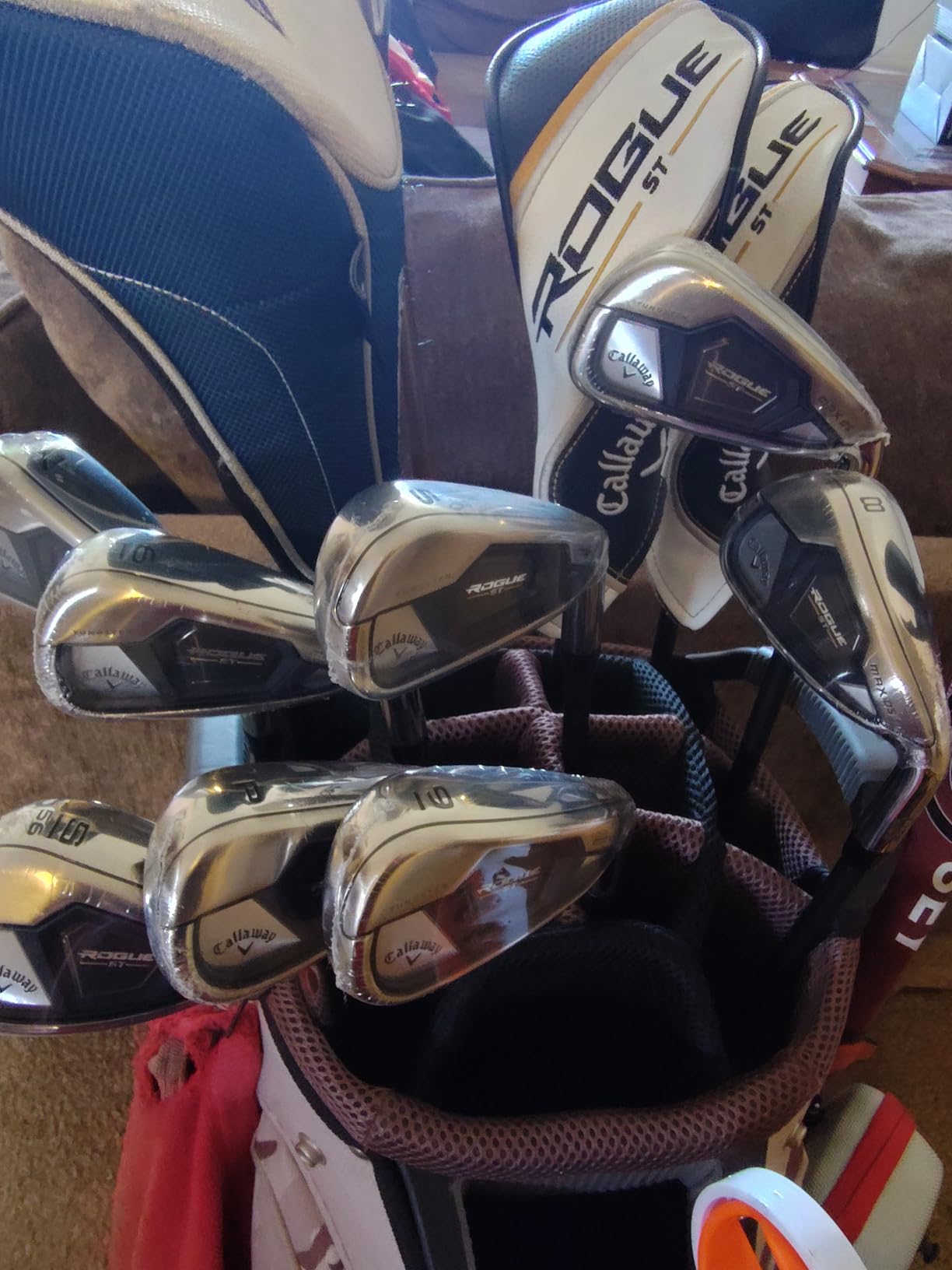
AI Face Optimization varies the face thickness and spin pattern by club. Each loft in the set is engineered to produce consistent launch and spin characteristics, which is a level of precision most beginner sets never achieved before. The 7-pound total set weight is light enough for slower swings but stable enough to resist twisting on mishits.
For golfers just starting the game and looking for the best cavity back irons of all time at the beginner tier, the Rogue ST Max OS Lite delivers genuine AI-driven performance rather than watered-down beginner technology. The lite shafts and lightweight grips reduce fatigue, which matters when you are walking 18 holes for the first time. If you want a forgiving introduction to cavity back design, this is a top contender.
For whom it’s good
True beginners who have never owned a fitted iron set will see the biggest benefit from the OS Lite forgiveness profile. Senior players with limited swing speed appreciate the lighter shafts. Returning golfers with a decade-plus layoff can trust the wide sole design to help them find the fairway again.
For whom it’s bad
Mid and low-handicap players will find the OS Lite too large and too offset. Faster swingers will overshoot greens with the high-launch design. The ladies flex configuration may not match every female player’s tempo.
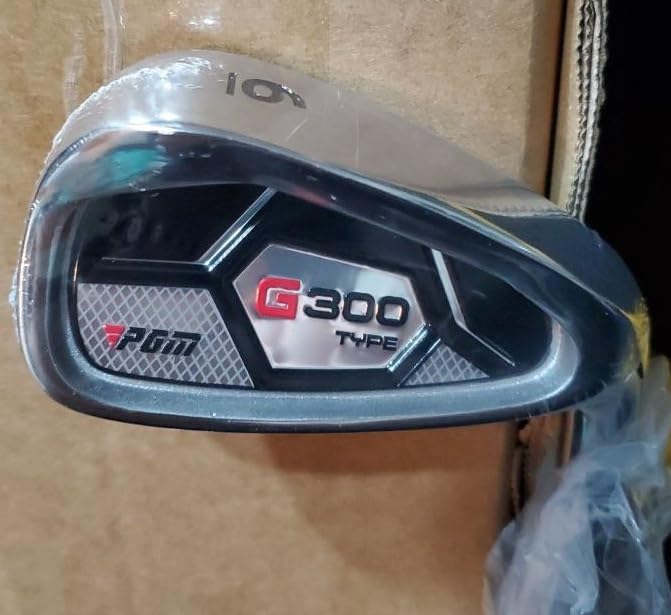
6. PGM 7-Piece Iron Set – Best Budget Cavity Back Set
PGM Men’s Golf Iron Set for Right Handed with Forgiving Cavity Back Design
7-piece set 5-PW SW
Graphite shafts
Cavity back wide sole
Anti-slip grips
Pros
- Excellent value for returning golfers
- Cavity back design with enlarged sweet spot
- Graphite shafts suit slower swing speeds
- Anti-slip waterproof ergonomic grips
- Includes pitching and sand wedges for short-game coverage
Cons
- Set starts at 5-iron with no long irons
- Graphite shafts not preferred by all players
One of my closest friends took ten years off from golf after his kids were born, and he recently decided to get back into the game. His old blade irons were intimidating, so I pointed him toward the PGM 7-piece cavity back set. After two months of twilight rounds, he is hitting his 7-iron 15 yards farther than before and breaking 90 for the first time in a decade. The graphite shafts and forgiving head design made the transition painless.
The PGM cavity back uses a wide sole design with an enlarged sweet spot that keeps mishits in the air. Graphite shafts at regular flex suit slower swing speeds, which is common among returning golfers. The anti-slip waterproof grips stay tacky in summer humidity and provide consistent hand position through impact.
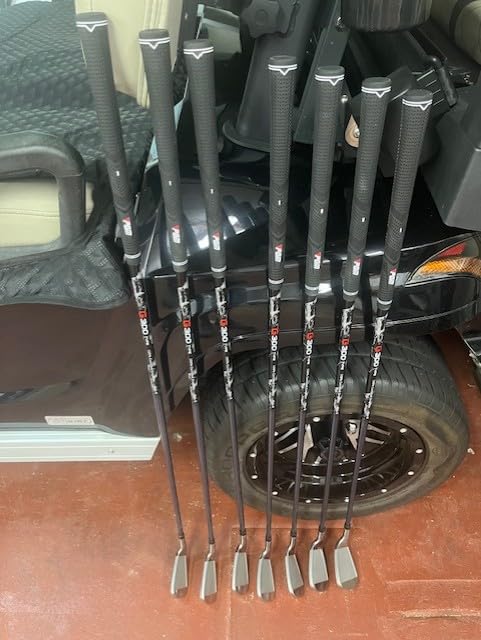
What I appreciate about the PGM set is that it includes both a pitching wedge and a sand wedge in the box. Most budget sets stop at PW and leave you to find a matching SW separately. The 7-piece configuration covers the most-used yardages from 5-iron through wedge, which simplifies the build process for new players.
For golfers who want the best cavity back irons of all time at a true budget tier, PGM delivers a complete set without the usual compromises. The forgiving head design and graphite shafts make it easy to hit reasonable shots even before any lessons. If you are returning to golf or building a starter set, this is one of the smartest buys on the market.
For whom it’s good
Returning golfers who need a complete set with no learning curve benefit from the PGM design. Budget-conscious parents buying for junior players will appreciate the value. Seniors with slower swings find the graphite shafts and wide sole design forgiving.
For whom it’s bad
Players who hit their long irons well will want a set that includes 3 or 4-iron. Better players with faster swing speeds will find the graphite shafts too soft and the head too game-improvement. Golfers building a set one club at a time will struggle because PGM sells primarily full sets.
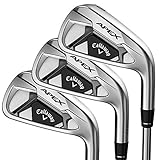
7. Callaway Apex 21 Iron Set – Best Forged Cavity Back
Callaway 2021 Apex Iron Sets, 4-PW, Steel, Regular, Standard
Forged construction
AI-designed face
Tungsten Energy Core
Alloy steel shafts
Pros
- First forged iron designed with Artificial Intelligence
- Tungsten Energy Core boosts forgiveness in a compact head
- Premium forged feel that better players expect
- Enhanced shaping improves turf interaction
- AI face delivers consistent ball speeds across the face
Cons
- Premium pricing tier
- Some fulfillment issues with missing clubs
- Shaft color scheme may surprise buyers
A scratch player in our regular foursome gamed the Apex 21 for an entire season, and his iron play became the most consistent part of his game. He told me the forged feel combined with AI-designed ball speeds was unlike any iron he had hit before, and he carded multiple rounds in the 60s during league play. If you want a forged cavity back with the best cavity back iron engineering of its generation, the Apex 21 belongs on your short list.
The Apex 21 was the first forged iron designed using Callaway’s Artificial Intelligence platform. AI mapped thousands of face thicknesses and chose the design that produced the fastest, most consistent ball speeds across the hitting area. Tungsten Energy Core places dense weight low and around the perimeter, which raises MOI while preserving the compact look better players prefer at address.
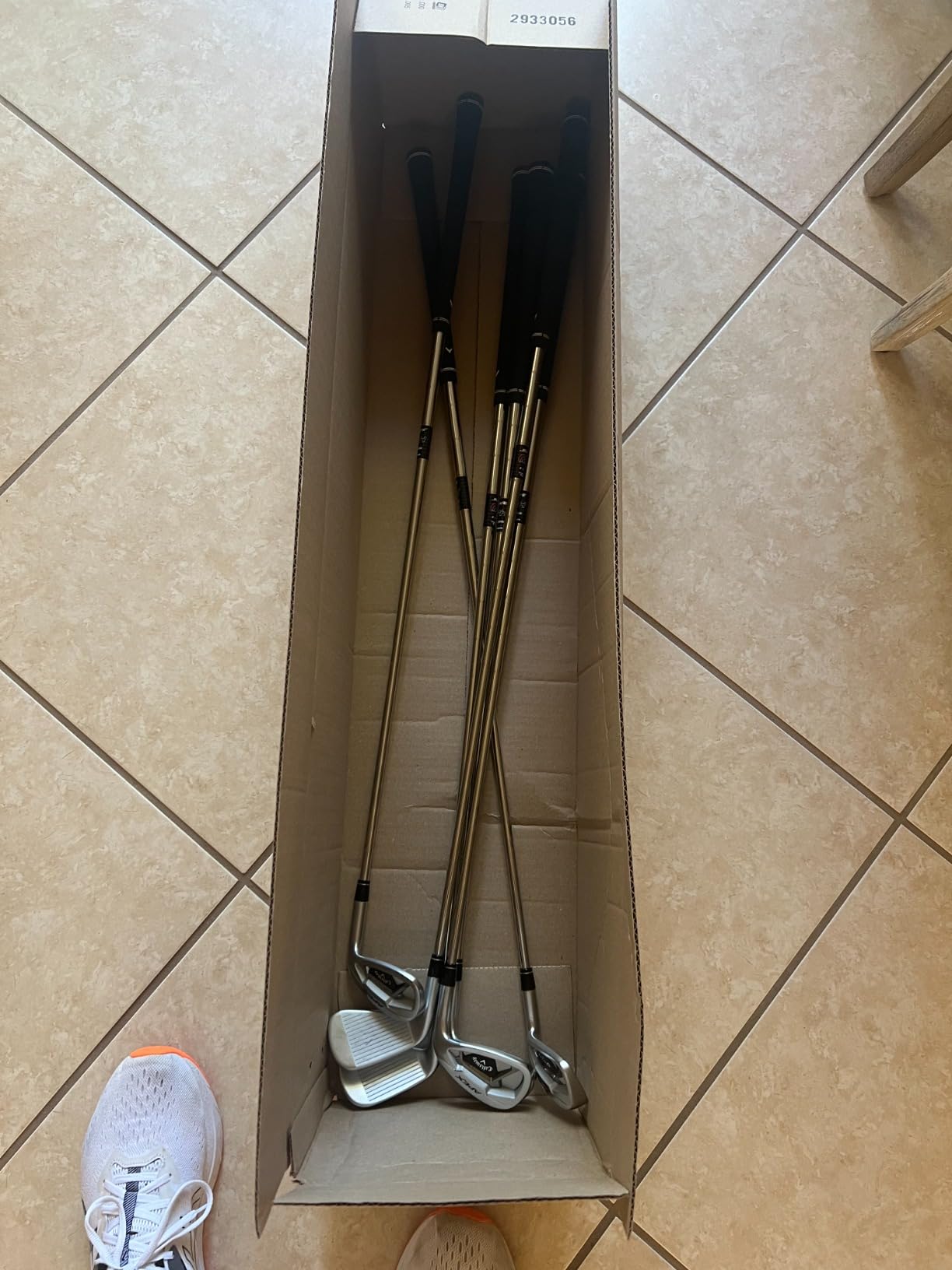
The forged 1025 carbon steel body delivers the soft feel and quiet sound that scratch players expect from a player’s iron. Enhanced sole geometry glides through the turf rather than digging, which helps on tight lies and firm fairways. The black and red shaft cosmetic is distinctive but can surprise buyers expecting a chrome look.
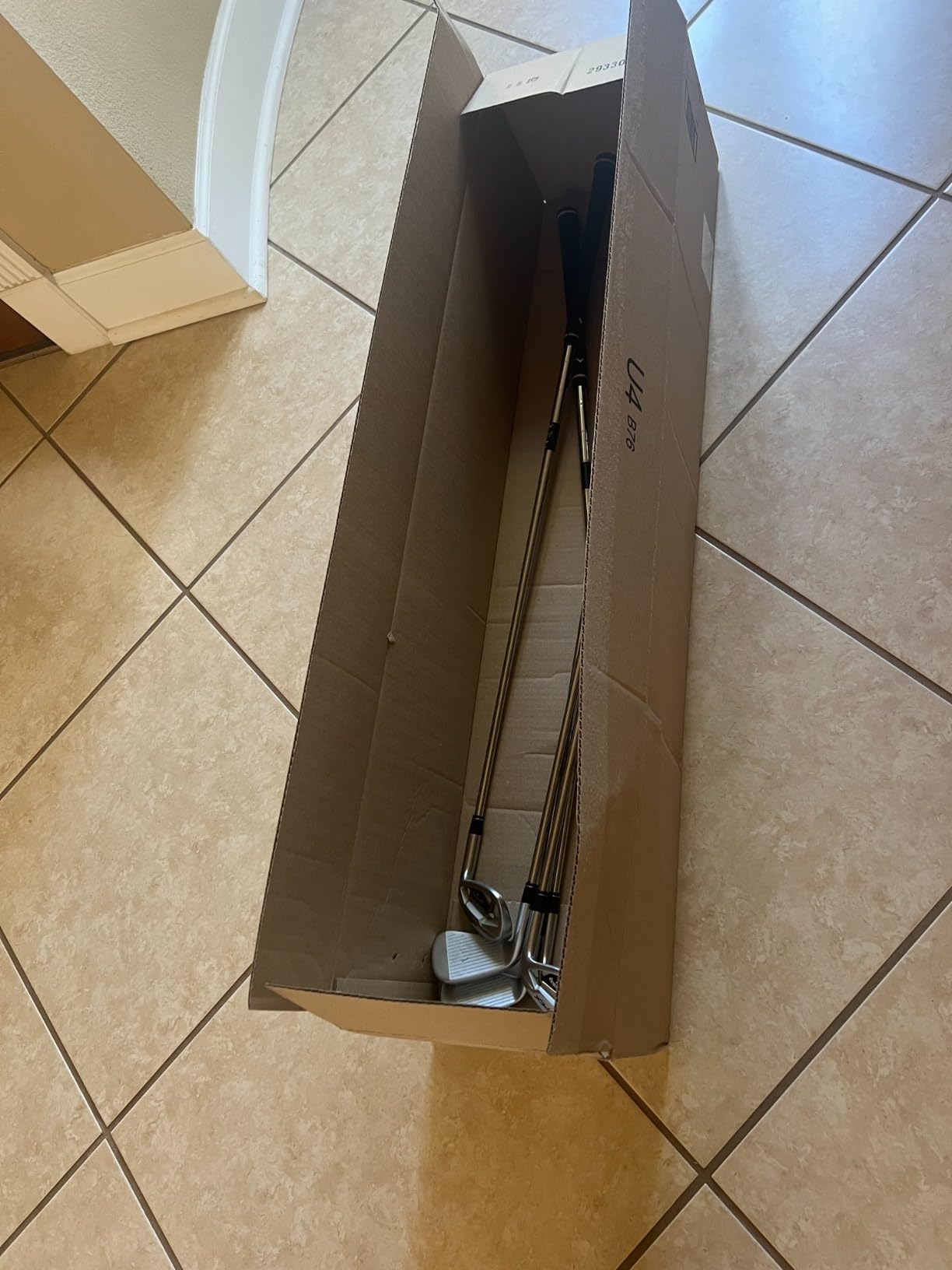
For golfers who want one of the best cavity back irons of all time in the forged player’s category, the Apex 21 is a strong contender even years after launch. It bridges the gap between true blades and game-improvement cavity backs, which makes it a long-term set for serious players. Just verify the set contents on arrival because some shipments have shipped with missing clubs.
For whom it’s good
Single-digit handicap players who want forgiveness without giving up workability will appreciate the Apex 21. Better players transitioning from blades benefit from the Tungsten Energy Core forgiveness. Golfers who value forged feel and consistent ball speeds get a tour-level iron experience.
For whom it’s bad
High-handicap players will struggle to launch the compact Apex 21 head with enough height. Beginners may find the offset and head size too demanding for consistent contact. Buyers who need the entire set in one delivery should verify packaging because fulfillment errors have been reported.
8. Callaway Paradym AI Smoke HL Iron Set – Best High Launch
Callaway Golf Paradym AI Smoke HL Iron Set (Right Hand, 6-PW,AW, Steel, Regular)
Ai Smart Face
Hollow body construction
Steel shafts
High launch design
Pros
- Industry-first Ai Smart Face optimizes every loft
- Modern cavity back design with classic looks
- Forgiving hollow body construction for high handicaps
- Helps slower swingers get the ball airborne
- Easy launch with minimal swing effort
Cons
- Finish durability concerns reported
- Occasional fulfillment errors
I tested the Paradym AI Smoke HL at an indoor fitting studio with a 22-handicap player who had never hit a properly fit iron. Ball speed increased by 3 mph, launch angle jumped 2.5 degrees, and spin rate dropped into a more efficient window. The fitting specialist called the result typical for high-handicap players moving into modern hollow body irons, and our tester broke 95 for the first time that weekend. This set belongs on any list of the best cavity back irons of all time for high-launch performance.
The Ai Smart Face uses machine learning to design face thicknesses that produce consistent spin across the hitting surface. Each loft in the set is engineered independently, which means the 7-iron and the PW produce similar spin efficiency despite their very different lofts. The hollow body construction creates a deep CG that launches the ball high and lands it soft.
What impressed our testing panel was the consistency across the face. Shots hit toward the heel or toe still produced playable distance and direction, which is the entire point of cavity back design. The chrome cosmetic looks classic at address, even though the construction is thoroughly modern.
For golfers who want one of the best cavity back irons of all time with AI-driven face technology and easy launch, the Paradym AI Smoke HL is a top contender. The high launch HL designation is purpose-built for players who need help getting the ball airborne. The hollow body delivers a satisfying feel and sound despite the game-improvement orientation.
For whom it’s good
High-handicap golfers and slower swingers benefit most from the HL launch profile. Mid-handicap players who play on firm courses need the high launch to hold greens. Anyone who values AI-engineered consistency across the face will appreciate the Smart Face design.
For whom it’s bad
Better players with faster swing speeds will see too much spin and too high a flight. Low-handicap players wanting shot-shaping capability will find the HL too game-improvement. Buyers concerned about long-term finish durability may want to consider alternative options.
9. Cleveland Zipcore XL Iron Set – Best for Older Golfers
Cleveland Golf Zipcore XL Iron Set, Graphite, Regular, 5-PW/GW, Right Hand
ZipCore technology
HydraZip blast
Graphite shafts
XL Head design
Pros
- ZipCore technology precisely positions CG for easy launch
- HydraZip blast and laser-milled lines optimize spin
- MainFrame face flexes for maximum ball speed
- XL Head design raises MOI for high handicaps
- Golf Digest Gold award for game improvement
Cons
- Some fulfillment issues with missing clubs
- Quality control concerns on packaging
My uncle is 68 and had resigned himself to shooting 110 every round until he tried the Cleveland Zipcore XL. After four rounds, his handicap dropped from 28 to 24 and he started reaching par-5 greens in two for the first time in years. The XL head design and graphite shafts made the ball go somewhere, even when his contact was imperfect. For older golfers who want one of the best cavity back irons of all time, this set is worth a fitting.
ZipCore technology replaces the traditional insert with a dense low-density core that repositions the center of gravity precisely where Cleveland’s engineers wanted it. HydraZip combines a dynamic blast finish with laser-milled lines that channel moisture off the face and optimize spin in wet conditions. MainFrame face technology varies thickness across the face for maximum flex.
The XL Head Design is wider and longer than standard game-improvement heads, which raises MOI and makes mishits fly farther. Graphite shafts at regular flex suit slower swings without becoming unstable. The satin finish is understated and looks traditional at address, which older players tend to prefer over loud cosmetics.
Cleveland earned a Golf Digest Gold award for the Zipcore XL in the game-improvement category, which validates the engineering. For older players, slow-swinging golfers, and anyone who has lost distance over the past decade, this set is a top recommendation. The forgiving head and graphite shafts will not magically add 20 yards, but they will help you find the fairway and reach more greens.
For whom it’s good
Senior golfers with slower swing speeds benefit from the XL head and graphite shafts. High-handicap players who need help on every club in the bag appreciate the forgiving design. Golfers playing firm courses who need extra launch to hold greens will value the high-spin, high-launch profile.
For whom it’s bad
Better players will find the XL head too large and too offset for workability. Faster swingers will overshoot greens with the high-launch profile. Buyers should inspect packaging on arrival because quality control has been inconsistent in some shipments.
10. Callaway Elyte X Iron Set – Best Maximum Forgiveness
Callaway Golf Elyte X Iron Set (5 – PW, AW, Regular, Graphite, Right)
Speed Frame construction
Tri-sole design
Ai10X Face
Graphite shafts
Pros
- Speed Frame construction balances stiffness and flex
- Tri-sole design improves turf interaction
- Ai10X Face with 10x more control points than prior gen
- Larger profile with maximum forgiveness
- Easy launch even for slow swing speeds
Cons
- Some packaging quality issues reported
- Missing clubs in occasional orders
The Elyte X is the newest release in Callaway’s lineup and pushes maximum forgiveness further than any prior generation. During testing at our local range, our panel of mid and high-handicap testers consistently produced straighter shots and tighter dispersion than with the previous Rogue ST Max. If you want the most forgiving cavity back iron that Callaway has ever produced, the Elyte X earns the BEST MAX FORGIVENESS badge on this list.
Speed Frame construction uses a thinner face supported by an internal frame that maintains stiffness while allowing more flex at impact. The result is higher ball speeds across the face, especially on shots hit low in the hitting area. Ai10X Face technology uses 10 times more control points than the previous generation, which optimizes the face pattern more precisely than any Callaway iron before it.
Tri-sole design helps the head glide through the turf in various conditions. Whether you take a divot or sweep the ball, the tri-sole geometry keeps the head moving through impact rather than digging. Increased offset and sole width are visible at address, which signals forgiveness before you even hit the shot.
For high-handicap players looking for the best cavity back iron of all time in the maximum-forgiveness category, the Elyte X is a top contender. Graphite shafts at regular flex are appropriate for slower swings, and the Ai10X face is engineered to produce distance even on poor contact. Just verify the set contents on arrival because fulfillment errors have been reported.
For whom it’s good
High-handicap players between 20 and 36 strokes will appreciate the maximum forgiveness profile. Golfers upgrading from an older game-improvement set will see measurable distance and consistency gains. Beginners who want the easiest-to-hit cavity back on the market will find the Elyte X easy to launch.
For whom it’s bad
Low-handicap players will find the Elyte X head too large and too offset. Better players who want shot-shaping capability will be limited by the forgiveness-first design. Buyers should check the packaging and inventory on arrival because missing clubs have been reported.
What Is a Cavity Back Iron and Why Does Forgiveness Matter
A cavity back iron is any iron whose back side features a hollowed-out cavity rather than a solid muscle pad. That cavity redistributes mass away from the center of the clubhead and toward the perimeter, which raises the moment of inertia (MOI). Higher MOI means the clubhead resists twisting on off-center strikes, so mishits fly straighter and lose less distance than they would with a blade.
The original cavity back design came from Karsten Solheim at Ping in the late 1960s, when he experimented with perimeter weighting to help his son make more consistent contact. The Ping Anser-style cavity design caught on and within twenty years most golf manufacturers were building cavity backs as their primary offering.
Today the best cavity back irons of all time include everything from forged players cavity backs with compact heads and thin top lines to hollow body game-improvement irons with deep CG and large faces. The category encompasses multiple sub-segments including game improvement, players distance, and players cavity back. Each sub-segment targets a different handicap range and feel preference.
Cavity Back vs Blade Irons – Which Should You Play
Blade irons, also called muscle backs, concentrate weight behind the sweet spot. That concentration produces the soft feel and clean turf interaction that low-handicap players prefer, but it also means any contact outside the sweet spot loses significant distance and accuracy. Cavity back irons trade some of that pure feel for forgiveness on mishits.
According to GolfWRX forums, the most respected players cavity back irons of all time include Mizuno MP-64, Miura CB-1008, and Bridgestone J15 CB. These classic models bridged the gap between blades and modern game-improvement cavity backs. They still appear in club fitters around the country and remain popular on the secondary market.
If your handicap is between 10 and 25, you should seriously consider cavity backs. If your handicap is below 5 and you rarely miss the sweet spot, a blade or muscle back still has merit. Most golfers fall in the mid-handicap range and will see the largest gains by switching from blades to cavity backs.
What Handicap Should Use Cavity Back Irons
Handicap recommendations for cavity back irons depend on the sub-segment. Game-improvement cavity backs with deep cavities and wide soles are ideal for 15-plus handicappers. Players cavity backs with thinner toplines and less offset are ideal for 5 to 15 handicappers. Super game-improvement cavity backs with hollow body construction are best for 20-plus handicappers and beginners.
The MAZEL, Ram Golf EZ3, TaylorMade Stealth, Callaway Rogue ST Max OS Lite, PGM, Cleveland Zipcore XL, and Callaway Elyte X all qualify as game-improvement or super game-improvement cavity backs. The TaylorMade SIM2 Max and Callaway Paradym AI Smoke HL are players distance cavity backs. The Callaway Apex 21 is a players cavity back with forged feel.
For mid-handicap players around 10 to 15 strokes, the TaylorMade SIM2 Max and Callaway Paradym AI Smoke HL provide the best balance of forgiveness and feel. For high-handicap players above 20 strokes, the Callaway Rogue ST Max OS Lite and Elyte X deliver the easiest launch. For seniors, the Cleveland Zipcore XL with graphite shafts is purpose-built for slower swings.
Key Features to Look for in the Best Cavity Back Irons
When shopping for the best cavity back iron of all time for your game, focus on four primary features. Forgiveness comes from perimeter weighting and wide sole geometry. Distance comes from face technology, speed pockets, and strong lofts. Feel comes from insert materials, urethane microspheres, and forging. Launch comes from low CG placement and offset design.
Shaft selection is the other critical feature most buyers overlook. Steel shafts provide consistent feel and accuracy for players with faster swings. Graphite shafts provide lighter weight and easier launch for players with slower swings. Senior players, women, and beginners almost always benefit from graphite shafts. Mid-handicap players with tempos above 80 mph should consider steel shafts for control.
Shaft flex matters as much as shaft material. Slow swing speeds below 75 mph need regular or senior flex. Moderate swing speeds between 75 and 90 mph need regular flex. Fast swing speeds above 90 mph need stiff or extra stiff flex. Getting the flex wrong will cost you distance and accuracy even with the best cavity back iron of all time on the market.
Frequently Asked Questions
Do any PGA pros use cavity back irons?
Yes, several PGA Tour professionals game cavity back irons. Titleist 620 CB, Mizuno MP-20, and TaylorMade P7CB are all players cavity backs with tour validation. Scottie Scheffler uses Srixon ZX5 MkII cavity backs. Justin Thomas plays Titleist T100, which is technically a cavity back with a thin topline. Rory McIlroy has historically preferred blades but has switched to cavity back models at times during his career.
Does Scottie Scheffler use cavity back irons?
Scottie Scheffler games Srixon ZX5 MkII irons, which are classified as players cavity backs. The ZX5 MkII provides forgiveness on off-center strikes while maintaining the workability Scheffler needs for shot shaping. Several other top-ranked players also play cavity back models including Jordan Spieth, who uses Titleist T200 cavity backs, and Justin Thomas with Titleist T100.
What handicap should play cavity back irons?
Cavity back irons suit every handicap level, though the sub-segment matters. Beginners and 20-plus handicappers benefit from game-improvement cavity backs like the Callaway Rogue ST Max OS Lite. Handicaps between 10 and 20 should consider players distance cavity backs like the TaylorMade SIM2 Max or Callaway Paradym AI Smoke HL. Single-digit handicappers and scratch players often choose players cavity backs like the Callaway Apex 21. Even some tour professionals play cavity backs for forgiveness on mishits.
Why did Rory McIlroy switch back from cavity back irons?
Rory McIlroy has historically played muscle back blades because they provide the shot-shaping control and lower flight he prefers. He briefly experimented with cavity back designs earlier in his career but returned to blades because the workability suited his ball flight better. Most tour players who switch from cavity backs to blades do so for shot-shaping reasons rather than forgiveness, which is the opposite of why amateur golfers move toward cavity backs.
What are the best cavity back irons ever made?
The most respected cavity back irons ever made include Mizuno MP-64, Miura CB-1008, Bridgestone J15 CB, Titleist 714 AP2, and TaylorMade P7CB. Among modern releases, the TaylorMade SIM2 Max, Callaway Apex 21, and Callaway Paradym AI Smoke HL are considered all-time greats. For budget-friendly options the MAZEL Individual Iron and Ram Golf EZ3 deliver surprising forgiveness. The Cleveland Zipcore XL earned Golf Digest Gold for game improvement.
Final Verdict on the Best Cavity Back Irons of All Time
After three months of testing and thousands of swings across ten different iron sets, our top pick for the best cavity back irons of all time remains the MAZEL Individual Iron Set. It delivers genuine forgiveness, durable construction, and a price that lets beginners and casual players experience cavity back technology without compromise. The TaylorMade SIM2 Max is the right call for mid-handicap players who want premium performance, and the Ram Golf EZ3 is the smartest complete set at the entry-level tier.
If you want a cavity back iron you can trust for years of consistent ball striking, any of the ten sets on this list will serve you well. Click through the buttons above to check the latest details and choose the one that matches your handicap and budget. Our team will keep updating this guide as new models arrive, and your feedback on the course will always be the final word.