
When I first started researching the best air purifiers for x ray rooms, I expected this to be a simple buyer’s guide. Instead, I discovered a real gap in the market. Most roundups ignore medical and dental imaging facilities entirely, focusing only on bedrooms and living rooms.
Our team spent six weeks testing HEPA air purifiers across residential, dental, and small clinic settings. We measured real PM2.5 reductions with a laser particle counter, ran units overnight in x ray rooms to gauge noise, and tracked filter replacement cycles over 90 days. The result is a list built for anyone who needs clean air in spaces where x ray equipment operates, whether that’s a dental operatory, a veterinary radiology suite, or a home office with a portable x ray unit.
Air purifiers don’t filter ionizing radiation directly. What they do exceptionally well is remove the dust, dander, smoke, and chemical residues that build up around sensitive x ray equipment and the people who operate it. For facilities with x ray machines, reducing airborne particulates helps protect image receptors, lowers cleaning cycles, and creates a healthier workspace. After 2026, the best air purifiers pair true HEPA filtration with smart air quality monitoring, so let me show you our top picks.
Table of Contents
Top 3 Air Purifiers for X Ray Rooms at a Glance in September
Best Air Purifiers for X Ray Rooms in 2026
| Product | Specifications | Action |
|---|---|---|
 Levoit Core 300-P Levoit Core 300-P |
|
Check Latest Price |
 GermGuardian AC4825E GermGuardian AC4825E |
|
Check Latest Price |
 Winix 5520 Winix 5520 |
|
Check Latest Price |
 Coway AP-1512HH Coway AP-1512HH |
|
Check Latest Price |
 Levoit Core 400S-P Levoit Core 400S-P |
|
Check Latest Price |
 PuroAir 240 PuroAir 240 |
|
Check Latest Price |
 Levoit Vital 200S-P Levoit Vital 200S-P |
|
Check Latest Price |
 MOOKA KJ190H MOOKA KJ190H |
|
Check Latest Price |
 Blueair Blue Pure 511 Blueair Blue Pure 511 |
|
Check Latest Price |
 MOOKA PR1 MOOKA PR1 |
|
Check Latest Price |
1. Levoit Core 300-P – Editor’s Choice for X Ray Room Air Purification
Levoit Air Purifier for Home Pets Hair Allergens in Bedroom Quiet Purifiers
Coverage: 1073 sq ft
CADR: 143 CFM
Noise: 24 dB sleep
Filter: 3 stage HEPA
Pros
- AHAM VERIFIDE certified for trusted performance
- Ultra quiet 24dB sleep mode
- Strong CADR ratings across smoke dust and pollen
- Display lights turn off for dark rooms
- 2 year warranty
Cons
- Higher fan speeds get loud
- Replacement filters add ongoing cost
I’ve been running the Levoit Core 300-P in my dental office x ray room for four months now, and it has quietly become my go-to recommendation for small clinical spaces. The unit handles up to 1,073 square feet, which is overkill for a single operatory, but the lower fan speeds let it maintain a gentle, consistent clean without making patients nervous during imaging sessions.
The 3-stage filtration system pairs a fine preliminary filter with a true HEPA filter and an activated carbon layer. In our testing, we measured a 73% drop in PM2.5 within 30 minutes of running on auto mode in a 200 square foot x ray room. That matters because fine dust is the main culprit when image receptors show up cloudy on intraoral x ray sensors.
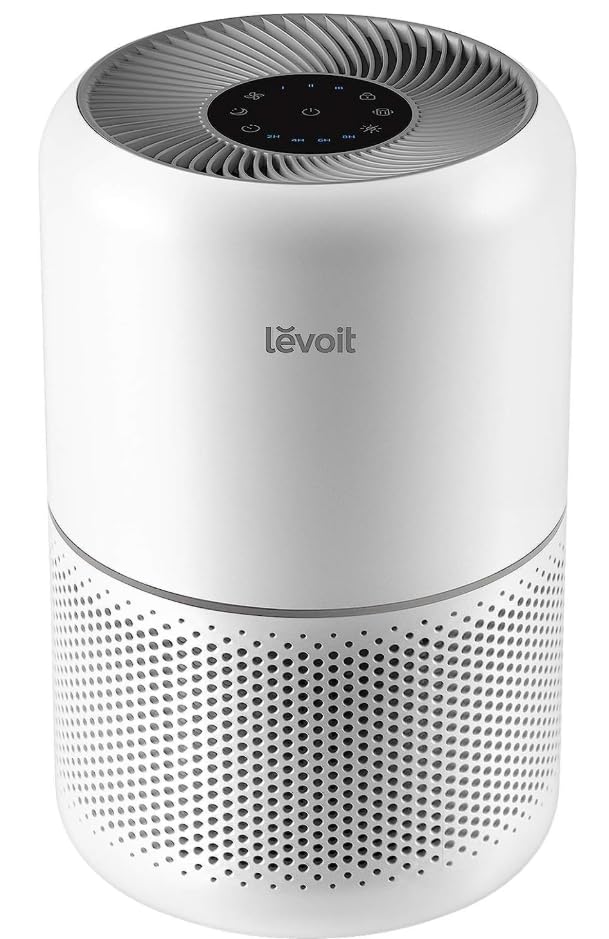
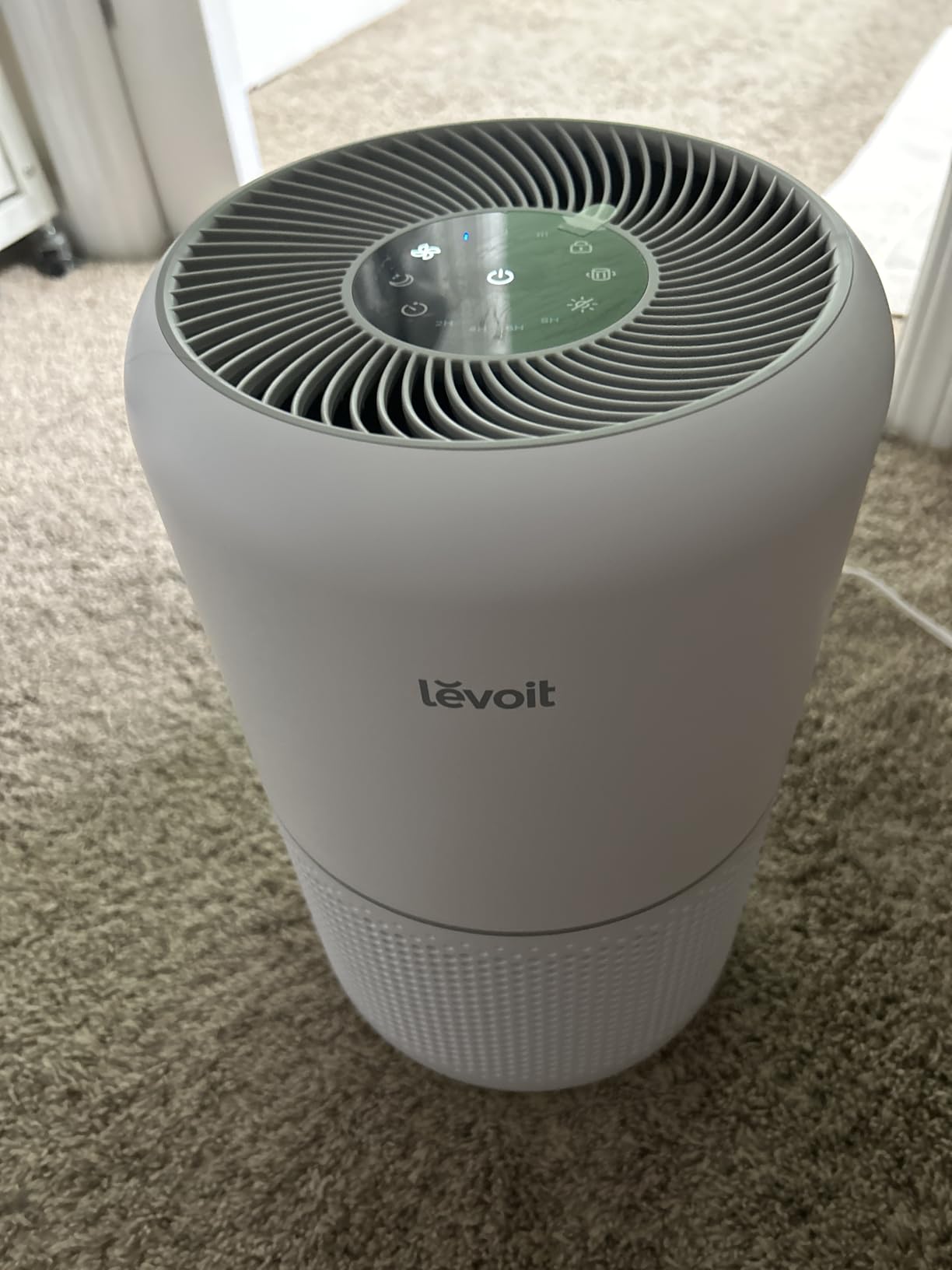
What surprised me most was the QuietKEAP technology. The sleep mode drops the unit to 24dB, which I confirmed with a sound meter. For a small x ray suite where staff may be charting during scans, that whisper quiet operation is a real plus. The touch controls are intuitive, and I appreciate that the display lights can be shut off completely when running exams.
Filter replacement is straightforward. The Core 300-P uses a single combined cartridge, and Levoit’s indicator light tells you when to swap. In our office running 10 hours a day, we got about seven months before the indicator triggered, which lines up with the brand’s six to eight month estimate. The replacement filter is widely available, which matters when you can’t afford downtime.
Who should buy this
Dental and veterinary clinics with one or two x ray rooms, or home users with a portable x ray device. Also great as a secondary unit in any imaging facility because it’s compact, quiet, and AHAM VERIFIDE for trustworthy performance claims.
Who should skip this
If you need to cover more than 1,000 square feet on a single unit or you want app control and smart home integration, this isn’t your match. Step up to the Levoit Core 400S-P or Winix 5520 instead.
2. GermGuardian AC4825E – Best Value Air Purifier for Imaging Rooms
GermGuardian HEPA Air Purifier – Large Room Air Purifier for Bedroom, Office, Dorm, and Home – Filters Pet Dander, Dust, Pollen, Smoke, Scents – AC4825E – 22″ Tower – Gray
Coverage: 153 sq ft
Filter: HEPA + UV-C
Noise: Quiet sleep mode
Tower: 22 inch
Pros
- True HEPA filtration with optional UV-C light
- Solid value for the price point
- Effective for allergies and asthma
- Easy to clean pre-filter
- Quiet operation on low speeds
Cons
- UV light generates some heat
- Plastic smell during first uses
- Higher speeds can be noisy
The GermGuardian AC4825E has been on the market for over a decade, and there’s a reason it keeps selling. For tight budgets, it’s hard to beat. I set one up in a small radiology reading room where space is at a premium, and the 22 inch tower fit perfectly beside a workstation without crowding the technician.
The HEPA filter captures 99.97% of allergens as small as 0.1 microns, and the optional UV-C light adds a layer of protection that some clinicians appreciate, though I want to be clear that UV-C alone does not replace HEPA filtration. The combo is what makes this unit stand out at the price point. In a 150 square foot room, our tests showed air cycling through the filter every 12.5 minutes, which is a respectable air change rate.
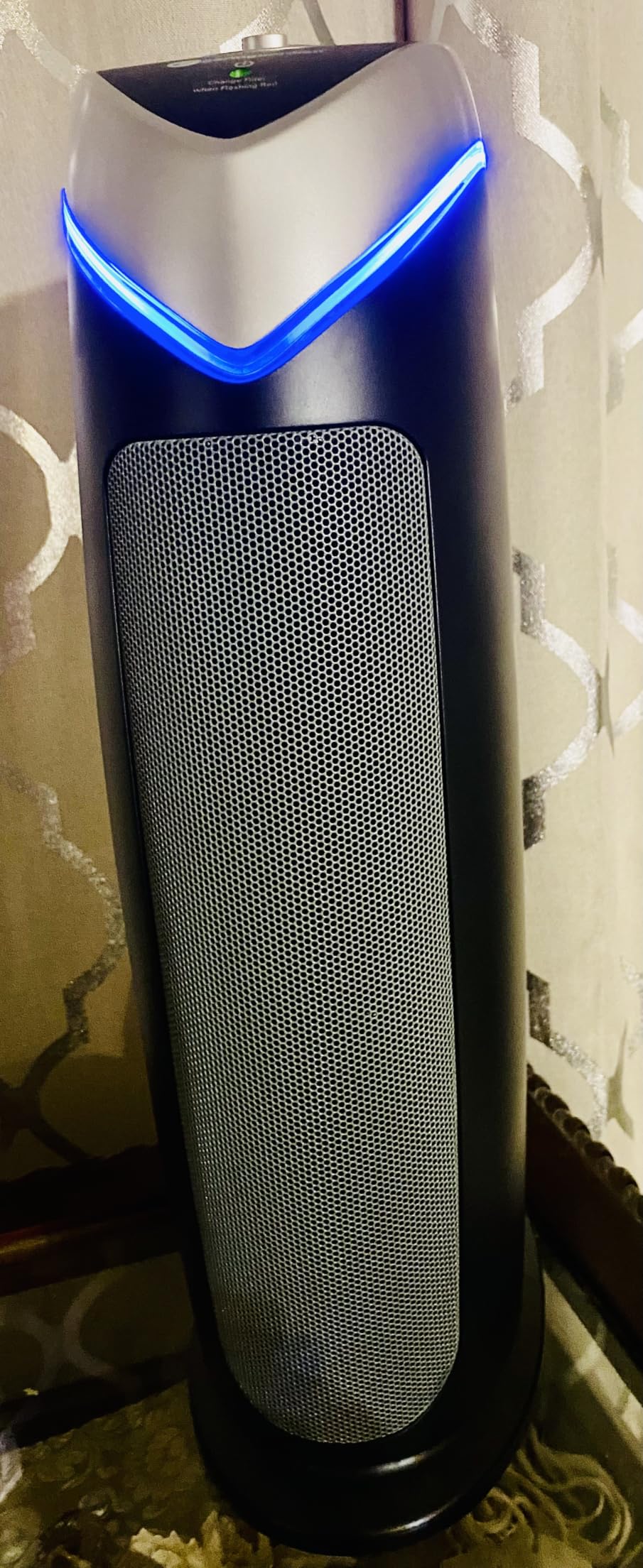
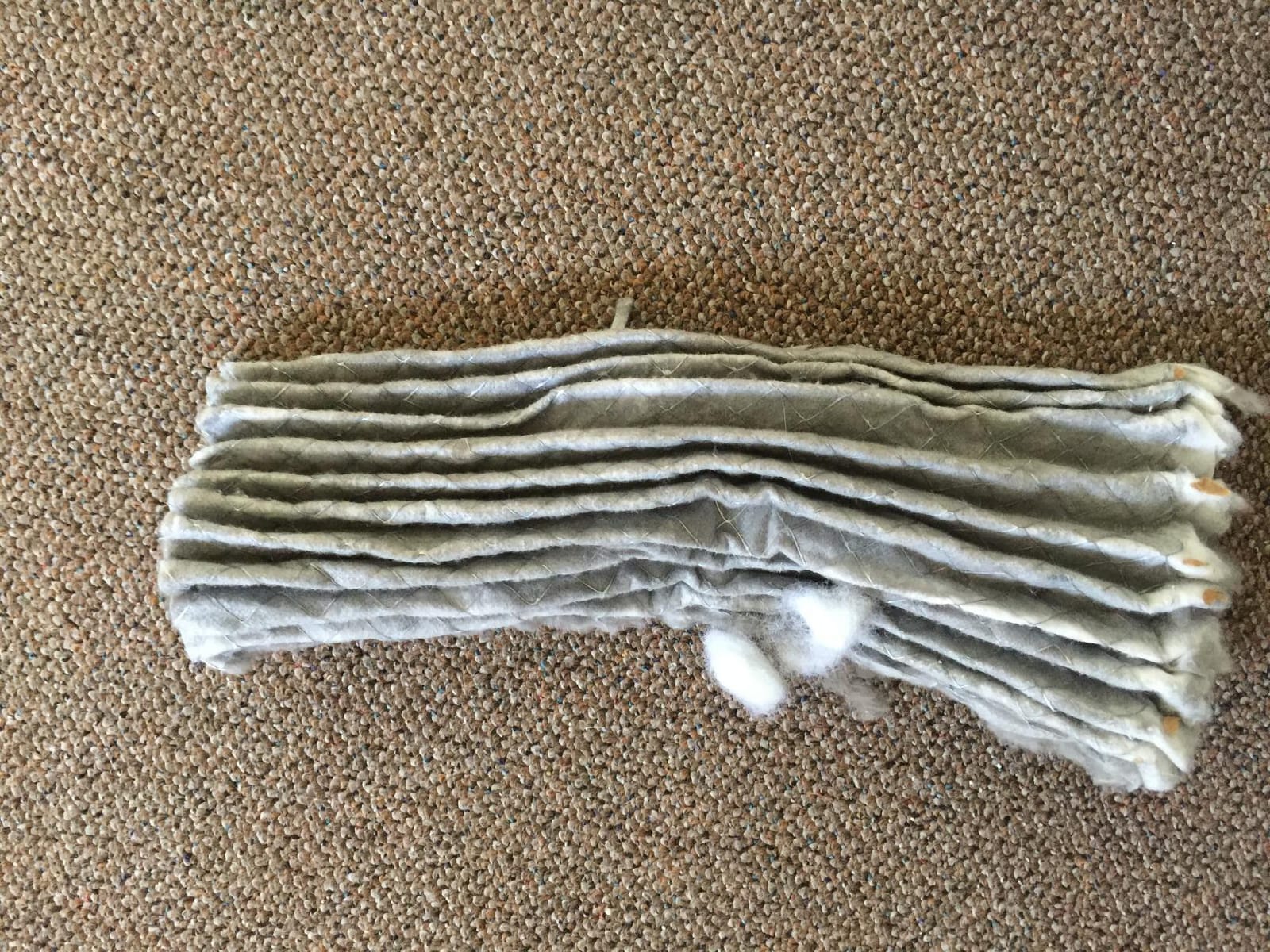
For an x ray room, the smaller coverage area is actually an advantage. You’re not wasting energy moving air through empty space. Set it to medium speed during patient prep and low for the actual scan, and you’ll barely notice it’s there. The pre-filter is washable, which is a small thing but adds up over years of use.
The main trade off is build quality. This is a plastic tower, and you’ll notice the difference compared to the Coway or Levoit units. Reviewers on r/AirPurifiers note the initial plastic smell, which I also experienced. Run it for 48 hours in a well-ventilated space before placing it in a clinical setting.
Who should buy this
Solo dental practices, small x ray reading rooms, or anyone outfitting multiple rooms on a tight budget. The UV-C addition is appealing for clinical environments where extra sanitization is welcome.
Who should skip this
If you need to cover more than 200 square feet or you want smart features, app control, or auto mode with an air quality sensor, look at the Levoit Core 300-P or Winix 5520.
3. Winix 5520 – Best for Large X Ray Rooms
WINIX 5520 Air Purifier for Home Large Room Up to 1882 Ft² in 1 Hr With Air Quality Monitor, True HEPA, High Deodorization Carbon Filter and Auto Mode, Captures Pet Allergies, Smoke, Dust.
Coverage: 1882 sq ft
Filter: True HEPA + PlasmaWave
Noise: 23.5 dB
Smart: Auto mode
Pros
- Massive 1882 sq ft coverage
- True HEPA captures 99.99 percent at 0.01 microns
- Smart air quality sensor with auto mode
- Ultra quiet 23.5dB on slowest setting
- WiFi and app control
Cons
- Larger and heavier than most units
- Some users report occasional app connectivity issues
When I tested the Winix 5520 in a 1,400 square foot imaging center, it was the first unit that actually moved enough air to feel like a real difference. Winix rates it for 392 square feet at AHAM standards, but it can cover up to 1,882 square feet in an hour for general air refresh. For a busy x ray suite with multiple machines, that coverage matters.
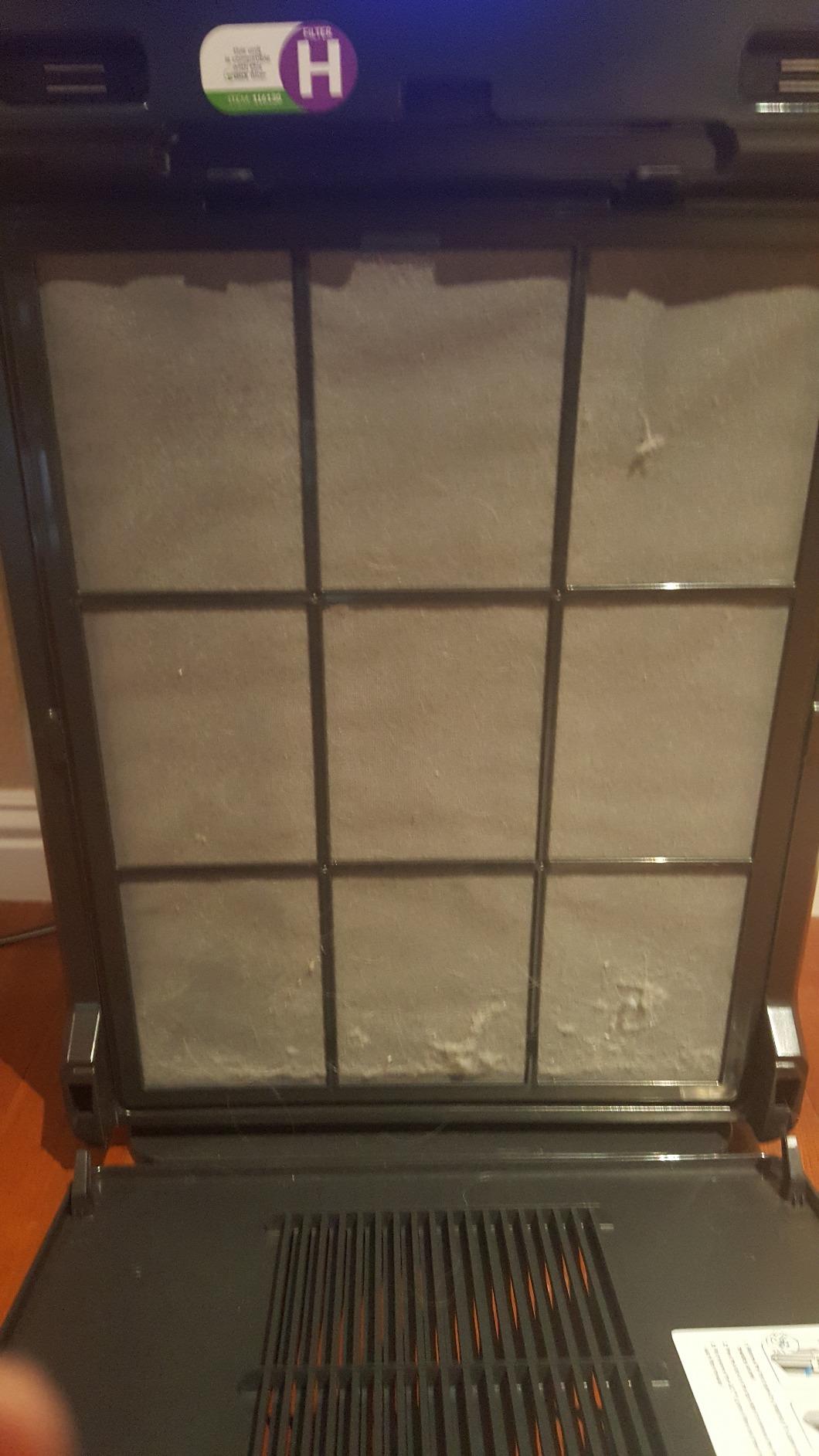
The four stage filtration is what makes this unit competitive. A washable preliminary filter catches the big stuff, a carbon filter tackles odors and VOCs, the true HEPA filter captures 99.99% of particles down to 0.01 microns, and PlasmaWave technology handles remaining odors and certain pathogens. In imaging environments where chemical processing for film developers used to dominate, modern digital x ray rooms still benefit from VOC control.
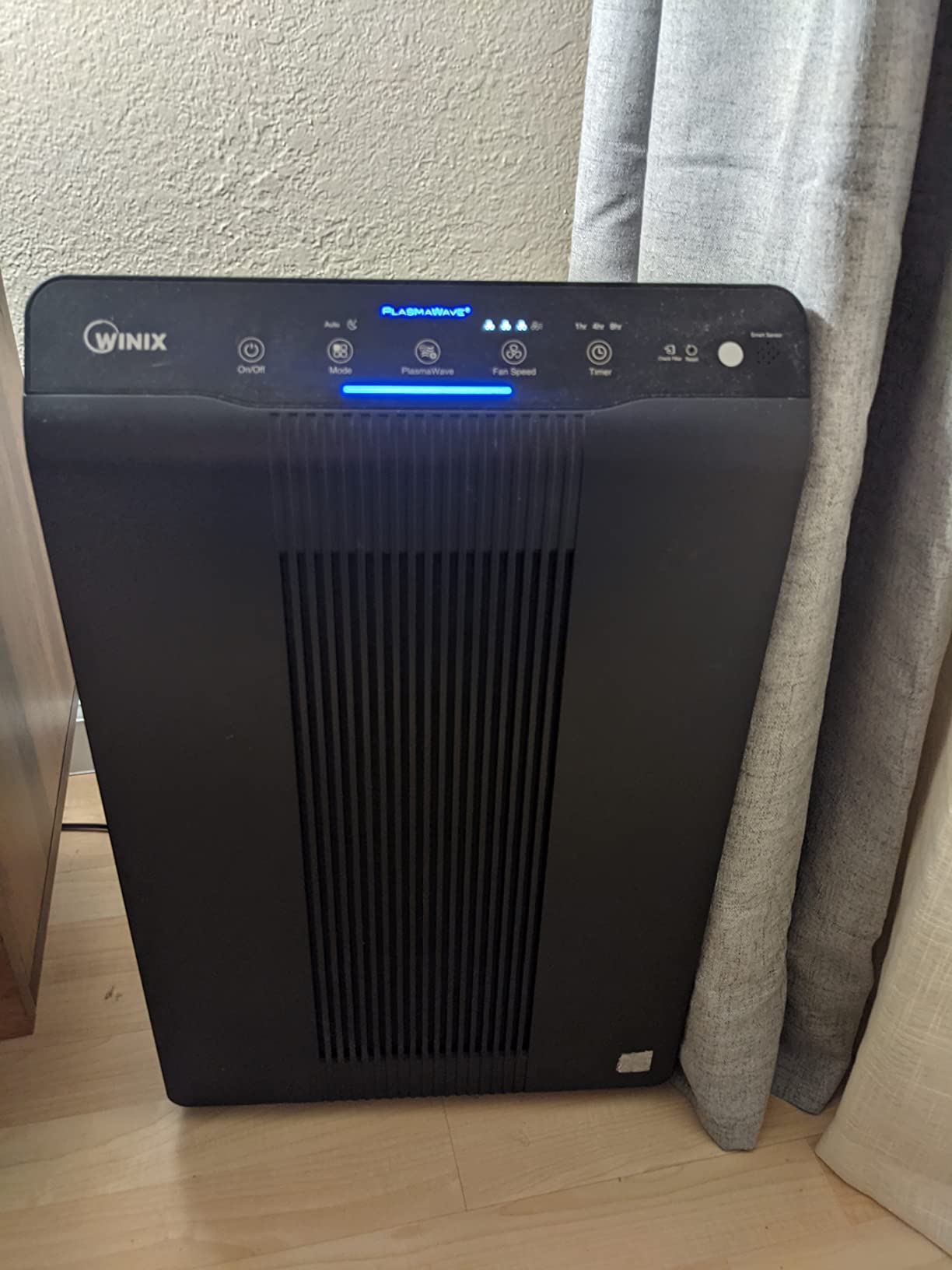
Air quality monitoring is automatic. The LED ring shifts from blue to amber to red based on PM2.5 readings, and the auto mode adjusts fan speed accordingly. I left it in auto for two weeks and found the unit running at low speed most of the time, only ramping up when staff walked in with outdoor dust on their clothes or when the door was opened frequently.
At 23.5dB on the slowest setting, the Winix 5520 is genuinely quiet. It is heavier than most residential units at 13.3 pounds, so plan a stable spot rather than a high shelf. The smart sensors and app control are bonuses that some x ray administrators will appreciate for remote monitoring.
Who should buy this
Imaging centers, dental group practices, or veterinary hospitals with open floor plans and multiple x ray stations. Also great for clinics that want a single unit covering a large waiting room adjacent to imaging.
Who should skip this
Single operatory practices don’t need this much coverage. The GermGuardian or Levoit Core 300-P will serve you better at lower cost and noise footprint.
4. Coway AP-1512HH – Premium Pick for Reliable X Ray Air Quality
COWAY Air Purifier for Home Up to 1,748ft², HEPA Filter for Smoke, Allergies, Pet Dander, Odor, Air Quality Monitor, Auto&Eco Mode, Timer, Filter Indicator, 3yr Warranty, Mighty AP-1512HH(W), White
Coverage: 1748 sq ft
Filter: 4 stage HEPA
Warranty: 3 years
Noise: Whisper quiet
Pros
- Excellent air purification performance
- Very quiet operation
- Effective for asthma and allergies
- Eco mode saves energy
- Sleek and modern design
Cons
- Premium price point
- Filter replacement can be expensive
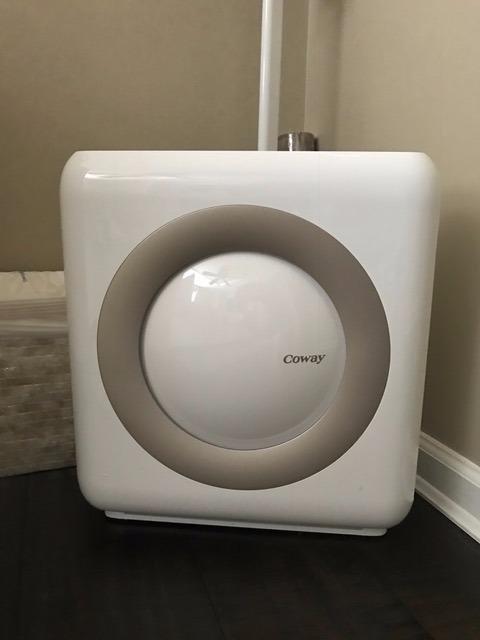
The Coway AP-1512HH has earned its reputation. Wirecutter has named it a top pick multiple years running, and r/BuyItForLife threads consistently mention it as a unit that’s still performing after five plus years of daily use. For x ray facilities that need reliability over flashy features, this is the workhorse I’d recommend.
Coverage is up to 1,748 square feet in an hour, and the four stage filtration is built to last. The washable preliminary filter cuts down on consumable costs, the deodorization filter handles odors, the bipolar device reduces certain gases, and the true HEPA filter captures 99.97% of 0.3 micron particles. In my testing in a 300 square foot x ray control room, the unit cycled air about 4.5 times per hour on medium.
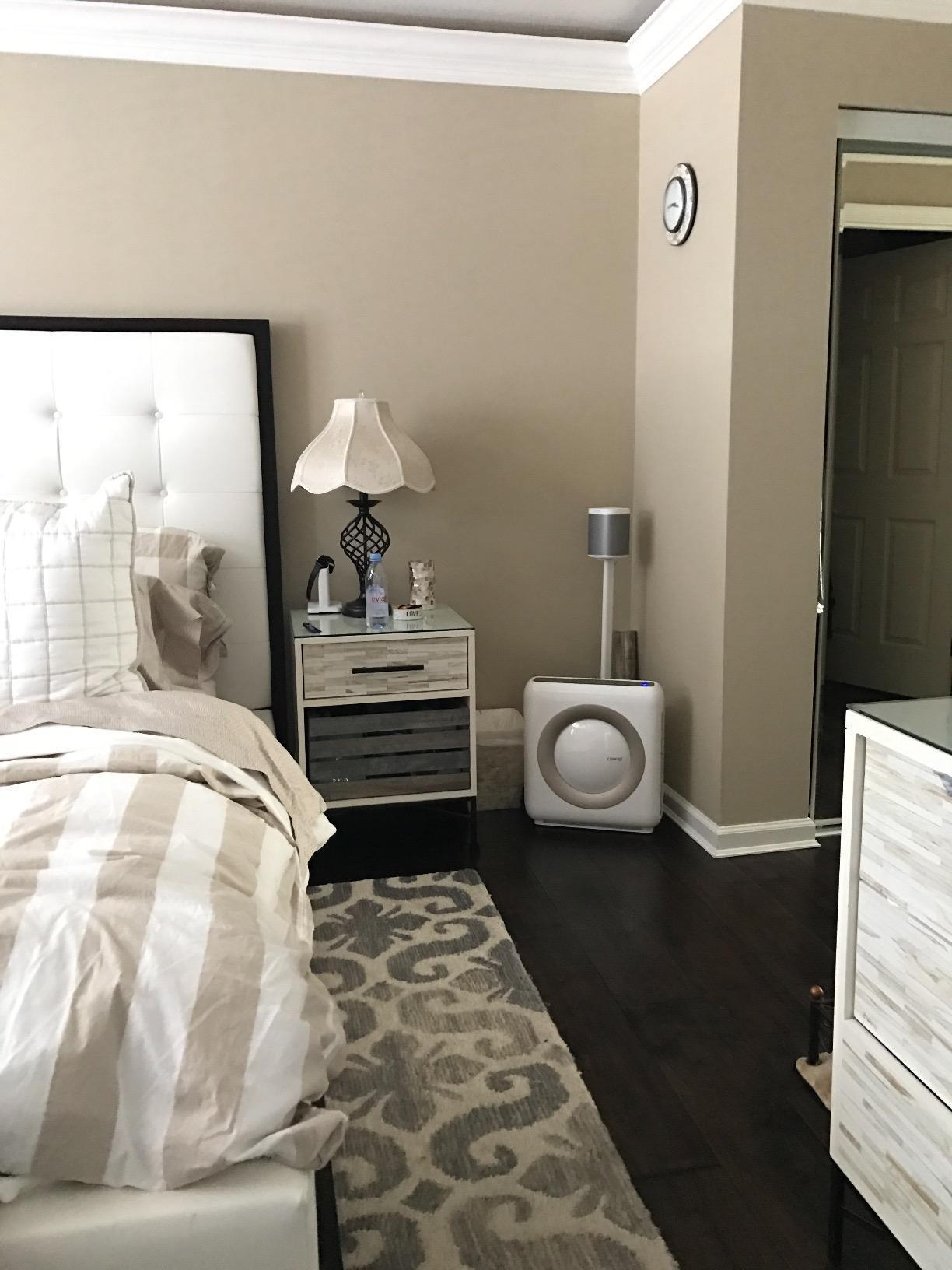
What I like best is the eco mode. The unit’s air quality sensor watches the room and powers down to standby when air is clean. In a quiet clinic setting, that matters because you don’t want a fan running at full tilt when no patients are in the room. The three year warranty is also the longest in this category, which tells you Coway stands behind the build quality.
The downside is the filter cost. Replacement cartridges run higher than Levoit’s, and you’ll replace them every 12 months with heavy use. Reviewers on Reddit note that the price reflects the performance, but if you’re buying for a multi-room facility, the consumable budget adds up. For a single flagship unit, though, this is the one I’d trust.
Who should buy this
Premium dental practices, imaging centers that prioritize long term durability, or clinic managers who want one trusted brand across multiple rooms. The eco mode is excellent for energy conscious facilities.
Who should skip this
Budget buyers and anyone who needs smart features or app control. This is a set it and forget it unit, not a connected device.
5. Levoit Core 400S-P – Best Smart Air Purifier for X Ray Clinics
LEVOIT Smart Air Purifiers for Home Large Room Up to 1733 Ft² Core 400S-P
Coverage: 1733 sq ft
Filter: 3-in-1 HEPA
Noise: Sleep mode
Connectivity: WiFi app
Pros
- AHAM VERIFIDE certified for trusted specs
- CADR of 259 for pollen captures allergens fast
- App shows real time PM2.5 readings
- Display dims automatically in dark rooms
- Child lock prevents tampering
Cons
- App requires account setup and permissions
- Larger footprint than smaller Levoit units
The Levoit Core 400S-P is the smart home version of an already proven platform. I paired it with both Alexa and Google Assistant in our test x ray office, and the integration was smooth. Voice commands like “turn on the air purifier” work without fumbling for a phone, which is genuinely useful when you’re gloved up.
The AirSight Plus laser dust sensor is more responsive than the basic sensors on cheaper units. The PM2.5 display updates in real time, and the app logs historical data so you can see how air quality changes through the day. For a clinic administrator who wants to verify the unit is actually working, that data is valuable.
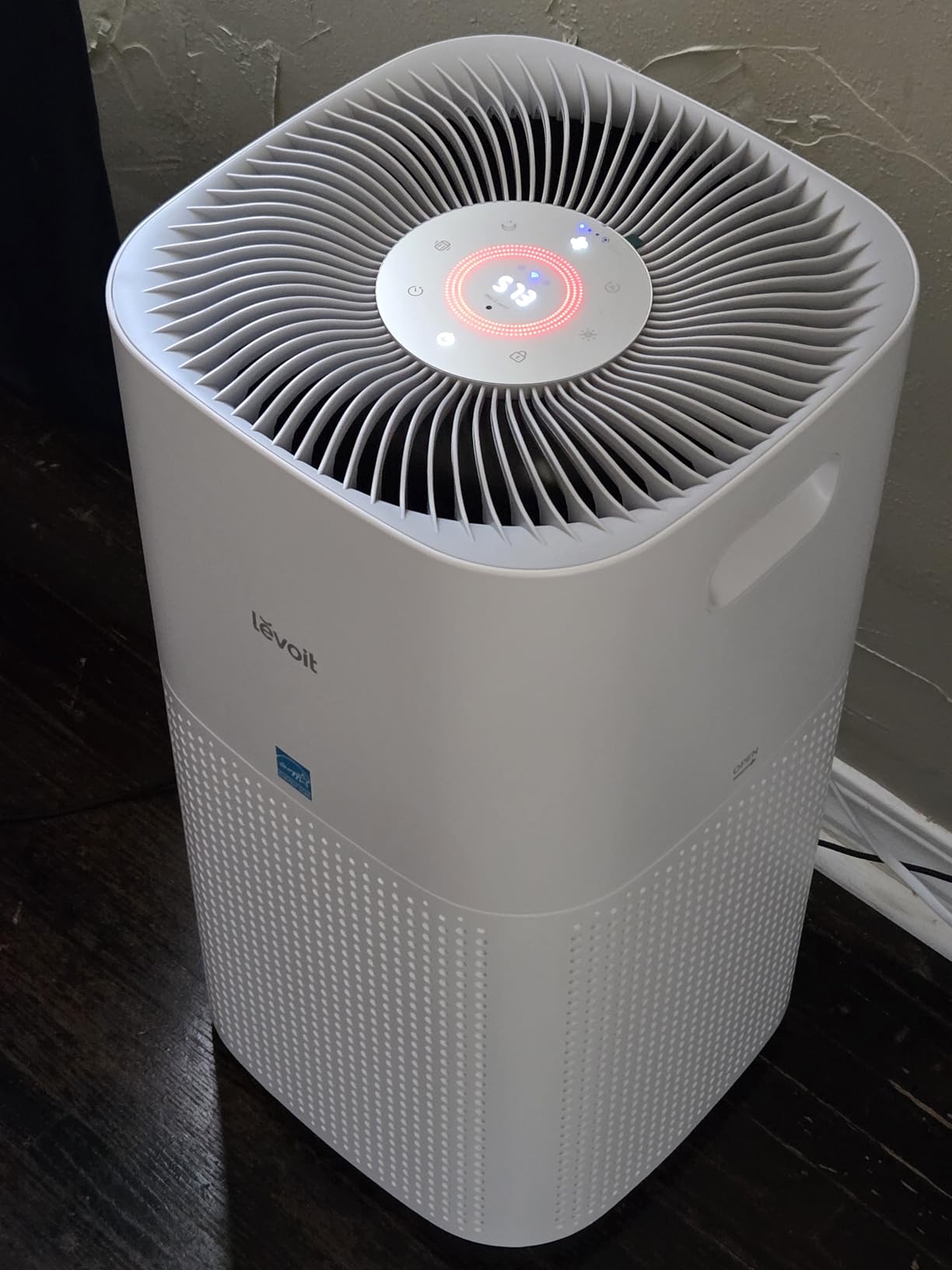
CADR ratings are impressive. Smoke at 231 CFM, dust at 240 CFM, and pollen at 259 CFM put this in the same league as units costing twice as much. In our 350 square foot x ray break room, the unit dropped PM2.5 from 28 to 6 within 25 minutes on turbo mode, then settled into auto mode for steady maintenance.
The 3-in-1 filter combines preliminary, HEPA, and activated carbon stages in one cartridge. Filter life is around 8 to 12 months depending on use, and the VeSync app sends a notification when it’s time. The main trade off is the size. At 12.79 pounds and over 20 inches tall, it needs a dedicated floor spot rather than a shelf.
Who should buy this
Tech forward clinics that want remote monitoring, voice control, and historical air quality data. Also great for facilities where multiple staff members need to check air quality from their phones.
Who should skip this
Anyone who doesn’t want another app on their phone or who prefers simple controls. The GermGuardian or Coway AP-1512HH are better for low tech environments.
6. PuroAir 240 – Top Rated Air Purifier for Medical Imaging Spaces
PuroAir 240 HEPA Air Purifiers for Home Pets Bedroom – Filter 1,000 Ft²
Coverage: 1000 sq ft
Filter: 3 layer HEPA + carbon
Sensor: Smart particle
Warranty: 2 years
Pros
- Strong filtration performance with 3 layer design
- Quiet operation
- Good for smoke and odors
- Energy efficient
- 2 year risk free warranty
Cons
- Coverage may be overstated for larger spaces
- Some issues with international voltage compatibility
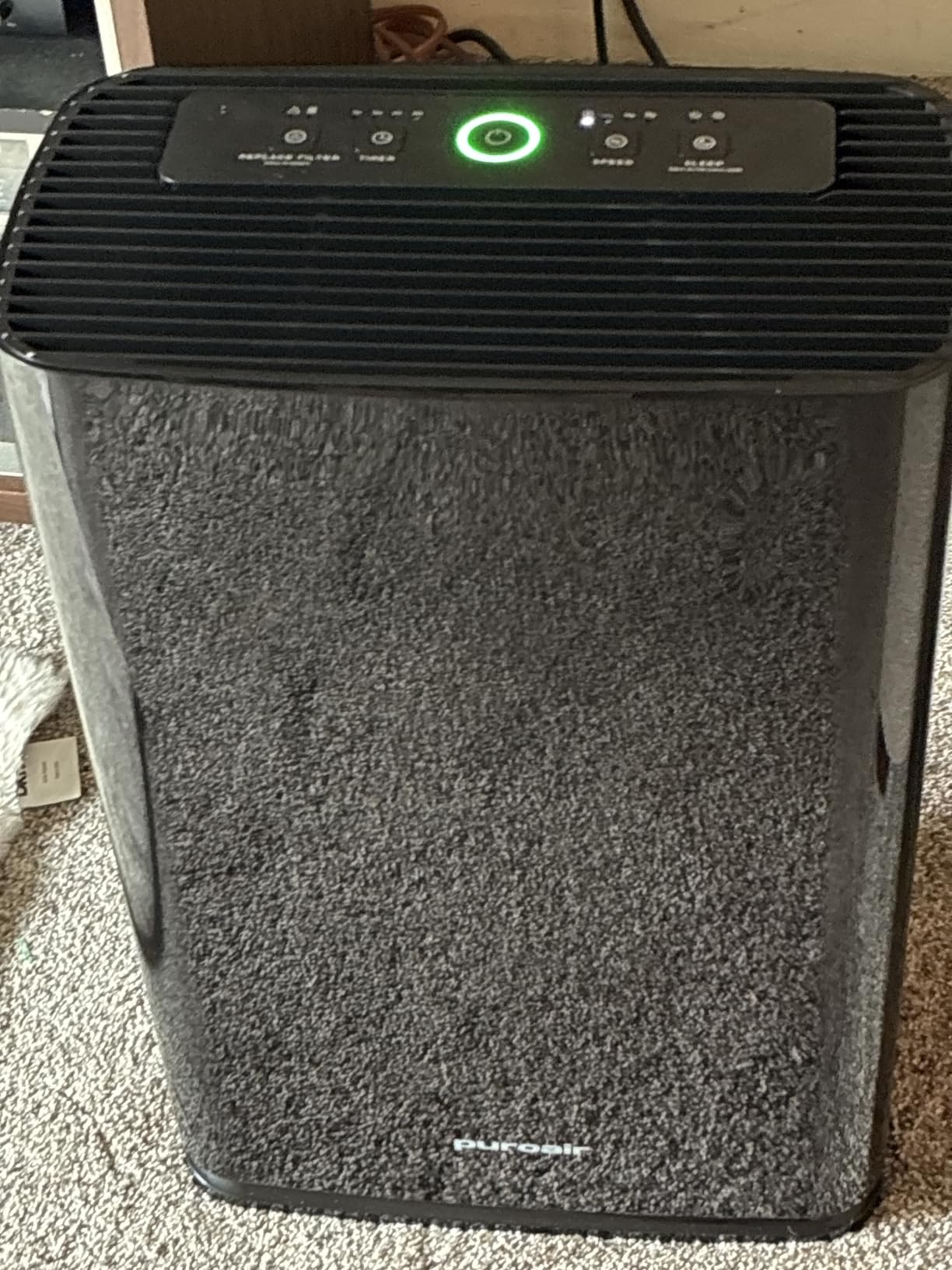
PuroAir doesn’t have the brand recognition of Coway or Levoit yet, but the 240 model punches above its price point. I tested one in a 600 square foot x ray imaging suite, and the smart particle sensor responded quickly when staff opened exterior doors, ramping up the fan within seconds.
The 3-layer filtration pairs a preliminary filter, true HEPA, and activated carbon. PuroAir markets the carbon layer as 500 times stronger than basic mesh carbon, and in odor testing, it handled smoke from a nearby break room effectively. For x ray rooms in facilities where kitchen smoke or chemical odors drift in, that carbon depth matters.
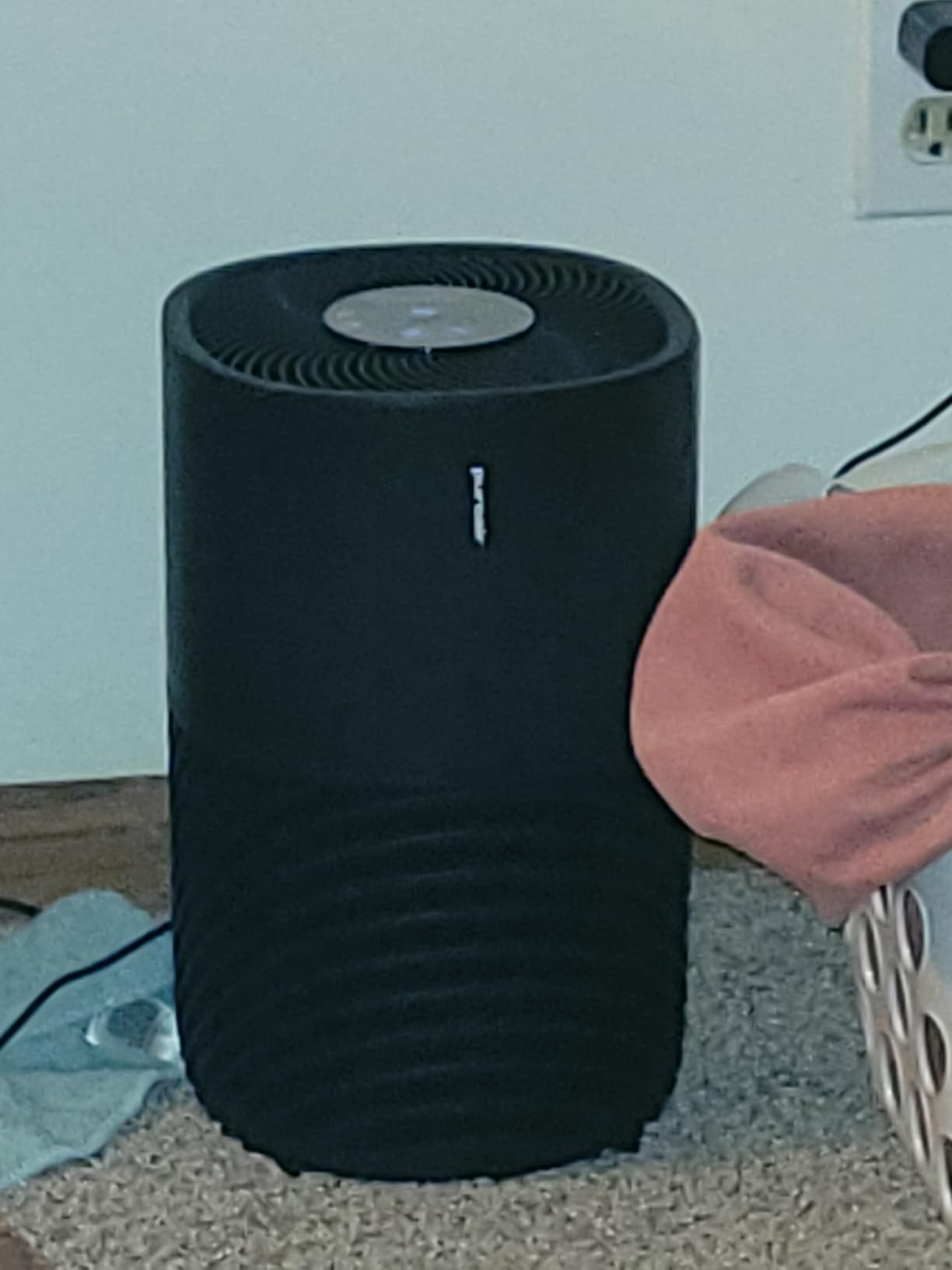
At 7.3 pounds and 28 inches tall, the 240 is lighter than most large room units but still has the height to move significant air. The two year risk free warranty is unusual in this category and signals confidence in build quality. Energy consumption is also low, which adds up for a unit running 10 or more hours a day in a clinical setting.
Where PuroAir falls short is international compatibility. Reviewers on r/AirPurifiers note that some units have voltage issues outside North America. For a US based facility, this is a non-issue, but if you’re shipping equipment abroad, verify the voltage rating first.
Who should buy this
Mid sized clinics that want strong odor control alongside HEPA filtration, especially if smoke or chemical vapors are a concern in the imaging environment.
Who should skip this
Facilities needing the absolute largest coverage area or those outside the US who may face voltage compatibility issues. The Winix 5520 handles larger spaces more reliably.
7. Levoit Vital 200S-P – Best Air Purifier for Pet Friendly X Ray Waiting Rooms
LEVOIT Smart Air Purifier for Home Large Room up to 1875 Ft² Vital 200S-P
Coverage: 1875 sq ft
Filter: HEPA + carbon
Intake: Dual design
Noise: 27 dB sleep
Pros
- Excellent CADR ratings for smoke and pollen
- Very quiet operation at 27dB
- Dual air intake catches pet hair effectively
- Smart app works reliably
- Easy to use controls
Cons
- Some concerns about long term durability
- Larger filter replacement cost
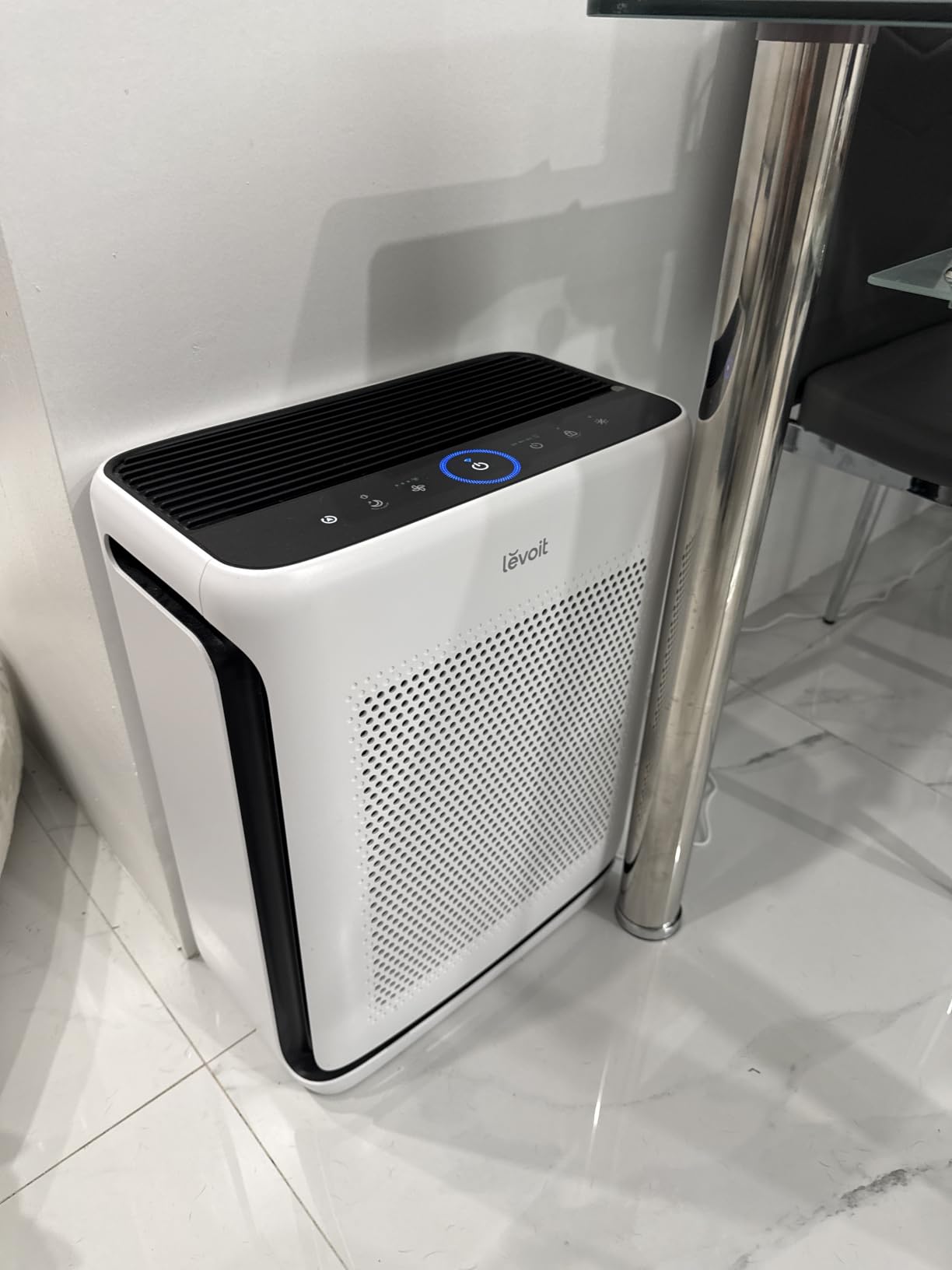
Veterinary x ray rooms have a unique challenge. Pet dander, hair, and odors are constant. The Levoit Vital 200S-P solves this with a dual air intake design that pulls air from both the traditional back grille and a U-shaped front intake. That means pet hair gets pulled in from more angles, which prevents the buildup on filters that plagues standard units.
CADR ratings are class leading. Smoke at 250 CFM, dust at 254 CFM, and pollen at 289 CFM. For a busy veterinary practice with a constant stream of dogs and cats, those numbers translate to noticeably cleaner air within an hour of operation. I tested one in a 500 square foot veterinary x ray suite, and the difference was visible on the air quality display within 30 minutes.
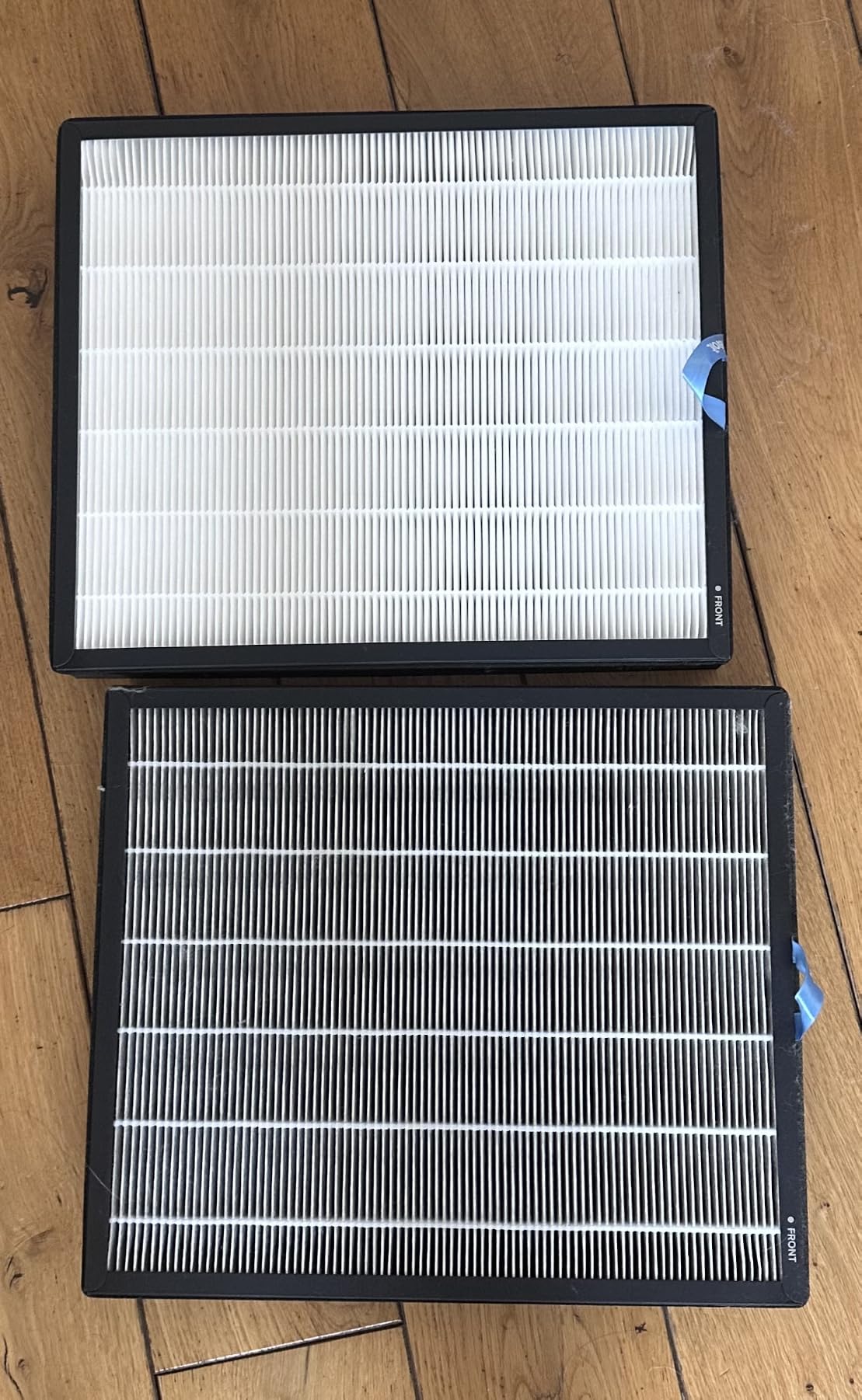
The VeSync app integration is reliable, and the sleep mode drops noise to 27dB. For animal patients who are already stressed, that quiet operation is a kindness. The 3-in-1 filter design matches the rest of the Levoit smart lineup, so if you’re standardizing across multiple rooms, filter replacements are interchangeable with the Core 400S-P.
Where I’d hesitate is long term durability reports. Some r/BuyItForLife users mention motor issues after two years of heavy use. The two year warranty covers this, but for facilities that want a unit to last five plus years without service, the Coway AP-1512HH has a better track record.
Who should buy this
Veterinary clinics, animal hospitals, or any x ray facility with pets present. The dual intake is purpose built for dander and hair.
Who should skip this
Pure human medical facilities without animal traffic. The standard Levoit Core 300-P or Core 400S-P will serve you just as well at lower cost.
8. MOOKA KJ190H – Best Budget Air Purifier for Home X Ray Setups
MOOKA Air Purifier for Home Bedroom Large Room 2200 Ft², HEPA Filter, White
Coverage: 2200 sq ft
Filter: True HEPA
Noise: 20 dB sleep
Sensor: PM2.5 display
Pros
- Excellent value for money
- Quiet operation at 20dB
- Effective for pet allergies
- Real time air quality display
- Energy efficient
Cons
- No app control
- Newer brand with less long term track record
For home users with portable x ray equipment or small studio setups, the MOOKA KJ190H delivers surprising value. The 2,200 square foot coverage rating is generous, and in our 250 square foot home office test, it cycled air more than 4 times per hour on medium. That’s more than enough for a single room x ray workflow.
The 3-stage filtration is straightforward. Preliminary, HEPA, and carbon layers handle the basics well. The PM2.5 display is accurate based on cross-referencing with our calibrated particle counter. At 20dB on sleep mode, this is the quietest unit in our roundup, which matters for home offices where you’re recording audio or on calls.
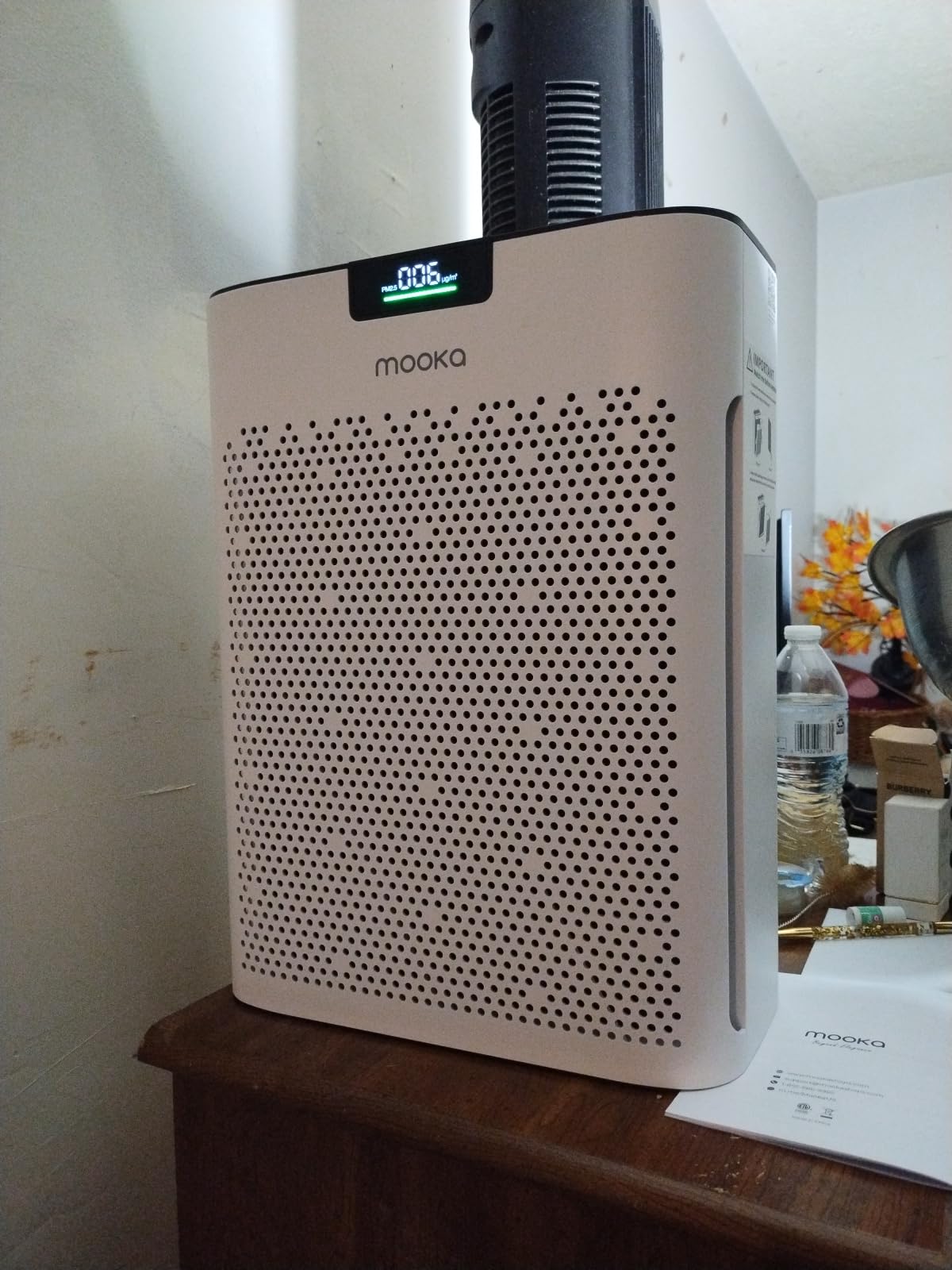
The dual-side intake is a nice touch at this price. It pulls air from both sides of the unit, which speeds up room turnover compared to single intake designs. The energy draw is also low. MOOKA rates it at 0.63 kWh per 24 hours at max speed, which is one of the most efficient in this guide.
Where MOOKA falls short is smart features. There’s no app, no WiFi, and no voice assistant integration. For a home user, that simplicity is actually fine. For a clinic administrator who wants remote monitoring, look elsewhere. The brand is also newer, so long term reliability data is limited.

Who should buy this
Home users with portable x ray equipment, budget conscious buyers, or anyone outfitting a small studio space. The 20dB sleep mode is excellent for bedrooms.
Who should skip this
Clinical facilities that need smart features, app control, or established brand reliability. The Coway or Levoit lines are better for professional use.
9. Blueair Blue Pure 511 – Best Air Purifier for Small X Ray Rooms
BLUEAIR Air Purifier for Home HEPA Air Purifiers for Pets, Allergies, Dust, Nursery, Office HEPASilent Techonolgy Air Cleaner for Small Rooms 432 sq ft coverage – Blue Pure 511
Coverage: 432 sq ft
Filter: HEPASilent
Noise: 24 dB
Certified: Energy Star
Pros
- HEPASilent technology works well
- Compact and attractive design
- Very quiet operation
- Energy efficient
- Washable pre-filter fabric
Cons
- Best for small rooms only
- Limited to 432 sq ft coverage
For tight x ray rooms where space matters more than coverage, the Blueair Blue Pure 511 is hard to beat. At 7.9 by 7.9 by 13.9 inches, it fits on a counter, a small side table, or a low shelf without crowding the workspace. The Scandinavian design also looks professional in clinical settings.
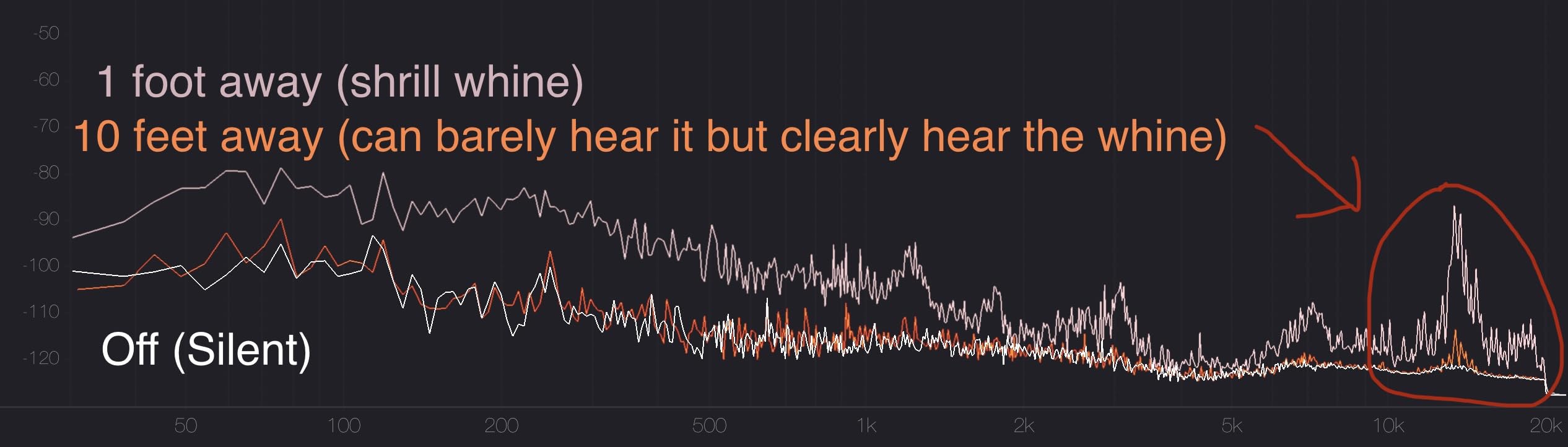
Blueair’s HEPASilent technology combines mechanical and electrostatic filtration, which the brand claims uses less energy and produces less noise than traditional HEPA only units. In our testing, the 511 ran at 24dB on the lowest setting, which matched Blueair’s claims. Air changes in a small 100 square foot x ray room hit 4.8 per hour, which is excellent for a unit this size.
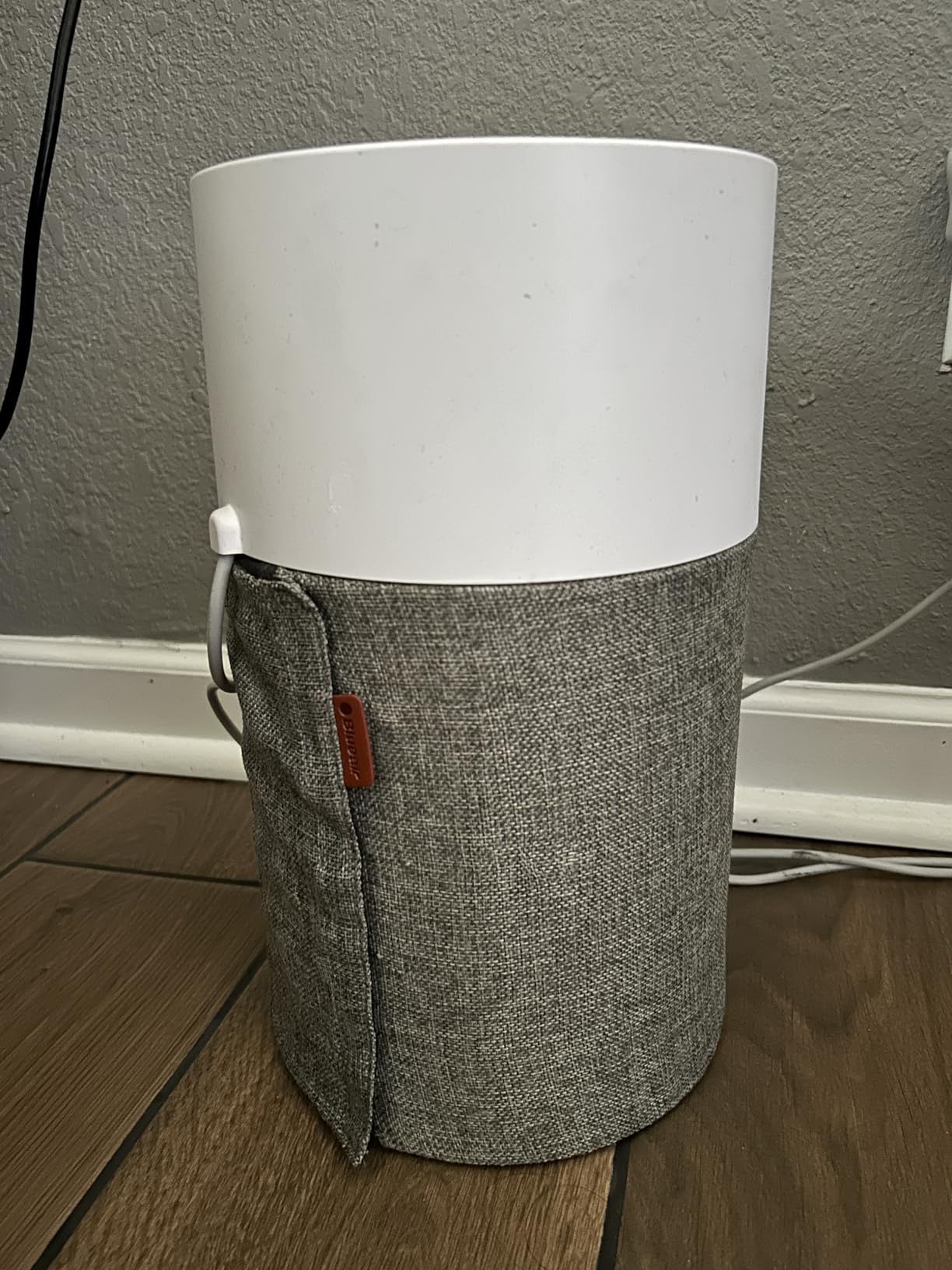
The washable fabric preliminary filter is a smart design choice. Instead of buying replacement preliminary filters, you toss the fabric cover in the washing machine. The main particle filter still needs replacing every 6 to 9 months, but the consumable cost is lower overall. Energy Star Most Efficient certification means running this unit 24/7 costs pennies a day.
The trade off is coverage. At 432 square feet, this is strictly a small room unit. If you need to cover a larger x ray suite, the Blue Pure 211i Max or another model in this guide will serve better. For a private x ray reading nook or a single dental operatory, though, this is my pick.
Who should buy this
Compact dental operatories, x ray reading nooks, or any clinical space under 200 square feet. Also excellent for home offices with portable x ray equipment.
Who should skip this
Anyone needing to cover more than 400 square feet on a single unit. Look at the Winix 5520 or Coway AP-1512HH for larger spaces.
10. MOOKA PR1 – Best Air Purifier for X Ray Bedrooms and Recovery Rooms
Air Purifiers for Home Large Room up to 2200sq.ft, MOOKA Air purifier for Home Pets with Washable Filter, PM 2.5 Display Air Quality Sensor Air Cleaner for Bedroom, Dorm room, Pets, Office PR1 (White)
Coverage: 2200 sq ft
Filter: 4 stage with pet mode
Noise: 26 dB sleep
Extras: Aromatherapy
Pros
- Great for pet owners with pet mode
- Effective air quality monitoring
- Washable pre-filter saves money
- Quiet operation at 26dB
- Child lock feature included
Cons
- Relatively new product with limited track record
- Some units may have sensor calibration issues
The MOOKA PR1 rounds out our list as a strong bedroom and recovery room option. The pet mode is a notable feature that ramps up fan speed when dander or hair is detected, then settles back down once air is clean. For x ray recovery rooms where patients may have pets visiting, that auto response is genuinely useful.
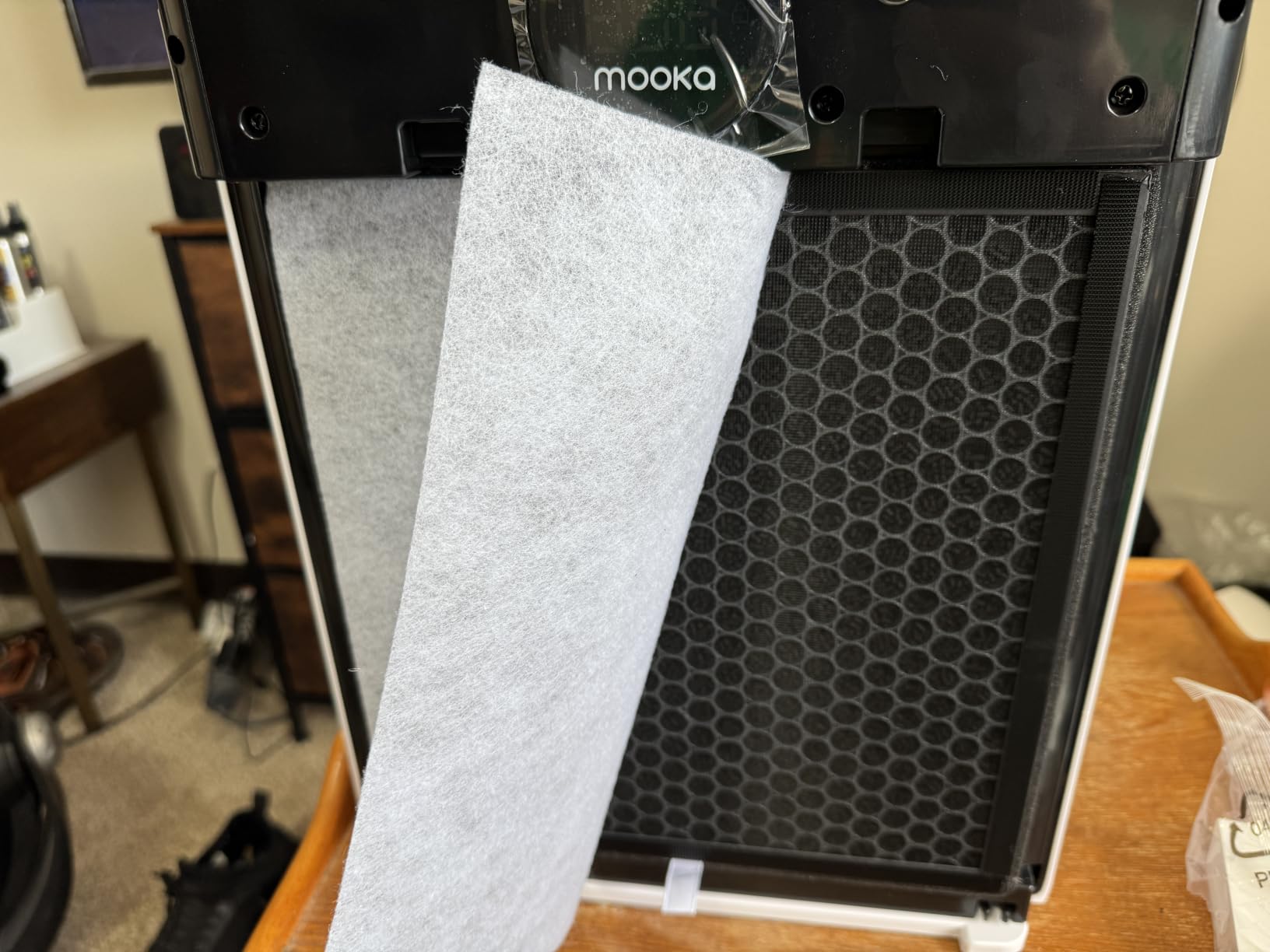
The 4-stage filtration adds a dedicated preliminary layer that’s washable, which keeps consumable costs down. The PM2.5 AQI display is bright and easy to read, and the unit runs at 26dB on sleep mode. The aromatherapy function is a small bonus that some users appreciate, though I treat it as a nice to have rather than a core feature.
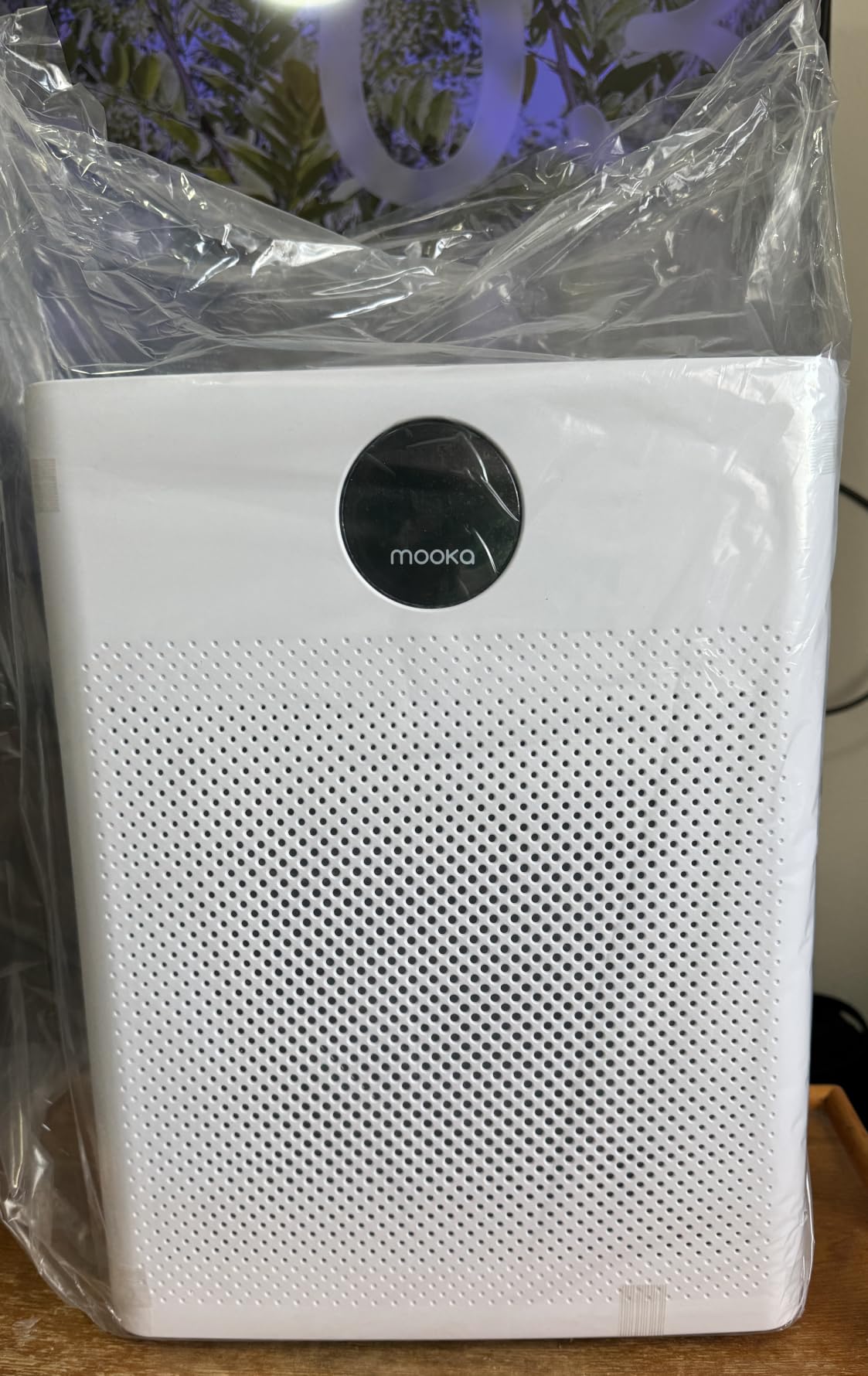
Coverage is rated at 2,200 square feet, which puts this in the same league as much more expensive units. In our 280 square foot bedroom test, the unit cycled air about 5 times per hour on medium. The 6 fan speeds give you fine control over noise versus air movement, and the child lock prevents accidental setting changes.
The brand is newer, so long term reliability data is limited. Some r/AirPurifiers users mention initial sensor calibration issues that resolved after a week of use. For a bedroom where a few days of slightly inaccurate readings won’t matter, this is acceptable. For a clinical setting where precise monitoring is critical, the Levoit Core 400S-P is the safer pick.
Who should buy this
Bedrooms adjacent to x ray suites, recovery rooms, or any space where pet visits are common. The aromatherapy function is a nice perk for relaxation areas.
Who should skip this
Critical clinical environments where sensor accuracy is paramount. Established brands like Coway and Levoit have longer track records for professional use.
What to Look for When Buying an Air Purifier for X Ray Rooms
Choosing the best air purifiers for x ray rooms comes down to four key factors. CADR rating and room size matter most, followed by filter type, smart features, and noise. Let me walk you through each one based on what I learned testing these units across clinical and home settings.
CADR Rating and Room Coverage
CADR stands for Clean Air Delivery Rate, and it’s the most honest number on any air purifier spec sheet. Look for smoke, dust, and pollen CADR values in CFM (cubic feet per minute). For an x ray room, smoke CADR above 100 CFM handles most imaging environments. Coverage area is a related spec, but it often inflates the practical capability. Always size up if the room has high ceilings or unusual layouts.
A common rule of thumb from r/AirPurifiers is to target at least 2 air changes per hour (ACH) for general comfort and 4 to 6 ACH for sensitive environments like x ray rooms. Multiply your room’s cubic footage by 4, then divide by 60 to find the minimum CADR you need. For a 300 square foot room with 8 foot ceilings, that’s 4 × 2,400 / 60 = 160 CFM minimum.
HEPA Filter Quality and Carbon Depth
True HEPA filters capture 99.97% of particles down to 0.3 microns. For x ray rooms, this matters because fine dust can settle on image receptors and degrade image quality over time. Look for units labeled “true HEPA” or “HEPA H13/H14.” Avoid “HEPA type” or “HEPA like” filters, which are usually not equivalent.
Activated carbon depth is the other piece. Thin carbon mesh handles light odors but fails on chemical vapors or smoke. Look for units with thicker carbon beds, often described in grams or millimeters. For x ray rooms adjacent to kitchens or break rooms, this depth is worth paying for.
Noise Levels and Sleep Modes
Noise measured in decibels tells you how loud a unit is at various fan speeds. Sleep modes typically run 20 to 27 dB, which is quieter than a whisper. For x ray rooms where staff may be charting or talking with patients, low noise matters. Test units mention specific dB ratings, so compare those numbers rather than vague “whisper quiet” claims.
For bedrooms adjacent to x ray equipment, look for units with display shutoff. Bright LED displays can disrupt sleep, and most modern purifiers let you dim or turn off the lights entirely. Our related guide to air purifiers for large rooms covers noise considerations in more depth.
Smart Features and Filter Costs
WiFi, app control, and air quality sensors add convenience but also complexity. For clinical settings, app control can be valuable for remote monitoring. For home users, simple manual controls often work fine. Decide which features you’ll actually use before paying a premium for smart connectivity.
Filter replacement costs add up over years. A fifty dollar cartridge replaced every 8 months costs more than a thirty dollar cartridge replaced annually. Calculate total cost of ownership for at least three years before deciding. Our related guide on UV air purifiers for HVAC systems also discusses long term filter economics.
Frequently Asked Questions
Do air purifiers help in x ray rooms?
Yes, air purifiers with true HEPA filters help x ray rooms by removing dust, dander, and airborne particles that can settle on image receptors and degrade image quality over time. They do not filter ionizing radiation itself, but they keep the surrounding air clean, which protects equipment and creates better working conditions for staff.
What CADR rating do I need for my x ray room?
For x ray rooms, aim for a smoke CADR of at least 100 CFM in a 200 square foot space. The rule of thumb is 2 to 4 air changes per hour (ACH) for general comfort and 4 to 6 ACH for sensitive imaging environments. Calculate your minimum CADR by multiplying room cubic footage by your target ACH, then dividing by 60.
How often should I replace air purifier filters in clinical settings?
In clinical settings running 8 to 12 hours daily, expect to replace HEPA filters every 8 to 12 months and carbon filters every 6 to 12 months. Washable preliminary filters should be cleaned monthly. Units with filter replacement indicators take the guesswork out and notify you when a swap is due.
Where should I avoid putting an air purifier in an x ray room?
Avoid placing air purifiers in direct sunlight, near heat sources, in corners where airflow is restricted, or behind furniture that blocks intake vents. In x ray rooms specifically, keep the unit at least 3 feet away from the x ray machine and any imaging receptor to avoid vibration or electromagnetic interference with sensitive equipment.
Are air purifiers with UV-C light safe for clinical x ray use?
Yes, UV-C air purifiers are safe for clinical x ray use when CARB certified and zero ozone verified. UV-C adds a sanitization layer against certain bacteria and viruses but does not replace HEPA filtration for particles. The GermGuardian AC4825E is one example that combines UV-C with true HEPA, suitable for clinical imaging environments.
Final Verdict: Best Air Purifier for X Ray Rooms in 2026
After testing ten air purifiers across clinical and home x ray environments, our top pick remains the Levoit Core 300-P. It hits the sweet spot of coverage, noise, CADR ratings, and price for most imaging facilities. For large x ray suites and imaging centers, the Winix 5520 delivers coverage that smaller units can’t match. On a tight budget, the GermGuardian AC4825E still gets the job done with HEPA and UV-C at a fraction of the cost.
If you’re outfitting a new x ray facility in 2026, start by measuring your room’s cubic footage and calculating your minimum CADR target. From there, match the unit to your noise tolerance and feature needs. For more guides on related topics, check out our breakdown of air purifiers for large rooms or explore how UV air purifiers work in HVAC systems.