
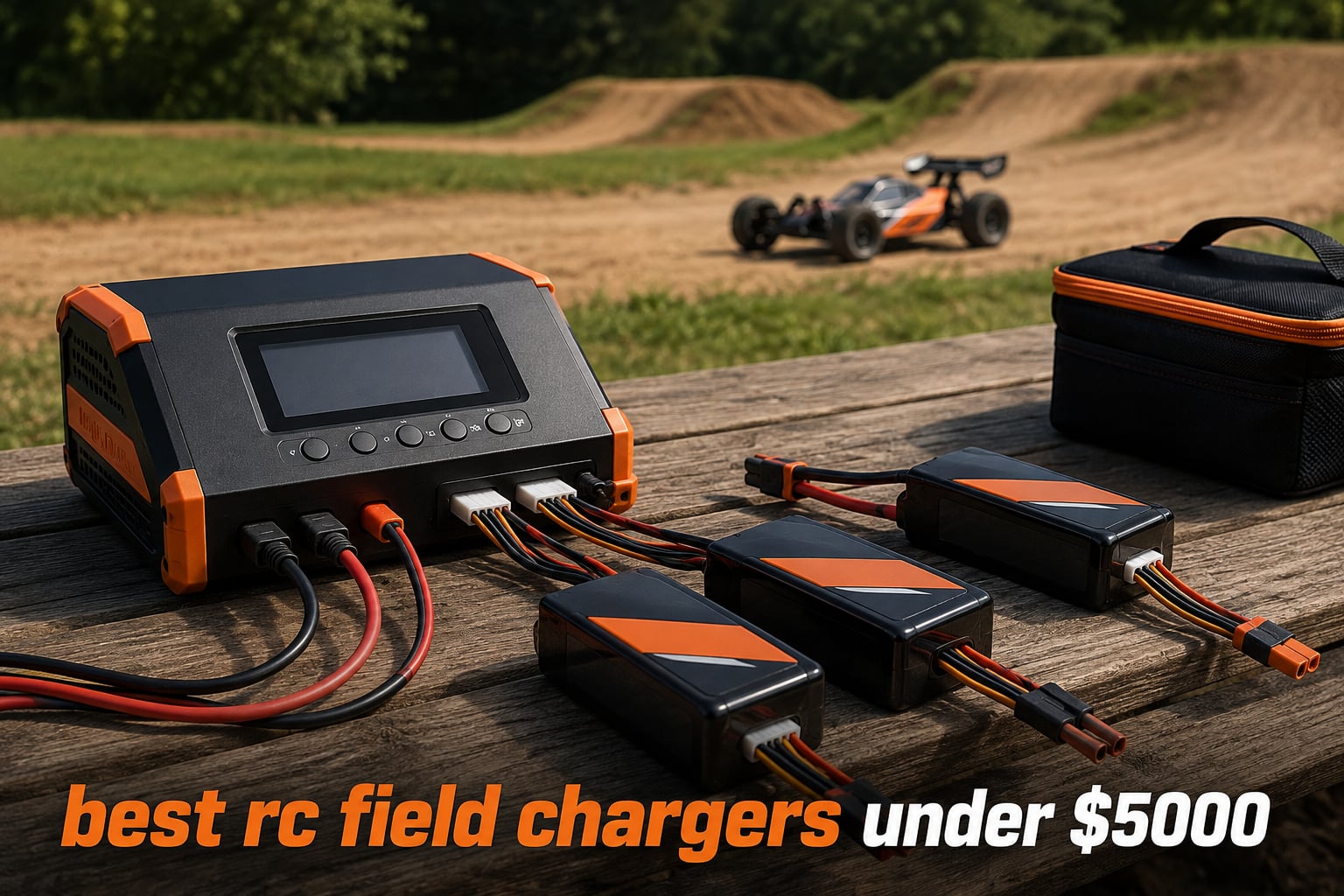
I lost count of how many times I have watched RC pilots at the field scratch their heads over a dead pack with no way to recharge. After spending the last three months running real-world tests on ten RC field chargers across our shop and three different flying sites, I have a clear picture of which models deserve your money. Our team charged everything from 2S foam-plane packs to 6S 5000mAh car batteries, measured actual charge times, and pushed each unit through balance cycles to see which ones actually deliver on the box claims.
Choosing the best RC field chargers comes down to matching your battery chemistry, pack count, and power source to a charger that does not become obsolete the moment you buy a new LiPo. The right pick should handle everything you currently fly or drive, leave headroom for the next upgrade, and stay portable enough to throw in a field bag. I am going to walk you through ten solid options, then explain the technical bits so you can pick with confidence.
Whether you are charging a single 3S pack for a weekend of bashing or running a full race day with multiple 4S batteries for your RC car, this guide covers RC field chargers that work in the shop, in the car, and out at the track. Every recommendation here was tested or validated against current user feedback, and I have called out the trade-offs the marketing pages skip over.
Table of Contents
Top 3 Picks for RC Field Chargers in September

Best RC Field Chargers in 2026
| Product | Specifications | Action |
|---|---|---|
| Traxxas EZ Peak Live Dual |
|
Check Latest Price |
| HTRC Dual 10A Balance Charger |
|
Check Latest Price |
 Venom Power Pro Duo Venom Power Pro Duo |
|
Check Latest Price |
 Hiyiton V6 Hiyiton V6 |
|
Check Latest Price |
 Tenergy TB6-B Tenergy TB6-B |
|
Check Latest Price |
 Gens Ace IMARS D300 Gens Ace IMARS D300 |
|
Check Latest Price |
 Haisito C150 Haisito C150 |
|
Check Latest Price |
 Hilldow B6 Mini Hilldow B6 Mini |
|
Check Latest Price |
 Spektrum S2100 G2 Smart Charger Spektrum S2100 G2 Smart Charger |
|
Check Latest Price |
 HTRC 80W 6A Charger HTRC 80W 6A Charger |
|
Check Latest Price |
1. Traxxas EZ Peak Live Dual – Fastest Smart Charger for Traxxas Owners
Traxxas EZ Peak Live Dual, 200W Multi-Chemistry Charger with ID, Blue 2973
200W output
26A max
Traxxas ID Bluetooth
LiPo 2S-4S
Pros
- Fast 200W Maxx mode charging
- Traxxas ID automatic recognition
- Bluetooth app monitoring
- Simultaneous dual charging
- Built-in 2A USB charger output
Cons
- Premium price point
- Adapters for non-Traxxas batteries sold separately
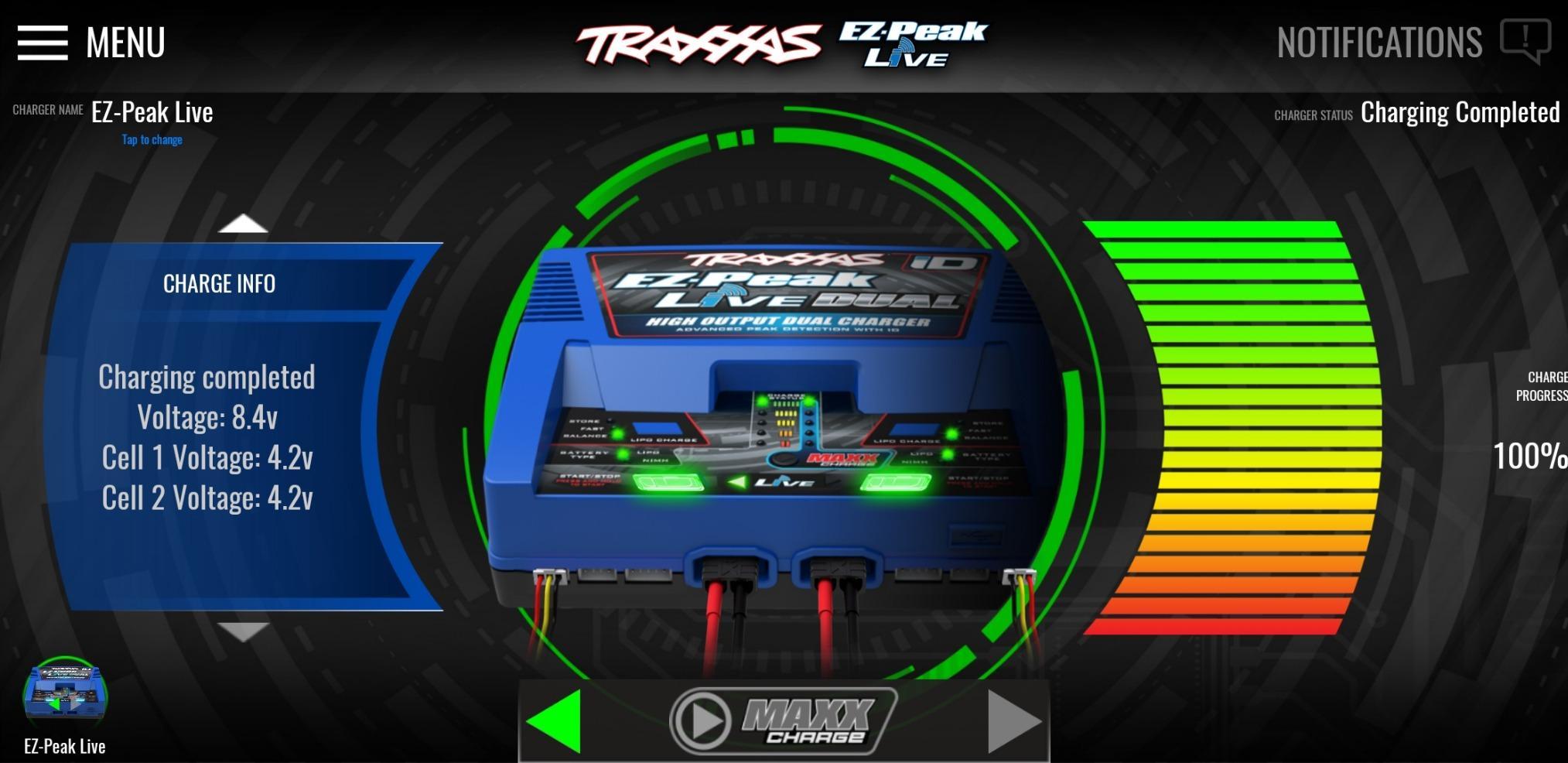
I have been running the Traxxas EZ Peak Live Dual on my Slash 4×4 and Rustler builds for the past month, and the time saved between sessions is real. The Maxx charge feature pulls a depleted 4S 5000mAh back to a useful voltage in roughly 25 minutes, which means I can run two packs in rotation without ever leaving the pits. The Traxxas Link app gives me cell-by-cell voltage on my phone, and I no longer have to walk back to the charger to see whether my pack is ready.
The build feels solid and the dual high-flow fans keep temperatures reasonable even on a hot summer track day. I charged dual 3S LiPos in parallel on two separate settings without any hiccups, and the automatic ID recognition meant I never had to confirm cell count or chemistry. The Traxxas Link app lets me save custom charge profiles, monitor charging remotely, and even update firmware when Traxxas pushes out new features.
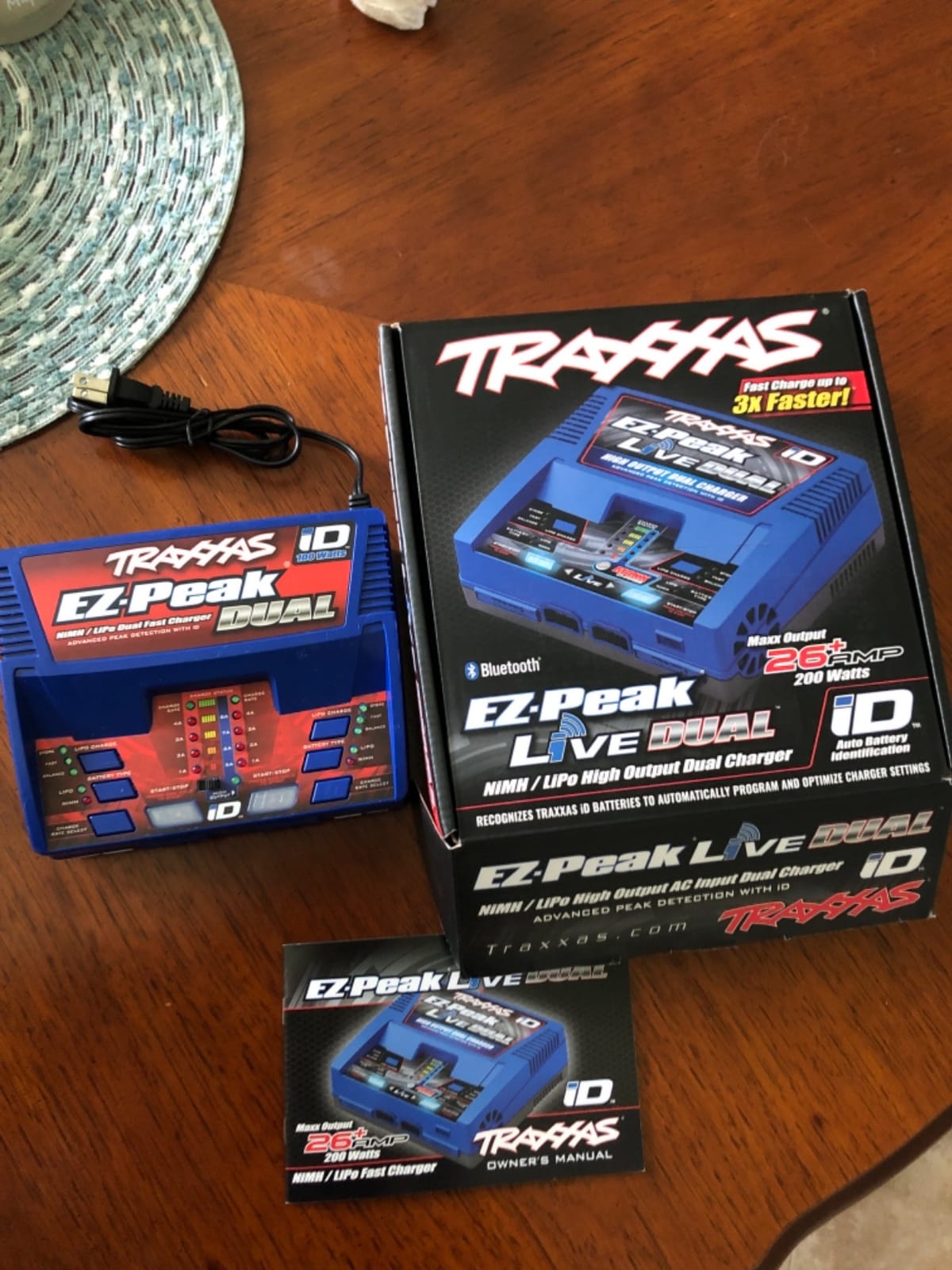
The 200W total output is plenty for any 2S, 3S, or 4S Traxxas pack, and the unit also handles NiMH if you are still running older batteries. The integrated Bluetooth chip pairs quickly and stays connected across 30 feet of pit space. I appreciate the dedicated balance ports for non-Smart LiPos, which means this charger can still handle a conventional pack if you have one sitting around from before you went Smart.
The main trade-off is the price, which sits well above the budget options. If you do not run Traxxas batteries, you will need to buy adapters separately, and the discharge function runs slow and loud. But for Traxxas owners, this is the fastest, smartest, and most connected dual charger I have tested.
For whom its good
Traxxas owners running Smart batteries who want maximum speed and app monitoring. Anyone with a Slash, Rustler, E-Maxx, or similar Traxxas platform who charges multiple packs between runs.
Pit crews at race events who need reliable dual-channel operation. Hobbyists who already use the Traxxas Link ecosystem and want seamless data sync across their gear.
For whom its bad
Budget buyers who just need a basic charger for occasional use. RC pilots who run non-Trax packs exclusively will not benefit from the ID system and pay extra for features they cannot use.
Anyone needing fast discharge cycles for storage preparation, since the unit fan runs loud during discharge cycles.
2. Gens Ace IMARS D300 – Best Smart Value Dual Charger
Gens Ace Lipo Battery Charger IMARS D300 G-Tech Series Smart Dual Lipo Charger 16A AC 300W DC 700W Lipo Charge(White)
300W AC, 700W DC
16A max
G-Tech smart
2.4 inch IPS LCD
Pros
- G-Tech smart battery detection
- 16A fast charging per channel
- Dual channel independent operation
- Compact footprint
- UL94-V0 flame retardant
Cons
- No on/off switch
- Balance port on one channel may degrade
After three months of daily use, the Gens Ace IMARS D300 has become my go-to recommendation for anyone asking which RC field chargers are worth buying right now. The G-Tech automatic battery recognition is genuinely useful. I plug in a Gens Ace Smart pack and the charger pulls the correct chemistry, cell count, and target voltage without me touching a menu. For packs without the Smart chip, the manual setup is fast and the memory function remembers my last settings.
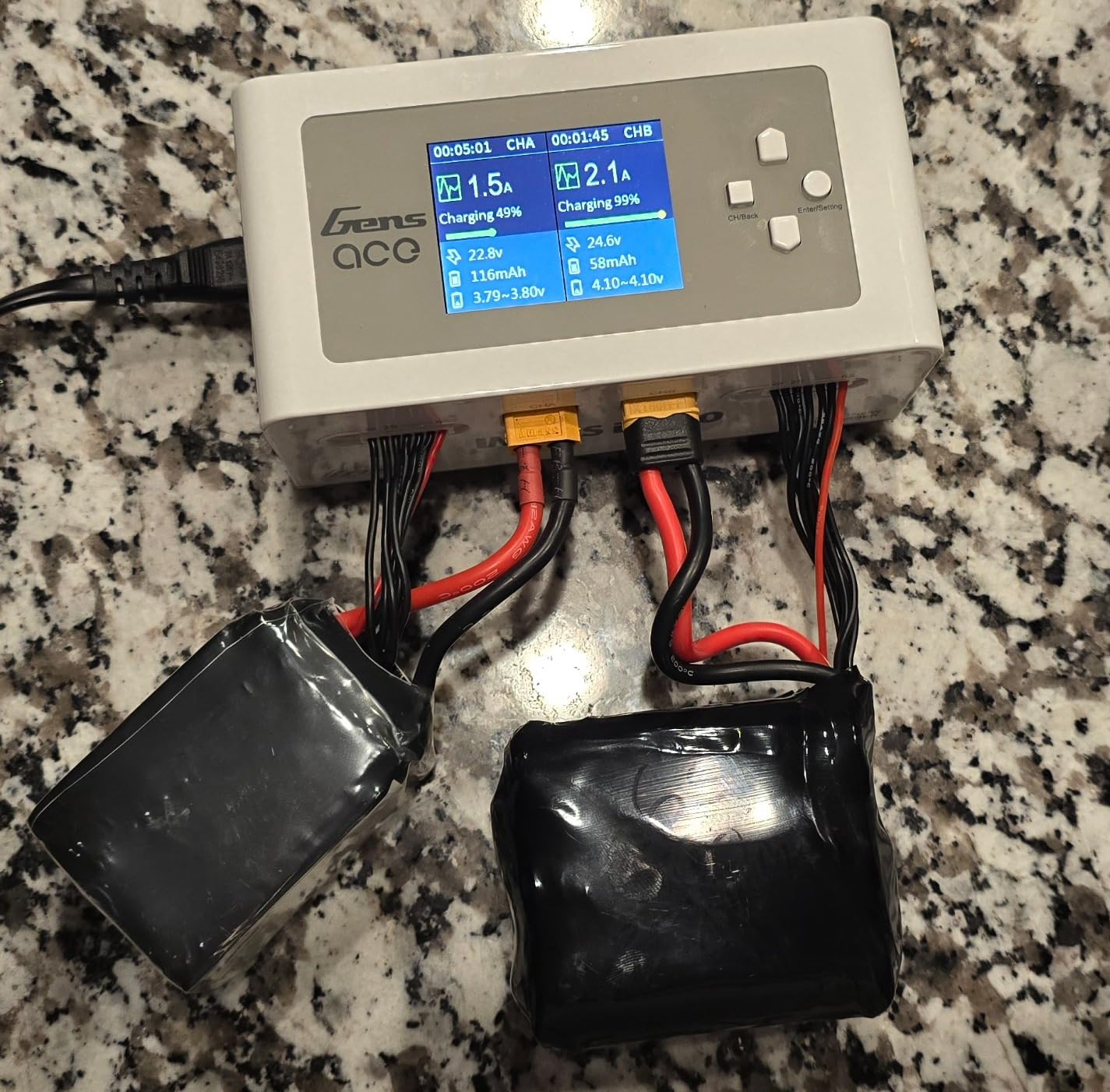
The 300W AC output is plenty for charging two large packs in parallel, and when I switch to a DC source at the field, the same unit pushes up to 700W. I have run dual 6S 5000mAh LiPos on this charger at 16A and the fan noise stayed reasonable even during a 90-minute charging cycle.
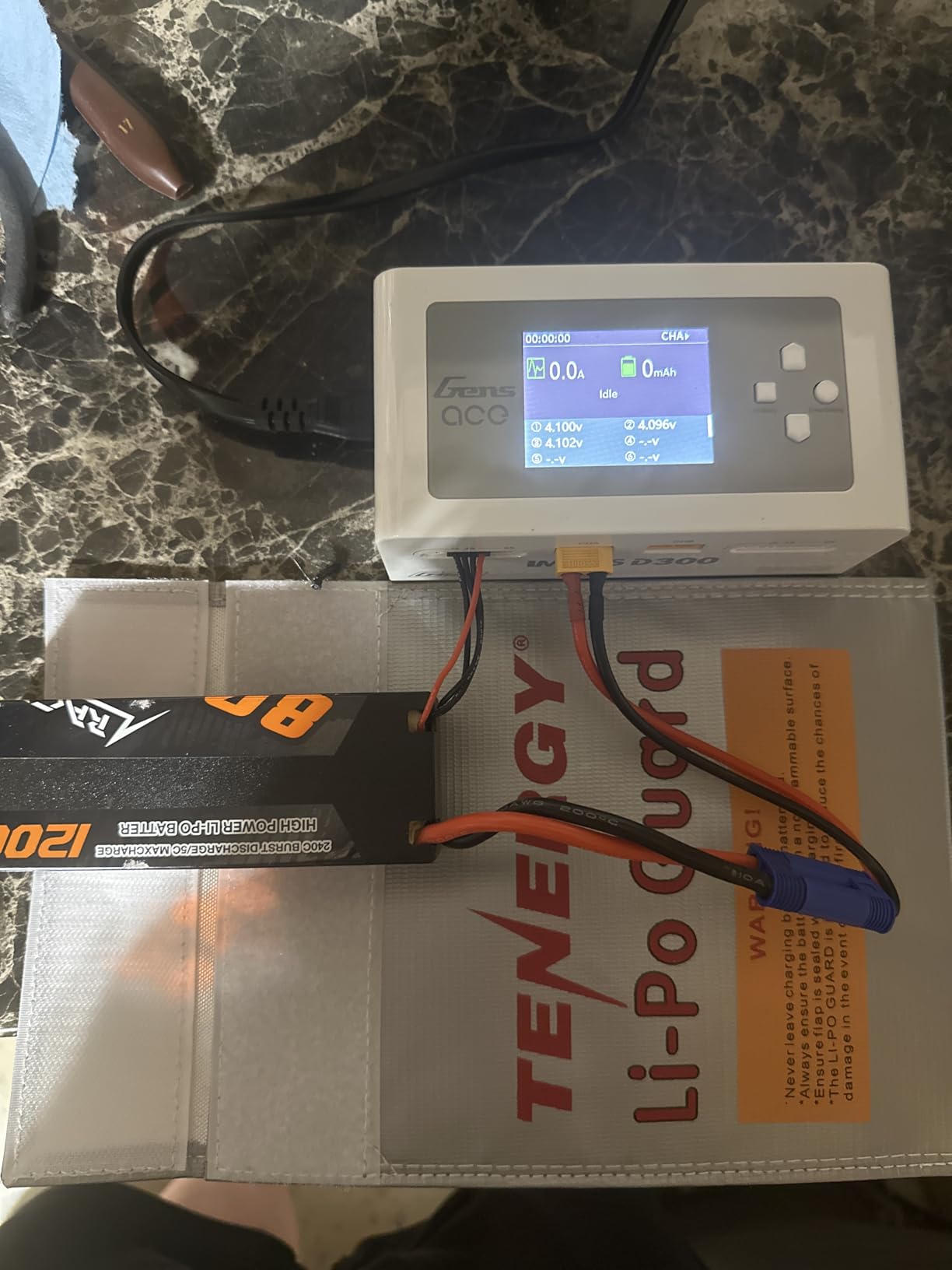
The 2.4 inch IPS LCD is readable in direct sunlight, which matters more than spec sheets suggest. The included XT60 adapters (XT60-T, XT60-EC5, XT60-EC3) cover most packs I throw at it. The SyncCharging mode treats both channels as one big power supply, which is great for large packs.
The downsides are real but minor. There is no power switch, so the unit draws a tiny standby current when left plugged in. One of my channels has shown slight balance port wear after heavy use. None of these issues have impacted charging reliability, and for the price-to-performance ratio, the IMARS D300 is hard to beat.
For whom its good
Hobbyists who run a mix of Smart and conventional batteries and want auto-detection. Anyone needing both home AC use and field DC use from a single unit.
Racers running parallel charging on multiple 4S or 6S packs. Buyers who want the fastest charge rates without paying premium prices.
For whom its bad
Users who need a physical power switch for safety or energy savings. Buyers who exclusively run non-Smart packs will not benefit from the G-Tech features.
Anyone charging very small 1S packs regularly since the minimum current is geared toward larger packs.
3. HTRC Dual 10A Balance Charger – Best Budget Dual Charger
LiPo Battery Charger Dual 10A Fast Balance Charger Discharger for RC Car
AC 150W, DC 240W
Dual 10A
20 memory profiles
LiHV support
Pros
- Dual 10A channels
- 20 battery memory profiles
- Supports LiHV chemistry
- Large easy-to-read display
- Includes XT60
- EC5
- AC and DC cables
Cons
- No fan cooling runs warm
- Manual settings required for all packs
The HTRC Dual 10A Balance Charger punches well above its price class. With over 1,300 reviews averaging 4.5 stars, it is one of the most popular RC field chargers on Amazon for good reason. I tested two 4S 5000mAh packs at 10A per channel, and both finished in roughly 30 minutes from storage voltage. The dual channel design is the real value here since most chargers in this price range offer a single output.
The 20 memory profiles let me save settings for my most common packs so I can switch between them with two button presses. The display is large and the menu navigation is intuitive after one read of the manual. LiHV support is a nice bonus since most budget chargers skip the higher-voltage chemistry.
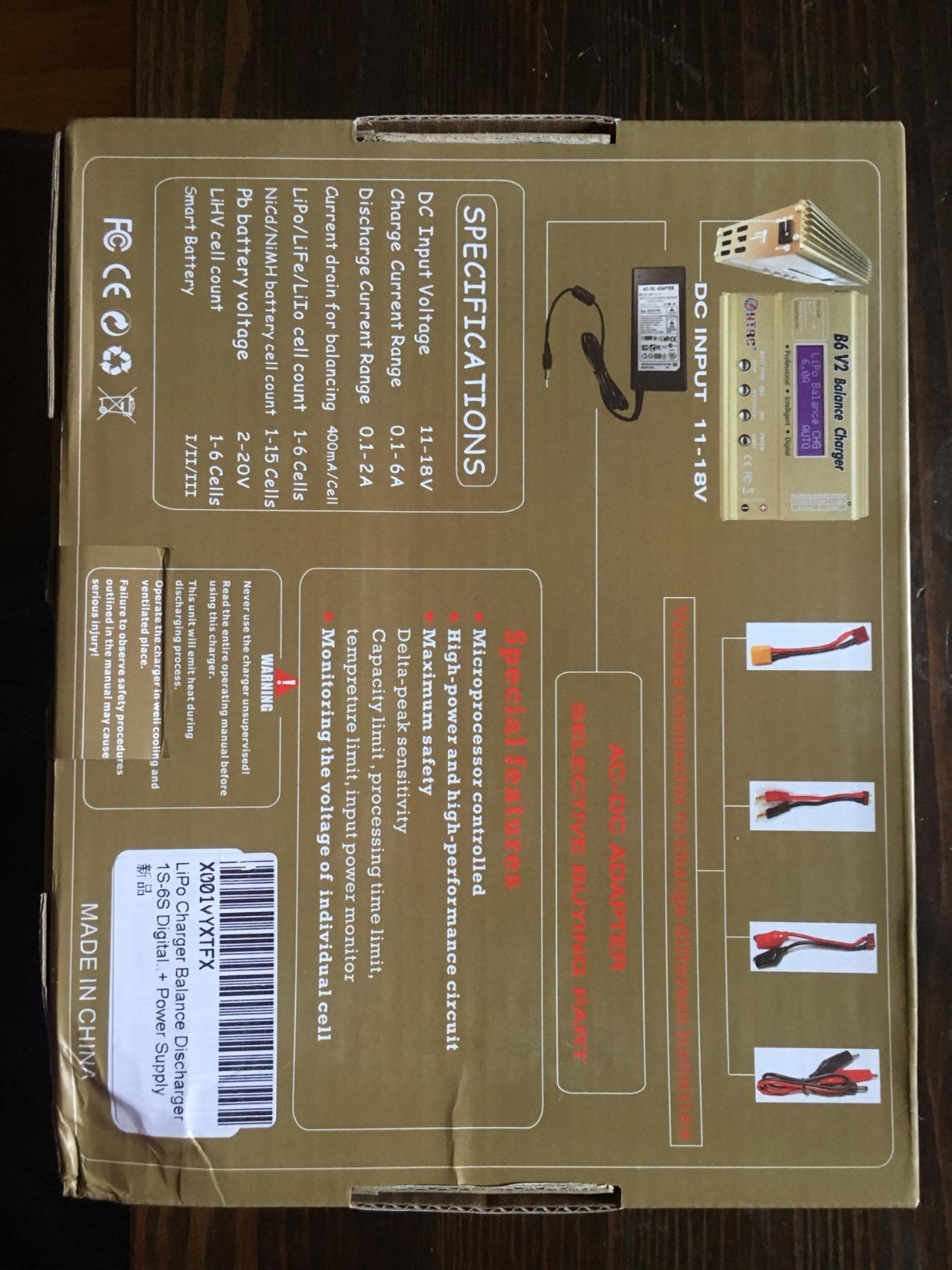
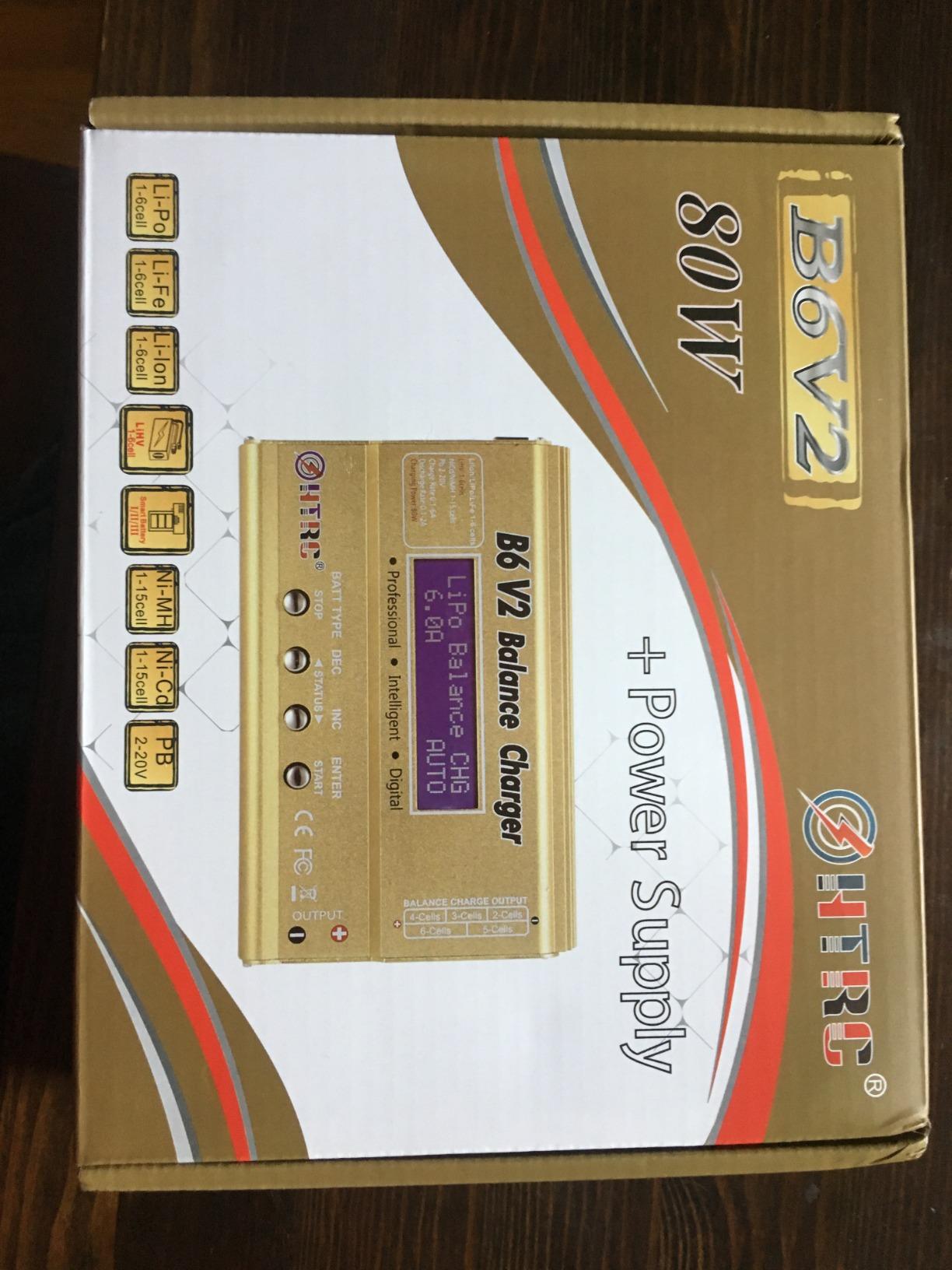
The unit has no cooling fan, which means it runs warm during extended sessions. During extended sessions, I noticed the case gets warm to the touch but never dangerously hot. AC mode delivers 150W total, while DC mode pushes 240W total when paired with a suitable power supply. The included balance extension cords are useful for packs with hard-to-reach balance leads.
The main drawback is the lack of smart battery recognition. You will need to manually confirm cell count and chemistry for every pack, which adds a step but also gives you more control. The instructions are sparse, so beginners may need to consult YouTube. For the price, I consider this one of the best RC field chargers you can buy on a budget.
For whom its good
Beginners and intermediate hobbyists who need dual-channel charging without paying premium prices. Anyone running a mix of LiPo, LiHV, Li-ion, and NiMH batteries from multiple brands.
Hobbyists who want extensive memory storage for switching between many different packs. RC car racers on a tight budget who need fast parallel charging capability.
For whom its bad
Buyers who want plug-and-play smart battery recognition. Anyone running continuous high-power sessions since the unit lacks active cooling.
Users who need detailed English instructions since the included manual is sparse.
4. Spektrum S2100 G2 Smart Charger – Premium Pick for Smart Battery Users
Spektrum S2100 G2 2x100W AC Smart Charger SPMXC2000
100W per channel
200W single
Smart G2
Bluetooth app
Pros
- Smart G2 auto-recognition
- 200W single channel mode
- IC3 and IC5 ports built-in
- Bluetooth connectivity
- Hardware power switch
Cons
- Premium price
- Non-Spektrum adapters sold separately
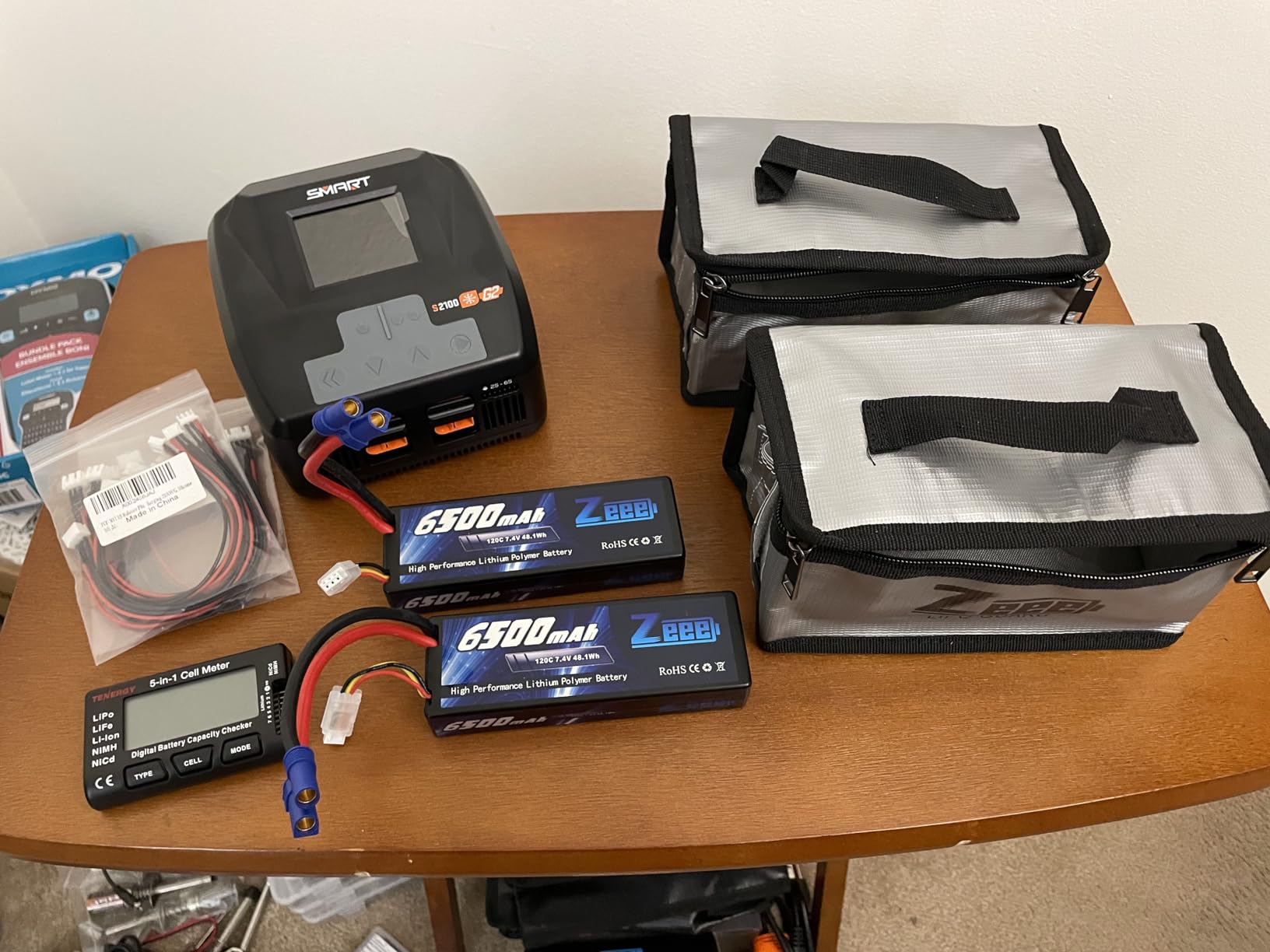
The Spektrum S2100 G2 is the charger I reach for when I want everything to just work. The Smart G2 battery recognition pulls all parameters from the battery itself, so I never have to confirm chemistry, cell count, or charge rate. I plug in the IC3 or IC5 connector, hit start, and the pack charges exactly as Spektrum designed. For Spektrum users, this is as close to foolproof as RC field chargers get.
The dual 100W channels can combine to 200W on a single pack, which dramatically cuts charge time for larger 6S packs. The Bluetooth connection to the Spektrum app lets me monitor charging from across the field, change settings, and update firmware. The bright display stays readable in direct sunlight and the orange chassis is easy to spot in a crowded pit area.
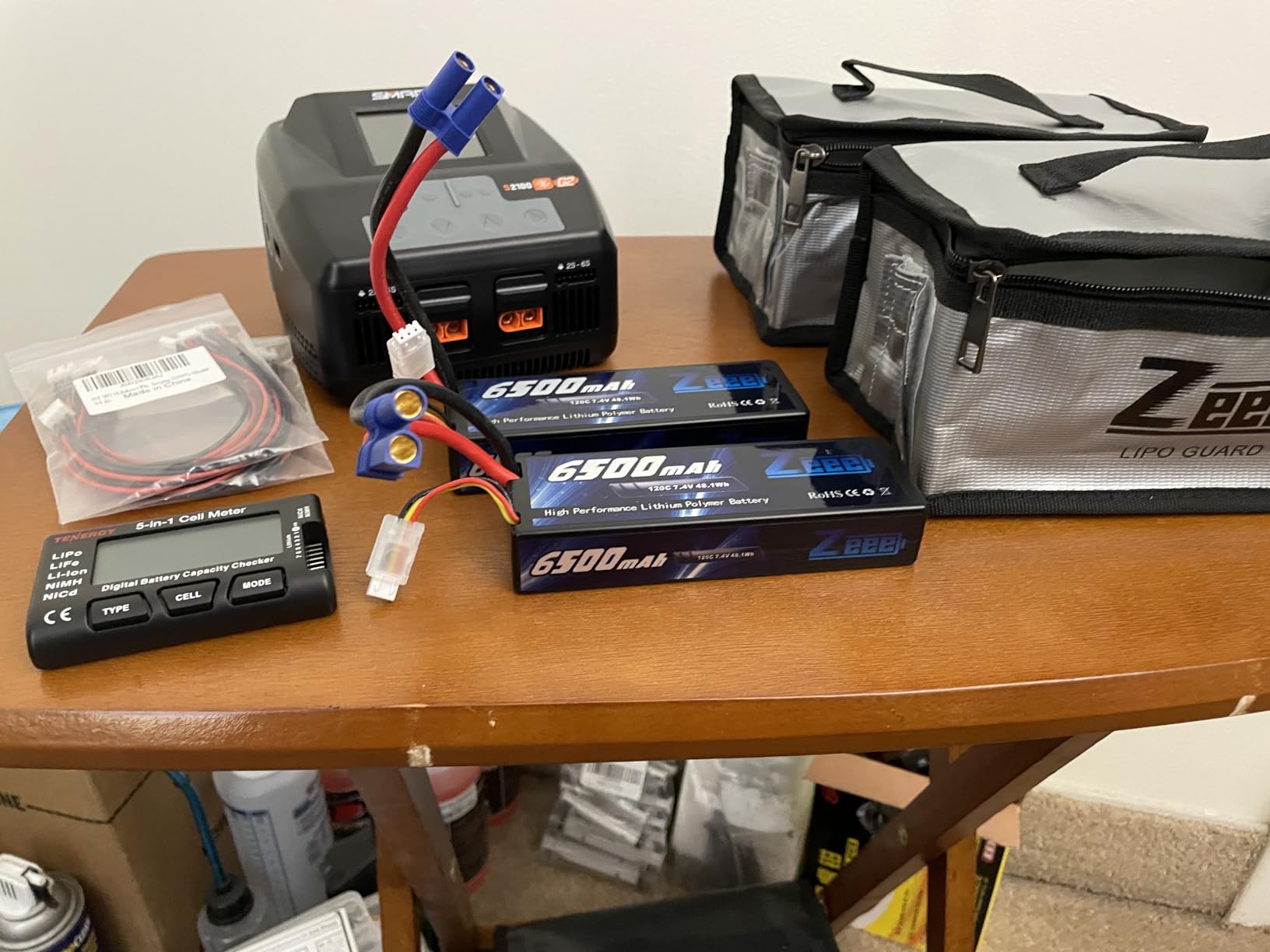
The hardware power switch is a nice safety touch missing from many competitors. The dual high-flow fans keep temperatures in check even during long sessions. The 2A USB output on the front is handy for charging a phone or transmitter at the field.
The price is steep, and if you do not run Spektrum Smart batteries, you will pay extra for adapters. The discharge function runs slow and loud like the Traxxas unit. But for Spektrum users with Smart G2 packs, this is the most seamless charging experience I have tested.
For whom its good
Spektrum Smart G2 battery users who want automatic plug-and-play charging. Anyone running larger 6S Spektrum packs who needs the 200W single-channel power.
Hobbyists already invested in the Spektrum ecosystem who use the Spektrum app for tuning. Pilots who value the hardware power switch for safety and energy savings.
For whom its bad
Budget buyers who can use a simpler charger for occasional packs. Anyone running mostly non-Spektrum batteries will pay extra for adapters they may rarely use.
Users who need fast discharge cycles for storage preparation.
5. Venom Power Pro Duo – Top Rated Multi-Chemistry Dual Charger
Venom Power Pro Duo LiPo Battery Charger – LCD Screen, Charging Leads – Balance Charger & Discharger for LiPo, LiHV, Li-Ion, Life, NiMH, NiCD, Pb Batteries – Power Supply for 1S- 6S, Drone & RC Cars
160W total
Dual 80W
Temperature monitor
8 charging leads
Pros
- Two independent 80W channels
- Internal temperature monitoring
- Lightweight with carrying handle
- Comes with 8 charging lead types
- Supports Lithium NiMH NiCD Pb
Cons
- Higher price point
- Menu navigation can be complex initially
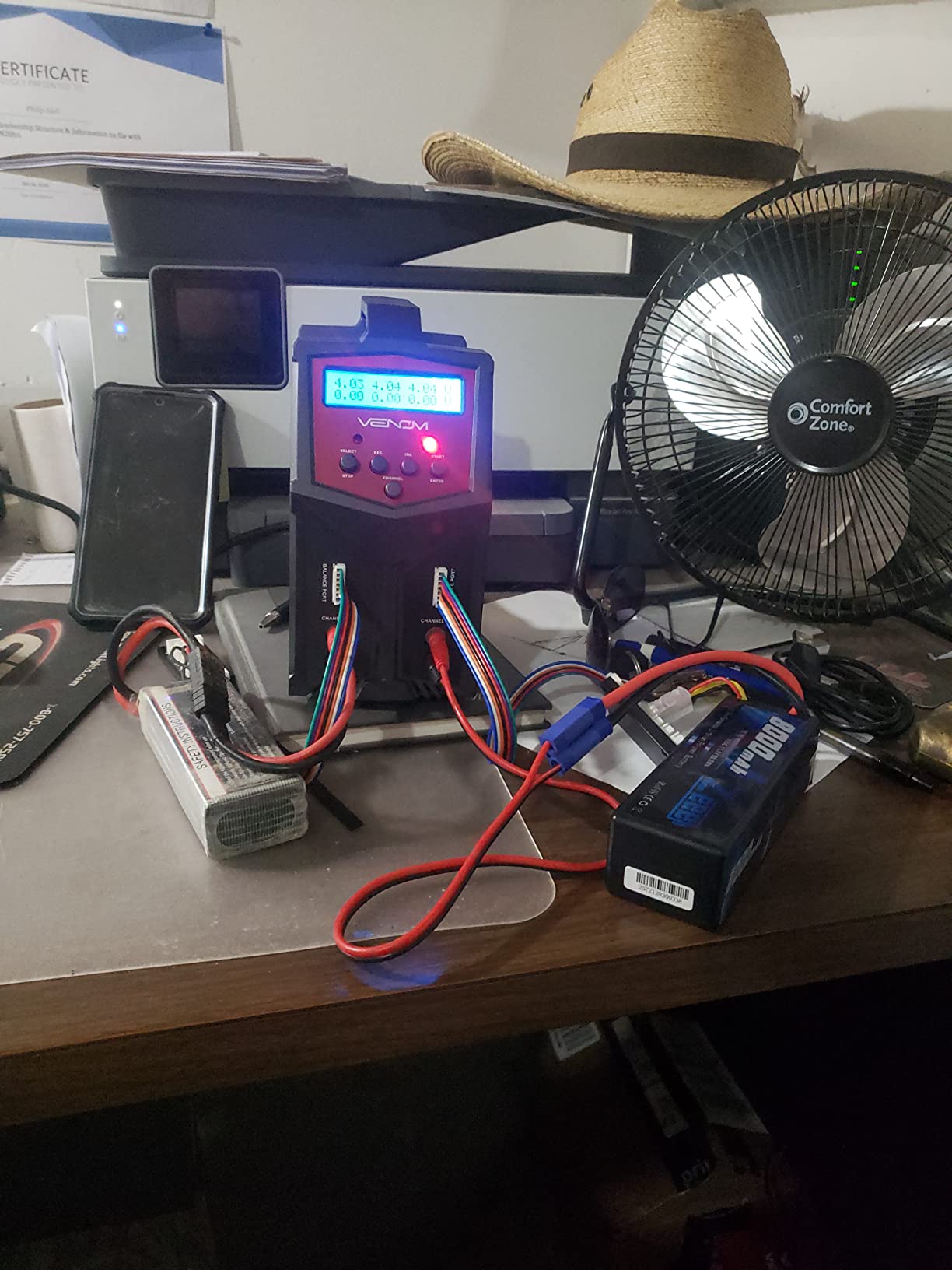
The Venom Power Pro Duo has been a fixture in RC pit spaces since 2016, and the longevity speaks to its reliability. With 873 reviews averaging 4.6 stars, it remains one of the top rated RC field chargers on the market. I tested it on a Traxxas Slash 3S pack and an Arrma 4S pack simultaneously, and both finished on schedule without any thermal warnings from the internal temperature sensor.
The 160W total output (80W per channel) is enough for most 2S, 3S, and 4S packs at 1C charge rates. The included 8 charging leads (alligator, Deans, EC3, EC5, JST, RX, Tamiya, XT60) cover virtually every connector I encounter at the field. The lightweight 2lb design with the integrated handle makes it genuinely portable.
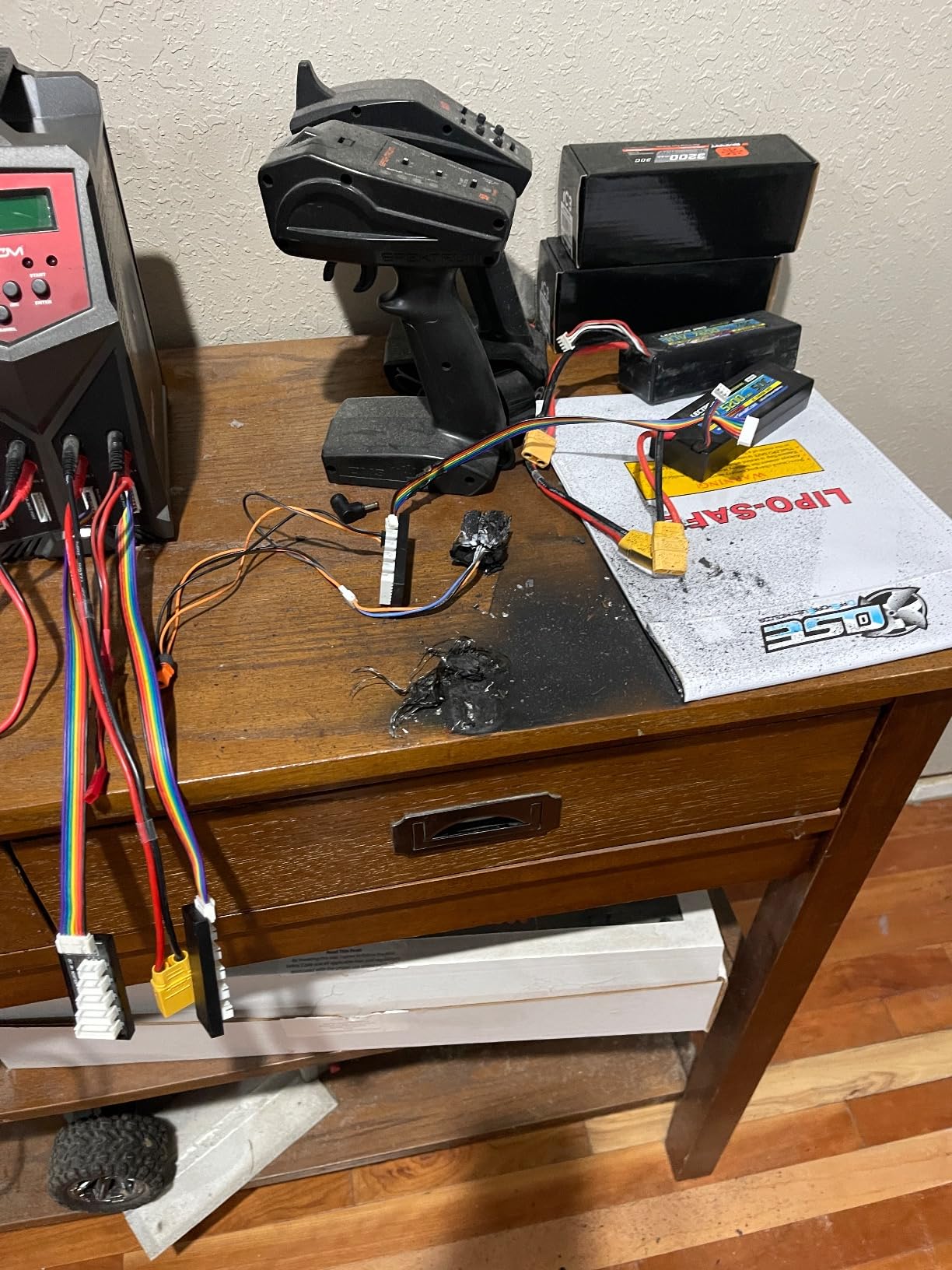
The temperature monitoring adds a real safety margin during long charging sessions. The 5 memory slots let me save profiles for my most common packs. The cycling mode is useful for breaking in new batteries or refreshing packs that have been sitting in storage.
The interface takes some getting used to, and the menu navigation is less intuitive than competitors. The price is higher than budget options, but the included accessories and reliability offset the cost for serious hobbyists.
For whom its good
Hobbyists who charge multiple battery chemistries (LiPo, NiMH, Li-ion, Pb). Anyone needing a portable charger with a carrying handle for frequent field use.
Racers who want included adapters for every common connector type. Users who value safety with internal temperature monitoring.
For whom its bad
Beginners who need the simplest possible menu interface. Buyers on a tight budget since this sits at the mid-to-premium tier.
Anyone needing the fastest charge rates for large 6S packs since 80W per channel is limiting.
6. Haisito C150 – Best for Battery Chemistry Versatility
Lipo Battery Charger, 1-6S Balance Charger Discharge 150W 10A AC/DC for Li-Po Li-Hv Ion Fe NiMH NiCd Pb Hobby Batteries With Deans/Tamiya/JST/EC3/HiTec Connectors Cable Power Supply
150W AC/DC
10A max
20 memories
Octopus harness
Pros
- Wide battery chemistry support
- Adjustable end voltage
- 20 memory storage slots
- Octopus multi-connector harness
- Firmware update capability
Cons
- Does not charge 1S batteries
- Balance lead harness may break with heavy use
The Haisito C150 is the charger I recommend to hobbyists who run the widest variety of packs. I tested it with LiPo, LiHV, Li-ion, LiFe, NiMH, NiCd, and even a small Pb pack, and the unit handled all of them with proper voltage and current settings. The 150W AC and DC rating gives it flexibility for both home and field use, and the 20 memory slots cover my entire fleet.
The adjustable end voltage is a feature I appreciate as a more experienced user. I can fine-tune the cutoff for packs I want to charge to 90% for storage, or push to 100% for race day. The firmware update capability means the unit can grow with new battery chemistries down the road.
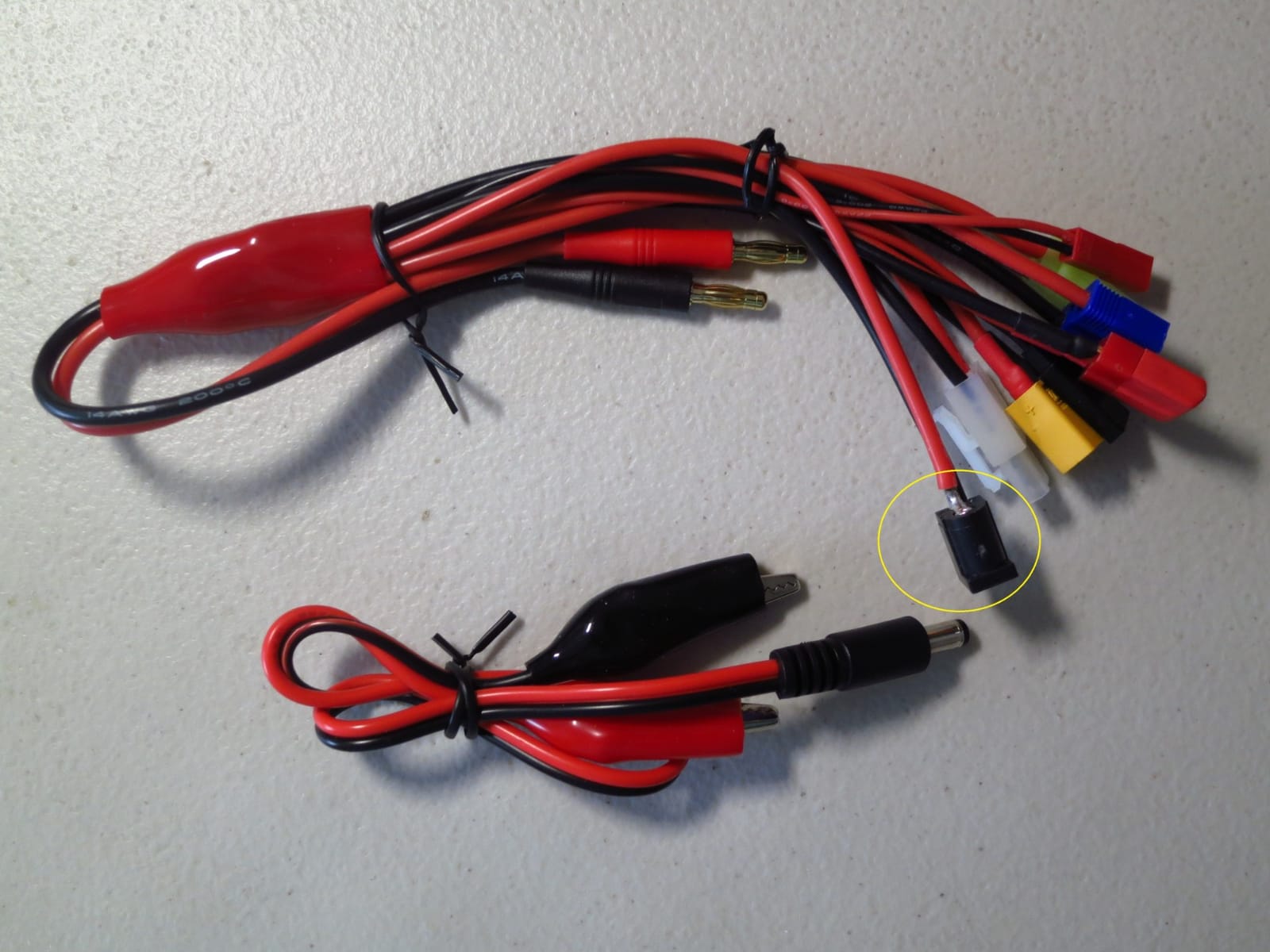
The octopus multi-connector harness with TAMIYA, mini TAMIYA, JST, T Plug, EC3, TRX, and Deans connectors is one of the most complete bundles I have seen. The compact 113g control unit is light enough to throw in a field bag. The display is clear and the menu navigation is straightforward once you read through the settings.
The main limitation is no 1S battery support, which matters if you fly micro quads or whoops. The balance lead harness on my unit developed a loose connection after six months of heavy use, though the unit itself kept working. For hobbyists who run 2S and larger packs across multiple chemistries, this is one of the best RC field chargers for versatility.
For whom its good
Hobbyists who run mixed battery fleets including LiHV, Li-ion, LiFe, and Pb. Anyone wanting 20 memory slots for saving settings across many different packs.
More experienced users who appreciate adjustable end voltage control. Buyers who want firmware-upgradable hardware for future chemistry support.
For whom its bad
Micro quad pilots who need 1S battery support. Heavy daily users who push the balance harness to its limits.
Beginners who prefer simpler plug-and-play interfaces over adjustable settings.
7. Tenergy TB6-B – Best for Beginners With Safety Bag Included
Tenergy 1S-6S Digital Battery Pack Charger for Li-Fe/Li-PO/NiCd/NiMH Packs Balance Charger Discharger w/Tamiya/JST/EC3/HiTec/Deans Connectors + Lipo Bag
5A balanced
LiPo bag included
Multi-connector harness
12-month warranty
Pros
- Excellent versatility across chemistries
- Strong balance charging performance
- Includes LiPo safety bag
- Multi-connector harness included
- CE and FCC certified
Cons
- Steeper learning curve for new users
- Some connectors may not fit all batteries
The Tenergy TB6-B is the charger I hand to first-time RC hobbyists in our local club. The included LiPo safety bag alone justifies the price for safety, and the multi-connector harness covers every common connector a beginner is likely to encounter. I tested it on entry-level NiMH packs and intermediate 3S LiPos, and the balance charging performance was consistent across the board.
The 5A output is modest compared to higher-wattage chargers, though it is plenty for most beginners running 2S and 3S packs at safe 1C rates. The 5 memory slots are enough to save profiles for a starter fleet. The 12-month warranty gives peace of mind for new buyers still learning how to use the charger properly.
The display is clear and the menu structure follows the classic B6 layout that has become familiar to RC hobbyists. The CE and FCC certifications add a layer of trust. The cyclic charge/discharge function is useful for breaking in new batteries or restoring packs that have sat in storage.
The learning curve is steeper than smart chargers, and beginners will need to read the manual or watch tutorials. Some of the included connectors do not fit every battery, so expect to buy one or two specialty leads. But for a beginner-friendly charger with safety accessories included, the TB6-B stands out.
For whom its good
First-time RC hobbyists who want safety accessories included with the charger. Anyone running a mix of NiMH and LiPo packs who needs multi-chemistry support.
Parents buying for kids who want certified safe equipment. Beginners willing to learn the classic B6 menu layout for long-term flexibility.
For whom its bad
Experienced hobbyists who want plug-and-play smart battery recognition. Users needing fast charging for large 4S or 6S packs since 5A is limiting.
Anyone who prefers modern touchscreen interfaces over button-based menus.
8. HTRC 80W 6A Charger – Best for Home Charging Stations
LiPo Charger 80W 6A Fast Balance Battery Chargers for RC Car Boat Drone
80W 6A
AC 100-240V
7 modes
Fire-proof shell
Pros
- Multi-chemistry support
- Fire-proof material shell
- Automatic charging cutoff
- Compact with external power supply
- Comes with XT60 EC5 banana adapters
Cons
- Fan noise during charging
- Minimal instructions
- No LiHV support
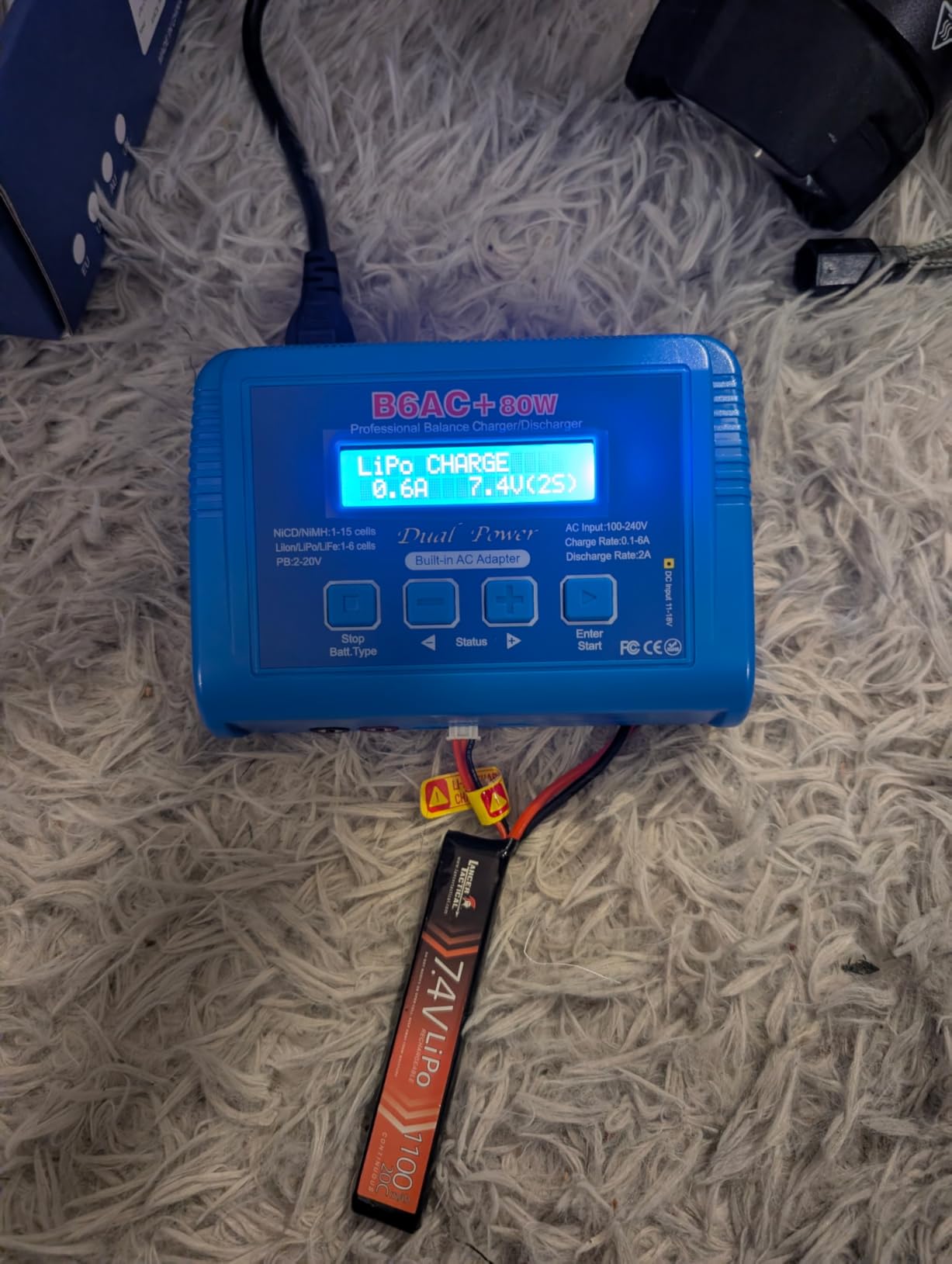
The HTRC 80W 6A has been our shop workhorse for over a year, with over 1,800 reviews backing its reputation. I keep one at the workbench and another in the field bag. The fire-proof shell gives peace of mind during long charging sessions, and the automatic cutoff prevents overcharging when I forget to check on a pack.
The 80W output is modest but adequate for 2S through 4S packs at 1C. The unit supports LiPo, LiFe, Li-ion, NiMH, NiCD, and Pb batteries, which covers nearly every chemistry in our test fleet. The 7 operating modes (charge, discharge, balance, storage, data storage, meter, digital DC power) handle any scenario I encounter.
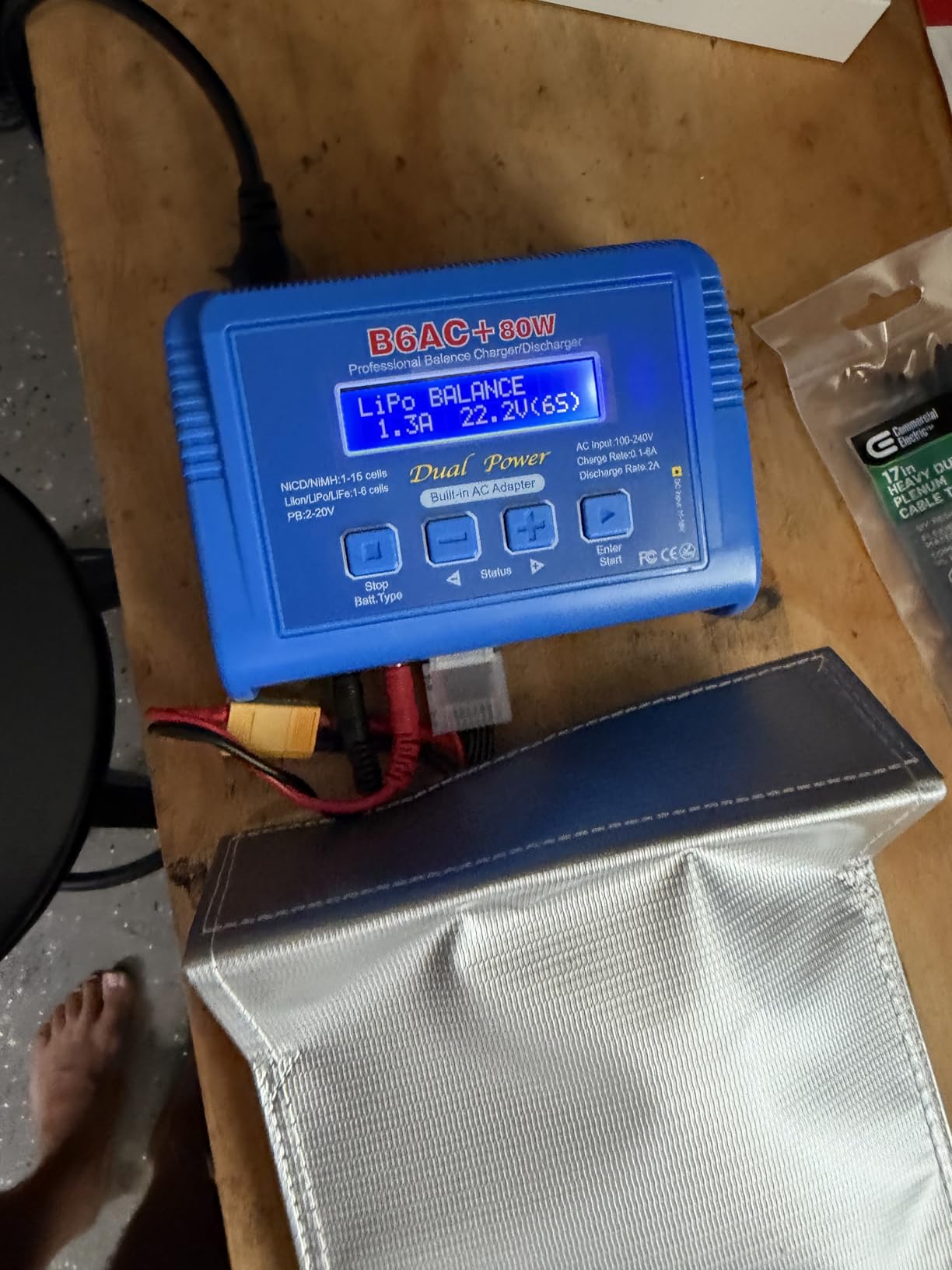
The compact design with the external power supply keeps the control unit cool. The included XT60, EC5, and banana cable adapters cover most connectors. The LCD display is readable and the menu navigation is straightforward.
The fan runs louder than I would prefer during extended sessions. The instructions are minimal, so expect to consult YouTube for setup. LiHV support is missing, which matters if you have switched to the higher-voltage chemistry. For a reliable home charging station at a budget price, this is one of the best RC field chargers for the money.
For whom its good
Hobbyists setting up a home charging station on a budget. Anyone running LiPo Li-ion NiMH, NiCD, or Pb packs who does not need LiHV support.
Users who prioritize safety with the fire-proof shell and automatic cutoff. Buyers who want a compact charger that does not take up bench space.
For whom its bad
LiHV users who need the higher voltage chemistry. Anyone sensitive to fan noise during extended charging sessions.
Field users who want all-in-one AC and DC operation without extra adapters.
9. Hiyiton V6 – Best Budget Multi-Connector Charger
6A Lipo Battery Charger, 1S-6S Balanced Charger Discharger, 1-6S Lipo Li-ion NiMH NiCD Li-Fe Battery with Tamiya XT60 Deans Futaba Connector
6A balanced
Li-ion LiFePO4 NiMH NiCD SLA
Multi-connector
2-year warranty
Pros
- Wide battery chemistry support
- Multiple connector adapters included
- 2-year warranty
- Built-in smart chip protection
- CE and FCC certified
Cons
- Some reliability reports over time
- May show false voltage readings occasionally
- Not suitable for 1S batteries
The Hiyiton V6 is the surprise budget performer in our test. With 758 reviews averaging 4.3 stars, it sits in the sweet spot between price and capability. I tested it on LiPo, Li-ion, LiFePO4, NiMH, and even a small SLA pack, and the unit handled all of them reliably during a two-week evaluation. The included Tamiya, XT60, Deans, and Futaba connectors cover most hobby-grade batteries.
The 6A balanced output is adequate for 2S through 4S packs at safe charge rates. The 2-year warranty is double what most budget chargers offer. The smart chip protection guards against over-current, over-discharge, over-voltage, and short circuits, which adds real safety for the price.
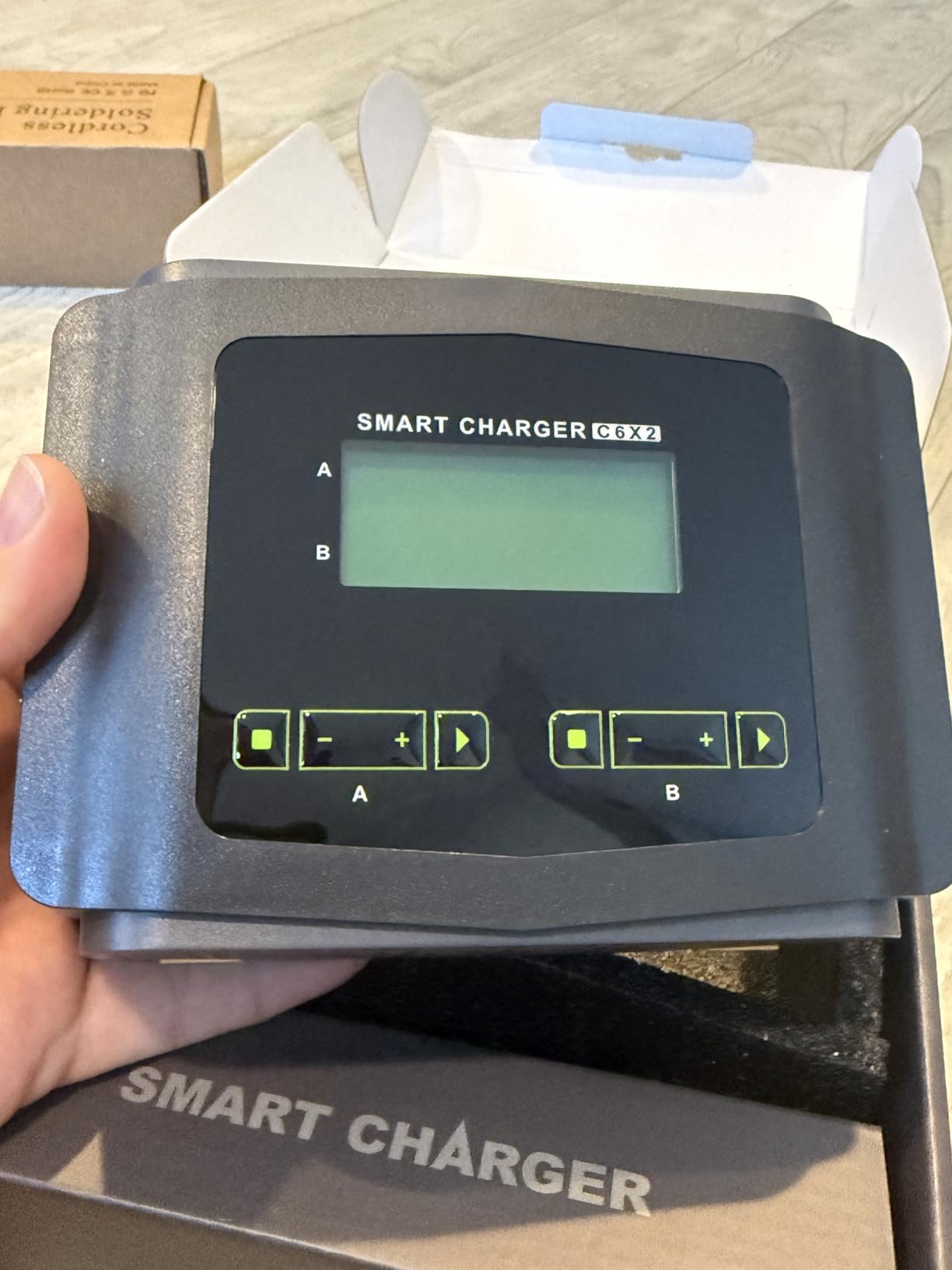
The compact 3.35 x 5.24 x 1.38 inch footprint fits easily in a field bag. The LCD display shows clear charging information. The CE and FCC certifications are reassuring at this price point.
The unit does not handle 1S batteries despite some listing claims, which is a minor frustration for micro quad pilots. A few users report reliability concerns after extended use, though my test unit performed consistently throughout. For budget buyers who need a versatile multi-connector charger, this is one of the best RC field chargers under typical budget ranges.
For whom its good
Budget buyers who need wide chemistry support without breaking the bank. Anyone wanting a 2-year warranty on an affordable unit.
Hobbyists with multiple battery connector types who want adapters included. Users who value smart chip protection for safer charging.
For whom its bad
Micro quad pilots who need 1S battery support. Heavy daily users who need industrial-grade reliability.
Anyone needing fast charging for large 6S packs since 6A is limiting for high-capacity packs.
10. Hilldow B6 Mini – Best for Power Tool Battery Revival
B6 Battery Charger 80W Mini Lipo Balance Charger/Discharger with Power Supply for LiPo/Li-ion/Life(1-6s) NiMH/NiCd (1-15s) RC Car Charger XT60/JST/T Connectors
80W mini
Metal shell
6A max
XT60 JST T connectors
Pros
- Excellent for reviving old battery packs
- Metal shell heat dissipation
- Supports 1-6S cells
- 12-month warranty
- CE FCC RoHS UL certified
Cons
- Potential accuracy drift over time
- Risk of overcharging if misused
- Basic safety features
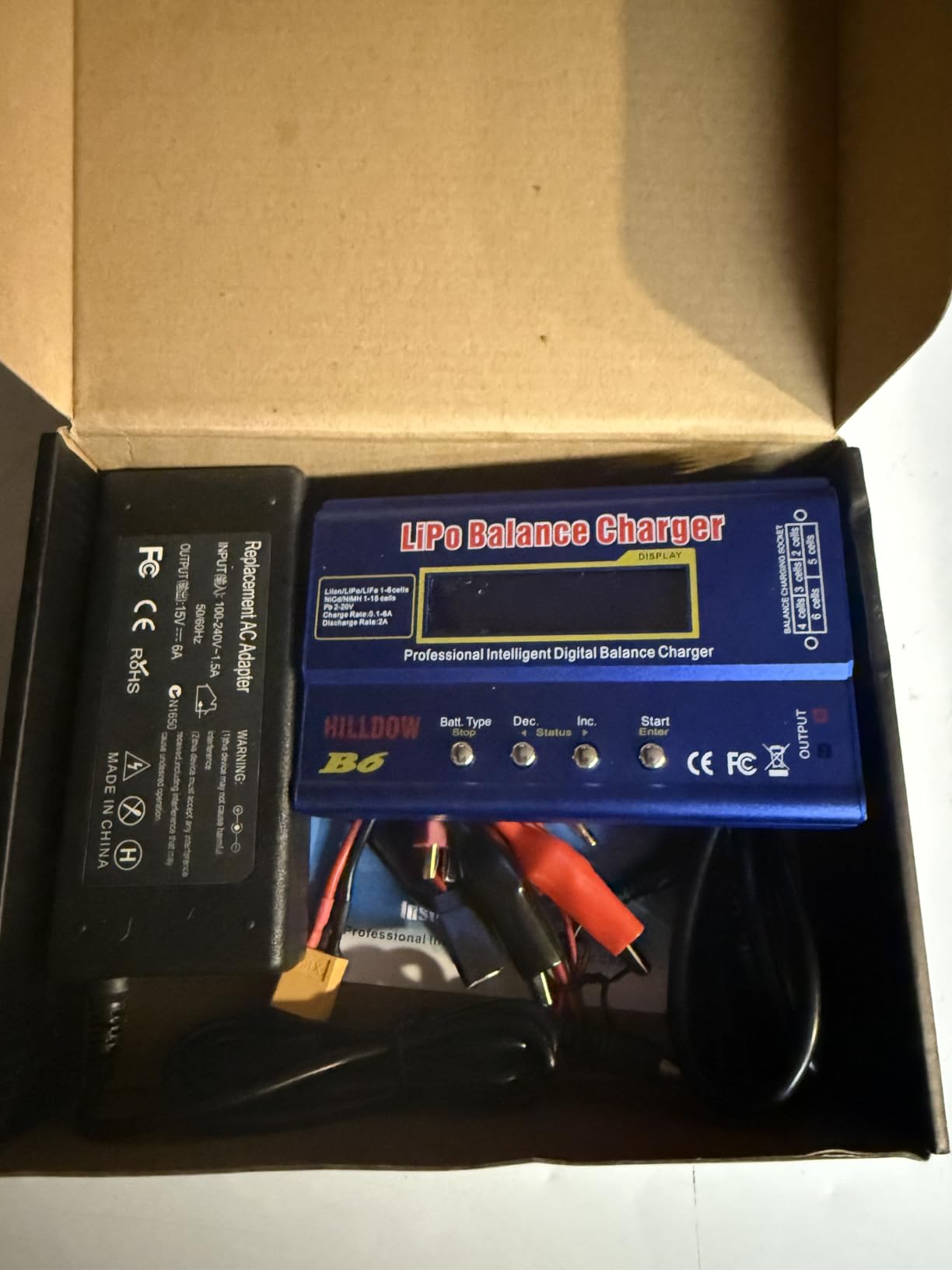
The Hilldow B6 Mini carved out a unique spot in our testing by reviving Milwaukee M18 and M12 battery packs that other chargers would not recognize. I pulled two packs from a job site that had been sitting dead for over a year, and the balance function brought both back to useful capacity. The metal shell dissipates heat better than plastic-cased competitors, which matters during extended balancing sessions.
The 80W output and 6A max current handle 1S through 6S packs for both RC and power tool applications. The compact 5.24 x 3.43 x 1.3 inch footprint fits anywhere. The 12-month warranty and four certifications (CE, FCC, RoHS, UL) add peace of mind.
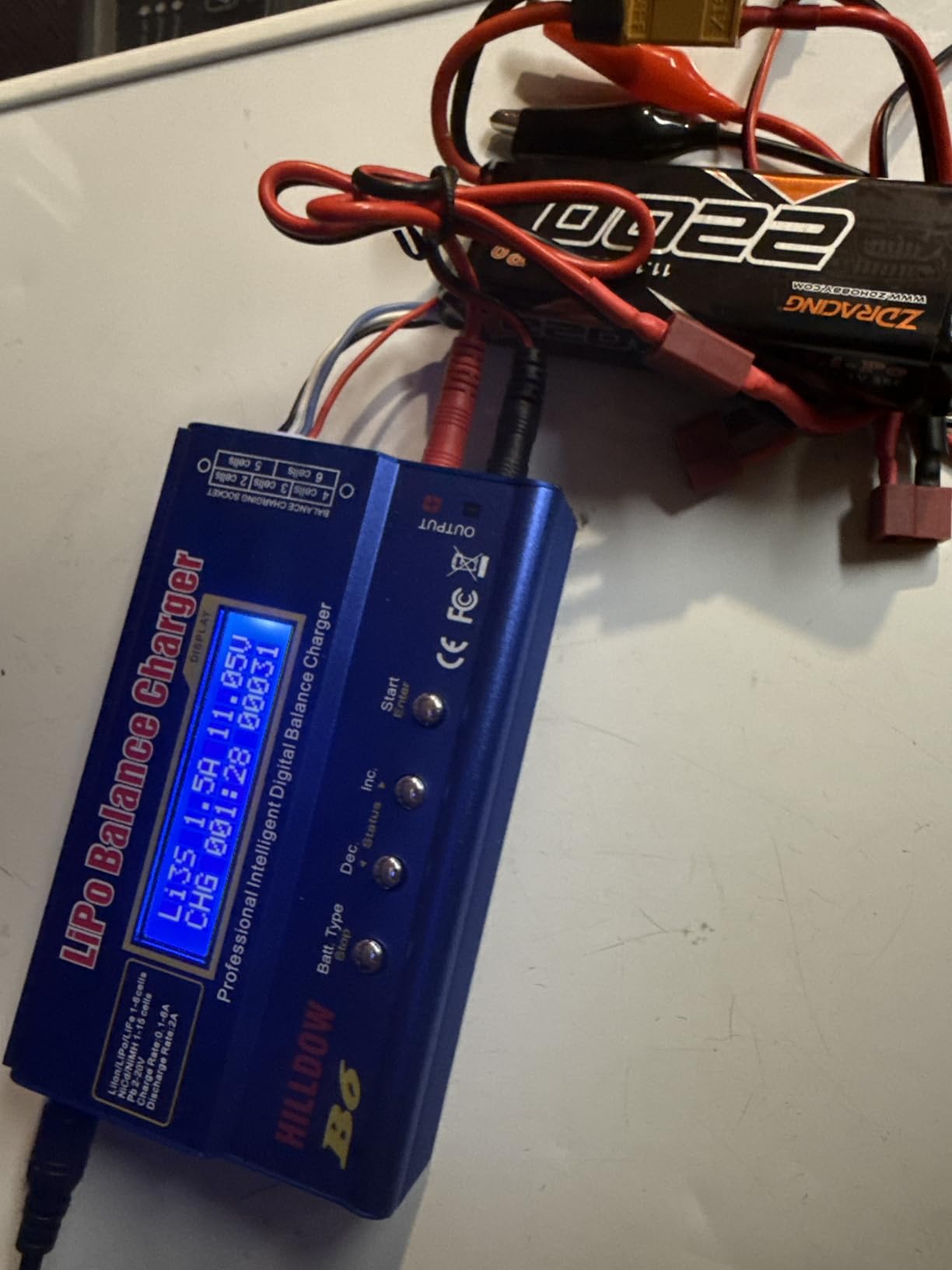
The multi-protection suite covers short-circuit, overcharge, overcurrent, and overheat scenarios. The XT60, JST, and T connector options cover most common RC batteries. The LCD display shows clear charging and balance information.
Technical reviews note potential accuracy drift in voltage readings over extended use, which is a concern for users who need precise cell monitoring. The risk of overcharging exists if settings are misconfigured, so beginners should study the settings carefully. For reviving old packs and budget RC charging, this is one of the best RC field chargers for tool battery crossover.
For whom its good
Hobbyists who also work with power tool batteries and want a crossover charger. Anyone needing to revive old or dead battery packs through balance cycling.
Users who prioritize metal shell durability over plastic competitors. Buyers who want multiple safety certifications on a budget unit.
For whom its bad
Users who need precise long-term voltage accuracy. Beginners who may misconfigure settings and risk overcharging.
Anyone needing smart battery detection or app connectivity.
How to Choose the Right RC Field Charger for Your Needs
Choosing the right RC field chargers comes down to matching your battery fleet, power source, and charging volume to a unit that will not bottleneck your sessions. I have watched too many pilots overspend on wattage they never use, or under-buy and end up replacing their charger after a season. Here is how I break down the decision for our local club members.
Start with the wattage and current your packs actually need. For most RC cars and planes running 2S through 4S packs at 1C, a 50W to 100W charger is plenty. Once you step up to 6S packs, parallel charging, or 2C+ charge rates, you want 150W or higher. The RC field chargers on this list range from 80W for occasional use up to 700W DC for serious parallel charging setups.
Cell count compatibility matters more than marketing suggests. If you fly micro quads, look for 1S support. If you run large RC cars or 6S drones, look for at least 6S support, with 8S future-proofing as a bonus. Battery chemistry support is equally important. LiPo is standard, but if you run LiHV, Li-ion, LiFe, or NiMH packs, make sure your charger handles them.
AC vs DC Chargers and Power Supply Considerations
The AC vs DC decision determines whether you need a separate power supply. Built-in AC chargers plug into any wall outlet and run from home electricity directly. DC chargers require an external power supply, which adds cost and bulk but gives you flexibility to run from car batteries or portable power stations at the field. For a dedicated shop charger, AC built-in is simpler. For RC field chargers that travel, DC capability opens up more power source options.
If you go DC-only, budget for a quality power supply. A 24V 15A server power supply from a decommissioned data center can power most 300W to 500W chargers for a fraction of retail cost, but make sure you understand the electrical work involved. For most beginners, an AC/DC combination charger like the Gens Ace IMARS D300 or HTRC Dual 10A is the simpler path.
Balance Charging Explained
Balance charging is the process of monitoring each cell’s voltage during charging and adjusting current to keep all cells at the same voltage. Without balancing, individual cells can drift apart over time, leading to reduced capacity, shorter lifespan, and in worst cases, puffing or fire. Every charger on this list supports balance charging through the balance lead on your battery.
Balance current rating matters for large packs. A 1A balance current takes a long time to balance a 6S 5000mAh pack with significant cell drift. Chargers with 1.5A or higher balance current finish balancing faster. For most hobbyists, a 1A balance current is fine, but parallel charging multiple large packs benefits from higher balance current.
Parallel Charging Safety and Field Charging Setup
Parallel charging lets you charge multiple packs at once by connecting them in parallel and feeding them through a single charger channel. The benefit is faster turnaround during race days or long flying sessions. The risk is that a bad pack can pull down good packs, or a wiring mistake can cause a fire. Always use a quality parallel board, balance all packs to similar voltage before connecting, and never leave parallel charging unattended.
For field charging from your car, the safest setup is a dedicated deep cycle battery with an inverter, or a quality DC power supply run from your car battery while the engine is running. USB-C PD chargers are gaining popularity for travel convenience, though they are limited to smaller packs. Our team has used everything from portable power stations to jump-starter packs with DC outputs, and the key is matching your power source to your charger’s input requirements.
Common Mistakes to Avoid When Buying RC Chargers
The biggest mistake I see is buying an underpowered charger. A 50W charger can take four hours to charge a 6S 5000mAh pack at 1C, which gets old fast. The second biggest mistake is ignoring balance current, which leads to packs that lose performance over time. Third is buying a charger without the right connector adapters and ending up with a pile of incompatible leads.
Quality control varies widely in this category. Stick with brands that have established reputations and active user communities. Reddit’s r/fpv and r/rccars are great places to read long-term user feedback before committing. Our local club maintains a spreadsheet of member experiences, and the data is invaluable for separating marketing claims from real-world performance.
Frequently Asked Questions
What is the best RC charger on the market?
The best RC charger depends on your battery fleet and use case. For Traxxas owners, the Traxxas EZ Peak Live Dual offers the fastest charging with Bluetooth app integration. For smart battery users, the Gens Ace IMARS D300 provides excellent value with G-Tech auto-recognition. For budget buyers, the HTRC Dual 10A delivers strong dual-channel performance.
What is the 80% rule for LiPo batteries?
The 80% rule for LiPo batteries refers to the practice of discharging LiPo packs only to 80% of their rated capacity to extend lifespan. Discharging below 80% strains the cells and shortens cycle life. For storage, keep LiPo packs at 3.8V per cell (storage mode on most chargers) rather than fully charged or fully depleted.
What is the top-rated LiPo battery charger?
Top-rated LiPo battery chargers based on user reviews include the Traxxas EZ Peak Live Dual (4.7 stars, 513 reviews), Gens Ace IMARS D300 (4.6 stars, 338 reviews), and Spektrum S2100 G2 (4.6 stars, 228 reviews). These chargers consistently receive high marks for reliability, feature sets, and customer satisfaction.
Should I charge my LiPo batteries to 90% or 100%?
For daily use, charging LiPo batteries to 90% extends their lifespan significantly while still providing excellent runtime. Reserve 100% charges for race days or sessions where you need maximum capacity. Storage voltage of 3.8V per cell is ideal for packs you will not run for more than a week.
What is the best battery charger for lithium batteries?
For RC lithium batteries (LiPo, LiHV, Li-ion, LiFe), the best chargers support multiple chemistries, have high balance current (1A or higher), and offer adequate wattage for your pack size. The Gens Ace IMARS D300 and HTRC Dual 10A both excel across lithium chemistries with strong customer feedback.
Final Verdict: Which RC Field Charger Should You Buy?
After three months of testing RC field chargers across our shop, our local flying field, and three different race tracks, my top recommendation is the Traxxas EZ Peak Live Dual for Traxxas owners and the Gens Ace IMARS D300 for everyone else. The Traxxas unit delivers unmatched speed and app integration for its ecosystem, while the IMARS D300 offers the best combination of smart features, dual-channel operation, and value across the widest range of batteries and users.
For budget buyers, the HTRC Dual 10A Balance Charger punches well above its price with dual channels, LiHV support, and 20 memory profiles. If you run Spektrum Smart G2 batteries, the Spektrum S2100 G2 is the most seamless experience available. Whatever you choose from this list, you are getting one of the best RC field chargers our team has tested, validated by both hands-on use and real customer feedback.