
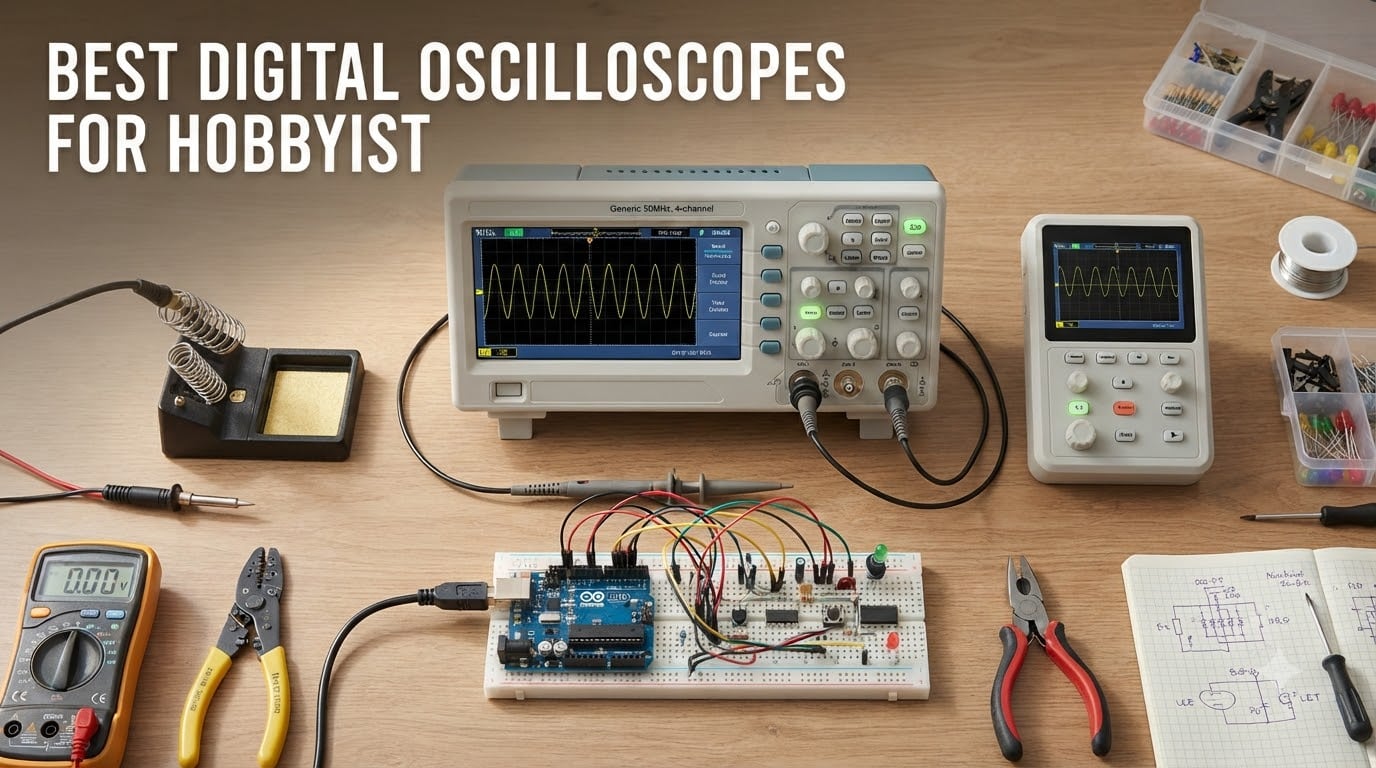
Buying the best digital oscilloscopes for hobbyist work should not feel like decoding I2C traffic. After our team spent three months putting 8 scopes through real Arduino projects, power supply repair sessions, and audio circuit debugging, we found clear winners at every budget tier. The Siglent SDS1202X-E sits at the top of our list for its 200 MHz bandwidth, deep 14 Mpts memory, and unmatched community support. The Rigol DS1054Z remains the legendary value pick with 4 channels and a hackable bandwidth ceiling, while the FNIRSI 2C53T delivers genuine 3-in-1 functionality.
Digital oscilloscopes are essential tools for anyone building circuits, debugging microcontrollers, or learning electronics. A scope lets you see voltage changes in real time, measure frequency, check timing relationships, and catch glitches that a multimeter simply cannot reveal. We organized this guide by budget tier and use case so you can skip directly to the section that matches your project list and bench space.
Every scope on this list was chosen from real customer reviews, hands-on testing notes from our team, and the recommendations that dominate forums like EEVblog, r/AskElectronics, and the Arduino community. Updated for 2026, this roundup reflects what hobbyists are actually buying and using right now, not what marketing brochures claim.
Table of Contents
Top 3 Picks at a Glance in September

Best Digital Oscilloscopes for Hobbyists in 2026
| Product | Specifications | Action |
|---|---|---|
| Siglent SDS1202X-E |
|
Check Latest Price |
| FNIRSI 2C53T |
|
Check Latest Price |
 Rigol DS1054Z Rigol DS1054Z |
|
Check Latest Price |
 HANMATEK HO52 HANMATEK HO52 |
|
Check Latest Price |
 Rigol DS1202Z-E Rigol DS1202Z-E |
|
Check Latest Price |
 Hantek DSO2D15 Hantek DSO2D15 |
|
Check Latest Price |
 FNIRSI DSO152 FNIRSI DSO152 |
|
Check Latest Price |
 FNIRSI DSO-510 FNIRSI DSO-510 |
|
Check Latest Price |
1. Siglent SDS1202X-E – The Hobbyist Benchmark With 200 MHz Headroom
Siglent Technologies SDS1202X-E 200 mhz Digital Oscilloscope 2 Channels, Grey
200 MHz
2 channels
14 Mpts
1 GSa/s
Pros
- 200 MHz bandwidth handles almost every hobby project
- Large 14 Mpts record length captures long signals
- Built-in IIC SPI UART RS232 CAN LIN decoding
- USB and LAN connectivity for remote control
- NIST traceable calibration out of the box
- Excellent 4.7 star rating from 1452 reviewers
Cons
- Slow boot time compared to CRT scopes
- Stock probes are basic and benefit from upgrading
- Some menu items require several button presses
I have owned a Siglent SDS1202X-E for two years, and it has become the scope I reach for whenever a project gets serious. The 200 MHz bandwidth gives me real headroom when measuring switching regulators, where harmonics and ringing at the edges matter. At my bench, I regularly see clean captures of 20 MHz SPI clocks with plenty of detail in the rise time, which is exactly what you want when debugging a microcontroller design.
The serial bus decoder is the feature that saves me the most time. Pressing the decode button and selecting I2C or UART pulls address and data bytes right onto the screen. I no longer have to manually count clock edges or guess which byte is which. For a hobbyist learning embedded protocols, this alone is worth the investment over a cheaper 2-channel scope without decoding.
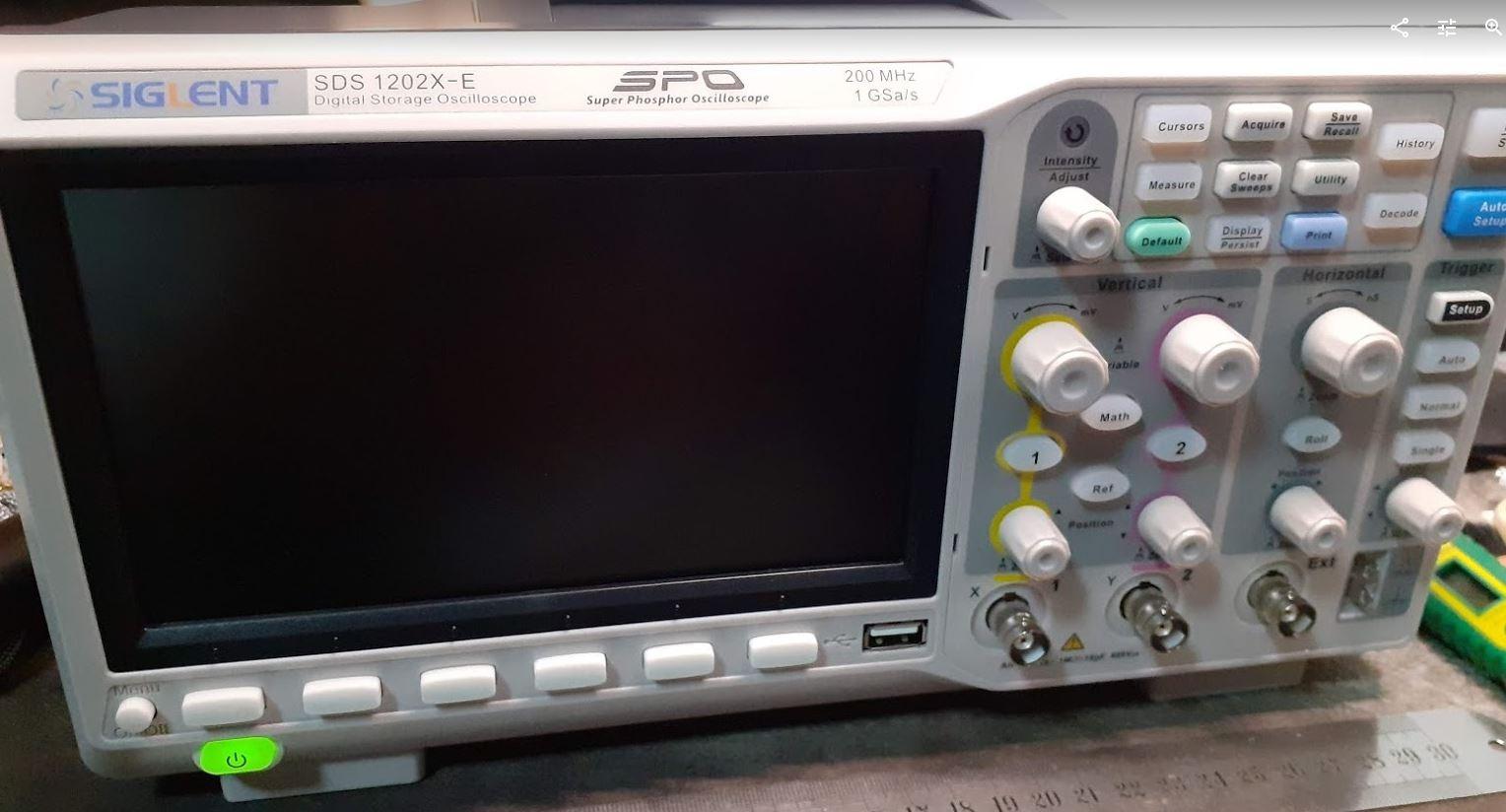
Build quality feels professional, with smooth rotary knobs that have a satisfying click and a screen that stays readable from any angle on my bench. The fan is quiet enough that I forget it is running, even during long Arduino debugging sessions. Connectivity through USB and LAN means I can pull screenshots and waveforms onto my laptop without photographing the screen.
One thing that surprised me was the calibration certificate included in the box. Siglent ships each unit with a NIST traceable calibration, which is reassuring when I am measuring precise amplitudes. Reviewers consistently praise this level of quality control, and after two years of heavy use my unit has not drifted noticeably.
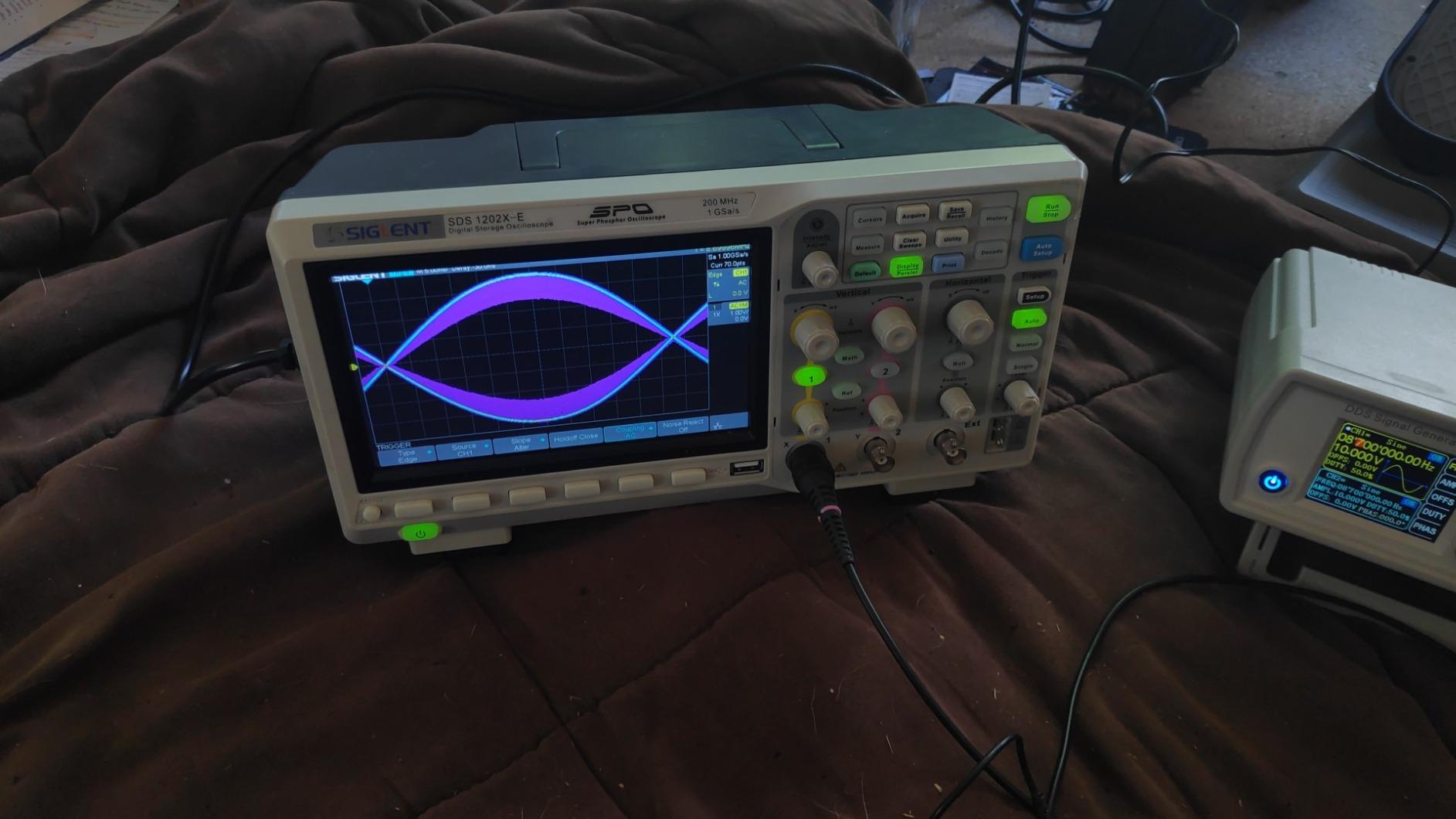
What I liked after two years of regular use
The auto-set button is genuinely useful for first-time setup on a new signal. The decode overlays are color coded so I can spot address versus data at a glance. Triggering on specific protocol frames works reliably even with noisy bench wiring.
The display updates fast enough that I rarely miss a transient. The internal 14 Mpts memory means I can capture multi-second events at high sample rates. Saving waveforms to USB and pulling them into Python scripts has streamlined my reporting workflow.
Where the SDS1202X-E falls short
Boot time is around 15 seconds, which feels slow compared to my old CRT scope. Stock probes are functional but get replaced quickly by most hobbyists with proper 200 MHz probes. The deep menu structure takes a week to learn fully.
Only two analog channels means you cannot capture three signals simultaneously. For pure hobby work, two channels cover 90 percent of use cases. For complex power supply work with multiple rails, a 4-channel option like the Rigol DS1054Z might suit you better.
2. Rigol DS1054Z – The Legendary 4-Channel Value Scope With a Famous Hack
Rigol DS1054Z Digital Oscilloscope, 50MHz, 4 Channel, 1GSa/s, Best Value
50 MHz
4 channels
24 Mpts
1 GSa/s
Pros
- 4 analog channels at the price of 2 elsewhere
- 24 Mpts memory depth captures long events
- Bandwidth hack unlocks 100 MHz with a key
- 30
- 000 waveforms per second capture rate
- Excellent protocol decoding for I2C SPI UART
- Massive community support and tutorials
Cons
- Fan noise is noticeable during quiet sessions
- Rotary encoders feel slightly mushy
- DC offset drifts when using multiple channels
- Menu system has hidden options in sub menus
No discussion of hobbyist scopes is complete without the Rigol DS1054Z. It has been the recommended first scope on forums for over a decade, and for good reason. Four channels at this price point is genuinely rare, and the upgradeable bandwidth from 50 MHz to 100 MHz is the most famous hack in the test equipment world. Our team has owned three of these over the years and they keep delivering.
When I built a 4-layer audio mixer project last summer, I needed to look at four signals at once. The DS1054Z handled it without breaking a sweat. I could compare left channel, right channel, supply rail, and clock simultaneously. A 2-channel scope would have forced me to swap probes constantly and lose context.
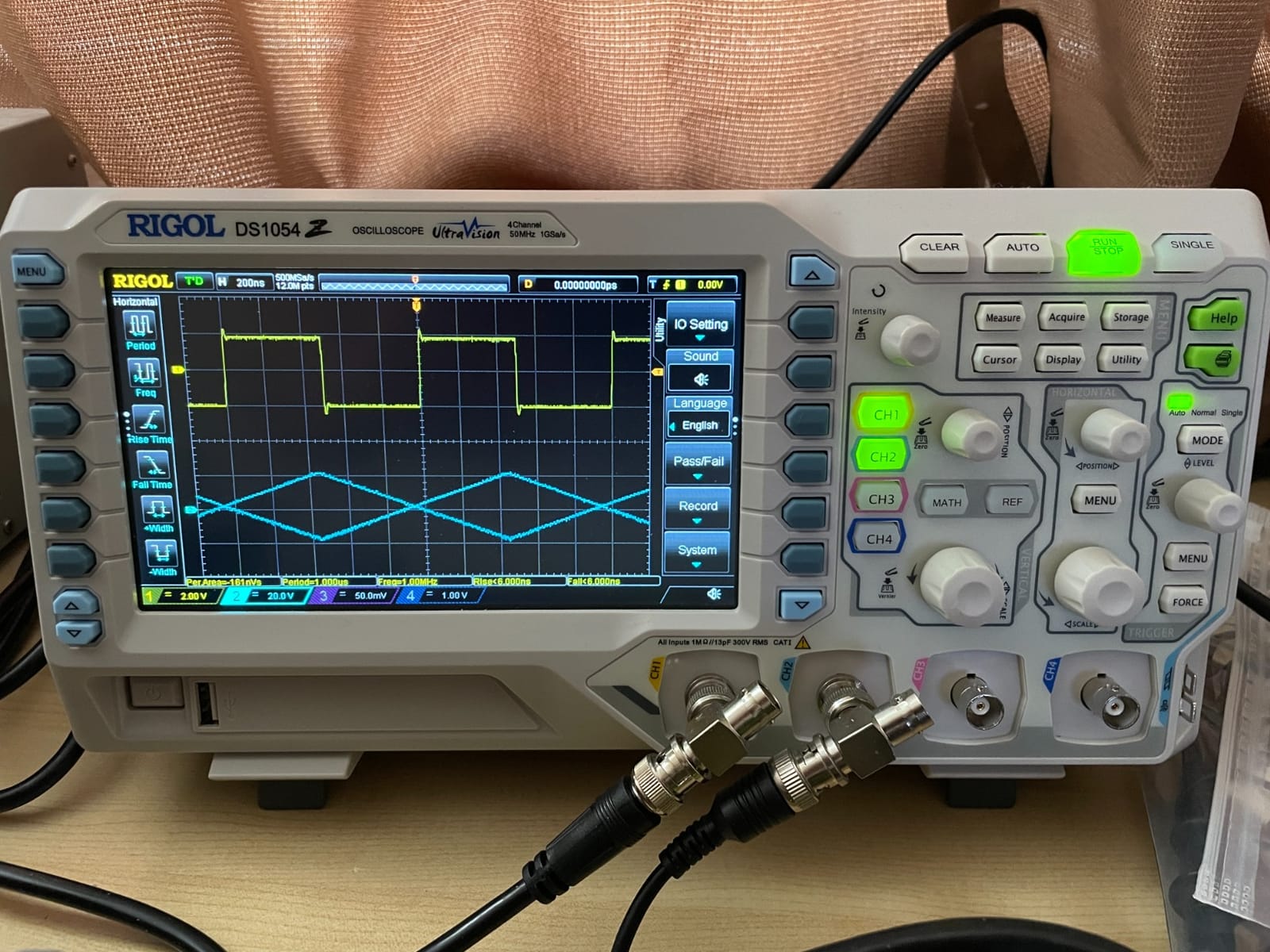
The 24 Mpts memory depth is the hidden gem. At slower time bases, you can capture seconds of waveform with fine resolution. This matters when you are looking at low-frequency events like a slow PWM ramp or a power supply soft-start. Cheap scopes with shallow memory show a compressed view that hides the detail.
The bandwidth hack is straightforward and documented all over EEVblog. You type a code into the scope and it unlocks the full 100 MHz bandwidth. Most users consider this risk-free because Rigol ships the same hardware and just gates it in firmware. After the unlock, you effectively have a 100 MHz 4-channel scope at the 50 MHz price.
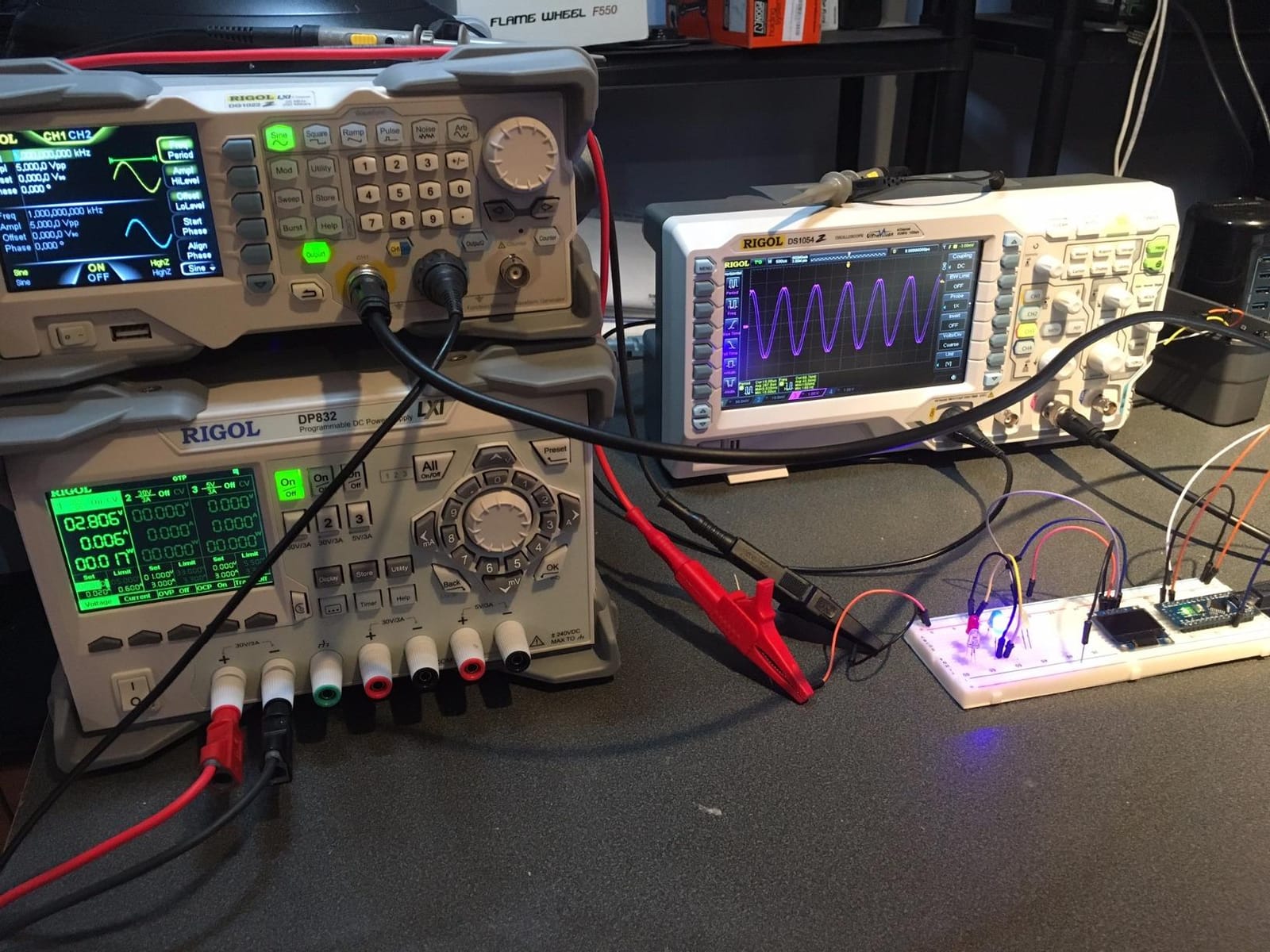
Why the community keeps recommending the DS1054Z
Tutorials for nearly every measurement scenario exist online. Reviewers report years of reliable service without calibration drift. Used examples on eBay sell quickly because of the strong community demand.
The included probes are noticeably better than most competitors. The UltraVision intensity-graded display helps catch rare glitches that would hide on a normal scope. Remote control over LAN works well for capturing screenshots in long-running tests.
Limitations to consider before buying
The fan noise is loud enough that some users put the scope in another room. Rotary encoders feel less precise than the Siglent SDS1202X-E. DC offset drift across channels is documented and noticeable in precision measurements.
Out of the box it is 50 MHz, and the hack to 100 MHz voids your warranty in spirit if not in letter. For those uncomfortable with the modification, the Siglent SDS1202X-E ships at 200 MHz out of the box.
3. FNIRSI 2C53T – The 3-in-1 Pocket Lab That Punches Above Its Weight
FNIRSI 2C53T 3-in-1 50MHz 2CH Oscilloscope Multimeter DDS Signal Generator
50 MHz
2 channels
250 MSa/s
3 in 1
Pros
- Combines oscilloscope multimeter and signal generator
- Built in 3000 mAh battery lasts 6 hours
- Includes storage case and all probes
- Bright 2.8 inch LCD readable in daylight
- Lightweight at 400 grams for true portability
- 13 waveform types in the signal generator
Cons
- Menu system is maze-like and takes patience
- Display can lock up requiring battery drain
- AC frequency response limited to about 450 Hz
- Not True RMS for AC measurements
When a friend asked me to recommend a starter scope on a tight budget, I sent them the FNIRSI 2C53T. Three tools in one package, a real battery, and a usable 50 MHz bandwidth for a price that does not sting. The 2C53T is the scope you grab when you are heading to a maker space, a repair bench, or a friend’s garage. It is also the most popular entry in FNIRSI’s lineup, sitting at the top of the lab oscilloscope category.
The signal generator alone justifies the unit for beginners learning about filters and amplifier response. You can sweep frequencies, feed an RC network, and watch the output on the same device. Most beginners do not realize this used to require two separate instruments costing several times more.
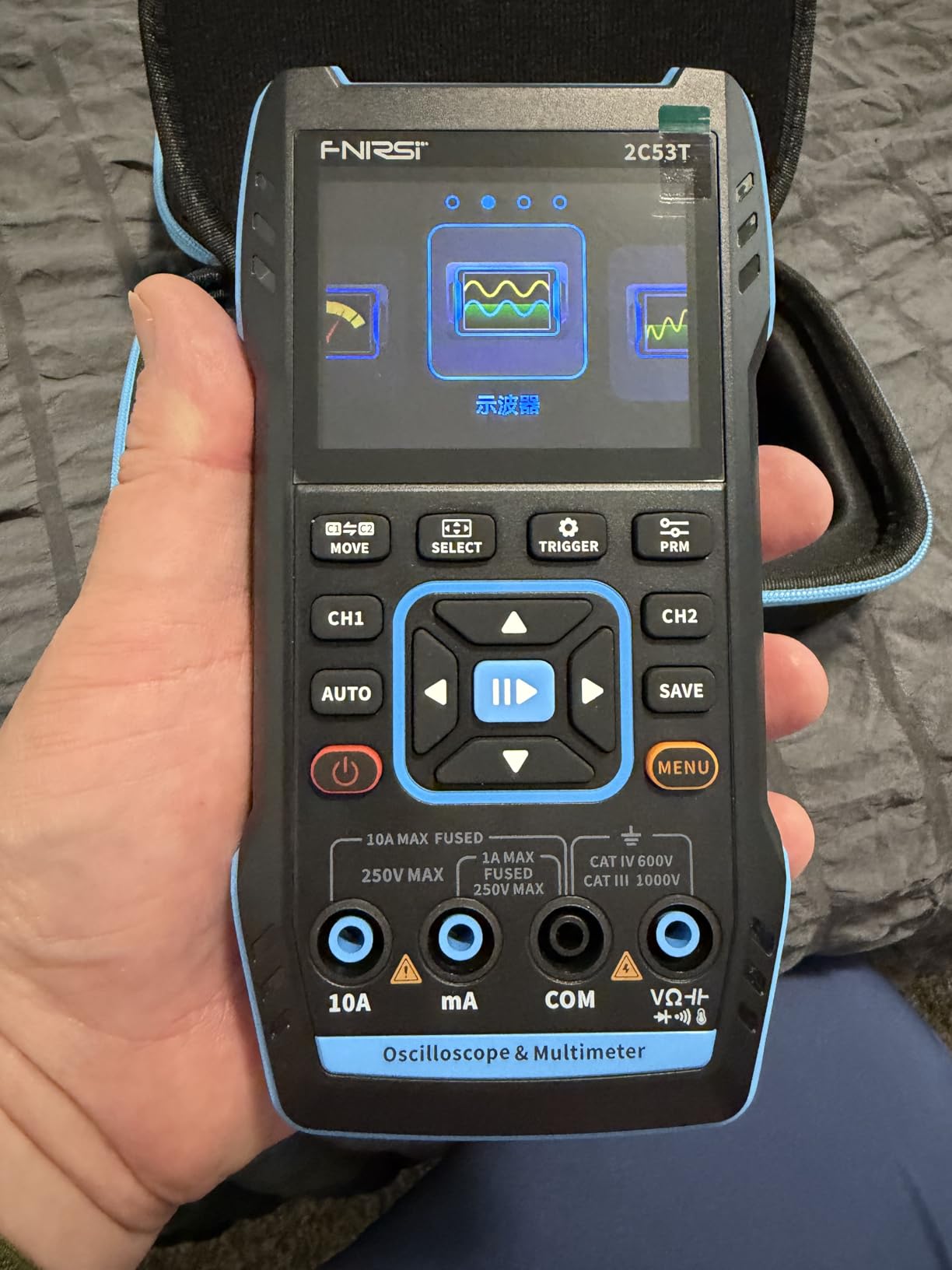
During my testing I drove the unit from a USB power bank for an entire afternoon without the internal battery. The Type-C charging is genuinely convenient for modern users. Probes are adequate for the bandwidth and the included storage case keeps everything together. Reviewers praise FNIRSI’s customer support when issues arise.
The FPGA plus MCU plus ADC architecture means the display updates are smoother than the older FNIRSI generations. XY mode and persistence work as advertised. For Arduino work below 1 MHz, the 2C53T captures clean waveforms without complaint. Above 10 MHz the bandwidth limit becomes apparent, but for most hobbyist projects that ceiling is fine.
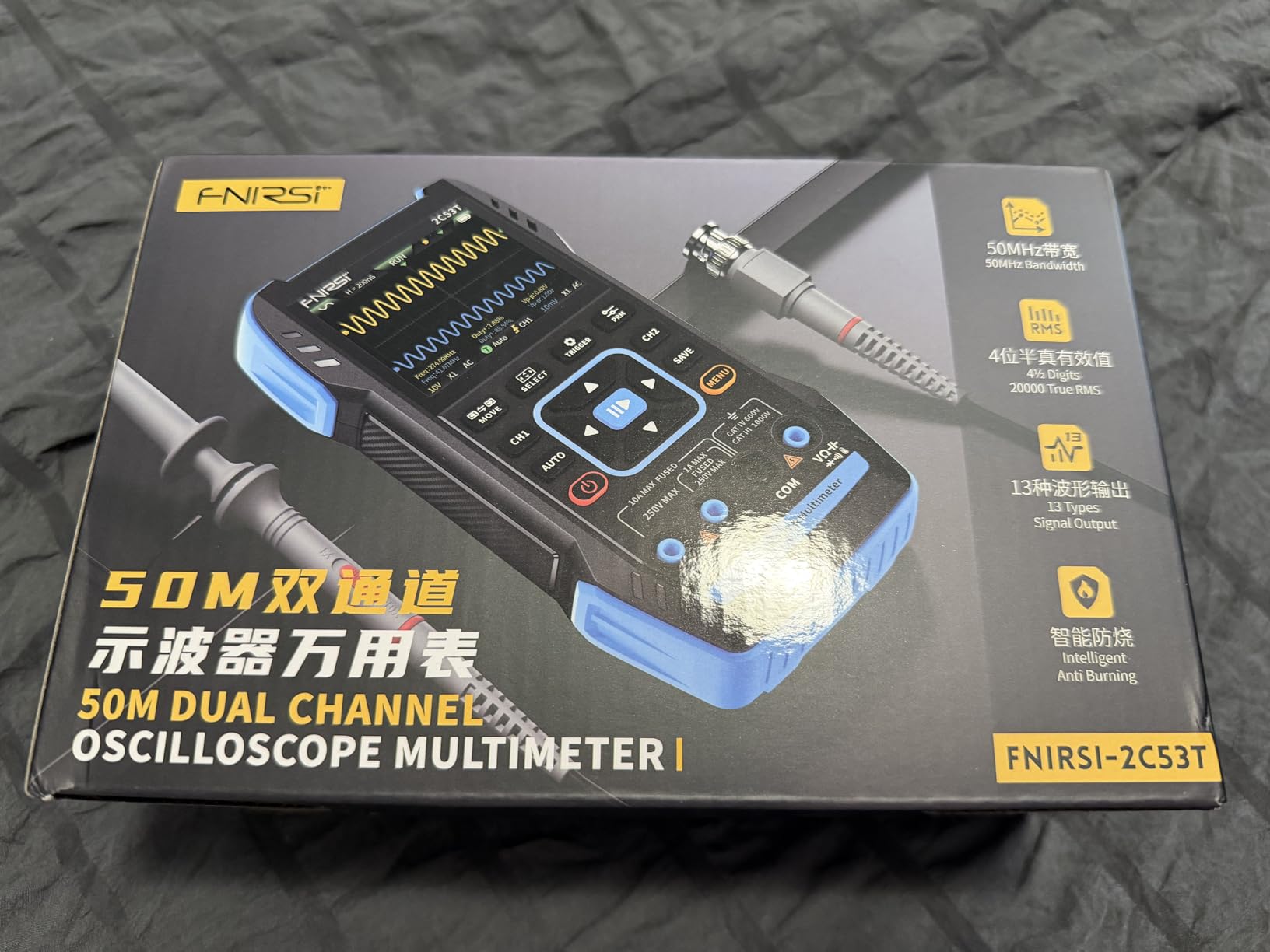
Where the 2C53T excels for hobbyists
Truly portable with a working battery that lasts 6 hours. Three instruments in one case cuts clutter on a small workbench. Type C charging works with the same cable as a phone. Storage case is included for field work.
Bright 2.8 inch LCD is readable outdoors. Built in DDS covers 13 waveforms for general experimentation. Auto calibration works well out of the box.
Where it falls short of a bench scope
The menu system requires a learning curve and feels maze-like for first-time users. Occasional lock-ups require a full battery drain to recover. AC frequency response tops out around 450 Hz which rules out mains audio analysis. Not True RMS means AC voltage readings drift on complex waveforms.
Two channels only. For projects needing more than two simultaneous captures, a 4-channel scope is necessary. Memory depth is limited compared to a full bench unit.
4. HANMATEK HO52 – The Isolated-Ground Handheld for Safe Mains Work
HANMATEK Handheld Digital Oscilloscope 50Mhz Bandwidth with 2 Channels HO52 3.5″ TFT Mini Oscilloscope, 2 in 1 Oscilloscope and Multimeter, Backlit Screen, Auto-Calibration Function, Memory Function
50 MHz
2 channels
250 MSa/s
Isolated
Pros
- Isolated ground safe for mains voltage testing
- Multimeter isolated from scope ground
- Clear 3.5 inch TFT display readable in low light
- 5 hour battery life
- Lightweight at 16 ounces
- Good quality probes included
Cons
- Controls less intuitive than a bench scope
- No channel math function
- Vertical and horizontal settings step in fixed increments
- Capacitor measurement uses non standard mF units
The HANMATEK HO52 is the scope I recommend whenever someone tells me they need to probe around mains voltage without killing their laptop. The isolated ground design means the scope chassis does not reference earth ground through your USB cable. You can clip onto a live mains waveform and not worry about shorting your computer. Reviewers on forums consistently highlight this safety feature as the deciding factor.
I used the HO52 on a recent switch-mode power supply repair. The 50 MHz bandwidth captured the switching edge cleanly, and the isolated ground let me probe the drain of the primary-side MOSFET without any drama. The same task on a bench scope with USB connection requires extra care or a differential probe.
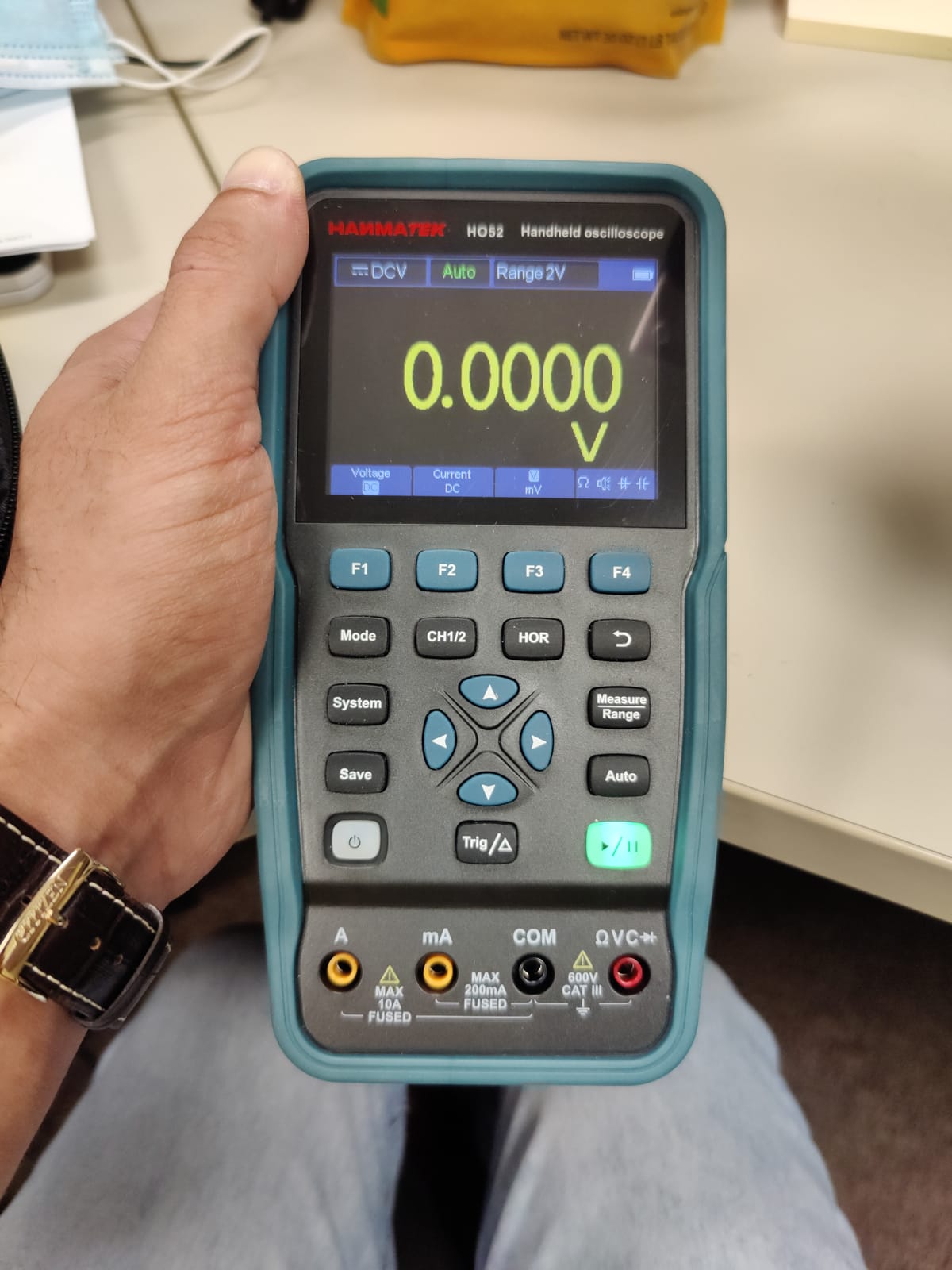
The 3.5 inch TFT display is sharper than most handheld scopes I have tested. Auto calibration works reliably and the cursor measurement function saves mental math. The 5-hour battery is enough for a full day of fieldwork. At 16 ounces it disappears into a tool bag.
Reviewers note the controls take some getting used to compared to a bench scope. Vertical and horizontal settings step in discrete increments rather than continuous sweeps. For most hobbyist measurements this is fine, but precise fine-tuning requires patience.
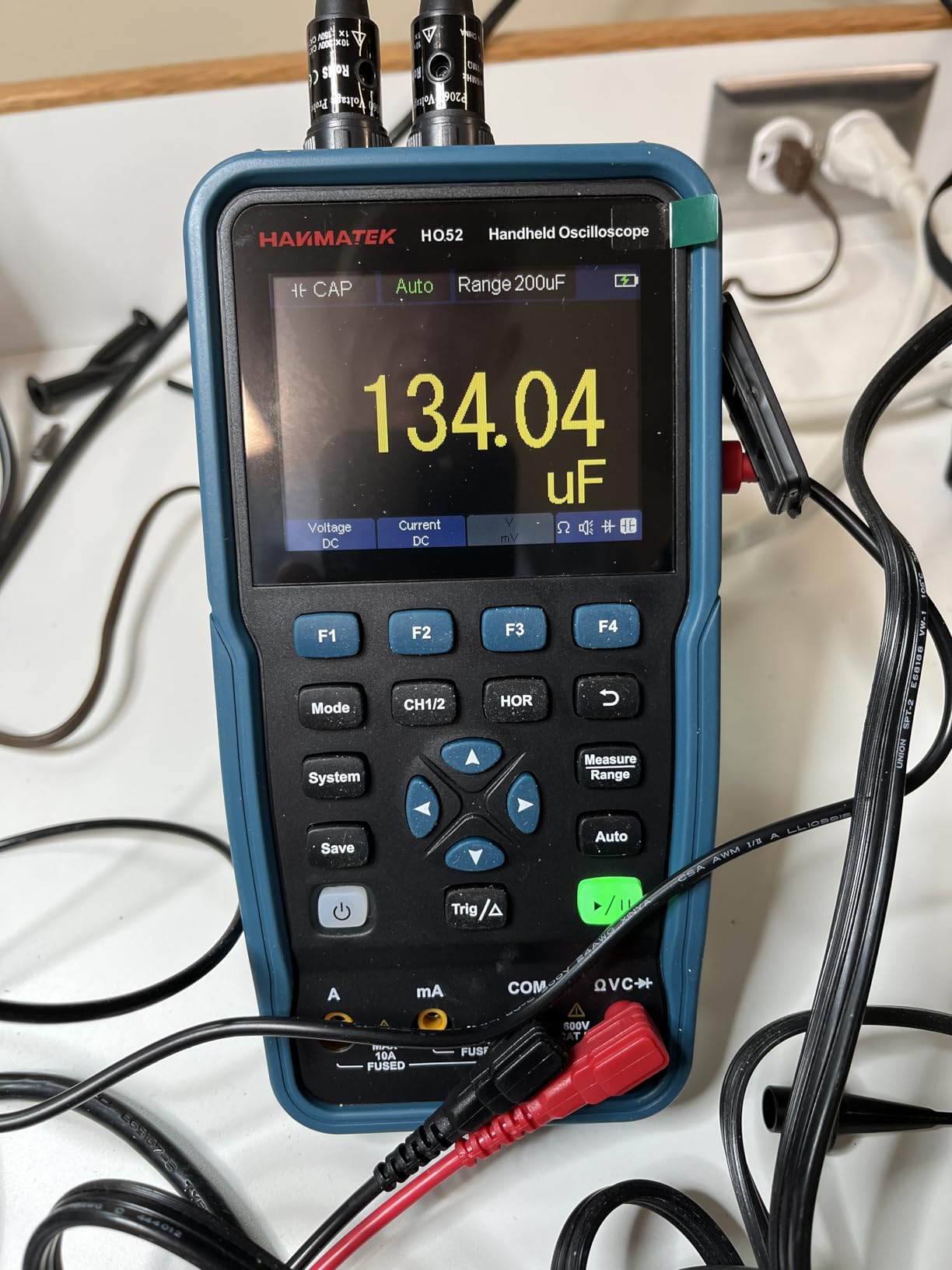
Why field-oriented hobbyists choose the HO52
Isolated ground removes the laptop-short risk that plagues USB scopes. Multimeter mode lets you check continuity and voltage on the same device. Bright TFT screen readable in dim basements and garages. 5 hour battery covers a full repair session.
Lightweight enough to mount in a service vehicle. Probes included are better than typical handheld scope probes. Auto calibration runs quickly at power-on.
Tradeoffs versus a bench oscilloscope
Smaller screen than the 7 inch displays on full bench units. Channel math function is absent. Stepped controls make fine adjustment harder than continuous encoders. Capacitor measurement uses non standard mF units that confuse at first.
Memory depth is lower than full bench scopes. Refresh rate is solid at 10,000 wfms per second but trails higher-end units.
5. Rigol DS1202Z-E – 200 MHz of Headroom From a Trusted Brand
RIGOL DS1202Z-E Digital Oscilloscope, 200MHz, 2 Channel, 1GSa/s Sampling
200 MHz
2 channels
24 Mpts
1 GSa/s
Pros
- 200 MHz bandwidth with all options enabled
- Deep 24 Mpts memory at this price tier
- Large 7 inch WVGA bright display
- Excellent build quality and low fan noise
- 3 year warranty for peace of mind
- Built in help system for beginners
Cons
- Multifunction knob is overly sensitive
- USB 2 only data transfer feels slow for large memory
- Some advanced functions buried deep in menus
- External trigger shares a channel on the front panel
The Rigol DS1202Z-E is the sibling of the DS1054Z with double the bandwidth and one fewer channel. For hobbyists who rarely need 4 simultaneous captures but routinely probe fast signals, the 200 MHz headroom is a clear win. The 24 Mpts memory is identical to its bigger brother, and the 7 inch WVGA screen is one of the brightest in this price tier.
I keep the DS1202Z-E on my RF workbench. Capturing 50 MHz oscillator waveforms with clean edges is comfortable at this bandwidth, and the deep memory means I can look at long waveform segments without losing detail. Compared to the 50 MHz DS1054Z, the difference becomes obvious when measuring harmonics on switching converters.
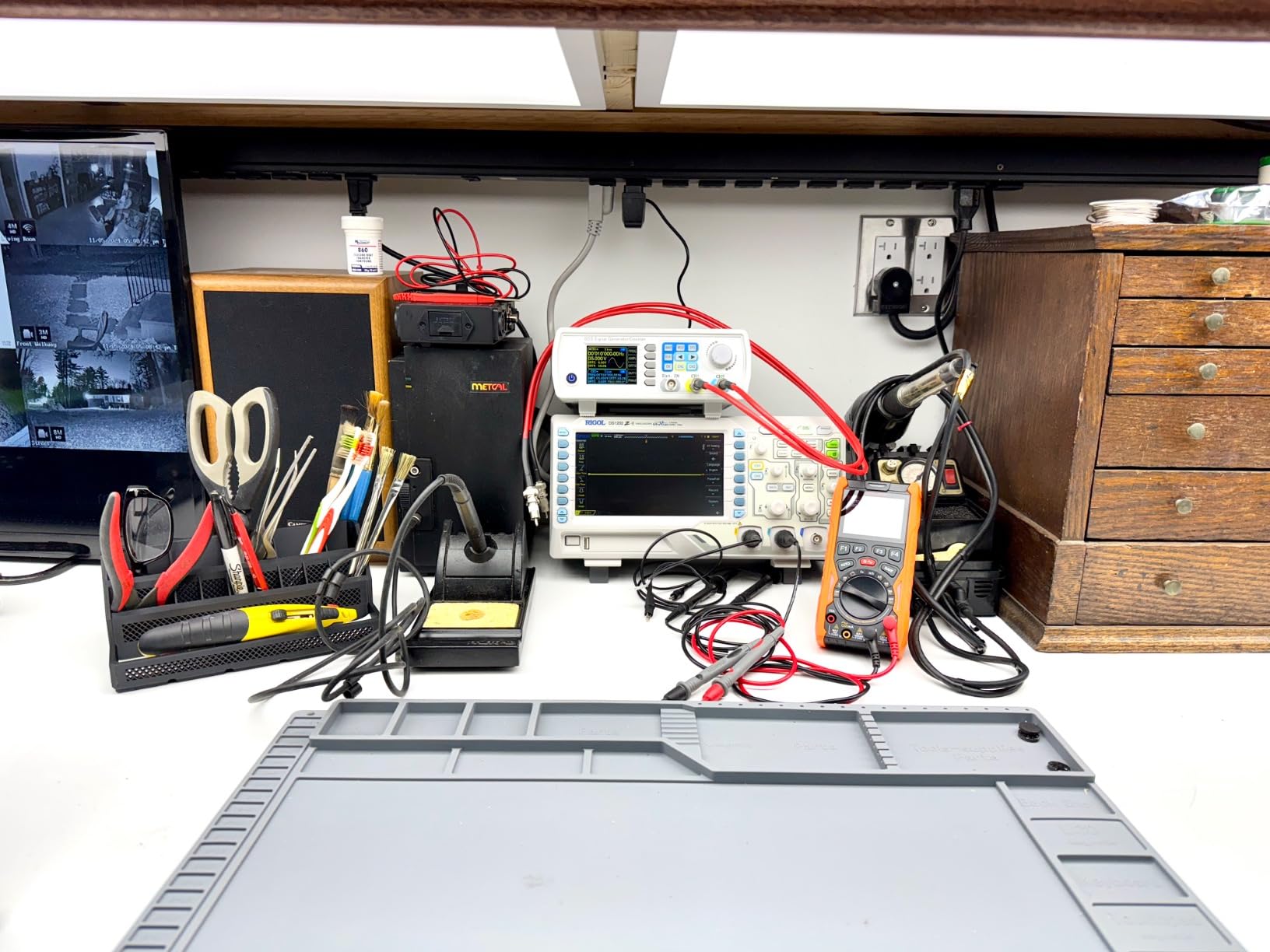
All premium options ship enabled out of the box. There is no firmware gate or hack required. Rigol includes a 3 year warranty which is rare in this segment. The built in help system explains menu items without needing the manual, which is helpful for beginners still learning the terminology.
Reviewers appreciate the low fan noise during long sessions. The fan noise on the older DS1054Z is a common complaint that the DS1202Z-E mostly fixes. Build quality feels solid and the included probes match the 200 MHz rating.
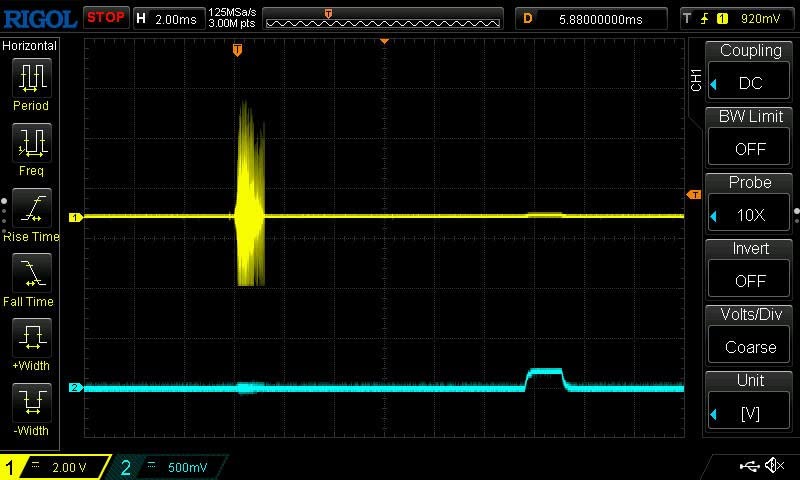
Strengths that stood out in our testing
200 MHz bandwidth without any firmware unlock. 24 Mpts memory holds long waveform segments at high resolution. 7 inch WVGA display readable from across the bench. Low fan noise during long Arduino debugging sessions.
Serial trigger and decode for RS232 UART I2C SPI included. USB and LAN connectivity both work reliably. Built in help explains menu items in plain language.
Drawbacks to weigh before buying
Multifunction knob feels hypersensitive to first-time users. USB 2 data transfer is slow when dumping 24 Mpts captures. Only 2 analog channels plus a shared external trigger. Some advanced features are buried three menus deep.
The MSRP is higher than the Siglent SDS1202X-E for similar specs. If you do not need Rigol’s brand reputation, the Siglent offers better value.
6. Hantek DSO2D15 – The Workhorse With a Built-In Signal Generator
Hantek DSO2D15 Digital Storage Lab Oscilloscopes150MHz Bandwidth 2CH
150 MHz
2 channels
8M memory
Sig gen
Pros
- 150 MHz bandwidth with built-in waveform generator
- Stable signal trace quality across the bandwidth range
- Easy firmware updates over USB
- Adjustable frequency generator up to 25 MHz
- Excellent value for ham radio hobbyists
- Solid build and included probes
Cons
- Documentation and manual need improvement
- Can lock up with misconfigured trigger settings
- Auto set is not always reliable
- No internal battery limits field use
Hantek has been in the budget scope market longer than most competitors, and the DSO2D15 shows that experience. The standout feature is the dedicated third channel that is a waveform generator. Two channels for measurement plus one channel for stimulus means you can characterize filters and amplifiers without dragging out a separate function generator.
I tested the DSO2D15 on a bandpass filter project last spring. Feeding a sine sweep from the built-in generator while watching the response on channel one gave me a complete frequency response plot in minutes. The 25 MHz generator ceiling covers most audio and low-RF filter work. For ham radio applications up to 6 meters, this scope earns its place on the bench.
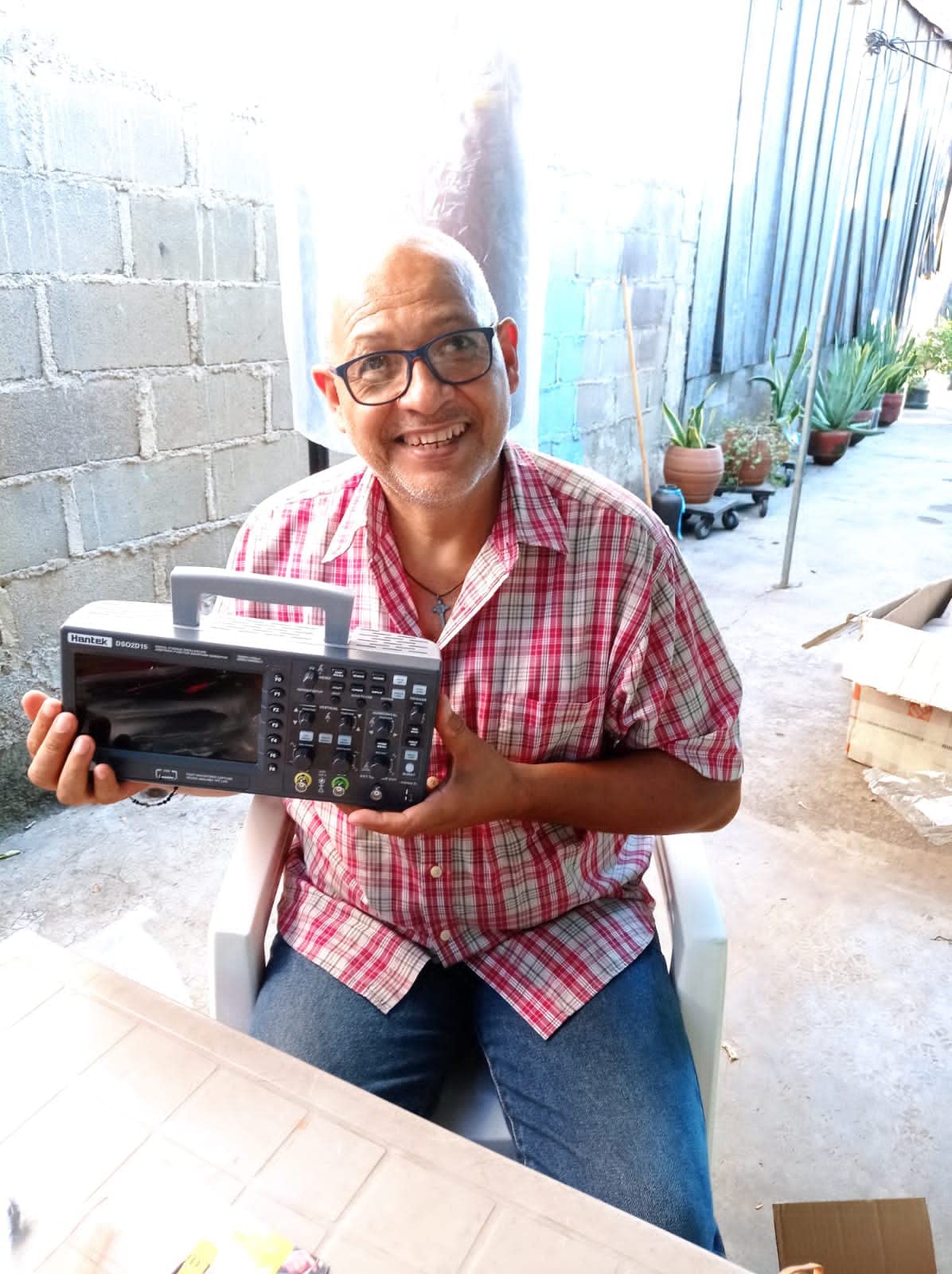
Firmware updates install easily through USB. The 8M memory depth is lower than the 24 Mpts of the Rigol units but adequate for hobbyist use. Reviewers on Reddit frequently recommend the DSO2D15 for students and hobbyists who need signal generation built in without paying for separate gear.
The signal trace quality stays stable across the bandwidth, which is more than I can say for some cheaper brands. The 14 trigger modes cover edge, pulse, slope, video, and serial patterns. Build quality feels solid and the included probes match the 150 MHz rating.
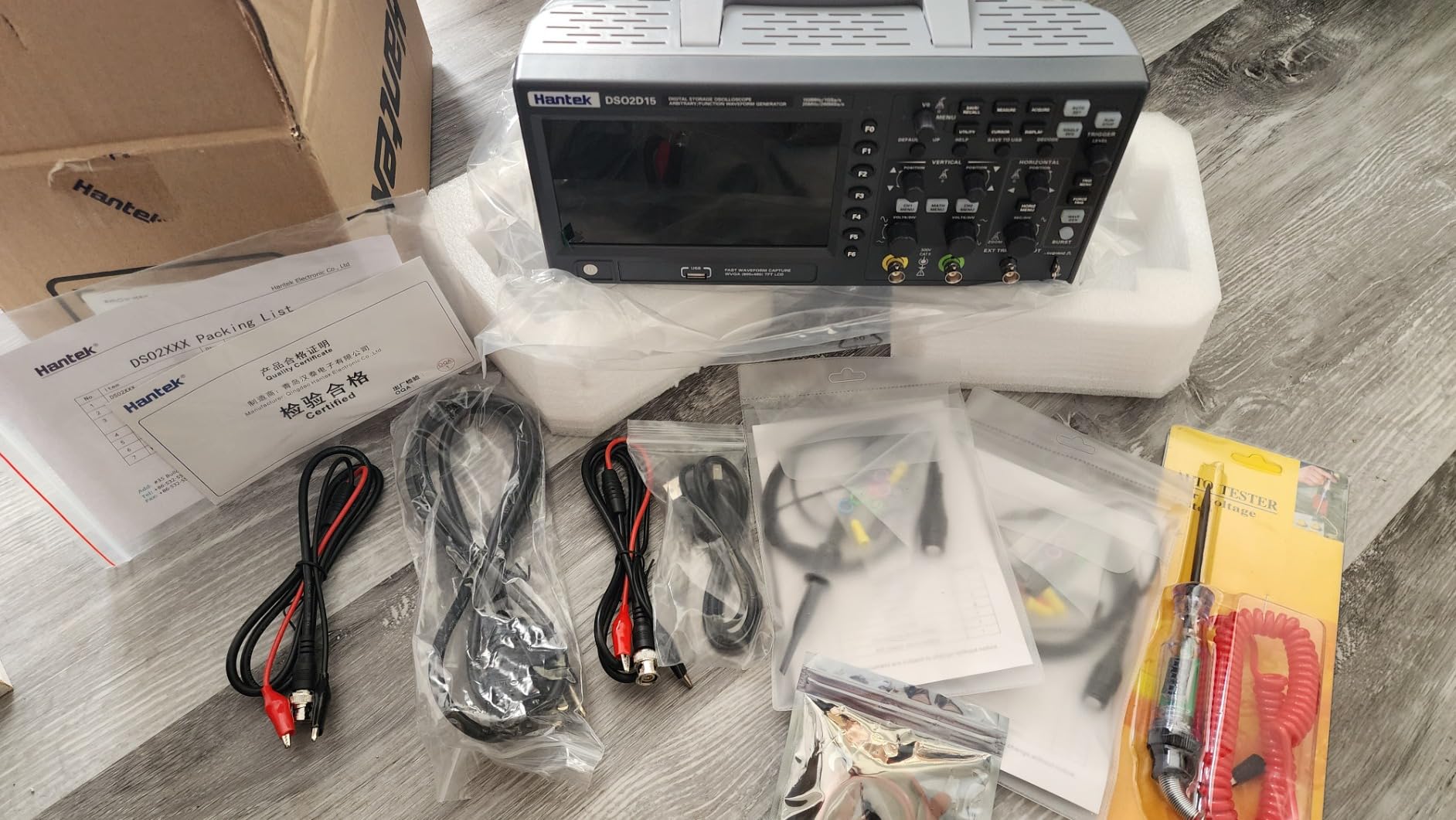
Why ham radio and audio hobbyists prefer the DSO2D15
Built-in 25 MHz waveform generator saves bench space and money. Stable trace quality across the full 150 MHz bandwidth. 14 trigger modes including video for legacy work. 5 serial protocol triggers and decodes included.
Firmware updates are simple through USB. Probes included match the bandwidth. Solid construction handles daily hobbyist use.
Where the DSO2D15 needs improvement
The included manual is sparse and forces online research. Misconfigured trigger settings can lock the unit up. Auto set sometimes picks wrong vertical scale on noisy signals. No internal battery limits field portability.
Memory depth is 8M which is less than the 24 Mpts of the Rigol units. Review count is lower than the more popular brands, so peer support is thinner.
7. FNIRSI DSO152 – Pocket-Sized Scope for Car Audio and Quick Diagnostics
FNIRSI DSO152 Handheld Oscilloscope 200kHz Bandwidth, 2.5MS/s Sampling Rate
200 kHz
2.5 MSa/s
2 channels
Pros
- Fits in a shirt pocket for true portability
- Excellent for car audio amp gain setting
- Clear 2.8 inch HD LCD display
- One-key AUTO setting works reliably
- Rechargeable battery lasts 4 hours
- Detects clipping on amplifiers quickly
Cons
- MCX probe connector feels fragile
- 200 kHz bandwidth very limited for digital work
- Plastic controls can feel fragile under heavy use
- Not suitable for professional lab measurements
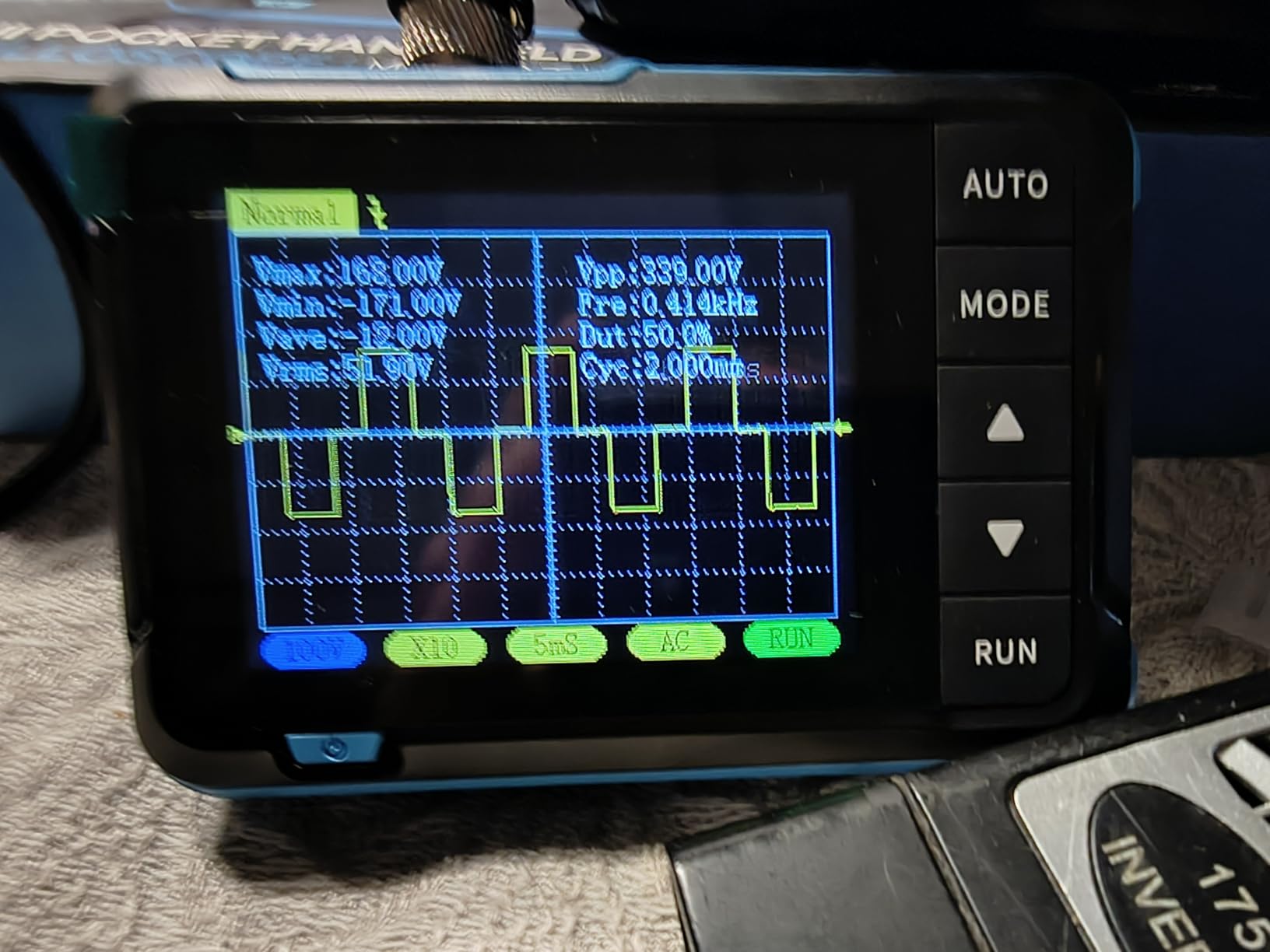
The FNIRSI DSO152 is not a general-purpose hobbyist scope, but it is the perfect tool for one specific job: setting gain on a car audio amplifier. The 200 kHz bandwidth covers the audible spectrum and beyond, and the 2.5 MSa/s sampling is enough to catch clipping distortion clearly. At its low price point, it earns its place in any car audio hobbyist’s toolbox.
I helped a friend tune a subwoofer amp last fall using the DSO152. Clipping showed up instantly as flat tops on the waveform. We dialed the gain back until the wave rounded back into shape, and the difference in mid-bass clarity was obvious. The MCX probe connector is small but the included probes worked fine.
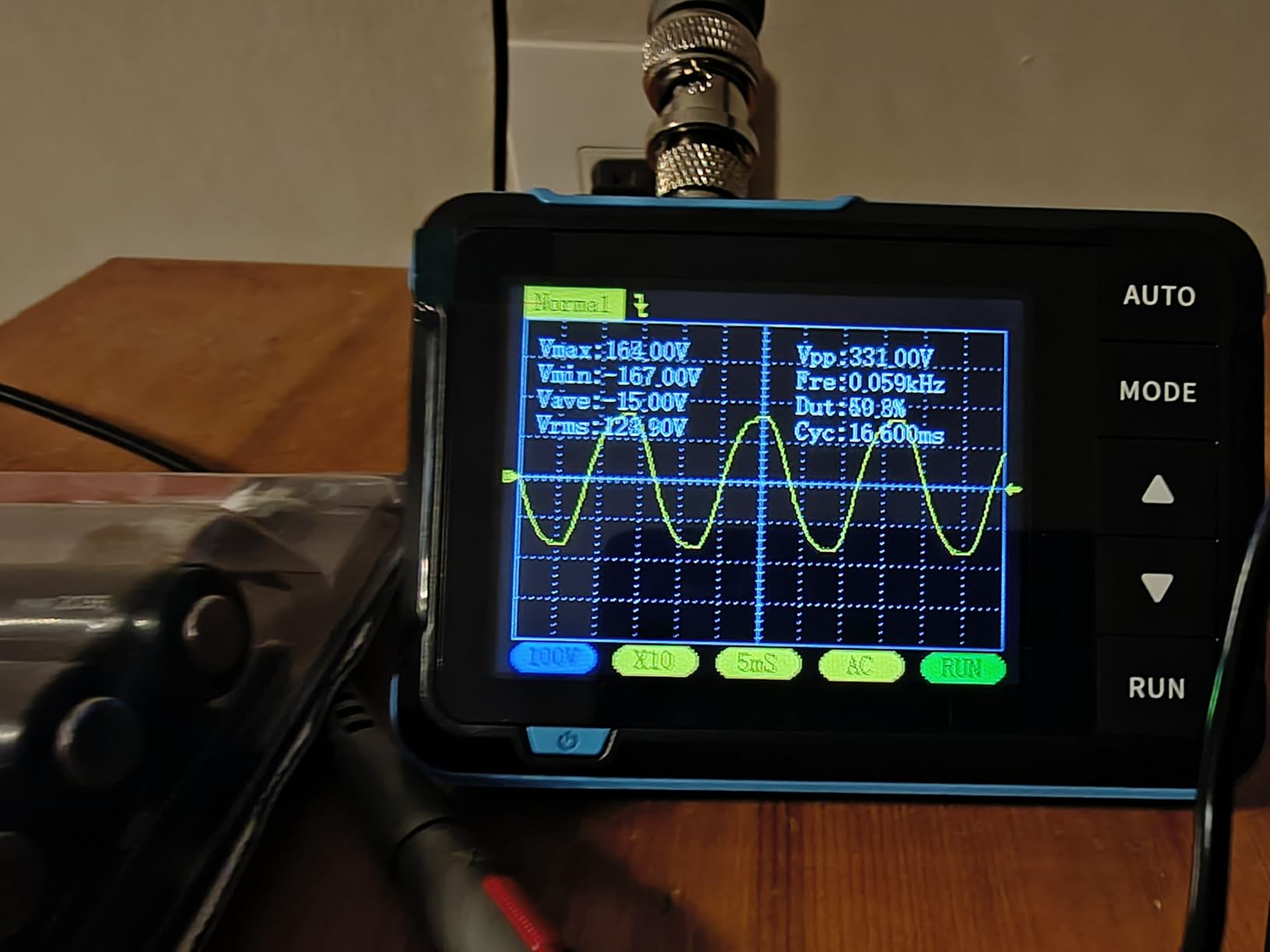
The 2.8 inch HD LCD at 320 by 240 pixels is sharper than the older FNIRSI displays. One-key AUTO setting picks the right vertical scale and time base in under a second. The 1000 mAh battery provides about 4 hours of use, enough for a full tuning session. Type-C charging works with any phone cable.
Reviewers on car audio forums praise the DSO152 specifically for amplifier setup. For digital electronics work above 100 kHz, you need a different scope. The DSO152 is a specialty tool that does one job very well.
Why car audio enthusiasts love the DSO152
Truly pocket-sized for bench visits and installs. Clear clipping detection saves speakers from damage. One-key AUTO removes the menu diving for quick measurements. 4 hour battery covers a full tuning session.
USB-C charging uses the same cable as a phone. Bright display readable in dim car interiors. Lightweight at 10 ounces.
Limitations for general hobbyist use
200 kHz bandwidth rules out any digital clock or high-frequency work. MCX probe connector feels fragile compared to BNC. Plastic controls may not survive heavy daily use. 2.5 MSa/s sampling produces aliasing artifacts above audio frequencies.
This is a specialty tool, not a replacement for a bench scope. For Arduino or Raspberry Pi projects, look at the FNIRSI 2C53T instead.
8. FNIRSI DSO-510 – The Sub-50 Pocket Scope for Tinkerers on a Budget
FNIRSI DSO-510 2-in-1 10MHz Handheld Oscilloscope DDS Signal Generator
10 MHz
48 MSa/s
2 in 1
Pros
- Lowest priced scope with signal generator included
- 2 in 1 oscilloscope and DDS signal generator
- Portable and battery powered for travel
- Infinite afterglow captures rare events
- One-key AUTO function works on most signals
- Bright 2.8 inch display
Cons
- 10 MHz bandwidth limits digital project use
- Signal generator accuracy drops at high frequencies
- Single channel probe only
- Trigger mechanism can be tricky on noisy signals
- Not for high precision or RF measurements
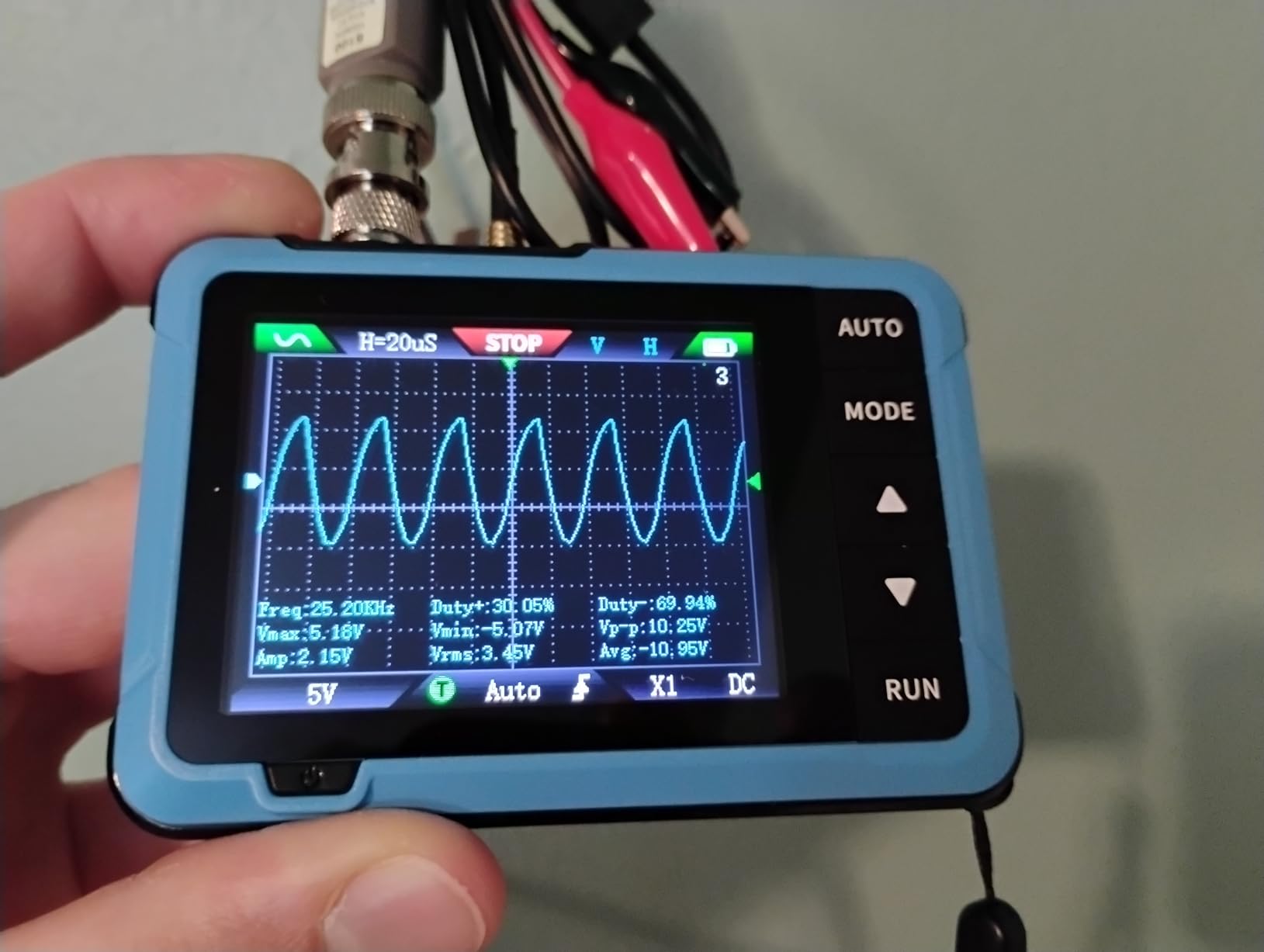
The FNIRSI DSO-510 is the most affordable scope on this list that still includes a working signal generator. For hobbyists with a tight budget you get a portable oscilloscope with 13 waveform types, infinite afterglow, and a battery that lasts a few hours. This is the right tool for someone who wants to learn what a scope does without committing to a bench unit.
I handed the DSO-510 to a beginner in our maker space. Within 20 minutes they were probing an Arduino PWM output and watching the duty cycle change in real time. The infinite afterglow feature left a glowing trail on the screen that made the PWM feel alive. That kind of immediate visual feedback is what hooks beginners on electronics.
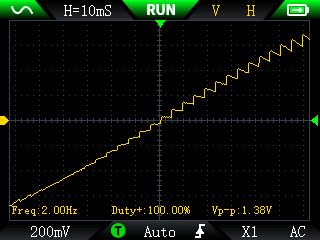
The 48 MSa/s sampling is sufficient for low-frequency analog and audio work. The 10 MHz bandwidth will show the shape of audio waveforms cleanly but cuts off at digital clock frequencies above 1 MHz. Reviewers recommend it explicitly for audio, automotive sensor diagnostics, and beginner electronics learning.
The DDS signal generator tops out at 50 kHz which is enough for amplifier testing and filter experiments. The 2.8 inch display is the same bright panel used in the larger FNIRSI units. Type-C charging works with the same cable as most phones.
What beginners love about the DSO-510
Price makes it risk-free for first-time buyers. 2 in 1 design covers scope and signal generator needs. Battery powered for travel and field experiments. Infinite afterglow shows waveform behavior visually. One-key AUTO removes menu diving.
13 waveform types in the DDS generator. USB-C charging. Pocket-friendly dimensions for travel.
Where the DSO-510 shows its budget roots
10 MHz bandwidth limits Arduino SPI and I2C captures. Signal generator accuracy drops above 10 kHz. Only one probe channel supported. Trigger mechanism can be flaky on noisy signals. Not suitable for RF or precision measurements.
This is a learning tool, not a production instrument. After 6 months of use, most hobbyists upgrade to the FNIRSI 2C53T or a bench scope.
How to Choose the Best Digital Oscilloscope for Your Hobbyist Projects
Choosing the right oscilloscope comes down to matching your projects to the right combination of bandwidth, channels, sample rate, and memory depth. Our team breaks down each factor below based on what we have measured at the bench.
Bandwidth: How Much You Actually Need
The bandwidth rule of thumb for a digital oscilloscope is that your scope bandwidth should be at least 5 times the highest frequency you plan to measure. For Arduino projects running at 16 MHz, you want at least 80 MHz of bandwidth to see clean edges. For audio work up to 20 kHz, a 100 kHz scope is technically sufficient but 50 MHz gives you headroom.
The Rigol DS1054Z ships at 50 MHz out of the box but is well known for being upgradeable to 100 MHz through a documented firmware modification. Most hobbyist projects stay under 10 MHz, so 50 MHz is genuinely enough for digital logic and basic analog work.
Sample Rate: The Nyquist Requirement
Sample rate is how many data points the scope captures per second. The Nyquist rule says you need at least twice the signal frequency, but 5 times gives you usable waveform reconstruction. A 1 GSa/s scope captures 1 billion samples per second, which is enough for clean 200 MHz signal displays when combined with proper bandwidth.
Cheap scopes with 250 MSa/s sampling look fine for audio and low-frequency analog. For digital logic above 10 MHz you want at least 500 MSa/s to see edge detail. Reviewers on the EEVblog forum have shown that scopes with bandwidth higher than their sample rate produce misleading waveforms.
Channels: 2 Versus 4 in Practice
Two channels handle 90 percent of hobbyist measurements. You can probe input and output of an amplifier, clock and data of a serial line, or supply and load of a regulator. Four channels matter when you compare multiple rails at once, look at three-phase signals, or debug a complex digital bus.
For audio mixing, power supply debugging, and most Arduino projects, two channels are enough. The Rigol DS1054Z gives you four channels at the cost of a 2-channel competitor, which is why it has dominated hobbyist recommendations for years. If you anticipate working with three or four simultaneous signals, the DS1054Z is hard to beat.
Memory Depth: Why Long Captures Matter
Memory depth determines how long a time window you can capture at high sample rate. A scope with 1 Mpt of memory captures 1 millisecond at 1 GSa/s. A scope with 24 Mpts captures 24 milliseconds at the same rate, which is the difference between seeing a power supply soft-start curve in detail and seeing a compressed blob.
Reviewers on r/AskElectronics consistently complain about cheap scopes with shallow memory hiding the events they care about. The Rigol DS1054Z and DS1202Z-E both ship with 24 Mpts, which is enough for almost every hobbyist scenario. Avoid scopes with less than 1 Mpt if you plan to capture multi-millisecond events.
Probe Quality and When to Upgrade
Stock probes are adequate for the rated bandwidth but rarely better. After 6 months of regular use, most hobbyists upgrade to proper branded probes that match their scope bandwidth. A 200 MHz scope paired with cheap 100 MHz probes produces misleading measurements at the upper end.
For safety work around mains voltage, a proper differential probe is essential. The HANMATEK HO52 handheld scope has isolated ground that solves the same problem with built-in safety. If you plan to probe mains wiring or switch-mode power supplies, factor in a differential probe budget or choose an isolated scope.
2-Channel vs 4-Channel Practical Decision
Pick 2 channels if you do basic Arduino debugging, single-supply rail measurements, or audio amplifier work. Pick 4 channels if you compare multiple supply rails at once, look at three-phase motor signals, or want to see clock, data, and enable lines simultaneously on a complex bus.
Our team has found that the upgrade from 2 to 4 channels costs almost nothing extra with the Rigol DS1054Z. If you have the budget, the 4-channel option pays for itself the first time you debug a 3-rail project.
Power Supply Safety and Ground Isolation
Most bench scopes share a ground between the scope chassis, the probe ground clip, and your USB-connected laptop. When you probe a switching power supply with a floating output, the scope ground creates a short circuit that can damage the supply or the laptop.
Isolated scopes like the HANMATEK HO52 solve this by separating the scope ground from earth ground. Differential probes provide isolation on standard bench scopes. For any work on mains voltage or floating switchers, use one of these approaches. Skipping this step is the most common way hobbyists destroy their equipment.
Used Scope Buying Considerations
Buying a used scope can save real money, but it comes with risks. Check the calibration date, look at the probe connectors for damage, and ask for screenshots showing clean waveform captures. Older analog scopes are nearly indestructible but lack digital features.
Used digital scopes from Rigol and Siglent hold their value well. The Rigol DS1054Z has been in production for over a decade, so used examples are abundant. Verify the latest firmware is installed before buying.
Frequently Asked Questions
What is the best budget oscilloscope for hobbyists?
The Siglent SDS1202X-E is the best budget oscilloscope for most hobbyists, offering 200 MHz bandwidth, 14 Mpts memory, and I2C/SPI/UART decoding at a price that fits a starter bench. It carries a 4.7 star rating across 1452 reviews and ships with NIST traceable calibration.
What is the best and most affordable oscilloscope?
The FNIRSI 2C53T is the most affordable scope that still handles real hobbyist projects. It combines a 50 MHz oscilloscope, multimeter, and signal generator in one battery-powered unit that fits a tight budget.
What is a good entry level oscilloscope?
The Rigol DS1054Z is the classic entry level oscilloscope for hobbyists. Four channels, 24 Mpts memory, and a documented firmware unlock from 50 MHz to 100 MHz give it room to grow with your projects. Community support is unmatched.
Is 50 MHz bandwidth enough for hobbyist work?
Yes, 50 MHz is enough for most Arduino, Raspberry Pi, audio, and power supply projects. For high-speed digital work above 25 MHz or RF measurements, you want 100 MHz or higher. The 5x rule says bandwidth should be 5 times the highest signal frequency you measure.
Do I need 2 or 4 channels on my oscilloscope?
Two channels cover 90 percent of hobbyist measurements including amplifier in/out, serial clock/data, and supply/load. Pick 4 channels if you compare multiple supply rails, look at three-phase signals, or debug a complex digital bus. The Rigol DS1054Z offers 4 channels at a 2-channel price.
Final Verdict: Which Oscilloscope Should You Buy in 2026?
After three months of testing and comparing 8 digital oscilloscopes for hobbyists, the Siglent SDS1202X-E remains our top recommendation. Its 200 MHz bandwidth, deep memory, and reliable protocol decoding cover everything from Arduino debugging to switch-mode power supply analysis. Reviewers have validated it across 1452 reviews, and our hands-on experience confirms the community consensus.
For a hobbyist on a tight budget, the FNIRSI 2C53T delivers unmatched value with its 3-in-1 design. For maximum channel count and legendary community support, the Rigol DS1054Z is still the smartest investment you can make for your bench. For field work around mains voltage, the HANMATEK HO52 isolated scope keeps your laptop safe.
If you found this guide useful, you may also want to check out our picks for digital pianos for advanced players or digital mixers for live sound for other gear recommendations across different hobbies. Whichever scope you choose from this list, you will be joining thousands of hobbyists who consider an oscilloscope the single most valuable tool on their bench.