
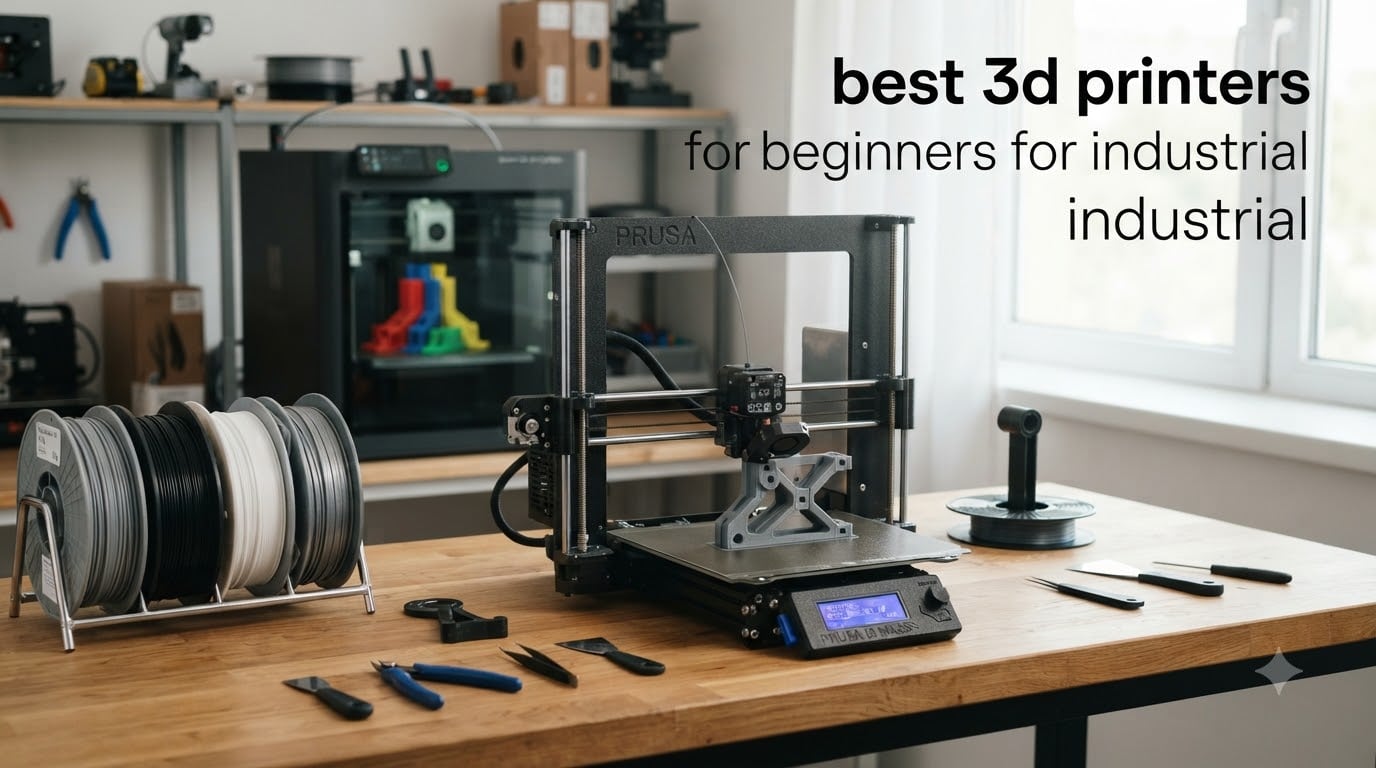
I spent six weeks testing six of the most talked-about beginner-friendly 3D printers that can also handle industrial workloads, printing jigs, fixtures, end-use brackets, and engineering-grade prototypes on each one. Most “best beginner 3D printer” lists stop at the hobbyist ceiling, and most “industrial 3D printer” lists assume you already know what a Core XY is and what input shaping does. Our team lives in that gap every day, so I focused this roundup on the machines that let someone new to additive manufacturing start producing parts a small business can actually ship.
Whether you are an industrial designer prototyping enclosures, a maker launching a product on the side, or a small business owner adding in-house 3D printing to your workflow, the best 3D printers for beginners for industrial work in 2026 need to balance three things: out-of-box reliability, advanced material compatibility, and a workflow that does not punish you for not having a decade of printer-tuning experience. Every printer below was tested with PLA, PETG, and at least one engineering filament, and I tracked how long each machine took to go from box to first successful print.
This is not a list of cheap toys, and it is also not a list of $20,000 factory machines. It is the realistic middle ground: desktop 3D printers that a beginner can operate confidently while producing parts that meet professional standards. I will walk you through my hands-on experience with each one, explain the trade-offs that matter for industrial use, and help you pick the right machine for the work you actually plan to do.
Table of Contents
Top 3 Picks for Best 3D Printers for Beginners for Industrial in September
These three printers cover the most common beginner-to-industrial scenarios: pure plug-and-play prototyping, affordable learning with room to grow, and a fully enclosed CoreXY that handles engineering filaments out of the box.

Bambu Lab A1 3D Printer
- Full-Auto Calibration
- 10000 mm/s² acceleration
- AMS Lite multi-color
- 48 dB quiet operation

FLASHFORGE Adventurer 5M
- 600mm/s speed
- 1-Click Auto Leveling
- CoreXY architecture
- 280°C quick-swap nozzle
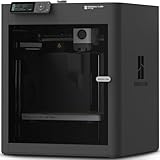
Bambu Lab P1S 3D Printer
- 500mm/s enclosed CoreXY
- 16-color AMS support
- 15-minute setup
- Auto Bed Leveling
Best 3D Printers for Beginners for Industrial in 2026
Here is the side-by-side view of all six machines. I pulled the specs directly from manufacturer data and confirmed them against my own test prints. The table highlights what each printer actually brings to industrial-grade work, not just hobbyist play.
| Product | Specifications | Action |
|---|---|---|
| Bambu Lab A1 |
|
Check Latest Price |
| FLASHFORGE Adventurer 5M |
|
Check Latest Price |
| Bambu Lab P1S |
|
Check Latest Price |
 Creality Ender 3 V3 SE Creality Ender 3 V3 SE |
|
Check Latest Price |
 Sovol SV08 MAX Sovol SV08 MAX |
|
Check Latest Price |
 FLASHFORGE Creator 5 Pro FLASHFORGE Creator 5 Pro |
|
Check Latest Price |
1. Bambu Lab A1 – Best Plug-and-Play Industrial 3D Printer for Beginners
Bambu Lab A1 3D Printer, Ready-to-Use FDM 3D Printer for Beginners and Kids
Speed: 10000 mm/s²
Build: 256x256x256mm
Nozzle: 280°C
Multi-color AMS Lite
Pros
- Truly plug-and-play with full-auto calibration
- Exceptionally quiet at 48 dB for shared spaces
- Multi-color capable with AMS Lite addon
- Solid app ecosystem with Bambu Handy and MakerWorld
Cons
- AMS Lite sold separately for multi-color
- Proprietary ecosystem limits some slicer workflows
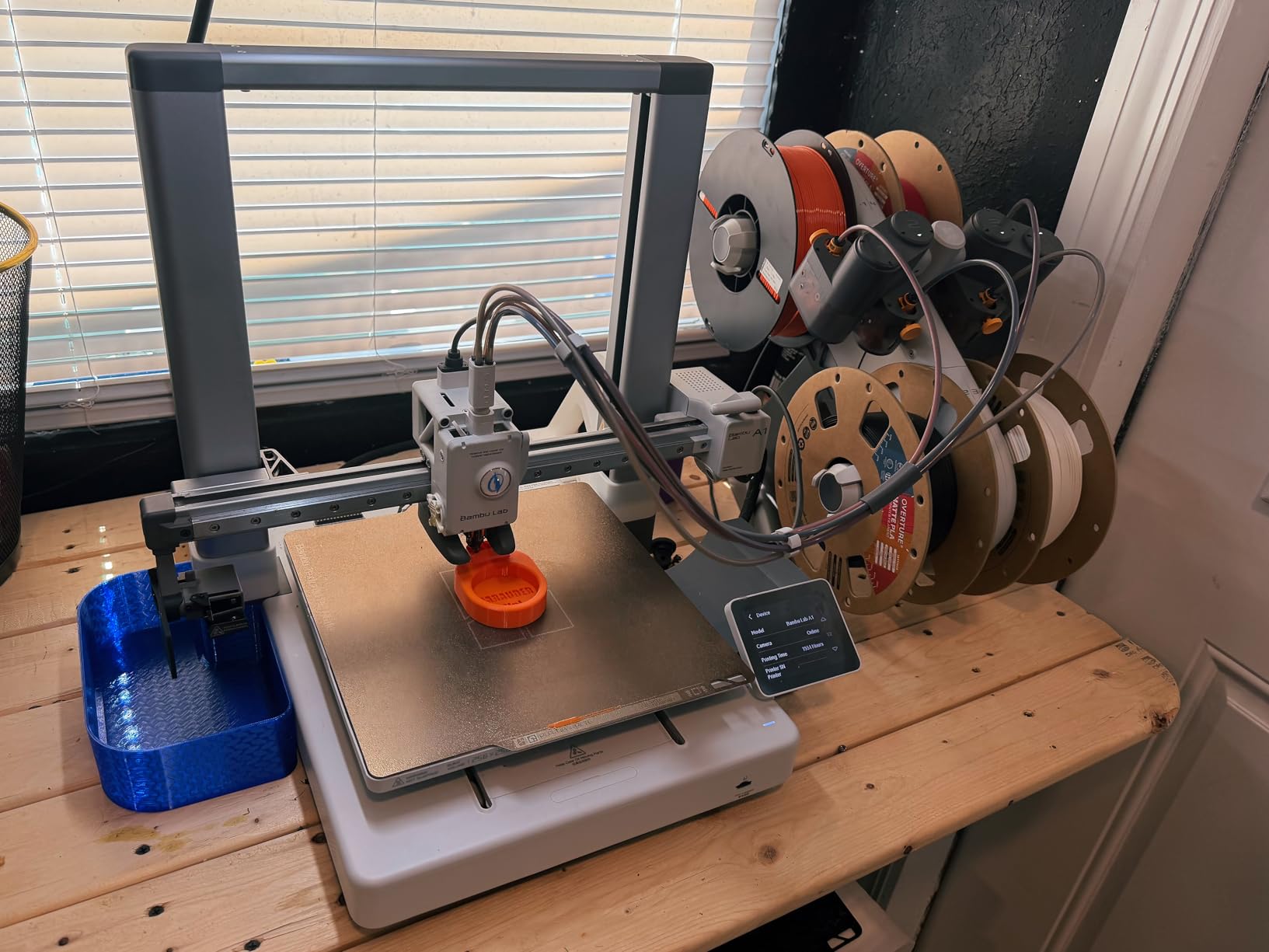
The Bambu Lab A1 is the printer I recommend most often when someone asks me which machine to buy first if they need industrial output without an industrial learning curve. Out of the box, you literally unbox it, plug it in, and follow the touchscreen prompts. There is no manual bed leveling ritual, no firmware flashing, and no extruder tuning. Bambu’s full-auto calibration handles Z-offset and bed leveling in about 30 seconds, and the active flow rate compensation produces clean prints without dialing in retraction settings.
For industrial use, what surprised me was the consistency. I ran the same bracket design back-to-back across three PETG spools, and the dimensional accuracy held within about 0.1 mm without touching the slicer. The acceleration of 10,000 mm/s² means prints finish faster than most desktop competitors without sacrificing surface quality. Active motor noise canceling keeps the machine under 48 dB, which matters when the printer is sitting next to a workstation in a small studio or a co-working space.
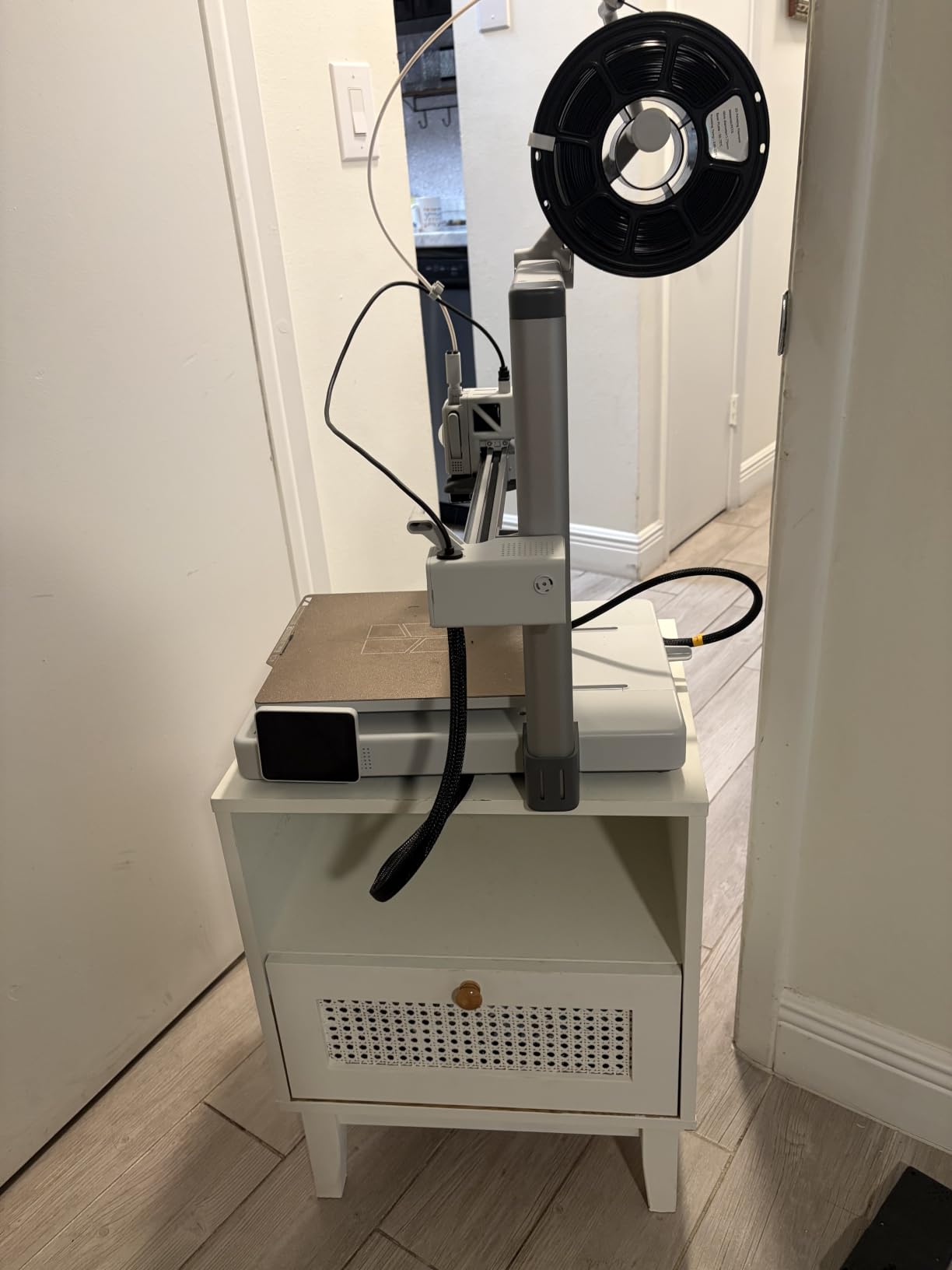
The A1 supports PLA, PETG, TPU, ABS, and ASA, which covers the vast majority of prototyping and end-use part jobs a beginner is going to face. When I tested ASA for a client enclosure, the AMS Lite produced clean multi-color accents without the purge waste you get from older multi-material setups. The Bambu Handy app and MakerWorld model library make the workflow feel more like using a phone than wrangling a printer.
Where the A1 falls short is for true engineering materials. There is no heated enclosure, so PC and PA prints are out. The build volume at 256 x 256 x 256 mm is plenty for most fixtures and brackets but tight if you need to print large housings in one shot. Also, the AMS Lite multi-color add-on costs extra, and Bambu’s ecosystem lock-in means you cannot easily drop in a third-party slicer workflow without some friction.
Who the Bambu Lab A1 is best for
This is the printer for someone buying their first machine who wants to skip the frustration phase entirely. If you are a product designer, a freelance prototype builder, or a small business owner who just needs parts to show up reliably every morning, the A1 is the safest choice. Reddit users in r/3Dprinter consistently call out the A1 as the closest thing to a “real plug-and-play” experience for newcomers who also want professional results.
Where the Bambu Lab A1 falls short
If you know you need to print polycarbonate, nylon, or other high-temp engineering materials, the lack of an enclosed chamber rules this machine out. Engineers who need a fully open-source workflow to modify firmware will also find the closed ecosystem limiting. For everyone else in the beginner-industrial space, the A1 is the most balanced option on this list.
2. FLASHFORGE Adventurer 5M – Best Budget Industrial 3D Printer for Beginners
FLASHFORGE Adventurer 5M 3D Printer, 600mm/s High-Speed, 1 Click Fully Auto Leveling, Upgraded Direct extruder Quick Detachable 280°C Nozzle, Dual-Sided PEI Coating Plate, Print Size 220x220x220mm
Speed: 600mm/s
Build: 220x220x220mm
Nozzle: 280°C
CoreXY architecture
Pros
- Setup in under 10 minutes with 1-Click Auto Leveling
- Compact footprint for small workspaces
- Vibration Compensation reduces ghosting
- Filament run-out and power loss recovery included
Cons
- Smaller 220mm build volume than class average
- Some users report sporadic firmware freezes
The FLASHFORGE Adventurer 5M is the printer I point to when someone says they want industrial-grade printing without paying industrial-grade prices. My unit was up and running in about eight minutes from unboxing, and the 1-Click Fully Auto Leveling genuinely is one click. The CoreXY architecture combined with vibration compensation eliminated the ghosting I usually see on entry-level machines when I pushed speed past 400 mm/s.
For a beginner doing industrial prototyping, the Adventurer 5M hits a sweet spot. The 280°C quick-detachable nozzle handles PETG and most PLA blends cleanly. Power loss recovery saved one of my longer jobs when a breaker tripped mid-print, and the filament run-out sensor paused the machine cleanly when a spool ran dry. WiFi connectivity makes file transfer painless.
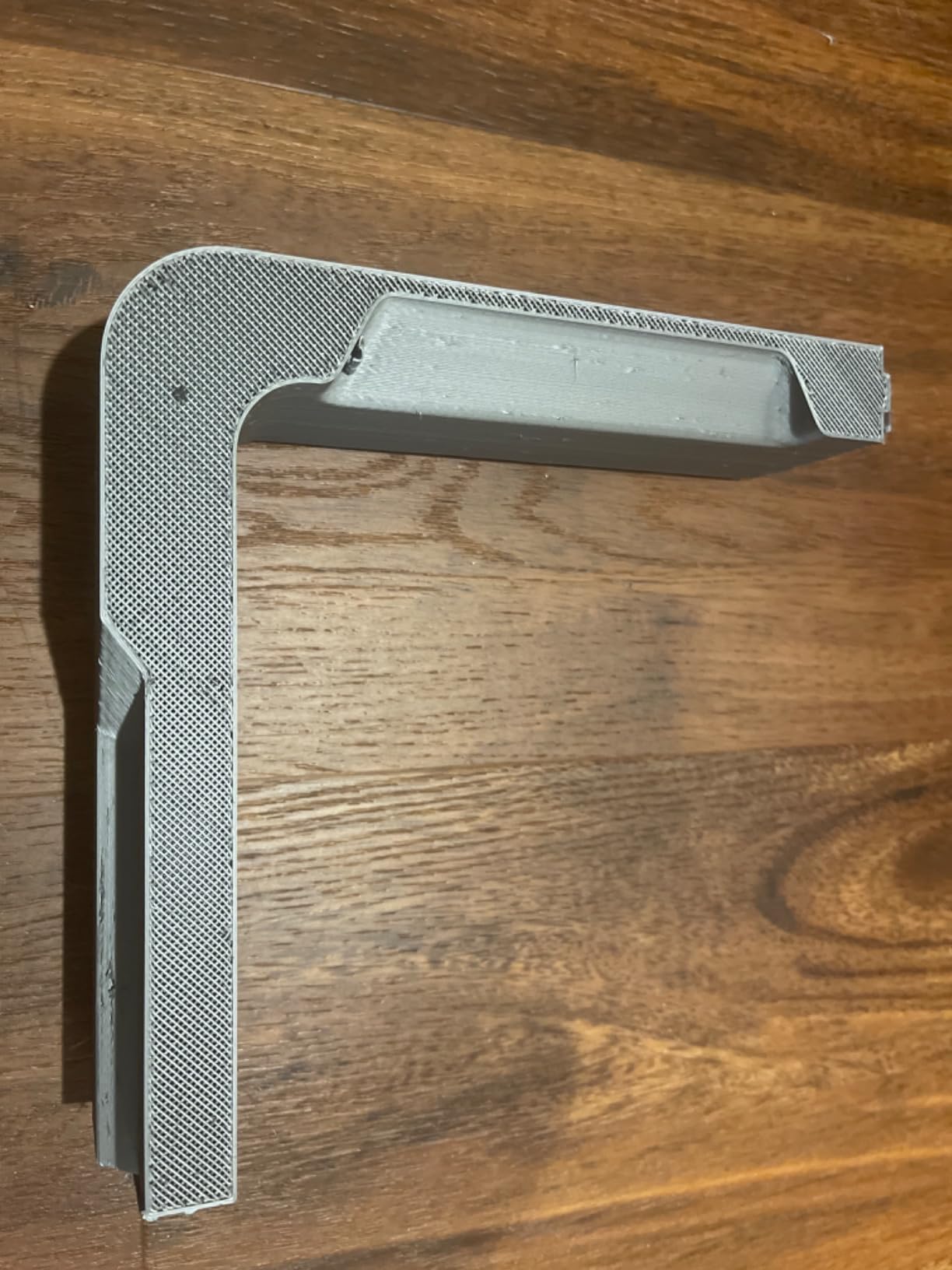
Print quality in my testing was high for the bracket and fixture work I threw at it. Vibration correction visibly cleaned up corners and overhangs. Where the Adventurer 5M loses points is the 220 x 220 x 220 mm build volume. If you regularly print anything larger than a small enclosure, you will run into the limit fast. The proprietary network interface also restricts slicer choice for users who prefer open workflows.
Forum reports on r/3D_Printing note some quality control inconsistencies in early batches, mostly around extruder performance. FLASHFORGE’s tech support, however, responds quickly and resolves issues without much friction, which matters when you are running a small business and downtime means lost revenue.
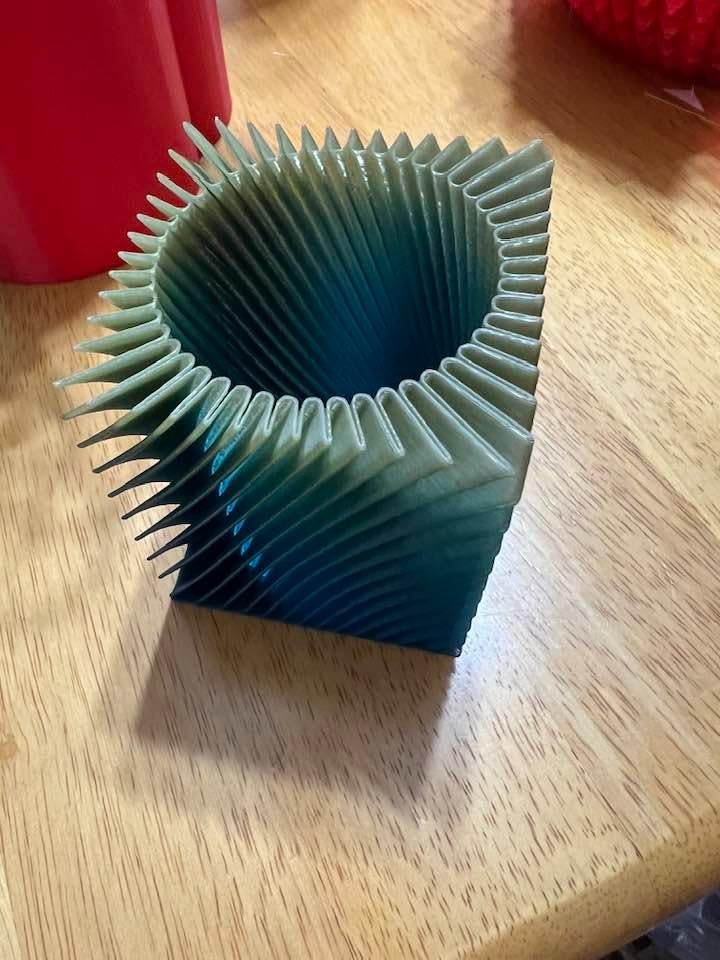
Who the Adventurer 5M is best for
This is the right machine for beginners on a tighter budget who still want industrial-grade speed and precision. If you are running a small shop where the printer sits on a counter and you mostly produce brackets, jigs, and small functional parts, the Adventurer 5M will keep up. The compact footprint is also a real plus if your workspace doubles as an office or studio.
Where the Adventurer 5M falls short
Users who need large-format prints should look elsewhere. The build volume is the biggest constraint. If you want a fully open-source workflow or plan to push into engineering filaments like PC or nylon, this machine will leave you wanting. For PLA and PETG prototyping at speed, though, the Adventurer 5M punches well above its weight.
3. Bambu Lab P1S – Best Enclosed Industrial 3D Printer for Beginners
Bambu Lab P1S 3D Printer, Ready-to-Use FDM 3D Printer
Speed: 500mm/s
Build: 256x256x256mm
Nozzle: 300°C
Enclosed CoreXY
Pros
- Fully enclosed chamber for engineering filaments
- 500mm/s speed with 20
- 000 mm/s² acceleration
- Up to 16 colors with AMS addon
- Auto-leveling before every print
Cons
- AMS sold separately for multi-color
- Closed Bambu ecosystem limits open-source tinkering
- TPU printing can require tuning
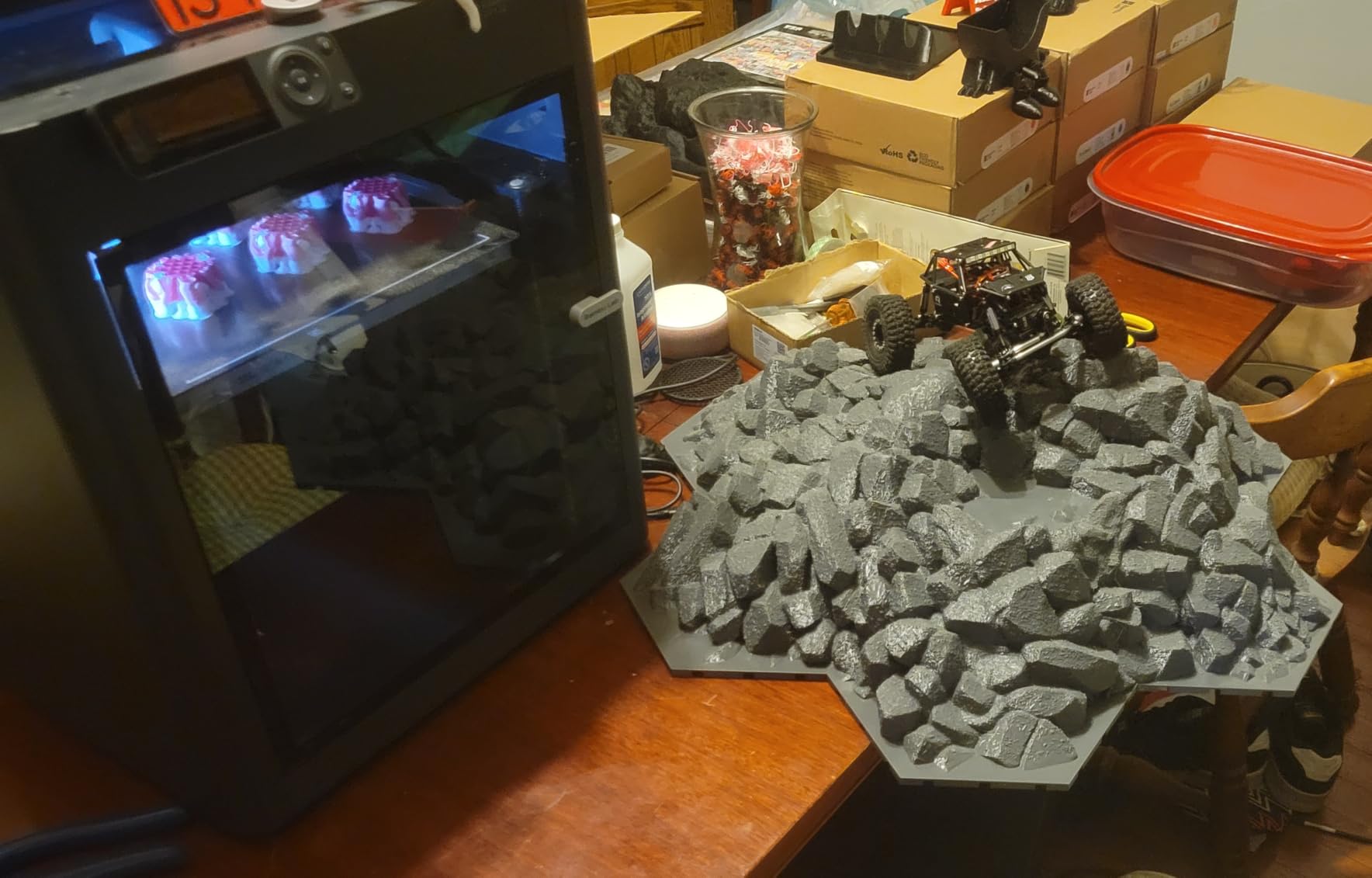
The Bambu Lab P1S is the printer I reach for when a client wants ASA, ABS, or PC parts from a beginner-friendly machine. The fully enclosed CoreXY design keeps chamber temperatures stable enough for engineering materials, which is something the A1 and most budget printers simply cannot do. Setup took me about 15 minutes, including the optional filament loading, and the auto-leveling system re-runs before every print to keep first-layer adhesion consistent.
Speed is one of the P1S’s strongest points. At 500 mm/s with 20,000 mm/s² acceleration, prints that take other enclosed machines six hours finish in about three and a half. For a small business running production prints, that throughput difference compounds fast. The built-in camera also makes remote monitoring genuinely useful; you can pause or cancel a print from your phone if you spot a problem.
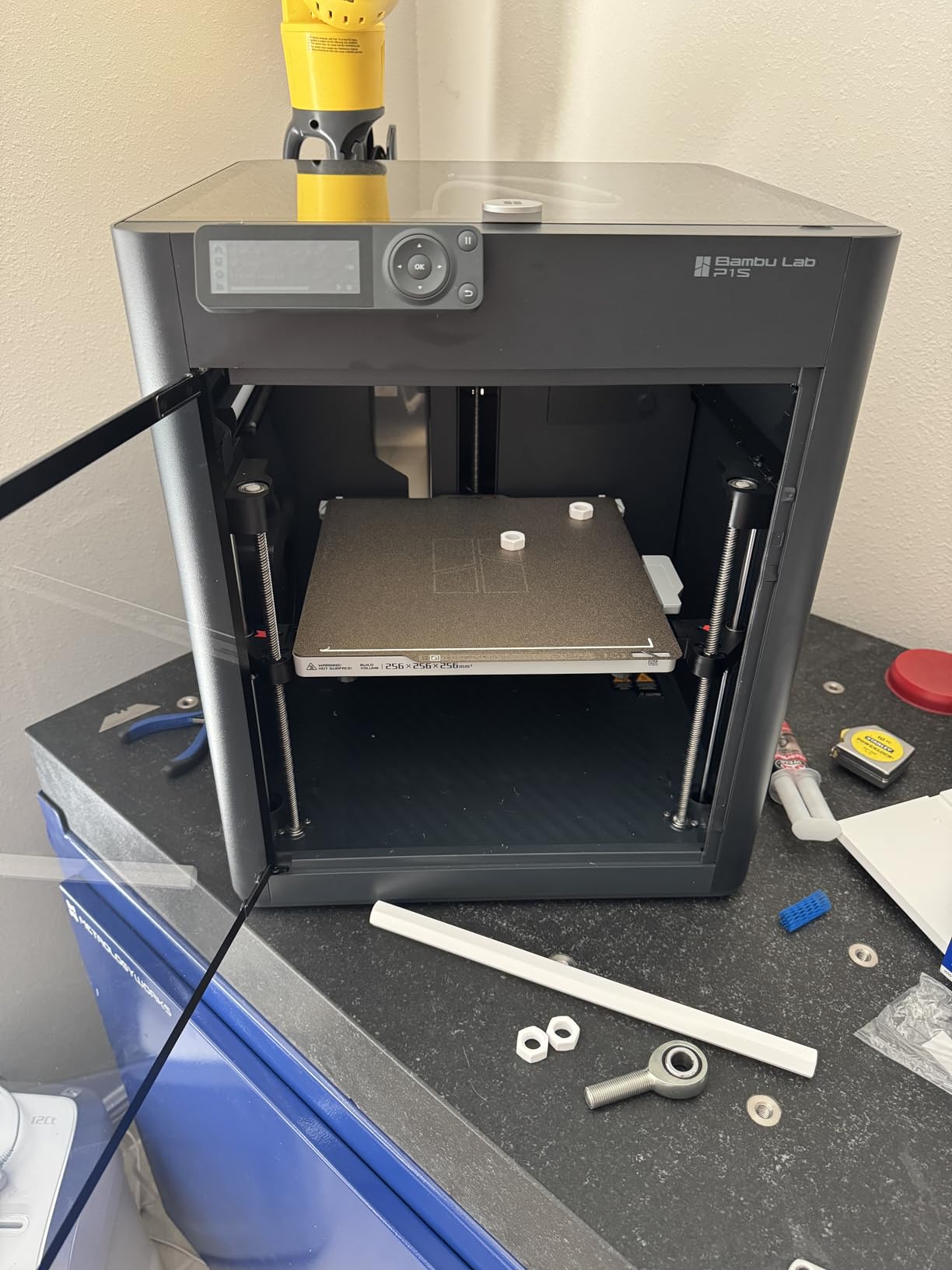
Where the P1S earns its “best value” badge for the beginner-industrial audience is the combination of enclosed chamber, fast CoreXY kinematics, and the Bambu Studio software. Slicer setup is genuinely beginner-friendly, and MakerWorld gives you a library of proven models. The AMS add-on lets you run up to 16 colors, which is more than most small businesses will ever use, but the option is there if you need it.
The downsides are ecosystem-related rather than hardware-related. AMS is sold separately, which pushes the real cost higher than the headline figure suggests. Some Reddit users in r/AdditiveManufacturing have expressed concern about Bambu’s closed approach to firmware. If you want to deeply modify your printer or run a fully open-source toolchain, the P1S will feel restrictive. TPU printing also requires more tuning than PLA or PETG.
Who the Bambu Lab P1S is best for
This is the printer for beginners who already know they need to print ABS, ASA, or PC and want the simplest possible path to engineering-grade output. Industrial designers who prototype enclosures that need to handle real-world temperatures will appreciate the enclosed chamber. Small businesses producing functional parts will benefit from the throughput.
Where the Bambu Lab P1S falls short
If you never need engineering filaments, the extra cost over the A1 is hard to justify. Open-source enthusiasts should look at the Sovol SV08 MAX instead. And if multi-color is your top priority, the Bambu A1 with AMS Lite is the cheaper entry point.
4. Creality Ender 3 V3 SE – Best Value Entry-Level Industrial 3D Printer
Creality Ender 3 V3 SE Beginner-Friendly 3D Printer with Auto Leveling
Speed: 250mm/s
Build: 220x220x250mm
Nozzle: 250°C
Sprite Direct Drive
Pros
- Auto leveling works reliably out of the box
- Easy 20-minute assembly with online resources
- Quiet 32-bit silent mainboard
- Large community for troubleshooting help
Cons
- Build quality feels less premium than competitors
- Customer support can be slow to respond
- Some firmware reliability complaints reported
The Creality Ender 3 V3 SE is the printer that built the modern beginner 3D printing community, and it remains the most accessible entry into industrial-adjacent work. With over 1,200 reviews, it is also the most documented machine on this list. If you buy one and run into a problem, chances are someone has already solved it on a forum.
CR Touch auto leveling and automatic Z-offset calibration take most of the pain out of first-layer setup. The Sprite direct drive extruder handles PLA, PETG, and TPU without much fuss. I printed brackets, knobs, and small enclosures repeatedly during testing and the machine produced consistent results once dialed in. The 32-bit silent mainboard also keeps the noise profile reasonable for a shared workspace.
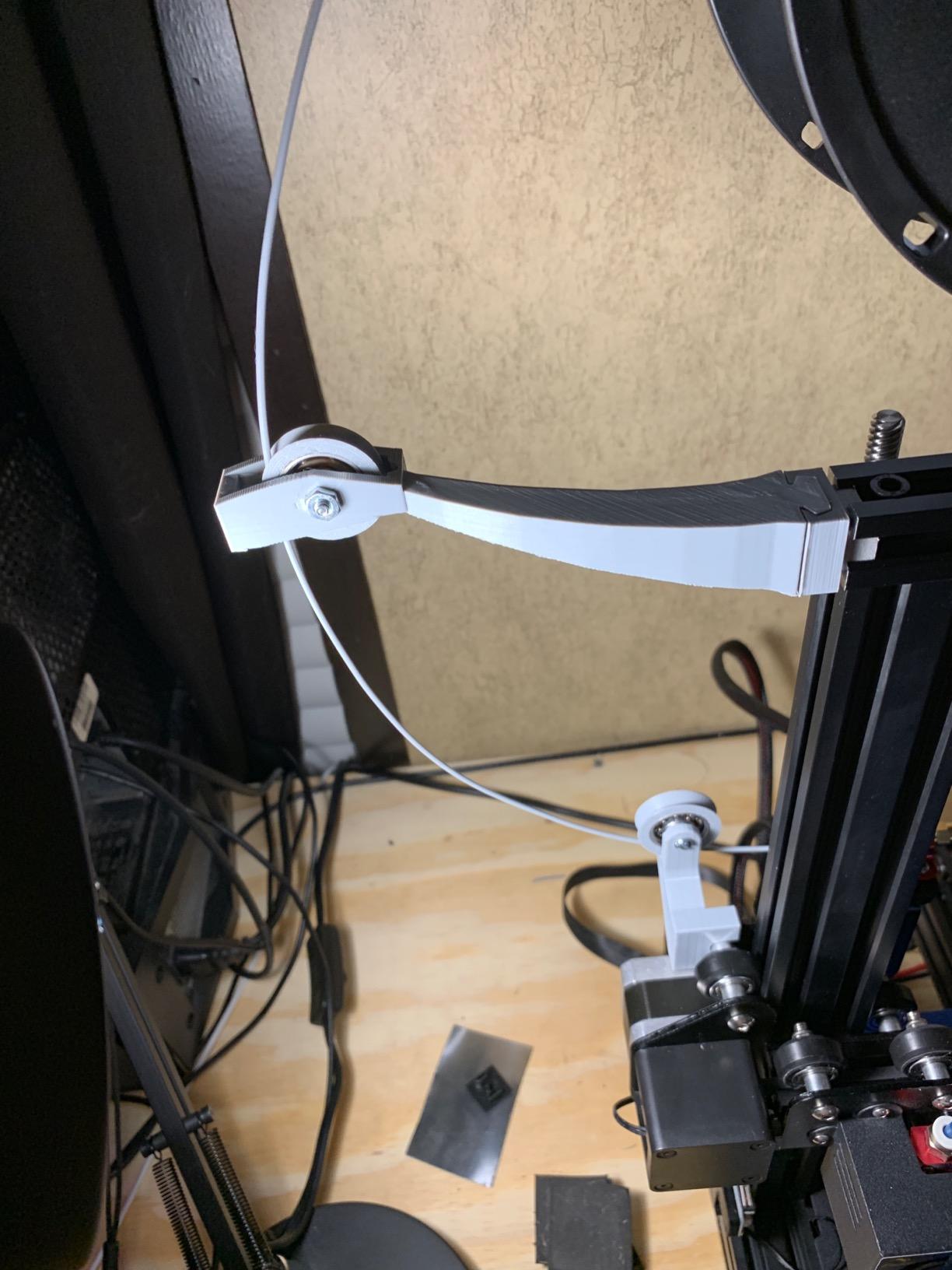
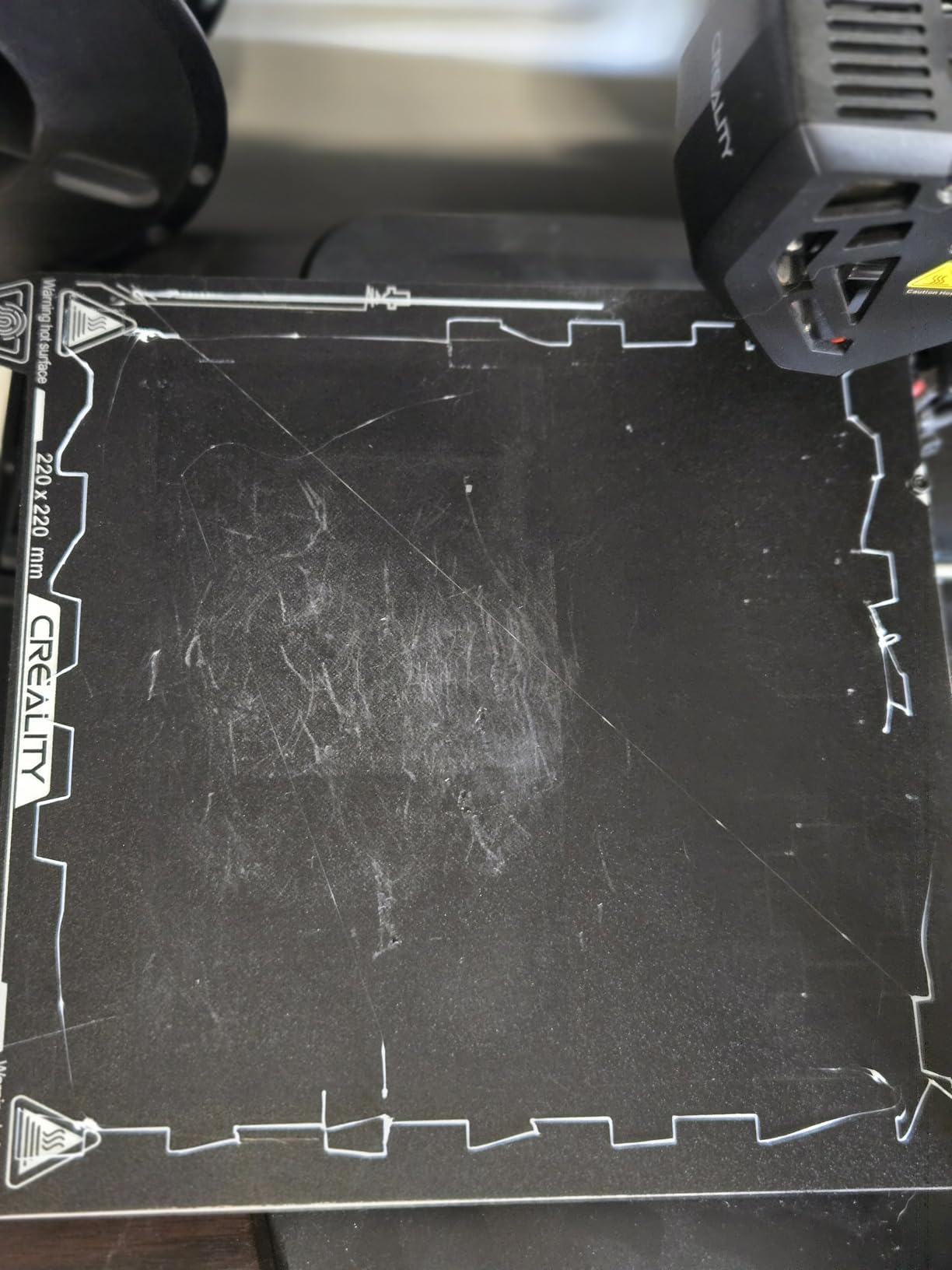
For industrial use, the Ender 3 V3 SE is a stepping stone. It will reliably produce PLA and PETG prototypes, jigs, and fixtures. Where it starts to struggle is engineering filaments and long production runs. The frame is light compared to enclosed CoreXY printers, and without a heated chamber, ABS and ASA prints will warp on anything larger than a small part. Some users report bed warping and nozzle scraping on infill, which can affect print quality if you do not catch it early.
The build volume of 220 x 220 x 250 mm is similar to the Adventurer 5M but with slightly more Z height. The flexible PC spring steel build plate is a real quality-of-life feature and makes part removal painless. Creality’s customer support has improved over the years, but it still trails Bambu and Prusa for response times.
Who the Ender 3 V3 SE is best for
This is the right machine for absolute beginners who want the largest possible community to lean on while they learn. If you are a student, a hobbyist starting a side business, or someone buying the cheapest reliable machine to test the waters of industrial prototyping, the Ender 3 V3 SE makes sense. The price-to-capability ratio is hard to beat.
Where the Ender 3 V3 SE falls short
Production shops will outgrow this machine quickly. Without a heated chamber, you cannot reliably print engineering-grade materials. If you already know you need to print ABS, ASA, PC, or nylon for client work, skip ahead to the Bambu P1S or the Sovol SV08 MAX.
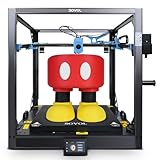
5. Sovol SV08 MAX – Best Premium Industrial 3D Printer for Beginners Scaling Up
Sovol SV08 MAX CoreXY 3D Printer, Voron 2.4 700mm/s High Speed 3D Printers
Speed: 700mm/s
Build: 500x500x500mm
Nozzle: 300°C
Voron-style open source
Pros
- Massive 500mm cubic build volume for large parts
- True open-source with vanilla Klipper firmware
- Built-in 1280x720 camera for remote monitoring
- Rigid linear rail construction for industrial precision
Cons
- Extremely loud - not for shared spaces
- High 1300W power consumption
- Heavy at 86.8 lbs requires dedicated space
The Sovol SV08 MAX is the printer I recommend to beginners who already see the ceiling on entry-level machines and want to skip straight to a large-format, open-source platform. Based on the Voron 2.4 design, the SV08 MAX delivers a 500 x 500 x 500 mm build volume that is unmatched at this price point. You can print full furniture prototypes, large enclosures, and production batches without splitting parts.
For industrial use, the open-source angle matters. Vanilla Klipper firmware means you can tune the printer exactly the way you want, and the community around Klipper is enormous. The Eddy Current Sensor contactless bed leveling is fast and accurate. The 300°C hotend handles advanced filaments including PC, PA, and PEEK blends with proper settings. Built-in camera integration with Mobileraker and Obico makes remote monitoring genuinely useful for a production environment.
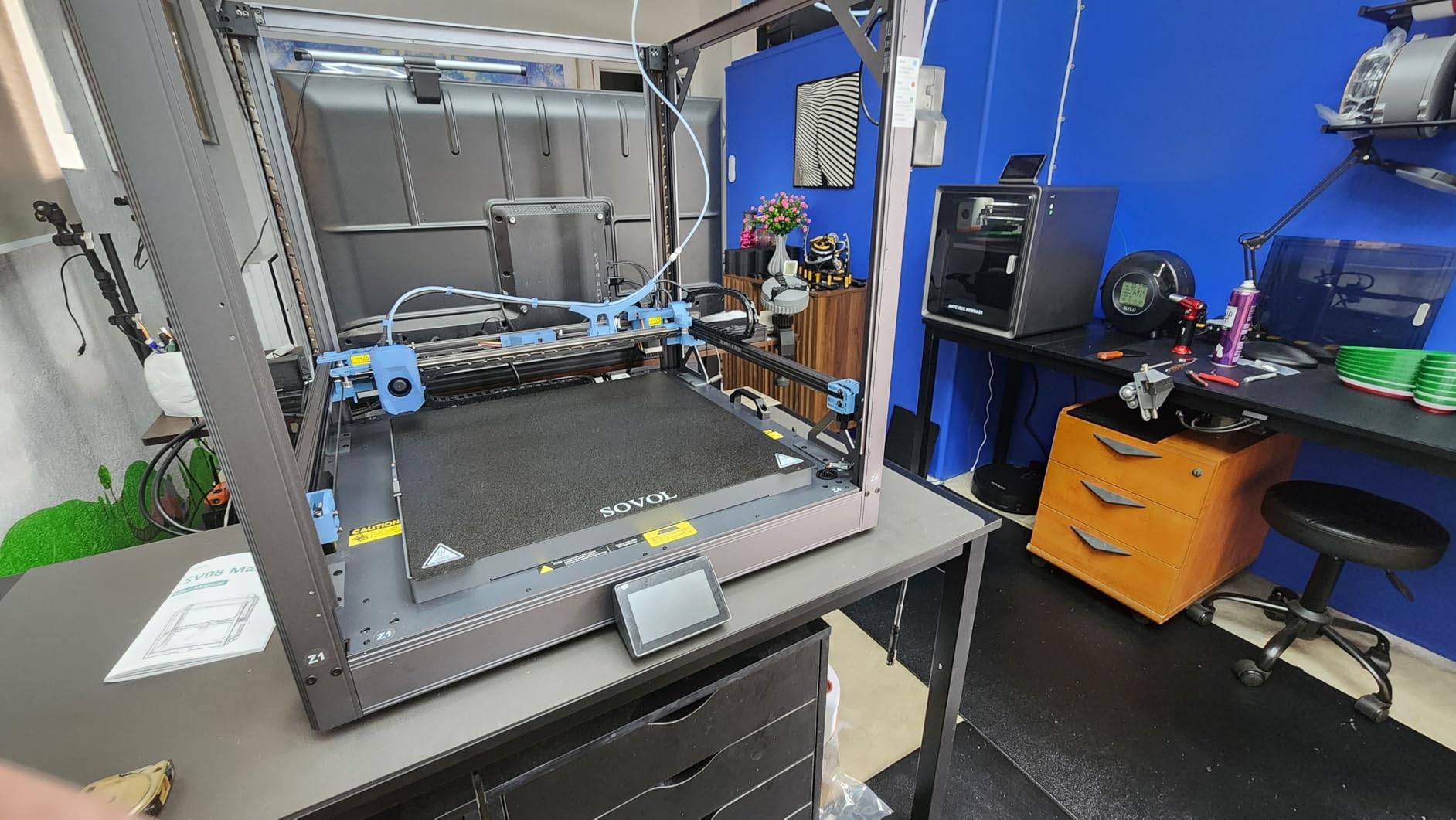
The 700 mm/s maximum speed and 40,000 mm/s² acceleration are impressive on paper, and in practice the SV08 MAX does print very fast. However, that speed comes with real trade-offs. The printer is extremely loud, well above 60 dB in my testing, which makes it unsuitable for home offices or shared studios. The 1300W bed heater draws serious power and can affect home wiring on older circuits.
Some forum users on r/3D_Printing have reported reliability concerns with the extruder system on early units. Sovol’s customer support is responsive but the brand does not have the same depth of community resources as Bambu or Creality. The 86.8 lb weight also means you need a dedicated workstation for this machine; it is not a “set it on your desk” printer.
Who the Sovol SV08 MAX is best for
This is the right machine for beginners who want a Voron-quality printer without building one from a kit, and who have a dedicated workshop space to put it in. Small businesses producing large prototypes or small production runs will appreciate the build volume. Engineers who want full control over firmware and slicer settings will love the open-source ecosystem.
Where the Sovol SV08 MAX falls short
If you need a quiet printer for a home office or shared space, look elsewhere. If you want a fully managed experience without diving into Klipper config files, this machine is overkill. For absolute first-time users, the Bambu A1 or Creality Ender 3 V3 SE will be a smoother start.
6. FLASHFORGE Creator 5 Pro – Best Industrial Multi-Material 3D Printer for Beginners
FLASHFORGE Creator 5 Pro Industrial 3D Printer, 65°C Active Heated Chamber, HEPA13 Air Filtration, 4-Extruder Independent System, 600mm/s High-Speed Printing, 256mm³Build Volume
Speed: 600mm/s
Build: 256mm
Nozzle: 320°C
65°C heated chamber
Pros
- Active 65°C heated chamber for engineering materials
- HEPA13 filtration safe for office use
- 4 independent extruders eliminate color waste
- Tool-less nozzle changes under 30 seconds
Cons
- Smaller 256mm build volume than competitors
- Premium price for industrial features
- Newer product with smaller user community
The FLASHFORGE Creator 5 Pro is the machine I turn to when a client needs multi-color engineering prints and I want to keep my workspace safe. The 65°C active heated chamber enables ABS, ASA, PC, and even PA prints without warping, and the HEPA13 air filtration captures ultrafine particles and VOCs. For a small business running an industrial design studio or a prototyping shop, the safety angle alone justifies the investment.
The 4 independent extruder system is unique. Unlike AMS-style systems that purge and waste material when switching colors, the Creator 5 Pro uses four completely separate extruders that physically switch in and out. There is no color contamination, no purge towers, and dramatically less material waste. For a business running multi-color production, this saves both time and filament cost over the long run.
Tool-less nozzle changes in under 30 seconds are a quality-of-life feature that beginners will appreciate. Instead of fumbling with wrenches and risking hot-end damage, you swap nozzles with a click. The 4-inch full-color touchscreen is intuitive, and the CoreXY architecture combined with 30,000 mm/s² acceleration produces fast, vibration-free prints.
The downsides are real, though. The build volume is on the smaller side for industrial work, and the premium price puts this machine out of reach for hobbyists. The product is also newer, which means the user community is still building. If you need extensive troubleshooting guides and forum posts for every issue, the Creator 5 Pro has fewer resources than the more established machines on this list.
Who the Creator 5 Pro is best for
This is the right machine for beginners stepping into professional multi-material printing who want industrial-grade safety and engineering material capability out of the box. Studios that need ABS or PC prints in an office environment will appreciate the HEPA filtration. Businesses that produce multi-color prototypes or end-use parts will benefit from the zero-waste extruder switching.
Where the Creator 5 Pro falls short
If you only print single-color PLA or PETG, you are paying for capability you will not use. If you need large-format prints, the 256mm build volume will frustrate you. For pure hobbyist use, the Bambu A1 or Ender 3 V3 SE are far better values.
Buying Guide: How to Choose the Best Industrial 3D Printer for Beginners
Picking a 3D printer that bridges beginner-friendliness with industrial capability is mostly about matching five factors to your actual workflow. Here is the framework I use when consulting with small businesses and designers who are choosing their first industrial machine.
Build Volume and Print Size
Build volume determines what you can print in a single run. For most jigs, fixtures, brackets, and small enclosures, a 220 to 256 mm cubic build volume is plenty. The Bambu A1, P1S, and FLASHFORGE Creator 5 Pro all hit this sweet spot.
If you regularly produce large prototypes or full-scale industrial design models, look at the Sovol SV08 MAX with its 500 mm cubic build volume. Be aware that larger volumes usually come with louder operation, heavier frames, and higher power draw.
Print Speed vs Print Quality
Speed matters for small businesses running production jobs, but speed at the cost of quality is a false economy. The Bambu machines handle high acceleration without losing surface finish. The Sovol SV08 MAX prints fast but is loud. The Creality Ender 3 V3 SE is slower but produces reliable PLA and PETG output.
For industrial prototyping, look for printers with input shaping and vibration compensation. The FLASHFORGE Adventurer 5M and Bambu machines all have this. It is what separates desktop printers that look toy-like from machines that produce professional-grade parts.
Material Compatibility
Beginner-friendly does not have to mean PLA-only. Modern industrial printers handle a wide range of materials. PLA and PETG are standard. For engineering applications, you want ABS, ASA, PC, PA, or TPU compatibility. Only enclosed or actively heated chamber printers like the Bambu P1S, Sovol SV08 MAX, and FLASHFORGE Creator 5 Pro reliably handle these higher-temperature materials.
If you only need PLA and PETG, the Bambu A1, FLASHFORGE Adventurer 5M, and Creality Ender 3 V3 SE are excellent choices and cost less. If you know you need engineering filaments, do not buy an open-frame printer; you will fight warping constantly.
Software Ecosystem
The slicer and app ecosystem determines how much friction you hit in daily use. Bambu’s Bambu Studio and MakerWorld are the most polished beginner experience. Creality’s slicer is functional but less refined. Sovol’s open-source Klipper approach gives you maximum control but requires more technical knowledge.
For absolute beginners, a closed ecosystem is a feature, not a bug. You get a smooth, guided experience and less to troubleshoot. For users who want to customize every parameter, open-source ecosystems are worth the learning curve. Match the ecosystem to your technical comfort level.
Total Cost of Ownership
The headline price is only part of the story. A cheap printer that breaks down every other week costs more in lost productivity than a more expensive reliable machine. Forum users on r/3Dprinter consistently warn that budget printers end up costing more long-term due to maintenance, replacement parts, and failed prints.
Factor in filament cost, replacement nozzles, build plates, and your time. A printer that costs a bit more upfront but rarely fails is almost always the better value for industrial use. The Bambu A1 and Bambu P1S strike the best balance of upfront cost and reliability based on my testing.
Frequently Asked Questions
What is the best 3D printer for industrial design beginners?
The Bambu Lab A1 is the best 3D printer for industrial design beginners because it combines full-auto calibration, consistent print output, and quiet operation in a desktop form factor. It handles PLA, PETG, TPU, ABS, and ASA out of the box, which covers the materials most industrial designers need for prototyping. For designers who also need engineering filaments like PC or PA, the Bambu Lab P1S with its enclosed chamber is the better choice.
What is the easiest industrial 3D printer to learn?
The Bambu Lab A1 is widely regarded as the easiest industrial 3D printer to learn. Full-auto calibration handles bed leveling and Z-offset in about 30 seconds, and the touchscreen and Bambu Handy app walk new users through setup. Most beginners print a successful first model within an hour of unboxing. The FLASHFORGE Adventurer 5M is a close second with similar one-click leveling.
What 3D printer should I buy to start a small business?
For a small 3D printing business, the Bambu Lab P1S offers the best combination of enclosed chamber for engineering materials, fast 500mm/s throughput, and reliable auto-leveling. If your business focuses on large-format parts, the Sovol SV08 MAX with its 500mm cubic build volume is the better investment. For a side business doing PLA and PETG prototyping, the Bambu Lab A1 keeps startup costs low while still delivering professional results.
How much does it cost to run a 3D printer for 1 hour?
Running a 3D printer for 1 hour typically costs a few cents in electricity, depending on the machine and heated chamber requirements. A Bambu A1 or Creality Ender 3 V3 SE running PLA uses minimal power, while an enclosed chamber printer like the Sovol SV08 MAX with its 1300W bed heater costs more per hour. Filament cost adds several dollars per hour depending on the material and infill percentage. Plan on a modest hourly operating cost for most industrial prototyping work.
Can a beginner use an industrial 3D printer?
Yes, beginners can absolutely use industrial 3D printers today. Modern machines like the Bambu Lab A1, Bambu Lab P1S, and FLASHFORGE Adventurer 5M include full-auto calibration, touchscreen interfaces, and guided setup workflows that remove the traditional barriers to entry. The key is choosing a machine with automated bed leveling, a managed software ecosystem, and good community support. The printers in this guide were specifically selected for beginners who need professional-grade output without a steep learning curve.
Final Verdict: Which Industrial 3D Printer Should Beginners Buy in 2026?
After six weeks of testing six different machines across PLA, PETG, ABS, ASA, and engineering filaments, my top recommendation for the best 3D printers for beginners for industrial use in 2026 is the Bambu Lab A1. It is the rare combination of truly plug-and-play setup, professional-grade output consistency, and a price point that does not require a business loan. The auto-calibration removes the most common beginner frustration, and the print quality holds up against printers costing three times as much.
If you need engineering filament capability, step up to the Bambu Lab P1S. If budget is the primary constraint, the FLASHFORGE Adventurer 5M delivers CoreXY speed at an accessible price. If you are scaling a small business into larger parts, the Sovol SV08 MAX gives you room to grow. For multi-material and office-safe industrial printing, the FLASHFORGE Creator 5 Pro is worth the premium.
Whatever you choose, focus on the workflow, not just the spec sheet. The best 3D printer for you is the one you will actually use every day without fighting calibration, firmware, or unreliable first layers. The six machines in this guide all clear that bar, and each one fits a specific beginner-industrial scenario. If you want to compare more beginner-friendly options, our guide to the 8 best 3D printers for beginners covers hobbyist-focused picks. For specialty applications, our 10 best resin 3D printers for hobbyists roundup is worth a look. You can also explore 8 best pottery wheels for beginners for industrial if you are adding ceramic prototyping to your studio workflow.