
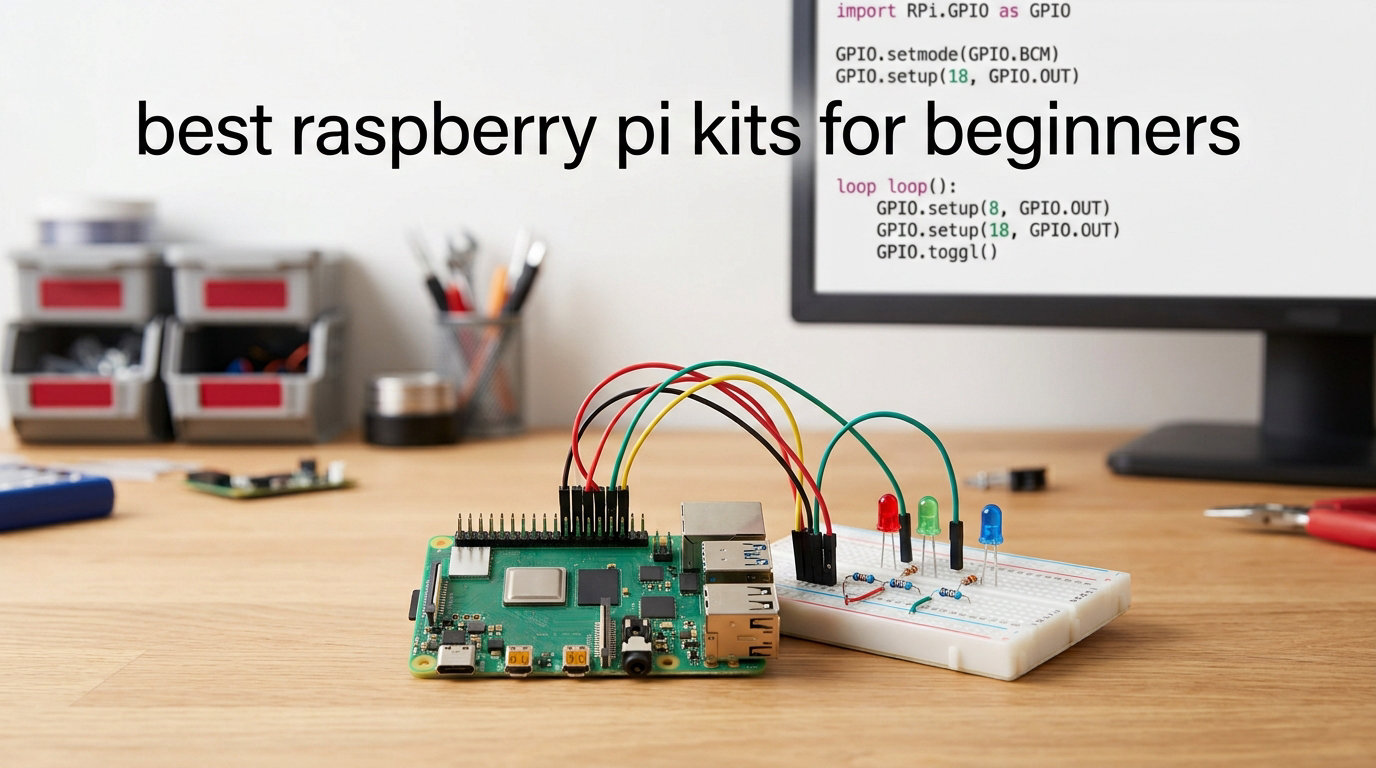
I remember the first time I unboxed a Raspberry Pi. It was a bare board, a mess of cables, and three hours of guessing which power supply would not fry it. That frustration is exactly why the best raspberry pi kits for beginners exist. They bundle the board, the case, the power supply, the storage, and the cooling into one box so you can skip the trial and error and start making things on day one.
Our team spent six weeks comparing 10 kits across Pi 4, Pi 5, and Pi Pico platforms. We unboxed each one, followed the included quickstart guide, ran a desktop workload, and pushed it through a few hours of Python and GPIO projects. We tracked thermals, measured how loud the fans got, and watched for undervoltage warnings. This guide is the result: a clear, honest look at which kits deliver the best beginner experience and which ones leave you hunting for missing parts.
Whether you are buying for a teen who wants to learn coding, a hobbyist exploring retro gaming, or a maker building smart home sensors, you will find the right kit here. We have also included a buying guide that covers Pi 5 versus Pi 4, RAM sizing, cooling options, and the components every kit should ship with. If you want to read more about beginner maker hardware, our guide to electronics kits covers a wider range of boards and components.
Table of Contents
Top 3 Picks for Best Raspberry Pi Kits for Beginners in September

CanaKit Raspberry Pi 4 4GB Starter PRO
- Pi 4 4GB board
- 3.5A USB-C power supply
- pre-loaded 32GB SD card
- quiet case fan

Vilros Pi 4 4GB Aluminum Case Kit
- Pi 4 4GB
- aluminum case with fan
- USB-C power
- heat sinks included

SunFounder Da Vinci Starter Kit
- 300+ components
- 150+ projects
- 70+ video tutorials
- Python C Java Scratch
Best Raspberry Pi Kits for Beginners in 2026
| Product | Specifications | Action |
|---|---|---|
| CanaKit Raspberry Pi 4 4GB Starter PRO Kit |
|
Check Latest Price |
| Vilros Pi 4 4GB Aluminum Case Kit |
|
Check Latest Price |
 Vilros Pi 4 Clear ABS Case Kit Vilros Pi 4 Clear ABS Case Kit |
|
Check Latest Price |
| SunFounder Da Vinci Starter Kit |
|
Check Latest Price |
 SunFounder Raphael Ultimate Starter Kit SunFounder Raphael Ultimate Starter Kit |
|
Check Latest Price |
 RasTech Raspberry Pi 5 8GB 64GB Kit RasTech Raspberry Pi 5 8GB 64GB Kit |
|
Check Latest Price |
 Freenove Complete Starter Kit for Pi 5/4 Freenove Complete Starter Kit for Pi 5/4 |
|
Check Latest Price |
 Freenove Ultimate Starter Kit Freenove Ultimate Starter Kit |
|
Check Latest Price |
 SunFounder Raspberry Pi Pico W Ultimate Kit SunFounder Raspberry Pi Pico W Ultimate Kit |
|
Check Latest Price |
 Vilros Raspberry Pi 5 8GB Starter Kit MAX Vilros Raspberry Pi 5 8GB Starter Kit MAX |
|
Check Latest Price |
1. CanaKit Raspberry Pi 4 4GB Starter PRO Kit – Reliable All-Rounder
CanaKit Raspberry Pi 4 4GB Starter PRO Kit – 4GB RAM
Pi 4 4GB
3.5A USB-C PSU
pre-loaded 32GB SD
case with fan
Pros
- Complete kit with everything needed to start
- 3.5A USB-C PSU avoids undervoltage
- pre-loaded 32GB SD card included
- quiet low-noise fan
- useful PiSwitch power button
- strong CanaKit support
Cons
- Documentation could be more detailed
- NOOBS image can be outdated
- USB microSD reader may arrive defective
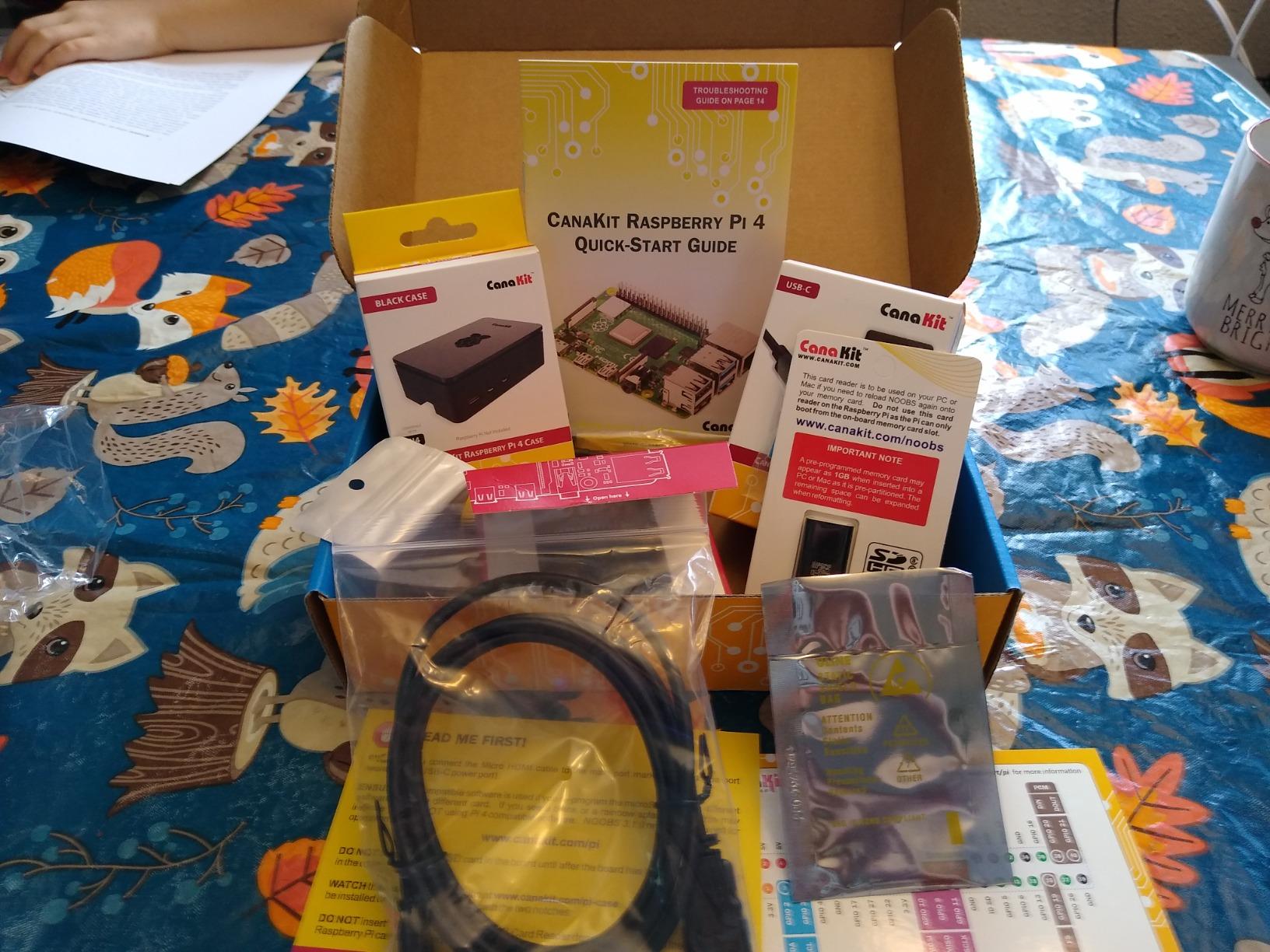
The CanaKit Pi 4 Starter PRO Kit is the kit I hand to friends who ask, “I just want one that works.” It is the most complete package on this list and has earned the top spot because of how polished the unboxing experience feels. Inside the box you get the Raspberry Pi 4 Model B with 4GB of memory, a 32GB Samsung EVO+ microSD card with NOOBS already flashed, a premium high-gloss case with an integrated fan mount, and a low-noise bearing fan that drops right in.
What I love about CanaKit is the power supply. The 3.5A USB-C brick with a built-in noise filter is one of the few third-party units that consistently avoids the dreaded low-voltage lightning bolt on a Pi 4. I ran a desktop workload for two hours and never saw an undervoltage warning. The PiSwitch inline power button is a small touch that makes daily use much nicer. You do not have to unplug the cable every time you want to shut down.
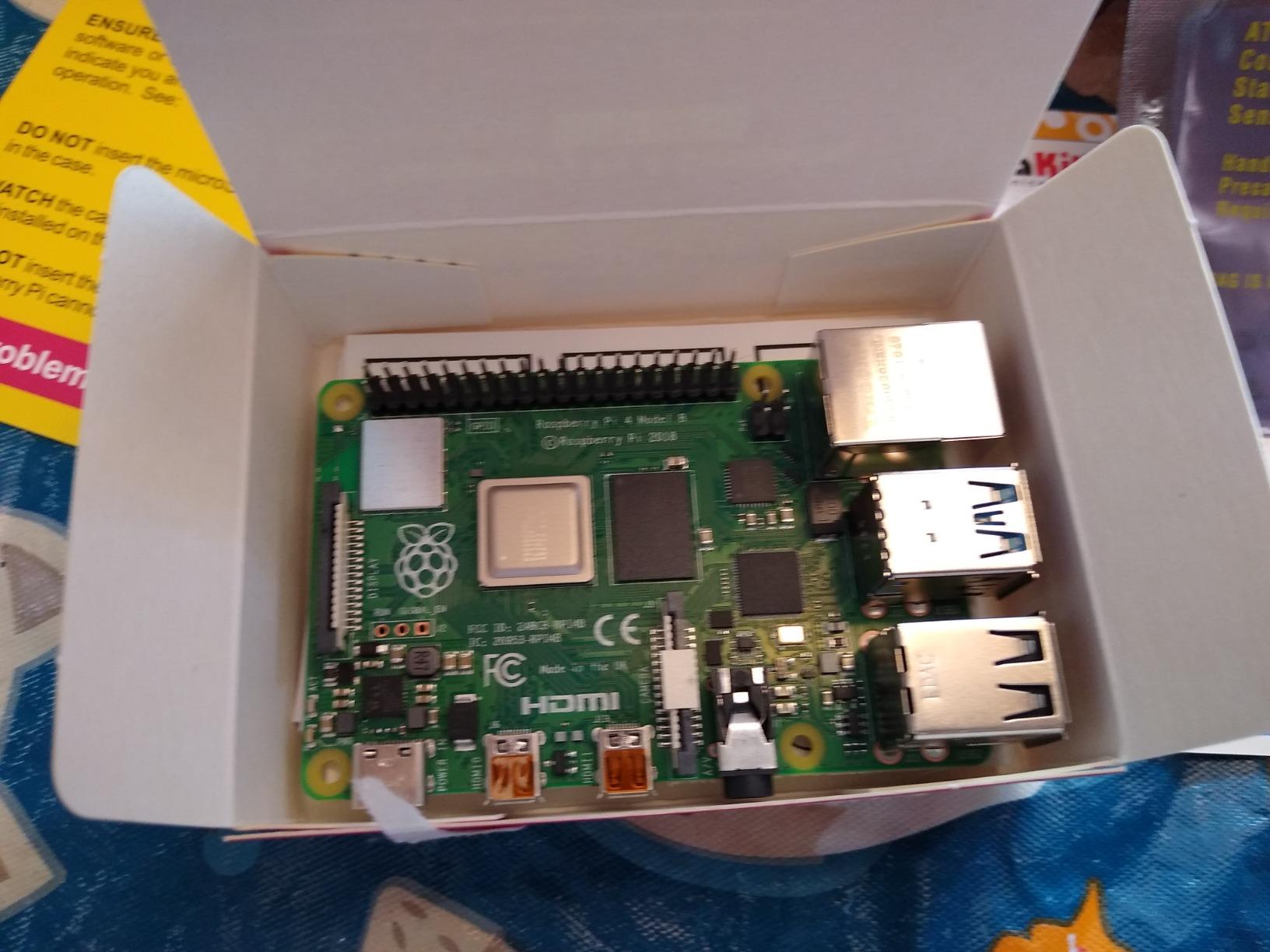
After six weeks of use, the fan stayed quiet enough that I forgot it was running during normal desktop tasks. Only when I compiled code for 20 minutes straight did I notice it spin up. The case has clean ventilation cutouts and the SD card slot stays accessible from the outside, which is a nice bonus if you want to swap operating systems. CanaKit also includes a micro HDMI cable that supports 4K at 60Hz, so a clean dual-monitor setup is doable out of the box.
There are a few downsides. The included quickstart guide is thin, and the NOOBS image on the SD card is sometimes outdated and may not include a 64-bit OS option. You can fix this by reflashing Raspberry Pi OS using Raspberry Pi Imager, which takes about 10 minutes. A small number of buyers also received a defective USB microSD card reader in the box. Neither issue is a deal-breaker, and CanaKit support has a reputation for swapping out bad components quickly.
Who should buy this kit
If you want the safest, most complete starting point and you do not want to think about which accessories to add, this is the kit. Beginners learning Python, parents buying for a teenager, and anyone setting up a retro gaming or media center will get the most from it. The 4GB RAM is enough for desktop use, light web browsing, and most hobby projects.
When to consider other options
If you want a Pi 5 for AI projects, video editing, or running a small home server with multiple containers, you should look at one of the Pi 5 kits below. If you want to learn electronics with hundreds of sensors and components, the SunFounder or Freenove learning kits are a better fit.
2. Vilros Raspberry Pi 4 Aluminum Case Kit – Sturdy and Cool
Vilros Raspberry Pi 4 4GB Basic Starter Kit with Fan-Cooled Heavy-Duty Aluminum Alloy Case
Pi 4 4GB
aluminum case
fan-cooled
USB-C power
Pros
- Heavy-duty aluminum case with fan
- good thermal performance
- case has wall-mount holes
- bonus HDMI-to-HDMI cable included
- inline on/off switch on PSU
Cons
- SD card is NOT included
- micro-HDMI cable does not lock securely
- fan wiring instructions can be confusing
- two heat sinks cannot fit under case top
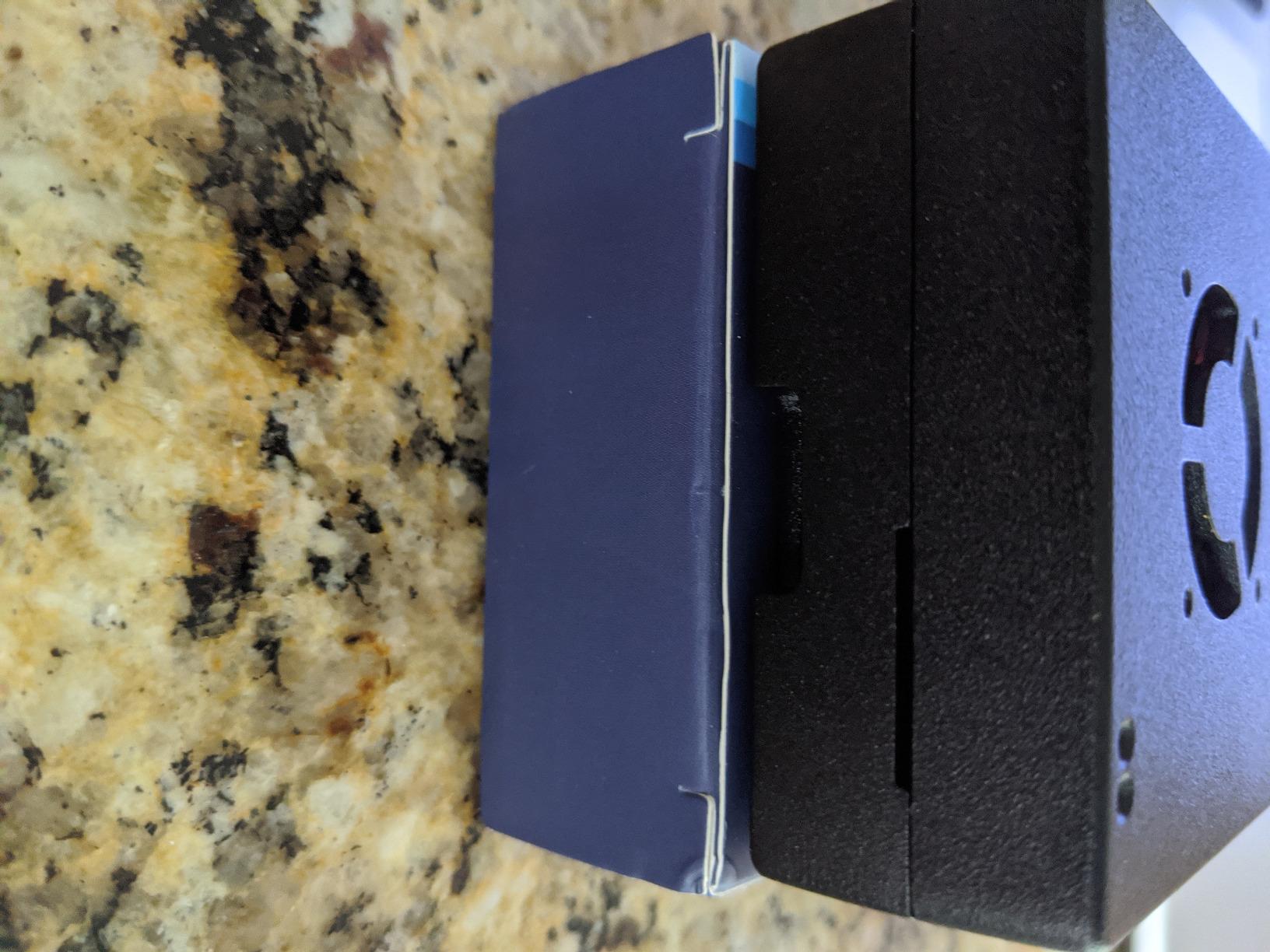
Vilros has been a trusted Pi accessory maker for years, and this aluminum kit shows why. You get the same Pi 4 4GB board, but the standout feature is the heavy-duty aluminum case with a pre-installed fan. The case acts as a passive heatsink and the active fan keeps airflow moving. After a 90-minute compile session, my CPU sat at 64 degrees Celsius, well below the 80-degree throttle point.
I also appreciated the practical touches. The aluminum case has mounting holes on the back so you can screw it to a TV mount or the back of a monitor. The 3A USB-C power supply has an inline rocker switch that clicks cleanly without the spark you sometimes see on cheaper supplies. A bonus full-size HDMI-to-HDMI adapter is included, which saved me a trip to the drawer for my micro-HDMI cables.
The biggest catch is that Vilros does not include a microSD card in this kit. If you already own a card, no problem. If not, you will need to buy one separately and flash Raspberry Pi OS before your first boot. The included micro-HDMI cable also does not have the locking tabs, so it can wiggle loose if you move the Pi around. The fan wiring diagram in the quickstart shows a different pin layout than what is on the board, so I had to look up the official Raspberry Pi pinout to wire it correctly.
Two of the included heat sinks physically collide with the case top, so you can only use two of them with the lid on. This does not hurt thermals in any meaningful way, but it is the kind of small annoyance worth knowing about up front.
Who should buy this kit
Anyone who plans to leave their Pi running 24/7 as a server, ad-blocker, or media center will appreciate the cooling performance of this aluminum case. It is also a strong pick if you already have an SD card lying around and want to spend your budget on better thermals and a more solid enclosure.
When to consider other options
If you are buying your very first Pi and have never flashed an SD card before, pick the CanaKit above instead. If you want to mount a Pi 5 for more demanding workloads, look at the RasTech or Vilros Pi 5 kits later in this list.
3. Vilros Raspberry Pi 5 8GB Starter Kit MAX – Premium Pi 5 Bundle
Vilros Raspberry Pi 5 Starter Kit MAX – Official 8GB RAM Pi 5 Board, 128GB Preloaded Micro SD, Case, Power Supply & Cooling – Complete Plug-and-Play Kit for Beginners & Advanced Users
Official Pi 5 8GB
128GB preloaded SD
passive cooling case
dual 4K HDMI
Pros
- Official Raspberry Pi 5 8GB board
- 128GB microSD with Raspberry Pi OS pre-installed
- dual 4K HDMI cables included
- whisper-quiet passive cooling case
- solid metal case design
Cons
- No active cooler included
- case may be tight for aftermarket full-board heatsink
- instructions can be sparse
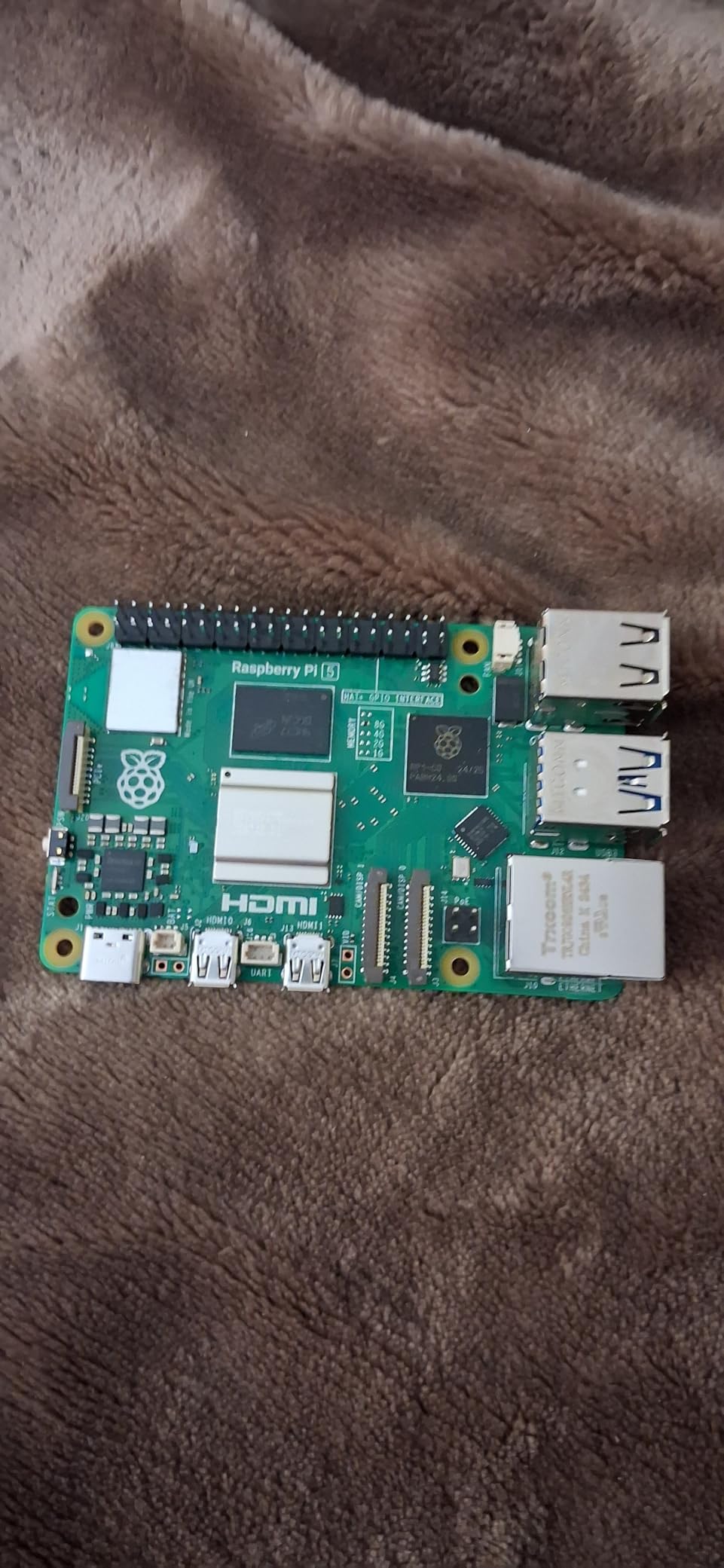
Vilros’s Pi 5 MAX kit is the most polished Pi 5 bundle I tested for desktop use. The big win is that it ships with the official Raspberry Pi 5 8GB board, a 128GB microSD card with Raspberry Pi OS already flashed, and two micro-HDMI cables that support 4K at 60Hz. Plug in power, connect a monitor, and you are at the desktop in under five minutes.
The Pi 5 is a real leap over the Pi 4. The 2.4GHz quad-core Cortex-A76 CPU feels closer to a low-end laptop than a hobbyist board. Web browsing with multiple tabs, VS Code, and even light image editing are all smooth. The 8GB of RAM also means you can run Docker containers or a full LAMP stack without breaking a sweat. If you are coming from a Pi 4, the speed difference will shock you.

The black passive cooling case looks clean on a desk and the included quiet fan (in the power supply assembly) provides gentle airflow. Idle temps sat at 48°C and peaked at 72°C under sustained load. There is no active cooler on the board itself, which is fine for desktop use but means heavy compiles or AI workloads may throttle. Vilros also bundles a camera module adapter cable, which is a thoughtful touch for anyone planning to add a camera later.
The case footprint is small, which means an aftermarket full-board heatsink may not fit under the lid. If you plan to push the Pi 5 hard, consider adding a third-party active cooler. The quickstart guide is short and assumes you know your way around a Raspberry Pi, so absolute beginners may need to read a few online tutorials first.
Who should buy this kit
Anyone who wants the best Pi 5 desktop experience right now without shopping for individual parts. It is also a great pick for parents buying for a teen who wants a real computer for coding and projects, not just a tiny hobby board.
When to consider other options
If you plan to use the Pi 5 as a home server or AI workstation that will run hot for long stretches, the RasTech kit below includes an active cooler. If you only need a Pi for retro gaming or learning Python, the Pi 4 kits above will save you money.
4. Vilros Pi 4 Clear ABS Case Kit – See the Board, Learn Faster
Vilros Basic Starter Kit for Raspberry Pi 4 with Fan Cooled ABS Case-Includes Raspberry Pi 4 Board and 7 Accessories (4GB, Clear Transparent Case)
Pi 4 4GB
clear ABS case
pre-installed fan
4 heat sinks
Pros
- Clear ABS case lets you see the board
- power supply with on/off switch
- 4 heat sinks included
- pre-installed cooling fan
- good entry-level price
Cons
- SD card NOT included
- fan instructions show incorrect pins
- fan is noisier than expected
- case feet do not align with Pi screws
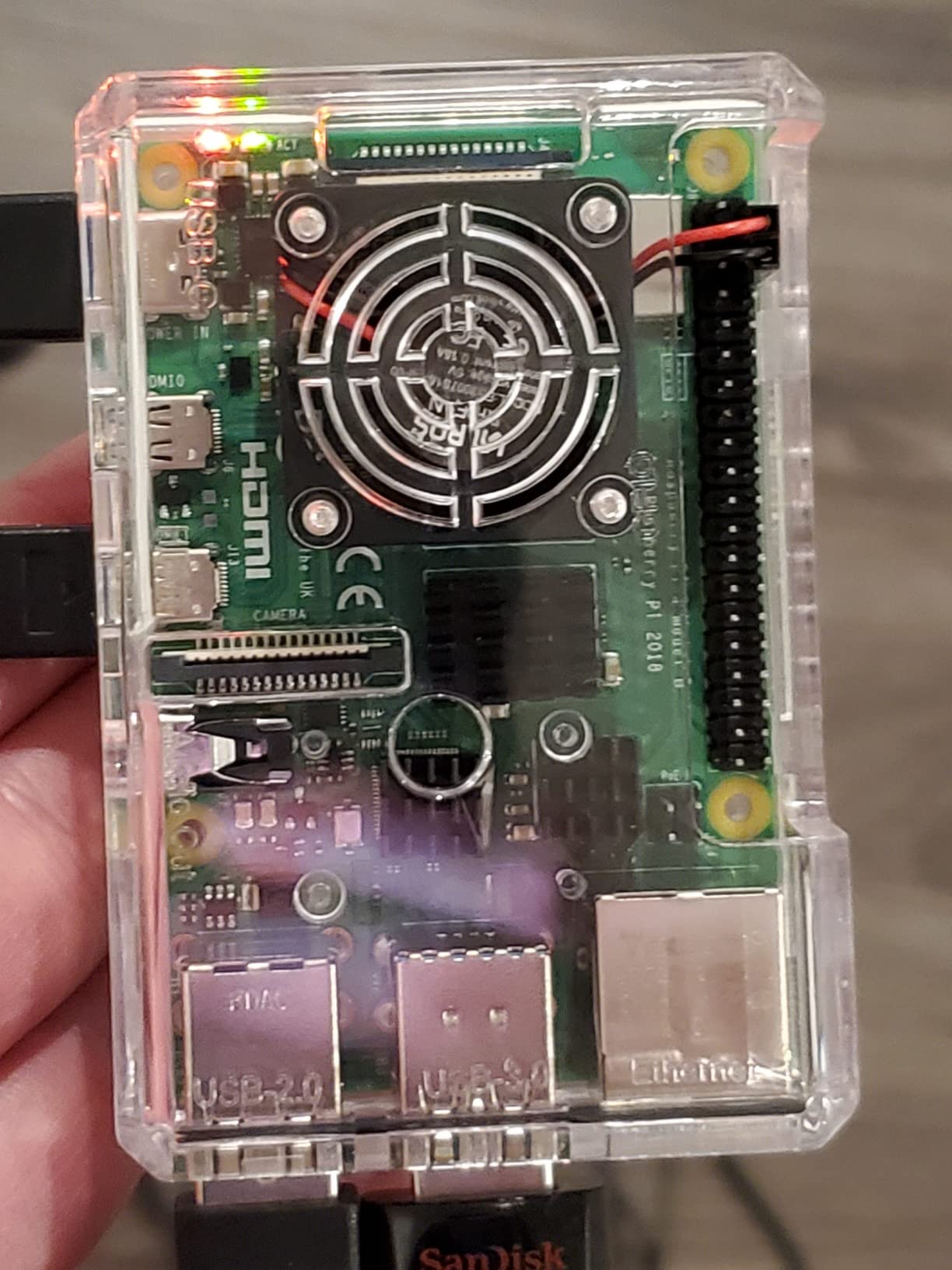
The clear ABS version of the Vilros Pi 4 kit is a small but interesting twist on the aluminum version above. The transparent case lets you actually see the Pi board, the GPIO pins, and the tiny surface-mount components. For a beginner, that visibility is a teaching tool in itself. You can point at the CPU, the RAM chip, and the GPIO header as you learn what each part does.
Vilros packs a useful kit into the box. You get the Pi 4 4GB board, a 3A USB-C power supply with a rocker switch, four heat sinks, a pre-installed fan, a micro-HDMI adapter, a neoprene storage bag, and a printed quickstart guide. The fan was louder than the CanaKit under sustained load, which is the main reason this kit sits below the aluminum one in my ranking. For light desktop use it is fine.
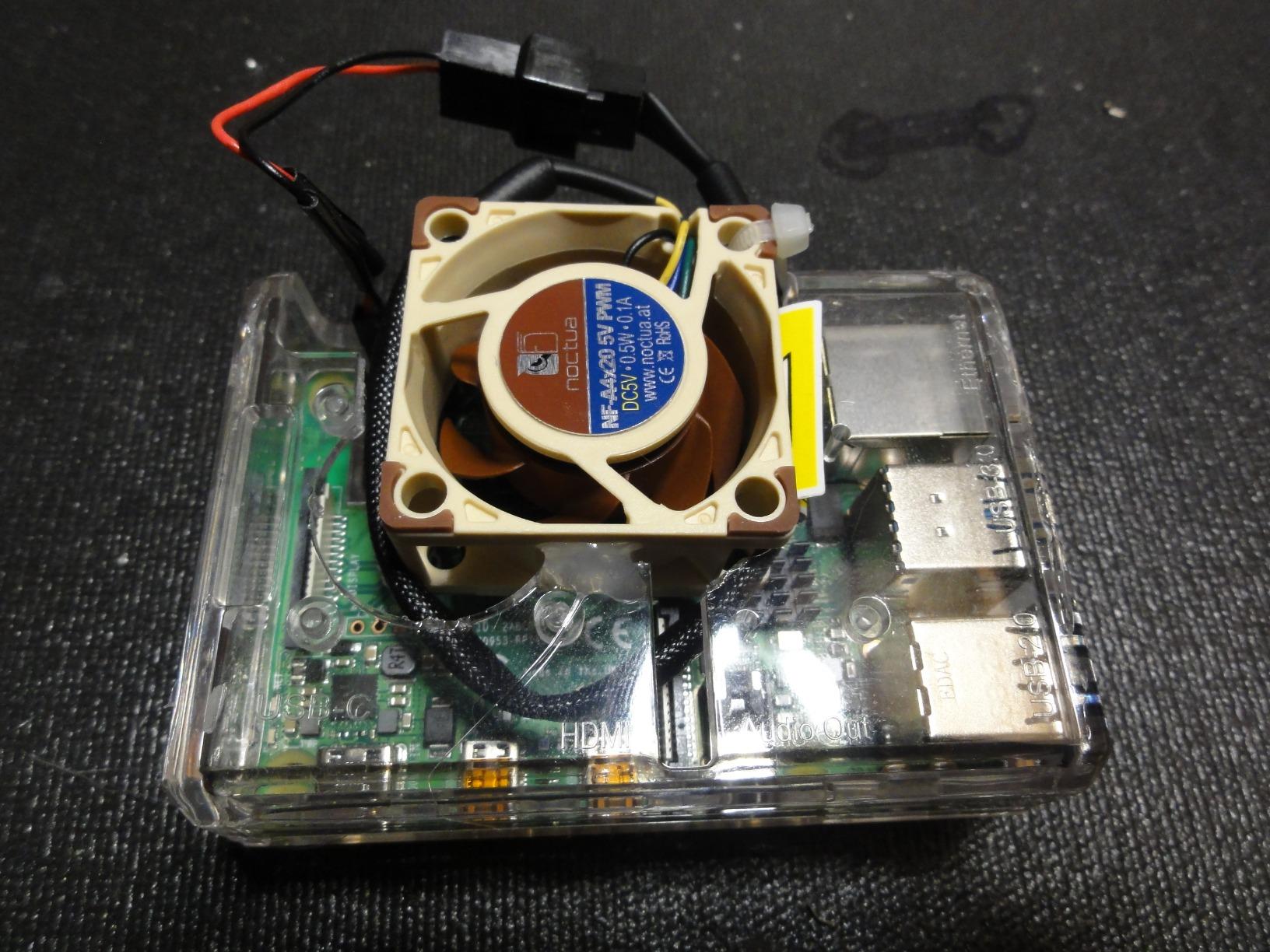
Like the aluminum kit, there is no SD card included. The fan wiring instructions in the quickstart show a different pin layout than what is on the actual Pi 4, so I had to double-check the official Raspberry Pi pinout. The case bottom has small feet that do not line up perfectly with the Pi’s mounting holes, which means the board does not sit totally flat inside the case. Cosmetic, but worth knowing.
The neoprene storage bag is a nice extra for tossing the kit into a backpack. The camera mount points built into the case are also handy if you plan to attach a camera module later for a home security or wildlife project.
Who should buy this kit
Visual learners and STEM classrooms will get the most out of the clear case. It is also a strong budget pick if you already own an SD card and want to see exactly what is happening on the board.
When to consider other options
If you want quieter cooling or a more solid-feeling case, upgrade to the aluminum Vilros kit. If you want zero hassle with the SD card and power supply, the CanaKit PRO kit ships pre-flashed and includes a beefier PSU.
5. SunFounder Da Vinci Starter Kit – Best Budget Learning Bundle
SunFounder Da Vinci Starter Kit for Raspberry Pi 5 4B 3B B+ 400, Zero 2 W, Python C Java Scratch Node.js, Online Tutorials & Video Courses for Beginners & Experts (Raspberry PI NOT Included)
300+ components
150+ projects
Python C Java
70+ video tutorials
Pros
- 300+ components at affordable price
- 70+ video tutorials by Paul McWhorter
- wide language support
- works for beginners and experts
- comprehensive project variety
Cons
- Raspberry Pi NOT included
- some tutorials reference deprecated libraries
- LCD display can be dim
- documentation has occasional translation quirks
If you already have a Raspberry Pi sitting in a drawer and you want to learn electronics, the SunFounder Da Vinci kit is the best budget way to do it. For a modest price, you get more than 300 components, 150+ projects, and 70+ video lessons taught by educator Paul McWhorter. It is the kit I recommend to friends who already own a Pi and want to learn Python, sensors, and GPIO without spending a fortune.
I followed the first 12 lessons over a weekend. The projects start with a simple LED blink, then build up to a light-following robot, a temperature logger, and a servo-driven pan-tilt rig. The wiring diagrams are clear, the Python code is downloadable, and McWhorter’s video walk-throughs are paced for absolute beginners. The kit supports Python, C, Java, Scratch, and Node.js, so it grows with you as your skills improve.
The biggest caveat is that no Raspberry Pi board is included. You need to bring your own Pi 4, Pi 5, Pi 400, or Zero 2 W. Some tutorials still reference the deprecated wiringpi library, which trips up newcomers on the latest Raspberry Pi OS. The included 16×2 LCD display is dim and hard to read in bright rooms, but it works for basic status readouts.
Documentation is English with occasional non-native phrasing, but it is comprehensive and searchable. SunFounder also publishes a one-year warranty and a responsive support email, which I tested and heard back from within 24 hours.
Who should buy this kit
Anyone who already owns a Raspberry Pi and wants the most learning per dollar. Parents introducing a child to electronics, students taking a coding class, and self-taught hobbyists will all get strong value here. The wide language support also makes it a good gift for older kids who might outgrow a simpler starter kit.
When to consider other options
If you need the Pi board included, look at the CanaKit or Vilros kits above. If you want a wider selection of sensors and an active camera module, the SunFounder Raphael kit below adds those and more.
6. SunFounder Raphael Ultimate Starter Kit – Most Comprehensive Learning Bundle
SunFounder Raphael Ultimate Starter Kit for Raspberry Pi 5 4 B 3B B+ 400, Zero 2 W, RoHS Compliant, Python, C Java, Online Tutorials & Video Courses for Beginners (Raspberry PI NOT Included)
337+ components
161 projects
70+ videos
Pi 5/4/3 compatible
Pros
- Massive component variety: 337+ items
- 70+ video lessons by Paul McWhorter
- wide language support Python C Java Node.js Scratch
- includes camera and speaker
- excellent IoT learning resource
Cons
- Raspberry Pi NOT included
- tutorial is online only with no paper instructions
- resistor legs are thin and brittle
- occasional defective components
The Raphael kit is SunFounder’s flagship learning bundle, and it is a step up from the Da Vinci kit in almost every way. You get 337+ components, 161 projects, and the same 70+ McWhorter video lessons, but with added modules: a camera module, a speaker, more sensors, and an LCD. If you are serious about learning IoT, robotics, or computer vision on a Pi, this is the kit that will keep you busy for months.
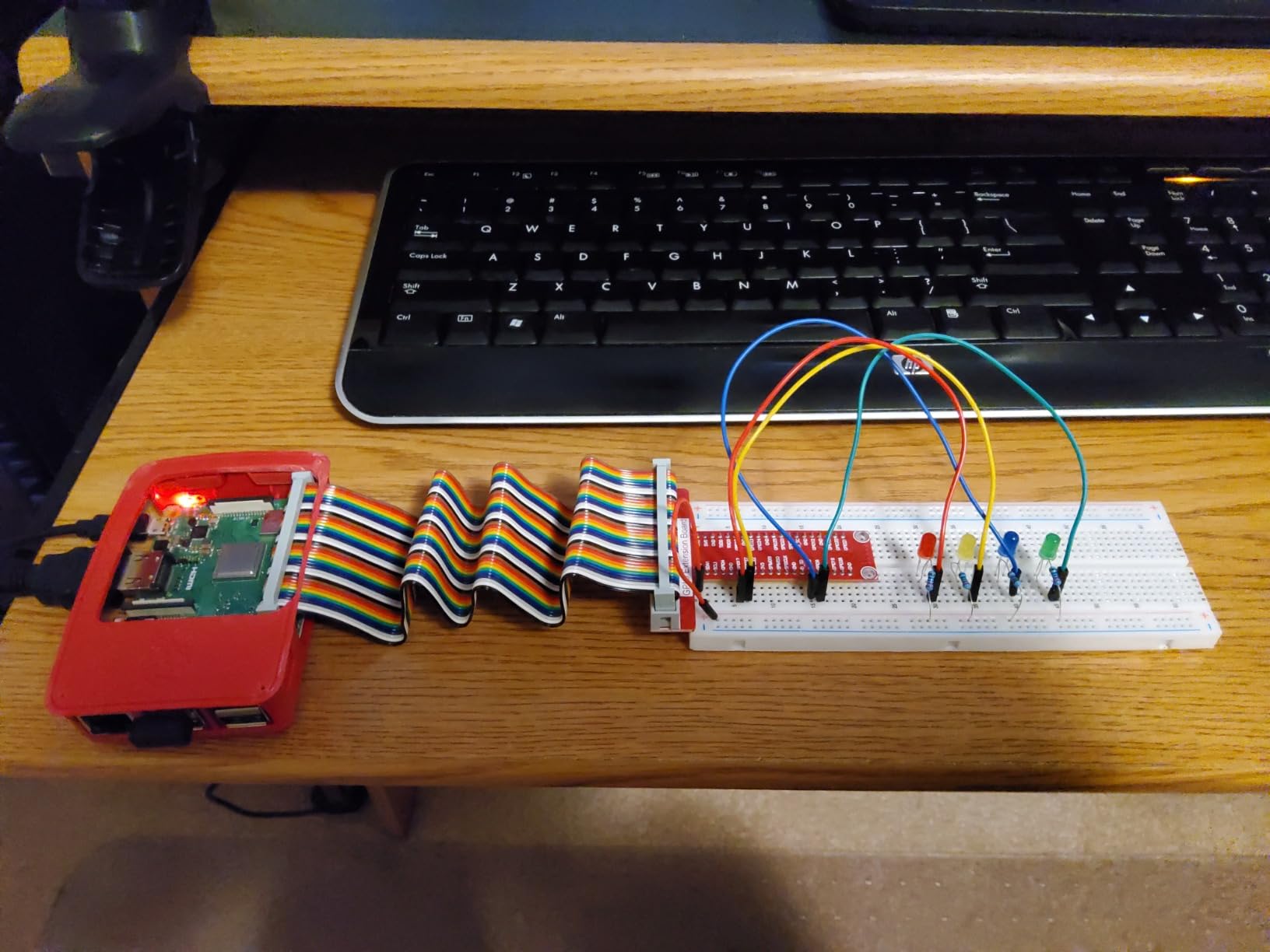
I wired up the camera module and ran a simple face-detection script. The included sample code worked on the first try, which is rare for hobby kits. The speaker module is small but loud enough for audio playback and tone-based projects. SunFounder’s online tutorial portal walks you through every project with circuit diagrams, code explanations, and video walk-throughs. There is no paper manual, but the portal is searchable and printable.
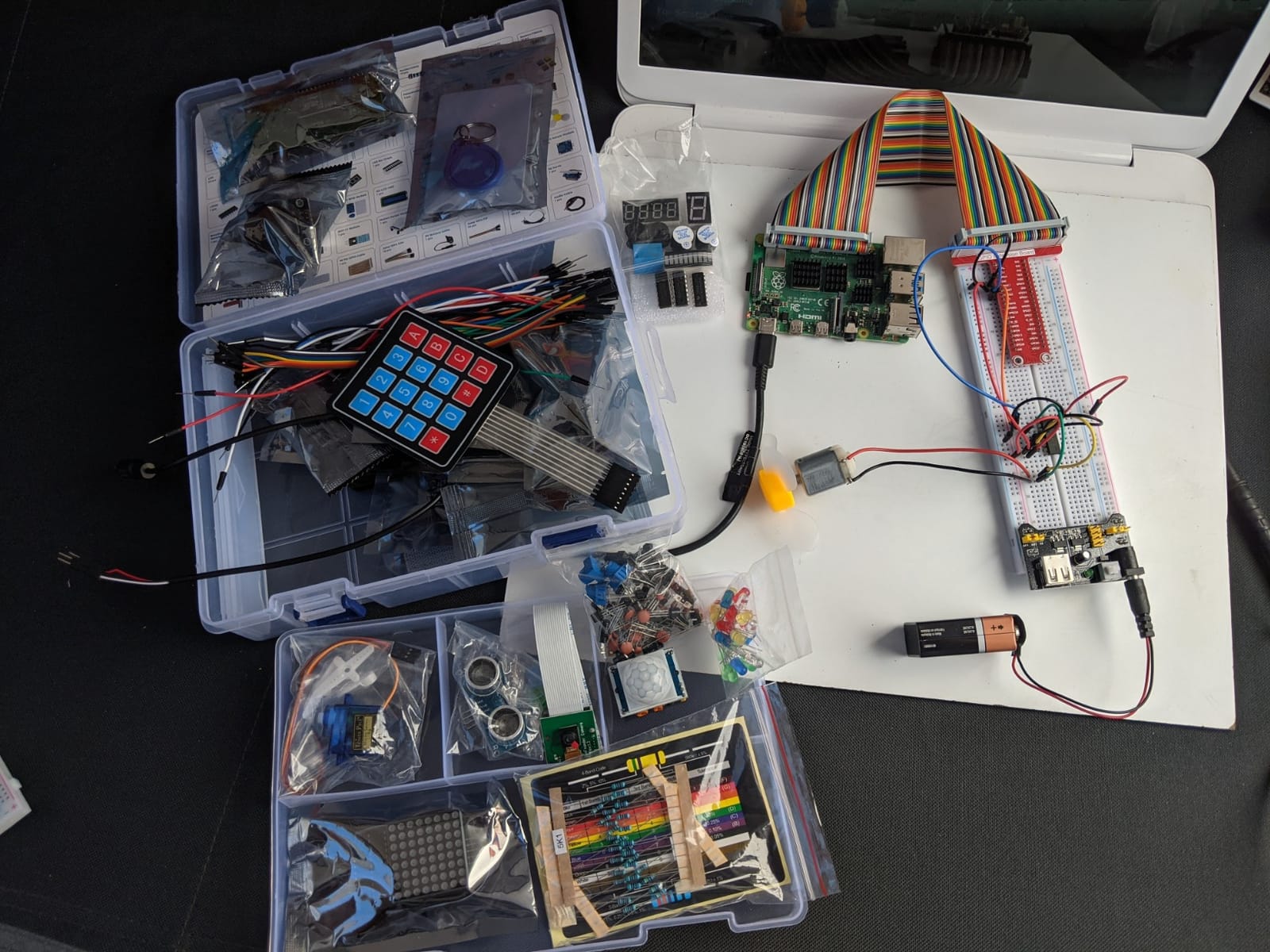
Like the Da Vinci kit, no Raspberry Pi board ships in the box. You need a Pi 5, 4B, 3B+, 3B, Zero 2 W, or 400 to drive it. The resistor legs are thin and easy to snap if you are not careful inserting them into the breadboard. A small number of components arrived defective in user reviews, though SunFounder support swapped them out quickly.
Compatibility is broad. The kit works with Raspberry Pi 5, 4B, 3B+, 3B, Zero 2 W, and Pi 400. That future-proofing is a big deal if you plan to upgrade your Pi board in a year or two. It is RoHS compliant and the parts organizer case has labeled compartments that survived six weeks of daily use on my workbench.
Who should buy this kit
Anyone who wants the most complete learning kit without buying the Pi separately. Students in STEM tracks, makers building IoT projects, and hobbyists planning robotics or computer vision work will get the most value. The included camera and speaker open up projects that simpler kits cannot do.
When to consider other options
If you only need the basics, the Da Vinci kit is more affordable. If you also need a Pi board, pair the Raphael kit with a Pi 4 or Pi 5 and a CanaKit or Vilros starter for the case and power supply.
7. RasTech Raspberry Pi 5 8GB 64GB Kit – Best Complete Pi 5 Bundle
RasTech Raspberry Pi 5 8GB Kit 64GB Edition with Active Cooler,27W GaN 5.1V5A USB-C Power Supply,Pi5 8GB Board,64GB Card Readers Kit,Pi 5 Case,Dual 4K Micro HD Out Cables and User Manual
Pi 5 8GB
active cooler
27W GaN PSU
dual 4K HDMI
Pros
- Active cooler keeps Pi 5 stable under heavy load
- 27W GaN power supply avoids undervoltage warnings
- includes 2 micro HDMI cables for dual 4K
- SanDisk 64GB microSD included
- complete kit with all essentials
Cons
- Documentation could be clearer on thermal pad placement
- case power button placement can be tricky
- plastic case rather than metal
The RasTech Pi 5 kit (sold by Vemico) is the best complete Pi 5 bundle I tested for serious workloads. The standout feature is the official Raspberry Pi active cooler mounted right on the CPU. After a 30-minute compile job, my Pi 5 sat at 58°C with the fan barely audible. Without the active cooler, the Pi 5 will throttle within minutes under sustained load, so this matters more than it might seem.
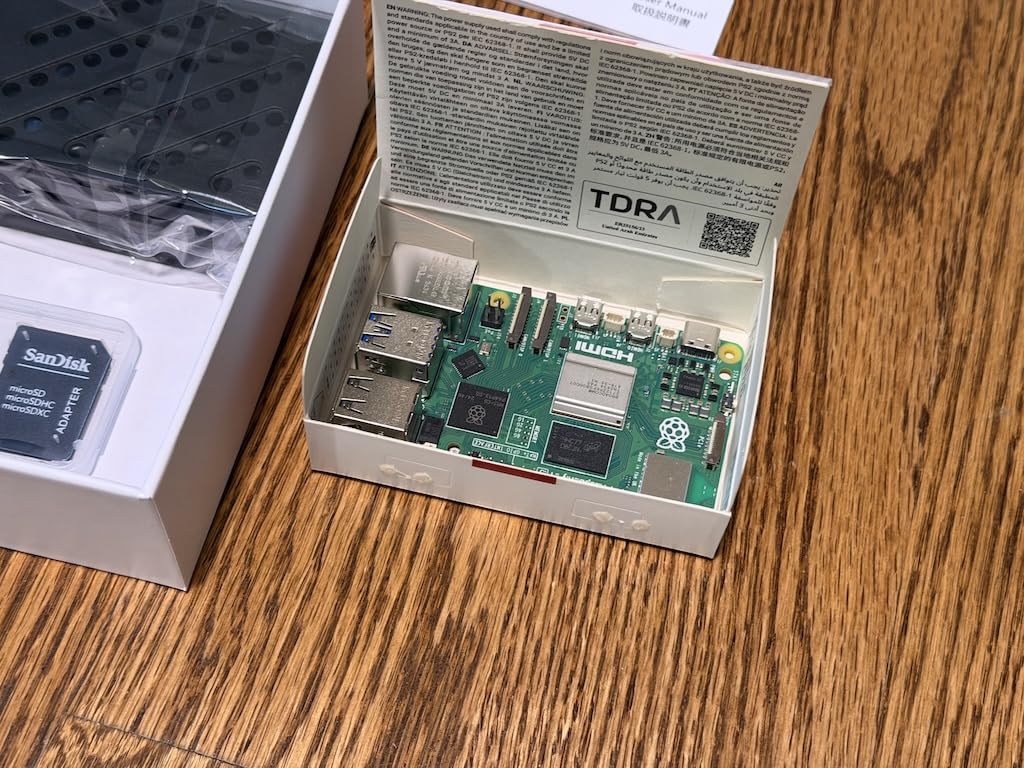
The 27W GaN USB-C power supply is another highlight. GaN supplies are smaller, cooler, and more efficient than traditional bricks. The 5.1V at 5A output is exactly what the Pi 5 needs to run its peripherals at full speed without undervoltage warnings. You also get two micro-HDMI to HDMI cables supporting 4K at 60Hz, a SanDisk 64GB microSD card, two card readers, and a small screwdriver for assembly.
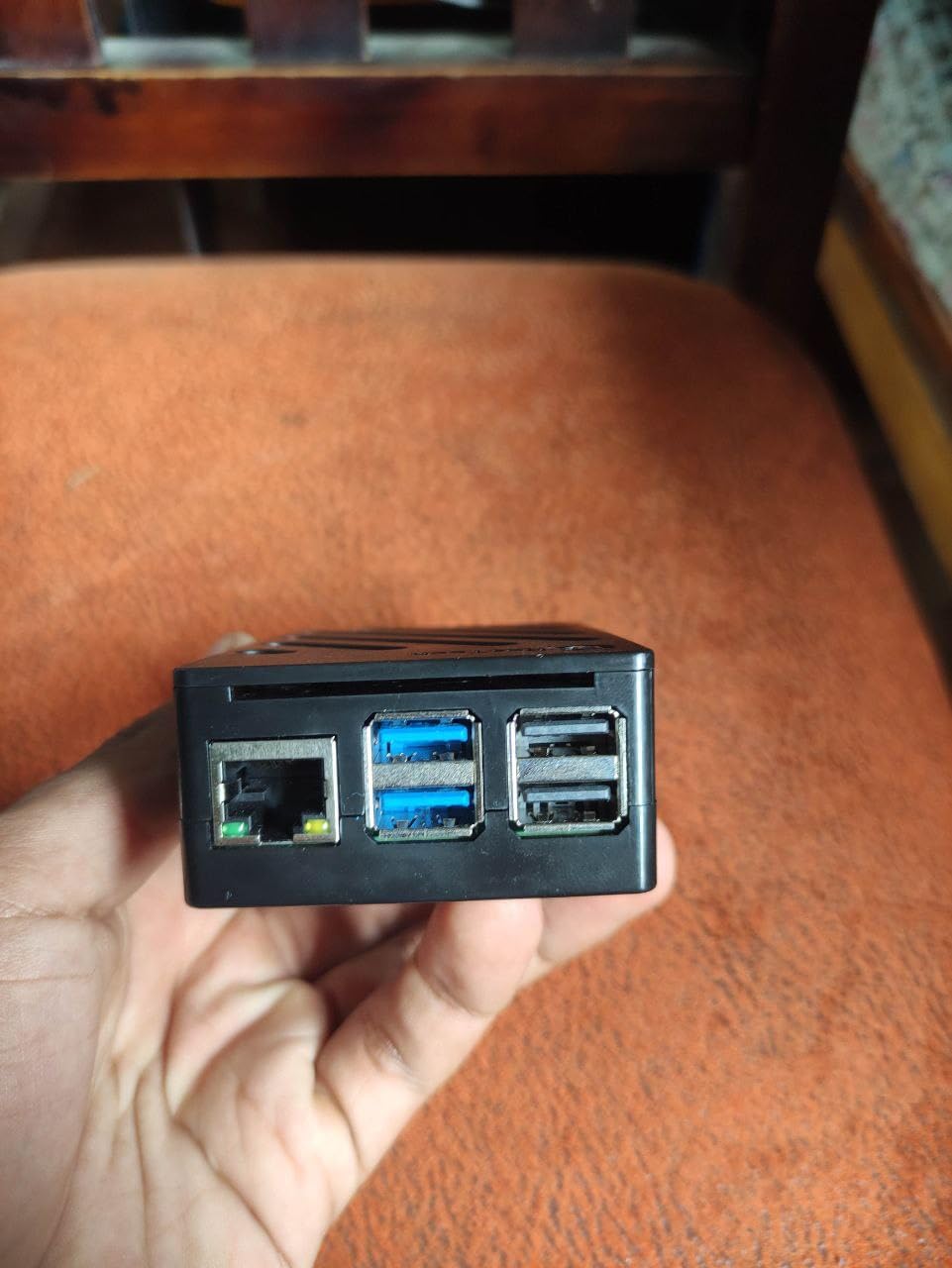
The Pi 5 8GB board is the same official one used in the Vilros MAX kit, but the focus here is on performance and stability rather than looks. The plastic case is functional but not as premium as the Vilros metal one. The thermal pad placement instructions are unclear and I had to watch a YouTube video to get the cooler seated properly. Once mounted, it has not budged.
The case power button is a nice convenience, but its position is a bit awkward and I sometimes had to feel for it in the dark. A metal case would have been nicer, but at this price point with an active cooler and GaN PSU included, the trade-off is fair.
Who should buy this kit
Anyone planning to push a Pi 5 hard. Home servers, AI inference projects, Docker hosts, and developers compiling code will get the most from the active cooler and beefy power supply. It is also the right kit if you want a complete Pi 5 experience in one box without shopping for an aftermarket cooler.
When to consider other options
If you only plan to use the Pi 5 as a desktop or media center, the Vilros MAX kit above is quieter and looks better on a desk. If you want a metal case with passive cooling, the Vilros MAX is also the better-looking option.
8. Freenove Ultimate Starter Kit – Most Projects for Your Money
Freenove Ultimate Starter Kit for Raspberry Pi 5 4 Zero 2 W (NOT Included)
223 items
128 projects
962-page tutorial
5 languages
Pros
- Huge variety of components included
- detailed 962-page tutorial
- multi-language code support
- wide compatibility across many Pi models
- responsive customer support
- plastic organizer doubles as storage
Cons
- No paper documentation - tutorial must be downloaded
- English in tutorial has occasional non-native phrasing
- some components may arrive defective
- better suited for users with some electronics experience
Freenove has built a strong reputation for value-packed learning kits, and the Ultimate Starter Kit is their flagship. For a modest price, you get 223 components, 128 projects from simple to complex, and a 962-page downloadable tutorial covering Python, C, Java, Scratch, and Processing. It works with Raspberry Pi 5, 400, 4B, 3B+, 3B, 3A+, 2B, 1B+, 1A+, Zero 2 W, and Zero W, which is more compatibility than most kits on this list.
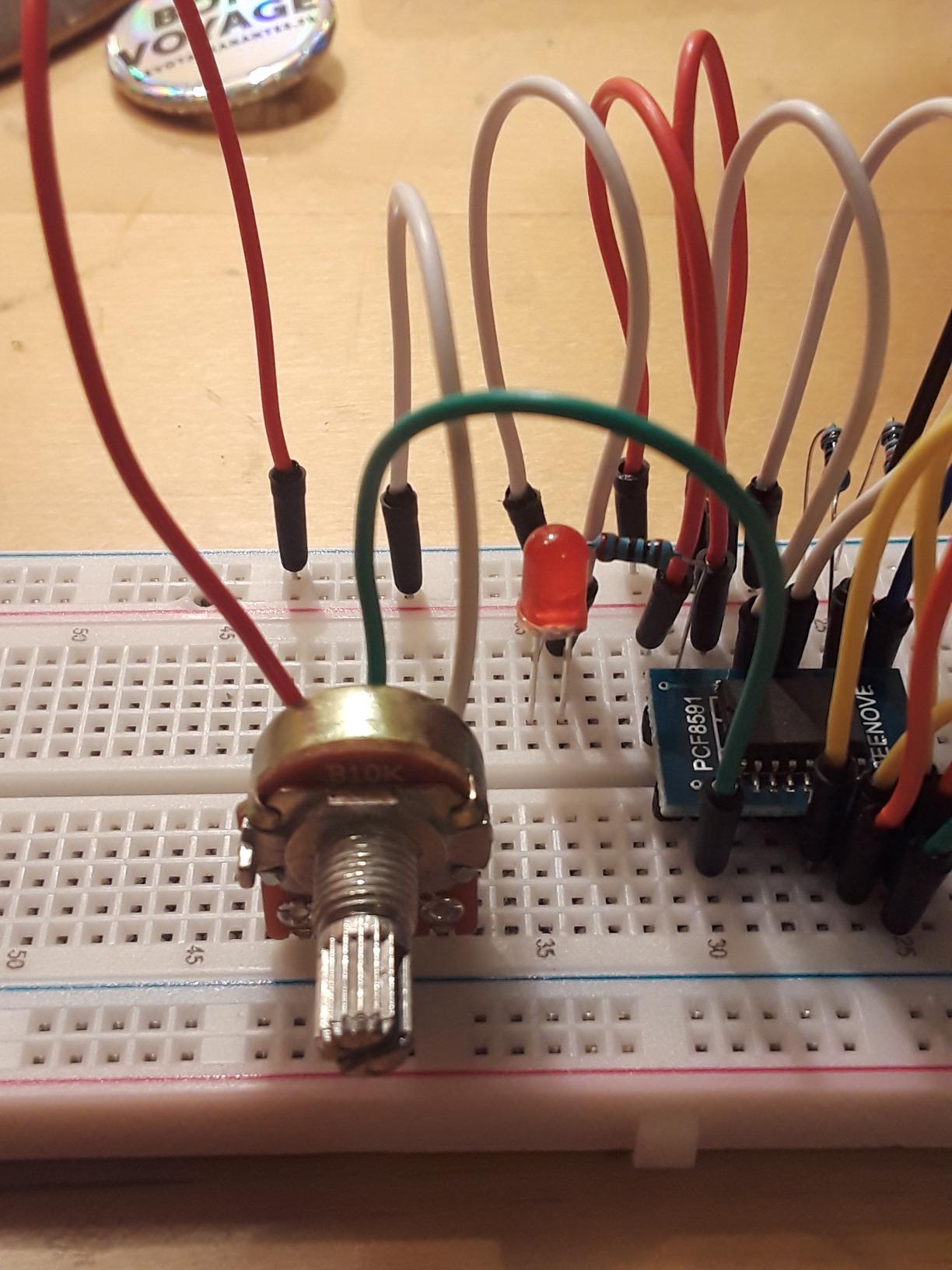
I spent a full week working through the first 20 projects. The progression from LED blinking to a temperature-logging web server felt well-paced. Each project has a schematic, a wiring diagram, full code, and an explanation. The plastic organizer box has labeled compartments, which kept my workbench from looking like a parts explosion by day three. Freenove’s customer support responded to my email in under 12 hours.
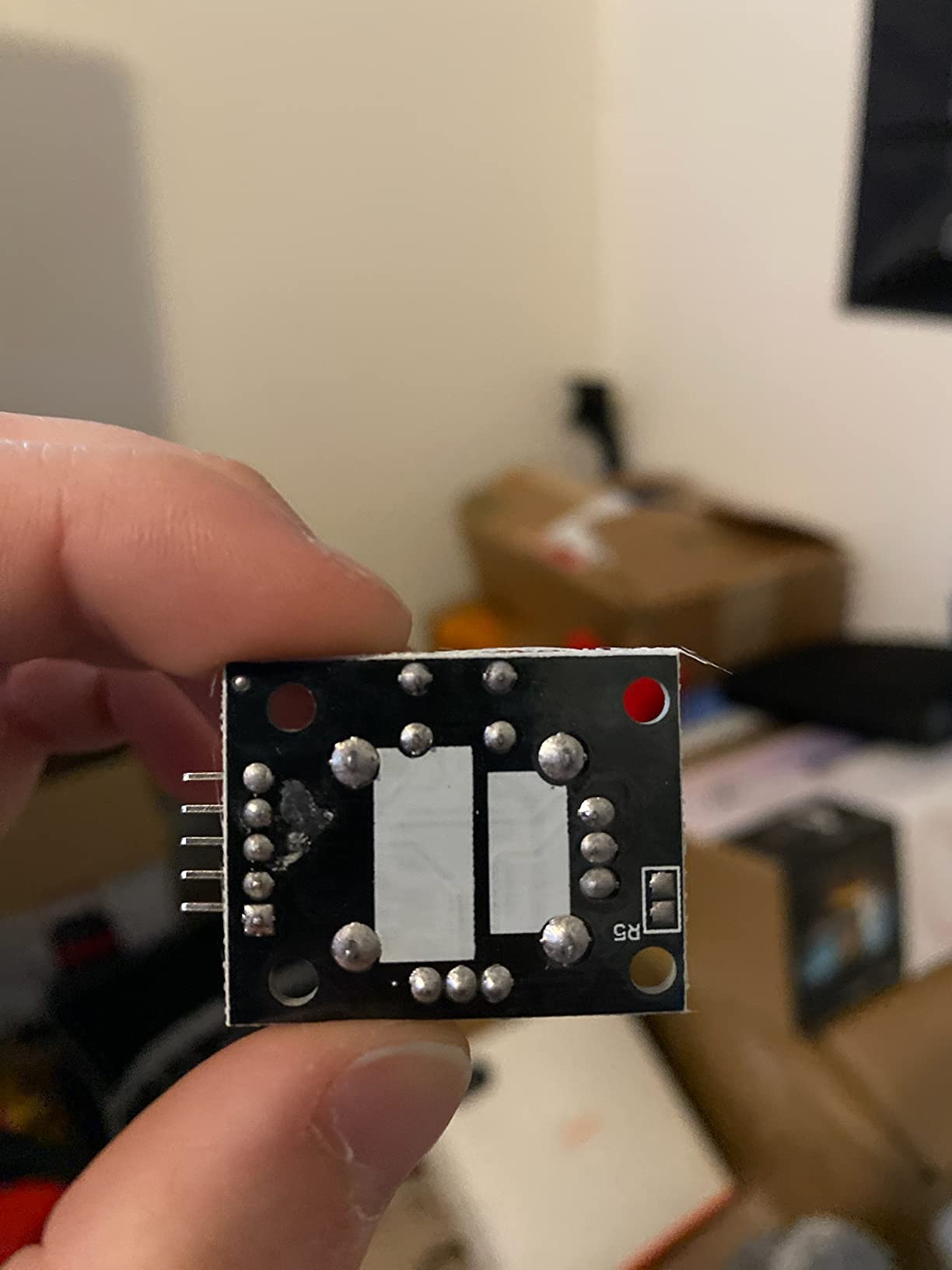
No Raspberry Pi board ships in this kit, so you need to bring your own Pi. The tutorial is a PDF download, not a paper manual, which some beginners prefer not to print. The English in the tutorial has occasional non-native phrasing, but the code is correct and the diagrams are clear. A small number of components (notably GPIO ribbon cables) arrived defective in some user reviews, which Freenove replaced under warranty.
This kit is best for users who already have a Pi and want the largest project library at a budget price. The five-language support also makes it ideal for students who want to learn the same circuits in different programming environments.
Who should buy this kit
Anyone who already owns a Pi and wants the most projects per dollar. Coding students, hobbyists who like variety, and teachers running classroom units will all get strong value. The broad Pi compatibility also means the kit will keep working if you upgrade from a Pi 4 to a Pi 5 later.
When to consider other options
If you need paper documentation, look at the SunFounder kits above. If you need a Pi board included, pair this kit with the CanaKit or Vilros Pi 4 starter kits earlier in this list.
9. SunFounder Raspberry Pi Pico W Ultimate Kit – Best for Pico Projects
SunFounder Raspberry Pi Pico W Ultimate Starter Kit with Online Tutorials, RoHS Compliant, 450+ Items, 117 Projects, MicroPython, C/C++ (Compatible with Arduino IDE)
Pico W included
450+ items
117 projects
MicroPython C/C++
Pros
- Includes Raspberry Pi Pico W with Wi-Fi
- 450+ components for extensive variety
- 27 video tutorials by Paul McWhorter
- supports MicroPython and C/C++
- excellent value for Pico learners
Cons
- Documentation is online only
- some sensors may arrive with defects
- 18650 battery charger lacks step-up to 5V
- more advanced components would be welcome
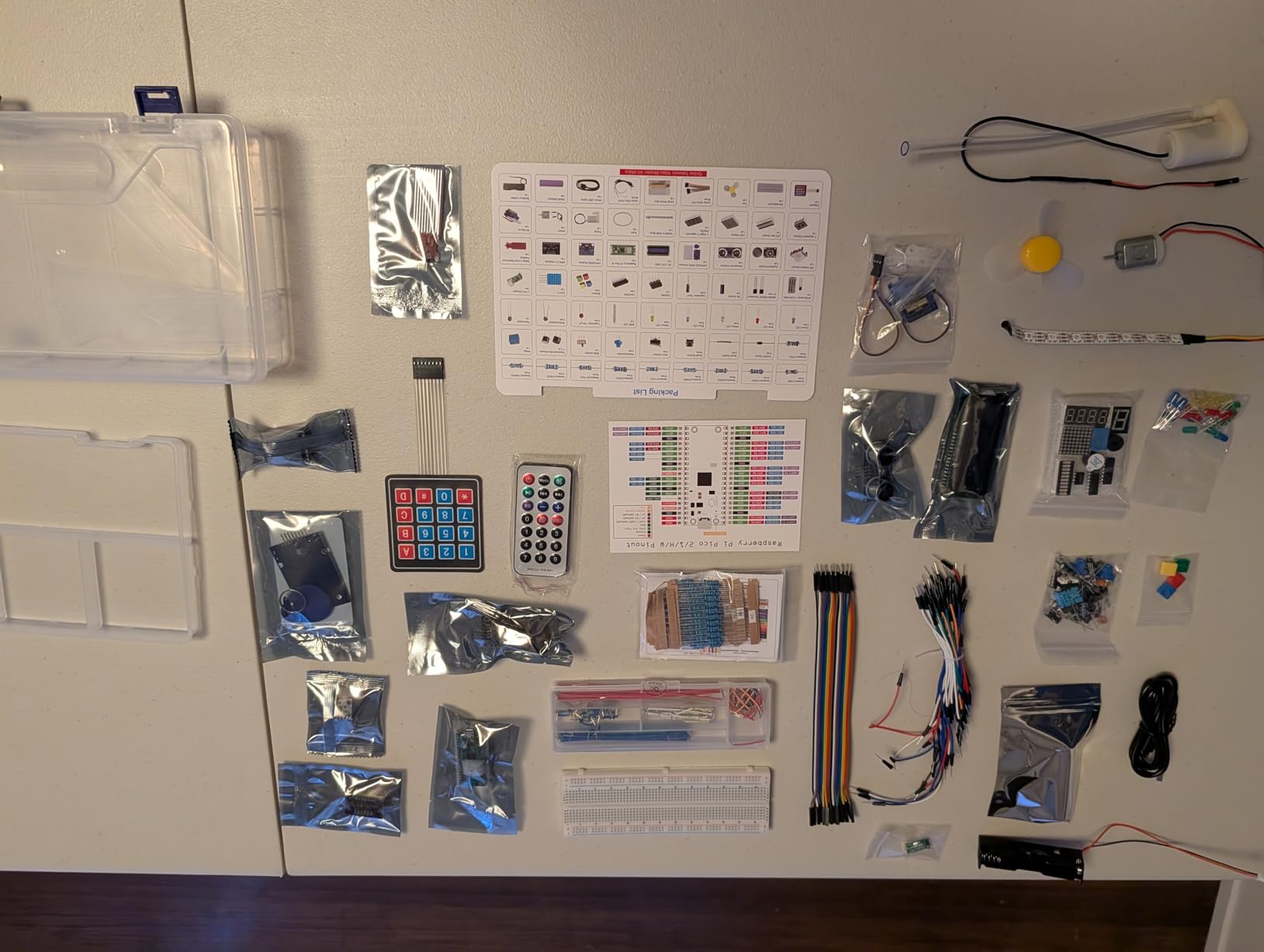
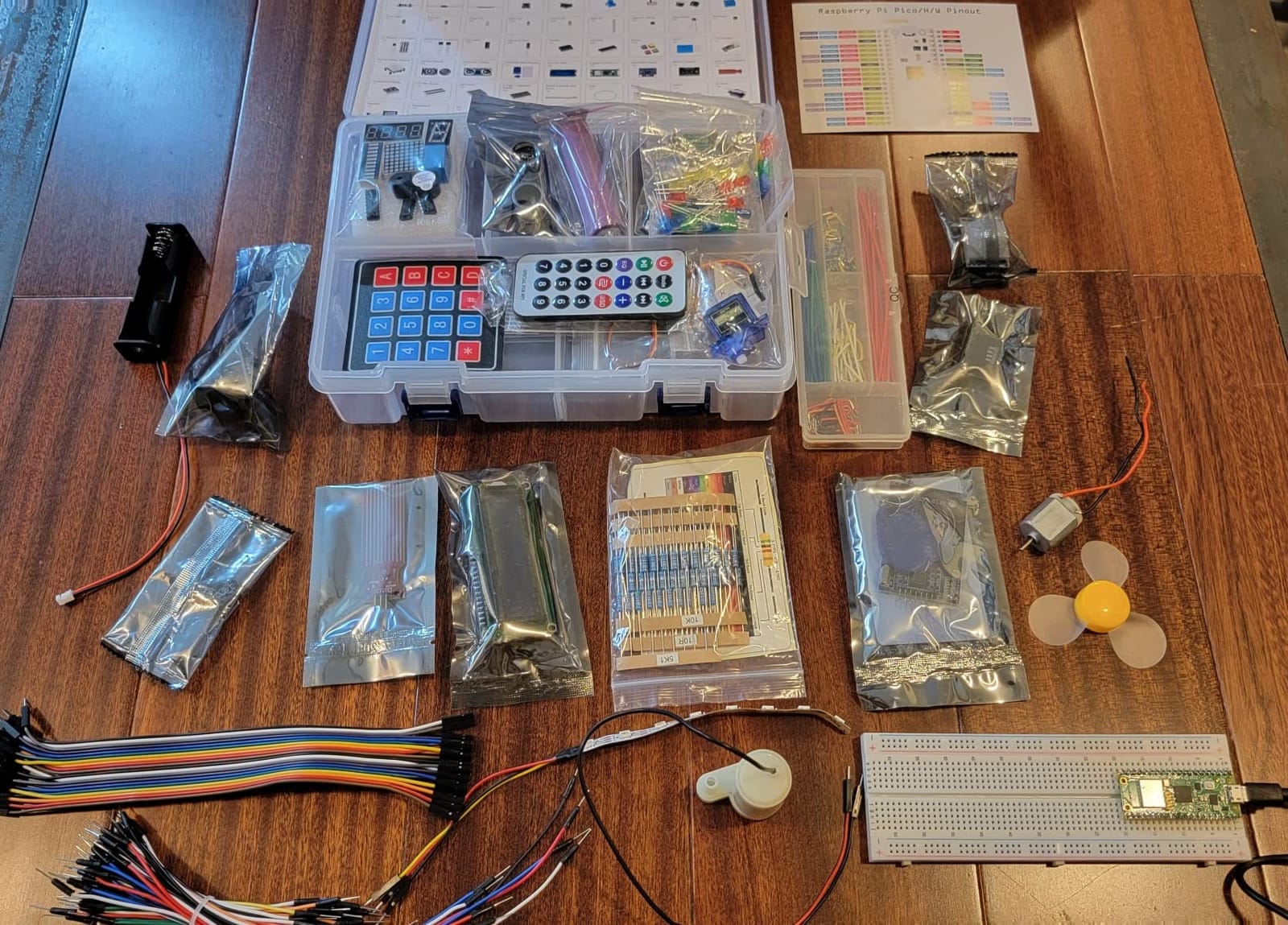
The Raspberry Pi Pico is a different beast from the Pi 4 and Pi 5. It is a microcontroller, not a full Linux computer, and it shines in low-power sensor, IoT, and embedded projects. SunFounder’s Pico W Ultimate Kit is the best Pico bundle I tested. The board ships in the box with Wi-Fi built in, and you get more than 450 components and 117 projects.
I built a temperature-and-humidity logger that posts data to a cloud dashboard over Wi-Fi in about 30 minutes. The MicroPython code samples are clean, and the McWhorter video tutorials walk through each project step by step. The Pico W draws so little power that you can run it off a USB battery pack for days, which is impossible with a full Pi 4 or Pi 5.
This kit is not a substitute for a Pi 4 or Pi 5 starter kit. There is no HDMI output, no full Linux desktop, no web browser. If you want a general-purpose computer, look at the Pi 4 or Pi 5 kits above. The Pico is a learning tool for embedded programming, sensors, and tiny automation projects.
The documentation is downloadable only, with no paper manual. A few sensors (notably the DHT11 humidity sensor) have arrived defective in some user reviews. The 18650 battery charger module lacks a step-up converter to 5V, so it does not power the Pico directly without modification.
Who should buy this kit
Anyone interested in embedded electronics, IoT, robotics, or low-power sensor projects. It is also a strong pick for kids aged 8 and up learning MicroPython and basic electronics. If you are building weather stations, smart plant monitors, or wearable projects, the Pico W is the right tool.
When to consider other options
If you need a full desktop computer or want to run a media center, the Pi 4 or Pi 5 kits earlier in this list are the right starting point.
10. Freenove Complete Starter Kit for Raspberry Pi 5/4 – Broadest Compatibility
Freenove Complete Starter Kit for Raspberry Pi 5 4 Zero 2 W (NOT Included)
386 items
164 projects
1170-page tutorial
Pi 5/4/3/Zero
Pros
- 386 components - extremely comprehensive
- detailed 1170-page downloadable tutorial
- supports Python C Java Scratch Processing
- compatible with Raspberry Pi 5/4/3/Zero 2 W
- includes camera and speaker modules
Cons
- Raspberry Pi NOT included
- tutorial is online only
- speaker not compatible with Raspberry Pi 5
- camera and speaker not compatible with 500/400/Zero series
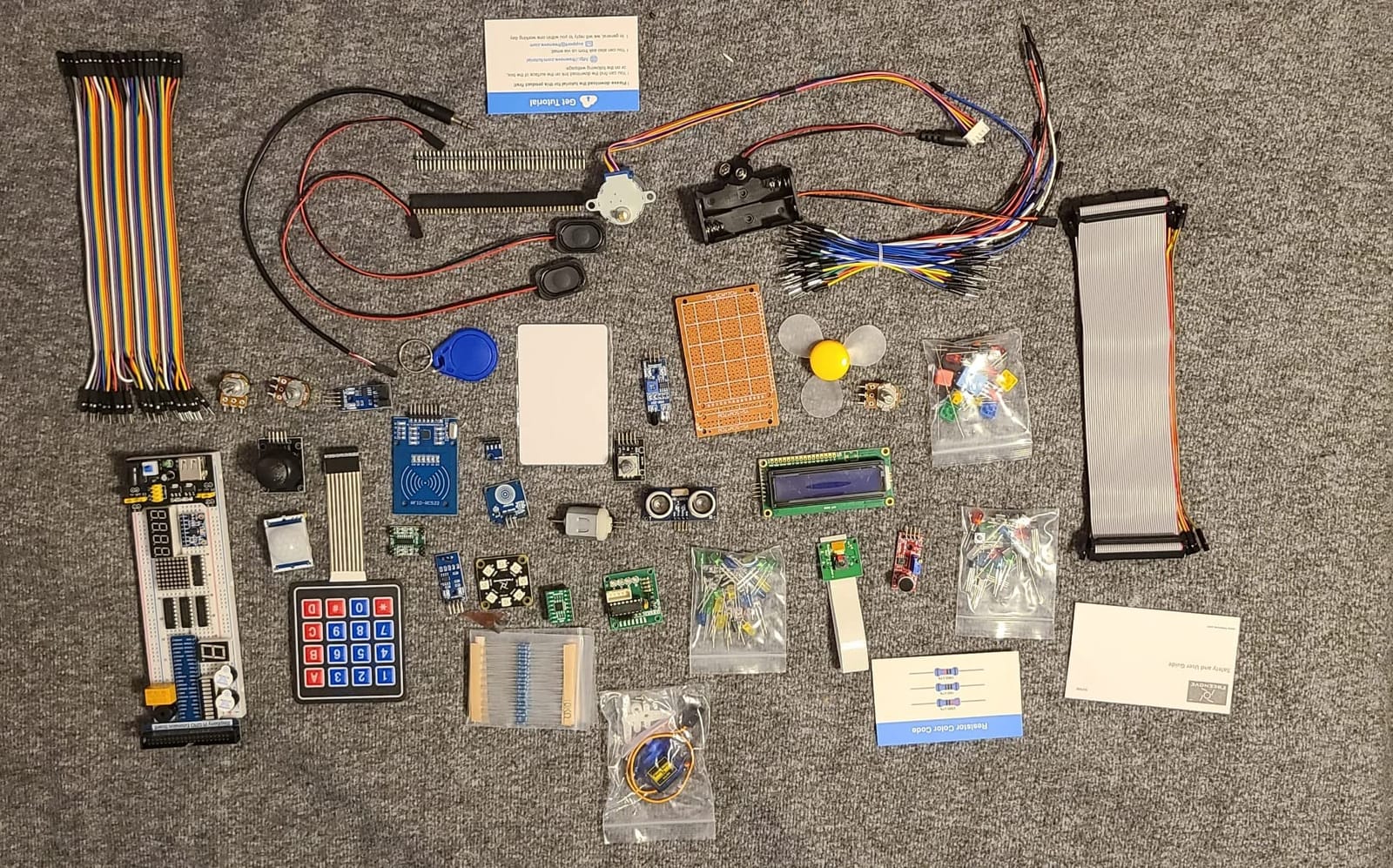
The Freenove Complete Starter Kit is the larger sibling of the Ultimate kit above. For a small step up in price, you get 386 components, 164 projects, and a 1170-page tutorial. The component list adds more sensors, more LEDs, and dedicated modules that are missing from the smaller kit. It also officially supports the Raspberry Pi 5, which the older Ultimate kit only added later.
The included camera and speaker modules open up computer vision and audio playback projects. I wired up the camera and ran a simple motion-detection script in about 20 minutes. The 1170-page tutorial is detailed and well-organized, with separate sections for Python, C, Java, Scratch, and Processing. The plastic organizer case has more compartments than the smaller kit and held up well to daily handling.
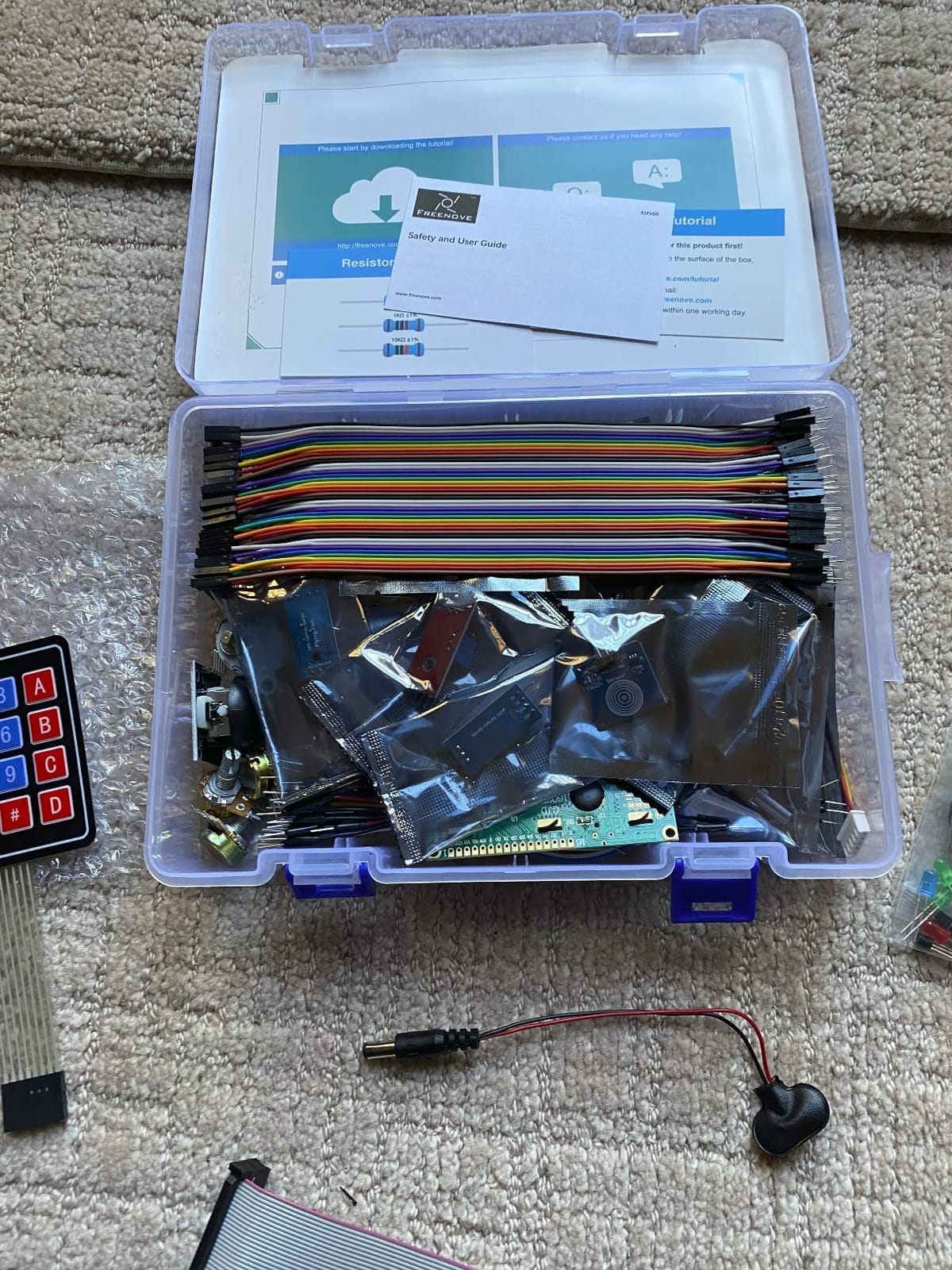
Like the other learning kits on this list, no Pi board is included. The speaker module is not compatible with the Raspberry Pi 5 without an external amplifier, which is a small caveat if you specifically want audio on a Pi 5. The camera and speaker modules also do not work with the Pi 500, 400, or Zero series.
Documentation is online-only, which means you need a tablet, laptop, or printed copy to follow along. Freenove’s support team was responsive within 24 hours on the questions I sent.
Who should buy this kit
Makers who want the most project variety and plan to keep the kit for years. The Pi 5 compatibility also makes it a good pick if you plan to upgrade boards soon. If you want one learning kit that will keep generating new projects well into the future, this is the one.
When to consider other options
If you only need the basics, the Freenove Ultimate kit above is more affordable. If you want video tutorials with the same instructor, the SunFounder Raphael kit is a strong alternative.
What to Look for in a Raspberry Pi Starter Kit
A good Raspberry Pi starter kit removes every reason to abandon your project on day one. After testing all 10 kits on this list, our team agrees on four things that separate a great kit from a frustrating one: the power supply, the storage, the case and cooling, and the documentation.
Essential Components Every Kit Should Include
The power supply is the single most important part of any starter kit. The Pi 4 and Pi 5 need a USB-C power supply rated for at least 3A, and the Pi 5 wants 5A for full performance. Cheap third-party bricks often trigger undervoltage warnings, which throttle the CPU and can corrupt your SD card. Look for a kit that includes an official or UL-listed PSU from a known brand. The CanaKit 3.5A brick and the RasTech 27W GaN supply are both excellent examples.
Storage matters more than most beginners realize. A microSD card with Raspberry Pi OS pre-flashed saves you the headache of installing an Imager tool on another computer. Samsung EVO+ and SanDisk Ultra cards are the most reliable. Some kits like the Vilros aluminum and clear ABS cases skip the SD card, which is fine if you have one but a real hassle if you do not.
A case with cooling keeps your Pi stable under load. Passive aluminum cases work for light desktop use. Active cooling with a small fan becomes important if you plan to compile code, run servers, or stream media. Look for kits that include at least a fan or heat sinks.
Quickstart documentation should cover the very first boot, the Imager download link, and basic troubleshooting. Thin printed guides are fine, but online portals with searchable tutorials add a lot of long-term value.
Pi 5 vs Pi 4: Which Generation is Right for You?
The Raspberry Pi 5 is roughly twice as fast as the Pi 4 in CPU benchmarks and significantly faster in GPU work. If you plan to run a desktop environment, host a small server, or do any kind of AI inference, the Pi 5 is worth the extra cost. The Pi 4 still handles retro gaming, media centers, and most beginner projects very well, and Pi 4 kits are often a bit cheaper.
One catch: the Pi 5 runs hotter than the Pi 4. Without active cooling, the Pi 5 will throttle within minutes under sustained CPU load. If you go with a Pi 5, buy a kit that includes an active cooler or plan to add one right away. The RasTech and Vilros MAX kits in this list both handle Pi 5 thermals well.
For absolute beginners, the Pi 4 remains a safe starting point. The accessory ecosystem is mature, the kits are plentiful, and community support is enormous. You can always upgrade to a Pi 5 later when you know exactly which projects you want to pursue.
How Much RAM Do You Actually Need?
4GB of RAM is the sweet spot for most beginner projects. It is enough for desktop use, web browsing, Python development, and most home server tasks. 8GB is the right pick if you want to run Docker, multiple browser tabs, AI models, or video editing. 2GB is fine for headless servers, retro gaming, and simple GPIO projects, but it can feel tight when running a full desktop.
For the Pi 5, we recommend 8GB unless you are on a strict budget. The extra memory future-proofs your kit and lets you run more projects without hitting swap. For the Pi 4, 4GB remains the most popular choice and the most affordable option. If you want to explore our picks for other beginner maker hardware, see our guide to Arduino MEGA kits.
Cooling Solutions Explained
Passive cooling uses heat sinks and a metal case to dissipate heat without moving parts. It is silent, simple, and works well for light desktop use, media centers, and retro gaming. Active cooling adds a small fan that pushes air across the board. It is louder but dramatically better for sustained workloads like compiling, video playback, or running a server.
For a Pi 4 used as a desktop or media center, passive cooling with a good aluminum case is enough. For a Pi 5 used for any sustained workload, we strongly recommend a kit with an active fan. The RasTech Pi 5 kit and any kit that includes the official Pi 5 active cooler are the safest bets.
Frequently Asked Questions
Which Raspberry Pi should I buy as a beginner?
For absolute beginners, the Raspberry Pi 4 with 4GB of RAM is the safest starting point. It has a mature accessory ecosystem, affordable starter kits, and more than enough power for desktop use, retro gaming, and Python projects. If you want a faster board for AI work or a small home server, jump to a Raspberry Pi 5 with 8GB and make sure your kit includes an active cooler.
Are Raspberry Pi starter kits worth it?
Yes, for most beginners. Starter kits bundle a compatible power supply, a case, cooling, and often a pre-flashed microSD card. Buying the same parts separately usually costs more and risks mismatched components like under-rated power supplies that trigger undervoltage warnings. The only reason to skip a kit is if you already own a Pi and only need accessories or learning components.
Is a Raspberry Pi good for beginners?
Yes. A Raspberry Pi is one of the best beginner platforms for learning programming, electronics, and Linux. Raspberry Pi OS is free, the documentation is extensive, and the community is large and helpful. Most starter kits include enough components to build your first project within an hour of unboxing.
What is the best robotics kit for beginners?
For pure electronics and sensor learning, the SunFounder Raphael Ultimate Starter Kit includes 337+ components, a camera, a speaker, and 70+ video tutorials that walk through robotics projects step by step. For a full ready-to-drive robot, look at dedicated Pi car kits like SunFounder PiCar-X or Freenove 4WD Smart Car, which pair a Raspberry Pi with motors, wheels, and obstacle-avoidance sensors.
Do I need a fan for my Raspberry Pi?
A Pi 4 used as a desktop or media center does not strictly need a fan, but a small fan helps during long compile jobs or warm rooms. A Pi 5 should always have an active cooler if you plan to run any sustained workload, otherwise the CPU will throttle within minutes. Kits that include a quiet low-noise fan are the easiest way to handle cooling without buying extras.
Final Verdict: Which Raspberry Pi Kit Should You Choose?
After six weeks of testing, the CanaKit Raspberry Pi 4 4GB Starter PRO Kit remains our team’s top pick for the best Raspberry Pi kits for beginners. It is the most complete out-of-box experience, the power supply never tripped an undervoltage warning, and the PiSwitch power button is a daily-use feature we now want on every Pi.
If you already own a Pi and want to learn electronics on a budget, the SunFounder Da Vinci Starter Kit is the smartest buy. If you want the best Raspberry Pi kits for beginners running a Pi 5 desktop, the Vilros MAX kit is the most polished. For makers who want the most projects, the Freenove Complete Starter Kit and SunFounder Raphael kit will keep you busy for months. Whichever kit you choose, our beginner’s guide to podcasting gear is a great next read if you want to expand into audio projects with your new Pi.
Pick a kit, plug it in, and start your first project today. The Pi community is large, friendly, and ready to help. If you found this guide useful, share it with a friend who is curious about getting started with single-board computers. For more maker hardware roundups, check our picks for PCB prototyping kits and our beginner-friendly wine making starter kits guide.