
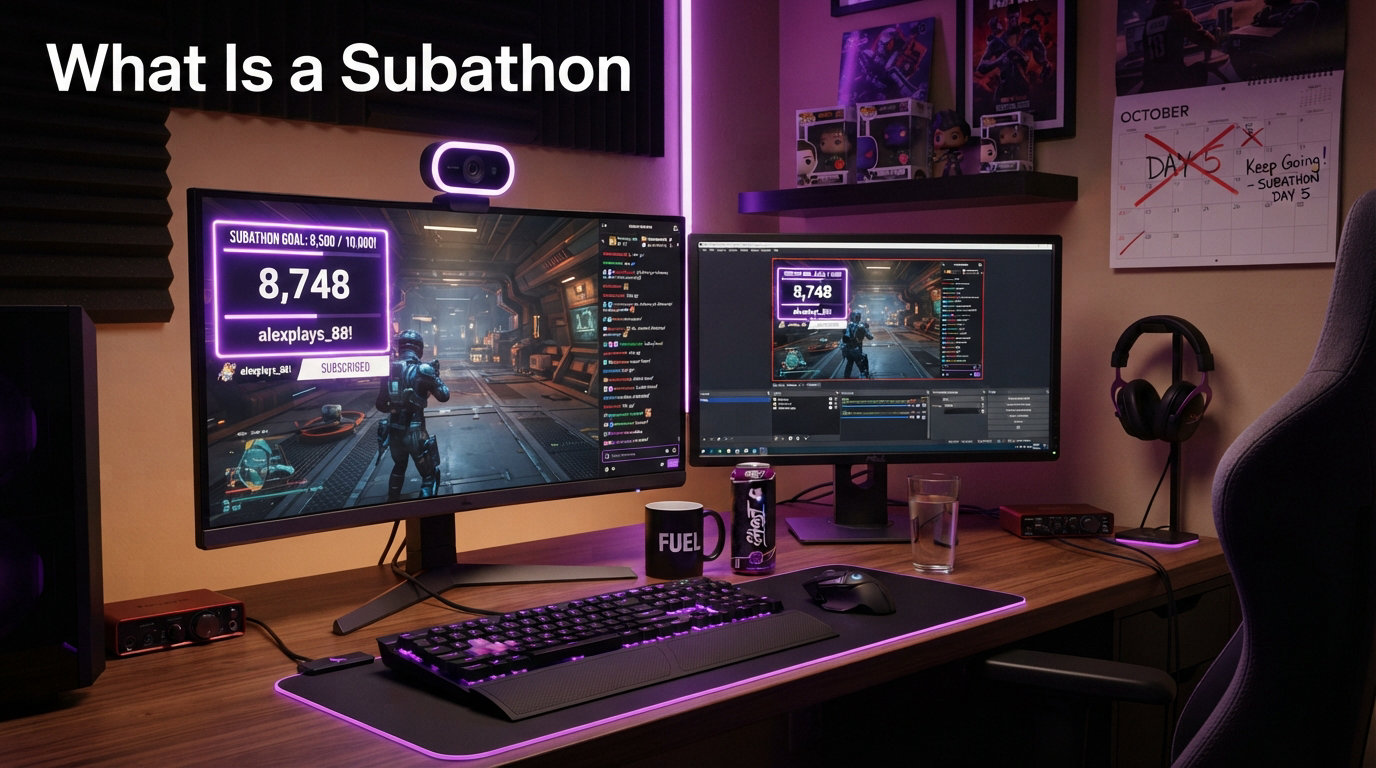
A subathon is a live streaming event where a countdown timer extends each time a viewer subscribes, donates, or cheers, keeping the stream running as long as the community keeps supporting it. The format exploded in popularity on Twitch and has since spread to YouTube, Kick, and TikTok Live.
If you have spent any time in streaming circles in 2026, you have probably heard names like Ludwig, Kai Cenat, and Ironmouse tied to marathon streams that lasted days, weeks, or even months. These events generate enormous revenue and create some of the most memorable moments in internet culture.
In this guide, I will break down exactly what a subathon is, how the timer mechanics work, the different types you will encounter, famous examples that broke records, and practical advice if you are thinking about running one yourself.
Whether you are a curious viewer or a streamer weighing whether a subathon makes sense for your channel, you will have a clear picture by the end.
Table of Contents
What Is a Subathon? The Core Definition
A subathon (short for “subscription marathon”) is a livestreaming event where the length of the broadcast is determined by viewer participation. Every subscription, donation, or cheer adds time to a visible countdown timer. When the timer hits zero, the stream ends.
The term is a portmanteau of “subscription” and “marathon.” It borrows the spirit of the classic telethon format, where television hosts stayed on air for extended periods to raise money for charity. Instead of phone bank pledges, subathons use platform-native mechanics like Twitch subscriptions, gifted subs, bits, and direct donations.
The first subathon most people point to as the format’s breakout moment was Ludwig Ahgren’s March 2021 event. He started what was meant to be a short stream and ended up broadcasting for 31 consecutive days, peaking at 282,191 concurrent subscribers. That single event reshaped how the streaming community thought about audience engagement and revenue potential.
Since then, the format has evolved. Streamers now use subathons to celebrate channel milestones, raise money for charity, or simply entertain their communities in ways regular streams cannot match. Some events last a few hours, while others stretch across multiple months.
How Does a Subathon Work? Timer Mechanics Explained
Understanding how a subathon works starts with the timer. The streamer sets up a visible countdown clock that everyone in chat can see. Every time a viewer takes a specific action, that clock gets extended by a set amount.
Here is how the typical timer extension system breaks down:
New subscription: Usually adds 10 to 30 seconds to the timer
Gifted subs: Each gifted sub adds the same amount as a regular sub, so bulk gifts can extend the stream significantly
Tier 2 or Tier 3 subs: Often add more time than Tier 1, rewarding higher-tier support
Bits or cheers: Add a smaller amount, like 1 second per 100 bits
Direct donations: Streamers set custom rates, such as 1 minute per $5 donated
The exact rates are set by the streamer and configured through tools like Ludwig’s original setup or purpose-built subathon overlays. Some streamers tweak the rates to make sure the event does not spiral out of control. Others lean into the chaos and let chat decide how long the stream lasts.
This viewer-driven mechanic is what makes a subathon different from a regular marathon stream. On a normal 24-hour stream, the end time is fixed. On a subathon, the community literally controls the clock.
That interactive element keeps viewers engaged for hours. People subscribe not just to support the streamer, but to feel like they are actively shaping the event. It creates a feedback loop of participation that regular streams struggle to match.
Streamers often layer in milestone goals to keep things interesting. At 50,000 subs, maybe they shave their head. At 100,000, they might invite a special guest. These checkpoints give the audience something to chase beyond just keeping the timer alive.
Types of Subathons You’ll See on Twitch
Not every subathon follows the same playbook. Over the years, streamers have developed several distinct formats, each with its own appeal.
The Traditional Subathon is the format Ludwig popularized. A countdown timer extends with every sub and donation. The stream ends when the timer runs out. This version works well for streamers who want maximum viewer control and are comfortable letting the event run as long as the community pushes it.
Charity Subathons redirect the energy of a marathon stream toward fundraising. Instead of (or in addition to) extending a timer, subscriptions and donations go to a chosen cause. Events like Games Done Quick and Z Event in France have used similar mechanics for years, and individual streamers increasingly run charity subathons during disaster relief efforts or holiday seasons.
Challenge Marathons tie the timer to physical or creative challenges. A streamer might promise to keep playing a difficult game, eating hot wings, or completing dares as long as the community keeps the clock running. These events lean heavily on entertainment value and often go viral when the challenges get absurd.
Reverse Subathons flip the formula. Instead of adding time to the timer, the clock starts high and counts down faster with each sub or donation. This creates urgency rather than endurance and works well for streamers who want the engagement of a subathon without committing to a multi-day event.
Each type serves a different goal. Traditional subathons maximize revenue and hype. Charity versions build goodwill. Challenge marathons prioritize content creation. Reverse subathons offer a safer, more controlled format for newer streamers.
Famous Subathons That Made Streaming History
Some subathons have transcended the streaming world and become genuine cultural events. Here are the ones that defined the format.
Ludwig Ahgren (March 2021) ran the subathon that started it all. What began as a modest event stretched to 31 days, during which Ludwig lived on camera, slept on a bed in his streaming room, and let viewers control his schedule. He peaked at 282,191 active subscribers, breaking Ninja’s previous record. The event reportedly generated over $1.4 million in subscription revenue before platform cuts.
Kai Cenat (multiple events) has become one of the most dominant subathon streamers. His 2023 “Mafiathon 2” event ran for 30 days and set a new all-time Twitch subscriber record of 728,535 active subs. He followed up with even larger events, drawing celebrity guests and turning each subathon into a pop-culture spectacle. Kai’s events proved that the subathon format could scale far beyond what anyone imagined.
Ironmouse (2023) broke records on the VTuber side. Her subathon pushed her past 200,000 subscribers and made her one of the most-subscribed creators on Twitch. As a VTuber, Ironmouse’s success showed that the format works across different styles of content, not just traditional gaming streams.
Emilycc gained attention for running subathons that pushed the boundaries of endurance streaming, with events stretching past 100 days. These extreme runs highlighted both the dedication of streamers and the serious questions about sustainability and health.
The progression is striking. Ludwig’s 31-day event felt unprecedented in 2021. By 2026, streamers are routinely running subathons that dwarf those numbers. Each record-breaker resets community expectations and pushes the format into new territory.
Why Do Streamers Run Subathons?
The appeal of a subathon comes down to a few powerful benefits that regular streaming cannot deliver.
Revenue is the obvious draw. A successful subathon can generate anywhere from $10,000 to over $500,000 in a single event, depending on the streamer’s audience size and the duration. For mid-tier streamers, one subathon can match months of regular streaming income.
Community engagement hits a different level. Because viewers directly control how long the stream runs, they feel invested in the outcome. Chat participation spikes, gifted subs cascade, and the shared experience creates inside jokes and memorable moments that bond the community together.
Channel growth accelerates. Subathons generate clips, highlights, and social media buzz that pull in new viewers. Ludwig went from roughly 30,000 subscribers before his first subathon to nearly 300,000 during it. That kind of growth in a single month is almost impossible through regular streaming alone.
Charity fundraising becomes possible at scale. Streamers with large audiences can raise significant amounts for causes they care about. The interactive nature of a subathon makes donating feel rewarding rather than transactional.
Sponsorships and brand deals follow. Brands notice when a streamer dominates the front page of Twitch for weeks. Subathons attract sponsorship opportunities that can add another revenue layer on top of subscription income.
How to Prepare for Your First Subathon
Running a subathon sounds exciting, but without preparation it can quickly become a disaster. Here is what experienced streamers recommend based on community discussions from places like Reddit’s r/Twitch.
Set a hard time limit. Before you start, decide the maximum length you are willing to go. Ludwig capped his original subathon at 31 days. Without a ceiling, the event can spiral. Pick a number that protects your health and sanity.
Plan your milestones carefully. Every reward you promise is a commitment. If you say you will do something at 1,000 subs, you need to follow through. Reddit users repeatedly warn that unfulfilled milestones damage trust with your community. Keep milestones realistic and things you genuinely want to do.
Build a rest schedule into the event. You cannot stream for days without sleep. Plan blocks where the stream stays live but you step away. Pre-recorded content, mod-run segments, and guest hosts can keep the stream running while you rest.
Test your tech beforehand. Subathon overlays, timer widgets, and donation trackers all need to work flawlessly. Test everything with a small audience before going live. Technical failures during a high-stakes event kill momentum fast.
Stock up on essentials. Have food, water, and any medications ready. If you are streaming from home for days, you will not have time for errands. Streamers who have done multi-day events emphasize preparation over everything else.
Communicate the rules clearly. Tell your audience how much time each action adds to the timer. Post the rules in chat, on your stream title, and in a panel below the video. Confusion about mechanics leads to frustration.
Start small if you are a newer streamer. Community consensus is that subathons work best when you already have an engaged audience. If you have 50 regular viewers, a full subathon might fall flat. Consider starting with a shorter format or a reverse subathon to test the waters.
Mental Health and Burnout During Subathons
This is the topic most subathon guides skip, and it matters more than any timer mechanic.
Streaming for days or weeks on end takes a real toll. Sleep deprivation, constant performance pressure, and the inability to step away from the camera create stress that compounds over time. Multiple streamers have spoken openly about how their subathons pushed them to their physical and mental limits.
If you are planning a subathon, protect yourself. Set firm offline hours. Let your moderators handle toxic chat. Have someone check on you in person if you are streaming solo for extended periods.
Redditors on r/Twitch frequently warn that small streamers attempting subathons can feel like they are begging for attention if the audience is not there yet. If the timer barely moves, it can damage confidence rather than build it. Honest self-assessment about your audience size matters before committing to the format.
The streamers who handle subathons best treat them as events with a defined beginning, middle, and end. They do not try to top their last record every time. They prioritize their wellbeing over the number on the clock.
Remember that no subscriber count is worth your health. The most successful subathon streamers are the ones who are still streaming months and years after their big events.
FAQs
What is a subathon on Twitch?
A subathon on Twitch is a livestreaming event where a countdown timer extends every time a viewer subscribes, donates, or cheers. The stream stays live as long as the timer is above zero, meaning the audience directly controls how long the broadcast runs.
Do streamers sleep during a subathon?
Yes, most streamers sleep during extended subathons. They typically set up the stream to keep running with pre-recorded content, mod-run segments, or sleep on camera while the timer continues counting down. Planning rest blocks is essential for any multi-day event.
Who has the longest subathon?
Kai Cenat holds the Twitch subscriber record from his Mafiathon 2 subathon, which reached 728,535 active subscribers over 30 days. Emilycc has run endurance subathons lasting over 100 days. Ludwig’s original 31-day event in 2021 was the first to popularize the format at scale.
How long was Kai Cenat’s subathon?
Kai Cenat’s Mafiathon 2 subathon ran for 30 days. During that time he set the all-time Twitch subscriber record with over 728,000 active subscribers, surpassing every previous subathon milestone on the platform.
How much money do streamers make on subathons?
Subathon earnings range widely depending on audience size and duration. Smaller streamers might make a few thousand dollars, while top creators like Ludwig and Kai Cenat have generated well over $1 million in subscription revenue from a single event before platform and tax cuts.
Can small streamers do a subathon?
Small streamers can technically run a subathon, but community advice suggests waiting until you have an engaged audience. If your regular viewer count is low, the timer may barely move, which can feel discouraging. Consider shorter formats or reverse subathons to test the concept first.
Conclusion
A subathon is a subscription marathon where viewers control how long a livestream runs by adding time to a countdown clock through subscriptions, donations, and cheers. What started with Ludwig’s 31-day event in 2021 has grown into one of the most powerful formats in modern streaming, with creators like Kai Cenat pushing subscriber records past 700,000.
The format works because it turns passive viewership into active participation. Every subscriber feels like they are keeping the stream alive. That engagement drives revenue, builds community, and creates content moments that regular streams cannot replicate.
But subathons are not for everyone. They require a dedicated audience, careful planning, and serious attention to physical and mental health. Small streamers should think twice before jumping in, and even experienced creators need to set hard limits.
If you are a viewer, now you understand exactly what you are participating in when you subscribe during one of these events. If you are a streamer, treat the format with respect and it can be one of the most rewarding things you ever do on your channel.
Understanding what a subathon is gives you insight into how modern streaming communities operate. The format will keep evolving in 2026 and beyond, but the core idea remains simple: the audience decides how long the show goes on.