
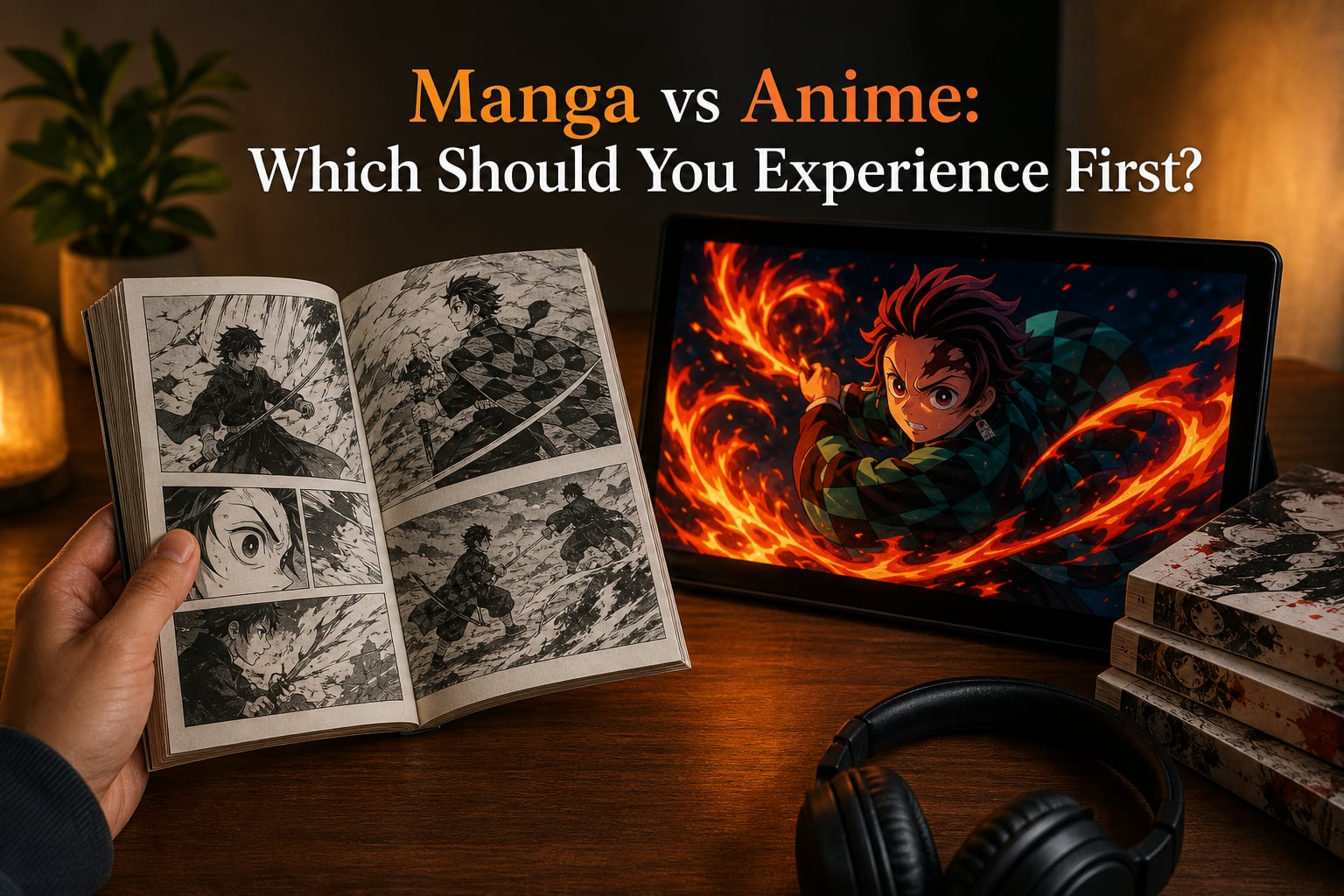
You just discovered an incredible series everyone is talking about. The problem? It exists as both a manga and an anime, and you can only pick one to start. This is the classic dilemma every fan faces, and the answer is not as simple as it seems.
When weighing manga vs anime and which you should experience first, the right choice depends on your priorities. Do you want the creator’s original vision with complete story control, or do you want an immersive audiovisual spectacle with voice acting and soundtracks?
I have been reading manga and watching anime for over fifteen years, and our team has debated this question more times than I can count. After going through dozens of series both ways, I can tell you that the order genuinely changes how you experience the story.
This guide breaks down everything you need to know. We will cover what each medium offers, the advantages of starting with either one, and a practical framework to help you decide based on your personal preferences.
Table of Contents
What is Manga?
Manga refers to Japanese comic books and graphic novels. The medium uses sequential black-and-white artwork, read from right to left in the traditional format. Each story unfolds through panels that combine detailed illustrations with dialogue and narration.
The history of manga stretches back centuries, with roots in Japanese art traditions. However, the modern manga industry took shape after World War II, heavily influenced by artists like Osamu Tezuka, who pioneered cinematic storytelling techniques within comic panels. Tezuka’s work on titles like Astro Boy established many conventions that manga still uses today.
Most manga series are first serialized in weekly or monthly magazines like Weekly Shonen Jump. Once enough chapters accumulate, publishers collect them into bound volumes called tankobon. This serialized format shapes how manga pacing works. Authors write in cliffhangers and tension beats designed to keep readers coming back each week.
The black-and-white format is not a limitation but a deliberate artistic choice. Without color, manga artists rely on line work, shading, and panel composition to convey mood and motion. This forces your brain to fill in visual gaps, which creates a deeply personal reading experience that every reader interprets slightly differently.
What is Anime?
Anime is Japanese animation, encompassing television series, films, and OVAs (Original Video Animations). While many anime adapt existing manga, some are original creations with no source material. The medium brings stories to life through motion, color, voice acting, and music.
The term “anime” itself is simply the Japanese word for animation, shortened from the English word “animation.” In Japan, the term covers all animated works. Internationally, it specifically refers to Japanese-produced animation with its distinctive art style and storytelling conventions.
Anime as we know it today evolved alongside manga. Many of the earliest and most influential anime series, like Astro Boy in 1963 and Speed Racer in 1967, were direct manga adaptations. Studios like Toei Animation, Madhouse, and Studio Ghibli transformed static panels into moving, breathing worlds.
What anime adds to a story goes beyond simple motion. Voice acting, known as seiyuu in Japan, is a revered profession that brings characters to emotional life. Original soundtracks composed specifically for anime amplify dramatic moments in ways manga cannot replicate. Opening and ending theme songs often become iconic in their own right.
Production quality varies significantly between anime. A single cour, which is a 12-to-13-episode season, can have wildly different budgets and animation quality depending on the studio. This variation is one reason some fans prefer reading the source material first.
Manga vs Anime: Which Should You Experience First?
The answer to manga vs anime and which you should experience first comes down to what you value most. Manga gives you the original story at your own pace with no filler. Anime gives you a sensory-rich experience with motion, sound, and voice that static panels cannot match. Neither is objectively better, but each serves different preferences.
Let me break down the strongest arguments for both approaches so you can make an informed decision for any series you pick up.
Why Read Manga First: The Advantages
1. You Experience the Creator’s Original Vision
Manga comes straight from the creator’s pen. There is no production committee, no studio interference, and no budget constraints altering the story. When you read manga first, you see exactly what the author intended, panel by panel. This matters enormously for series where the anime adaptation makes changes.
Attack on Titan is a perfect example. The anime changed certain scenes, altered dialogue, and even shifted the tone of key moments. Fans who read the manga first experienced Hajime Isayama’s unfiltered storytelling before any adaptation filtered it through a production pipeline.
2. You Control the Pacing Completely
Reading manga lets you set your own speed. You can linger on a breathtaking double-page spread for five minutes, or speed through dialogue-heavy chapters when the story demands momentum. Anime locks you into its runtime, and a scene that should feel fast might be drawn out with slow-motion effects.
This pacing control is especially valuable for long battle sequences. In manga, a fight that spans ten pages might take three minutes to read. In anime, the same fight can stretch across two or three episodes with reaction shots and extended flashbacks.
3. The Story Goes Further Than the Anime
Most anime adaptations cover only a fraction of the manga’s total story. The anime might cover 50 chapters, while the manga runs for 200 or more. Starting with manga means you get the complete narrative without waiting for seasons that may never come.
One Piece has over 1,100 chapters. The anime is still ongoing after more than two decades, but readers who started with the manga experienced the full story without filler interruptions. Hundreds of beloved series never get their anime completed, leaving anime-only viewers permanently hanging.
4. No Filler Episodes or Padded Content
Anime often inserts filler episodes when the production catches up to the manga. These are non-canon stories that exist purely to buy time. Naruto famously has nearly 100 filler episodes across its run. Manga contains zero filler. Every chapter advances the actual plot.
Even when anime is not technically filler, studios sometimes stretch a single manga chapter across an entire episode. This pacing issue is a common complaint among fans who experience both versions of the same story.
5. Art Appreciation at the Panel Level
Manga artists pour enormous detail into individual panels. Intricate backgrounds, facial expressions, and action choreography that flash by in seconds on screen can be studied and appreciated on the page. Kentaro Miura’s work on Berserk is legendary for its detail, with single pages taking weeks to complete.
When you start with manga, you develop a visual literacy for panel composition and artistic technique. This deepens your appreciation for the medium in ways that anime-only viewing cannot replicate.
Why Watch Anime First: The Advantages
1. A Full Sensory Experience
Anime engages multiple senses simultaneously. You see characters in motion, hear their voices, and feel the emotional weight of a scene through music and sound design. A dramatic moment hits differently when an orchestra swells behind it and voice actors pour raw emotion into every line.
I still remember watching the Attack on Titan first episode without any prior knowledge. The combination of animation, the haunting soundtrack, and the voice acting created an experience that reading panels simply cannot match. Some moments are designed for the screen.
2. Voice Acting Brings Characters to Life
Seiyuu, the Japanese term for voice actors, are treated as celebrities for good reason. A skilled performance can transform a character. The way a voice cracks during an emotional scene, the timing of a comedic line, or the intensity of a battle cry all add dimensions that text on a page cannot convey.
Characters like Naruto’s Might Guy or One Piece’s Franky are defined as much by their voice actors as by their visual designs. Experiencing these characters first through anime means you carry those voices and performances with you forever.
3. Animation Quality Elevates Key Moments
When studios pour resources into a critical scene, the results can be breathtaking. Animated fight sequences with fluid choreography, dynamic camera angles, and visual effects create spectacle that static panels suggest but cannot fully deliver.
Studios like Ufotable (Demon Slayer) and MAPPA (Jujutsu Kaisen) have set new standards for animation quality. Some scenes become iconic specifically because of how they were animated, making the anime the definitive way to experience them.
4. Lower Barrier to Entry for Newcomers
For someone new to Japanese storytelling, anime is simply more accessible. You sit back and watch. There is no learning curve for reading right-to-left, no adjusting to black-and-white art styles, and no need to parse complex panel layouts.
Streaming platforms like Crunchyroll, Netflix, and Hulu make anime instantly available with subtitles or dubs. Manga requires finding legal reading apps or purchasing physical volumes, which adds friction for casual fans.
5. Soundtracks Create Lasting Emotional Connections
Music anchors memories. Hearing a specific track can instantly transport you back to the first time you watched a scene. Anime openings and endings become anthems that fans associate with specific eras of their lives.
Composers like Hiroyuki Sawano (Attack on Titan, Kill la Kill) and Yoko Kanno (Cowboy Bebop) have created scores that stand alongside the greatest film music ever produced. Starting with anime means you experience the story the way the production team intended, with music woven into every moment.
Manga vs Anime: Key Differences to Consider
Time Commitment
Reading manga is generally faster than watching anime. A typical manga chapter takes 5 to 10 minutes to read, while the anime adaptation of that same chapter runs about 20 to 24 minutes. However, a long-running series like One Piece requires significant time either way. Reading all current chapters takes roughly 200 hours. Watching every anime episode including filler takes closer to 400 hours.
For shorter series, the time gap narrows. A 24-chapter manga might take 3 hours to read, while the 12-episode anime adaptation takes about 5 hours to watch. Consider your available time when choosing where to start.
Budget and Accessibility
Anime streaming services cost between $8 and $15 per month and give you access to thousands of episodes. Manga reading apps like Manga Plus and Shonen Jump offer affordable subscriptions at roughly $2 to $4 monthly. Physical manga volumes cost $10 to $15 each, making long series a significant investment.
For budget-conscious fans, both mediums offer legal free options. Many manga publishers release select chapters free online, and streaming platforms offer free ad-supported tiers for anime.
Censorship and Content Differences
Anime adaptations sometimes tone down violence, mature themes, or intense imagery compared to the manga source. Broadcast television standards in Japan restrict what can air, leading to censored versions in the anime.
Manga faces fewer content restrictions since it is not subject to broadcast regulations. If you want the uncensored version of a story, manga is typically the way to go. However, some anime release uncensored “BD” or Blu-ray versions after the initial broadcast.
Filler and Adaptation Changes
We covered filler in the manga advantages section, but it deserves emphasis here. Filler is not always bad. Some filler episodes add world-building, character development, or comedy that fans genuinely enjoy. The question is whether you want pure story or expanded content.
Adaptation changes go beyond filler. Sometimes anime studios alter story events, character personalities, or even endings. The 2003 Fullmetal Alchemist anime famously diverged entirely from the manga, creating a completely different story for its second half.
Decision Framework: How to Choose
Choose Manga First If You…
Value the creator’s unfiltered vision above all else. Manga-first readers get the story exactly as the author wrote it, with no studio alterations or production compromises.
Are a completionist who wants every detail and side story. Manga often includes extra chapters, author notes, and supplementary content that anime skips entirely.
Prefer reading and have good reading speed. If you love books and visual storytelling, manga’s format will feel natural and engaging from page one.
Want to avoid filler episodes. If pacing issues and non-canon content frustrate you, manga delivers a tight, focused narrative with zero padding.
Are following a long-running series. For something like One Piece with over 1,100 chapters, manga lets you catch up faster and experience the complete story without waiting decades for new anime seasons.
Choose Anime First If You…
Want a rich audiovisual experience. Anime combines animation, voice acting, music, and sound design into something that engages all your senses at once.
Are new to Japanese media and want an easy entry point. Watching anime requires no special skills or format knowledge. You just press play and enjoy.
Have limited time and want instant engagement. Anime hooks you within the first episode with visual spectacle and sound. Manga requires more patience as you adjust to the reading format.
Prefer experiencing key moments with maximum emotional impact. A great soundtrack and voice performance can make a scene unforgettable in ways that panels alone cannot achieve.
Enjoy shared viewing experiences. Anime is easier to watch with friends and family, making it a more social medium than manga.
Series-Specific Recommendations
For One Piece, most experienced fans recommend manga first. The anime’s pacing slows dramatically in later arcs, and the Wano arc manga art is widely considered superior to the anime adaptation. However, the anime’s music and voice acting are beloved, so watching after reading is still worthwhile.
For Attack on Titan, the debate is heated. The manga provides the original ending, which divided fans. The anime modified certain elements of the finale, and many viewers found the anime version more satisfying. Both approaches have strong supporters.
For Death Note, either works perfectly. The anime is a faithful adaptation with outstanding voice acting and direction. The manga is tight, complete, and brilliantly paced. This is one series where both entry points deliver an excellent experience.
For Frieren: Beyond Journey’s End, the anime came first and set the standard. The animation quality is exceptional, and experiencing it animated before reading the manga gives you the definitive visual interpretation.
Can You Do Both? The Simultaneous Approach
Some fans refuse to choose and consume both at the same time. This strategy involves reading the manga ahead of where the anime currently is, then watching the anime adapt chapters you have already read. This approach offers unique benefits.
Reading ahead means you always know what is coming, so you can appreciate how the anime adapts each scene without worrying about spoilers. You get to compare the manga’s version of events with the anime’s interpretation side by side.
The downside is time investment. Following both mediums requires double the commitment. You also risk the anime diverging from the manga, creating confusion about which version is canon.
This approach works best for series where the anime is known for high-quality adaptations. If the anime faithfully follows the manga with excellent production values, experiencing both simultaneously lets you enjoy the story twice in different ways.
FAQs
Is it better to read manga or anime first?
It depends on your priorities. Read manga first if you value the creator’s original vision, want complete story control, and prefer avoiding filler episodes. Watch anime first if you want an immersive audiovisual experience with voice acting and music, and want an easier entry point. Neither approach is objectively better.
What comes first, the manga or anime?
In most cases, the manga comes first. Manga is typically the source material that anime adaptations are based on. However, some anime are original creations with no manga source, and occasionally a manga is created as a tie-in to an existing anime.
Does reading manga increase IQ?
There is no scientific evidence that reading manga directly increases IQ. However, reading manga can improve visual literacy, reading speed, and comprehension skills. The right-to-left format and panel-based storytelling also exercise different cognitive processes compared to traditional reading.
Can I finish One Piece in 3 months?
Reading all current One Piece manga chapters takes roughly 200 hours, which is about 2 to 3 hours per day over 3 months. Watching every anime episode takes closer to 400 hours, making it nearly impossible in 3 months without watching over 4 hours daily. Manga is the faster option for catching up.
Conclusion
When deciding manga vs anime and which you should experience first, there is no wrong answer. Manga gives you the pure, original story at your own pace with no filler. Anime gives you a sensory experience with voice acting, music, and animation that brings the story to vivid life.
My recommendation after years of both is simple. If you love reading and want the complete, unfiltered story, start with manga. If you want to be swept away by sound and motion, start with anime. And if you fall in love with a series, experience it both ways eventually. Each medium reveals something the other cannot.
The best approach is the one that gets you started. Pick whichever medium feels most exciting right now, dive in, and enjoy the incredible stories Japanese creators have been sharing with the world for decades. You can always experience the other version later, and doing so will only deepen your appreciation for both.