
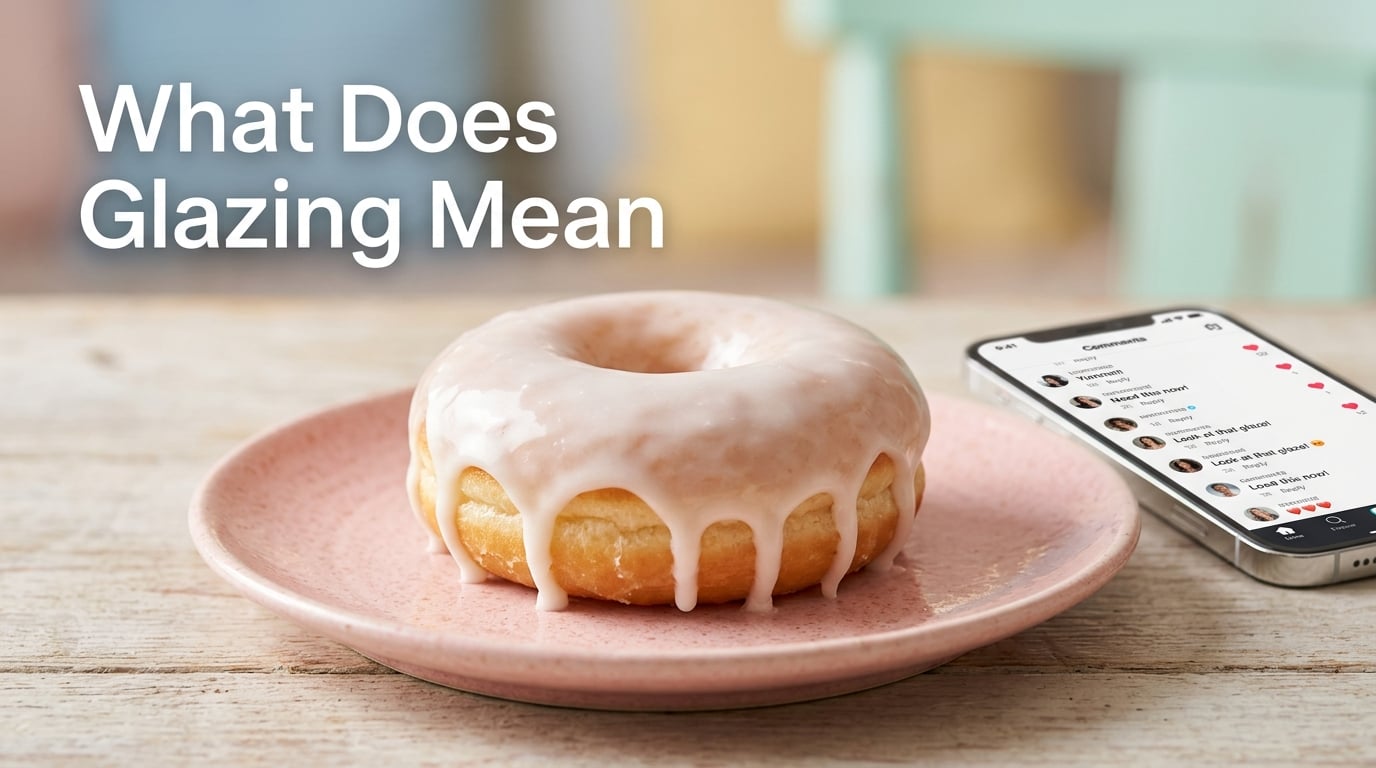
Glazing means showering someone with excessive, often unwarranted praise — usually to the point of obvious over-hyping or insincere flattery. The term took over TikTok, Twitch, and X in 2026, where users call each other out for “glazing” their favorite creators, athletes, or celebrities.
If you’ve heard a teenager say “stop glazing him” and felt completely lost, you’re in the right place. Our team tracked down the origin of the word, real usage examples, and how the meaning has shifted across platforms. By the end, you’ll know exactly what glazing means, who uses it, and whether it’s a compliment or an insult (the answer depends on context).
This guide covers the slang definition, where the term came from in 2026, how Gen Z and Gen Alpha use it differently, and how it compares to similar slang like cap and based. Whether you’re a parent, teacher, or just trying to keep up with internet culture, here’s everything you need to know about glazing in 2026.
Table of Contents
What Does Glazing Mean in Slang?
In slang, glazing means hyping someone up with an excessive amount of praise, compliments, or flattery. The compliments usually feel undeserved, repetitive, or over the top. Think of someone rapid-firing compliments about your outfit, your hair, your aura, and your vibe all within ten seconds — that’s glazing.
Merriam-Webster defines the slang sense of “glaze” as “to shower them with excessive praise.” Dictionary.com calls it “showering someone or something with excessive praise,” noting the compliments are often unwarranted. The imagery comes from the donut-glaze metaphor: pouring thick, sticky sweetness all over something until it’s completely covered.
The term is almost always used as a criticism. When someone says “you’re glazing,” they’re calling out the praise as fake, biased, or embarrassing. It’s the modern internet equivalent of saying “stop brown-nosing” or “get off his jock.” Glazing implies the person offering the praise has lost all objectivity.
There’s also a newer, positive spin called self-glazing. This is when someone jokes about hyping themselves up excessively — almost like satirical self-promotion. Dictionary.com notes this emerging usage where glazing becomes self-aware and funny rather than purely negative.
Glazing Definition at a Glance
Glazing (noun/verb): Internet slang for excessive, often insincere praise directed at a person, brand, or thing. Used to call out over-hyping, bias, or transparent flattery in online communities.
Related Slang Words Built From Glazing
The slang term spawned a whole family of related words. A “glazer” is the person doing the excessive praising. “Glaze” can be used as a noun (“that’s pure glaze”) or verb (“stop glazing him”). Self-glazing is when you over-praise yourself as a joke.
Where Did the Term Glazing Come From?
The slang meaning of glazing traces back to around 2026, though its exact origins remain murky. Dictionary.com credits the term’s spread to X (formerly Twitter) creator @ratthws, who helped popularize the donut-glaze metaphor in meme form.
The word took on new life in Twitch streaming communities. Streamers like Kai Cenat and Duke Dennis used “glazing” on their livestreams to call out chat members who were over-hyping every move they made. Viewers picked up the term and carried it to YouTube comments, TikTok, and Reddit.
By 2026, glazing had spread well beyond gaming circles. TODAY.com covered the term in a parents-focused segment featuring Hoda Kotb and Jenna Bush Hager, marking the moment glazing crossed from niche internet culture into mainstream awareness. Parents.com followed with their own explainer on why kids call each other out for glazing.
The donut imagery stuck because it’s so vivid. Just as glaze coats every inch of a donut in a thick, sweet layer, glazing coats someone in a thick layer of compliments. The metaphor makes the term instantly understandable even if you’ve never heard it before.
How to Use Glazing in a Sentence
Glazing is used most often as a call-out. Here are real examples of how it appears in social media comments and conversations today:
“Bro, you’re glazing him so hard right now. He played one decent game and you’re calling him the GOAT.”
“The comments section on this video is straight-up glazing. Everyone pretending this is the best song ever made.”
“Stop glazing yourself in your own captions, it’s getting embarrassing.”
“My teacher asked what glazing means and the whole class lost it.”
Notice the pattern. Glazing almost always appears when someone wants to shut down excessive praise. It’s a quick, dismissive way to say “calm down with the compliments.” On TikTok, the term often shows up in comment sections under videos of athletes, musicians, or influencers where fans are hyping them up.
You’ll also hear it used in sports fandoms. Reddit’s r/NBA and r/NFL threads regularly feature accusations of glazing when fans defend their favorite players beyond all reason. The same dynamic plays out in K-pop fan communities, Twitch streams, and YouTube creator fandoms.
Where You’ll Hear Glazing Used
Glazing shows up across nearly every major social platform, but the flavor changes depending on where you encounter it. Here’s the breakdown by platform:
TikTok is where glazing reached peak virality. The term fills comment sections under videos of attractive creators, talented athletes, or charismatic personalities. TikTok’s algorithm feeds these comment chains to millions of viewers, which spreads the slang fast.
Twitch is the platform most responsible for popularizing glazing. Streamers and chat moderators use it constantly to call out viewers who over-praise the streamer’s every action. The livestream format makes glazing visible in real-time.
YouTube comments are another hotspot, especially under music videos, highlight reels, and creator documentaries. “Stop glazing” has become a default reply to anyone praising a creator too enthusiastically.
X (Twitter) is where glazing started. Political commentators, sports analysts, and meme accounts use the term to accuse each other of bias. If someone defends a politician or athlete nonstop, expect accusations of glazing within minutes.
Reddit threads in communities like r/NoStupidQuestions, r/Teachers, and various sports subreddits feature regular debates about what glazing means and whether it’s being used correctly. The term has become a recurring topic of generational confusion.
Who Uses the Term Glazing?
Gen Z (roughly ages 13–28 in 2026) is the primary driver of glazing as slang. They picked it up from Twitch streams and TikTok, then spread it across their social media and everyday conversations. For Gen Z, glazing is a standard part of the vocabulary.
Gen Alpha (kids currently in elementary and middle school) has adopted glazing even faster than Gen Z. Teachers on Reddit’s r/Teachers frequently report hearing students use “glazing” in classrooms — sometimes incorrectly, sometimes to describe any enthusiasm at all. The term has become a playground staple.
Millennials and older generations are mostly on the receiving end of confusion. Many parents first encounter glazing when their kids say it at home, then turn to Google to figure out what it means. That knowledge gap is exactly why explainers like this one exist.
Internet culture commentators and slang dictionaries have also embraced glazing. Merriam-Webster added the slang definition, Dictionary.com published a full explainer, and TODAY.com featured it on a national TV segment — all signs that glazing has moved beyond niche internet speak into mainstream English.
Glazing vs Similar Slang Terms
Glazing gets confused with several other slang words, but each one has a distinct meaning. Here’s how glazing compares to the most common lookalikes:
Glazing vs cap: “Cap” means a lie or false statement. Glazing is about excessive praise, not dishonesty. You’d say “that’s cap” if someone tells an obvious lie, but “stop glazing” if someone over-compliments a friend. They’re both call-outs, but they target different behaviors.
Glazing vs based: “Based” means being unapologetically yourself or expressing an opinion regardless of what others think. Glazing is the opposite vibe — it’s about sucking up, not standing firm. Calling someone based is usually a compliment. Calling someone a glazer is an insult.
Glazing vs brown-nosing: These two are the closest relatives. Brown-nosing is the older, corporate term for kissing up to someone in authority. Glazing is the internet-native version, applied more broadly to sports fans, stans, and anyone hyping up a public figure. Same energy, different generation.
Glazing vs simping: Simping specifically refers to excessive devotion to someone you’re attracted to. Glazing is broader — you can glaze an athlete, a politician, or a brand. Simping is always romantic or sexual; glazing is just about over-the-top praise.
Understanding these distinctions matters because the terms aren’t interchangeable. Mixing them up in conversation is a quick way to out yourself as out of touch with current slang.
FAQs
What does glazing mean to Gen Z?
To Gen Z, glazing means excessively praising or hyping someone up in a way that feels insincere or over the top. It’s used as a call-out when compliments pile up to the point of embarrassment. Gen Z uses glazing on TikTok, Twitch, and in everyday conversation to call out bias, fan behavior, or obvious flattery.
Why are kids calling each other out for glazing?
Kids call each other out for glazing because excessive praise has become socially awkward online. When someone over-compliments a friend, creator, or celebrity, calling them a glazer is a quick way to say calm down. It’s a peer pressure mechanism that keeps enthusiasm from spiraling into embarrassment.
What does glazing mean on TikTok?
On TikTok, glazing means flooding a creator’s comment section with over-the-top compliments or praise. Users reply with stop glazing when they think the compliments are undeserved, biased, or just too much. The term is one of the most common call-outs in TikTok comment threads under videos of popular creators.
Is glazing a bad word?
Glazing is not a profanity, but it is usually used negatively. Calling someone a glazer is an insult implying they lack objectivity or are being embarrassingly over-flattering. However, self-glazing — jokingly hyping yourself up — has emerged as a positive, humorous use of the term.
Final Thoughts on Glazing
Glazing has cemented itself as one of the defining slang terms of the 2026 internet. What started as a niche Twitch call-out became a full cultural phenomenon, spreading from gaming streams to TikTok comment sections to elementary school playgrounds. The term fills a real gap in the language — we didn’t have a snappy way to call out excessive, performative praise before this.
Understanding what glazing means does more than keep you fluent in current slang. It reveals how online communities police enthusiasm, how language evolves in real-time, and how a donut metaphor became a mainstream word tracked by Merriam-Webster. If someone calls you a glazer, now you know exactly what they mean — and maybe dial back the compliments.
The next time you see “stop glazing” in a TikTok comment or hear it from a teenager, you’ll recognize the pattern. Glazing is the internet’s way of saying enough with the hype. And whether you’re Gen Z, Gen Alpha, or someone trying to bridge the generational divide, knowing what glazing means puts you one step closer to fluency in the language of the modern web.