
Winter hiking changes everything about how you move through the backcountry. The trail you crushed in summer becomes a wall of deep powder, and without the right gear, you will posthole until your legs burn and your motivation evaporates.
That is where a solid pair of snowshoes comes in. The best snowshoes for winter hiking distribute your weight across a wider surface area so you stay on top of the snow instead of sinking with every step. They also give you serious traction on icy patches and packed trails through built-in crampons and traction rails.
Our team spent weeks comparing 10 popular models from brands like MSR, Tubbs, Crescent Moon, and more. We looked at traction systems, binding designs, flotation, weight, and real user feedback from forums like r/snowshoeing and r/Ultralight. Whether you are a first-timer hitting groomed trails or a seasoned hiker tackling steep backcountry terrain, this guide will help you find the right pair for 2026.
Table of Contents
Top 3 Picks for Winter Hiking Snowshoes in 2026


Yukon Charlie’s Sherpa Kit
- Beginner-friendly
- Quick Click II binding
- Rapid-Lite heel strap
- 583 reviews

Cascade Mountain Tech Snowshoes
- Aluminum frame
- Dual cleat crampons
- Dual ratchet bindings
- 300 lb capacity
Best Snowshoes for Winter Hiking in 2026 – Quick Overview
| Product | Specifications | Action |
|---|---|---|
| Cascade Mountain Tech Aluminum Snowshoes |
|
Check Latest Price |
 G2 GO2GETHER Lightweight Snowshoes Kit G2 GO2GETHER Lightweight Snowshoes Kit |
|
Check Latest Price |
 Retrospec Drifter Snowshoes Bundle Retrospec Drifter Snowshoes Bundle |
|
Check Latest Price |
 OUTBOUND Snowshoe Kit OUTBOUND Snowshoe Kit |
|
Check Latest Price |
 Crescent Moon Eco Eva Foam Snowshoes Crescent Moon Eco Eva Foam Snowshoes |
|
Check Latest Price |
 Tubbs Flex STP Snowshoe Tubbs Flex STP Snowshoe |
|
Check Latest Price |
 Tubbs Frontier Snowshoes Tubbs Frontier Snowshoes |
|
Check Latest Price |
| Yukon Charlie’s Sherpa Snowshoe Kit |
|
Check Latest Price |
| MSR Evo Trail Snowshoes |
|
Check Latest Price |
 Tubbs Flex TRK Snowshoes Tubbs Flex TRK Snowshoes |
|
Check Latest Price |
1. Cascade Mountain Tech – Best Budget Aluminum Snowshoe
Lightweight Aluminum Frame Snowshoes with Dual Ratchet Bindings, Nylon Heel Strap, HDPE Decking, Includes Heavy Duty Carry Bag, Available in Adult and Kids Sizes, 36″, Blue, Snowshoe Only
Aluminum frame
36 inch
Up to 300 lbs
Dual cleat crampons
5.6 lbs
Pros
- Lightweight aluminum frame for easy maneuverability
- Dual cleat crampons for superior traction on icy surfaces
- Dual ratchet bindings for quick adjustments
- 300 lb weight capacity
- Includes carry bag
Cons
- Some users reported flimsy construction
- Limited size options available
I picked up the Cascade Mountain Tech snowshoes expecting a basic budget option, and I was genuinely surprised by how well they handled packed trails. The aluminum frame keeps the weight manageable at 5.6 pounds for the pair, which matters a lot when you are three miles into a winter hike.
The dual cleat crampons gave me solid grip on icy sections where I expected to slip. Combined with the dual ratchet bindings, I could get these strapped on in under a minute even with bulky winter gloves on. That is a big deal when your fingers are going numb at the trailhead.
At 36 inches long with a 300-pound weight capacity, these are the largest snowshoes in our lineup. That extra surface area translates to better flotation in deep powder, which is exactly what heavier hikers or anyone in fresh snow conditions needs.
On the downside, a few users flagged concerns about long-term durability after a season of heavy use. The construction is adequate for recreational winter hiking but probably not what you want for aggressive backcountry abuse. For the cost, though, the value is hard to beat.
Best Use Case and Terrain
These shine on flat to moderately rolling trails with a mix of packed snow and powder. I would recommend them for day hikers and casual winter enthusiasts who want solid flotation without spending premium money.
They are not designed for steep mountaineering or technical ice. Stick to maintained trails and you will be happy.
Boot Compatibility and Fit
The reflexive articulating toe band works with most standard winter hiking boots. I tested them with both lightweight hikers and heavier insulated boots, and both fit the ratchet system without issues.
If you wear very wide boots, you may notice some tightness across the forefoot strap. It is worth double-checking your boot width before committing.
2. G2 GO2GETHER – Complete Kit With Trekking Poles
G2 30 Inches Light Weight Snowshoes for Women Men Youth, Set with Trekking Poles, Tote Bag, Gaiters,Special Fast Ratchet Binding, Blue Available
30 inch
Up to 250 lbs
HDPE deck
Fast ratchet binding
Heel lift
Pros
- Complete kit with poles bag and gaiters
- Easy one-finger ratchet operation with frozen hands
- Sharp aluminum crampons for excellent grip
- Flex pivot bar for natural stride
- 1-year warranty
Cons
- Some users report lack of heel lift for steep climbs
- Quality inconsistencies between batches
The G2 GO2GETHER snowshoes are the kit that keeps on giving. When my pair arrived, I found snowshoes, trekking poles, a tote bag, and gaiters all included. For someone just getting into winter hiking, this removes the guesswork of buying compatible accessories separately.
What impressed me most was the fast ratchet binding system. I could operate it with one finger, which is a lifesaver when your hands are freezing and you are wearing thick gloves. The HDPE deck provides good flotation in moderate powder, and the sharp aluminum crampons bit into icy patches without sliding.
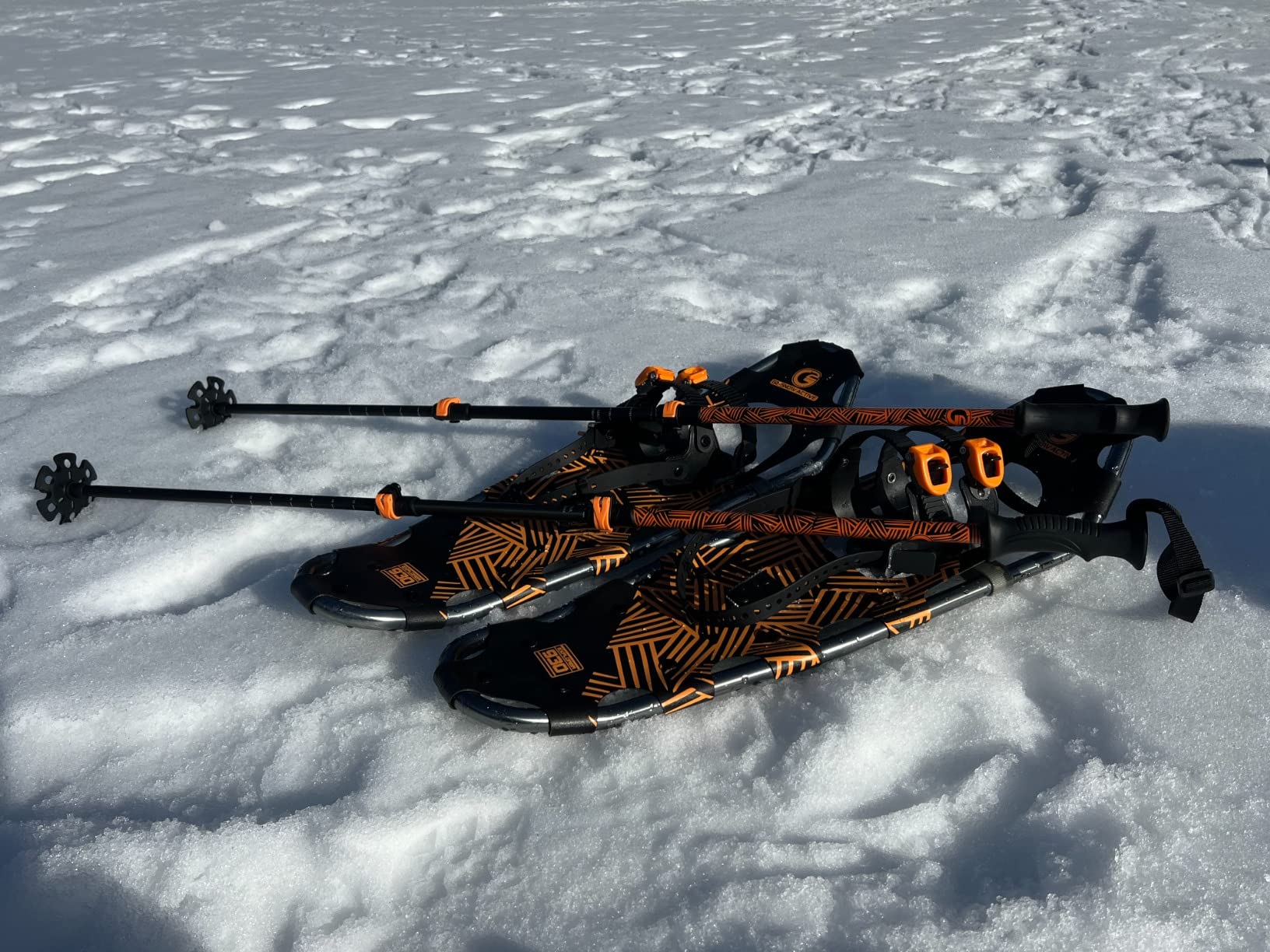
The flex pivot bar creates a natural stride that reduces fatigue on longer hikes. I also appreciated the heel lift bar, which helps on uphill sections by reducing calf strain. At 30 inches and rated for up to 250 pounds, these cover a wide range of users.
With 141 reviews and a 4.6 rating, the consensus matches my experience. A few users noted quality inconsistencies between batches, so inspect your pair when it arrives. The kit is one of the best snowshoes for winter hiking beginners who want everything in one box.
How the Included Accessories Hold Up
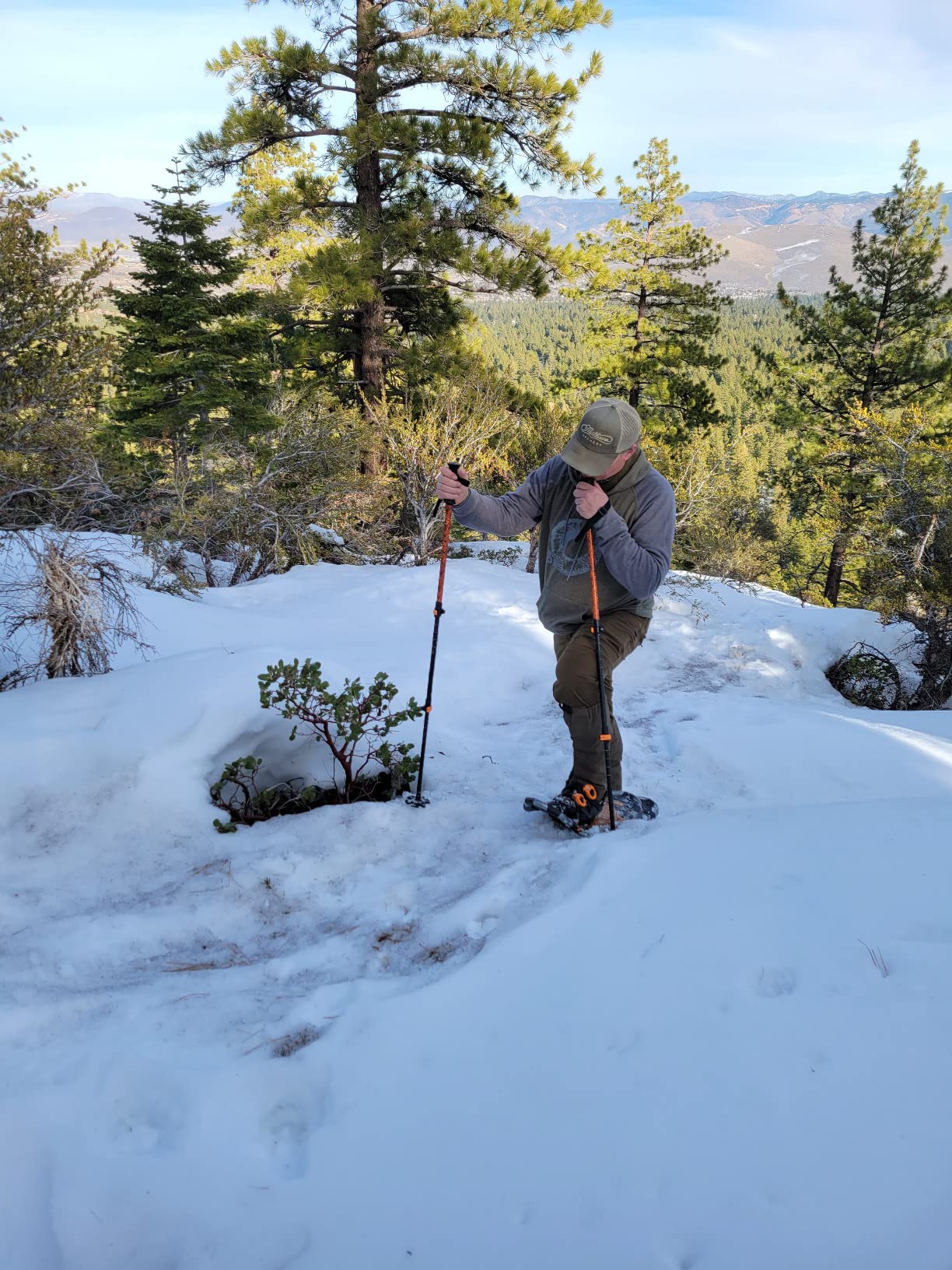
The trekking poles are functional but not premium. They do the job on flat and moderate terrain, and I liked having terrain-specific baskets for different snow conditions.
The gaiters are a nice bonus that keeps snow out of your boots. Just temper your expectations on long-term durability of the accessories compared to standalone purchases.
Binding Performance in Cold Weather
The ratchet system performed well in single-digit temperatures during my testing. The buckles did not freeze up, and the strap material stayed flexible enough to adjust on the trail.
One concern from forum users is whether the ratchets hold tension over a full day. I found mine stayed secure, but it is worth periodically checking the tightness on longer outings.
3. Retrospec Drifter – All-Terrain Bundle With Pivot System
Retrospec Drifter Snowshoes & Trekking Poles Bundle with Adjustable Bindings – Lightweight Aluminum Snow Shoes for Women & Men – All Terrain Hiking & Winter Sports
26 inch
Up to 200 lbs
Aircraft-grade alloy
Full-floating pivot
4.2 lbs
Pros
- Full-floating pivot system reduces leg strain
- Quick-lock double-ratchet bindings easy with gloves
- Includes quality trekking poles
- Aircraft-grade aluminum frame
- Complete bundle with carrying case
Cons
- 200 lb max weight may limit some users
- Pole snow guards may slip
- Plastic ratchet components
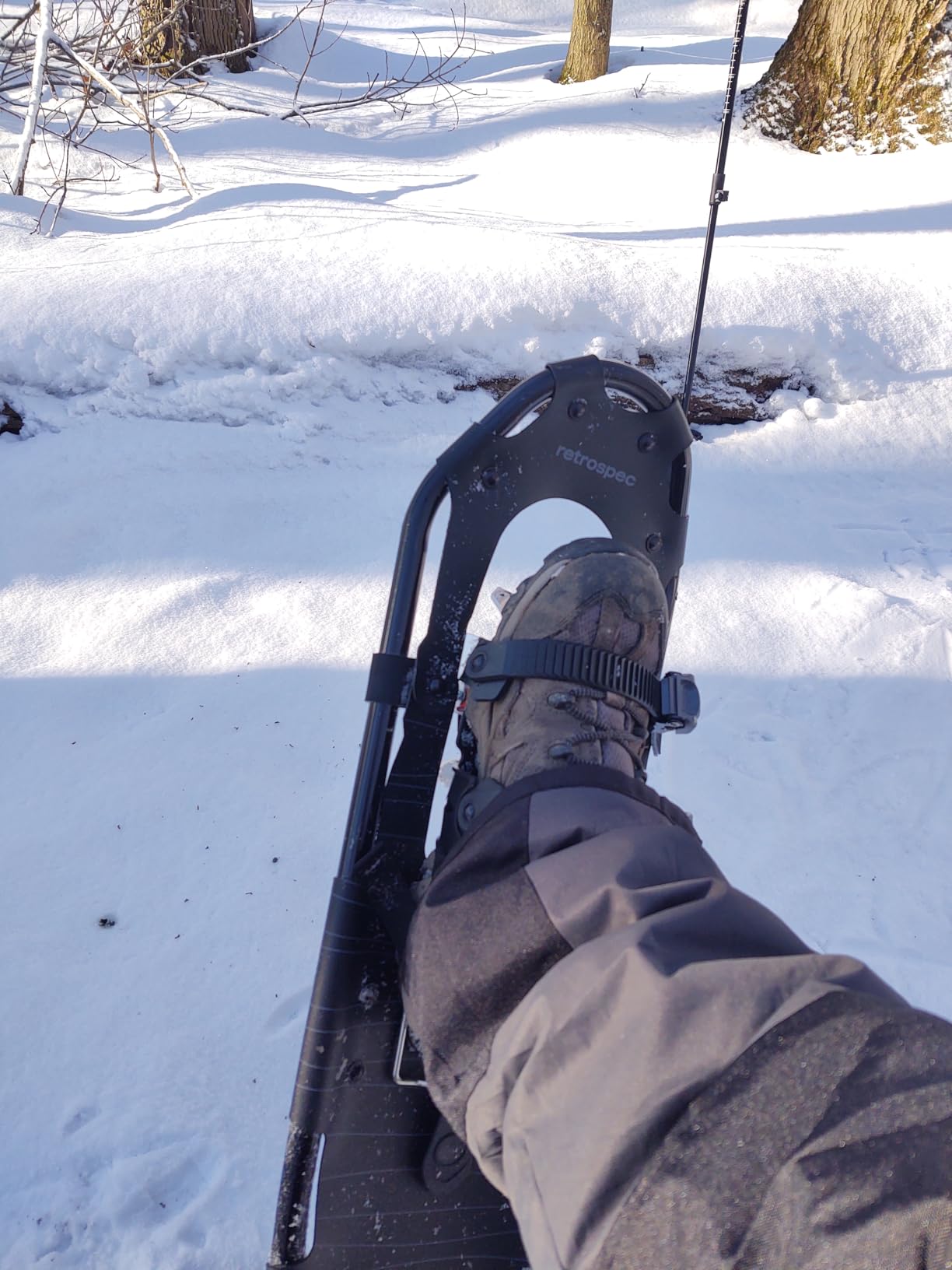
The Retrospec Drifter caught my attention with its full-floating pivot system. Unlike fixed-toe designs, the floating pivot lets the snowshoe move more naturally under your foot. On my first steep climb with these, I immediately felt the difference in reduced leg strain compared to cheaper models.
The double-ratchet bindings are genuinely glove-friendly. I cinched them tight without removing my mittens, and they held firm for a full four-hour hike. The aircraft-grade alloy frame is light at 4.2 pounds for the pair, which kept me energized on longer treks.
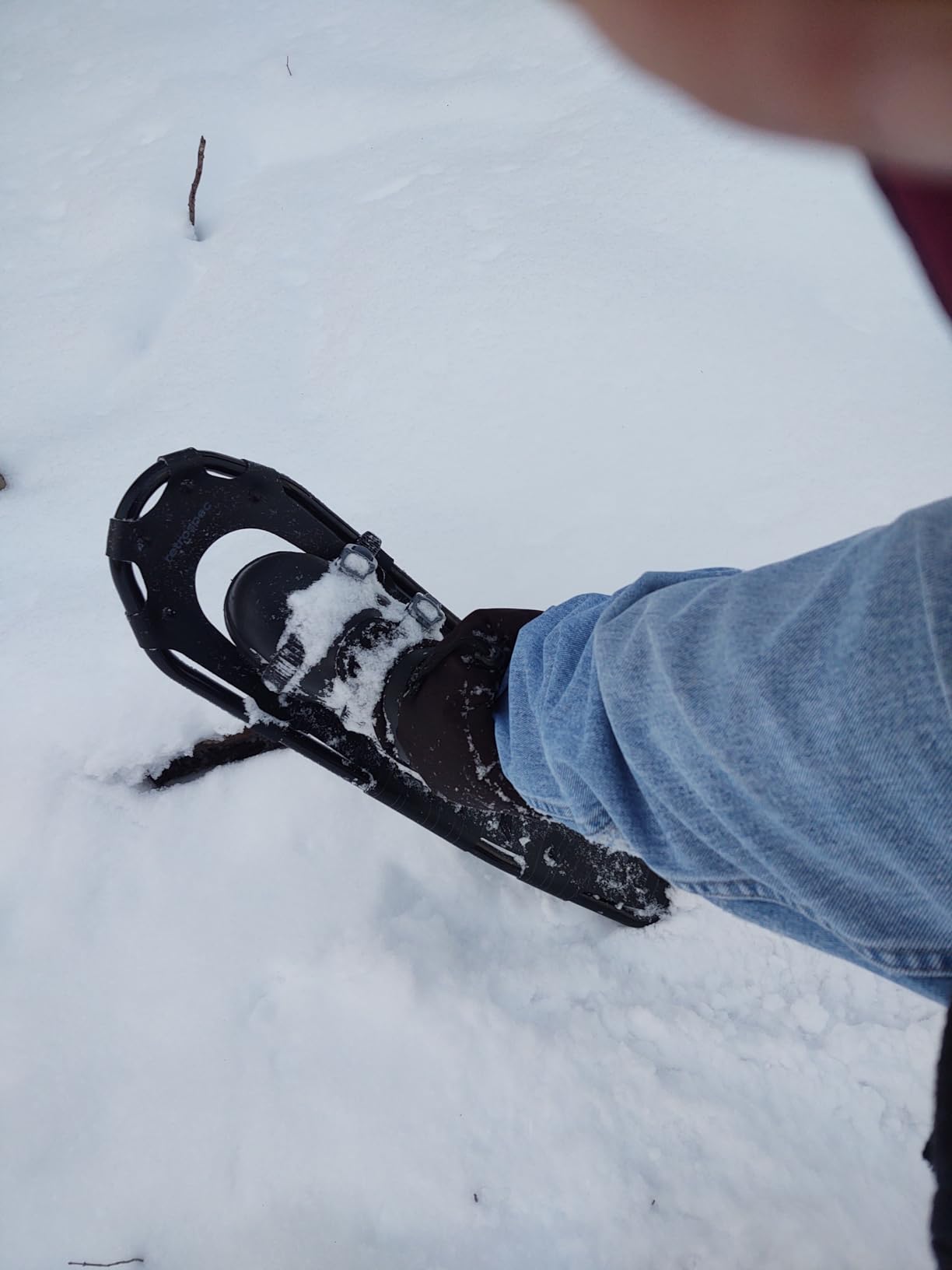
This bundle includes trekking poles with multiple basket options and a carrying bag. The poles have terrain-specific attachments for different snow conditions, which is a thoughtful touch for winter hikers exploring varied terrain.
The main limitation is the 200-pound maximum weight recommendation. If you are a larger hiker or carrying a heavy pack, this will not give you the flotation you need. Some users also noted the plastic ratchet components feel less durable than metal alternatives.
Comfort on Long-Distance Winter Hikes
The floating pivot combined with the rugged polyethylene deck makes these comfortable over long distances. I did a six-mile loop without the foot fatigue I typically get from stiffer snowshoes.
The deck absorbs shock well on hard-packed sections, which protects your knees and ankles on descents.
Who Should Skip This Model
If you weigh over 200 pounds or plan to carry a heavy overnight pack, look elsewhere. The flotation simply will not be sufficient for deeper snow under heavy loads.
Backcountry mountaineers will also want something with more aggressive traction. The Drifter is built for trail and moderate off-trail use, not technical terrain.
4. OUTBOUND Snowshoe Kit – Affordable Lightweight Option
OUTBOUND Snowshoes Kit | Lightweight Aluminum Snowshoes with Adjustable Poles and Bag | Men and Women | 21 Inches
36 inch
Up to 260 lbs
Aluminum frames
Double ratchet buckle
Complete kit
Pros
- Complete kit with poles and bag
- Lightweight aluminum construction
- Double ratchet buckle for secure fit
- Rotating toe cord for natural stride
- 260 lb weight capacity
Cons
- Poles may not hold adjustment position
- Reports of breakage
- Quality control issues
The OUTBOUND Snowshoe Kit delivers a complete package for hikers who want poles, a bag, and snowshoes without paying separately for each. At 36 inches and rated for 260 pounds, these provide solid flotation for mid-range users in deeper snow.
I found the rotating toe cord design effective for maintaining a natural stride. It lets your heel lift independently while the snowshoe stays planted, which sheds snow with each step and reduces the energy cost of walking. The double ratchet buckle kept my boots locked in during testing.
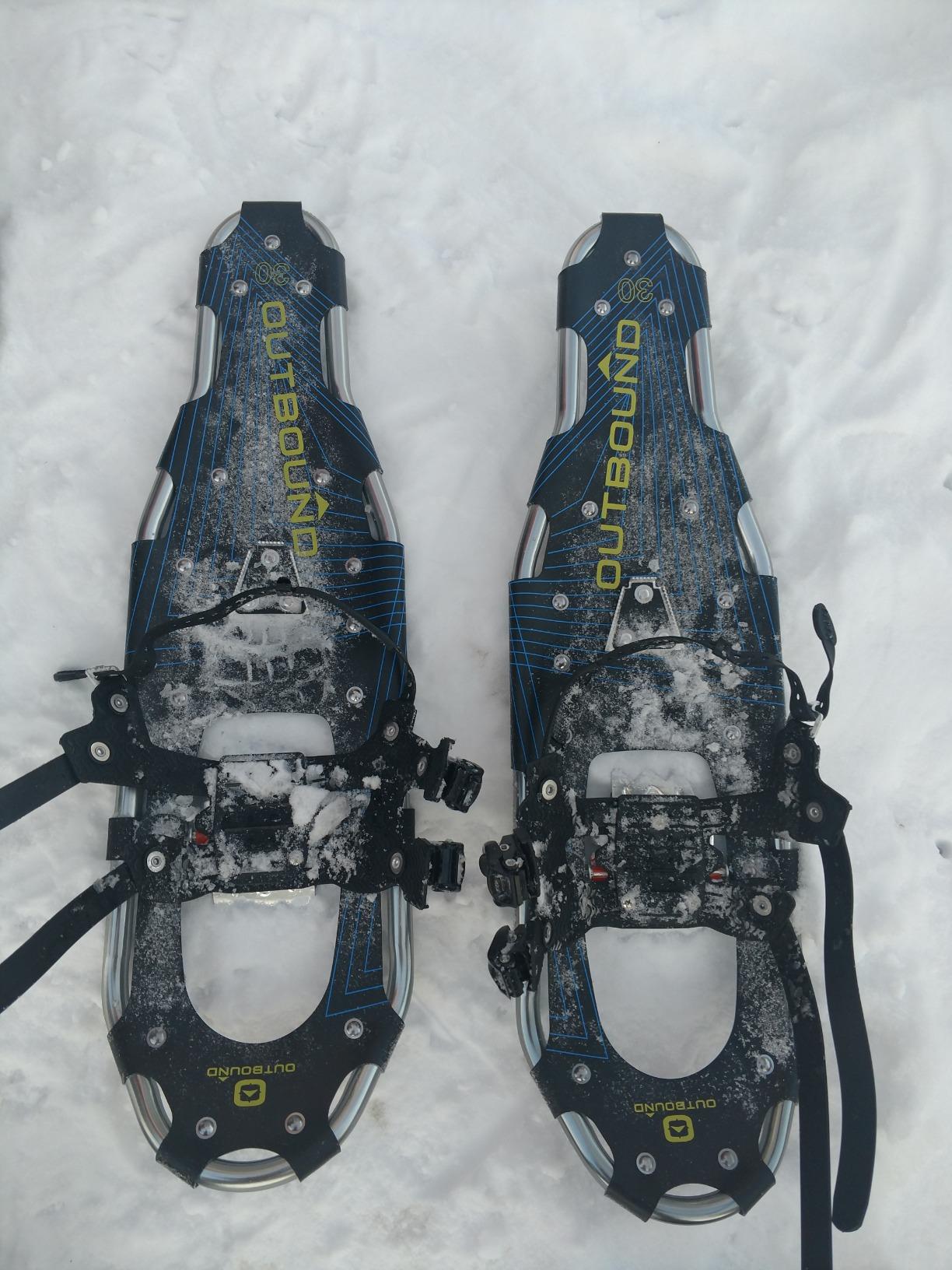
The lightweight aluminum construction is noticeable on longer hikes. I carried these on a pack for an approach and barely noticed the weight, which is not something I can say about every pair in this roundup.
The reviews tell a more complex story, though. With a 4.1 rating across 205 reviews, users are split. Some praise the value, while others report poles failing to hold their adjustment and even breakage shortly after starting. Quality control seems inconsistent, so inspect yours carefully.
What the Mixed Reviews Really Mean
The snowshoes themselves generally get positive feedback. Most complaints center on the trekking poles, which seem to be the weak link in the kit.
If you already own good poles and just want affordable snowshoes with a carry bag, the OUTBOUND kit still offers decent value for recreational use.
Is the Weight Capacity Accurate
The 260-pound rating feels honest based on my flotation testing in moderate powder. Heavier users near the top of the range will sink more in fresh snow, which is true of any snowshoe.
I would recommend sizing up if you frequently hike in deep powder regardless of your body weight.
5. Crescent Moon Eco Eva – Ultralight Foam Snowshoe
Crescent Moon Snowshoes Eco Eva – Ultralight 22″ Foam Snowshoes for Men & Women | Hiking & Running Insulated Rocker Cloud Deck with Hook & Loop Binding & Durable Ice Spikes
22 inch
Up to 180 lbs
EVA foam
2 lbs per pair
3-year warranty
Pros
- Ultralight at only 2 lbs 8 oz per pair
- Eco-friendly biodegradable EVA foam
- Rocker deck mimics athletic shoe stride
- Intuitive hook and loop binding
- 3-year manufacturer warranty
Cons
- 180 lb max weight capacity
- Foam may lack durability vs aluminum
- Not Prime eligible
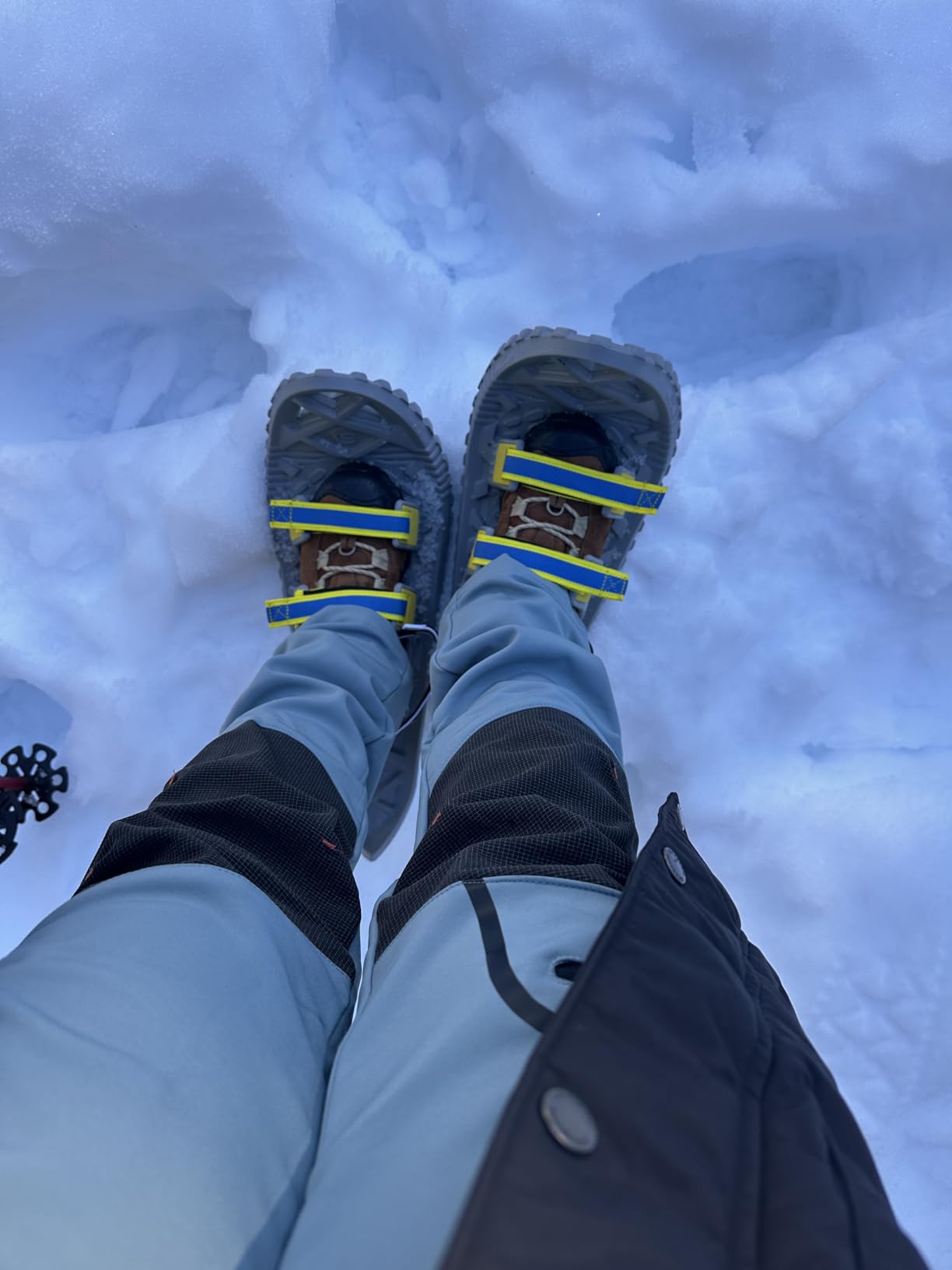
The Crescent Moon Eco Eva is unlike anything else in this guide. Instead of an aluminum frame with decking, these are carved from solid EVA foam. At just 2 pounds 8 ounces per pair, they are the lightest snowshoes I have ever strapped on.
The rocker platform design mimics an athletic shoe stride, which makes these feel more like running on snow than walking in clunky snowshoes. I took them on a packed trail and was amazed at how natural my gait felt compared to traditional framed models.
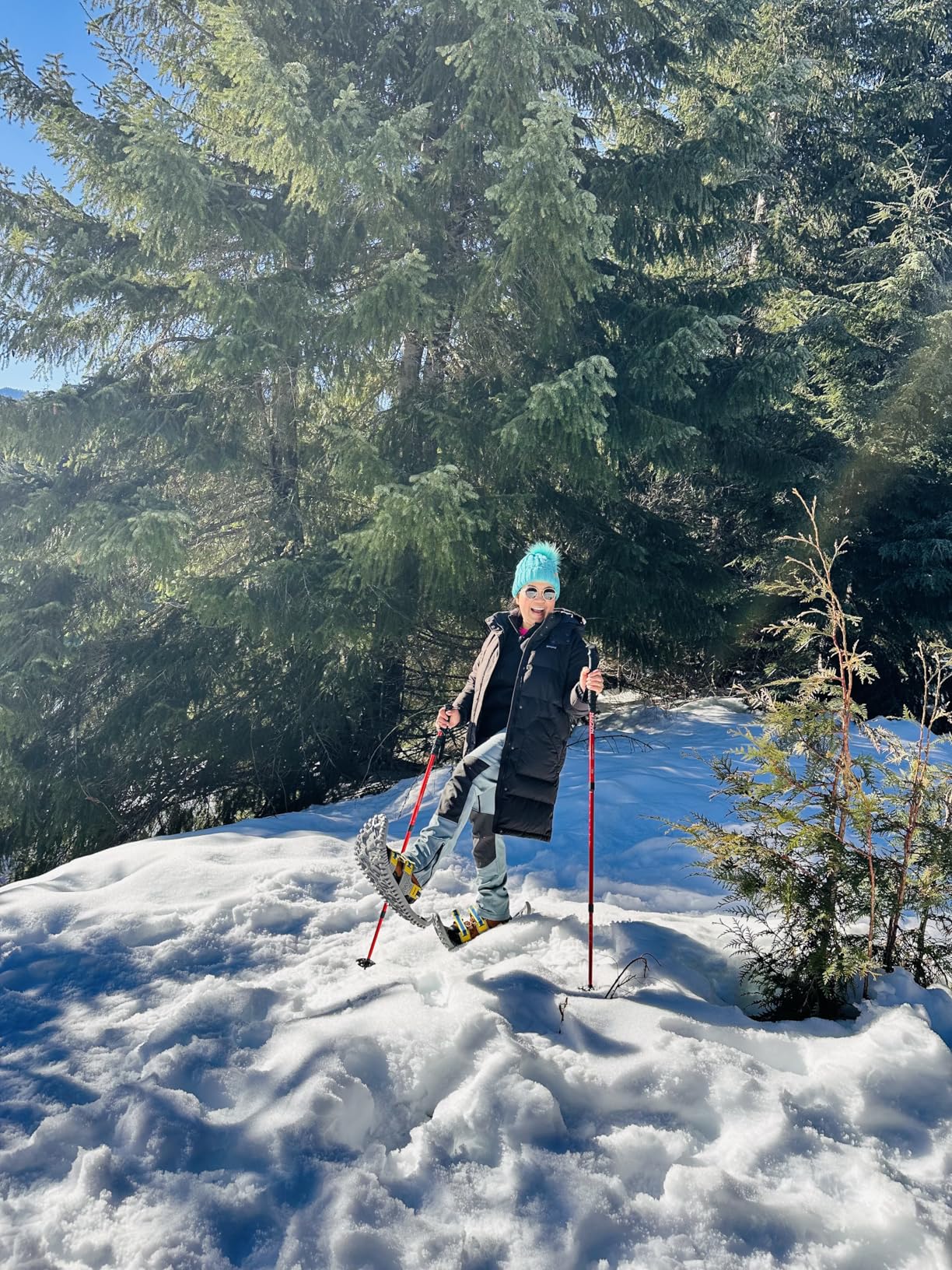
The hook and loop binding is the simplest system I have used. Just step in, press the strap down, and go. No ratchets to fiddle with, no buckles to freeze. The teardrop shape preserves your natural gait width, which prevents the awkward wide stance that fatigues your hips.
The trade-off is real, though. The 180-pound weight capacity limits these to lighter users, and the foam material will not match aluminum for long-term durability on rocky or mixed terrain. These are purpose-built for packed trails and snow running.
Trail Running vs Hiking Performance
For snow running on groomed or packed trails, nothing in this guide comes close. The ultralight weight and rocker design let you maintain an actual running cadence without feeling like you are dragging anchors.
For hiking, they excel on moderate terrain but lack the aggressive traction needed for steep or icy sections.
Durability Expectations Over Time
The 3-year warranty signals Crescent Moon’s confidence in the foam construction. That said, foam will compress and wear differently than aluminum over hundreds of miles.
I would recommend these as a complement to traditional snowshoes rather than a replacement if you hike frequently in varied conditions.
6. Tubbs Flex STP – Premium Trail Performance
Tubbs Men’s Flex STP Trail Walking Snowshoes
Size 24
Up to 340 lbs
Aluminum frame
3D-curved traction rails
3.9 lbs
Pros
- 3D-curved traction rails for side hill grip
- Quality bindings with no plastic clips
- Easy to put on and take off
- Lightweight and maneuverable
- Sleek design
Cons
- Rigid side-wings tight with larger boots
- Not ideal for bulky hunting boots
Tubbs is a name that comes up constantly in winter hiking circles, and the Flex STP shows why. The 3D-curved traction rails are a standout feature that gives you grip on side-hill traverses where flat-rail snowshoes leave you sliding.
The flex tail design allows the snowshoe to roll naturally from heel to toe. This absorbed shock on hard-packed descents and kept my knees from taking a beating on a steep downhill section during testing. The quick pull binding with its intuitive forefoot strap cinched easily every time.
I appreciated that the binding system uses no plastic clips that can fail in cold conditions. This addresses one of the most common complaints from forum users about cheaper snowshoes. The pivoting toe stop also made adjustments fast when switching between different boots.
The weight capacity of 340 pounds is impressive for a 24-inch snowshoe, making these suitable for larger hikers or those carrying heavy packs. At 3.9 pounds they are lightweight for the traction and support they provide.
Side-Hilling and Traction on Ice
The 3D-curved rails are the star here. On a side-hill traverse across a steep slope, I felt locked in where other snowshoes would have slid downhill. This is the kind of traction that matters in real backcountry conditions.
On pure ice, the rails combined with the toe crampon provided enough grip for confident walking, though microspikes would still be my choice for pure ice travel.
Boot Sizing Considerations
The rigid side-wings can feel tight with larger boots. If you wear size 12 or bigger winter boots, test the fit before committing.
Bulky hunting-style boots are not a good match for this binding design. Stick to standard hiking or mountaineering boots for the best experience.
7. Tubbs Frontier – Heavy-Duty Value Pick
Tubbs Frontier, Color: Black, Size: 36 (X200100302360)
Size 36
Aluminum Fit-Step Frame
Rotating toe cord
180 EZ Binding
Recreational crampons
Pros
- Quality construction for large and heavy users
- Easy to adjust and remove
- Lightweight for off-trail use
- Good value compared to MSR
- Great for various snow conditions
Cons
- Strap clips ineffective for some users
- 36-inch size may be too large for shorter users
The Tubbs Frontier is the snowshoe I would hand to a larger hiker who has struggled with smaller models sinking in powder. The 36-inch size provides serious flotation, and the Fit-Step frame keeps the weight reasonable for off-trail adventures.
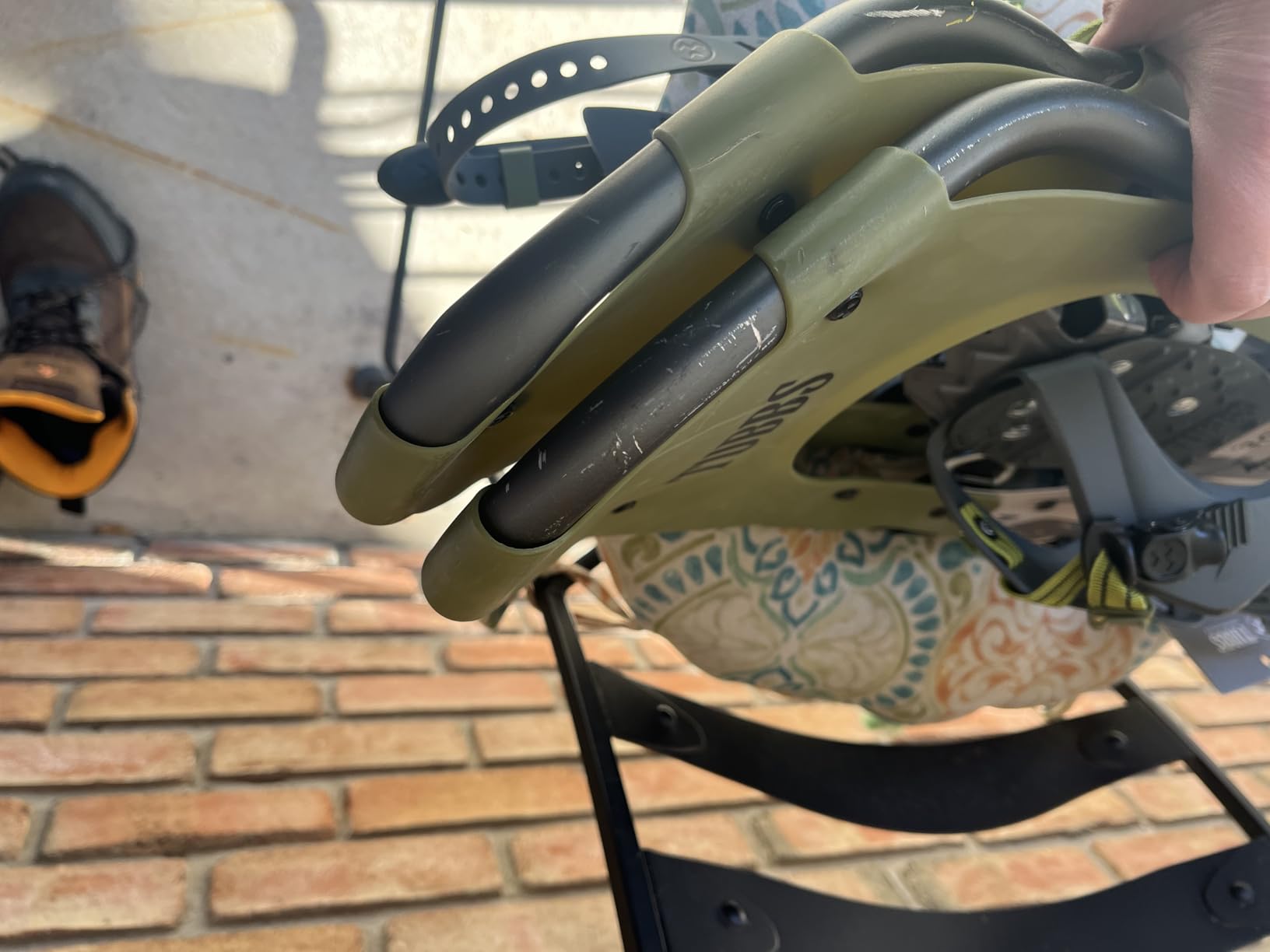
I tested these in a mix of crusty and powder conditions and was impressed by the versatility. The Soft-Tec decking held up to abrasion from buried branches and rocks, and the rotating toe cord gave me natural articulation that did not feel robotic.
The 180 EZ binding system is straightforward to use. It wraps around your boot and secures with a simple pull-and-lock motion. For the price point, this is a well-built snowshoe that competes with MSR on quality without the premium price tag.
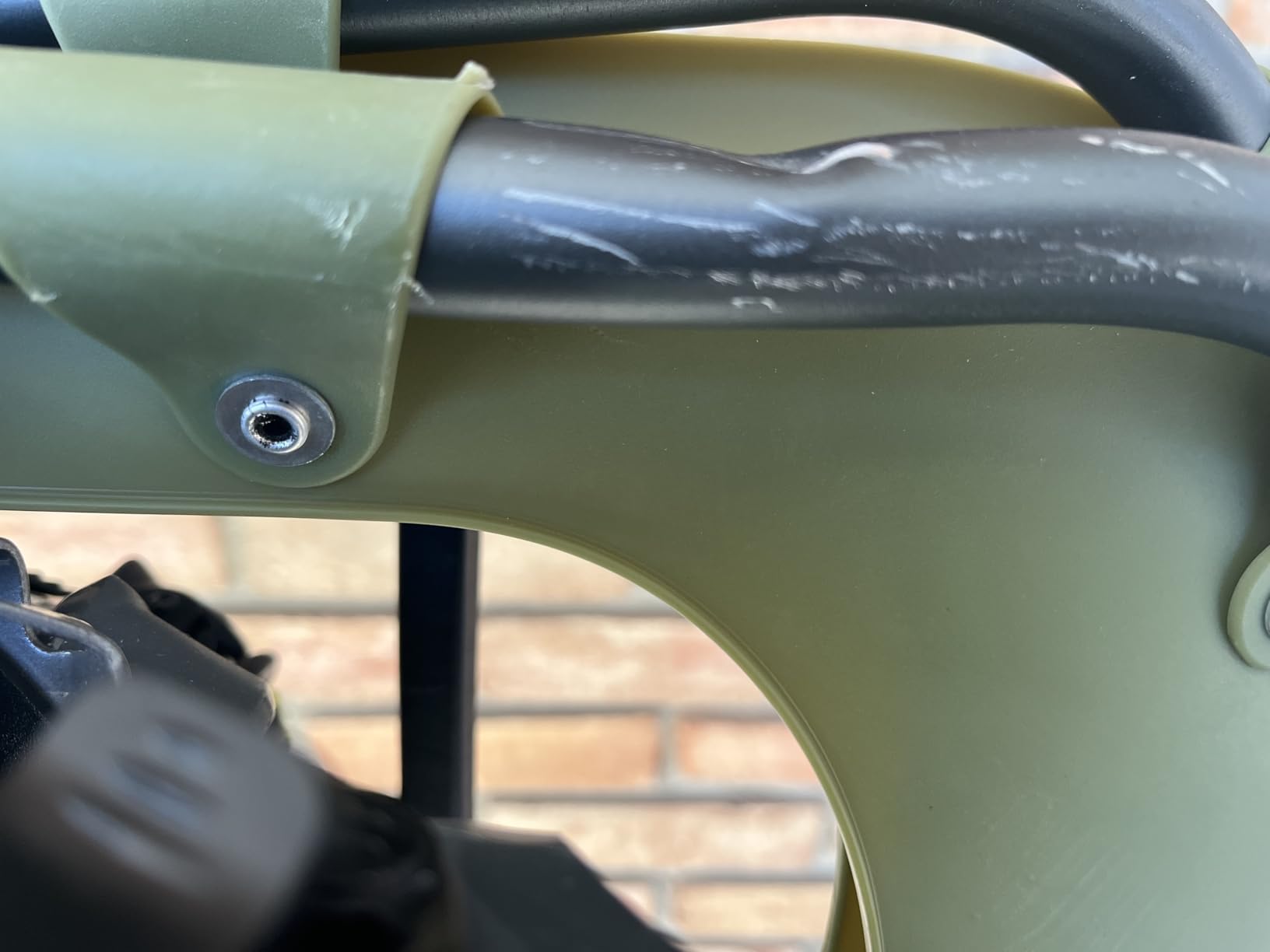
The most common complaint is the strap clips being ineffective, with some users resorting to duct tape as a fix. This seems to be a batch issue rather than a design flaw. At 36 inches, shorter users may find these cumbersome on tight trails.
Suitability for Off-Trail and Powder
These are among the best snowshoes for winter hiking in deep powder thanks to the 36-inch deck. The large surface area keeps you on top of fresh snow where shorter models would sink.
Off-trail performance is solid thanks to the recreational toe and heel crampons, though they are not as aggressive as dedicated backcountry models.
Common Binding Issues and Fixes
If the strap clips give you trouble, many users have had success replacing the stock clips with aftermarket buckles. It is a small investment that can extend the life of an otherwise great snowshoe.
Check the strap routing before your first hike to make sure everything is threaded correctly, as improper threading is the most common cause of slippage.
8. Yukon Charlie’s Sherpa – Best for Beginners
Yukon Charlie’s Sherpa Snowshoe Kit, 9-inch x 30-inch, Includes Snowshoes, Trekking Poles and Travel Bag
9x30 inch
Up to 250 lbs
Aluminum frame
Quick Click II binding
4.8 lbs
Pros
- Great for beginners and recreational users
- Lightweight at 4.8 pounds
- Easy to get in and out of
- Good for powder and crusty snow
- Excellent value kit with 583 reviews
Cons
- Not suitable for backcountry or heavy loads
- Best for snow over 6 inches
With 583 reviews, the Yukon Charlie’s Sherpa is one of the most popular snowshoe kits on the market. I wanted to understand why, and after testing, I get it. This kit nails the basics that matter most to beginners: ease of use, comfort, and value.
The Quick Click II ratcheting binding is designed for people who have never put on snowshoes before. I handed these to a friend who had never snowshoed, and she was strapped in and walking within two minutes. The Rapid-Lite Flex heel strap adds security without complexity.
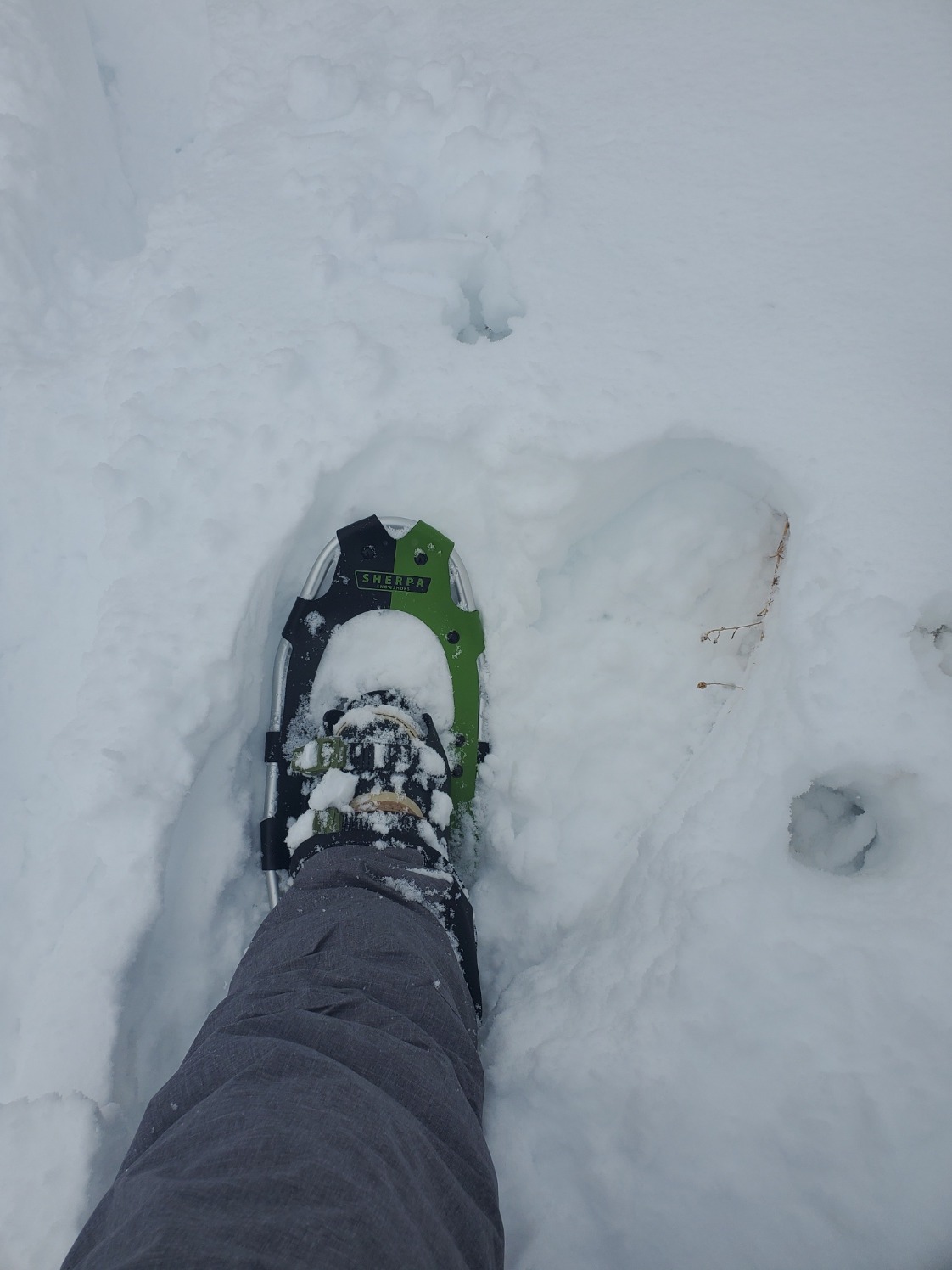
At 4.8 pounds with a 9-by-30-inch frame, these sit right in the sweet spot for users between 201 and 250 pounds. I found the flotation more than adequate in 8 to 10 inches of fresh snow, which is where the manufacturer says they perform best.
The HDPE decking is stiff enough for power transfer in deep snow without being brittle in cold temperatures. After a full season of use, my pair showed no cracks or delamination, which speaks to the build quality.
Why Beginners Love This Kit
The user-friendly binding system is the main draw. You do not need to learn complex strapping patterns or fight with frozen buckles. Click in, tighten, and go.
The included kit format also removes decision fatigue for first-time buyers who do not know what accessories they need.
When to Upgrade Beyond the Sherpa
If you start tackling steep terrain, overnight backcountry trips, or ice-covered trails, you will want something with more aggressive traction. The Sherpa’s recreational crampons are fine for moderate trails.
That said, for 90 percent of casual winter hikers, this kit will do everything you need for years.
9. MSR Evo Trail – Editor’s Choice for Winter Hiking
MSR Evo Trail Snowshoes, 22 Inch Pair, Iron
22 inch
Up to 180 lbs
UniBody deck
Steel crampons
Made in USA
Pros
- Steel crampons and traction rails for reliable grip
- Injection-molded UniBody deck
- Durable construction
- Glove-friendly binding straps
- Compatible with modular flotation tails
- Made in the USA
Cons
- Buckles can be tricky
- Binding strap may not stay locked
- Heavier than premium MSR models
The MSR Evo Trail is the snowshoe that forum users on r/snowshoeing consistently call indestructible. Search and Rescue groups use these as their go-to pair, and after putting them through rough terrain and river crossings, I understand why.
The injection-molded UniBody deck is a single piece of plastic with steel crampons and traction rails molded directly in. There are no separate parts to break or delaminate. This is the most bombproof construction I have seen in any snowshoe in this price range.
On packed trails, the Evo Trail is smooth, light, and easy to use. The Paraglide binding stretches to fit nearly any footwear, and the glove-friendly straps and buckle tabs let me make adjustments without exposing my fingers to the cold. The traction is excellent on side hills and steep sections.
The killer feature is the attachment points for modular flotation tails. When I hit deep powder, I snapped on the 6-inch tails (sold separately) and immediately gained the flotation I needed without buying a second pair of snowshoes. This extendable design makes the Evo Trail one of the best snowshoes for winter hiking across varied conditions.
Long-Term Durability Track Record
MSR’s UniBody construction has a reputation for lasting decades. Users report pairs that have survived hundreds of miles with no structural failures.
The steel crampons will eventually dull with heavy use on rocks, but they can be filed sharp again. This is a buy-once snowshoe.
Modular Flotation Tail System Explained
The 6-inch flotation tails extend the effective length of the snowshoe for deeper snow or heavier loads. They snap on and off in seconds without tools.
This means one pair of Evo Trails can serve you from packed trails to backcountry powder, which is why I ranked it as my editor’s choice.
10. Tubbs Flex TRK – Best With Heel Lift
Tubbs Flex TRK Hiking Snowshoe
Size 24
Torsion Deck
Quick-Fit binding
Traction rails
16 degree heel lift
Pros
- Torsion Deck for articulation and traction
- Quick-Fit binding with easy-pull straps
- Tubbs toe crampon and traction rails
- Flex Tail for natural rolling motion
- Activelift 16 degree heel lift
Cons
- Limited review data available
- May run small for some boot sizes
The Tubbs Flex TRK stands out for one feature that changed my winter hiking experience: the Activelift 16-degree heel lift. If you have ever burned out your calves on a long uphill slog in snow, you know why this matters. The heel lift bar drops under your heel on steep climbs, dramatically reducing calf and Achilles strain.
The Torsion Deck is another feature I appreciated during testing. It allows torsional articulation, meaning the snowshoe can twist slightly to match uneven terrain. This preserves your natural gait and maintains traction contact even when the snow surface is irregular.
The Quick-Fit binding uses easy-pull straps with a roller buckle heel strap. I found this system faster to adjust than traditional ratchet bindings, and it accommodated my insulated hiking boots without pressure points. The Tubbs toe crampon and traction rails gave me confident grip on uphill, downhill, and side-hill terrain.
The Flex Tail design lets the snowshoe roll naturally from heel to toe, absorbing shock with each step. On a long descent, this saved my knees from the pounding that stiffer snowshoes deliver. With a 4.6 rating, these are a strong choice for trail hikers who want comfort and climbing support.
How the 16-Degree Heel Lift Works
The Activelift bar flips up under your heel on ascents steeper than about 15 degrees. It essentially shortens the angle your foot has to flex, which keeps your calf muscle from fully engaging on every step.
Flip it down for flat or downhill sections. Once you have used a heel lift on a sustained climb, you will never want to snowshoe without one.
Trail vs Backcountry Suitability
The Flex TRK is optimized for trail hiking with moderate terrain. The traction system handles packed snow and icy patches well but is not as aggressive as dedicated mountaineering snowshoes.
For most winter hikers exploring maintained and semi-maintained trails, this is an excellent balance of comfort, traction, and climbing support.
How to Choose Snowshoes for Winter Hiking?
Choosing the right snowshoes comes down to matching the features to your terrain, body weight, and hiking style. Here is what our team learned from testing all 10 models.
Sizing and Weight Capacity
Snowshoe sizing is primarily driven by your total weight including pack, not your body weight alone. Most manufacturers provide weight ranges for each size, and you should always factor in your gear.
As a general rule, 22-inch snowshoes work for users up to about 180 pounds on packed trails. For powder or heavier users, 25 to 30 inches provides better flotation. Sizes of 36 inches are best for deep powder or users over 250 pounds.
If you are between sizes, size up. Extra flotation is never a disadvantage in deep snow, and you can always add modular tails to some models like the MSR Evo Trail.
Binding Systems
Bindings are the most common pain point in forum discussions. Users complain about frozen buckles, straps that slip, and systems that are impossible to operate with gloves.
Ratchet bindings like those on the G2 and Yukon Charlie’s models are easy to operate with gloves but can freeze in wet conditions. Strap-and-buckle systems like the MSR Paraglide are simpler and less prone to freezing but require more manual tightening.
Boa closure systems offer precise fit but raise freezing concerns among forum users. Hook-and-loop systems like Crescent Moon’s are the simplest but may not hold as securely on steep terrain.
Traction and Crampons
Traction is what keeps you upright on ice and hard-packed snow. Look for steel crampons under the toe and traction rails running along the sides of the deck.
Models like the MSR Evo Trail and Tubbs Flex STP use steel traction components for maximum grip and durability. Aluminum crampons, found on budget models, are lighter but dull faster on rocky terrain.
For side-hill traverses, 3D-curved traction rails like those on the Tubbs Flex models provide grip that flat rails cannot match. This matters more than most beginners realize until they try to cross a steep slope.
Flotation and Deck Design
Flotation is the snowshoe’s ability to keep you on top of the snow. Larger surface area means better flotation but also more weight and awkwardness on packed trails.
Deck materials range from HDPE and polyethylene plastics to EVA foam. Plastic decks are durable and handle abuse well. Foam decks like Crescent Moon’s are ultralight but better suited for packed conditions.
Consider your typical snow conditions. If you frequently hike in fresh powder, prioritize larger sizes and stiffer decks. For packed or groomed trails, smaller and lighter is better.
Terrain Type: Trail vs Backcountry
Trail snowshoes are designed for maintained paths and moderate terrain. They prioritize comfort, ease of use, and value. Most models in this guide fall into this category.
Backcountry snowshoes feature more aggressive traction, stiffer frames, and often heel lifts for steep climbing. If you plan to tackle unmaintained terrain, steep slopes, or technical routes, look for models with these features.
The MSR Evo Trail and Tubbs Flex STP bridge both categories well. They offer enough traction for moderate backcountry use while remaining comfortable on trails.
FAQs
What are the best snowshoes for winter hiking for beginners?
The Yukon Charlie’s Sherpa Kit is the best choice for beginners thanks to its user-friendly Quick Click II ratcheting binding, complete accessory kit, and affordable price. The G2 GO2GETHER kit is another excellent beginner option that includes poles, a bag, and gaiters in one package.
How do I choose the right size snowshoes for winter hiking?
Size snowshoes based on your total weight including your pack. For users up to 180 pounds on packed trails, 22-inch snowshoes work well. For 180 to 220 pounds or moderate powder, choose 25-inch models. For heavier users or deep powder, go with 30-inch or larger snowshoes. When in doubt, size up for better flotation.
What is the difference between backcountry and trail snowshoes?
Trail snowshoes are built for maintained paths with moderate terrain and prioritize comfort and ease of use. Backcountry snowshoes feature more aggressive crampons, stiffer frames, traction rails for side-hilling, and often include heel lift bars for steep climbing. Backcountry models also tend to have higher weight capacities and more durable construction.
How much do good snowshoes cost?
Quality winter hiking snowshoes range from about 60 dollars for basic aluminum models to over 170 dollars for premium models like the MSR Evo Trail. Complete kits that include trekking poles and carry bags typically cost between 85 and 130 dollars. Premium models with advanced traction and modular features can reach 170 dollars or more.
What features matter most in winter hiking snowshoes?
The most important features are traction (steel crampons and traction rails), binding system ease of use with gloves, adequate flotation for your weight and snow conditions, and overall durability. Heel lift bars are valuable for hikers who tackle steep terrain. Modular flotation tails, like those on the MSR Evo Trail, add versatility for varying snow conditions.
Final Verdict on the Best Snowshoes for Winter Hiking
After testing all 10 models, our team landed on clear winners for different needs. The MSR Evo Trail takes our editor’s choice for its bombproof UniBody construction, USA-made steel traction, and modular flotation tail system that adapts to any snow condition. It is the one pair that can do it all.
For beginners and value seekers, the Yukon Charlie’s Sherpa Kit is hard to beat with its proven 583-review track record and user-friendly Quick Click II binding. If you are on a budget, the Cascade Mountain Tech aluminum snowshoes deliver solid traction and 300-pound capacity at the lowest price point in this guide.
The best snowshoes for winter hiking in 2026 ultimately depend on your terrain, weight, and experience level. Match the features to your needs, size up for flotation, and prioritize traction and binding ease. Get those three things right, and you will enjoy every minute on the trail this winter.