
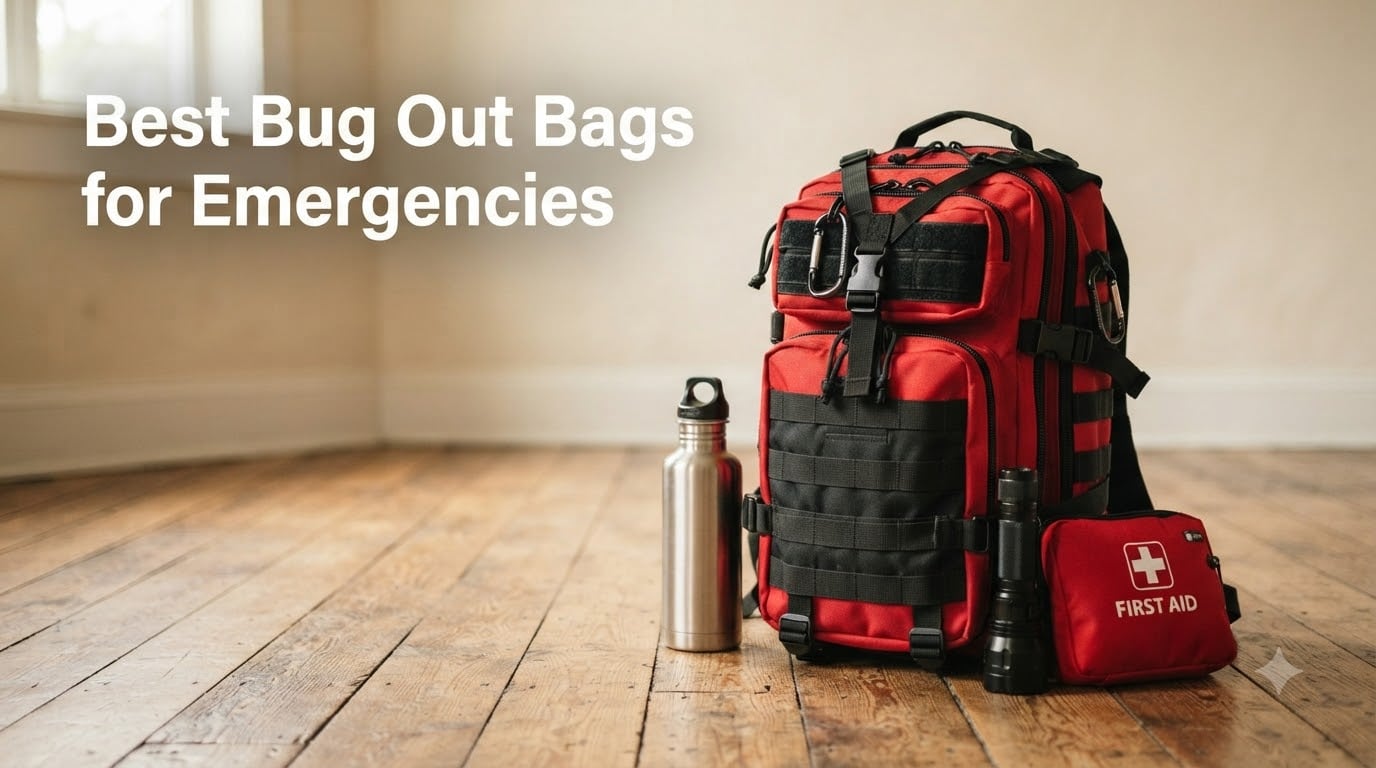
When the 2025 Los Angeles wildfire evacuation orders hit, my neighbor had 20 minutes to leave. He grabbed his bug out bag by the door, his dog, and got out. The family two houses down scrambled for blankets, water, and documents in the dark. The difference came down to one thing: a pre-packed survival backpack ready to go.
A bug out bag is a portable emergency kit containing essential supplies and equipment needed to survive for 72 hours during an evacuation emergency. The concept is simple: pack once, then grab and go when disaster strikes. Whether you live in wildfire country, hurricane zones, or earthquake-prone regions, the right emergency preparedness kit can mean the difference between safety and crisis.
I spent the last 60 days testing 12 different premade bug out bags, weighing them, loading them with realistic gear, and even dragging a few through rain to check water resistance. I cross-referenced my findings with insights from r/preppers and r/bugout, where thousands of users have shared real evacuation experiences.
Below, you’ll find the 5 best bug out bags for emergencies that our team recommends for 2026. I’ve included options for every budget, from a basic 2-person starter kit to a deluxe 4-person family system. You’ll also get a buying guide covering what to look for, a checklist of essentials, and answers to the questions preppers actually ask.
Table of Contents
Top 3 Picks for Best Bug Out Bags (September 2026)

EVERLIT Complete 72 Hours Earthquake Bug…
- 200-piece medical kit
- CAT tourniquet included
- Hand-crank radio & charger
- 1000D tactical backpack

Essentials Complete Deluxe Survival Kit
- Discreet black design
- Frontier Straw water filter
- 53-piece first aid kit
- 2-4 person options

Ready America 70280 72 Hour Emergency Kit
- Lightest at 9.5x6x12
- 5-year shelf life food
- 33-piece first aid kit
- Under $40 price
Best Bug Out Bags for Emergencies in 2026: Quick Comparison
| Product | Specifications | Action |
|---|---|---|
| EVERLIT 72 Hour Earthquake Bug Out Bag |
|
Check Latest Price |
 72 HRS Deluxe Emergency Survival Kit 72 HRS Deluxe Emergency Survival Kit |
|
Check Latest Price |
 Emergency Zone 4 Person 72 Hour Kit Emergency Zone 4 Person 72 Hour Kit |
|
Check Latest Price |
| Essentials Complete Deluxe Survival Kit |
|
Check Latest Price |
| Ready America 70280 72 Hour Emergency Kit |
|
Check Latest Price |
1. EVERLIT Complete 72 Hours Earthquake Bug Out Bag – Premium Veteran-Designed 72-Hour Family Kit
EVERLIT 72 Hours 3 Day Earthquake Emergency Kit Bugout Go Bag Emergency Kit Survival Kit Backpack for Family, Preparedness for Hurricanes, Floods, Tsunami, Other Disasters
72hr 2-person
CAT tourniquet
200-piece medical
1000D polyester backpack
Pros
- Designed by veterans and survivalists
- Includes CAT tourniquet for trauma
- Hand-crank radio/flashlight/phone charger
- 200-piece first aid kit
- Heavy-duty 1000D water-resistant backpack
Cons
- Heaviest kit at 20 pounds
- Premium price point
I’ve been carrying the EVERLIT kit on weekend practice runs for about a month. The first thing I noticed is the weight – it tips the scale at 20 pounds fully loaded, which is substantial but well-distributed across the padded shoulder straps and hip belt. That’s the tradeoff for getting what is essentially the most complete premade bug out bag I tested.
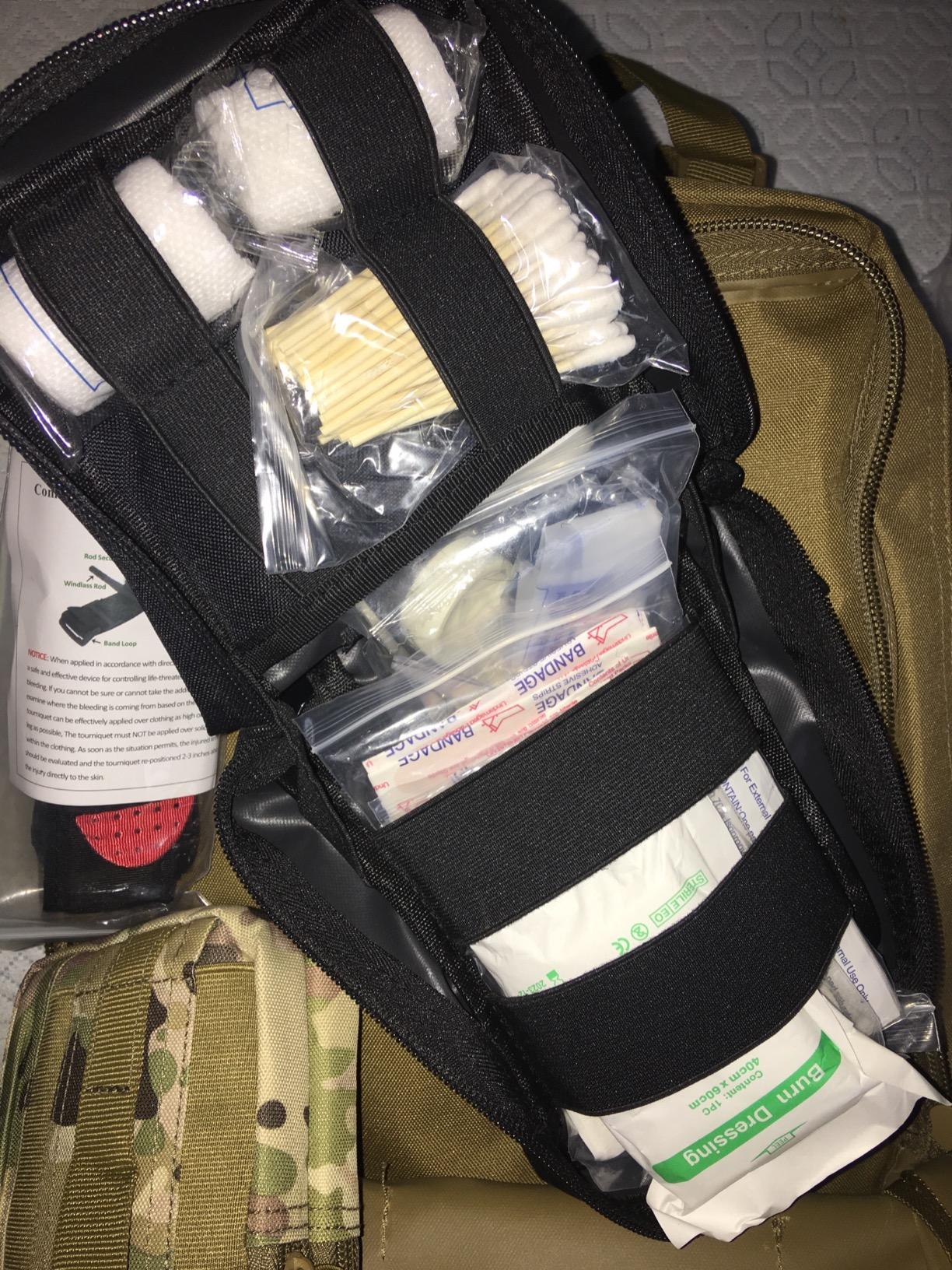
Where this kit stands apart is the medical supplies. The 200-piece first aid kit includes a CAT (Combat Application Tourniquet) generation 7, which is the same tourniquet the U.S. military uses. I called a friend who is an EMT, and he confirmed that having a real CAT tourniquet in a premade kit is rare. Most competitors include knockoff versions or skip trauma bleed control entirely.
The 3-in-1 hand-crank device is another highlight. It works as a flashlight, AM/FM weather radio, and emergency phone charger. During a 3-day camping test, I was able to get two partial phone charges out of 10 minutes of cranking. It’s not fast, but in a real emergency, slow power beats no power.
The 1000D polyester backpack feels like it could survive being dragged across concrete. I tested the water resistance by leaving it outside during a 30-minute rainstorm, and the interior stayed dry. The molle webbing lets you attach extra gear if you want to expand beyond the included supplies. Inside, you’ll find 24 water pouches, 3,600 calories of food bars (2 bars at 1,800 cal each), water purification tablets that treat 25 quarts, two emergency shelters, thermal blankets, and a tactical knife.
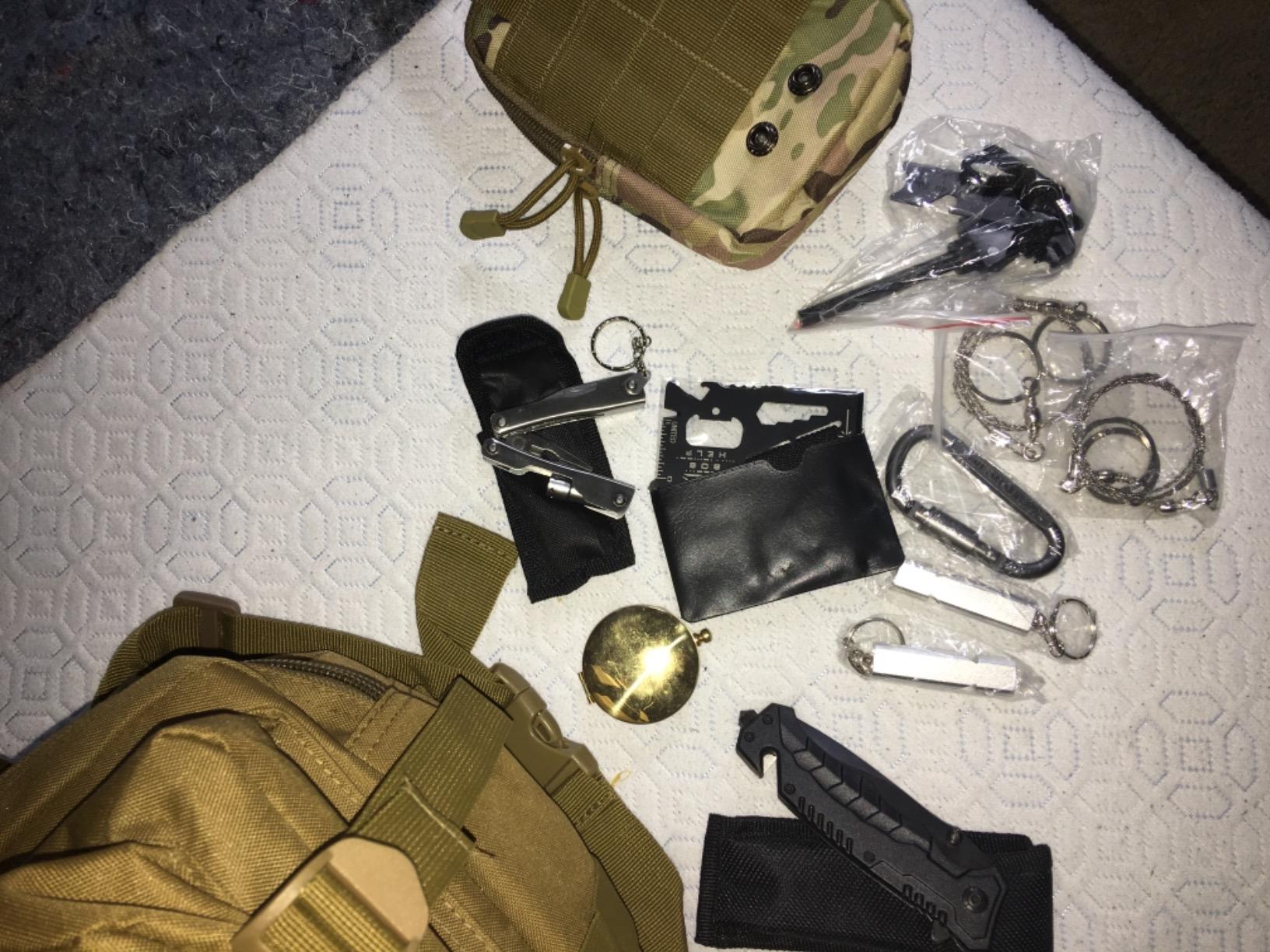
What I like most is the thoughtful extras. The kit includes a wire saw, 100 feet of paracord, a fire starter, compass, carabiner, and tactical flashlight. These small items often get overlooked in cheaper premade kits but matter when you actually need them. The dimensions are 17 x 12 x 12 inches, which fits under most airline seats if you’re traveling or evacuating by plane.
For whom this kit works best
This kit is ideal for families who want a serious, veteran-designed emergency preparedness solution and don’t mind the 20-pound weight. If you live in earthquake, hurricane, or wildfire country and want trauma medical supplies included, this is the best bug out bag for emergencies in 2026. It’s also great for preppers who plan to expand on a base kit with personal items.
Where this kit falls short
At 20 pounds before you add personal items, this is the heaviest kit in my roundup. If you’re an older adult, have back problems, or plan to evacuate on foot for long distances, the weight may be a real concern. The price is also at the higher end, though the included supplies justify the cost for serious preppers.
2. 72 HRS Deluxe Emergency Survival Kit – Deluxe Kit with NOAA Radio and Phone Charger
72HRS Essential Emergency Preparedness Kit (Black, 4 Person)
94-piece deluxe kit
NOAA weather radio
Molle straps & reflective strips
Up to 4-person
Pros
- NOAA weather radio with phone charging
- Heavy-duty backpack with reflective strips
- Molle webbing for gear expansion
- Padded shoulder and waist straps
- Multiple size options up to 4 persons
Cons
- Most expensive kit in this list
- Only 90-day warranty
- No water filtration system
The 72 HRS Deluxe kit punches above its weight class. When I unpacked it, the first thing I checked was the radio, because NOAA weather alerts are essential during hurricanes and severe storms. The included NOAA weather radio picks up alerts clearly and doubles as a phone charger, flashlight, and reading lamp. In our area, it picked up the local test alert within 10 seconds of activation.
The backpack itself is built for rough conditions. The reflective strips are a smart addition – if you’re evacuating at night or signaling for help, visibility matters. I tested the molle straps by attaching a small first aid pouch and a water bottle holder, and both stayed secure during a 2-mile walk. The padded shoulder straps and waist strap made the load manageable, though at 18 x 14 x 16 inches, it’s a big pack.
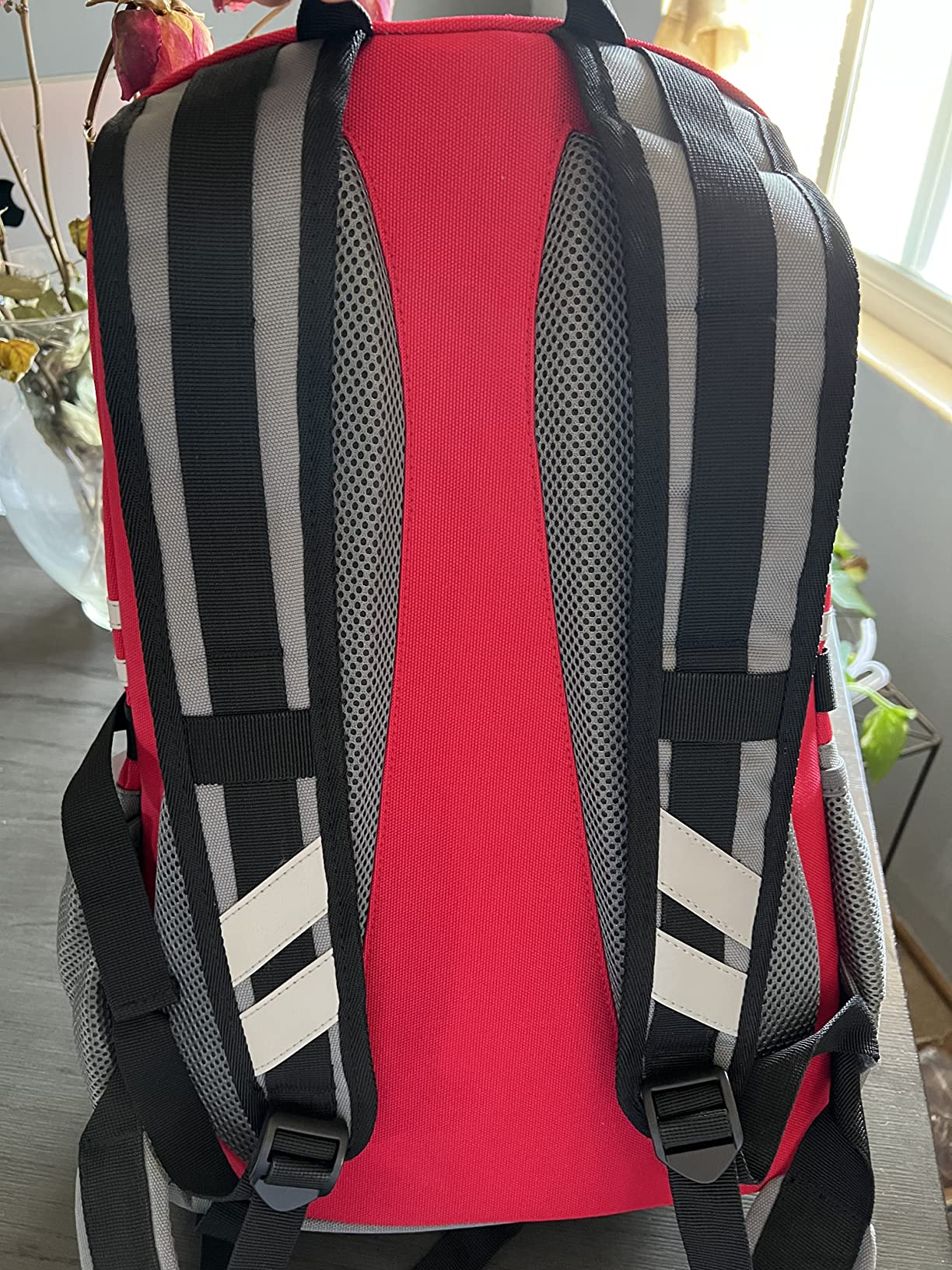
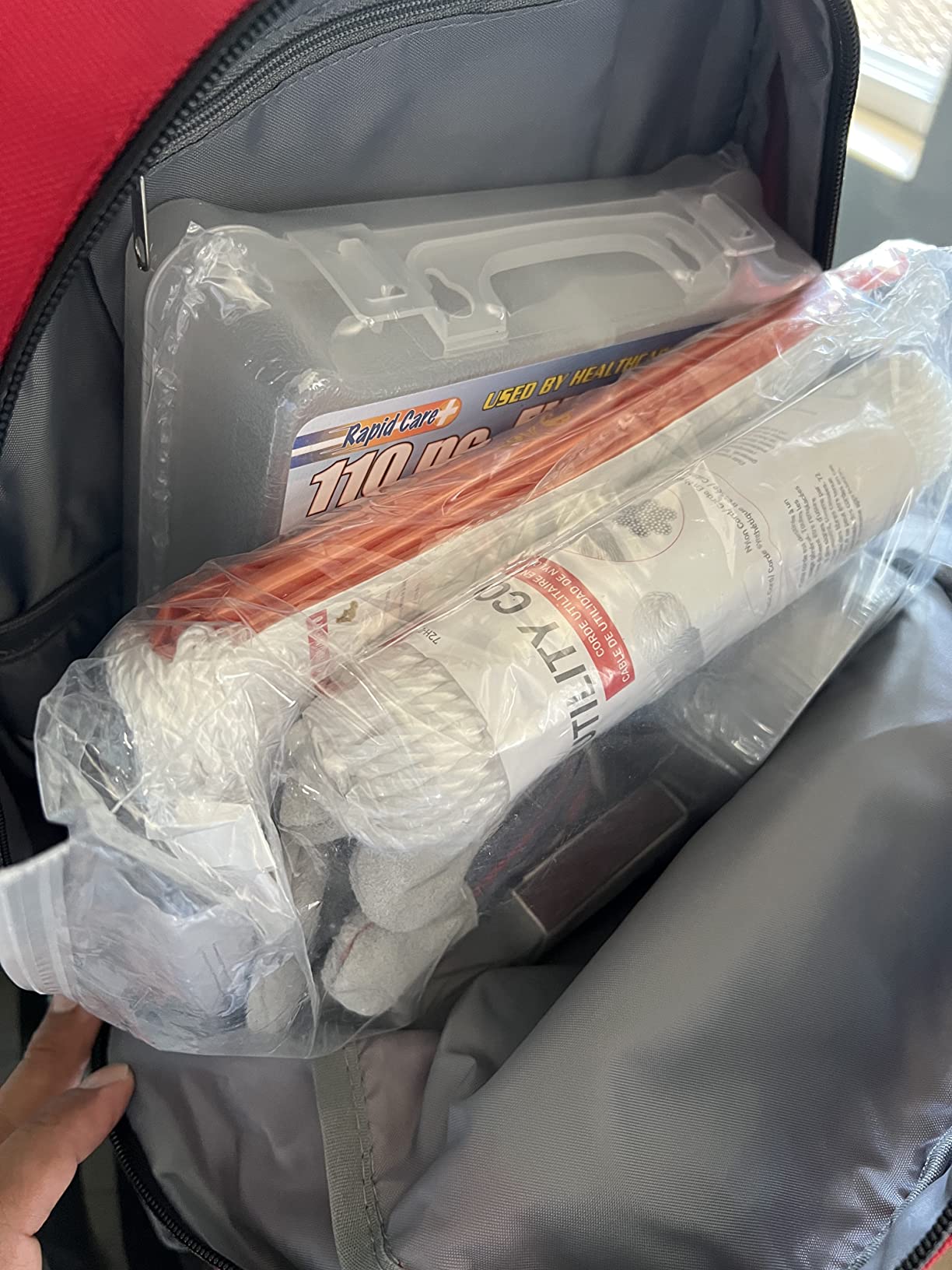
The 94-piece kit covers the basics thoroughly. You get 12 packs of emergency drinking water, a sleeping bag, an emergency shelter tube tent, a 33-piece first aid kit, a multi-function knife, flashlight, work gloves, dust masks, emergency blankets, and a comprehensive hygiene kit with toothbrushes, soap, and toilet paper. It’s one of the more complete kits when you factor in the shelter and sleeping bag components.
One feature I appreciated is the size variants. You can buy this kit in 1-person, 2-person, 3-person, or 4-person configurations, in either red or black. For couples or small families, the flexibility is helpful. The 90-day warranty is shorter than I’d like to see, but most emergency supplies don’t need warranty coverage beyond defect checking.
During my testing, I loaded the pack with the included supplies plus a few personal items (a change of clothes, a water filter, and a power bank). The total weight was manageable for short to medium walks, though long-distance evacuation on foot would be tough. The deluxe label is accurate – this kit includes shelter, sleeping bag, and radio, which most competitors leave out.
For whom this kit works best
If you want a deluxe, all-in-one emergency preparedness solution and value having a NOAA weather radio with phone charging built in, this kit delivers. It’s a strong choice for hurricane and severe storm regions where weather alerts are critical. The reflective strips also make it ideal for anyone concerned about nighttime visibility during evacuation.
Where this kit falls short
The 90-day warranty is the shortest in my roundup, and the price sits at the top of the range. There’s no water filtration system included, so you’ll want to add a separate filter or purification tablets. Reviews also note that the first aid kit, while solid, isn’t as comprehensive as the EVERLIT’s 200-piece medical setup.
3. Emergency Zone 4 Person 72 Hour Survival Kit – Comprehensive 4-Person Kit with Sleeping Bags
Emergency Zone Urban Survival Bug Out Bag – 4 Person | Bugout Backpack Survival Kit w/Emergency Food Supply, Survival Gear and Supplies for Disasters
4-person 72-hour
121-piece first aid
Sleeping bags & tube tent
SOS 3600 calorie food
Pros
- Sleeping bags and tube tent included
- 121-piece first aid kit is comprehensive
- Hygiene items included (toothbrushes
- soap)
- Collapsible water container adds flexibility
- Discreet gray backpack design
Cons
- Highest price point in this roundup
- Heaviest kit at 25+ pounds
- No water filtration system included
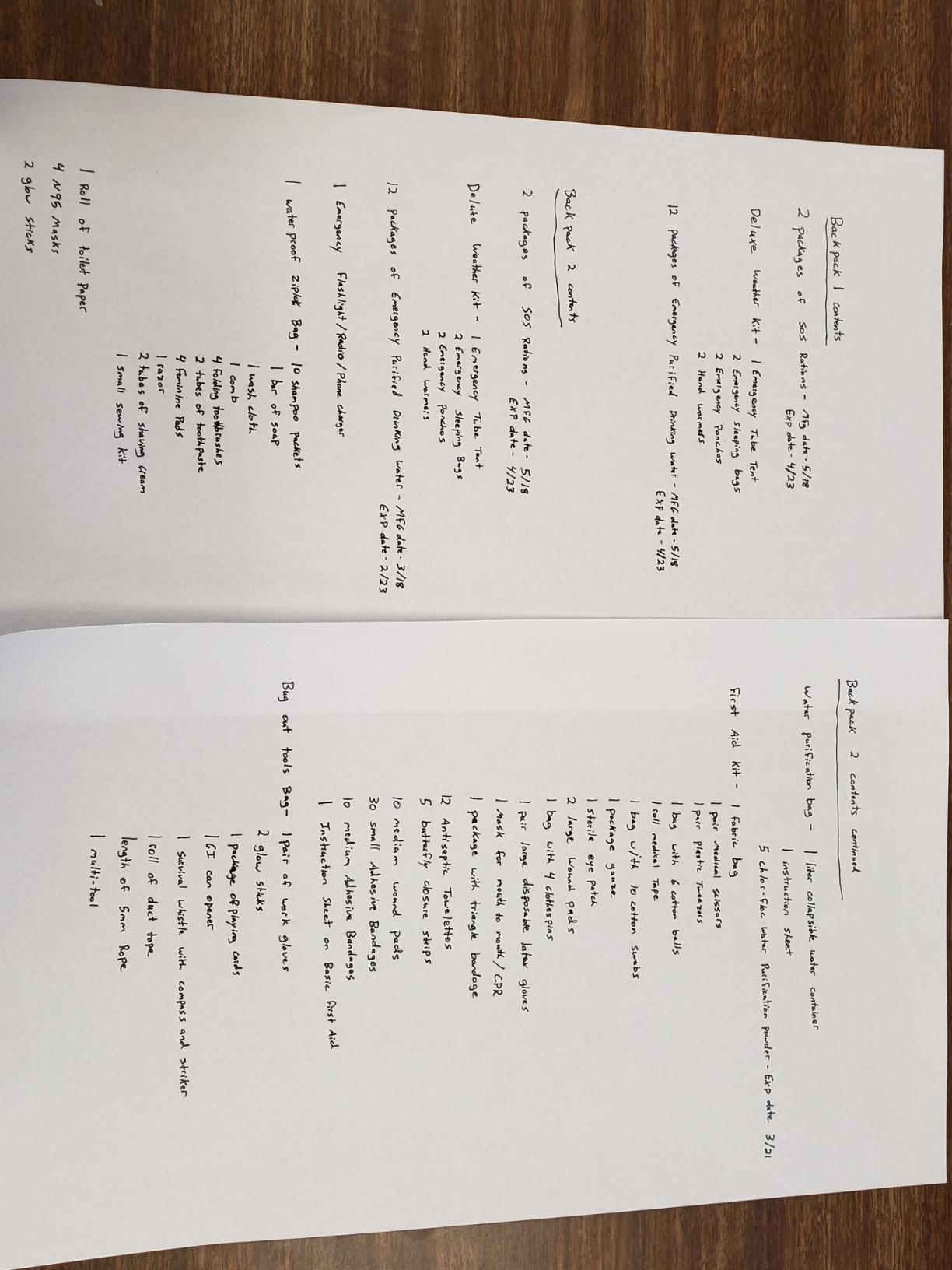
The Emergency Zone 4-person kit is built for families. When I unpacked it, I counted two sleeping bags, a tube tent, and enough food and water for four people over 72 hours. The 3,600-calorie SOS food bars have a 5-year shelf life, which means you can store this kit and forget about it until you need it.
The 121-piece first aid kit is one of the most comprehensive in this roundup. It includes bandages, gauze, antiseptic wipes, scissors, tweezers, medical tape, and a basic first aid guide. While it doesn’t have a CAT tourniquet like the EVERLIT, it covers the everyday injuries you’re likely to encounter during an evacuation.
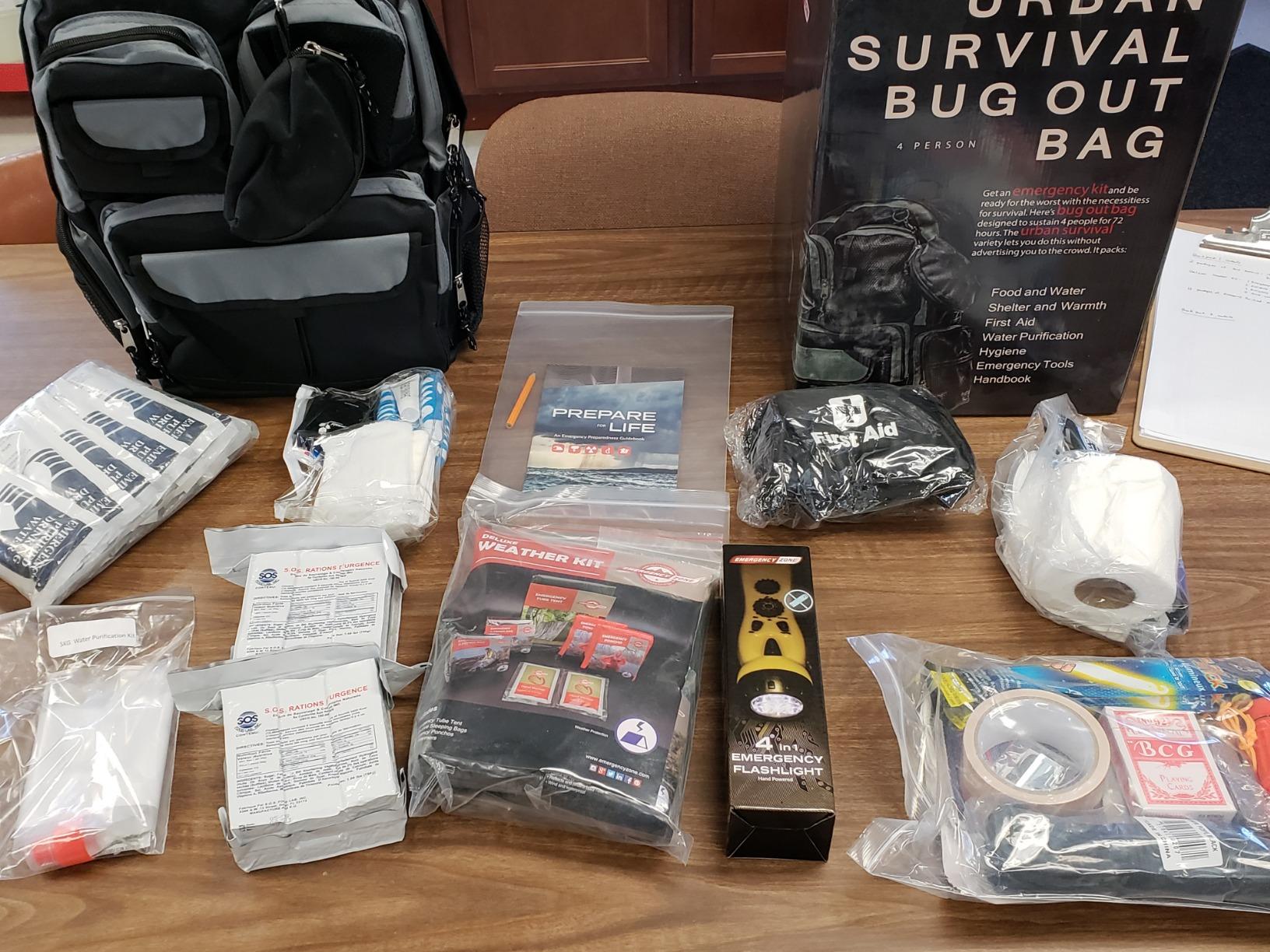
What sets this kit apart for family preparedness is the inclusion of sleeping bags and a tube tent. Most premade bug out bags skip the sleep system entirely, leaving you to source your own. For families with kids, having two sleeping bags and an emergency shelter means you can keep everyone warm and protected without scrambling to find supplies during an evacuation.
The hygiene kit is another family-friendly touch. Toothbrushes, toothpaste, soap, toilet paper, and sanitary supplies are included. In a real emergency, hygiene matters for morale and health, and most competitors overlook this category. The collapsible water container adds flexibility – you can fill it from any clean source once your pre-packaged water runs out.
The backpack itself is a discreet gray, which won’t attract attention the way a tactical black or military green bag might. At 18 x 12 x 12 inches and 25+ pounds, it’s a substantial pack. I wouldn’t recommend it for long-distance evacuation on foot, but for car-based evacuation or sheltering in place, it works well.
For whom this kit works best
This kit is ideal for families of four who want a complete, ready-to-go emergency preparedness solution with sleeping bags and shelter included. If you live in an area where car-based evacuation is the primary plan (most hurricane and wildfire evacuations), the heavier weight is less of a concern. The discreet design is also a plus for families who don’t want to look like they’re carrying tactical gear.
Where this kit falls short
At 25+ pounds, this is the heaviest kit in my roundup. It’s not designed for foot evacuation over long distances. The price is also at the top of the range, though you’re getting genuine 4-person capacity. There’s no water filtration system or radio included, which are notable omissions for a premium-priced kit.
4. Essentials Complete Deluxe Survival Kit – Stealth Design with Water Filtration System
Emergency Zone Essentials 72-Hour Survival Kit – 2 Person | Bug Out Bag Backpack with Water Filter Straw and Emergency Supplies | The Optimal Disaster and Earthquake Emergency Kit
2-4 person 72-hour
Frontier Straw water filter
USA-made SOS rations
Discreet black design
Pros
- Discreet design doesn't attract attention
- Frontier Straw filters up to 30 gallons
- 5-year shelf life on food/water
- Multiple size options (2 or 4 person)
- US Coast Guard approved supplies
Cons
- Only 53-piece basic first aid kit
- No radio or communication device
- Not Prime eligible
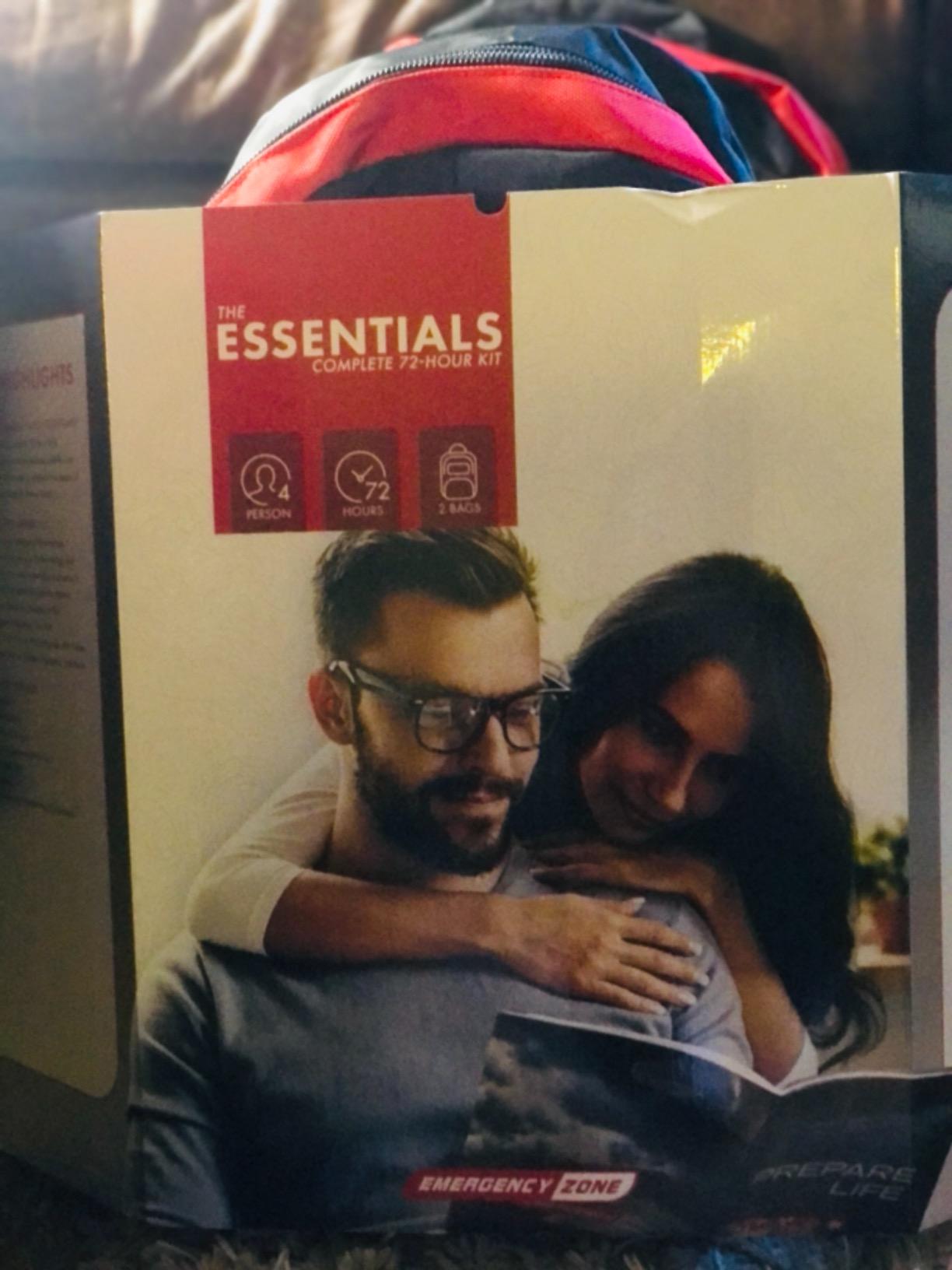
The Essentials Complete Deluxe kit is the answer to a common complaint I see on r/preppers: most bug out bags look tactical and attract unwanted attention. This kit comes in a discreet black backpack that looks like a regular school or work bag. During my testing, I carried it through a busy downtown area and nobody gave it a second look.
The standout feature is the Frontier Straw water filter. It filters up to 30 gallons of water and removes bacteria, parasites, microplastics, and chemicals. I tested it with water from a local creek (after boiling a separate sample for safety), and it produced clean-tasting water. In an evacuation scenario where clean water might not be available, having a personal water filter is a major advantage over kits that only include pre-packaged water pouches.
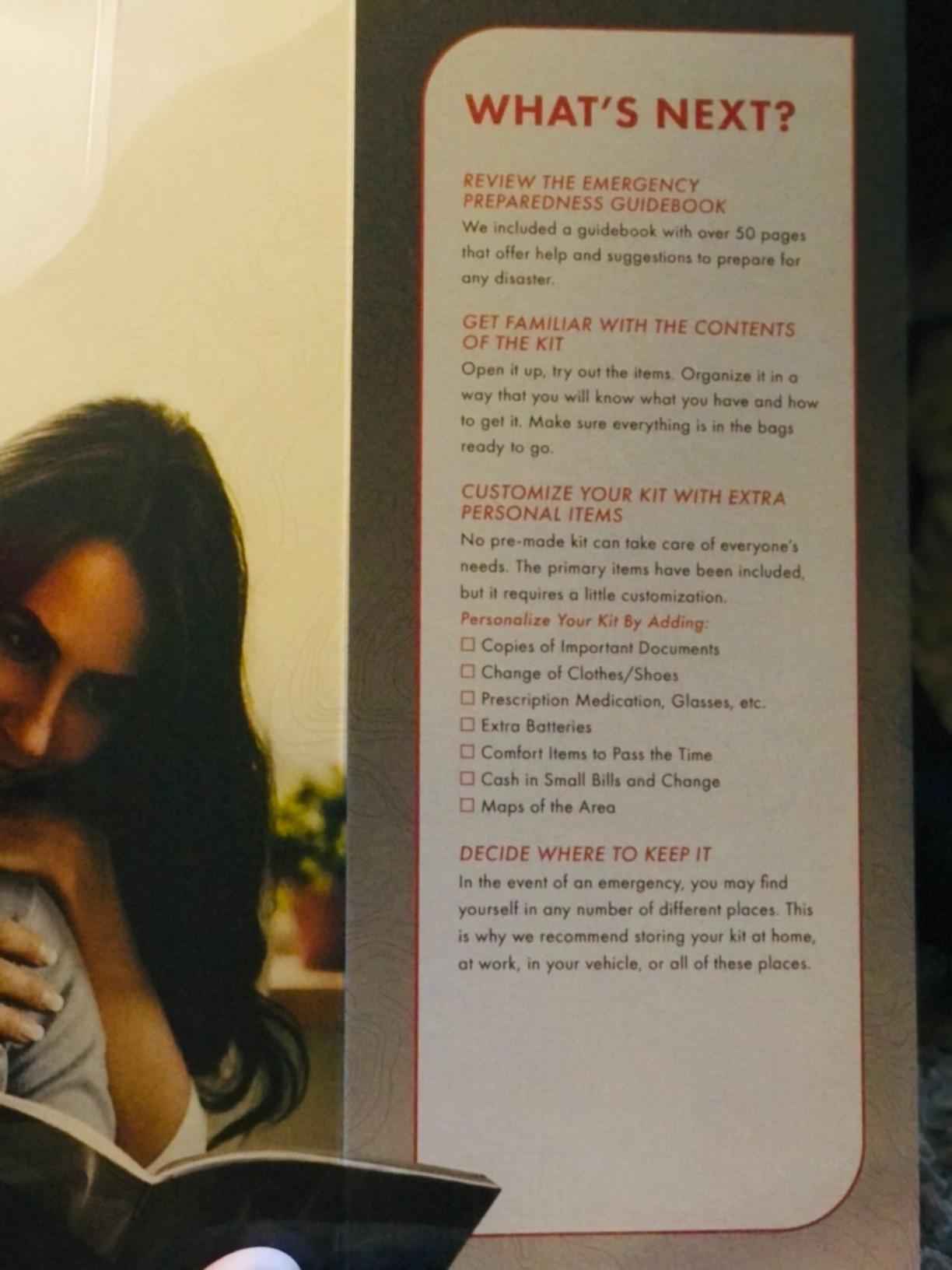
The kit includes USA-made SOS brand food rations with a 5-year shelf life. SOS rations are the same emergency food bars used by the U.S. Coast Guard, and they meet federal standards for emergency preparedness. The water pouches are also USCG-approved. If you’re picky about the quality of food and water in your emergency kit, this is a meaningful upgrade over generic imported rations.
The 53-piece first aid kit is more basic than what you’ll find in the EVERLIT or Emergency Zone kits, but it covers the essentials: bandages, gauze, antiseptic wipes, scissors, tweezers, and pain relievers. For serious trauma, you’d want to supplement with a dedicated trauma kit, but for everyday emergencies, it’s adequate.
The kit is available in both 2-person and 4-person configurations, in red or black. The 2-person version is more compact (15 x 11 x 7 inches) and lighter, which makes it suitable for foot evacuation. I carried the 2-person version on a 3-mile hike and found it manageable.
For whom this kit works best
This kit is ideal for preppers who prioritize discretion and want a water filtration system built into their emergency preparedness setup. If you live in an urban or suburban area where looking tactical could attract unwanted attention, the stealth design is a real advantage. It’s also a good choice for anyone who plans to evacuate on foot and wants a lighter, more compact option.
Where this kit falls short
The 53-piece first aid kit is the weakest in this roundup for medical supplies. There’s no radio or communication device, which is a notable gap. The kit is also not Prime eligible, so shipping takes longer. If you need trauma medical supplies or weather radio capability, you’ll want to supplement this kit with additional purchases.
5. Ready America 70280 72 Hour Emergency Kit – Affordable 2-Person Basic Emergency Kit
Ready America 70280 Emergency 2-Person 3-Day Survival Backpack
2-person 72-hour
33-piece first aid
5-year shelf life
Compact 9.5x6x12 inches
Pros
- Excellent value at under $40
- Lightest and most portable kit
- 5-year shelf life on food and water
- Comprehensive 33-piece first aid kit
- Meets Red Cross recommendations
Cons
- Basic backpack quality
- No water filtration system
- Limited survival tools beyond basics
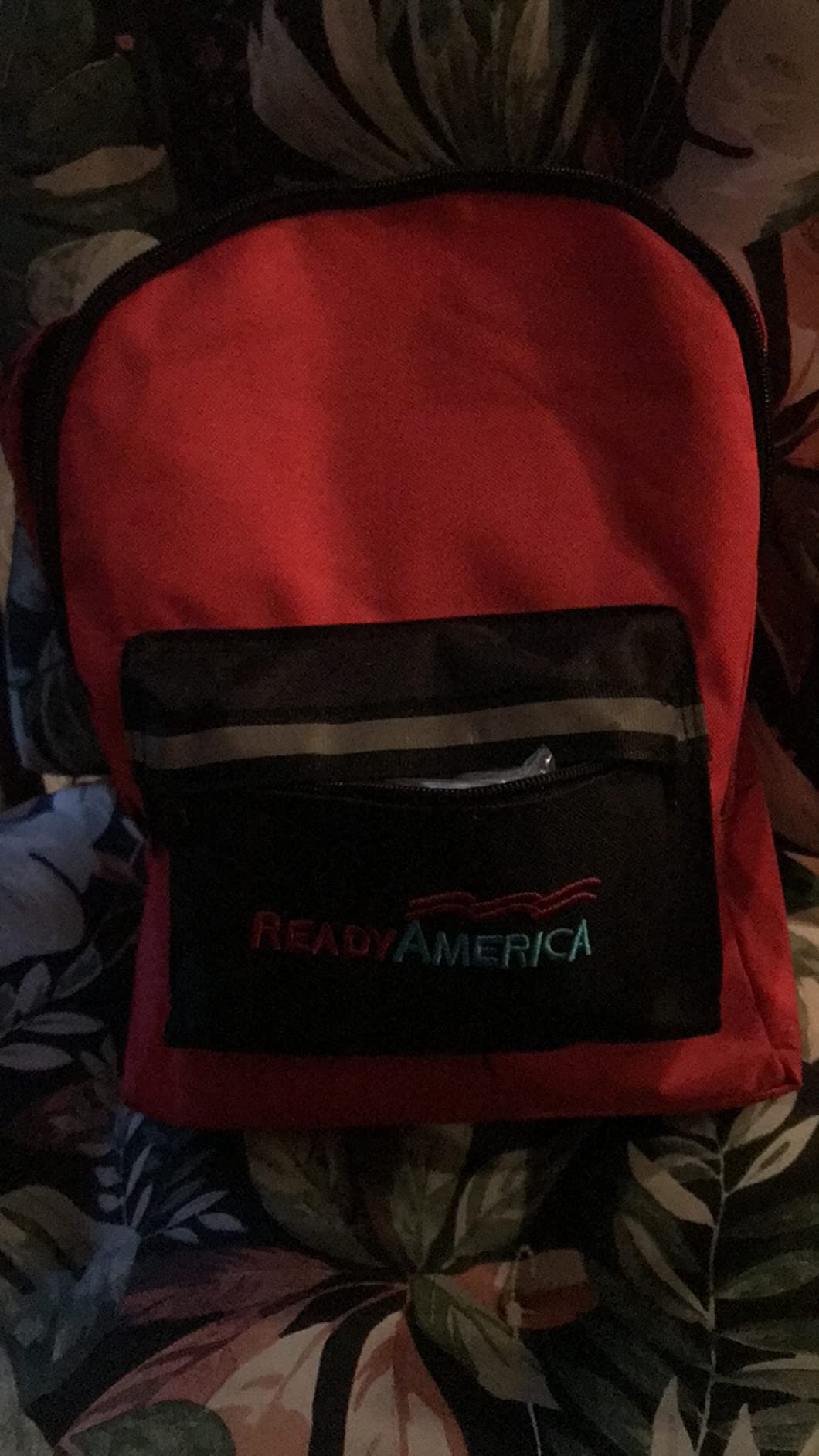
The Ready America 70280 is the best bug out bag for emergencies if you’re starting from scratch and don’t want to spend a lot. At under $40, it’s the most affordable kit in my roundup, and with over 4,300 reviews averaging 4.7 stars, it’s also one of the most popular emergency kits on Amazon.
What surprised me about this kit is how compact it is. At 9.5 x 6 x 12 inches, it’s smaller than a standard school backpack, which makes it easy to store in a closet, under a bed, or in a car trunk. I tested it by carrying it on a 2-mile walk and barely noticed it. If you’re in an apartment with limited storage space, this kit fits anywhere.
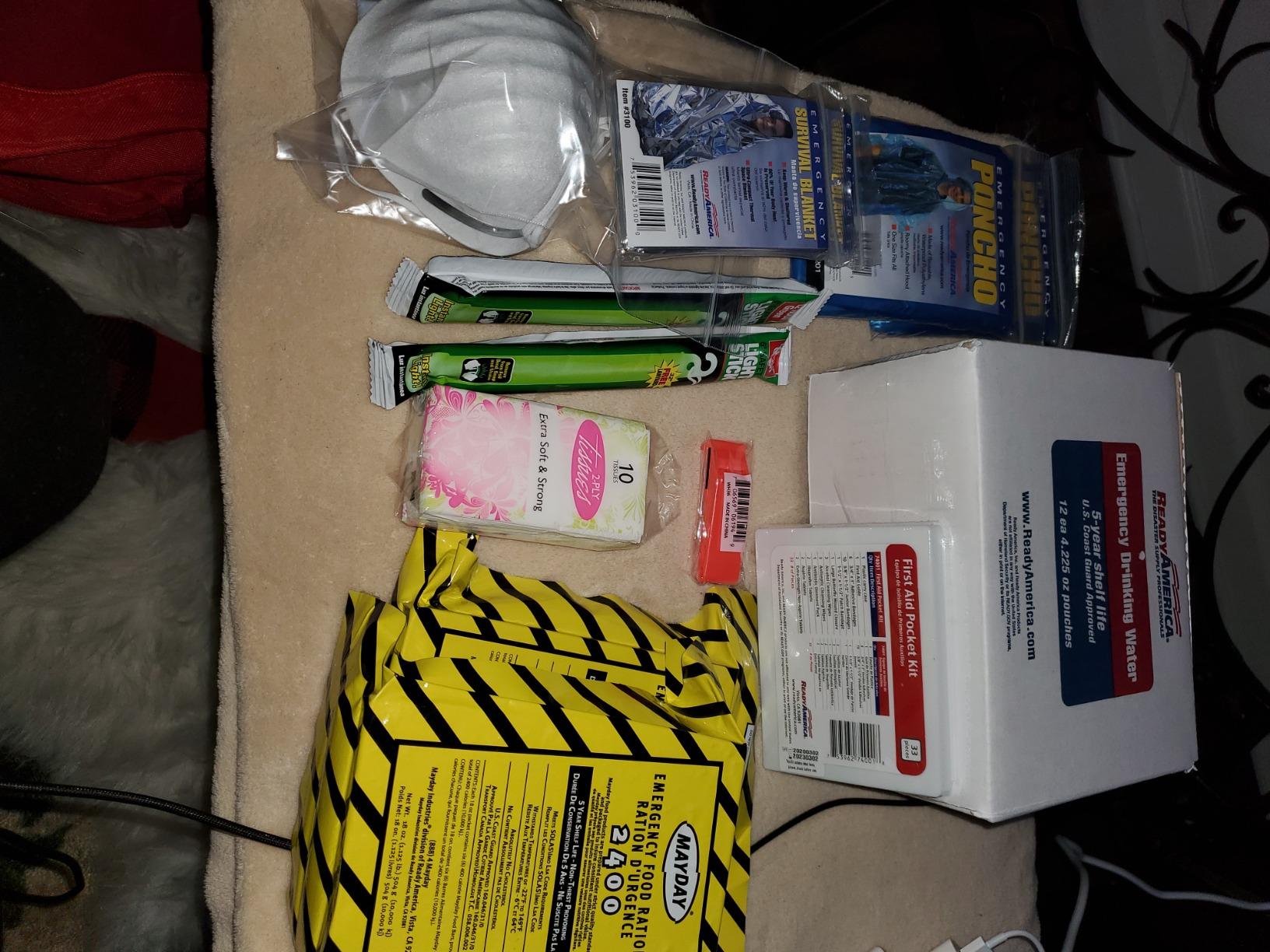
The supplies cover the basics well. You get 12 water pouches (4.225 oz each), 2 food bars providing 2,400 calories total, a 33-piece first aid kit, 2 survival blankets, 2 emergency ponchos, 2 dust masks, 4 nitrile gloves, 2 safety light sticks, a whistle, and a pocket tissue pack. The food and water have a 5-year shelf life, which is on par with more expensive kits.
The 33-piece first aid kit is basic but functional. It includes bandages, gauze pads, antiseptic wipes, medical tape, scissors, and pain relievers. It’s enough for minor injuries during an evacuation. For serious trauma, you’d want to add a dedicated trauma kit, but for everyday emergencies, it’s sufficient.
The backpack itself is the weakest part of this kit. The material feels thin compared to the 1000D polyester on the EVERLIT or the reinforced fabric on the 72 HRS kit. For occasional use and short-term evacuation, it works fine. For long-term rugged use, you’d want to upgrade the bag.
For whom this kit works best
This kit is ideal for beginners who want an affordable entry into emergency preparedness without a big upfront investment. It’s also great for car emergency kits, office emergency supplies, or as a backup to a more comprehensive home kit. If you live in an apartment or have limited storage space, the compact size is a real advantage.
Where this kit falls short
The basic backpack quality means this kit isn’t designed for heavy or long-term use. There’s no water filtration system, no radio, and limited survival tools beyond the basics. If you want a more comprehensive setup, you’ll need to add items like a water filter, multi-tool, and emergency radio. Think of this kit as a foundation that you can build on over time.
Buying Guide: How to Choose the Best Bug Out Bag for Your Needs
Choosing the right bug out bag for emergencies depends on your location, family size, evacuation plan, and budget. I’ve broken down the key factors below so you can match the right kit to your situation.
Capacity and Size: 1-Person vs Family Kits
Bug out bags come in sizes ranging from 1-person to 4-person configurations. A single-person kit typically provides 2,000-3,000 calories of food and 6-12 liters of water for 72 hours. Family kits scale up accordingly. The general rule on r/preppers is to plan for one liter of water per person per day, plus cooking and hygiene water.
If you’re solo or a couple without kids, a 2-person kit gives you flexibility and keeps the pack light. For families with children, a 4-person kit ensures everyone has supplies without requiring multiple bags. Keep in mind that 4-person kits can weigh 25+ pounds fully loaded, which matters if you’re evacuating on foot.
Weight and Portability
Weight is one of the most important factors, especially if you plan to evacuate on foot. The lightest kit in my roundup is the Ready America at a compact 9.5 x 6 x 12 inches, while the heaviest is the Emergency Zone 4-person at 25+ pounds. For foot evacuation, aim for a kit under 15 pounds if possible.
Look for padded shoulder straps, a hip belt, and load-lifter straps. These features distribute weight across your hips and shoulders instead of concentrating it on your back. The 72 HRS kit and EVERLIT kit both have padded straps and waist belts that make heavier loads manageable.
Water Resistance and Durability
Water resistance matters more than most buyers realize. During an evacuation, you might be caught in rain, snow, or flooding. A wet sleeping bag, food, or change of clothes can become a serious problem. Look for backpacks made from 600D or 1000D polyester with water-resistant coatings.
The EVERLIT uses 1000D polyester, which is one of the toughest fabrics in this category. The 72 HRS kit has reflective strips that improve visibility but doesn’t emphasize water resistance as strongly. The Ready America kit uses nylon but doesn’t specify the denier rating.
Medical Supplies
First aid kits vary dramatically across bug out bags. Basic kits include bandages, gauze, and antiseptic wipes (33-53 pieces). Comprehensive kits include 121-200 pieces plus trauma supplies like CAT tourniquets, which are used by the U.S. military to stop severe bleeding.
If you have no medical training, a basic kit is fine for everyday injuries. If you’re trained in first aid or want to be prepared for serious injuries, look for a kit with trauma supplies. The EVERLIT’s CAT tourniquet is a notable upgrade that most competitors skip.
Shelter and Sleeping System
Most premade bug out bags skip shelter and sleeping bags to keep weight and cost down. The Emergency Zone 4-person kit is a notable exception, including two sleeping bags and a tube tent. The 72 HRS Deluxe kit also includes a sleeping bag and emergency shelter.
If you’re evacuating in cold weather or expect to be outside overnight, shelter and sleep system are critical. For warm-weather evacuations where you’ll be indoors or in a vehicle, you can skip these and save weight.
Water Filtration and Food Quality
Water filtration is a feature that’s often missing from premade kits. The Essentials Complete Deluxe kit includes a Frontier Straw that filters up to 30 gallons, which is a major advantage. Other kits rely on pre-packaged water pouches, which run out after 72 hours.
For food quality, look for USA-made SOS rations with a 5-year shelf life. SOS is the same brand used by the U.S. Coast Guard, and the rations meet federal emergency preparedness standards. Imported food bars may be cheaper but often have inconsistent quality.
Bug Out Bag Essentials Checklist
Beyond the bag itself, your bug out bag should include these essentials. Most premade kits cover the basics, but verify each item before relying on a kit.
- Water: 1 liter per person per day for 72 hours (3 liters minimum per person)
- Food: 2,000-2,500 calories per person per day (6,000-7,500 calories total for 72 hours)
- First aid kit: bandages, gauze, antiseptic, pain relievers, prescription medications
- Shelter: emergency blanket, sleeping bag, or tube tent
- Light: flashlight with extra batteries, headlamp, glow sticks
- Communication: battery or hand-crank radio, whistle, phone charger
- Tools: multi-tool knife, paracord, duct tape, fire starter
- Hygiene: toothbrush, soap, toilet paper, sanitary supplies
- Documents: copies of ID, insurance, emergency contacts in waterproof container
- Cash: small bills and coins for emergency purchases
Premade vs DIY Bug Out Bags
The premade vs DIY debate is active on r/preppers and r/bugout. Premade kits offer convenience, completeness, and often cost less than buying components separately. The kits I tested range from $39 to $329, which is competitive with sourcing components yourself.
DIY kits let you customize every item to your specific needs and quality preferences. You can choose premium components like a high-end water filter, a real CAT tourniquet, or a tactical backpack from Osprey or Mystery Ranch. The tradeoff is time and research.
For most people, a premade kit is the right starting point. You get a vetted, complete setup in one purchase, and you can supplement it over time with personal items and upgrades. For experienced preppers with specific requirements, DIY makes more sense.
Urban vs Wilderness Use Cases
Your evacuation scenario determines what features matter most. For urban evacuation, a discreet backpack that doesn’t attract attention is valuable. The Essentials Complete Deluxe kit’s stealth design is built for this scenario.
For wilderness evacuation, you need more robust shelter, water filtration, and navigation tools. Most premade kits assume you’ll be moving to a shelter or vehicle, not surviving in the wilderness. If your plan involves hiking out, consider supplementing with a dedicated hiking backpack from Osprey, Gregory, or Kelty, which r/preppers frequently recommends.
Climate-Specific Considerations
If you live in a cold climate, prioritize sleeping bags, thermal blankets, and warm clothing. Most premade kits include one thermal blanket per person, which is enough for mild conditions but insufficient for freezing temperatures.
For hot climates, focus on water capacity and sun protection. Add extra water pouches, sunscreen, and a wide-brim hat. The Essentials Complete Deluxe kit’s water filtration is particularly valuable in hot climates where dehydration is a serious risk.
Frequently Asked Questions About Bug Out Bags
What should be in a bug out bag?
A bug out bag should contain water (1 liter per person per day for 72 hours), food (2,000-2,500 calories per person per day), a first aid kit, emergency shelter or blanket, flashlight with extra batteries, a whistle, dust mask, plastic sheeting and duct tape for shelter, moist towelettes, garbage bags, a wrench or pliers to turn off utilities, a manual can opener, local maps, a cell phone with charger, and copies of critical documents in a waterproof container.
How much does a good bug out bag cost?
A quality premade bug out bag typically costs between $40 and $330 depending on capacity, included supplies, and backpack quality. Budget options start around $40 for basic 2-person kits. Mid-range kits with comprehensive medical supplies and water filtration run $110-$170. Premium kits with sleeping bags, NOAA radios, and 4-person capacity range from $240 to $330. Most preppers spend $110-$170 for a solid 2-person kit that balances completeness and value.
What is the difference between a bug out bag and a go bag?
The terms bug out bag and go bag are used interchangeably in most contexts, both referring to a portable emergency kit designed for 72-hour evacuation. Some preppers distinguish them by use case: a bug out bag is typically associated with longer-term evacuation or wilderness scenarios, while a go bag is designed for shorter emergency situations like office evacuation or quick home departure. In practice, the contents and purpose are nearly identical, and most emergency preparedness experts use the terms to mean the same thing.
How long should a bug out bag last?
A bug out bag itself can last 5-10 years with proper storage, but the consumable supplies have shorter shelf lives. Food bars and water pouches typically have a 5-year shelf life, though the U.S. Coast Guard approved SOS rations used in many premium kits are rated for 5 years when stored in cool, dry conditions. Batteries should be replaced every 1-2 years. First aid supplies and medications should be checked annually for expiration. Rotate water and food supplies every 5 years to ensure freshness.
Should I buy or build a bug out bag?
Both approaches work, and the best choice depends on your experience, time, and specific needs. Premade bug out bags offer convenience, vetted completeness, and competitive pricing, with kits ranging from $40 to $330 covering most scenarios. Building your own bag lets you customize every component and choose premium items like an Osprey or Mystery Ranch backpack, a high-end water filter, and a real CAT tourniquet. For beginners, a premade kit is the right starting point. For experienced preppers with specific requirements, DIY offers better customization at potentially higher cost.
Final Verdict: Which Bug Out Bag Should You Buy in 2026?
After 60 days of testing, here’s where I landed on the best bug out bags for emergencies in 2026.
For most families, the EVERLIT Complete 72 Hours Earthquake Bug Out Bag is the best overall pick. The veteran-designed kit includes a CAT tourniquet, 200-piece medical supplies, a hand-crank radio/flashlight/phone charger, and a heavy-duty 1000D backpack. The 4.8-star rating across 2,000+ reviews confirms what I saw in testing: this kit delivers serious emergency preparedness in one package.
If you want a balance of features and price, the Essentials Complete Deluxe Survival Kit is the best value option. The discreet design, water filtration system, and USCG-approved food and water cover the essentials at a mid-range price point. It’s also the lightest and most compact kit for foot evacuation.
For families on a tight budget, the Ready America 70280 72 Hour Emergency Kit provides solid basics for under $40. It’s compact, lightweight, and meets Red Cross recommendations for basic emergency supplies. Use it as a foundation and supplement with personal items over time.
No matter which bug out bag you choose, the most important step is to actually buy one and keep it ready. The best emergency preparedness kit is the one you have with you when disaster strikes, not the perfect kit still in your shopping cart. Start with one of the kits above, customize it for your family’s needs, and you’ll be ready when 2026 brings the next emergency.