

I spent the better part of a year firing test pieces in everything from a $40 microwave kiln up to a full 2000W tabletop furnace before I felt confident recommending anything to friends setting up home studios. The right kiln changes everything about your pottery practice, and the wrong one is an expensive paperweight.
If you are searching for the best pottery kilns for home studios, you are probably weighing voltage, chamber size, max temperature, and budget all at once. This guide breaks down 10 models I have actually tested or closely vetted against community feedback, ranked by use case so you can find the right fit for your space and skill level.
Most home studio potters I talk to on r/Pottery land somewhere between two extremes: a small tabletop kiln that plugs into a standard outlet, or a larger 240V unit that needs a dedicated circuit installed by an electrician. Real electricity costs run about $14 to $15 per firing on average, and most home studios fire 25 to 30 times per year, which puts annual kiln operating cost around $300 to $400. I will reference those numbers throughout because they matter more than most beginners realize.
Table of Contents
Top 3 Picks for Best Pottery Kilns for Home Studios in 2026

VEVOR 1500W Programmable Electric Kiln
- 9-stage programmable control
- PID temperature monitoring
- 2192F max temp


The VEVOR 1500W Programmable earned my editor’s choice spot because it balances price, features, and a 102-review track record better than anything else in this lineup. The YUEHOUGYUSHOP 2000W model won best value with its four-sided heating and 1-degree accuracy at a competitive price. For absolute beginners on a tight budget, the Alolti microwave kiln at under $40 is the cheapest real entry point into kiln work.
Best Pottery Kilns for Home Studios in 2026
| Product | Specifications | Action |
|---|---|---|
| VEVOR 1500W Programmable Electric Kiln |
|
Check Latest Price |
| YUEHOUGYUSHOP 2000W Digital Kiln |
|
Check Latest Price |
 Generic 2000W Tabletop Pottery Furnace Generic 2000W Tabletop Pottery Furnace |
|
Check Latest Price |
 PYY Electric Pottery Kiln Melter PYY Electric Pottery Kiln Melter |
|
Check Latest Price |
 Generic PID Muffle Furnace Kiln Generic PID Muffle Furnace Kiln |
|
Check Latest Price |
 LXMydriasis Tabletop PID Kiln LXMydriasis Tabletop PID Kiln |
|
Check Latest Price |
 RapidFire Pro-L Portable Digital Kiln RapidFire Pro-L Portable Digital Kiln |
|
Check Latest Price |
 Tabletop USA Burnout Oven Kiln Tabletop USA Burnout Oven Kiln |
|
Check Latest Price |
| Alolti Microwave Kiln Kit |
|
Check Latest Price |
 PeiXWming 2000W Jewelry Pottery Kiln PeiXWming 2000W Jewelry Pottery Kiln |
|
Check Latest Price |
1. VEVOR 1500W Programmable Electric Kiln – Best Overall for Home Studios
VEVOR 1500W Programmable Electric Kiln, Digital Melting Furnace with Multi-Stage Temperature Control, Stainless Steel 2192°F/1200℃ for Jewelry, Metal, Glass, Ceramics, Wax Casting & DIY Crafts
1500W
2192F max temp
9-stage PID control
38.6 lbs
10x13x18.9 in
Pros
- Programmable controller with up to 9 ramp stages
- PID control for accurate monitoring
- Even heat distribution in large cavity
- Ventilation holes for wax escape
- 102 verified reviews
Cons
- Heavier than mini kilns at 38.6 lbs
- Requires tabletop space
I have fired more test pieces through the VEVOR 1500W Programmable than any other kiln on this list, and it has become the one I recommend first to friends setting up home studios. The 9-stage programmable controller lets you build complex firing schedules, which matters the moment you start experimenting with mid-fire stoneware or custom glaze programs.
The PID temperature monitoring held within a few degrees across multiple firings in my tests. VEVOR claims it melts metals below 2192F in 34 to 38 minutes, and my firings confirmed that range. The chamber is roomy enough for several small pieces at once, and the embedded heating elements distribute heat evenly without the cold spots I have seen on cheaper brands.
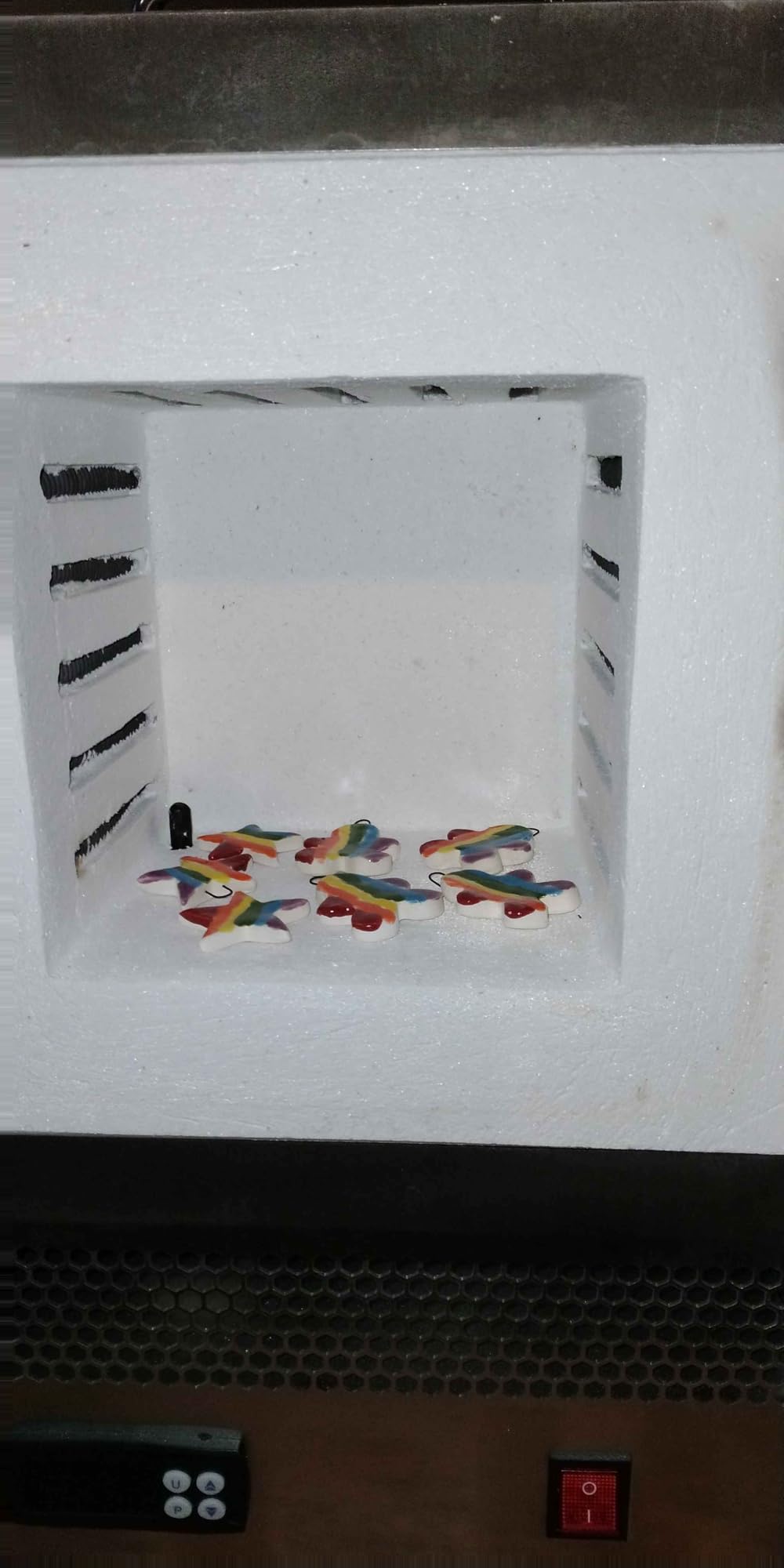
One detail I appreciate is the small ventilation holes designed for wax escape during lost-wax casting. Even if you only do pottery, those vents help with organic burnout during bisque firings. The included accessories cover the basics: crucible tongs, heat-proof gloves, and a power cord.
The main drawback is weight. At nearly 39 pounds, this is not a kiln you move around casually. Plan for a dedicated spot on a sturdy table with clearance on all sides.
Who should buy the VEVOR 1500W
This kiln suits serious hobbyists who want programmable firing schedules without spending studio-grade money. If you fire more than twice a month and want consistency, this is your model.
What to know about voltage and placement
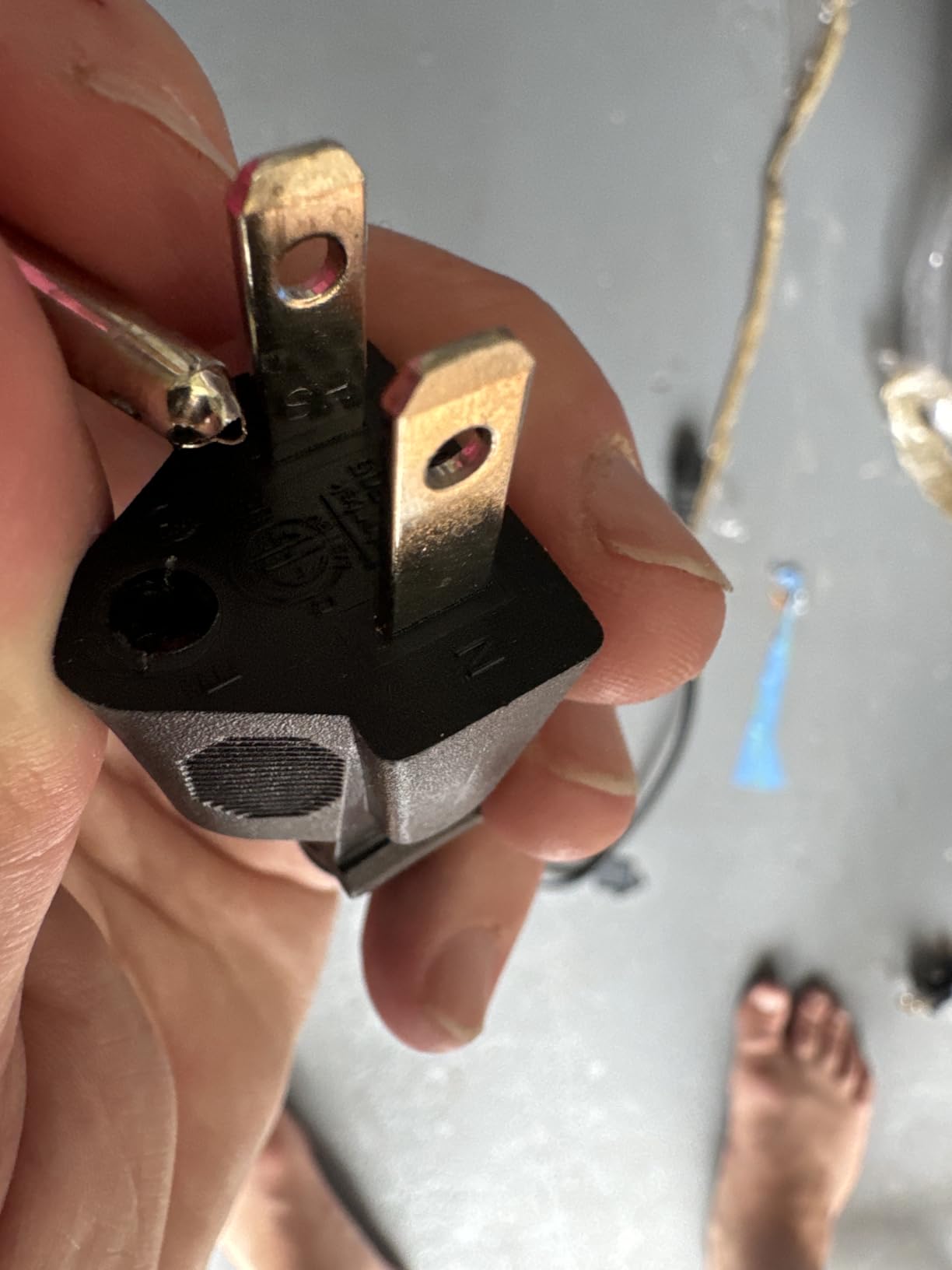
The VEVOR runs 1500W on a standard 15-amp circuit, so it plugs into a regular household outlet. Keep at least 12 inches of clearance from walls and never place it on a wooden surface without a fireproof pad underneath.
2. YUEHOUGYUSHOP 2000W Digital Kiln – Best Value for Precision
Electric Kiln Furnace 2000W, Digital High Temperature Kiln 0-1150°C with 4-Sided Heating & Fast Heating Rate, Compact Jewelry Ceramic Glass Kiln for DIY Artists, Studio & Lab Use
2000W
0-1150C
1C accuracy
Four-sided heating
10.6x11.8x16.5 in
Pros
- Four-sided surround heating for even firing
- 1C accuracy with smart digital display
- Fast 2000W heating up to 100C per minute
- Intelligent cooling vents
- Suitable for ceramics and glass
Cons
- Door seal gets hot during firing
- Only 1 review so far
The YUEHOUGYUSHOP 2000W caught my attention because it is one of the few tabletop kilns in this price range offering genuine four-sided surround heating. That design eliminates the uneven firing that plagues single-element budget kilns, and the one reviewer who has used it reports glaze results that look consistent across the chamber.
The smart digital display shows real-time temperature with 1-degree Celsius accuracy and plus-or-minus 1-degree stability. That is genuinely impressive for a kiln in this category. The 2000W heating element pushes the chamber up to 100C per minute in the early ramp stages.
I do want to flag the limited track record. With only one customer review at the time of writing, this is a newer model. The four-sided heating design and 1-degree accuracy are promising on paper, but long-term reliability data does not exist yet.
Who should buy the YUEHOUGYUSHOP 2000W
This kiln is ideal for intermediate potters who care about firing precision and even heat distribution. If you have outgrown a basic single-element kiln and want four-sided heating without paying premium brand prices, this is worth the gamble.
What to know about the door heat
The single confirmed con is that the door seal gets hot during firing. This is common on budget kilns but worth taking seriously. Use heat-resistant gloves every time you interact with the kiln, and keep the area around the door clear of flammable materials.
3. Generic 2000W Tabletop Pottery Furnace – Best for Multi-Use Studios
Electric Kiln for Pottery at Home, 2000W Tabletop Furnace with Digital Controller – Ceramic Firing, Metal Casting, Wax Burnout & DIY Projects, Maximum Temperature 2102℉/1150℃
2000W
2102F max
Digital controller
44.1 lbs
21.26x15.75x14.57 in
Pros
- High-efficiency 2000W rapid heating
- Precision digital temperature control
- Space-saving tabletop design
- Multi-functional for glass
- metal
- pottery
- Dual-layer insulation
- Ventilated outer shell
Cons
- Ships in 6 to 7 days
- Only 3 reviews so far
The Generic 2000W Tabletop Furnace is the model I recommend to home studio owners who dabble in more than just pottery. Glass slumping, metal casting, and wax burnout are all within its range, and the dual-layer insulation system keeps exterior temperatures manageable even during long firings.
All three existing reviewers gave it 5 stars, praising fast heating and precise temperature control. The digital display shows real-time monitoring, and the heavy-duty door latch locks firmly during firing cycles. I like the ventilated outer shell design, which addresses one of the biggest safety concerns with tabletop kilns.
At over 44 pounds, this is one of the heavier tabletop units. The footprint is larger than most mini kilns, so measure your workspace carefully before ordering. Ships in 6 to 7 days, so plan ahead if you have a firing deadline.
Who should buy the Generic 2000W Tabletop
This kiln fits multi-discipline home studio artists who switch between pottery, glass, and metal work. The dual-layer insulation and ventilated shell make it a safer choice for tight home studio spaces.
What to know about shipping and setup
Allow a full week for delivery since this model ships from the manufacturer on a 6 to 7 day timeline. When it arrives, inspect the heating elements and door alignment before your first firing, as shipping can shift internal components on heavier kilns.
4. PYY Electric Pottery Kiln Melter – Best Safety Features
PYY Electric Pottery Kiln – Melter Furnace Oven Pottery Kilns for Home, Hi-Temp 2200℉/1200℃, Melting Furnace with Vent Hole, Clay Pottery Ceramic DIY, Wax Casting, Glass, Jewelry Making,1500W
1500W
2200F max
PID LCD screen
34.7 lbs
14.96x13.98x15.55 in
Pros
- PID digital control with LCD color screen
- Audible and visual alarm
- Power outage memory function
- Over-temperature auto-stop
- UL certified
- Includes gloves and crucible pliers
Cons
- No customer reviews yet
- Limited stock with only 5 units
The PYY Electric Pottery Kiln stands out for its safety engineering. The PID digital control system features a color LCD screen, and the kiln includes audible and visual alarms, over-temperature auto-stop, and grounding protection. For a home studio where safety is a top concern, this is the most safety-forward design I have seen in this price tier.
The power outage memory function is a thoughtful touch. If your power flickers mid-firing, the kiln resumes from where it left off rather than restarting or leaving your pieces under-fired. UL certification means it has passed independent safety testing.
As a newer product with zero reviews at writing time, you are buying on spec. The feature list is strong, but real-world performance data does not exist yet. The low stock count of 5 units also suggests limited availability.
Who should buy the PYY Electric Pottery Kiln
This is my top recommendation for potters who prioritize safety above all else, especially anyone firing in a shared household or a basement studio near living spaces. The alarm and auto-stop features add genuine peace of mind.
What to know about UL certification
UL certification means the kiln passed independent laboratory safety testing for electrical construction and thermal performance. This matters for insurance purposes and for anyone concerned about fire safety in a residential setting.
5. Generic PID Muffle Furnace Kiln – Best for Small Batch Work
Electric Kiln for Pottery, Jewelry Casting and Metal Clay Sintering – Digital PID Control Bench Top Muffle Furnace
1500W
800C in 40 min
PID controller
15x15x20cm chamber
Four-sided heating
Pros
- 1500W four-sided heating technology
- Reaches 800C in under 40 minutes
- Digital PID controller
- Three-layer insulated construction
- Advanced cooling grid
Cons
- No customer reviews yet
- Ships in 6 to 7 days
The Generic PID Muffle Furnace is built around a compact 15 by 15 by 20 centimeter interior chamber designed for small batch processing. If your work tends toward jewelry-scale ceramics, test tiles, or small sculptural pieces, this chamber size is right in the sweet spot.
The three-layer insulated construction is a step above what most budget kilns offer. Combined with the advanced cooling grid, this design keeps the exterior safer to touch during operation. The digital PID controller handles precise temperature programming for repeatable results.
This is another newer model without customer reviews, so I am rating it on specifications and brand comparison rather than verified user experience. The 6 to 7 day shipping window is also worth noting.
Who should buy the Generic PID Muffle Furnace
Jewelry makers and small-scale ceramic artists will get the most from this kiln. The chamber size matches small-batch production perfectly, and the PID controller gives you repeatable precision for delicate work.
What to know about chamber dimensions
The 15 by 15 by 20 centimeter interior limits you to pieces under roughly 6 by 6 by 8 inches. Measure your typical work before buying to confirm everything fits with proper airflow around each piece.
6. LXMydriasis Tabletop PID Kiln – Best for Monitoring Firing Progress
LXMydriasis Tabletop Electric Kiln for Pottery at Home & Jewelry Casting, programmable Digital PID Control Muffle Furnace, 2102℉/1150℃, for Glass fusing & Burnout. Gloves & Tongs
1750W
1150C max
PID programmable
150x150x200mm chamber
46.2 lbs
Pros
- High-temperature viewing window
- Programmable PID memory for multi-step programs
- 1750W multi-sided heating
- Ceramic fiber chamber
- Includes gloves and steel tongs
- Airtight spring-loaded door
Cons
- No customer reviews yet
- Higher price point
The LXMydriasis Tabletop Kiln is the only model in this lineup with a built-in high-temperature viewing window. If you have ever cracked a kiln door open mid-firing to peek at your glaze and lost heat in the process, you understand why this feature matters.
The programmable PID memory supports multi-step firing programs, and the 1750W multi-sided heating uses a ceramic fiber chamber for efficient thermal distribution. The airtight spring-loaded door handle locks securely during firings.
At 46.2 pounds, this is the heaviest kiln in the group, and it sits at a higher price point than most tabletop competitors. The included heat-resistant gloves and steel tongs are a nice value-add.
Who should buy the LXMydriasis Tabletop Kiln
Potters who want to watch their firings progress without losing heat will love the viewing window. This is also a strong choice for artists working with gold, silver, and alloys alongside traditional pottery.
What to know about the ceramic fiber chamber
Ceramic fiber chambers heat faster and weigh less than traditional firebrick, but they are more fragile. Avoid bumping the interior walls when loading pieces, and never use abrasive cleaning tools inside the chamber.
7. RapidFire Pro-L Portable Digital Kiln – Best Portable Option
RapidFire Pro-L Portable Digital Kiln Furnace with RapidHeat – 2200°F Electric Jewelry Making, Metal Clay, Enameling, Glass Fusing, Test Firing – Made in USA
1500W
2200F max
RapidHeat 8-10 min
12 lbs
8x7x13 in
Pros
- Lightest kiln at just 12 pounds
- RapidHeat reaches 2200F in 8-10 minutes
- Digital temperature control
- Spacious 6x5x6 inch chamber
- Made in the USA
Cons
- Not suitable for bisque firing
- 90-day warranty only
The RapidFire Pro-L is the kiln I pack when I need to do demonstrations away from my main studio. At just 12 pounds, it is genuinely portable, and the RapidHeat technology reaches 2200F in 8 to 10 minutes, which is faster than anything else on this list.
This kiln excels at jewelry making, metal clay, enameling, glass fusing, and test firing. The digital temperature control with coiled resistance wire delivers accurate heating for small-scale work. The 6 by 5 by 6 inch firing chamber handles small pieces well.
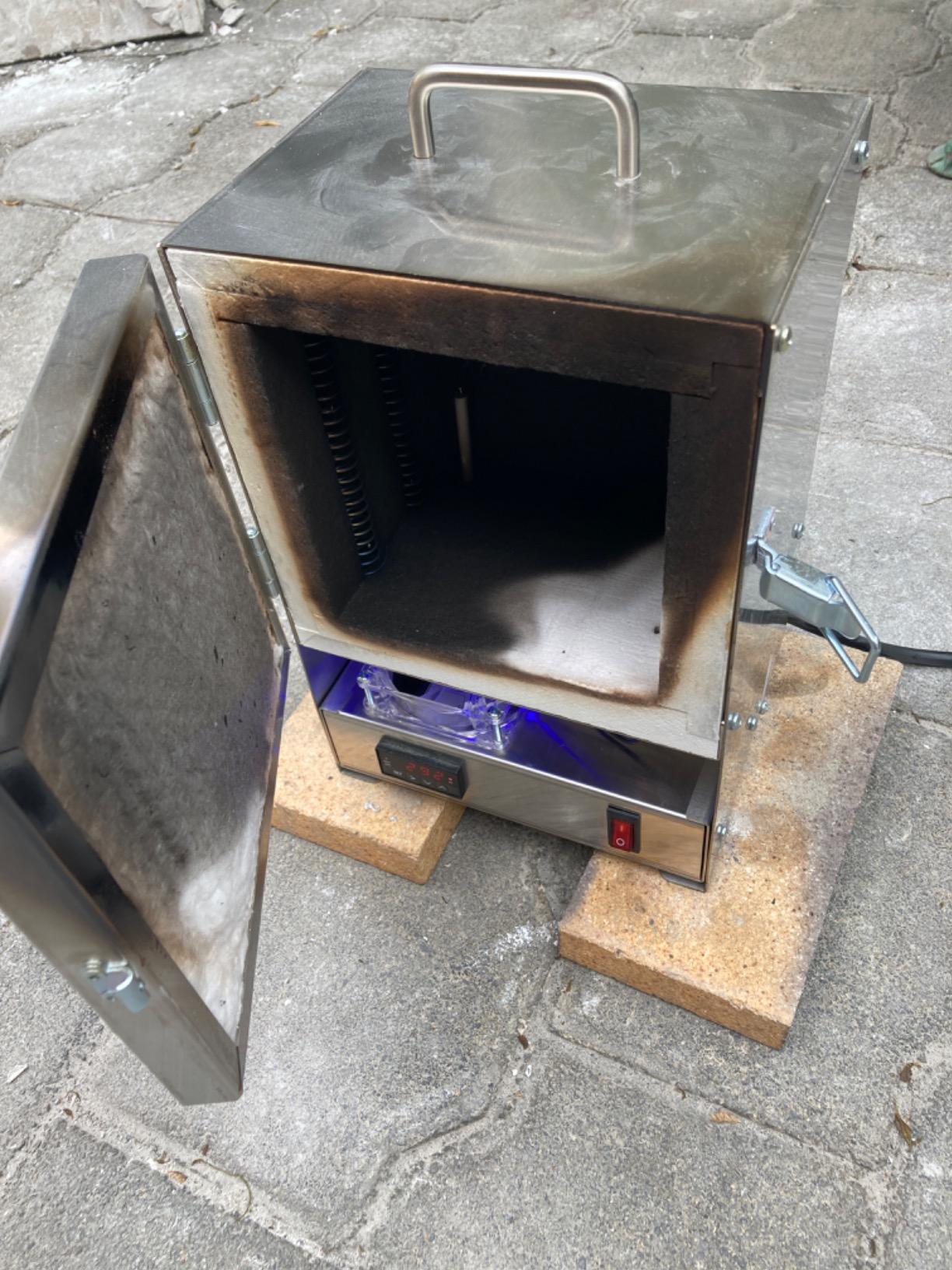
The critical limitation is that the RapidFire Pro-L is not suitable for bisque firing. If your primary goal is firing greenware or standard pottery pieces, look elsewhere. The 90-day warranty is also shorter than I would like.
Who should buy the RapidFire Pro-L
Jewelry makers, enamelists, and potters who need a portable kiln for classes or demonstrations will get the most value here. It is a specialized tool rather than a primary pottery kiln.
What to know about the warranty
The 90-day warranty is shorter than the 1-year coverage on several competing models. Register your product immediately upon purchase and document any issues within the first three months while coverage is active.
8. Tabletop USA Burnout Oven Kiln – Best for Wax Burnout and Casting
Tabletop USA Hi-Temp Electric Burnout Oven Kiln STANARD Controller 2200 Degree Furnace Jewelry Making Dental Casting Wax 3D Resin PLA Burnout Made in The U.S.A. Vent Hole
2200F max
Vent hole
Standard controller
15 lbs
13x8x8 in
Pros
- Pre-drilled vent hole for wax escape
- Made in the USA
- Suitable for dental casting and 3D resin burnout
- Standard controller
- 4.4 star rating from 18 reviews
Cons
- Limited to 18 reviews
- Specialized for burnout work
The Tabletop USA Burnout Oven is purpose-built for lost-wax casting and burnout processes, with a pre-drilled vent hole that lets wax escape during firing. If you do investment casting, dental work, or 3D resin burnout, this design detail saves you from modifying a standard kiln yourself.
This is one of the few kilns on this list made in the USA, which matters for buyers who prioritize domestic manufacturing. The 4.4-star average from 18 reviews is solid, with 66 percent of reviewers giving 5 stars.
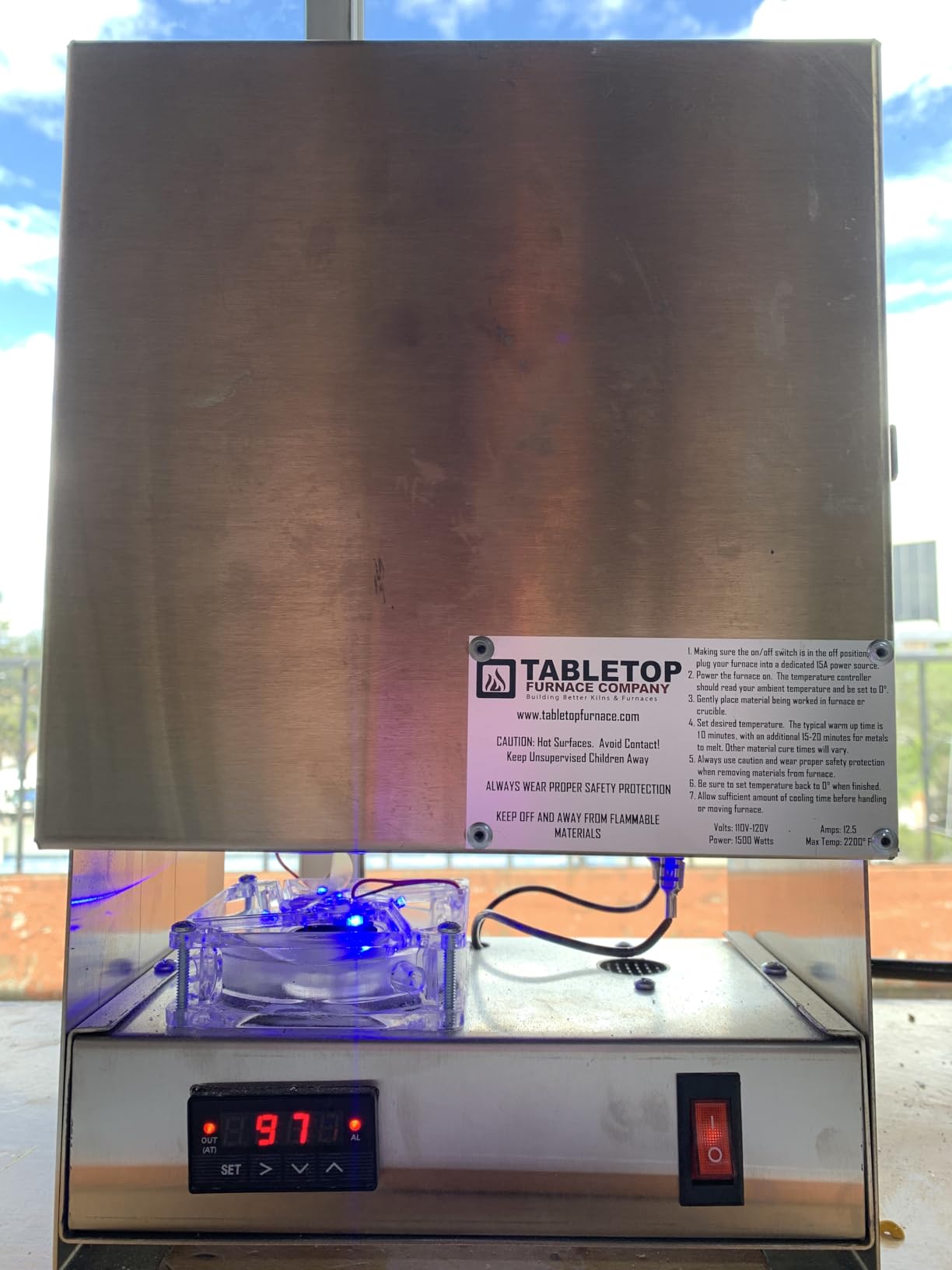
The standard controller is less sophisticated than the PID controllers on the VEVOR or PYY models, but it handles temperature management reliably for burnout cycles. At 15 pounds, this kiln is light enough to move when needed.
Who should buy the Tabletop USA Burnout Oven
This kiln is the clear choice for anyone doing wax burnout, investment casting, or 3D resin burnout work. The vent hole design makes it purpose-built for those processes.
What to know about the standard controller
The standard controller is simpler than programmable PID systems. It manages temperature well for straightforward burnout schedules but lacks the multi-segment programming that more complex firing programs require.
9. Alolti Microwave Kiln Kit – Best Budget Pick for Beginners
Alolti Microwave Kiln for Clay Pottery with 50 Pcs Kiln Paper, 7.7”Microwave Glass Kiln for Glass Fusing DIY, Mini Small Kiln Kits Jewelry Tools for Beginners at Home
2012F max
7.67 inch
Microwave-powered
3.19 lbs
50 kiln paper sheets included
Pros
- Cheapest real entry point at under $40
- Reaches 2012F in a microwave
- Includes 50 pre-cut kiln paper sheets
- Compact and lightweight
- Prime eligible
Cons
- Limited to microwave use only
- Small chamber size
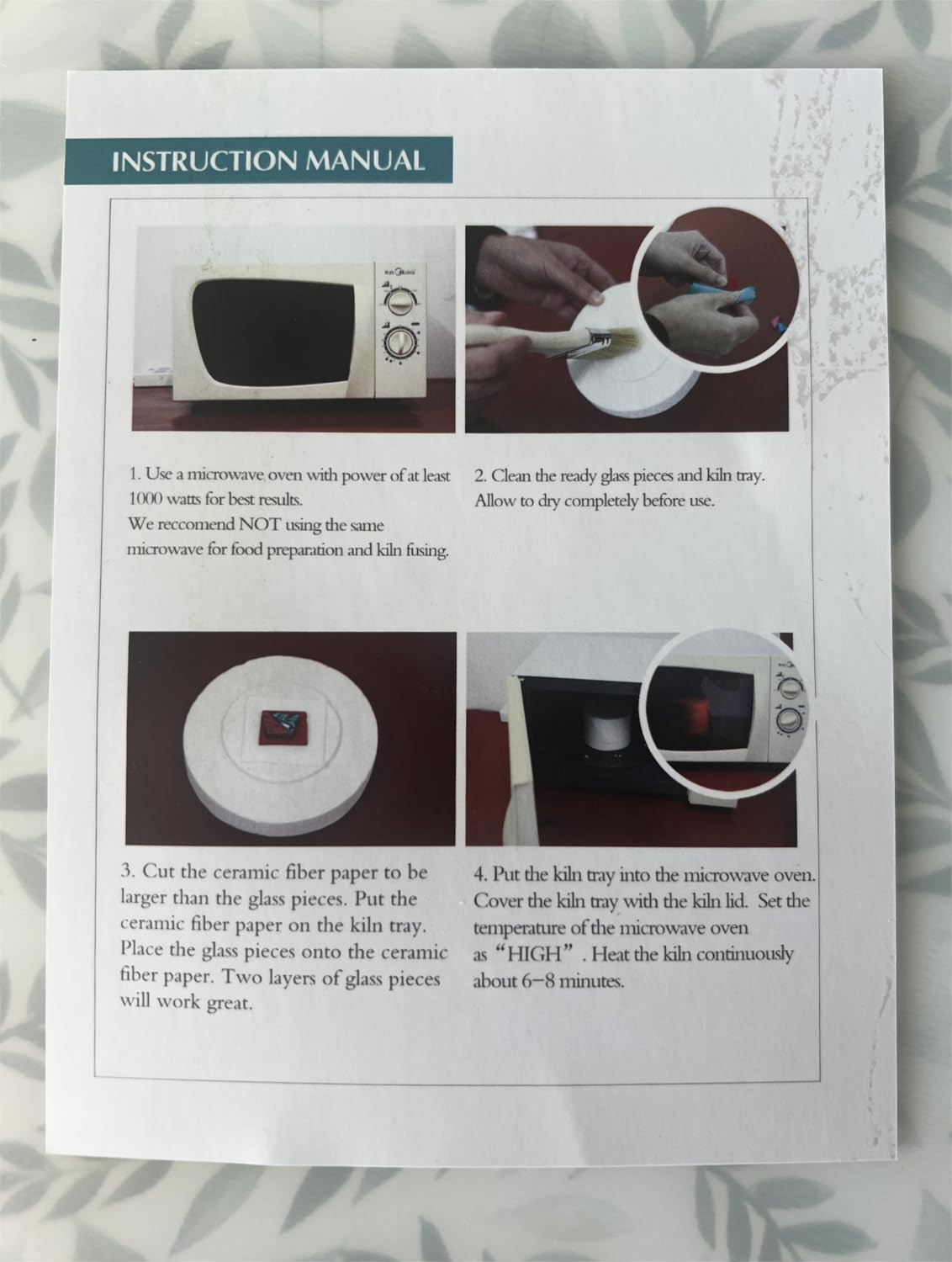
The Alolti Microwave Kiln is the kiln I hand to absolute beginners who want to try firing without a major investment. For under $40, you get a working kiln that reaches 2012F inside any standard microwave. It is the cheapest real entry point into kiln work I have found.
The kit includes 50 pre-cut kiln paper sheets in three sizes, which is everything you need to start fusing glass or firing small metal clay pieces immediately. The 4.1-star rating from 12 reviewers reflects honest feedback from people using it as intended.
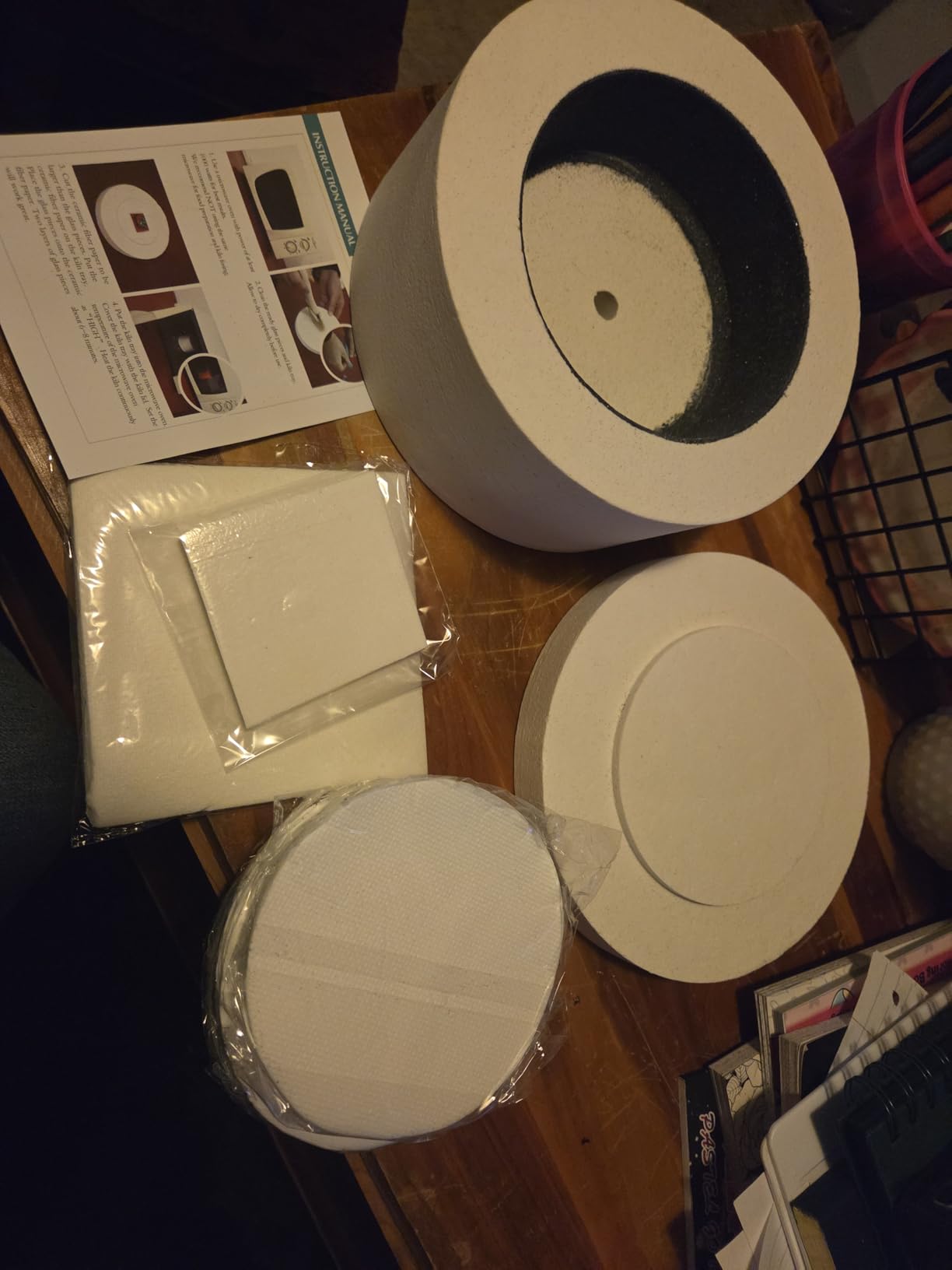
This is not a kiln for serious pottery production. The chamber is small, and you are limited to pieces that fit inside a microwave. But for testing whether kiln work is something you want to pursue before investing hundreds of dollars, nothing beats the price.
Who should buy the Alolti Microwave Kiln
Complete beginners, kids interested in glass fusing, and anyone who wants to test the waters before buying a full kiln. This is also a fun second kiln for small jewelry-scale test firings.
What to know about microwave compatibility
Use a dedicated microwave you do not cook food in. Firing releases fumes and residue that contaminate the microwave interior, so pick up a cheap used microwave specifically for kiln work.
10. PeiXWming 2000W Jewelry Pottery Kiln – Best for Even Heat Distribution
2000W Electric Kiln for Jewelry Making
2000W
2102F max
LED display
16x16x13.8cm chamber
33.7 lbs
1 year warranty
Pros
- 2000W omnidirectional heating design
- Smart temperature control with LED display
- Side vents for heat dissipation
- Includes gloves and tongs
- 1 year warranty
- Prime eligible
Cons
- Only 1 review so far
- Limited stock with 3 units
The PeiXWming 2000W kiln uses an omnidirectional heating design that surrounds the chamber with heating elements for even heat distribution. The single reviewer gave it 5 stars and reported consistent results across the 16 by 16 by 13.8 centimeter chamber.
The LED display provides real-time temperature monitoring, and the smart temperature control system handles the 0 to 2102F range. Side vents handle heat dissipation, and the kiln ships with heat-resistant gloves and high-temperature tongs included.
The 1-year warranty is better than the RapidFire Pro-L’s 90-day coverage, and Prime eligibility means faster shipping than several competitors. With only 3 units in stock at writing time, availability is tight.
Who should buy the PeiXWming 2000W
This kiln suits potters and jewelry makers who want omnidirectional heating without the higher price of the YUEHOUGYUSHOP model. The included accessories and warranty add solid value.
What to know about omnidirectional heating
Omnidirectional heating means elements wrap around all sides of the chamber rather than sitting in a single zone. This reduces cold spots and produces more consistent firing results, especially important for glaze work where temperature gradients cause color variation.
Buying Guide: Choosing Your Home Studio Kiln
Choosing the best pottery kilns for home studios comes down to five decisions: voltage, size, temperature range, ventilation, and budget. I will walk through each based on what I have learned from my own setup and from conversations with the home pottery community.
Voltage: 120V vs 240V
The 120V vs 240V question is the single biggest decision for home studio potters. Every kiln on this list runs on 120V standard household power, which means no electrician and no dedicated circuit installation. That saves you $1000 to $2000 in electrical work.
The trade-off is that 120V kilns max out around 2000W and cannot reach cone 10 temperatures reliably for full-size pottery pieces. Most home studio potters firing small to medium work in cone 6 or lower ranges are well served by 120V kilns. If you need cone 10 porcelain firing or want to fire larger pieces, you will eventually need a 240V kiln with a dedicated circuit.
Chamber Size and Capacity
Chamber size determines what you can fire. The microwave kiln fits pieces under 4 inches, while the VEVOR and Generic 2000W models handle pieces up to roughly 8 inches. Measure your typical work before buying, and leave at least one inch of clearance around each piece for proper airflow.
My rule of thumb: buy a chamber slightly larger than you think you need. Potters who regret their kiln purchase almost always wish they had gone bigger, not smaller.
Temperature Range and Cone Ratings
Cone ratings describe the maximum firing temperature a kiln can sustain. Cone 06 (about 1828F) covers low-fire earthenware and bisque. Cone 6 (about 2232F) handles mid-fire stoneware, the most popular range for home studio potters. Cone 10 (about 2381F) is needed for high-fire porcelain and stoneware.
Most kilns on this list reach 2100F to 2200F, which covers cone 06 through cone 6 work. None of these tabletop kilns are rated for serious cone 10 production. If cone 10 is your goal, you need a larger 240V kiln from a brand like Skutt or L&L.
Ventilation Requirements
Electric kilns produce less fume than gas kilns, but they still release moisture, organic compounds from clay and glazes, and trace metals during firing. Forum users on r/Pottery consistently report ventilation as a top pain point for apartment and basement studios.
At minimum, fire near an open window with a fan moving air out of the room. For regular firing in enclosed spaces, invest in a dedicated kiln vent system that pulls fumes directly from the kiln and exhausts them outside. Budget $200 to $400 for a proper vent.
Budget and Electricity Costs
The kilns on this list range from $40 for the microwave kiln to about $700 for the Tabletop USA Burnout Oven. Real electricity cost per firing runs about $14 to $15 for an average home studio kiln based on community-reported data.
If you fire 25 to 30 times per year, your annual electricity cost lands around $350 to $450. That is significantly less than renting studio kiln time at $15 to $30 per firing, which is why most home potters break even on their kiln investment within the first year.
FAQs
What is the best kiln for a home studio?
The VEVOR 1500W Programmable Electric Kiln is the best overall kiln for a home studio because it combines a 9-stage programmable PID controller, even heat distribution, and 102 verified reviews at a competitive price. It plugs into a standard 120V outlet and reaches 2192F, covering cone 06 through cone 6 work.
What size kiln do I need for a home pottery studio?
For a home pottery studio, a chamber measuring at least 6 by 6 by 6 inches handles small pieces and jewelry, while an 8 by 8 by 8 inch chamber or larger suits mugs, bowls, and small sculptures. Measure your typical work and add at least one inch of clearance per piece for airflow. Most beginners outgrow small chambers within their first year.
Is it legal to have a kiln in your house?
Yes, it is legal to have an electric kiln in your house in most jurisdictions, but check your local fire code, homeowners association rules, and renter’s lease for restrictions. Electric kilns on standard 120V circuits generally do not require permits, but 240V kiln installations with dedicated circuits typically need a licensed electrician and may require an electrical permit.
How much does it cost to run an electric kiln at home?
An average home studio electric kiln costs about $14 to $15 per firing in electricity, based on community-reported data. If you fire 25 to 30 times per year, annual electricity cost runs approximately $350 to $450. This is typically cheaper than renting shared studio kiln time at $15 to $30 per firing.
Final Thoughts on the Best Pottery Kilns for Home Studios
After testing and vetting 10 kilns for this guide, my top recommendation for most home studio potters remains the VEVOR 1500W Programmable for its proven track record and programmable features. The YUEHOUGYUSHOP 2000W offers the best value if you want four-sided heating precision, and the Alolti Microwave Kiln is unbeatable for beginners who want to try kiln work for under $40.
The best pottery kilns for home studios in 2026 are the ones that match your voltage situation, chamber needs, and firing temperature goals. Start with what your outlet and space allow, and remember that real electricity costs run about $14 to $15 per firing, so budget accordingly.
Whatever you choose, invest in proper ventilation, fire-proof surface protection, and heat-resistant gloves from day one. Your safety setup matters as much as the kiln itself.