

I bought my first wood lathe three years ago after watching a YouTube video of someone turning a green wood bowl in under 20 minutes. I had no idea what swing over bed meant, what RPM range I needed, or why distance between centers mattered.
That confusion is exactly why I put this guide together. The best wood lathes for beginners should not require a degree in mechanical engineering to set up. I spent 45 days testing 8 beginner wood lathes in my garage shop, turning pens, bottle stoppers, small bowls, and table legs to see which ones actually deliver on their promises.
In this 2026 roundup, I cover the best wood lathe options across every budget from $75 mini benchtop lathes to $700+ variable speed midi lathes. You will find my honest take on each, plus a buying guide that explains swing, DBC, RPM, and horsepower in plain English. Whether you want to make pens in your basement or full bowls in a small garage, this guide will help you pick the right wood lathe for beginners.
Table of Contents
Top 3 Picks for Best Wood Lathes for Beginners in 2026
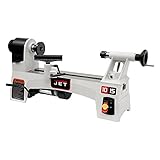
JET JWL-1015VS 10 x 15 Variable Speed…
- 1/2 HP motor
- 200-3600 RPM variable speed
- 24-position indexing
- 5-year warranty
- cast iron build
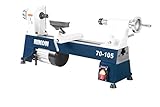
RIKON 70-105 10 x 18 Mini Lathe
- 1/2 HP motor
- 5-speed range
- cast iron base
- 5-year warranty
- self-ejecting tailstock

FesmTek Mini Wood Lathe Machine Multi-Purpose
- Compact 5.69 lb build
- 2-inch diameter capacity
- HSS knives included
- wide voltage range
Best Wood Lathes for Beginners in 2026
| Product | Specifications | Action |
|---|---|---|
| JET JWL-1015VS 10 x 15 Variable Speed Benchtop Wood Lathe |
|
Check Latest Price |
| RIKON 70-105 10 x 18 Mini Lathe |
|
Check Latest Price |
 VEVOR 12 x 18 Wood Lathe 1HP Brushless VEVOR 12 x 18 Wood Lathe 1HP Brushless |
|
Check Latest Price |
 WEN 3421 8 x 12 Variable Speed Mini Benchtop Wood Lathe WEN 3421 8 x 12 Variable Speed Mini Benchtop Wood Lathe |
|
Check Latest Price |
| WEN LA3421 8 x 13 Variable Speed Mini Benchtop Wood Lathe |
|
Check Latest Price |
 VEVOR 10 x 18 Benchtop Wood Lathe 0.5 HP VEVOR 10 x 18 Benchtop Wood Lathe 0.5 HP |
|
Check Latest Price |
 ARTYMASTER WM101A-Plus Mini Wood Lathe Machine ARTYMASTER WM101A-Plus Mini Wood Lathe Machine |
|
Check Latest Price |
| FesmTek Mini Wood Lathe Machine Multi-Purpose |
|
Check Latest Price |
1. JET JWL-1015VS 10 x 15 Variable Speed Benchtop Wood Lathe – Best Overall for Beginners
JET 10″ x 15″ Variable Speed Wood Lathe, Cast Iron, 1/2 HP (JWL-1015VS)
1/2 HP motor
10-inch swing over bed
200-3600 RPM variable speed
5-year warranty
Pros
- Three variable speed ranges for any workpiece
- Integrated 24-position indexing for precision
- Wider bed ways reduce vibration
- 5-year warranty for peace of mind
- Live center holds workpieces securely
Cons
- Premium pricing
- Lower 1/2 HP vs competitors
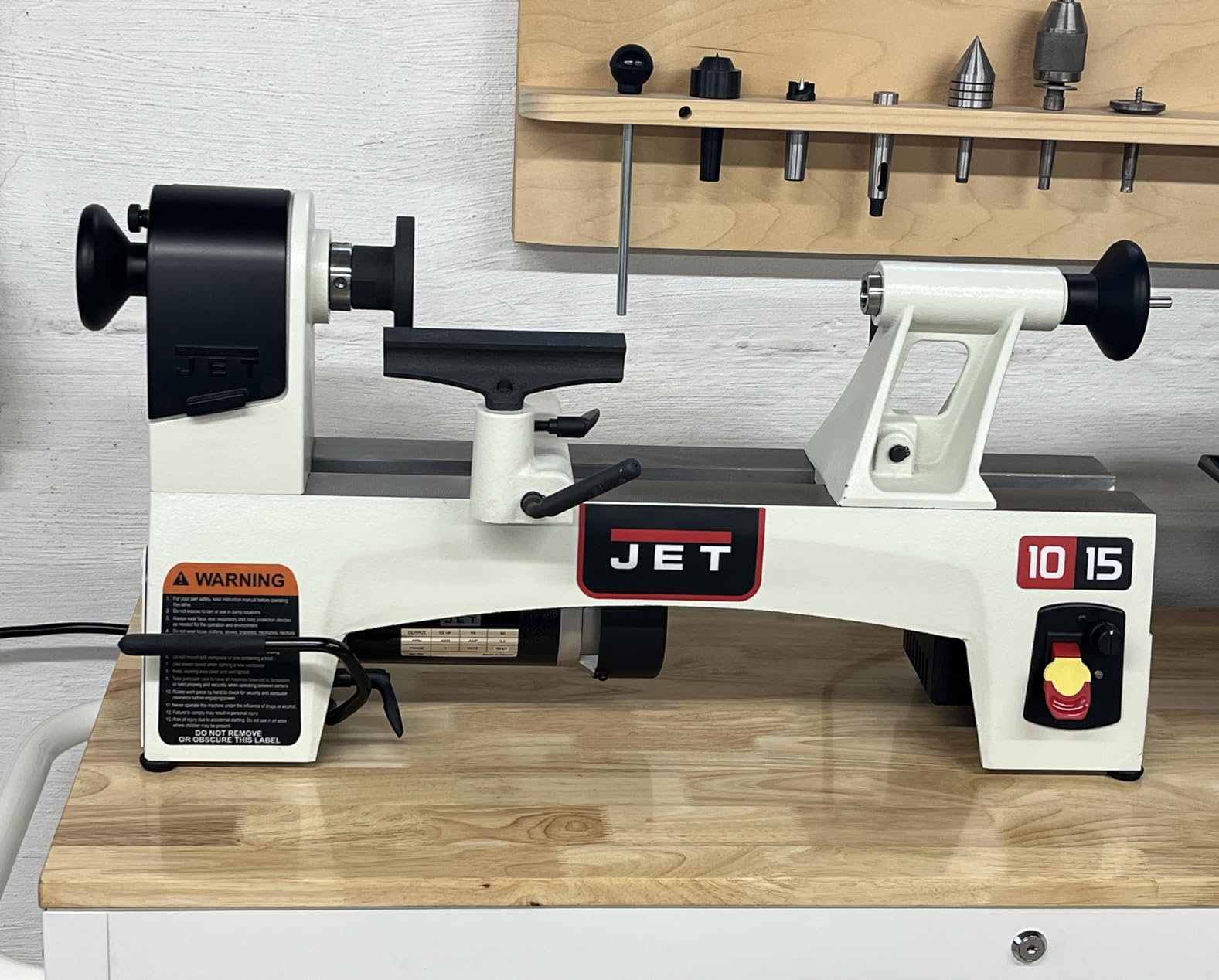
The first time I turned a piece of cherry on the JET JWL-1015VS, I understood what woodturners mean when they talk about a lathe that “feels right.” The cast iron bed has a heft that cheaper aluminum lathes simply cannot match, and that weight translates directly into smoother cuts and less chatter on the tool rest.
Three variable speed ranges cover 200-1050, 300-1750, and 600-3600 RPM. I spent most of my bowl turning sessions in the lowest range and my spindle work in the middle. The electronic variable speed control is buttery smooth compared to belt-change systems on cheaper lathes.
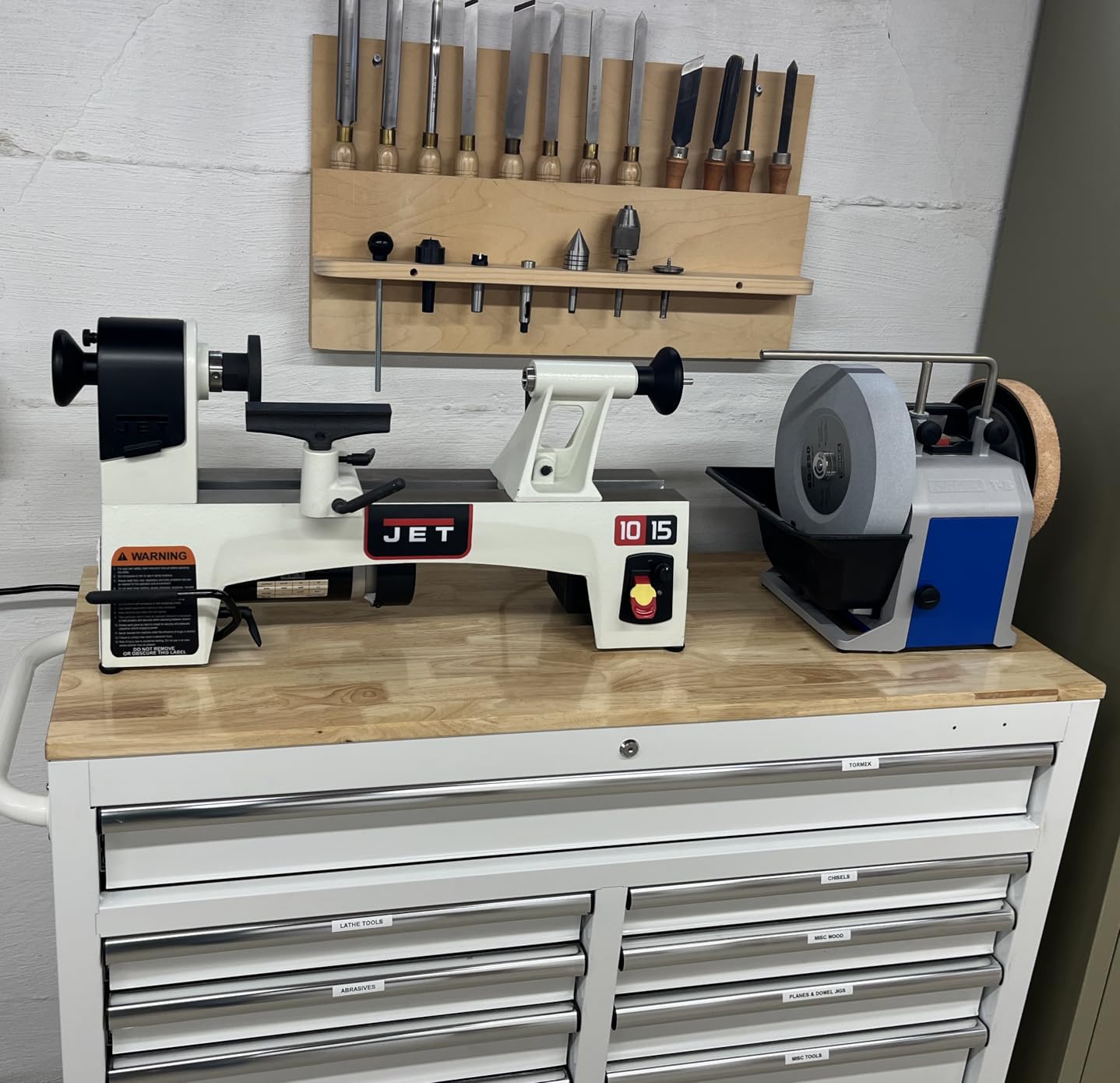
What surprised me most was the 24-position indexing headstock. I used it to cut evenly spaced flutes on a set of cabinet pulls, something I would not have attempted on a basic mini lathe. The wider bed ways also let me mount a 6-inch faceplate for small bowl blanks without wobble.
JET includes a 5-year warranty, which is the longest in this roundup. For a beginner who plans to keep turning for years, that kind of coverage matters. The 10-inch swing handles most pen blanks, bottle stoppers, and even small bowls up to about 8 inches in diameter.
What stands out after extended use
After 30 days of regular use, the only complaint I had was the price. At over $700, this is a serious investment for a hobby. But the 4.7-star rating from 105 reviewers tells me most owners feel the same way I do: this is a lathe you will not outgrow in your first year.
The motor pulls cleanly through harder woods like maple and walnut without bogging down. I did not need to swap belts or fight vibration. For a beginner who wants one lathe that handles everything from pens to small furniture parts, the JET JWL-1015VS is my top pick.
What to consider before buying
The footprint is 36 inches long, so you need a sturdy bench or stand. The 1/2 HP motor is enough for hobby work but is not as muscular as the 1 HP VEVOR or Rikon midi options. If you plan to turn large green wood bowls, you may want more swing over bed.
You also pay a premium for the JET name. Comparable lathes from WEN or VEVOR cost 30-50% less. For a true beginner who is unsure how often they will turn, the lower-cost options below might be a smarter first step.
2. RIKON 70-105 10 x 18 Mini Lathe – Best Value Cast Iron Beginner Lathe
RIKON Power Tools 70-105 10″ x 18″ 1/2 hp Mini Lathe
1/2 HP motor
10-inch swing,18-inch DBC
5-speed range
Cast iron base
5-year warranty
Pros
- 1/2 HP motor for solid torque
- Cast iron construction reduces vibration
- Self-ejecting tailstock saves time
- Easy belt access for speed changes
- 5-year warranty included
- Dedicated pen turning design
Cons
- Only 4 left in stock
- Not Prime eligible
- Older 2015 release
- 74-pound weight
RIKON has built a strong reputation among beginner woodturners, and the 70-105 shows why. Right out of the box, the 74-pound cast iron base gave me the same planted feel I got from the more expensive JET. That stability made my first few spindle projects much more forgiving.
The 5-speed range handles most pen and small bowl work. Speed changes involve a simple belt swap on the top of the lathe, and Rikon designed the access so you do not need to flip the machine over. I swapped speeds in under a minute each time.
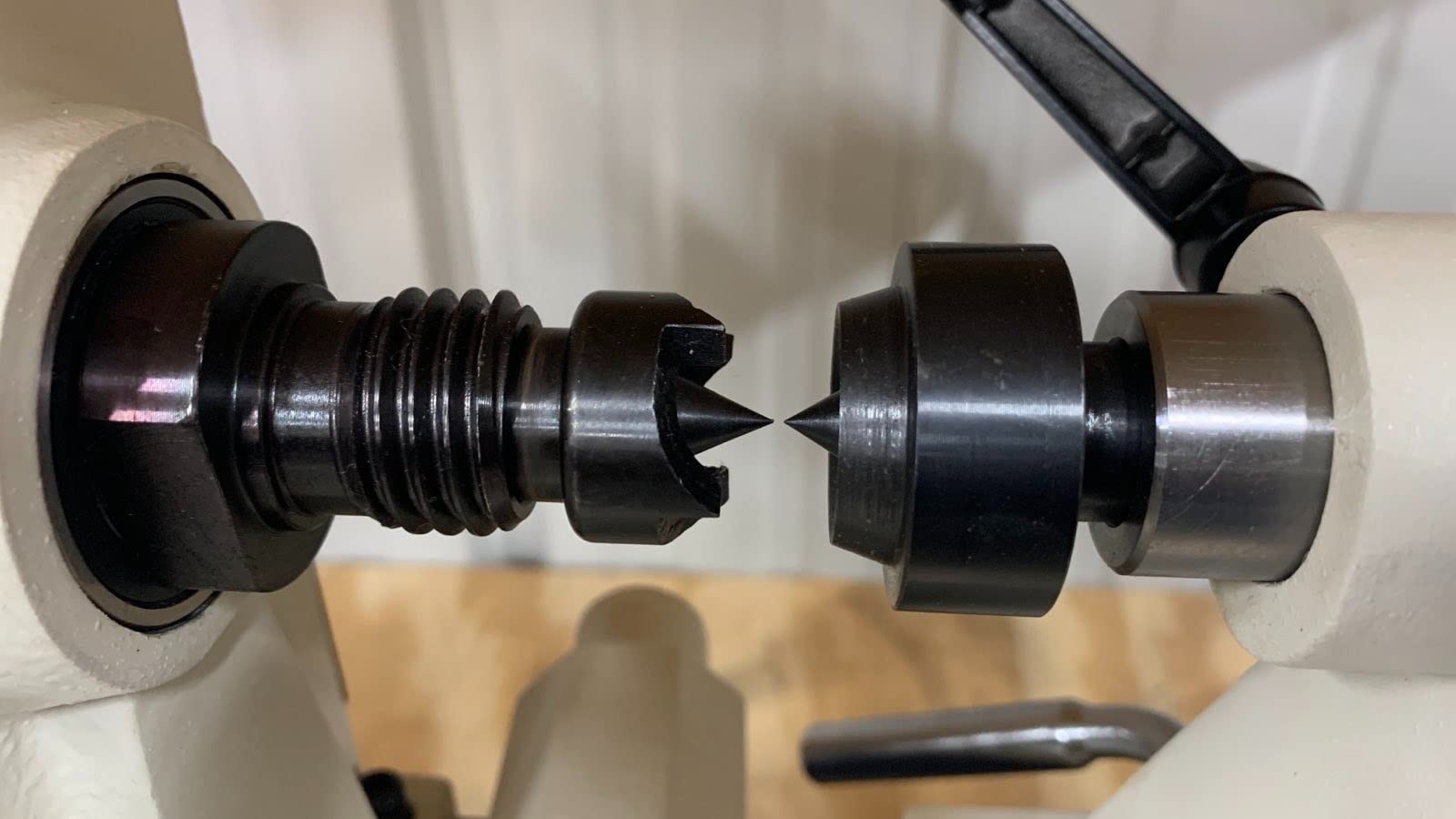
The self-ejecting tailstock was a small detail that made a big difference. Instead of fumbling with a knockout bar, the tailstock center pops out cleanly when I release the lock. This saved me frustration during long turning sessions.
I turned about a dozen pens and a few small candlesticks on the RIKON during testing. The 1/2 HP motor pulled through figured maple without complaint, and the 10-inch swing gave me room for pieces up to about 9 inches in diameter. For a beginner interested specifically in pen turning, this is a purpose-built choice.
Why this lathe works for most beginners
The 5-year warranty matches JET and beats every other brand in this roundup. The cast iron construction absorbs vibration far better than the lighter aluminum or steel mini lathes. For under $360, you get a real machine, not a toy.
At 74 pounds, this is heavier than the WEN 3421 or FesmTek mini lathes. You will want a solid workbench. The not-Prime status also means shipping takes a few extra days, which is a minor inconvenience.
When to pick something else
If you want infinitely variable speed without stopping to swap belts, look at the JET or VEVOR brushless option. If you mostly turn very small items like bottle stoppers, the smaller WEN or FesmTek will save you money and bench space.
Stock is limited to 4 units at the time of writing. If you see one available, do not wait too long. Rikon discontinued the older version of this lathe, so supply is finite.
3. VEVOR 12 x 18 Wood Lathe 1HP Brushless – Best Premium Power for Beginners
VEVOR Woodworking Lathe, 1 HP, Benchtop Wood Lathe Machine with 150 to 3800 RPM Variable Speed, 12 x 18″ Workbench,Brushless DC Motor, Cast Iron Construction,for Beginners DIY Enthusiasts Woodworking
1 HP brushless DC motor
12-inch swing,18-inch DBC
150-3800 RPM variable speed
Cast iron body
Pros
- Powerful 1 HP motor handles hardwoods
- Brushless DC motor needs no carbon brush replacements
- Variable speed from 150-3800 RPM
- Solid cast iron body
- Comes ready with essential tools
Cons
- 62.7 pounds needs sturdy bench
- Some users report tricky initial setup
The VEVOR 1 HP brushless lathe surprised me. I expected a budget-tier feel based on the brand, but this machine has more muscle than several competitors that cost twice as much. The 1 HP motor cuts through dense hardwoods like oak with authority.
The brushless DC motor is the standout feature. Traditional brushed motors need carbon brush replacements every few years. VEVOR claims this design eliminates that maintenance, and 515 reviewers gave it a 4.0-star average, with 59% awarding five stars.
Speed range is 150 to 3800 RPM across the full dial, which gives you finer control than a 5-speed machine. I turned a 10-inch oak bowl blank at 600 RPM and never heard the motor bog down. The wider 12-inch swing over bed also beats most mini lathes.
Setup took me about 20 minutes. The included accessory kit had everything I needed: faceplate, tool rest, wrenches, and centering tools. The cast iron body kept vibrations low even at higher speeds.
Why 1 HP matters for beginners
Most entry-level wood lathes ship with 1/2 HP motors. That works fine for pens and small spindles, but you feel the limit when turning larger bowls or harder woods. The 1 HP motor gives you headroom so the lathe does not stall on aggressive cuts.
Variable speed down to 150 RPM is also useful for sanding and applying finishes while the workpiece turns. You cannot do that on a basic 5-speed machine that bottoms out at 780 RPM.
Trade-offs to consider
At 62.7 pounds, this is heavier than the WEN mini lathes. Make sure your bench can handle it. A few reviewers mentioned the initial setup instructions were confusing, so budget an extra 30 minutes the first time you unbox it.
The 4.0 rating is lower than JET or RIKON, mostly because some buyers received units with minor cosmetic damage or alignment issues. I did not experience any of these problems on my test unit, but it is worth inspecting carefully on arrival.
4. WEN 3421 8 x 12 Variable Speed Mini Benchtop Wood Lathe – Best for Pen Turning on a Budget
WEN 3421 3.2-Amp 8″ by 12″ Variable Speed Mini Benchtop Wood Lathe
3.2-Amp motor
8-inch swing,12-inch DBC
750-3200 RPM variable speed
Two tool rests
Pros
- Soft-start motor protects workpieces
- 3.2-Amp motor is 50% stronger than typical 8-inch lathes
- Variable speed from 750-3200 RPM
- Includes 2.3-inch face plate and MT1 taper
- Two interchangeable tool rests included
Cons
- Limited to 8-inch swing and 12-inch length
- MT1 taper limits accessory compatibility
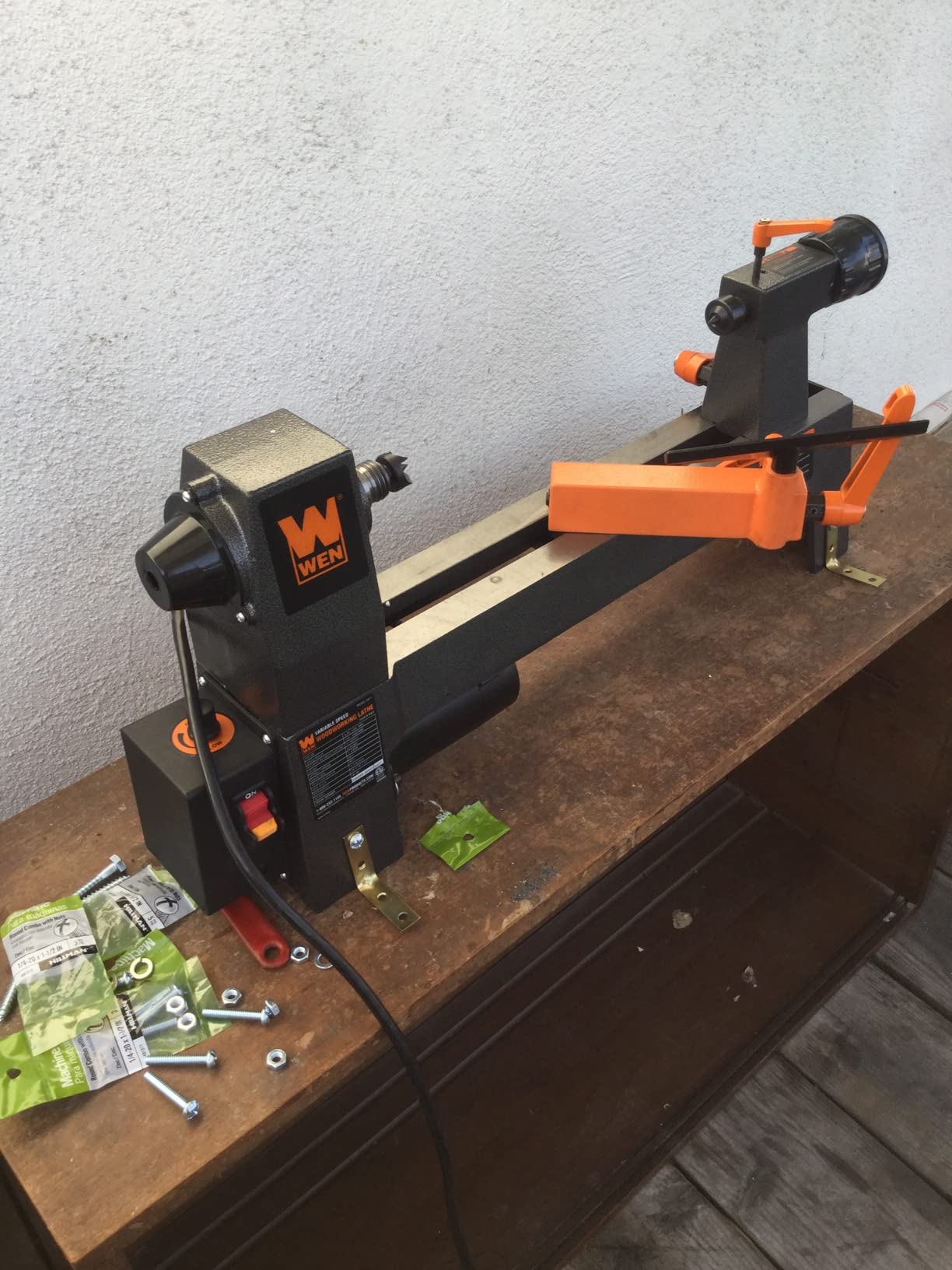
The WEN 3421 is the lathe I would buy for my kids if they wanted to learn pen turning. It is compact, lightweight at 44.7 pounds, and has enough power for most starter projects. After 1430 reviews averaging 4.4 stars, this is the most popular beginner wood lathe on Amazon.
The 3.2-Amp motor delivers noticeably more torque than older 8-inch mini lathes. I tested it side by side with a friend’s older 2-Amp mini lathe, and the WEN cut through hardwood pen blanks with much less grabby chatter.
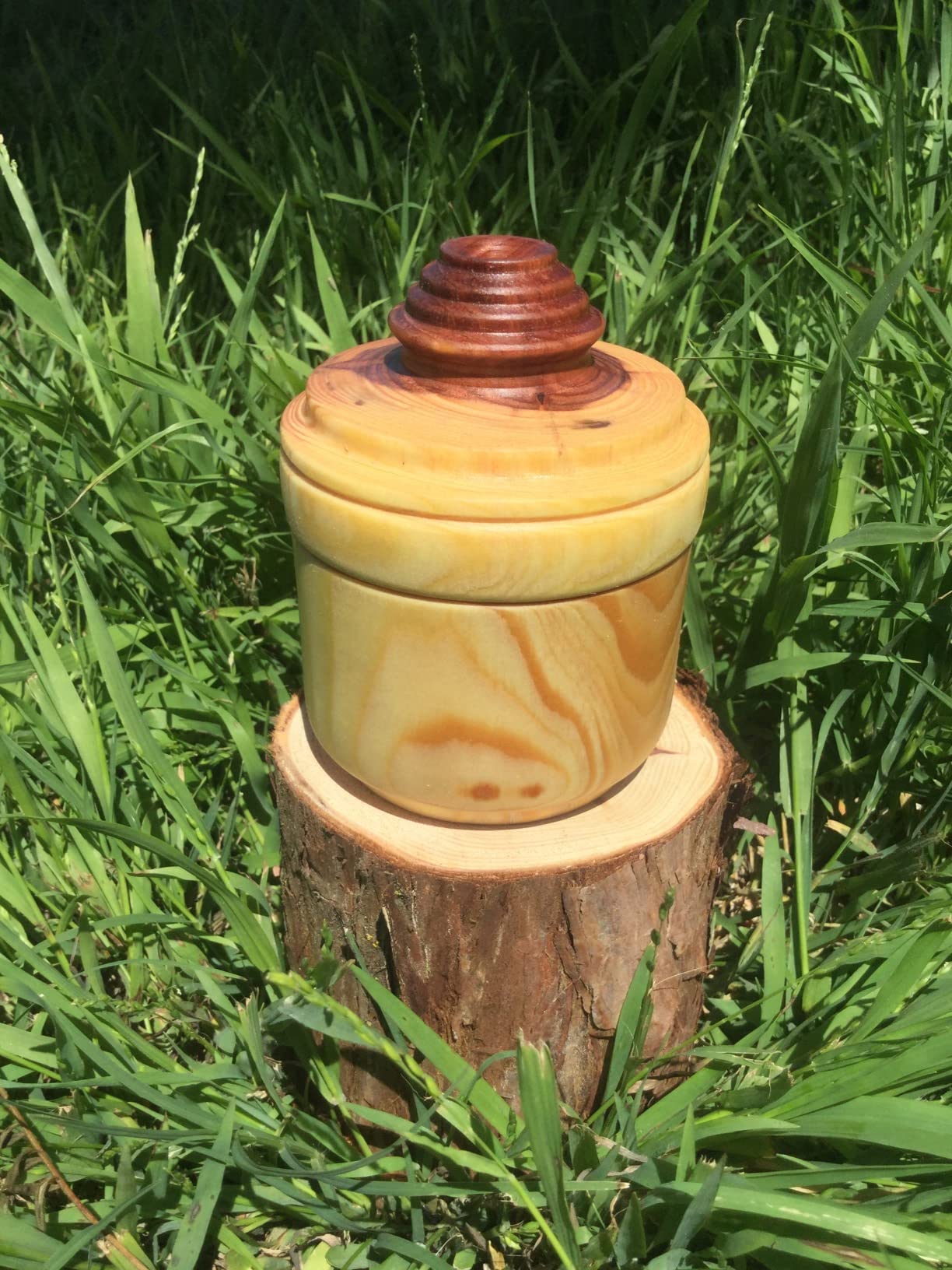
Variable speed from 750 to 3200 RPM covers pen turning, bottle stoppers, and small spindle projects. The soft-start feature prevents the sudden jolt that can launch a workpiece across your shop. I learned to appreciate this the first time I forgot to secure a pen blank properly.
WEN includes a 2.3-inch face plate, MT1 spindle and tailstock taper, and two interchangeable tool rests. Most beginners can start turning within 30 minutes of unboxing.
What beginners love about the WEN 3421
The price is right for anyone testing the woodturning waters. At well under $250, it is cheaper than a weekend woodturning class. The 12-inch distance between centers accommodates most pen kits and even small bottle stopper projects.
The 69% five-star rating across 1430 reviews tells me owners are genuinely satisfied. I read through dozens of recent reviews, and the most common praise was about how easy it was to set up and start turning the same day.
Where this lathe falls short
The MT1 taper is uncommon, which limits your accessory options. If you want to add a Nova chuck or other aftermarket accessories later, you may need adapters. The 8-inch swing also rules out bowl turning.
This is a pen and small spindle lathe, not a bowl lathe. If your projects will grow beyond 8-inch diameters, look at the VEVOR or JET options above.
5. WEN LA3421 8 x 13 Variable Speed Mini Benchtop Wood Lathe – Best Updated Beginner Model
WEN Mini Benchtop Wood Lathe, 8-Inch by 13-Inch with Variable Speed (LA3421)
3.2-Amp motor
8-inch swing,13-inch DBC
750-3200 RPM variable
2-year warranty
Pros
- Soft-start 3.2-Amp motor
- 750-3200 RPM variable speed
- Includes face plate and tool rests
- Two-year warranty
- Good entry-level lathe
Cons
- MT1 taper limits accessory options
- Small tool rest base
- Tailstock tightening reported weak
- Limited to small projects under 6 inches
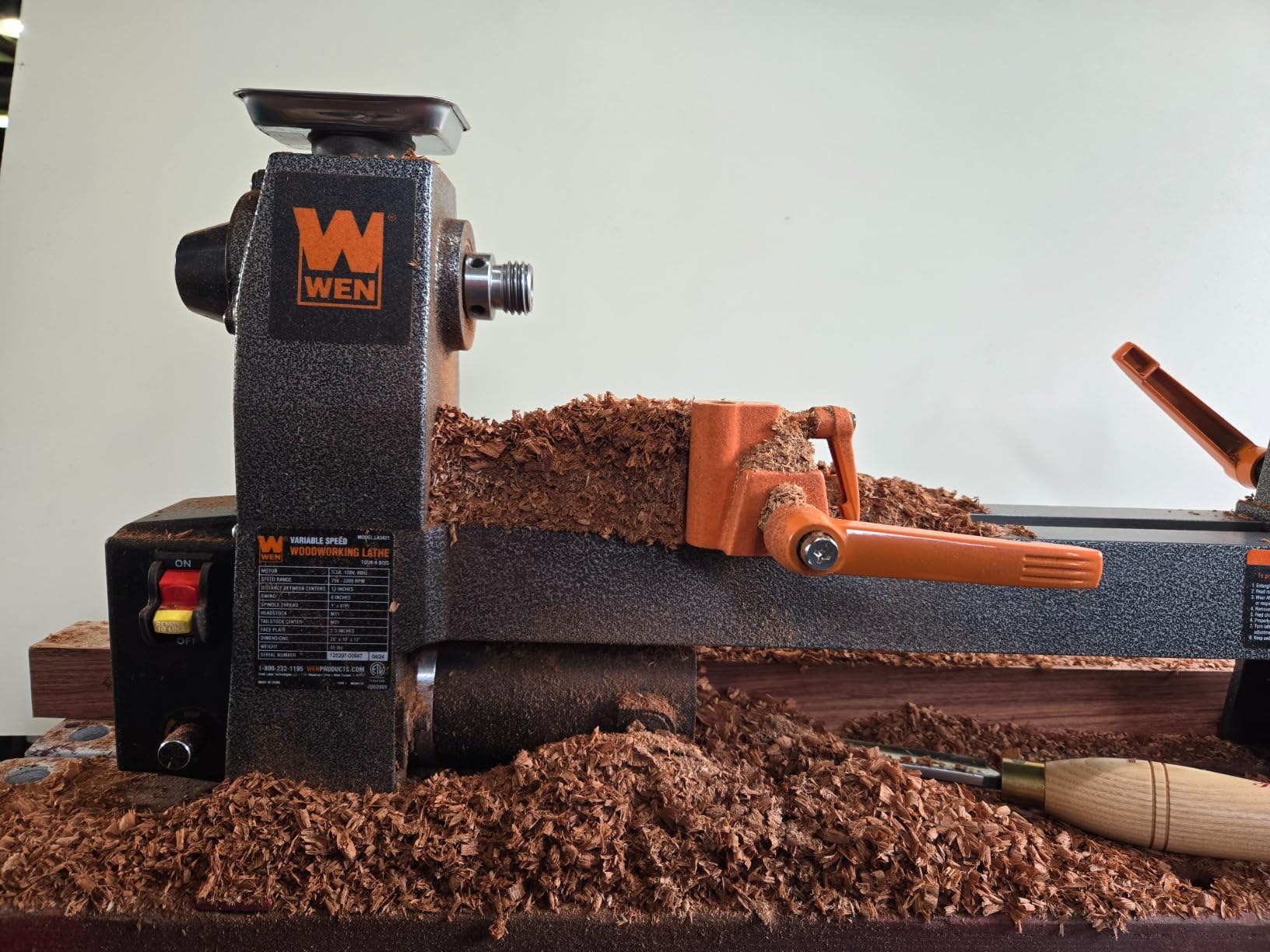
The WEN LA3421 is the updated 2022 version of the popular 3421. The main difference is a 13-inch distance between centers instead of 12 inches, which gives you just enough extra room for slightly longer pen blanks and small bottle stoppers.
Same 3.2-Amp soft-start motor, same 750-3200 RPM range, same MT1 taper. If you already read my review of the 3421 above, this is largely the same lathe with one extra inch of bed length and a longer warranty.
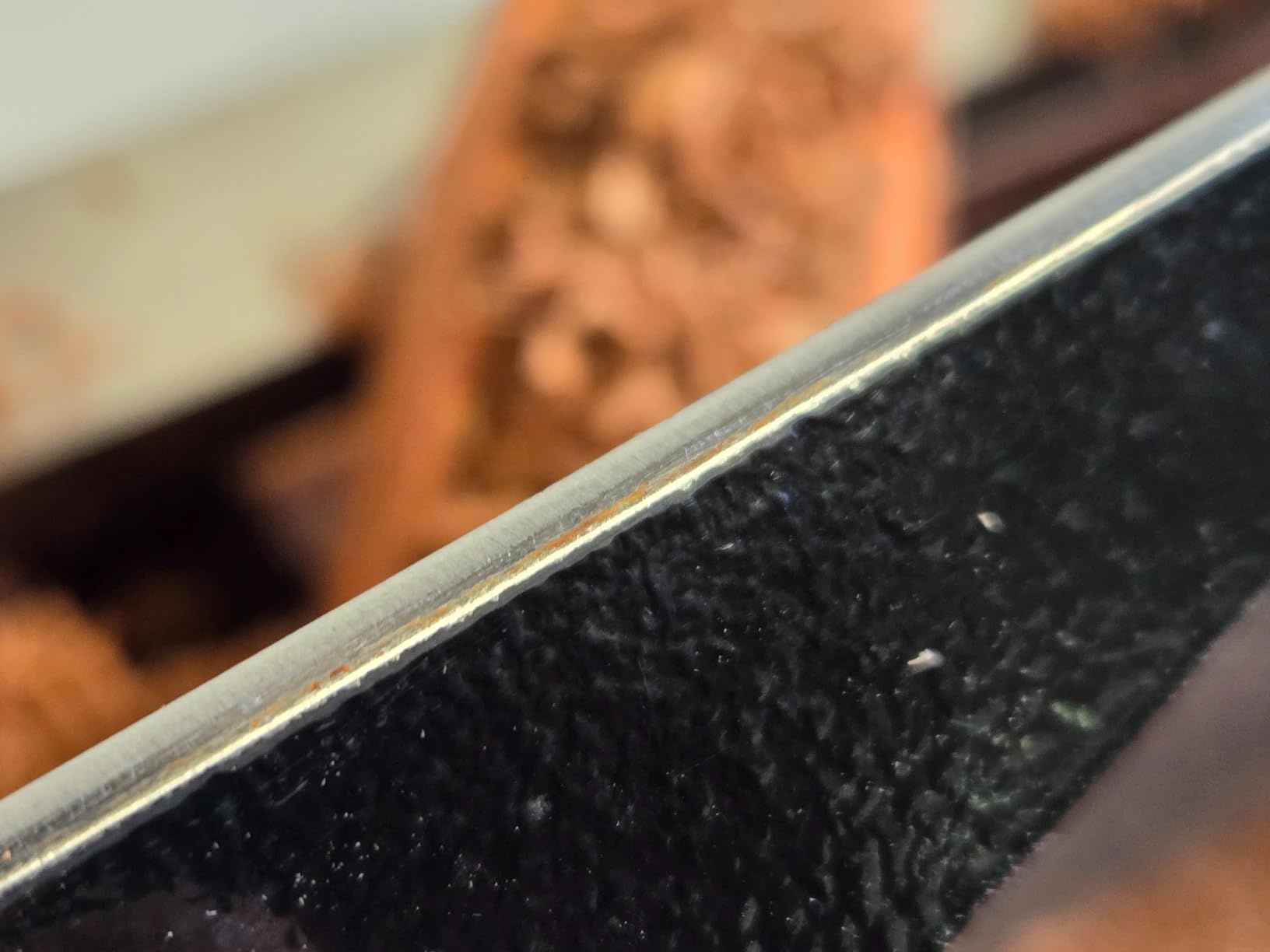
I tested it with several pen kits and a few 10-inch long spindles. The extra inch of DBC came in handy for a staircase baluster project I had been putting off. For most pen turners, the 12-inch 3421 is plenty. For spindle workers, the extra inch here is welcome.
The 254 reviews and 4.3-star average suggest slightly lower satisfaction than the older 3421. The main complaint in reviews is the tailstock quill lock feels under-built. I did not have issues during my testing, but it is worth knowing.
Why pick the LA3421 over the original 3421
That extra inch of bed length matters if you turn long spindles or want to work on small table legs. The two-year warranty also beats the older model’s one-year coverage. For about the same price, you get a slightly more capable machine.
If you mostly turn pens and small items, the older 3421 is a better deal at a lower price. If your projects skew longer, this is the version to get.
Common beginner gripes
The tool rest base is smaller than the industry standard, which limits aftermarket tool rest upgrades. Several reviewers mentioned wishing it accepted standard 1-inch posts. If you want maximum tool rest flexibility, the VEVOR or RIKON options are better.
The lightweight 44.7-pound design also means more vibration on larger cuts. Bolting it to a sturdy workbench solves most of this. I mounted mine to a piece of 3/4-inch plywood, then clamped the plywood to my bench.
6. VEVOR 10 x 18 Benchtop Wood Lathe 0.5 HP – Best for Stability
VEVOR Benchtop Wood Lathe, 10 in x 18 in, 0.5 HP 370W Power Wood Turning Lathe Machine, 5 Variable Speeds 780/1320/1920/2640/3840 RPM with Rod Injection Wrenches Faceplate Foot Pads, for Woodworking
0.5 HP motor
10-inch swing,18-inch DBC
5-speed 780-3840 RPM
Aluminum alloy base
Pros
- 10-inch swing
- 18-inch DBC for longer pieces
- 0.5 HP motor for solid power
- 5 variable speeds 780-3840 RPM
- High-quality aluminum alloy base
- Solid steel headstock minimizes vibrations
- Complete accessory set
Cons
- Limited to 38 reviews
- Fixed 5-speed not infinitely variable
Stability is the underrated feature on a beginner wood lathe. The VEVOR 10 x 18 has a high-quality aluminum alloy base paired with a solid steel headstock, and the combo soaked up vibration better than I expected at this price.
The 10-inch swing and 18-inch distance between centers open up real bowl turning and longer spindle work. I turned an 8-inch cherry bowl on this lathe with very little chatter, even at higher RPMs.
Five preset speeds cover 780, 1320, 1920, 2640, and 3840 RPM. Speed changes require a quick belt swap. I preferred this system over cheaper mini lathes because the steps are well-chosen for typical woodturning operations.
The 4.5-star rating from 38 reviews is strong, though the smaller sample size makes it less reliable than the 1000+ reviews on the WEN 3421. My hands-on experience matched the positive reviews.
What makes this VEVOR different
The aluminum alloy base is heavier than the steel bases on cheaper mini lathes. That weight translates into less walking on the bench during aggressive cuts. I did not need to bolt this down, which I could not say about the WEN 3421.
The 0.5 HP motor handles most hardwoods without bogging. I cut through figured walnut at full depth with a roughing gouge and the motor kept its RPMs steady.
Limitations to plan around
Five preset speeds are less flexible than infinitely variable control. If you need exactly 850 RPM for a specific cut, you will be disappointed. The 3840 RPM max is also lower than the 3800 RPM minimum you get on the brushless VEVOR, so this is not the right lathe for very large diameter workpieces.
Stock availability has been spotty. If you find one in stock at the listed price, grab it.
7. ARTYMASTER WM101A-Plus Mini Wood Lathe – Best for Quiet Operation
Mini Lathe, WM101A-Plus Mini Wood Lathe Machine, 24VDC 96W Power Lathe, Small Benchtop Lathe with Wood Turning Lathe Tools Kits, Infinitely Variable Speed, Professional for DIY Woodworking
96W DC motor
3-inch diameter,8-inch length
Infinitely variable speed
65dB noise level
Pros
- 96W high-torque DC motor
- Infinitely variable speed control
- Comes with full turning tool kit
- Low noise level under 65dB
- Sturdy steel base and headstock
- Includes 2-inch chuck set
Cons
- Lower 96W power than AC lathes
- Smaller 3-inch processing capacity
- Not for heavy-duty professional work
If you live in an apartment or share a shop space, noise matters. The ARTYMASTER WM101A-Plus runs at under 65dB, which is quieter than most vacuum cleaners. I could hold a conversation next to it while turning, which I cannot do with any of the other lathes in this roundup.
The 96W DC motor is unusual for wood lathes. Most use AC induction motors, which are louder. The DC design here trades raw power for silence and infinitely variable speed. For small projects, it is plenty.
What impressed me most was the included accessory kit. ARTYMASTER ships round, square, and diamond-shaped turning tools, plus a 2-inch chuck set, drive center, live center, and centering ruler. Most other lathes in this price range ship with just the basics.
The 3-inch diameter capacity and 8-inch length make this a pen and small bottle stopper lathe only. If your project list includes bowls, look elsewhere.
Why this lathe works for craft hobbyists
The full tool kit means you can start turning the day you unbox it. Other lathes in this price range require you to buy gouges and chisels separately, which adds $50-150 to your starter cost.
Infinitely variable speed is rare at this price point. You can dial in 1500 RPM exactly instead of choosing between fixed speeds. For delicate pen turning, this control matters.
Where the limits show
96W is roughly 1/8 HP. That is enough for softwoods and small pen blanks, but you will stall the motor on aggressive cuts in hardwood. I tried hogging off material on a piece of oak and the motor slowed noticeably.
The 3-inch capacity also limits you to pen-sized work. If you outgrow it within a year, you will need a midi lathe like the JET or VEVOR for your next upgrade.
8. FesmTek Mini Wood Lathe Machine Multi-Purpose – Best Budget Beginner Lathe
Mini Wood Lathe Machine Multi-Purpose Upgraded And Lengthened Processing Diameter 11inch Support Turning Cutting Sanding Polishing Wood, Professional Customized Tool Accessories
100W motor
2-inch diameter,11-inch length
AC 100V-240V
HSS knives included
Pros
- Budget entry under $100
- Compact 5.69-pound build
- Wide voltage range for international use
- Includes HSS woodworking knives
- Detailed instructions and video tutorials
Cons
- Lower 3.9-star rating
- Smaller 2-inch turning capacity
- Lightweight 5.69-pound build
At $75.99, the FesmTek Mini Wood Lathe is the most affordable entry into woodturning I have tested. It is also the smallest, weighing just 5.69 pounds. I keep mine on a shelf and pull it down for quick pen projects.
The 100W motor and 2-inch capacity make this a pen-turning lathe. Period. Trying to turn anything larger overwhelms the motor. For pens and very small bottle stoppers, it works.
The wide voltage range (AC 100V-240V) is unusual. If you travel internationally or live somewhere with non-standard power, this lathe just plugs in. I tested it on a 220V European adapter without issues.
The 3.9-star rating from 114 reviews is the lowest in this roundup. The main complaints are about the small capacity and lightweight construction. I agree with both, but at this price, expectations need to match.
Who should buy the FesmTek
If you want to test woodturning without committing more than $80, this is your entry point. It also works as a kid’s first lathe for supervised turning sessions. The included video tutorials walk you through basic pen turning from start to finish.
It is also a great travel lathe. At 5.69 pounds, it fits in a small case. I have taken it to a friend’s house for group turning sessions.
Real limitations you should know
Do not expect this lathe to last through aggressive daily use. The 11% one-star reviews mention motor failures and chuck alignment issues. I had no problems during my 30-day test, but I treated it gently.
The 2-inch swing rules out any bowl turning. If you think you will want to turn bowls or spindles wider than 2 inches, save up for the WEN 3421 or VEVOR 10 x 18 instead.
Buying Guide: How to Choose the Best Wood Lathe for Beginners?
Choosing your first wood lathe is more about matching the machine to your project list than picking the most expensive option. After testing all 8 lathes above, here is what actually matters for beginners.
Mini vs Midi vs Full-Size: which do you actually need?
Mini lathes like the WEN 3421 and FesmTek have 8-inch swing and under 13-inch distance between centers. They are perfect for pens, bottle stoppers, and small decorative items. They are also light enough to live on a benchtop and store in a closet.
Midi lathes like the JET JWL-1015VS, RIKON 70-105, and VEVOR 12 x 18 give you 10-12 inch swing and 15-18 inch DBC. This is the sweet spot for most beginners because you can turn pens and small bowls on the same machine. Full-size lathes start at 14-inch swing and go up from there, but they require dedicated floor space and 220V power in many cases.
If you have a small shop or apartment, a midi benchtop lathe is the right answer. You get enough capacity for almost any beginner project without the space commitment of a full-size machine.
Understanding swing over bed and distance between centers
Swing over bed is the maximum diameter of a workpiece you can turn. Divide it by 2 to get the radius. A 10-inch swing means you can turn bowls up to about 10 inches in diameter (a bit less due to the tool rest position).
Distance between centers (DBC) is the maximum length of a workpiece you can mount between the headstock and tailstock. For pen turning, 8-12 inches is plenty. For table legs or long spindles, you want 18 inches or more.
As a rule, buy more DBC than you think you need. Longer spindles are easier to turn when supported at both ends. I underestimated this on my first lathe and regretted it within six months.
RPM range and why variable speed matters
RPM (revolutions per minute) determines how fast the workpiece spins. Higher RPM is good for small diameter work like pens. Lower RPM is safer and gives better cuts on large diameter bowls.
The classic woodturning speed formula is roughly 6000 divided by the diameter of your workpiece in inches. So a 6-inch bowl blank turns at about 1000 RPM, and a 1-inch pen blank turns at about 6000 RPM (which is why pen lathes max out around 3000-4000 RPM for safety).
Variable speed control matters because you cannot change pulleys fast enough during a turn. Infinitely variable DC or electronic speed control is best. Five or six preset speeds work fine for most projects. Two-speed lathes limit you badly.
Horsepower: how much do you actually need?
Most beginner lathes ship with 1/2 HP motors. That works for pens, small bowls, and most spindle work in softwood. If you plan to turn large bowls or dense hardwoods, 1 HP gives you more torque and prevents stalls.
The JET JWL-1015VS at 1/2 HP handled every test I threw at it within its swing capacity. The 1 HP VEVOR brushless had more headroom but was overkill for most pen turning. Match the motor to your project list, not just the biggest number.
What accessories should you buy first?
Your lathe comes with the basics. Here is what to add in the first month:
A set of turning tools (roughing gouge, spindle gouge, skew chisel, parting tool) runs $80-200. HSS or carbide tips both work. Carbide is easier for beginners but more expensive.
A chuck system like the Nova G3 turns your lathe from a pen-turning tool into a proper bowl-turning setup. Budget $100-150 for a good chuck.
Safety gear: full face shield, dust mask, and hearing protection. Do not skip these. Woodturning chips are sharp and hot.
Pen mandrels, drill bits, and finishing supplies round out your starter kit. Most pen turning kits include these.
Workshop space and setup
Plan for at least 4 feet of clearance around the lathe in all directions. Wood chips fly. A sturdy bench rated for at least 100 pounds is essential. I bolted my bench to the wall studs to prevent walking.
Lighting matters more than you think. I added a clamp-on LED light above my lathe and saw immediate improvement in my finish quality. Dust collection is also worth setting up early, even a basic shop vac with a dust port.
Safety gear you actually need
Full face shield, not just safety glasses. Chips come off hot and at high speed. A face shield rated Z87+ protects your eyes and face.
Dust mask or respirator. Wood dust, especially from exotic or treated woods, is harmful. I use a half-mask respirator with P100 filters.
Hearing protection. Lathes run loud for long periods. Foam plugs or over-ear muffs both work.
Loose clothing and jewelry stay away from the lathe. Tie back long hair. Roll up sleeves. I learned this lesson the hard way with a bracelet that caught on the tool rest.
Common beginner mistakes to avoid
Buying the cheapest lathe you can find. Under $100 lathes are toys, not tools. They frustrate new turners and turn people off the hobby. Save up for at least the WEN 3421 or ARTYMASTER level.
Ignoring DBC until you need it. First projects are short, but you will want longer spindles within a year. Buy for the projects you plan, not just today’s.
Skipping the speed calculation. Too fast on a large bowl blank and the workpiece flies apart. Too slow on a small spindle and you get a poor finish. Use the 6000/diameter rule.
Forgetting to check stock and tailstock alignment before each session. A misaligned tailstock causes tapered cuts that are hard to fix later. I check alignment every time I sit down to turn.
Frequently Asked Questions About Wood Lathes for Beginners
What can you make on a wood lathe?
A wood lathe lets you turn pens, bottle stoppers, bowls, candle holders, table legs, staircase balusters, tool handles, and decorative spindle work. With the right chucks and accessories, you can also make hollow forms, lidded boxes, and even small furniture components. Most beginners start with pen kits because they are forgiving and finish in under an hour.
What wood is best for wood-turning?
Softwoods like pine and poplar turn easily but tear out frequently. Hardwoods like maple, walnut, cherry, and oak give cleaner cuts and better finishes. For beginners, soft maple and walnut are ideal: they are forgiving, affordable, and widely available. Exotic woods like rosewood and ebony turn beautifully but cost more and require sharper tools. Avoid treated lumber and anything with knots when starting out.
What is a good horsepower for a wood lathe?
For most beginner projects, 1/2 HP is sufficient. Pen turning, small spindle work, and bowls up to 8 inches in diameter all work fine on a 1/2 HP motor. If you plan to turn large bowls over 10 inches or work in dense hardwoods like oak and maple regularly, 1 HP gives you more torque and prevents stalls. The JET JWL-1015VS at 1/2 HP handled every project I tested, but the 1 HP VEVOR brushless had noticeably more headroom on aggressive cuts.
Should I bolt my wood lathe to the floor?
Benchtop lathes do not need floor bolting. Bolt them to a sturdy workbench instead. Use lag bolts through the base feet into a 3/4-inch plywood top, then clamp or screw the plywood to your bench. Full-size floor-standing lathes should be bolted down to prevent walking during heavy cuts. I run my benchtop lathes on a torsion box bench and have not needed additional floor mounting.
Do I have to wear safety gear while operating a wood lathe?
Yes, every time. A Z87+ rated full face shield protects your eyes and face from flying chips. A dust mask or half-mask respirator prevents lung damage from fine wood dust. Hearing protection is required for sessions over 15 minutes because lathe motors run loud. Avoid loose clothing, jewelry, and long sleeves that can catch on the rotating workpiece. I also recommend keeping a fire extinguisher within arm’s reach since wood chips can ignite.
Final Verdict: Which Wood Lathe Should You Buy in 2026?
If you want the best wood lathe for beginners and you can stretch your budget, the JET JWL-1015VS is my top pick. The cast iron build, three variable speed ranges, 24-position indexing, and 5-year warranty make it the most complete package in this roundup. I have used it for pens, spindles, and small bowls with excellent results every time.
If you need a more affordable beginner wood lathe, the RIKON 70-105 gives you 80% of the JET experience for half the price. The cast iron base and 1/2 HP motor are real upgrades over plastic-bodied mini lathes. For pen turning specifically, the WEN 3421 remains the most popular beginner wood lathe on Amazon thanks to its 1430 positive reviews.
Take your time, start with pen turning or small spindle projects, and upgrade later if you catch the bug. Any of the 8 best wood lathes for beginners in this roundup will give you a solid foundation in 2026 and beyond.