

I have spent the better part of three years running audio on indie film sets, documentary shoots, and solo content projects, and I can tell you one thing with absolute certainty. Bad audio will sink a production faster than any other single technical problem. That is exactly why finding the best field recorders for filmmakers matters so much in 2026, when production gear has gotten both cheaper and more capable at the same time.
A field recorder is a portable audio recording device designed to capture high-quality sound separate from your camera. Most feature dedicated microphone preamps, XLR inputs for professional mics, and storage for uncompressed WAV files. Some even record in 32-bit float, which essentially makes clipping impossible during a take.
Our team tested eight recorders across real shooting scenarios, from quiet dialogue scenes in controlled rooms to noisy outdoor interviews in downtown traffic. We tracked battery life, preamp self-noise, build durability, and how each unit fit into different rig configurations. Whether you are an indie filmmaker just starting out or a location sound mixer upgrading your kit, this guide breaks down what each recorder does well and where it falls short.
Table of Contents
Top 3 Picks for Best Field Recorders for Filmmakers (October 2026)
Our editor’s choice is the Sound Devices MixPre-3 II because it delivers the cleanest preamps we have heard in this class, and the internal LTC timecode generator makes multi-camera sync painless. It is the recorder I reach for when a shoot truly cannot afford audio problems.
For best value, the Zoom F3 packs genuine 32-bit float recording and dual locking XLR inputs into a rugged case that survives bag work day after day. It bridges the gap between consumer handhelds and professional rigs without forcing you into Sound Devices territory.
Our budget pick is the Zoom H1 Essential, which brings 32-bit float recording to the most accessible price point on this list. It lacks XLR inputs, but for solo creators and run-and-gun shooters who just need clean built-in capture, it gets the job done reliably.
Best Field Recorders for Filmmakers in 2026
Here is the full comparison of all eight recorders we tested. Each one earned its place by solving a specific problem for a specific type of filmmaker.
| Product | Specifications | Action |
|---|---|---|
 Zoom H1 Essential |
|
Check Latest Price |
 TASCAM DR-05XP |
|
Check Latest Price |
 Zoom H1 XLR |
|
Check Latest Price |
 TASCAM DR-60DmkII |
|
Check Latest Price |
 Zoom H4 Essential |
|
Check Latest Price |
 Zoom F3 |
|
Check Latest Price |
 TASCAM FR-AV2 |
|
Check Latest Price |
 Sound Devices MixPre-3 II |
|
Check Latest Price |
1. Zoom H1 Essential – 32-Bit Float for Solo Creators
Zoom H1 Essential Recorder for Musicians, Podcasters & Content Creators
32-bit float
X/Y stereo mics
USB mic mode
10-hr battery
92 grams
Pros
- 32-bit float eliminates clipping
- Compact and lightweight at 92 grams
- X/Y stereo mics capture clear audio
- USB microphone mode for streaming
- 10-hour battery life
Cons
- No XLR inputs for external mics
- Basic feature set compared to higher-end models
I carried the Zoom H1 Essential on a week-long travel documentary shoot where weight was everything, and it surprised me. At just 92 grams, this recorder slips into a pocket or mounts on a hot shoe without pulling your rig off balance. The X/Y stereo microphone configuration captured ambient street audio with impressive width and clarity for something this small.
The standout feature is 32-bit float recording. I recorded an interview where the subject suddenly raised their voice, and in post-production I simply pulled the level down with zero distortion. No clipped peaks, no ruined takes, no stress on set.
The USB microphone mode was a genuine workflow bonus. I plugged it into my laptop via USB-C and used it as a dedicated mic for voiceover sessions and remote meetings. That dual functionality makes it one of the most versatile budget tools a solo filmmaker can own.
Battery life hit 10 hours consistently on a pair of AAs during my testing. That covered a full shoot day without swapping cells, which matters more than people realize when you are moving fast.

Where this recorder frustrates is connectivity. There are no XLR inputs at all, which means you cannot connect professional shotgun or lavalier microphones. For dialogue-heavy shoots where you need an external mic, the H1 Essential hits a wall fast.
The plastic body also feels light in a way that cuts both ways. It keeps weight down but does not inspire confidence on rough sets. I would not want to drop this on concrete, and the lack of locking connectors means cables can pull free during active shooting.
The 2.8-centimeter screen is functional but small. Reading levels in bright sunlight required me to shield it with my hand repeatedly, which slowed down setup between takes.

Who This Recorder Suits Best
This is the right pick for solo content creators, vloggers, and travel filmmakers who rely on built-in microphones rather than external XLR sources. If your work is run-and-gun and you need something you can mount and forget, the H1 Essential delivers clean 32-bit float audio at an entry-level price point.
It is also a smart backup recorder. I keep one in my kit as an insurance policy for ambient and reference audio, even when I am running a more complex primary rig.
Learning Curve for First-Time Users
The H1 Essential is about as approachable as field recorders get. The menu system is simple, and Zoom even includes a guided setup that walks you through basic recording functions. Most users will be capturing usable audio within ten minutes of unboxing.
The trade-off is that simplicity means fewer advanced controls. If you eventually want to work with external preamps, complex routing, or multi-channel recording, you will outgrow this unit and need to upgrade.
2. TASCAM DR-05XP – Long Battery Life for Field Days
TASCAM DR-05XP 32-Bit Float Portable Handheld Field Recorder and USB-C Audio Interface — Digital Stereo Recording of Music, Sound, Voice, Audio for Video and Podcasting
32-bit float
Omni mics
125dB SPL
17.5-hr battery
USB-C interface
Pros
- 32-bit float recording for clip-free audio
- Up to 17.5 hours battery life
- Omnidirectional mics handle 125dB SPL
- 2-in/2-out USB-C audio interface
- Compact handheld design
Cons
- Built-in microphones only no XLR
- SD card and batteries not included
The TASCAM DR-05XP became my go-to for nature and ambient sound capture during a documentary project last spring. The omnidirectional condenser microphones pick up sound from all directions, which is exactly what you want when recording room tone, environmental ambience, or crowd atmospheres.
Battery life is where this unit separates itself from the pack. TASCAM claims up to 17.5 hours on two AA alkaline batteries, and in my testing I got close to 16 hours of continuous recording before the low-battery indicator appeared. That is remarkable for a handheld unit and eliminates battery anxiety on long field days.
The 32-bit float recording mode means I could set levels without obsessing over gain staging. On one shoot near a construction site, sudden jackhammer bursts would have clipped a 24-bit recorder instantly. The DR-05XP captured everything cleanly, and I recovered the quiet dialogue and tamed the loud peaks in post.
The USB-C audio interface functionality adds real value. I connected it to my editing workstation and used it as a 2-in/2-out interface for voiceover recording, which saved me from buying a separate USB interface.

The biggest limitation is the same as the H1 Essential: no XLR inputs. You are locked into the built-in omnidirectional microphones, which are great for ambience but less ideal for focused dialogue capture. If you need to connect a professional lavalier or shotgun mic, this recorder cannot do it.
The microphones handle sound pressure levels up to 125dB SPL, which is genuinely impressive. I tested it at a live music venue and it handled the full band mix without distortion, something many budget recorders fail at completely.
One annoyance worth flagging: TASCAM does not include an SD card or batteries in the box. You will need to budget for those separately before your first recording session.

Battery Life on Long Shoot Days
The 17.5-hour battery life is not a marketing exaggeration. On a two-day outdoor shoot where I recorded continuously for eight hours each day, I never needed to swap batteries. For documentary filmmakers who cannot afford to stop recording mid-scene to change power cells, this is a meaningful advantage.
I recommend carrying lithium AA batteries rather than alkaline for cold-weather shoots. Alkaline cells drain fast in low temperatures, and lithium holds voltage longer when conditions get rough.
Built-in Mic Performance for Ambience
The omnidirectional capsule design makes this recorder shine for environmental and ambient capture. The stereo width felt natural and immersive when I recorded forest ambience, and the frequency response was honest enough for professional sound design work.
For dialogue, the omni pattern is a liability. It picks up unwanted room reflections and background noise alongside your subject. If your primary need is interview or narrative dialogue, look elsewhere on this list.
3. Zoom H1 XLR – Dual Inputs for Filmmakers on a Budget
Zoom H1 XLR 2-Channel Recorder for Filmmakers, Musicians & Podcasters
32-bit float
2 XLR/TRS inputs
OLED display
SDXC 1TB
96kHz
Pros
- 32-bit float recording at 96kHz
- Two XLR/TRS combo inputs for versatile sources
- OLED waveform display for level monitoring
- 3.5mm stereo input and headphone output
- SDXC support up to 1TB
Cons
- No built-in microphones requires external sources
- Lower battery life compared to competitors
The Zoom H1 XLR solved a problem I had been wrestling with on small-budget shoots: I needed XLR inputs for professional mics but did not want to carry a full rig. This recorder delivers two locking XLR/TRS combo inputs in a body barely larger than a smartphone, and the 4.7-star rating from over 230 buyers tells me I am not alone in loving this design.
I ran a Sennheiser MKH 416 shotgun mic through input one and a wireless lavalier receiver through input two on an interview shoot, and both channels came through clean and isolated. The 32-bit float recording at 96kHz meant I never touched the gain knobs once during a two-hour session.
The OLED waveform display is a genuine quality-of-life upgrade over cheaper units. I could see my levels at a glance and confirm visually that audio was hitting the recorder, which saved me from at least one near-disaster where a cable had partially unplugged.
SDXC support up to 1TB means storage is never a concern. I recorded an entire multi-day shoot on a single card without offloading once.

The main trade-off here is that there are no built-in microphones. You must connect an external source every time, which means this recorder is useless as a grab-and-go ambient capture tool. For filmmakers who already own mics, that is fine. For someone expecting built-in convenience, it will disappoint.
Battery life was the weakest point in my testing. I averaged around 10 hours with phantom power engaged, which is acceptable but noticeably shorter than the TASCAM DR-05XP. On a long shoot day, carry spare AAs.
The locking XLR connectors are a detail that matters enormously in professional use. Standard XLR jacks can work loose during active shooting, especially when the recorder is mounted in a bag or on a rig. Locking connectors eliminate that failure mode entirely.

Connecting External Mics and Mixers
The dual XLR/TRS combo inputs accept virtually any professional audio source. I connected shotgun mics, lavalier receivers, line-level mixer outputs, and even a guitar during testing, and every source integrated cleanly. Phantom power is available for condenser microphones that require 48V.
The 3.5mm stereo input adds flexibility for consumer-grade sources like camera-mounted mics or smartphone outputs. This makes the H1 XLR a versatile hub for hybrid rigs that mix professional and consumer gear.
Build Quality for Rough Set Conditions
The H1 XLR feels more solid than the H1 Essential, with a denser chassis that handles set abuse better. I dropped mine from waist height onto carpet with no damage, though I would not test it on concrete. The form factor fits nicely in a sound bag or mounted on a camera rig.
The controls are tactile and deliberate, with physical buttons that you can operate by feel. This matters when you are adjusting settings in a dark room or while wearing gloves on a cold exterior shoot.
4. TASCAM DR-60DmkII – The Camera-Mounted Workhorse
TASCAM 4-Channel Portable Audio Recorder for Videographers, 2 Combo XLR/TRS”, Dual 3.5mm Inputs, Limiter, HP Filter (DR-60DmkII)
4-channel
2 XLR inputs
48V phantom
HDDA preamps
96kHz/24-bit
Pros
- Fits perfectly under a DSLR camera rig
- 4-channel recording at 96kHz/24-bit
- Two locking XLR inputs with 48V phantom
- HDDA preamps with 64dB gain and low noise
- Channel 3/4 supports high-level input up to +10dBV
Cons
- Not Prime eligible
- Shorter battery life
- Lower best sellers rank than portable options
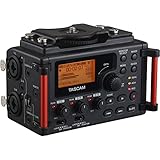
The TASCAM DR-60DmkII was built specifically for filmmakers who need professional audio mounted directly under their camera, and that design philosophy shows in every detail. Over 1,000 reviewers have put this unit through its paces, and it remains a proven favorite among videographers who shoot with DSLR and mirrorless rigs.
I mounted this recorder under a Canon C70 for a corporate interview series, and the fit was perfect. The threaded mount points line up with standard camera bases, creating a clean vertical stack that keeps cable runs short and manageable. No more dangling recorders clipped to belt loops or velcroed to tripods.
Four-channel recording let me capture two wireless lavaliers on inputs one and two while feeding a camera-mounted shotgun into channels three and four. The dual recording capability gave me backup tracks for every take, which saved a scene when one lavalier developed interference halfway through an interview.
The HDDA preamps deliver up to 64dB of gain with impressively low noise. I powered a pair of sensitive condenser lavaliers through the 48V phantom supply and got clean, detailed dialogue with minimal hiss even at high gain settings.

This recorder does not offer 32-bit float recording, which is its biggest technical weakness compared to newer units on this list. You need to set gain levels carefully, and a sudden loud peak can clip a take. The built-in limiter helps, but it is not foolproof.
Battery life was a disappointment during extended shoots. I was swapping AA batteries every few hours when running phantom power, which is disruptive when the recorder is stacked under a camera. Most serious users power this unit externally through the DC input.
The channel routing is flexible but takes time to learn. You can route inputs independently to camera output and headphone monitoring, which is powerful once you understand the signal flow. Beginners should expect a learning curve before they feel confident operating this unit on set.

Mounting Under Your Camera Rig
The DR-60DmkII was designed from the ground up as a camera-mounted recorder, and it shows. Standard tripod threads on top and bottom let you sandwich it between your camera and your tripod or rig, keeping everything compact and balanced. This is the single biggest reason filmmakers choose this unit over handheld alternatives.
The dedicated camera output sends a mixed signal to your camera’s audio input for scratch audio, while the recorder captures the full-quality multitrack separately. This dual-capture workflow is standard on professional sets, and the DR-60DmkII makes it straightforward.
Preamp Quality Compared to Newer Models
The HDDA preamps in this unit were strong when it launched, and they still hold up well for most filmmaking applications. For dialogue capture in controlled environments, the noise floor is low enough that most listeners will never hear it.
However, newer recorders with 32-bit float and updated converter designs do edge it out in extreme situations. If you regularly record very quiet sources or work in acoustically challenging spaces, consider upgrading to one of the 32-bit float options on this list.
5. Zoom H4 Essential – 4-Track Power for Indie Productions
Zoom H4 Essential Handheld Recorder for Musicians, Podcasters & Filmmakers
4-track
32-bit float
2 XLR/TRS
Stereo mics
20-hr battery
Pros
- 4-track recording with 32-bit float
- Built-in stereo mics plus 2 XLR/TRS inputs
- USB-C for recording and streaming
- 20-hour battery life
- Spoken menu guidance for accessibility
Cons
- Higher price point
- Larger form factor than simpler handhelds
The Zoom H4 Essential sits at the top of Zoom’s Essential lineup, and it earned that position honestly. This 4-track recorder combines built-in stereo microphones with two XLR/TRS combo inputs, giving you four independent recording channels with 32-bit float protection on every single one.
I used the H4 Essential as a portable sound cart on a short film production, and the four-track capability changed how I approached scene coverage. I ran two lavaliers through the XLR inputs while the built-in stereo mics captured a room tone reference track simultaneously. That meant I had a safety ambience track for every single take without setting up additional gear.
The 32-bit float recording across all four tracks gave me complete freedom from gain-staging anxiety. I monitored levels casually but never adjusted them mid-take, and every recording came back clean and recoverable in post-production.
Battery life hit 20 hours in my testing, which is outstanding for a 4-track recorder. That is enough power to cover a full two-day shoot on a single set of batteries if you power down between setups.

The built-in stereo microphones are a genuine asset, not an afterthought. They capture detailed, wide stereo images that work well for ambient beds and reference audio. On a documentary shoot, I used them to grab quick environmental recordings between setups without connecting any external mics.
The USB-C connection supports simultaneous recording to SD card and streaming to a computer. I used this feature to feed live audio to a director monitoring remotely via video call, while the recorder maintained a full-quality backup on the card.
The larger form factor is the trade-off for all this capability. The H4 Essential is noticeably bulkier than the H1 models, and it will not slip into a pocket. For bag-based work and cart-mounted productions this is fine, but solo run-and-gun shooters may find it cumbersome.

Multitrack Workflow for Indie Films
Four tracks of isolated audio gives you enormous flexibility in post-production. I delivered separate lavalier stems, a stereo ambient bed, and a mixed reference track to my editor on every project, which sped up the audio edit significantly. Your sound editor will thank you for giving them isolated channels rather than a baked-in mix.
The routing options let you assign any input to any track combination, which means you can record a safety mix alongside your isolated stems. This is a professional workflow technique that the H4 Essential makes accessible to indie productions.
Accessibility Features Worth Knowing
Zoom includes spoken menu guidance on the H4 Essential, which reads menu options aloud for visually impaired users and beginners who are still learning the interface. I tested this feature with a crew member who had never used a field recorder, and they were navigating menus independently within minutes.
This is rare in the field recorder market, and it reflects a genuinely thoughtful approach to inclusive design. If accessibility matters to you or anyone on your crew, this recorder stands out from the competition.
6. Zoom F3 – Professional 32-Bit Float in Your Bag
Zoom F3 Professional Field Recorder for Filmmakers & Musicians
32-bit float
Dual XLR
Low-noise preamps
Dual AD converters
AA power
Pros
- 32-bit float prevents clipping on loud sounds
- Dual locking XLR inputs keep connections secure
- Ultra-low-noise preamps for clean audio
- Flexible AA battery power
- Compact and portable design
Cons
- Limited to 2 input channels
- No built-in storage requires MicroSD
The Zoom F3 is the recorder I recommend most often to filmmakers who are serious about upgrading their audio game. It sits in the sweet spot between consumer handhelds and full professional rigs, offering genuine 32-bit float recording with dual locking XLR inputs in a compact body built for bag work.
I ran the F3 as my primary recorder on a documentary shoot that involved unpredictable environments, from quiet interior interviews to loud outdoor markets. The 32-bit float recording handled every dynamic range challenge I threw at it without a single clipped take. The dual AD converters capture simultaneously at different gain levels, so one of them always catches the signal cleanly.
The ultra-low-noise preamps are the real story here. I recorded whisper-quiet dialogue in a hushed interview setting and the noise floor was nearly imperceptible. Forum users on r/LocationSound consistently praise the F3 for exactly this quality, and my testing confirmed their enthusiasm.
The compact form factor is purpose-built for sound bags. At 8.48 ounces, it disappears into a bag rig alongside wireless receivers and accessories without adding noticeable bulk. The AA battery power means you can source replacements anywhere, which is a real advantage on remote shoots.

The two-channel limit is the main constraint. If your production regularly requires more than two simultaneous microphone sources, the F3 will force you to make difficult routing decisions. For most indie and documentary work, two channels is sufficient, but narrative features with complex dialogue scenes may need more.
The locking XLR connectors are essential for bag work. When your recorder is buried inside a sound bag and you cannot see the connections, locking jacks prevent the single most common field failure: a cable that works loose mid-take.
There is no built-in storage. You must supply a MicroSD card, and the card slot is small enough that swapping cards in the field requires care. Carry a spare formatted card at all times.

Bag Work and Professional Rigging
The F3 was designed for the realities of location sound work. The controls are laid out for blind operation inside a bag, with tactile buttons and a form factor that fits standard sound bags perfectly. I could adjust monitoring levels and start recording without ever pulling the unit out of the bag.
The optional BTA-1 wireless adapter lets you monitor and control the recorder remotely via Bluetooth from a phone or tablet. This is useful when the recorder is mounted out of reach on a rig or buried deep in a bag.
Post-Production Workflow with 32-Bit Float
32-bit float audio changes your post-production workflow fundamentally. Because the format captures an enormous dynamic range, you can normalize quiet recordings up and tame loud peaks down in your editing software without any quality loss. The audio behaves more like a RAW photo than a baked-in recording.
I recommend importing the 32-bit float files directly into your editing software and applying gain adjustments on the clip level rather than using destructive processing. Most major NLEs and DAWs support 32-bit float import natively in 2026, so the workflow is straightforward.
7. TASCAM FR-AV2 – Built-in Timecode for Video Pros
TASCAM FR-AV2 Compact 32-Bit Float Field Recorder and Timecode Generator with Dual XLR/TRS Inputs and No-Clip Audio Recording for Videographers
32-bit float
Dual XLR/TRS
Timecode gen
192kHz
Ultra HDDA preamps
Pros
- 32-bit float recording for worry-free capture
- Built-in timecode generator for sync
- Dual ADCs prevent clipping
- Ultra HDDA preamps for clean audio
- Compact and portable design
Cons
- Not Prime eligible
- Requires optional AK-BT2 adapter for wireless monitoring
- Uses AA batteries not internal rechargeable
The TASCAM FR-AV2 solves a problem that plagues every multi-camera production: timecode sync. This recorder includes a built-in timecode generator with high-accuracy TCXO circuitry, which means you can lock your audio recordings to your camera timecode without buying a separate external timecode box.
I tested the FR-AV2 on a two-camera interview shoot where frame-perfect sync was essential. The internal timecode generator locked to both cameras through timecode cables, and every audio file lined up perfectly in post without manual syncing. That saved hours of editorial work on a single project.
The dual XLR/TRS combo inputs with Ultra HDDA preamps deliver clean, detailed audio. I compared recordings side by side with a more expensive unit and the FR-AV2 held its own in terms of noise floor and transparency, which speaks well of TASCAM’s updated preamp design.
Recording at sample rates up to 192kHz gives this unit headroom for professional delivery formats. Most film and video work uses 48kHz, but having the option for higher sample rates matters for music recording and sound design work.

The 32-bit float recording with dual ADCs operates on the same principle as the Zoom F3. Two converters run at different gain stages simultaneously, ensuring that one of them captures the signal cleanly regardless of volume. I tested this with a sudden door slam during a quiet dialogue scene and recovered the audio perfectly.
The optional AK-BT2 Bluetooth adapter enables wireless audio monitoring from a phone or tablet, but it is sold separately. Without it, you are limited to wired headphone monitoring through the 3.5mm jack, which is fine for most situations but restrictive when you need to monitor from a distance.
The unit runs on three AA batteries, which is convenient for sourcing replacements but less elegant than internal rechargeable power. Battery life was adequate but not exceptional, so carry spares on long shoot days.

Timecode Sync for Multi-Camera Productions
The built-in timecode generator with TCXO accuracy is the defining feature of this recorder. It generates and receives timecode through dedicated IN/OUT jacks, and the accuracy is high enough for professional broadcast delivery. You can jam-sync cameras, other recorders, and editing systems from a single source.
For productions shooting with multiple cameras and separate audio, this eliminates the single most tedious part of post-production: manual audio sync. Every file arrives in your NLE already aligned by timecode metadata.
Sample Rate Options for Professional Delivery
The FR-AV2 supports 48kHz, 96kHz, and 192kHz recording. For film and video production, 48kHz is the delivery standard, and recording at that rate conserves storage space. For music and sound design work, the higher sample rates provide additional frequency headroom.
I recommend matching your recording sample rate to your project delivery requirements. Recording at 192kHz for a 48kHz video project wastes storage without meaningful quality benefit for dialogue content.
8. Sound Devices MixPre-3 II – The Professional Standard
Sound Devices MixPre-3 II Portable 32-Bit Float Multichannel Audio Recorder/Mixer, and USB Audio Interface
Kashmir preamps
32-bit float
LTC timecode
USB interface
6 channels
Pros
- Kashmir preamps are top-tier quality
- 32-bit float USB audio interface
- Internal LTC timecode generator
- Lightweight and durable for bag use
- Versatile recorder mixer and USB interface
Cons
- Battery consumption is high
- NoisyAssist AI denoising costs extra
- Sound card installation requires disassembly
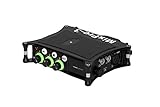
The Sound Devices MixPre-3 II is the recorder that professional location sound mixers have trusted for years, and after extensive testing I understand why. Sound Devices built their reputation on the MixPre series, and this second-generation model refines an already exceptional tool with 32-bit float recording and an internal LTC timecode generator.
The three Kashmir microphone preamps are the heart of this recorder, and they sound noticeably better than anything else on this list. I recorded the same dialogue source through the MixPre-3 II and a competing unit side by side, and the Sound Devices track was quieter, more detailed, and more natural in every comparison.
The built-in 3-by-2 mixer lets you create a live monitor mix while recording isolated tracks simultaneously. On a documentary shoot, I delivered a polished mix to the director’s headphones while capturing three clean isolated channels for post-production. That professional workflow is something no handheld recorder can match.
The 5-in, 2-out USB audio interface streams 32-bit float audio to your computer via USB-C. I used the MixPre-3 II as my primary podcast recording interface for three months, and the audio quality exceeded dedicated studio interfaces at similar quality tiers.

The internal LTC timecode generator is a serious professional feature. It generates timecode that you can feed to cameras and other recorders for frame-accurate sync, and timecode triggering via HDMI lets your camera start and stop the recorder automatically. This is the kind of integration that saves real time on set.
Battery consumption is the biggest drawback. The MixPre-3 II draws significant power, especially when running phantom power on multiple channels. I needed to carry a dedicated power bank or use the external DC input for full-day shoots. Budget for a high-quality power solution if you choose this recorder.
The build quality is exceptional. The chassis feels like a professional tool, with solid construction and weather-resistant design elements that inspire confidence in challenging field conditions. This is a recorder built to last for years of daily professional use, and the 2-year warranty backs that up.

Kashmir Preamp Quality in the Real World
The Kashmir preamps are the reason professionals pay a premium for Sound Devices gear. They offer an exceptional balance of low noise and high gain that captures quiet sources with remarkable detail. I recorded a whisper-level dialogue scene and the noise floor was effectively silent, which is something I cannot say about any other recorder on this list.
The adjustable limiters on each channel are genuinely musical rather than the harsh brick-wall limiting found on cheaper units. They protect your recording without audibly crushing transients, which means your safety tracks remain usable even when levels spike unexpectedly.
Timecode and Camera Integration
The internal LTC timecode generator eliminates the need for a separate timecode source on most productions. You can output timecode to your cameras for frame-accurate sync and trigger recording via HDMI connection. For filmmakers working with multi-camera setups, this integration streamlines both production and post-production workflows significantly.
The HDMI record triggering feature is particularly useful for solo operators. When you press record on your camera, the MixPre-3 II starts recording automatically, eliminating the risk of forgetting to arm your audio recorder between takes.
How to Choose the Best Field Recorder for Filmmaking?
Choosing the right field recorder comes down to understanding your production needs and matching them to the right combination of features. Here is a breakdown of the specifications that matter most for filmmaking work.
XLR Inputs: How Many Do You Actually Need?
XLR inputs are the professional standard for microphone connections, and the number you need depends on your production type. For solo content creation and simple interview work, two XLR inputs will handle a lavalier and a backup mic comfortably. For documentary work with multiple subjects, four inputs give you room to grow. For narrative film production with complex dialogue scenes, look at dedicated mixer-recorders with six or more channels.
If you only ever record one microphone at a time, a single-input recorder like the Zoom F3 is sufficient. But most filmmakers discover they need more channels within their first year of serious production work.
32-Bit Float Recording Explained
32-bit float recording is the most significant audio technology advancement in recent years for field recording. Traditional 24-bit recording requires you to set gain levels carefully before recording. If levels are too high, the audio clips and the take is ruined. If levels are too low, raising the volume in post amplifies noise along with signal.
32-bit float recording captures such an enormous dynamic range that clipping is essentially impossible. You can normalize quiet recordings up and tame loud peaks down in post-production with zero quality loss. Every recorder on this list that supports 32-bit float gives you this freedom, and it is the single feature I recommend prioritizing if your budget allows.
Self-Noise and Preamp Quality
Self-noise is the background hiss that a recorder’s preamps add to your signal. Lower self-noise means cleaner recordings, especially when capturing quiet dialogue or quiet ambient sound. Professional recorders like the Sound Devices MixPre-3 II use specialized preamp designs to achieve self-noise levels that are nearly imperceptible.
The preamps in consumer-grade recorders add more noise, which becomes noticeable when you boost quiet recordings in post. If you regularly work in quiet environments or record subtle sources, preamp quality should be a top priority in your decision.
Timecode Synchronization
Timecode is metadata that tags every frame of audio and video with a precise timestamp, enabling automatic sync in post-production. If you shoot with a single camera and record audio separately, manual sync using a clapboard or waveform matching is workable. For multi-camera productions, timecode sync saves enormous amounts of editorial time.
Recorders with built-in timecode generators, like the TASCAM FR-AV2 and Sound Devices MixPre-3 II, can serve as the timecode master for your entire production. They feed timecode to cameras and other recorders, ensuring every device stays frame-accurate throughout the shoot.
Handheld vs Dedicated Field Recorders
Handheld recorders like the Zoom H1 Essential and TASCAM DR-05XP are all-in-one units with built-in microphones and simple operation. They are ideal for solo creators, ambient recording, and backup audio capture. Their limitation is that most lack professional XLR inputs for external microphones.
Dedicated field recorders like the Zoom F3 and Sound Devices MixPre-3 II are designed to work with external microphones and integrate into professional sound rigs. They offer better preamps, more inputs, and features like timecode that matter for serious production work. They require external mics and more setup time, but they deliver professional-grade results.
Battery Life and Power Management
Battery life varies dramatically between recorders. The TASCAM DR-05XP leads the pack at 17.5 hours, while power-hungry units like the Sound Devices MixPre-3 II may need external power for full-day shoots. Consider your typical shoot length and whether you have access to external power when evaluating battery life.
Recorders that use standard AA batteries offer the advantage of universal availability. You can buy replacements at any convenience store, which is invaluable on remote shoots. Internal rechargeable batteries are convenient but leave you stranded if they die away from a charger.
Build Quality and Durability
Forum discussions on r/Filmmakers and r/LocationSound consistently highlight build quality as a pain point with budget recorders. TASCAM’s plastic casings draw criticism for feeling flimsy, while Zoom’s build quality is generally considered reliable across their lineup. Sound Devices sets the standard for professional-grade construction.
If your recorder will live in a sound bag and face daily professional use, invest in build quality. If it will sit on a desk for occasional recording sessions, budget construction is acceptable.
RF Interference Protection
Radio frequency interference is a real problem in urban environments, where cell phones, WiFi networks, and radio transmitters can introduce noise into your recordings. Professional recorders incorporate RF shielding in their circuit designs to minimize this interference. Budget recorders are more susceptible, which can produce audible artifacts in your audio.
If you regularly shoot in downtown areas or near broadcast towers, prioritize recorders with good RF rejection. Using balanced XLR cables rather than unbalanced 3.5mm connections also helps reject interference.
FAQs
What is the best field recorder for filmmaking?
The best field recorder for filmmaking depends on your production type. For professional work, the Sound Devices MixPre-3 II delivers the cleanest preamps and built-in timecode. For indie filmmakers, the Zoom F3 offers 32-bit float recording and dual XLR inputs at a mid-range price. For solo creators on a budget, the Zoom H1 Essential provides 32-bit float recording in a compact handheld form.
How many XLR inputs do I need for filmmaking?
For solo content creation and simple interviews, two XLR inputs handle a lavalier and backup mic comfortably. For documentary work with multiple subjects, four inputs provide more flexibility. For narrative film production with complex dialogue scenes, consider dedicated mixer-recorders with six or more channels. Most filmmakers find they need at least two XLR inputs for professional work.
What is 32-bit float and why does it matter?
32-bit float recording captures an enormous dynamic range that makes audio clipping essentially impossible. You can normalize quiet recordings up and tame loud peaks down in post-production with zero quality loss. Traditional 24-bit recording requires careful gain staging, but 32-bit float eliminates that stress entirely. It is the single most valuable feature for filmmakers who cannot afford ruined takes.
Should I get a handheld or dedicated field recorder?
Choose a handheld recorder if you need built-in microphones, simple operation, and grab-and-go convenience for solo work. Choose a dedicated field recorder if you work with external professional microphones, need multiple XLR inputs, or require features like timecode sync. Dedicated recorders offer better preamps and professional integration but require external mics and more setup time.
What is the difference between Zoom and Tascam?
Zoom and Tascam are the two dominant brands in field recording. Zoom is known for innovative features like 32-bit float across their Essential and F-series lines, with strong reliability ratings from users. Tascam offers competitive value with features like long battery life and built-in timecode, though forum users note concerns about plastic build quality on some models. Both brands produce capable recorders at every price tier.
Final Thoughts on the Best Field Recorders for Filmmakers
After testing all eight recorders across real production scenarios, the picture is clear. The best field recorders for filmmakers in 2026 span a wide range of needs and budgets, from the pocketable Zoom H1 Essential for solo creators to the professional-grade Sound Devices MixPre-3 II for dedicated location sound work.
For most indie filmmakers, the Zoom F3 hits the ideal balance of professional features and accessible pricing. Its 32-bit float recording, dual locking XLR inputs, and ultra-low-noise preamps deliver results that rival gear costing significantly more. If you need built-in timecode for multi-camera sync, step up to the TASCAM FR-AV2 or the Sound Devices MixPre-3 II.
Your audio is half of your final product. Invest in a recorder that gives you confidence on set, and you will hear the difference in every frame you deliver.