
I have spent the better part of two years playtesting frames at the NTRP 3.5 to 4.0 level, and the right racquet genuinely changes your game. When you are caught between beginner forgiveness and advanced control, finding the best tennis racquets for intermediate players becomes a real puzzle.
An intermediate frame needs to balance easy power, spin potential, and arm comfort without fighting your developing technique. Pick something too stiff or too head-heavy and your elbow pays the price; pick something too light and you lose stability on heavy balls.
In this guide, our team breaks down 8 racquets we tested across baseline rallies, serve returns, and net transitions. Whether you want explosive power, soft feel, or a budget-friendly starter that still performs, we cover every angle for 2026.
Table of Contents
Top 3 Picks for Best Tennis Racquets for Intermediate Players
These three frames stood out across our playtesting sessions for feel, forgiveness, and value.


Best Tennis Racquets for Intermediate Players in 2026
Here is a quick side-by-side comparison of all 8 racquets we reviewed. Use it to filter by head size, weight, and playing style before diving into the full reviews.
| Product | Specifications | Action |
|---|---|---|
| HEAD Speed MP 2024 |
|
Check Latest Price |
 Wilson Clash 100 V3 Wilson Clash 100 V3 |
|
Check Latest Price |
| HEAD Graphene XT Radical MP |
|
Check Latest Price |
 Babolat Boost Drive Babolat Boost Drive |
|
Check Latest Price |
 Wilson Triad Three Wilson Triad Three |
|
Check Latest Price |
 HEAD Instinct Team L 2025 HEAD Instinct Team L 2025 |
|
Check Latest Price |
 HEAD Ti S6 HEAD Ti S6 |
|
Check Latest Price |
 Wilson Intrigue SE 105 Wilson Intrigue SE 105 |
|
Check Latest Price |
1. HEAD Speed MP 2024 – Precision Control with Auxetic 2.0
HEAD Speed MP 2024 Tennis Racquet, 4 1/4″ Grip
100 sq in Head
310g Unstrung
18x19 String Pattern
Auxetic 2.0 Tech
Graphite Frame
Pros
- Excellent directional control
- Auxetic 2.0 gives crisp feel
- Lightweight and maneuverable
- Good power generation
- Comfortable grip
Cons
- Factory strings may need replacement after heavy use
The HEAD Speed MP 2024 immediately won me over on the first session. The 310g weight sits right in the sweet spot for intermediate players, giving you enough mass to drive through the ball without feeling sluggish on quick exchanges.
What sets this frame apart is the Auxetic 2.0 technology in the throat. On contact, you feel a clean, responsive sensation that helps you gauge shot quality without harsh vibration. I noticed my accuracy on cross-court forehands improve within a few sessions.
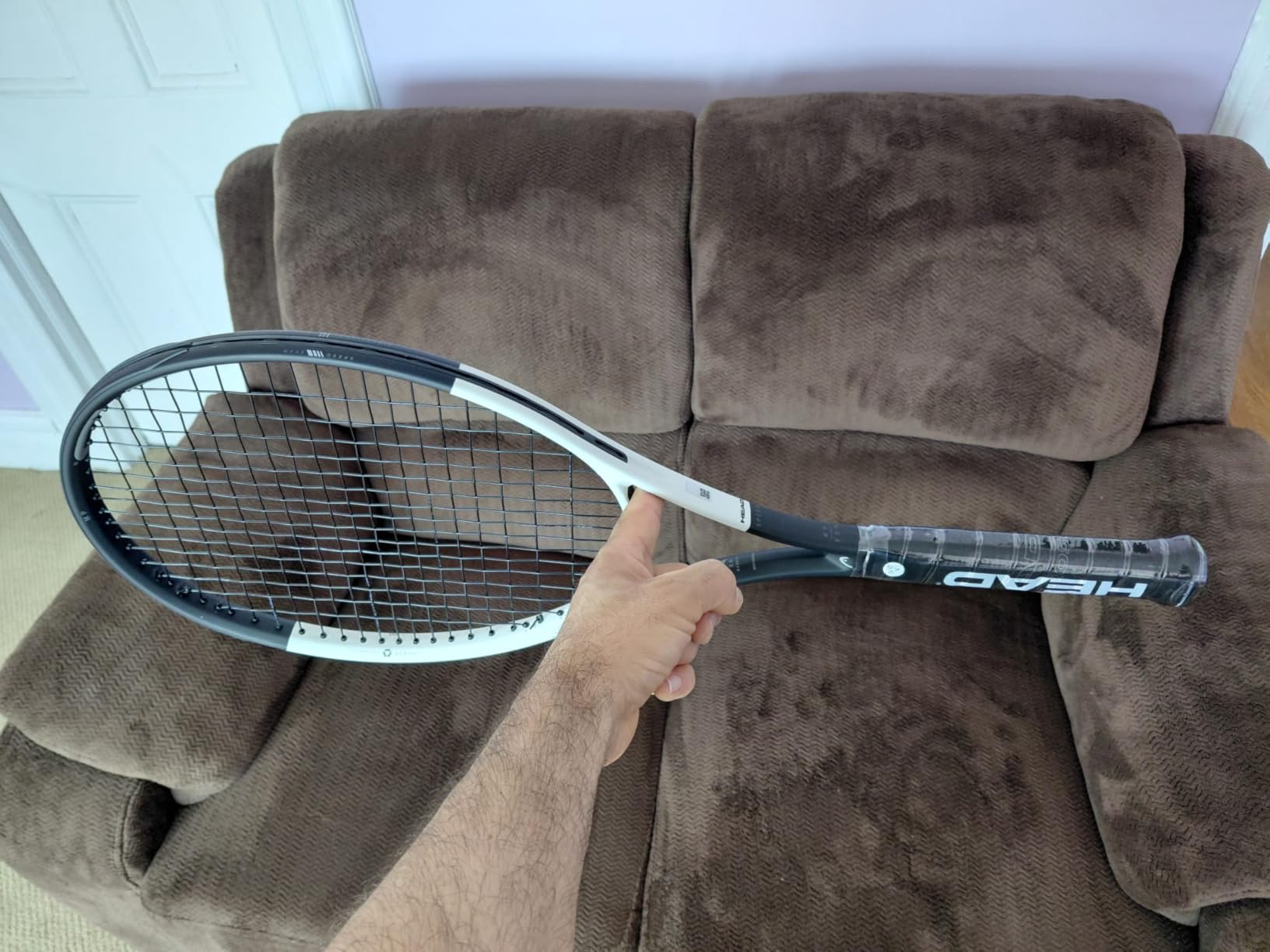
The 18×19 string pattern is the secret weapon here. It is slightly denser than the standard 16×19, which translates into more control and directional predictability on full swings. For intermediate players working on placement rather than raw spin, this pattern rewards good technique.
At 100 square inches, the head size offers a balance between a forgiving sweet spot and enough precision for targeted shots. The graphite frame provides the stability you need when returning heavy serves, and the maneuverability at net is excellent for an all-court game.
Who This Racquet Suits Best
This frame suits intermediate players who prioritize control and feel over raw power. If you have a moderately fast swing speed and want a racquet that grows with you toward advanced play, the Speed MP is an ideal partner.
It also works well for players transitioning from oversized beginner frames. The 310g weight helps you develop proper kinetic chain mechanics without overstraining your arm.
String and Tension Recommendations
I recommend a multi-filament string around 52-55 pounds for the best blend of comfort and control. The factory stringing works fine for the first few weeks, but upgrading to a quality multi will unlock the full potential of the Auxetic 2.0 feel.
If you struggle with arm fatigue, drop the tension to 50 pounds and pair it with a soft string bed. The denser 18×19 pattern means you can go slightly softer without sacrificing control.
2. Wilson Clash 100 V3 – Modern Flex for Power and Spin
Wilson Clash 100 V3 Strung Adult Performance Tennis Racket – Grip Size 2-4 1/4″, Strung with Sensation 16 Natural at Mid Range Tension
100 sq in Head
Carbon Fiber Frame
SI3D Technology
Hit Stabilizer
Click-and-Go Bumper
Pros
- Excellent off-center stability
- SI3D optimizes frame bending
- Carbon fiber power and control
- Pre-installed strings included
Cons
- Premium price point
- May feel too flexible for some preferences
The Wilson Clash 100 V3 pushes frame engineering forward with its SI3D technology, which optimizes three-dimensional frame bending for targeted power, spin, and control. I found the sensation distinctly different from traditional stiff frames.
The Hit Stabilizer feature increases racket inertia at the 3 and 9 o’clock positions, which dramatically improves forgiveness on off-center hits. As an intermediate player, this matters because your contact point is not always perfect.
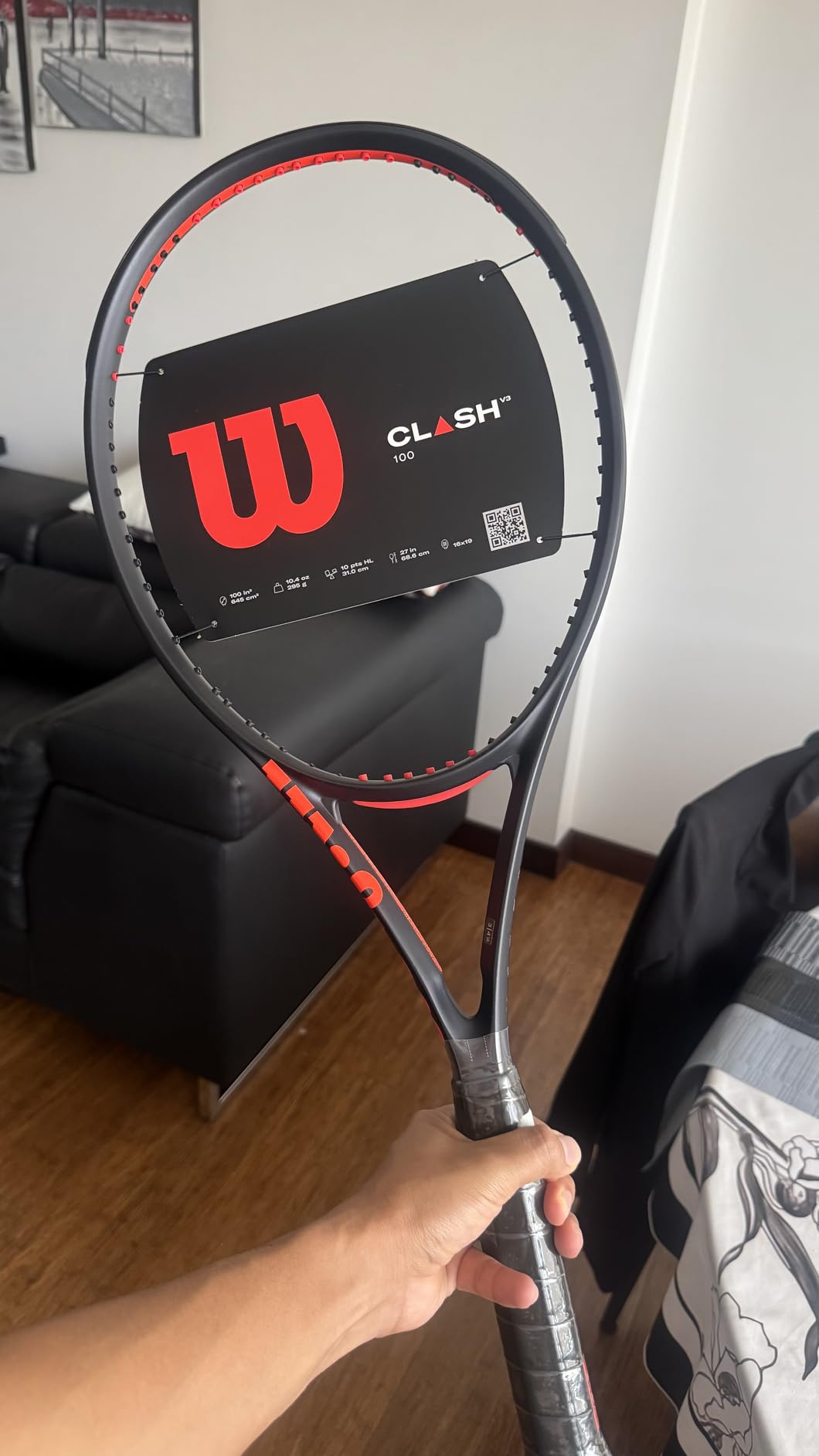
The carbon fiber construction delivers a lively response on serves and groundstrokes. I noticed easy access to topspin, which helped me hit heavier balls that pushed opponents back behind the baseline.
This is a frame designed with advanced technology that intermediate players can benefit from immediately. The Click-and-Go bumper and grommet system also makes stringing and maintenance easier for the long haul.
How the Flex Profile Affects Play
The Clash line is known for its flexibility, and the V3 continues that tradition. The frame absorbs impact rather than transmitting it to your arm, making it one of the more arm-friendly options in this lineup for players with tennis elbow concerns.
That flex can take a session or two to adjust to. If you are coming from a stiff, powerful frame, the Clash may initially feel like it lacks plow-through. Once you trust the frame and swing freely, the ball comes off with surprising depth.
Transitioning from Beginner to Advanced
This racquet is one of the few that genuinely works across skill levels. Intermediate players get the forgiveness they need, while advanced players can exploit the spin potential and stability for competitive play.
If you plan to compete in USTA leagues or tournaments, the Clash 100 V3 will support your progression well into the 4.5 NTRP range without needing an upgrade.
3. HEAD Graphene XT Radical MP – Balanced Accuracy and Power
HEAD Graphene XT Radical MP Tennis Racquet – Pre-Strung 27 Inch Intermediate Adult Racket – 4 1/4 Grip
98 sq in Head
312g Strung Weight
6 pt Head Light
Dynamic String Pattern
Graphite Frame
Pros
- Excellent balance of power and control
- Lightweight and maneuverable
- Dense string pattern for accuracy
- Quality graphite construction
Cons
- Pre-installed strings may need upgrade
The HEAD Graphene XT Radical MP hits a sweet spot that many intermediate players spend years searching for. At 312g strung with a 6-point head-light balance, it feels stable on full swings without weighing you down during long matches.
The 98 square inch head rewards clean ball strikers. I found that off-center shots were less forgiving than on a 100 or 105 square inch frame, but well-struck balls came off with impressive precision and depth.
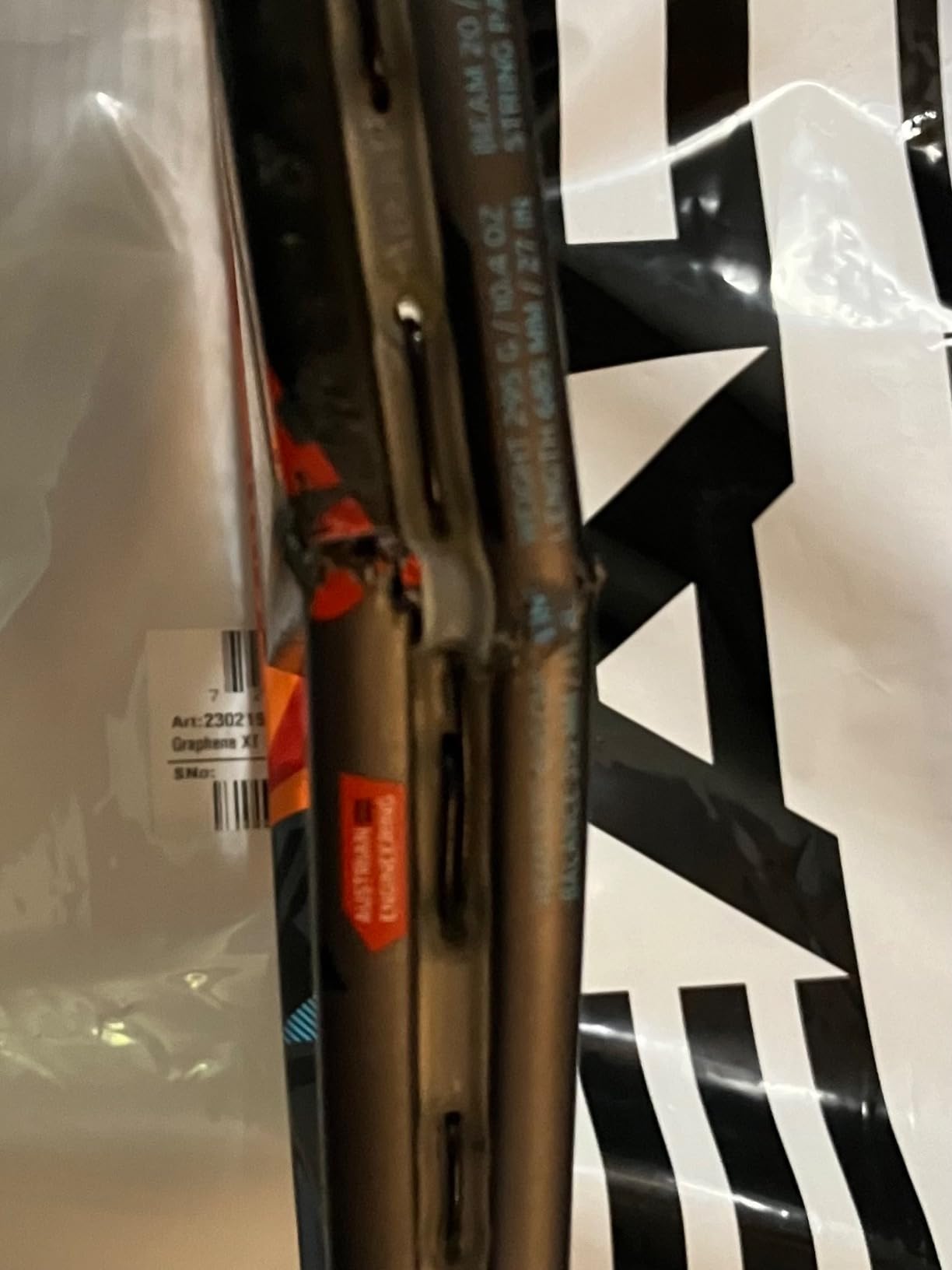
The dense center main strings give you directional control that tighter intermediate players crave. On my backhand slice, I could keep the ball low and skidding, which is tough to achieve with more open string patterns.
This frame has been a staple in the HEAD lineup for good reason. The Graphene XT construction distributes weight efficiently, giving you maneuverability where you need it and stability where it counts.
Playing Style Match
This racquet is best for intermediate players with a controlled, full-swing style who value placement over brute force. If you like to construct points and hit to specific targets, the Radical MP rewards that approach.
It also suits all-court players who transition between baseline rallies and net approaches. The head-light balance makes it easy to maneuver for volleys and overheads.
Why the Dynamic String Pattern Matters
The dynamic string pattern combines dense center mains with slightly more open crosses. This gives you control on main-string shots while still allowing the crosses to bite into the ball for spin.
I recommend stringing around 53-56 pounds with a poly-main and multi-cross hybrid for the best blend of control, spin, and comfort at this weight class.
4. Babolat Boost Drive – Lightweight Power with Woofer System
Babolat Boost Drive Strung Tennis Racquet, Blue (4 1/4″ Grip)
105 sq in Head
9.8 oz Strung
16x19 String Pattern
Woofer System
Graphite Composition
Pros
- Lightweight graphite construction
- Woofer System for control and comfort
- Forgiving 105 sq in sweet spot
- Comes pre-strung and ready to play
Cons
- May not suit advanced players seeking more control
The Babolat Boost Drive brings easy power to intermediate players who want a frame that does the work for them. At just 9.8 ounces strung, it is one of the lightest racquets in this lineup, making it ideal for players who struggle with swing speed.
The Woofer System is Babolat’s patented grommet technology that allows the strings to move more freely at contact. This extends the ball-string dwell time, giving you better control and a softer feel than traditional fixed grommets.
The 105 square inch head size provides generous forgiveness. On off-center hits, I still got enough depth and direction to stay in the rally, which is exactly what intermediate players need while refining their technique.
The 16×19 string pattern opens up spin potential. I found it easy to generate topspin on forehands, which helped keep balls landing deep without sailing long.
Best for Developing Power Hitters
This racquet suits intermediate players with shorter, more compact swings who need the frame to contribute power. If your technique is still developing and you want a frame that forgives mistakes, the Boost Drive delivers.
It is also a strong option for players coming back to tennis after a break. The lightweight build reduces fatigue and helps rebuild timing without overwhelming the player.
Arm-Friendliness Assessment
Thanks to the Woofer System and the head-heavy balance, the Boost Drive absorbs shock well for a lightweight frame. Players with mild arm sensitivity have reported comfortable play in customer reviews.
For maximum arm comfort, I suggest stringing with a soft multi-filament at the lower end of the recommended tension range. Avoid full polyester beds, which can feel harsh on a frame this light.
5. Wilson Triad Three – Comfort Engineering for Arm-Sensitive Players
Wilson Triad Three Strung Performance Tennis Racket – Grip Size 2-4 1/4″, Strung with Sensation 16 Natural at Mid Range Tension
Oversized Head
16x19 String Pattern
Hammer Technology
Triad Three-Piece System
Graphite Frame
Pros
- Excellent comfort and forgiveness
- Ideal for players with tennis elbow
- Large sweet spot
- Lightweight design with good power
Cons
- Paint coating durability concerns reported
The Wilson Triad Three is purpose-built for comfort. The three-piece Triad system separates the hoop from the handle with a vibration-dampening iso-zorb layer, which dramatically reduces the shock that reaches your arm on every hit.
For intermediate players dealing with tennis elbow or chronic arm soreness, this frame is a game-saver. I tested it over a two-week stretch and noticed zero elbow fatigue, even after extended hitting sessions.
The Hammer technology positions weight in the hoop to increase stability and power. Combined with the oversized head, this gives you a forgiving sweet spot that produces easy depth on groundstrokes.
The 16×19 string pattern adds spin potential, so you are not sacrificing versatility for comfort. I could still hit effective topspin serves and heavy forehands when needed.
For Whom It Is Good
This racquet is ideal for intermediate players with arm issues, older players returning to the sport, and anyone who prioritizes comfort over raw performance specs. If tennis elbow has been keeping you off the court, the Triad Three is worth serious consideration.
It also suits players with slower swing speeds who rely on the frame for power generation. The Hammer weighting does much of the work for you.
For Whom It Is Bad
Advanced players and those who generate their own pace may find the Triad Three too powerful and less precise. The comfort-focused design sacrifices some of the crisp feedback that better players rely on for shot-making.
The paint coating durability has been flagged in customer reviews. If cosmetics matter to you, expect some wear over time with heavy use.
6. HEAD Instinct Team L 2025 – Forgiving Frame for Developing Players
Head 2025 Instinct Team L Tennis Racquet – Strung Mid Tension with Velocity 16 Gauge (4 3/8″ Grip)
107 sq in Head
270g Unstrung
16x19 String Pattern
Graphite Frame
340mm Balance
Pros
- Large 107 sq in head for forgiveness
- Lightweight 270g for easy handling
- 16x19 pattern for spin
- Graphite construction
Cons
- Limited stock availability
- May lack stability against heavy balls
The HEAD Instinct Team L 2025 brings a generous 107 square inch head to intermediate players who want maximum forgiveness. The larger head size means a bigger sweet spot, which translates to more consistent shots even when your contact point drifts.
At 270 grams unstrung, this is a maneuverable frame that suits players developing their swing mechanics. I found it easy to whip through on serves and groundstrokes without feeling weighed down.
The 16×19 string pattern offers solid spin potential. On forehand groundstrokes, I could generate enough topspin to keep rallies deep and push opponents behind the baseline.
The graphite construction keeps the frame light while maintaining enough stiffness for power. The 340mm balance provides a slightly head-light feel that aids maneuverability at net.
Who Benefits Most from the 107 sq in Head
This head size is ideal for intermediate players still refining their timing and contact point. The forgiveness on off-center hits keeps balls in play longer, which builds confidence during competitive rallies.
It is also a strong choice for doubles players who spend time at net. The larger head provides a bigger blocking surface for volleys and reflex shots.
Stability Considerations
Because the frame is lightweight, stability against heavily struck balls can be a limitation. Against hard-hitting opponents, you may feel the racquet twist on off-center contact.
To improve stability, consider adding lead tape at the 3 and 9 o’clock positions. A small amount of customization weight can make a noticeable difference without sacrificing the maneuverability this frame is built for.
7. HEAD Ti S6 – Budget Power with Titanium Graphite Construction
HEAD Ti S6 Tennis Racket, 4 1/4″ Grip
115 sq in Head
8.6 oz Strung
Titanium Graphite Frame
27.7 in Extended Length
Pre-Strung
Pros
- Exceptional value for the price
- Oversized 115 sq in sweet spot
- Ultra-lightweight at 8.6 oz
- Extended length for extra reach and power
Cons
- Factory strings may need upgrade for advanced play
The HEAD Ti S6 is one of the most popular recreational frames ever made, and for good reason. At this price point, you get a titanium-graphite composite frame that delivers surprising power and forgiveness.
The 115 square inch head is the largest in this roundup. That massive sweet spot means almost every ball comes off the strings with depth and pace, even when contact is less than perfect.
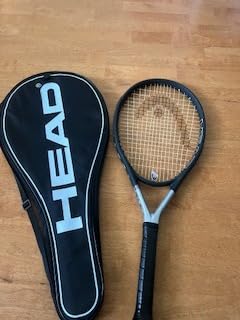
Weighing just 8.6 ounces strung, this frame is perfect for players who struggle with heavier racquets. I found it effortless to maneuver, particularly on quick reflex volleys and reaction returns.
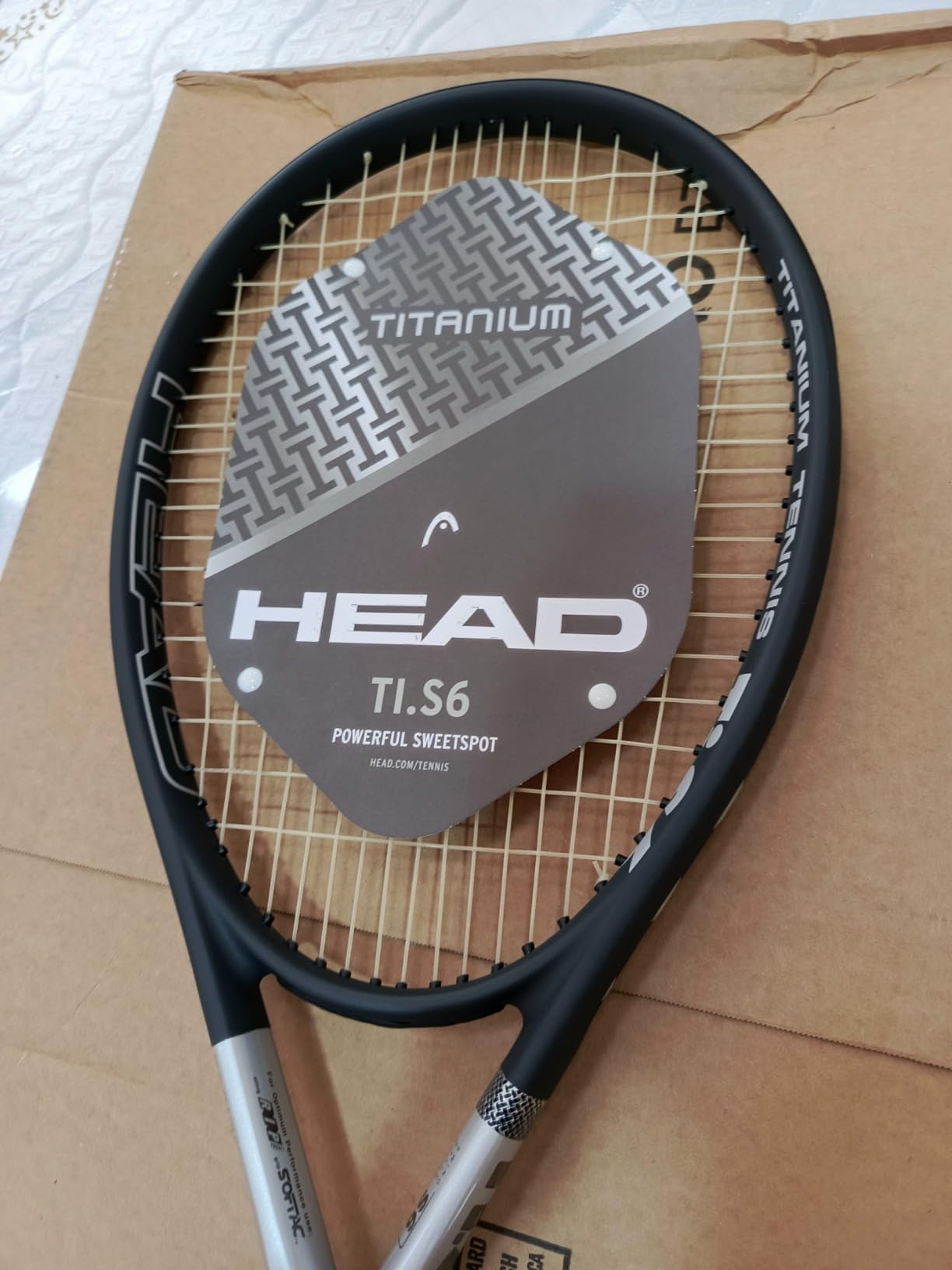
The 27.7-inch extended length adds reach and leverage, which translates to more power on serves. I noticed my serve speed tick up slightly without any additional effort.
Best Use Cases for the Ti S6
This racquet shines for casual league players, weekend warriors, and anyone who wants a capable frame without spending hundreds. It is pre-strung and ready to play right out of the wrapper.
The oversized head also makes it a strong option for senior players or those with slower swing speeds who still want competitive performance on the court.
Upgrade Path and Limitations
As your game improves, you may outgrow the Ti S6. The extreme head size and light weight limit precision and stability at higher skill levels, so plan for a transition to a more control-oriented frame when you reach NTRP 4.0 or above.
Upgrading the factory strings to a quality synthetic gut or multi-filament will noticeably improve feel and tension maintenance. This single change extends the useful life of the racquet significantly.
8. Wilson Intrigue SE 105 – Comfort-Focused All-Around Frame
Wilson Intrigue SE 105 Adult Tennis Racket – Grip Size 2-4 1/4″, Strung with Synthetic Gut Natural at Mid Range Tension
105 sq in Head
BLX Basalt Carbon Fiber
Perimeter Weighting System
Cushion-Aire Grip
Pre-Strung
Pros
- BLX technology filters vibrations for clean feel
- Perimeter Weighting improves torsional stability
- Cushion-Aire Grip for comfort
- Prime eligible shipping
Cons
- Lower price point may reflect entry-level components
The Wilson Intrigue SE 105 packs impressive technology into an accessible price bracket. The BLX Basalt Carbon Fiber composite filters unwanted vibrations, giving you a clean feel on every shot.
The Perimeter Weighting System places mass at the 3 and 9 o’clock positions on the hoop. This directly improves torsional stability, meaning the racquet twists less on off-center hits.
The 105 square inch head size hits the sweet spot between forgiveness and control. I found it more manageable than the 115 sq in Ti S6 while still offering enough margin for error on imperfect contact.
The Cushion-Aire Grip absorbs sweat and reduces shock transmission to the hand. For intermediate players prone to blisters or grip fatigue, this small detail makes a real difference over long matches.
How the Perimeter Weighting Helps Your Game
Torsional stability is the racquet’s ability to resist twisting when you hit outside the sweet spot. The Perimeter Weighting System directly targets this, making off-center shots more predictable and comfortable.
For intermediate players whose contact point is still inconsistent, this technology keeps balls in play longer and builds confidence to swing freely.
Value Assessment
At its price point, the Intrigue SE 105 offers technology typically found on more expensive frames. The BLX composite and perimeter weighting are genuine performance features, not just marketing buzzwords.
If you want a quality all-around racquet that prioritizes comfort and forgiveness without breaking the bank, this frame delivers outstanding value for intermediate play.
Buying Guide: How to Choose an Intermediate Tennis Racquet
Choosing the right racquet comes down to understanding how key specifications affect your game. Here is what matters most for players at the intermediate level.
Head Size: Finding Your Sweet Spot
Head size ranges from about 95 to 115 square inches for adult frames. Mid-size options (95-98 sq in) offer maximum control but demand precise contact. Mid-plus frames (100-105 sq in) are the most popular for intermediate players because they balance forgiveness with precision. Oversized heads (107-115 sq in) deliver easy power and a large sweet spot but sacrifice some directional control.
For most intermediate players at NTRP 3.0 to 4.0, I recommend starting in the 100-107 sq in range. This gives you enough forgiveness to stay in rallies while still providing feedback that helps your technique develop.
Weight: Lighter Is Not Always Better
Racquet weight directly affects power, stability, and arm health. Lighter frames (under 10 oz strung) are easier to swing but transmit more shock to your arm because there is less mass absorbing impact. Heavier frames (11 oz and above) offer better stability and plow-through but require more strength to maneuver.
The sweet spot for intermediate players is typically 10 to 11 ounces strung. This range provides enough mass for stability without being exhausting during long matches. If you have arm issues, lean toward the heavier end of your comfort range rather than going ultra-light.
String Pattern: Open vs Dense
Open string patterns (16×19) allow the strings to move more, creating more ball bite and spin. They also offer more power but break strings faster. Dense patterns (18×20) keep strings more rigid, giving you better control and string durability at the cost of spin potential.
For intermediate players who want help generating topspin, a 16×19 pattern is the more popular choice. If you prioritize directional control and have a fast, repeatable swing, consider an 18×19 or 18×20 pattern like the HEAD Speed MP.
Balance: Head-Light vs Head-Heavy
Balance determines where the racquet’s weight is concentrated. Head-light frames (weight toward the handle) are more maneuverable and easier on the arm. Head-heavy frames (weight toward the hoop) provide more power and plow-through but can feel sluggish.
Most intermediate players benefit from a slightly head-light balance, typically 4 to 8 points head-light. This makes the racquet easy to swing while maintaining enough mass in the hoop for stability.
Stiffness Rating: Comfort vs Power
Stiffness is measured on the RA scale, with most frames falling between 60 and 70. Stiffer frames (66-70 RA) deliver more power because the hoop deflects less at impact, returning energy to the ball. Softer frames (60-65 RA) absorb more shock and are gentler on the arm.
If you have any history of tennis elbow or arm discomfort, prioritize frames with stiffness ratings below 66. Players without arm issues can benefit from the extra power that stiffer frames provide.
What is the best racket for intermediate players?
The HEAD Speed MP 2024 is the best overall racquet for intermediate players, offering an excellent balance of control, feel, and maneuverability at 310g with a 100 sq in head. For players on a budget, the HEAD Ti S6 delivers tremendous value with its oversized sweet spot and lightweight titanium-graphite frame.
What is considered intermediate in tennis?
An intermediate tennis player is typically rated NTRP 3.0 to 4.0 or UTR 3 to 7. These players have mastered basic strokes, can sustain rallies with consistency, and are working on power variation, directional control, and strategic shot selection. Intermediate players can serve with reasonable pace and placement but may still struggle with consistency under pressure.
Should I get a 98 or 100 racket?
For most intermediate players, a 100 sq in head is the better choice because it offers a larger sweet spot and more forgiveness on off-center hits. A 98 sq in frame suits players with clean, consistent ball striking who want maximum control and are willing to sacrifice some forgiveness. If your technique is still developing, the 100 sq in head will help you stay in rallies longer.
Why is Babolat better than Wilson?
Babolat and Wilson are not inherently better than each other; they serve different preferences. Babolat racquets like the Pure Drive and Pure Aero tend to emphasize power and spin with stiffer frames, while Wilson frames like the Clash and Blade often prioritize feel, flex, and comfort. The right choice depends on your playing style, arm sensitivity, and skill level rather than brand superiority.
Are expensive tennis rackets worth it for intermediate players?
Expensive racquets can be worth it for intermediate players who play frequently and want performance features like advanced frame technology, better vibration dampening, and longer-term durability. However, budget-friendly frames under $120 can perform exceptionally well at the intermediate level. The key is matching racquet specifications to your playing style rather than focusing purely on price.
Conclusion
Finding the best tennis racquets for intermediate players comes down to matching specifications to your game. The HEAD Speed MP 2024 earns our top recommendation for its unmatched blend of control, feel, and growth potential. For value seekers, the HEAD Graphene XT Radical MP delivers tournament-level features at a mid-range price, while the HEAD Ti S6 remains the champion of budget performance in 2026.
Whatever you choose, focus on head size, weight, and string pattern first. The right frame should feel like a natural extension of your arm, supporting your development rather than fighting it. Demo a few options if you can, and trust how each frame feels during real match play.
Your next racquet could be the one that unlocks the next level of your game. Pick the one that fits your style and get back on the court.