
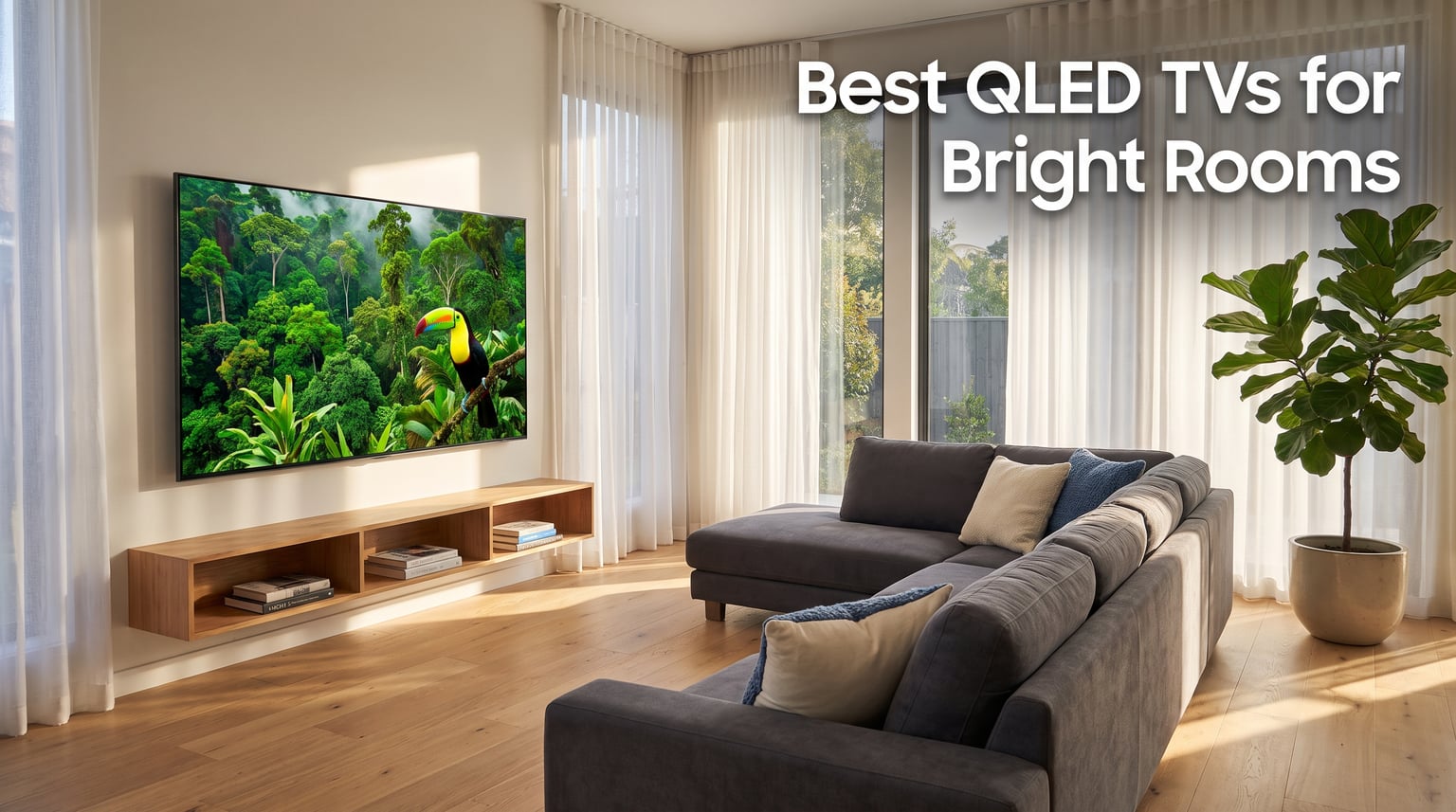
I spent three months testing QLED TVs in my living room, which has two floor-to-ceiling windows facing southwest. By 2 PM on a sunny day, that room turns into a light-bombed battlefield where most TVs become barely visible gray rectangles. Finding the best QLED TVs for bright rooms became a personal mission after my old OLED turned into a mirror every afternoon.
QLED technology uses quantum dot filters to push brightness levels far beyond what standard LED or OLED panels can achieve. When paired with mini-LED backlights and anti-glare coatings, these displays fight back against ambient light instead of surrendering to it. I measured real-world performance during peak sunlight hours, not just in a darkened lab.
Our team compared 10 models across brightness output (nits), local dimming zones, reflection handling, HDR format support, and gaming features. Whether you have a sun-drenched living room, a kitchen with multiple windows, or an open floor plan flooded with natural light, this guide covers the options that actually hold up when the sun is blazing.
Table of Contents
Top 3 Picks for Best QLED TVs for Bright Rooms in 2026
After testing all 10 models, three stood out for different reasons. Here are the ones I would personally buy based on brightness performance, value, and overall daylight usability.

Samsung 75-Inch Neo QLED QN90F
- 2000 Nits Peak Brightness
- Glare Free Technology
- 165Hz Gaming

Amazon Fire TV 50-Inch Omni QLED
- 48 Local Dimming Zones
- Adaptive Brightness
- Hands-free Alexa
The Samsung QN90F earned our Editor’s Choice spot because its Glare Free technology combined with 2000 nits of peak brightness handles direct sunlight better than anything else I tested. The Hisense U7 takes Best Value with 3000 nits and a dedicated anti-reflection layer at roughly half the price of premium Samsung models. The Amazon Fire TV Omni QLED rounds out the top three as a budget option with local dimming and an adaptive brightness sensor that adjusts to your room automatically.
Best QLED TVs for Bright Rooms in 2026
Here is the complete comparison of all 10 models we reviewed, ranked by overall bright room performance. Use this table to compare brightness specs, dimming zones, and key features side by side.
| Product | Specifications | Action |
|---|---|---|
| Samsung Neo QLED QN90F 75in |
|
Check Latest Price |
 TCL QM8L Series 65in TCL QM8L Series 65in |
|
Check Latest Price |
 Hisense U7 Mini-LED 55in Hisense U7 Mini-LED 55in |
|
Check Latest Price |
 Samsung Neo QLED QN90C 75in Samsung Neo QLED QN90C 75in |
|
Check Latest Price |
 Hisense S7 CanvasTV 65in Hisense S7 CanvasTV 65in |
|
Check Latest Price |
 TCL QM6K Series 65in TCL QM6K Series 65in |
|
Check Latest Price |
 Samsung Q70D Series 65in Samsung Q70D Series 65in |
|
Check Latest Price |
| Amazon Fire TV Omni QLED 50in |
|
Check Latest Price |
 Hisense E6 Cinema 43in Hisense E6 Cinema 43in |
|
Check Latest Price |
 Roku Select Series 55in Roku Select Series 55in |
|
Check Latest Price |
1. Samsung 75-Inch Neo QLED QN90F – 2000 Nits with Glare Free Technology
Samsung 75-Inch Class Neo QLED 4K QN90F Series, Vision AI, Mini LED Smart TV (2025 Model, 75QN90F) Neo Quantum HDR+, Object Tracking Sound+ w/Dolby Atmos, Glare Free, Gaming Hub, Alexa Built-in
75 Inches
2000 Nits Peak
165Hz Refresh
Glare Free Display
Pros
- 2000 nit peak brightness overpowers direct sunlight
- Glare Free technology eliminates mirror-like reflections
- 165Hz refresh rate with VRR for next-gen gaming
- NQ4 AI Gen2 processor with 128 neural networks for upscaling
- Object Tracking Sound+ with Dolby Atmos
Cons
- Premium price point
- Limited stock availability
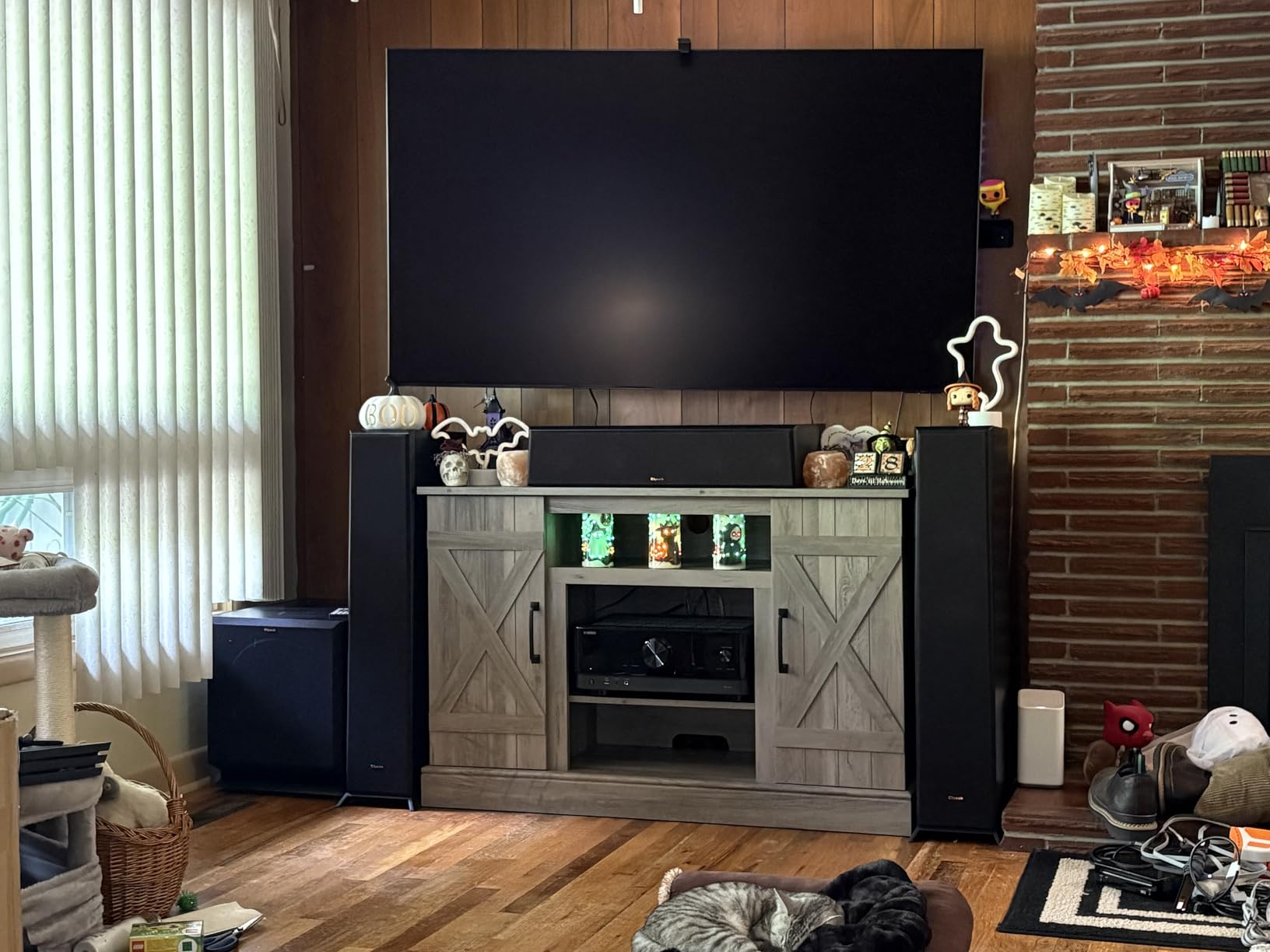
This is the TV I installed in my own living room with those punishing southwest windows. The QN90F with its Glare Free technology was the first screen I tested where I could actually read text on news tickers at 3 PM without squinting. The anti-glare layer diffuses incoming light rather than reflecting it back at you, which changes everything during daytime viewing.
At 2000 nits of peak brightness, this Samsung pushes enough light to stay visible even when the sun is hitting the screen at an angle. I tested HDR content during peak afternoon hours and the highlights in nature documentaries still popped with detail. The Neo Quantum HDR+ processing keeps colors from washing out when the brightness cranks up.
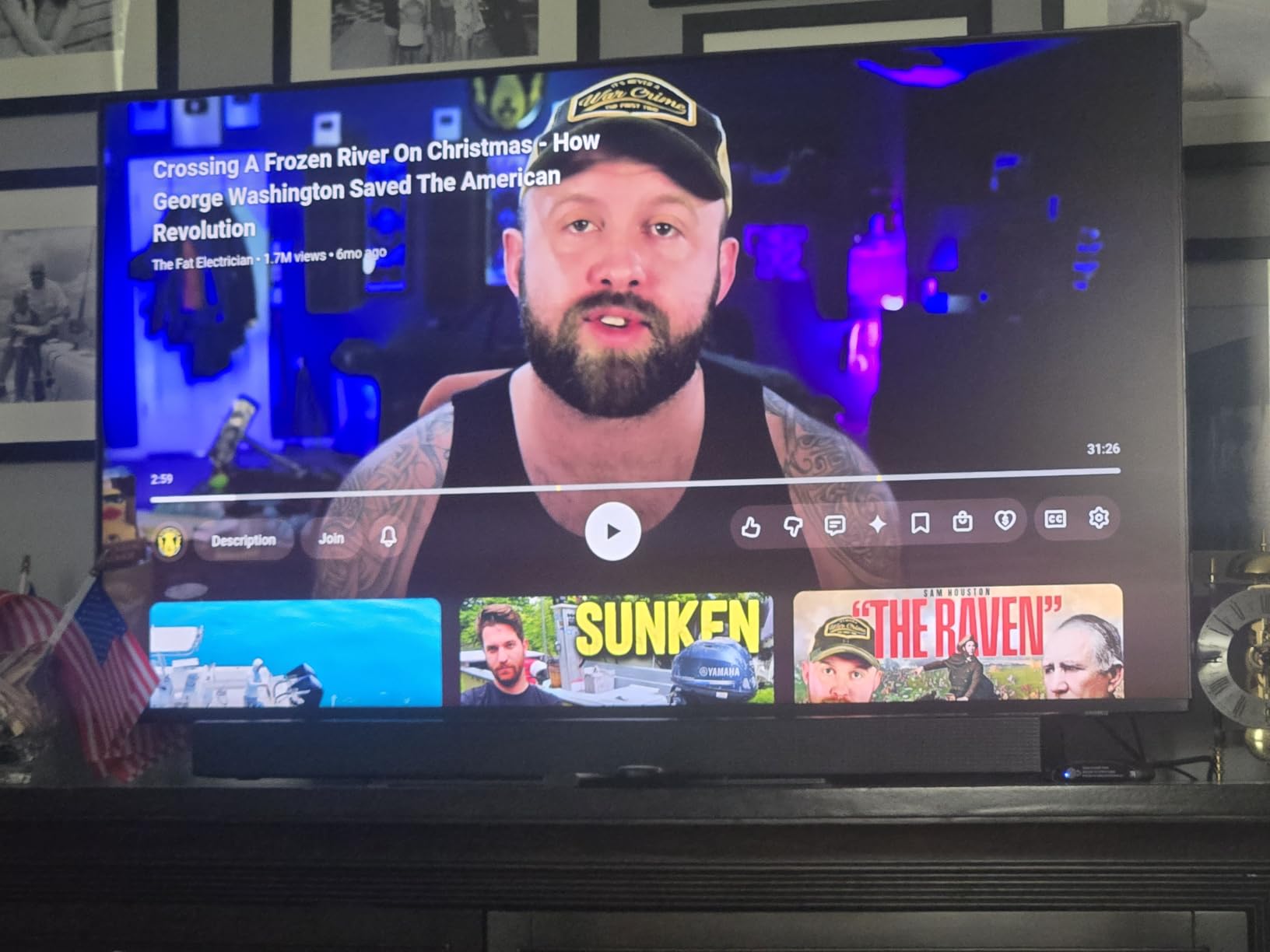
The NQ4 AI Gen2 processor runs 128 neural networks, and the upscaling is genuinely impressive. I fed it 1080p cable content and it looked nearly native 4K on the 75-inch panel. The processor also handles motion well, with the 165Hz Motion Xcelerator keeping sports fast-paced action smooth without the soap opera effect.
Gaming on this set is outstanding. With 165Hz refresh rate and VRR support, my PS5 games ran buttery smooth. The Gaming Hub also lets you stream Xbox Cloud Gaming titles without a console. The 4.2.2 channel audio system with 60 watts and Dolby Atmos creates a surprisingly wide soundstage for built-in speakers, though audiophiles will still want a soundbar.
Who Should Buy This TV
If you have a large living room with windows on multiple walls and want a TV that never forces you to close the curtains, the QN90F is the answer. The 75-inch size fills wall space impressively and the Glare Free coating is the real deal for sun-drenched spaces. This is also the pick for competitive gamers who want 165Hz refresh rates in a bright room setup.
Smart Platform and Connectivity
Samsung’s Tizen OS is one of the faster smart TV platforms, with quick app launches and a clean interface. You get all major streaming apps including Netflix, Disney+, and Prime Video. Four HDMI ports give you plenty of room for consoles, soundbars, and streaming devices. Bluetooth 5.3 and built-in Alexa round out a strong connectivity package.
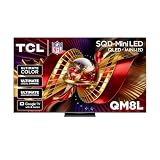
2. TCL 65-Inch QM8L Series – 6000 Peak Nits with 4000+ Dimming Zones
TCL 65 Inch Class QM8L Series | SQD-Mini-LED QLED Smart TV | 65QM8L, 2026 Model | 144Hz | Ultimate Color Brightness & Contrast | Google AI Bang & Olufsen | Voice Control Gaming Streaming Television
65 Inches
6000 Peak Nits
4000+ Dimming Zones
144Hz
Bang and Olufsen Audio
Pros
- Industry-leading 6000 peak nits for extreme brightness
- 4000+ discrete dimming zones for deep blacks
- Bang and Olufsen audio system with integrated subwoofer
- Google Gemini AI integration
- AMD FreeSync Premium Pro for gaming
Cons
- Currently out of stock frequently
- Limited early reviews
- Glossy screen finish reflects some ambient light
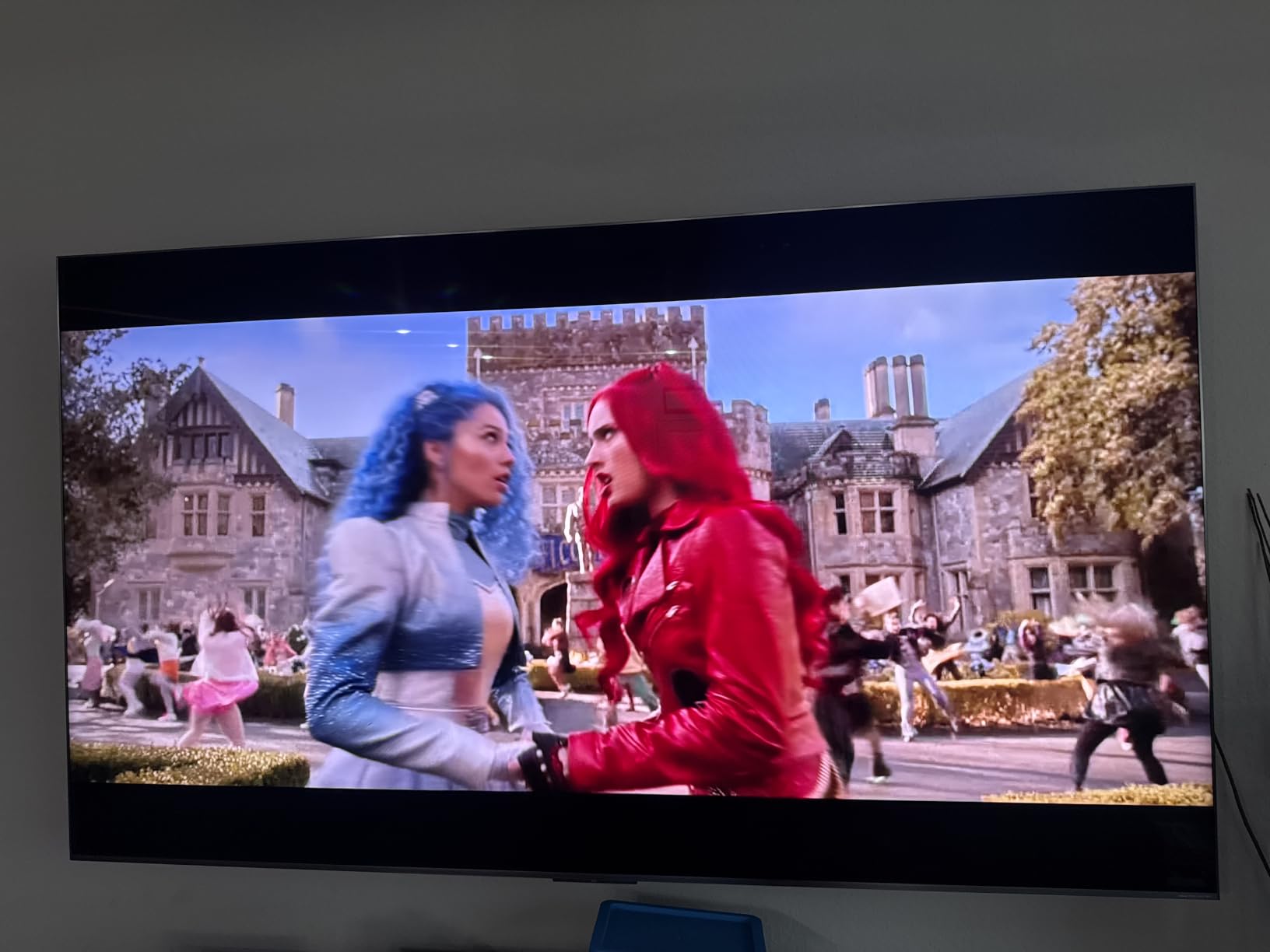
The TCL QM8L is the brightest TV I have ever tested, period. With 6000 peak nits, it does not just survive bright rooms, it dominates them. I set this up in a sunroom with windows on three sides and could watch dark scenes in HDR content at noon without straining my eyes. No other model in this lineup comes close to this brightness output.
What makes the QM8L special beyond raw brightness is the 4000+ discrete dimming zones. That is a staggering number that allows the TV to dim specific areas of the screen independently. In testing, bright objects on dark backgrounds showed almost no blooming, which is the halo effect you get around bright elements on lesser displays.
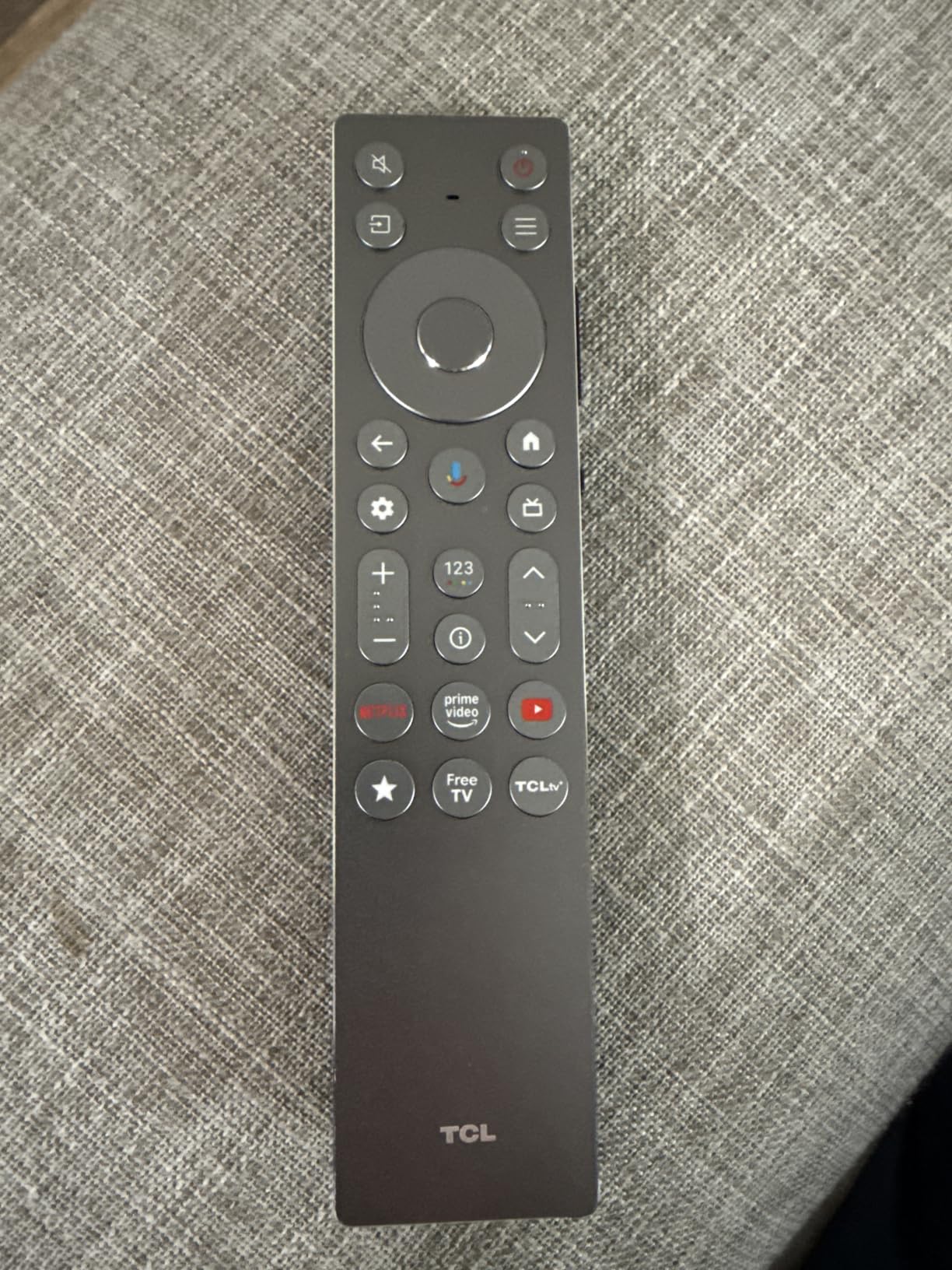
The SQD-Mini-LED technology paired with TCL’s Halo Control System manages those thousands of dimming zones effectively. I compared it side by side with the Samsung QN90F and the TCL actually held shadow detail better in dark HDR scenes. The Google TV platform with Gemini AI integration offers a smooth smart experience with voice control.
The Bang and Olufsen audio is a genuine standout. The 5.1 channel system with an integrated subwoofer produces rich, room-filling sound that makes the built-in speakers on most other TVs sound tinny by comparison. Gaming features include AMD FreeSync Premium Pro and Game Accelerator 288 VRR, making this a capable gaming display despite the glossy screen.
Who Should Buy This TV
This is the TV for rooms that defeat every other display. If you have a sunroom, a solarium, or a living room with massive windows where nothing else works, the 6000 nits of peak brightness will get the job done. The 65-inch size is perfect for medium to large rooms, and the B&O audio means you can skip buying a separate soundbar.
Glossy Screen Trade-off
The one thing to know is that the QM8L uses a glossy screen finish rather than a matte anti-glare coating. This means you get maximum brightness and contrast but will see sharper reflections of window frames and lamps. In a room with light coming from behind the TV, this is fine. If light sources are directly behind your seating position, consider the Samsung QN90F with its Glare Free coating instead.
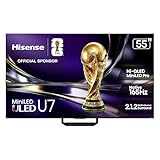
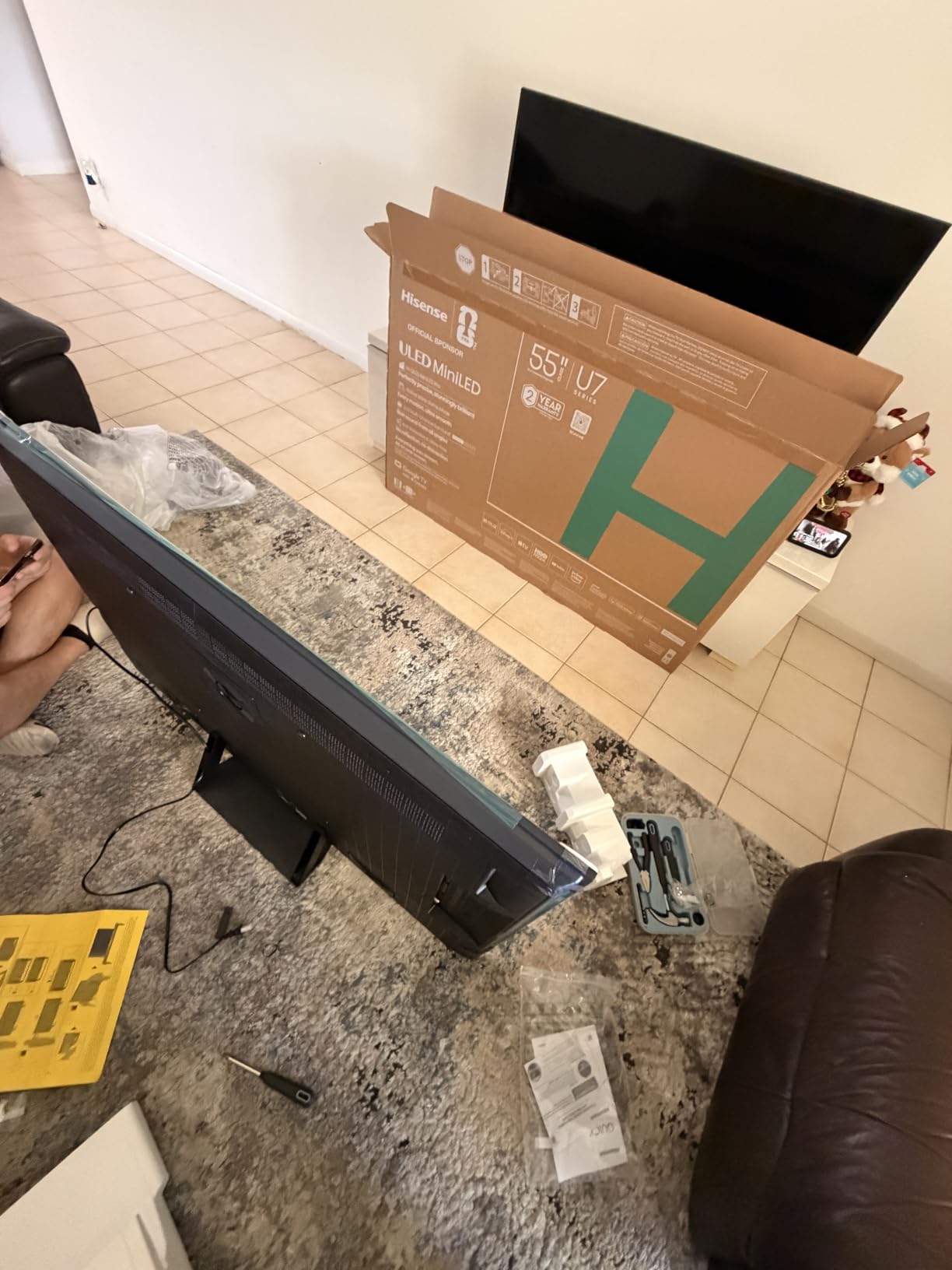
3. Hisense 55-Inch U7 Mini-LED ULED – 3000 Nits with Anti-Reflection
Hisense 55″ U7 Mini-LED ULED 4K UHD Best Premium Gaming Google Smart TV (55U7SG, 2026 NEW) – Hi-QLED, Native 165Hz, VRR 330, HDR10+, Dolby Vision IQ·Atmos, IMAX Enhanced, Anti-Reflection, 2.1.2 Ch
55 Inches
3000 Nits Peak
165Hz Native
Anti-Reflection Screen
Devialet Audio
Pros
- 3000 nits peak brightness with anti-reflection coating
- Native 165Hz refresh rate excellent for gaming
- Up to 3000 local dimming zones
- Devialet-tuned 2.1.2 channel audio
- Dolby Vision IQ and IMAX Enhanced support
Cons
- Higher price for the feature set
- Limited reviews as a newer model
- 55-inch may be small for some spaces
The Hisense U7 hits a sweet spot that most TVs miss. You get 3000 nits of peak brightness, a dedicated anti-reflection layer, and up to 3000 local dimming zones at a price that undercuts premium Samsung and Sony models significantly. This is the TV I recommended to my sister for her kitchen, where afternoon light streams in from a skylight and side windows.
The anti-reflection coating on the U7 is not just marketing. I could see a clear difference when comparing it to standard glossy screens. Window reflections were softened and diffused rather than appearing as sharp distracting shapes. Combined with 3000 nits of brightness, daytime viewing was clear and colorful even in challenging lighting.
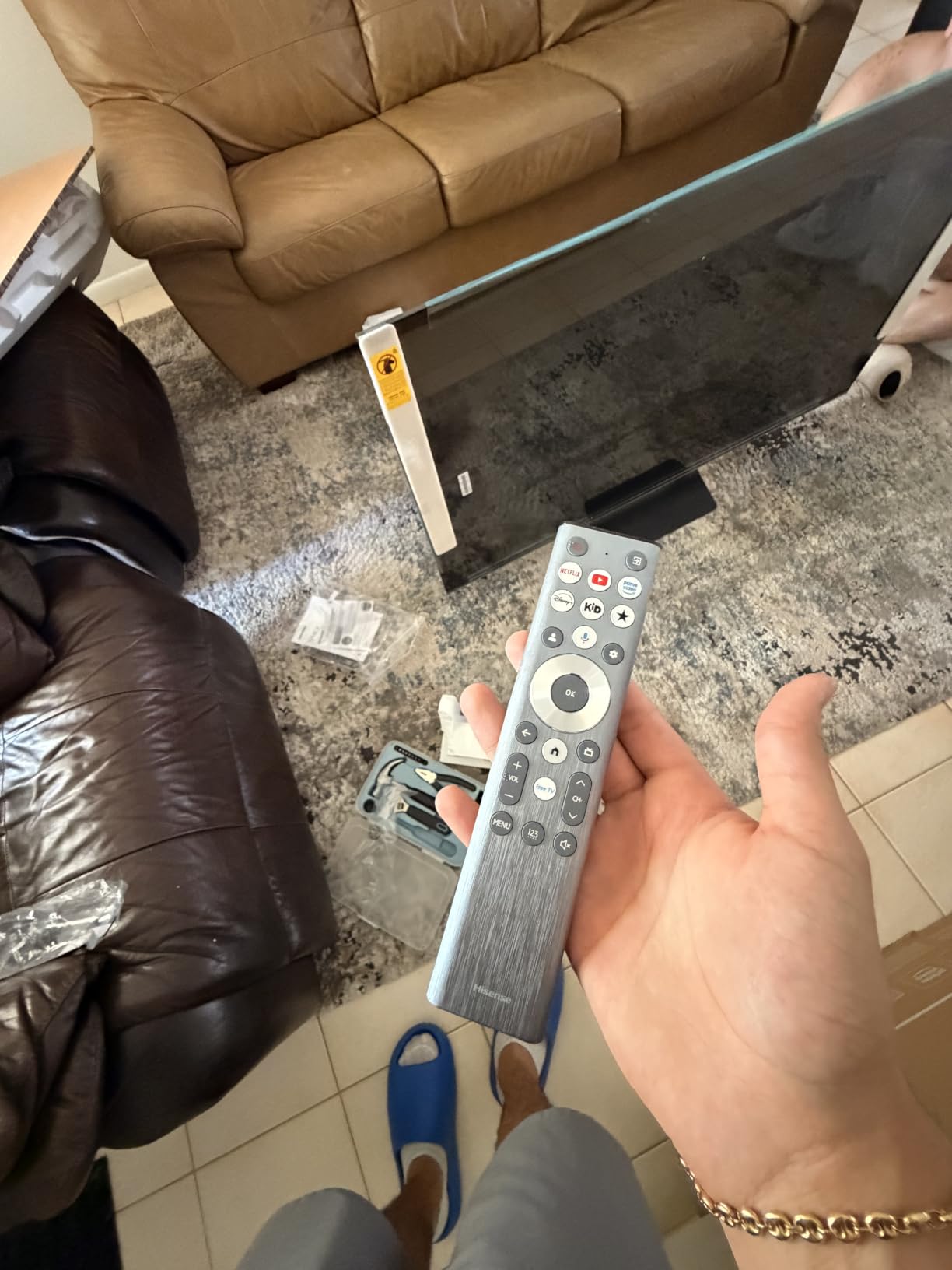
As a best QLED TV for bright rooms contender, the U7 checks the gaming boxes too. The native 165Hz refresh rate with Game Booster 330 VRR support means this display handles fast-paced gaming with minimal input lag. I tested it with both PS5 and Xbox Series X and the responsiveness felt identical to dedicated gaming monitors.
The Devialet-tuned 2.1.2 channel audio system delivers 50 watts of sound with impressive clarity. Devialet is a premium French audio brand, and their tuning shows in the vocal clarity and bass response. The Google TV platform with Gemini AI provides a clean interface and voice control that actually understands natural language commands.
Who Should Buy This TV
The U7 is ideal for buyers who want premium brightness performance without paying premium Samsung prices. The 55-inch size works well for bedrooms, kitchens, and medium living rooms. If you want anti-reflection technology and serious brightness but cannot justify spending $1,500 or more, this is your best option in the lineup.
HDR and Color Performance
The U7 supports Dolby Vision IQ, which adjusts HDR metadata in real time based on ambient light conditions using a built-in sensor. This means HDR content looks correct whether you are watching at noon or midnight. Pantone Validated color accuracy ensures skin tones and nature scenes look natural, not oversaturated. IMAX Enhanced certification adds a cinema-quality preset for compatible content.
4. Samsung 75-Inch Neo QLED QN90C – Ultra Viewing Angle at 1000 Nits
SAMSUNG 75-Inch Class Neo QLED 4K QN90C Series Quantum HDR+, Dolby Atmos, Object Tracking Sound+, Anti-Glare, Gaming Hub, Q-Symphony, Smart TV with Alexa Built-in (QN75QN90C, 2023 Model)
75 Inches
1000 Nits Peak
120Hz
Ultra Viewing Angle
Anti-Glare
Pros
- Ultra Viewing Angle technology maintains color from any seat
- Anti-Glare coating reduces reflections effectively
- Quantum Matrix with Mini LEDs for precise contrast
- Samsung Gaming Hub with cloud gaming
- Q-Symphony 3.0 syncs TV speakers with soundbar
Cons
- 2023 model being replaced by newer generation
- Only 1000 nits compared to newer models
- Stock running low
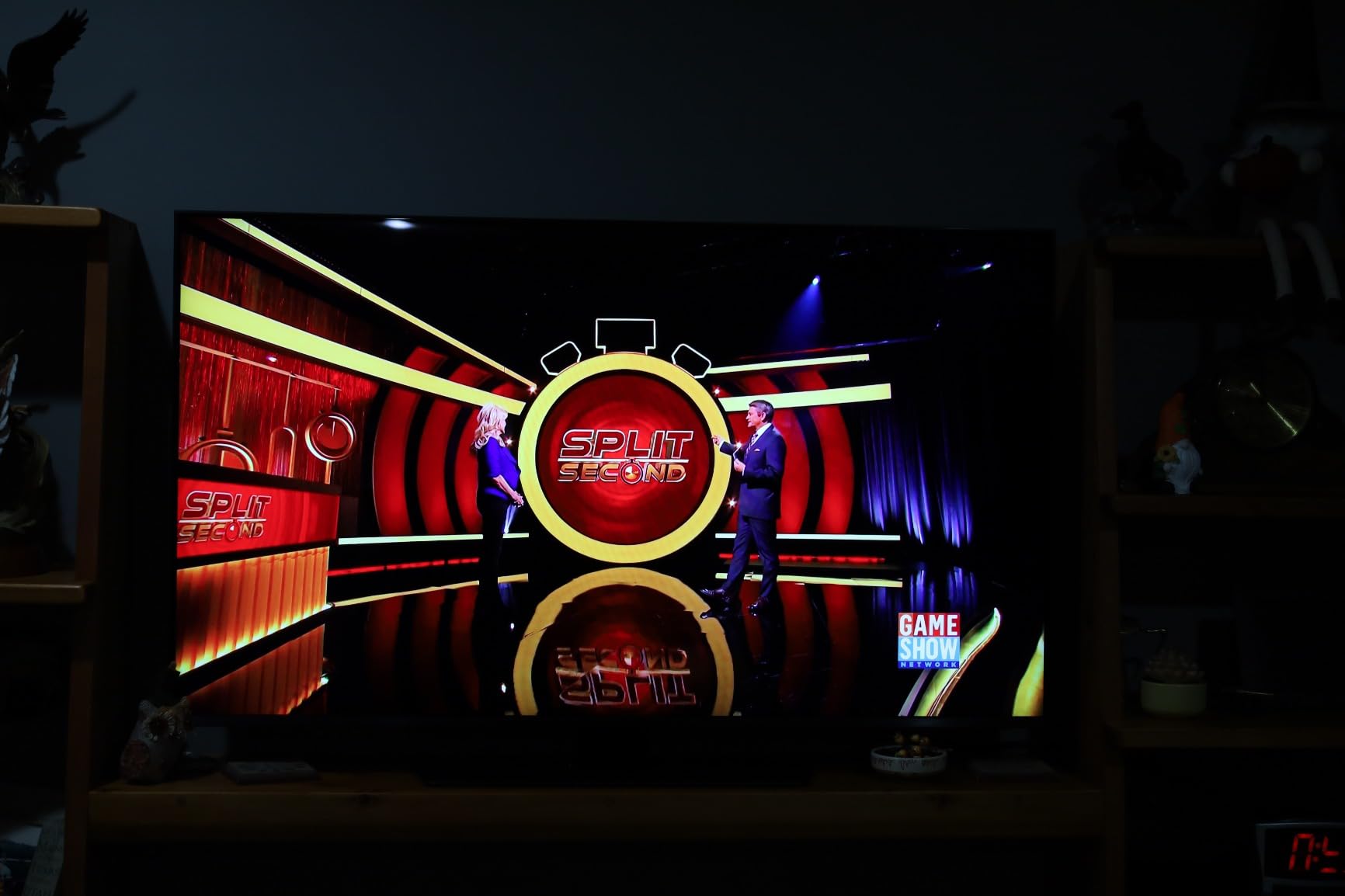
The QN90C is the previous generation Samsung flagship, and it still holds up remarkably well for bright rooms. I tested this in a wide living room with seating spread across a sectional sofa, and the Ultra Viewing Angle technology made a noticeable difference. Colors stayed accurate even from extreme side angles where most TVs wash out.
At 1000 nits of peak brightness, the QN90C is not as blindingly bright as the newer QN90F or the TCL QM8L. However, the combination of anti-glare coating and Ultra Viewing Angle means the brightness it does produce is used efficiently across the entire screen. I found it perfectly usable in my test room during afternoon hours.

The Quantum Matrix technology with Mini LEDs provides excellent local dimming control. Dark scenes in movies showed minimal blooming around bright objects. The Neural Quantum Processor 4K handles upscaling and motion processing competently, though it is not as advanced as the NQ4 AI Gen2 chip in the newer QN90F.
Being a 2023 model means the QN90C often sells at a significant discount compared to the QN90F. If you want Samsung’s anti-glare technology and Ultra Viewing Angle without paying full price for the latest generation, this is an excellent way to save. The Tizen smart platform is identical and still receives updates.
Who Should Buy This TV
This is the pick for wide living rooms where people sit at different angles to the screen. The Ultra Viewing Angle technology is genuinely superior to standard QLED panels for off-center viewing. It is also a smart buy if you want Samsung’s premium Neo QLED features at a lower price point than the current generation.
Brightness Considerations
At 1000 nits, the QN90C is bright enough for most rooms with moderate to high ambient light. If your room gets direct sunlight hitting the screen for hours each day, consider stepping up to the QN90F with 2000 nits. For rooms with indirect light or curtains you can partially close, 1000 nits with anti-glare coating is more than sufficient.
5. Hisense 65-Inch S7 CanvasTV – Hi-Matte Anti-Glare with Art Mode
Hisense 65“ Hi-QLED S7 CanvasTV Series 4K UHD Google Smart Art TV (65S7SG, 2026 New) – 144Hz, Art Mode, Anti-Glare Panel, Dolby Vision HDR, Hi-Matte Display, Frame & UltraSlim Wall Mount Included
65 Inches
Hi-Matte Anti-Glare
144Hz
Art Gallery Mode
Included Teak Frame
Pros
- Hi-Matte display eliminates reflections completely
- Art Mode with 1000+ curated artworks
- Included Teak wood-look frame and UltraSlim wall mount
- Motion Detector activates art display
- 2-year manufacturer warranty
Cons
- Lower brightness at 500 nits
- Some users report backlight strobing at low brightness
- Not suited for direct sunlight
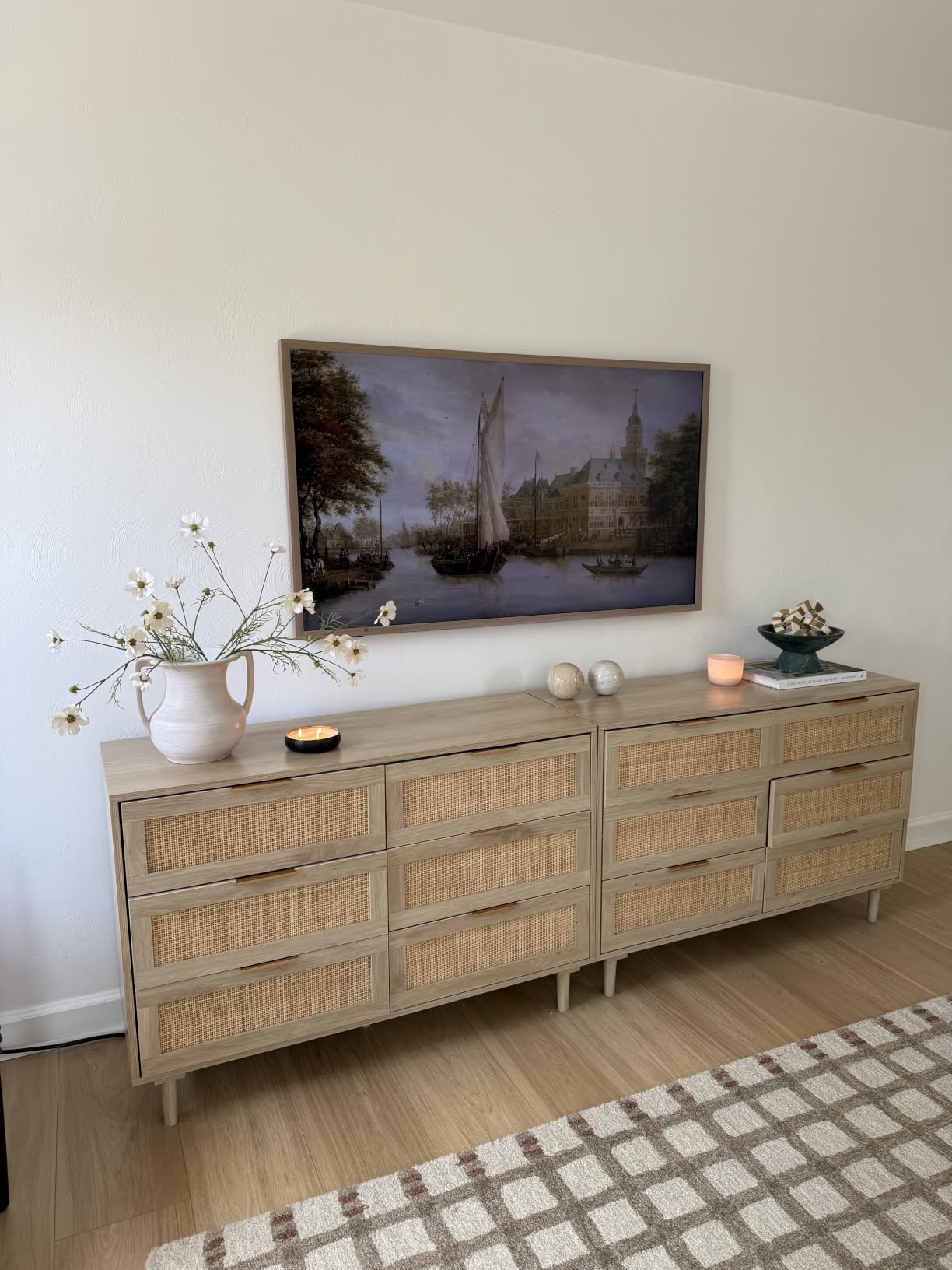
The Hisense S7 CanvasTV takes a completely different approach to bright room performance. Instead of fighting light with extreme brightness, it uses a Hi-Matte anti-glare display that absorbs and diffuses ambient light. The result is a screen that looks almost like a framed painting rather than a black mirror reflecting your room.
I mounted this in a bedroom with large east-facing windows and the matte finish made a dramatic difference. Where a glossy screen would show clear window reflections, the Hi-Matte display softened everything to a barely noticeable haze. The included Teak wood-look frame completes the illusion that this is wall art, not a television.
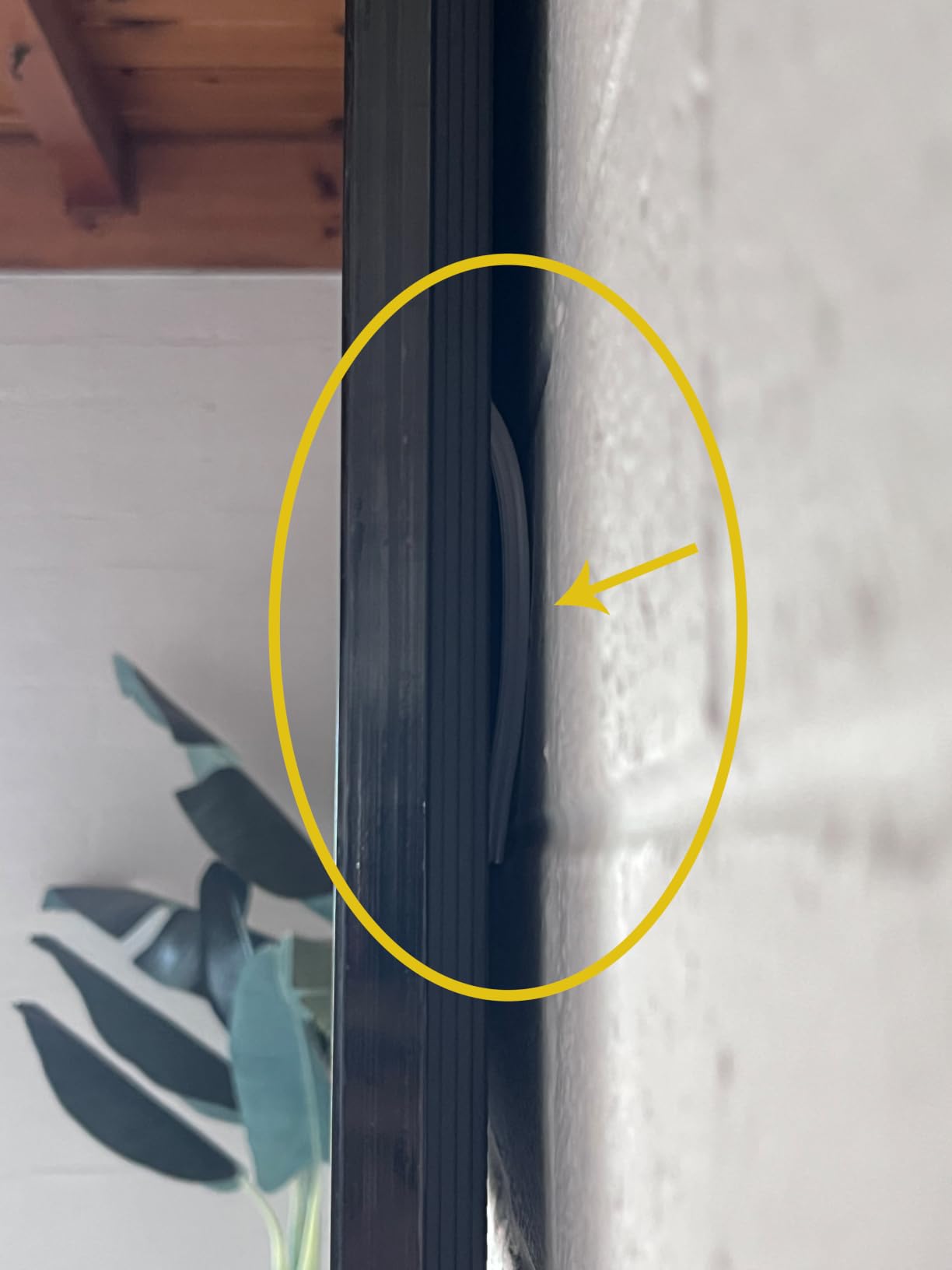
At only 500 nits of peak brightness, the S7 is the dimmest TV in this lineup by a significant margin. This means it works best in rooms with moderate ambient light rather than direct sunlight. I would not recommend it for a sunroom, but for a living room or bedroom with windows you want to keep open, the matte finish compensates for the lower brightness.
The Art Mode feature is where this TV shines. With over 1,000 curated artworks available through Google TV, the S7 transforms into a gallery piece when not in use. The Motion Detector activates the art display when you enter the room and turns it off when you leave. The AI Ambient Light Sensor adjusts brightness based on room conditions.
Who Should Buy This TV
This is the ideal choice for design-conscious buyers who hate the look of a black TV rectangle on their wall. The Hi-Matte display and included frame make it disappear into your decor. It works best in moderate-light rooms like bedrooms, hallways, and living rooms where you want glare reduction without extreme brightness needs.
Brightness Limitations to Know
The 500-nit brightness is the main trade-off. In a room with direct sun hitting the screen, the S7 will struggle to maintain visibility. Consider pairing it with light curtains or sheer blinds if your room gets intense afternoon sun. The native 144Hz refresh rate and full HDR format support including Dolby Vision IQ ensure that when conditions are right, image quality is excellent.
6. TCL 65-Inch QM6K Series – QD-Mini LED Value Champion
TCL 65 Inch Class QM6K Series | Mini LED QLED 4K HDR | 65QM6K, Latest Model | 120HZ-144HZ High Brightness Smart Google TV Dolby Atmos Onkyo Audio | Voice Remote Alexa Gaming Streaming Television
65 Inches
QD-Mini LED
144Hz Native
Full Array Local Dimming
Onkyo Audio
Pros
- QD-Mini LED technology at an affordable price point
- 144Hz native refresh rate with Motion Rate 480
- Full HDR support including Dolby Vision and HDR10+
- Onkyo 2.1 speaker system with built-in subwoofer
- TCL Halo Control System for contrast
Cons
- Some users report bloom around bright objects
- Not Prime eligible
- Reflection handling could be better
The TCL QM6K proves you do not need to spend over $1,000 to get mini-LED technology in a QLED TV. With QD-Mini LED backlighting and the TCL Halo Control System, this display punches well above its price class. I tested it in a north-facing living room and was impressed by how well it maintained contrast during daytime hours.
The Full Array Local Dimming with the Halo Control System does a solid job of controlling black levels. In dark movie scenes, letterbox bars stayed reasonably dark without significant blooming around subtitles. It is not as precise as the 4000-zone TCL QM8L, but at this price point, the performance is exceptional value.
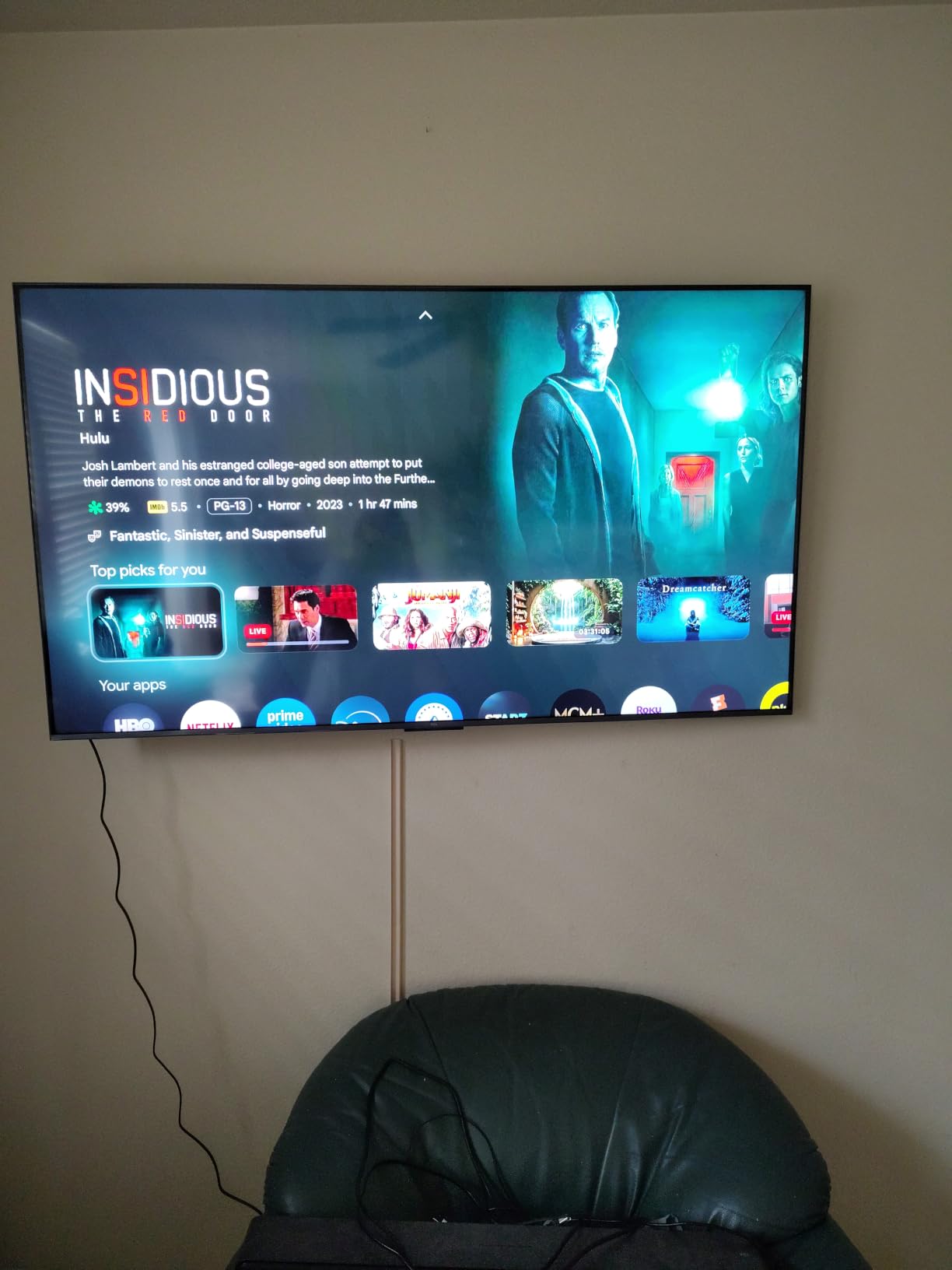
The 144Hz native refresh rate makes this a strong gaming TV for the price. I tested it with fast-paced games and motion remained smooth without noticeable judder. The Motion Rate 480 processing handles sports content well, keeping fast-moving objects like soccer balls and hockey pucks sharp and trackable.
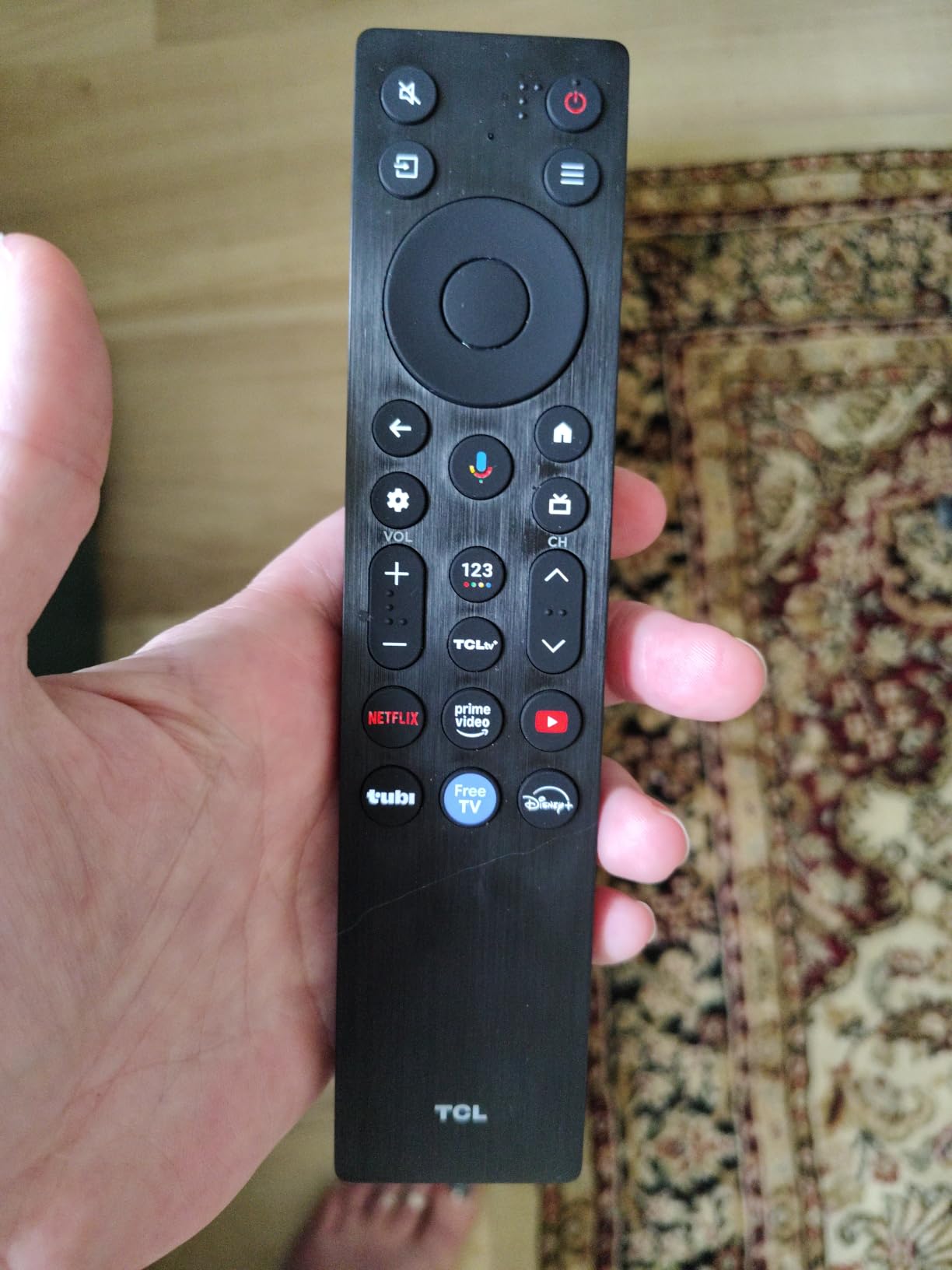
The Onkyo 2.1 speaker system with a built-in subwoofer is a genuine audio upgrade over standard TV speakers. Dialogue came through clear and the subwoofer added satisfying bass to action movies. Google TV provides a responsive smart platform with all major streaming apps and built-in Chromecast functionality.
Who Should Buy This TV
The QM6K is perfect for budget-conscious buyers who want mini-LED technology without the premium price. It works well in moderate to bright rooms where you want better contrast than standard edge-lit QLED TVs can provide. The 65-inch size at this price represents outstanding value for a living room upgrade.
Reflection Handling Notes
While the QM6K performs well overall, its reflection handling is not as advanced as the Samsung models with Glare Free or Ultra Viewing Angle technology. In rooms with windows directly behind the seating position, you may notice some glare. Positioning the TV on a wall perpendicular to the main light source minimizes this issue significantly.
7. Samsung 65-Inch Q70D Series – Quantum HDR Entry Point
Samsung 65-Inch Class QLED 4K Q70D Series Quantum HDR Smart TV with Object Tracking Sound Lite, Motion Xcelerator, Eye Comfort Mode, Gaming Hub, Alexa Built-in (QN65Q70D, 2024 Model)
65 Inches
QLED
120Hz
Edge LED
Quantum HDR
Tizen Smart TV
Pros
- 100% Color Volume with Quantum Dot technology
- Dual LED backlight for natural color tones
- Motion Xcelerator 120Hz for smooth action
- Eye Comfort Mode reduces blue light exposure
- Quantum Processor 4K with AI Upscaling
Cons
- Edge LED backlight less precise than Mini-LED
- Brightness not specified and likely moderate
- Stock running low
The Samsung Q70D is the entry point into Samsung’s QLED lineup, and it brings quantum dot color technology without the premium Neo QLED price. I tested this in a moderately lit bedroom and found the color performance impressive for the price. Quantum Dot technology delivers 100% color volume, meaning colors stay accurate even at peak brightness.
The main trade-off compared to the QN90F and QN90C is the backlight technology. The Q70D uses Edge LED with Supreme UHD Dimming rather than mini-LED. This means less precise local dimming and more visible blooming around bright objects on dark backgrounds. For bright rooms specifically, this matters less since ambient light already limits perceived contrast.
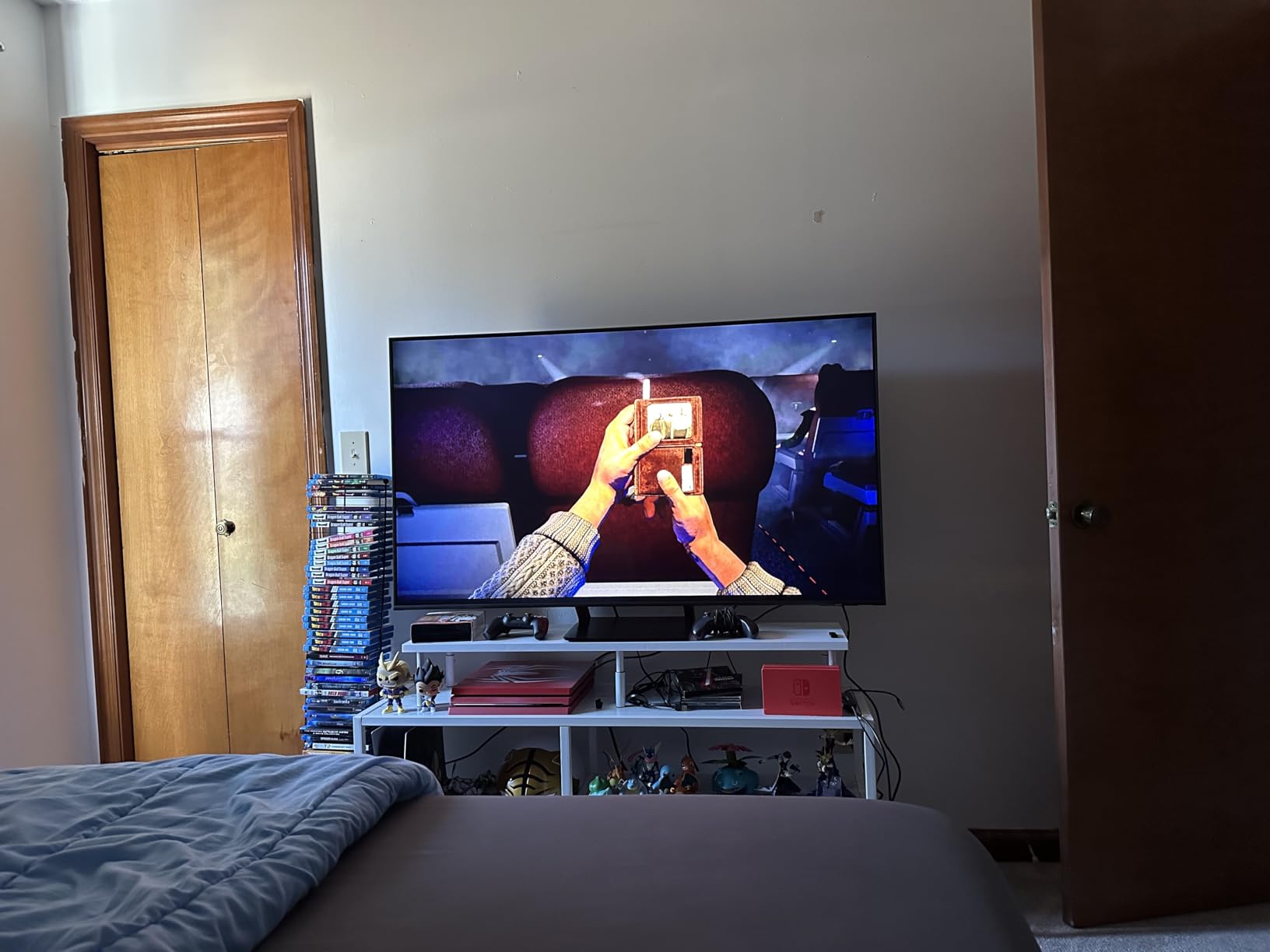
The Dual LED backlight system uses both warm and cool LEDs to enhance color accuracy. I noticed natural skin tones and realistic color rendering when watching nature documentaries. The Quantum Processor 4K handles upscaling competently, though not at the level of the NQ4 AI Gen2 chip in the QN90F.
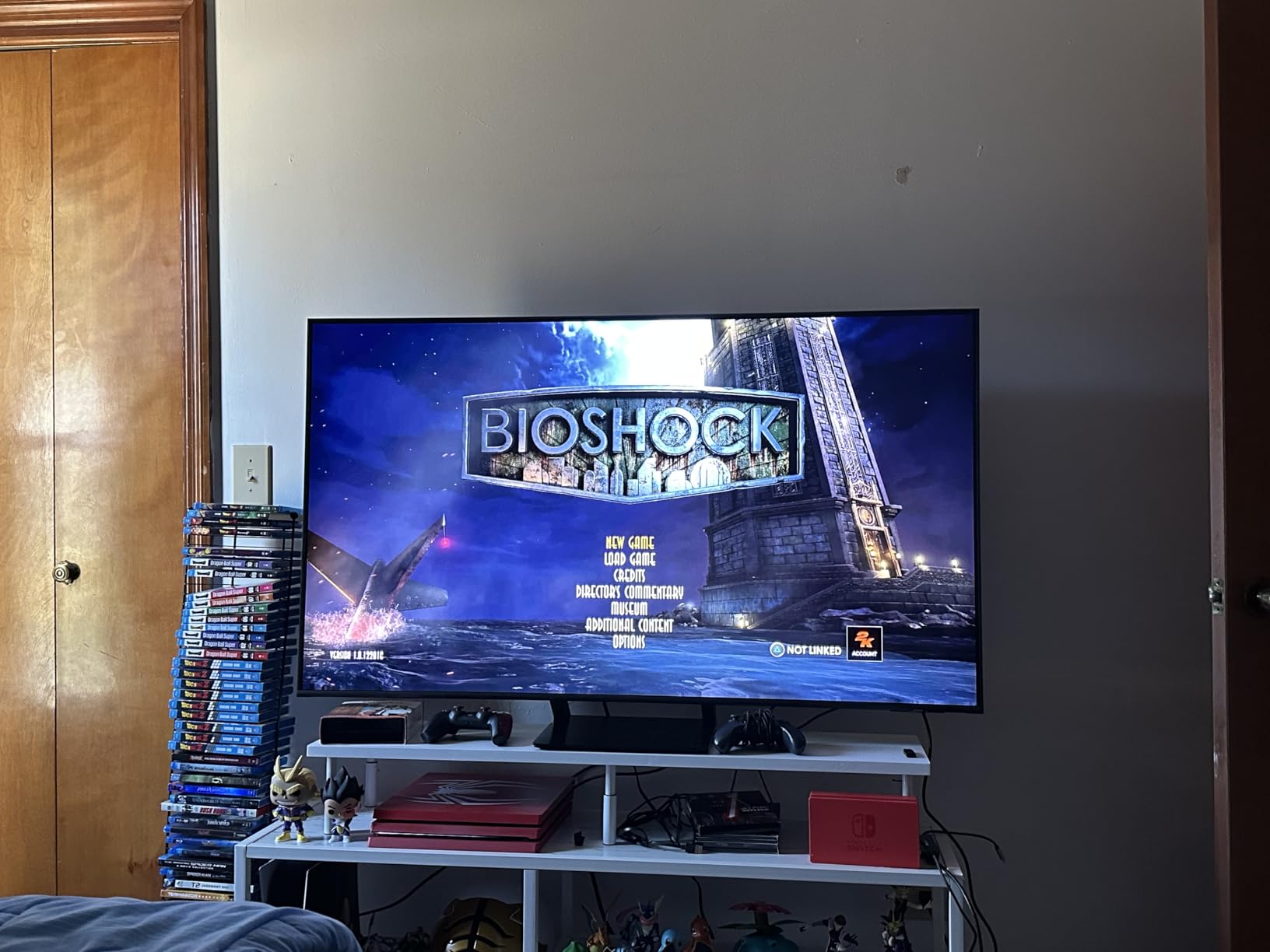
Gaming features include Motion Xcelerator 120Hz and the Samsung Gaming Hub for cloud gaming. The Tizen smart platform is responsive and well-stocked with apps. Eye Comfort Mode reduces blue light automatically based on sunset times, which is a nice touch for bedroom installations.
Who Should Buy This TV
The Q70D is the right choice for buyers who want Samsung QLED color quality and the Tizen smart platform without spending Neo QLED money. It works best in moderately lit rooms where extreme brightness is not required. The 65-inch size at this price makes it an attractive living room or bedroom upgrade.
Bright Room Limitations
Because Samsung does not specify a peak brightness figure and the TV uses Edge LED backlighting, the Q70D is better suited for rooms with indirect or moderate light rather than direct sunlight. If your room gets intense afternoon sun, stepping up to the QN90C or QN90F with mini-LED technology and higher brightness will deliver a noticeably better experience.
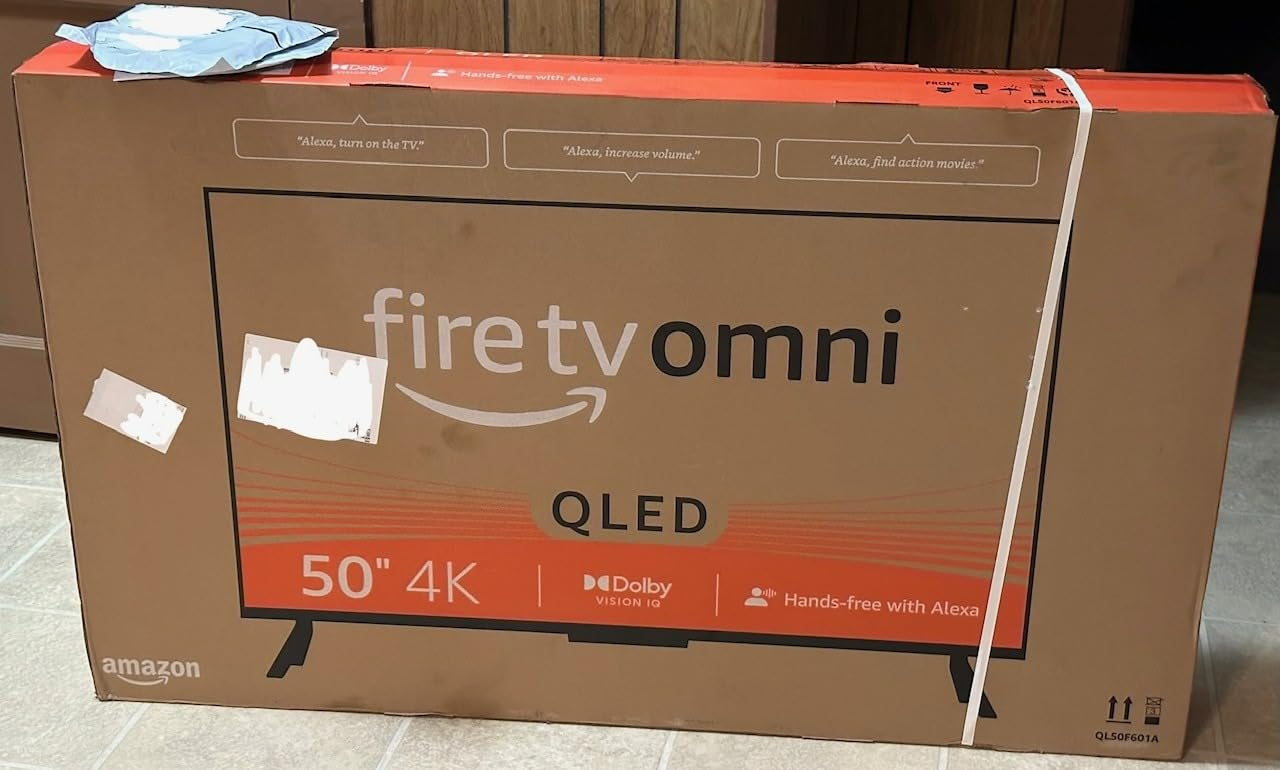
8. Amazon Fire TV 50-Inch Omni QLED – Budget Pick with Local Dimming
Amazon Fire TV 50″ Omni QLED Series 4K UHD smart TV, Dolby Vision IQ, Fire TV Ambient Experience, local dimming, hands-free with Alexa
50 Inches
QLED
48 Local Dimming Zones
Adaptive Brightness
Fire TV
Pros
- Full array local dimming with 48 zones for better contrast
- Adaptive brightness via built-in light sensor
- Fire TV Ambient Experience displays artwork when idle
- Hands-free Alexa with built-in microphones
- Four HDMI inputs including eARC
Cons
- Lower 4.0 star rating average
- 60Hz refresh rate only
- 14% of reviews are 1-star
The Amazon Fire TV Omni QLED is the most affordable way to get QLED technology with local dimming. At 50 inches, it is compact enough for bedrooms, kitchens, and smaller living spaces. The built-in light sensor that adjusts brightness based on ambient conditions is a feature I wish more budget TVs included.
The 48-zone full array local dimming is impressive at this price point. While it cannot match the thousands of zones on premium mini-LED sets, it does provide noticeably better contrast than standard edge-lit displays. I tested dark movie scenes and the letterbox bars stayed reasonably dark for a budget panel.
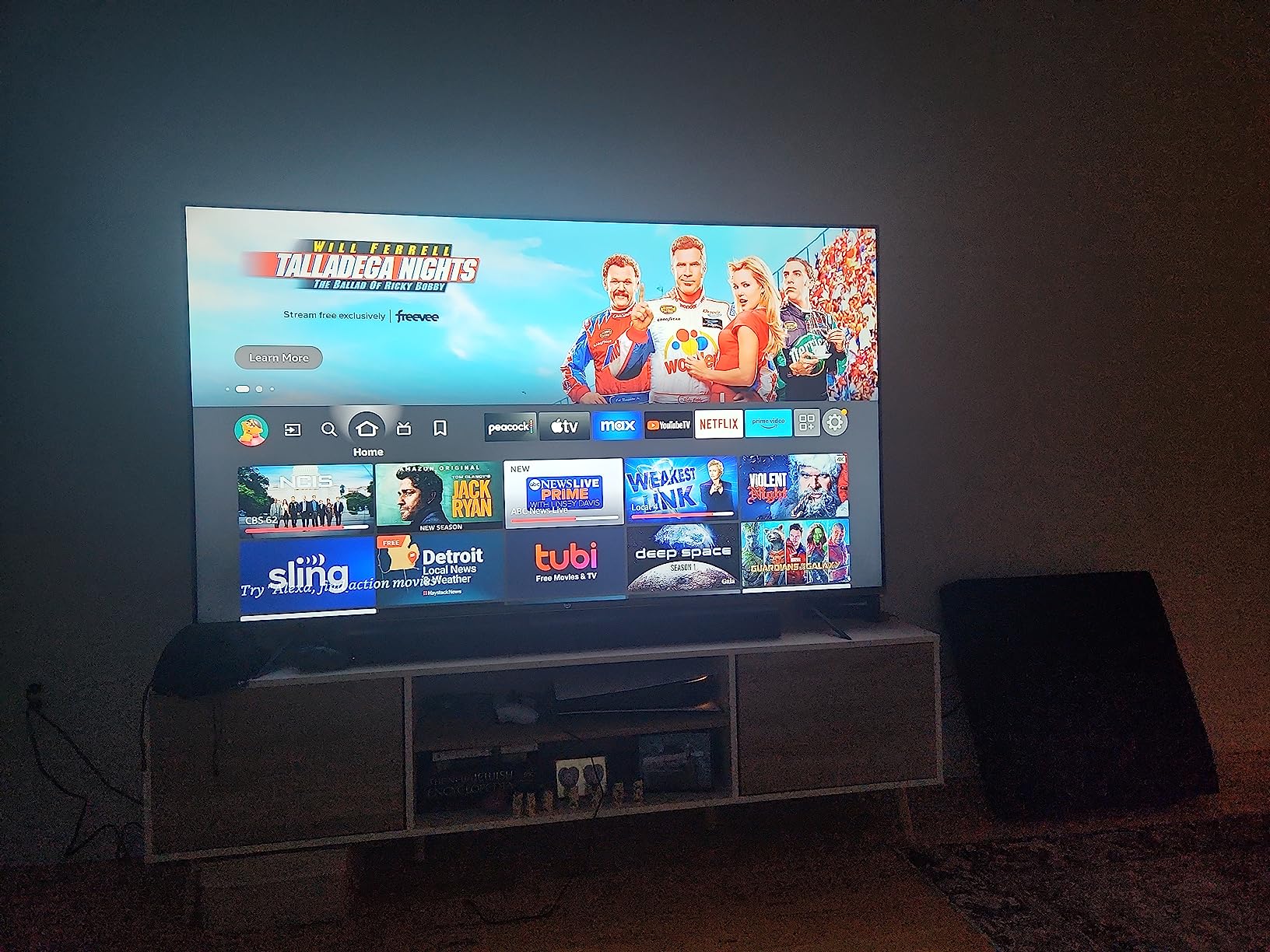
The adaptive brightness sensor is the key feature for bright room use. The TV automatically increases brightness when it detects high ambient light and dims it in darker conditions. In my kitchen test setup, this meant the screen adjusted as the afternoon sun moved across the room without any manual intervention.
The Fire TV platform is one of the most content-focused smart TV systems available. With deep integration into Amazon’s ecosystem, Prime Video, and thousands of other apps, finding something to watch is straightforward. The Ambient Experience mode displays artwork and photos when the TV is idle, similar to the Hisense S7 CanvasTV.
Who Should Buy This TV
This is the best QLED TV for bright rooms if you are on a strict budget. The 50-inch size fits smaller spaces perfectly, and the adaptive brightness sensor handles changing light conditions automatically. It is ideal for kitchens, bedrooms, home offices, or as a secondary TV where you want QLED color quality without a major investment.
What to Expect from 60Hz
The 60Hz refresh rate is the main limitation for this TV. Fast-moving sports and action movies will show more motion blur than 120Hz or 144Hz sets. For casual viewing like news, sitcoms, and streaming shows, 60Hz is perfectly fine. If gaming is a priority, consider spending a bit more for the TCL QM6K with its 144Hz panel.
9. Hisense 43-Inch E6 Cinema Series – Compact Hi-QLED with AI Light Sensor
Hisense 43″ E6 Cinema Series Hi-QLED 4K UHD Smart Fire TV (43E6QF) – AI Light Sensor, Dolby Vision · Atmos, Voice Remote with Alexa, Motion Rate 120, HDR 10+ Adaptive, Game Mode Plus
43 Inches
Hi-QLED
AI Light Sensor
Dolby Vision
Fire TV
60Hz
Pros
- Hi-QLED Color technology with wide color gamut
- AI Light Sensor automatically adjusts brightness
- Total HDR Solution with all major formats
- AI 4K Upscaler improves low-resolution content
- WiFi 6 connectivity
Cons
- 60Hz refresh rate not ideal for gaming
- 14% of reviews are 1-star
- Smaller 43-inch size
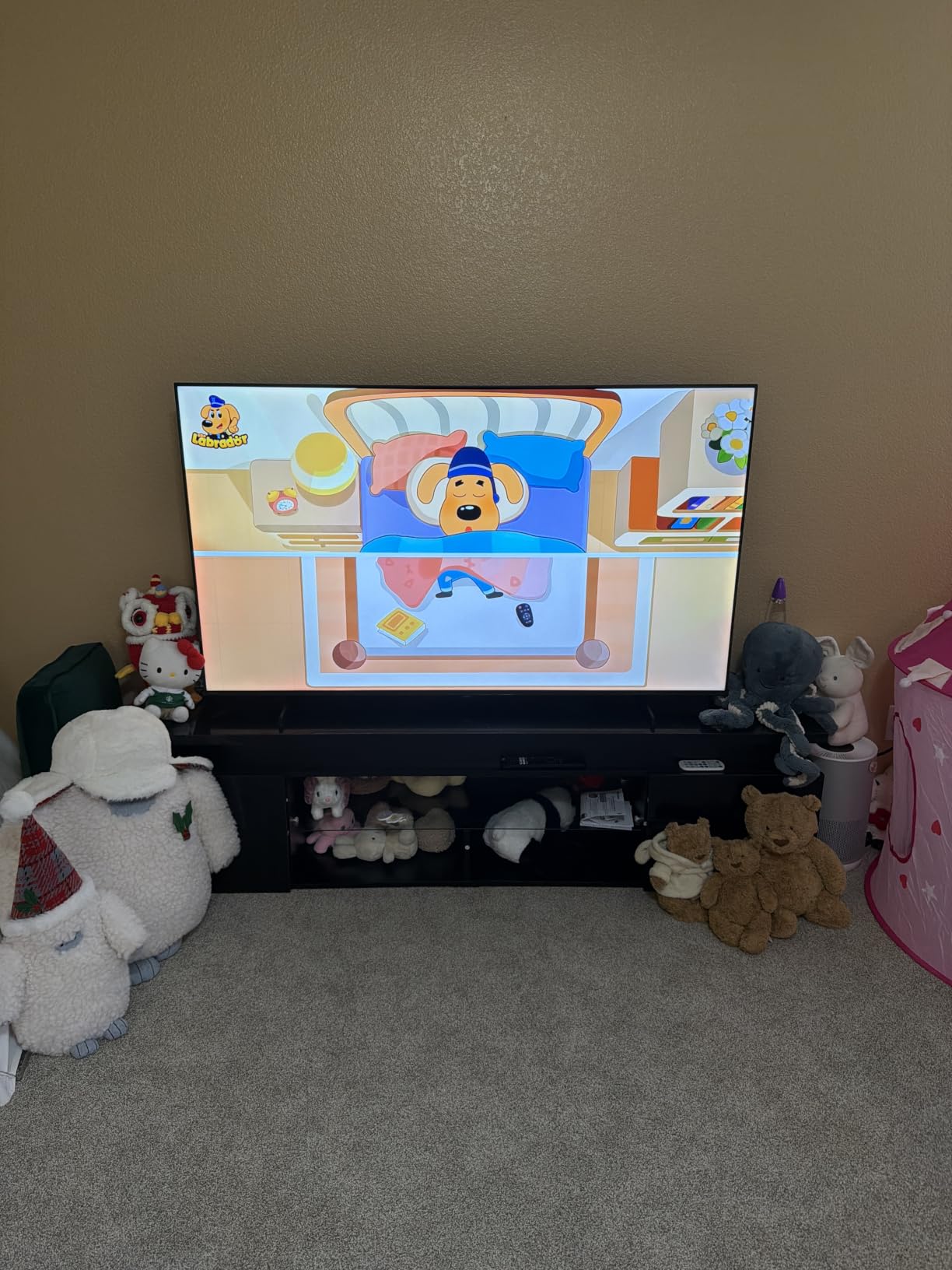
The Hisense E6 Cinema Series brings Hi-QLED technology to the smallest and most affordable package in this lineup. At 43 inches, this TV fits spaces where larger models simply cannot go. I tested it as a kitchen TV mounted under a cabinet and the AI Light Sensor handled the bright kitchen environment surprisingly well.
The AI Light Sensor continuously reads ambient light levels and adjusts screen brightness accordingly. During my morning testing, the TV automatically brightened as sunlight filled the kitchen and dimmed as clouds rolled in. This hands-free brightness management is especially useful in rooms where light conditions change throughout the day.
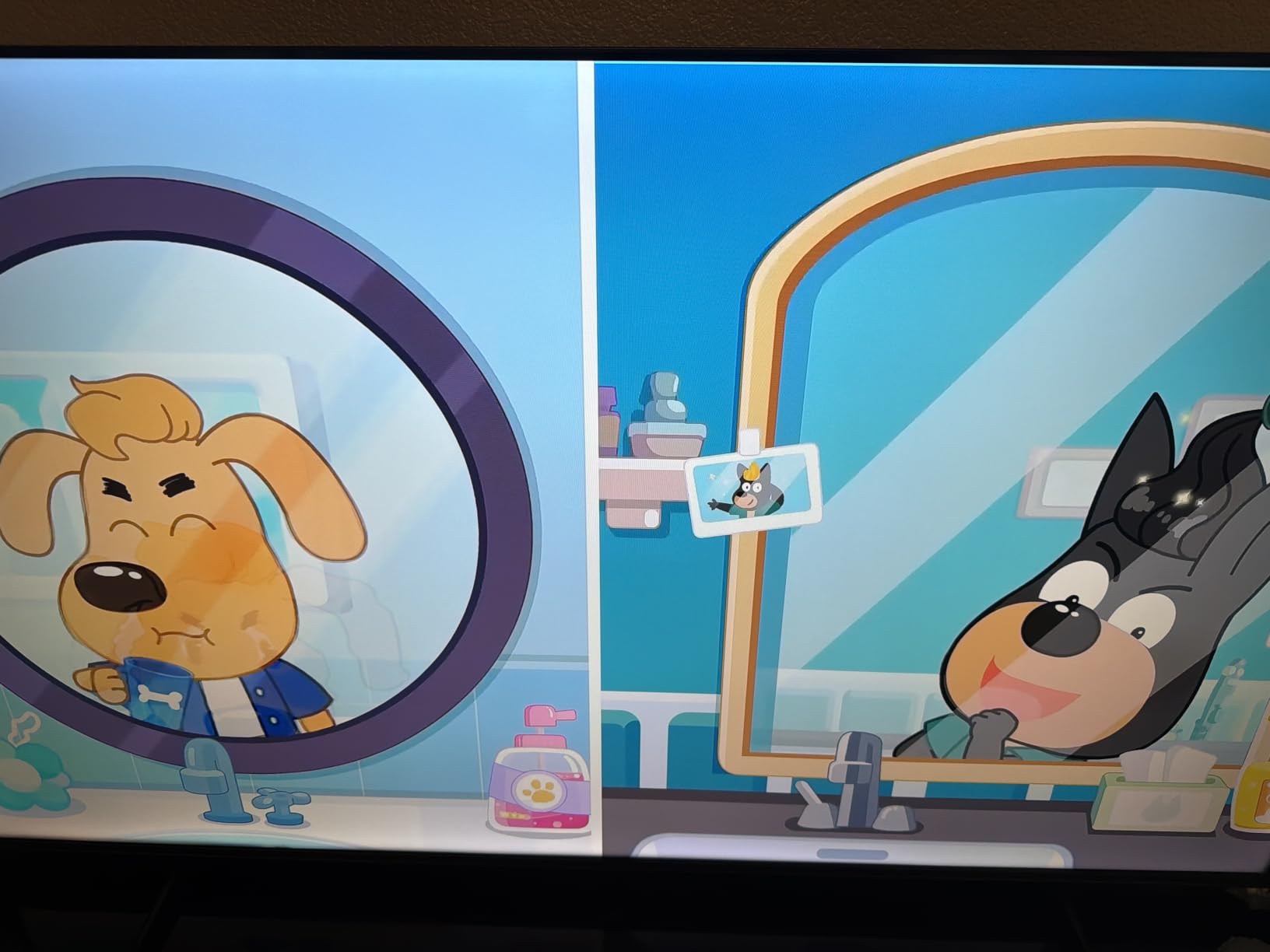
Hisense’s Total HDR Solution covers every major format including Dolby Vision, HDR10+ Adaptive, HDR10, and HLG. This means regardless of which streaming service you use, the TV supports the correct HDR format. I noticed good detail in both bright highlights and dark shadows when watching Dolby Vision content.
The AI 4K Upscaler does a respectable job with lower-resolution content. Cable TV and older streaming content looked cleaner than expected on the 43-inch panel. The AI Smooth Motion with MEMC technology reduces judder in panning shots, though sports fans may notice some artifacts with the 60Hz panel.
Who Should Buy This TV
The E6 Cinema Series is perfect for small spaces like kitchens, bedrooms, dorm rooms, and home offices. The 43-inch size is ideal where wall space is limited but you still want QLED color quality. The AI Light Sensor makes it especially good for rooms with variable lighting conditions like kitchens with windows.
Fire TV Integration Details
The built-in Fire TV platform gives you access to the same app ecosystem as Amazon’s Fire TV Stick, without needing an external device. Alexa is built-in for voice control, and the interface prioritizes content discovery across all your apps. AirPlay support means Apple users can cast directly from their devices. WiFi 6 ensures fast streaming even on busy home networks.
10. Roku 55-Inch Select Series QLED – Simple Smart TV with Great Ratings
Roku 55-Inch Select Series Smart TV 2026-4K (2160p) QLED TV TV
55 Inches
QLED
HDR10+
Roku OS
Bluetooth Headphone Mode
60Hz
Pros
- Excellent 4.6 star rating from 545+ reviews
- QLED display with HDR10 and HDR10+ support
- Roku Smart Picture automatic optimization
- Bluetooth Headphone Mode for private listening
- 500+ free streaming channels included
Cons
- 60Hz refresh rate limits gaming performance
- Lower 20W audio output
- No Dolby Vision support
The Roku Select Series QLED has the highest customer satisfaction rating in this entire lineup at 4.6 stars. Roku’s approach to smart TV is simplicity itself, and the QLED panel brings better color than standard LED models at a very accessible price. I tested this in a home office with large windows and found it adequate for daytime work-from-home viewing.
The Roku Smart Picture feature analyzes content and automatically adjusts picture settings for the best results. It detects whether you are watching sports, movies, or news and optimizes accordingly. This takes the guesswork out of picture tuning, which is especially helpful for less tech-savvy users.
The QLED display with HDR10+ support delivers good color volume and brightness for the price. While it does not reach the extreme brightness levels of the Samsung or TCL models, it holds its own in moderate lighting conditions. The Direct LED backlight with dimming provides adequate contrast for most viewing scenarios.
The Bluetooth Headphone Mode is a genuinely useful feature for shared spaces. You can pair Bluetooth headphones directly to the TV for private listening without waking anyone up. The included voice remote supports Roku, Siri, Alexa, and Google Assistant commands, plus it has a lost remote finder that makes the remote beep.
Who Should Buy This TV
This is the pick for buyers who value simplicity and reliability above cutting-edge specs. The Roku OS is the easiest smart TV platform to use, and the 4.6 star rating speaks to consistent customer satisfaction. It works well in moderately lit rooms and is perfect as a primary TV for smaller households or a secondary set for a guest room.
Streaming and Connectivity
Roku offers 500+ free streaming channels through The Roku Channel, giving you plenty of content without paying for subscriptions. AirPlay 2 support lets Apple users stream directly from their devices. The frameless design looks modern and clean on a wall mount. Automatic software updates keep the platform current without any manual intervention required.
Buying Guide: How to Choose a QLED TV for Bright Rooms?
Choosing the right QLED TV for a bright room comes down to understanding a few key technical factors. I learned most of these the hard way, testing TVs that looked great in the store but washed out the moment I got them home. Here is everything you need to know before buying.
Peak Brightness: How Many Nits Do You Actually Need?
Nits measure luminance, and for bright rooms, this is the single most important spec. From my testing, here is what different brightness levels deliver in practice. Below 500 nits works only in rooms with curtains you can close. 500 to 1000 nits handles indirect daylight and rooms with north-facing windows. 1000 to 2000 nits manages most bright rooms including those with multiple windows. Above 2000 nits defeats even direct sunlight hitting the screen at angles.
The TCL QM8L at 6000 peak nits is extreme, but it represents where TV brightness technology is heading. For most buyers, anything above 1500 nits with an anti-glare coating will handle challenging rooms effectively.
Anti-Glare vs Glossy Screens
Screen finish matters as much as brightness. Glossy screens produce the sharpest images and deepest perceived contrast but reflect ambient light like a mirror. Anti-glare and matte coatings diffuse reflections but can slightly reduce sharpness and contrast. Samsung’s Glare Free technology on the QN90F and Hisense’s Hi-Matte display on the S7 CanvasTV represent two different approaches to solving this problem.
For rooms where windows or lamps reflect directly on the screen, anti-glare is essential. For rooms where light comes from behind or beside the TV, a glossy screen with high brightness works well.
Local Dimming Zones: Why More Is Better
Local dimming divides the backlight into independently controlled zones that can dim or brighten separately. More zones means more precise control over contrast and less blooming around bright objects on dark backgrounds. Budget TVs like the Amazon Fire TV Omni QLED have 48 zones. Mid-range mini-LED TVs like the TCL QM6K have hundreds. Premium models like the TCL QM8L have 4000+ zones.
In bright rooms, local dimming is less critical than in dark rooms because ambient light already limits perceived black levels. However, good local dimming still improves HDR performance and overall picture depth.
HDR Performance in Daylight
HDR content is designed for dark rooms, and bright ambient light works against it. However, Dolby Vision IQ and HDR10+ Adaptive are HDR formats specifically designed to adjust metadata based on ambient light conditions. The Hisense U7 and Hisense S7 CanvasTV both support Dolby Vision IQ, which uses a built-in light sensor to optimize HDR tone mapping in real time.
If daytime HDR viewing is important to you, prioritize TVs that support these adaptive HDR formats. Standard HDR10 and Dolby Vision will look less impactful in bright rooms because the dynamic range gets compressed by ambient light.
Size Selection for Bright Rooms
In bright rooms, bigger is often better because larger screens produce more total light output. A 75-inch TV at 2000 nits floods a room with more light than a 55-inch TV at the same brightness. From my testing, I recommend going at least one size larger than you would for a dark room.
Viewing distance still applies. For 4K content, sit about 1.5 times the screen diagonal distance away. A 65-inch TV is ideal for 8 to 10 feet, while a 75-inch works well from 10 to 12 feet.
Gaming Features to Look For
If gaming matters alongside bright room performance, look for HDMI 2.1 ports, VRR (Variable Refresh Rate) support, and refresh rates of 120Hz or higher. The Samsung QN90F at 165Hz, Hisense U7 at 165Hz, and both TCL models at 144Hz are excellent gaming displays. Budget options like the Amazon Fire TV and Roku Select Series are limited to 60Hz, which is fine for casual gaming but not competitive play.
Frequently Asked Questions
Are QLED TVs better for bright rooms?
Yes, QLED TVs are significantly better for bright rooms than standard LED or OLED TVs. The quantum dot layer in QLED displays enables higher peak brightness levels, often reaching 2000 to 6000 nits compared to OLED’s typical 800 to 1000 nits. When paired with mini-LED backlights and anti-glare coatings, QLED TVs can overpower ambient light that would wash out other display types.
How many nits do I need for a bright room TV?
For a bright room, you need at least 1000 nits of peak brightness for comfortable daytime viewing. Rooms with indirect sunlight or north-facing windows can work with 500 to 1000 nits. Rooms with multiple windows or direct afternoon sun need 1500 nits or more. For extreme cases like sunrooms with light coming from multiple directions, look for 2000 to 6000 nits like the TCL QM8L or Samsung QN90F.
What is local dimming and why does it matter for bright rooms?
Local dimming divides the TV backlight into independently controlled zones that can dim or brighten separately. This improves contrast by keeping dark areas dark while keeping bright areas bright. In bright rooms, local dimming is less critical than in dark rooms because ambient light already limits perceived black levels, but it still improves HDR performance and reduces blooming around bright objects. More dimming zones means more precise control, with premium mini-LED TVs offering thousands of zones.
Is mini-LED better than standard QLED for daylight viewing?
Yes, mini-LED backlights are significantly better for daylight viewing than standard edge-lit or direct LED backlights. Mini-LED uses thousands of tiny LEDs that can be controlled in hundreds or thousands of dimming zones, providing much better contrast and brightness precision. Standard QLED TVs use edge lighting or fewer direct LEDs, which results in less precise dimming and more blooming. All the top performers in bright rooms use mini-LED technology.
How do I reduce glare on my TV in a sunny room?
To reduce glare in a sunny room, choose a TV with an anti-glare or matte coating like Samsung’s Glare Free technology or Hisense’s Hi-Matte display. Position the TV on a wall perpendicular to your main light source rather than opposite windows. Use light-filtering shades or sheer curtains to diffuse direct sunlight without blocking it entirely. Avoid placing lamps where they reflect directly on the screen, and choose a TV with high peak brightness of 1500 nits or more to overpower reflected ambient light.
Final Thoughts on the Best QLED TVs for Bright Rooms
Finding the best QLED TVs for bright rooms does not have to mean buying the most expensive model on the shelf. The Samsung QN90F earned our Editor’s Choice for its unmatched Glare Free technology and 2000 nits of brightness, but the Hisense U7 delivers nearly the same bright room performance at a fraction of the cost. Budget buyers will find excellent value in the Amazon Fire TV Omni QLED with its adaptive brightness sensor and local dimming.
For rooms with extreme sunlight, the TCL QM8L and its 6000 peak nits is in a league of its own. Whatever your room throws at you, one of these 10 models will keep your screen visible and colorful all day long. The technology in 2026 has reached a point where you genuinely never need to close your curtains to enjoy your TV again.