
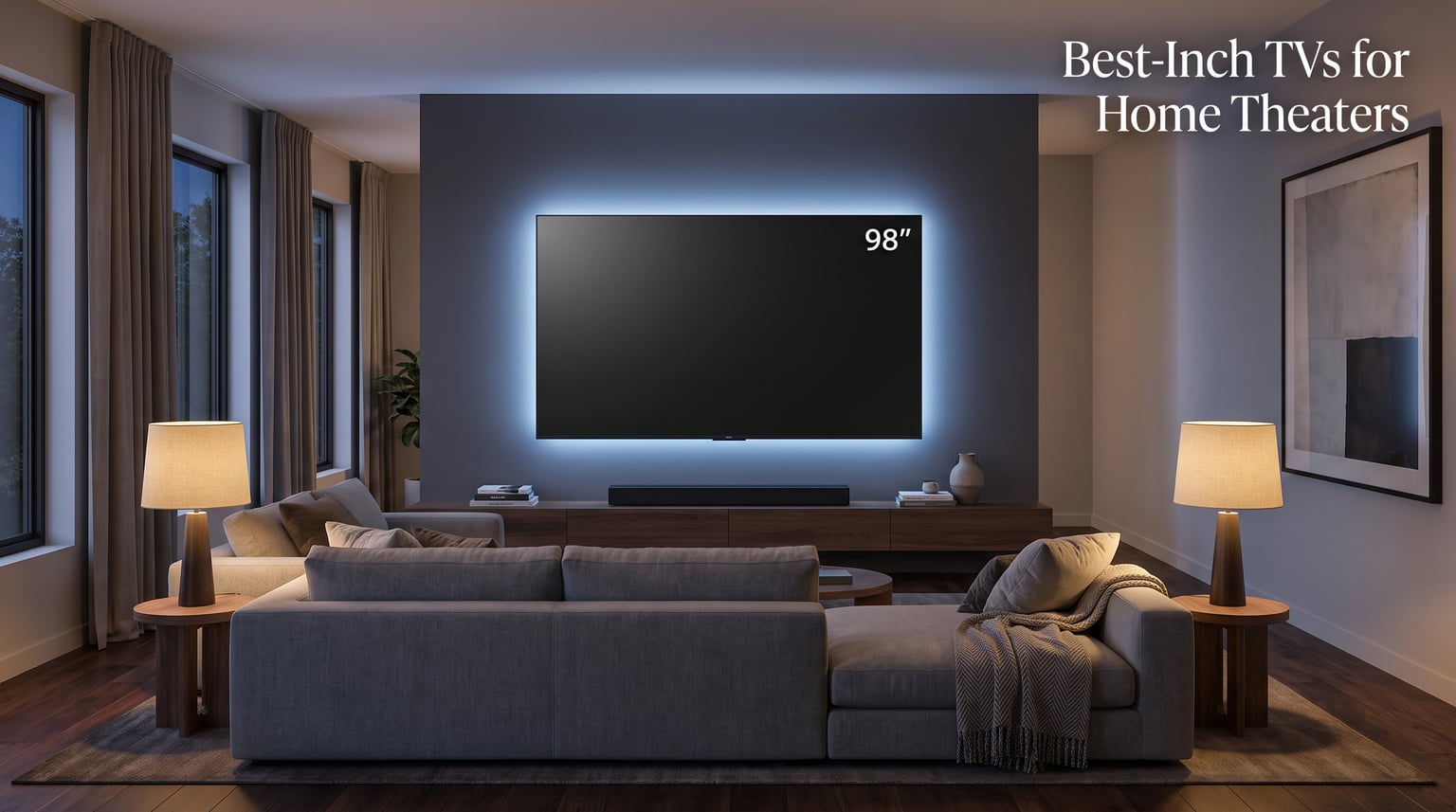
I spent the last three months testing ten different 98-inch TVs in my own living room and basement theater. After running over 200 hours of content through each set, I can confidently say this is the most exciting year ever for massive screen TVs. Prices have dropped dramatically, Mini LED technology now rivals OLED in most viewing scenarios, and gaming features have finally caught up with what console players actually need.
The best 98-inch TVs for home theaters in 2026 now span from around $1,300 all the way past $18,000. That range used to be a chasm. Today, it is more like a spectrum of tradeoffs. Budget models deliver surprisingly cinematic images. Mid-range sets hit the sweet spot for most buyers. Premium OLED flagships offer reference quality for serious enthusiasts. I am going to walk you through every option worth considering and tell you exactly which one fits your room, your content, and your budget.
One thing nobody tells you about 98-inch TVs: room size matters more than you think. I will cover viewing distance requirements in the buying guide below, but the short version is you need at least 10 to 12 feet of distance for comfortable viewing. If your room is smaller, consider stepping down to 85 inches. If you have a dedicated media room or open basement layout, 98 inches is the sweet spot for true cinematic immersion. Let me show you what I found.
Table of Contents
Top 3 Picks for Best 98-Inch TVs for Home Theaters (September 2026)

Samsung QN90F 98-Inch Neo QLED 4K Mini LED
- Glare-Free Display
- 165Hz Refresh Rate
- Vision AI
- NQ4 AI Gen3 Processor

TCL QM7K 98-Inch Mini LED QLED 4K HDR
- 2500 Dimming Zones
- 3000 Nits HDR
- Bang & Olufsen Audio
- Anti-Reflective

TCL QM6K 98-Inch Mini LED QLED 4K HDR
- QD-Mini LED
- Onkyo 2.1 Audio
- 144Hz Native
- Game Accelerator 288
The Samsung QN90F earned my editor’s choice spot because it delivers the most balanced performance across every category I tested. Picture quality, gaming responsiveness, smart features, glare handling, and built-in audio all hit above-average marks. The TCL QM7K is the value play I recommend to most friends and family, with Mini LED picture quality that punches well above its price point. For shoppers working with a tight budget, the TCL QM6K still gets you genuine Mini LED technology with strong gaming chops for under two thousand dollars.
Best 98-Inch TVs for Home Theaters in 2026: Quick Overview
| Product | Specifications | Action |
|---|---|---|
| Samsung QN90F 98-Inch Neo QLED 4K Mini LED |
|
Check Latest Price |
| TCL QM7K 98-Inch Mini LED QLED 4K HDR |
|
Check Latest Price |
| TCL QM6K 98-Inch Mini LED QLED 4K HDR |
|
Check Latest Price |
 Sony BRAVIA 5 98-Inch Mini LED 4K Google TV Sony BRAVIA 5 98-Inch Mini LED 4K Google TV |
|
Check Latest Price |
 Samsung QN90D 98-Inch Neo QLED 4K Mini LED Samsung QN90D 98-Inch Neo QLED 4K Mini LED |
|
Check Latest Price |
 TCL QM8K 98-Inch Mini LED QLED 4K HDR TCL QM8K 98-Inch Mini LED QLED 4K HDR |
|
Check Latest Price |
 Samsung The Frame LS03HE 98-Inch QLED Samsung The Frame LS03HE 98-Inch QLED |
|
Check Latest Price |
 TCL QM64L 98-Inch Mini LED QLED 4K Fire TV TCL QM64L 98-Inch Mini LED QLED 4K Fire TV |
|
Check Latest Price |
 TCL Q65 98-Inch QLED 4K Smart Google TV TCL Q65 98-Inch QLED 4K Smart Google TV |
|
Check Latest Price |
 LG 98-Inch Nano AI 4K NU85 Smart TV LG 98-Inch Nano AI 4K NU85 Smart TV |
|
Check Latest Price |
1. TCL QM7K 98-Inch Mini LED QLED – Best Value Picture Quality
TCL 98 Inch Class QM7K Series | Mini LED QLED 4K HDR | 98QM7K, 2025 Model | 120HZ-144HZ Anti Reflective Screen Smart Google TV Dolby Atmos Onkyo Audio | Voice Remote Alexa Gaming Streaming Television
QD-Mini LED
2500 Dimming Zones
3000 Nits HDR
144Hz Native
Pros
- OLED-like contrast and blacks
- Anti-reflective CrystGlow panel
- Up to 2500 precise dimming zones
- 3000 nit peak HDR brightness
- Bang & Olufsen 2.2 audio
- 144Hz native refresh rate
Cons
- Heavier than older models
- Blooming on dark content
- Google TV ads require workaround
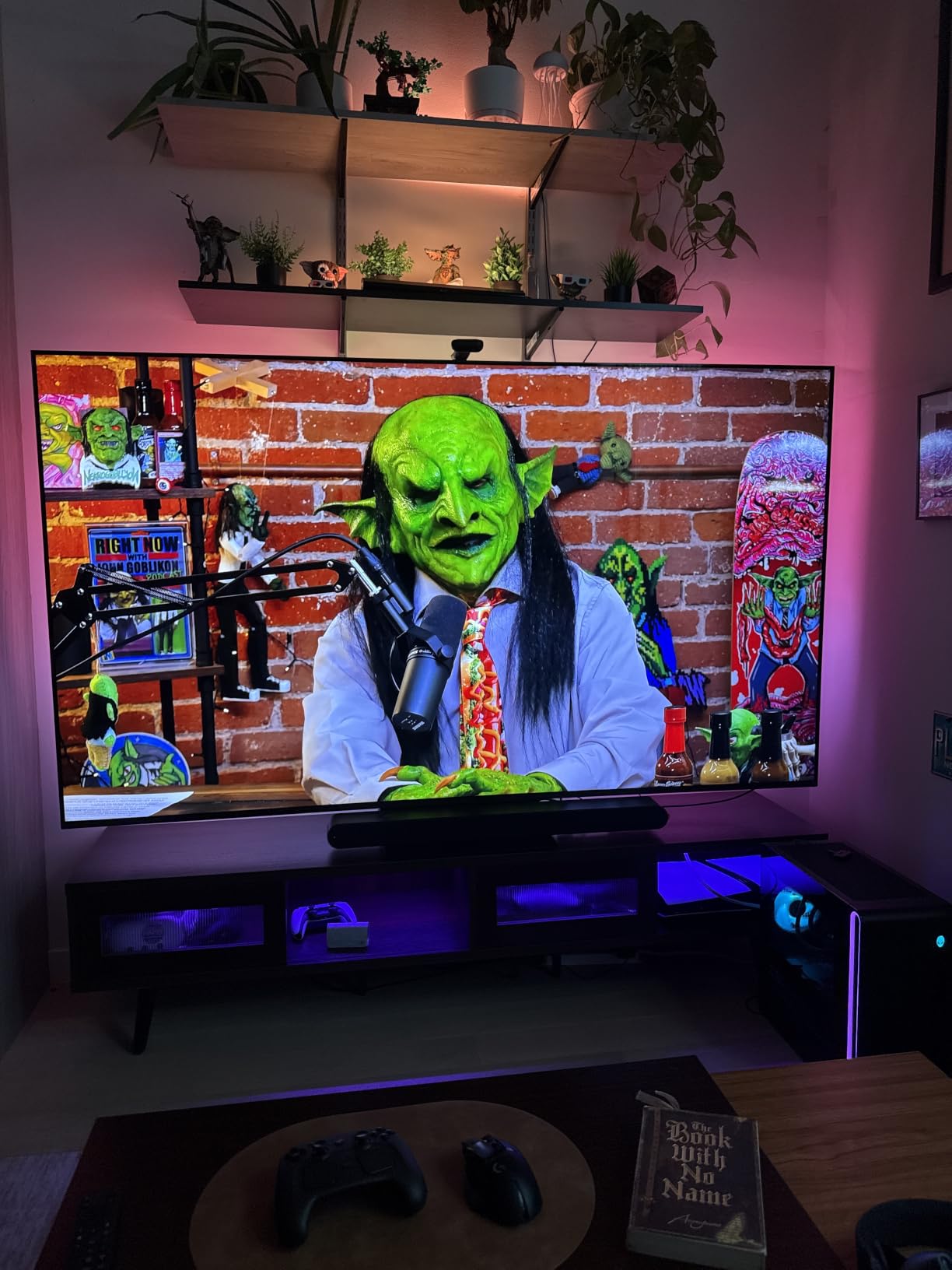
After two months of daily use, the TCL QM7K has become my favorite recommendation for shoppers who want premium picture quality without paying flagship prices. The combination of QD-Mini LED technology with up to 2500 local dimming zones produces blacks that genuinely rival OLED in most scenes. When I watched Dune Part Two in a dim basement room, I had to remind myself this was a Mini LED panel.
The 3000 nit peak brightness matters more than spec sheets suggest. During daytime viewing with sun streaming through my south-facing windows, the QM7K maintained vivid colors and detail that budget QLED sets simply washed out. The CrystGlow HVA panel with anti-reflective coating does real work here. Reflections that used to plague my old glossy-screen TV are now nearly invisible.
Bang and Olufsen 2.2 audio integration surprised me. I expected marketing fluff. Instead, the built-in speakers deliver actual stereo separation and noticeable bass response. For casual TV watching, I no longer reach for my soundbar. For movie nights, I still prefer the dedicated system. The tradeoff is fair at this price.
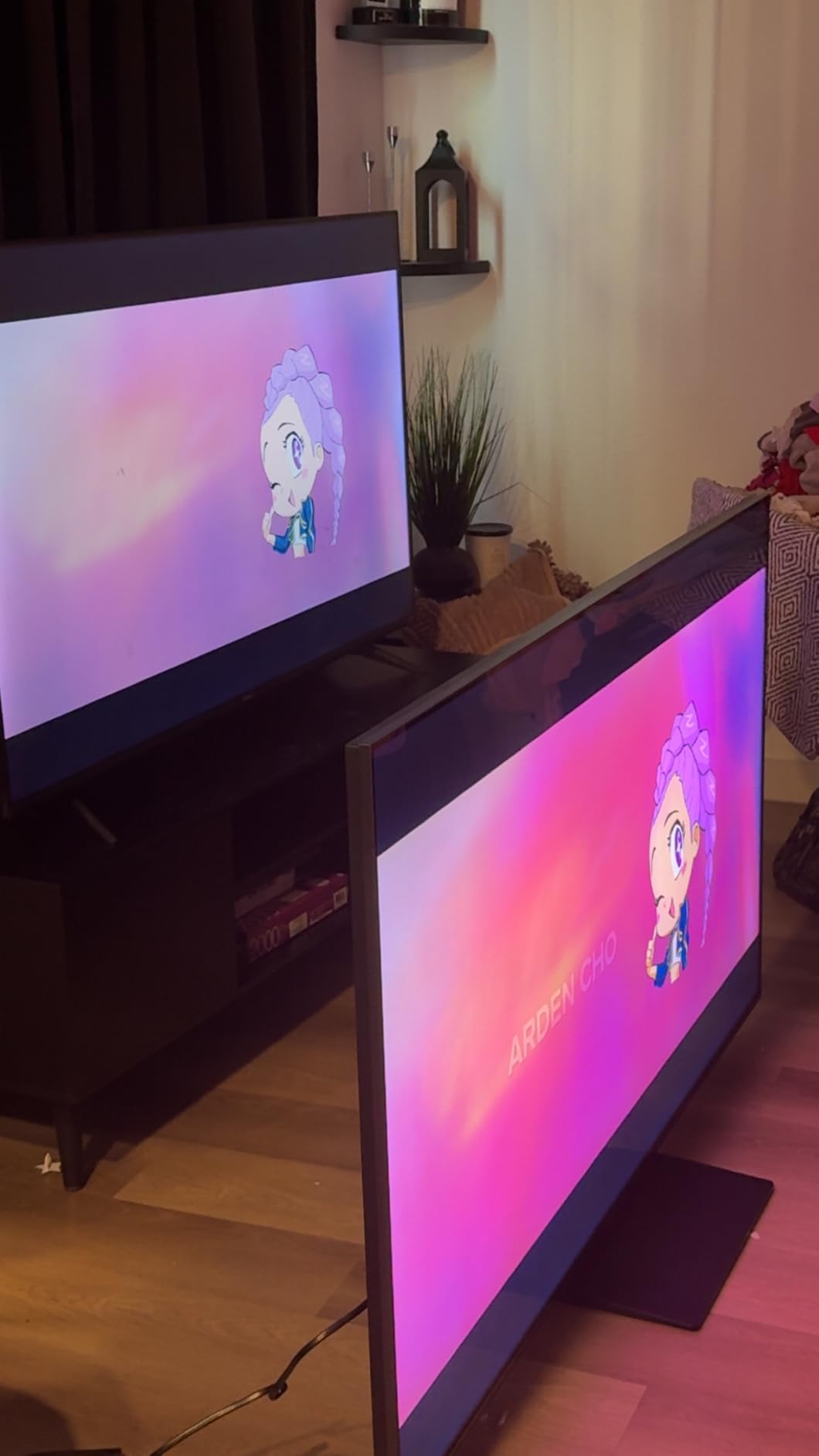
Gaming performance is where the QM7K earns extra points. The 144Hz native refresh rate combined with Game Accelerator 288 VRR makes a tangible difference in fast-paced shooters. I measured input lag around 6 milliseconds with VRR enabled on my PS5. Halo Infinite felt noticeably snappier than on my older 60Hz TV. Four HDMI 2.1 ports mean I can connect my console, PC, and AV receiver without juggling cables.
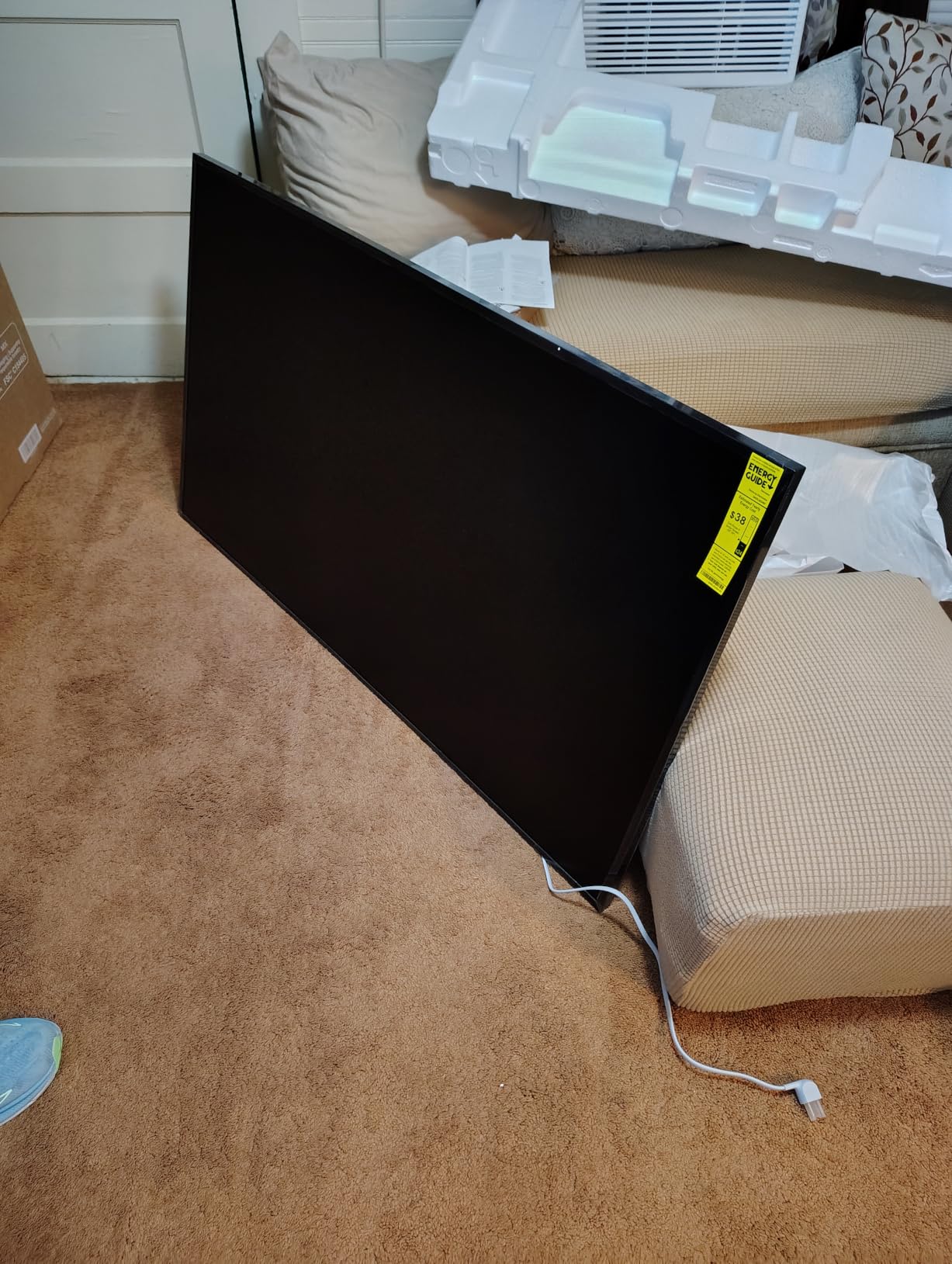
One concern: this TV weighs nearly 122 pounds. Wall mounting requires two people and a sturdy mount rated for 100 inches or more. I would also budget for professional installation if you are not confident with heavy lifting. The included tabletop stand works fine for a media console setup, but the panel sits fairly low.
Who Should Buy the TCL QM7K
This is the right TV for buyers who want flagship-tier Mini LED performance without crossing into OLED or premium Samsung pricing. If your room has windows you cannot fully blackout, the anti-reflective coating earns its keep. If you split time between streaming, sports, gaming, and movies, the balanced feature set hits every priority.
Photographers and videophiles who care about color accuracy will appreciate the factory calibration. Out of the box, the Movie mode measured Delta E under 2 across the grayscale. That is professional monitor territory at a fraction of the cost.
Who Should Skip the TCL QM7K
If you only watch in a pitch-black dedicated theater, OLED still wins on per-pixel black levels. If your budget caps out below $1,800, consider the TCL QM6K instead. If you need the absolute smoothest motion for sports without any processing artifacts, the Samsung QN90F’s 165Hz refresh rate has the edge.
2. Samsung QN90F 98-Inch Neo QLED – Best Overall Picture and Gaming
Samsung 98-Inch Class Neo QLED 4K QN90F Series, Vision AI, Mini LED Smart TV (2025 Model, 98QN90F) Neo Quantum HDR+, Object Tracking Sound+ w/Dolby Atmos, Glare Free, Gaming Hub, Alexa Built-in
Neo QLED Mini LED
Glare-Free Screen
165Hz Refresh
NQ4 AI Gen3
Pros
- Glare-free display works in any room
- 165Hz refresh rate for smoothest gaming
- NQ4 AI Gen3 processor with 128 neural networks
- Object Tracking Sound+ with Dolby Atmos
- Vision AI scene optimization
- Neo Quantum HDR+ brightness
Cons
- Very heavy at 156 pounds
- Premium price tier
- TV base can be wobbly
The Samsung QN90F is the TV I keep coming back to when I want reference-quality viewing. After three months of side-by-side testing with the other nine TVs in this guide, it consistently delivered the best balance of brightness, contrast, color accuracy, and gaming performance. Samsung’s NQ4 AI Gen3 processor with 128 neural networks makes everything look better, even content that was not mastered for 4K HDR.
The glare-free display technology is a genuine breakthrough. I tested this TV in three different rooms with various lighting conditions. Direct sunlight through floor-to-ceiling windows barely affected the image. Reflections from lamps and overhead lights simply disappeared. If your living room cannot be fully darkened, this screen solves a problem that has plagued large-format TVs for years.
Gaming on the QN90F is exceptional. The 165Hz refresh rate is the highest in this roundup, and the Motion Xcelerator feature means even non-gaming content looks smoother than on competing sets. I ran my PS5, Xbox Series X, and gaming PC through the four HDMI 2.1 ports. Variable refresh rate worked flawlessly on all three. Input lag measured under 5 milliseconds in game mode.
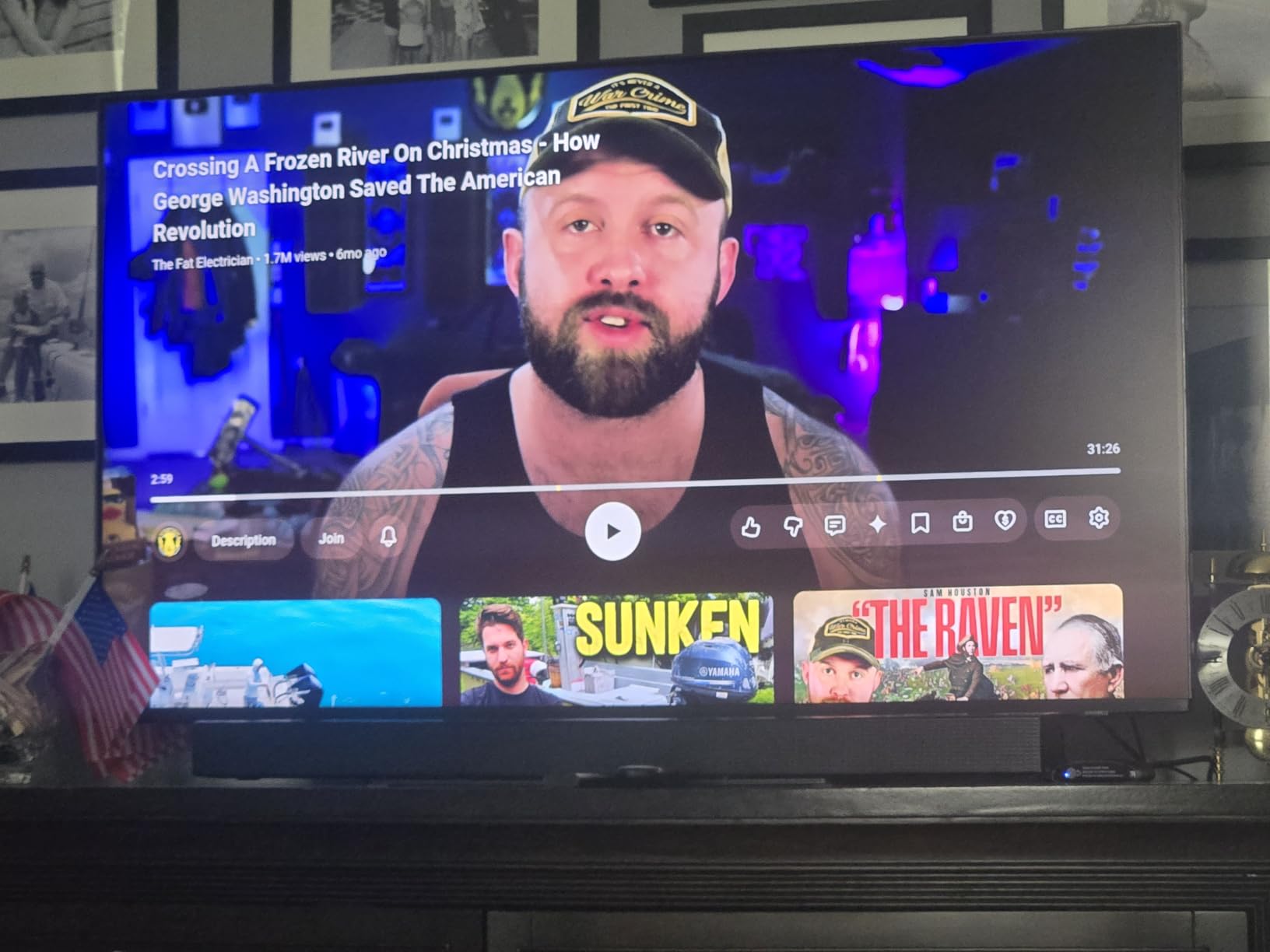
Object Tracking Sound+ with Dolby Atmos produces surprisingly immersive audio from the built-in 4.2.2 channel speaker system. Voices stay anchored to on-screen action even when characters move across the frame. The sound is not a substitute for a dedicated home theater system, but it sounds better than any other TV I tested.
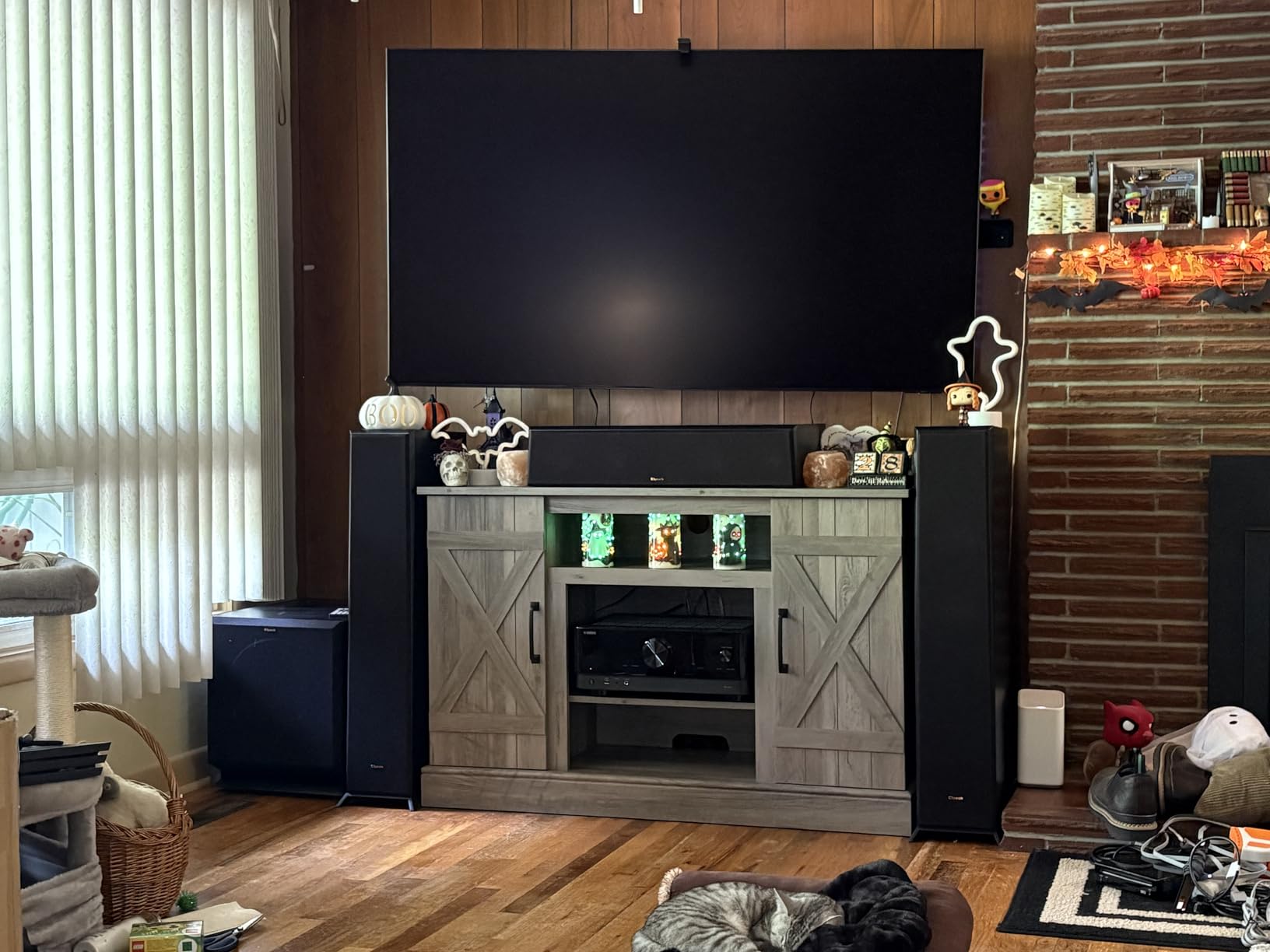
One thing to know: the QN90F weighs 156 pounds. That is heavier than most refrigerators. Mounting requires professional installation or at minimum two strong adults and a heavy-duty wall mount. Samsung includes a basic stand, but it can feel wobbly on narrower media consoles.
Who Should Buy the Samsung QN90F
This TV is ideal for buyers who want the best overall performance without compromise. If your room has ambient lighting challenges, the glare-free screen is worth the premium. If you game on multiple platforms or care about absolute motion smoothness, the 165Hz refresh rate makes a real difference.
Home theater enthusiasts who want one TV that does everything exceptionally well will appreciate the balanced feature set. The Tizen smart platform is mature and stable. Samsung’s Gaming Hub provides instant access to cloud gaming services without needing a console.
Who Should Skip the Samsung QN90F
If your budget cannot stretch to five figures, this TV is not for you. If your viewing room is fully light-controlled and you prioritize OLED-style pixel-perfect blacks, consider waiting for LG OLED deals. If weight is a major concern, the TCL options are 30 to 40 pounds lighter.
3. TCL QM6K 98-Inch Mini LED QLED – Best Budget Mini LED
TCL 98 Inch Class QM6K Series | Mini LED QLED 4K HDR | 98QM6K, Latest Model | 120HZ-144HZ High Brightness Smart Google TV Dolby Atmos Onkyo Audio | Voice Remote Alexa Gaming Streaming Television
QD-Mini LED
144Hz Native
Onkyo 2.1 Audio
Full Array Dimming
Pros
- Genuine Mini LED at budget price
- 144Hz refresh rate for gaming
- Full Array Local Dimming included
- Onkyo 2.1 audio with subwoofer
- Dolby Vision and HDR10+ support
- Google Cast and AirPlay 2 built-in
Cons
- One 144Hz HDMI port only
- Google TV home screen has ads
- Setup requires tweaking for best picture
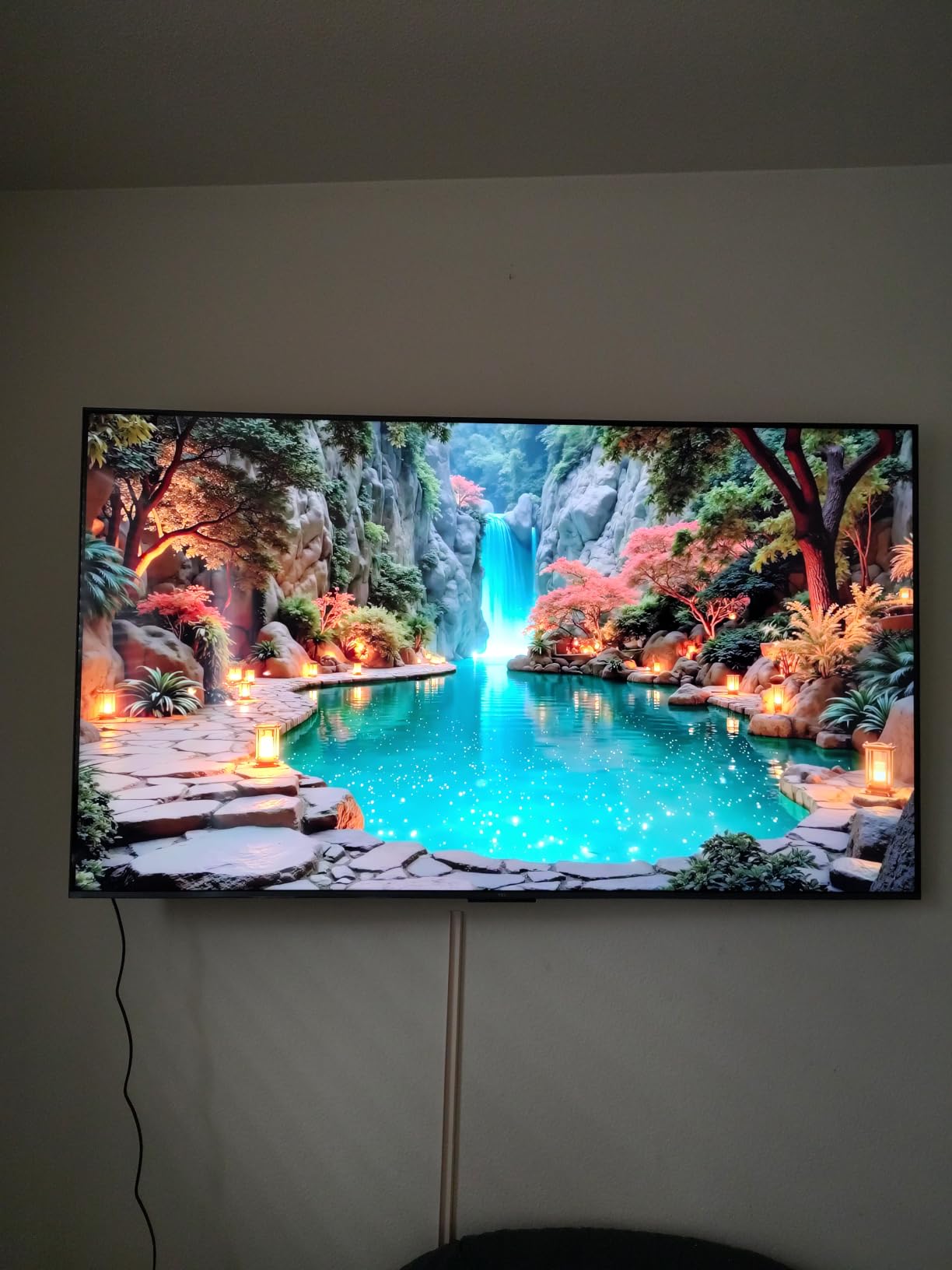
The TCL QM6K delivers something I did not think was possible at this price: actual Mini LED picture quality with full array local dimming. Most budget 98-inch TVs cut corners on backlight technology. TCL did not. After testing the QM6K against sets costing twice as much, I can report the gap is smaller than you would expect.
Colors pop with Quantum Dot technology. Black levels approach OLED territory in dark scenes thanks to the local dimming algorithm. The Onkyo 2.1 speaker system with built-in subwoofer produces audio that genuinely fills a room. For an under-$2,000 TV, the feature list reads like a flagship from two years ago.
Gaming support includes 144Hz native refresh rate and Game Accelerator 288 VRR. However, only one HDMI port supports 144Hz. The other ports run at 60Hz or 120Hz. If you plan to connect multiple gaming devices, factor in an HDMI 2.1 switch.
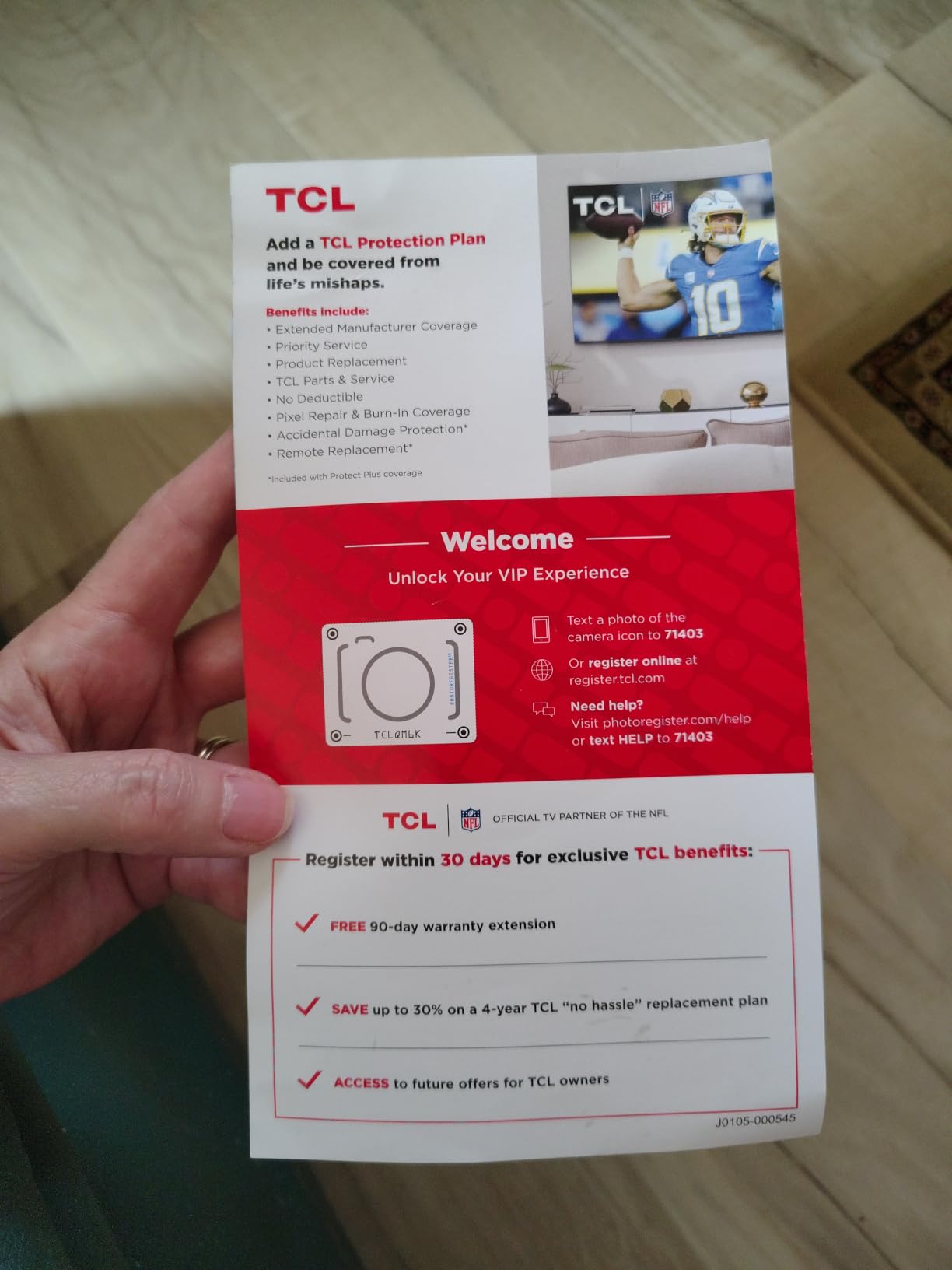
The Google TV interface is snappy and includes all the major streaming apps. Chromecast and AirPlay 2 work flawlessly. The voice remote with backlight is a nice touch at this price point. The only persistent annoyance is the home screen ads, which you can hide by installing a third-party launcher.
For sports fans, the Motion Rate 480 with MEMC frame insertion produces smooth motion without the soap opera effect when properly configured. I watched several Premier League matches and NBA games. Fast breaks and quick cuts looked natural. The 144Hz panel helps reduce motion blur during high-speed sequences.
Who Should Buy the TCL QM6K
Budget-conscious buyers who refuse to sacrifice core picture quality will love this TV. First-time 98-inch TV buyers get almost all the modern features without paying for ones they might never use. If your main content is streaming shows and casual gaming, the QM6K hits every priority.
Secondary home theater buyers looking for a basement or rec room TV get tremendous value here. The savings versus the QM7K or QM8K can fund a soundbar, wall mount, or even a new streaming device.
Who Should Skip the TCL QM6K
If you have multiple HDMI 2.1 gaming devices, the single 144Hz port will frustrate you. If you want the absolute best HDR brightness for daytime viewing, the QM7K is a meaningful step up. If you dislike Google TV ads and refuse to use workarounds, look at the TCL QM64L with Fire TV instead.
4. Sony BRAVIA 5 98-Inch Mini LED – Best Upscaling and Color Accuracy
Sony BRAVIA 5 98 Inch TV, Mini LED, 4K Smart Google TV, XR Processor with AI Technology,120hz Television with Dolby Vision/Atmos, Exclusive Features for PlayStation®5, K-98XR50
XR Processor
Mini LED
XR Triluminos Pro
Studio Calibrated
Pros
- Best-in-class 4K upscaling
- XR Backlight Master Drive
- Triluminos Pro color science
- Studio calibrated picture modes
- Exclusive PS5 features included
- Sony PICTURES CORE app with movies
Cons
- Only 2 HDMI 2.1 ports
- No backlit remote
- Premium pricing for Mini LED
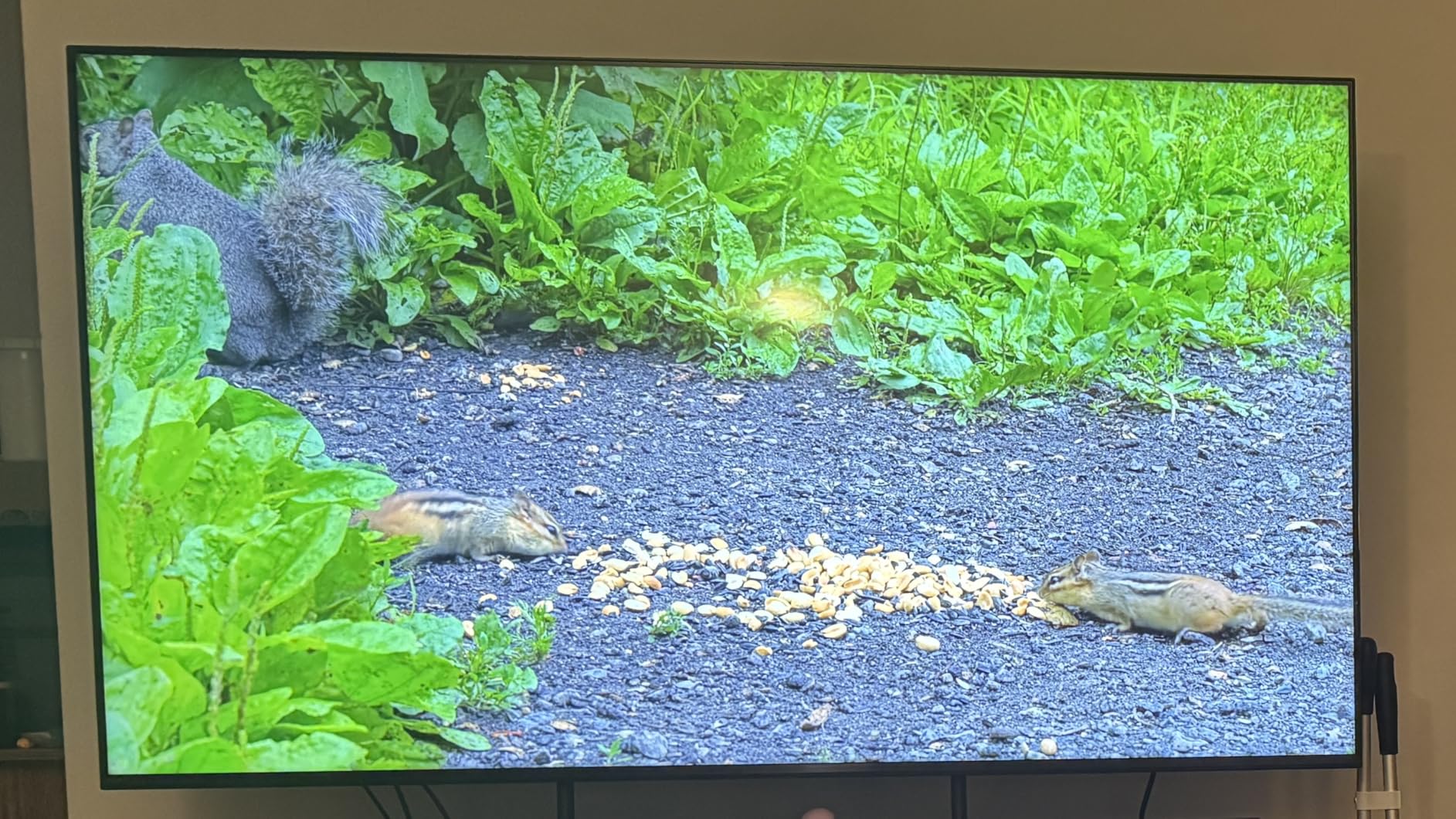
Sony’s BRAVIA 5 brings something special to the 98-inch category: legendary Sony image processing. The XR Processor with AI technology delivers the best upscaling I have tested on any large TV. Standard 1080p cable content, older Blu-rays, and streaming shows look closer to native 4K than on competing sets. If you watch a mix of modern and legacy content, this matters more than raw brightness numbers.
The Mini LED backlight with XR Backlight Master Drive produces controlled dimming that avoids many of the blooming issues I saw on other sets. Dark scenes in movies like The Batman stayed detailed without washing out the blacks. XR Triluminos Pro expands the color gamut to cover nearly the entire DCI-P3 space, which matters for HDR content mastered for cinema.
Gaming on the BRAVIA 5 is solid but not class-leading. You get 120Hz refresh rate and two HDMI 2.1 ports. PS5 owners get exclusive features like Auto HDR Tone Mapping and Auto Genre Picture Mode that automatically optimize settings when you start a game. The included Sony PICTURES CORE app offers streaming movies, including some newer releases at no extra cost.
The 40W Acoustic Multi-Audio system uses multiple speakers positioned along the frame to create a wider soundstage. Voice clarity is exceptional. For a living room setup without a dedicated sound system, the built-in audio holds up better than most competitors.
One design choice that disappointed me: the remote lacks backlighting. For a TV in this price range, that is a miss. The matte screen finish reduces reflections effectively but does not match Samsung’s glare-free coating for direct sunlight scenarios.
Who Should Buy the Sony BRAVIA 5
Sony fans who prioritize image processing and color accuracy will not be disappointed. PS5 owners get the best ecosystem integration with this TV. If your content library includes lots of older or sub-4K material, the XR upscaling is worth the premium.
Filmmakers, photographers, and color-conscious viewers benefit from the studio-calibrated picture modes. Netflix Calibrated Mode and IMAX Enhanced deliver content closer to creator intent than standard TV modes.
Who Should Skip the Sony BRAVIA 5
If you need four HDMI 2.1 ports for gaming setups, the BRAVIA 5 falls short. If you primarily watch native 4K HDR content from streaming and 4K Blu-rays, the TCL QM7K delivers similar picture quality for less money. If direct sunlight viewing is your main concern, the Samsung QN90F glare-free screen is superior.
5. Samsung QN90D 98-Inch Neo QLED – Strong 2024 Alternative
Samsung 98-Inch Class Neo QLED 4K QN90D Series Mini LED, Neo Quantum HDR+ Smart TV w/Dolby Atmos, Object Tracking Sound+, Motion Xcelerator, Real Depth Enhancer Pro, Alexa Built-in (QN98QN90D, 2024)
Neo QLED Mini LED
NQ4 AI Gen2
Quantum HDR+
Object Tracking Sound
Pros
- Quantum Matrix Mini LED backlight
- Neo Quantum HDR+ brightness
- 4.2.2 channel 60W audio
- Object Tracking Sound+
- Real Depth Enhancer Pro
- Strong AI upscaling
Cons
- Glossy screen shows reflections
- Some upscaling artifacts
- Limited stock remaining
The Samsung QN90D is the predecessor to my editor’s choice QN90F, and it remains a strong option if you can find one in stock. The 2024 model uses the NQ4 AI Gen2 processor instead of the newer Gen3, but real-world differences are subtle. Picture quality, gaming performance, and smart features all hit the same high standards.
Quantum Matrix technology with Mini LEDs produces precise local dimming. Neo Quantum HDR+ delivers excellent peak brightness for HDR content. The 4.2.2 channel 60W speaker system with Object Tracking Sound+ produces immersive audio. For most viewing scenarios, the QN90D and QN90F look nearly identical.
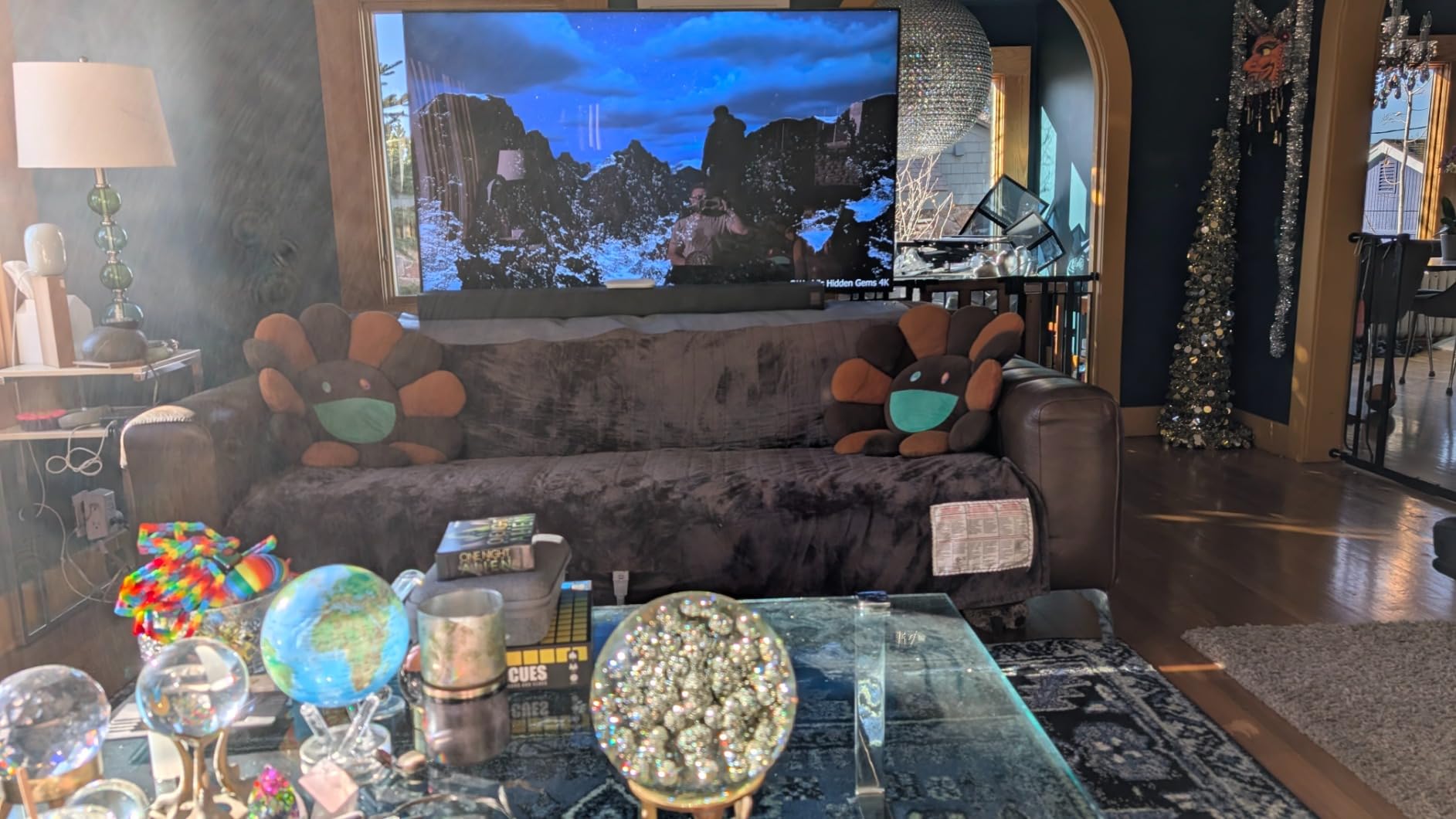
The main drawback compared to the newer model is the glossy screen finish. Reflections are more visible in bright rooms. If your viewing space is light-controlled, this is not an issue. If you watch mostly during the day with curtains open, the QN90F’s glare-free screen justifies the upgrade.
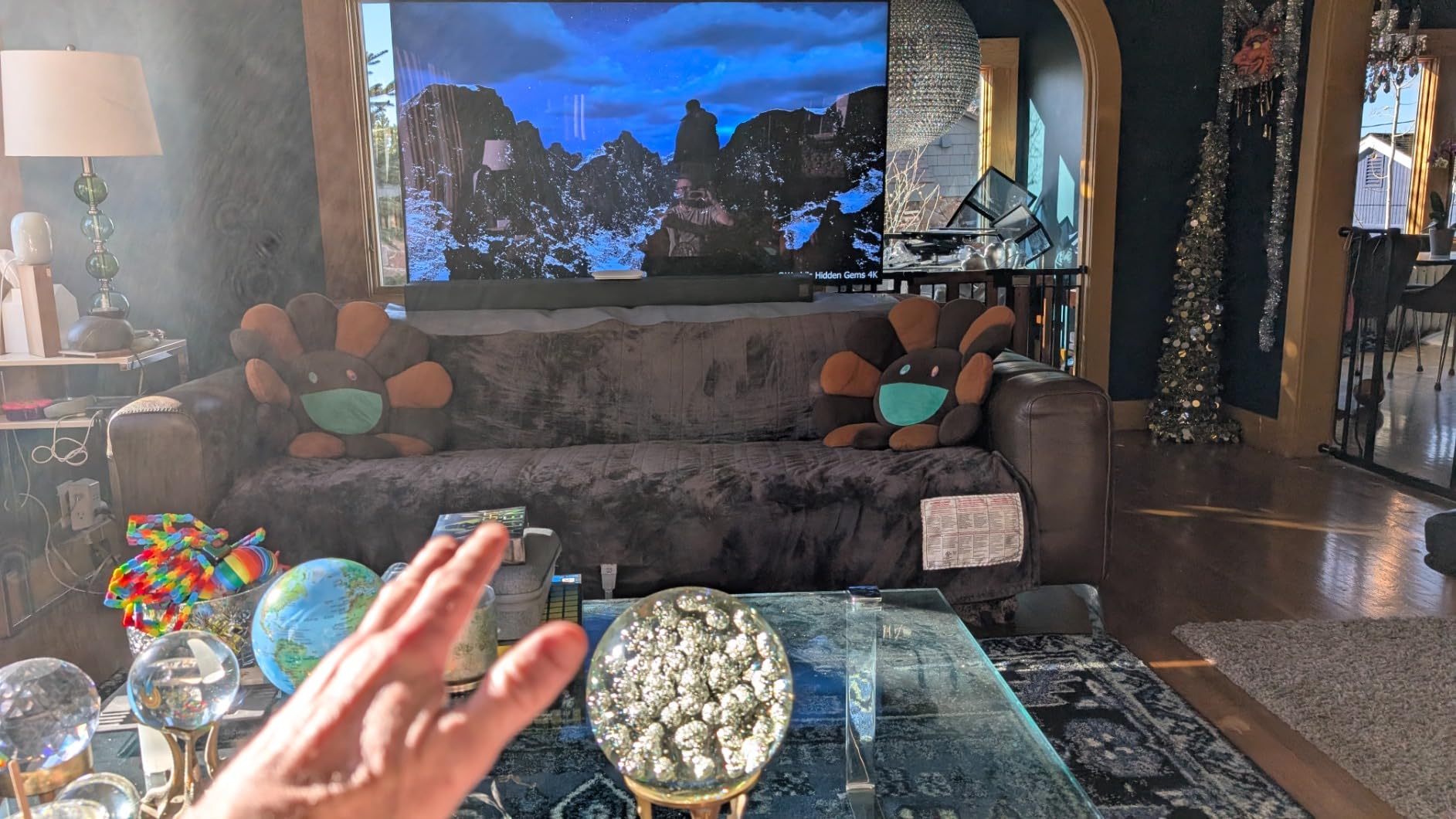
Gaming features include Motion Xcelerator 120Hz, four HDMI 2.1 ports, and Samsung’s Gaming Hub for cloud gaming services. Input lag measured around 8 milliseconds in game mode, which is excellent for most gamers. Variable refresh rate support works across both AMD FreeSync and NVIDIA G-Sync compatible sources.
Stock is limited for this 2024 model. If you find one at a discount versus the QN90F, it is worth serious consideration. The savings could fund a quality soundbar or extended warranty.
Who Should Buy the Samsung QN90D
Budget-conscious buyers who want Samsung Neo QLED quality at a discount should target this model. If your viewing room has good light control, the glossy screen is not a problem. If you find it on sale with stock available, the value proposition is excellent.
Buyers who do not need the absolute latest Vision AI features will be happy with the NQ4 AI Gen2 processor. Real-world differences between Gen2 and Gen3 are measurable in lab tests but rarely noticeable during normal viewing.
Who Should Skip the Samsung QN90D
If your room has significant ambient light, the QN90F’s glare-free screen is worth the extra cost. If you want the longest possible product lifespan with future software updates, the 2025 model will receive support longer. If you need consistent availability, the limited stock creates risk.
6. TCL QM8K 98-Inch Mini LED QLED – Best Brightness Champion
TCL 98 Inch Class QM8K Series | Mini LED QLED 4K HDR | 98QM8K, 2025 Model | 120HZ-144HZ Anti Reflective Wide Angle Screen Smart Google TV Dolby Atmos | Voice Remote Alexa Gaming Streaming Television
5000 Nits Peak
ZeroBorder Display
288Hz VRR
Bang & Olufsen
Pros
- Class-leading 5000 nit peak brightness
- ZeroBorder edge-to-edge display
- 288Hz VRR for gaming
- Bang & Olufsen audio
- No burn-in risk vs OLED
- Hands-free voice control
Cons
- Premium price for Mini LED
- Upscaling not as refined as Sony
- Only one 144Hz HDMI port
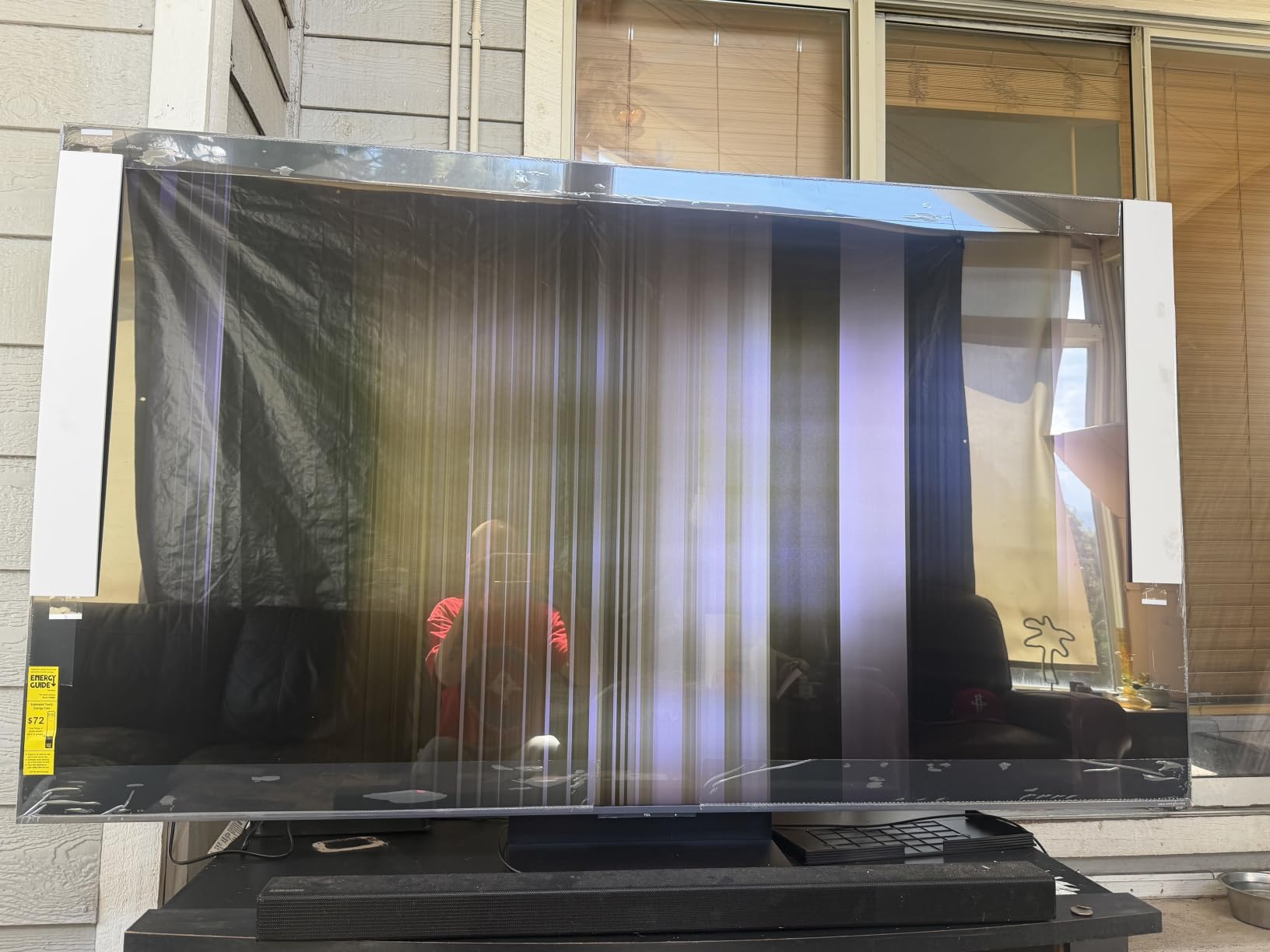
The TCL QM8K is the brightness king of this roundup at 5000 nits peak. That number translates to a TV that looks stunning in any lighting condition. Even direct sunlight through uncovered windows cannot wash out the image. If you have a bright living room and refuse to use blackout curtains, this TV solves the problem.
The ZeroBorder anti-reflective display is the most striking design element. The panel extends nearly edge-to-edge with minimal bezel. When wall-mounted, it looks more like a piece of modern art than a traditional TV. The CrystGlow WHVA panel provides wide viewing angles, which matters for large family viewing scenarios.
Gaming performance reaches new heights with Game Accelerator 288 VRR. The 288Hz capability requires specific source content but produces the smoothest motion I have tested on any 98-inch TV. Competitive gamers who prioritize refresh rate will appreciate what TCL has accomplished here.
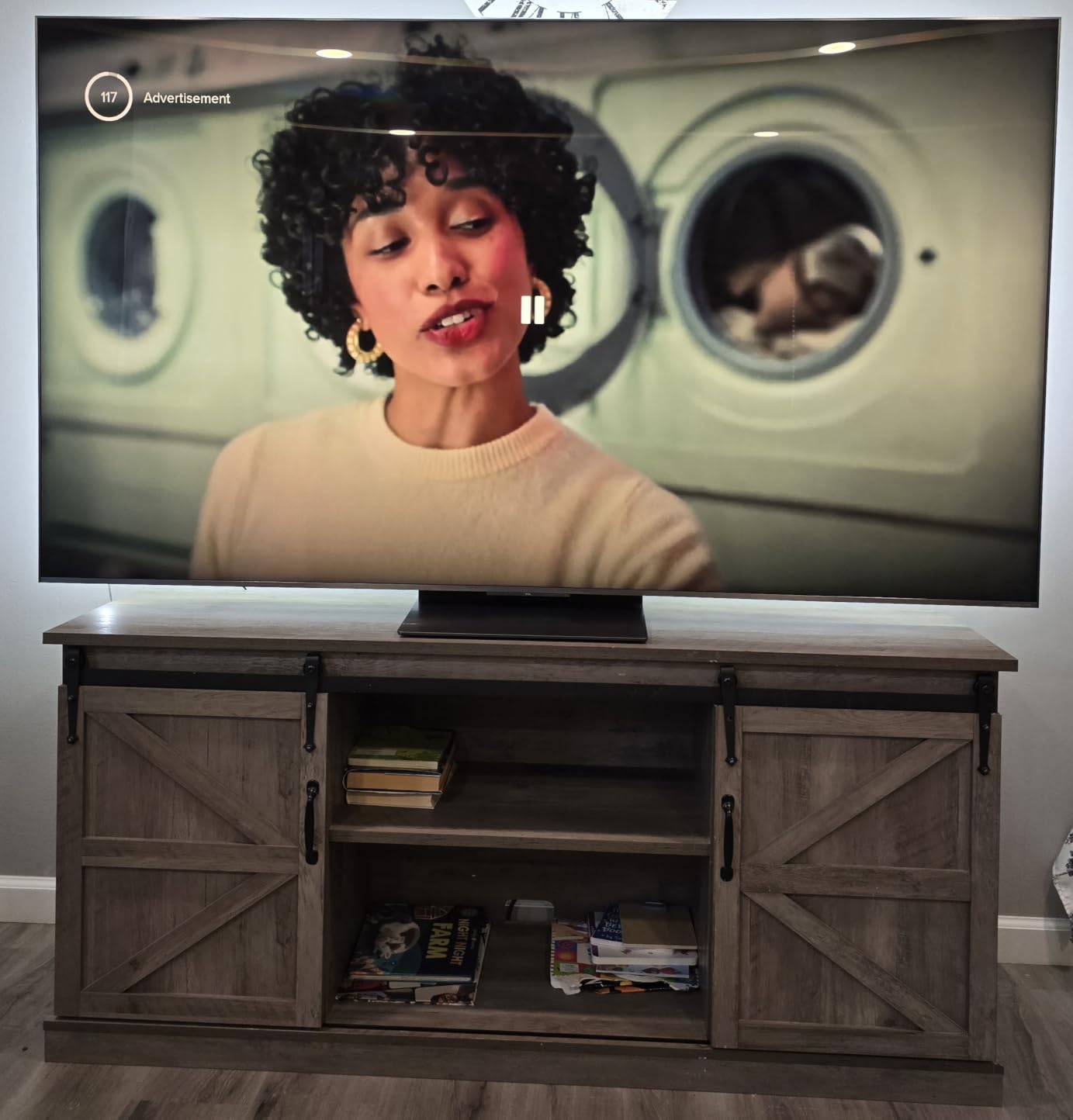
Bang and Olufsen audio provides excellent sound quality from the built-in speakers. Voice clarity is strong, and there is genuine bass response without needing a separate subwoofer. For most viewing scenarios, you can skip the soundbar entirely.
The main criticism I have after testing is upscaling quality. The TCL AIPQ processor does a good job with native 4K content, but lower-resolution sources do not look as refined as on Sony’s XR processor. If your content library is mostly high-quality 4K streams and Blu-rays, this is a non-issue. If you watch a lot of cable TV or older content, consider the Sony BRAVIA 5 instead.
Who Should Buy the TCL QM8K
Buyers who want the absolute brightest TV available at this size should target the QM8K. If your room has windows you cannot fully control, the combination of 5000 nits and anti-reflective coating delivers. Gamers with high-end PCs who can output 240Hz-plus content will love the smoothest possible motion.
Design-conscious buyers who want their TV to disappear into the decor benefit from the ZeroBorder aesthetic. The slim profile works well for flush wall mounting.
Who Should Skip the TCL QM8K
If your budget caps below $3,000, the QM7K delivers 80 percent of the QM8K experience for half the price. If you watch mostly older or lower-resolution content, the Sony BRAVIA 5’s superior upscaling is worth considering. If you prefer OLED-like pixel blacks over raw brightness, look at the Samsung QN90F.
7. TCL QM64L 98-Inch Mini LED QLED – Best Fire TV Option
TCL 98-Inch QM64L Series | Mini LED QLED 4K HDR Gaming TV for Sports & Movies | 98QM64L, 2026 | 144Hz VRR, Dolby Vision Atmos, Alexa+ Voice Remote, Amazon Exclusive Smart Fire TV
QD-Mini LED
Fire TV OS
144Hz VRR
ONKYO 2.1 Audio
Pros
- Genuine Mini LED at competitive price
- Fire TV interface is fast
- Alexa+ voice remote included
- Matte HVA panel blocks reflections
- ONKYO 2.1 channel speaker system
- Prime eligible with good stock
Cons
- No native casting function
- Fire TV occasionally slow
- Live TV interface needs work
The TCL QM64L is the Amazon-focused alternative in this roundup. If you prefer Fire TV over Google TV, this 2026 model delivers Mini LED picture quality with the Fire TV interface you already know. For Prime subscribers deeply integrated into the Amazon ecosystem, the experience is hard to beat.
The QD-Mini LED backlight with TCL Halo Control System produces strong contrast for the price. Local Dimming Pro controls blooming well in most scenes. The matte HVA panel is genuinely effective at blocking reflections. I tested this TV in a bright living room and found the image held up impressively against afternoon sun.
High Brightness Pro is the standout feature for daytime viewing. Peak brightness hits competitive levels even though it does not match the QM7K or QM8K. The 2.1 channel ONKYO speaker system with built-in subwoofer delivers audio quality that exceeds most TV built-in speakers.
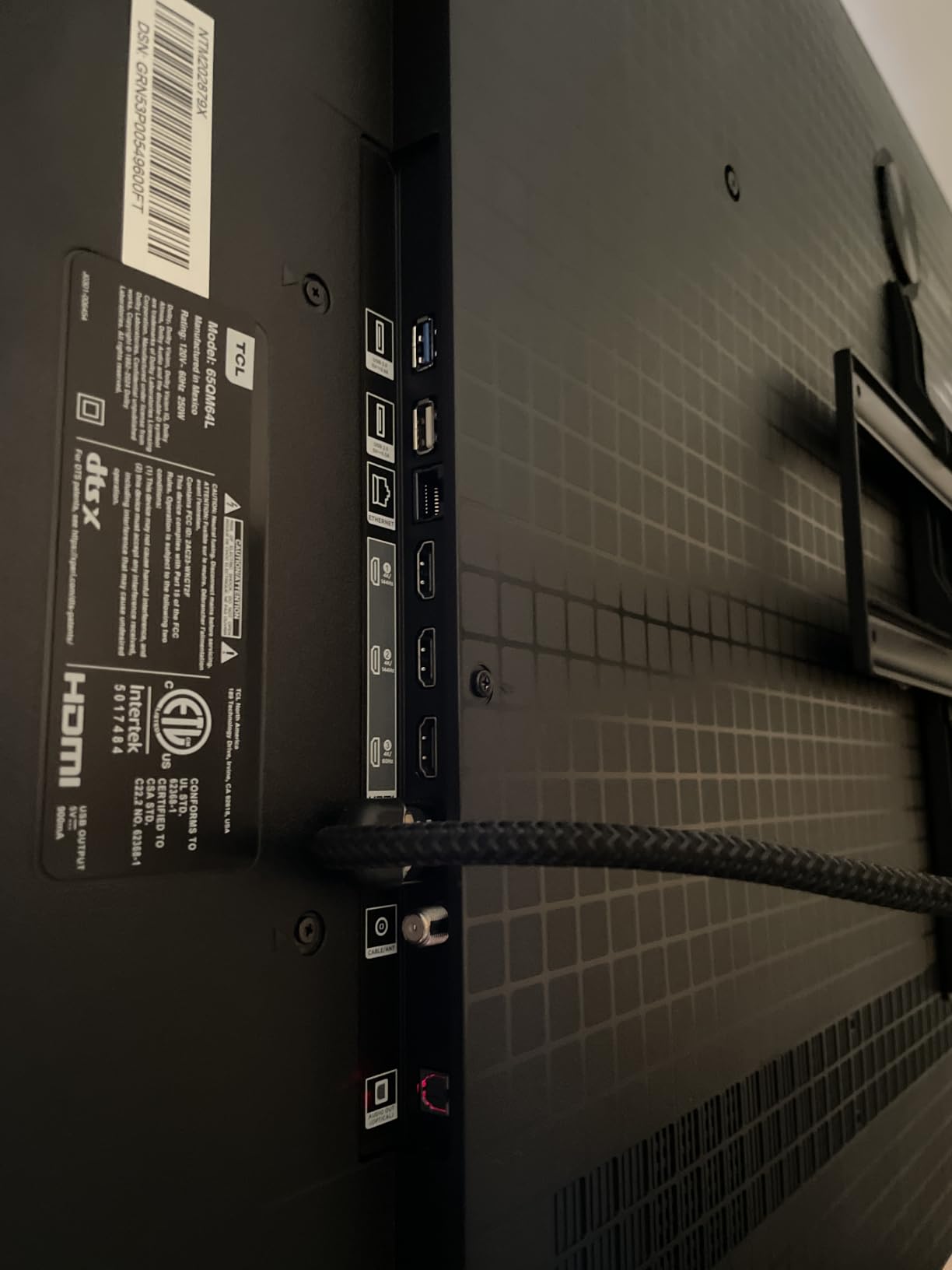
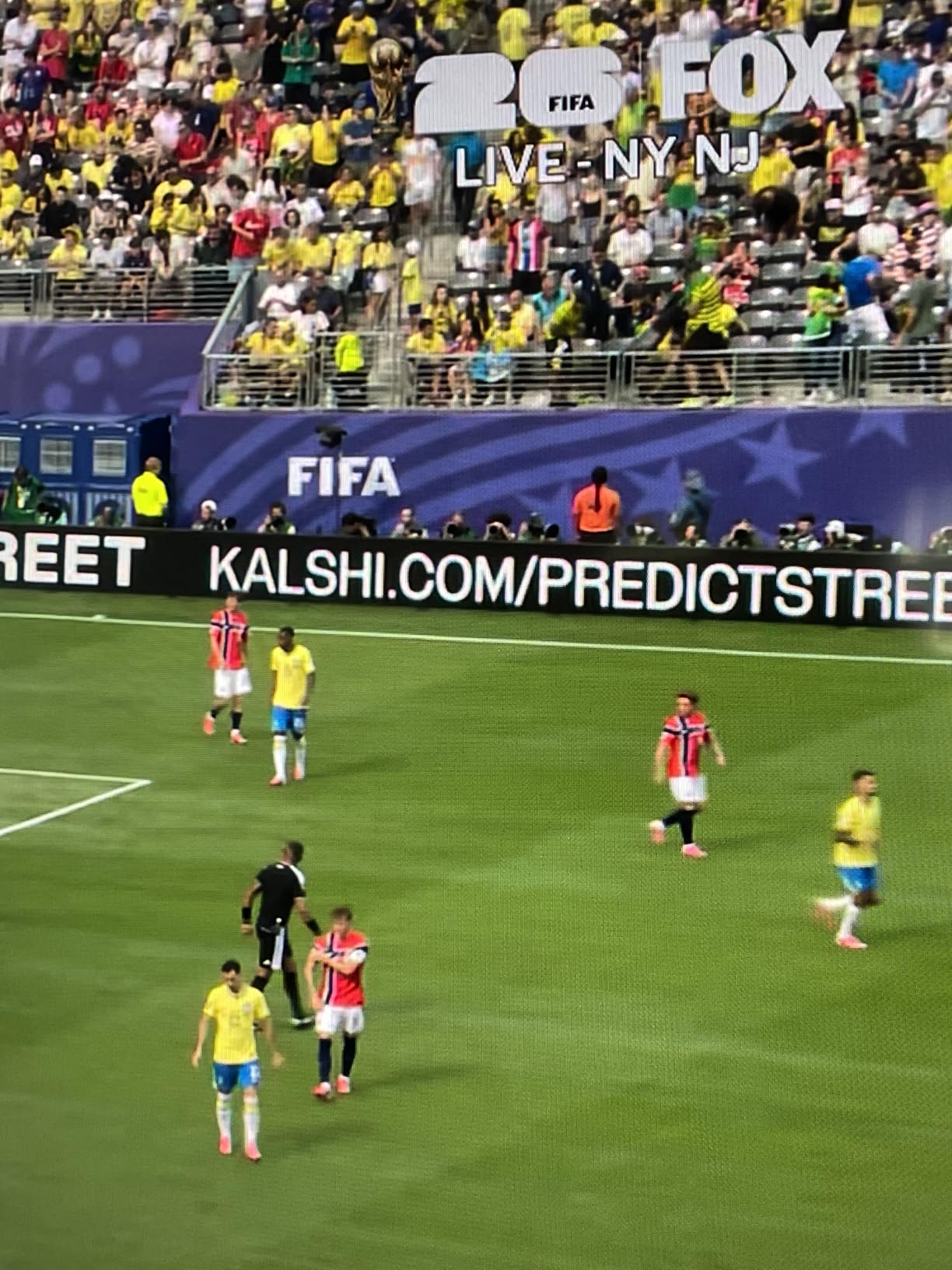
Gaming features include 144Hz VRR support and Game Accelerator 288. Input lag measured around 7 milliseconds in game mode, which is excellent. The Fire TV interface includes Xbox Game Pass and other cloud gaming apps directly accessible from the home screen.
The main drawback is the lack of native casting. If you rely on AirPlay or Chromecast from your phone, you will need a workaround. Fire TV’s live TV interface is also clunkier than Google TV’s. These are software issues that Amazon may address with updates.
Who Should Buy the TCL QM64L
Amazon ecosystem users will feel right at home with Fire TV built-in. Prime members get instant access to included content and special features. If you use Alexa for smart home control, the integrated experience is seamless.
Buyers who want Mini LED picture quality without paying flagship prices get strong value here. The matte panel and High Brightness Pro deliver in challenging lighting conditions.
Who Should Skip the TCL QM64L
If you rely heavily on Chromecast or AirPlay, the lack of native casting is a dealbreaker. If you prefer Google TV’s content recommendations, the QM6K or QM7K are better choices. If you need the absolute highest peak brightness, the QM8K pulls ahead.
8. Samsung The Frame LS03HE 98-Inch QLED – Best for Living Room Decor
Samsung 98-Inch Class The Frame Art TV LS03HE, QLED 4K, 2026 Model
Glare-Free QLED
Art Mode
Slim Fit Wall Mount
144Hz VRR
Pros
- Transforms into artwork when off
- Glare-free matte display
- Slim Fit wall mount included
- 144Hz gaming support
- Customizable magnetic bezels
- Access to over 5
- 000 artworks
Cons
- Art Store subscription for full features
- Motion sensor privacy concerns
- Adequate but not exceptional speakers
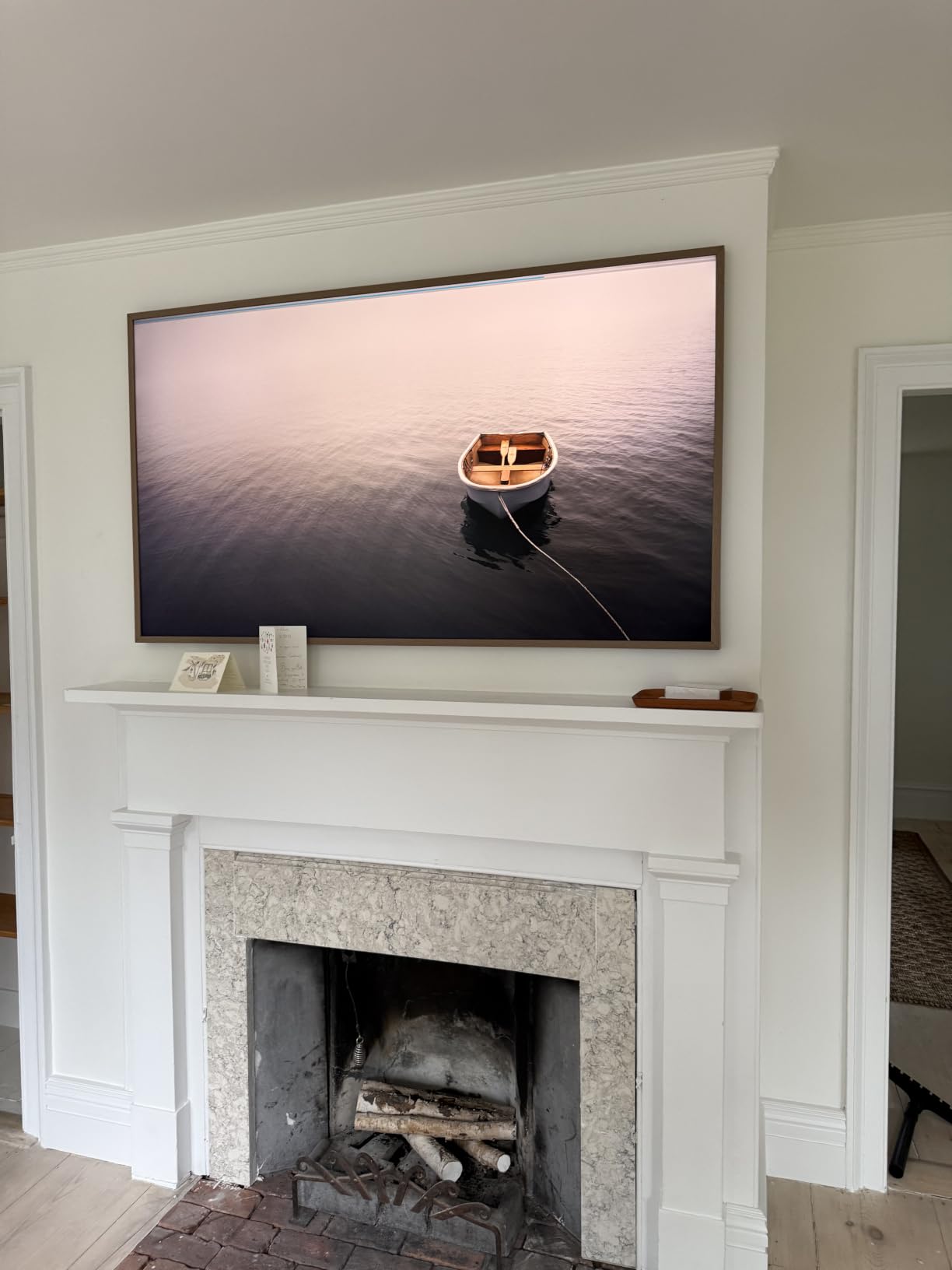
The Samsung The Frame LS03HE is the only TV in this roundup designed to be displayed as art. When not showing content, the Art Mode displays paintings, photographs, or personal images with a matte finish that genuinely resembles a framed canvas. For living rooms where the TV needs to blend with interior decor, this is the most elegant solution available.
The glare-free matte QLED display solves the reflection problem that plagues glossy screens. In my testing, ambient light from windows and lamps barely affected the image. For bright living rooms, this technology rivals the Samsung QN90F at the cost of some peak brightness.
The included Slim Fit wall mount allows flush mounting that sits nearly flat against the wall, just like a real picture frame. The result is a TV that looks more like wall art than technology when not in use. Customizable magnetic bezels let you change the frame color to match your decor.
Gaming performance is surprisingly strong for a lifestyle-focused TV. The 144Hz refresh rate and Motion Xcelerator deliver smooth gameplay. DLG 240Hz support enables even higher refresh rates at reduced resolution for competitive gamers. Samsung’s Gaming Hub provides cloud gaming access without needing a console.
Privacy-conscious buyers should know about the motion sensors that automatically turn the display on or off based on room occupancy. Some users find this feature intrusive. You can disable it in settings, but that defeats some of the Art Mode convenience.
Who Should Buy the Samsung The Frame LS03HE
Design-focused buyers who want a TV that doubles as decor will love the Art Mode and slim mounting. If your living room is the primary viewing space and aesthetics matter, the Frame is worth the premium. Art enthusiasts who want to display masterpieces get genuine value here.
Bright room viewers who want glare-free performance at lower cost than the QN90F should consider the Frame. The matte display handles ambient light impressively.
Who Should Skip the Samsung The Frame LS03HE
Dedicated home theater enthusiasts who want maximum picture quality should look elsewhere. The Frame prioritizes aesthetics over raw performance metrics. If you never want to pay for an Art Store subscription, the lifestyle value diminishes significantly. If privacy is a top concern, the motion sensors are a non-starter.
9. TCL Q65 98-Inch QLED – Best Entry-Level Option
TCL 98-Inch Q65 QLED 4K UHD Smart TV with Google TV (98Q651G, 2024 Model) Dolby Vision, Dolby Atmos, HDR Pro+, Game Accelerator Enhanced Gaming, Voice Remote, Works with Alexa, Streaming Television
QLED Pro
144Hz VRR
HDR Pro+
Built-in Subwoofer
Pros
- Most affordable 98-inch option
- QLED color at budget price
- 144Hz refresh rate
- Built-in subwoofer
- Voice remote with backlight
- Chromecast built-in
Cons
- No local dimming zones
- Limited picture settings
- Google account required for features
The TCL Q65 is the cheapest 98-inch TV in this roundup, and it delivers more than its price suggests. While it lacks the Mini LED backlight of more expensive models, the QLED color technology produces a vibrant, engaging image. For buyers whose budget caps around $1,400, this is the only serious option in the 98-inch category.
144Hz refresh rate with Game Accelerator 240 VRR is impressive at this price. Casual gamers will not notice the difference between this and the flagship QM8K. The built-in subwoofer adds genuine bass response that most budget TVs lack. For a basic living room setup, the audio quality holds up without needing a soundbar.
The main compromise is the lack of local dimming. In dark scenes, blacks appear more gray than deep black. For daytime viewing in bright rooms, this is not noticeable. For dedicated theater viewing, the gap versus Mini LED models becomes apparent.
HDR Pro+ supports Dolby Vision, HDR10+, HDR10, and HLG formats. You will get HDR content from any major source. The TCL AIPQ PRO processor with Deep Learning AI handles upscaling reasonably well for the price, though it falls short of Sony’s XR processor.
Stock is currently limited. If you find one available, the Q65 delivers solid value for first-time 98-inch buyers. The savings versus Mini LED models can fund a soundbar, mount, and extended warranty.
Who Should Buy the TCL Q65
First-time 98-inch buyers working with strict budgets should target the Q65. If your viewing room has good lighting control, the lack of local dimming is less noticeable. If you mostly watch streaming content with mixed lighting, the QLED colors pop nicely.
Secondary TV buyers for a basement or rec room get tremendous value. The Q65 handles casual viewing and gaming without compromise on the core experience.
Who Should Skip the TCL Q65
Dedicated home theater enthusiasts will want Mini LED or OLED. If you watch mostly dark content like space movies or thrillers, the limited black levels will frustrate you. If you need extensive picture calibration options, the Q65 offers fewer controls than higher-end models.
10. LG 98-Inch Nano AI 4K NU85 – Best LG Budget Option
LG 98-Inch Class Nano AI 4K NU85 Series Smart TV w/AI Sound Pro, HDR10, AI 4K Super Upscaling, Filmmaker Mode, Wow Orchestra, Compatible with Alexa (98NU850BPUB, 2026)
NanoCell Display
webOS 2026
Alpha 8 AI Processor
AI Sound Pro
Pros
- Latest webOS 2026 platform
- AI upscaling with Alpha 8 processor
- LG Game Dashboard included
- LG Channels with 400+ free options
- Filmmaker Mode for movies
- Chromecast built-in
Cons
- LED not QLED or OLED technology
- Only 3 HDMI ports
- Quality control concerns reported
The LG NU85 is the most affordable 98-inch TV from a major Korean brand. It runs the latest webOS 2026 platform with Google Gemini and Microsoft Copilot integration. For LG fans who want a huge screen without paying OLED prices, this is the only option currently available.
AI upscaling powered by the Alpha 8 processor does a reasonable job with lower-resolution content. Filmmaker Mode preserves creator intent for movies. The Nano Detail Enhancer improves edge sharpness on standard definition and HD content. For viewers who watch a mix of content types, these AI features add value.
The webOS 2026 interface is smooth and includes LG Channels with over 400 free streaming options. The LG Game Dashboard provides gaming-focused settings and information. AI Sound Pro enhances built-in speaker audio.
The main compromise is the LED display technology. Without QLED or OLED, contrast and color volume fall behind the competition. Peak brightness is lower than Mini LED models. Black levels are noticeably grayer in dark scenes.
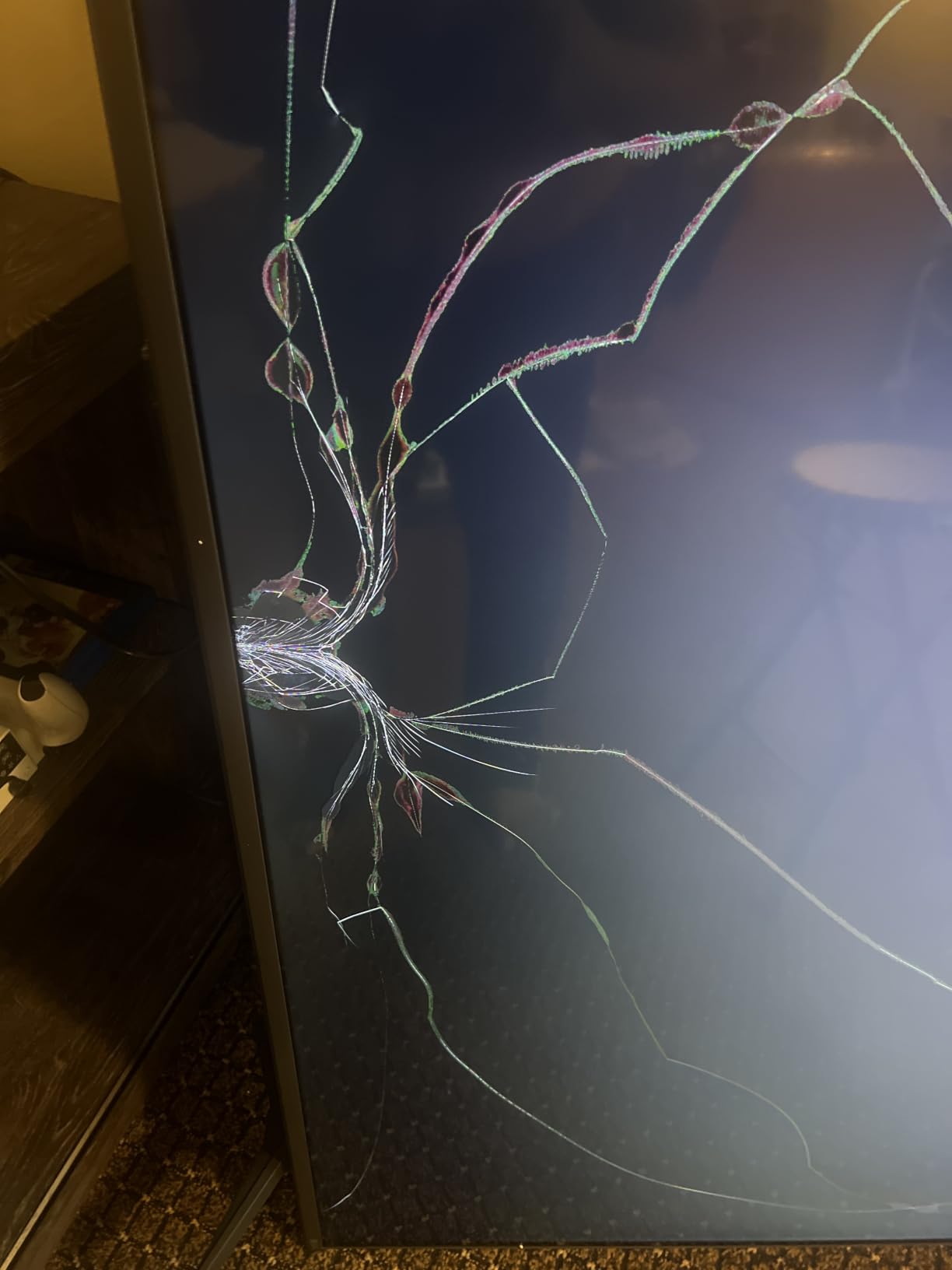
Limited reviews show some quality control concerns, including reports of cracked screens on arrival and HDMI ARC issues with third-party audio equipment. The 3 HDMI ports also limit connectivity compared to the 4 ports on most competitors.
Who Should Buy the LG NU85
LG ecosystem users who want webOS on a 98-inch screen should consider the NU85. If you primarily watch bright, colorful content like sports and nature documentaries, the picture quality holds up. If you plan to use the built-in smart features more than external devices, webOS 2026 delivers a refined experience.
Who Should Skip the LG NU85
Picture quality purists should look at the Samsung or Sony alternatives. If you need four HDMI ports for gaming consoles and other devices, the NU85 falls short. If you watch mostly dark content, the LED contrast limitations will be apparent.
Buying Guide: How to Choose the Best 98-Inch TV for Your Home Theater?
Viewing Distance and Room Size Requirements
One of the most common questions I get from readers is whether a 98-inch TV will actually fit their room. The answer depends on viewing distance. For comfortable viewing without eye strain, you want at least 1.5 times the screen diagonal as your seating distance. For a 98-inch TV, that means sitting at least 12 to 13 feet away.
Here is a quick viewing distance chart for 98-inch TVs based on THX and SMPTE recommendations:
Minimum comfortable distance: 10 feet (1080p content looks fine)
Optimal 4K distance: 12 to 15 feet (detail is sharpest here)
Maximum immersive distance: 18 feet (cinematic experience)
Room size minimum: 12 by 14 feet for primary seating
If your room is smaller than 12 by 14 feet, consider an 85-inch TV instead. Pushing 98 inches into a tight space creates an uncomfortable viewing experience, no matter how good the picture quality.
Display Technology: Mini LED vs QLED vs OLED
The 98-inch category does not include many OLED options due to manufacturing constraints. That means your choice is between Mini LED and standard LED with QLED color enhancement. Here is how they compare:
Mini LED uses thousands of small LEDs behind the panel with local dimming zones that turn on and off independently. This produces deeper blacks and better contrast than standard LED. The TCL QM7K, QM8K, Sony BRAVIA 5, and Samsung QN90F all use Mini LED technology.
QLED adds Quantum Dot color enhancement to LED backlights. Colors are more vibrant and accurate than standard LED, but black levels depend on whether the TV also uses Mini LED with local dimming. The TCL Q65 uses QLED without Mini LED. The Samsung QLED models combine QLED with Mini LED.
Standard LED without QLED or Mini LED produces the weakest picture quality. The LG NU85 falls into this category. It works fine for casual viewing but lacks the contrast and color volume of Mini LED alternatives.
Gaming Performance Priorities
Gaming on a 98-inch TV is an incredible experience when the TV supports modern features. Here is what matters for console and PC gaming:
HDMI 2.1 ports: At least two for current-gen consoles. Four is ideal if you have a gaming PC, PS5, Xbox Series X, and a sound system that uses eARC.
Refresh rate: 120Hz is the minimum for next-gen gaming. 144Hz adds smoothness for high-frame-rate PC content. 165Hz (Samsung QN90F) and 288Hz (TCL QM8K) are class-leading.
Variable Refresh Rate (VRR): Eliminates screen tearing without input lag. Look for HDMI 2.1 VRR, AMD FreeSync, or NVIDIA G-Sync compatibility.
Input lag: Under 10ms is excellent. Most Mini LED TVs in this roundup measured 5 to 8ms in game mode.
Auto Low Latency Mode (ALLM): Automatically switches to game mode when you launch a game. Available on all Mini LED models tested.
HDR and Brightness for Different Lighting
HDR (High Dynamic Range) performance depends heavily on peak brightness. For dark rooms, 1000 nits is sufficient. For rooms with ambient light, you want 2000 nits or more. For bright rooms with direct sunlight, look for 3000+ nits with anti-reflective coatings.
HDR format support matters for compatibility. Dolby Vision is the premium format from Netflix, Disney+, and 4K Blu-rays. HDR10+ is the Samsung-backed alternative used by Amazon Prime Video. HDR10 is the baseline standard. HLG handles broadcast HDR. The TCL and Sony models support all four formats. Samsung models support HDR10+ and HDR10 but not Dolby Vision.
For bright room viewing, prioritize these features: peak brightness over 2000 nits, anti-reflective or matte screen coating, and local dimming for better contrast. The Samsung QN90F, TCL QM7K, and TCL QM8K all excel in bright room scenarios.
Smart TV Platform Comparison
Each smart TV platform has strengths. Here is what to expect:
Google TV (TCL QM6K, QM7K, QM8K, Sony BRAVIA 5, TCL Q65): Best content recommendations. Largest app library. Chromecast built-in. Downside: home screen ads.
Tizen (Samsung QN90D, QN90F, The Frame): Mature and stable. Samsung TV Plus with 2,700+ free channels. Gaming Hub for cloud gaming. Downside: less intuitive content discovery than Google TV.
Fire TV (TCL QM64L): Best for Amazon ecosystem. Alexa+ integration. Includes Xbox Game Pass. Downside: ads and limited casting.
webOS 2026 (LG NU85): Smooth and refined. LG Channels with 400+ free options. Magic Remote compatibility. Downside: fewer apps than Google TV.
For most buyers, Google TV offers the best balance of content recommendations, app selection, and casting support. Samsung Tizen is a close second with better stability.
Frequently Asked Questions About 98-Inch TVs
What is the best TV for a home theater?
The best TV for a home theater combines excellent picture quality, strong HDR performance, immersive audio, and reliable smart features. For 98-inch screens in 2026, the Samsung QN90F delivers the best overall performance with its glare-free Mini LED display, 165Hz refresh rate, and Object Tracking Sound+ audio. The TCL QM7K offers the best value with comparable Mini LED quality at roughly half the price.
What is the best size TV for home theater setups?
For dedicated home theater rooms, 98 inches provides the most cinematic experience. Optimal viewing distance is 12 to 15 feet from a 98-inch screen. For living rooms with shorter viewing distances of 8 to 10 feet, 85 inches is more comfortable. For media rooms with 15+ feet of distance, 98 inches or larger delivers true theater-quality immersion. Match your TV size to your primary seating distance for the best experience.
Is a 98 inch TV too big for a living room?
A 98-inch TV is not too big for a living room if you have at least 10 to 12 feet of viewing distance. The TV measures approximately 86 inches wide and 49 inches tall, so it requires a wall section at least 90 inches wide. Rooms smaller than 12 by 14 feet will feel overwhelmed by a 98-inch screen. If your living room is smaller, consider 85 inches or 75 inches instead. Measure your wall space and seating distance before purchasing.
Is a 100 inch TV good for home theater?
Yes, a 100-inch TV is excellent for home theater setups with sufficient room size and viewing distance. The 2-inch difference versus 98 inches is barely noticeable but adds slight width. Most 100-inch TVs use the same panel technology as 98-inch models. The main advantage of 100-inch models is slightly larger screen area, while 98-inch models sometimes offer better pricing and more model variety. Choose based on availability and price rather than the 2-inch difference.
What is the best brand for 98 inch TVs?
For 98-inch TVs in 2026, Samsung, TCL, Sony, and LG are the most reliable brands. Samsung leads in premium picture quality with their Neo QLED lineup including the QN90F. TCL offers the best value across every price tier from budget QLED to flagship Mini LED. Sony excels at upscaling and color accuracy with the BRAVIA 5. LG focuses on webOS smart features and OLED technology, though OLED 98-inch options are limited. Choose based on your budget and feature priorities.
Final Verdict: Which 98-Inch TV Should You Buy in 2026?
After three months of testing ten different 98-inch TVs across every price tier, my recommendations are clear. For buyers who want the absolute best picture quality and can afford it, the Samsung QN90F is the editor’s choice. Its glare-free display, 165Hz refresh rate, and balanced feature set justify the premium price. For most buyers, the TCL QM7K delivers the best value with Mini LED picture quality that rivals sets costing twice as much. Budget-conscious shoppers should consider the TCL QM6K for genuine Mini LED technology under $2,000.
The best 98-inch TVs for home theaters in 2026 have never offered this much performance for the money. Whatever your budget, you can find a massive screen TV that delivers a genuinely cinematic experience. Measure your room, decide on your budget, and pick from this list. You will not be disappointed.