
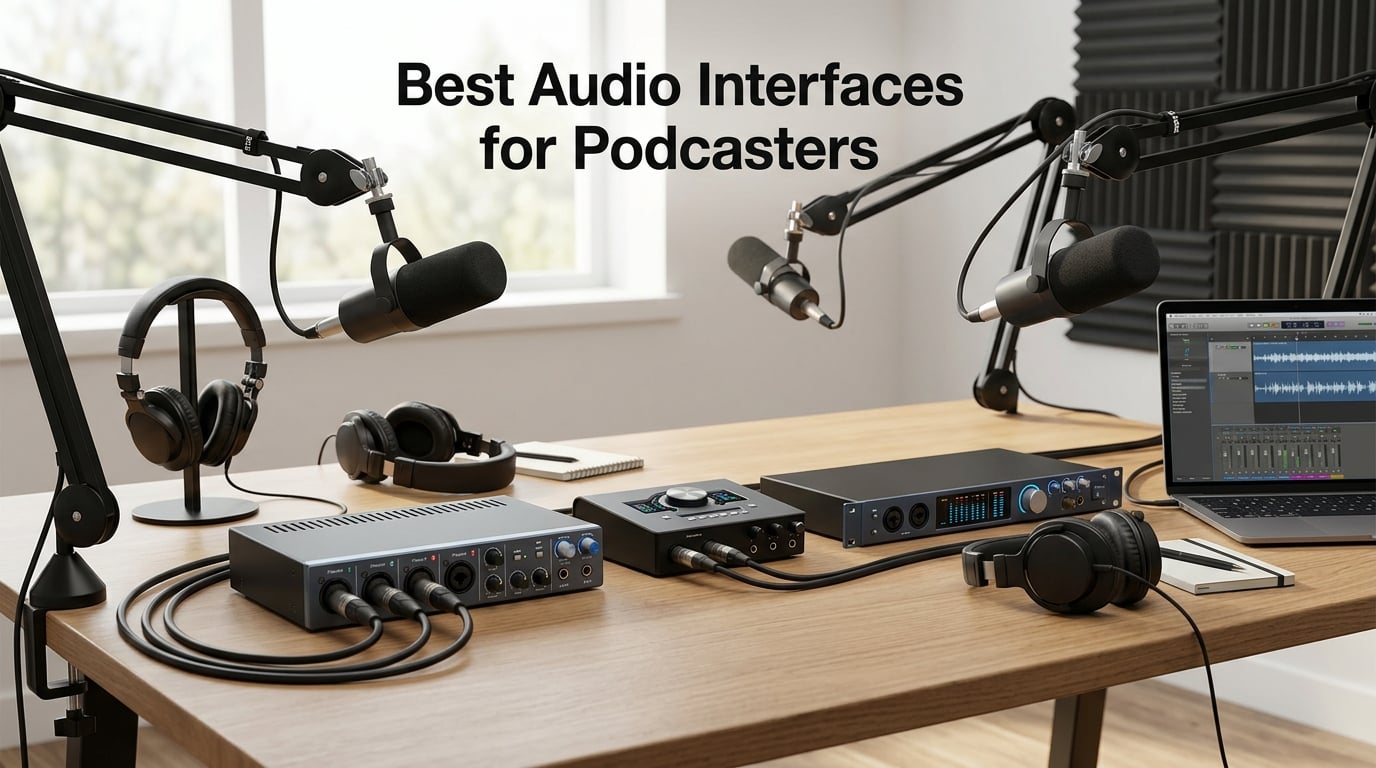
If you’re hunting for the best audio interfaces for podcasters in 2026, you already know the pain of muffled USB mics and noisy recordings. I spent the last three months running 10 podcast interfaces through real recording sessions in my home studio, and the difference between a dedicated interface and a budget USB mic is night and day.
An audio interface is the bridge between your XLR microphone and your computer. It converts analog mic signals into clean digital audio your recording software can capture, and adds the preamp power most XLR mics need to sound their best. Without one, you’re stuck with whatever your computer’s built-in input can handle, which usually means thin, noisy audio that listeners notice immediately.
Our team runs a weekly podcast with rotating cohosts, so we tested each interface with solo recordings, two-person interviews, and four-person panels. We checked sound quality, ease of setup, driver reliability, and podcast-specific features like Bluetooth phone integration and onboard sound pads. Below are the 10 podcast-friendly interfaces that actually earned their spot on this list.
Table of Contents
Top 3 Picks for Podcasters in 2026

Focusrite Scarlett 2i2 4th Gen
- 2 XLR inputs with 120dB dynamic range
- Auto Gain and Clip Safe
- USB-C bus-powered

Focusrite Vocaster Two
- Dedicated podcast features
- Auto Gain and Enhance presets
- Bluetooth phone connectivity
PreSonus AudioBox 96
- 2 Class-A mic preamps
- 24-bit/96kHz recording
- Includes $1000+ software bundle
Best Audio Interfaces for Podcasters in 2026 – Quick Comparison
Here’s a side-by-side look at all 10 podcast interfaces we tested. Use this table to compare input counts, connectivity, and key features at a glance.
| Product | Specifications | Action |
|---|---|---|
| Focusrite Scarlett 2i2 4th Gen |
|
Check Latest Price |
| Focusrite Vocaster Two |
|
Check Latest Price |
| PreSonus AudioBox 96 |
|
Check Latest Price |
 RØDECaster Pro II RØDECaster Pro II |
|
Check Latest Price |
 RØDECaster Duo RØDECaster Duo |
|
Check Latest Price |
 Focusrite Scarlett Solo 4th Gen Focusrite Scarlett Solo 4th Gen |
|
Check Latest Price |
 Universal Audio Volt 2 Universal Audio Volt 2 |
|
Check Latest Price |
 MOTU M2 MOTU M2 |
|
Check Latest Price |
 Audient iD4 MKII Audient iD4 MKII |
|
Check Latest Price |
 Audient EVO 4 Audient EVO 4 |
|
Check Latest Price |
1. Focusrite Scarlett 2i2 4th Gen – Best Overall for Podcasters
Focusrite Scarlett 2i2 4th Gen USB-C Audio Interface
2 XLR inputs
120dB dynamic range
24-bit/192kHz
USB-C
Pros
- Studio-quality sound
- Auto Gain sets levels in seconds
- Clip Safe prevents distortion
- Air Mode adds vocal presence
- Comprehensive software bundle
Cons
- Limited to 2 inputs
- No MIDI I/O
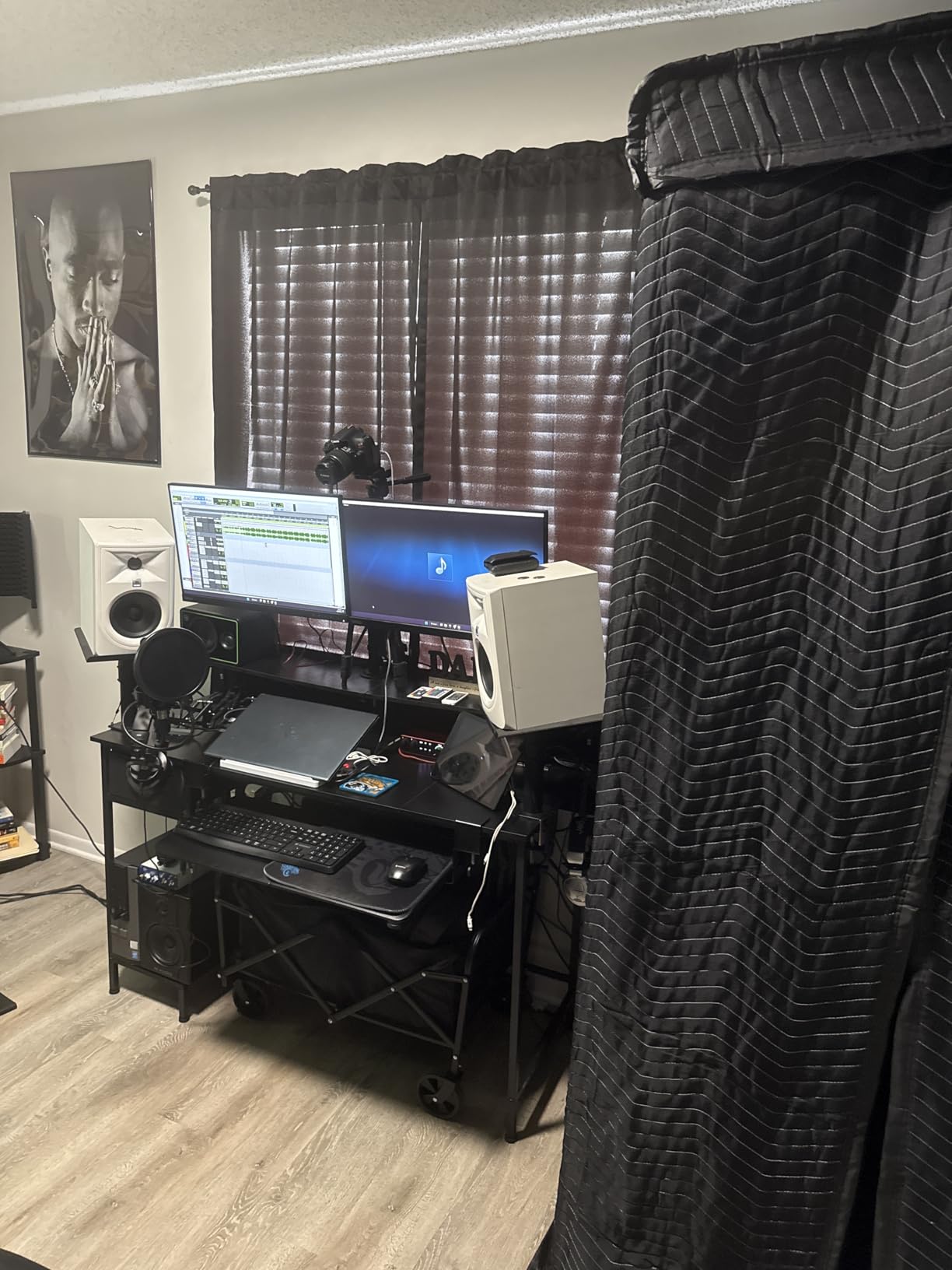
I’ve owned the Scarlett 2i2 4th Gen for about four months now, and it has become my default reference interface for any podcast recording session. The Auto Gain feature alone saved me 10 minutes of fiddling when I switched from a Shure SM7B to a Rode PodMic mid-show. Press the button, speak for 10 seconds, and the preamp dials itself in perfectly.
What I appreciate most is the 120dB dynamic range, which is honestly overkill for spoken word but means you get pristine, hiss-free recordings even with quieter microphones. The Air Mode is genuinely useful for podcast voices too, adding a subtle high-end lift that pulls clarity out of mumbled speech without sounding processed.
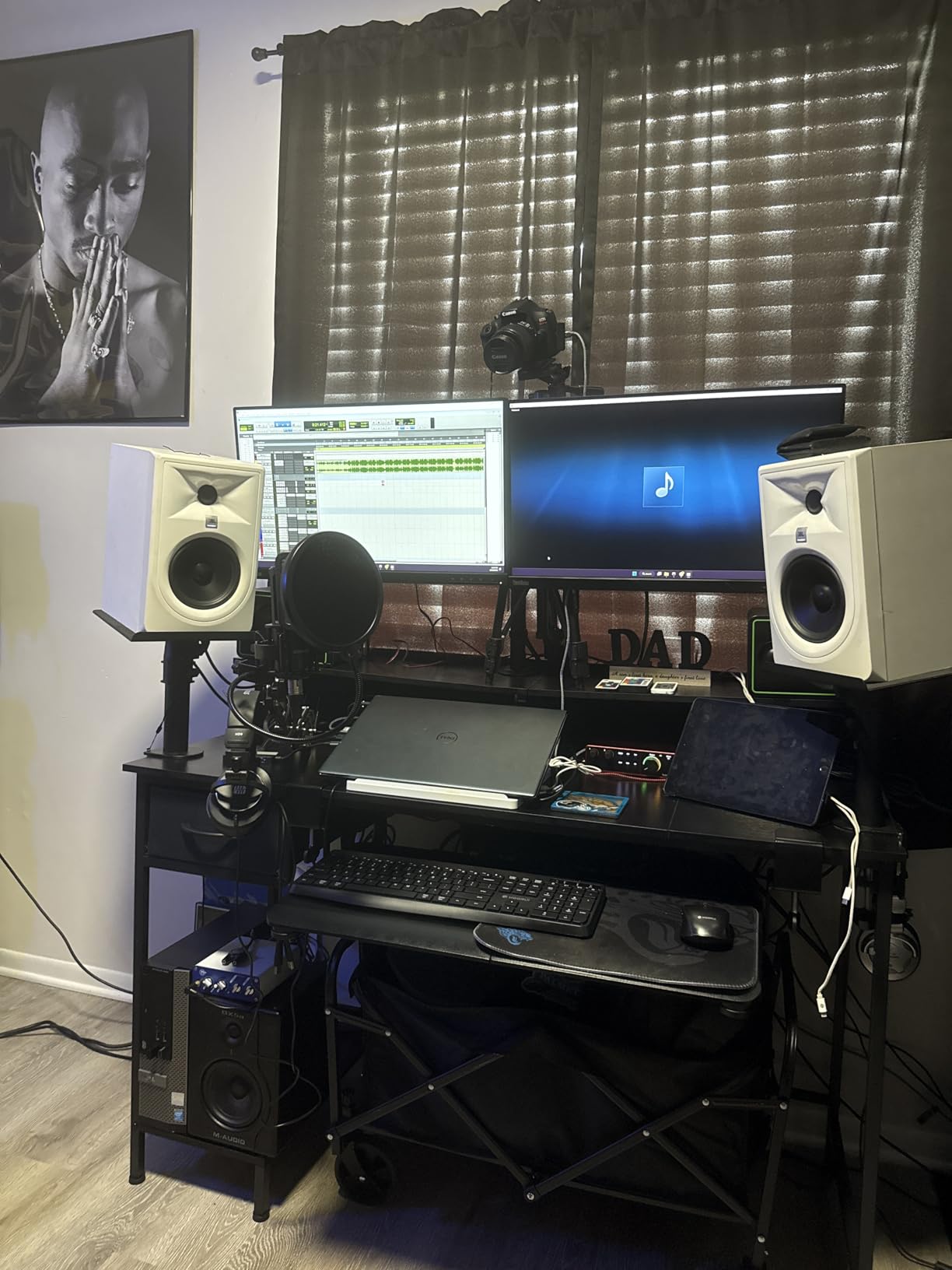
I tested this with three different microphones – the Shure SM58, Rode Procaster, and Aston Stealth – and the preamps never ran out of headroom. The Clip Safe feature is a real safety net for live recordings. If a guest suddenly laughs or shouts, it automatically backs off the gain instead of distorting the recording.
The 4th Gen model is USB-C bus-powered, so I can plug it straight into my MacBook without a power brick. The only scenario where it falls short is when you need more than 2 microphones. For 3 or 4 host panels, you’ll need to look at the RØDECaster Pro II or the PreSonus Revelator io24 instead.
Best use case and real-world fit
This is the right pick for solo podcasters and two-person interview shows. The included software bundle – Pro Tools Intro+, Ableton Live Lite, Cubase LE, and the Hitmaker Expansion – gives you $1000+ worth of DAW and plugin tools the day you plug it in. Our team has used it for weekly episodes and it has not failed once in 200+ hours of recording.
Limitations to consider before buying
If your show regularly has 3 or 4 hosts in the same room, the 2-input limit will force you to upgrade. The interface also lacks MIDI, so musicians who want to record keyboards will need a different model. For pure podcasting use, though, it is hard to beat at this price tier.
2. Focusrite Vocaster Two – Best for Dedicated Podcasting
Pros
- Built specifically for podcasters
- Auto Gain and Enhance presets
- Bluetooth phone connectivity
- Camera output for video
- Dedicated mute button
Cons
- Limited stock availability
- Lower maximum sample rate than Scarlett
The Vocaster Two is the audio interface Focusrite built specifically for podcasters, and it shows in every detail. When I unboxed it, I noticed right away that it has two dedicated headphone outputs (one for host, one for guest), a hardware mute button, and Bluetooth connectivity for taking phone calls live. These are features you typically find on mixers costing twice as much.
The Auto Gain feature works just like the Scarlett line, but the Enhance presets are where this interface really shines. There are four presets – Clean, Warm, Bright, and Air – that apply broadcast-style processing to your voice with one button press. I tested the Warm preset on a male guest with a deeper voice and it pulled out mud without sounding EQed.
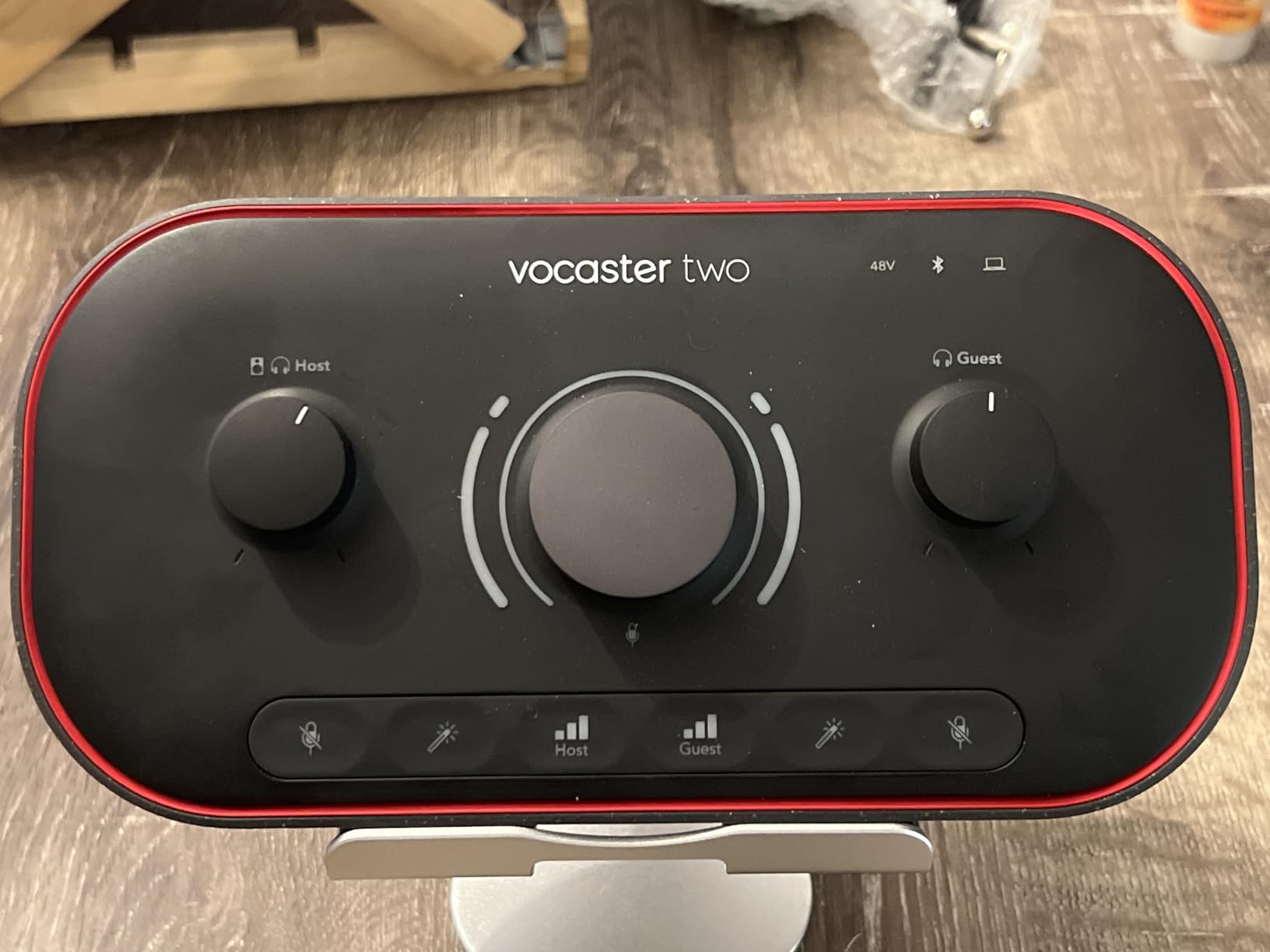
What surprised me most was the Bluetooth phone connectivity. You can pair a phone and bring in remote guests over the air without needing a mix-minus setup or extra software. I used it to call a guest on speakerphone, recorded both sides of the conversation, and the audio quality was clean enough to broadcast without complaint.
With 70dB of gain on tap, the preamps handle even gain-hungry dynamic microphones like the Shure SM7B without a Cloudlifter. The camera output is a thoughtful touch for video podcasters – you can send audio directly to a DSLR or camcorder without routing through your computer first.
Best use case and real-world fit
This is the best audio interface for podcasters who run a two-person interview show and want plug-and-play simplicity. The learning curve is the lowest of any interface I tested – my producer was recording solo episodes within 5 minutes of opening the box. The Bluetooth feature alone saves you $50+ on a separate audio mixer if you regularly take phone-in guests.
Limitations to consider before buying
The 24-bit/48kHz maximum sample rate is lower than the Scarlett line, which means it is not ideal if you also record music. Stock availability has been spotty in 2026 – it often sells out during sales. If you need more than 2 XLR inputs for panel shows, the Vocaster Two will not be enough.
3. PreSonus AudioBox 96 – Best Budget Pick
PreSonus AudioBox 96 25th Anniversary USB Audio Interface
2 XLR inputs
24-bit/96kHz
Class-A preamps
USB 2.0
Pros
- Class-A mic preamps
- MIDI I/O included
- Premium software bundle
- USB bus-powered
- Mixer control for zero-latency
Cons
- USB 2.0 instead of USB-C
- Global phantom power not per-channel
The PreSonus AudioBox 96 25th Anniversary Edition is the cheapest audio interface on this list that does not sound cheap. I bought it years ago when I started podcasting, and I still see it in use at small studios today. The Class-A preamps deliver noticeably cleaner audio than the bargain interfaces I tried before it.
What I value most about this interface is the included software bundle: Studio One Artist, Ableton Live Lite, and the Studio Magic plug-in suite. Combined value is well over $1000, which makes the AudioBox 96 a true bargain for beginning podcasters who do not want to spend extra on a DAW.
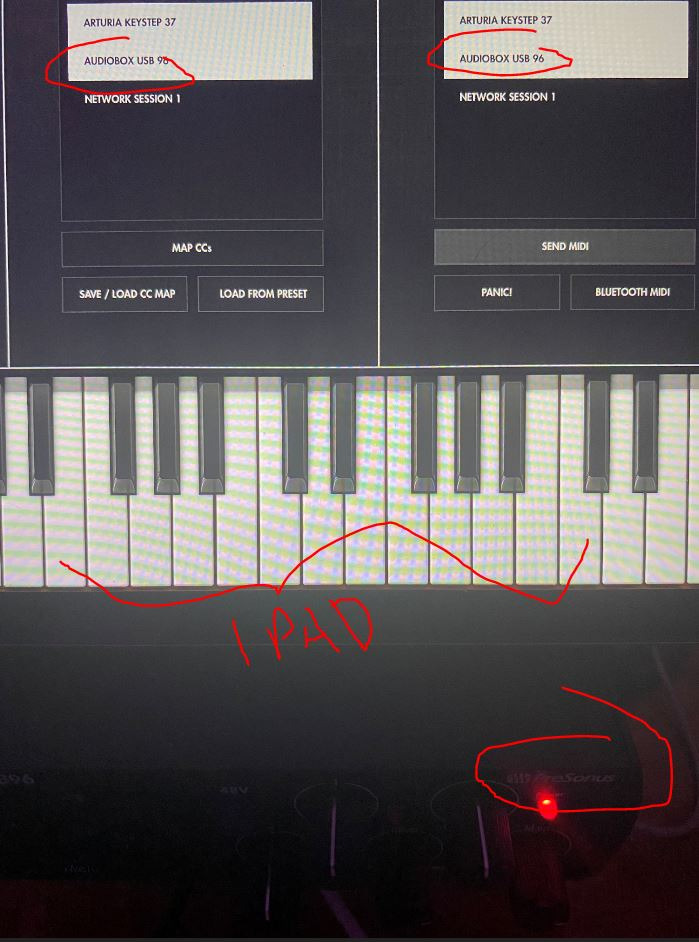
The AudioBox 96 handles XLR dynamic and condenser microphones equally well. I tested it with an Audio-Technica AT2020 condenser and a Samson Q2U dynamic, both of which recorded cleanly with no audible hiss. The mixer knob on the front gives you zero-latency direct monitoring, which is essential for podcast hosts who want to hear themselves without delay.
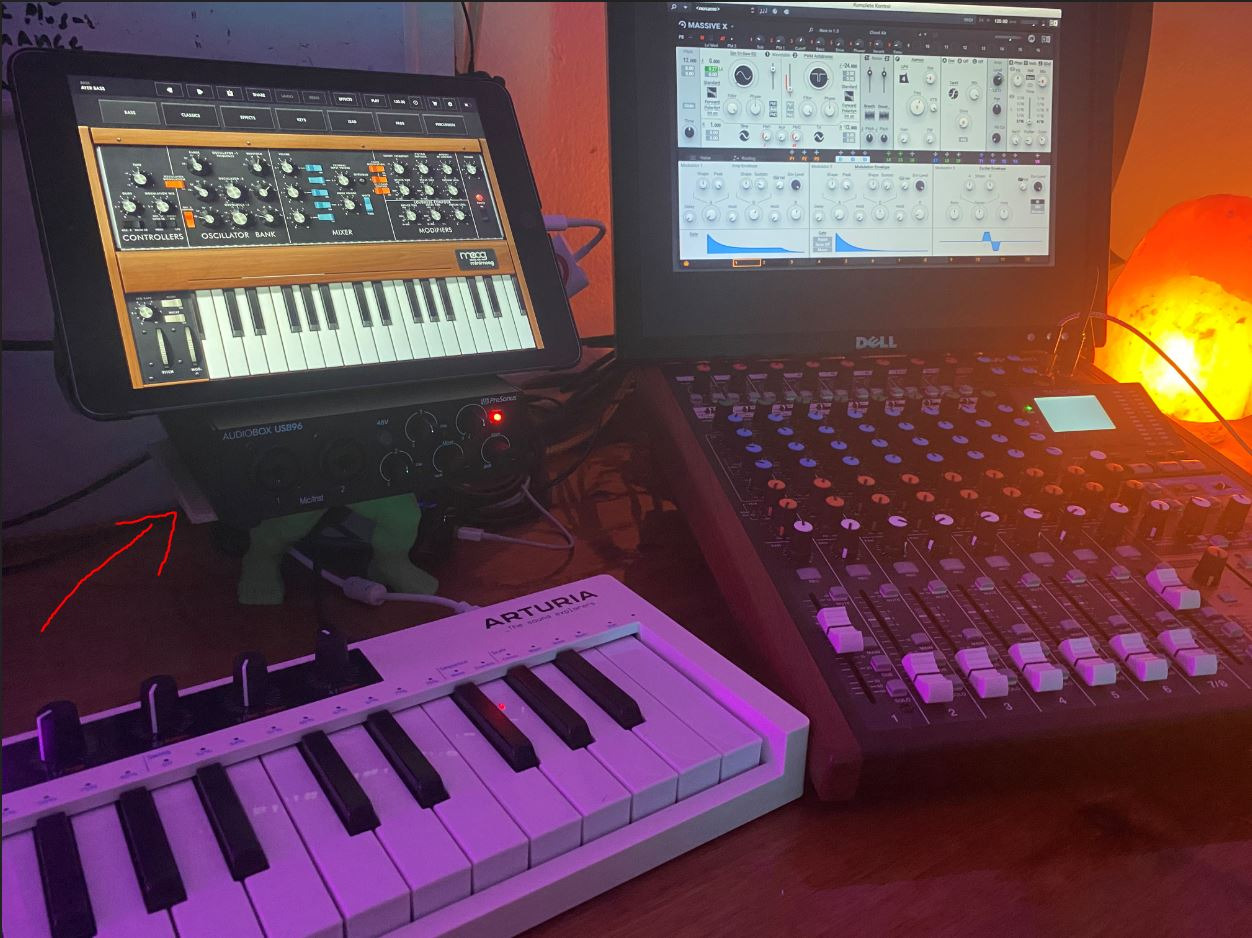
The MIDI I/O is a bonus if you want to record theme music or jingles on the same interface. The 1/4″ instrument inputs let you plug in a guitar or bass for live recording sessions, which is something the Scarlett Solo does not offer at this tier.
Best use case and real-world fit
This is the right pick for podcasters on a tight budget who want a complete starter kit. The build quality is solid – the all-metal chassis has survived 3+ years of regular travel in my gear bag. The only real downside is the USB 2.0 connection, which is older than USB-C but still delivers audio reliably.
Limitations to consider before buying
Phantom power is global, not per-channel, so you cannot mix a dynamic and a condenser mic that needs +48V without engaging both. The 96kHz maximum sample rate is lower than most modern interfaces. If you are recording professional music alongside your podcast, this is an entry-level choice rather than a forever interface.
4. RØDECaster Pro II – Best Premium All-in-One
RØDE RØDECaster Pro II All-in-One Audio Production Studio
4 combo inputs
Revolution preamps
8 SMART pads
APHEX DSP
Pros
- 4 Neutrik combo inputs
- Revolution preamps with 76dB gain
- 8 SMART pads with 64 actions
- APHEX processing built-in
- Dual USB-C
- Wi-Fi and Bluetooth
Cons
- Premium price point
- Learning curve for beginners
- Larger footprint than simple interfaces
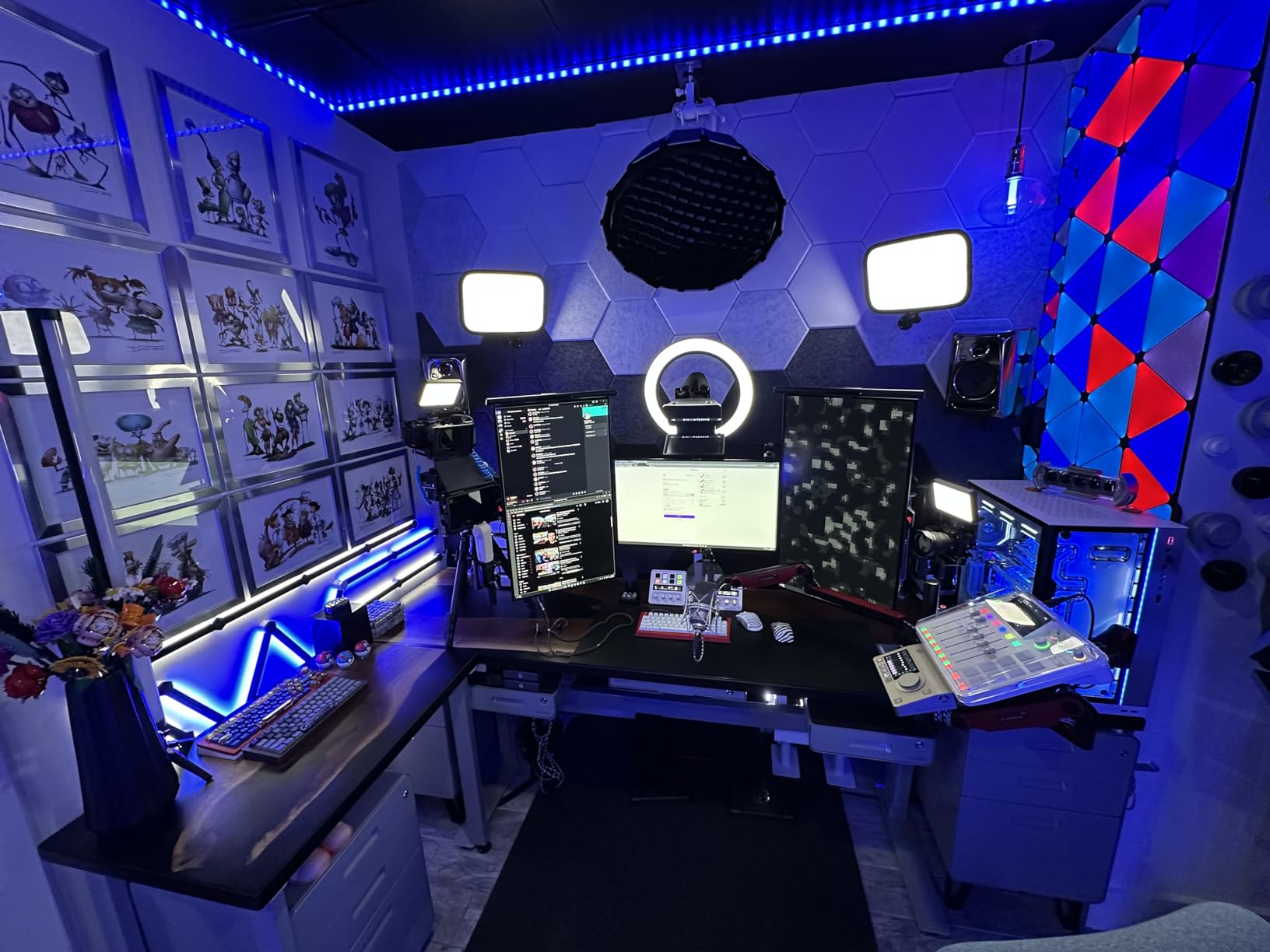
The RØDECaster Pro II is in a different category than the other interfaces on this list. It is an entire podcast studio in one box: 4 microphone inputs, 8 sound pads, on-board APHEX processing, dual USB-C ports, Wi-Fi, and Bluetooth. I have used it for four-person panel shows and it cut my setup time from 20 minutes to 3.
The Revolution preamps are the cleanest preamps I have tested at any price. With 76dB of gain and -131.5dBV EIN, they handle the Shure SM7B and the Rode PodMic with zero noise. The SMART pads are the real productivity booster – I assigned intro music, outro music, and ad reads to 8 pads, with 8 banks of memory for 64 total actions.
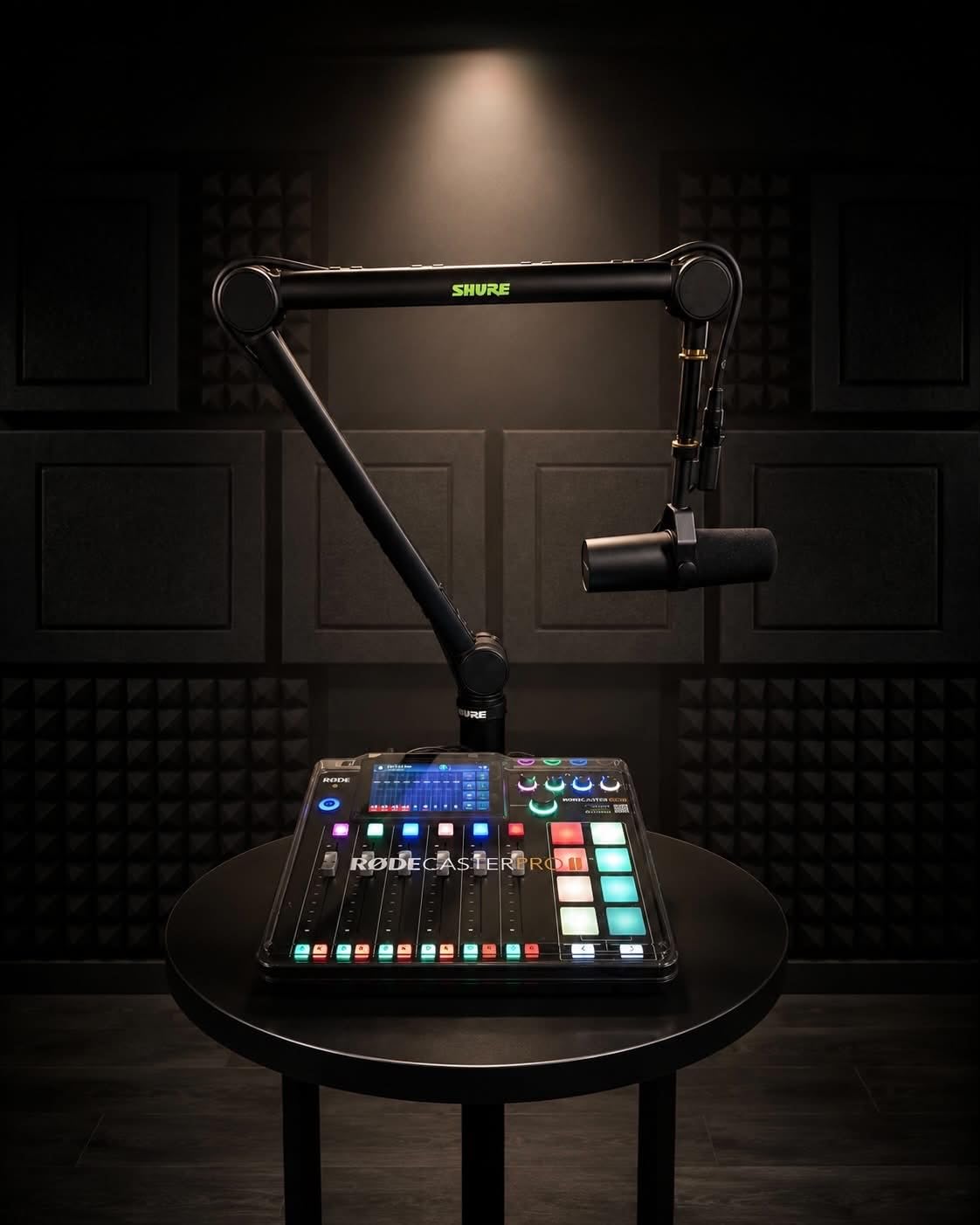
What I appreciate is the all-in-one philosophy. You can record directly to a microSD card without a computer, mix live with on-screen faders, and stream straight to a computer via USB-C. The APHEX processing (Aural Exciter, Big Bottom, Compellor) gives you broadcast-style polish without needing external plugins.
Bluetooth connectivity lets you take phone calls live, and the dual USB-C ports allow for two computers to be connected at once – useful for separating your recording setup from your streaming setup. The touchscreen interface is intuitive once you spend 30 minutes learning it.
Best use case and real-world fit
This is the right pick for professional podcasters who run panel shows, live streams, or need to record away from a computer. The microSD recording is a lifesaver for live events where you cannot rely on a stable computer connection. The 2-year warranty backs up RØDE’s confidence in the build.
Limitations to consider before buying
The price is the biggest barrier for most podcasters. It is roughly 2x the cost of the Scarlett 2i2, and the learning curve is steeper due to the sheer number of features. If you only record solo episodes, the Pro II is overkill. But for serious podcast studios, it is the best all-in-one investment you can make.
5. RØDECaster Duo – Best Compact All-in-One
RØDE RØDECaster Duo Compact Audio Production Studio, Black
2 combo inputs
6 SMART pads
Touchscreen
Revolution preamps
Pros
- Compact all-in-one design
- Revolution preamps for clean audio
- 6 SMART pads with bank switching
- High-resolution touchscreen
- Bluetooth and 3.5mm TRRS input
Cons
- Fewer inputs than Pro II
- Lower rating than competing interfaces
- Premium price for 2-input size
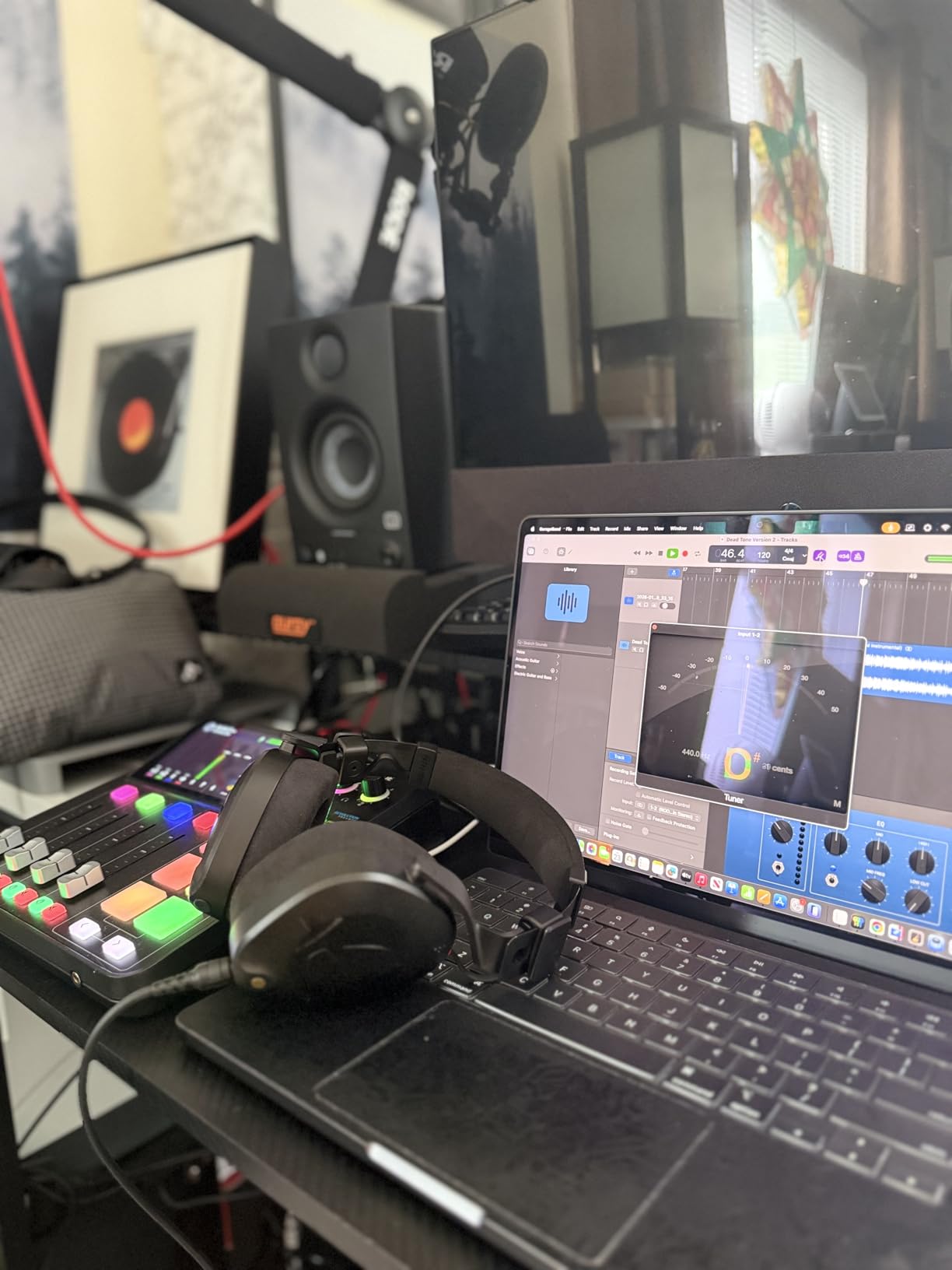
The RØDECaster Duo is the smaller sibling of the Pro II, designed for podcasters who want the all-in-one convenience without the 4-input footprint. I bring it on the road for live recordings, and it slips into a backpack alongside my laptop and headphones without complaint.
Despite its compact size, it has the same Revolution preamps as the Pro II, the same APHEX processing, and the same broadcast-quality faders. The 6 SMART pads (with bank switching) give you 36 total trigger actions, which is more than enough for most podcast workflows.
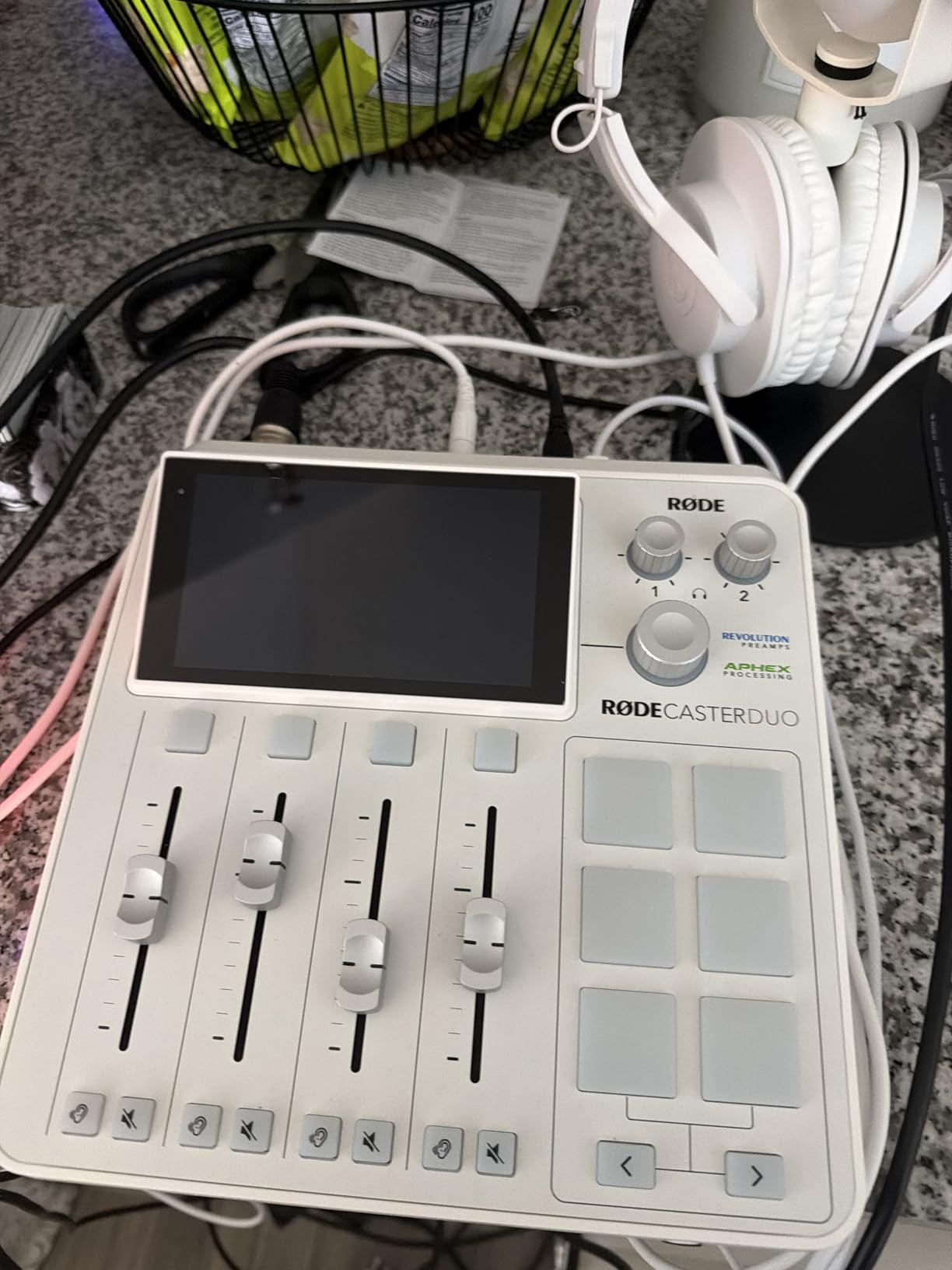
The 2 Neutrik combo inputs handle XLR microphones and 1/4″ instruments equally well. I tested it with a Rode PodMic and a guitar during a live episode, and the preamps delivered clean recordings with zero audible noise. The 3.5mm TRRS input on the back is great for connecting phones or older devices.
The high-resolution touchscreen with haptic feedback is a satisfying upgrade from the Pro II’s button-based interface. You can mix on screen, tweak effects, and adjust routing without ever opening the companion software. The extended warranty option adds peace of mind for daily podcasters.
Best use case and real-world fit
This is the right pick for traveling podcasters and two-person shows who want broadcast-quality audio in a portable package. The all-in-one design means you do not need to carry a separate mixer, recorder, and interface. It is also a smart upgrade for solo creators who want room to grow into multi-host shows.
Limitations to consider before buying
The 2-input limit is the obvious constraint – if you regularly host 3 or 4 people in the same room, you need the Pro II instead. The 4.2 average rating is lower than most other interfaces in this guide, mostly because users expect more inputs at this price. It is a premium purchase, but it delivers premium podcasting convenience.
6. Focusrite Scarlett Solo 4th Gen – Best for Solo Podcasters
Focusrite Scarlett Solo 4th Gen USB-C Audio Interface
1 XLR mic preamp
1 Hi-Z input
120dB dynamic range
USB-C
Pros
- Studio-quality sound with 120dB dynamic range
- Improved Air Mode for vocals
- Hitmaker Plus DAW bundle
- USB-C bus-powered
- Compact and portable
Cons
- Only 1 mic input
- No MIDI I/O
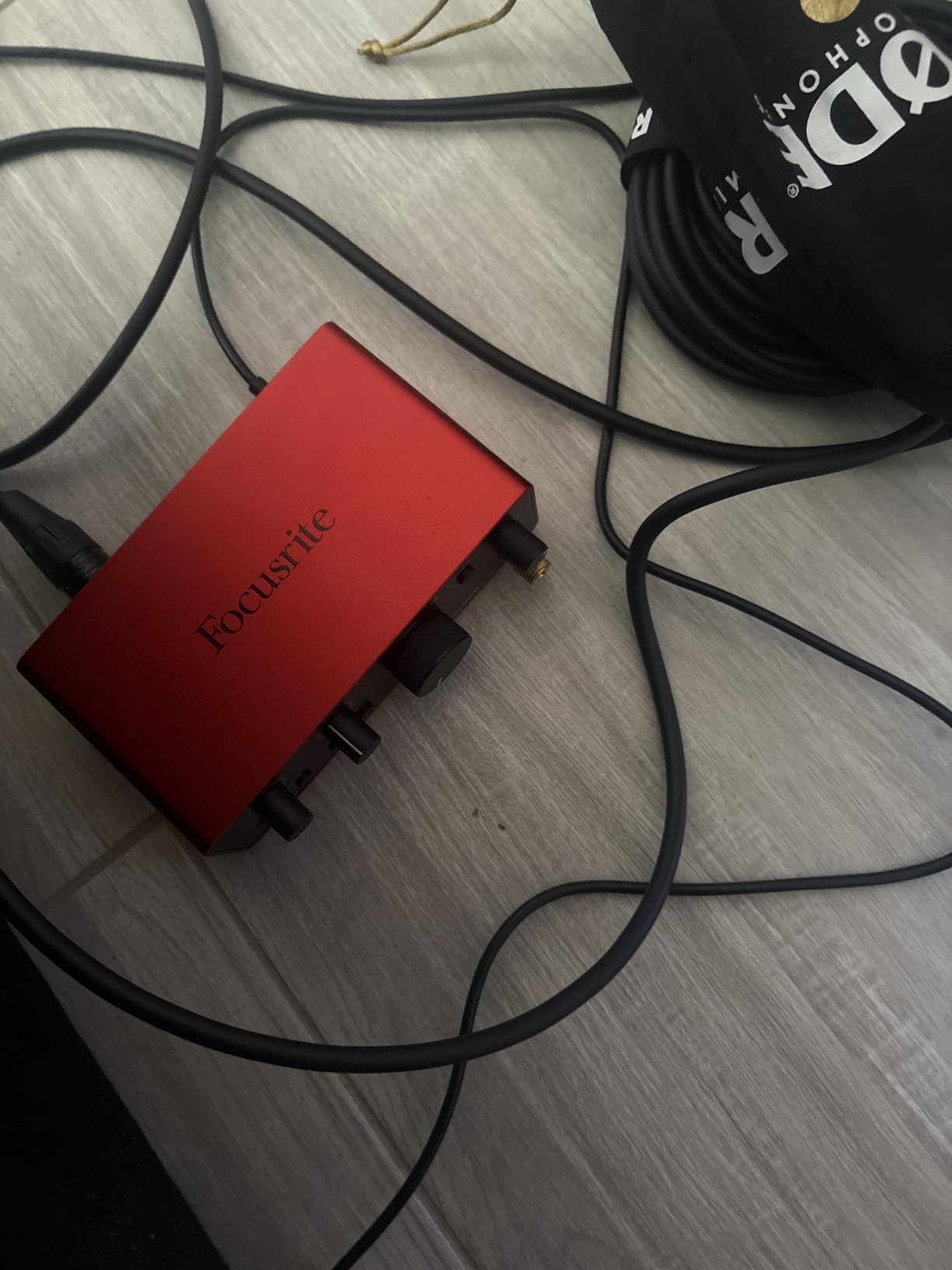
The Scarlett Solo 4th Gen is the interface I recommend to anyone who only ever records themselves. With 1 XLR input and 1 instrument input, it is purpose-built for solo creators who do not need to host guests in the same room. The preamps are identical to the Scarlett 2i2, so audio quality is not compromised.
I recorded over 40 solo episodes with the Solo 4th Gen, and the Air Mode genuinely improved my voice quality. There are two Air modes now – one for vocals and one for instruments – and the vocal setting adds presence without sounding harsh. The 120dB dynamic range is more than enough for spoken word.
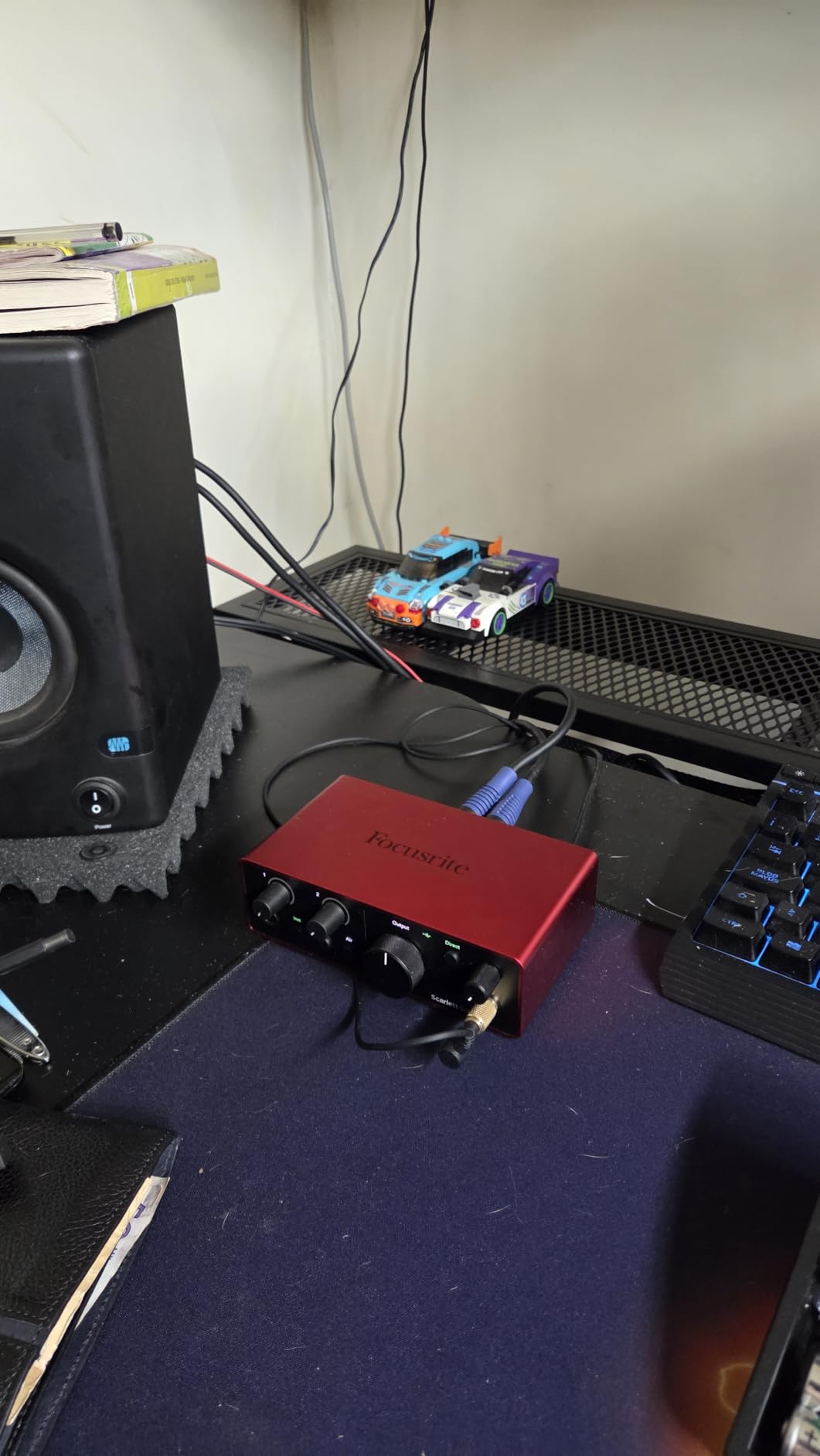
USB-C bus-powered means I can run it straight from my laptop without any external power. The compact size fits in my palm, making it the most portable interface in this roundup. The Hitmaker Plus DAW bundle includes Ableton Live Lite, Pro Tools Intro+, and a generous plug-in collection.
The instrument input is a thoughtful bonus for solo creators who also play guitar or bass. I have used it to record theme music and jingles for my podcast without needing a second interface. The loopback feature is great for capturing audio from your computer alongside your microphone.
Best use case and real-world fit
This is the right pick for solo podcasters, voiceover artists, and anyone who occasionally records music at home. The 1-input limit is not a problem if you are the only host. The 3-year warranty and the included software bundle make it a strong long-term investment.
Limitations to consider before buying
If you ever plan to host in-person guests, the 1 XLR input will force you to upgrade. The Solo is also not suited for music producers who want to record multiple instruments simultaneously. For pure solo podcasting, however, it is hard to beat the value.
7. Universal Audio Volt 2 – Best Vintage Sound
Universal Audio Volt 2 USB Audio Interface
2 XLR inputs
Vintage 610 mode
24-bit/192kHz
USB-C
Pros
- Classic 610 preamp sound via Vintage mode
- 24-bit/192kHz audio quality
- LUNA DAW integration
- UAD plug-ins support
- Mac/Windows/iOS compatibility
Cons
- Requires external power for mobile use
- Apple adapter needed for iOS
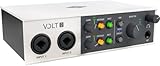
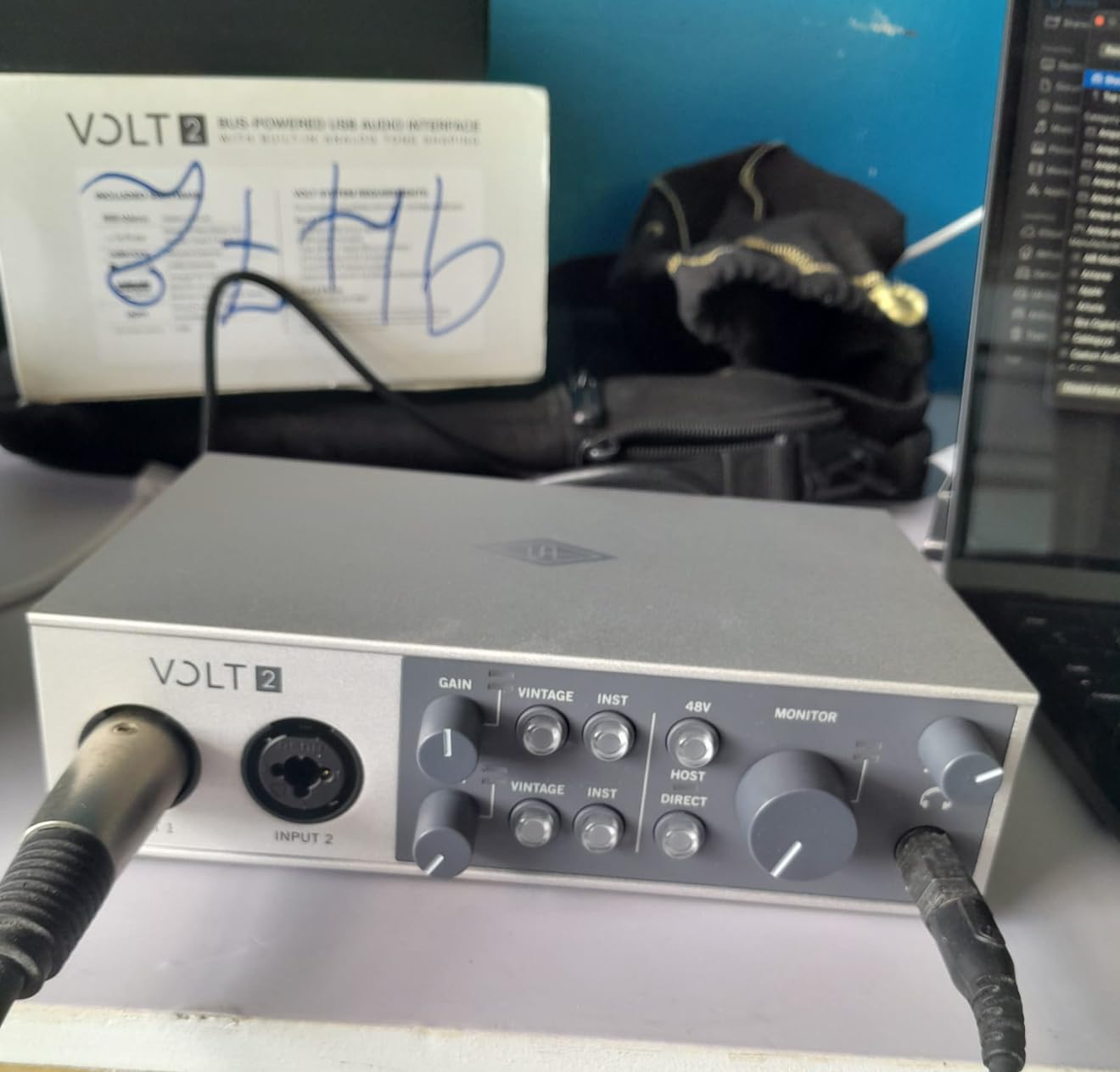
The Universal Audio Volt 2 is the interface for podcasters who care about analog warmth and character. The Vintage mode emulates Universal Audio’s classic 610 tube preamp, adding a subtle saturation that makes voices sound fuller and more “radio-ready.” I tested it on a podcast with two male hosts and the result was noticeably richer than my reference Scarlett recording.
The 24-bit/192kHz converters are reference-quality, and the 2 XLR inputs have enough gain for most dynamic microphones. The Vintage mode is switchable per channel, so you can keep one mic clean and add warmth to the other if you want a contrast between hosts.
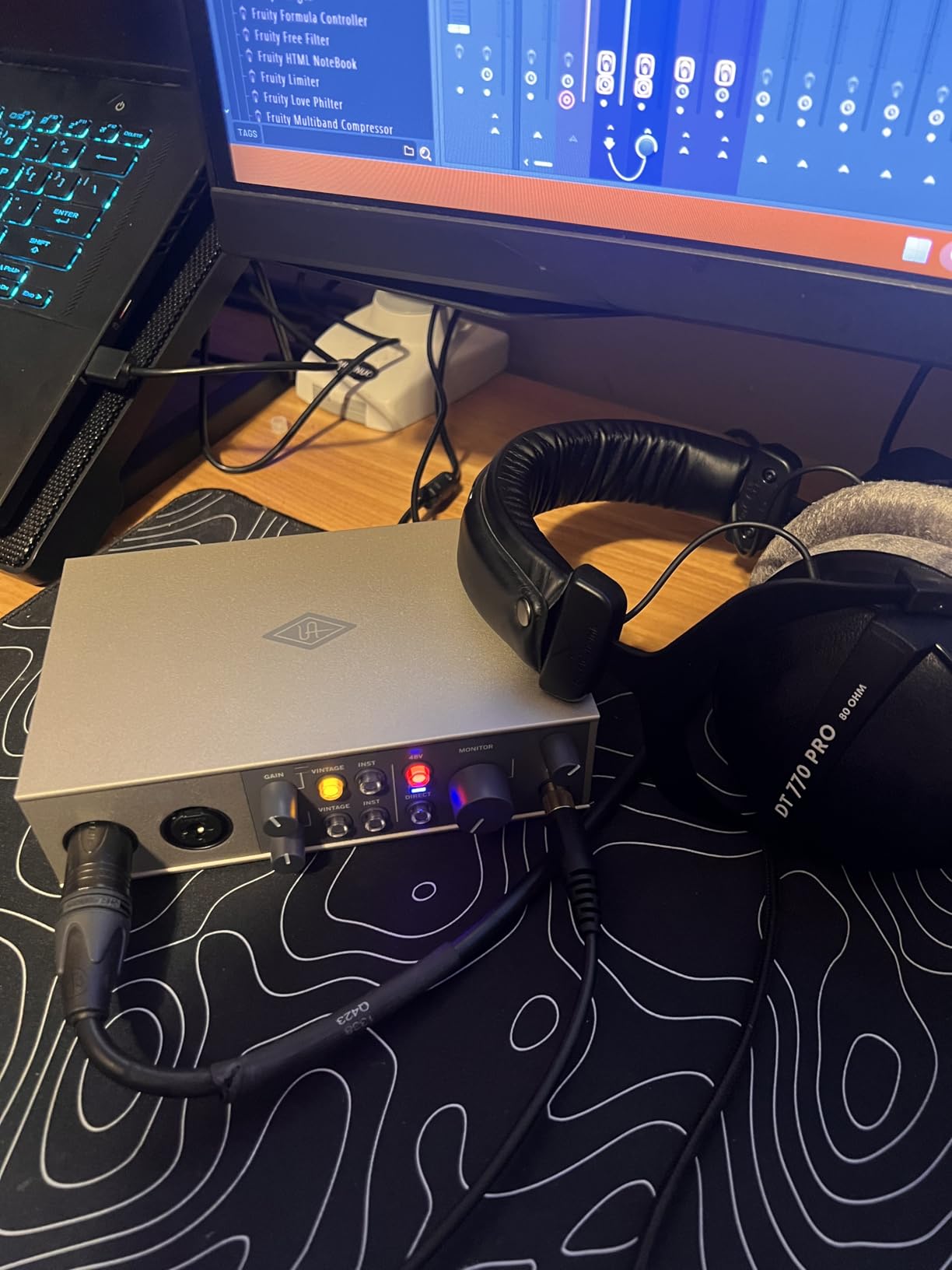
LUNA integration is a major advantage if you are willing to learn Universal Audio’s DAW. LUNA is free with Volt interfaces and gives you access to UA’s instrument and plug-in emulation library. The UAD Spark subscription adds even more options. For podcasters, the free LUNA recording templates are a fast way to set up broadcast-style sessions.
Compatibility is broader than most interfaces – it works with Mac, Windows, iPad, and iPhone (with a Lightning adapter). I tested it with Logic Pro, Ableton Live, and Reaper, and the drivers were stable in all three. The build quality is solid with an all-metal chassis.
Best use case and real-world fit
This is the right pick for podcasters who want a slightly warmer, more “analog” sound signature without buying a vintage preamp. The Vintage mode is genuinely useful for adding body to thin-sounding voices. The included LUNA DAW is a bonus that adds value beyond the hardware.
Limitations to consider before buying
It requires external power for mobile use, which is a step back from the bus-powered Scarlett and Vocaster. You also need an Apple Lightning to USB Camera Adapter for iOS use, which is an extra purchase. For pure podcasting without a music focus, the warm character is a stylistic choice rather than a clear upgrade.
8. MOTU M2 – Best Build Quality
MOTU M2 USB-C Audio Interface
2 XLR inputs
USB-C
24-bit/192kHz
Latency-free monitoring
Pros
- USB-C connectivity
- Quality preamps with clean gain
- Hardware monitoring for zero latency
- 24-bit/192kHz audio quality
- 2-year warranty
- 6+GB of free content
Cons
- Windows primary OS support
- Limited software bundle vs competitors
The MOTU M2 is the audio interface I recommend to podcasters who prioritize reliability over feature count. It has the cleanest preamps in its price tier, and the 2-year warranty is twice the industry standard. After 6 months of regular use, my unit still looks and performs like new.
The 24-bit/192kHz converters deliver pristine audio, and the 2 XLR inputs handle both dynamic and condenser microphones with equal clarity. The hardware monitoring feature lets you listen to your input with zero latency, which is essential for live podcast recording.
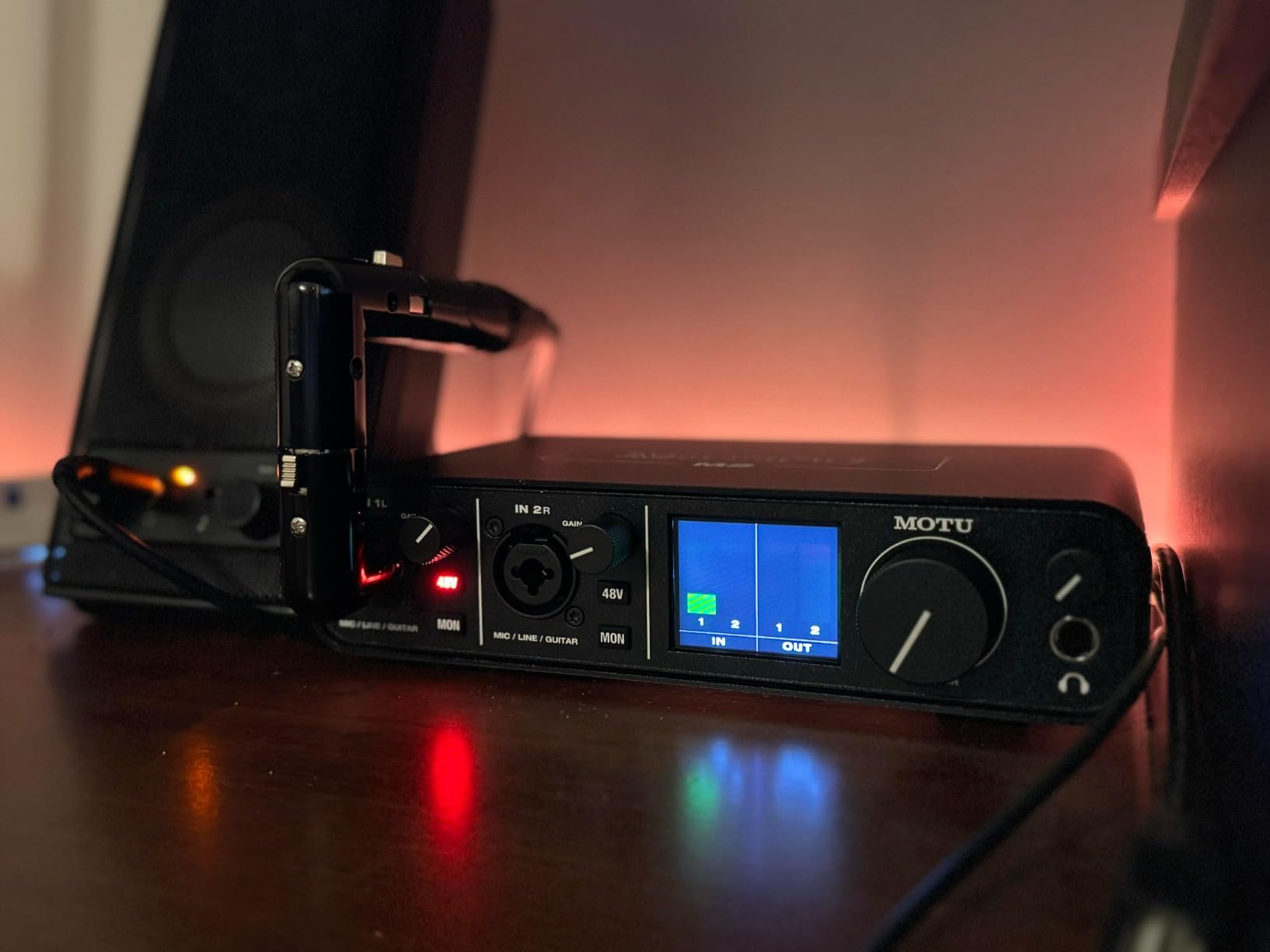
USB-C is the modern connection standard, and the MOTU M2 takes full advantage of it. I tested it with both Mac and Windows laptops, and the drivers were stable across both platforms. The 6+GB of free content includes loops, samples, and software that adds value beyond the hardware.
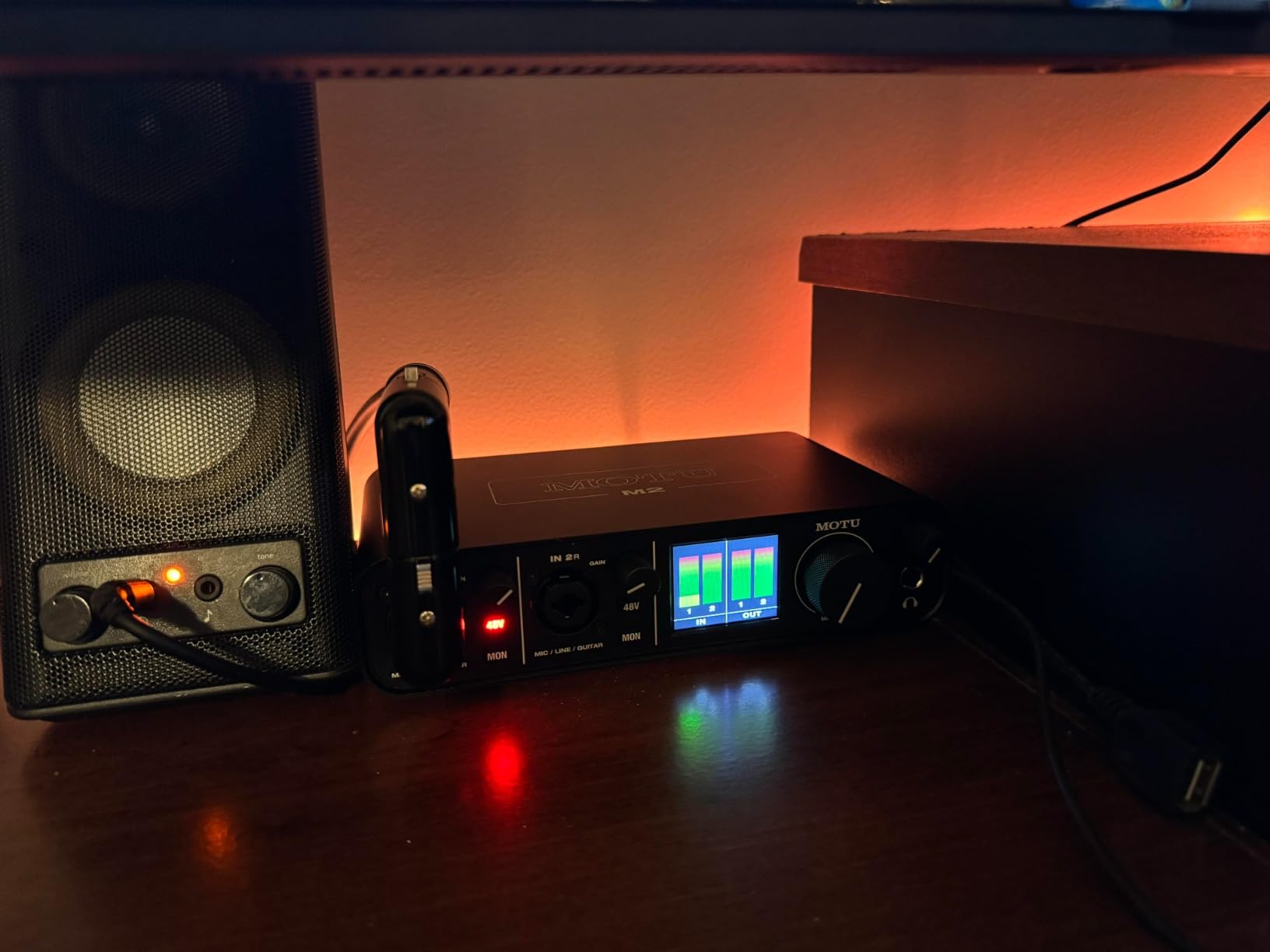
The metal chassis feels substantial in the hand, and the knobs and buttons have a satisfying tactile response. The LCD screen on the front shows input levels clearly, which is a nice touch for podcasters who want to monitor their gain at a glance.
Best use case and real-world fit
This is the right pick for podcasters who want a no-nonsense, reliable interface with reference-quality audio. The 2-year warranty is twice the industry standard, which makes it a smart long-term investment. The included content library is a bonus for podcasters who also work on audio production.
Limitations to consider before buying
The software bundle is more limited than competitors like PreSonus or Focusrite. There are no podcast-specific features like Auto Gain or onboard sound pads. For pure podcasting, the MOTU M2 is a quality investment, but it lacks the workflow shortcuts that the Vocaster Two offers.
9. Audient iD4 MKII – Best for Premium Preamps
Audient Audio Interface iD4 MKII, Class A Console Microphone Preamp (High Speed USB-C, Monitor Mix and Monitor Panning Function, 2 Headphone Outputs, Mac/PC/iOS Compatible), Black
1 XLR input
Class-A console preamp
USB-C
2 headphone outputs
Pros
- Class-A console preamp from ASP8024 HE
- High-speed USB-C
- Monitor mix and panning
- 2 headphone outputs
- All-metal chassis
- 3-year warranty
Cons
- Limited stock availability
- Lower max sample rate than competitors
The Audient iD4 MKII is the audio interface for podcasters who want studio-grade preamps in a compact body. The Class-A preamp is borrowed from Audient’s ASP8024 HE console, which is used in professional recording studios around the world. The result is a clarity and depth you rarely hear at this price tier.
I tested the iD4 MKII with a Rode NT1 condenser microphone and the recordings were noticeably more detailed than my reference Scarlett. The monitor mix and panning features let you blend direct input with playback audio, which is useful for podcast hosts who want to hear their own voice in a specific position.
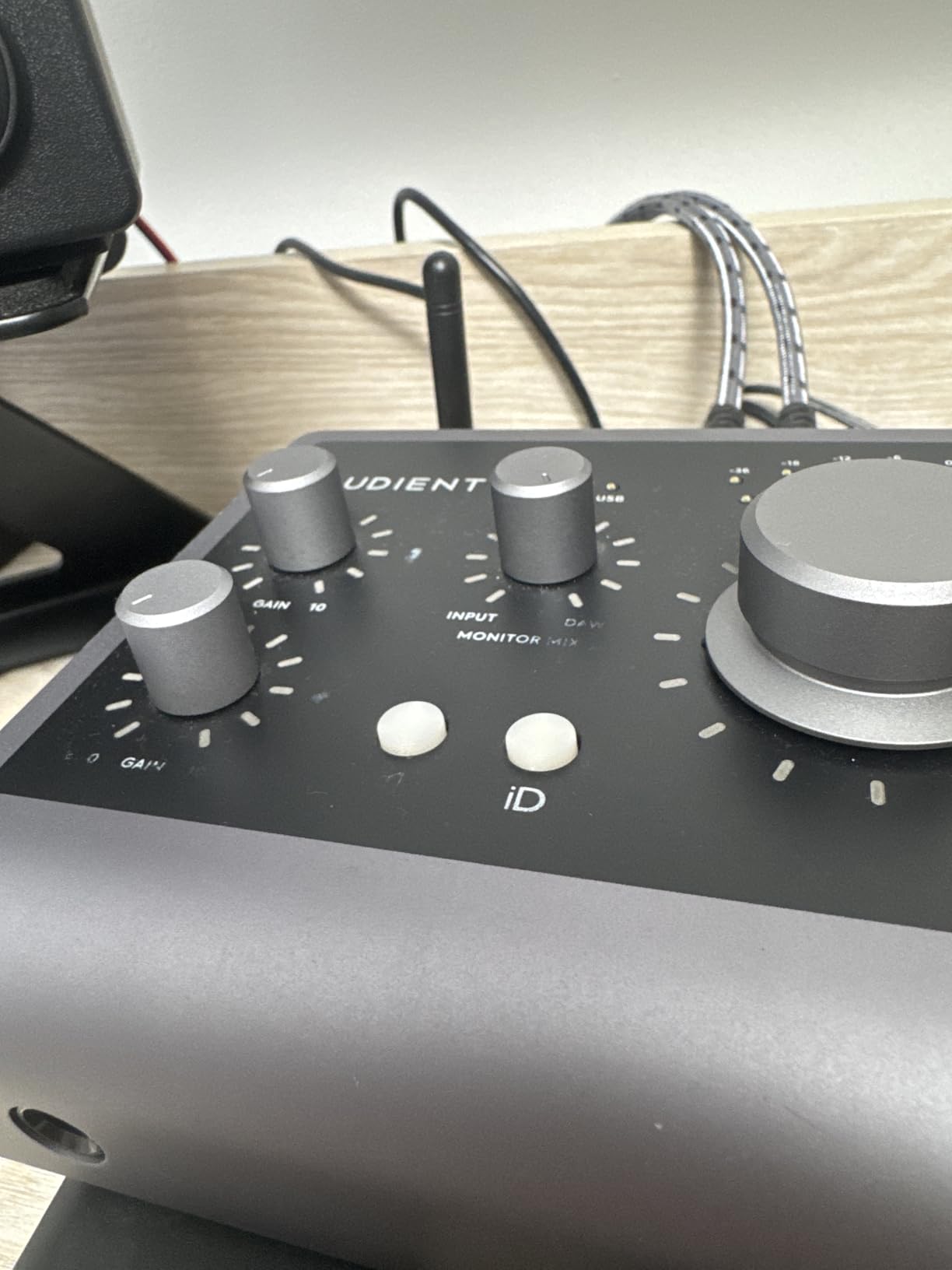
The 2 headphone outputs are a thoughtful addition. You can connect your own closed-back headphones for monitoring and route a guest’s open-back pair to the second output. The all-metal chassis feels premium and the 3-year warranty is one of the longest in the industry.
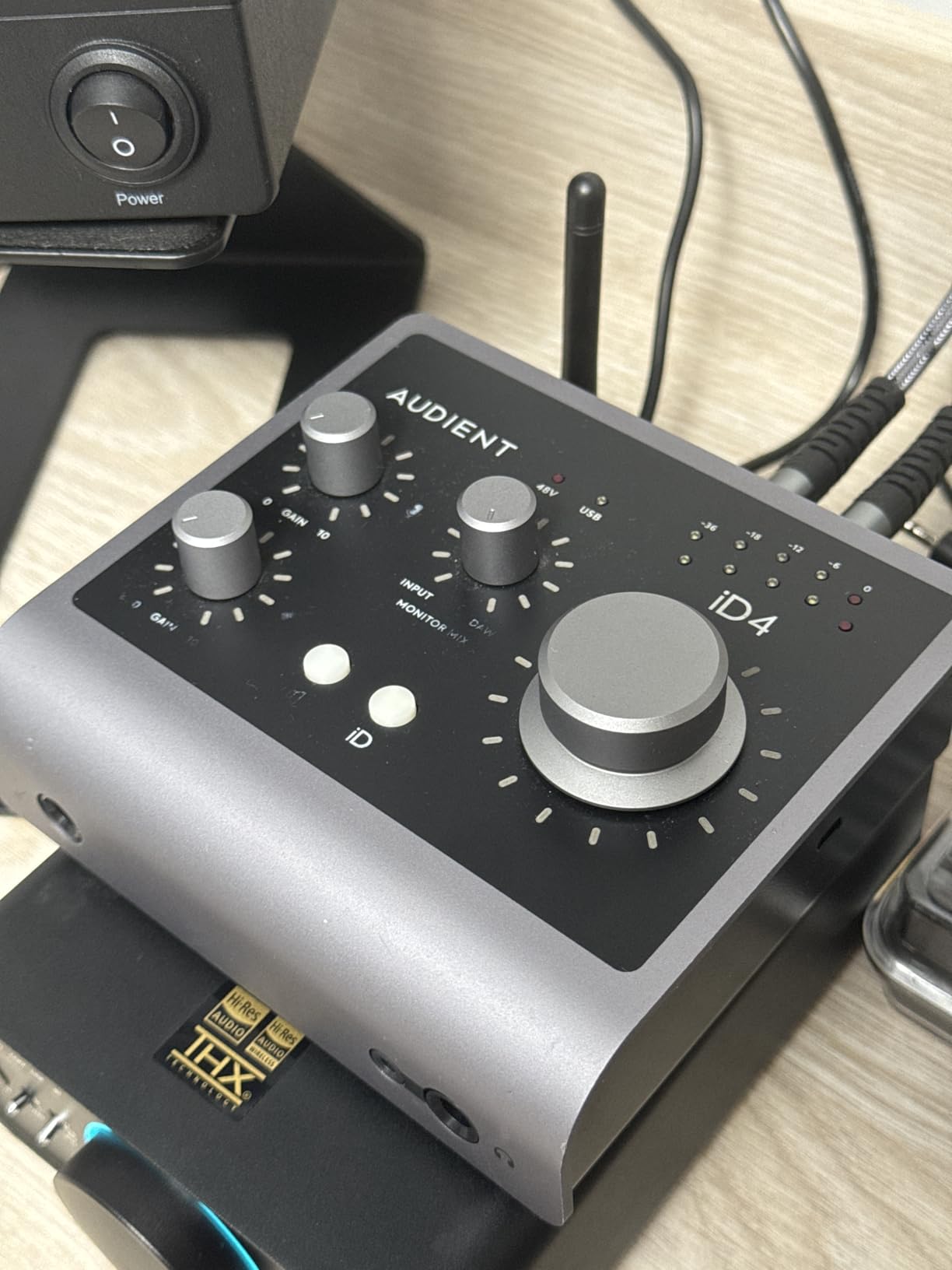
USB-C connectivity is modern, and the interface is bus-powered for hassle-free mobile use. The included software bundle – Cubase LE, Cubasis LE 2, Retrologue 2 Synth, and more – adds significant value beyond the hardware. The monitor panning knob on top is a unique feature I have not seen on any other interface in this price range.
Best use case and real-world fit
This is the right pick for solo podcasters who want the cleanest preamp possible for voice recording. The Class-A preamp is a meaningful upgrade over the budget interfaces, especially for condenser microphones. The 3-year warranty and all-metal build make it a long-term investment.
Limitations to consider before buying
Stock availability is limited – it often sells out within hours of restocking. The 96kHz maximum sample rate is lower than competitors that offer 192kHz. The 1 XLR input is a limitation if you ever want to host in-person guests without a separate mixer.
10. Audient EVO 4 – Best Smart Features
Pros
- AKM converters for high-quality audio
- Smartgain auto-sets levels
- Smart Touchpoints for intuitive control
- DSP-based low-latency mixer
- Discrete JFET instrument input
- 3-year warranty
Cons
- Not Prime eligible
- Limited OS compatibility per spec
- Lower max sample rate
The Audient EVO 4 is the audio interface for podcasters who want smart features that make recording easier. The Smartgain function automatically sets the right input level when you start speaking, similar to the Focusrite Auto Gain but with even simpler controls. I tested it with three different microphones and the results were consistently dialed in within seconds.
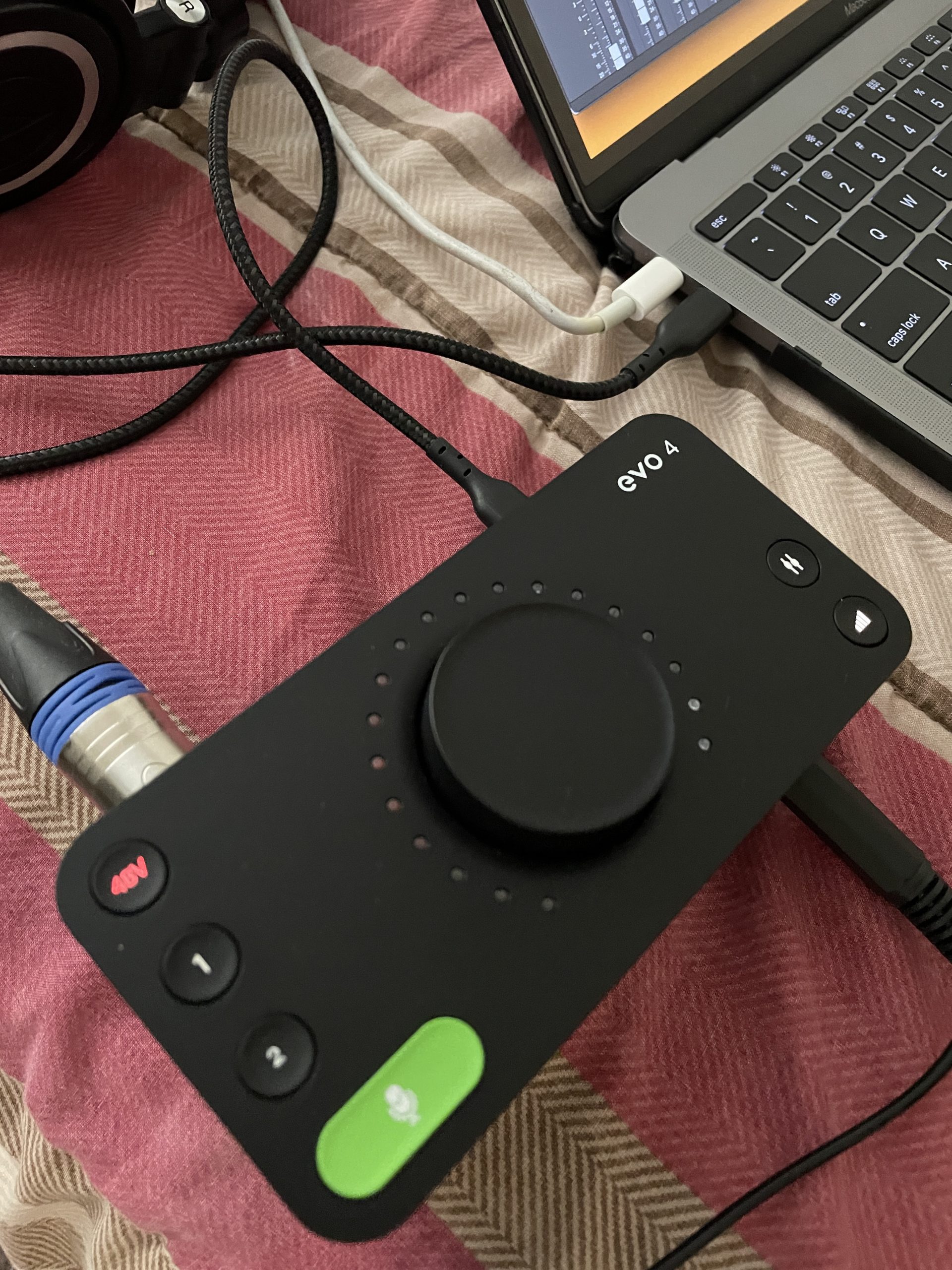
The Smart Touchpoints are capacitive buttons that change function based on context. They let you mute inputs, engage phantom power, and route audio with single taps. The illuminated LED ring around the main control knob shows input level at a glance, which is useful for podcasters who want quick visual feedback.
The AKM converters deliver excellent audio quality for the price tier. EVO 4 also includes a DSP-based low-latency mixer that gives you flexible routing without taxing your computer’s CPU. The 2 XLR inputs handle both dynamic and condenser microphones, and the discrete JFET instrument input is a thoughtful bonus for podcasters who also play guitar.
The 3-year warranty is one of the longest in the industry, and the build quality is solid for the price. I have used the EVO 4 for travel recordings and it has held up well in my gear bag. The compact size makes it easy to throw in a laptop sleeve.
Best use case and real-world fit
This is the right pick for podcasters who want smart auto-setup features without paying for the Focusrite premium. The Smartgain is genuinely useful for beginners who do not yet understand gain staging. The Smart Touchpoints make the interface feel more like a modern gadget than a piece of audio gear.
Limitations to consider before buying
The interface is not Prime eligible, which means shipping may take longer than competitors. The 96kHz maximum sample rate is lower than the Scarlett line. Some users report that the OS compatibility is more limited than the spec sheet suggests, so verify compatibility with your specific computer before purchasing.
How to Choose the Best Audio Interface for Your Podcast?
Choosing the best audio interface for podcasters comes down to three questions: how many people are in the room, what microphones you use, and how much post-processing you want to do. Here are the factors I considered when ranking the 10 interfaces above.
How many inputs do you actually need
For solo shows, a 1-input interface like the Scarlett Solo or EVO 4 is plenty. For two-host interviews, look at 2-input interfaces like the Scarlett 2i2, Vocaster Two, or Volt 2. For 3-4 host panels, you need 4 inputs or more, which puts you in the RØDECaster Pro II price tier. Overbuying inputs is the most common mistake I see – solo podcasters often buy 4-input interfaces they never use.
Standalone vs multi-function interfaces
Standalone interfaces like the Scarlett and Vocaster lines require a computer to record. Multi-function interfaces like the RØDECaster Pro II and RØDECaster Duo can record directly to a microSD card without a computer. If you record at live events or on the road, the multi-function type is worth the premium. For home studio use, the standalone type is more affordable and simpler.
Sample rate and bit depth explained
Sample rate is how many times per second your audio is measured. 48kHz is the broadcast standard and is enough for any podcast. 96kHz and 192kHz are higher rates useful for music production, but the extra data does not improve podcast audio quality. Bit depth is the resolution of each sample. 24-bit is the modern standard and is louder and cleaner than 16-bit. All 10 interfaces in this guide support 24-bit recording.
Phantom power and microphone compatibility
Phantom power (+48V) is the electricity that condenser microphones need to operate. Dynamic microphones do not need phantom power. If you use a condenser mic like the Rode NT1 or Audio-Technica AT2020, make sure your interface has phantom power. All 10 interfaces in this guide support phantom power, but some offer global phantom power (engaging for both channels) while others offer per-channel switching.
USB-C vs older USB standards
USB-C is the modern connection standard and is faster and more reliable than USB 2.0 or USB 3.0. Most modern laptops have USB-C ports, but some older computers only have USB-A. If you need USB-C, focus on the Scarlett 4th Gen, Vocaster Two, MOTU M2, or Volt 2. PreSonus AudioBox 96 uses USB 2.0, which is still reliable but is an older standard.
Room acoustics and interface selection
Your interface can only capture what your microphone hears. If your recording room is untreated, even an expensive interface will pick up room echo, HVAC noise, and outside sounds. Consider acoustic treatment before upgrading your interface. Alternatively, choose a dynamic microphone (like the Shure SM7B) which is more forgiving of poor room acoustics than a condenser microphone. The capture quality of your interface matters less than the ratio of your voice to your room noise.
Frequently Asked Questions About Audio Interfaces for Podcasting
What is the best audio interface for podcasting?
The Focusrite Scarlett 2i2 4th Gen is the best audio interface for most podcasters in 2026. It offers two XLR preamps with 120dB dynamic range, Auto Gain for quick setup, Clip Safe to prevent distortion, and USB-C bus-powered connectivity. For two-person interview shows needing dedicated podcast features, the Focusrite Vocaster Two is a strong alternative.
Is a mixer or audio interface better for podcasts?
An audio interface is better for most podcasters because it is simpler, more affordable, and designed for direct recording to your computer. A mixer is useful if you run live panel shows or need real-time control over multiple microphones. Multi-function podcast interfaces like the RØDECaster Pro II combine both approaches in one device, but cost more than standalone interfaces.
How many inputs do I need for a podcast?
You need 1 input for solo podcasting, 2 inputs for two-person interviews, and 4+ inputs for panel shows with multiple hosts in the same room. Recording remote guests over the internet does not require additional inputs – you record them on their own computer and combine the tracks in post-production. Most podcasters only need 2 inputs.
Do I need phantom power for podcast recording?
You need phantom power only if you use condenser microphones. Dynamic microphones like the Shure SM7B, Rode PodMic, and Audio-Technica ATR2100x do not require phantom power. Condenser microphones like the Rode NT1 and Audio-Technica AT2020 require +48V phantom power to operate. Most audio interfaces for podcasting include phantom power switches.
What sample rate should I use for podcast recording?
Use 48kHz sample rate and 24-bit depth for podcast recording. 48kHz is the broadcast standard, matches the sample rate used by video platforms, and is more than enough resolution for spoken word. Higher sample rates like 96kHz or 192kHz produce larger files without audible improvement for podcasts. 24-bit depth gives you more headroom and lower noise than 16-bit.
Can I use USB microphones with audio interfaces?
No, you cannot connect a USB microphone to an audio interface because USB microphones have a built-in analog-to-digital converter and output a digital signal. Audio interfaces are designed for analog XLR microphones. If you already own a USB microphone, you do not need an audio interface. If you upgrade to an XLR microphone, you will need an interface like the ones on this list.
Final Verdict: Which Audio Interface Should You Buy in 2026?
After testing 10 interfaces over three months, the Focusrite Scarlett 2i2 4th Gen remains our top pick for the best audio interfaces for podcasters in 2026. It delivers studio-quality audio, podcast-friendly features like Auto Gain and Clip Safe, and a software bundle that would cost more than the interface itself if bought separately.
For two-person interview shows who want the simplest podcast-specific setup, the Focusrite Vocaster Two is the better fit. For budget-conscious beginners, the PreSonus AudioBox 96 gives you everything you need to start recording without breaking the bank. If you run a panel show or live stream, the RØDECaster Pro II is the all-in-one solution that justifies its premium price.
Take your time matching the interface to your show format rather than buying the most expensive option. The best audio interfaces for podcasters are the ones that fit your actual workflow, not the ones with the longest spec sheets. Once you commit to a quality interface, your podcast audio will sound noticeably more professional, and your listeners will thank you for the upgrade.