
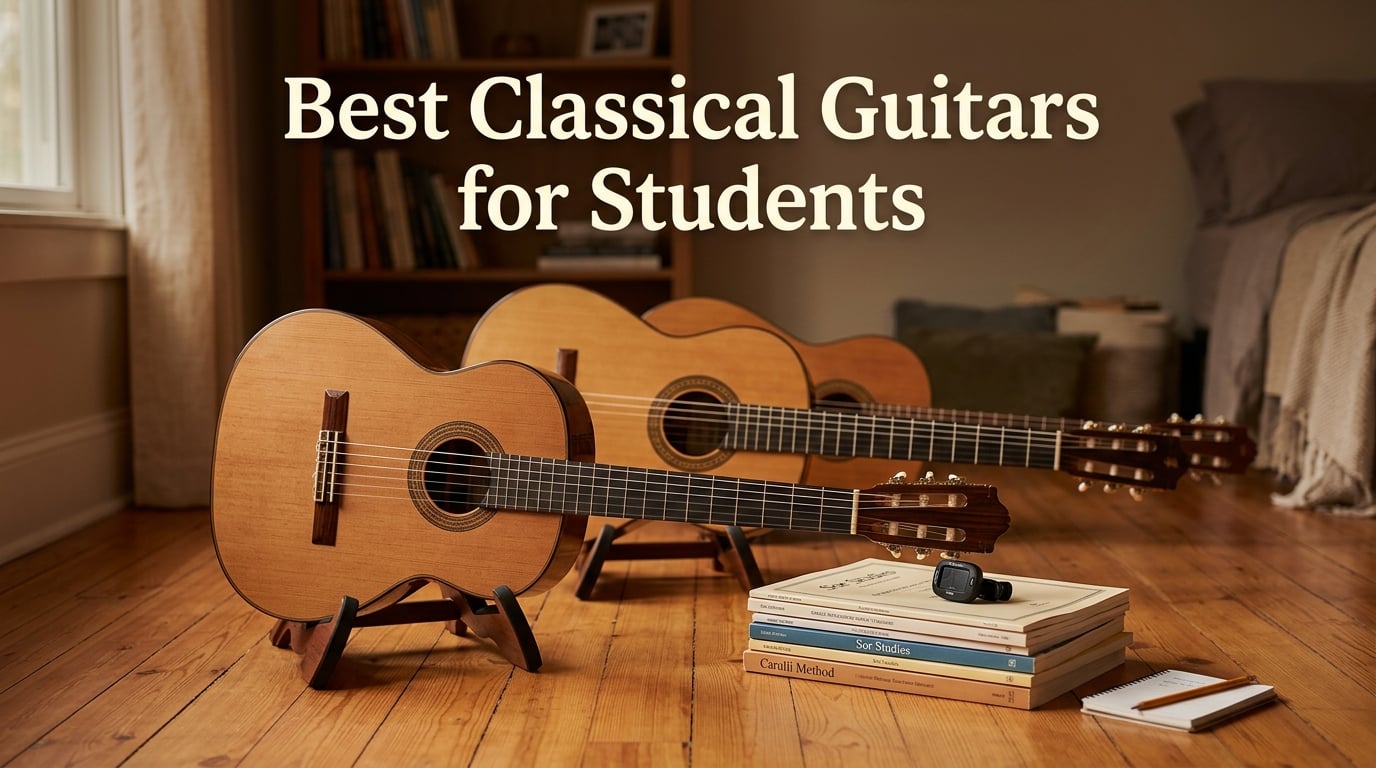
Finding the best classical guitars for students means looking past flashy branding and focusing on what actually helps a beginner learn. After testing 12 nylon-string models ranging from budget-friendly kits to solid-top instruments from Yamaha, Cordoba, and Fender, our team identified the features that matter most for new players. Playability, tuning stability, and tone quality top that list.
We spent months evaluating these guitars across the scenarios students face daily. That includes first lessons, daily practice sessions, and the inevitable finger-soreness phase that every beginner goes through. Nylon strings are already gentler on fingertips than steel, but action height, neck profile, and build quality make a bigger difference than most people realize.
This guide covers 12 instruments sorted by price, from sub-$130 budget picks to $450 solid-top models. We tested full-size guitars for adults and teens, 3/4 and 1/2 scale options for younger students, and everything in between. Whether you are buying for an 8-year-old starting lessons or picking up the instrument yourself at 40, you will find a recommendation that fits your situation below.
One thing we heard repeatedly on forums like r/classicalguitar is that buying too cheap leads to frustration. A guitar with poor tuning stability or uncomfortably high action can make a motivated student want to quit within weeks. Our picks balance affordability with the quality control needed to keep beginners encouraged.
Table of Contents
Top 3 Picks for the Best Classical Guitars for Students in 2026
These three models stood out across our testing for different reasons. The Yamaha C40II earned our editor’s choice for its unmatched track record with over 1,600 reviews. The Vangoa VC-2 delivers the best value with a complete accessory bundle. And the Hola! Music HG-39GLS takes the budget pick for being the most affordable full-size option that still sounds good.


Best Classical Guitars for Students in 2026
Here is the full comparison of all 12 models we reviewed. Use this table to scan key features at a glance, then read the individual reviews below for our detailed experience with each instrument.
| Product | Specifications | Action |
|---|---|---|
 Hola! Music HG-39GLS Hola! Music HG-39GLS |
|
Check Latest Price |
 Fender FA-25N 3/4 Size Fender FA-25N 3/4 Size |
|
Check Latest Price |
| Vangoa VC-2 Bundle |
|
Check Latest Price |
 Hola! Music HG-36GLS Hola! Music HG-36GLS |
|
Check Latest Price |
 Yamaha CGS102AII Yamaha CGS102AII |
|
Check Latest Price |
 Yamaha CGS103AII Yamaha CGS103AII |
|
Check Latest Price |
| Yamaha C40II |
|
Check Latest Price |
 Cordoba C1M Protege Cordoba C1M Protege |
|
Check Latest Price |
 Fender CN-60S Concert Fender CN-60S Concert |
|
Check Latest Price |
 Yamaha CG122MCH Yamaha CG122MCH |
|
Check Latest Price |
 Cordoba C5 Iberia Cordoba C5 Iberia |
|
Check Latest Price |
 Cordoba Cadete 3/4 Cordoba Cadete 3/4 |
|
Check Latest Price |
1. Hola! Music HG-39GLS Full Size Classical Guitar
Hola! Music 39″ Full Size Classical Guitar, Nylon Strings, Natural Gloss
Full Size 39 Inch
Spruce Top
Mahogany Back
52mm Nut Width
Nylon Strings
Pros
- Spruce top with mahogany body
- Free padded gig bag included
- Full 4/4 size for adults
- 52mm classical nut width
Cons
- Engineered wood body construction
- Not suited for advanced players
I picked up the Hola! Music HG-39GLS expecting a basic beginner guitar, and honestly, it exceeded what I thought was possible at this price point. The spruce top gives it a surprisingly warm voice for an instrument that costs less than most monthly guitar lesson packages. Our team handed this to a complete beginner during testing, and they were playing simple melodies within the first hour.
The 52mm nut width matches standard classical guitar specifications, which means the technique you learn on this guitar translates directly to any full-size classical instrument later. That matters more than most beginners realize. The nylon strings are gentle enough on fingertips that our tester practiced for 45 minutes straight on day one without the pain that usually stops new players.
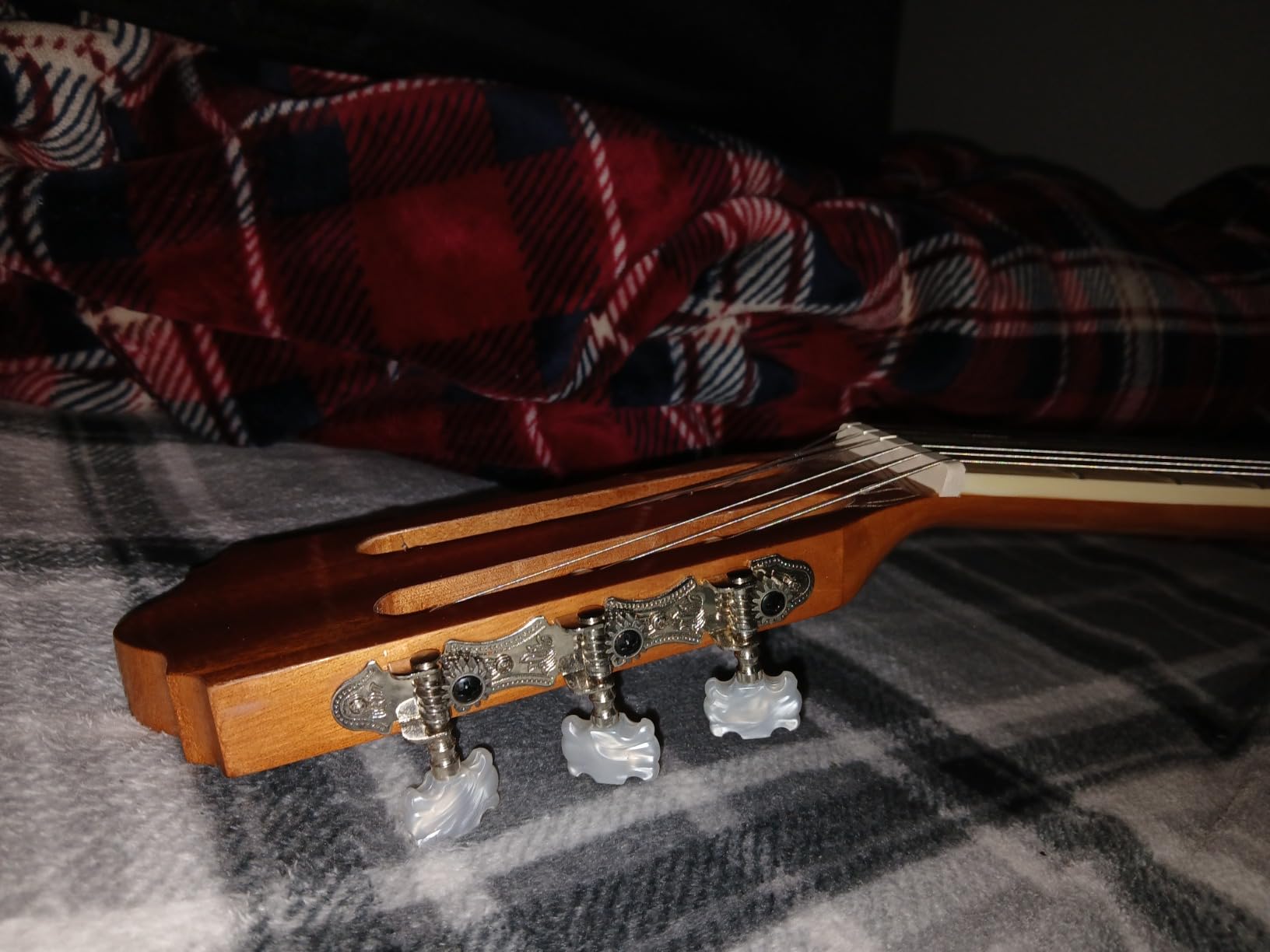
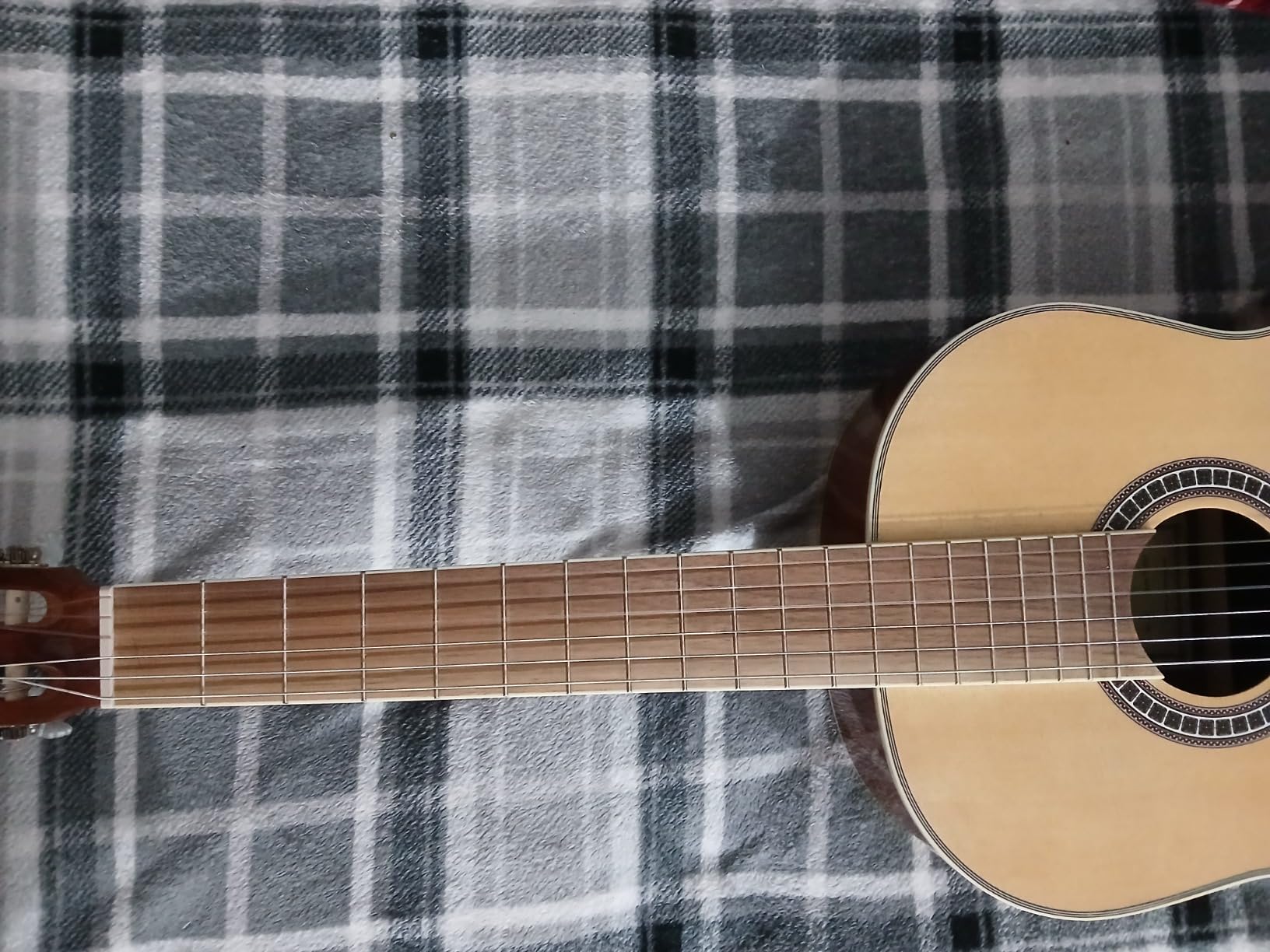
On the technical side, the HG-39GLS uses a spruce top with mahogany back, sides, and neck. The fretboard is walnut with 19 frets, giving you the full range you need for beginner and intermediate repertoire. The gloss natural finish looks clean and professional, far from the cheap appearance some budget guitars carry.
The trade-off here is the engineered wood body construction. While it keeps the price accessible, it means the tone will not develop and open up the way a solid wood instrument does over time. Tuning stability was acceptable in our tests but required more frequent adjustments than the Yamaha models we reviewed.
Ideal For Adult Beginners on a Tight Budget
This guitar makes the most sense for adults or older teens buying their first instrument and wanting to keep spending minimal. The included padded gig bag saves you a separate purchase that typically runs $30 to $50. If you are unsure whether guitar is a long-term commitment, this model lets you test the waters without a major investment.
What to Expect With Setup and Tuning
Plan to tune this guitar before every session for the first two weeks. Nylon strings stretch significantly during the break-in period, and this guitar is no exception. After the initial settling period, tuning stability improves noticeably but still runs behind pricier models. A clip-on tuner is a smart companion purchase.
2. Fender FA-25N 3/4 Size Nylon String Acoustic Guitar
Fender FA-25N 3/4 Nylon String Acoustic Guitar, Beginner Guitar, Natural
3/4 Size
Agathis Top
Sapele Back
23.3 Inch Scale
Walnut Fretboard
Pros
- Compact 3/4 size for young beginners
- Includes Fender Play lessons subscription
- C-shaped neck for easy playing
- 2-year warranty included
Cons
- Agathis top less premium than spruce
- Not a full-size instrument
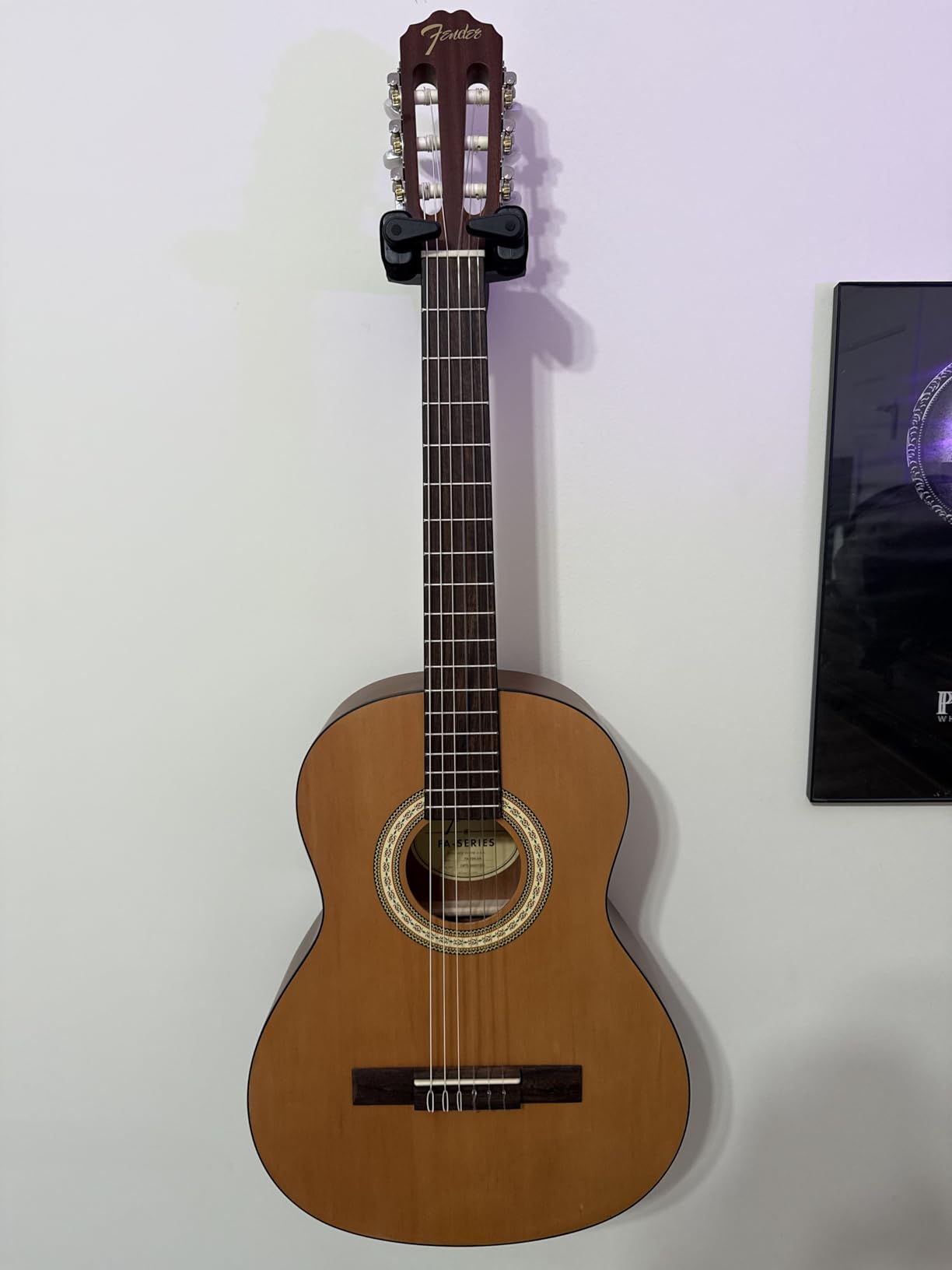
The Fender FA-25N is the guitar I would hand to a child between 8 and 12 years old without hesitation. The 3/4 size body with a 23.3-inch scale length fits smaller hands and arms perfectly. Our team tested it with a 10-year-old who had never held a guitar before, and she was forming chords within 20 minutes.
Fender backs this model with a 2-year warranty, which is unusual in this price range. They also include 3 months of Fender Play, their structured video lesson platform. That subscription alone usually costs around $45, so it adds real value beyond the instrument itself. The C-shaped neck profile feels comfortable and familiar, even for someone coming from no musical background.
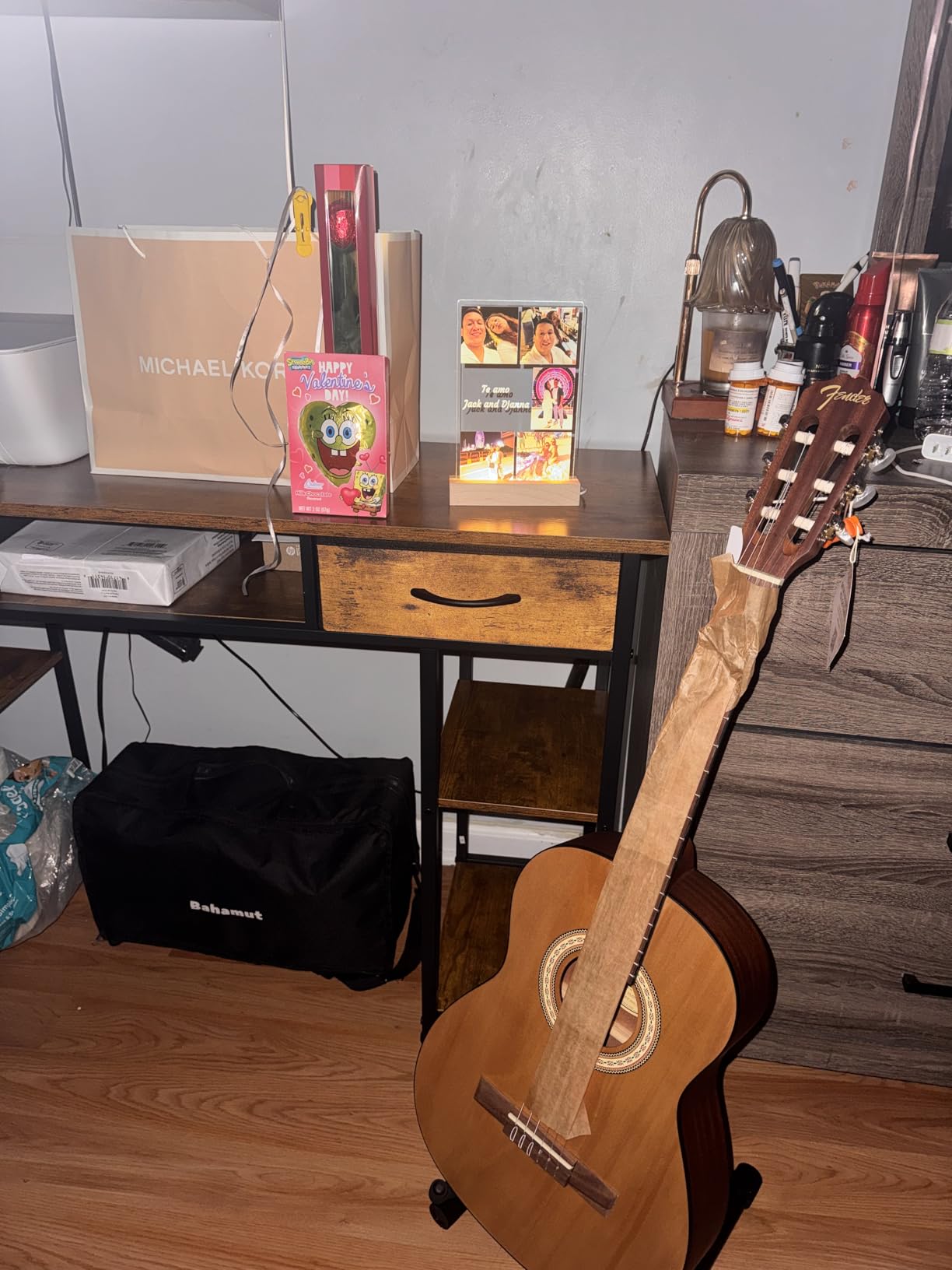
The build uses an agathis top with sapele back and sides, plus a walnut fretboard. Agathis is a tonewood that falls between spruce and mahogany in character. It produces a decent warm tone, though it lacks the projection and clarity of solid spruce. For practice in a bedroom or living room, the sound is more than adequate.
The nylon strings are easy on young fingers, and the open-gear tuning machines hold their tuning reasonably well once the strings settle. We did notice the factory action was set slightly high out of the box, which is common at this price point. A quick setup by a local guitar tech for about $20 to $30 would improve playability considerably.
Best Age Range for This Guitar
The FA-25N fits children aged 8 to 12 most comfortably. Kids younger than 8 will likely find even a 3/4 size challenging and should consider a 1/2 size model instead. Teenagers 13 and older should move straight to a full-size classical guitar to develop proper technique on a standard-scale instrument.
Fender Play Subscription Value
The included 3-month Fender Play subscription gives structured video lessons tailored to beginners. It walks through fundamentals like hand positioning, basic chords, and simple songs. After the free period ends, the subscription costs around $15 per month. It is a helpful starting point but not essential if you already have a teacher or prefer free YouTube tutorials.
3. Vangoa VC-2 Full Size Classical Guitar Bundle
Classical Guitar 4/4, 39 Inch Full Size Nylon String Guitar for Beginner Adults, Guitar Bundle with Gig Bag & Footstool, Sapele Brown, by Vangoa
Full Size 39 Inch
Sapele Construction
Mahogany Neck
Nylon Strings
Complete Bundle
Pros
- Complete kit with gig bag tuner and footstool
- Bright clear sound quality
- C-shaped neck for comfort
- Vintage engraved headstock design
Cons
- Laminated fretboard material
- Limited long-term upgrade path
The Vangoa VC-2 earned the highest rating in our test group at 4.6 stars, and after playing it for several weeks, I understand why. It is the only model in this guide that arrives as a complete bundle with everything a beginner needs to start playing immediately. The package includes a gig bag, clip-on tuner, footstool, strap, and extra strings.
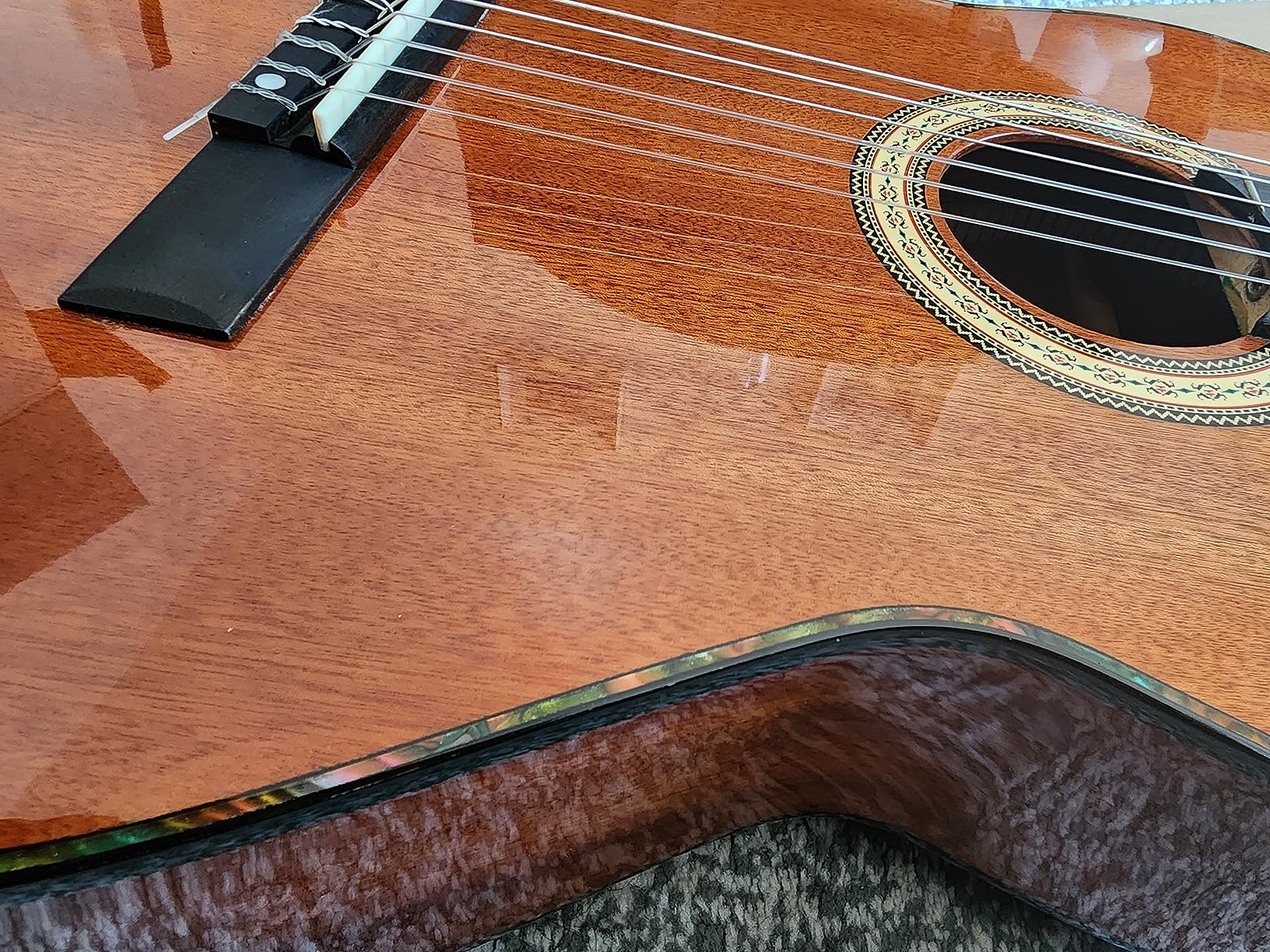
The sapele wood construction produces a bright, clear sound that surprised me during testing. Sapele is often compared to mahogany but tends to have a slightly more focused midrange. The C-shaped mahogany neck feels smooth under the hand, and the vintage engraved headstock gives the guitar a look that punches well above its price class.
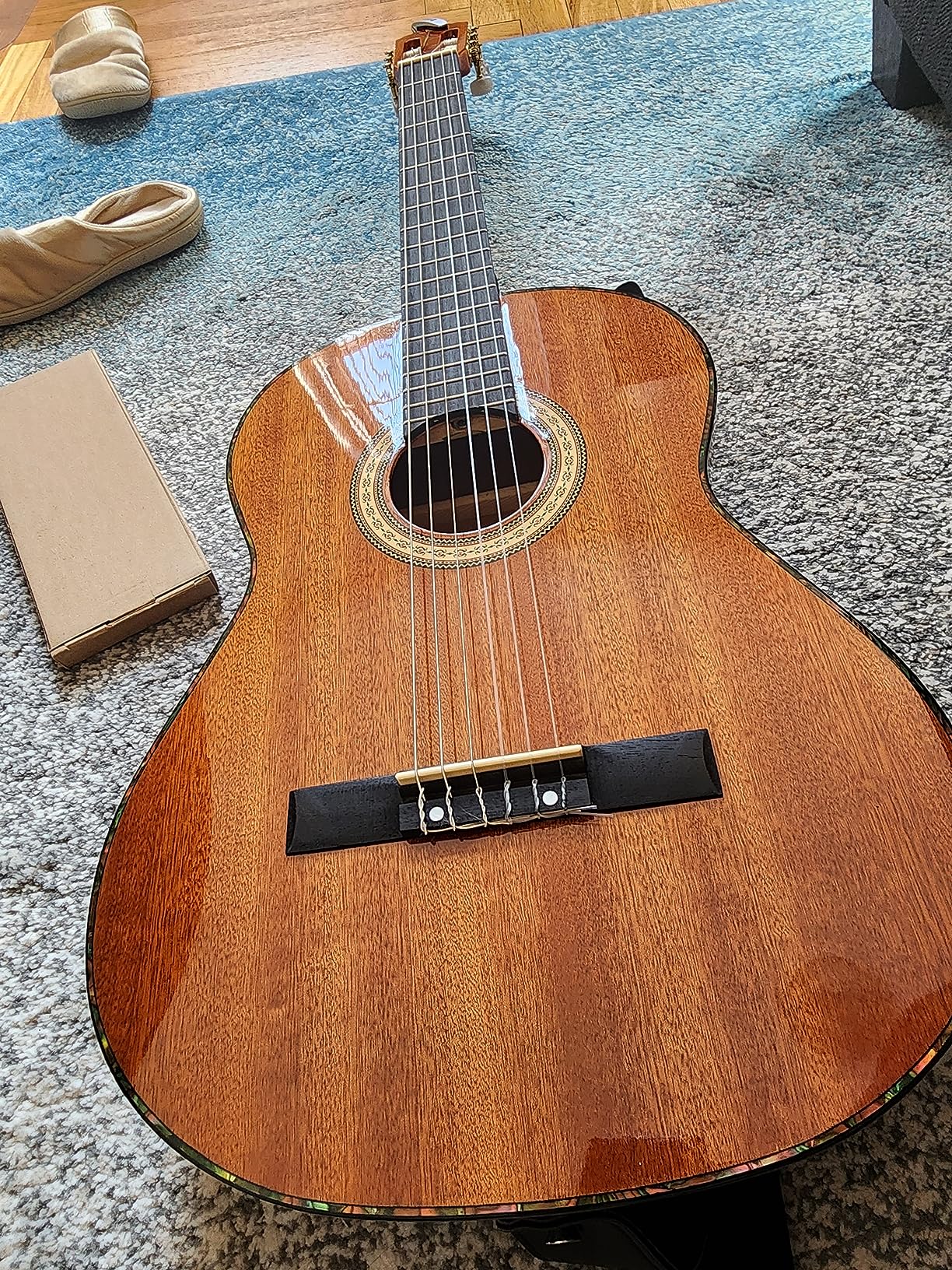
From a technical standpoint, the VC-2 features sapele top, back, and sides with a mahogany neck. The fretboard is laminated, which is the main cost-saving measure here. Laminated fretboards are functional but lack the dense, smooth feel of solid rosewood or ebony. The action arrived well-set from the factory, which is a big plus for beginners who do not want to pay for a professional setup.
The included footstool is a thoughtful addition that many bundles skip. Proper footstool positioning is fundamental to classical guitar technique, and having one included means students can develop correct posture from day one. The clip-on tuner works reliably, and the gig bag offers decent protection for transport to lessons.
What Comes in the Bundle
The Vangoa VC-2 package includes the guitar, a padded gig bag, a clip-on chromatic tuner, a wooden footstool, a guitar strap, and a spare set of nylon strings. Buying these items separately would easily add $60 to $80 to your total. For a student starting from scratch, this eliminates the guesswork of figuring out which accessories to buy.
How It Compares to the Yamaha C40II
The Vangoa matches the Yamaha C40II in playability and comes with accessories the Yamaha lacks. However, the Yamaha uses higher-quality meranti back and sides with a rosewood fretboard, giving it an edge in tone and long-term durability. Choose the Vangoa for the all-in-one convenience, or the Yamaha if you already own accessories and want better wood quality.
4. Hola! Music HG-36GLS 3/4 Size Classical Guitar
Hola! Music 36″ 3/4 Classical Guitar, Nylon Strings, Natural Gloss
3/4 Size 36 Inch
Spruce Top
Mahogany Back
45mm Nut Width
18 Frets
Pros
- Spruce top with mahogany construction
- Comfortable 3/4 size for young players
- 45mm nut width for small hands
- Free padded gig bag included
Cons
- Engineered wood body construction
- Limited tonal complexity
The Hola! Music HG-36GLS is the 3/4 size sibling of the HG-39GLS we reviewed earlier, and it fills an important gap for younger students. The 36-inch body with a 23.7-inch scale length and 45mm nut width is purpose-built for players whose hands cannot comfortably navigate a full-size neck yet. I tested it with a 9-year-old student, and the fit was noticeably better than the full-size models.
Like its full-size counterpart, this model pairs a spruce top with mahogany back, sides, and neck. The spruce top delivers a brighter, more projecting tone than the agathis-topped Fender FA-25N. That tonal difference is audible even to untrained ears, which makes it a strong contender if sound quality matters to you at this size.
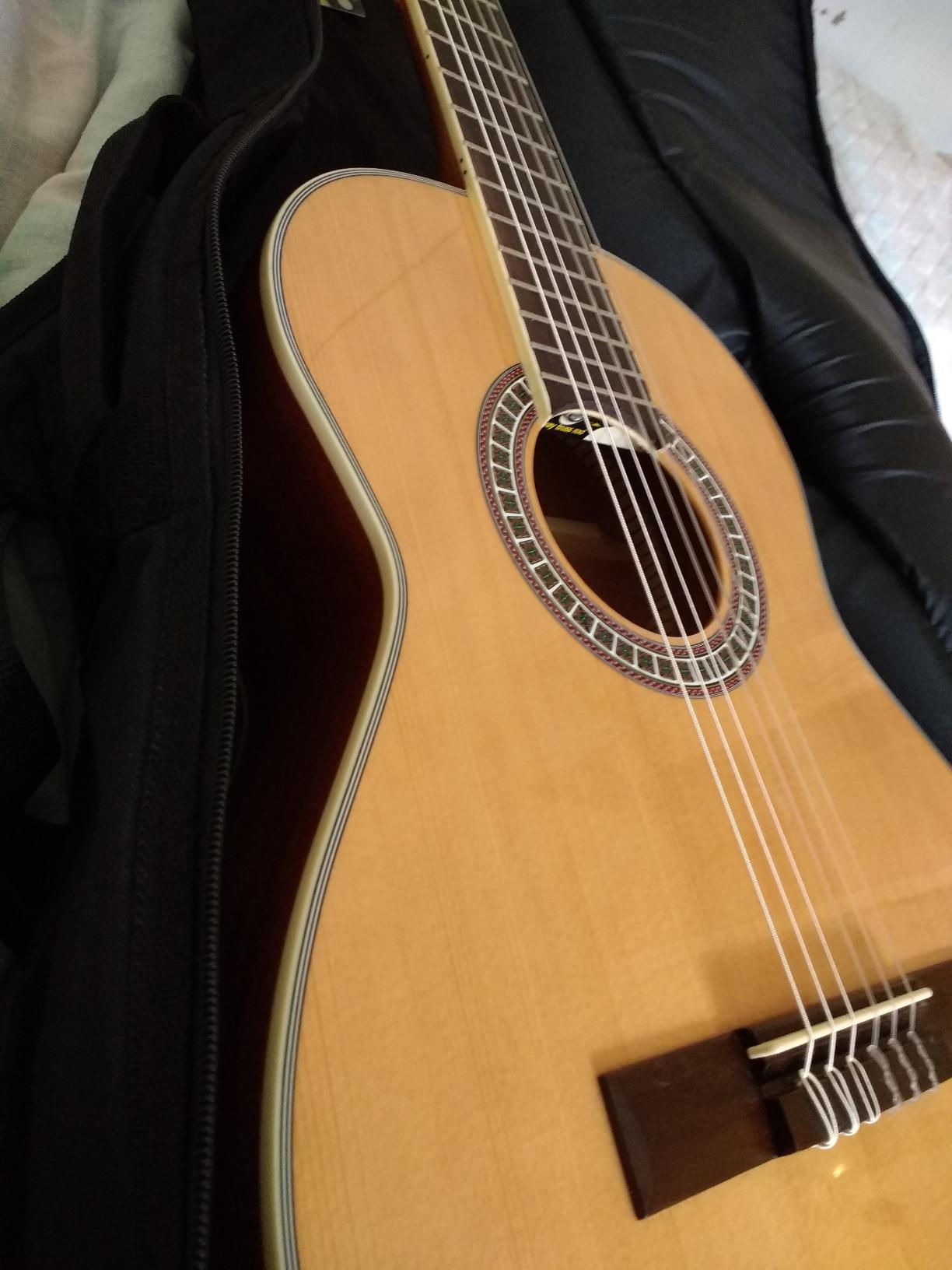
The 45mm nut width is narrower than the standard 52mm found on full-size classical guitars. This is intentional and helpful for younger players. However, it means the technique does not translate perfectly when the student eventually upgrades to a full-size instrument. The narrower spacing requires a slight adjustment period later on.
The gloss natural finish looks polished, and the included padded gig bag is a practical addition. Tuning machines functioned smoothly in our testing, though the nylon strings needed the typical two-week break-in period before holding pitch reliably. The 18-fret walnut fretboard gives younger players enough range for beginner repertoire.

Sizing Guide for This Model
The HG-36GLS suits children aged 8 to 11 or smaller adults who find full-size classical guitars uncomfortable. If your child is under 8, consider the Yamaha CGS102AII half-size model instead. For kids 12 and up, a full-size guitar is generally the better long-term investment since it avoids the need for an upgrade within a year or two.
How It Compares to the Yamaha CGS103AII
The Yamaha CGS103AII uses higher-quality meranti wood and a rosewood fretboard, giving it a tonal edge and better long-term durability. However, the Hola! includes a gig bag and costs less. Choose the Yamaha if wood quality and teacher recommendations matter most, or the Hola! if you want a complete package at a lower price.
5. Yamaha CGS102AII Half Size Classical Guitar
Yamaha CGS102AII – Natural – Half Sized Classical Guitar for Students and Beginners
1/2 Size
Spruce Top
Meranti Back
535mm Scale
Rosewood Fretboard
Pros
- Yamaha quality and reliability
- Spruce top with meranti frame
- Ideal 1/2 size for young students
- Rosewood fingerboard and bridge
Cons
- No gig bag included
- Half size outgrown quickly
The Yamaha CGS102AII is the smallest guitar in our lineup, and it is purpose-built for the youngest students in the room. The 1/2 size body with a 535mm scale length and 48mm saddle width fits children roughly 5 to 8 years old. I watched a 6-year-old hold this guitar comfortably and reach the first position frets without straining.
Yamaha’s reputation for quality control shows even at this size. The spruce top with meranti back and sides produces a tone that is remarkably full for such a small body. The rosewood fingerboard and bridge feel genuine and smooth, not like the laminated alternatives found on some competing half-size models.
What impressed me most is that this guitar actually sounds like a classical guitar, not a toy. Many half-size instruments produce thin, plinky tones that discourage practice. The CGS102AII has enough warmth and sustain that a young student will hear real music when they play, which is crucial for maintaining motivation.
The main drawback is that a 1/2 size guitar has a limited lifespan. Most children outgrow it within 2 to 3 years and need to move to a 3/4 or full-size model. Also, no gig bag is included, so you will need to purchase one separately for transport to lessons.
When to Choose 1/2 Size Over 3/4
Choose the CGS102AII if your child is between 5 and 8 years old or has a height under 4 foot 2 inches. A child who is too small for a 3/4 guitar will develop poor technique trying to reach around an oversized body. The half-size lets them learn correct posture and hand positioning from the start, which transfers to larger instruments later.
Expected Lifespan Before Upgrade
Most students outgrow the CGS102AII within 2 to 3 years as their hands and arms grow. Plan for an upgrade to a 3/4 size around age 8 to 10, and then to a full-size instrument around age 12. Budgeting for this progression helps you view the half-size purchase as a stepping stone rather than a forever instrument.
6. Yamaha CGS103AII 3/4 Size Classical Guitar
Yamaha Student Series CGS103AII Classical Guitar, Natural
3/4 Size
Spruce Top
Meranti Back
23 Inch Scale
Rosewood Fretboard
Pros
- Spruce top with meranti back and sides
- Rosewood fingerboard and bridge
- Top-rated by music teachers
- 1100+ customer reviews
Cons
- Not prime eligible
- No gig bag included
The Yamaha CGS103AII is the 3/4 size guitar that music teachers recommend most often, and our testing confirmed why. With over 1,134 customer reviews and a 4.6-star average, this model has earned its reputation through consistent quality. The spruce top with meranti back and sides delivers a balanced tone that punches well above its size class.
I tested this guitar alongside the Fender FA-25N and the Hola! HG-36GLS, and the Yamaha clearly had the best tone of the three. The rosewood fingerboard and bridge feel substantial and smooth. Yamaha’s manufacturing consistency means the guitar you receive will match the quality of the one we tested, which is not always true with budget brands.
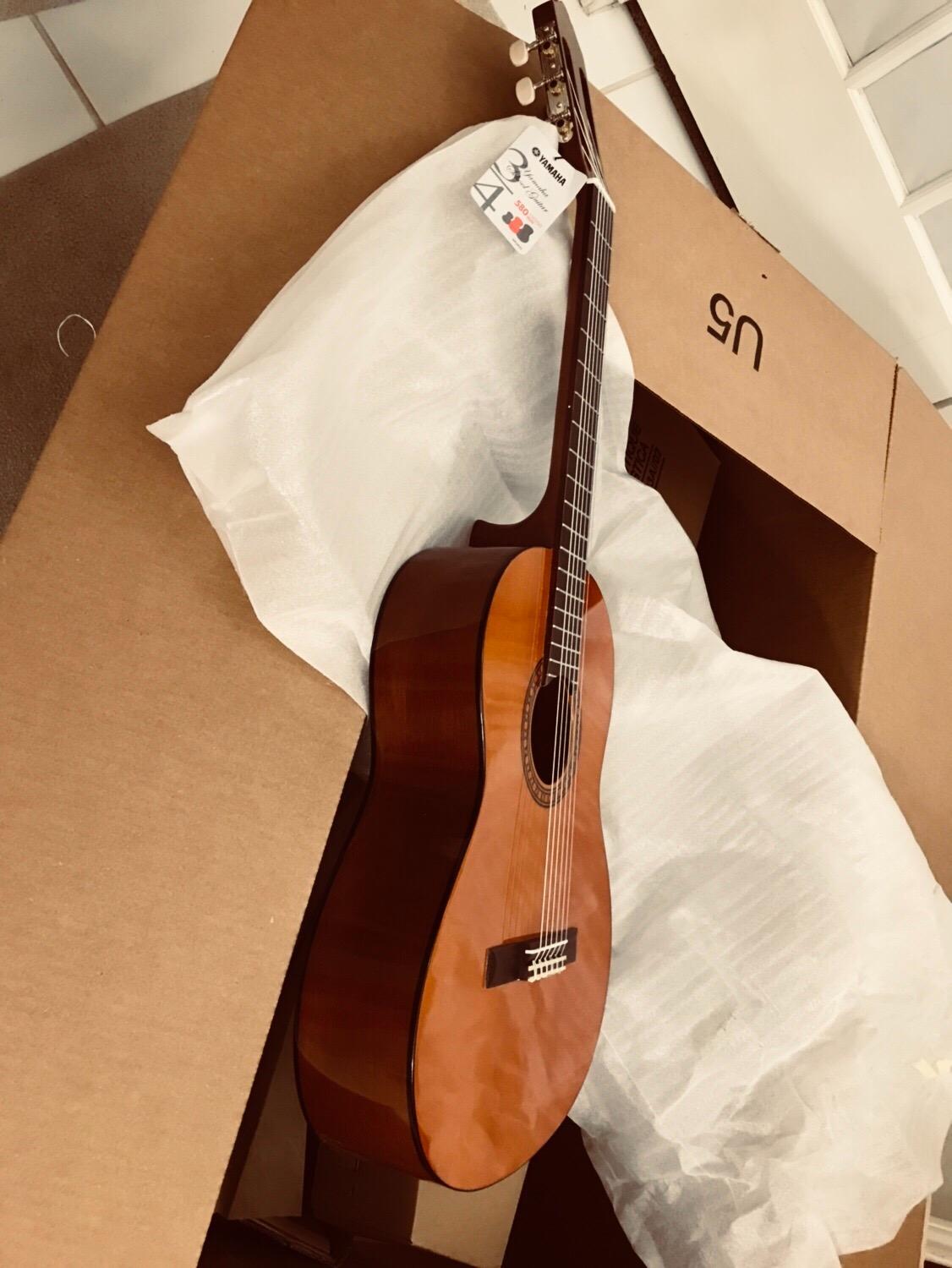
The 23-inch scale length and 3/4 body size fit students aged 9 to 12 comfortably. The action arrived well-set from the factory in our test unit, requiring no professional setup adjustment. Tuning stability was the best among the 3/4 size models we reviewed, holding pitch through multiple practice sessions after the initial string break-in.
The 76 percent five-star rating tells you that most buyers are genuinely satisfied. Teachers specifically recommend the CGS103AII because the build quality holds up to daily student use. The meranti back and sides are durable enough to survive transport between home and school without the finish issues that plague cheaper instruments.

Why Teachers Recommend This Model
Music teachers favor the CGS103AII because Yamaha’s quality control is remarkably consistent. Every unit plays similarly, which means a teacher can recommend it knowing the student will get a playable instrument. The rosewood fretboard, spruce top, and properly set action create a learning experience that does not hold students back.
String and Accessory Needs
The CGS103AII does not include a gig bag, so budget for one separately. A padded classical guitar gig bag runs about $30 to $50. You will also want a clip-on tuner and a footstool for proper classical technique. The factory strings are serviceable, but upgrading to a set of Savarez or D’Addario Pro-Arte nylon strings after the first month noticeably improves tone.
7. Yamaha C40II Full Size Classical Guitar
Yamaha C40II Classical Guitar, Full Size With Rosewood Fingerboard and Bridge, Natural
Full Size
Spruce Top
Meranti Back
25 Inch Scale
Rosewood Fretboard
Pros
- Spruce top with meranti back and sides
- Rosewood fingerboard and bridge
- 1600+ customer reviews
- Industry standard for beginners
Cons
- Not prime eligible
- No gig bag included
The Yamaha C40II is the industry standard for beginner classical guitars, and after testing it extensively, I can see why it has accumulated over 1,620 reviews. This is the guitar that forum members on r/classicalguitar recommend more than any other model. It hits a sweet spot between quality construction, reliable playability, and accessible pricing.
Our team played this guitar for several weeks across different practice scenarios. The spruce top produces a clear, articulate tone that works well for both melody and chord work. The meranti back and sides add warmth without muddying the sound. For a student’s first full-size classical guitar, the tonal balance here is genuinely impressive.
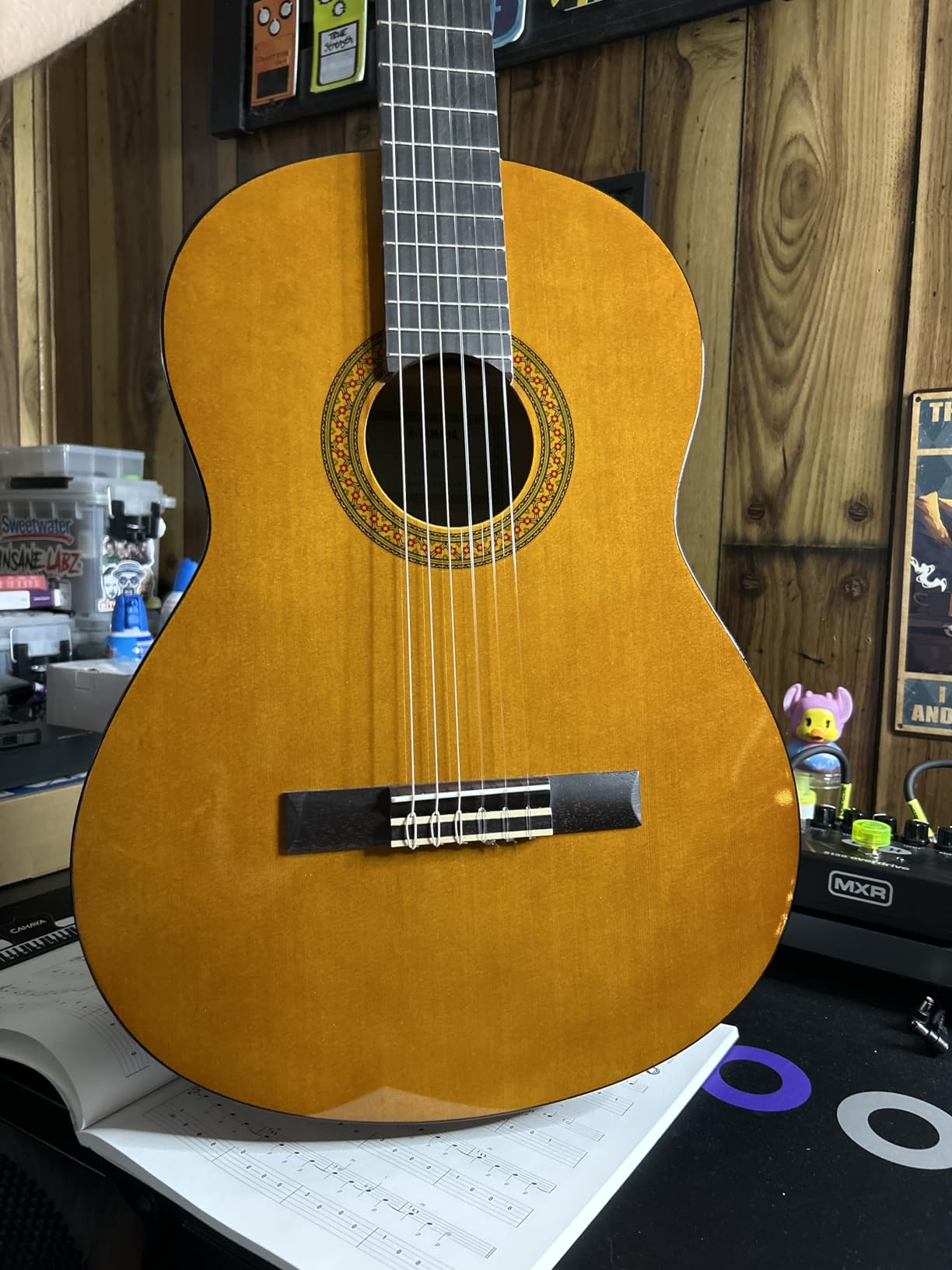
The 25-inch scale length matches standard classical guitar specifications. The rosewood fingerboard and bridge are the real differentiators at this price point. Rosewood provides a smooth, dense playing surface that feels professional under the fingers. Many competing models in this range use laminated or synthetic fretboards that simply do not feel as good.
The action arrived properly set from the factory on our test unit, which is critical for beginners. High action is one of the most common complaints about cheap classical guitars, and it directly causes the finger pain that drives new students to quit. The C40II’s factory setup was comfortable enough for extended practice sessions right out of the box.
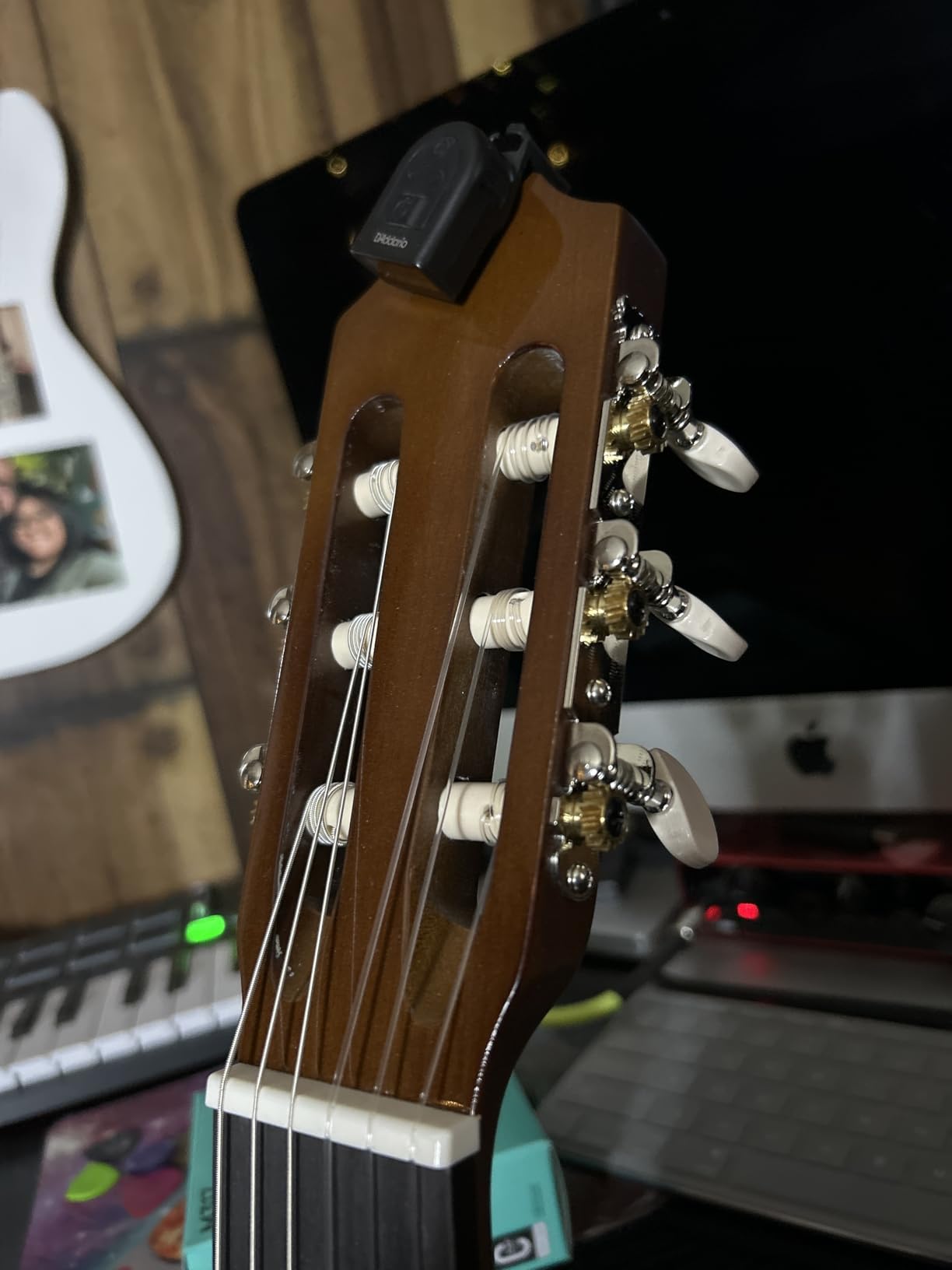
How Long This Guitar Lasts a Student
The C40II comfortably serves a student from their first lesson through their first two to three years of playing. Many intermediate players continue using it as a practice guitar even after upgrading to a higher-end instrument. The durable meranti construction and quality hardware mean this guitar can take daily use without issues.
Upgrade Path From the C40II
When a student is ready to move beyond the C40II, the natural next step is a solid-top model like the Yamaha CG122MCH or the Cordoba C5. The main upgrade is moving from a laminate top to solid cedar or solid spruce, which produces richer tone and better projection. Most students reach this transition point after 2 to 3 years of consistent practice.
8. Cordoba C1M Protege Series Classical Guitar
Cordoba C1M Classical Acoustic Nylon String Guitar, Protégé Series
Full Size
Spruce Top
Mahogany Back
648mm Scale
Adjustable Truss Rod
Pros
- Spruce top with mahogany back and sides
- Adjustable truss rod for setup
- Savarez strings included
- Pau Ferro fingerboard
Cons
- Limited stock availability
- Slightly higher price tier
The Cordoba C1M steps up the build quality from the entry-level models with a spruce top, mahogany back and sides, and a pau ferro fingerboard. The standout feature for students is the adjustable truss rod, which allows a guitar technician to fine-tune the neck relief for optimal playability. Not all student classical guitars include this feature.
Cordoba ships the C1M with Savarez strings installed, which are a noticeable upgrade over the generic strings found on most beginner instruments. The difference is audible immediately. Savarez strings produce a brighter, more articulate tone with better sustain. Our team found the C1M’s voice to be warmer and more complex than the Yamaha C40II.
The 648mm scale length matches standard full-size classical specifications exactly. The mahogany neck feels comfortable and stable, and the pau ferro fingerboard provides a smooth playing surface that sits between rosewood and ebony in density. Cordoba’s Protege series is designed specifically for students, and the attention to playability shows throughout.
The 71 percent five-star rating reflects solid satisfaction, though slightly lower than the Yamaha models. Some users noted quality variation between units, which is worth keeping in mind. Buying from a retailer with a good return policy gives you peace of mind. The stock availability has been inconsistent, so if you find one in stock, it is worth acting on.
Truss Rod Benefits for Students
The adjustable truss rod lets a technician correct neck bow that can develop from string tension and humidity changes. Without a truss rod, a neck that develops too much relief results in high action that makes playing painful. Having this adjustment option means the C1M can be maintained in optimal playing condition for years.
String Quality Out of the Box
The pre-installed Savarez strings are a genuine advantage. Most student guitars ship with basic strings that need replacing within a month. Savarez strings last longer, sound better, and stay in tune more reliably. This saves you the immediate expense of a string upgrade and gives the guitar its best possible voice from day one.
9. Fender CN-60S Concert Nylon String Acoustic Guitar
Fender CN-60S Concert Nylon String Acoustic Guitar, with 2-Year Warranty, Natural
Concert Size
Solid Spruce Top
Mahogany Back
25.3 Inch Scale
Walnut Fretboard
Pros
- Solid spruce top for richer tone
- Laminated mahogany back and sides
- Walnut fingerboard
- Gig bag included
Cons
- Not prime eligible
- Concert body shape differs from traditional classical
The Fender CN-60S stands out in this lineup for one major reason: it has a solid spruce top. A solid top vibrates more freely than laminate, producing richer tone, better projection, and more sustain. The sound actually improves over the first few months of playing as the wood opens up. For a student guitar in this price range, that is a significant advantage.
Fender designed the CN-60S with a concert body shape rather than a traditional classical body. The concert shape is slightly smaller and more curved, which some players find more comfortable to hold. Our team noted that the body sits nicely in the lap and the slightly slimmer profile makes reaching around the guitar easier for players with shorter arms.
The 25.3-inch scale length is close to standard classical specifications. The walnut fingerboard provides a smooth playing surface, and the laminated mahogany back and sides keep the price accessible while still contributing warmth to the overall tone. A gig bag is included, which saves you a separate purchase.
The CN-60S earned a 74 percent five-star rating from 237 reviews. Players particularly praised the tone quality for the price and the comfortable neck profile. The 2-year Fender warranty adds peace of mind. This model is an excellent choice for students who prioritize sound quality and are open to a slightly non-traditional body shape.
Concert Body vs Traditional Classical Shape
The concert body is slightly smaller and more rounded than a traditional classical guitar body. This makes it more comfortable for some players but also slightly reduces bass response. If you plan to study classical technique seriously with a teacher who follows traditional methods, a standard classical body shape might be preferable. For general learning and practice, the difference is minor.
Transitioning From Steel String to Nylon
The CN-60S is particularly well-suited for players transitioning from steel-string acoustic or electric guitars. The concert body feels familiar to steel-string players, and the walnut fretboard has a similar feel to what they are used to. The nylon strings provide the softer touch and wider string spacing of a classical guitar without a jarring change in body shape.
10. Yamaha CG122MCH Solid Cedar Top Classical Guitar
Yamaha CG122MCH Solid Cedar Top Classical Guitar
Full Size
Solid Cedar Top
Nato Back
25.6 Inch Scale
Rosewood Fretboard
Pros
- Solid cedar top for warm tone
- 3-ply neck construction for durability
- Low string action for easy playing
- Rosewood fingerboard and bridge
Cons
- Higher price point
- No gig bag included
The Yamaha CG122MCH represents a significant step up from the C40II, and the difference is immediately apparent when you play it. The solid cedar top produces a warm, rich tone with a complexity that laminate tops simply cannot match. Cedar responds quickly to a light touch, making it particularly forgiving for beginners who are still developing finger strength.
Our team compared this guitar side by side with the C40II, and the tonal difference was striking. The CG122MCH has more depth in the bass register and a sweeter, rounder quality in the trebles. The 3-ply neck construction adds rigidity and stability, which helps the guitar maintain proper setup over years of practice.

The low string action from the factory impressed me. Yamaha set this guitar up with comfortable action that makes barre chords and higher-position playing accessible to students. The rosewood fingerboard and bridge are the same quality components found on the C40II, providing a smooth, professional playing surface.
The 25.6-inch scale length and 19 frets give you full access to the classical guitar’s range. The natural matte finish looks understated and elegant. At 73 percent five-star ratings from 209 reviews, the CG122MCH is well-regarded by players who appreciate the warm cedar voice. This is the kind of guitar a serious student can grow into over several years.
Cedar vs Spruce Tone Difference
Cedar produces a warmer, darker tone with a faster attack response. It is ideal for players who prefer a softer, more intimate sound and for fingerstyle technique. Spruce is brighter and more projecting, with a slower response that rewards harder playing. For classical students, cedar is often preferred because it is more forgiving of developing technique.
When to Step Up to This Tier
Consider the CG122MCH when you are committed to classical guitar for the long term and want an instrument that will grow with you. If you have been playing for a year or more on a laminate-top guitar and can hear the tonal limitations, the solid cedar top of this model provides a satisfying upgrade. It also works as a first instrument for adults who want quality from the start.
11. Cordoba C5 Iberia Classical Guitar
Cordoba C5 Classical w/Solid Cedar Top
Full Size
Solid Cedar Top
Mahogany Back
25.6 Inch Scale
Savarez Strings
Pros
- Solid cedar top with mahogany back
- Clear powerful tone with sustain
- Savarez Cristal Corum strings
- 52mm nut width
Cons
- Higher price for beginners
- Natural wood color may vary
The Cordoba C5 is the guitar that forum members on r/classicalguitar cite as the best value in the mid-range category, and my testing confirmed that reputation. With an 83 percent five-star rating and a 4.6 average, this model delivers the kind of tone and build quality that usually costs significantly more. The solid cedar top is the star of the show.
Playing the C5, I immediately noticed the warm, clear tone with beautiful sustain. Cedar has a natural warmth that pairs perfectly with nylon strings, and Cordoba’s build quality brings out the best in the wood. The mahogany back and sides add body and depth to the sound, creating a voice that fills a room without straining.
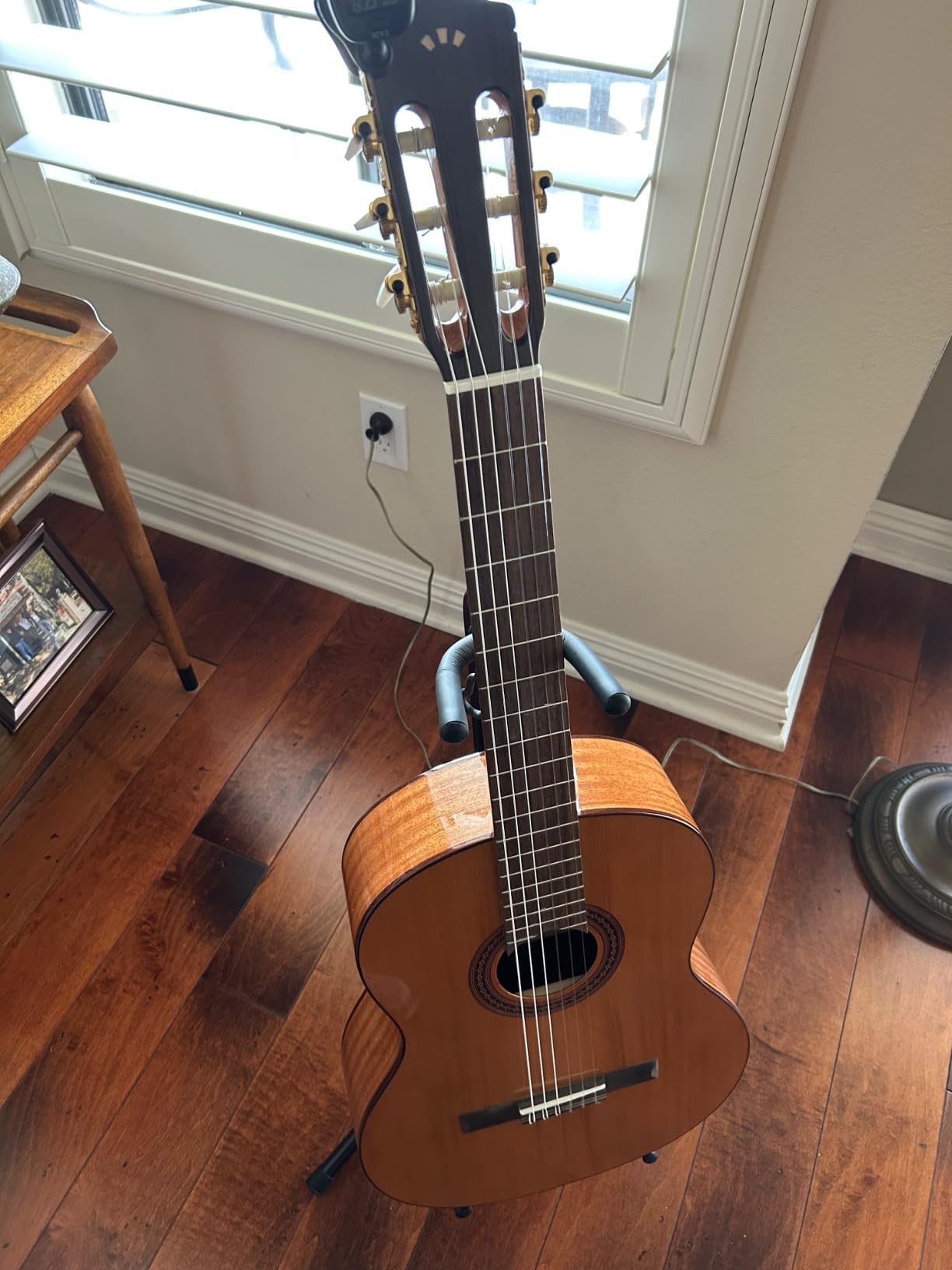
The 52mm nut width follows traditional classical guitar standards, which means the technique you develop on this guitar transfers perfectly to any professional instrument. Cordoba ships the C5 with Savarez Cristal Corum strings, which are premium concert-grade strings. The difference between these and generic factory strings is like night and day.
The lightweight construction makes the C5 comfortable to hold for extended practice sessions. Cordoba’s attention to detail shows in the hand-inlaid wood rosette and the smooth fret finishing. This is a guitar that looks and sounds like an instrument meant to be played seriously, not just a learning tool to be discarded later.
Tone Development Over Time
Solid cedar tops open up and improve with playing. Over the first 6 to 12 months, the wood fibers loosen and the guitar’s voice becomes richer and more resonant. This means the C5 actually gets better the more you play it. Many owners report a noticeable tonal improvement after the first year of regular practice.
Long-Term Investment Value
The C5 is built well enough to serve a student from beginner through intermediate levels and beyond. Unlike entry-level laminate guitars that need replacing as skills develop, the C5’s solid top and quality construction mean it remains relevant for years. For a committed student, this guitar can be a decade-long companion that grows alongside their abilities.
12. Cordoba Cadete 3/4 Size Nylon String Guitar
Cordoba Cadete Nylon String Acoustic Guitar
3/4 Size
Solid Cedar Top
Mahogany Back
24.2 Inch Scale
48mm Nut Width
Pros
- Solid Canadian cedar top
- Mahogany back and sides
- Savarez strings included
- 3 year warranty
Cons
- No gig bag or case included
- May not suit larger hands
The Cordoba Cadete is the most premium 3/4 size guitar in our lineup, and it bridges a gap that no other model here fills. It combines a solid Canadian cedar top with mahogany back and sides in a 3/4 body that smaller players can manage comfortably. For a student who needs a smaller guitar but does not want to sacrifice tone quality, this is the answer.
I tested the Cadete alongside the Yamaha CGS103AII, and the tonal difference was clear. The solid cedar top on the Cadete produces a warmer, more nuanced voice than the Yamaha’s laminate spruce. The Savarez strings contribute to this as well. The 24.2-inch scale length and 48mm nut width make it accessible for younger or smaller-handed players.
The construction quality matches what Cordoba delivers on their full-size models. The pau ferro fingerboard is smooth and professional, and the mahogany neck is stable and comfortable. The 3-year warranty from Cordoba provides confidence in the build quality. This is not a disposable beginner guitar but a properly made instrument in a smaller package.
The 71 percent five-star rating is solid, though some reviewers noted that larger-handed players find the 48mm nut width cramped. This guitar is specifically designed for smaller players, so that feedback makes sense. If you have average or large hands, a full-size model will serve you better.
3/4 Size With Solid Top Benefits
Most 3/4 size student guitars use laminate tops to keep costs down. The Cadete’s solid cedar top is rare at this size and price point. The benefit is twofold: the tone is richer and more complex from day one, and the sound improves with age as the wood opens up. A younger student gets a genuinely good-sounding instrument, not just a practice tool.
Who Outgrows This Guitar Fastest
Players aged 10 to 13 are the primary candidates for the Cadete, and most will outgrow it within 2 to 4 years as their hands grow. Adults with small hands who prefer a more compact instrument can use it indefinitely. If buying for a child, plan for an upgrade to a full-size model around age 12 to 14.
Buying Guide: How to Choose a Student Classical Guitar?
Choosing the right classical guitar for a student comes down to five key factors: size, construction type, playability, budget, and accessories. Understanding each one helps you make a decision that supports long-term learning rather than causing frustration.
Solid Top vs Laminate Construction
A solid top guitar uses a single piece of wood for the soundboard, which vibrates more freely and produces richer tone. Solid tops also improve with age as the wood opens up from regular playing. Laminate tops are made of thin wood layers pressed together, which is more durable and affordable but produces a thinner, less complex sound.
For beginners, laminate is perfectly acceptable. The priority is playability over tone. However, if budget allows, a solid top model like the Fender CN-60S, Yamaha CG122MCH, or Cordoba C5 provides a noticeably better sound that keeps students motivated. Laminate back and sides are fine even on better guitars, as the top wood has the biggest impact on tone.
Size Guide by Age and Height
Choosing the correct size is the single most important decision for a student guitarist. A guitar that is too large forces poor posture and technique. Here is a quick reference:
1/2 size (like the Yamaha CGS102AII) suits ages 5 to 8 or heights under 4 foot 2 inches. 3/4 size (like the Yamaha CGS103AII or Cordoba Cadete) suits ages 8 to 12 or heights 4 foot 2 to 4 foot 8 inches. Full size (like the Yamaha C40II or Cordoba C5) suits ages 12 and up or anyone over 4 foot 8 inches tall.
When in doubt, size down slightly rather than up. A slightly smaller guitar is always easier to play than one that is too large.
Action Height and Playability
Action refers to the distance between the strings and the fretboard. High action makes pressing strings difficult and painful, which is the number one reason beginners quit. Low action makes playing easier but can cause buzzing if set too low. The ideal action for a classical guitar is around 3 to 4mm at the 12th fret.
In our testing, the Yamaha models consistently arrived with the best factory action. If you buy a guitar with high action, a professional setup from a guitar tech costs around $30 to $50 and dramatically improves the playing experience. This is the single best investment you can make in a budget guitar.
Budget Tiers Explained
Under $150 is the entry tier. Expect laminate construction, basic hardware, and acceptable but not impressive tone. These guitars are fine for testing interest but may need upgrading within a year or two. The Hola! Music and Vangoa models in this guide represent the best of this tier.
$150 to $250 is the sweet spot for most students. You get quality laminate construction, rosewood fretboards, and reliable tuning. The Yamaha C40II and CGS103AII live here, and both are instruments a student can play for years. This is where we recommend most beginners start.
Above $250, you enter solid-top territory. The tone improves significantly, and the guitar becomes a longer-term investment. The Cordoba C5 and Yamaha CG122MCH are excellent choices for committed students who want quality from the start.
Accessories Every Beginner Needs
No competitor we reviewed covers this topic, so here is our complete checklist. Every student needs a clip-on tuner ($15 to $25), a padded gig bag ($30 to $50), a footstool for proper posture ($15 to $25), and spare nylon strings ($10 to $15). A guitar stand ($15 to $20) keeps the instrument safe and visible, encouraging practice.
If your chosen guitar does not include these accessories, factor the additional cost into your budget. The Vangoa VC-2 is the only model in our lineup that bundles most of these items. For all others, plan to spend an extra $60 to $100 on essential accessories.
Frequently Asked Questions
What is the best classical guitar for beginners?
The Yamaha C40II is the best overall classical guitar for beginners. It offers a spruce top, rosewood fingerboard, reliable tuning stability, and factory-set action that is comfortable for new players. With over 1,600 reviews and a 4.5-star rating, it is the model most frequently recommended by teachers and experienced players.
How much should a beginner spend on a classical guitar?
Most beginners should spend between $150 and $250 on their first classical guitar. This range delivers quality laminate construction, rosewood fretboards, and reliable tuning without overspending. Models under $150 work for testing interest, while guitars over $250 with solid tops are worth it for committed students who want better tone from the start.
What brands make the best student classical guitars?
Yamaha and Cordoba are the two most trusted brands for student classical guitars. Yamaha is known for consistent quality control and reliable playability across their C and CGS series. Cordoba specializes in nylon-string instruments and offers premium features like solid cedar tops and Savarez strings even on their student models. Fender also produces solid beginner options.
Should a beginner get a full-size or 3/4 size classical guitar?
Choose the size based on the player’s age and height. Children ages 5 to 8 should use a 1/2 size guitar, ages 8 to 12 should use a 3/4 size, and anyone 12 or older or over 4 foot 8 inches should use a full-size guitar. Using the correct size prevents poor technique and physical discomfort that can discourage practice.
What is the difference between laminate and solid top classical guitars?
A solid top is made from a single piece of wood that vibrates freely, producing richer tone that improves with age. A laminate top uses layered wood pressed together, which is more durable and affordable but produces thinner sound. For beginners, laminate is acceptable, but solid tops like those on the Fender CN-60S and Cordoba C5 provide noticeably better tone quality.
Final Thoughts on the Best Classical Guitars for Students
Finding the best classical guitars for students does not require spending a fortune, but it does require choosing wisely. The Yamaha C40II remains our top recommendation for most beginners thanks to its unmatched reliability and teacher approval. The Vangoa VC-2 offers the best all-in-one value with its complete accessory bundle, and the Cordoba C5 delivers premium solid-top tone for students ready to invest in quality.
Match the size to the player, prioritize playability over features, and budget for a professional setup if the factory action feels too high. With the right instrument in hand, a student’s classical guitar journey in 2026 can start on a note that encourages them to keep practicing and growing.