
Finding the best guitar amplifiers for gigs means balancing power, portability, tone, and the kind of reliability that holds up night after night. I have spent years hauling amps into bars, clubs, weddings, and outdoor stages, and the wrong amp can turn a great set into a frustrating one. The right gigging amp keeps you heard over a drummer without sacrificing the sound that defines your playing.
The challenge is that gigging needs are not one-size-fits-all. A 100-watt modelling combo is overkill for a quiet coffeehouse acoustic set, while a 7-watt mini amp will vanish the moment a loud drummer kicks in. Wattage, speaker size, weight, and onboard effects all factor into whether an amp earns a permanent spot in your load-in rig. Tube purists, modelling converts, and budget-conscious players all want different things from a stage amp.
This guide breaks down ten gig-ready amplifiers I would actually trust on a stage in 2026. I focused on real gigging scenarios, from small bar gigs to mid-size club venues, and matched each amp to where it shines. You will find a quick comparison table, detailed hands-on reviews, a wattage-to-venue buying guide, and answers to the questions gigging guitarists ask most. Let us find the amp that fits your next gig.
Table of Contents
Top 3 Picks for Best Guitar Amplifiers for Gigs in 2026


Best Guitar Amplifiers for Gigs in 2026
| Product | Specifications | Action |
|---|---|---|
| Fender Mustang GTX100 |
|
Check Latest Price |
 BOSS Katana-50 Gen 3 BOSS Katana-50 Gen 3 |
|
Check Latest Price |
| Fender Tone Master Deluxe Reverb |
|
Check Latest Price |
 Marshall MG30GFX Marshall MG30GFX |
|
Check Latest Price |
 Fender Champion II 50 Fender Champion II 50 |
|
Check Latest Price |
 Positive Grid Spark 40W Positive Grid Spark 40W |
|
Check Latest Price |
 Roland JC-40 Jazz Chorus Roland JC-40 Jazz Chorus |
|
Check Latest Price |
 Fender Acoustasonic 40 Fender Acoustasonic 40 |
|
Check Latest Price |
 Orange Crush 20 Orange Crush 20 |
|
Check Latest Price |
 Boss Katana Mini Boss Katana Mini |
|
Check Latest Price |
1. Fender Mustang GTX100 – The 100-Watt Gig Workhorse
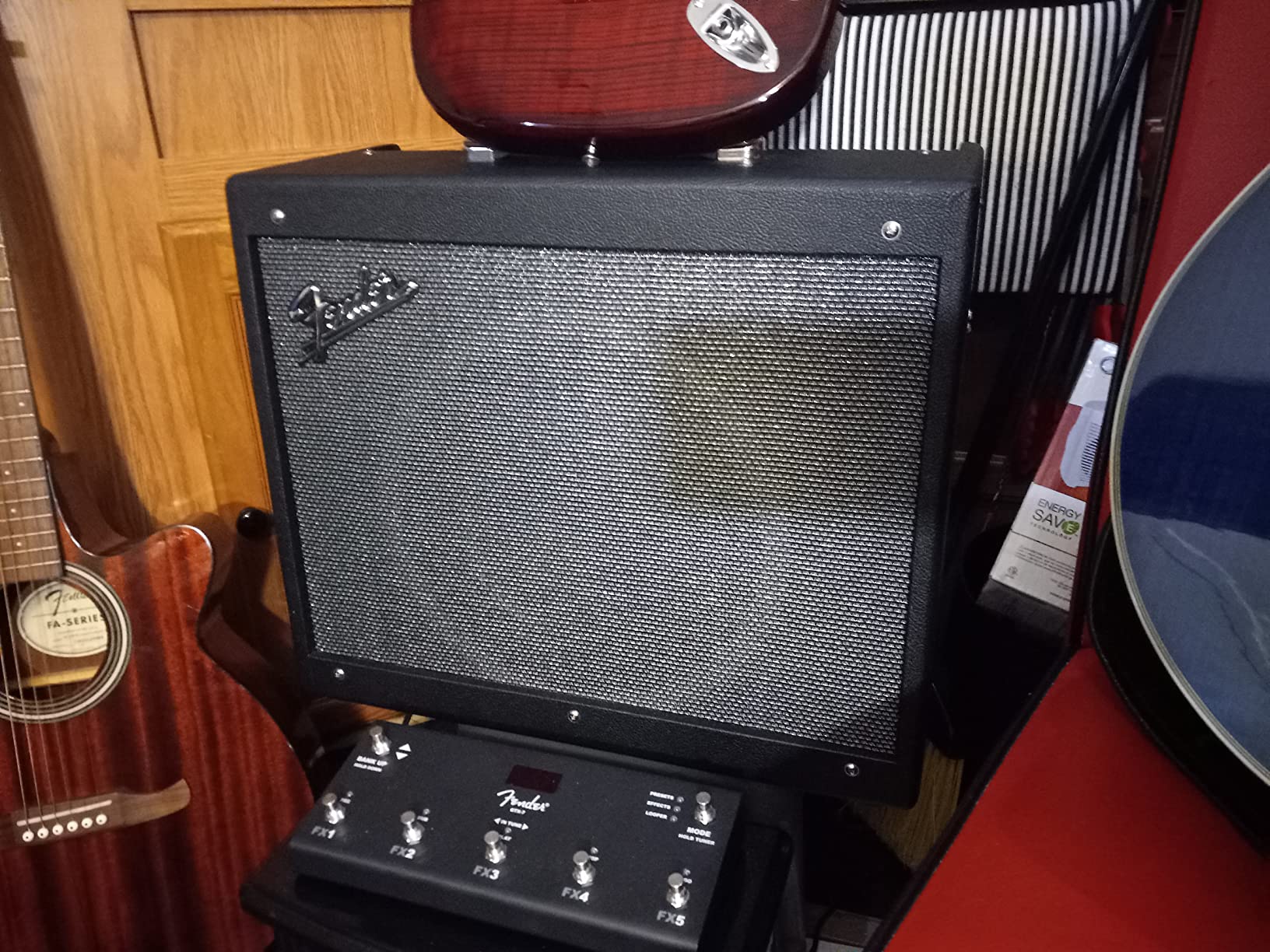
Fender Mustang GTX100 Guitar Amplifier Combo with Speaker, Bluetooth, WiFi
100W digital modeling
12 inch Celestion G12FSD-100
200 presets
Bluetooth and WiFi
Pros
- 100-watt power with Celestion speaker
- 200 presets covering many styles
- Bluetooth and WiFi connectivity
- 7-button footswitch included
- Stereo XLR outputs for recording
Cons
- Heavy at 28.5 pounds
- Complex for beginners
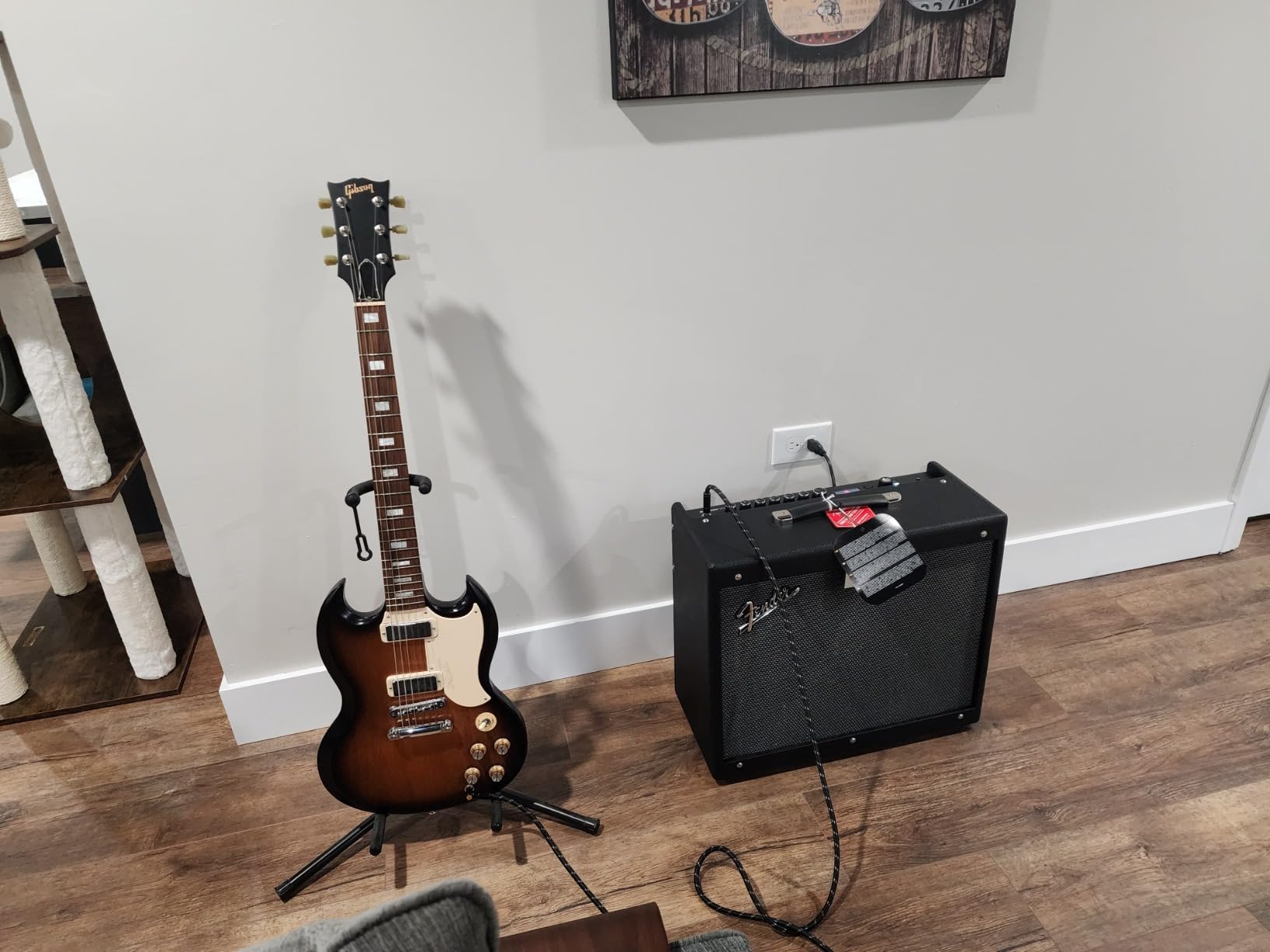
I have used the Fender Mustang GTX100 on club stages where the PA was weak and the drummer played like he had something to prove. That 100-watt output through the 12-inch Celestion G12FSD-100 cuts through a dense mix without flinching. The full-color display makes switching between the 200 presets fast, even under dim stage lighting where you cannot read a manual.
What sold me is the included 7-button footswitch. Most modelling amps in this range make you pay extra for foot control, but Fender includes bank up and down, tap tempo, and a 60-second looper right out of the box. That is a genuine gigging advantage when you need to switch from a clean verse tone to a roaring chorus without tap-dancing across your pedalboard.
Technically, the GTX100 leans on digital modelling rather than tubes, but the fidelity is impressive. The stereo XLR line outputs let you send a polished signal straight to the front-of-house mixing desk, which means you can run your stage volume lower and let the PA carry the room. The stereo effects loop and WiFi firmware updates keep the amp current as Fender rolls out new features.
The downsides are real but manageable. At 28.5 pounds, it is not a one-hand carry up narrow club stairs, and the depth of options can overwhelm a guitarist who just wants three good sounds. Once you spend an evening dialing in your patches, though, the GTX100 becomes one of the most complete gig-ready packages available.
How does it perform in a full band mix?
In a loud rock trio, the GTX100 holds its own against an aggressive drummer and a bassist running an 8×10 cab. The Celestion speaker has the midrange presence and low-end tightness that keeps your guitar from getting buried. I found the higher-gain presets, especially the modern and metal voicings, stay articulate even when the stage volume climbs.
Is the learning curve worth it?
There is a learning curve to managing 200 presets, the Fender Tone app, and wireless connectivity. If you prefer a three-knob amp, this is more than you need. But gigging guitarists who want one amp to cover country cleans, blues crunch, and modern metal will find the depth rewarding after a weekend of setup work.
2. BOSS Katana-50 Gen 3 – Versatile Tube Logic at a Fair Price
BOSS Katana-50 Gen 3 Guitar Amplifier, 50-Watt Combo Amp
50W Class AB
Custom 12 inch speaker
12 amp characters
USB-C output
Pros
- Tube Logic sound quality
- 50-watt power suitable for gigs
- Custom 12-inch speaker
- Multiple amp characters and variations
- USB-C output for recording
Cons
- No Prime eligibility
- Heavy at higher wattage settings
The BOSS Katana-50 Gen 3 is the amp I recommend most often to gigging guitarists who want serious tone without a four-figure investment. The evolved Tube Logic sound gives it a responsiveness that feels closer to a real tube amp than most modelling competitors at this price. I have run it on small club stages and it keeps up with a full band comfortably at the 50-watt setting.
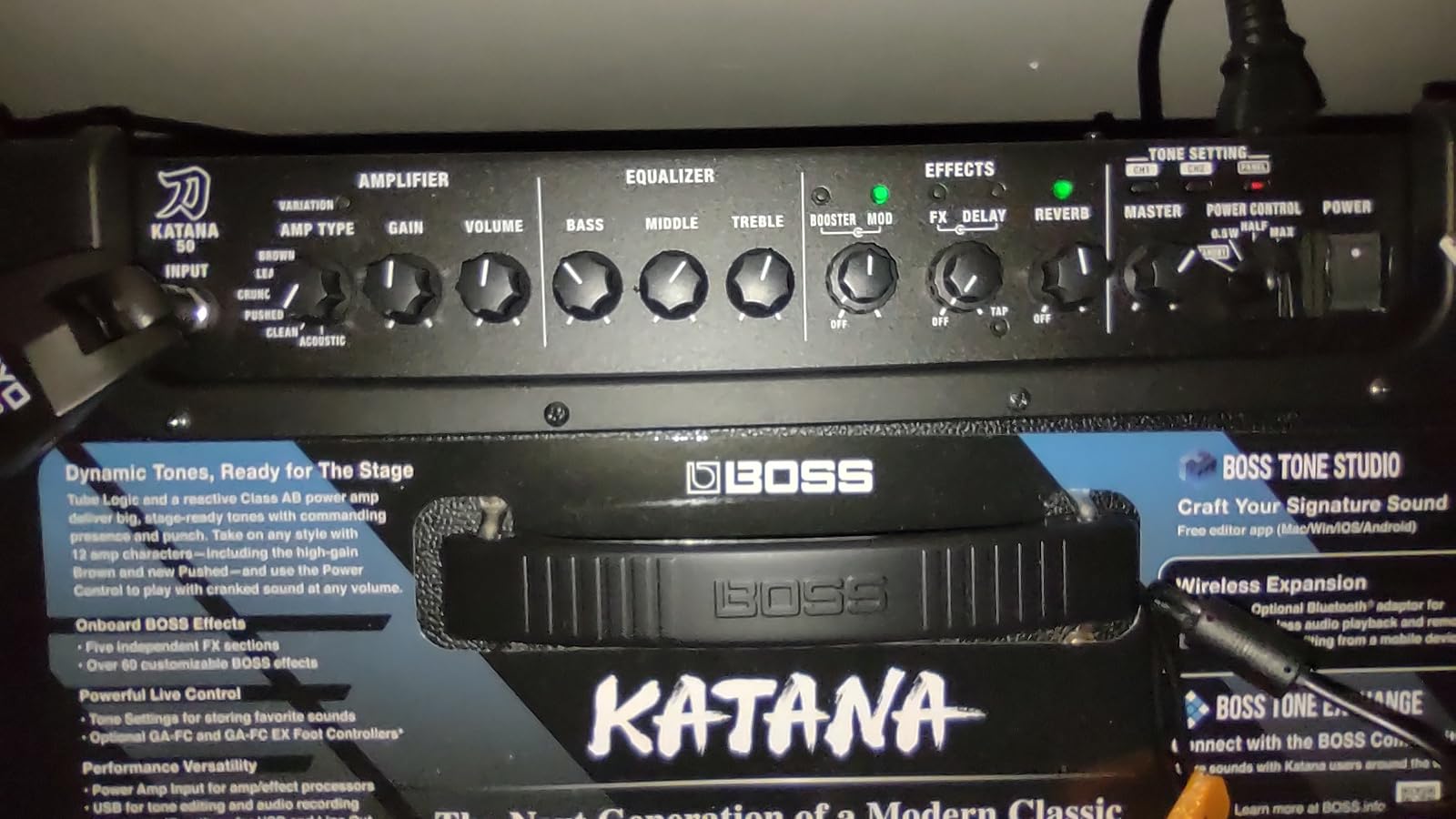
Six amp characters, each with a selectable variation, give you twelve distinct tonal starting points. Combined with the five onboard effects sections (Booster, Mod, FX, Delay, and Reverb), you can build a complete gig patch without external pedals. The four memory slots mean your verse, chorus, lead, and clean sounds are a single footswitch tap away.
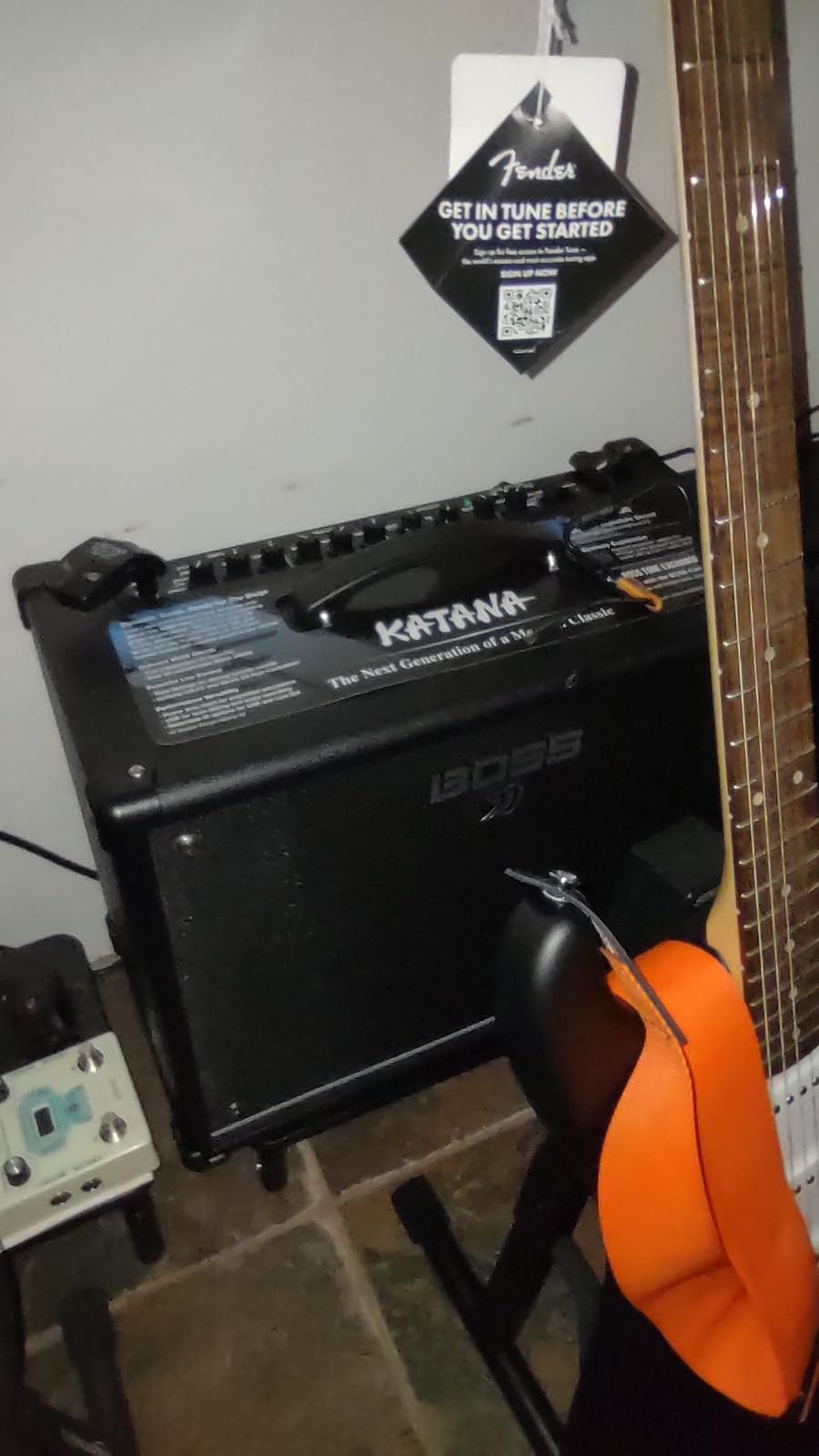
On the technical side, the custom 12-inch speaker is voiced specifically for the Katana platform, and it shows. The low end stays controlled even at gig volume, and the highs have enough clarity to cut through a mix. The USB-C output is a real bonus for guitarists who also record, letting you capture your tone directly into a DAW with no extra interface.
The main drawback is availability, since the Gen 3 is not always Prime eligible and stock moves fast. The weight creeps up when you push the power section hard, but for a 50-watt combo with this much under the hood, it remains one of the most pedal-friendly gigging amps on the market.
Will 50 watts cover your typical gig?
For most bar and small-to-mid club gigs, 50 watts through a 12-inch speaker is the sweet spot. You get enough clean headroom to stay articulate before the amp starts to compress, and there is plenty of reserve power if the venue PA underperforms. If you regularly play unmic’d outdoor stages, consider the 100-watt Katana sibling instead.
How reliable is the Tube Logic modeling?
Tube Logic has matured across three Katana generations, and the Gen 3 sounds noticeably richer in the midrange than earlier versions. It will not fully replace a boutique tube amp for purists, but for the realities of gigging, where reliability and consistency matter as much as tone, the modeling holds up night after night without tube drift or maintenance.
3. Fender Tone Master Deluxe Reverb – Tube Tone Without the Weight
Fender Tone Master Deluxe Reverb Guitar Amplifier, Black, 2-Year Warranty
Digital model of 22W Deluxe
100W digital power amp
Jensen n-12k speaker
Pine cabinet
Pros
- Faithfully models Deluxe tube circuitry
- 100-Watt digital power amp for headroom
- Jensen neodymium speaker
- Resonant pine cabinet
- Playing experience matches tube version
Cons
- Limited stock available
- Premium price point
The Fender Tone Master Deluxe Reverb is the amp I reach for when I want the legendary Deluxe Reverb clean tone but cannot justify hauling a 40-pound tube amp up three flights of club stairs. Fender modeled the original 22-watt tube circuitry so faithfully that the front panel, controls, and response feel identical to the tube version I grew up playing.
Under the hood, a 100-watt digital power amp drives a Jensen n-12k neodymium speaker inside a resonant pine cabinet. That combination delivers the sparkle and compression of a tube Deluxe with far more clean headroom and at only 23 pounds. The XLR output with cab emulation means you can run a polished signal to the mixing desk and leave the mic stand at home.
Many guitarists consider the Deluxe Reverb the holy grail of gigging amps, and the Tone Master version captures that character without the maintenance, warm-up time, and fragility of tubes. For working musicians who gig several nights a week, the consistency alone is worth the investment.
Does it really sound like a tube amp?
In a blind comparison on a dimed stage, most players cannot tell the Tone Master from a tube Deluxe. The digital modeling recreates the amp’s touch sensitivity, the way the clean tone starts to break up when you dig in, and the lush spring reverb. The biggest tell is the lack of tube microphonics and the perfectly consistent sound from gig to gig.
Is the digital platform future-proof?
Fender built the Tone Master line as a long-term platform, and the inclusion of a 100-watt power amp means the model has headroom to spare. The pine cabinet and Jensen speaker are real, serviceable components, not disposable electronics. While digital amps always carry some obsolescence risk, the build quality here suggests years of reliable gigging service.
4. Marshall MG30GFX – Classic Marshall Growl on a Budget
Marshall MG30GFX Combo Electric Guitar Amplifier – Black
30W solid-state
10 inch custom speaker
4 channels
Built-in digital FX
Pros
- Four distinct channels clean to heavy overdrive
- Built-in digital effects
- 3-band EQ for tone shaping
- Headphone out for silent practice
- Classic Marshall tone from 10 inch speaker
Cons
- Solid-state rather than tube
- Effects may not replace high-end pedals
The Marshall MG30GFX is the amp I keep recommending to guitarists who want Marshall attitude without the Marshall tube price tag. Four channels (clean, crunch, OD1, and OD2) cover everything from chimey cleans to saturated modern metal, all from a single 10-inch custom-voiced speaker. For small-to-mid club gigs, the 30 watts push enough air to stay heard.
I appreciate that Marshall designed this amp to integrate with external FX pedals, which matters for gigging players who already own a pedalboard. The built-in digital effects (chorus, phaser, flanger, delay, and octave) are useful backups when a pedal fails mid-set, and the 3-band EQ gives you precise control over how you sit in the mix.
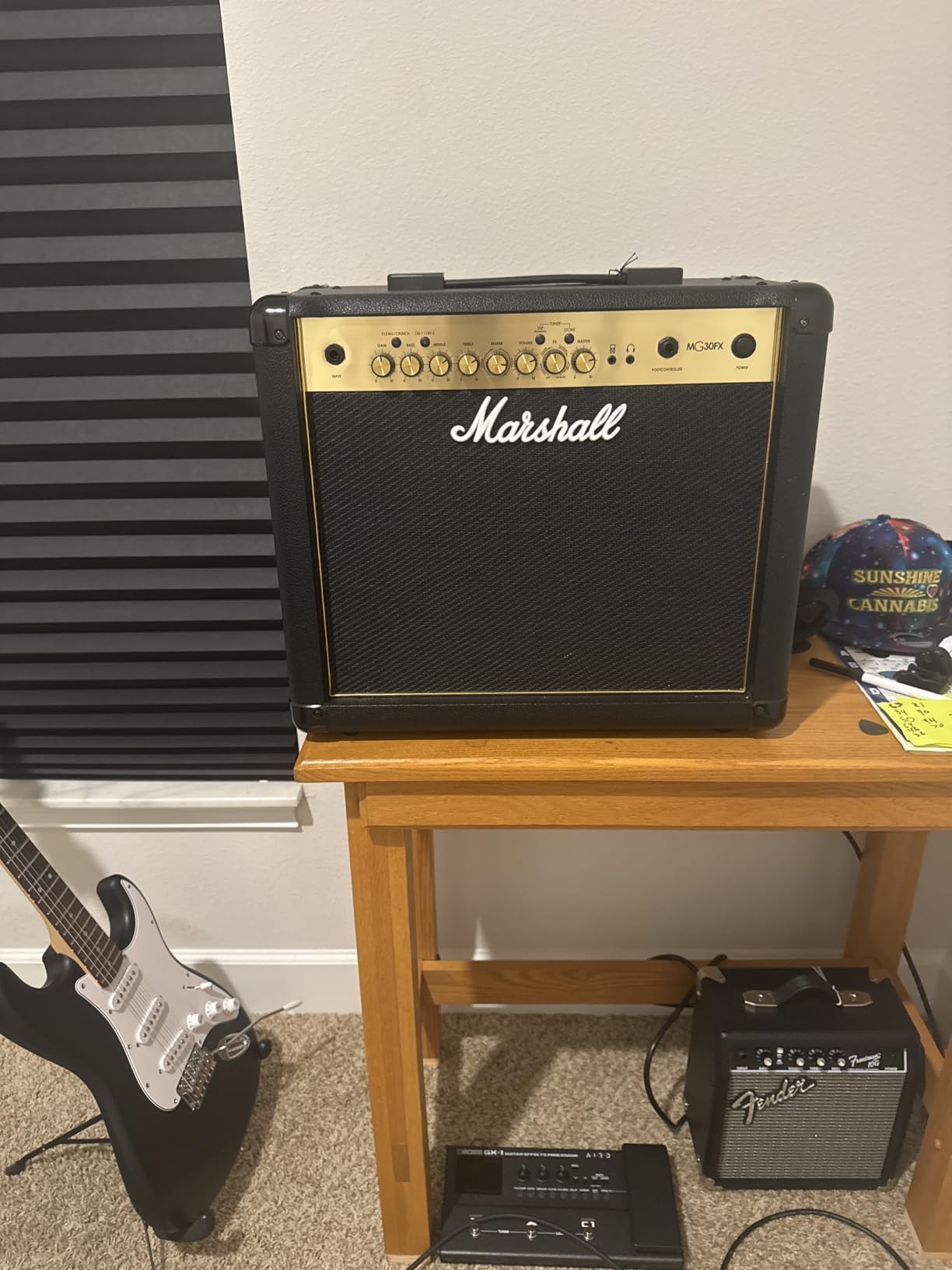
Technically, this is a solid-state amp, so purists will notice it lacks the sag and harmonic complexity of a tube Marshall. But the voicing is unmistakably Marshall, with that midrange grind and crunchy attack the brand is famous for. At 23.8 pounds, it is genuinely portable for a gigging combo.
The headphone output and MP3 line-in make it equally useful for rehearsal and silent practice between gigs. For guitarists who need one amp that handles practice, rehearsal, and small gigs competently, the MG30GFX is a strong, affordable workhorse.
Can solid-state capture the Marshall growl?
The MG30GFX gets surprisingly close to the classic Marshall midrange grind, especially on the crunch and OD1 channels. It will not fool a tube purist in a side-by-side comparison, but in a live mix where nuances get lost, the Marshall character comes through clearly. The OD2 channel delivers enough gain for modern rock and metal.
How does it handle pedals?
The clean channel takes overdrive and fuzz pedals well, and the effects loop lets you place time-based pedals after the preamp for cleaner delays and reverbs. The amp is designed with pedal integration in mind, which is why so many gigging players use it as a pedal platform rather than relying solely on the onboard channels.
5. Fender Champion II 50 – Affordable Versatility for Small Gigs
Fender Champion II 50-Watt Electric Guitar Amplifier, 2-Channel Combo Amp
50W 2-channel combo
12 inch speaker
Multiple amp voicings
USB recording
Pros
- Versatile 50-watt power for practice and gigs
- Multiple amp voicings
- Built-in effects with tap tempo
- 12 inch speaker
- USB port for recording
Cons
- Lower review count
- Some users want more power for larger venues
The Fender Champion II 50 surprised me with how much gigging capability it packs into a budget-friendly package. With 50 watts driving a 12-inch Fender Special Design speaker, it has the volume and low-end fullness to handle small club gigs without straining. The two-channel layout keeps operation simple when you need to switch sounds quickly on stage.
What makes the Champion II stand out is the range of amp voicings, which span Fender cleans, British-style crunch, and modern high-gain tones. Add built-in reverb, delay, chorus, tremolo, and Vibratone effects with tap tempo, and you have a genuinely versatile gig amp that does not require a pedalboard to sound complete.
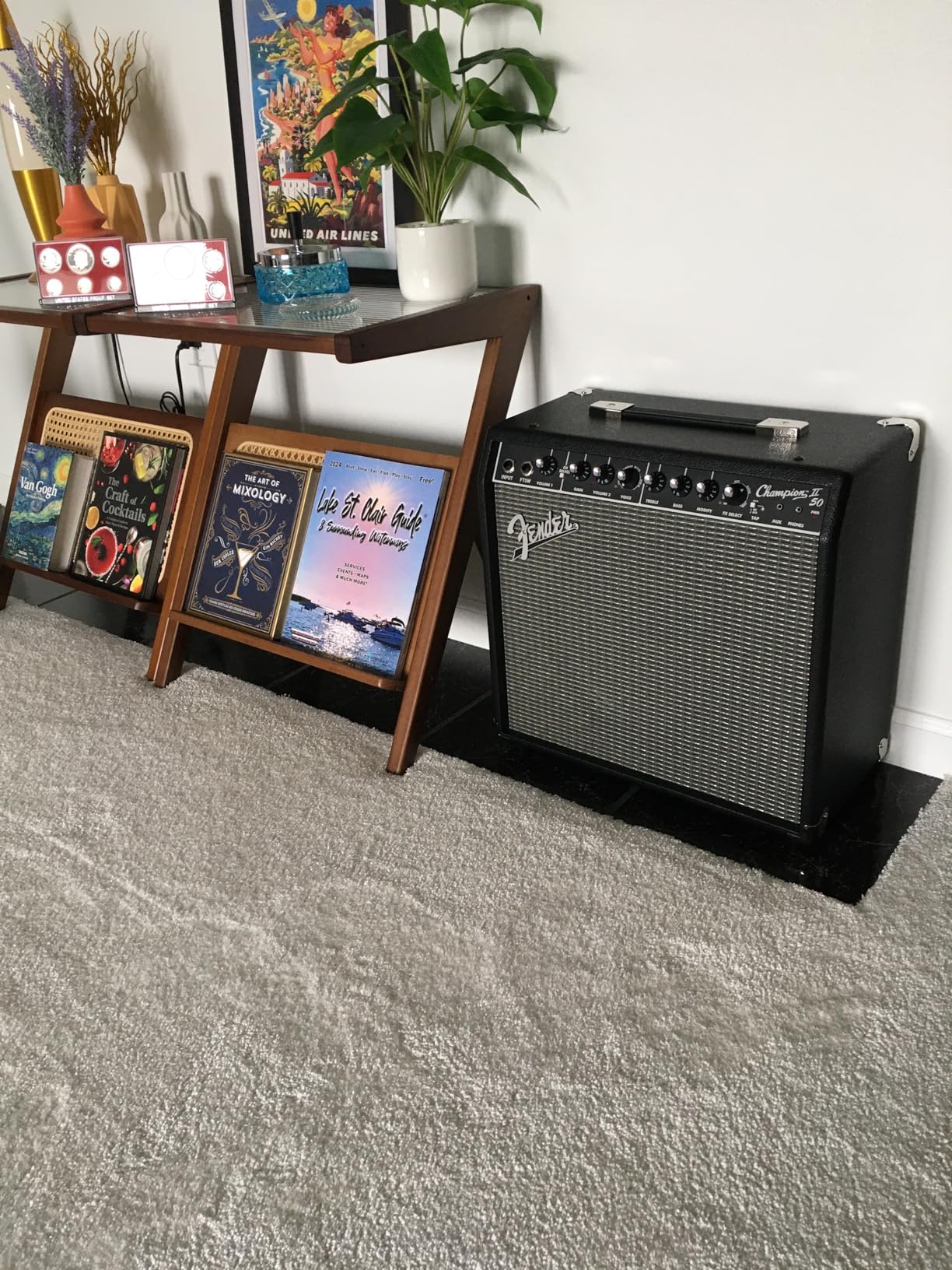
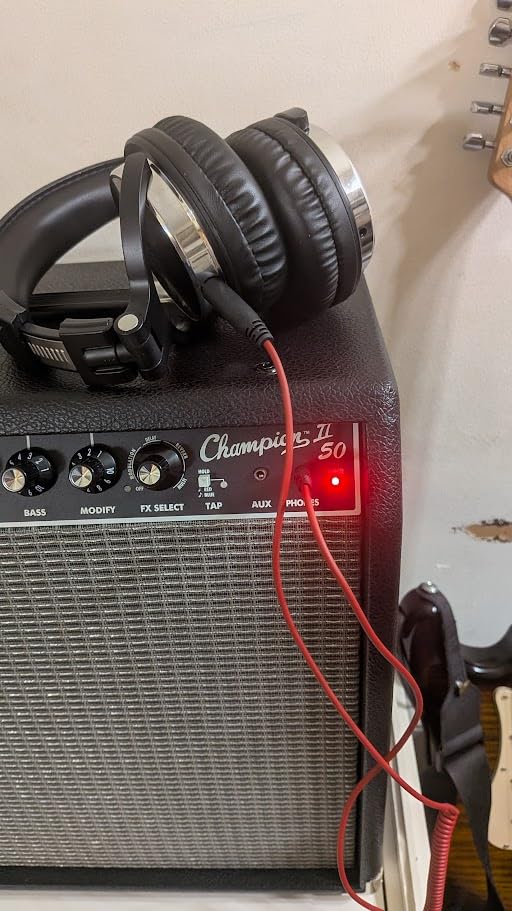
On the technical side, the rear USB port turns this into a recording tool, letting you capture your tone directly into a DAW between gigs. The aux input and headphone output make rehearsal convenient. At 22.95 pounds, the cabinet is manageable for solo load-ins.
The trade-off is that the Champion II 50 has a smaller review base than more established models, so long-term reliability data is still building. For guitarists playing bars, small clubs, and private events, though, the power and feature set punch well above the price.
How versatile are the amp voicings?
The voicings cover an impressive range, from pristine Blackface-style cleans to gritty British overdrive and modern distortion. You can cover a full cover-band setlist spanning country, blues, rock, and metal without changing amps. The transitions are not as seamless as a multi-channel tube amp, but for a single-channel switching design, the variety is excellent.
Is the USB recording studio-ready?
The USB output captures the amp’s processed tone directly, which is great for demos, practice recordings, and home studio work. It will not replace a professionally mic’d cabinet for a final album, but for pre-production and lesson content, the convenience is hard to beat.
6. Positive Grid Spark 40-Watt – The Smart Amp for Modern Players
Positive Grid Spark 40-Watt Combo Practice Guitar Amplifier Electric Bass and Acoustic Guitar Amp with Spark Mobile App
40W combo
Smart Jam and Auto Chords
50k ToneCloud presets
USB audio interface
Pros
- Smart Jam learns your style
- 50
- 000 plus amp-and-FX presets
- Import music with auto chord display
- 40 Watt combo with onboard effects
- USB audio interface for DAW recording
Cons
- Not Prime eligible
- Smart features require app
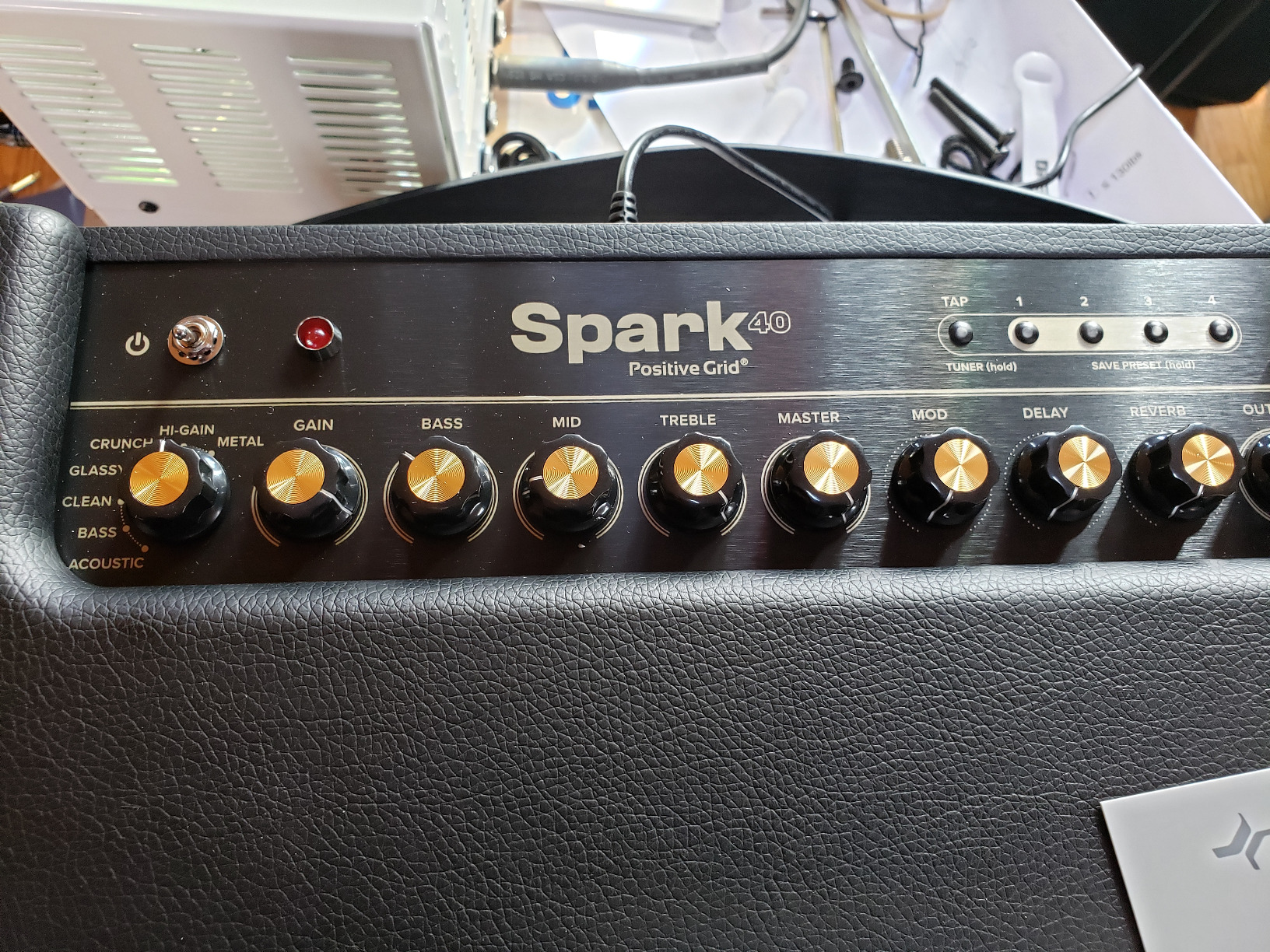
The Positive Grid Spark 40-Watt has become one of the most popular practice and small-gig amps among modern guitarists, and after spending time with one, I understand why. The Smart Jam feature learns your playing style and generates authentic bass and drum backing tracks, turning practice sessions into full-band experiences.
With access to over 50,000 amp-and-FX presets on ToneCloud, the tonal range is effectively unlimited. You can import songs from Spotify, Apple Music, or YouTube and the app displays chords in real time, which is invaluable for learning new material before a gig. The 40-watt output through a capable speaker system handles rehearsal and intimate venues with confidence.
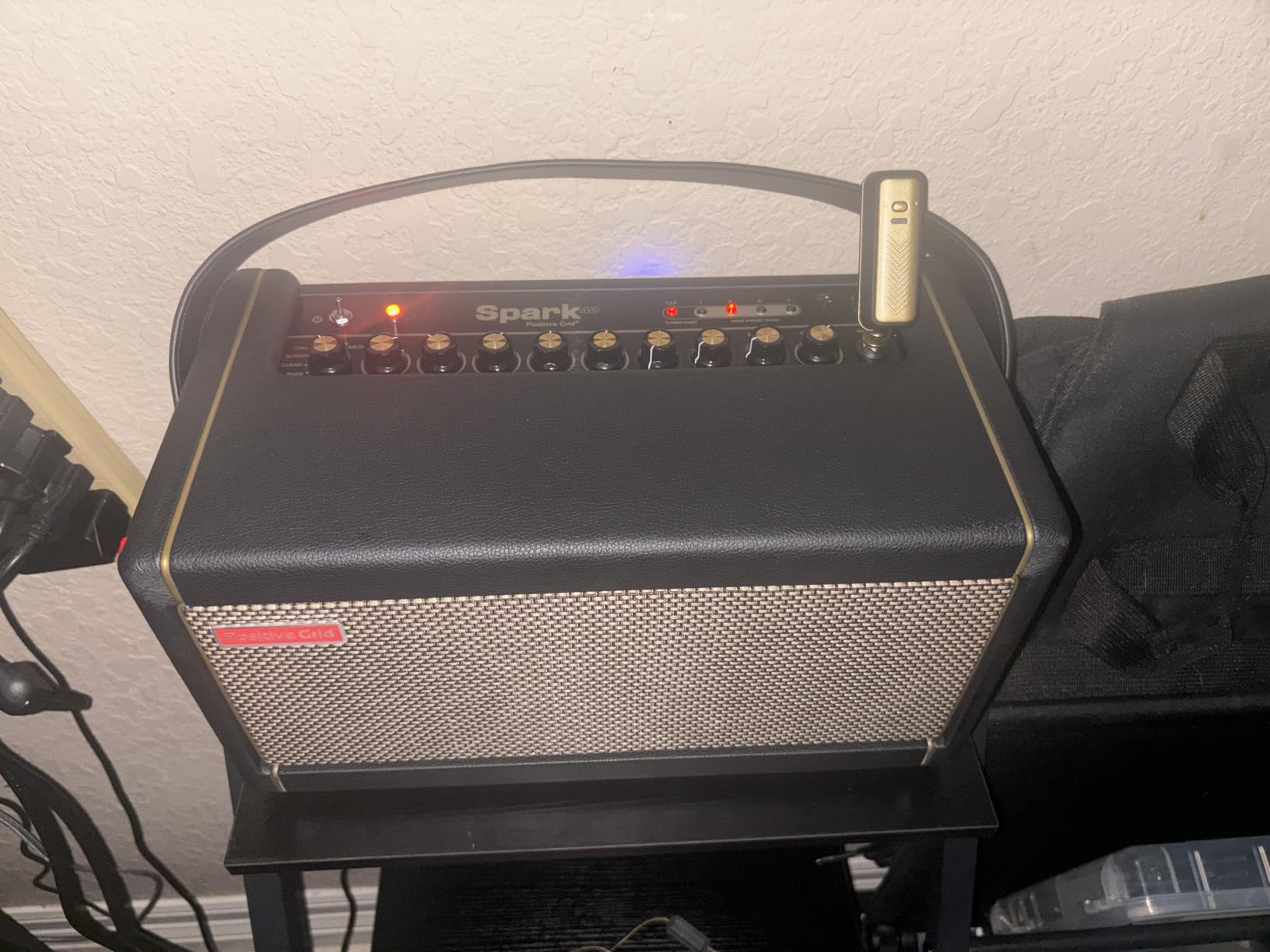
Technically, the Spark doubles as a USB audio interface, so you can record straight into your DAW without extra hardware. The onboard tone stack, built-in tuner, and tap tempo make it a complete performance tool, not just a practice toy.
The 8,635 reviews and 4.7-star rating tell you this amp resonates with a huge community of players. The main limitation is that the smart features depend on the companion app, so guitarists who want a purely analog experience may find the connectivity unnecessary.
Is 40 watts enough for live gigs?
For coffeehouse sets, small bars, acoustic gigs, and any venue where the amp is mic’d through a PA, 40 watts is plenty. For loud rock gigs with an aggressive drummer and no PA support, you may want more headroom. The Spark excels as a versatile practice, rehearsal, and small-venue amp rather than a loud stage workhorse.
How well does the app ecosystem work?
The Spark app is one of the most polished in the amplifier world, with reliable Bluetooth connection, an intuitive preset browser, and the auto-chords feature that genuinely helps you learn songs faster. Firmware updates have steadily improved stability, and the ToneCloud community keeps fresh sounds flowing.
7. Roland JC-40 Jazz Chorus – The Clean Tone Legend
Roland JC-40 Jazz Chorus Compact Guitar Amp
40W stereo solid-state
Dual 10 inch speakers
Dimensional Space Chorus
Stereo effects loop
Pros
- Unmistakable JC clean tone
- 40-watt stereo with dual 10 inch speakers
- Stereo input for modelers
- Signature Dimensional Space Chorus
- Built-in vibrato distortion and reverb
Cons
- Heavy at 39.6 pounds
- Higher price point
The Roland JC-40 Jazz Chorus carries one of the most revered clean tones in electric guitar history. I have heard this exact stereo chorus shimmer on countless recordings, and the compact JC-40 brings that legacy to a gig-friendly size. Two 10-inch speakers deliver true stereo imaging that fills a room in a way mono combos simply cannot.
The signature Dimensional Space Chorus is the defining feature, creating an expansive, three-dimensional sound that single-coil and hollow-body players adore. Built-in vibrato, distortion, and reverb cover the essentials, and the stereo effects loop lets you integrate your time-based pedals without collapsing the stereo field.
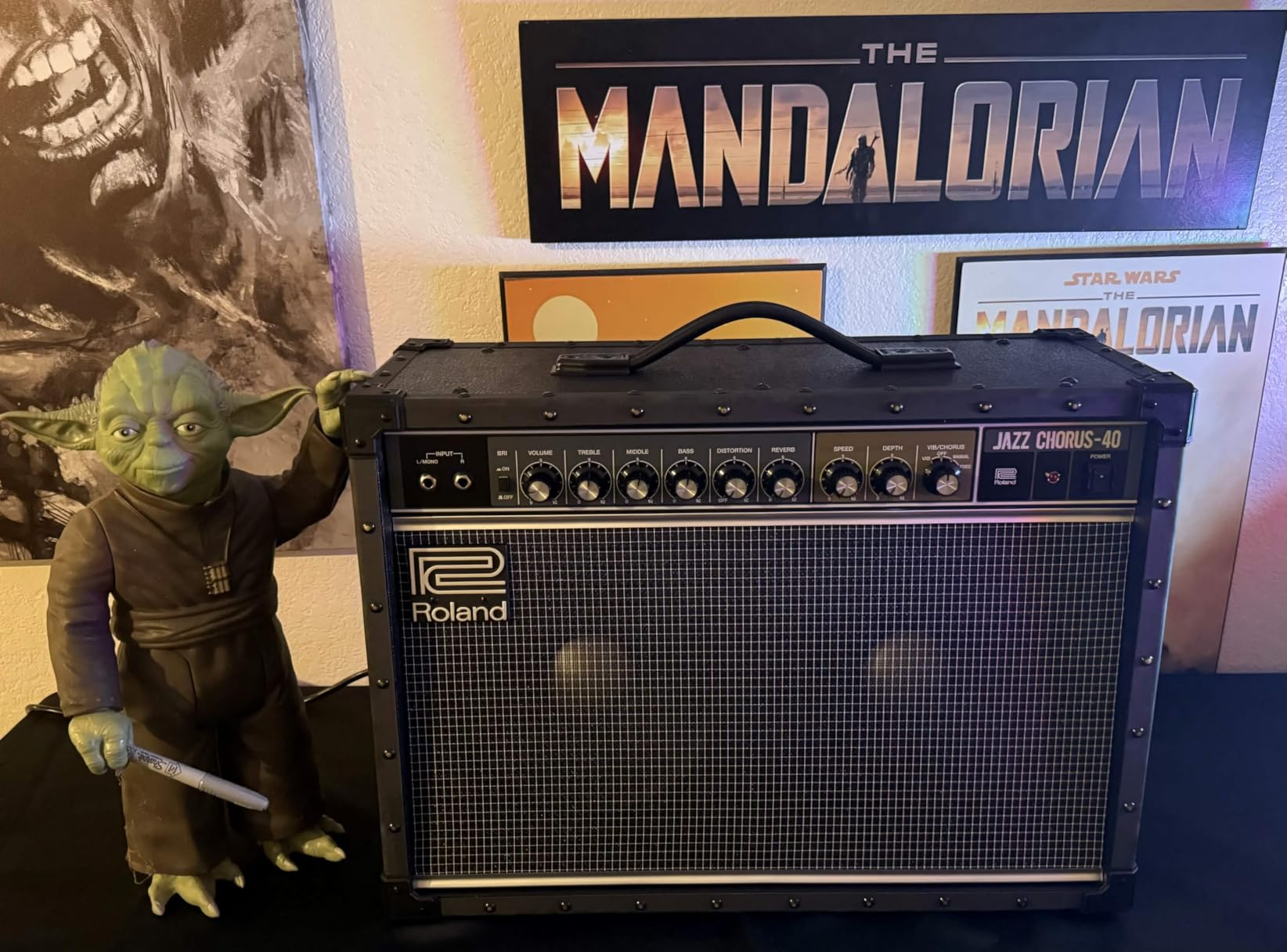
Technically, the JC-40 is solid-state, which is exactly why its clean tone is so pristine and consistent. There is no tube drift, no warm-up time, and no fragile glass bottles to replace on tour. The stereo input even accepts modelers and stereo effects pedals for players who want to expand the soundscape further.
The main drawback is weight. At 39.6 pounds, the dual-speaker cabinet is one of the heavier combos in this lineup, and stock is often limited. But for jazz, funk, soul, and clean-tone players, the JC-40 remains a benchmark that competitors still chase.
Why is the JC clean tone so revered?
The Jazz Chorus clean is famous for being glassy, full, and completely uncolored, which makes it the perfect pedal platform. Players run their entire effects chain into the JC and the amp reproduces it faithfully without adding unwanted coloration. The stereo chorus is genuinely unique and impossible to replicate convincingly with pedals.
Is the weight manageable for regular gigging?
At nearly 40 pounds, the JC-40 is a two-person carry or a careful solo load with a good hand truck. If you gig frequently alone, factor this into your decision. Many JC owners invest in a wheeled case or accept that the sound quality justifies the effort of moving it.
8. Fender Acoustasonic 40 – The Acoustic Gigging Solution
Fender Acoustasonic 40-Watt Acoustic Guitar Amplifier, Portable Amp Combo
40W solid-state
Dual 6.5 inch speakers
XLR and 1/4 inch inputs
Built-in reverb
Pros
- 40-watt combo for acoustic and microphone
- Dual 6.5 inch full-range speakers
- Built-in reverb
- Combination XLR and 1/4 inch inputs
- Lightweight plywood cabinet
Cons
- Acoustic-focused not ideal for electric guitar
- Single channel design
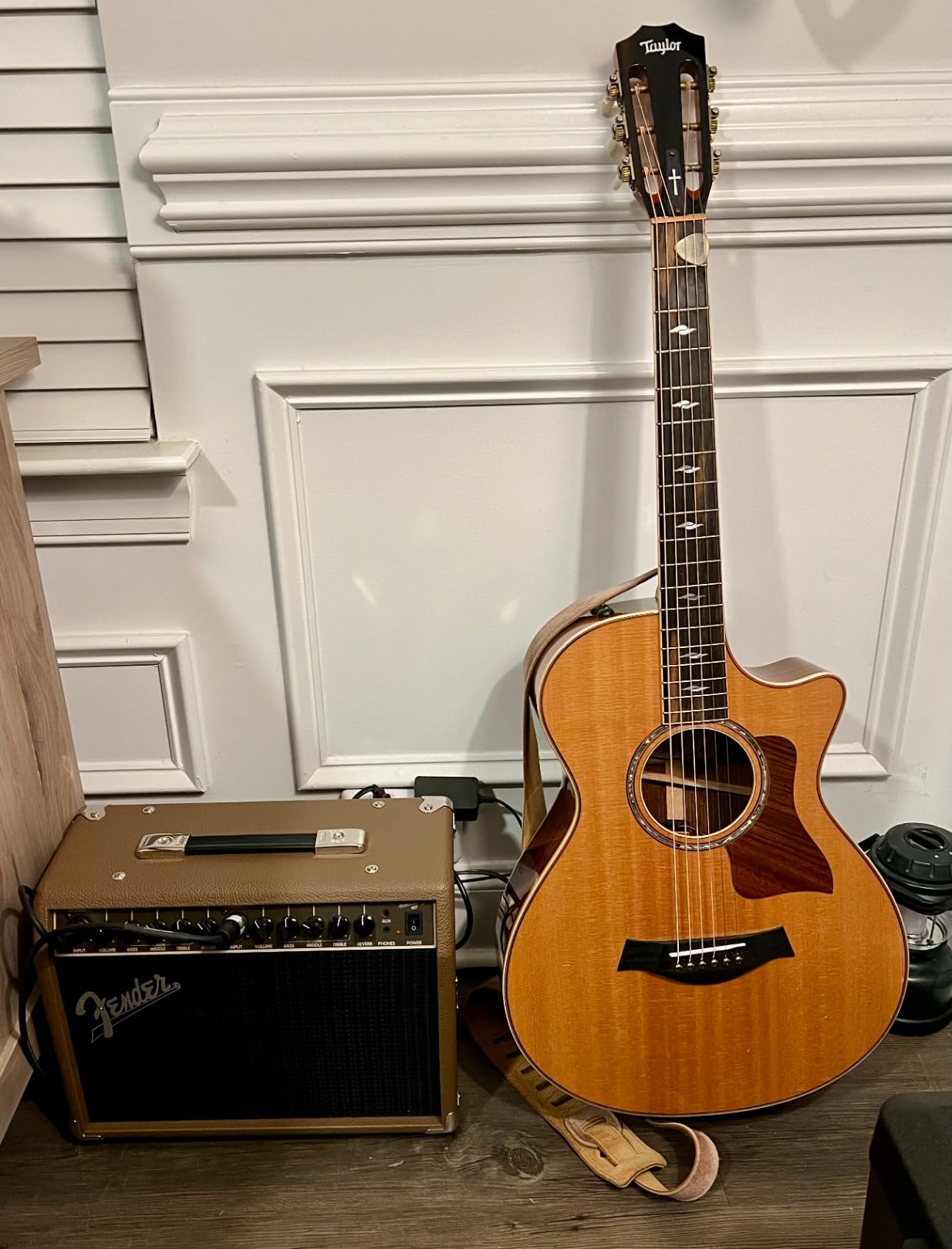
The Fender Acoustasonic 40 is purpose-built for the singer-songwriter and acoustic gigging guitarist. With 40 watts driving dual 6.5-inch full-range speakers, it reproduces the nuanced detail of an acoustic-electric guitar far better than an electric guitar combo. I have used it for coffeehouse sets and small wedding gigs where clarity matters more than volume.
The combination XLR and 1/4-inch inputs mean you can plug in both your guitar and a vocal microphone, making this a complete portable PA for solo and duo performances. The built-in reverb adds space and polish, and the lightweight 5-ply plywood cabinet, at just 10 pounds, is one of the easiest gigging amps to transport on this list.
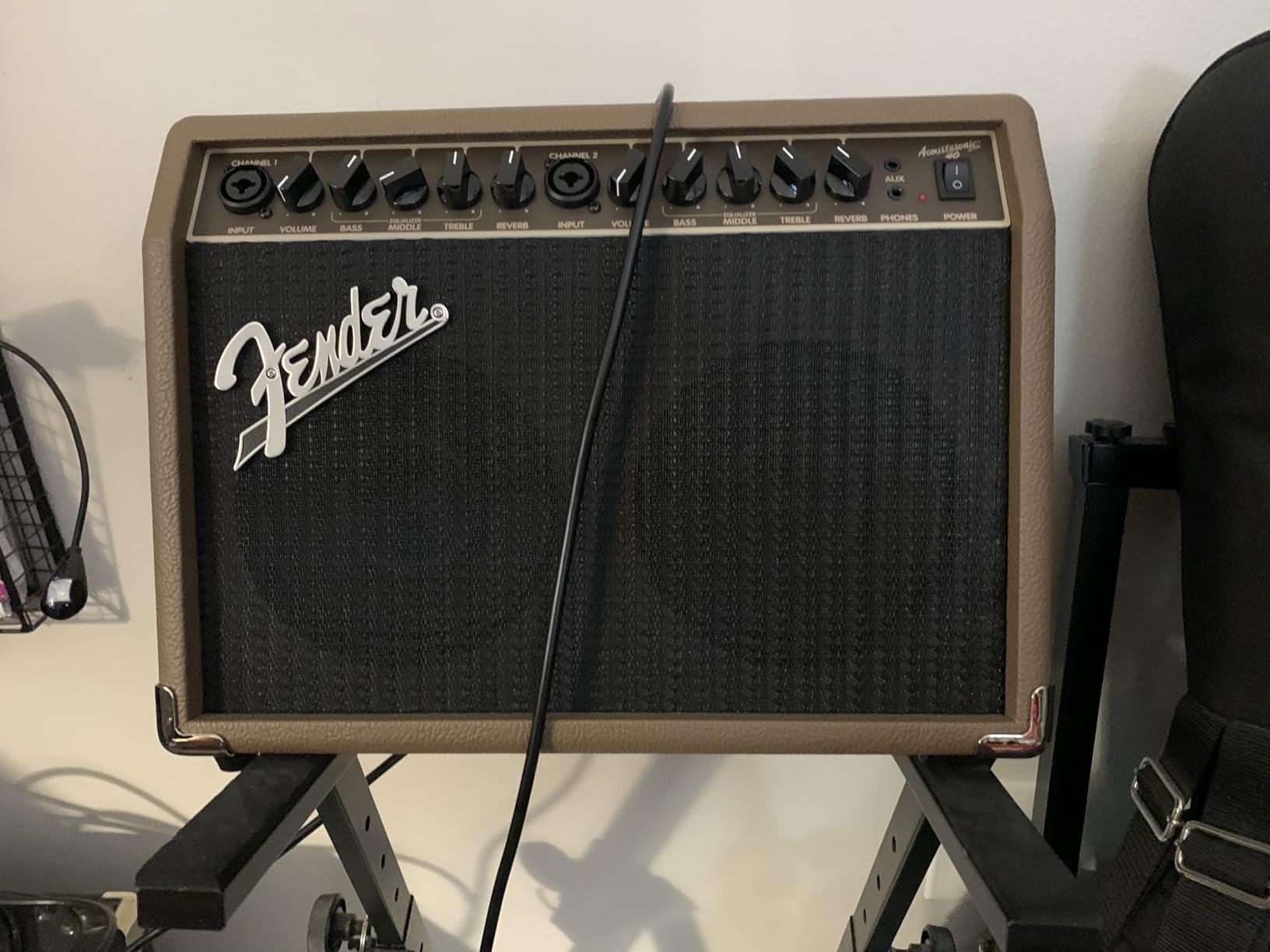
Technically, the whizzer-cone speakers are designed for full-range reproduction, which is why acoustic guitars and vocals sound so natural through this amp. The classic Brown and Wheat Fender cosmetics give it a vintage, professional look on stage.
The Acoustasonic 40 is not designed for electric guitar tone, so it is a specialized tool rather than an all-rounder. But if your gigs are acoustic-driven, this is among the best guitar amplifiers for gigs in the acoustic and singer-songwriter category.
Does it handle both guitar and vocals well?
Yes, the dual inputs are independently voiced, so your acoustic guitar retains its sparkle while your vocal sits warmly in the mix. The 40 watts are enough for small to mid-size venues, and the reverb applies independently, letting you dial in space for both channels. For solo performers, this eliminates the need for a separate vocal amp.
Is the acoustic tone authentic?
The full-range speakers reproduce the natural resonance and high-end detail of a piezo or magnetic acoustic pickup accurately. You hear your guitar, not a colored version of it, which is exactly what acoustic players want. The built-in reverb adds just enough ambience to make a dry room feel intimate.
9. Orange Crush 20 – Iconic Tone for Practice and Small Gigs
Orange Crush 20 20W 8″ 2-Channel Guitar Amplifier and Speaker Combo, Orange
20W solid-state
8 inch speaker
2-channel high gain
Cabsim headphone out
Pros
- Classic Orange tone in compact package
- High gain preamp
- 3-band EQ
- Aux input for jamming
- Headphone out with cabsim
Cons
- Limited stock available
- 20W may be quiet for larger venues
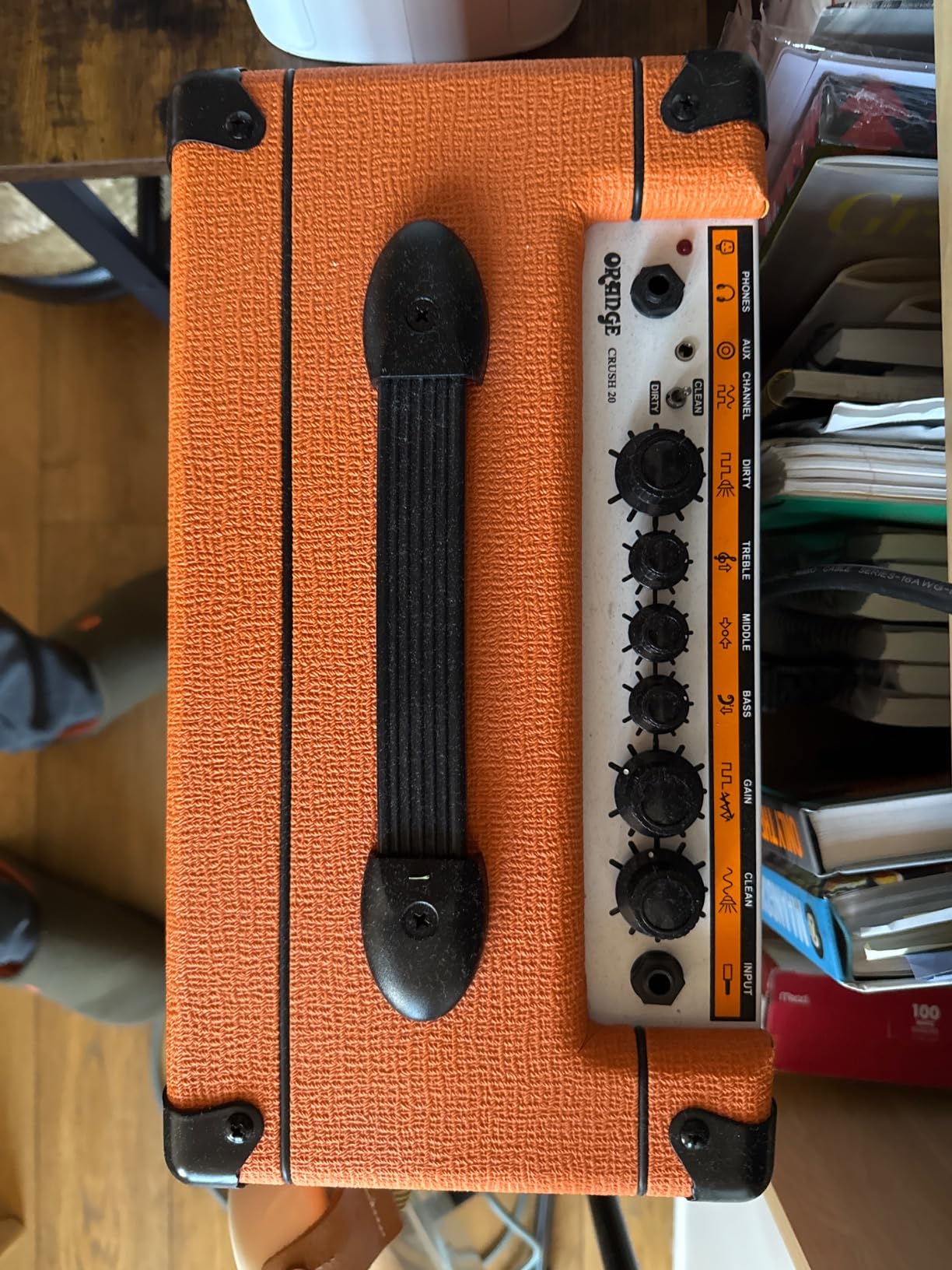
The Orange Crush 20 has earned a massive following, and with over 1,200 reviews at a 4.7-star rating, the community verdict is clear. I have used this amp for warmups, songwriting, and genuinely small gigs, and the iconic Orange tone comes through even at practice-room volumes. The high-gain preamp delivers that punchy, aggressive character Orange is famous for.
The twin-channel layout gives you a clean channel and a dirty channel, both shaped by a responsive 3-band EQ. The aux input lets you jam along with backing tracks, and the cabsim-loaded headphone output delivers authentic speaker-emulated tone for silent practice. For the price, the feature set is remarkably complete.
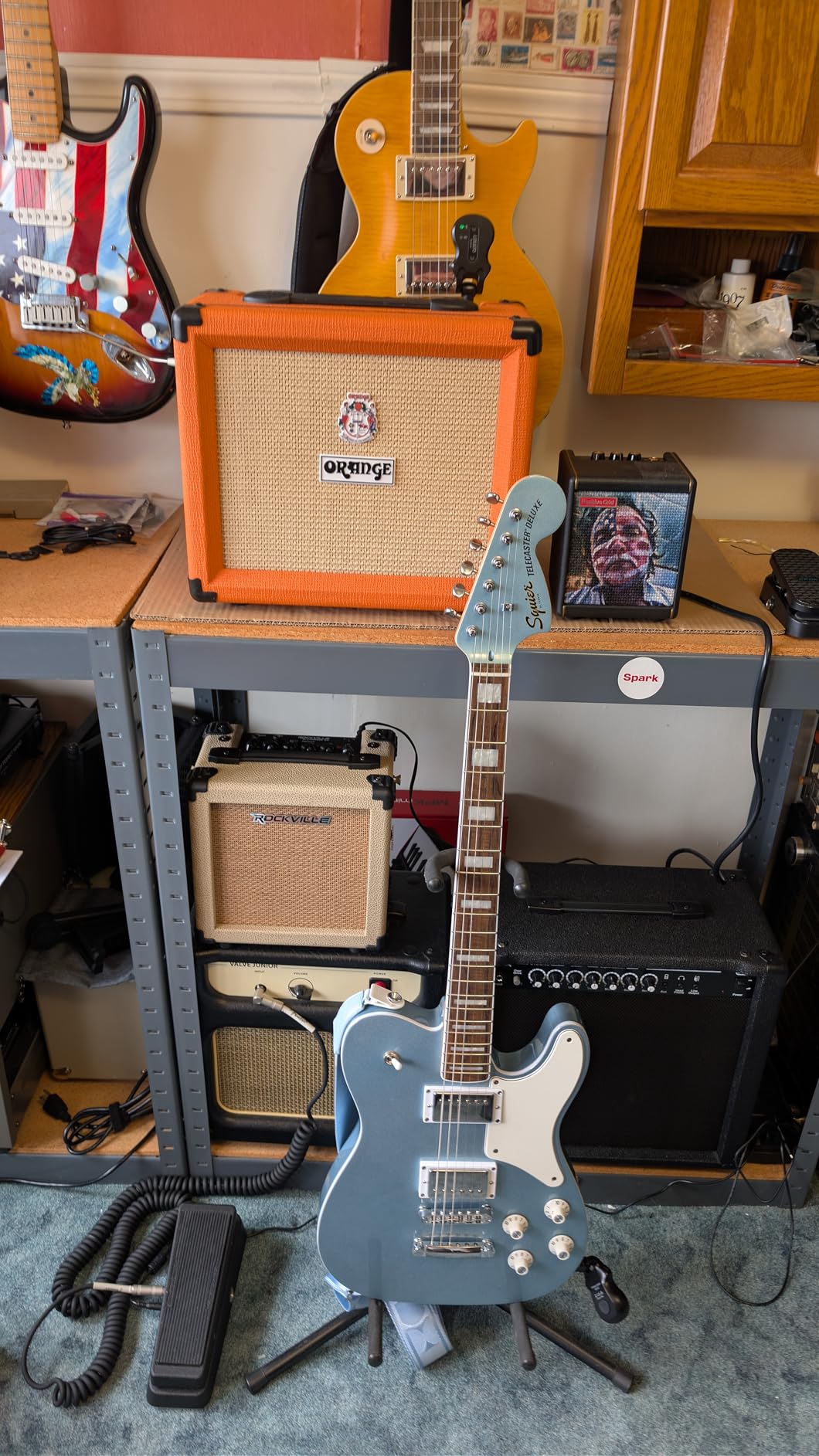
Technically, the Crush 20 is a solid-state practice amp, but Orange voiced the preamp to mimic the feel of their tube heads. The 8-inch speaker is smaller than the gigging standards on this list, which limits low-end response and stage projection. That is the honest trade-off for a compact, affordable amp.
For very small gigs, acoustic-friendly venues, and any situation where the amp is mic’d, the Crush 20 can absolutely hold its own. It shines brightest, though, as a premium practice and rehearsal amp that prepares you for the stage.
Is 20 watts enough for any gig?
For quiet cafe gigs, small unplugged sets, and any venue where you are mic’d through a capable PA, 20 watts through an 8-inch speaker works fine. For louder rock gigs with a full band and no PA support, 20 watts will struggle to keep up. Match the amp to your typical venue size realistically.
How does it compare to bigger Orange amps?
The Crush 20 shares the same tonal DNA as Orange’s larger solid-state and tube heads, with that distinctive midrange punch and gain structure. It obviously lacks the volume and low-end authority of a 100-watt head through a 4×12 cab, but for practice and small stages, the family resemblance in tone is unmistakable.
10. Boss Katana Mini – The Portable Warmup and Backup Champ
Boss Katana Mini 7-Watt Combo Amp
7W battery powered
4 inch speaker
3 amp types
Tape-style delay
Pros
- Great Katana tone in portable amp
- Rich full sound
- Multi-stage analog gain
- Three amp types
- Built-in tape delay
Cons
- 7 watts is practice only
- No effects loop
- Small 4 inch speaker
The Boss Katana Mini is the amp I toss in my gig bag for backstage warmups, hotel practice on tour, and as an emergency backup. Running on batteries and weighing just 1.5 kilograms, it is the most portable amp in this lineup by a wide margin. The fact that it carries genuine Katana tone in such a small package is impressive.
Three amp types (Brown, Crunch, and Clean) cover the essential sounds most guitarists need, and the multi-stage analog gain circuit gives the overdrive tones a satisfying, dynamic feel. The built-in tape-style delay adds ambience, and the aux input lets you play along with tracks from your phone.
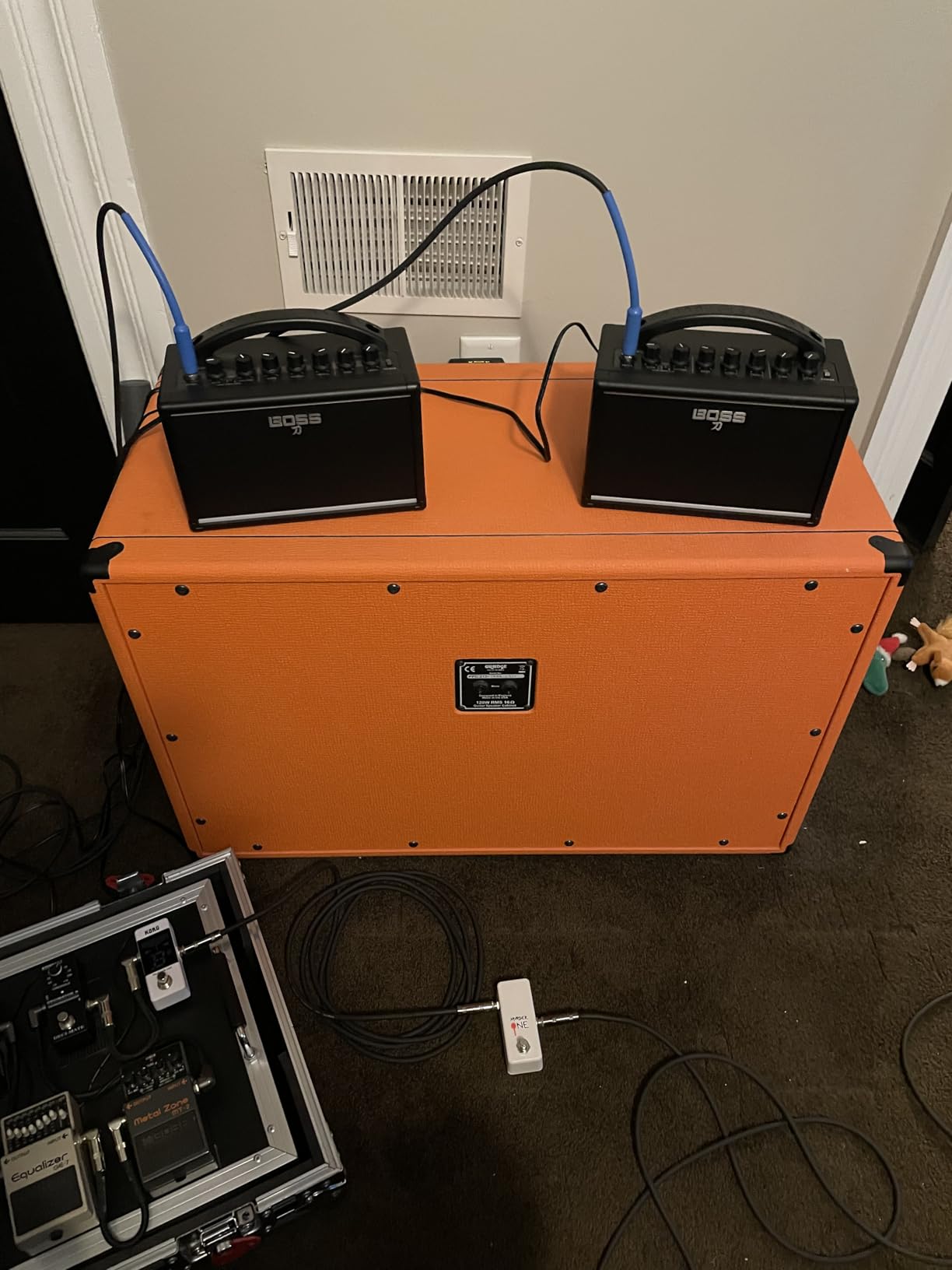
Technically, the Katana Mini uses a real analog gain circuit rather than digital modeling, which contributes to its warm, responsive sound. The headphone and recording output includes cabinet voicing, so silent practice and direct recording sound surprisingly full.
This is not a stage amp in the traditional sense, but it earns a place on this list because every gigging guitarist needs a reliable warmup and backup solution. The Katana Mini fills that role better than almost anything else at this price.
What can a 7-watt amp realistically do?
A 7-watt battery-powered amp is a practice, warmup, and songwriting tool, not a stage amplifier. It is perfect for hotel rooms, backstage areas, teaching, and quiet home practice. Some players use it for tiny busking setups, but it cannot compete with a live band.
Is it a viable warmup and backup tool?
Absolutely. Having a Katana Mini in your gig bag means you can warm up your fingers and check your tone before going on stage, even when the venue backline is not yet set up. If your main amp fails, the Mini keeps you playing, which is why so many touring guitarists carry one as insurance.
Buying Guide: How to Choose a Gigging Amp
Choosing among the best guitar amplifiers for gigs comes down to matching the amp’s power, tone, and portability to the venues you actually play. I have seen too many guitarists buy an amp for its spec sheet and then struggle with one that is too heavy, too quiet, or tonally wrong for their gigs. This guide walks through the decisions that matter most.
Match Wattage to Your Venue Size
Wattage is the single most important spec for gigging, but it is widely misunderstood. More watts means more clean headroom before the amp distorts, not necessarily more perceived volume. Here is a practical wattage-to-venue guide based on my gigging experience.
For small bars, coffeehouses, and acoustic gigs (under 50 people), 15 to 30 watts is usually sufficient, especially if the amp is mic’d. The Orange Crush 20 and Marshall MG30GFX live in this range and handle intimate venues well.
For mid-size clubs, wedding gigs, and party bands (50 to 200 people), 40 to 50 watts through a 12-inch speaker is the sweet spot. The BOSS Katana-50 Gen 3 and Fender Champion II 50 are built for exactly this tier. You get enough clean headroom to stay articulate over a drummer.
For larger clubs, outdoor stages, and loud rock bands (200-plus people), 100 watts or a mic’d 50-watt amp is the safer choice. The Fender Mustang GTX100 delivers this kind of stage power, and the Fender Tone Master Deluxe Reverb pairs tube-accurate tone with a 100-watt power amp.
Tube vs Solid-State vs Modelling
The technology inside your amp shapes its tone, maintenance, and reliability. Tube amps deliver the warmest, most dynamic tone with natural compression, but they require maintenance, warm-up time, and careful transport. Solid-state amps are reliable, consistent, and maintenance-free, though some players find their clean tones less inspiring. Modelling amps use digital processing to recreate tube and classic amp sounds, offering immense versatility and consistent performance.
For gigging specifically, I lean toward modelling and solid-state amps because reliability matters more on stage than subtle tonal nuances. The Tone Master Deluxe Reverb proves that modern modelling can satisfy even tube purists, and the Katana platform shows how far Tube Logic has come.
Portability and Weight Matter More Than You Think
After years of gigging, I can promise that weight becomes a bigger factor every year. A 40-pound amp that feels fine at age 25 becomes a chore at 45. The Fender Acoustasonic 40 at 10 pounds and the Boss Katana Mini at 1.5 kilograms are the lightest options here, while the Roland JC-40 at 39.6 pounds is the heaviest.
Factor in stairs, parking distance, and whether you have a bandmate to help. The Tone Master Deluxe Reverb’s appeal is partly that it delivers tube tone at 23 pounds instead of the 40-plus of a real tube Deluxe.
Pedal Compatibility and Effects Integration
If you use a pedalboard, your amp needs an effects loop and a clean platform that takes pedals well. The Roland JC-40 is the legendary pedal platform, and the Mustang GTX100 and Katana-50 both include effects loops. Amps without effects loops force you to run time-based pedals up front, which can muddy your tone.
Genre Matching
Match the amp’s voicing to your style. Blues and classic rock players gravitate toward Fender cleans and Marshall crunch. Metal players need high-gain channels with tight low-end, where the Katana’s Brown type and the Marshall OD2 channel excel. Jazz and clean-tone players will love the Roland JC-40. Acoustic performers should look at the Fender Acoustasonic 40.
Always Plan a Backup
One lesson every gigging guitarist learns the hard way is that gear fails at the worst possible moment. A backup plan is not optional for paid gigs. The Boss Katana Mini is small enough to live in your gig bag as an emergency amp, and many touring players carry a spare preamp tube or a compact modelling pedal as redundancy. The cost of a backup is always less than the cost of a ruined show.
FAQs
What is the best amp for gigging guitarist?
The best amp for a gigging guitarist is the Fender Mustang GTX100, which delivers 100 watts through a 12-inch Celestion speaker with 200 presets, a 7-button footswitch, Bluetooth connectivity, and stereo XLR outputs. It provides enough power and clean headroom for mid-to-large venues while offering the tonal variety a working guitarist needs across multiple genres.
What size guitar amp for gigging?
For gigging, 30 to 50 watts through a 12-inch speaker covers most small-to-mid club gigs. For larger clubs and loud bands, 100 watts is safer. As a rule, 15-30 watts suits small bars and coffeehouses, 40-50 watts handles mid-size clubs, and 100 watts or a mic’d 50-watt amp is best for larger stages and outdoor venues.
Is a 20 watt amp loud enough for gigs?
A 20 watt amp is loud enough for small gigs, coffeehouse sets, and any venue where the amp is mic’d through a PA. It is not loud enough for loud rock bands with an aggressive drummer and no PA support. For most unmic’d bar gigs with a full band, 40 to 50 watts is a more reliable choice.
What is the holy grail of guitar amps?
The holy grail of guitar amps for many players is the Fender Deluxe Reverb, a tube combo revered for its clean headroom, lush spring reverb, and touch-sensitive breakup. The Fender Tone Master Deluxe Reverb recreates that legendary circuit in a lighter, more reliable digital format, making it a practical holy grail choice for working gigging musicians.
Conclusion: Finding Your Gigging Amp in 2026
The best guitar amplifiers for gigs are the ones that match your venues, your style, and your load-in reality. For most working guitarists, the Fender Mustang GTX100 offers the most complete gig-ready package with 100 watts, a Celestion speaker, and a footswitch included. The BOSS Katana-50 Gen 3 delivers outstanding value and Tube Logic versatility for mid-size gigs, while the Fender Tone Master Deluxe Reverb gives tube purists the legendary Deluxe tone at half the weight.
Whatever you choose, prioritize the power you actually need, the tone that fits your genre, and a weight you can live with show after show. The right gigging amp disappears into the background and lets you focus on the performance. Pick the one that gets out of your way and gets you on stage with confidence in 2026.