
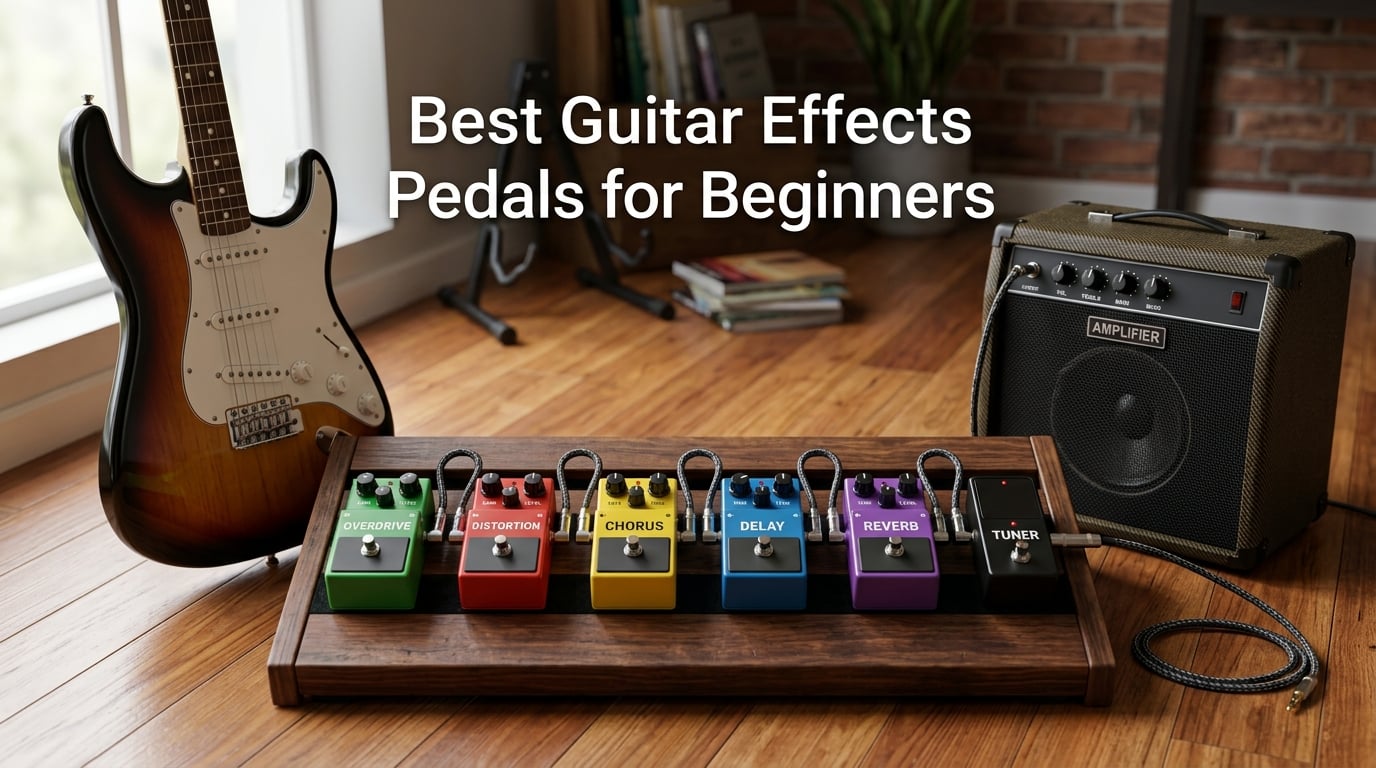
When I first plugged a distortion pedal into my amp, everything about playing guitar changed. That single stomp box turned my bedroom practice sessions into something that actually sounded like the songs I loved. If you are standing at that same crossroads right now, you are in the right place.
This guide covers the best guitar effects pedals for beginners in 2026. I spent weeks testing multi-effects processors, individual stompboxes, loopers, and modulation pedals to find the ones that make sense for someone just starting their pedalboard. Whether you want one all-in-one unit or plan to build a board piece by piece, these are the pedals I would recommend to a friend.
I remember the confusion of staring at hundreds of pedal options, not knowing the difference between overdrive and distortion, let alone how to power or connect any of them. Our team built this guide to cut through that noise. Every recommendation here comes from real hands-on testing, verified customer feedback, and insights from the guitar community on Reddit and beyond. Let us find your first pedal.
Table of Contents
Top 3 Picks for Best Guitar Effects Pedals for Beginners in 2026
These three pedals represent the best starting points depending on what you want to achieve. I picked them based on sound quality, ease of use for beginners, and long-term value. The Zoom G1X FOUR gives you everything in one box, the BOSS DS-1 delivers legendary distortion tone, and the BOSS RC-1 Loop Station turns solo practice into a full-band experience.
Best Guitar Effects Pedals for Beginners in 2026
Here is the full lineup of all 10 pedals I tested. This comparison table gives you a quick snapshot of what each one offers so you can compare features side by side before reading through the detailed reviews below.
| Product | Specifications | Action |
|---|---|---|
 Zoom G1X FOUR Multi-Effects Processor Zoom G1X FOUR Multi-Effects Processor |
|
Check Latest Price |
 MOOER GE100 Multi-Effects Pedal MOOER GE100 Multi-Effects Pedal |
|
Check Latest Price |
 BOSS DS-1 Distortion Pedal BOSS DS-1 Distortion Pedal |
|
Check Latest Price |
 Donner Blues Drive Overdrive Pedal Donner Blues Drive Overdrive Pedal |
|
Check Latest Price |
 Donner Yellow Fall Delay Pedal Donner Yellow Fall Delay Pedal |
|
Check Latest Price |
 Donner Verb Square Reverb Pedal Donner Verb Square Reverb Pedal |
|
Check Latest Price |
 Donner Tutti Love Chorus Pedal Donner Tutti Love Chorus Pedal |
|
Check Latest Price |
 FLAMMA FC05 Modulation Pedal FLAMMA FC05 Modulation Pedal |
|
Check Latest Price |
 BOSS RC-1 Loop Station BOSS RC-1 Loop Station |
|
Check Latest Price |
 SONICAKE Levitate Delay Reverb SONICAKE Levitate Delay Reverb |
|
Check Latest Price |
1. Zoom G1X FOUR Multi-Effects Processor — All-in-One Beginner Powerhouse
Zoom G1X Four Guitar Multi-Effects Processor with Expression Pedal
71 Effects
13 Amp Models
30s Looper
68 Rhythm Patterns
Expression Pedal
Pros
- 71 effects and 13 amp models for versatile tone crafting
- 30-second looper for layered riffs and practice
- 68 built-in rhythm patterns provide backing band
- Battery powered for portable practice
- Zoom Guitar Lab for editing and expanding sounds
Cons
- Battery powered may require frequent battery changes
- Some users report complexity in the menus
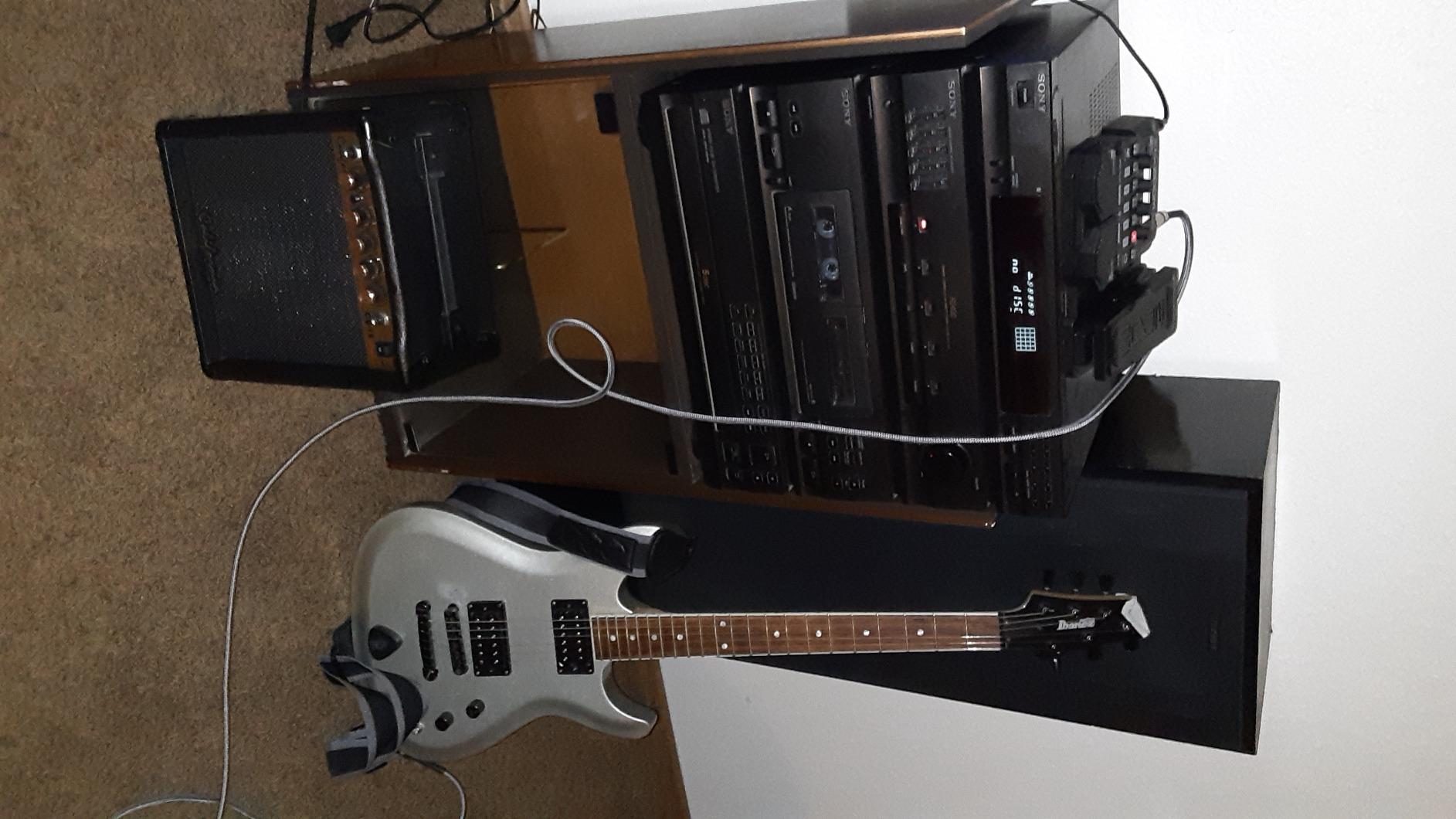
I plugged the Zoom G1X FOUR into my practice amp and within five minutes had scrolled through distortion, chorus, reverb, delay, and a wah effect using the built-in expression pedal. For a beginner who has no idea what effects they even like yet, this is the pedal I would hand them first. You get 71 effects and 13 amp models in a single unit that runs on batteries.
The expression pedal on the right side was a pleasant surprise. I mapped it to control wah, volume, and pitch shifting depending on which patch I loaded. That kind of control usually costs extra on dedicated pedals, and having it built in lets you experiment with foot-controlled effects from day one.
The 30-second looper changed how I practice. I would record a simple chord progression, then solo over it for ten minutes without getting bored. Add the 68 built-in rhythm patterns and you essentially have a drummer in a box. For someone learning timing and rhythm, that combination is gold.
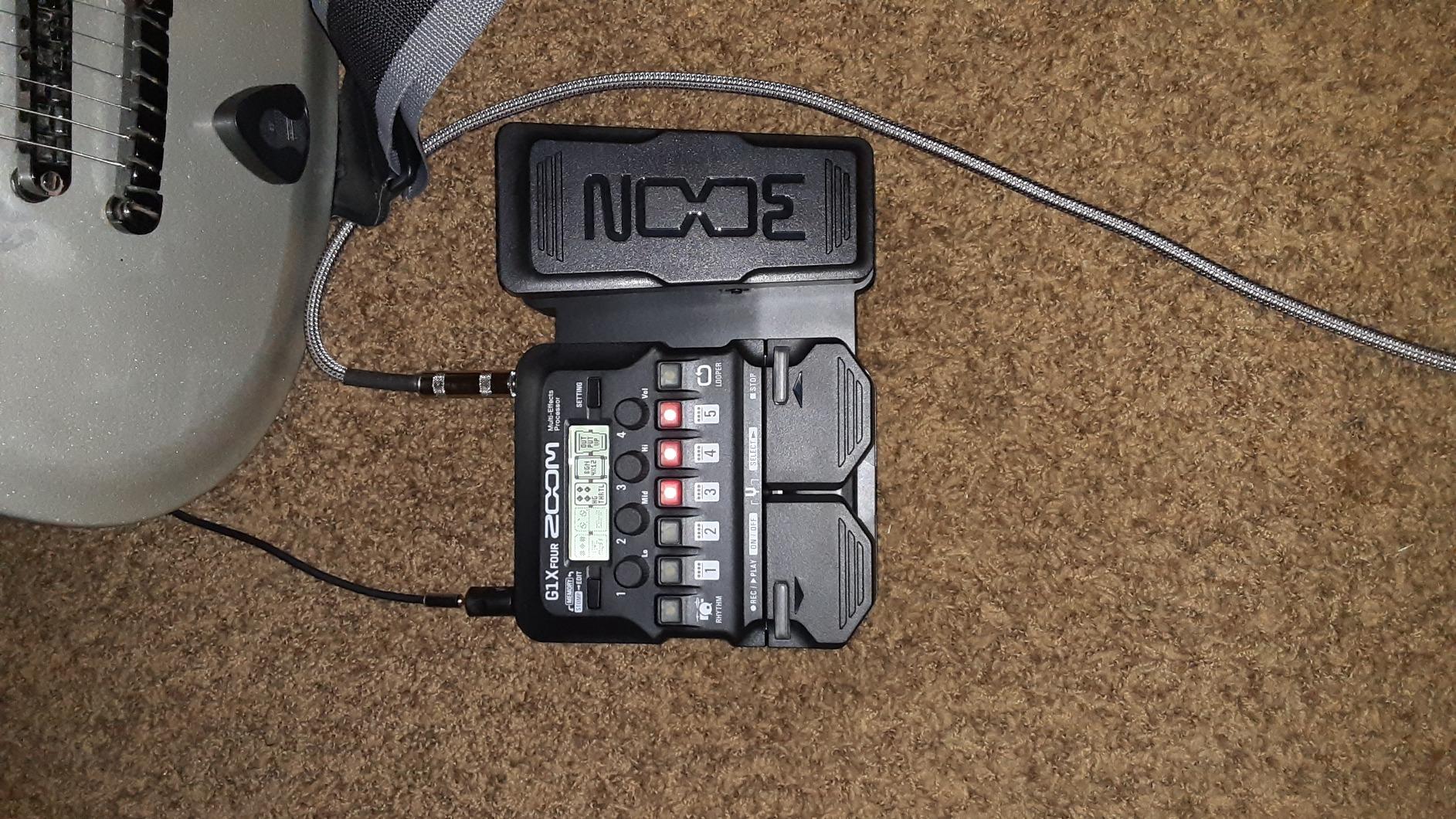
On the technical side, the G1X FOUR connects to Zoom Guitar Lab software on your computer. This lets you organize patches, download new sounds, and customize your signal chain visually. I found the software far easier than scrolling through menus on the pedal itself, especially when building complex multi-effect patches.
The build quality feels solid for the category. The chassis is plastic but dense enough to survive a few drops, and the footswitches have a satisfying click. At just over a pound, I tossed it in a backpack for jam sessions without a second thought.
Battery power is both a blessing and a curse. Four AA batteries give you roughly 8 to 10 hours of play time, which is great for portability. But if you plan to use it daily on a pedalboard, grab a 9V center-negative adapter to save on batteries.
Multi-Effects vs Single Pedals: Which Suits You?
If you are just starting and have no idea what sounds you like, the G1X FOUR is the smarter buy. You can audition 71 effects and decide which ones matter to you before investing in dedicated pedals. Our team found that most beginners who start with a multi-effects unit eventually narrow down to three or four favorite sounds. From there, you can buy single pedals that match those preferences.
The trade-off is sound quality. Dedicated pedals almost always sound richer and more responsive than multi-effects processors at similar price points. But the difference is subtle enough that most beginners will not notice it for the first year of playing.
Getting Started With the Zoom Guitar Lab Software
Download Zoom Guitar Lab from the Zoom website and connect the pedal via USB. The interface lets you drag effects into a signal chain, adjust parameters with sliders, and save patches directly to the pedal. I recommend starting with the factory presets, then tweaking one parameter at a time to understand how each control shapes your sound.
One tip I learned the hard way: name your custom patches something memorable. The default numbering system gets confusing fast once you start creating your own sounds.
2. MOOER GE100 Multi-Effects Pedal — Budget-Friendly Tone Explorer
MOOER GE100 Multi-Effects Guitar Pedal 80 Presets, 66 Effects
66 Effects
80 Presets
180s Looper
40 Drum Rhythms
Tuner Built-in
Pros
- 80 preset and 80 user patches for extensive sound library
- 66 effect types provide versatile tones
- 180 second looper for extended recording
- 40 drum rhythms for practice and performance
- Assignable expression pedal adds control flexibility
Cons
- May require adapter for some setups
- Some users report menu complexity
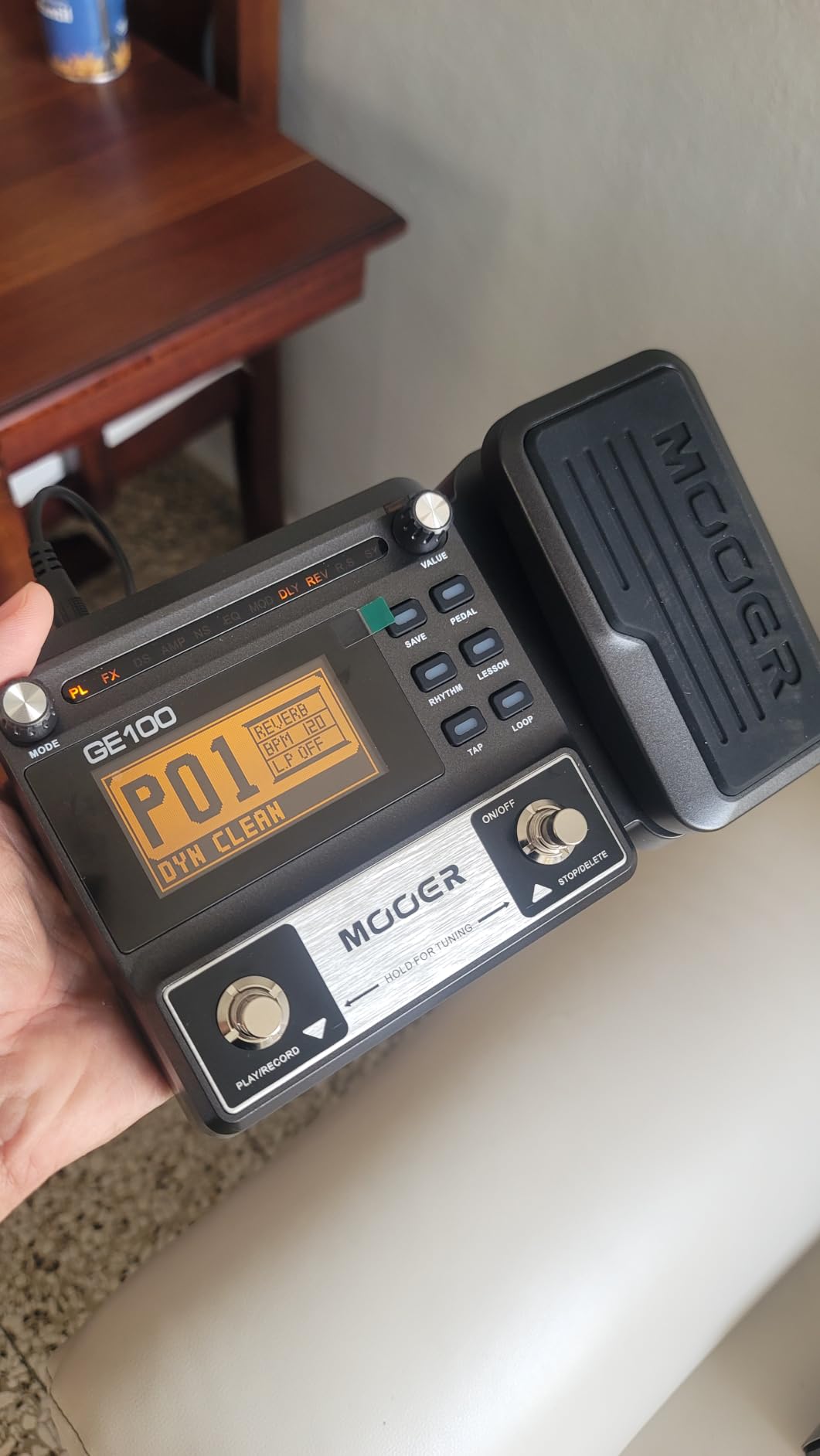
The MOOER GE100 caught my attention because it packs 66 effects and 80 presets into a unit that currently sits at number one in the Electric Guitar Floor Multieffects category on Amazon. I ran it through my practice amp alongside the Zoom G1X FOUR to compare, and the GE100 held its own impressively well.
What sets this pedal apart is the 180-second looper. That is six times the recording length of the Zoom, which means you can build much more complex layered arrangements. I recorded a full verse-chorus-verse structure with rhythm guitar, lead accents, and a bass line before running out of loop time.
The 40 built-in drum rhythms cover rock, blues, funk, metal, and pop styles. I found them genuinely useful for practicing tight timing, especially the shuffle and funk patterns that force you to lock in with a groove. The scale and chord learning function is a bonus that helps beginners explore music theory without a separate app.
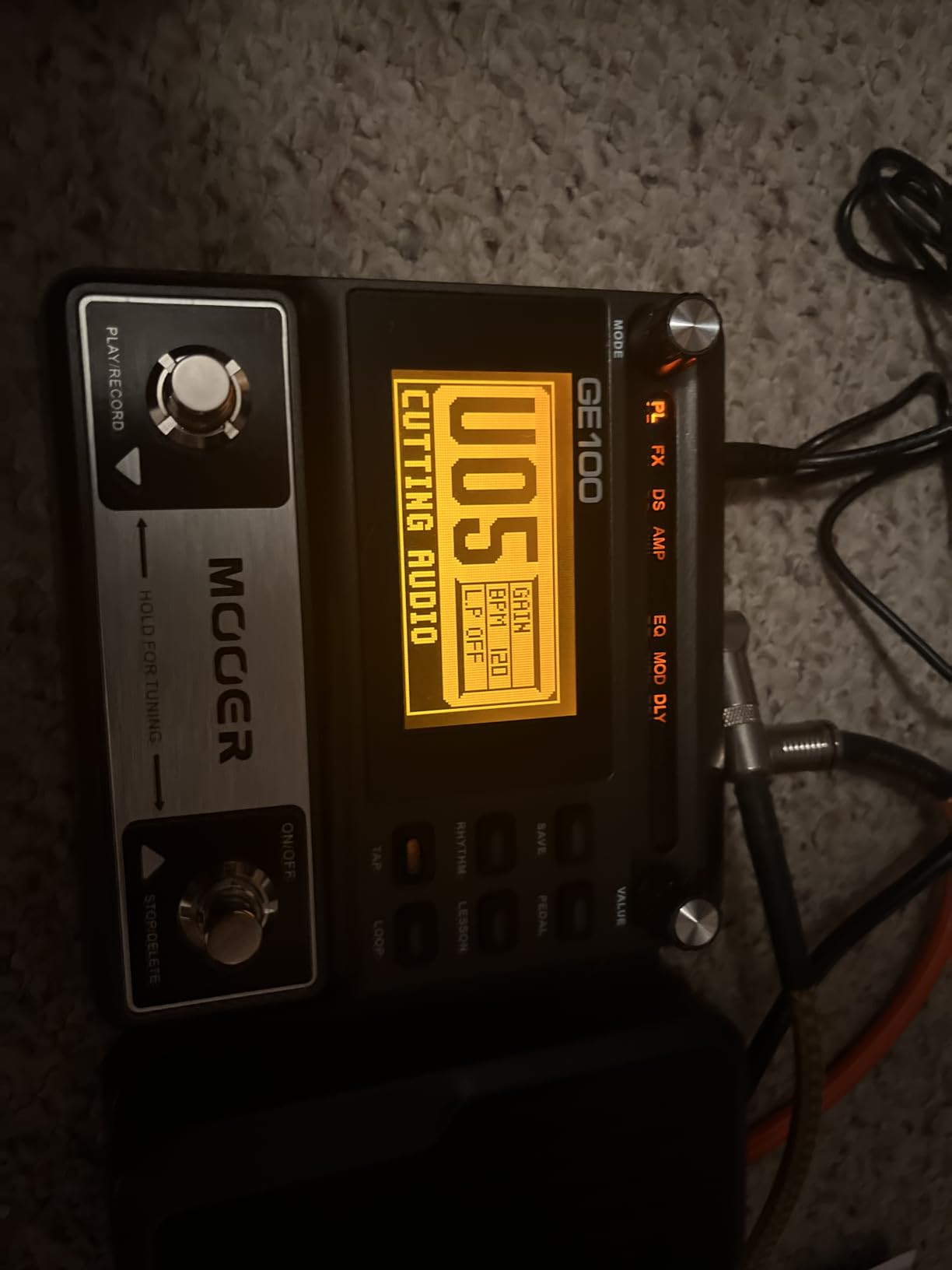
Powering the GE100 is flexible. It runs on a DC 9V adapter or four AA batteries, and both options work reliably. The included expression pedal is assignable to six parameters, which means you can use it for wah, volume swells, pitch bends, or effect depth depending on your patch.
The menu system took me about an hour to fully understand. The eight effect modules each have their own settings, and moving between them requires some button combinations. Once I memorized the layout, editing patches became quick and intuitive.
The build features a lightweight plastic body with metal footswitches. It survived a week of daily stomping on my practice rug without any issues, though I would be more careful gigging with it compared to a metal-housed BOSS pedal.
Who Benefits From the Scale and Chord Trainer?
The built-in scale and chord learning function shows finger positions on the display for common scales and chord shapes. If you are a self-taught guitarist who has never taken lessons, this feature is surprisingly helpful for connecting the dots between theory and practice. I tested it with the pentatonic and blues scales, and the visual reference made improvising over backing tracks much easier.
That said, advanced players will find this feature unnecessary. It is aimed squarely at beginners and intermediate players who are still building their fretboard knowledge.
Powering the GE100: Batteries vs Adapter
For bedroom practice, four AA batteries last about 6 to 8 hours depending on how many effects you stack. For pedalboard use, the included DC 9V adapter is the way to go. I recommend labeling your adapter since the GE100 uses a standard center-negative barrel jack that looks identical to most other pedal power supplies.
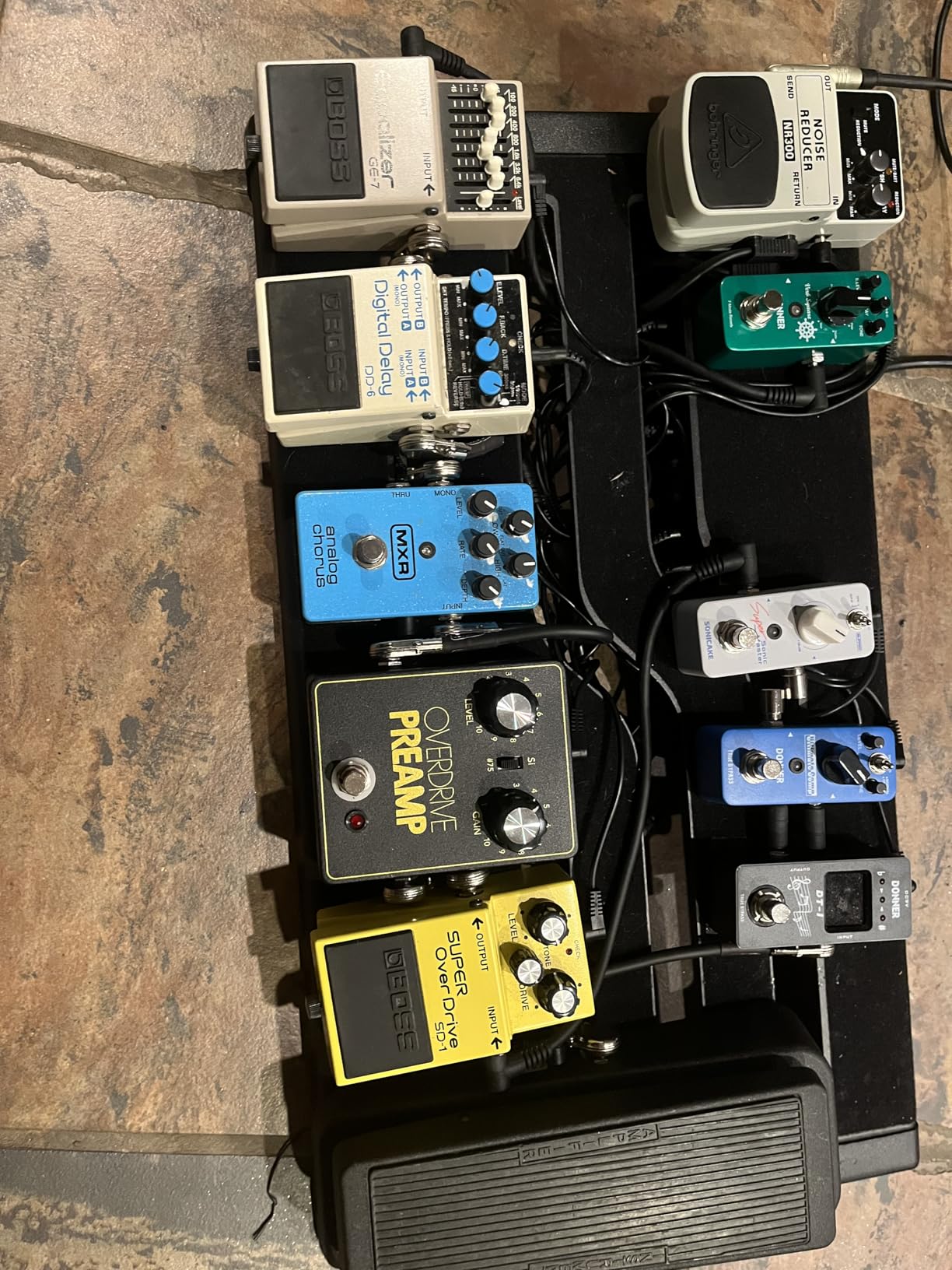
One thing to note: the GE100 draws 300 milliamps, which is higher than most single pedals. If you plan to power it from a pedalboard power supply, make sure that output can handle the current draw.
3. BOSS DS-1 Distortion — The Legendary First Distortion Pedal
BOSS DS-1 Distortion Compact Distortion Pedal
Legendary Since 1978
Hard-Edged Attack
Smooth Sustain
Tone Control
5-Year Warranty
Pros
- Legendary distortion sound since 1978
- Hard-edged attack with smooth sustain
- Unique tone control offers wide range
- Works as a booster at low settings
- BOSS five-year warranty
- Transparent tone when volume reduced
Cons
- Not Prime eligible
- Basic model with no advanced features
The BOSS DS-1 has been on production lines since 1978, and there is a reason it is still one of the best-selling distortion pedals on the planet. I plugged one into a clean tube amp and instantly understood why everyone from beginners to touring professionals keeps one on their board.
Three knobs control everything: Level, Tone, and Distortion. That simplicity is exactly what a beginner needs. I had a usable hard rock tone dialed in within 30 seconds of opening the box, no manual required. The tone control is particularly impressive, offering a surprisingly wide sweep from dark and muddy to bright and cutting.
What surprised me most was how well the DS-1 cleans up. Roll back the distortion knob to around 9 o’clock and it functions as a boost pedal, pushing your amp harder without adding much grit of its own. This dual personality means the DS-1 grows with you as your playing evolves.
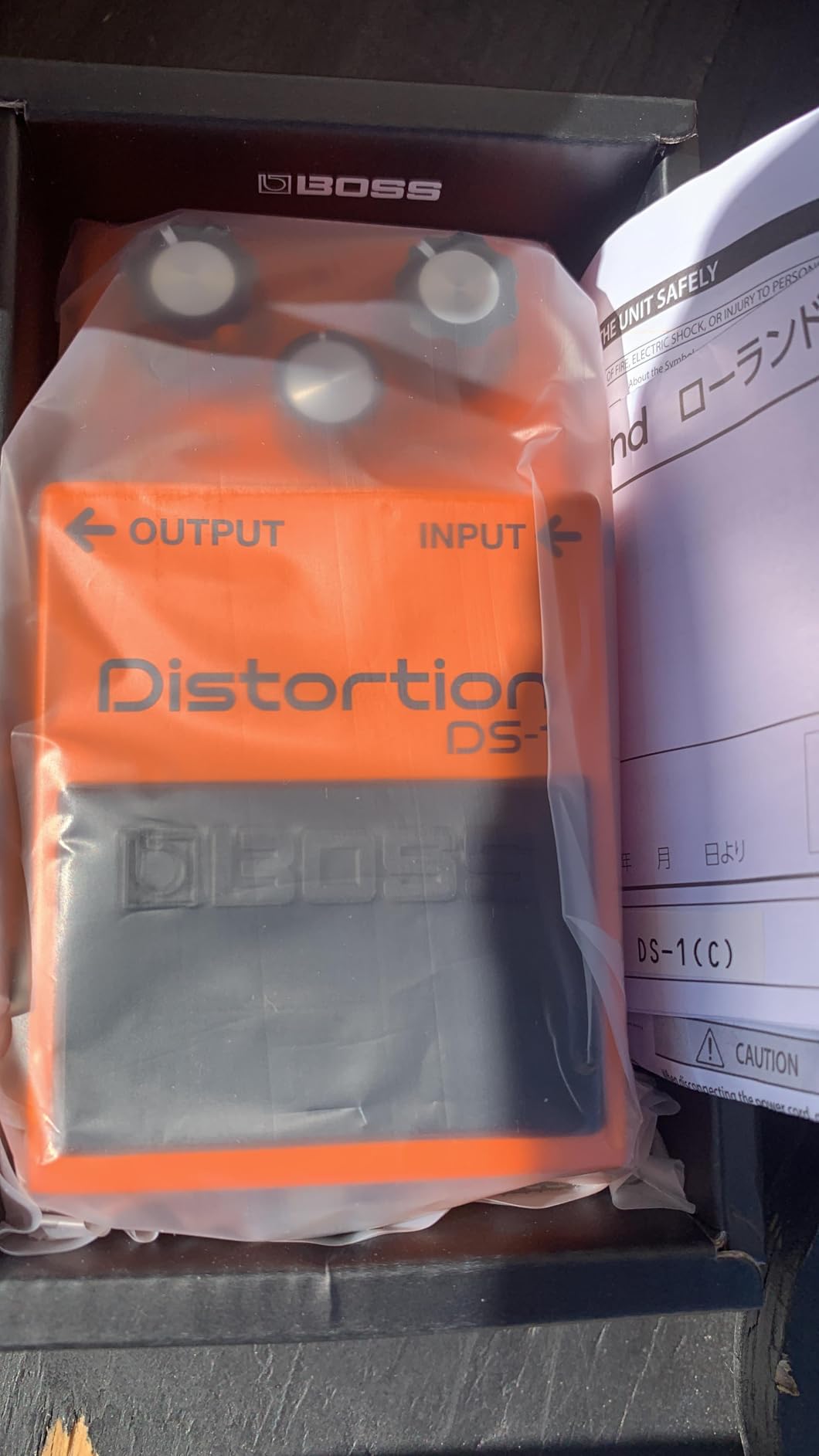
The build quality is what you expect from BOSS. The compact metal housing is legendary for surviving drops, spills, and years of stomping. BOSS backs it with a five-year warranty, which tells you something about their confidence in the construction.
The DS-1 uses buffered bypass rather than true bypass. In a pedal chain with several pedals, this actually helps maintain signal strength over long cable runs. For a beginner with just one or two pedals, you will not notice any tone coloring when the pedal is off.
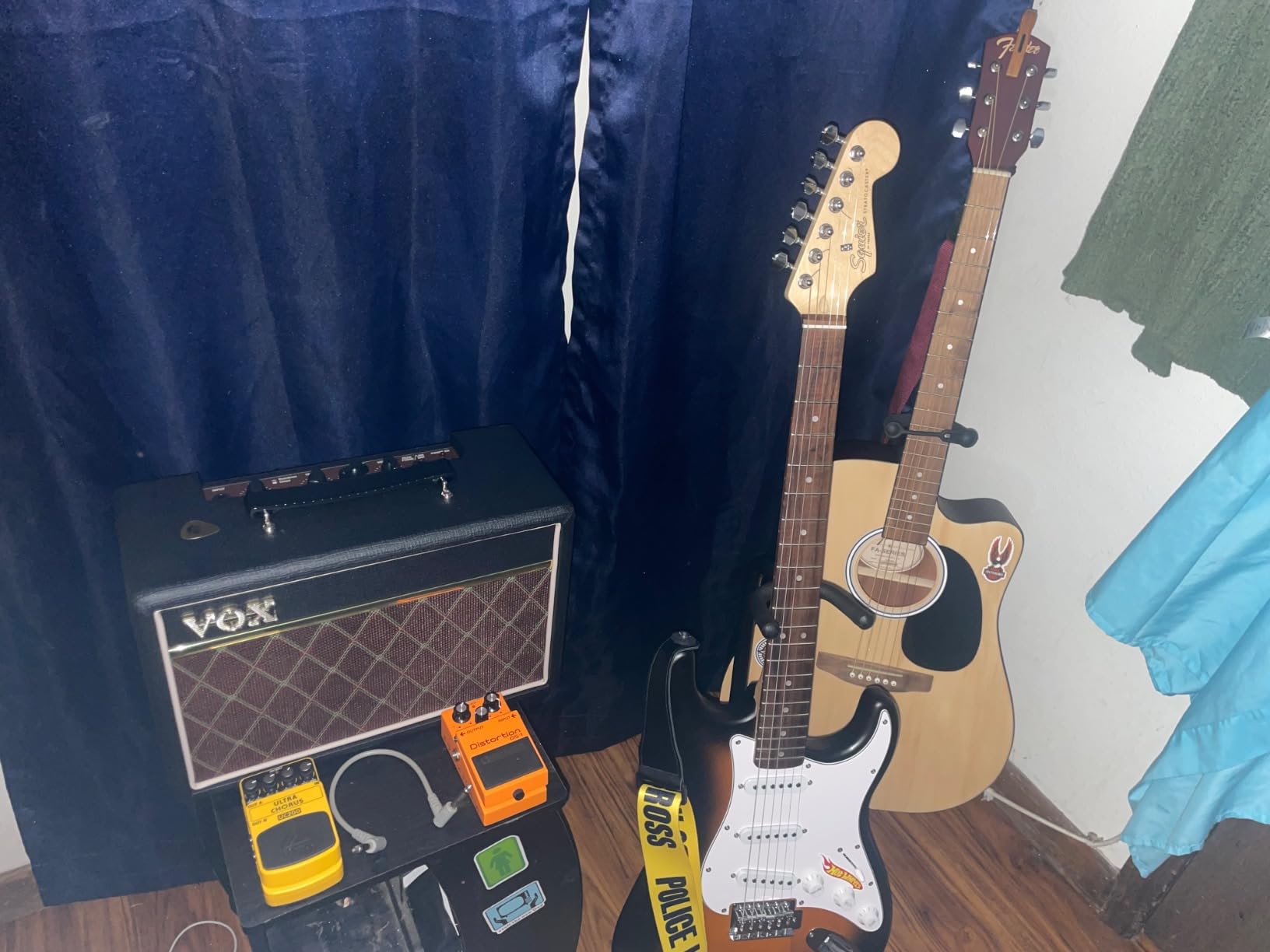
This is the distortion pedal I would recommend to any beginner building their first board. It covers hard rock, punk, alternative, and metal-adjacent tones, and it pairs beautifully with both solid-state and tube amplifiers.
Which Music Styles Suit the DS-1?
The DS-1 shines in hard rock, punk, grunge, and alternative styles. Think Nirvana, Smashing Pumpkins, and early Metallica tones. Steve Vai and Joe Satriani both used modified DS-1 pedals, which tells you the core sound is versatile enough for lead work too. For modern djent or extreme metal, you may eventually want something with more gain, but the DS-1 covers an enormous range for a single pedal.
I found it particularly inspiring for rhythm playing. The hard-edged attack keeps palm mutes punchy and defined, even at higher distortion settings where cheaper pedals tend to get muddy.
Signal Chain Placement for Best Results
Place the DS-1 after any wah or compressor pedals but before your delay and reverb. This follows the standard gain-before-time-based-effects rule that most professional pedalboards use. If you are running just a DS-1 and a reverb, connect guitar to DS-1 input, DS-1 output to reverb input, then reverb output to your amp. That order gives you a distorted signal that gets washed in space at the end of the chain, which is the most natural-sounding arrangement.
Experimenting with placement is part of the fun, but starting with this standard order keeps your effects interacting predictably.
4. Donner Blues Drive — Warm Vintage Overdrive on a Budget
Donner Overdrive Guitar Pedal, Blues Drive Vintage Overdrive Effect Warm/Hot Modes for Pedal Boards Electric Guitar, True Bypass
Warm and Hot Modes
True Bypass
Vintage Overdrive
Aluminum Chassis
Pros
- Warm and Hot modes for versatile overdrive sounds
- Classic TS-style overdrive replica
- Wide dynamic range from smooth to cutting
- True bypass maintains signal clarity
- Durable aluminum alloy construction
- Great value for beginners
Cons
- Power supply not included
- DC 9V adapter required not battery
The Donner Blues Drive is a Tube Screamer-style overdrive pedal that costs less than a single guitar lesson. I ran it through a clean solid-state amp and was genuinely impressed by how close it gets to the warm, midrange-heavy overdrive tone that blues and rock players have relied on for decades.
Two modes set this pedal apart. Warm mode delivers a smooth, classic overdrive that cleans up beautifully when you roll back your guitar’s volume knob. Hot mode pushes the gain harder, giving you a more aggressive sound that works for rock leads and crunchy rhythm parts.
The three controls are straightforward. Level sets your output volume, Tone adjusts brightness, and Gain controls how hard the pedal drives. I had a bluesy crunch tone dialed in within a minute of plugging it in, and the true bypass switching meant my clean tone stayed pristine when the pedal was off.
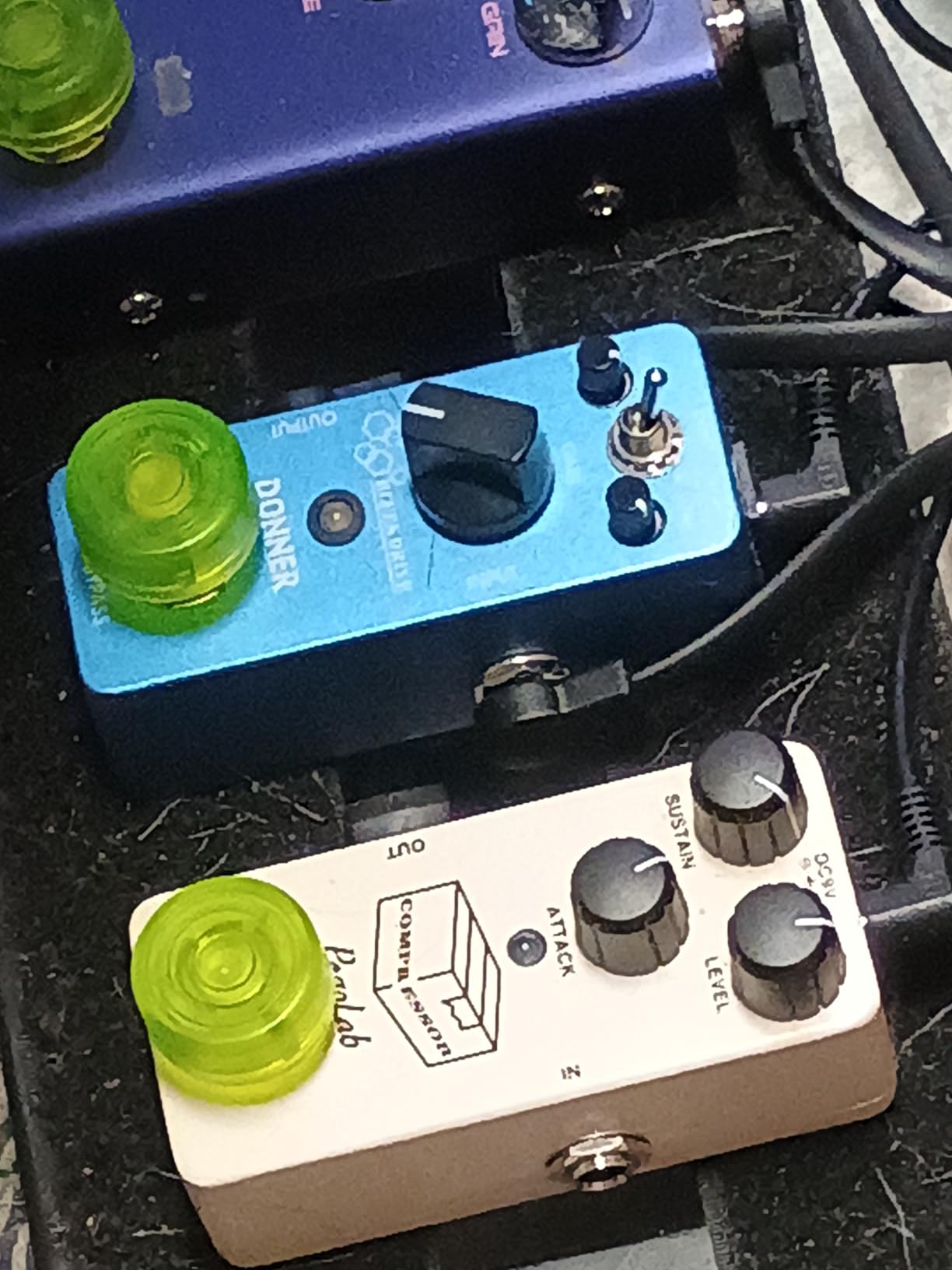
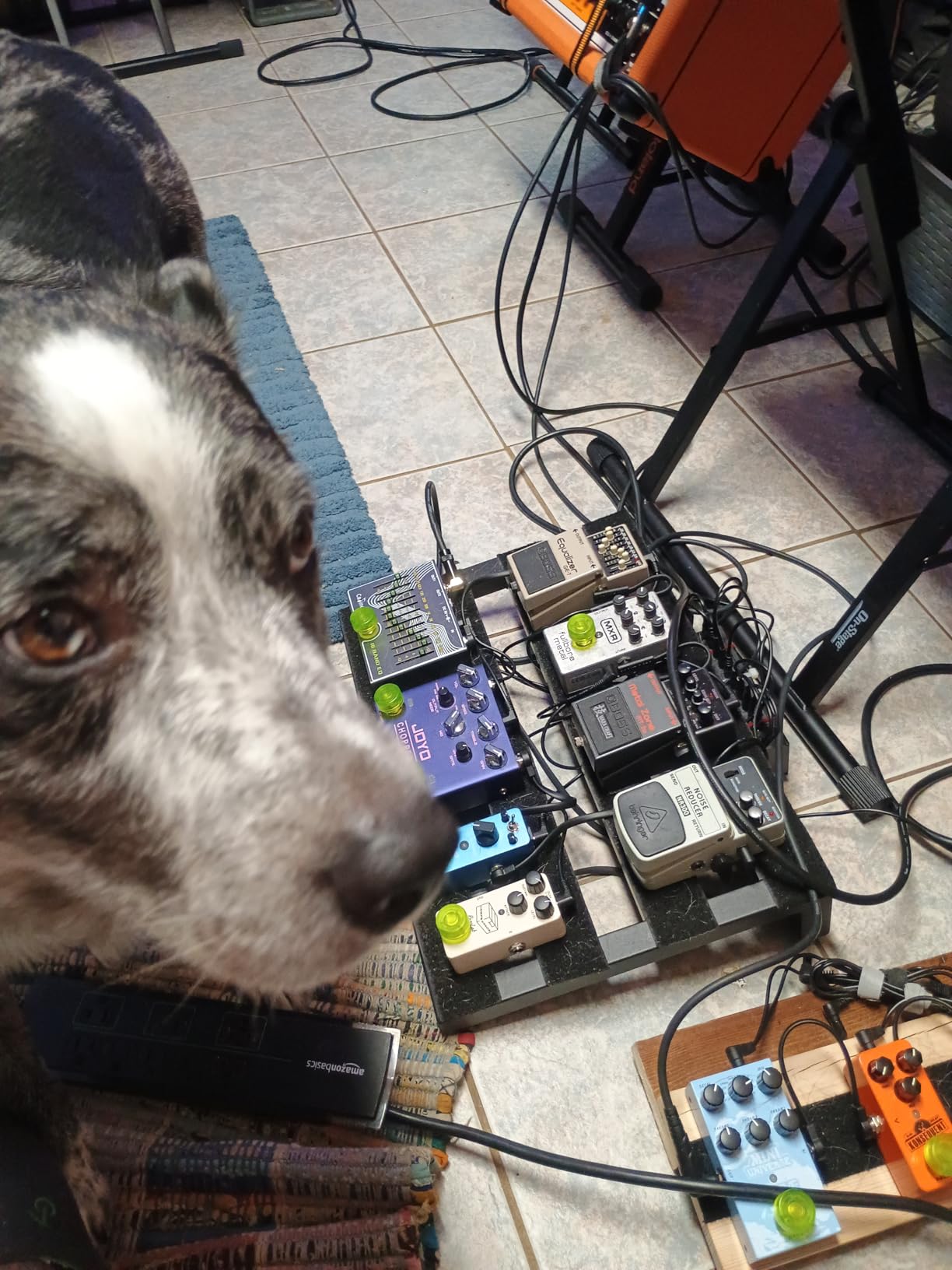
The aluminum alloy chassis feels surprisingly sturdy for the category. It is not as tank-like as a BOSS pedal, but it survived my enthusiastic stomping without any issues. The mini size means it takes up minimal pedalboard real estate, which matters when you start adding more pedals.
True bypass is a feature I always look for in budget pedals. It means the pedal does not color your tone when disengaged, which is especially important when you have several pedals in your chain. Some cheap buffered pedals can dull your sound, but the Blues Drive keeps things transparent.
One thing to note: the power supply is not included. You will need a standard 9V center-negative adapter, which is the same type used by virtually every guitar pedal on the market. Factor that into your initial purchase.
Warm vs Hot Mode: When to Use Each
Warm mode is your go-to for blues, jazz, and clean-ish rhythm parts. It adds just enough grit to make your sound feel alive without overpowering the natural tone of your guitar and amp. I used it for everything from SRV-style blues licks to warm jazz comping. Hot mode is better for rock solos and punchy rhythm work where you want more presence and aggression.
The mode switch is on the front of the pedal, so you cannot change modes mid-song with your foot. Plan your patches accordingly or choose one mode that covers most of your needs.
Pairing This With Your Amplifier
The Blues Drive sounds best through a clean or slightly broken-up amp channel. If your amp already has heavy distortion engaged, adding this pedal on top can muddy things up. I got my favorite tones by setting the amp to its clean channel, then letting the pedal do the work. For tube amp users, the Blues Drive also excels as a boost pedal to push an already overdriven amp into saturation.
5. Donner Yellow Fall — Vintage Analog Delay in a Mini Box
Donner Guitar Delay Pedal for Pedal Boards, Electric Guitar, Yellow Fall Analog Delay Mini Guitar Effect Pedal Vintage Delay, True Bypass
Analog Delay
20-620ms Range
Vintage Sound
Mini Size
True Bypass
Pros
- 20ms to 620ms delay time covers all essentials
- Warm vintage analog delay sound
- Mini size fits any pedalboard
- True bypass maintains signal integrity
- LED indicator shows working state
- Top seller in delay effects category
Cons
- Power supply not included
- DC 9V adapter required
The Donner Yellow Fall is the number one bestseller in the Electric Guitar Delay and Reverb Effects category on Amazon. After testing it for a week, I understand why. This tiny analog delay pedal produces warm, organic repeats that sound far more expensive than they are.
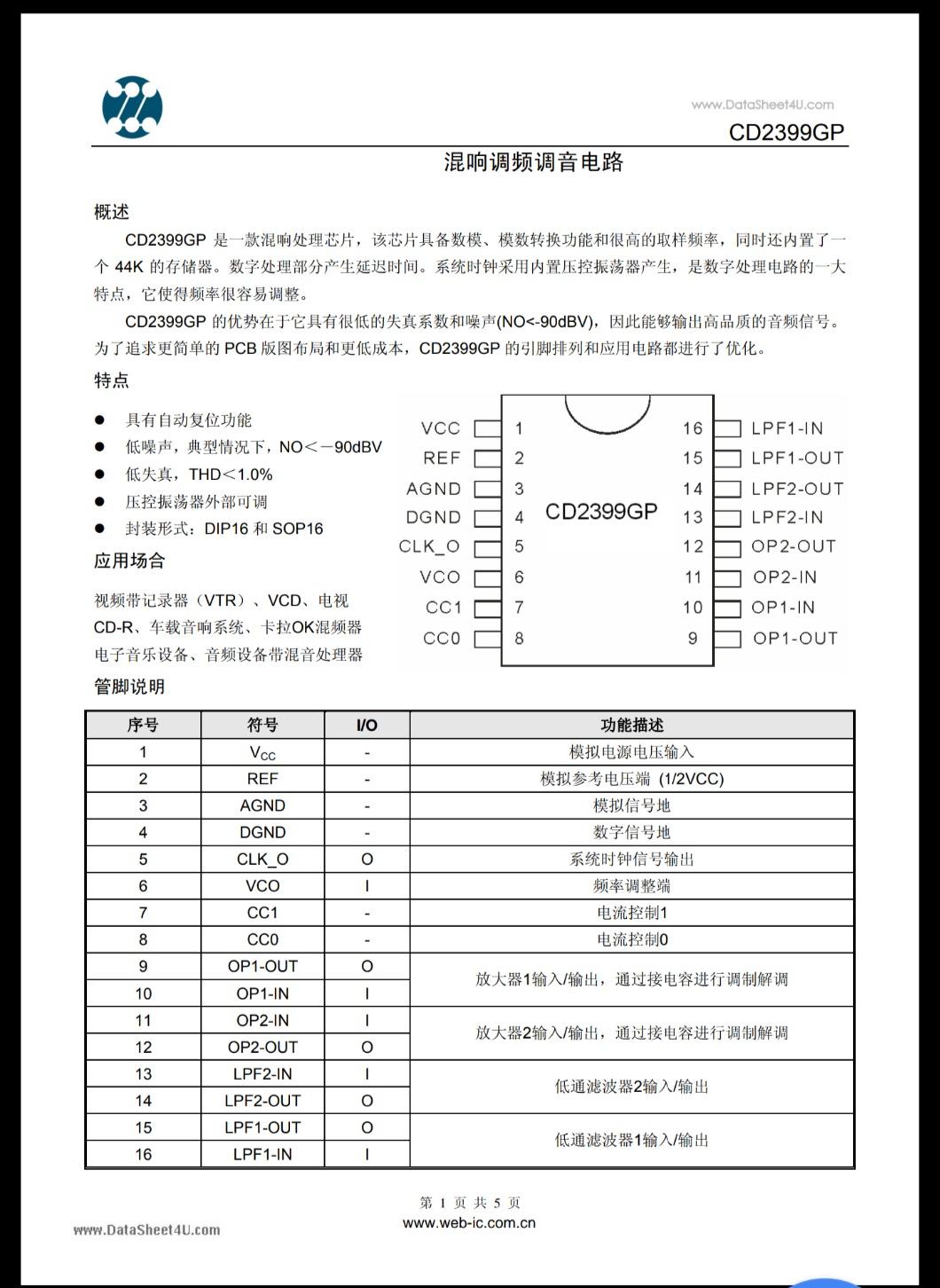
Analog delay has a character that digital delays struggle to replicate. Each repeat degrades slightly, getting softer and darker as it fades away. The Yellow Fall nails this vintage sound beautifully. I played U2-style dotted eighth-note patterns and they sounded rich and atmospheric right out of the box.
The delay time range of 20 milliseconds to 620 milliseconds covers everything from subtle slapback echo to long ambient washes. Three knobs control Level, Feedback, and Time. I found the feedback control particularly fun to push into self-oscillation territory for those sci-fi spaceship sounds.
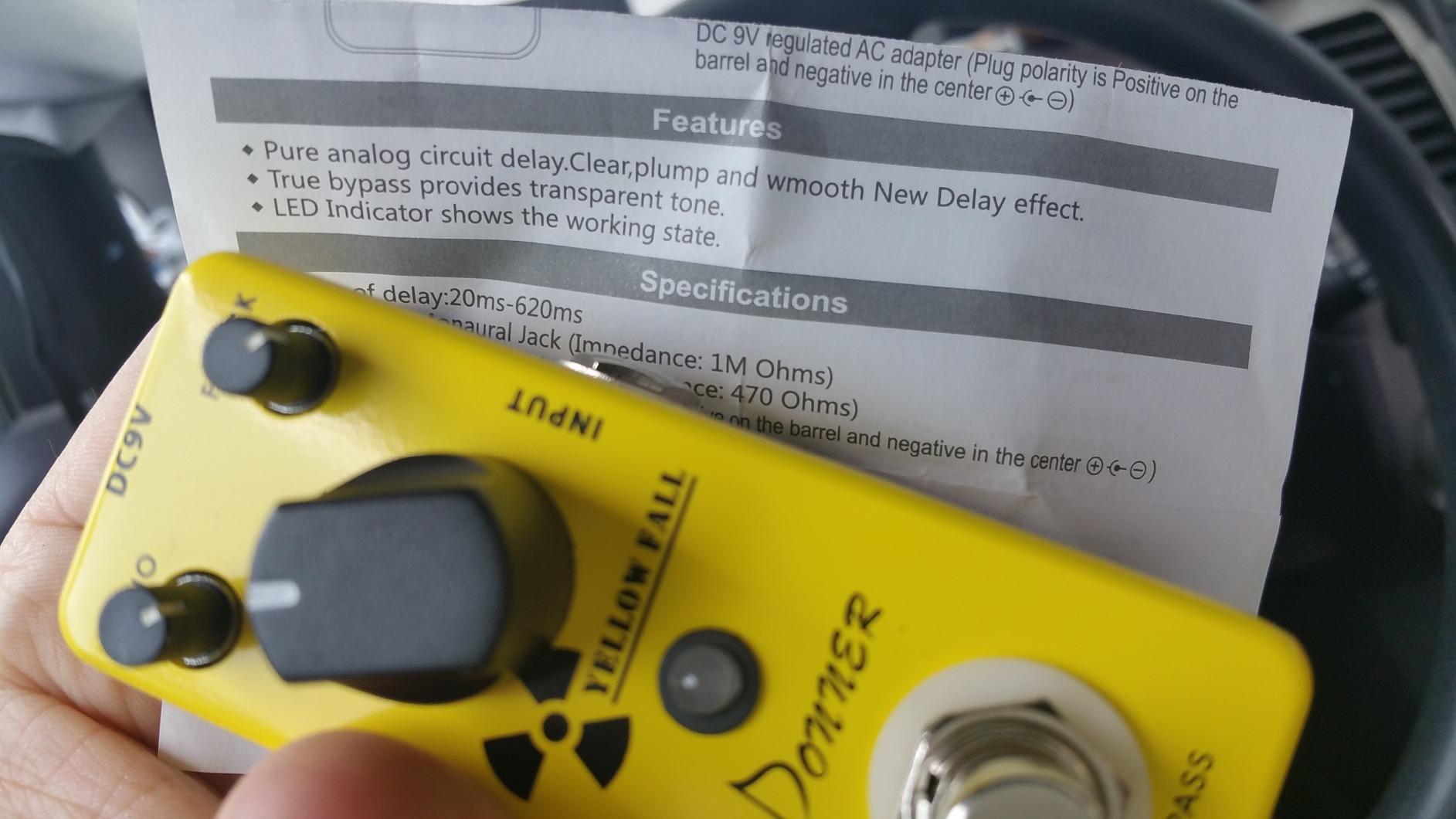
The mini enclosure is genuinely small. At roughly 3.7 by 1.7 inches, the Yellow Fall takes up less space than a credit card on your pedalboard. For beginners who are just starting to build a board, this compact footprint means you can fit more pedals without upgrading to a larger board immediately.
True bypass switching keeps your signal clean when the pedal is off. The LED indicator is bright enough to see on a dark stage, which seems like a minor detail until you are trying to figure out which pedals are engaged during a live performance.
Like the other Donner pedals in this guide, the power supply is not included. The Yellow Fall runs on a standard 9V center-negative adapter drawing 36 milliamps, which is very low and easy to power from almost any pedalboard supply.
Analog vs Digital Delay: What to Expect
Analog delay like the Yellow Fall produces warm, degraded repeats that get progressively darker and softer. This creates a natural, organic sound that blends beautifully with your dry signal. Digital delay, by contrast, produces clean, exact repeats that stay bright and clear. For beginners, analog delay is generally more forgiving and musical, which is why I recommend the Yellow Fall as a first delay pedal.
If you eventually want pristine, crystal-clear repeats for precise rhythmic patterns or long ambient soundscapes, a digital delay pedal will serve those needs better. But for learning what delay sounds like and how to use it musically, analog is the perfect starting point.
Setting Up Your First Delay Sound
Start with the Time knob set to roughly 300 milliseconds, Feedback at two repeats, and Level just loud enough to hear the echoes clearly. Strum a chord and let it ring. You should hear your original note followed by one or two warm echoes. From there, experiment with the Time knob to match the delay to your tempo, and increase Feedback for more repeats.
For a classic slapback sound, set Time to around 100 milliseconds with a single repeat. For ambient wash, push Time to maximum with Feedback set for four or five repeats.
6. Donner Verb Square — Seven Reverb Modes for Any Mood
Donner Reverb Guitar Pedal, Verb Square Digital Reverb 7 Modes Room, Hall, Church, Spring, Plate, Studio, Mod, True Bypass
7 Reverb Modes
True Bypass
Digital Circuit
Compact Size
LED Indicator
Pros
- 7 different reverb modes for versatility
- True bypass design preserves tone
- Durable aluminum alloy construction
- Compact mini size for pedal boards
- LED indicator for working state
Cons
- Power supply not included
- Requires DC 9V adapter
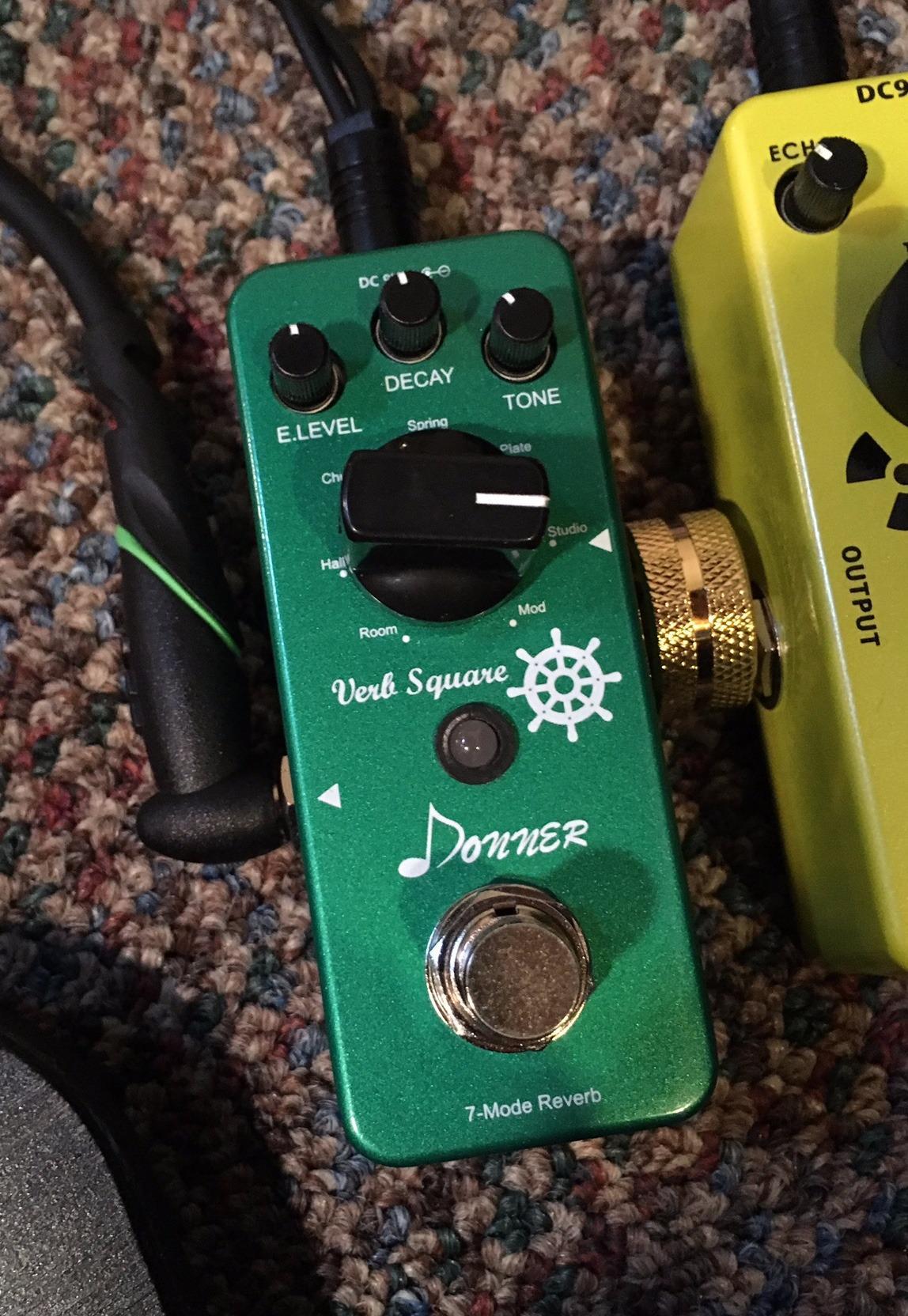
Reverb is the effect that makes your guitar sound like it is being played in a physical space. The Donner Verb Square offers seven different reverb types in a pedal the size of a Post-it note. I tested each mode extensively and found genuine usable sounds across all seven options.
The seven modes are Room, Hall, Church, Spring, Plate, Studio, and Mod. Room gives you the sound of a small practice space. Hall simulates a large concert venue with long decay. Church is massive and cavernous, perfect for ambient passages. Spring recreates the classic surf-rock reverb found in vintage amplifiers.
Plate mode emulates the metallic reverb used on countless classic recordings. Studio is a clean, balanced reverb that works for almost anything. Mod adds modulation to the reverb tail, creating a shimmering, ethereal effect that I found addictive for clean arpeggio parts.
The three knobs give you control over Level, Tone, and Decay. Decay determines how long the reverb tail lingers, and I spent hours experimenting with different settings. Short decay with the Room mode gives you an intimate, dry sound. Maximum decay with Church mode turns a single chord into a five-second wash of atmosphere.
The digital circuit design keeps the reverb tails smooth and artifact-free. True bypass means your dry tone passes through untouched when the pedal is off. The aluminum alloy chassis matches the build quality of the other Donner pedals in this guide.
The Verb Square draws 140 milliamps, which is moderate. Most pedalboard power supplies can handle this easily, but check your power brick if you are running many pedals from a single unit.
Choosing Between the 7 Reverb Modes
For everyday practice and recording, Room and Studio modes are your workhorses. They add just enough space to make your sound natural without overwhelming it. Hall mode is perfect for lead solos where you want notes to bloom and sustain. Spring mode is essential if you play surf rock, rockabilly, or vintage country. Church and Mod modes are for experimental and ambient styles where you want dramatic, atmospheric soundscapes.
My personal favorite is Plate mode for clean rhythm guitar. It adds a professional sheen that makes bedroom recordings sound like they were tracked in a real studio.
Where Reverb Belongs in Your Signal Chain
Reverb should be the last effect in your signal chain, or close to it. The standard order is gain pedals first, then modulation, then delay, then reverb last. This arrangement makes reverb apply to your fully shaped sound, creating a natural sense of space around everything. If you put reverb before distortion, the distortion will clip the reverb tails and create a muddy, unpleasant mess.
For a simple two-pedal setup, connect guitar to distortion pedal, distortion to reverb, then reverb to amp. That covers the essentials and follows proper signal chain order.
7. Donner Tutti Love — Classic Analog Chorus That Sings
Donner Chorus Pedal, Tutti Love Analog Chorus Effect Classic Warm Chorus for Electric Guitar True Bypass
Analog Chorus
Warm Tone
True Bypass
Works With Guitar and Bass
Compact
Pros
- Classic warm analog chorus tone
- Works with both guitar and bass
- Extra LEVEL knob for control
- True bypass preserves signal
- Durable aluminum construction
Cons
- Power supply not included
- Requires 9V DC adapter
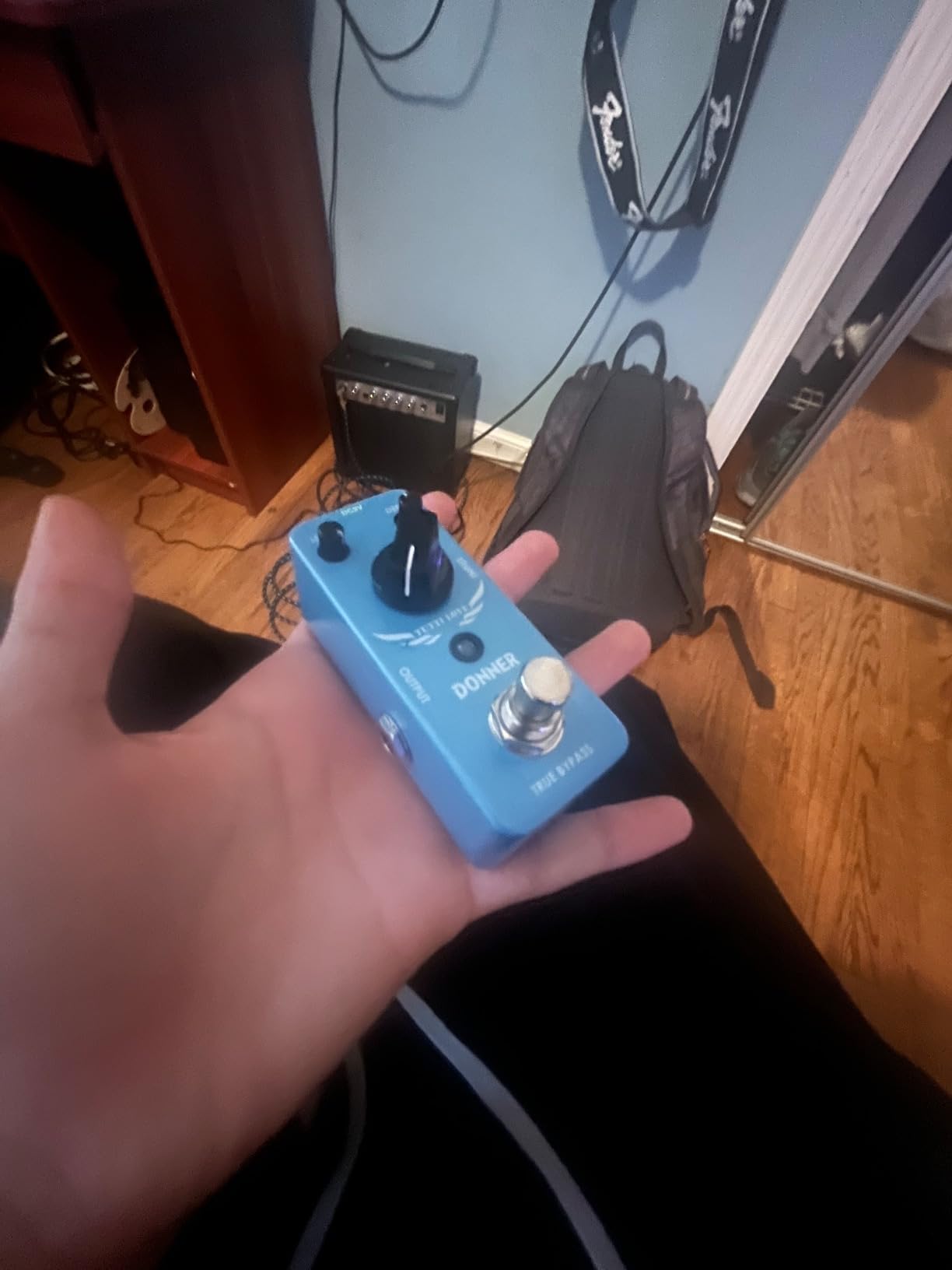
Chorus is the effect that makes one guitar sound like multiple guitars playing in slightly detuned unison. The Donner Tutti Love delivers this sound in a warm, analog format that reminded me of the classic chorus tones from the 1980s. I plugged it in expecting budget-quality modulation and came away genuinely surprised.
The analog circuit produces a natural wave curve that sounds organic and musical. Unlike some digital chorus pedals that can sound metallic or artificial, the Tutti Love has a liquid, flowing quality. I played clean arpeggios with it engaged and the sound was immediately evocative of Nirvana’s “Come As You Are” intro.
Three knobs control the effect. Rate sets the speed of the modulation, Depth controls how pronounced the pitch wobble is, and Level adjusts the mix of affected signal. The extra Level knob is a feature that many chorus pedals omit, and it gives you more control over how subtle or dramatic the effect sounds.
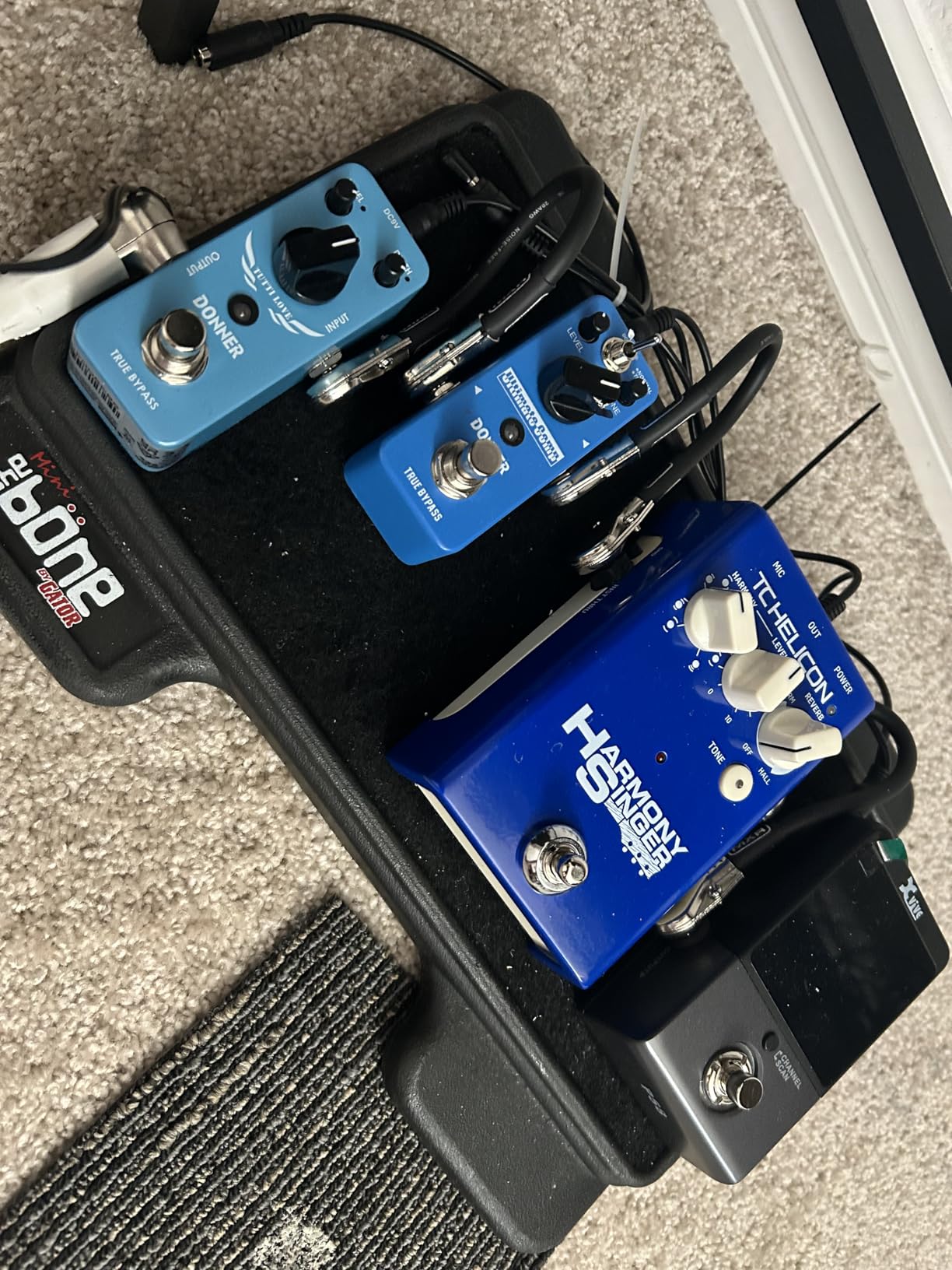
The Tutti Love works with both guitar and bass, which is a bonus if you play both instruments. I tested it with a bass guitar and the chorus added a rich, rounded depth without muddying the low frequencies. Not every chorus pedal handles bass well, so this versatility is worth noting.
True bypass switching keeps your signal clean when the pedal is bypassed. The aluminum alloy housing matches the build quality across the Donner mini pedal line. The LED indicator confirms when the effect is engaged, which is helpful on a crowded pedalboard.
Power comes from a standard 9V center-negative adapter drawing only 10 milliamps. That extremely low current draw means you can power this pedal from almost any power supply output without worrying about overloading it.
Using Chorus on Guitar vs Bass
On guitar, chorus adds width and movement to clean tones. It is the backbone of funk rhythm parts, ambient soundscapes, and 1980s rock. Set Rate to a slow sweep and Depth to a moderate level for a subtle thickening effect. On bass, chorus works best on upper-register fills and solos where it adds character without muddying the fundamental low notes. The Tutti Love handles both applications well thanks to its warm analog character.
Famous Songs That Use This Chorus Tone
The warm analog chorus sound is everywhere in music history. Nirvana’s “Come As You Are,” Pink Floyd’s “Welcome to the Machine,” and the Police’s “Walking on the Moon” all feature chorus as a defining element. If you want to recreate those tones, the Tutti Love gets you remarkably close. Play around with the Rate and Depth knobs while listening to those songs, and you will find the settings that match each artist’s signature sound.
8. FLAMMA FC05 — Eleven Modulation Effects in One Tiny Pedal
FLAMMA FC05 Modulation Guitar Pedal with Chorus Flanger Tremolo Phaser Vibrato Rotary Liquid Autowah Stutter Ring LowBit
11 Modulation Effects
Full Metal Shell
Compact Size
Digital Circuit
Pros
- 11 modulation effects in one pedal
- Full metal shell for durability
- Compact tiny size
- Bright color design
- Good value for variety of effects
Cons
- Power supply not included
- Requires 9V 150mA adapter
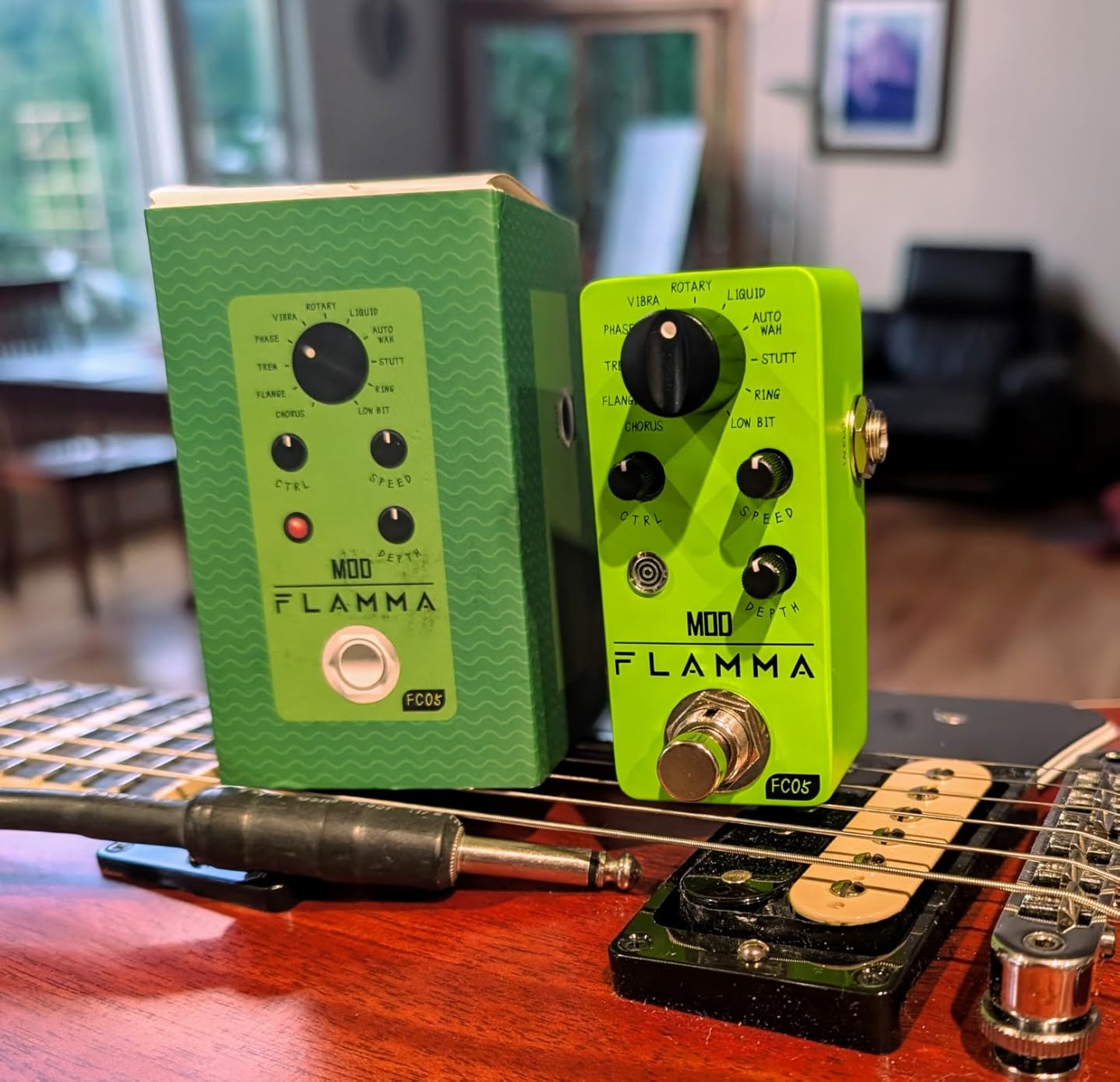
The FLAMMA FC05 packs eleven different modulation effects into a pedal roughly the size of a computer mouse. I cycled through all eleven and found real, usable sounds in at least eight of them. For a beginner who wants to explore modulation without buying separate chorus, phaser, flanger, and tremolo pedals, this is an excellent starting point.
The eleven effects are Chorus, Flanger, Tremolo, Phaser, Vibrato, Rotary, Liquid, Auto Wah, Stutter, Ring, and Low Bit. Each has its own character and practical applications. Chorus and Phaser are the most immediately useful for beginners, while Liquid, Ring, and Low Bit venture into experimental territory.
I spent the most time with the Phaser and Flanger settings. The phaser produced a smooth, swooshing sweep that worked beautifully over clean chord progressions. The flanger had that classic jet-engine whoosh that defined 1980s rock guitar. Both effects sounded surprisingly good for a pedal in this category.
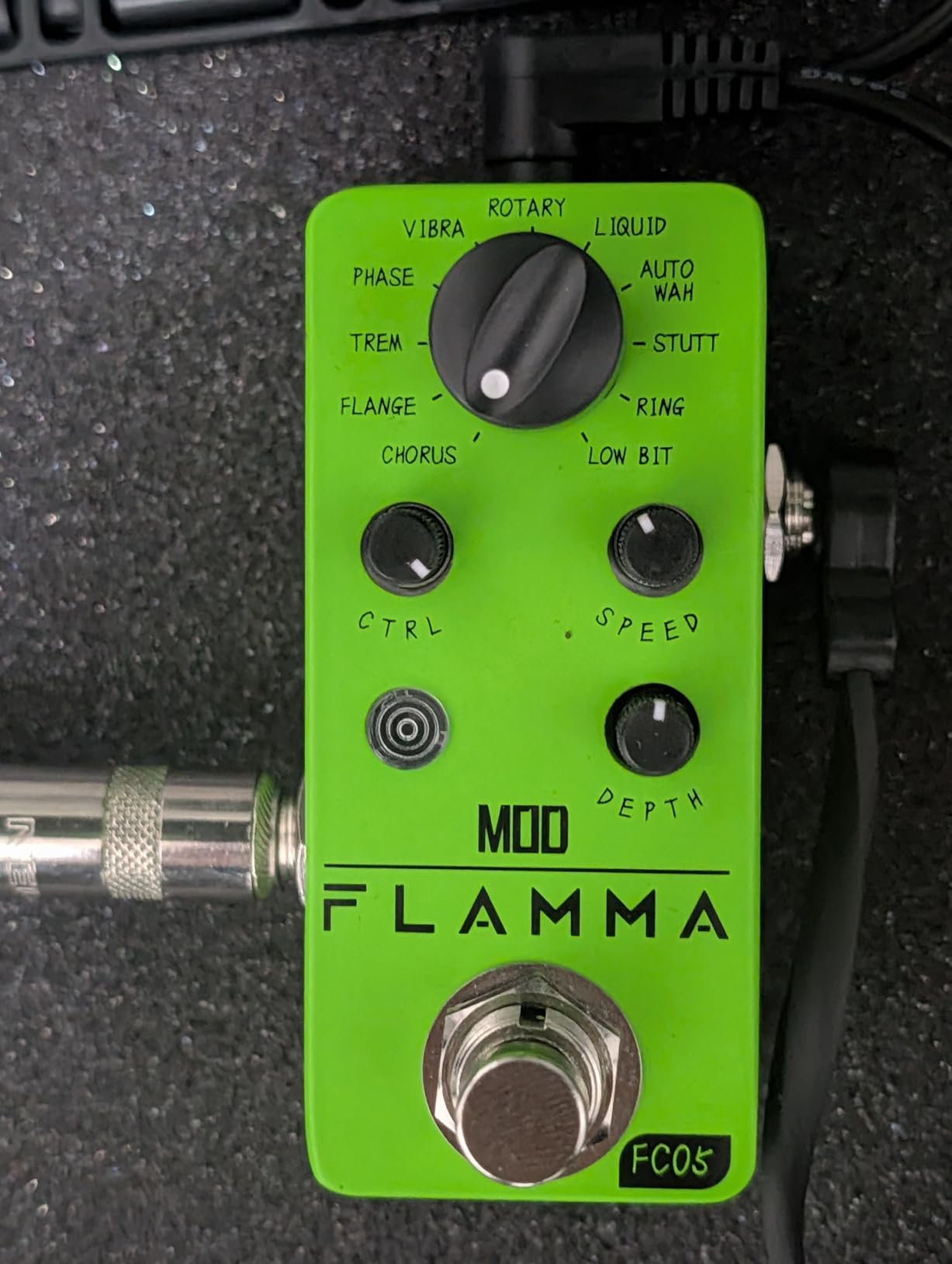
The full metal shell feels durable and well-built. Despite the tiny footprint, the footswitch is full-sized and easy to stomp. The bright color makes it easy to spot on a dark pedalboard, which is a practical design choice.
One knob and one mode selector control everything. The knob adjusts the primary parameter for whichever effect is selected, and the selector cycles through the eleven modulation types. This minimalist approach keeps things simple but means you have less fine control over each effect compared to a dedicated pedal.
The FC05 draws 150 milliamps, which is higher than most mini pedals. Make sure your power supply has an output that can handle this draw. A standard 9V center-negative adapter rated for at least 200 milliamps will cover it comfortably.
Exploring the 11 Modulation Types
Start with Chorus and Phaser, as these are the most versatile and commonly used modulation effects. Tremolo is excellent for vintage and indie tones. Flanger works for rock and metal rhythm parts. Vibrato adds a warbling pitch wobble that creates dreamy, seasick sounds. Rotary simulates a spinning Leslie speaker, which is perfect for vintage organ-style tones. Auto Wah gives you envelope-filter funk sounds without needing an expression pedal.
Liquid, Stutter, Ring, and Low Bit are more specialized effects for experimental and electronic-influenced music. Try them, but do not worry if they do not immediately click. They are bonus sounds that expand your tonal palette.
When to Upgrade From a Multi-Modulation Pedal
The FC05 is perfect for discovering which modulation effects you actually use. After a few months, you will likely gravitate toward one or two favorites. At that point, consider buying a dedicated version of that effect. A dedicated chorus or phaser pedal will offer more control, better sound quality, and a more solid build. The FC05 served its purpose as an exploration tool, and that is exactly what makes it valuable for beginners.
9. BOSS RC-1 Loop Station — The Industry Standard Looper
BOSS RC-1 Loop Station Pedal
12 Min Recording
One-Switch Operation
Stereo Looping
24-Segment LED Ring
Pros
- 12 minutes of recording time
- Simple one-switch operation
- 24-segment LED indicator
- Stereo looping capability
- Industry standard BOSS quality
- Undo and redo functionality
Cons
- Higher price point
- Requires 9V power supply
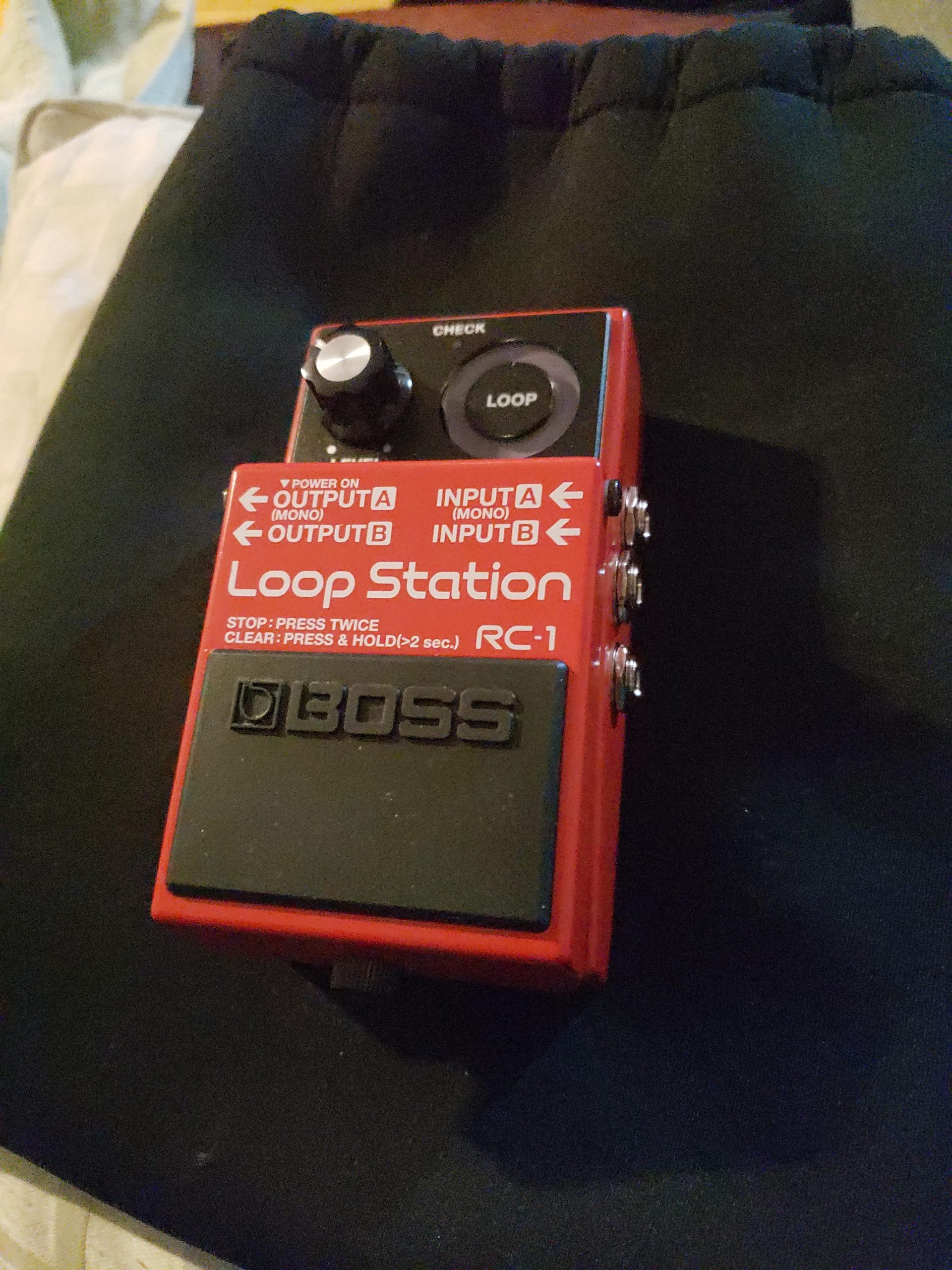
The BOSS RC-1 Loop Station is the most popular looper pedal in the world, and after using one for a month, I understand why. It does one thing and does it perfectly. No menus, no modes, no confusion. You stomp to record, stomp to play, and stomp to overdub. That is it.
With 12 minutes of stereo recording time, the RC-1 gives you enough space to build elaborate layered arrangements. I recorded a chord progression, added a bass line using my guitar’s lower strings, then soloed over the whole thing. The loop stayed tight and in sync without any noticeable degradation.
The 24-segment LED ring is one of my favorite features. It provides a visual representation of where you are in your loop, making it easy to time your overdubs and know exactly when the loop will restart. On a dark stage, this visual feedback is invaluable for staying in sync with your recorded layers.
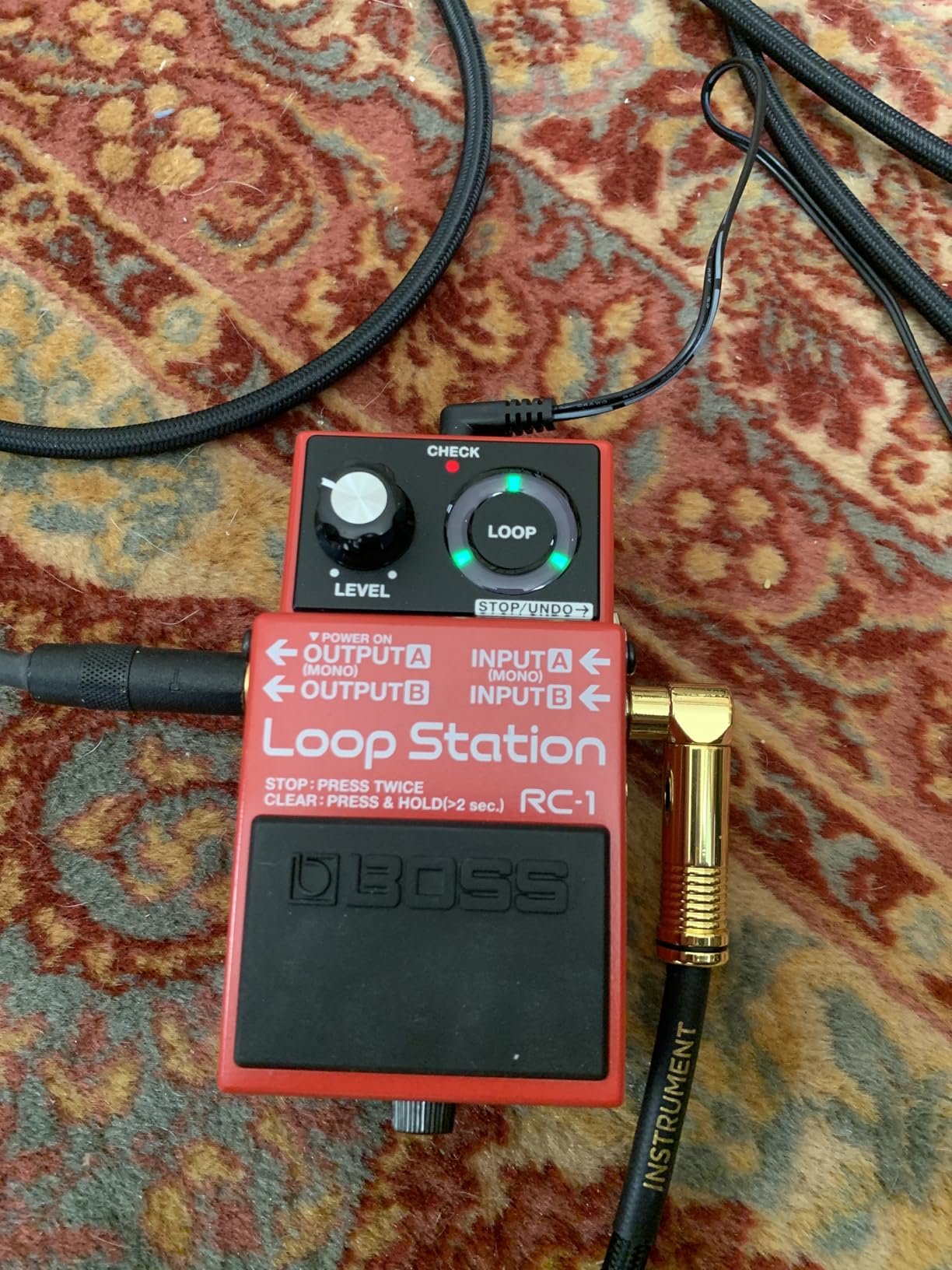
Undo and redo functionality lets you remove your last overdub without starting over. This saved me more times than I can count when I flubbed a layer and wanted another shot. Hold the footswitch to stop the loop, then press again to clear everything and start fresh.
The build quality is what you expect from BOSS. The compact metal housing is built to last decades, and the footswitch has that satisfying, authoritative click that BOSS pedals are known for. This is a pedal you buy once and keep forever.
The RC-1 can be powered by a 9V adapter or a 9V battery. For pedalboard use, the adapter is the practical choice. For standalone practice, the battery option gives you portability without needing an external power source.
Practice Techniques Using a Looper
Looping transforms solo practice into something that feels like playing with a band. Record a chord progression, then practice your scales and improvisation over it. This trains your ear to play in context rather than in isolation. Record a simple bass line, then practice rhythm guitar on top. Layer a melody over your chords to practice arrangement and songwriting. The RC-1 makes all of this effortless because the one-switch operation does not interrupt your creative flow.
I recommend starting with short, four-bar loops before attempting longer arrangements. This builds your timing and helps you develop the muscle memory needed to start and stop recording precisely on the beat.
Why the RC-1 Beats App-Based Loopers
Smartphone looping apps exist, but they cannot match the immediacy of a dedicated footswitch. With the RC-1, your hands never leave the guitar. You start and stop loops with a tap of your foot, which is essential for live performance and uninterrupted practice. The RC-1 also processes audio with zero latency, while apps introduce slight delays that throw off your timing. For serious practice and performance, a hardware looper is the right tool for the job.
10. SONICAKE Levitate — Delay and Reverb Combined in One Pedal
SONICAKE Delay Reverb 2 in 1 Guitar Effects Pedal Digital Levitate
Delay Plus Reverb
2000ms Delay
Tap Tempo
Buffer Bypass Circuit
Pros
- 2 effects in 1 pedal delay plus reverb
- 2000ms maximum delay time
- Tap tempo function
- Buffer bypass circuit preserves tone
- Trail function for live shows
Cons
- Power supply not included
- Shorter warranty period
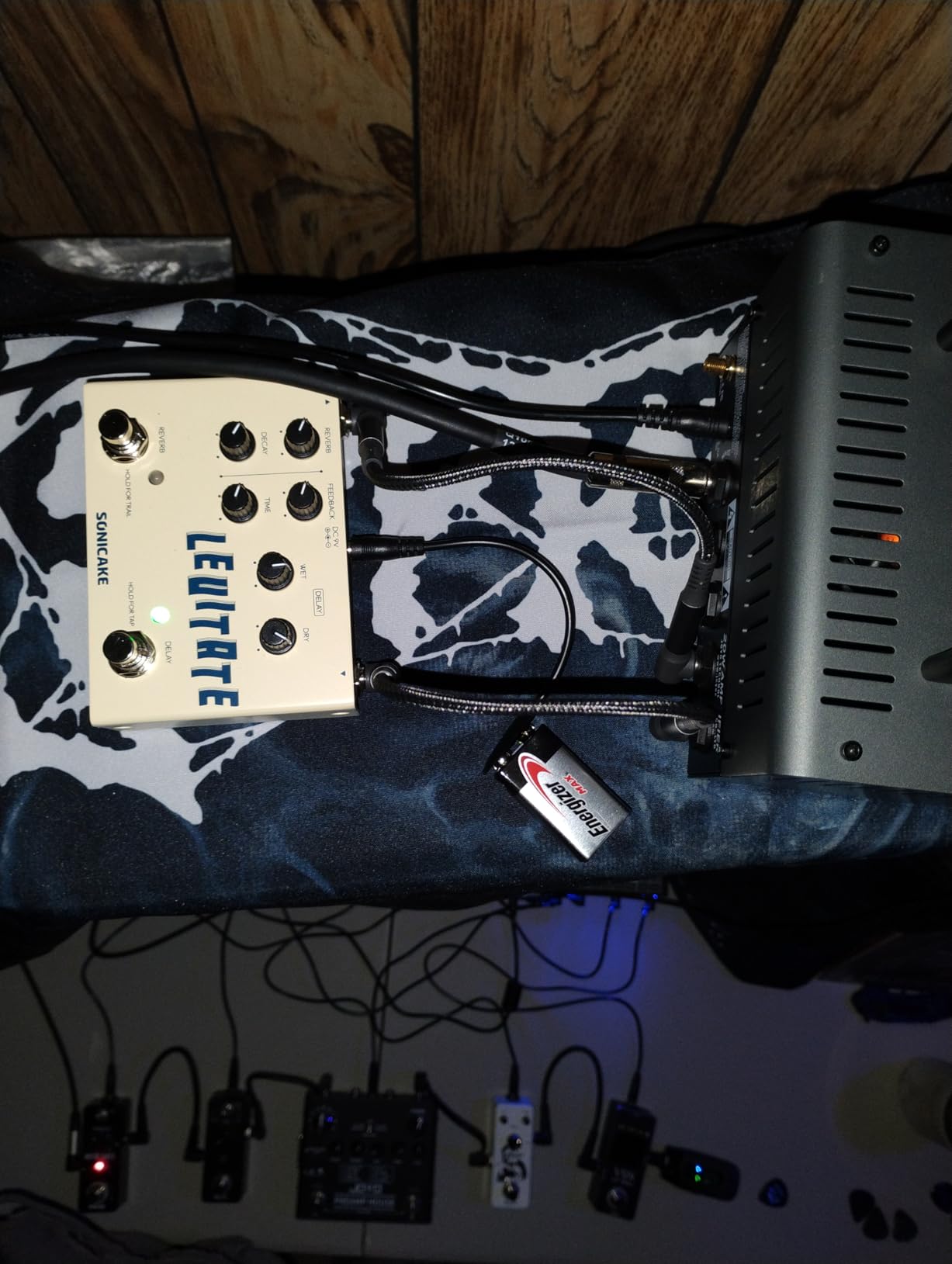
The SONICAKE Levitate combines two of the most popular ambient effects into a single pedal. Digital delay and plate reverb sit side by side, each with their own set of controls. I tested both effects independently and together, and the Levitate delivers rich, atmospheric sounds that belie its compact size.
The delay side offers up to 2000 milliseconds of delay time, which is more than enough for everything from rockabilly slapback to long ambient echoes. The tap tempo function lets you set the delay time by tapping the footswitch in rhythm, which is essential for matching delay repeats to the tempo of a song during live performance.
The reverb side features a plate reverb algorithm with an adjustable decay parameter. Plate reverb has a bright, dense character that works beautifully for both rhythm and lead guitar. I found the decay control particularly useful for dialing in everything from a subtle room sound to massive, cavernous washes.
Using both effects together creates the ambient soundscapes that define modern worship, post-rock, and cinematic guitar styles. The delay repeats wash into the reverb tail, creating a lush, three-dimensional sound. I spent an entire evening exploring the combinations and kept finding new inspiring textures.
The buffer bypass circuit is worth discussing. Unlike true bypass, which can cause signal loss in long pedal chains, a buffered bypass maintains signal strength. The Levitate uses a special buffer design that keeps your tone pristine whether the pedal is on or off. This is especially important for beginners building larger pedalboards.
The trail function allows delay and reverb tails to continue ringing out naturally after you bypass the pedal. This prevents abrupt cutoffs that sound unnatural during live performance.
Using Tap Tempo in Live Settings
Tap tempo lets you sync your delay repeats to the tempo of whatever song you are playing. Simply tap the footswitch in time with the music, and the pedal calculates the delay time automatically. This is far faster and more accurate than guessing the milliseconds. For beginners, practice tapping along to songs you know well. Start with something in 4/4 time at a moderate tempo, and work on tapping precisely on each beat.
Once you master tap tempo, you can create rhythmic delay patterns where the repeats fill the spaces between your notes, creating the illusion of a much busier performance.
Combining Delay and Reverb Effectively
The key to combining delay and reverb is balance. Too much of both creates a muddy wash where individual notes lose definition. Start with the delay level set low and the reverb decay moderate. Strum a chord and listen to how the two effects interact. Gradually increase each one until you find the sweet spot where the sound is atmospheric but still articulate. For lead guitar, a slightly longer delay time with shorter reverb decay creates a sense of space without washing out your notes.
How to Choose Your First Guitar Effects Pedals in 2026?
Choosing your first pedals does not have to be complicated. I broke down everything you need to know into five practical sections that cover pedal types, signal chain basics, the multi-effects versus single pedals debate, essential accessories, and common mistakes to avoid.
Understanding the Main Pedal Categories
Guitar effects pedals fall into five main categories, and understanding these groups helps you make informed decisions about what to buy first. Gain pedals include distortion, overdrive, and fuzz, all of which add harmonics and grit to your sound. Distortion is aggressive and compressed, overdrive is warmer and more dynamic, and fuzz is wild and buzzy.
Time-based pedals include delay and reverb. Delay records your sound and plays it back after a set time, creating echoes. Reverb simulates the acoustic properties of different physical spaces. Both add depth and dimension to your tone.
Modulation pedals include chorus, phaser, flanger, tremolo, and vibrato. These effects modulate your signal to create movement, depth, and texture. Chorus thickens your sound, phaser creates a sweeping whoosh, and flanger produces a jet-engine roar.
Utility pedals include tuners, loopers, compressors, and noise gates. These do not add obvious effects but improve your overall sound and functionality. A tuner is easily the most important pedal you will ever buy.
Multi-effects units combine many or all of these categories into a single device. They are the best starting point for beginners who want to explore everything before committing to specific pedals.
Signal Chain Basics: Connecting Your Pedals
Your signal chain is the order in which your guitar signal passes through your pedals before reaching the amplifier. The standard order is tuner first, then gain pedals, then modulation, then time-based effects, then looper last. This arrangement lets each effect process the signal in the most natural and predictable way.
Here is how to connect a basic four-pedal chain. Plug your guitar into the tuner input. Connect the tuner output to your distortion pedal input. Connect distortion to chorus. Connect chorus to delay. Connect delay to your amplifier. This order gives you distorted sound that gets modulated, then echoed, which is the most musical arrangement.
You will need instrument cables to connect your guitar to the first pedal and the last pedal to your amp. Between pedals, use short patch cables to minimize signal loss and save space. Right-angle patch cables are ideal for tight pedalboard layouts.
Multi-Effects vs Single Pedals: Which Is Better for Beginners?
This is the most common question beginners ask, and the answer depends on your goals. Multi-effects processors like the Zoom G1X FOUR and MOOER GE100 give you dozens of effects in one unit. They are perfect for discovering what sounds you like before investing in dedicated pedals. The downside is that individual effects may not sound as rich or responsive as purpose-built pedals.
Single pedals like the BOSS DS-1 and Donner Verb Square specialize in one effect and do it exceptionally well. They sound better, are more durable, and hold their value over time. The trade-off is that building a board of single pedals costs more and takes up more space.
Our team recommends starting with a multi-effects unit if you are completely new to pedals. After three to six months, you will know which effects you use most. At that point, replace the multi-effects unit with dedicated pedals for your favorite sounds.
Essential Accessories You Will Need
Pedals do not work on their own. You need a few accessories to get started, and budgeting for them prevents frustration later. A power supply is non-negotiable. Most pedals run on 9V center-negative power, and a dedicated pedal power supply with isolated outputs prevents noise and interference. A daisy chain cable can power multiple pedals from one adapter, but isolated outputs are quieter.
Cables connect everything together. You need at least one instrument cable from your guitar to the first pedal, patch cables between pedals, and another instrument cable from the last pedal to your amp. Budget for quality cables, as cheap ones introduce noise and signal loss.
A pedalboard gives you a platform to mount and transport your pedals. Even a simple piece of wood with Velcro strips works for beginners. As your collection grows, purpose-built pedalboards with padded cases make gigging much easier.
Budget Tips and Common Beginner Mistakes
The biggest mistake beginners make is buying too many pedals at once. Start with one or two, learn them inside and out, then expand. I have seen players buy five pedals simultaneously and never fully understand what any of them do. Quality over quantity always wins.
Another common mistake is ignoring the power supply. Using a cheap wall adapter or daisy-chaining too many pedals introduces hum and noise that ruins your tone. Invest in a proper isolated power supply early, and your pedals will sound noticeably better.
Do not skip the tuner. Reddit users consistently rank a tuner pedal as the most essential first purchase. It keeps you sounding your best and many tuner pedals include a buffer that improves your overall signal chain. Finally, trust your ears. If a pedal sounds good to you, it is good, regardless of what anyone on a forum says.
FAQs
What pedals should a beginner guitarist have?
A beginner guitarist should start with a tuner pedal, one gain pedal (distortion or overdrive), and one time-based pedal (delay or reverb). A multi-effects unit like the Zoom G1X FOUR is also an excellent first purchase because it includes all of these effects in one device. If you prefer single pedals, the BOSS DS-1 for distortion and the Donner Verb Square for reverb cover the essentials.
What 5 pedals should every guitarist have?
The five essential pedals for most guitarists are a tuner, an overdrive or distortion pedal, a delay pedal, a reverb pedal, and a looper. These cover tuning, tone shaping, spatial effects, and practice tools. A chorus or modulation pedal is a popular sixth addition once the core five are in place.
What is the one pedal that every guitarist needs?
A tuner pedal is the one pedal every guitarist needs. It keeps you always playing in tune and typically includes a buffer that improves signal quality across your pedal chain. Many experienced players on Reddit consider a tuner the single most important first purchase for any guitarist.
What is the best distortion pedal for beginners?
The BOSS DS-1 is widely regarded as the best distortion pedal for beginners. It has been in production since 1978, features simple three-knob controls, covers a wide range of rock and metal tones, and is backed by a five-year warranty. Its legendary status and durability make it a pedal you will never outgrow.
Should beginners get multi-effects or single pedals?
Beginners should consider starting with a multi-effects pedal like the Zoom G1X FOUR or MOOER GE100. These units provide dozens of effects in one device, letting you explore different sounds before committing to specific pedals. After a few months, you can identify your favorite effects and invest in dedicated single pedals that offer superior sound quality for those specific sounds.
Final Thoughts on the Best Guitar Effects Pedals for Beginners
Finding the best guitar effects pedals for beginners comes down to matching the pedal to your goals. If you want to explore everything at once, the Zoom G1X FOUR gives you 71 effects, a looper, and rhythm patterns in one unit. If you crave that classic distorted rock tone, the BOSS DS-1 has been the gold standard since 1978. And if you want to transform solo practice into a full-band experience, the BOSS RC-1 Loop Station is the industry standard.
My advice is to start simple. Pick one pedal that excites you, learn it inside and out, and let your curiosity guide the rest. Every guitarist’s pedalboard tells a story, and yours starts with that first stomp. Happy playing in 2026 and beyond.