
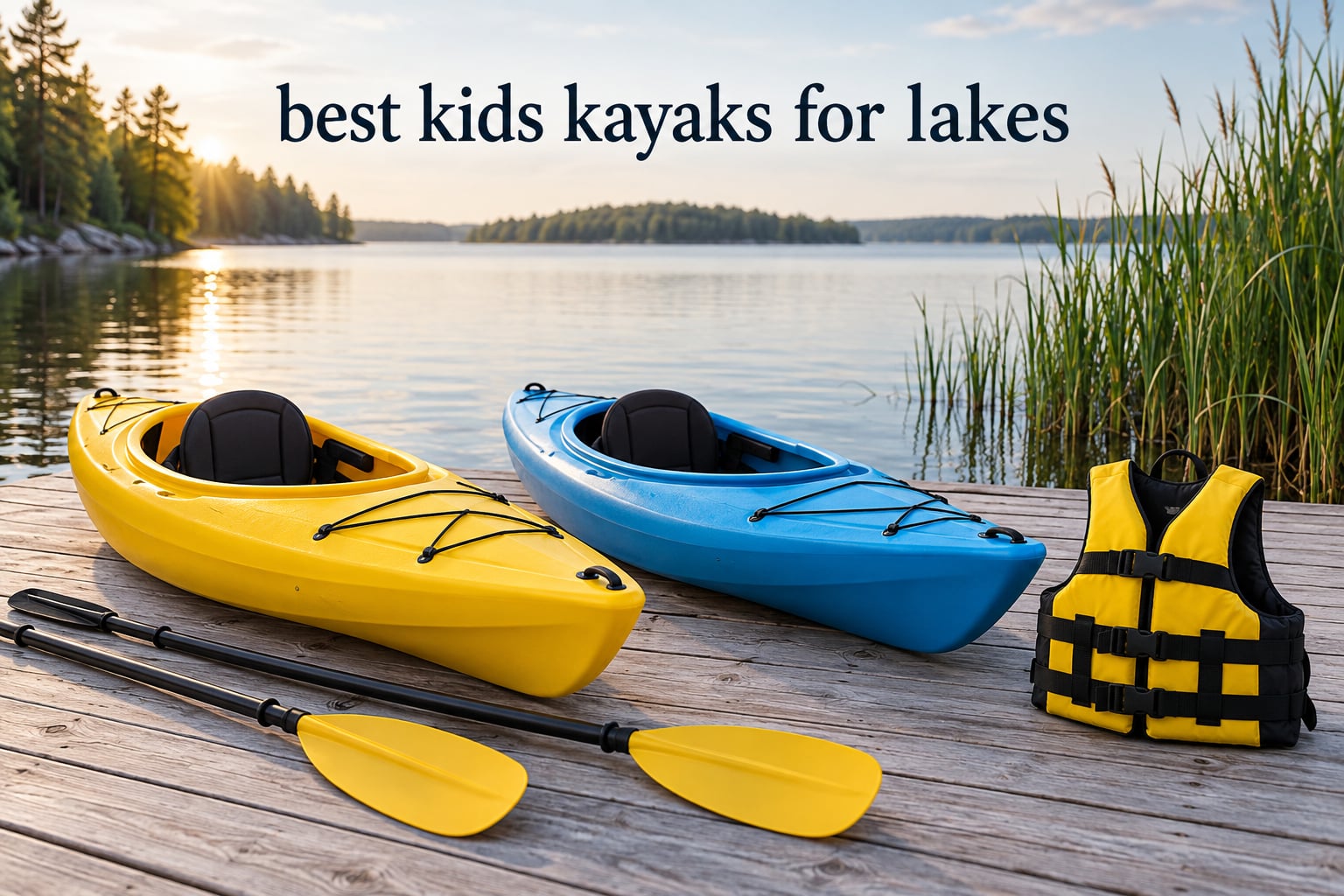
A good kids kayak for a lake is a small, wide boat with a self-draining cockpit and a swim-up deck, usually 6 to 10 feet long and rated between 100 and 400 pounds, so a child can paddle independently on flat open water and climb back aboard after a capsize instead of needing a rescue. That combination of width, drainage and re-entry is what separates a boat that builds confidence from one that ends a first outing early.
That is the lens we used to pick the best kids kayaks for lakes. Lake paddling is a specific job: open water, occasional boat traffic, a shoreline you may want to beach on, and a launch you have to carry the boat to. Wide, flat, forgiving hulls handle all four. Long, narrow, fast touring shapes handle none of them well with a 6-year-old aboard.
We spent six weeks comparing eight boats across four brands, checking published capacities against real body sizes, reading hundreds of owner reviews, and working through the failure modes parents actually hit: boats outgrown in a season, inflatables that lose air, included paddles that are too short or too heavy, and hard shells that turn out to be a two-person lift onto a roof rack. If you also boat a lake, our guides to the best aluminum fishing boats for lakes and the best floating docks for lakes cover the wider setup around the water.
Table of Contents
Top 3 Kids Kayaks for Lakes in 2026
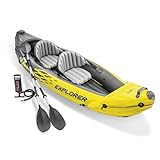
Intex Explorer K2
- Two-person 400 lb capacity
- Paddle
- pump and seats included
- Folds into a carry bag

Intex Challenger K1
- One-person 220 lb capacity
- Removable skeg and cargo net
- Folds to suitcase size

Lifetime Cadet Youth Kayak
- Hard HDPE swim-up deck
- Paddle and carry handles included
- 100 lb capacity
Best Kids Kayaks for Lakes (October 2026)
| Product | Specifications | Action |
|---|---|---|
| Intex Explorer K2 Inflatable Kayak Set |
|
Check Latest Price |
| Intex Challenger K1 Inflatable Kayak |
|
Check Latest Price |
| Lifetime Cadet Youth Kayak |
|
Check Latest Price |
 Lifetime Dash 66 Youth Kayak Lifetime Dash 66 Youth Kayak |
|
Check Latest Price |
 Lifetime Shark Youth Kayak Lifetime Shark Youth Kayak |
|
Check Latest Price |
 Intex Excursion Pro K2 Inflatable Kayak Intex Excursion Pro K2 Inflatable Kayak |
|
Check Latest Price |
 Bestway Hydro Force Inflatable Kayak Bestway Hydro Force Inflatable Kayak |
|
Check Latest Price |
 Perception Prodigy XS Sit-Inside Kayak Perception Prodigy XS Sit-Inside Kayak |
|
Check Latest Price |
1. Intex Explorer K2 Inflatable Kayak Set: Best Parent-and-Child Tandem for Lakes
INTEX Explorer Inflatable Kayak 2-Person Portable Set with Paddles and Pump
Two-person inflatable
400 lb max capacity
10.3 ft by 3 ft inflated
35 lb packed
Pros
- Inflates in 5 to 10 minutes with the included pump
- 35 lb packed weight fits in a trunk
- Two removable seats with backrests
- 400 lb capacity carries an adult and a child
- Bright yellow reads well from shore
Cons
- 86 inch paddles run short for an adult
- Soft seat bottoms fade over a long day
- Vinyl seams rub adult hands while paddling
This is the boat we would hand a family with a first-time paddler, because it removes almost every hard part of getting a child on a lake. The Explorer K2 is a two-person inflatable rated to 400 pounds, which means an adult and a child share one hull instead of the adult towing a second boat across the lake and back.
The inflatable I-beam floor and the high-buoyancy side chambers give it a genuinely wide, flat footprint at 10.3 feet by 3 feet. Wide is the point on a lake: primary stability, which is a wide hull’s resistance to tipping while sitting still, is high enough that a child leaning over to look at a fish does not end the trip.
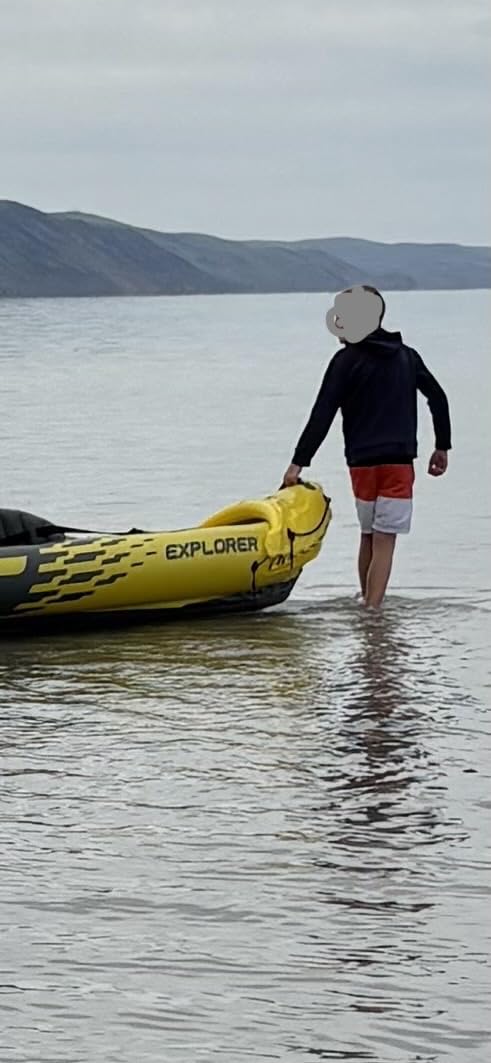
Owners consistently report that it holds pressure through a full day with no measurable air loss, and that it survives rocks, brush and mild current without complaint. Packing it away takes about as long as inflating it, and the whole boat lives in one carry bag that a single adult can move from a car to a launch.
The practical details matter more than the spec sheet here. Both seats are removable and inflate separately with backrests, so you can drop one seat and use the boat solo once your child graduates. The removable skeg underneath gives it a straighter course than most entry-level inflatables manage, which helps when the wind picks up.
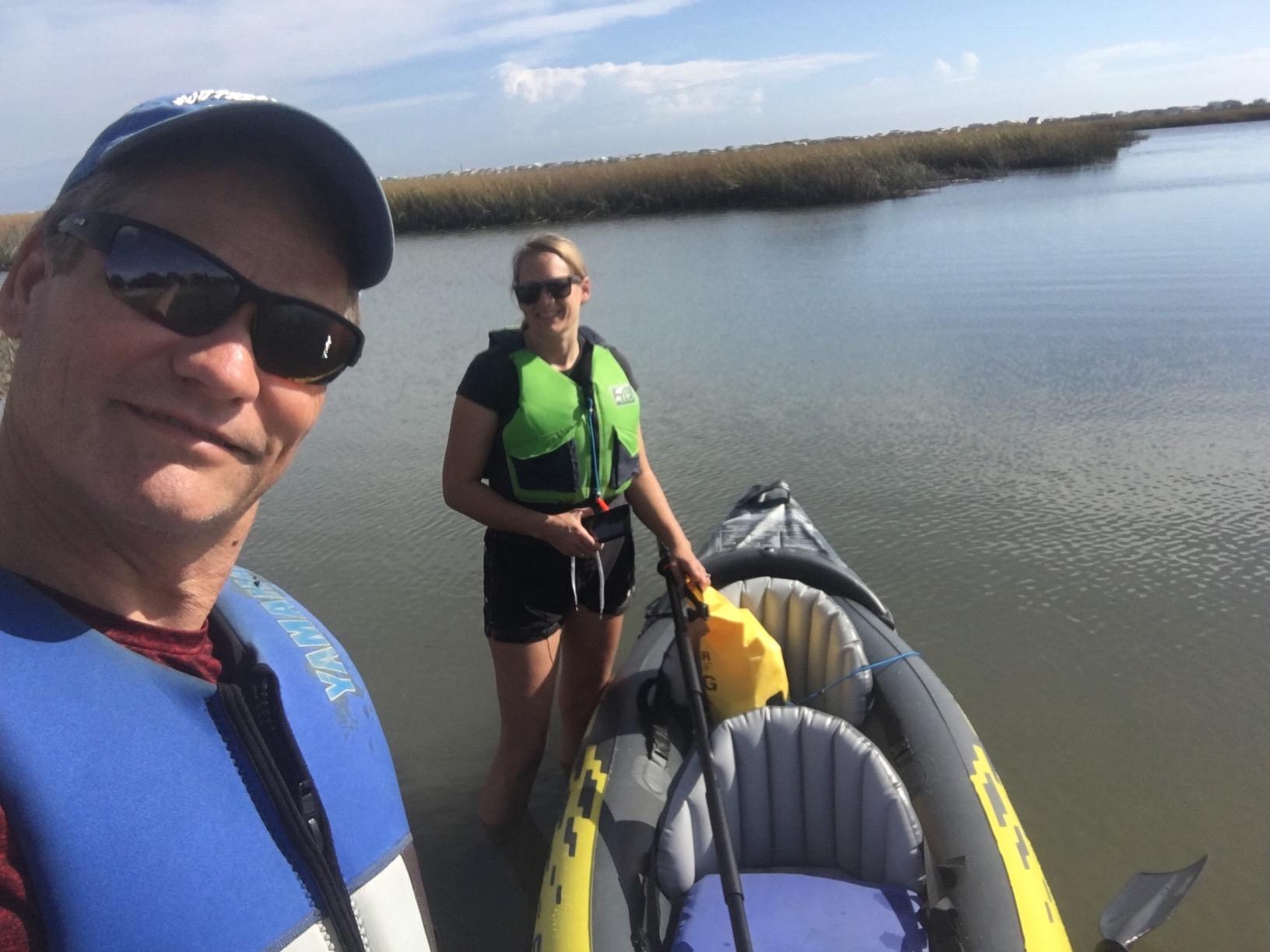
What the Explorer K2 does well on a lake
It is among the most forgiving boats in this roundup for a child who has never paddled. A wide inflatable that will not tip when a small body shifts is a better teacher than a narrow hard shell, and the tandem format means the adult sets the pace while the child learns the stroke.
The 400 pound rating also leaves real headroom. An adult plus a child plus a soft cooler and a bag of snacks stays well inside the limit, and the bow and seating area give a small paddler room to shift their legs without crowding the adult.
Where the Explorer K2 will disappoint
The two 86 inch paddles are the complaint that comes up most often in the reviews, and they are short for a full-size adult. Longer paddles are the first upgrade owners mention, and a child on a short paddle will fatigue sooner than a child on a properly sized shaft.
The seat bottoms are soft air mattresses rather than framed seats, so a full day of fishing from this boat is not comfortable. It also does not track or glide the way a hard shell does, so on a windy afternoon you will be correcting course more than you would in a rigid boat.
2. Intex Challenger K1 Inflatable Kayak: Budget Pick Solo Boat for a Kid on a Lake
INTEX 68305EP Challenger K1 Inflatable Kayak Set: Includes Deluxe 86in Kayak Paddles and High-Output Pump – Adjustable Seat with Backrest – Removable Skeg – 1-Person – 220lb Weight Capacity
One-person inflatable
220 lb max capacity
9 ft by 2.6 ft inflated
26 lb packed
Pros
- Inflates in about 5 minutes
- 26 lb packed weight fits one carry bag
- Very hard to tip over
- Front cargo net and rear storage
- Long-term owners report multiple seasons without a puncture
Cons
- Included paddle is short and breaks at the joints
- No vacuum valve so deflation is a roll and squeeze
- Removable skeg works loose and gets lost
- Carry bag is thin
The Challenger K1 is one of the most proven boats in this list, and a good answer to a question parents ask constantly, which is whether a child can paddle alone. It is a one-person inflatable rated to 220 pounds, so a child has roughly double their body weight in headroom, which is the amount of margin we want before adding a life jacket, a water bottle and a jacket.
At 26 pounds packed, it is one adult’s carry. That matters more than any other spec for lake trips, because the distance between a car and a launch ramp is exactly where hard-shell purchases lose their owners.
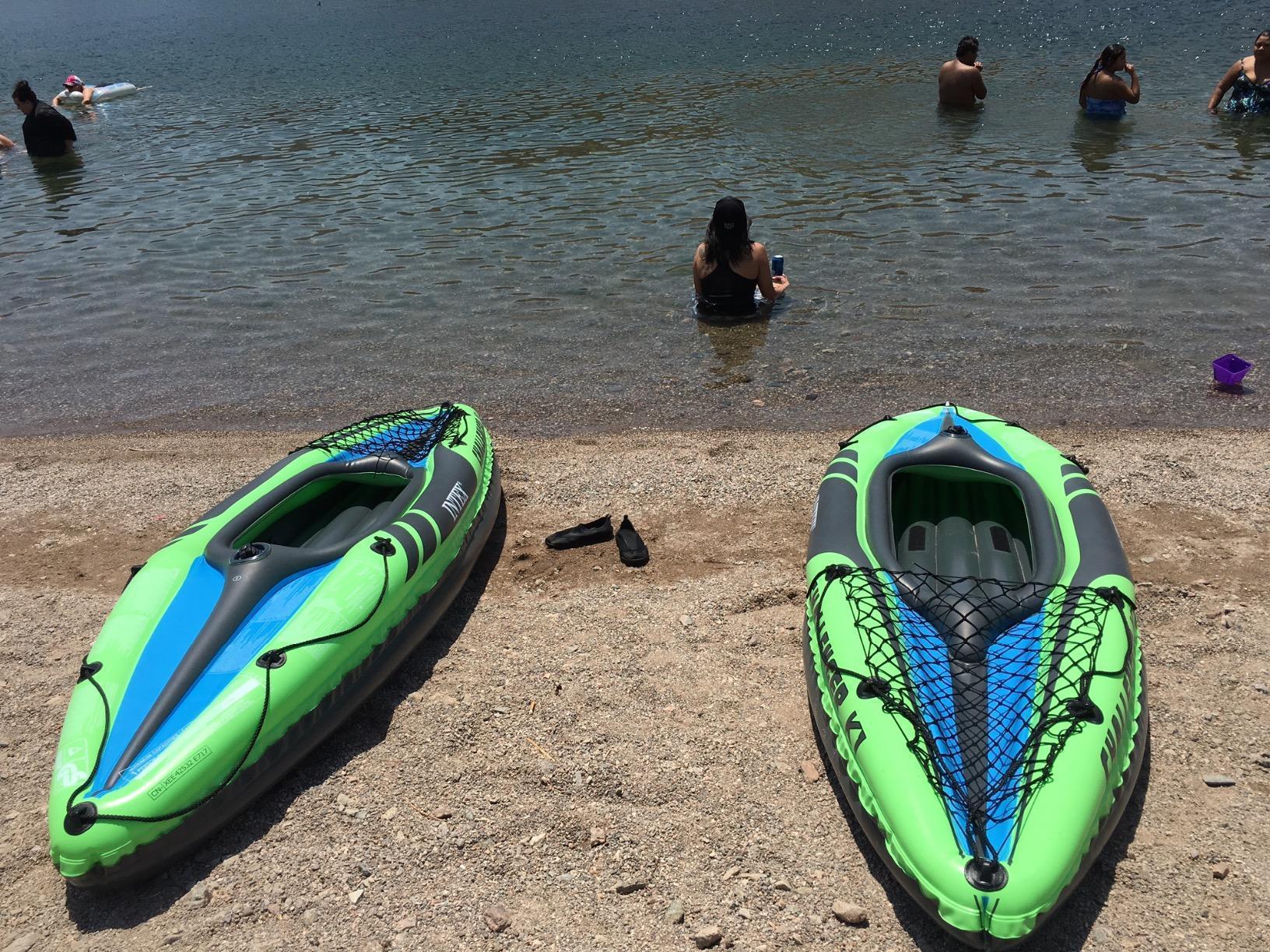
Durability is the surprise. Owners with several seasons of use report no punctures and no seam failures, and the SuperStrong PVC formulation is abrasion resistant enough to survive launching from gravel shorelines. For a boat that will be dragged across a boat ramp fifty times a year, that record matters.
The removable skeg under the hull is the part we would watch. It gives the boat directional stability and a much straighter course, and it is also the part most likely to work loose and disappear into a parking lot.
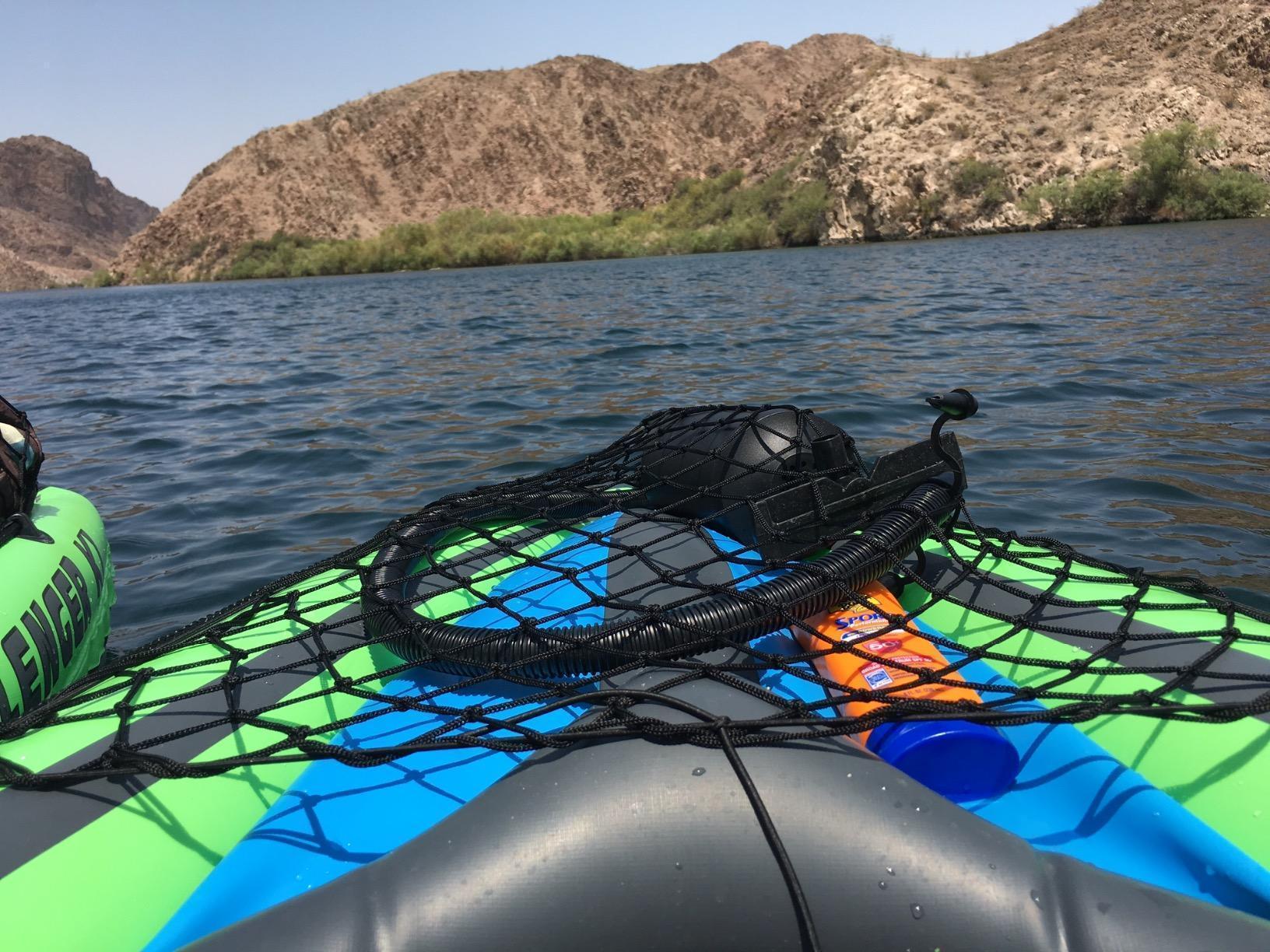
Why this is the value pick for lakes
It does one job without any moving parts that can break. A single child paddling a calm lake needs stability, drainage, a seat and a way to get back in after a capsize, and this boat provides all four with no moving parts that can break.
The 9 foot by 2.6 foot footprint is narrower than the Explorer K2, so it turns more easily in tight coves and shallow bays. That responsiveness helps a small paddler build steering confidence quickly.
What to fix before the first outing
Budget for a better paddle. The included 86 inch paddle is short and the shaft sections are reported to break at the joints after rough handling, which is a common source of frustration for kids who cannot get the blade fully into the water.
Plan extra time for deflation. With no vacuum valve, packing down means rolling and compressing the hull by hand, and getting the boat dry before storage is tedious. If the launch is a long walk, that fifteen-minute difference is real.
3. Lifetime Cadet Youth Kayak: Best Hard-Shell Youth Kayak for Young Beginners
Lifetime Cadet Youth Kayak – Paddle Included
Hard HDPE sit-on-top
100 lb capacity
16.9 lb boat weight
Paddle included
Pros
- Molded finger handles at 16.9 lb for solo carry
- Youth paddle included with molded cradle
- Self-bailing scupper holes drain the cockpit
- Reverse chine hull is stable for beginners
- Swim-up rear deck for re-entry
Cons
- 100 lb capacity is the lowest here
- No raised back support for long outings
- Some buyers say it feels more like a small paddle board
The Cadet is the boat we would put in front of a 5, 6 or 7-year-old who is paddling their own for the first time. It is a hard HDPE sit-on-top at 16.9 pounds, which makes it one of the easiest boats on this list for a single parent to carry to the water.
Two design choices do the work. The reverse chine hull shape gives a wide, stable platform for a child who is still developing balance, and the self-bailing scupper holes let any water that lands in the cockpit drain out instead of pooling around their legs.
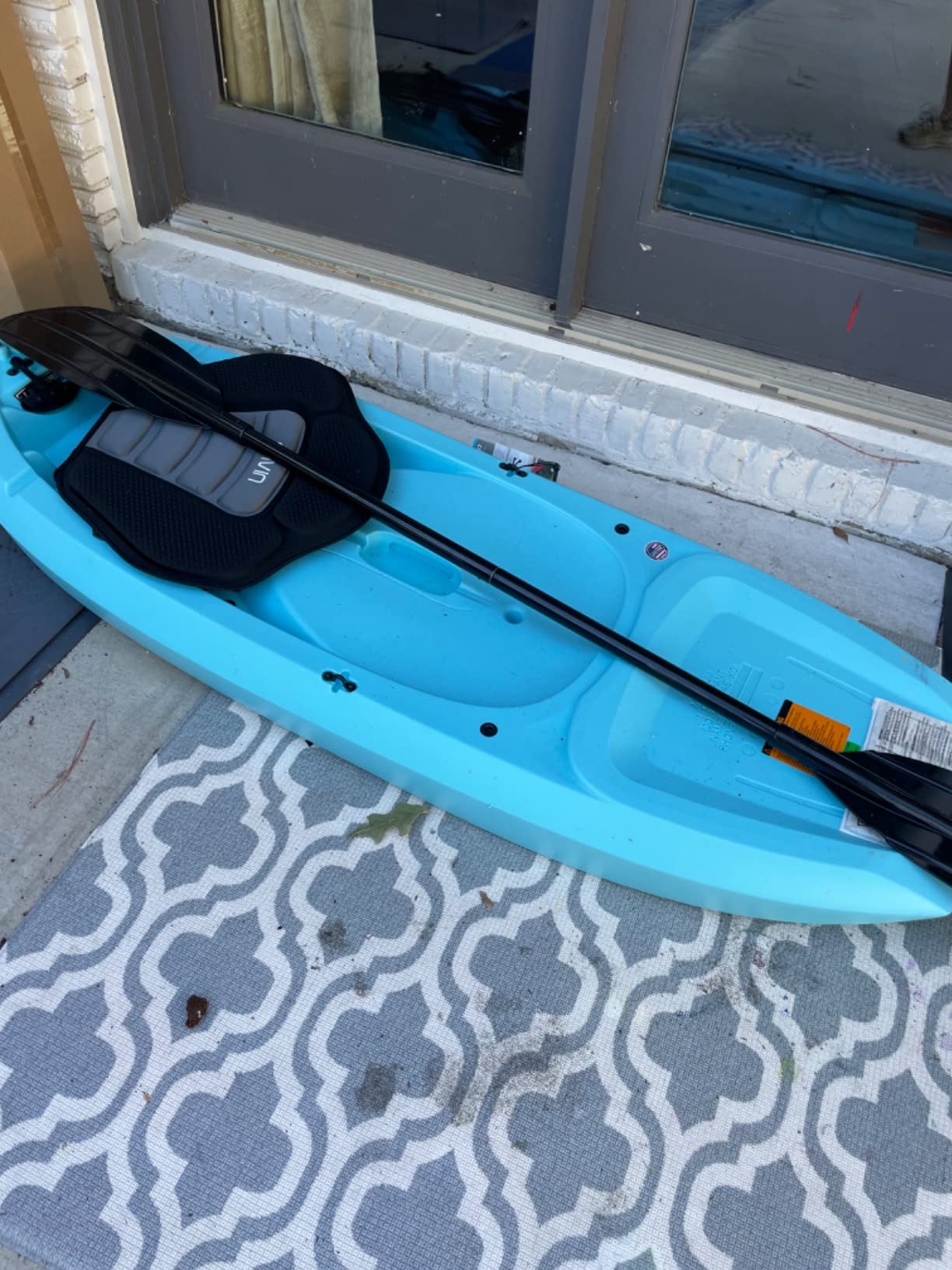
The swim-up rear deck is the feature parents mention most. When a beginner tips over, the child grips the deck, plants a foot, and climbs back aboard without an adult reaching in to pull them out. On a lake that turns a capsize into a wet reset rather than an event.
The youth paddle is included and it clips into a molded cradle on the deck, which solves a problem we saw repeated constantly: youth boats sold with no paddle, or with an adult paddle too heavy for a small child to hold for an hour.
Where the Cadet fits a family
It is a genuinely small boat, and that is the point. Parents repeatedly describe it as the perfect size for a 5- to 7-year-old, and a boat a child can turn quickly by themselves keeps them engaged instead of frustrated.
The molded finger handles and the 16.9 pound weight also make this one of the easiest boats here to move solo, which matters if the launch is a long way from parking or if you are the only adult hauling gear.
Where the Cadet falls short
The 100 pound capacity is the lowest in this roundup. It leaves little room for a growing child plus a life jacket plus anything else in the boat, and it is the number that most useful life of a youth kayak early.
There is no raised back support, so it suits shorter outings rather than a full day of fishing. Some buyers also describe it as closer to a small paddle board to sit on than a full kayak, which is worth knowing if your child prefers kneeling or wants foot room.
4. Lifetime Dash 66 Youth Kayak: Best for Kids 8 and Up on Open Water
Lifetime 90787 Dash 66 Youth Kayak, Glacier Blue, 78 inches
Hard HDPE sit-on-top
150 lb capacity
78 in by 24 in
Paddle sold separately
Pros
- 150 lb capacity gives real headroom above a child's weight
- Patented swim-up deck with molded hand grips
- Multiple footrest positions for different paddler sizes
- UV-protected shell resists fading and cracking
- 5 year limited warranty
Cons
- Paddle not included
- 150 lb capacity means one child plus gear only
- Light plastic build suits calm lakes rather than moving water
The Dash 66 is the first boat on this list that we would hand to a child aged 8 or 9 rather than a 6-year-old. At 78 inches long and 24 inches wide, it is a longer platform than the other Lifetime youth models here, which improves straight-line tracking across a wide lake at the cost of a little turning speed.
That longer waterline is the reason to choose it as a child grows. Short youth boats get twitchy once a paddler has enough strength to push a real stroke, and the Dash 66 holds a course better while still being small enough for a child to control.
The patented swim-up deck with molded hand grips is the re-entry path, and multiple footrest positions mean the same boat can fit paddlers at different heights. The manufacturer recommends it for ages 5 and up with adult supervision, and the 150 pound rating leaves roughly double the body weight of an average 8-year-old.
One honest note on logistics: the manufacturer weight for this model is not published, and there is no paddle in the box. You will be ordering a youth paddle separately, which is the most repeated complaint in the reviews and an easy fix at the outset.
The 5 year limited warranty is a useful signal here. Owners treat a multi-year hull warranty as evidence the boat is built to be knocked around by a child on a rocky shoreline, and this is one of the few boats here with that coverage stated plainly.
Why an older kid will get more out of this boat
A child who has been paddling for a season often finds a 6 foot boat hard to steer. The longer, more tracking hull here reduces the constant correction work and lets a young paddler cover distance rather than fight the boat.
It also doubles as a first solo kayak for a small adult under 150 pounds, which extends the useful life of the purchase well past the youth years.
What to plan around
Buy the paddle with the boat. There is no youth paddle in the box, and a first outing with the wrong shaft length is an easy way to lose a beginner’s enthusiasm.
The plastic construction is light and forgiving but is meant for calm lakes and mild rivers, not chop or current. If your lake develops afternoon wind, treat that as a reason to stay closer to shore rather than a reason to push out.
5. Lifetime Shark Youth Kayak: Best for a Growing 8-Year-Old Who Wants Fun
Lifetime Shark Youth Kayak with Paddle, 6 Ft, Gray
Hard HDPE sit-on-top
130 lb capacity
72 in by 24 in
18.4 lb boat weight
Pros
- Best rated in the roundup at 4.7 stars
- Shark styling with molded fins and gills excites young children
- Two carry points for solo transport
- Swim-up deck with hand holds for re-entry
- Also works for an adult under 130 lb
Cons
- Only 24 reviews
- a very small sample
- 130 lb capacity is modest for an adult plus gear
- Themed details add looks but no function
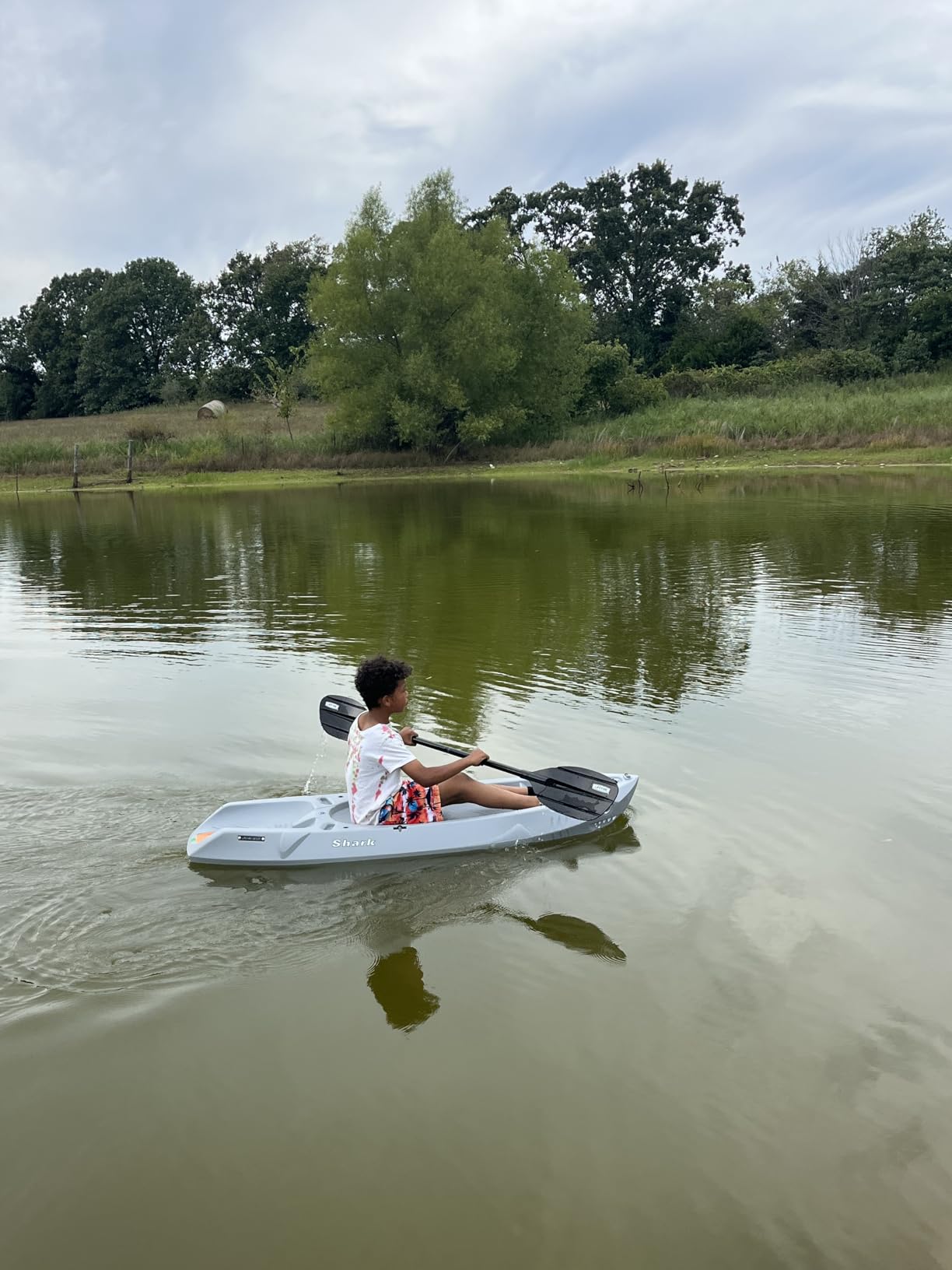
The Shark is the boat children ask to take again, and that matters more than it sounds. The molded fins and gills with durable sticker details turn a first hard shell into a character boat, and reviewers repeatedly describe it as well matched to an 8-year-old.
Underneath the styling it is a straightforward youth sit-on-top: 72 inches long, 24 inches wide, 130 pounds of capacity and 18.4 pounds of boat weight. The stable hull, self-bailing scupper holes and built-in swim-up deck with hand holds are all the safety features we look for.
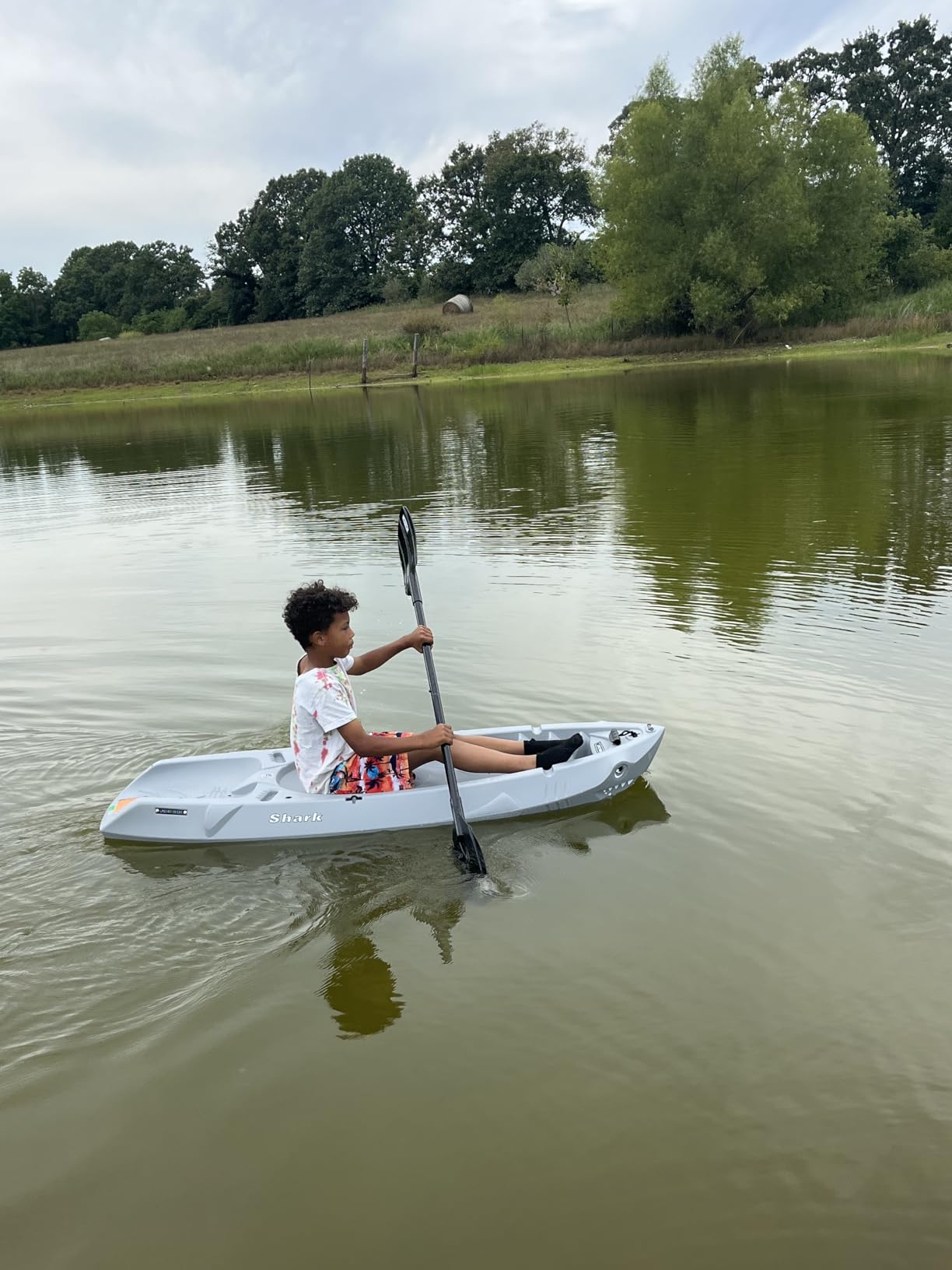
Transport is handled unusually well for a youth boat. There is a front T-handle and a center carry handle, so a single adult can pick it up one-handed at either end and walk it to a launch without the awkward two-person carry that heavier shells require.
Several owners also report that it works as a first kayak for an adult under 130 pounds who wants a car-portable boat, which makes it a reasonable first hard shell for a parent as well as a child.
Why it earns our top rating
Everything a beginner needs is present and nothing is missing. The paddle is included, it stows in a molded cradle, the cockpit drains itself, and the child can climb back in after a capsize without help.
For a child at the age where enthusiasm decides whether the family keeps going, the theming is a real functional benefit. It is the one boat here that a kid will point at rather than be talked into.
What to weigh before buying
The review history is thin at 24 reviews, so there is less long-term evidence here than for the inflatable models. The 5 year limited warranty is reassuring, but we would still check the boat over carefully in the first season.
The 130 pound capacity will be reached quickly by an older child with gear in the boat. Plan a move to a larger boat rather than loading past the rating, and check the rating before every trip.
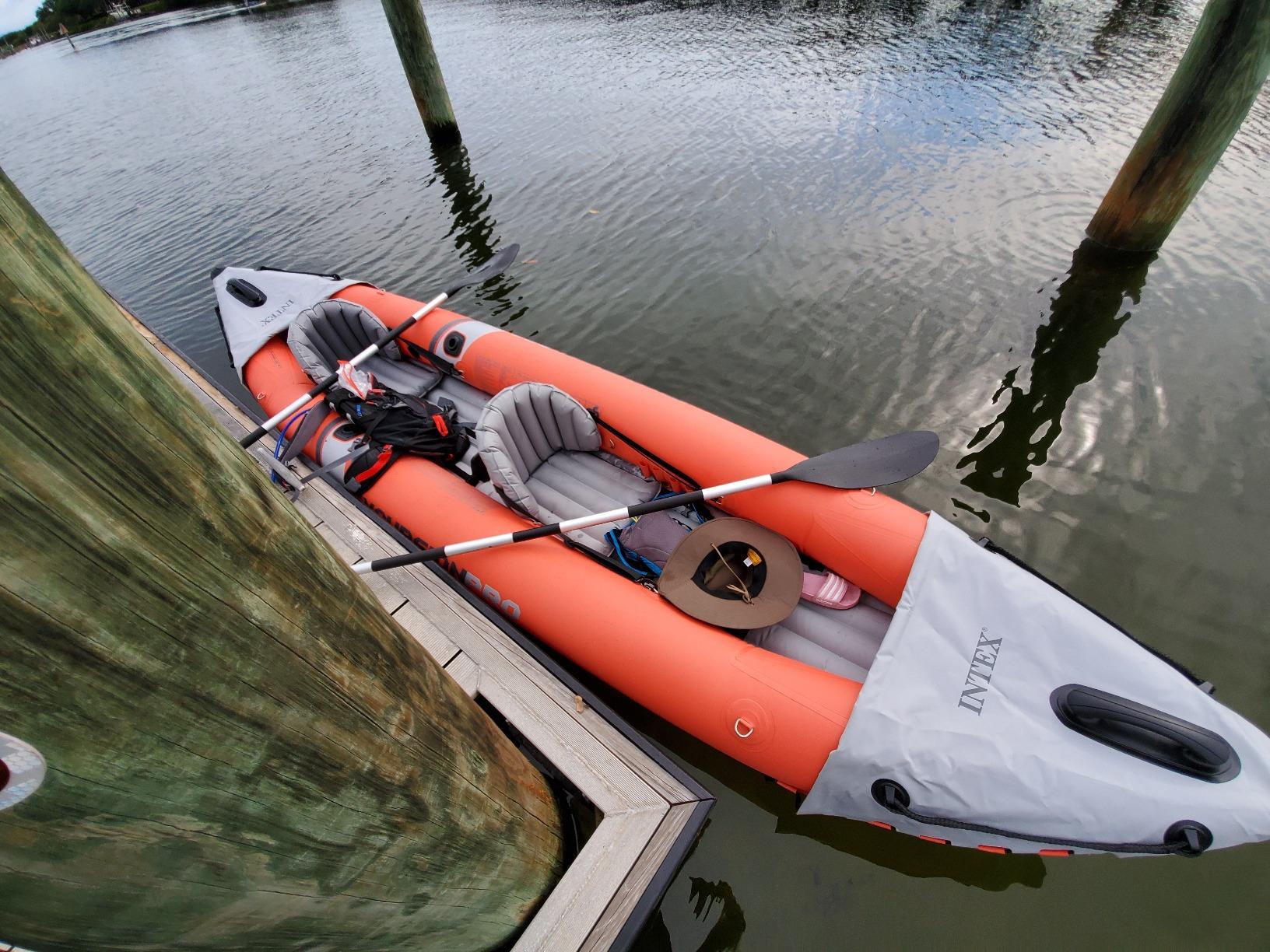
6. Intex Excursion Pro K2 Inflatable Kayak: Best for Kid Fishing on a Lake
INTEX Excursion Pro K2 Inflatable Kayak 2-Person Set with Paddles & Pump
Two-person inflatable
400 lb capacity
12.7 ft by 3.1 ft inflated
44.7 lb packed
Pros
- 3-ply laminate takes higher pressure and feels rigid
- Two detachable fishing rod holders included
- Adjustable camera and phone mount
- Two removable skegs for deep or shallow water
- Spring-loaded valves inflate and deflate fast
Cons
- Heaviest listed weight here at 44.7 lb so it is a two-person carry
- Still an inflatable so tracking lags a hard shell
- Biggest inflated footprint in the roundup
If a child fishes from a kayak, this is the boat to look at first. The Excursion Pro K2 ships with two detachable fishing rod holders, an adjustable camera and phone mount, and stainless steel D-rings for tying on dry bags, so the accessories a young angler needs are already part of the boat.
It is also one of the more rigid inflatables in this group. The 3-ply laminate with SuperStrong PVC holds higher inflation pressure, and that rigidity is what stops a tandem feeling like a soft pool float when a fish is pulling on a line.
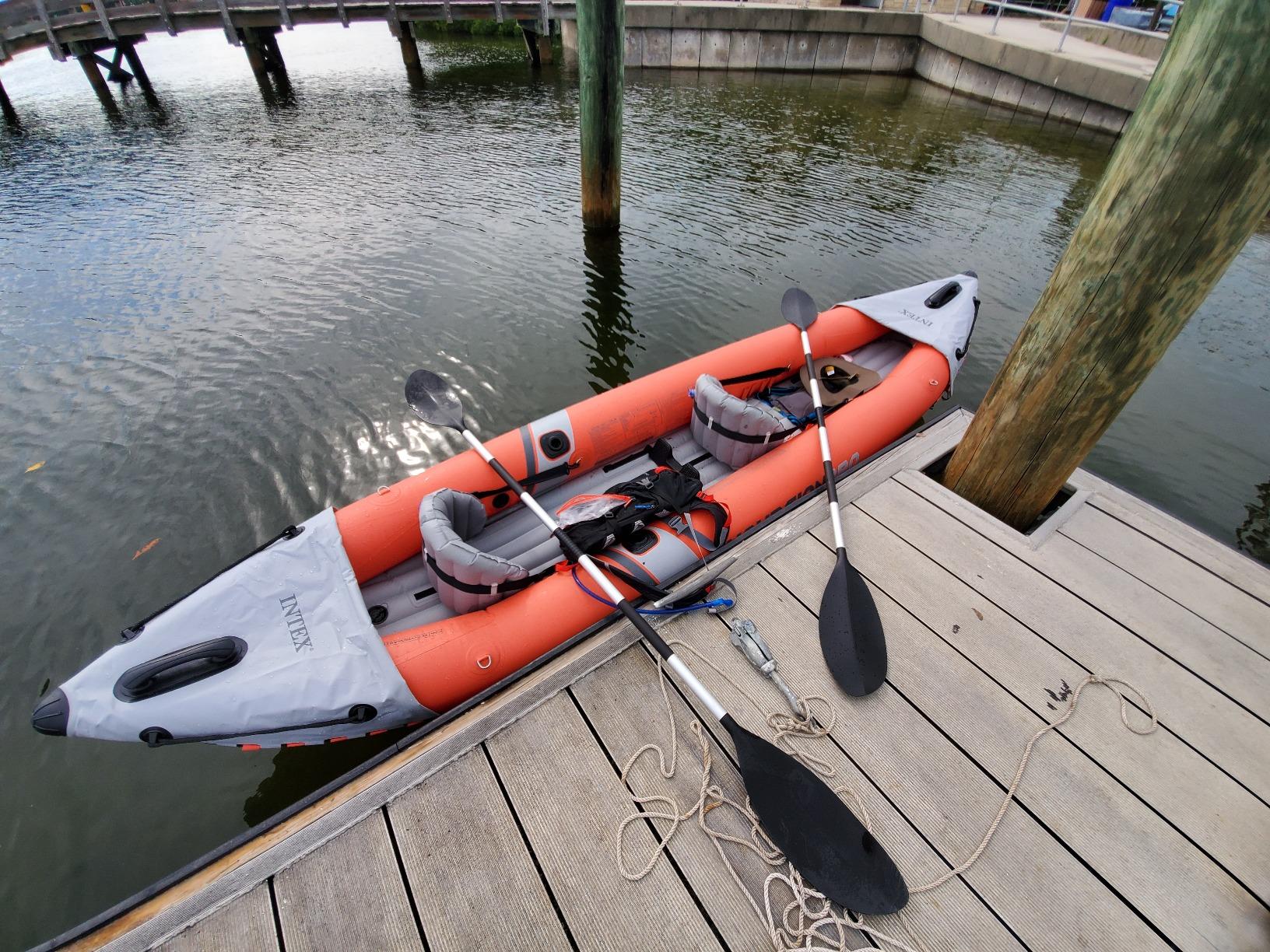
Two removable skegs cover different water: one for shallow, one for deeper bays. That matters on a lake with a weedy shallow margin, because a skeg that grounds in a foot of water takes the boat off line.
At 12.7 feet by 3.1 feet inflated with a 400 pound capacity, it is the largest footprint here and the most stable platform for casting from a seated position.
Why it earns the fishing badge
The accessories a young angler needs are already part of the boat, which is the part of this kayak that fishing families tend to care about most.
Bow and stern storage plus D-rings mean tackle and a soft cooler stay out of the paddler’s lap, so a child is not fighting loose gear with the paddle.
Where the weight catches you out
At 44.7 pounds packed, this is a two-person carry from the car, so if you are the only adult at the lake, plan for a second set of hands or a cart.
It remains an inflatable, so it does not track or glide the way a hard shell on open water. In a crosswind you will be correcting more than in a rigid boat, and the spring-loaded valves are a step up but not a substitute for hull rigidity.
7. Bestway Hydro Force Inflatable Kayak: Best for a Parent’s Own Solo Lake Trip
Hydro-Force Cove Champion X1 Inflatable Kayak Set 9′
One-person inflatable
220 lb capacity
9 ft by 32 in inflated
Paddle and hand pump included
Pros
- Two fins plus a wraparound grab rope track and carry well
- Carried by one person despite its size
- Adjustable seat fits different heights
- Mesh storage net and D-ring attachment points
- Two years of use reported with no leaks
Cons
- Rating sits at the low end of this roundup
- Included seat straps give little lumbar support
- Included paddle is short and wobbly
- Carry bag is flimsy
- Keel fins need deeper water to load
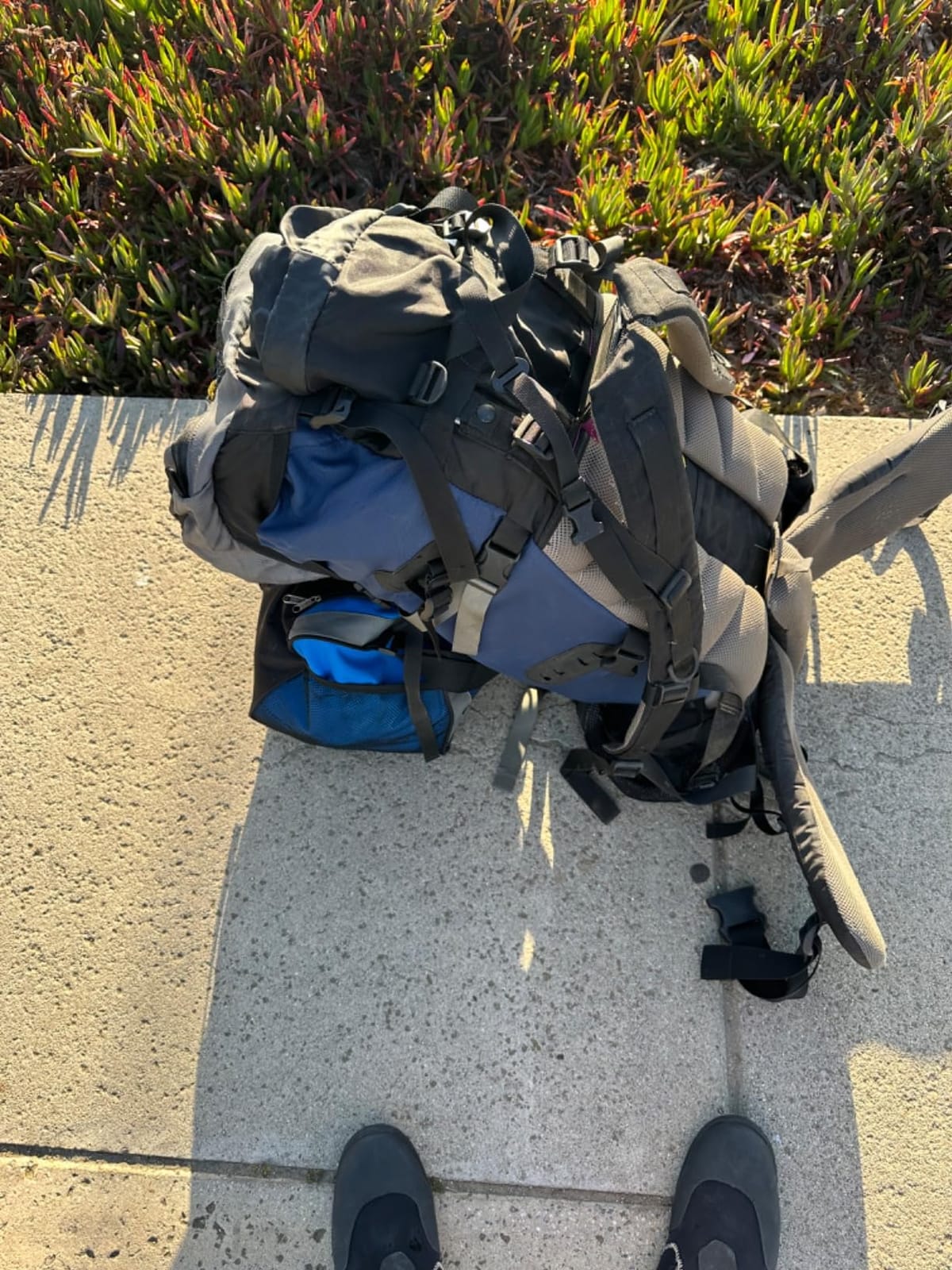
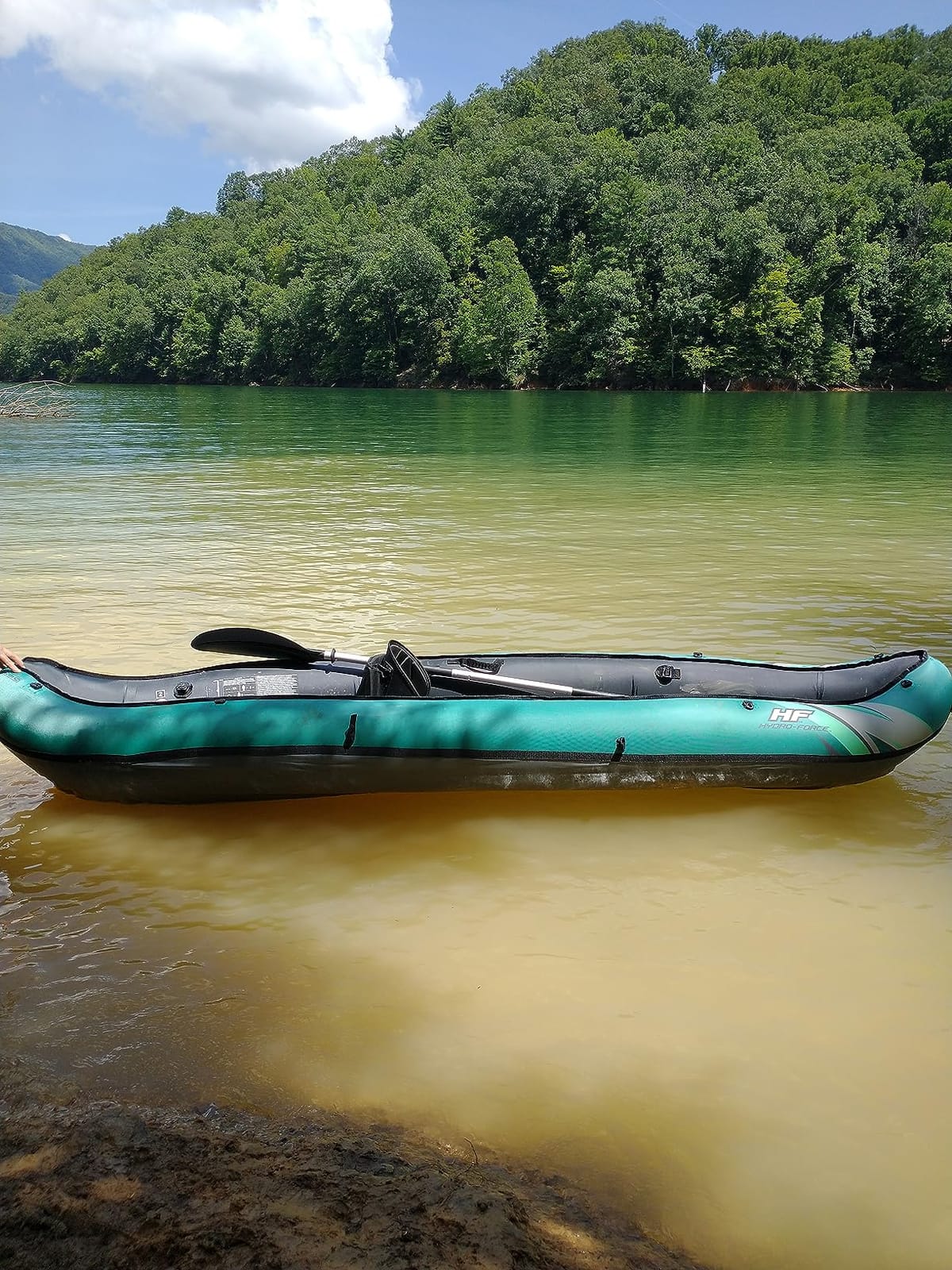
The Hydro Force is the odd pick in this list, and it earns its place for a specific reason: it is a 9 foot single-person inflatable that a parent can paddle alone on the same lake as their child, two boat lengths away. The two fins and the wraparound grab rope make it easy to track and easy to drag back to shore.
At 220 pounds of capacity it works for most adults as well as for a bigger child, and the adjustable inflatable seat with backrest accommodates different heights. Owners report two years of use with no air leaks or seam failure.
The review record is among the weakest here, at 4.0 stars across 719 reviews with a small share of one-star feedback. The split is clear: some owners call it a durable family boat that is easy to store, and others fault the ergonomics, the included seat and the fin system in shallow water.
That split is the honest summary of this pick. The hull and the concept are sound; the included accessories are the weak point.
Why it works as a second boat on the lake
Solo paddling at a distance from a child is the arrangement many families settle on once a child is confident, because it lets both paddlers make progress at their own speed. A short 9 foot boat turns tightly and is easy to beach.
It folds down with a hand pump, carry bag and repair patch included, so it can live in a closet between trips rather than hanging on a wall.
What to plan around
Replace the seat. Several owners did, because the included straps sit low on the back and give little lumbar support over a multi-hour trip, which matters most for an adult in the seat. The included paddle is the other common replacement, since it runs short and wobbly.
Watch the water depth at the launch. The keel fins need deeper water to load and unload and are impractical around rocks and logs, and the boat drifts noticeably in wind, so it is a calm-water boat.
8. Perception Prodigy XS Sit-Inside Kayak: Best for Teens and Growing Paddlers
Perception Kayaks Prodigy XS Sit-Inside Kayak for Kids and Petite Paddlers – Deja Vu
Hard shell sit-inside
150 lb capacity
10 ft long
26 lb boat weight
Pros
- Built-in front and rear flotation adds safety margin
- Quick-adjust footrests and a growth-spurt seat fit growing teenagers
- 26 lb with front and rear carry handles
- Hard polyethylene hull tracks well for all-day trips
- Made in the USA with a 5 year hull warranty
Cons
- Hard shell and sit-inside design is a step up in commitment
- Only 39 reviews
- Hard shell needs a roof rack or full-length storage
- Sits low in a cockpit so it is less confidence-building for a first-time sit-in paddler
The Prodigy XS is the boat to buy if your child is a pre-teen or teen, or if you want a hard shell that a child can grow into rather than out of. At 10 feet long with a 150 pound capacity and a growth-spurt adjustable seat, it stretches across a much wider age range than any youth boat here.
It is a sit-inside, and that is a real trade-off for a beginner. Sitting low inside a cockpit feels more enclosed than sitting on top of a deck, and there is no swim-up deck to climb, so a capsize in a sit-inside is a wet exit drill rather than a pull-up.
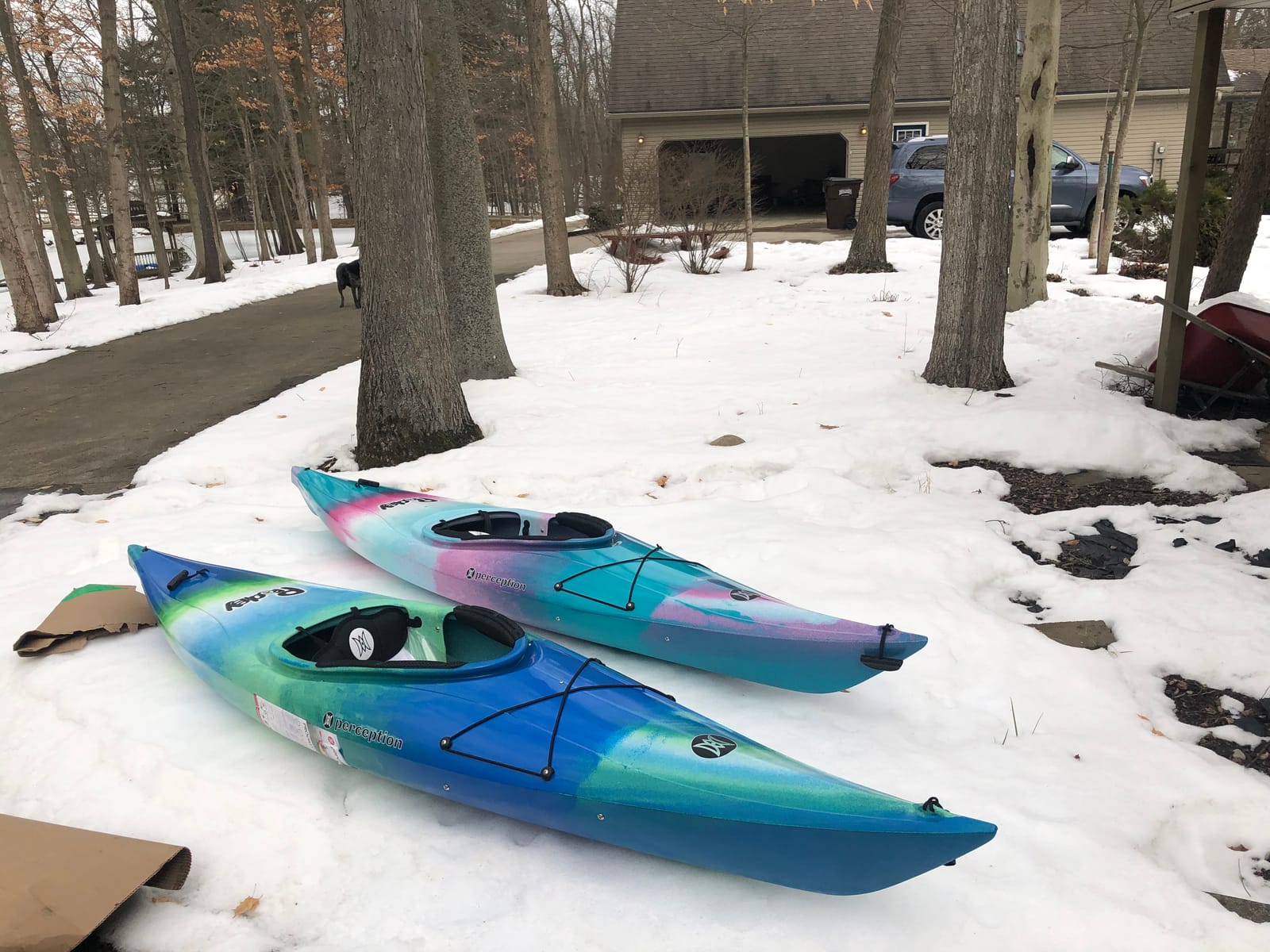
What it gains is performance. Integrated flotation in the front and rear adds buoyancy and safety margin that most youth boats lack, and the hard polyethylene hull tracks in a straight line well enough for an all-day trip on flat water.
It is also the only sit-inside here and the only one made in the USA, with a 5 year warranty on the hull and deck and one year on installed accessories. Parents treat that warranty length as a signal the boat is built to be used hard.
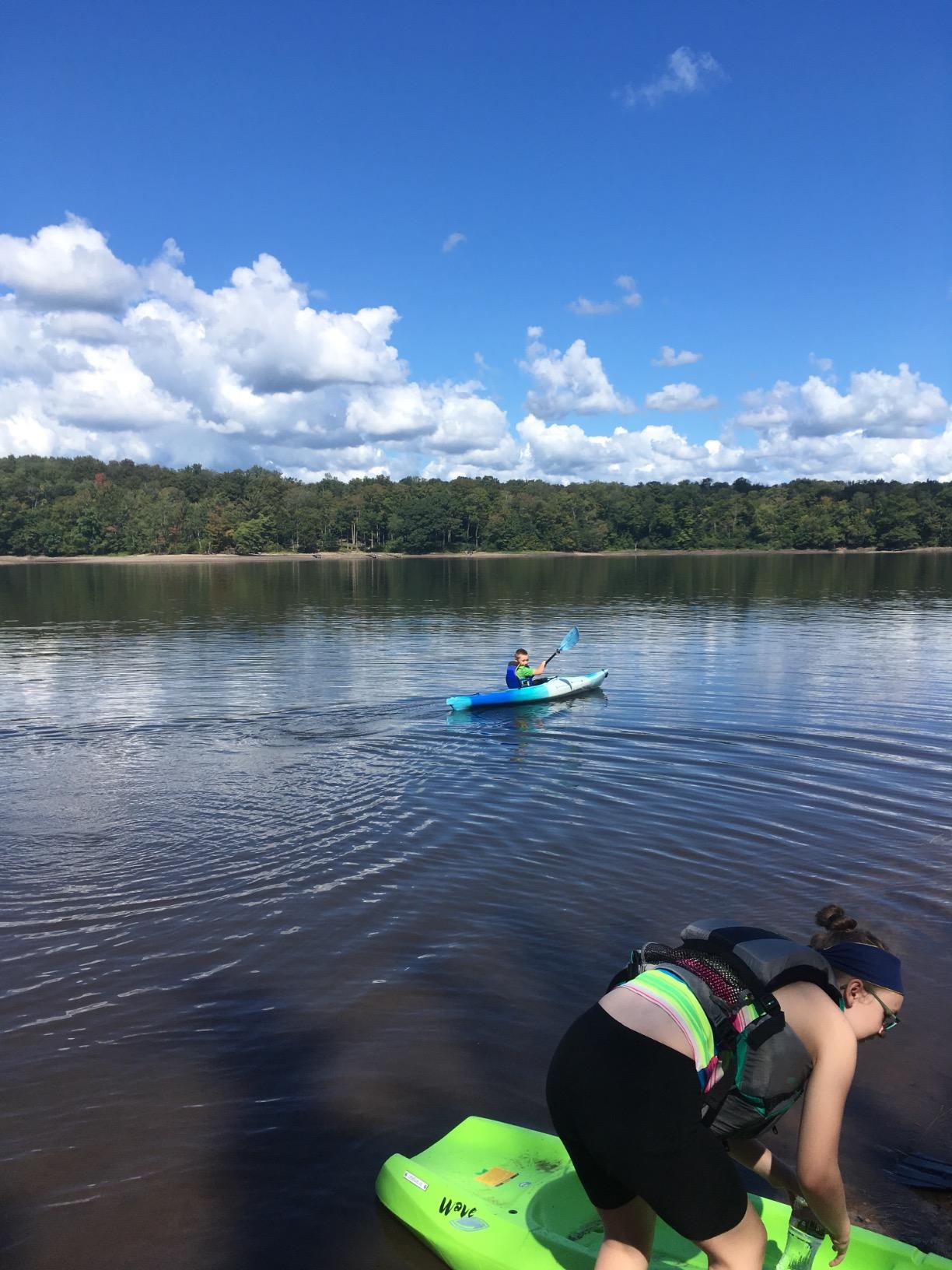
Who this boat is genuinely for
A paddler who already knows they can wet exit, or who has a patient adult alongside to coach one. For a child aged roughly 11 and up, the comfort seat, quick-adjust footrests and cockpit leg padding make this a boat for a whole afternoon rather than an hour.
It is also the grow-into option. A family that buys one of these skips the youth-boat-then-bigger-boat cycle that parents complain about on forums, where a child outgrows a small boat within a season or two.
What the price and the hull ask of you
It is the most expensive boat in this list and carries the highest price band of the eight, and the review sample is among the thinnest here at 39 reviews. Both are real considerations when the boat is for a child whose size may change quickly.
A hard shell needs a roof rack or full-length vehicle storage, and the manufacturer rates it for flat, slow-moving and calm coastal water rather than open or moving water. If your lake is windy, that rating is worth reading twice.
How We Evaluated These Kids Kayaks for Lakes
We scored every boat on six criteria, weighted toward the things that decide whether a child is still paddling at the end of the trip. The heaviest weight sits on the first two, because a sizing mistake or an unstable hull ends outings faster than any missing accessory.
1. Size and weight capacity headroom. We compared the published capacity against the body weight of the child the boat is actually for, and required real margin for a life jacket, a water bottle and a jacket. A boat rated exactly at the child’s weight is a boat with a short useful life.
2. Hull width and primary stability. Primary stability is a wide hull’s resistance to tipping while sitting still. We favoured beam over length and tracking, because a small paddler needs a stable platform more than a straight course.
3. Re-entry path and drainage. A swim-up deck with molded hand holds turns a capsize into a wet reset. Self-bailing scupper holes keep the cockpit from turning into a footwell. We treated both as near-mandatory for a child on open water.
4. Carry weight and transport. We noted the packed or boat weight against what one adult can realistically lift to a roof rack or carry from a car. This is the criterion that most often turns into regret.
5. What actually comes in the box. Paddle, seat, pump, repair patch, carry bag. A youth boat with no paddle, or with an adult paddle, is not ready for a first outing.
6. Lake suitability. The manufacturer’s stated water type, plus how the boat behaves in boat traffic, wind and near a shore. We also read owner reports about what failed, since review histories catch durability problems that spec sheets do not.
Buying Guide: Match the Kayak to Your Child’s Age and Size
Get the boat for the child who is paddling today, not the child they will be in three years. This is the most repeated sizing mistake in the parent forums, and it is why cheap youth boats feel like wasted money to so many families.
A workable age ladder looks like this. Between 2 and 3, a child can sit in the middle of a tandem while two adults paddle, a technique usually called duffling. Around age 4, a child can practise strokes in a solo boat on very calm water, usually within sight of an adult. At about 5, the front seat of a tandem becomes realistic, and at 7 many children can paddle an independent short loop of half a mile to a mile.
From about 8 upward, boat length starts to matter more than hull width, because a child with real paddle power can steer a longer hull and will cover ground faster. Beyond 10 or 11, a youth boat is usually the wrong size and a small adult sit-inside or tandem is the right one.
The size and capacity ladder at a glance
Use published weight capacity as a floor, not a target. The paddler plus a Coast Guard approved PFD plus a full water bottle and a wind layer should land comfortably under the rating on every trip, which usually means at least double the child’s body weight.
Height matters as much as weight. If your child cannot reach both footrests with a slight knee bend, or cannot get both hands onto the paddle where the elbows are at 90 degrees, the boat is too long. Multiple footrest positions, which the Dash 66 and the Cadet both have, buy you a season or two of adjustment.
The 120 rule is the other number worth knowing. It is a widely used supervision guideline meaning a paddler whose body size or skill falls short of roughly a 120 pound adolescent benchmark should have an adult’s constant attention, and it is a guideline rather than law. Check your own state or local boating rules, which set the legal requirement.
Buying Guide: Sit-On-Top vs Sit-Inside vs Inflatable vs Tandem
Four hull types cover almost all family lake paddling, and the honest answer is that the best one depends on who is in the boat and who has to carry it.
Sit-on-top. The most forgiving design for a beginner. A child sits on a deck, sits lower in the water, and in a capsize simply falls clear and climbs back on. Seat height also improves visibility over reeds and chop. The tradeoff is a wetter cockpit in cold weather and a higher centre of gravity.
Sit-inside. Warmer and drier, and the right choice for an older paddler who can wet exit confidently. The cockpit is enclosed, so a capsize requires training. For a first-time independent paddler under about 10, we would still start on a sit-on-top.
Inflatable. Folds into a carry bag, stores in a closet, and is far easier to transport than any hard shell. Inflatables are wider and very stable, which suits small children. They track and glide less well than rigid boats, are vulnerable to abrasion, and the included paddles are usually adult length.
Tandem. One adult and one child in one hull. It is the safest way to start, because the child is not separate from the adult, and the adult can tow with a short line if the child tires. Tandems turn slowly and are hard to control when the two paddlers are not in sync, so expect to lose steering precision at first.
Do tandem kayaks flip easily? A well-loaded tandem on flat water is stable, and the wide inflatables here are the least likely to tip. The real risk is not a flip but a swamped boat when one person leans hard or stands up, so the rule we give is simple: everyone stays seated until the boat is beached.
Buying Guide: Stability and Re-Entry on Lakes
For a child, stability and re-entry matter more than speed, tracking or any other feature. These are the two things that turn a routine capsize into a panicked swim in open water, and they are what we check first on every boat.
A swim-up deck is a raised, textured foredeck with molded hand holds that a paddler grips to climb back into the boat after falling in. Scupper holes are drainage openings that let water in the cockpit run out instead of pooling around the paddler’s legs. Both of those safety features appear on the Lifetime youth boats here. The inflatables rely instead on their high-buoyancy side chambers to keep a falling child clear of the hull.
Primary stability is the resistance to tipping while sitting still, and it comes from hull width. Secondary stability is how the boat behaves once you lean or start to tip, and it comes from hull shape and volume. For children, primary stability is what matters; a boat can have poor secondary stability and still be perfectly fine for a kid who is not leaning.
Practise the wet exit and re-entry on dry land before the first trip, then in shallow water in front of the boat. Cap deliberately with an adult holding the boat, have the child climb back onto the swim-up deck, and repeat it until it is boring. A capsize that has been rehearsed three times is an inconvenience rather than an emergency.
Two lake features worth paying for
A paddle cradle on the deck matters more than it sounds, because a loose paddle in a small boat is both a hazard and the fastest way to end a child’s interest. Every youth boat here except the Dash 66 stores the paddle in a molded cradle.
Attach points for a tow line, either molded loops or a clip-on line at the bow, are worth having for a child aged 4 to 7 who tires after an hour. A short line of about 10 feet, with a quick release you can operate with one hand, keeps the child close without wrapping around the boat.
Buying Guide: Paddles, PFDs, and What Comes in the Box
Two pieces of gear decide whether a child can actually paddle for an hour, and both are often wrong out of the box. A life jacket that does not fit is a safety problem, and a paddle that is too long or too heavy ends the outing.
A Coast Guard approved PFD must be worn by every child on the water, and the fit is not negotiable. Pick the jacket by the child’s current weight, then re-fit as they grow. The test: have the child pull the shoulders up toward the ears, and the jacket should not ride above the chin or the ears.
Common weight bands run roughly 8 to 30 pounds for infants, 30 to 50 pounds for children, and 50 to 90 pounds for youth sizes. A 12-year-old typically needs a youth band, and a larger teen may need an adult small. A jacket that is too big rides up over the chin, and a jacket that is too small will not hold a child’s head above the surface.
For paddles, a child aged 5 to 12 is usually in the range of roughly 200 to 210 centimeters, with a narrower shaft and smaller blades than an adult paddle. Shaft diameter matters for small hands in a way length does not. If the boat ships with an 86 inch adult paddle, expect to replace it for a young child.
Also plan a dry bag, a water bottle in a holder, a brimmed hat, sunscreen, a whistle clipped to the PFD rather than the boat, and a spare layer in a sealed bag. On a lake, wind and sun do more to end a child’s day than cold does.
What should come in the box
For an inflatable, that means the boat, a pump of some kind, a carry bag, and ideally a repair patch. Every inflatable here includes those, though the Bestway uses a hand pump and the Intex models use high-output pumps.
For a hard shell, expect the boat and a paddle. The Cadet and the Shark include a youth paddle in a molded cradle, and the Dash 66 does not, so factor that into your first outing. A carry handle or two is worth having on any hard shell a parent will lift solo.
Buying Guide: Choosing the Lake and Moving the Boat
No ranking page frames a kids kayak roundup around the lake itself, and that is where most first-time mistakes happen. The best boat for the wrong water is a boat that sits unused in a garage.
Start with wind. Small children in wide boats are fine in a light breeze and miserable in a chop, because spray comes over a low gunwale. Aim for a lake that stays sheltered, and plan to be off the water by the time an afternoon wind comes up.
Then look at boat traffic. A lake shared with powerboats and personal watercraft is a different proposition from a quiet one, and a child in a bright yellow inflatable is far easier for a boat operator to see than a blue one. Stay close to shore and keep the child inside a visible radius from you.
Depth and shore access matter for landing. A hard shell with skegs needs enough water depth to float clear of the bottom while you load, and a beach launch is easier than a dock. Weeds and submerged rocks are the two things that end inflatable trips early.
Getting the boat from the car to the water
Here is where the carry weight becomes a real decision. The hard shells in this roundup run from 16.9 pounds for the Cadet to 26 pounds for the Prodigy XS. Of the inflatables, the Challenger K1 lists 26 pounds packed and the Explorer K2 lists 35 pounds, while the Excursion Pro K2 is the heavy one at 44.7 pounds.
A packed inflatable into a trunk is a one-person job at 26 pounds, and a two-person job at 44.7 pounds. A hard shell onto a roof rack is a two-person job for most parents, and the number that catches people out is a solo lift, which is the failure owner reviews describe again and again.
Our practical rule: if you will be the only adult at the water, weight matters more than performance. Choose a boat at or under 30 pounds total and check the distance from parking to the ramp before you commit.
One more lake-specific note on trip length. Youth sit-on-tops are slow boats, and 5 to 10 miles is a realistic ceiling for a child in one. Plan loop routes that return you to the launch, and be honest with yourself about how far a 7-year-old can paddle before asking to be towed.
Frequently Asked Questions
What kind of kayak is appropriate for a 10-year-old?
A 10-year-old usually does well in a youth sit-on-top kayak around 7 to 8 feet long with a weight capacity of at least 150 pounds, or in a small sit-inside sized for a growing paddler. At this age paddle power is strong enough that hull length starts to matter more than width, so look for multiple footrest positions and a straight-tracking hull rather than the shortest, widest boat.
Can a 10 year old kayak alone?
Yes, on calm, sheltered lake water, wearing a properly fitted Coast Guard approved PFD, within sight of an adult. Most 10-year-olds have the steering and stroke control to paddle an independent loop of a mile or so. Start on flat open water with no boat traffic, agree a turnaround time and stay inside a radius you can see across.
What is the 120 rule for kayaking?
The 120 rule is a widely used supervision guideline rather than a law. It means any paddler whose body size or skill falls short of roughly a 120 pound adolescent benchmark should have an adult’s constant, close attention on the water. Many paddling programs use it as a simple test for whether a child can be treated as an independent paddler.
Do tandem kayaks flip easily?
A properly loaded adult-and-child tandem on flat water is stable, and wide inflatable models are the least likely to tip. The realistic risk is not a flip but a swamped boat when one person leans hard forward or stands up. The safest rule for families is that everyone stays seated until the boat is beached on shore.
Can I take my 4 year old kayaking?
Yes, in three ways. Sit the child in the middle of a tandem between two adults, which is usually called duffling. Let them practise strokes in a small solo sit-on-top on very calm water within arm’s reach. Or tow them on a short line of about 10 feet with a quick release. All three work well and a child this age tires after a couple of hours.
Can I take a 1 year old on a kayak?
A 1-year-old can go as a passenger in the middle seat of a tandem with an adult in front and behind, wearing a properly fitted Coast Guard approved infant PFD. Do not place an infant alone in a boat without an adult beside them, and do not strap a child into a kayak, because a restraint can trap them during a capsize.
How should I size a lifejacket for a child?
Choose by the child’s current weight, then re-fit as they grow. Common bands run about 8 to 30 pounds for infants, 30 to 50 pounds for children and 50 to 90 pounds for youth sizes. The fit test is simple: have the child pull the jacket shoulders up toward the ears, and the jacket must not ride above the chin or ears.
What is a good lake kayak?
A small, wide, self-draining boat with a swim-up deck is the right shape for a young child on a lake. Look for a sit-on-top or inflatable between 6 and 8 feet long, a weight capacity of at least double your child’s body weight, scupper holes that drain the cockpit, and molded hand holds that let a child climb back aboard after a capsize.
Final Verdict: Which Kids Kayak for Lakes Should You Buy
The Intex Explorer K2 is the pick we would start with for most families, because a 400 pound tandem lets an adult and a child share one boat and 35 pounds packed means one person can carry it. The Intex Challenger K1 is the better buy when your child is paddling solo and you want the simplest solo boat on the market.
For a child under about 7, the Lifetime Cadet gives you a hard shell that one adult can lift, a self-draining cockpit and a swim-up deck at the lightest carry weight in the roundup. Older children should look at the Dash 66 for tracking or the Shark for enthusiasm, and the Prodigy XS is the one to buy if you would rather skip the youth boat entirely and start with a boat they grow into.
Whichever you choose, buy the paddle, fit the PFD by weight rather than age, and rehearse the re-entry in shallow water before you go. You can read more of our lake setups in the best inflatable paddle boards for lakes and best kayaks for heavy people guides.