
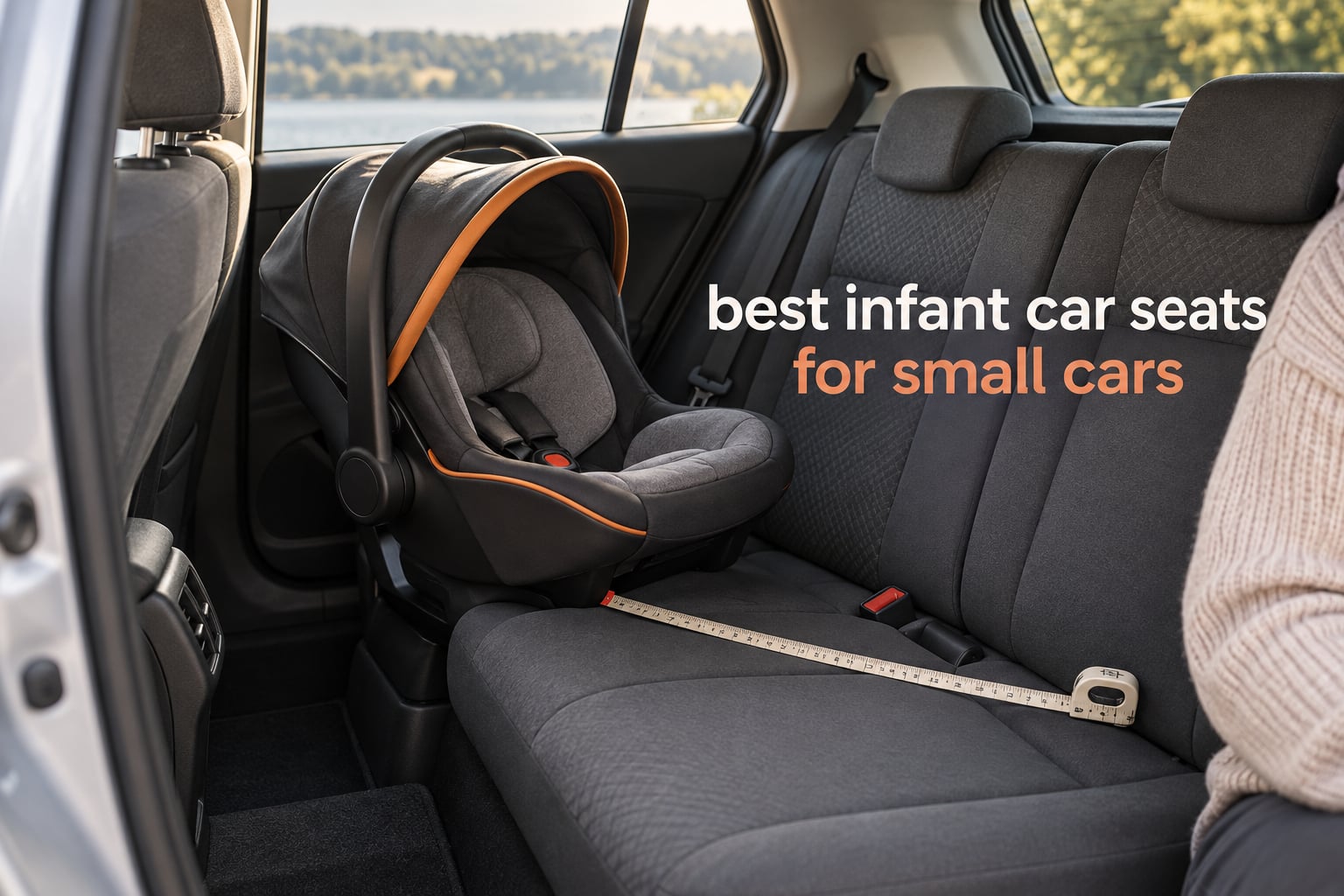
A good infant seat for a small car has to be narrow across the shoulder, short from the front seat back to the door, and able to sit at a proper rear-facing recline without a fight. Those three things pull against each other, and that tension is where most shopping advice goes wrong. This is our guide to the best infant car seats for small cars, built around the measurements that actually decide whether a seat fits your back row.
We spent weeks comparing eight rear-facing infant carriers on width, front-to-back footprint, recline range, install method, carrier weight, and rear-facing limits. Every seat here is rear-facing only, so nothing in this list will turn your child forward. What changes between them is how they handle a tight bench, how much of your front-seat legroom they leave alone, and how quickly your baby outgrows them by height.
Before the picks, here is the short version of what matters. If you only remember five things, remember these.
Table of Contents
What to Look For in an Infant Seat for a Small Car
Seat width under 17 inches: that threshold is roughly one adult shoulder plus the clearance you need for a neighbouring seat or a second caregiver, and it is the number that decides whether a bench is usable.
Adjustable recline base: once your baby has head control you can move the seat more upright, which hands back several inches of front-row legroom in a car with a short cabin.
A baseless install option: a carrier that can be belted in directly, without a base underneath it, drops the front-to-back footprint noticeably in most vehicles.
Rigid or built-in lower anchor attachments: built-in connectors click straight to the vehicle anchors with no separate strap to thread, and they take up less width at the anchor point than push-on connectors.
Anti-rebound support: a bar or base structure that stops the shell from rotating toward the seat back in a crash matters most in the narrow, upright installs a small car forces on you.
Width is the number printed on most spec sheets, and it is the least complete one. Two seats can both measure under 17 inches and still refuse to sit side by side, because shell shape and side-impact structure decide how much of that width is wasted. We come back to that in the buying guide.
Top 3 Picks for Small Cars in 2026


Doona Car Seat and Stroller
- Converts to a stroller in seconds
- FAA aircraft approved
- Anti-rebound bar

Chicco KeyFit 30 ClearTex
- SuperCinch LATCH tightener
- Flame retardant-free ClearTex
- Two bubble-level indicators
The Graco SnugRide Lite LX is the pick we keep coming back to because it does the unglamorous things well: it weighs 7.2 lb, its base has four recline positions, and the level indicator removes guesswork from the install. The Doona wins on footprint and travel, folding into a stroller that removes a whole piece of gear from a small car’s boot. The Chicco KeyFit 30 ClearTex is the one to buy if the fabric chemistry on a new seat matters to you.
Best Infant Car Seats for Small Cars (October 2026)
| Product | Specifications | Action |
|---|---|---|
| Graco SnugRide Lite LX |
|
Check Latest Price |
 Graco SnugRide SnugFit Graco SnugRide SnugFit |
|
Check Latest Price |
| Doona Car Seat and Stroller |
|
Check Latest Price |
| Chicco KeyFit 30 ClearTex |
|
Check Latest Price |
 Joie Rue with Anti-Rebound Base Joie Rue with Anti-Rebound Base |
|
Check Latest Price |
 Baby Trend EZ-Lift Plus Baby Trend EZ-Lift Plus |
|
Check Latest Price |
 Baby Trend Secure-Lift Baby Trend Secure-Lift |
|
Check Latest Price |
 Safety 1st OnBoard FLX Safety 1st OnBoard FLX |
|
Check Latest Price |
Two entries in this table publish full physical dimensions and two publish none, so treat the missing numbers as a genuine gap rather than a sign of a larger or smaller seat. Where a measurement matters to your purchase, check the fit in person or confirm it with the manufacturer before you commit.
1. Graco SnugRide Lite LX – the light one that fits almost anywhere
Graco SnugRide Lite LX Infant Car Seat, Studio
Weighs 7.2 lb
Rear-facing 4-30 lb to 32 inch
4-position adjustable base
LATCH install
Pros
- Weighs only 7.2 lb so it is easy to carry between cars
- Four-position base lets you move upright as your baby gains head control
- Level indicator takes guesswork out of the install
- Reviewers single out the narrow profile for compact vehicles
Cons
- Canopy is stiff and noisy in use
- Less padding than earlier versions
- Handle grip could be better
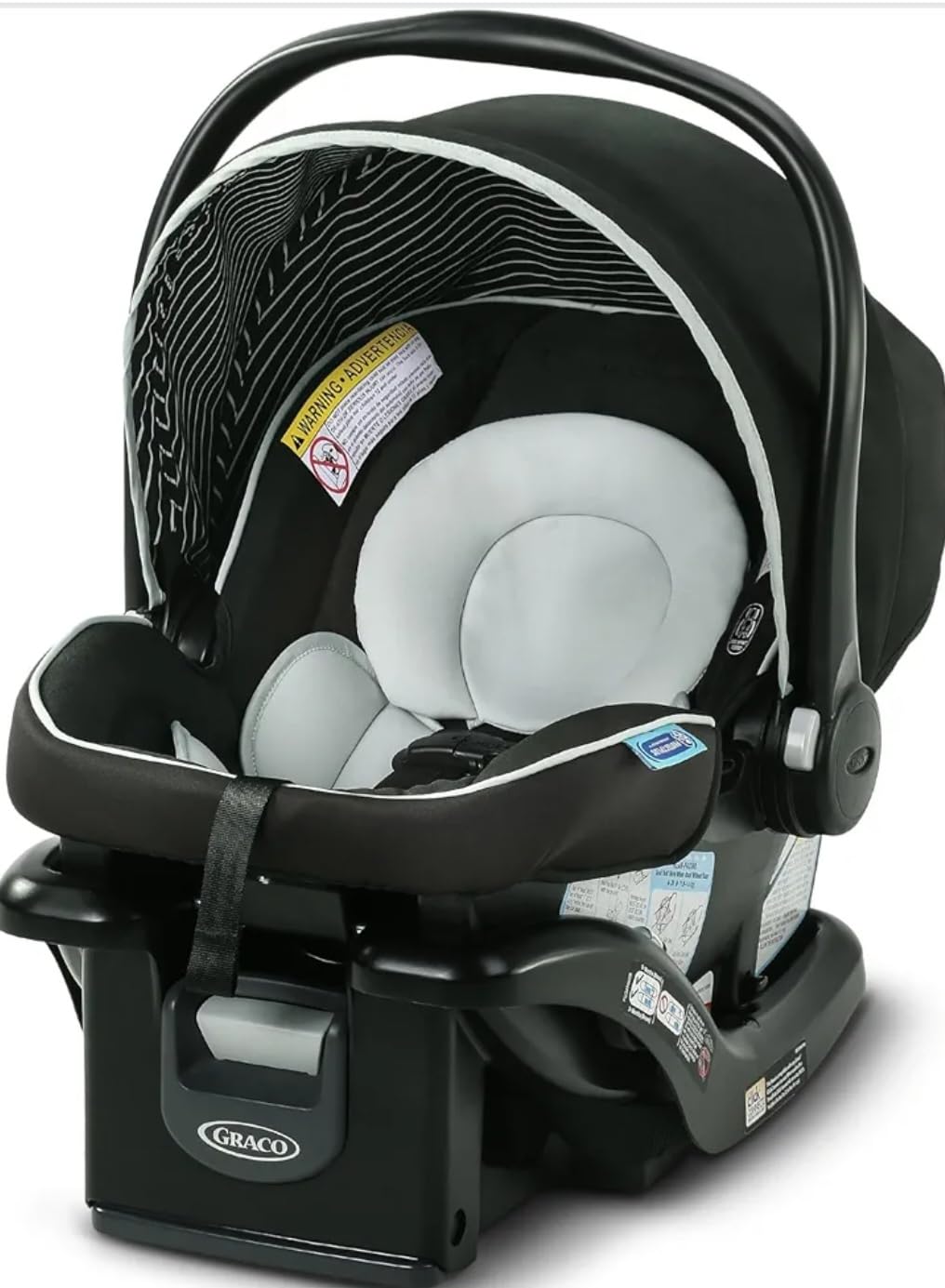
This is the seat we ended up recommending to almost everyone who asked. It weighs 7.2 lb, which sounds like a small detail until you are lifting a carrier out of a low sill in a parking lot at seven in the morning. That number is the published weight of the carrier itself, and it is the reason the seat gets clicked in and out of a base so easily.
The base has four recline positions and a large, easy-to-read level indicator. In a small car those positions do real work, because a newborn needs a shallower angle than a six-month-old with head control, and the difference between the two positions is exactly the front-seat legroom you are trying to protect.
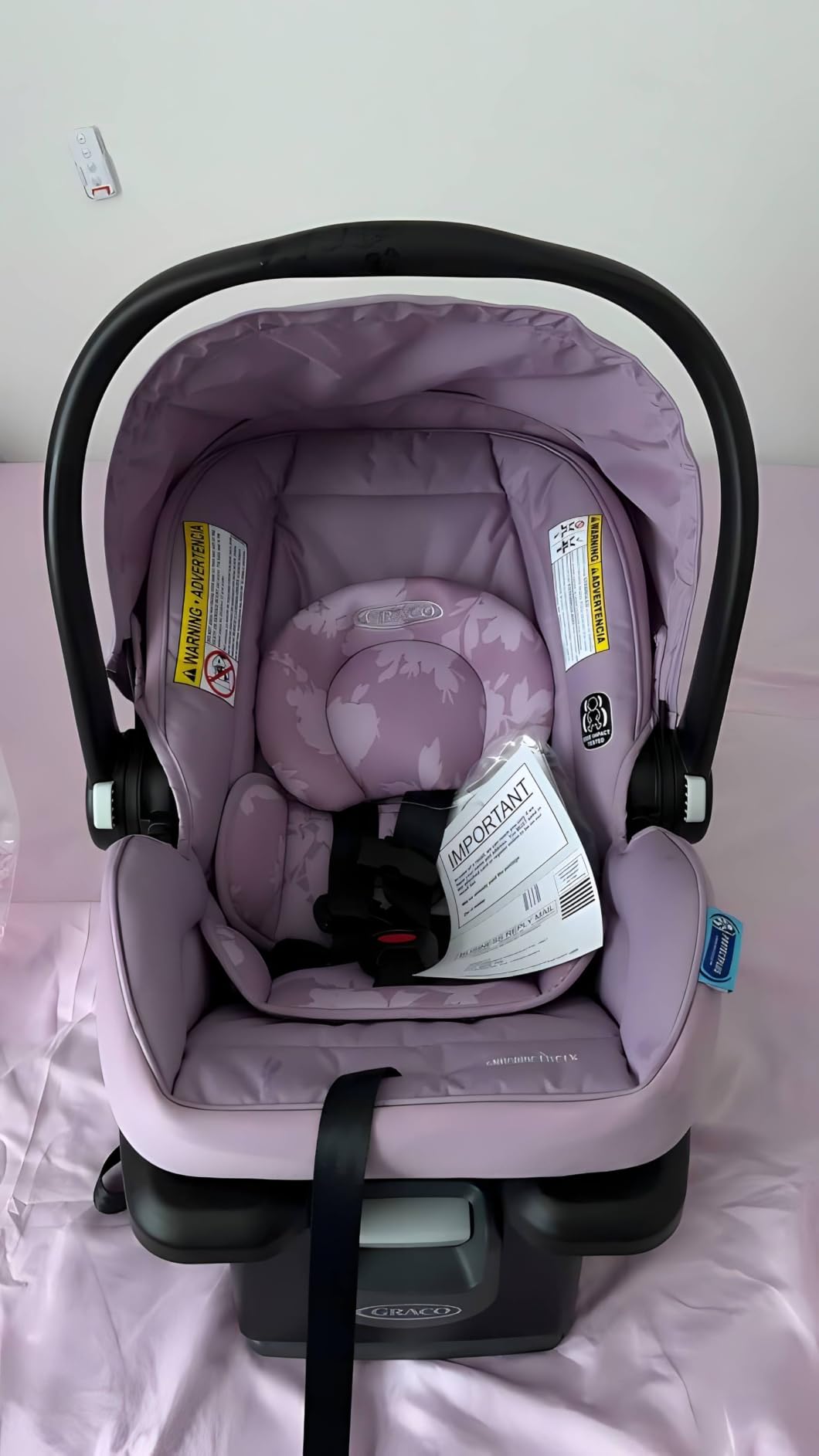
Fit is where this seat keeps earning its place. Reviewers consistently describe it as roughly 16 inches wide, which puts it in the range where a second caregiver can still sit in the back on many subcompact sedans. Graco also built it to click into Graco strollers, so if you already own one the travel system question answers itself.
ProtectPlus Engineered is Graco’s name for the crash testing the seat goes through, spanning frontal, side, rear and rollover. Treat that as a manufacturer claim about its own programme rather than an independent rating, and check independent crash test results separately if you want a third-party read.
Does the SnugRide Lite LX fit behind a tall driver?
Usually, and this is the seat we would try first for that scenario. A 4-position base lets you run the carrier more upright as your baby grows, and upright installs are shorter front-to-back than the near-flat newborn angle. Many parents report fitting it in a compact sedan without pushing the front seat forward at all once head control arrives.
Before buying, though, measure rather than assume. Sit the shell in your back seat and check whether the base’s recline mechanism has room to work in your chosen position, because some vehicles give you more room outboard than inboard. If the install needs a compromise on recline, that is the moment to move to a different seat rather than tighten something improperly.
What are the real drawbacks?
The canopy gets called out as stiff and noisy, and the padding is thinner than on older versions of the same line. Neither affects safety, but both show up in reviews often enough that you should expect them rather than be surprised by them.
The bigger long-term issue is height. A 32 inch rear-facing height limit is generous, but a 4-position base with no top-tether routing on the carrier side means you are choosing a seat for the first year of your baby’s life and then moving on. Read our infant seat guide for newborns if your baby is already large and you want to skip the short stage entirely.
2. Graco SnugRide SnugFit – the one with the anti-rebound bar
Graco SnugRide SnugFit Infant Car Seat, Gotham
Rear-facing 4-30 lb to 32 inch
Anti-rebound bar
No-rethread harness
About 17 inches wide
Pros
- Anti-rebound bar adds a layer of rear-facing protection
- No-rethread harness adjusts one-handed with your child in the seat
- SnugLock base makes install fast and consistent
- About 17 inches wide suits compact cars
Cons
- Heavier than some competing carriers
- Handle grip is awkward to hold
- Cumbersome to move in and out of a middle position
Where the Lite LX optimises for weight, the SnugFit optimises for the way a seat behaves in a crash. The anti-rebound bar is the headline addition, and it is the feature that most directly addresses rotation toward the vehicle seat back in a narrow, upright install, which is precisely the install a small car forces on you.
The no-rethread Simply Safe harness is the feature parents mention second. Headrest and harness slots move together from the front of the shell, so you are not threading straps through the back of the seat with a squirming baby in it, and you are not accidentally putting the harness one slot too low.

At roughly 17 inches wide, the SnugFit sits at the upper end of the narrow range rather than at the very bottom of it. In a subcompact that still leaves room for an adult in the centre. In a very small hatchback, plan for it to share the row with a second child seat rather than with a passenger.
SnugLock hardware on the base is a genuine convenience in a small car, because a self-ratcheting connector removes the loop of slack strap that otherwise sits in the footwell. Reviewers also report Graco stroller compatibility and good canopy coverage, which matters for the six-month stretch when babies start noticing sun.
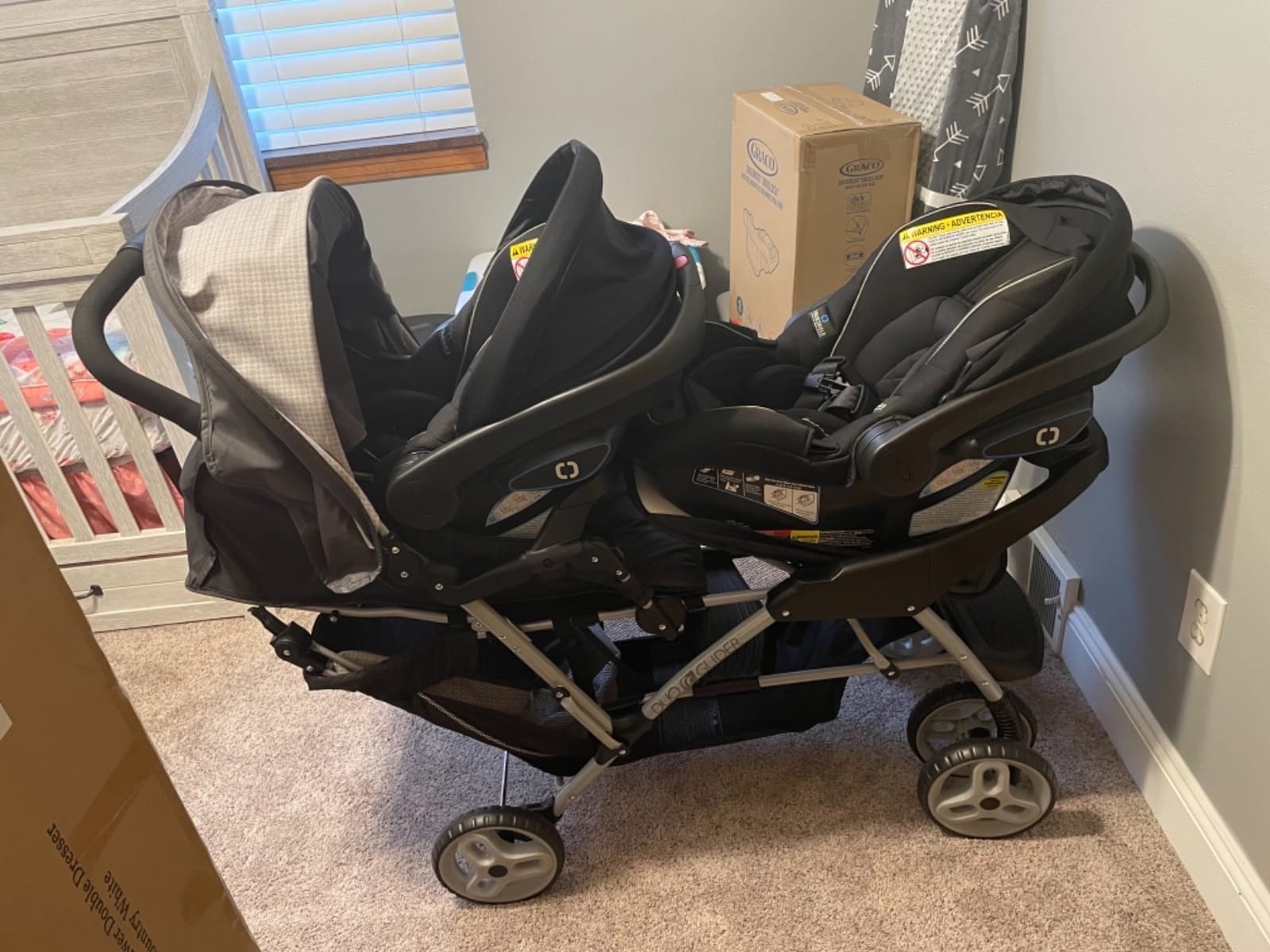
Is 17 inches narrow enough for a small sedan?
For two-across with an adult in the middle, it is tight but workable in most sedans. For three-across, this is not the seat to build that layout around, because three shells plus their side structures rarely clear a real bench at 17 inches each.
If your constraint is an adult still riding in the back, do a paper test before you buy. Measure the usable bench width between the door and the seat back rather than the manufacturer’s interior width, then subtract 17. The remainder has to fit a real adult hip and shoulder, not an average.
What should I watch out for?
Reviewers report it is heavier than the ultralight carriers in this list, and the handle grip is a common complaint. If you are moving the seat between two cars several times a day, that weight is felt every single time and it is worth weighing against the anti-rebound benefit.
There is also a practical snag: getting a carrier in and out of a centre position is awkward, and this seat is heavier than its Lite LX sibling. If you plan to run the seat in the middle routinely, test the click-in and click-out before committing.
3. Doona Car Seat and Stroller – the narrowest footprint here
Doona Car Seat & Stroller, Nitro Black – All-in-One Travel System
Weighs 17.2 lb as seat and stroller
Base weighs 9.7 lb
Folds to 17.4 by 26 by 22.4 inch
FAA aircraft approved
Pros
- Narrowest shell in this group at about 13.5 inches
- Converts from car seat to stroller in one click
- No separate stroller to store in a small car
- FAA and TUV approved for travel
Cons
- Much heavier than a dedicated infant seat at 17.2 lb
- Limited stroller storage when folded
- Fixed recline in stroller mode
The Doona solves a different problem from every other seat on this list. At roughly 13.5 inches wide, it is dramatically narrower than a conventional infant carrier, and it folds into a stroller chassis in seconds. For a city car where boot space is a half-size suitcase and a fold, that combination is hard to argue with.
Construction is fiber-reinforced polymers and rust-free aluminum, with three-layer side impact protection, an anti-rebound bar and a five-point harness. It is TUV and FAA aircraft approved, which matters if you fly with a newborn, and the UPF 50+ water-repellant canopy gives the stroller mode real utility rather than token sun cover.
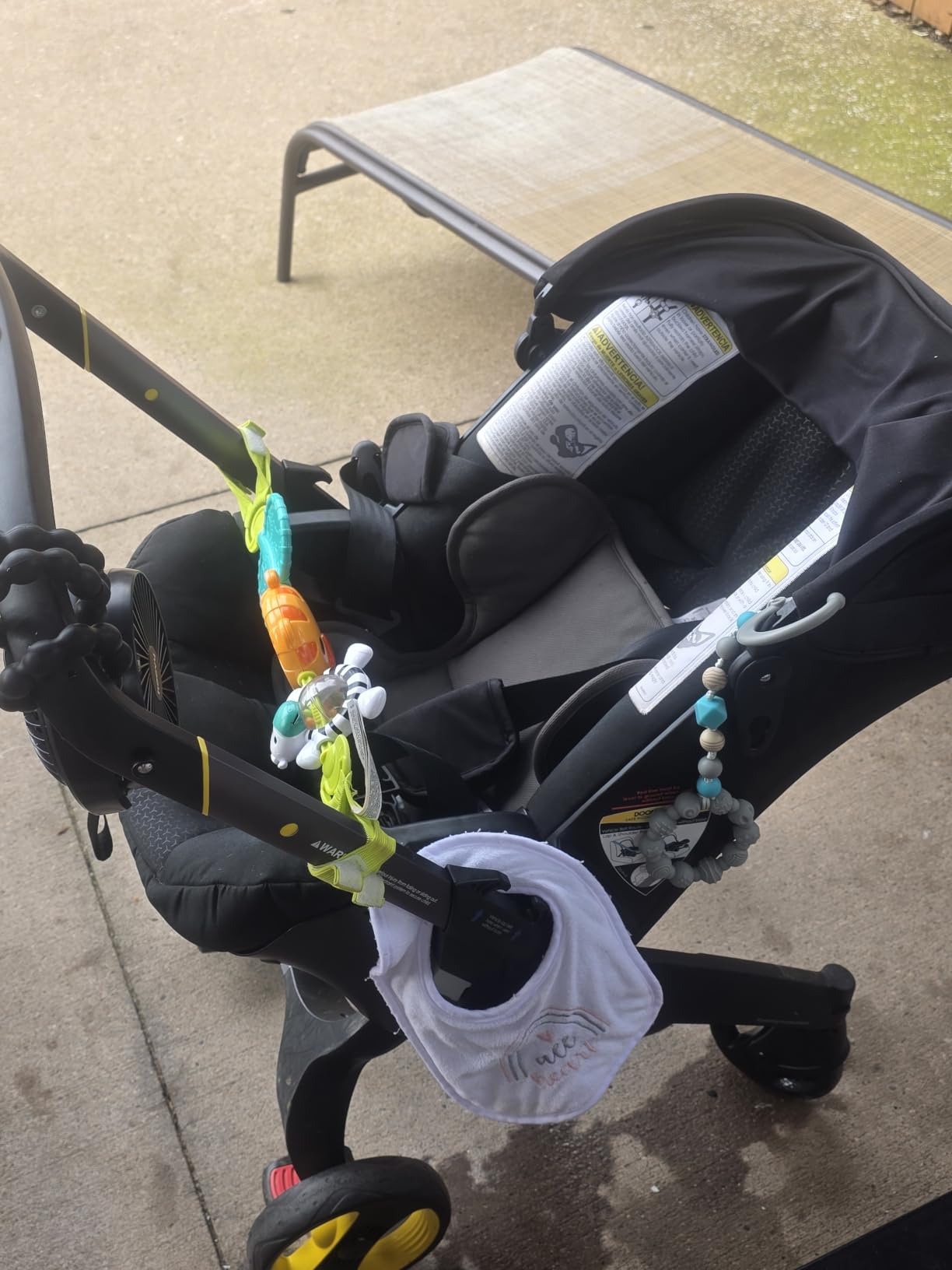
The included kit covers a lot: the car seat and stroller, an infant insert and head support, a vehicle seat protector, and a LATCH base. That last item is the part to think carefully about. The 9.7 lb base is a separate piece, and if you install with it, you are adding a base to the footprint you were trying to shrink. The shell is what is narrow; the full installed package is not automatically the smallest on this list.
Folded dimensions are 17.4 by 26 by 22.4 inches and open dimensions are 17.4 by 32.3 by 39 inches. Those are genuine published figures, and they are exactly the kind of number most competitor pages skip.

Is a 17.2 lb car seat too heavy to carry every day?
It depends entirely on your routine. A single trip from the front door to the car, or a stroller run, is fine for most parents and reviewers. A daily commute involving a subway platform, a stairwell and a long walk adds up fast, and a 7 lb carrier is a very different experience from a 17.2 lb one.
Then there is the two-car question. Because the stroller frame is part of the seat, there is no light object to move between vehicles. Parents with a second caregiver often find that the practical answer is two Doonas rather than one seat and one stroller, which changes the economics of the arrangement entirely.
Is the Doona worth it compared with a conventional carrier?
If your car is genuinely tiny, the width and the folded footprint justify it on their own. If you drive a normal compact crossover with a usable boot, you are paying a large premium for a stroller you already own, and one of the lighter carriers here will serve you better.
Reviewers also flag limited stroller storage in stroller mode and a fixed recline there. Neither touches the car seat function, but both are the reason this is a specialist choice rather than a default recommendation for everyone driving a small car.
4. Chicco KeyFit 30 ClearTex – the easiest install and the cleanest fabric
Chicco KeyFit 30 ClearTex Rear-Facing Infant Car Seat with Base
Rear-facing 4-30 lb to 30 inch
About 16.5 inches wide
SuperCinch LATCH tightener
ClearTex fabric
Pros
- SuperCinch LATCH tightener gets a tight install in a few pulls
- ClearTex fabric is flame retardant-free and GREENGUARD Gold certified
- Two bubble-level indicators plus a spring-loaded leveling foot
- About 16.5 inches wide suits compact back seats
Cons
- Height limit is 30 inch rather than 32 inch
- Only pairs with Chicco strollers
- Thinner stroller ecosystem than the Graco options
The KeyFit 30 is the seat parents already know, and it earns its place in this list on install ease rather than on any single measurement. The SuperCinch force-multiplying LATCH tightener multiplies your pull, so you can get a genuinely tight install without hauling on a short strap, and the two bubble-level indicators plus spring-loaded leveling foot mean you are not eyeballing the angle.
That combination matters more in a small car than in a large one. When the space is tight, the temptation is to accept a loose install so the seat fits more neatly. A seat that installs tightly first time removes that temptation, which is a safety argument disguised as a convenience feature.
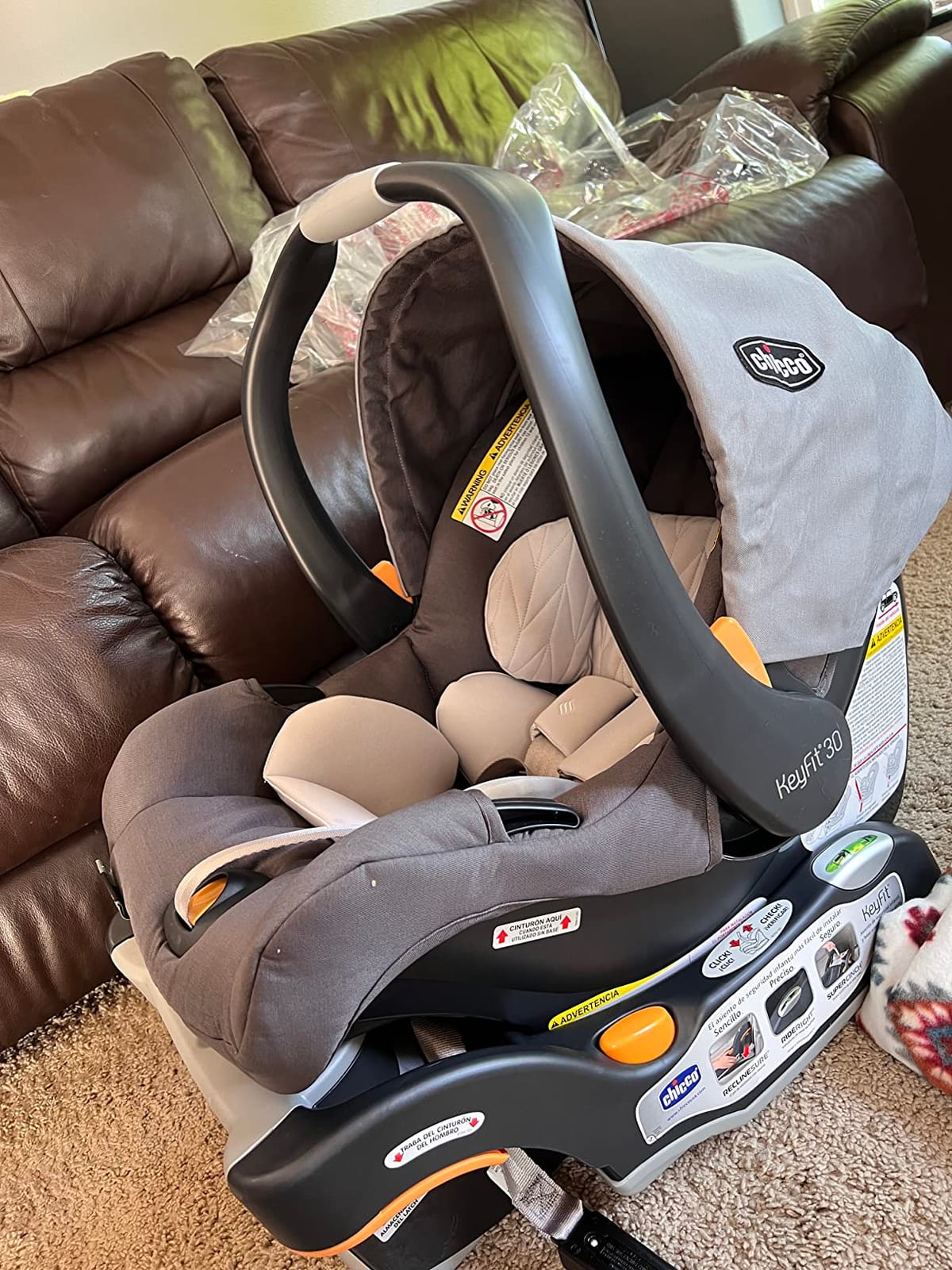
At roughly 16.5 inches wide, this is one of the narrower shells here. Parents driving very small cars name the Chicco KeyFit line most often as the incumbent they are trying to move beyond, and technicians posting on r/CPST identify the KeyFit 30 as a classic compact seat, recommending a base in one car and a baseless install in the other when both front seats need to be used.
That last point is worth pausing on. It is the same advice technicians give for a two-car household, and it is also the strategy that frees the most front-row legroom. If your small car is shared between two drivers who both need their seat position, a seat that works well without its base is worth more than a slightly narrower one that does not.

Is the 30 inch height limit a problem?
It is the main compromise here, and it is a real one. The Graco seats in this list run to 32 inch rear-facing, so a tall baby will use them for longer. On the KeyFit 30, growth out of the seat by height tends to arrive sooner, and you will be buying a convertible earlier than you expected.
That is not a safety problem. Outgrowing an infant seat by height is a normal and safe milestone, it simply arrives at a point where you may not have budgeted for the next seat. If your baby is already over six months, compare our convertible seat guide for toddlers before spending on the infant stage at all.
Should I be wary of model variants?
Yes, and this applies to any Chicco KeyFit you find used. The older Encore variant carries a lower rear-facing weight cap than the current KeyFit 30, and the two look similar on a marketplace listing. Check the label on the specific seat in front of you rather than the product photo.
The second limitation is narrower and less serious: the carrier clicks only into Chicco strollers. If you have not settled on a stroller brand, that is a reasonable tiebreaker. If you already own a Graco frame, one of the Graco seats will pair with what you own and this one will not.
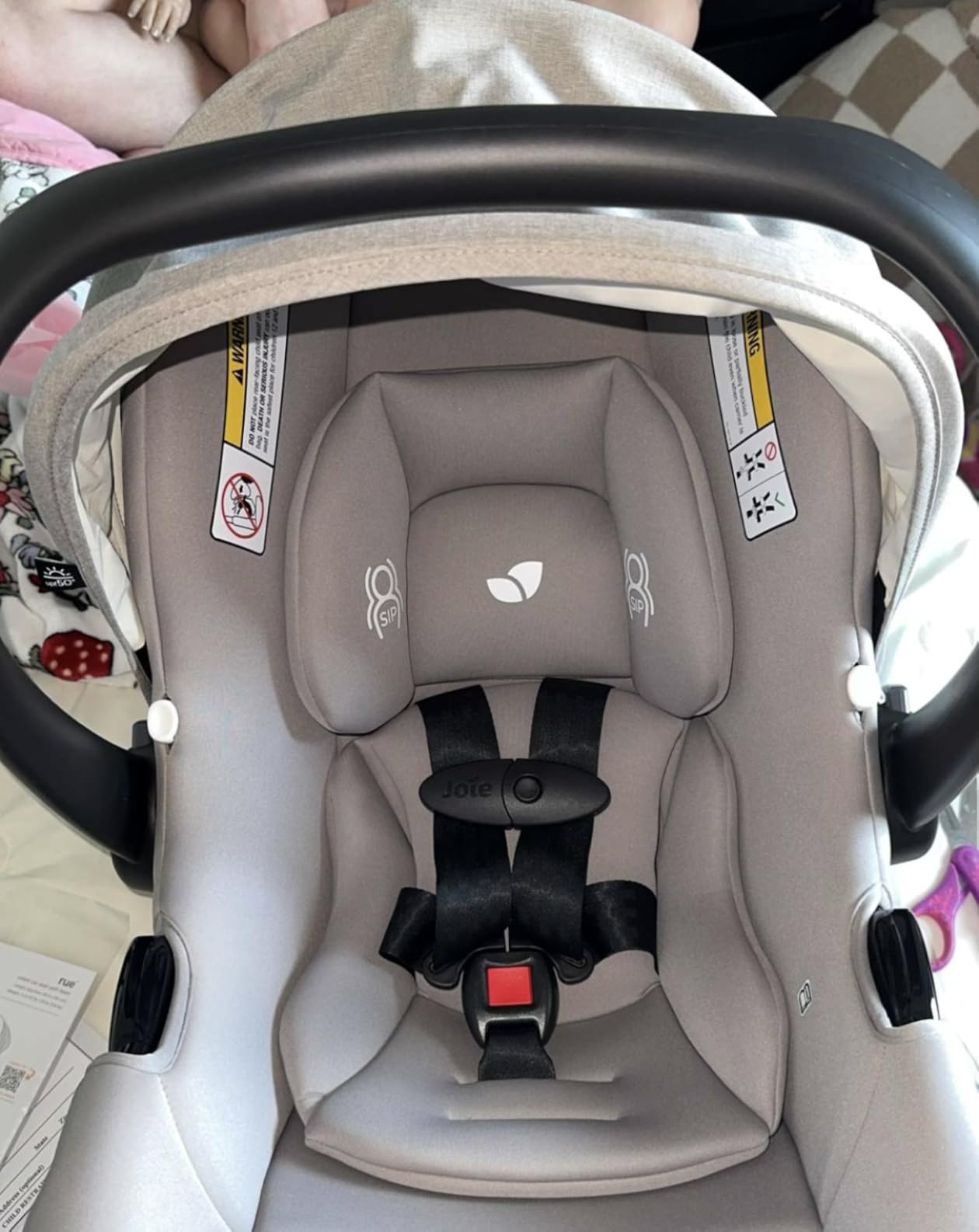
5. Joie Rue – the only seat here that publishes its full footprint
Joie Rue Lightweight Infant Car Seat with Anti-Rebound Base
Car seat 25.75 by 17.5 by 16 inch
With base 25.75 by 17.5 by 22.8 inch
Seat weighs 7.7 lb
Anti-rebound bar in base
Pros
- Only seat in the group with published length
- width and height
- Anti-rebound bar built into the base
- Built-in lower anchor attachments need no separate strap
- Three-piece removable inserts for newborns
Cons
- 17.5 inch width is at the wide end for a small car
- Base adds several inches of front-to-back depth
- Newer model with a thinner review history
Almost everything in this category is sold on width alone. The Joie Rue is the exception here, publishing a car seat size of 25.75 by 17.5 by 16 inches and a with-base size of 25.75 by 17.5 by 22.8 inches. That 6.8 inch jump in height between the carrier and the base is the clearest possible illustration of why front-to-back depth is not just the carrier’s problem.
At 7.7 lb the carrier itself is genuinely light, second only to the Graco Lite LX among the conventional seats here, and it carries built-in lower anchor attachments. Built-in connectors click straight onto the vehicle anchors with no separate strap, which reduces both the width consumed at the anchor point and the number of steps in a tight outboard position near the door.
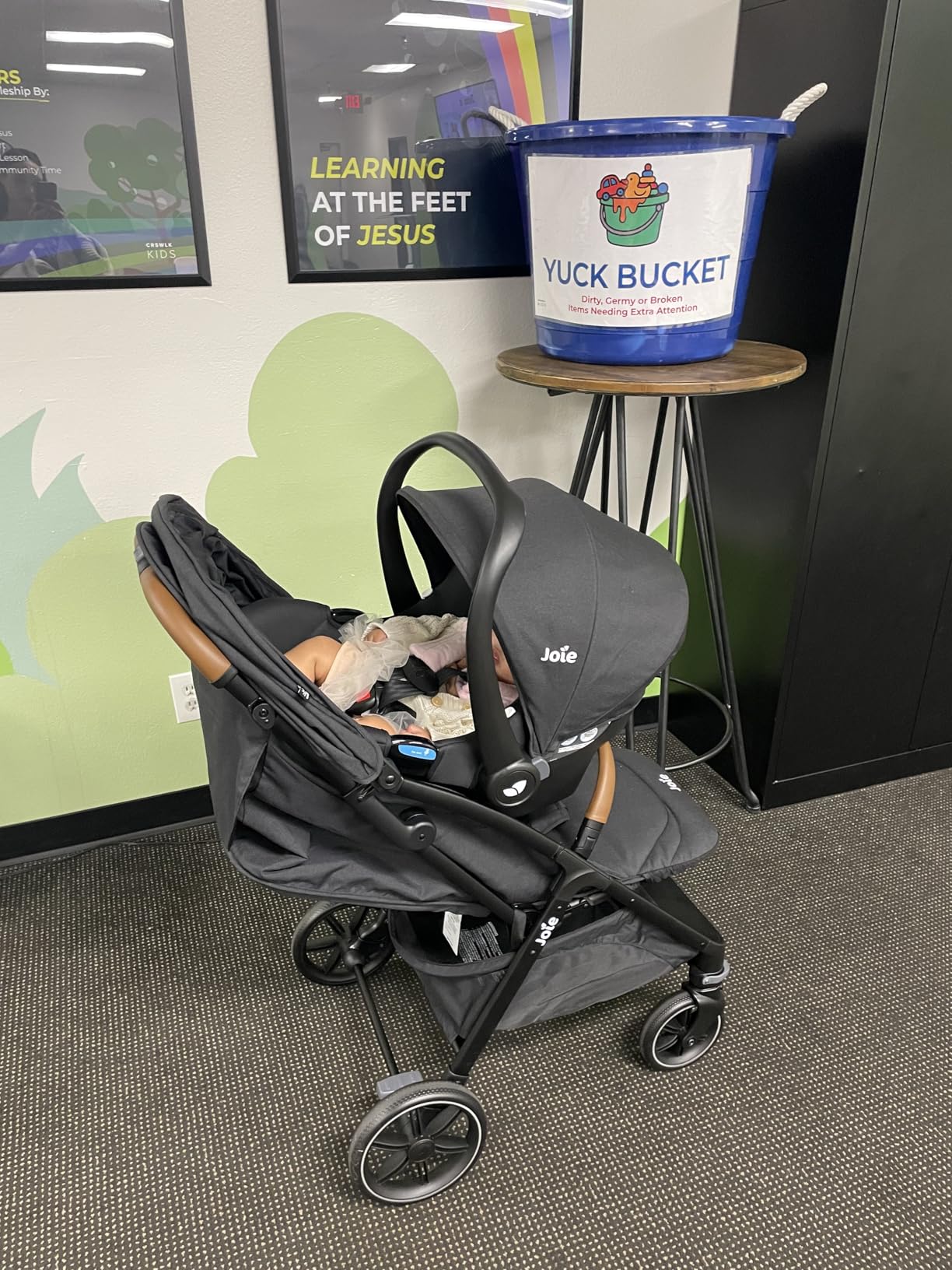
The base carries a built-in anti-rebound bar, so the rotation protection is part of the base rather than something you fit separately. It is certified to FMVSS 213a and 213b, and the three-piece insert set gives you head support, body support and an infant wedge that can be thinned out as your baby grows.
Fabric is breathable knit with a UPF 50+ canopy, and the seat is travel system compatible. Newborns get the full insert set; older babies strip back to the wedge alone, which is the arrangement that keeps a six-month-old from slumping forward.
Is 17.5 inches too wide for a small car?
For one seat in a small sedan, no. 17.5 inches is wide for a narrow list but well inside normal infant seat territory, and the built-in lower anchors are a real advantage near a door where a push-on connector strap is awkward. Where it gets tight is two-across with an adult in the middle, where 17.5 inches leaves less room for a passenger than the KeyFit 30 does.
The more important number for front-seat legroom is the 22.8 inch height with the base attached. In a short-cabin car, that figure, not the width, is what decides whether the driver keeps their legroom at a proper newborn recline.
What should I know before buying a newer model?
This is a newer seat with a shorter review history than the Graco options, and Joie has less brand recognition in the US market than Graco or Chicco. That is not a safety objection, but it does mean fewer long-term durability reports exist for you to read before committing.
Check your stroller too. Travel system compatibility is listed, but the frame pairing is narrower than the Graco ecosystem, so confirm your specific stroller model before purchase rather than assuming any adapter will work.
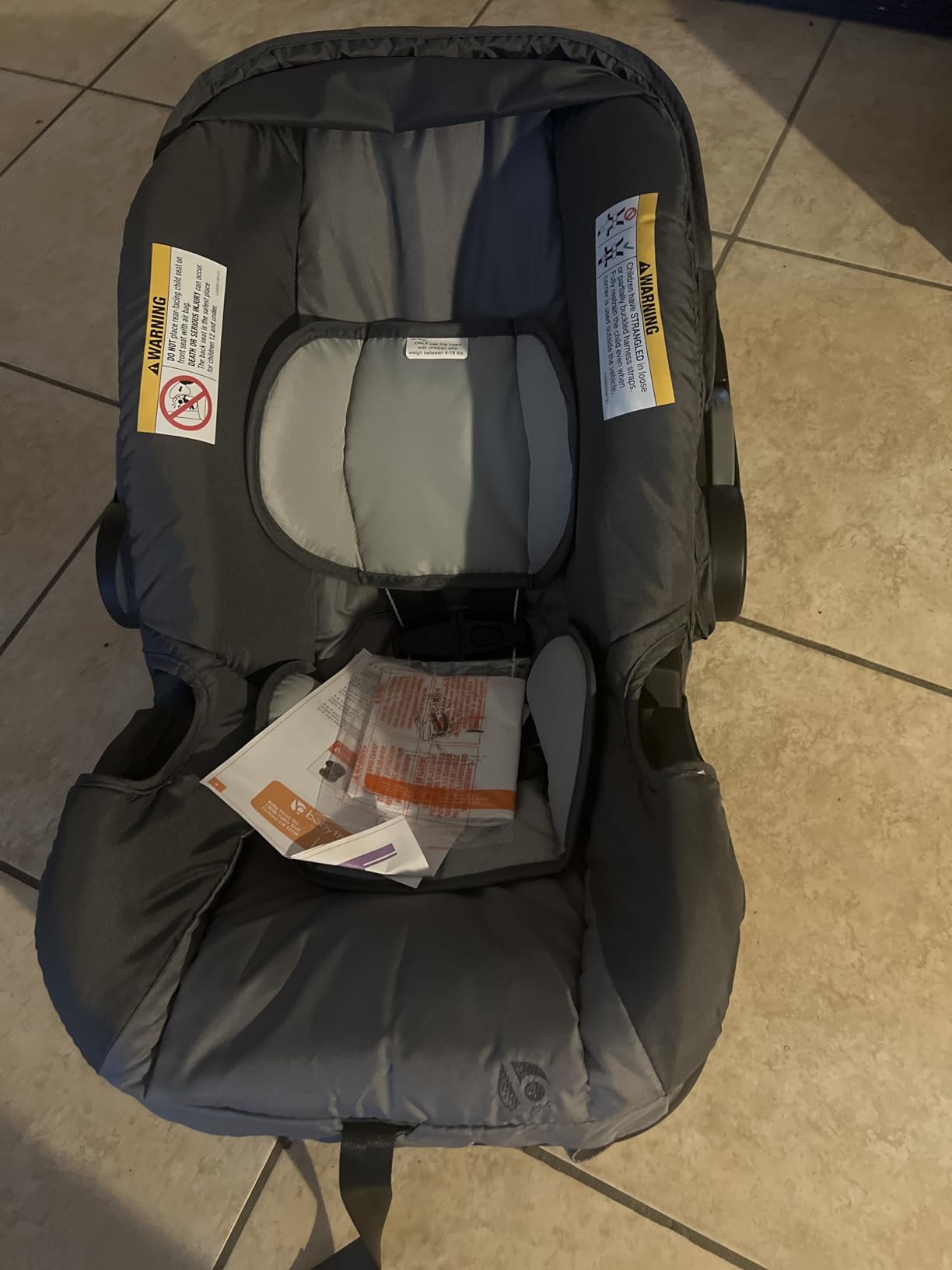
6. Baby Trend EZ-Lift Plus – the straightforward budget carrier
Baby Trend EZ-Lift™ Plus Infant Car Seat, Ultra Grey – Newborn Comfort Padding, Lightweight Carry Build, Adjustable Harness System
Newborn comfort padding
Lightweight carry build
Adjustable harness system
Car seat and base included
Pros
- Lightweight carry build makes short trips easy
- Newborn padding suits the first months
- Includes both the carrier and the base
- Fits double strollers for parents on the move
Cons
- Not compatible with grocery cart clips
- Install can be fiddly for first-time parents
- Less suitable for babies in their first months without added cushioning
This is the entry point, and it does the basics without pretending to do more. The lightweight carry build and ergonomic handle are the features that matter in a small car, because a seat you can lift one-handed changes how often you will actually reinstall it properly rather than leaving it loose.
Newborn comfort padding is the other thing worth noting, because the earliest stage is when a carrier is most uncomfortable. The adjustable harness system then lets you tune the fit as your baby grows, which is the one ongoing adjustment most infant seats ask of you.
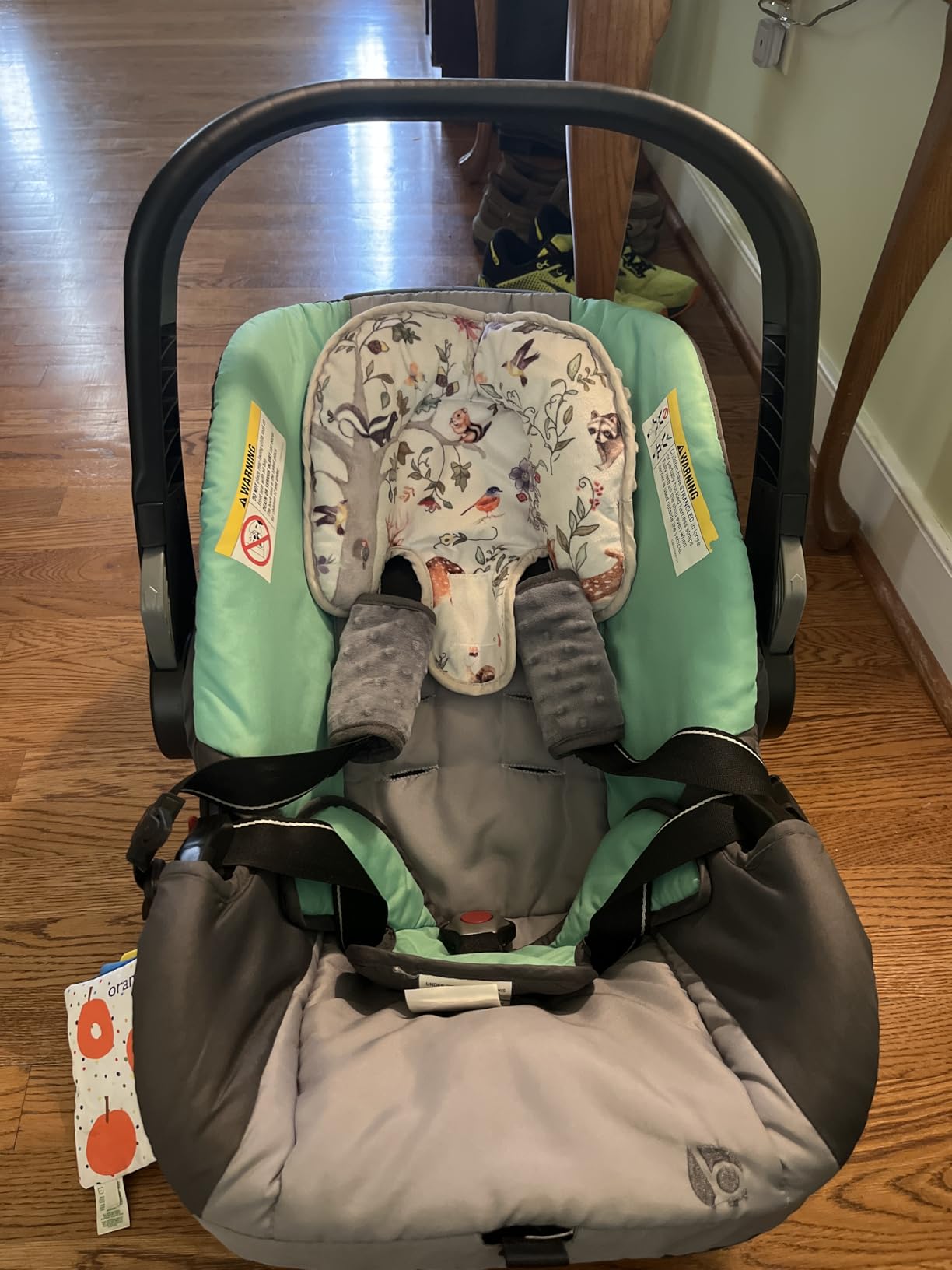
One detail catches people out: reviewers report it fits double strollers, meaning the nested stroller market rather than a single-frame travel system, and it is not compatible with grocery cart clips. Neither is a safety issue, but both are the kind of thing that is annoying to discover after the box is open.
The kit includes both the infant car seat and the car seat base, so you are not buying the carrier alone and hunting for a compatible base afterwards. Reviewers describe installation as easy overall, while also noting it can be fiddly for parents doing it for the first time.
Is this seat good enough for a preemie or a very small newborn?
This is where the reviews are most cautious. Parents note it is less suitable for babies in their first one to three months without additional cushioning, so if your baby is born small or premature, this is not the seat to choose on price alone.
Check your child’s actual height against the manufacturer’s stated rear-facing limit before you order, and add a proper infant insert if your baby is at the small end. If the fit is marginal, the difference in cost between this seat and one of the Graco options is small enough that the Graco is the safer bet.
Where does the value actually break down?
Reviewers mention that lower weight and height limits can mean shorter overall usability, which pushes you toward the next purchase sooner. That is the real cost of the entry-level option, and it lands harder in a small car because you have just solved a difficult fit problem that you will now have to solve again.
The other gap is stroller ecosystem. It is reported as compatible with Graco strollers, which is convenient if you are starting from scratch, and the double-stroller fit is useful for parents using a nested setup. Just confirm your frame before buying.
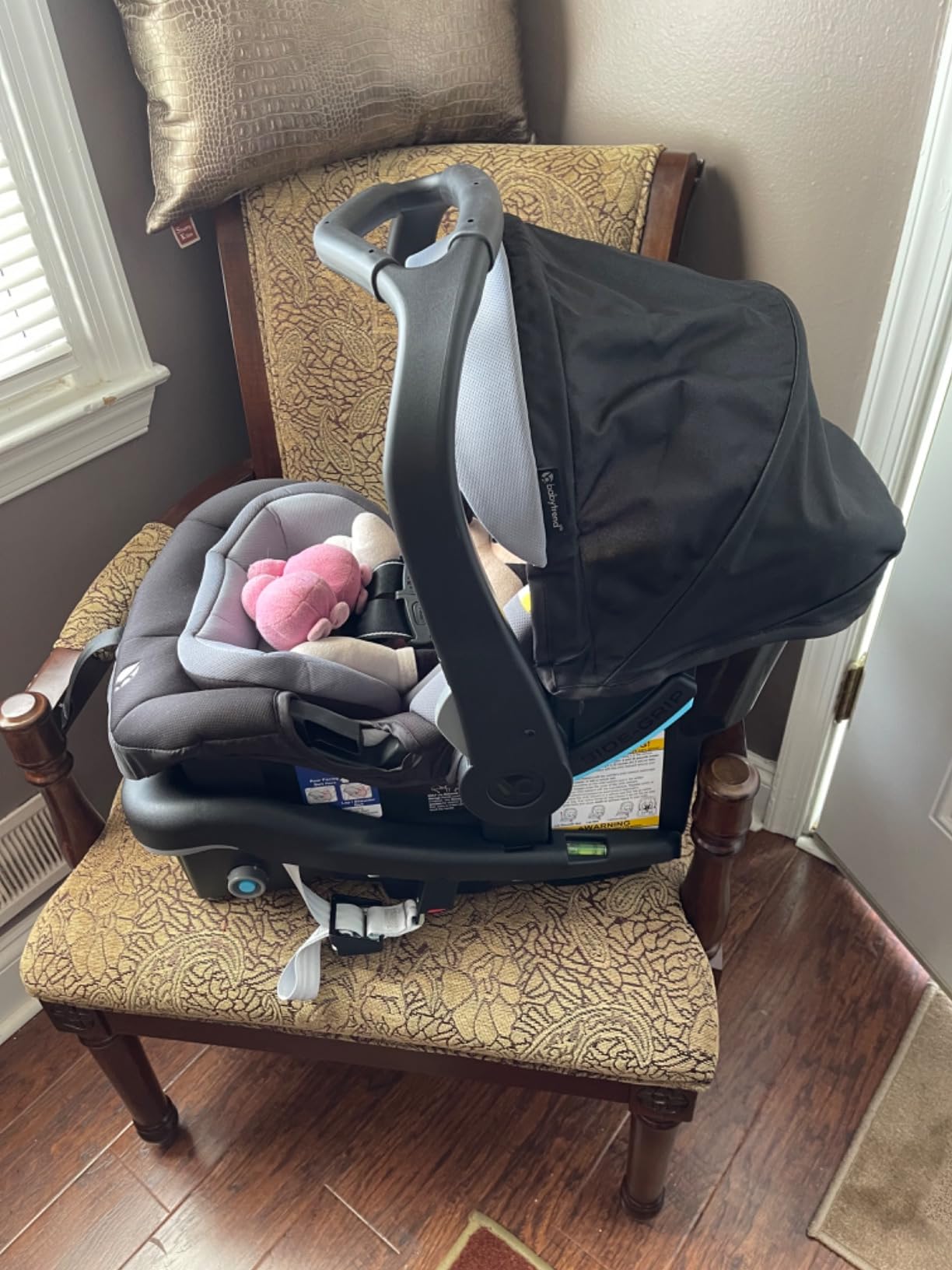
7. Baby Trend Secure-Lift – built around a compact footprint
Baby Trend Secure-Lift Infant Car Seat, Dash Black – Compact Lightweight Carrier, Infant Comfort Cushioning, Adjustable Harness Fit
Compact lightweight carrier
Infant comfort cushioning
Adjustable harness fit
Car seat and base included
Pros
- Compact design aimed at tight back seats
- Lightweight build for short car-to-stroller moves
- Infant cushioning suits the newborn stage
- Both carrier and base included in the box
Cons
- No published width
- depth or weight figures
- Newer model with a short review history
- Only one colour variant listed
The Secure-Lift is sold explicitly as a compact lightweight carrier, and everything published about it points in that direction. The design brief is straightforward: make something small enough for a tight back seat, light enough to move one-handed, and comfortable for the first months.
Infant comfort cushioning and an adjustable harness fit cover the two things that change fastest in the first half-year. The harness adjusts so the fit follows the baby, and the cushioning is what makes the first weeks bearable for a newborn on longer drives.
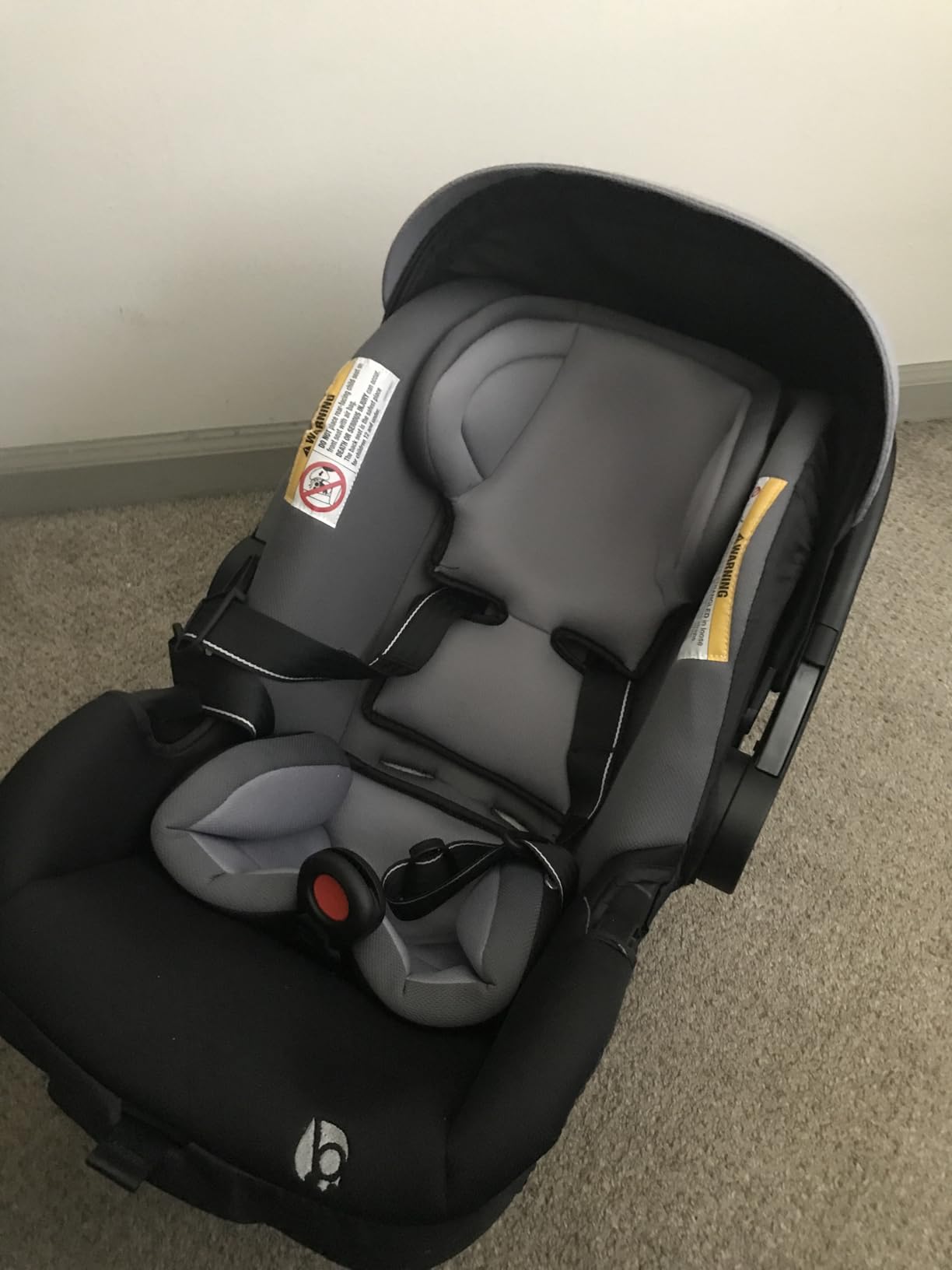
Here is the honest limitation, and it is a significant one for this particular topic: no width, depth, or weight figure is published for this seat. For a roundup built around measurement, that is a real gap. You are being asked to trust the word compact rather than check a number, and on a topic where the number is the whole point, that deserves a flag.
Before buying, put the physical question to the retailer. One of the most useful pieces of advice in parent forums is that many retailers will let you install a car seat in the store and check the fit against your actual vehicle before you commit. If the measurements are not published, that test becomes the only measurement you will get.
Should I buy a seat with no published dimensions?
Only if you can verify the fit in person, or if the seller will confirm the figures directly. In every other category on this list we can tell you how wide the shell is; here we cannot, and we would rather say so than estimate.
What you can evaluate without numbers is the rest of the package. The base is included, the cushioning is newborn-oriented, and the harness adjusts. If those fit your situation and the retailer will confirm the footprint, it is a reasonable option. If you need a hard number to make the decision, one of the Graco seats answers that question.
What should I watch out for after purchase?
Long-term durability is the open question. Reviewers note that as a newer model, its long-term record is less established than the Graco seats with thousands of reviews behind them, and the Dash Black listing is the only colour variant shown, which limits you if you want a specific match to your car interior.
Set a reminder when you first install it to check the manufacture date label, since infant seats have a service life of roughly six to ten years and the clock starts at production rather than at purchase. It is a small habit that prevents a bad surprise two years from now.
8. Safety 1st OnBoard FLX – the practical everyday pick
Safety 1st OnBoard FLX Infant Car Seat with Base, Lightweight Baby Car Seat for Travel, Monument 4
Weighs under 8 lb
Rear-facing 4-30 lb to 32 inch
LATCH equipped
4 harness heights
Pros
- Weighs under 8 lb for easy one-handed carrying
- 1-pull harness adjustment from the front of the shell
- Machine-washable and dryer-safe seat pad
- Four harness heights plus newborn head and body inserts
Cons
- Only pairs with Safety 1st QuickClick strollers
- Taller babies can outgrow it around 8-10 months
- Five-star share sits below the Graco options
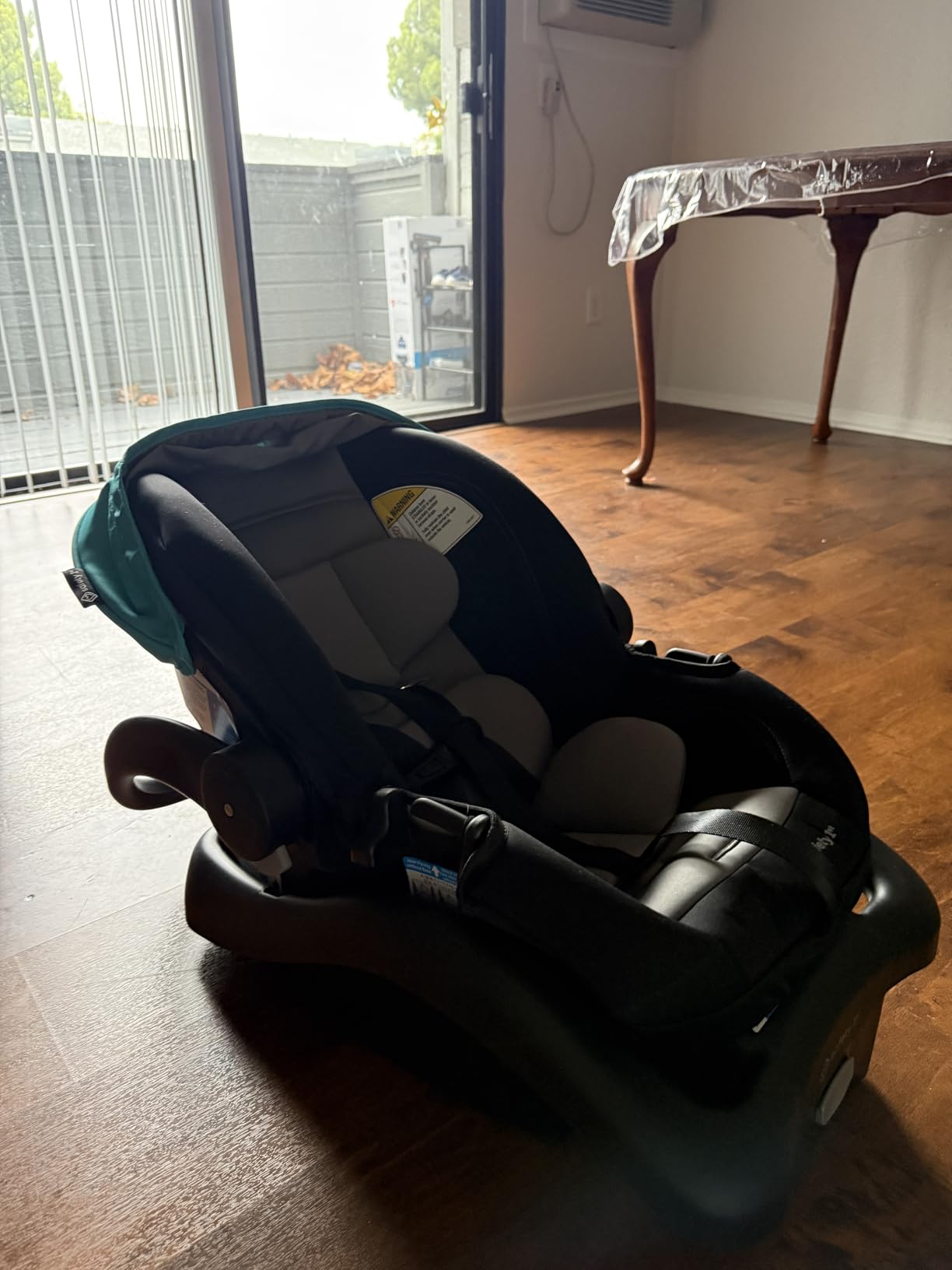
The OnBoard FLX is the seat to look at if your driving involves frequent short trips, stairs, or a lot of lifting in and out of the car. Coming in under 8 lb puts it in the same weight class as the two Graco carriers, and the 1-pull harness adjustment means the harness and headrest move from the front of the shell without threading anything behind the seat.
It handles 4 to 30 lb rear-facing up to 32 inches, with four harness heights and separate newborn head and body inserts. That 32 inch height limit matches the Graco Lite LX rather than the shorter KeyFit 30, so a taller baby gets more usable time out of it.

Two details stand out for a small car specifically. The seat pad is machine-washable and dryer-safe, which matters more than it sounds when the only practical cleaning option is a car boot, and side impact protection with deep sides and energy-absorbing materials gives the shell a bit more structure for a tight outboard position near a door.
It is LATCH equipped with an adjustable base, and it is made in Columbus, Indiana. The base is adjustable, so you have some freedom on recline in the same way the four-position Graco base does, though the published material describes it simply as an adjustable base rather than a numbered-position one.
Will my baby outgrow this seat quickly?
Some will. Reviewers report that taller babies can outgrow it around 8 to 10 months, which is earlier than the weight limit suggests because height arrives first in many babies. If your baby is already tracking tall, a 32 inch limit with generous inserts buys time, but it does not guarantee it.
Measure your child monthly rather than guessing. The same manufacturer also makes convertible seats with wider ranges, and our convertible seats for small cars guide is the right place to look if you think you will skip the infant stage.
What are the tradeoffs against the Graco options?
Stroller compatibility is the practical one. The seat attaches to Safety 1st strollers with QuickClick, and only those, so an existing Graco or Chicco frame will not work without an adapter. If you have already chosen a stroller, that may decide the purchase for you.
The second is the review profile. At 4.6 stars across more than 3,500 reviews, it is well established, but its five-star share sits below what the Graco seats in this group attract. That is a mild signal rather than a serious one, and for most families the under-8 lb weight and the washable pad outweigh it.
How to Choose an Infant Car Seat for a Small Car
What to measure in your car before you buy
Measure three things, in this order. First, the usable bench width: run a tape from the interior door panel to the seat back, not across the manufacturer’s advertised interior width, because the door contour and the buckle stalk both eat space a tape laid across the seat ignores.
Second, the front-to-back gap from the back seat cushion to the front seat back with the front seat in the position your tallest driver needs. That is the number the base has to fit into, and it is the one that decides whether you keep your legroom.
Third, the recline headroom above the base. If a base with four positions cannot physically reach its shallowest angle in your chosen outboard spot, the seat is wrong for that position regardless of how good the spec sheet looks. A paper fit before purchase is cheap insurance.
Why width alone is not enough
Width is the number everyone quotes, and it is the least useful one on its own. A shell that is 16.5 inches wide with pronounced side wings uses more of that width for structure than a flatter 17.5 inch shell does, and the difference is what decides whether two seats sit side by side with real hip room for the children inside them.
This is the point certified technicians make repeatedly, and it is why a mid-sized seat can beat a narrower one in a two-across layout. The rule of thumb is that a narrow shell without heavy side wings often puzzles with a wider shell that has them, because the wasted space in the narrow seat is a function of shape, not measurement.
So treat width as a screening filter and shape as the deciding factor. Under 17 inches should get a seat onto your shortlist. Whether it survives contact with your actual back seat is a question that needs a tape measure and a car park, not a spec sheet.
LATCH or seat belt in a tight cabin
Use whichever method gives the tightest install in the specific position you will use, and verify it by checking for less than one inch of movement at the belt path. That rule is the same in a large SUV and a small hatchback, and it is the only rule that matters.
In practice, a small car pushes many families toward the seat belt. Near the door, a lower anchor strap has to route around a buckle stalk that is in a different place in every vehicle, and that routing eats width you do not have. A built-in tensioning lock-off, or built-in lower anchor attachments, removes the slack loop that costs you an inch of clearance.
Whatever method you choose, install it once, properly, and check it again after 30 days and then every few months. Children outgrow harness positions and seat belts have a habit of creeping.
Baseless install: the clear verdict
Yes, installing an infant carrier without its base is acceptable, provided the car seat manual and your vehicle manual both allow it and you follow the routing the seat specifies, which is normally the European belt path over the base, through the shell, and back over the opposite side.
The reason to do it in a small car is measurement, not convenience. The base occupies depth in front of the carrier, and removing it shortens the installed package. The reason people hesitate is that a baseless install has more ways to be done badly, particularly the lap-shoulder belt not being locked, which is why a car with a built-in locking retractor or a tensioning lock-off on the seat is a better candidate for it.
This is also the standard recommendation from technicians on r/CPST for two-car households: base in one vehicle, baseless in the other, so the second car is usable without leaving a base permanently bolted to its back seat.
Two-across and three-across planning
Two-across is realistic in most small sedans with any seat in this list. Add an adult in the centre and you need roughly 17 inches or less per seat, which points you toward the Graco Lite LX at about 16 inches and the KeyFit 30 at about 16.5.
Three-across is a different project. It nearly always forces a seat belt install in all three positions, because a centre lower anchor is rare in small cars. The other honest point is that three infant seats in a small car leaves nobody in the back, which changes the practical case entirely. If you are planning three across, a narrow convertible will serve longer than an infant seat, and the buyers who tell you otherwise are usually working in a larger vehicle.
When to move up from an infant seat
Check three things in order. If your baby’s head is within an inch of the top of the shell, they are done. If the harness slots are at or below the shoulders while rear-facing, they are done. If they are near the weight or height limit on the label, they are done.
Most babies outgrow by height before weight, which is why a seat with a 30 inch limit and generous inserts can go faster than one with a 32 inch limit. There is no rush after that milestone, though, and the correct next step is a convertible seat installed rear-facing, not turning the infant seat forward. Guidance from the American Academy of Pediatrics and NHTSA is to stay rear-facing until a child reaches the seat’s rear-facing maximum, and until at least age two.
A 22 lb baby is a common question and a common misunderstanding. Twenty-two pounds is the typical forward-facing harness minimum, not a rear-facing one, so a 22 lb baby is almost certainly still riding rear-facing in a convertible. Our guide to the best convertible car seats for growing kids covers the ranges worth comparing against, and the booster seat guide for toddlers covers the stage after that.
Expiration, cleaning and fabric
Infant seats have a service life of roughly six to ten years from manufacture, and the date is moulded into a label on the shell. If that date has passed or the label is unreadable, stop using the seat. Heat damage from living in a hot car accelerates foam degradation, which is the other reason not to leave a carrier in a parked vehicle.
On cleaning, check the manual and follow it exactly. Most manufacturers permit machine washing the cover but prohibit machine washing the shell, and going against that can affect the foam. The Safety 1st OnBoard FLX publishes a machine-washable and dryer-safe seat pad, which is the most convenient cleaning story in this group.
On fabric chemistry, the Chicco KeyFit 30 ClearTex is the outlier here: its fabric is flame retardant-free and GREENGUARD Gold certified for low chemical emissions. The EPS energy-absorbing foam lining the shell is the seat’s crash structure, not a flame retardant treatment, and the two are frequently confused.
When to skip a seat in this list
Skip the Doona if you need a separate lightweight stroller and travel by air often with another adult, because the all-in-one design means you cannot hand the baby off while keeping the frame.
Skip the KeyFit 30 if your baby is already over six months, because the 30 inch height limit will send you shopping again sooner. Skip anything at all if you cannot get a tight install in your chosen position, because no measurement on a spec sheet compensates for an install that moves.
And skip the pressure to buy without a test. Parents on r/beyondthebump and r/Buyingforbaby describe the same loop of fitting, guessing, re-fitting, and many retailers will install a seat in the store so you can check it against your own car before paying.
Frequently Asked Questions
What is the most compact infant car seat?
By width, the Doona Car Seat and Stroller is the most compact seat in this group at roughly 13.5 inches, and it also folds into a stroller so it takes up no separate stroller space. If compact means front-to-back depth rather than width, the seats that can be installed without their base come out ahead, because the base is usually what adds the most depth. The Joie Rue publishes both figures at 25.75 by 17.5 by 16 inches for the carrier, which is worth knowing before you buy.
How do I know when my infant car seat is too small?
Check three things in order: the top of your baby’s head is within an inch of the top of the shell, the harness slots are at or above the shoulders while rear-facing, or your baby is approaching the weight or height limit printed on the label. Most babies outgrow an infant seat by height before they reach the weight limit, which is why taller limits such as 32 inch give you more time than a 30 inch one.
How wide should an infant car seat be for a small car?
Under 17 inches is the working threshold. That is roughly one adult shoulder plus the clearance you need for a neighbouring seat or a second caregiver in the back. Width alone does not settle it, though, because side wings and shell shape determine how much of that width is usable, which is why a 17 inch seat can pair with a wider one and a narrower one cannot.
Is it safe to install an infant car seat without the base?
Yes, as long as both the car seat manual and your vehicle manual allow it and you use the belt routing the seat specifies, which is normally the European belt path over the base, through the shell, and back over the opposite side. It is the standard approach for two-car households, where one car keeps the base and the other is set up baseless. In a small car it is also how you reclaim the front-to-back depth the base would occupy.
Should I use LATCH or the seat belt in a small car?
Whichever gives you the tightest install in the specific position you will use, verified by checking for less than one inch of movement at the belt path. In a small car, a seat belt install with a built-in tensioning lock-off often works better near the door, where a lower anchor strap has to route awkwardly around the buckle stalk and uses width you do not have. Built-in lower anchor attachments, as on the Joie Rue, reduce that problem.
Can a 22 pound baby ride forward facing?
Twenty-two pounds is the typical forward-facing harness minimum, not a rear-facing one, so a 22 lb baby is almost certainly still riding rear-facing. Guidance from the American Academy of Pediatrics and NHTSA is to keep a child rear-facing until they reach the rear-facing maximum for the seat and until at least age two. A 22 lb baby would normally be in a convertible seat installed rear-facing.
The Verdict for Small Cars in 2026
After working through all eight, the Graco SnugRide Lite LX remains the seat we send most people to. It is light enough to move without thinking, its four-position base gives you the recline range a small cabin demands, and at roughly 16 inches wide it is one of the few seats here that still leaves room for an adult in the back.
Choose the Doona if footprint and travel matter more than weight. Choose the Chicco KeyFit 30 ClearTex if flame retardant-free fabric and the easiest install you can get are your priorities. And whichever you pick, take a tape measure to the car before you order, because these best infant car seats for small cars are only the best if they physically fit where your child will actually ride.
Whatever you choose, have a Certified Child Passenger Safety Technician check the installation. A correct install is what turns a good seat into a safe one, and the check is usually free or inexpensive through a local hospital, fire station or Child Passenger Safety program. Our roundup was last reviewed in October 2026.