
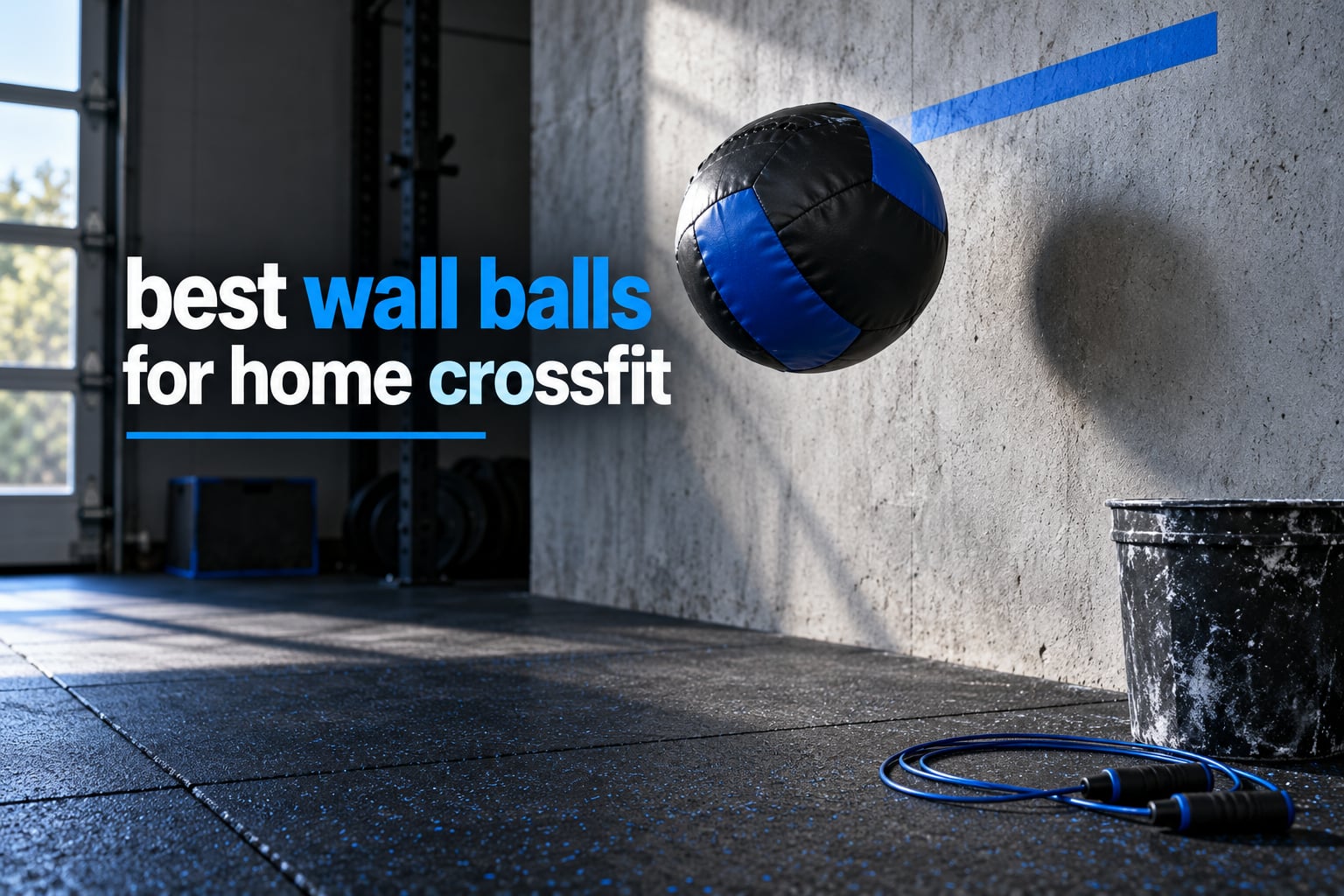
If you only add one piece of equipment to a home CrossFit setup this year, make it a wall ball. It gives you a full squat, an explosive hip drive, an overhead press and a hard conditioning stimulus in one piece of gear, and it needs nothing more than a clear stretch of wall. Our top pick is the Titan Fitness 10 lb wall ball, a 14 inch polyurethane ball with double-stitched seams that has held up under the largest volume of owner feedback in this group.
There is one decision that matters more than any other: the weight of the ball has to match the height of your target. CrossFit standards call for a 20 lb ball to a 10 ft target for men and a 14 lb ball to a 9 ft target for women, but most basements and many garages simply do not have 10 ft of usable wall. That single mismatch is why so many home athletes get frustrated with the movement, so we weight this guide toward solving it rather than toward brand reputation.
We put eight wall balls through the same lens: shell material, seam construction, filler type, diameter consistency, grip, warranty coverage and the size of the weight range each brand offers. None of the products below is marketed as a home-specific ball, because none of them are. They are all general fitness balls that happen to work at a wall, and the differences between them only show up once you start throwing them.
Last updated for 2026. We earn from qualifying purchases.
Table of Contents
Top 3 Best Wall Ball Picks for Home CrossFit in 2026

Titan Fitness 10 LB Wall Ball
- 14 inch diameter
- PU leather shell
- Double-stitched seams
- Weights from 6 lb to 30 lb

JFIT Vinyl Wall Ball 10 LB
- Heavy-duty vinyl shell
- Hand stuffed for balance
- 14 inch across 4 lb to 30 lb

ProSource 8 LB Soft Ball
- Padded PU leather
- Color-coded weight range
- Limited lifetime warranty
Best Wall Balls at a Glance in 2026
| Product | Specifications | Action |
|---|---|---|
| Titan Fitness 10 LB Wall Ball |
|
Check Latest Price |
| JFIT Vinyl Wall Ball 10 LB |
|
Check Latest Price |
| ProSource 8 LB Soft Ball |
|
Check Latest Price |
 ZIVA Soft Wall Ball 4 LB ZIVA Soft Wall Ball 4 LB |
|
Check Latest Price |
 Bionic Body 14 LB Soft Wall Ball Bionic Body 14 LB Soft Wall Ball |
|
Check Latest Price |
 Nordic Lifting 14 LB Wall Ball Nordic Lifting 14 LB Wall Ball |
|
Check Latest Price |
 Champion Sports Rhino ProMax 20 LB Champion Sports Rhino ProMax 20 LB |
|
Check Latest Price |
 Yes4All 12 LB PVC Wall Ball Yes4All 12 LB PVC Wall Ball |
|
Check Latest Price |
1. Titan Fitness 10 LB Wall Ball: Our Pick for a First Home Purchase
Titan Fitness 10 lb Soft Leather Medicine Wall Ball, Blue Color-Coded
10 lb load
14 inch diameter
PU leather shell
Double-stitched seams
Pros
- Double-stitched reinforced seams
- Soft PU leather grip on throw and catch
- Even weight distribution at 14 inch diameter
- Weight ladder from 6 lb to 30 lb
Cons
- Not built for slam ball work
- Some balls arrive slightly out of round from storage
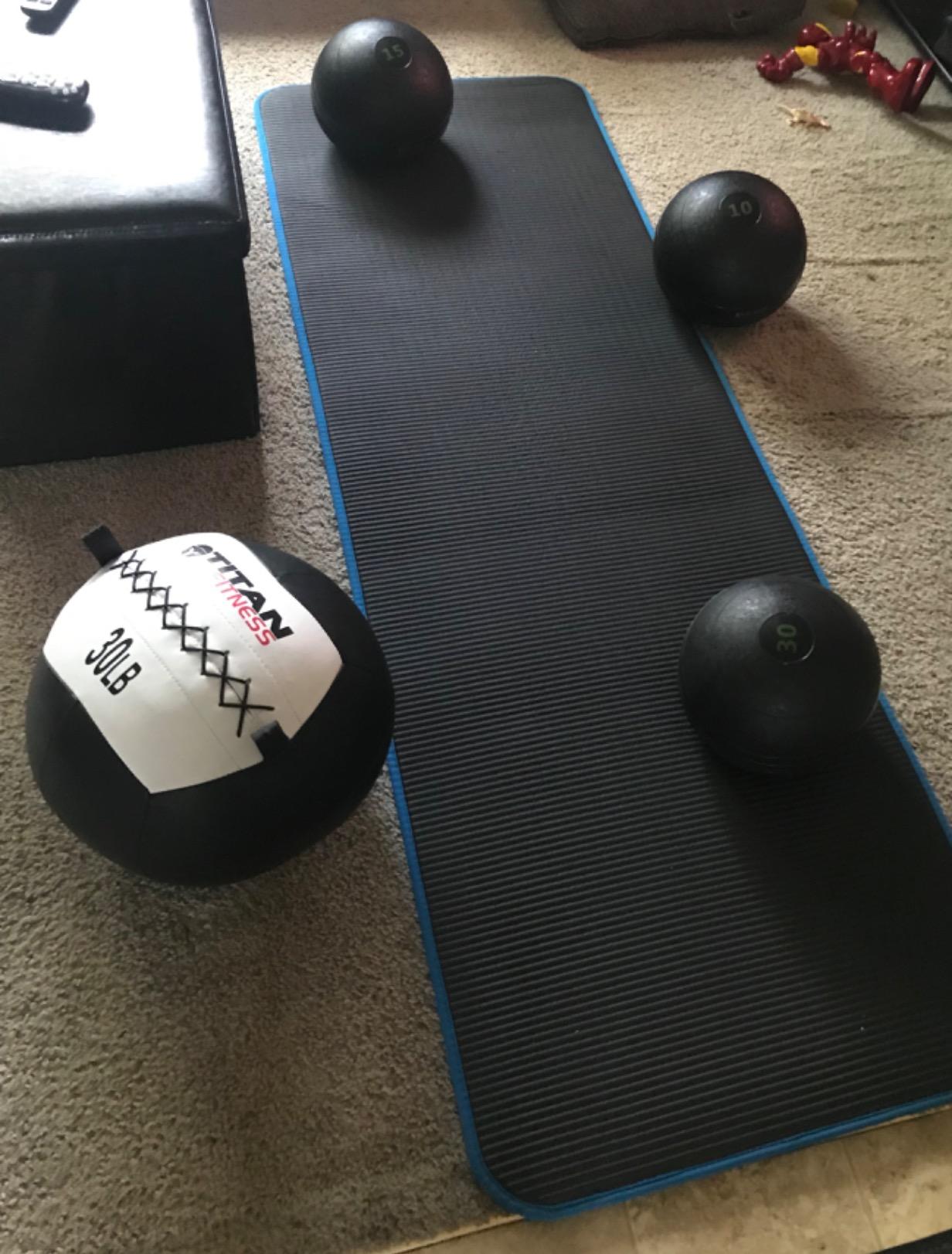
The Titan is the ball we kept reaching for during this comparison, and the reason is less about the ball itself than about the range around it. It ships in 6, 10, 14, 20 and 30 lb, which means a home athlete can build an actual ladder instead of owning one lonely weight. For a garage gym where a partner trains with you, that matters more than any single feature.
Construction is straightforward and correct for the job. The shell is polyurethane over a polypropylene cotton fill, laser-cut style panels are joined with double-stitched seams, and the whole thing is listed at 14 inches in diameter with even weight distribution. It also has the largest review base of any ball in this group. Reviewers consistently single out the seams and the grip as the two things that hold up, which tells you the failure points we would test first are not the ones that break.
Owners also praise the accurate weight and the feel of the catch, which matters more than it sounds. A wall ball shot is a rebound sport: you catch the ball at the sternum, drop straight back into the squat and throw again. A shell that feels slick or a ball that arrives slightly out of round turns a fluid 100-rep set into a series of fumbles.
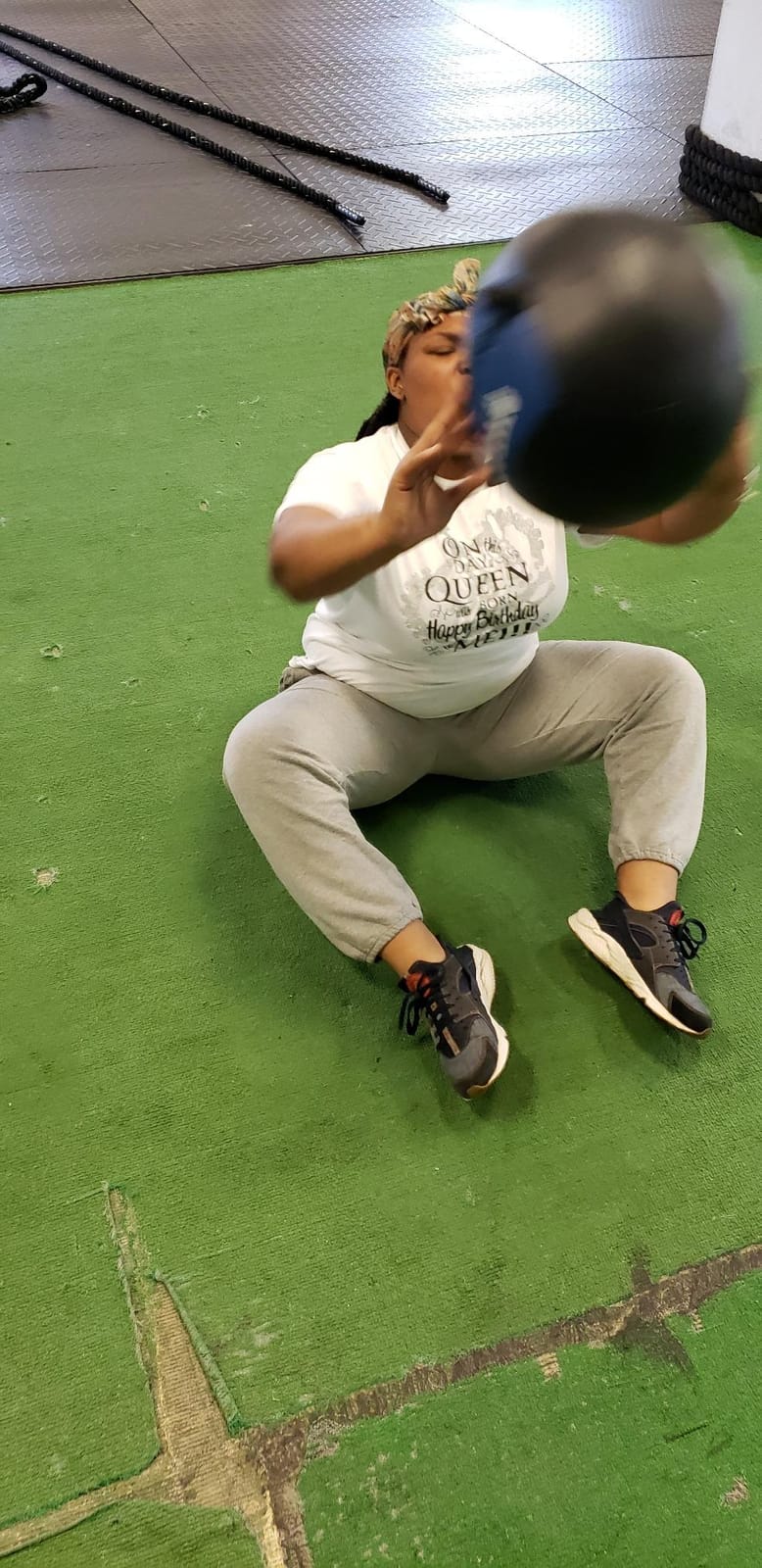
Two limitations show up consistently in owner feedback. First, this is a wall throw ball, not a slam ball, and treating it like a heavy rubber medicine ball will shorten its life. Second, a small number of balls arrive slightly flattened from storage, which usually corrects itself after a few throws or a week of use.
We rated the shell and grip highly and the weight range as the strongest in the group. If you want a single purchase that gets you started and lets you scale later, this is the one to buy first.
What this ball handles best
It is built for repeated squat-to-throw volume at moderate speed, which is exactly what a home conditioning session looks like. The soft PU leather is kind to bare hands through long sets and does not need chalk to hold, and the 14 inch size keeps the rebound consistent shot after shot.
Because the range runs from 6 lb to 30 lb, it also works as a thruster or overhead lunge implement for lighter sessions, and the 10 lb variant is a good first wall ball for someone who is learning the movement rather than chasing a Rx standard.
Where it falls short
It will not replace a heavy medicine ball for cleans, presses or slams, and the shell is not designed to take that kind of ground impact. If your program is heavy ball work rather than wall work, you need a different implement entirely.
Watch for roundness on arrival. Roll it across a flat floor first: if it tracks straight, the fill is even. A ball that wanders will make every throw unpredictable, and no amount of technique fixes uneven internal weight.
The 10 lb weight is also a deliberate middle. It is heavy enough to load the squat pattern for most adults and light enough that a beginner can still hit depth on rep 50. If you are very new to overhead work, drop to the 6 lb version rather than grinding out reps you cannot receive cleanly.
One thing to plan for is storage. A 14 inch ball in a one-car garage takes up more room than people expect, so measure the space between the target and your equipment rack before you order a full ladder. Most home athletes end up keeping two or three weights rather than five.
2. JFIT Vinyl Wall Ball: A Vinyl Shell With the Widest Weight Range
JFIT Soft Wall Ball – Non-Slip Medicine Ball for Crossfit, Strength Training, Plyometrics & Core Workouts – Durable & Balance Tested – 10 LB, Gray/Black
10 lb load
14 inch diameter
Vinyl shell
Double-stitched seams
Pros
- Non-slip grip holds during fast throws and partner passes
- Hand stuffed for balance and shape
- Holds 14 inch diameter across 4 lb to 30 lb
- Vinyl shell shows little wear after months of use
Cons
- Not intended for slamming on the floor
- Raised lacing can dig into hands on heavy catches
- Bouncier than a dense slam ball
JFIT runs from 4 lb all the way to 30 lb, which is the widest range in this group, and the 4 lb model is the outlier size at 9 inches rather than 14. For everyone else in the range, the diameter holds at 14 inches, which keeps your technique consistent as you move up the ladder.
The shell is heavy-duty vinyl that is laser cut and double stitched, and the ball is hand stuffed rather than machine filled. That hand-stuffing step is the detail worth noticing: it is the reason the ball keeps its balance and shape, and hand stuffing is exactly what manufacturers skip when they are trying to cut cost.
Reviewers describe the grip as the standout feature, holding during fast wall throws and partner passes. Vinyl also has a particular feel that some athletes prefer over PU leather because it feels slightly tackier when hands are wet, and owners report the shell showing little wear after months of regular use.
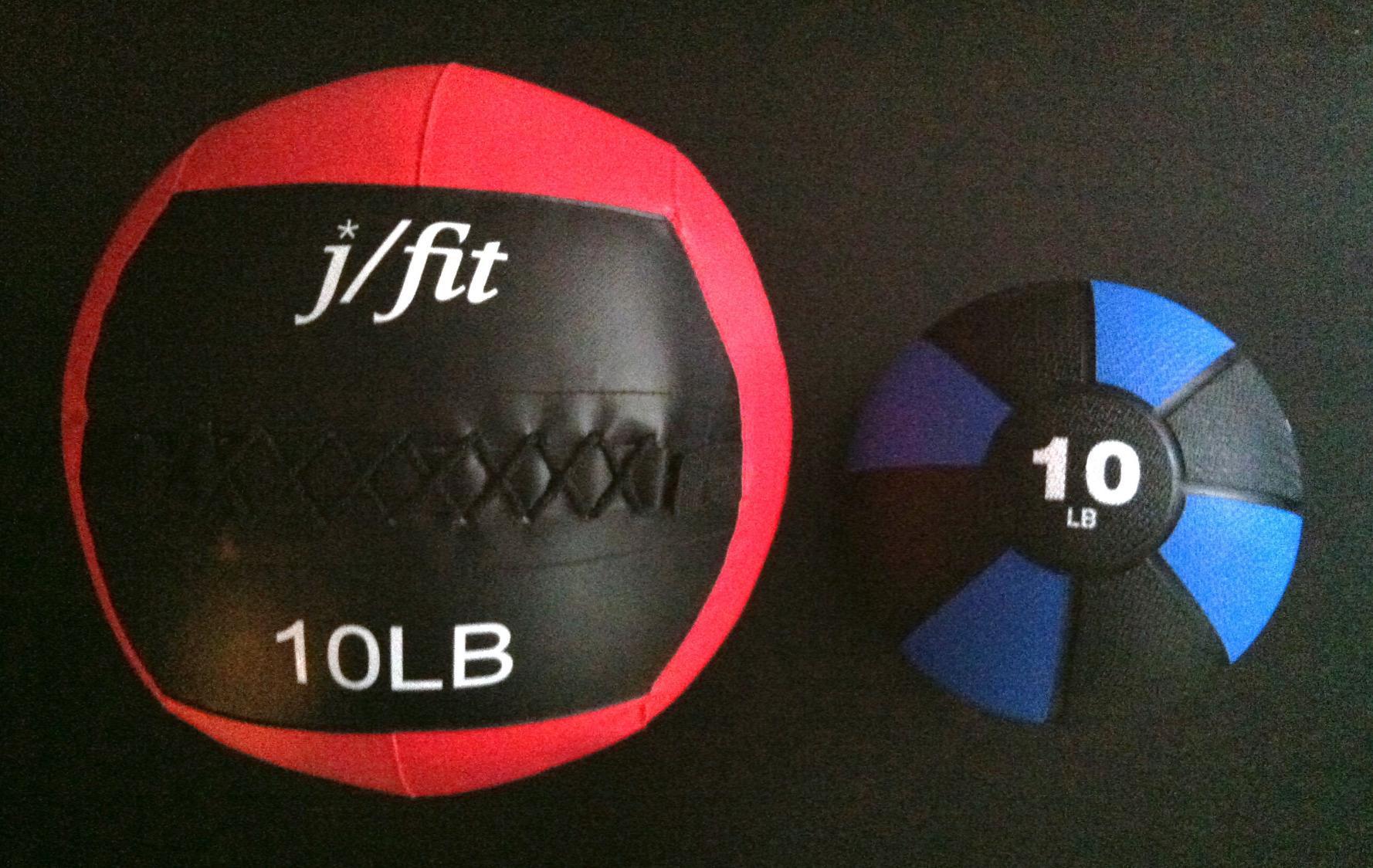
There are three recurring gripes. Raised lacing and seams can dig into the hands when you catch a heavier variant, the ball bounces more than a dense slam ball would, and buyers sometimes get confused about expecting it to handle floor slams. None of these are flaws in a wall ball, but they do surprise people who bought it with a medicine ball mindset.
Owners rate it very highly for home training because it needs nothing but a wall. It is also listed for a 30 day return window, which makes it a low-risk way to find out whether vinyl is a surface you like before you commit to a heavier shell.
What this ball handles best
Partner work and high-rep conditioning are where it earns its place. The grip stays secure at speed, the hand stuffing keeps the ball balanced through a rebound catch, and the 14 inch diameter gives you a consistent target for the next rep.
It doubles as a general fitness ball too, since the same shell works for burpees, crunches and plyometric drills, and the very light variants are useful for a partner who is not ready for a 14 lb load.
The 30 lb end of the range is worth knowing about even if you never use it. Heavier loads thrown at a lower target are the standard home workaround for a low ceiling, and having the option in the same family means you can progress without changing equipment.
Warranty coverage is listed as a 30 day return window, which is standard retail rather than a durability promise. Treat it as a chance to test the surface and the fit in your own space before you commit to a heavier version.
Where it falls short
Do not slam it. A 20 lb or 30 lb vinyl ball driven into concrete is a fast way to find out how the seams fail, and the brand does not design for that impact pattern.
If you catch a lot of heavy variants with bare hands, expect the raised seams to bother you. A pair of workout grips or a small amount of chalk solves it, but it is worth knowing before your first 100-rep set.
Vinyl is also cooler and harder to the touch than PU leather in a cold garage, which takes a few sessions to get used to. It is not a dealbreaker, but it is a texture change if you are coming from a PU leather ball.
Finally, plan the ceiling question before you buy. A 30 lb ball thrown at a 9 ft target is a legitimate home setup, but only if you can generate the height without drifting backward into your rack. Check your stand-off room first.
3. ProSource 8 LB Soft Ball: Color-Coded and Backed by a Lifetime Warranty
ProsourceFit Soft Medicine Balls, Wall Balls and Full Body Dynamic Exercises, Aqua 8 LB.
8 lb load
14 inch diameter
Padded PU leather
Limited lifetime warranty
Pros
- Soft PU shell comfortable to catch and grip
- 14 inch size holds across weights
- Double-stitched seams survive repeated impact
- Color-coded 6
- 8
- 10
- 14
- 20 and 25 lb options
- Backed by a limited lifetime warranty
Cons
- Color-coded weights may not match your preferred color
- Catalogued as a soft medicine ball by some retailers
The ProSource carries a limited lifetime warranty, the longest stated coverage in the group, and for a home athlete that is worth more than a slightly nicer hand. Covering a ball you are going to throw into a garage wall several hundred times a month changes how you think about the purchase.
The construction is a soft PU leather exterior over a slightly padded interior, rated for impact absorption and scuff resistance. The interior padding is what makes the rebound feel cushioned rather than dead, and it is the reason this ball is comfortable to catch at speed without a wall target ring absorbing the shot.
What stands out most is the color coding. Weights run 6, 8, 10, 14, 20 and 25 lb, and each one is a different color, so you can buy a pair of clearly different loads for a partner workout and know at a glance which is which. That is a small feature that only matters if you actually train with someone else.
The main drawback is a human one: the color is assigned by weight, not by taste. If you want a specific color, your weight may not come in it. Reviewers also note that criticism concentrates on the heavier variants rather than the shell, with the mid-range weights drawing the strongest feedback for cross-training wall throws.
At 14 inches the ball is properly sized for wall work, and the double-stitched seams are specified for repeated impact, which is the exact use case here. Owners rate the even weight distribution and soft shell highly for cross-training.
What this ball handles best
Beginners and scaled work. The padded interior absorbs a bad catch, the shell is soft enough to grip without chalk, and the 6 lb and 8 lb variants are the right loads for learning the squat-to-throw pattern before you add weight.
It is also a good second ball for a shared garage. The color coding makes it obvious whose turn it is, and the lifetime warranty means a split seam is a conversation with the brand rather than a replacement purchase.
Where it falls short
At 8 lb it is a skill and coordination implement, not a conditioning load. Home athletes training a heavier bodyweight often find it too light to move their heart rate, and the honest answer there is to move up the color ladder rather than throw this one faster.
It is also listed under soft medicine balls in some retail catalogs, which means the packaging will not always tell you at a glance that it is a 14 inch wall ball. Check the diameter before you buy for a wall shot.
Read the warranty wording closely before you rely on it. A limited lifetime warranty usually covers defects in materials and workmanship rather than damage from slamming or from a ball used on concrete, so knowing the exclusions matters.
Color availability is the other practical constraint. Because each weight has one assigned color, a two-ball pairing is easy but a specific color preference is not, so treat the color system as a coding feature rather than a choice.
4. ZIVA Soft Wall Ball: A PVC Shell That Takes Abuse
ZIVA Soft Wall Ball – Highly Durable Weighted Exercise Medicine Slam Ball for Strength and Conditoning Workout – 4 lbs, 13.7″
4 lb load
13.7 inch diameter
PVC skin
Sand fiber core
Pros
- Hard-wearing PVC skin for repeated high-speed work
- Sand-weighted fiber core gives a consistent throw
- Padded build absorbs drops and blows
- Weight options from 4 lb to 25 lb
Cons
- Runs slightly under the 14 inch standard
- Only a 6 month manufacturer warranty
ZIVA takes a different construction approach from the PU leather options. The outer skin is a hard-wearing PVC, the core is a fiber structure weighted with sand, and the whole thing is padded specifically to take drops and blows. That combination reads more like gym equipment than like a lifestyle fitness ball, which is the intent.
Sand weighting gives the throw a consistent, resilient feel. Sand settles into the fiber and does not migrate the way loose fill can, so the ball tracks the same flight path rep after rep, and the even internal weight distribution means the rebound comes back to your hands rather than drifting.
Owners rate the durability and forgiving padding very highly for home and cross-training use. If you are training in a basement where the floor is poured concrete and you do not care about a softer hand feel, the PVC skin simply shrugs off the environment.
The two drawbacks are measurable. At 13.7 inches the ball is a touch under the common 14 inch wall ball size, and the warranty is six months, a short window for something you intend to keep for years.
What this ball handles best
Fast, frequent work in a rough environment. The PVC skin resists abrasion in a way that PU leather cannot, and the padded build means a missed catch onto a hard floor is unpleasant rather than damaging.
The 4 lb variant is a genuine skill tool. It is light enough that you can throw genuinely high and focus on hip crease depth and the catch position, which is the movement most home athletes need to learn first.
Because the core is sand weighted rather than fiber shaped, this ball holds its flight path over long sessions. That consistency is what makes it usable for a time trial, where a ball that wanders as the fill settles makes the comparison meaningless.
Eight weight options from 4 lb to 25 lb give you room to build a ladder for a partner or to scale a single athlete up over a season without changing brands.
Where it falls short
Six months of warranty is thin for something you intend to keep for years, and a hard PVC shell has less give than a PU leather ball, so it feels different against the forearms during long sets.
The 13.7 inch diameter is not a dealbreaker, but it does mean you are not getting the exact 14 inch size that most wall ball standards assume. Check it fits your floor space before you commit.
Grip is another consideration. A PVC surface grips well but is not forgiving of forearm contact in a long set, and home athletes doing high volume will feel the difference against a PU leather shell.
The sand core also adds weight to the ball itself beyond its listed load in feel. If you are used to a fiberfill bounce, give the first session time to adjust rather than writing the ball off.
5. Bionic Body 14 LB Soft Wall Ball: A Fiberfill Feel at the Women’s Rx Weight
BIONIC BODY Soft Medicine Ball for Exercise, 13 Inch Diameter
14 lb load
13 inch diameter
Faux leather shell
Polypropylene fiberfill
Pros
- Fiberfill interior stays consistent instead of shifting like sand
- Accurate weight with a grippy faux leather shell
- Two-year manufacturer warranty
- Available in 6
- 10
- 14 and 20 lb
Cons
- A few long-term owners report shell splitting
- 13 inch diameter runs under the 14 inch standard
This is the ball to look at if 14 lb is your number, which is the CrossFit standard target for women and a sensible starting load for many men returning to training. It comes in a 14 lb version, and the sibling weights run 6, 10 and 20 lb so a pair of different loads is easy to build.
The interior is polypropylene fiberfill rather than sand, and that single choice changes the feel significantly. A fiberfill ball is slightly springier and does not go granular or dead as sand-based balls can, and owners specifically call out the consistent, non-shifting feel as a reason they like it. It also stays balanced in a way sand-filled models do not always manage.
The shell is a soft faux leather over a multi-stitched reinforced structure, and it is described as impact absorbing, which matches what owners report about the catch. CrossFitters rate the ball as comparable to higher-end box-brand wall balls, which is the compliment that matters most for a home athlete building a garage gym from scratch.
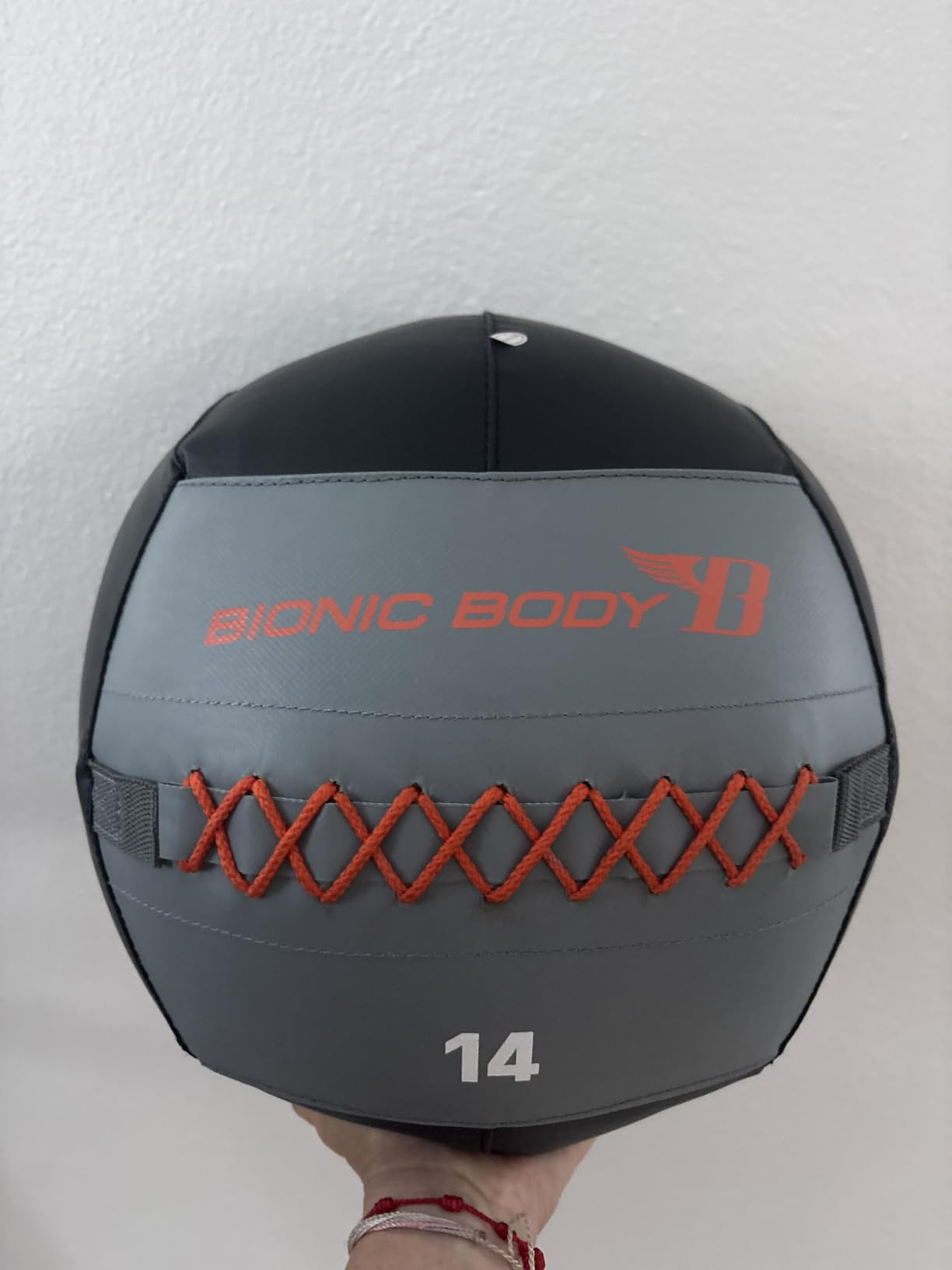
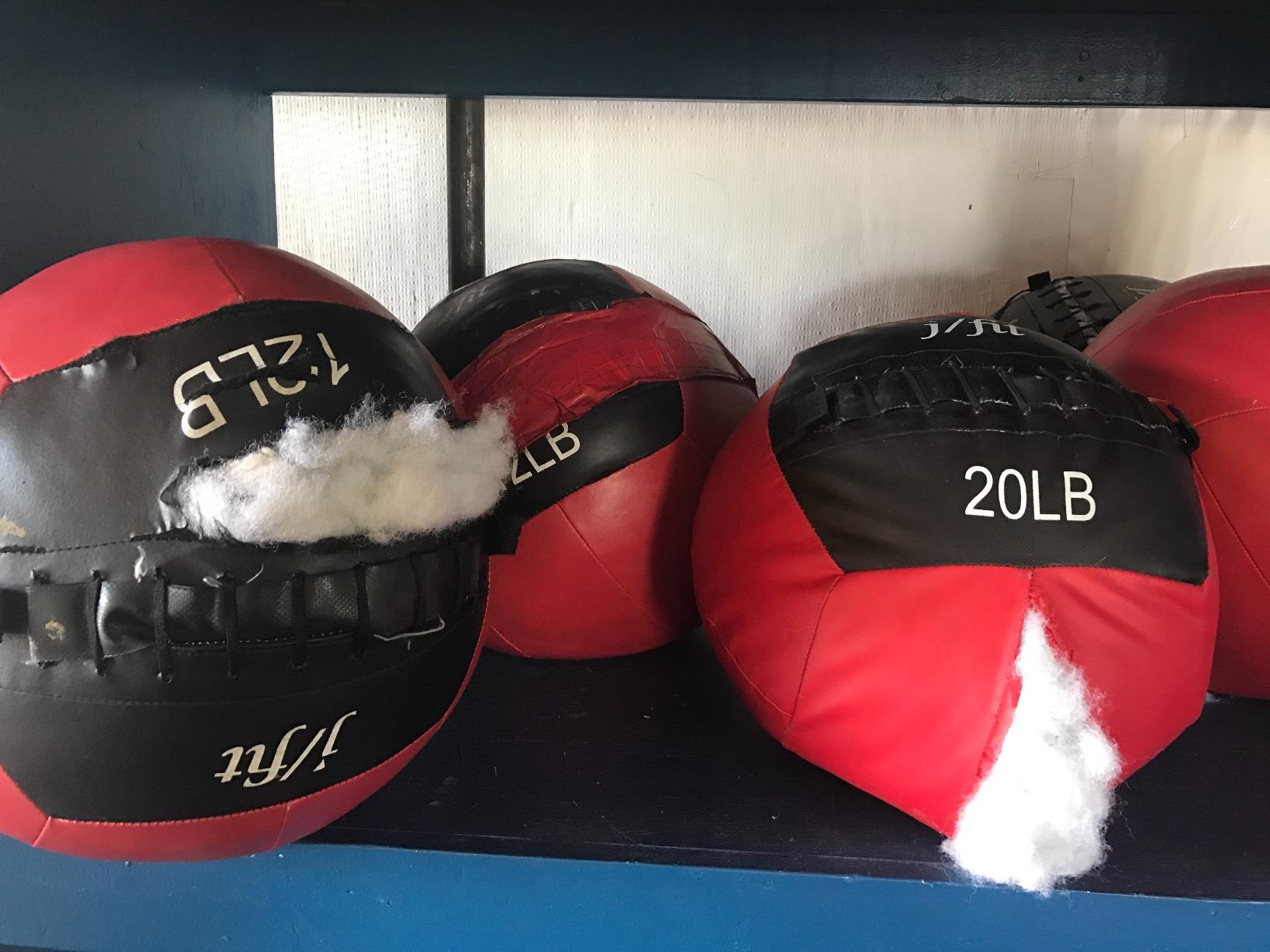
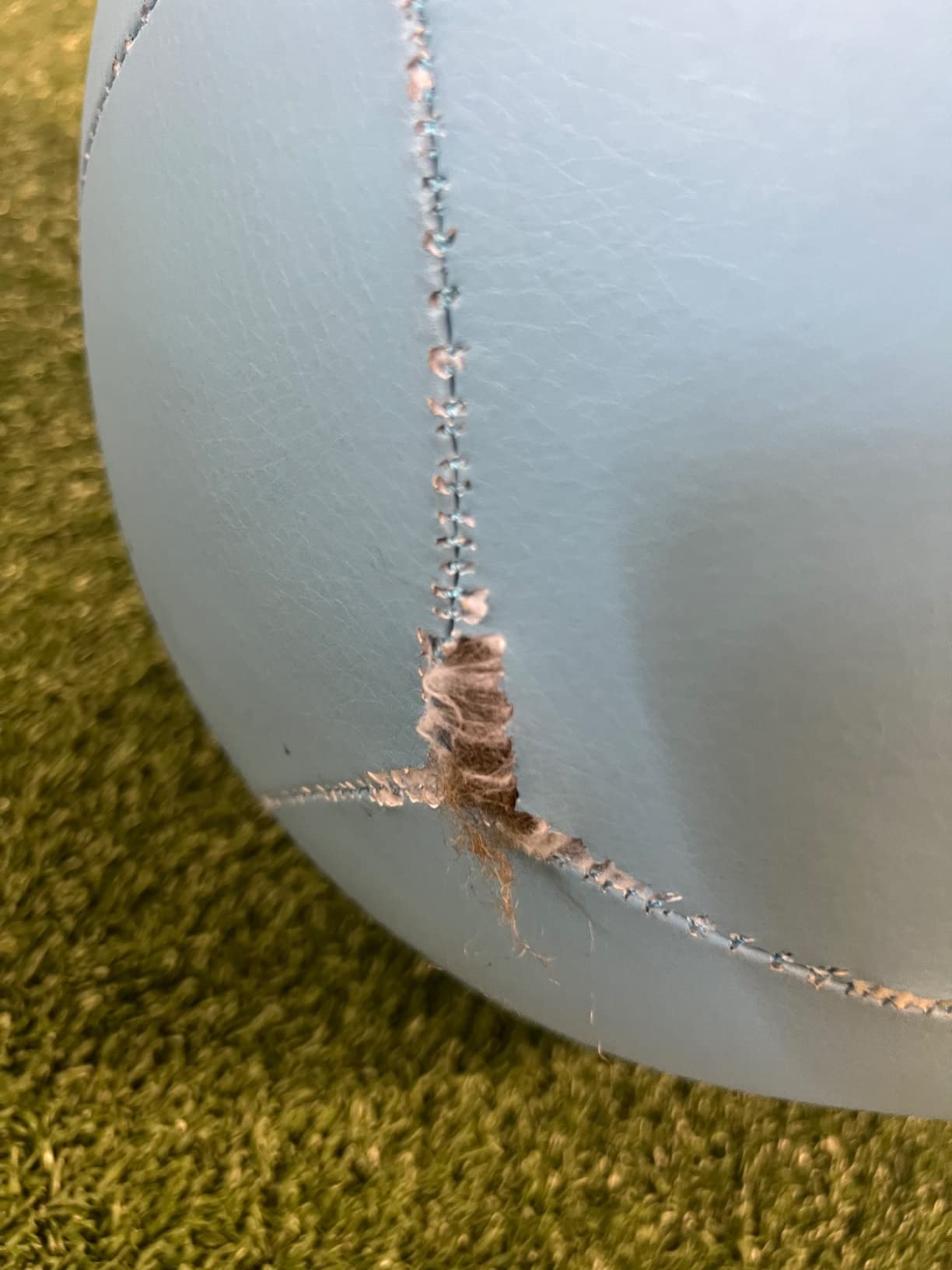
The durability feedback is worth taking seriously. A small number of long-term owners report the shell splitting after extended use, which is the same complaint that shows up in long-run owner threads on r/crossfit where aging wall balls start flaking on every throw. Check the seam before each session and retire the ball when the stitching shows.
At 13 inches across all weights, it is the smallest ball in this group. It handles fine, but it is not the standard size, and if you are throwing for distance rather than for a vertical target you will feel the difference.
What this ball handles best
Medium-load skill work at a real target height. The fiberfill gives a lively rebound that makes high-repetition sets feel smoother than a dense ball, and the 14 lb weight is enough to feel like real work without wrecking your catch position.
It is also a forgiving ball to catch. If you are new to the movement and your timing is inconsistent, a softer rebound that does not punish a mistimed catch is worth a lot over a hundred reps.
The two-year warranty is longer than every other stated coverage here except the lifetime policy, which matters more than any spec on the listing. A seam failure inside that window is a conversation with the brand rather than a replacement purchase.
Fiberfill is also the forgiving choice for a shared wall. A slightly softer rebound means less peak impact on each throw, so a 14 lb version at a 9 ft target is a sensible way to protect drywall in a house rather than an apartment.
Where it falls short
The 13 inch diameter is the first thing to check against your wall space and your technique expectations. It is a real difference from the 14 inch standard, even if it feels fine in the hand.
It is also not built for slams. Save the hard ground impact for a dedicated medicine ball and this one will keep its shape and stitching for far longer.
The reported shell splitting after extended use is the thing to watch. Check the seam line every few months, and if the stitching opens at all, retire the ball rather than working around it.
It is also 13 inches on every weight, so if you later move up to 20 lb you are still working with the smaller diameter. Some athletes prefer that, but it is a change if you have trained on a 14 inch ball before.
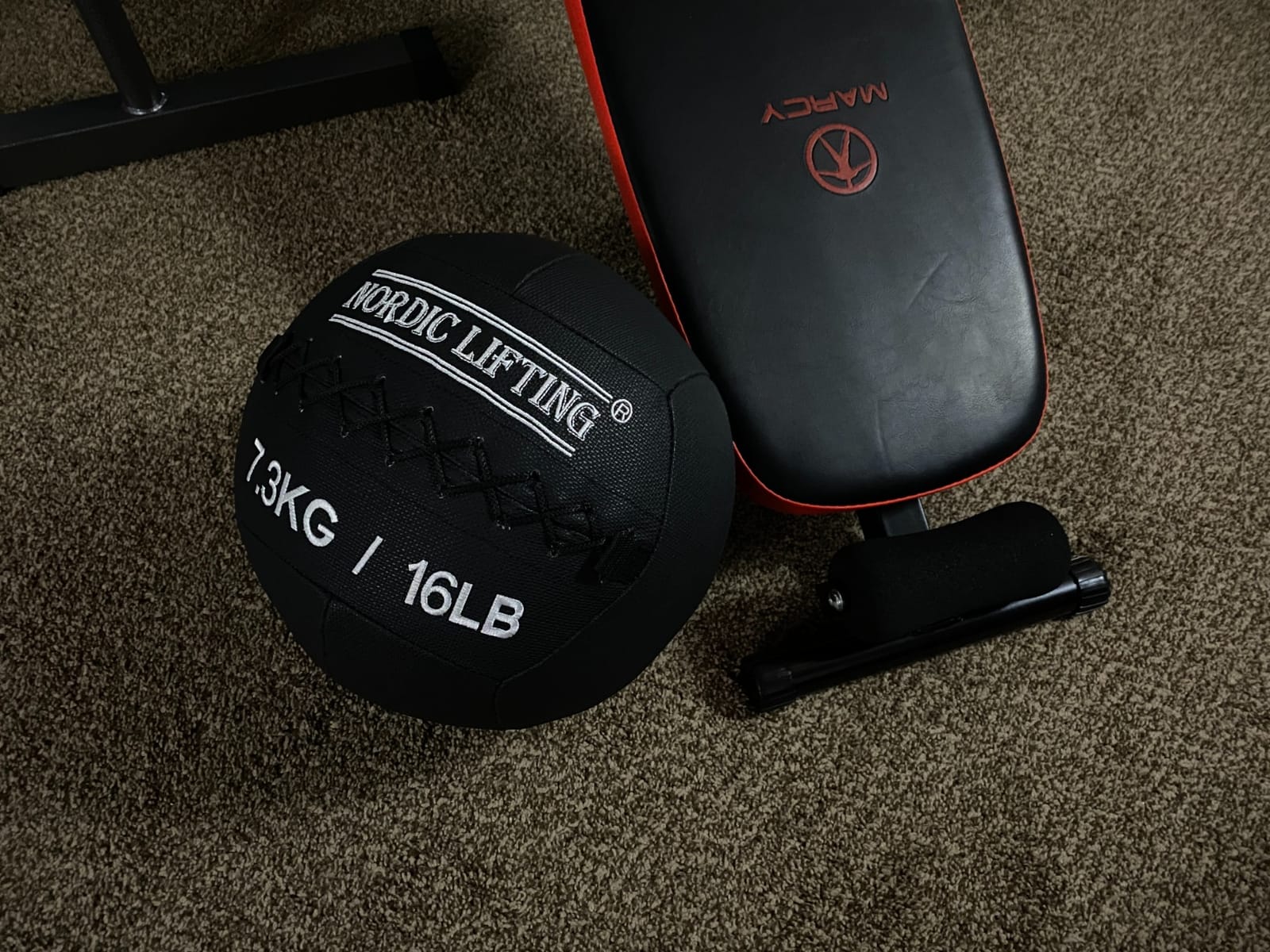
6. Nordic Lifting 14 LB Wall Ball: Built for Small Spaces
Nordic Lifting Wall Ball for Crossfit & Fitness – Medicine Ball for Gym and Strength Training 14 lbs
14 lb load
35 cm diameter
Iron sand core
Textured PU shell
Pros
- Drop tested from 50 feet without blowout
- Textured surface keeps grip at high intensity
- Compact enough for garage gyms and basements
- One year warranty
Cons
- Sand core feels dead compared with fiber-filled balls
- One year warranty is shorter than the two-year cover on some rivals
Nordic Lifting targets the constraint most home athletes actually have, which is space. At 35 cm the ball is described as compact and space-efficient, which is roughly what you would expect from a wall ball, but it matters when you are working in a basement with a low ceiling and a wall you need for other things.
It is listed at 14 lb, which puts it squarely on the women’s Rx standard and at the top of a beginner-friendly load range. The core is iron sand, distributed evenly, inside a polyurethane shell with a textured surface designed for a secure grip at high intensity.
The standout claim is the drop test. The ball is described as tested by dropping it from 50 feet without a blowout, and owner satisfaction centers on exactly that burst-proof durability. A wall ball in a garage spends its life being thrown into a hard surface, so impact resistance is not a marketing extra here, it is the product.
The trade-off is feel. Owners note that an iron sand core can deaden the ball compared with fiber-filled models, meaning less rebound and a heavier sensation at the same weight. If you like a lively ball that comes back to your hands, a sand core is not for you.
The one year warranty is shorter than the two-year cover on the Bionic Body and much shorter than the ProSource lifetime warranty, so the durability claims carry more weight than the coverage behind them.
What this ball handles best
Basements, garages and any home setup where floor and wall space are tight. The compact diameter makes it easy to store out of the way, and the textured shell holds when you are breathing hard and sweating through a long conditioning block.
It is also a strong choice for outdoor wall work, since a PU shell over an iron sand core holds up to repeated impact against brick or concrete without rusting concerns.
A textured surface is worth more than people expect at home. In a hot garage with no chalk and no partner spotting, a lightly textured shell is often the difference between a clean 100-rep set and a set spent dropping the ball.
Where it falls short
The sand core is heavy and dead. At 14 lb it will feel like more than 14 lb, and if you are doing high-rep conditioning where rebound speed drives your pace, a fiberfill ball is a better tool.
The one year warranty means you are relying on the construction quality alone over the long term. Inspect the seams periodically, especially if you train in a damp basement.
Because it is listed at 14 lb in this configuration, check which version you are ordering if your target is a 10 ft standard. The same name covers a family of weights, and the standard you train at decides the variant.
A dead feel also changes the coaching of the movement. A ball that does not rebound encourages you to reset between reps, which quietly turns a conditioning movement into a skill drill with rest built in.
7. Champion Sports Rhino ProMax 20 LB: The 20 LB Men’s Standard Load
Champion Sports RPX20 Rhino Promax Slam Balls, 20 lb, Soft Shell with Non-Slip Grip, Medicine Wall Exercise Ball for Weightlifting, Plyometrics, Cross Training, & Home Gym Fitness
20 lb load
14 inch diameter
Rhino synthetic leather shell
Non-slip surface
Pros
- Largest verified review base in the group
- Rhino shell resists wear over long use
- Uniform 14 inch diameter across weights
- Weights offered from 6 lb to 20 lb
Cons
- Surface can turn slick when hands are sweaty
- Some balls have uneven weight distribution
- Not intended for slamming
If your target is the 20 lb to 10 ft standard, this is the ball in the group that is verified at that weight by a very large number of owners. The Rhino ProMax line has more owner feedback behind it than anything else here, which means the durability reputation is built on years of use rather than a handful of first impressions.
The shell is a proprietary synthetic leather called Rhino Skin, over an impact-absorbing cushioned construction with heavy-duty double-stitched seams. Owners report that the surface resists wear and still looks new after long use, and the 14 inch diameter is uniform across the weight range, so moving up or down does not change your technique.
It is also a flexible implement for a range of jobs. Weights from 6 lb to 20 lb mean the same family covers everything from a partner warm-up to an Rx standard, and the same ball handles wall tosses, squats and presses as the manufacturer intends.
What this ball handles best
Heavy Rx work for athletes who have already learned the movement. At 20 lb the ball has real momentum, and the cushioned construction keeps the catch survivable when a rep goes slightly wrong.
It is also a low-risk bet for the long term, purely on evidence. When a ball has this much owner history, you can reasonably expect to keep using it for years, and replace it only when the shell wears rather than on a schedule.
Twenty pounds is also the most versatile single weight for a home athlete who trains alone. It is heavy enough for a real conditioning stimulus and light enough that you can still receive a fast rebound and keep your squat depth through 100 reps.
Where it falls short
The grip is the weakness. Owners report the surface can turn slick once hands are sweaty, which is exactly when you need it most during a 100-rep set, and workout grips are a sensible addition.
Uneven internal weight distribution is the second reported problem, which can make the ball roll. So roll-test it on a flat floor before you use it. And like the others here, it is not meant to be slammed on the ground.
The listed construction also describes no stitching on the panel join despite the double-stitched seam description elsewhere, so inspect the seam line on arrival. A rating of 4.4 with this many reviews means there is enough history to know what the weak points are.
At 20 lb this is the heaviest ball here, which means it is the least forgiving to a beginner. Learn the pattern at 14 lb first if you have never thrown one, then step up.
8. Yes4All 12 LB PVC Wall Ball: Finger Loops for a Smoother Catch
Yes4All Wall Ball, Soft Leather Weighted Iron Sand Ball for Dynamic Multifunctional Exercise, 6 LB – 30 LB
12 lb load
13.6 inch diameter
Textured PVC shell
Iron sand fill
Pros
- Finger loops add a secure hold with sweaty hands
- Iron sand core resists deformation under repeated impact
- Heavy double-stitched seams contain the fill
- Weight options from 6 lb to 30 lb
Cons
- Built for wall throws rather than rubber-style slams
- 13.6 inch diameter runs under the 14 inch standard
Yes4All uses finger loops, and that single design choice sets it apart here. Loops on both sides give you somewhere to put your fingers during the catch, which stops the ball from skidding out of a sweaty palm and lets you square up to the wall faster on the next rep.
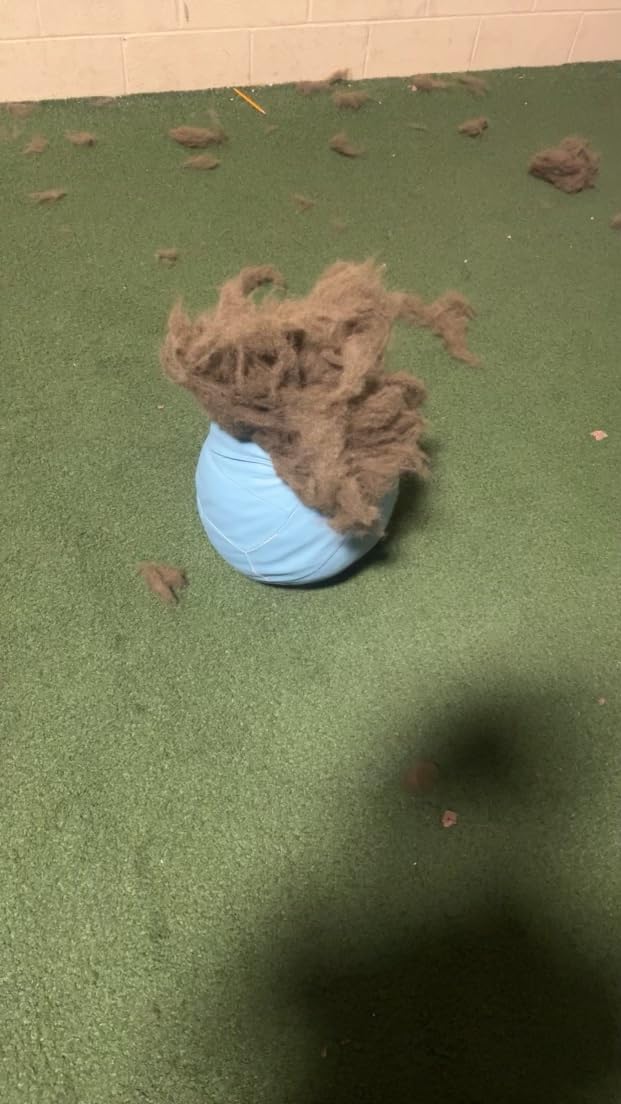
Construction is a soft textured PVC cover over a high density iron sand fill, joined with heavy double-stitched seams specifically to prevent sand leakage. Owners value the durability of that fill under repeated wall impacts and report that the core resists deforming over time, which is the failure mode that turns a sand ball lopsided.
The range is wide, running from 6 lb to 30 lb including 10, 12, 15 and 20 lb, so there is room to scale in either direction. It is designed for wall squats, wall throws and wall sit-ups, which is a narrower brief than some of the others here but exactly what a home athlete needs.
What this ball handles best
High-rep wall throws where the catch happens dozens of times in a row. The loops and the textured PVC combine to keep a secure hold with sweaty hands, and owners consistently point to that grip as the reason they keep reaching for it.
The 12 lb load also sits in a useful middle ground. It is heavy enough to feel like conditioning work for most home athletes without being so heavy that your squat depth collapses on rep 40.
The 30 lb ceiling of the range means you can progress without changing brands, which matters if you are training alone and want a heavier ball at a lower target once your technique is solid.
Where it falls short
It is a wall ball, not a rubber-style slam ball. Owners flag this explicitly, and driving it into concrete is a good way to damage the seams that are otherwise doing an excellent job.
At 13.6 inches it sits under the 14 inch standard, and the listed weight of 5.24 kg corresponds to a 12 lb variant, so double check which version you are actually ordering before you plan a target height around it.
Finger loops are a two-handed feature. If you program single-arm variations or partner passing where you only have one hand on the ball, the loops can feel awkward rather than helpful.
The one year warranty is a shorter commitment than the two-year and lifetime options elsewhere in this group, so factor that into how long you expect the ball to last.
Wall Ball vs Medicine Ball vs Slam Ball: Which One Do You Need?
A wall ball is a large, soft, padded sphere built to be thrown at a wall and caught on the rebound. A medicine ball is denser, usually filled with sand or rubber pellets, and is designed for lifts, carries, cleans and slams. A slam ball is a hard rubber ball designed to be driven into the ground. Only the first one of those three is a wall ball, and buying the wrong one is the most common expensive mistake home athletes make.
Wall ball: soft shell, padded, roughly 14 inches, filled with a shape-retaining layer around a balanced weight core. Catches comfortably, designed for the squat-to-throw shot. This is what you want if you want to do wall balls.
Medicine ball: heavier feel, harder shell, sand or rubber pellet fill. Excellent for cleans, presses and rotational work. A medicine ball thrown at a wall will often feel wrong and can damage the shell, because the construction is not designed for a rebound catch.
Slam ball: hard rubber, meant to be slammed. Great for floor work and noise, poor for a wall shot. A slam ball hitting drywall at speed is a much worse outcome than a soft wall ball doing the same thing.
One practical test before you buy anything: if the listing does not mention a diameter near 14 inches, it is not a wall ball. Listings in this category routinely mix wall balls and medicine balls together, so the size is the fastest way to tell them apart.
Here is the decision tree in short form. If your program has a wall shot written into it, you need a wall ball and no substitute will do. If your training is high-rep conditioning and you have no wall, a dumbbell thruster covers more of the pattern than anything else. If your goal is floor-based power and you do not care about noise, a slam ball is a different tool that happens to sit in the same aisle.
The naming is part of the confusion. Plenty of manufacturers list a genuine wall ball under medicine balls in their catalog, and plenty of shoppers do the same. Judge by construction rather than by the product title: a padded shell and a rebound-friendly core means wall ball, a hard rubber shell means slam ball.
CrossFit Wall Ball Weight and Target Height Standards
The standard is straightforward, and knowing it saves you from scaling every workout by feel.
Men, Rx: 20 lb ball to a 10 ft target.
Women, Rx: 14 lb ball to a 9 ft target.
Beginner skill work: 6 to 10 lb, at a lower or closer target.
Advanced and strong athletes: 20 lb, sometimes scaled to 25 or 30 lb for volume work.
If your wall is shorter than 10 ft, do not chase the men’s standard. Use the 9 ft target with a 14 lb ball, which is a fully legitimate standard and the recommendation that comes up most often in home training discussions. Athletes training a heavier bodyweight over a lower ceiling often get better results from a heavier ball thrown at a lower target than from a light ball thrown high for volume, because the light version is a coordination drill rather than a conditioning load.
The same logic applies on the way down. A 6 lb or 8 lb ball at a 7 ft target is a perfectly good skill progression, and it lets you focus on the two things that actually break at home, which are depth below parallel and a clean catch.
Measure your target to the top of the ball, not to your hand. A common home mistake is marking the wall at the height the hand finishes, which is higher than the ball needs to go, and then wondering why the shot feels like a press instead of a squat-to-throw.
Record what you choose and stick with it across a training block. Changing target height every week is the fastest way to feel like you are getting worse at a movement you are actually progressing at.
How to Set Up a Wall Ball Target in a Garage or Basement?
You do not need a rig. Most home athletes can get a usable target with a tape line, a clear stand-off distance, and something behind the ball.
Step one is measuring. Stand the ball against the wall and mark the top at your target height. For a 9 ft target with a 14 lb ball, that is the height the ball’s top edge should reach, not the height your hand finishes at.
Step two is stand-off distance. Stand far enough back that you are throwing slightly upward, roughly 3 to 4 feet from the wall. Standing flat against the wall forces you to throw horizontally, which is much harder on the shoulders and much harder on the wall.
Step three is protecting the surface. A 20 lb ball thrown at a wall at speed will eventually mark drywall, and in an attached home that is a real conversation to have with the people you live with. Mount a piece of plywood, a rubber mat or a stud-framed panel behind the target, and consider putting something on the floor below the landing zone too.
On the ceiling question, an 8 ft garage is workable. Lower the target to something you can reach comfortably and scale the weight to match, and remember that the ball only needs to travel far enough to come back to you with a controlled rebound. There is no rule that says the target has to be at head height plus six feet at home.
Soft shell wall balls are quieter than slam balls by a wide margin, which is one of the strongest reasons to buy a genuine wall ball rather than a rubber substitute if you share a building. If your target wall sits next to a bedroom wall, thicker is quieter, and a heavier ball at a lower target is louder than a lighter ball thrown high.
If you are renting, ask before you mount anything. A taped line is free and reversible, a leaning plywood panel is heavy and needs a real stud behind it, and a free-standing frame made from two uprights and a crossbar lets you move the whole target between workouts when the wall needs to go back to being a wall. Our water polo ball picks are a useful comparison point if you ever want something that takes water instead of drywall.
Wall Ball Shot Technique and the Mistakes That Cost You Reps
The movement is five steps, and the same three mistakes account for most of what goes wrong at home.
Before any of that, set your stance. Feet about shoulder width, turned out slightly, with your heels down through the squat. The wall shot is a leg movement with an arms finish, not a press with a squat in front of it, and the stance is what keeps the load on the lower body.
Start standing a few feet from the wall with the ball in the front rack position, elbows tucked and the ball resting near your collarbone.
Sit down and back into a squat, letting the ball drop with your chest, going below parallel before you start rising.
Drive up through the whole foot, keeping the ball tight to your chest as your hips pass parallel.
Finish by extending the ball up and slightly forward, aiming for the mark, with your arms finishing above your head.
Catch the ball as it returns, absorbing it into the front rack position and dropping straight back into the squat.
The most common mistake is standing too close to the wall. It removes your ability to throw upward, jams the ball back into your face, and multiplies the load on your shoulders and lower back.
The second is letting the ball drop below chest level on the way down. The ball should stay near the collarbone throughout the squat so the load stays on the upper back where you can support it, rather than pulling on the arms and spine.
The third is a stiff-arm catch. Reaching for the ball with locked elbows transfers the whole impact into the elbow joint. Give with the arms, pull the ball into the rack, and let the legs take the next rep.
Film a set before you change anything. Most home athletes find the problem is one of three things, and two of them fix themselves within a session once they can see it.
Muscle memory works in your favor here as well. The catch position is the same position you start from, so once the rebound lands clean, the next rep costs almost nothing in setup.
How to Choose a Wall Ball: Shell, Filler, Seams and Diameter
Diameter first. Standard wall balls sit at roughly 13.7 to 14 inches. Anything materially smaller will feel different in a long set and will not match the specs most programs assume.
Shell second. PU leather and PVC are the two common options. PU leather feels softer and warmer against the hands and is easier to grip bare, while PVC is tougher and better suited to rough environments where you do not care as much about hand feel. Faux leather and vinyl are effectively the same category of material for shopping purposes.
Filler third, and this is the one most buyers never check. A shape-retaining filler such as polypropylene cotton or fiber sits inside the shell to hold the round shape, and a separate weight filler such as iron sand, rubber particles or yellow sand provides the load. A ball with only a loose weight filler and no shape-retaining layer will go lopsided and feel unpredictable within months.
Seams fourth. Wall balls take enormous repeated impact, so double or triple stitching is the minimum worth paying for. Check that the panels are reinforced where they join, and if the ball arrives with a visibly loose seam, return it rather than trying to work around it.
Grip fifth. A smooth or lightly textured cover beats an aggressively treaded surface for high-rep volume, because aggressive patterns have been reported to abrade forearms over long sessions. If you chalk or use grips, almost any of these shells works.
Long-term owners on r/crossfit describe the same pattern we have seen: a shell that flakes on every throw after a decade of use is not a technique problem, it is a material one, and the ball gets replaced rather than fixed.
Balance last, and the test takes ten seconds. Roll the ball across a flat floor. If it tracks straight, the fill is even. If it wanders, the internal weight is uneven and every throw you make will drift.
Warranty is worth reading as a durability signal rather than a promise. A two-year or lifetime warranty usually means the manufacturer is confident in the seams and the shell, while a 30 day window means you are relying on your own inspection routine instead.
Drop test claims are useful in the same way. A ball described as tested from a great height is telling you how the shell and seam handle impact, and that is the failure mode that ends a ball’s life in a garage.
Finally, buy for the range you will actually use. Two or three weights cover most home athletes, and a wider catalogue matters only if you are training with a partner on a different load.
Programming Wall Balls in a Small Space
EMOM is the easiest format for a home gym, because the interval structure lets you recover between rounds without needing a partner to time you. Ten wall balls and 14 air squats every minute for ten minutes is a standard home session that needs about ten feet of wall and nothing else.
Tabata works well as a finisher, where short bursts of wall balls pair with a rest interval and the total volume stays low enough to finish well.
Row plus wall ball is harder without a machine, but a rowing session followed by a wall ball block mimics the monostructural and weightlifting pairing that most box programming uses, and it is a good way to keep a garage gym interesting on its own.
A 100-rep time trial is the most honest test of a ball you own. Time how long 100 shots take from a fixed stand-off distance, then repeat it every few weeks. If the time improves, the ball and your technique are both working. If it regresses, either the filler has settled or your grip is failing.
Pair the ball with dumbbell thrusters if you want the same squat-to-press pattern with a load you can scale more precisely, and with a kettlebell swing if the conditioning is the goal rather than the skill.
Volume is where home athletes most often overreach. A hundred wall balls with a heavy ball is a legitimate session, but doing it every day without a lighter day between is how people end up with a sore lower back rather than a stronger one.
If you are programming this alone, write the rep count and the target height on the wall next to your mark. Hitting the same line every session is what turns a wall ball from a random activity into a measurable benchmark.
What to Use Instead of Wall Balls in a Home Gym
If ceiling height is the blocker, a heavy dumbbell thruster gives you the squat, the drive and the overhead finish without needing a wall at all. It is the most common substitute and the most complete one.
A sandbag or a heavy kettlebell swing covers the cyclical conditioning intent. Neither teaches the rebound catch, but both deliver the heart rate work that a wall ball set is usually chasing.
A slam ball covers the impact and power work, and it is louder and harder on floors, so it is a poor substitute if you share a building.
A medicine ball for overhead throws and partner tosses covers the coordination piece. It will not replace a wall shot for target height work, but it trains the same overhead position.
One thing substitutes do not fix is the wall. If your real constraint is that you have nine feet of wall and a solid floor, a lower target with a heavier ball is a better answer than any replacement implement, and it keeps you inside the standard movement.
If you are not sure what else to buy first, a pull-up bar, a pair of adjustable dumbbells and a mat will carry you further than a heavier wall ball will. Wall balls reward a movement you can already squat and receive, and buying the ball before the basics is how people end up owning a 20 lb ball they cannot squat into.
A last practical note on used equipment. A wall ball that has been thrown for six years is often still round but has a shell that is close to splitting, and the fill inside is rarely evenly distributed. Buy new unless the price difference is large and you can test the ball for roundness and seams first.
Frequently Asked Questions
What is the recommended weight for a wall ball in CrossFit?
The CrossFit standard is a 20 lb ball thrown to a 10 ft target for men, and a 14 lb ball thrown to a 9 ft target for women. If your wall is shorter than 10 ft, use the 9 ft target with a 14 lb ball rather than forcing the men’s standard. Beginners should start lighter, between 6 and 10 lb, to learn the squat-to-throw pattern before adding load.
What ball should I use for a wall ball shot?
Use a soft wall ball of roughly 14 inches in diameter with a padded shell and a shape-retaining filler such as polypropylene cotton or fiber. A medicine ball or a hard slam ball is the wrong tool, because neither is built for the rebound catch. All eight products in this guide are genuine wall balls.
What is the recommended weight range for wall balls?
Home training usually sits between 6 lb and 20 lb. Beginners and skill work belong at 6 to 10 lb, the 14 lb load covers the women’s Rx standard and most general fitness, and 20 lb matches the men’s Rx standard. Athletes doing high-rep volume in a small space often go heavier at a lower target instead.
How high should a wall ball target be?
Ten feet for a 20 lb ball and nine feet for a 14 lb ball, measured to the top of the ball at the target. In a garage or basement with a low ceiling, lower the target to a height you can reach comfortably and scale the weight to match. A lower target with a heavier ball beats a light ball thrown high for volume.
What are the most common wall ball mistakes?
Standing too close to the wall, which forces a flat horizontal throw and jams the ball back at you. Letting the ball drop below chest level in the squat, which pulls on the arms and spine. And catching with locked elbows instead of giving with the arms and pulling the ball into the front rack position.
How long would 100 wall balls take?
For a trained athlete, 100 continuous wall ball shots usually land somewhere around three to five minutes, though a beginner can take considerably longer. Time it from a fixed stand-off distance and repeat every few weeks. A rising time usually means poor conditioning, while a falling time means the technique and the ball are both working.
What can I use instead of wall balls in CrossFit?
A heavy dumbbell thruster is the most complete substitute, because it keeps the squat, the hip drive and the overhead finish without needing a wall. A sandbag or kettlebell swing covers the conditioning work, a slam ball covers the impact and power work, and a medicine ball covers overhead throws and partner tosses. None of them train the rebound catch.
How long does a wall ball last?
It depends far more on construction and use than on the calendar. A double-stitched ball with a shape-retaining filler and a balanced core should stay round for years of regular work, while a ball with a loose sand-only fill can go lopsided within months. Inspect the seams often, retire the ball when the stitching loosens or the shell starts flaking, and check whether the warranty covers seam failure.
Final Verdict: Which Wall Ball Should You Buy in 2026?
The Titan Fitness 10 lb wall ball is the pick for most home athletes, because a 14 inch diameter, a soft polyurethane shell and a weight ladder from 6 lb to 30 lb cover everything a single-person garage gym or a shared garage will need. If the ball is for two people training different weights, the JFIT vinyl model with hand stuffing and a 4 lb to 30 lb range is the more flexible choice.
For anyone anchored to the 14 lb standard at a 9 ft target, the Bionic Body is the one to look at, with a fiberfill interior that stays consistent through long sets and a two-year warranty. The ProSource is the pick if you want a color-coded ladder and a limited lifetime warranty behind it, and the Nordic Lifting ball suits basements where space is the constraint and durability matters more than rebound.
Whatever you choose, measure your wall before you order, roll-test the ball when it arrives, and set your target to a height you can reach with a clean hip crease. Those three steps matter more than the badge on any of these balls. If you are still working out the rest of your setup, our gallery wall guide covers protecting the wall you are throwing at, and our roller hockey ball picks cover the other end of the ball spectrum.